River Beauty and Rough Roads
I slept well in Whitehorse, YT. The last time I was here, my heat wasn’t working, it was cold, and the wind was gusting up to 50 mph. This visit was a lot more comfortable. I’ve also noticed that I’m staying up later these days. The only explanation I can think of is that it doesn't get dark until around 11 p.m. Maybe there’s actually some science behind that, but whatever the reason, I didn’t wake up until after 8. Not long afterward, I could hear people arriving to walk their dogs nearby.
Around 9 a.m., I drove downtown to the Baked Café & Bakery. Parking required the HotSpot app, which I had also used in Vancouver. I selected the city, entered the meter number, and paid with Apple Pay. After parking, I walked across the street and ordered an almond chocolate croissant and a latté. Unlike my previous visit, there was no line and plenty of seating. After picking up my coffee, I turned around and immediately recognized someone I had met at dinner the last time I was in Whitehorse. We talked for about 15 minutes, caught up on our travels, and agreed that I’d reach out when I passed through again at the end of August.
Once he left, I settled in to update a blog post. A couple sat down at the table next to me and quickly became impossible to ignore. The woman was a therapist, and the conversation turned to dreams. Not just a quick discussion about dreams, but a full analysis session. For the next half hour, I listened to detailed accounts of recent dreams, recurring dreams, symbolic dreams, and the possible meanings behind all of them. Every interpretation seemed to lead to another dream, which led to another interpretation. At one point I realized I was spending more time listening to theories about a dream involving a staircase than I was editing my own writing. They were perfectly pleasant people, hugging and agreeing on meanings. When they left, my productivity increased dramatically. Apparently dream analysis is not the ideal background music for writing a travel blog.
I was running low on groceries and stopped at the Real Canadian Superstore on my way out of town. One thing I’ve noticed throughout Canada is how good the produce sections are. Even the Walmarts seem to have better-looking produce than many stores in the States. Unfortunately, the self-checkout machine I picked appeared to have issues. Every piece of produce I scanned—or entered manually—required staff approval. After several interruptions, I asked the attendant if I was doing something wrong. She appeared to be French-speaking and answered in a mixture of English and French. I told her, “Pas de problème. Je ne sais pas quel est le problème.” (I’m not sure I said it this well)? She smiled, replied, “No problem,” and gave me two enthusiastic thumbs up. Unfortunately, she still had to return another eight times to approve various fruits and vegetables. By the end, we had reached the point where we simply smiled and shrugged our shoulders every time the machine summoned her back.
I left Whitehorse and had driven about 10 miles when I realized I had forgotten to buy gas. Out here, you fill up whenever you see a station because you never know how far the next one might be. I turned around and found a station about six miles away. Unfortunately, the nozzle was faulty. While I was fueling, gasoline suddenly sprayed out around the handle. The pump had technically shut off, but my hand ended up covered in fuel. When I went inside to pay—there was no pay-at-the-pump option—I told the woman behind the counter what had happened. “Oh yeah,” she said, “I can smell it.” She told me she would have someone check the pump and pointed me toward the restroom so I could wash up. This is the third time I’ve had a gas nozzle fail on me in Canada.
Finally back on the road, I headed northwest toward Tok, Alaska. Google claimed the drive would take about 7-1/2 hours, but I knew better. I had driven this route a few weeks earlier and knew there would be plenty of stops along the way. The road follows the Alaska Highway, designated Yukon Route 1, through Haines Junction and along Kluane Lake. The drive to Haines Junction took about two hours and was familiar territory at this point.
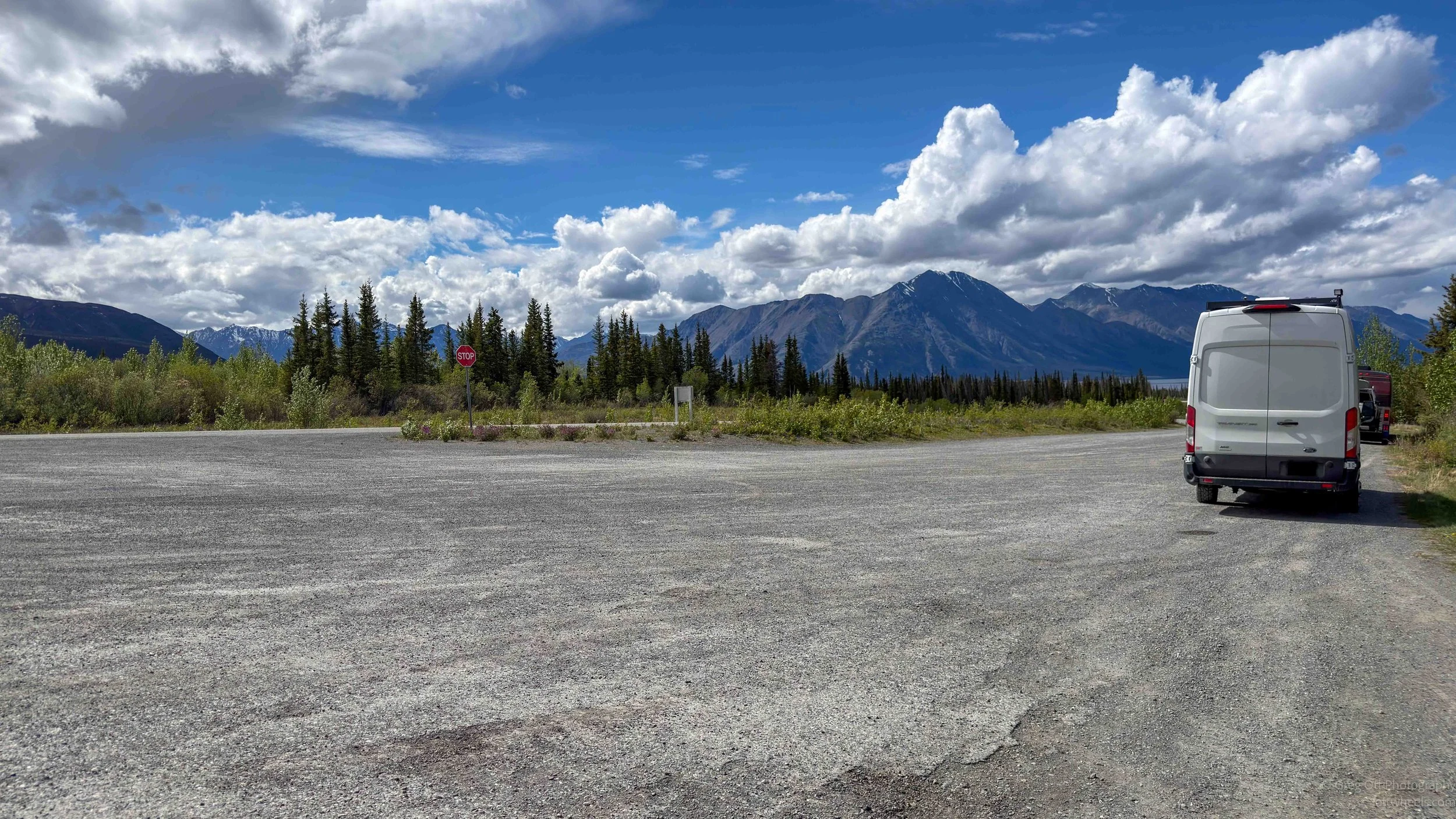
Just before Kluane Lake, I pulled into a rest area for a break. The place was completely empty. I figured I’d take a quick 15-minute nap and ended up sleeping for an hour. When I woke up, I made an espresso and sat outside for a while. It was that kind of day. The temperature was around 65°F, which felt surprisingly warm for the area. The last time I had been here it was cold, windy, and generally unpleasant. I had considered hiking then but decided against it.
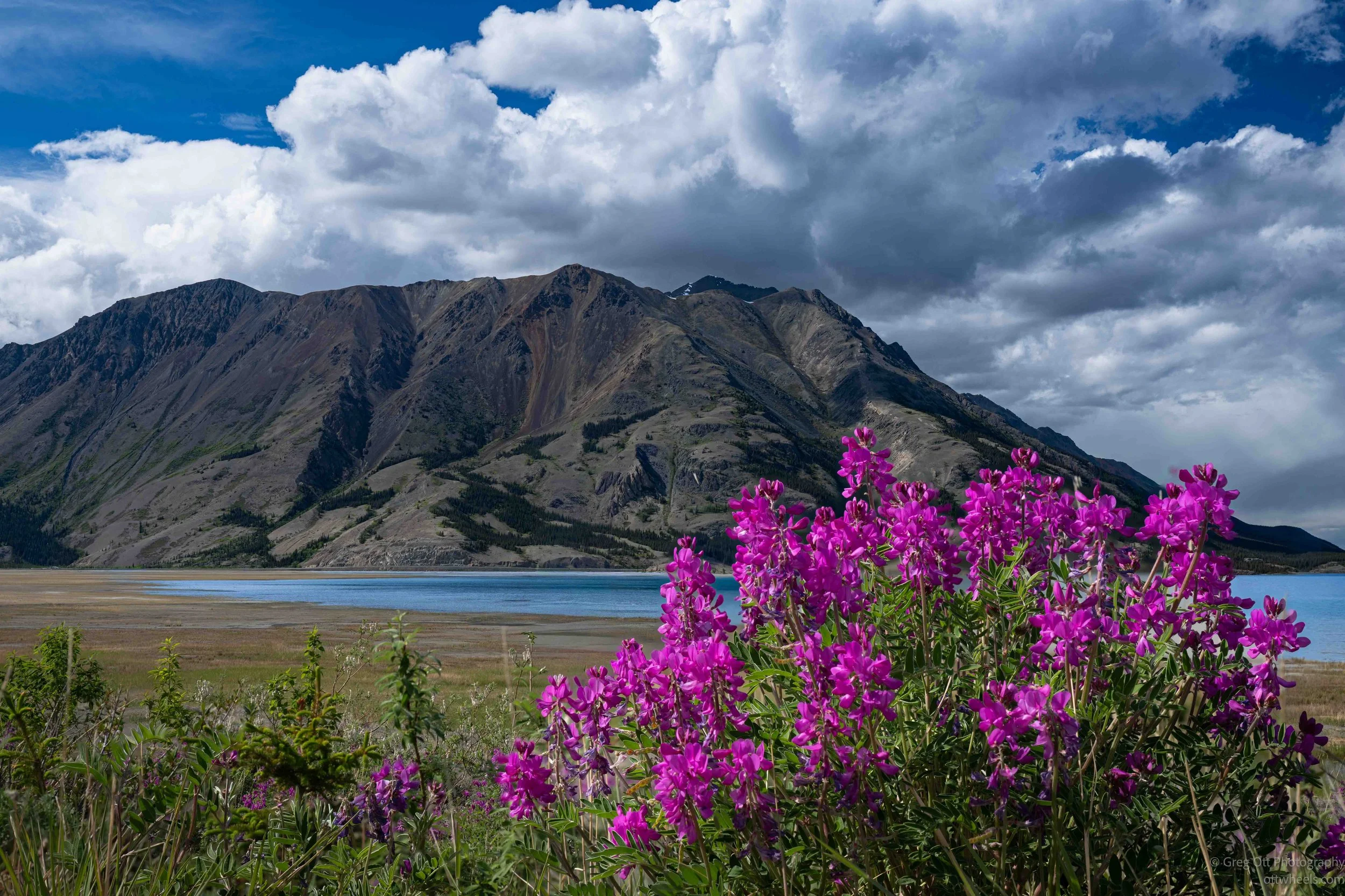
I eventually pulled back onto the highway but didn’t make it very far. Bright magenta flowers lined both sides of the road for miles. I later learned they were called River Beauty, also known as dwarf fireweed. The combination of flowers, lake, mountains, and dramatic clouds was too good to pass up. For the next half hour, I worked on photographing the scene. Getting everything in focus required focus stacking, so I set up the tripod and shot about ten separate stacks. Each stack consisted of roughly 15 images focused at different distances, which would later be combined in software. As usual, most of the images didn’t quite work, but there were a couple that I really liked.
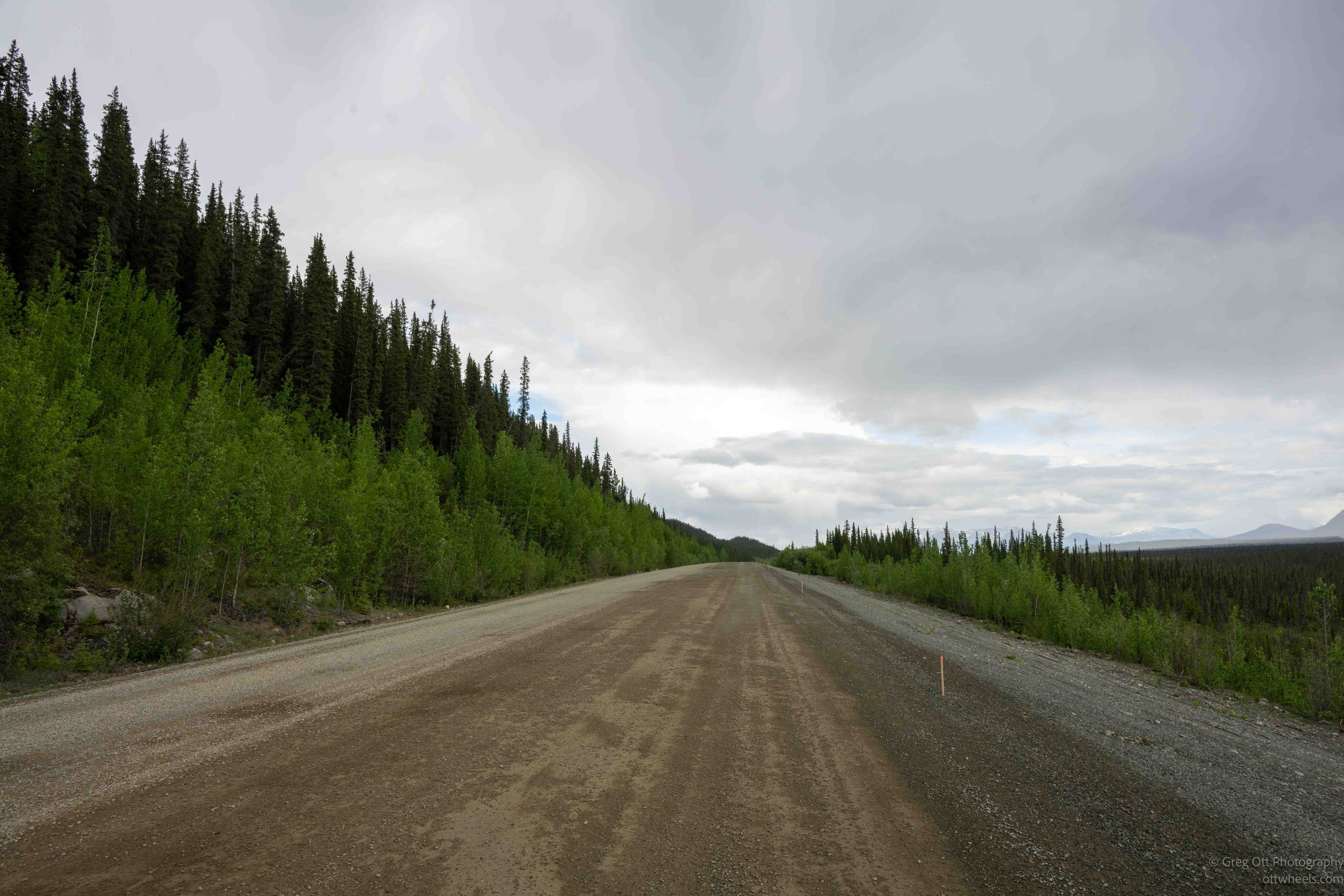
I continued past Destruction Bay and then Burwash Landing, both places I had already explored during my earlier trip. About 30 minutes north of Burwash Landing, the condition of the Alaska Highway began to deteriorate. People had warned me about frost heaves, washouts, and sections where the road had shifted or dropped. The farther north I drove, the worse it became. Long stretches turned to dirt and gravel, and speed limits dropped from 90 kph to as low as 30 kph. In several areas, the road had been widened dramatically. The surface was still dirt, but some sections were wide enough for five lanes of traffic. My guess is that they are rebuilding portions of the highway before eventually paving them. Several people told me that this section receives less attention because much of the traffic consists of Americans traveling to and from Alaska. Whether that is true or not, the condition of the road certainly stood out.
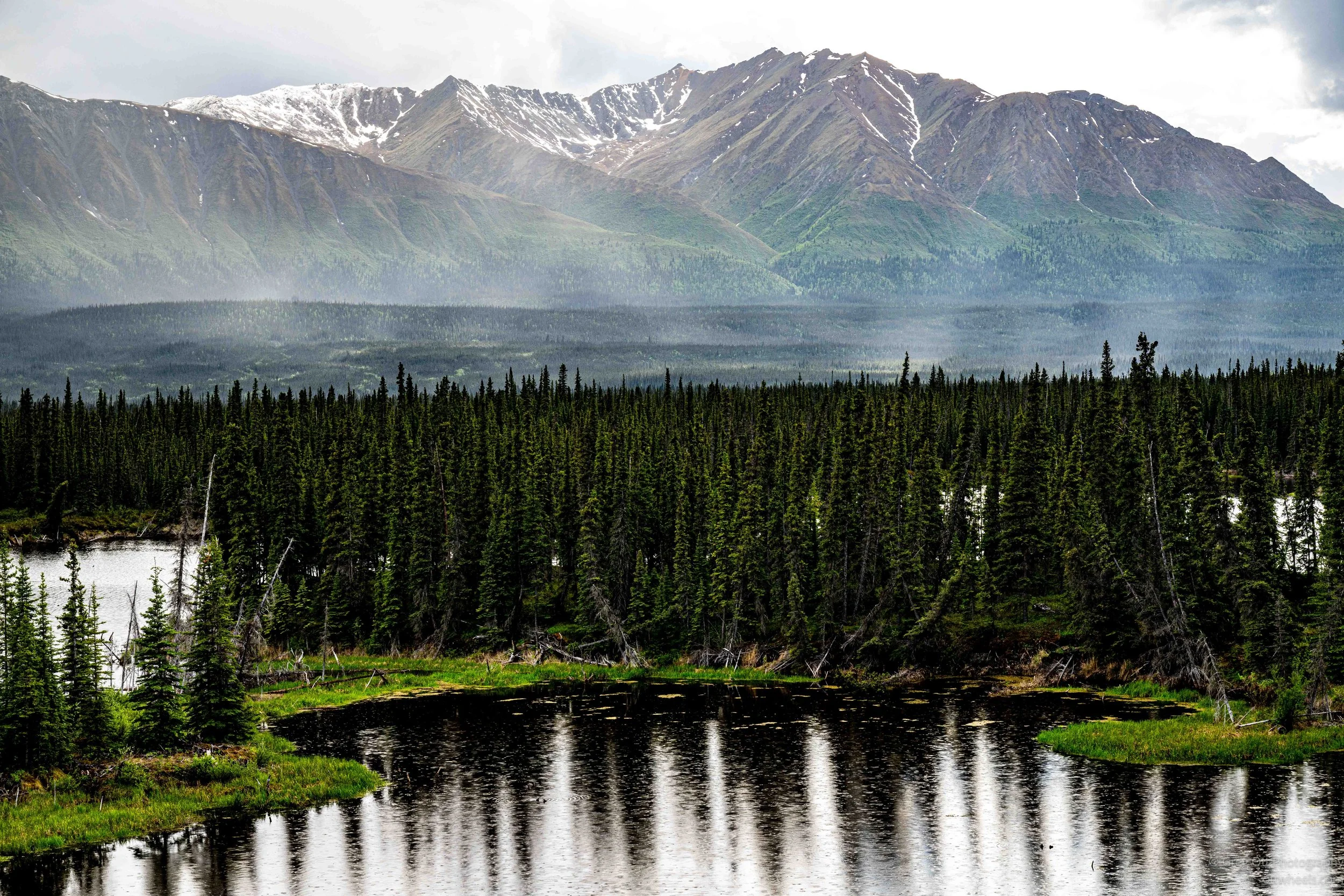
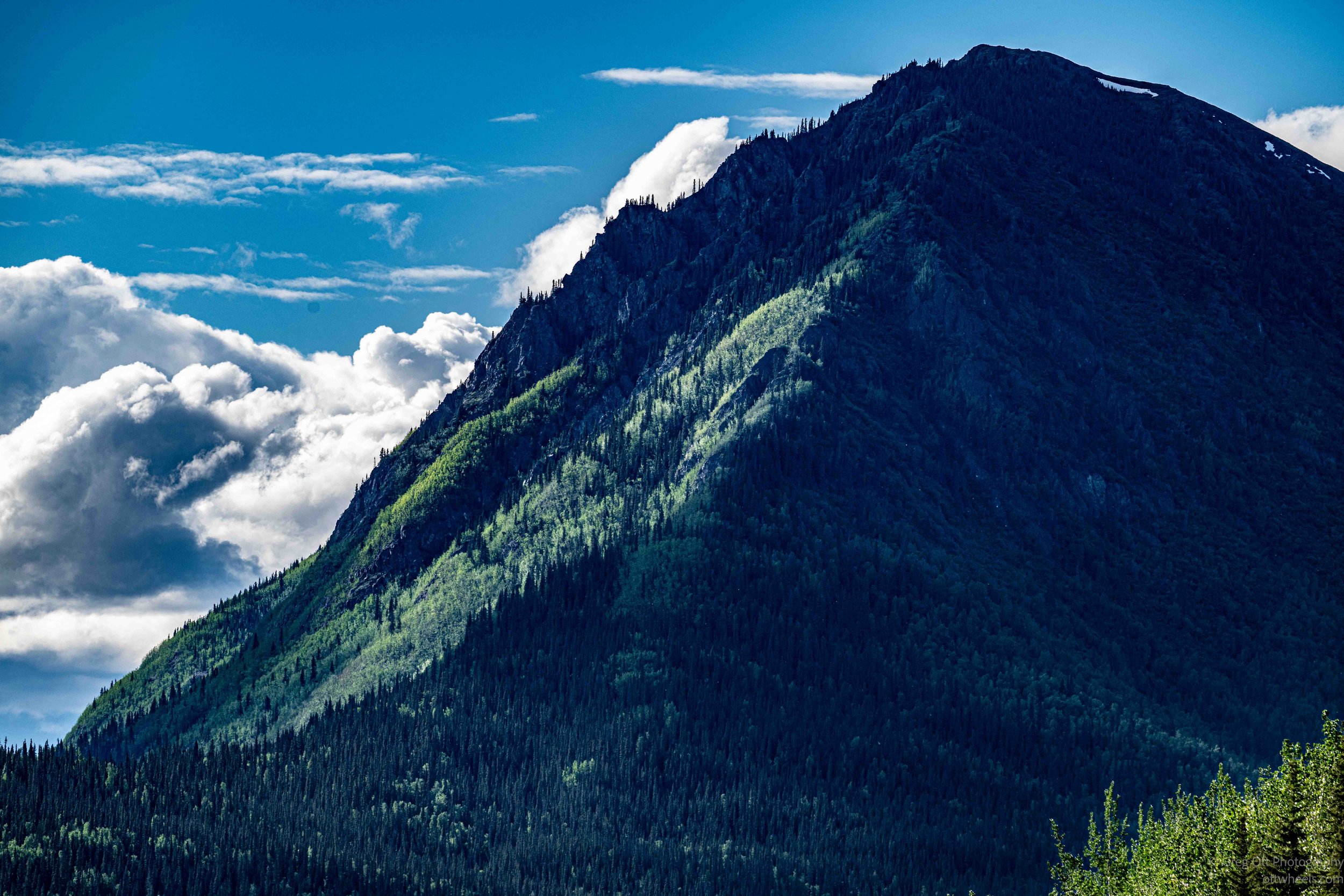
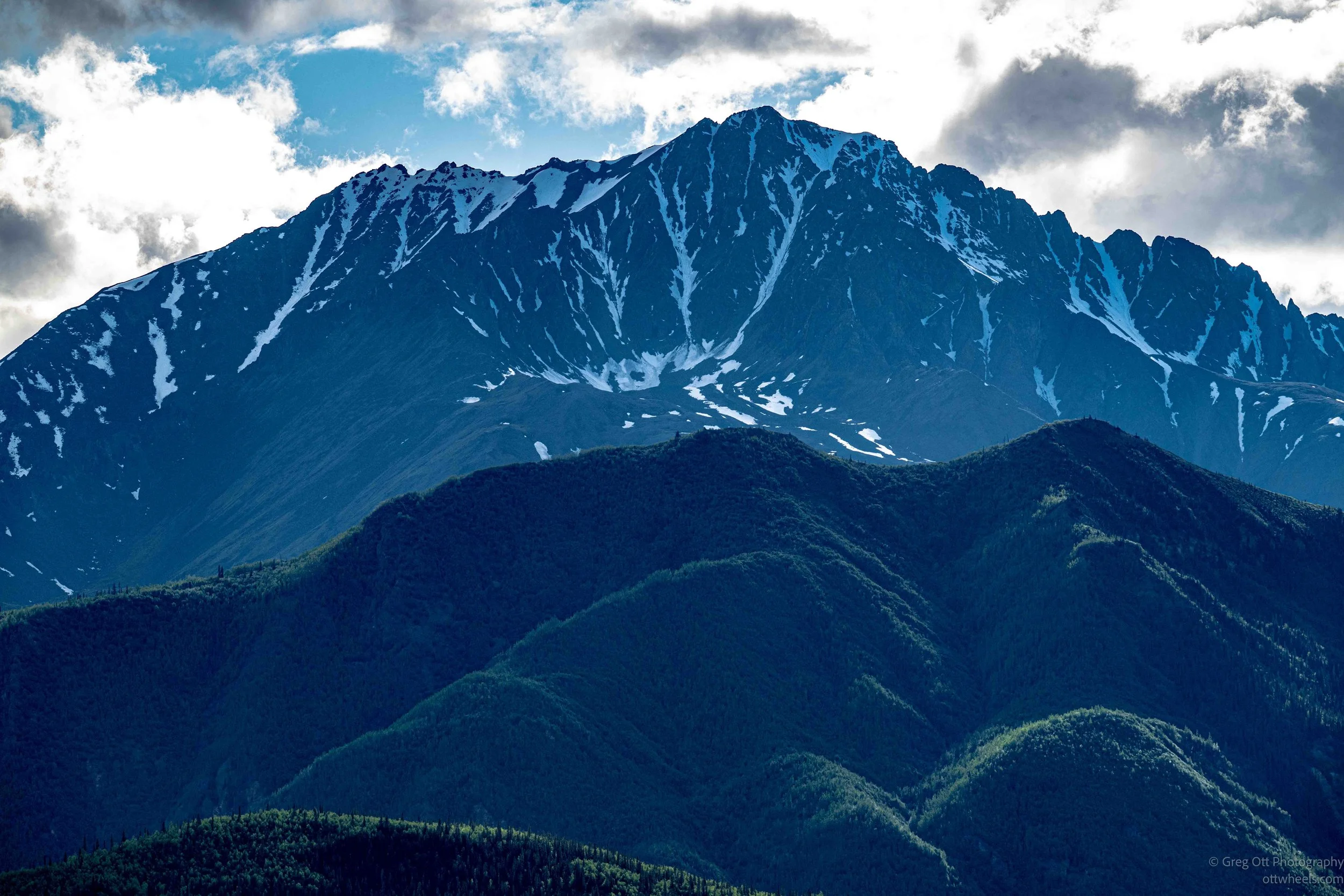
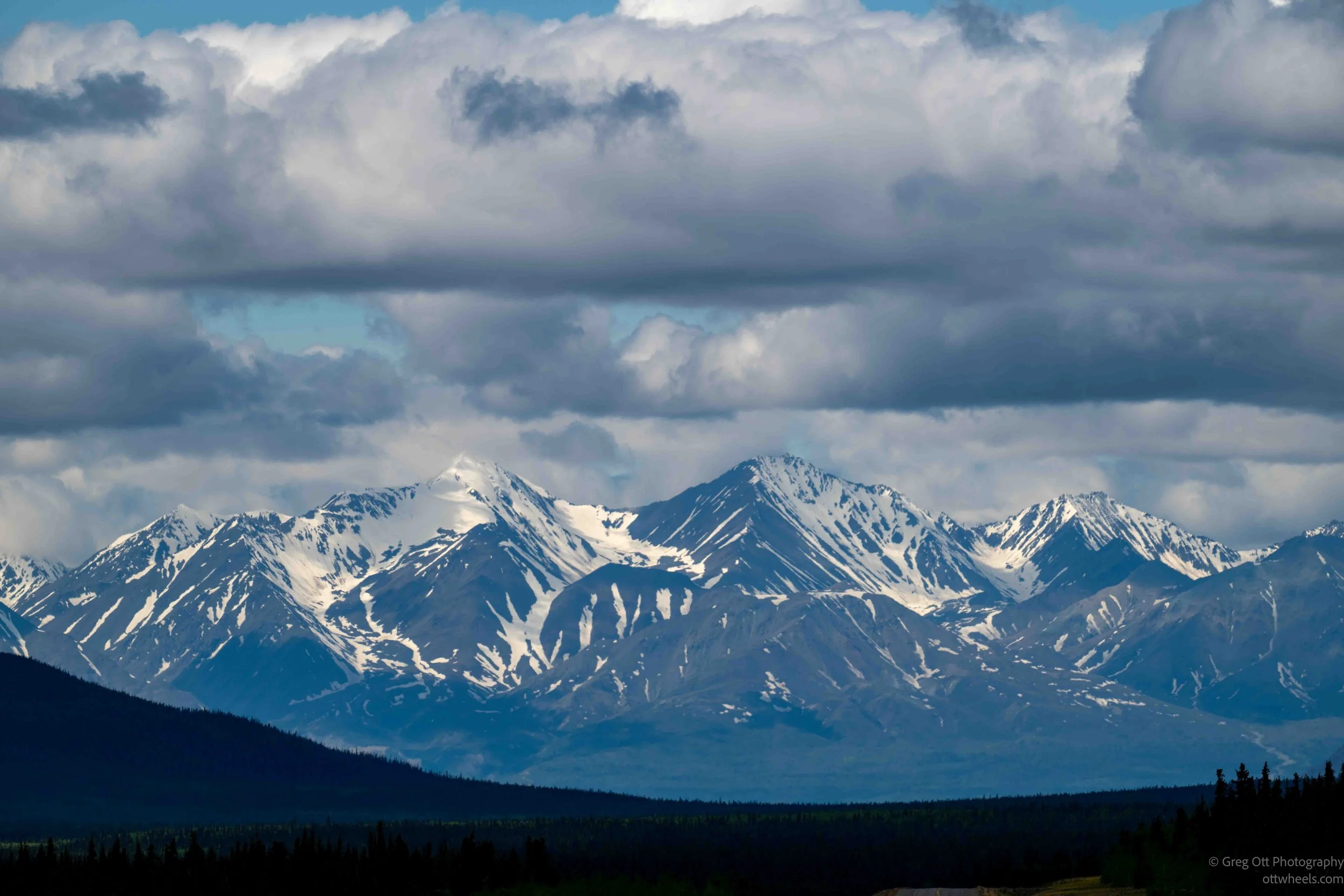
The scenery remained beautiful throughout the afternoon, but the weather made photography difficult. Rain showers drifted across the mountains and often obscured the best views. There were moments when the landscape looked spectacular, but by the time I found a place to pull over, the light had changed or the mountains had disappeared behind curtains of rain.
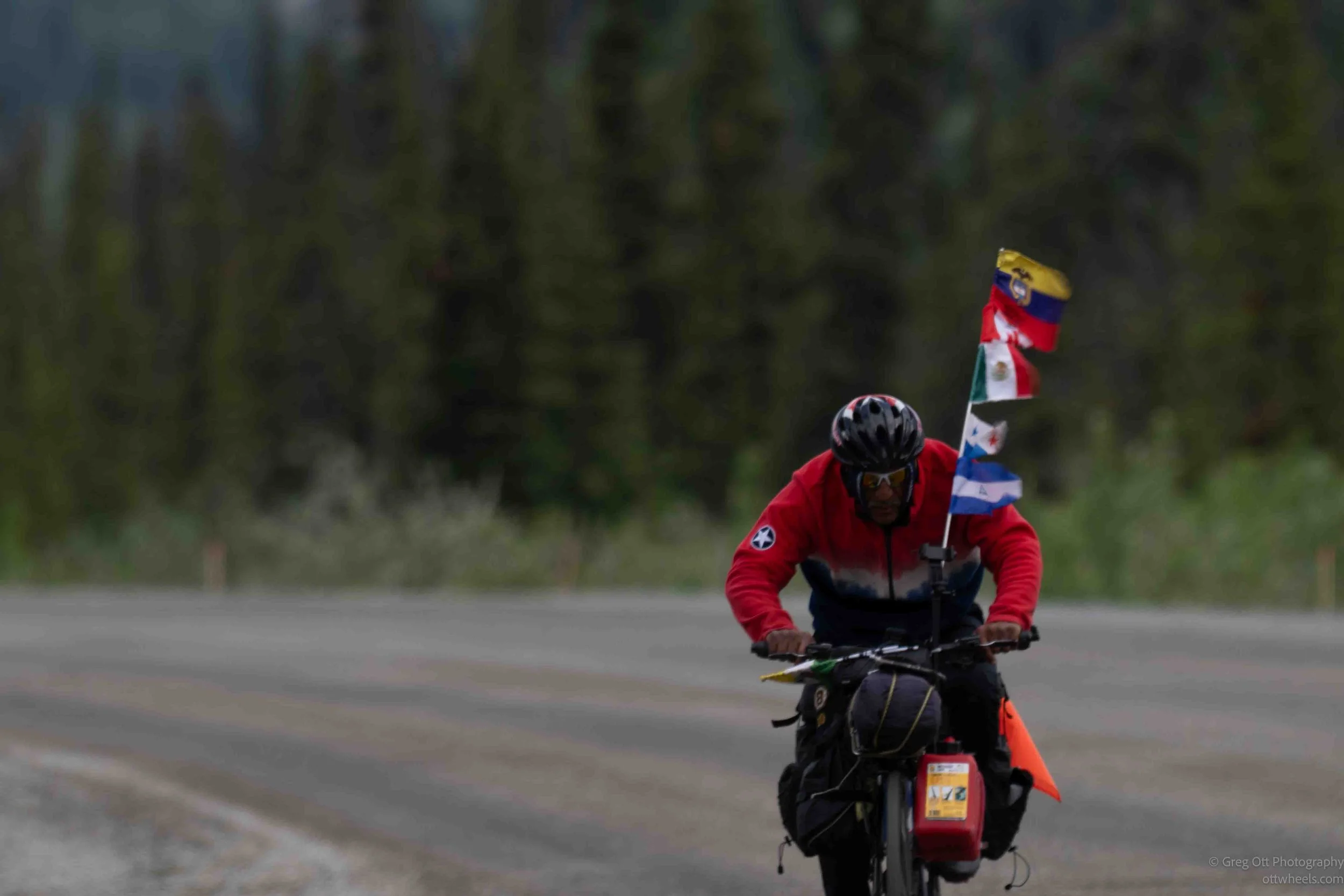
I also saw some of the strangest road traffic of the trip. Over the course of the day, I passed probably 20 cyclists. They weren’t traveling together, but many carried flags from their home countries. I spotted Argentina, Switzerland, Germany, Brazil, Mexico, and several others. One rider had a bicycle equipped with a small gasoline engine, but he appeared determined to pedal up the steep dirt grades rather than use it.
Then there were the rabbits. For some reason, many of them seemed convinced that the safest place in the Yukon was directly on the double yellow line in the middle of the highway. Some moved when vehicles approached. Others appeared completely committed to their decision. At one stretch of road, I counted five rabbits spaced out along the centerline. Two refused to move until the last possible second. A few miles later, I passed a dead rabbit that had apparently lost its game of chicken with traffic.
Later, I learned there may actually be a reason for it. In the dense boreal forest, predators can stay hidden until they are very close. Out on the open road, rabbits can see danger coming from much farther away. The road is also warmer than the surrounding ground. Unfortunately, that strategy works better against foxes and lynx than it does against highway traffic.
By the end of the day, I had spent about nine hours covering a route that Google claimed would take five. Between construction zones, photography stops, naps, gas station mishaps, and wildlife, the hours disappeared quickly. I was exhausted. Around 7:30 p.m., I pulled into a rest area and decided I was done for the day. Traffic had already begun thinning around 5 p.m., and after I stopped, I heard very few vehicles for the rest of the evening. After a long day on the Alaska Highway, the quiet was exactly what I needed.