Skagway to Whitehorse
I woke on Sunday morning expecting Skagway to be as quiet as it had been the night before. Instead, the town was busy again.
I headed to my favorite coffee shop, Café on 5th, only to find it closed. A quick look at Google Maps showed that most of Skagway's coffee shops were still closed at 9 a.m. Glacial Coffeehouse, two blocks away, was open, so I parked right in front. Most people in Skagway arrive by cruise ship and don't have vehicles, so parking is usually easy.
There were probably ten people ahead of me in line, but the shop moved customers through quickly. I ordered a toasted bagel and coffee and wandered into the seating area next door while I waited. The walls were covered with photographs from eight different photographers. The images were printed on metal and ranged across several styles. The metal prints really stood out.
A few minutes later, I heard my name called and grabbed a coffee. Another man immediately came over and said, "That's my coffee." He had been behind me in line and seemed genuinely annoyed. A moment later, they called my name again for my bagel. I asked him if he had ordered a bagel as well. "We ordered a lot of things," he replied. The woman behind the counter confirmed that the bagel and coffee were together, and there was nothing else with it. Mystery solved.
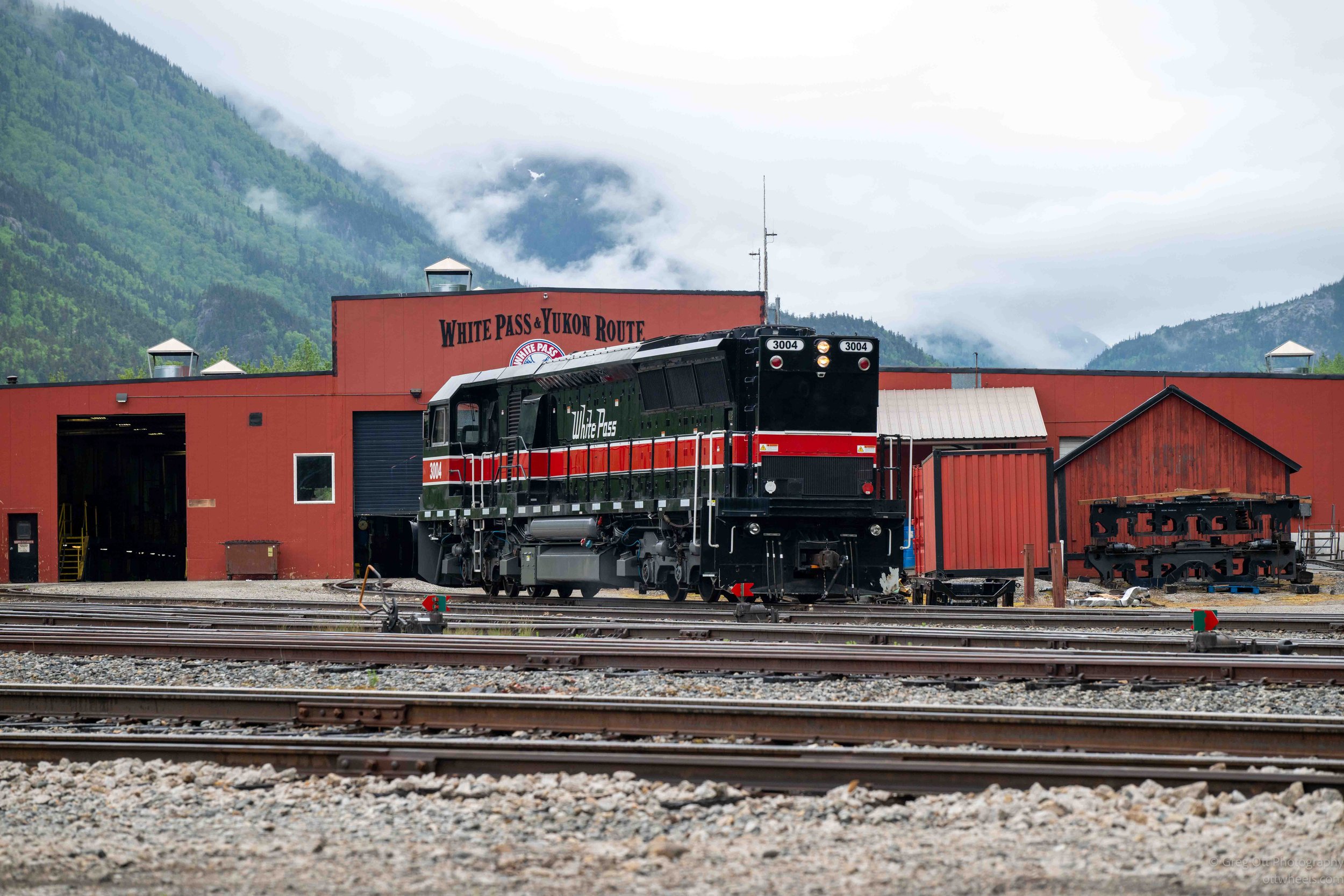
I ate the bagel while driving toward the Gold Rush Cemetery, the last item remaining on my Skagway list. Along the way, I stopped for a few minutes to watch the White Pass & Yukon Route locomotives being moved around the engine house before continuing down the dirt road toward the cemetery.
The cemetery sits only a couple of miles from the cruise ships, but I was surprised by how many people had walked there. Others arrived by taxi or tour bus. Near the parking area, a large plaque listed some of the people buried there. I read through the names before starting down the trail.
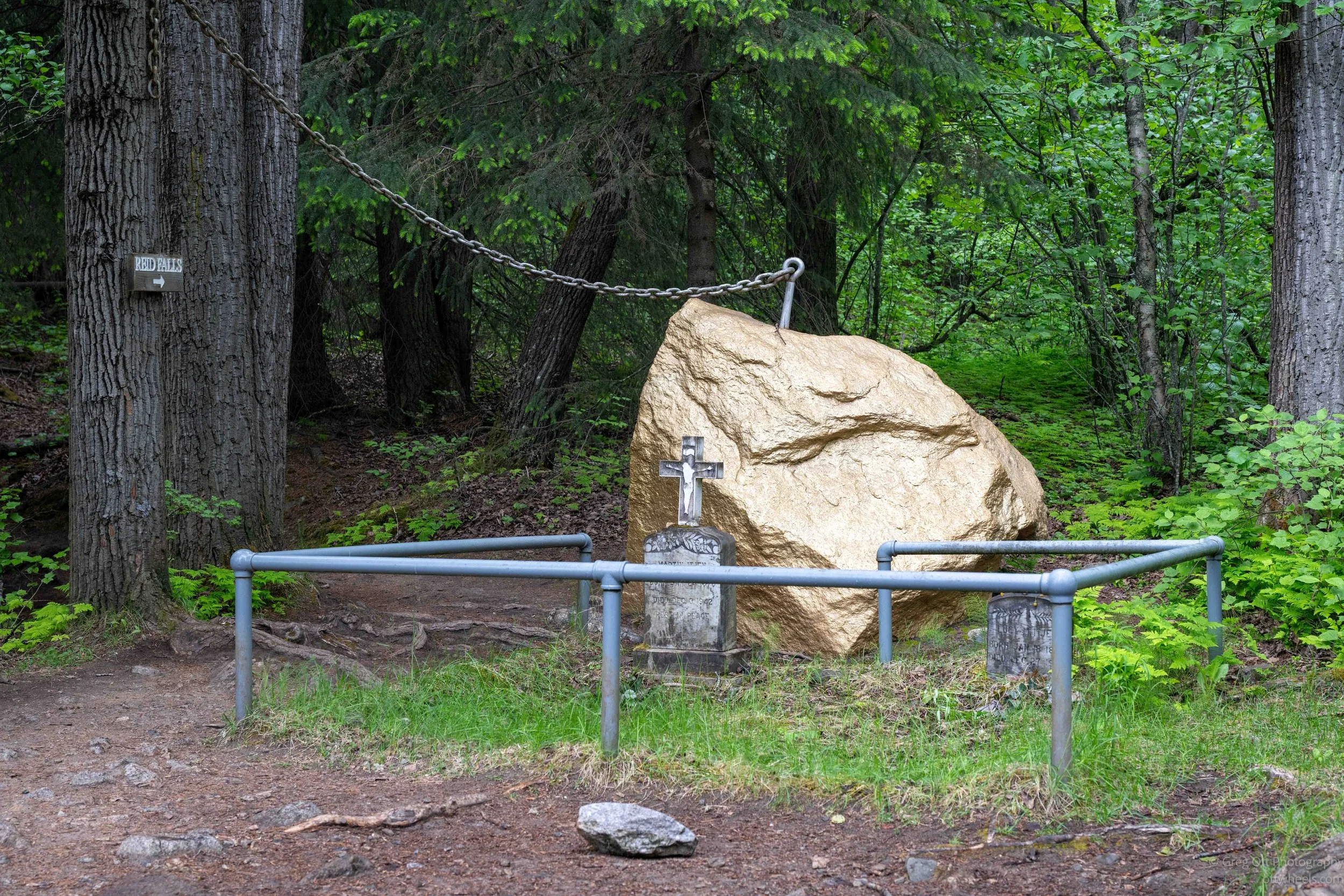
One grave immediately caught my attention. It was marked by an enormous gold-painted nugget that seemed completely out of place in a cemetery. I stopped to photograph both the nugget and the headstone.
I later learned the grave belonged to Martin Itjen, one of Skagway's earliest tourism promoters. Beginning in the 1920s, he built attractions, trails, and roadside curiosities that helped transform Skagway's Gold Rush history into something visitors could experience rather than simply read about. The giant gold nugget was one of his creations, and even today it continues to attract visitors.
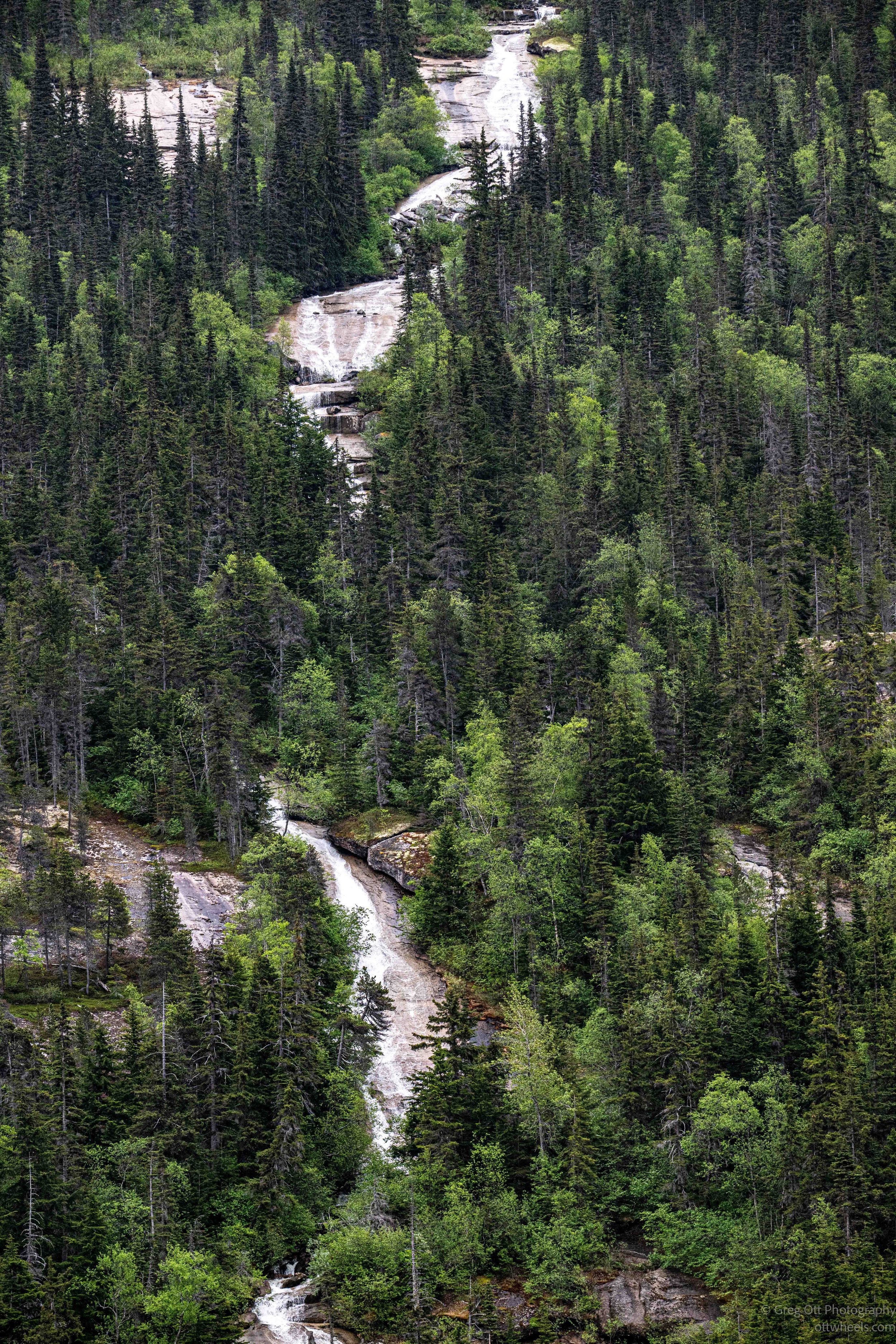
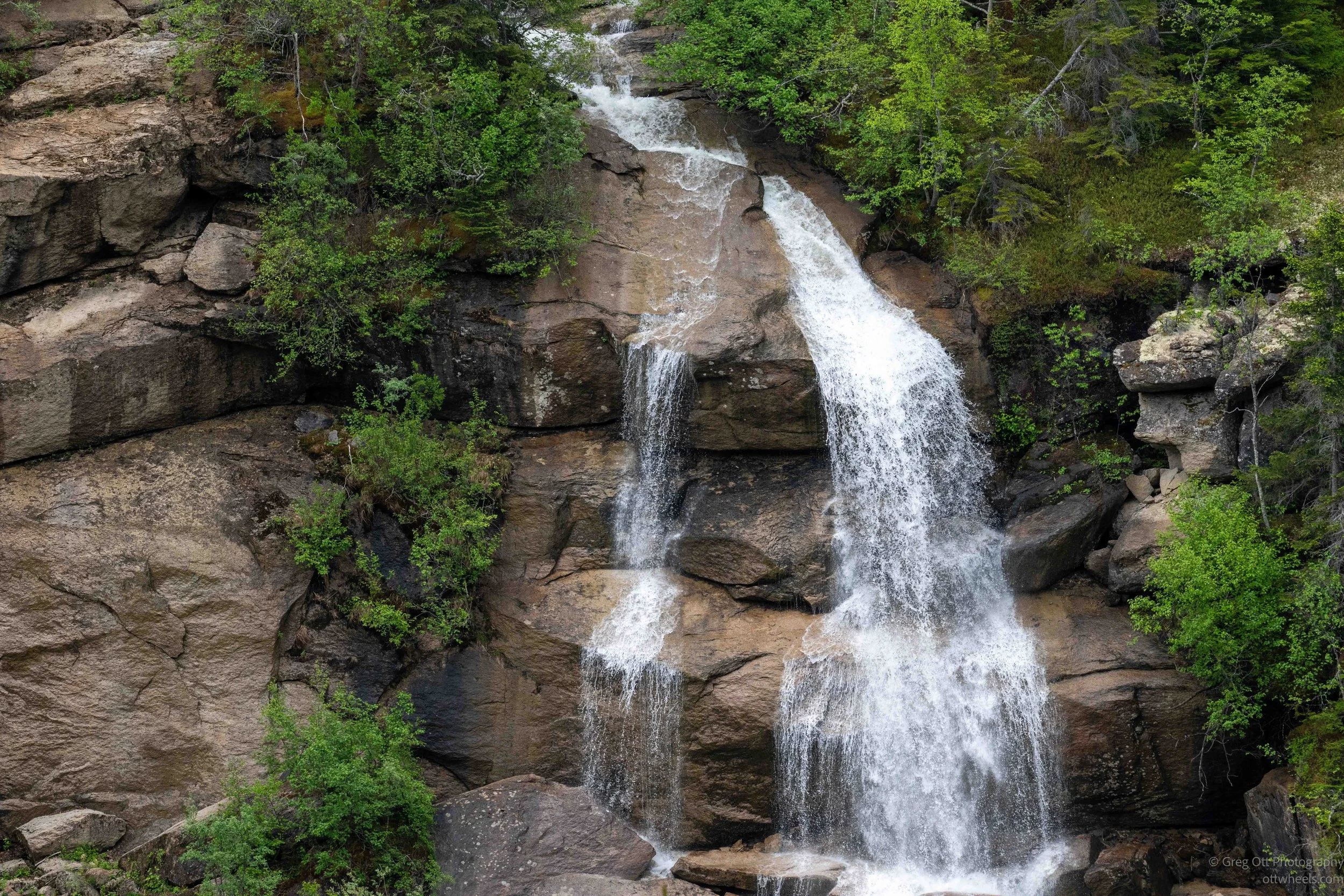
As I stood there trying to make sense of the unusual monument, I noticed a sign pointing toward Reid Falls. I could hear water rushing somewhere up the valley. Reid Falls hadn't been on my radar at all, but it seemed to be where everyone else was headed.
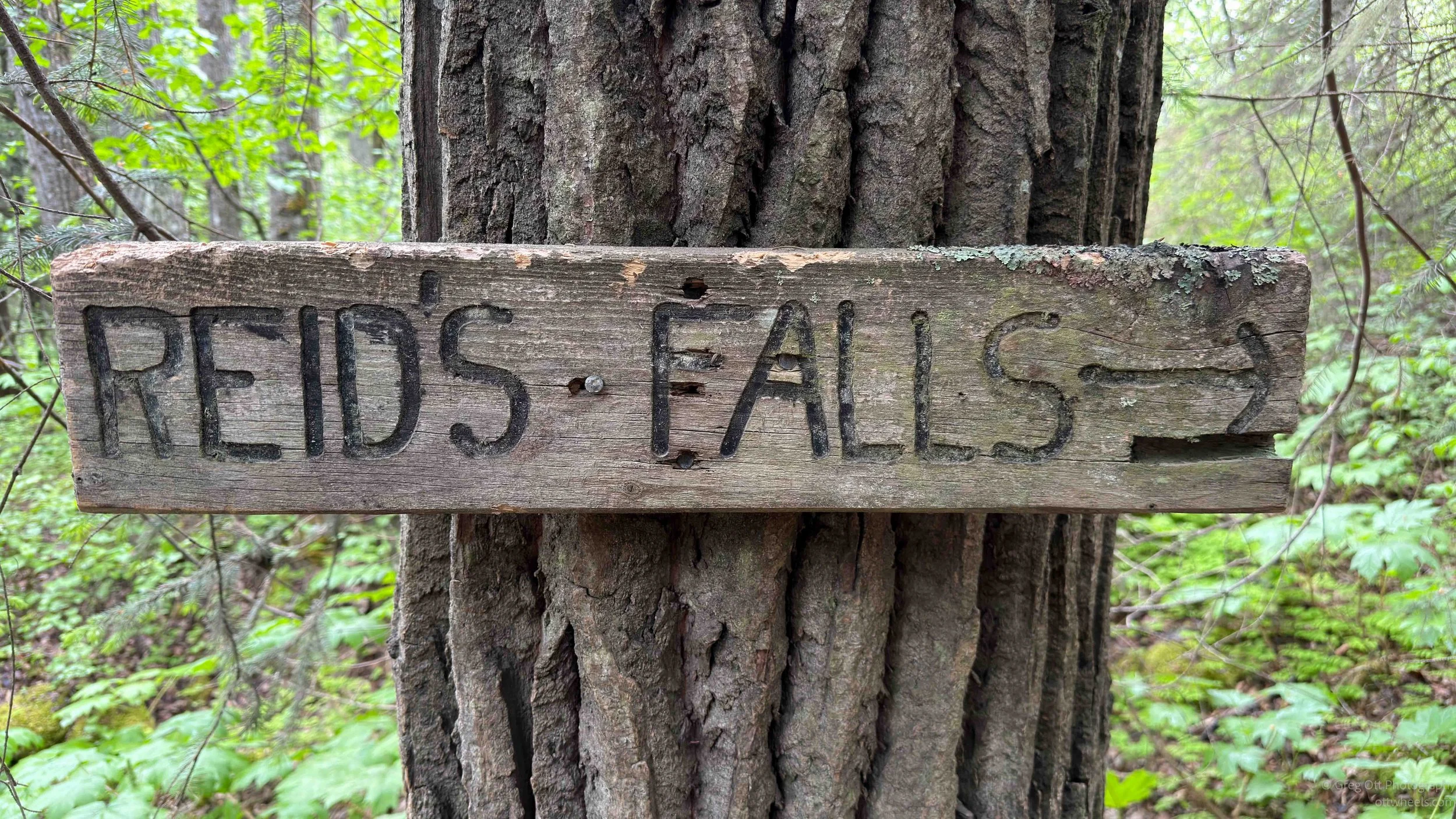
Named after Robert Reid, one of the surveyors who worked on the White Pass & Yukon Route railway, the waterfall drops nearly 300 feet down a cliff just beyond the cemetery.
When I arrived, there was a steady stream of people trying to photograph the falls between periods of light rain. After a few minutes, I returned to the van for my tripod and some rain protection for the camera, knowing I would probably be there awhile.
I ended up spending about an hour at the falls, waiting for openings in the crowd and watching the weather alternate between drizzle and brief dry spells.
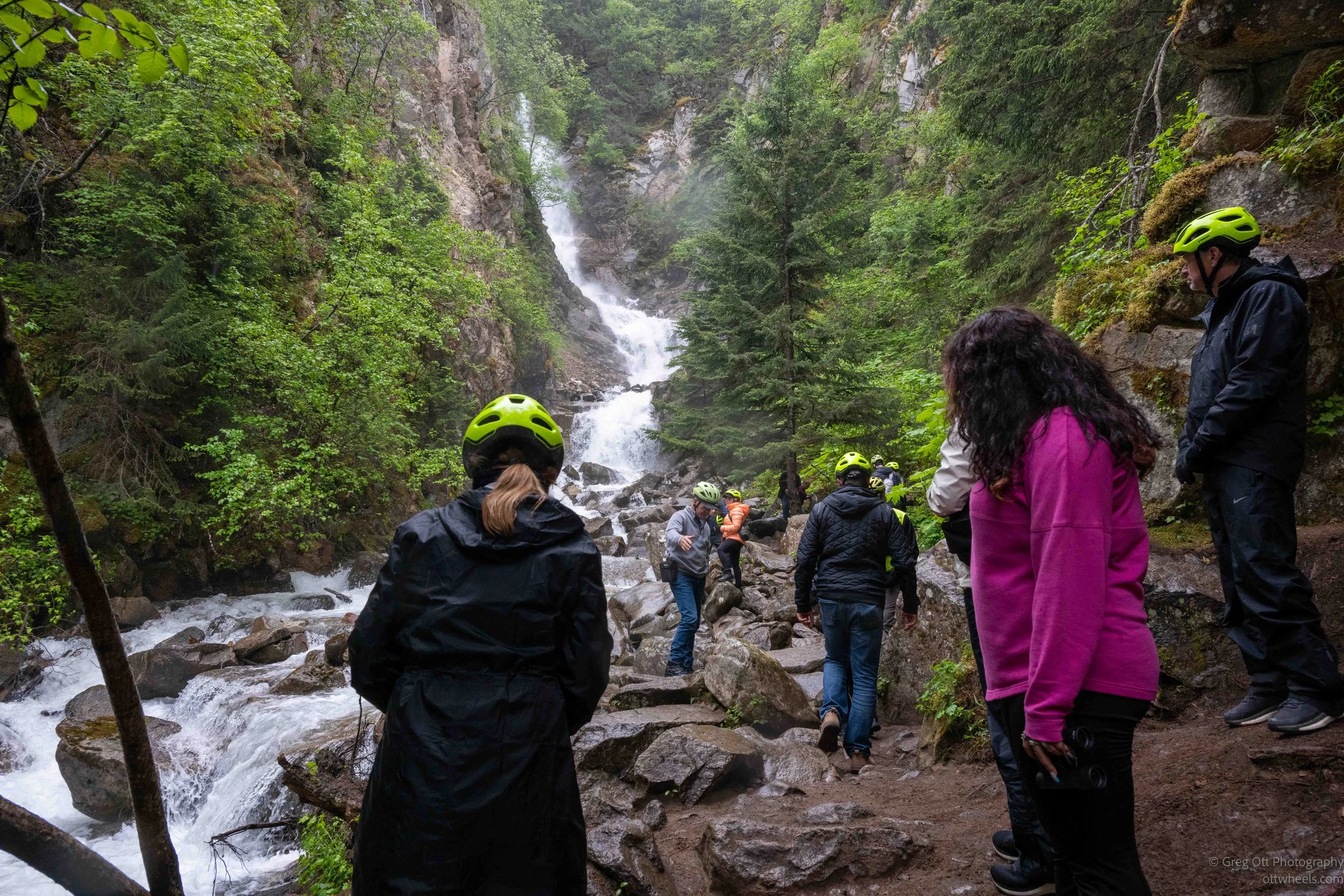
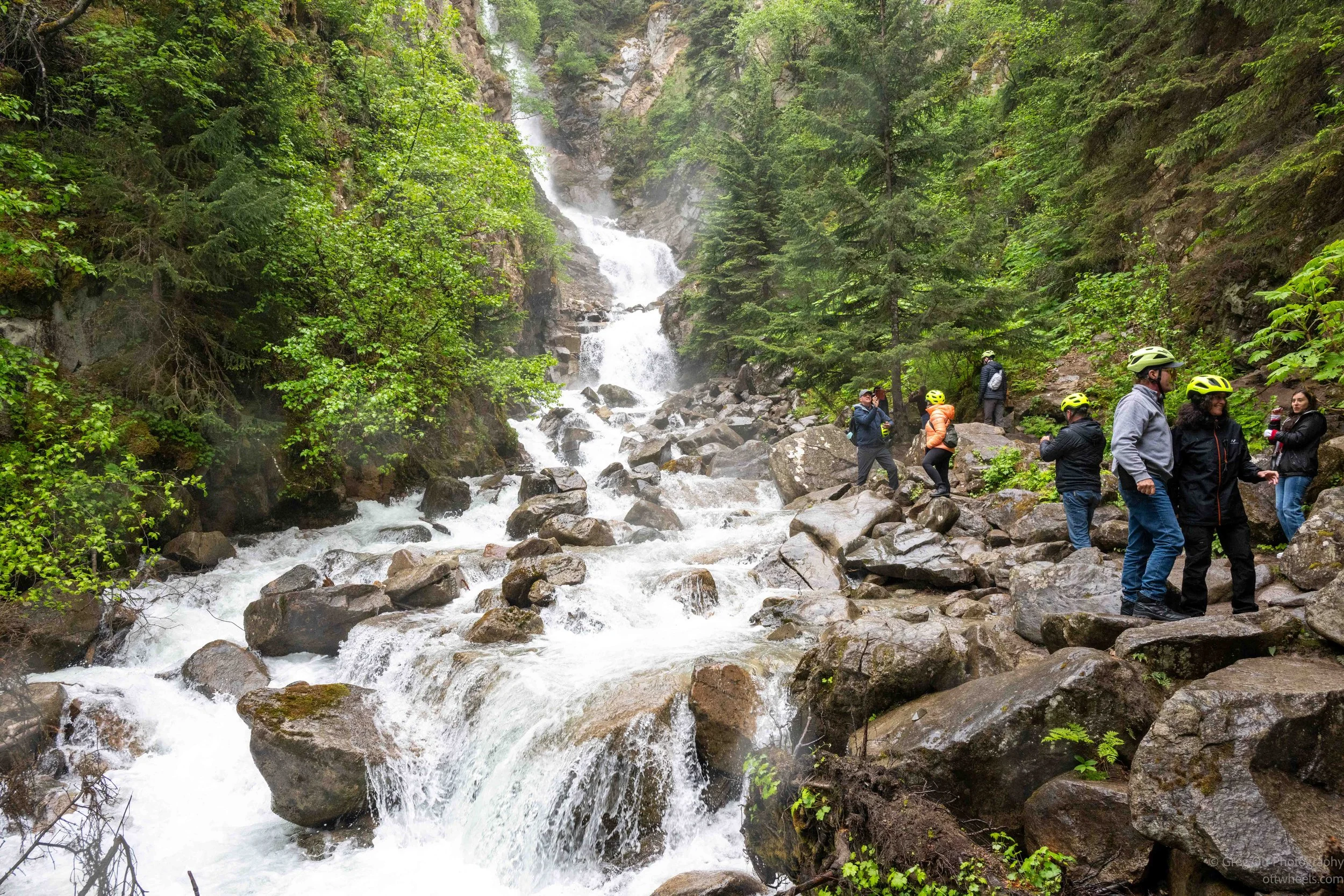
What surprised me most was how many people with walkers, canes, and limited mobility were determined to climb onto the wet rocks for a better photograph. The rocks were slick from the constant spray and rain. Several people started out, reconsidered, and turned back. I never saw anyone fall, but more than once I found myself wondering if a photograph was really worth the risk.
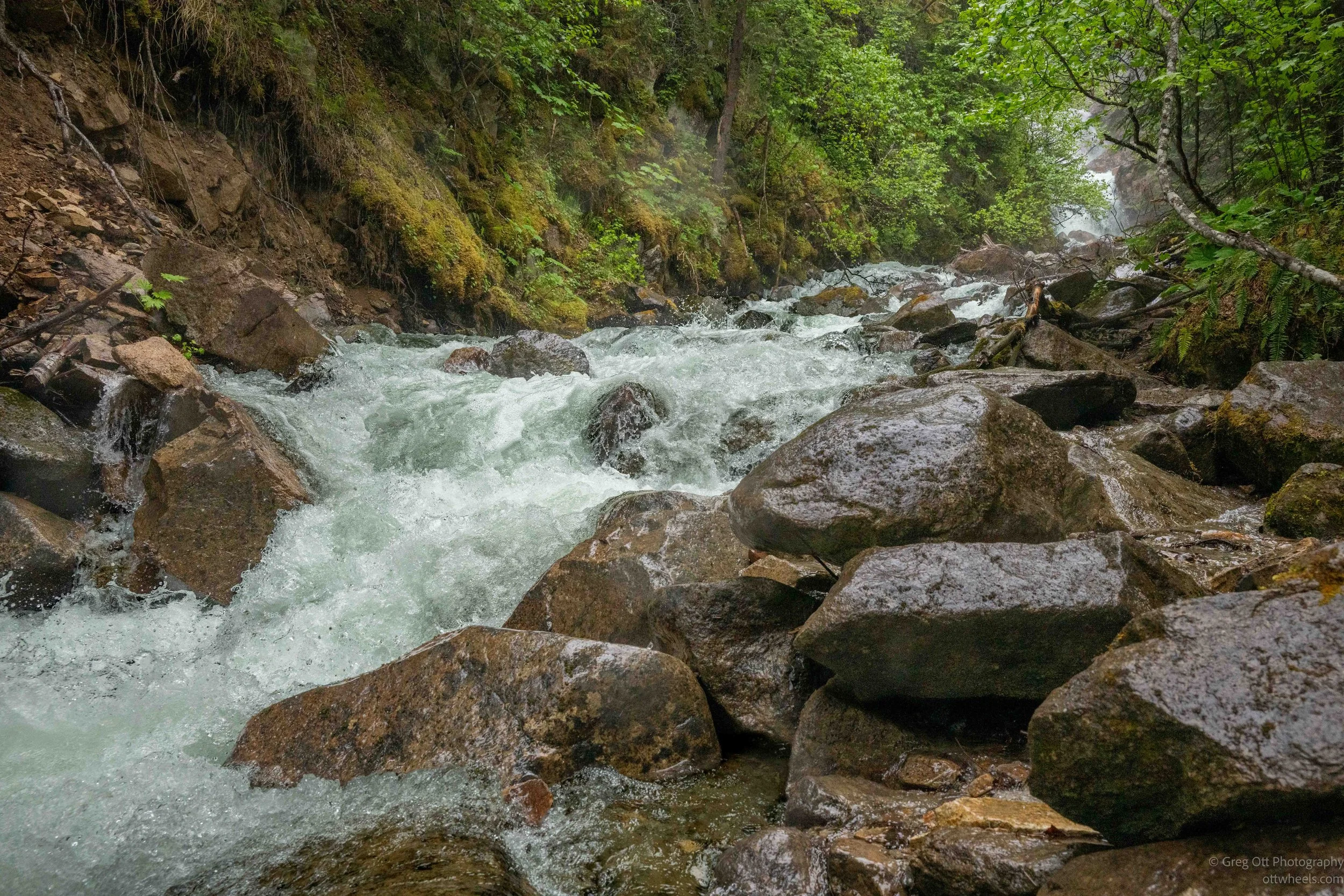
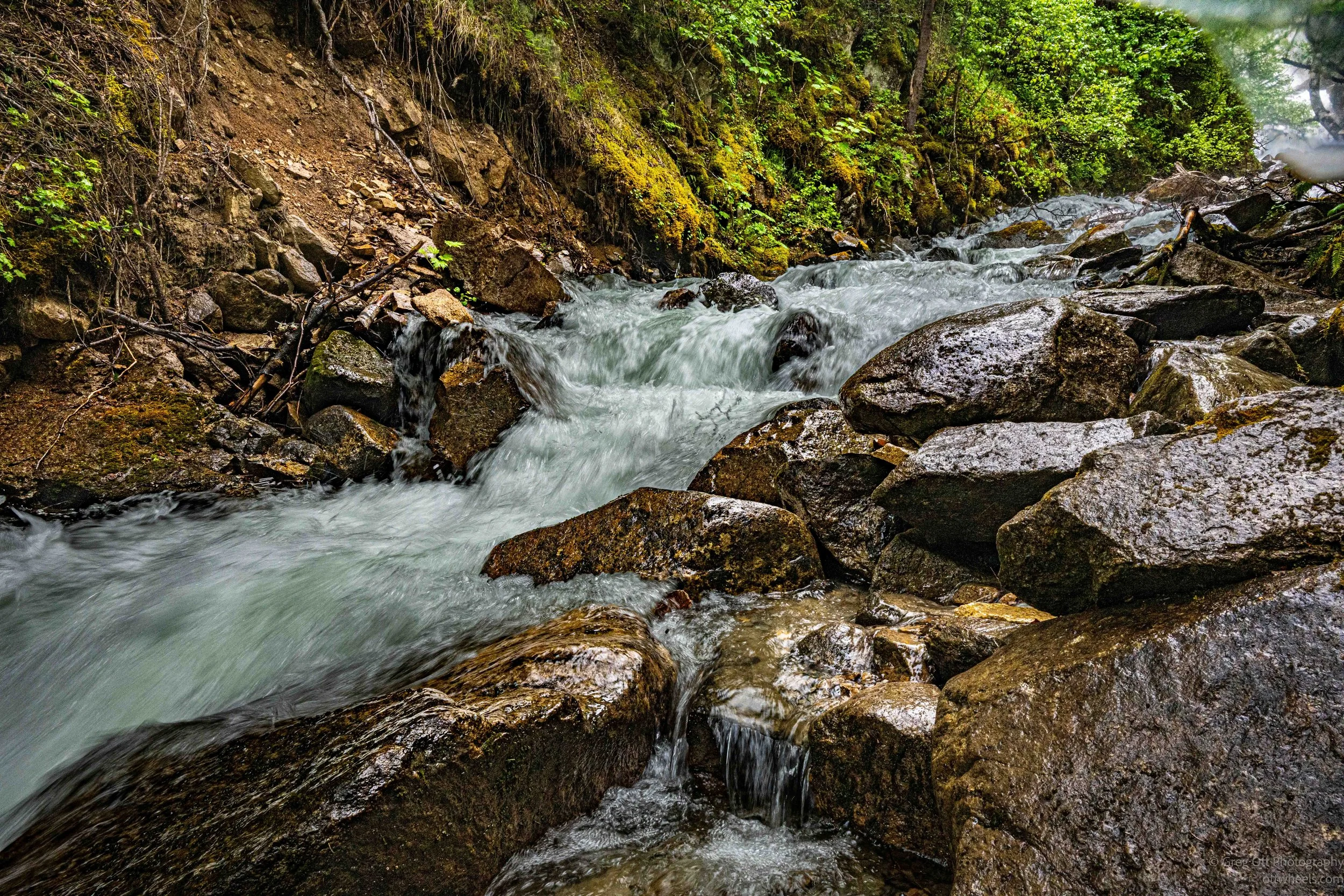
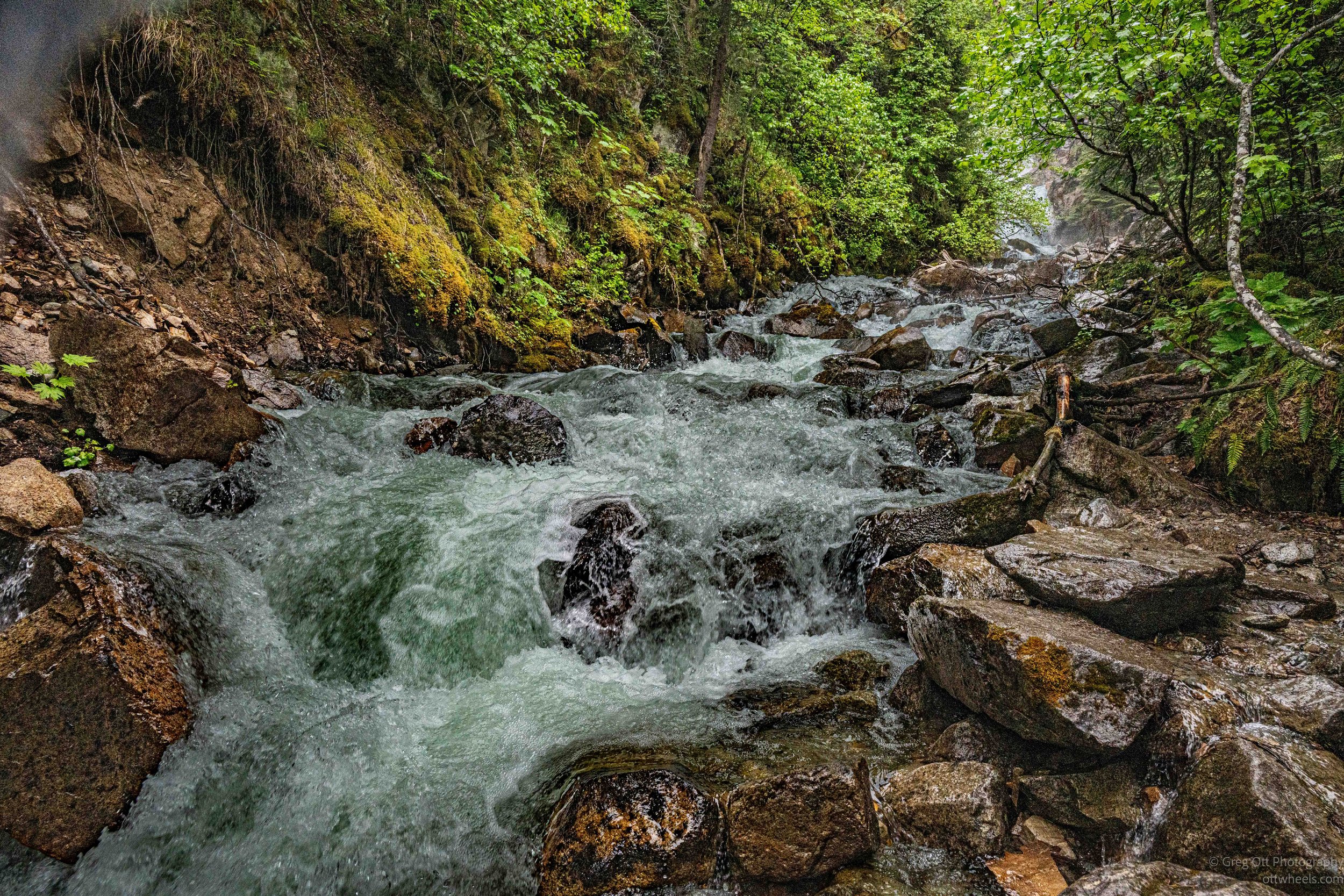
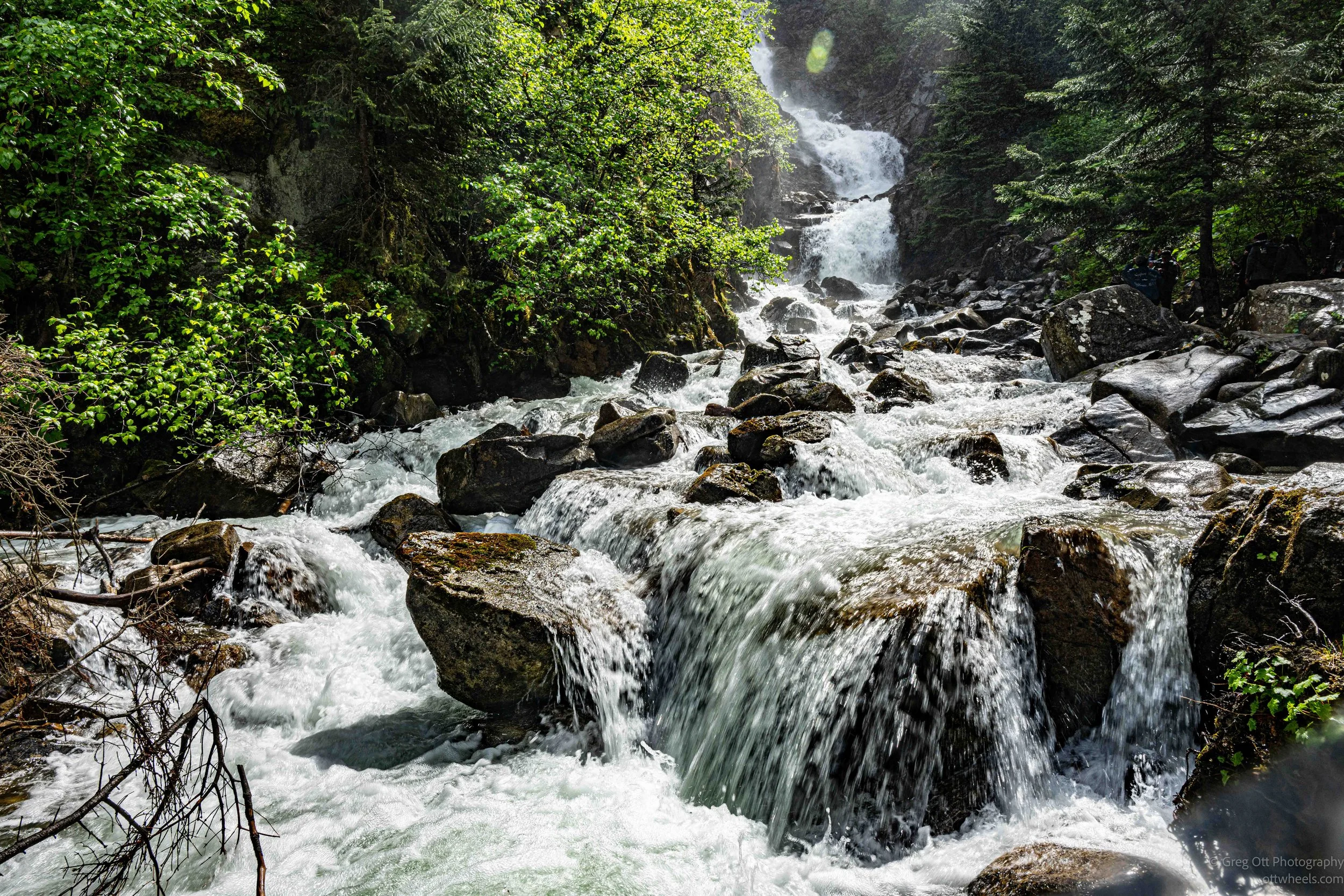
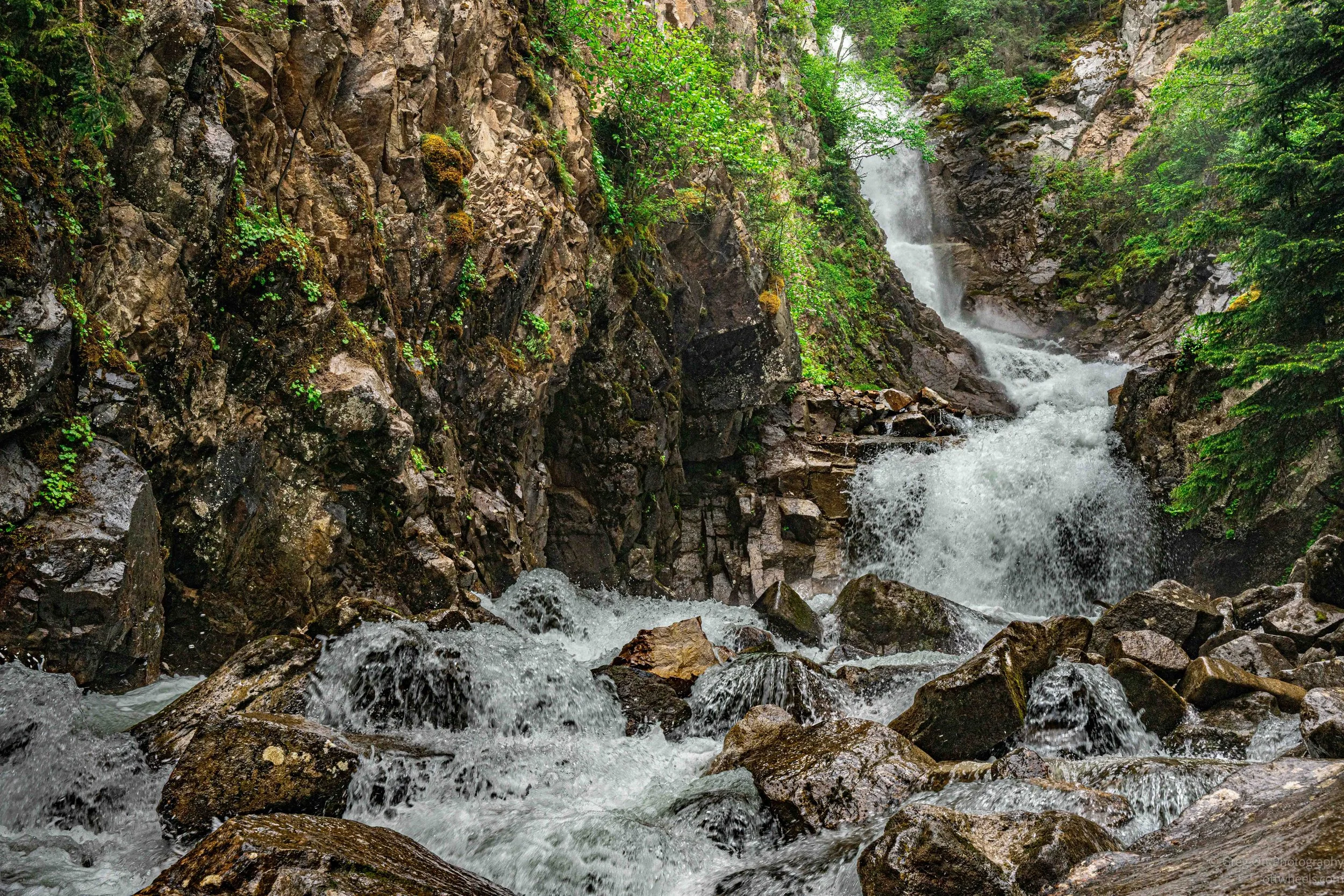
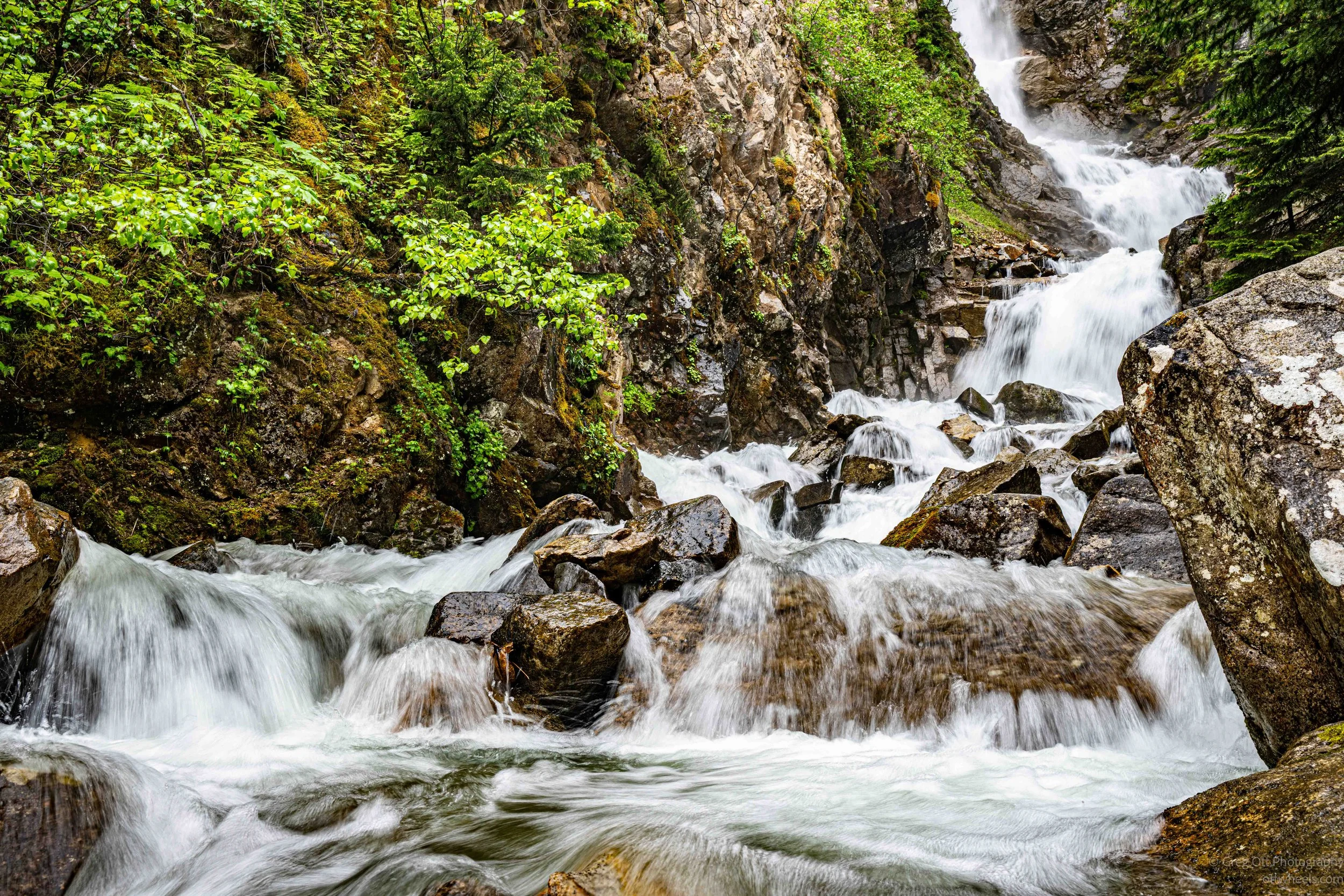
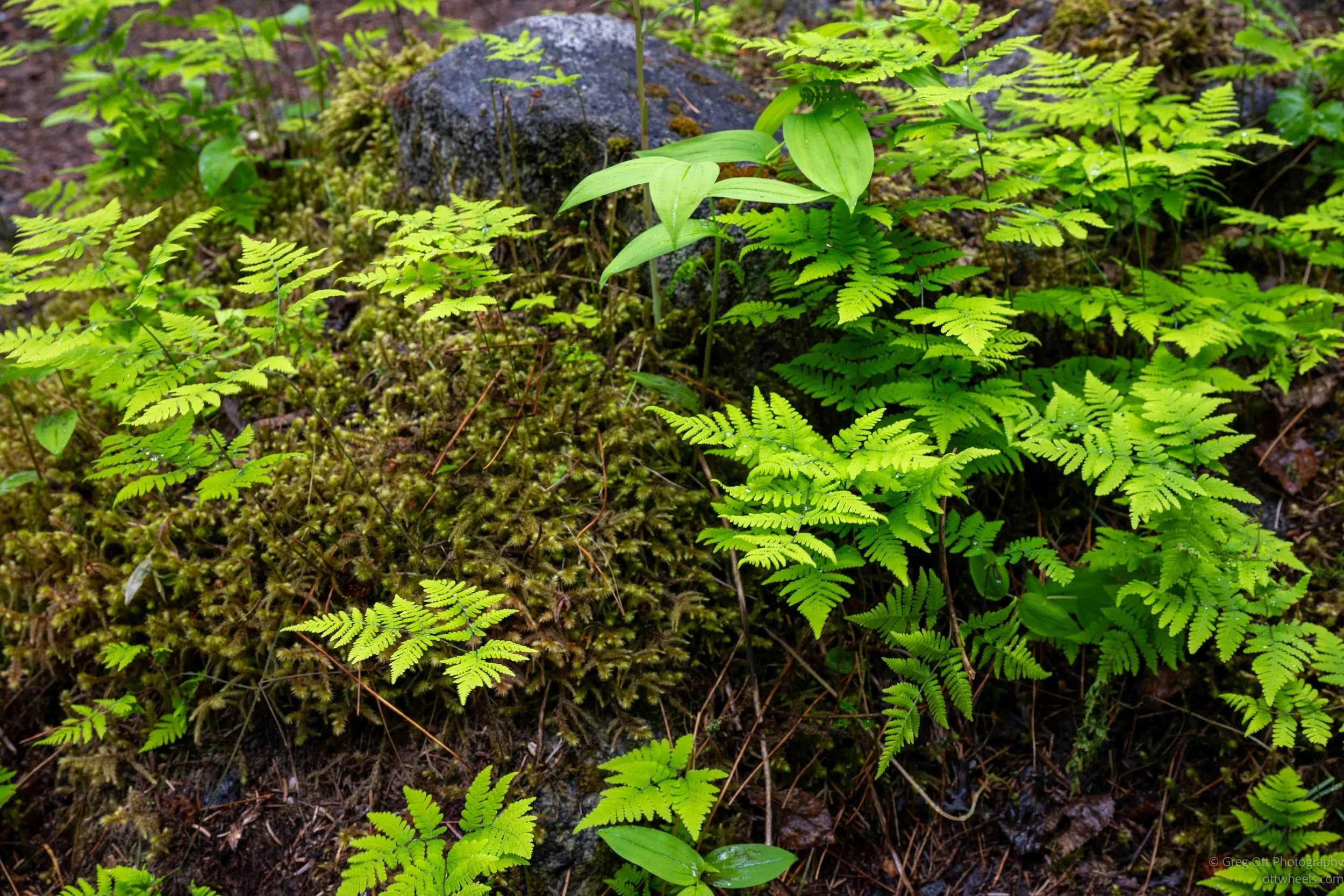
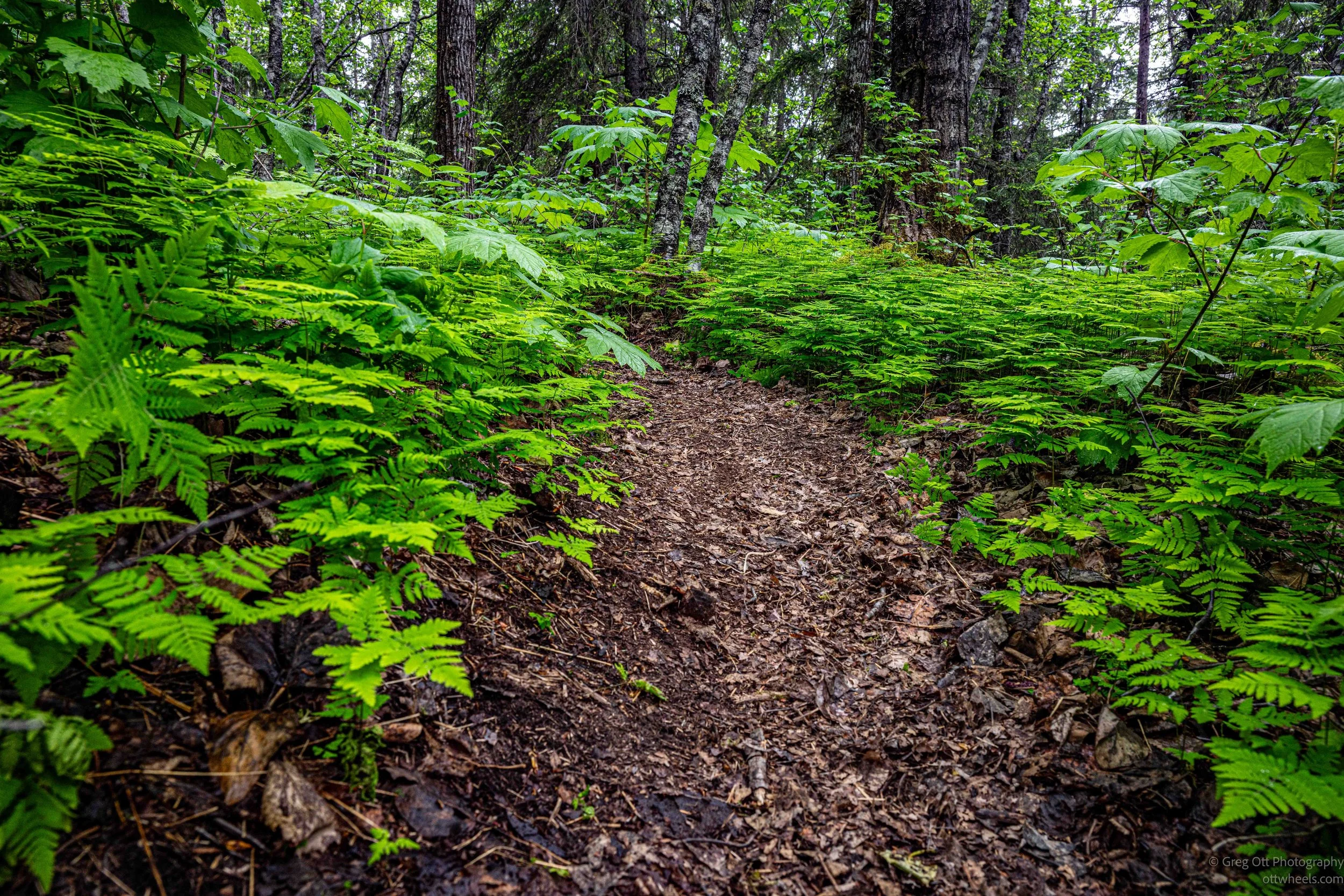
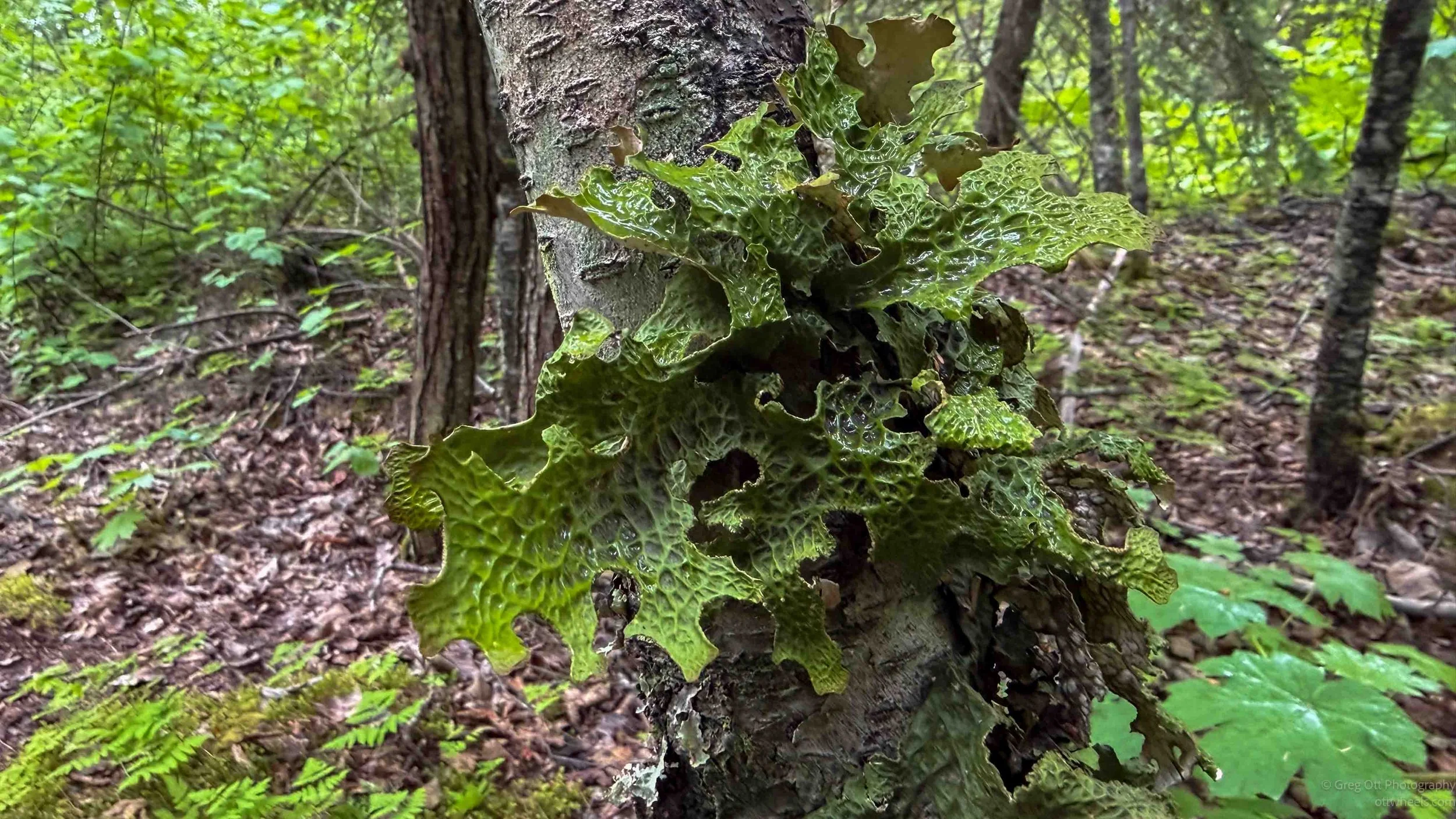
The area around the falls was incredibly lush. Constant moisture covered everything with green. I found myself wandering down small side trails just to look at the ferns, mosses, and other ground cover thriving in the damp conditions.
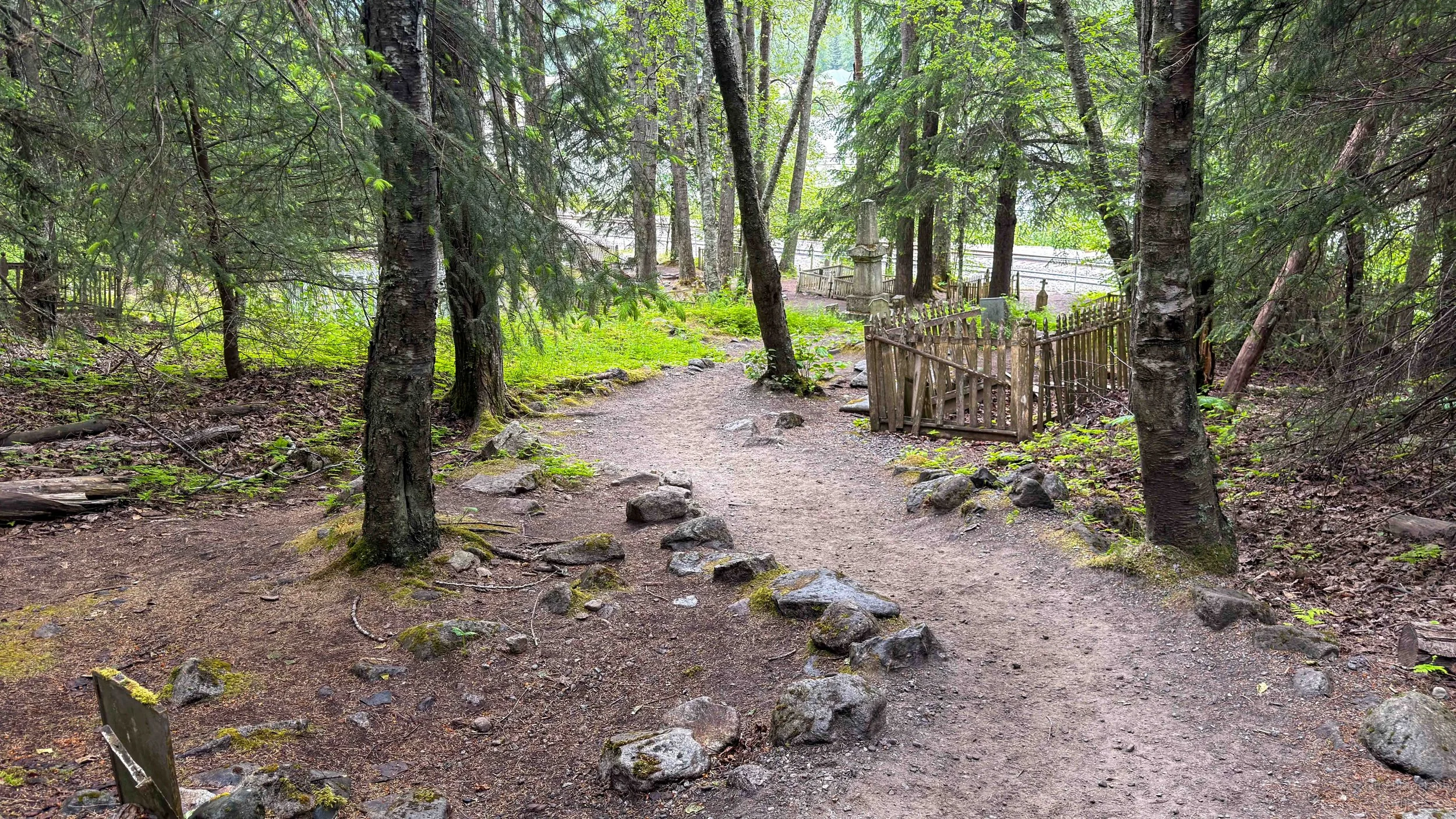
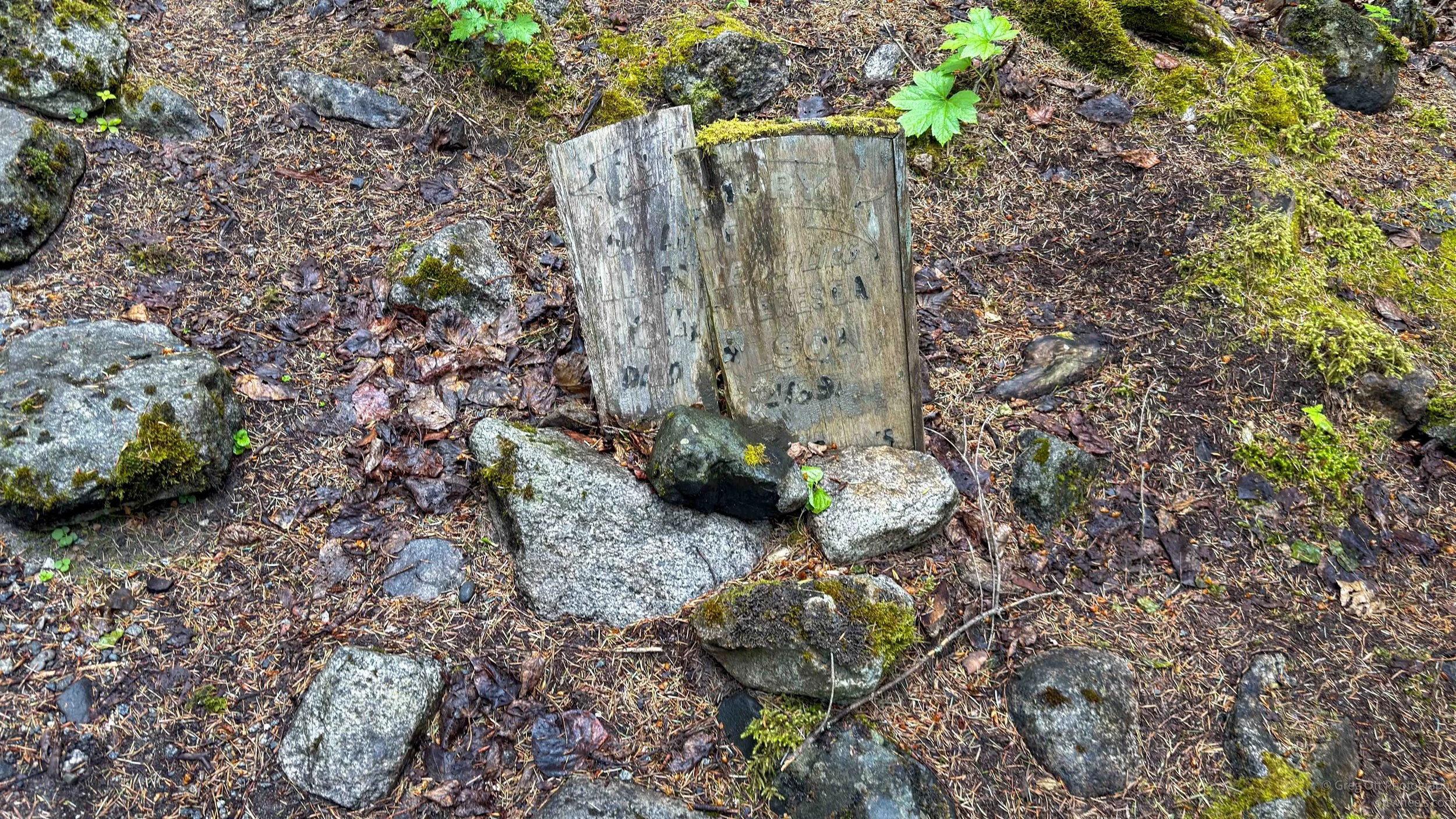
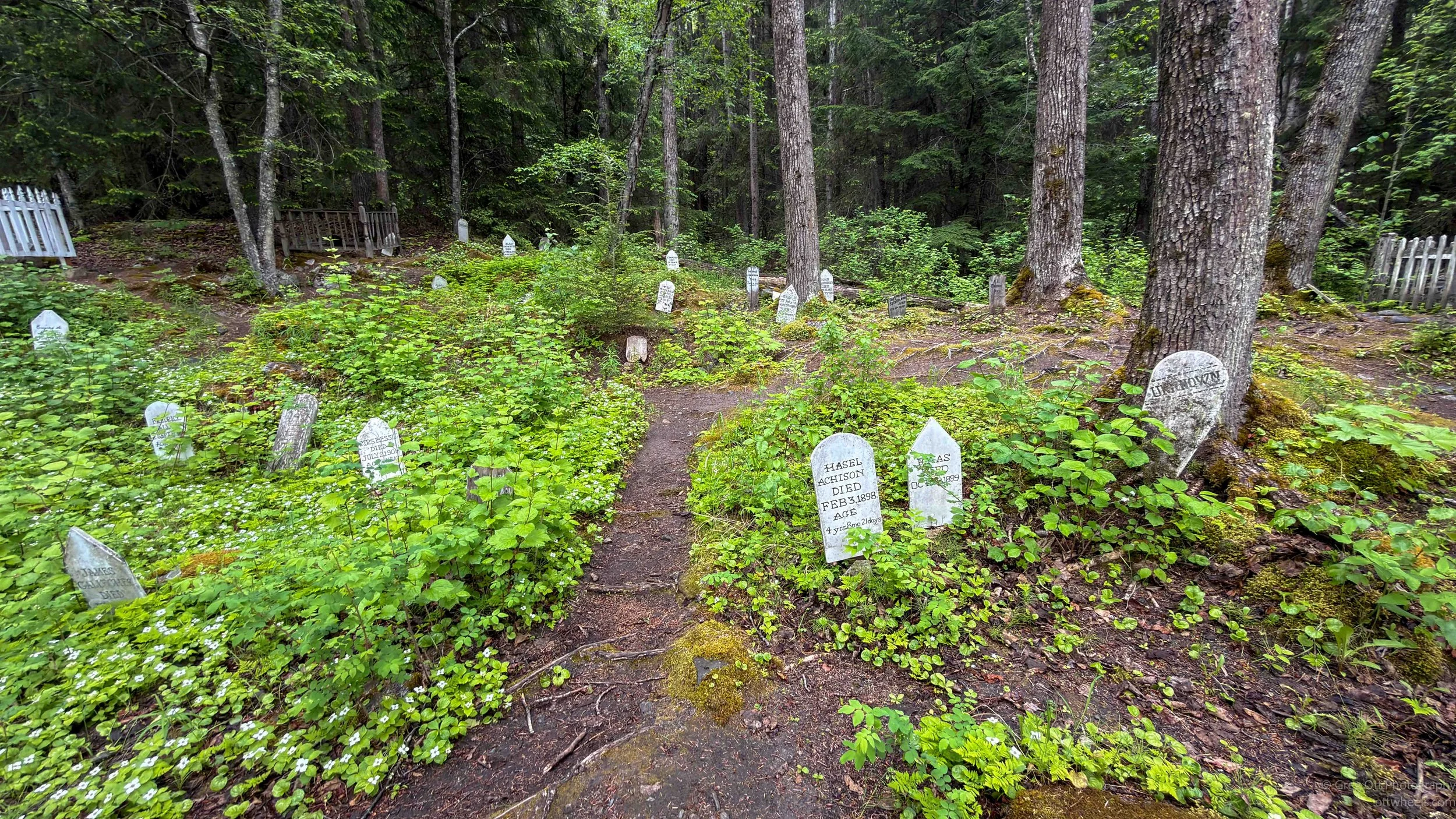
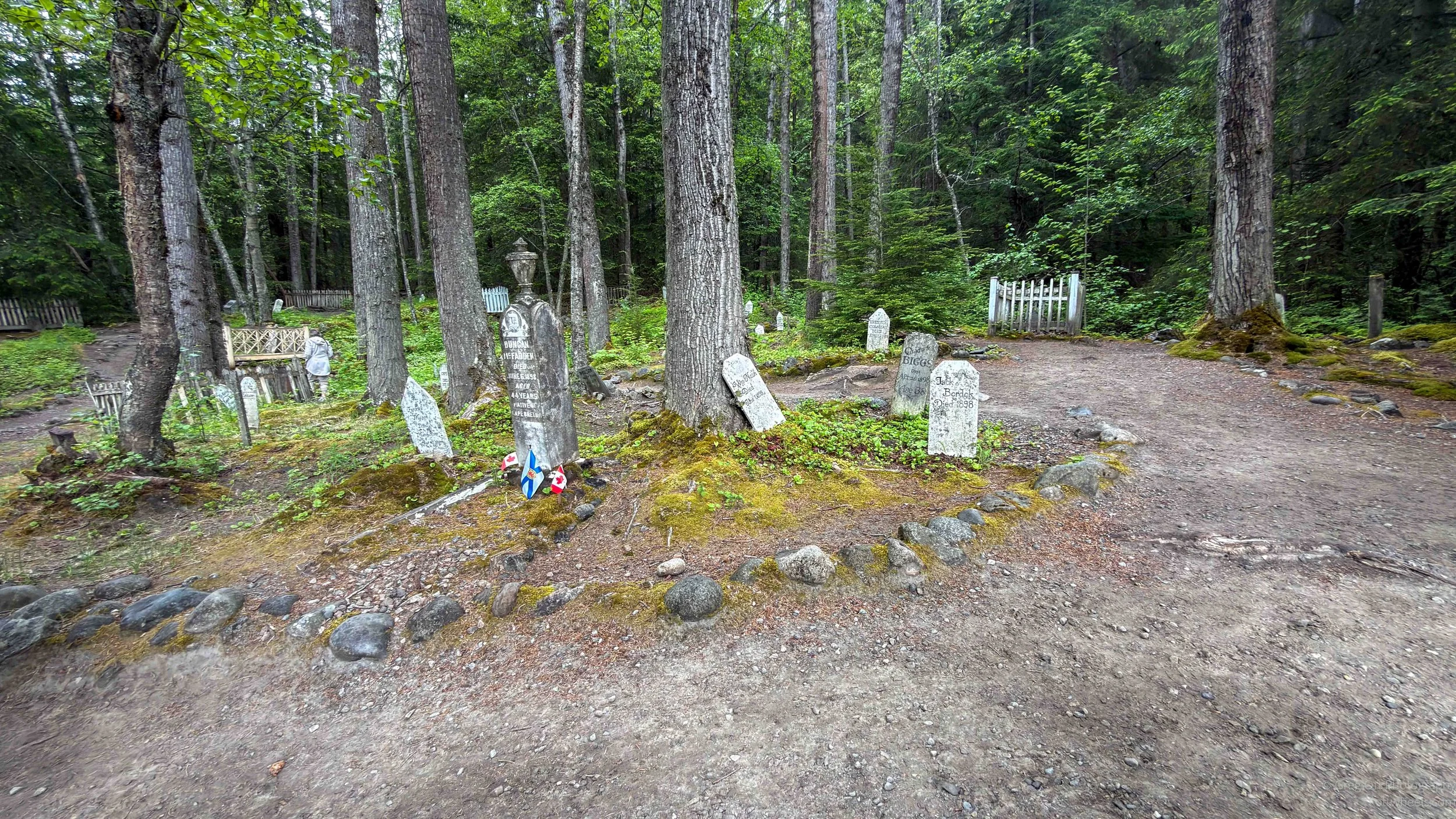
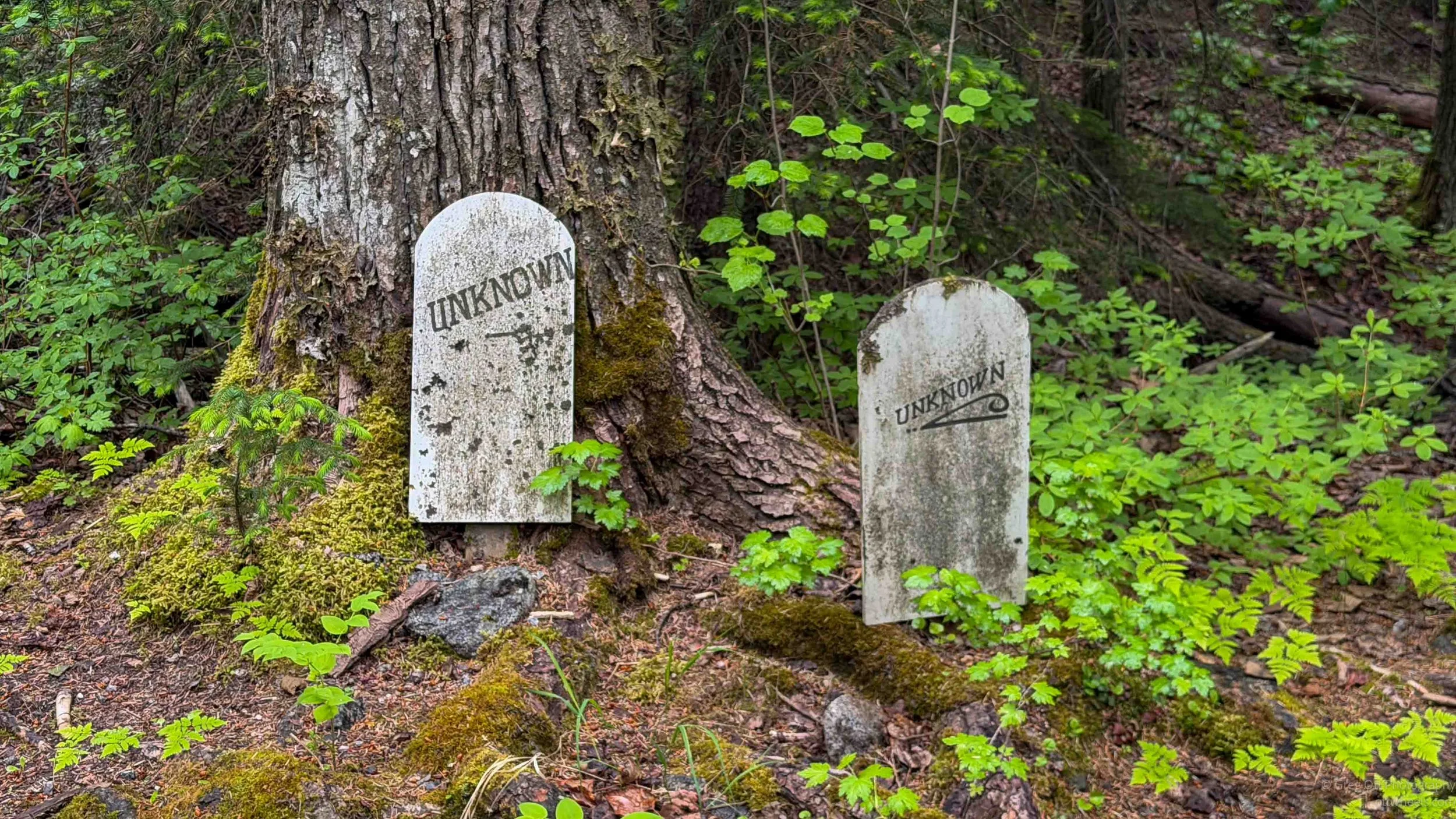
After leaving the falls, I spent more time exploring the Gold Rush Cemetery. Many of the grave markers were made from wood with hand-painted lettering. Some were cracked and weathered while others appeared to have been replaced or restored over the years. Given Southeast Alaska's climate, I doubt many of the wooden markers are original.
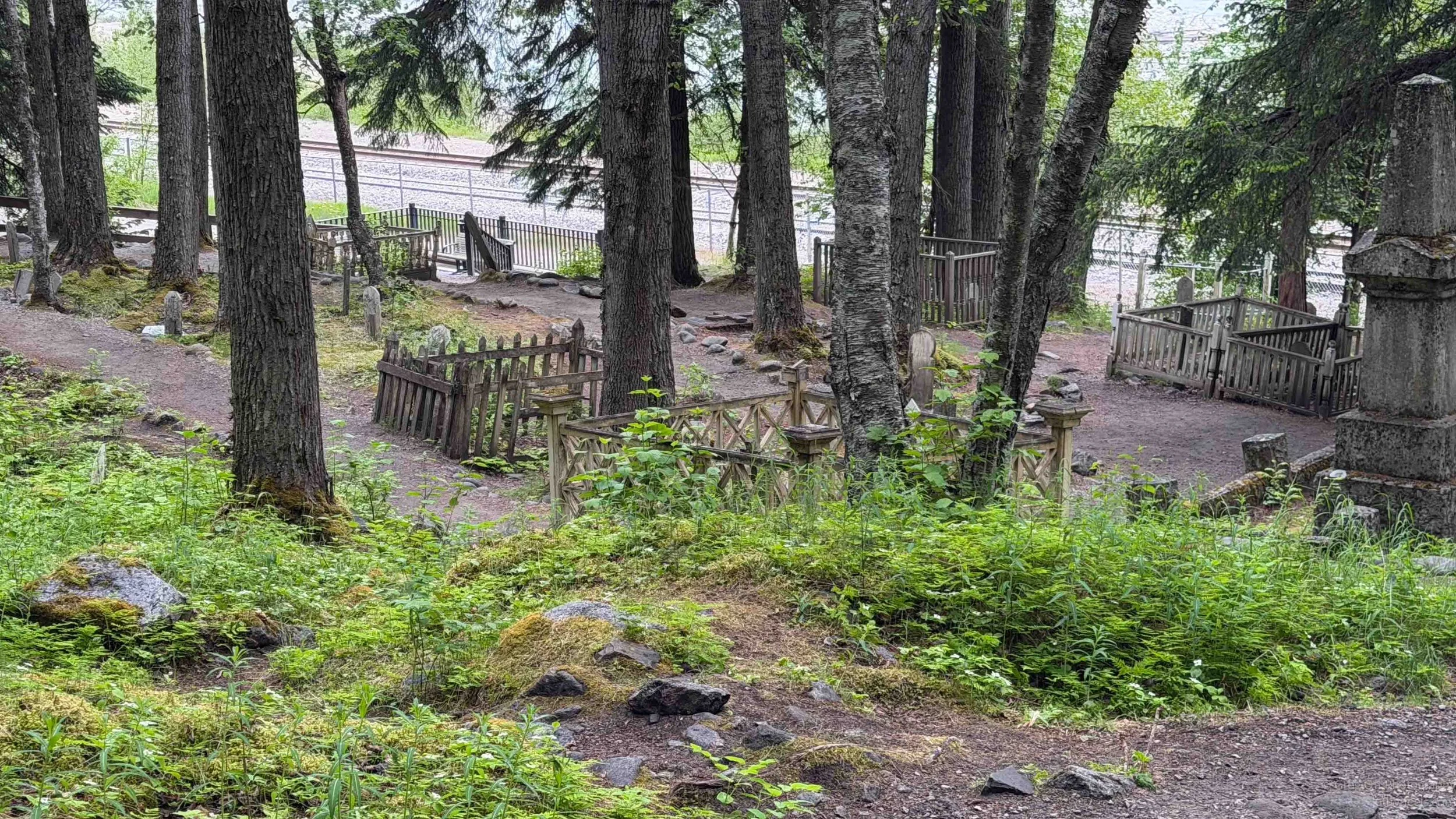
A number of graves were enclosed by simple wooden fences. The cemetery itself sits on a rocky hillside, and I kept wondering how anyone managed to dig burial plots here during the Gold Rush. In places, rocks seemed to cover the entire hillside. It was hard enough walking across them, never mind excavating graves with hand tools.
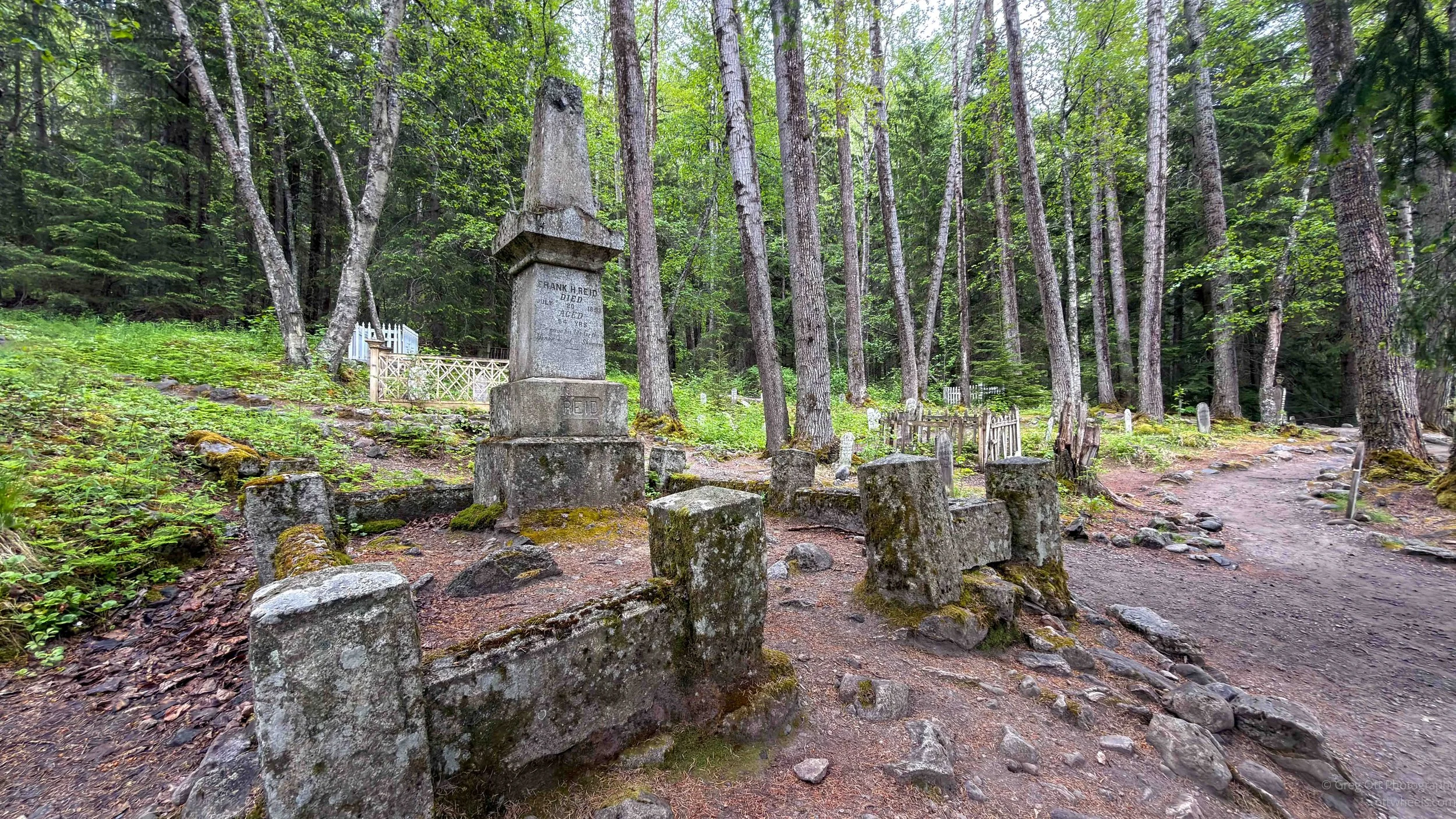
Several of Skagway's most famous residents are buried here, including the notorious con man Soapy Smith. During the Klondike Gold Rush, Smith operated a network of scams that preyed on miners heading north to the Yukon.
His reign ended on July 8, 1898, during a shootout on Juneau Wharf. Smith was killed, but not before mortally wounding Frank Reid, one of the citizens attempting to stop him. Reid died twelve days later from his injuries.
What struck me was that both men are buried here only a short distance from one another. One is remembered as Skagway's most infamous villain. The other is remembered as a local hero. More than a century later, visitors still stop at both graves to read the story of one of the most famous events in the town's history.
The cemetery was used primarily during the Gold Rush years before newer burial grounds were established elsewhere. Today it feels more like an outdoor historical site than an active cemetery.
By the time I finally left Skagway, it was much later than I had planned.
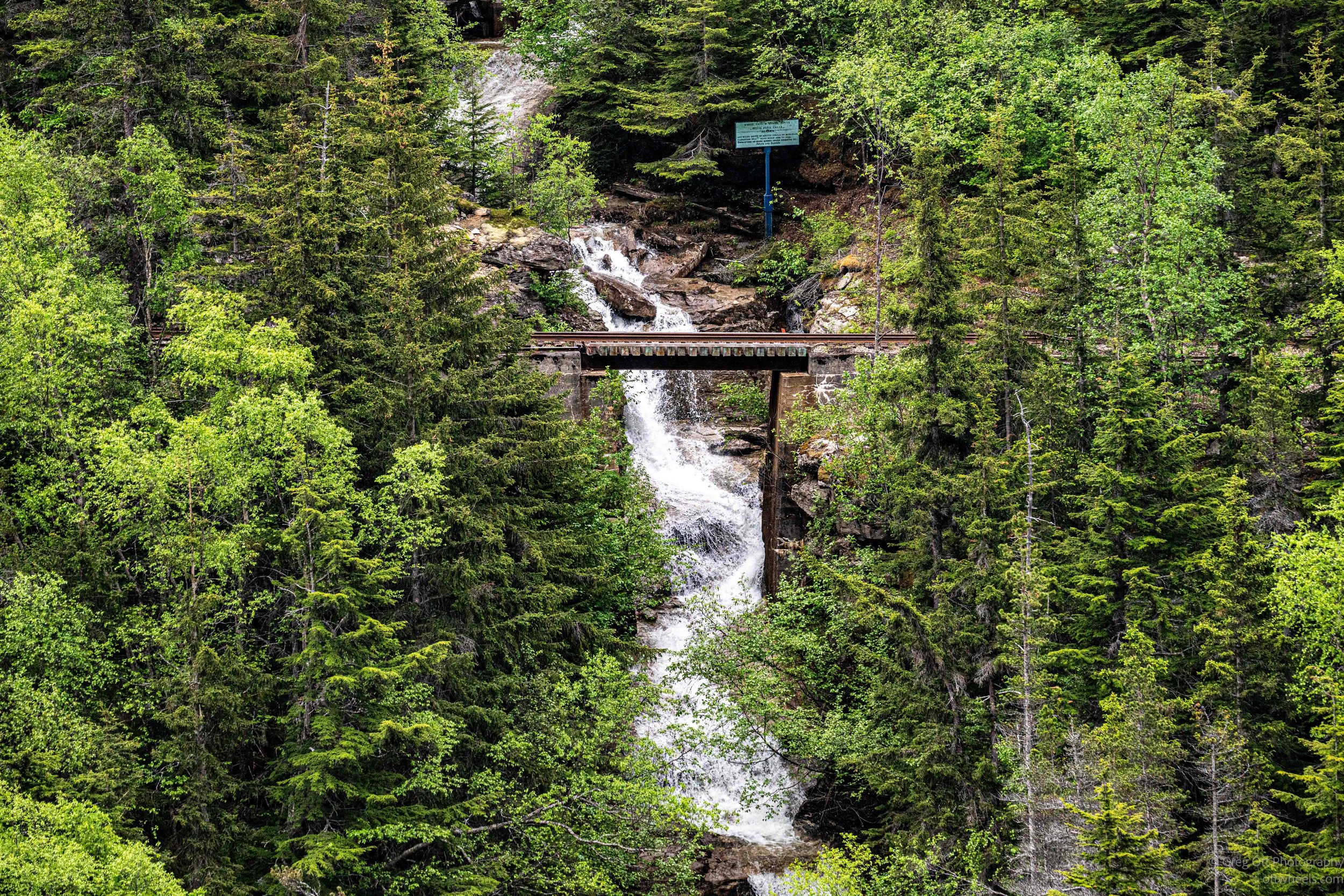
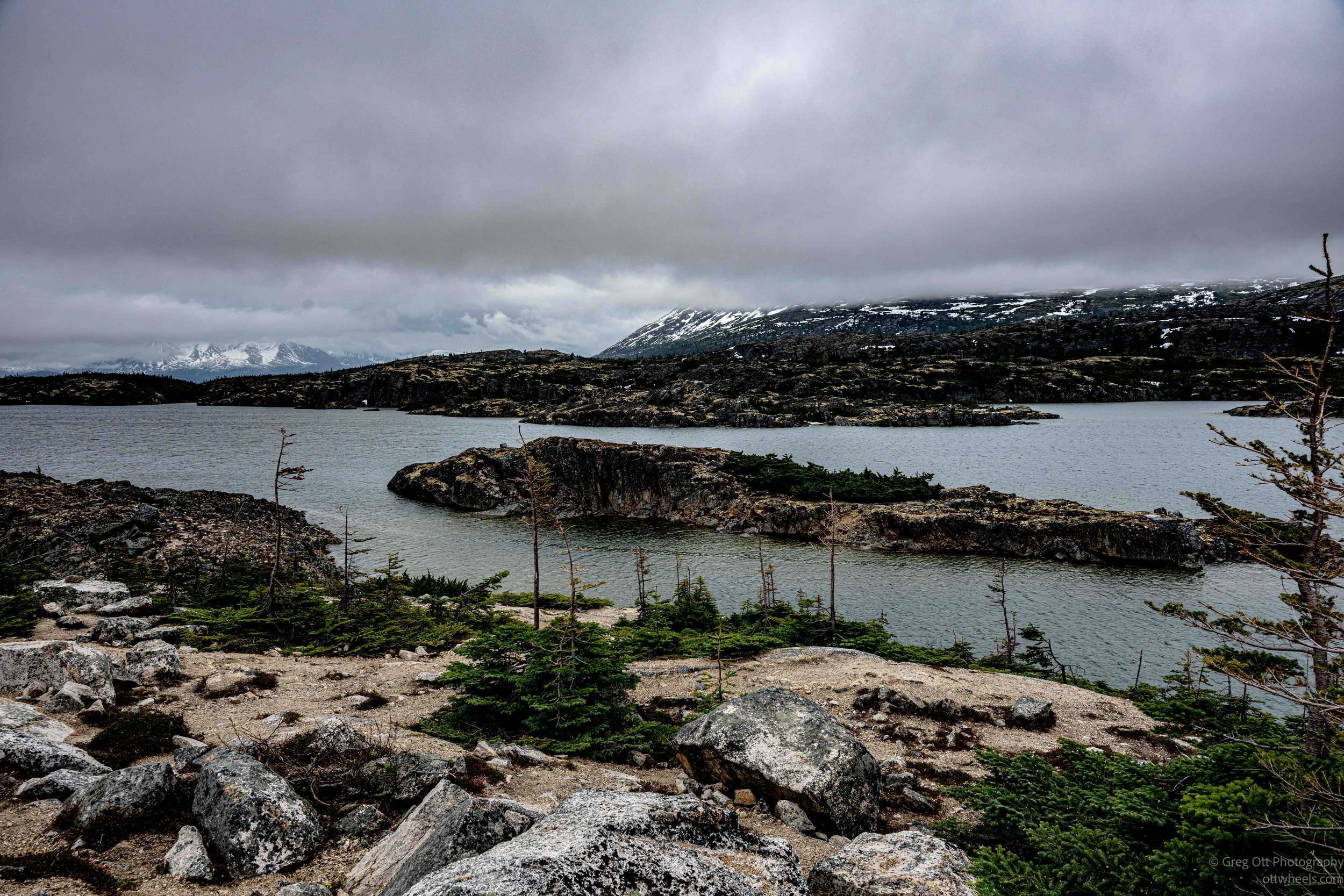
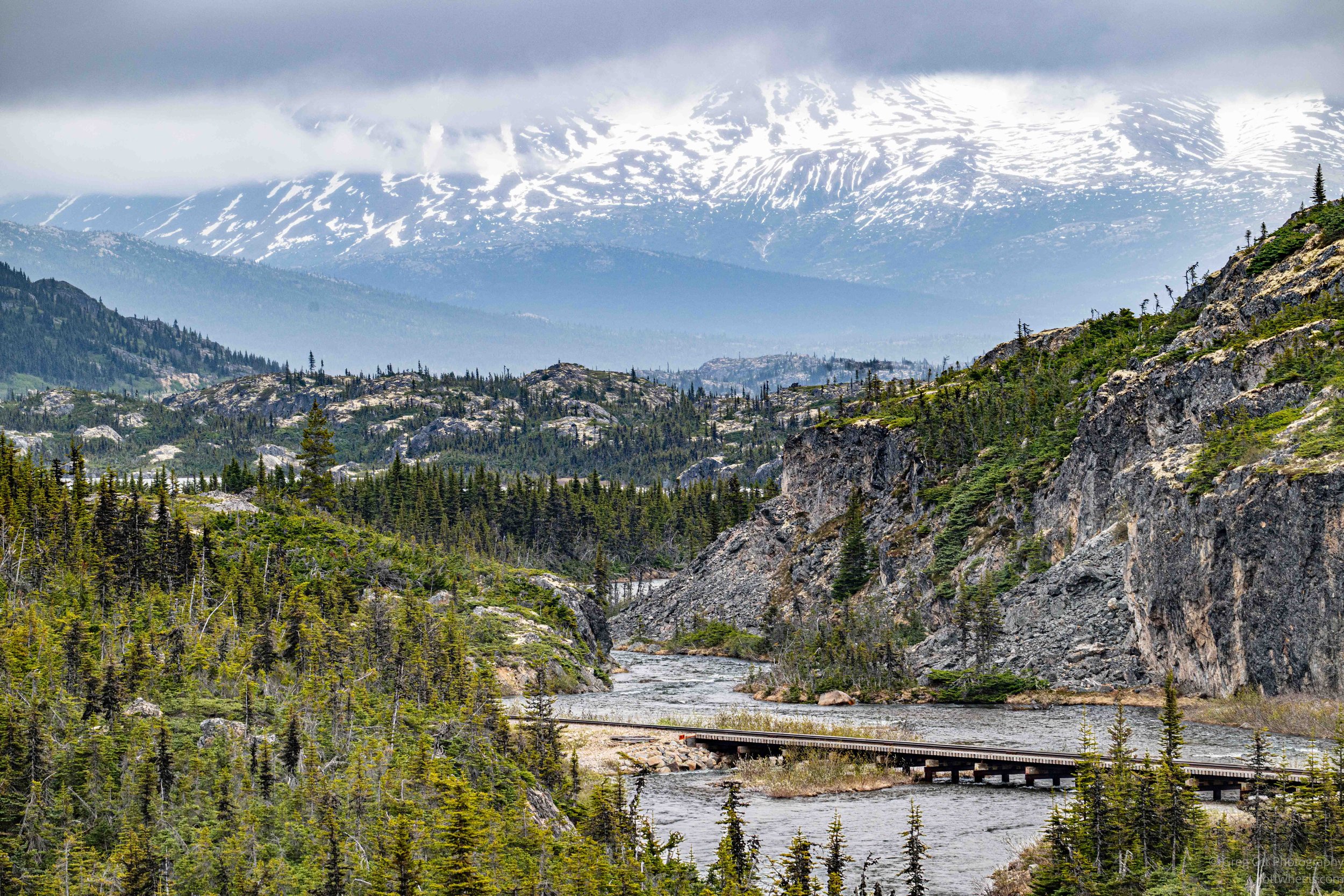
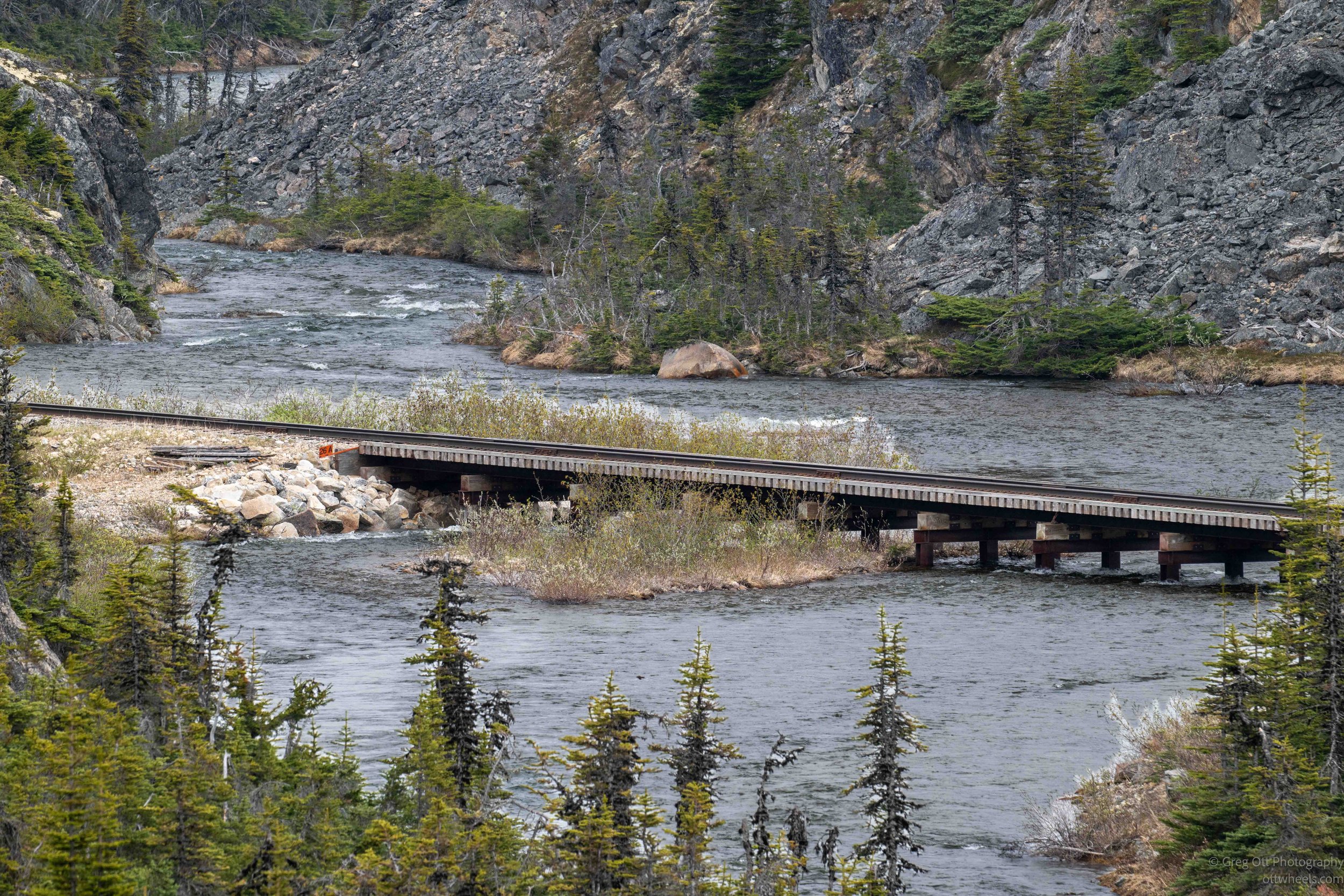
I headed north on the Klondike Highway. I lost count of how many times I pulled over just to look at the landscape. Across the valley, I could occasionally spot the White Pass & Yukon Route tracks winding through the mountains. The same route I had ridden two days earlier. Rain followed me almost the entire way.
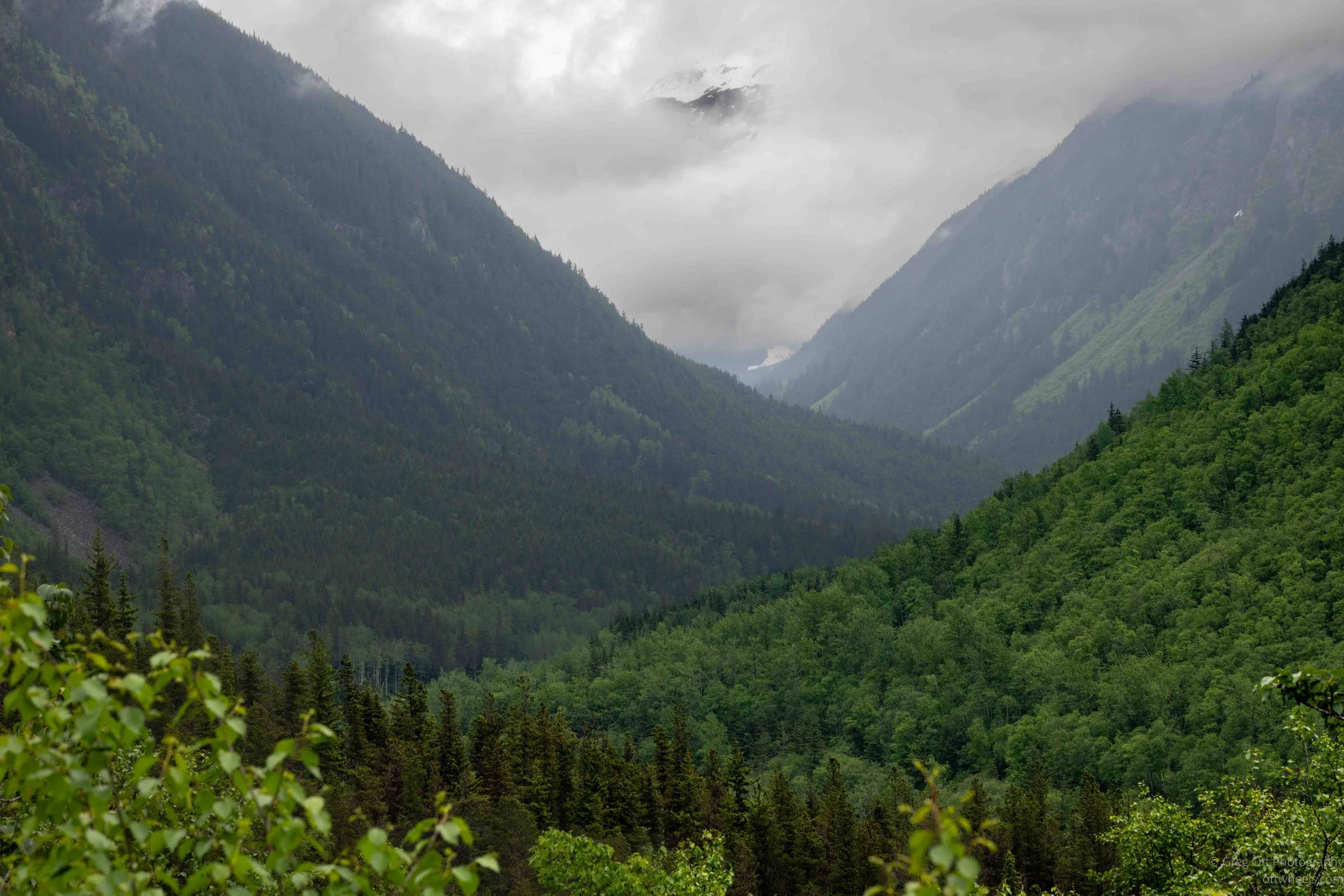
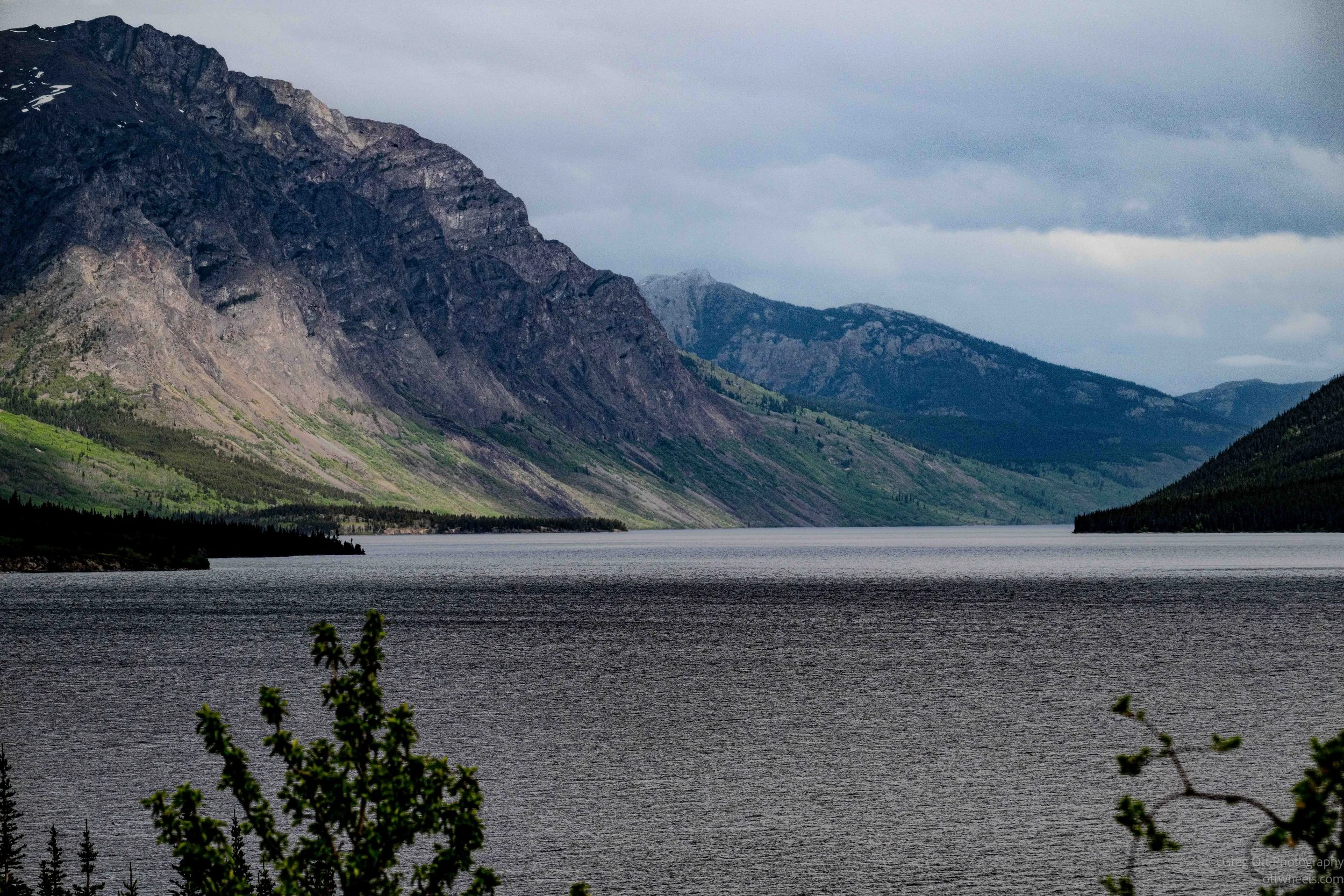
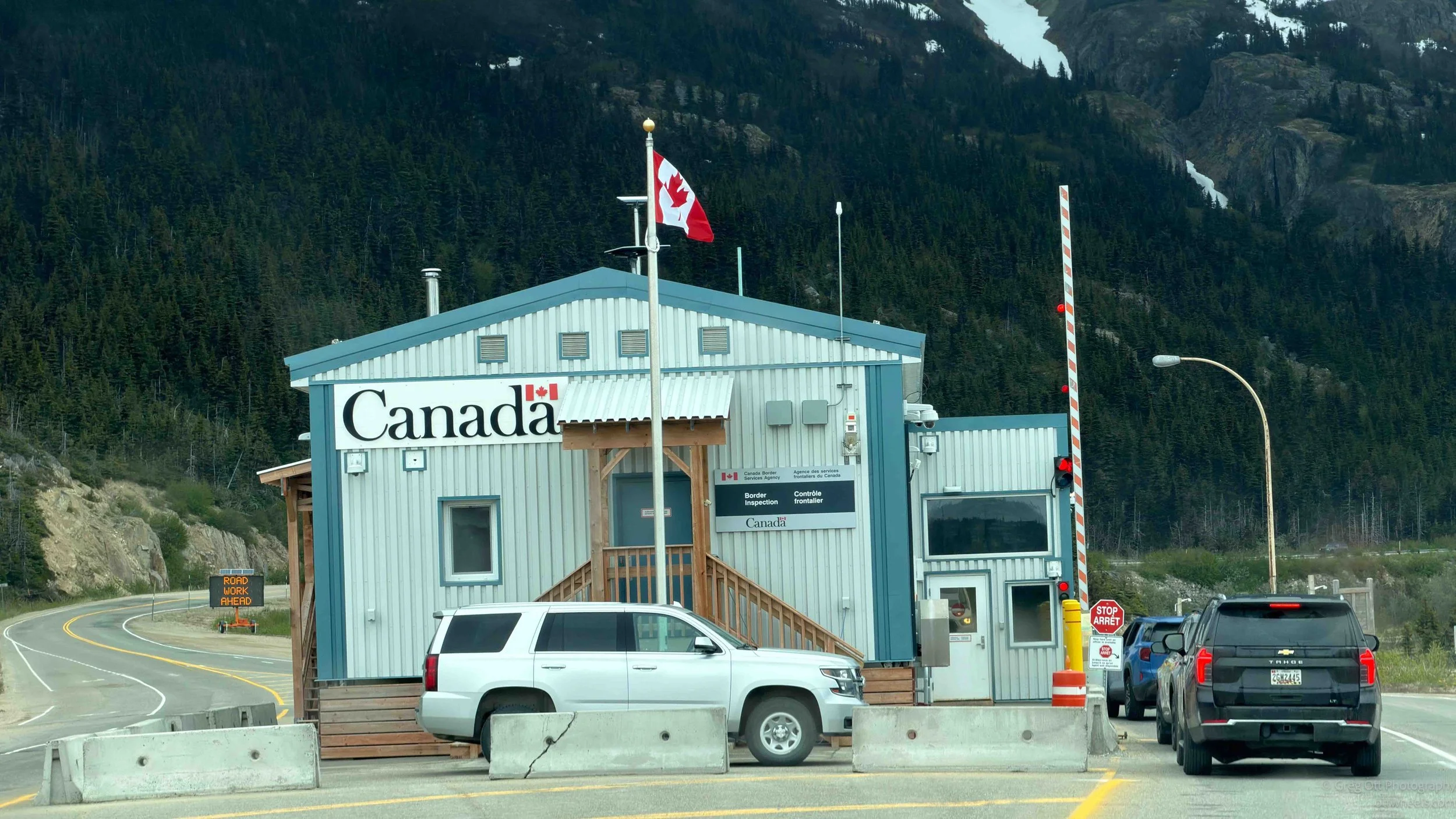
I passed the U.S. customs station and continued toward the Canadian checkpoint another twelve miles ahead. Fog had settled into the mountains by the time I reached the border. After fifteen minutes in line and a few routine questions, I was back in Canada.
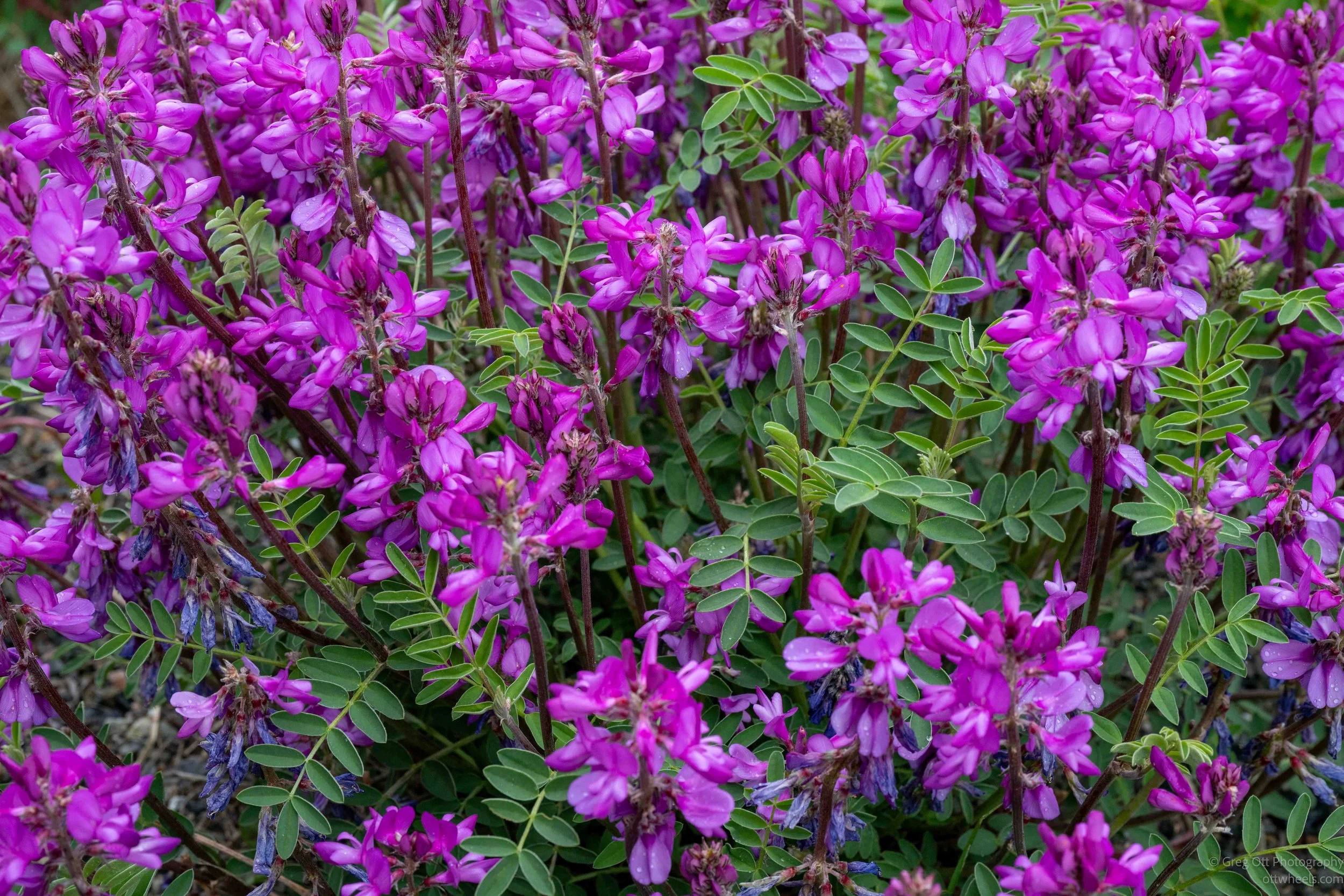
The drive toward Whitehorse was beautiful despite the weather. Water seemed to be flowing everywhere. Wildflowers lined sections of the highway. Every now and then the clouds would briefly part and a patch of sunlight would illuminate a distant mountain before disappearing again.
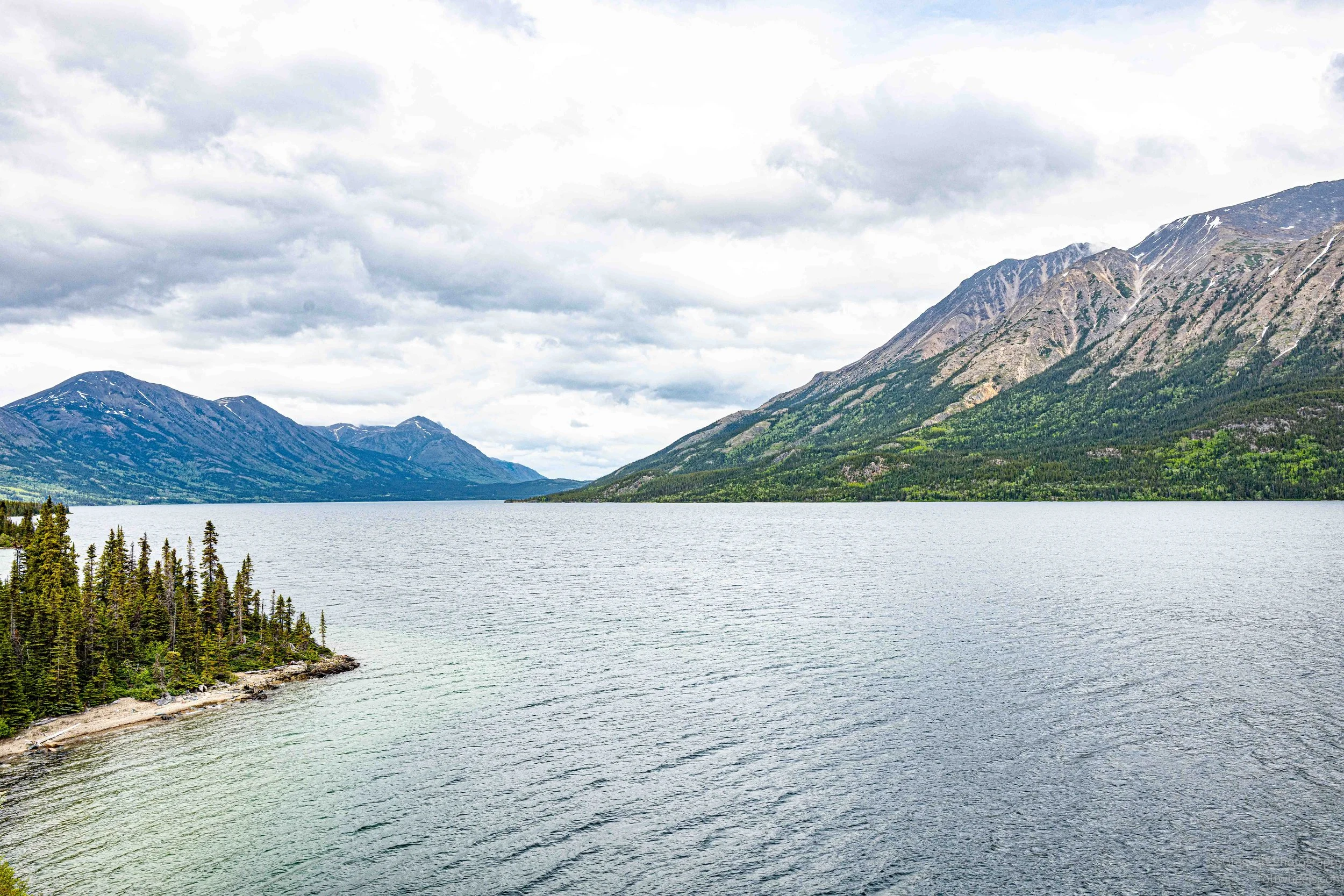
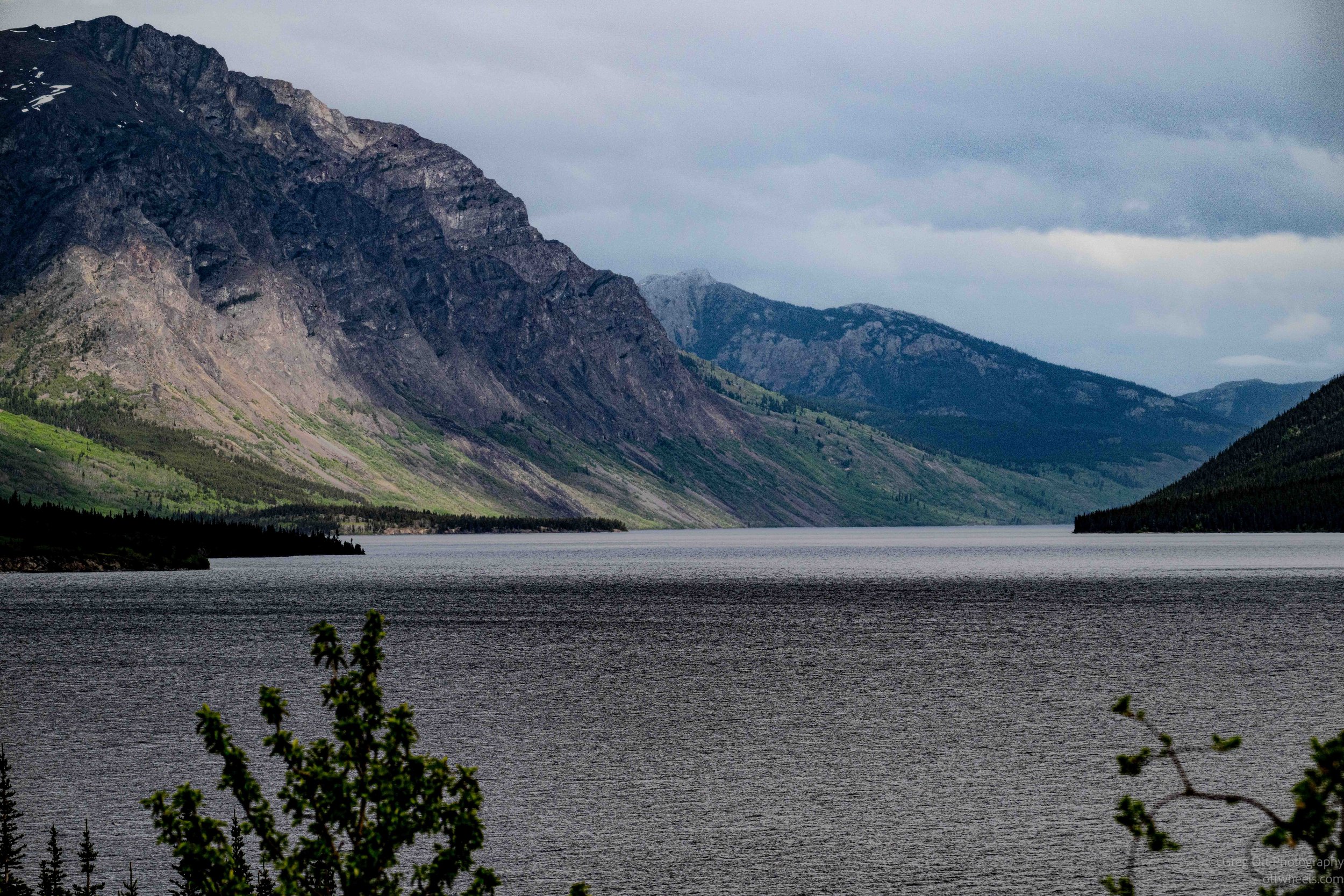
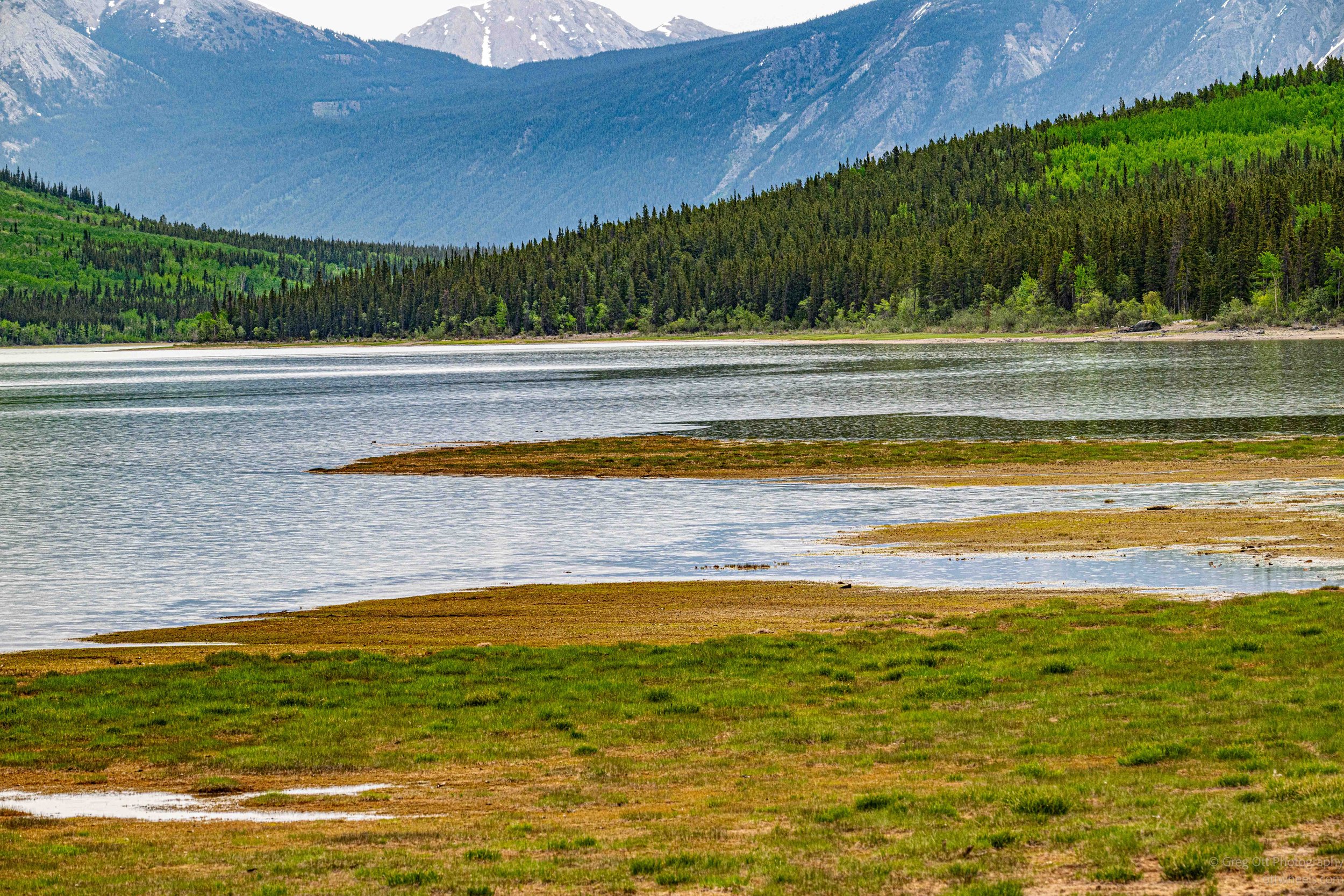
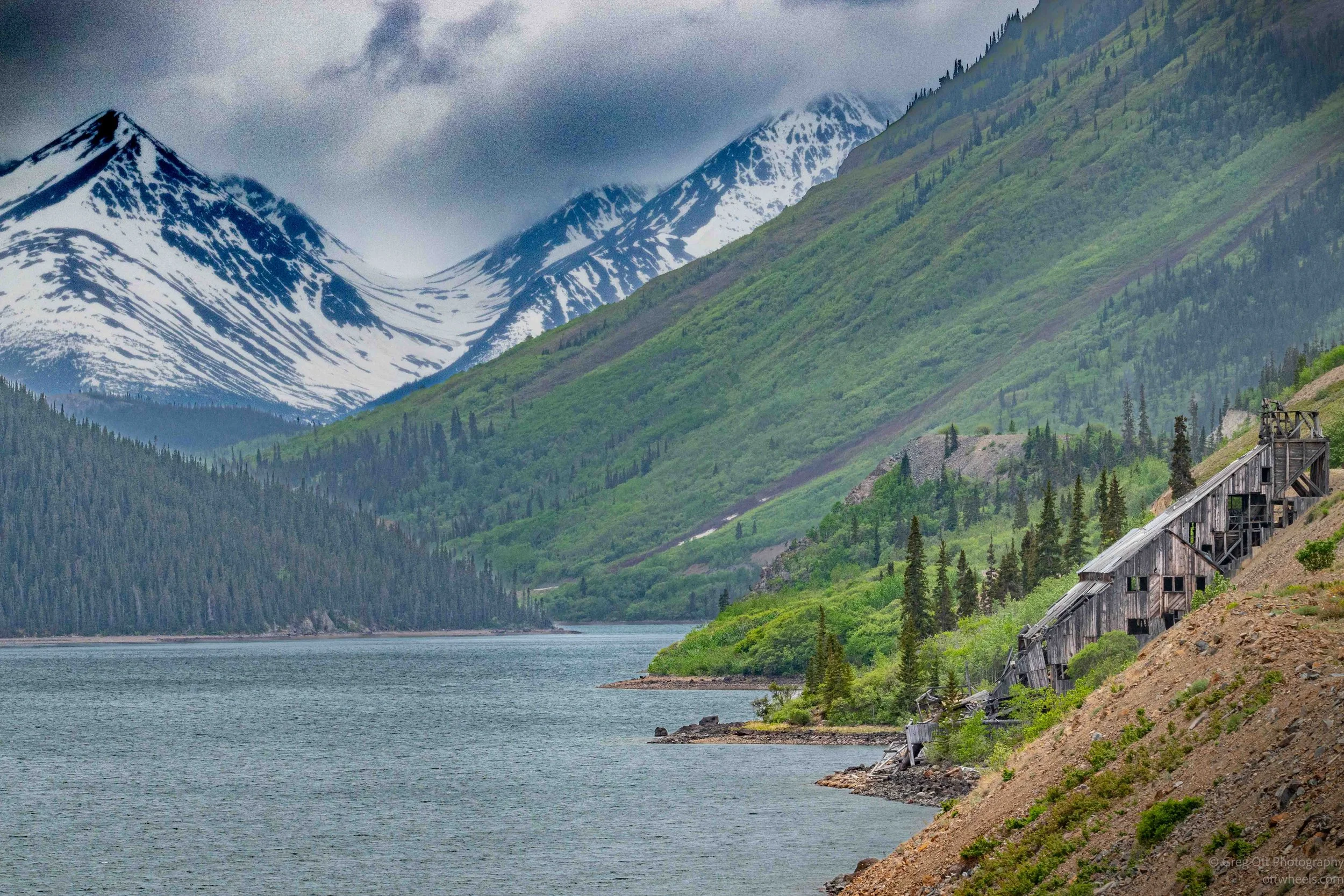
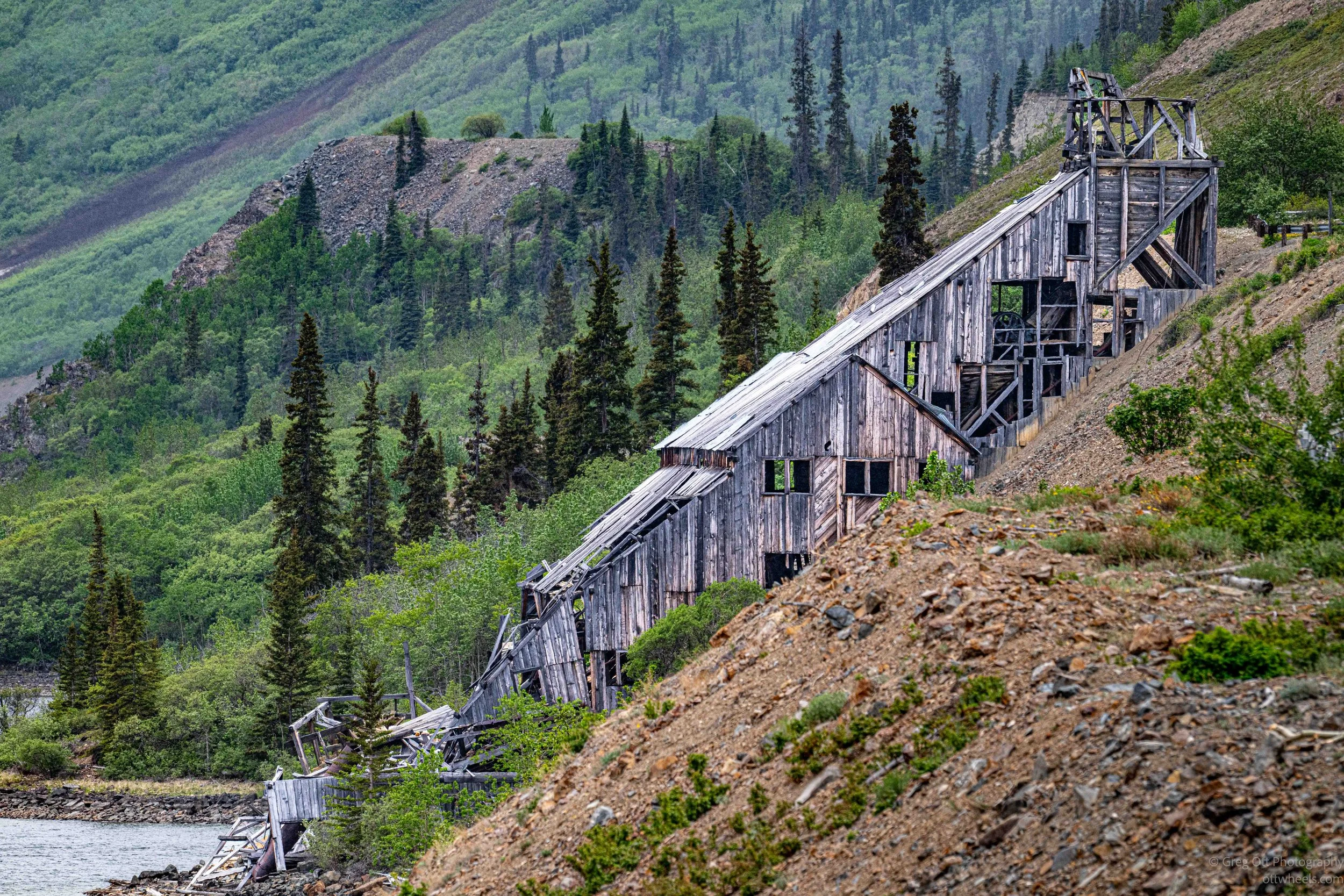
Near Carcross, I stopped at a pullout overlooking the remains of the Venus Mine above Windy Arm. At first glance, it looked like little more than a collapsing wooden structure clinging to a steep hillside. The longer I stood there, the more impressive it became.
The mill stretches down the slope toward the water. Even today it feels remote. It is difficult to imagine the effort required to construct and operate an industrial facility in a place like this more than a century ago.
The Venus Mine was one of the larger silver-lead mining operations in southern Yukon. The mill was designed so ore could move downhill through the processing stages using gravity, which explains its unusual shape and steep angle. Standing there in the cool, damp air with low clouds hanging over the peaks, it felt less like a historic site and more like a reminder of how ambitious those early mining operations really were.
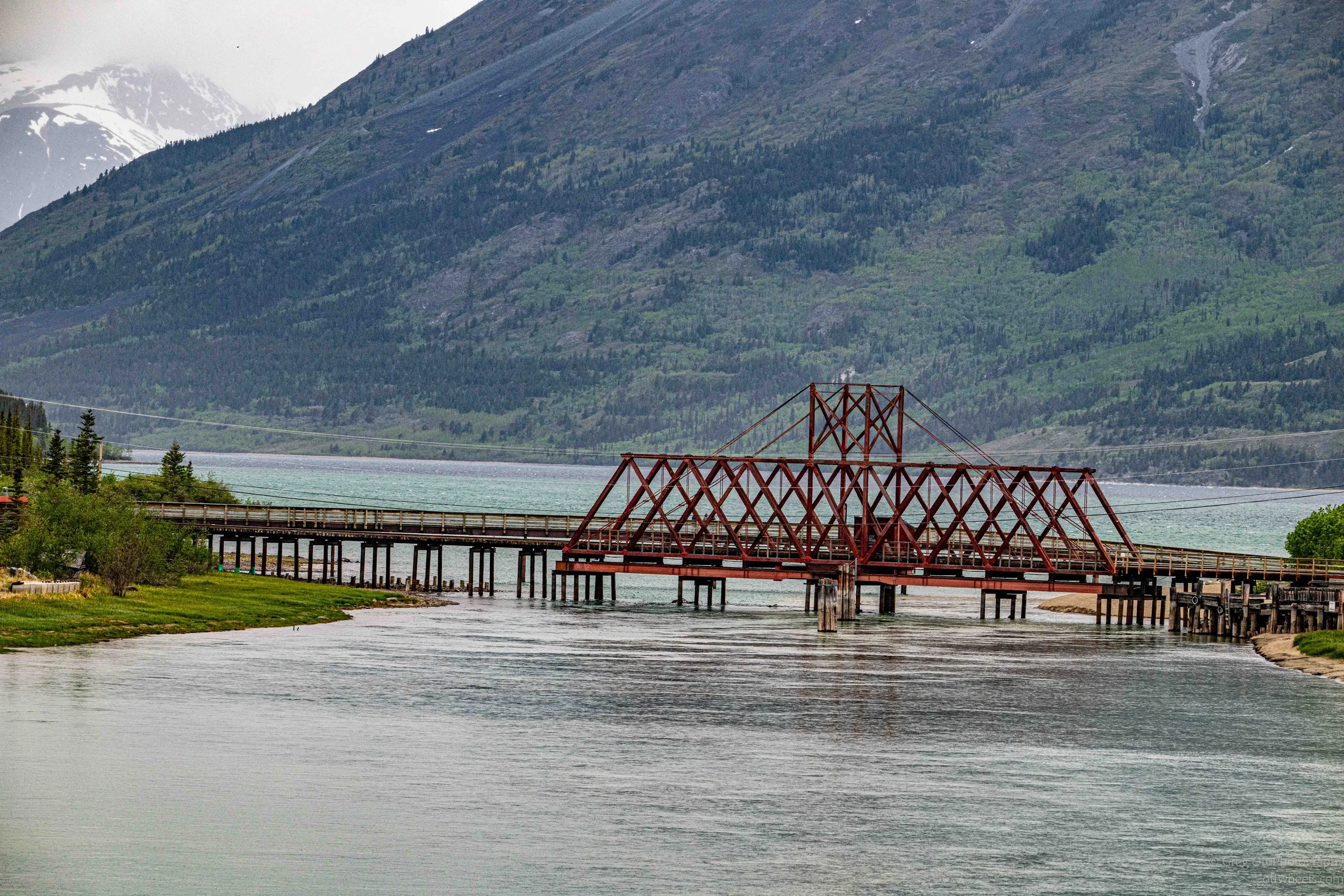
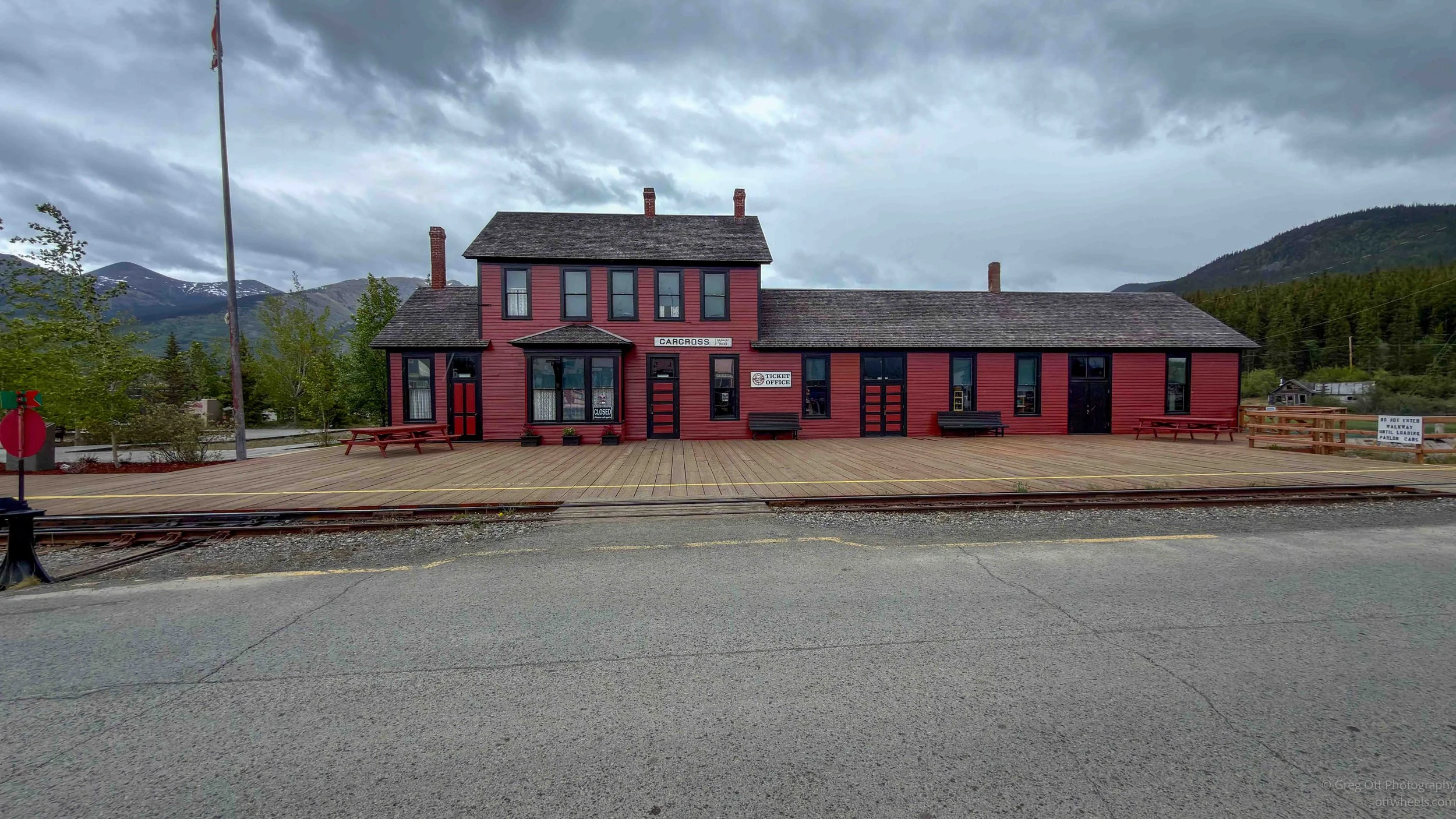
A little farther down the road was Carcross. I actually passed the turnoff before realizing my mistake and circling back. Several people had told me not to miss it.
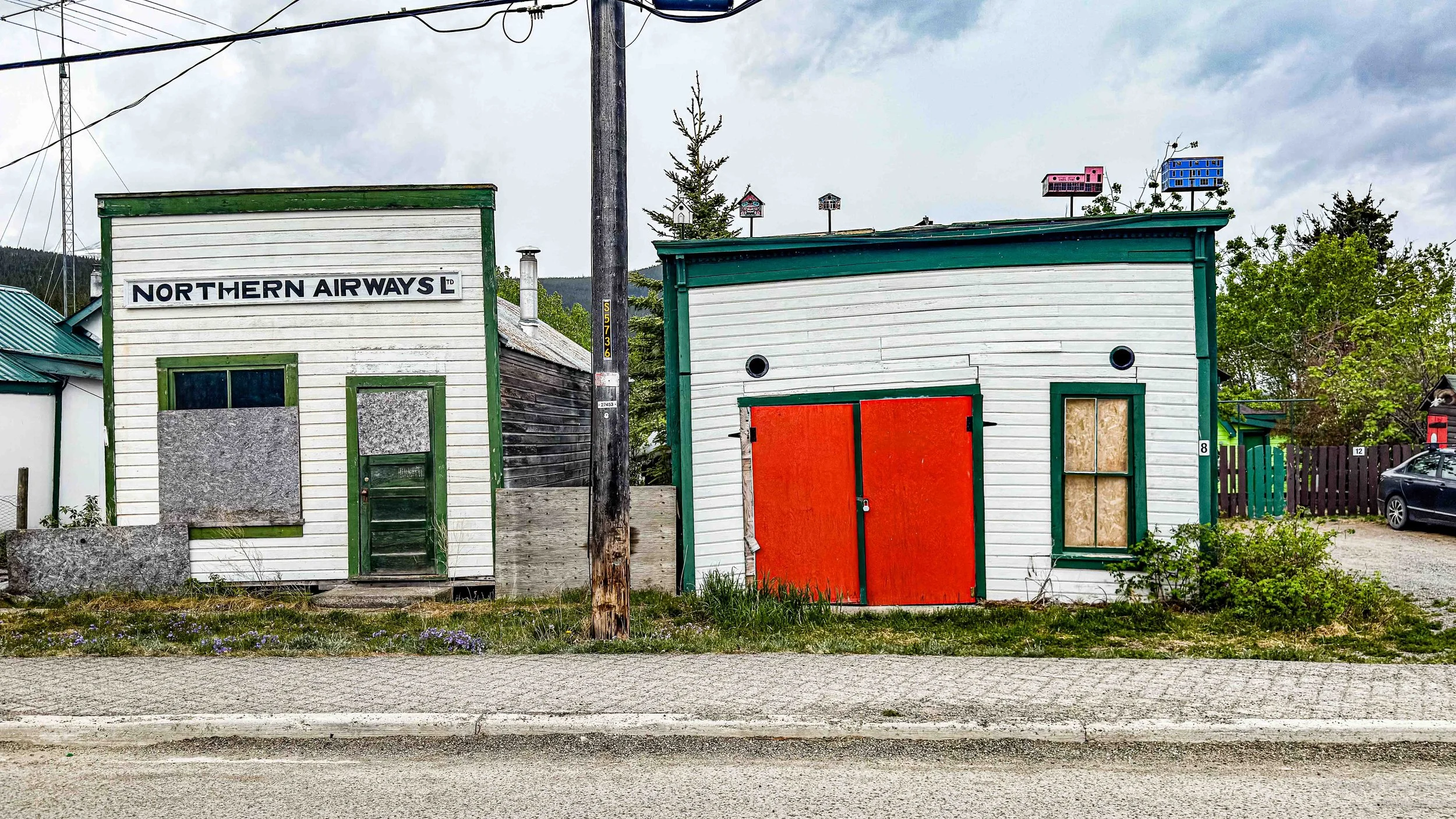
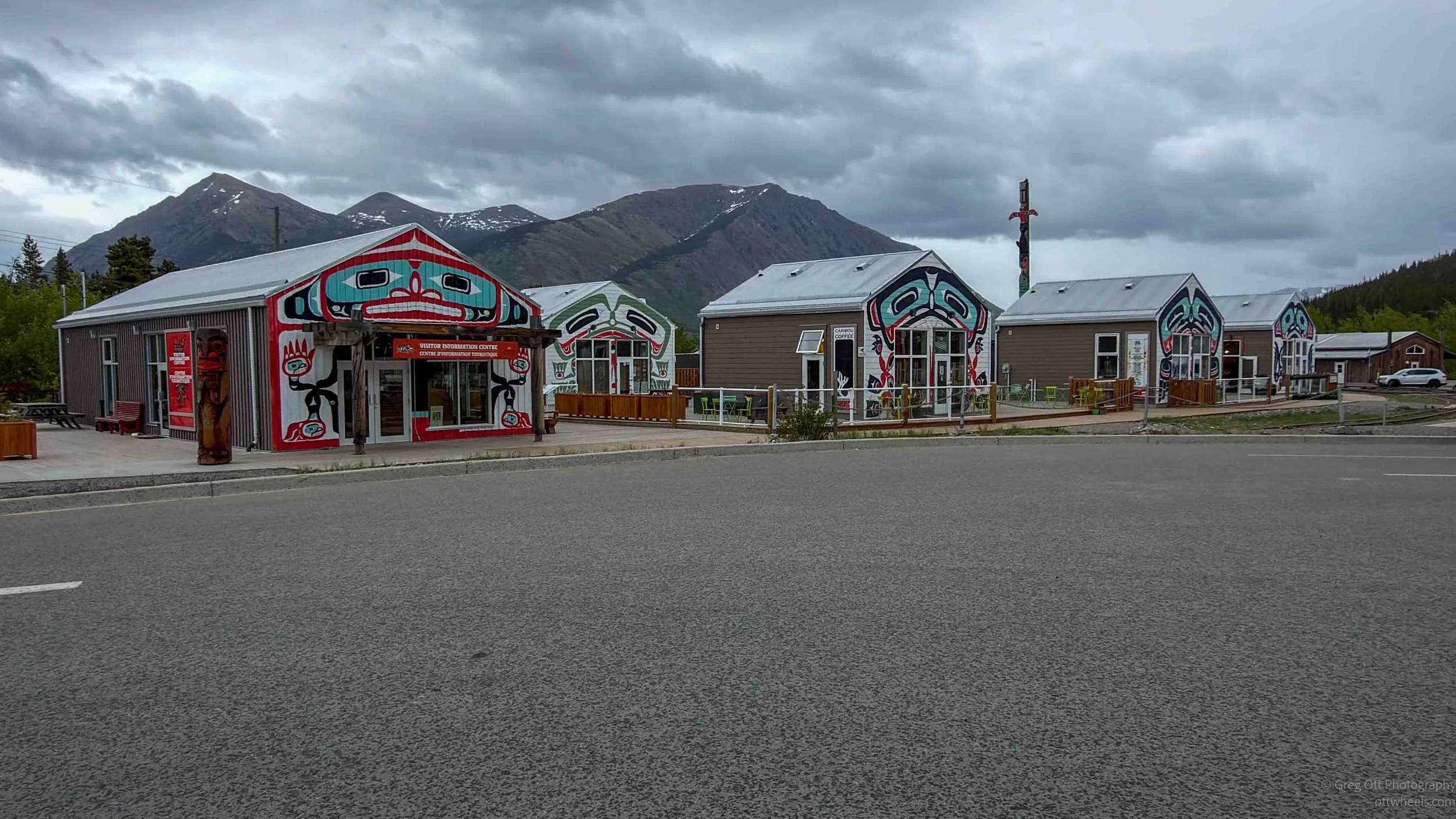
When I arrived, though, the town was quiet and most things were closed. I drove through the small downtown area and walked around for a bit. From what I could tell, the appeal of Carcross isn't a long list of attractions. It is one of the oldest settlements in the Yukon and was an important stop during both the Gold Rush and the railway era.
The restored boardwalks, historic buildings, and Indigenous artwork give the town a lot of character. Even with everything closed, I could see why people recommended stopping. It felt like one of those places where the atmosphere is the attraction.
I reached Whitehorse around 7 p.m. and headed directly to Woodcutter's Blanket, a restaurant I had enjoyed during my previous visit. There was a sign on the door announcing a private party, which I somehow failed to notice.
I explained that I had just driven from Skagway and was hoping to have dinner at my favorite restaurant in Whitehorse. They found a small table for me off to the side.
I ordered the chicken tacos and a Moscow Mule. They also brought over a bottle of mango hot sauce that I hadn't seen on my previous visit. It paired surprisingly well with the tacos.
After dinner, I drove back to the cemetery where I had parked before. It was completely quiet. A good place to relax and end the day.