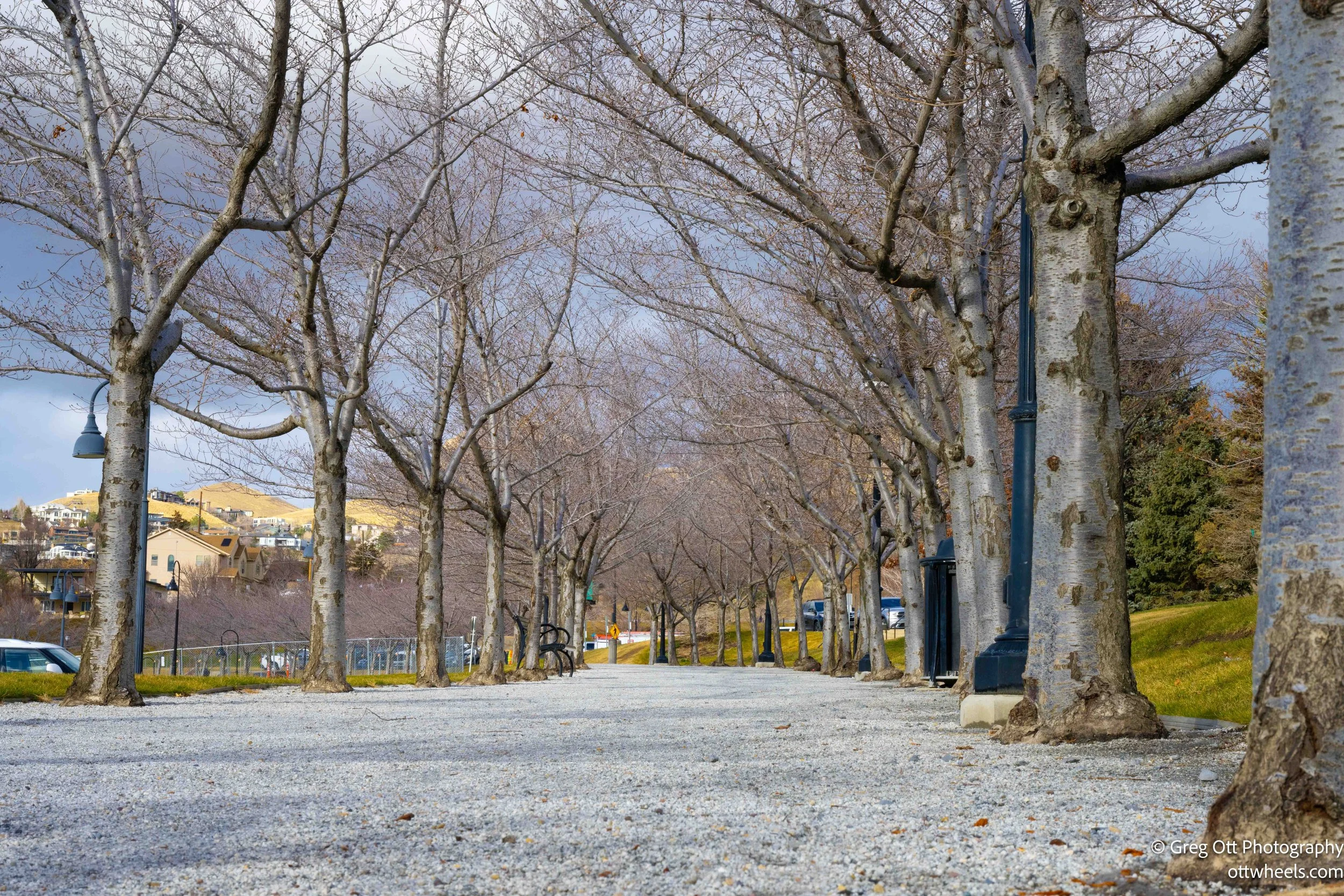
Utah State Capitol
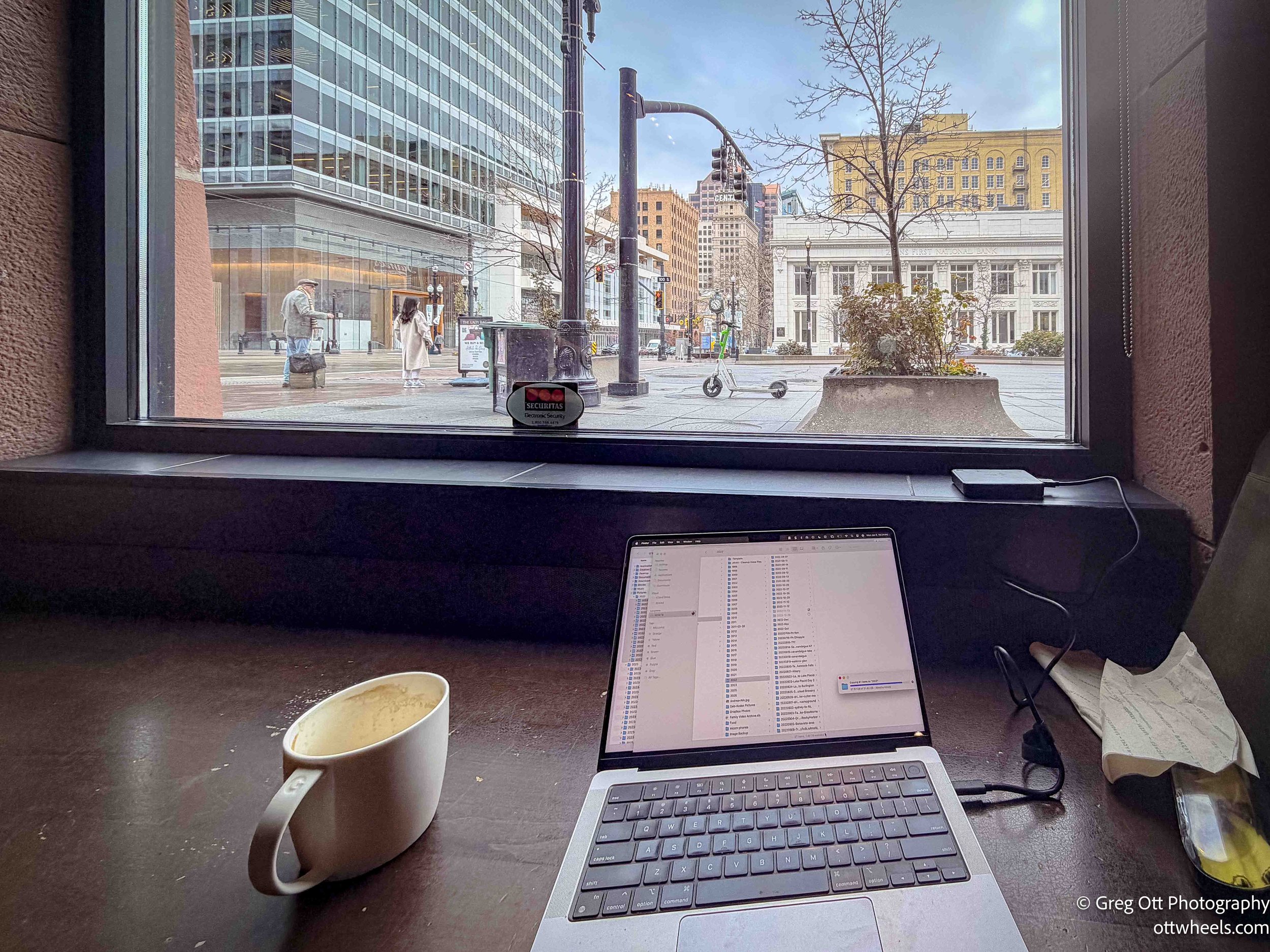
I woke up in the parking lot beside the Capitol and took my time getting moving. With coffee brewing, I did a little research on the building and booked a tour for one p.m. With a few hours to kill, I decided to head downtown and find a Starbucks where I could get some work done.
That turned out to be more complicated than expected. The Starbucks was located right beside the tram line, parking was scarce, and my phone’s GPS kept losing its bearings among the taller buildings. I missed a turn, looped around, and then, just as I finally lined things up, a maintenance crew shut down the street entirely. Another loop, another missed opportunity, and eventually I found street parking about five blocks away. I grabbed my laptop, walked in, and found a seat at the window. Once settled, it was the perfect office for the morning.
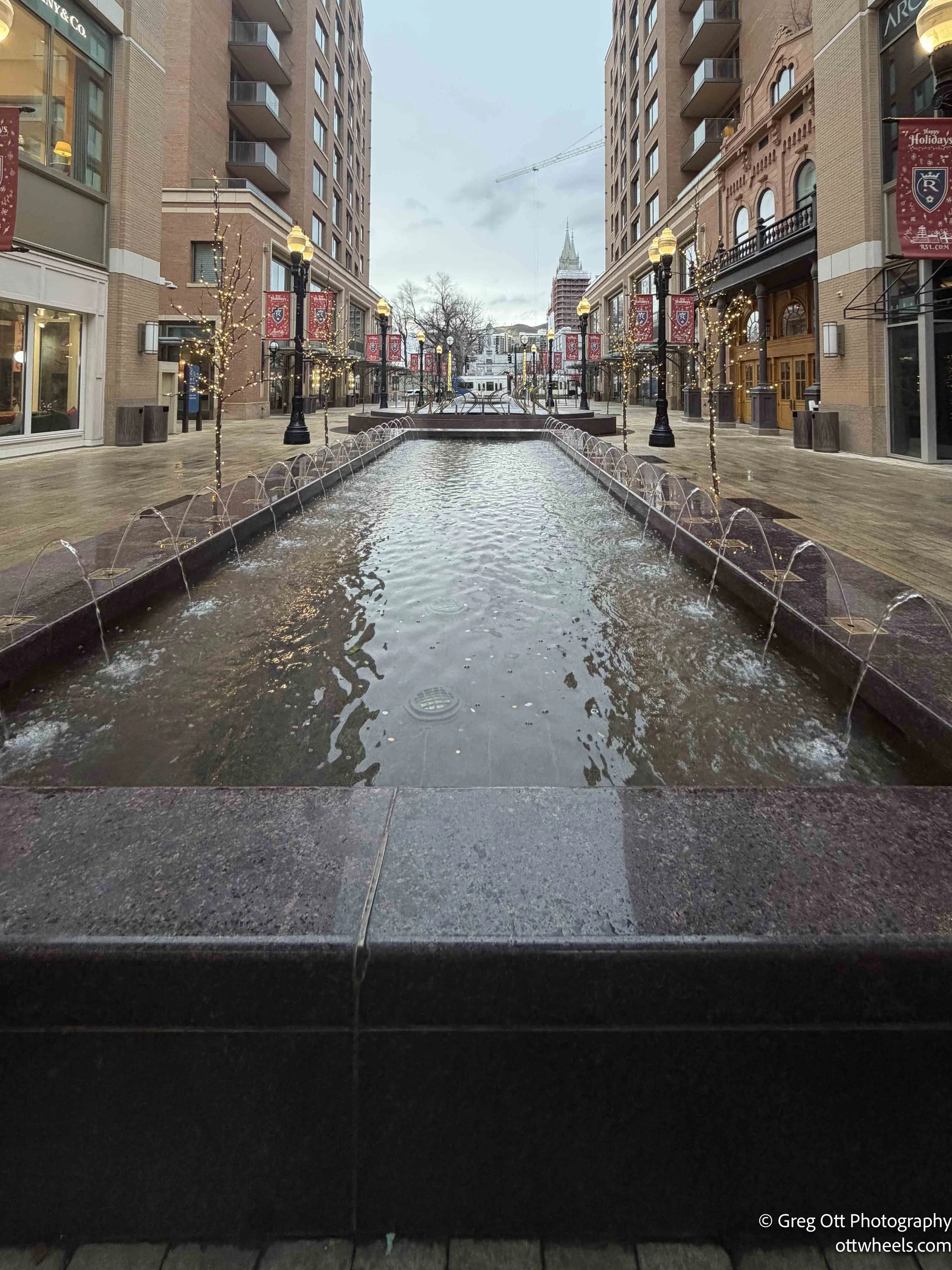
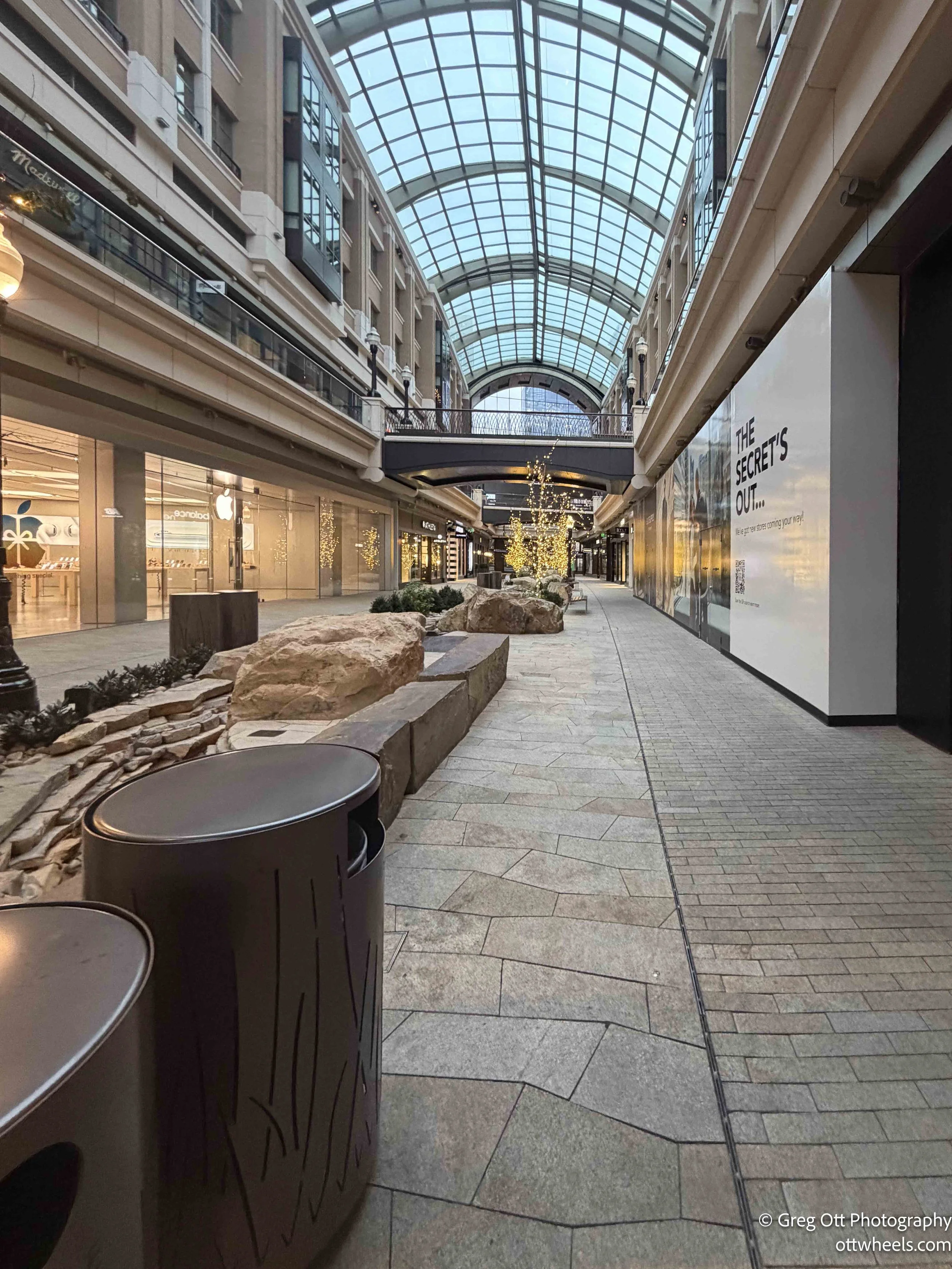
Downtown parking is limited to two hours, so by around 11:30 a.m., I packed up and headed back toward the van. Instead of going straight there, I wandered through the downtown mall and circled a few blocks to get a better feel for the area. High-end retail dominated the storefronts, and the whole place felt polished and expensive. Salt Lake City doesn’t wear its wealth loudly, but it’s clearly there—clean streets, modern buildings, and plenty of people who looked like they weren’t rushing anywhere.
History of the Capitol
The history room turned out to be one of the more interesting parts of the visit because it finally provided context for what I was standing in. Utah became the forty-fifth state in 1896 after decades of political limbo, largely tied to conflicts with the federal government over polygamy and governance. For years, the legislature moved between temporary meeting places in Salt Lake City while arguments dragged on over whether the territory even deserved statehood. Once statehood was granted, the question of a permanent Capitol immediately followed, along with fierce debate over cost, location, and symbolism.
The exhibits explained that the site—Capitol Hill—was chosen deliberately, both for its elevation above the city and its visibility from nearly everywhere in the valley. The state wanted a building that projected stability and legitimacy, something that visually announced Utah’s arrival as a full participant in the Union. Funding was controversial from the start. Lawmakers eventually approved bonds to finance construction, committing the young state to a massive public works project that would take more than a decade to complete.
Design proposals were solicited nationally, and the winning plan came from architect Richard K. A. Kletting, whose neoclassical design mirrored the ideals many states were adopting at the time: order, permanence, and democratic authority. Construction began in 1912, but progress was slow due to funding constraints, material sourcing, and World War I. The building wasn’t completed until 1916, and even then, interior details continued to evolve for years afterward.
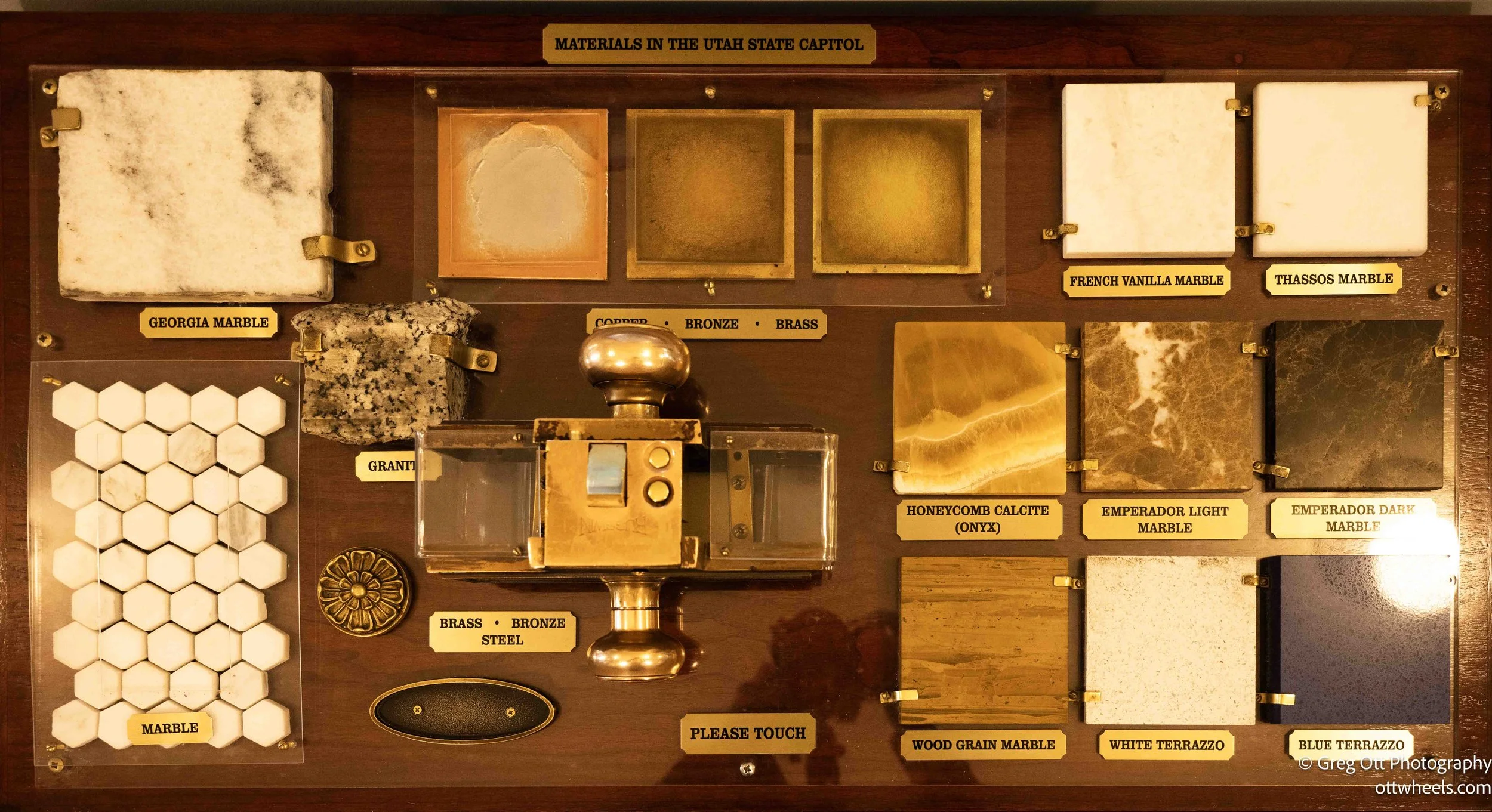
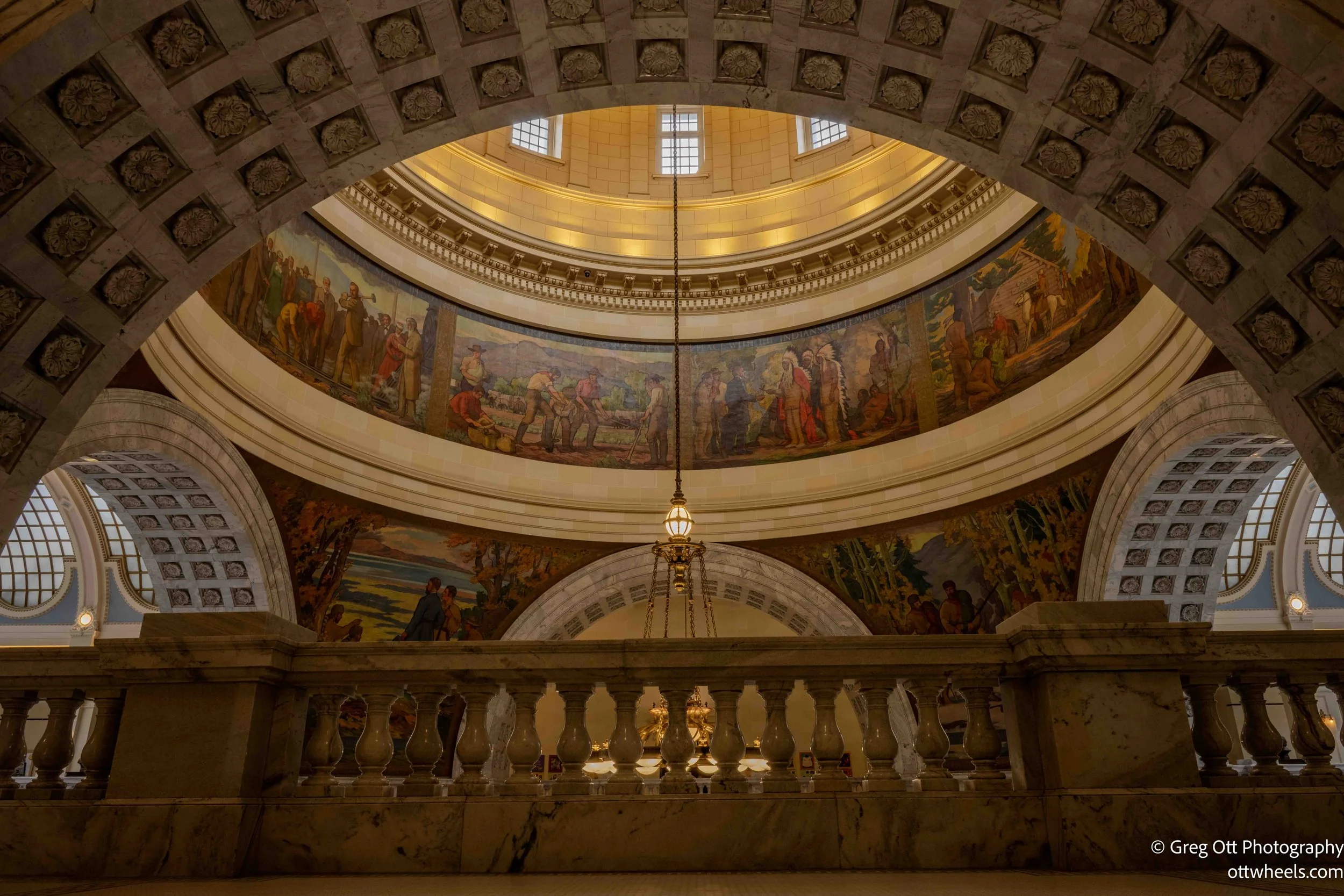
One thing the room made clear was how intentional the material choices were. The granite used on the exterior came from Little Cottonwood Canyon, the same source used for the Salt Lake Temple, tying the Capitol physically and symbolically to Utah’s landscape. Marble was imported from Georgia for the interior, while murals, columns, and decorative stonework were added to reinforce the building’s role as a civic monument rather than just an office space.
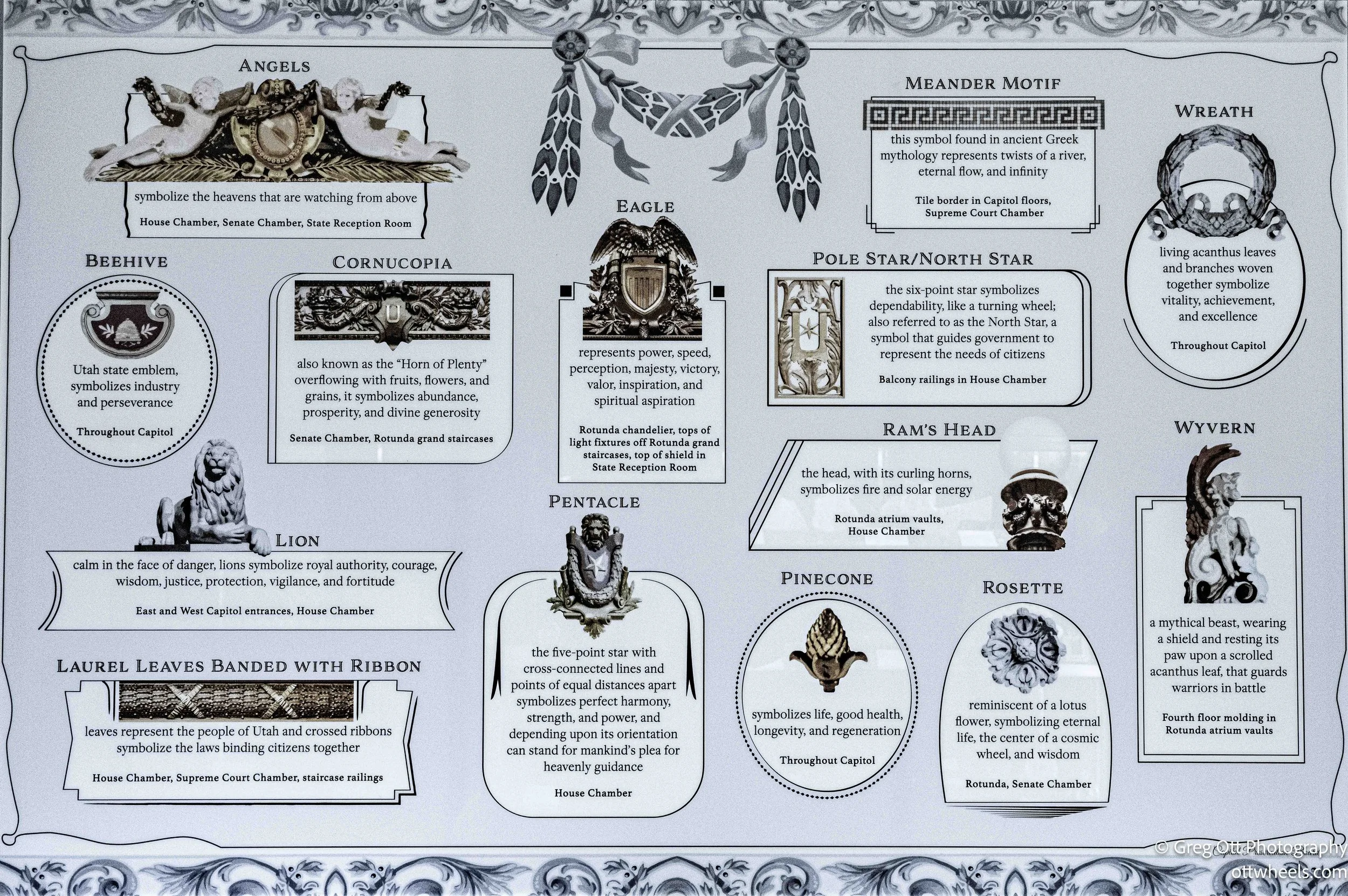
The exhibits also broke down the symbolism embedded throughout the Capitol. Seagulls, beehives, and pioneer imagery appear repeatedly, reflecting themes of survival, cooperation, and industry that Utah leaned on heavily when shaping its public identity. Murals and decorative elements emphasize settlement, governance, and the natural environment, presenting a carefully curated version of the state’s history—optimistic, orderly, and forward-looking, with far less emphasis on conflict or exclusion.
The Official Tour
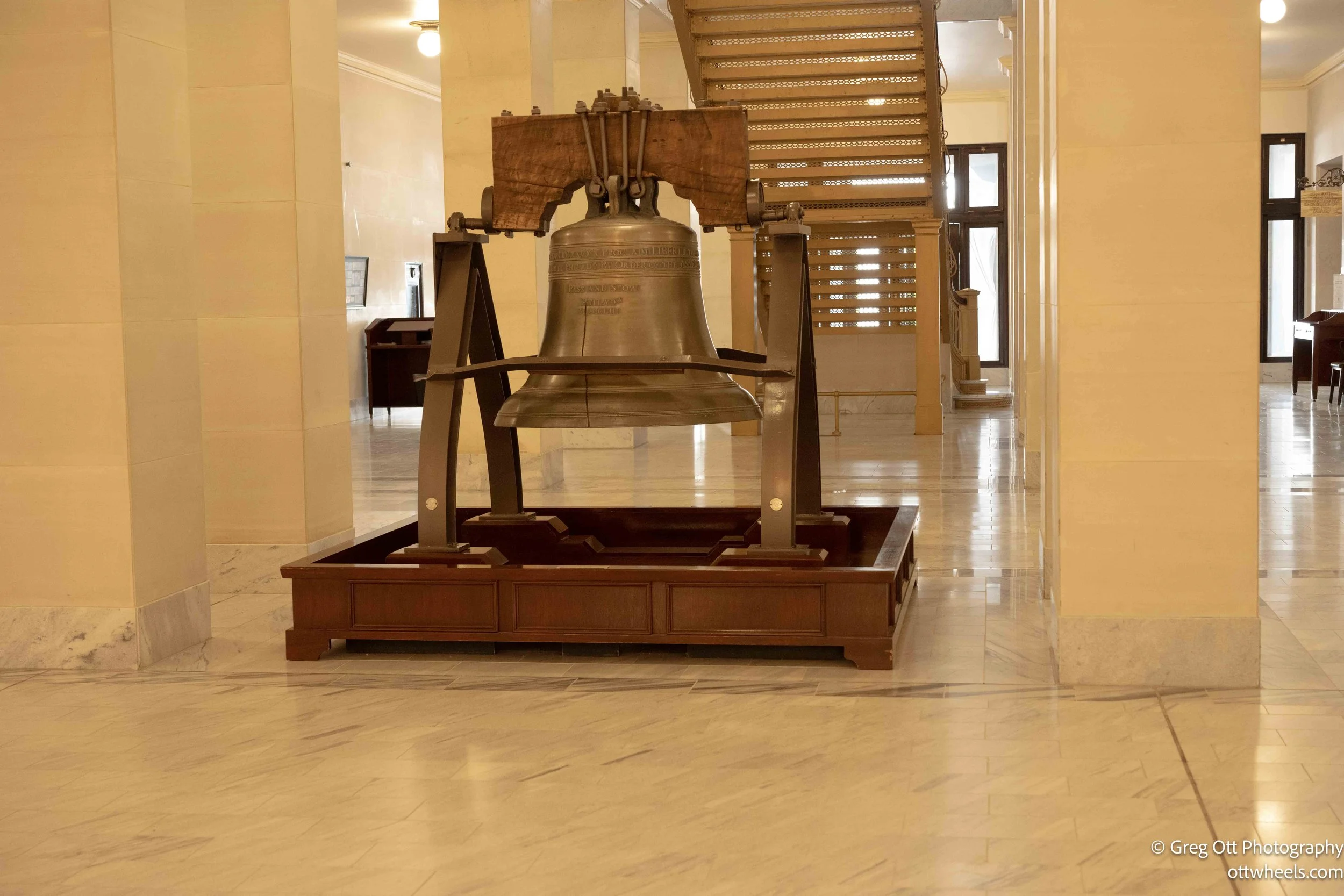
The official tour began at one, and I was the only person there. There was no welcome or small talk, which stood out because almost every other Capitol tour I’ve taken begins with a quick round of introductions. The guide appeared to be in visible discomfort, and we sat at a table while she delivered a roughly twenty-minute overview of the building. While we were seated, I noticed one of the Liberty Bell replicas off to the side and pointed it out. She said, “Yeah, it’s a replica,” as if that settled the matter. No kidding—there are fifty-three of them. She then went straight back into her presentation. For most of the overview, she spoke to the walls and the floor, made little eye contact, and followed a rigid script that didn’t leave much room for questions.
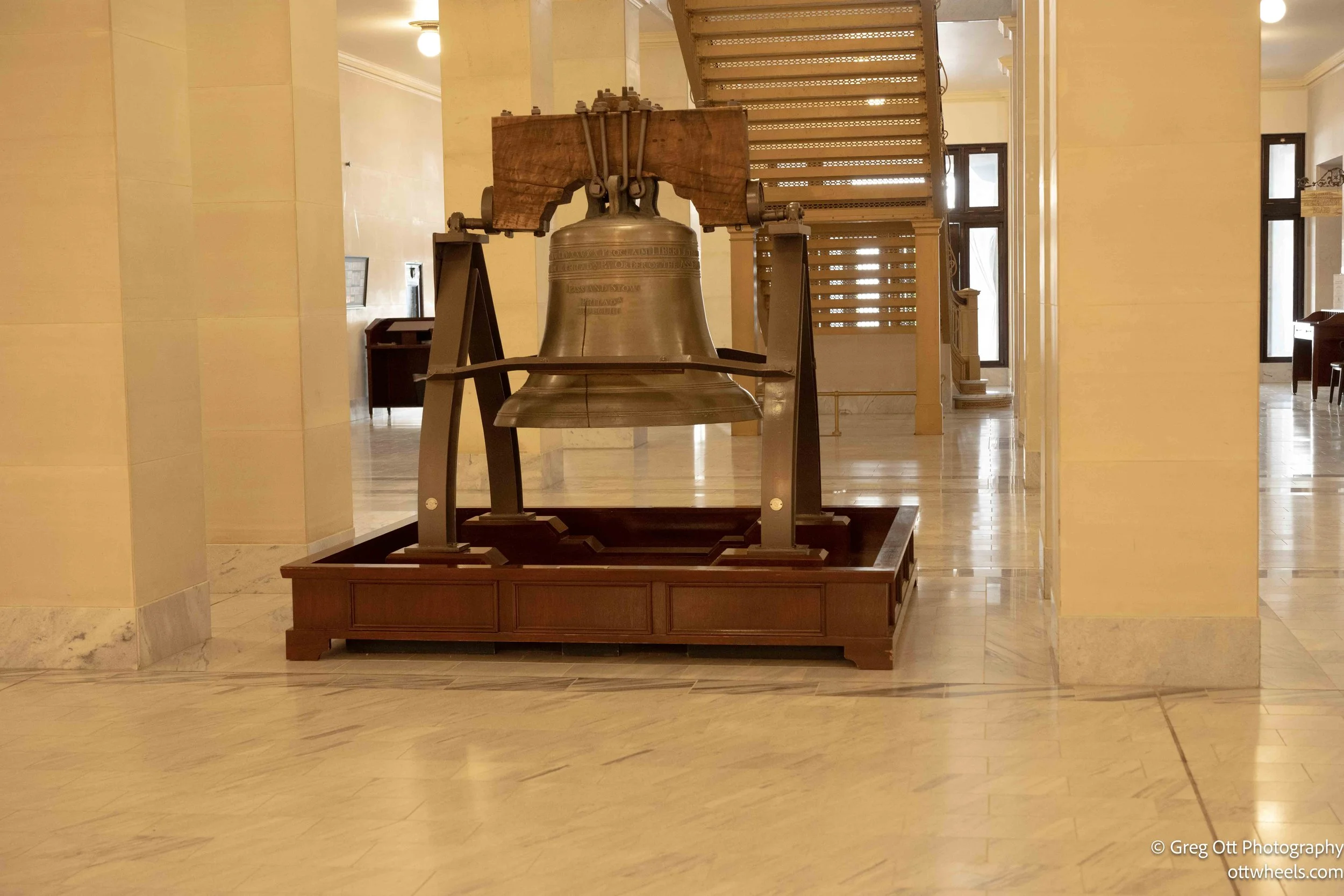
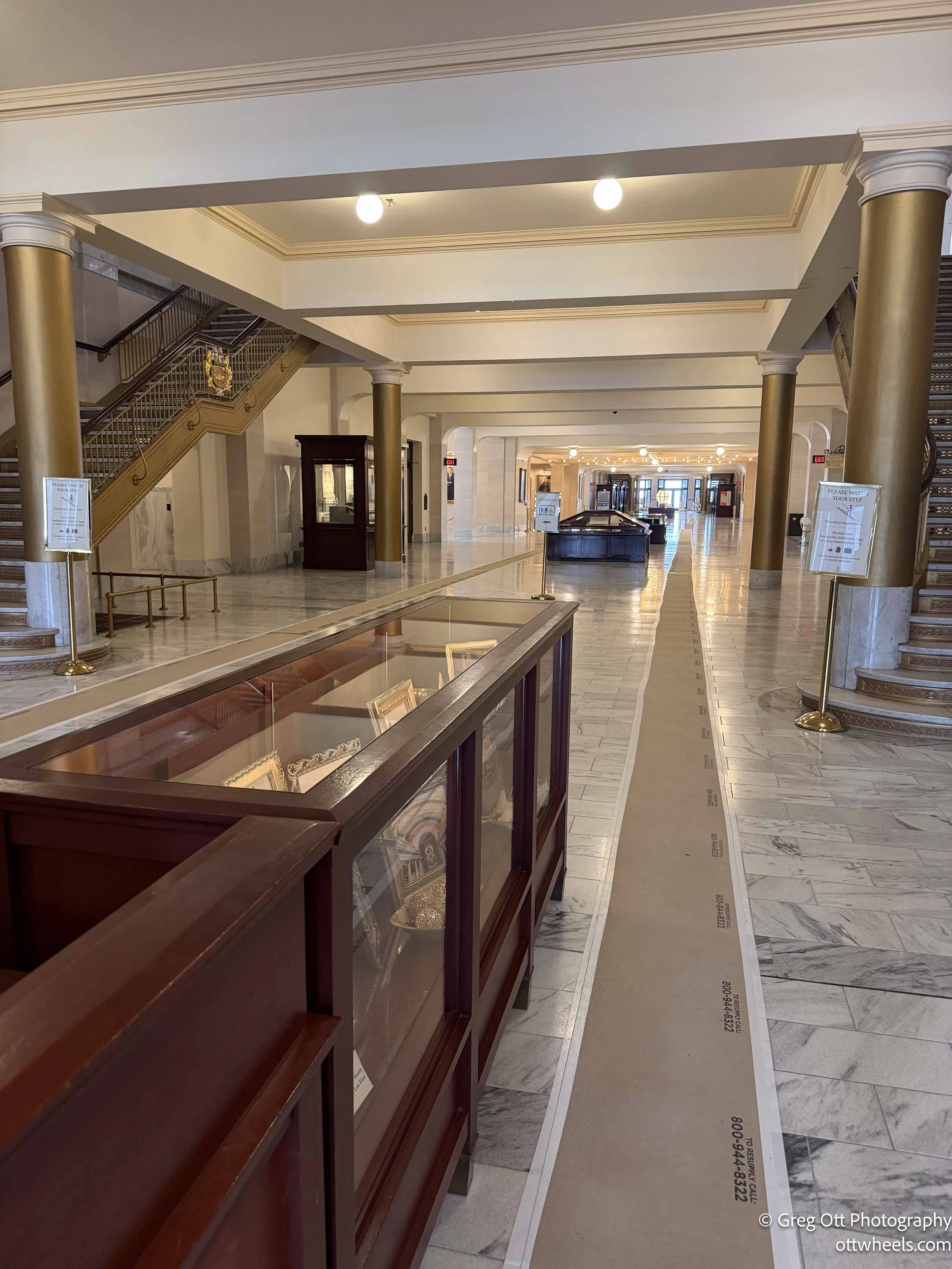
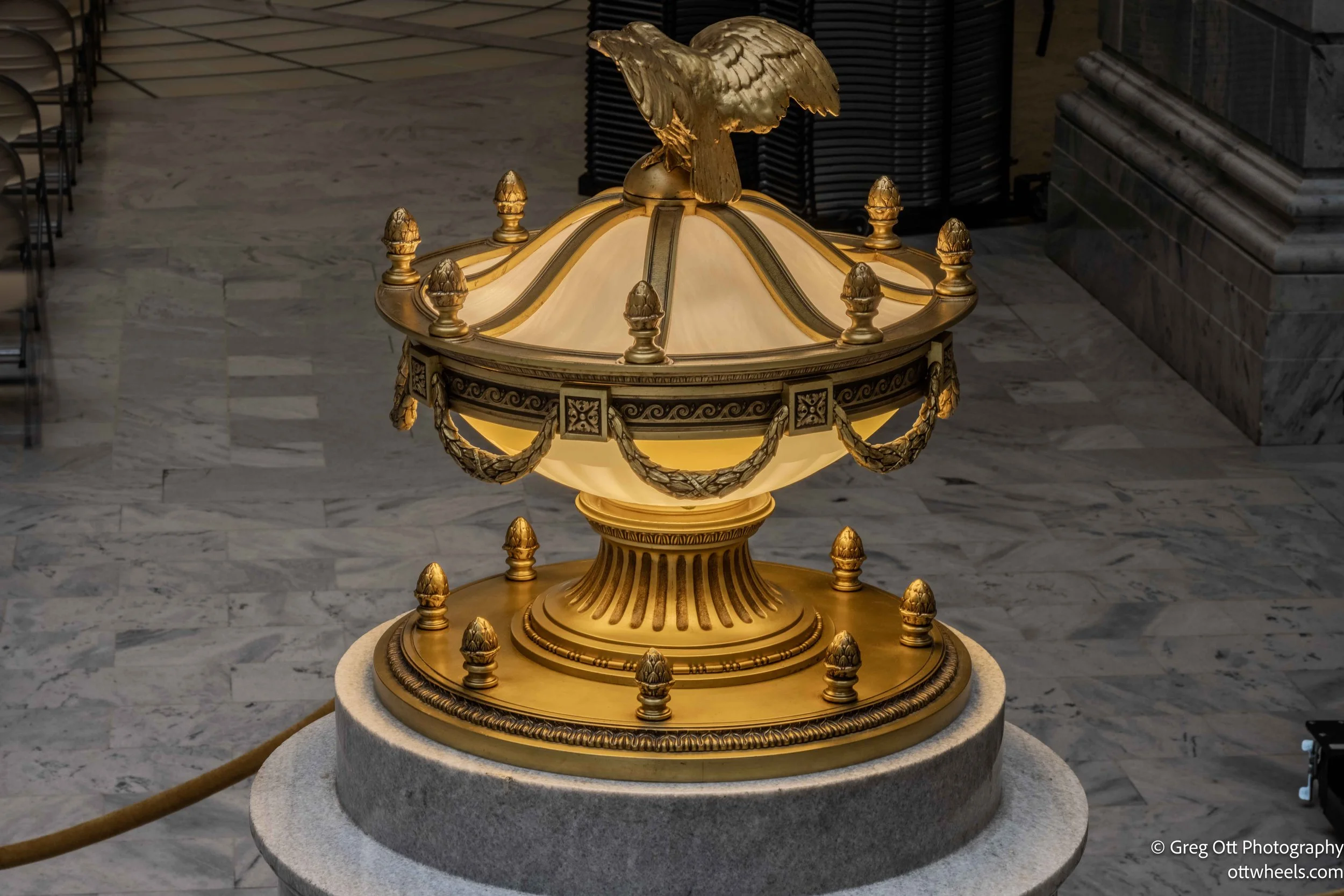
She had clearly been giving tours for a long time, and the presentation felt memorized rather than conversational. When we reached the House chamber, she recited the standard details and mentioned that the building had once been ranked the second most beautiful Capitol in the country. The body meets for 45 days a year. The members are part-time, unlike other states, and many have other jobs outside their duties here. I wasn’t sure where that ranking came from, and while the building is impressive, I’ve personally found others to be more striking. Beauty, as always, depends on who’s looking.
The tour briefly touched on the Supreme Court, which was once housed in the Capitol itself. We stopped to see its former location, and the guide mentioned that once a year the court still convenes there to maintain a symbolic presence in the building. Today, the court operates out of a separate judicial building downtown. Shortly after that, the tour ended abruptly. She pointed me toward the Senate chamber and said I could look around on my own, explaining that she had another tour coming up—even though she still had time. Of the thirty-eight state capitols I’ve visited, this was easily the weakest tour experience.
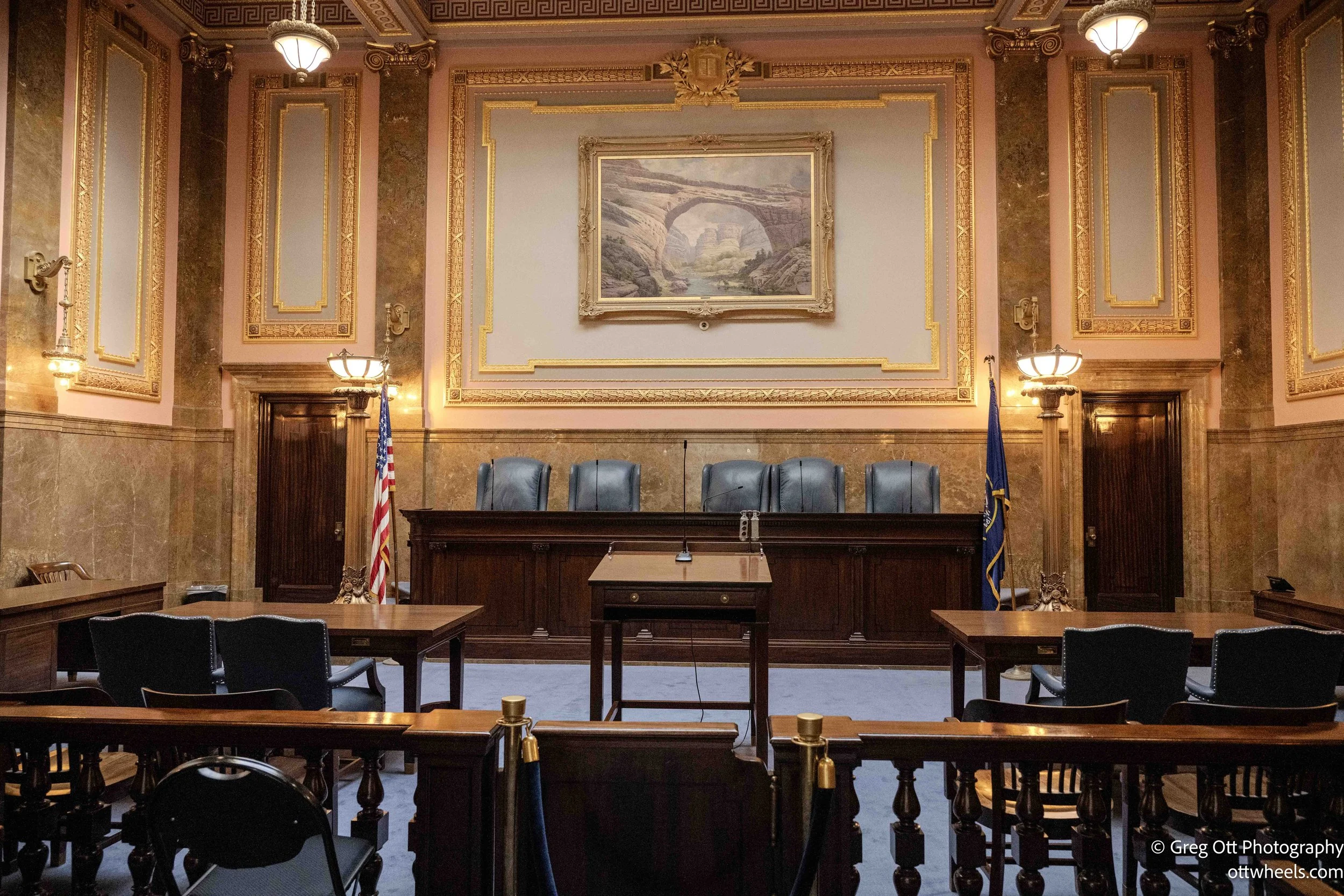
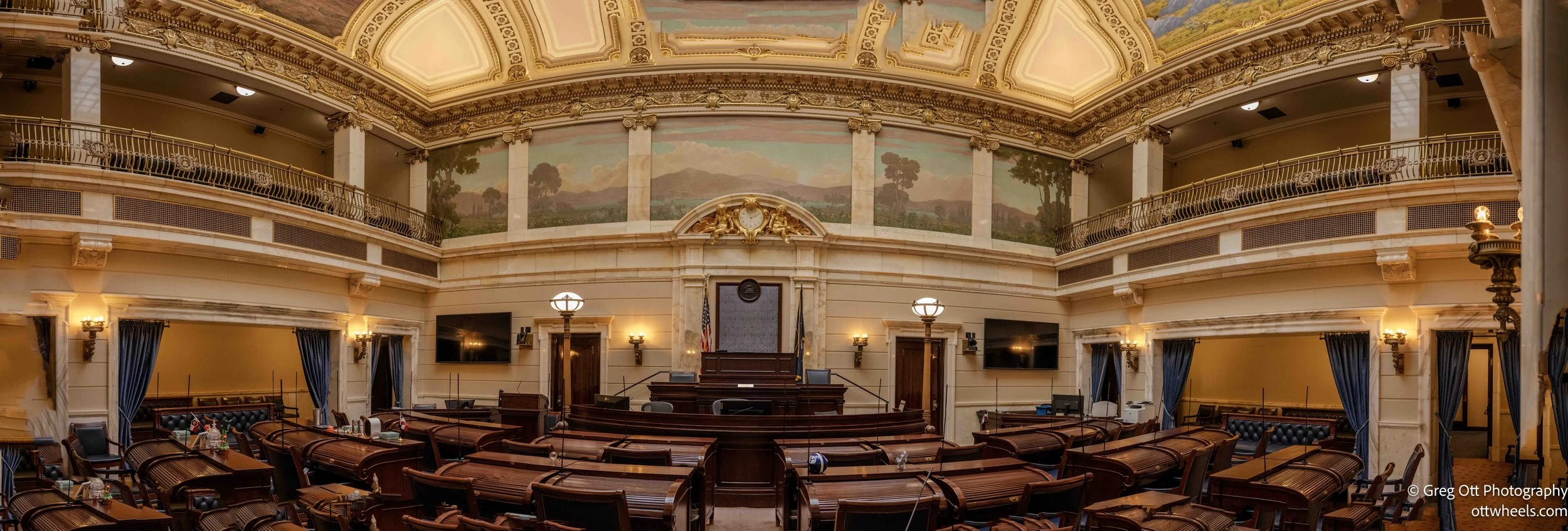
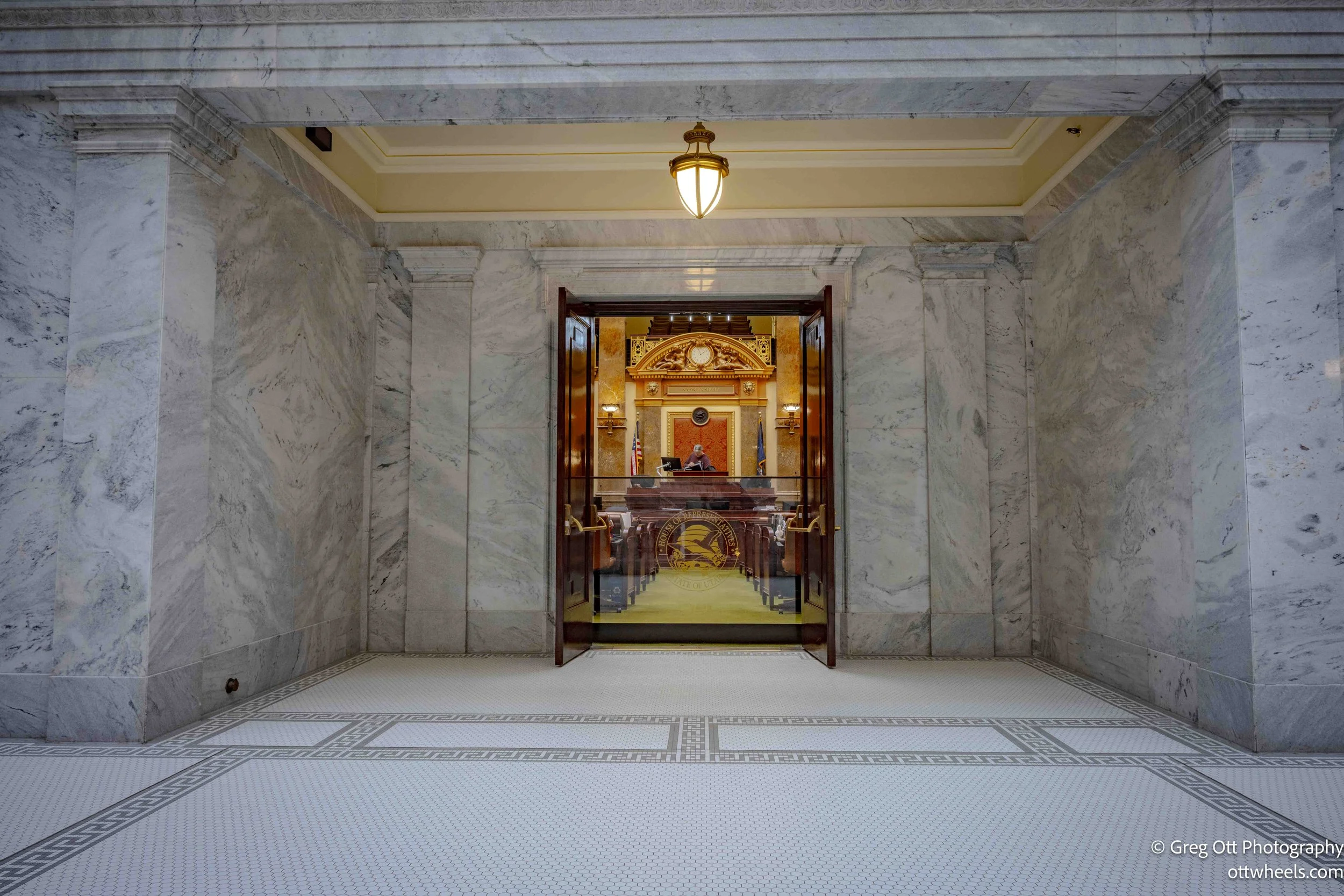
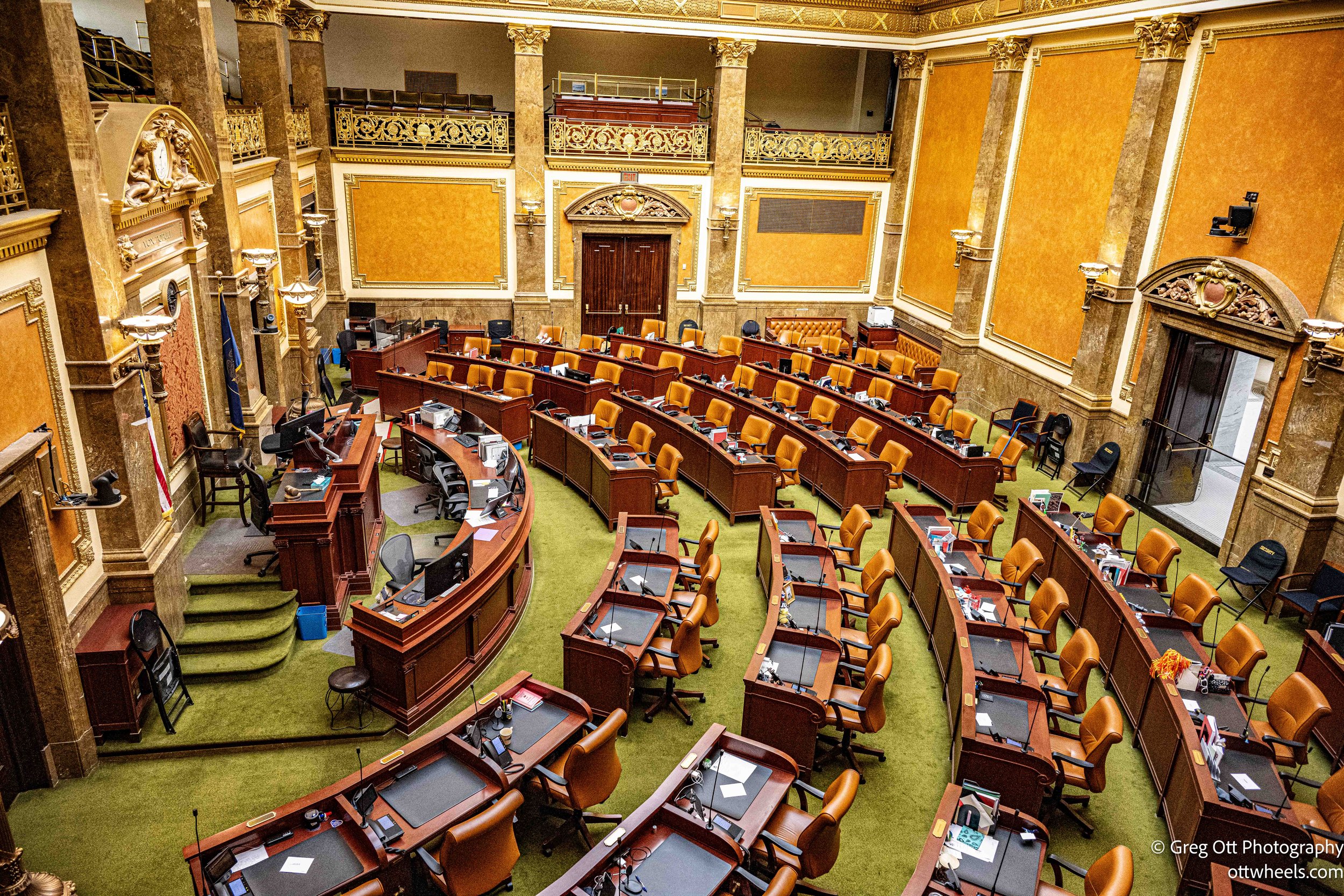
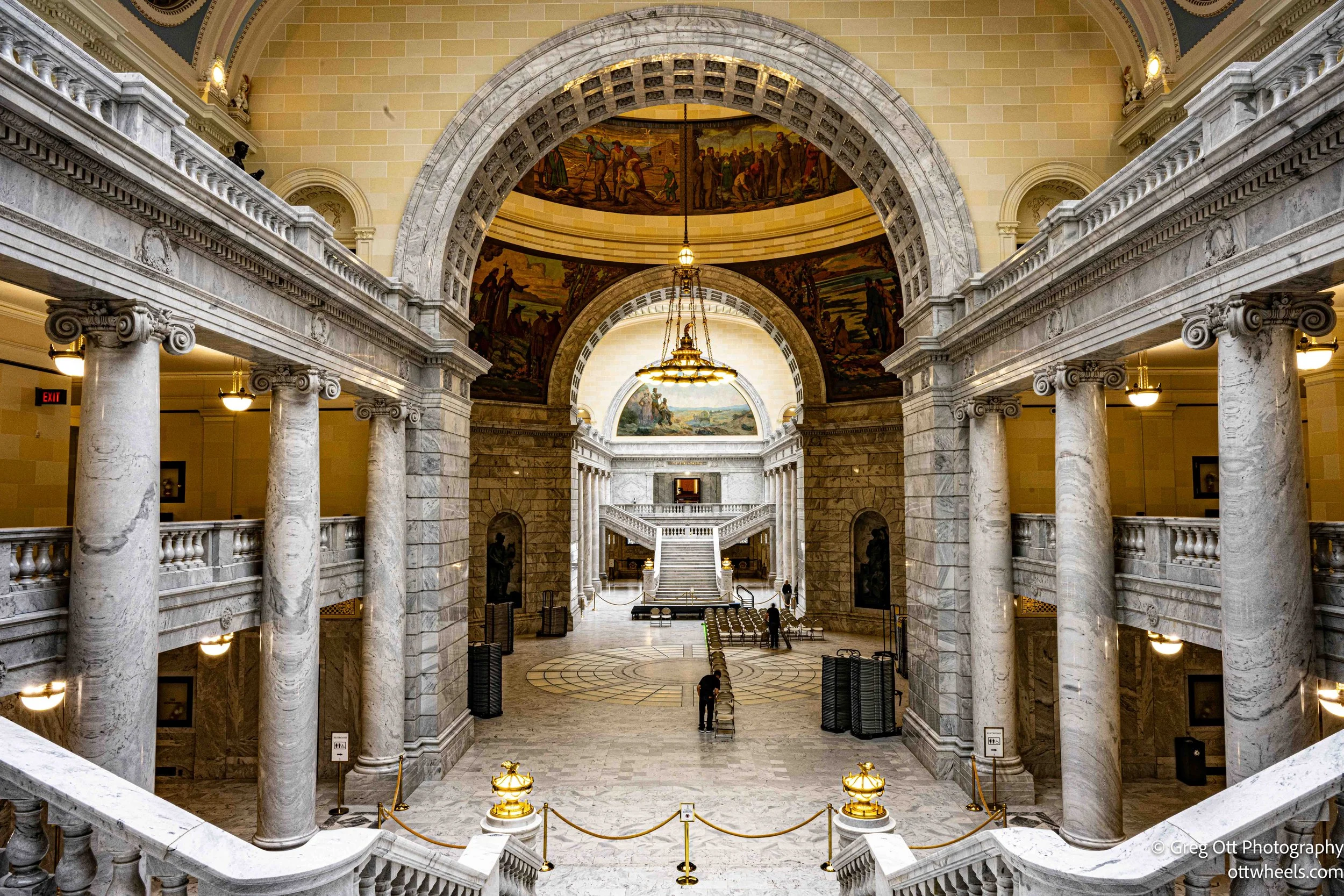
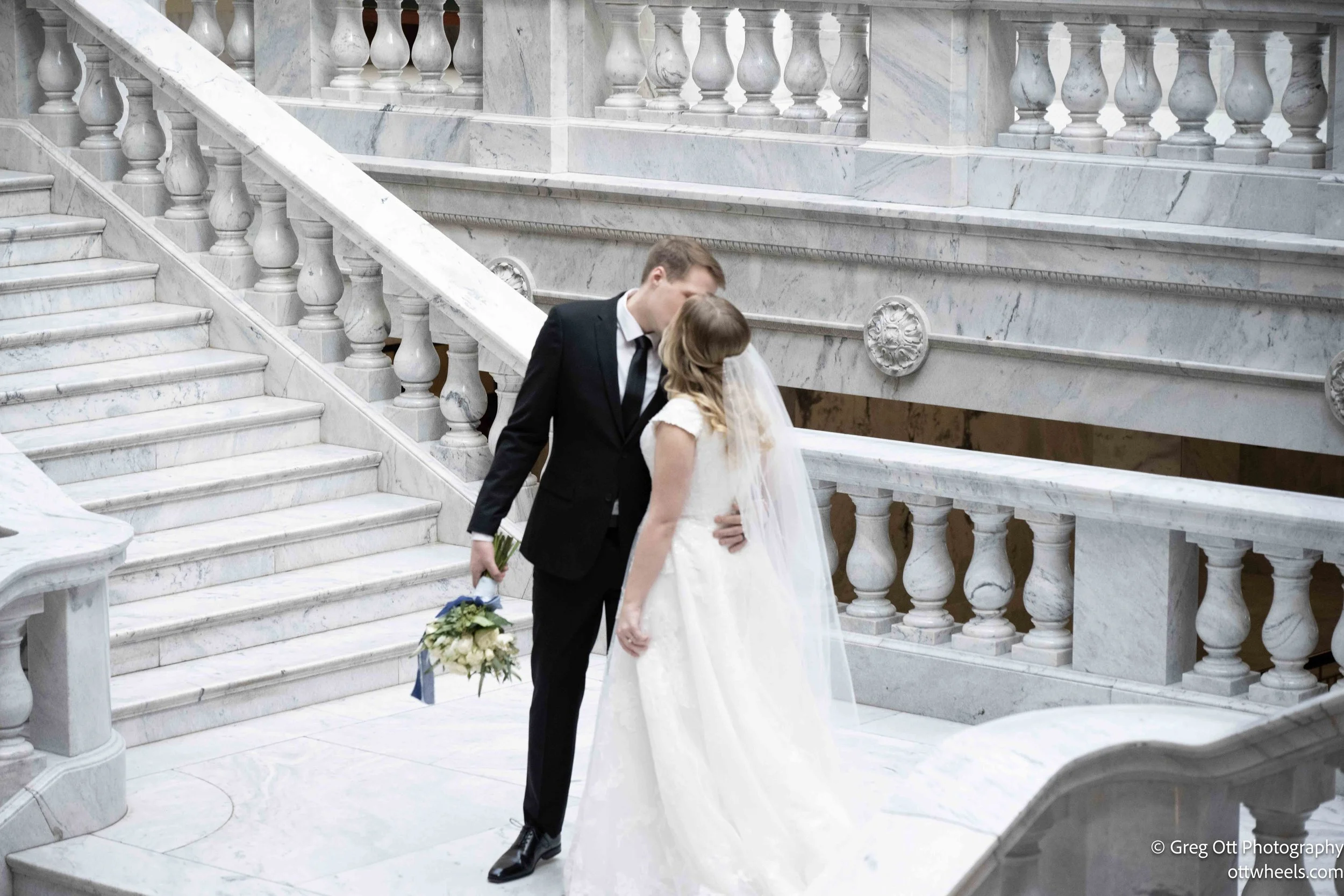
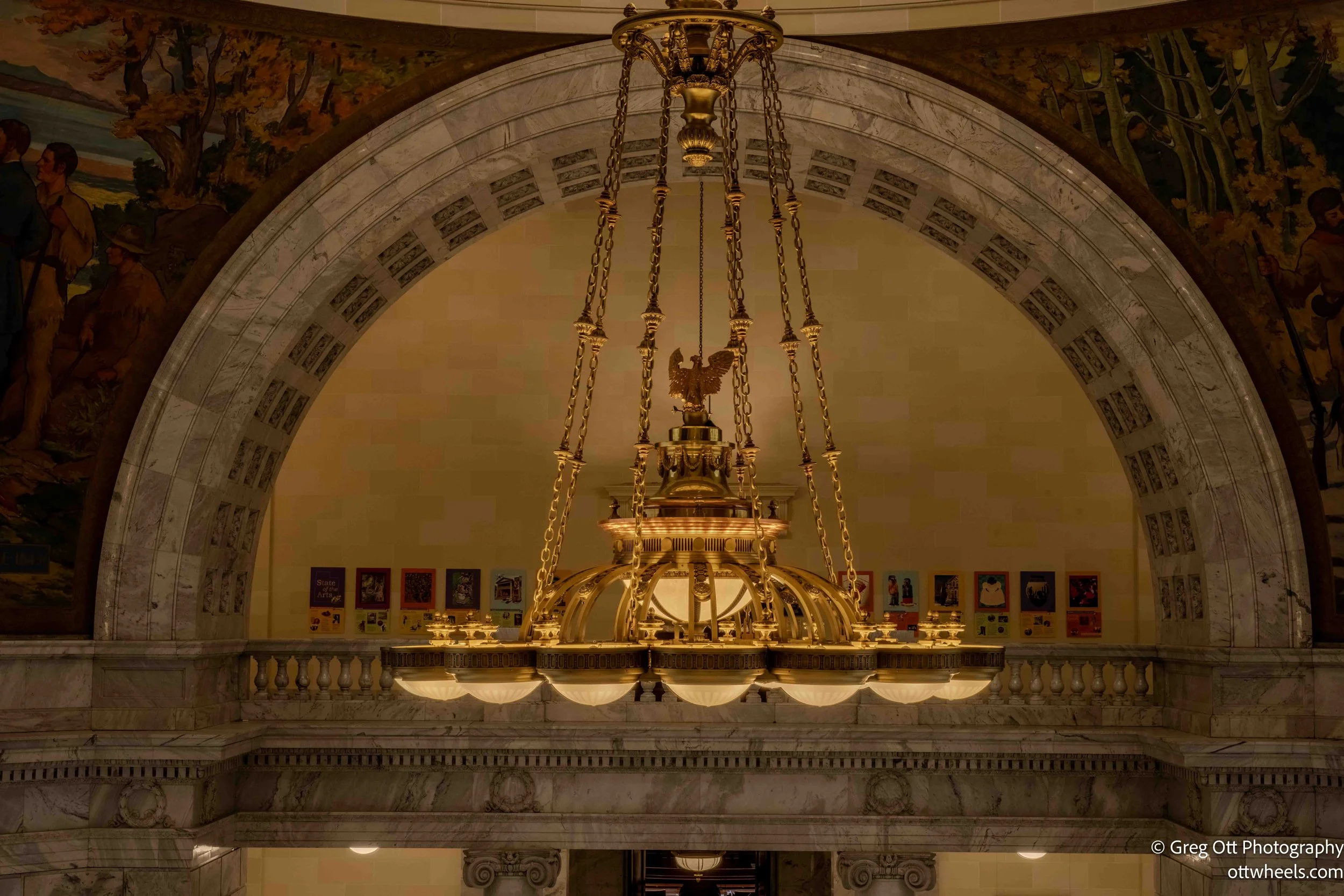
I spent the next hour walking the interior on my own, taking photographs and filling in the gaps the tour had left behind. A couple was having wedding photos taken, which I’ve seen in many other capitols. Despite the building’s massive exterior, the interior felt smaller than expected. We had stopped in one of the governor’s meeting rooms. A large room with furniture from when the building was originally built in 1916. The rooms along the perimeter were large, but the overall layout compressed inward, creating a sense that the scale was more monumental outside than it was within.
Capitol Grounds
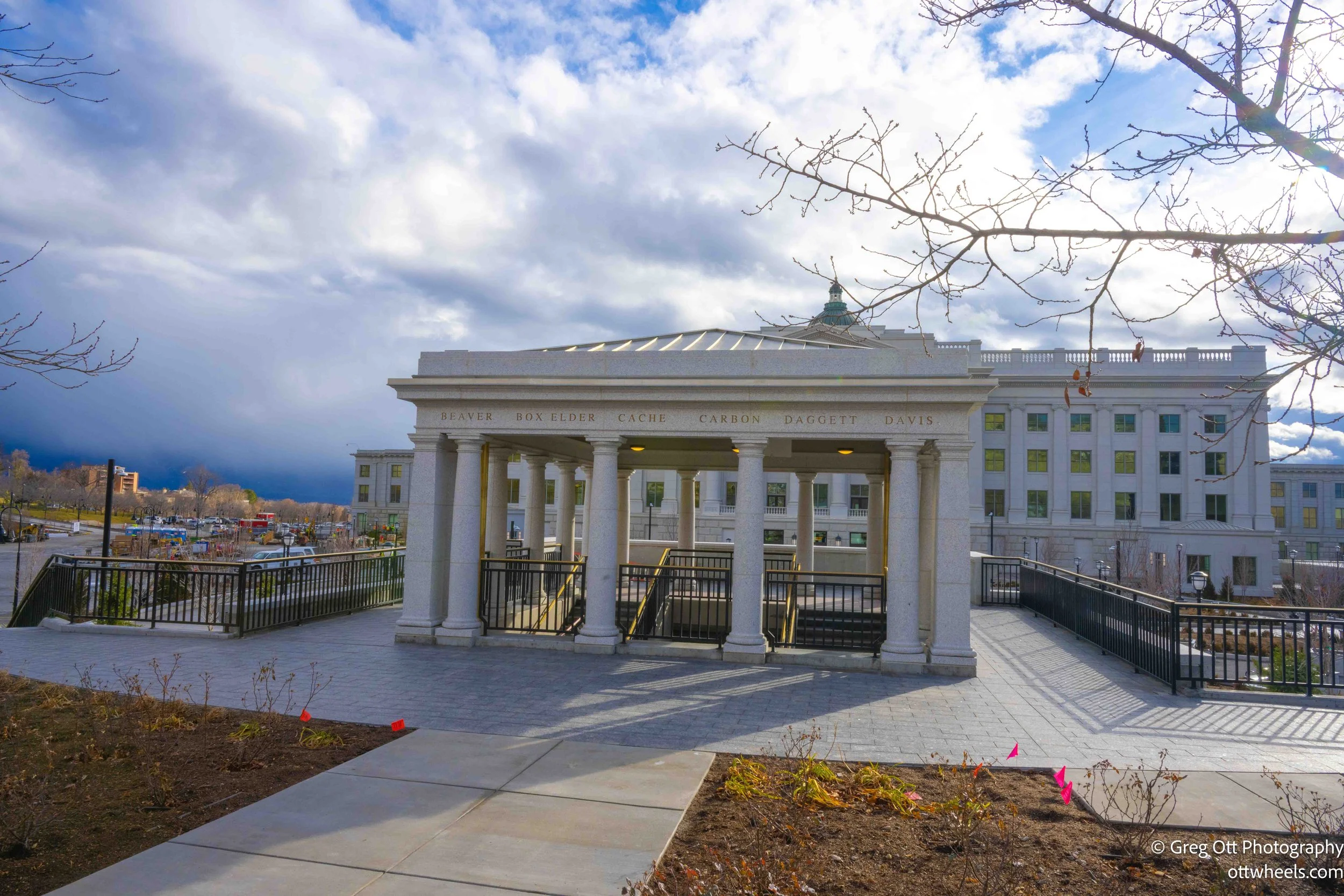
Outside, construction and cleanup work limited access to much of the Capitol grounds, with fencing blocking roughly sixty percent of the building and making photography difficult from several angles. I walked what I could, working around the barriers and adjusting angles where possible, aware of how much of the building was temporarily hidden.
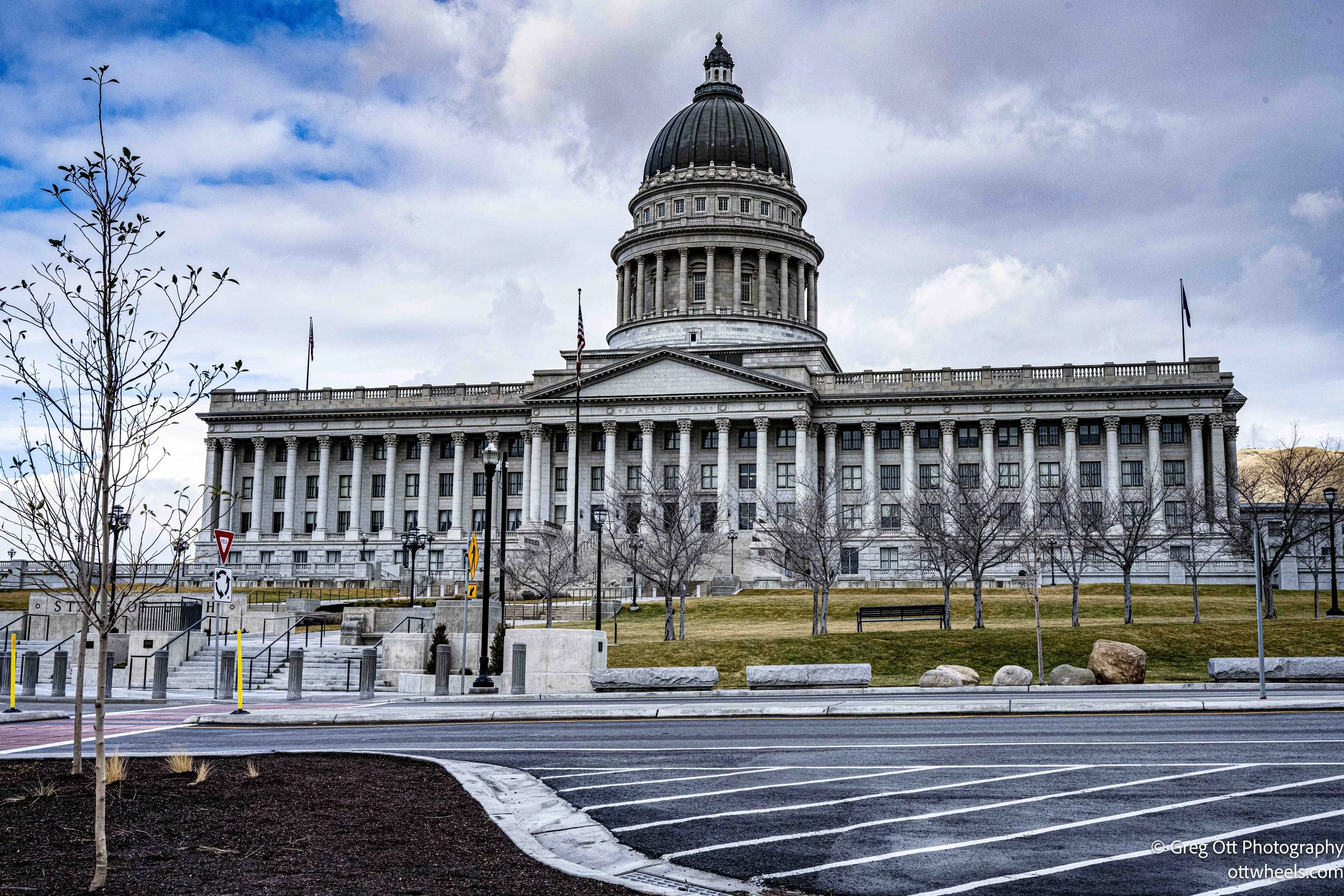
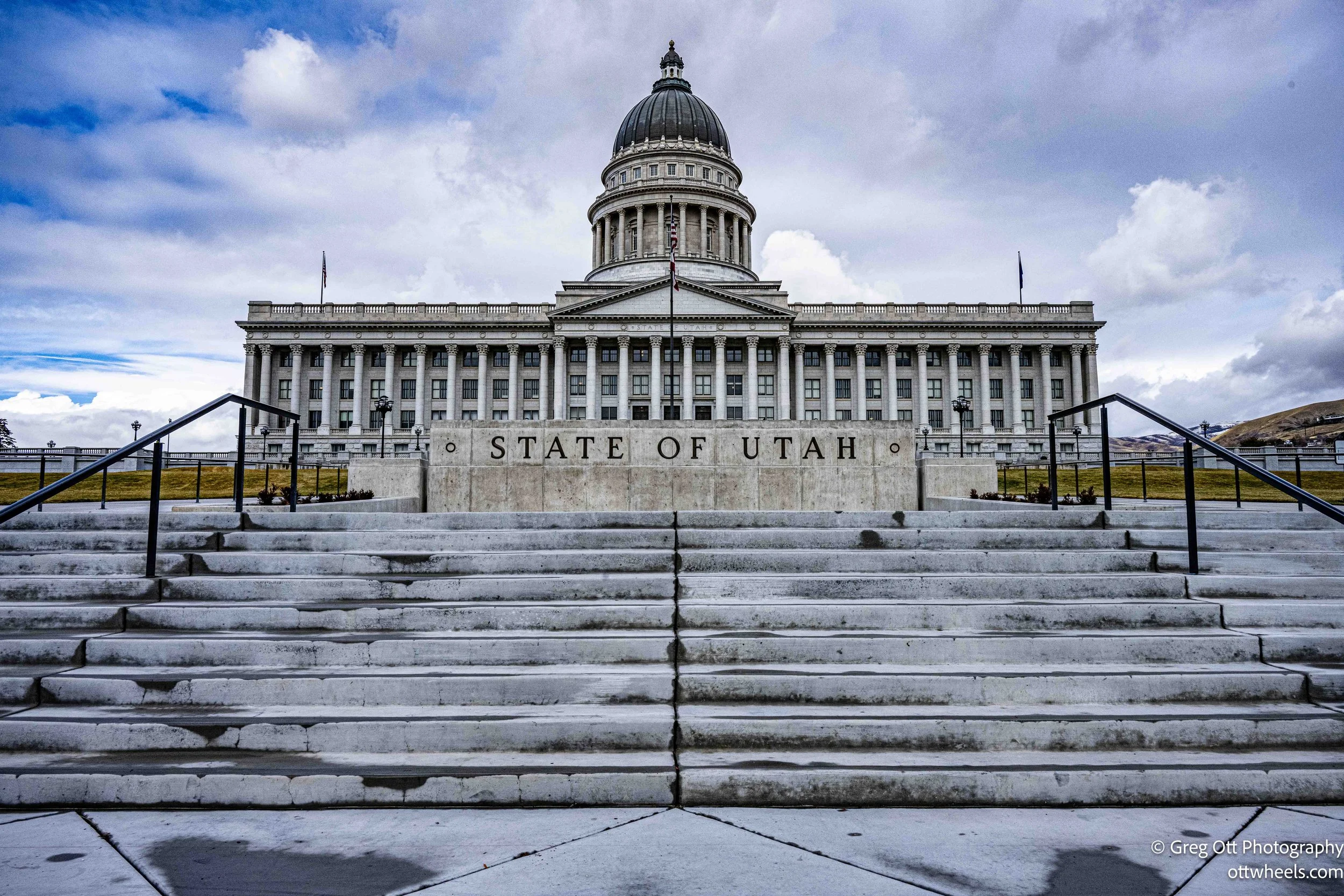
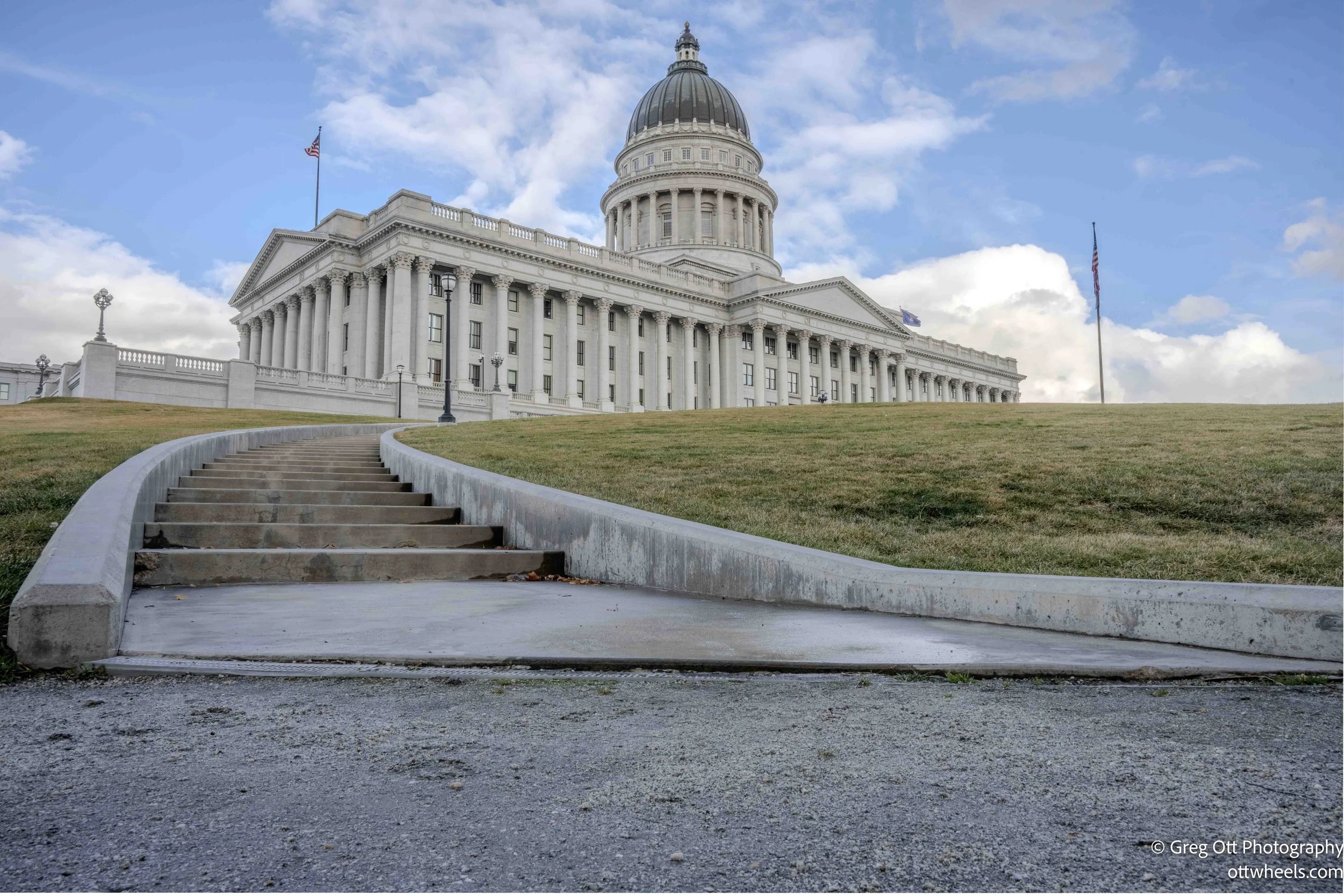
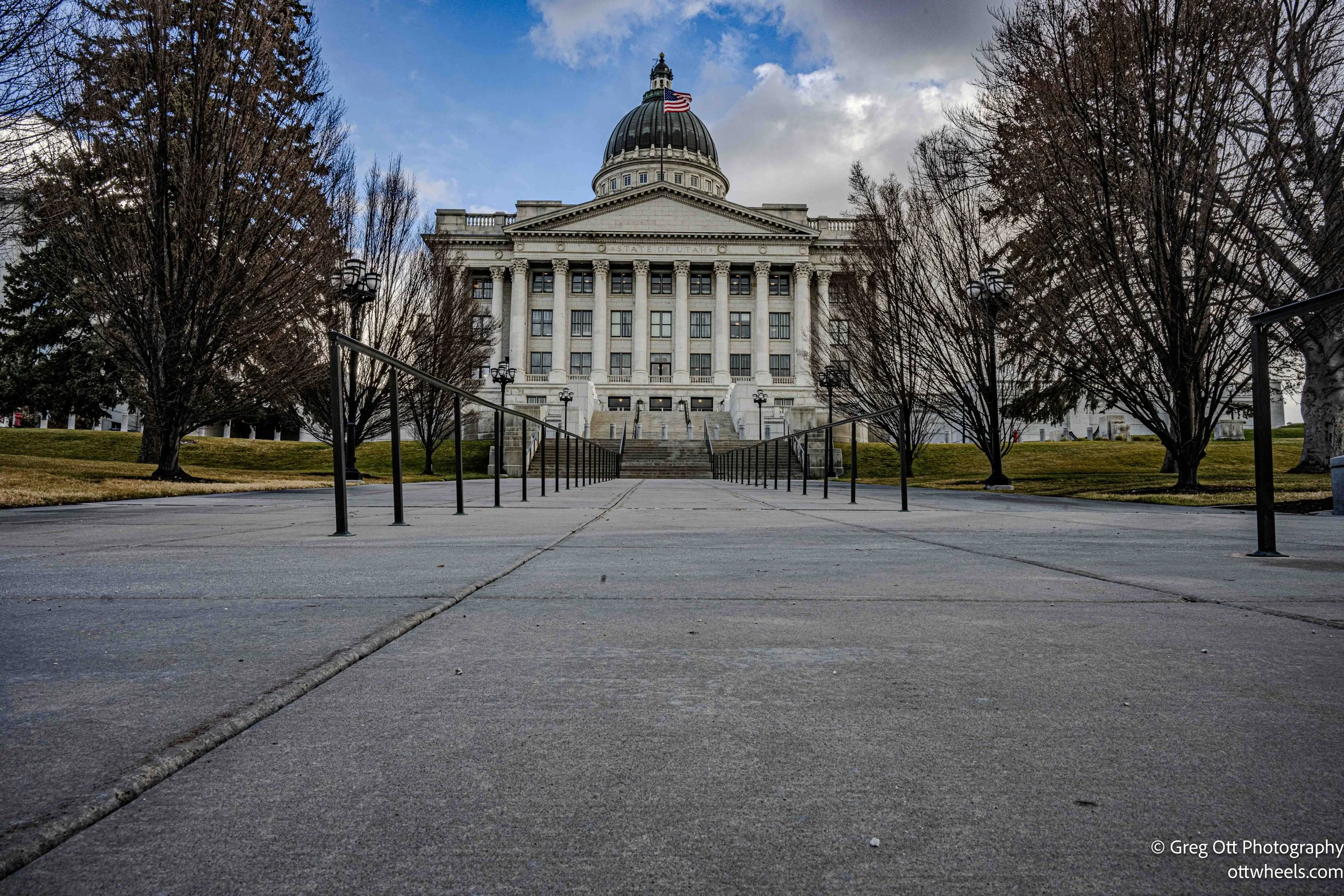
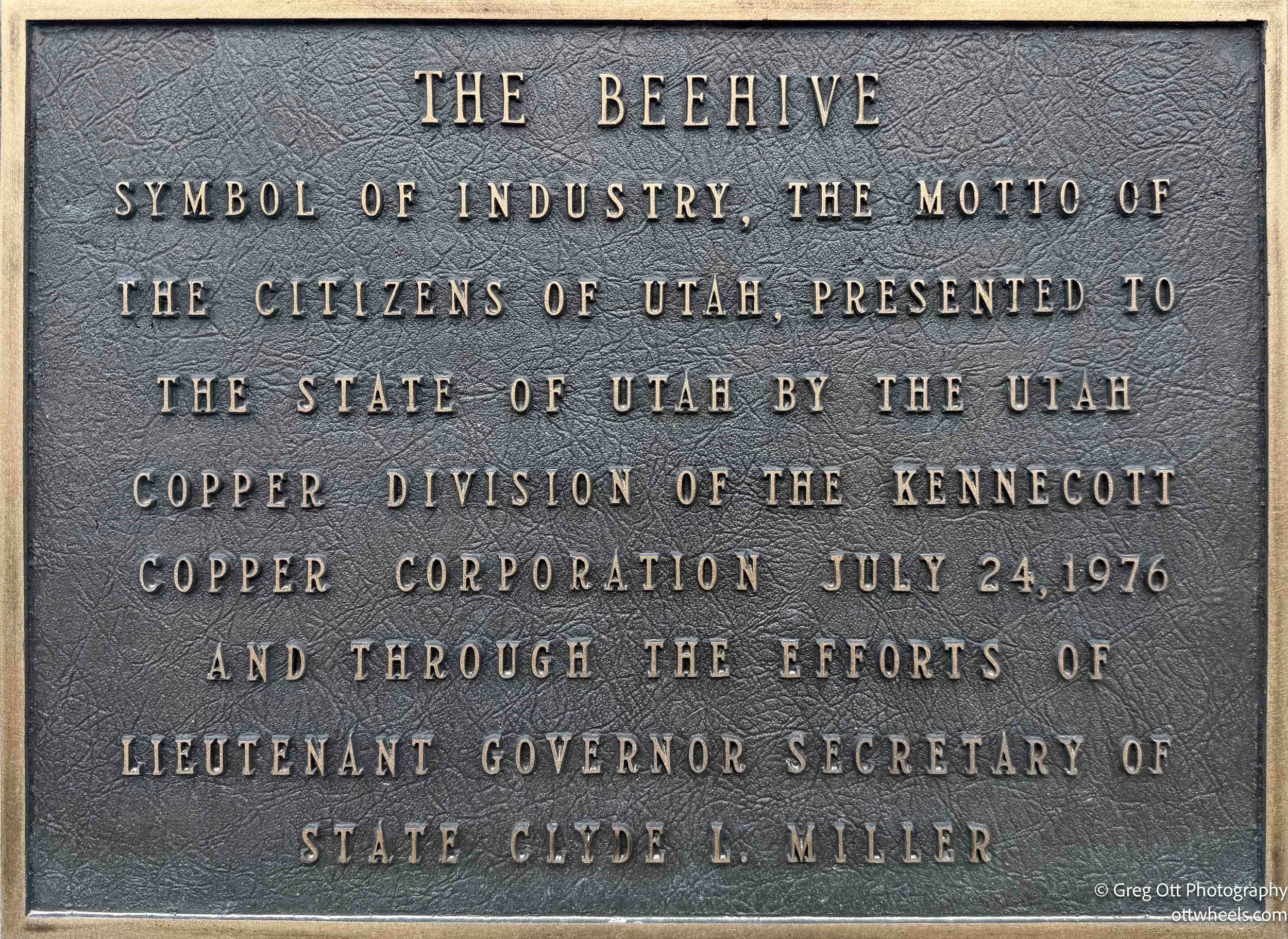
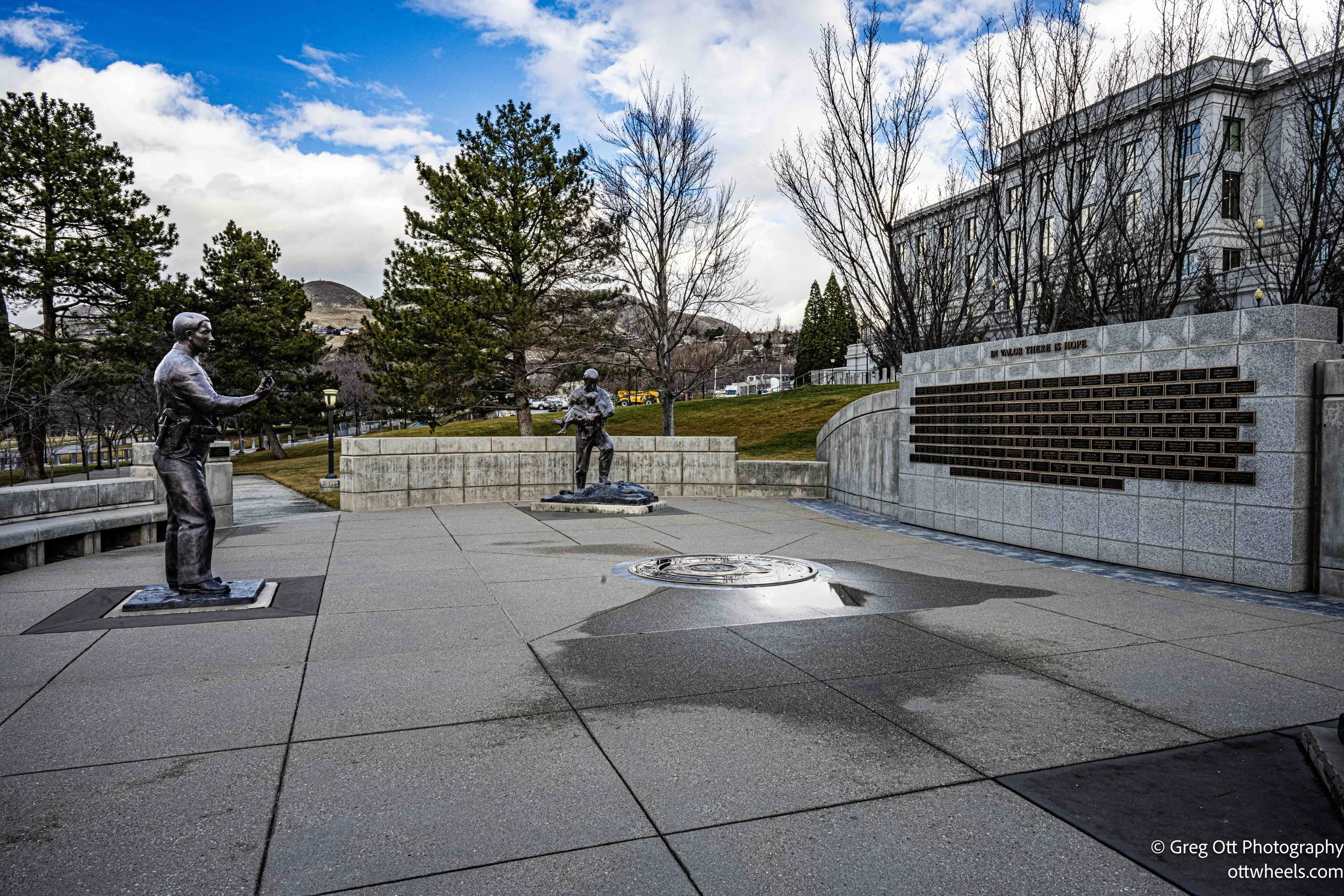
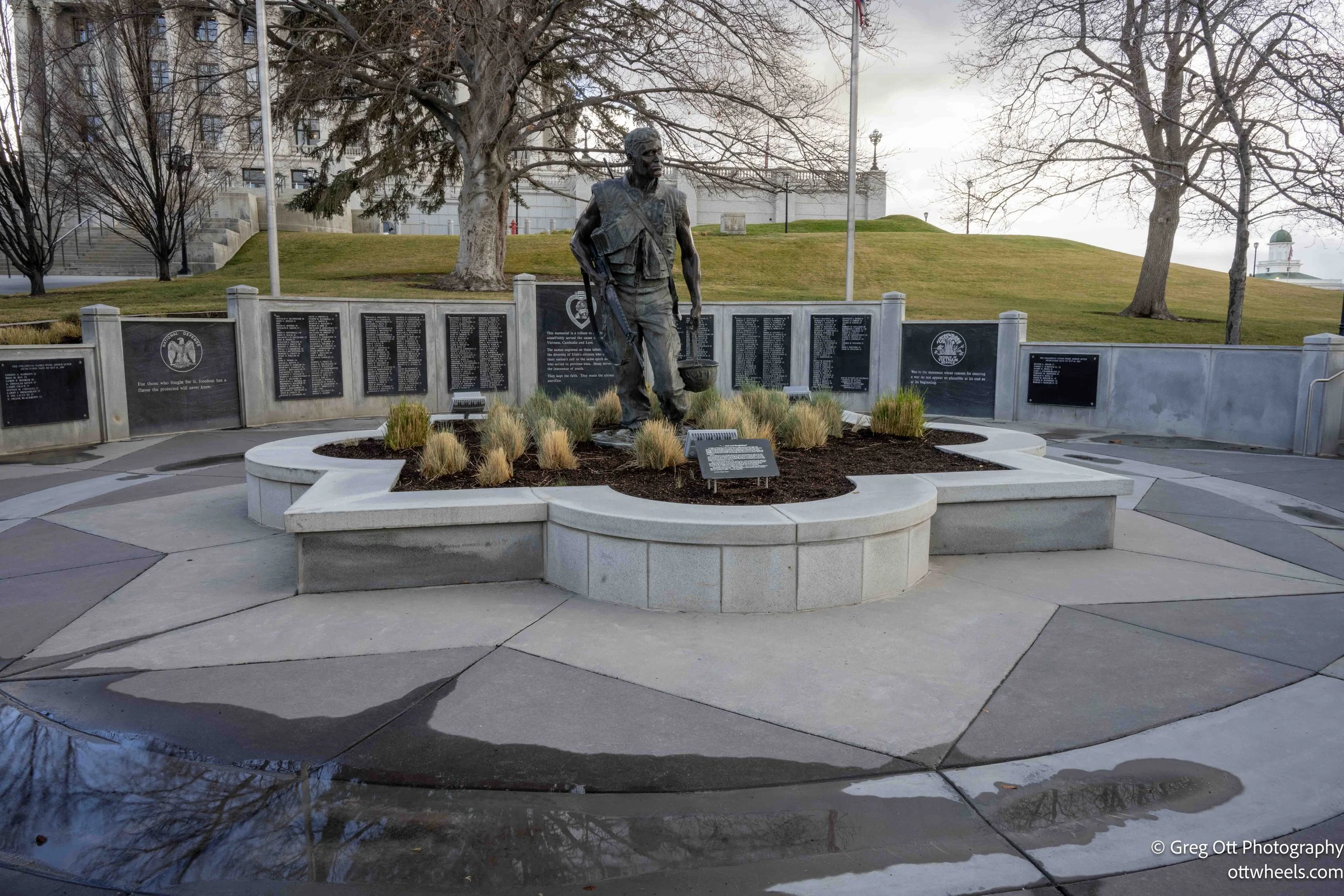
Scattered around the accessible areas were the familiar monuments dedicated to police officers, firefighters, and veterans. Near the main entrance, the state symbol—the beehive—appears twice, placed prominently and accompanied by a plaque explaining its significance and meaning within Utah’s identity.
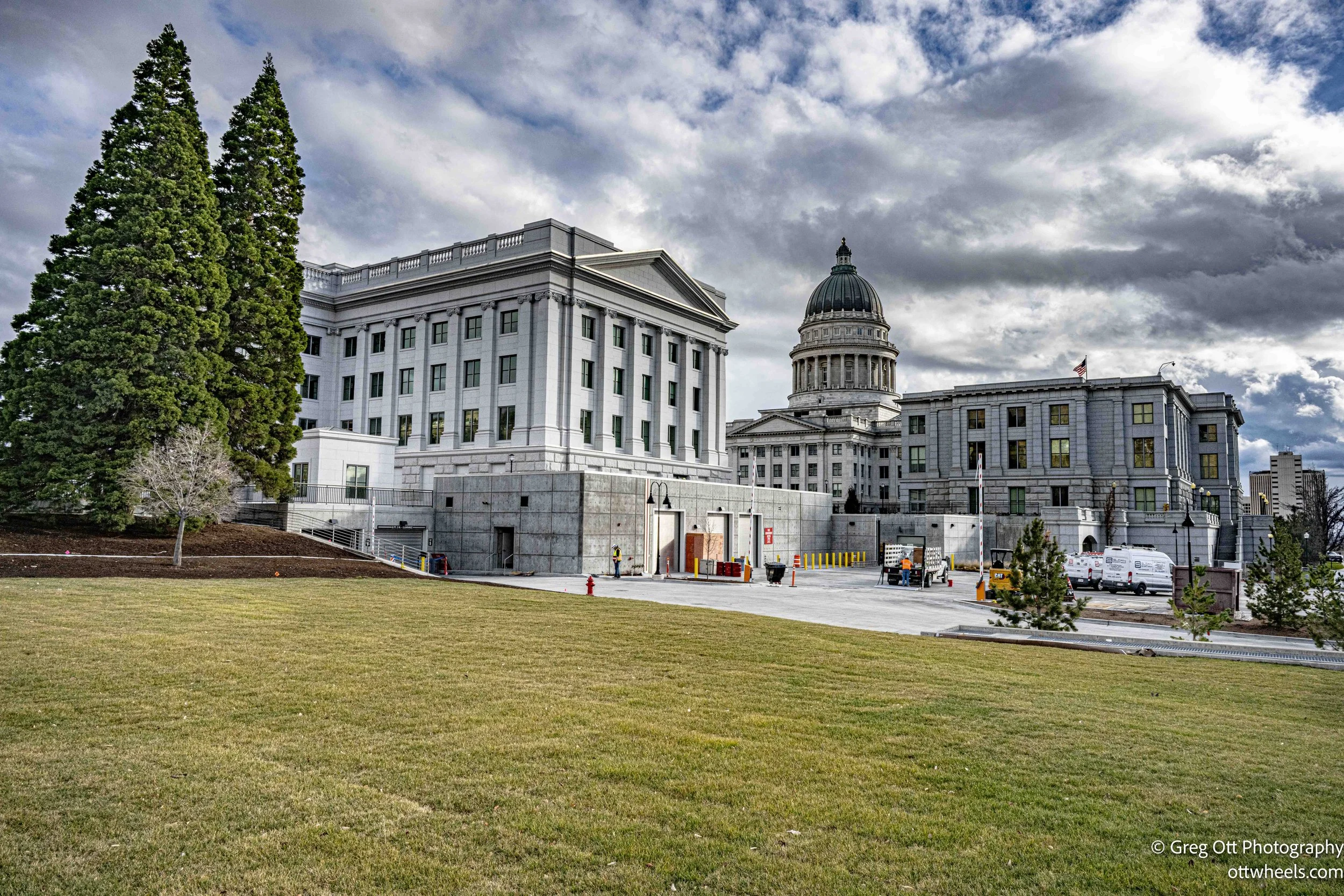
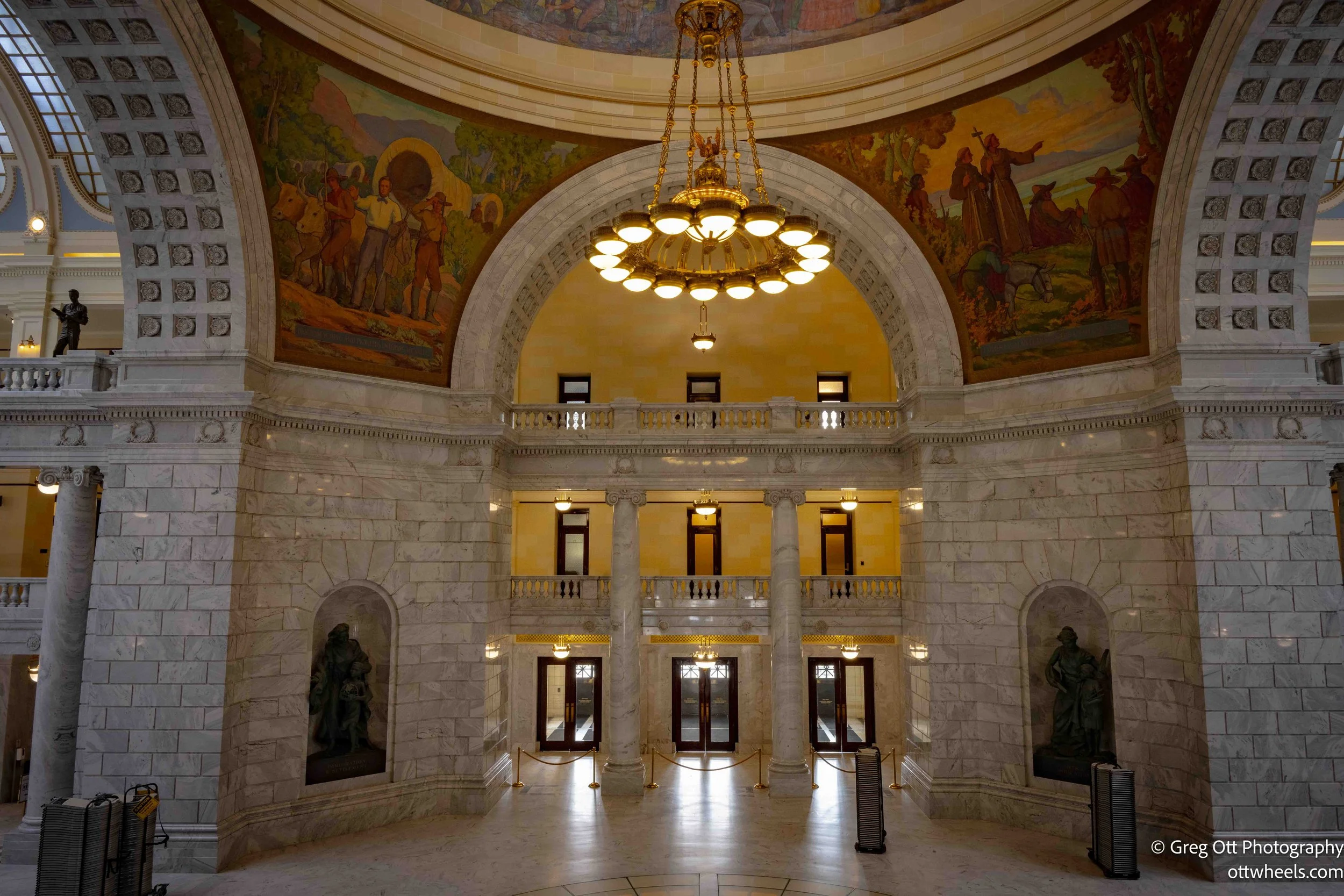
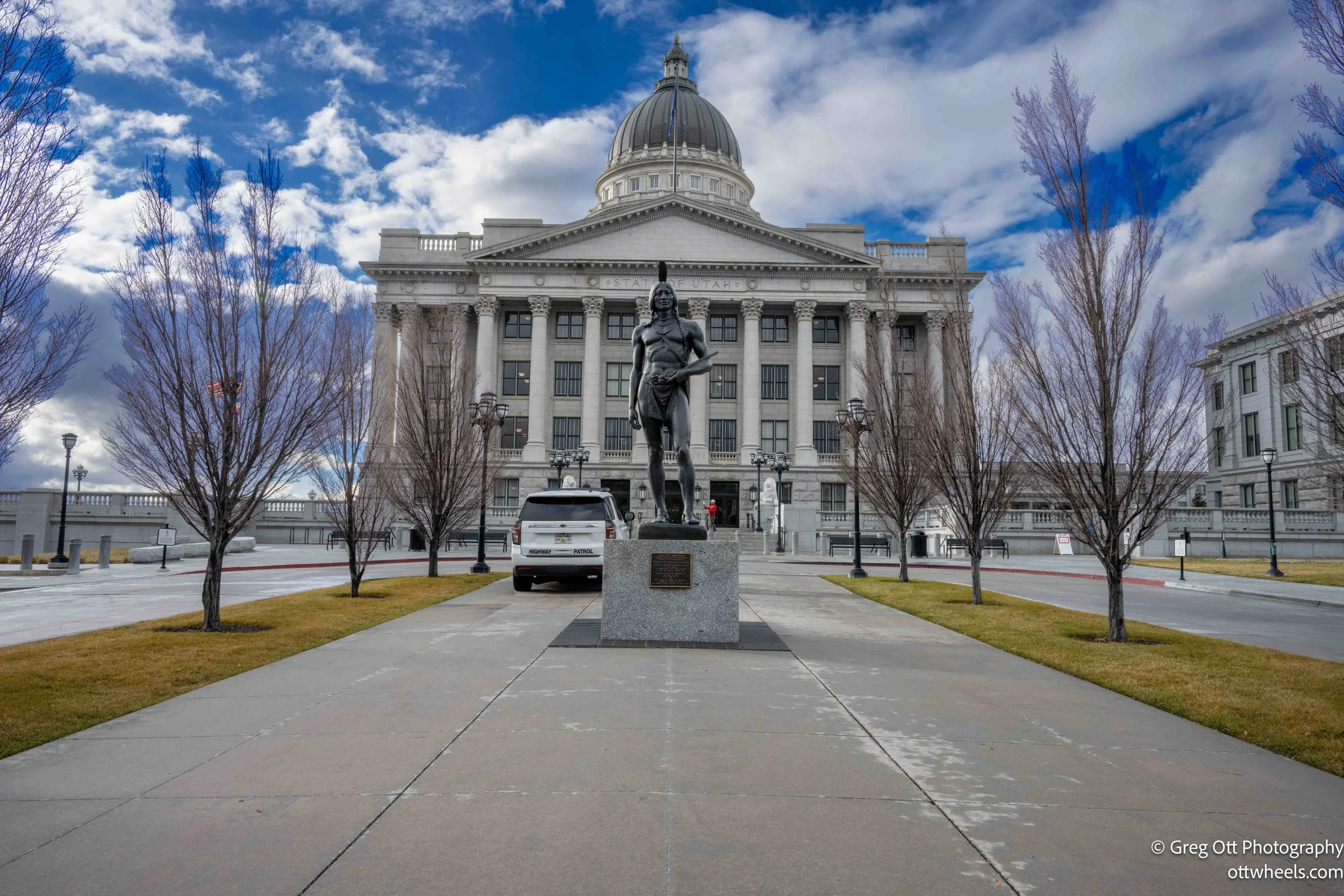
One statue stood out—a large bronze figure of Chief Washakie, positioned on the Capitol grounds. Inside the rotunda is the original marble version of the same sculpture (this area was shutdown during my tour). Washakie was not Ute, but an Eastern Shoshone leader known for his diplomatic relationship with the U.S. government and his efforts to protect his people’s land through negotiation rather than armed conflict. The statue is the work of Cyrus Dallin and dates to the early twentieth century, a period when Utah was actively shaping a public narrative of cooperation and settlement. Seeing Washakie represented here felt intentional—an acknowledgment of Native presence that predates statehood, even if it is framed through a carefully selected historical lens.
Downtown Photos
As the sun was going down, I headed back to the van for dinner, a bowl of soup and small salad. I took a nap and then headed downtown for a photo session. I was surprised to find that paid parking lasts until 10 p.m. This doesn’t make much sense in my opinion unless there trying their best to keep people out of the downtown area. Parking is limited to 2 hours and is $3.50 an hour. So, I circled around and found a street that didn’t have parking meters. This was near a residentual area and it seemed that visitors used it. I found the last spot at the bottom of the hill.
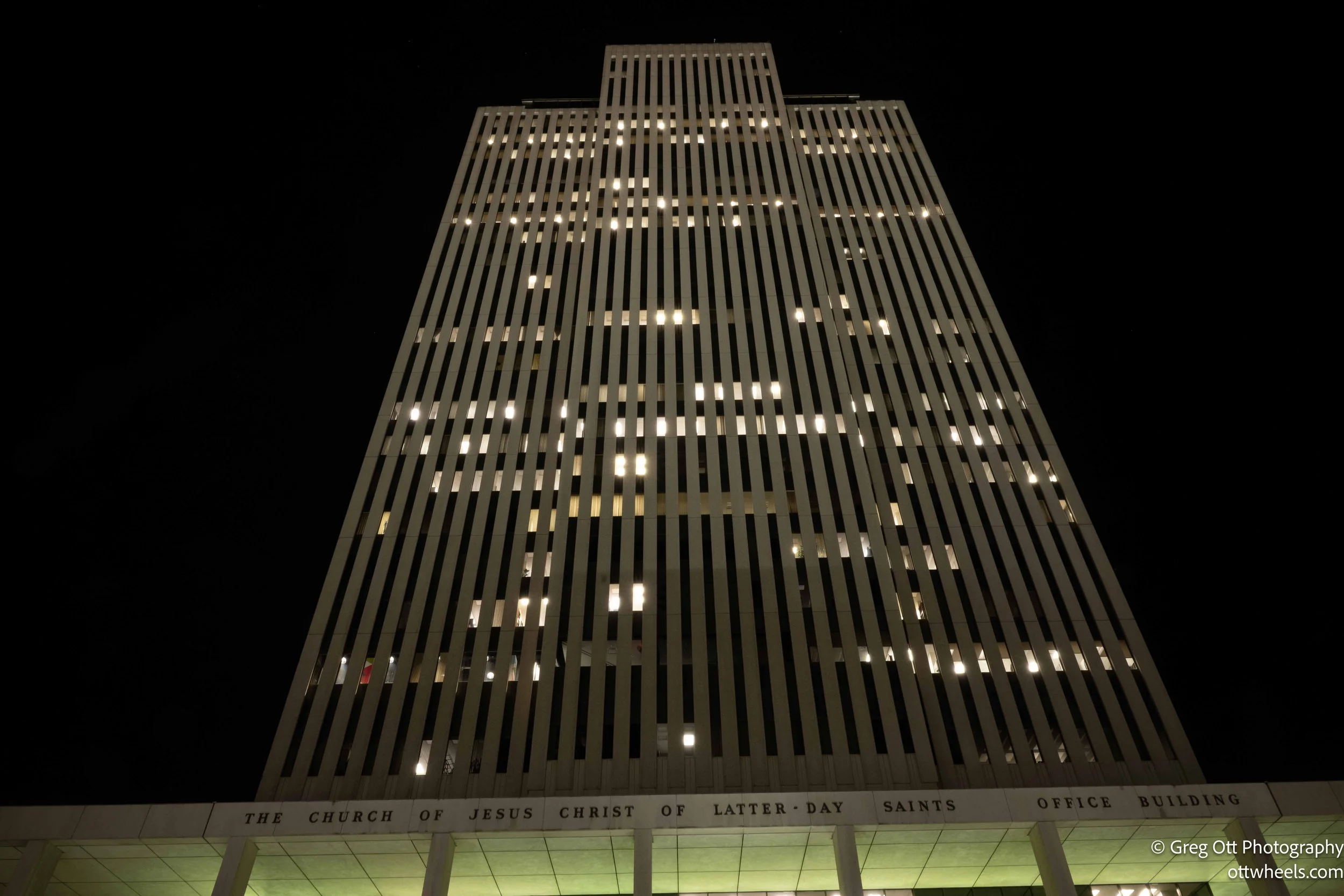
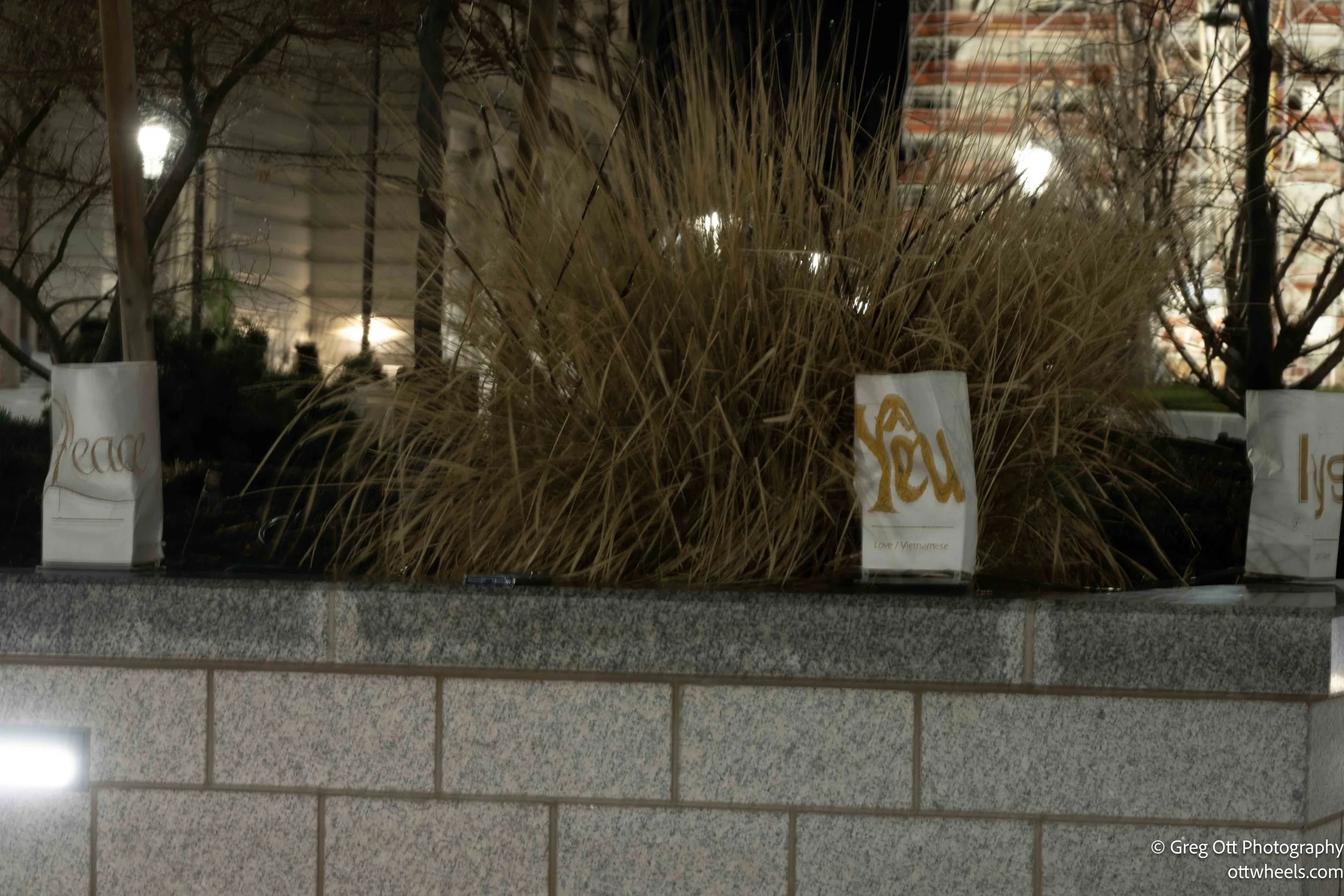
This was across the street from the Church of the Latter-Day Saints (LDS) office building which was where I was trying to get to. Rarely do things work this nicely. Everything was closed, it was 8:30 p.m. I was intrigued by the white paper bags with sand and candles in each one. They had a message in English and each had a differt language translation. This was in an area where there were flags from all around the world in a circle.
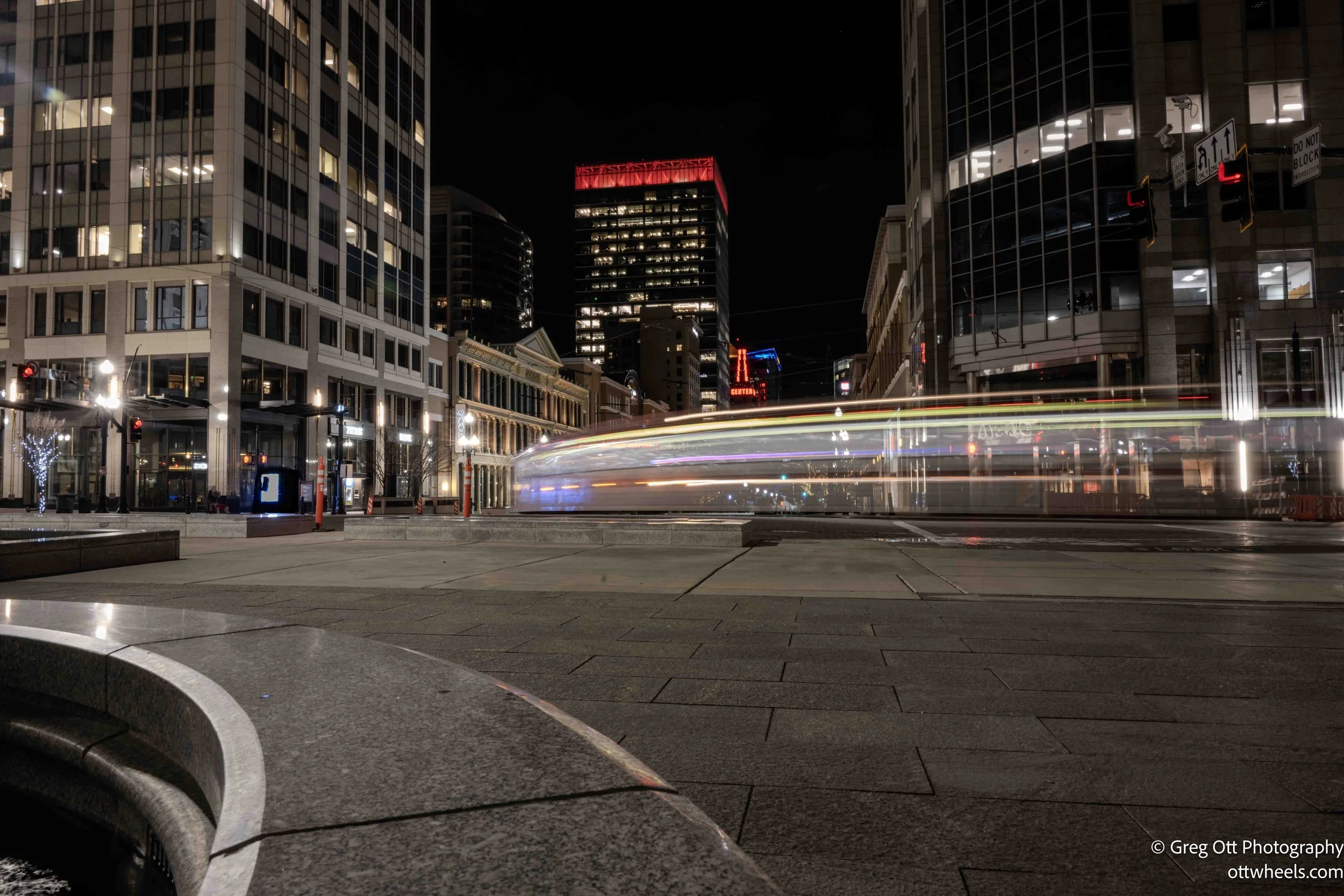
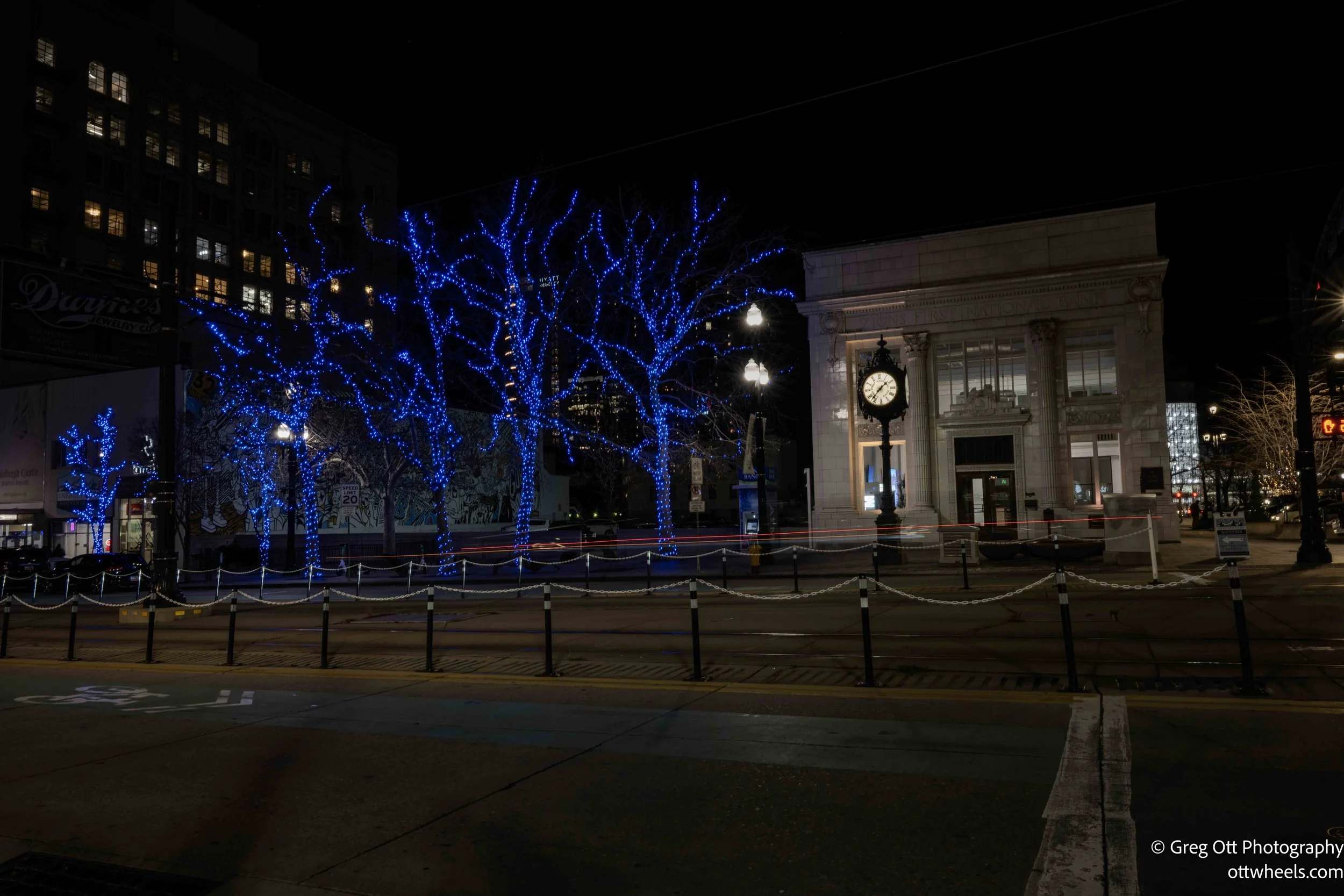
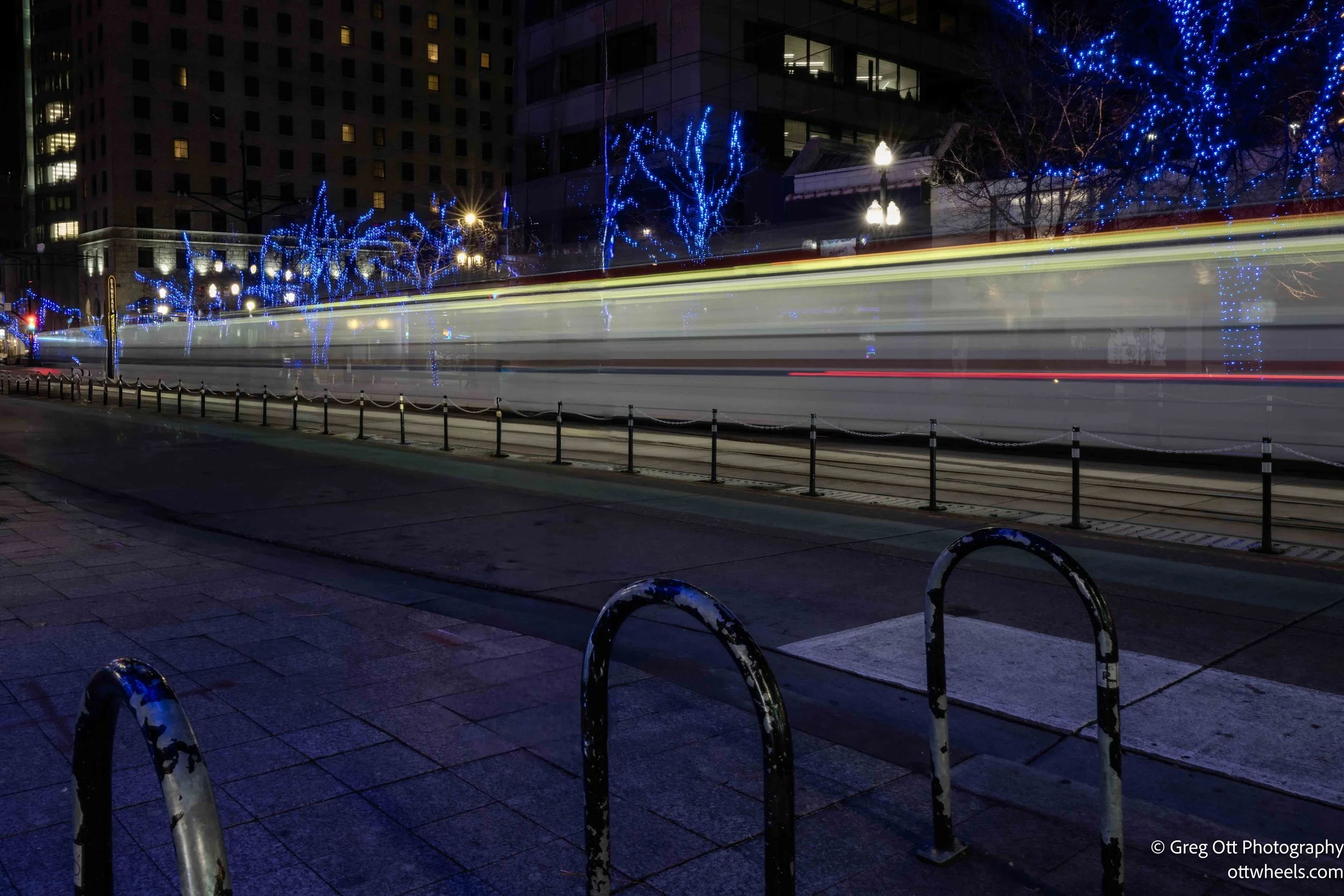
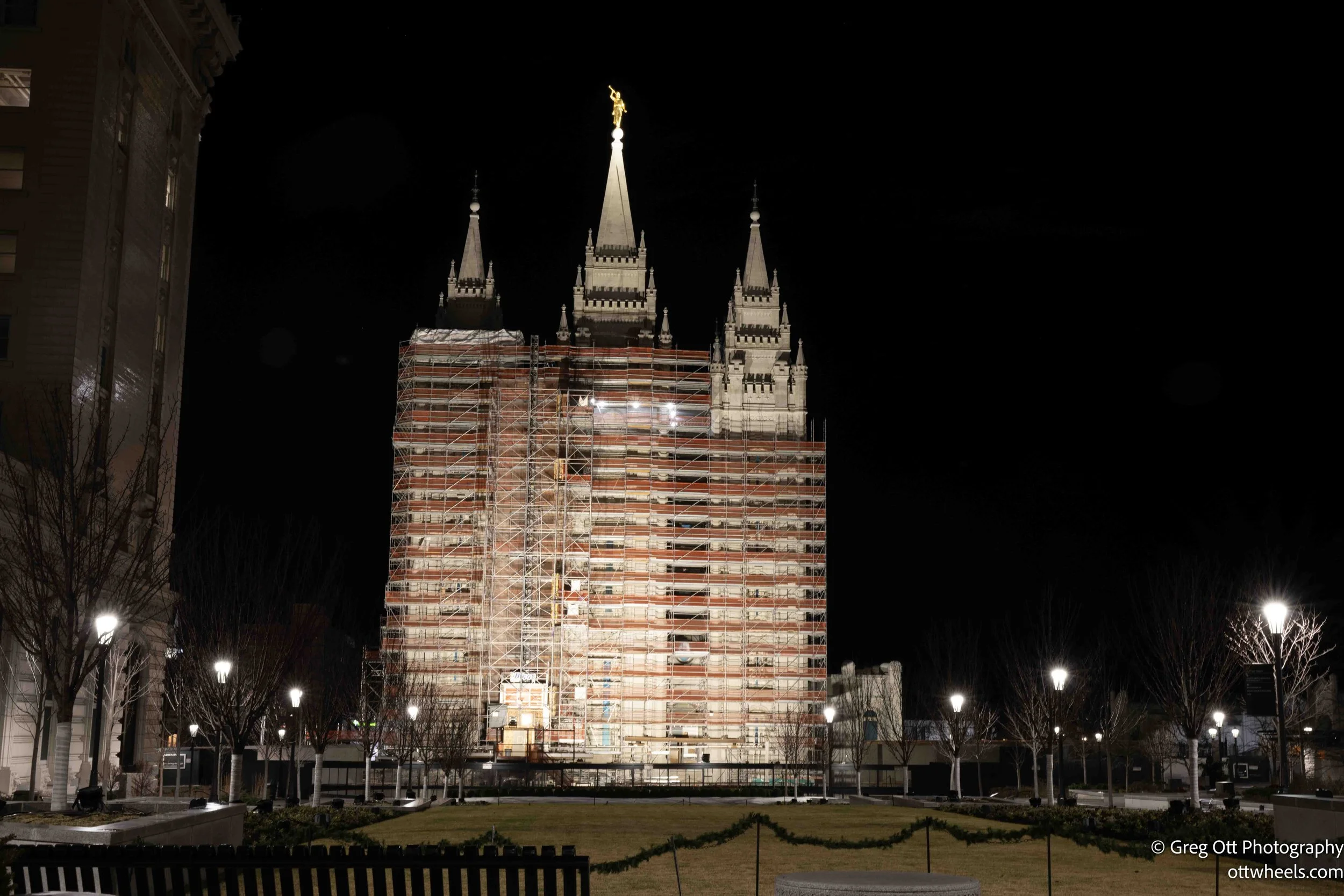
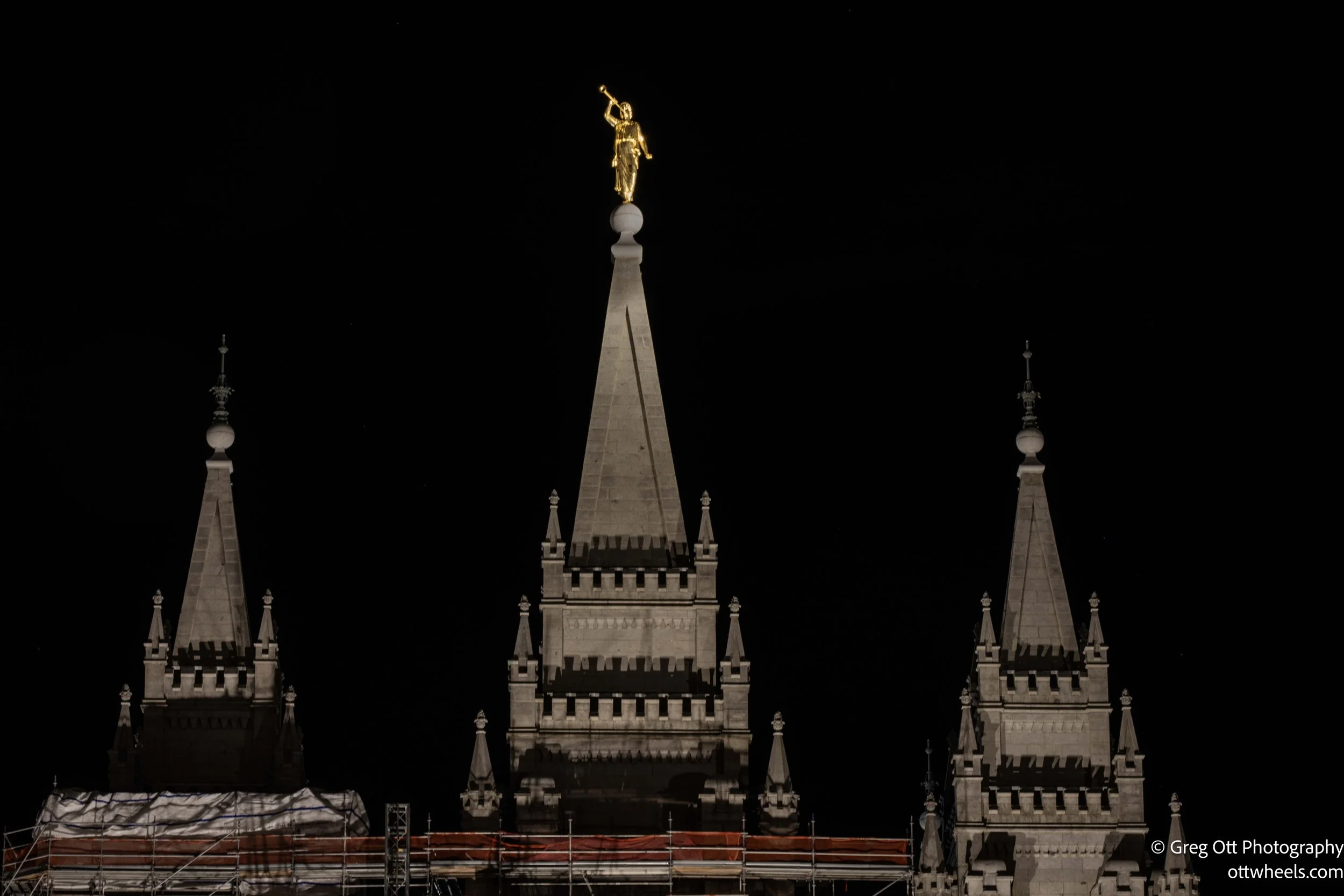
The main LDS temple was under construction and has been for years. From there I turned and walked into town. I was fascinated by the tram and all the christmas lights that were still up. Capturing the tram movement and the lights without car and people was more work than I expect it would be.
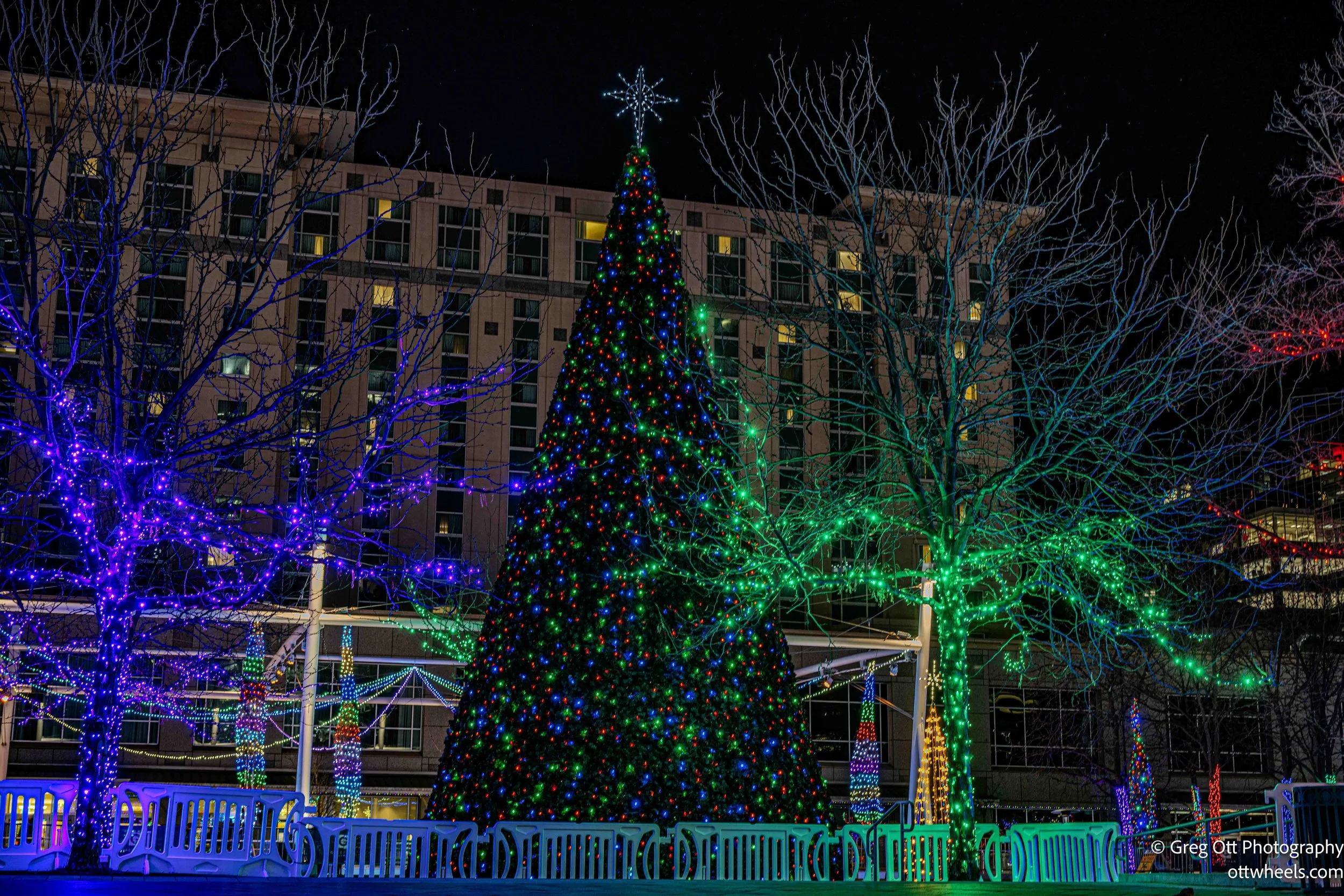
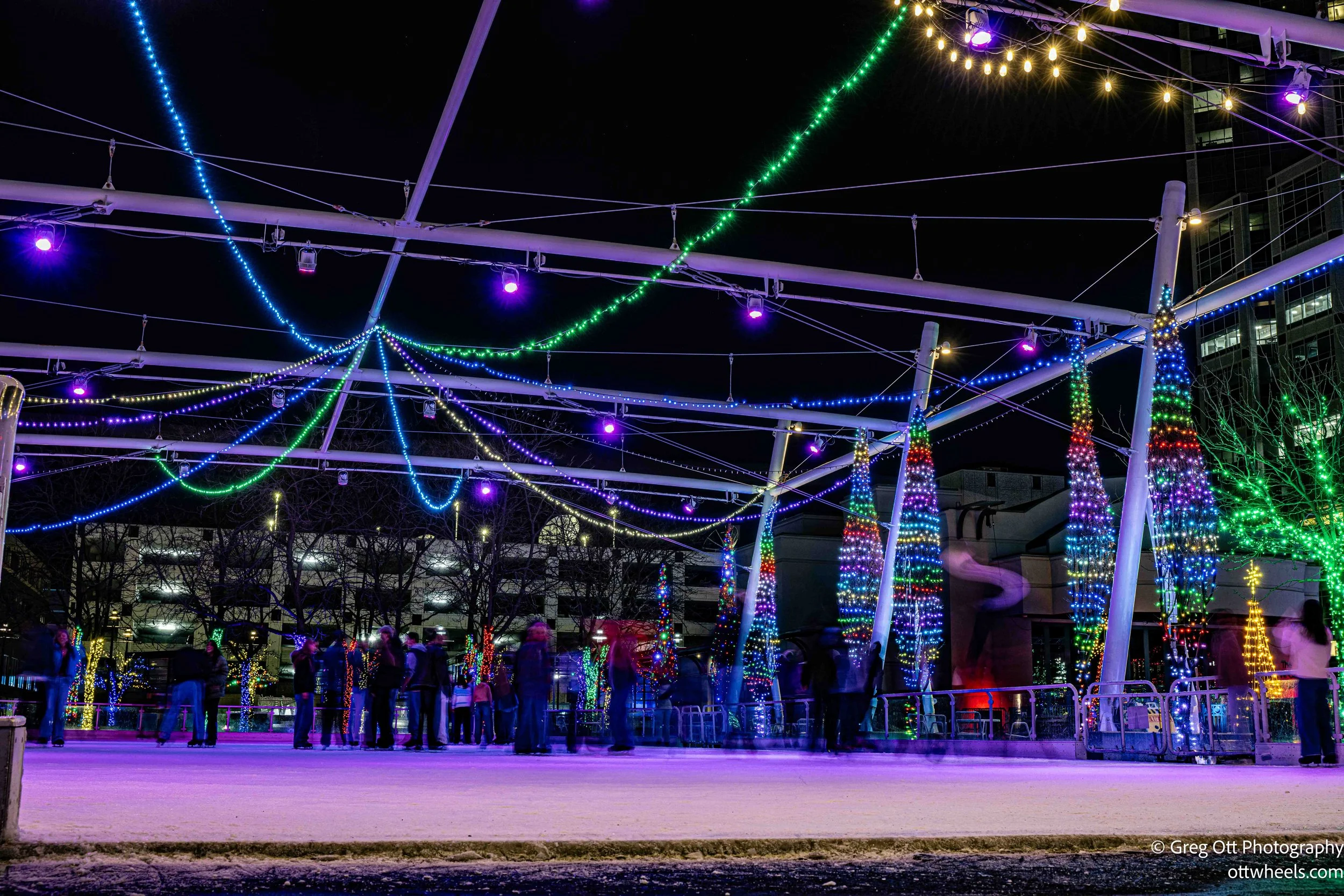
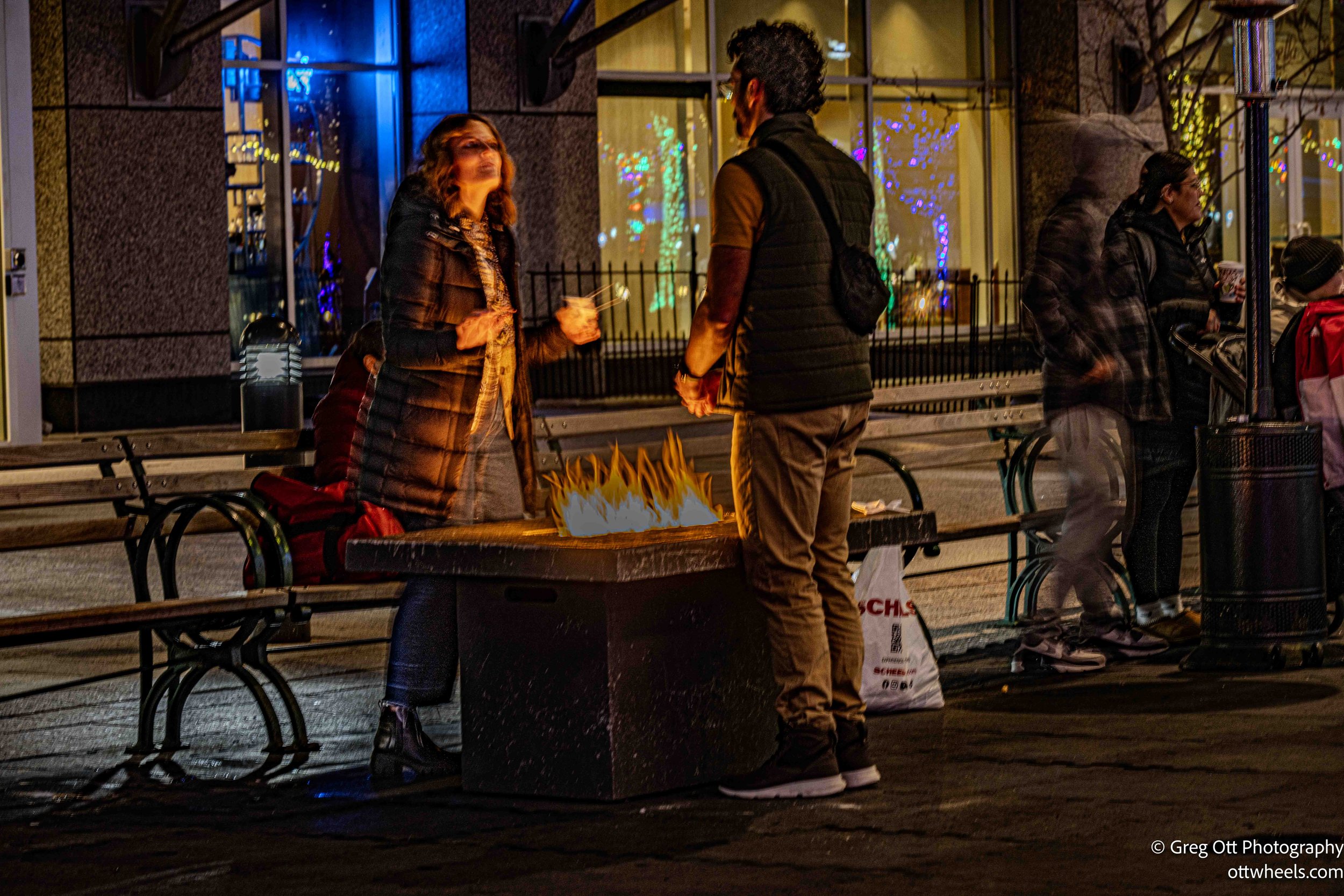
Near the ice skating rink there were trees covered with lights, a huge christmas tree, and the rink was active and and decorated. It was in the 20s and there were gas fires burning around the skating rink. It was located beside the Marriot Hotel downtown.
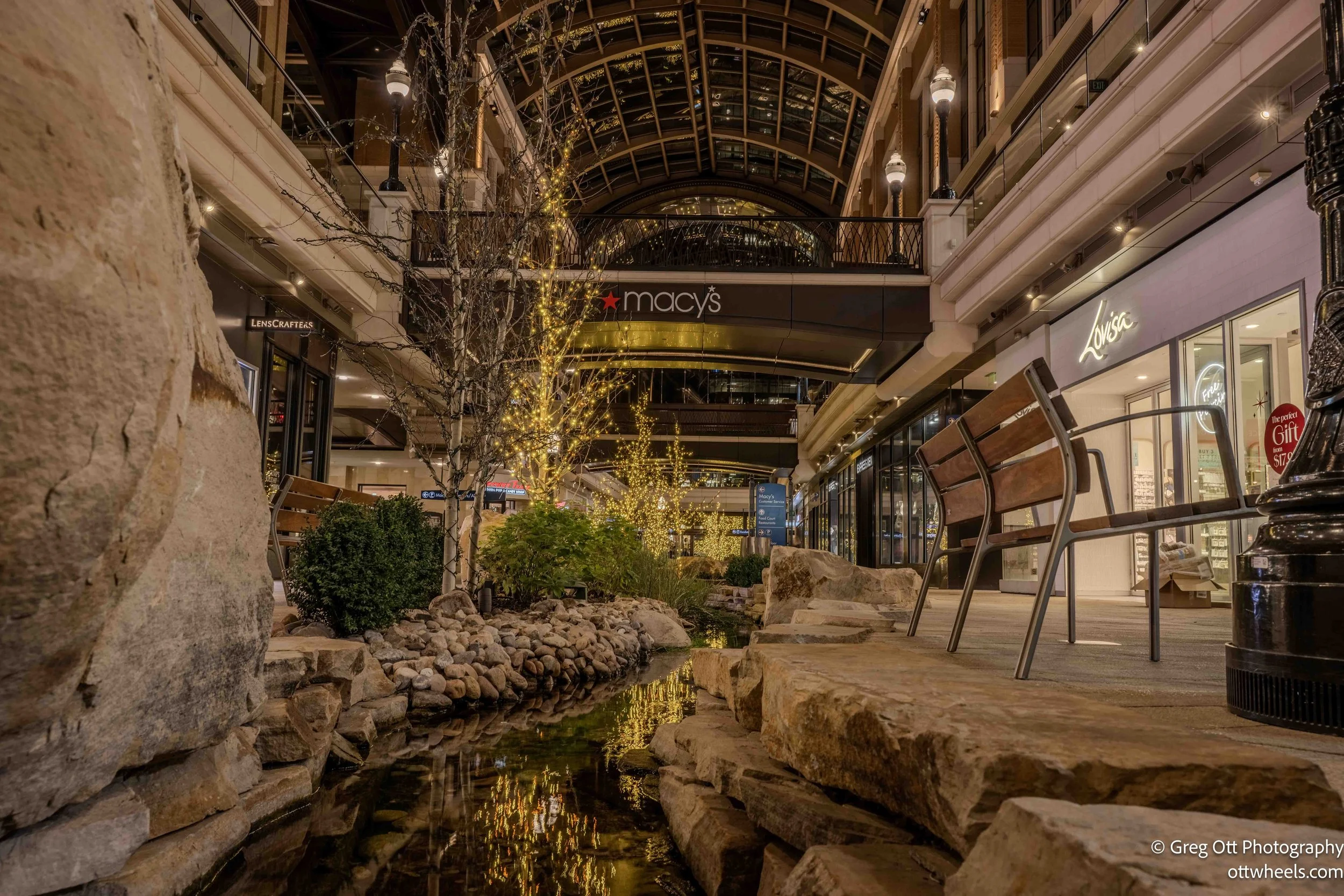
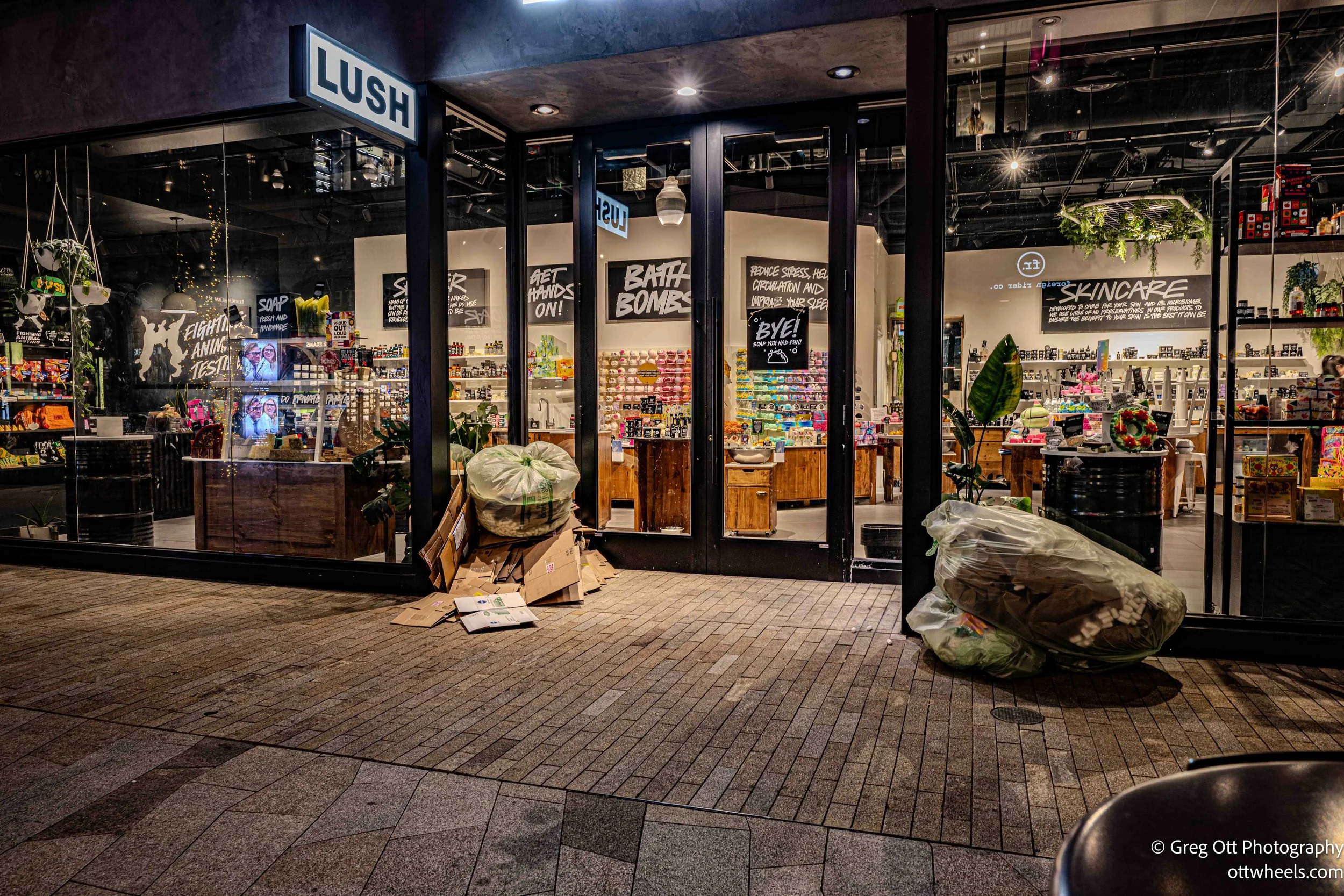
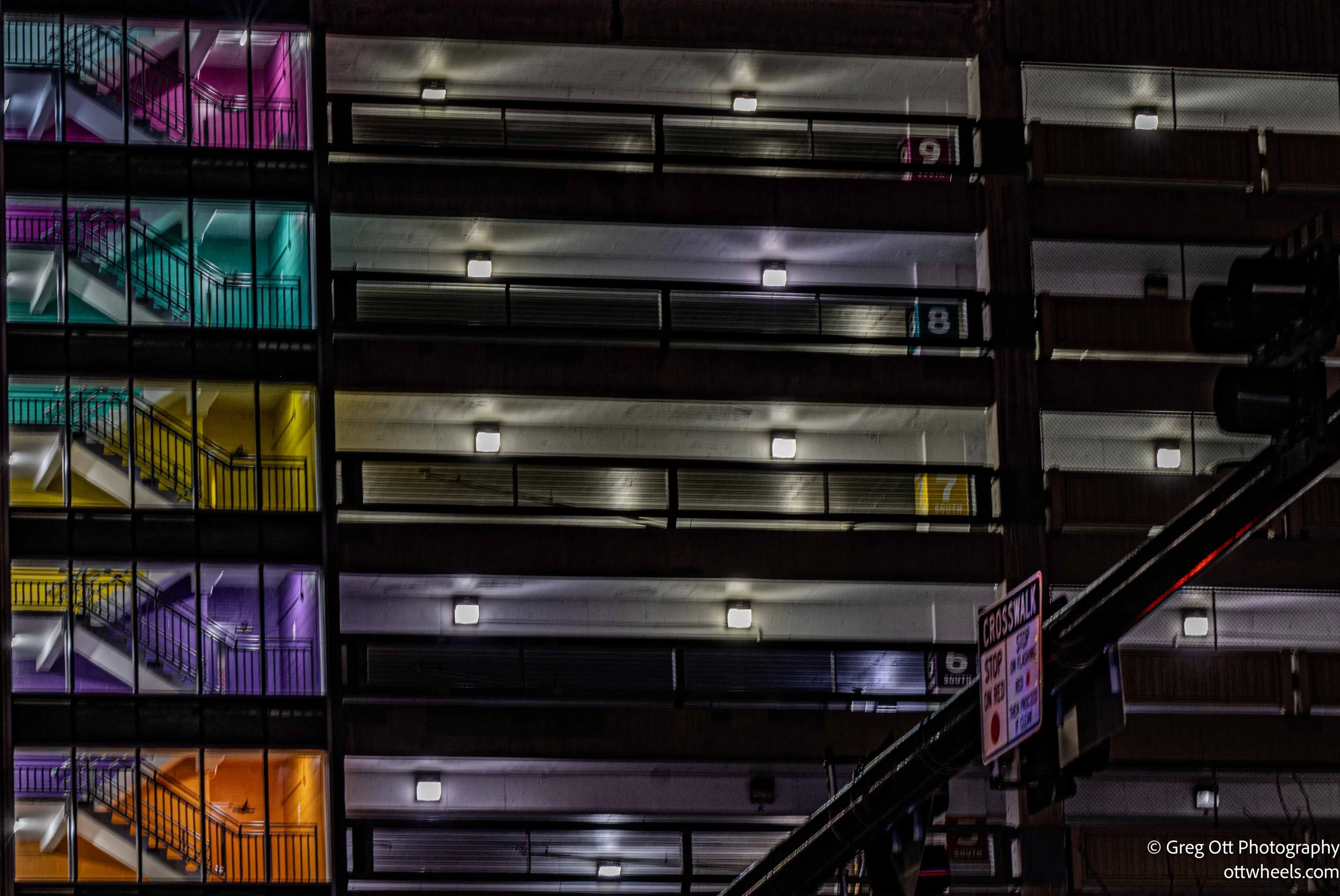
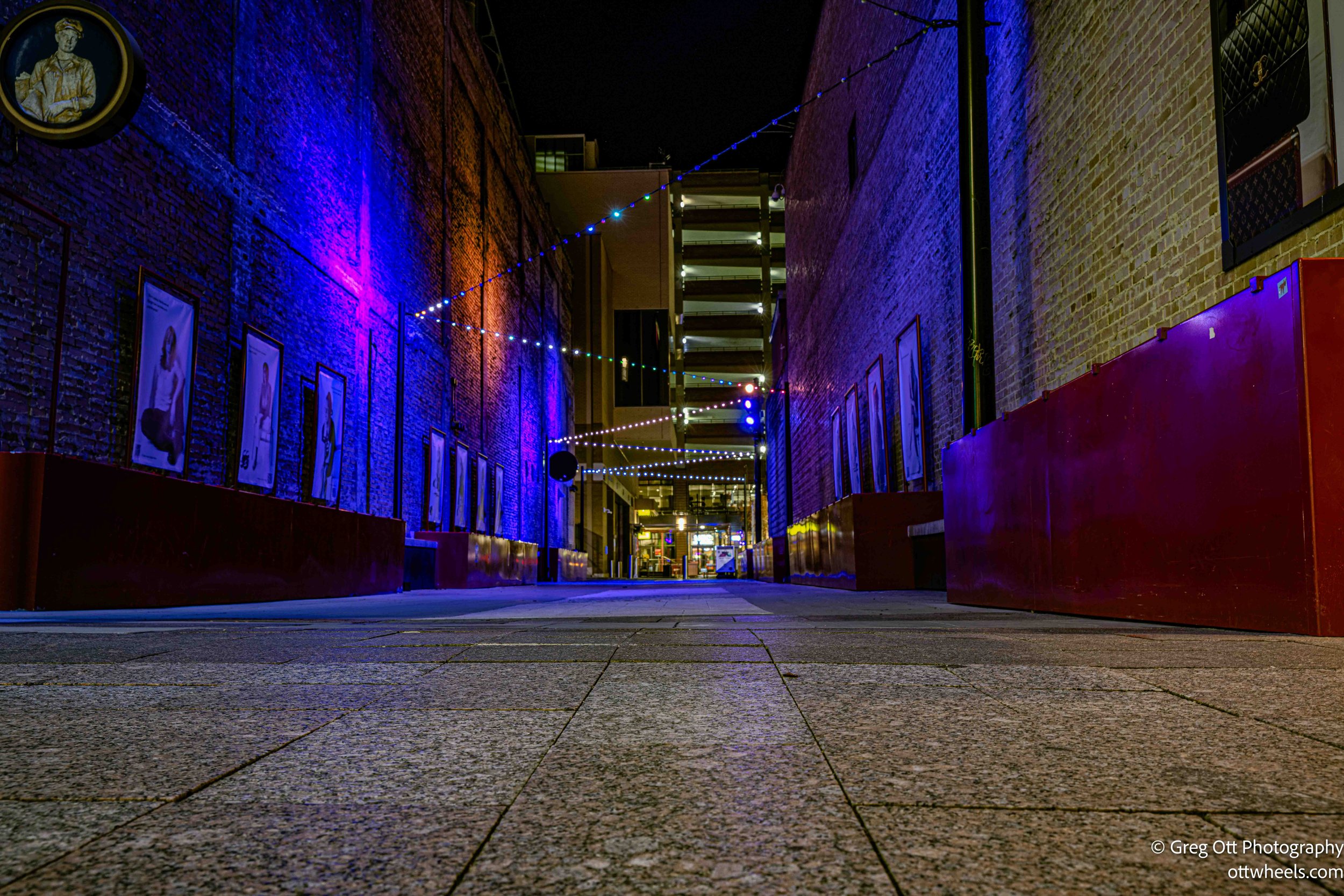
I was starting to get chilled and headed back toward the car. There’s a large Macy’s downtown, complete with window displays reminiscent of New York City. Attached to it is a beautiful shopping mall, and I stopped in to take a few more photographs. Outside a shop called Lush, garbage bags were stacked high—a sharp dichotomy. I continued noticing small, interesting details along the street as I walked.
I made it back to the van, and there were several cars circleing waiting for someone to pullout. When I approached the van, a car immediately pulled up behind me and sat until I moved.
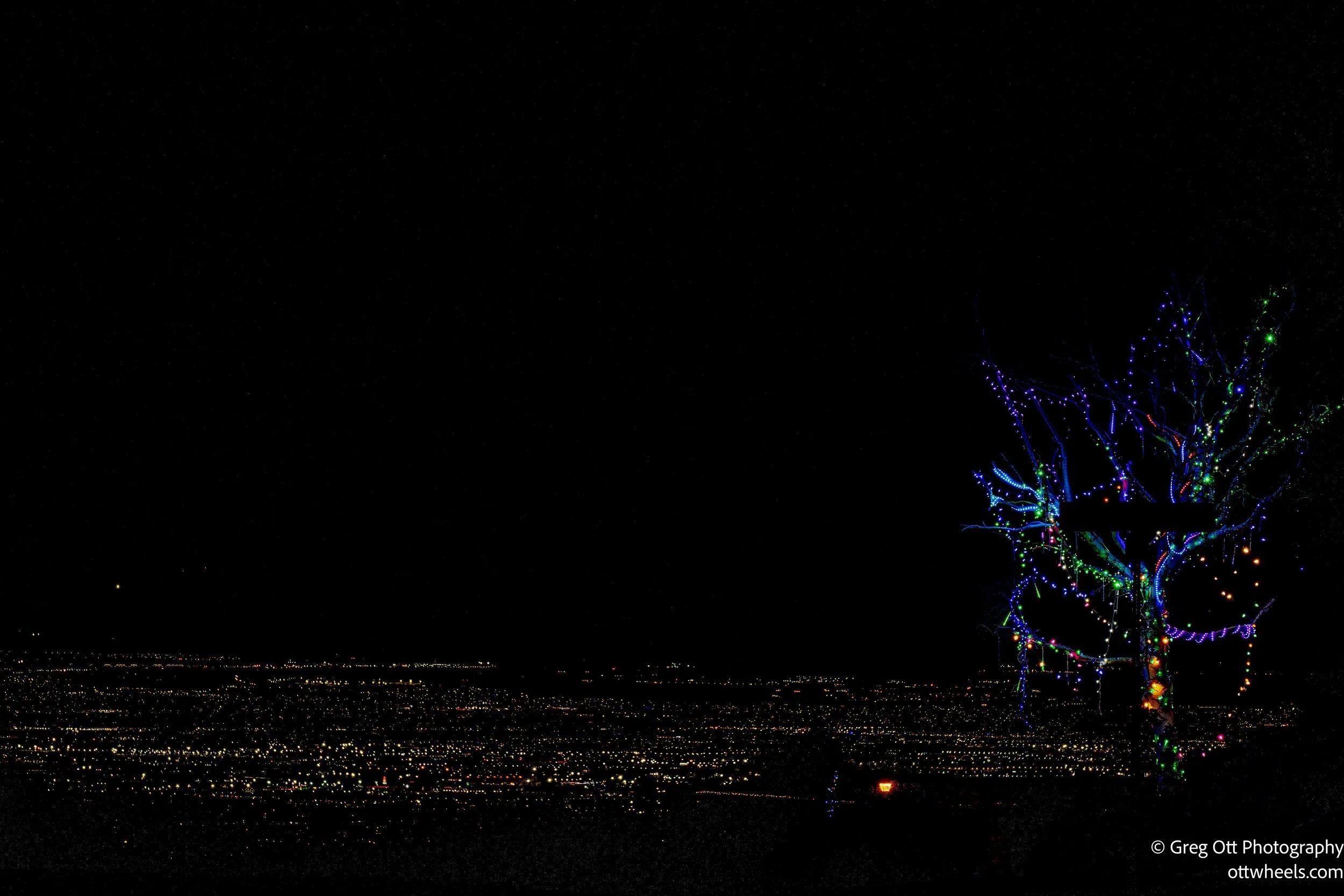
I drove back toward the Capitol and continued up the hill into one of the quieter neighborhoods overlooking Salt Lake City. The narrow streets winding past well-kept homes opened onto broad views of the city below, with lights spreading out across the valley. It was noticeably calmer up here than the areas closer to downtown. I parked on a side street and settled in for the night. It had been a good, full day. Before drifting off, I realized the UConn women basketball team were playing and I watched part of the game before drifting off.