
Salt Lake Museums
I woke again near the Utah State Capitol, parked on a quiet side street. I made oatmeal for breakfast and had an espresso before heading out. It was Tuesday, and there was noticeably more activity in the area—a subtle shift from the quieter rhythm of the day before. I took care of a few things in the van, eased into the morning, and then headed off to the first museum.
Utah Fine Arts Museum
I drove to the Utah Museum of Fine Arts around 10:30 a.m. The museum sits on the University of Utah campus. Parking was available very close to the entrance and appeared to be the only realistic option in the immediate area. Posted signs warned of steep fines, but parking registration was clearly set up at the museum entrance.
I purchased a $16 day pass. While I was at the entrance desk, the director came around and asked the staff if they would like a coffee or something to eat. I piped in and said, “An espresso sounds really nice.” He brought me an espresso, but I wasn’t allowed to take it into the museum. So, I went to the gift shop, and purchased two things. That will teach me to keep my mouth shut.
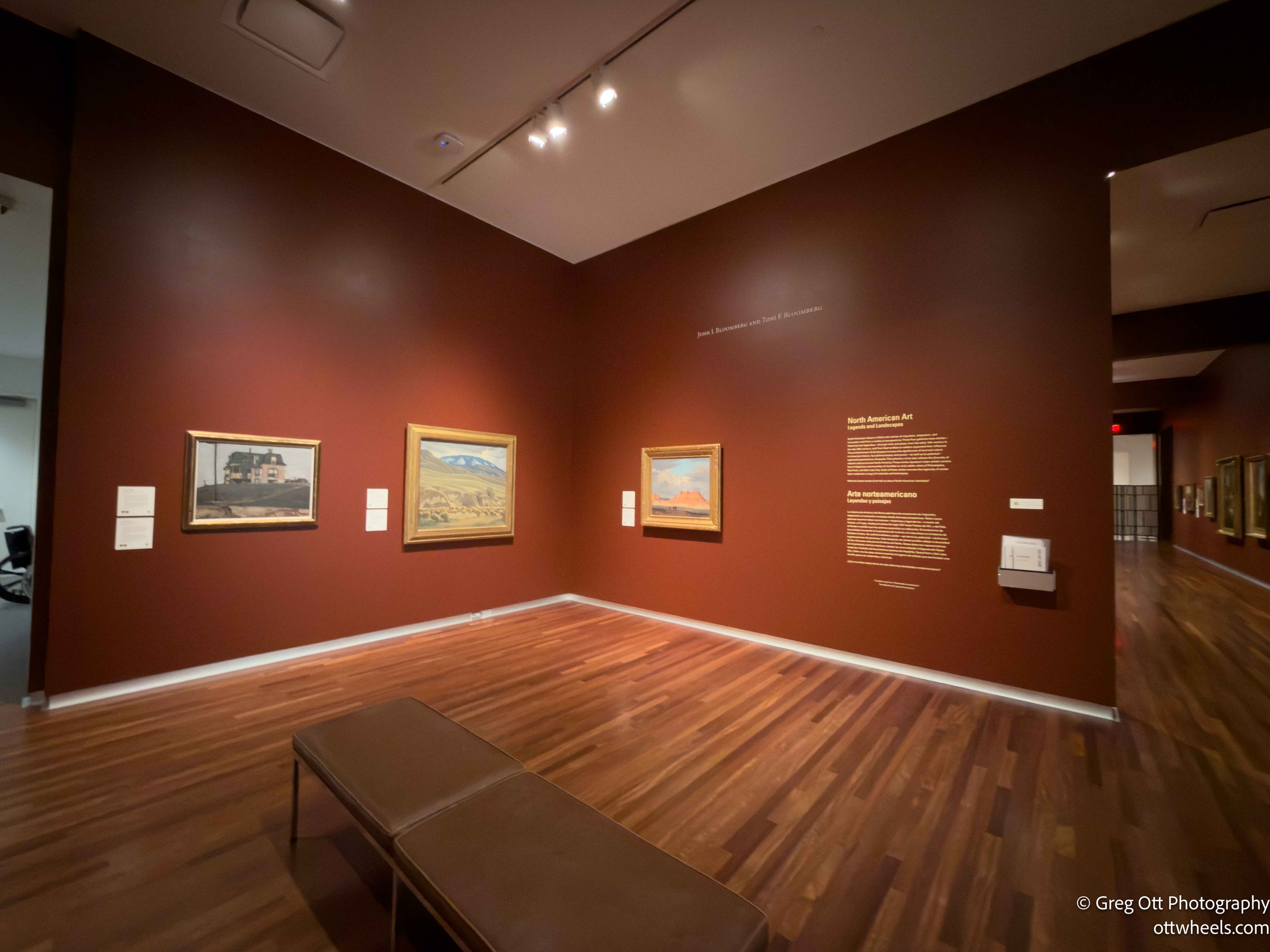
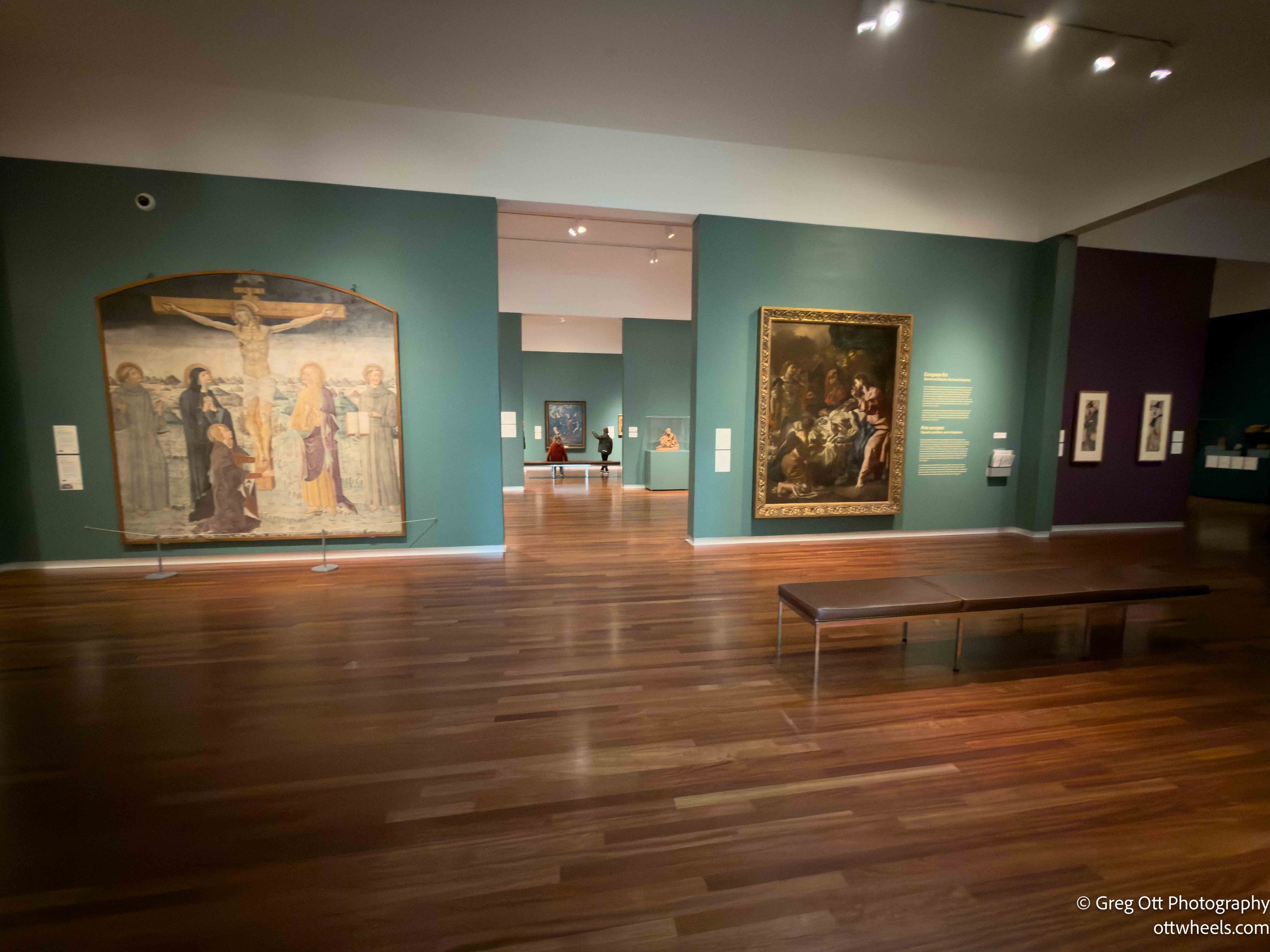
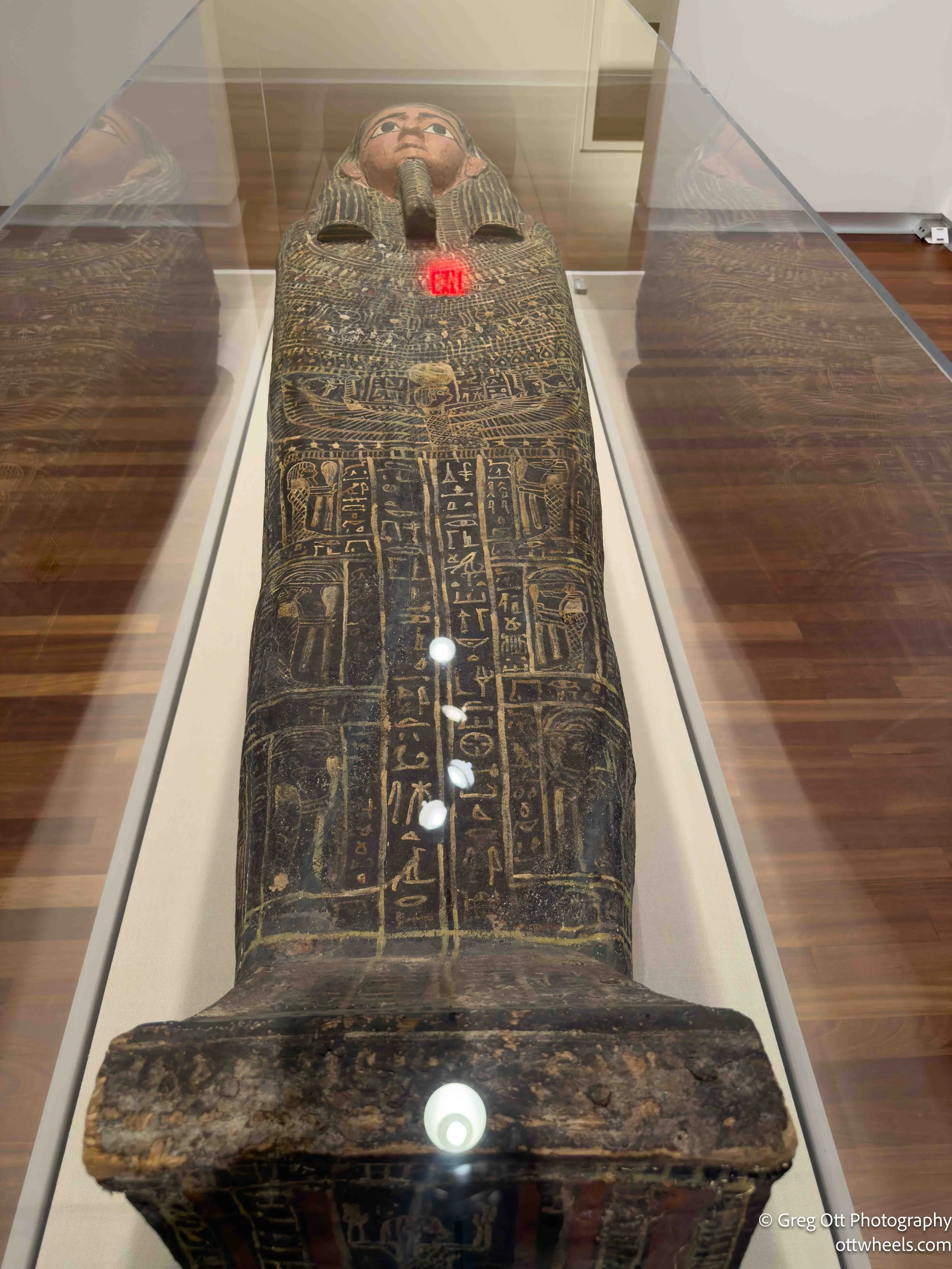
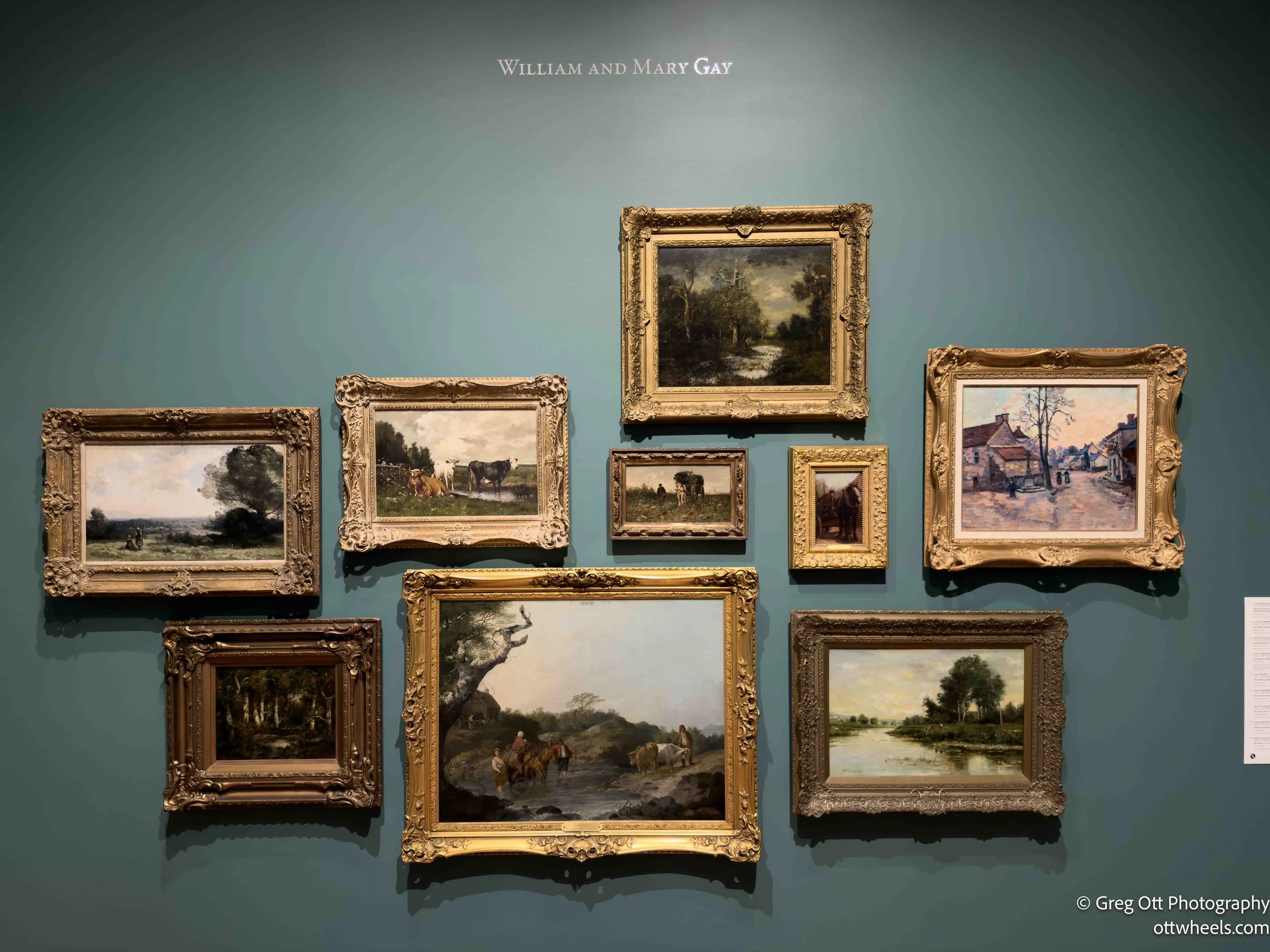
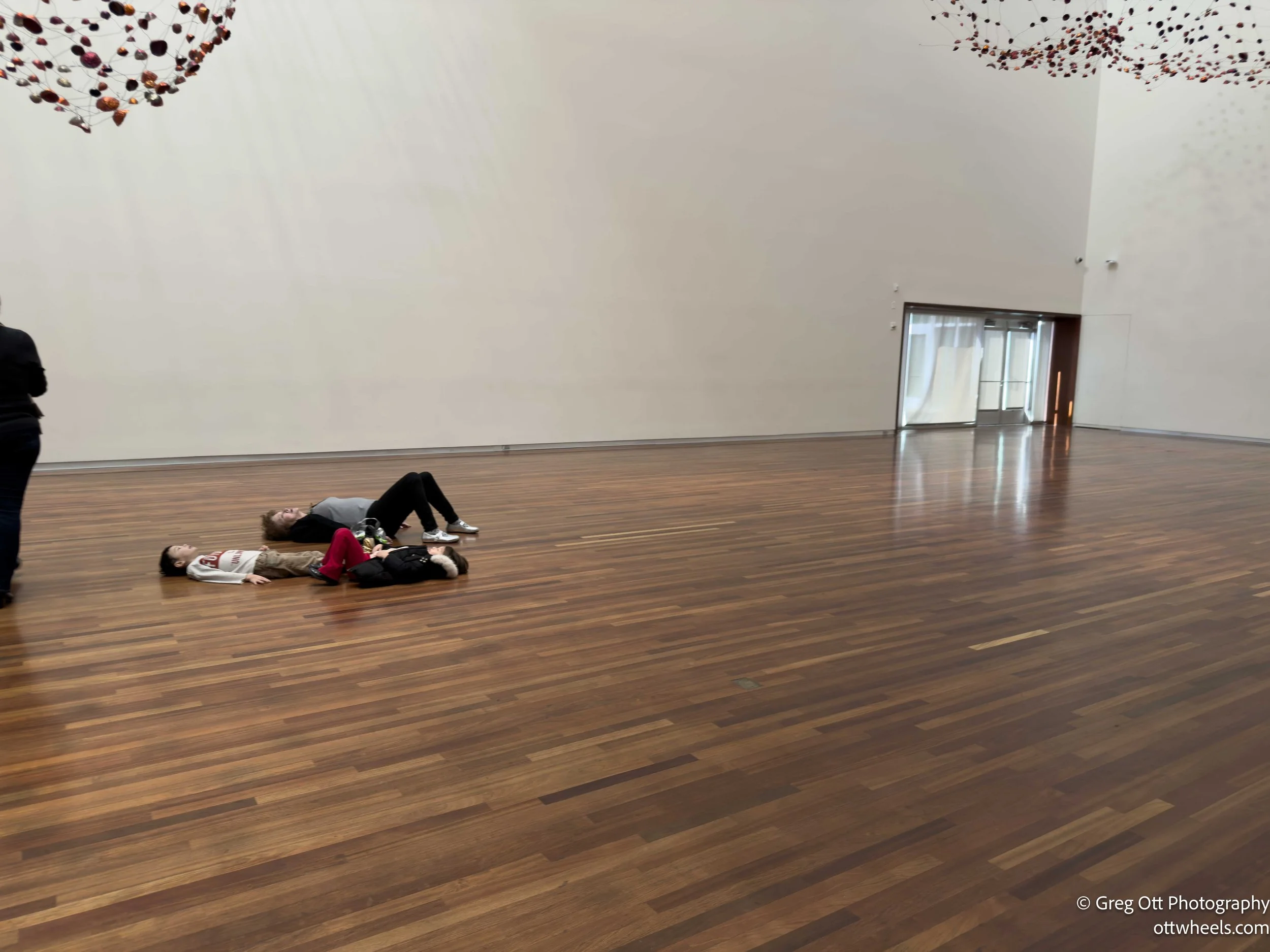
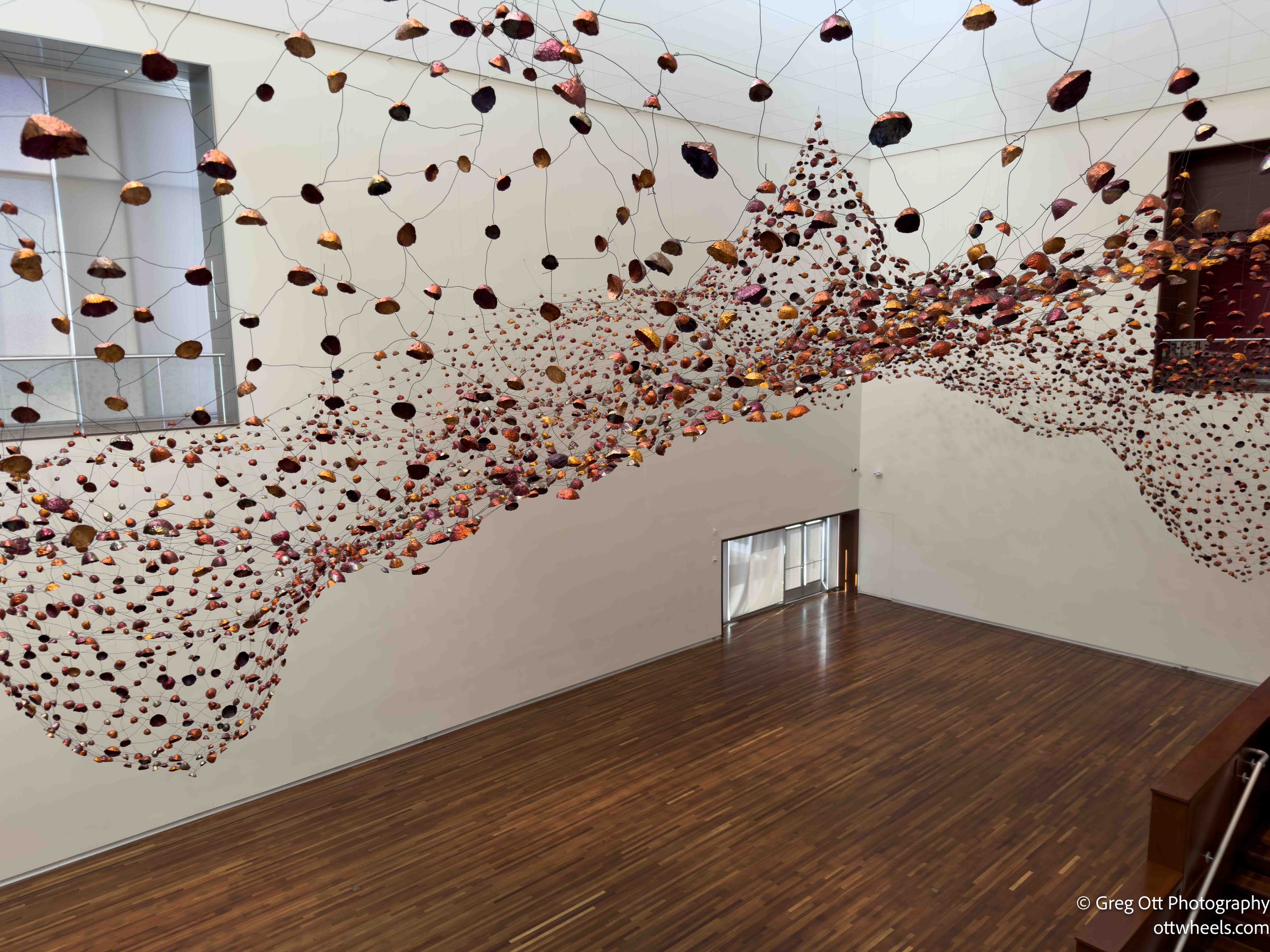
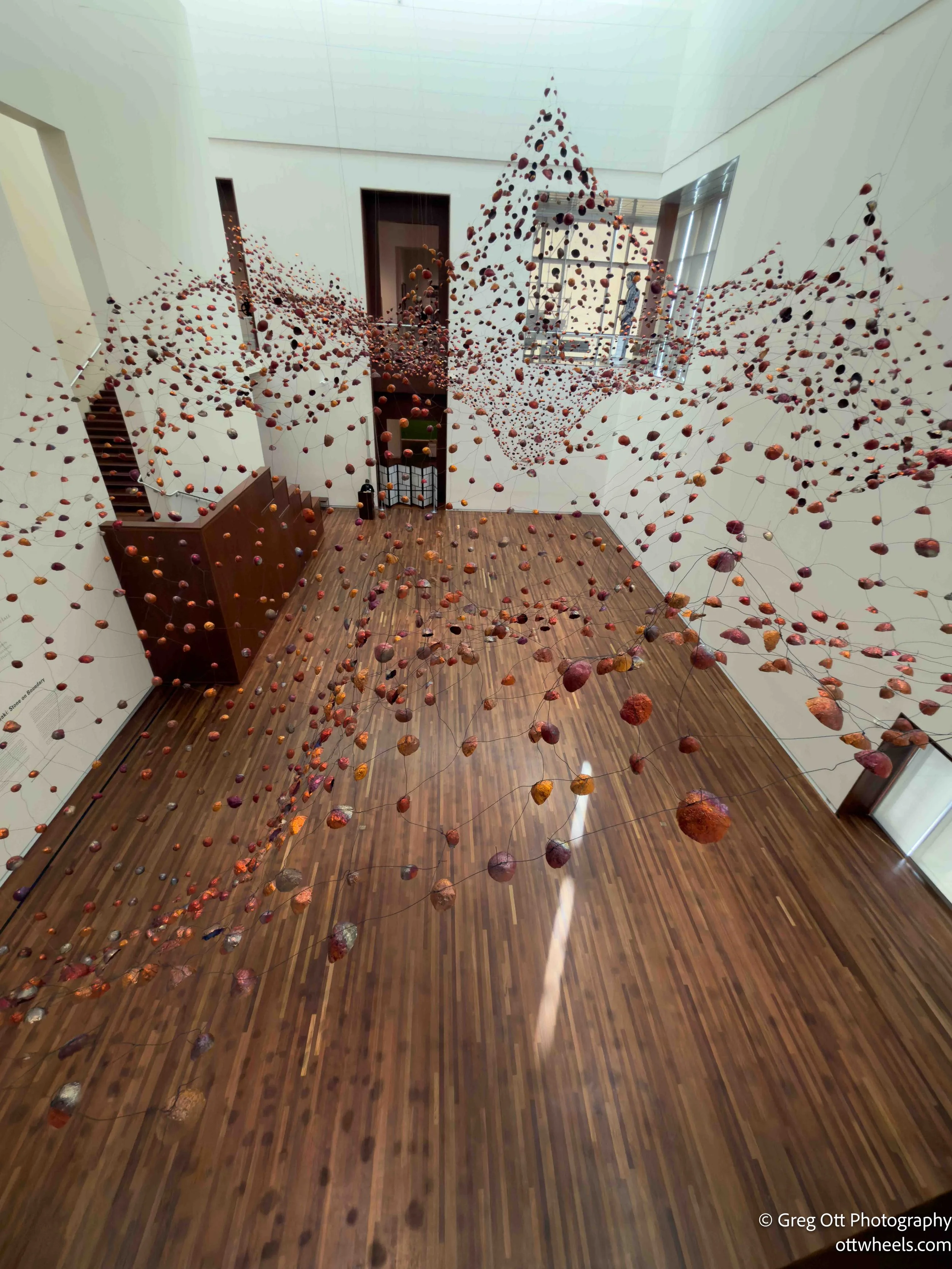
The museum had pieces from all over the world as well as artists related to Utah in some way. The museum wasn’t overly crowded. It was early in the week, and there were moms and grandmas with kids giving them some culture. One large exhibit took up the entire room. A grandma had the kids on the ground and was explaining how perspective played a role in what you saw with the exhibit. The floating objects changed color depending on where you were in the space.
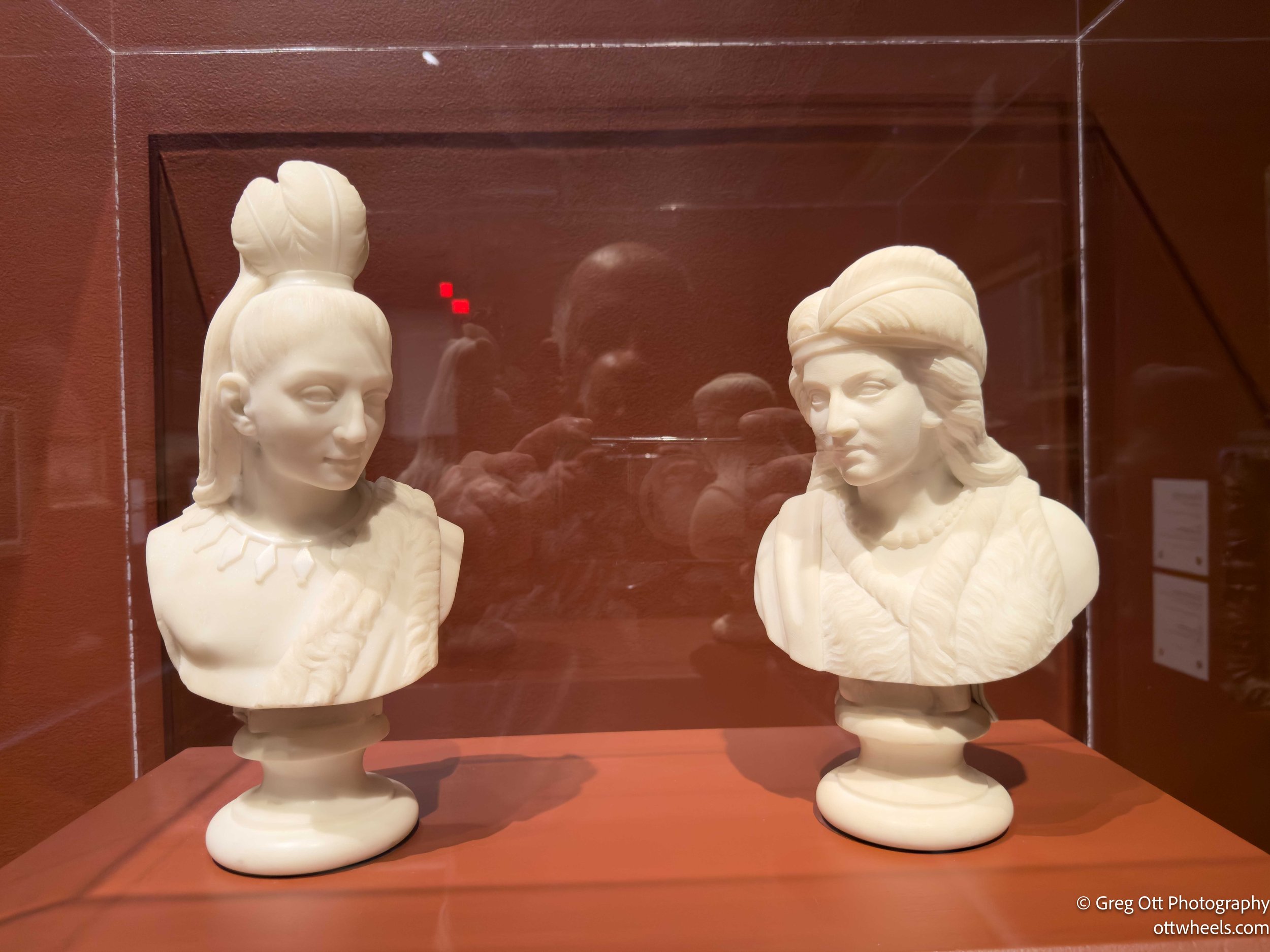
One of the things that set this museum apart from others, is the desire to convey information about the art and artist and to get you the viewer to think about something related to the piece of art. For example, with the following two statues by Edmonia Lewis, they ask the following, “As you visit different galleries, take note of other artists who broke barriers during their careers or continue to. What stories or perspectives do connect with?“ There is a postage stamp of Edmonia Lewis that I use. The following busts of Hiawatha and Minnehaha were inspired by the Henry Wadsworth Longfellow poem The song of Hiawatha.
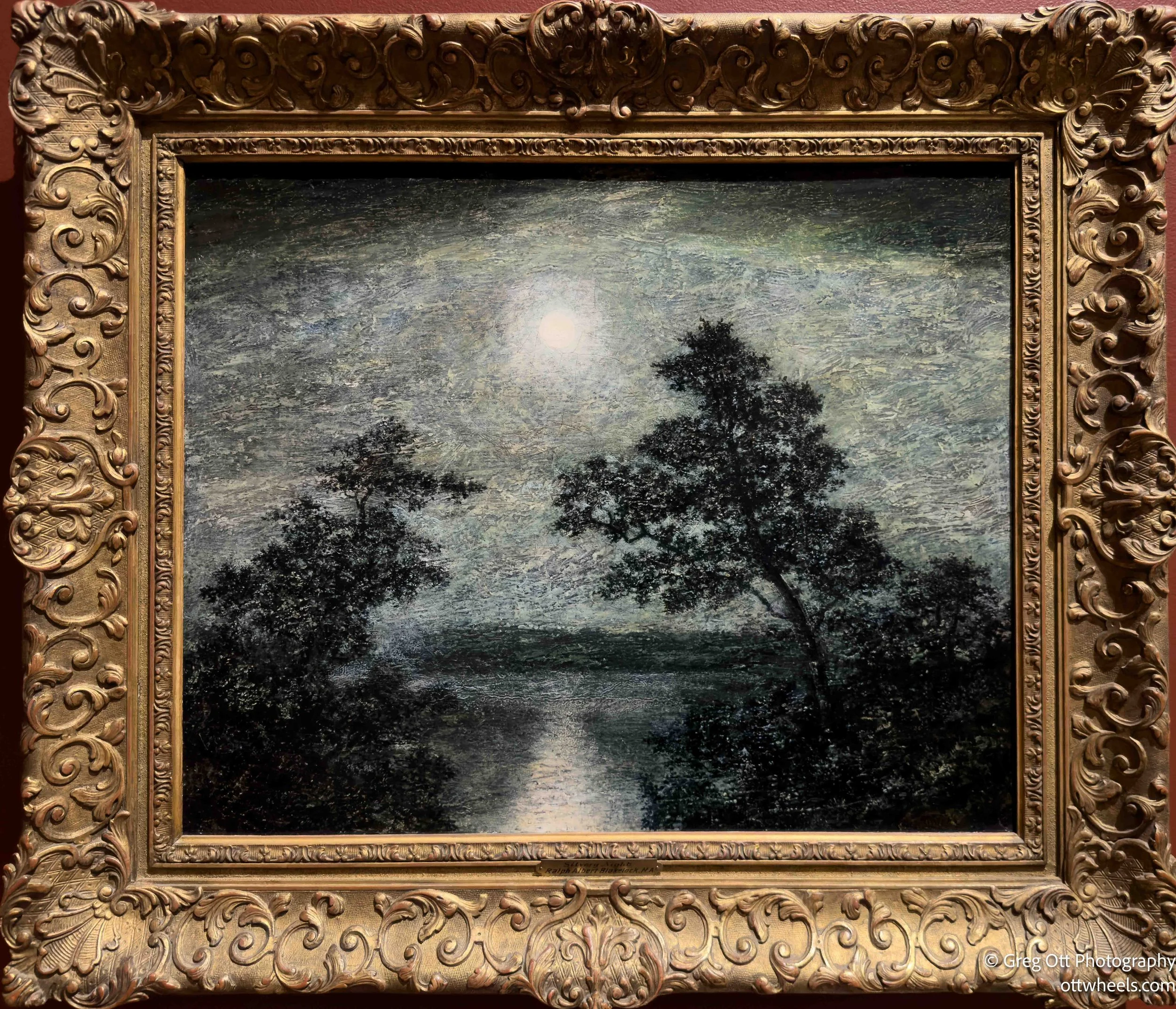
Silvery Night drew me in, even though I wasn’t familiar with the work of Ralph Albert Blakelock before seeing it at the Utah Museum of Fine Arts. Largely self-taught and loosely associated with Tonalism, Blakelock was far more experimental than the label suggests. During one period, he painted with materials like tar and asphalt, building dark, layered surfaces that emphasized mood over detail. In Silvery Night, that approach creates a hushed, luminous atmosphere where the light feels suspended rather than defined. Knowing he struggled for recognition during his lifetime adds weight to the work, which quietly rewards slowing down and looking longer.
There were sections dedicated to African, Greek, Egyptian, Asian and then various European periods.
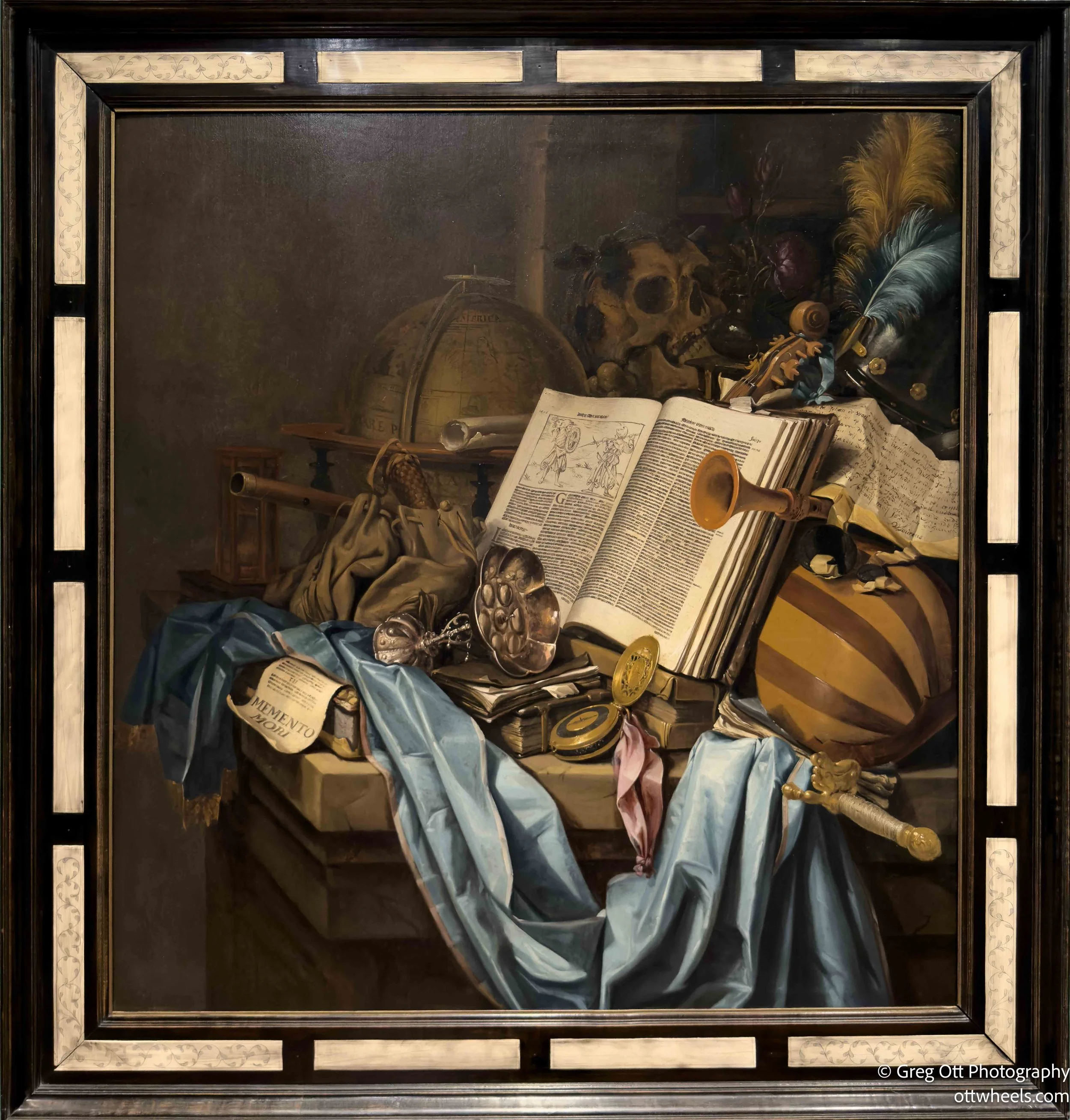
Memento Mori (1656) by Vincent Laurentsz. van der Vinne I
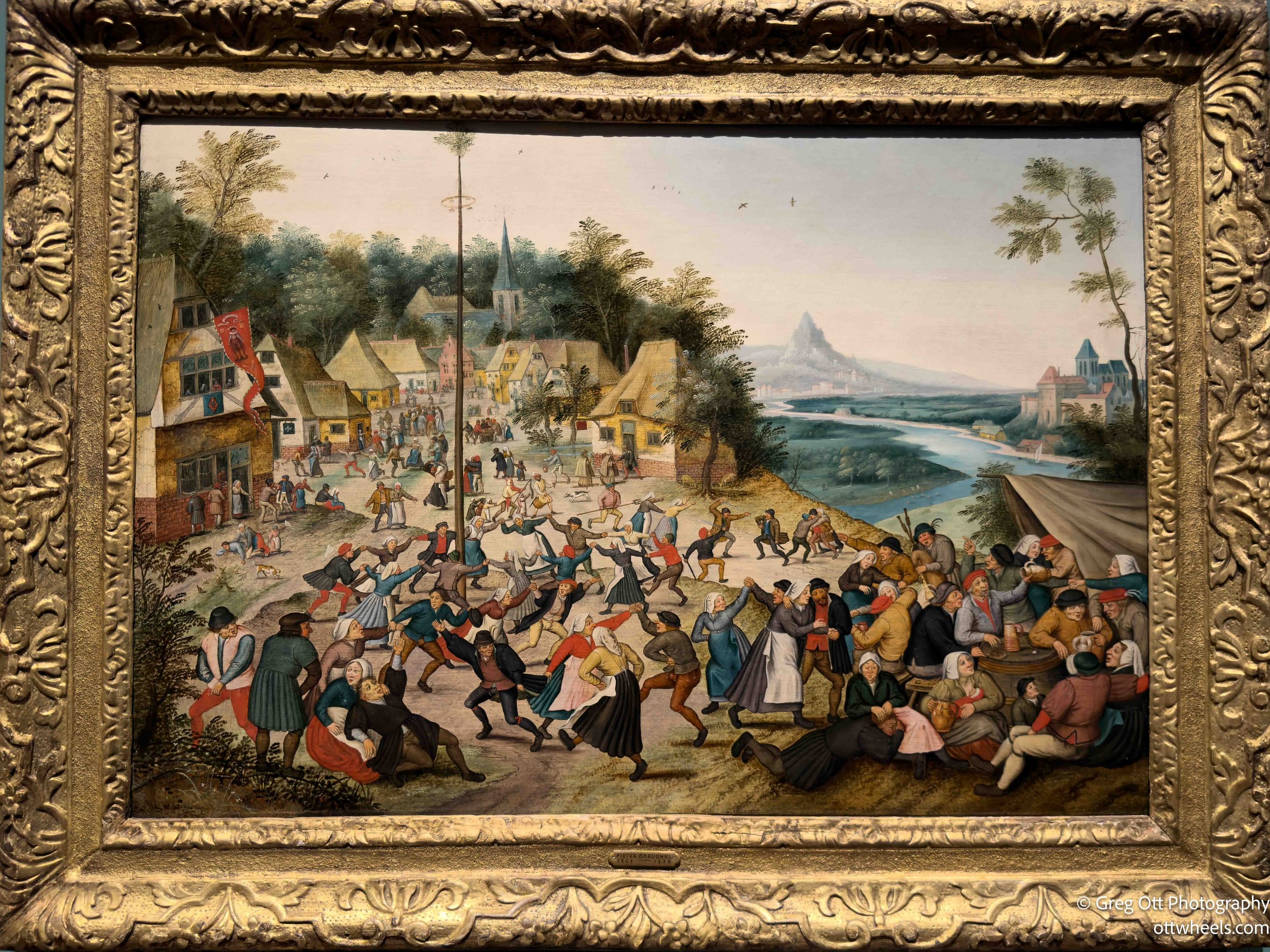
Dance Around the Maypole (~1625-1630) - Pieter Brueghel
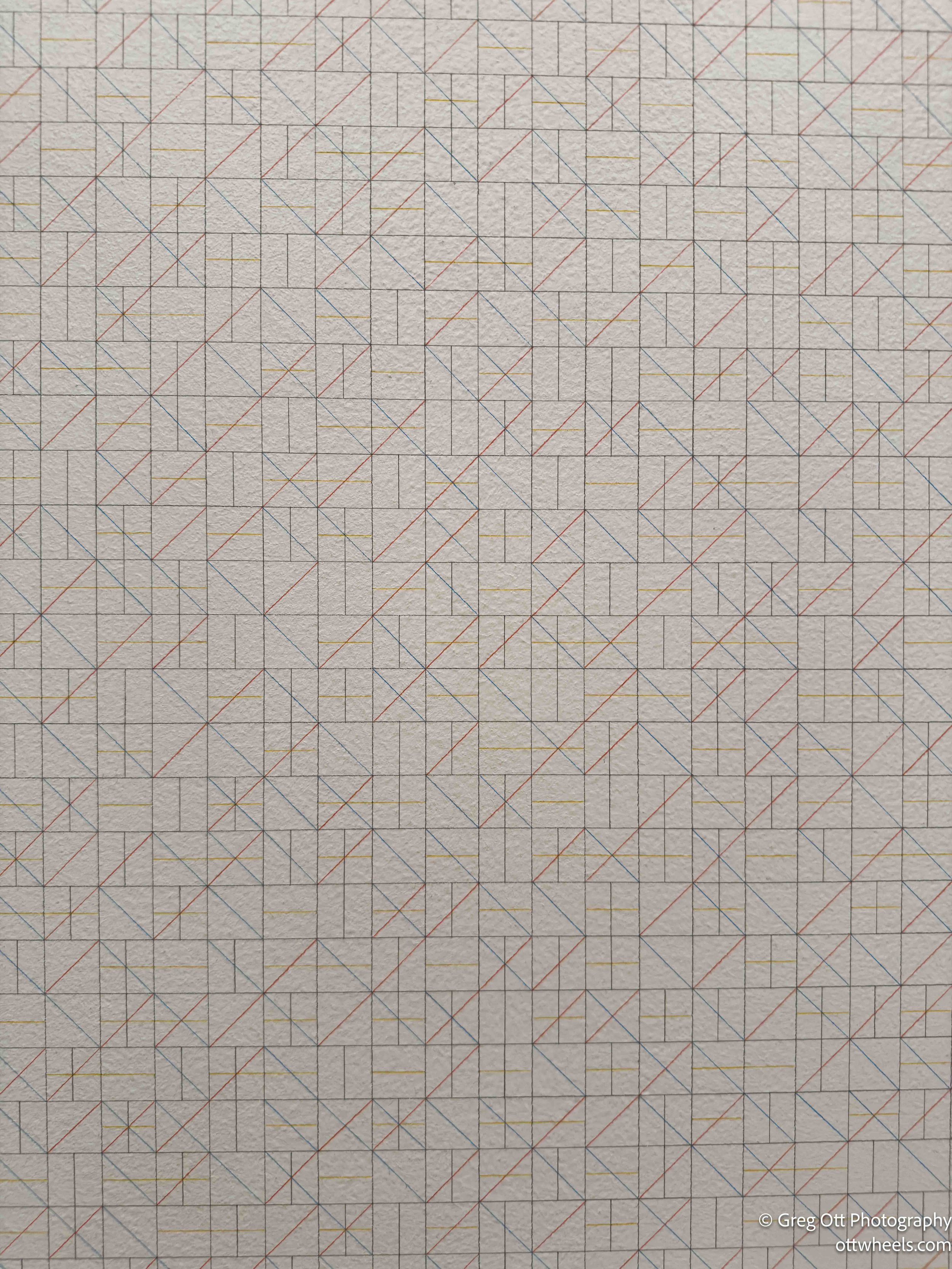
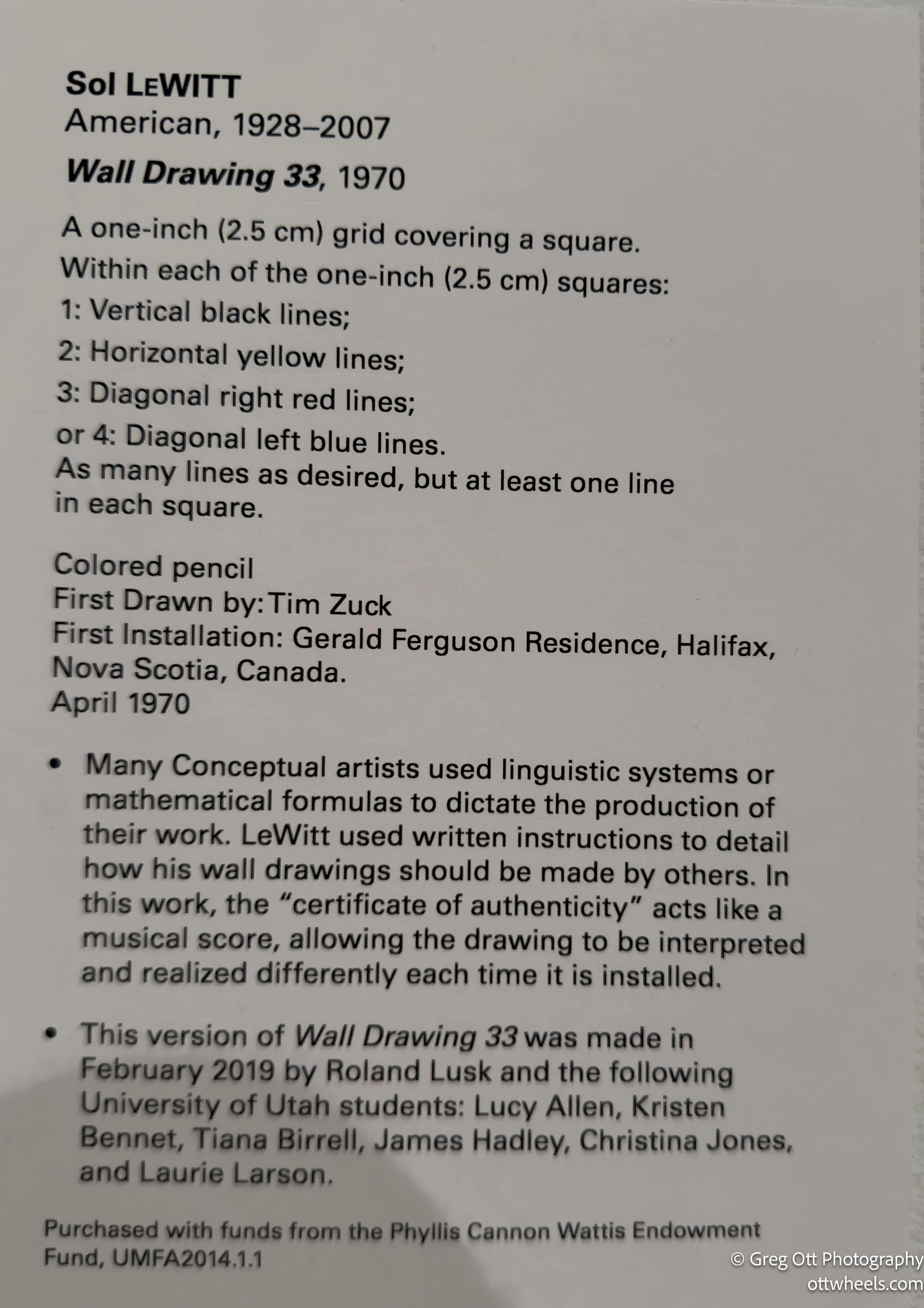
Seeing Wall Drawing 33, 1970 at the Utah Museum of Fine Arts immediately took me back to an earlier experience with Sol LeWitt—specifically the Strict Beauty: Sol LeWitt Prints exhibition I visited at the New Britain Museum of American Art, which ran from September 18, 2021 to January 9, 2022. Standing in front of this wall drawing, I was reminded of how much I enjoyed LeWitt’s way of working—his belief that the idea mattered more than the hand that executed it. He would write instructions, sometimes deliberately loose, sometimes carefully precise, and assign them to students or assistants, knowing that variation was inevitable and, in fact, essential. Even when the rules were strict, the results were never identical. LeWitt, born in Hartford and educated at Syracuse University before settling into New York’s art world in the 1960s, built an entire practice around that tension between control and interpretation. I remember buying the exhibition book in New Britain and reading it later, and that memory resurfaced here. Seeing this piece again, in a different museum and context, felt like reconnecting with an idea I’d been carrying with me longer than I realized.
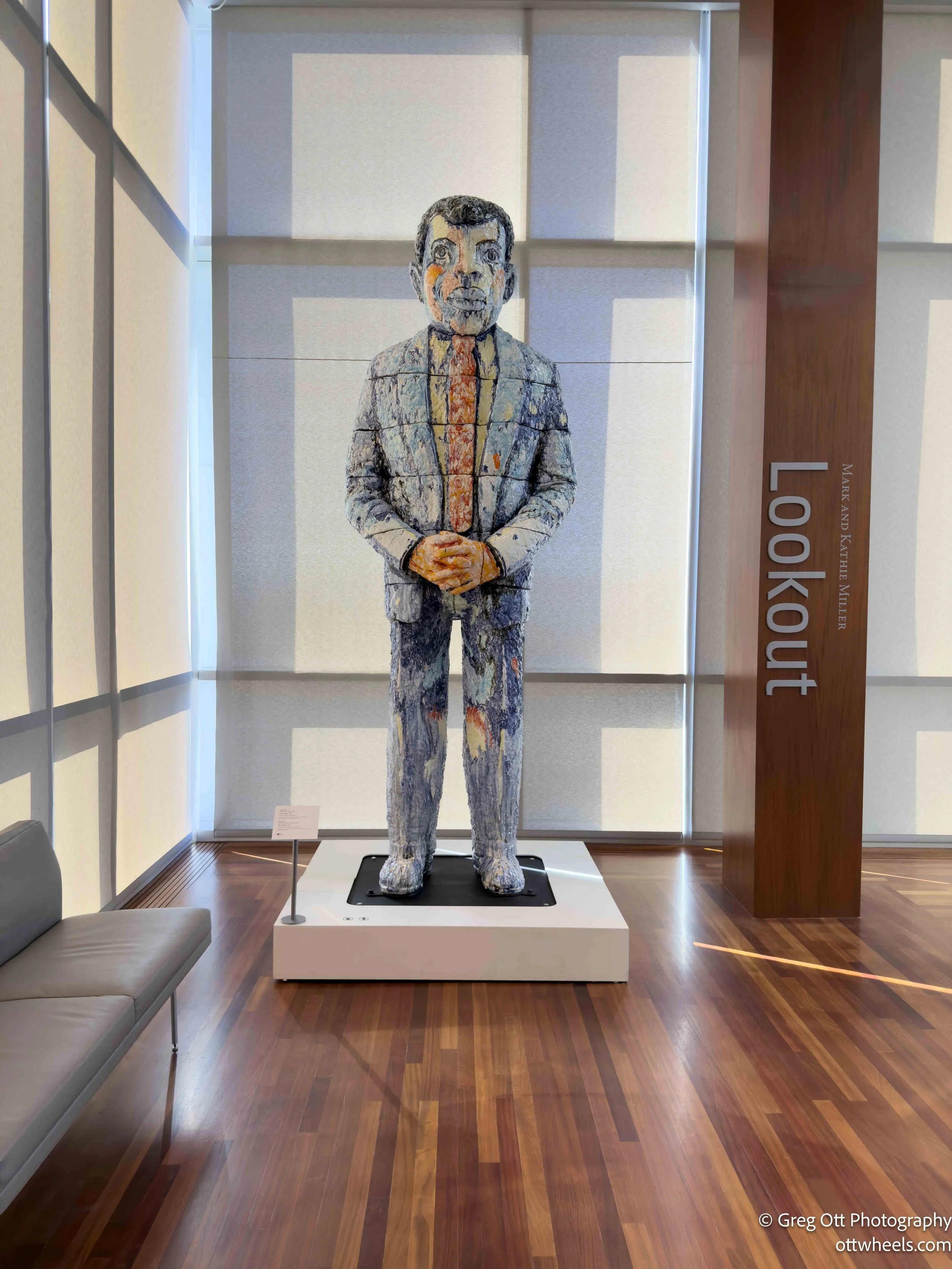
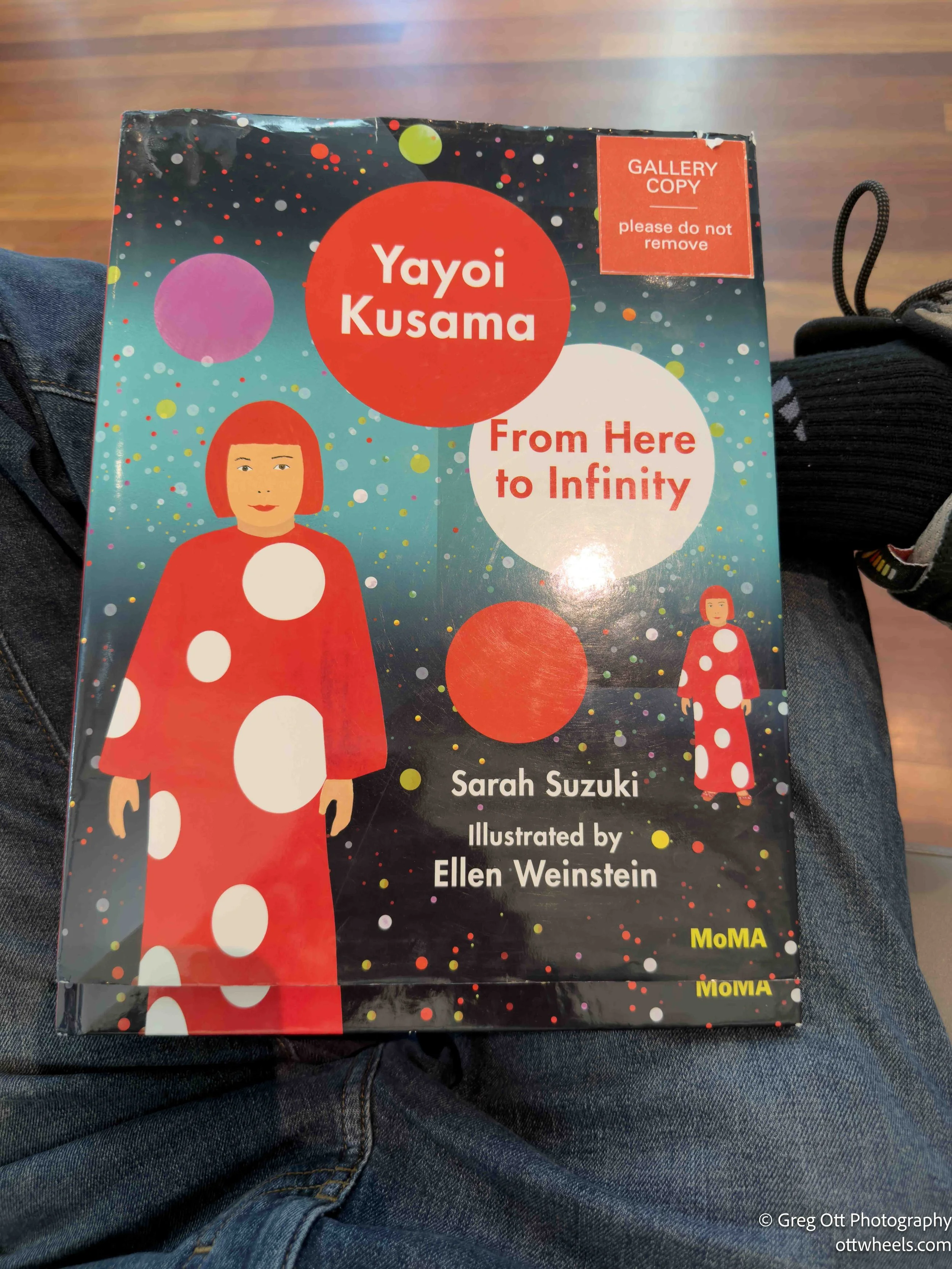
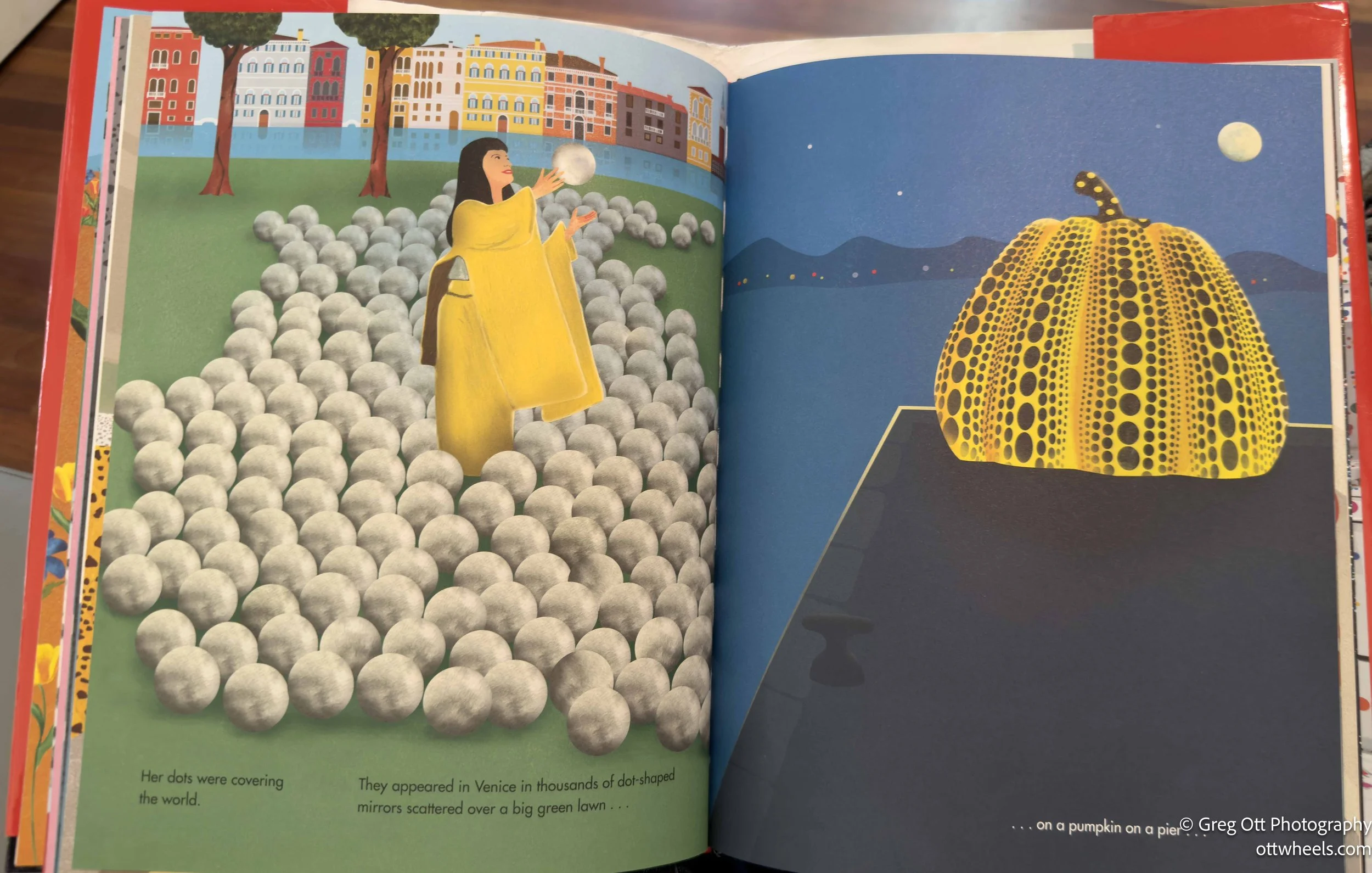
I was looking at a massive piece made of fired clay, assembled into a sculptural form that felt both heavy and delicately balanced. A modern couch sat nearby, and I sat down to take in the scale and presence of the piece. On a nearby shelf was From Here to Infinity by Yayoi Kusama. I opened it directly to the page showing the pumpkin I remembered from my last visit to the Wadsworth Atheneum Museum of Art in Hartford—a massive form coated in thick yellow enamel paint. It felt like yet another quiet connection back to Hartford, surfacing unexpectedly inside one of the country’s most remarkable museums, a reminder of how these moments keep looping back in ways I never plan.
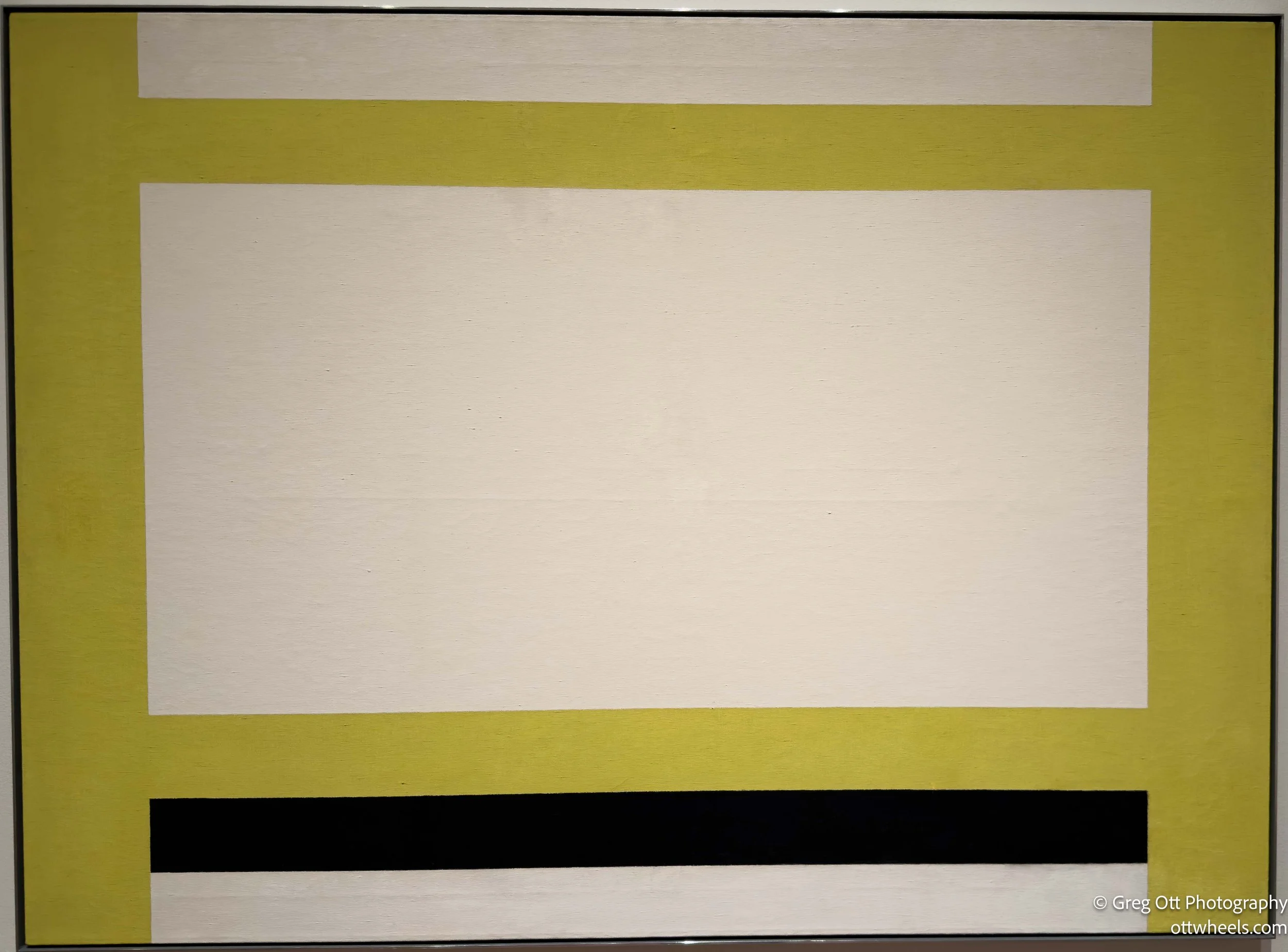
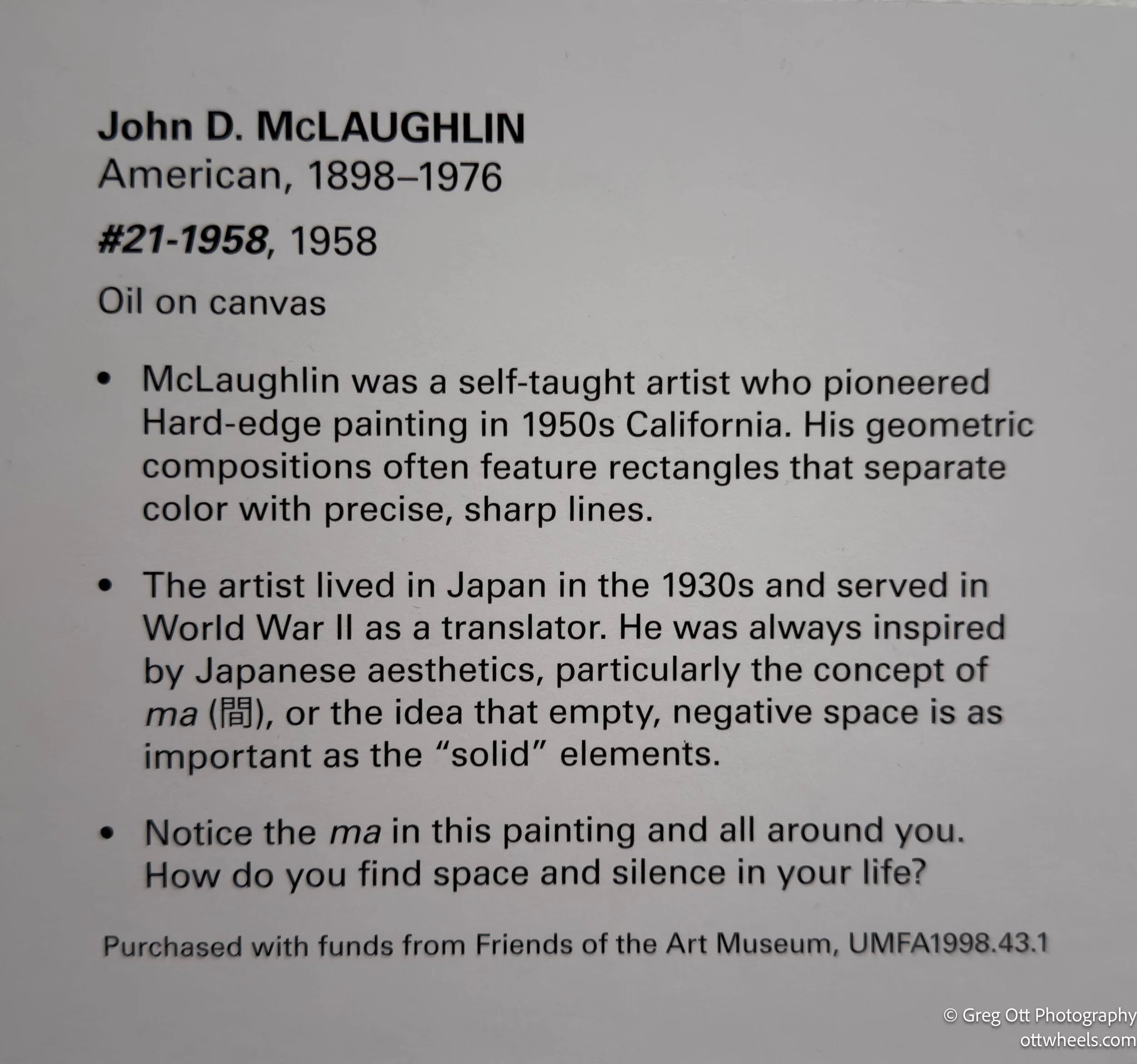
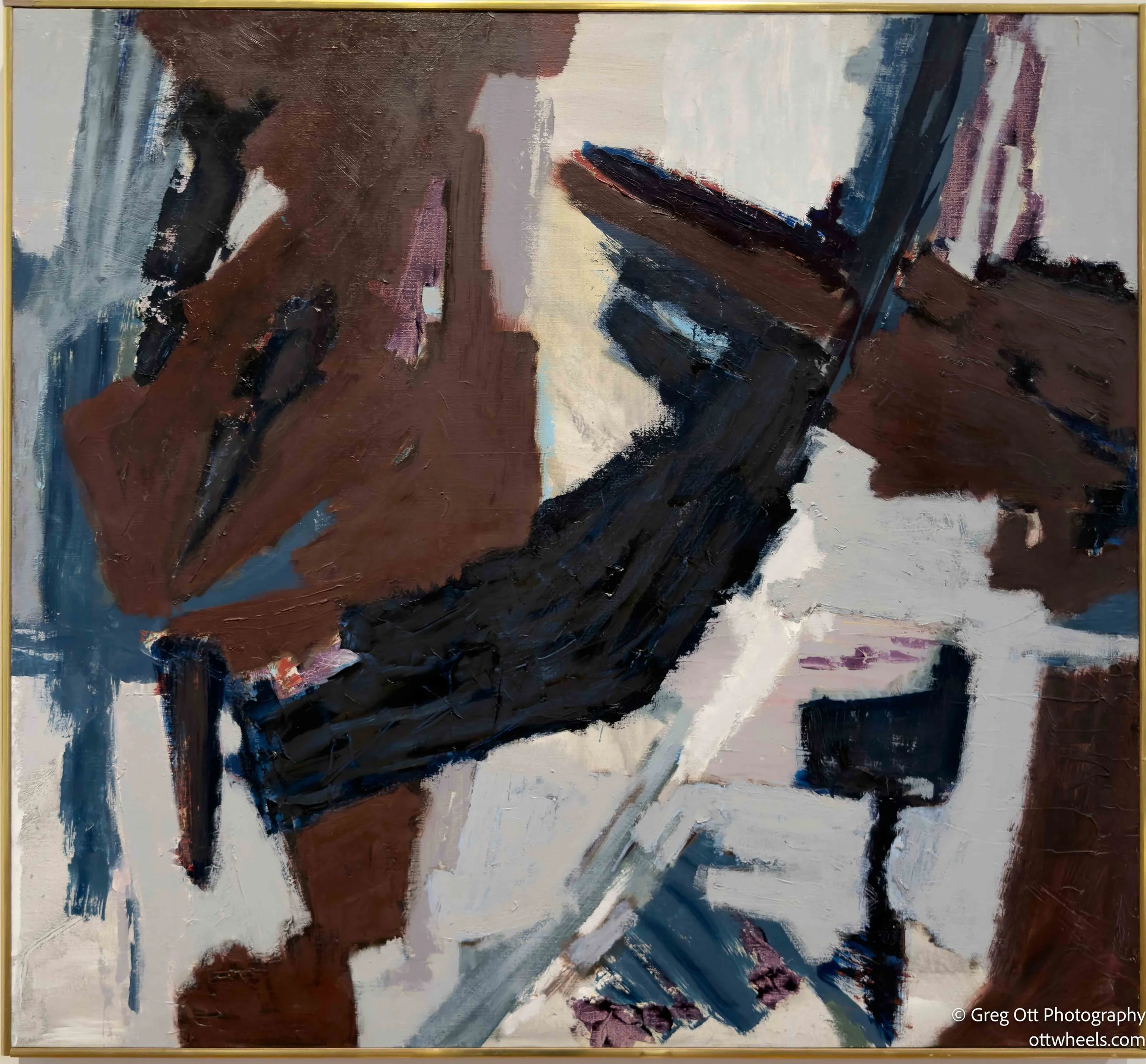
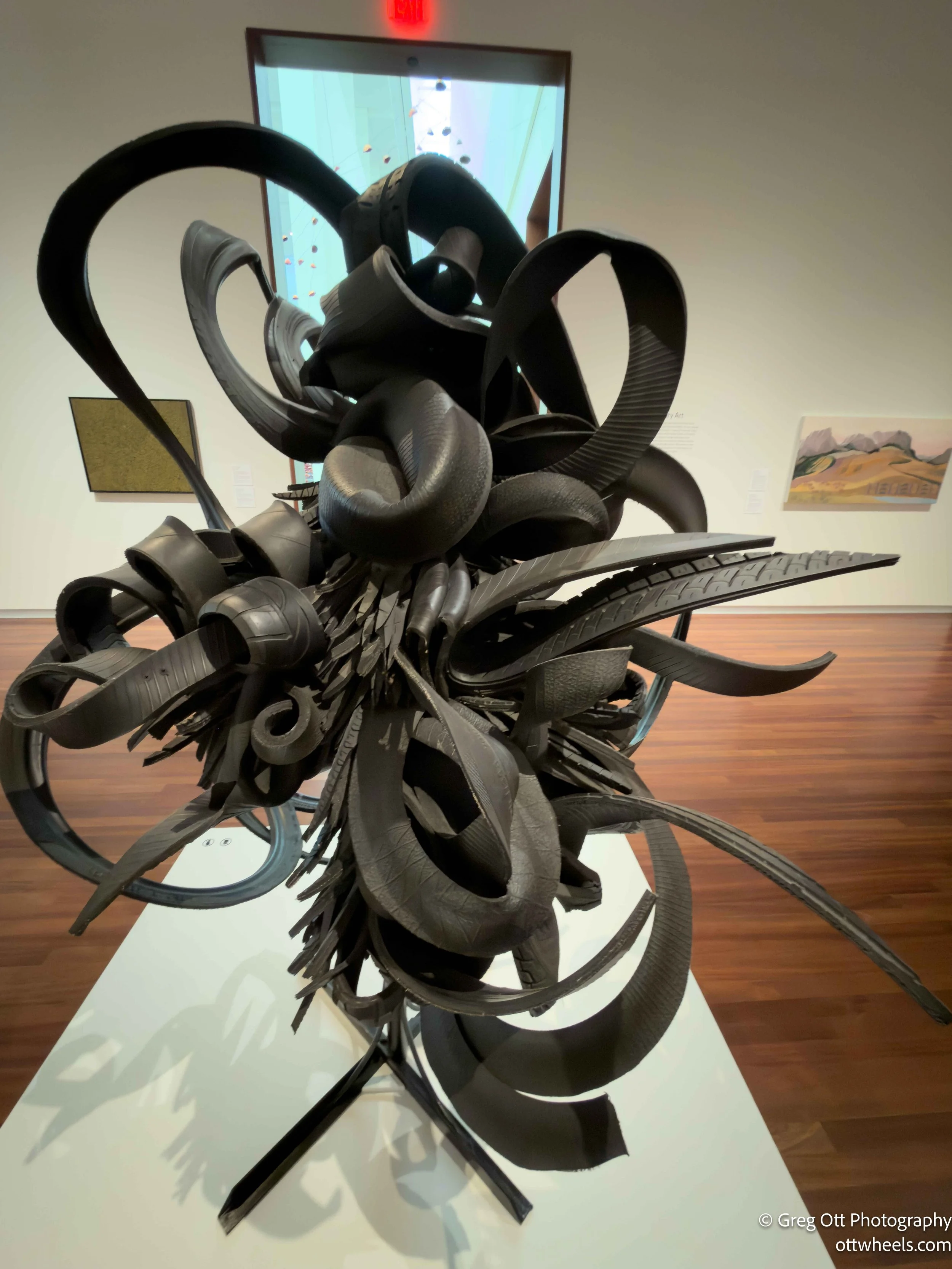
I closed out my visit at the Utah Museum of Fine Arts in the modern art section. The work of John McLaughlin reminded me of Josef Albers, especially the way color shifts at the edges—how our perception changes when adjacent tones press up against one another. McLaughlin seemed less interested in color for its own sake and more focused on spatial relationships, using restraint to define space. Nearby, I was drawn to a sculpture by Chakaia Booker, made from cut and reworked tires. From a distance it read as metal, but up close the tread patterns and rubber revealed themselves, completely changing how I understood the piece. I’ve seen Judith Godwin’s work before, and encountering it again reminded me of her persistence—trying to make it as a woman in the 1960s, pushing forward in a space that was not designed for her. That context continues to add depth to the work.
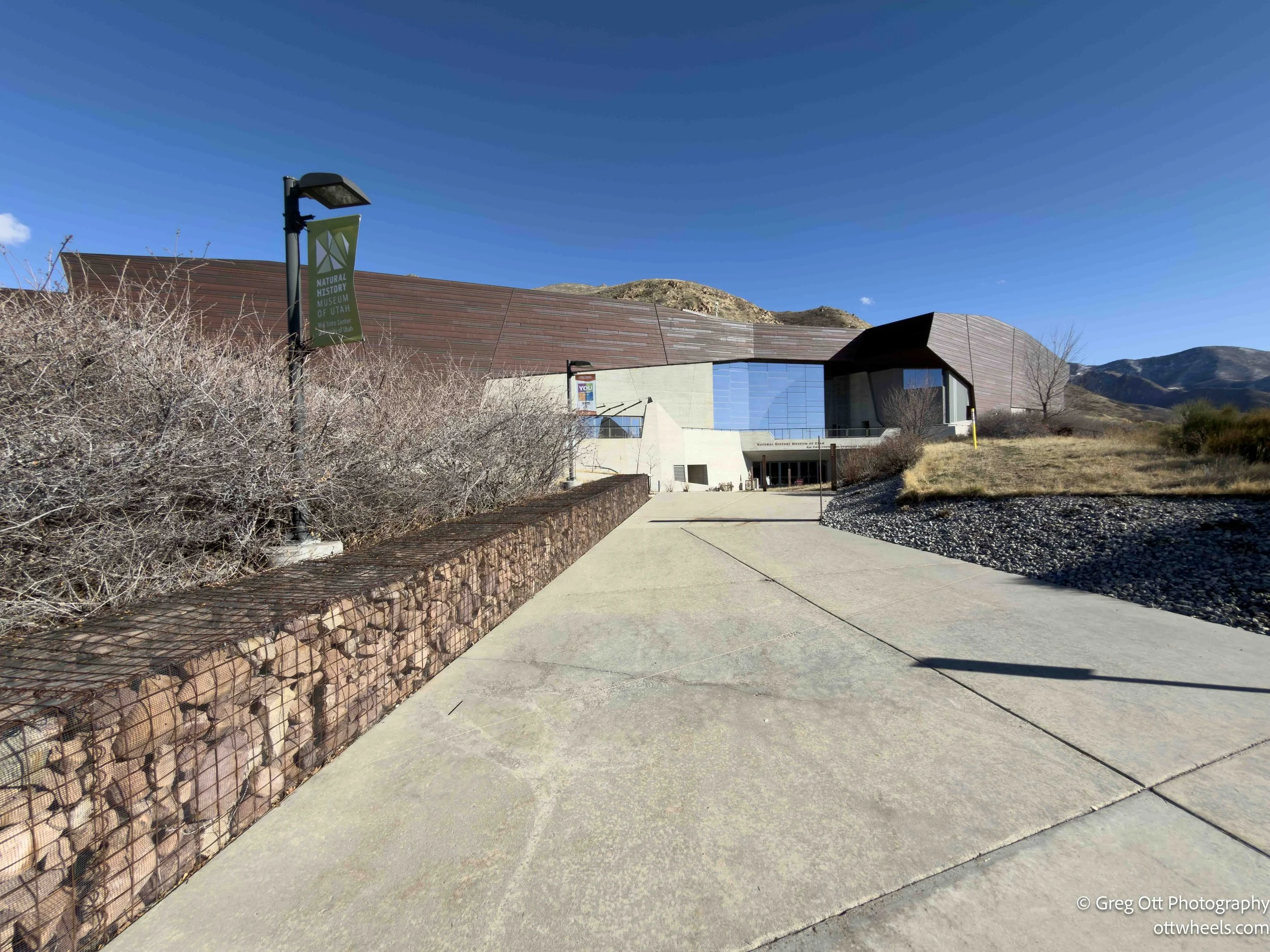
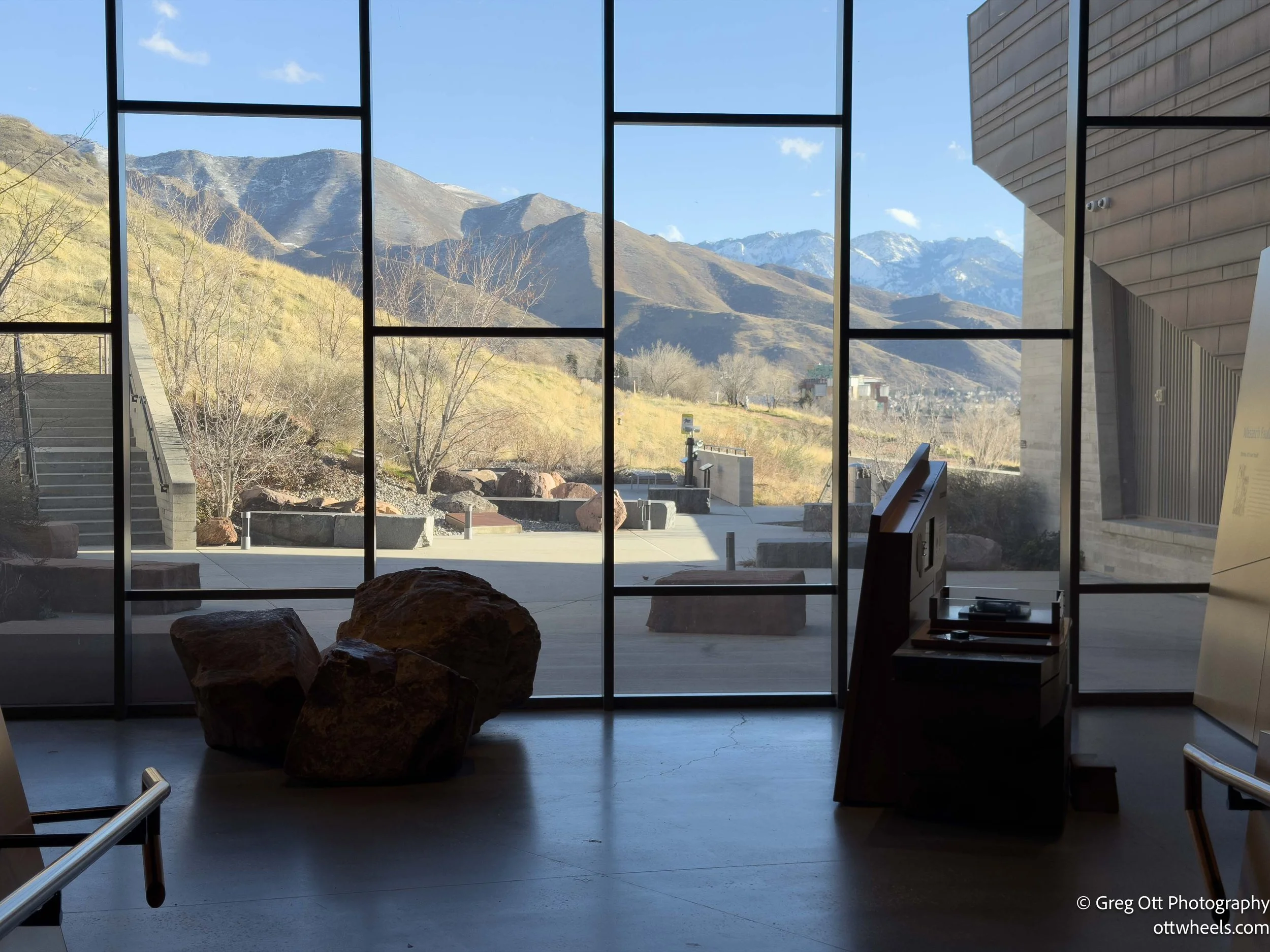
I drove through the University of Utah campus and up the hill to the Natural History Museum of Utah. There were no discounts for me, and the entrance fee was $22, but it quickly felt worth it. This is one of the best natural history museums I’ve been to, and it’s very different from those in New York, Pittsburgh, or Chicago. The building itself is massive, perched above the university and looking out over Salt Lake City, with the Cottonwood Mountains stretching across the distance.
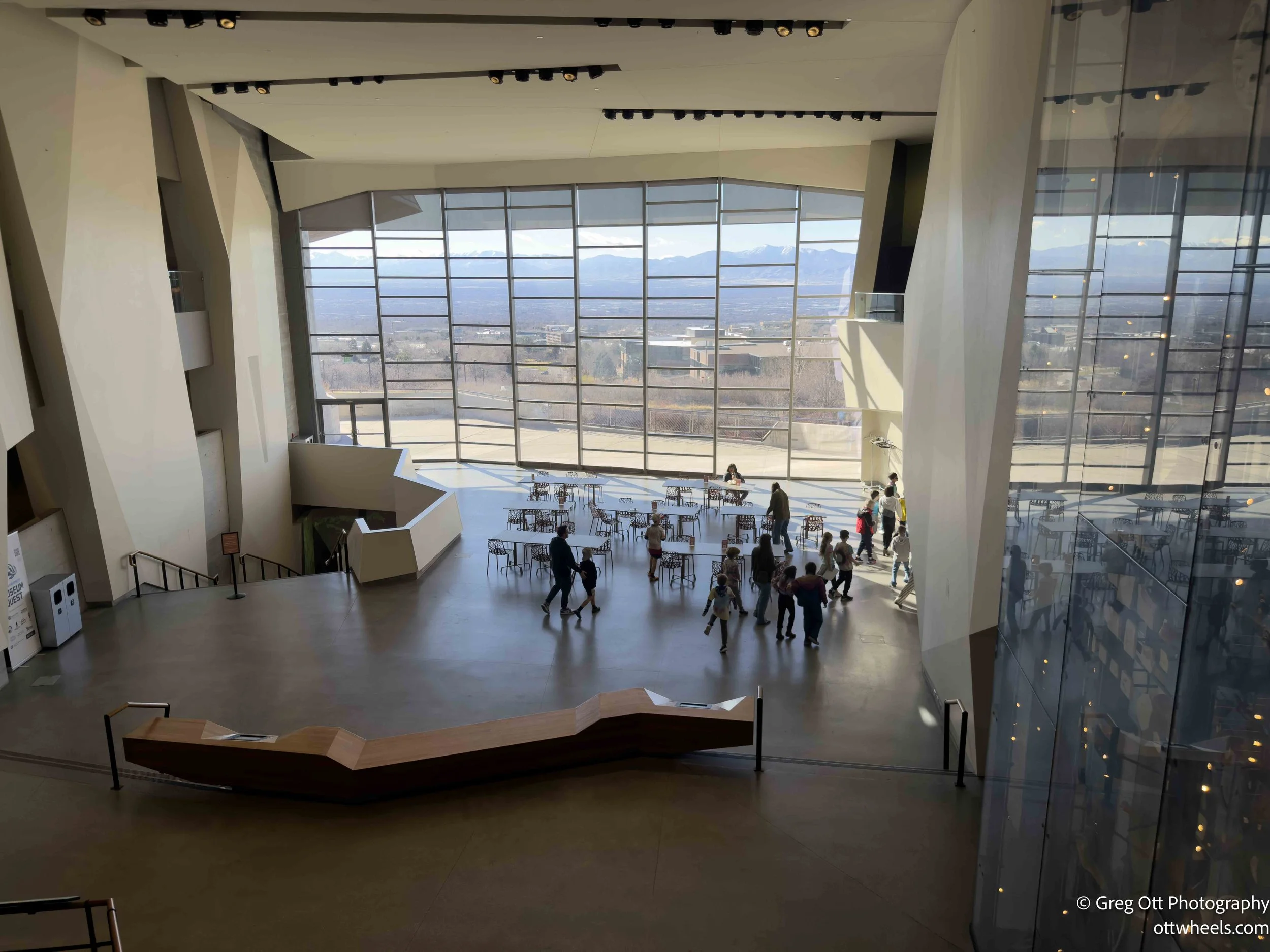
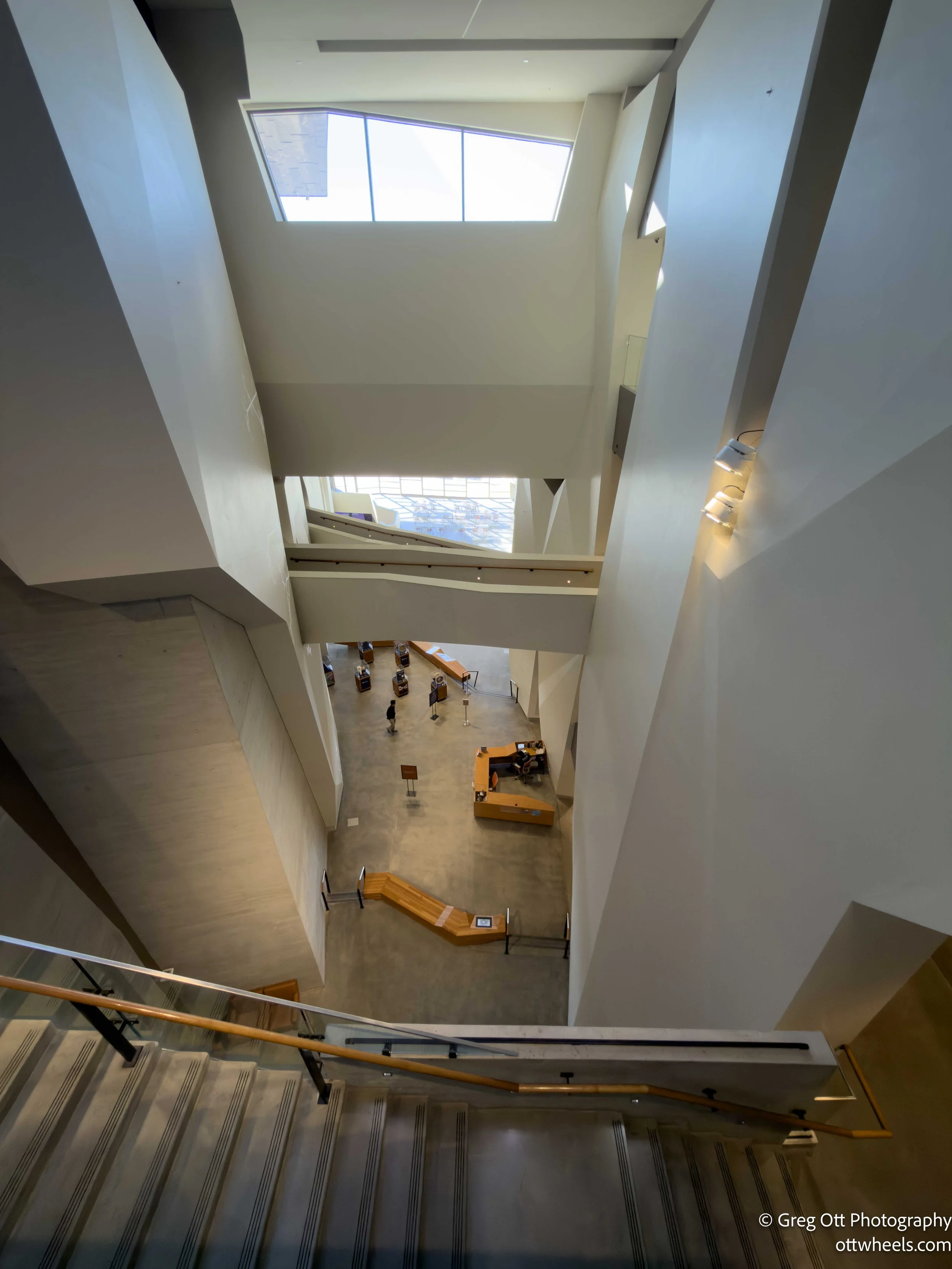
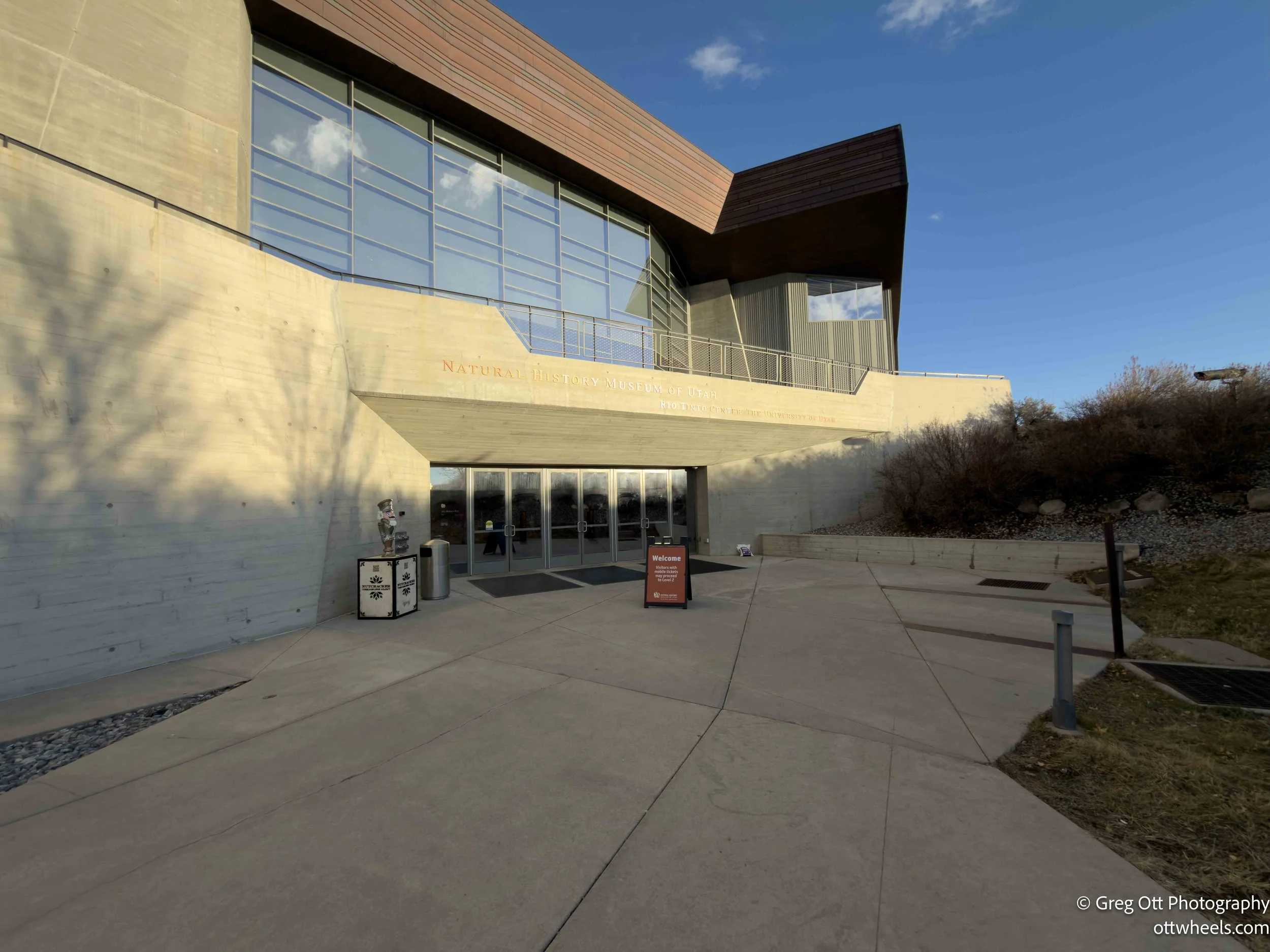
It was getting close to 2 p.m., and I was hungry. I stopped for a large, well-prepared salad and, yes, another espresso. At the entrance, they suggested starting on the fifth floor and working my way down, which turned out to be good advice.
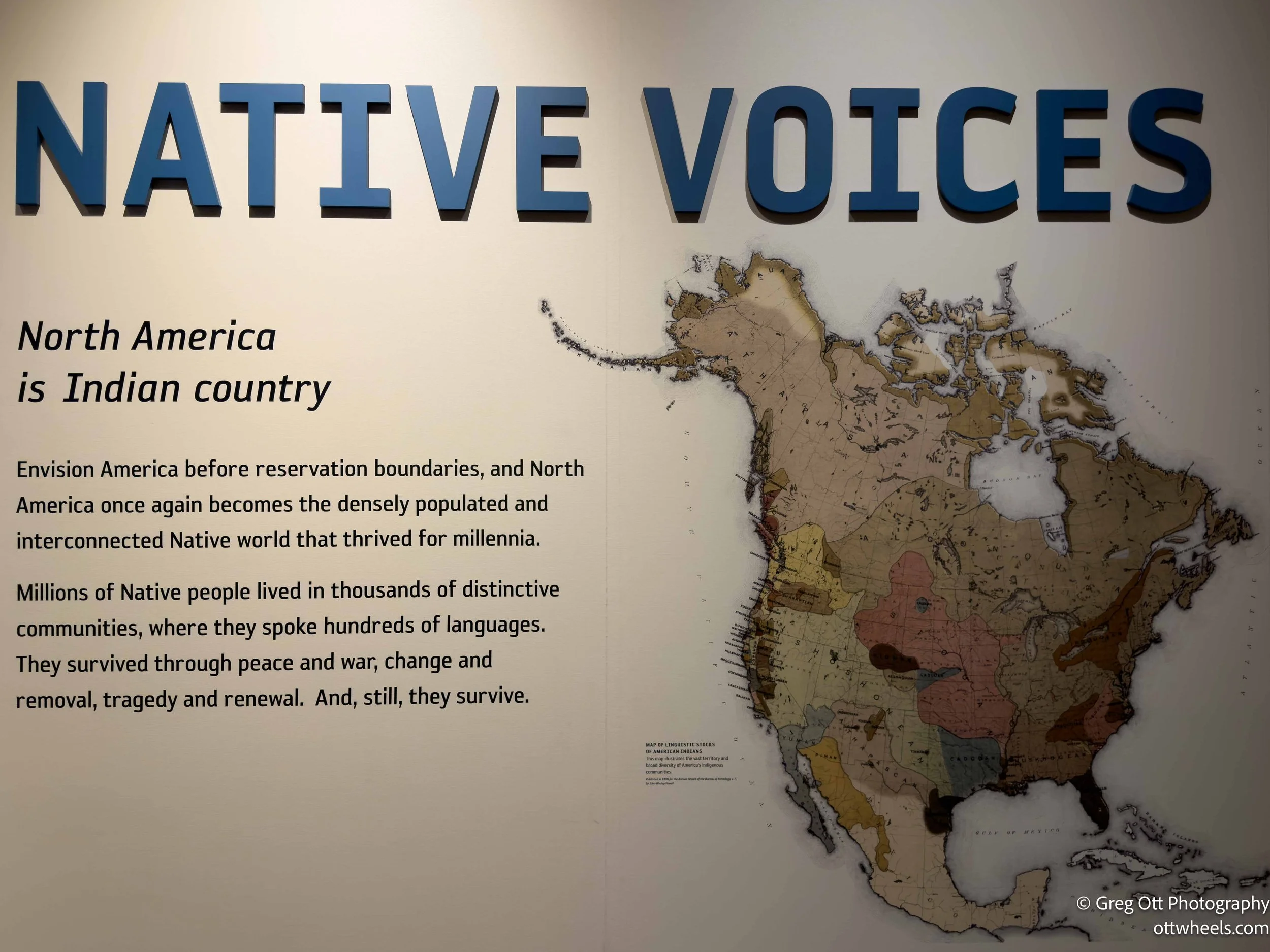
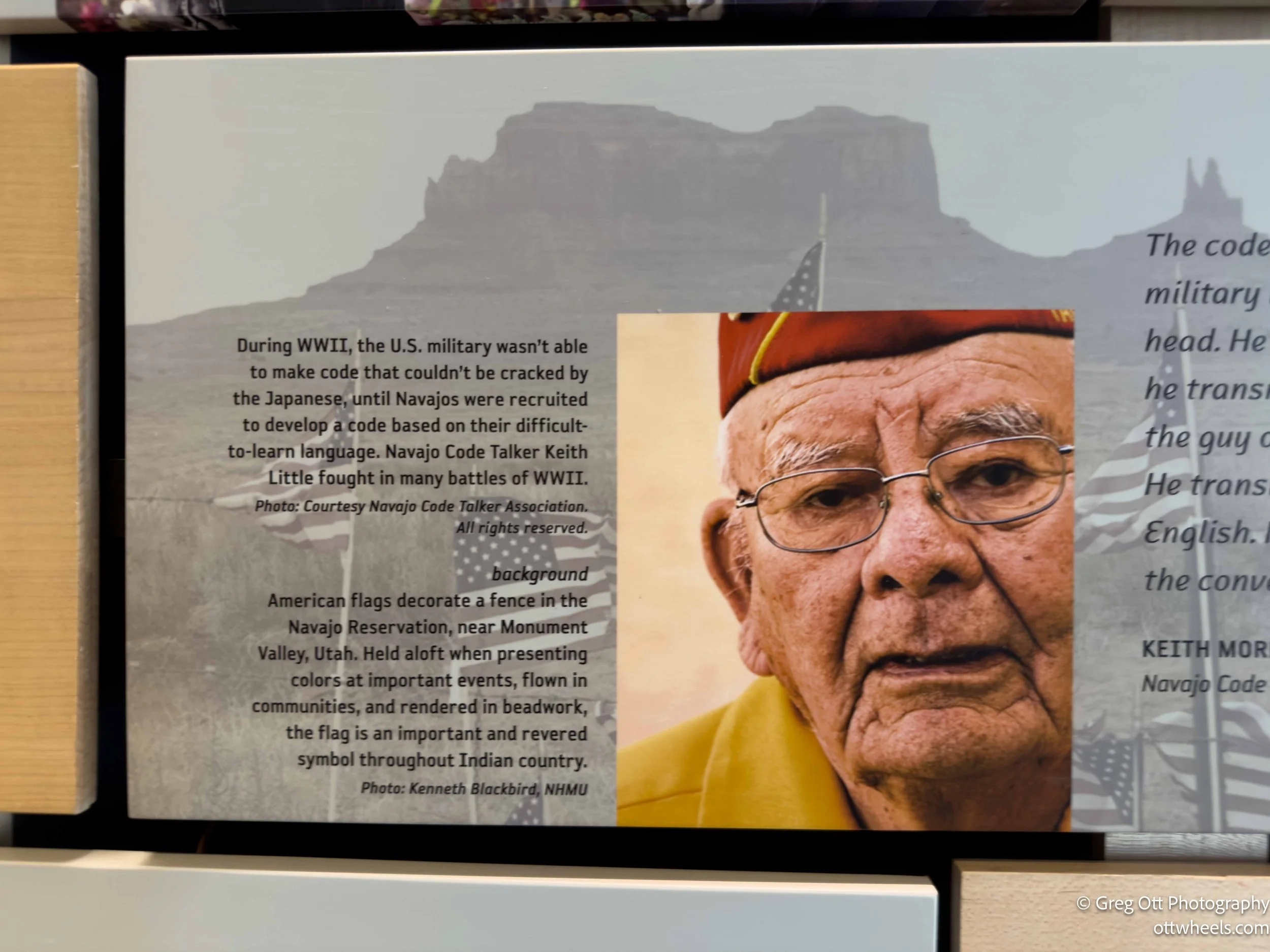
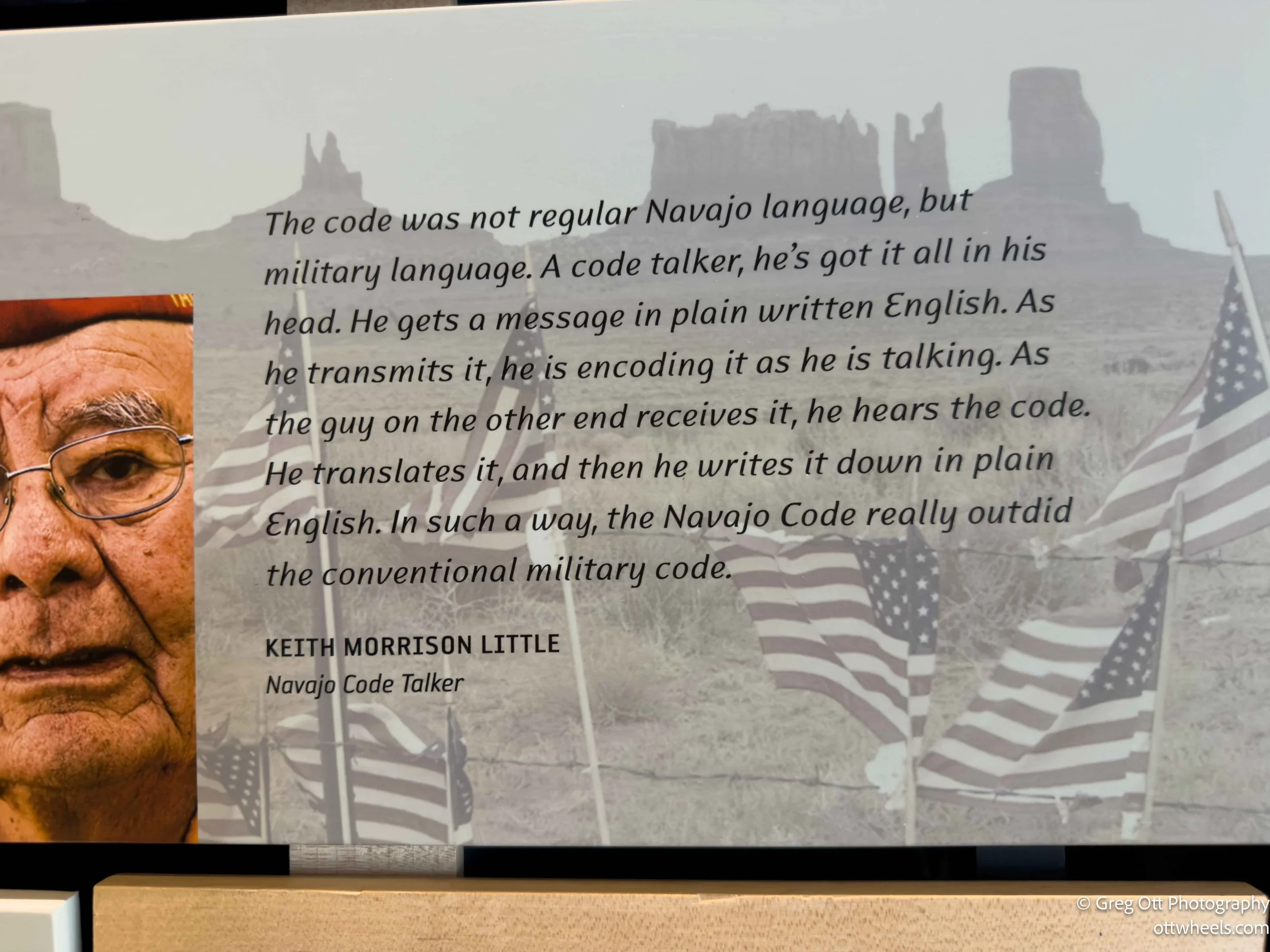
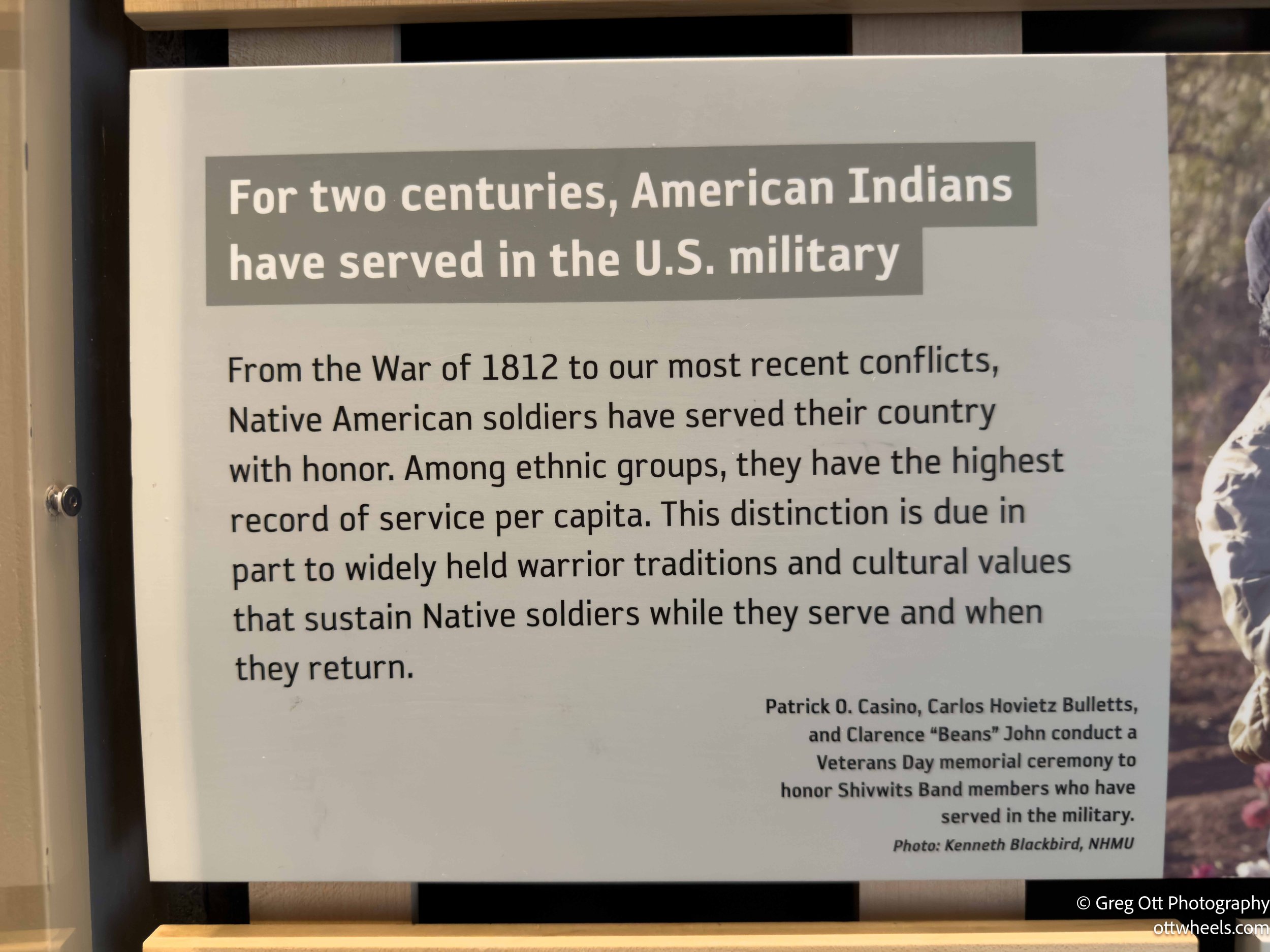
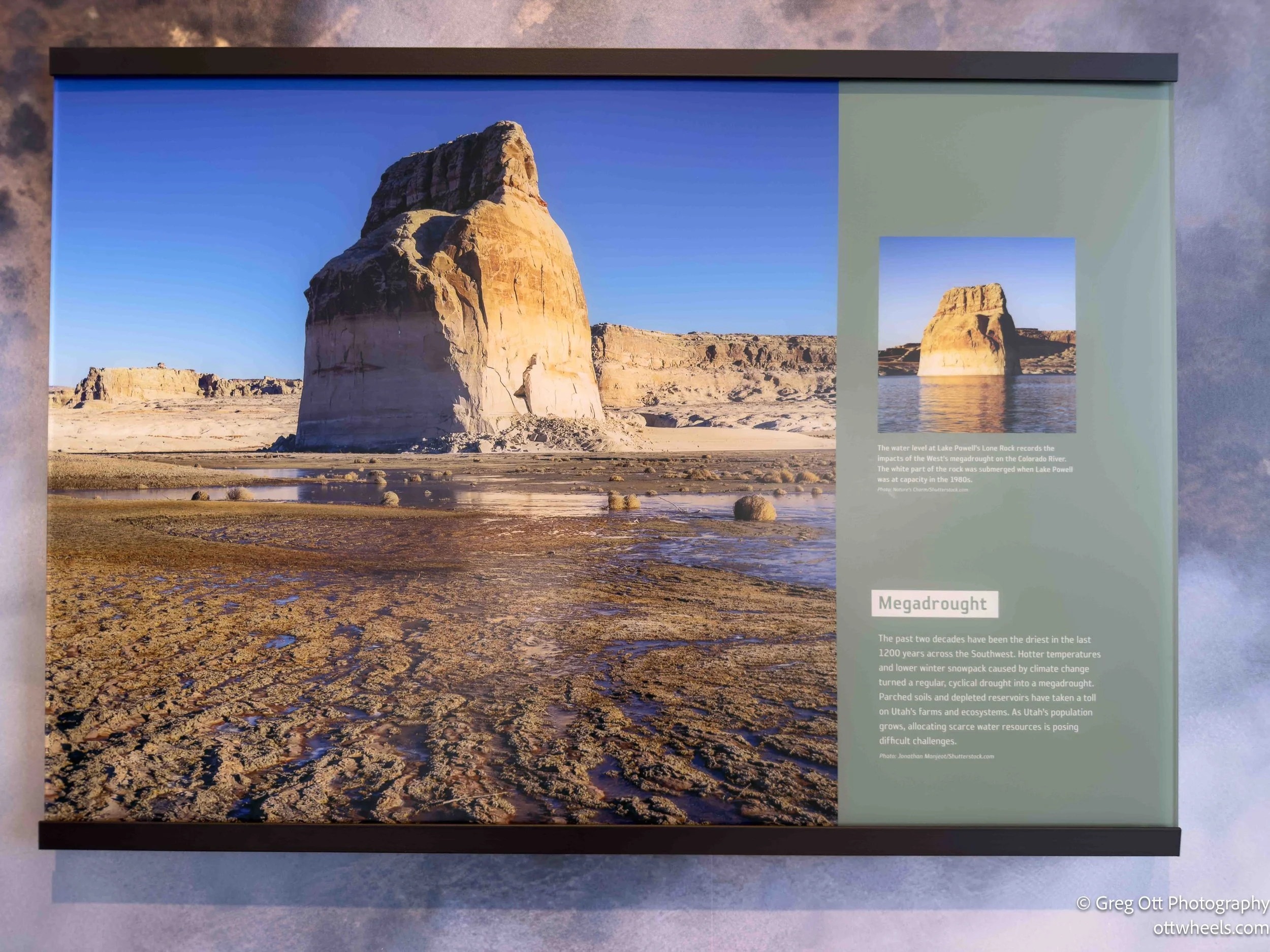
Level 5 was filled with Native American material, and I ended up spending more time there than I expected. The focus was on Indigenous cultures of the Great Basin and the Colorado Plateau, with baskets, pottery, tools, clothing, and everyday objects presented in a way that felt grounded and human rather than academic. What stayed with me was the sense of continuity—these weren’t artifacts from some abstract past, but pieces of daily life that made it easy to imagine how people lived, moved, and adapted to this landscape long before Utah existed as a state. There was even an image of Lone Rock, which immediately brought back memories from just a few weeks ago.

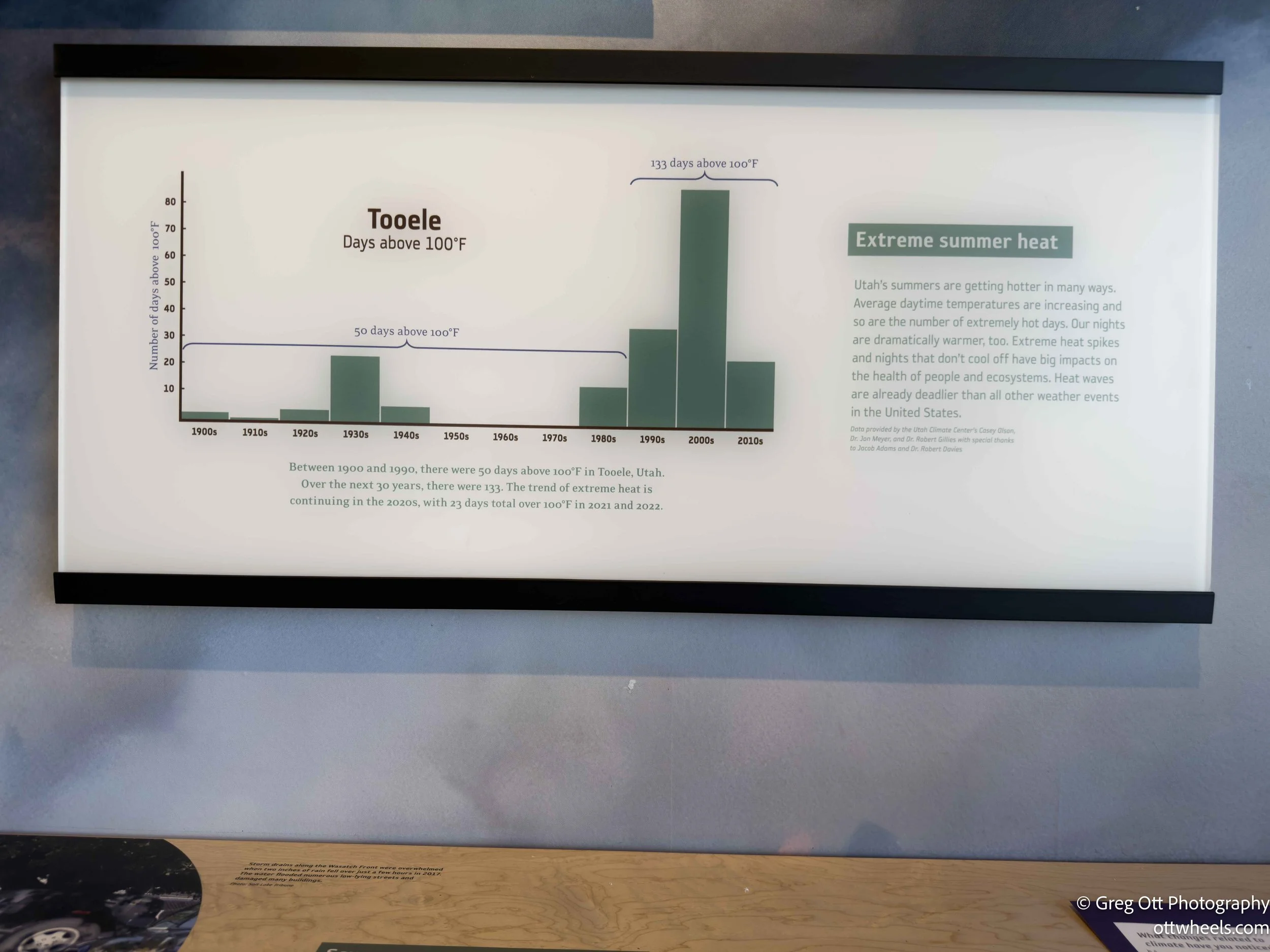
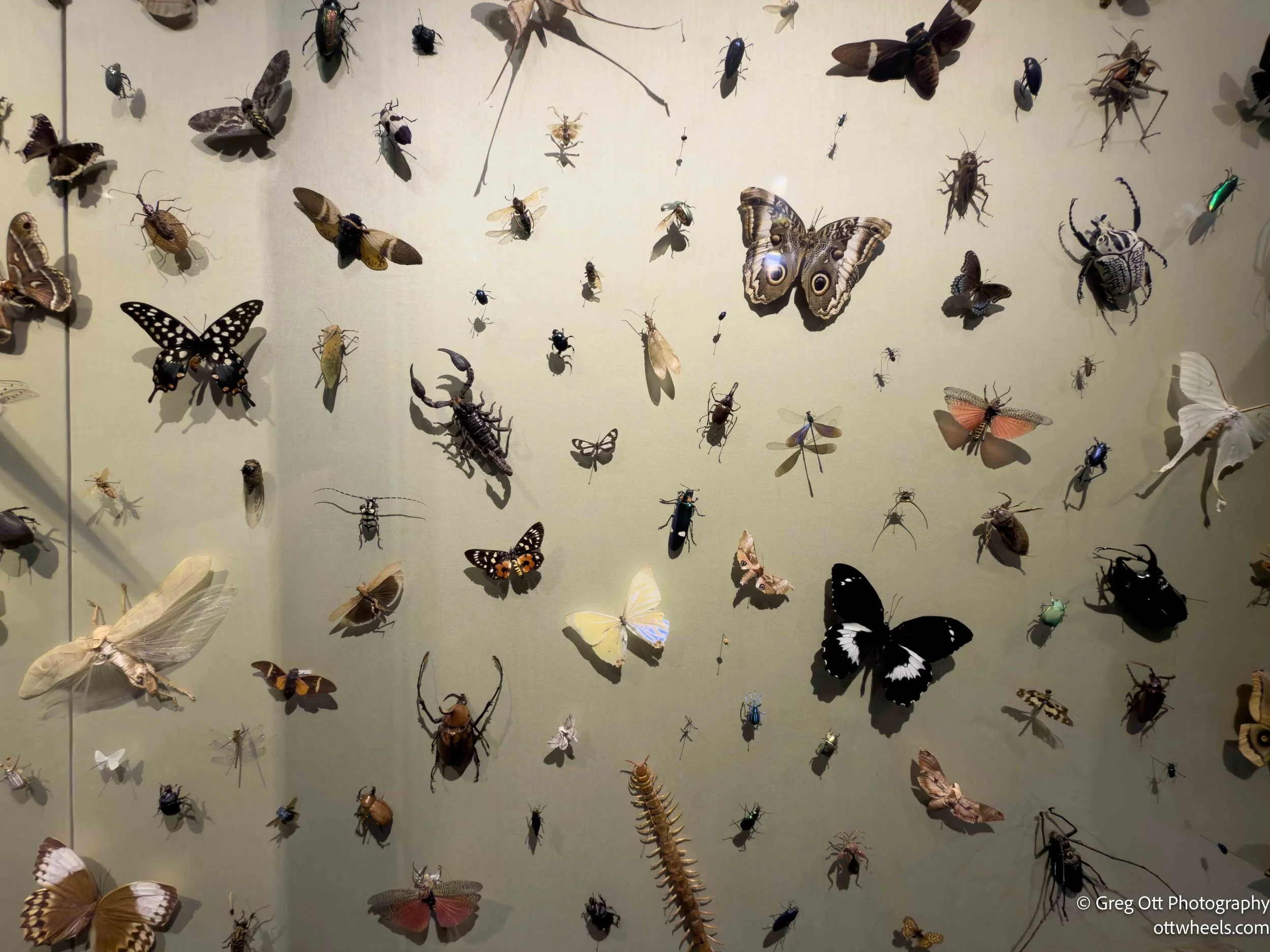
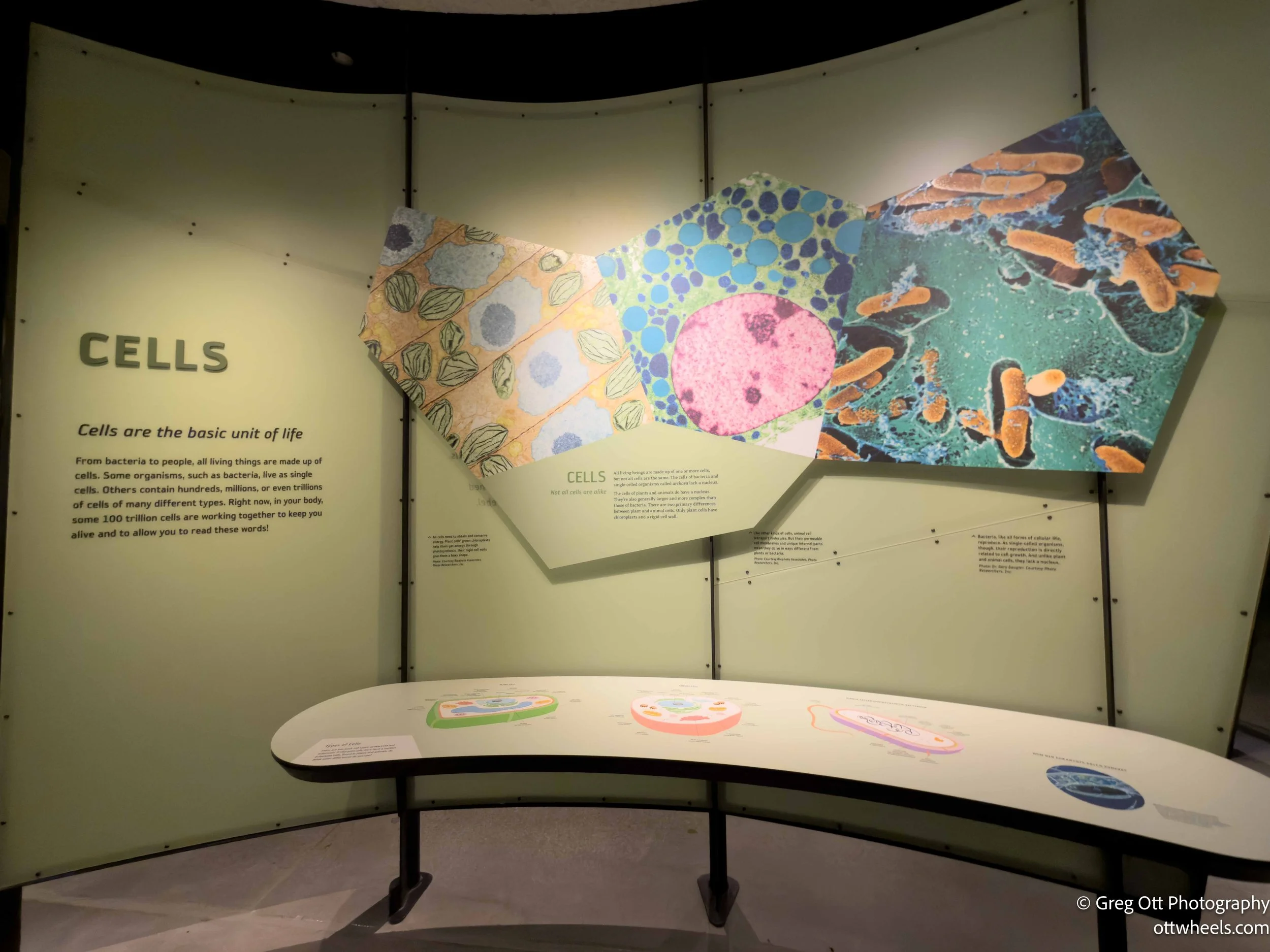
Level 4 pulled me in next, shifting toward living systems and how they function and adapt. The exhibits moved from plants and animals into broader ideas about evolution and biology.
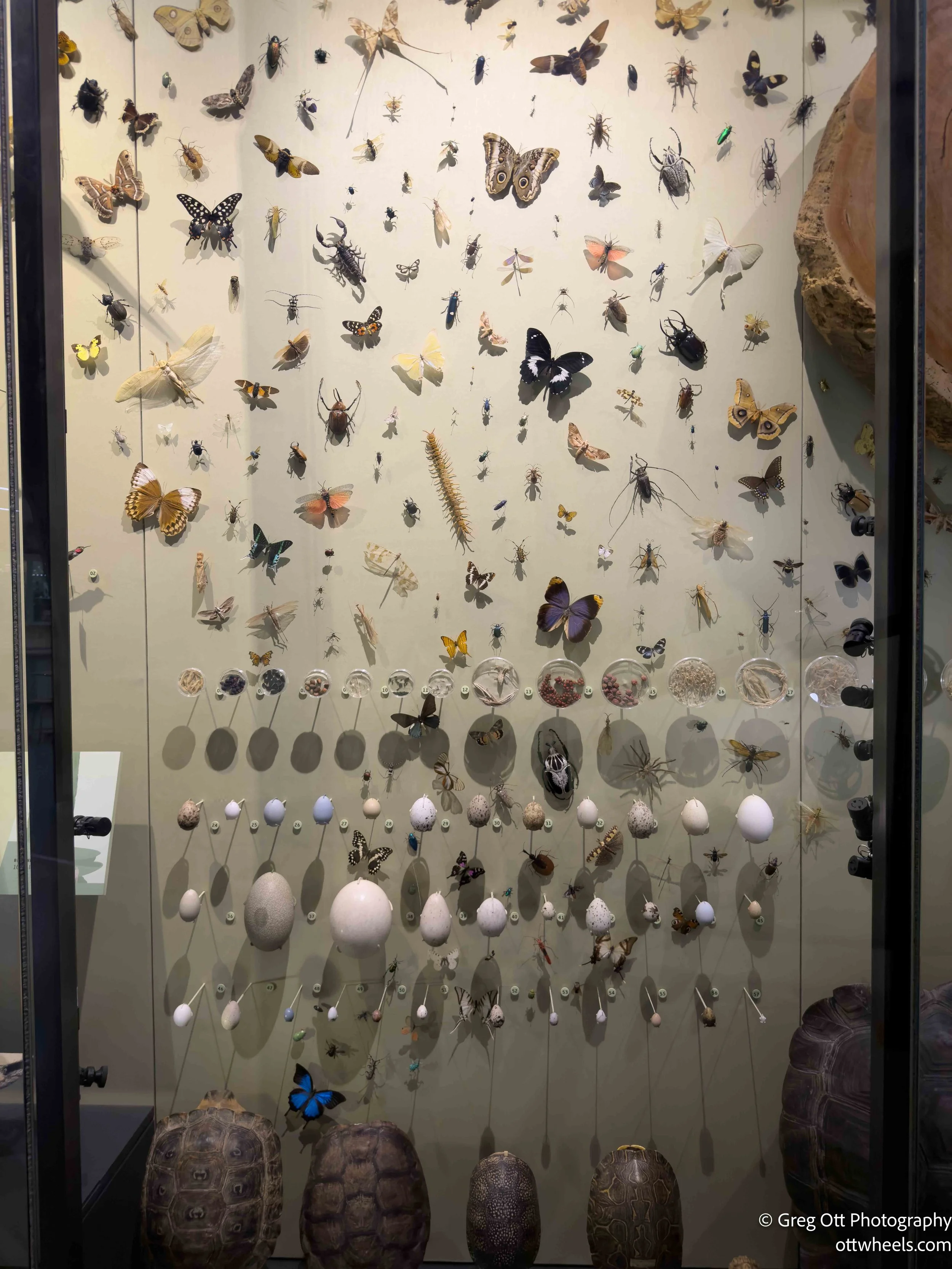
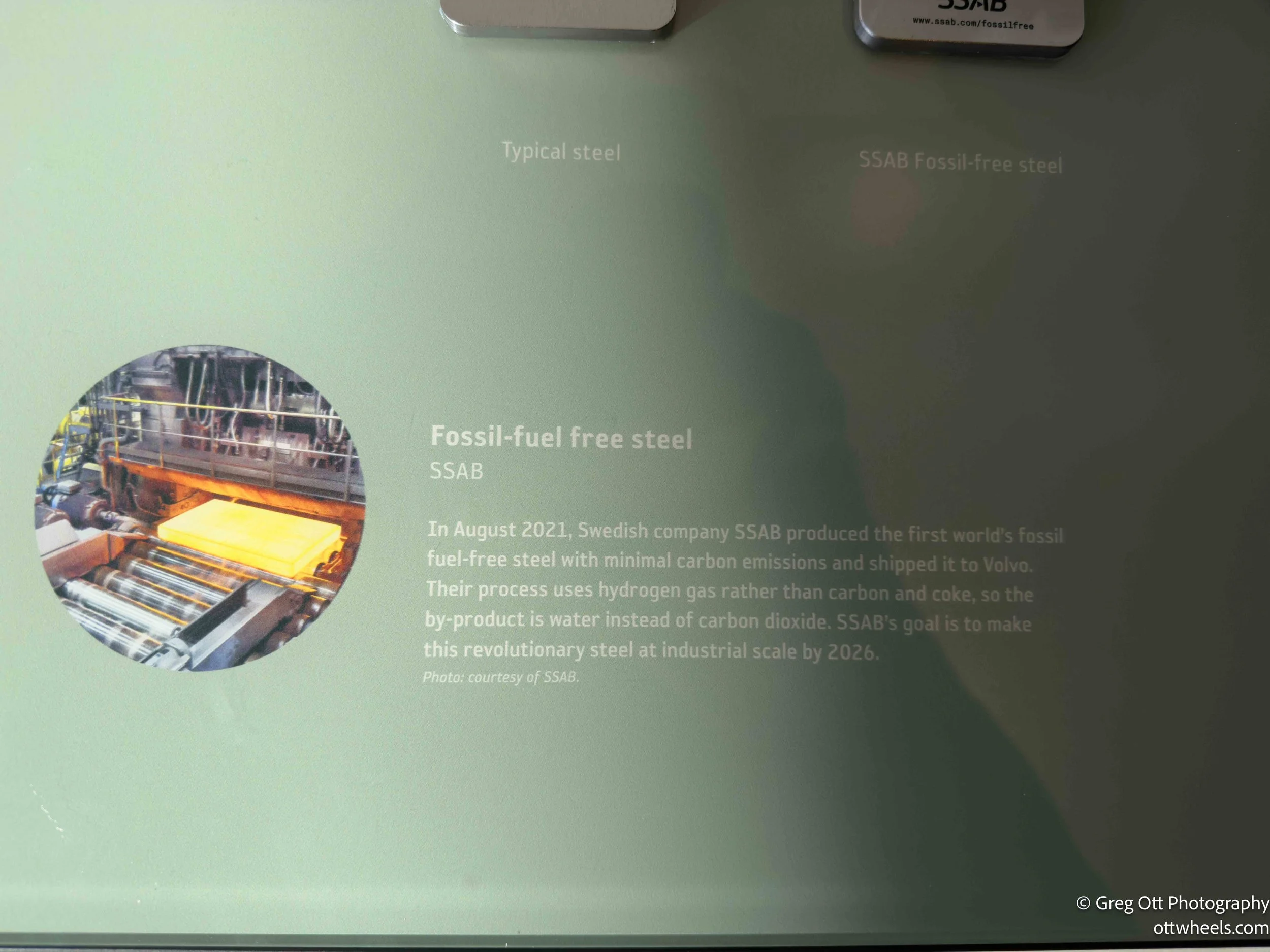
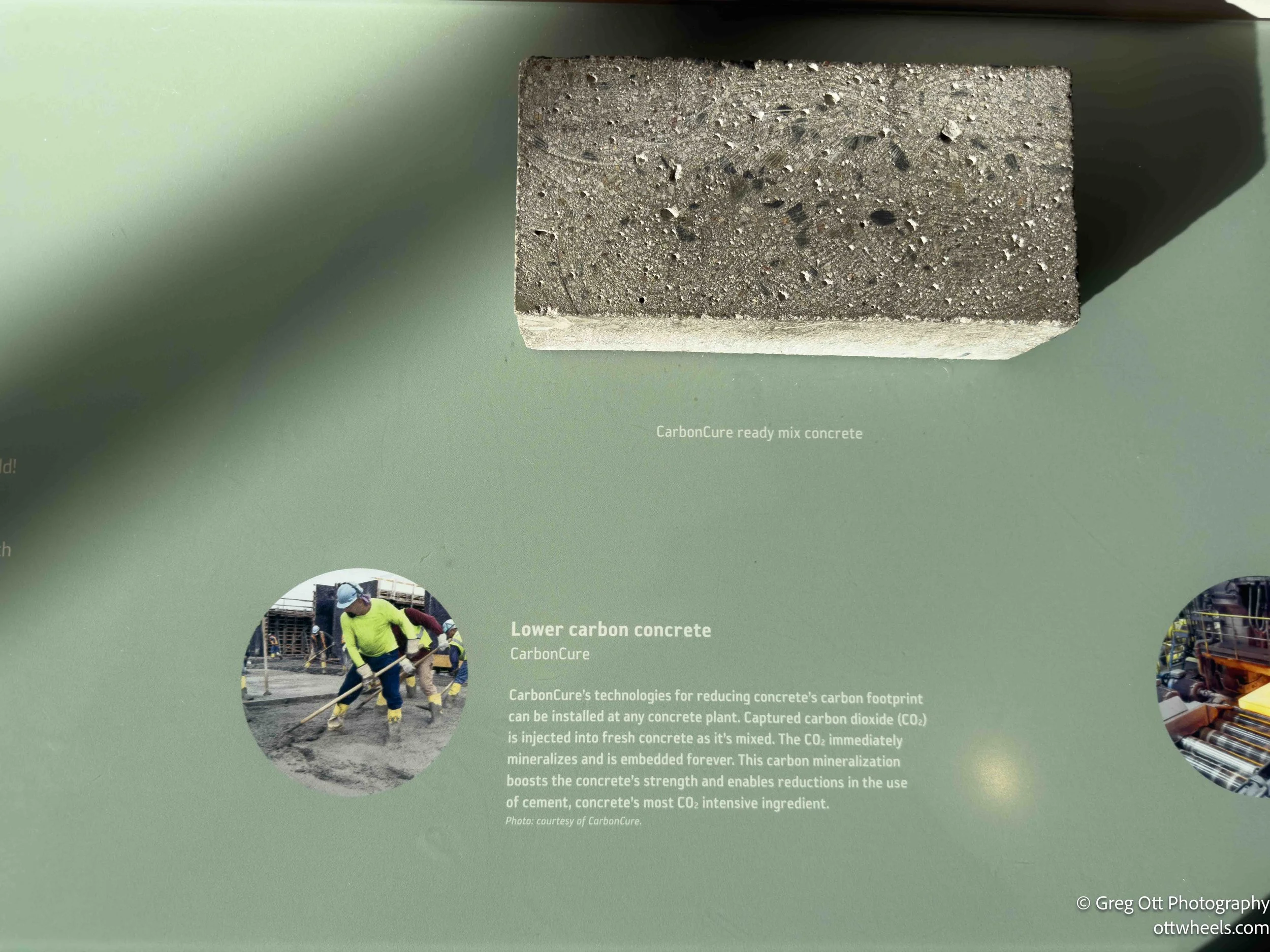
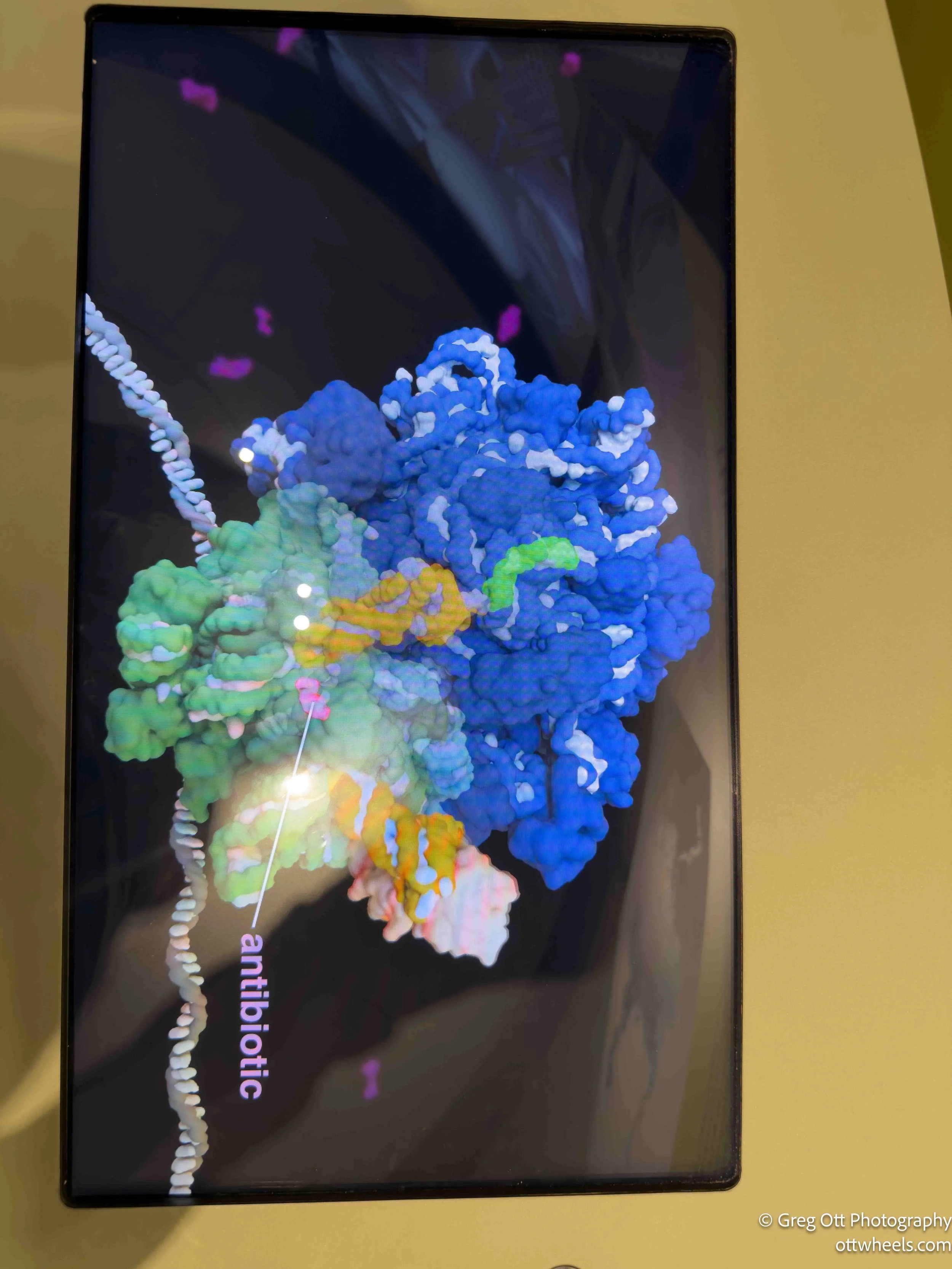
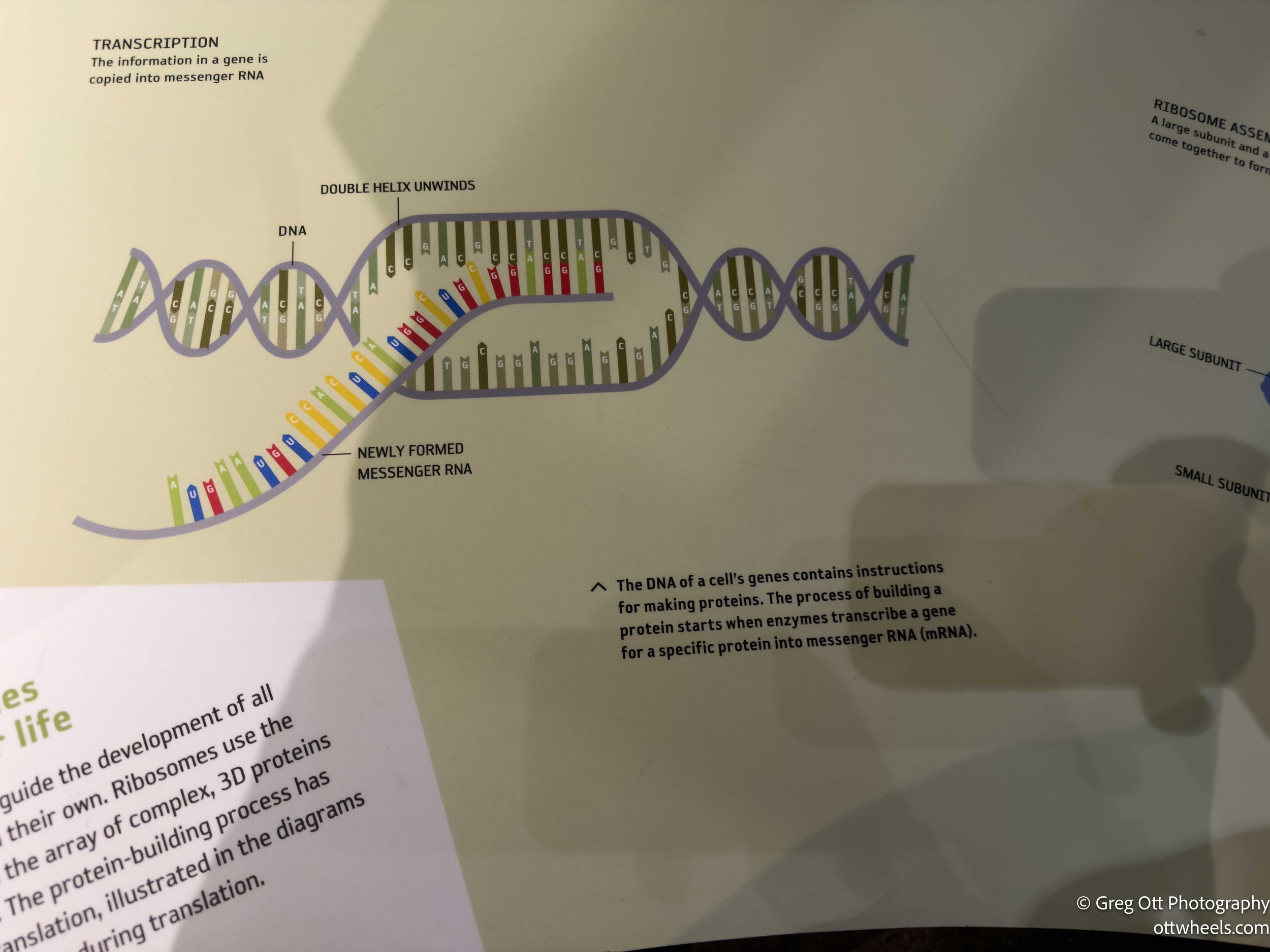
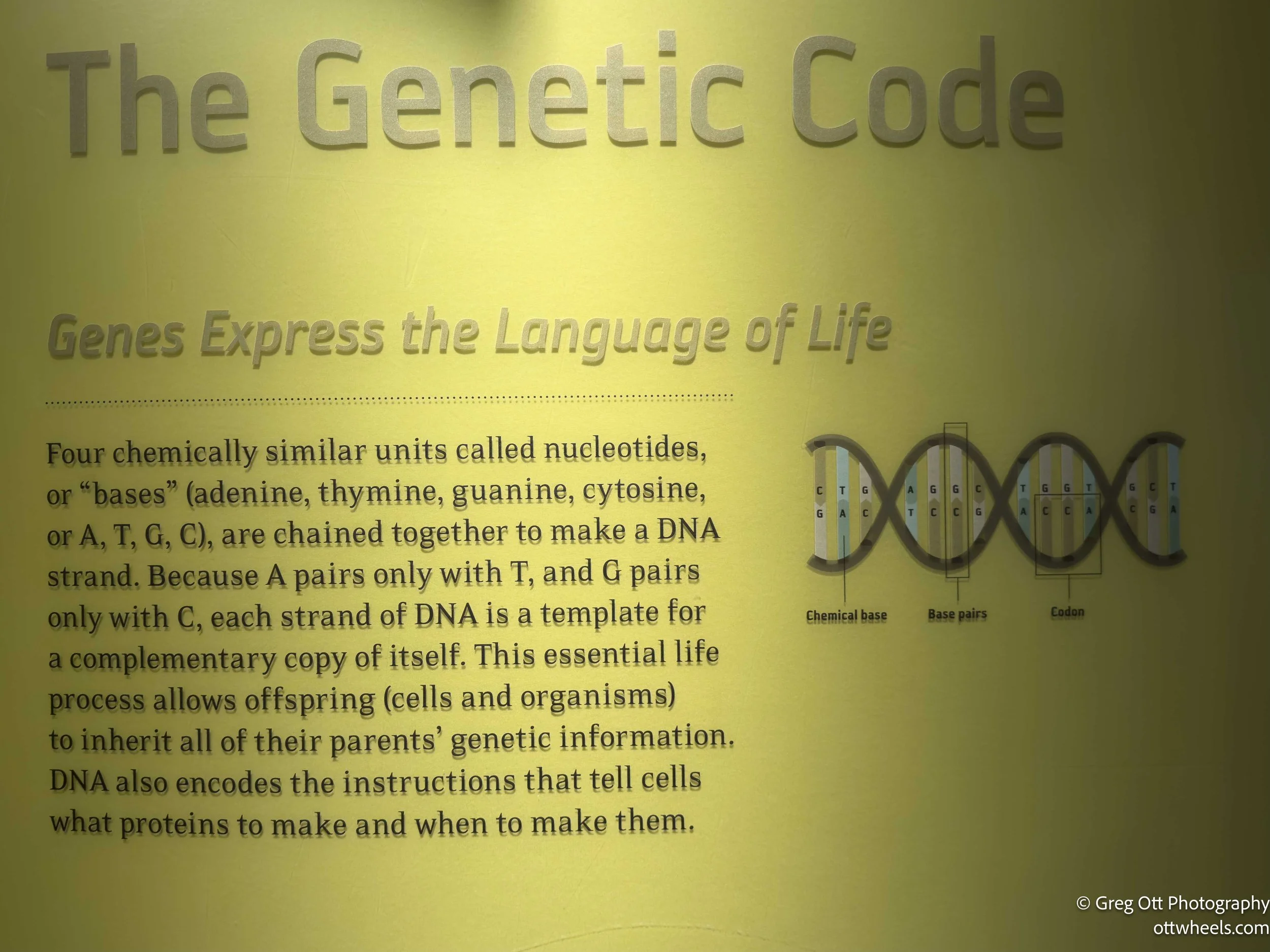
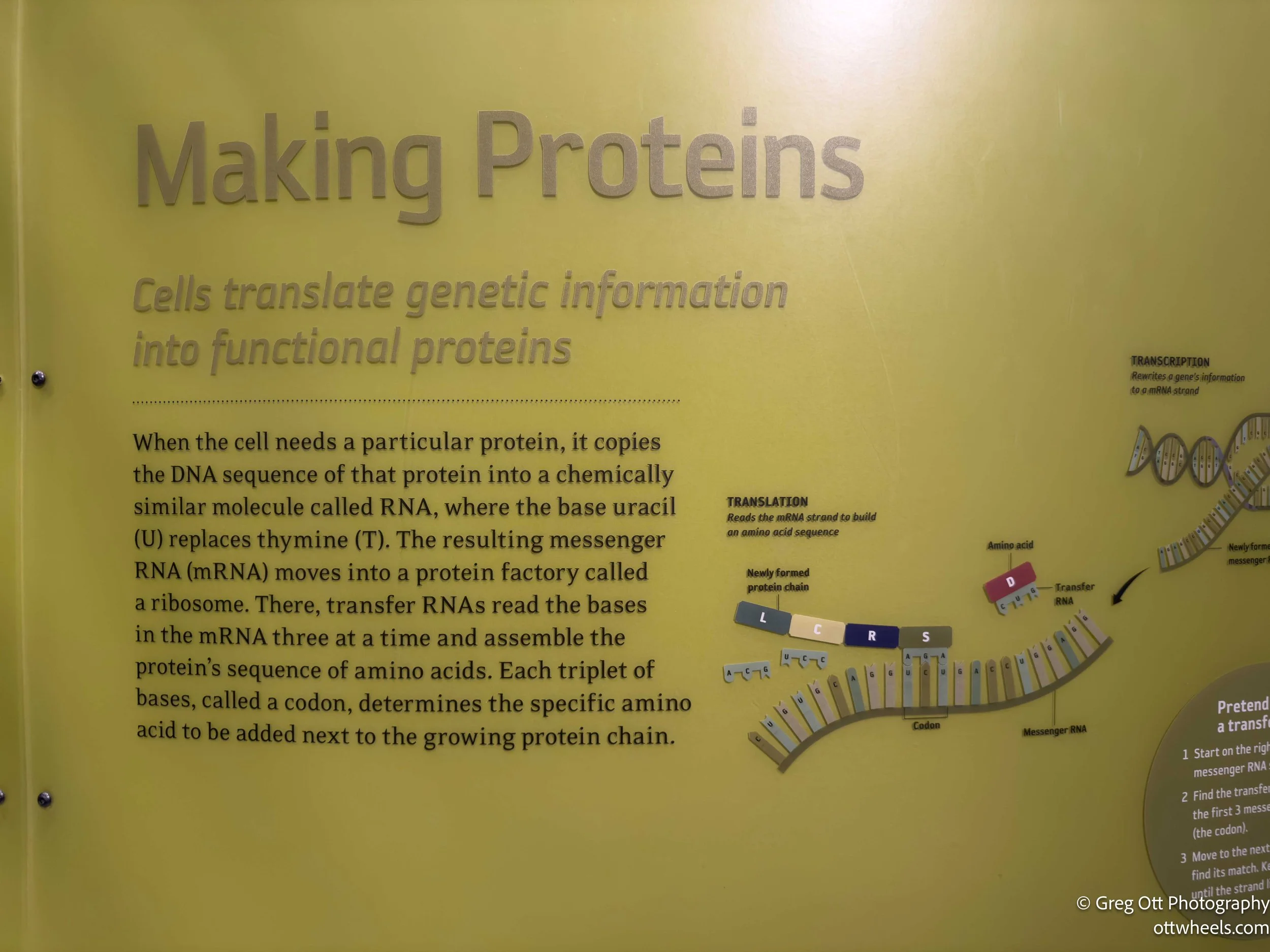
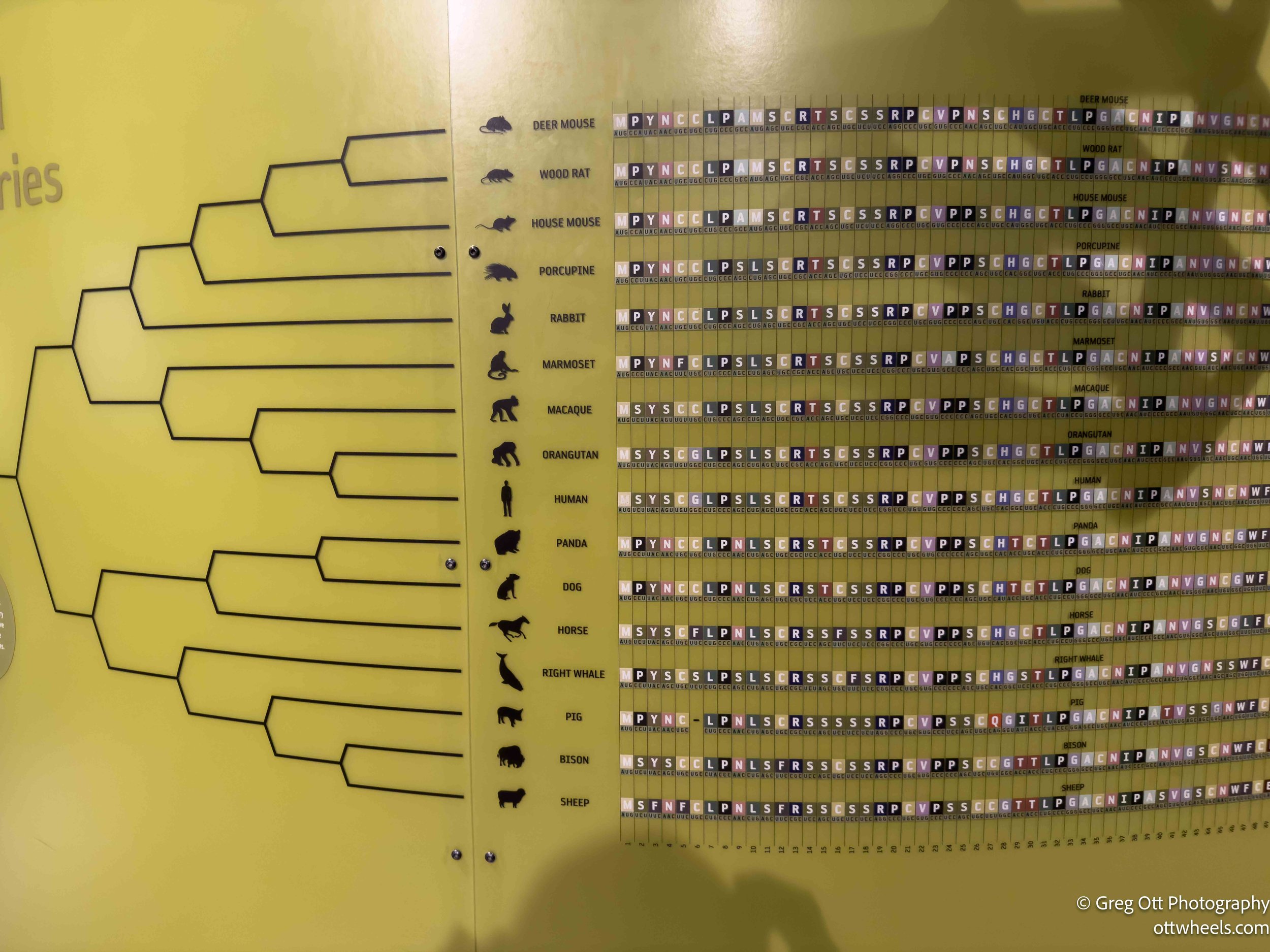
This is also where the DNA and genetics exhibits live, breaking life down to its most fundamental code. Woven into that was a renewable energy section, tying science back to the present and showing how human choices and technology intersect with the natural systems on display.
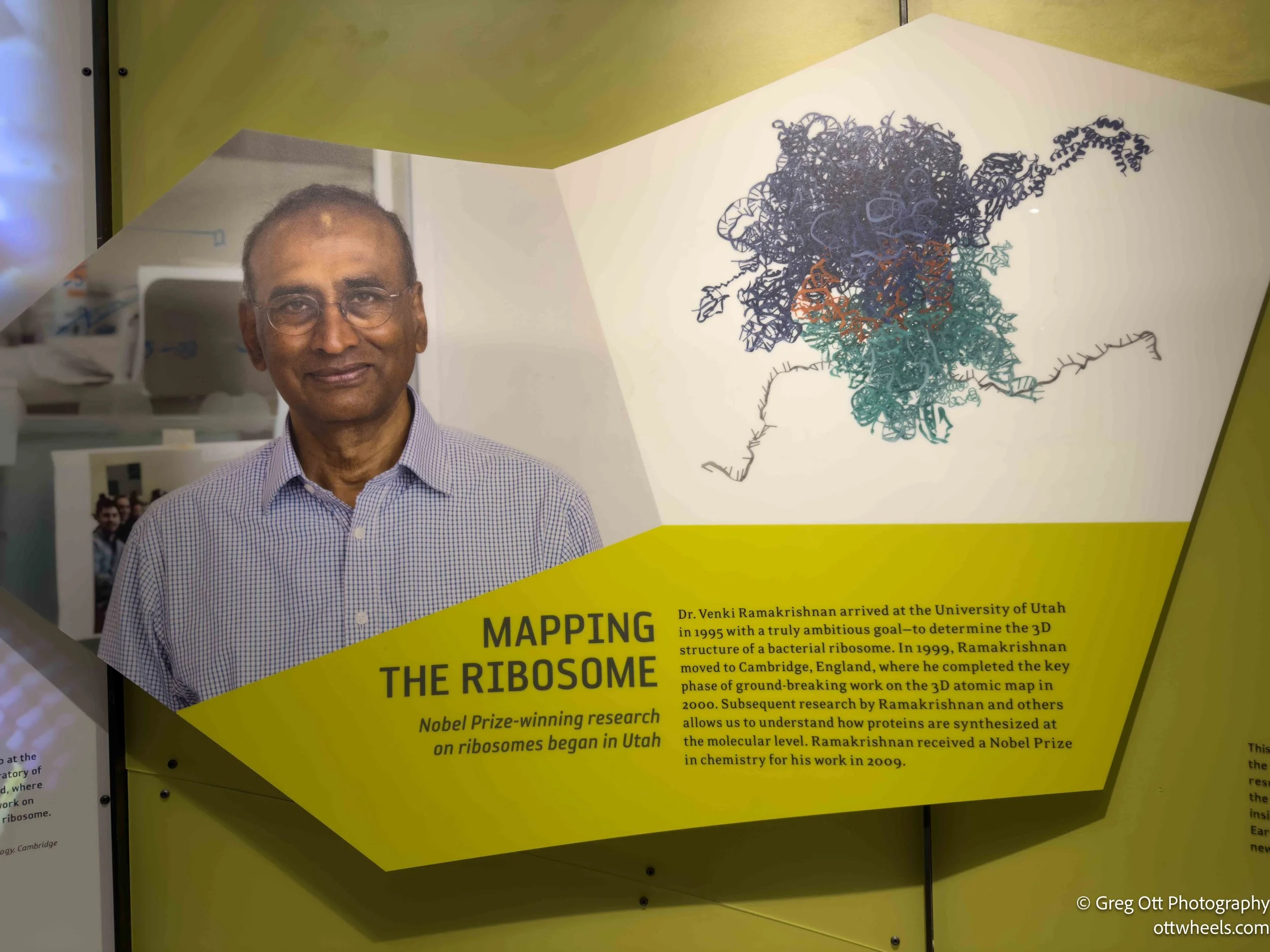
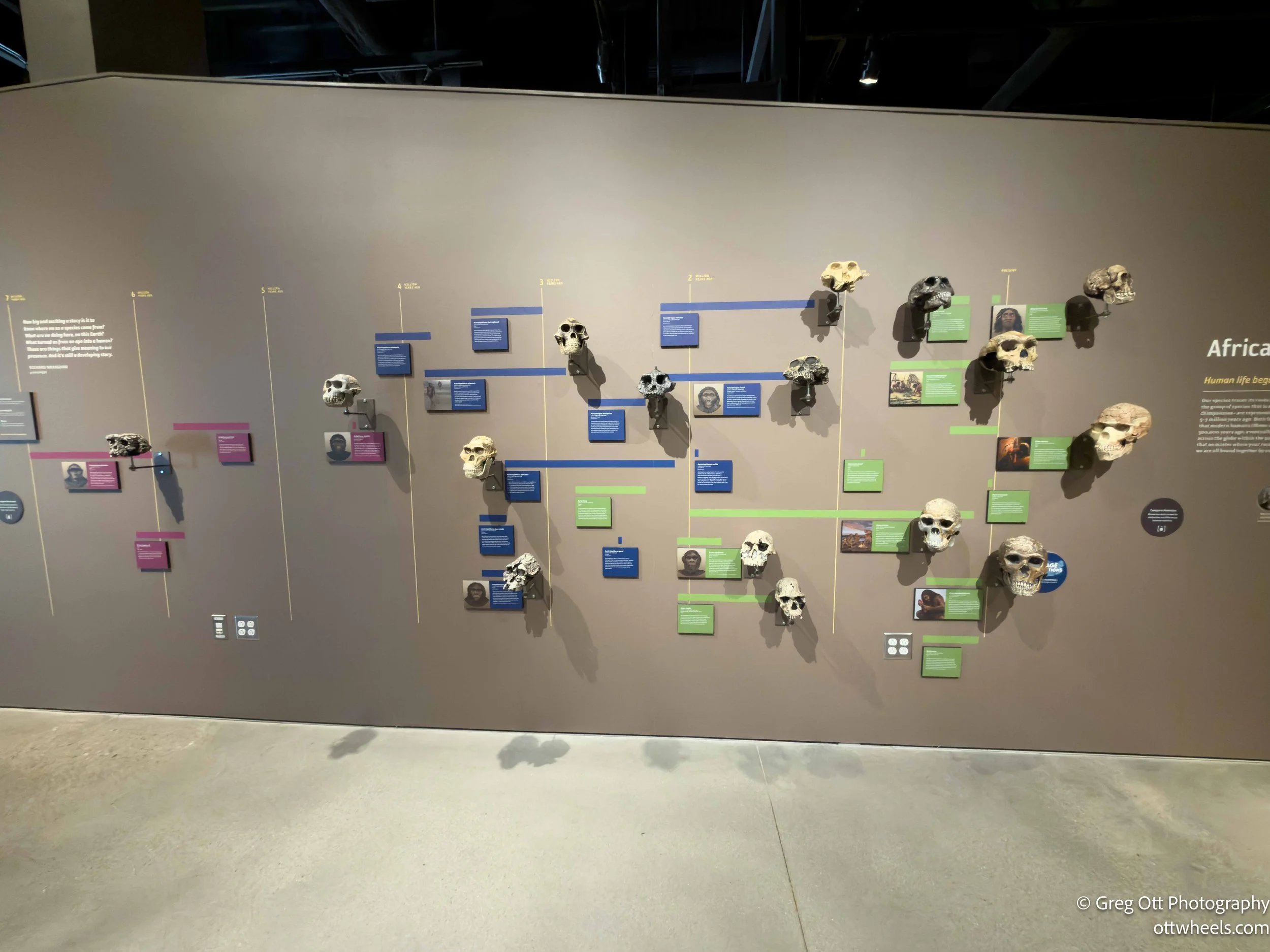
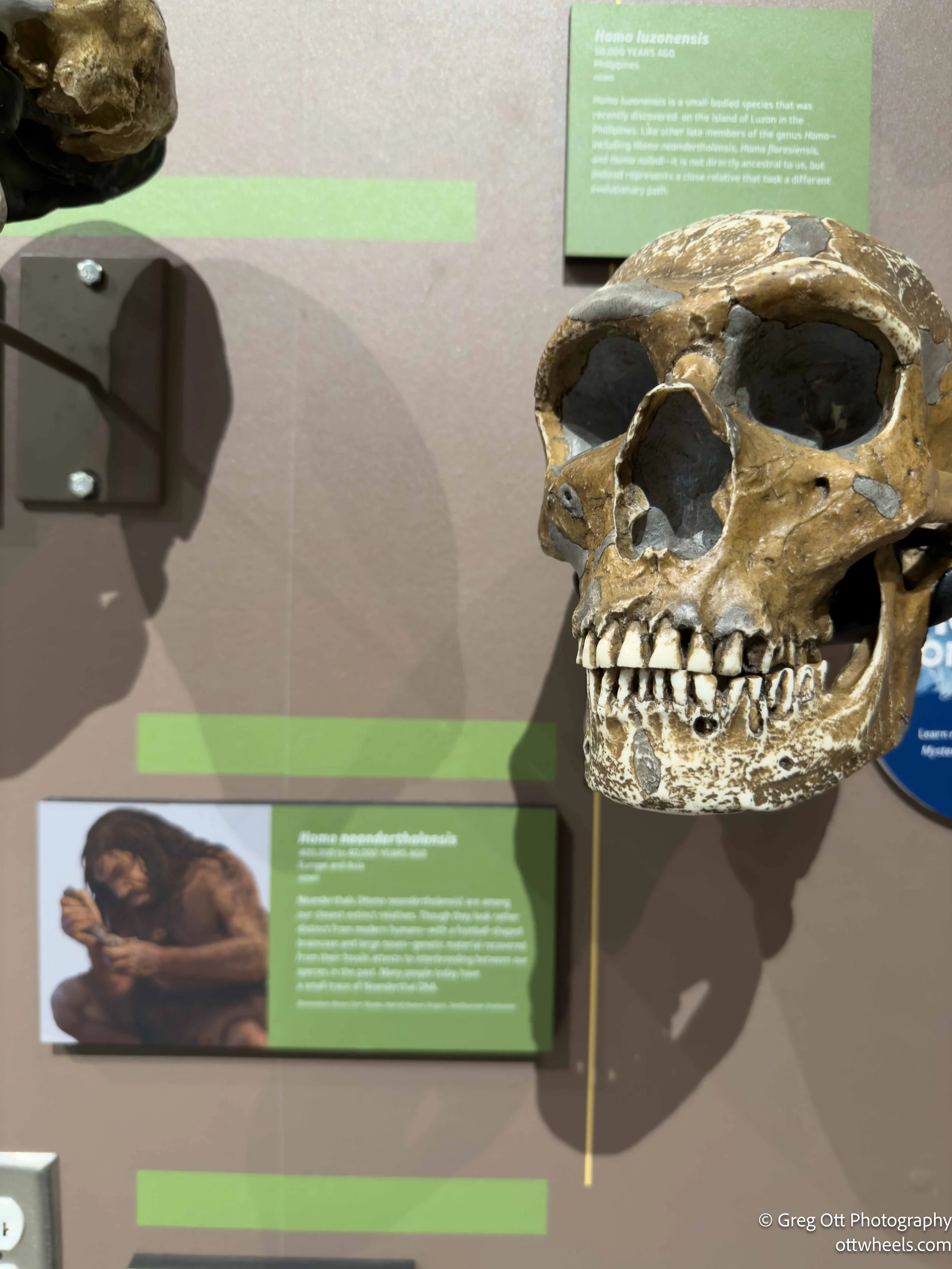
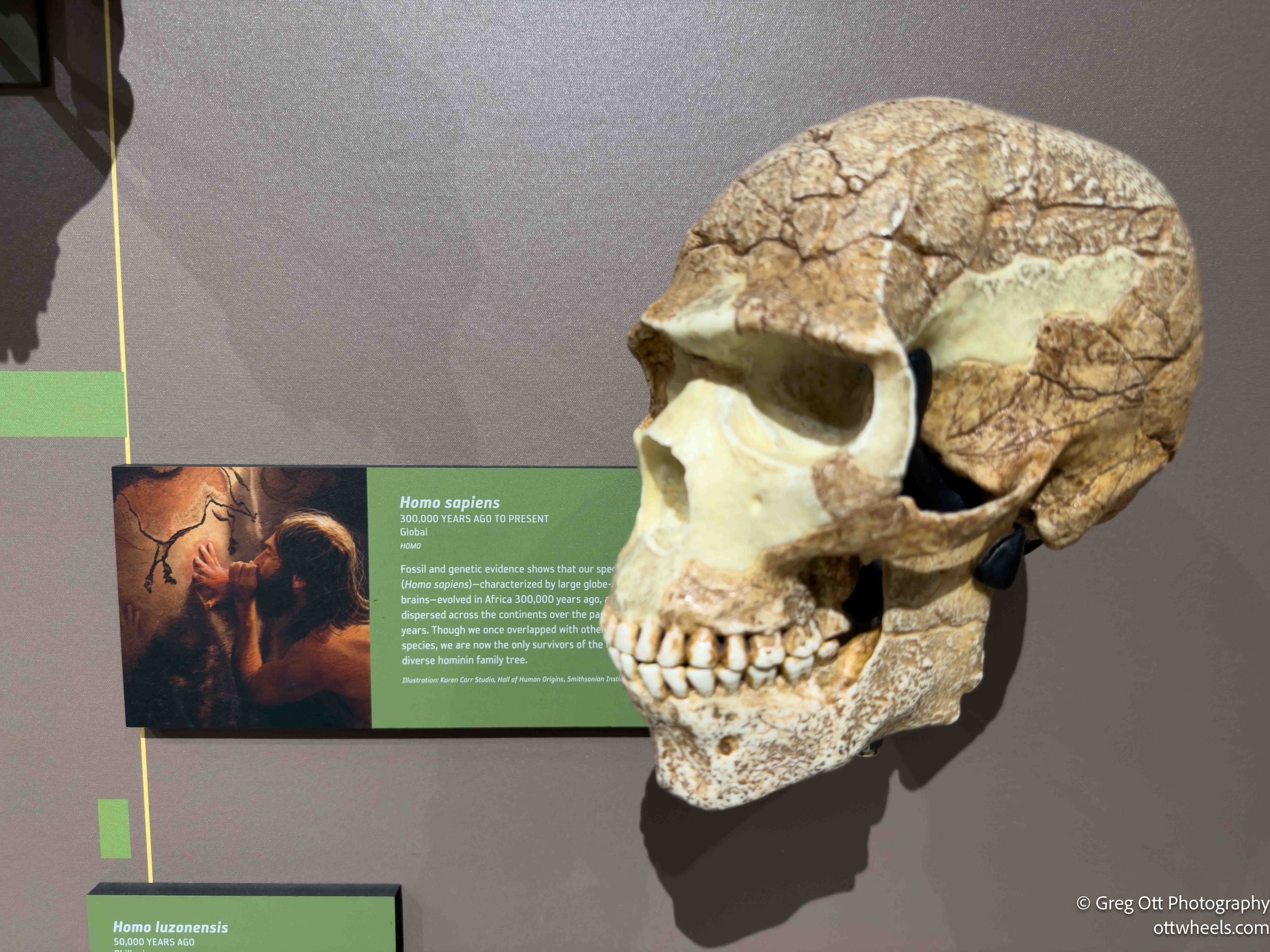
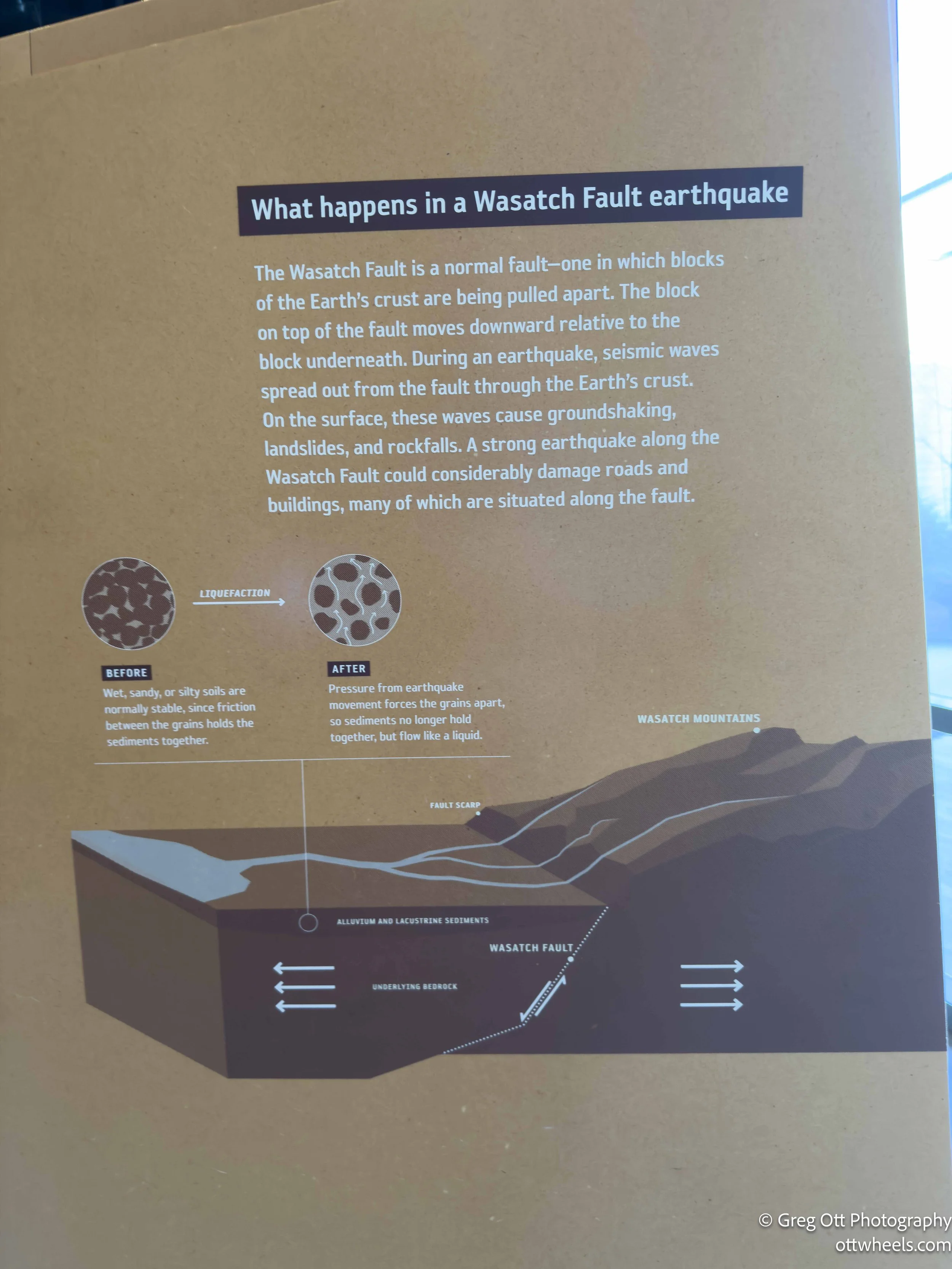
Deep time really clicked for me on the next level down. Alongside the dinosaurs, fossils, and geology, the most compelling part was the evolution of humans, laid out through skull models going back roughly 7 million years. Seeing those changes step by step—subtle shifts in brain size, jaw structure, and posture—made evolution feel concrete rather than abstract. It wasn’t flashy, but it was quietly powerful, forcing a long view of where we fit into all of this.
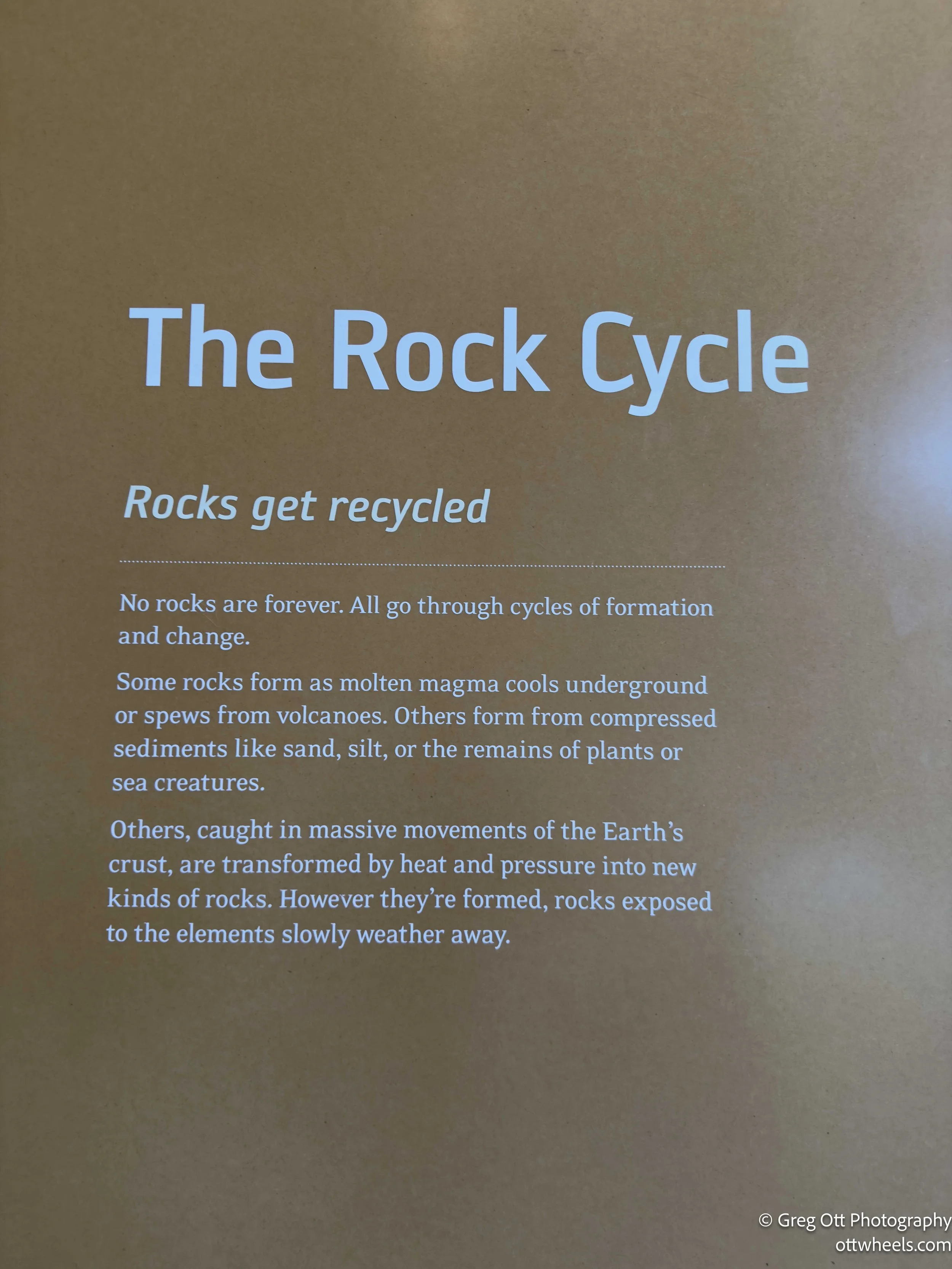
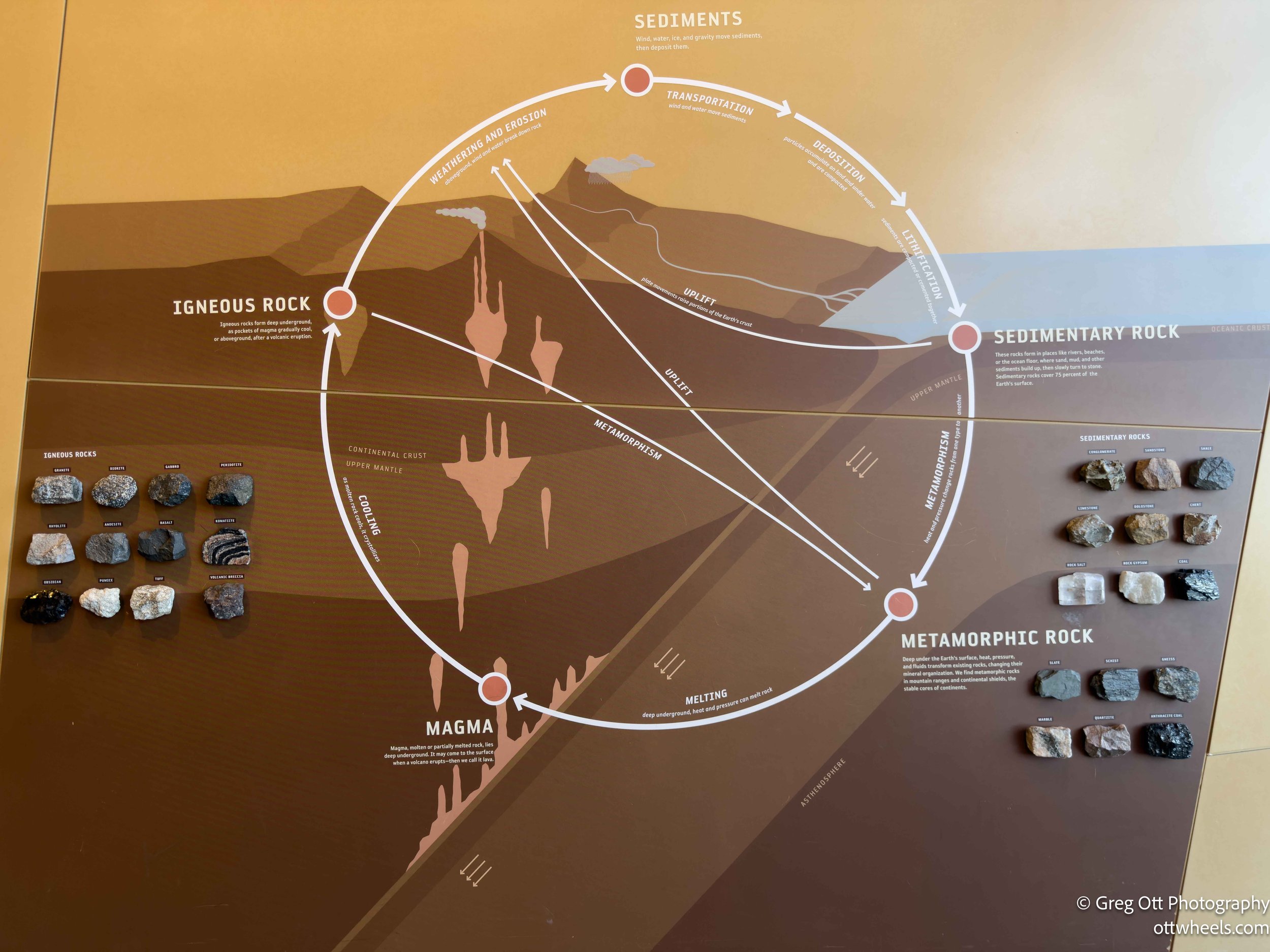
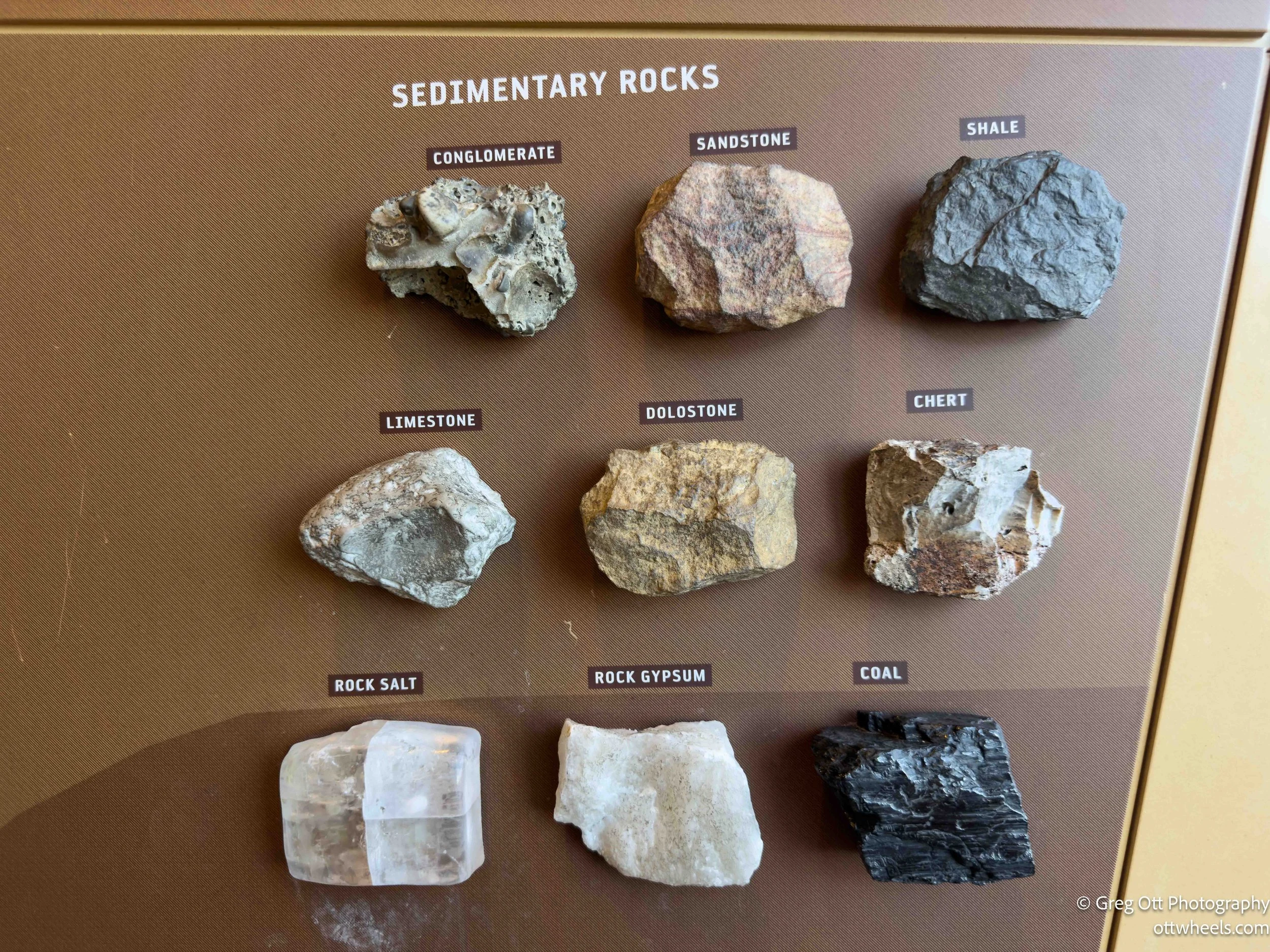
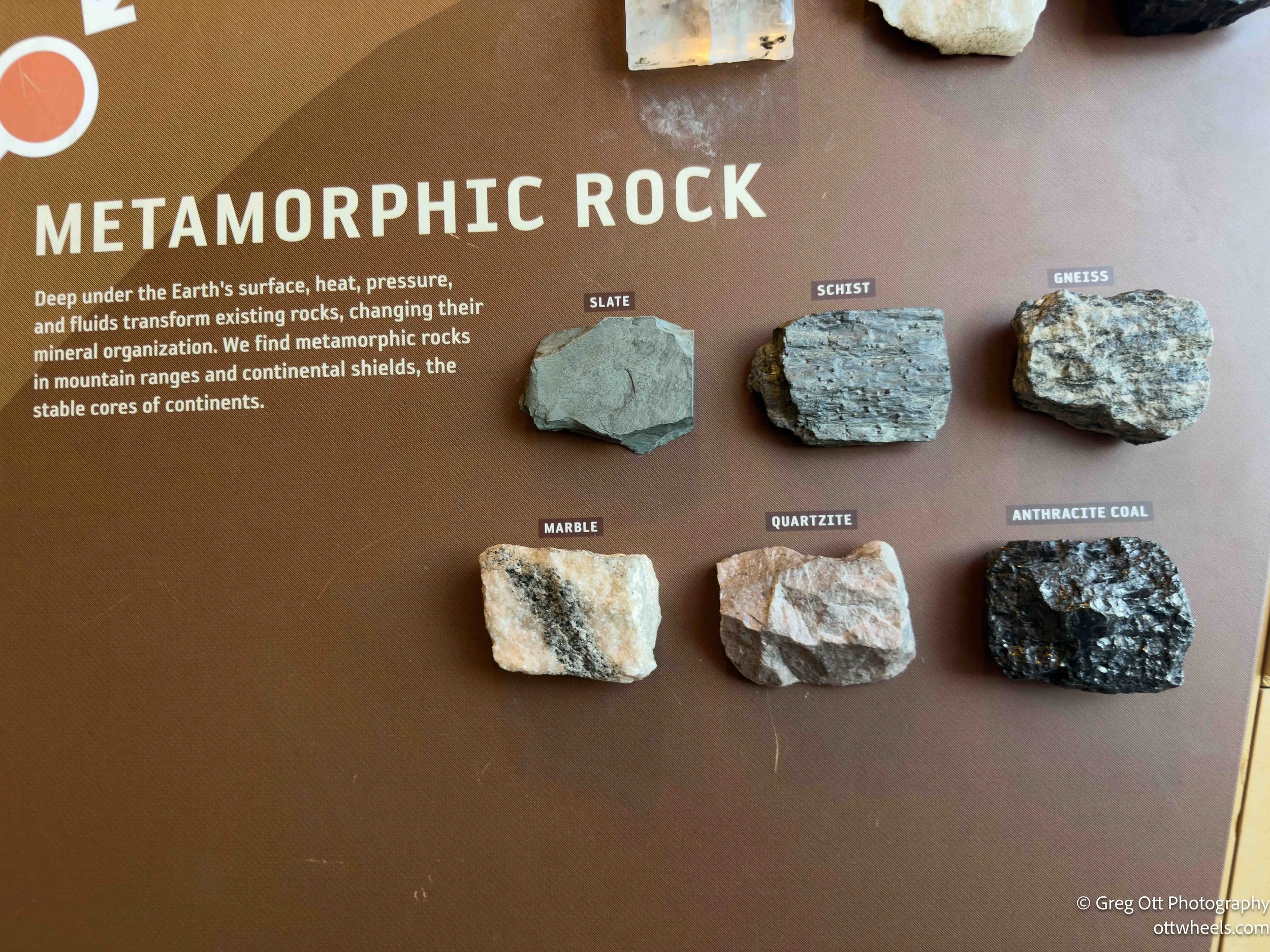
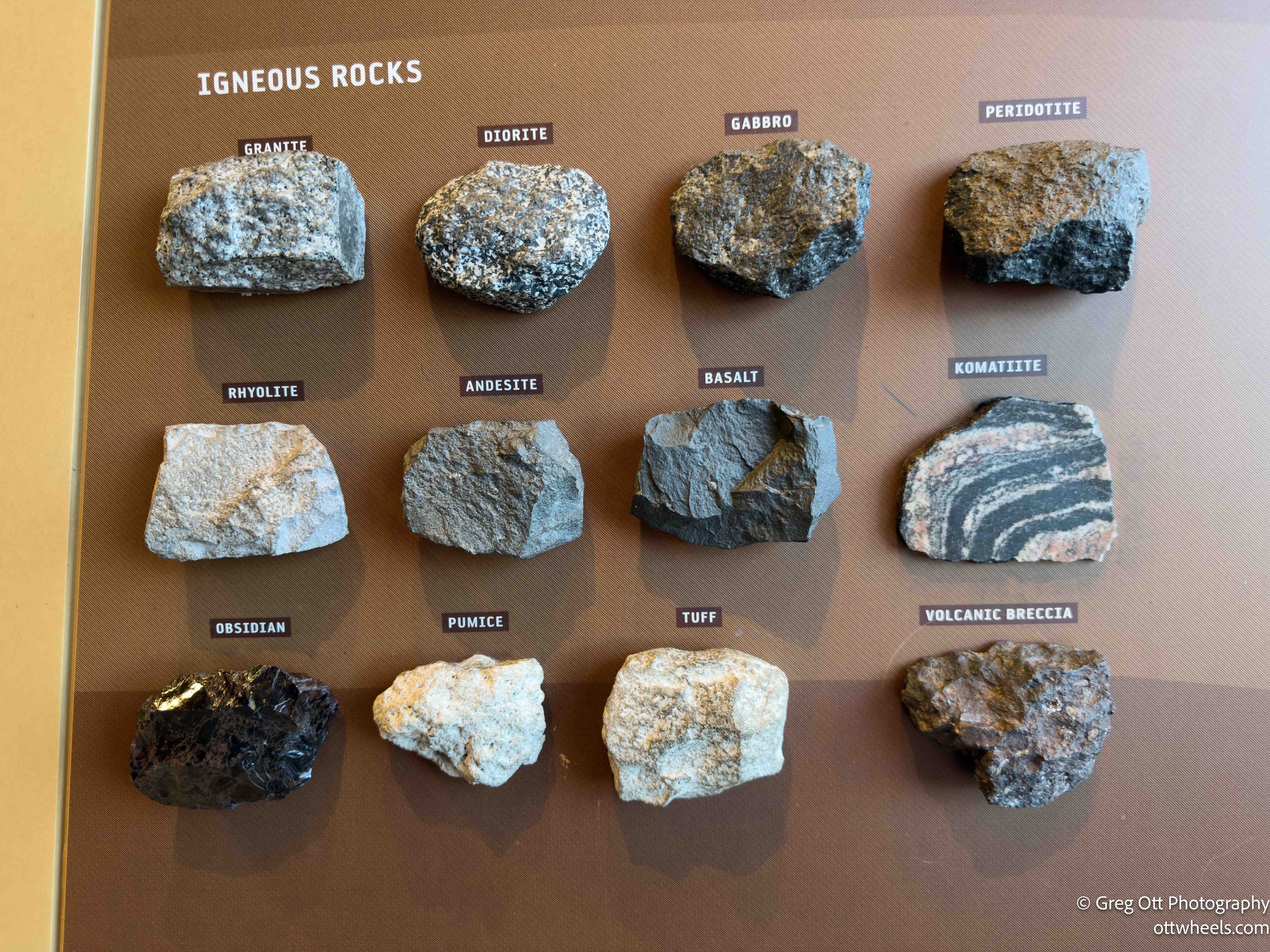
The Rock Cycle section was especially engaging. I understood the basics, but seeing it presented visually made the process feel real. Igneous rock forms as molten material cools, breaks down into sedimentary rock through erosion, and can later transform into metamorphic rock under heat and pressure. What stayed with me was the idea that nothing is permanent—every rock is simply moving through a slow cycle that plays out over millions of years.
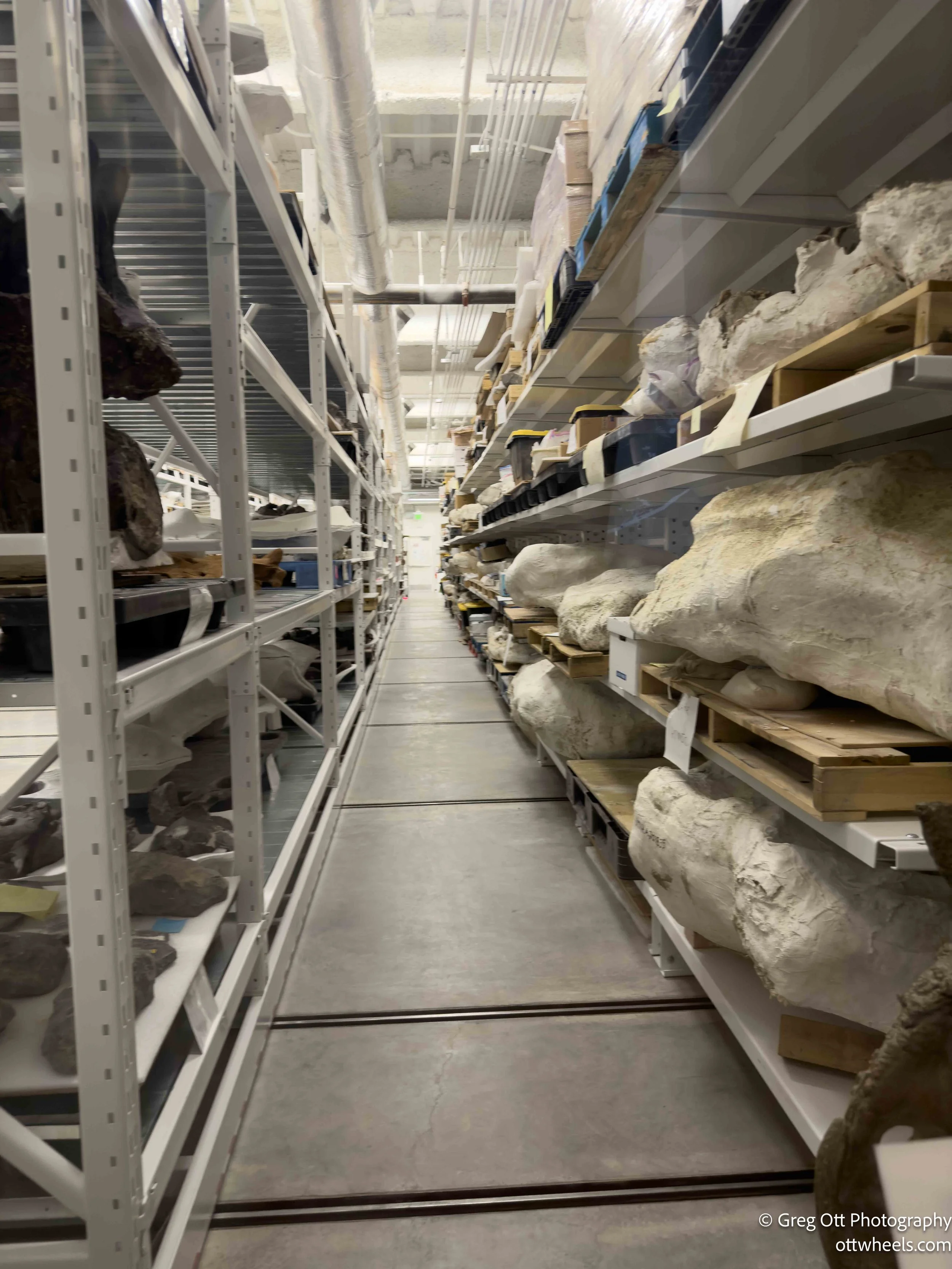
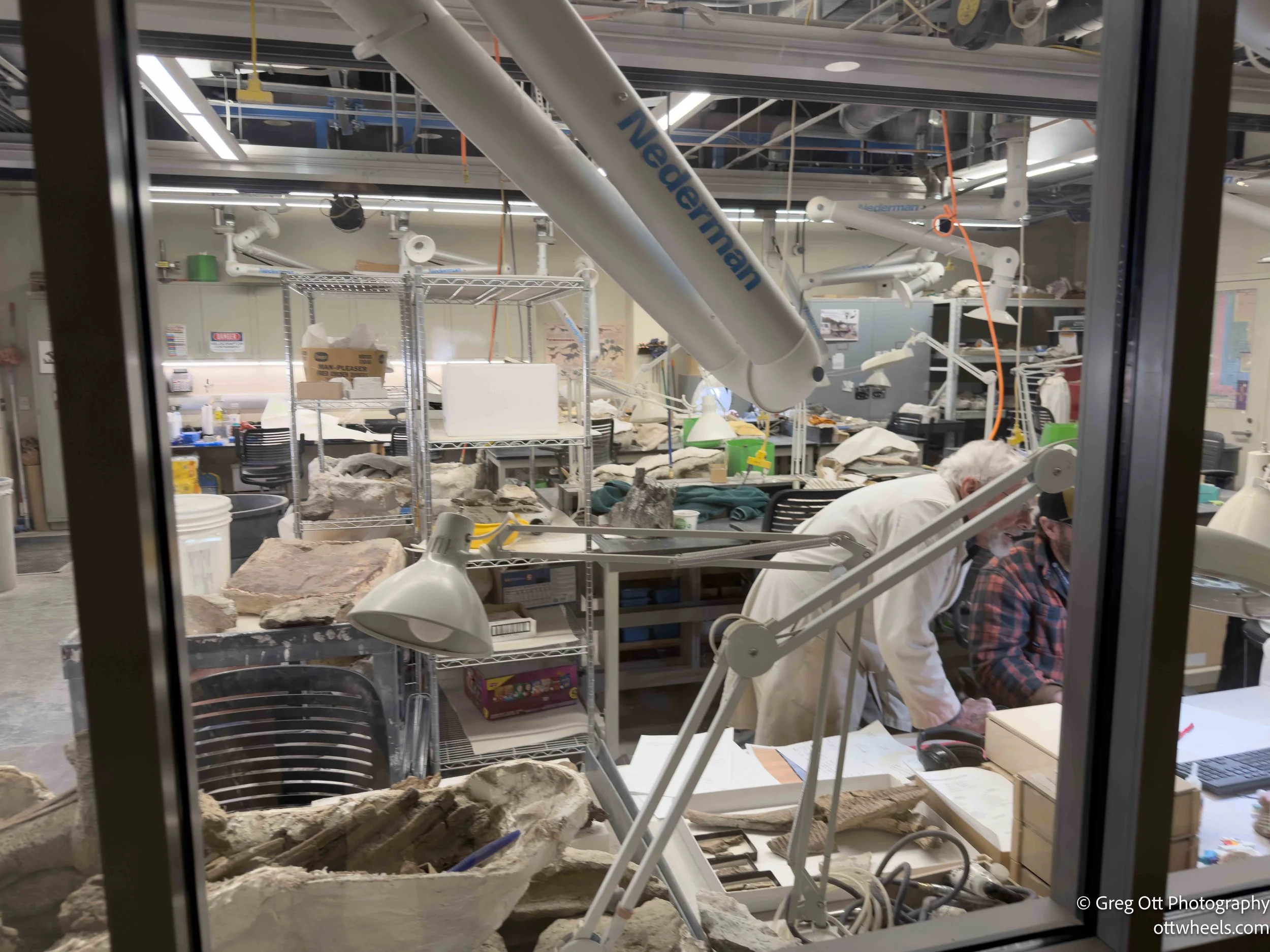
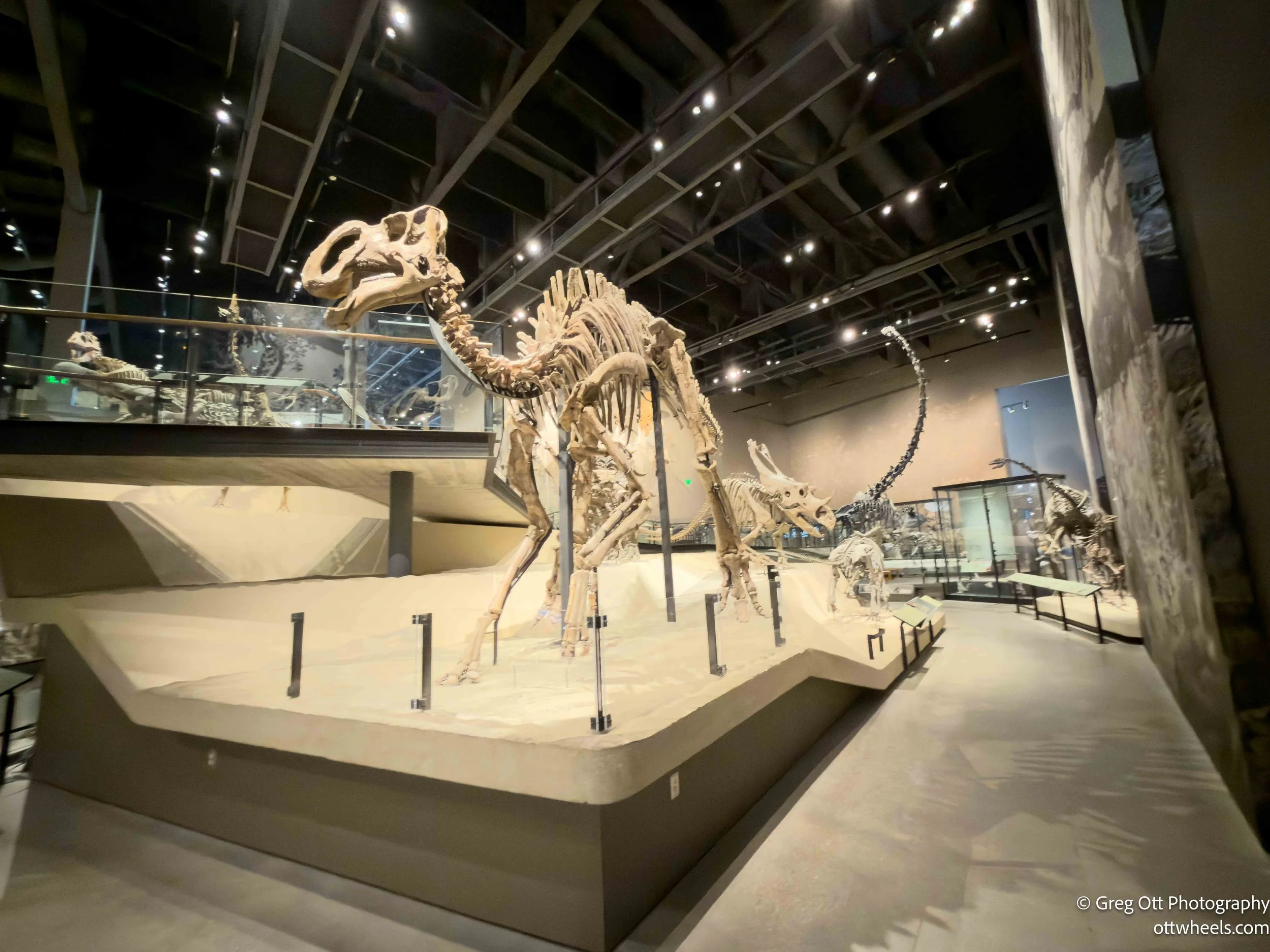
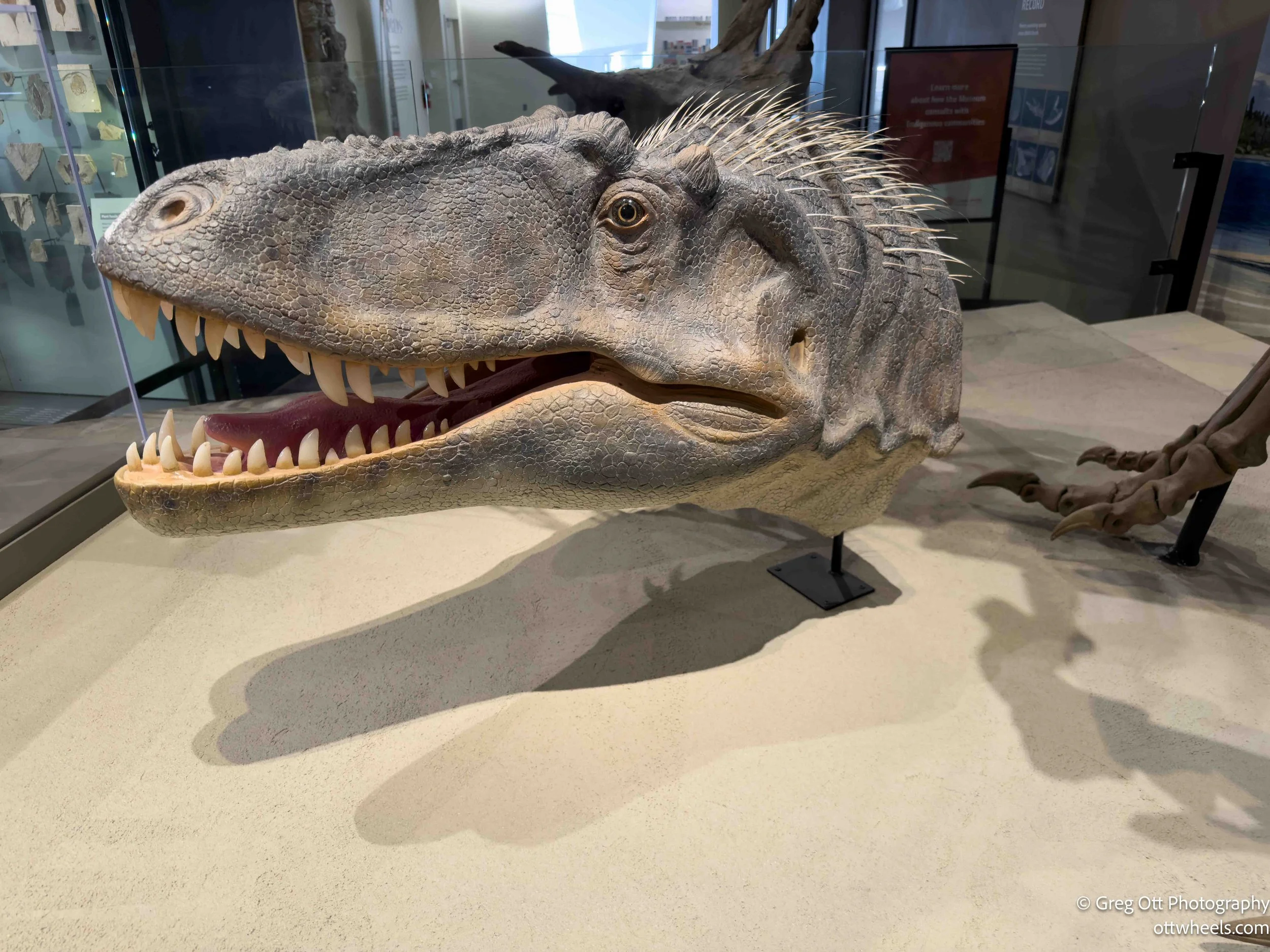
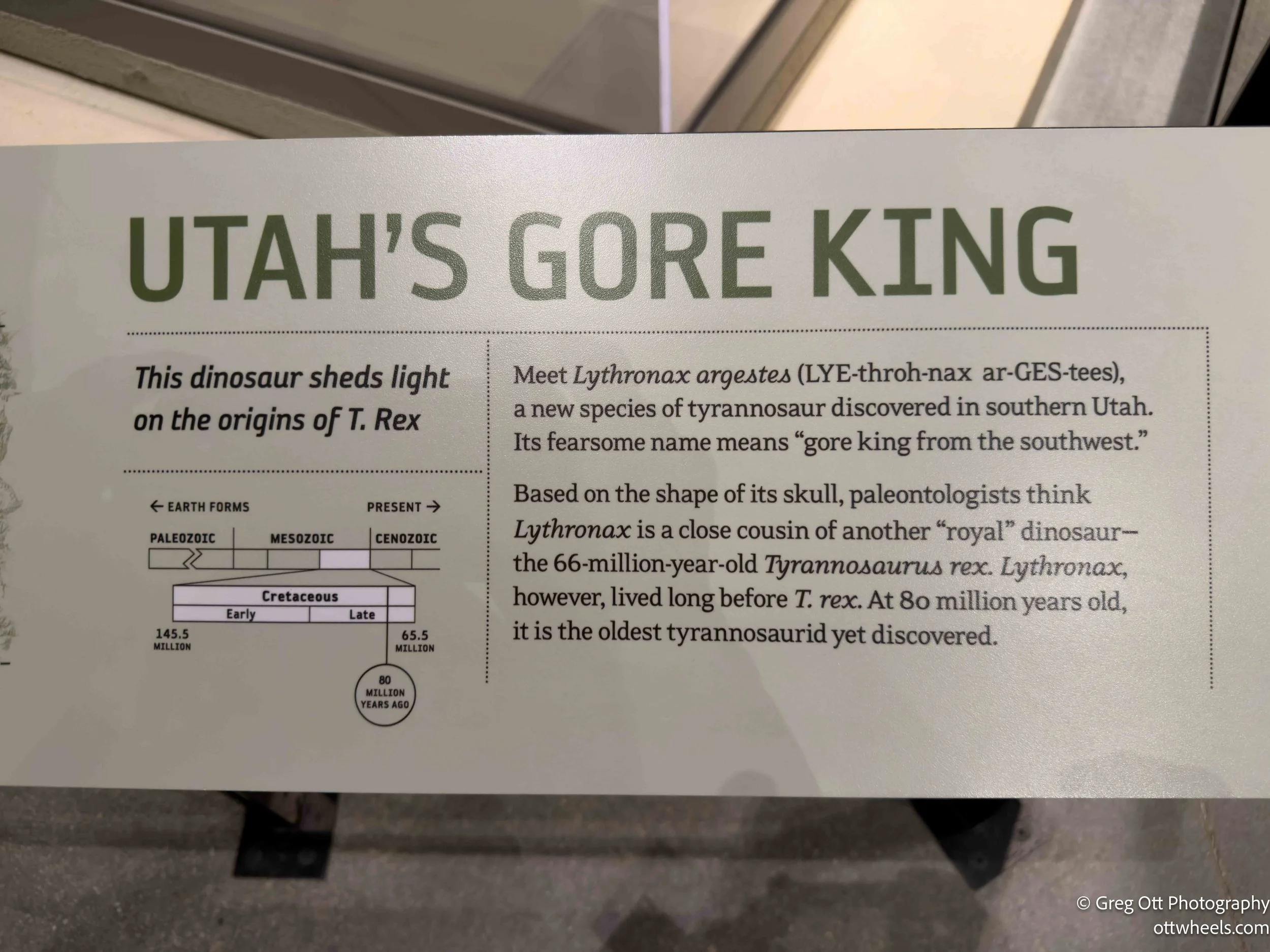
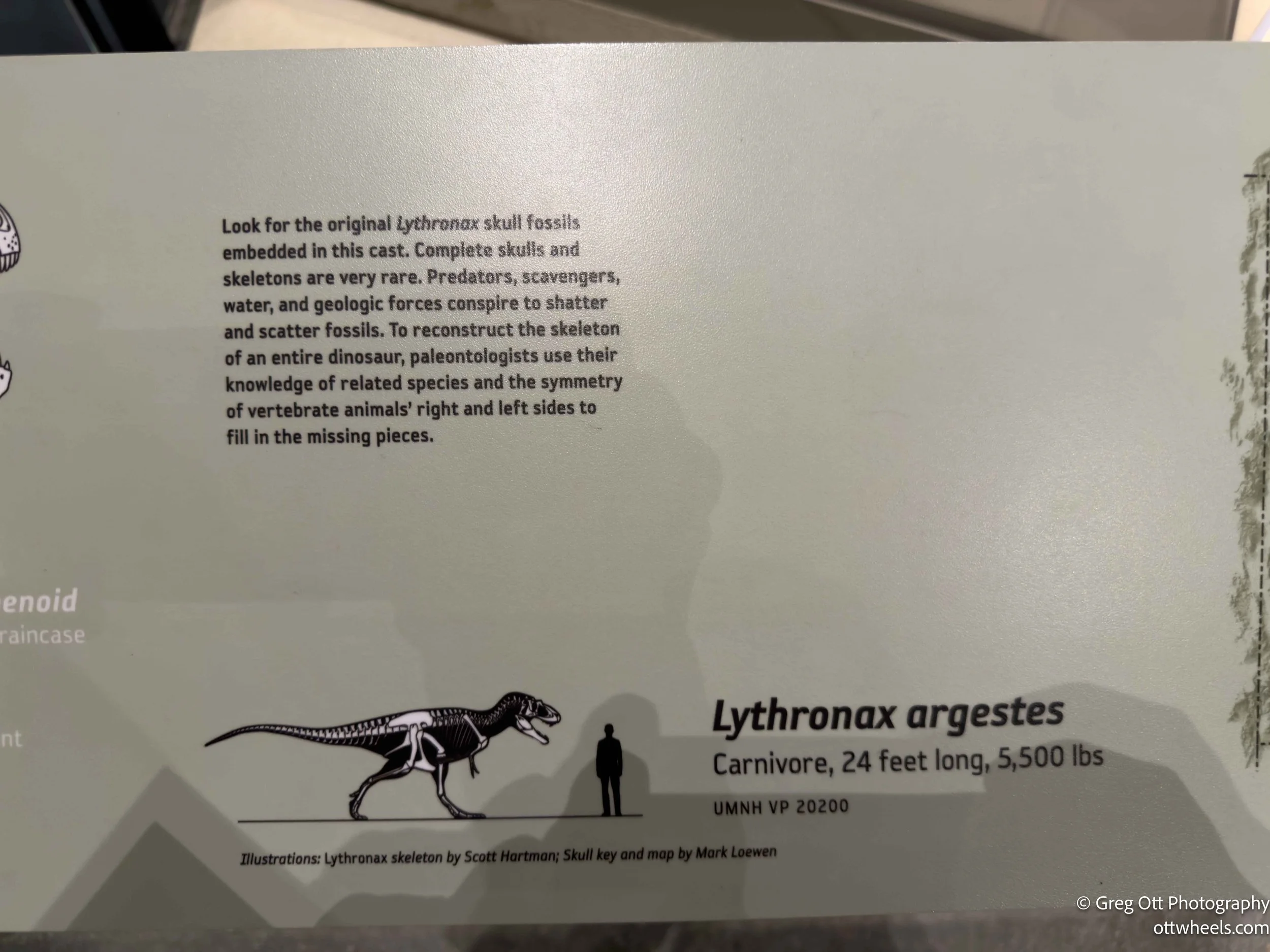
The dinosaur section is where the museum really comes alive. You can see paleontology work happening in real time, with staff preparing fossils and bones still wrapped in plaster casts just steps from the exhibits.
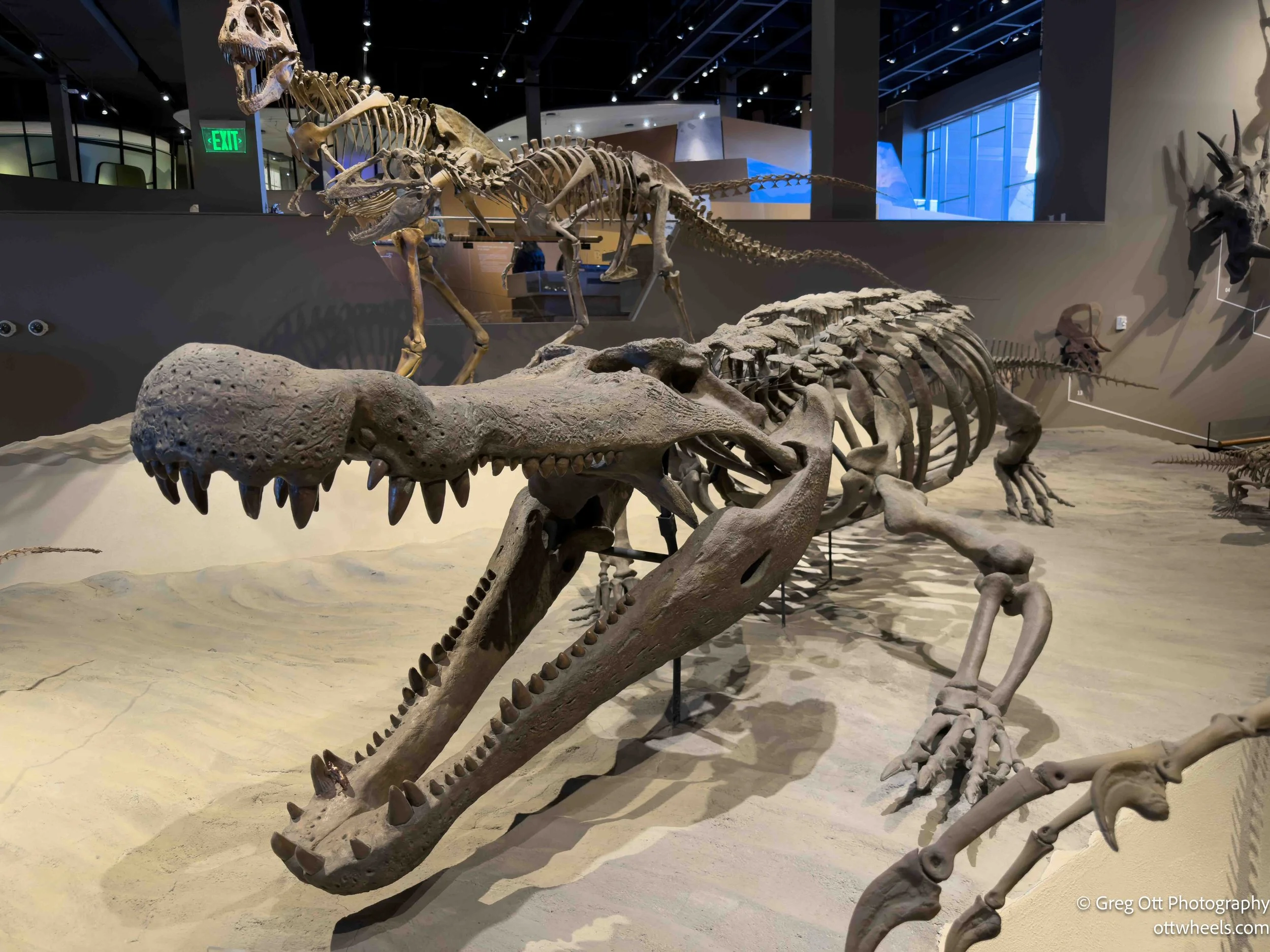
Large dinosaur mounts anchor the space, surrounded by plant fossils, skeletal reconstructions, and models that hint at how these animals moved and lived. The way the museum connects discovery to display makes it feel less like static history and more like ongoing science.
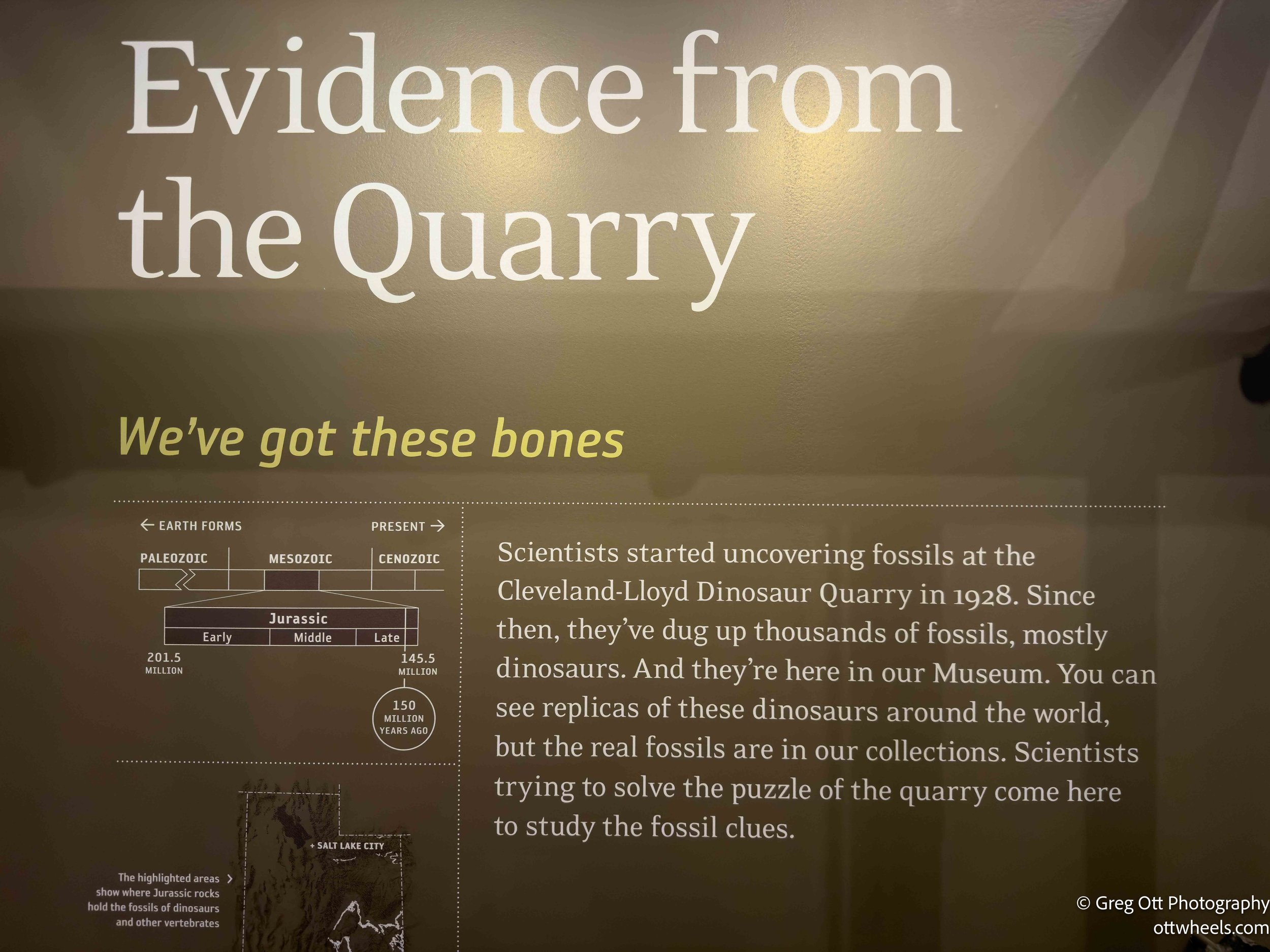
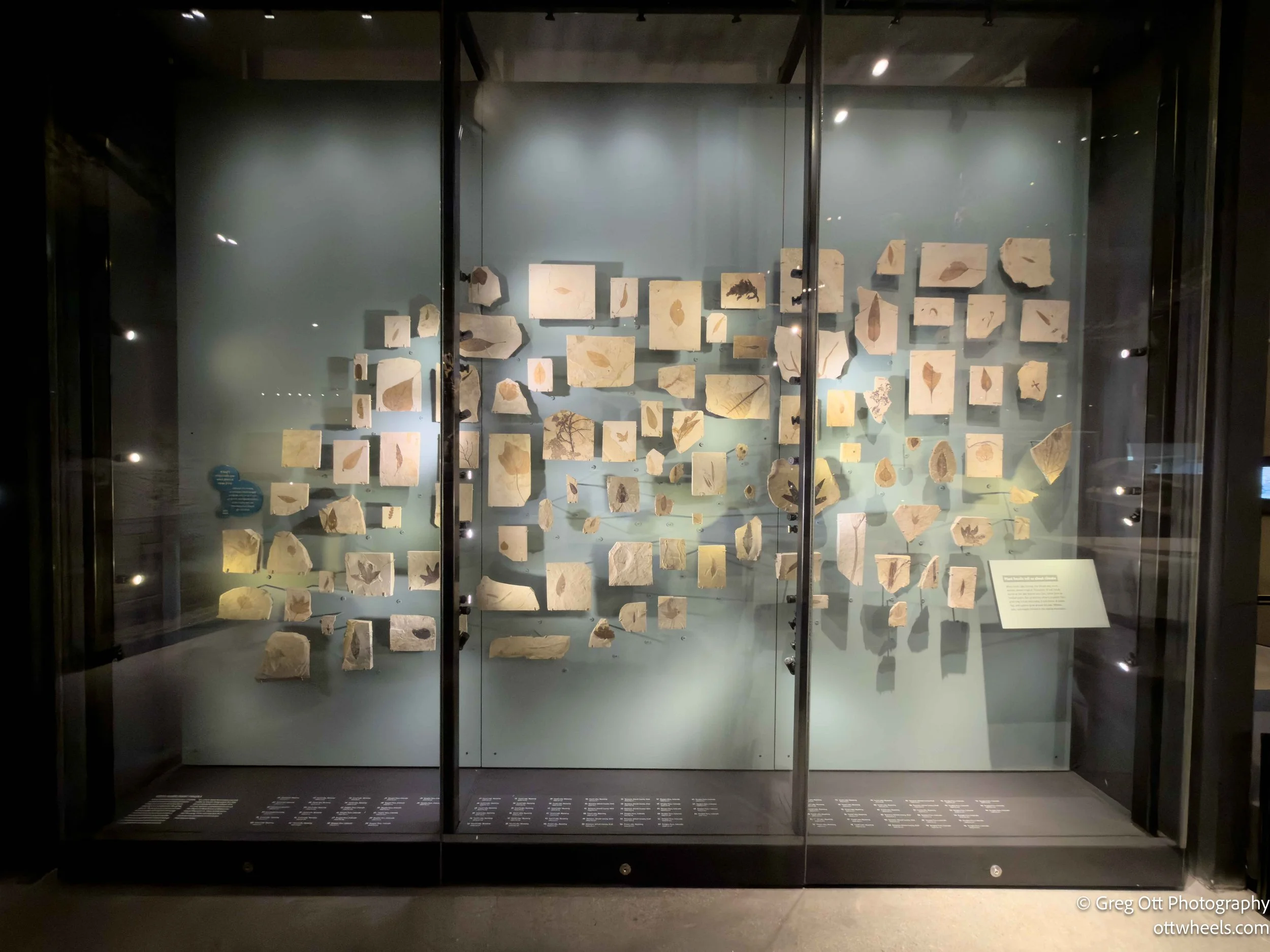
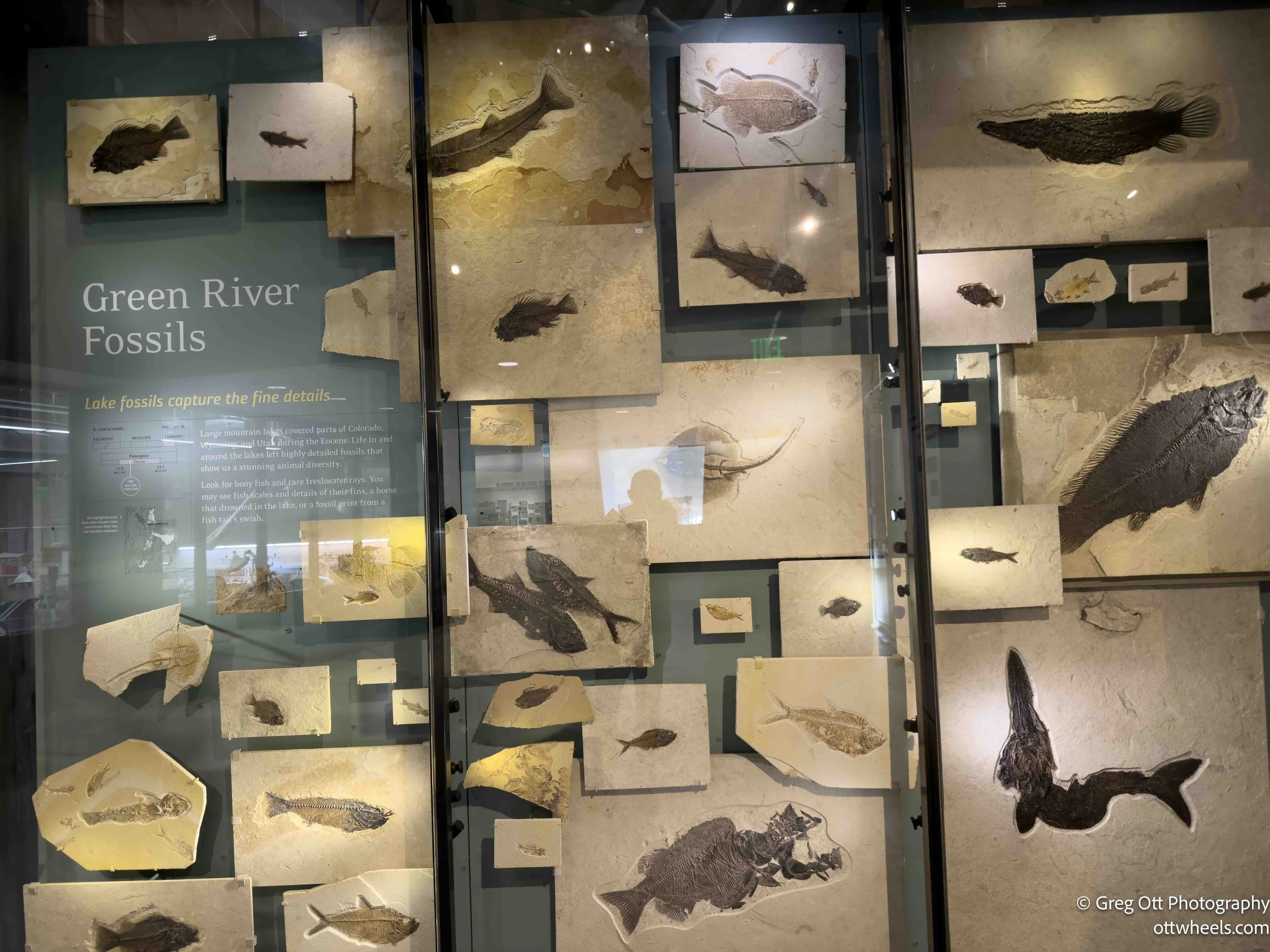
By the time I wrapped up, it was getting close to closing time.
I headed to a Planet Fitness for a shower and a hydro massage, then drove downtown to the Marriott to meet a friend from Connecticut who happened to be in Salt Lake City for business. For $10, the valet parked the van around the corner for a few hours. We had dinner at the hotel restaurant—salmon over rice and vegetables, with a small salad on the side—and caught up. When I came back down, the van was already waiting out front. I drove back to my quiet spot near the capitol. It had been a long, full day, and it didn’t take long for me to fall asleep.