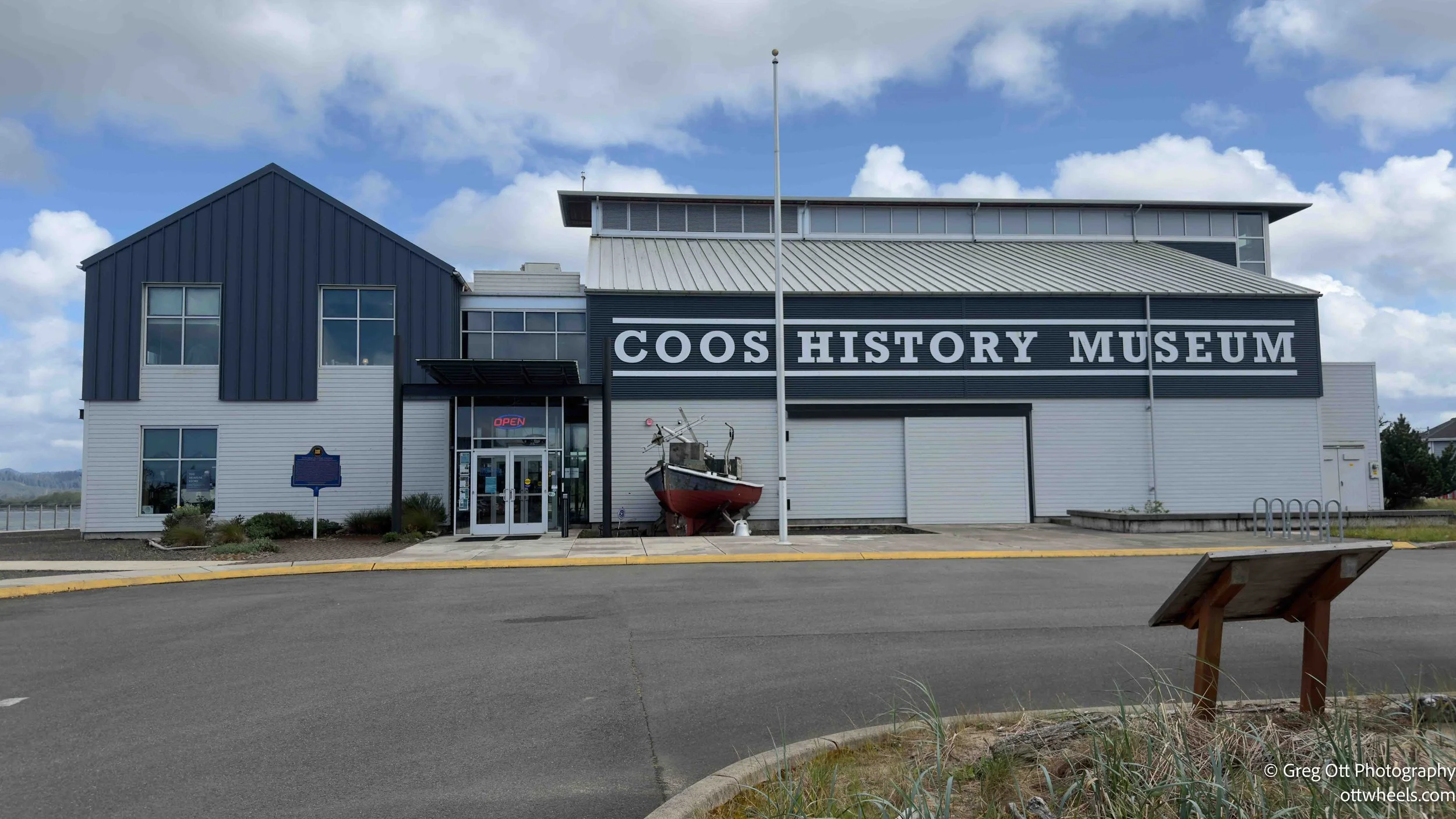
Coos History Museum
It rained all night near Hunter Creek, just south of Gold Beach, Oregon. I woke up a couple of times to make sure the water wasn’t rising and that I wouldn’t be dealing with mud getting out in the morning. Around 6:30 am, I heard two trucks pull in—two enthusiastic fishermen heading for the creek. That was my cue to get moving. I was on the road by seven, and the rain had only picked up.
The drive into Gold Beach was quick. I pulled into town and stopped in front of a shop with a bright red neon sign flashing “espresso.” It definitely caught my eye, but something about it didn’t feel right. Not a place I wanted to sit for a few hours and journal. ChatGPT had recommended First Chapter Coffee, saying it would be a good fit, so I headed there instead.
The rain didn’t let up for the next four hours. It was full-on—buckets of water, wind pushing it sideways. It was actually nice to be inside, watching it all through the large windows. I ordered an everything bagel and a 16-ounce latte in a proper mug and settled in. The space was large, filled with local art for sale, but I couldn’t quite figure out what the building had been before. There was a stage set up with audio equipment, so I assumed they hosted open mic nights. The acoustics, though, didn’t seem ideal—steel and concrete don’t do much to absorb sound.
Around 10 am, the owner came in and started talking to one of the customers about coaching football—plays, formations, the whole thing. He mentioned growing up in a small town in Ohio and said seven kids from his high school team went on to play college ball. They talked for about 45 minutes before a phone call cut it short. On his way out, the customer ran into a neighbor, and the two of them stood there talking for another 20 minutes about family and life. It had that small-town feel. From the conversation, I gathered he worked from home and was just out taking a break. Not a bad way to do it.
I ordered another coffee and claimed a large table with an outlet. I knocked out two blog posts, sent a couple of emails, and then got the news I’d been waiting on—my crashed hard drive was 87% recovered. That alone made the day. I spent the next 30 minutes on the phone with ACE Data Recovery in Dallas going over the details. They had recovered 2.8 TB of data and would need to ship it on a new hard drive. If everything goes as planned, I should be able to pick it up in Portland in the next few days and finally get my photos back.
By 11:15, the rain had eased enough to get moving again. The original plan was Cape Blanco State Park and Bandon Beach, but hiking around in soaked conditions didn’t sound appealing. I skipped ahead to the next day’s plan—the Coos History Museum in Coos Bay. It felt like the right call for a day like this. The wind picked up at times, but it was nothing compared to what I’d driven through in North Dakota and Kansas.
The entrance fee at the museum was $12, and it turned out to be a solid introduction to this part of Oregon. Right at the entrance, there was a short video that covered logging, fishing, shipping, and a few notable people from the area. It gave just enough context to frame everything else inside.
One of the first things that caught my attention was a book on Steve Prefontaine. I almost bought it, but I’ve already got four books going. I remembered he died in his early 20s in a car accident. What always stood out about him was his style—he ran from the front. Coaches wanted him to hold back and conserve energy, but that just wasn’t how he operated. He was expected to be a serious contender for gold in the 1976 Olympics before he passed.
Another name that came up was Stuart Roosa. He was the command module pilot on Apollo 14 in 1971, orbiting the moon while Shepard and Mitchell walked on the surface. Before NASA, he had been a smokejumper with the U.S. Forest Service, parachuting into remote wilderness to fight wildfires. That background tied directly into one of the more interesting details from the mission—he carried seeds into space as part of a joint experiment between NASA and the Forest Service.
I had read about that years ago because one of those “Moon Trees,” a sycamore, was planted back home at Highland Hall in Hollidaysburg, Pennsylvania. I’ve actually visited it. So when I saw a reference in the museum to Roosa bringing back spruce seeds, it didn’t quite line up. I asked at the front desk, and we looked it up together. It turns out multiple species of seeds were flown on that mission, which explains why different places ended up with different types of Moon Trees.
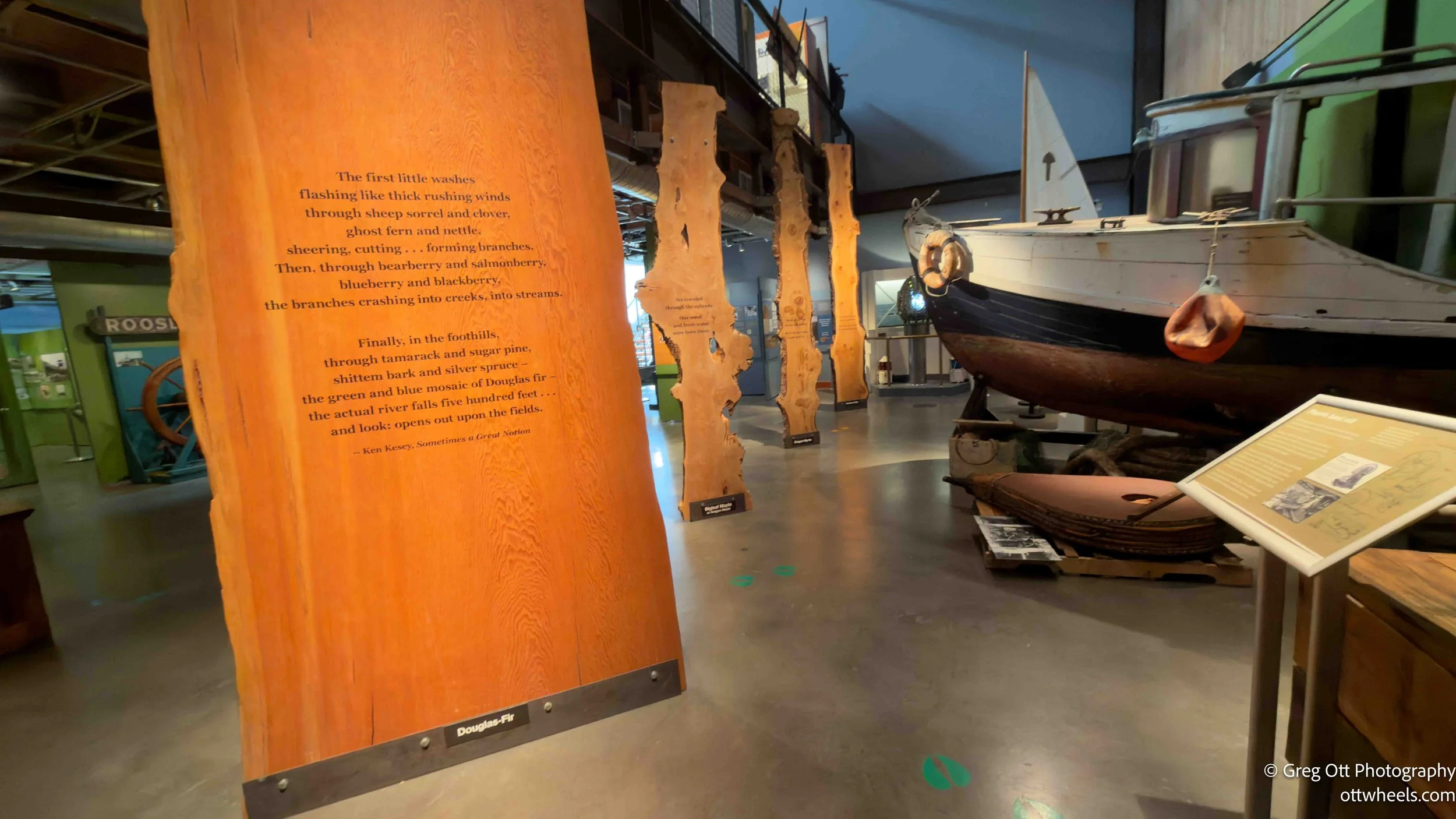
As you enter the main hall, there are large planks of locally harvested wood—Douglas fir, Sitka spruce, bigleaf maple, and myrtlewood. Myrtlewood was new to me, and the grain immediately stood out. Deep variations in color, tight patterns, almost a sheen to it like olive wood. It stuck with me more than anything else in that section and ended up being a bit of a theme that would carry into the next day.
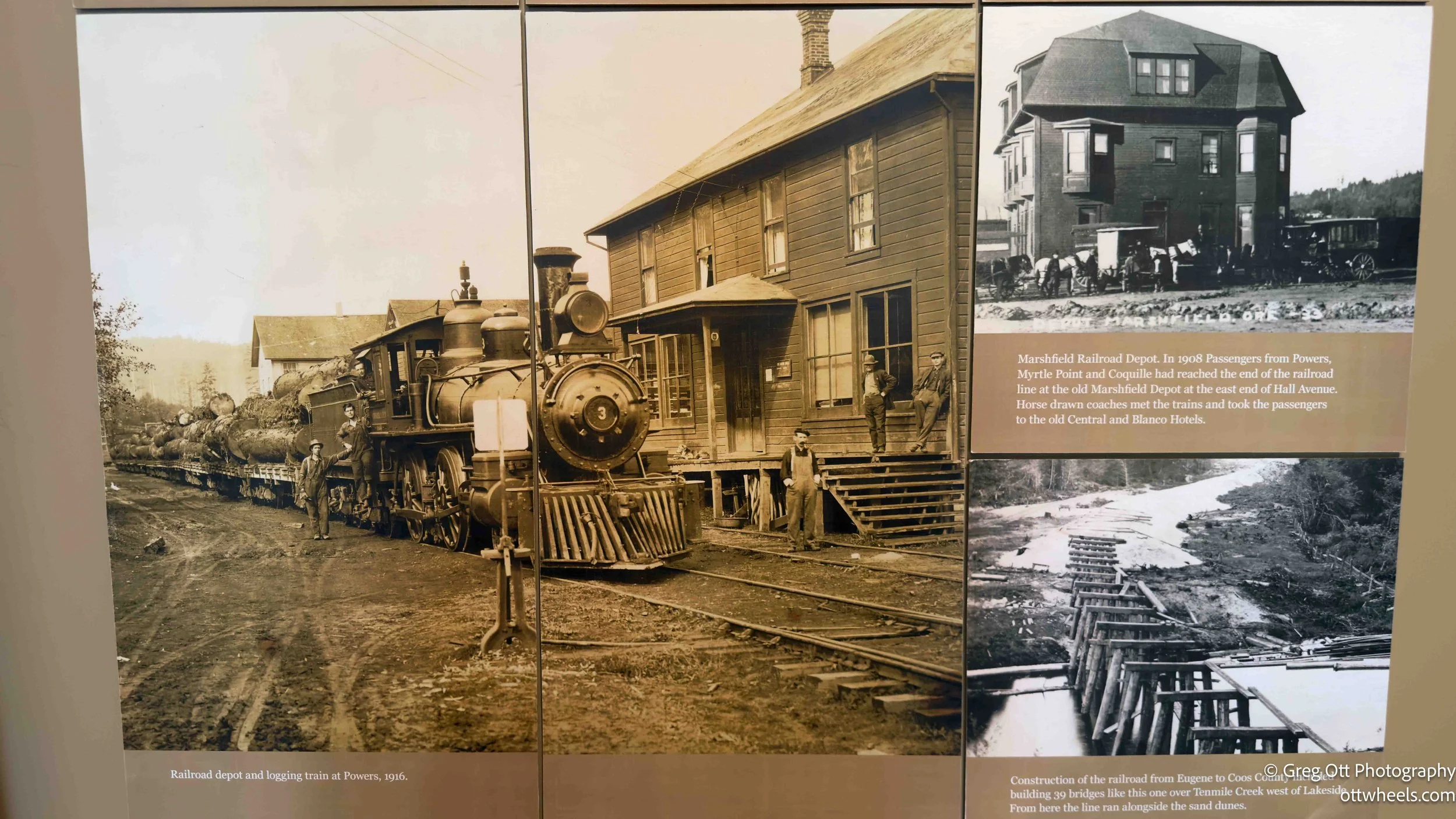
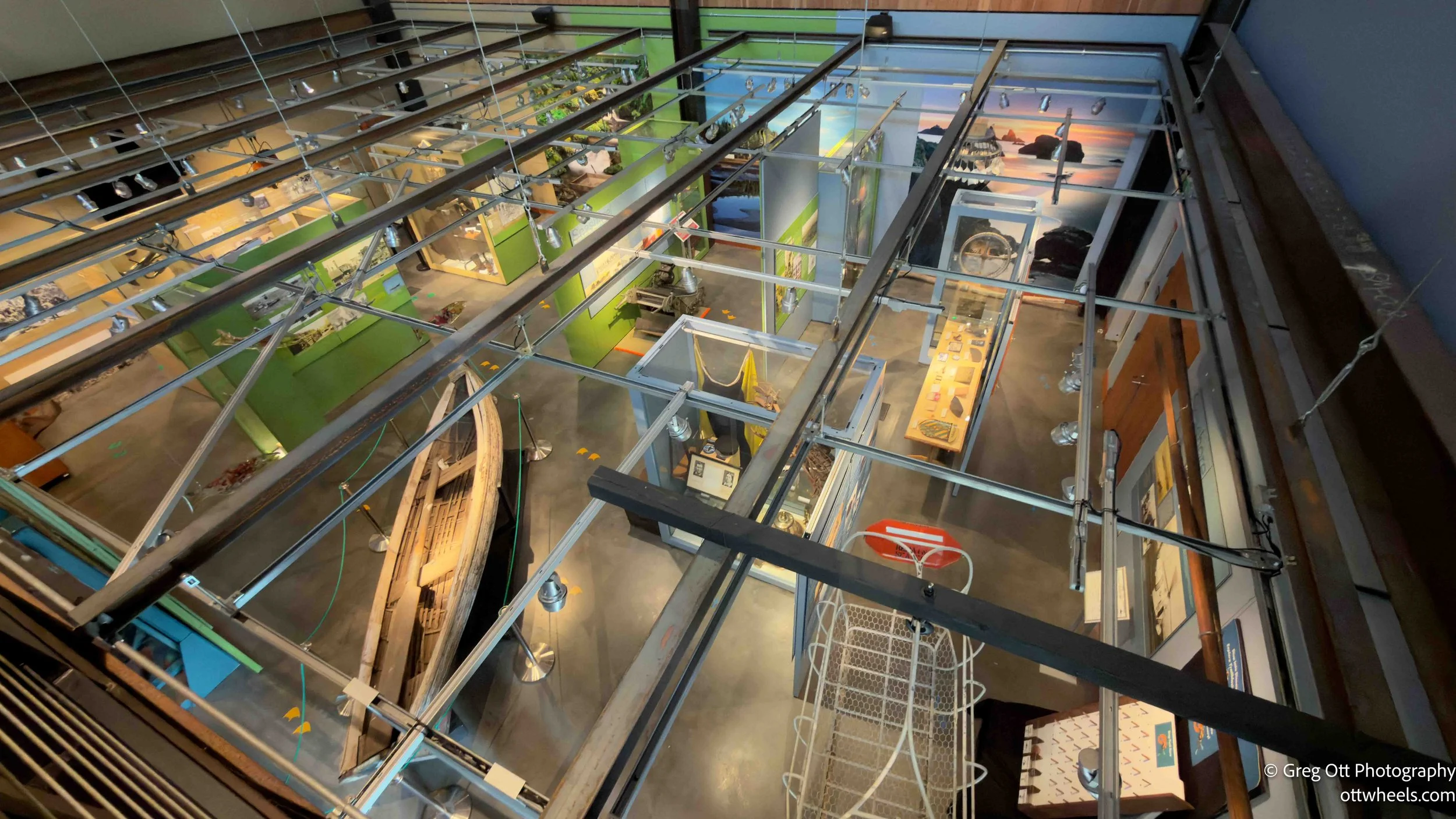
Beyond the wood displays, the museum starts to show how everything in this region connects, beginning with logging. It’s not subtle. There are cross-sections showing growth rings from massive trees, tools that look heavy even sitting still, and photos of crews standing on logs that dwarf them. You get a sense of scale quickly. These weren’t small operations—they were industrial, and they had to be. Moving timber from dense inland terrain to the coast, in constant rain and mud, required systems—rail lines, river transport, staging areas—that could handle volume in rough conditions. It sets the foundation for everything else you see in the building.
That timber didn’t just leave as raw material. It fed directly into shipbuilding, which was a major part of the story here. Coos Bay wasn’t just exporting resources—it was building vessels. The exhibits show shipyards operating at full scale, especially during World War II, when production ramped up and the workforce expanded quickly. There are photos of hulls under construction, skeletal frames lined up along the water, and workers positioned in ways that give you a real sense of size. It pulls the town into a much larger picture. This wasn’t just a coastal stop—it was part of a national effort, turning local resources into something that moved far beyond the bay.
From there, the focus shifts naturally to fishing, which carries the same working tone. Nets, traps, and gear are displayed in a way that feels used, not decorative. Photos of docks show boats packed tight, crews unloading their catch, and the constant movement that defines a working harbor. It doesn’t come across as romantic—it feels routine, and that’s what makes it real. This was daily life, built around timing, weather, and getting back safely with something to sell. You can see how entire communities would have been tied to that rhythm.
Shipping is what ties all of it together. There are maps and displays showing how goods moved through Coos Bay and why the harbor mattered. Timber, finished ships, fish—it all passed through here. Without access to deep water, none of it works at scale. Standing there, it shifts your perspective. What looks like a quiet stretch of coastline when you’re driving through is actually a place built on movement—materials coming in, products going out, and an entire economy built around that flow.
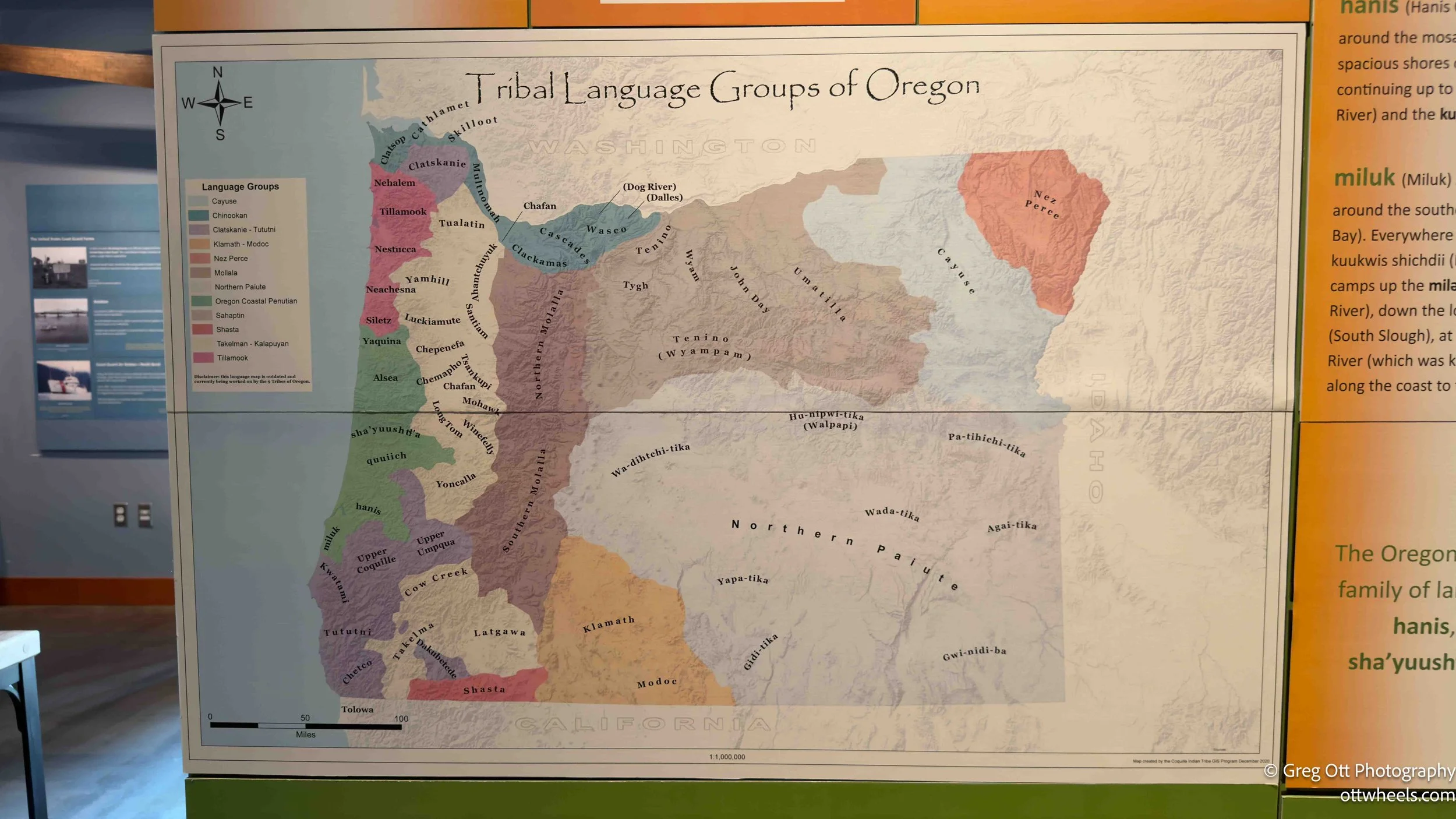
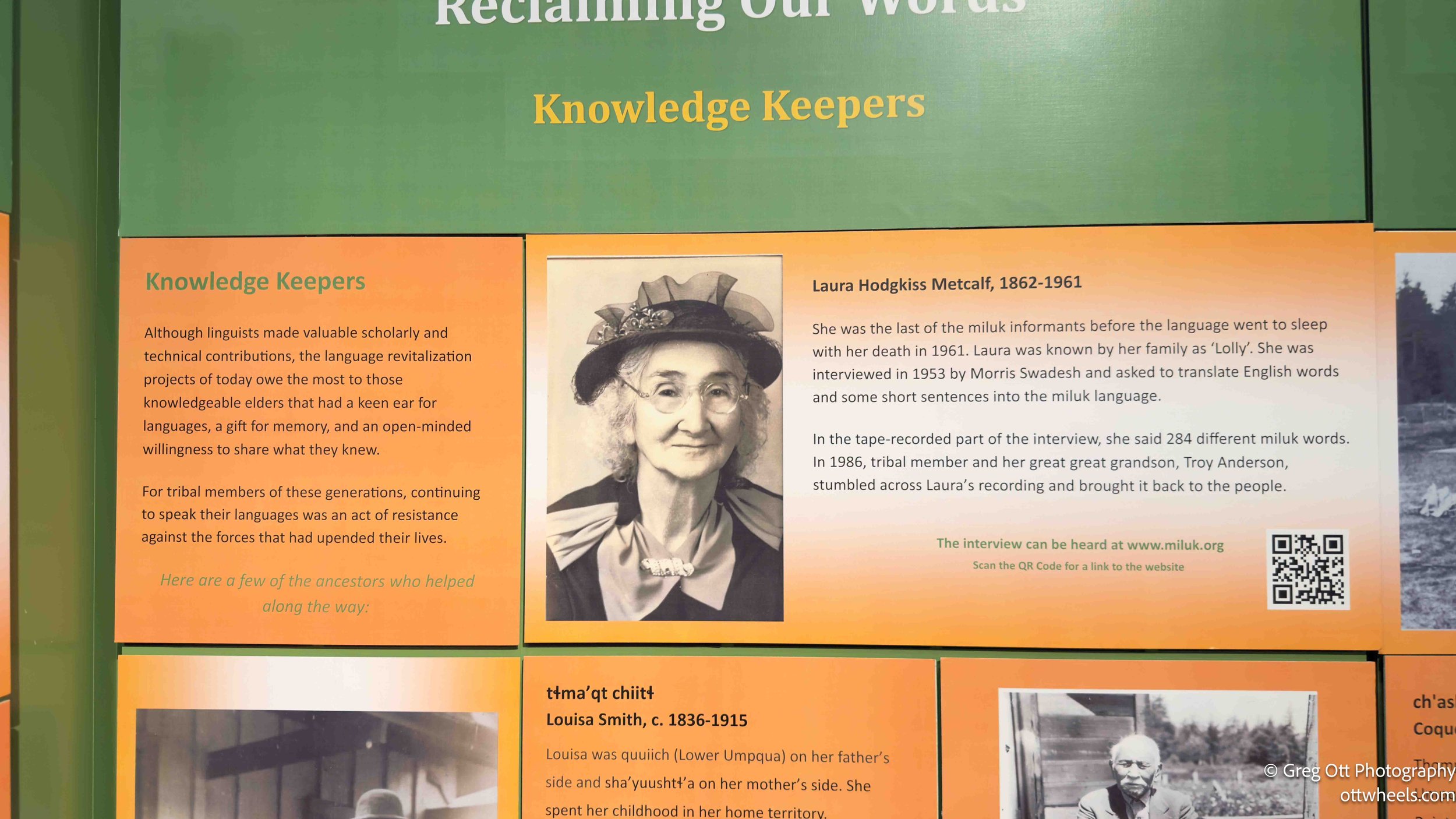
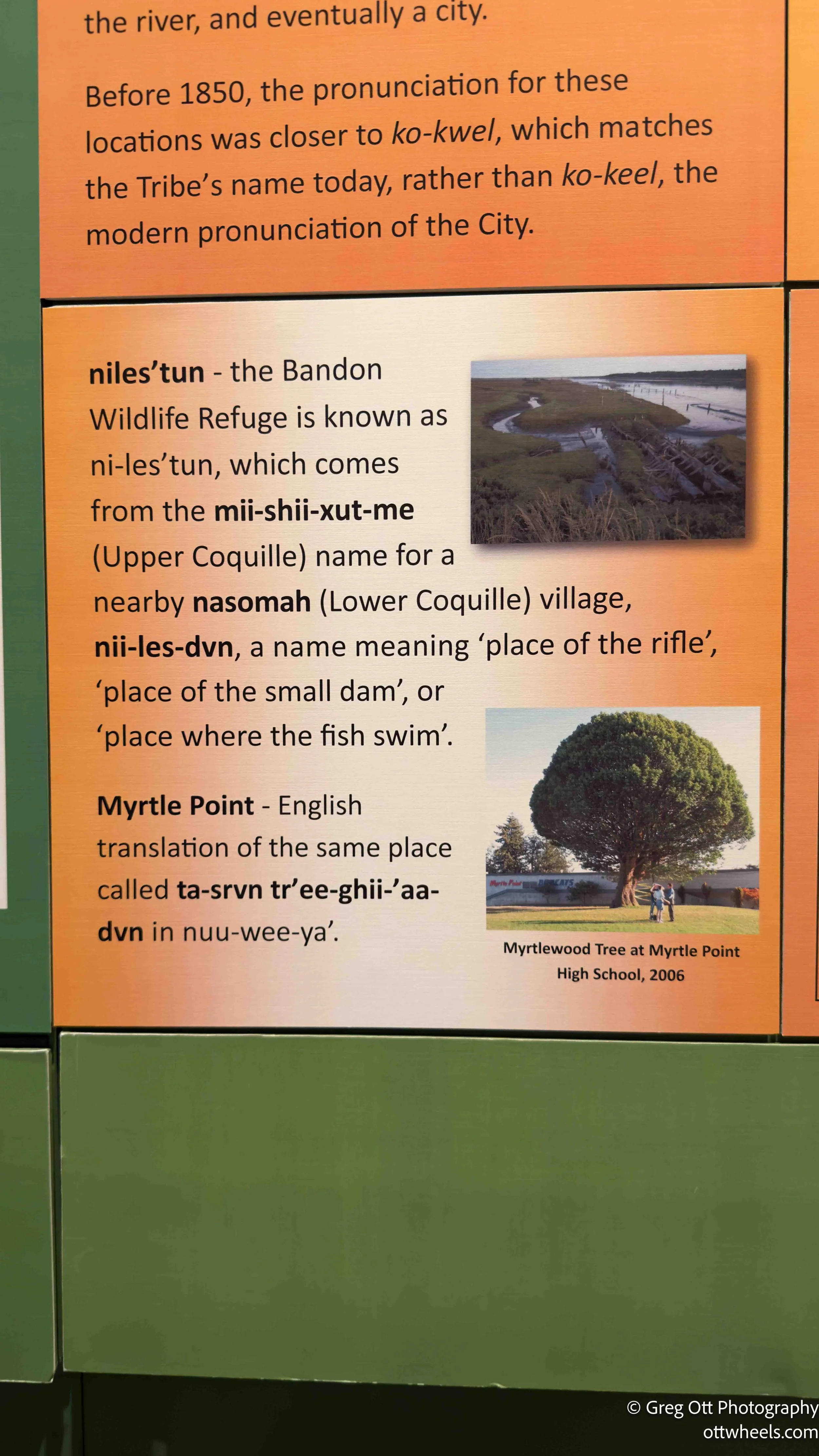
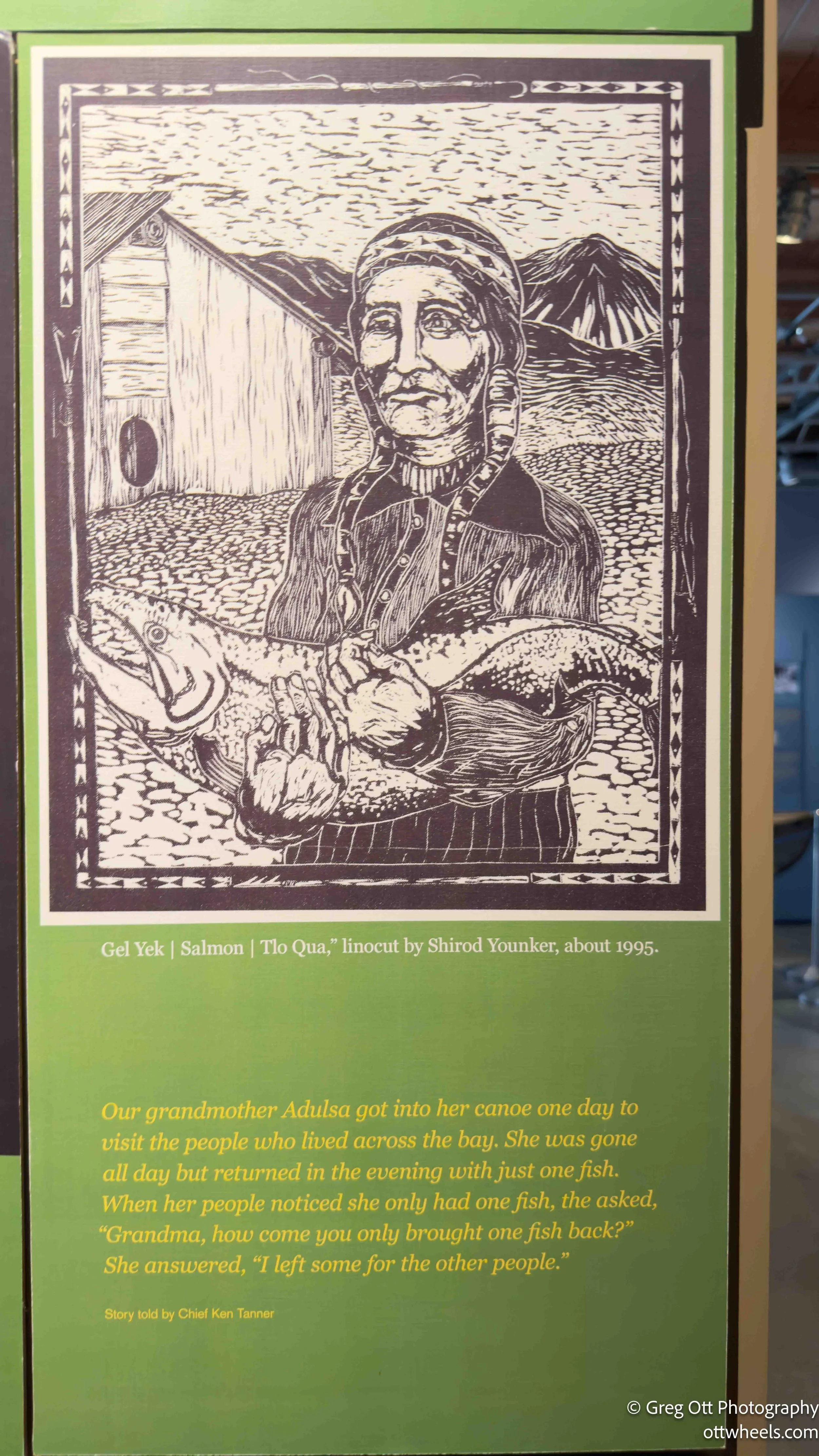
But the museum doesn’t stay focused only on industry. One section that caught me off guard was the exhibit on the Indigenous languages of the area. It steps back from the physical and into something less visible, but just as important. There were once many distinct languages along this stretch of coast, each tied to specific tribes and regions. What stands out is how much of that has been lost or is at risk of disappearing. The effort to document and preserve what remains is ongoing, and it makes you realize that this history isn’t just about what was built or extracted—it’s also about what was here long before and what’s at risk of being forgotten.
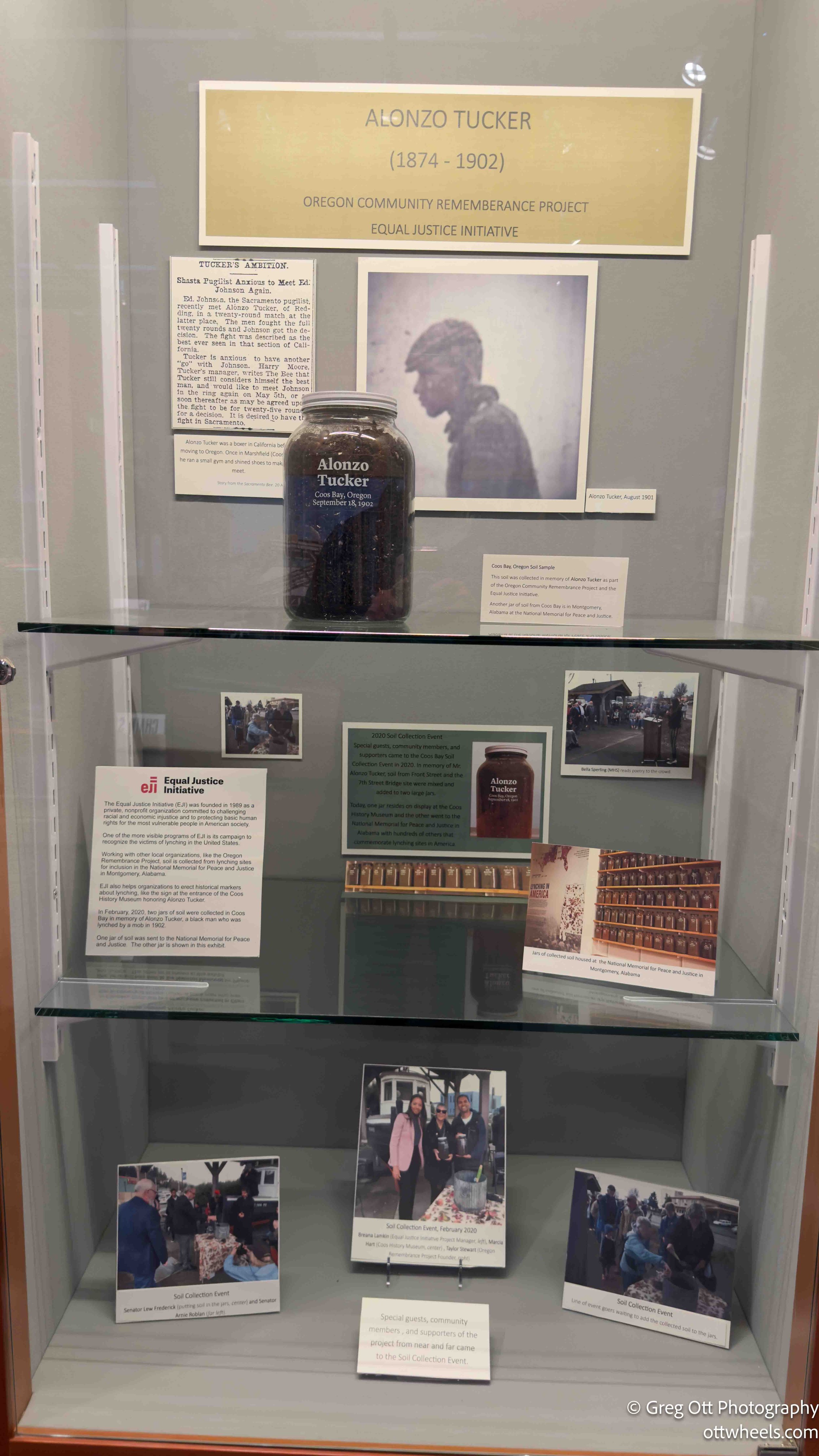
That shift carries into one of the heavier parts of the museum—the story of Alonzo Tucker. He was lynched by a mob in Coos Bay in 1902, and the exhibit doesn’t soften it. It’s direct, and it forces you to stop for a minute. The display connects to the work of the Equal Justice Initiative and the National Memorial for Peace and Justice in Montgomery., AL I had been there before, and it remains one of the most moving places I’ve visited. Seeing that same history tied directly to a place I was standing in made it more real. It’s one thing to understand it at a national level, and another to see how it happened in specific towns like this one.
By the time I made my way back toward the front, the museum had done more than just show a timeline—it gave context to the place I had been driving through. Not just what it looks like now, but what built it, who shaped it, and what’s been lost along the way.
On the way out, I stopped at the front desk to say thanks. The guy there added a bit more detail about the seed experiment and then told me not to miss Cape Arago. My days rarely go as planned, and this was no exception.
I drove out to the cape, but the wind and low clouds made it hard to see much of anything. I noticed the campground nearby and pulled in. It was already 5:30 pm, and they had plenty of sites open. For $29, it was an easy decision. The sites were level, and they had hot showers—which felt like a luxury. I took the opportunity to clean up the van and refill my water tank.
At some point, I picked up a brochure about living with cougars. Reading that right before bed probably wasn’t the best idea. As I settled in for the night, I heard a loud cat-like sound outside. Definitely not a house cat. That brochure stuck with me a little more than I expected as I drifted off.