Valley of Fire State Park
I pulled out of my BLM site around 7:30 and pointed the van toward Valley of Fire State Park. The road was quiet that early, the desert still holding onto the cool of the night. At the entrance, I paid the ten-dollar fee, slid the receipt onto the dashboard, and made sure it was visible. They check it on the way out, to make sure you didn’t sneak in early. From there I drove straight to the visitor center, only to find it still closed. No problem. I parked, fired up the stove, and made oatmeal for breakfast. Coffee in hand, I watched the light creep across the red rock and let the morning ease in.
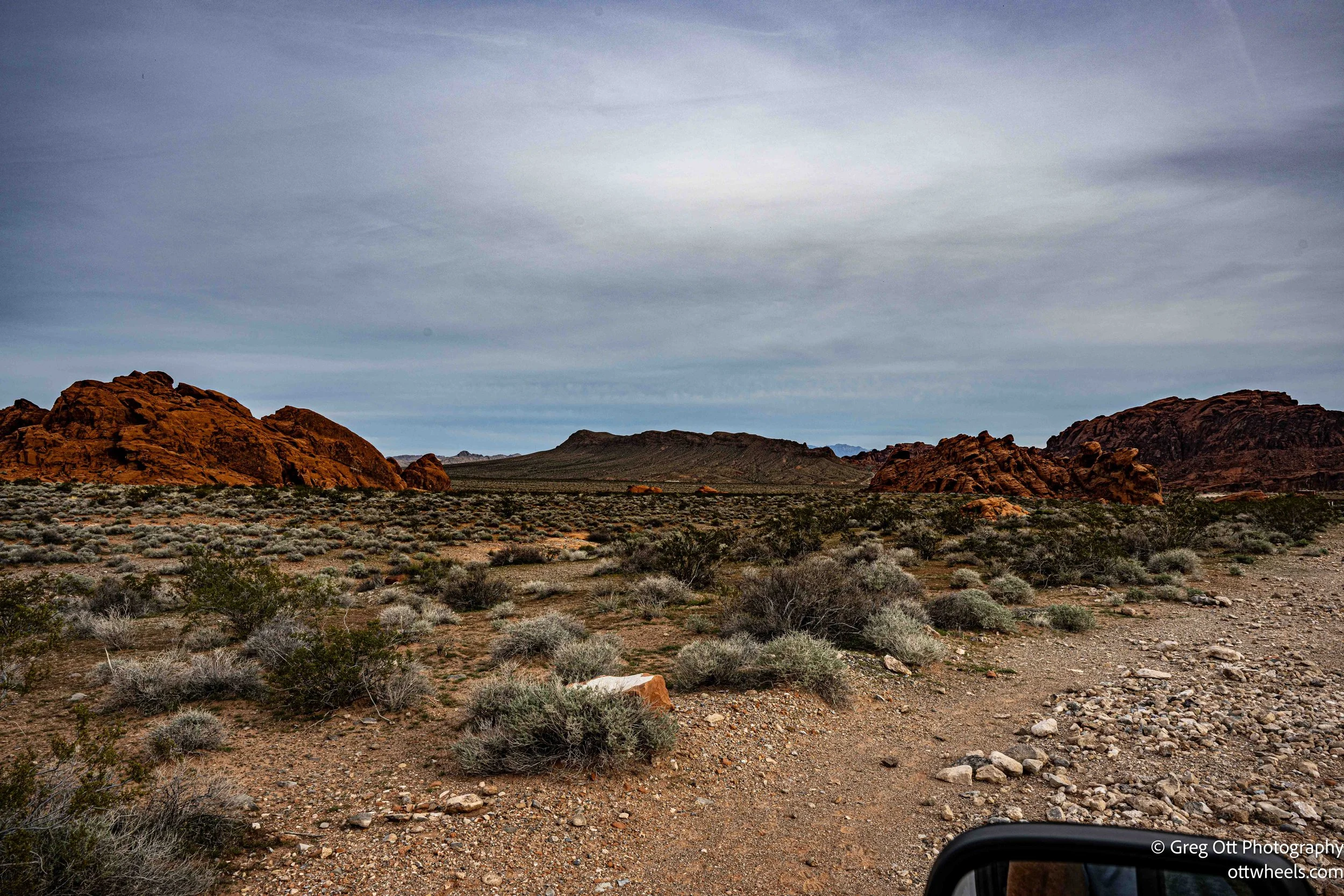
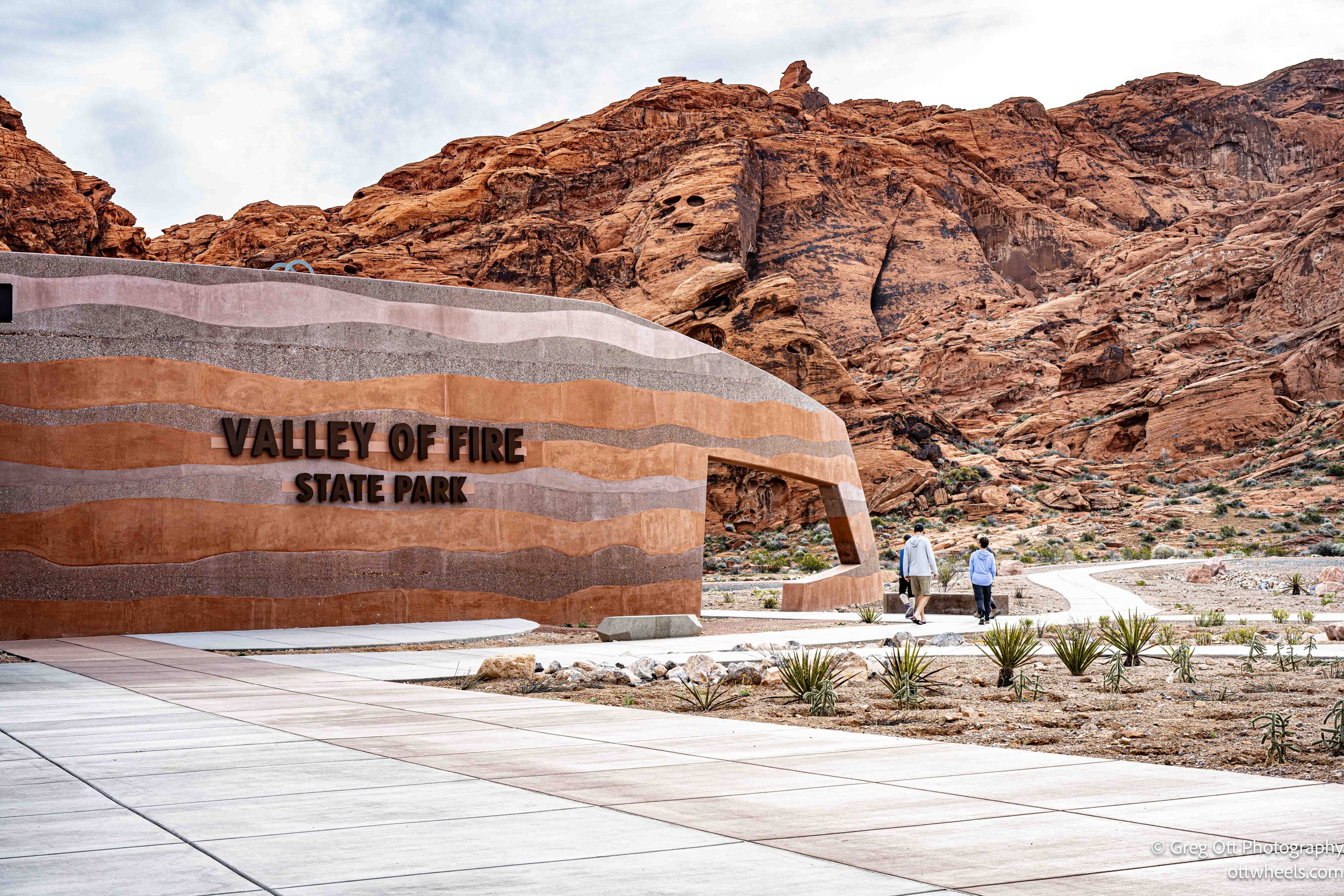
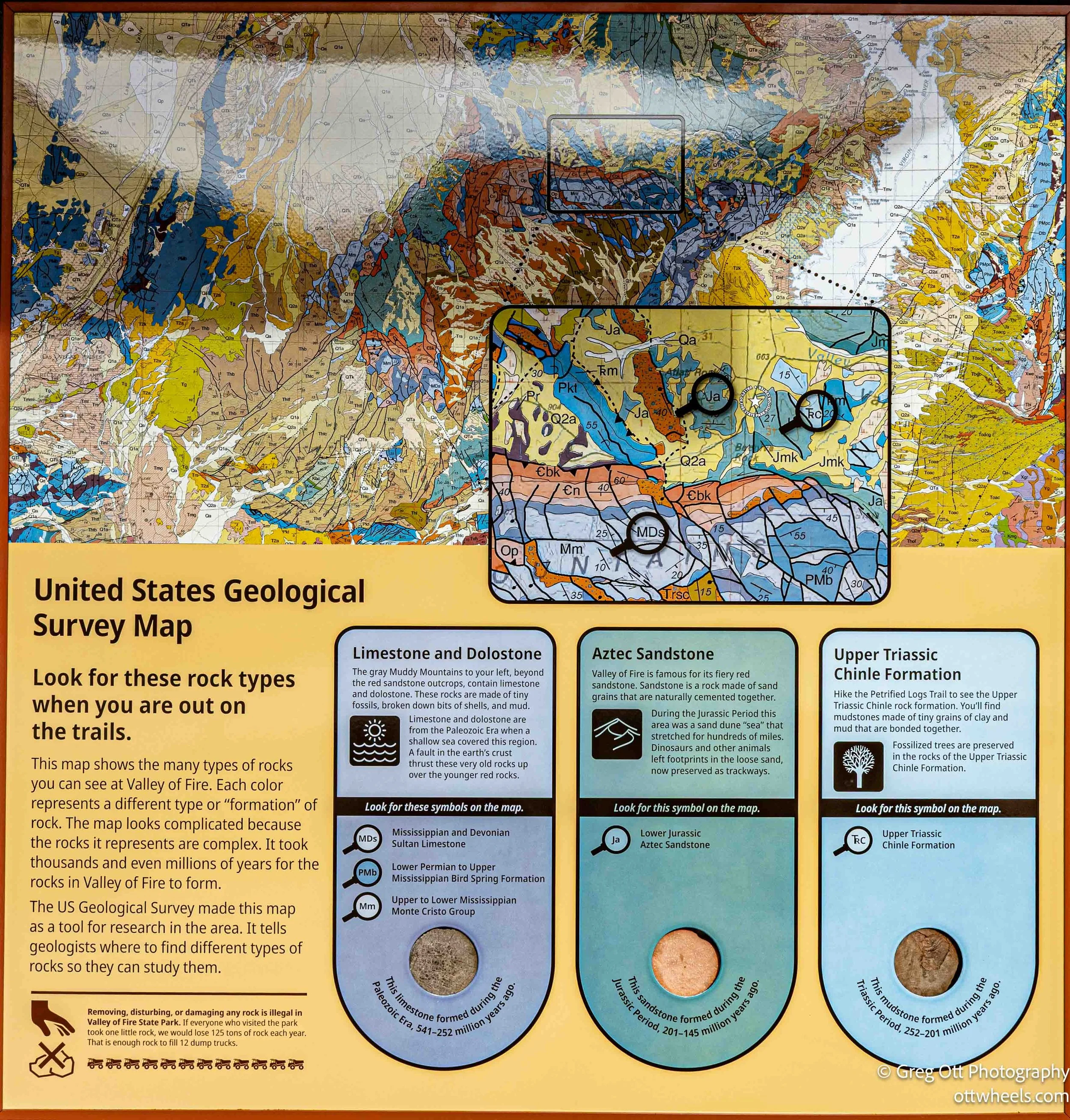
Just before the doors opened, the calm shifted. A steady stream of cars rolled in and the parking lot filled quickly. By the time I stepped inside, a long line had already formed at the information desk. Rather than stand there staring at the back of someone, I took a slow lap around the exhibits. The displays were well done — clear explanations of the park’s geology, how the sandstone formed, why the colors burn the way they do — and there were interactive stations set up for kids to get their hands on the science. It was thoughtfully put together, not overdone. When I circled back to the desk, the line hadn’t budged much. Apparently I wasn’t the only one with questions.
Natural Arch Trail
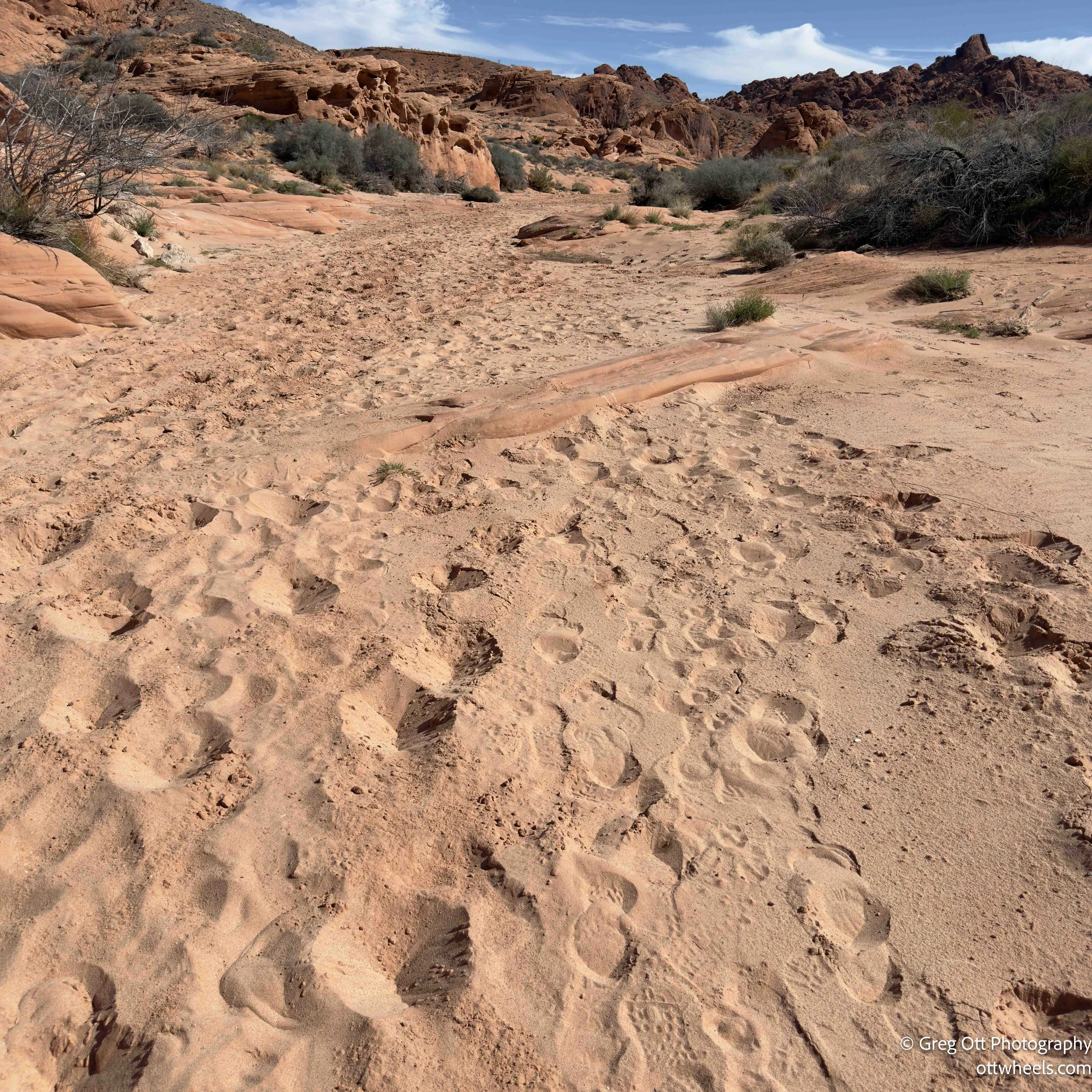
I decided to hike the Natural Arch Trail in Valley of Fire State Park. AllTrails says the beginning of the trail feels like walking on dunes. That’s technically true. It just forgets to mention that most of the trail feels that way. The sand is soft, loose, energy-draining — the kind that gives way under every step so you’re never quite on solid ground. The route winds through broad washes and low rock corridors, with subtle elevation changes that feel far bigger than they are because the footing never firms up. It isn’t technical. There’s no exposure, no tricky scrambling. But it’s relentless. In dry heat over eighty degrees, it feels less like a desert walk and more like trudging uphill on a hot beach — except there’s no ocean waiting at the end.
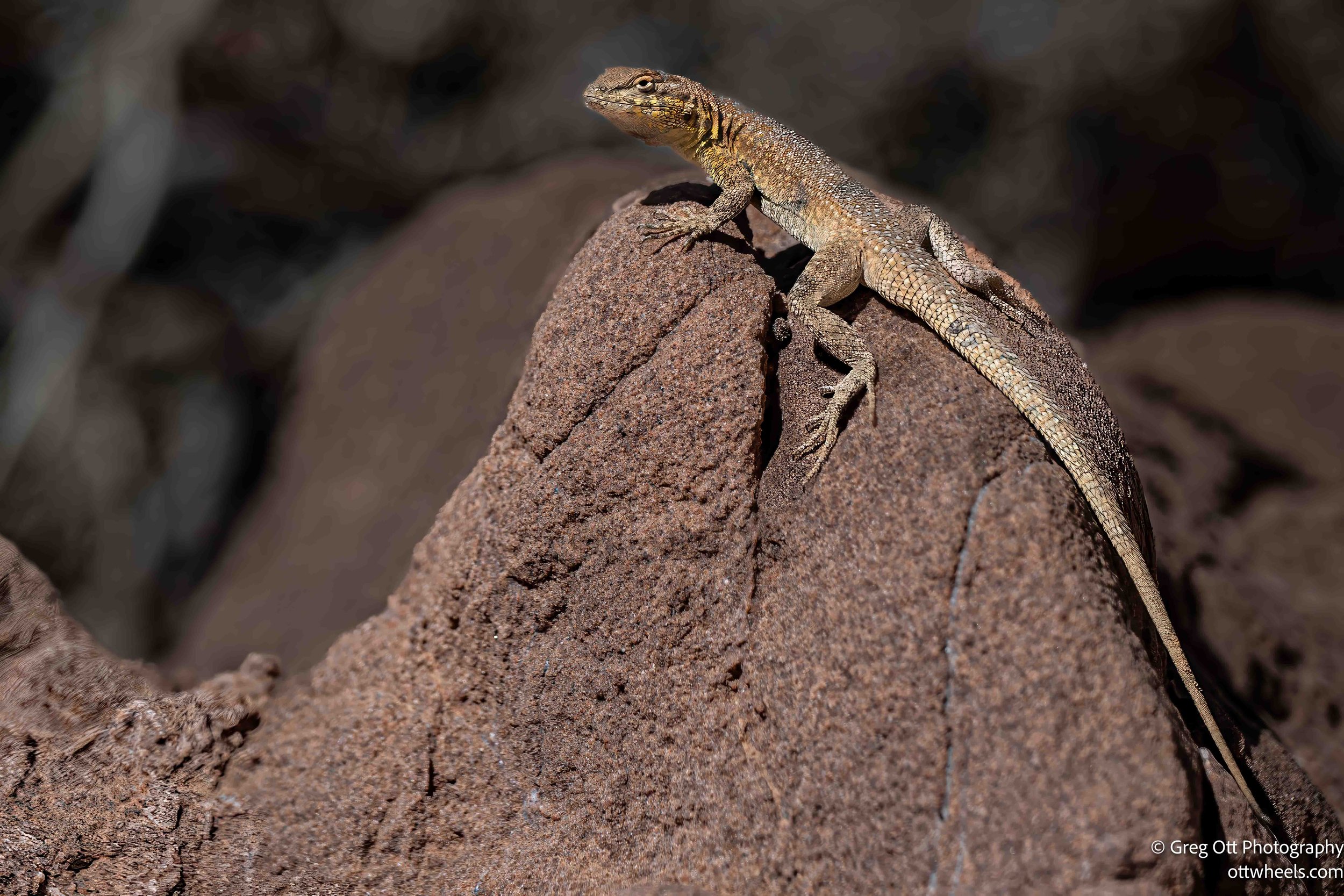
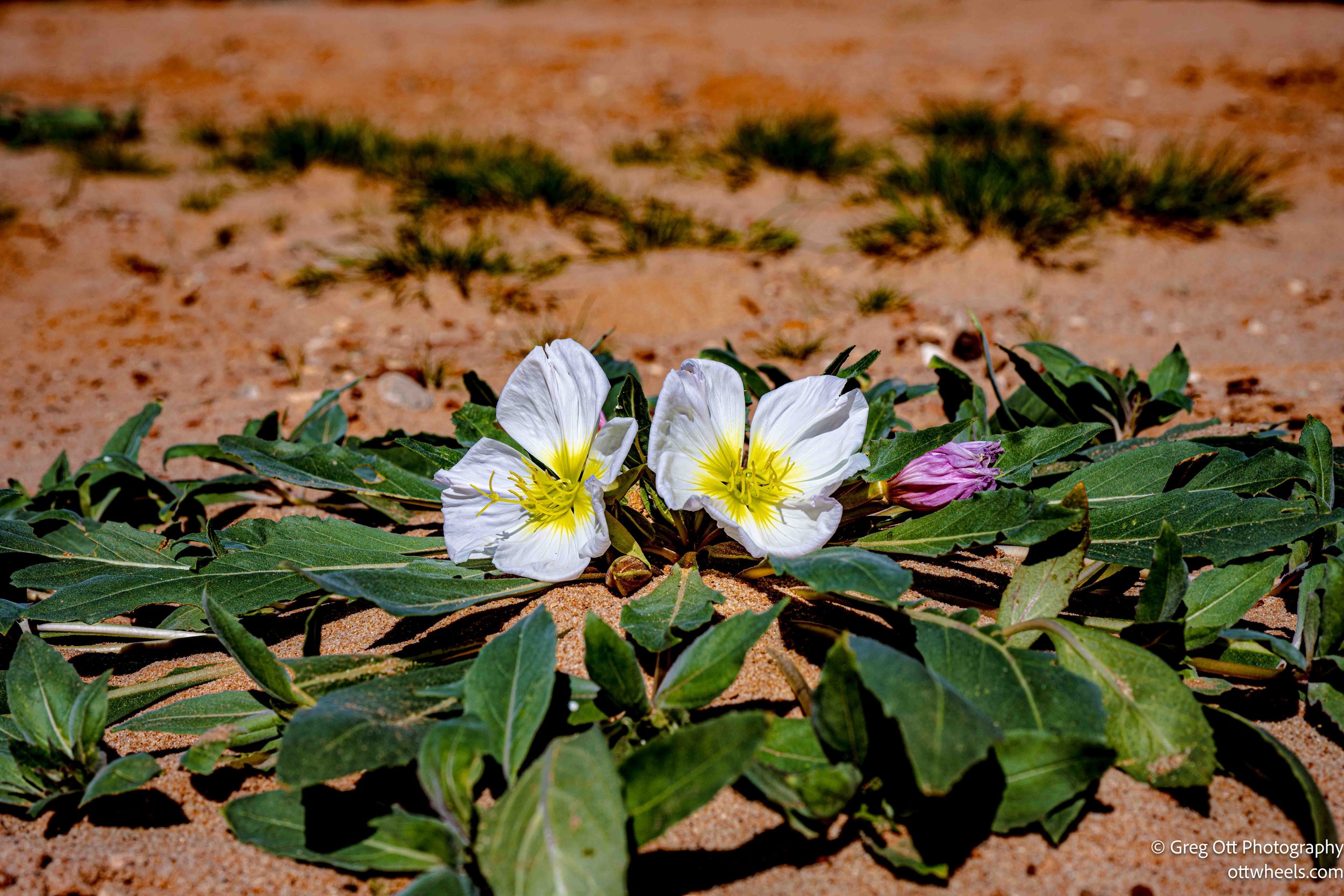
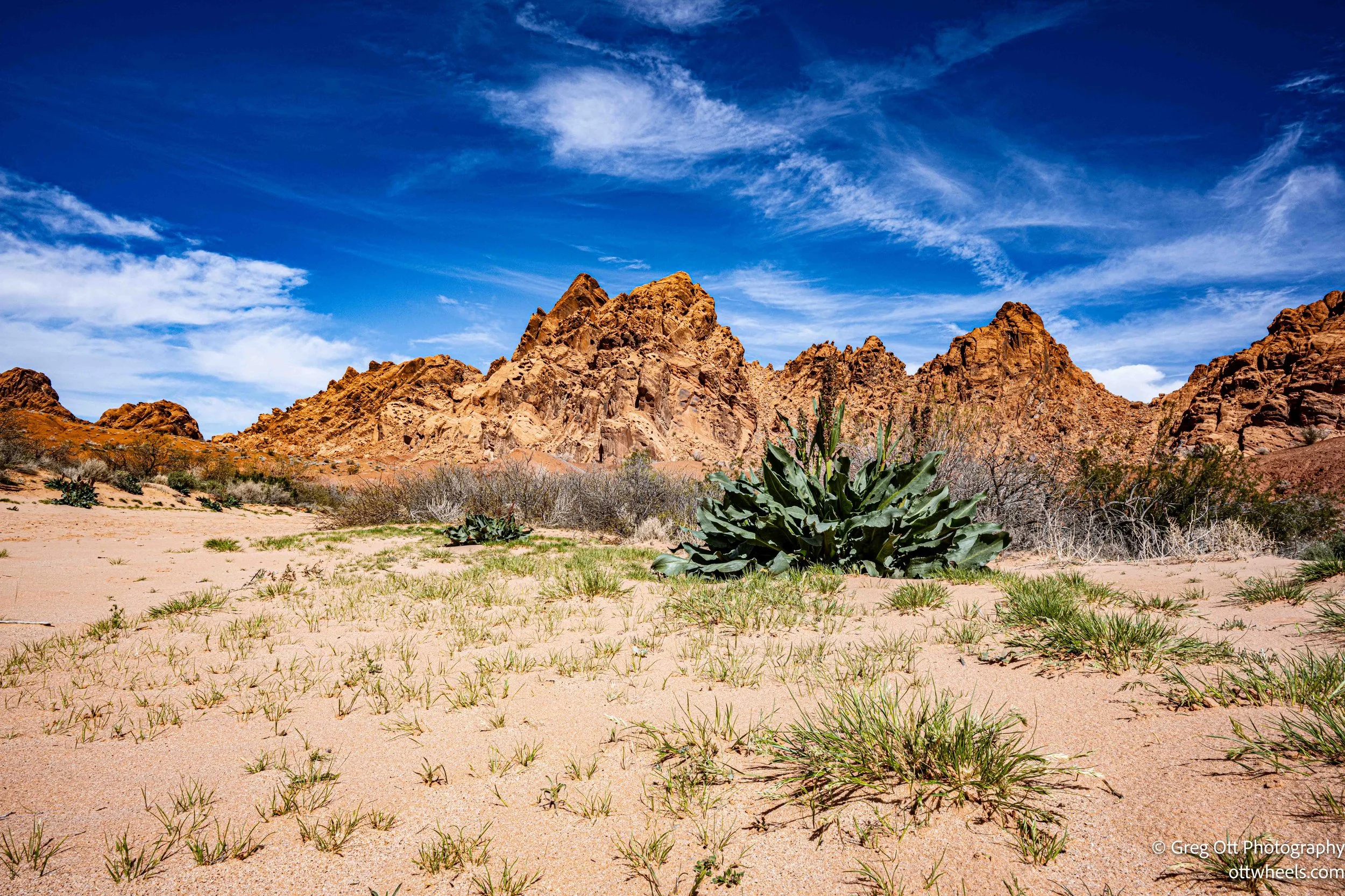
At some point, I spotted a lizard dart across the trail — quick, precise, completely at home in that furnace. It paused longer than I expected, almost as if it were sizing me up, and let me get within three feet. I managed a few shots before my foot slipped in the sand. That was enough. It vanished in an instant. The desert floor around me was dotted with small white flowers hugging the ground, their delicate blooms rising from surprisingly thick shoots. Against the red rock and pale sand, they stood out easily — fragile at first glance, but clearly built for this place. They were thriving in conditions that were steadily wearing me down.

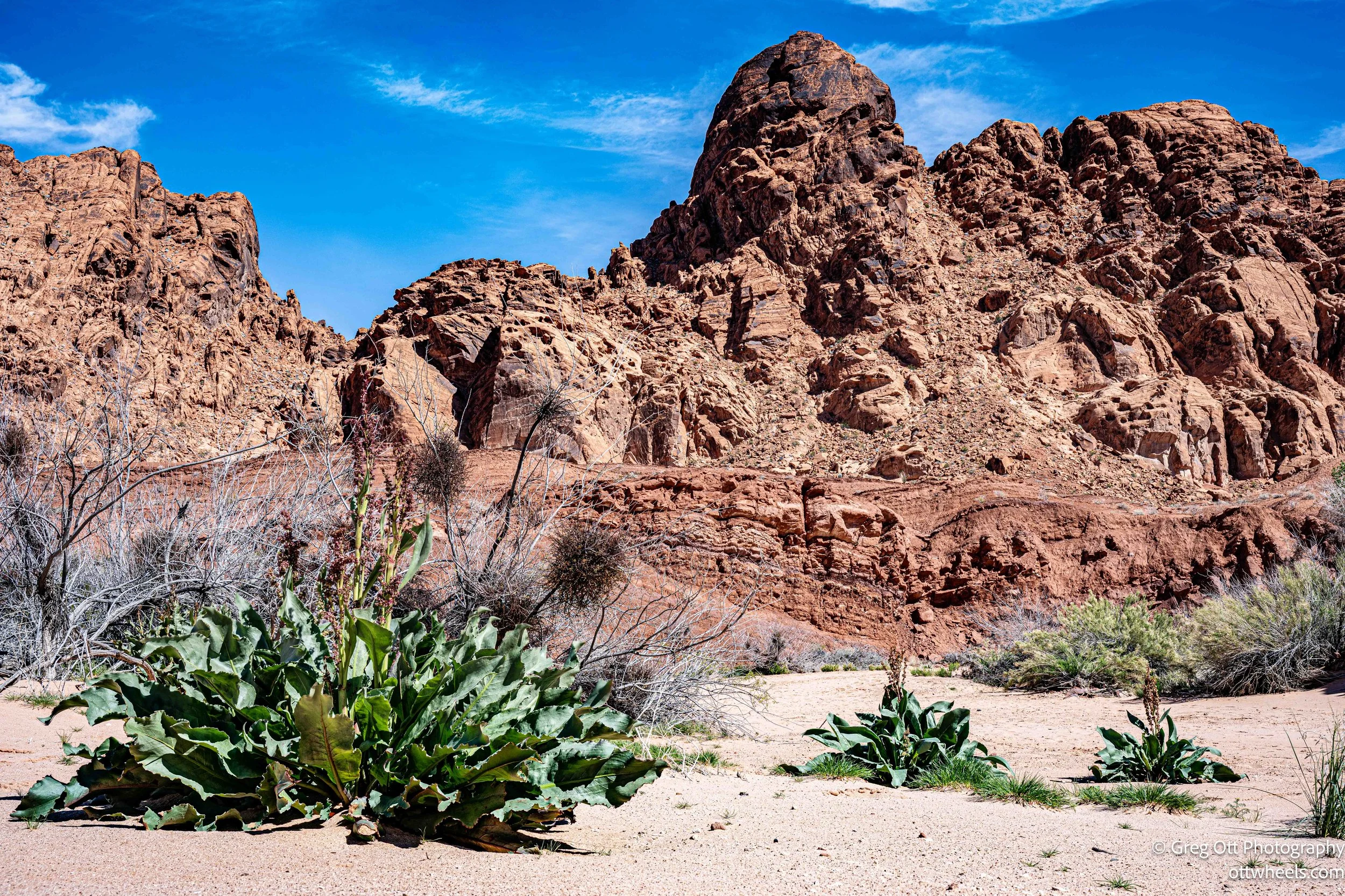
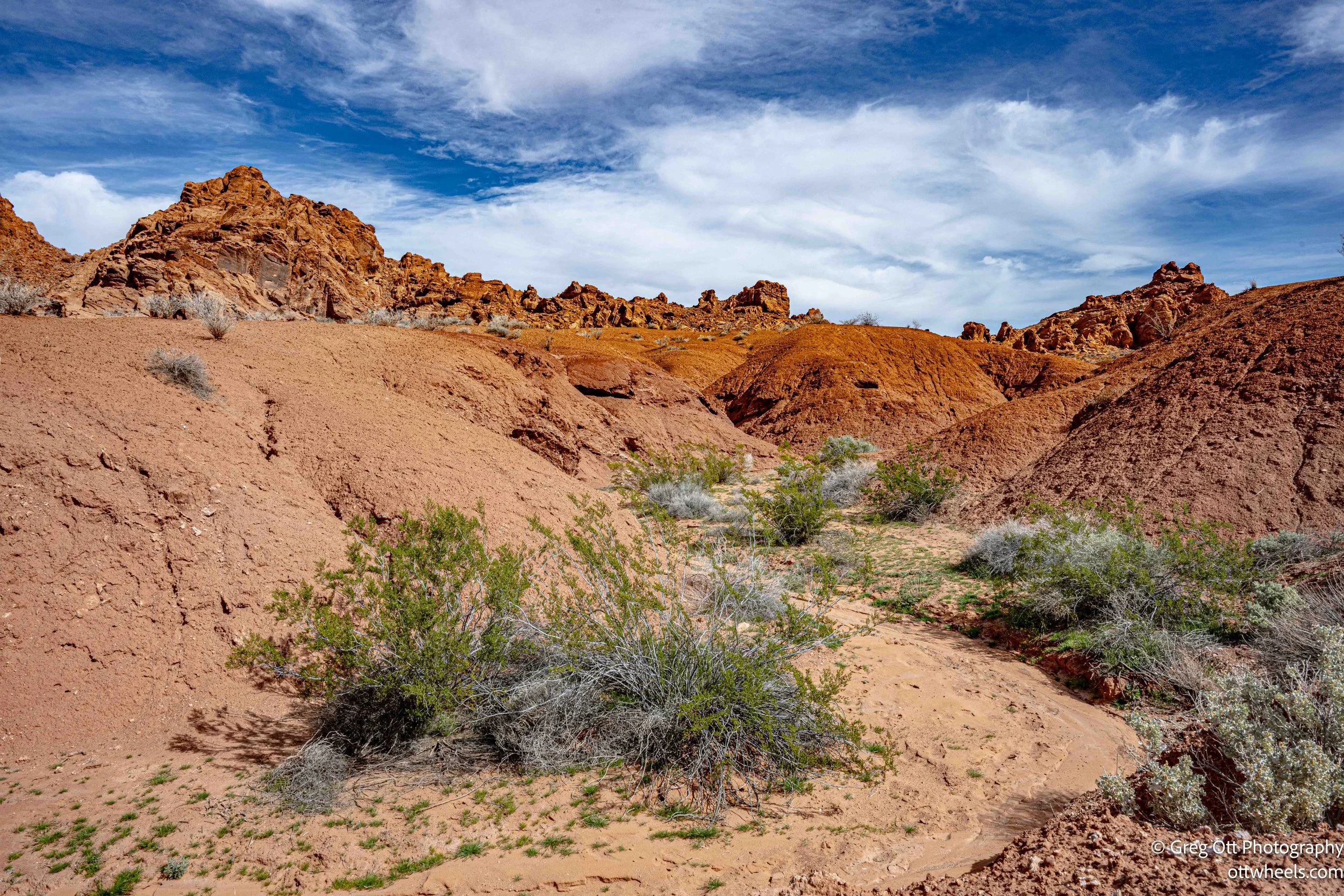
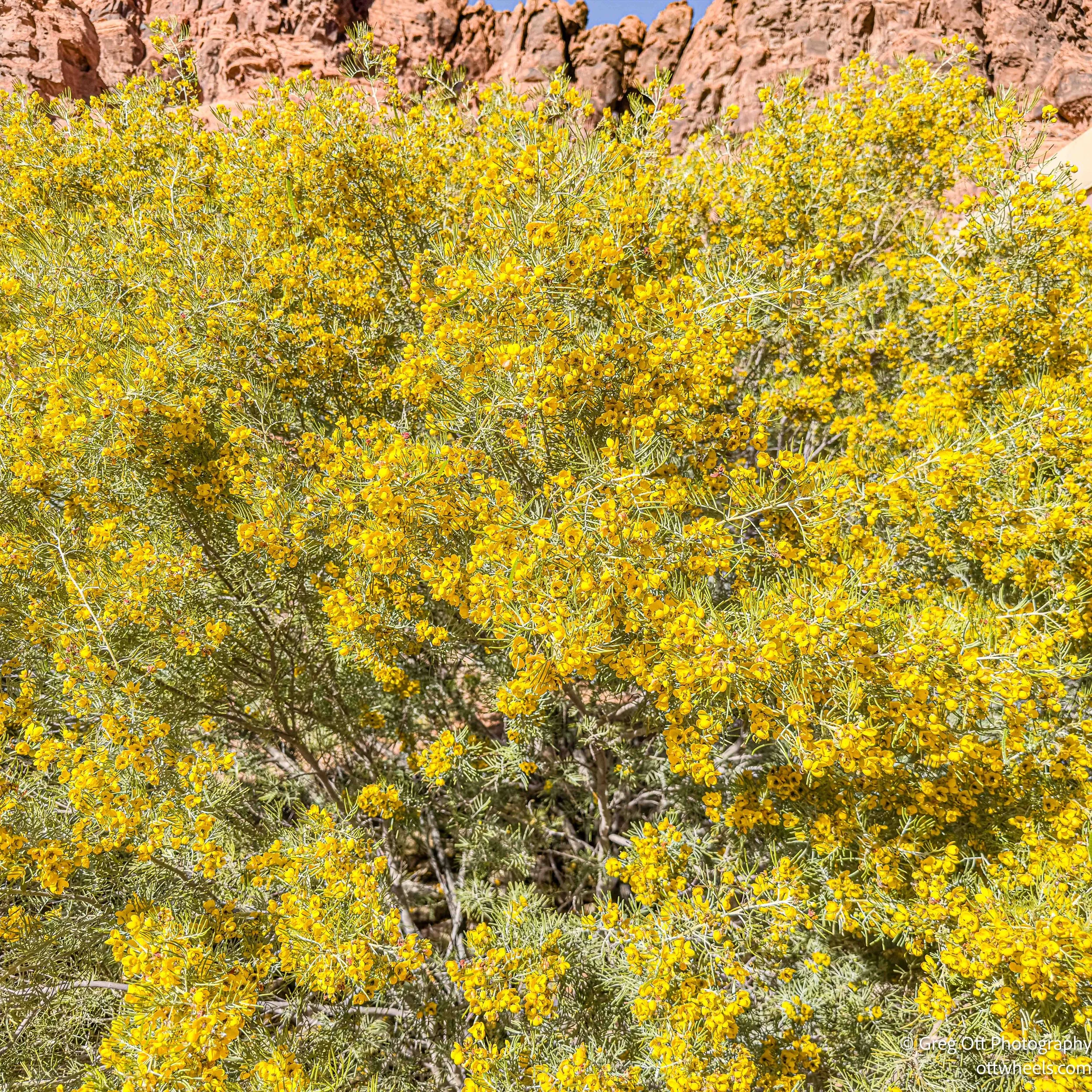
There must have been rain recently. Pockets of green appeared along the route — more than I expected in terrain that looks, from a distance, so dry and unforgiving. Low desert plants clung to the washes, and several bushes were in bloom, sending up long, fresh green shoots that caught the light but proved almost impossible to photograph. Some of them looked electric against the muted earth tones. It’s always surprising how alive the desert is when you slow down enough to really see it. Even in heat that feels punishing, things are growing, flowering, adapting. The desert doesn’t complain. It just adjusts.
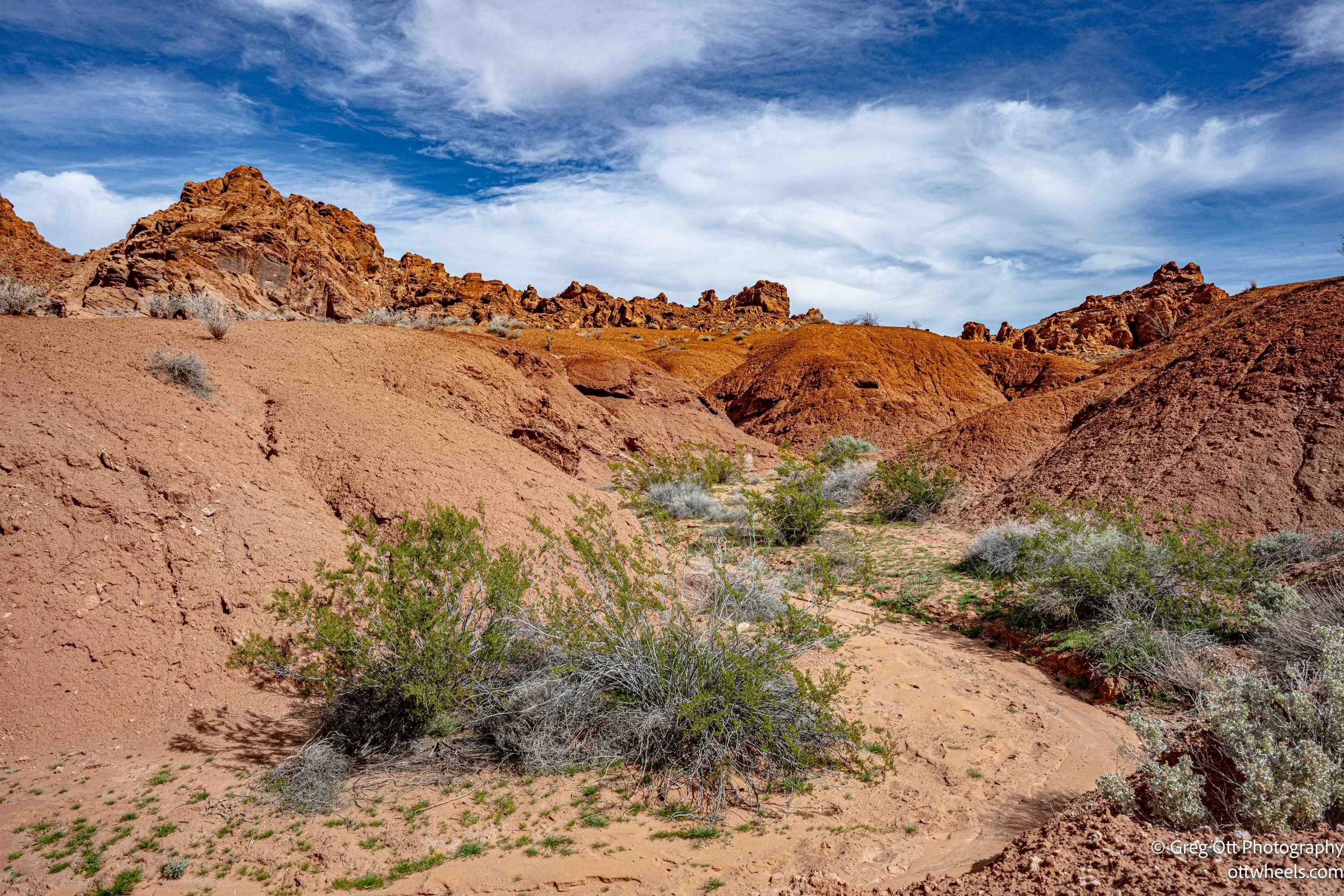
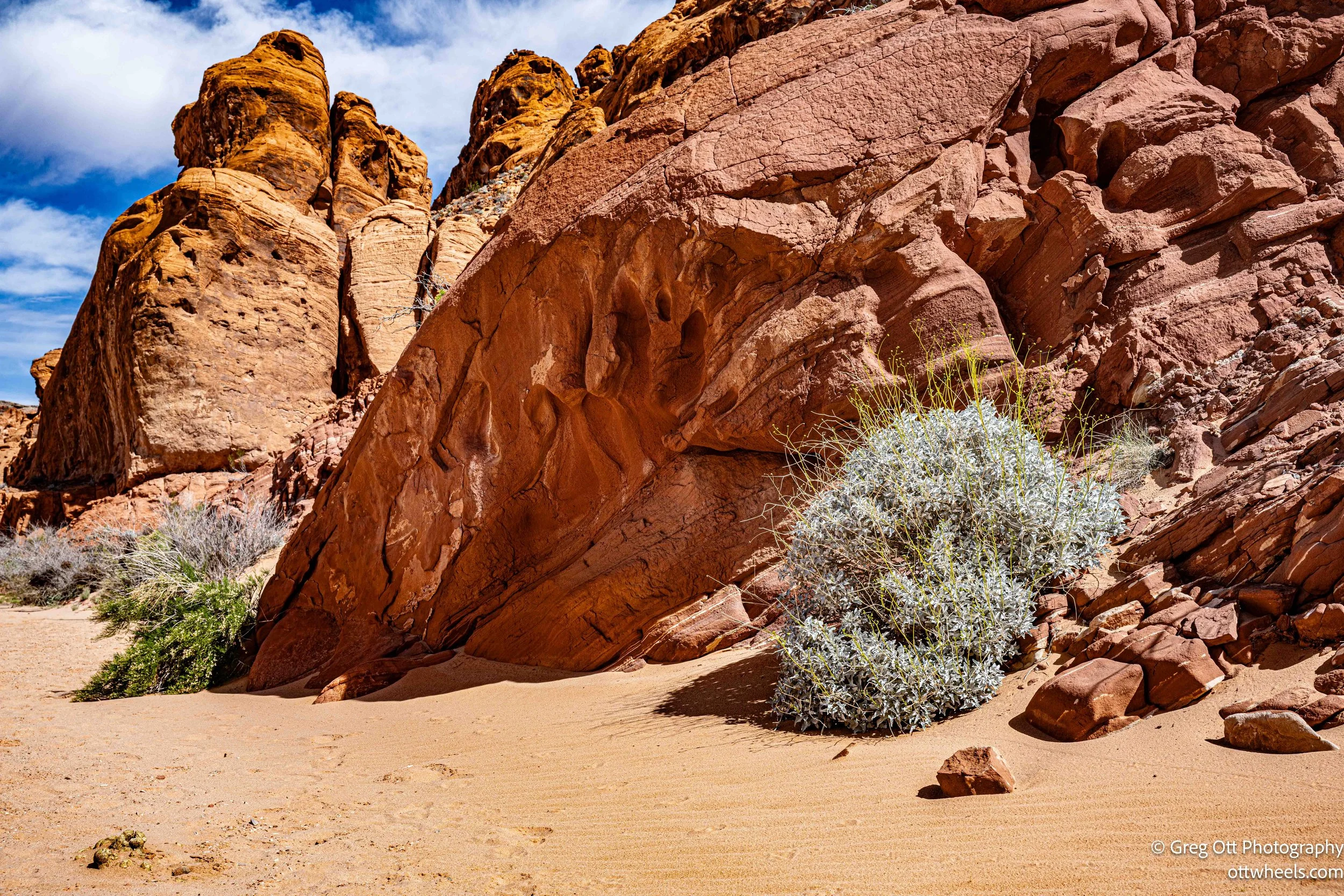
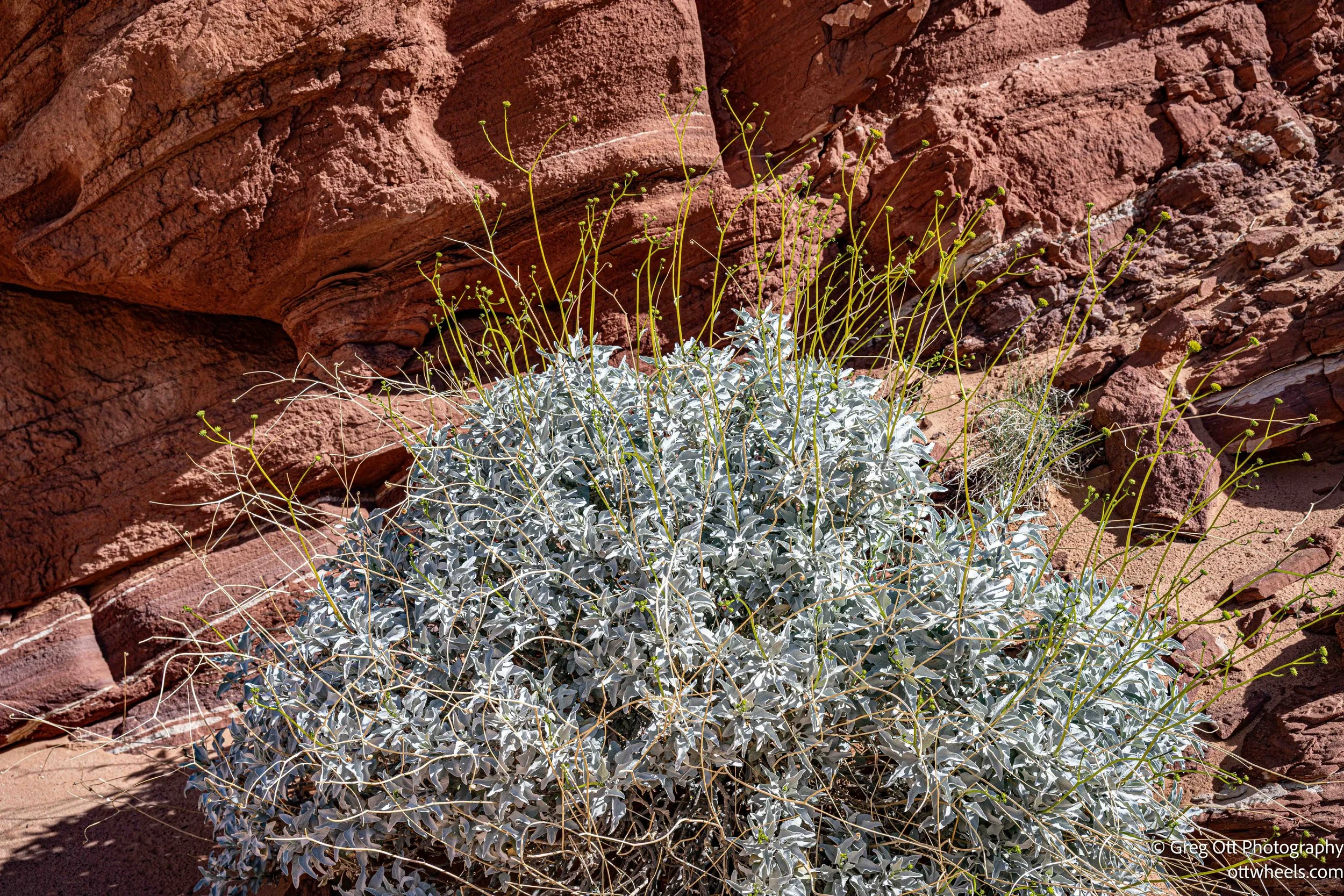
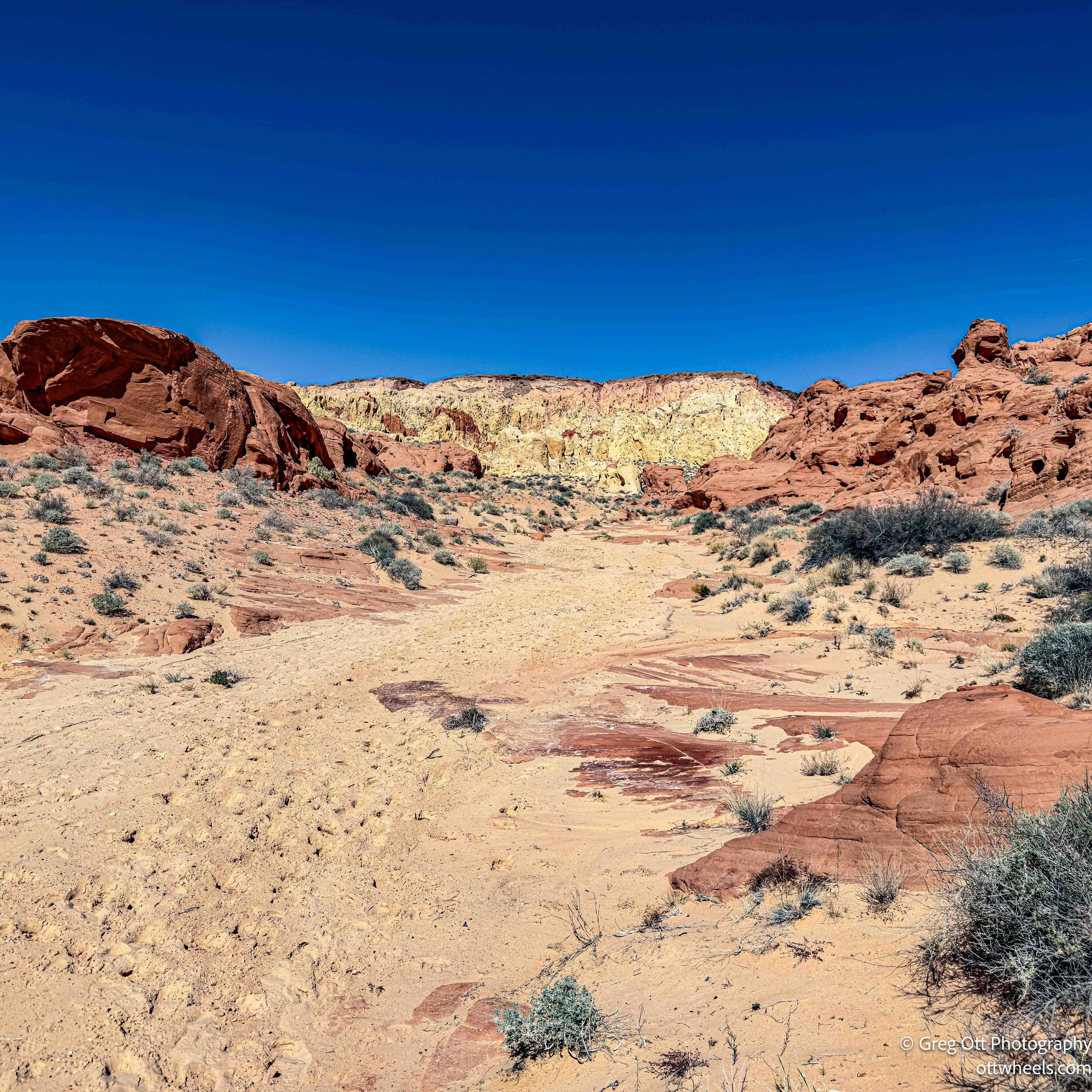
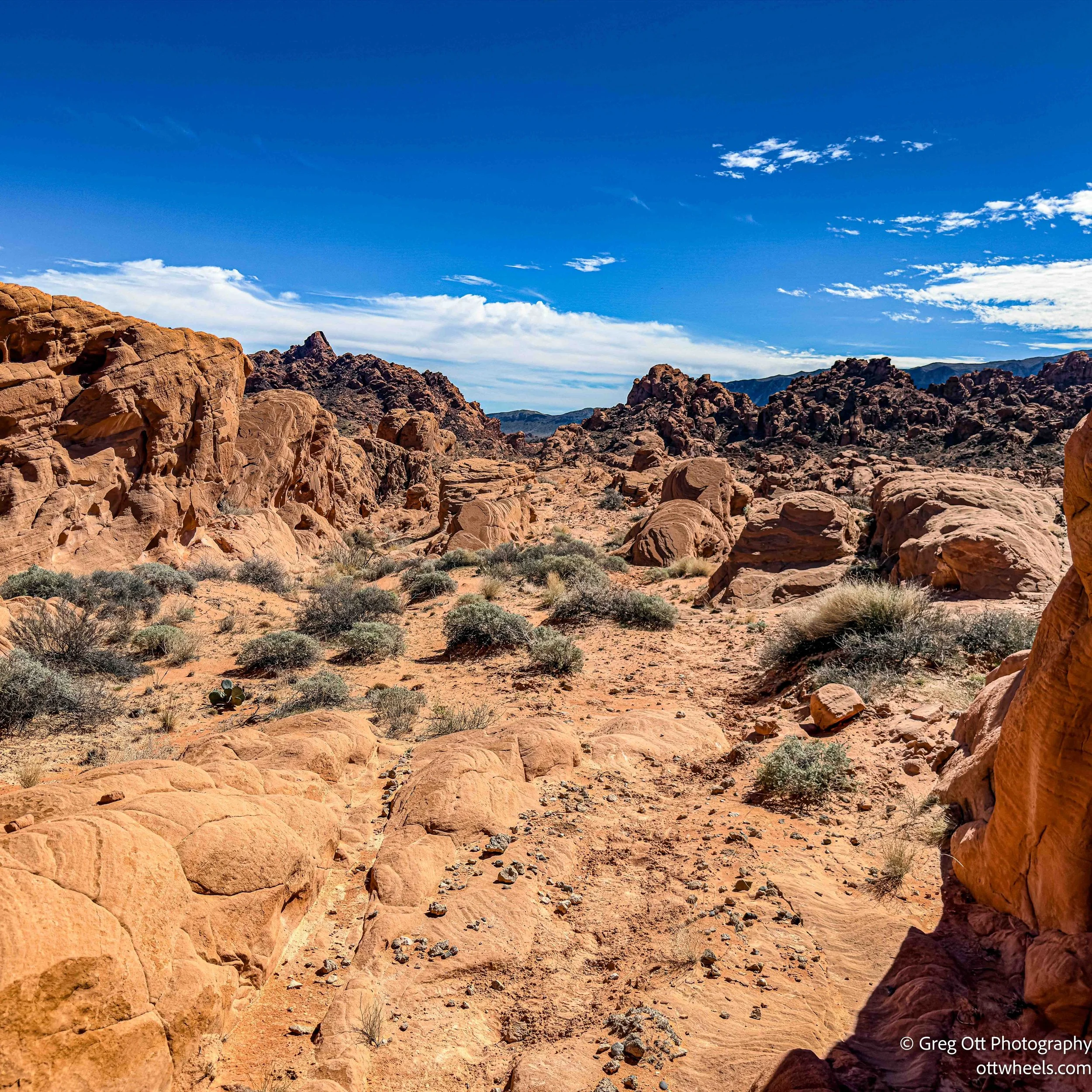
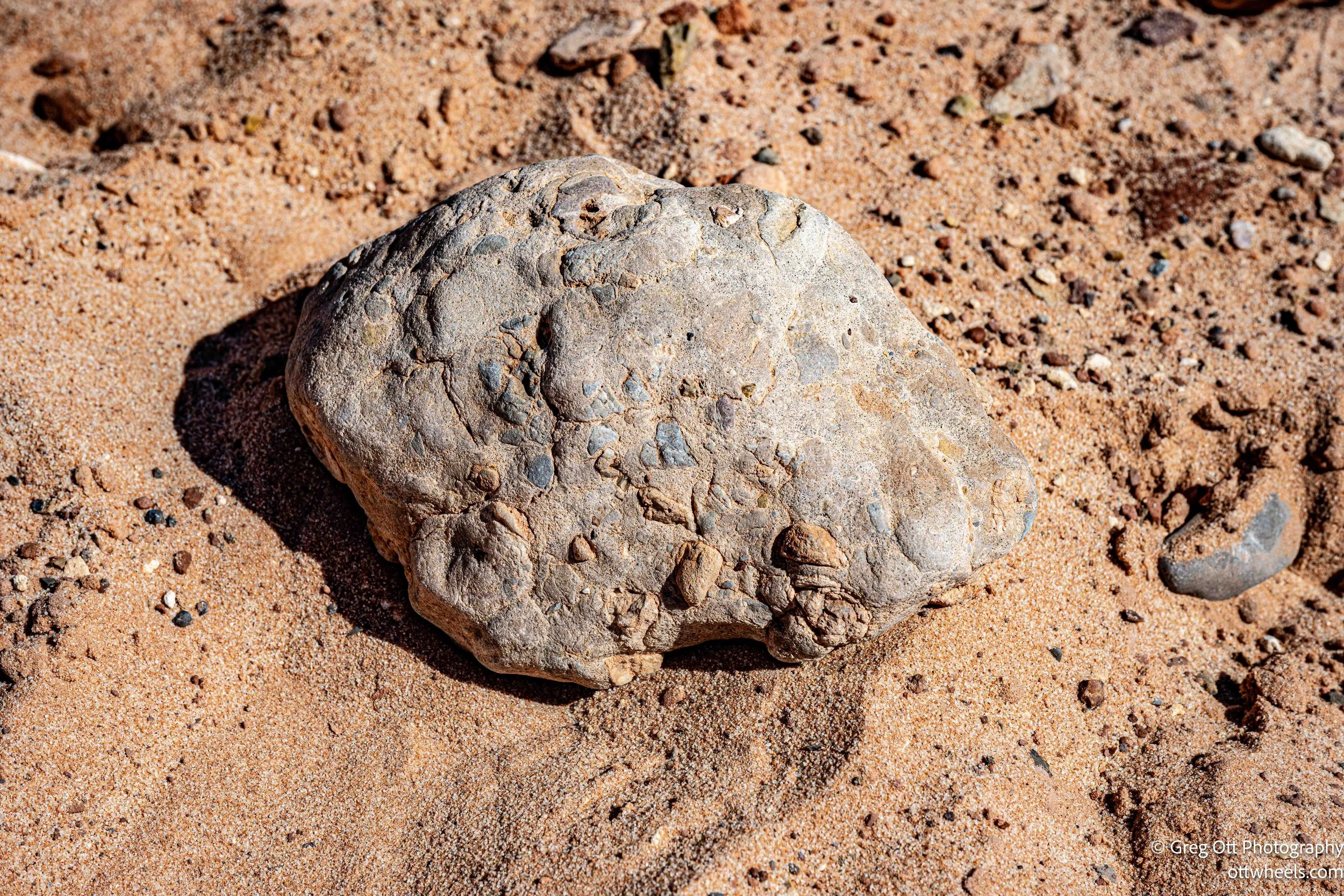
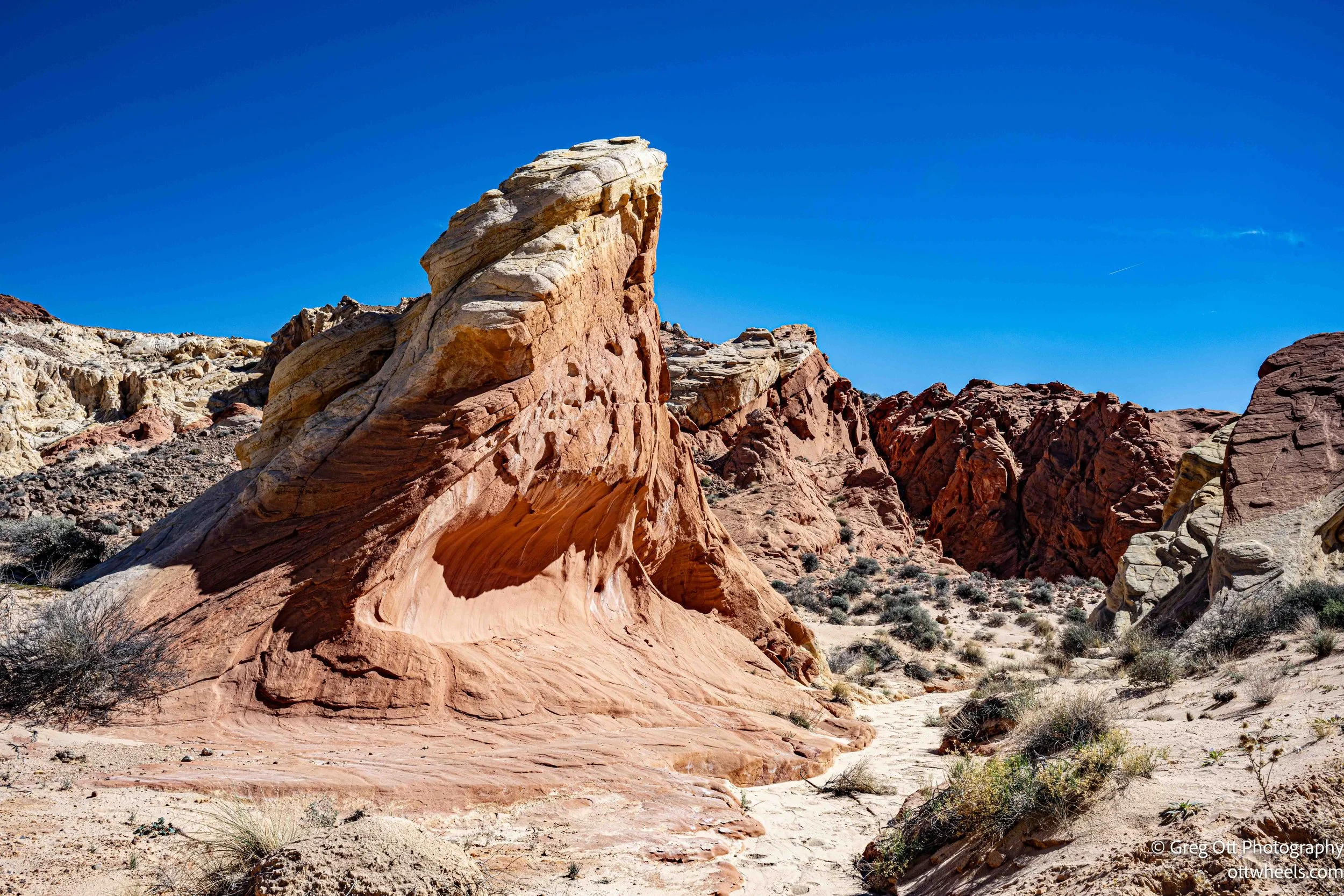
Geologically, the trail is classic Valley of Fire — sculpted sandstone shaped by wind and water over time that is hard to comprehend when you’re standing in it. The washes are broad and shallow, carved by flash floods that can roar through here after heavy rain and then disappear, leaving behind rippled sand and smoothed stone. The rock walls rise in soft curves and cross-bedded layers, bands of red, orange, and cream stacked at angles that hint at ancient dunes turned to stone. In places, the sandstone looks almost melted, as if it once flowed instead of fractured. You can see where water has undercut the base of formations, slowly hollowing out pockets that will, given enough time, become something more dramatic. The clusters of rock with fossils and smaller rocks periodically appear and in some ways look like cement.
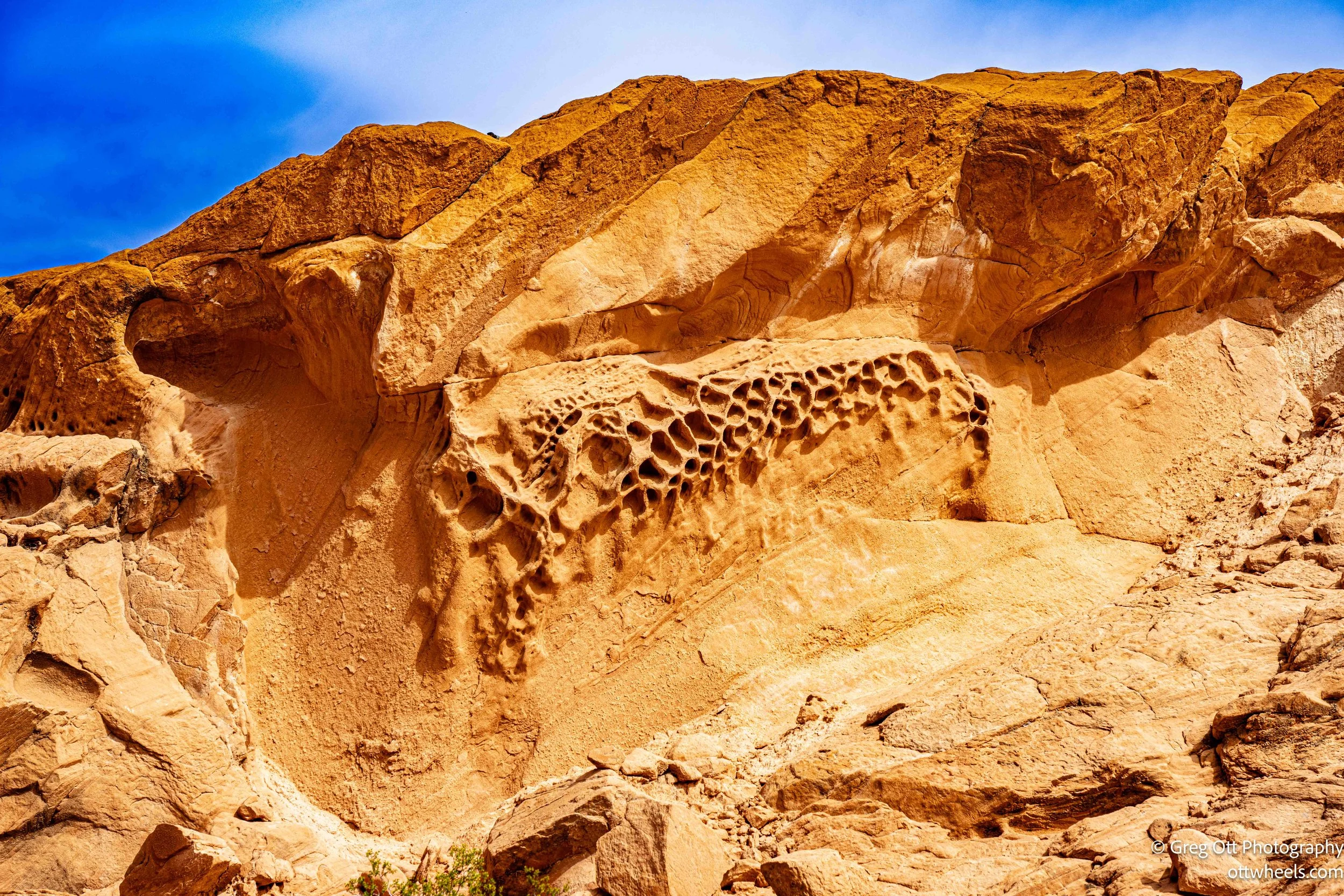

As for the arches — they’re there, but they don’t announce themselves. Some are little more than rounded openings punched through fins of sandstone, small windows rather than grand spans. Others require leaving the main wash and scrambling up slabs of rock to find them. There are no obvious signs pointing the way, no markers telling you you’re close. You have to read the landscape — look for narrow ridges, eroded walls, places where the rock thins and light filters through. It feels less like following a trail and more like wandering through a natural maze shaped by erosion and time.
What I didn’t see was anyone else. Not a single hiker the entire time. In a park that draws steady traffic, that says something. It took me four hours to drudge through the sand. “Natural Arch Trail” is a bit of a misnomer. I did see arches, but most looked more like small holes in sandstone than the sweeping spans the name suggests. Apparently there are larger ones if you know where to go and are willing to scramble up the rocks. I don’t mind a scramble. What I mind is that there are no trail markers at all. Either I hit a perfectly quiet window — or, more likely, most people checked the temperature, considered the sand, and chose something more sensible. Solitude can be a clue that maybe you didn’t pick the best trail. At one point I had the thought that I probably should have talked to the information desk before heading out.
Rainbow Vista Trail
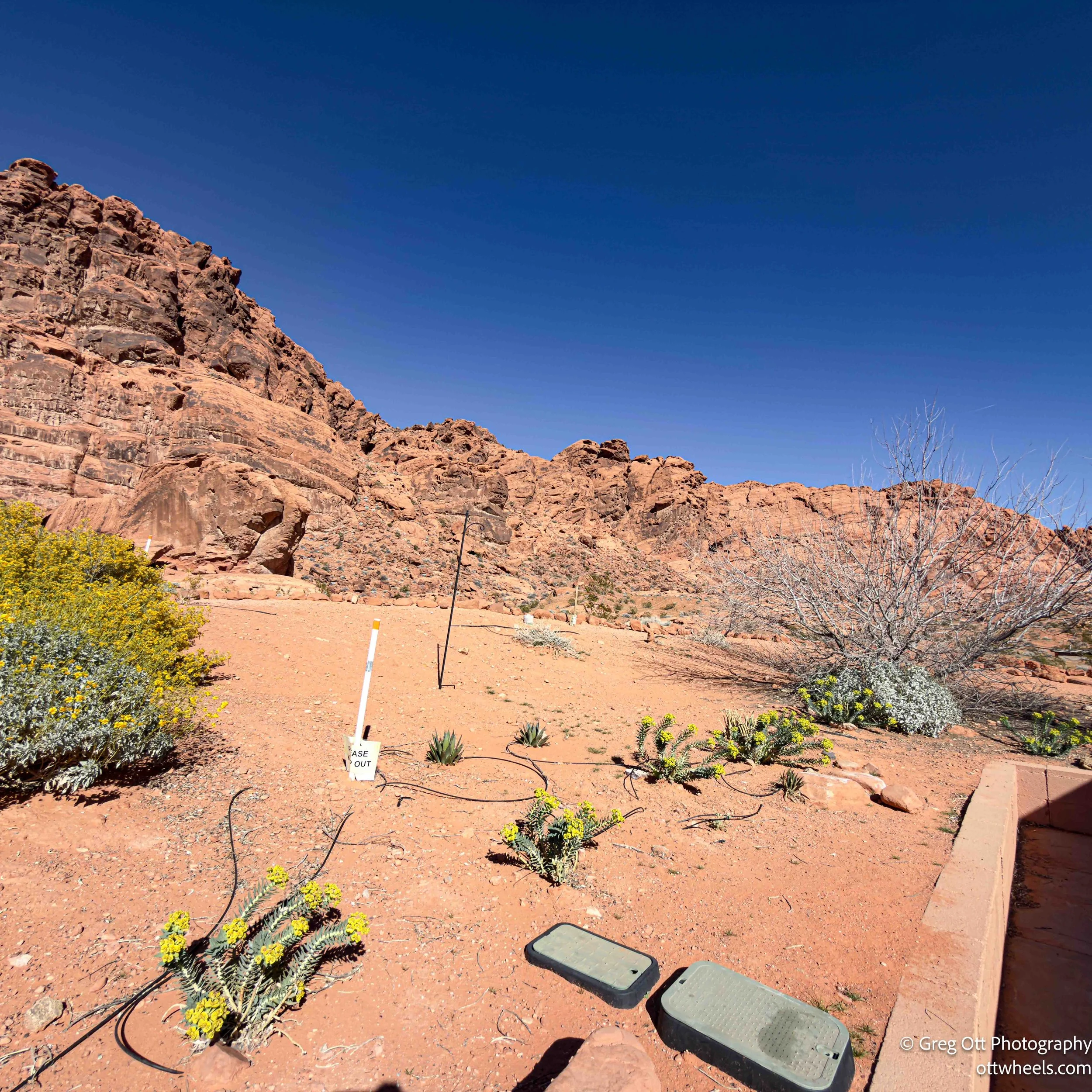
I drove back to the old visitor center, cracked open an Olipop Ginger Ale, and wandered around for a bit. The center itself is closed now, but the park services office sits just behind it, surrounded by beautifully maintained desert plants that look like they’re on a different irrigation plan than the rest of the park. Everything back there felt orderly and cared for. There’s even a wedding venue tucked behind the building, accessible by a short trail — an unexpected touch in the middle of all that sandstone. The ginger ale did wonders. Whether it was the sugar, the fizz, or just sitting down for a few minutes, I could feel my energy come back.
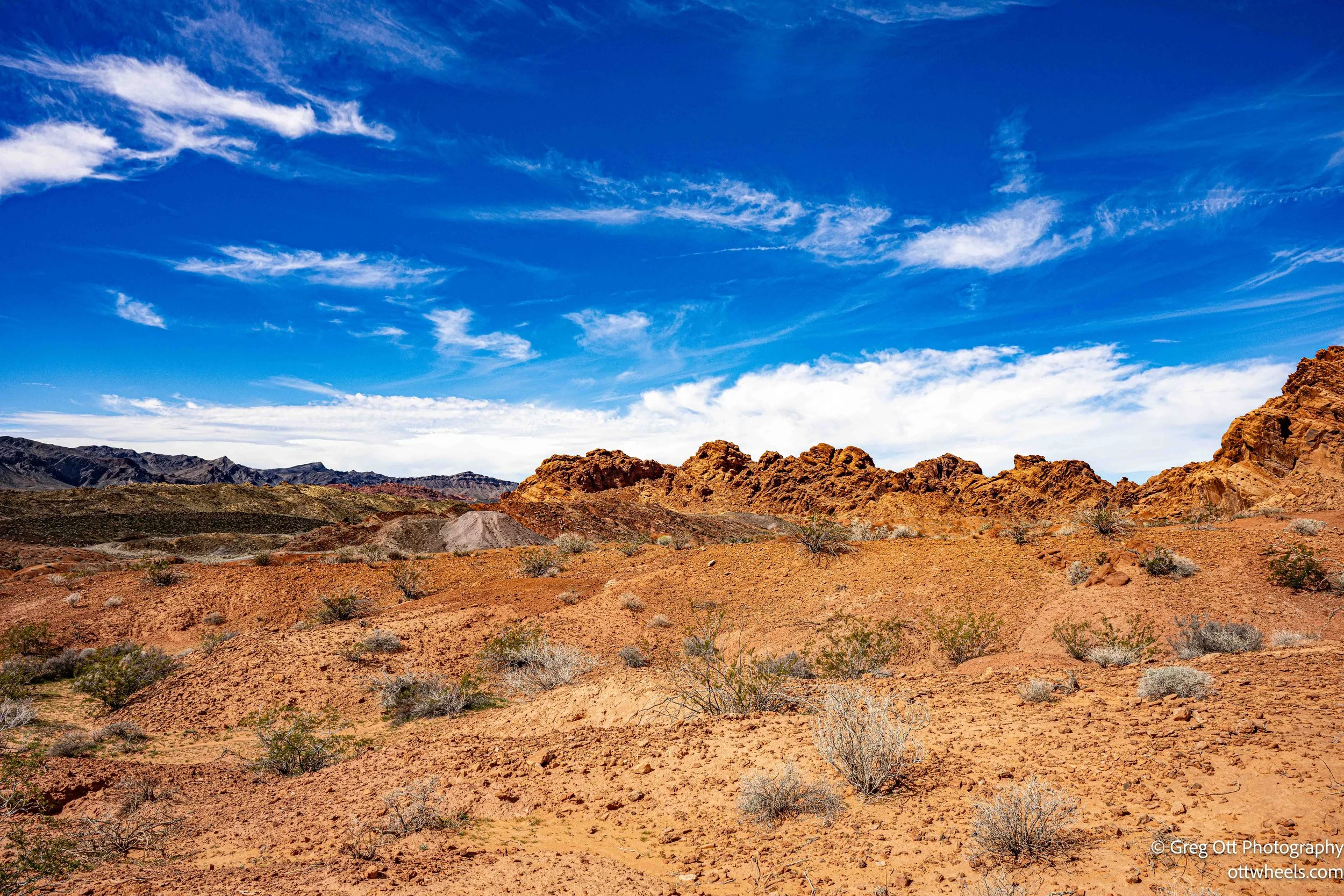
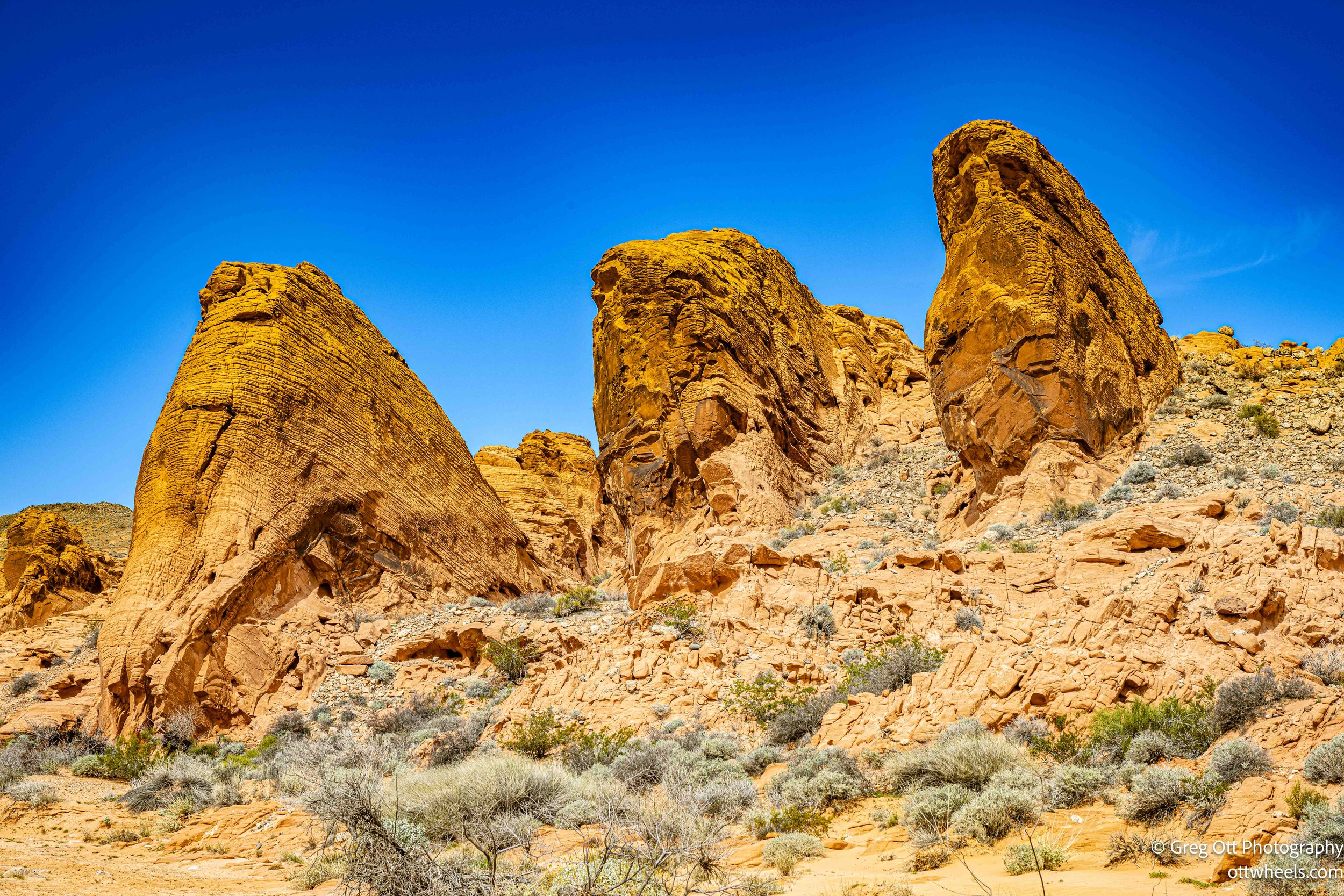
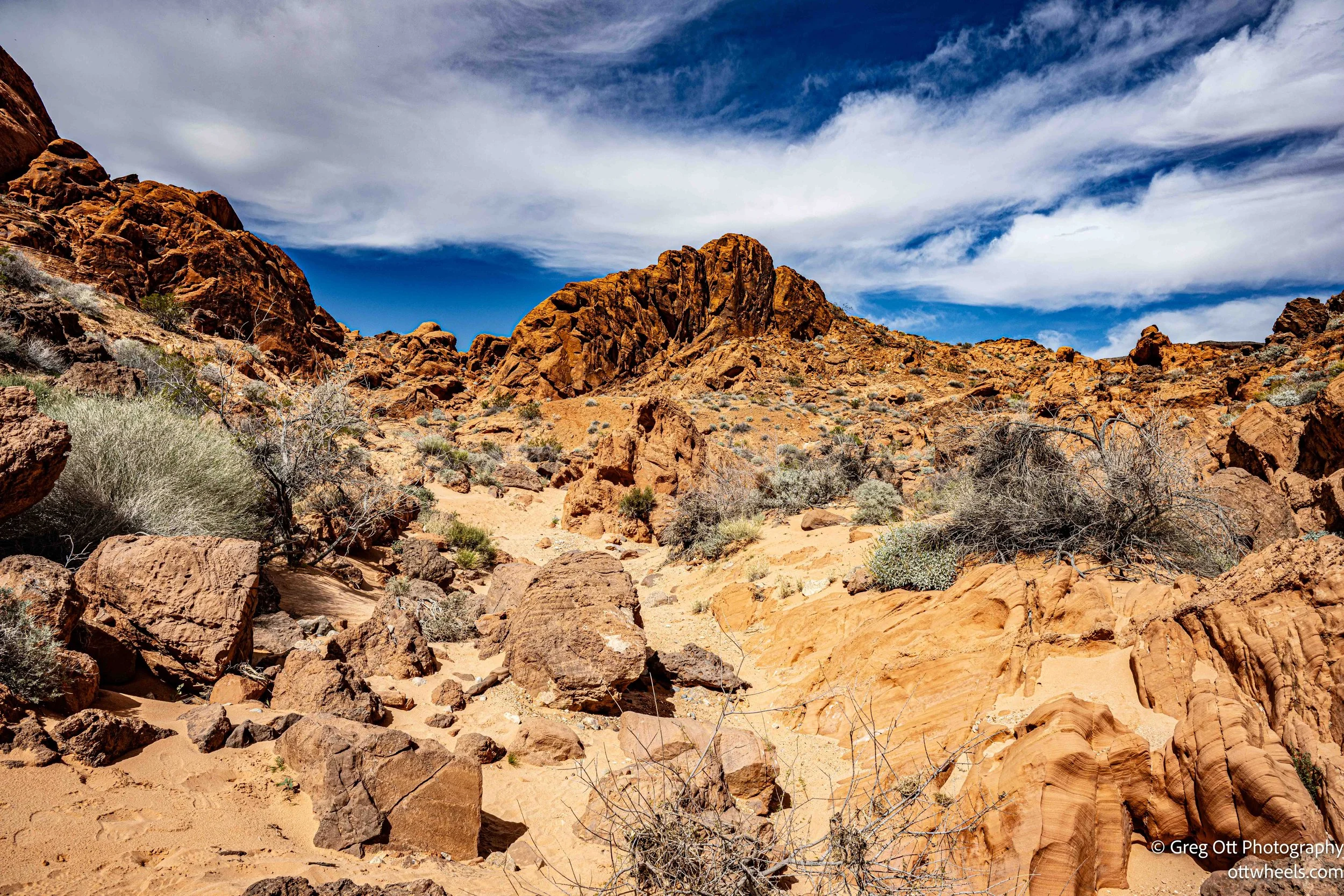
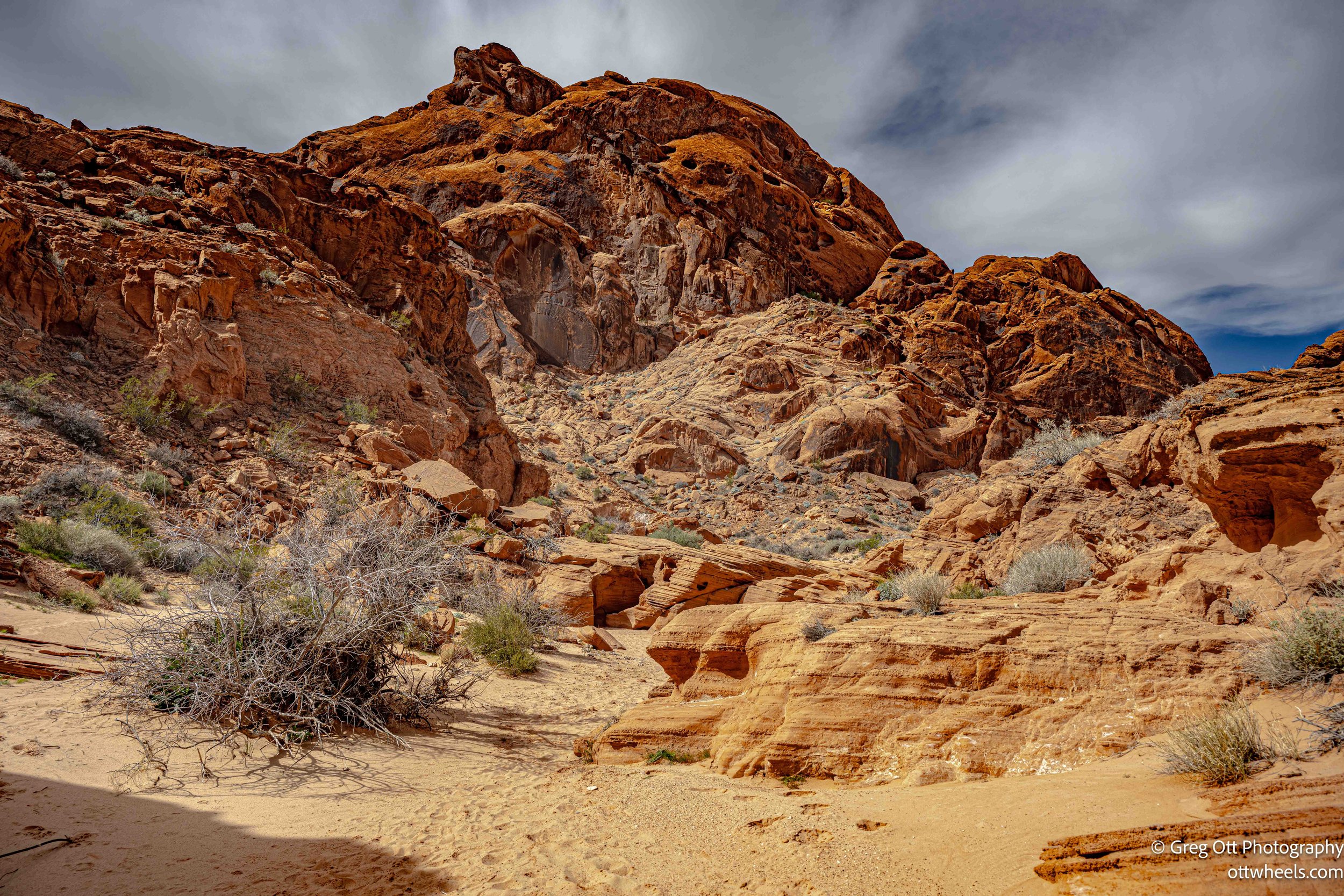
From there, I drove up White Domes Road through the canyon and decided to hike the Rainbow Vista Trail. Immediately, the difference was noticeable. The base was much firmer — still sand, but packed down enough that each step didn’t feel like a negotiation. It’s only about half a mile out to the main vista, and compared to the Natural Arch Trail, it felt almost civilized. There were people everywhere. The trail is shorter, offers patches of shade, and is mostly flat — which explains the traffic. I walked out, took my photos, and lingered for a bit. A few people stopped to ask about my camera, and one guy wanted to know how to capture the deep shadows against that bright blue sky. It’s always interesting how often photography turns into a conversation starter.
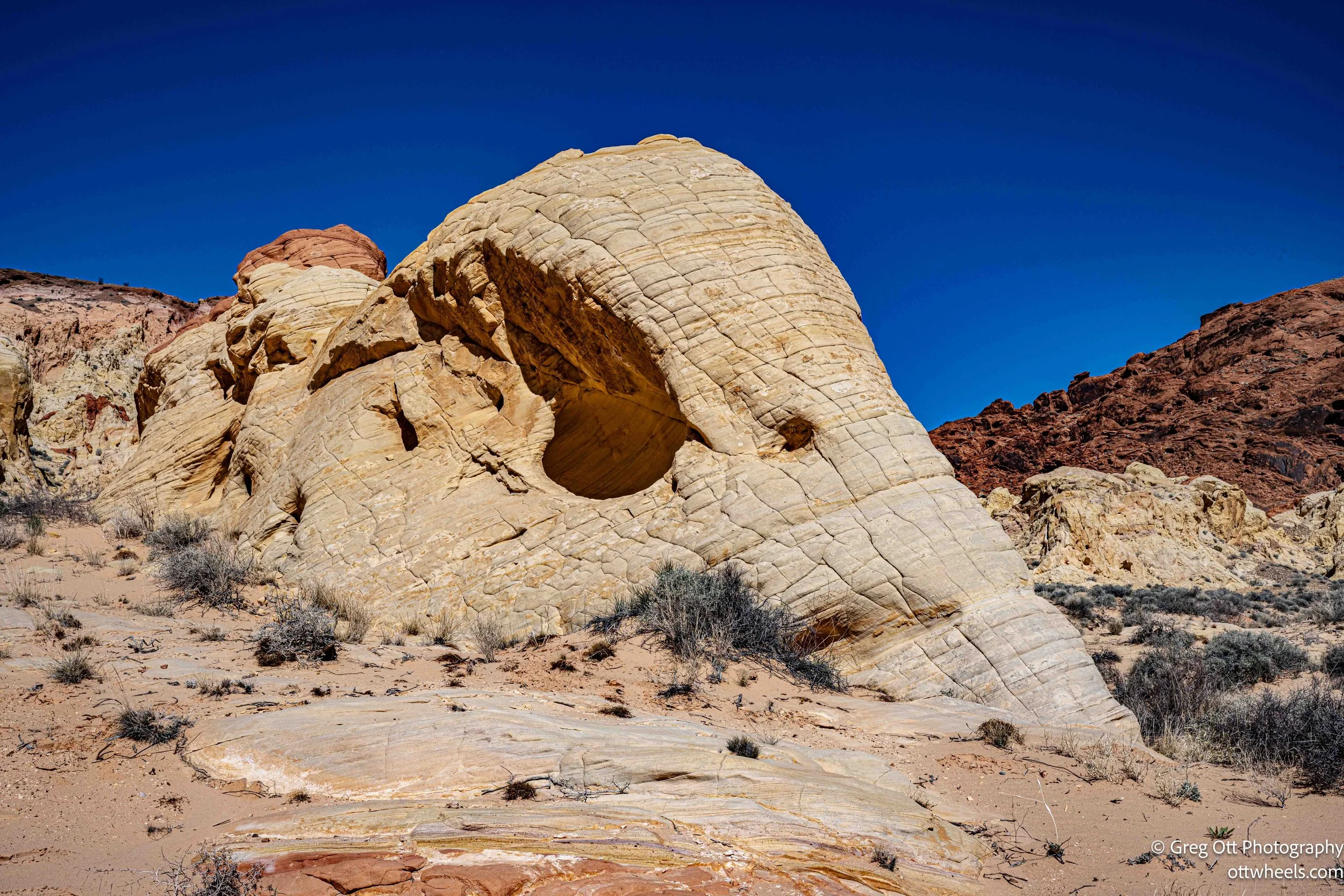
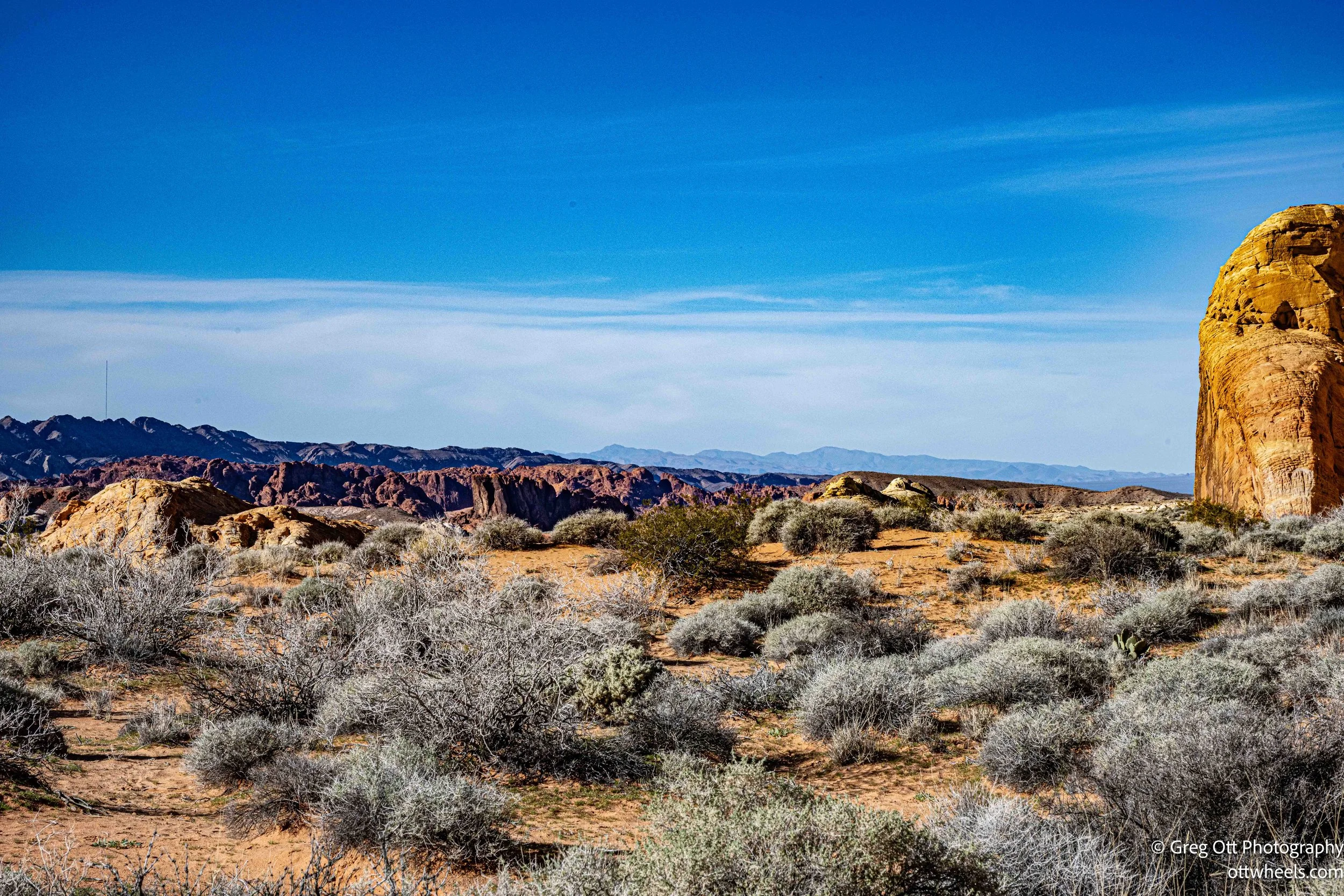
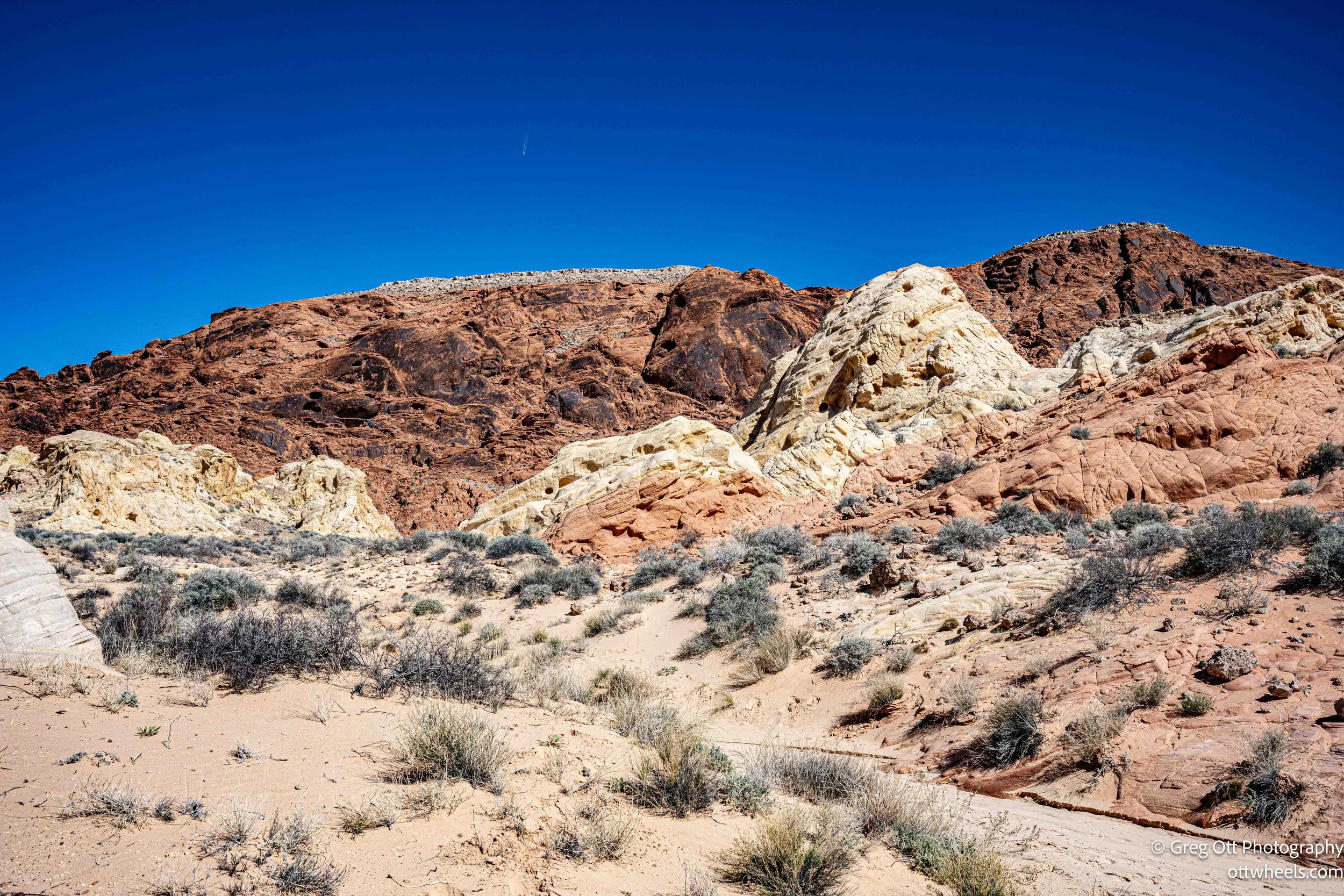
As I made my way back toward the van, I glanced out across the brush and spotted a bighorn sheep moving slowly through the desert. Another couple had seen it too, and the three of us stood quietly, watching. It was too far away for a worthwhile photo, even with a long lens, but that didn’t really matter. We all kept hoping it would climb up onto the rocks for a better view. It stayed low, close to the road, and I couldn’t help thinking about the traffic. Cars move quickly along that stretch. I just hoped it wasn’t planning to cross.
Back On The Road
By late afternoon, it was time to move. I still had a few hours of driving ahead of me to reach Cathedral Gorge State Park, and the light was already starting to fade. The desert changes quickly at that hour. Colors flatten out, distances stretch, and everything begins to look a little farther away than it really is. I settled in behind the wheel and let the miles roll by.
It was fully dark by the time I neared the park. Rather than pull in blind, I found a BLM turnout about fifteen minutes away from the park, just off US-91. It wasn’t much — a wide gravel pull-off with a large pile of fresh stone dumped nearby, probably staged to be spread along the dirt road. It was Saturday, and I figured no one would be working on a Sunday morning, so I wasn’t worried about being in the way. Traffic on US-91 was almost nonexistent. It wasn’t glamorous, but it was flat, legal, and close enough. That’s about all I ever need.