Valdez Old Town
Yesterday it rained heavily all day. It turned out to be the perfect excuse to stay put, do laundry, clean up the van, and tackle the 1,700-plus photographs I'd taken during the previous two days around Columbia and Meares Glaciers. As always, most would end up in the recycle bin. Wildlife bursts, multiple compositions, slight focus misses—it all adds up. My goal is never to keep hundreds of photographs. If I walk away with five or ten images I'm genuinely proud of, it's been a successful trip.
This morning wasn't much different. Rain hammered the roof of the van again, and the bike ride I'd hoped to do wasn't going to happen. Instead, I remembered I still had a complimentary ticket to the Valdez Museum. I'd also been wanting to visit the original site of Valdez, the town destroyed by the 1964 Good Friday Earthquake. Sometimes lousy weather points you toward exactly the right activity.
After lunch, the rain eased enough to venture out.
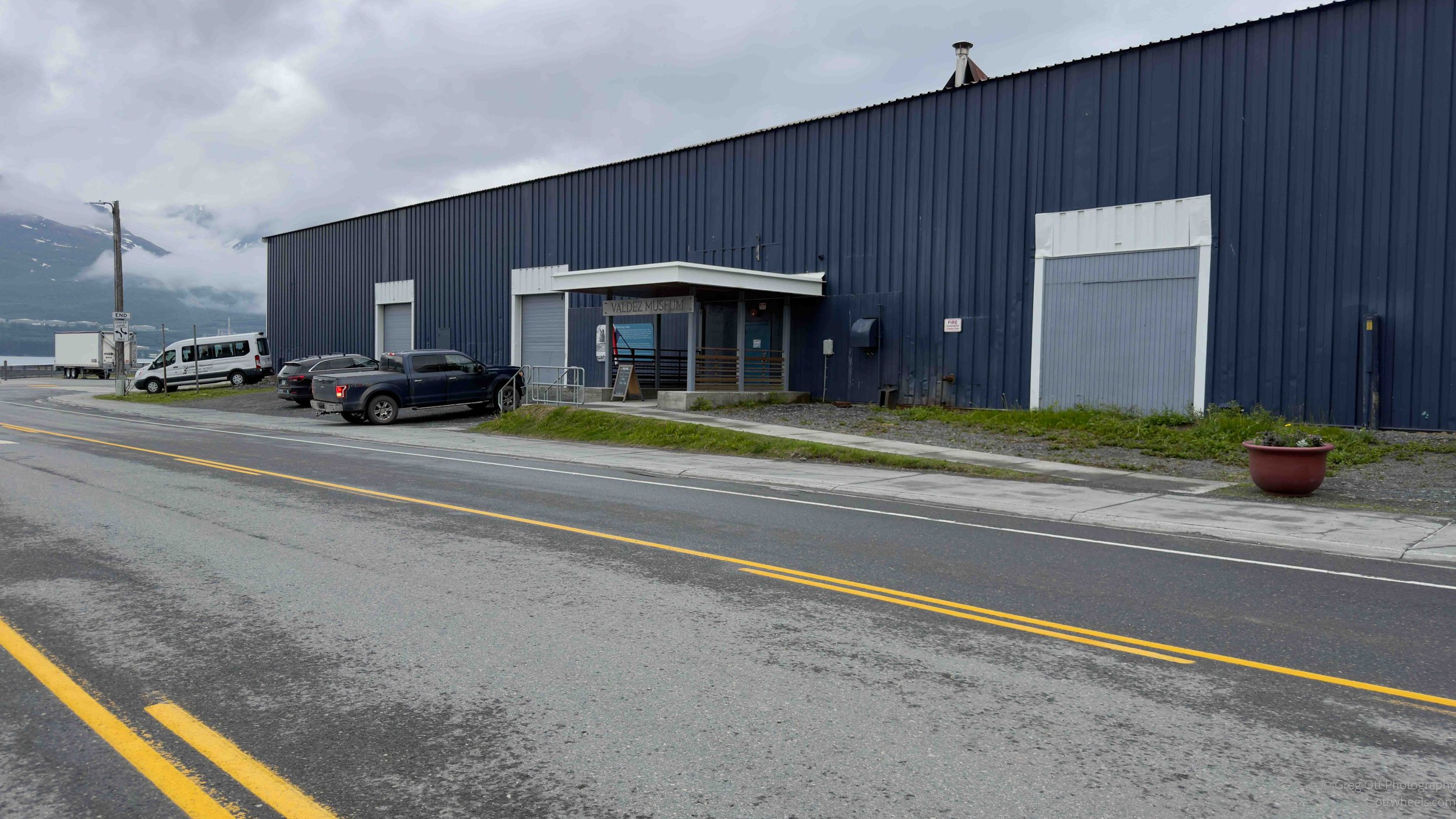
Valdez Museum
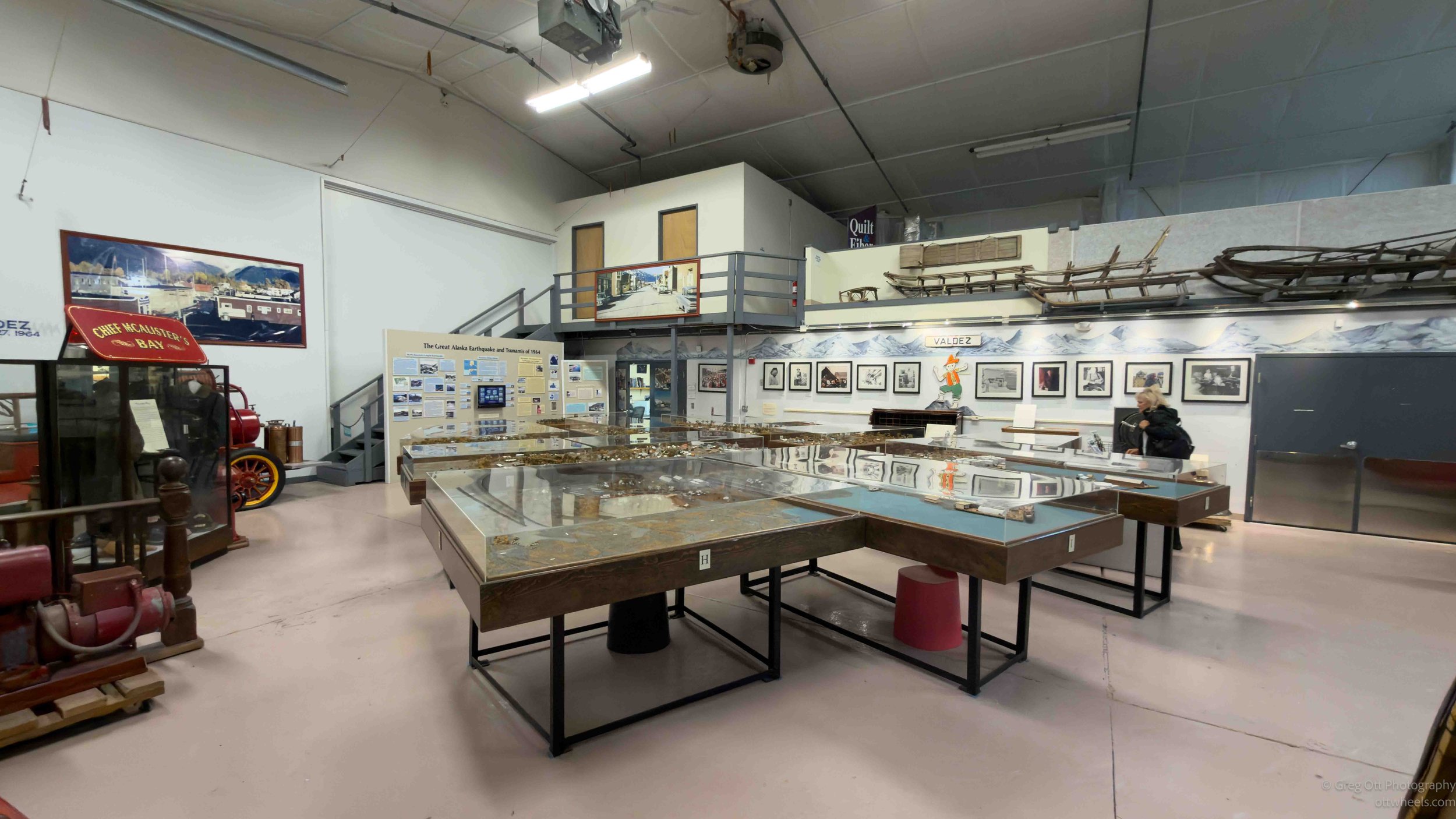
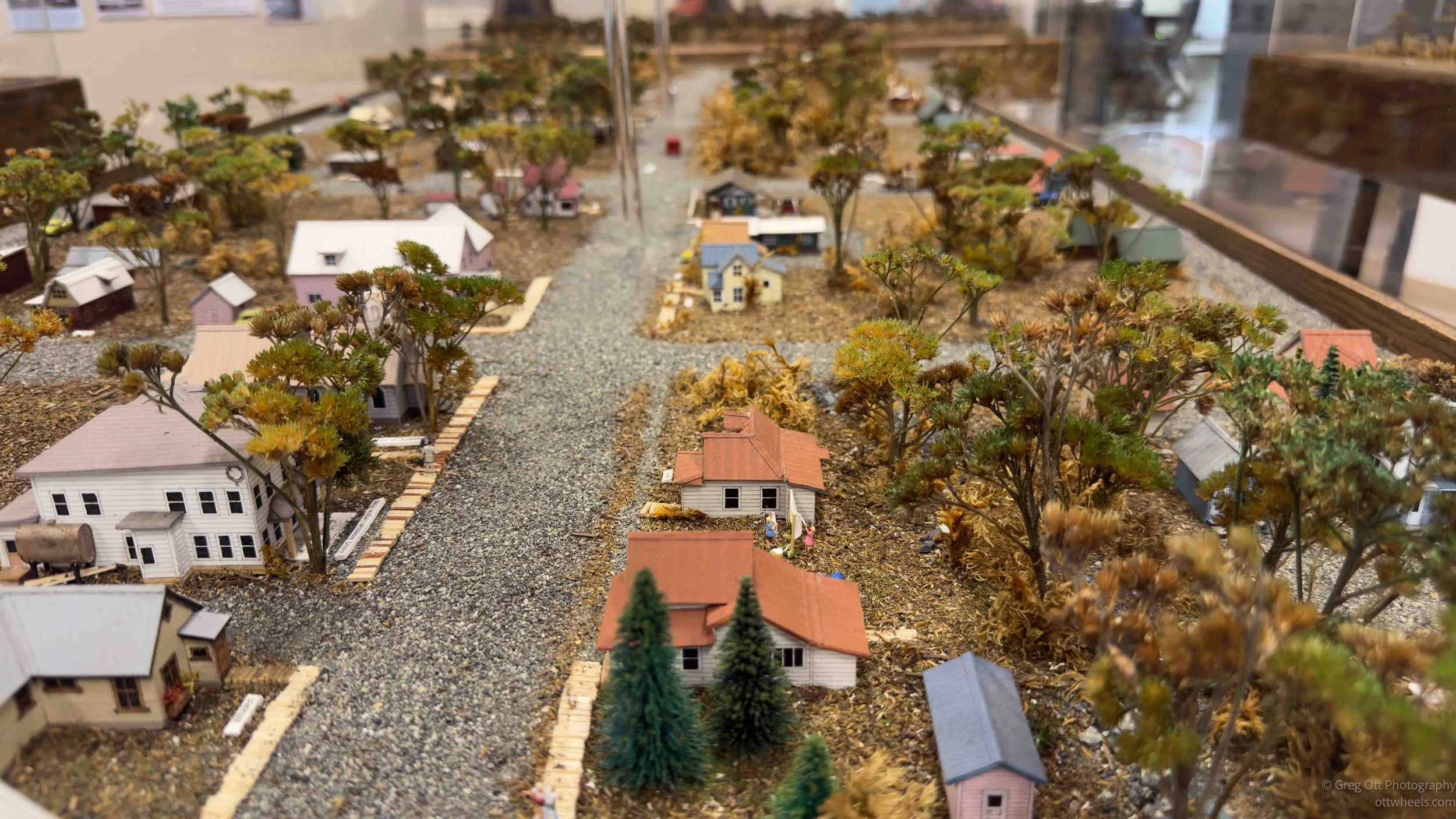
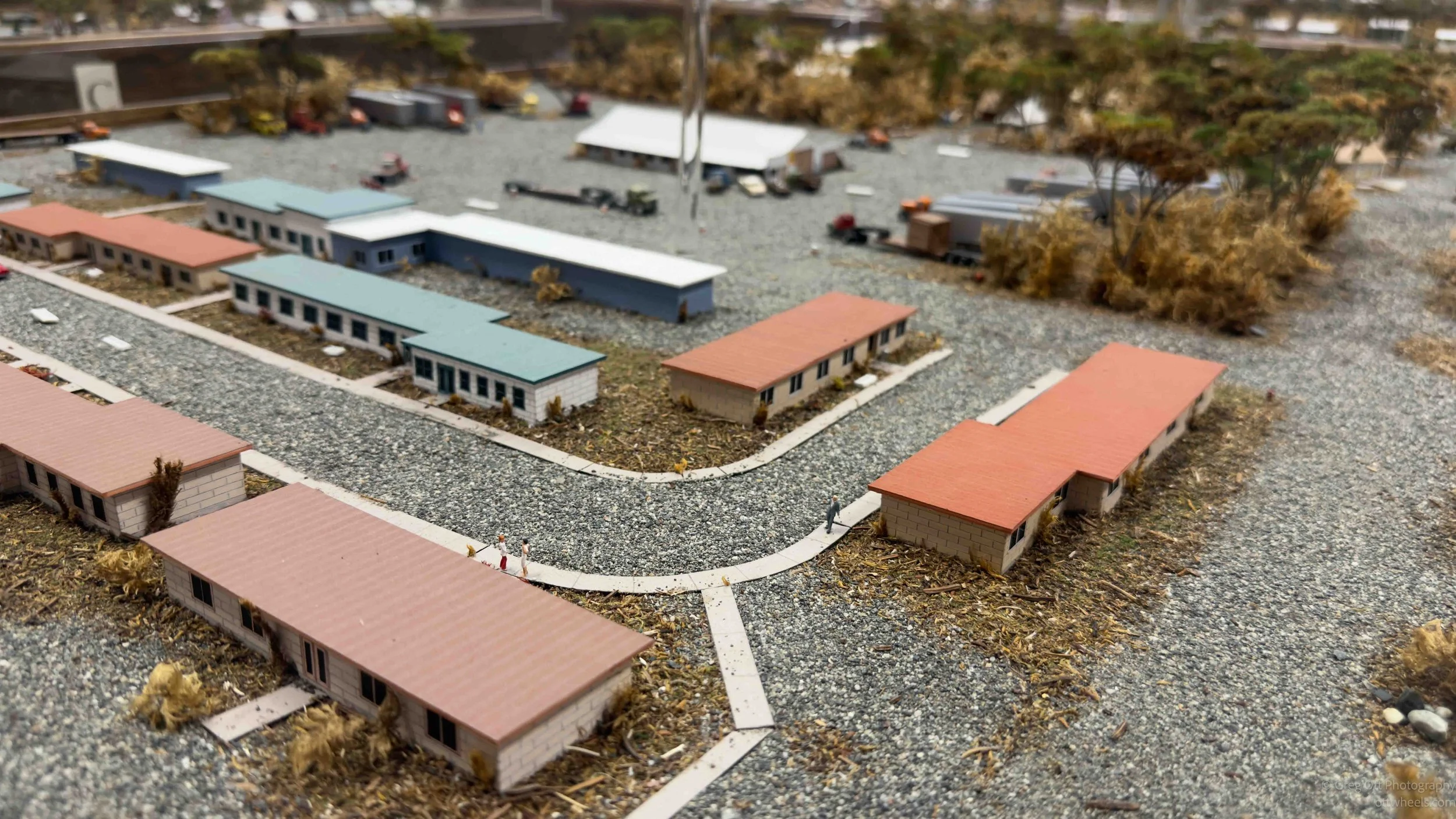
The museum is about the old town before it was moved to the new site. It turned out to be much more than I expected. Rather than simply displaying photographs and artifacts in glass cases, a model of old Valdez had been recreated so you can walk around the town. Storefronts, businesses, homes, and exhibits tell the story of a frontier town that grew from a rough Gold Rush settlement into the transportation hub of south-central Alaska. Everywhere you look are reminders that this wasn't an abstract historical event. These were real people running stores, raising families, attending church, and building a community that disappeared in less than five minutes.
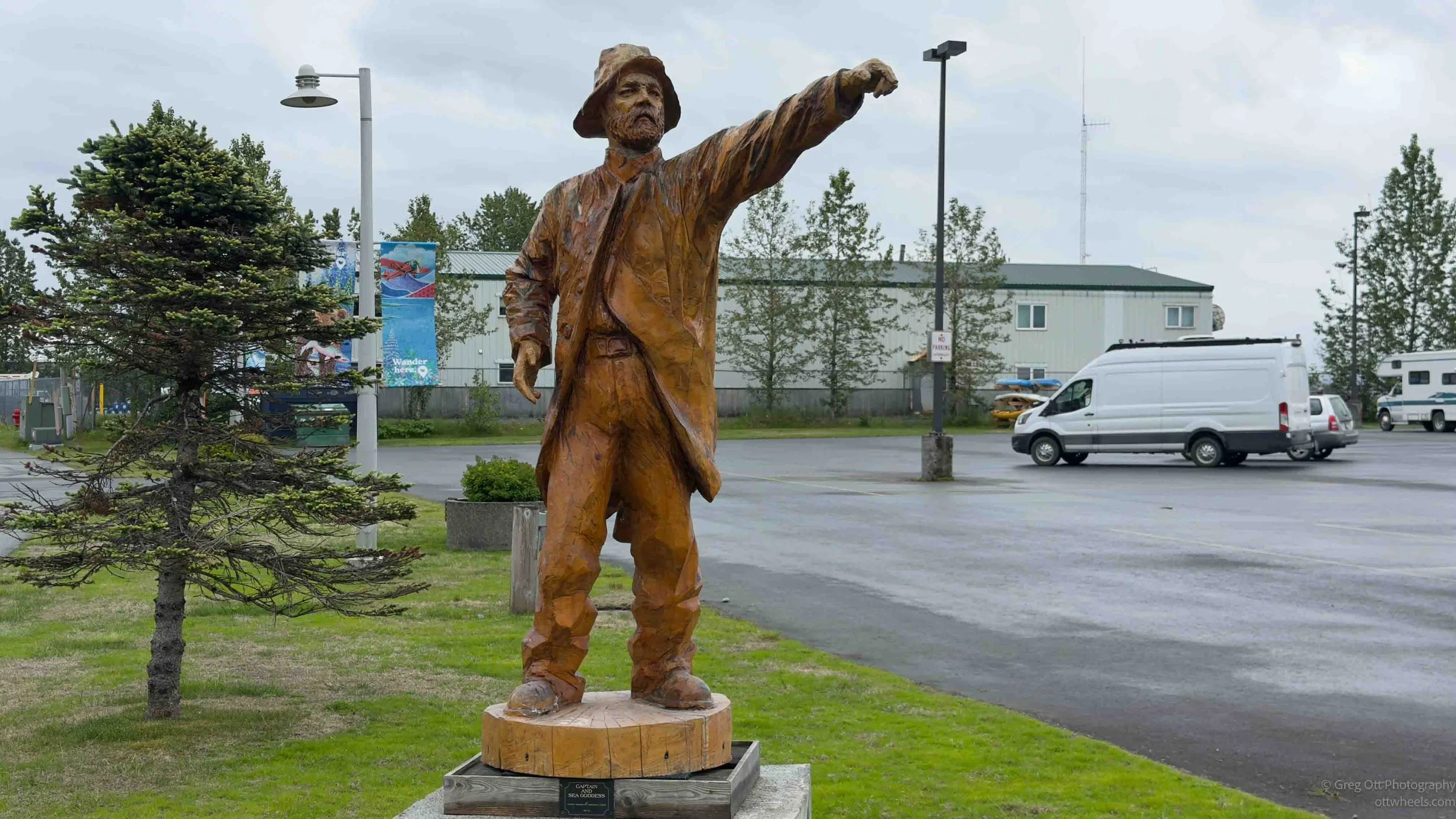
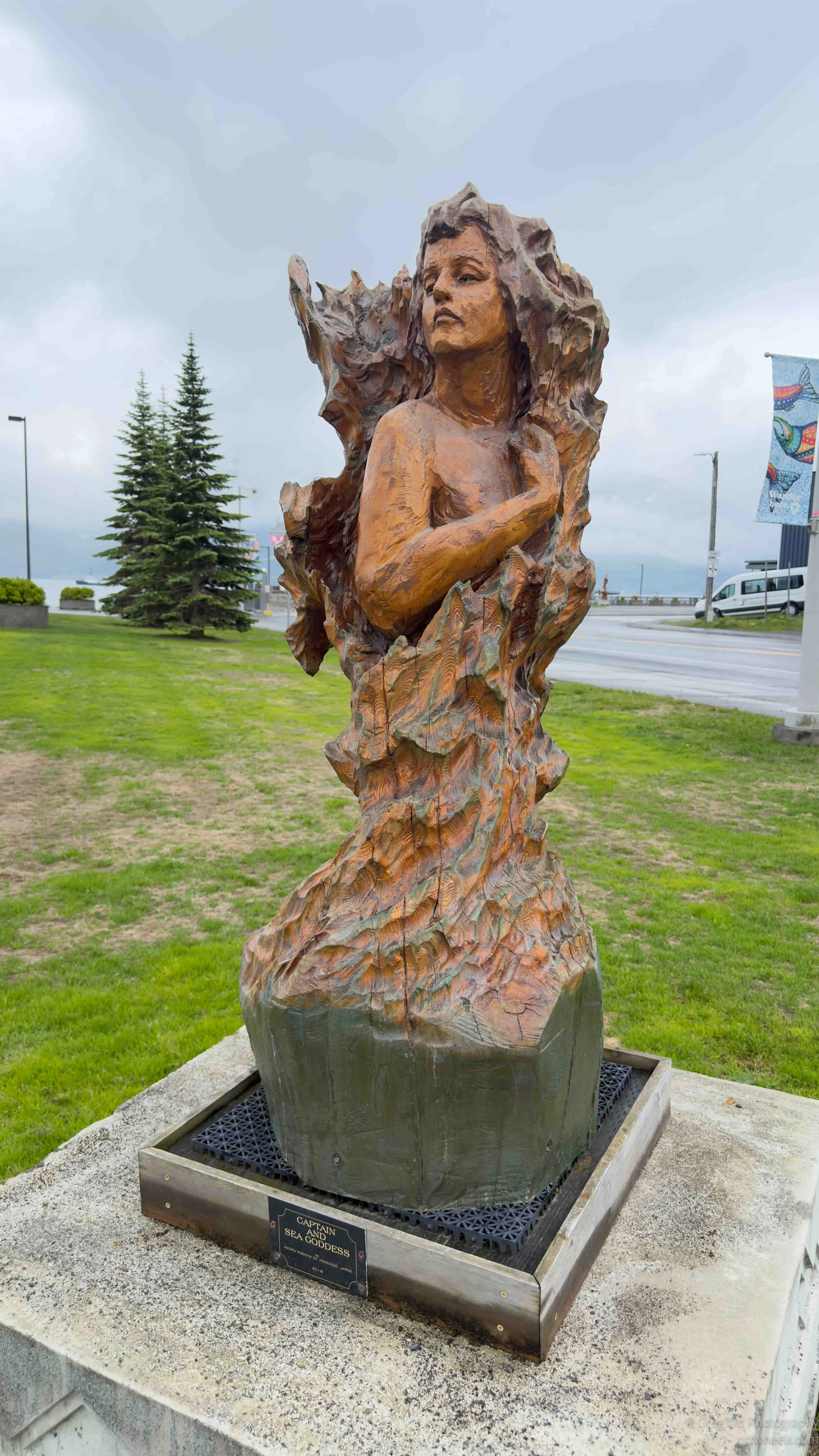
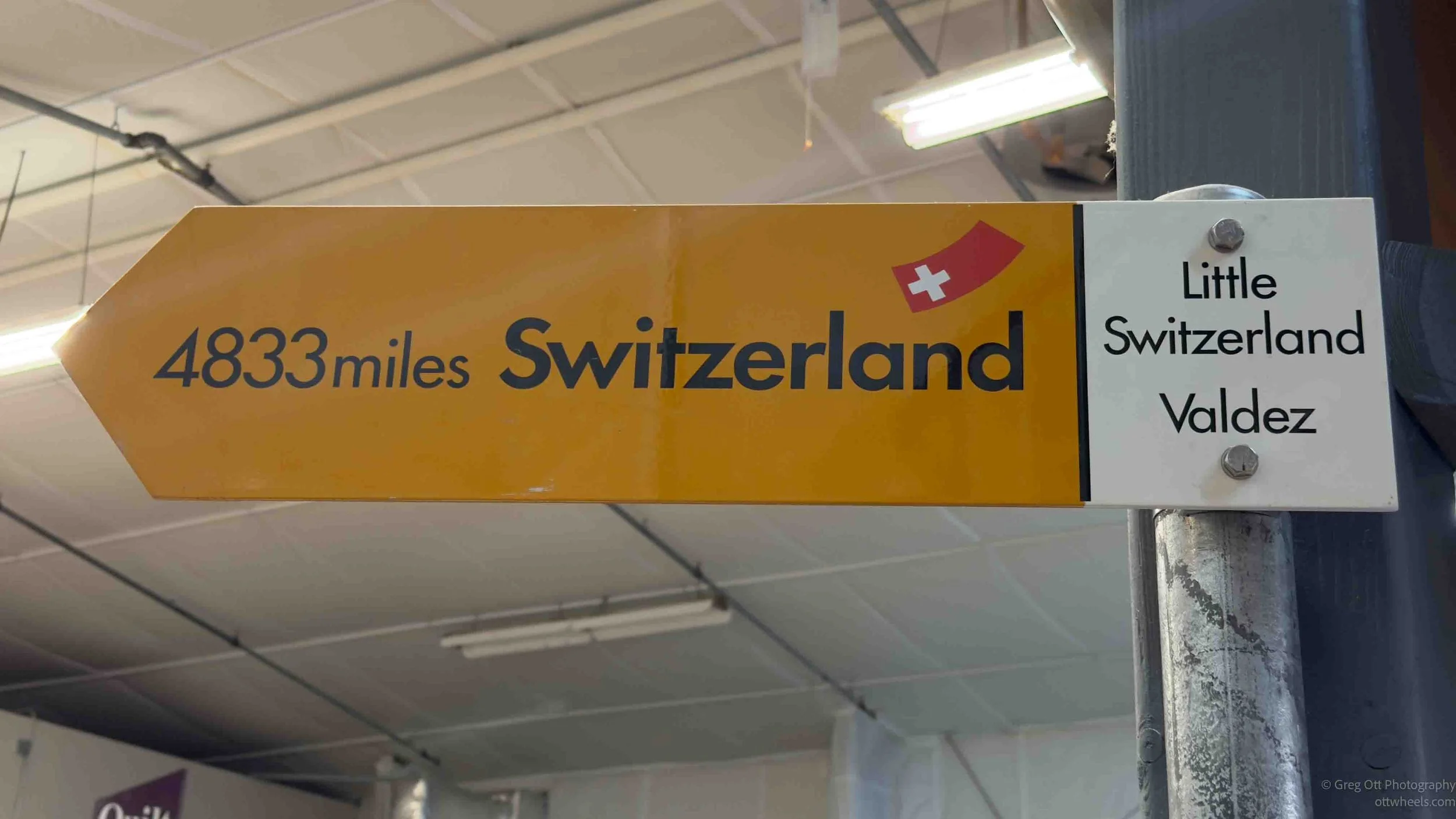
At the entrance, there was a Swiss-style directional sign. I asked someone what it meant, but they weren’t sure why it was there. I later learned that Valdez does not have an official sister city in Switzerland. The connection is more informal. Because of its dramatic mountain setting, Valdez is often called “Little Switzerland” or the “Switzerland of Alaska.”
The museum also does an excellent job explaining how Valdez came to exist in the first place. During the Klondike Gold Rush, thousands of stampeders poured through the town hoping to reach the Yukon. Most never found their fortune, but enough stayed behind that Valdez slowly evolved into a permanent community. Its location made perfect sense for commerce, but not for geology. The town had been built on thick layers of soft glacial sediments deposited over thousands of years. Nobody understood at the time how dangerous that foundation would eventually prove to be.
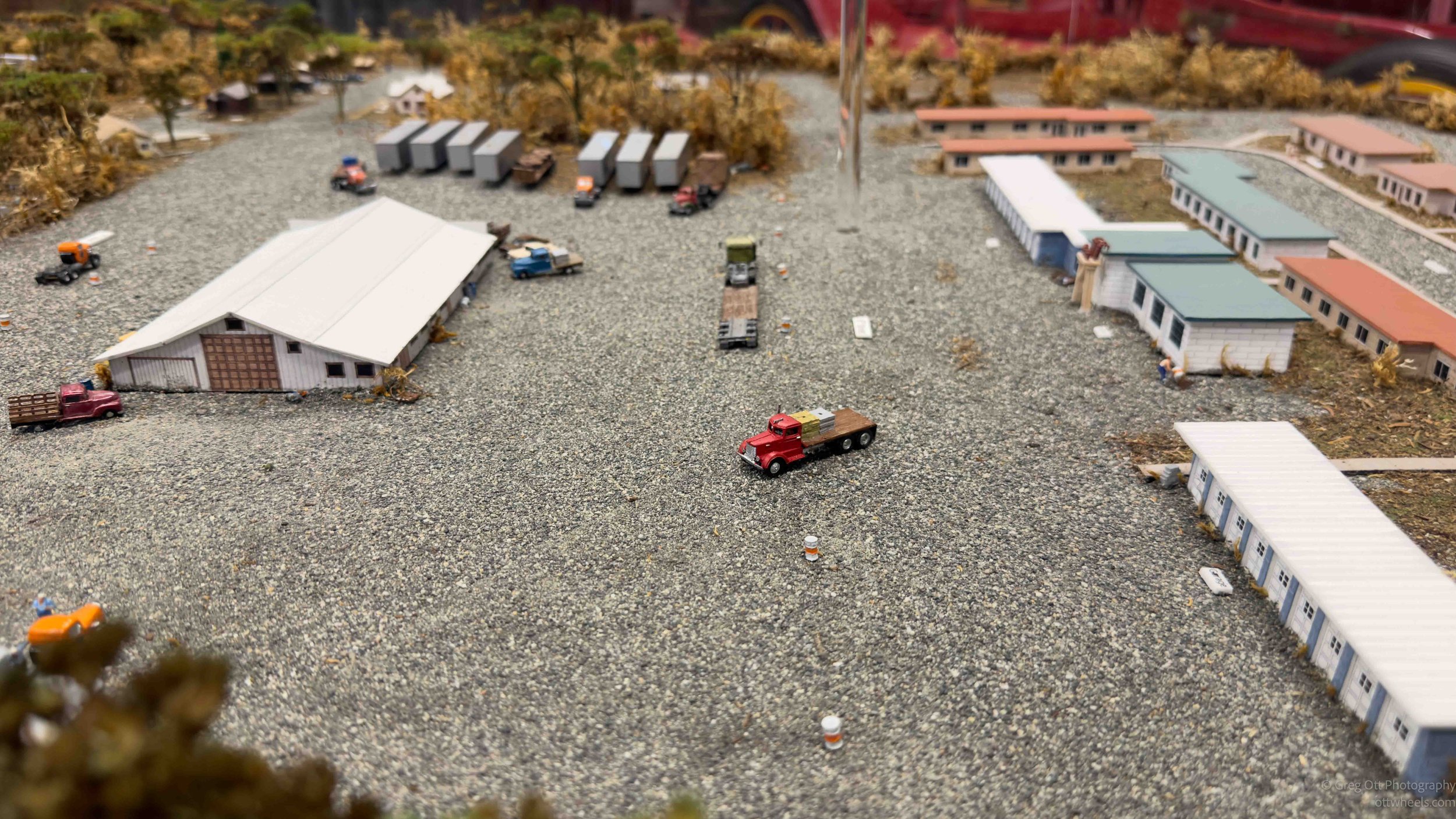
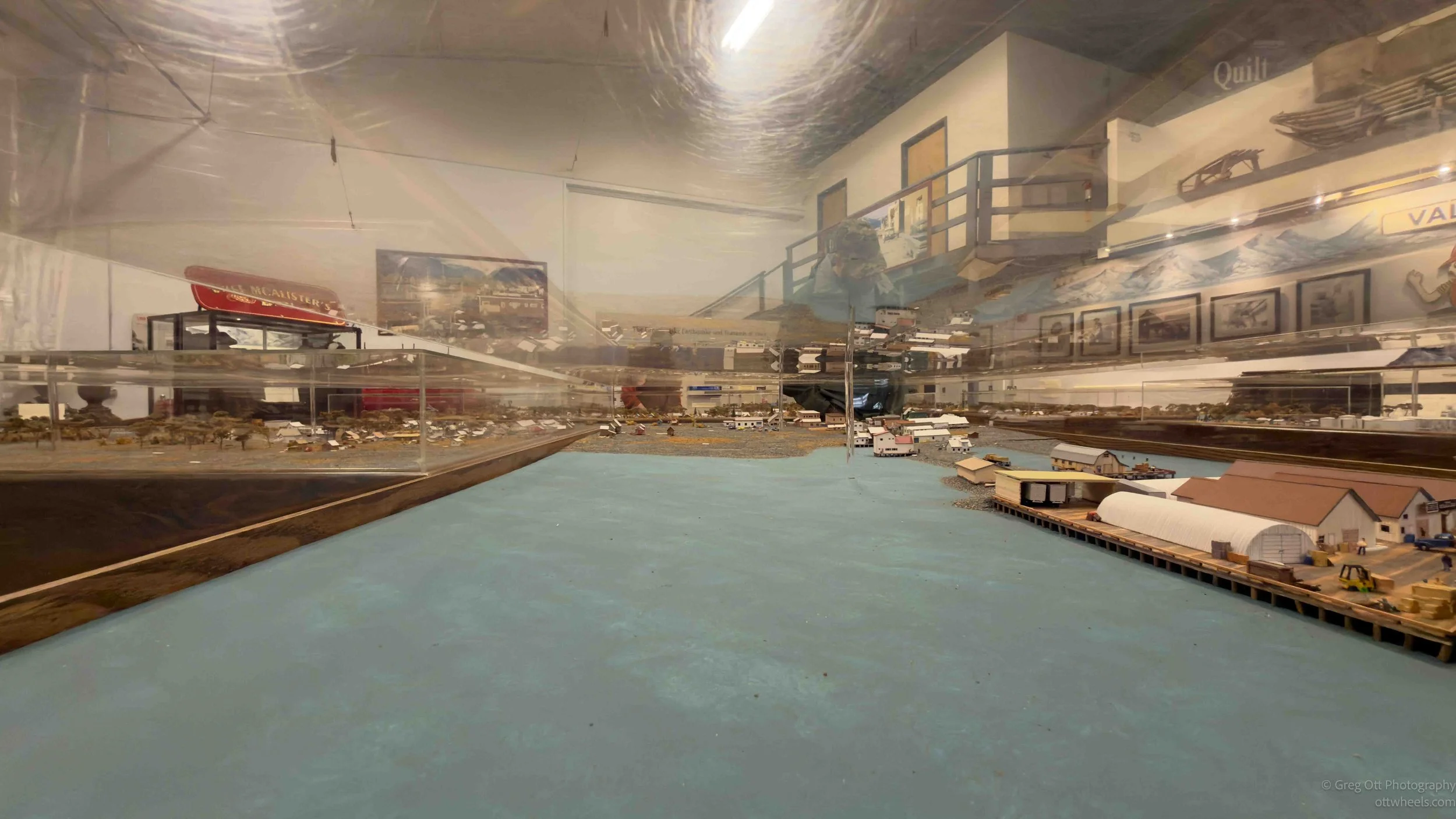
A family wandered through the exhibits while I was there. One woman quietly remarked, "My dad told me he had been standing on the dock earlier that day. He got off before the earthquake." You could almost see her imagining how differently her family's history might have turned out.
At the far end of the museum was a small video room with interviews from people who had survived the earthquake. A grandmother and her granddaughter were already watching when I walked in. By the time I sat down, several other visitors had gathered behind us. There were only two chairs and maybe a 26-inch television, yet nobody left. By the end, nearly ten of us were crowded around the screen.
One man described how he and a friend had been on the city dock when the earthquake began. Something didn't feel right, so they decided to walk away. Moments later, the entire dock collapsed into Prince William Sound. Everyone who remained on it was killed.
Another interview came from the boy’s mother whose four children had all disappeared during the chaos. She and her husband managed to find two of them before being forced to evacuate to higher ground as waves continued moving through town. Families were scattered across evacuation sites, making communication almost impossible. Three agonizing days later, they were finally reunited with all four children in Glennallen including the boy near the dock. She ended the story simply by saying, "We were fortunate." It was an understated sentence carrying unimaginable weight. Many families never had that ending.
Those interviews stayed with me far more than any artifact in the museum. There was no dramatic narration or cinematic music—just ordinary people quietly describing the worst day of their lives. Listening to them transformed the earthquake from something I had read about into something deeply personal.
Every hour the museum shows a forty-minute documentary covering the history of Valdez before, during, and after the earthquake. It begins with the earliest settlers, the Klondike Gold Rush, and the town's gradual development into one of Alaska's important ports. The film then explains the unseen problem beneath the town. Old Valdez had been built on unstable glacial sediments that behaved almost like liquid when violently shaken.
When the magnitude 9.2 Good Friday Earthquake struck on March 27, 1964, the waterfront simply gave way. Huge sections of shoreline slid into Prince William Sound, taking the docks, warehouses, railroad tracks, and dozens of people with them. One cargo ship moored at the dock, the SS SS Chena, was suddenly left without a dock beneath it as the shoreline disappeared into the bay. Waves generated by the underwater landslides swept through what remained of town, compounding the destruction.
Engineers later determined that rebuilding on the original site would be unsafe. The solution came from an unexpected act of generosity. The descendants of two of Valdez's founders, George Cheever Hazelet and Andrew Jackson Meals, revived their families' land partnership and donated more than 110 acres of stable ground about four miles away. That gift made it possible for an entirely new Valdez to be built.
The film also covers one of the largest building relocation efforts I've ever heard about. Rather than abandoning everything, dozens of homes and businesses were lifted onto trailers and slowly hauled to the new townsite. Others were too badly damaged or unsafe to move and were demolished. Looking at present-day Valdez, it's difficult to imagine that much of what you see today was physically moved there from another location.
Old Town Valdez
After leaving the museum, I drove to the site of Old Valdez itself. There is a self-guided walking tour with interpretive signs marking where churches, businesses, hotels, bars, the post office, and homes once stood. The rain had started again, so my "walking tour" became more of a slow driving tour.
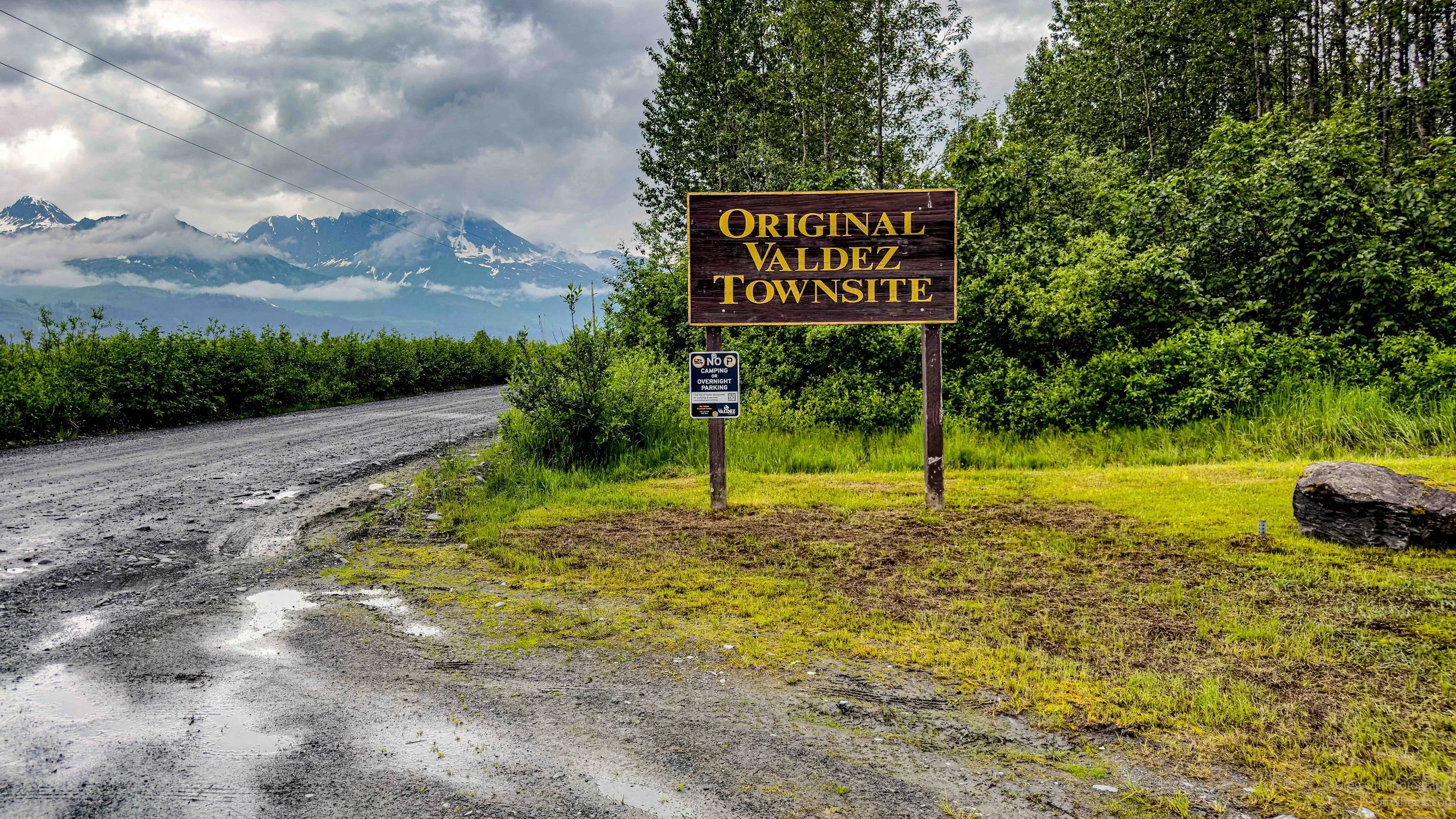
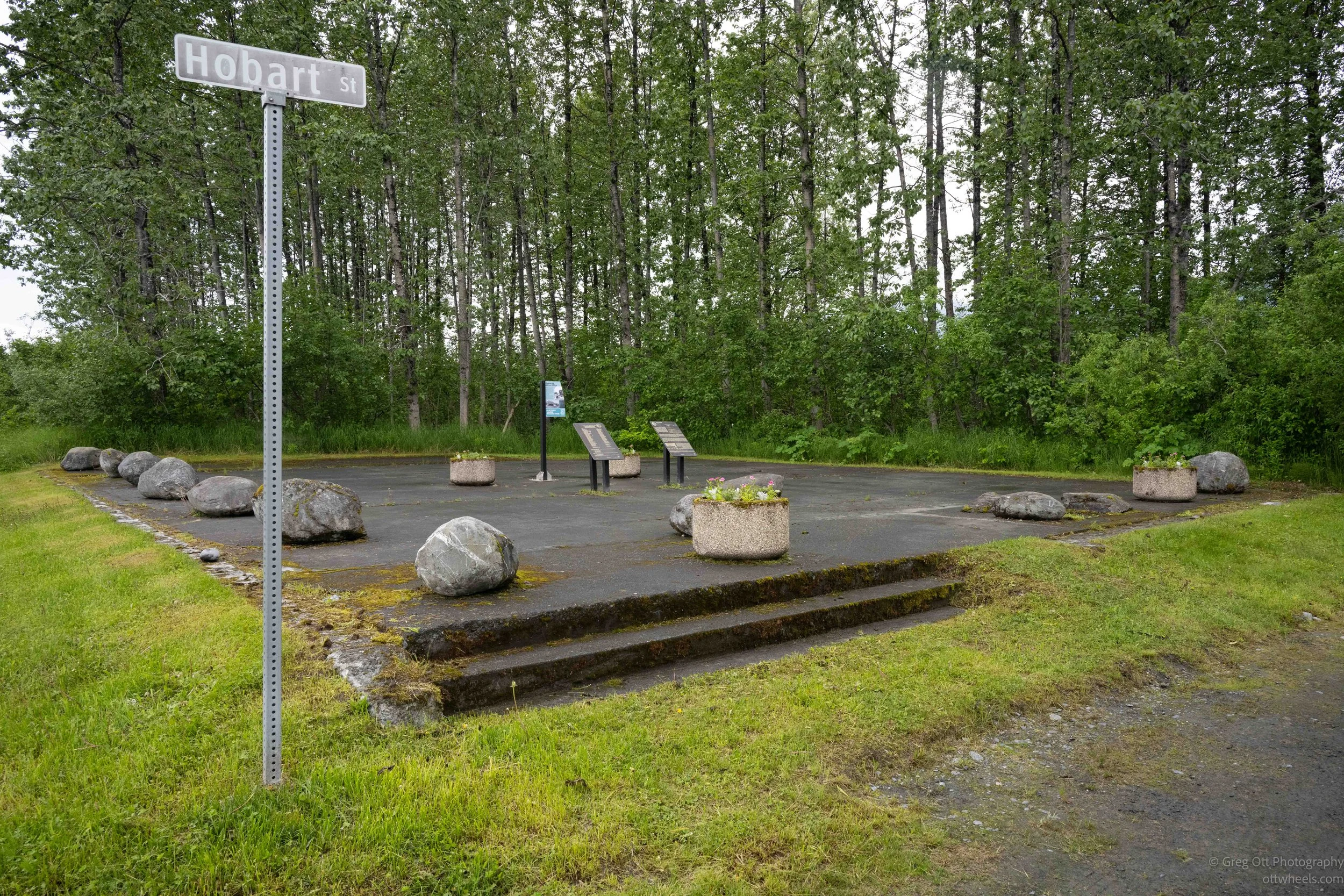
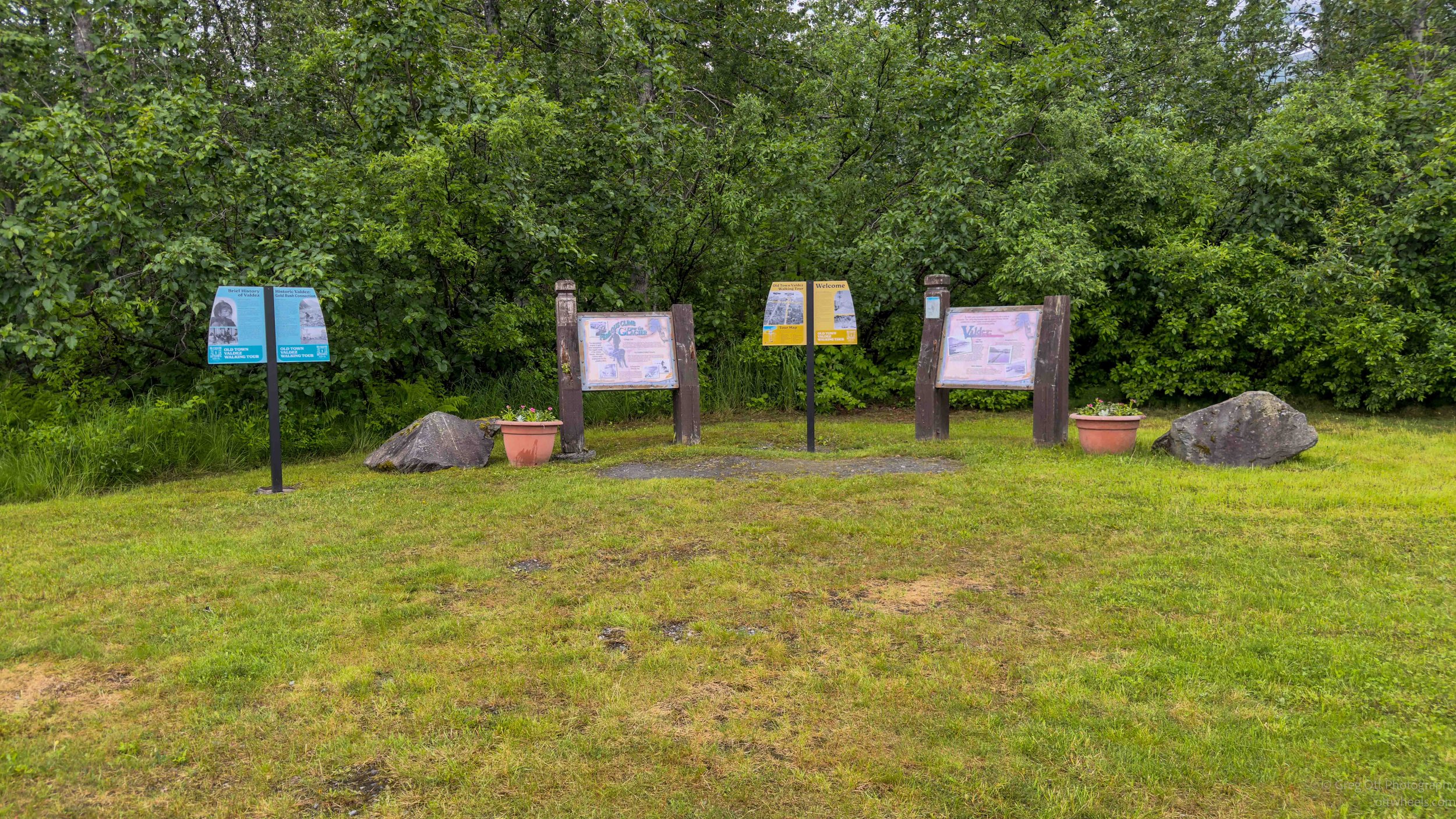
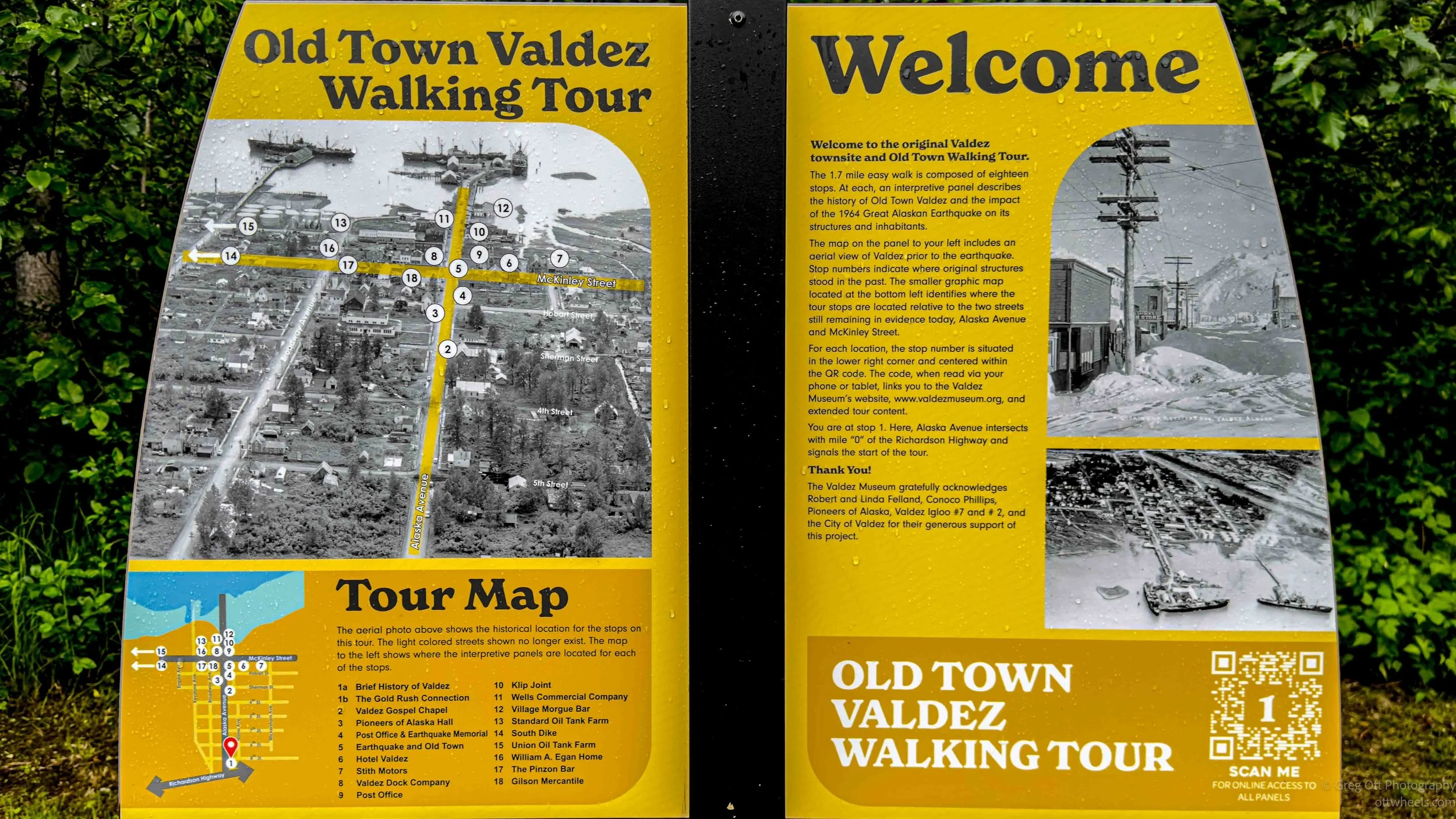
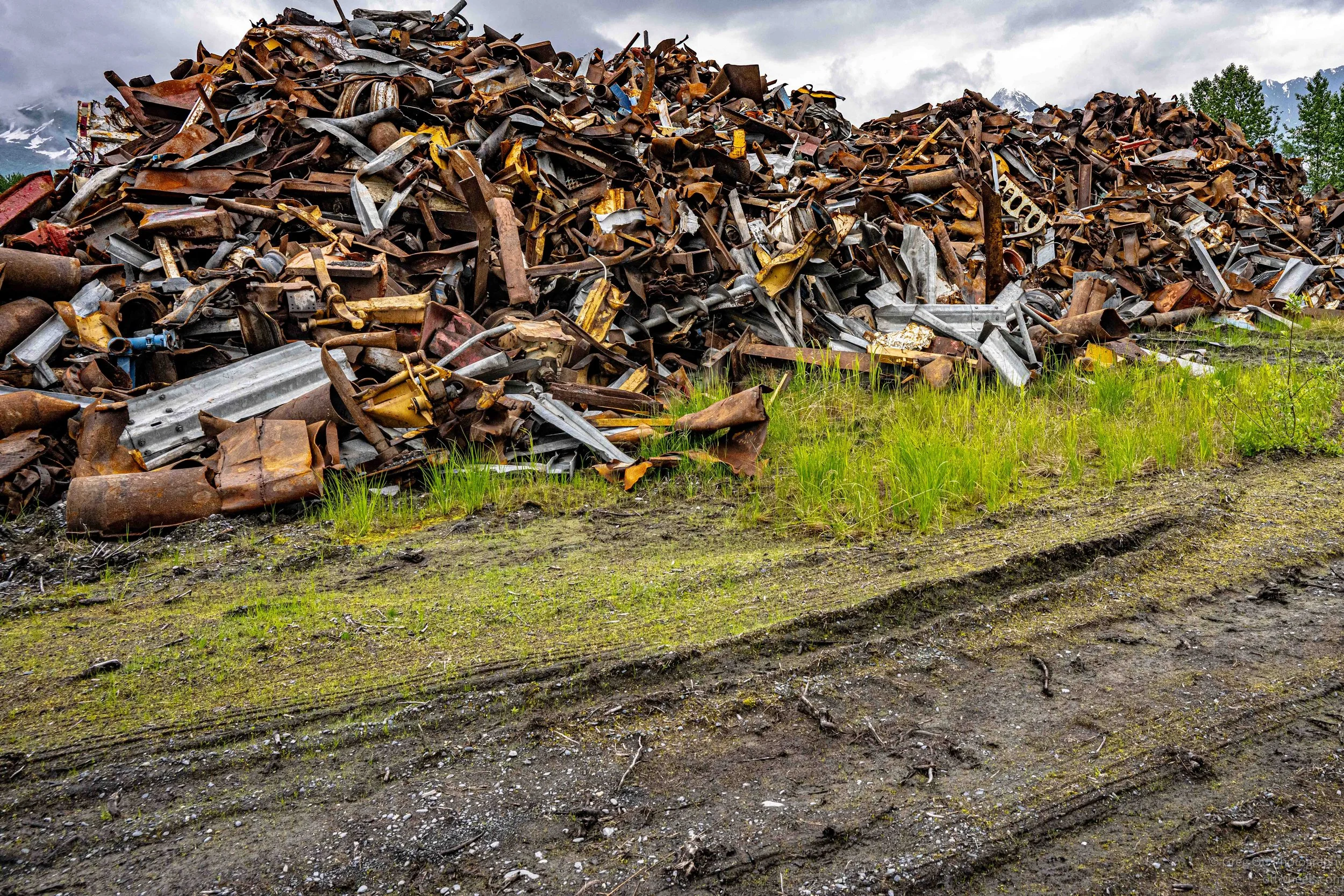
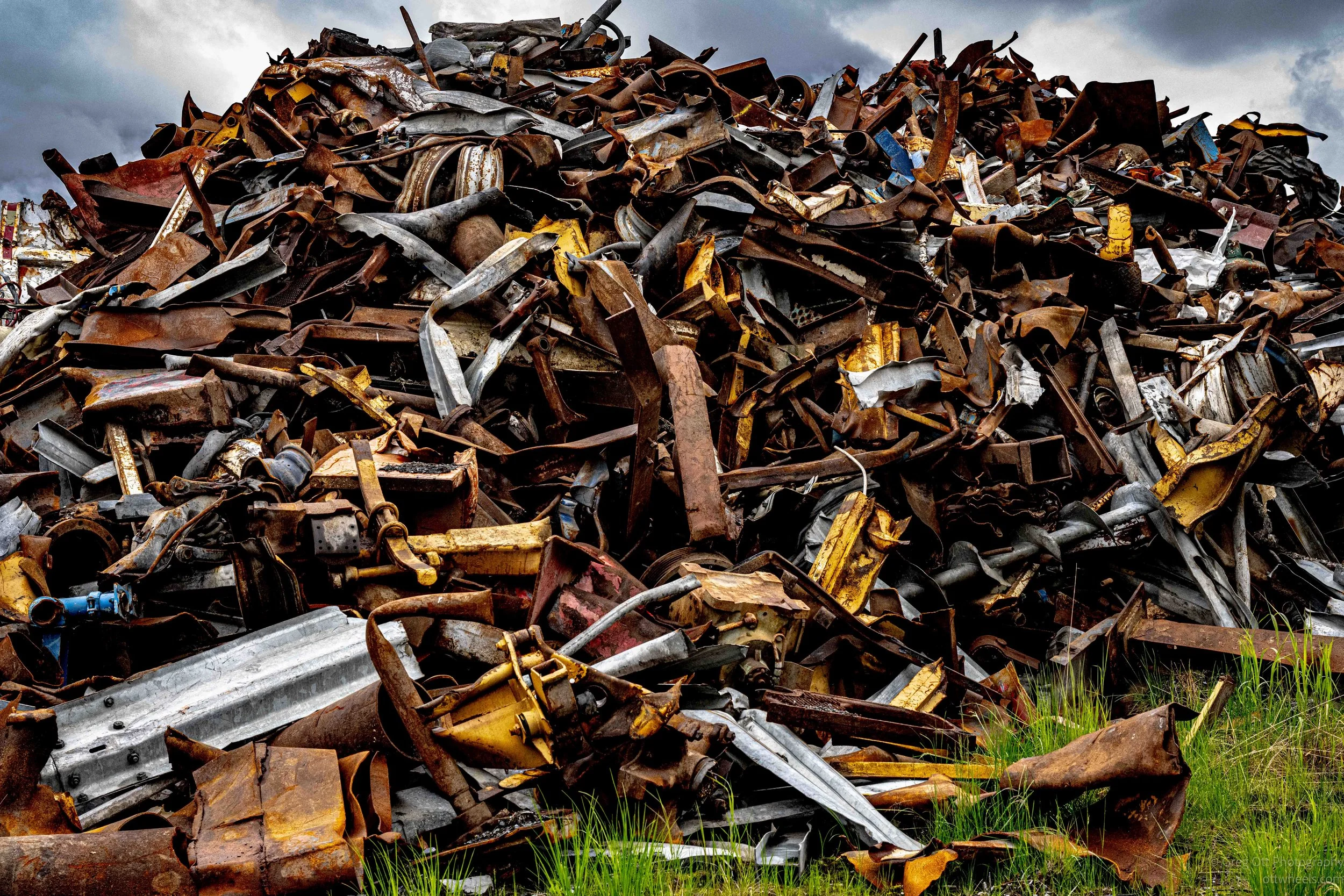
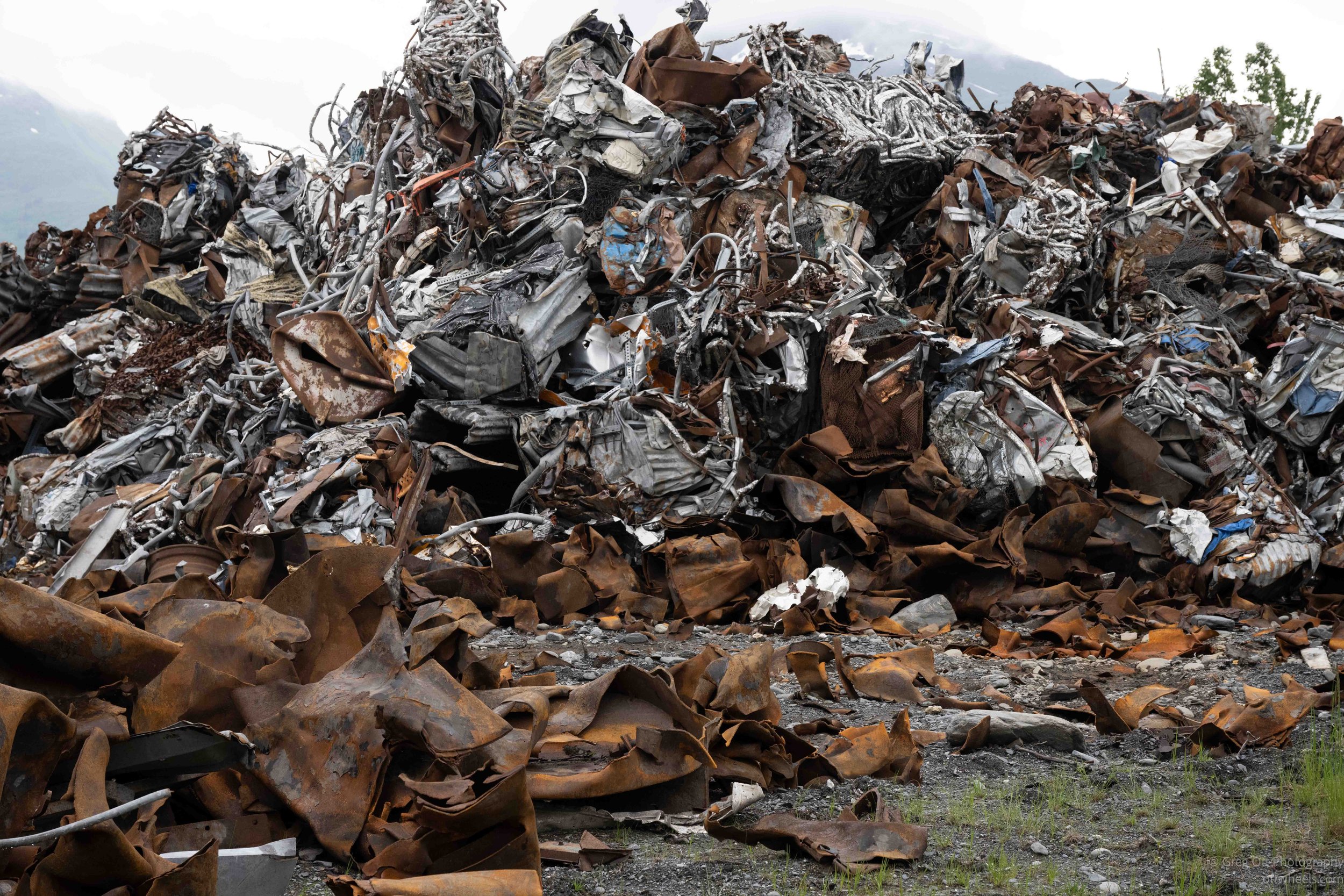
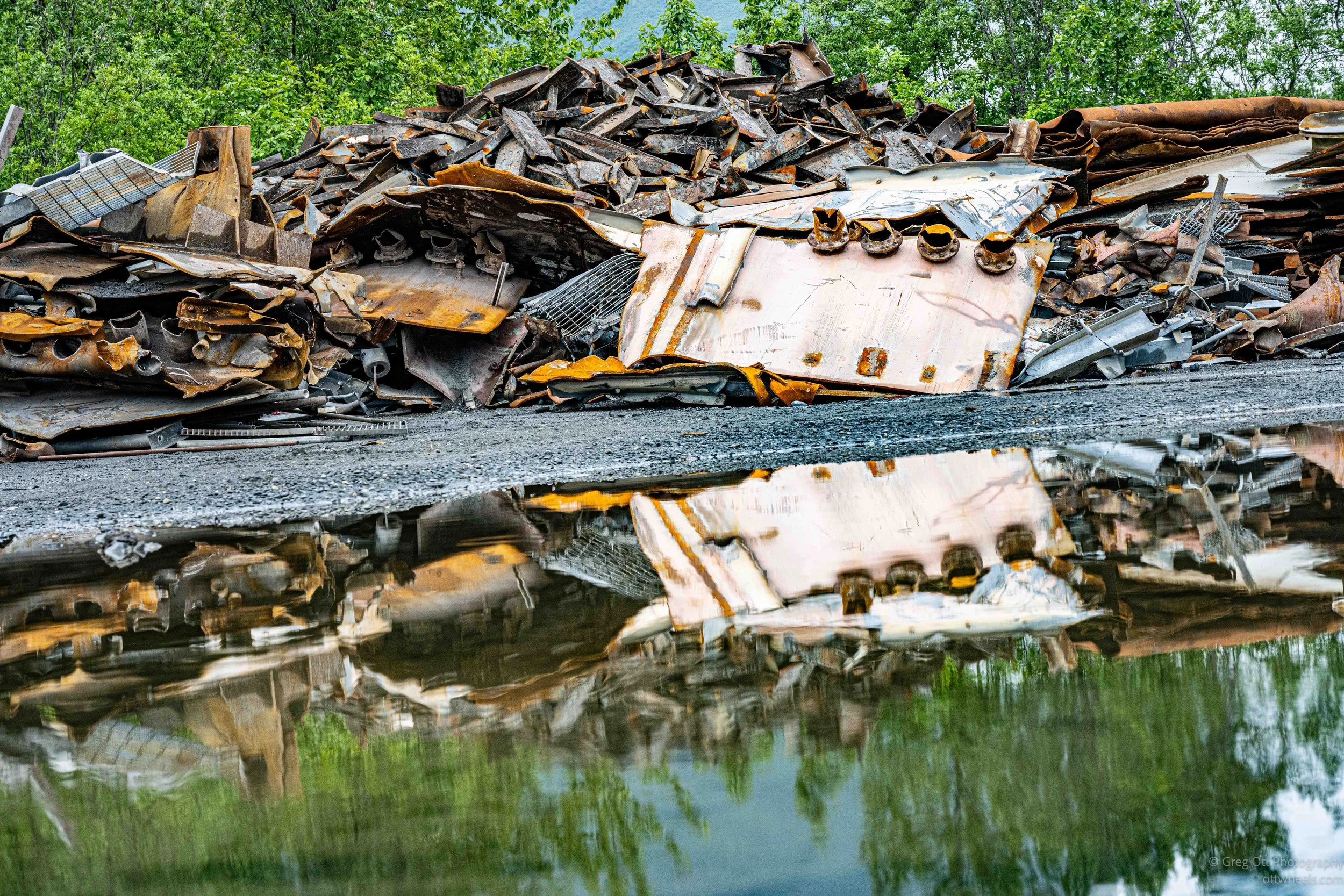
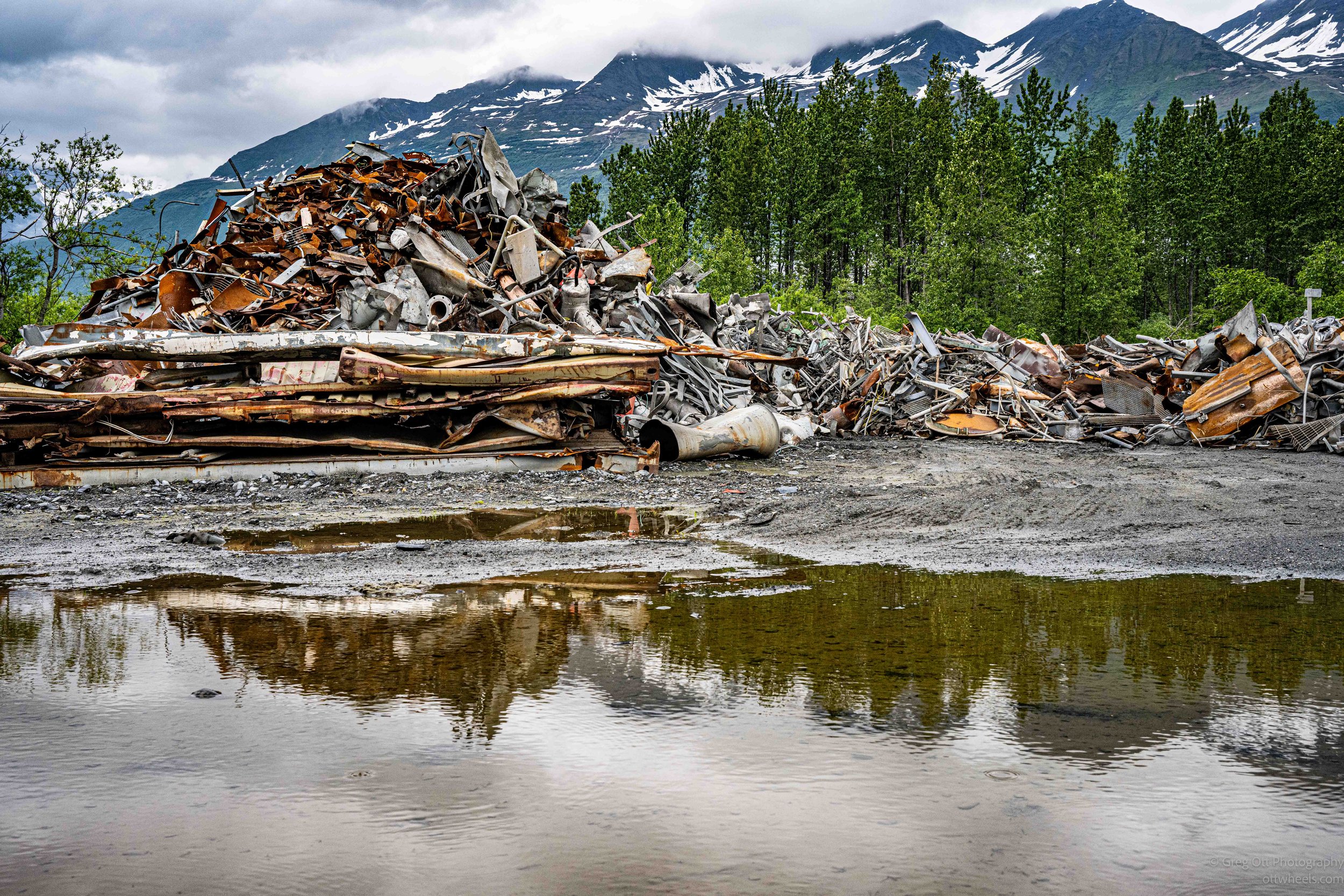
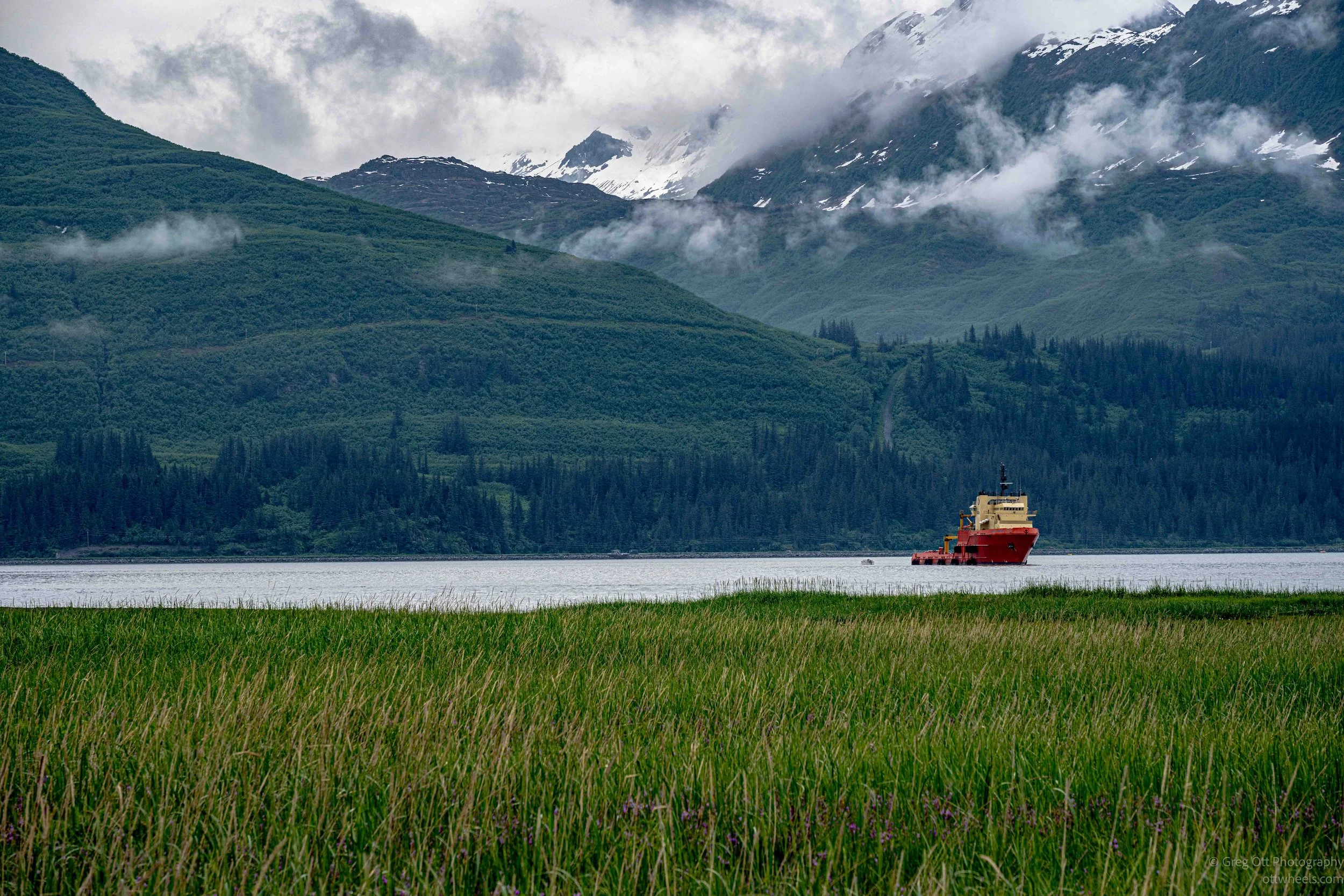
The strange part is how empty it feels. Looking across the grassy fields today, it is difficult to picture an entire town once occupying this space. The plaques are all that remain to tell visitors where the streets ran and where people built their lives. Without them, you'd never know thousands of people once called this place home. Nearby, there were mounds of various materials. I’m not sure if these came from the old town or are part of the town dump.
The plaques made it clear that Old Valdez wasn't just another small frontier town. It had churches, social halls, hotels, banks, grocery stores, a telegraph office, barber shop, post office, dock company, and enough businesses to support a thriving community. Reading them one after another, you begin to realize that this wasn't simply a collection of buildings that disappeared in the earthquake. It was an entire town where people built careers, raised families, argued politics, attended church on Sundays, and knew one another by name. Looking across the open fields today, it's difficult to reconcile the quiet landscape with the busy streets shown in the old photographs on each sign.
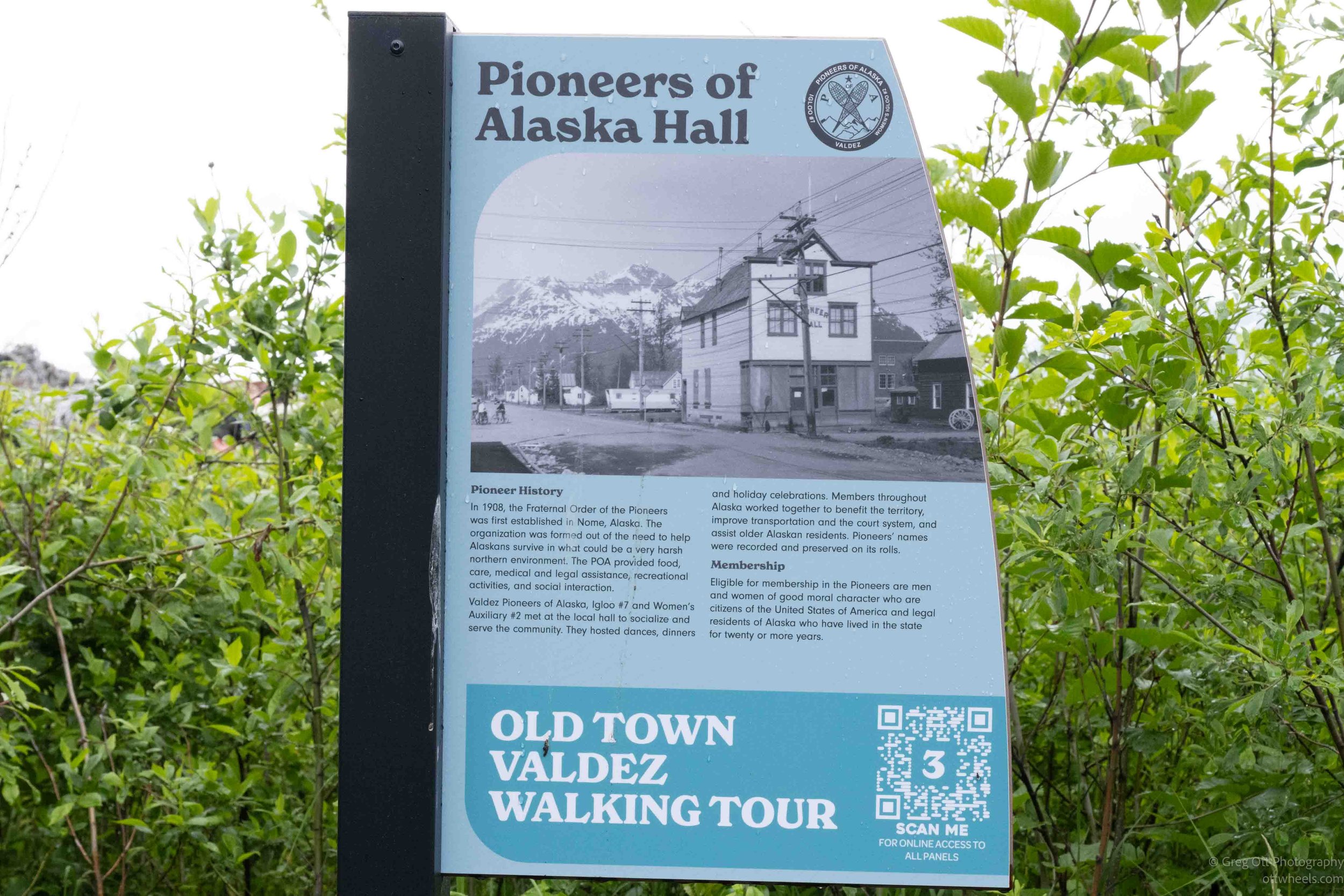
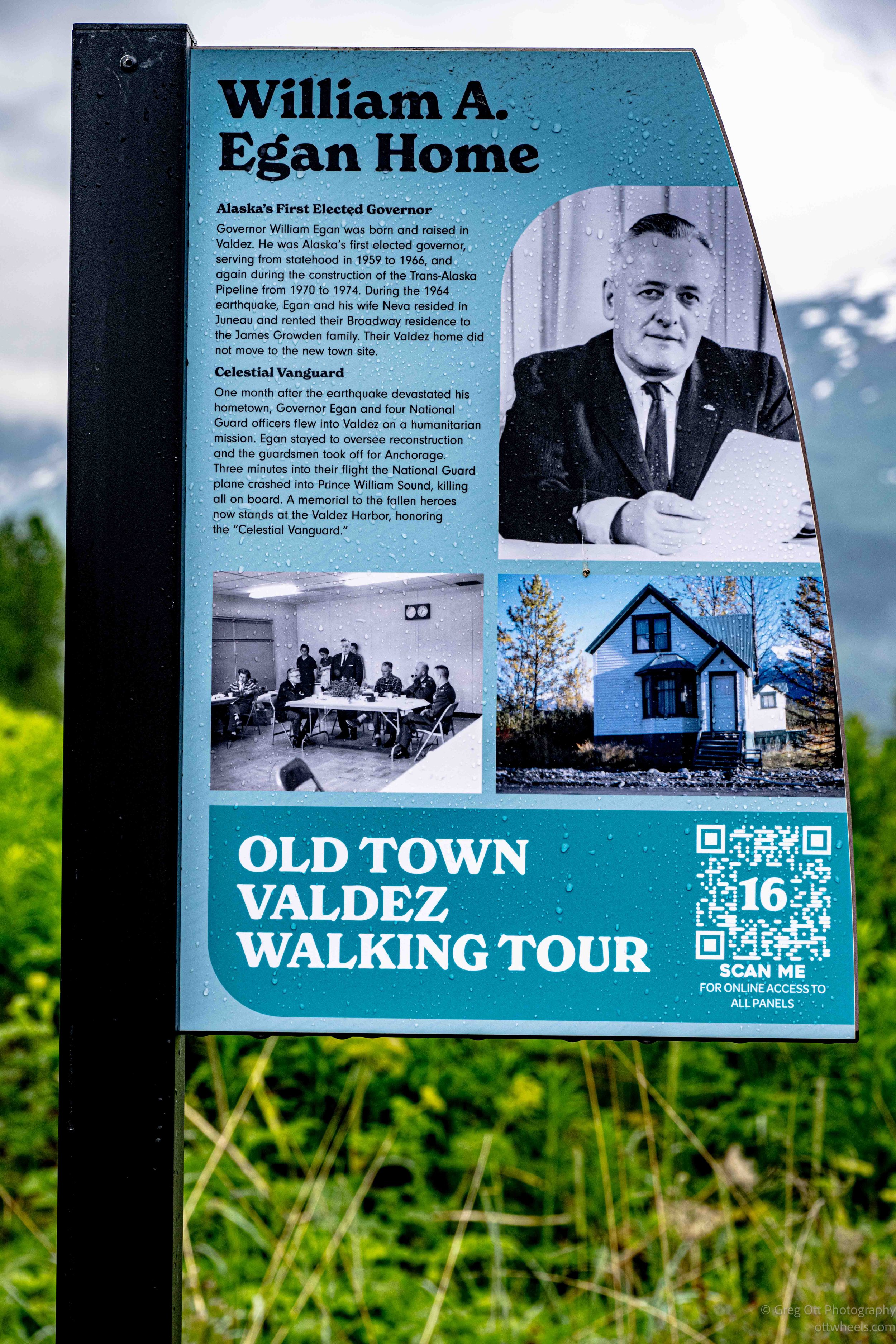
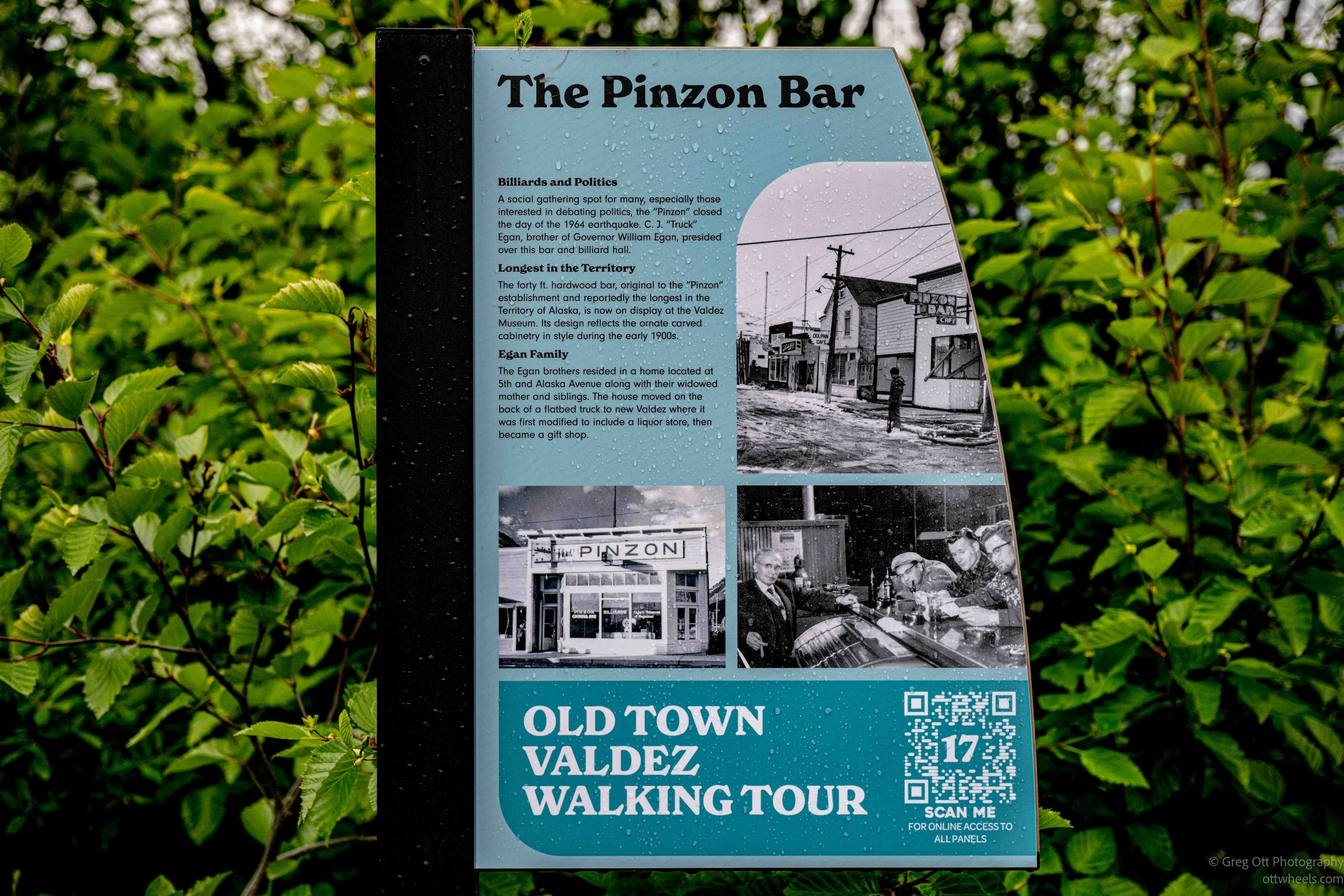
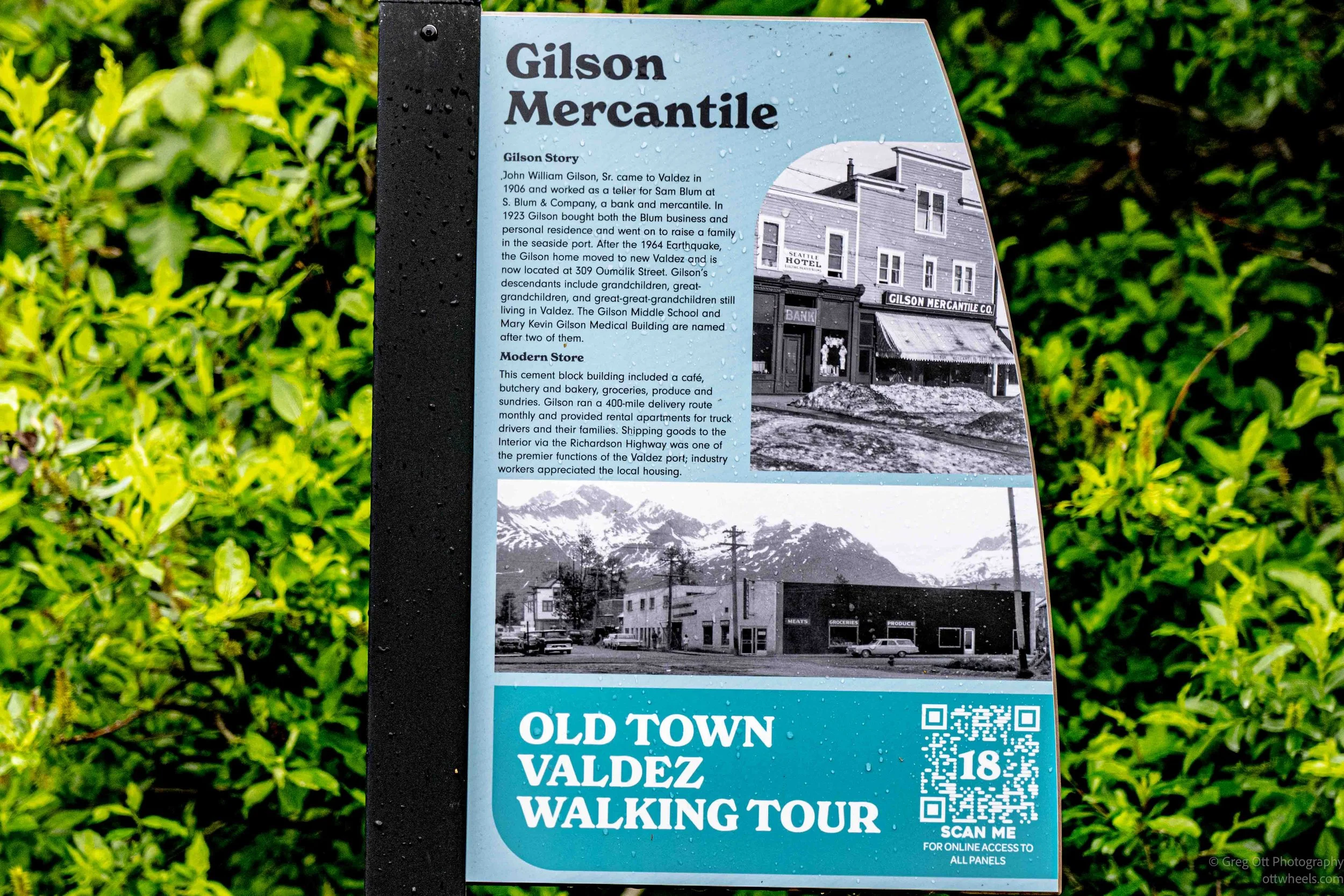
Several of the stories were surprisingly personal. One plaque describes the Valdez Gospel Chapel, whose church bell survived the earthquake even though the building did not. Another tells of the Pioneers of Alaska Hall, which served as the center of community life with dances, dinners, holiday celebrations, and civic meetings. The Pinzon Bar wasn't simply a tavern; it was where local politics were debated over billiard tables, while the Klip Joint barber shop doubled as an important communications office for Alaska's military telegraph system. Even the ordinary businesses had remarkable histories. Gilson Mercantile had supplied Valdez families for generations and later reopened in the new town, while the Wells Commercial Company combined a general store with the family home. During the earthquake, groundwater erupted beneath the building, yet the family survived by scrambling to higher ground before the waterfront collapsed.
The waterfront plaques tied everything together. The Valdez Dock Company wasn't simply a shipping business; it was the economic heartbeat of the town, connecting Valdez to Seattle and supplying Alaska's interior. The post office served as another lifeline, handling mail that arrived by steamship before continuing inland by dog sled, horse-drawn sleigh, and eventually truck. One plaque marked the Village Morgue Bar, a waterfront landmark whose unusual nickname came from its location beside the city morgue during the height of the gold rush. Standing there today, with grass replacing streets and only a handful of weathered pilings extending into Prince William Sound, it is almost impossible to picture the bustling port shown in the historic photographs. Without these plaques, you'd never know an entire town once stood here. I stood where the docks once were, all that remains are the pilings of the old dock and a view of the sound.
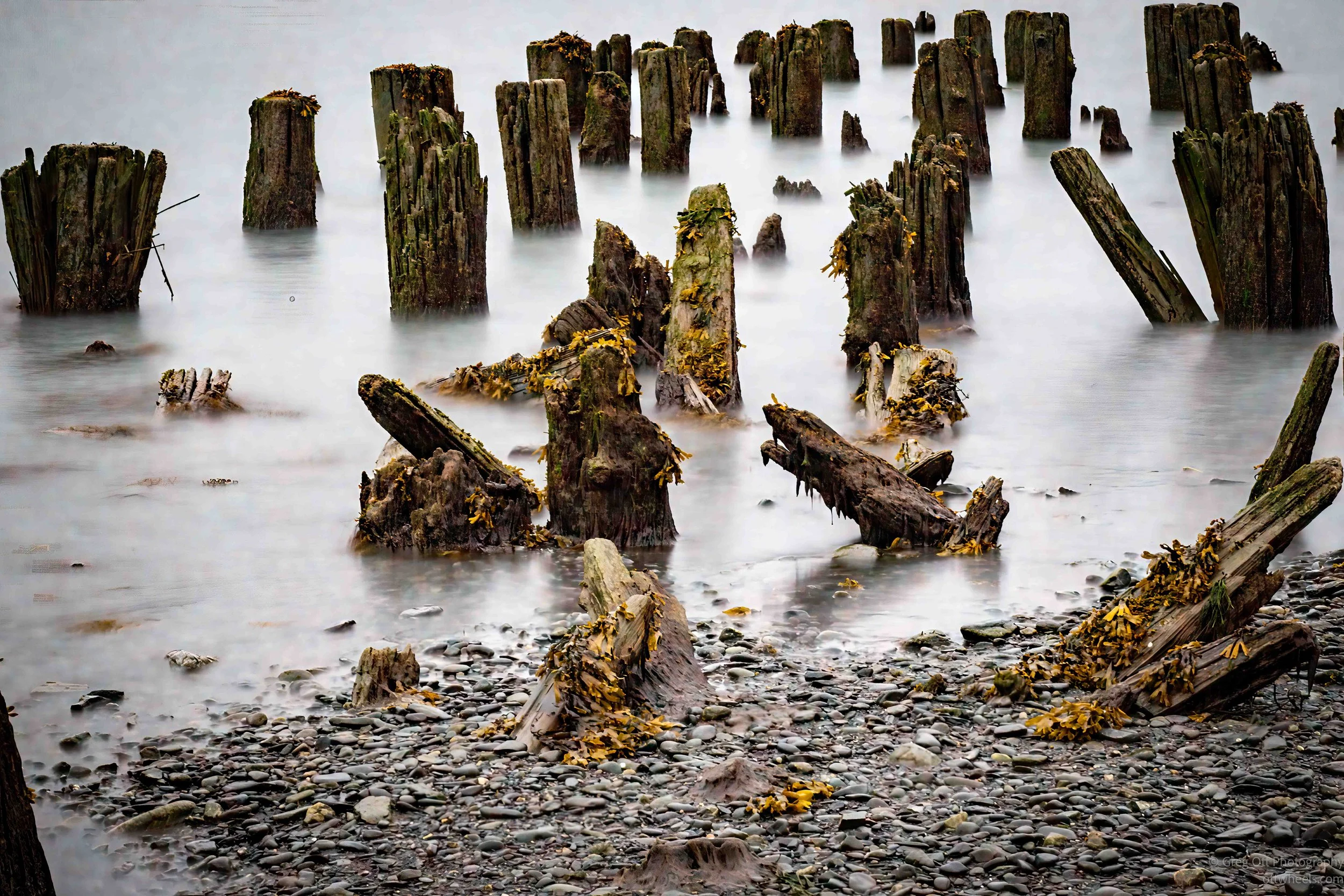
I found myself slowing down at nearly every sign. None of them told a dramatic story on their own, but together they painted a picture of a real community rather than a historical event. By the time I finished the tour, Old Valdez no longer felt like a place that had been destroyed in 1964. It felt like a place where thousands of ordinary people had lived ordinary lives—until one extraordinary afternoon changed everything.
One story I hadn't known involved William A. Egan, Alaska's first elected governor. Egan had grown up in Valdez and returned immediately after the earthquake to help coordinate relief efforts. He remained behind while four Alaska National Guard officers departed on a humanitarian flight back toward Anchorage. Only minutes after takeoff, their aircraft crashed into Prince William Sound, killing everyone aboard. Today, a memorial near the harbor honors the crew and remembers what became known as the "Celestial Vanguard." Egan survived not because he escaped the disaster, but because he chose to stay behind and continue helping his hometown recover.
The rain had picked up again. I wanted to have dinner at The Potato, just down the street from the campground. It was about 7:30 p.m. when I walked up to the door. Several people were right behind me, but the door was locked. The takeout window was still open, and the manager apologized. "We had people call in sick," she said. "We had to close."
I noticed that almost everything else in town had closed for the evening as well. Whether it was because of staffing, the weather, or simply not enough business, Valdez seemed to wind down early. The only restaurant that appeared to still be serving dinner was Mike's, just a block away. Everyone who had been standing behind me at The Potato ended up making the same pilgrimage.
I ordered the pasta primavera and a beer, which hit the spot after another damp day. When I finished, I took one last walk around town before heading back to the van. This was my final night in Valdez, and I found myself reflecting on the past six days.
Valdez is a small town, but it has a character all its own. The harbor is its heartbeat, with fishing boats, tour boats, and working vessels constantly coming and going. The campground turned out to be an excellent base, close enough that I could walk almost everywhere I wanted to go. Between the glaciers, the wildlife, the museums, and the history, I found myself wishing I'd had another day or two. Some places are simply destinations on a map. Valdez felt like a community, and by the time I left, it was one I'd be happy to visit again.