Meares Glacier Tour
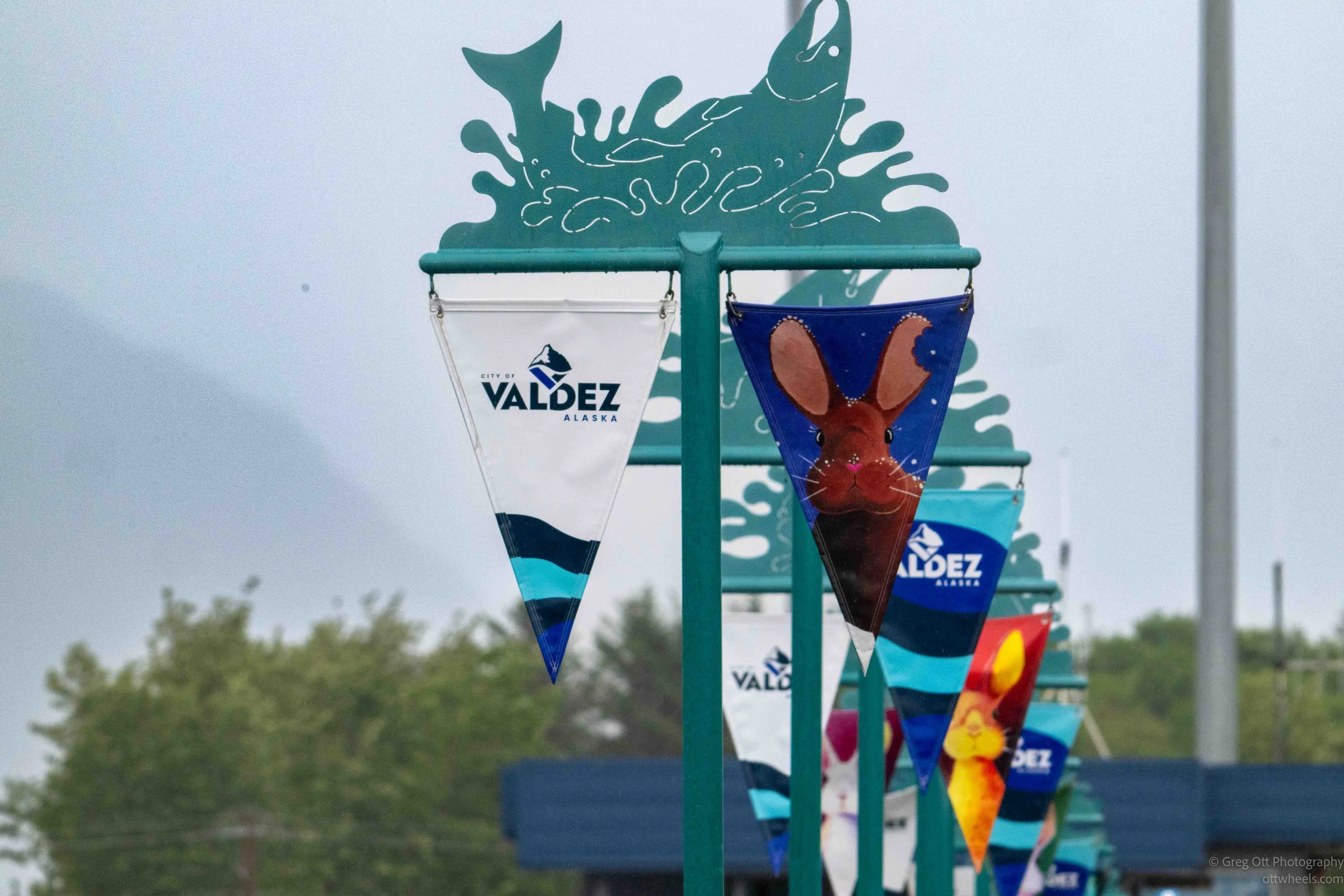
I was up early again. Yesterday’s kayak trip to Columbia Glacier was still running through my mind. When I booked today’s excursion with Stan Stephens Glacier & Wildlife Cruises, they asked if I wanted to be picked up from my campground. I wasn’t sure how far away the boat departed from, so I accepted. It turned out to be unnecessary. The harbor was only about three-tenths of a mile away, almost exactly where I had boarded yesterday’s kayak trip.
The shuttle picked me up at 8:00 a.m. and drove me to the ticket office. I apologized to the driver for making a special trip just for me since I was more than capable of walking that short distance. Inside, the woman checking everyone in recognized me from the shuttle and smiled. I asked if she would also be driving the boat. “No,” she laughed, “we’ve got someone with a lot more experience doing that.” I asked how full the cruise was, and she said it was only about half booked, which sounded just about perfect.
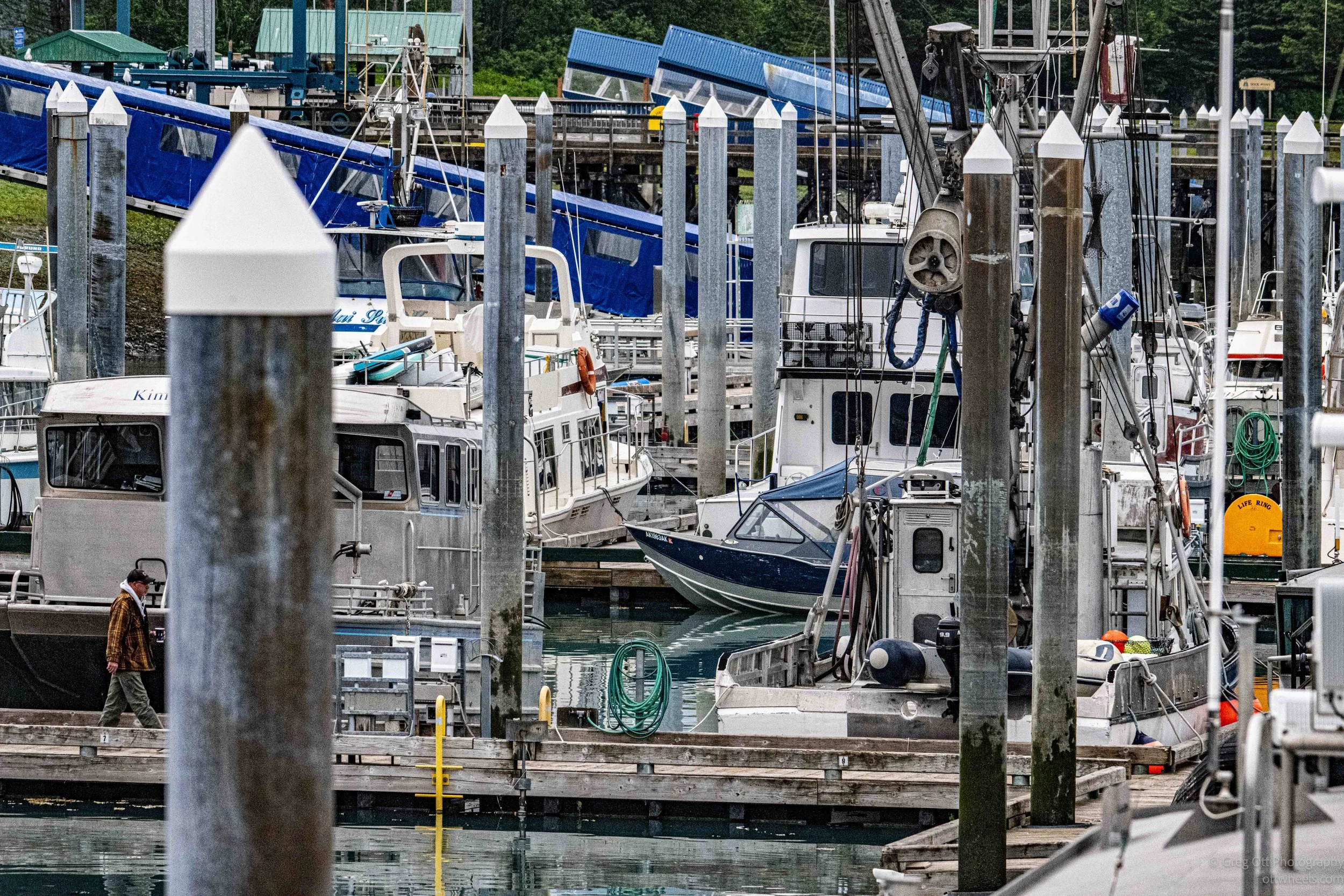
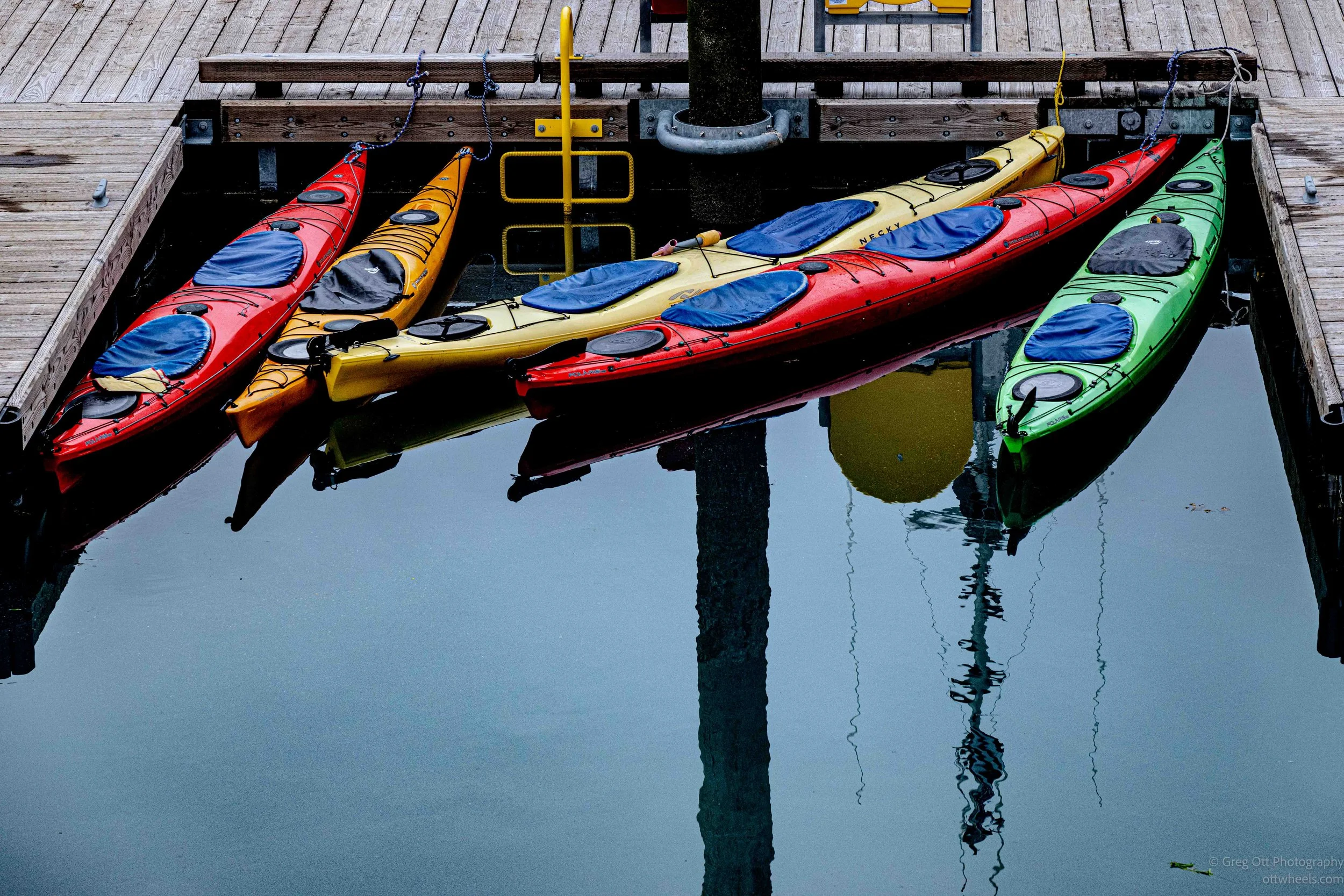
There was already a long line forming for boarding, so rather than stand there for half an hour, I wandered around the harbor with my camera. There were noticeably more kayaks than yesterday, probably because the weather had improved.
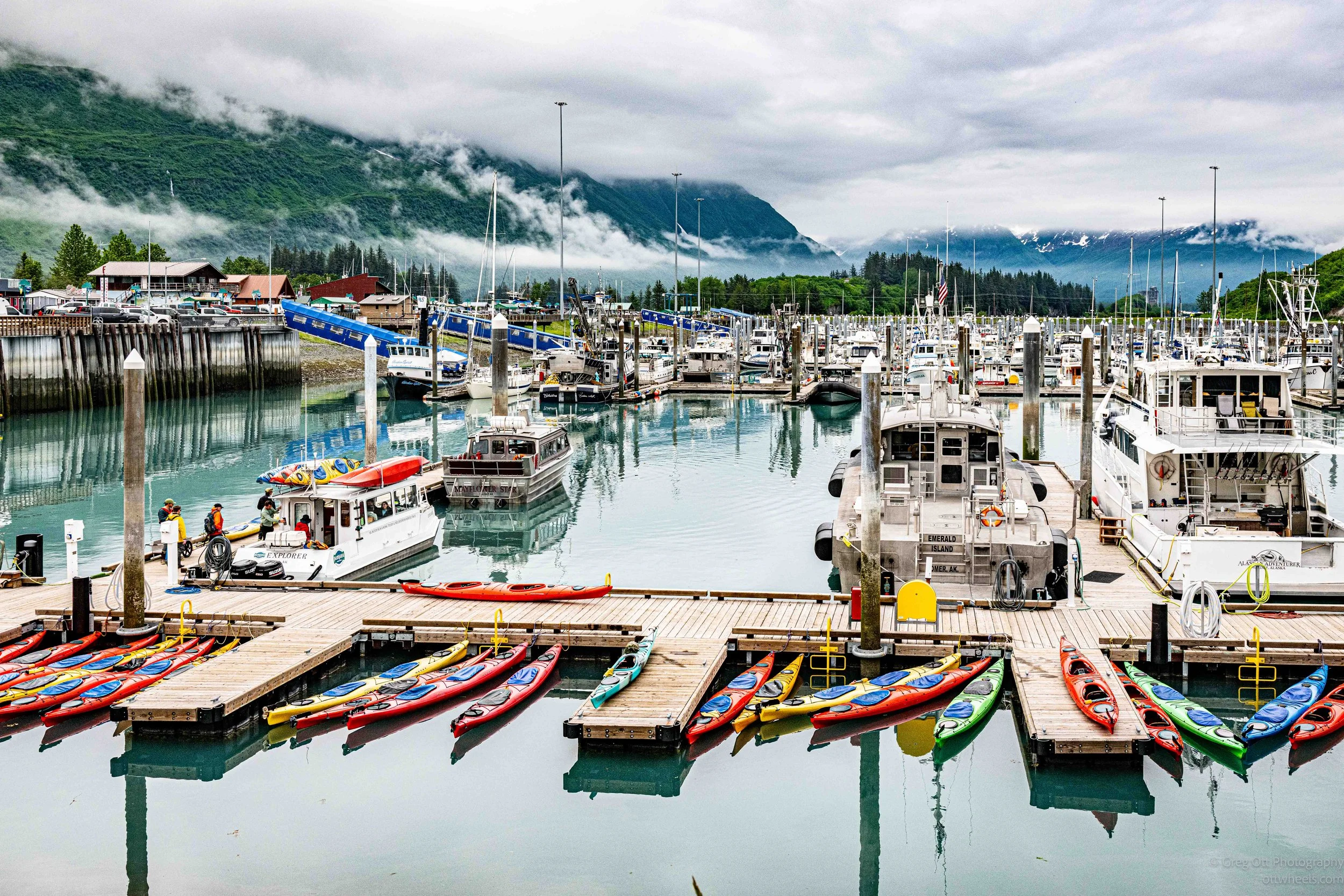
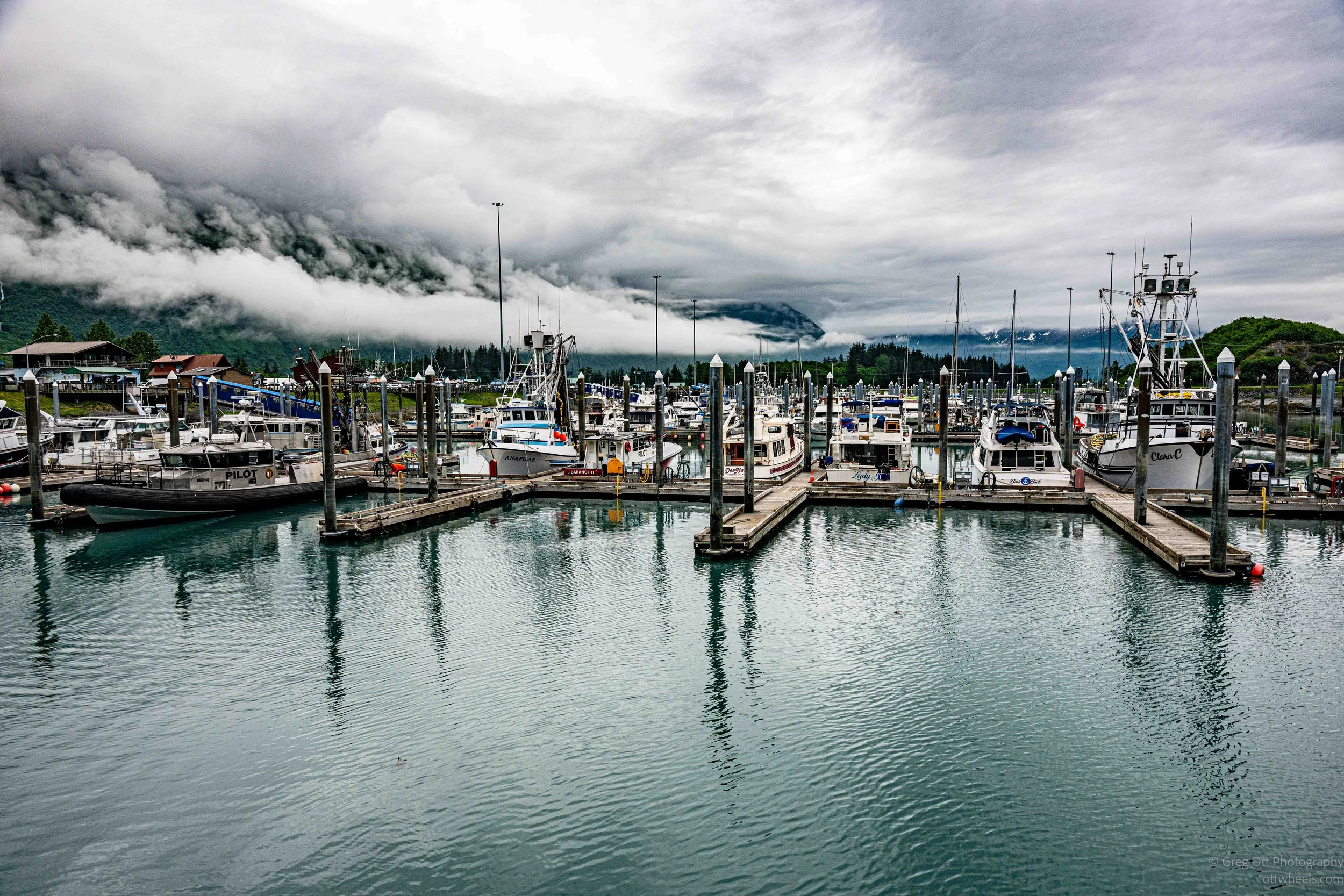
Boarding began at 8:30, and I claimed a seat outside on the open upper deck. Two couples were sitting nearby speaking French and laughing. I asked the gentleman beside me where they were from. “Belgium,” he replied before adding, “I don’t speak English.” So I tried something different. “Parlez-vous allemand?” His eyes lit up. “Ja!” For the next fifteen minutes we spoke German until one of his friends joined us. He spoke English, so the conversation shifted again. They were traveling for a month from Seattle through coastal Alaska, stopping at several ports along the way.
Trip to Meares Glacier
Today’s trip was completely different from yesterday’s. We wouldn’t be getting off the boat or climbing into kayaks. This was a full-day glacier and wildlife cruise through Prince William Sound. The crew announced that breakfast would be bagels with cream cheese, and lunch would be chicken over rice with Alfredo sauce, steamed vegetables, and a roll. I wasn’t expecting a hot lunch on a sightseeing cruise.
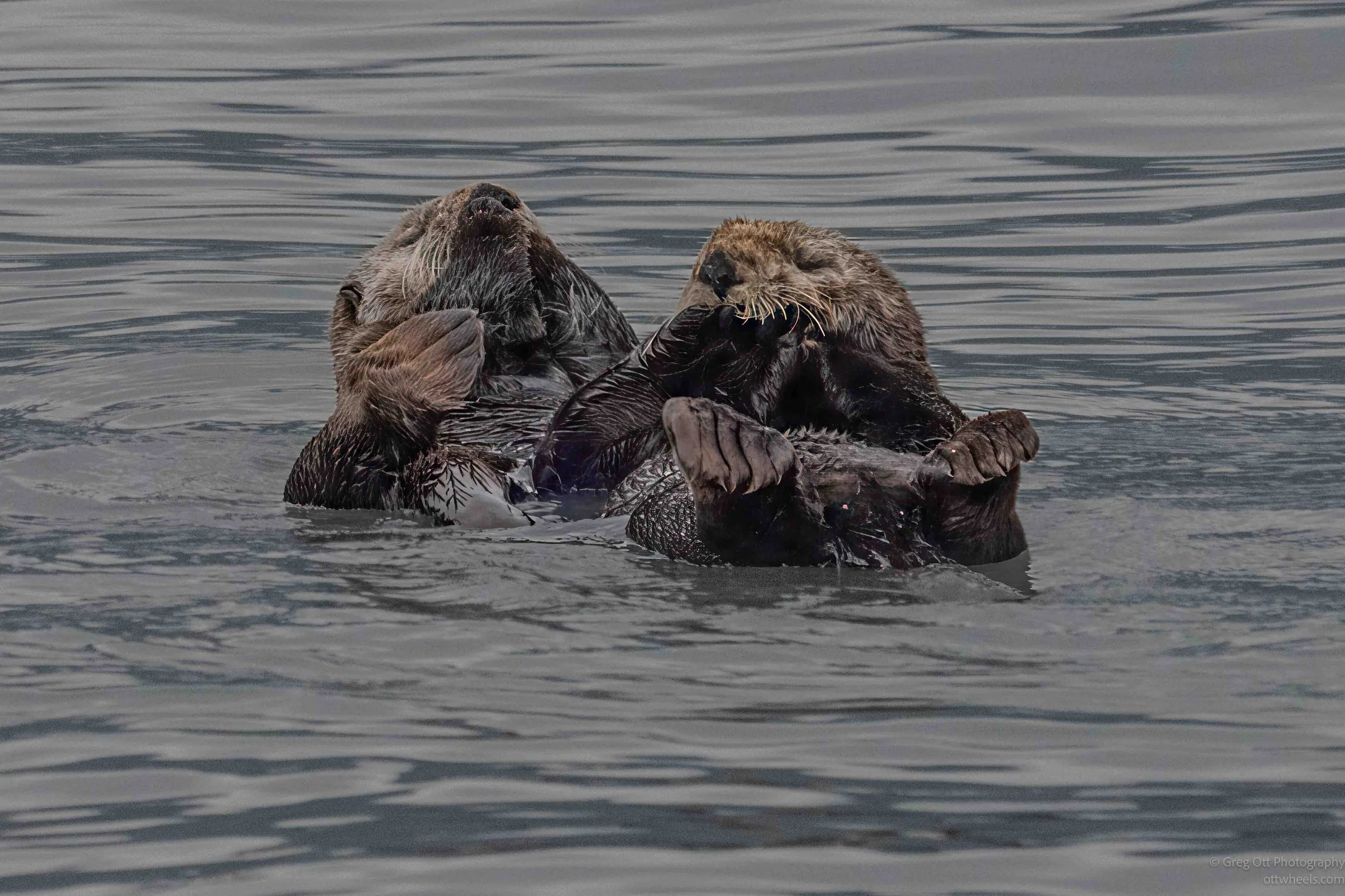
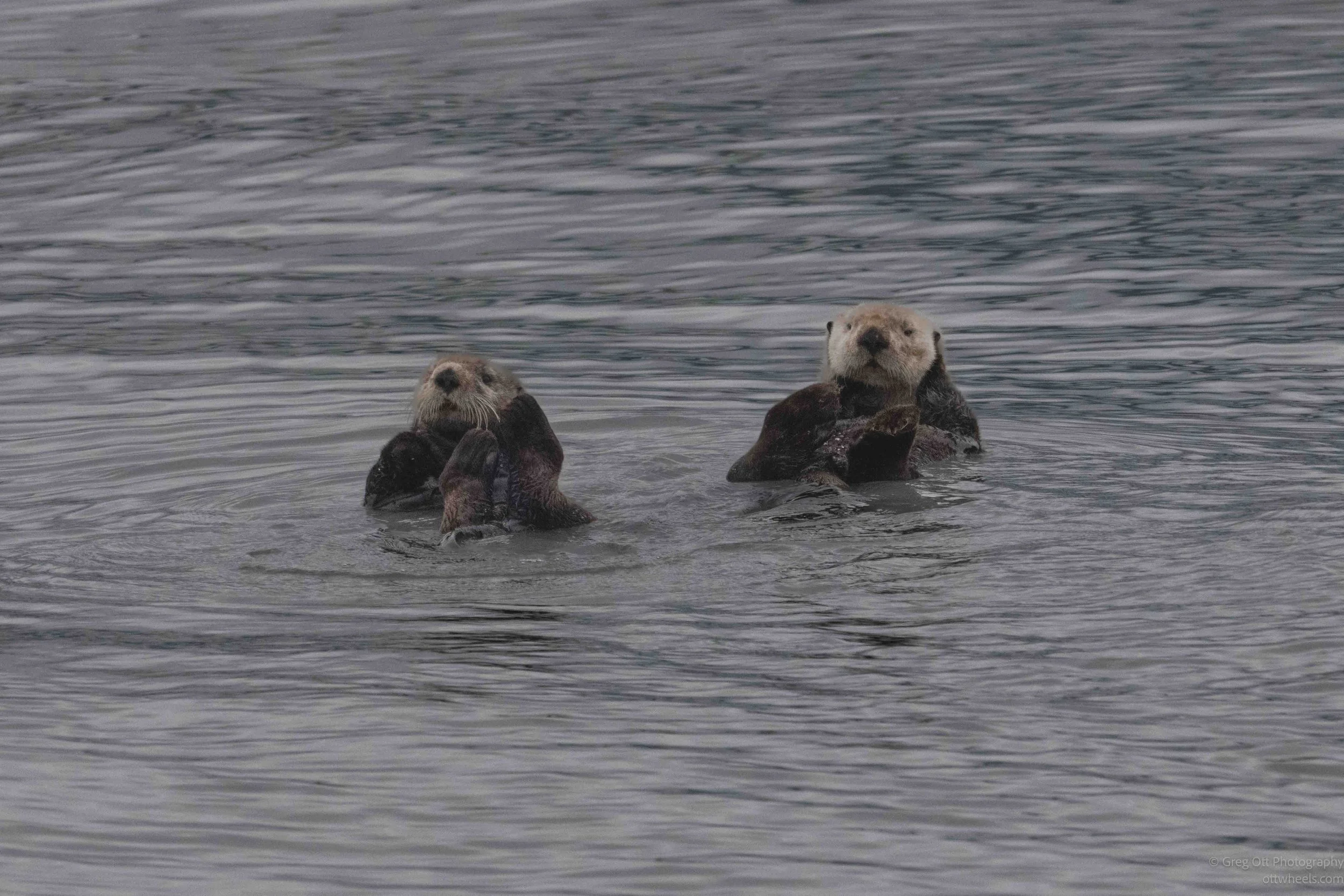
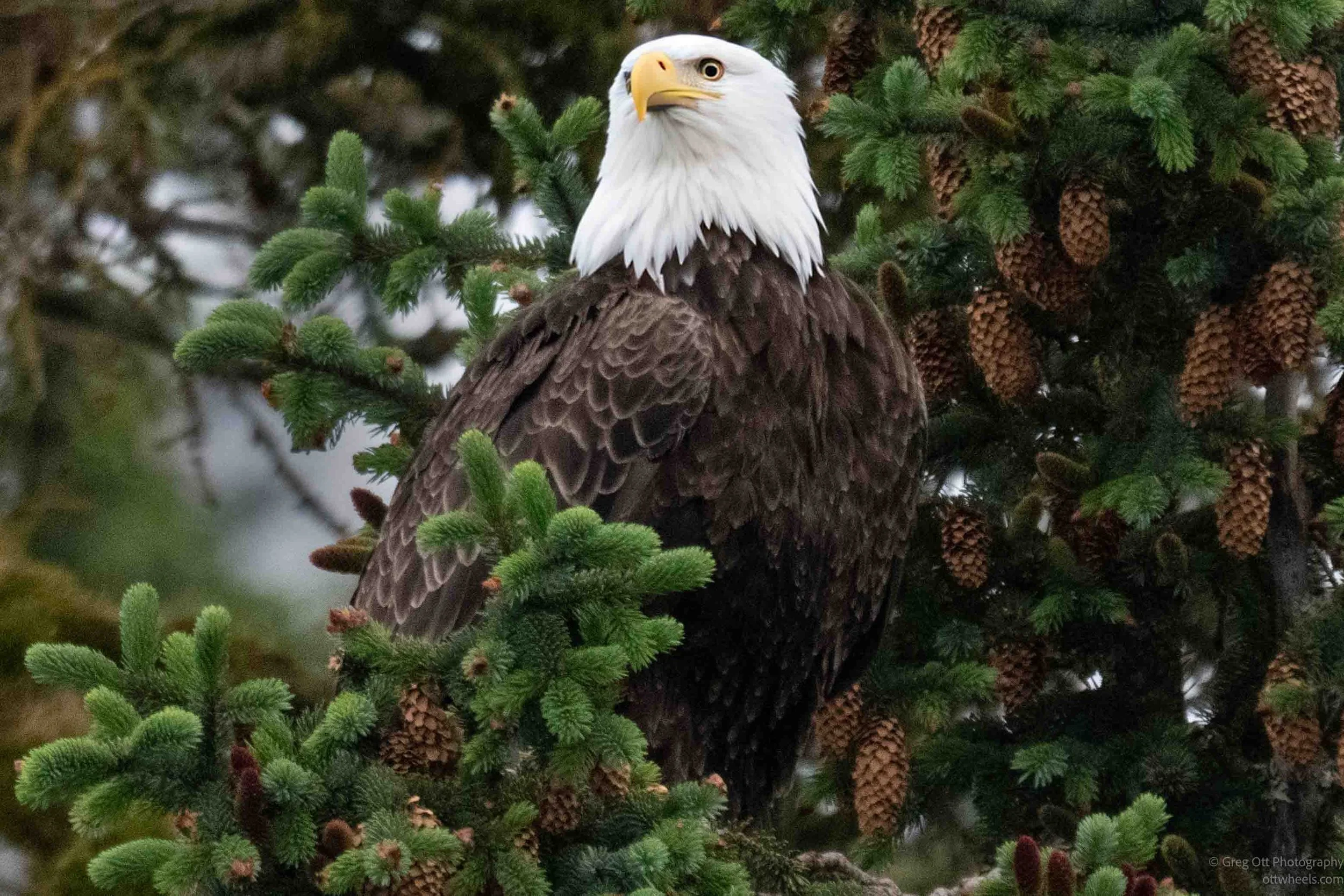
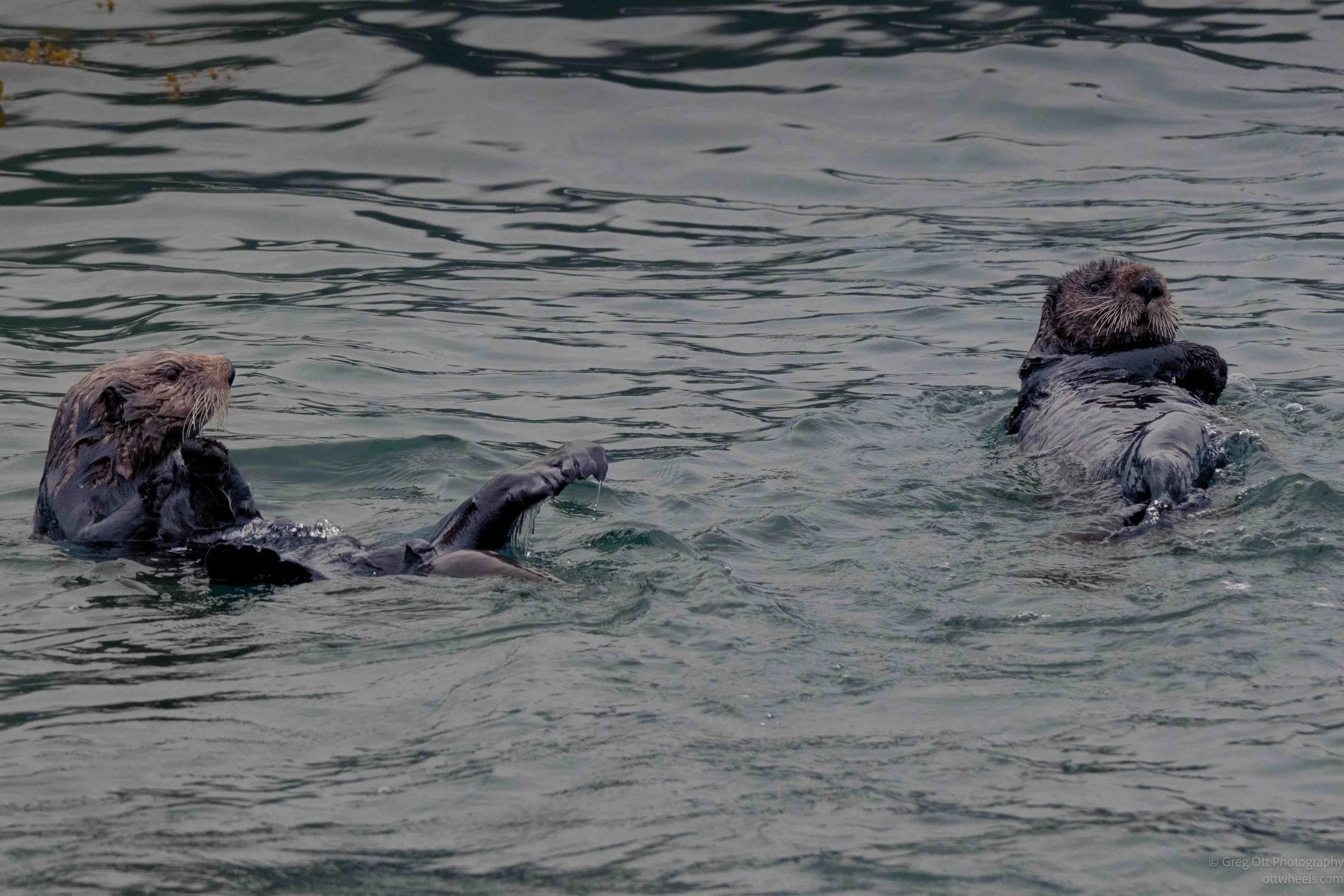
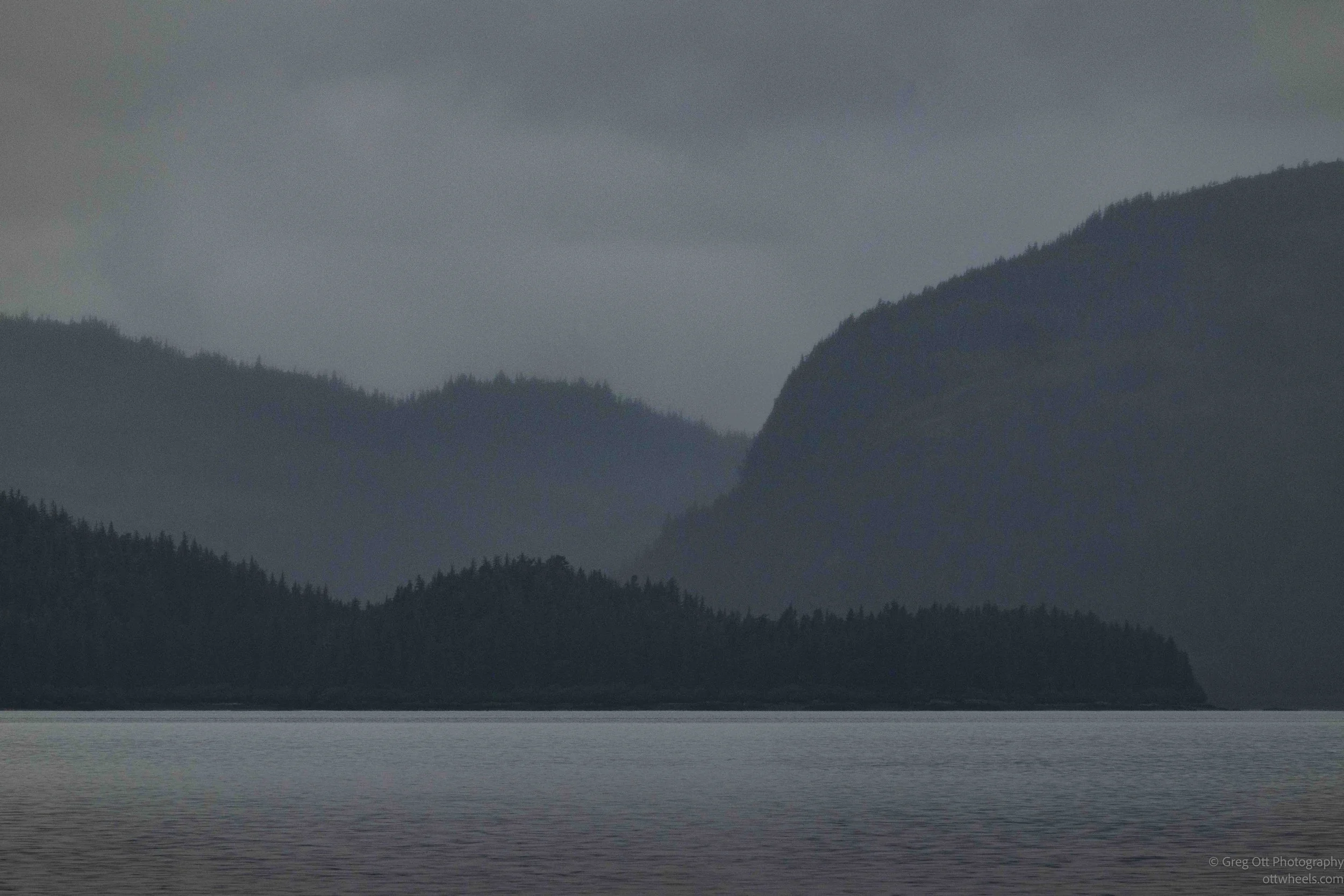
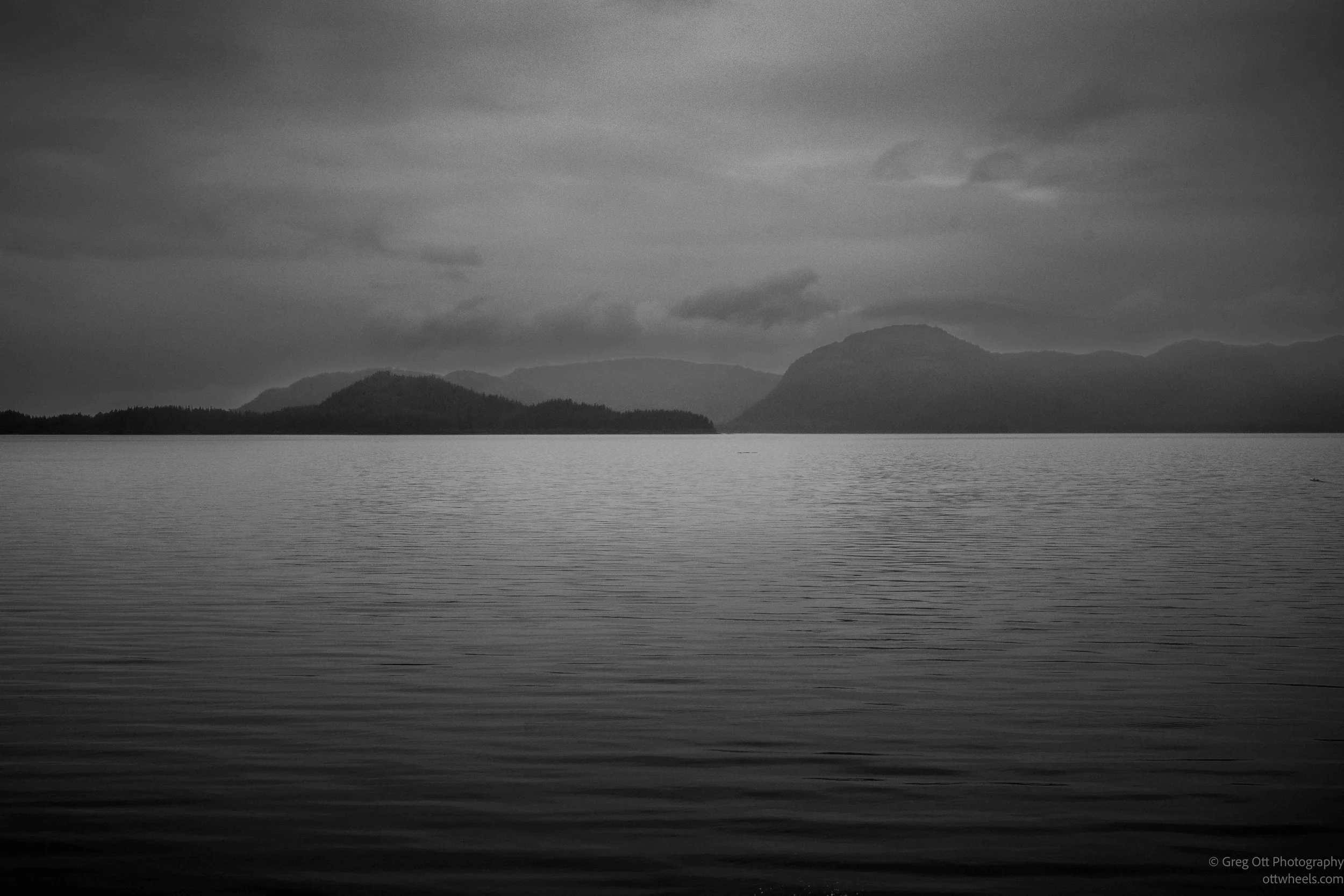
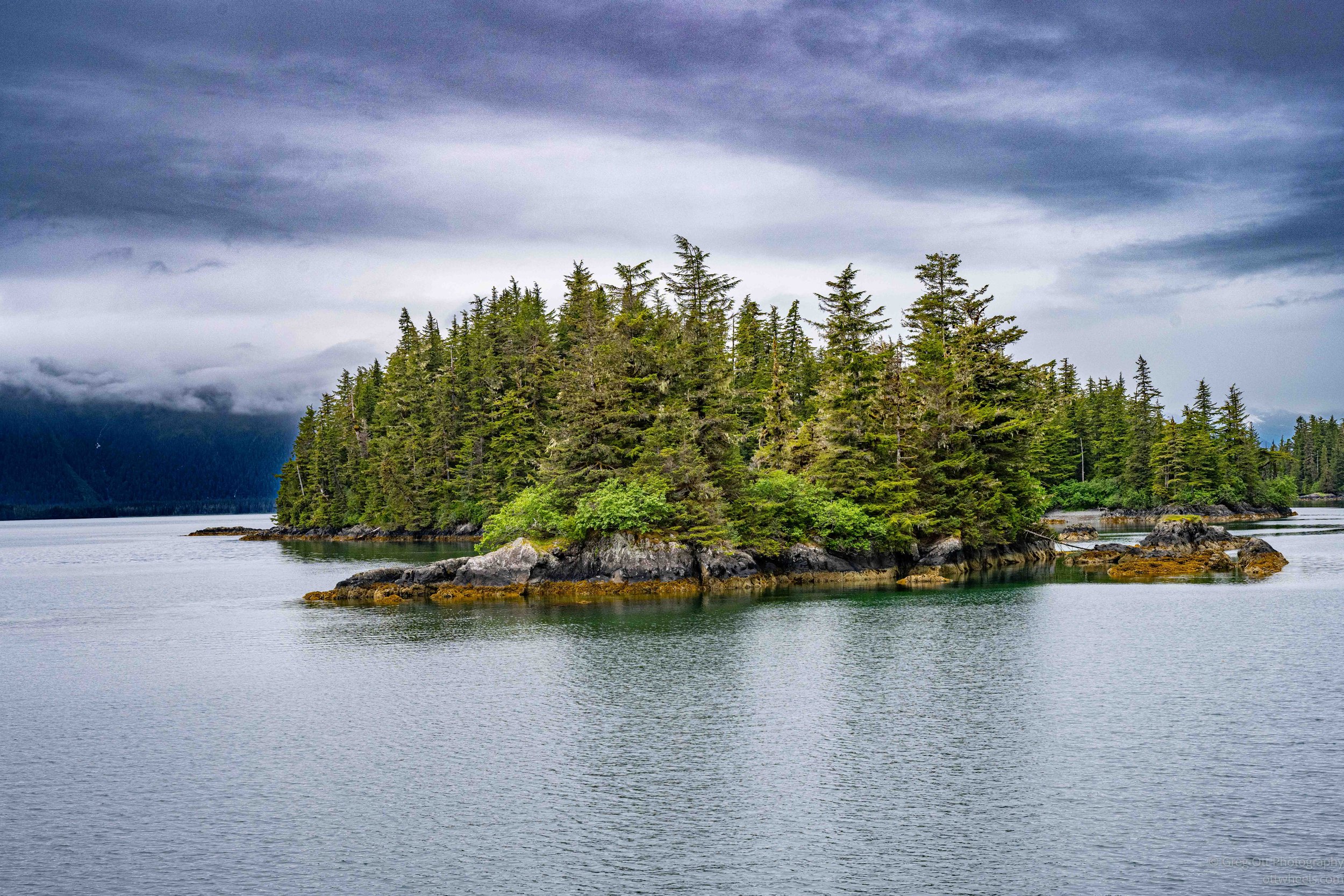
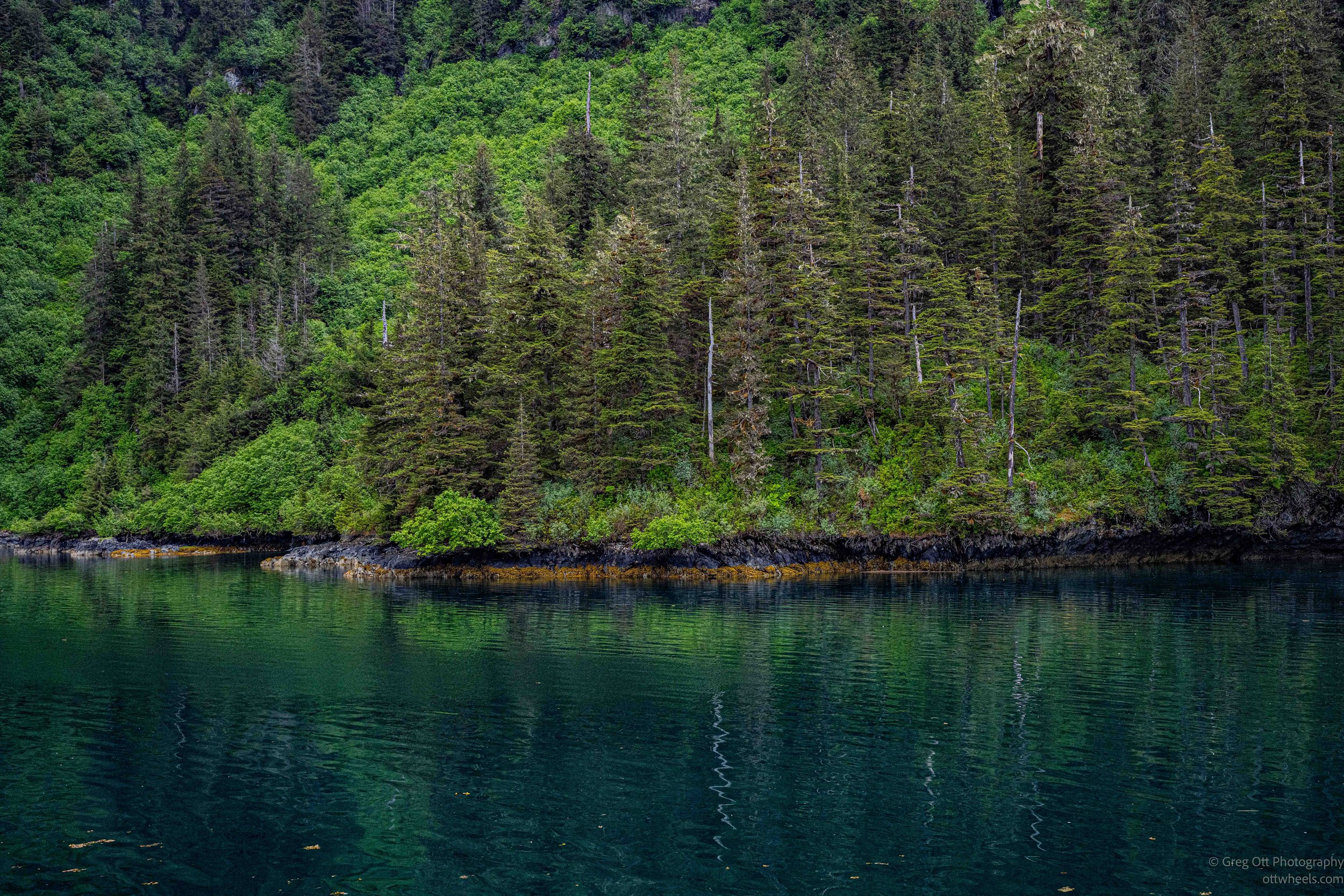
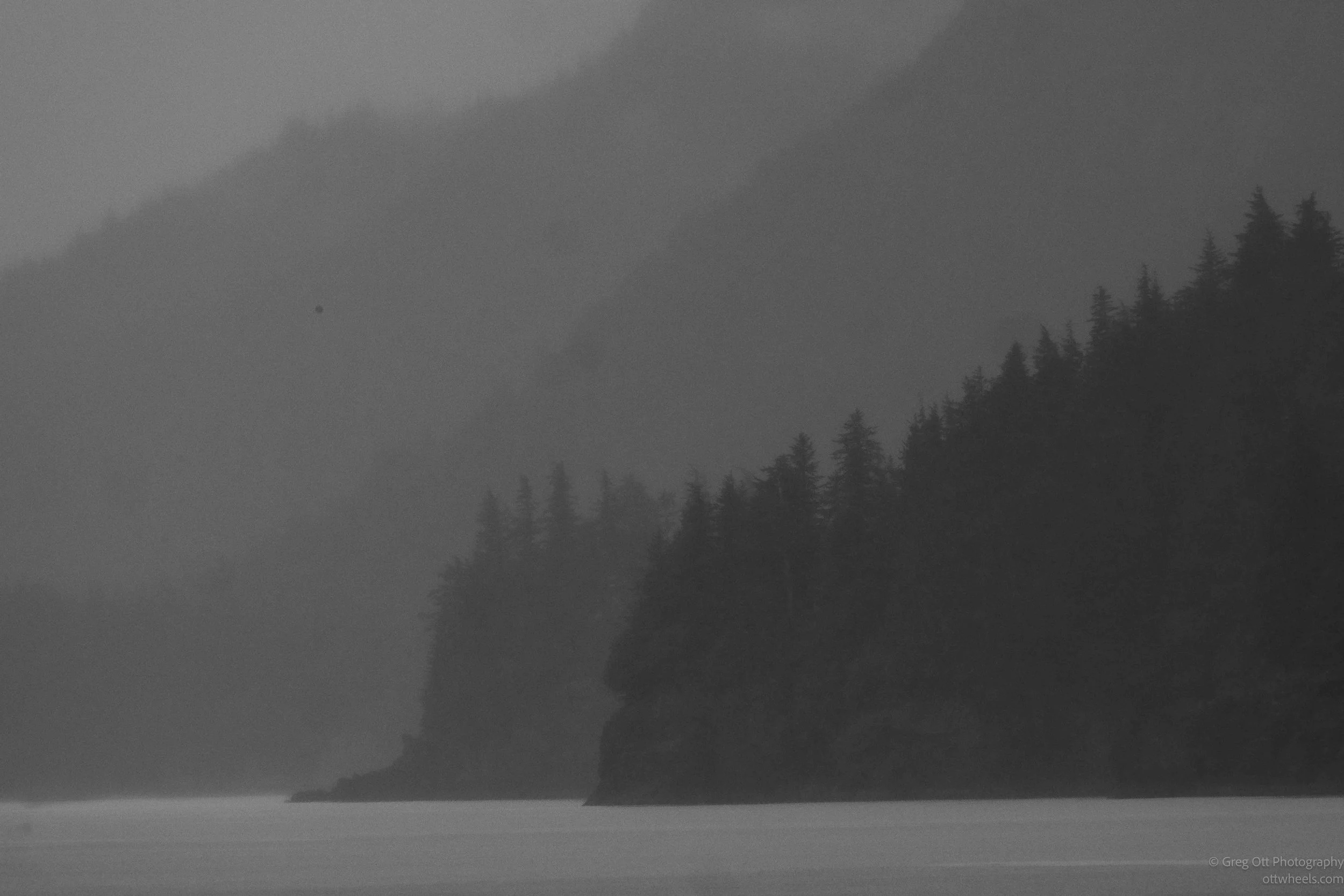
The captain narrated throughout the trip. He pointed out fishing boats by name and seemed to know many of the captains personally. We slowed for sea otters drifting on their backs, bald eagles perched along the shoreline, and anything else worth seeing. Fog lingered in the valleys and along the mountains while sunlight occasionally broke through, turning whole hillsides from muted gray to brilliant green. Some photographs were almost impossible because of the bright sky, while others had beautiful, saturated color.
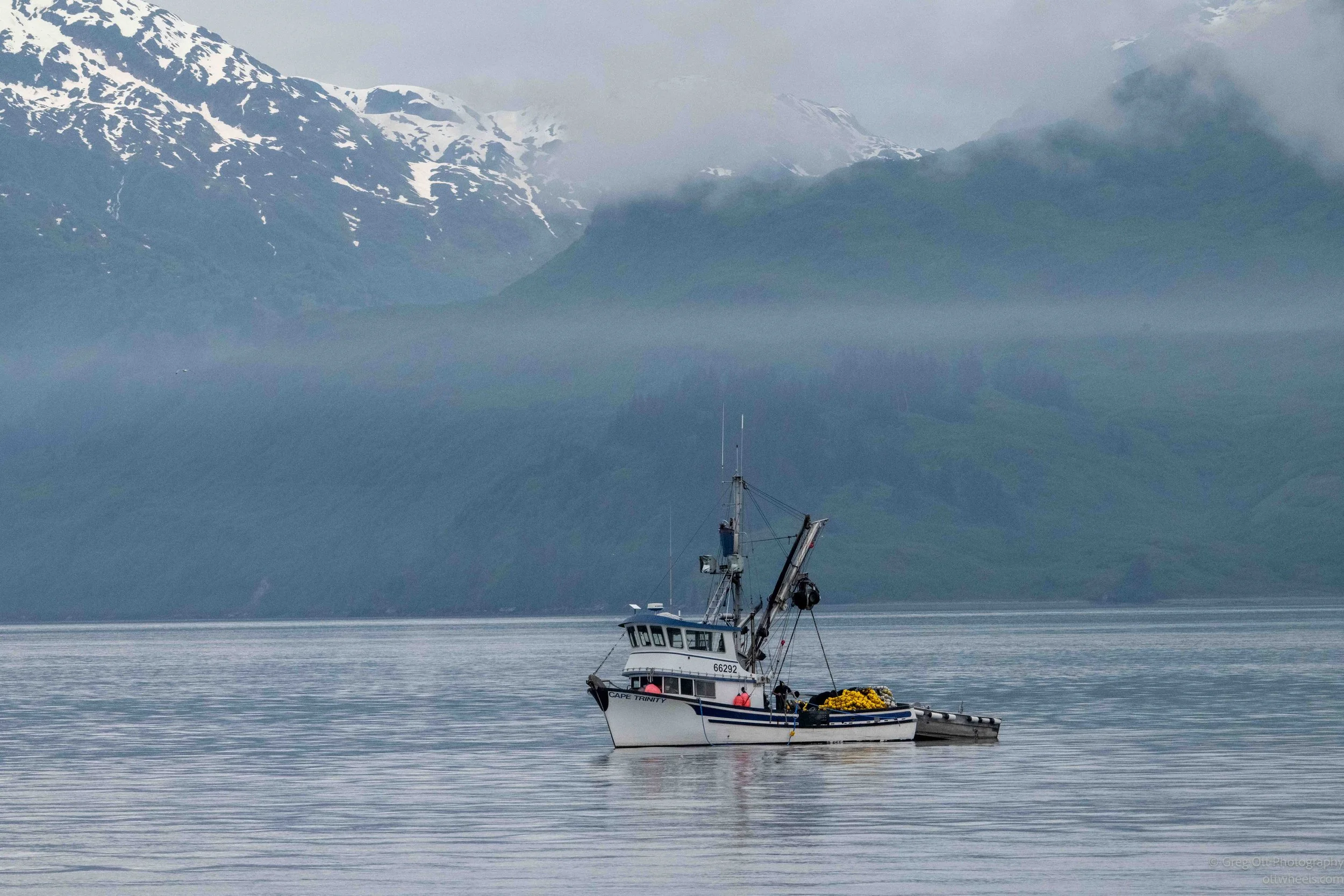
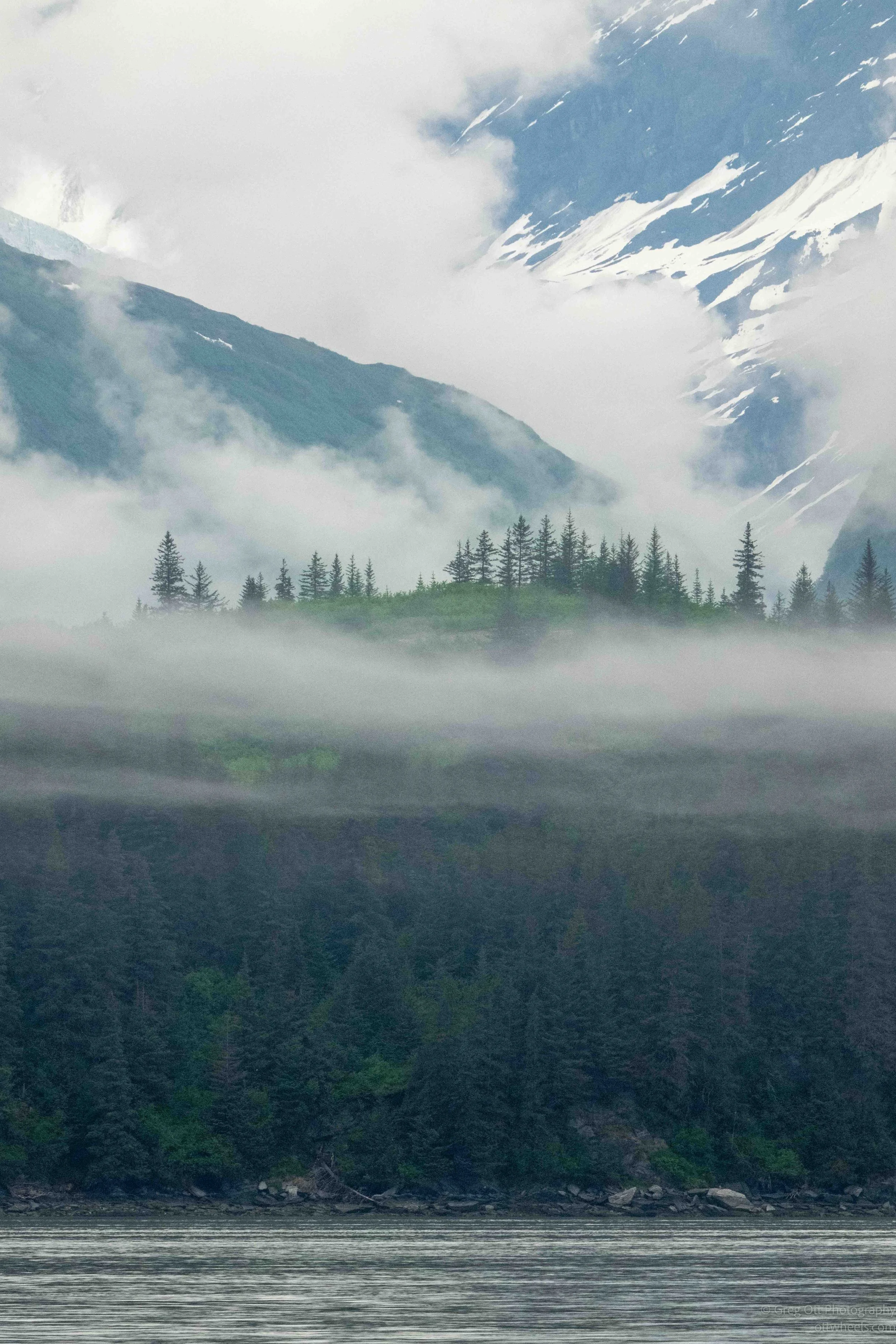
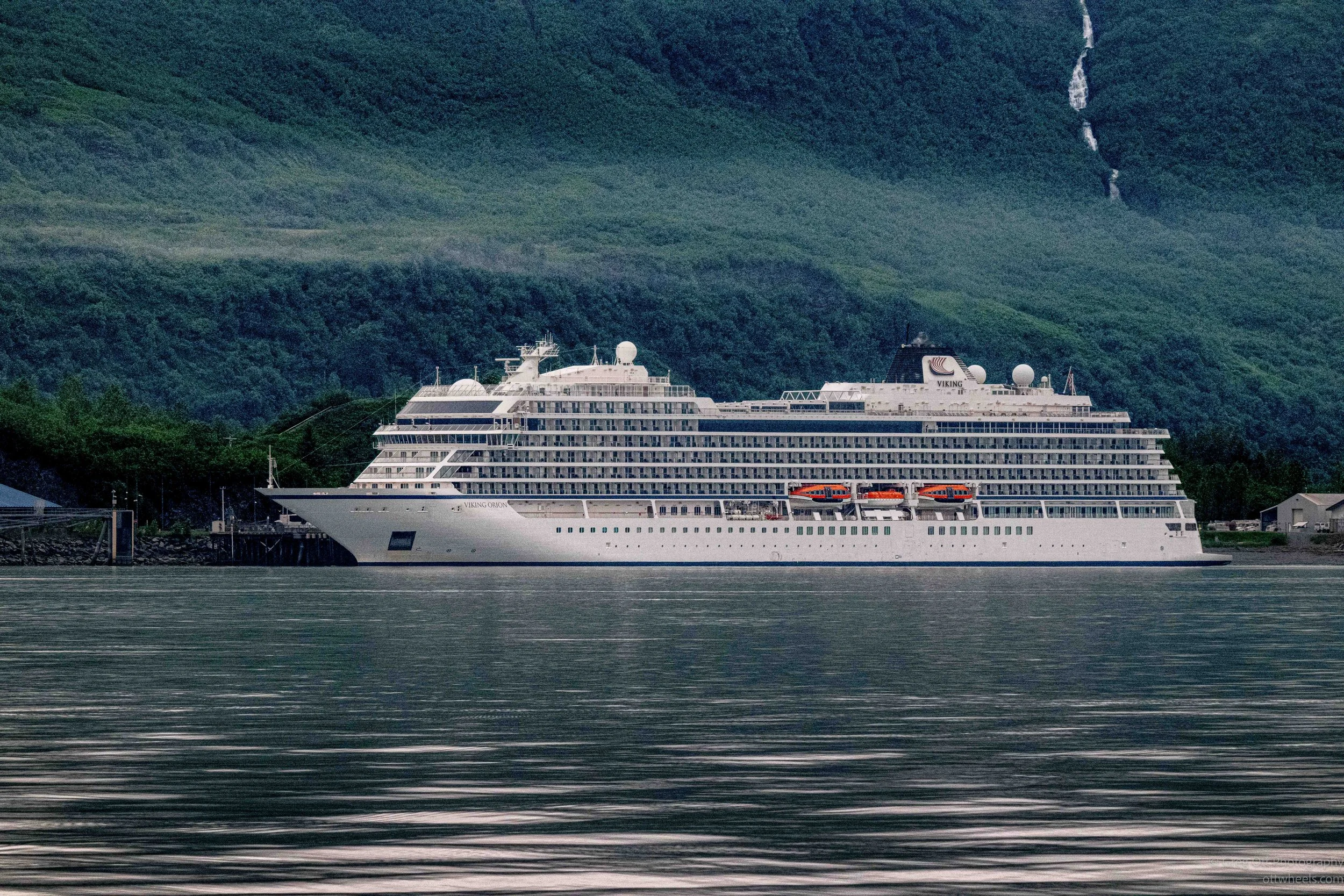
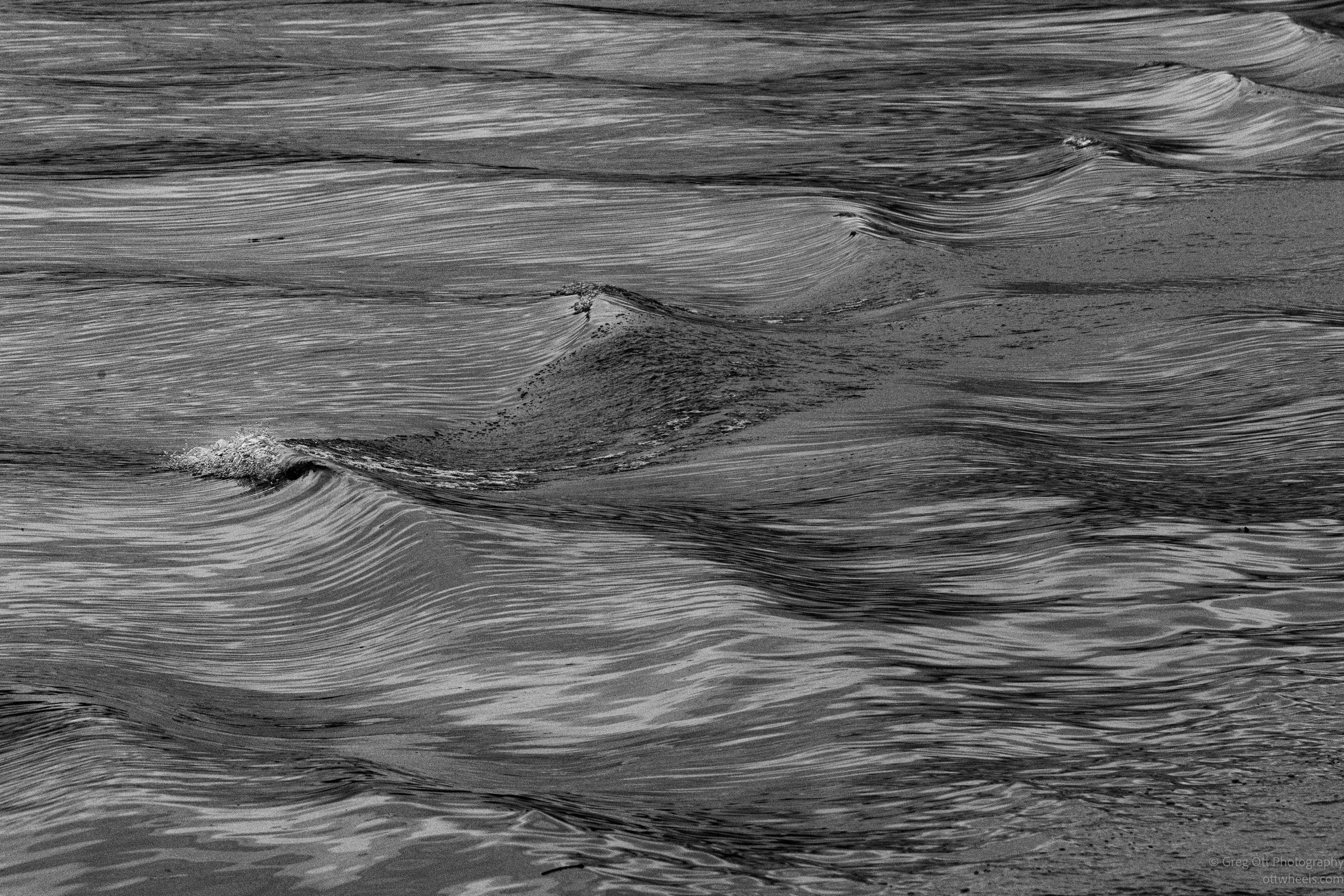
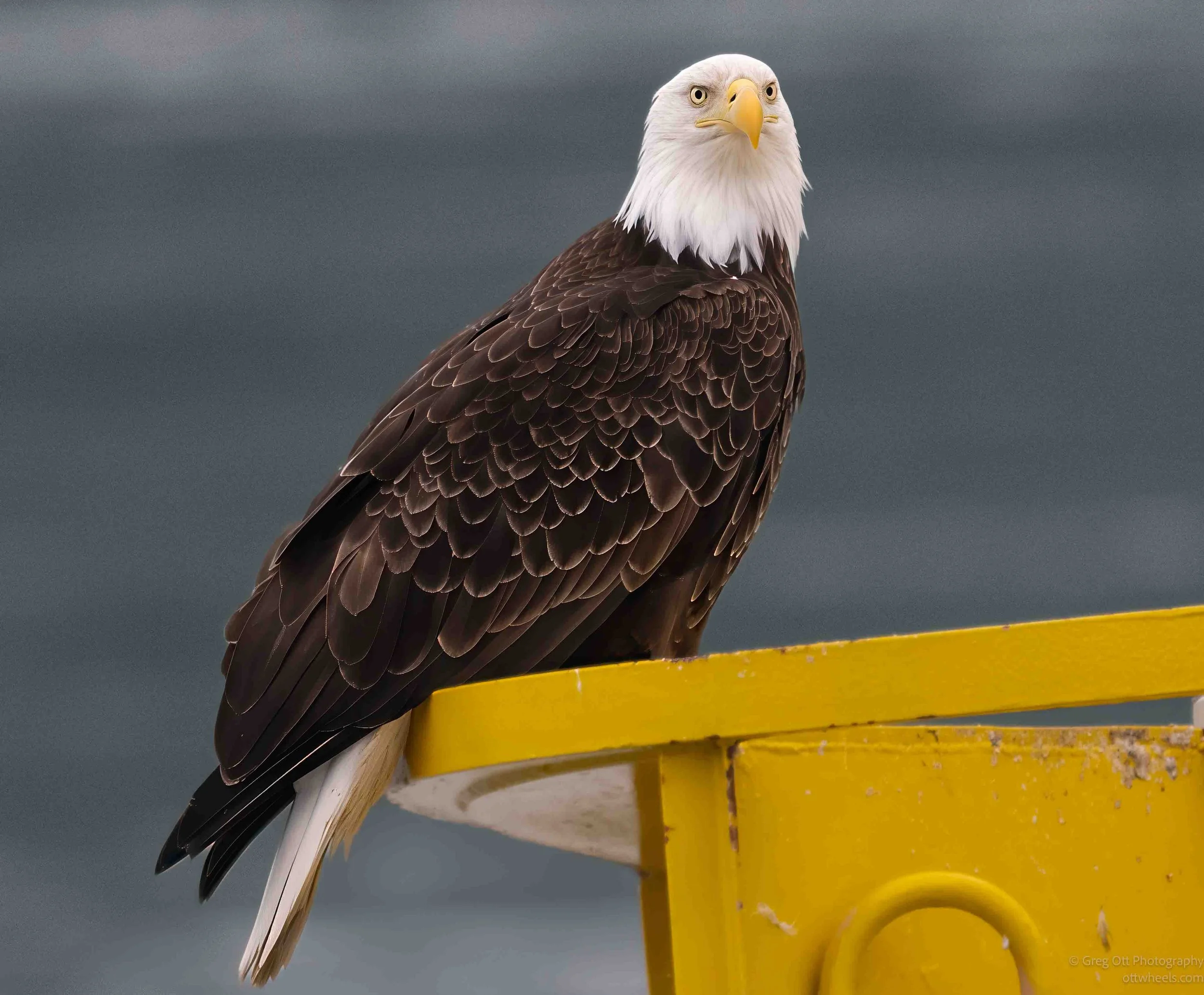
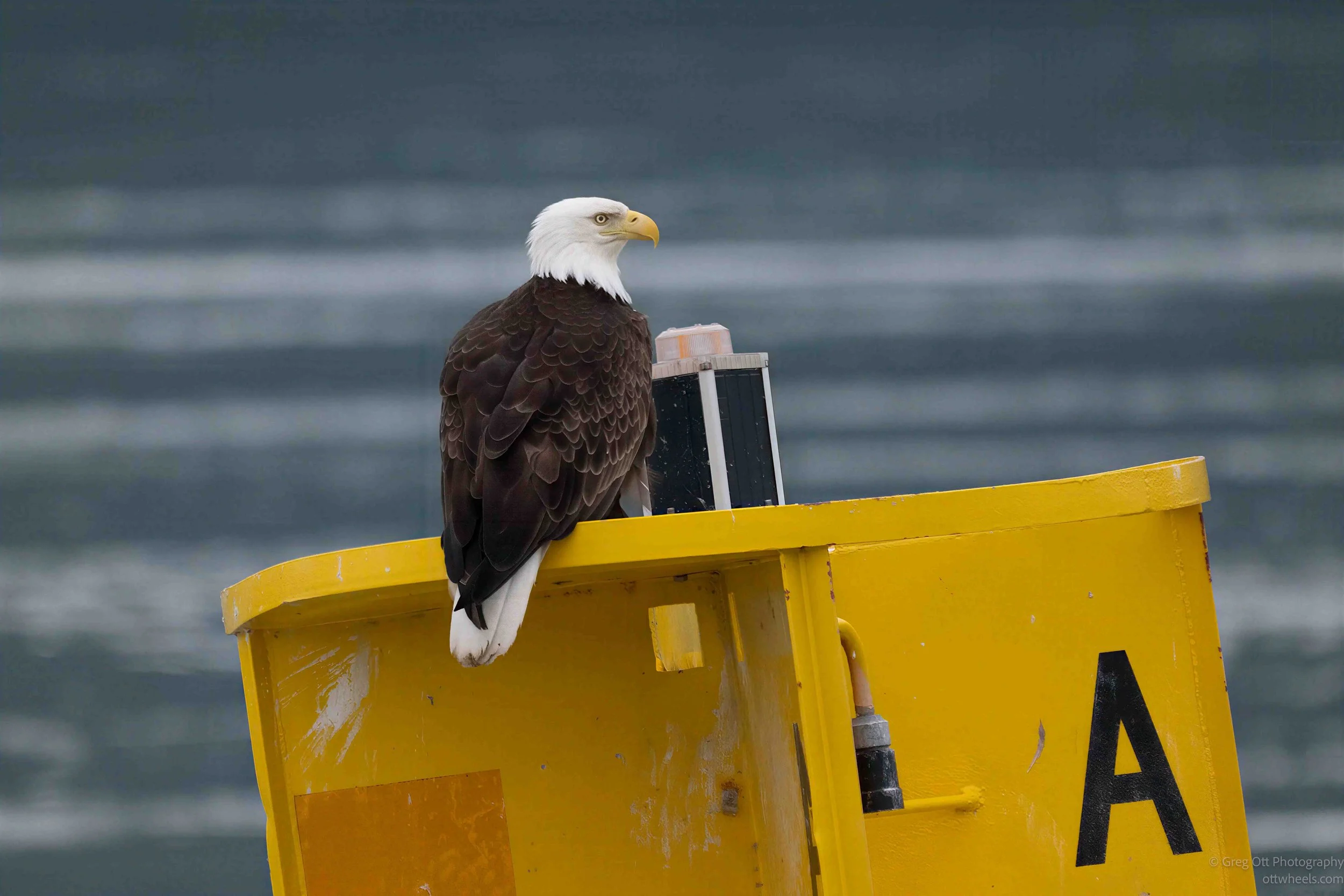
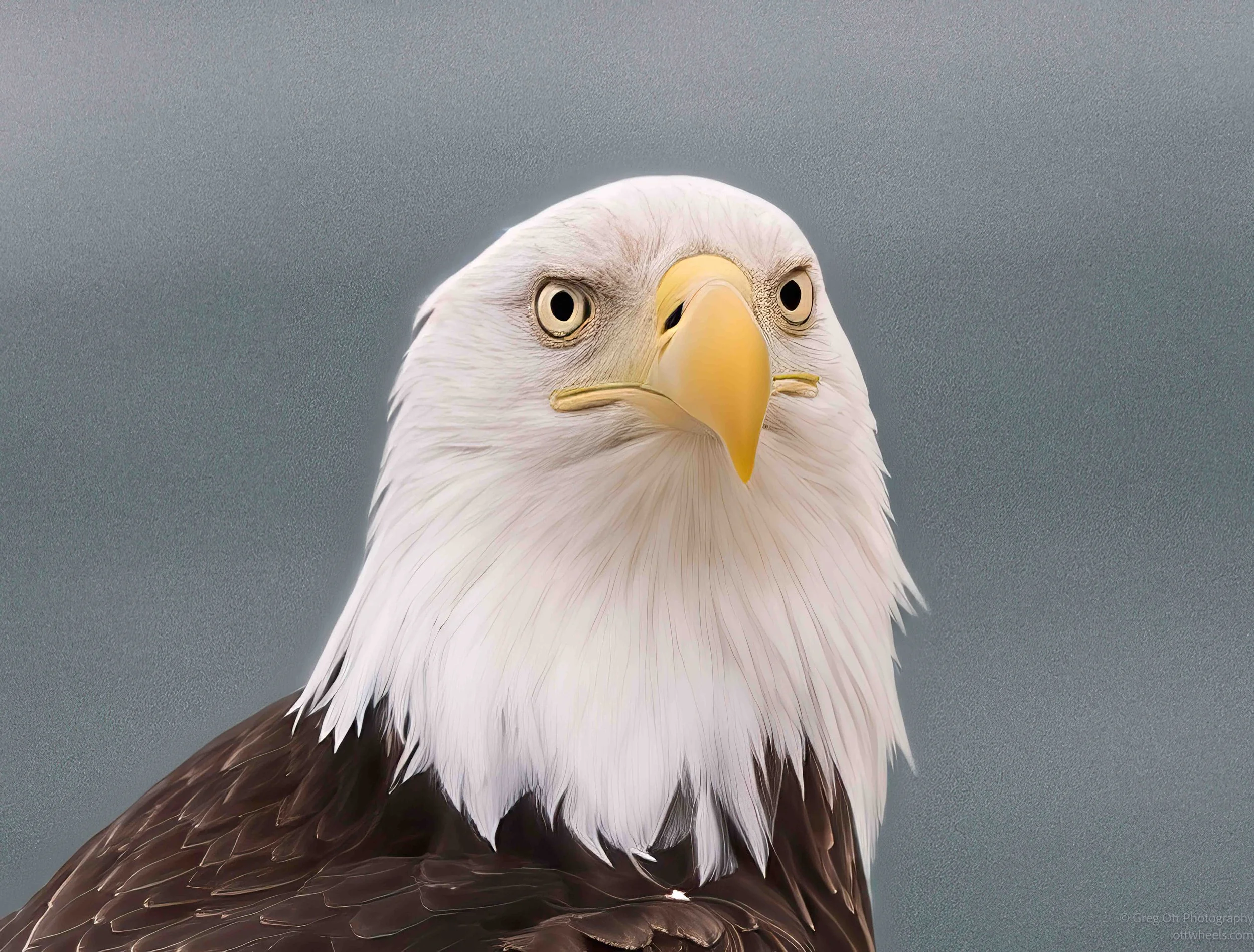
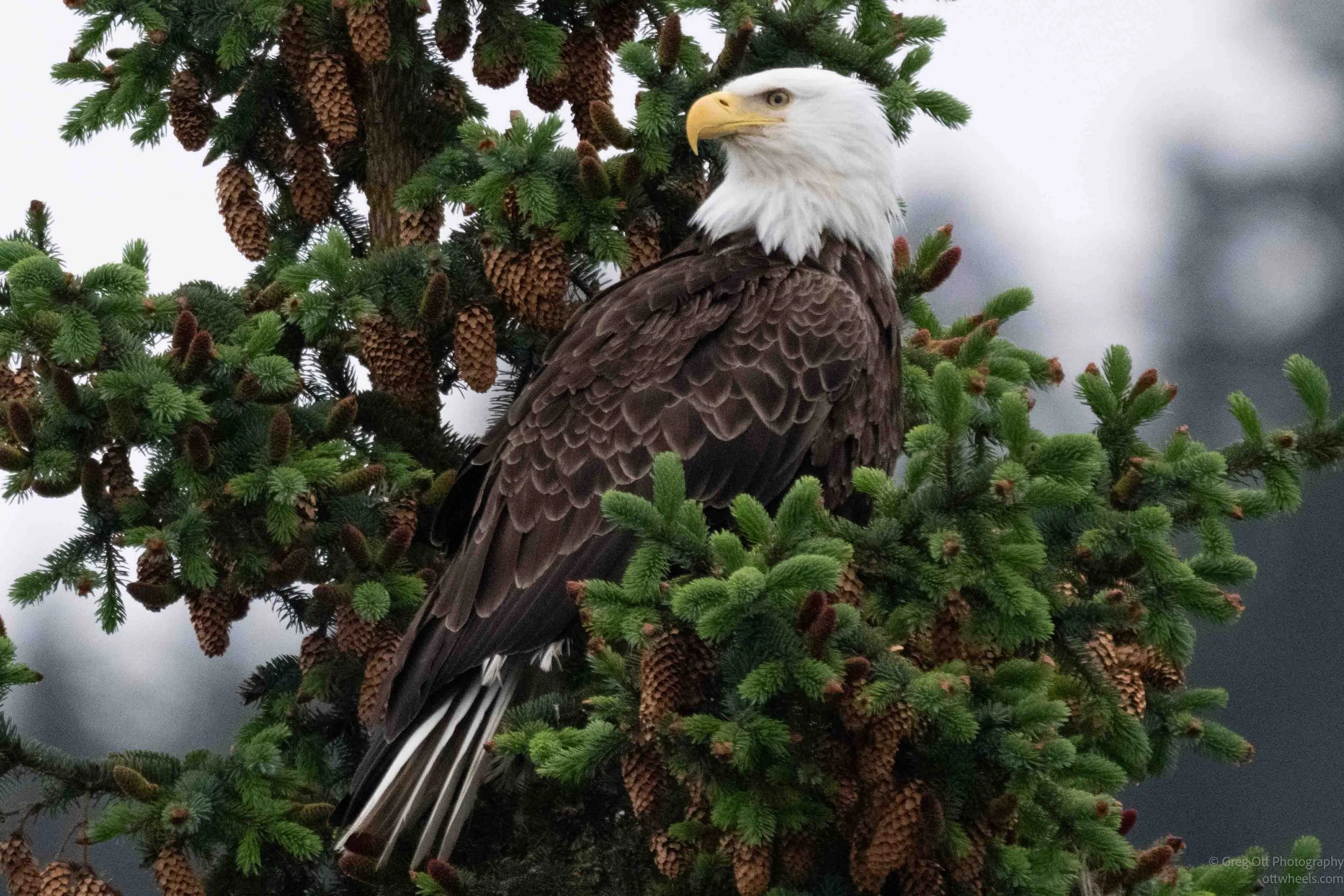
A cruise ship was anchored near shore that hadn’t been there the day before, and soon after we slowed for an eagle perched on a navigation buoy. I had my 180–600mm lens with me, which let me capture the detail of the eagle’s feathers and even its eye. The light was also catching the water in interesting patterns, giving the whole scene more texture than I expected from a buoy and a bird. A little later we passed a narrow spot near a small island, and the captain pointed out another eagle sitting high in a pine tree overlooking the water.
As we continued deeper into Prince William Sound, the captain talked about the local fishing fleet. He explained that after the Exxon Valdez oil spill in 1989, the herring population never recovered, which devastated a fishery that had once been important around Valdez. Today, many fishermen closer to town focus on salmon during the summer runs, while others harvest species such as black cod and shrimp depending on the season. Farther offshore, halibut fishing remains an important part of the region’s fishing economy.
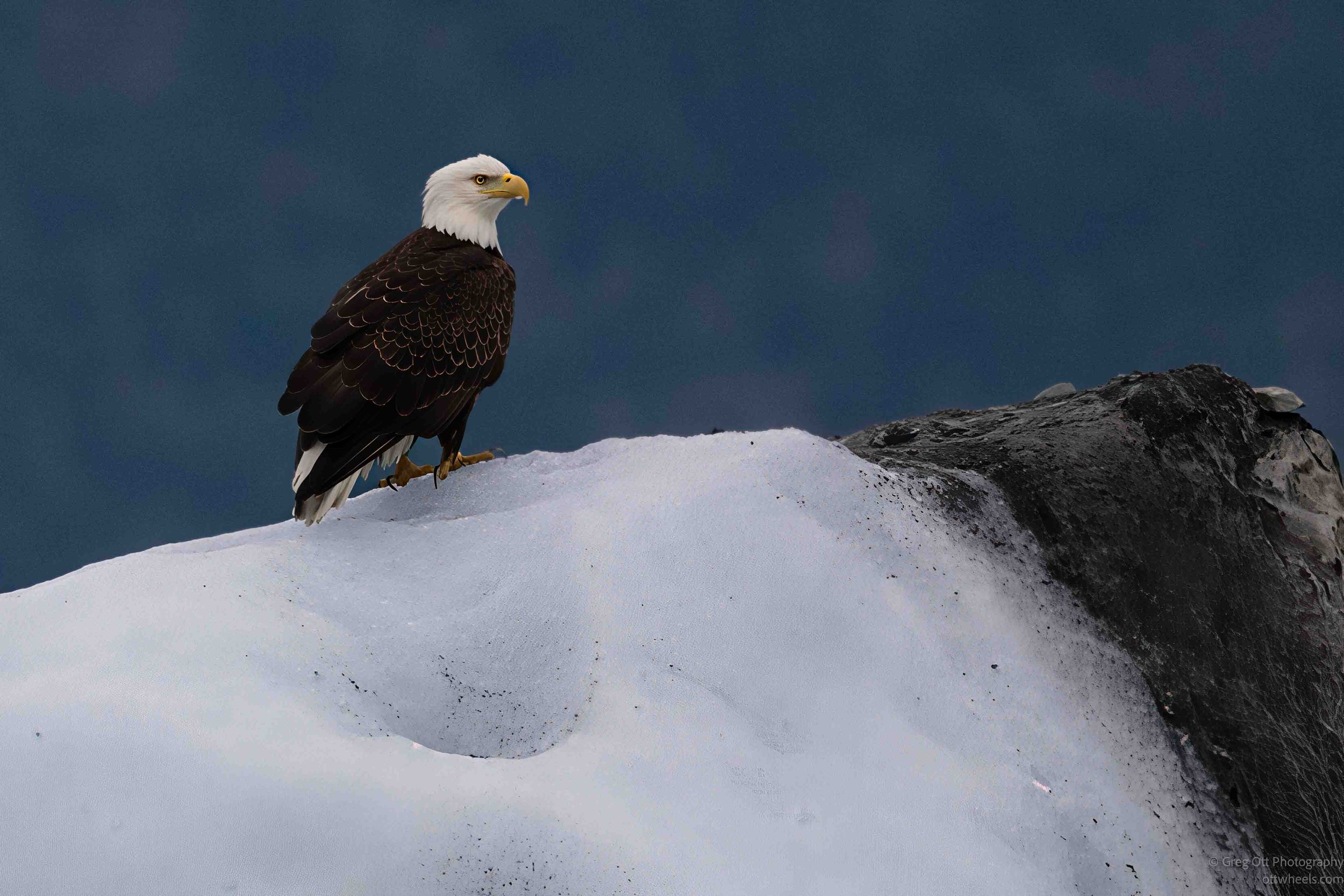
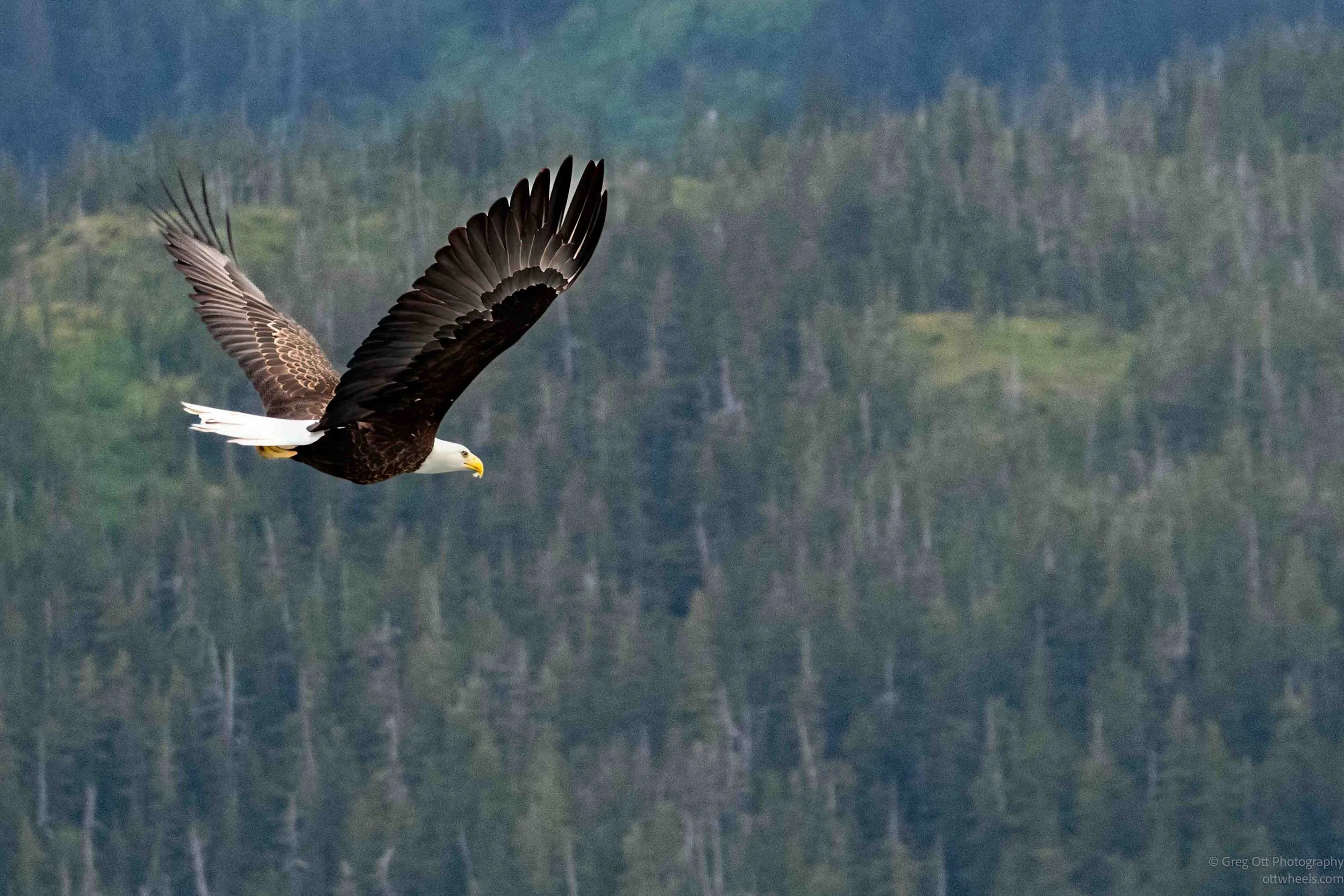
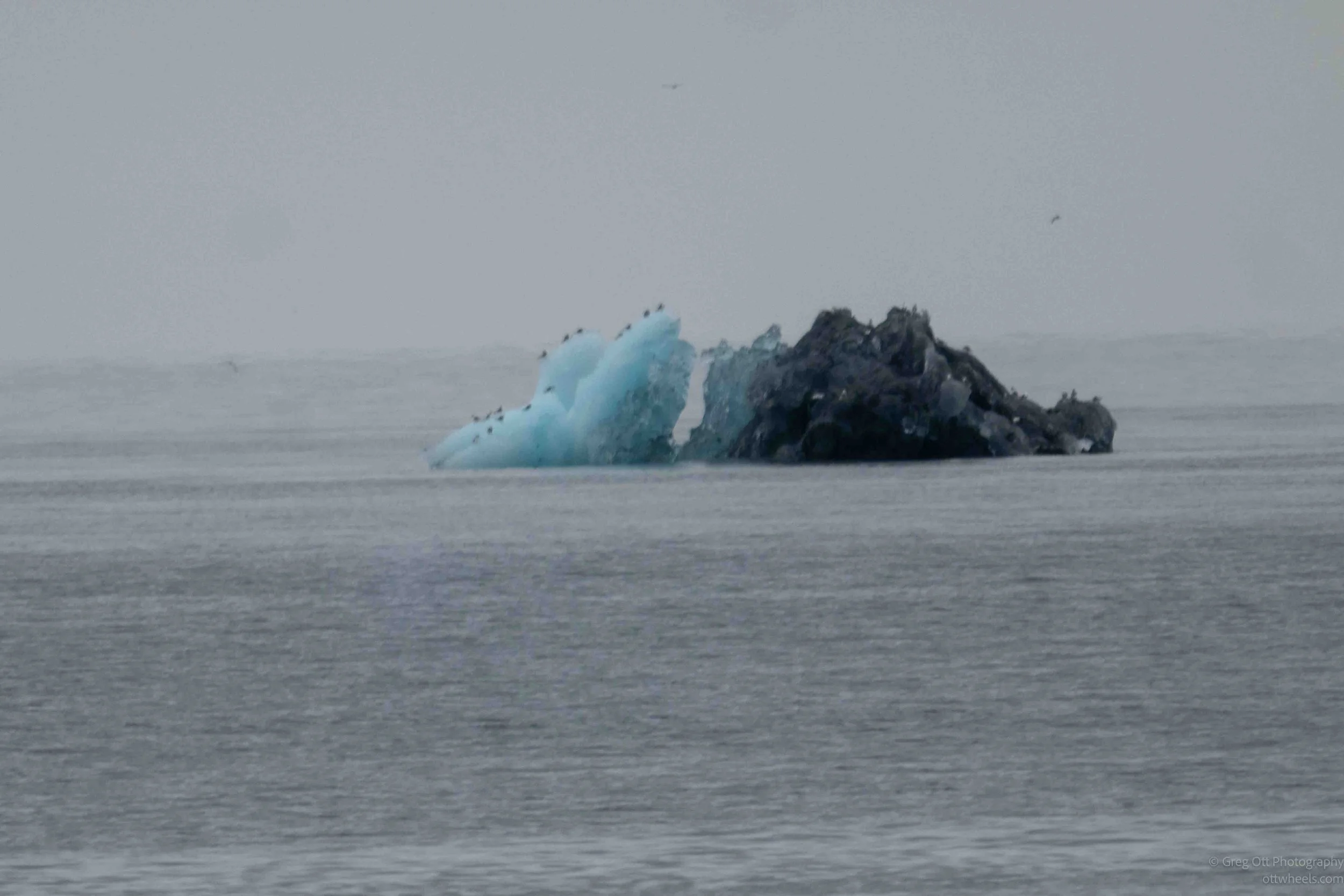
A little later the captain throttled back and pointed toward what looked like a large iceberg drifting quietly through the Sound. Standing on top was a mature bald eagle. It wasn’t perched on a tree or rocky shoreline. It was riding a floating chunk of glacial ice that had calved from Meares Glacier and drifted about two miles from the glacier face. The eagle stood there patiently scanning the water below before suddenly lifting off and dropping toward the surface in an attempt to catch a fish. It missed, but it was stunning to watch. That single scene told more of an Alaska story than almost anything else that day.
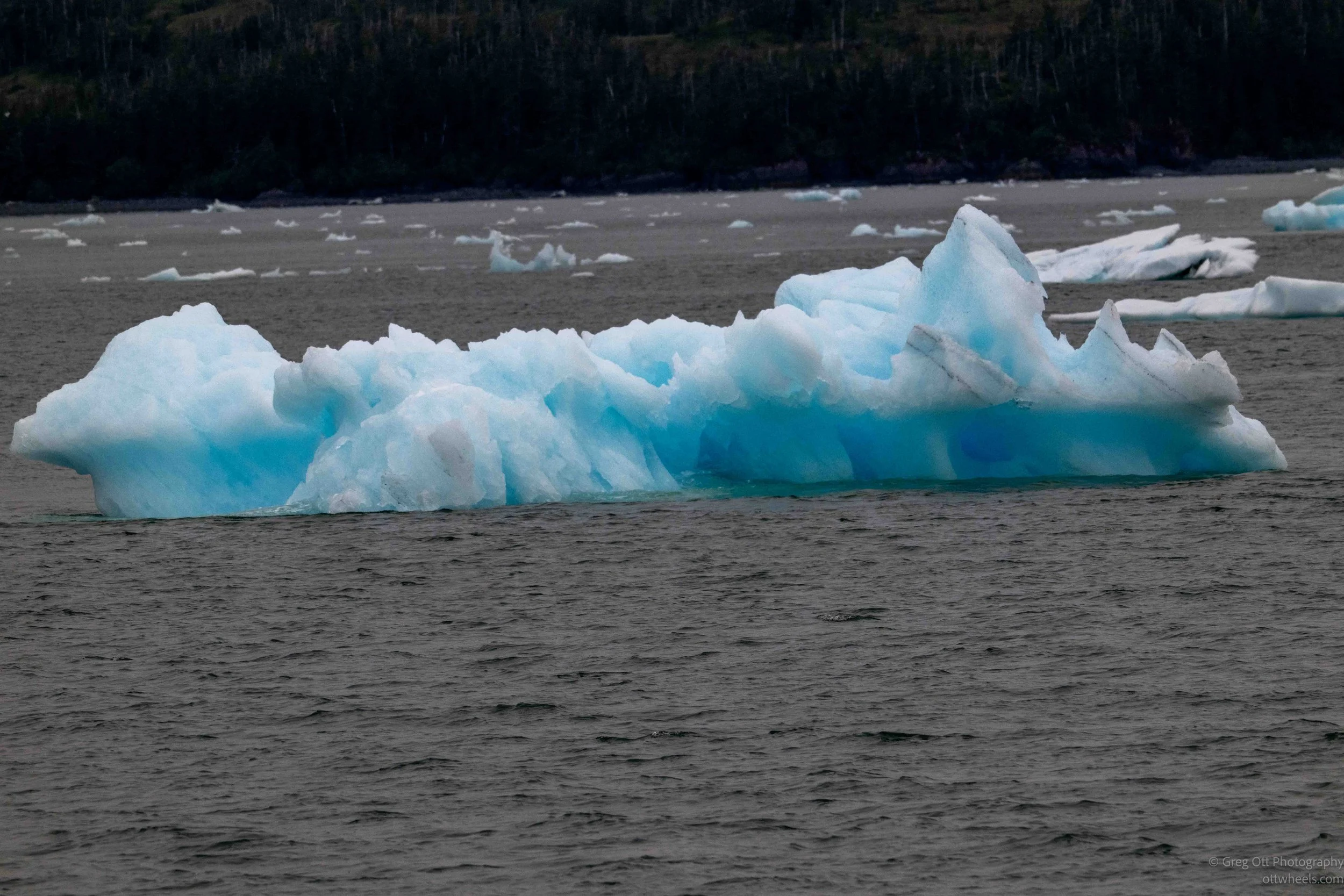
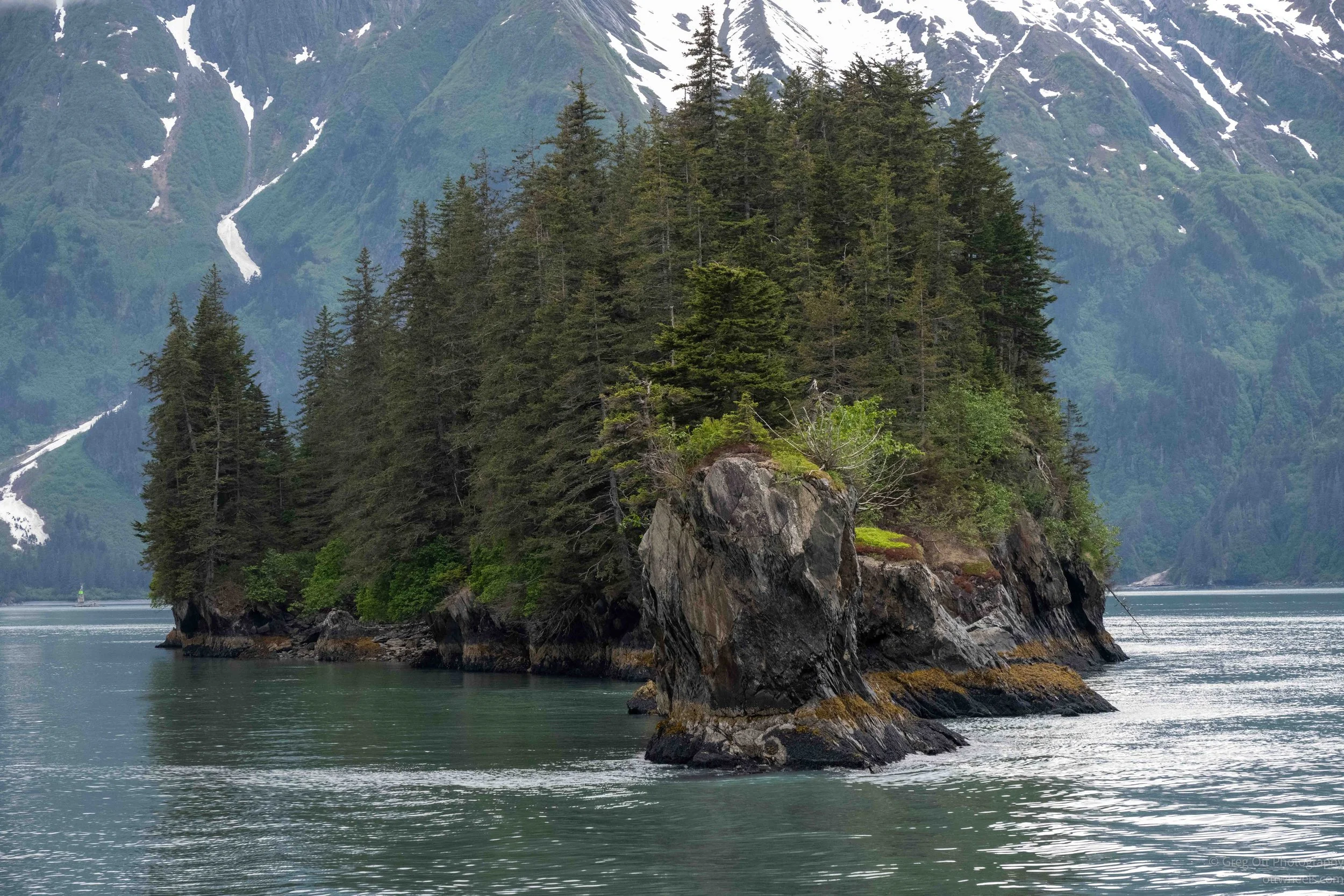
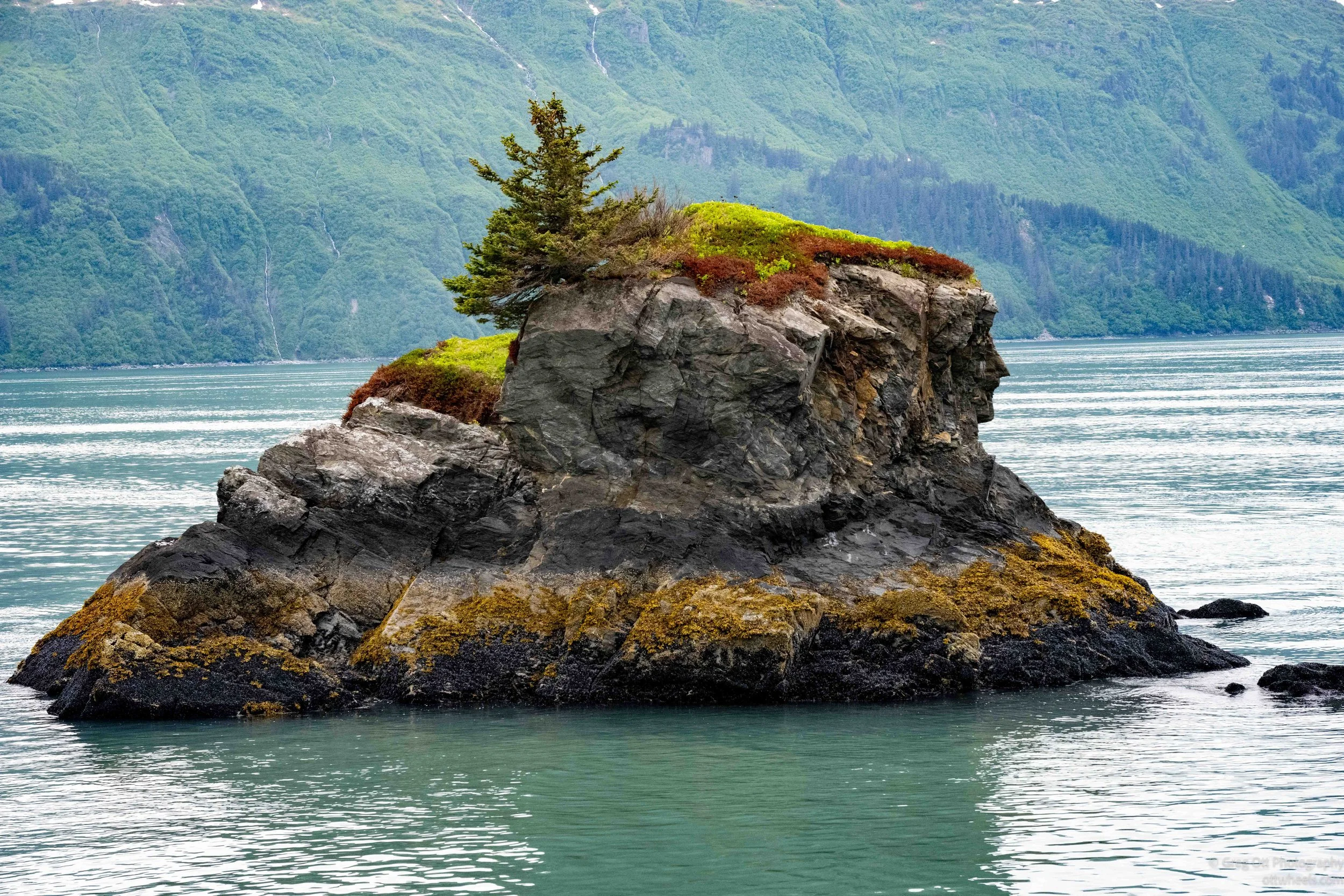
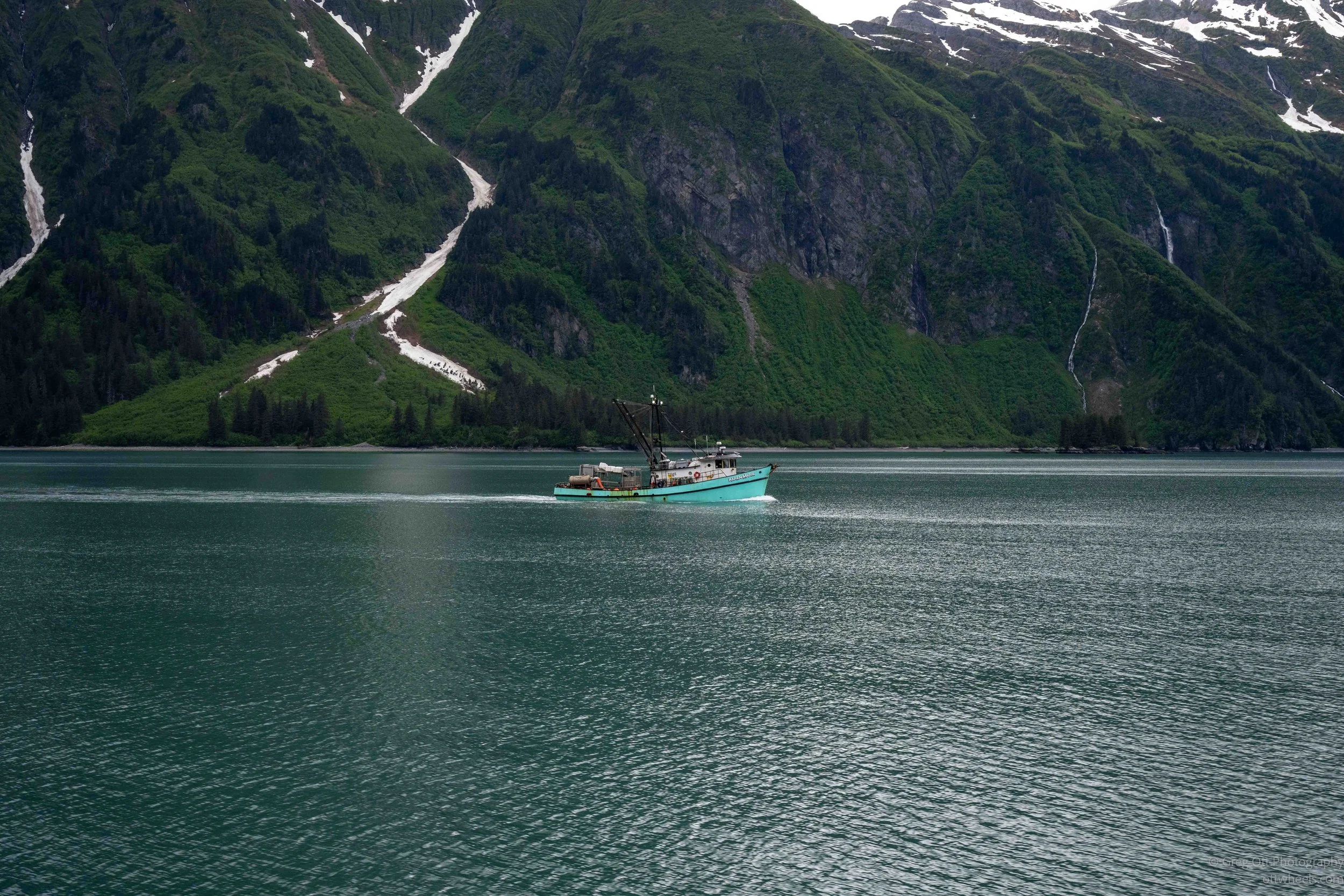
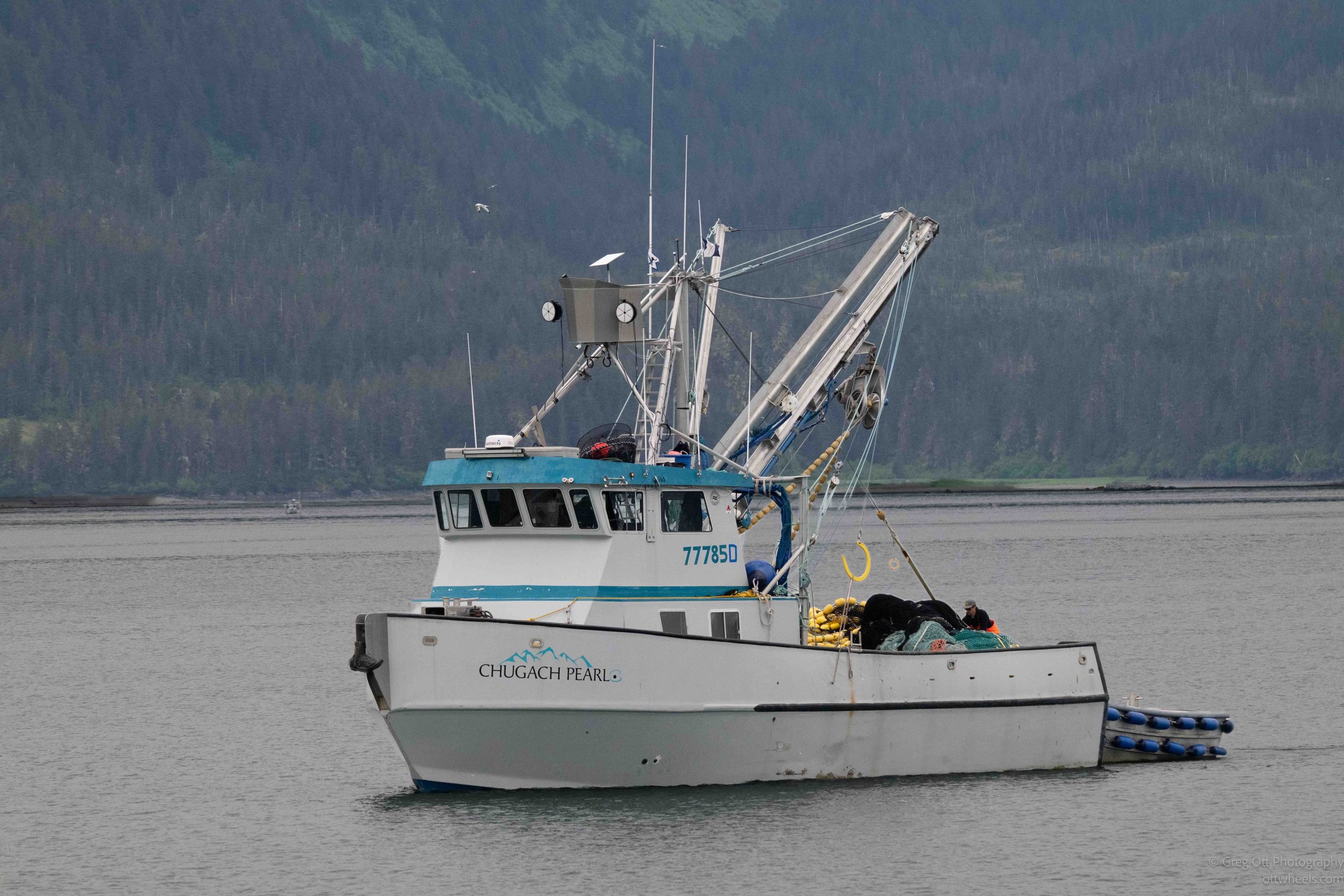
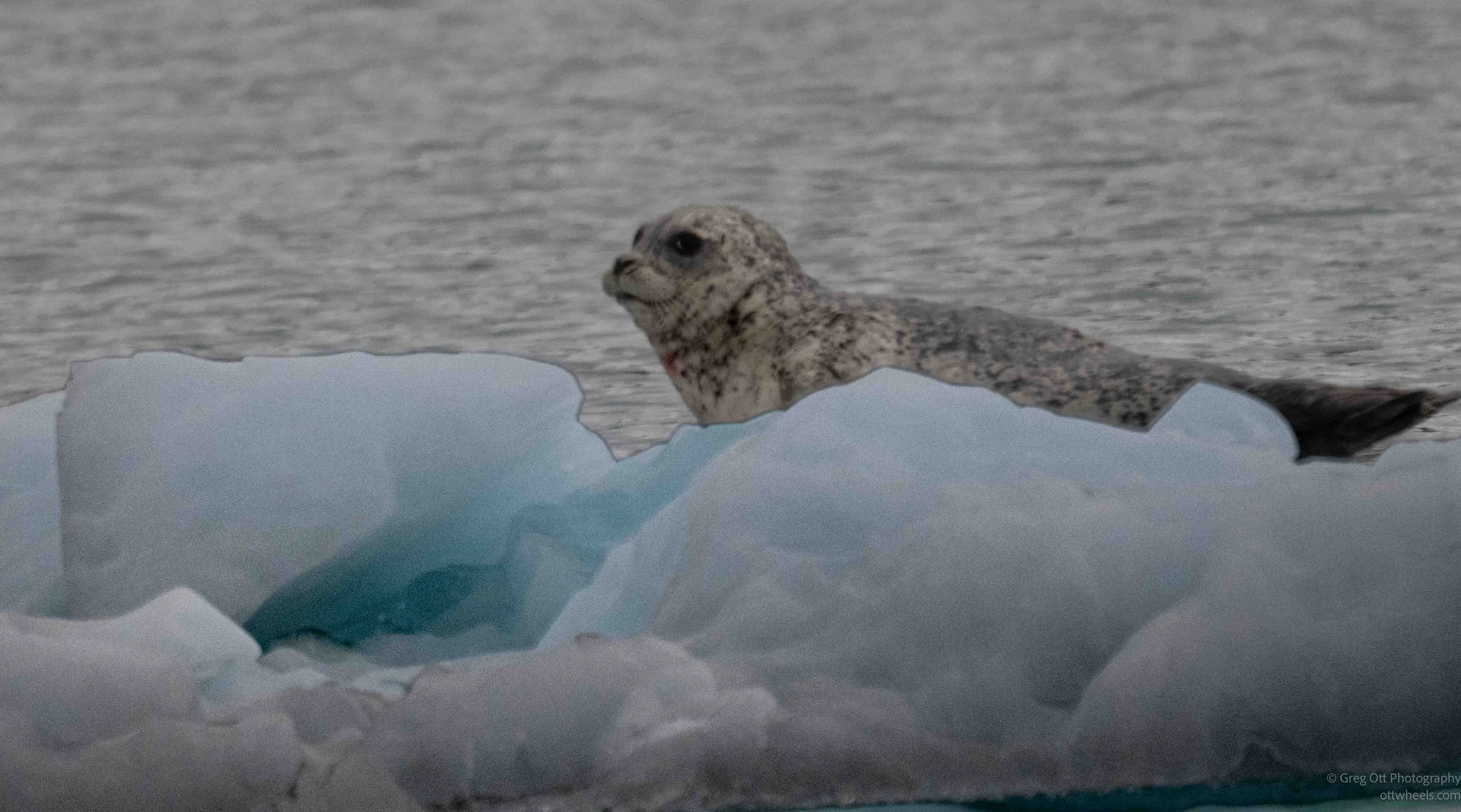
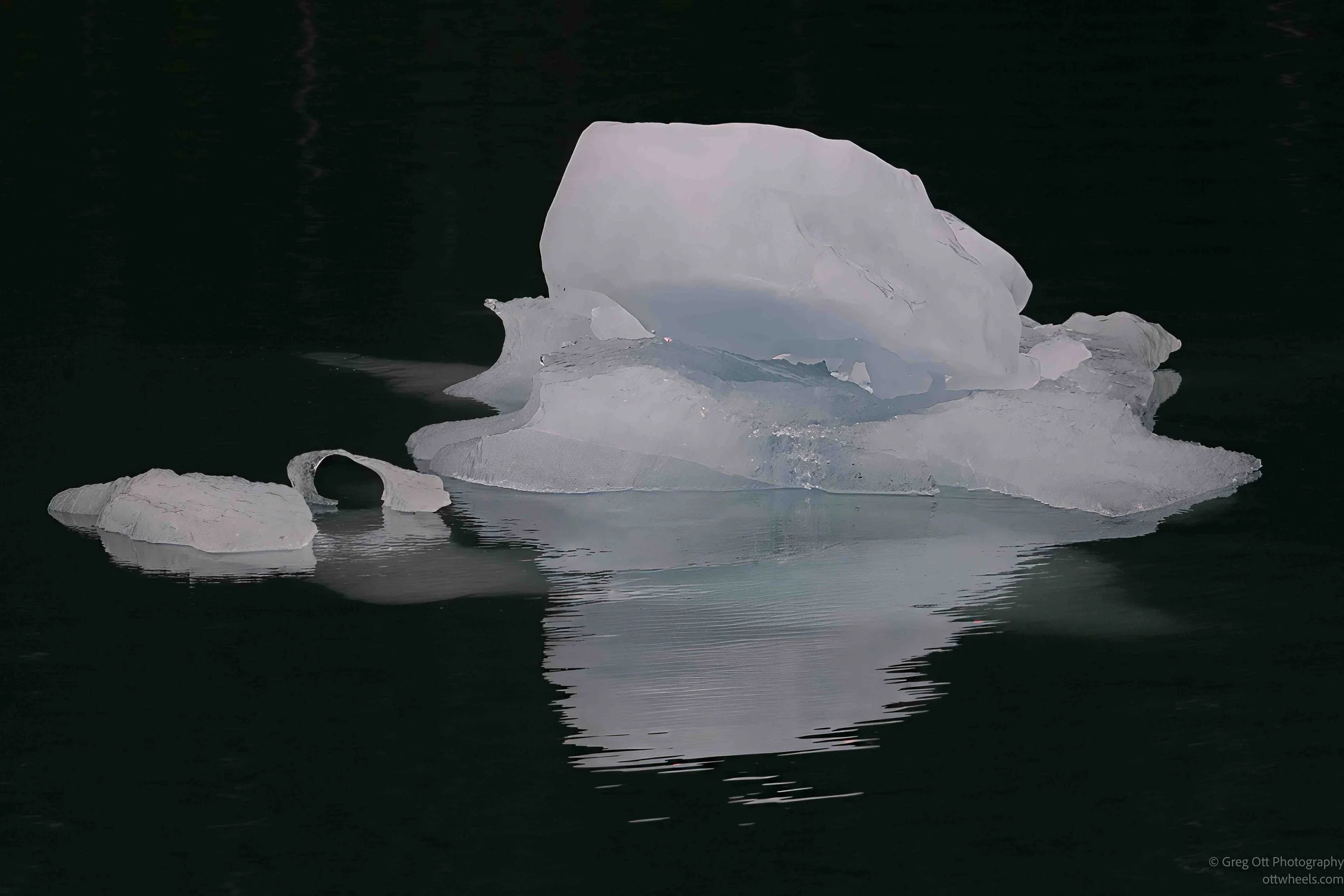
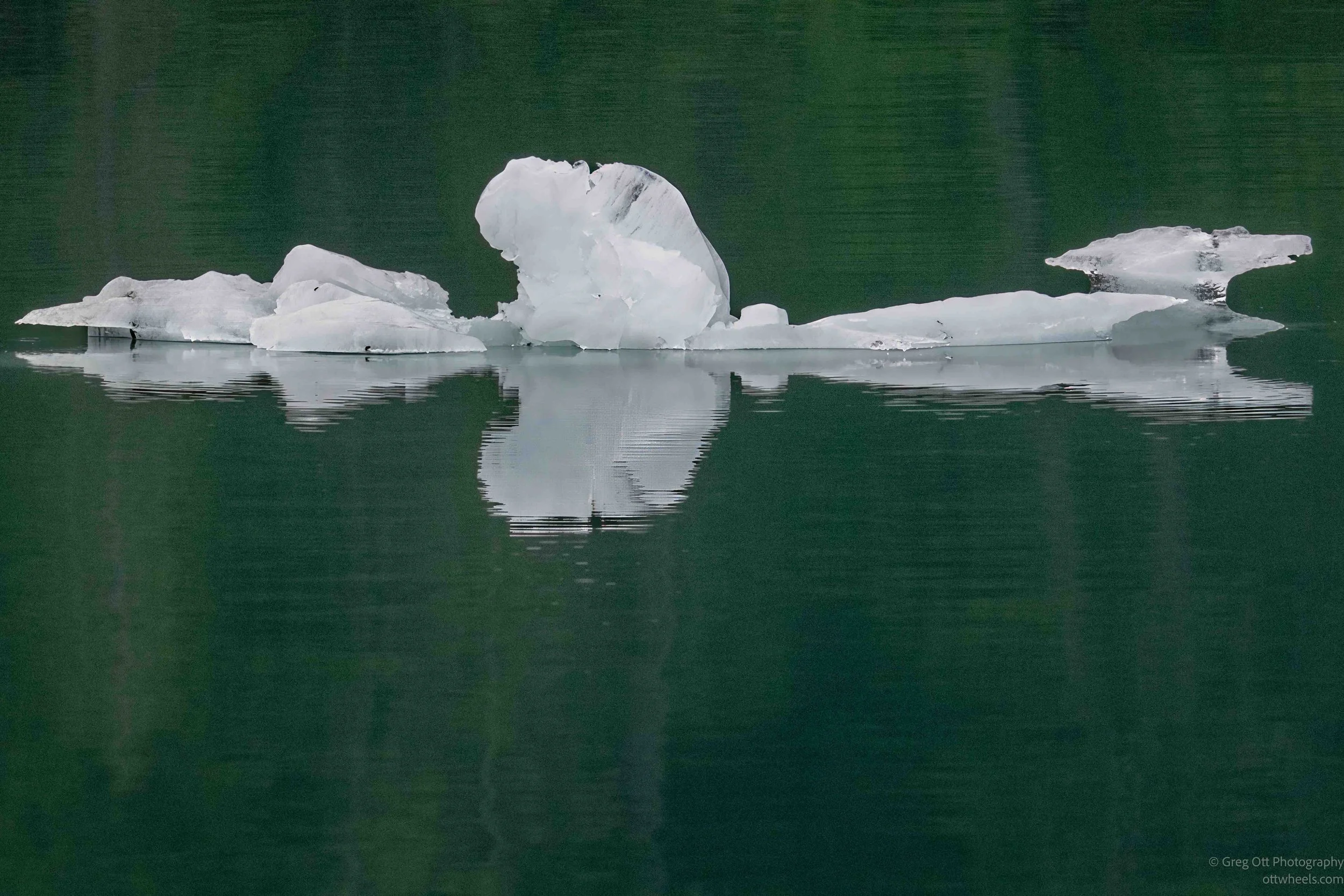
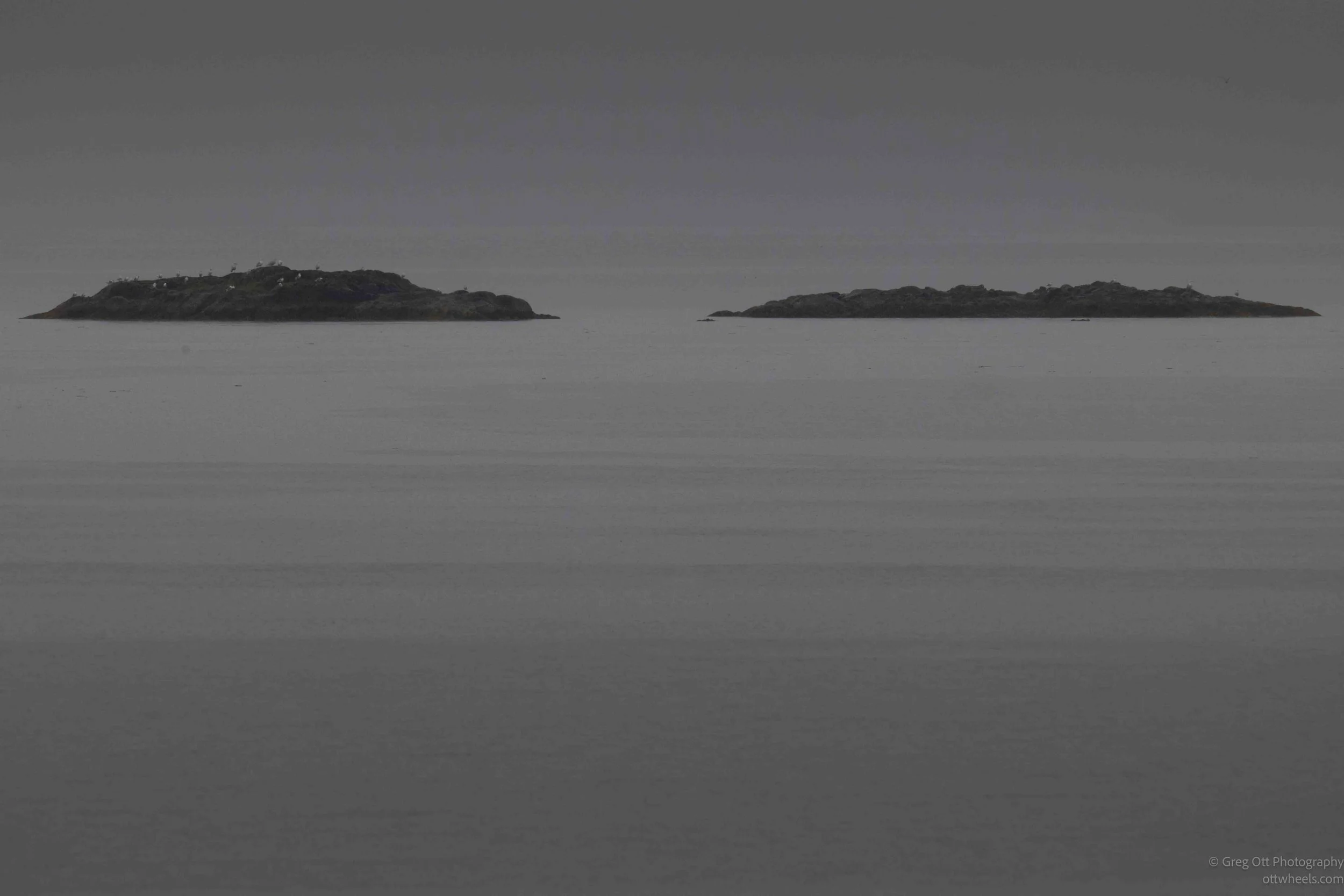
We also stopped for harbor seals lounging on floating ice and for whales that seemed determined not to be photographed. Some playful otters floated by as well. The landscape kept changing as we moved through the Sound. At times the light was moody and almost monochrome, creating beautiful black-and-white gradients across the mountains and water. Then the sun would break through, and the hillsides would suddenly glow with vibrant greens. We passed chunks of ice along the way, though not nearly as many as I had seen the day before near Columbia Glacier.
Meares Glacier
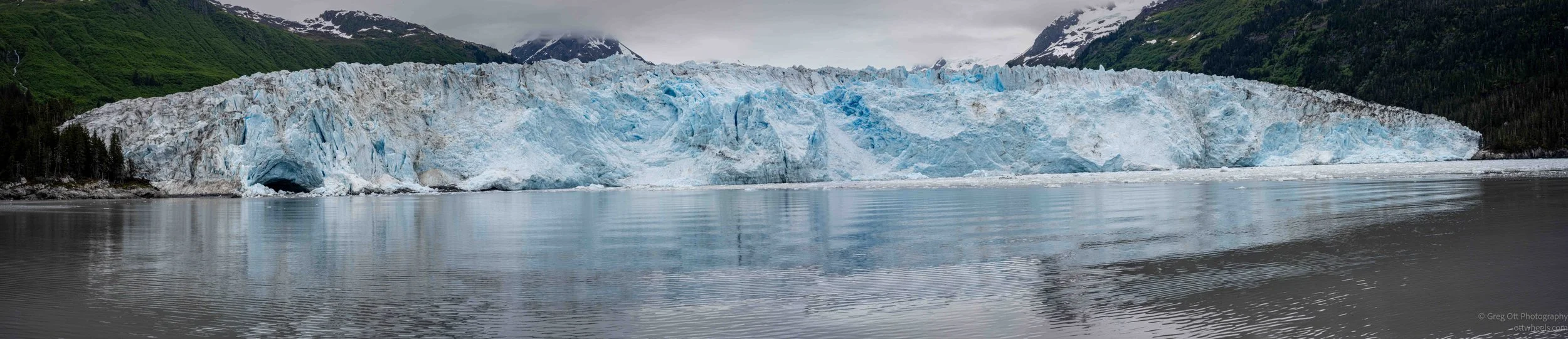
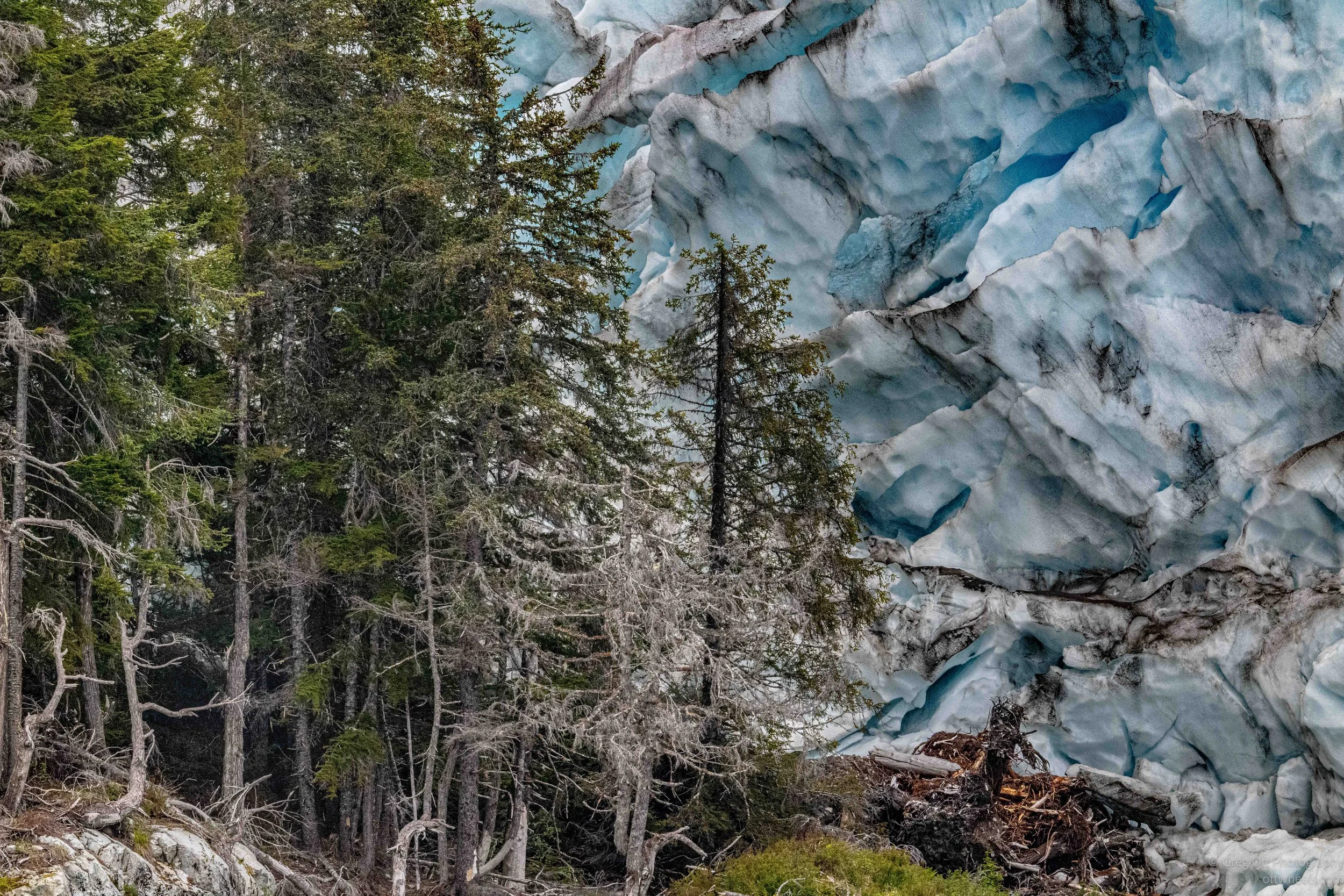
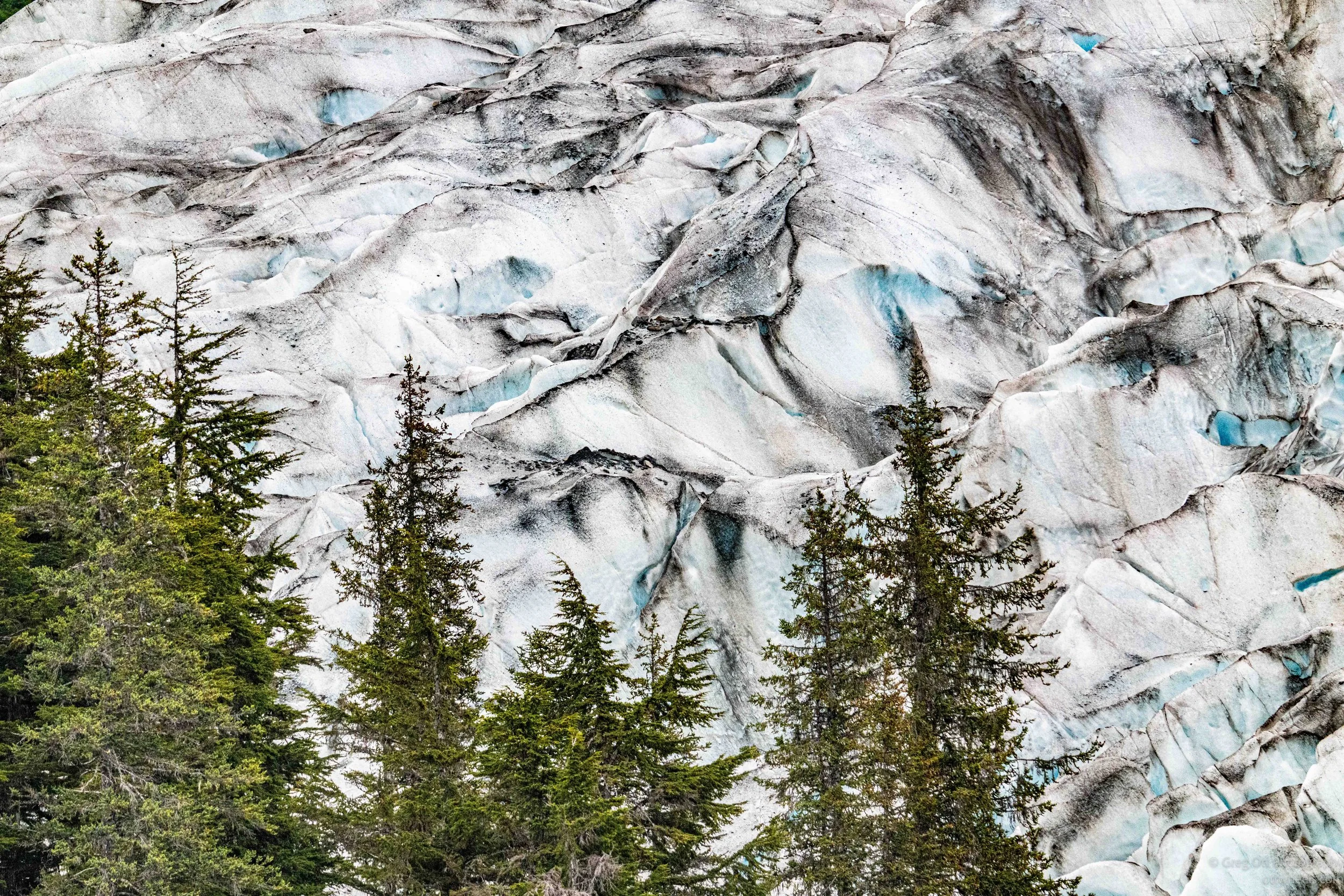
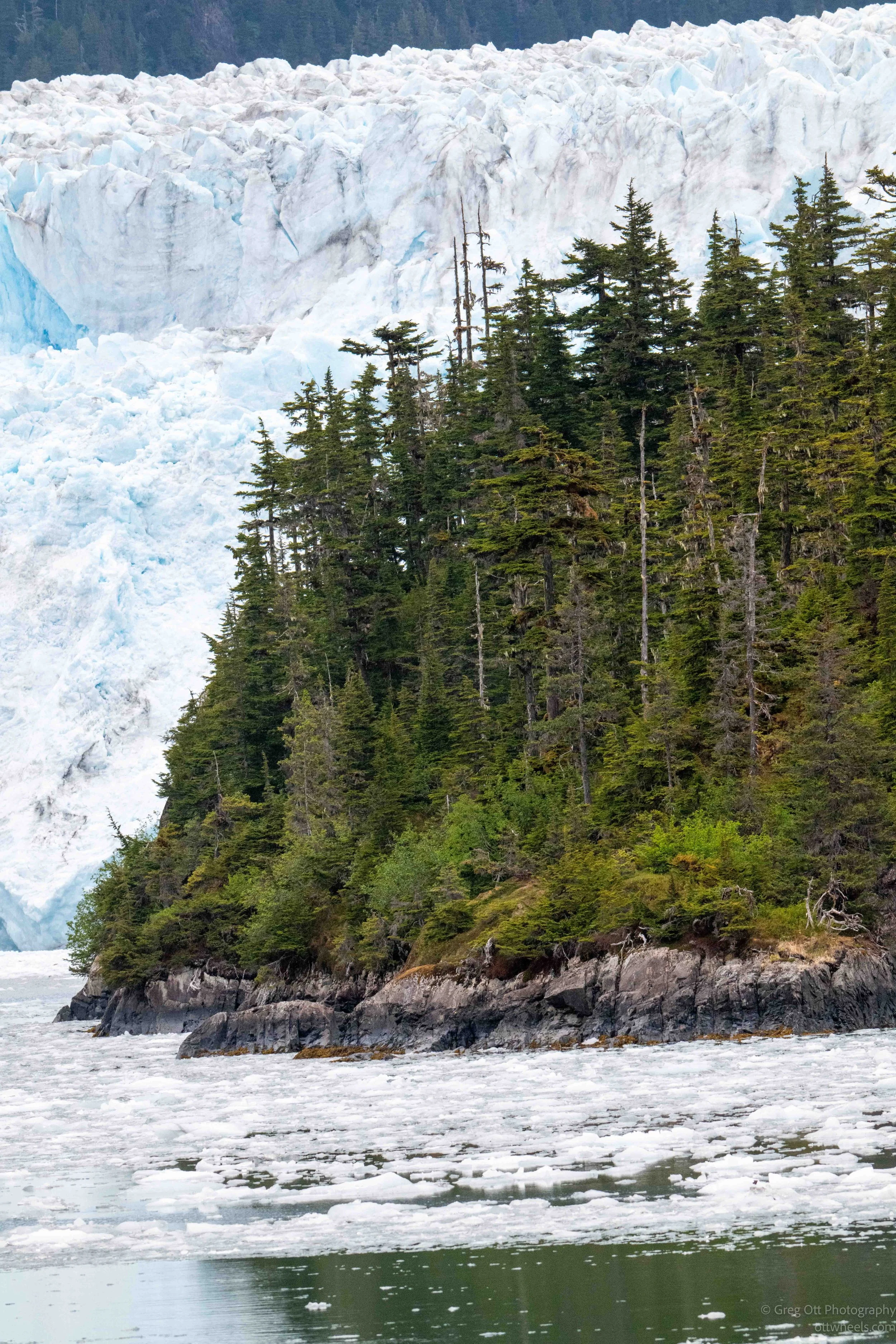
We lingered near the glacier for about forty-five minutes while the captain slowly repositioned the boat so everyone had an opportunity to view the glacier from different angles. As the boat shifted, entirely new details appeared. One section revealed brilliant blue ice compressed into jagged towers. Another showed horizontal bands recording years of snowfall and trapped sediment. Off to one side, the dark opening of the ice cave dominated the shoreline, while elsewhere the glacier rose in chaotic folds that looked almost like frozen ocean waves.
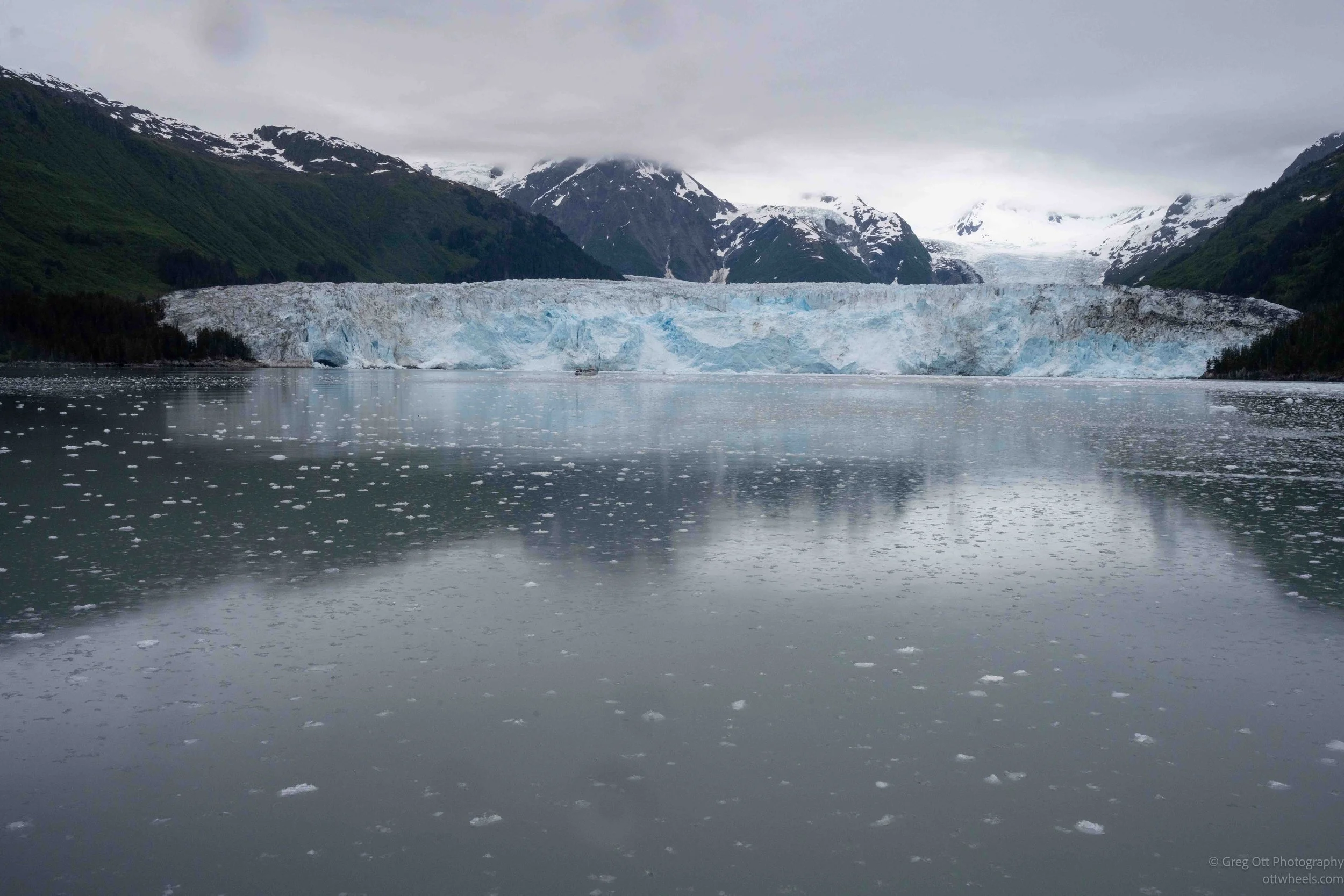
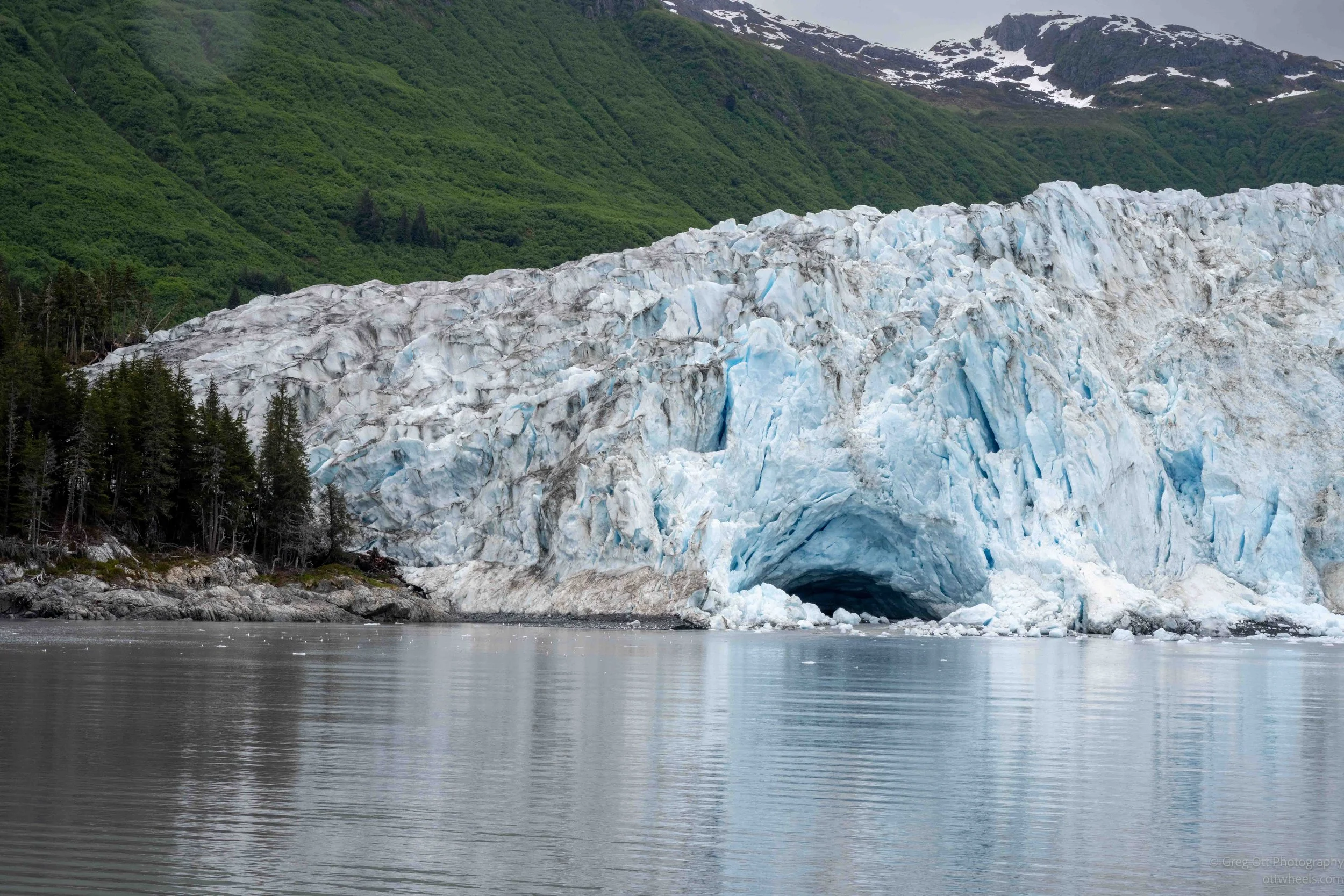
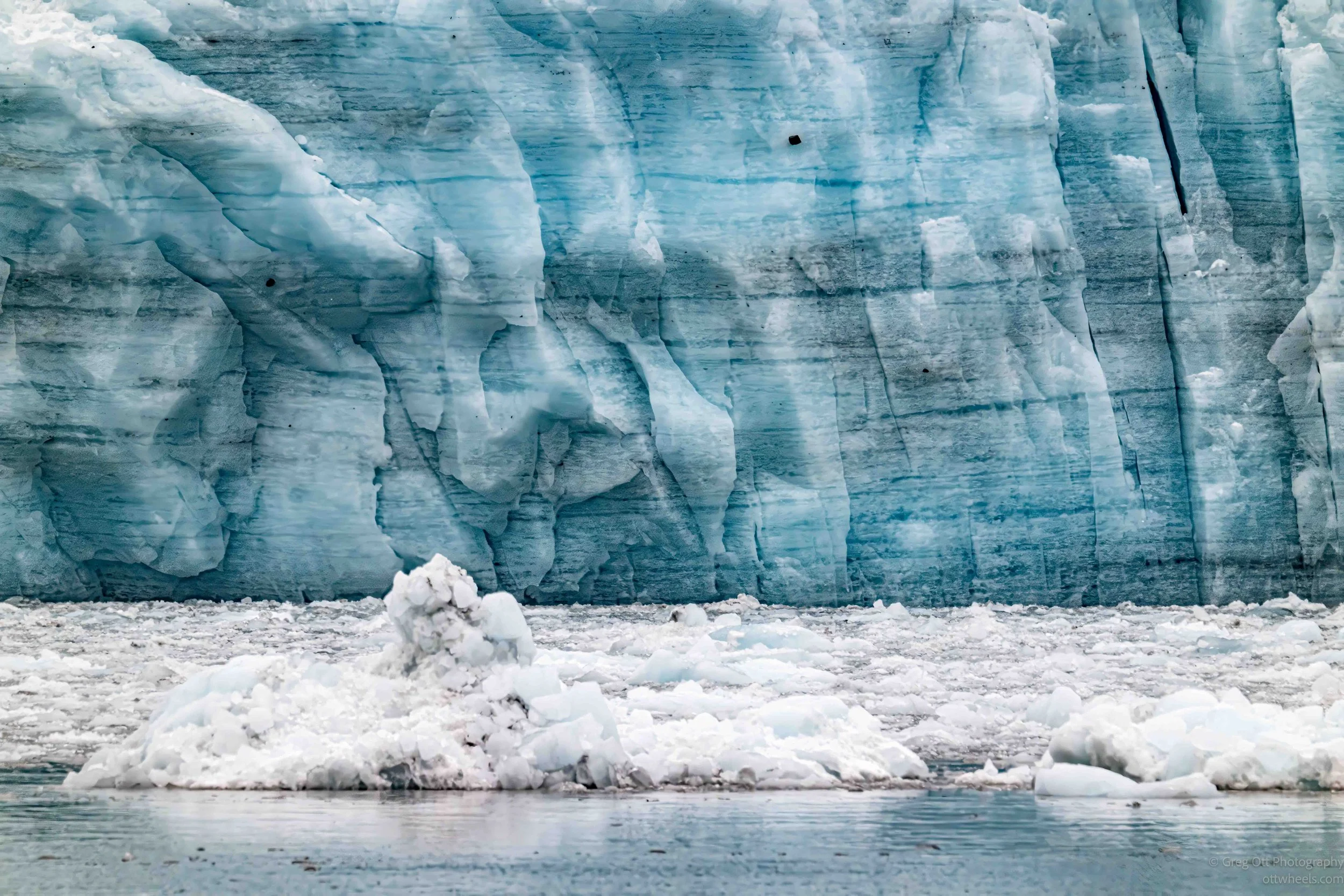
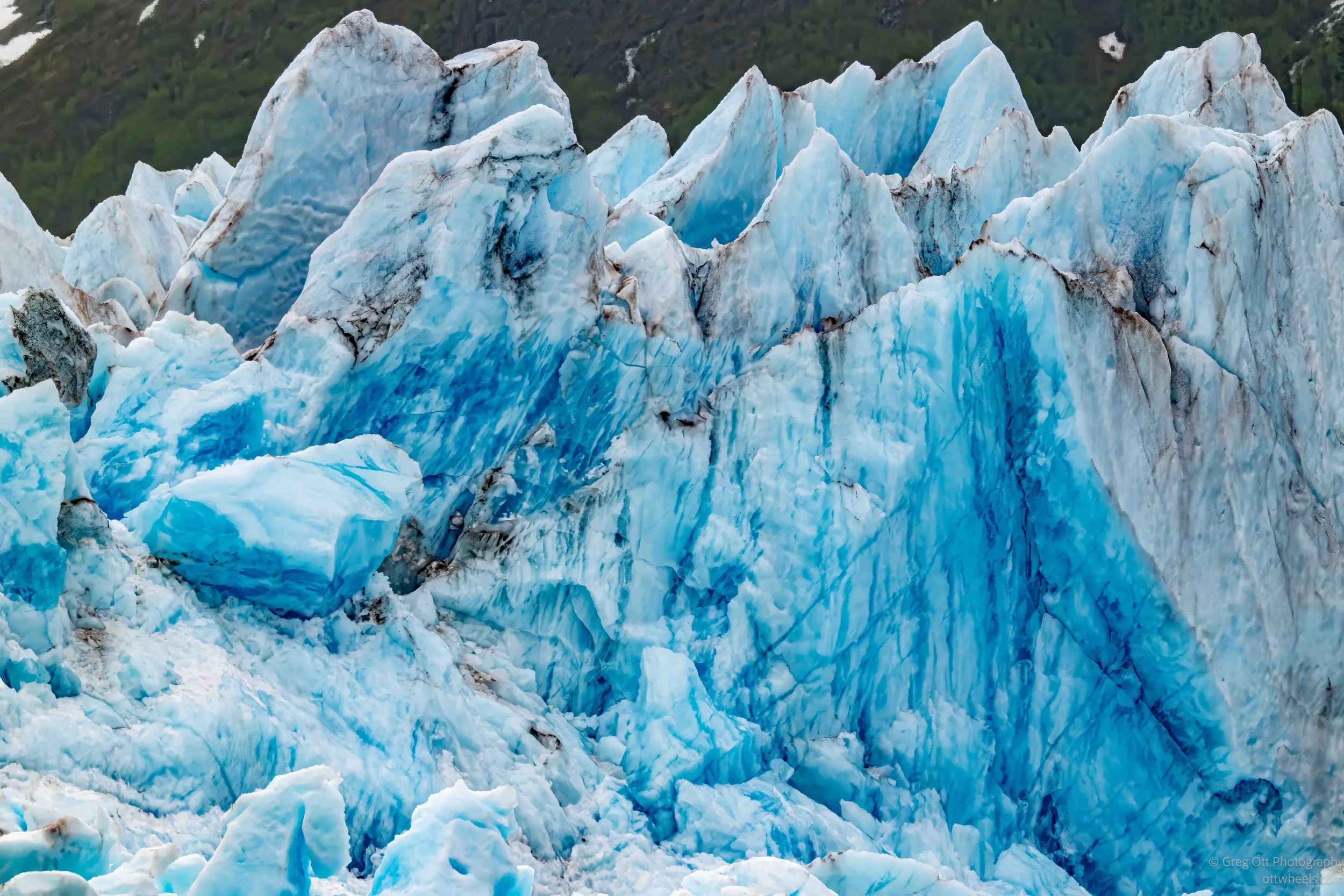
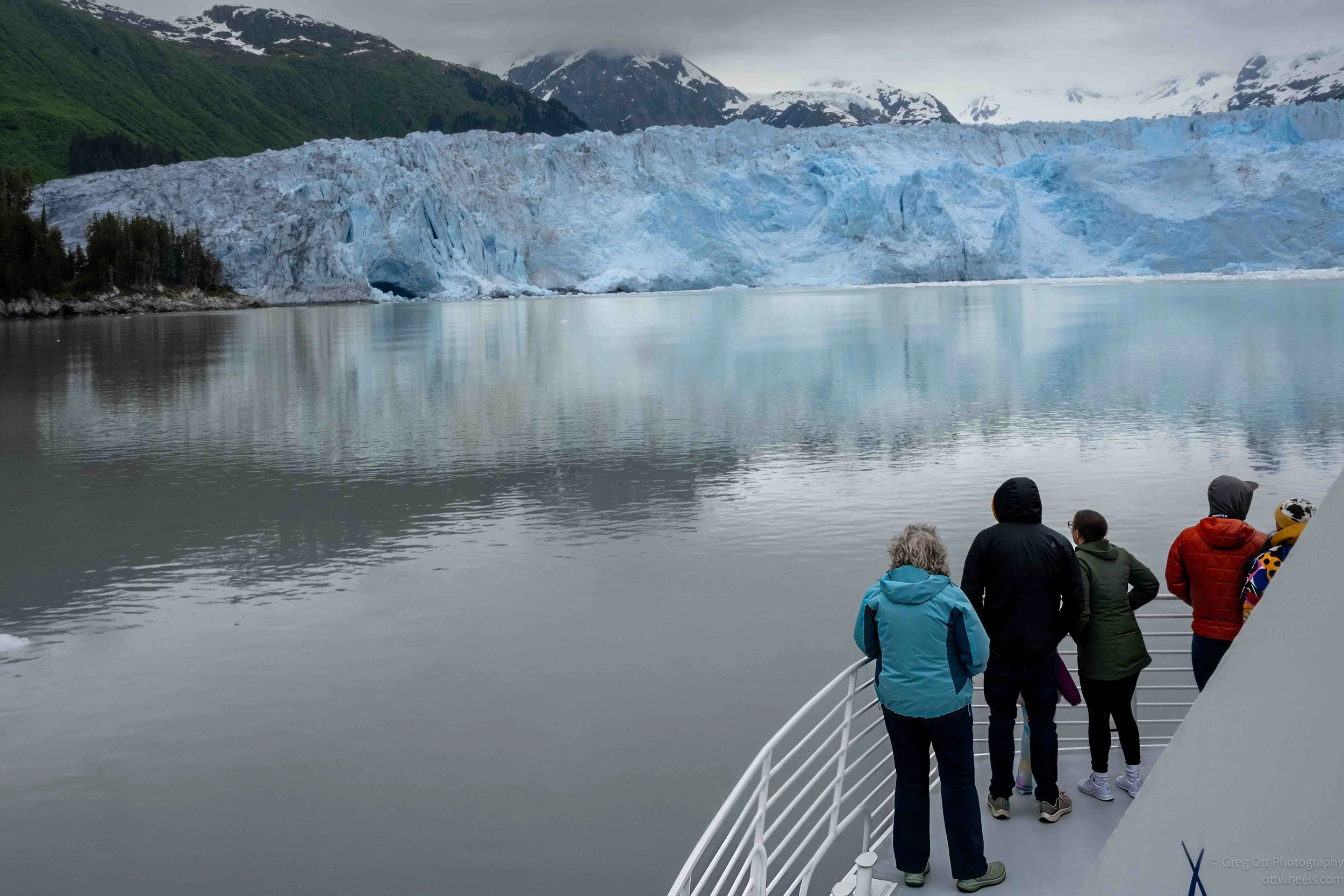
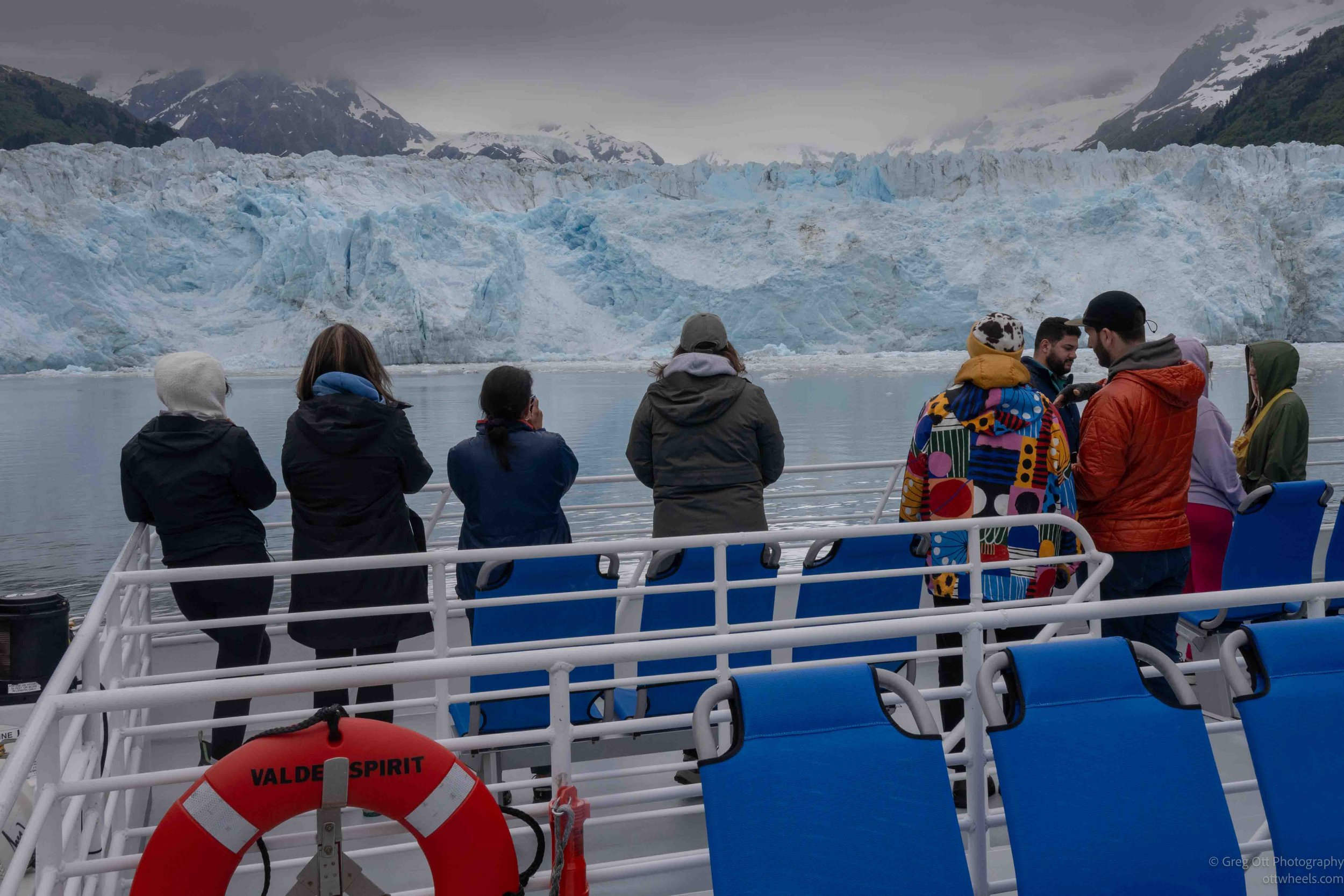
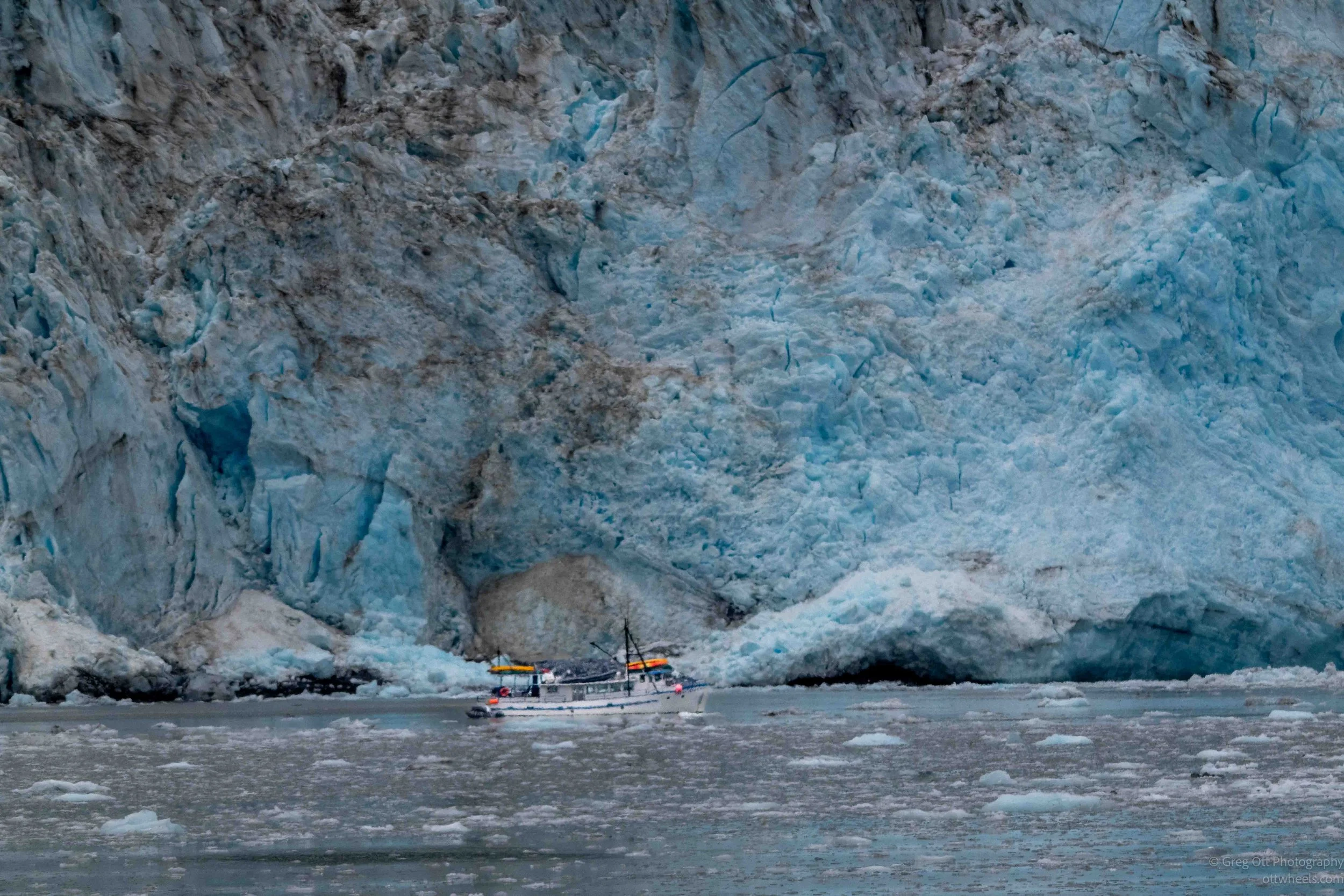
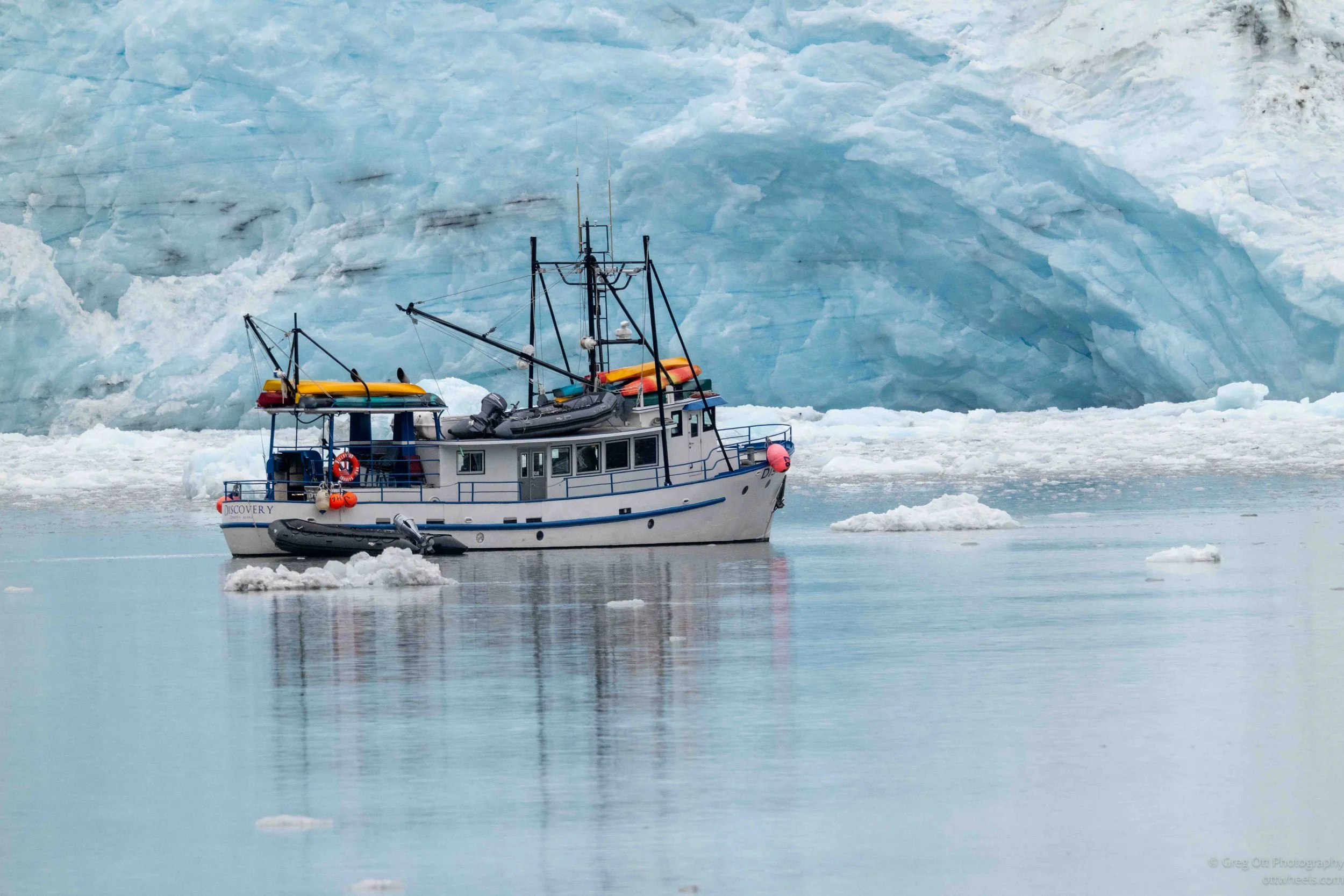
Some passengers came outside to photograph the glacier or simply stand quietly and take it all in. Others never left their tables inside the warm cabin. They seemed perfectly content to enjoy the scenery through the windows while talking with family and friends. I spent almost the entire time on deck with my camera, constantly finding another composition. Some photographs captured the glacier's immense scale, while others focused on the incredible textures, shades of blue, or the tiny tour boat dwarfed against the wall of ice. One of my favorite images wasn't of the glacier at all, but of the people standing silently along the rail, each absorbed in the same remarkable view.
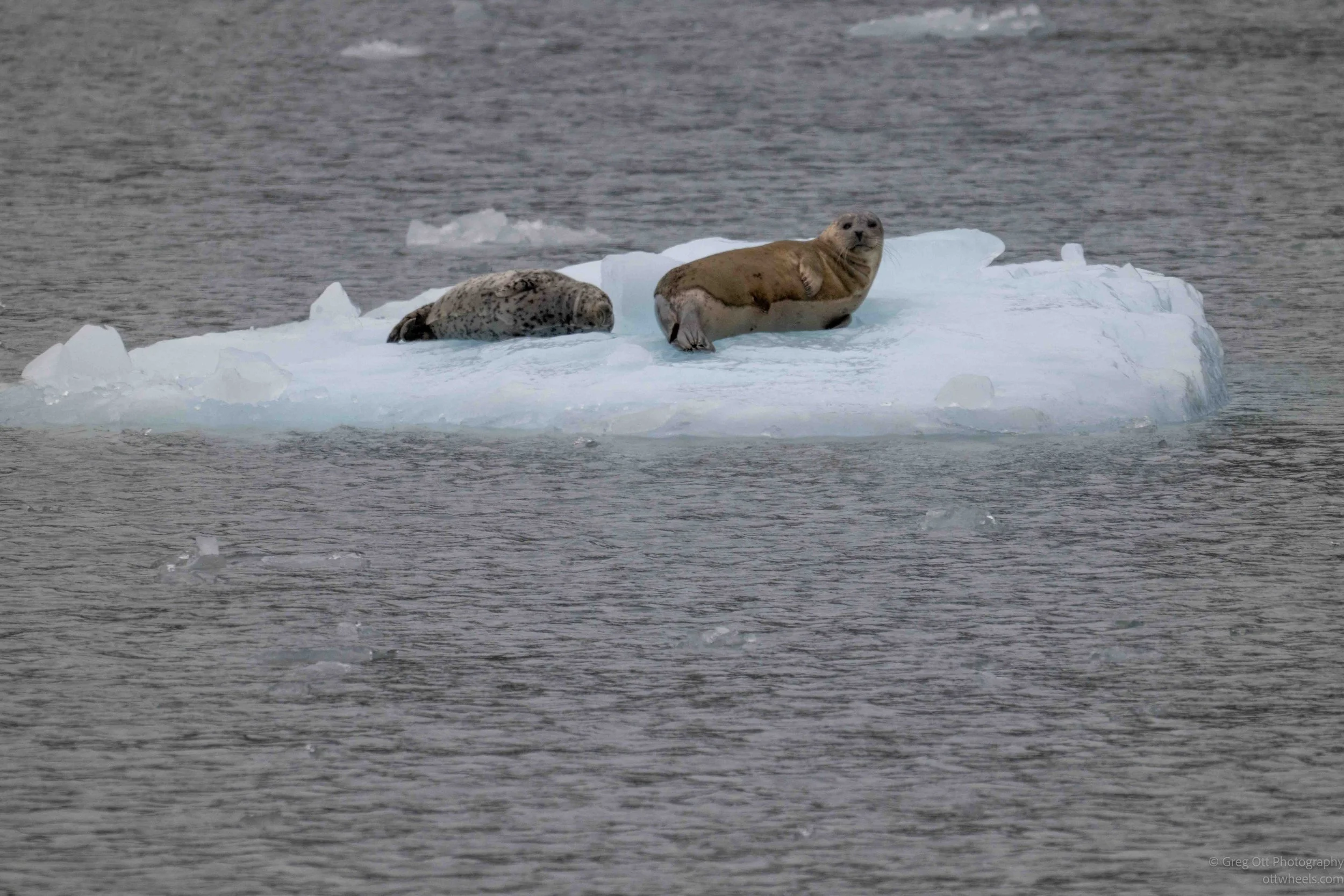
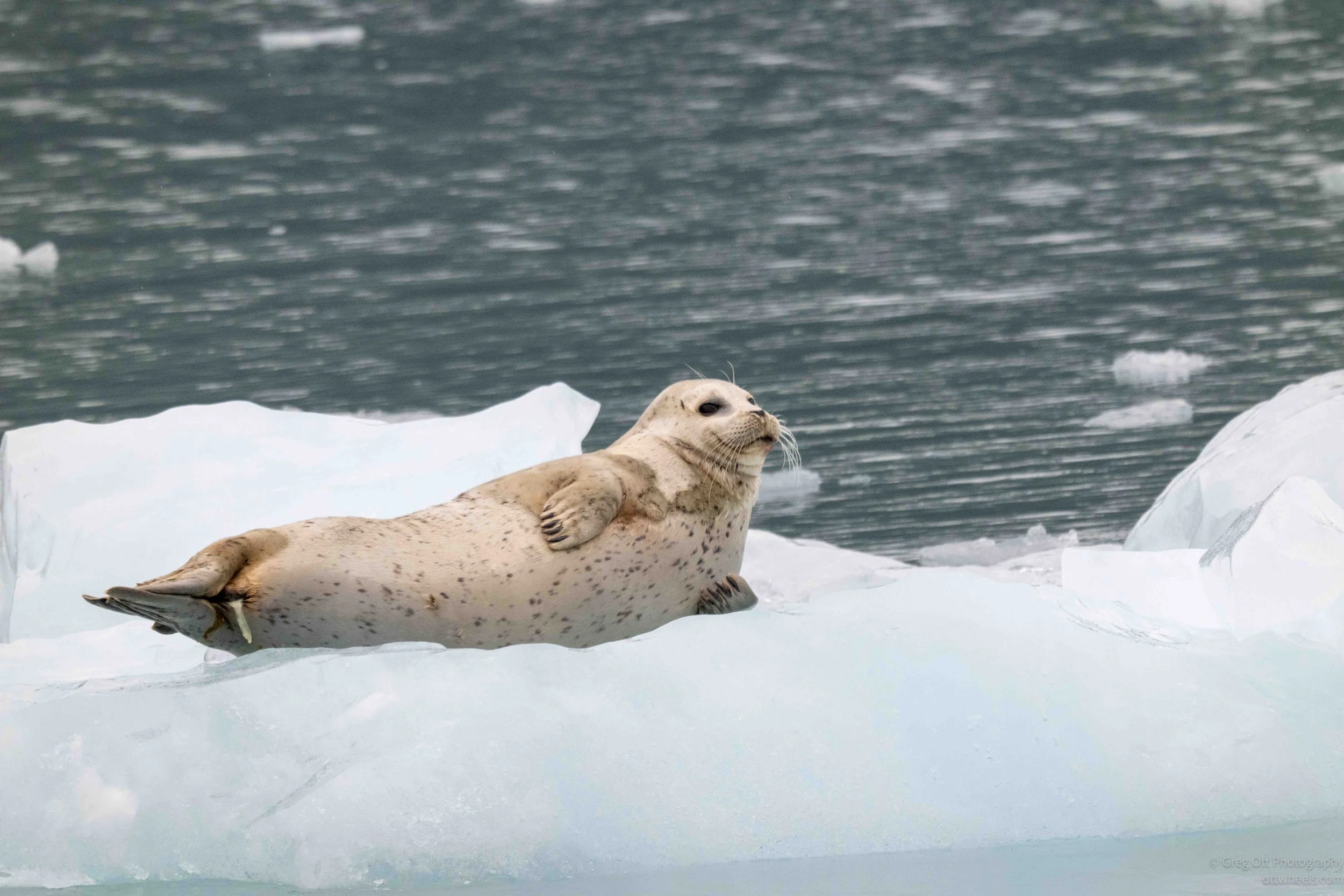
The harbor seals seemed just as comfortable as we were, stretched out on floating icebergs as though they had reserved the best seats in Prince William Sound. They barely acknowledged our presence, occasionally lifting their heads before settling back down for another nap.
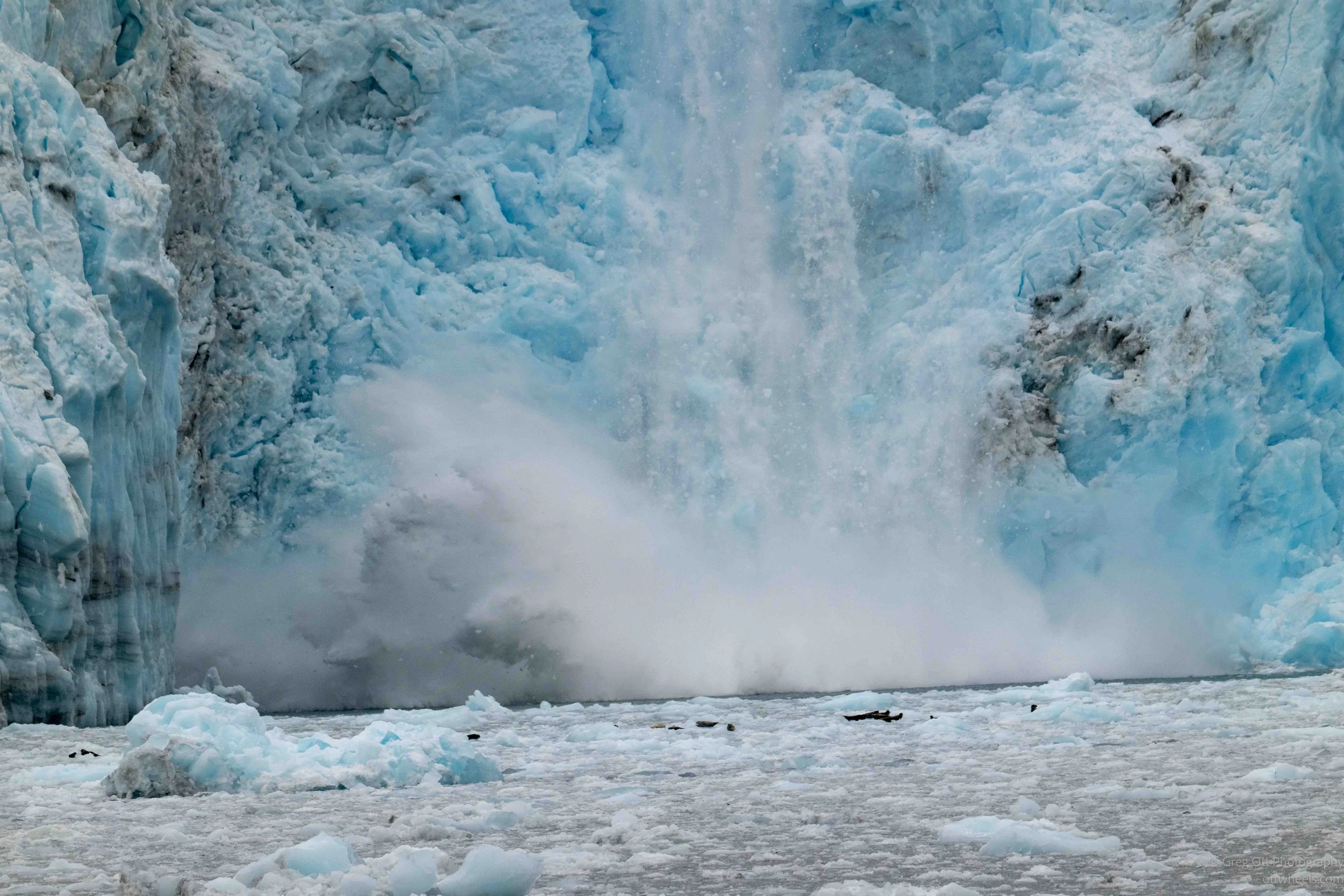
The glacier itself never stopped reminding us that it was alive. Every few minutes another sharp crack echoed across the bay, followed by smaller pieces of ice tumbling into the water. Then, without warning, a massive section near the center of the glacier fractured. The entire block broke free and exploded into the bay with an incredible roar. A towering plume of water shot into the air, waves rolled across the ice-filled surface, and hundreds of gulls erupted into flight, filling the air with frantic calls. For a few moments, everyone on deck simply watched in silence. No photograph could fully capture the sound or the force of what we had just witnessed, but it was one of those moments that makes you appreciate glaciers not as frozen scenery, but as powerful rivers of ice that are constantly changing before your eyes.
Trip Back To Valdez
It was eventually time to head back toward Valdez. As soon as we left the glacier, the crew announced lunch. Everyone drifted inside and found a table. I asked three women if I could join them since they had an extra seat. We'd shared breakfast earlier that morning, so the conversation picked up naturally where it had left off.
Two of the women were long friends from Fairbanks. The third was one of their daughters. One of the friends was now living in Illinois with her family. We talked about life in Alaska, and she showed me photographs of a halibut her husband had just caught. I had no idea they grew that large. The fish was nearly as long as he was tall. It looked like enough meat to feed a family for months. Looking at those photographs, it suddenly hit me just how devastating the Exxon Valdez oil spill had been. If fish like that disappeared from these waters for years, entire communities lost not only part of their economy, but an important food source as well.
Lunch didn't keep me inside very long. Camera in hand, I headed back onto the deck, where the young pharmacist I'd been talking with throughout the day joined me. She had moved to Anchorage from Nashville simply because she wanted an adventure. After pharmacy school in several different states, Alaska seemed like the logical next chapter. She had also developed an interest in photography, so conversation came easily. For the next several hours we stood outside together talking about cameras, travel, family, and what had brought each of us to Alaska while everyone else stayed warm inside.
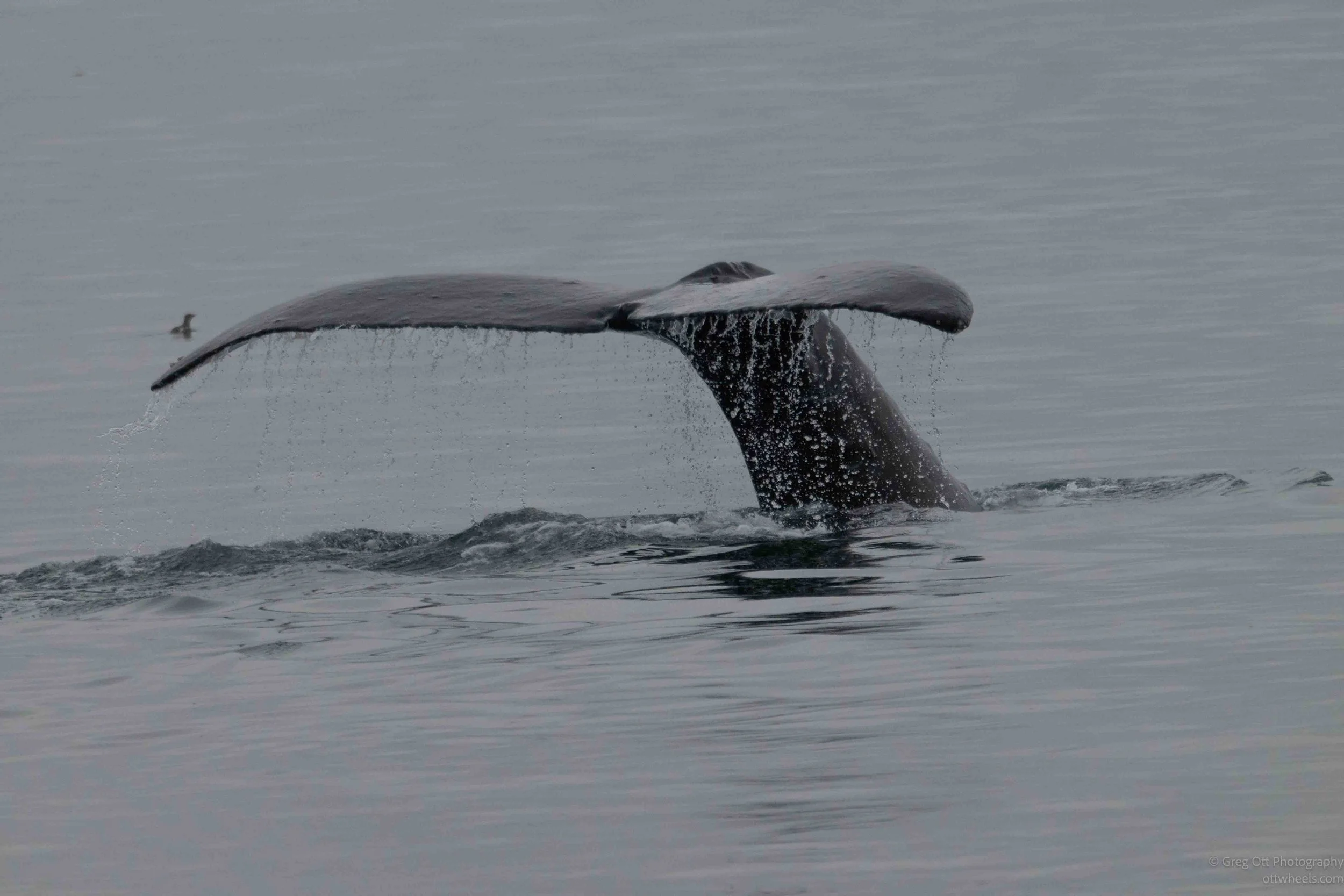
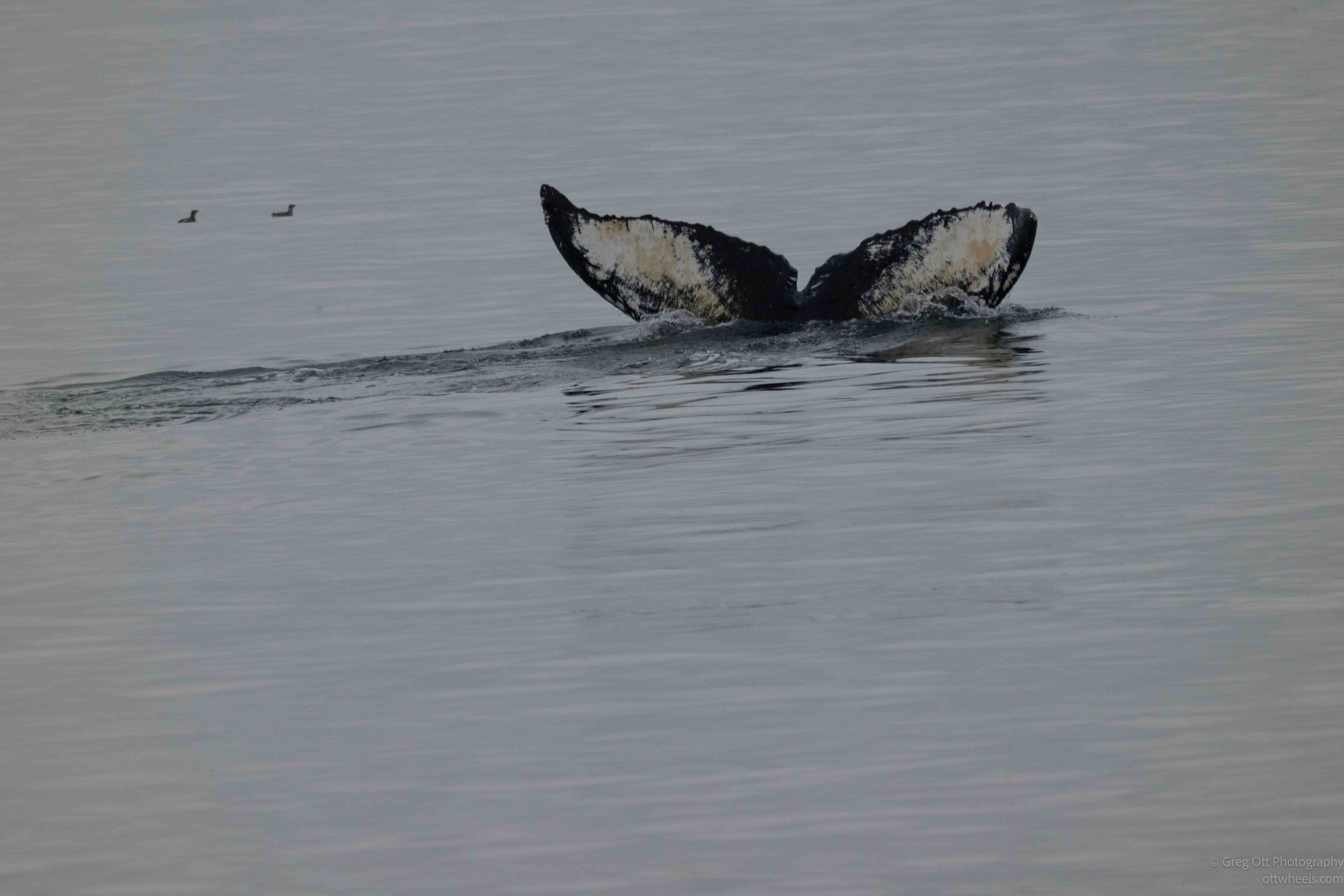
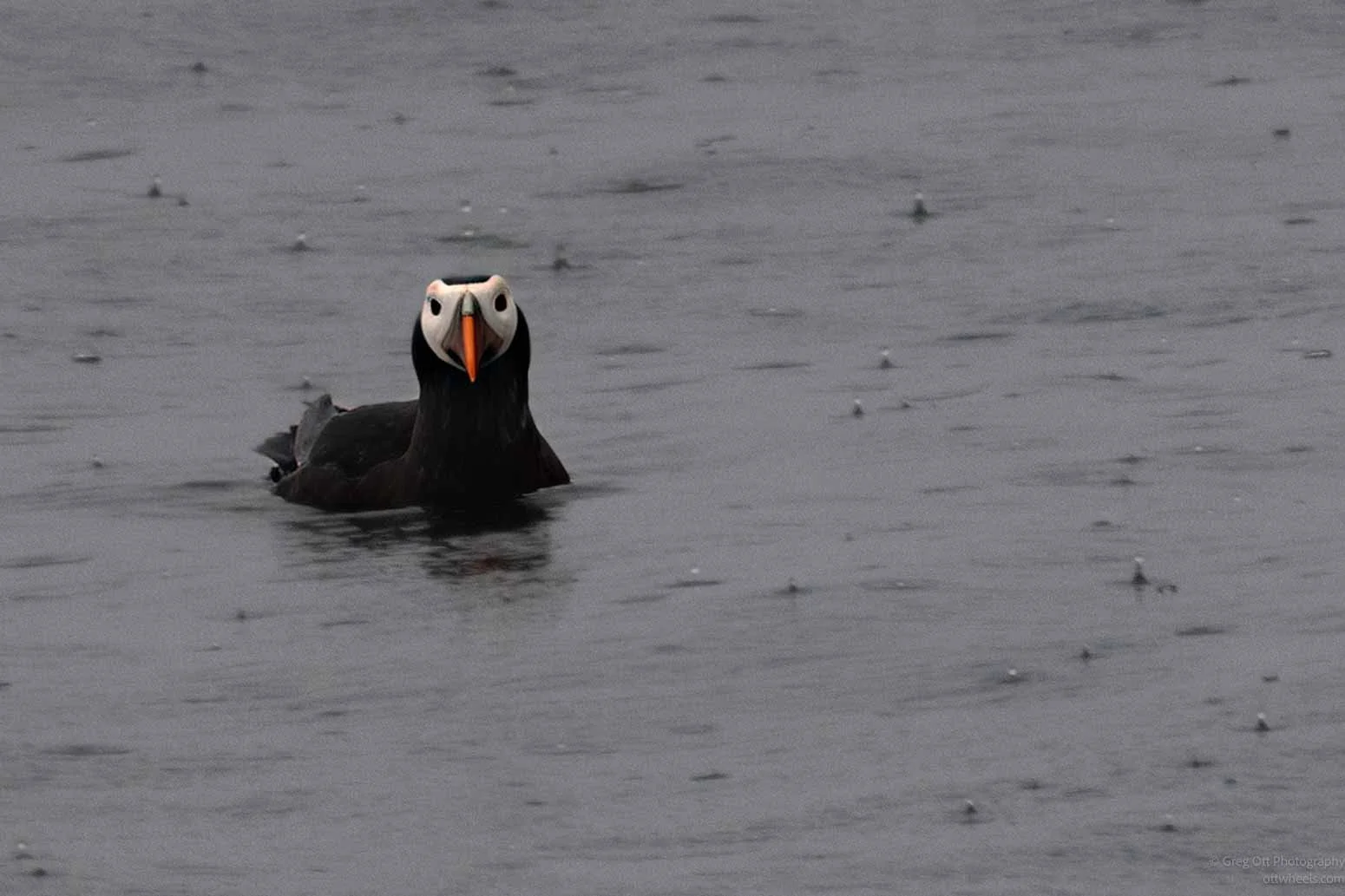
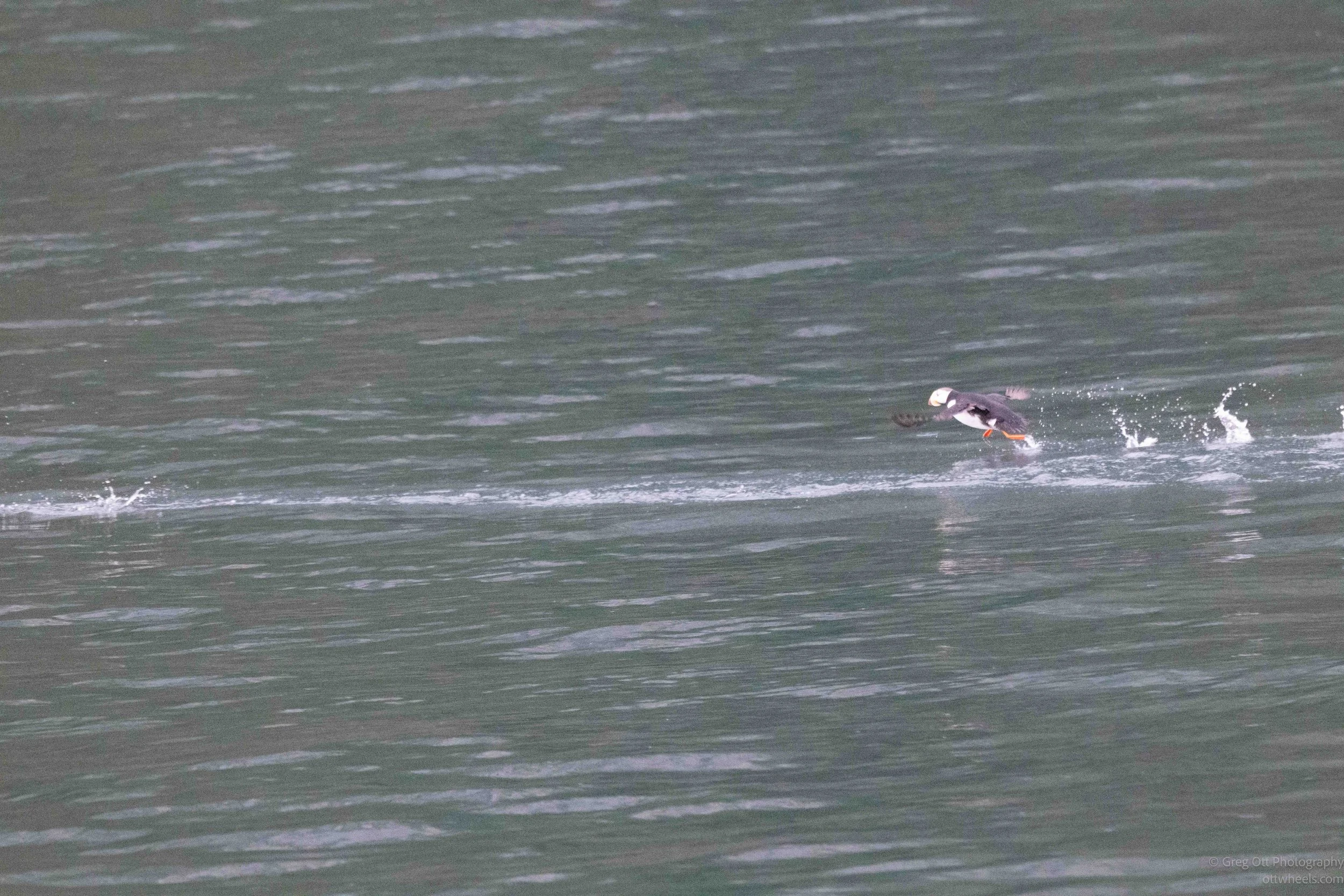
The return trip was anything but uneventful. The captain slowed repeatedly for wildlife. Tufted puffins bobbed on the water, although they proved frustratingly shy and never allowed the boat close enough for the photographs I wanted. Several humpback whales surfaced to feed before disappearing beneath the calm water, leaving only the familiar lift of a tail. Bald eagles watched us from shoreline perches, seemingly unimpressed by another tour boat passing through their territory.
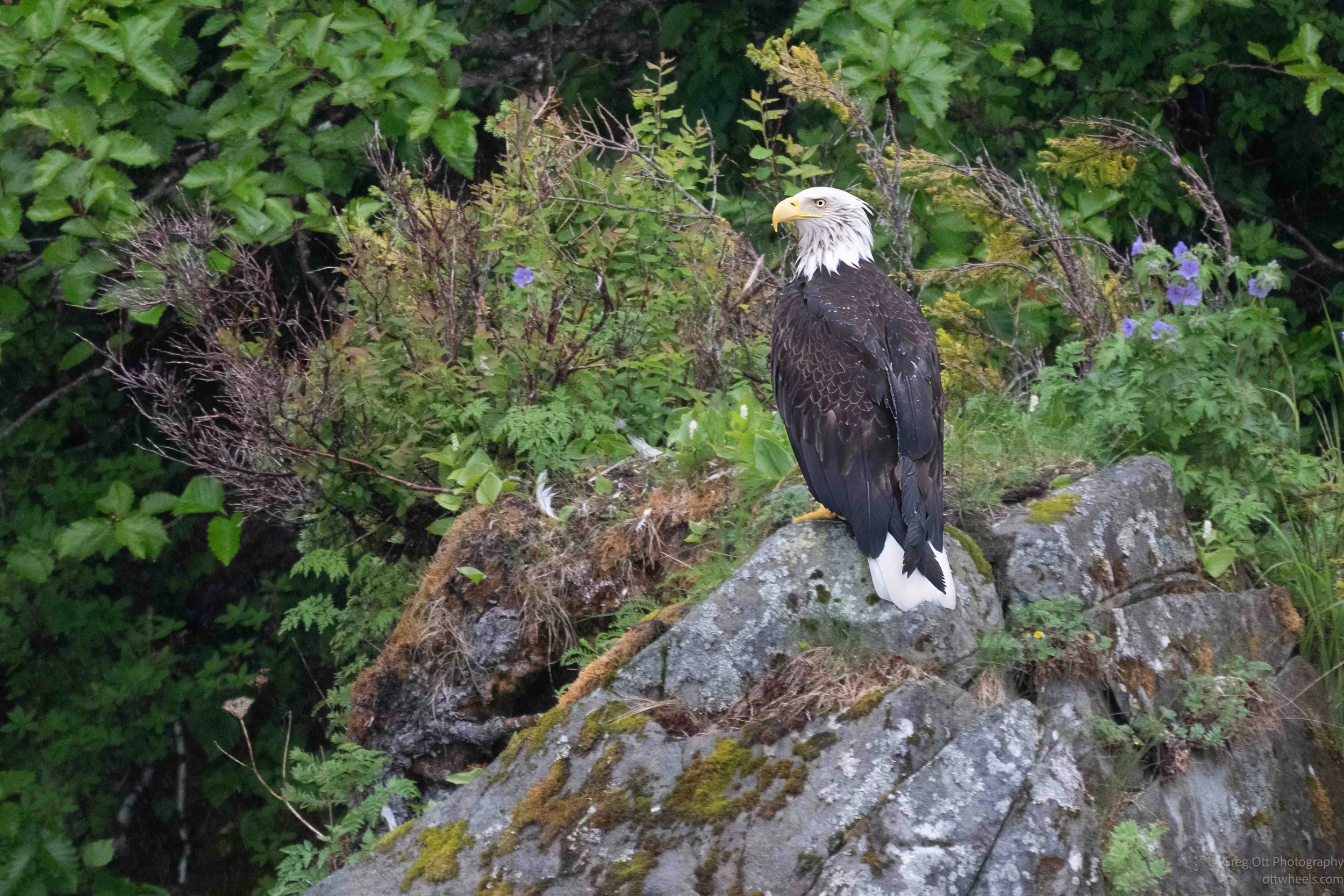
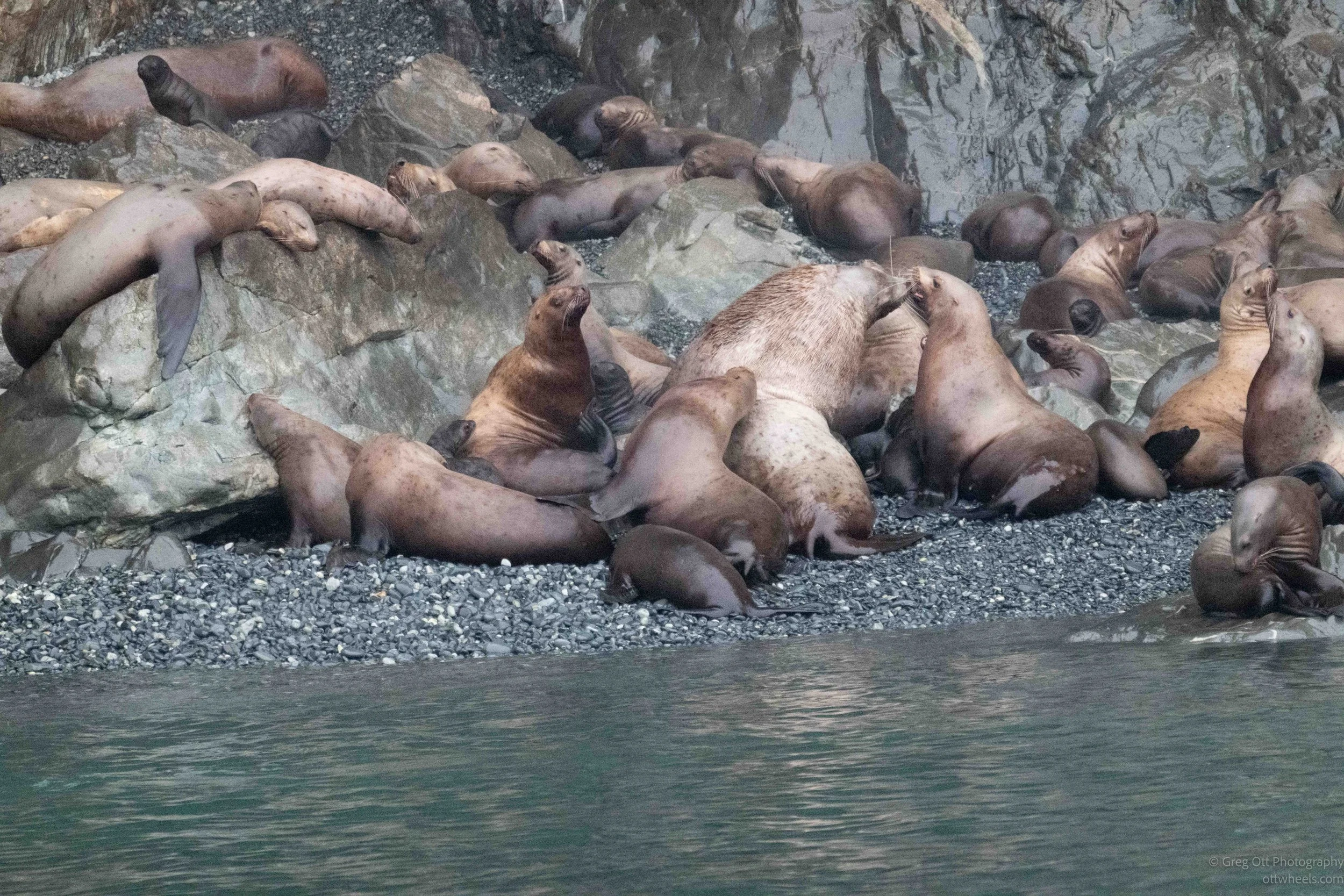
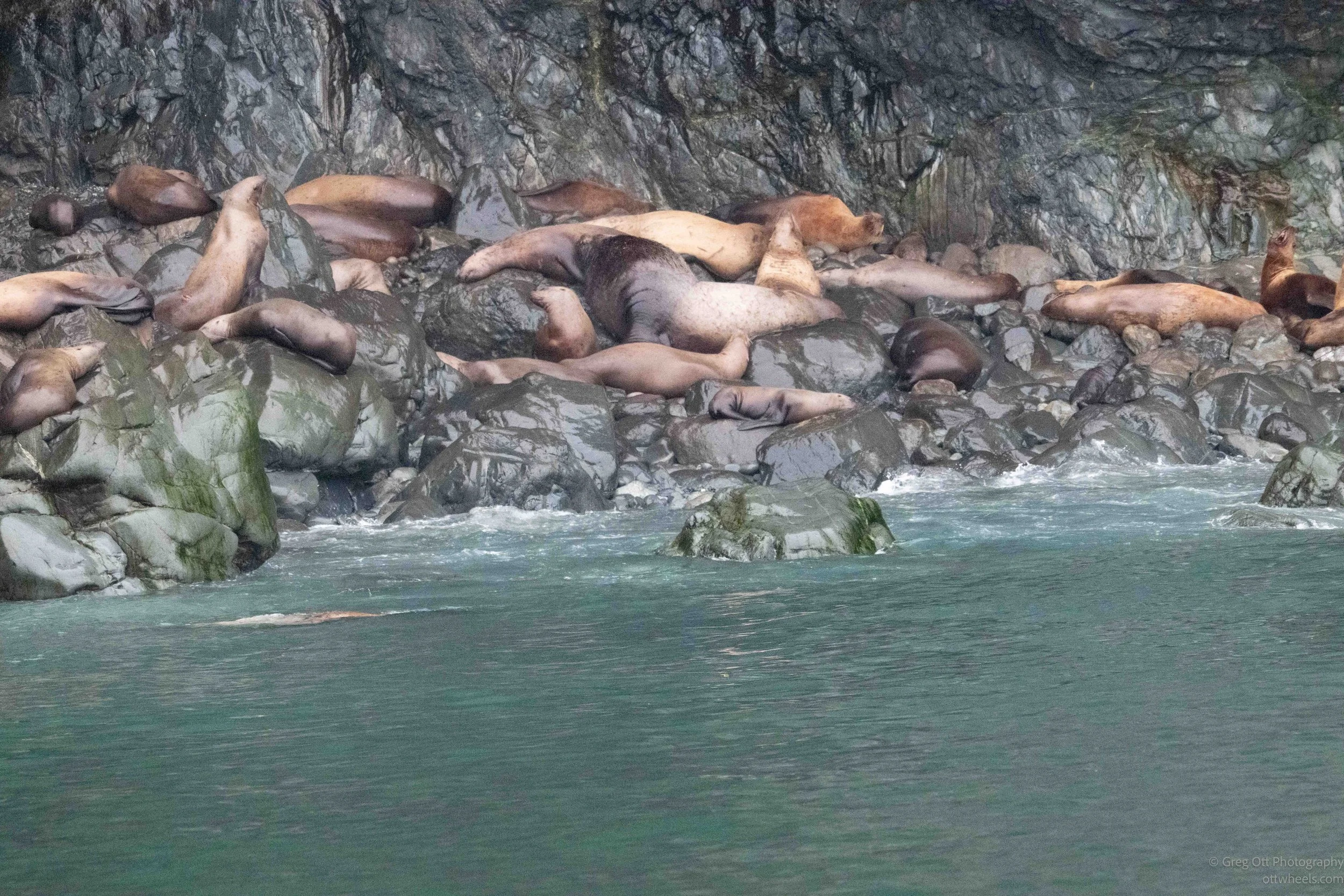
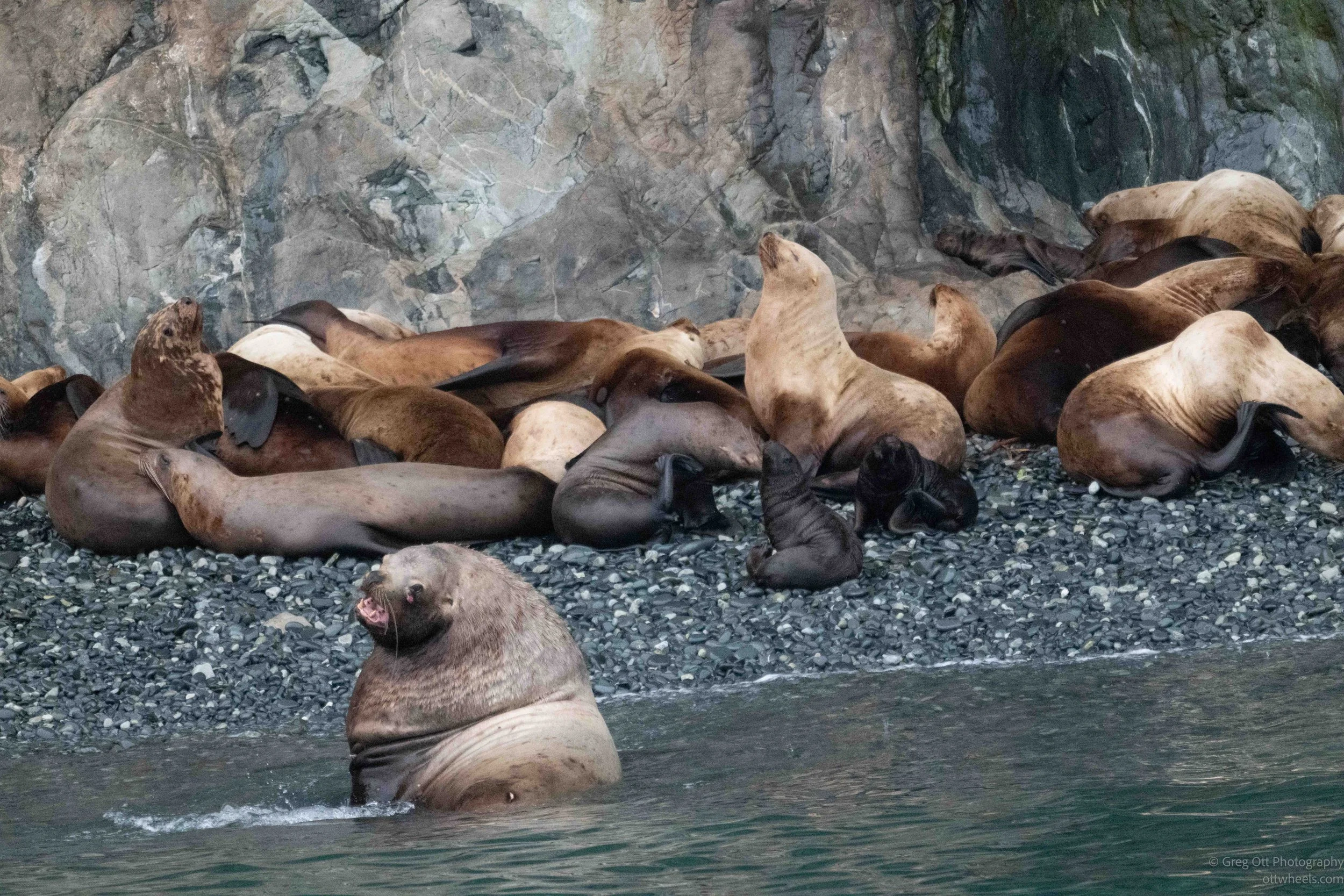
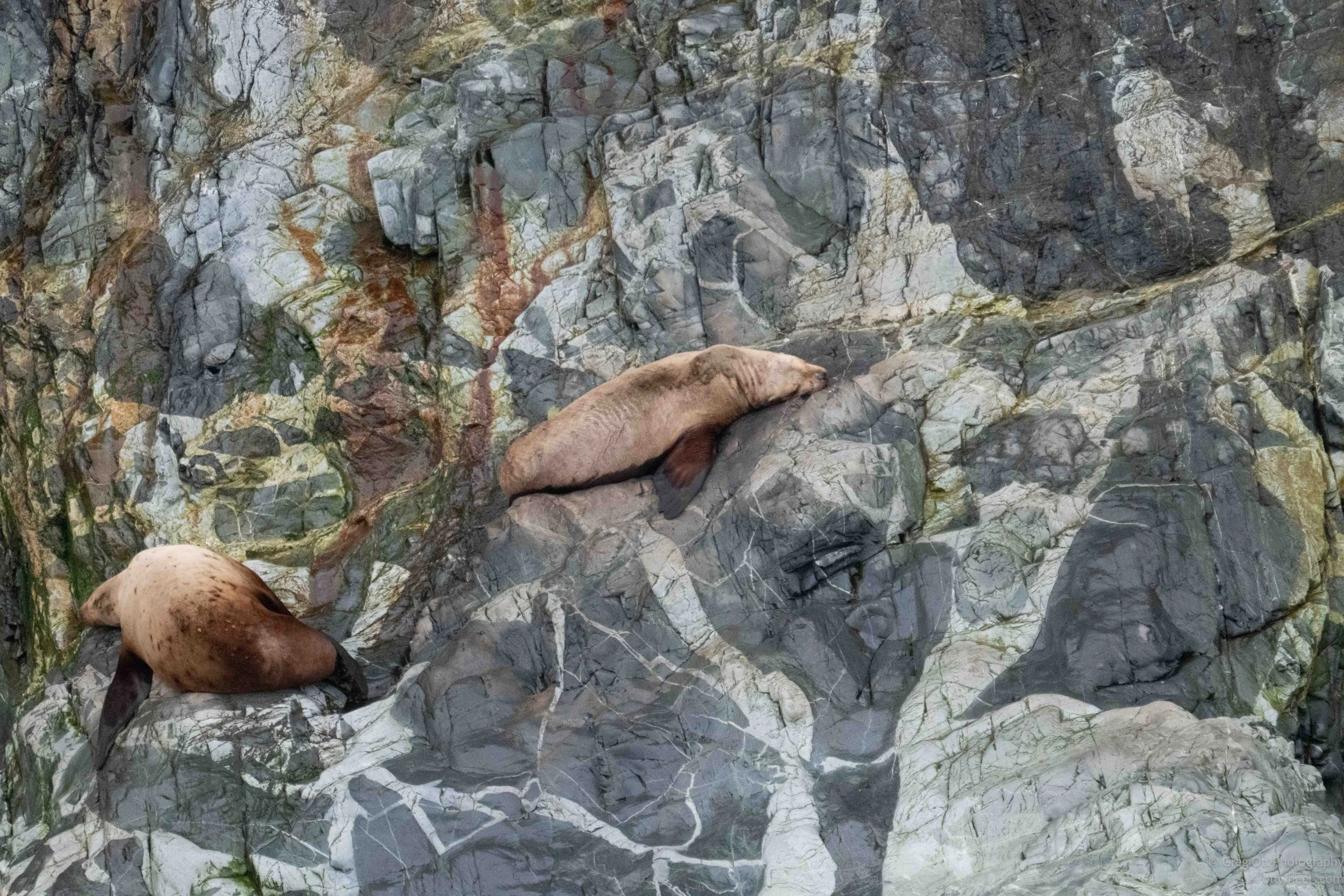
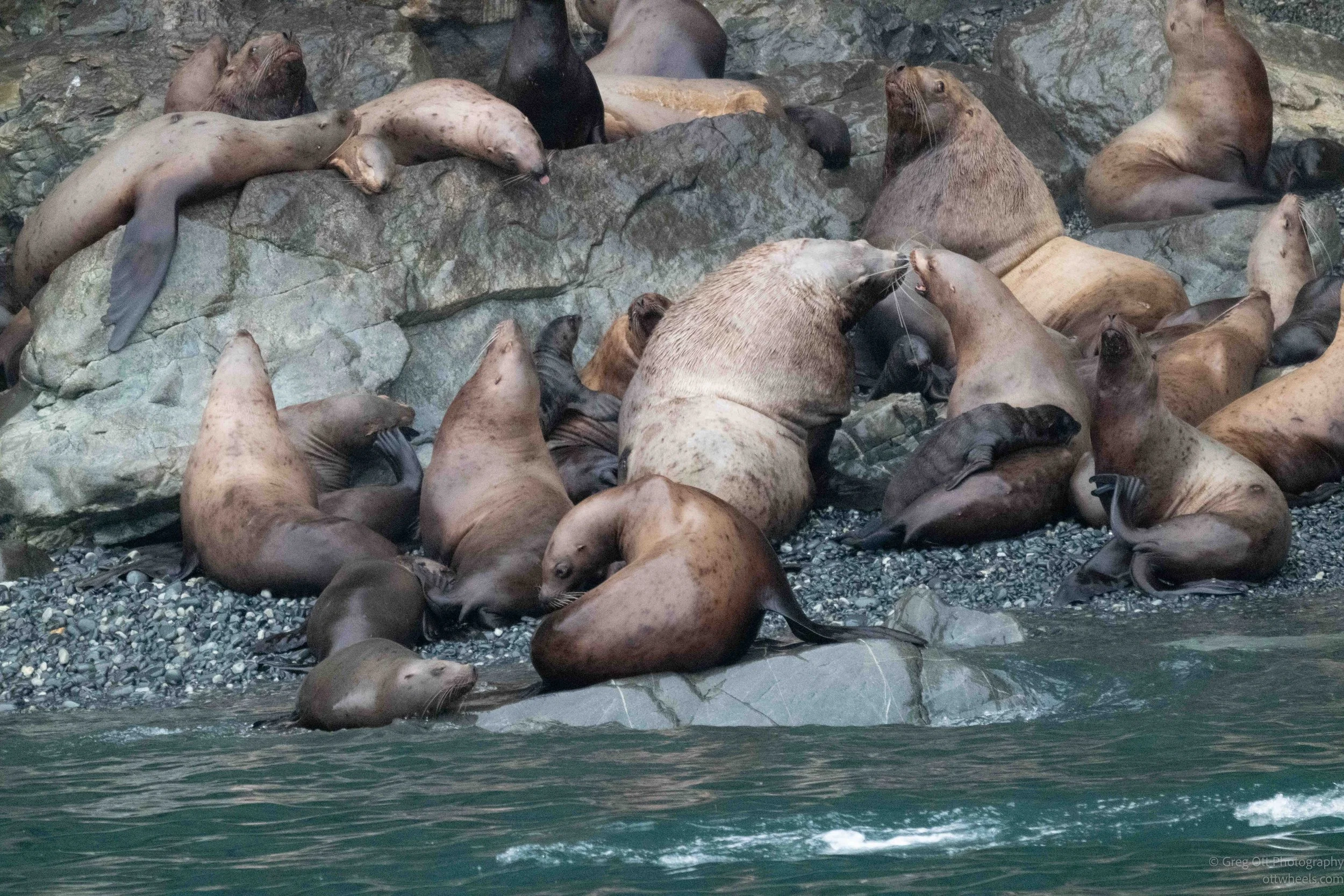
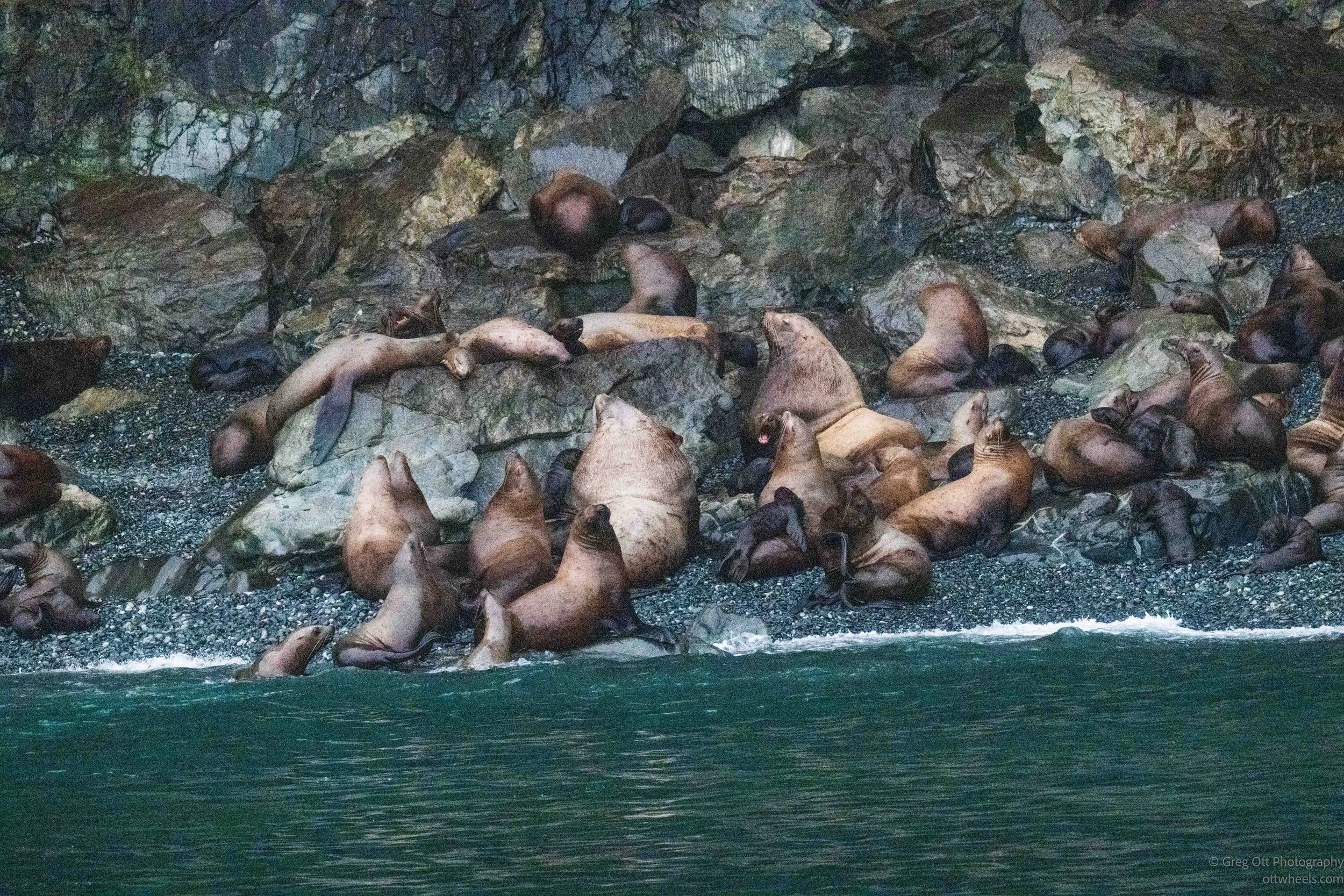
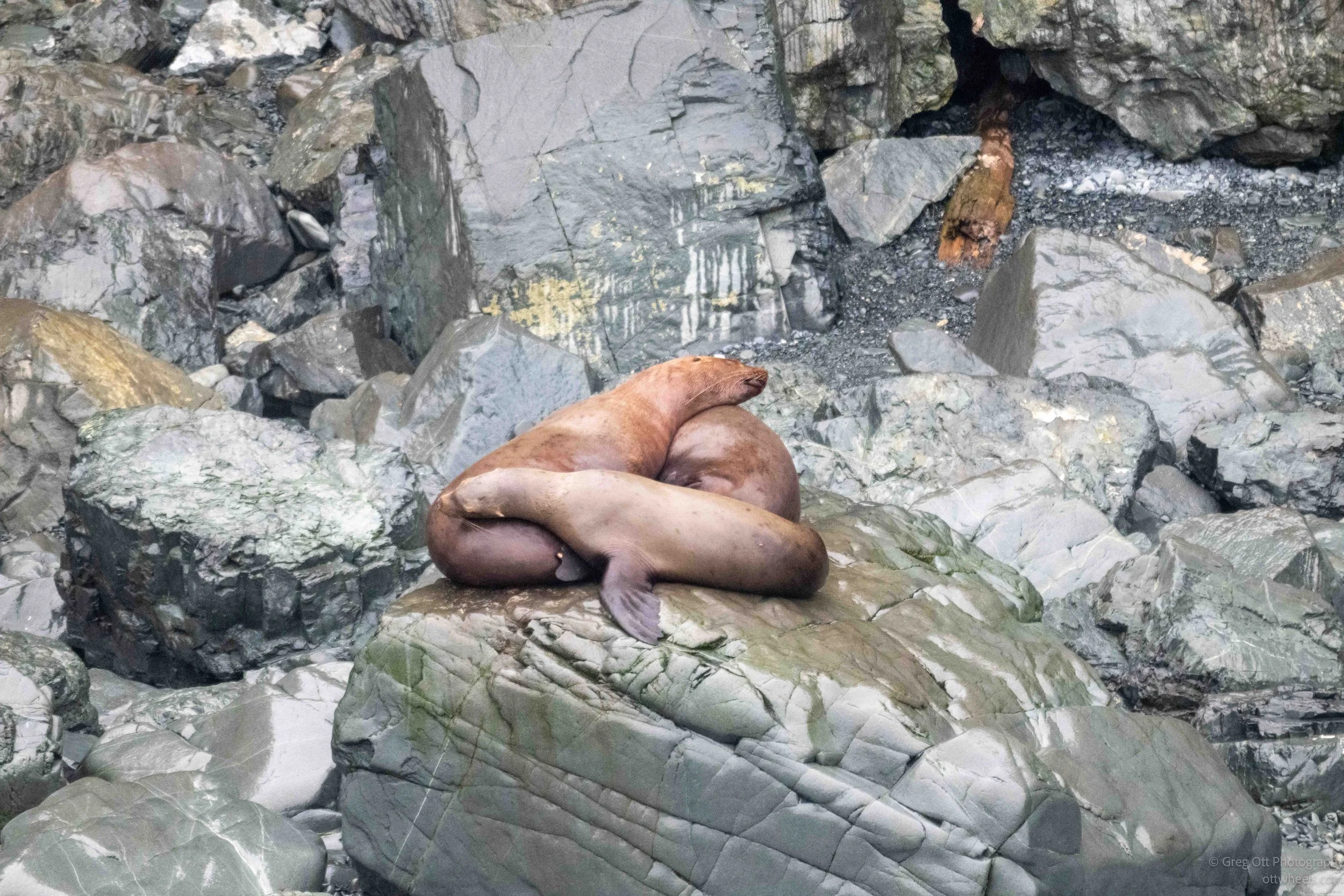
The sea lion haul-out was another stop that held everyone's attention. Hundreds of Steller sea lions covered the rocks. Some slept soundly, completely draped over one another. Others barked loudly, argued over space, or lumbered awkwardly into the water. A few enormous bulls barely acknowledged the commotion around them, while mothers kept a close eye on curious pups. The captain explained that this wasn't their breeding rookery but one of the places they gather to rest and socialize between feeding trips. It looked chaotic, but apparently there was an order to it that only sea lions understood.
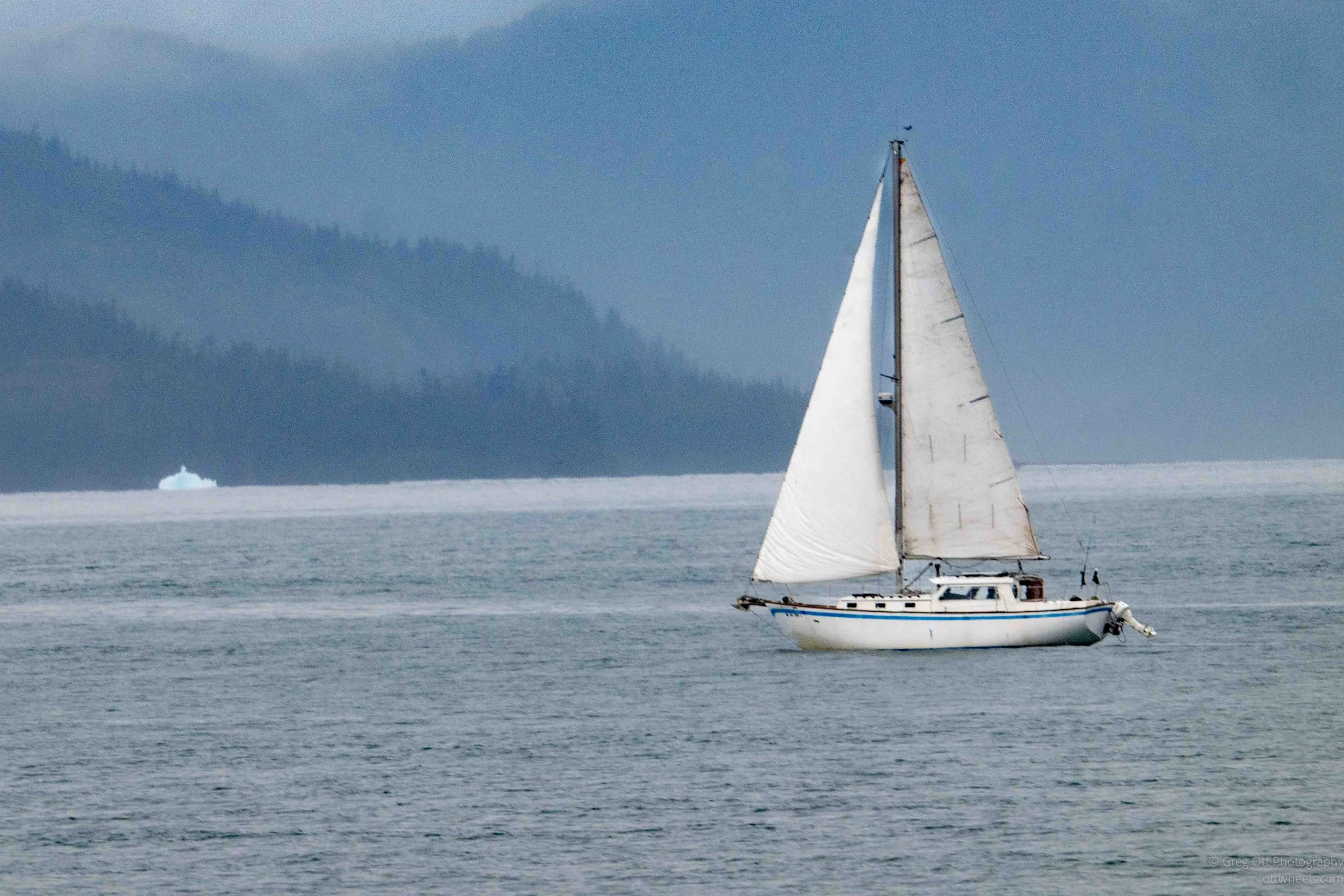
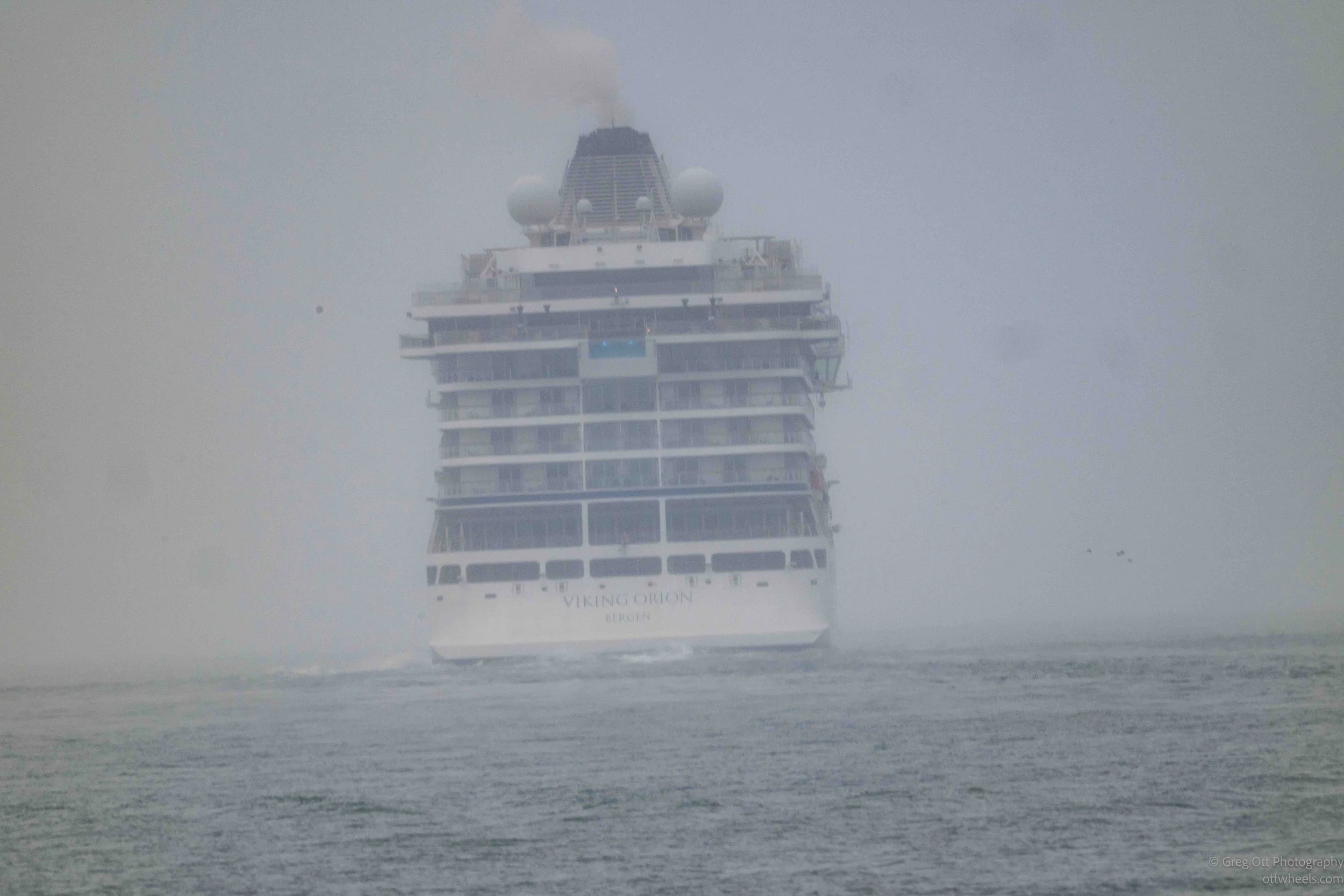
Between wildlife sightings, the scenery never stopped changing. A lone sailboat crossed the vast waters of Prince William Sound, looking wonderfully out of place against the mountains. Later, a cruise ship emerged from the fog like a floating city before disappearing back into the mist. Even after spending nearly nine hours on the water, I never found myself looking for something to do. Every turn seemed to reveal another photograph.
Eventually, Valdez Harbor came back into view, and we slowly made our way to the dock. As we gathered our gear, the pharmacist offered to drive me back to the RV park. I thanked her but decided to walk instead. After a full day on the boat, my legs welcomed the chance to stretch. Besides, it gave me a little time to think. One of the unexpected pleasures of traveling alone is the people you meet along the way. Some conversations last only a few hours, but they're genuine, and sometimes that's enough. I dropped my camera gear at the van and headed out for a quiet mile-long walk before calling it a day.