Columbia Glacier Kayaking
I never sleep well before a trip. My brain has a habit of waking me in the middle of the night convinced I'm going to oversleep and miss whatever adventure comes next. Everything had been packed the night before—camera gear, lunch, snacks, extra layers, rain jacket, and a first aid kit—but by 6:30 a.m. I gave up trying to sleep.
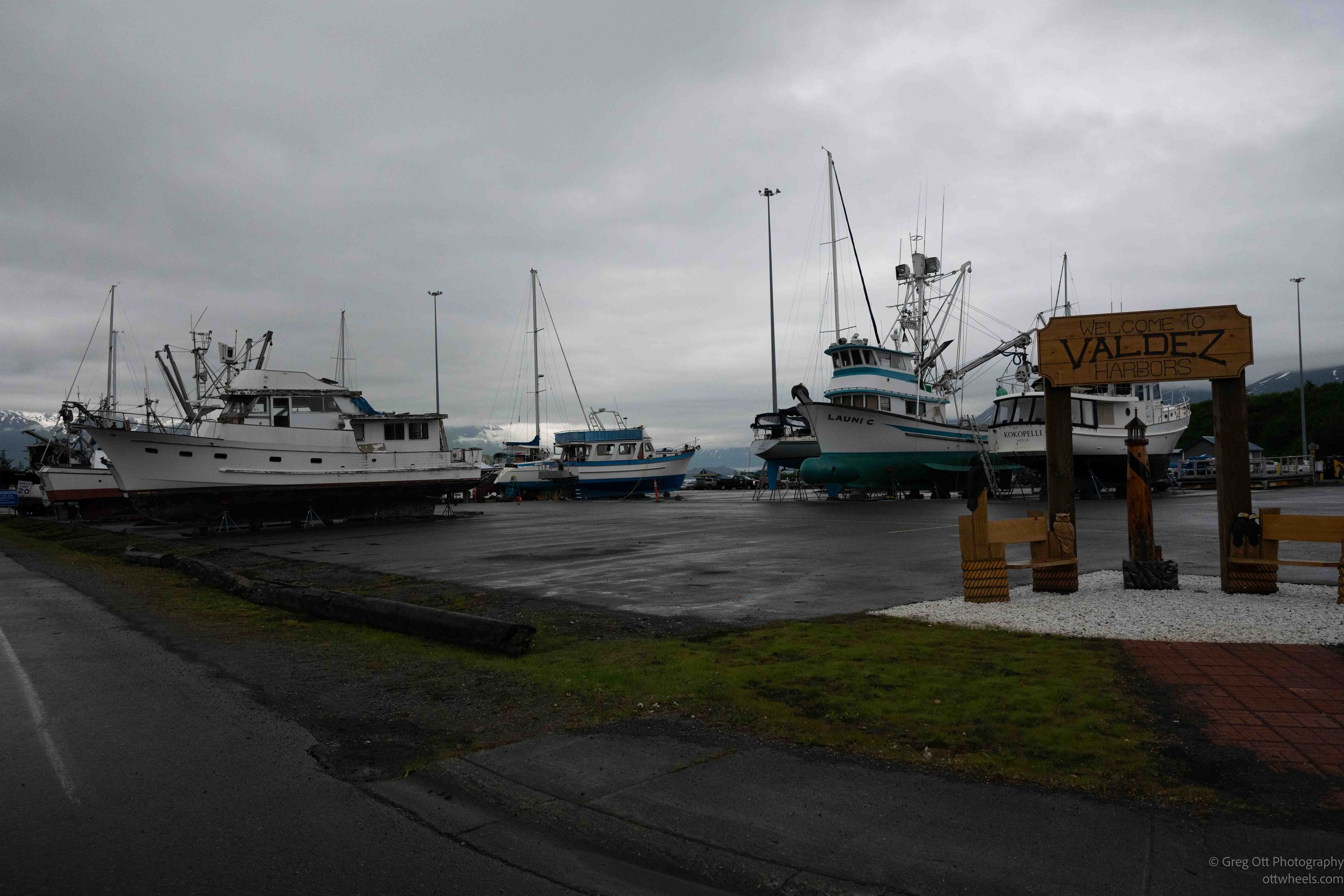
The meeting point was only three-tenths of a mile from the harbor, and we weren't due there until 8:00. I arrived about fifteen minutes early to find a handful of people already waiting outside. The Anadyr Adventures shop was still closed and, true to Alaska efficiency, the door unlocked at precisely 8:00.
After checking in—I had completed my waiver the night before—we gathered in a back room for the orientation. There were sixteen guests and two guides. A family came in with their son, and both the father and son were wearing Michigan sweatshirts. I couldn't resist making a Michigan versus Penn State comment. They laughed, and the wife mentioned she had graduated from Penn State before becoming a researcher at Michigan. She now spends part of her time doing research in the Arctic, which seemed like appropriate experience for someone about to paddle among glaciers.
The guides walked us through the day's plan, covering safety procedures, what to expect on the water, and the equipment we'd be using. The weather in Prince William Sound changes quickly, so everyone was outfitted for the worst. We were issued tall wading boots, oversized waterproof bibs, and, for anyone who needed one, a heavy rain jacket. I stuck with my own Gore-Tex shell, figuring it would be more comfortable. We also received a PFD—personal flotation device, as I learned that morning.
Before we left, I clipped my camera harness to the outside of the PFD, which turned out to be one of the better decisions of the day. It kept the camera secure but always within reach. I had also packed a couple of waterproof bags for my gear, although Anadyr Adventures supplied dry bags for anyone who needed them.
The destination was Columbia Glacier, where we'd spend the day on a five-mile kayak trip. Calling it a "kayak trip," though, doesn't really capture what was ahead. We weren't launching from a beach or paddling around a sheltered harbor. We were heading deep into Prince William Sound to one of Alaska's great tidewater glaciers, a place where massive walls of ice still calve into the ocean and floating icebergs drift through water that is constantly reshaped by the glacier itself.
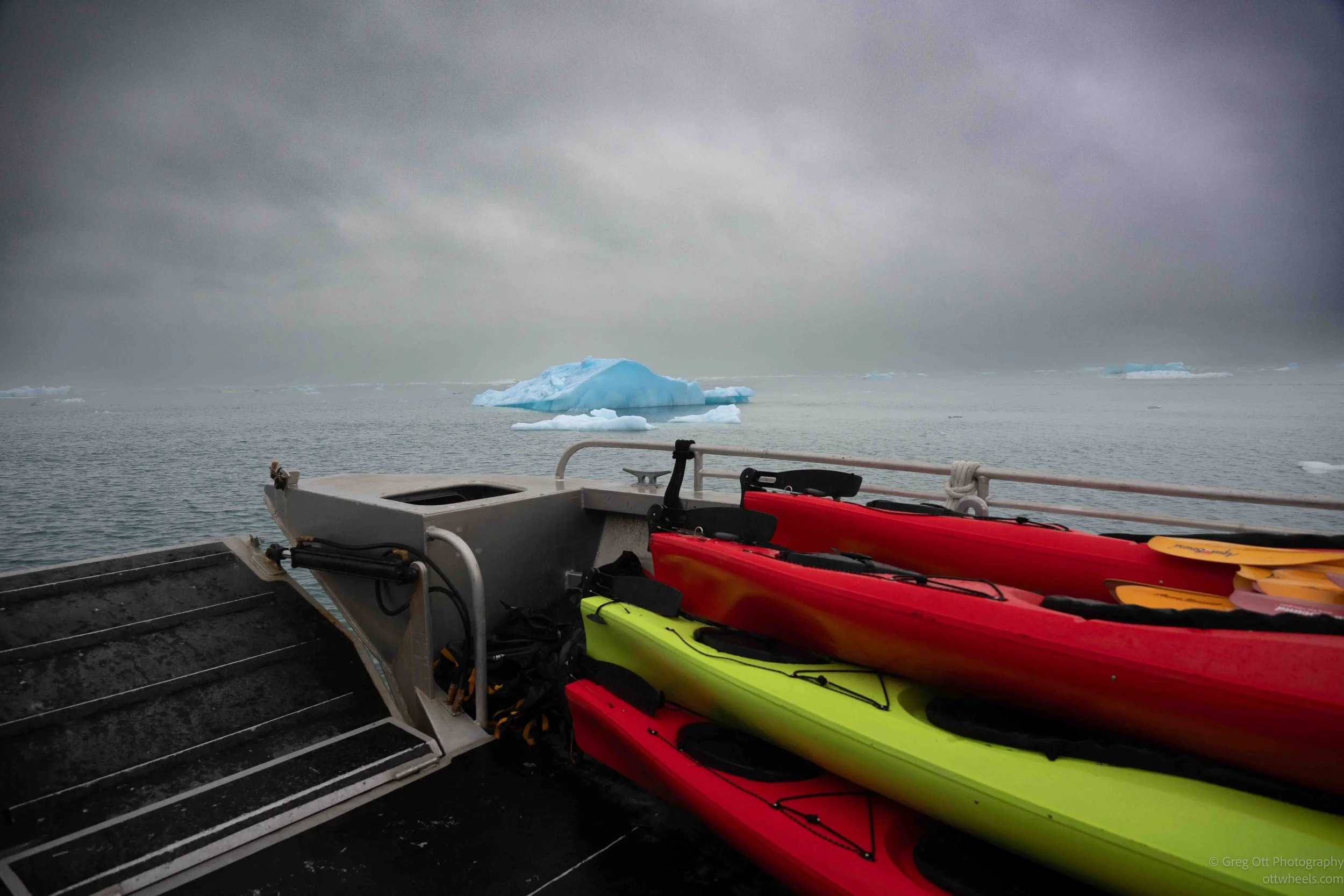
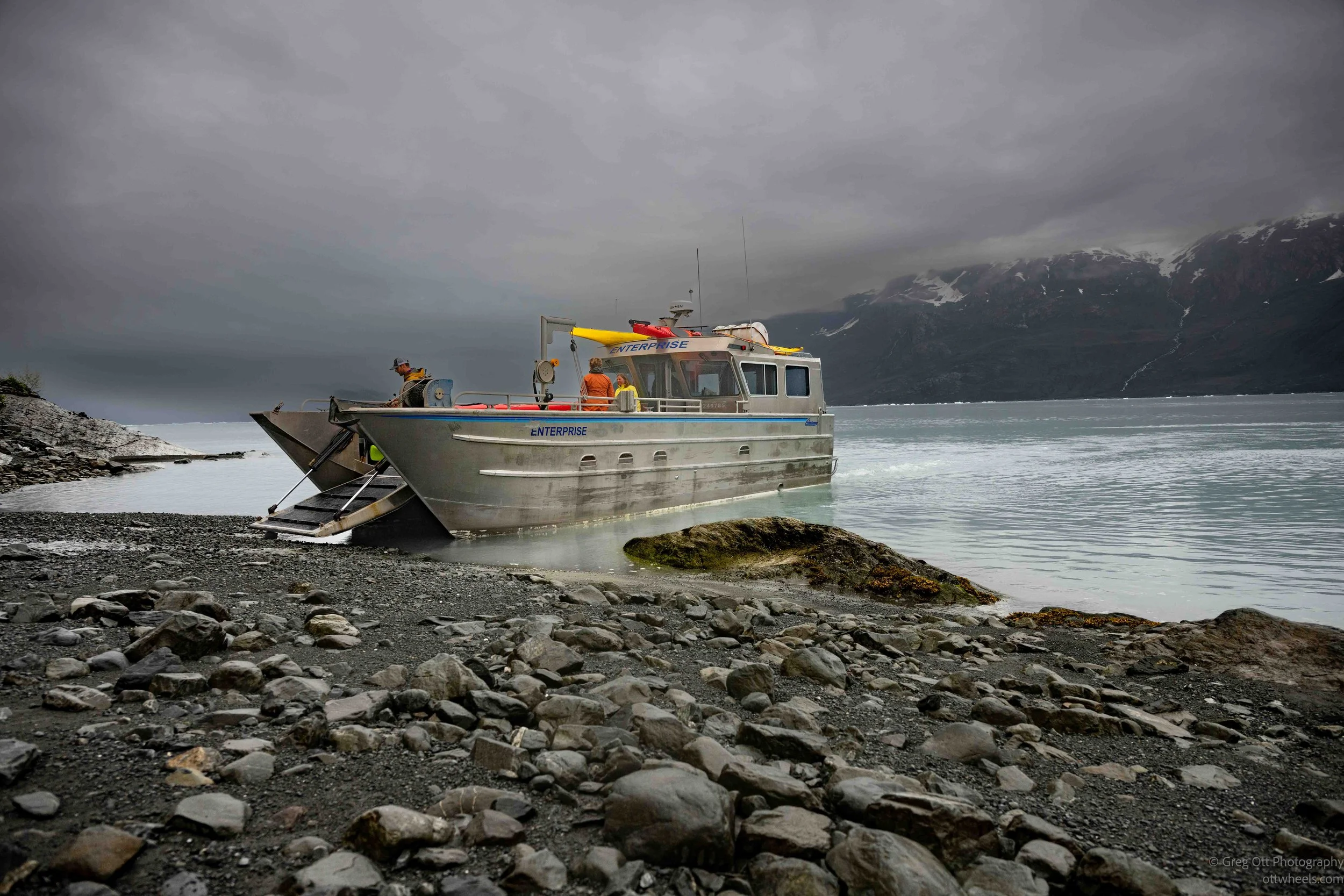
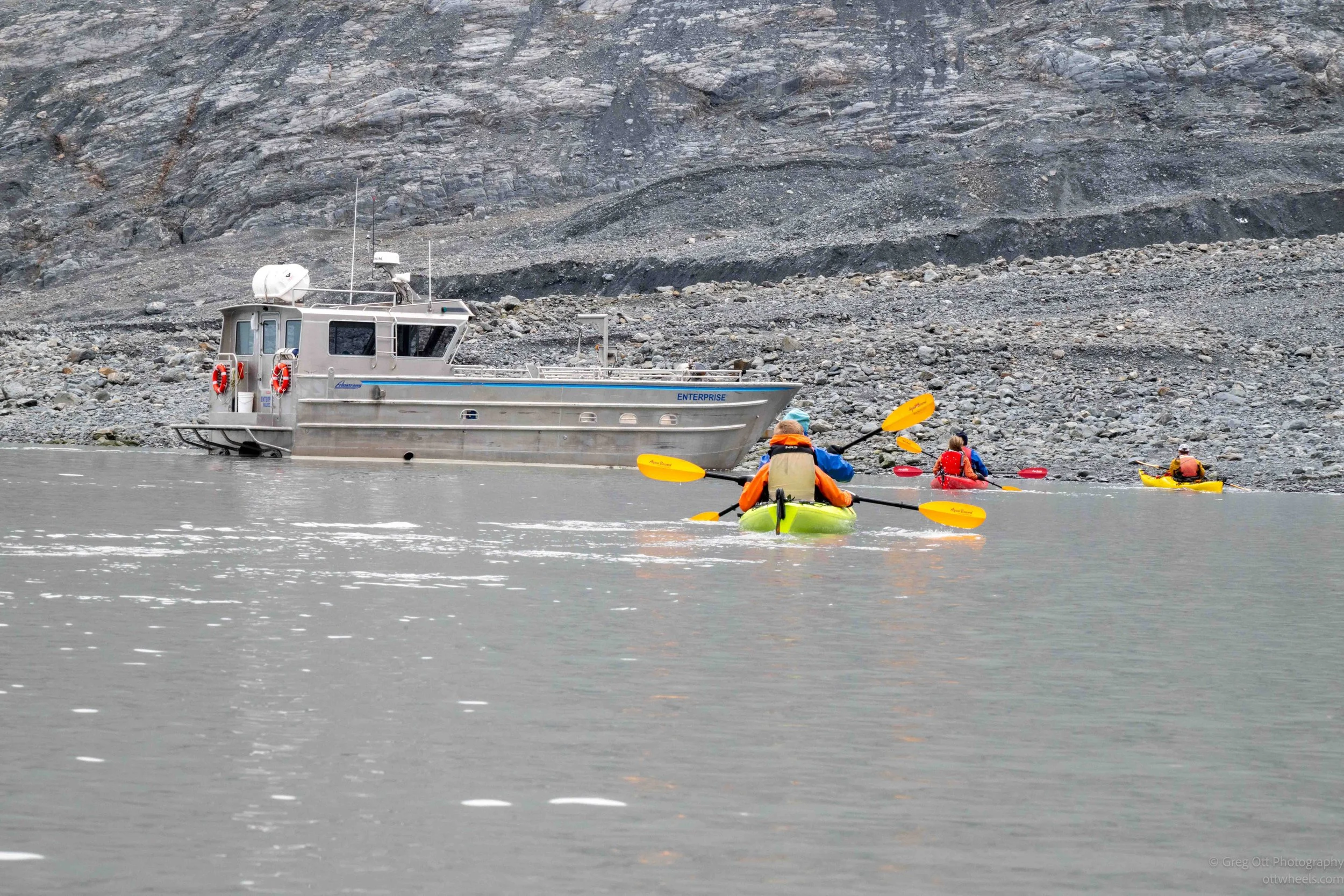
Around 8:30 we carried our gear across the street to the marina. Waiting for us was a rugged aluminum landing craft that looked far more at home hauling equipment than tourists. Our captain had been running these trips for more than a decade and knew Prince William Sound intimately. The kayaks were already loaded—eight tandems and two singles for the guides—and before long we were casting off toward Columbia Glacier.
As we motored toward Columbia Glacier, our guides filled us in on the history of the place. The glacier was named after Columbia University during the 1899 Harriman Alaska Expedition, which apparently had a thing for Ivy League schools. Several glaciers in Prince William Sound ended up with names like Harvard, Yale, and Dartmouth. It's an odd bit of East Coast academia stamped across one of the wildest landscapes on the continent, as if someone looked at this remote corner of Alaska and decided it needed a college campus.
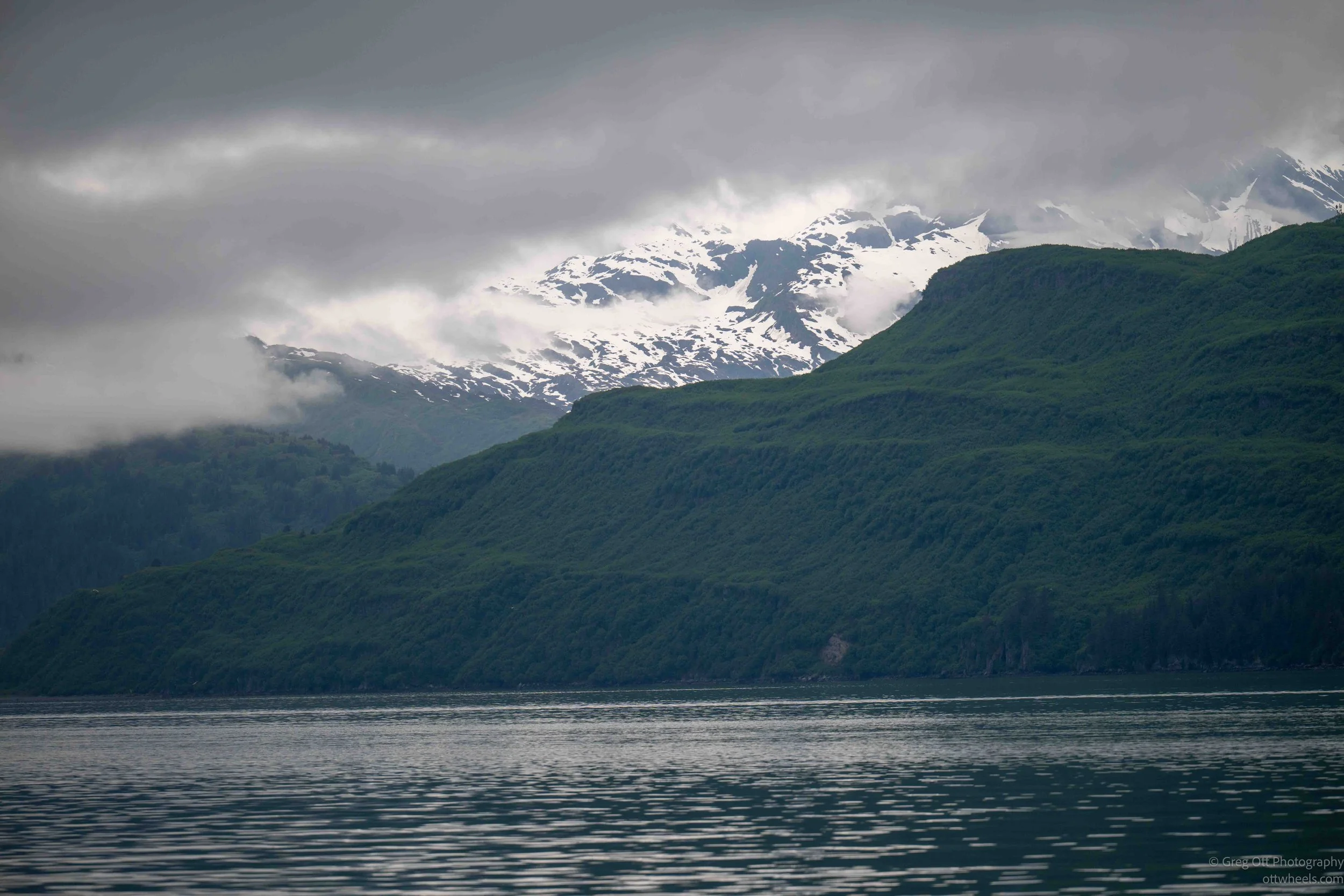
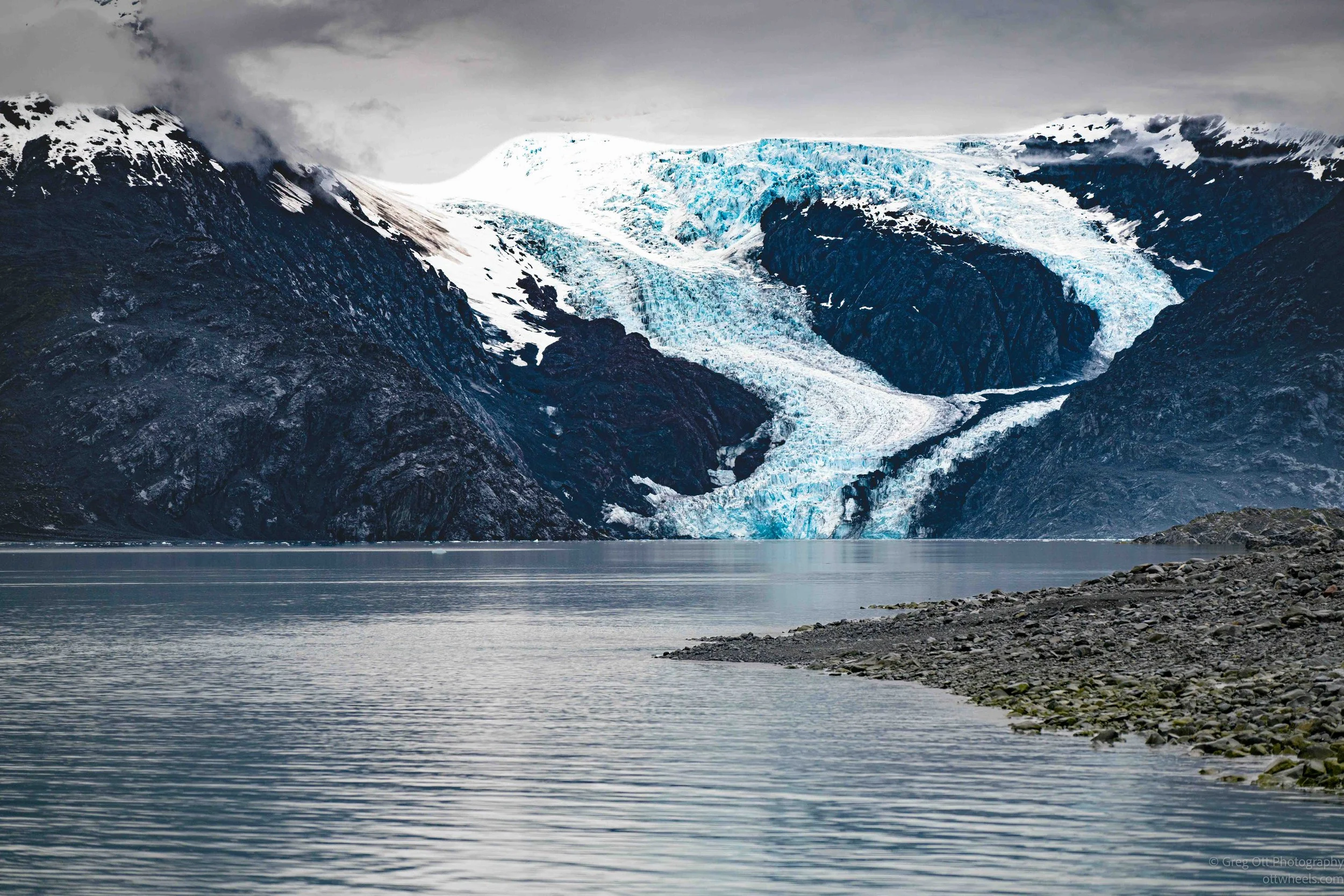
Matt explained that Columbia Glacier begins high in the Chugach Mountains, in an icefield nearly 10,000 feet above sea level. Year after year, more snow falls than melts. The weight of each new winter compresses the layers beneath it until the snow becomes dense glacial ice. Eventually gravity takes over, and what appears to be a solid mass begins flowing downhill like an incredibly slow-moving frozen river.
What surprised me most wasn't how the glacier formed, but how dramatically it has changed. Since the early 1980s, Columbia Glacier has retreated more than twelve miles up the valley. Where an immense wall of ice once reached the water near Heather Island, there is now a deep fjord hundreds of feet deep. The glacier has thinned dramatically, losing more than half its thickness and volume during that retreat. Looking at old photographs later, it was hard to believe they were taken in the same place.
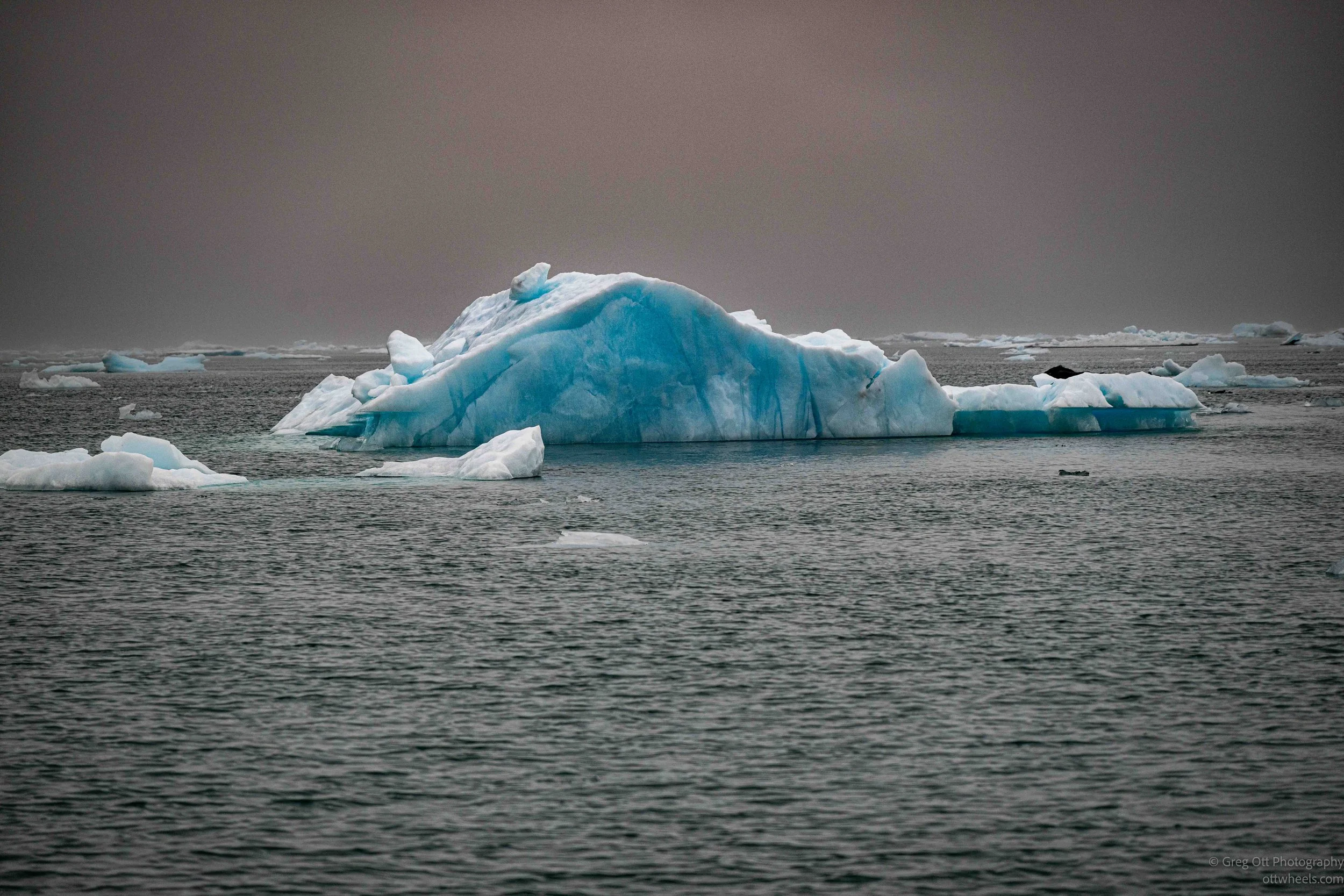
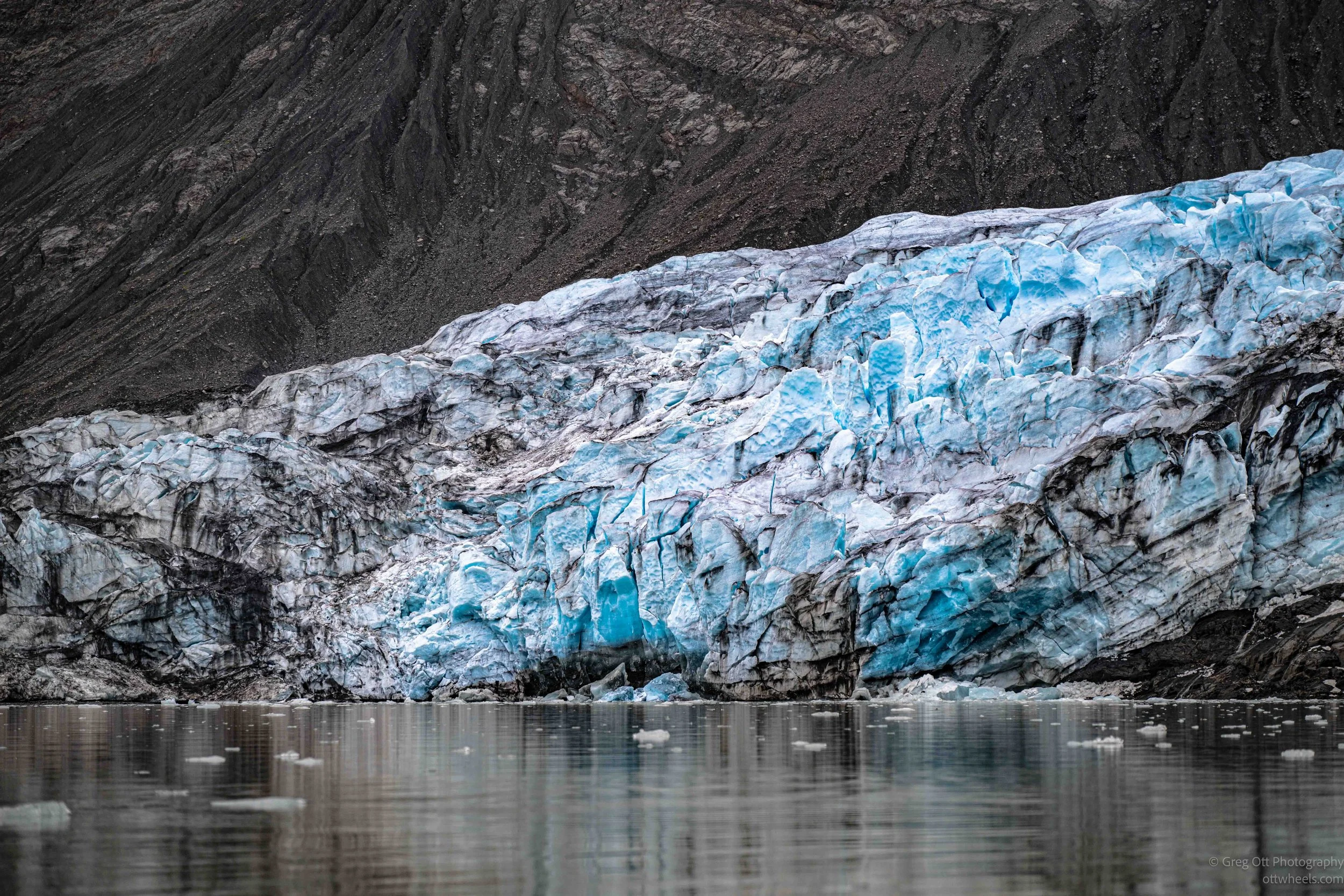
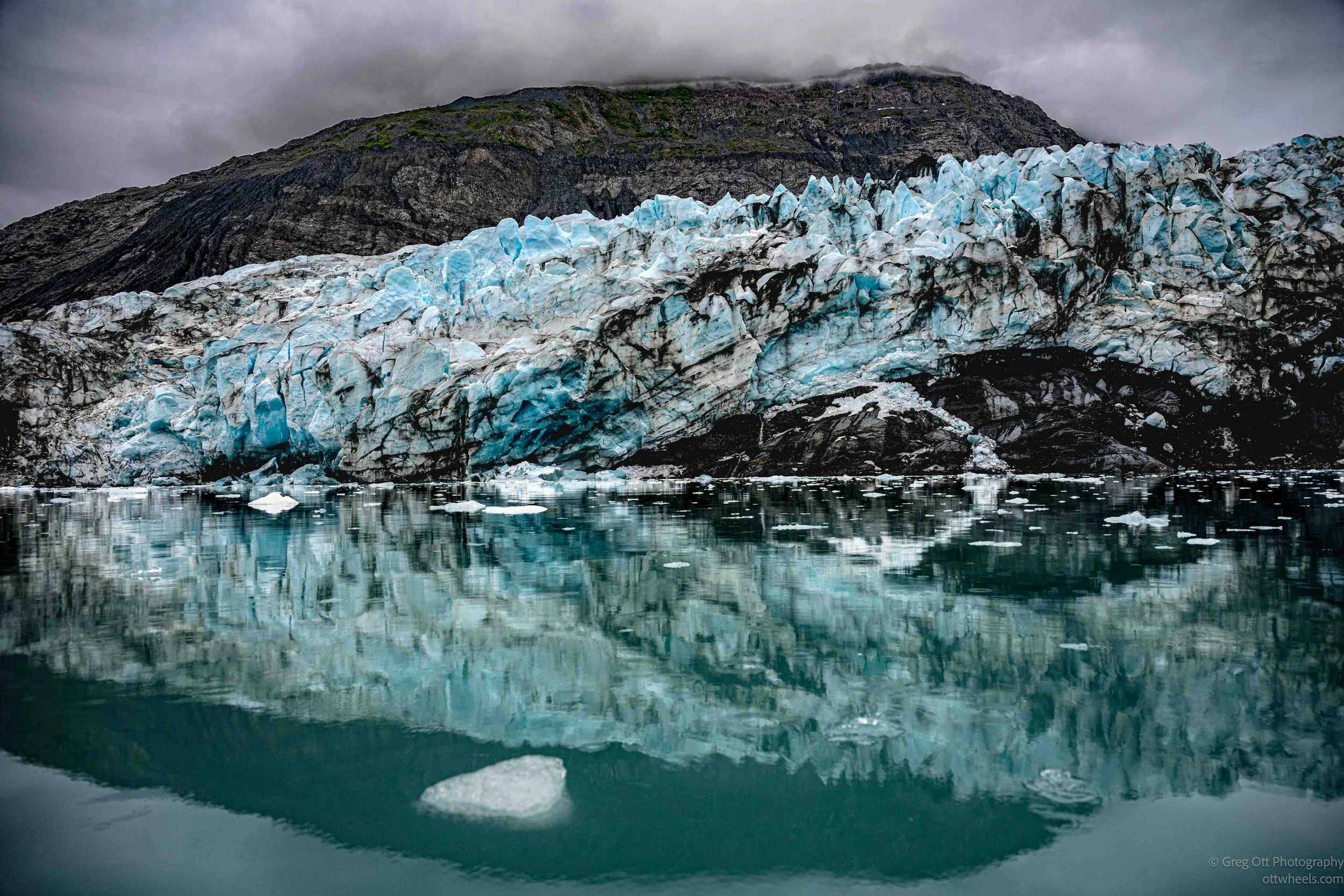
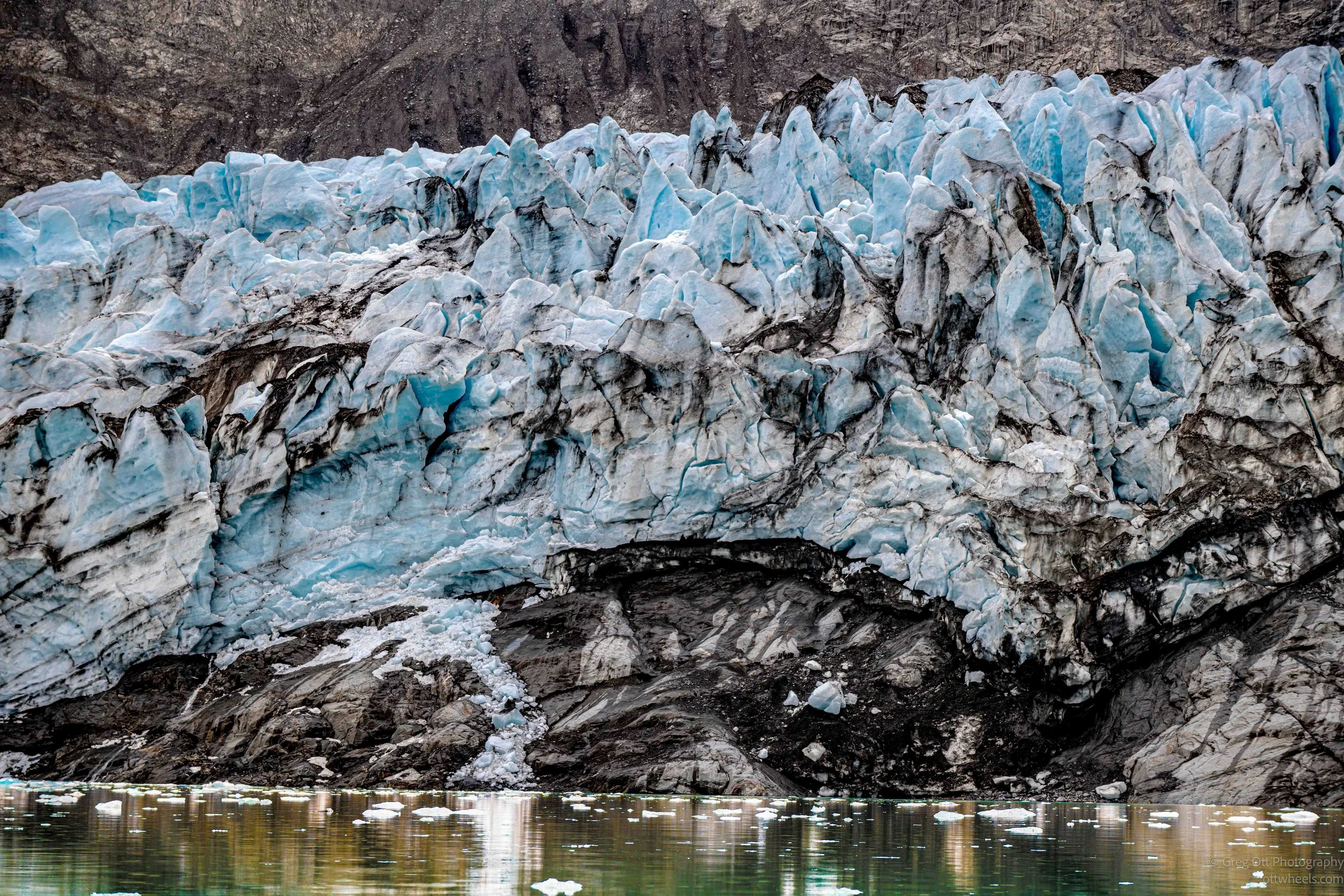
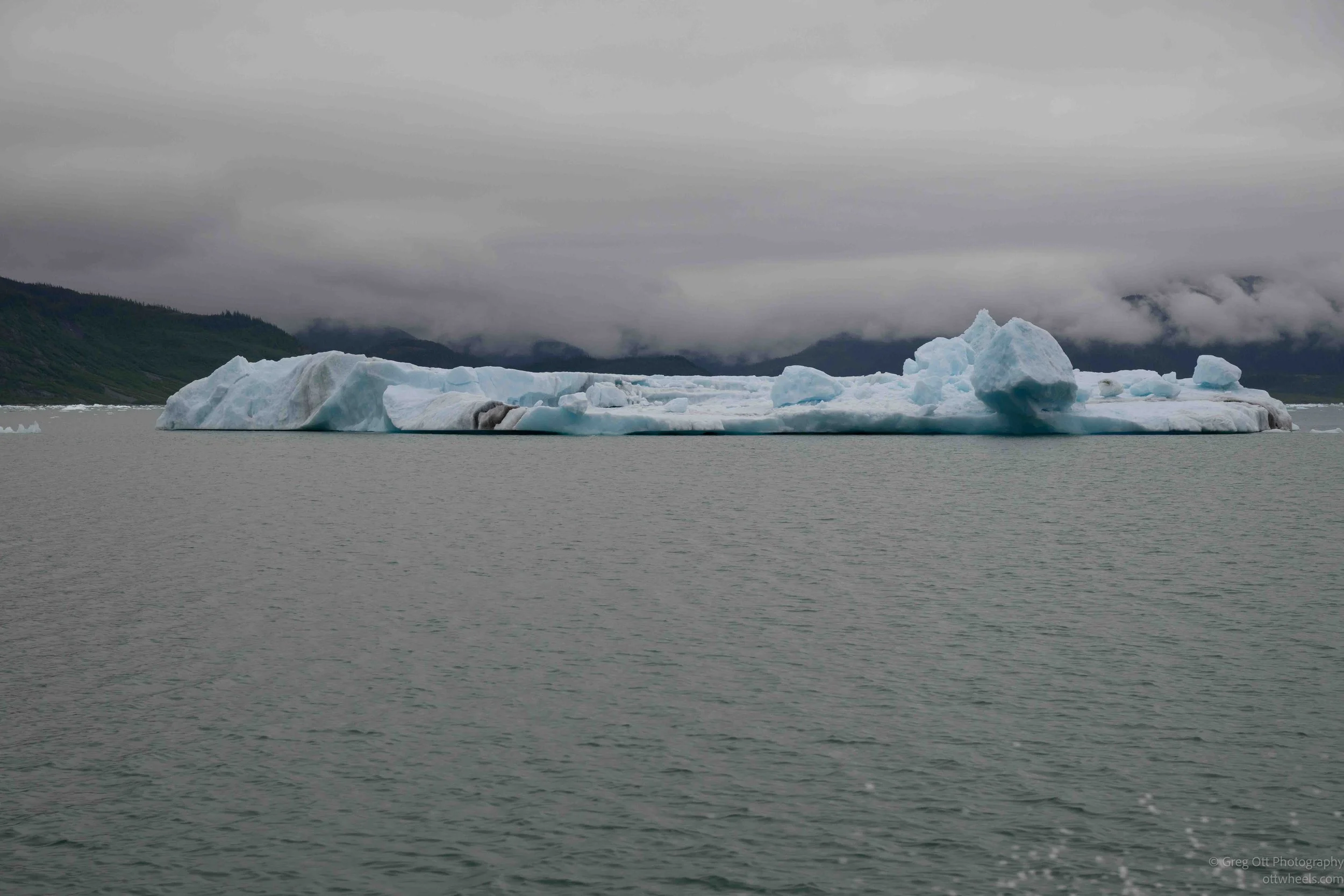
The blue ice immediately caught everyone's attention. It wasn't simply reflecting the sky. As snow is compressed over decades and centuries, most of the trapped air is squeezed out. That dense ice absorbs the red wavelengths of light while allowing the blue to pass through, giving the older ice an almost luminous glow. Some of the freshly broken pieces looked less like ice than slabs of blue glass lit from within.
Matt also reminded us that the trip we were about to take won't always look like this. As Columbia Glacier continues retreating farther inland, the kayaking routes will inevitably change. The glacier's face will become more difficult to reach, there may be fewer icebergs drifting through the bay, and one day paddling among floating pieces of Columbia Glacier may no longer be possible.
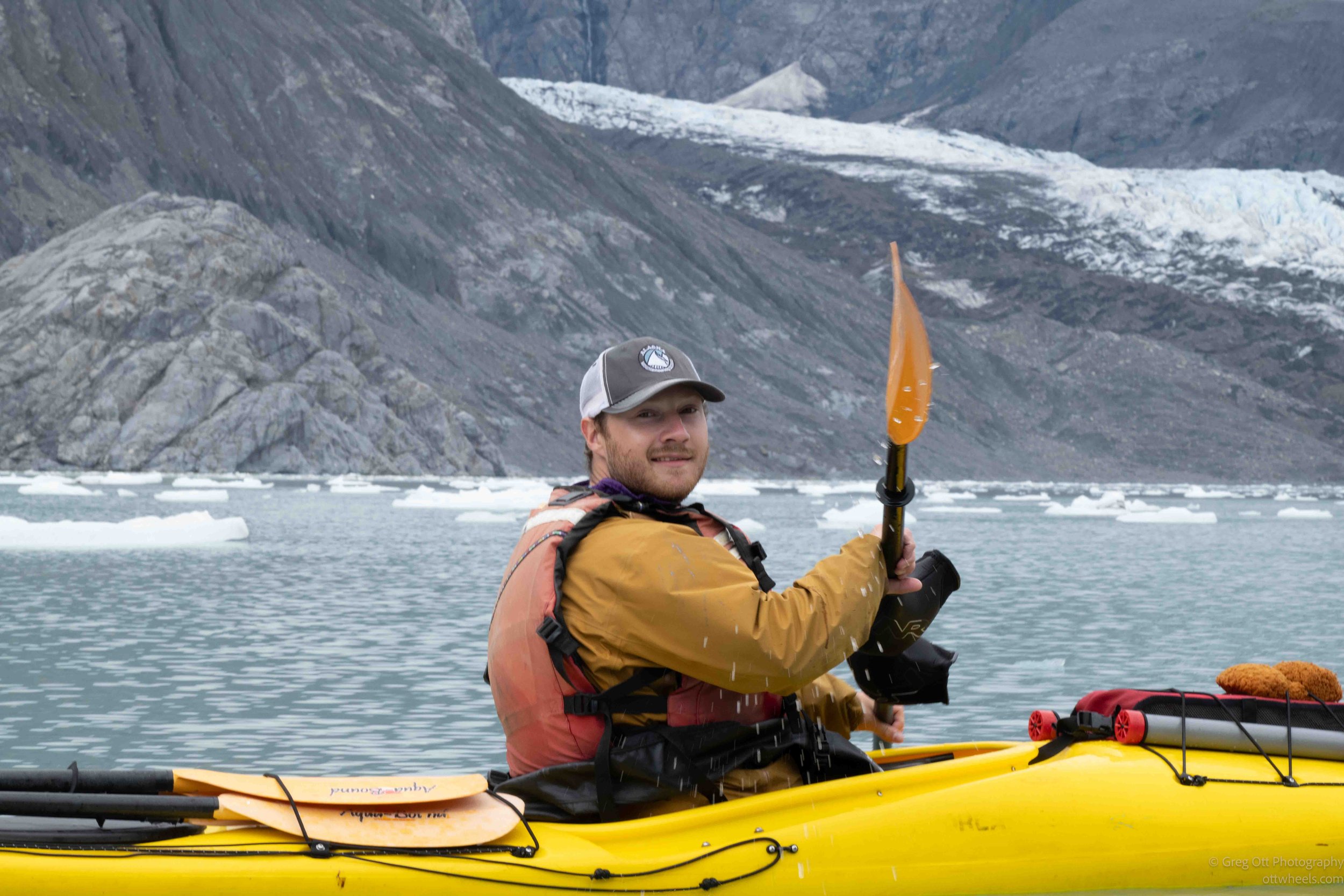
Matt has been guiding here for five years and has already watched the landscape change noticeably during that short time. With a background in environmental studies from the University of Alaska, he wasn't simply repeating facts from a script. He was describing changes he had witnessed himself. That gave the day a different perspective. We weren't just paddling through a spectacular landscape. We were experiencing a place that is changing within a single human lifetime.
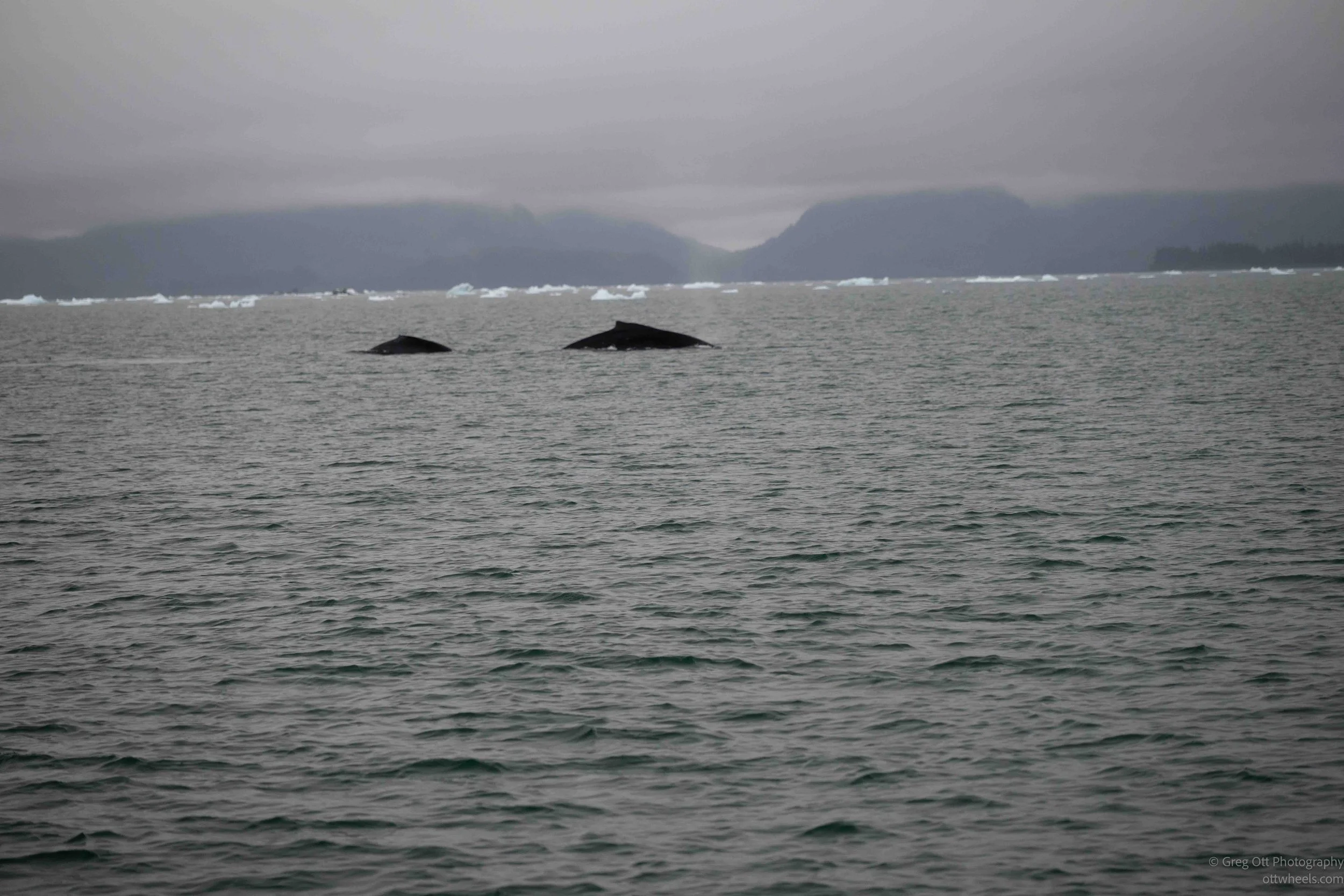
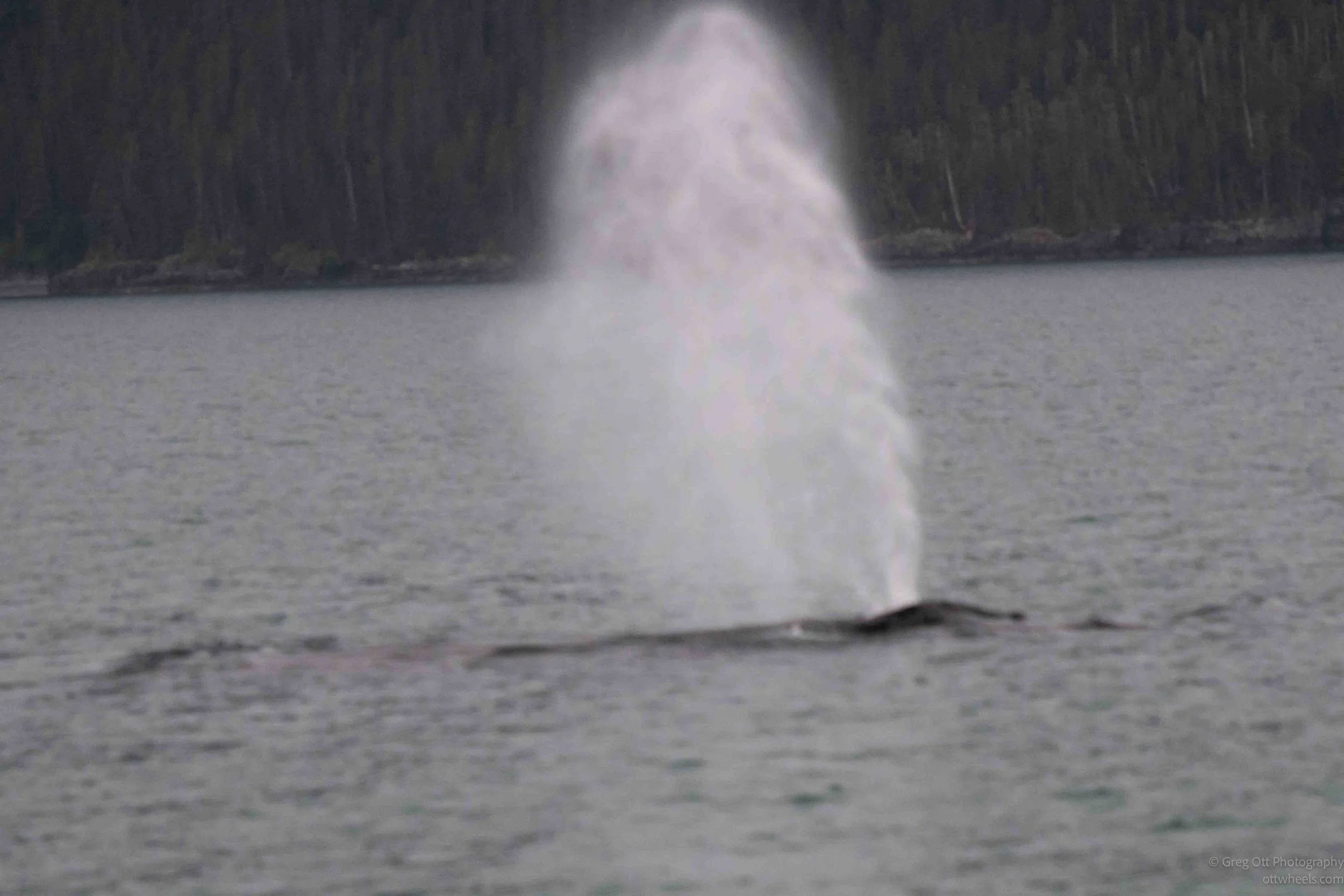
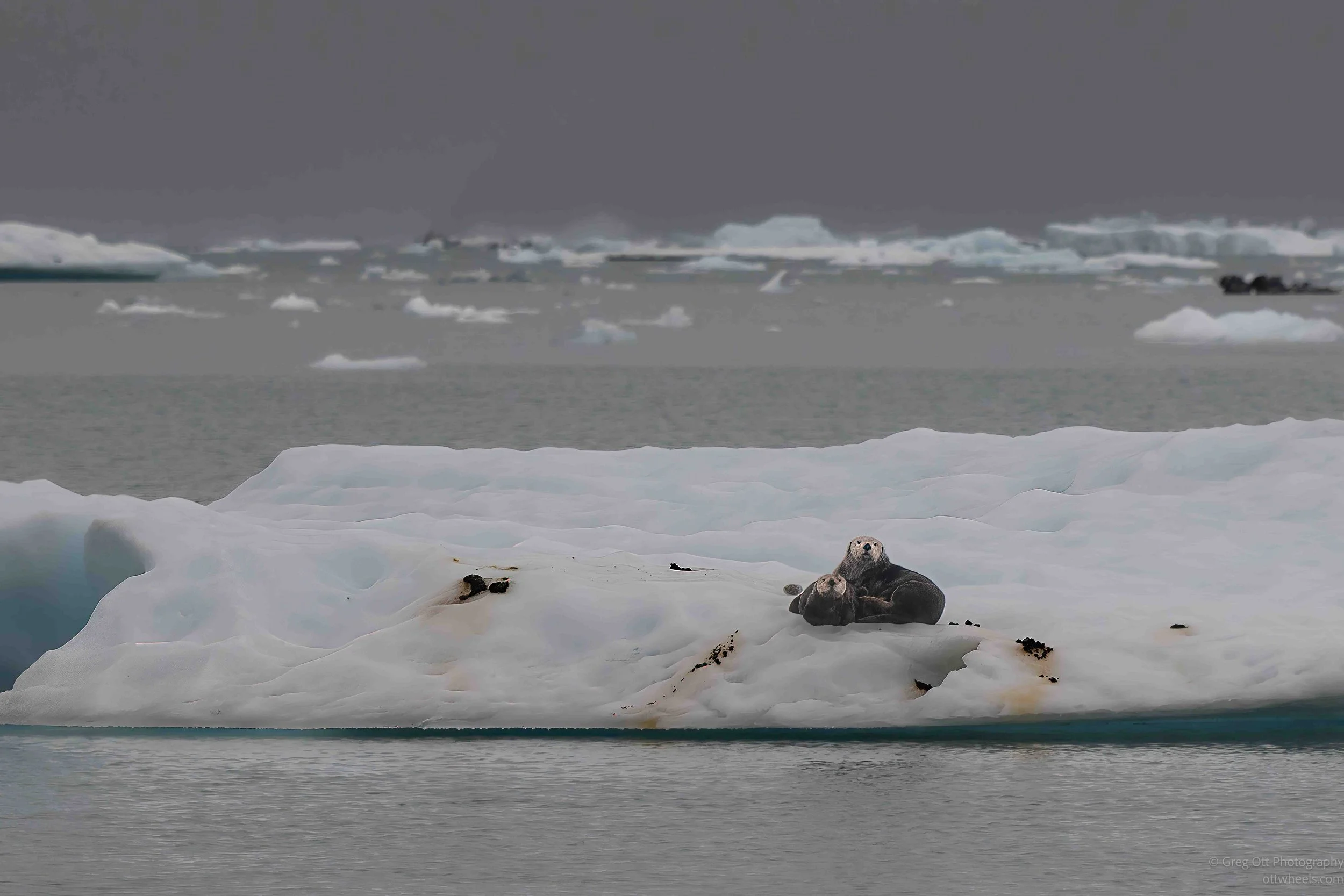
The ride to Columbia Glacier took a little over two hours. As we got closer, the captain slowed more and more to weave through the floating ice. At times we were barely moving because there were icebergs scattered in every direction. We stopped several times, once to watch a group of harbor seals lounging on a large piece of ice, completely unconcerned by our presence. It struck me that for them this was just another afternoon. For us, it was something we'd remember for years.
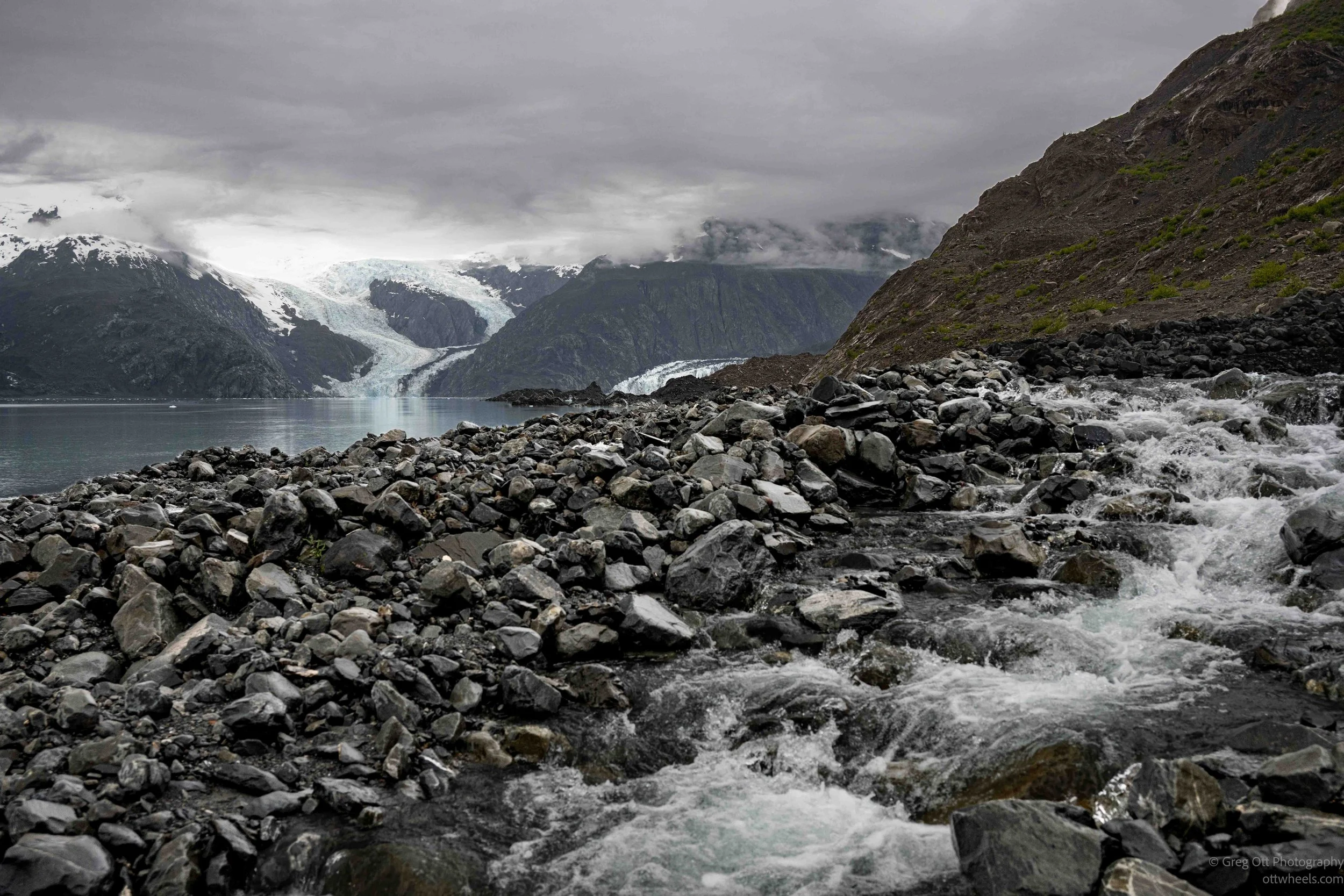
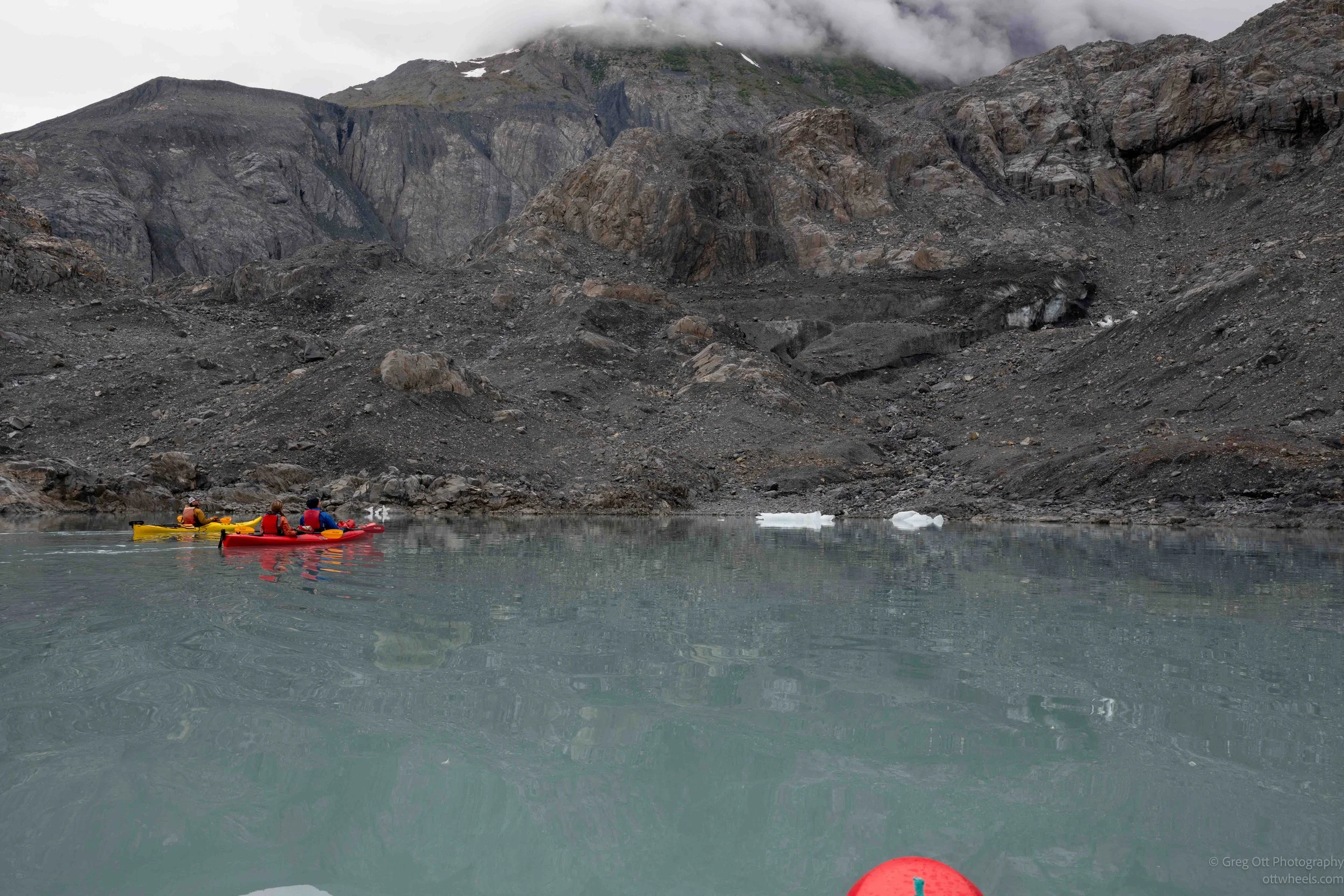
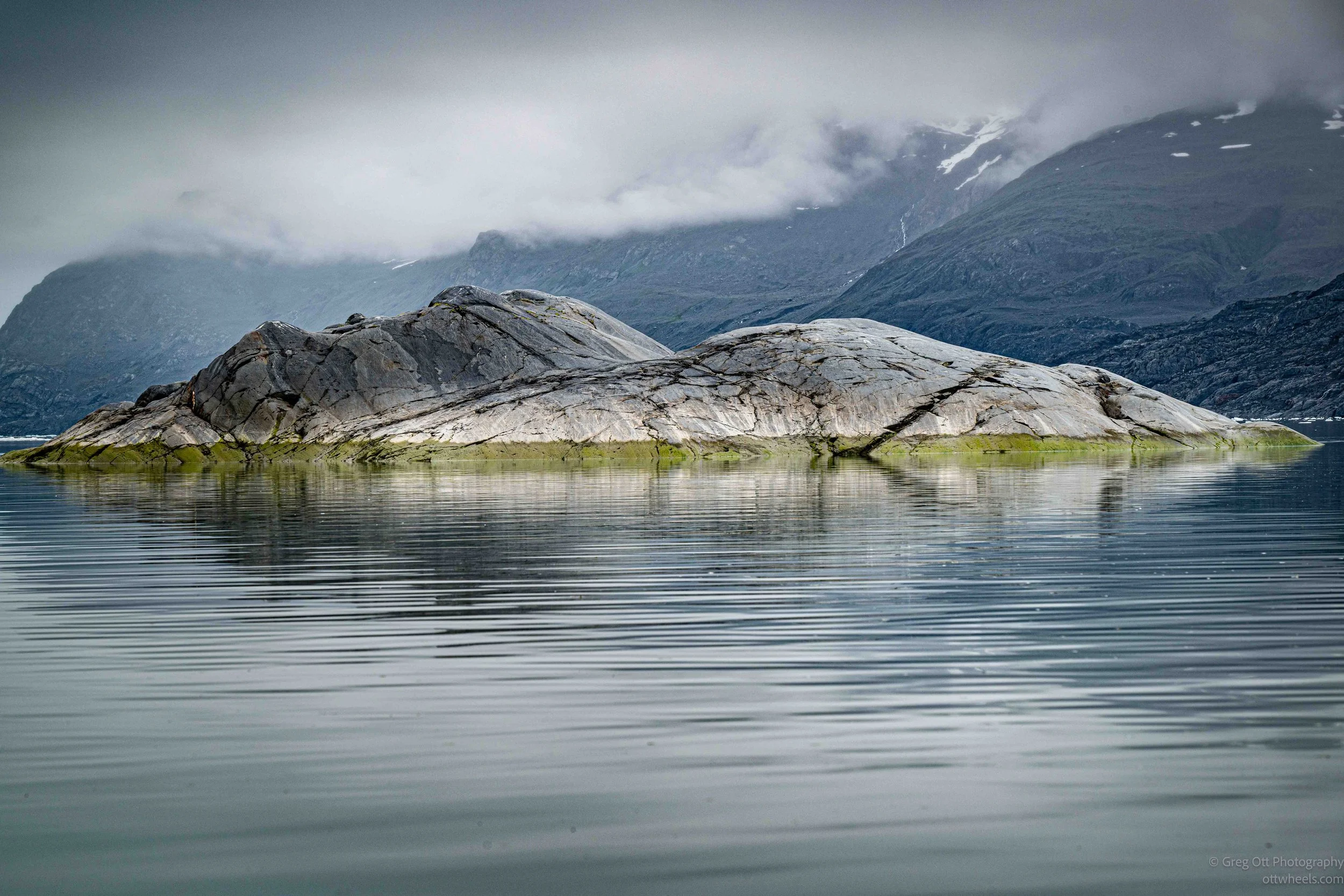
Eventually we reached the shoreline, landing about a mile from the face of the glacier. While the crew unloaded the kayaks and prepared for our launch, most of us wandered around exploring. I was surprised by how barren the landscape was. There were no trees, almost no vegetation, just crushed rock left behind as the glacier retreated. Huge striations were carved into the rock walls beside us, silent evidence of the glacier's movement over thousands of years. A waterfall spilled down the cliff in front of us before disappearing into Prince William Sound.
I wandered farther along the shoreline and finally found a small patch of life. A rock was covered with moss, lichen, and a handful of tiny flowers. Nearby, seaweed clung to another rock along the water's edge. It made me think what a wonderful place this would be to bring young children. You could show them, in just a few yards, how life slowly returns after the ice disappears and how even the harshest landscapes eventually give something a chance to grow.
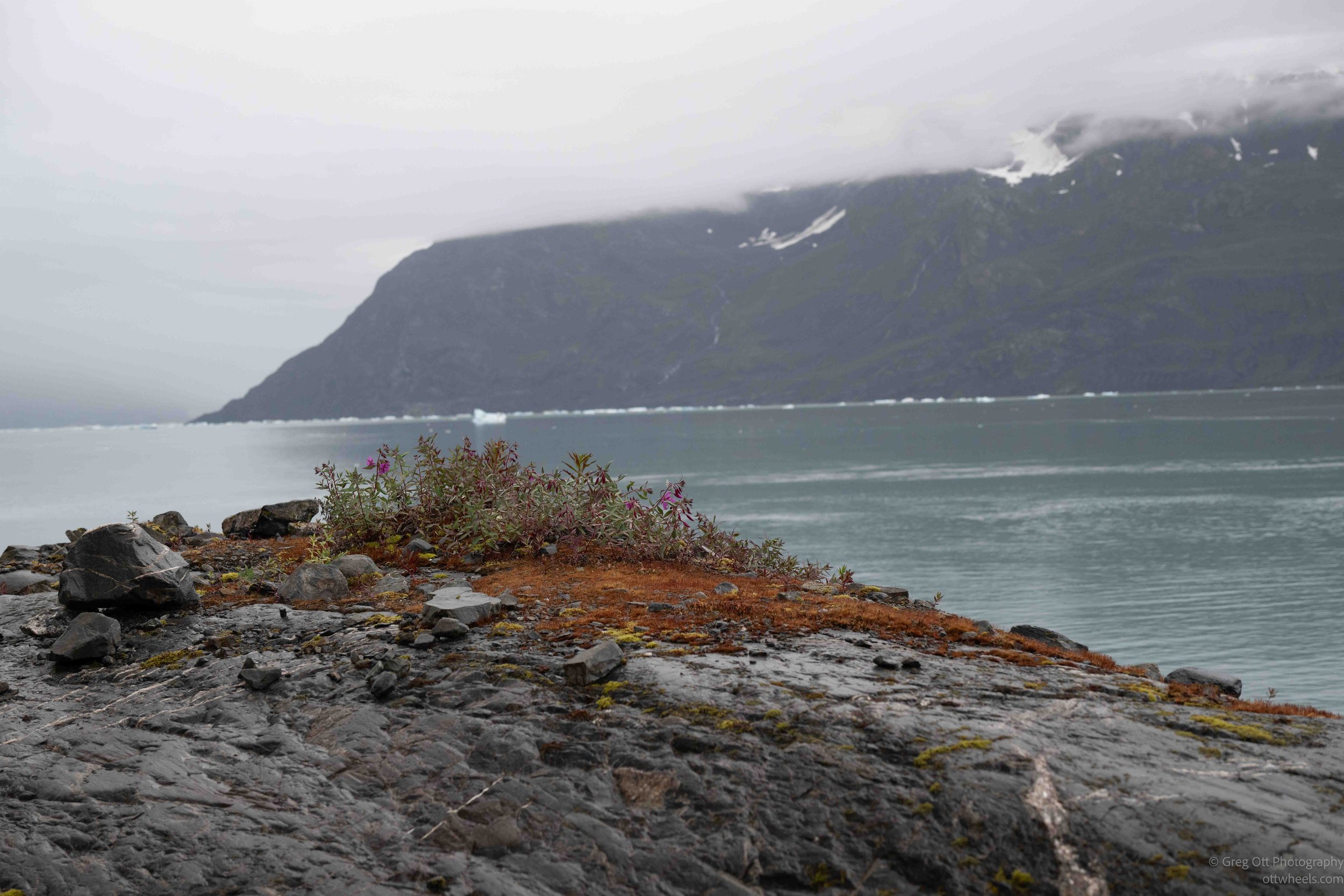
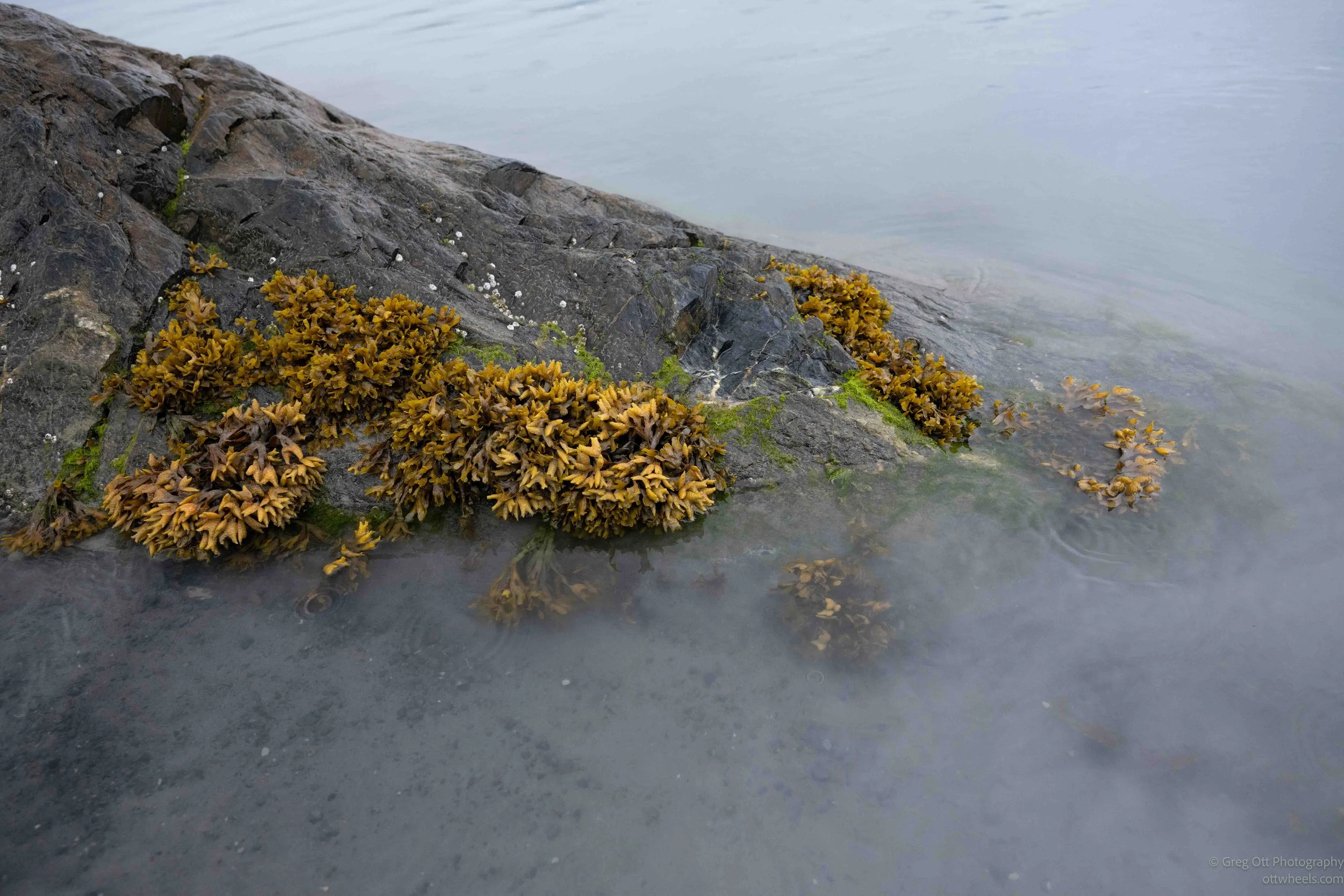
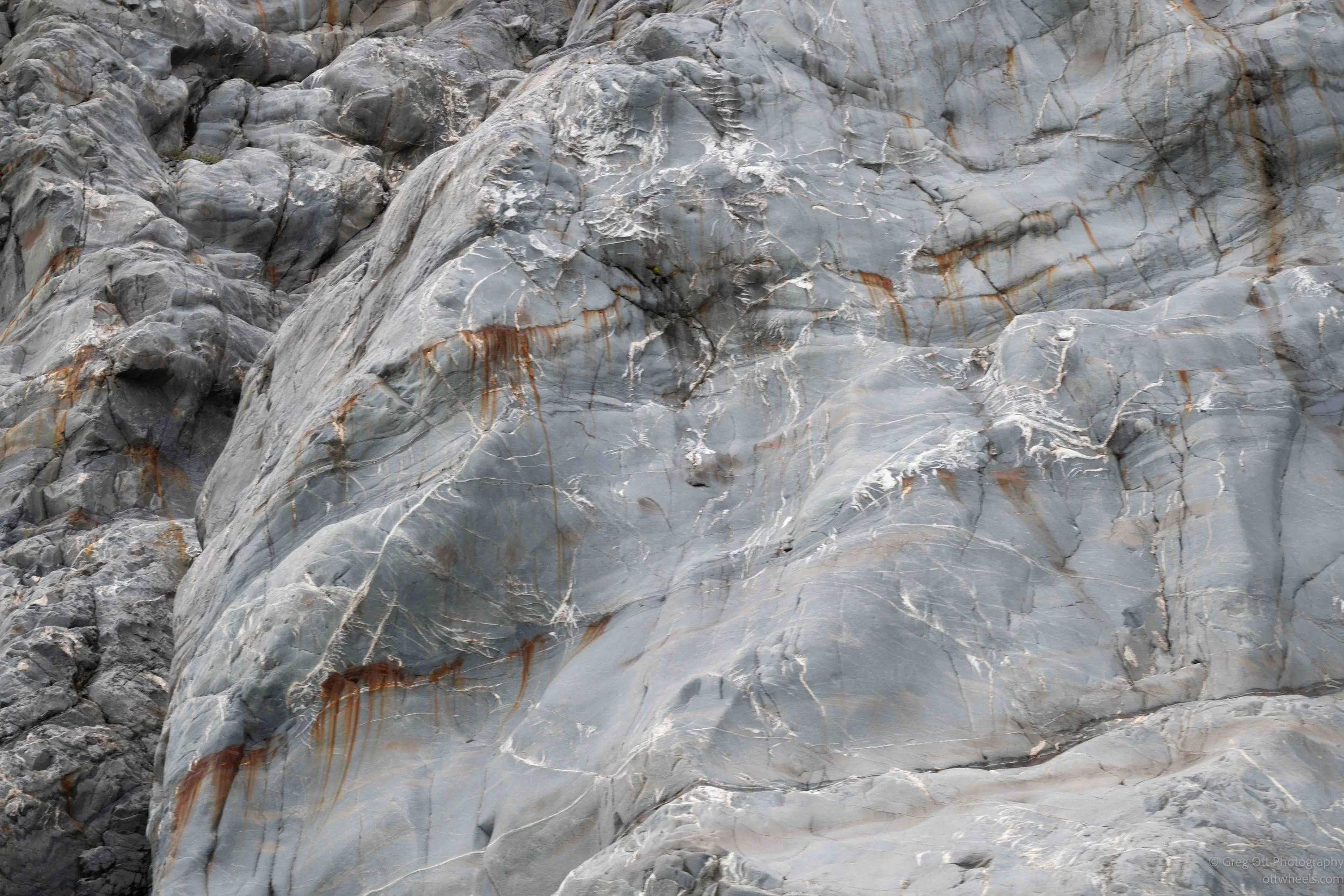
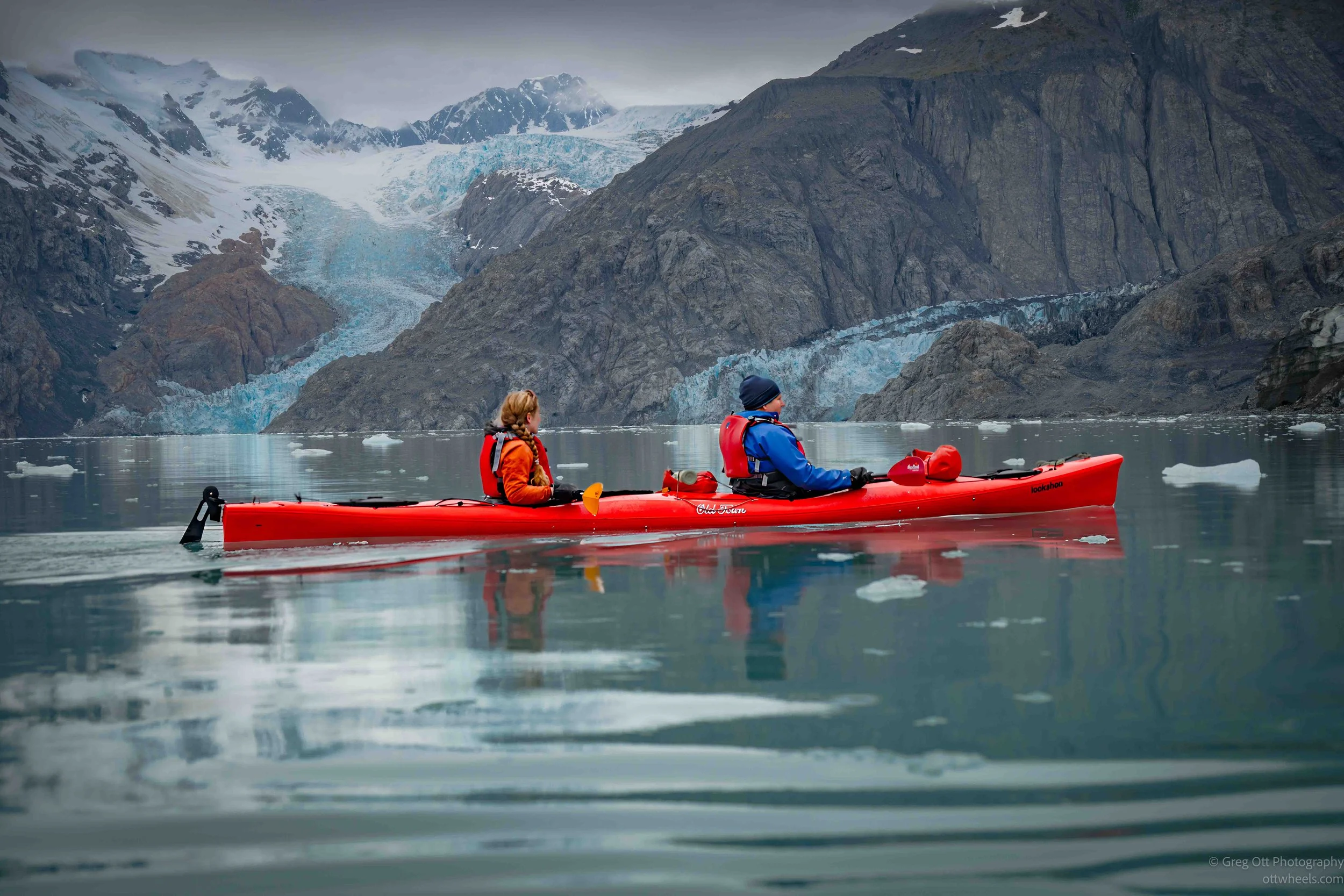
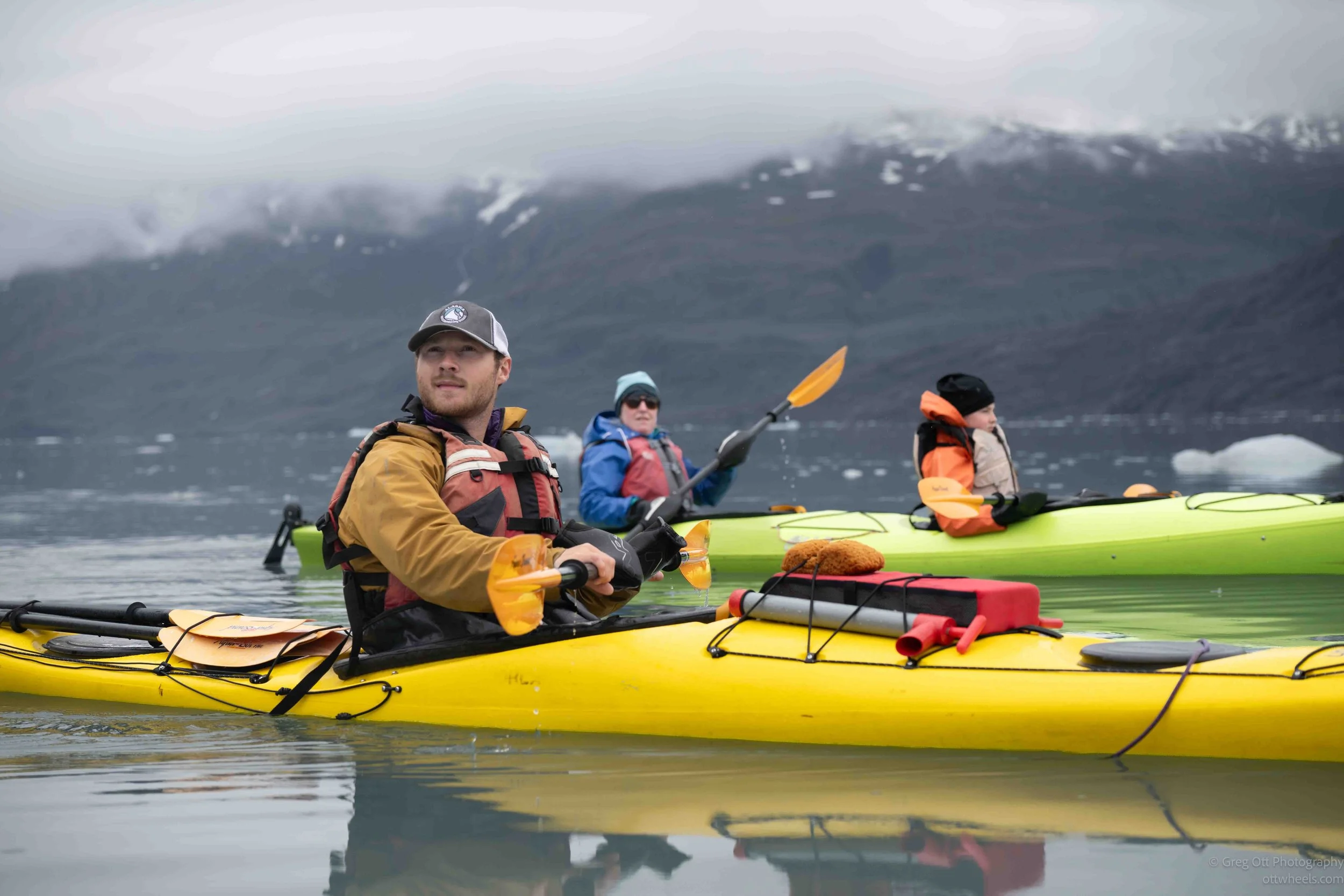
Once the kayaks were ready, we divided into two groups. We pulled spray skirts up around our waists and secured them to the cockpits to keep the water out. The skies were dark and threatening, but the guides didn't expect rain. The skirts, they explained, were just as important for keeping the paddle splash out of our laps.
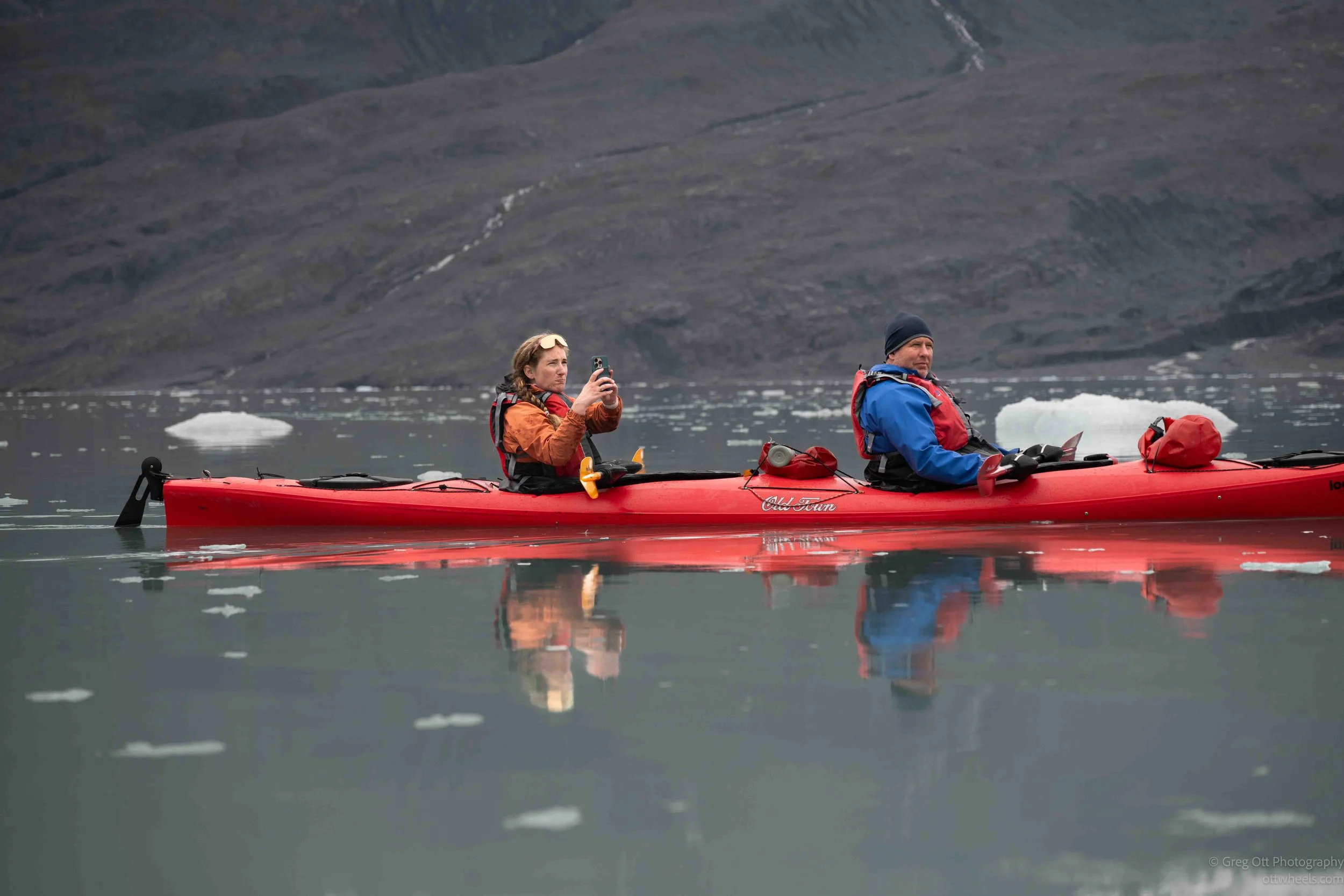
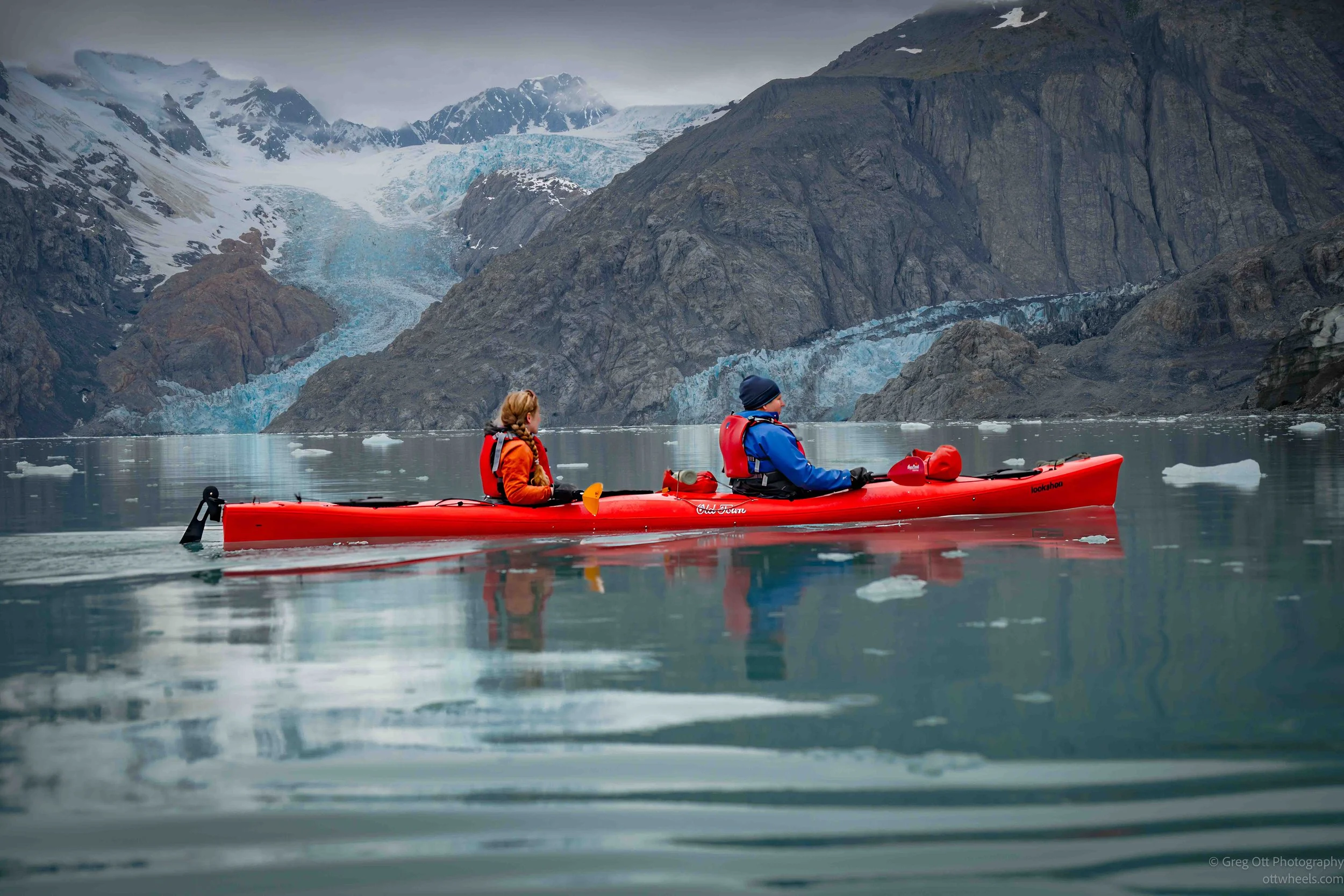
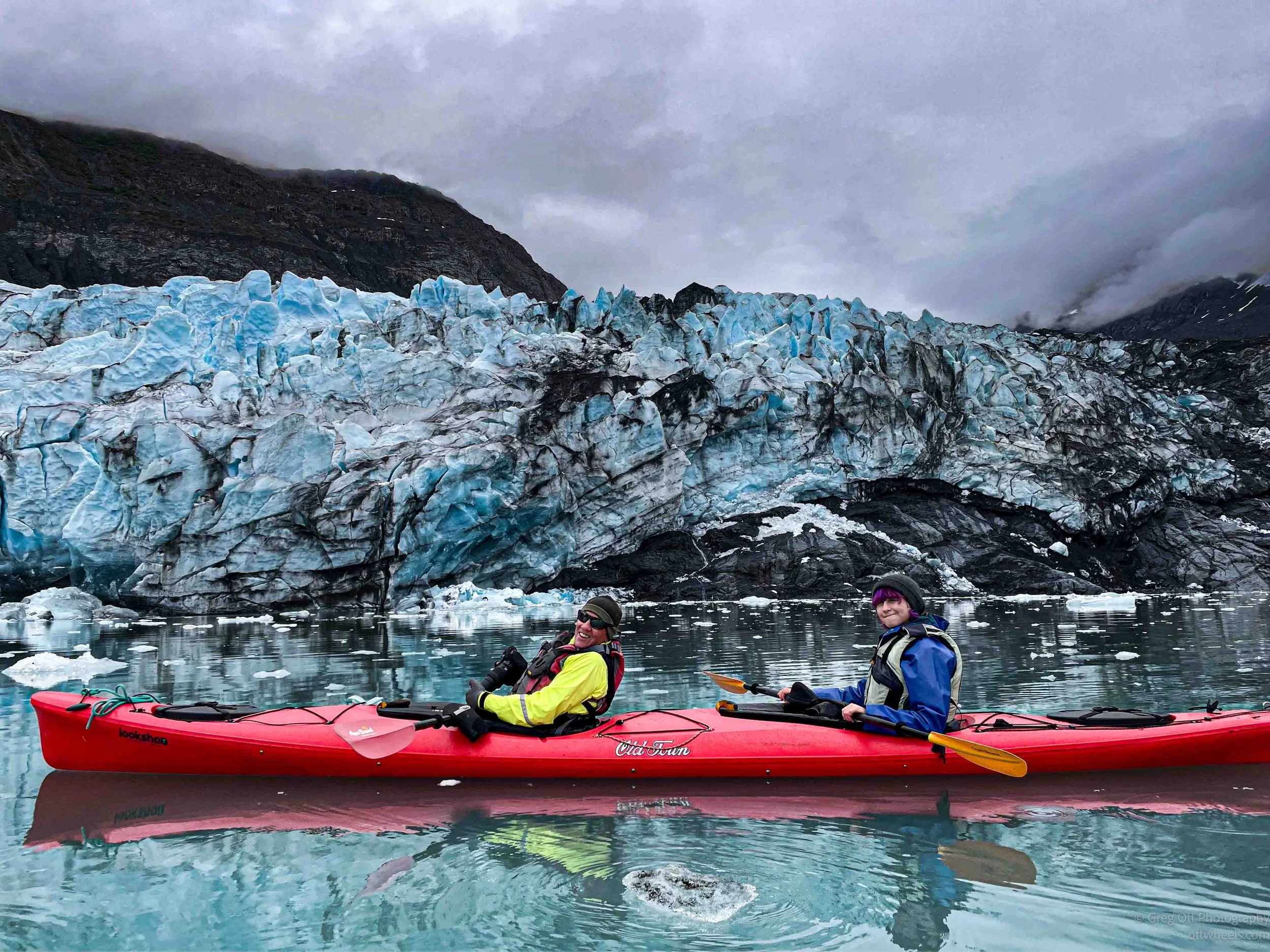
My paddling partner turned out to be a high school sophomore spending the summer working for Anadyr Adventures. Her job was cleaning gear, but she was joining the tour so she could better understand what guests experienced. It turned out to be a fortunate pairing because I kept stopping to photograph everything.
"I feel like I'm not pulling my weight," I admitted after apologizing for the third or fourth time. She laughed. "It's okay. I'll be more buff by the end of the summer." That made both of us laugh. I told her I hadn't heard anyone use the word buff in years, and that I'd given up on ever being buff myself a long time ago.
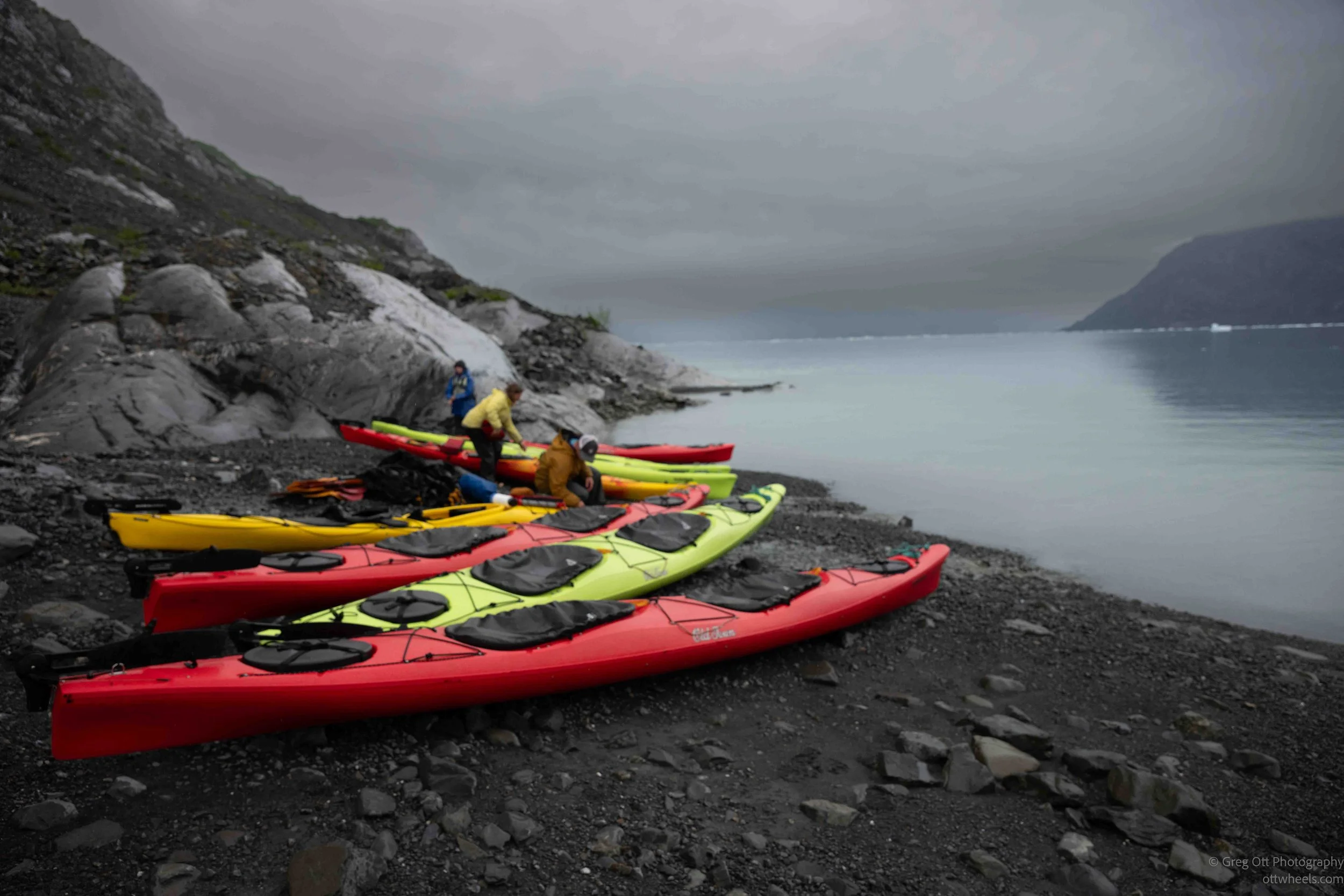
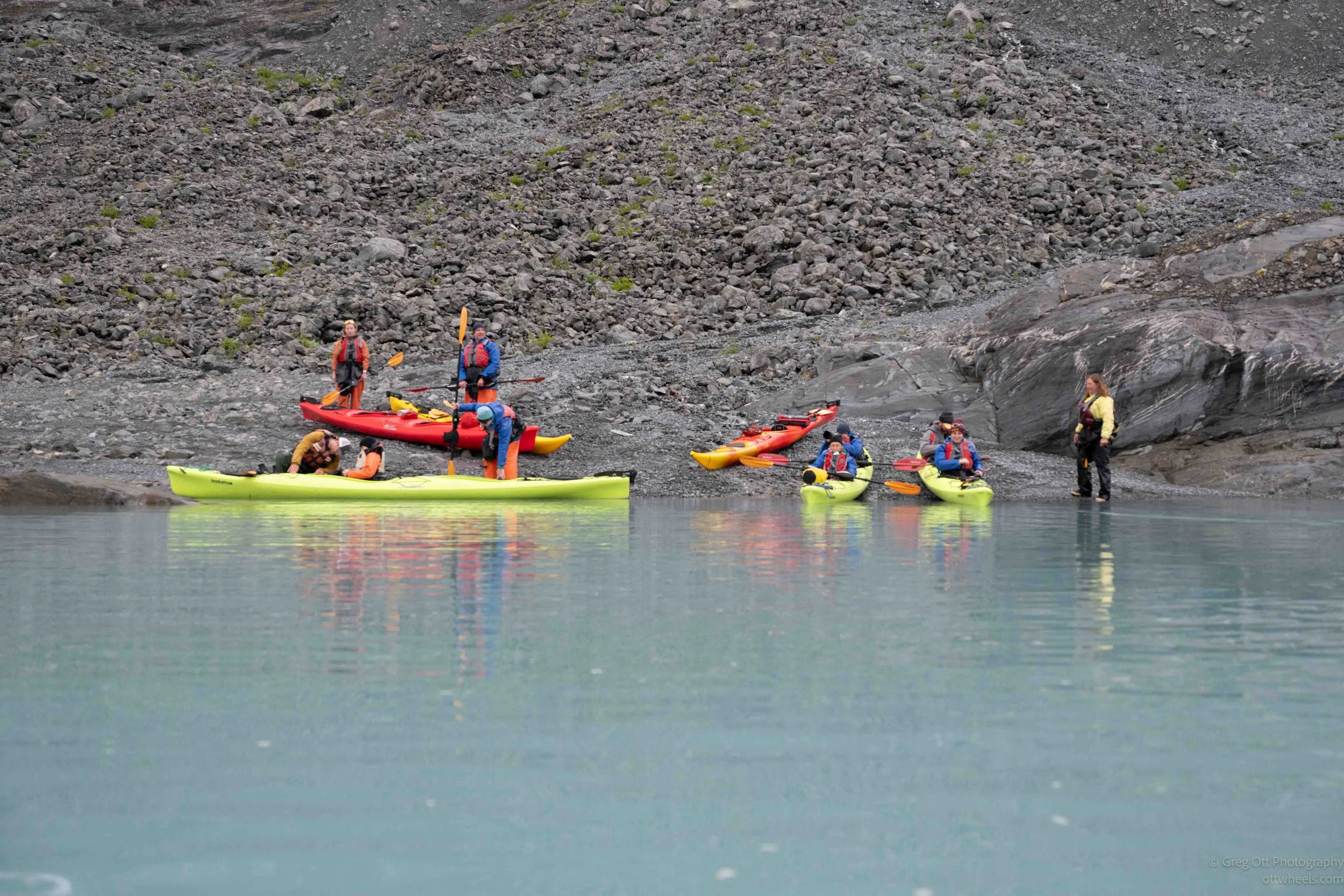
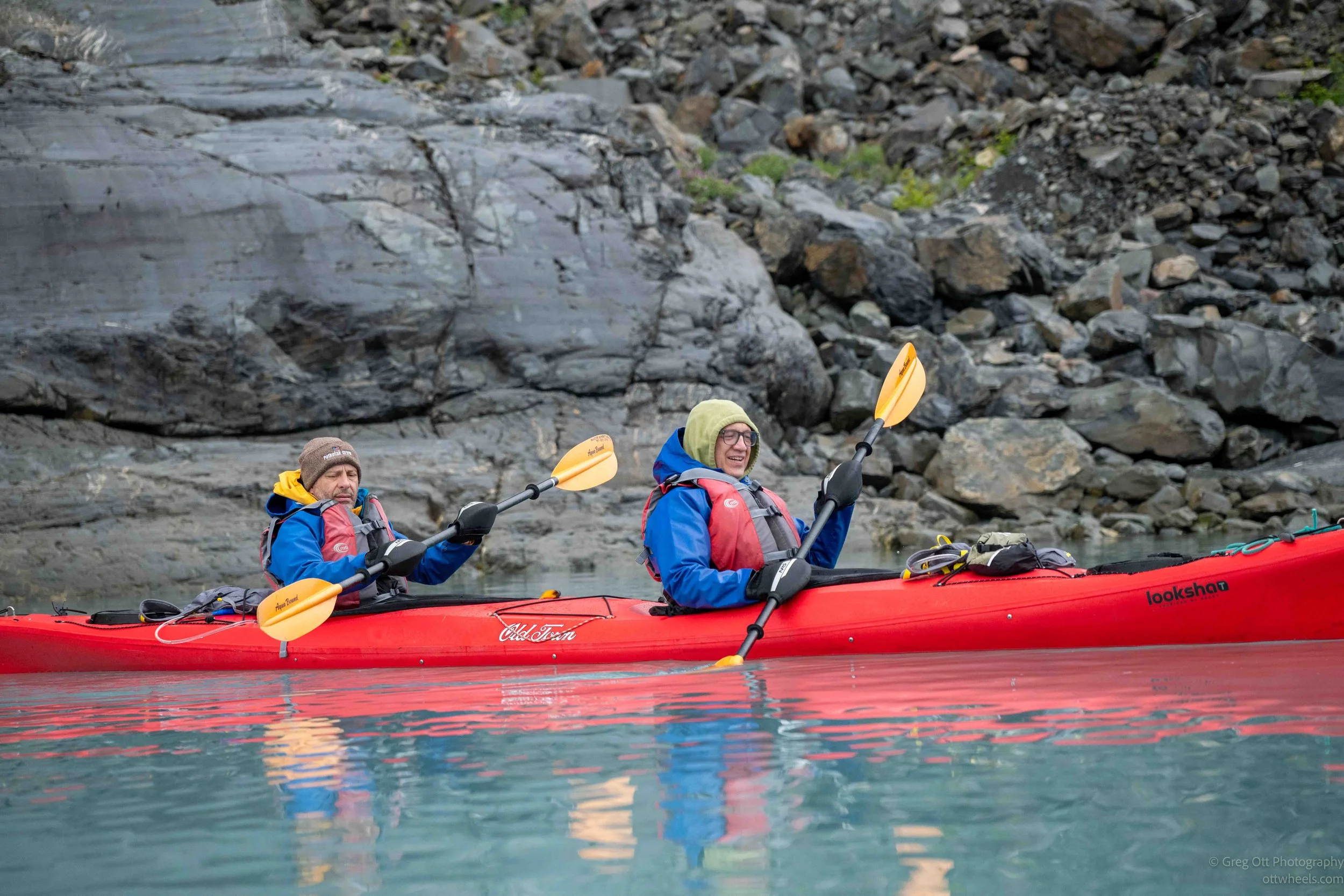
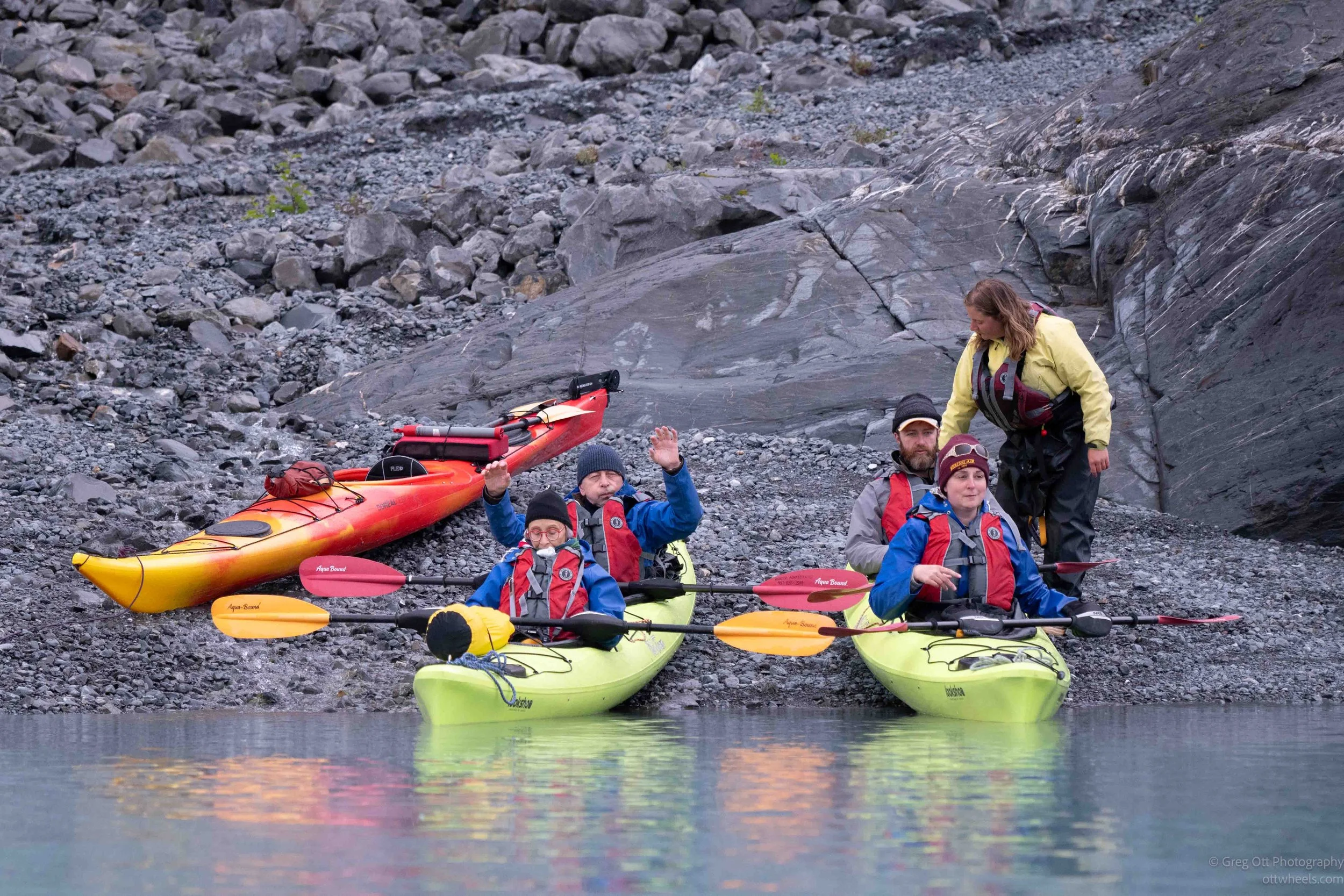
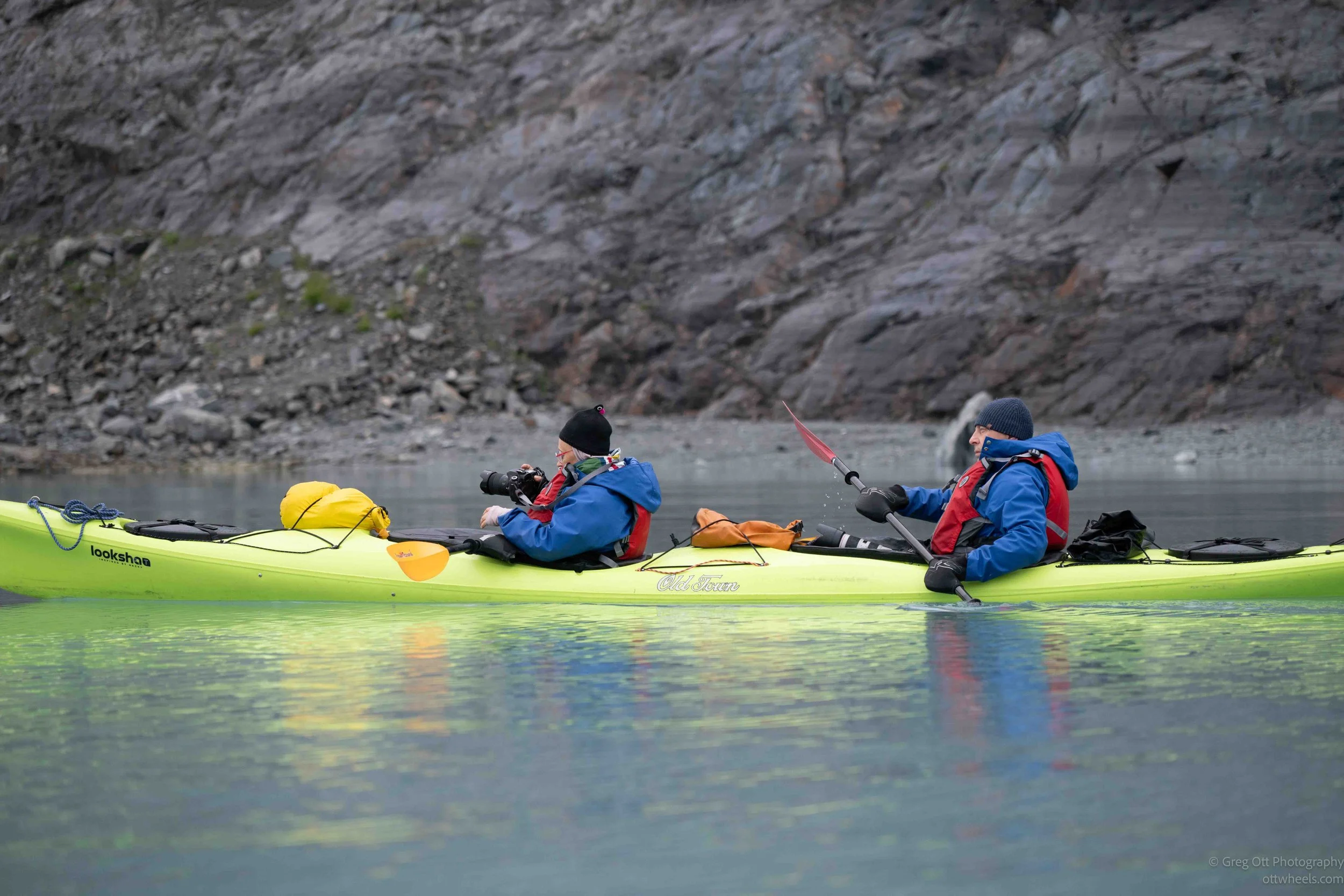
Paddling here is unique. Every direction offered another photograph. Ice chunks, each size has a name, drifted silently beside us, some brilliant blue, others streaked with dirt and rock that had traveled inside the glacier. The water was calm, the only sounds coming from paddles entering the water, distant birds, and the occasional crack or rumble from somewhere ahead (ice falling).
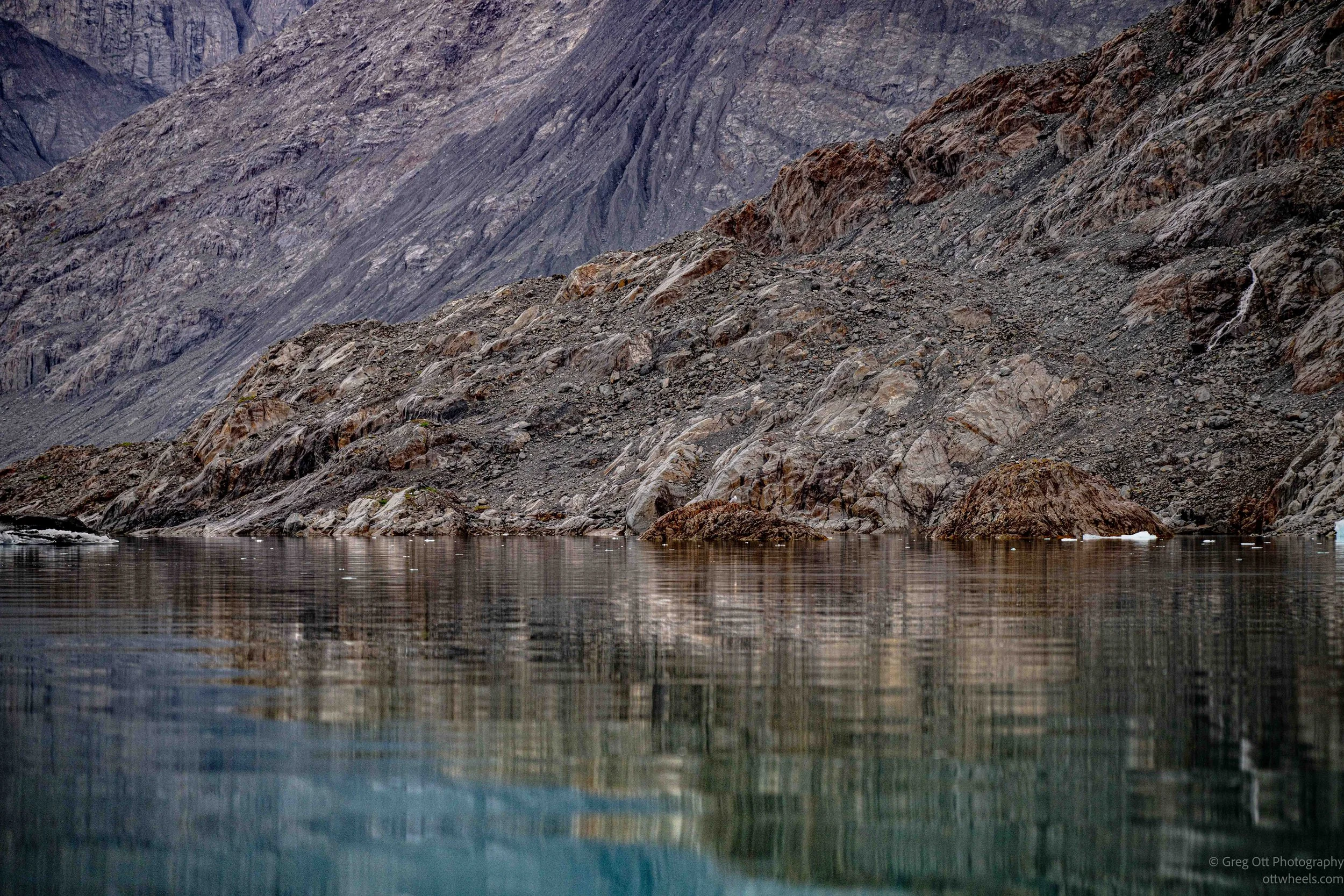
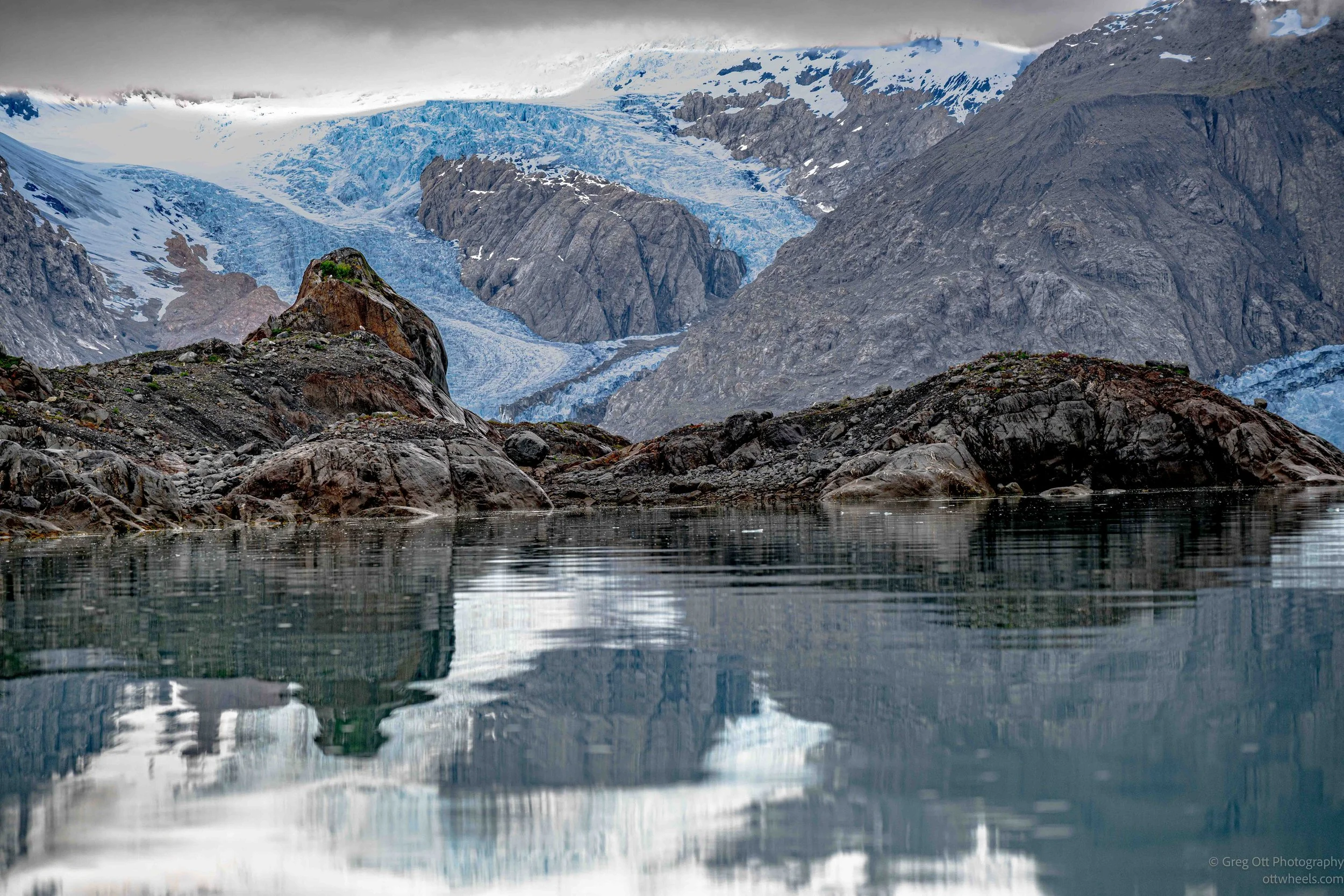
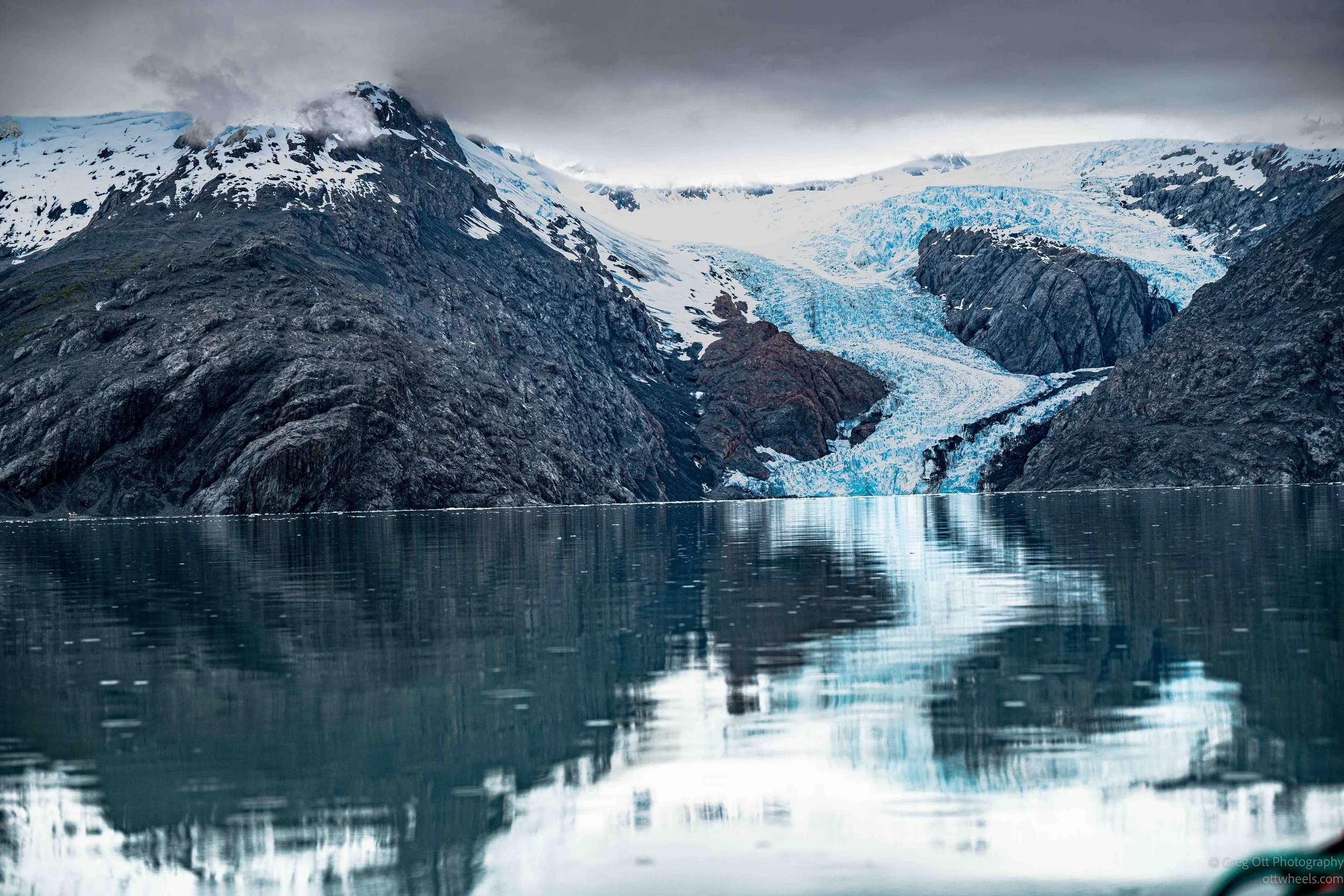
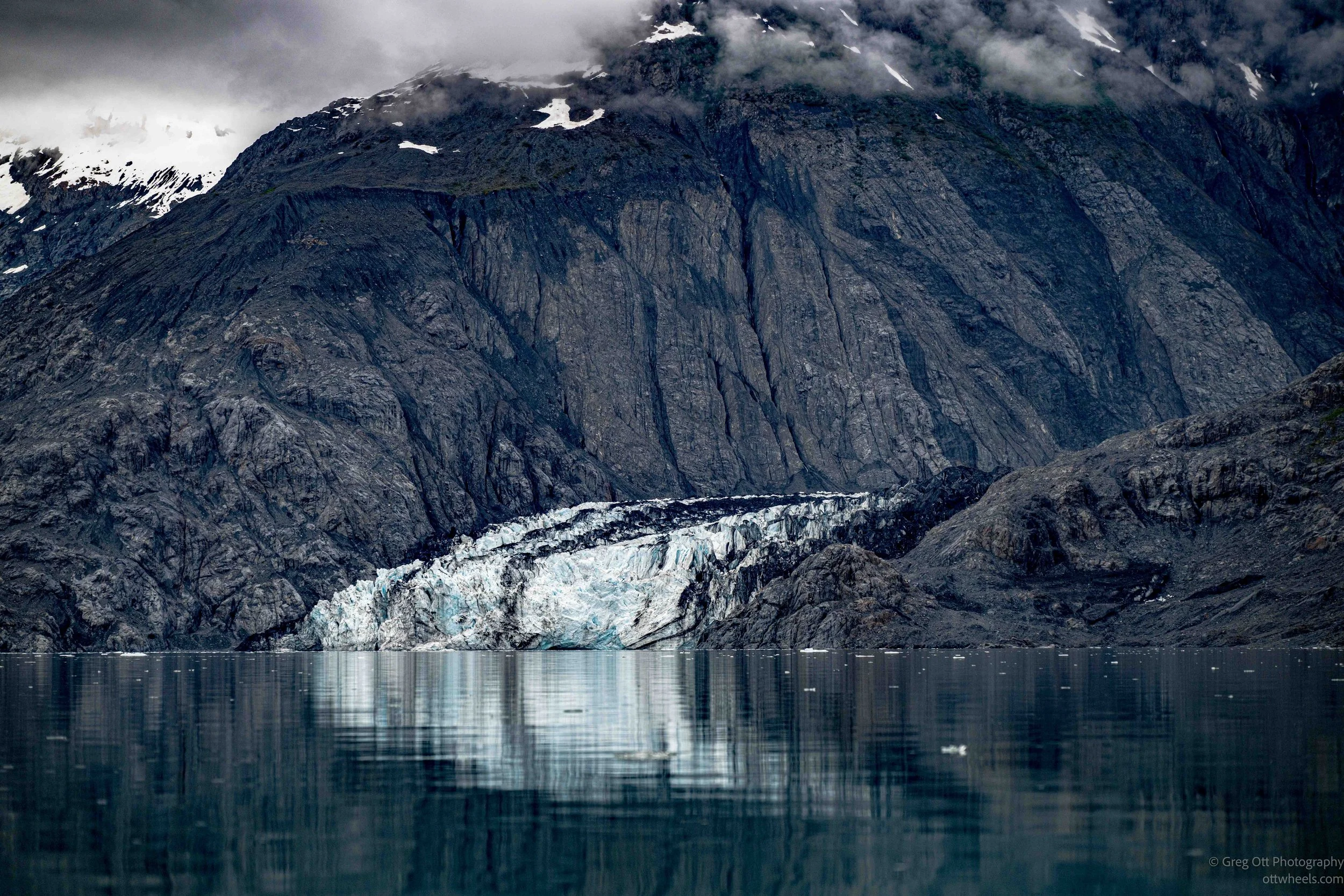
Sometime after noon we stopped for lunch. I had completely lost track of time. Everyone had packed sandwiches, and mine was a classic peanut butter and jelly. Matt mentioned he had never stopped at this particular spot before. Looking up the rocky slope behind us, he smiled and said that if we climbed to the top, we could probably say we'd walked somewhere no one else had ever walked. Whether that was literally true or not, it certainly felt that way.
Before we wandered off, Matt pulled all of the kayaks farther up the shore. We had been hearing the glacier calving throughout the morning, and he explained that large chunks of falling ice can occasionally send waves across the bay strong enough to carry unattended kayaks back into the water.
After lunch we climbed the rocks for a better view of Columbia Glacier and took photos overlooking the bay. Most of the rocks had been rounded smooth by the ice, but scattered among them were razor-sharp edges that demanded careful footing. Water seeped up through the muddy ground in places, and Matt pointed out a chunk of glacier ice so dark it looked almost like a piece of coal. Whatever had stained it black had blended into the ice so completely that it hardly looked frozen at all.
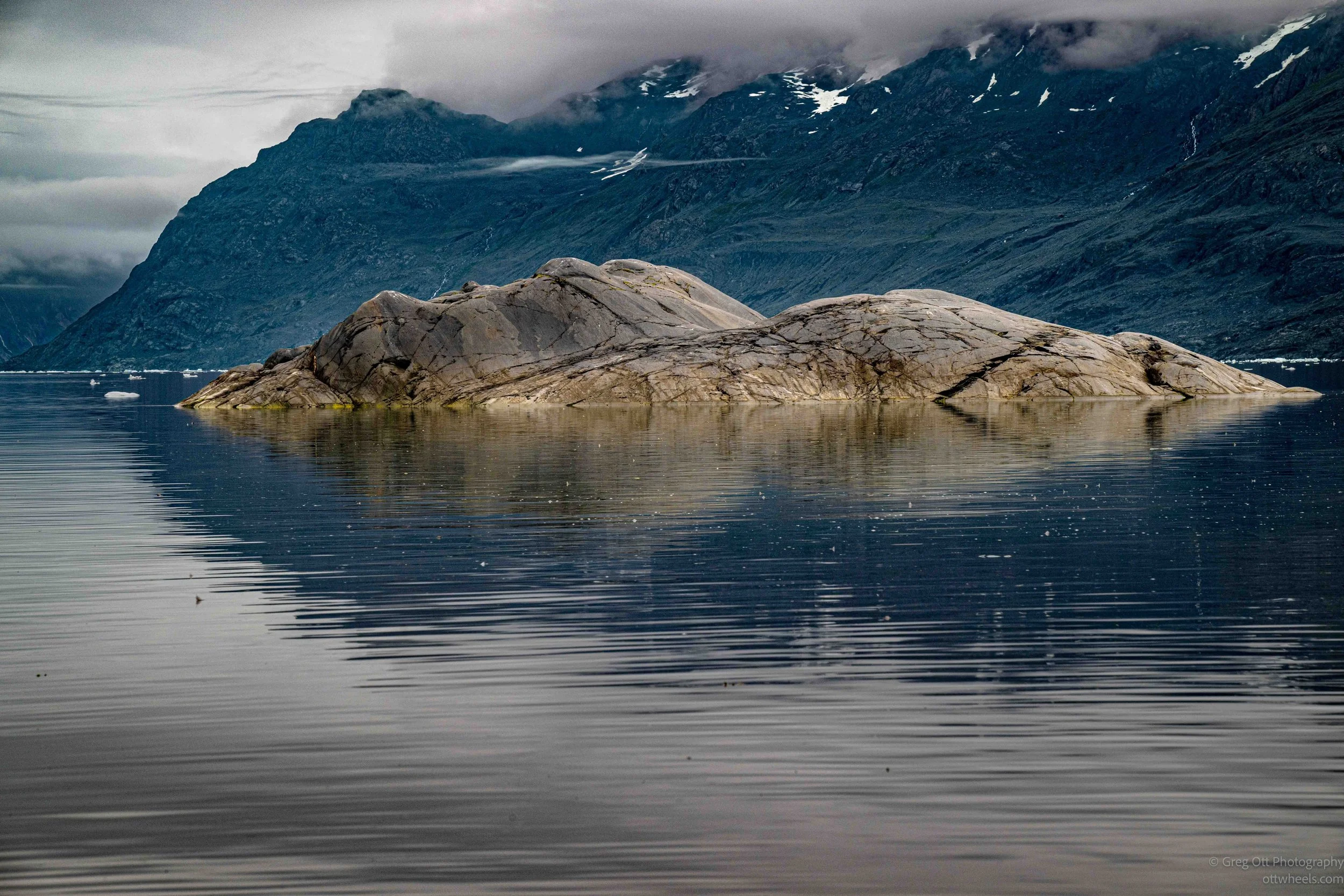
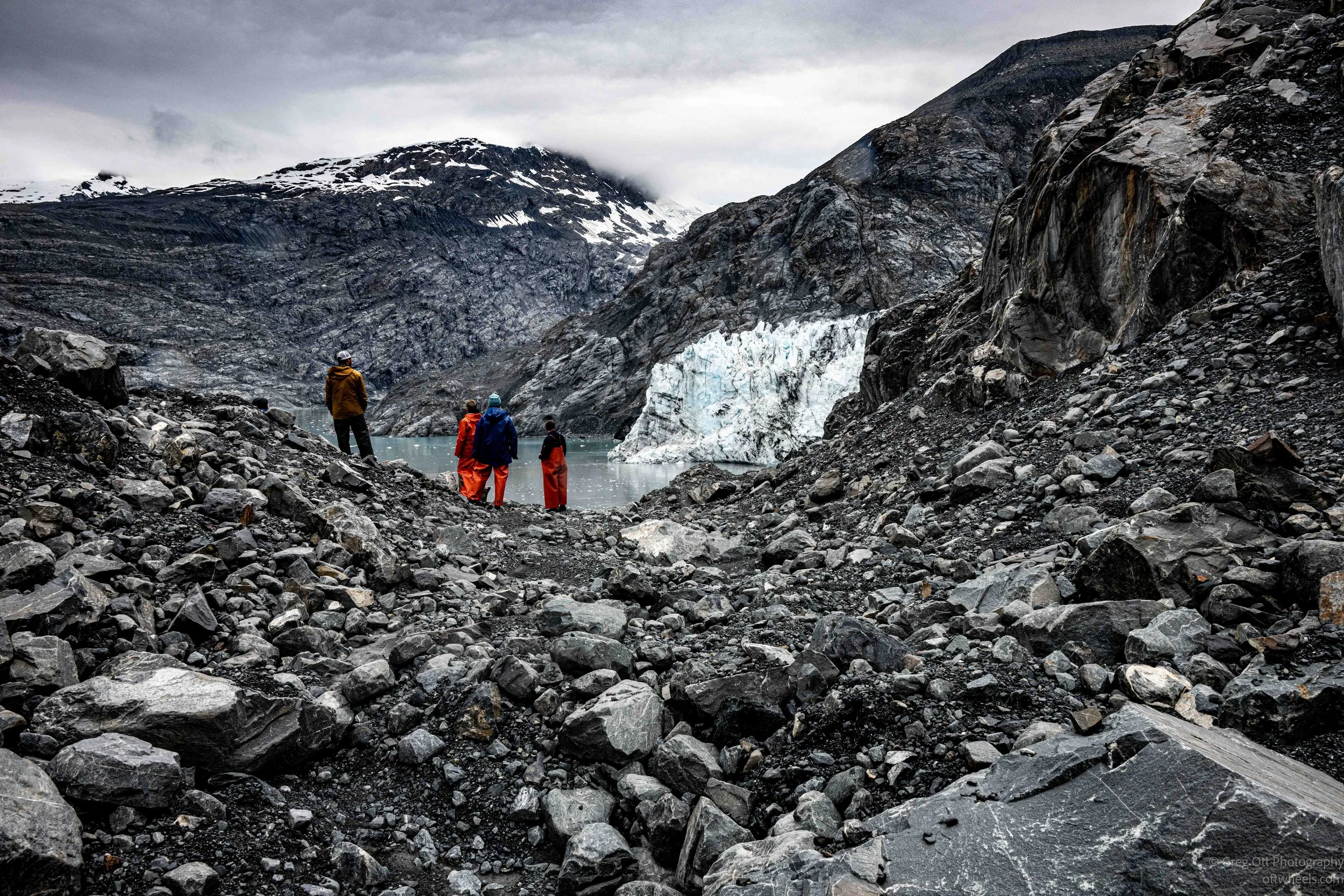
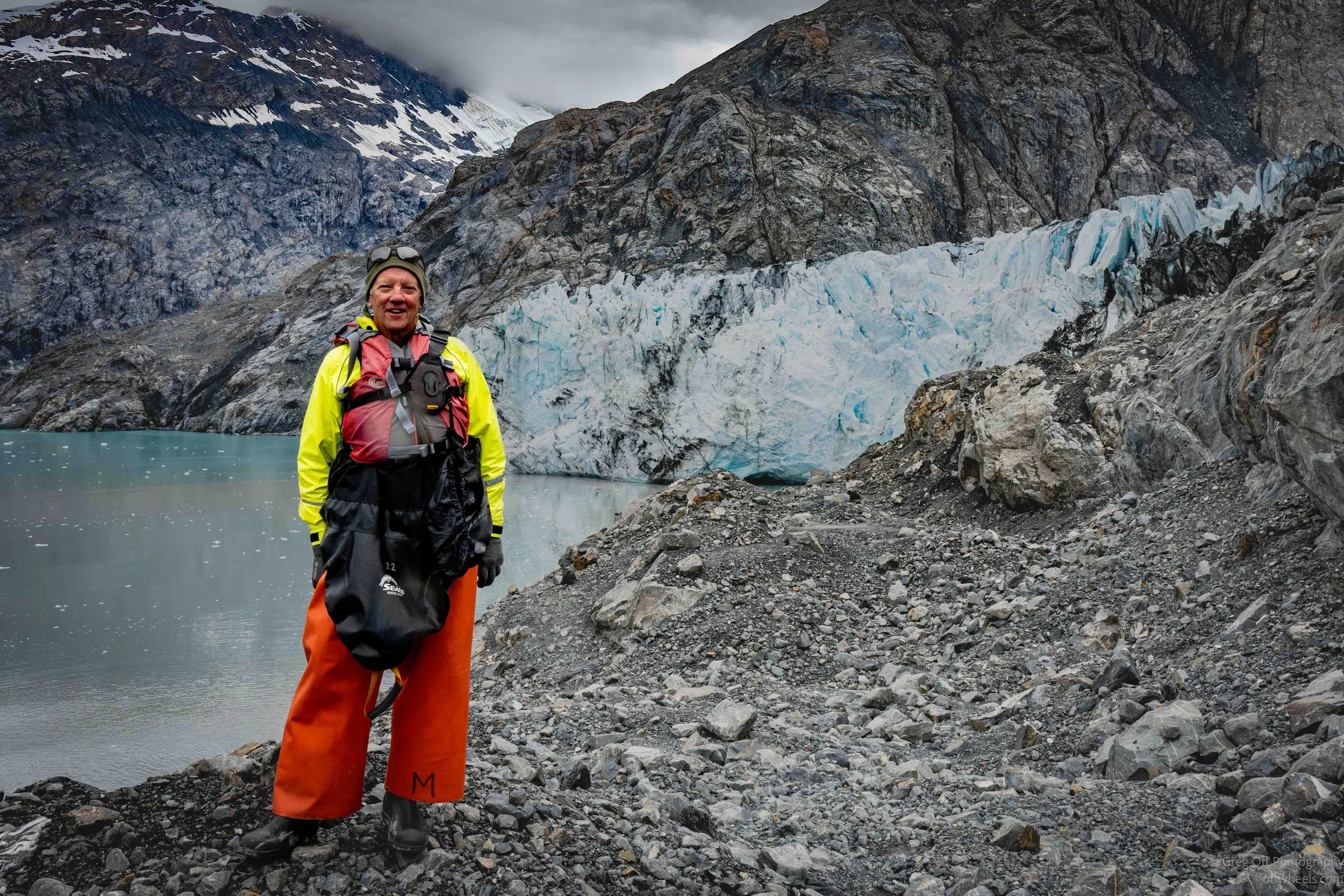
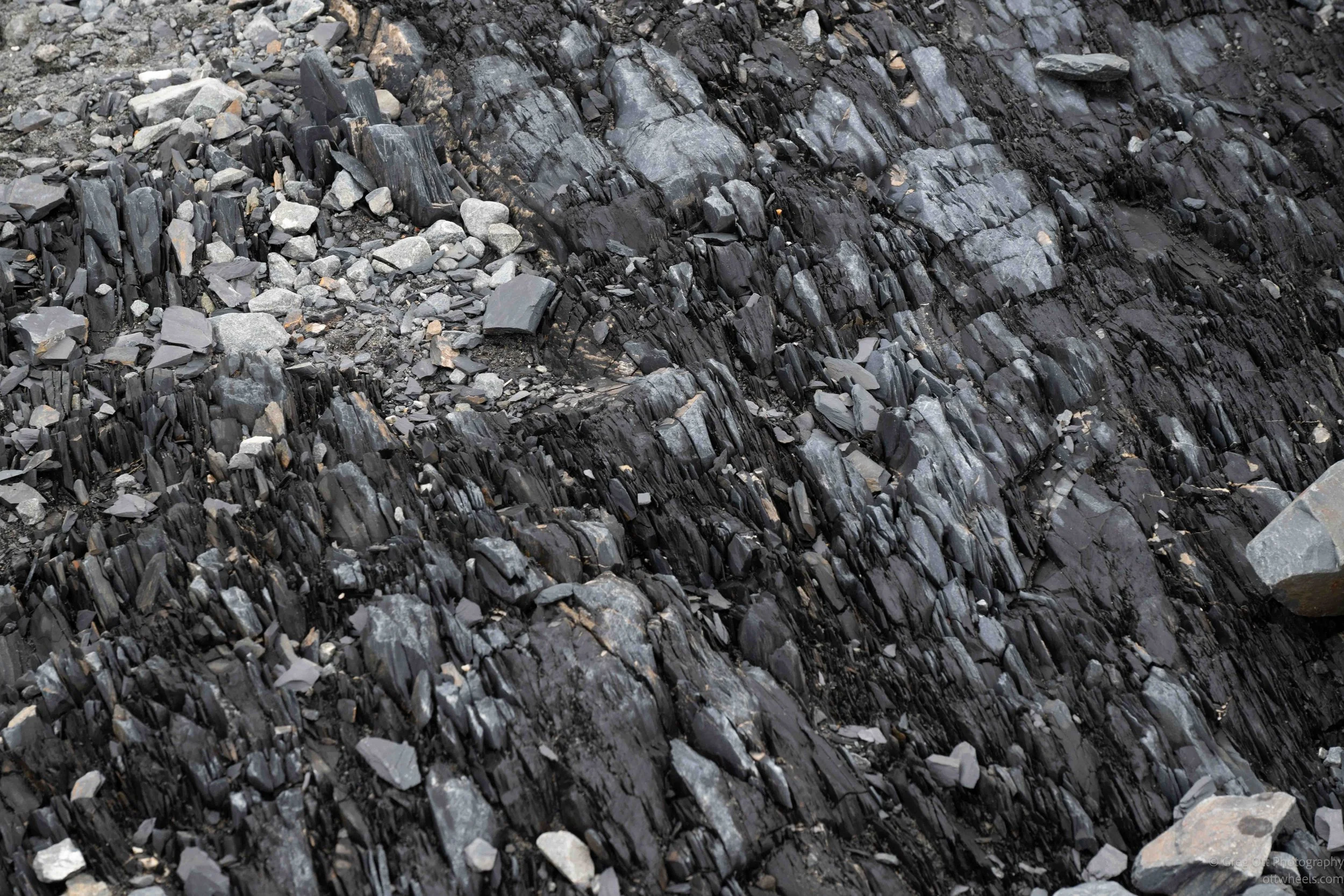
Back in the kayaks, we paddled closer to the glacier, though never close enough to be in danger. Large sections of ice regularly break away from the glacier's face and crash into the water, a process known as calving. As if on cue, a sizeable chunk broke free while we watched. The sound echoed around the bay like distant thunder, followed a few moments later by a gentle wave that rolled beneath our kayaks.
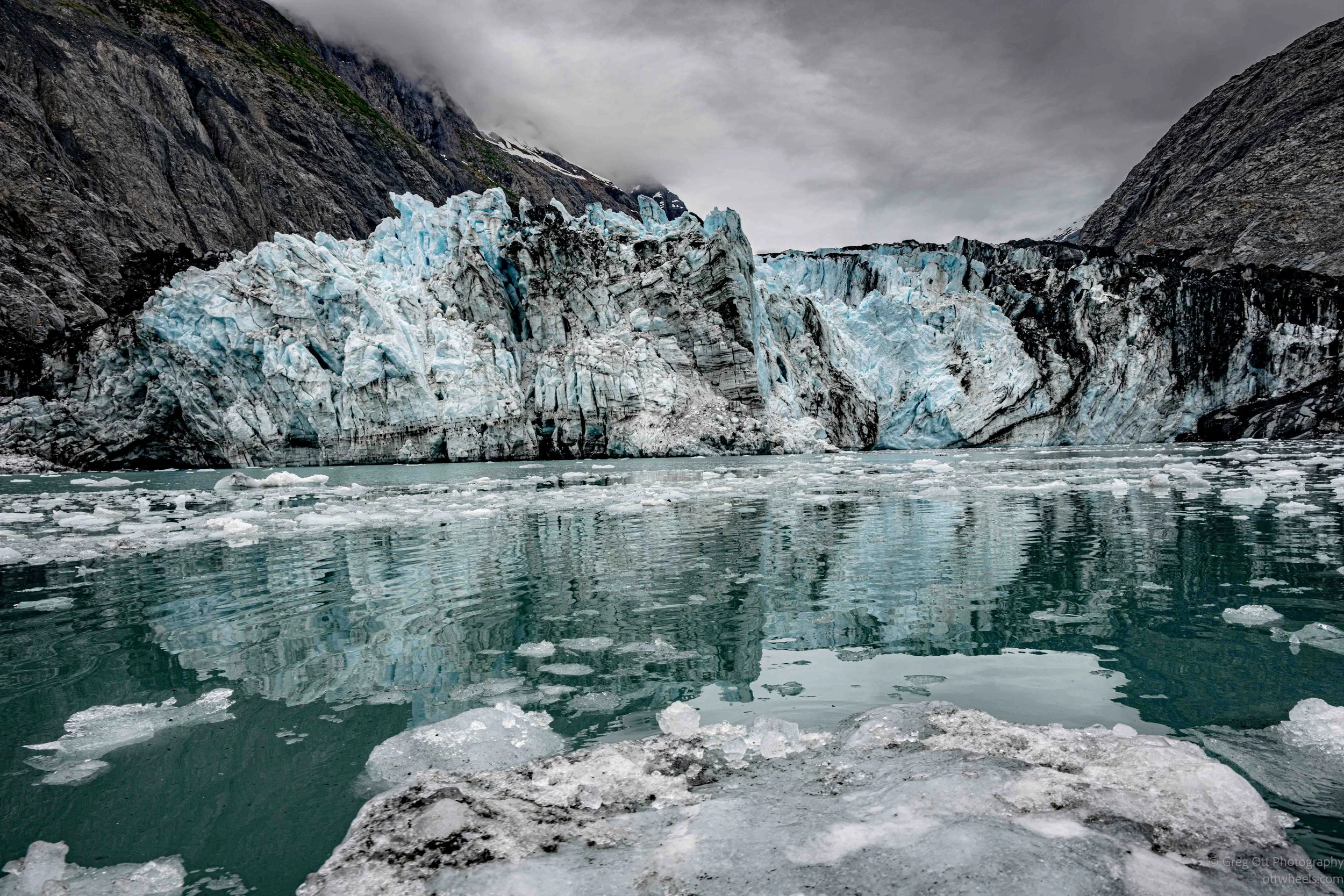
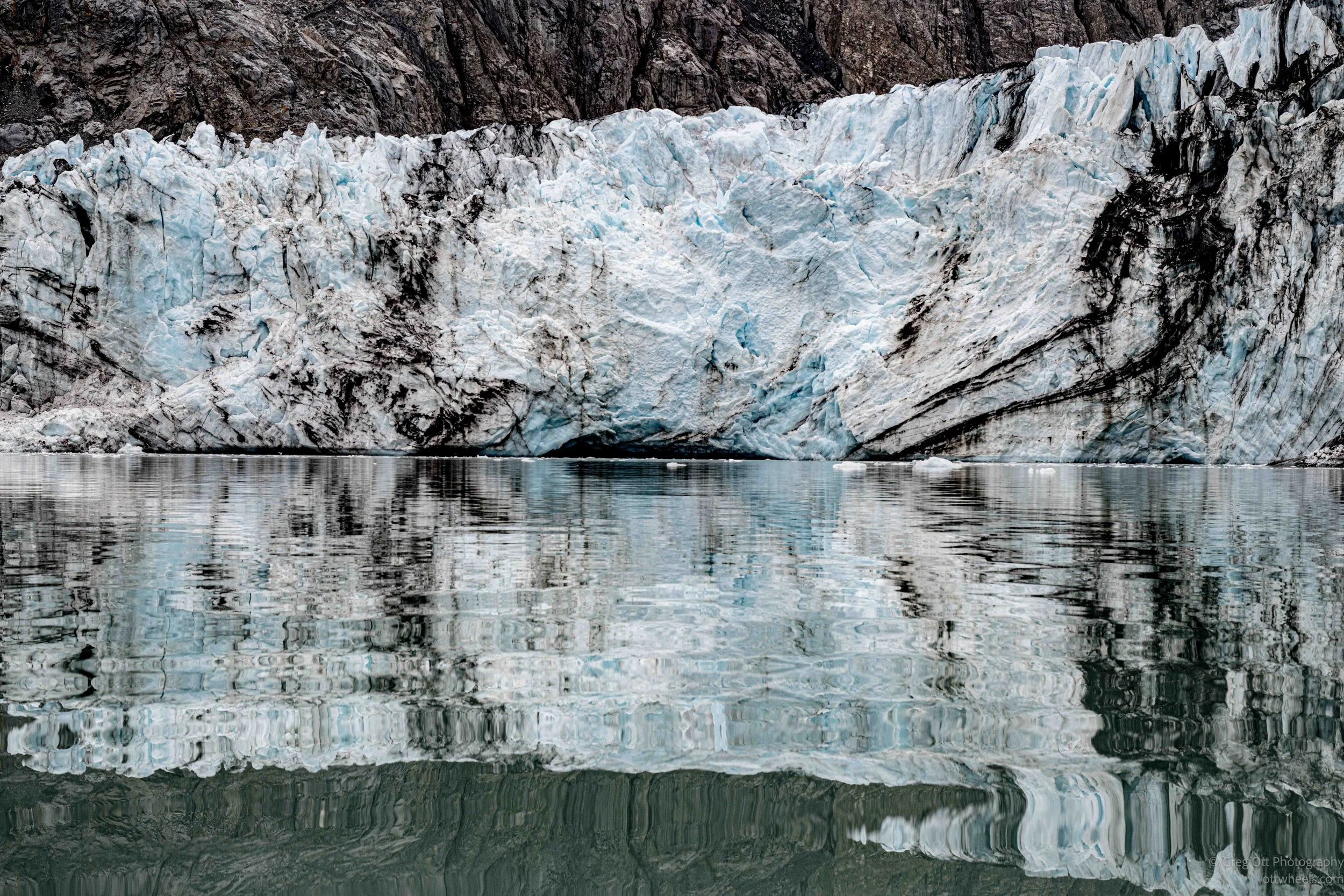
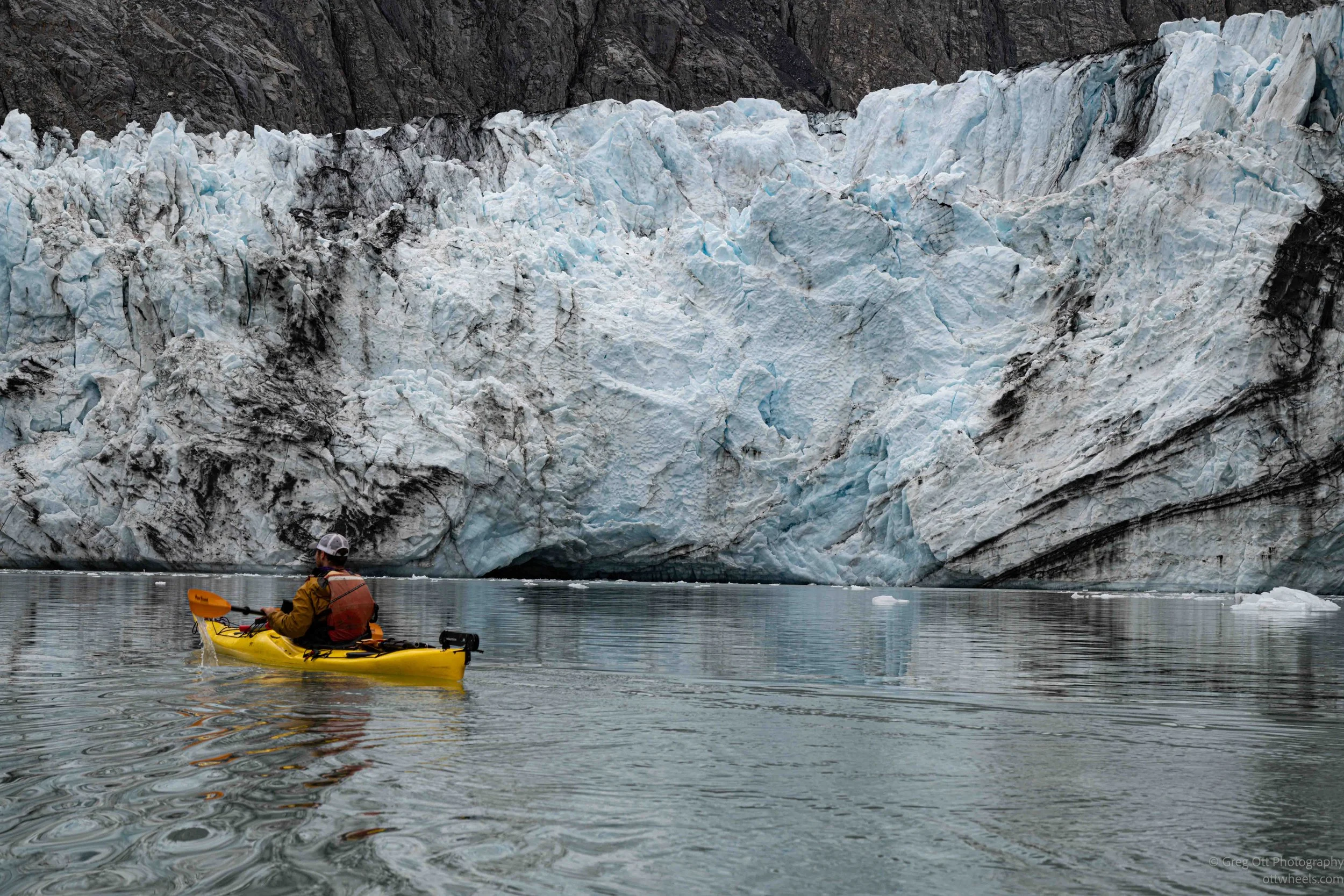
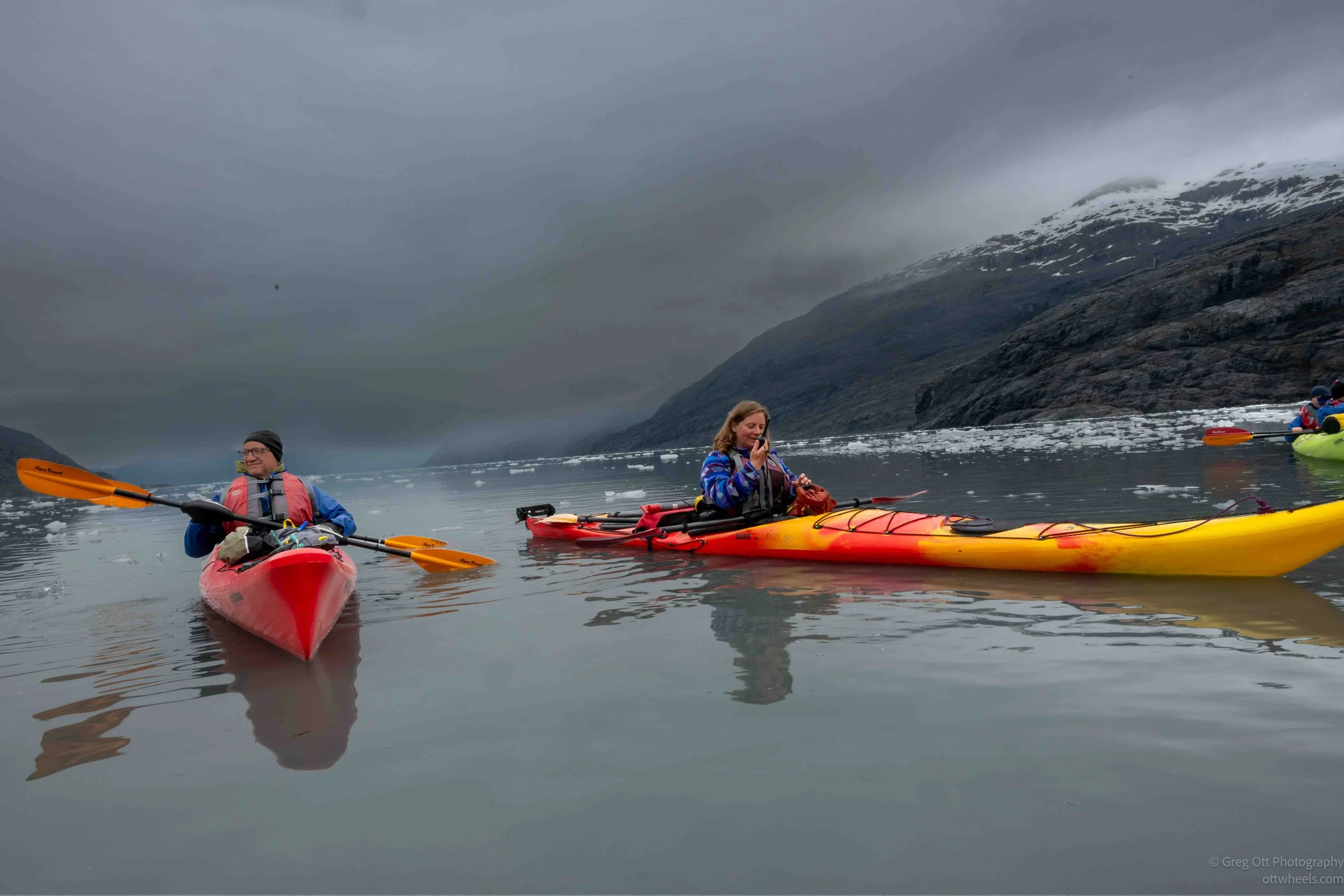
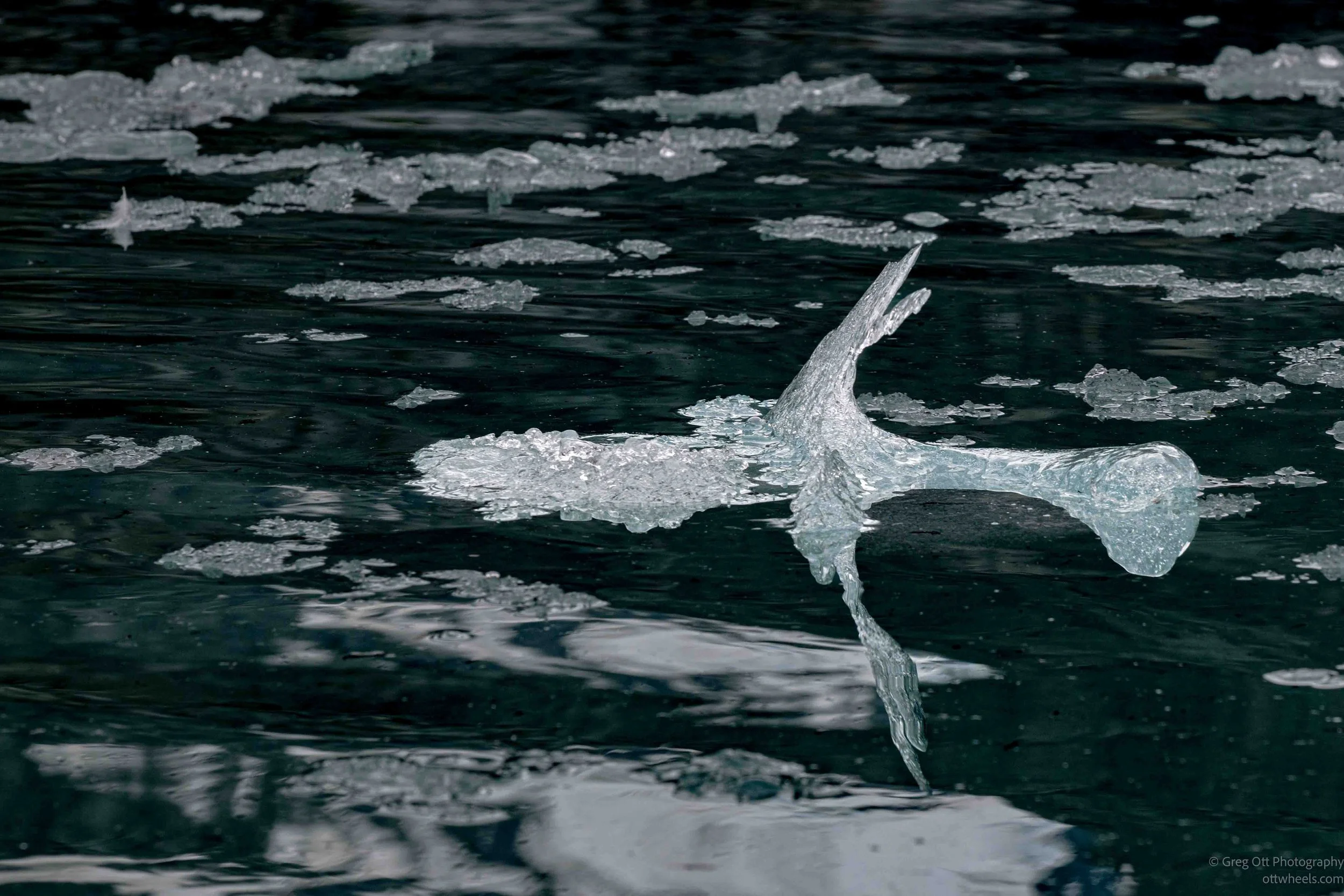
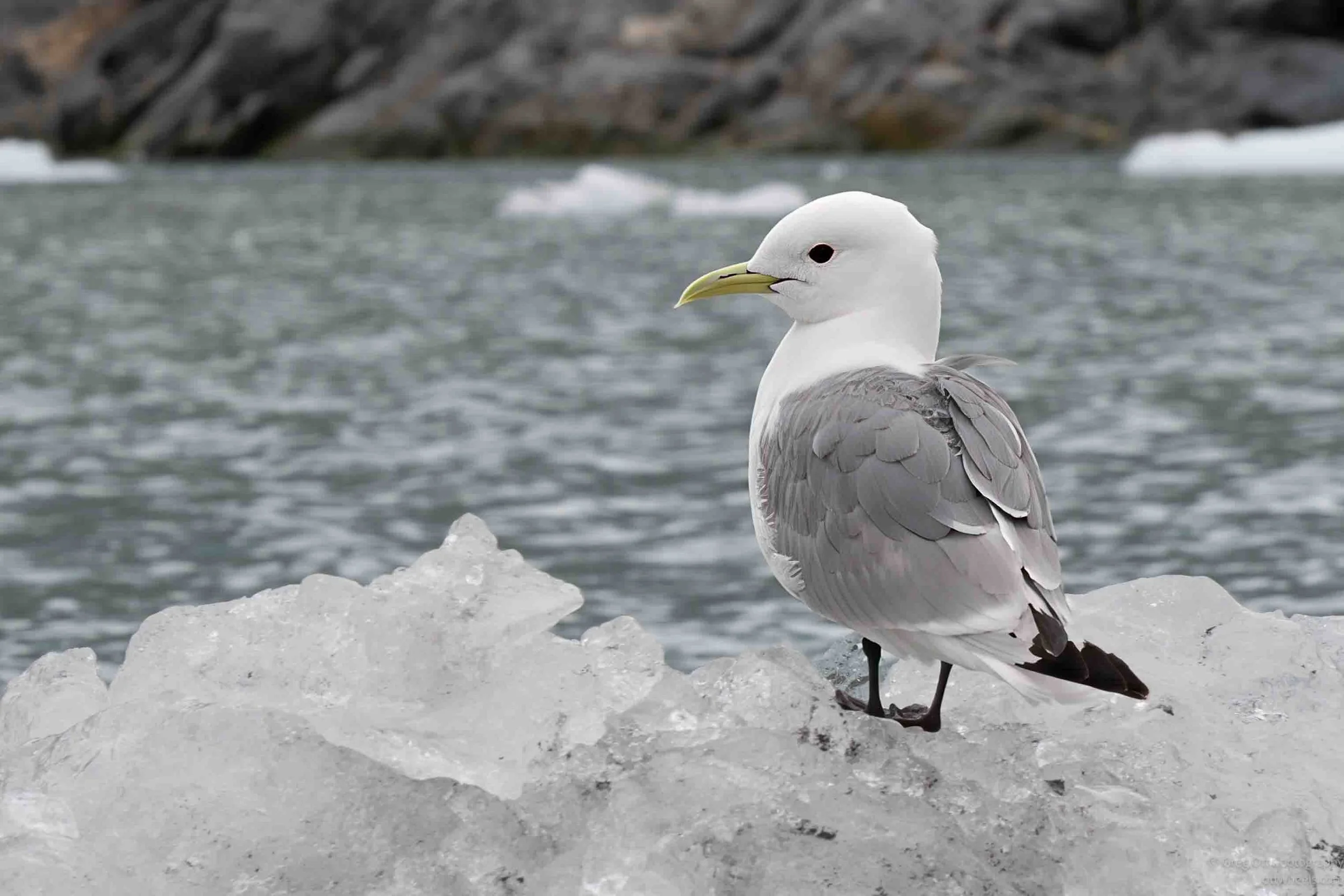
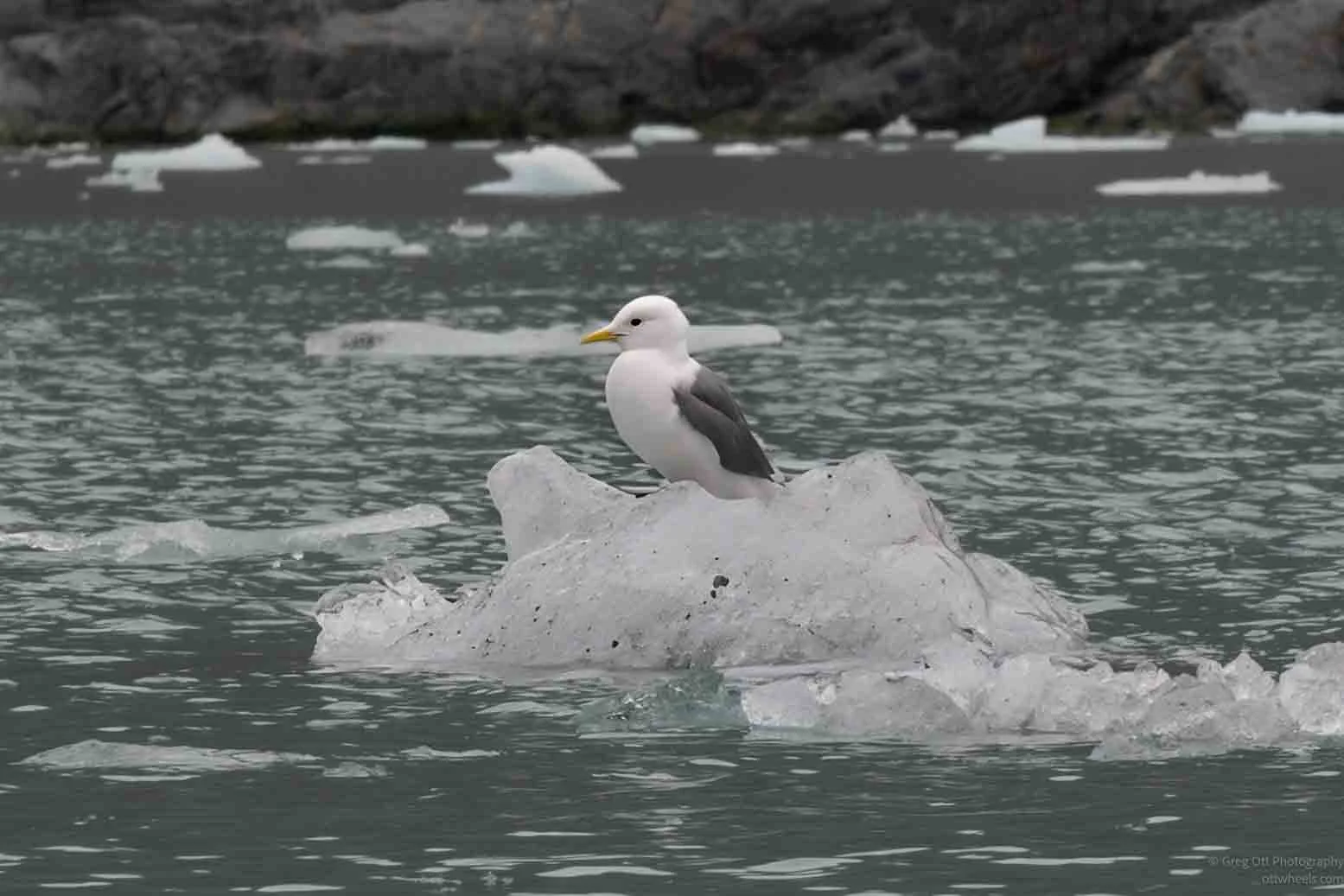
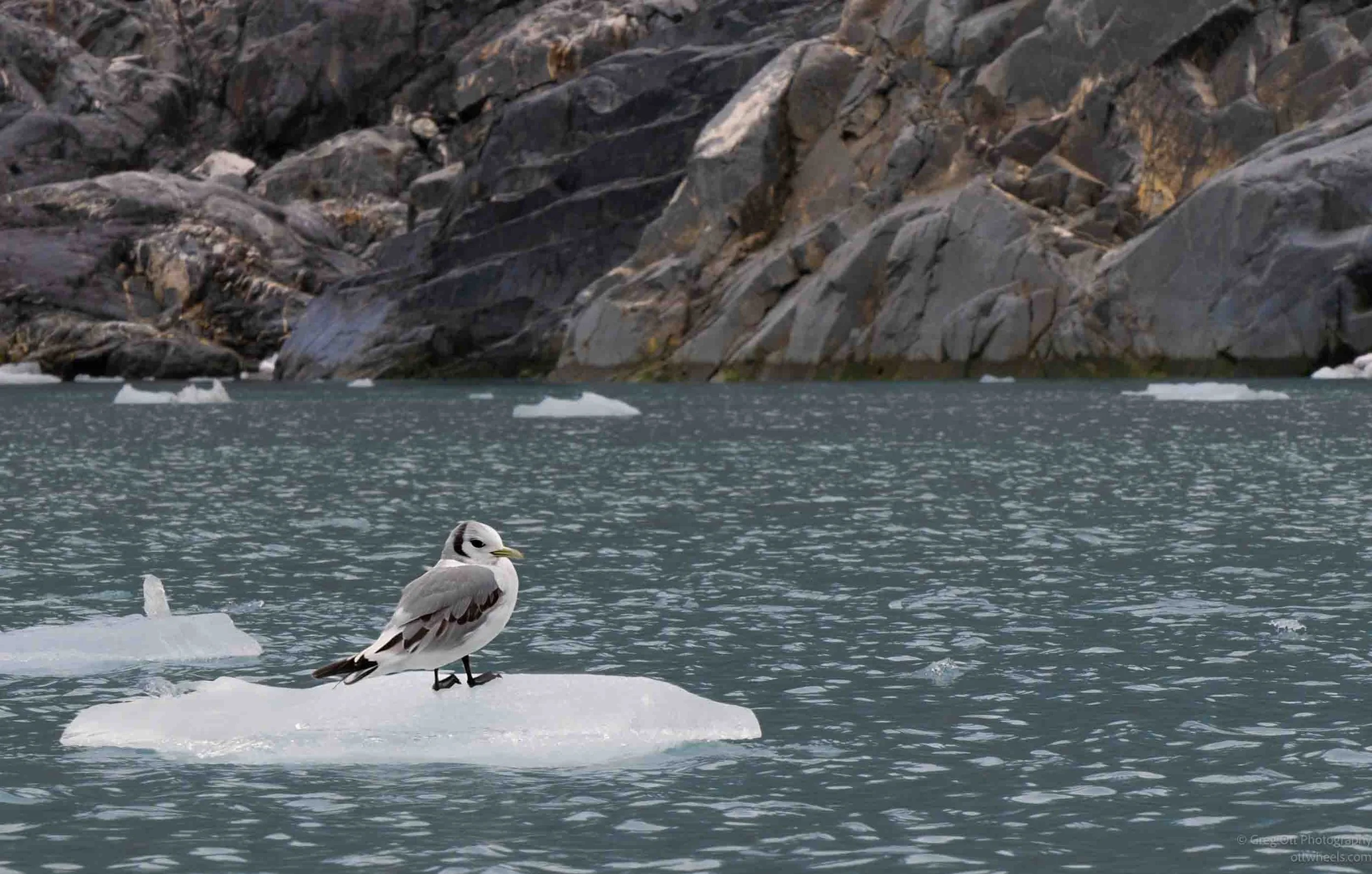
We paddled past chunks of ice with one bird perched on each. They didn’t seem to mind us and stayed put.
At one point Matt pointed out that we were now at low tide. I could clearly see the exposed waterline along the rocks, and it looked as though the water had dropped only about eighteen inches since we had arrived. Standing there, I found myself wondering just how much water had actually flowed out of Prince William Sound during that time. Later, while writing this post, I looked it up. The answer was staggering. Across roughly 2,500 square miles of water, even a modest change in tide represents billions of cubic feet of seawater moving through the fjords. During the largest tides, the total reaches into the trillions of gallons. That seemingly insignificant drop in the shoreline suddenly took on an entirely different scale.
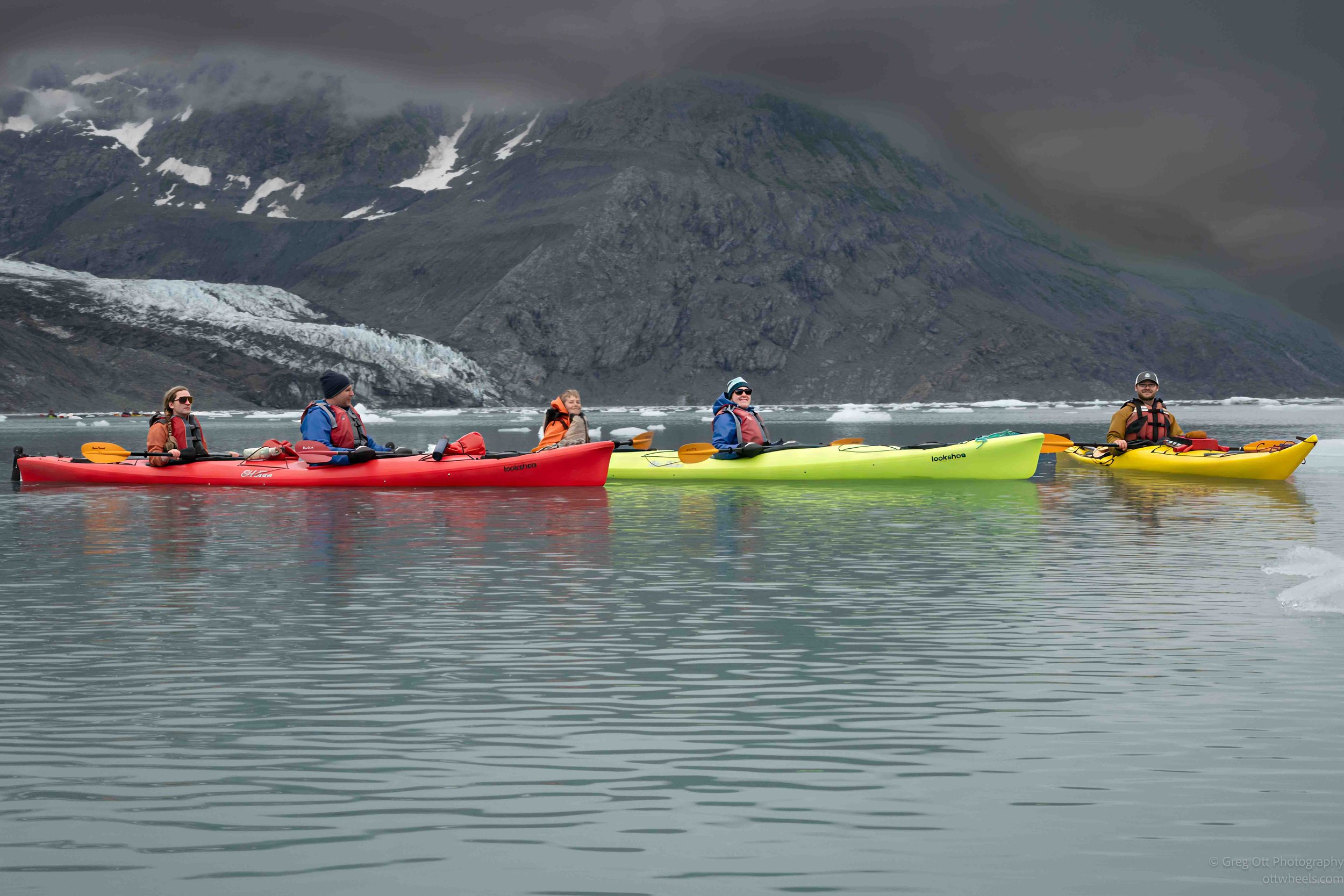
By late afternoon we had completed roughly five and a half miles in a wide horseshoe around the bay before reaching the pickup point on the opposite shore. I thanked my paddling partner for doing far more than her share of the work. She earned every bit of that promised "buff."
One thing our guides hadn't packed was a restroom. Before getting back in the boat, several of us—men and women alike—disappeared up among the rocks in different directions to solve that problem. I quietly decided that drinking less water had been one of my better decisions of the day.
The ride back to Valdez seemed slower. There was noticeably more ice on the water, and the captain spent much of the trip carefully picking a path through it. I suspect the falling tide had allowed the ice to bunch together, though that's only my guess. We stopped a few more times to admire unusually shaped icebergs and several pieces of deep blue ice glowing in the evening light.
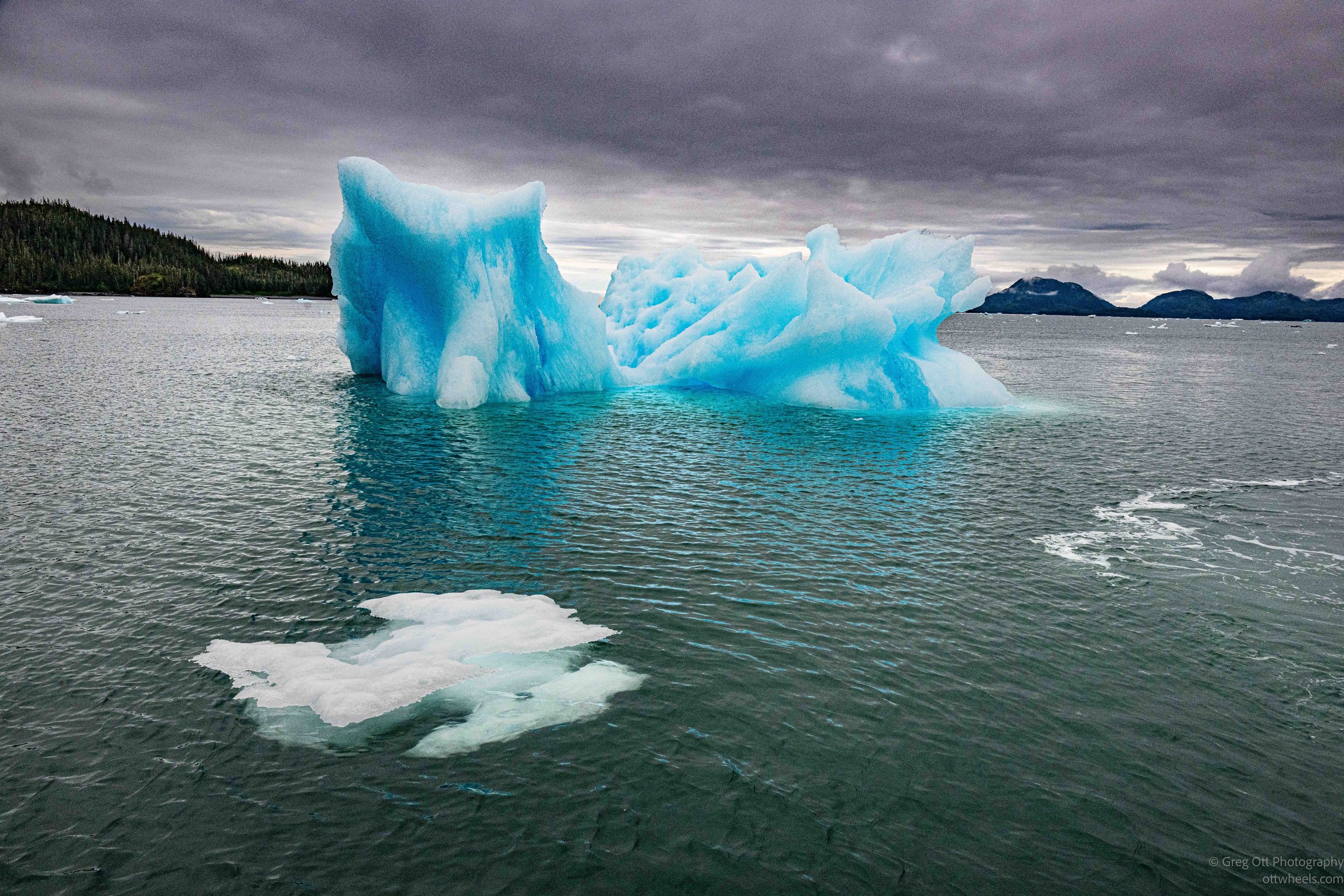
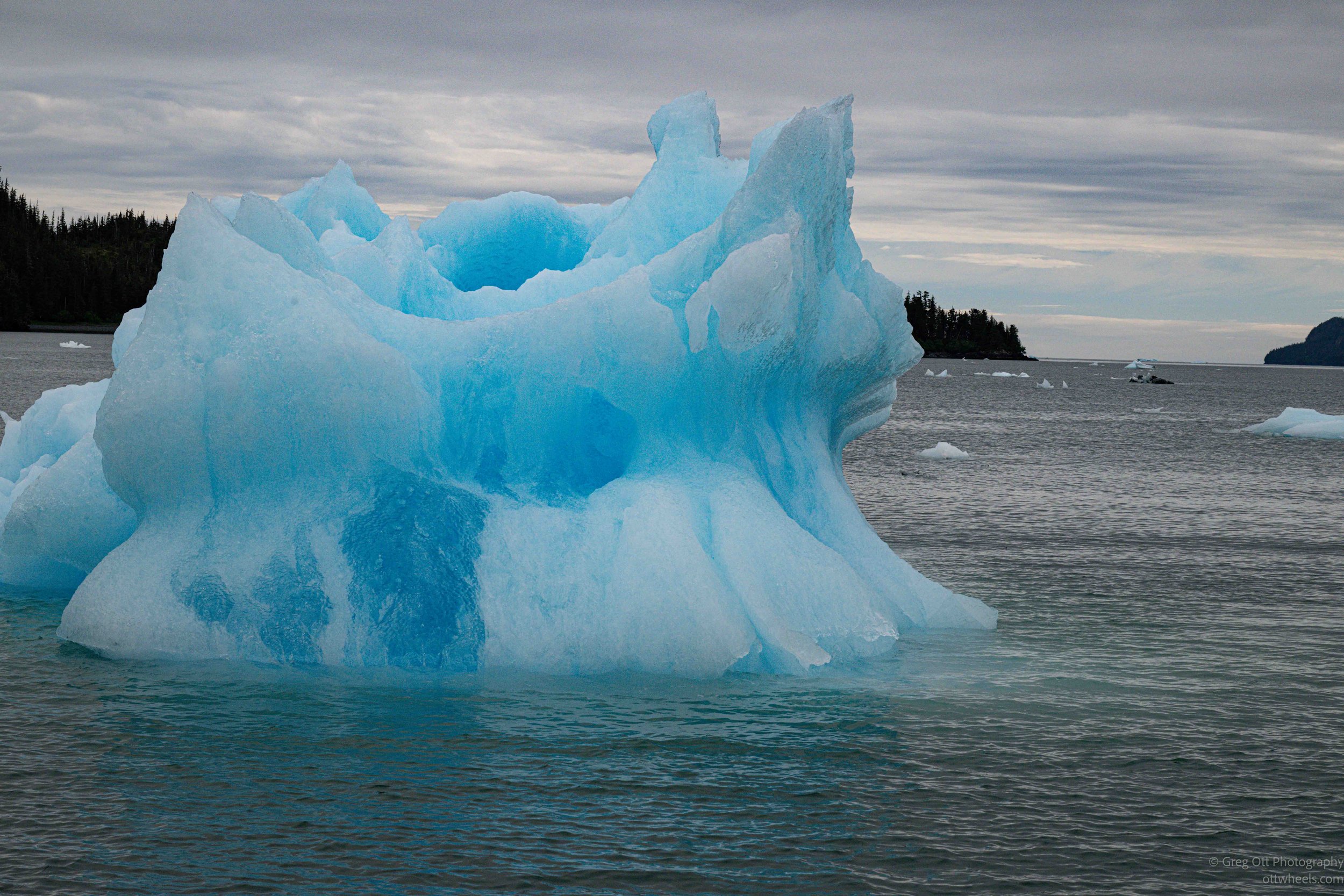
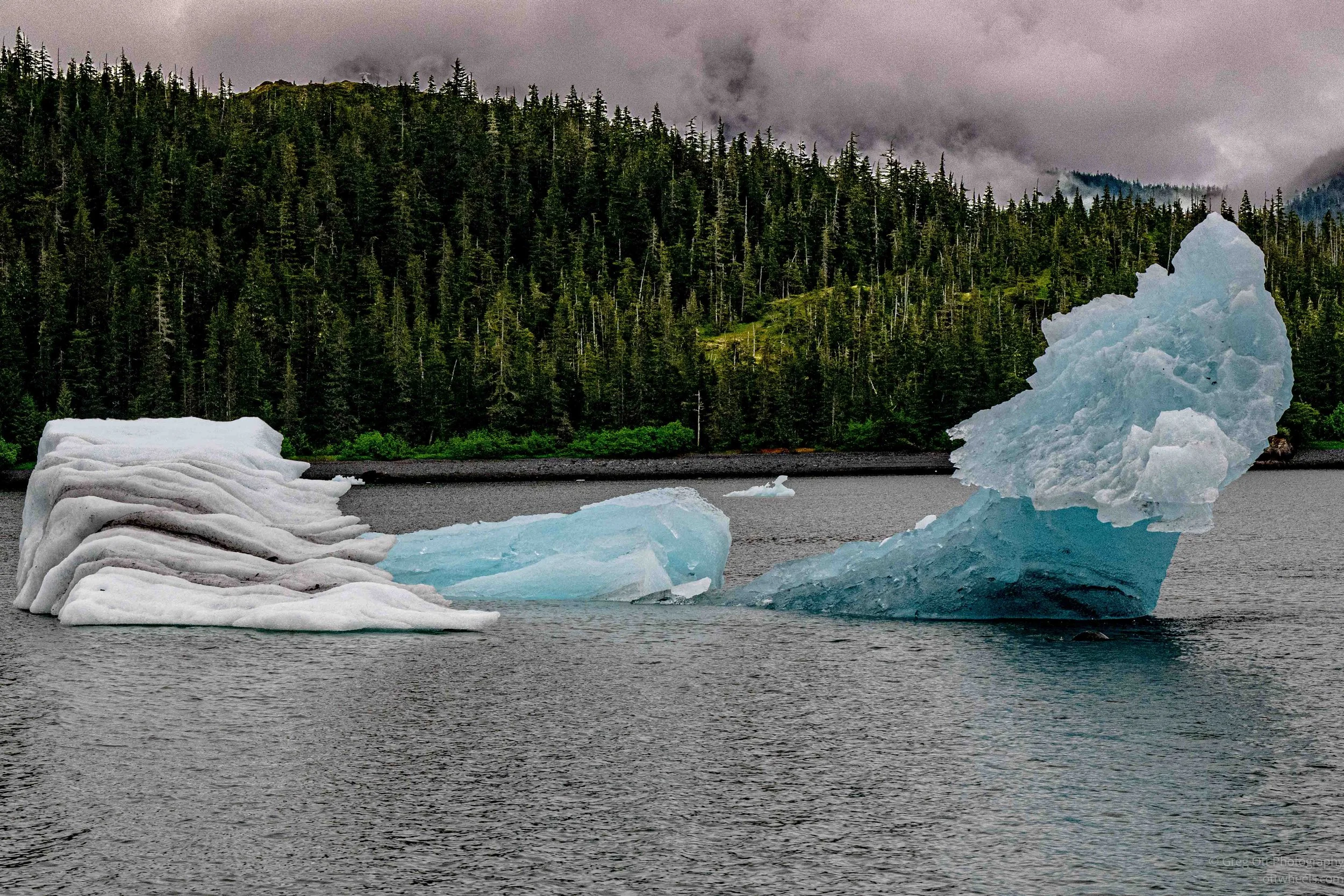
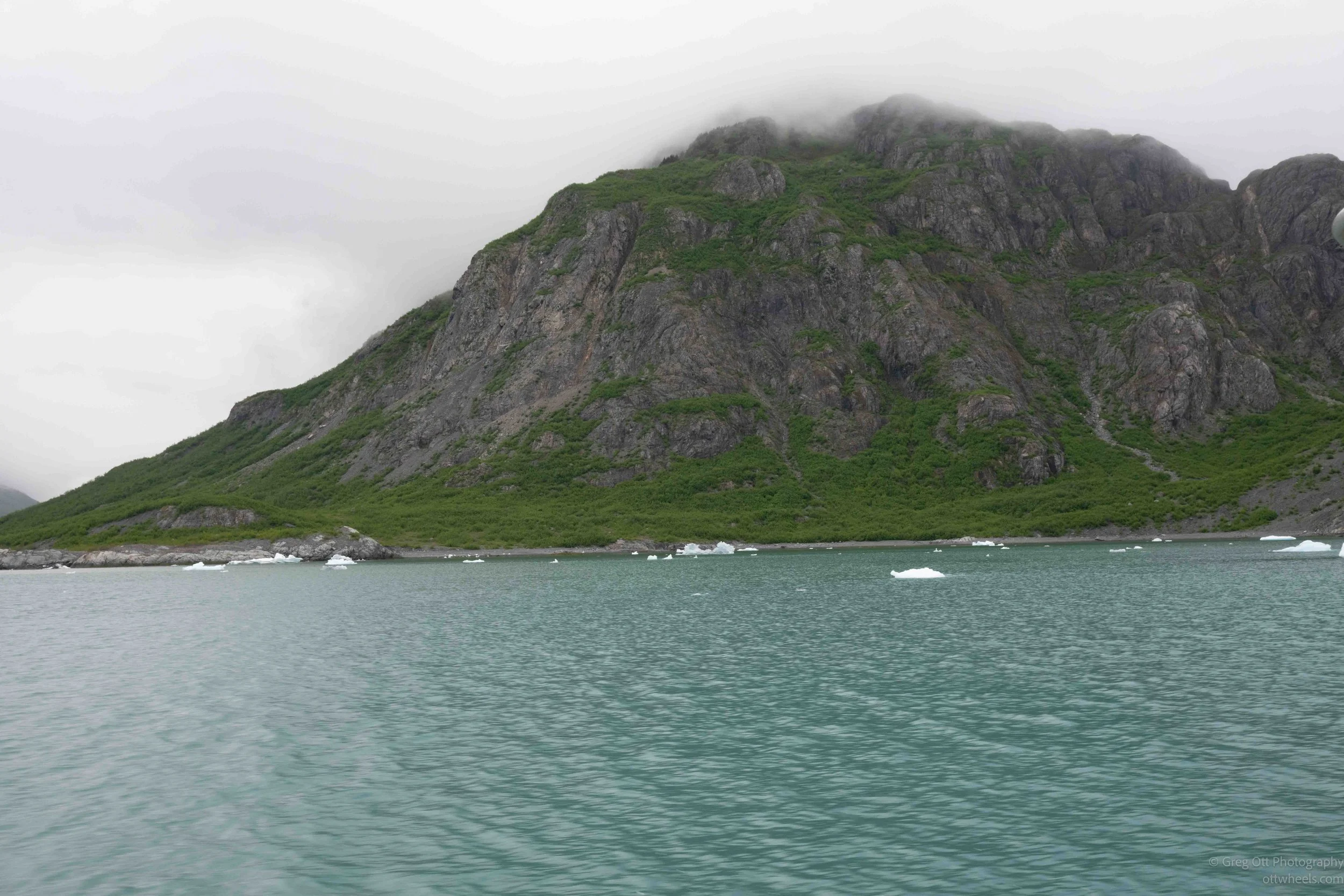
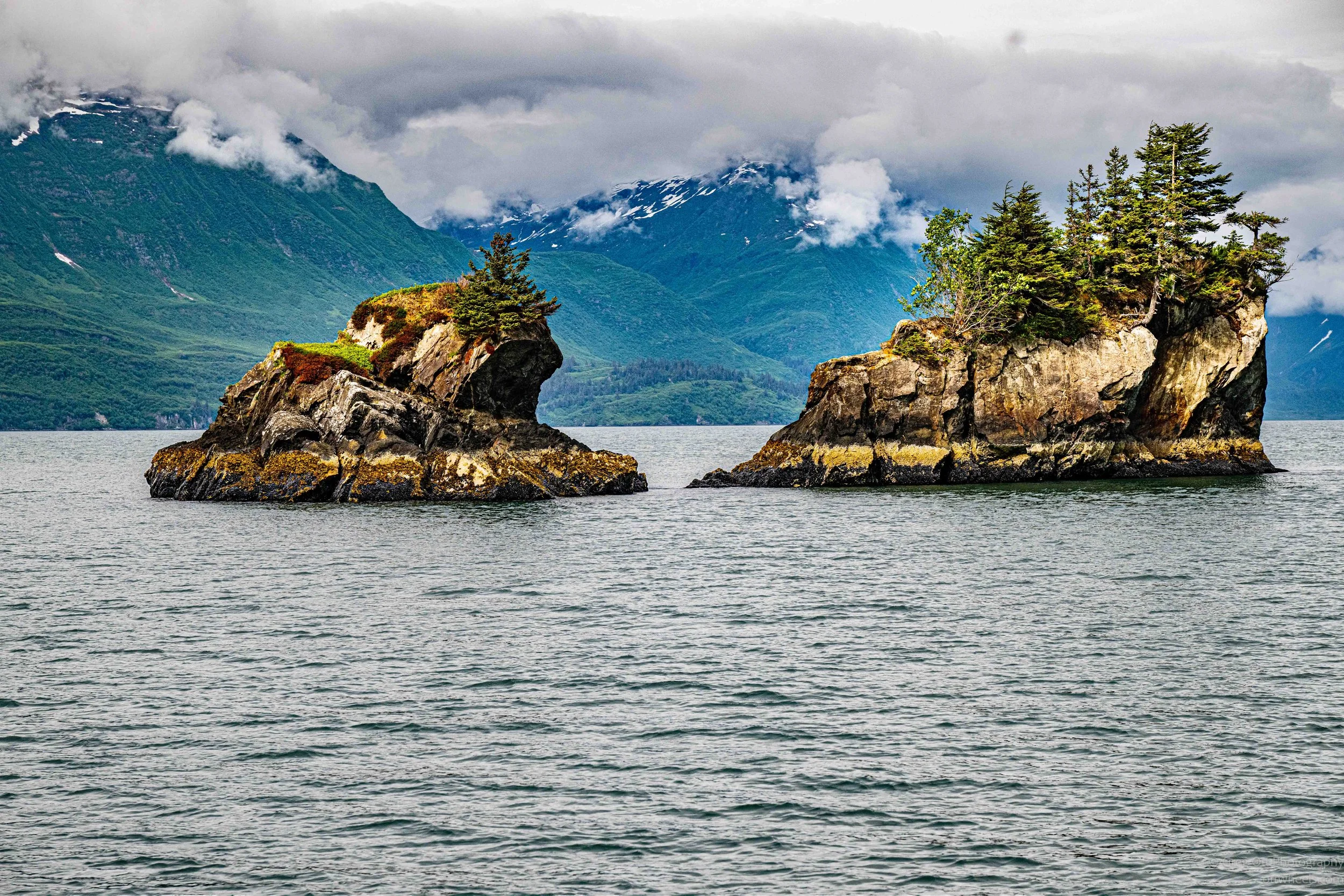
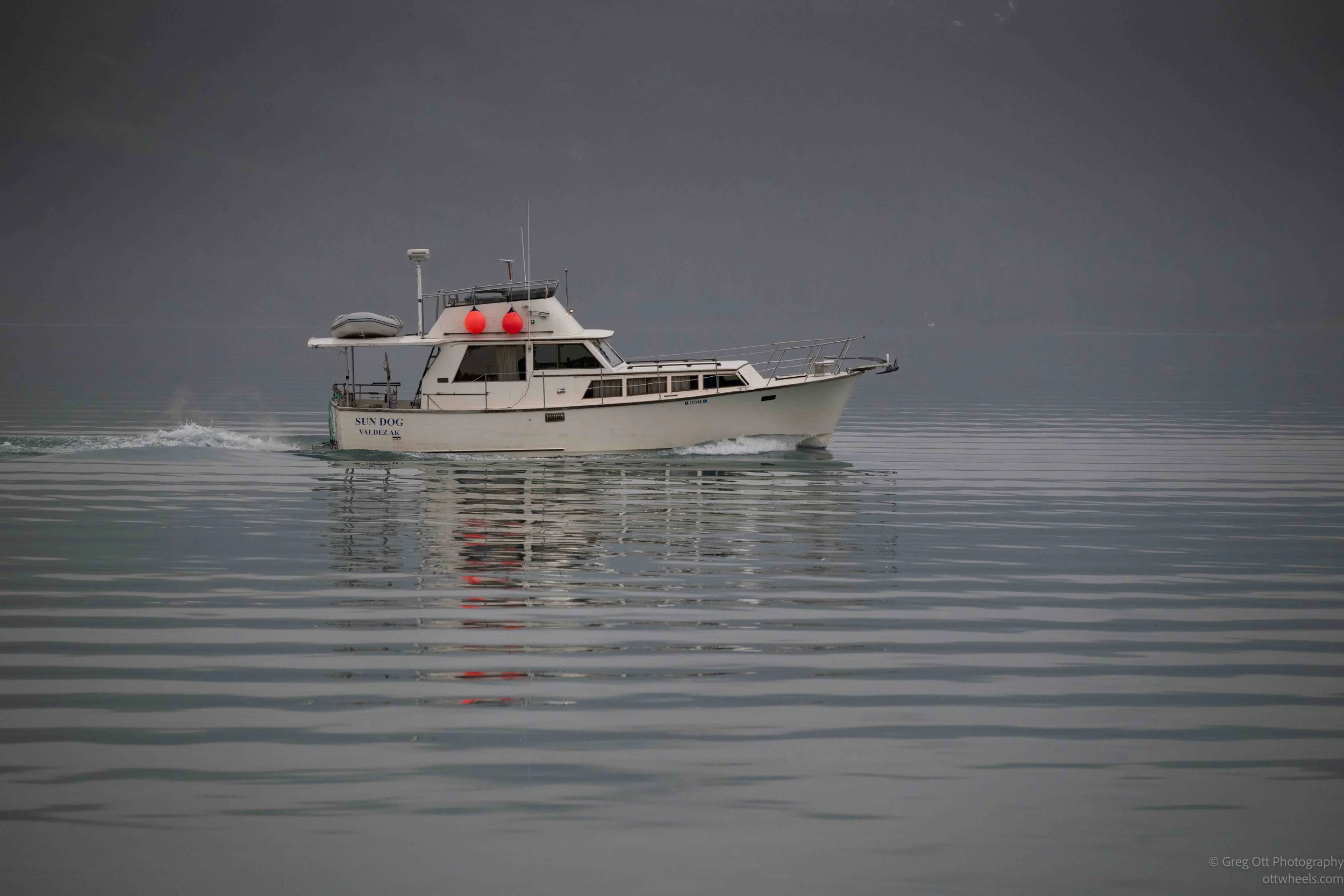
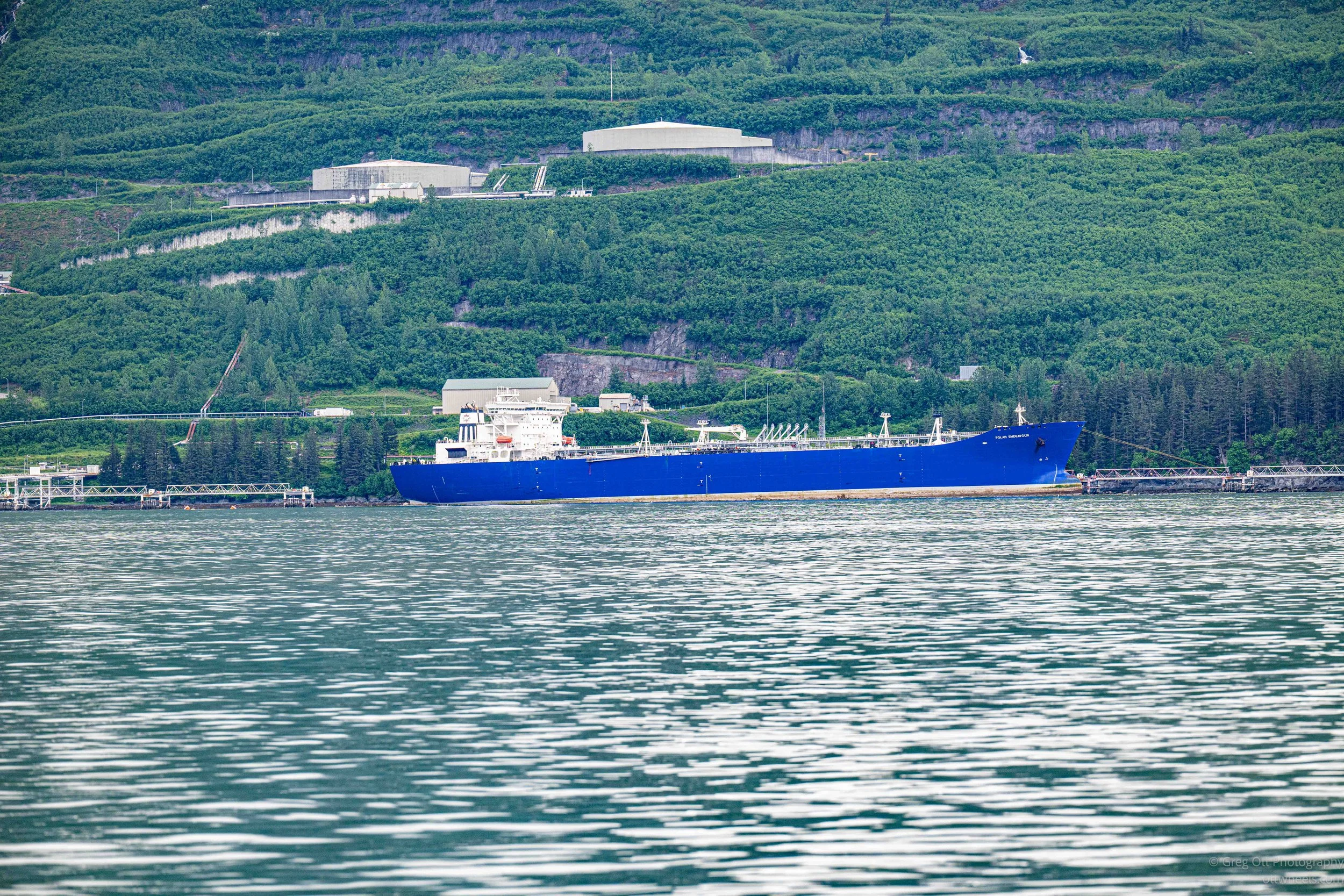
We pulled back into the harbor a little after 6:00 p.m. The water was calm, and as we slowed to no-wake speed the harbor felt almost peaceful after a day among the ice. Most of the fog had lifted, revealing the surrounding hills, the Valdez Tank Farm, tugboats, and the fishing fleet. It was a quiet return to civilization after spending the day in one of Alaska's wildest places.
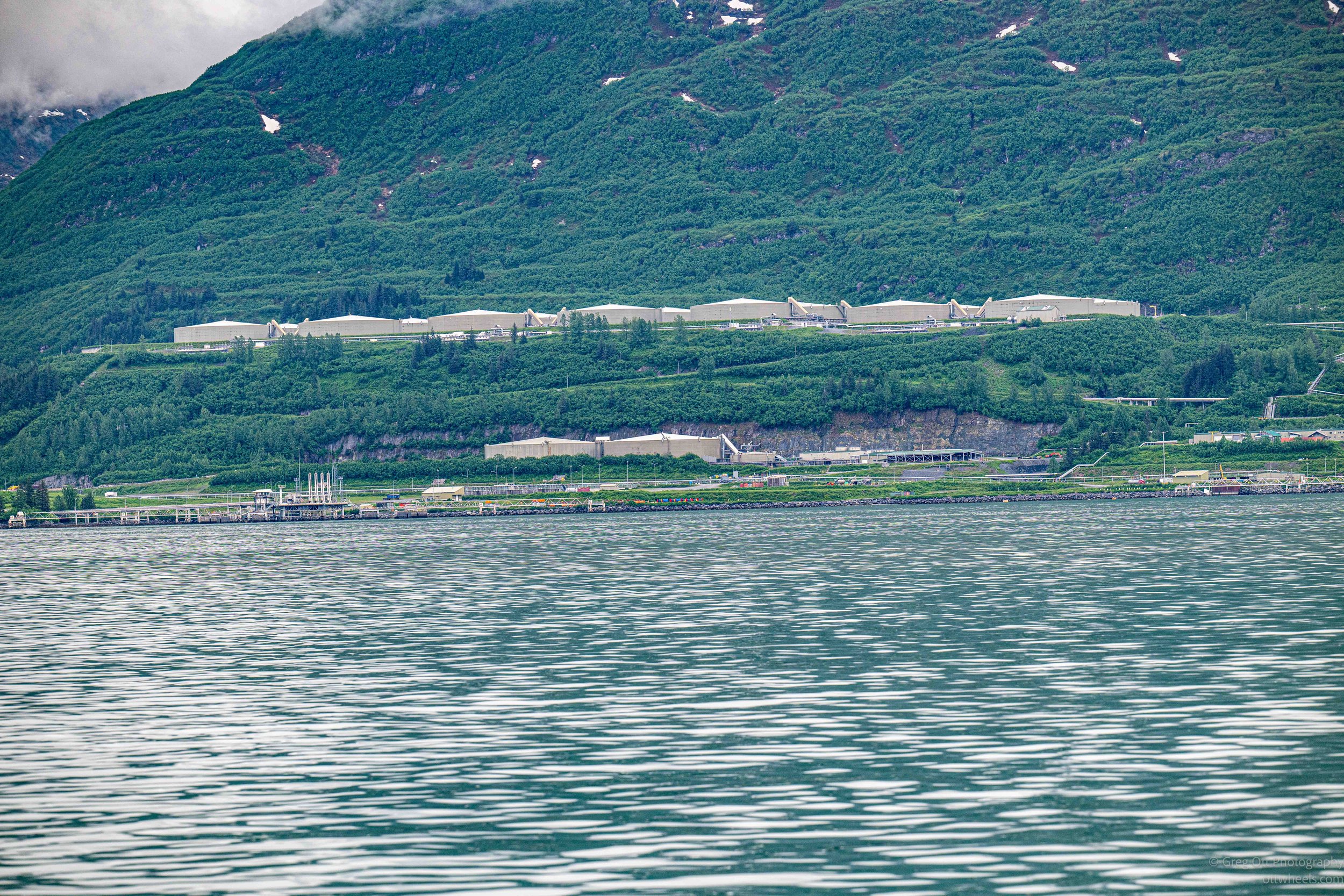
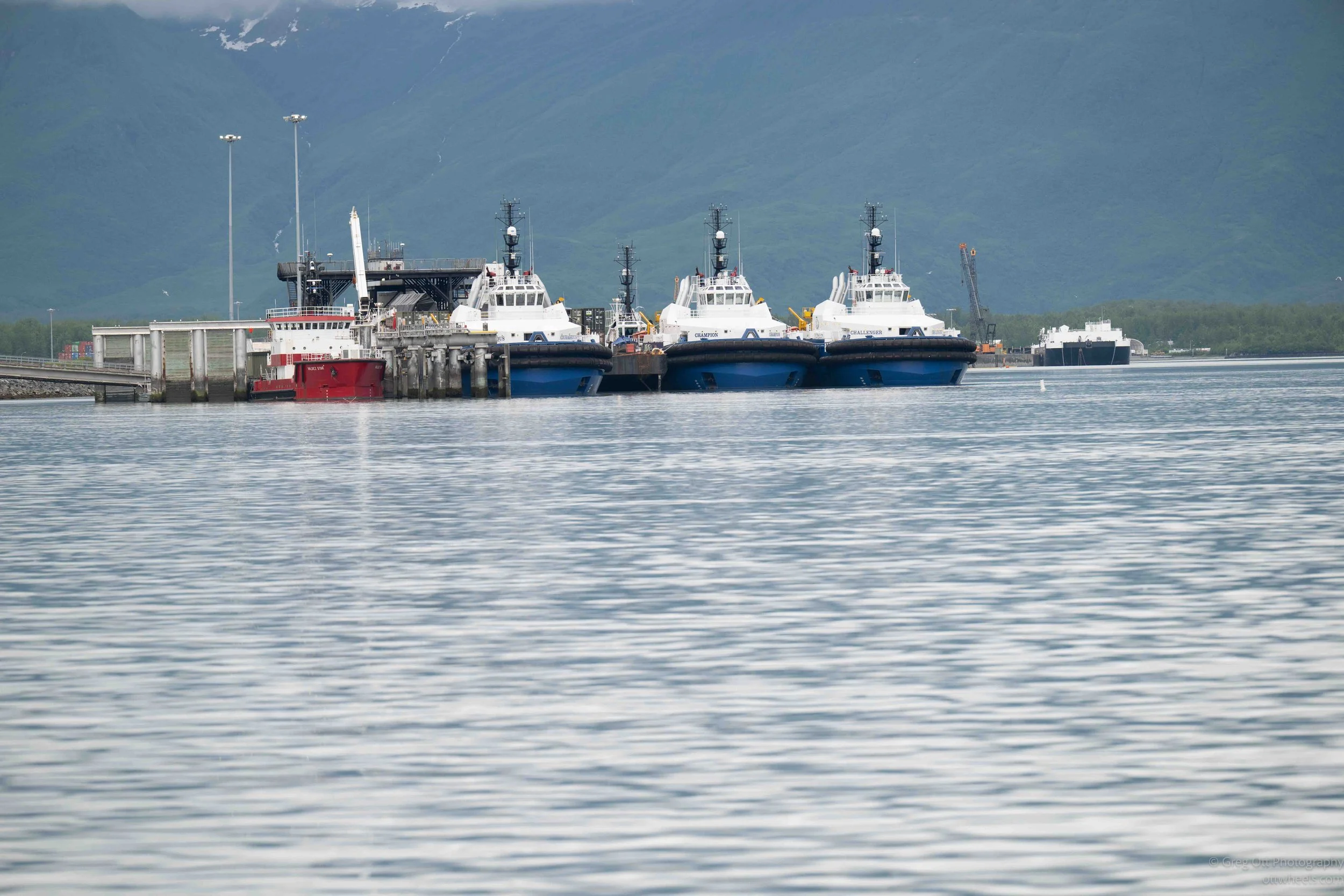
After unloading our gear and saying goodbye to everyone, I walked out the back door of the shop and found a rabbit quietly eating grass beside the building. It looked up long enough to acknowledge me before returning to dinner. I eased to within about three feet, took a few photographs, and it never seemed the least bit concerned.
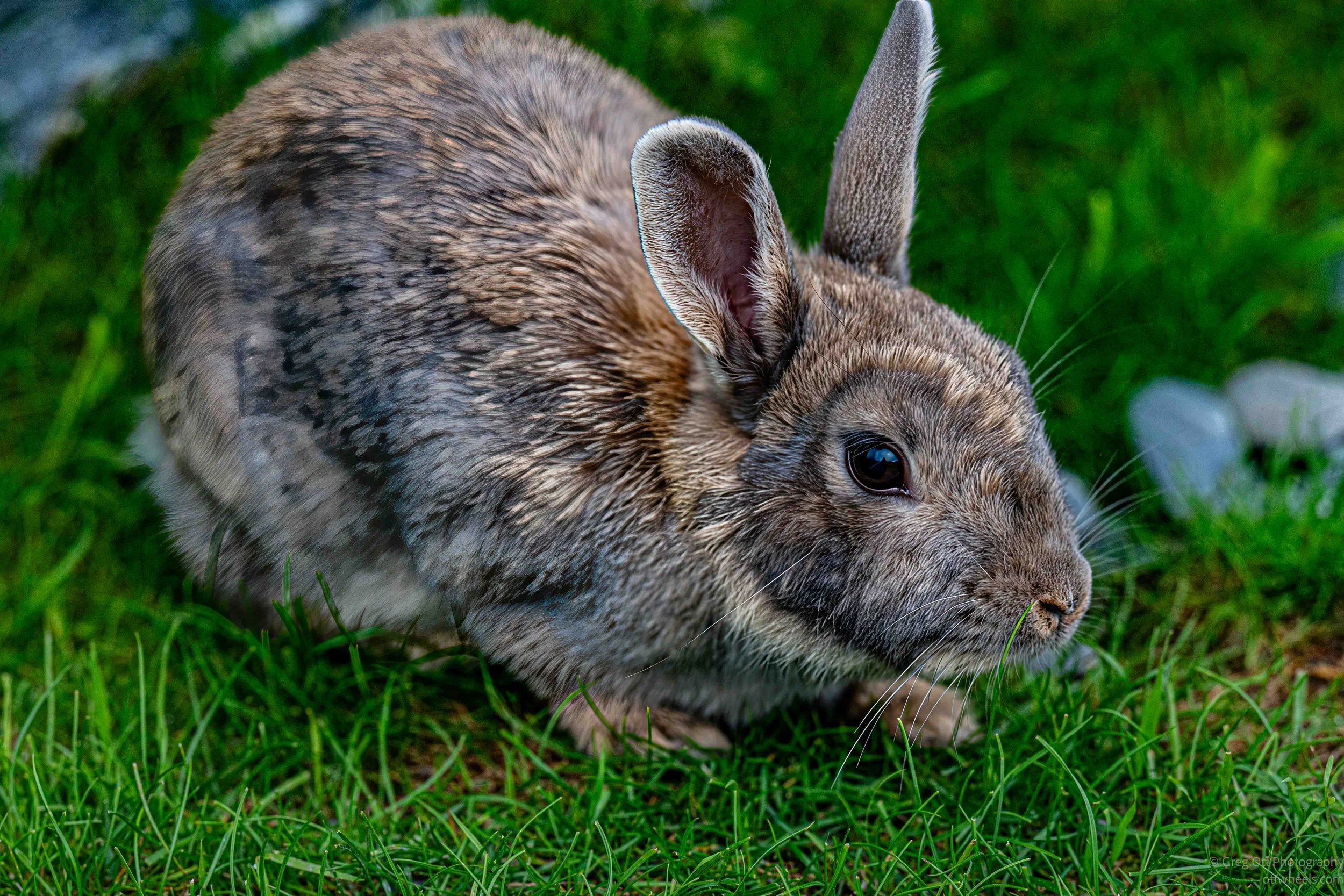
I made the short walk back to the van, climbed inside, and promptly rewarded myself with a fifteen-minute nap before thinking about dinner. It had been a long day, but one I'll remember for a very long time.