Valdez Museum & Oil Terminal
I woke up and the van was 70 degrees inside. I opened the side door and sat there. The air outside was cool and moist — the kind that comes off the water and just hangs. I made blueberry pancakes, planned the day, and then spent an hour on the stuff you have to do when you live in a van: reorganizing things, filling the water tank, vacuuming, throwing out a week's worth of trash. Then I went to see the town.
I took a long walk down to the marina first, then drove most of the streets. Valdez isn't big, but I like doing that in a new place — seeing how it's laid out, what the architecture looks like, what's here and what isn't. You pick up things you can't get from a map.
Valdez Museum
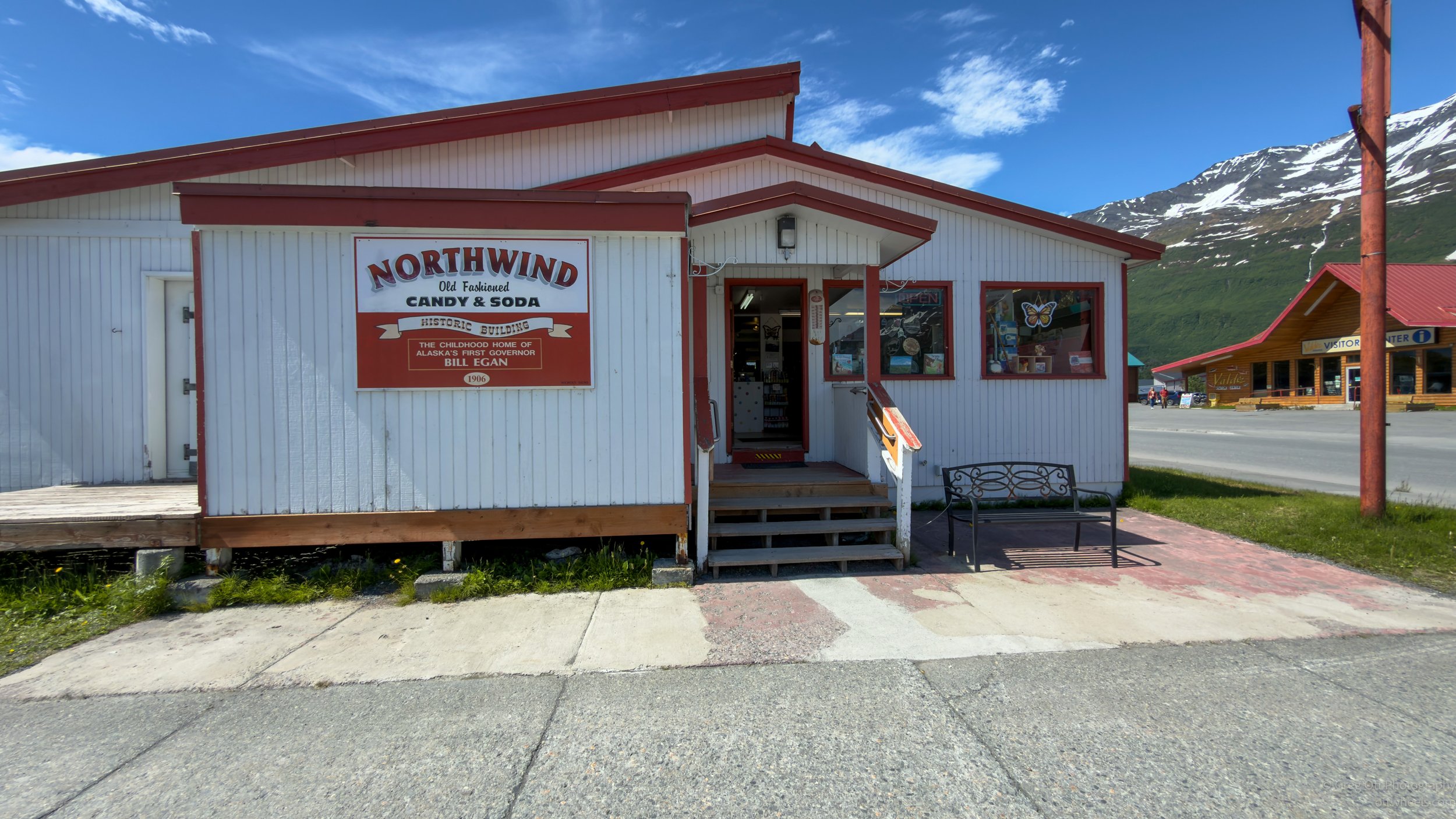
Before the museum, I ducked into a candy shop nearby. Candy and souvenirs. When I went to pay with Apple Pay, nothing happened. The machine made a few attempts. The shopkeeper told me to try again. After a couple rounds she mentioned that Sam wasn't cooperating today. I asked why she called it Sam. Because it's Slow As Molasses, she said. It eventually went through.
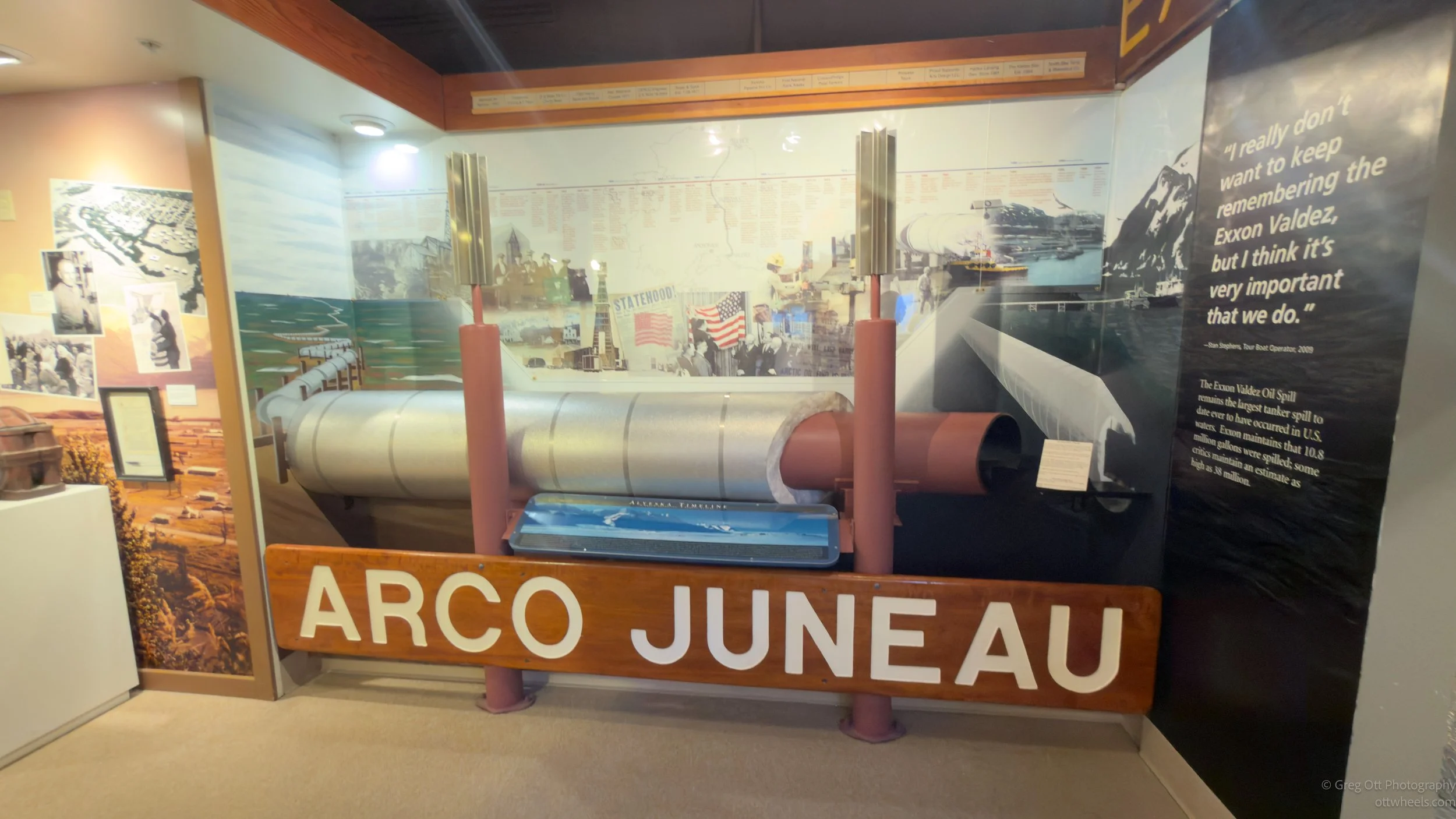
Outside the Valdez Museum there's a section of the Trans-Alaska Pipeline on display — cut open so you can see the interior and get a sense of the scale. It's 48 inches across. Next to it is a plaque explaining the scraper pig. Scraper pigs are devices that get inserted into the pipeline at a pump station and pushed along by the oil at about six miles an hour, scrubbing wax off the pipe walls as they go. Wax is a natural byproduct of crude oil and builds up over time, reducing flow. The pig travels the length and gets pulled out at another station downstream. There's also a Smart Pig that does the same journey but carries sensors — measuring corrosion, deformations, anything that needs attention before it becomes a real problem.
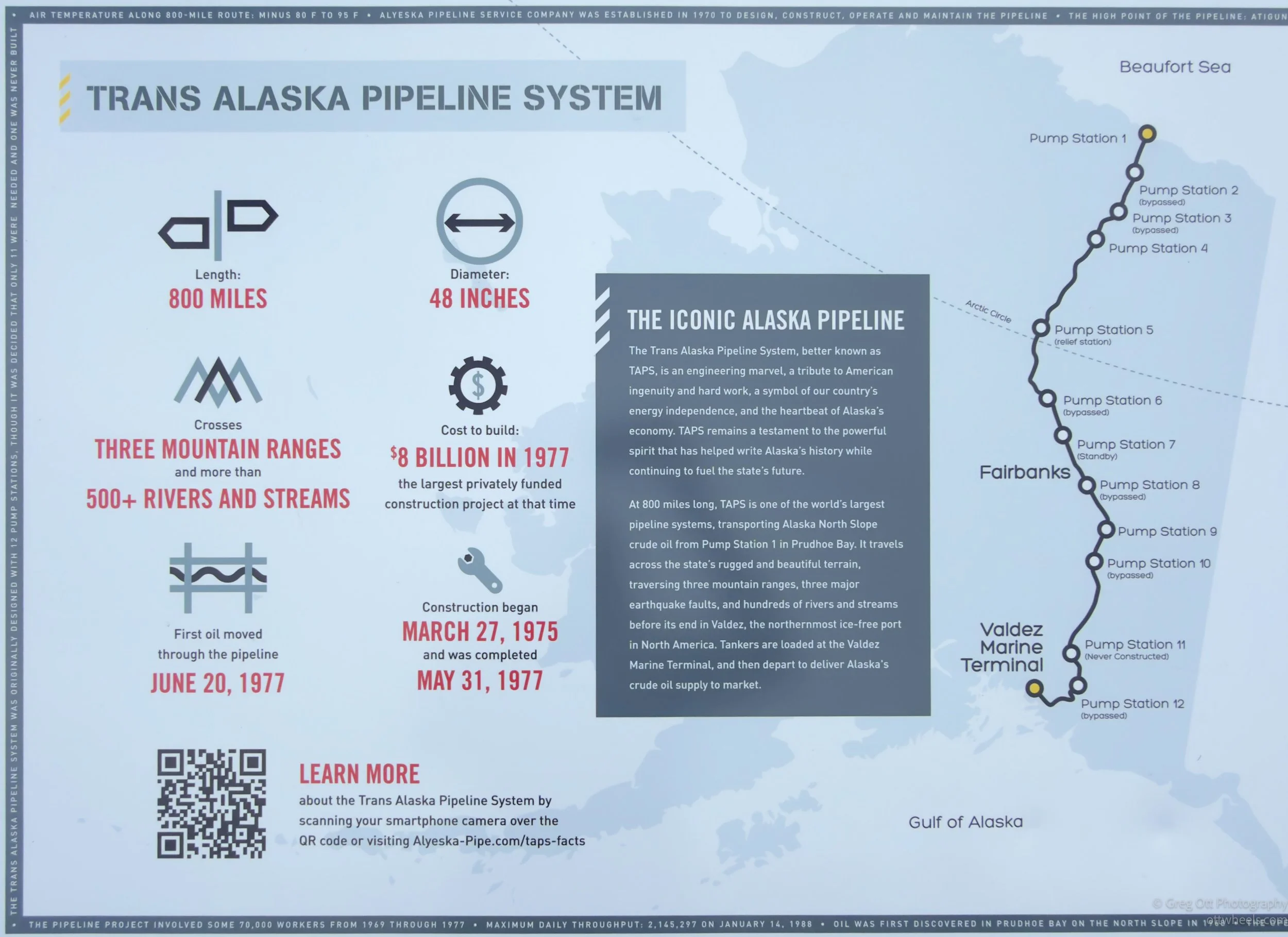
The pipeline itself is one of those things that sounds large in the abstract and then you start reading the details and it gets larger. Oil was discovered at Prudhoe Bay in 1968. Construction on the pipeline started March 27, 1975, after five years of legal and environmental fights that blocked it. At its peak more than 28,000 people were working on it across 31 camps stretching 800 miles. The final weld went in on May 31, 1977. Oil started flowing June 20. It took 38 days to travel from Prudhoe Bay to Valdez — four miles an hour through 800 miles of 48-inch steel pipe. On August 1, the tanker ARCO Juneau sailed out with the first load. Total cost: $8 billion. The largest privately funded construction project in American history at the time.
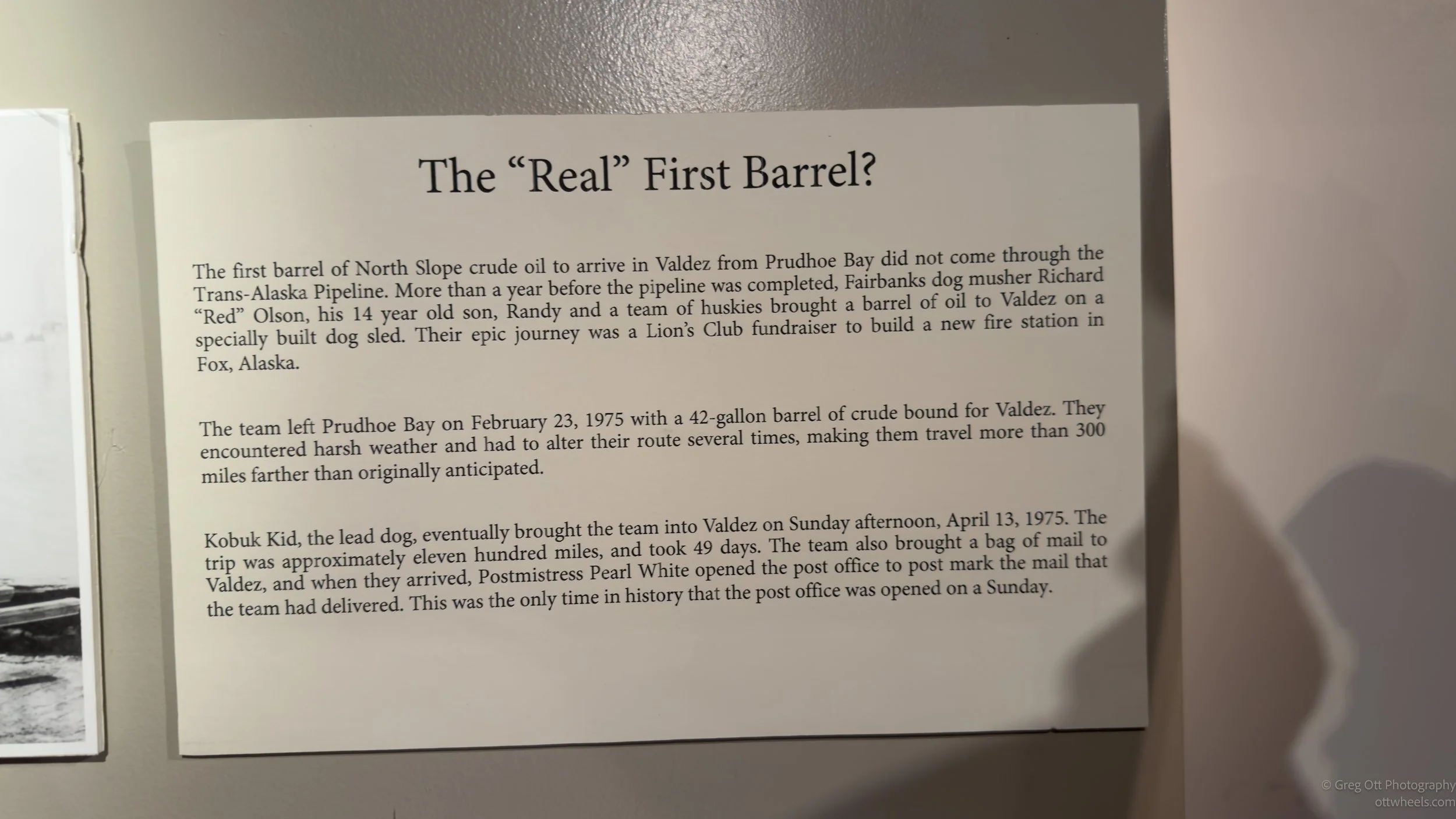
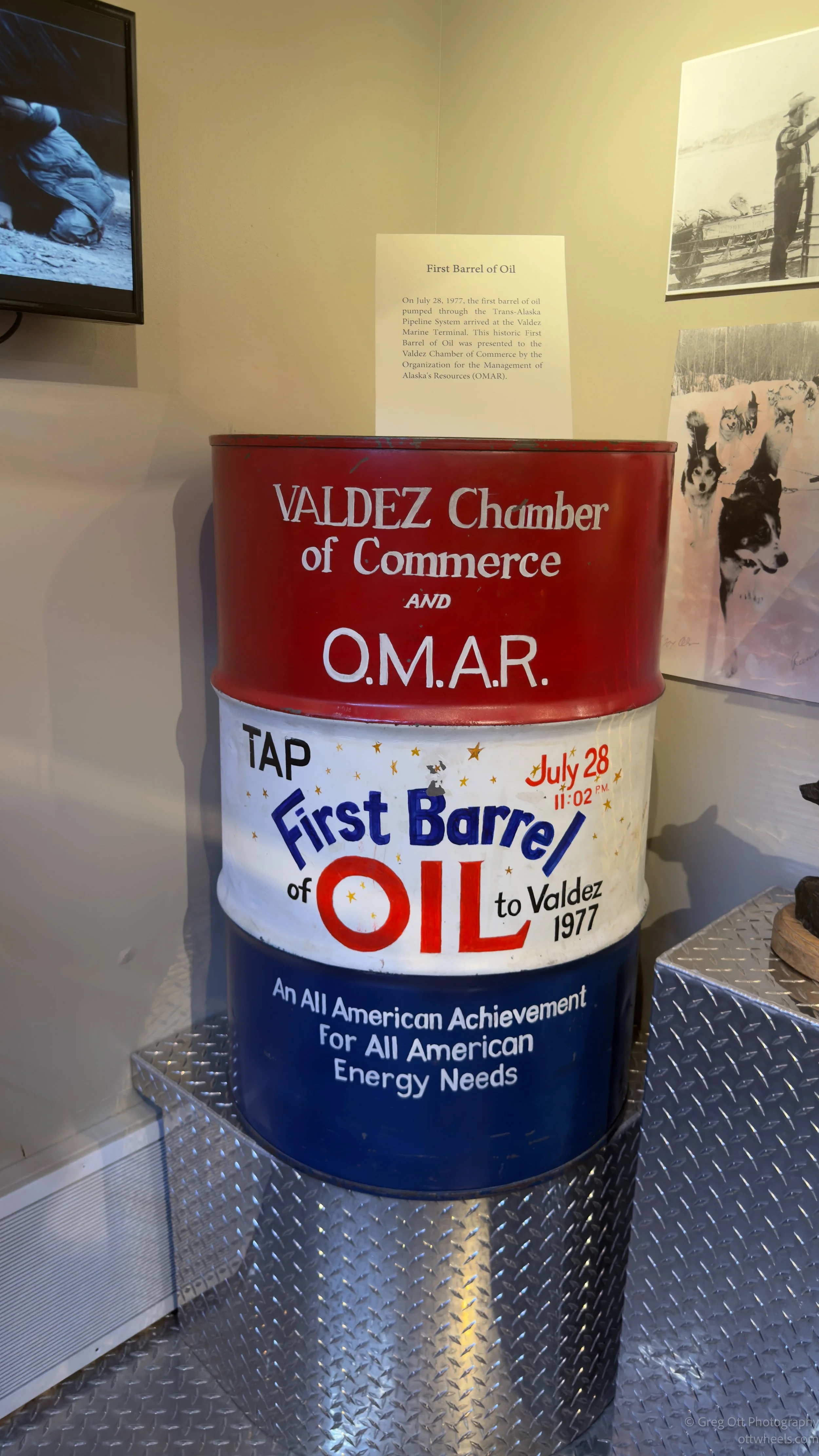
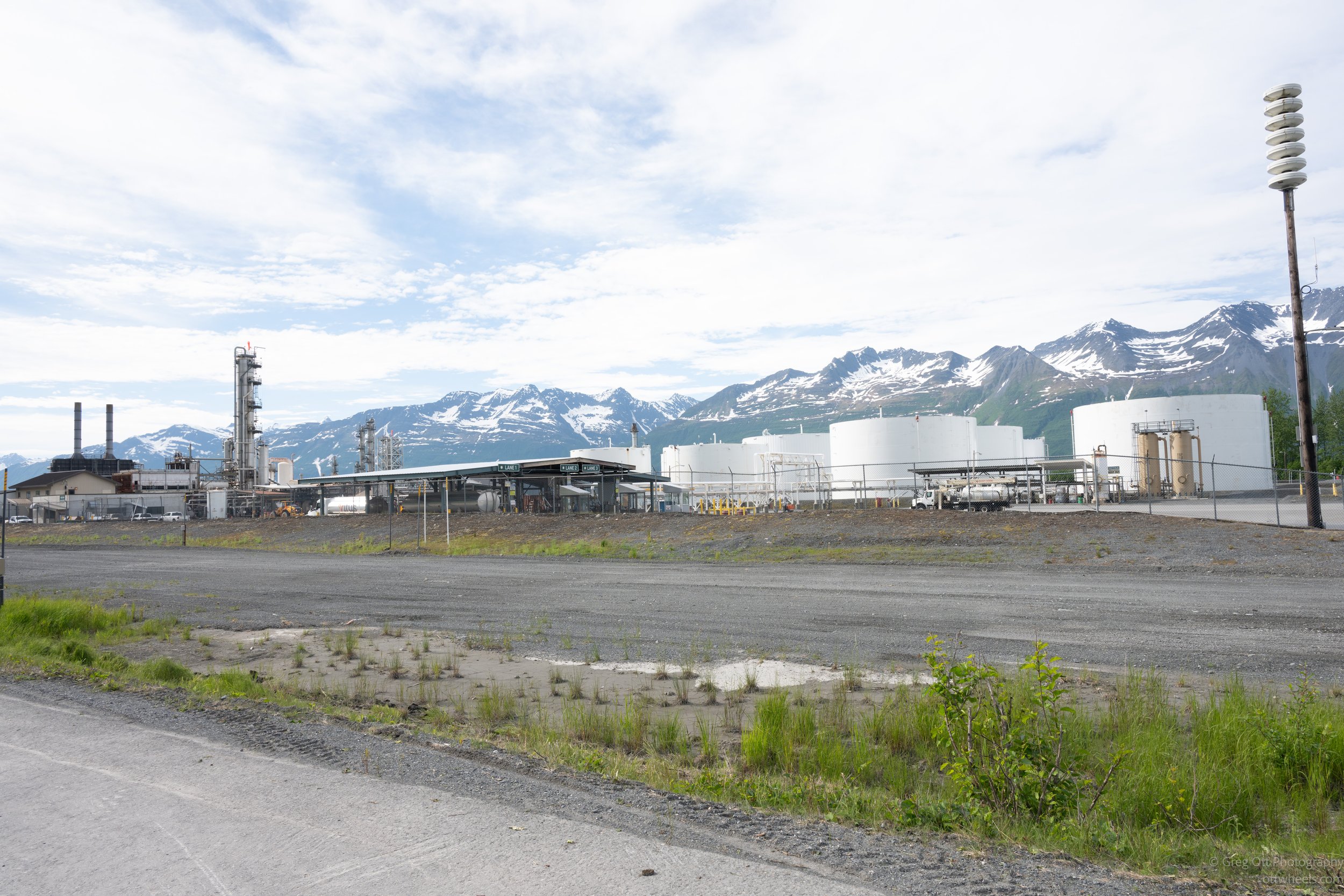
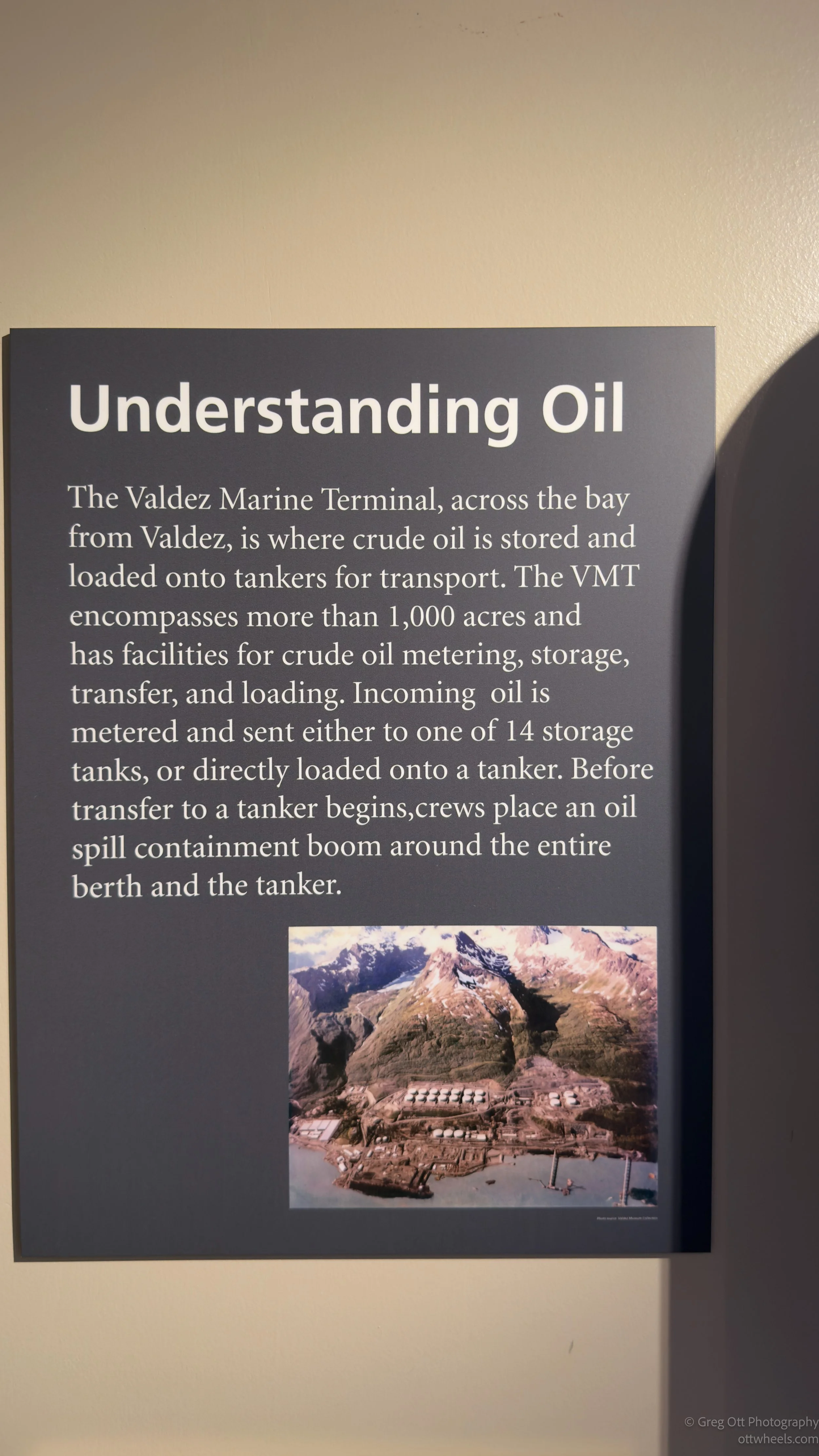
Valdez is the southern end because it has something the North Slope doesn't — an ice-free port, year-round, with deep water. The oil comes in across the bay, goes into 18 storage tanks, and gets loaded onto tankers that head to refineries near Seattle, San Francisco, and Los Angeles. Before the pipeline, Alaska had the highest personal income tax rate in the country. After it, the tax went away entirely and the state started sending residents checks from oil revenue instead.
Entrance Sign
Ludicrous tomfoolery, silly shenanigans, boisterous talking, especially on cellular phones, playing music or video without headphones, or visiting whilst drunk may get you thrown in the Hoosegow or 86'd.
The man at the front desk was on his phone when I walked in. He didn't look up. "Are you here for the museum?" Yes. Long pause while he typed. "How many are in your party?" One. "Just you?" That's what one means, yes. There were more questions. I eventually paid the $9 entrance fee and was given a ticket for the second museum location down the road.
There was a photography exhibit inside featuring Alaskan photographers. It was genuinely well done. My favorites were Joan Nunn, Javid Kamali, Bill Heaubner, and Richard Murphy. The work felt specific — people who knew Alaska well, not people who came through with a camera.
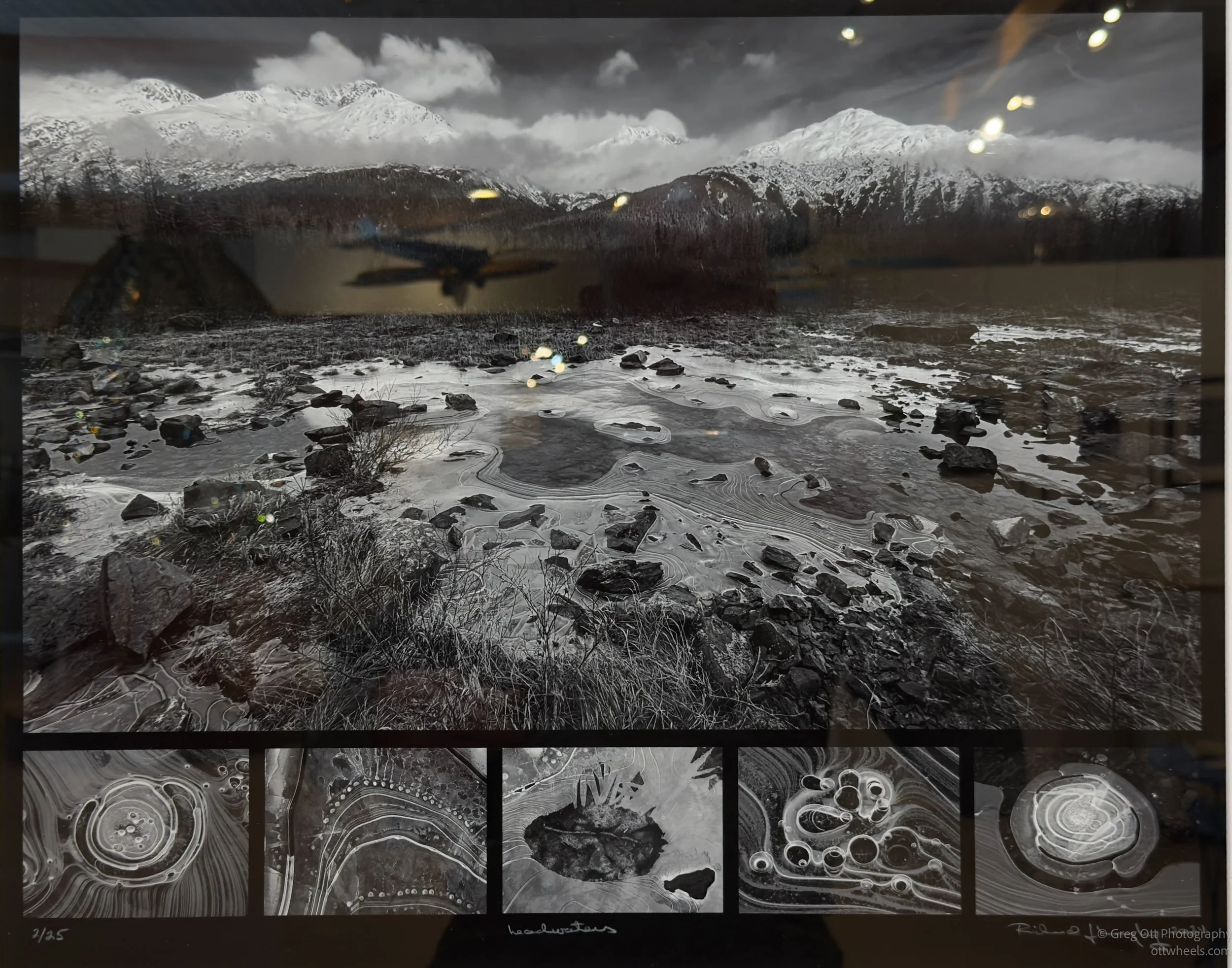
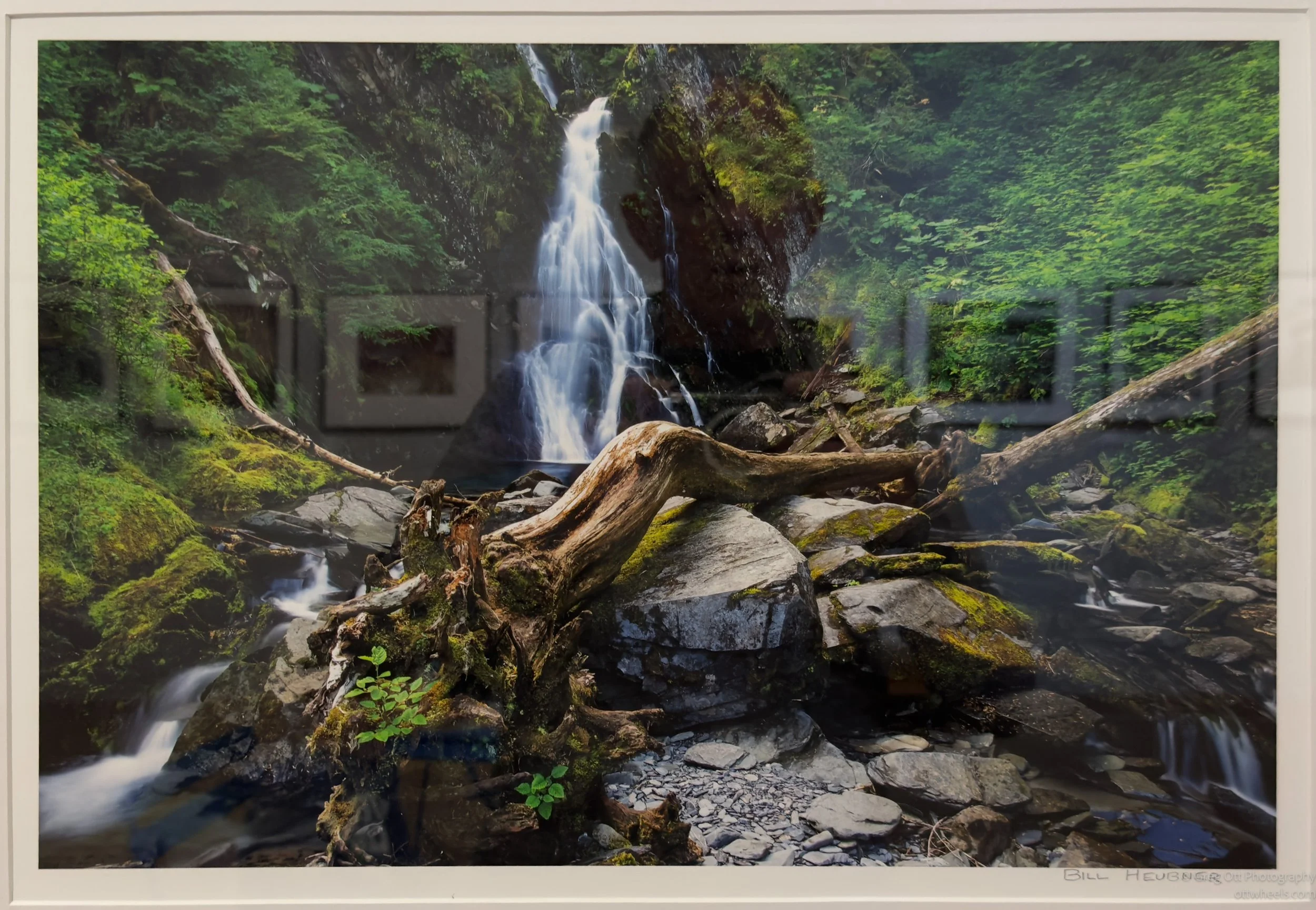
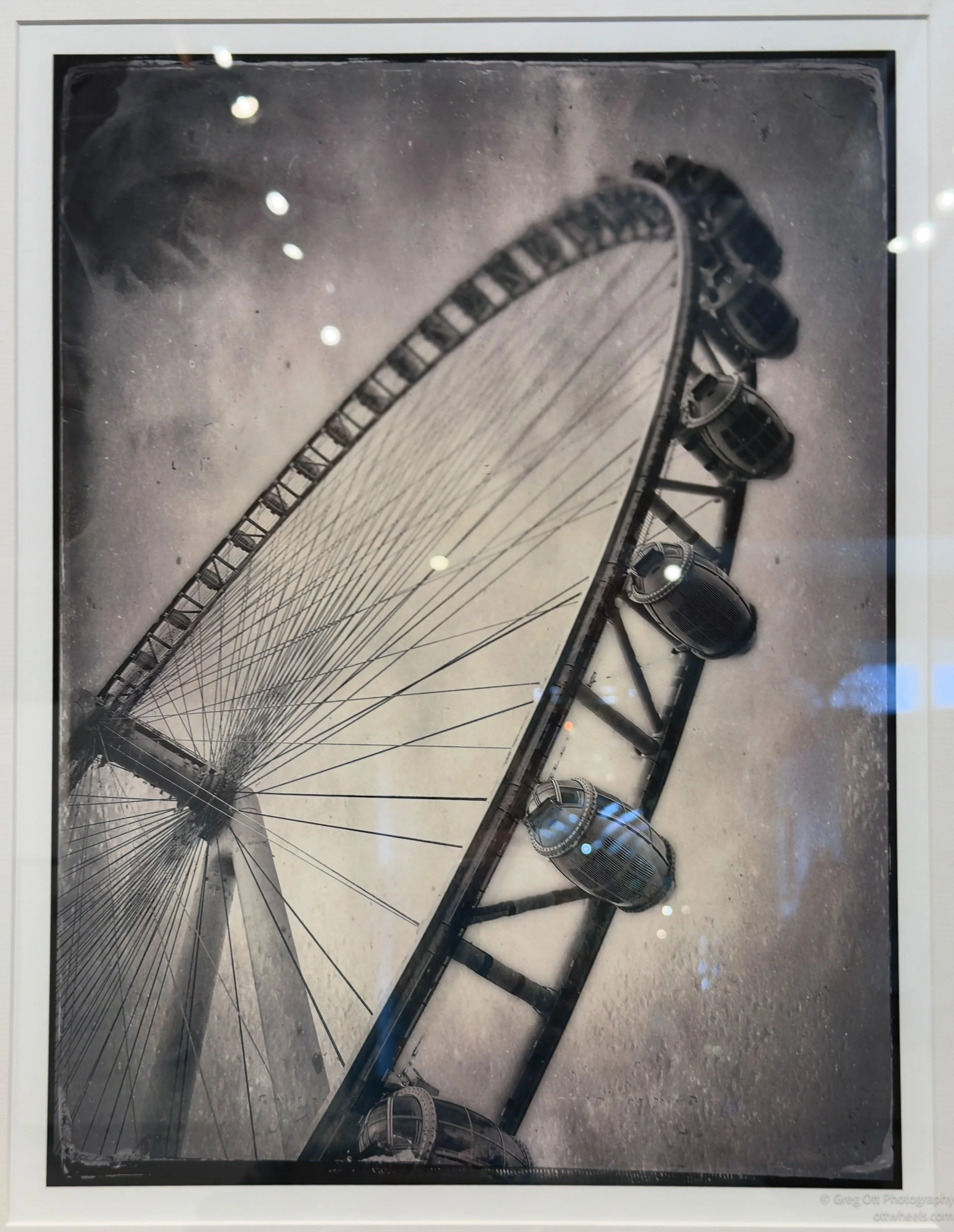
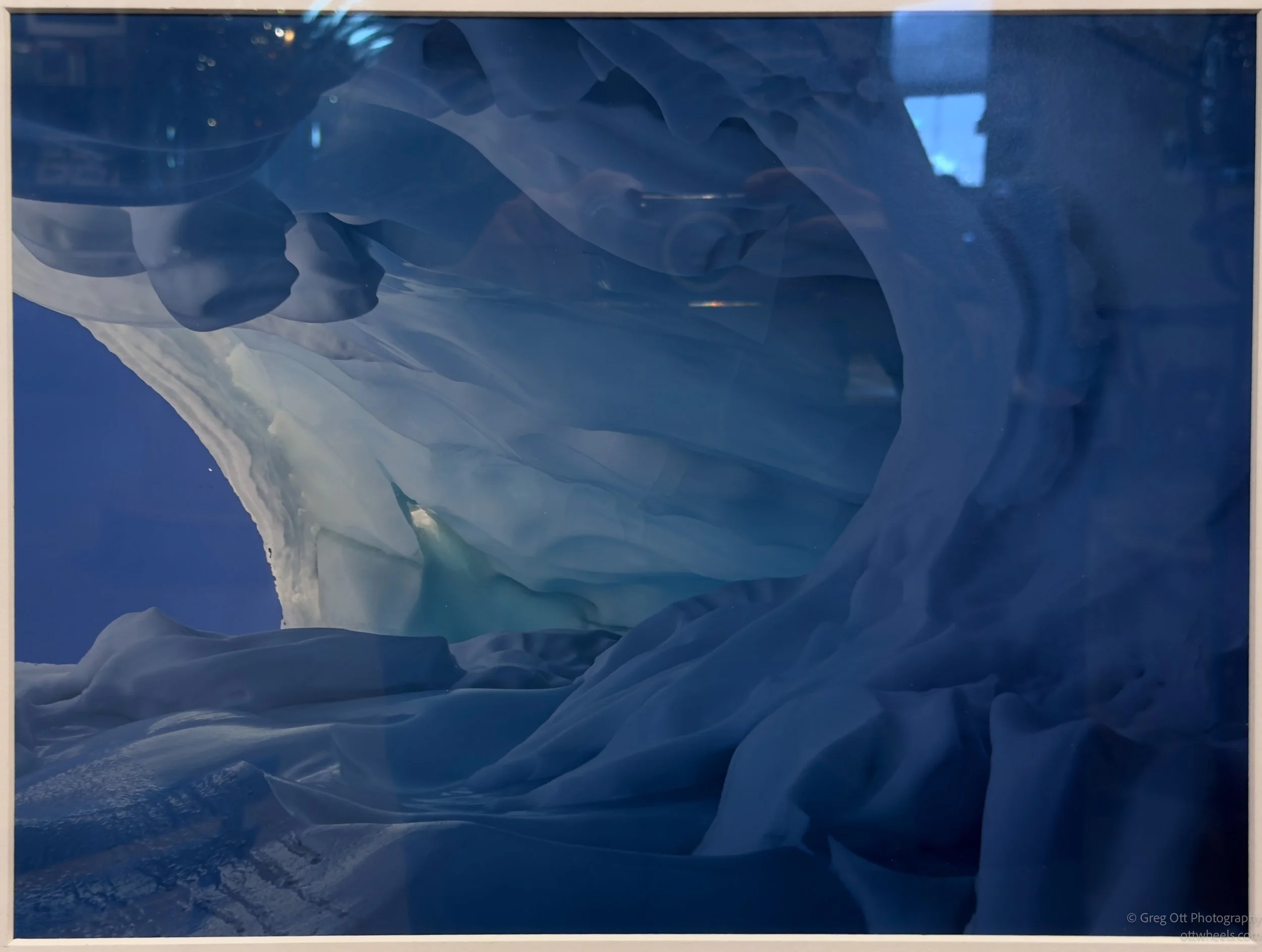
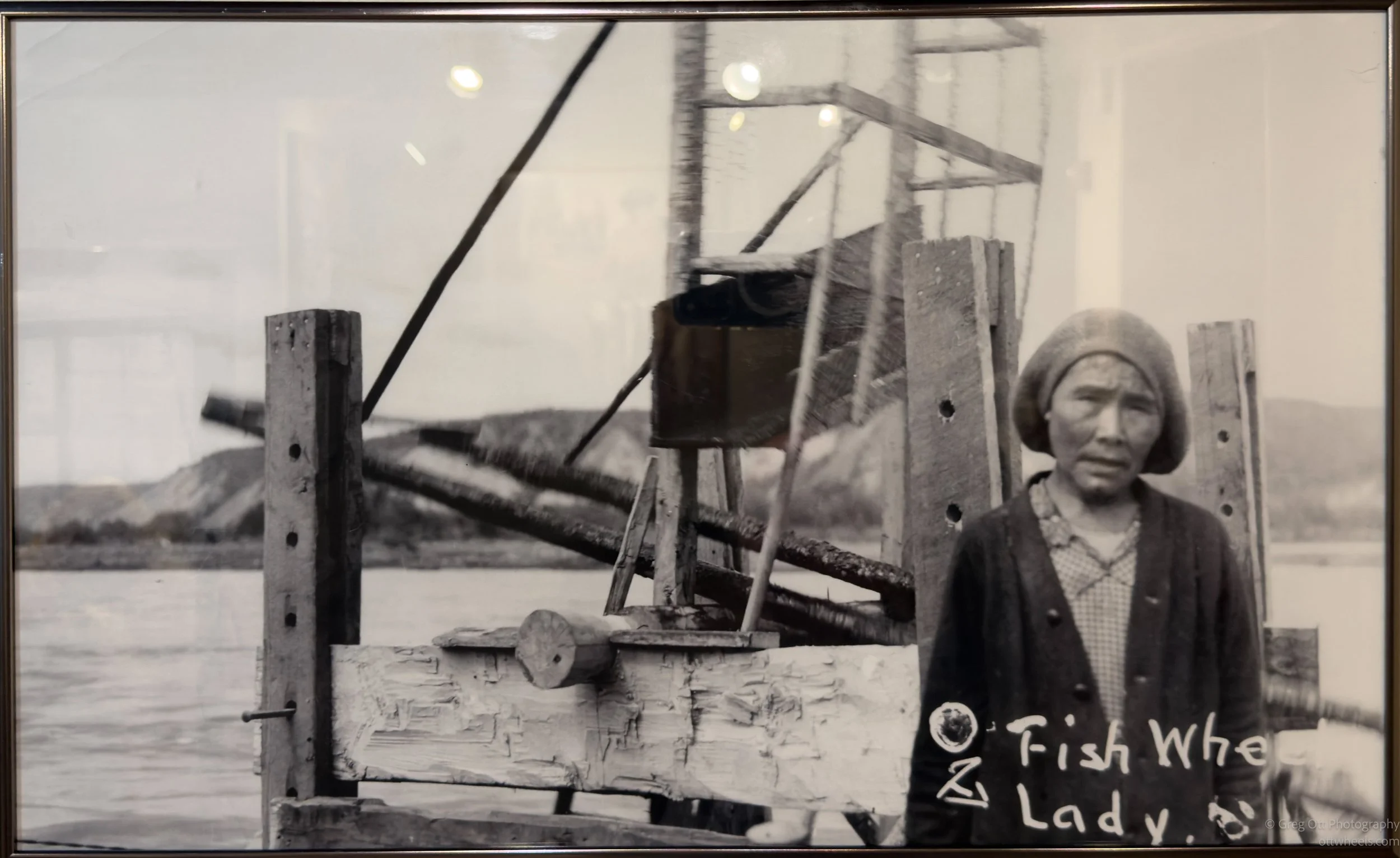
One section explained something I didn't know: why rivers in the Alaska interior use nets and fish wheels to catch salmon instead of lures or bait. It comes down to the rivers themselves. Many originate from glaciers, which grind bedrock into rock flour as they move — particles so fine they stay suspended in the water permanently. This gives the rivers their milky gray color and makes visibility underwater near zero. Lures don't work because fish can't see them. But it also wouldn't matter much: Pacific salmon stop feeding entirely when they enter freshwater to spawn. They're running on reserves built up at sea. They might snap at something out of instinct, but they're not eating. So in glacial rivers, the historical methods — dip-nets, gill-nets, fish wheels — are the tools. A fish wheel is anchored in the current and uses paddle baskets that rotate with the river's flow, continuously scooping fish. No bait, no active fishing. You set it and it works.
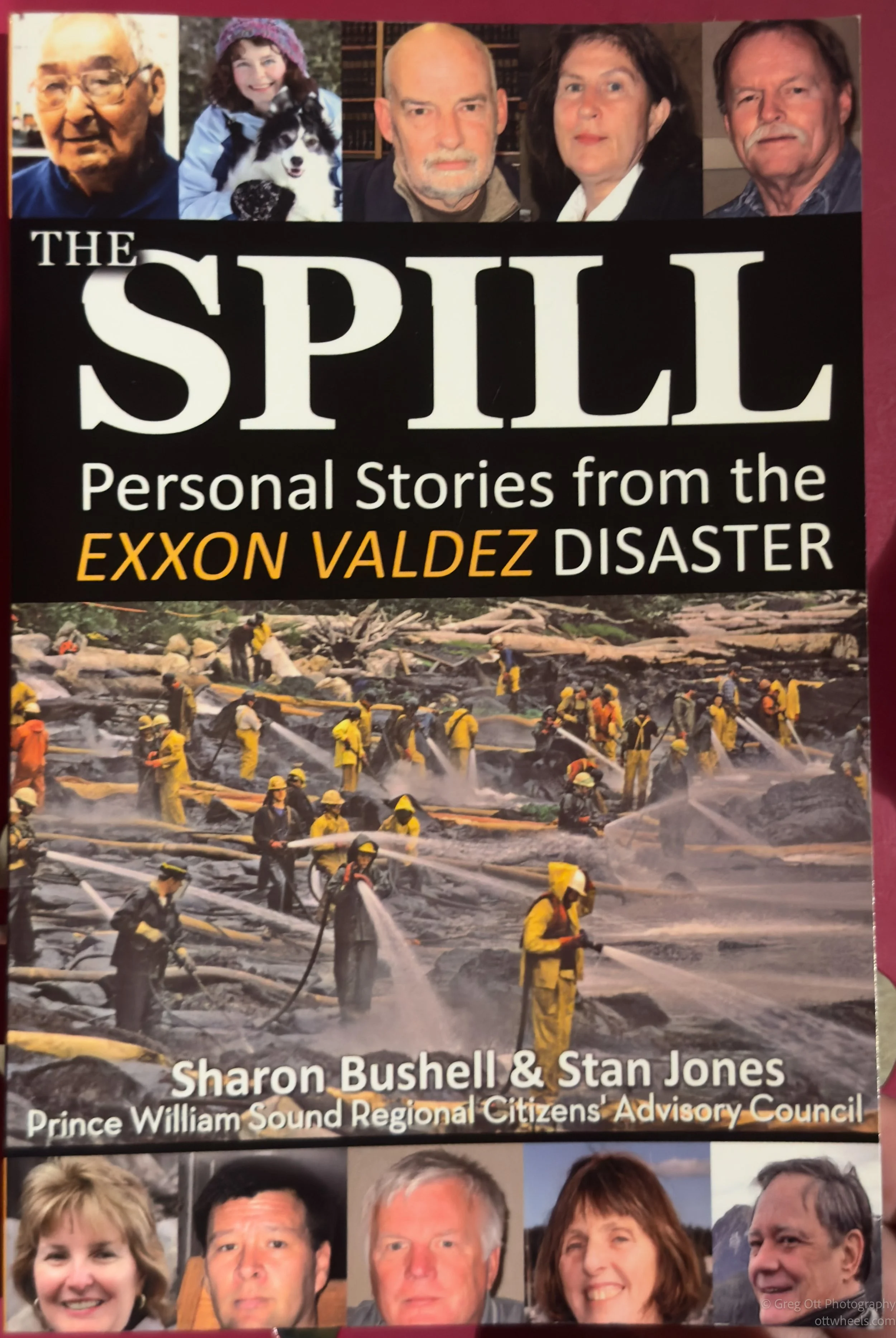
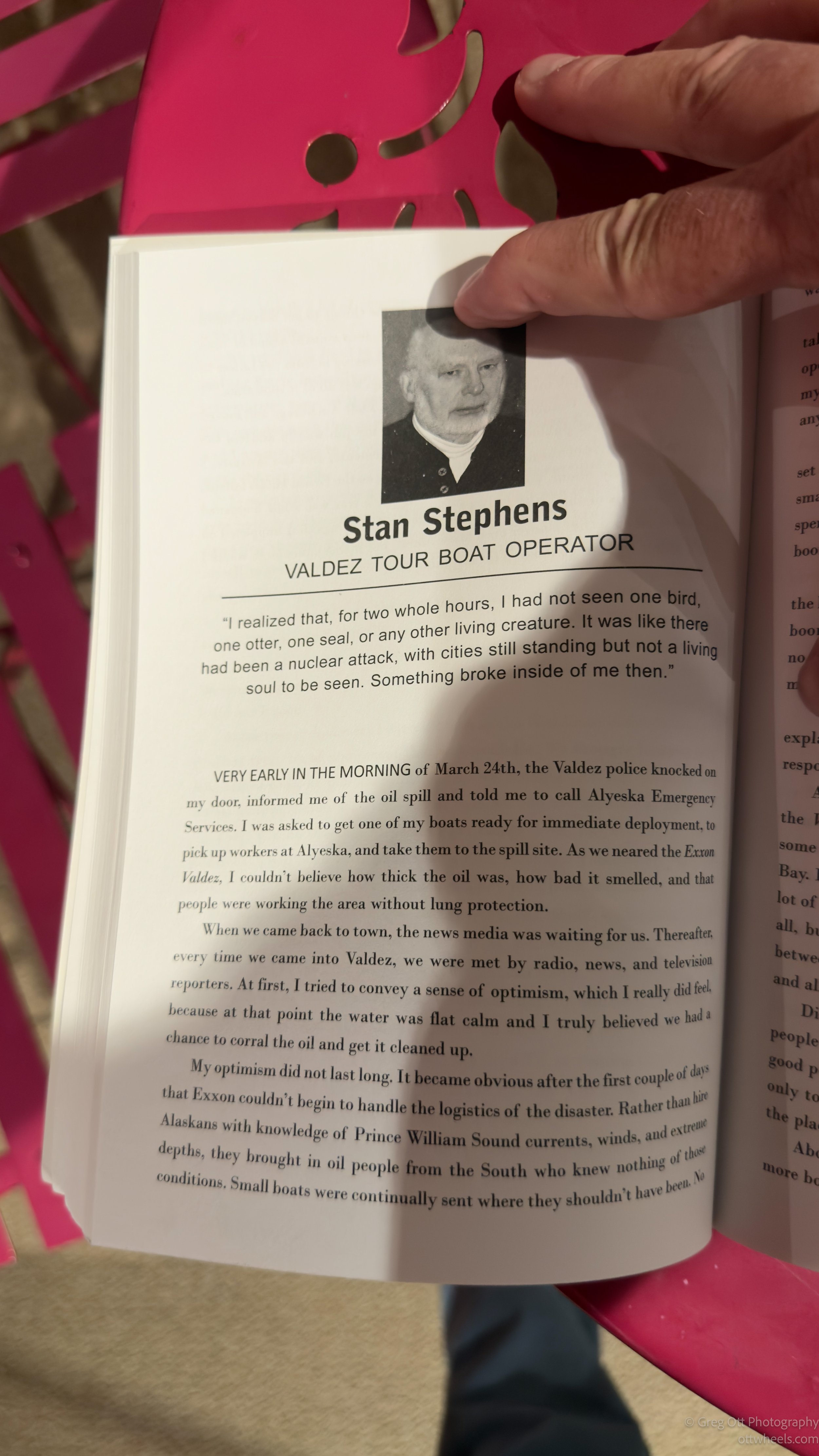
In one area they had a small library of Valdez related books. I pulled out The Spill: Personal Stories from the Exxon Valdez Disaster and opened to the Stan Stephens chapter. I'd already booked a glacier cruise with his company for later in the week. He wrote about being on the water after the spill and going two full hours without seeing a single bird, otter, or seal. He compared it to a nuclear attack — the world still there, just emptied of everything living. Something broke inside him that day, he wrote. That's a different thing to read a few days before getting on his boat. I learned that he passed 8 years ago and the tours are run by his daughter now.
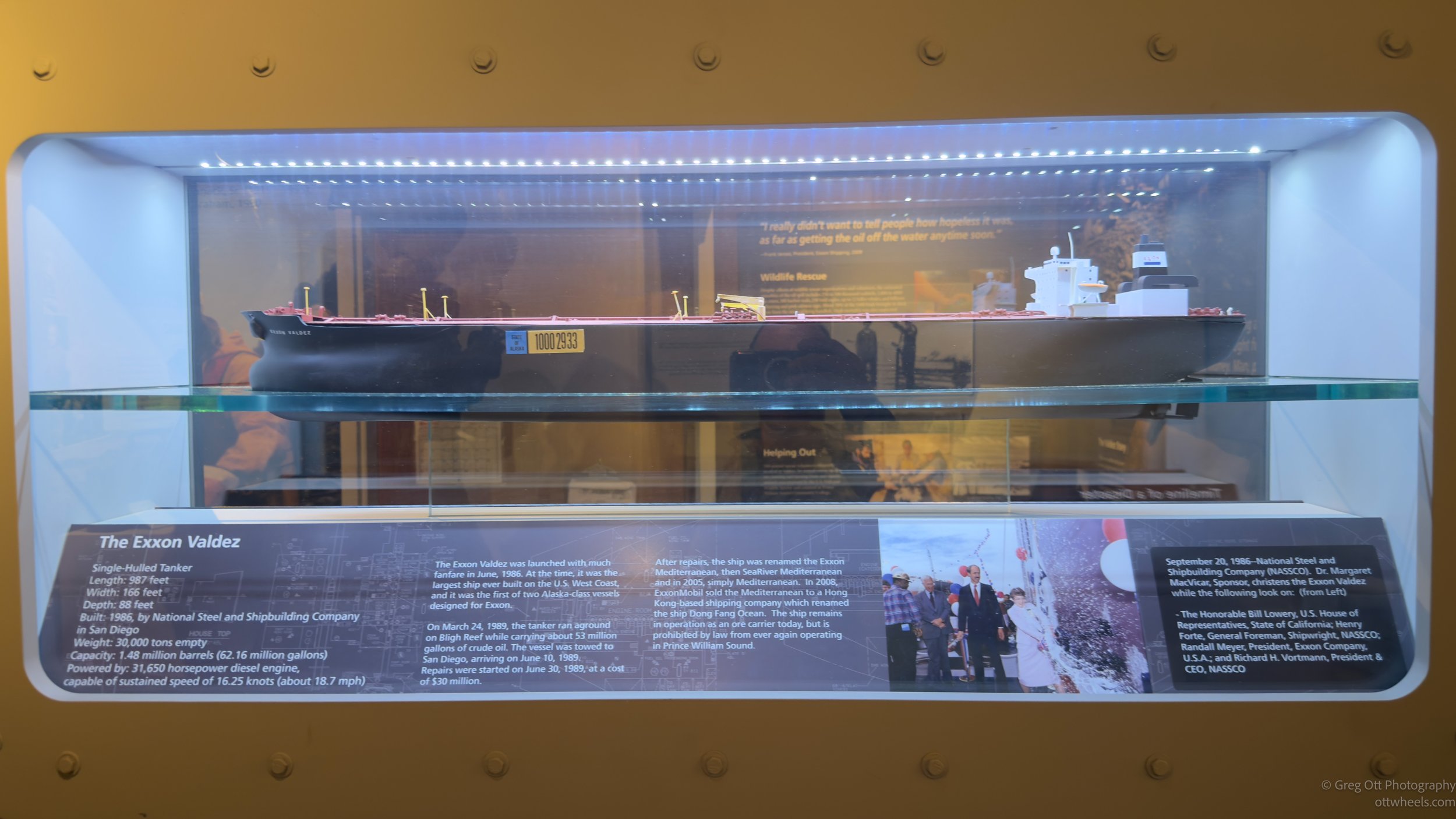
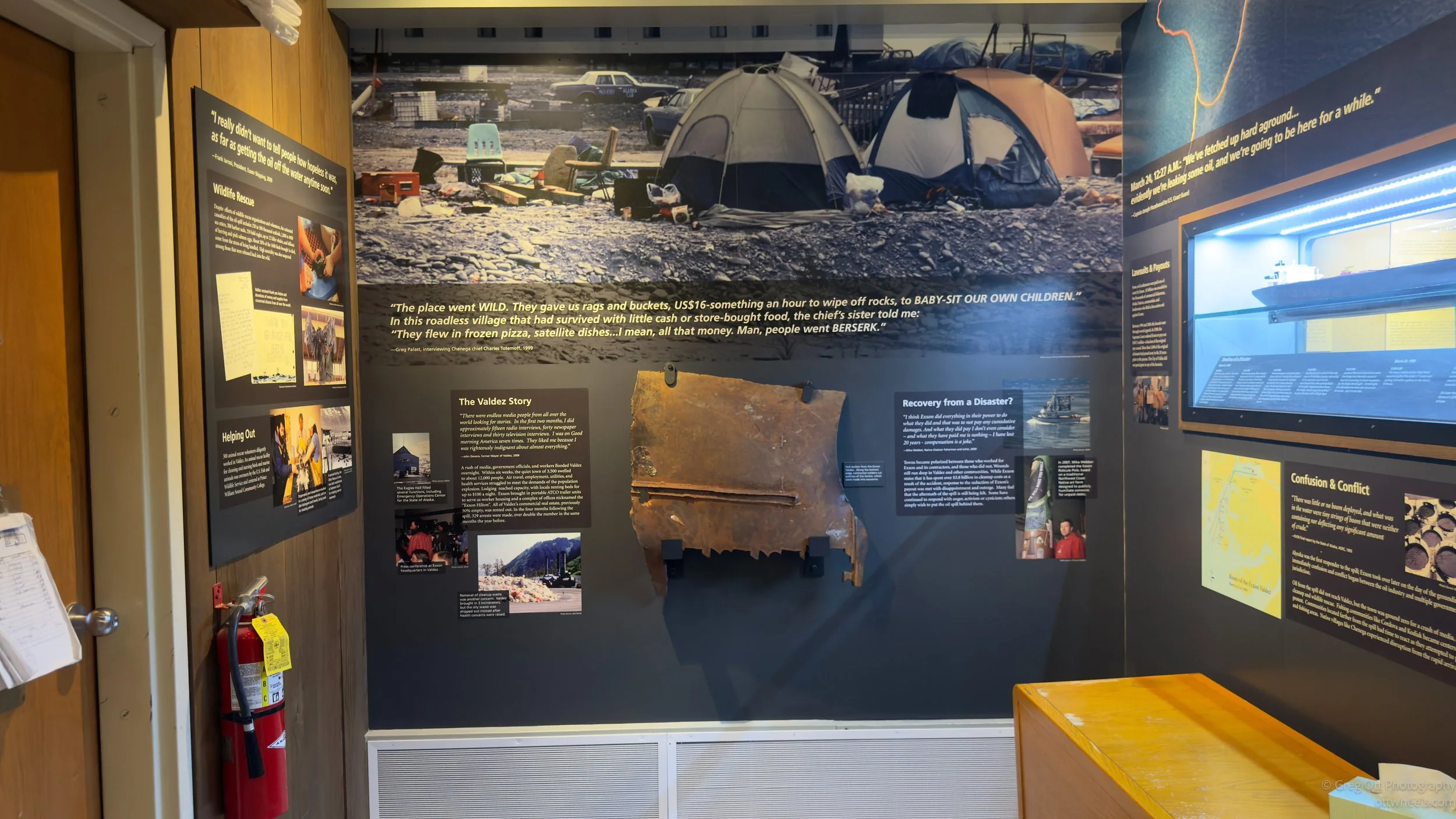
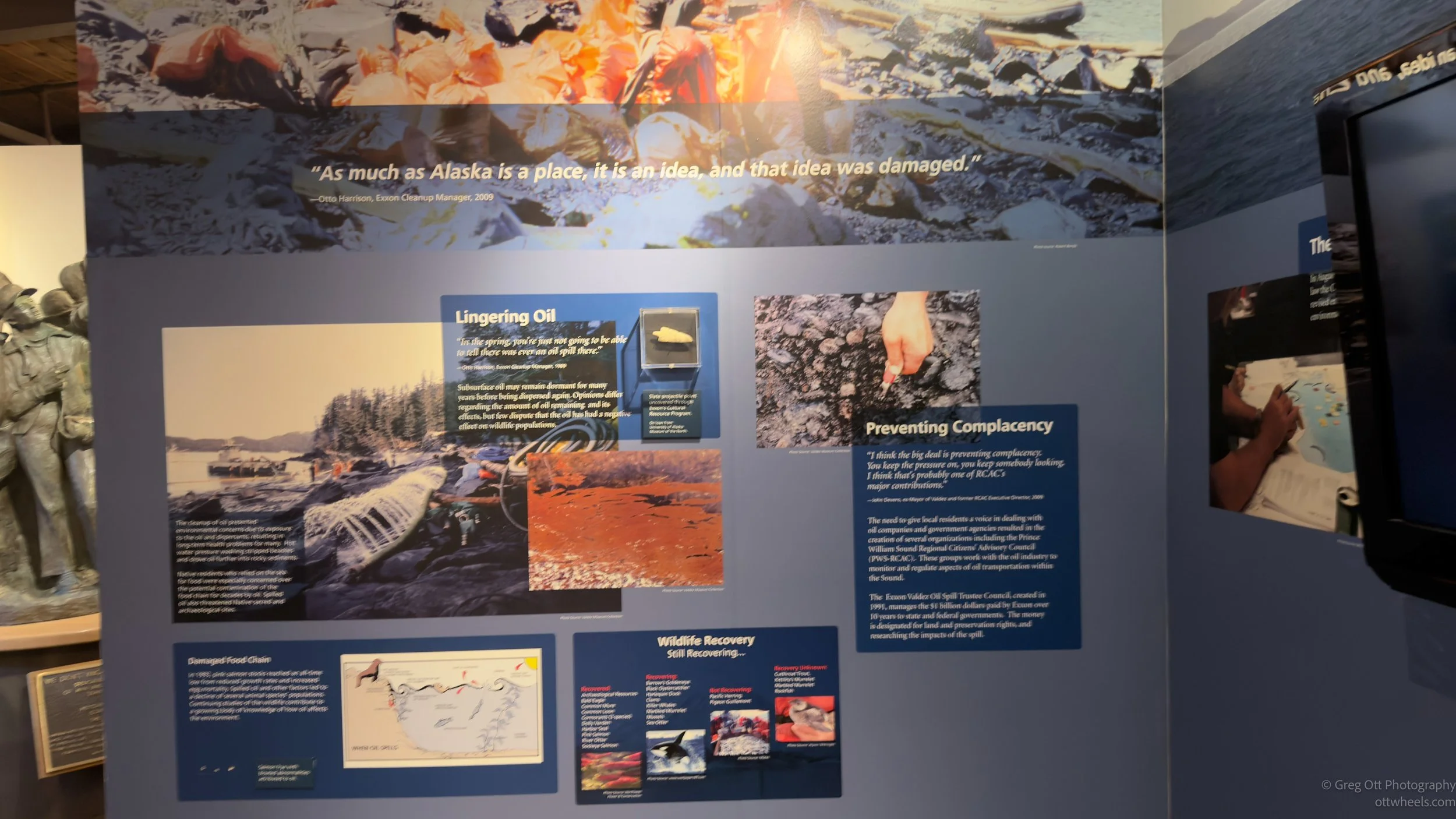
The section on the Exxon Valdez oil spill was surprisingly small, at least in my opinion. I remember the exhibit at the Alaska Museum in Anchorage being larger. Given the devastation the spill caused to Prince William Sound, the long-term damage to the fishing industry, and the economic impact on communities like Valdez, I expected a much larger and more detailed presentation. There was little discussion of Exxon's legal liability, the years of litigation, or the lasting effects on the coastline and the people whose livelihoods depended on it.
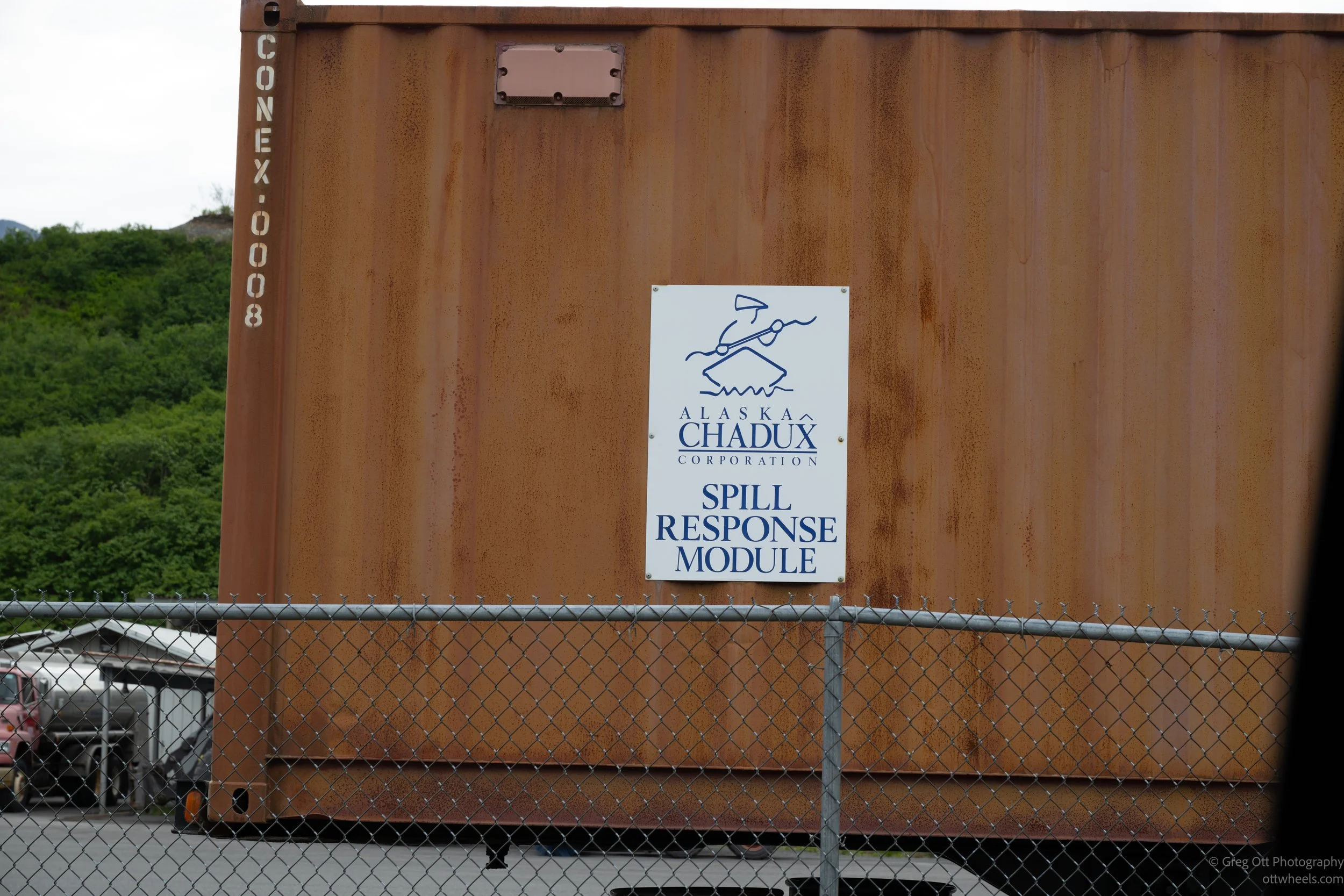
I don't know whether politics, funding, marketing, or simply limited exhibit space influenced how the story was presented. To be fair, one thing that was evident throughout Valdez was how seriously oil spill prevention is taken today. Tankers are escorted through Prince William Sound, vessel speeds are carefully managed, loading operations include extensive containment measures, and specialized spill response teams stand ready if something goes wrong. I even met a member of the Coast Guard who was training for spill response.
That may ultimately be one of the most important legacies of the Exxon Valdez disaster. While the museum could have devoted more space to telling the story, it is a reminder of why constant vigilance matters. The goal isn't simply to remember what happened in 1989—it's to make sure it never happens again.
There was an exhibit on Lee Wulff, who is widely considered the father of modern fly fishing. He was born in Valdez in 1905. His father came north chasing gold and ended up staying, becoming a deputy sheriff and newspaper publisher. Lee fished these waters as a kid before the family moved back east when he was ten. I hadn't known he was from Valdez. It's a small town. You wouldn't expect it.
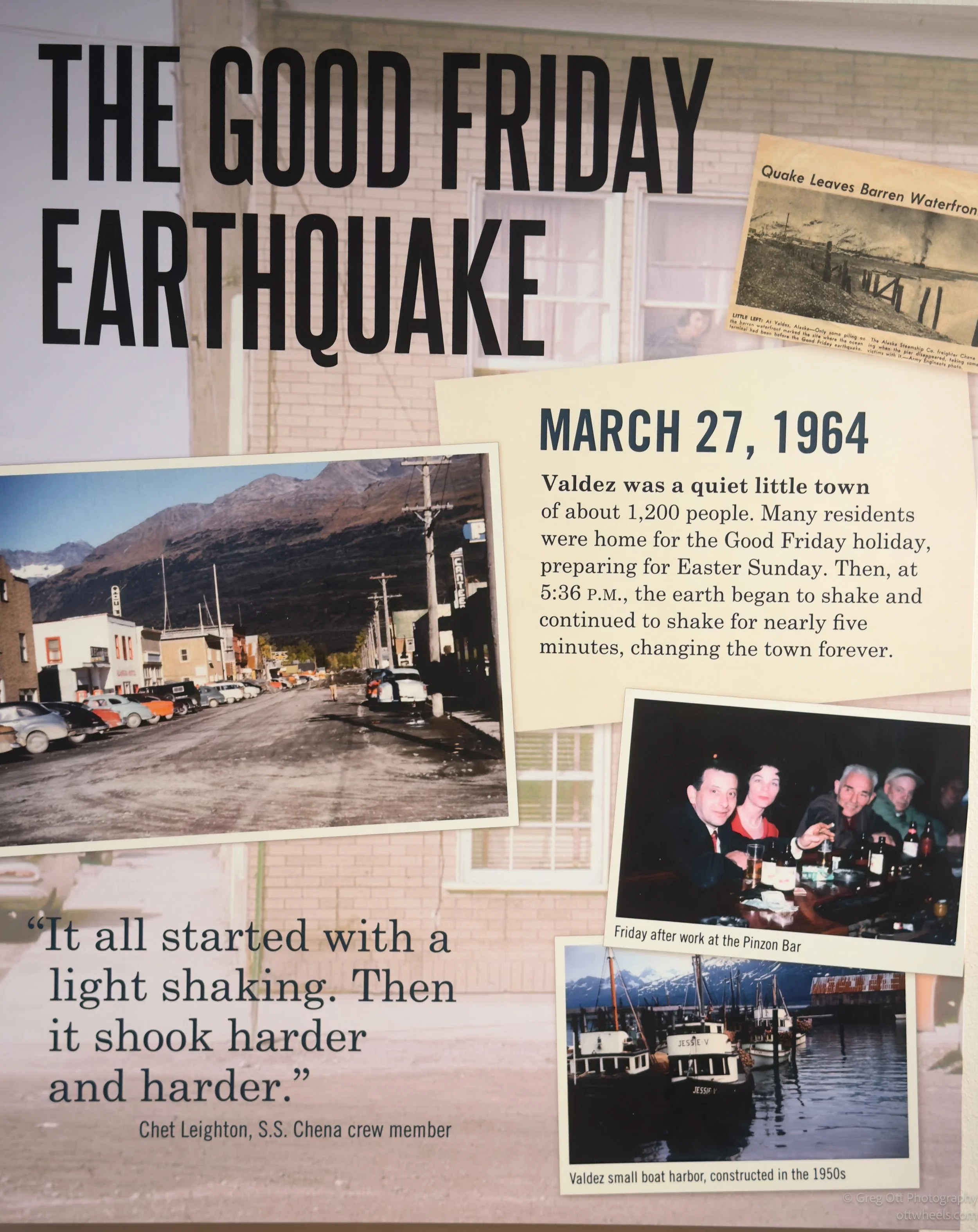
The Good Friday Earthquake exhibit covered a lot of ground. March 27, 1964 — 9.2 on the Richter scale. I remember watching it on the news. This was the most powerful earthquake ever recorded in North America. The epicenter was about 40 miles west of Valdez. What happened here was specific: the waterfront of Old Valdez sat on water-saturated silt and glacial outwash. When the shaking started the ground liquefied. A massive underwater landslide took out the harbor and the docks. Thirty-two people were killed. A tsunami followed and pushed water through the downtown streets. The buildings were mostly still standing, but the ground under them was gone in any meaningful sense. Geologists determined the site was unlivable and the decision was made to move the whole town. The new location, on the delta of Mineral Creek about four miles away, sits on dense cobblestone gravel instead of saturated silt. It took two to four years to complete the move. About 62 buildings were relocated on flatbeds. The original site is now a memorial park. Geologists still consider parts of it unstable enough that sinkholes could open at any time, earthquake or not. The museum had oral histories from survivors. There are people still living in Valdez who were there.
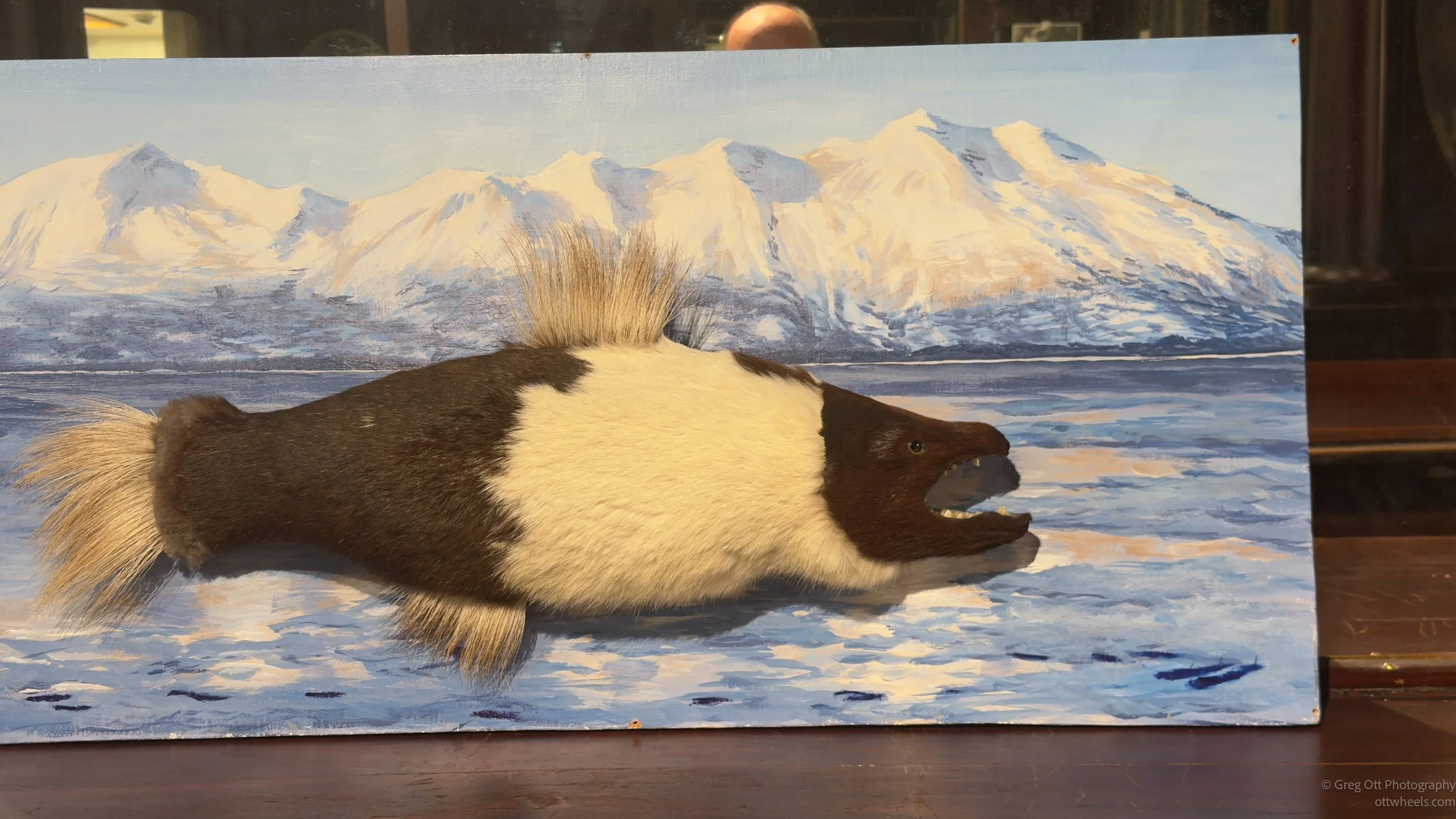
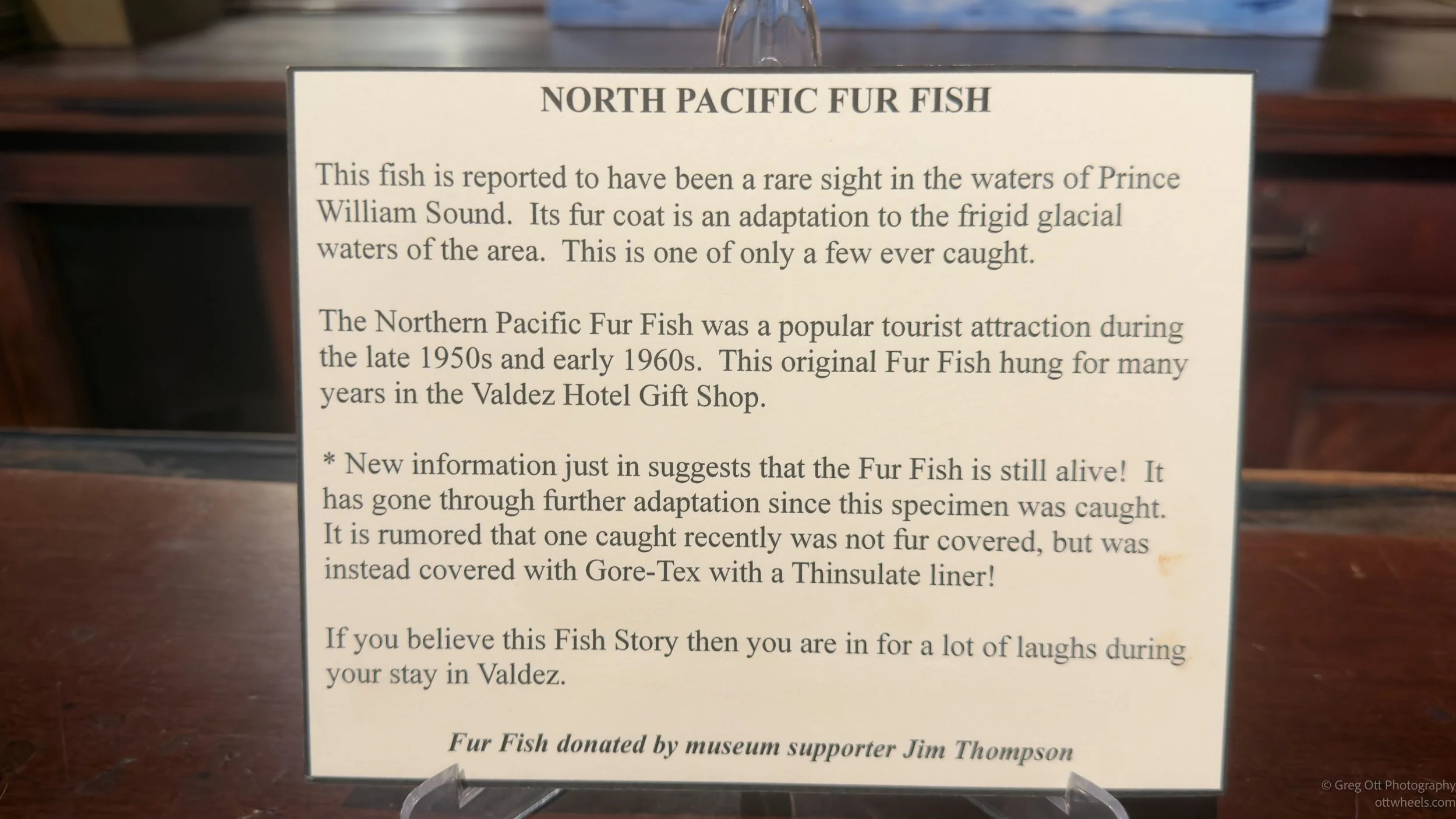
There was also an exhibit on the North Pacific Fur Fish — a taxidermy hoax, a fish body sewn together with fur to create something that looks like a new species. The legend behind it is that the waters are so cold the fish grew fur to stay warm. It's a classic carnival gag that's been around for over a century. I had never heard of it. The placard played it completely straight, which made it better. I admit, they got me for a few minutes. I had to pull out my phone and ask, “is there such a fish?”. The response was polite.
Valdez Wharf
After leaving the museum, I drove to the commercial wharf on the Valdez side of Prince William Sound, where the larger fishing and cargo vessels dock. There weren't many ships in port, which I took as a good sign—they were out working instead of sitting at the dock.
One thing I learned was that many of the smaller fishing boats don't return to Valdez after every catch. Instead, they rendezvous with larger tender vessels, transferring their fish at sea. The tenders then haul the catch back to Valdez for processing while the fishing boats head right back out, allowing them to spend more time fishing and less time making long runs to port.
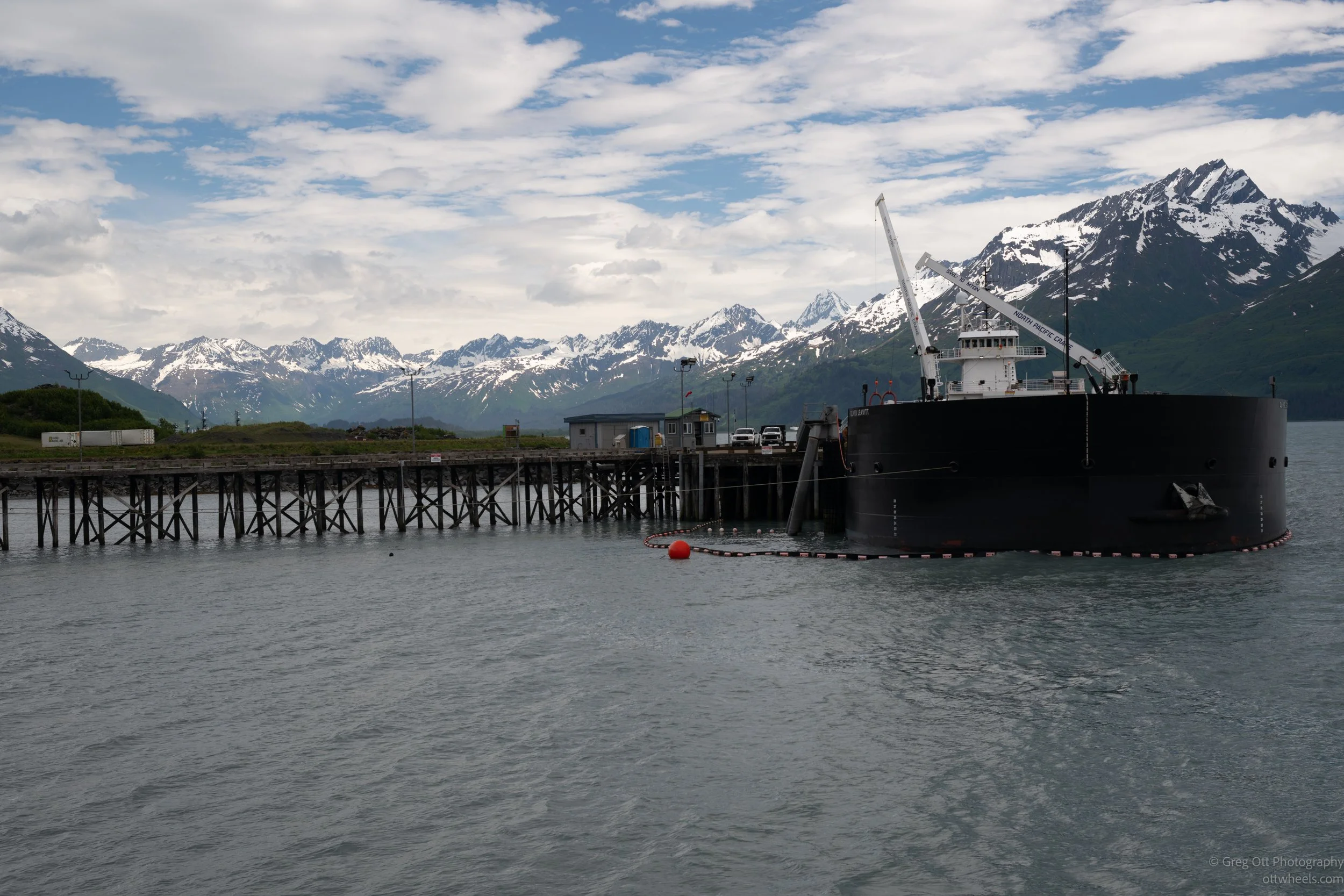
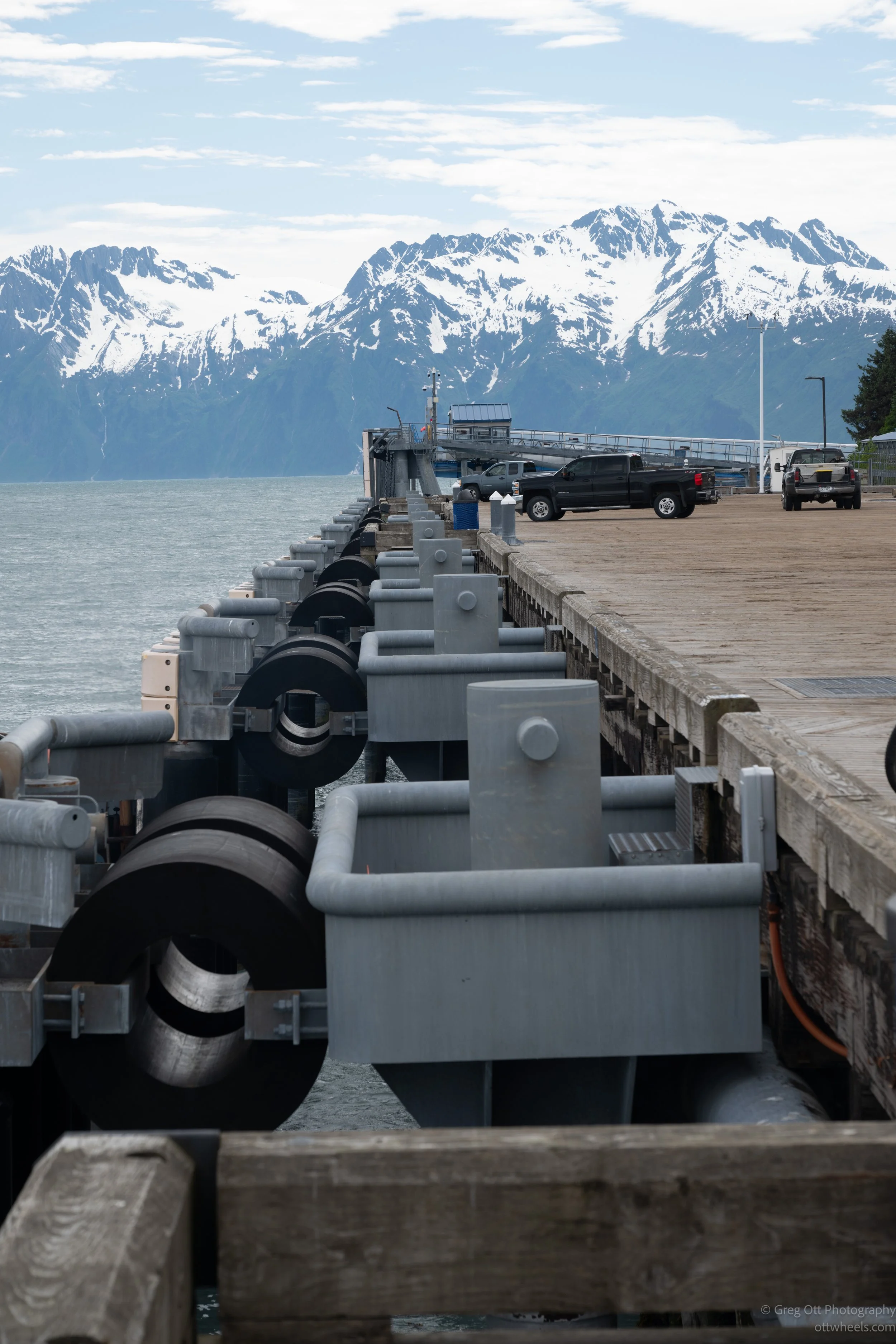
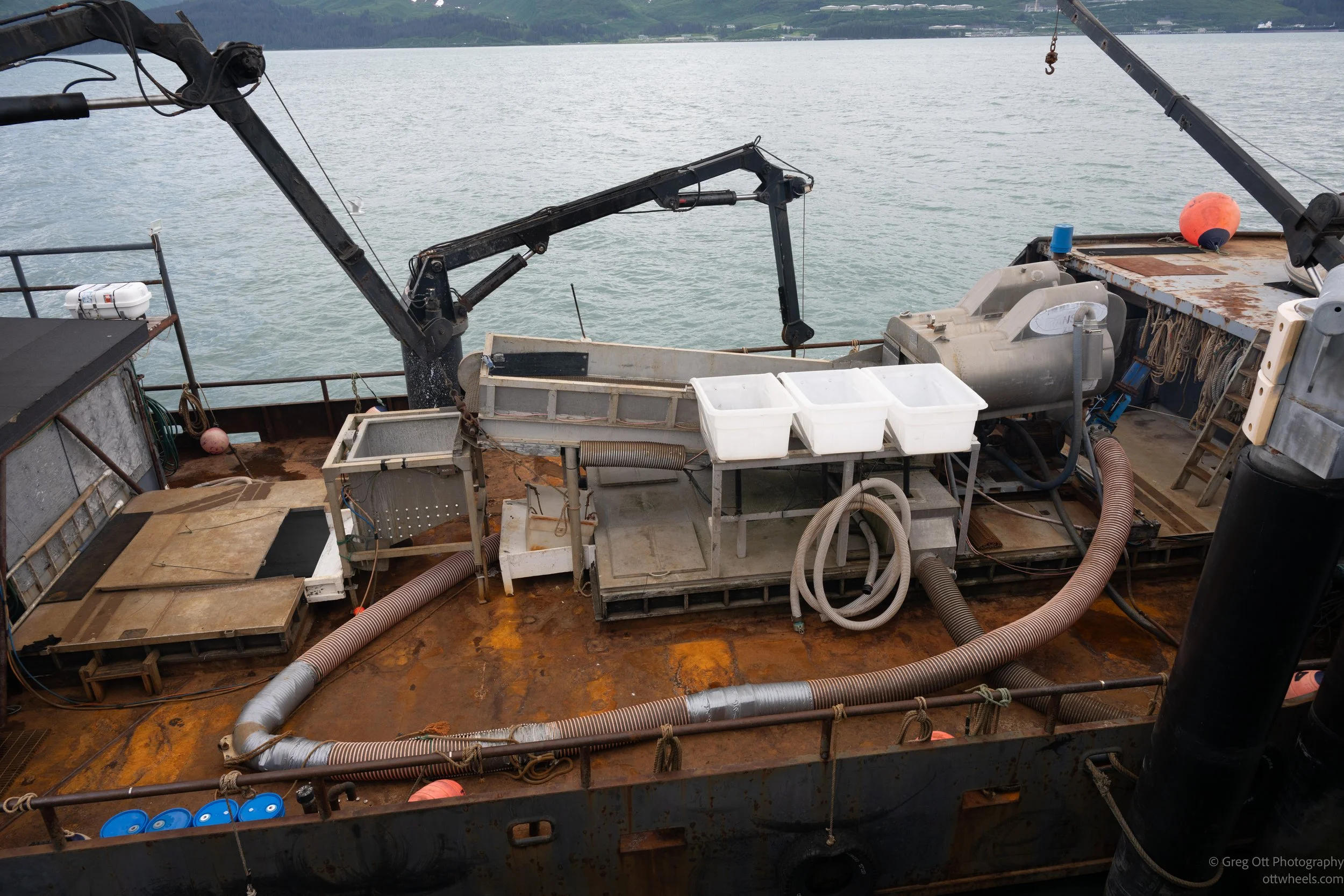
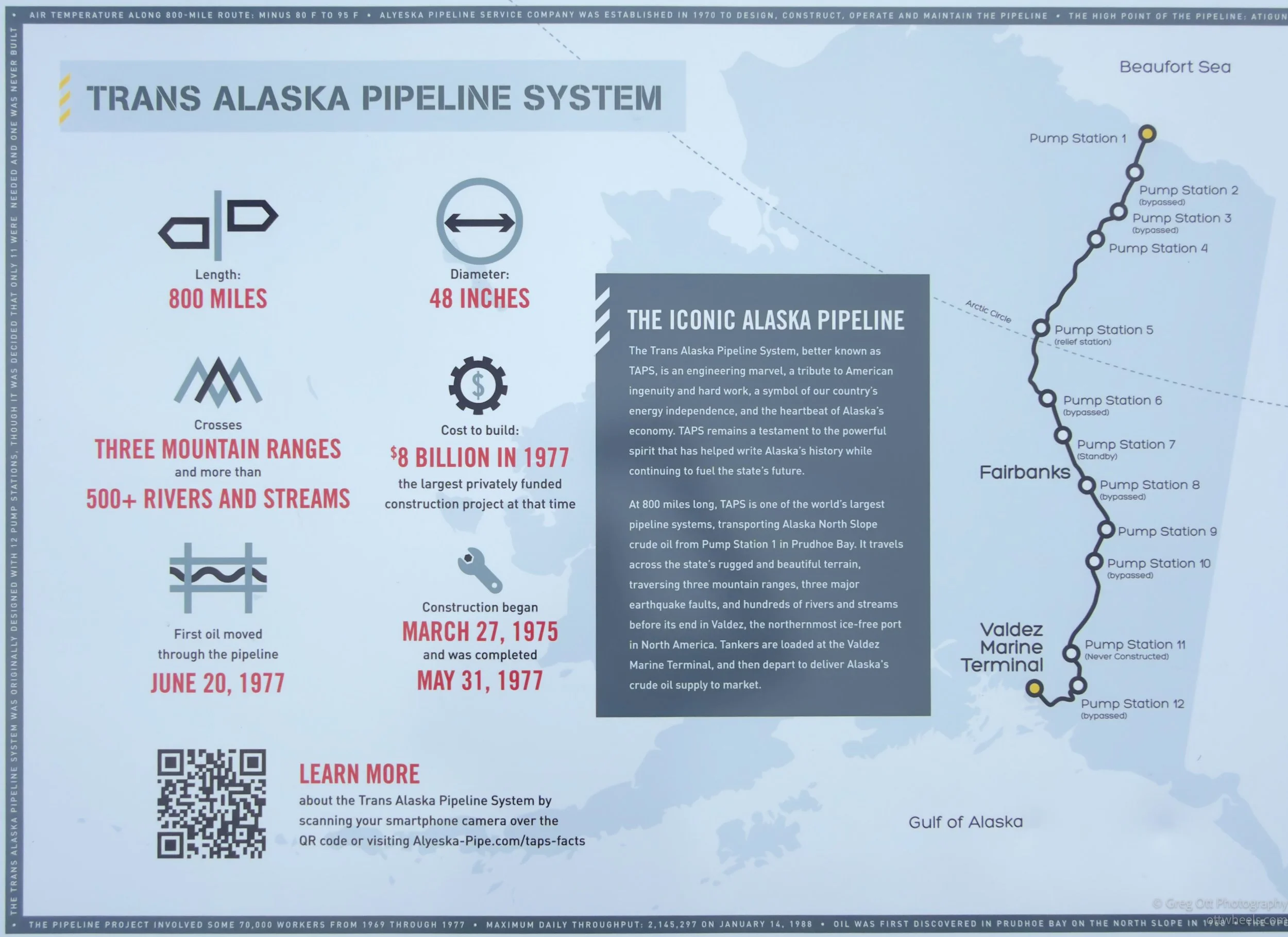
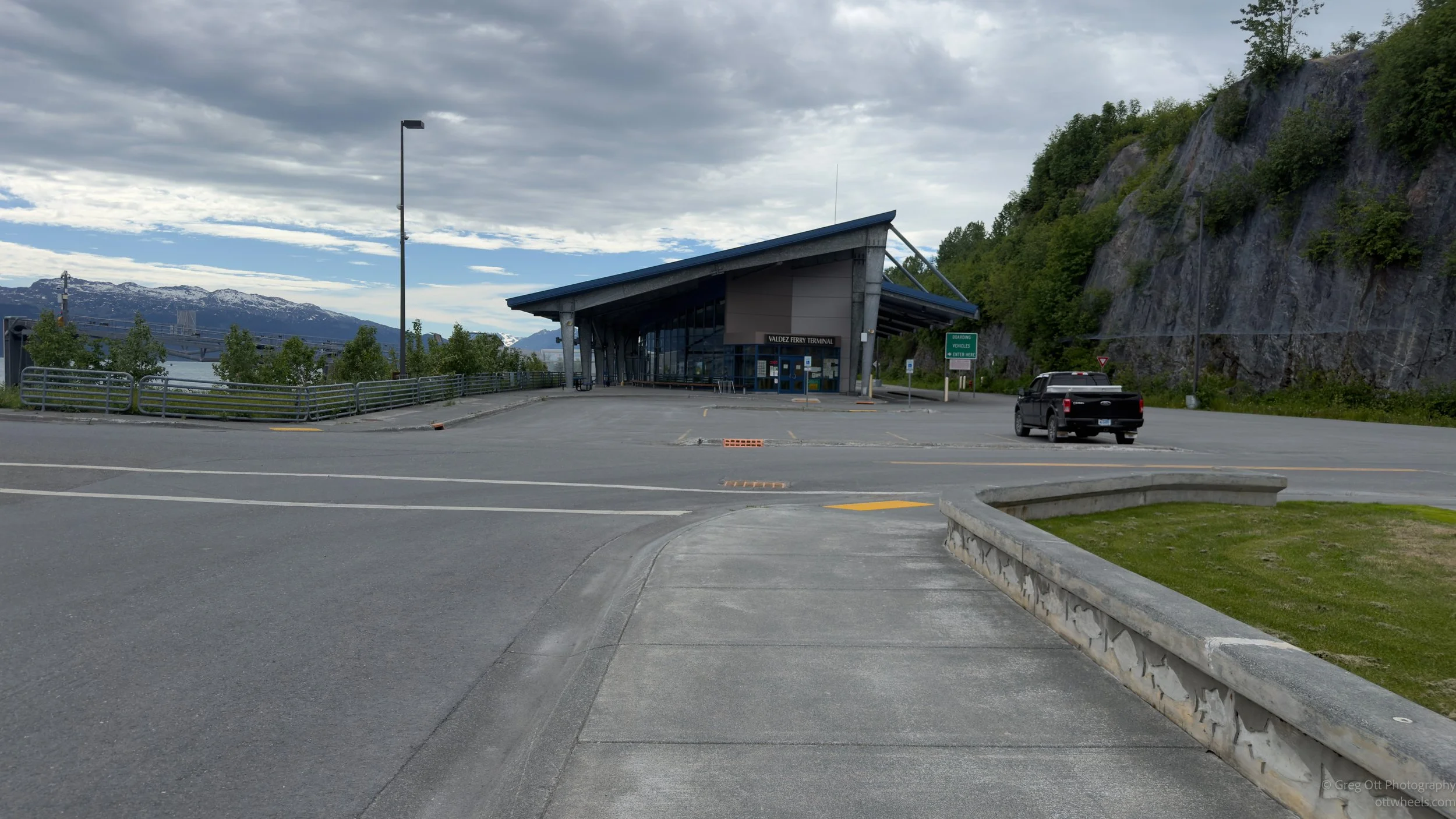
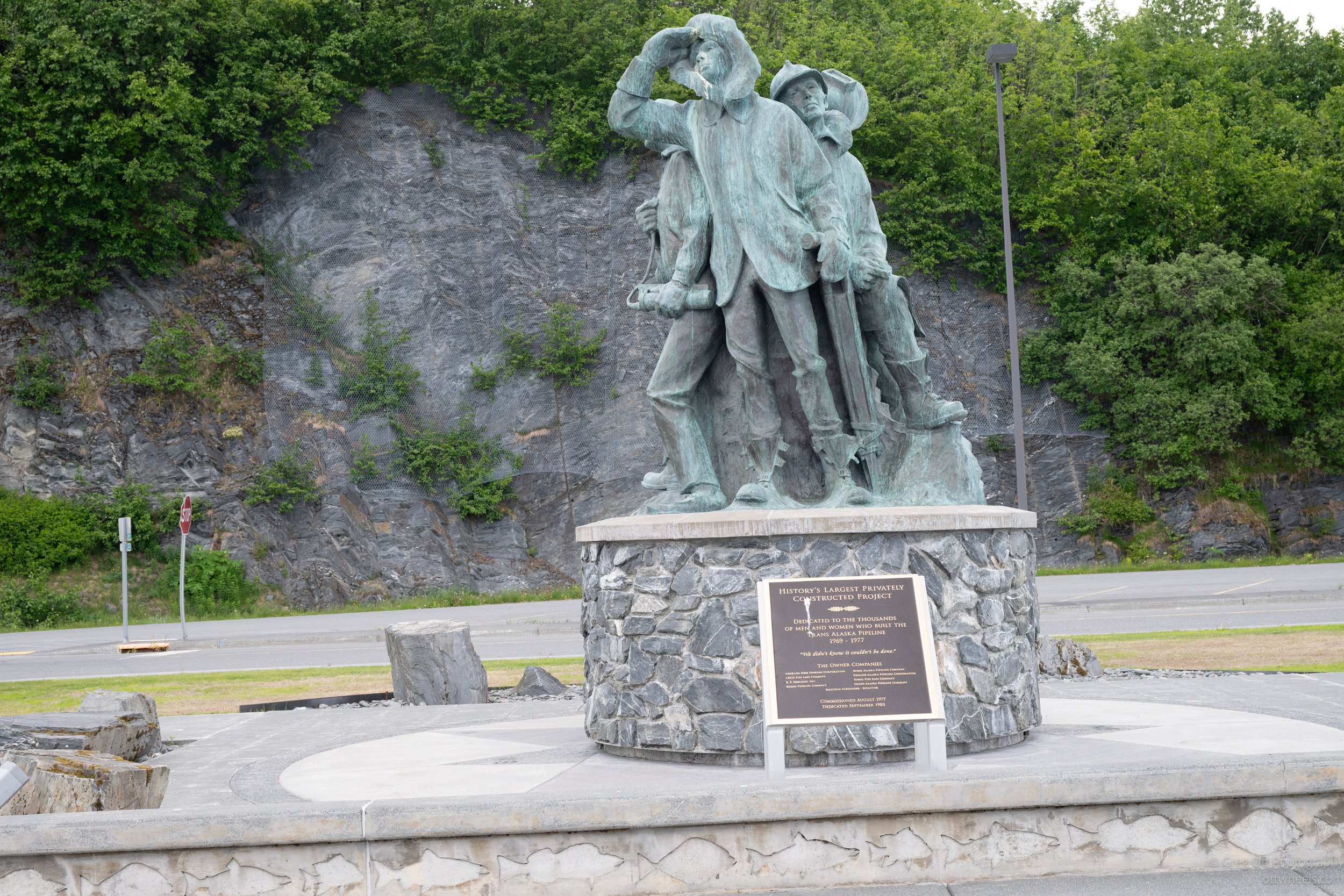
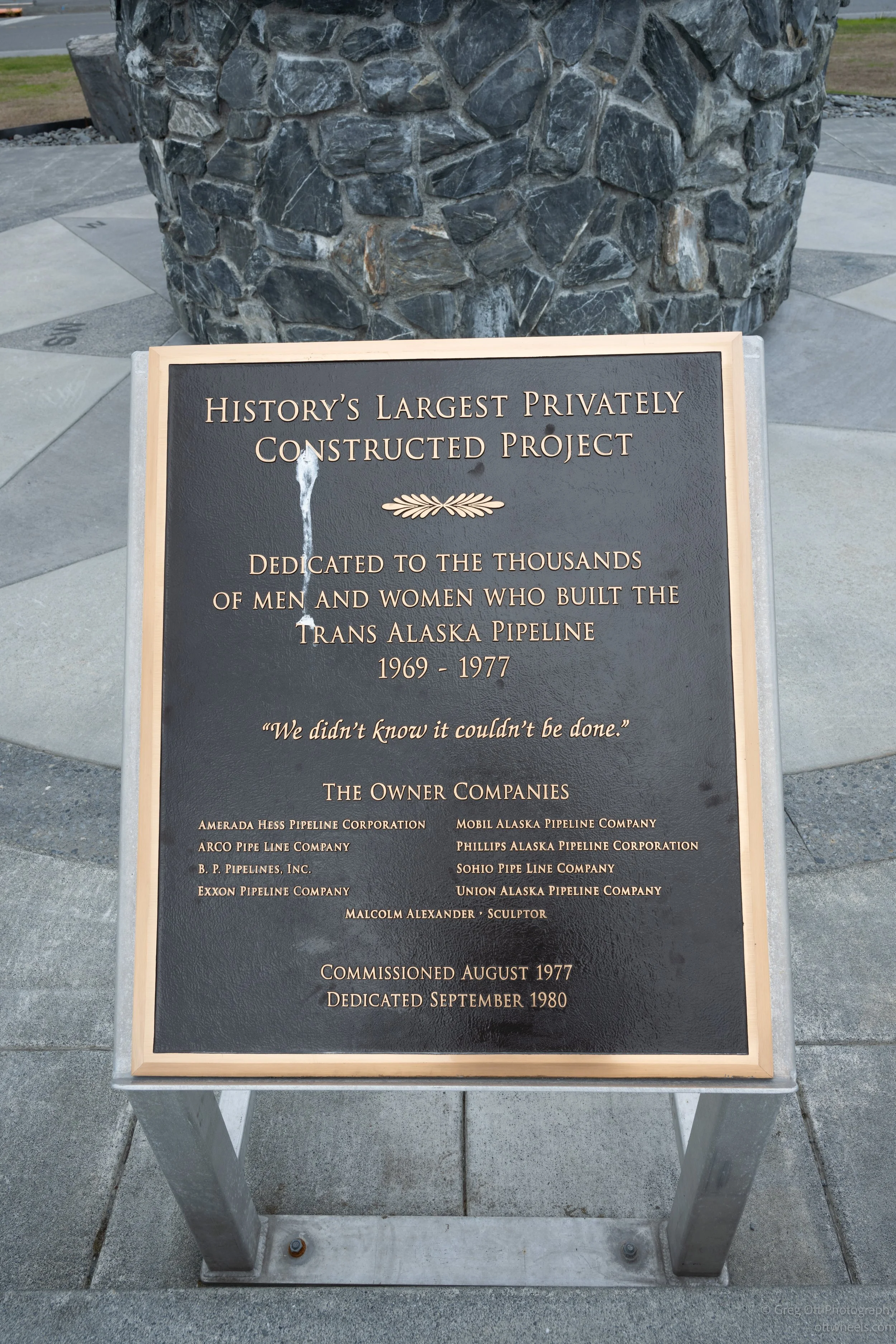
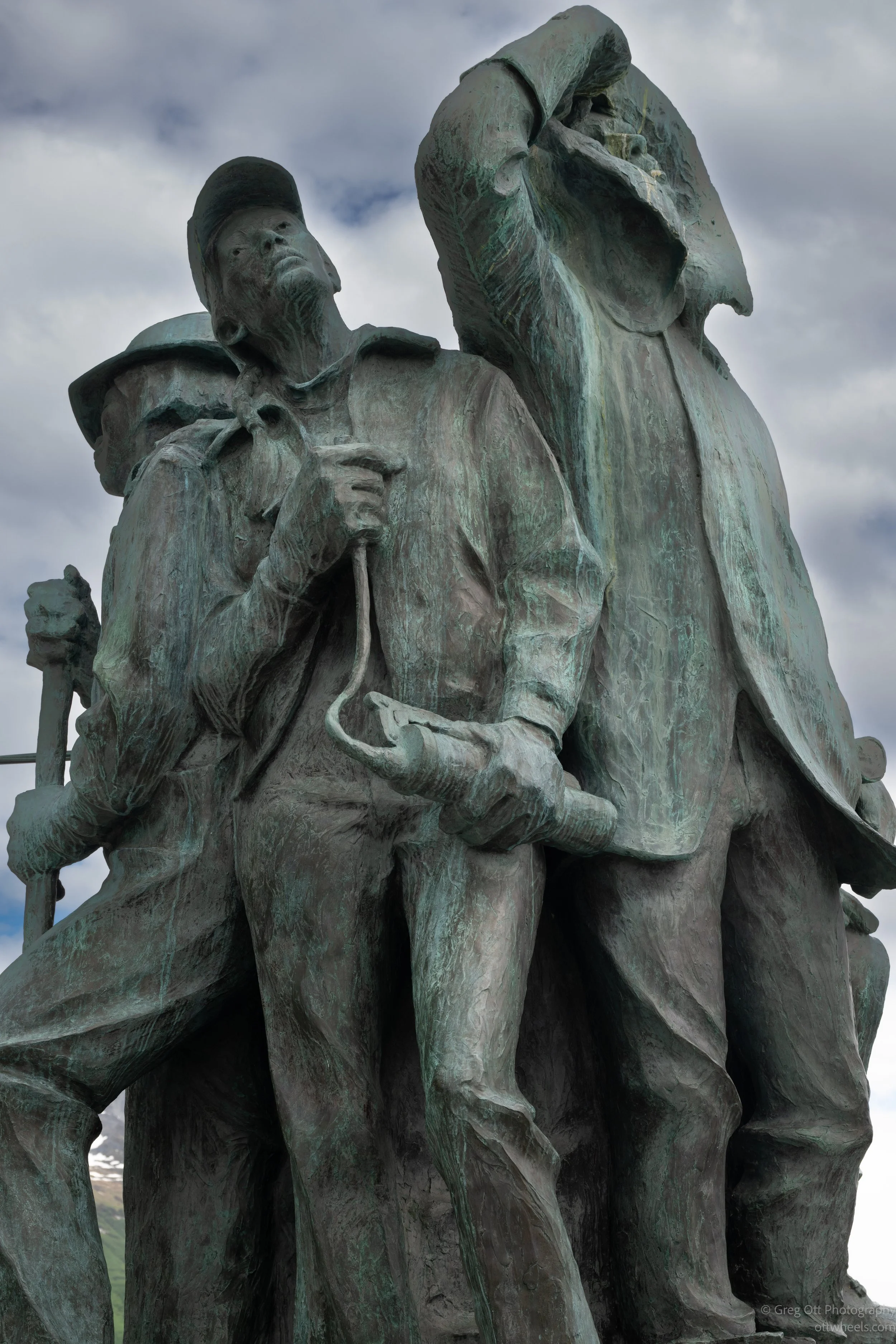
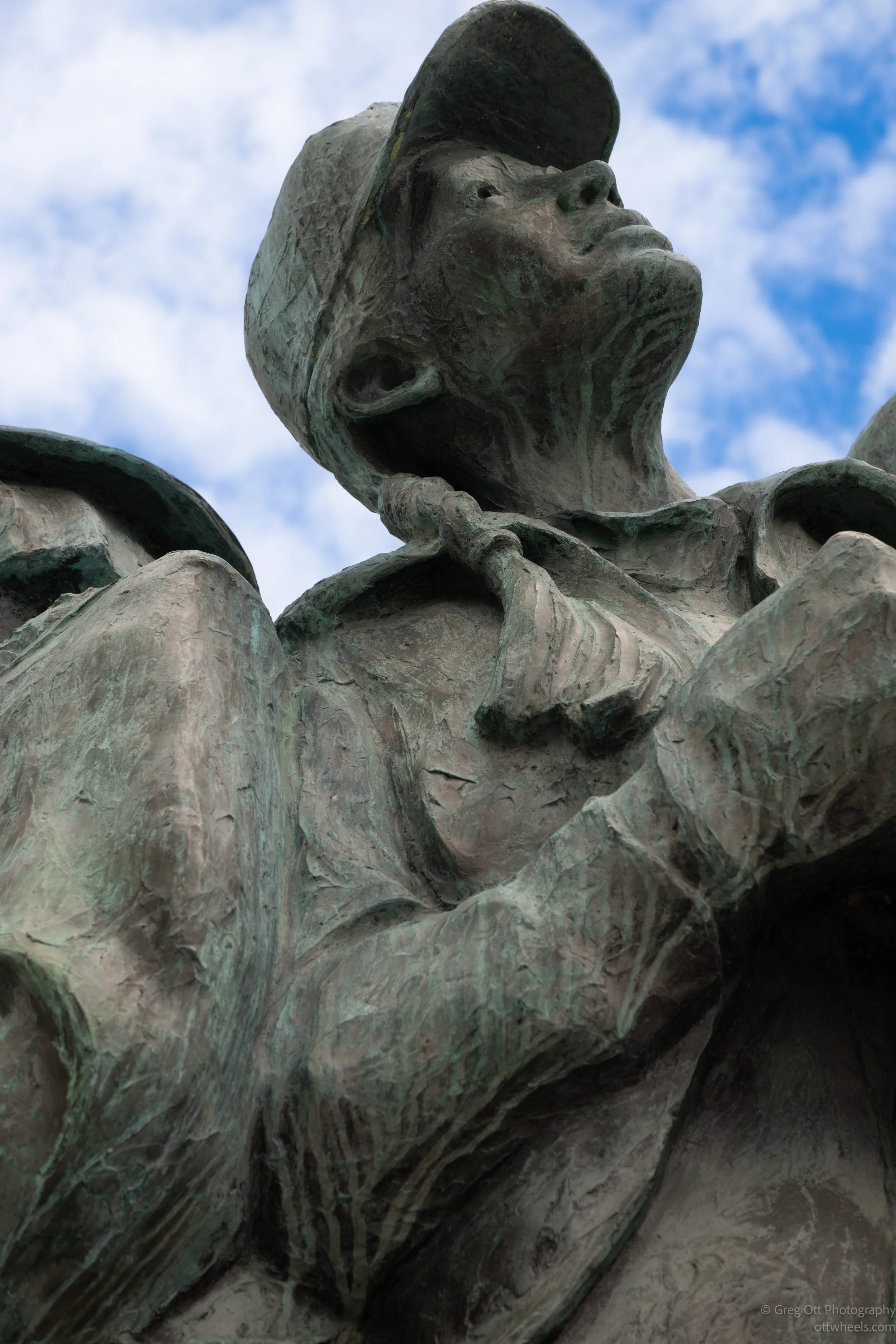
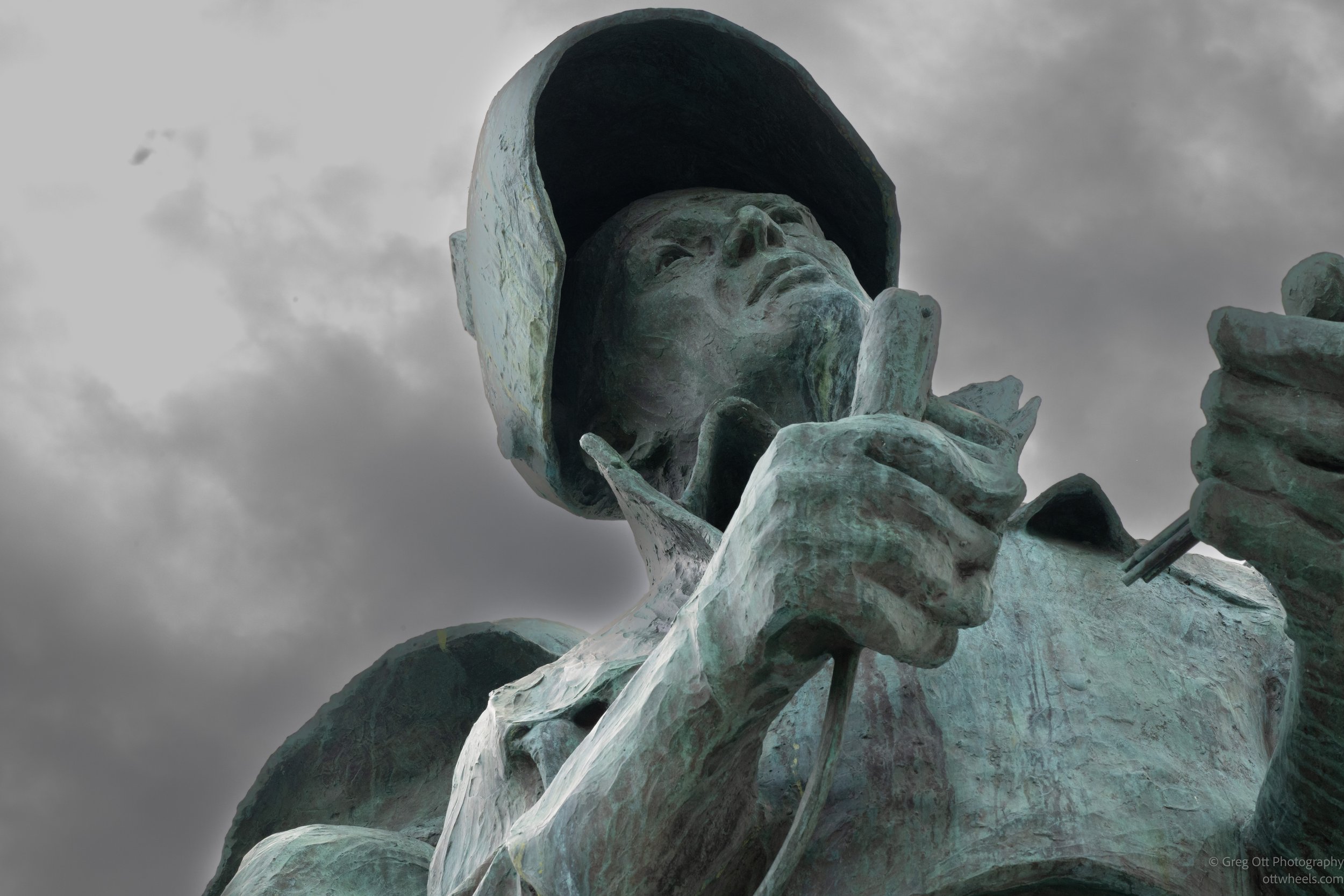
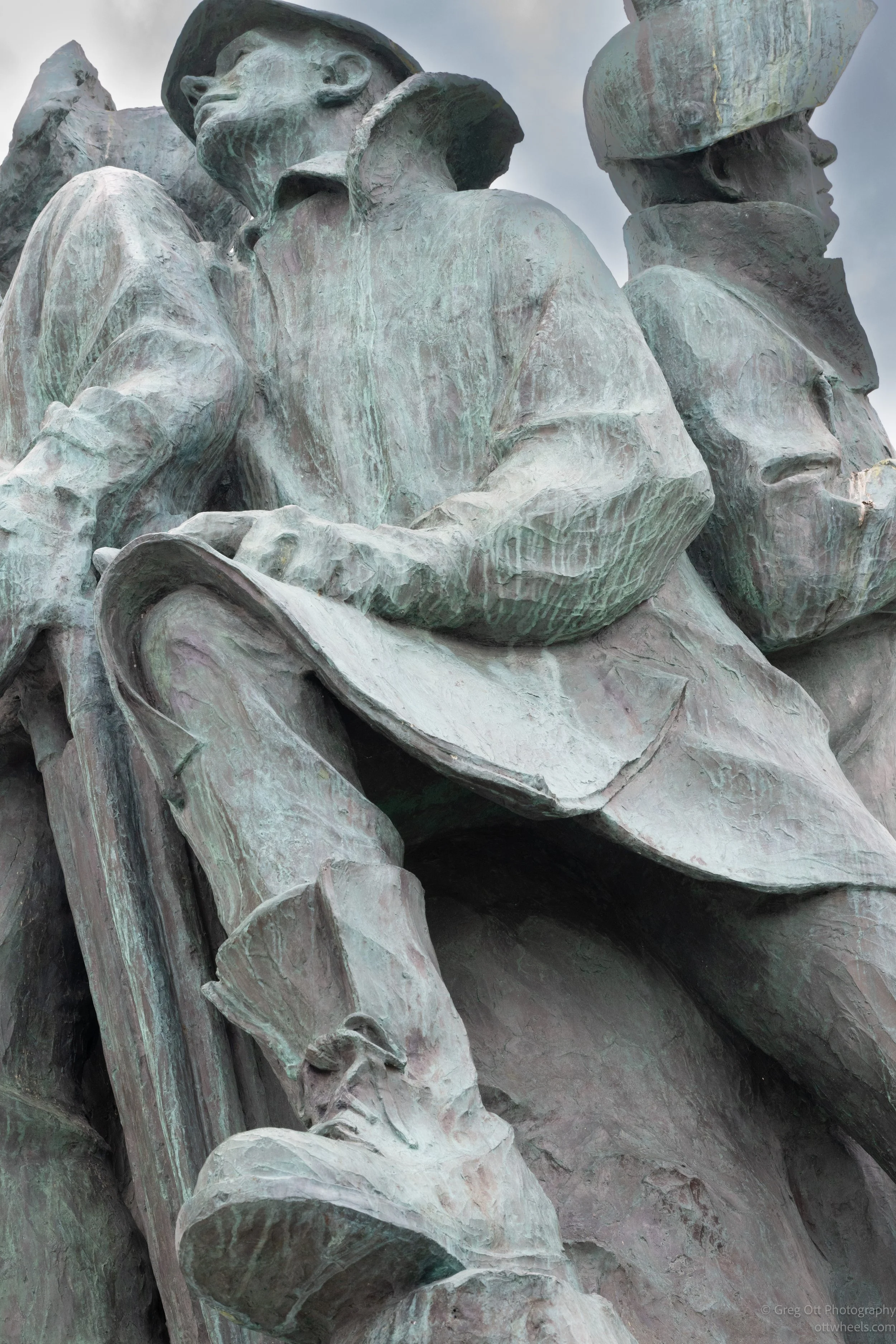
Nearby was a memorial dedicated to the men and women who built and continue to maintain the Trans-Alaska Pipeline System (TAPS). It's easy to marvel at the engineering achievement, but the monument serves as a reminder of the human cost behind it. Between 1974 and 1977, thirty-two workers lost their lives during construction. The memorial is quiet and unassuming, yet it tells an important part of the pipeline's story. It was well worth taking a few moments to stop and reflect.
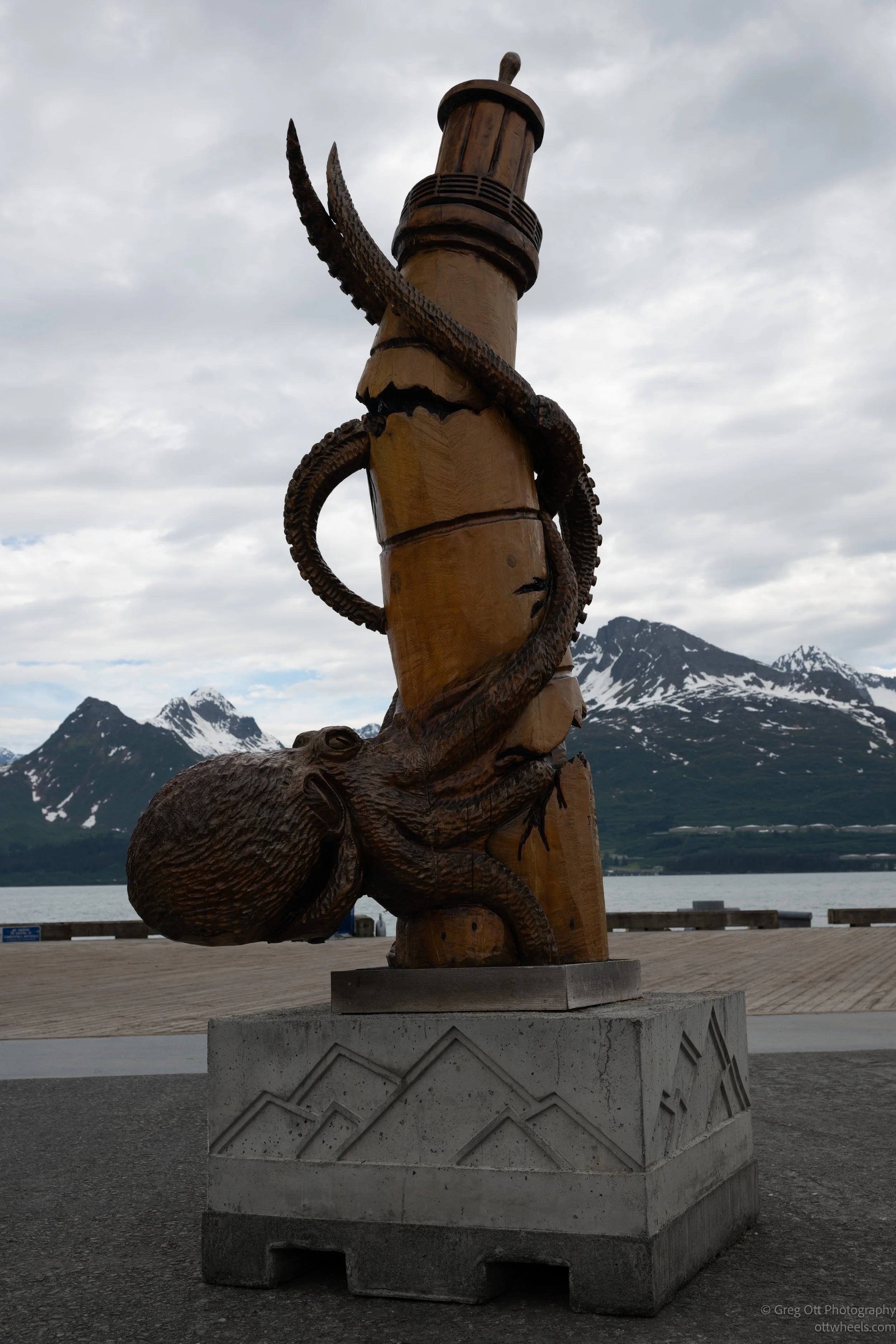
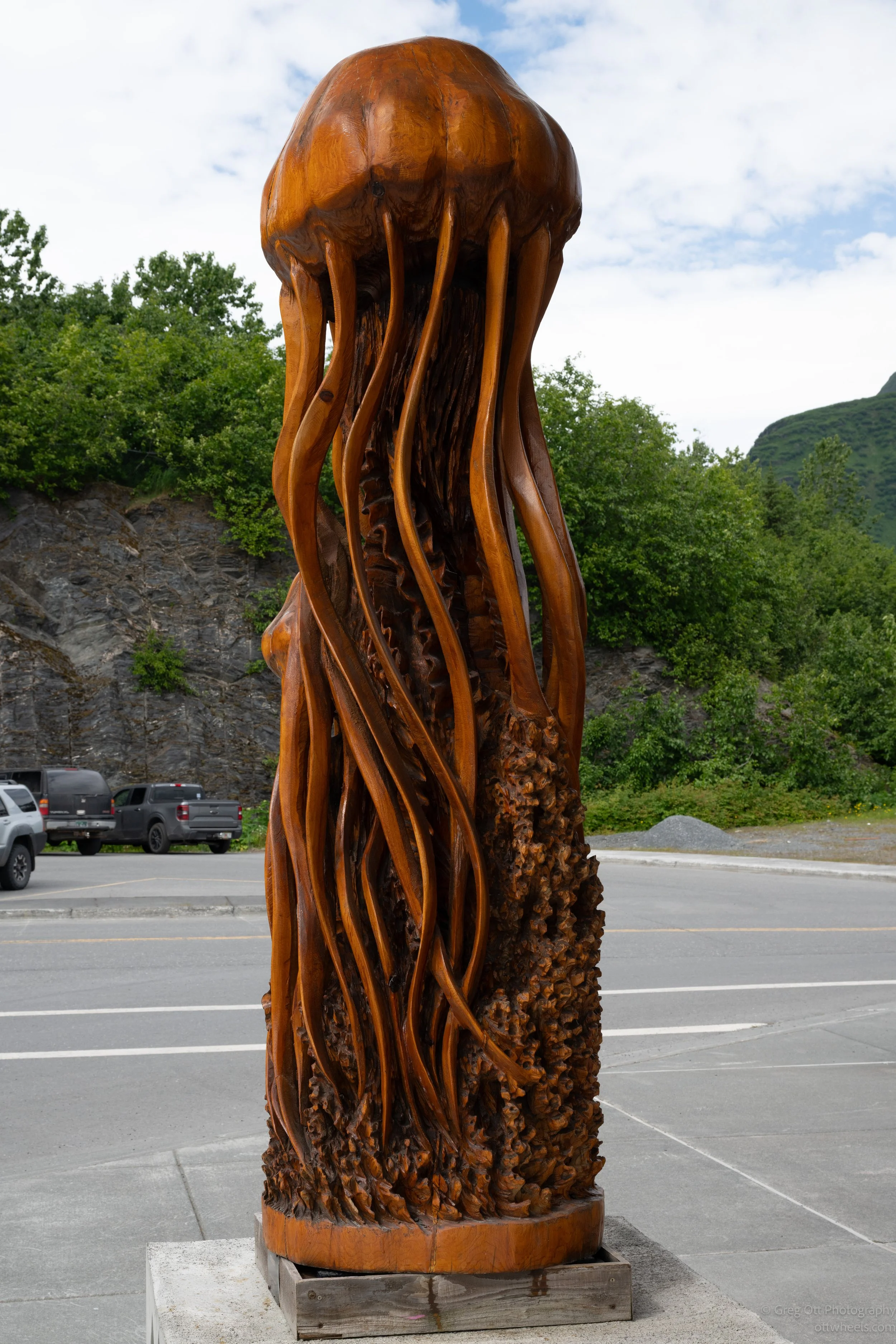
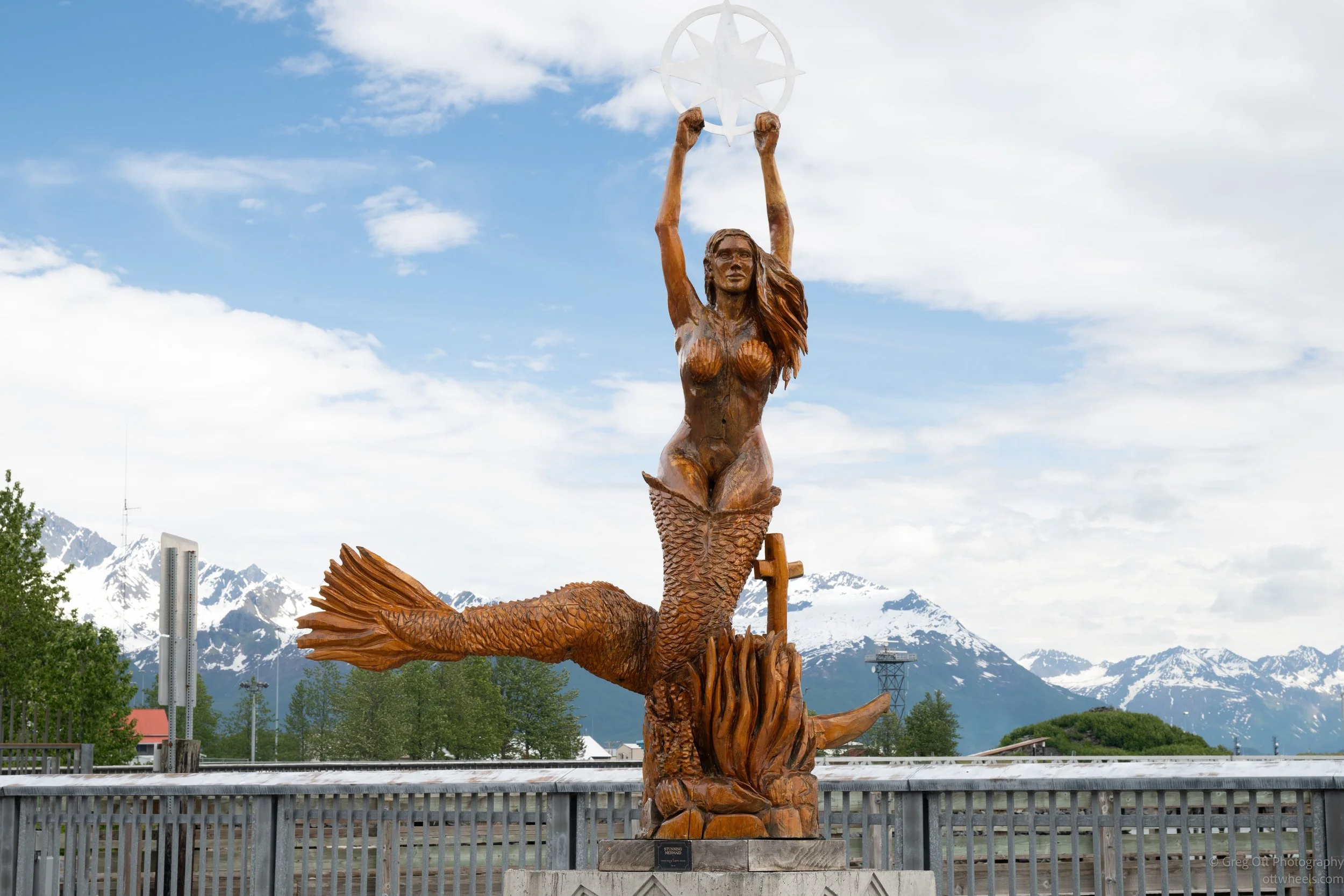
Scattered around the marina were a number of large wooden carvings, most of them appearing to be chainsaw carvings with sea-related themes. They added a nice touch of local character and gave the waterfront a distinctly Alaskan feel.
Valdez Oil Terminal
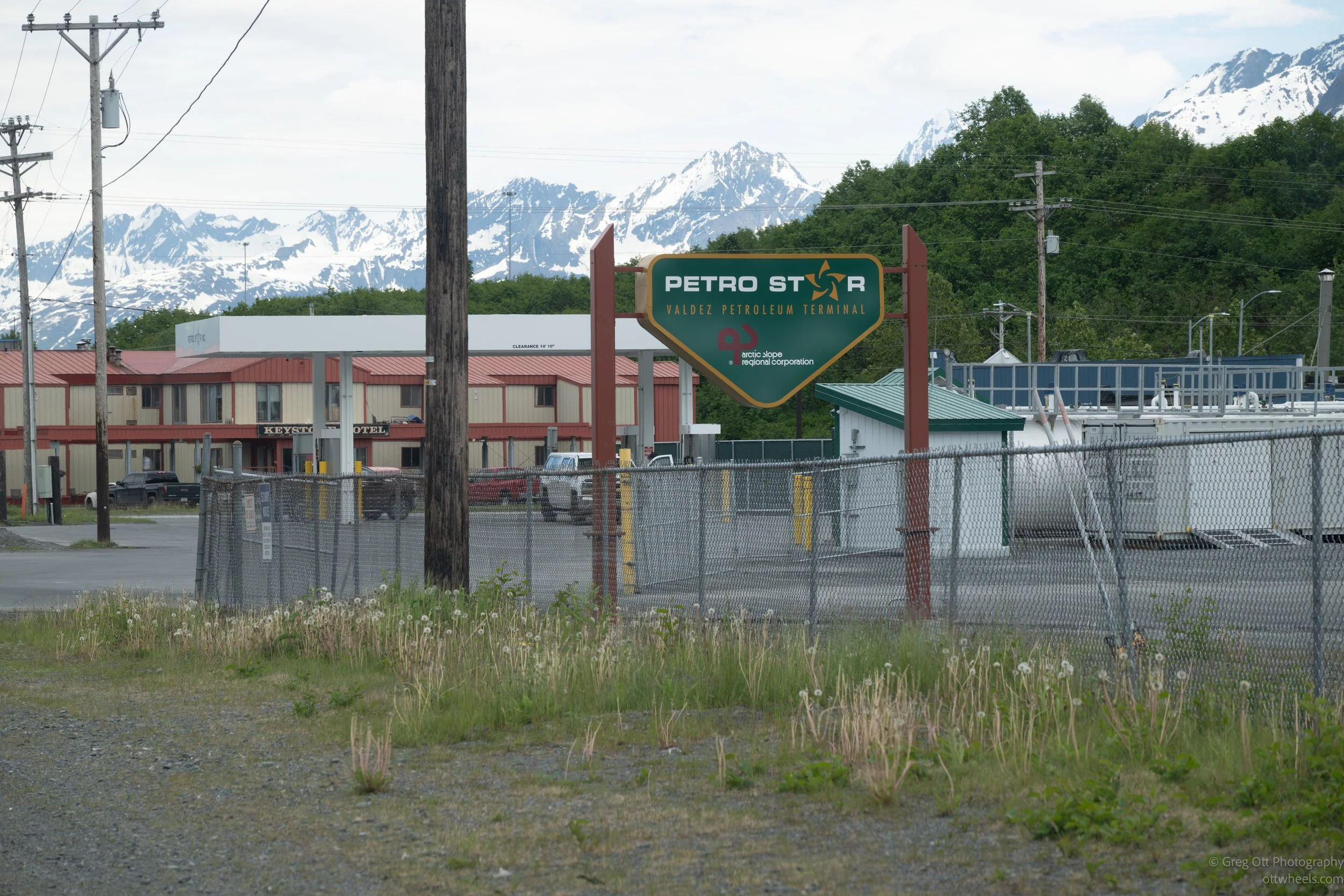
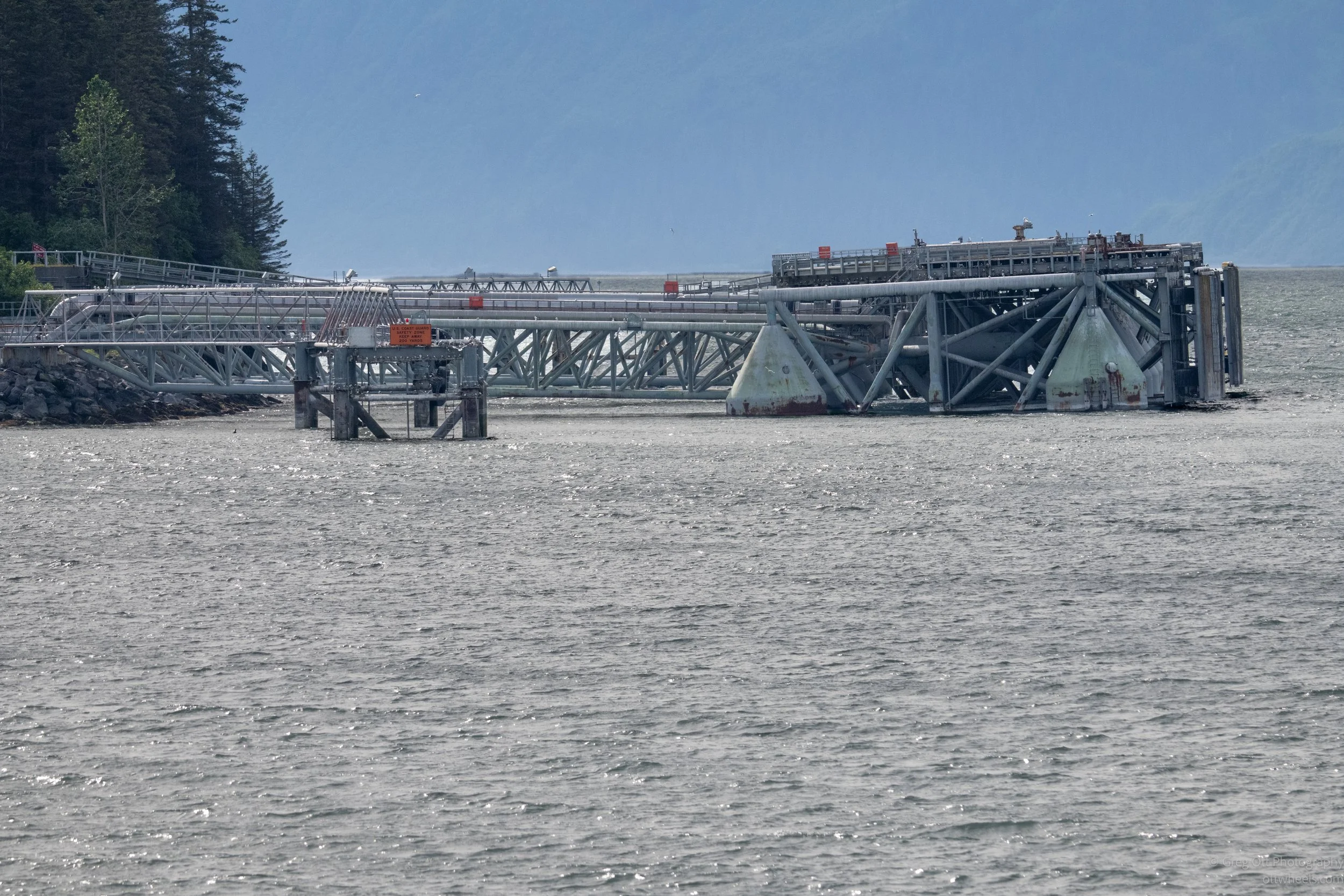
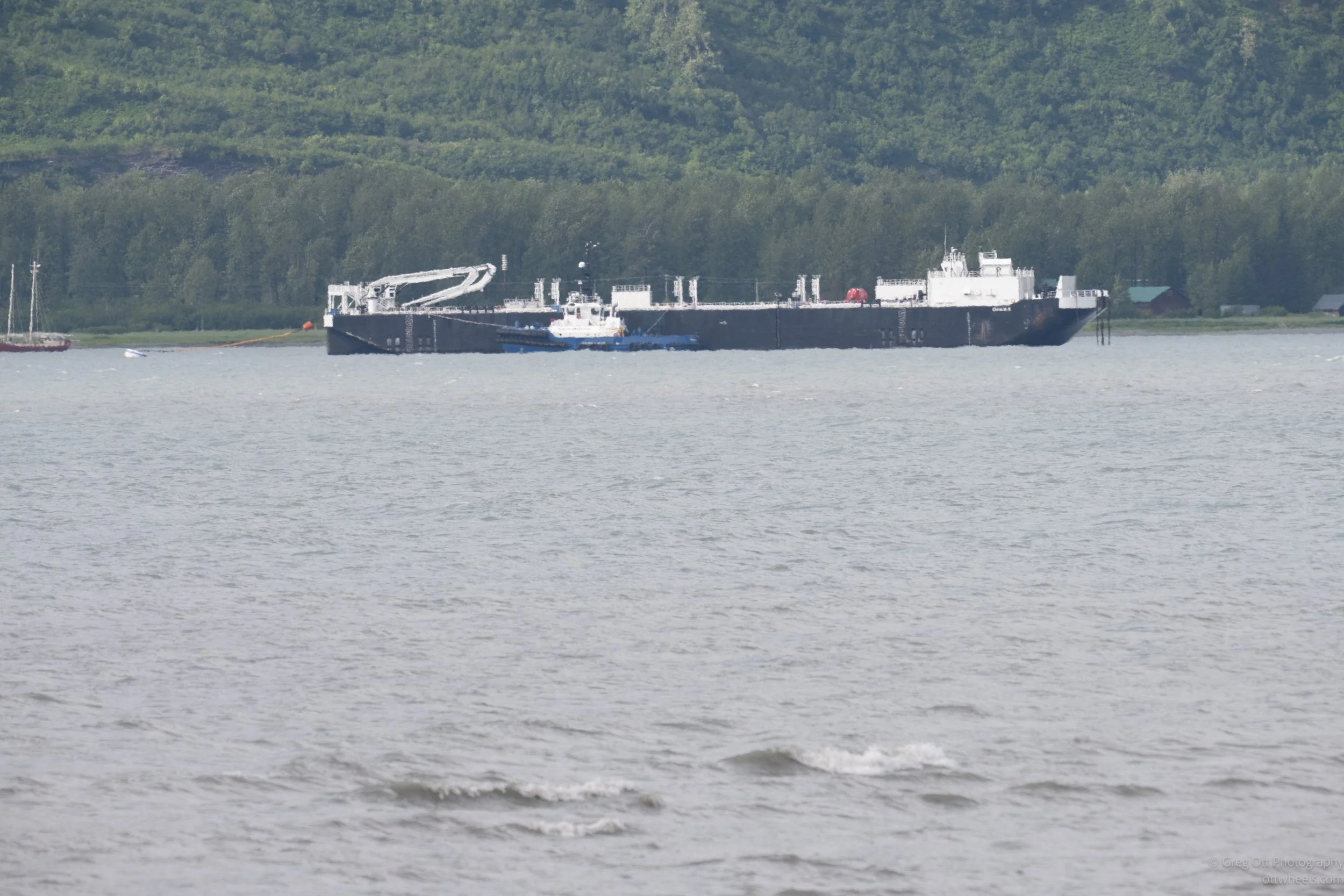
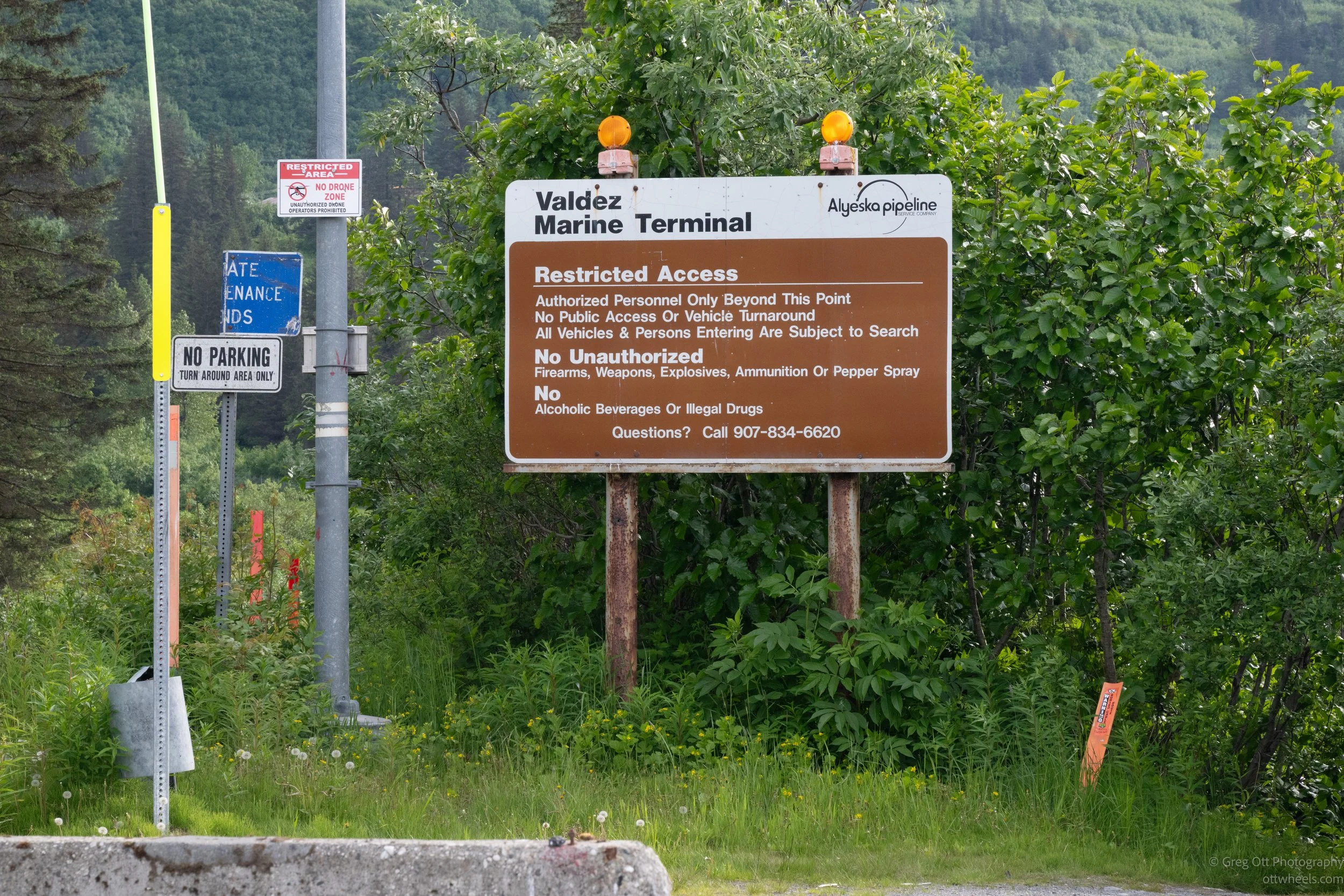
I drove around to the other side of the bay — the terminal side, where the oil arrives and is stored. I thought there might be a way to get closer for photos. There isn't. After 9/11, security was increased and all tours stopped. While I was out there I found a few locals installing replacement warning poles along the banks. We talked for a while. They described working multiple jobs to make ends meet in a town where the economy runs on oil money, fishing, and tourism. They also told me where to go for photographs, which was the more immediately useful information.
Solomon Gulch Fish Hatchery
On the way back I stopped at the hatchery. The Solomon Gulch Fish Hatchery has been running since 1981 and is the largest single-species salmon hatchery in North America. It incubates up to 270 million pink salmon and 2 million coho annually, releasing roughly 250 million pink fry and 1.8 million coho smolts each year. The salmon imprint on the hatchery early in life, and when they return from the ocean — sometimes 16 million pinks in a single season — they're trying to get back to this exact place.
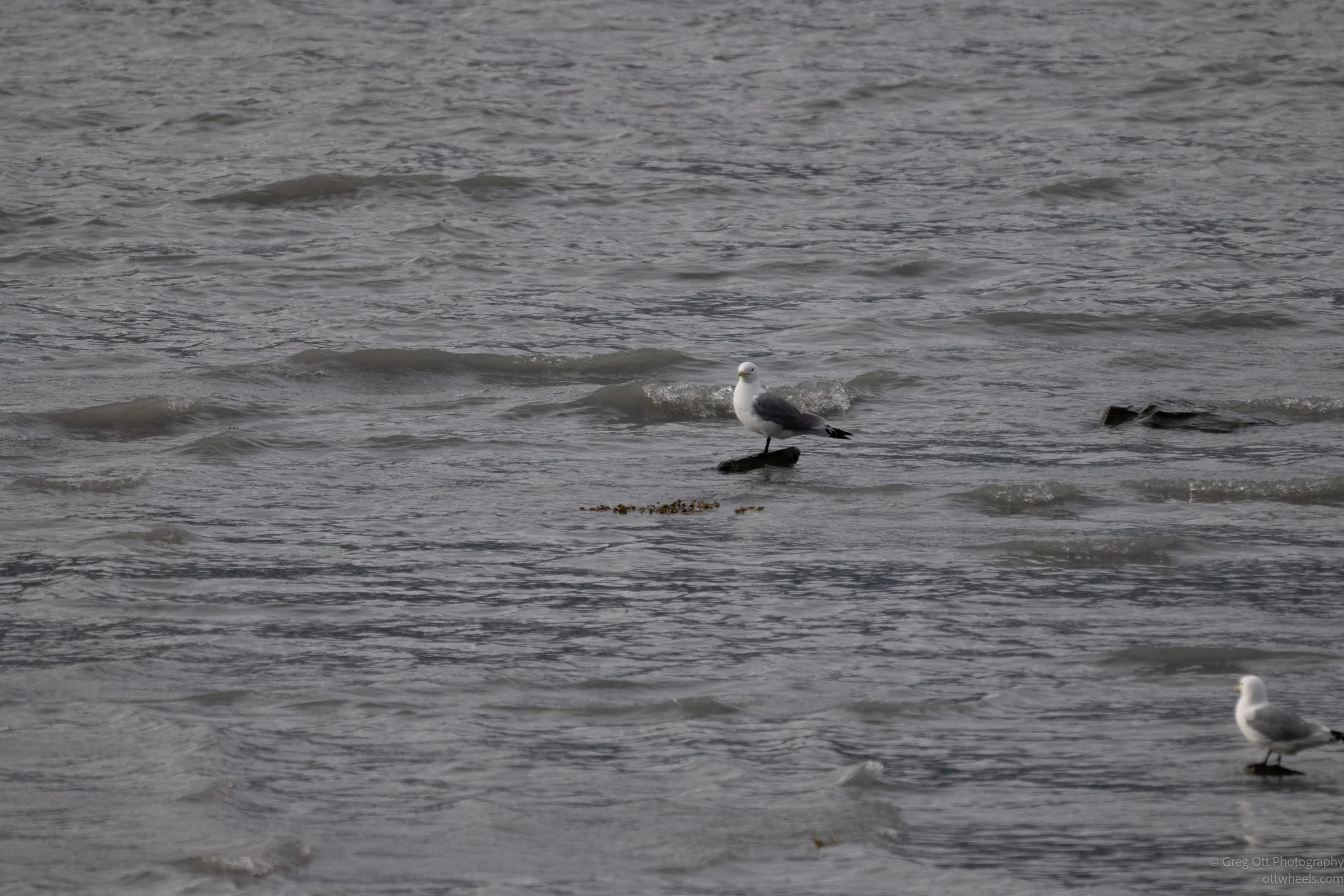
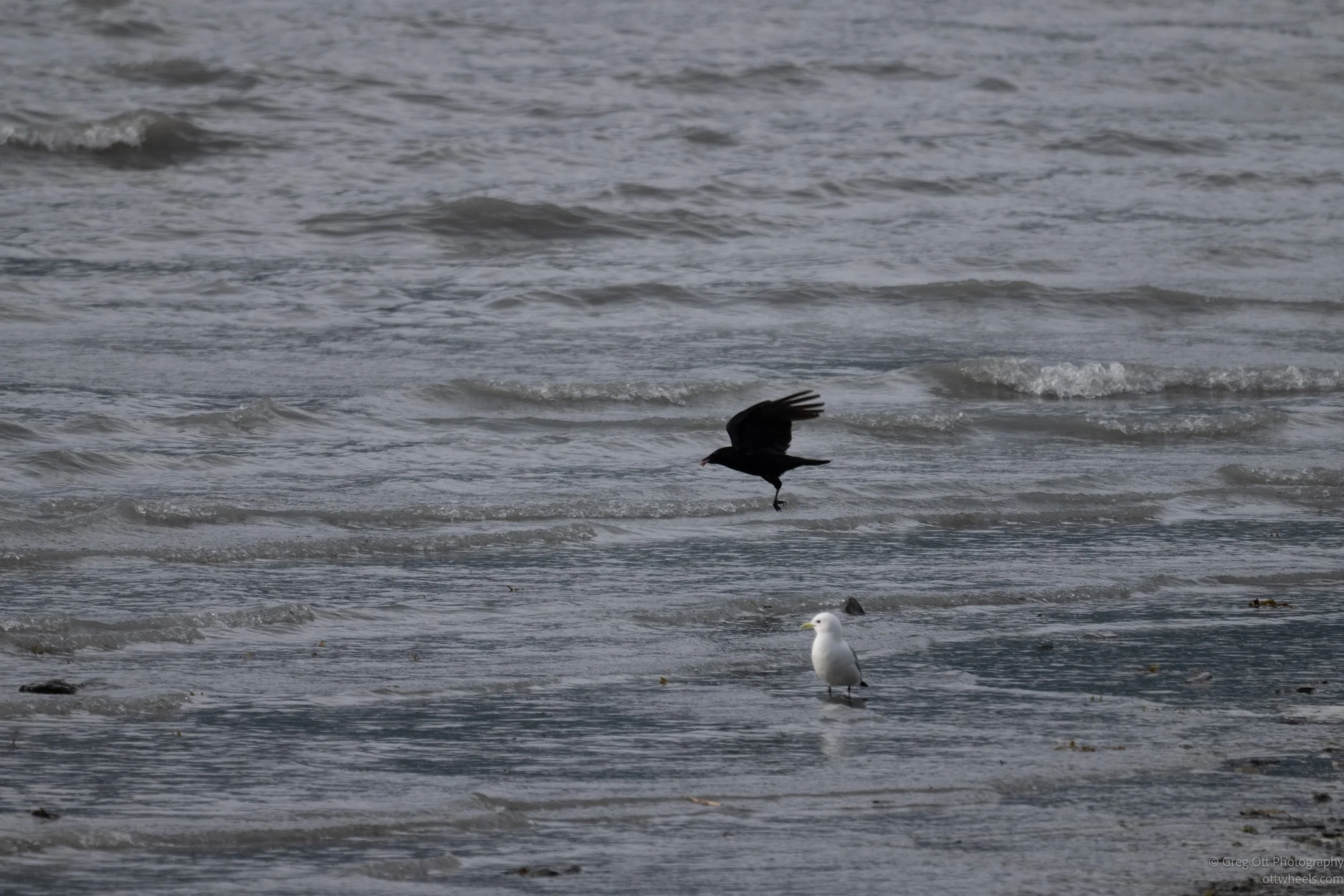
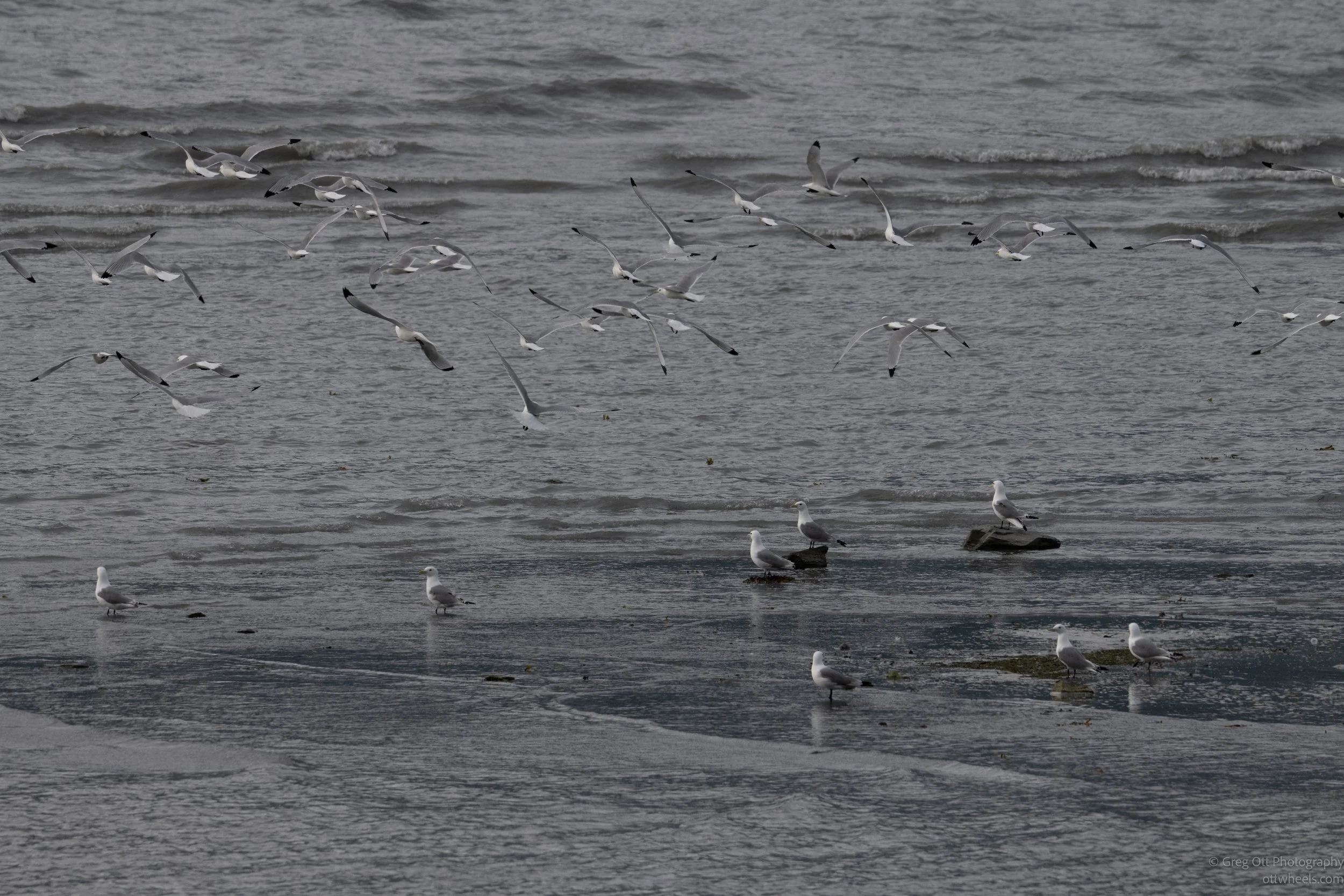
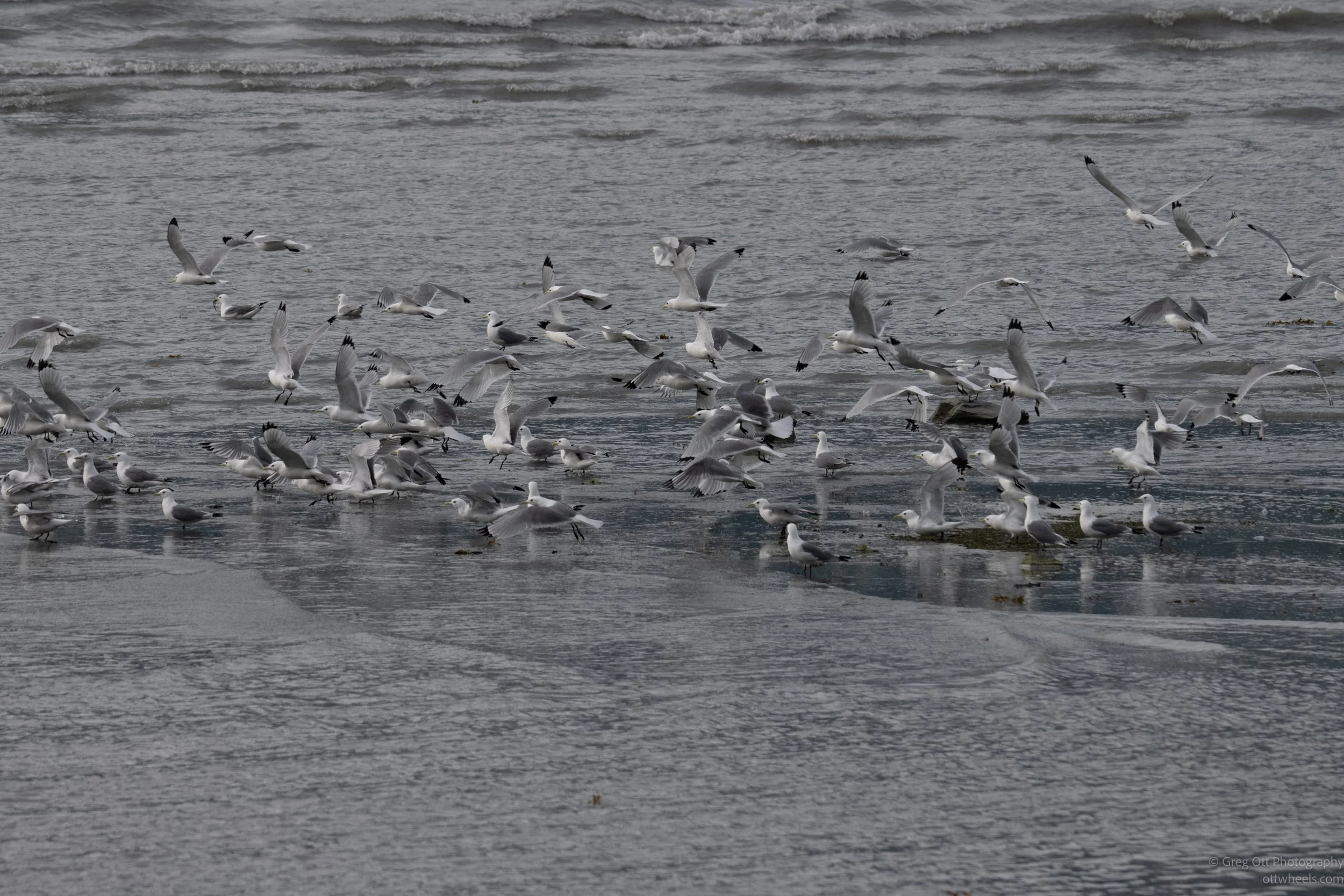
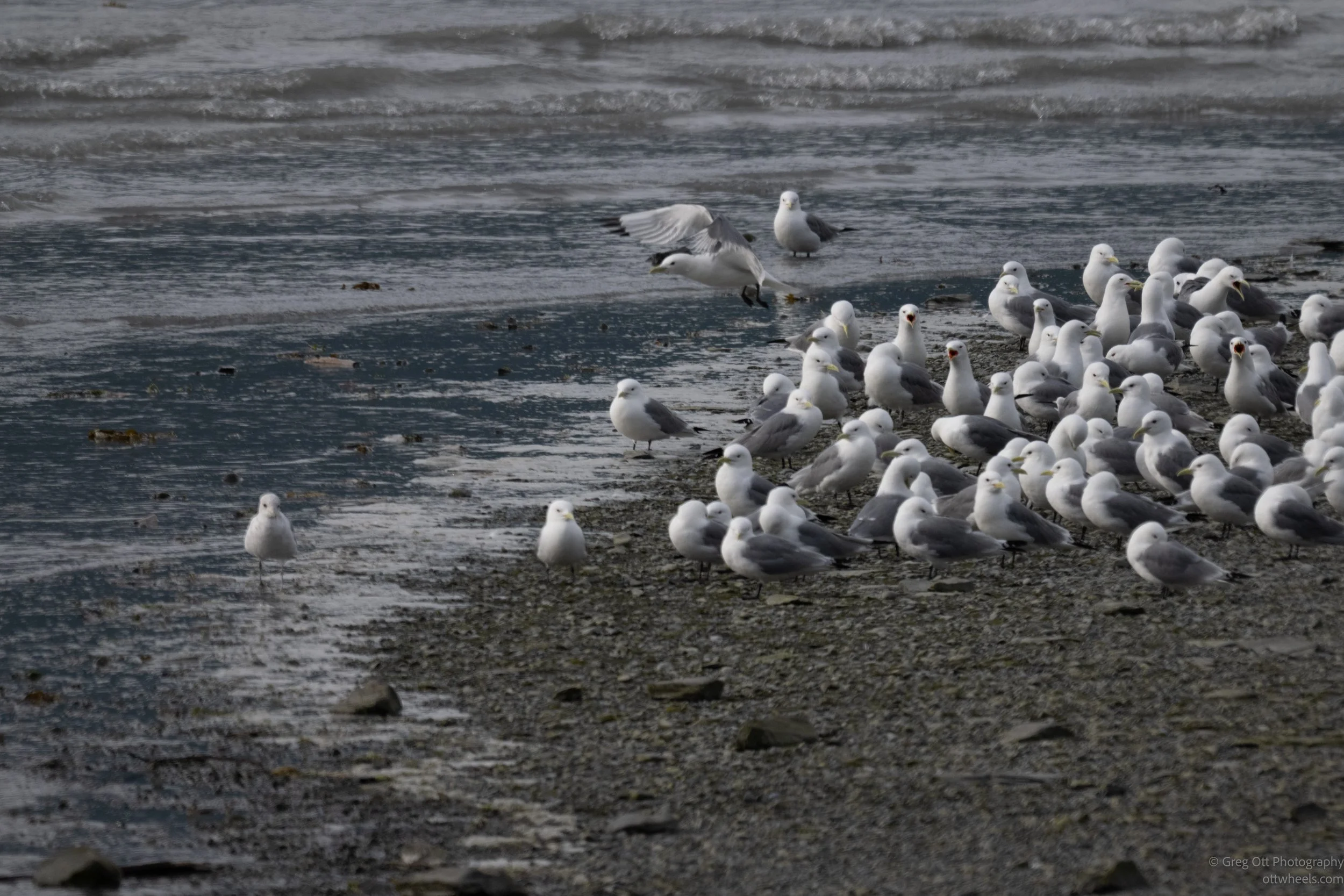
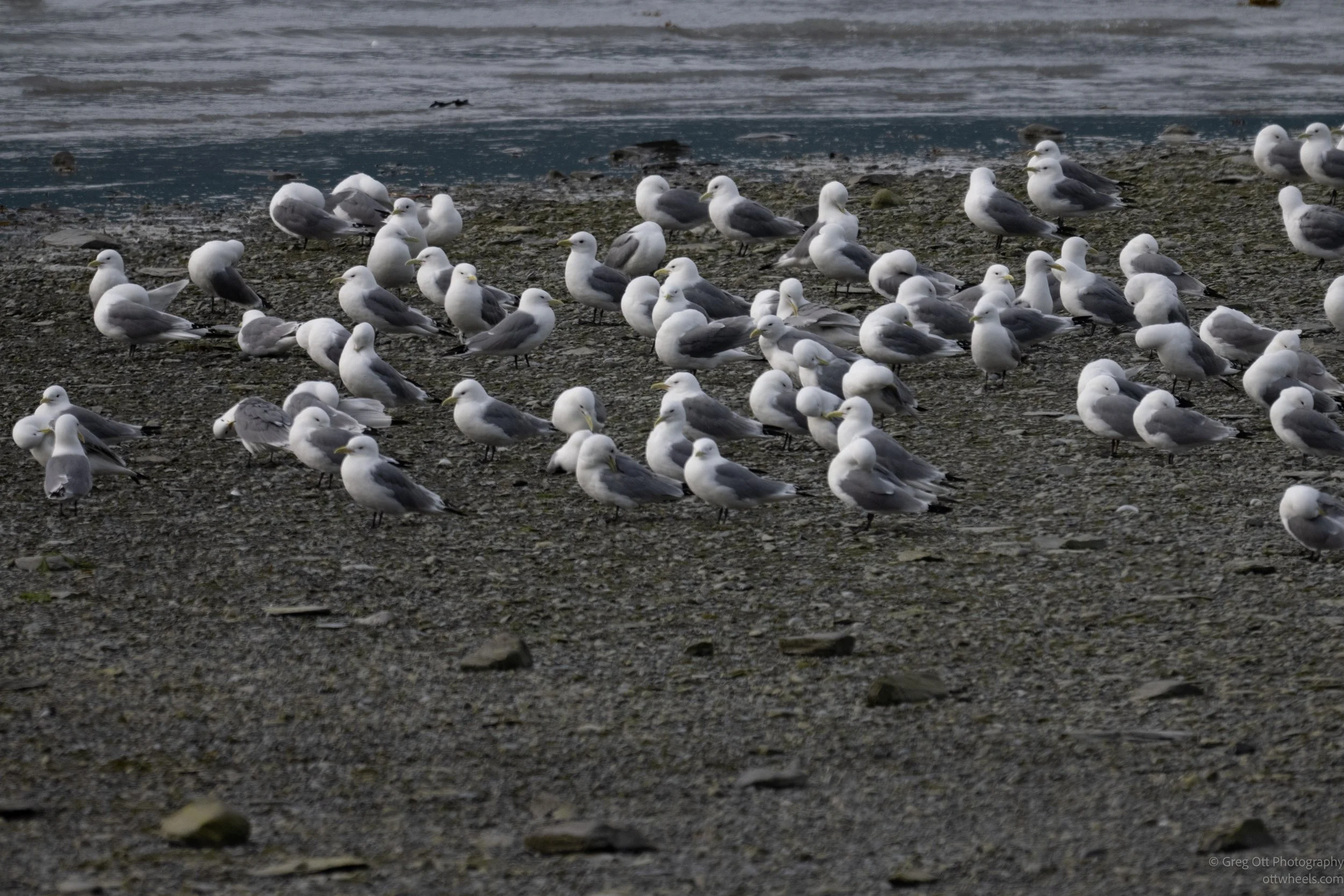
Before I went to the hatchery building I spent time watching the tide come in near a sandy area where the gulls were standing. Over about 40 minutes the water gradually surrounded their patch of sand. They stayed. The island kept shrinking. They kept crowding closer together, completely indifferent to the situation. It was funny to watch.
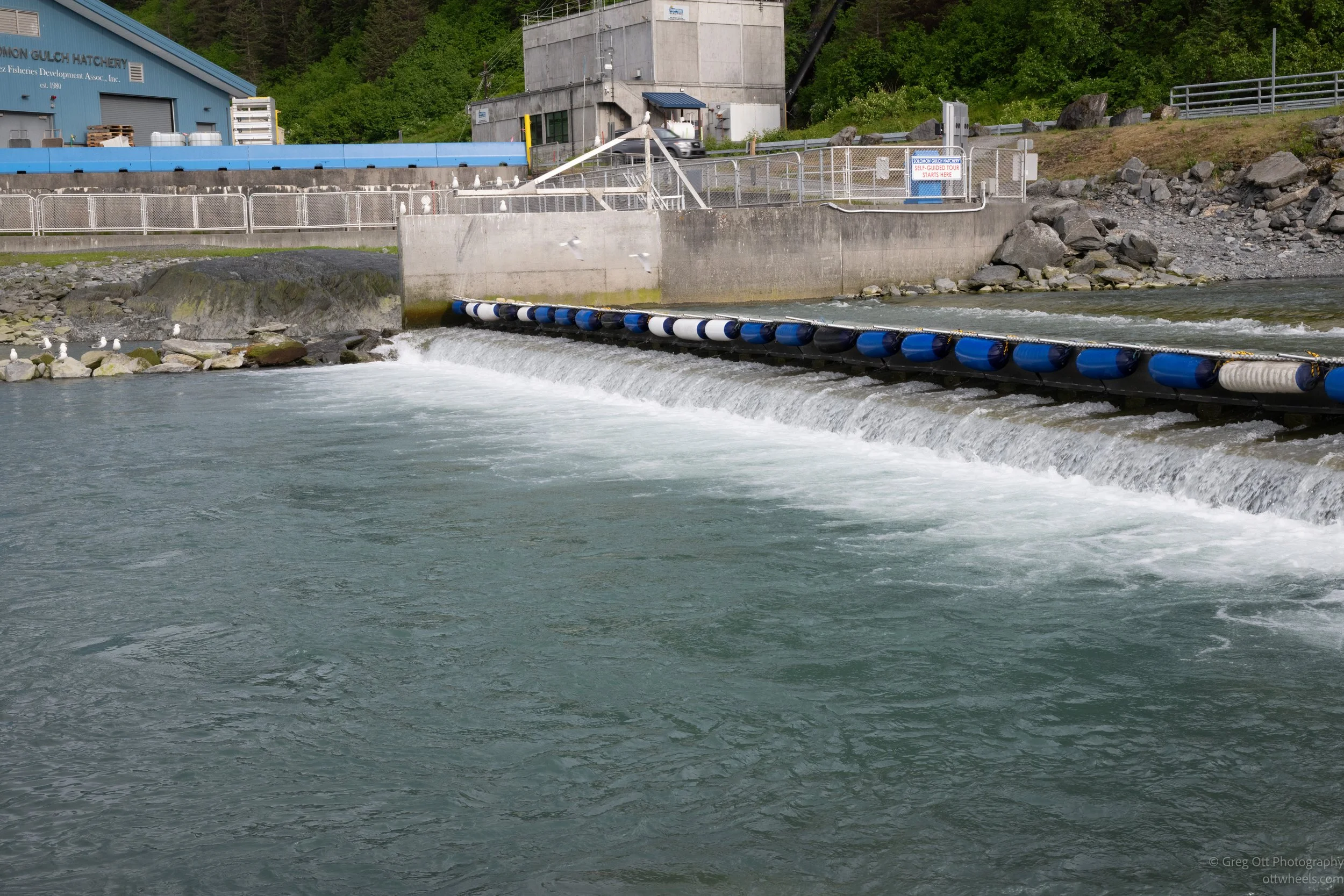
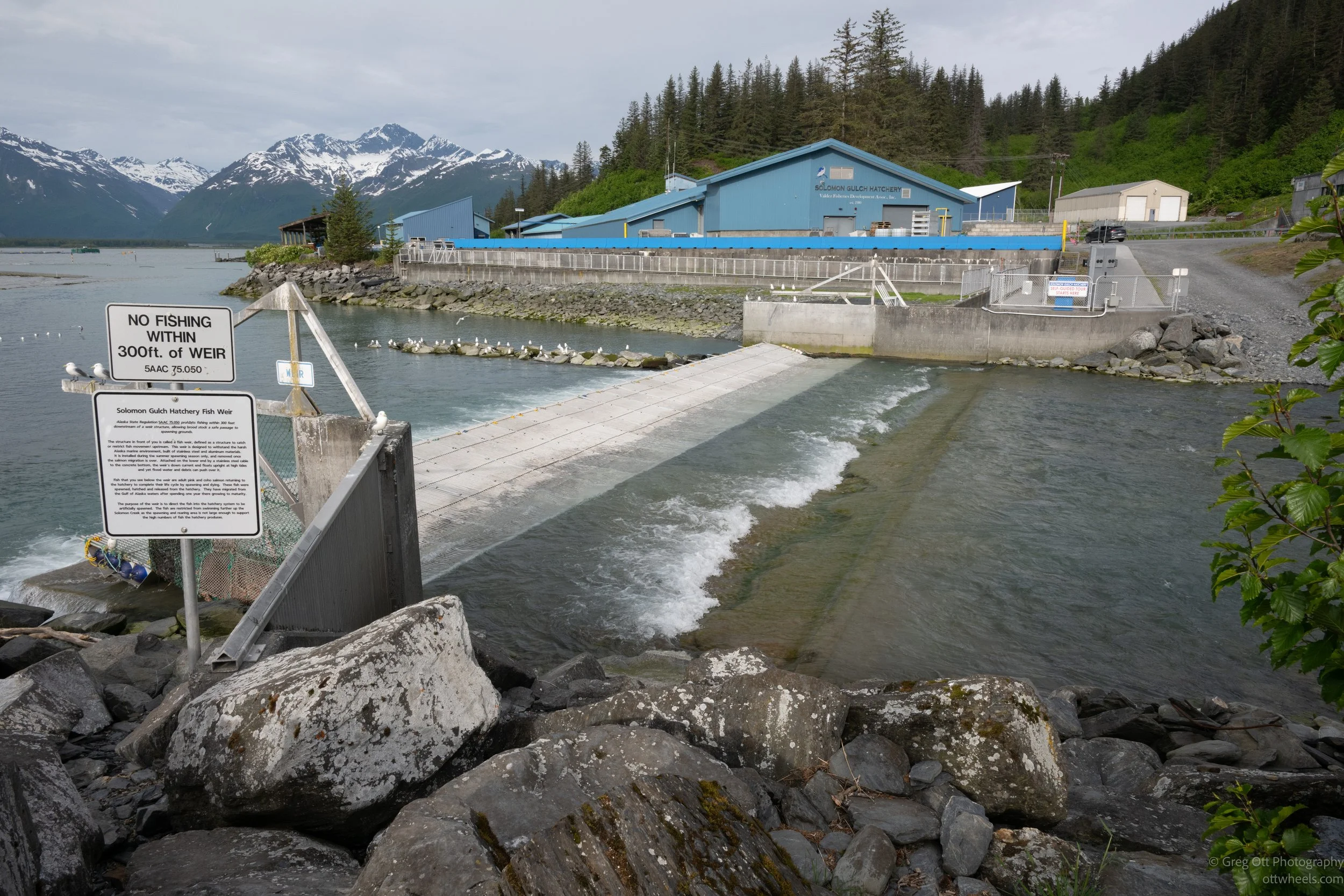
At the hatchery I met two fishermen from Ohio who explained the weir — the barrier that prevents the salmon from going further up Solomon Gulch. The gulch itself is used as a freshwater source, not a spawning channel, and it couldn't hold the numbers anyway. The fish are guided into the hatchery instead. Staff collect the eggs in late summer, spawning as many as 16,000 adult fish per day. The eggs hatch into alevin over winter, living off their yolk sacs in simulated gravel beds. By early spring the fry emerge, get pumped to offshore net pens, and are fed until they hit at least half a gram. Then they're released. Pink salmon return in about 18 months. Coho take two to three years. When they come back, bears, sea lions, eagles, and seals already know about it.
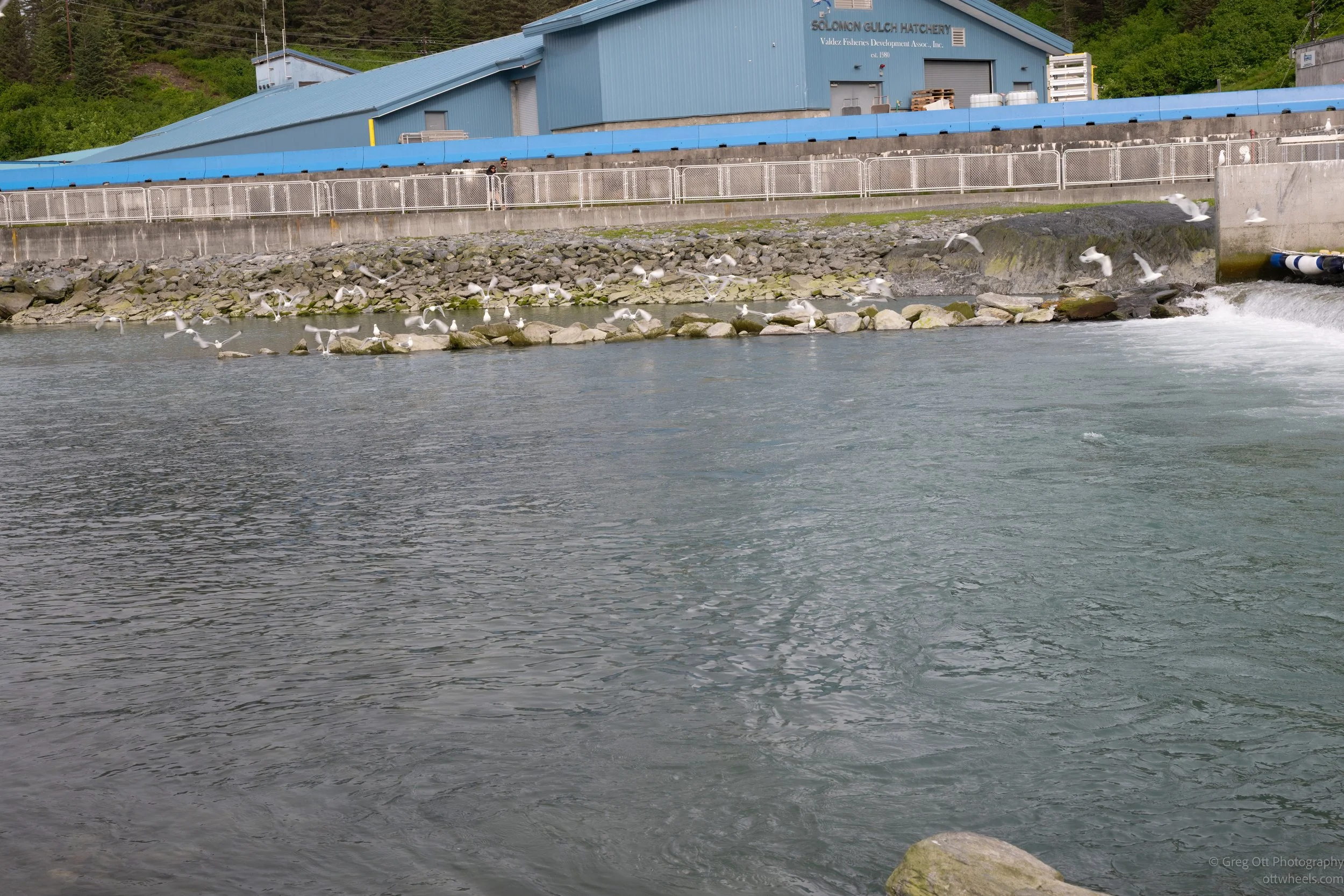
On the way back I noticed the bike path running all the way from Valdez along Dayville Road. I made a note to ride it if the weather permitted.
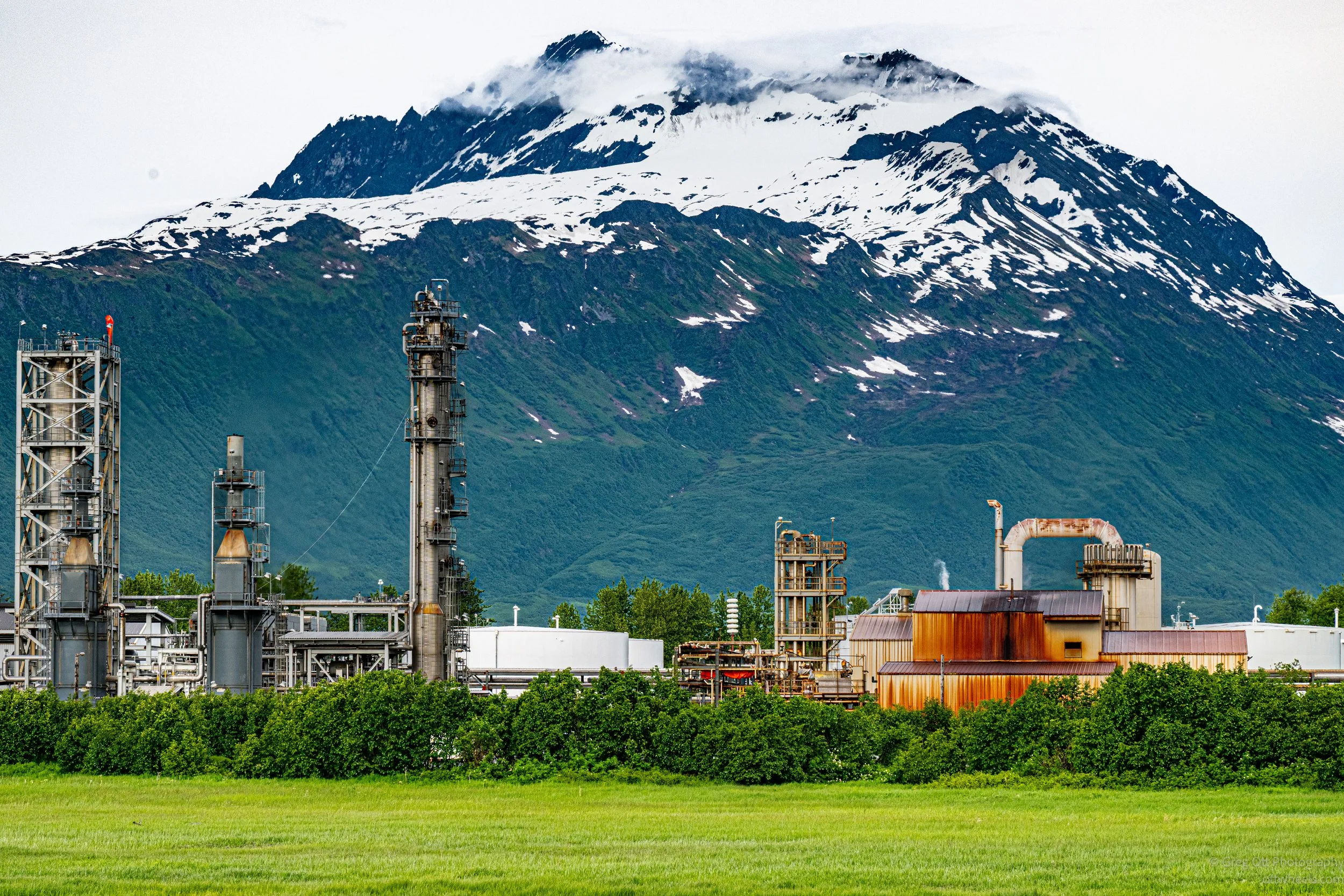
Back at the van, I made dinner and did a little research on the name Valdez. In 1790, Spanish cartographer Salvador Fidalgo was exploring Prince William Sound and named the bay after Antonio Valdés y Fernández Bazán, who was head of the Spanish Navy and Minister of the Indies. The original spelling was Valdes. The town incorporated in 1901 as Valdez. Pronounced Val-DEEZ — not the Spanish way. The locals will correct you on this. I've been corrected several times. Then someone who had recently moved here corrected me back to the Spanish pronunciation. I'm not sure who's right anymore, but it seems to be a local pastime.