Thompson Pass into Valdez
I had 40 miles to go. The drive into Valdez sits at the end of the Richardson Highway, and I had six days and five nights ahead of me in this small village on Prince William Sound. I wasn't moving very fast.
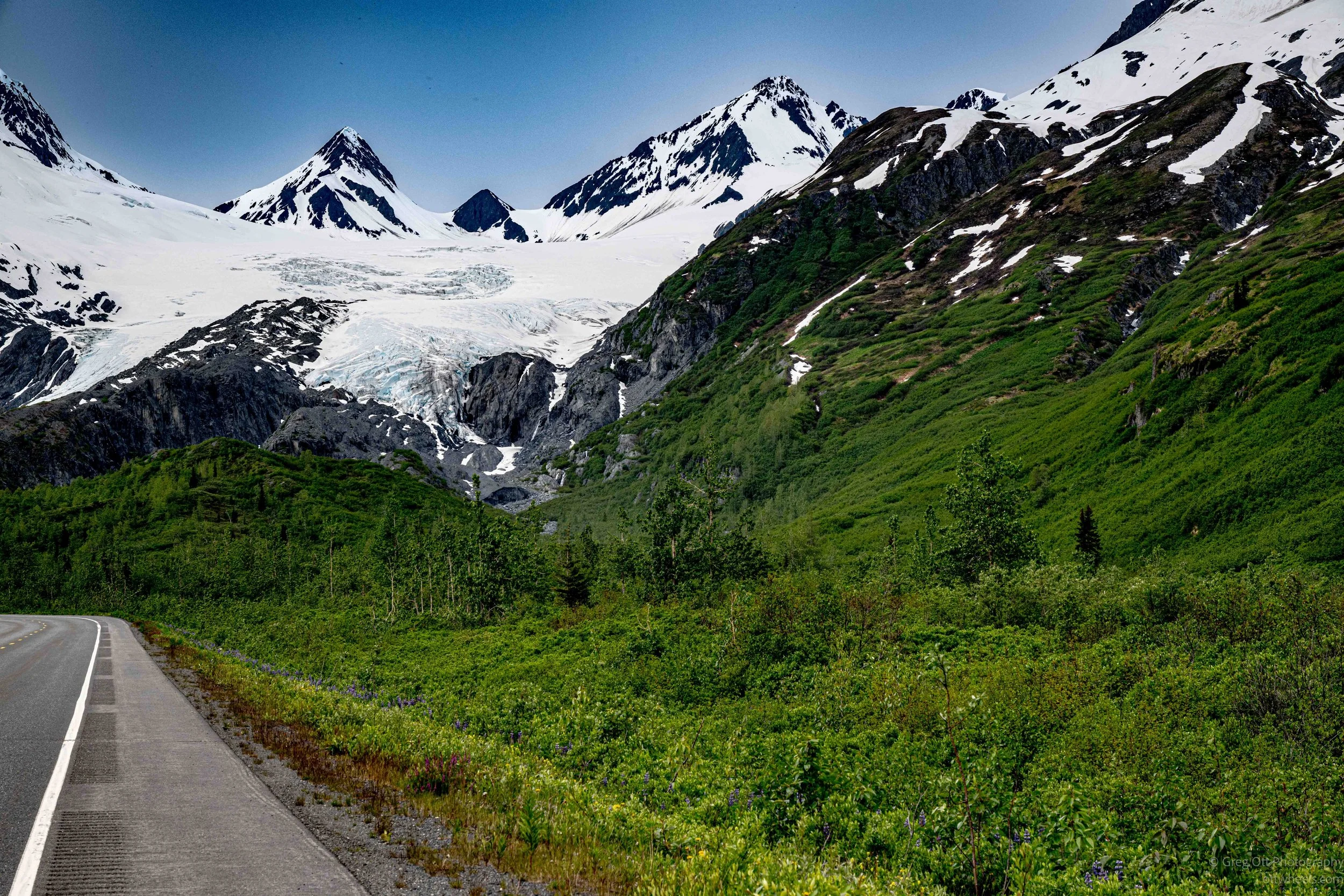
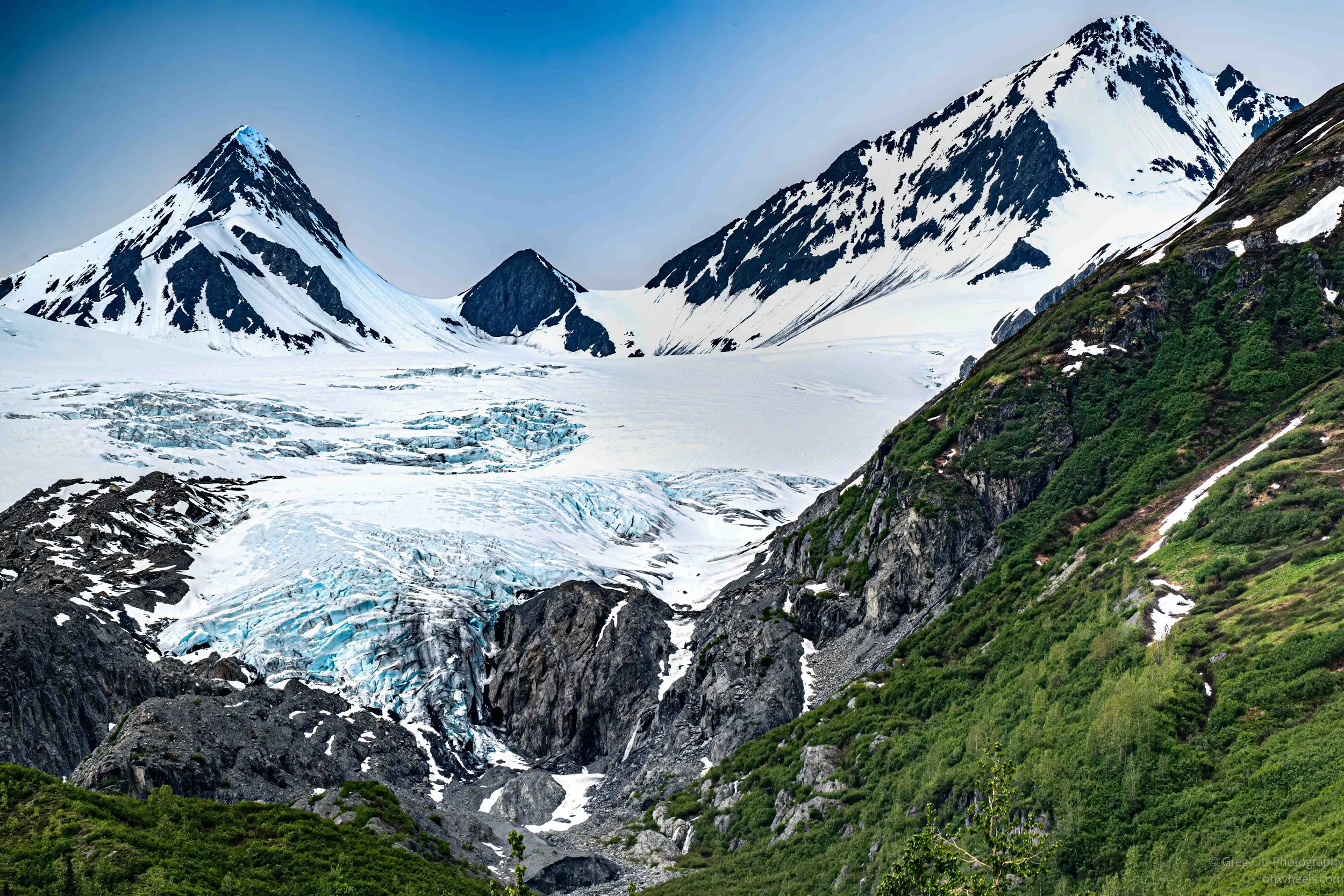
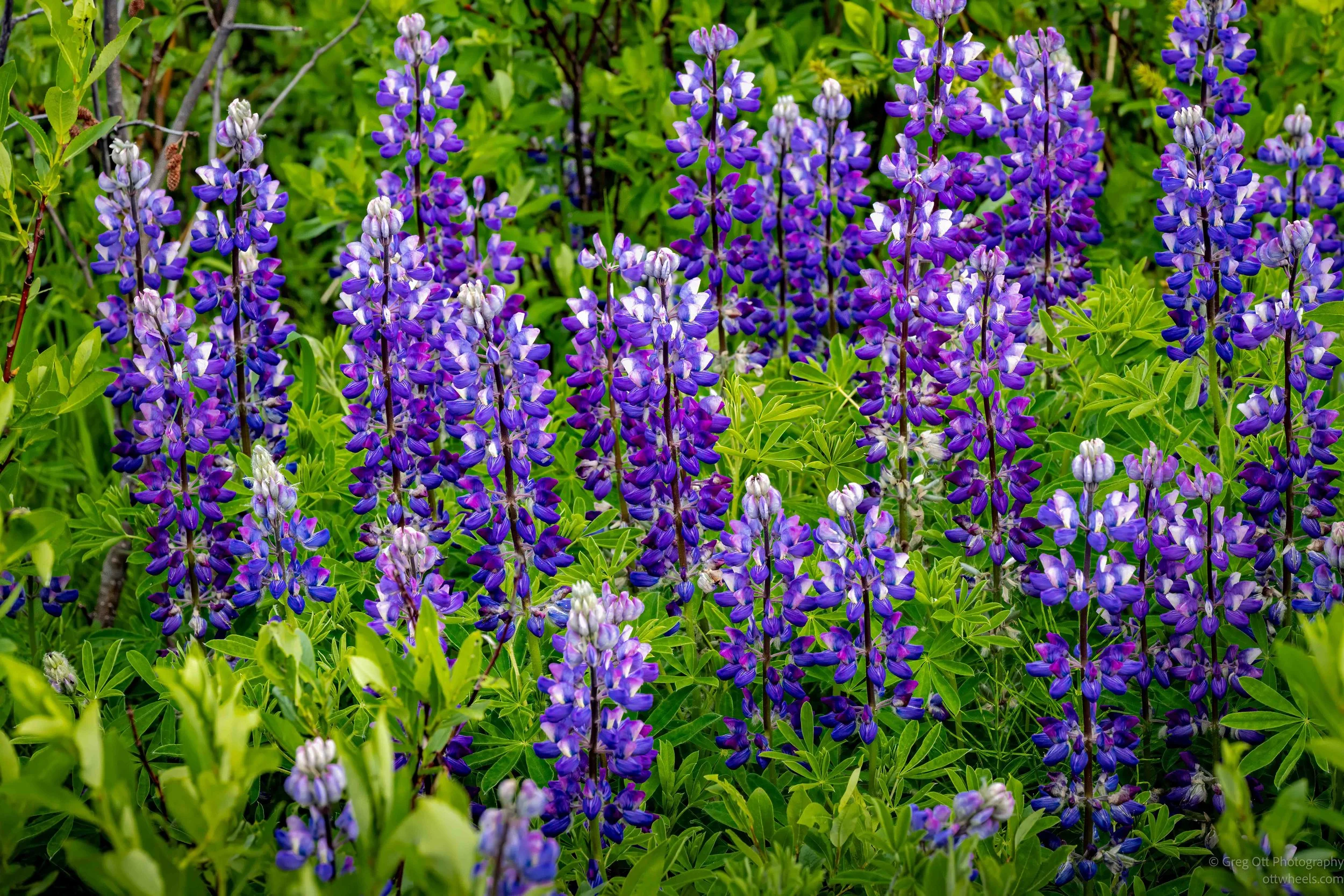
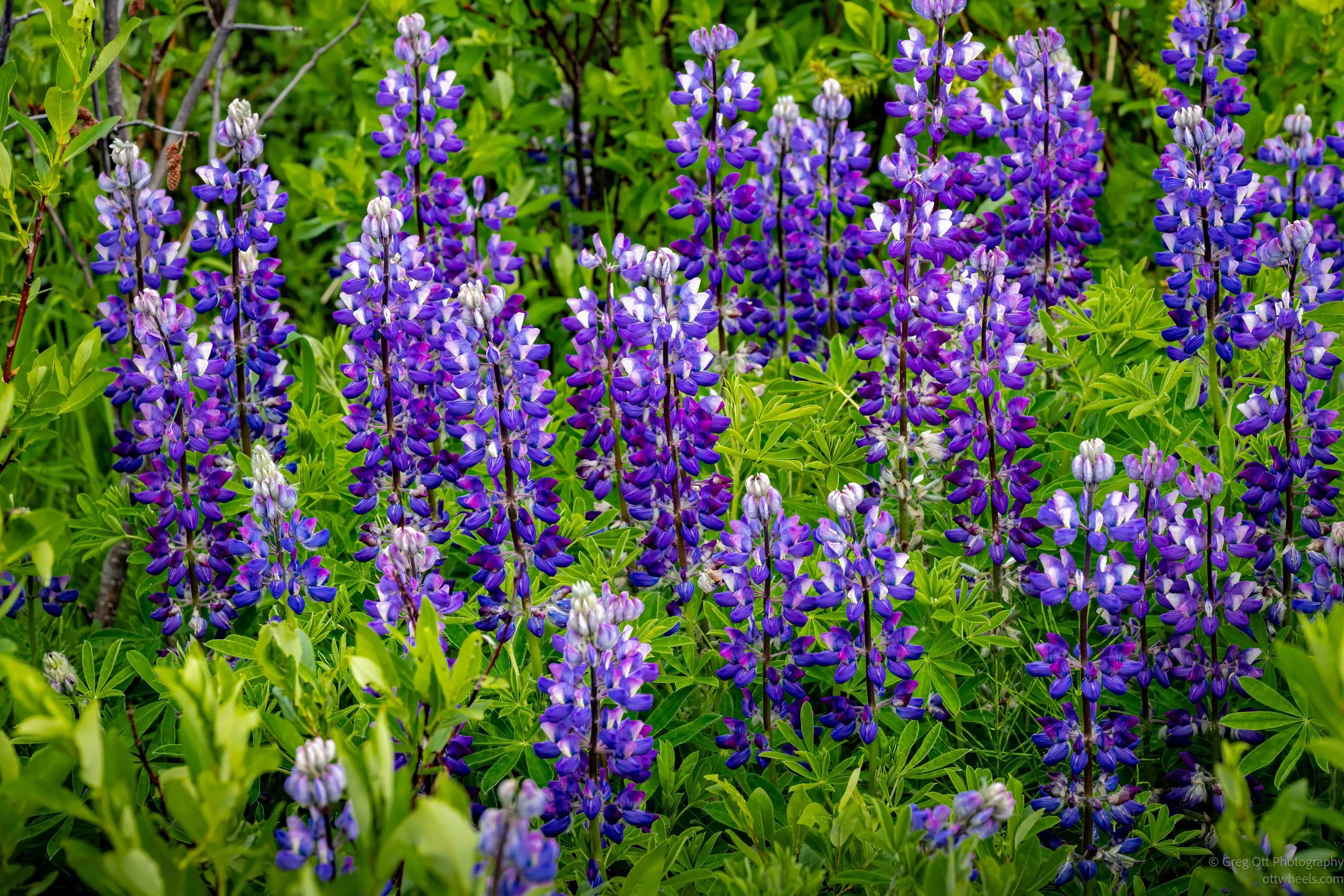
The first stop was the Worthington Glacier, which appears on the right side of the road before you reach Thompson Pass — and I mean right there on the road. There's a state recreation site where you can pull in, get out, and walk directly toward it, which makes it one of the more accessible glaciers in Alaska. I grabbed the camera and started working the angles. All around the site, purple flowers were doing their best to take over everything. These are Nootka Lupine, the dominant wild lupine species in coastal and southcentral Alaska, and they are absolutely everywhere along roadsides, riverbanks, and disturbed ground in the Valdez area this time of year. I tried to work them into the foreground of a glacier shot, but the angles never cooperated. Sometimes they don't.
Up the road, a helicopter was running operations near a wide turnout, and I pulled over to watch. A rope hung beneath the machine, and at the end of it, a large barrel. The pilot lifted it slowly off the ground, carried it maybe a hundred feet, set it down in the parking lot, and released. Then they reset and did it again. It took a few minutes to understand what I was watching — this was pilot training. Someone was learning to carry loads by long-line, which is a specific and unforgiving skill. I sat there for 15 minutes watching the repetition while another pilot waited nearby for their turn. There's something oddly meditative about watching machinery do the same precise thing over and over.
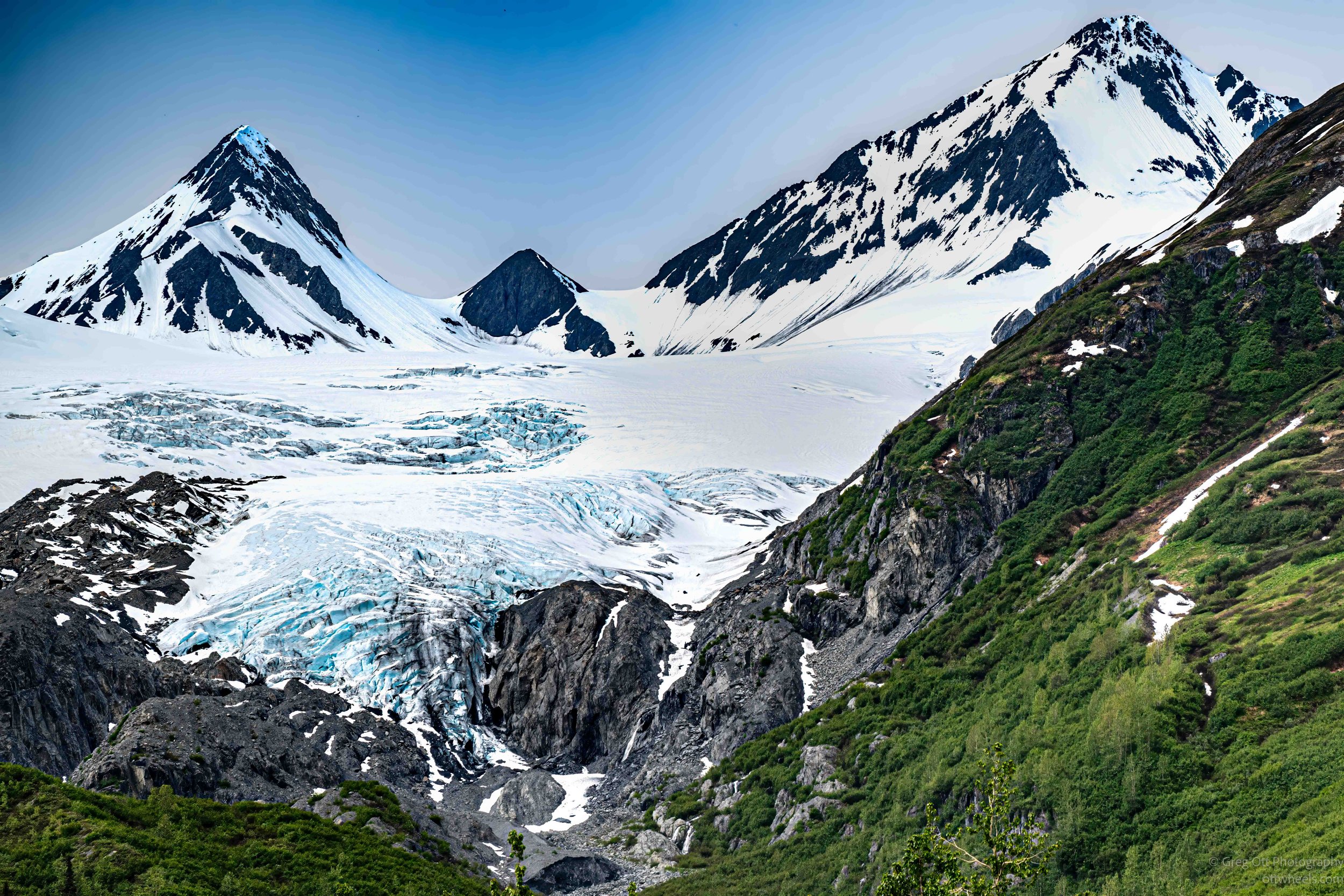
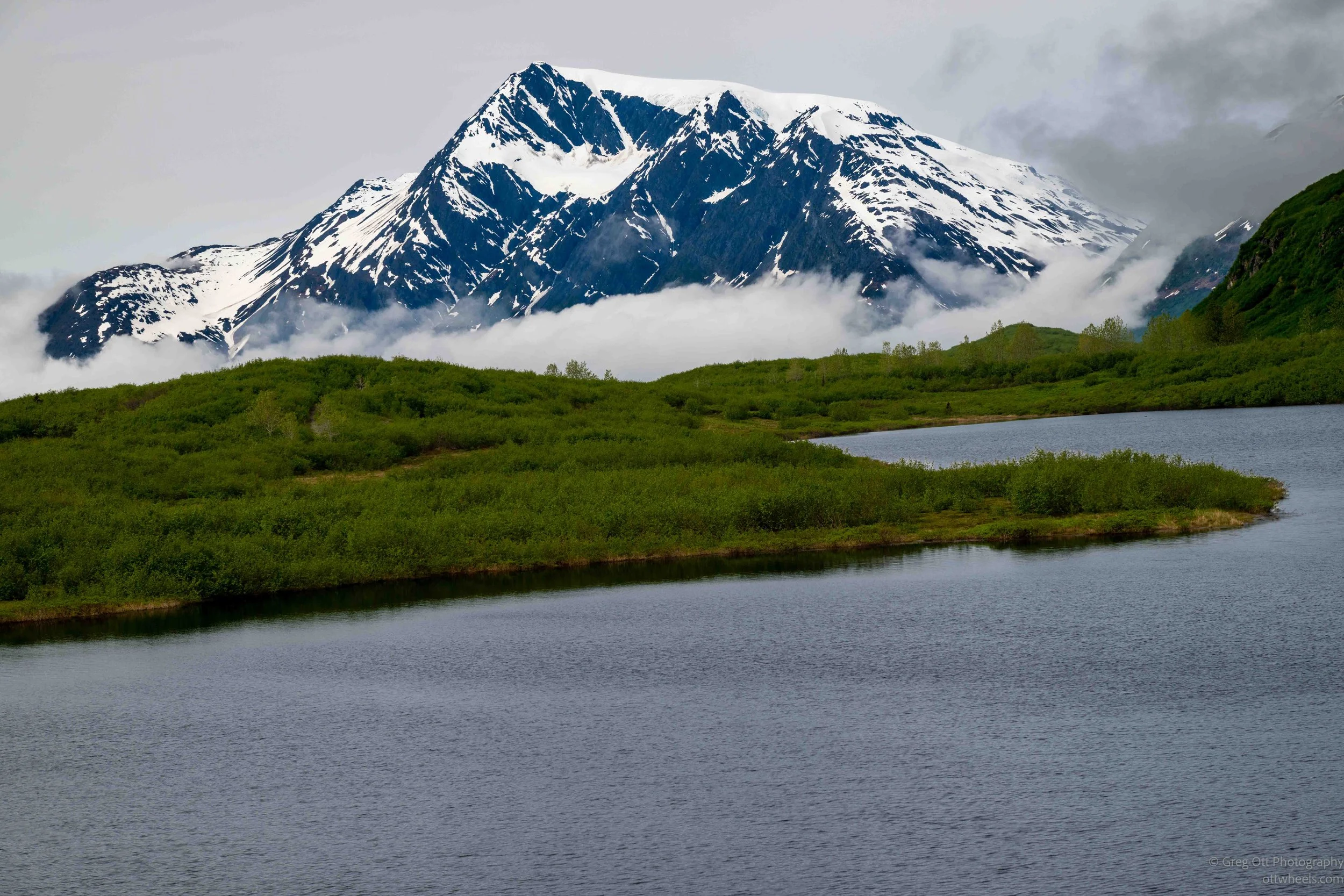
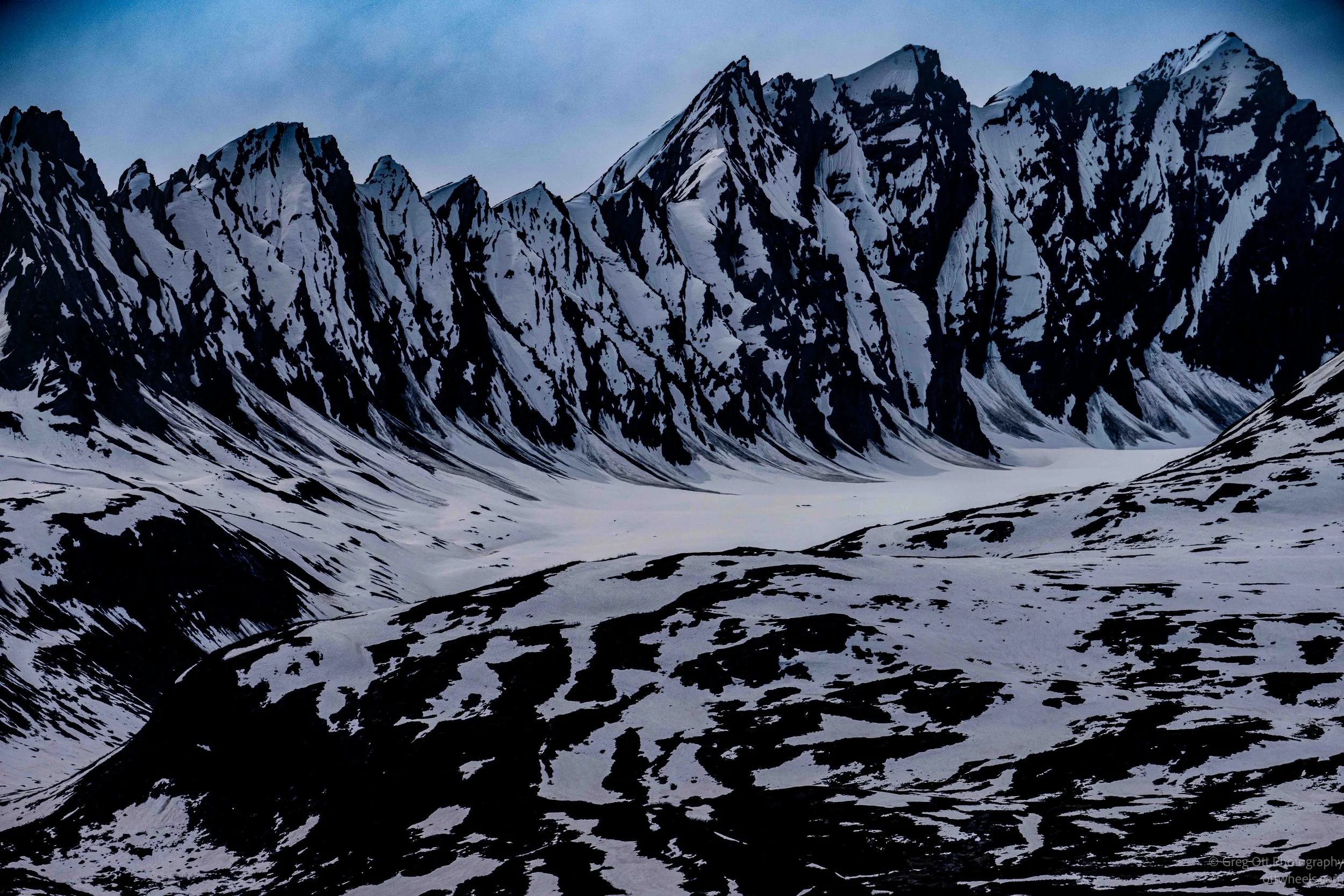
Thompson Pass sits at around 2,700 feet, and there's a sign marking the crest. The Worthington Glacier hangs just to the side of the pass, and once you crest it and start dropping toward Valdez, the pullouts begin in earnest. On a busy day those lots hold 50 vehicles easily — built for the constant flow of RVs that make this run all summer. Today the clouds were low and heavy, scattering the light into something soft and diffuse. It wasn't ideal for photography, but it was spectacular to drive through.
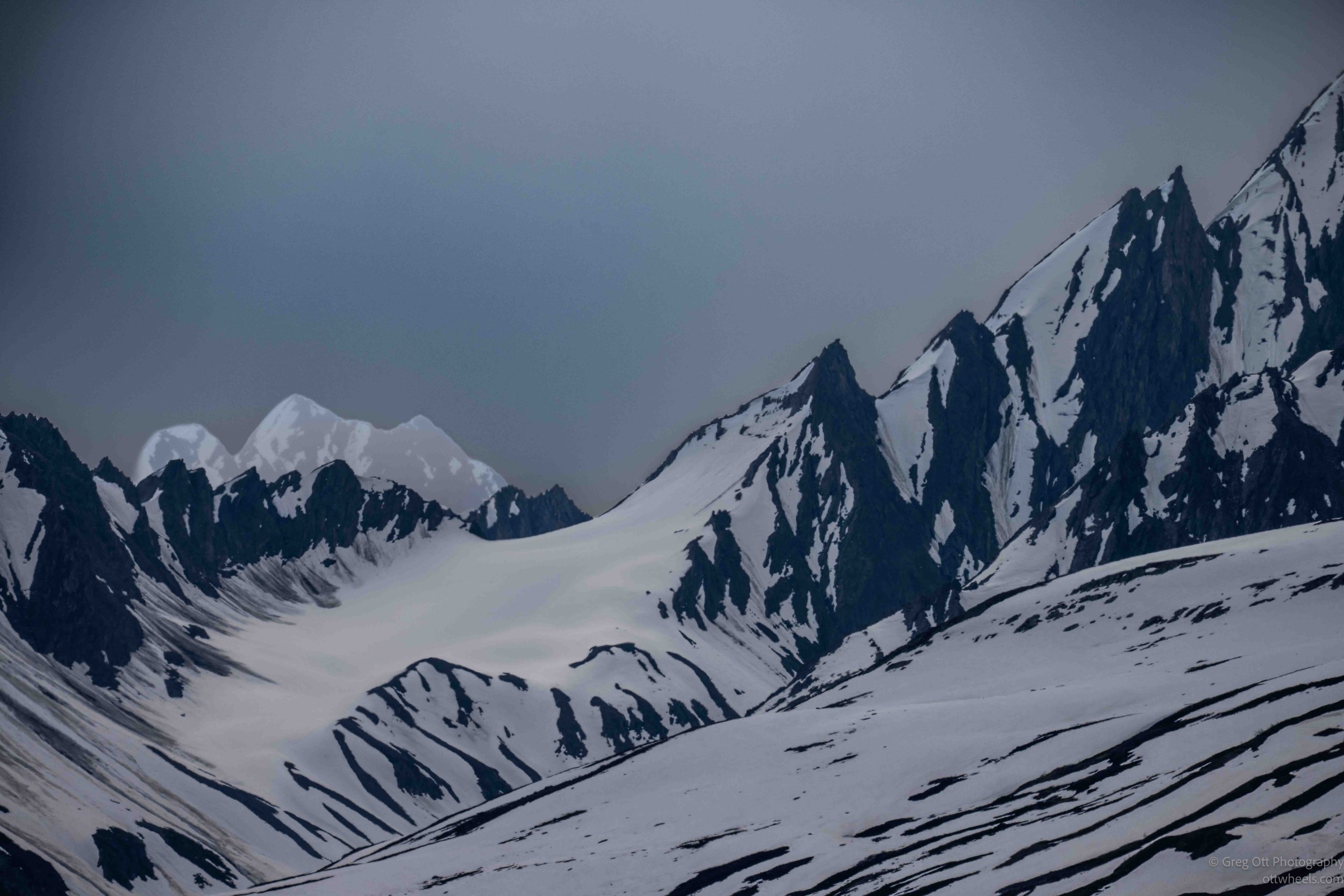
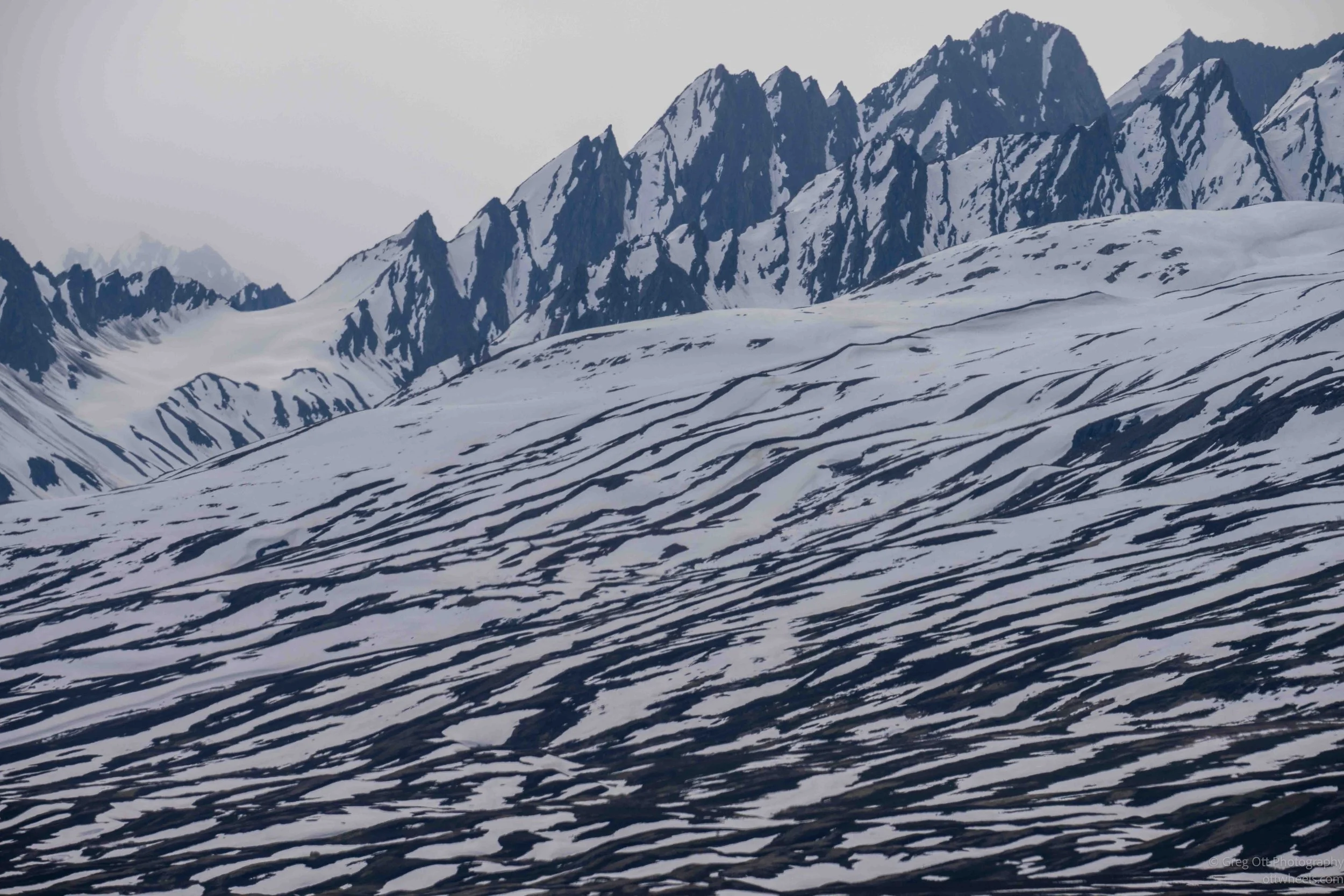
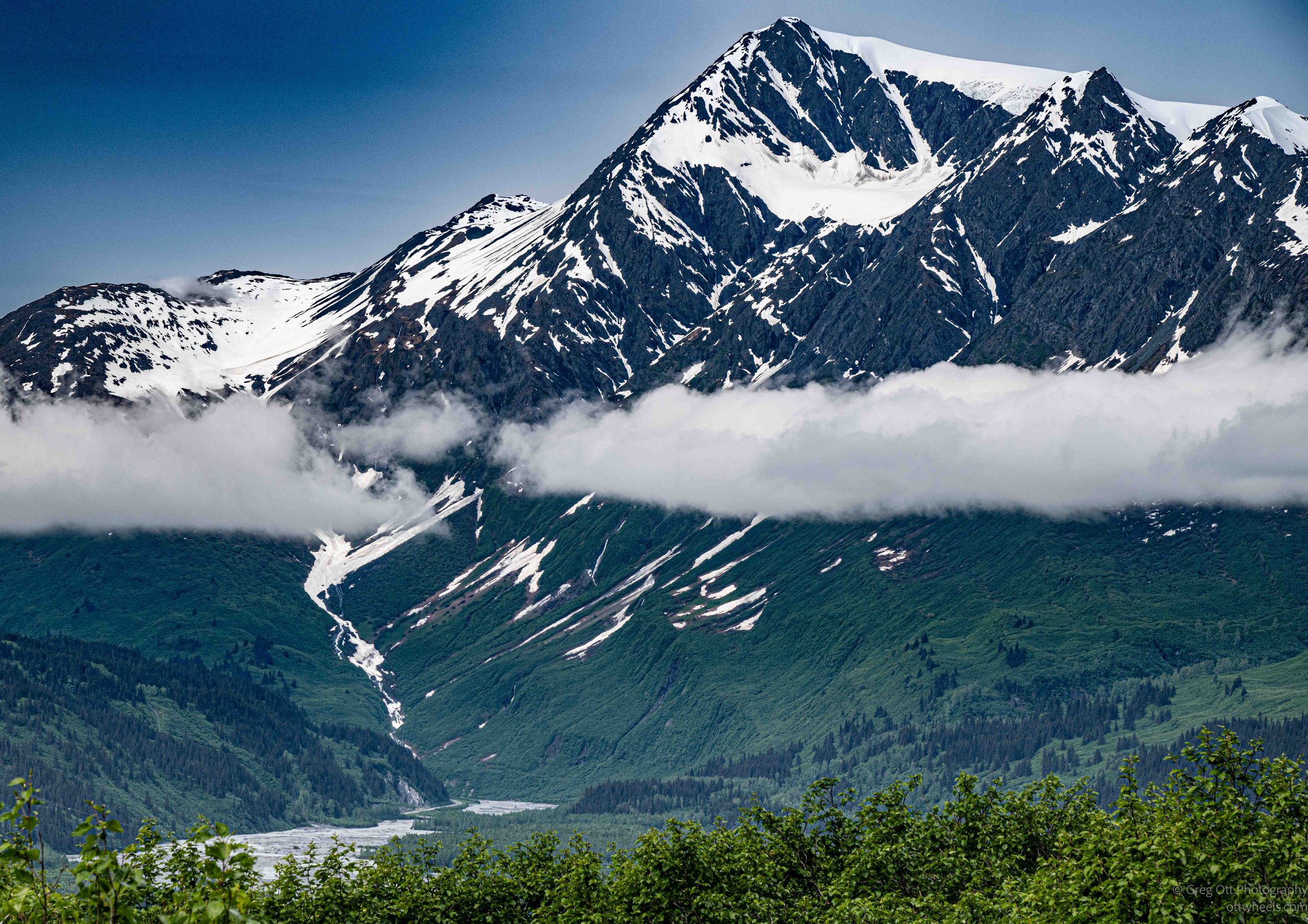
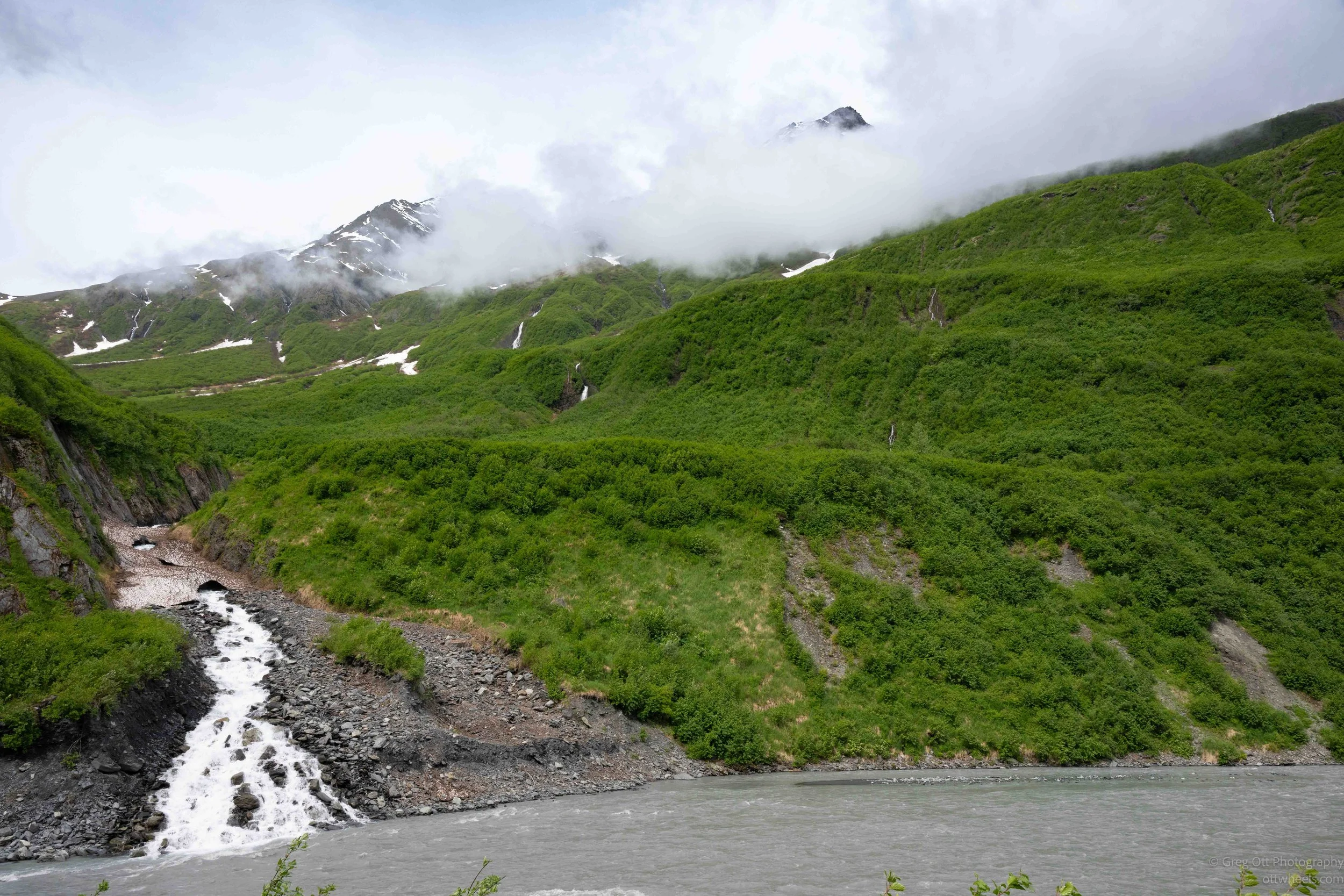
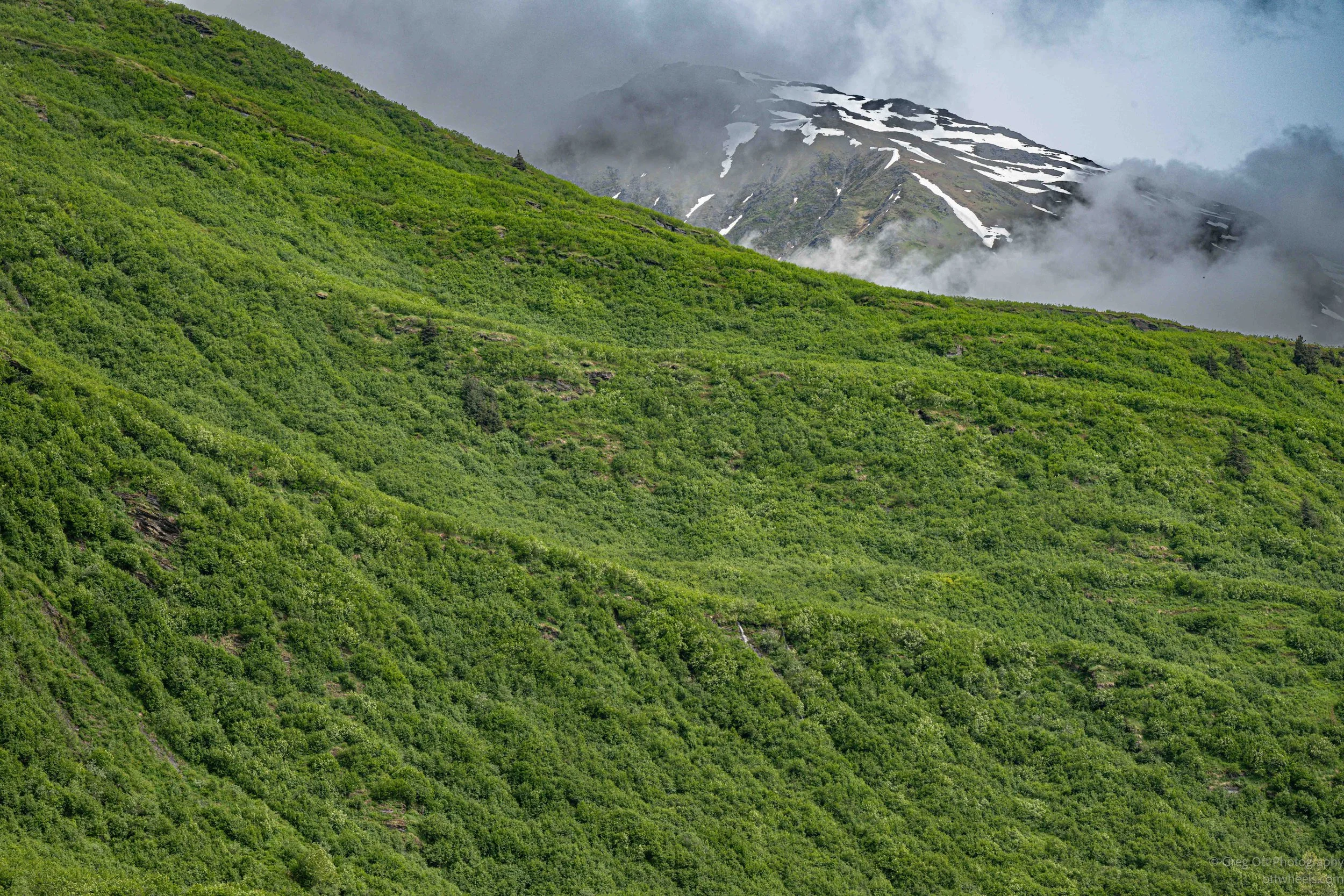
For the next 10 miles I stopped at nearly every pullout. The views changed with every quarter mile of descent — lakes sitting flat and dark between ridgelines, ice fields draped across the upper elevations, waterfalls dropping off rock faces, fog moving through the valleys and erasing things in the distance. The scale of it is genuinely hard to photograph. You point the camera at something vast and get back an image that could be anywhere. I did a poor job of capturing it, which is honestly the honest thing to say.
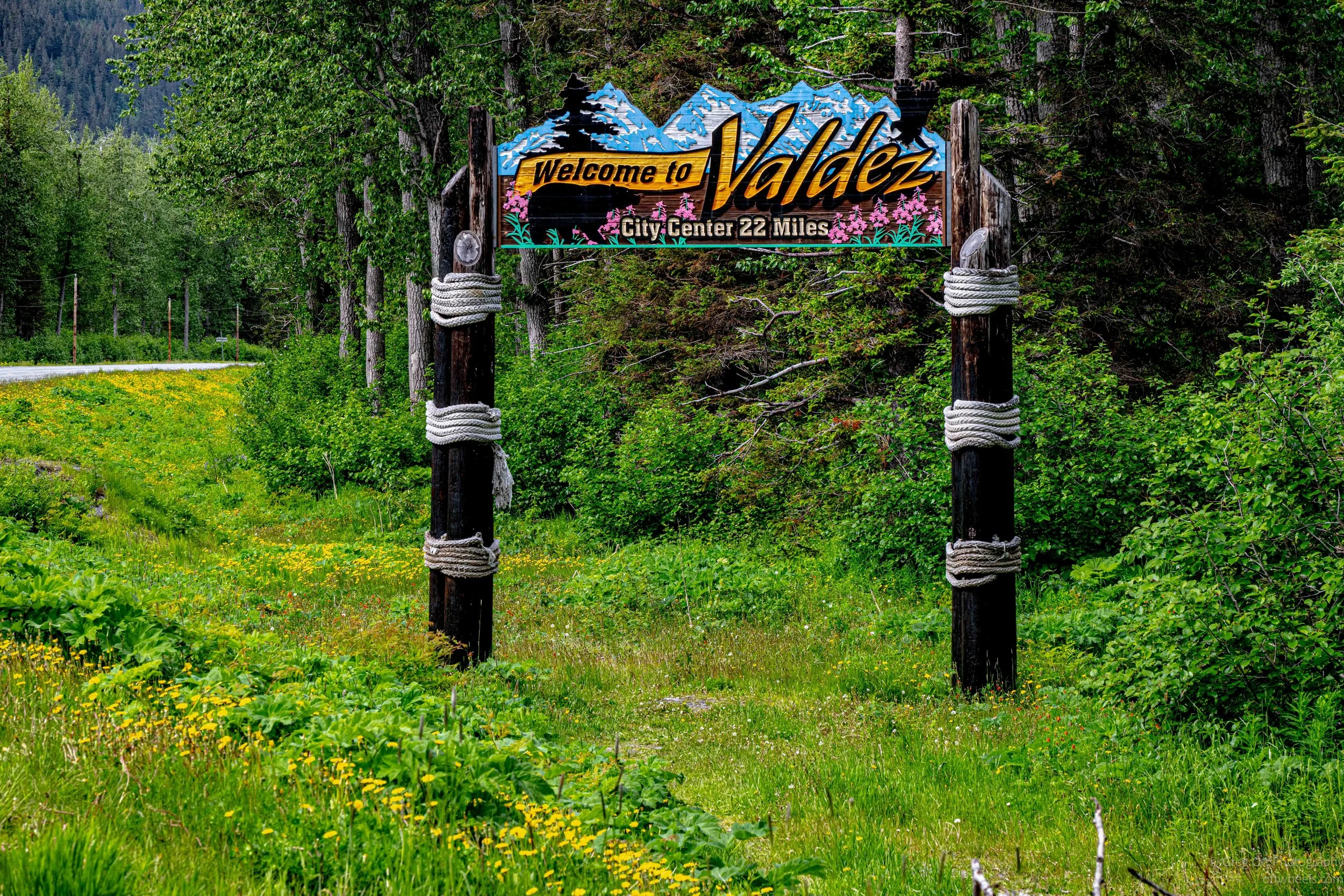
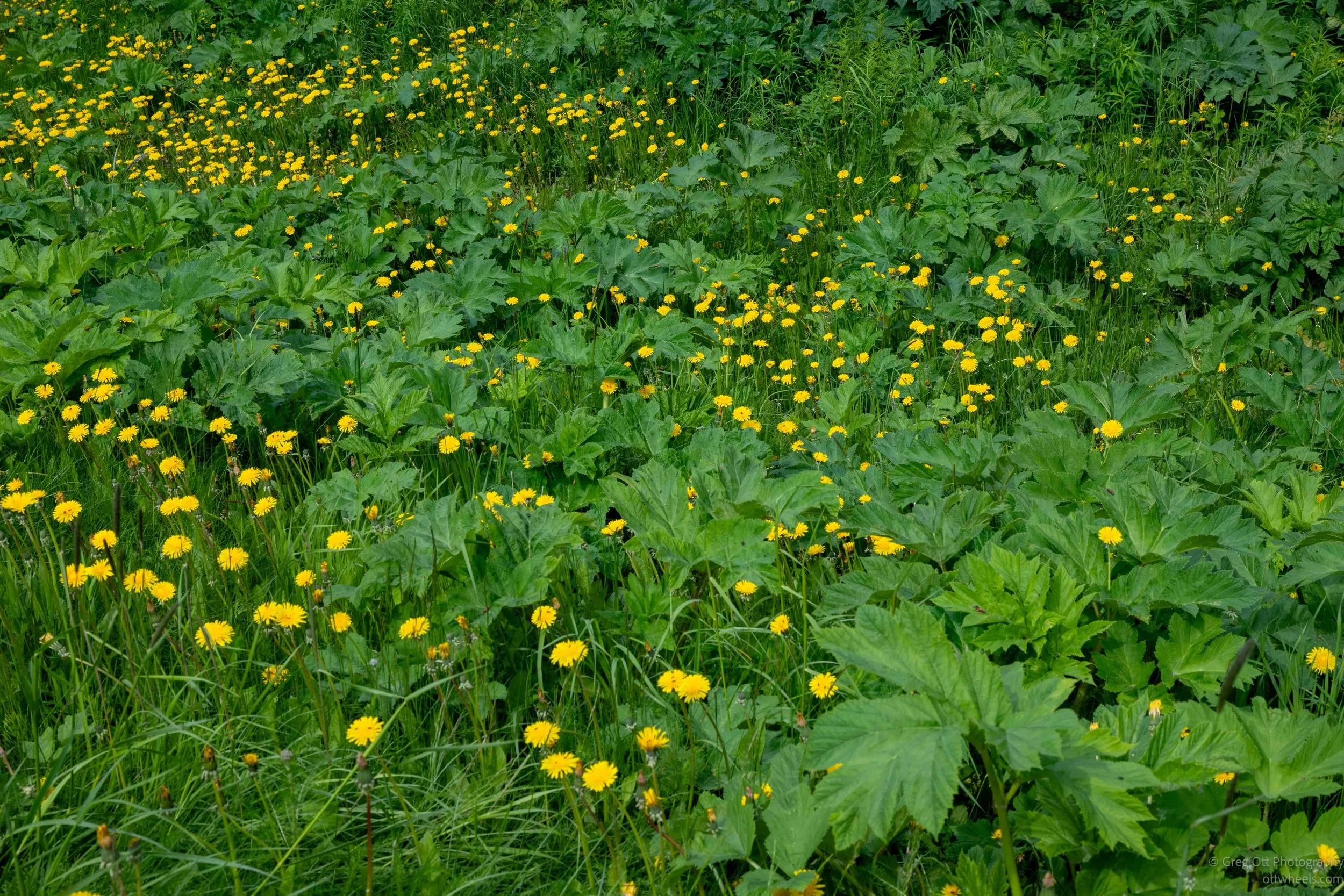
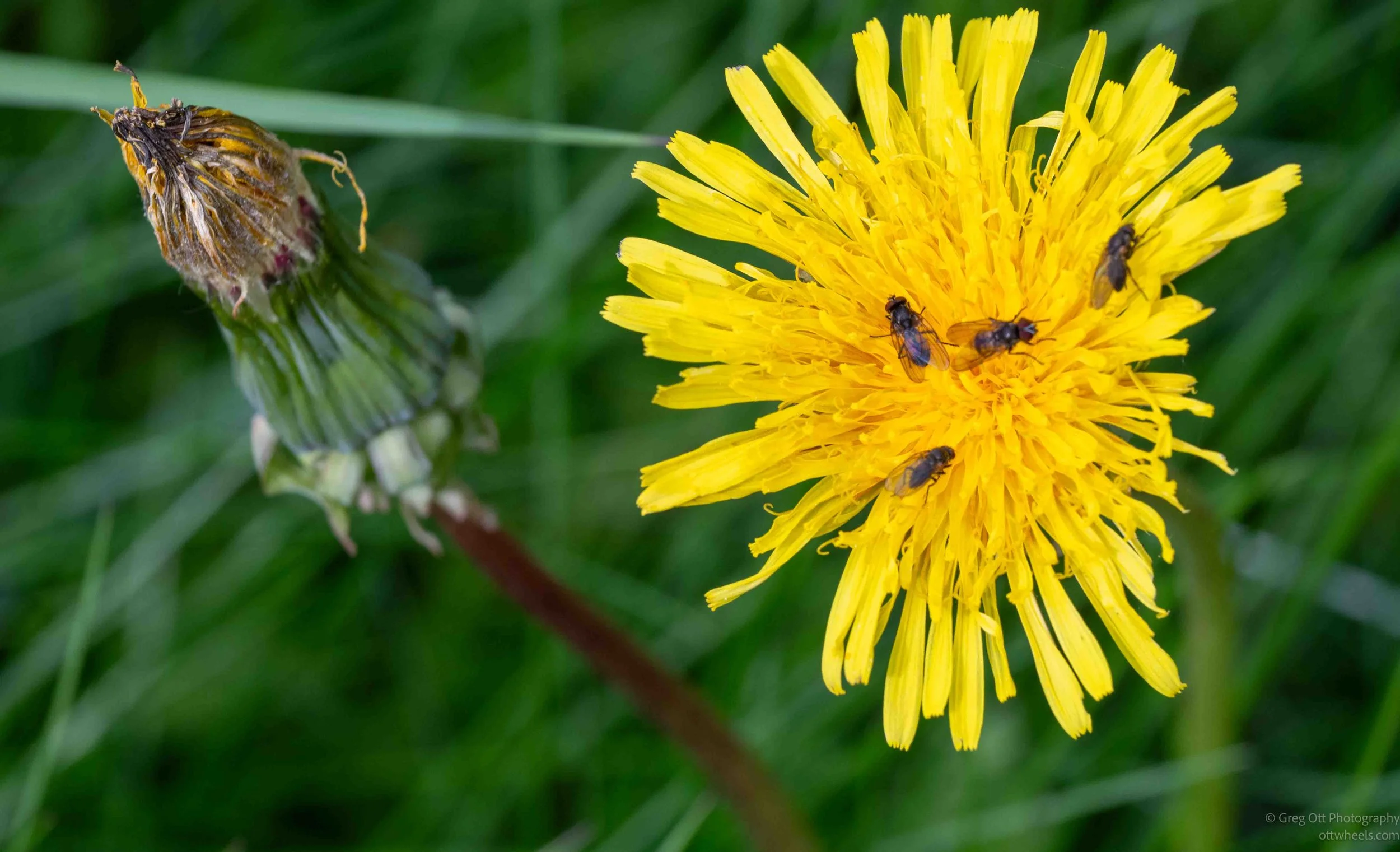
At the bottom, I pulled over for the Valdez welcome sign, though I still had 22 miles ahead of me and the last 10 had taken 90 minutes. When I stepped out of the van, the air hit like the inside of a florist shop. The dandelions were in full bloom, covering the roadside in every direction, and small sweat bees were working nearly every flower. I grabbed the shot and watched a large family emerge from the trailhead in the trees — nine of them, which is a commitment in any ecosystem. They lined up at the sign, jumped in unison for the photo, then filed back into a large SUV with an efficiency that suggested this wasn't their first group logistics challenge. I considered offering to take a picture that included all of them, but they were gone before the thought fully formed.
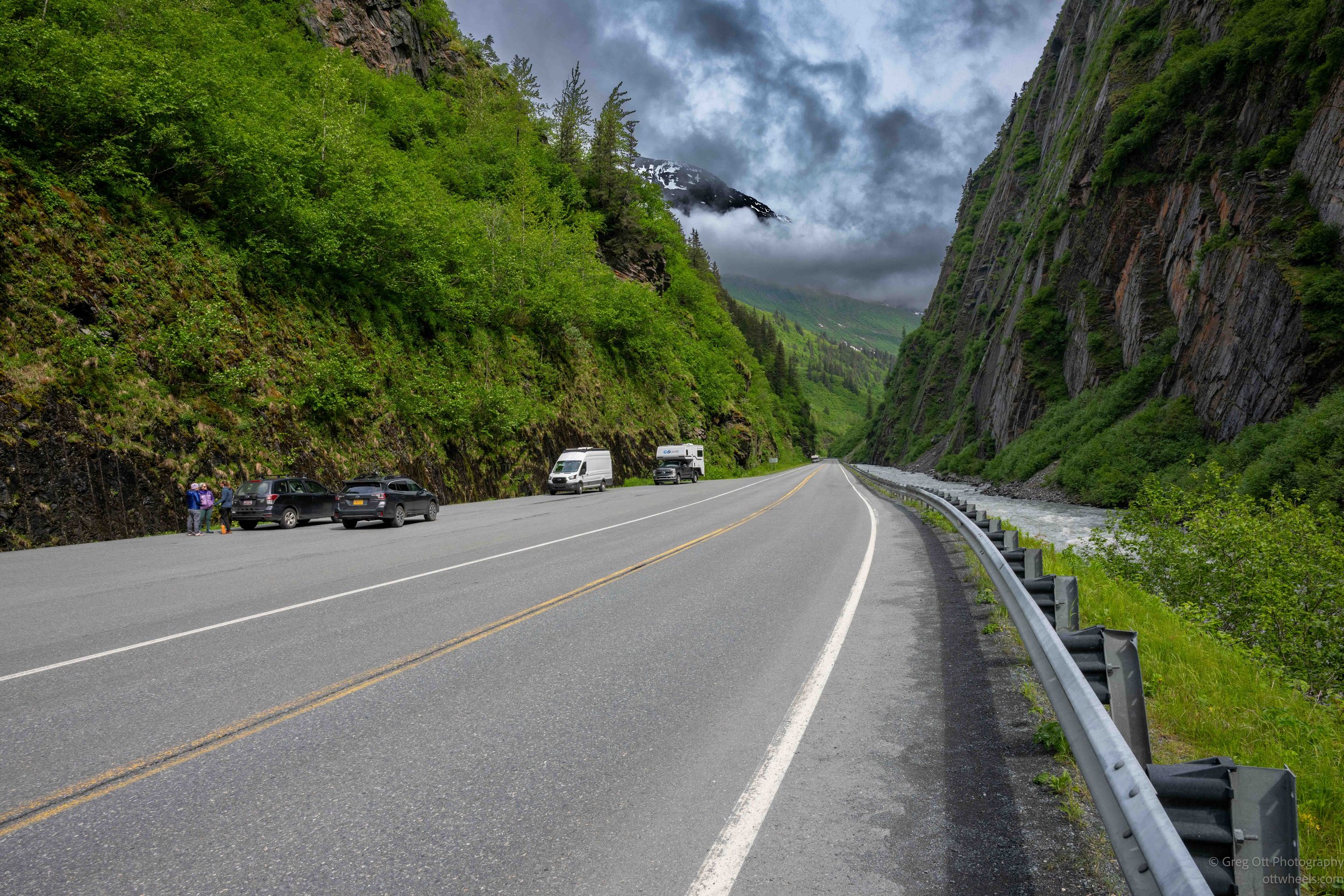
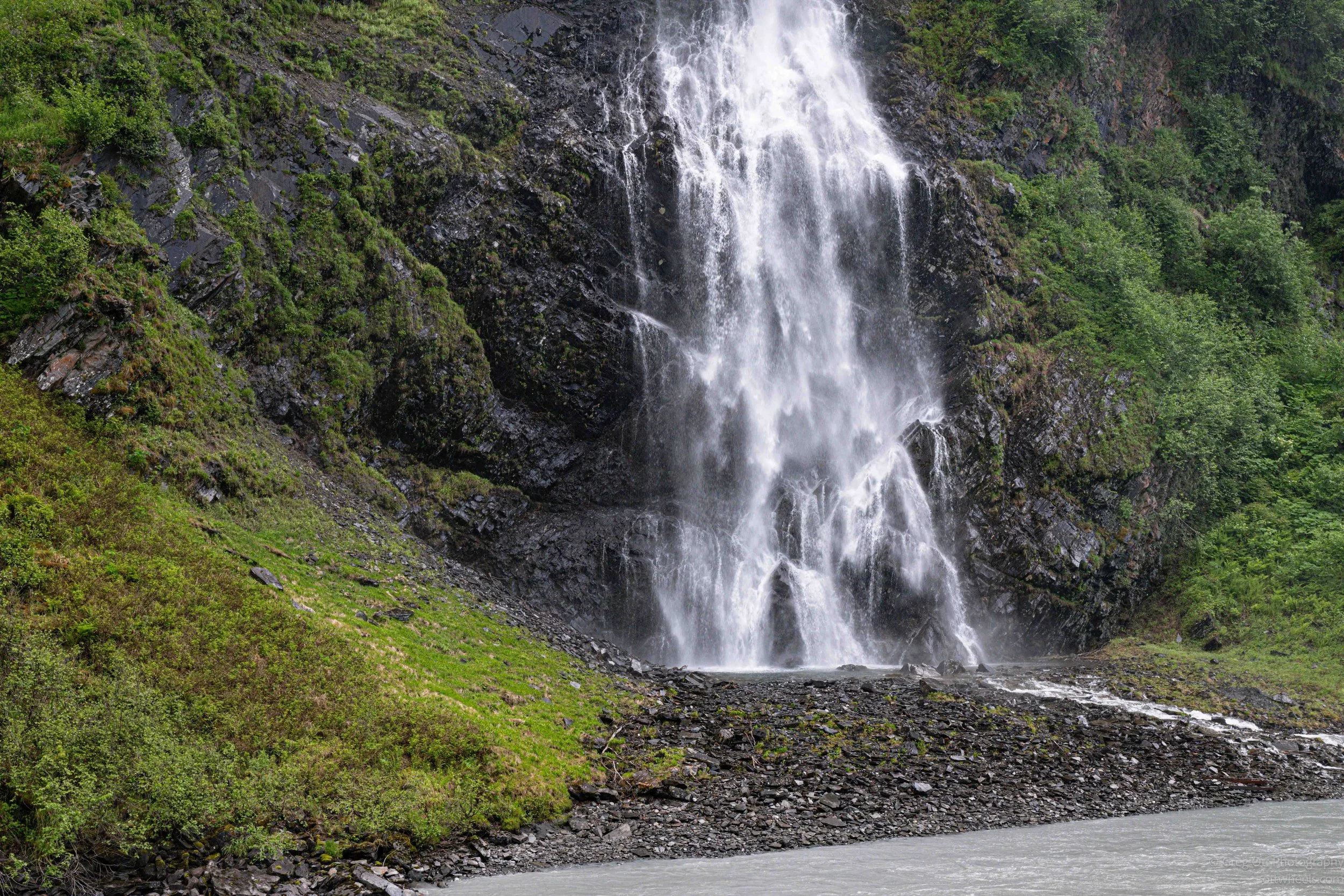
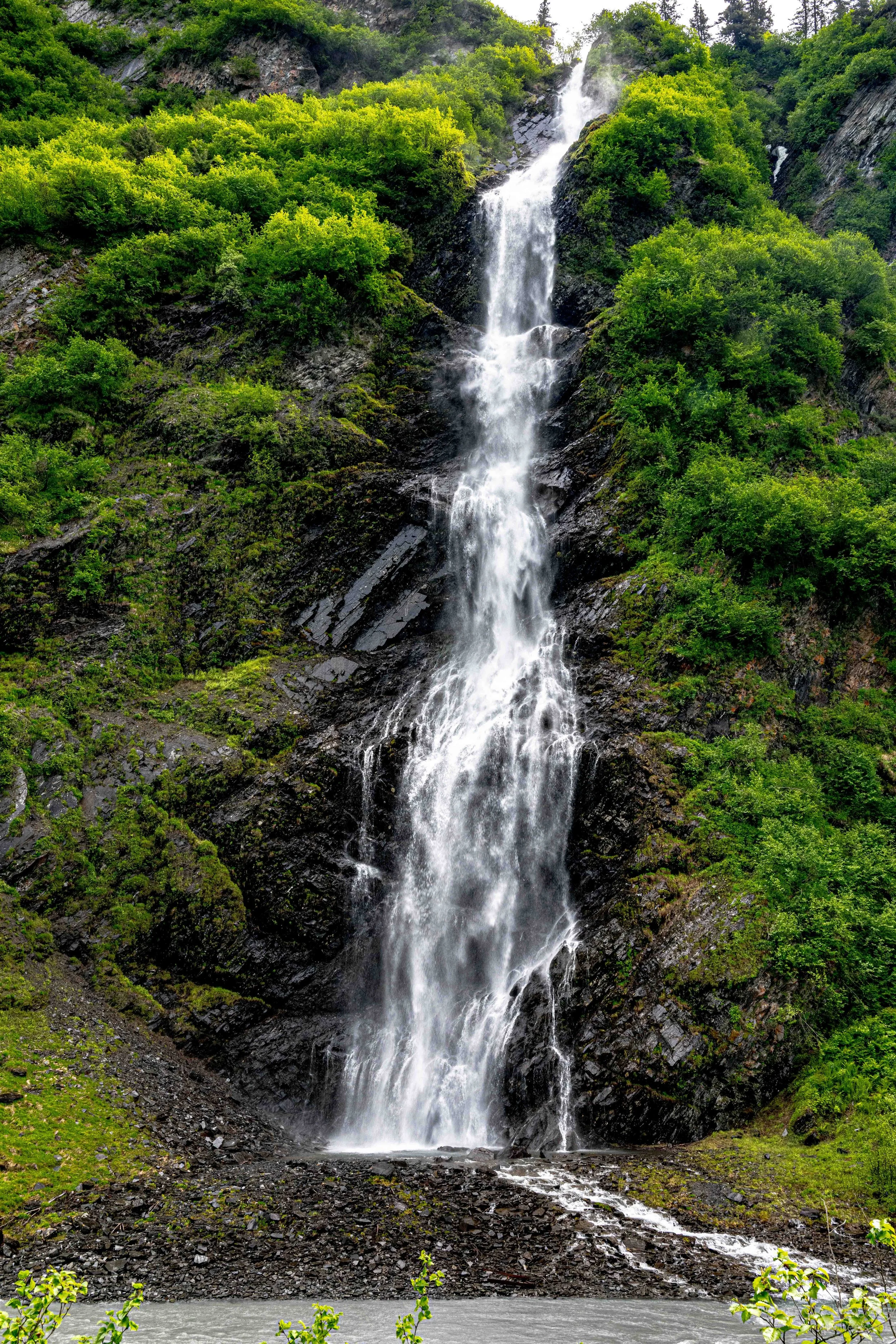
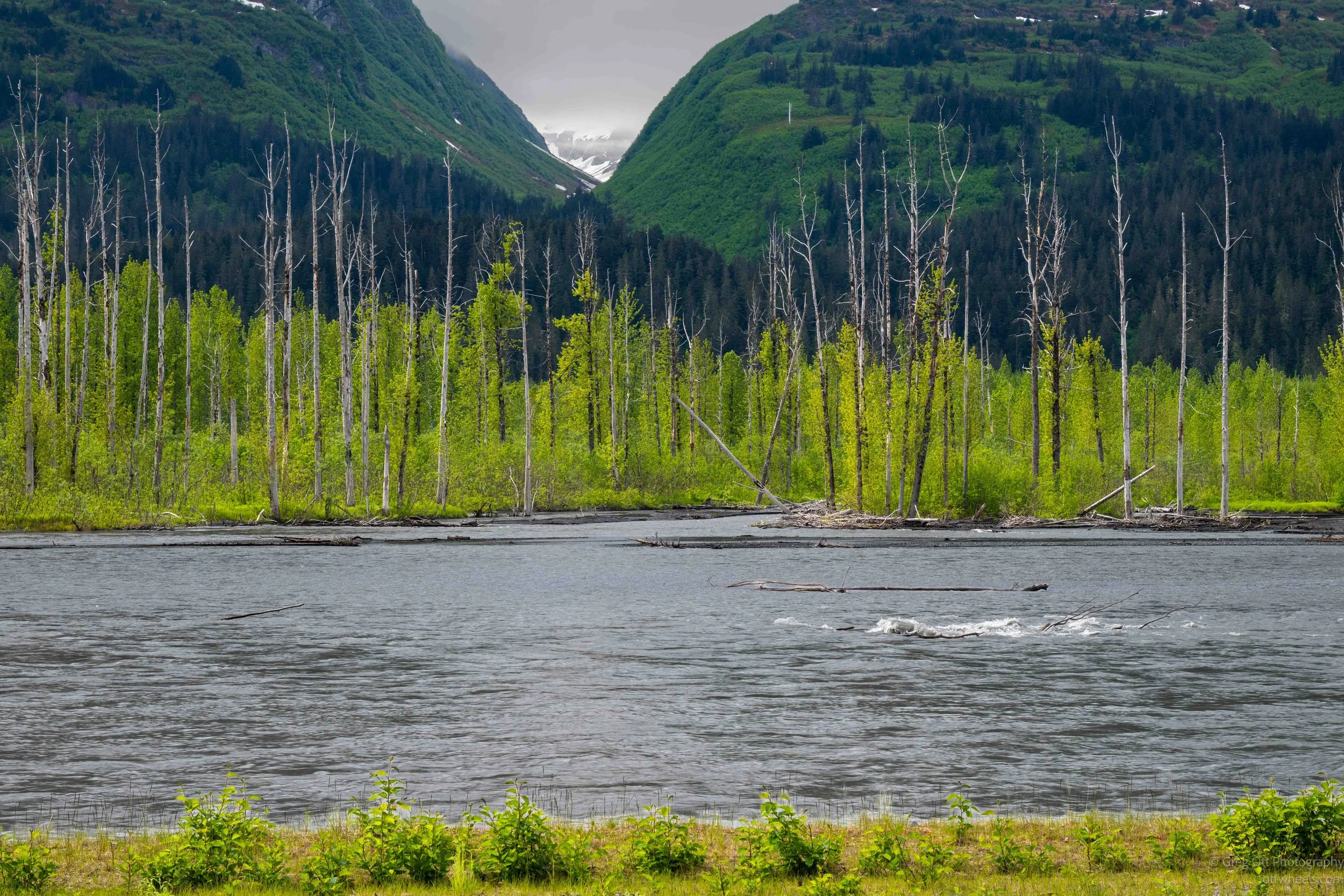
The valley stretched out ahead, and the terrain had shifted entirely. The jagged, exposed peaks of the high pass gave way to softer, water-cut country — waterfalls (Liberty, Bridal Veil, and Horsetail Falls) dropping off hillsides, streams running everywhere, the lupine and other late-spring growth filling in every patch of disturbed ground. You could hear water constantly. Not rushing, exactly — just present, underneath everything. The highway wandered through it, and I kept pulling over at official pullouts and some spots that were not officially pullouts.
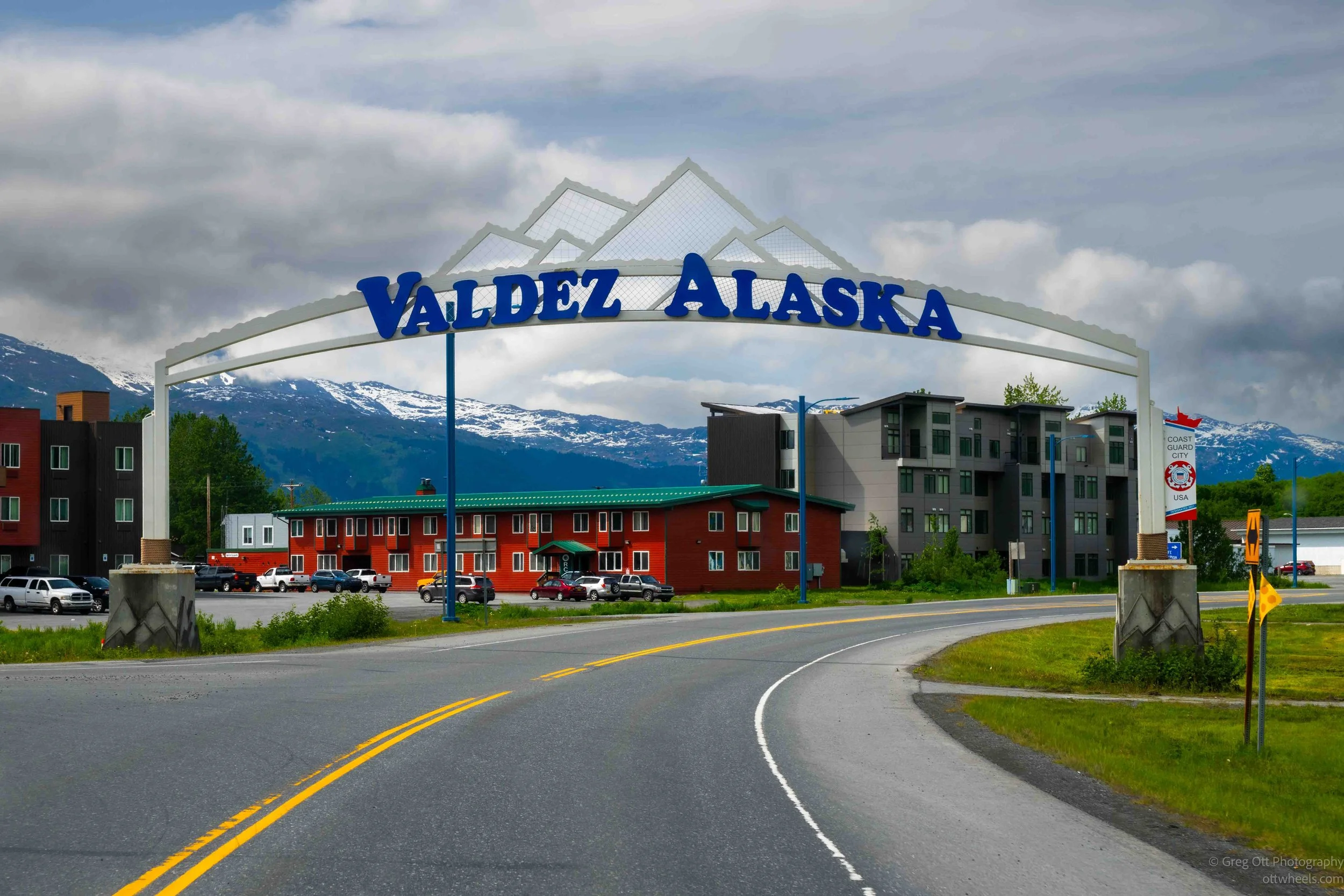
I finally arrived in Valdez and passed the campground where I'd be staying. I stopped just after it for a photo of the town sign, then continued on to the Safeway. After more than a week in remote country, I was low on almost everything. I don't usually have much to say about grocery stores, but this one was worth noting.
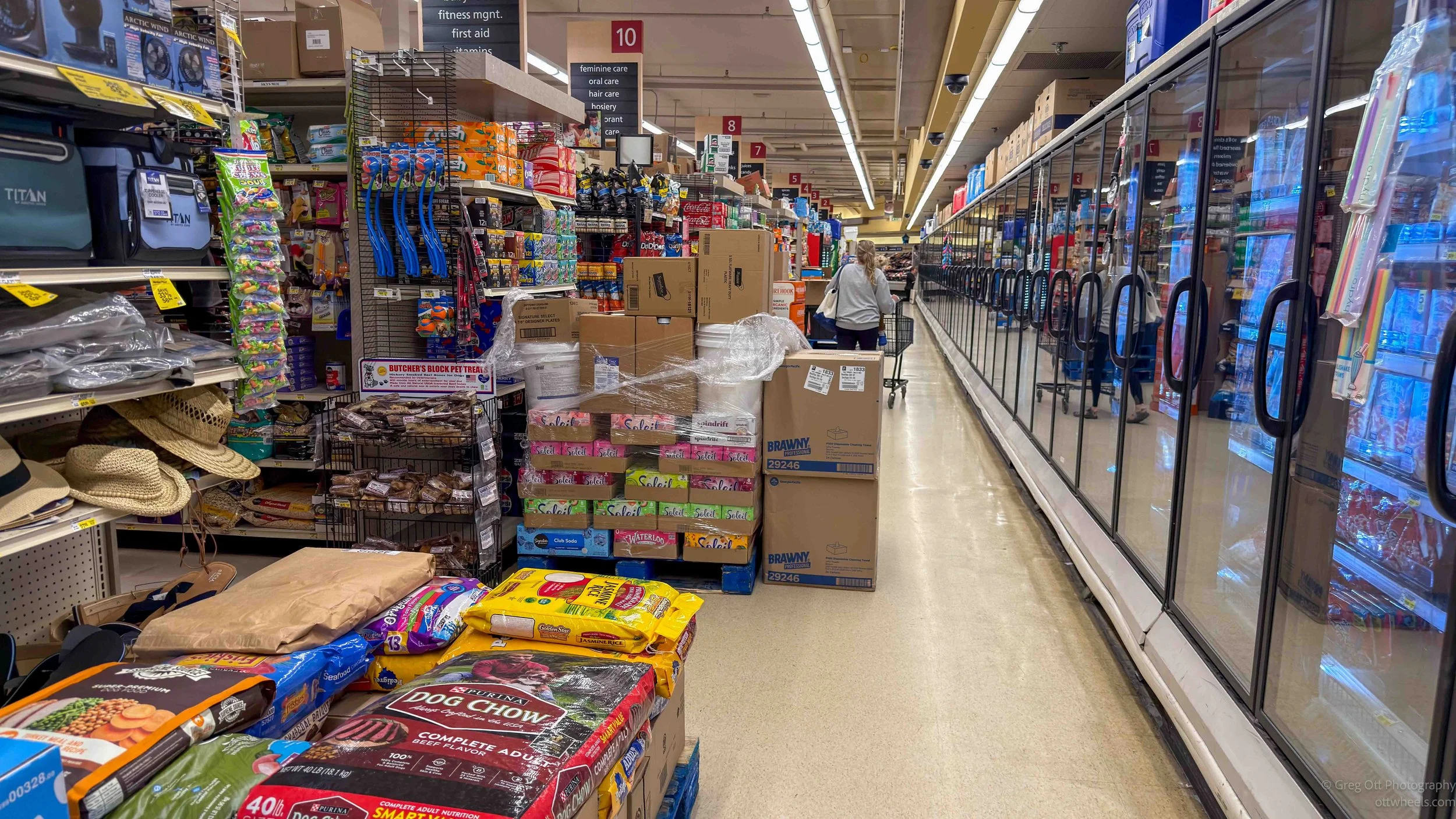
I followed a woman in who had arrived in what looked like an emergency vehicle, "Valdez Fire Chief" written across the back of her truck, and reflective jacket. We were both hunting for a small cart. She glanced around and said, "I guess all the small carts are taken," with the casual resignation of someone who has been here before. The store is small — they've compressed a full grocery store inventory into a space that should have much less inventory. I thought of the fire hazard as well. Funny how the present of the fire chief invokes such a thought. The aisles are narrow enough that two carts passing requires a brief negotiation, and during restocking, pallets sitting mid-aisle made it easier to park your cart at the end and walk in on foot. Someone always needed to get past you, or needed something from the shelf behind you, and every exchange came with an "excuse me" or a "sorry." I helped a few people reach things on the upper shelves. Nobody seemed annoyed by any of it.
The mix of people was what made it interesting. Locals grabbing weekly staples, vacationers loading up before heading out, and people who had driven two hours each way just to do their shopping — all moving through the same narrow aisles with the same general goodwill. Some tourist towns carry a low-grade resentment, locals quietly irritated that strangers keep showing up in their paradise. This wasn't that. It just felt like a town that had made peace with being where it is.
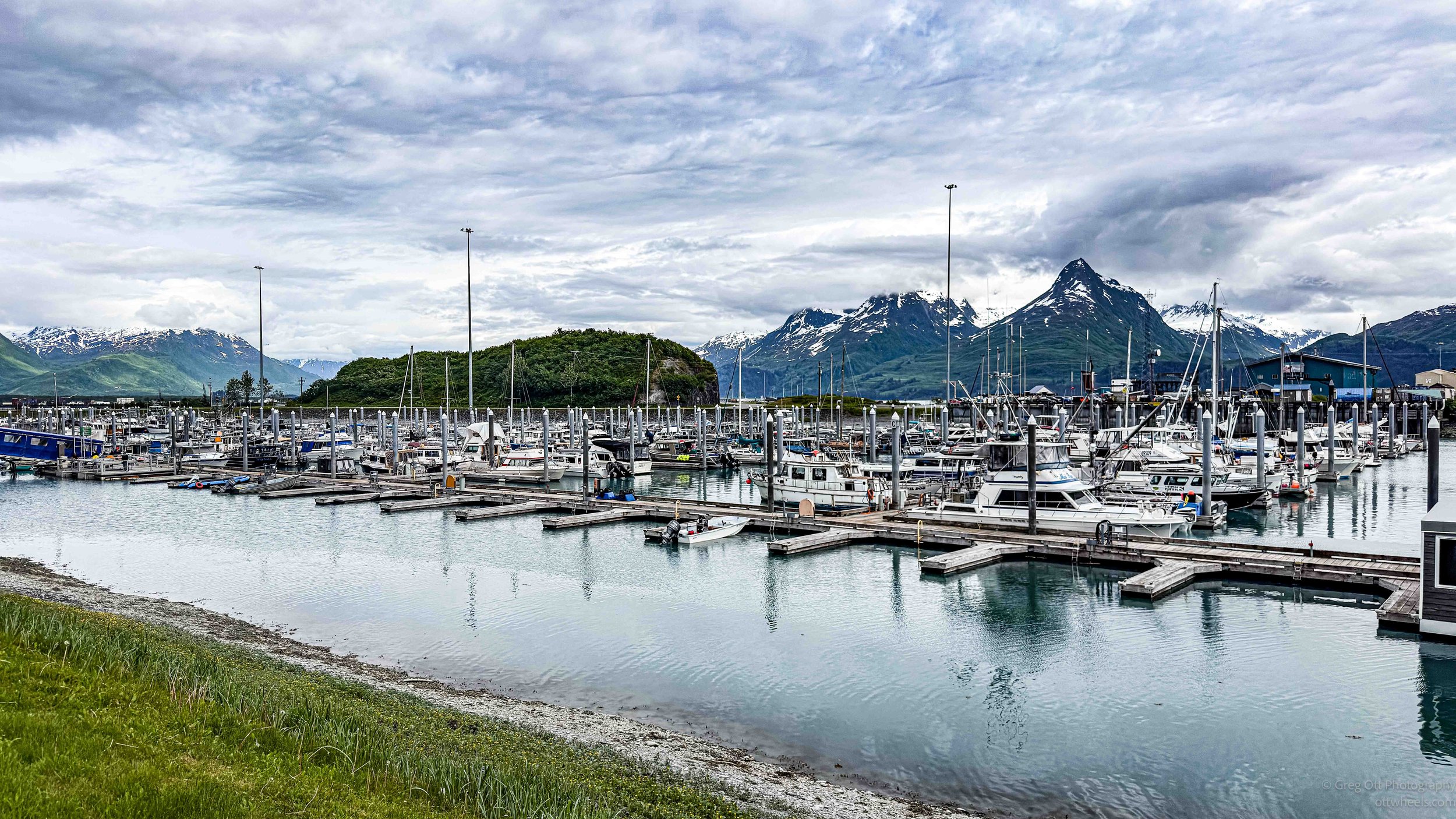
At the campground, Valdez RV Park, I checked in and ended up in a good conversation with the couple running the place. They're from Cape Cod, winter in Arizona to avoid the cold, and spend summers in Valdez to avoid the heat. That's a reasonable life, if you can arrange it. They steered me toward Mike's Place for dinner — great food, sit at the bar, really good drinks — and I added it to the list.
I still wanted to book a glacier trip on the water, and I'd been thinking about Alaska Guide Co.'s canoe tour — someone else rows, I take photographs, $250 for two hours. It appealed to me. When I got them on the phone, they explained I'd have to pay for two seats regardless of group size ($500). They essentially only take couples. I couldn't make that business model work in my head, and I declined. I walked 0.3 miles down the harbor to Anadyr Adventures instead and booked a kayak trip to Columbia Glacier for Friday. This turned out to work out well anyway — my Stan Stephens cruise that same week would take me past both Columbia Glacier and Meares Glacier, the two most significant tidewater glaciers on the Sound. Columbia has retreated more than 10 miles since the early 1980s, losing roughly half its volume, leaving Columbia Bay choked with icebergs and actively studied by researchers. Meares goes the other direction — it's actually advancing, pushing forward roughly 50 feet each year, knocking over trees along its edges as it moves. Seeing both in the same week I feel like good luck.
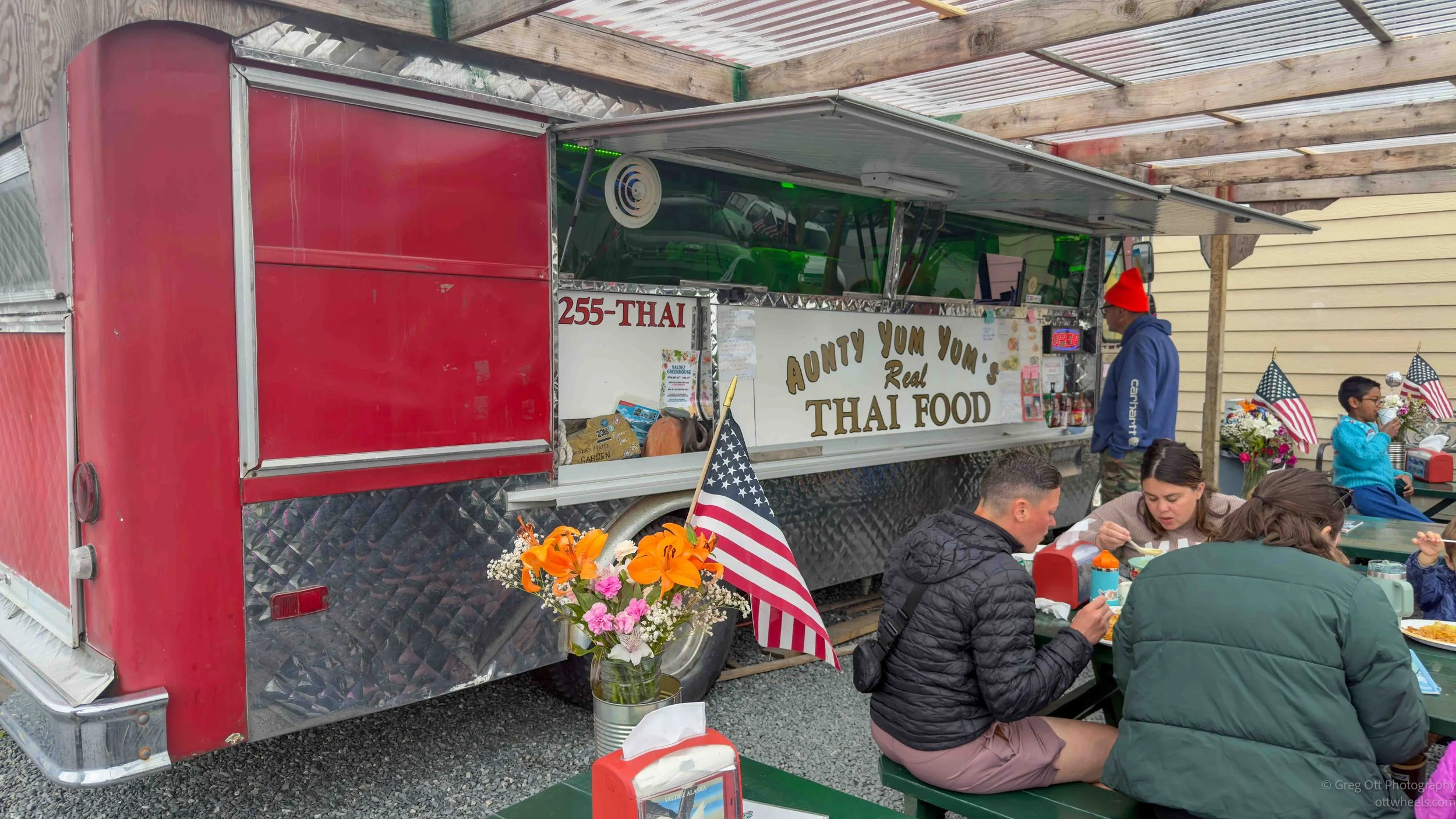
For dinner, I stopped at a Thai food truck in a small court next to the harbor. Massaman curry. The chicken was poor quality and the rice was overcooked, and I know enough about Thai food to know the difference between a good and not so good. I took it back to the van anyway and ate it, because I was hungry and it was there.
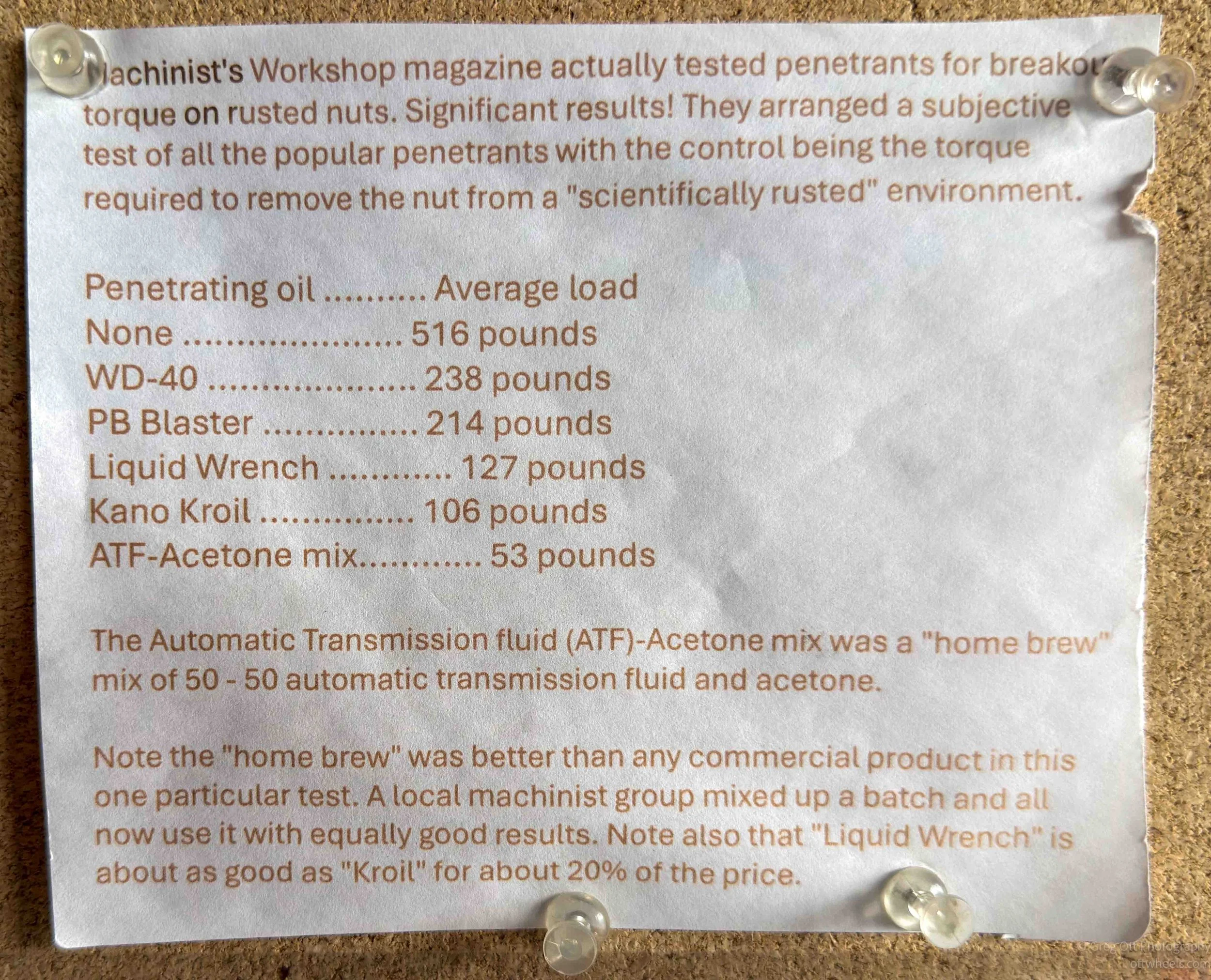
Before settling in, I took a lap around the campground facilities. There was a bulletin board near the bathrooms with various notices — trail conditions, local regulations, a map. And then, completely without context or explanation, a small sheet explaining torque ratings for various penetration oils. Not a joke, not ironic, just there. I stood in front of it longer than I should have, trying to construct a scenario in which this made sense as campground communication. Maybe a lot of mechanics camp here. Maybe people at campsites strip a lot of bolts. Maybe it's just genuinely important to know your options when your nuts get stuck. Whatever the reason, someone thought it through and committed to typing it up and placing it here.
I had too much espresso in the afternoon and paid for it at 11 p.m., watching a movie in the van while the long Alaskan evening light refused to go fully dark outside. It had been a slow day in the best sense — the kind where you cover 40 miles in three hours and somehow feel like you saw everything worth seeing. Valdez was still mostly ahead of me, which was a fine place to leave things for the night.