Drive To Anchorage
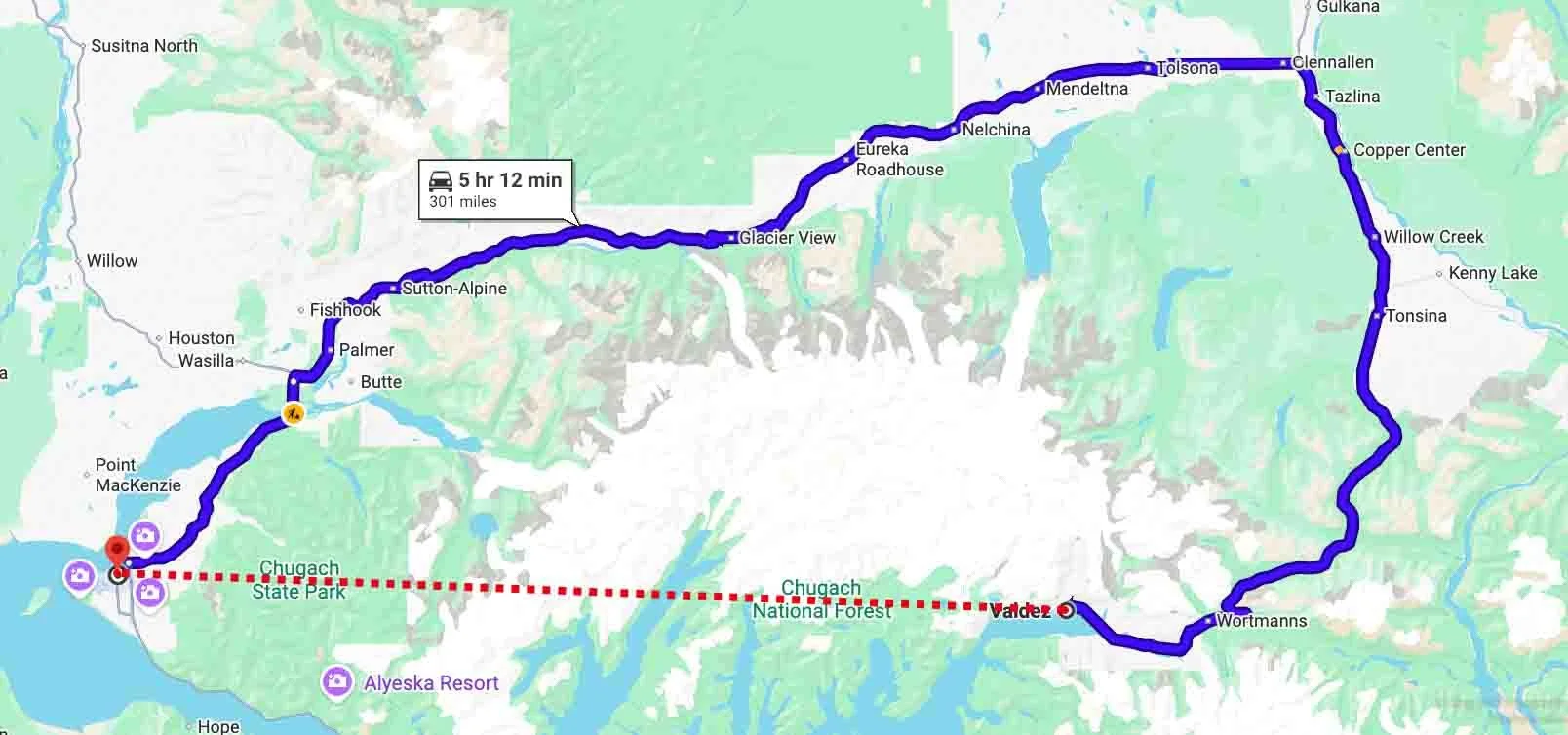
The night before, I planned my drive to Anchorage. Google confidently informed me it would take about 90 minutes, so I built a leisurely day around that assumption. I figured I'd have plenty of time for a few stops along the way before settling into Anchorage that evening.
Apparently, Google and I had very different ideas about how long this drive was going to take.
I wasn't in much of a hurry to leave Valdez anyway. I made a large bowl of oatmeal for breakfast, took one last walk around the marina, cleaned out the cardboard and packaging that had accumulated in the van, vacuumed the floor, and reorganized my shoes. By the time I finished all of that, it occurred to me that none of those chores were particularly urgent. I was simply finding reasons not to leave. Valdez had been one of my favorite stops of the trip, and I wasn't quite ready to move on. Checkout was at 11:00 a.m., and it was already 11:15 before I finally pulled away.
I topped off the fuel, made one last stop at Safeway, and pointed the van north. That was when Google quietly recalculated the route and informed me that my "90-minute drive" was actually going to take five and a half hours. It took me a moment to realize what had happened. Google Maps has a little quirk that I periodically forget. When you enter a destination, the initial time estimate is based on the straight-line distance before it fully calculates the route. Most of the time you never notice because you're already traveling generally toward your destination. This day was different.
Anchorage is west of Valdez, but the only highway first heads east before looping around the Chugach Mountains in a giant horseshoe. Most of the time you never notice Google's initial estimate because you're already traveling generally toward your destination. This time I had been fooled by geography. Since I already had a reservation in Anchorage, there wasn't much to do except laugh at myself and start driving.
Before leaving, I had hoped to hike one of the mountain trails north of Valdez. The weather made that decision for me. Rain continued to fall, and the clouds hung so low that they completely swallowed the mountains. The spectacular scenery I had enjoyed over the past several days had disappeared behind a wall of gray. It almost felt as though the universe was trying one last time to convince me to stay another day.
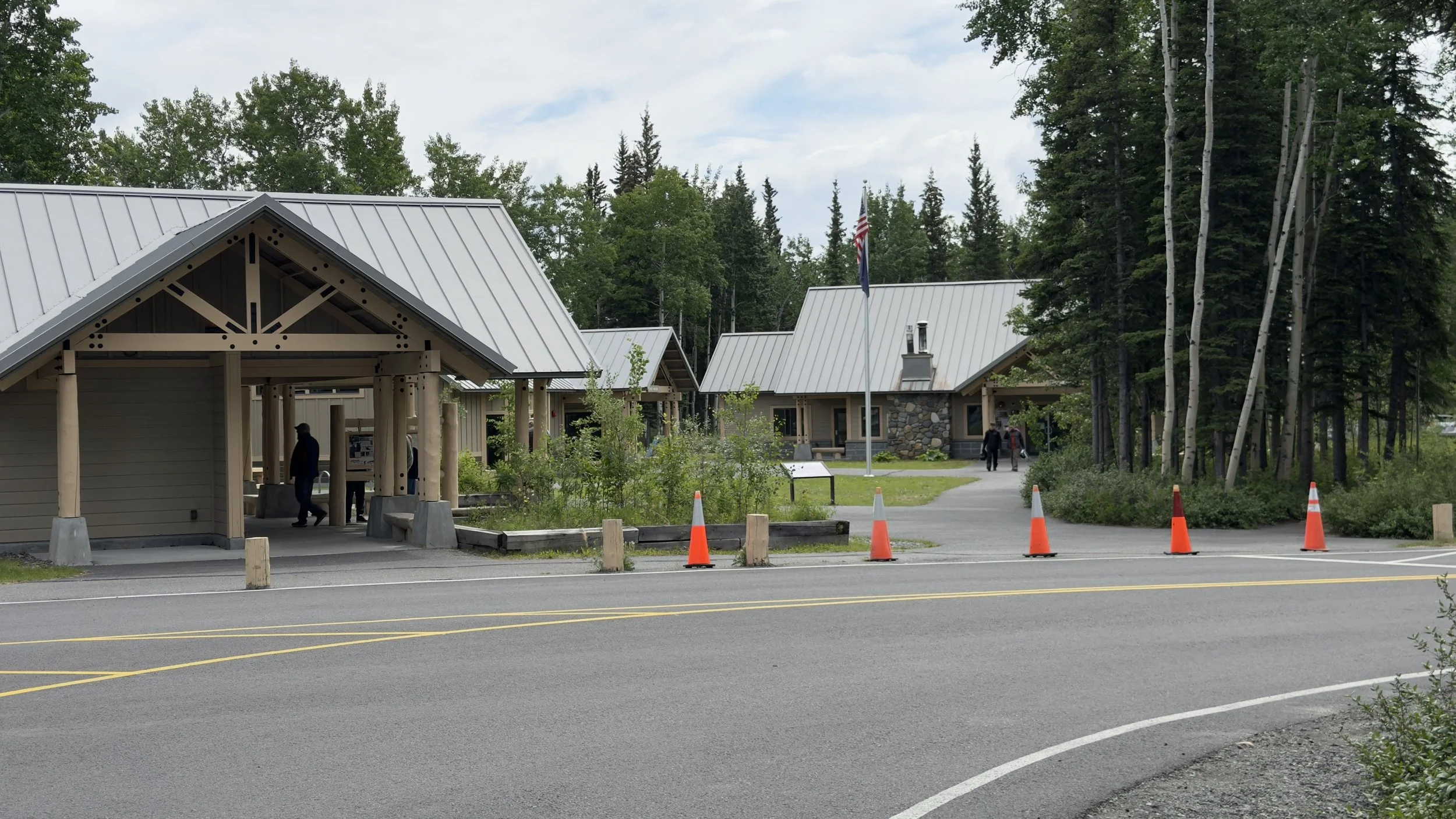
About ten miles before Glenallen, I pulled into the Wrangell-St. Elias National Park Visitor Center. It had been closed when I passed through earlier in the trip, so this time I finally had the chance to collect my National Park passport stamp. The visitor center is spread across several small buildings rather than one large complex, including the main visitor center, the Ahtna Cultural Center, park headquarters, and a few outdoor exhibits.
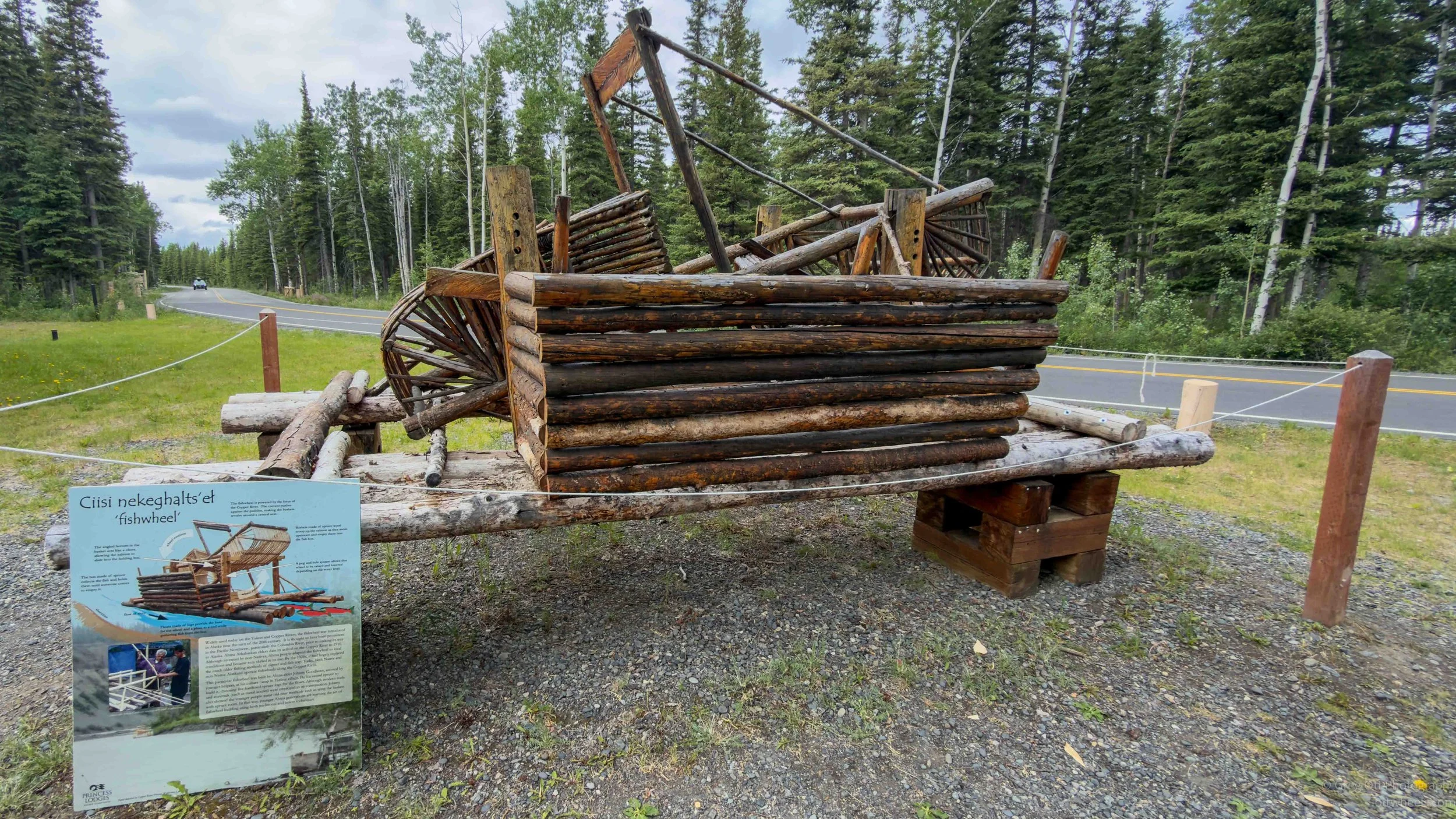
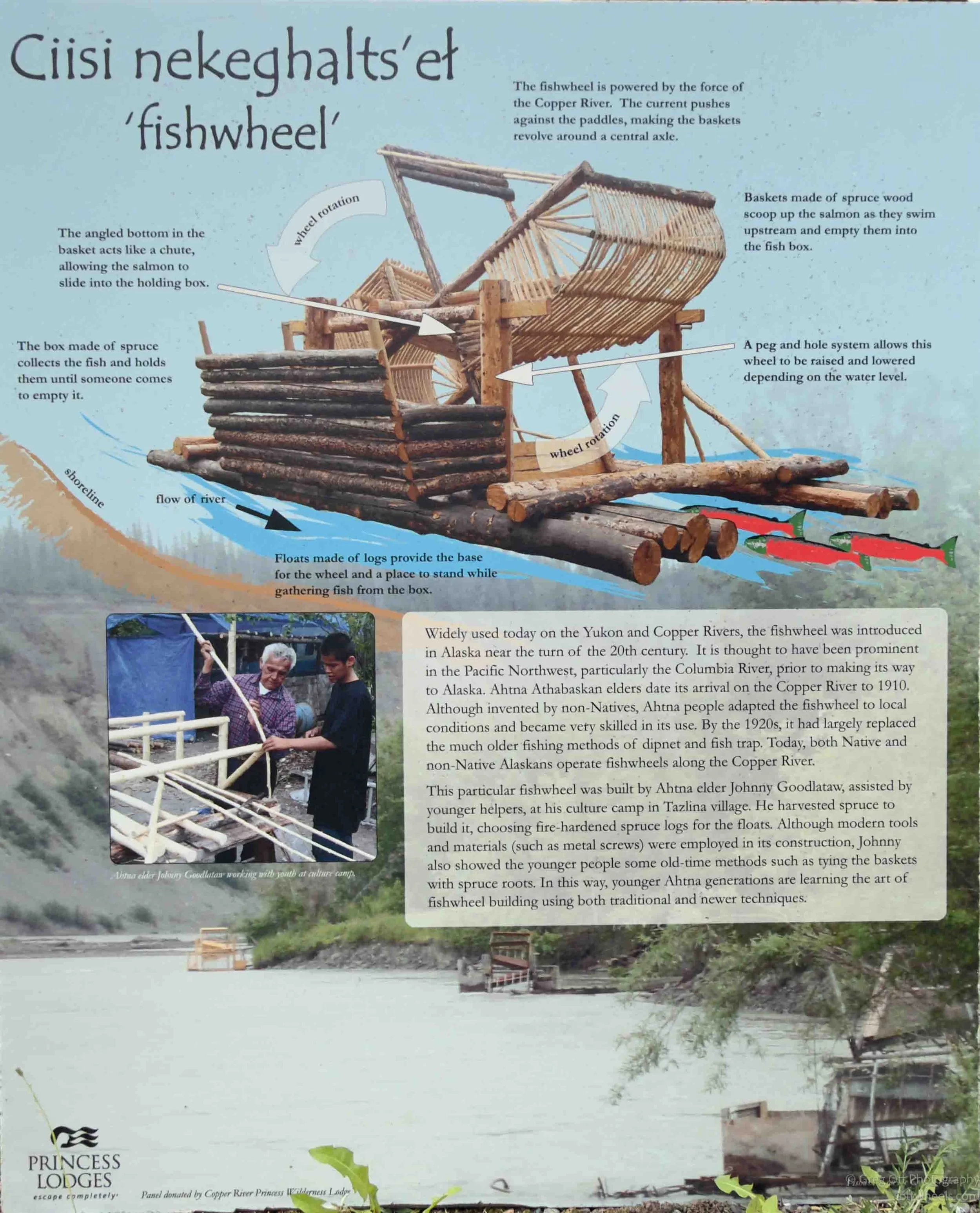
Near the entrance stood a traditional Ahtna fish wheel. I'd seen photographs of fish wheels before, but standing next to a handmade one made the design much easier to appreciate. Built entirely around the power of the river's current, the wheel slowly rotates, lifting salmon into large baskets as they migrate upstream. It is a beautifully simple invention that provided food for generations of Ahtna families long before modern fishing equipment existed.
After touring the cultural center, I walked into the visitor center to get my passport stamp.
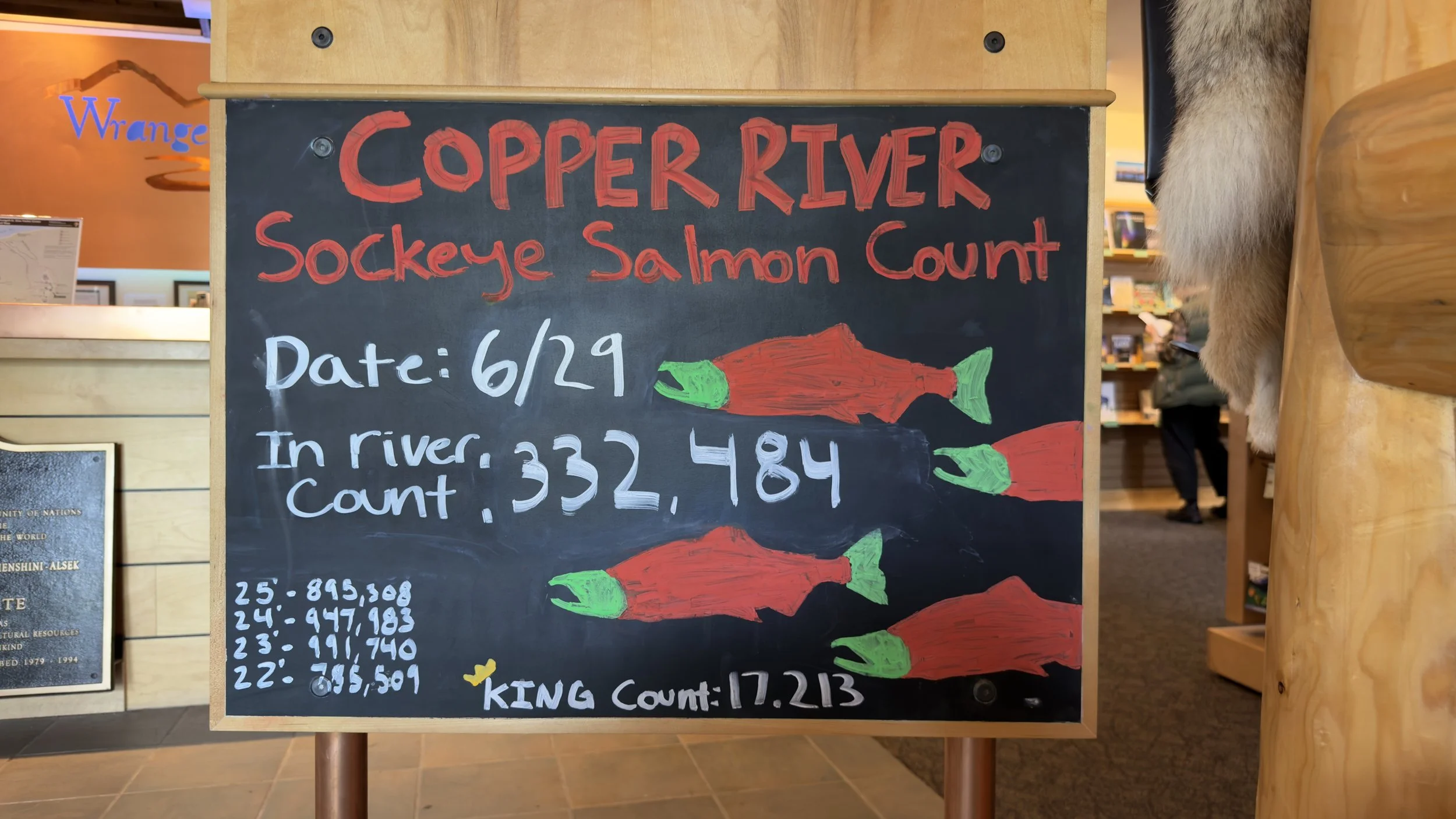
A ranger looked up from a table covered with felt cutouts, bones, and other objects and asked, "Do you want to learn some things about beavers?” That wasn't exactly the question I expected to hear.
She had assembled an interactive display using a life-sized felt outline of a beaver. She handed me an oversized felt stomach and asked me to place it where I thought it belonged. I quickly discovered that beavers have remarkably large stomachs for their size, including a rare structure called the cardiogastric gland that is found in very few other mammals. Scientists believe it helps protect the stomach from the constant abrasion caused by chewing bark and wood. Even though beavers cut down trees, they primarily digest the nutritious inner bark, while microorganisms in their intestines break down the tougher plant material.
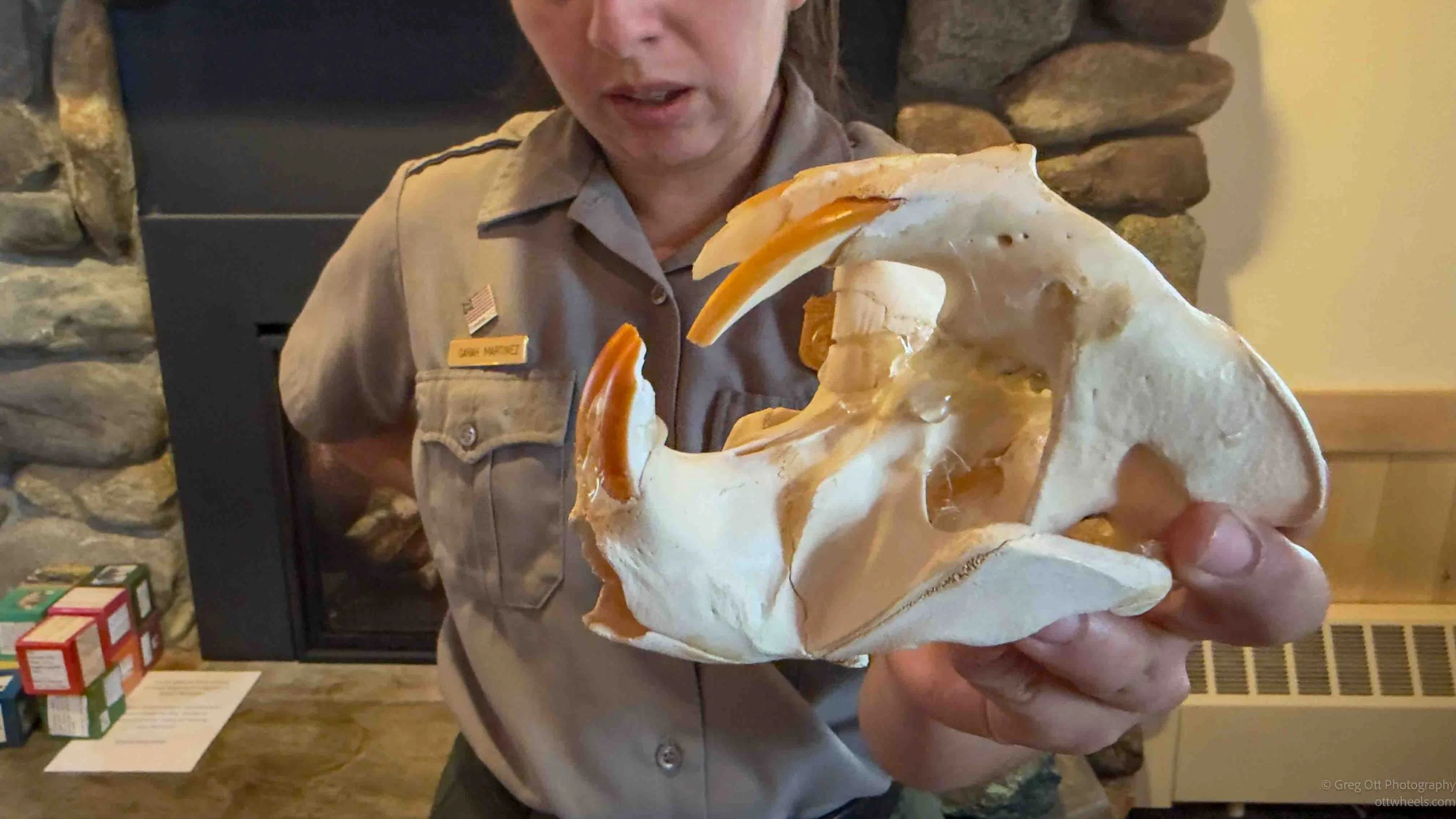
I mentioned the enormous beaver lodges I'd been seeing throughout Alaska and wondered how an animal that size managed to pile entire trees on top of them. She explained that they usually cut trees near the water, float the logs to the lodge, and then work together to move them into place. She also handed me a beaver skull and explained that their teeth are orange because of iron. I later looked it up and found that beaver teeth contain roughly one hundred times more iron than those of most mammals. That iron keeps the front surface of the teeth incredibly hard while allowing the back to wear more quickly, creating a natural self-sharpening edge. Nature came up with a pretty impressive chainsaw.
As we continued talking, the conversation drifted beyond beavers. She told me she had studied biology at Brown and was clearly passionate about wildlife. That eventually led us to Providence, Rhode Island, where Brown is located. We talked about the city's art scene, the Rhode Island School of Design, and the museum. I'd been to Providence at least six times over the years—on family trips, traveling with my son's band, during a business trip, and most recently while visiting the state capitol a few years ago.
By the time I walked back to the van, I realized ninety minutes had somehow disappeared. I'd stopped to collect a passport stamp and ended up getting an unexpected lesson in beaver engineering. That's one of the things I enjoy most about traveling this way. You never know which brief stop along the road is going to become one of the memorable parts of the day.
After topping off the fuel in Glenallen, I settled in for the long drive west. The speed limit climbed to 65 mph, although in many places that felt wildly optimistic. Frost heaves rolled across the pavement like ocean swells frozen in place. Some of the dips were deep enough that a vehicle would bottom out if you weren't paying attention, and the black scrape marks across the asphalt showed plenty of drivers had already learned that lesson.
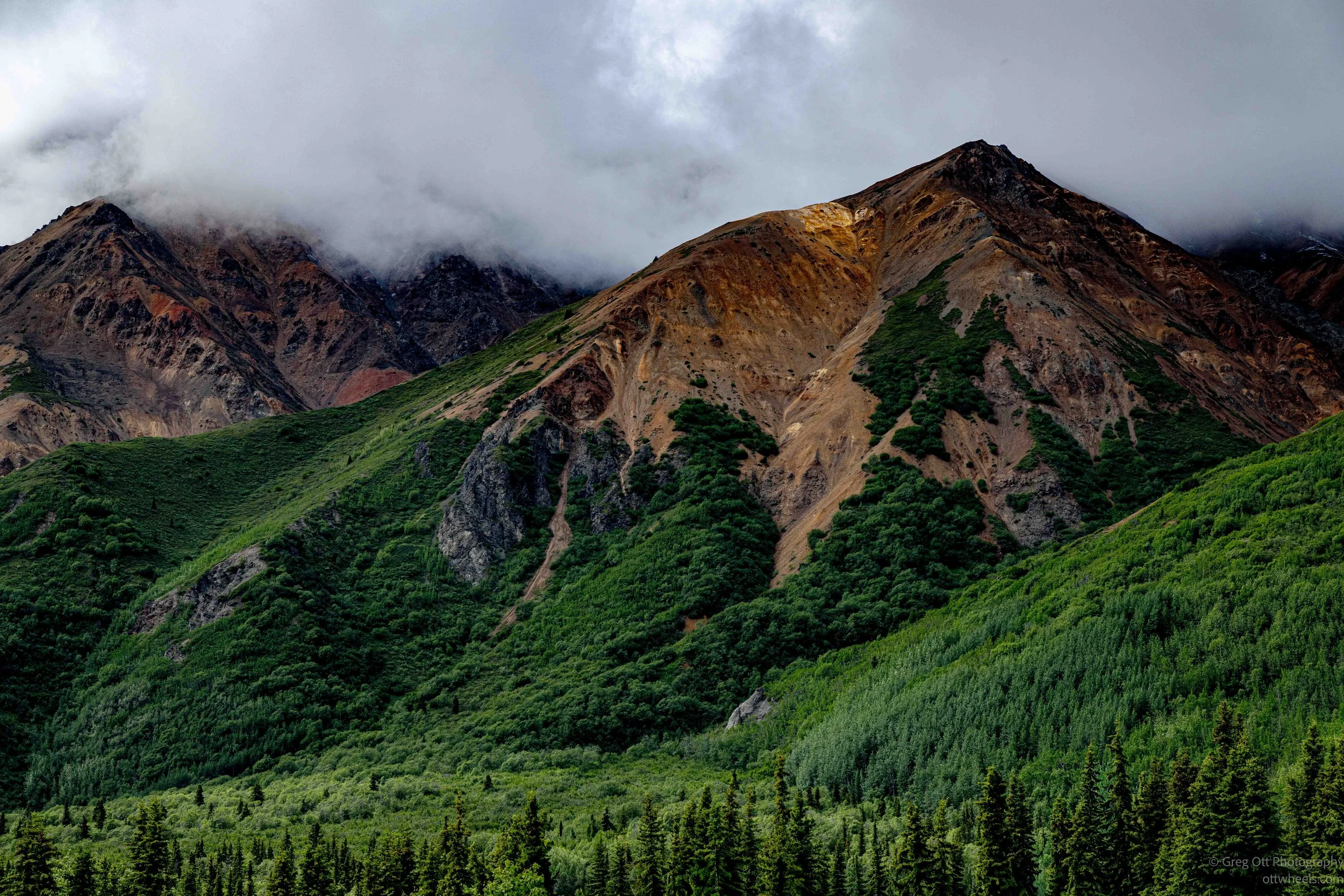
The scenery gradually became more dramatic as the miles passed. The forests began to thin, revealing enormous valleys framed by mountain ranges that stretched to the horizon. Higher on the slopes, the dark green spruce suddenly ended, giving way to exposed rock stained in deep shades of orange, brown, and red. Entire mountainsides looked as though they had been dusted with rust. The colors come from iron-rich minerals weathering over thousands of years, but from the highway they almost looked painted onto the landscape. Even under the gray skies, they glowed.
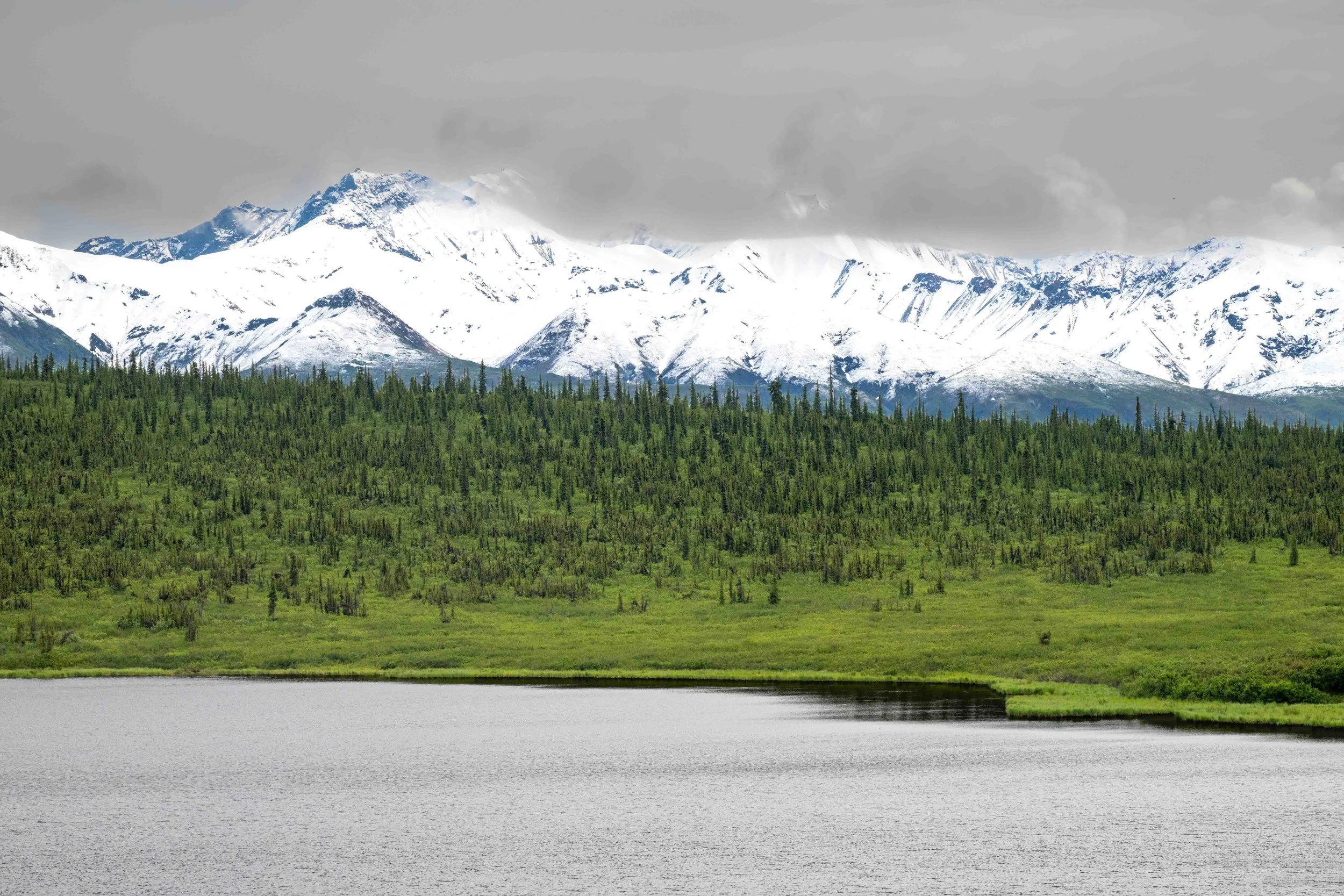
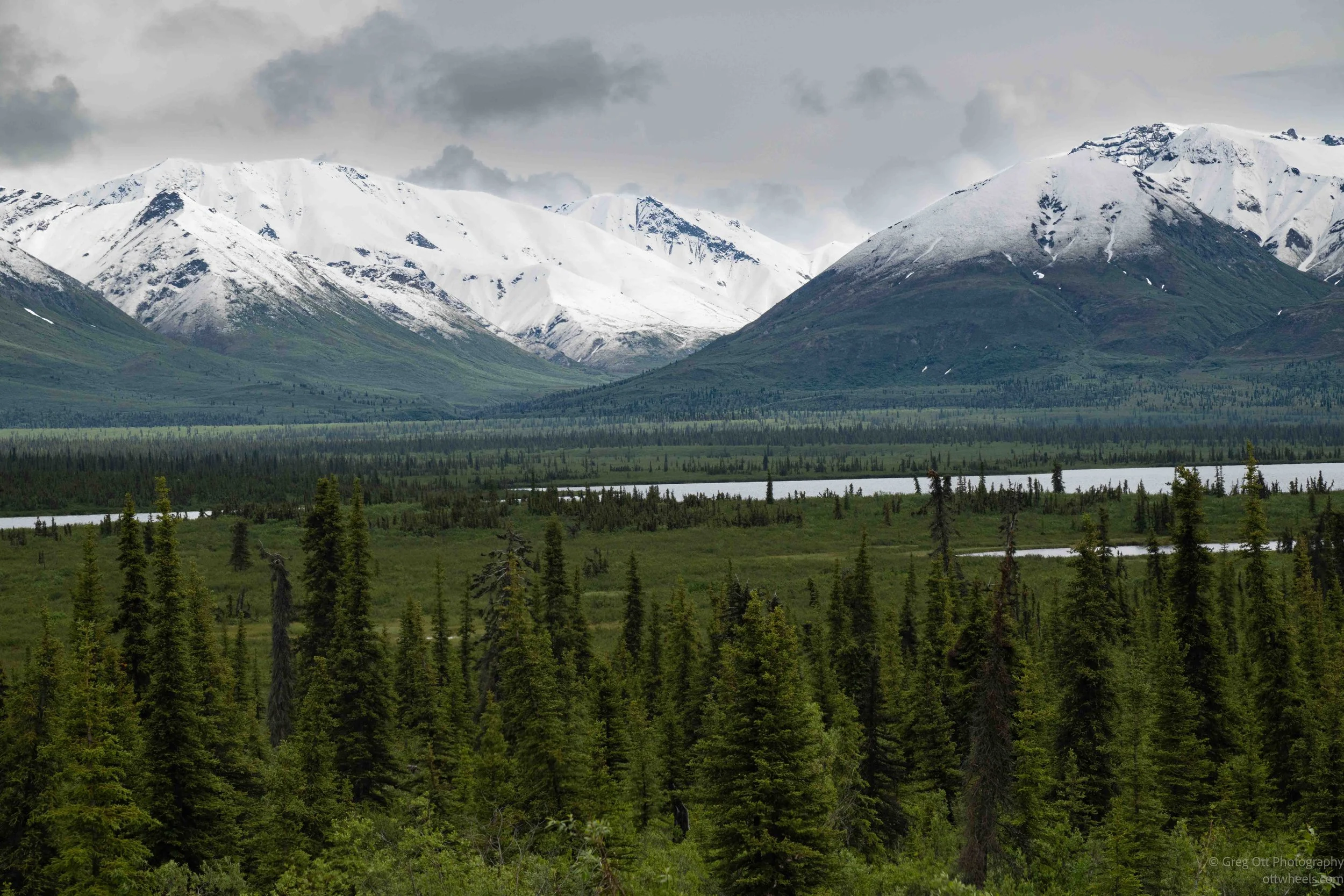
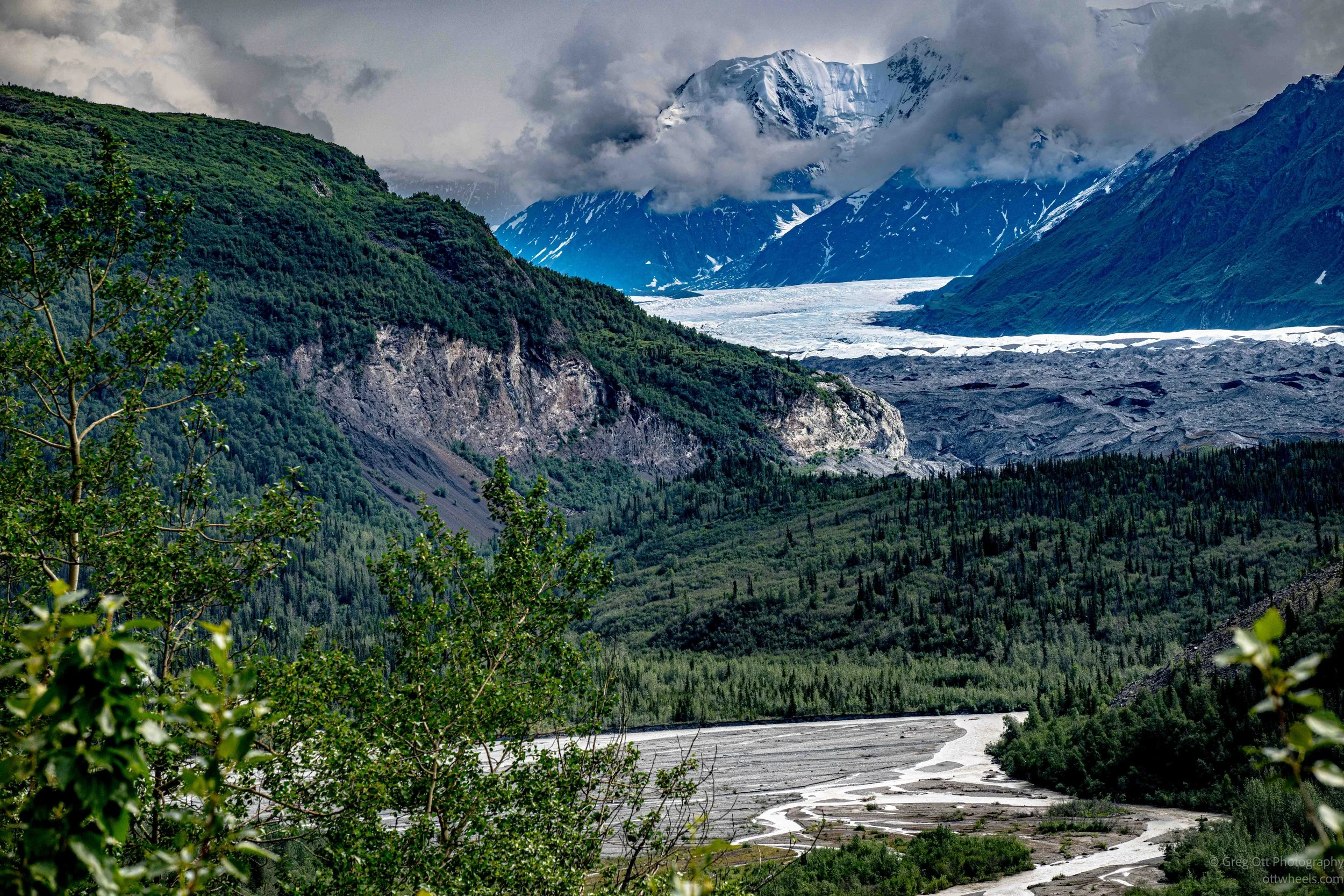
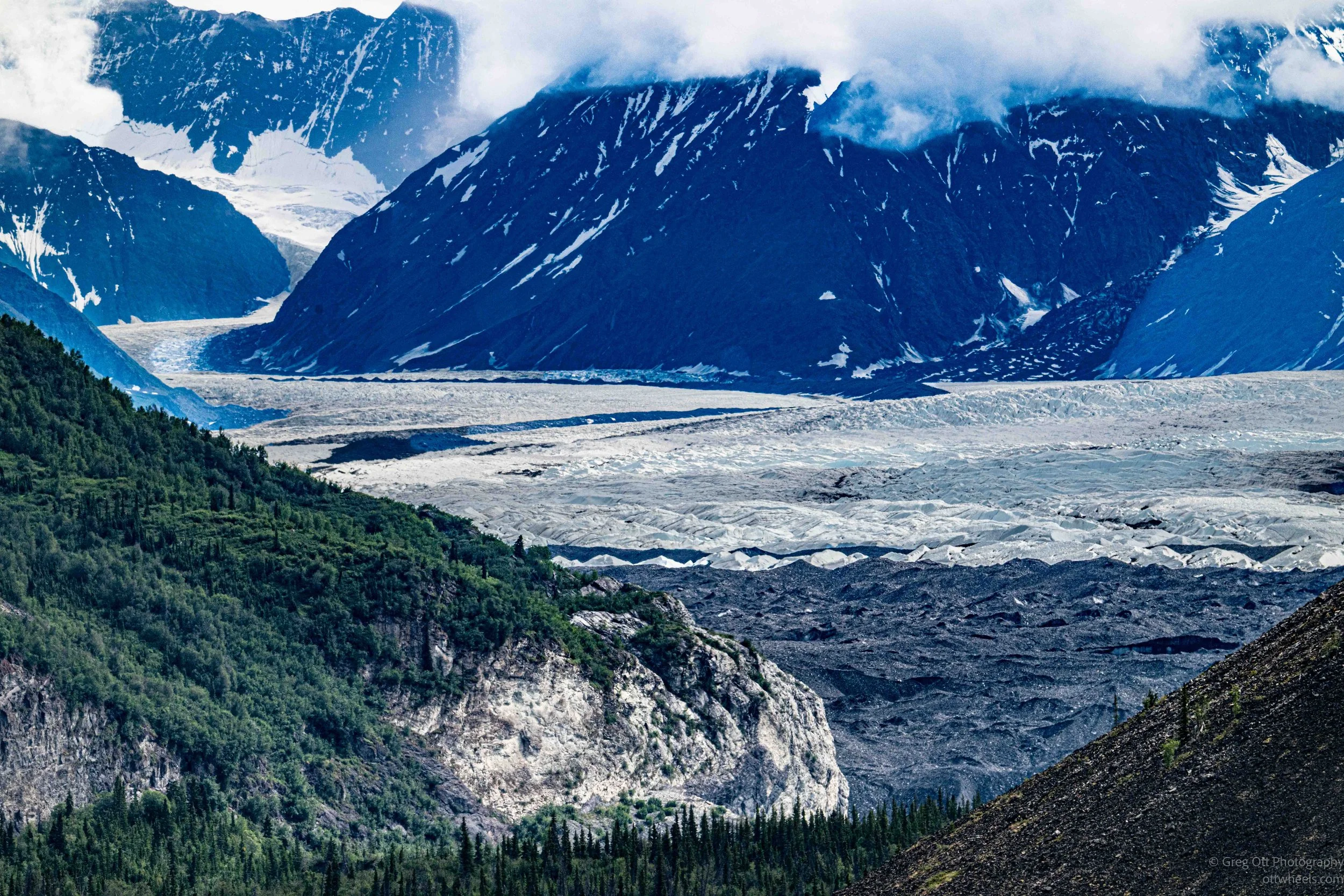
A couple of hours beyond Glenallen, the Matanuska Glacier finally came into view. The highway rounded a bend, the valley suddenly widened, and there it was—a massive river of blue-white ice spilling out of the mountains. Photographs simply don't convey its scale. The glacier dominates the entire valley, making everything around it seem smaller. I stopped at several pullouts to photograph it and happened to notice my odometer rolling over to exactly 52,000 miles. It felt like a fitting place for another small milestone. The highway is noticeably wider through this section, presumably to let people safely pull over—or to let everyone else drive around those of us who couldn't stop looking at the glacier.
About eighty miles from Anchorage, the drive changed again. The road narrowed, speed limits dropped, and long construction zones became common. At one point I sat for nearly twenty minutes waiting for a pilot car while crews worked on a stretch that had been reduced to dirt. In several places the pavement looked as though it had simply collapsed. Alaska's winters are relentless. Every year the freezing and thawing ground twists, buckles, and breaks the highways, and every summer road crews begin repairing the damage all over again. It feels less like maintaining a highway than carrying on an endless battle with nature.
Nearly nine hours after leaving Valdez, I finally pulled into Ship Creek RV Park in Anchorage. My first impression wasn't particularly encouraging. I immediately remembered a conversation I'd had with the owner of the RV park in Valdez. She had suggested staying in Palmer instead, warning me that Anchorage campgrounds could have issues. My biggest complaint, though, wasn't the people—it was the noise.
Traffic roared along nearby roads. Motorcycles echoed through the campground. Airliners climbed directly overhead after taking off. Next door, an active rail yard announced nearly every movement with train horns that seemed to blast forever. It couldn't have been a greater contrast to the quiet evenings I'd enjoyed in Valdez, where the loudest sounds were usually seabirds and boats gently moving in the harbor.
It had been almost nine hours since I left Valdez, and I was exhausted. I made the mistake of taking a nap before dinner, which guaranteed I wouldn't be sleepy later that night. The trains continued until nearly 11:30 p.m., and between the horns, airplanes, and traffic, it was well after midnight before I finally fell asleep. My time in Valdez had ended in peace and quiet. Anchorage was making it very clear that this chapter of the trip was going to be something entirely different.