10/3: Twin Falls
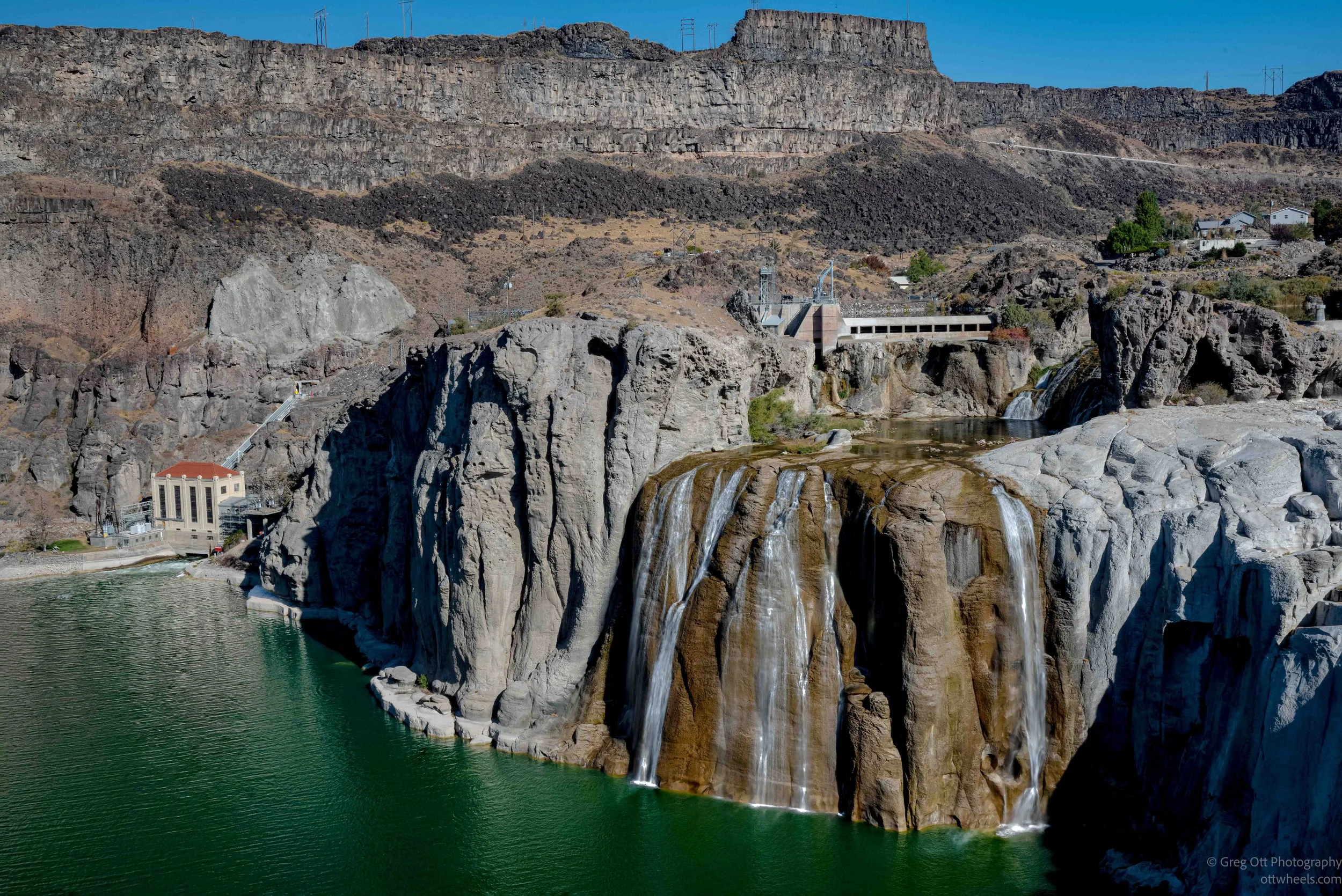
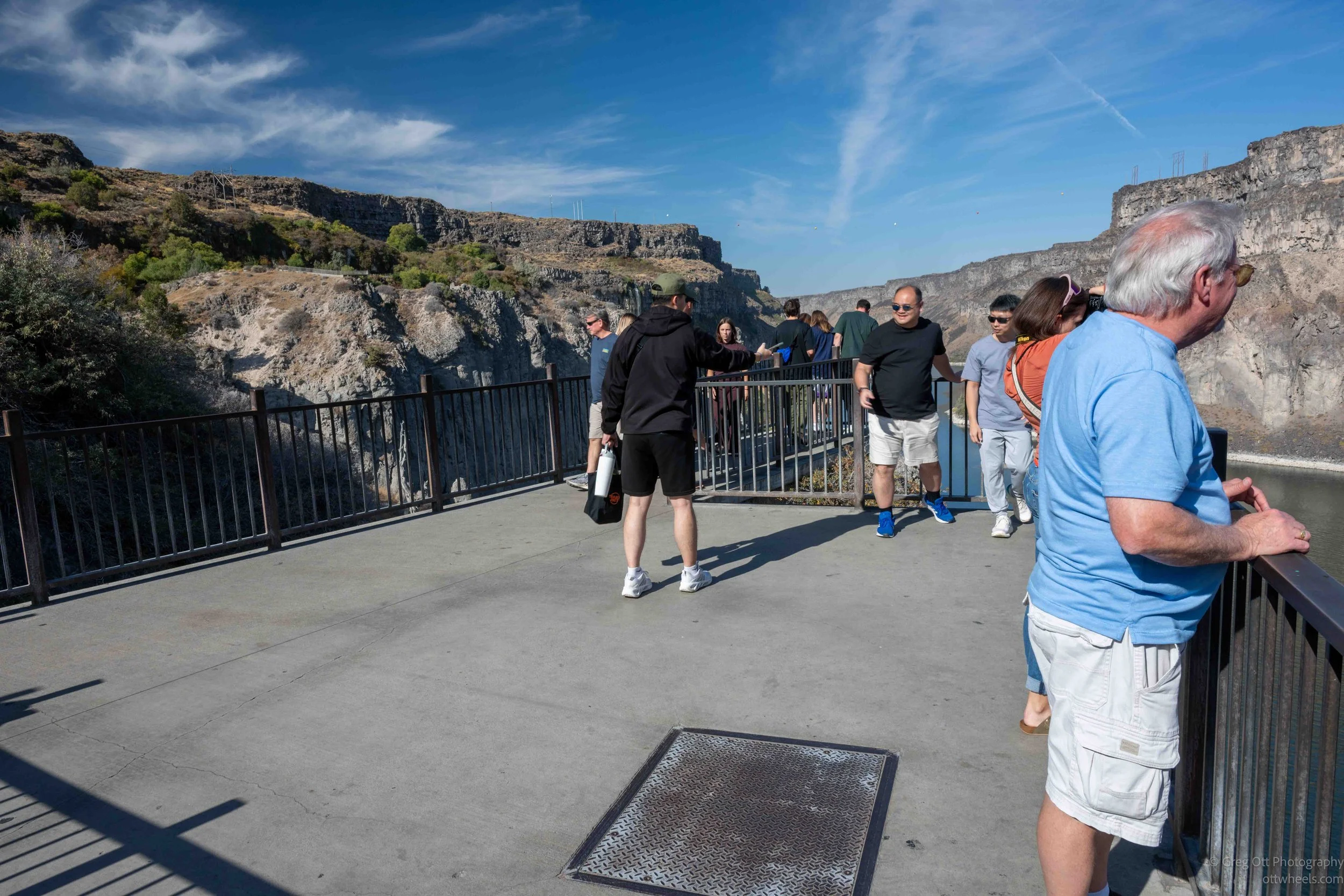
I woke to the sound of ATVs being unloaded from trailers and racing off into the hills. I made a double espresso, packed things up and drove to Shoshone Falls Park on the Snake River just outside Twin Falls. It’s a city park with a $5 vehicle entrance fee. I spent about an hour walking around. A couple of people had spread out picnic lunches or breakfasts on the grass, while most visitors seemed to head directly for the overlook.
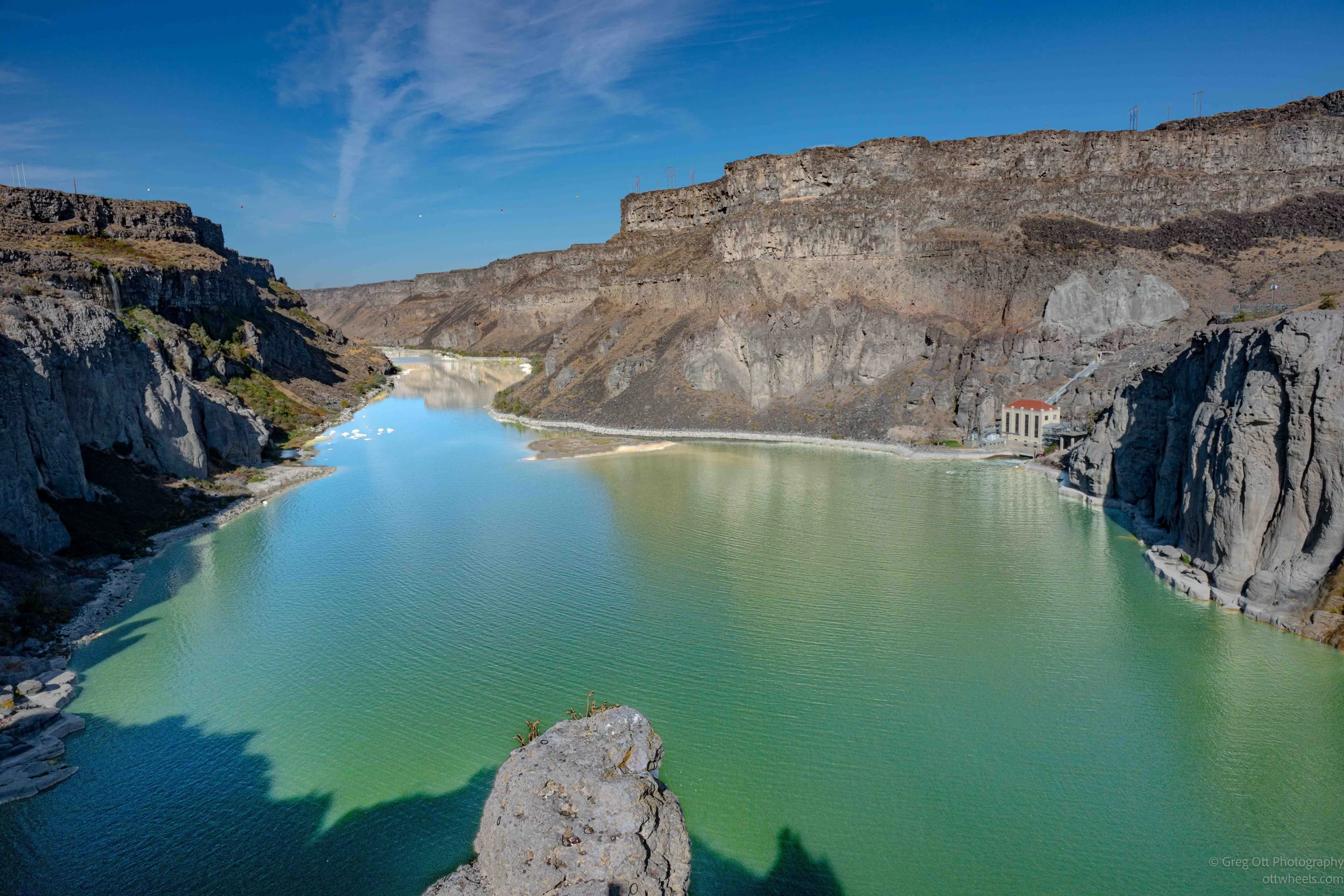
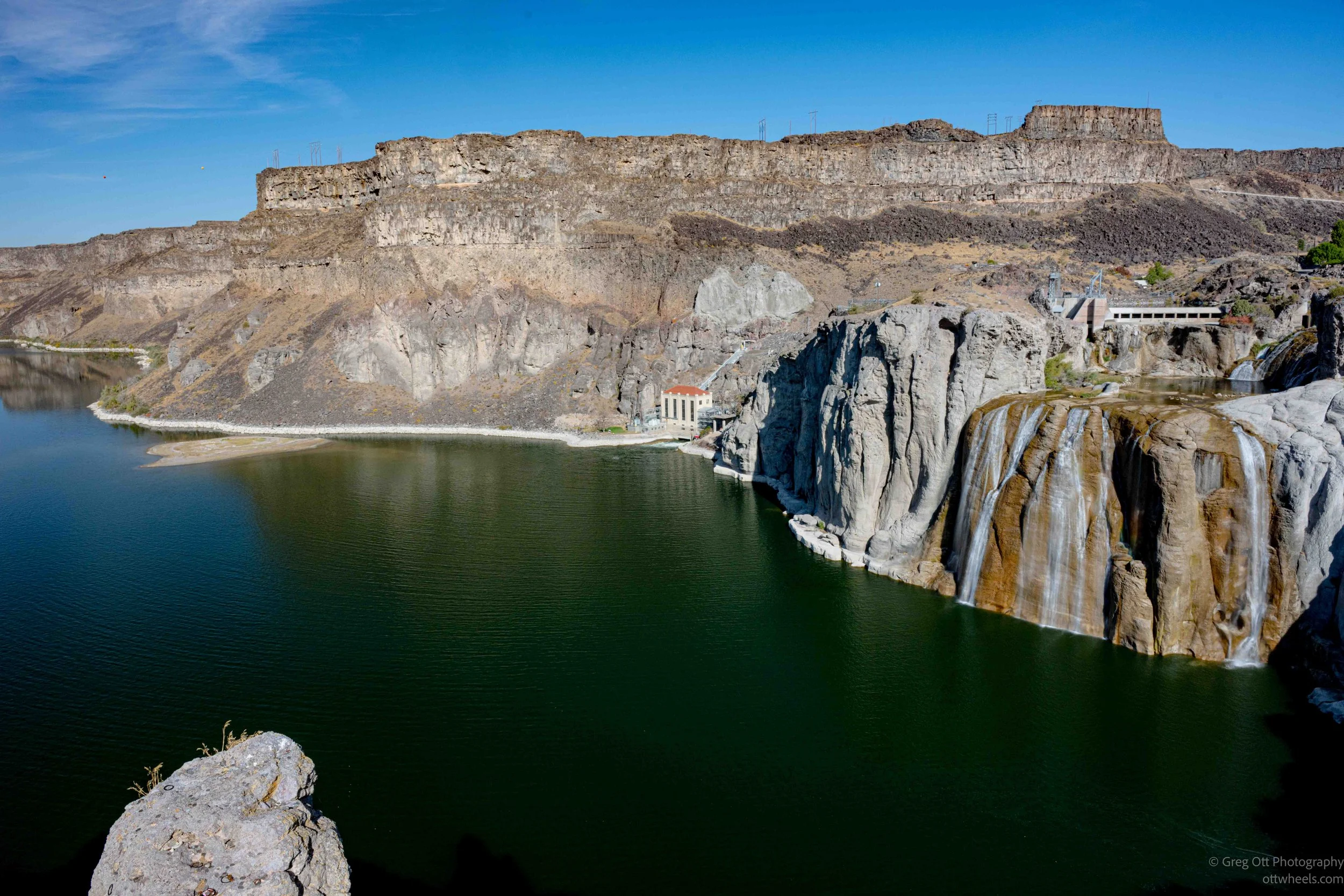
I’m always surprised by how many people drive to a place like this, get out of the car, walk to the overlook, take a photo and leave. Saw that, done that, check. There were several trails and viewpoints around the park, so I wandered around for a while instead. Shoshone Falls drops 212 feet and stretches roughly 900 feet across the Snake River, making it higher than Niagara Falls. The river has cut a deep canyon through the basalt landscape here, although on this October morning the falls themselves were far less dramatic than the canyon surrounding them.
There was very little water flowing over the falls. By fall, much of the Snake River is being diverted upstream for irrigation and to recharge the reservoir system, and the falls can become almost dry. It was certainly nothing like the photographs I had seen of the river roaring over the entire face of the falls during spring runoff. Still, seeing the exposed rock made it easier to understand the shape and scale of the falls.
Near one of the overlooks, I noticed an area where people had thrown coins, hair ties and various rubber wristbands over the edge. There were quite a few of them, enough that it looked intentional, but I couldn’t figure out what the tradition was or how it started. Various birds occasionally flew out from the cliffs below, but they were much too far away to photograph.
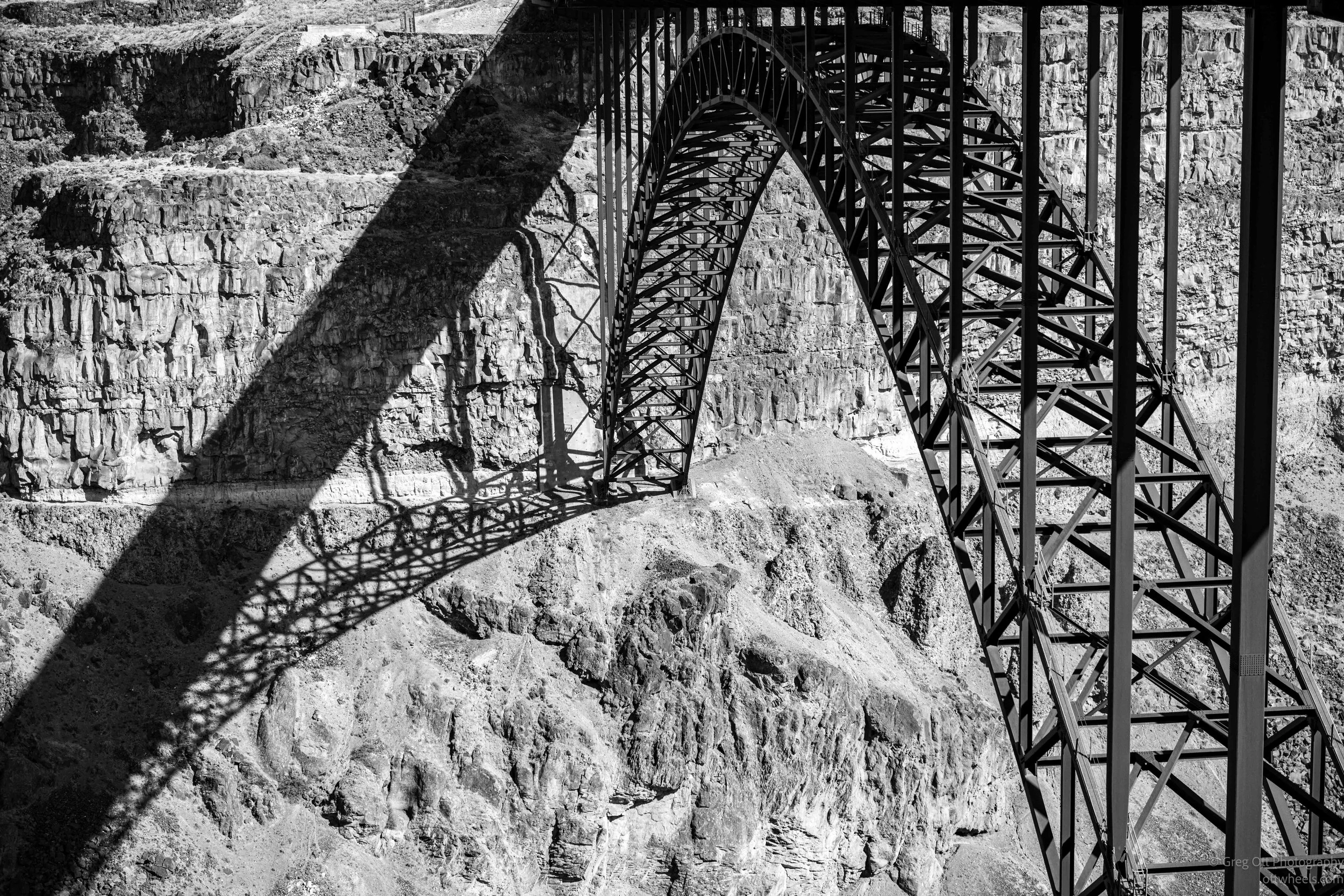
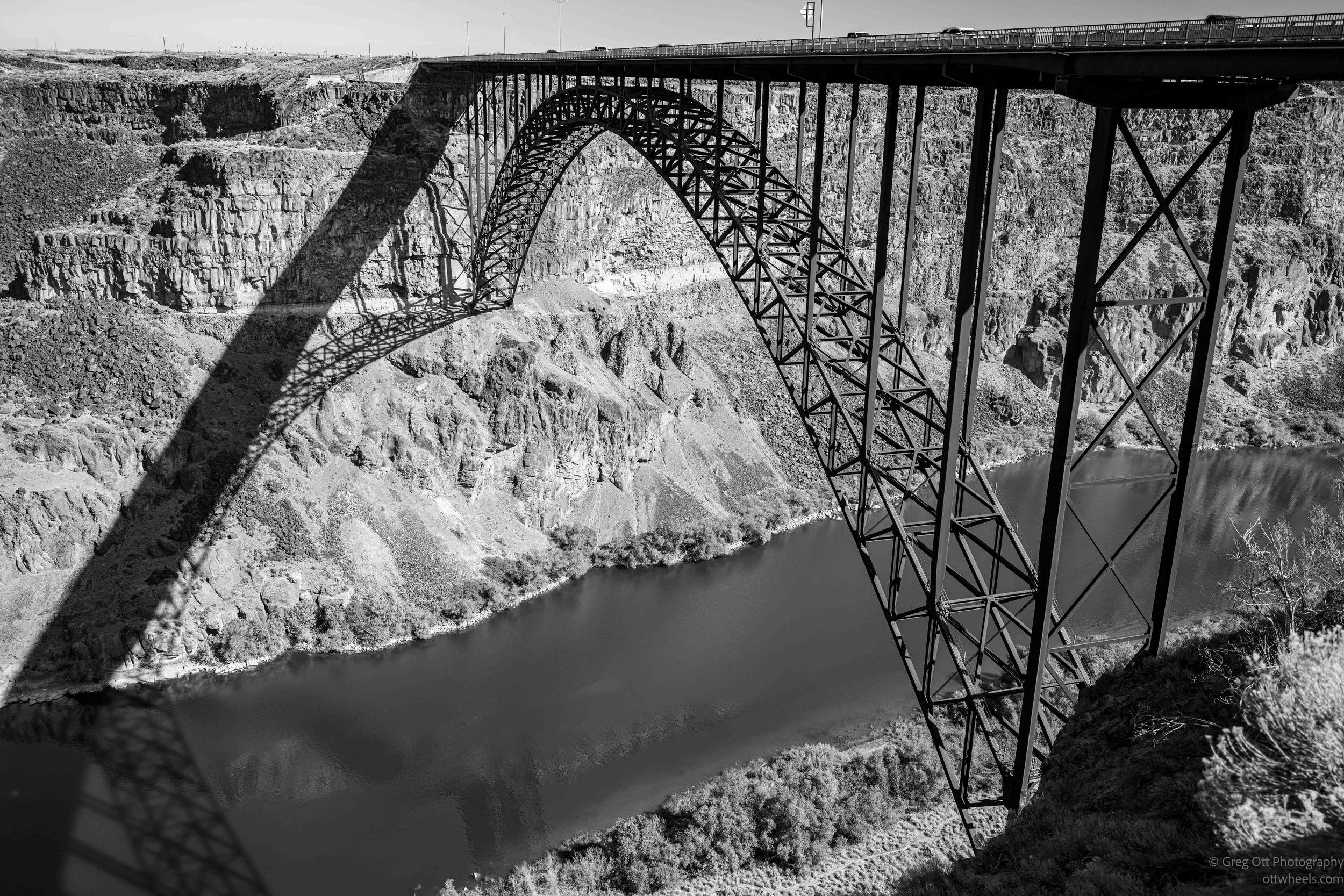
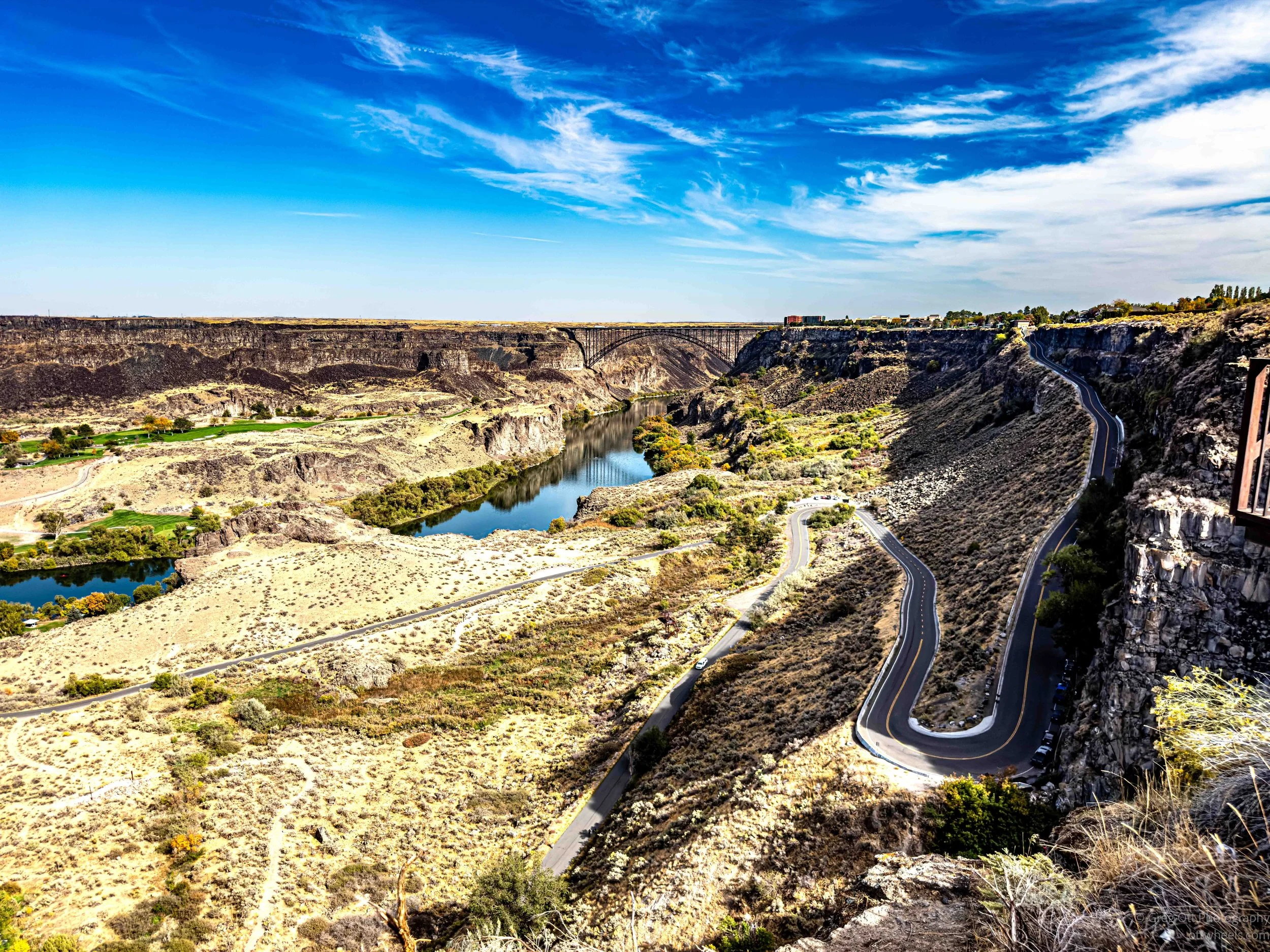
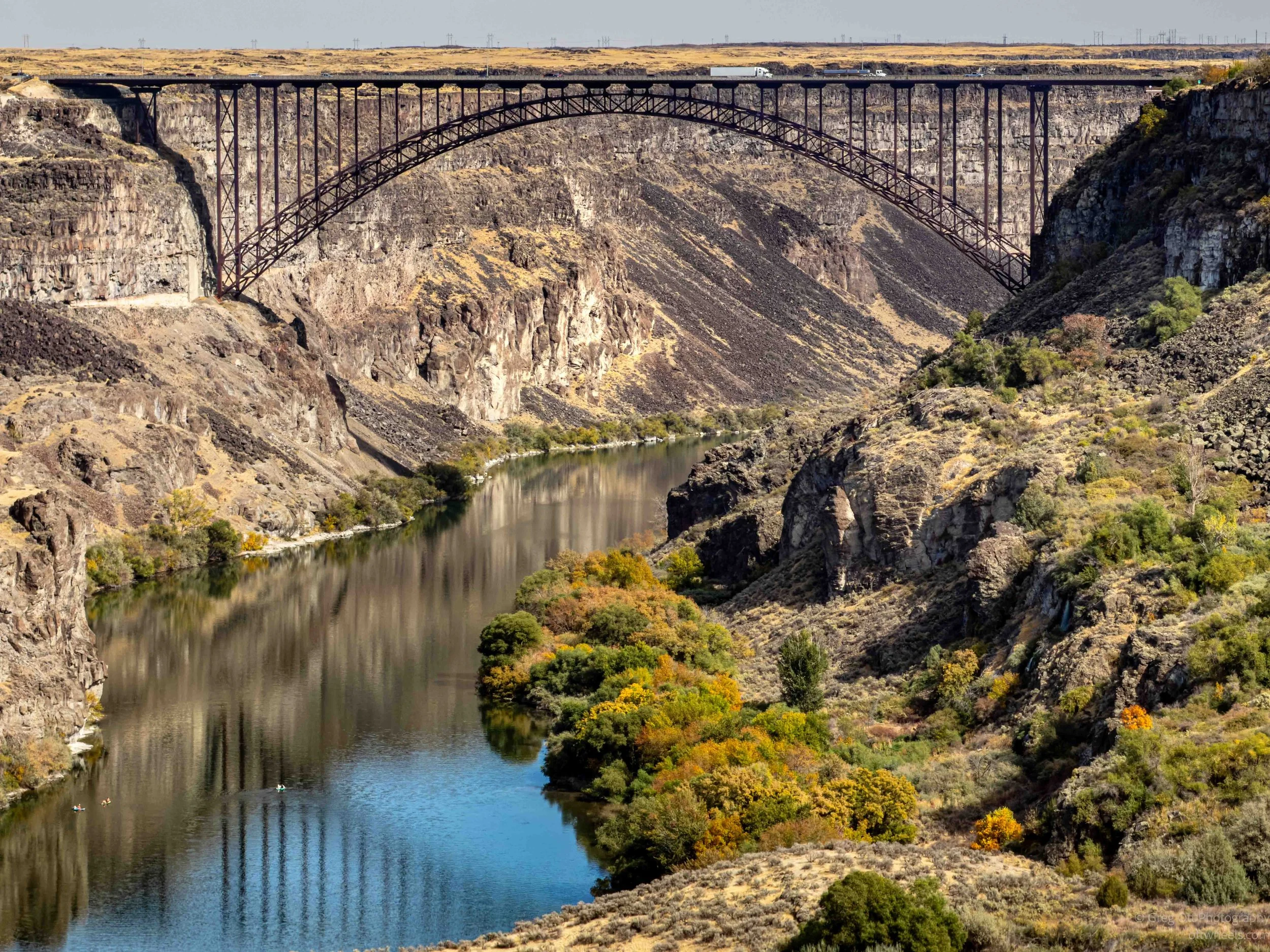
From Shoshone Falls I drove a few miles around the canyon rim to the Perrine Memorial Bridge in Twin Falls. The bridge carries U.S. 93 across the Snake River Canyon, about 486 feet above the river. I really wasn’t expecting much from it. In fact, I drove completely across the bridge thinking I would skip it, then noticed the visitor center on the south side and made a U-turn.
The present Perrine Bridge opened in 1976, replacing an earlier two-lane bridge that had crossed the canyon since 1927. The original bridge was considered an engineering achievement of its time and was once promoted as the highest bridge in the world. Construction of the present steel arch bridge began in 1973 and took about three years. Its weathered steel has developed a reddish-brown surface that blends surprisingly well with the canyon walls.
BASE Jumping at Perrine Bridge
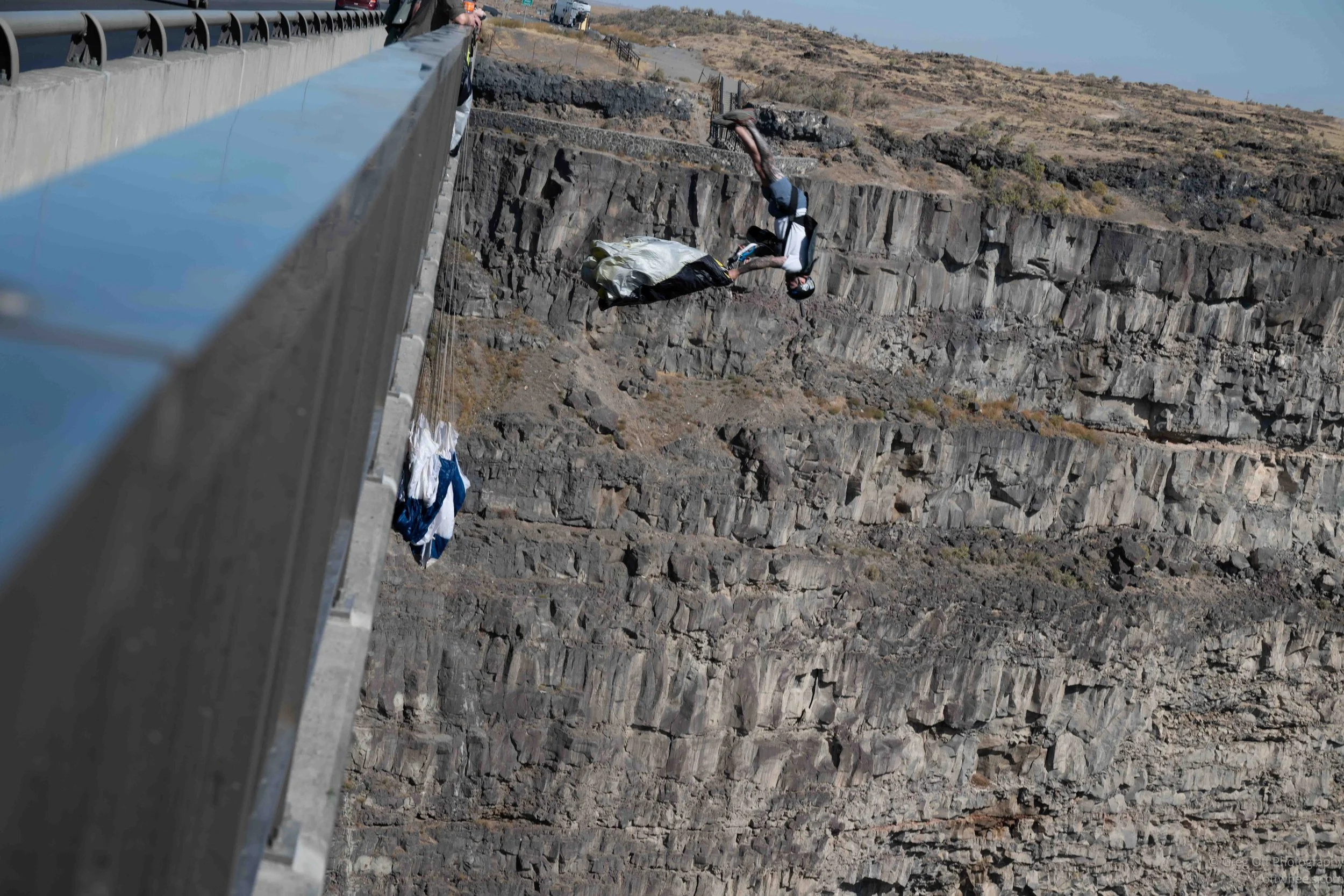
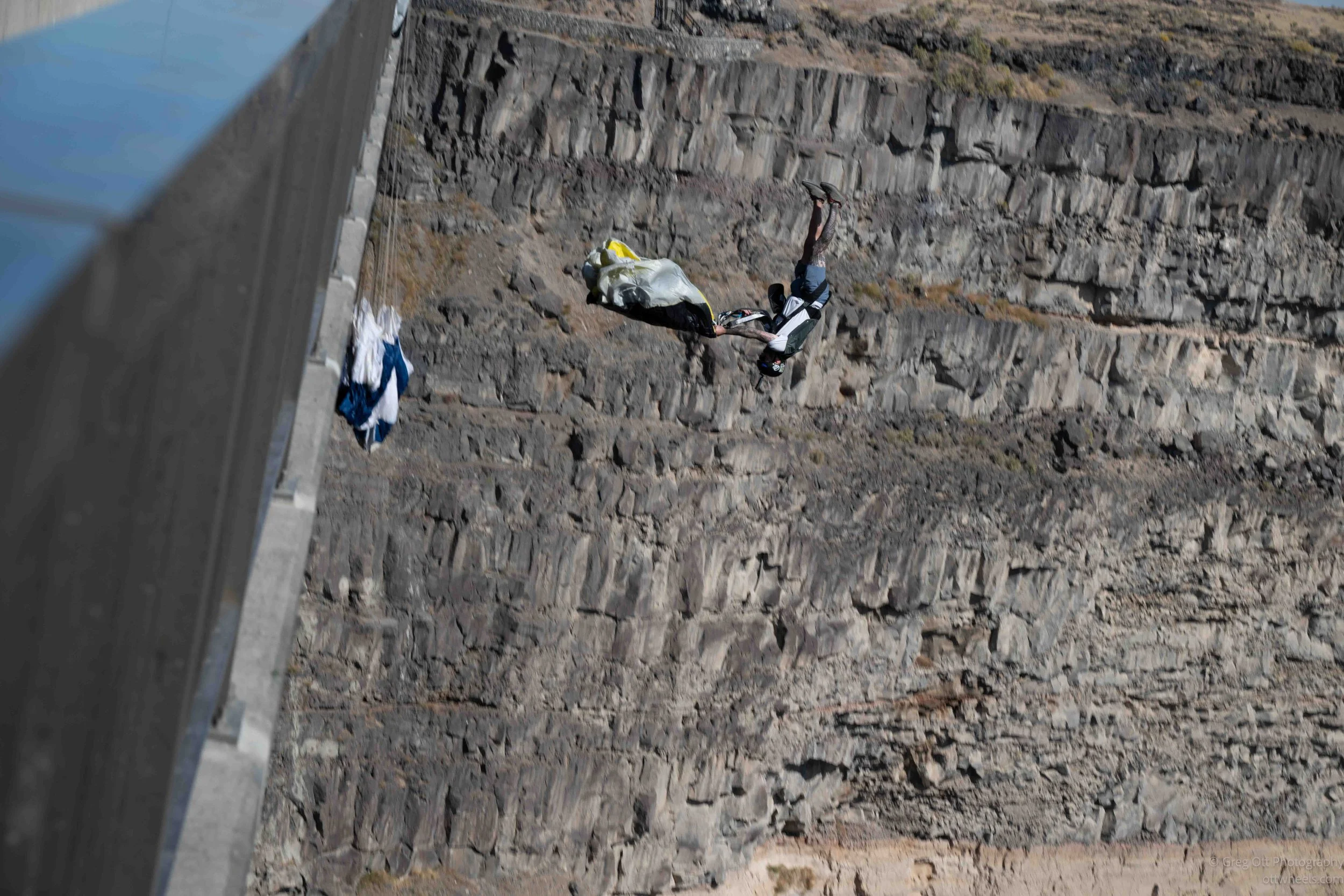
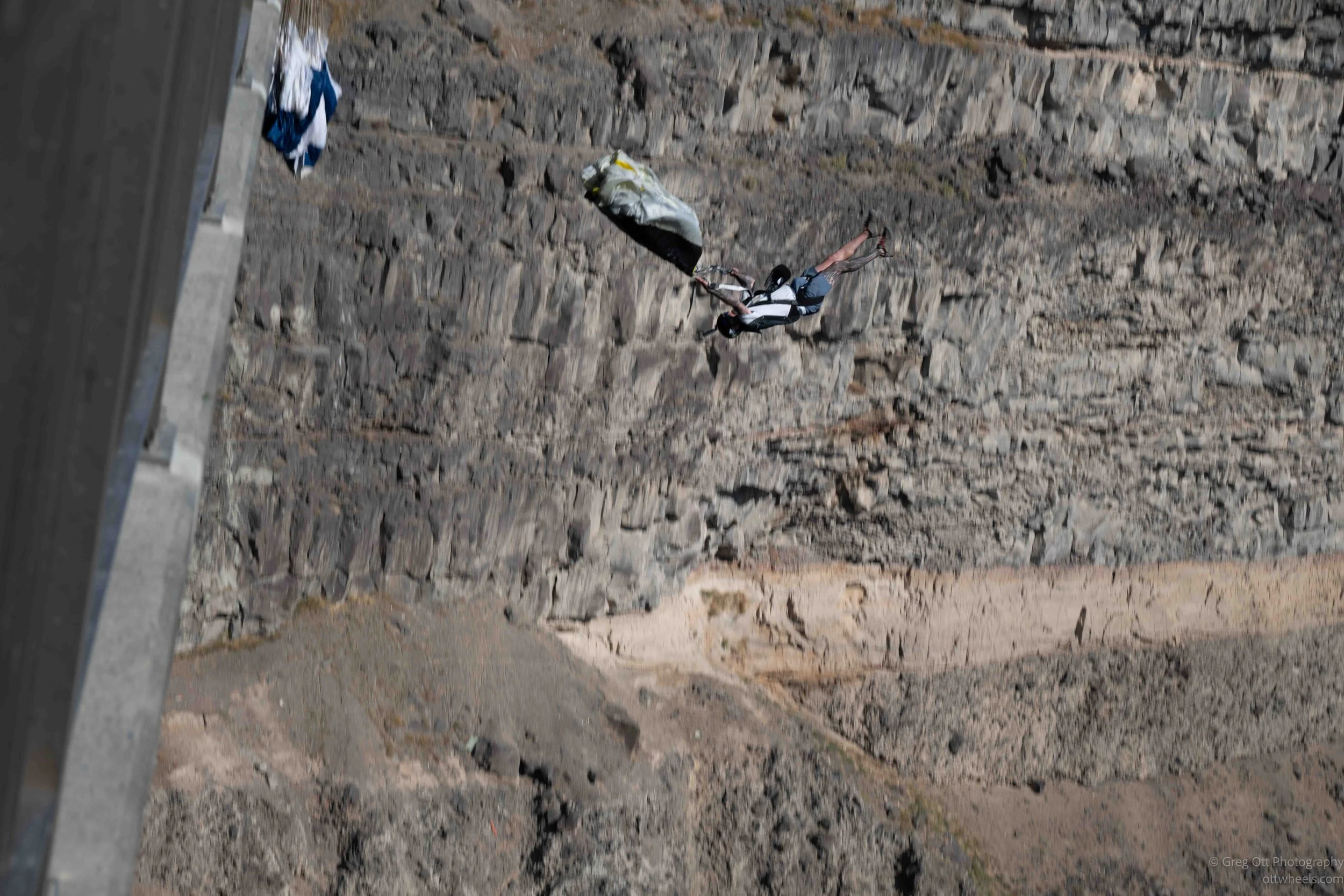
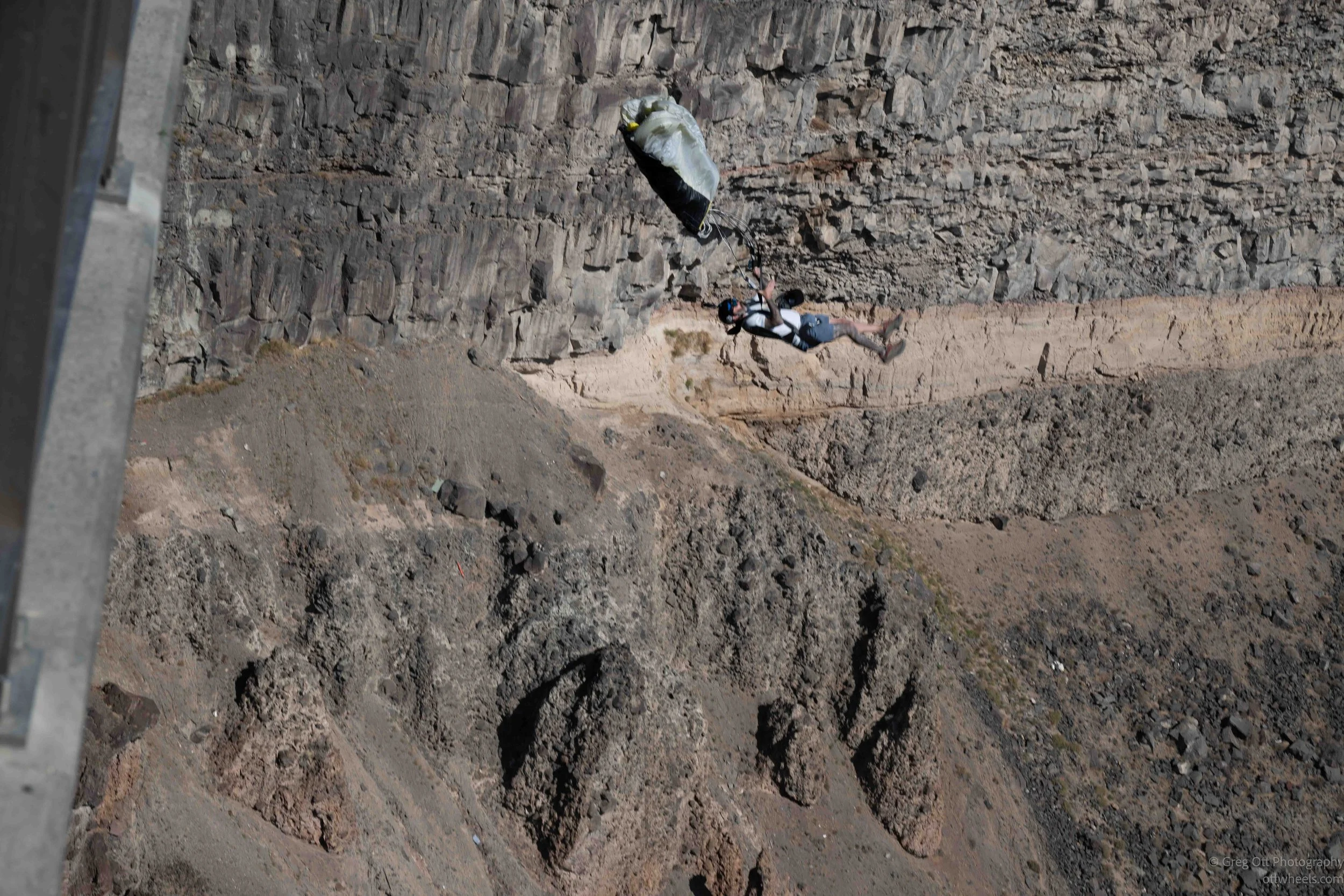
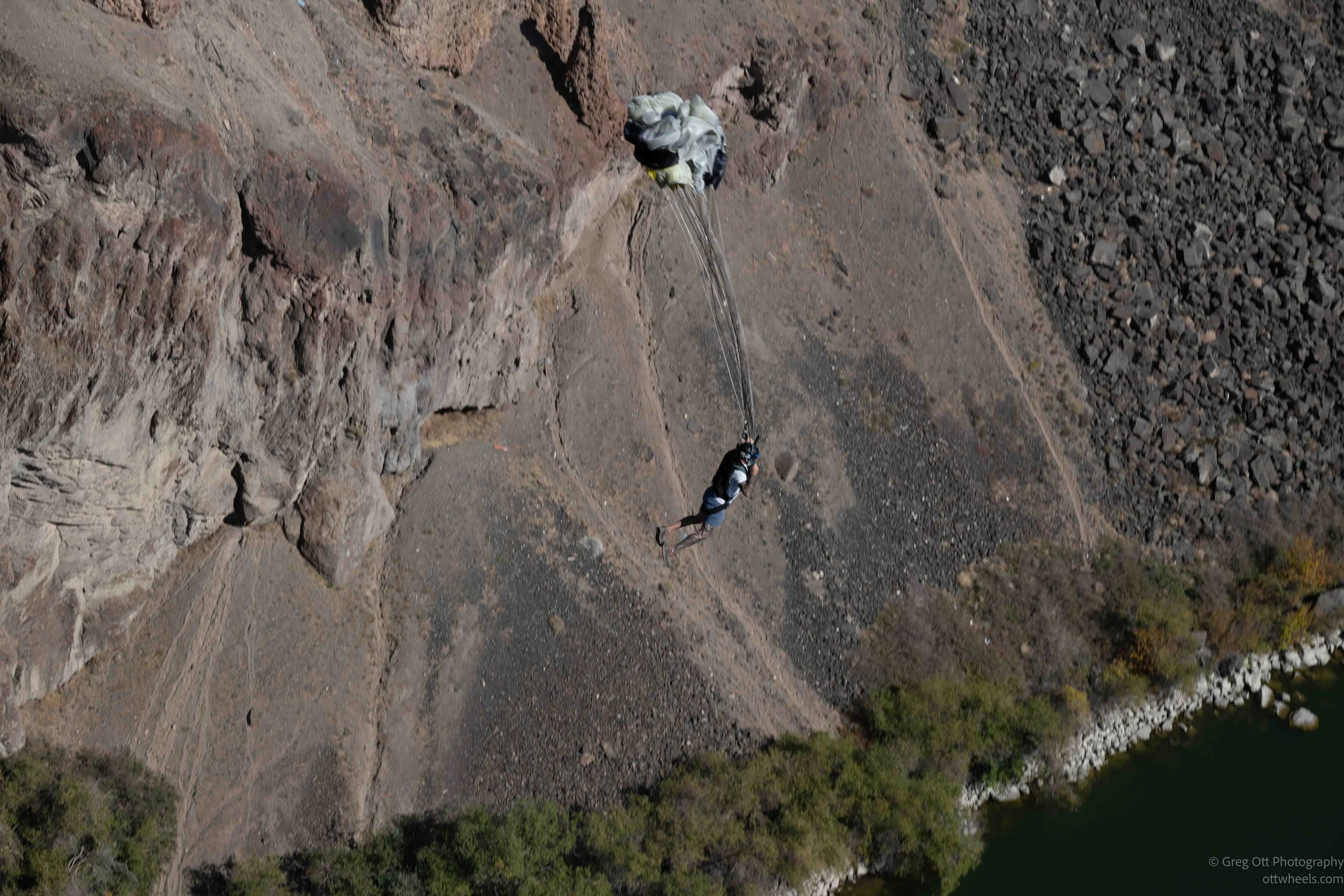
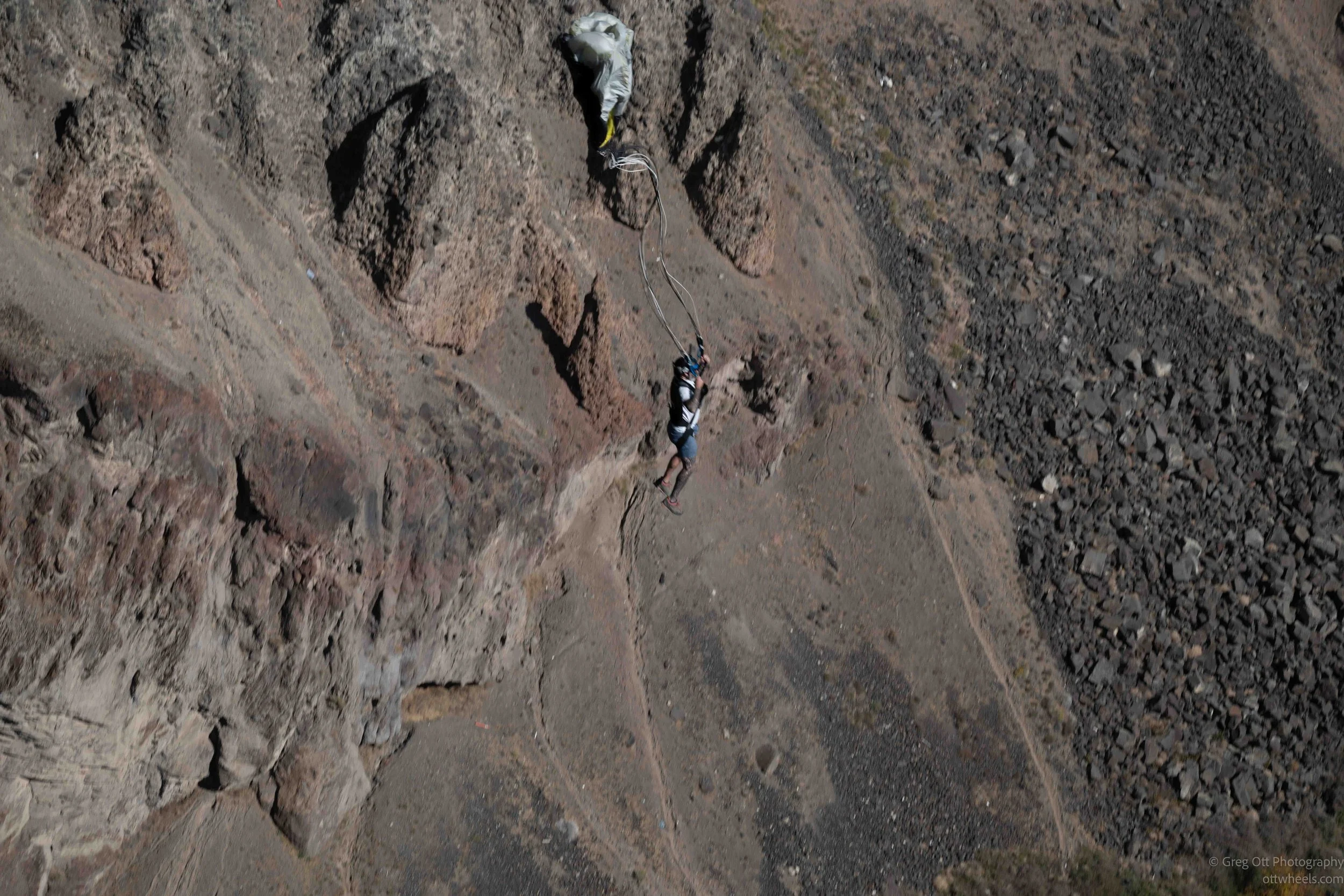
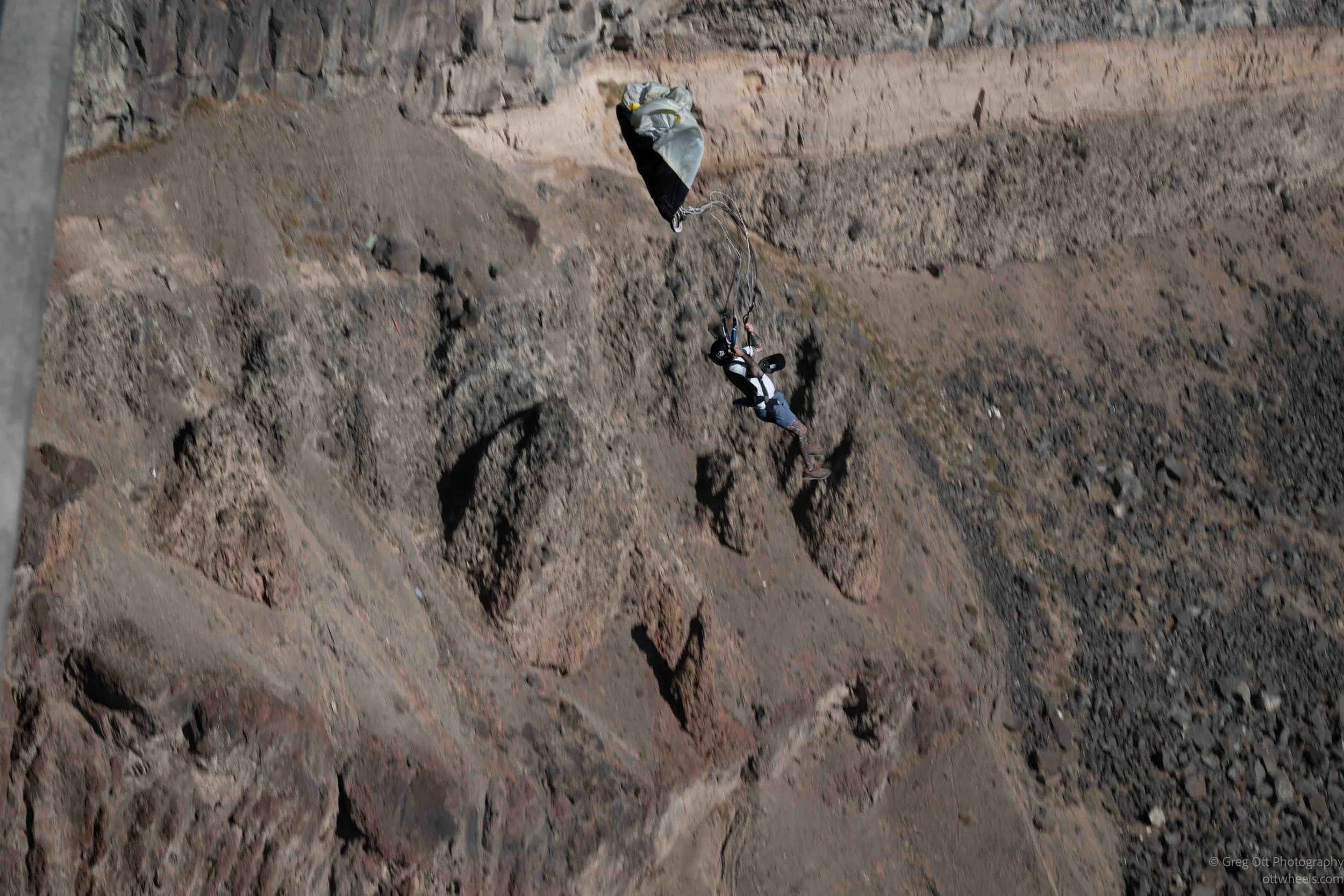
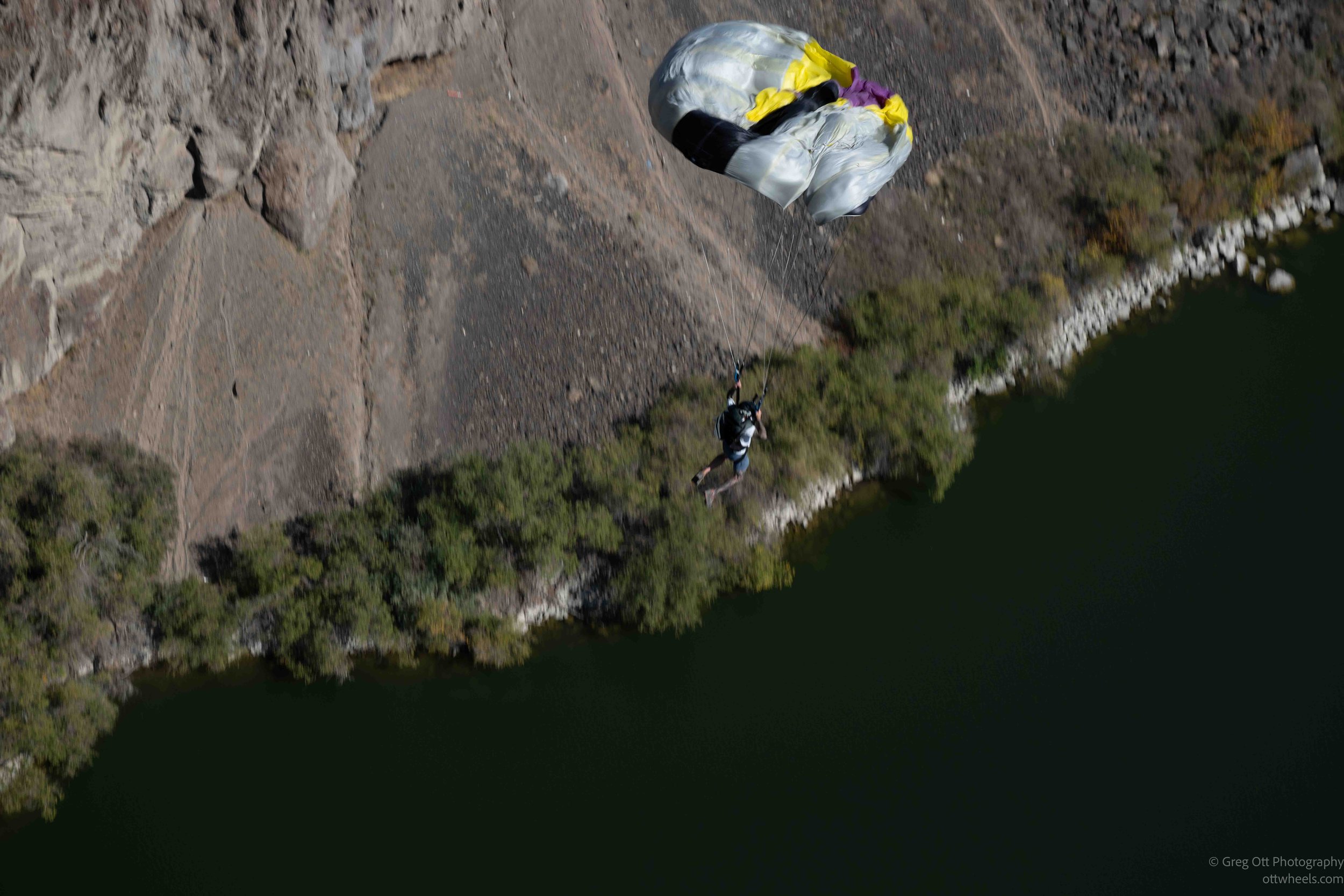
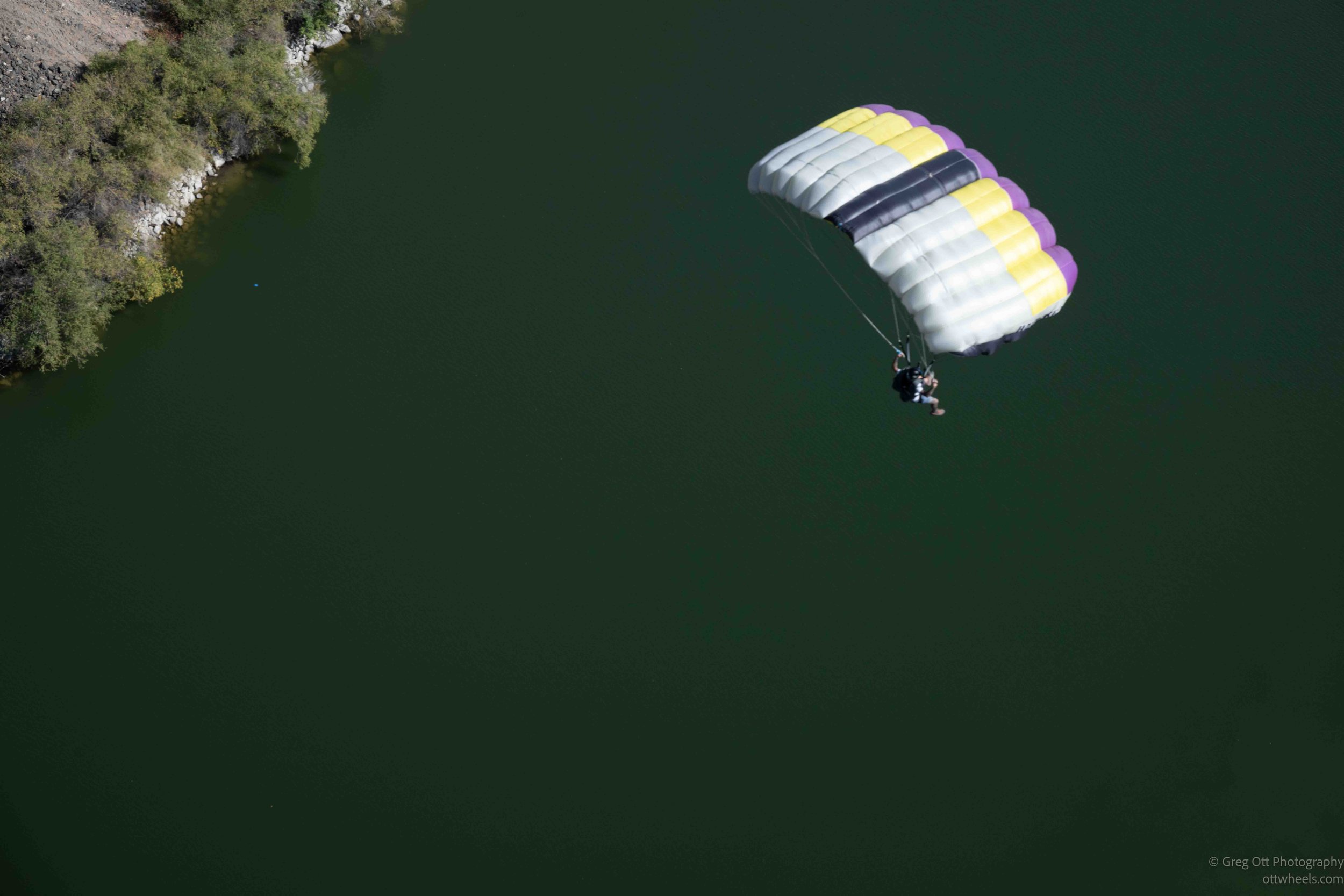
I grabbed the camera, thinking I would take a few photos of the bridge and canyon. There were several guys packing what looked like tents into bags, but there wasn't a camping area anywhere nearby. As I started walking across the bridge, I realized what I was seeing. These were parachutes, and people were BASE jumping from the bridge. I later learned that Daniel Schilling set a Guinness World Record here in 2006, making an astonishing 201 jumps from the bridge in just 24 hours.
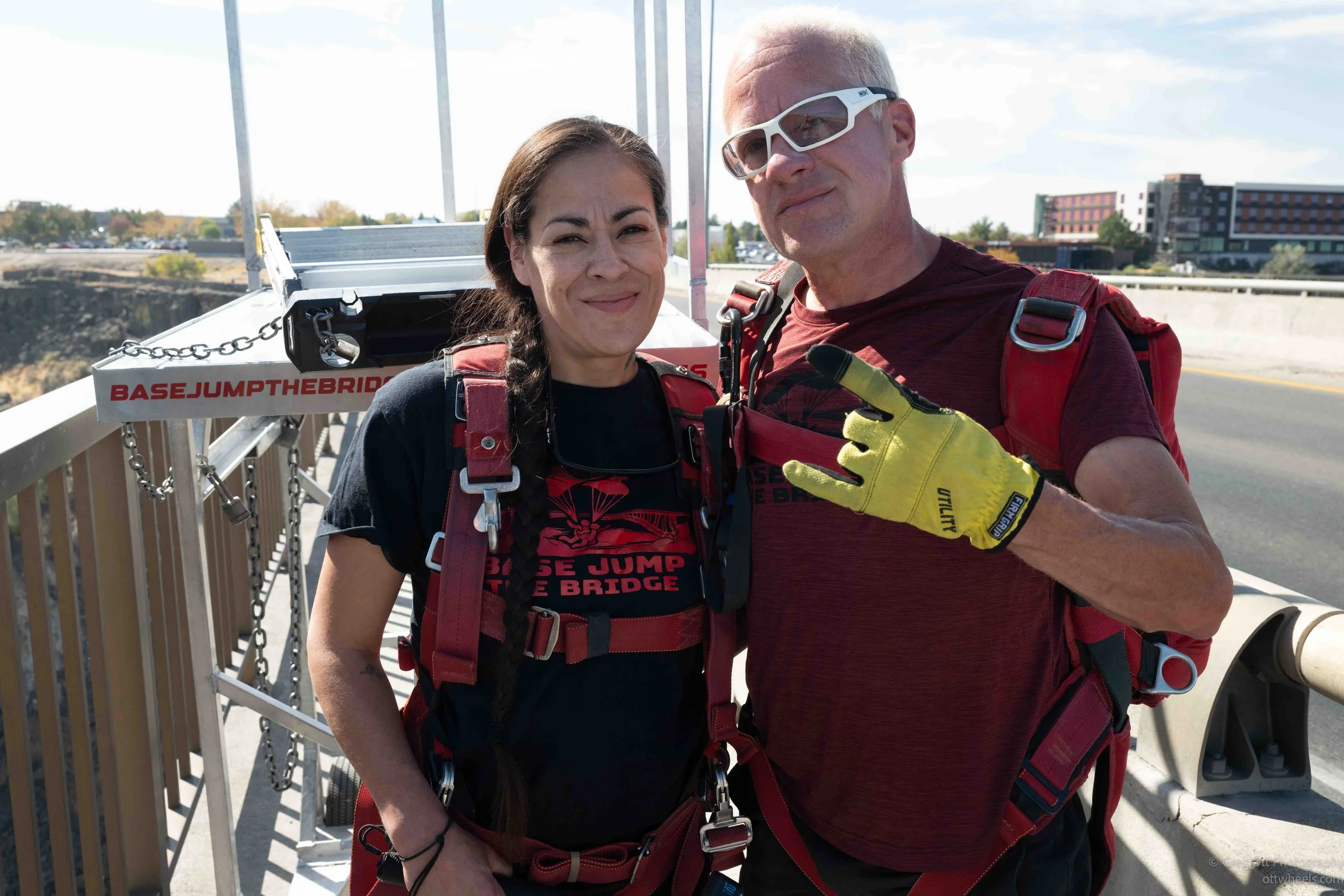
A man was pulling an aluminum contraption behind him, with a woman following. I stopped to talk with them and learned that he was an instructor with more than 1,000 parachute jumps and 500 BASE jumps. The woman was his student. He was quick to hand me a business card and suggested that we could do a jump together later that afternoon. The aluminum contraption was a jumping platform, which I realized was almost a necessity for a tandem jump.
I spent quite a while photographing them as they prepared, along with other jumpers coming and going. I told them I would send them some photographs. Just as they were about to jump, my camera battery died. This has happened before, and the lesson is becoming increasingly engraved in my head: always bring extra batteries. Having thousands of dollars worth of camera equipment is rather pointless when a small battery brings everything to a halt.
The woman had already completed ten jumps, but that didn't stop her from letting out a scream as they fell backwards offaafaf the platform. A moment later, everything seemed calm as they floated toward the canyon floor. She had a GoPro mounted on the end of a stick and was filming the entire experience. I imagine she captured some amazing footage, drifting through space with the bridge and canyon walls as a backdrop.
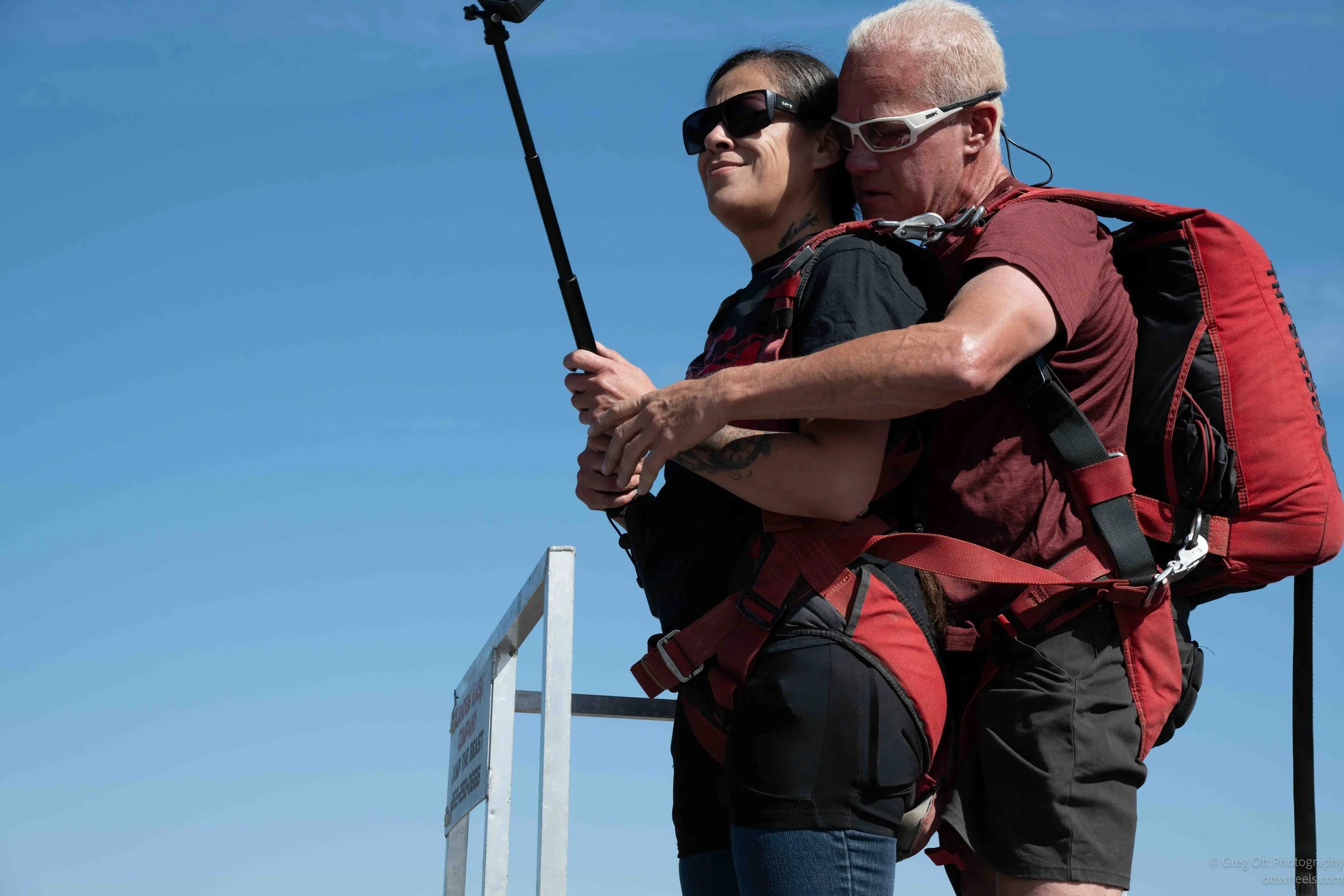
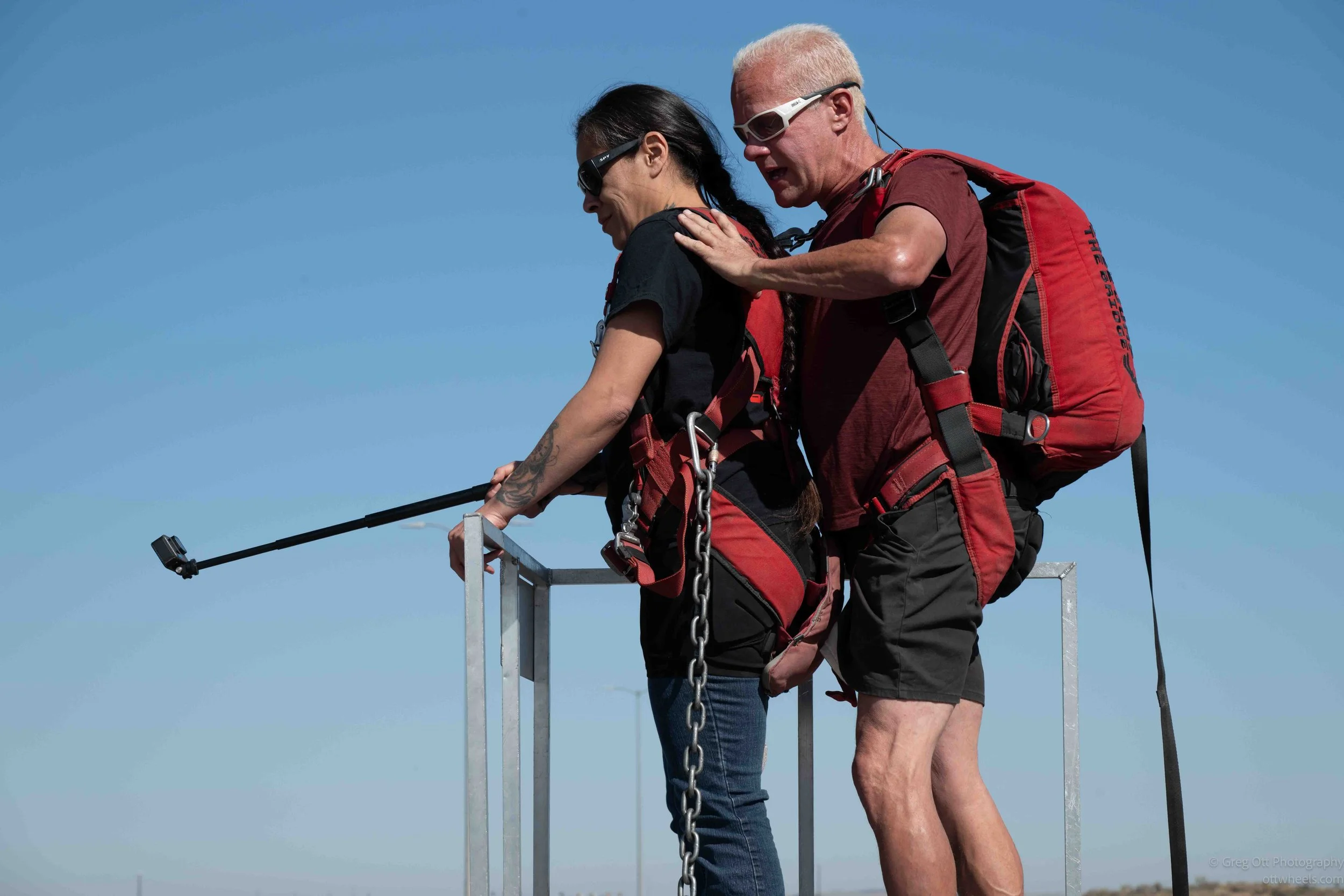
I walked back to the van, grabbed my camera bag and checked the batteries before returning to the bridge. There were plenty more jumpers, and I had a great time watching and photographing them. The Perrine Bridge is one of the few places in the United States where BASE jumping is permitted year-round without a permit, which helps explain why so many people come here to jump.
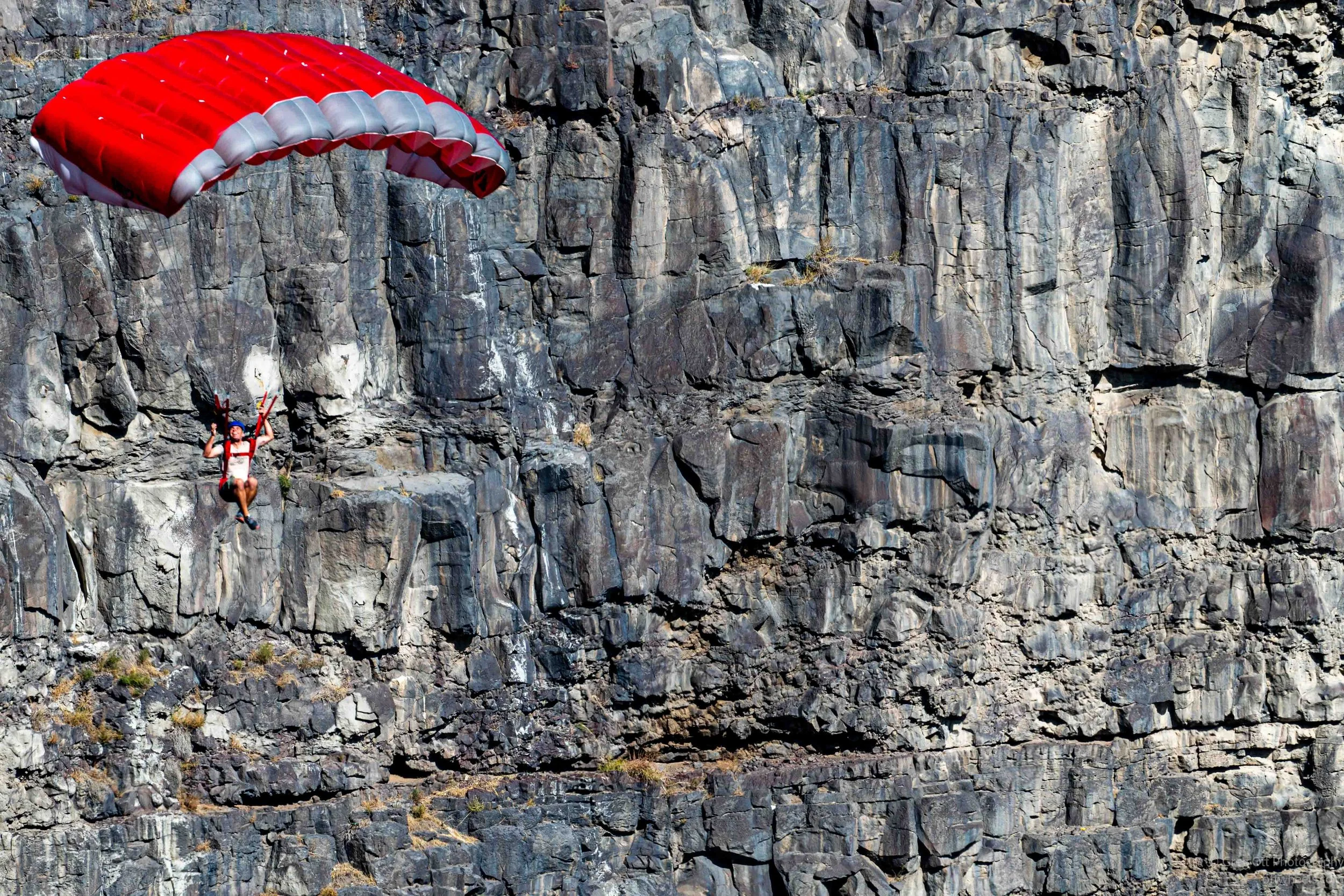
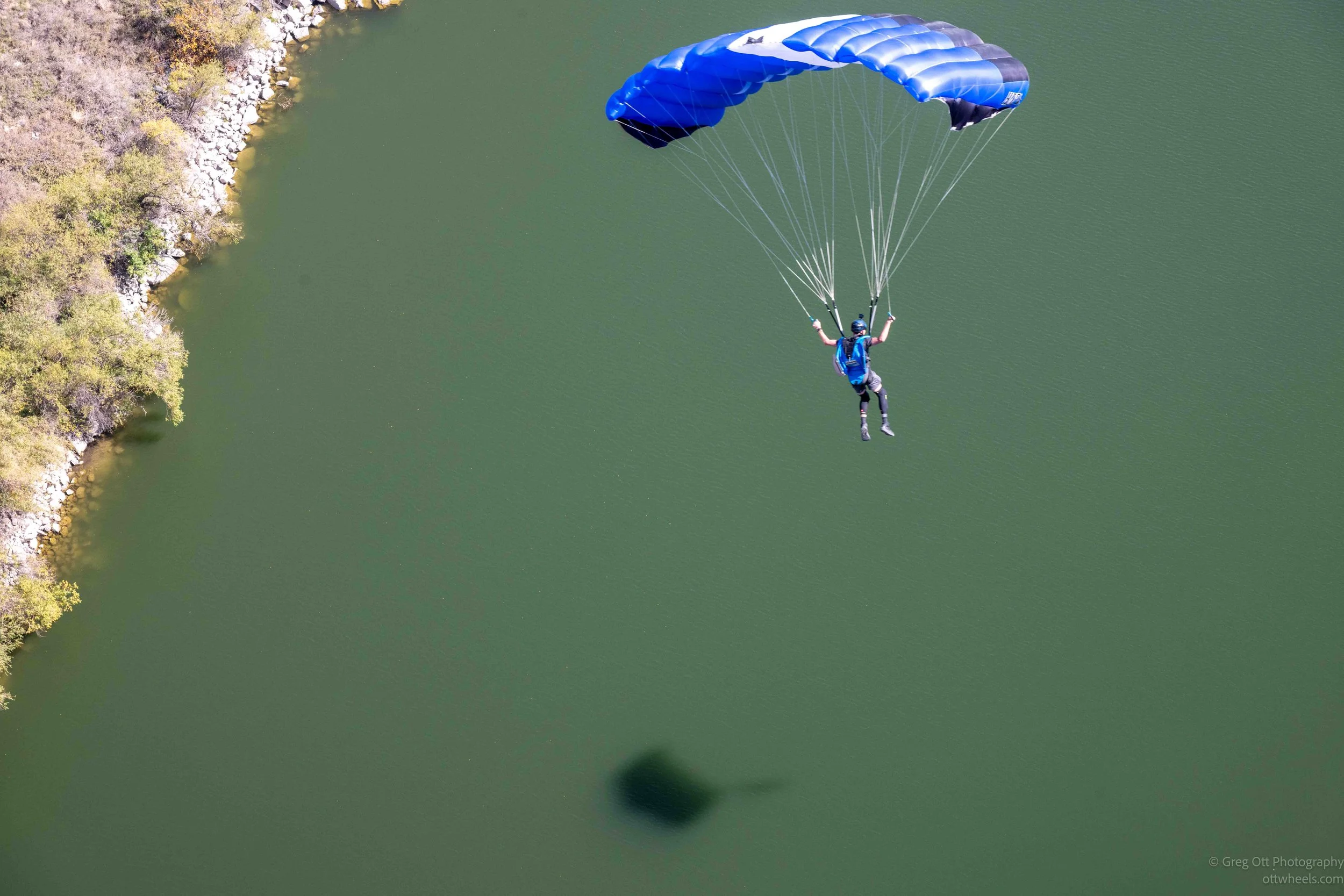
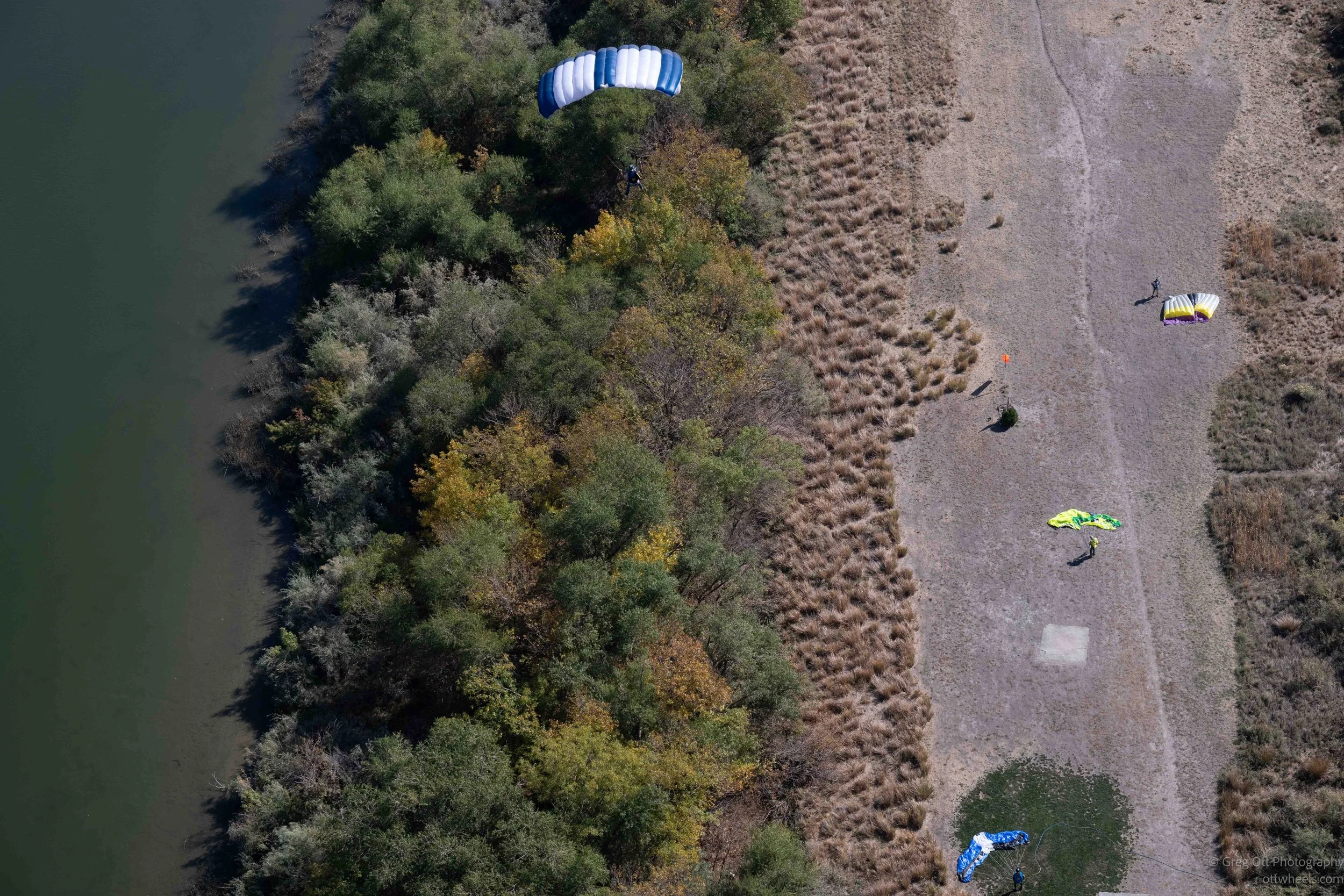
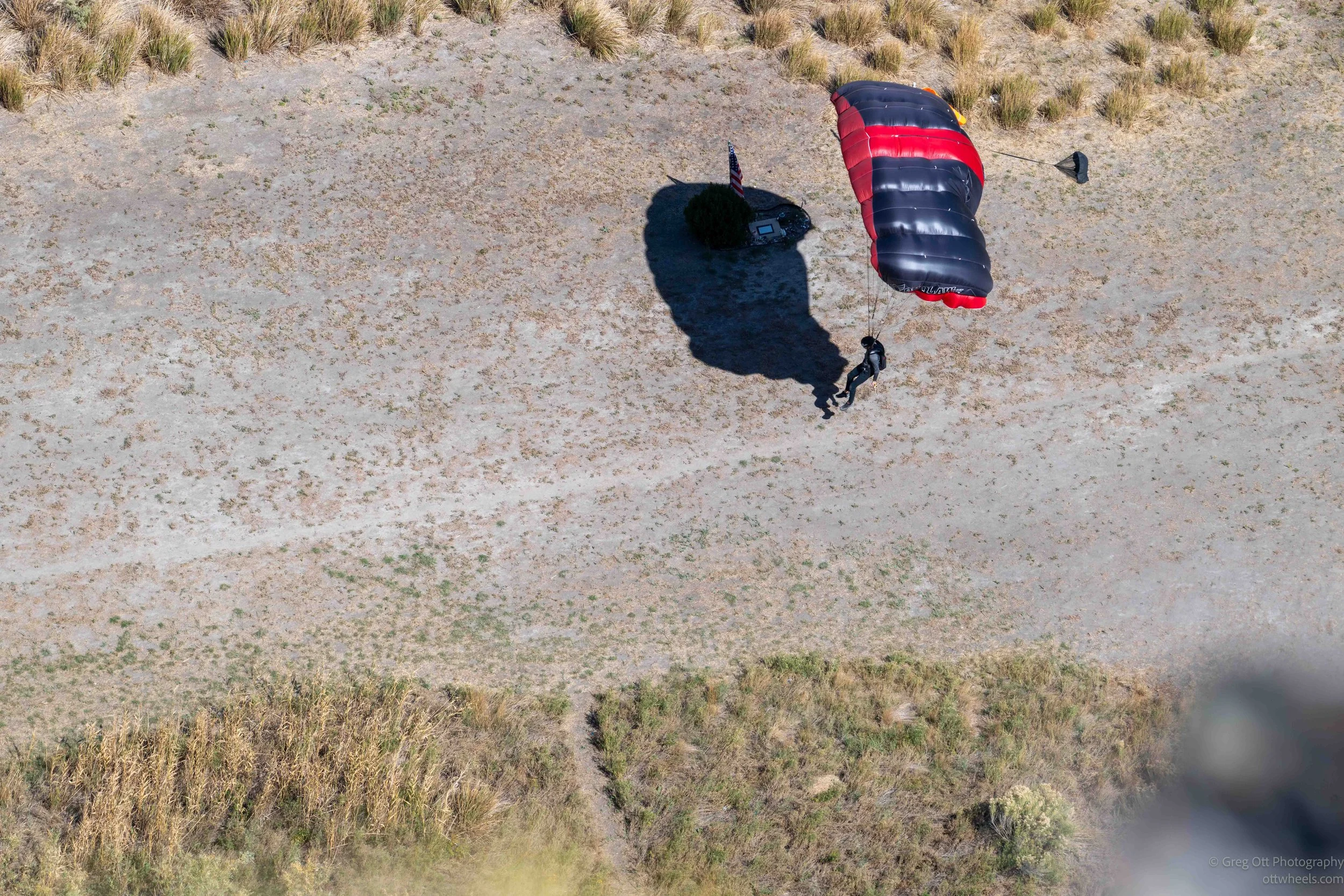
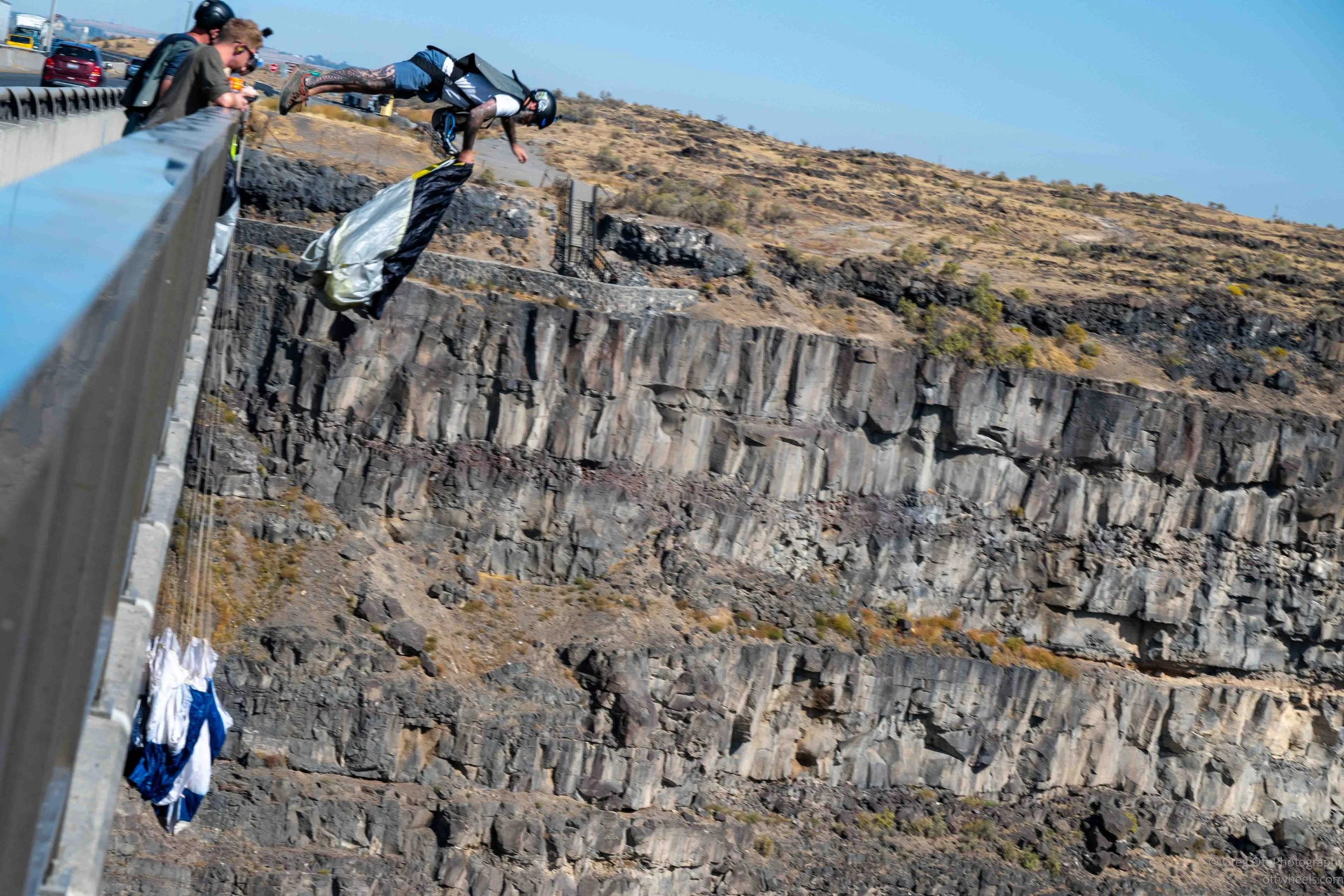
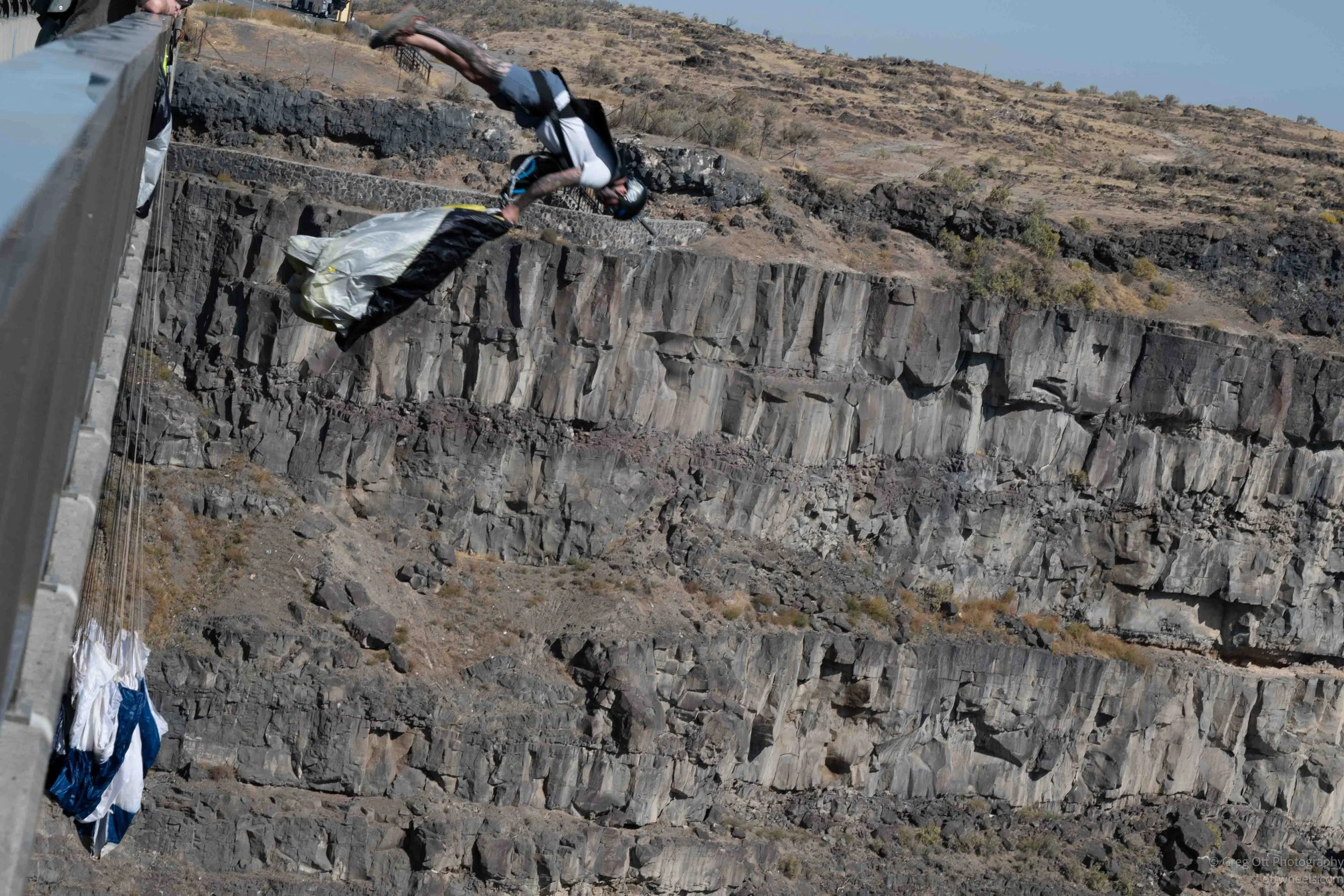
Everyone walked out toward the center of the bridge before jumping. I assumed this was to give them enough clearance from the bridge structure. Some did flips as they left the railing, while others simply stepped off into space. Once their parachutes opened, they floated down toward the Snake River. Some appeared to have boats waiting to pick them up, while others made their way out on foot.
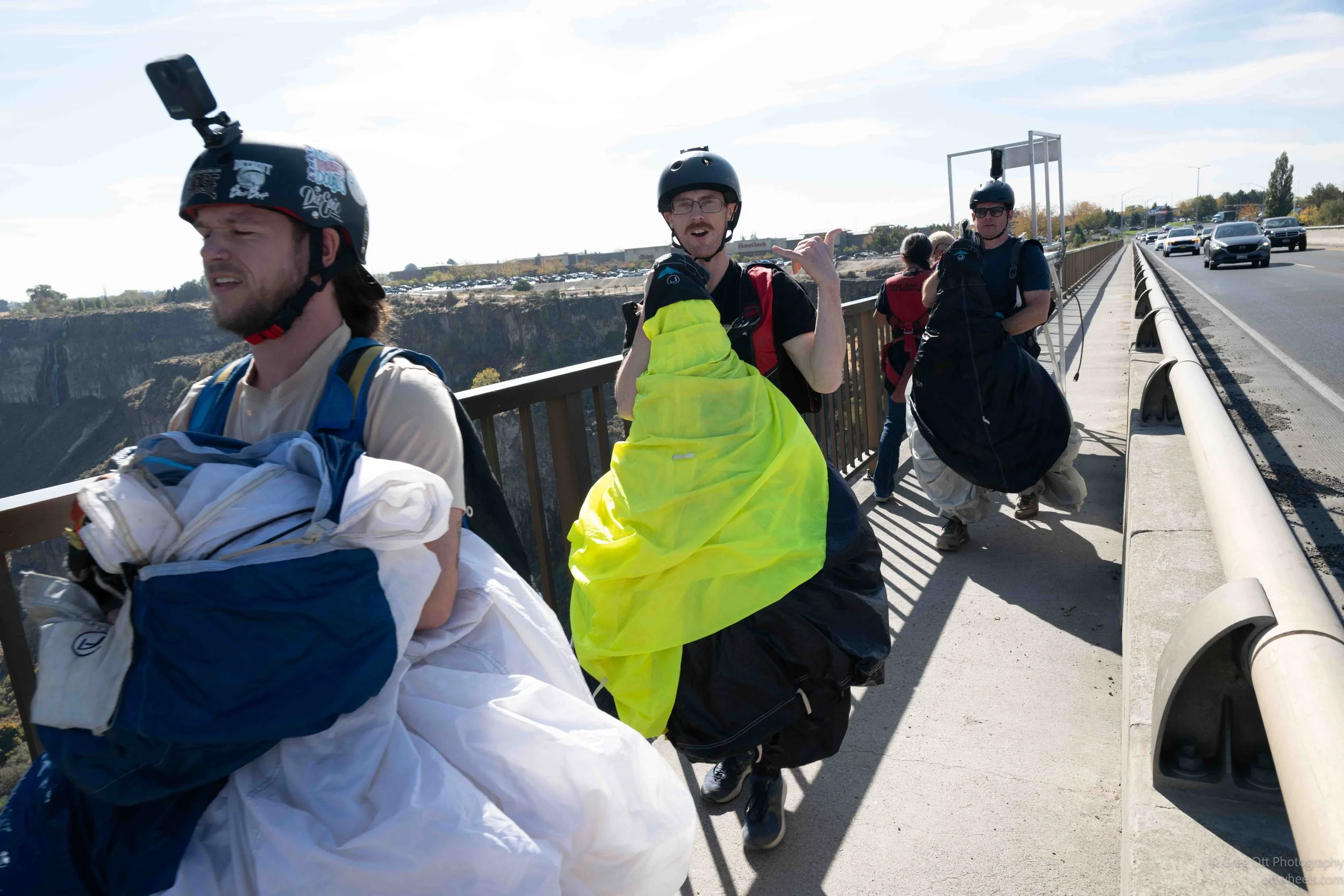
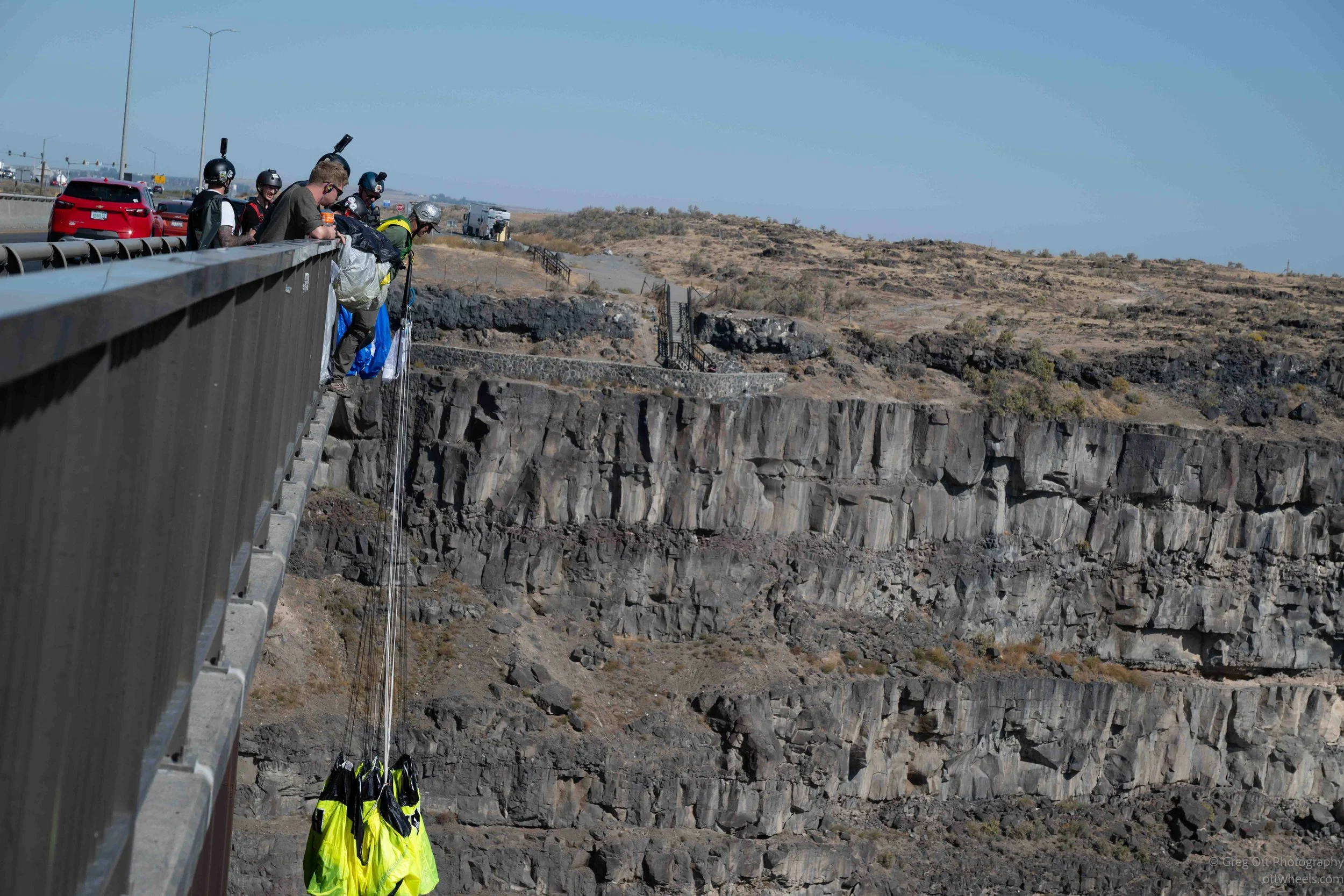
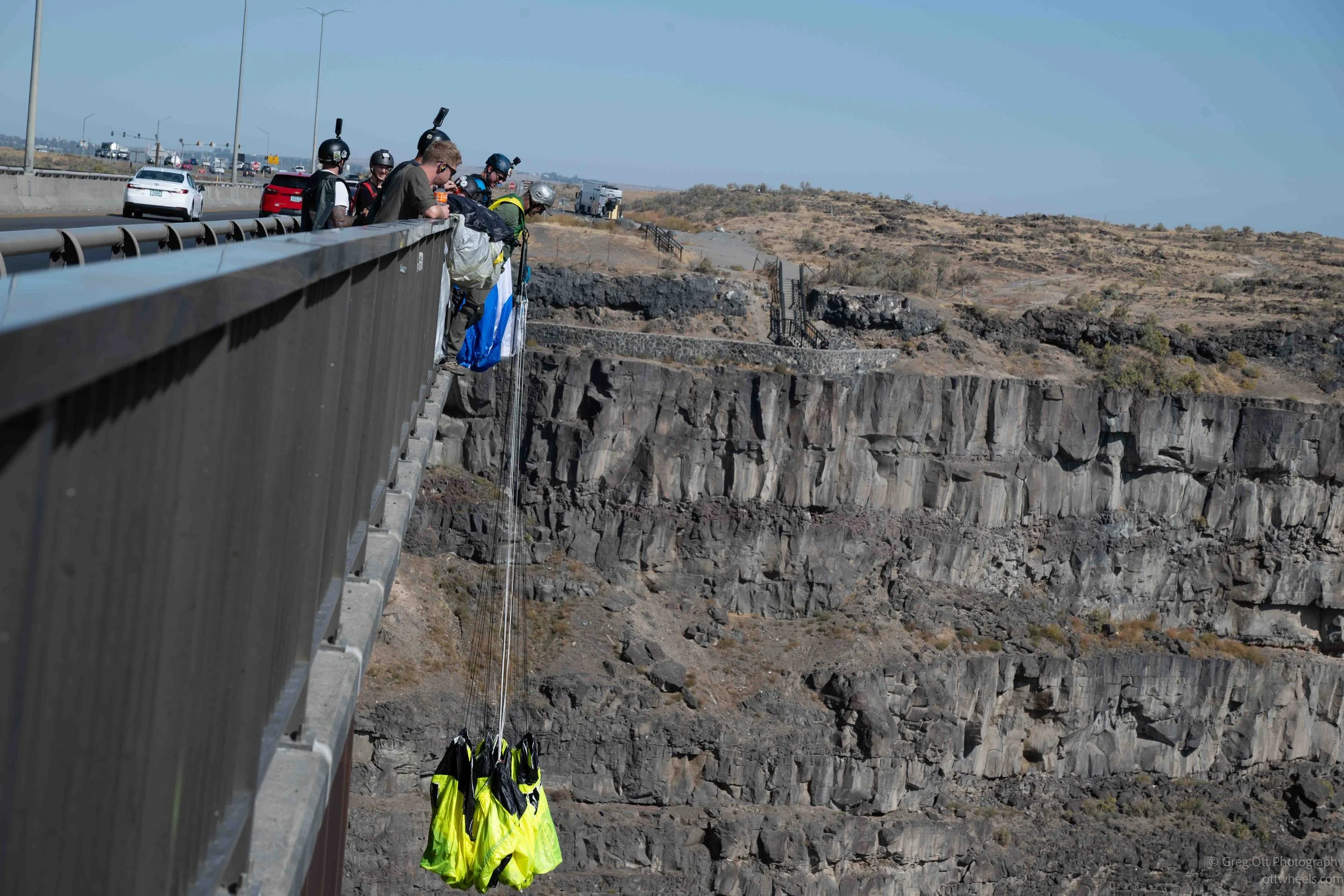
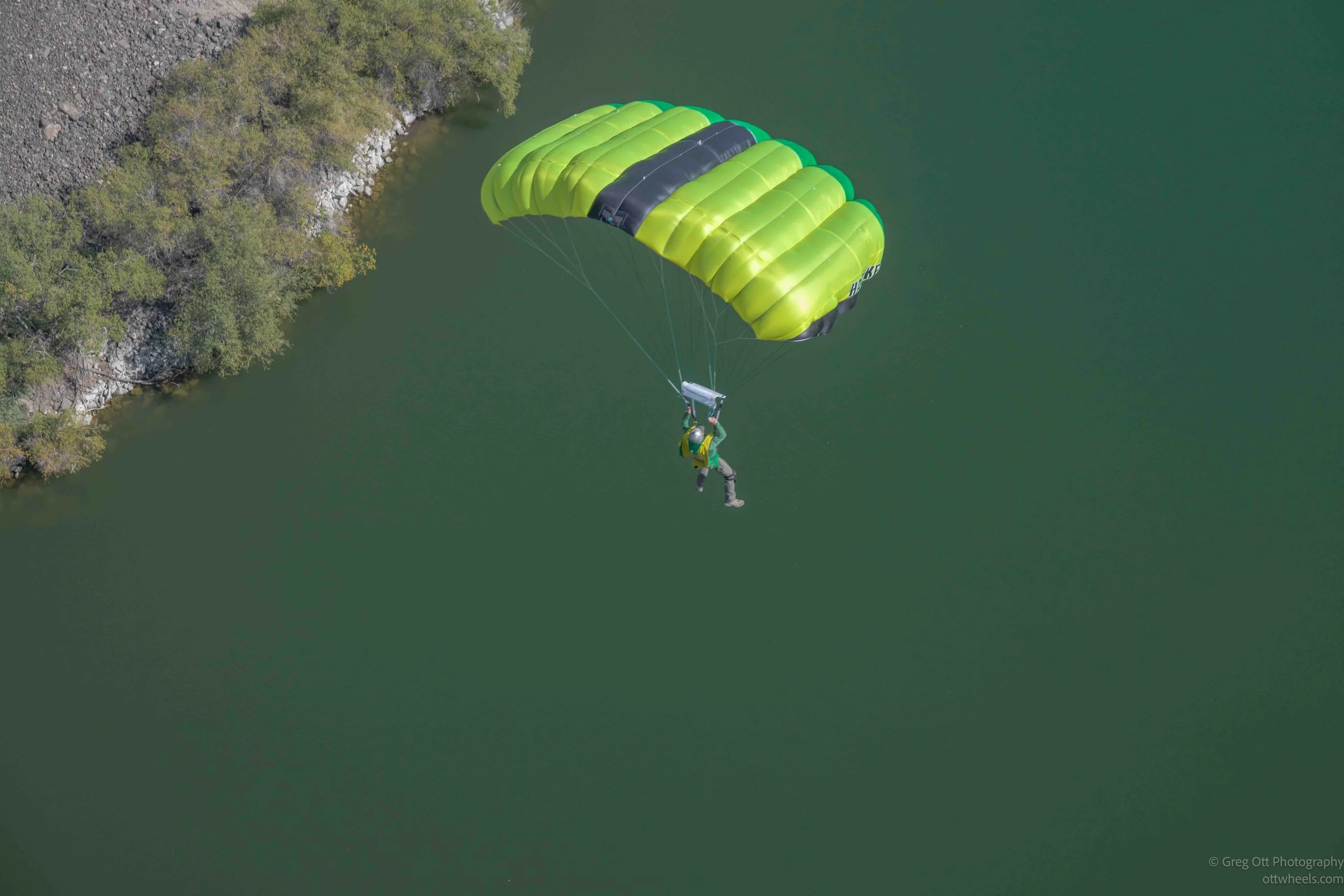
There were a few moments when I held my breath. Occasionally, a parachute didn't open immediately, or the lines appeared twisted as the jumper fell through the air. From nearly 500 feet above the river, there isn't much time to correct a problem. Yet everyone seemed to be enjoying every moment of it. It was fascinating to watch, although I never seriously considered taking the instructor up on his offer.
Cycling the Snake River Canyon Rim
While watching the jumpers, I struck up a conversation with a cyclist and asked him about the trails in the area. He was very enthusiastic about riding the canyon rim, so I decided to change into my cycling clothes and get the bike out.
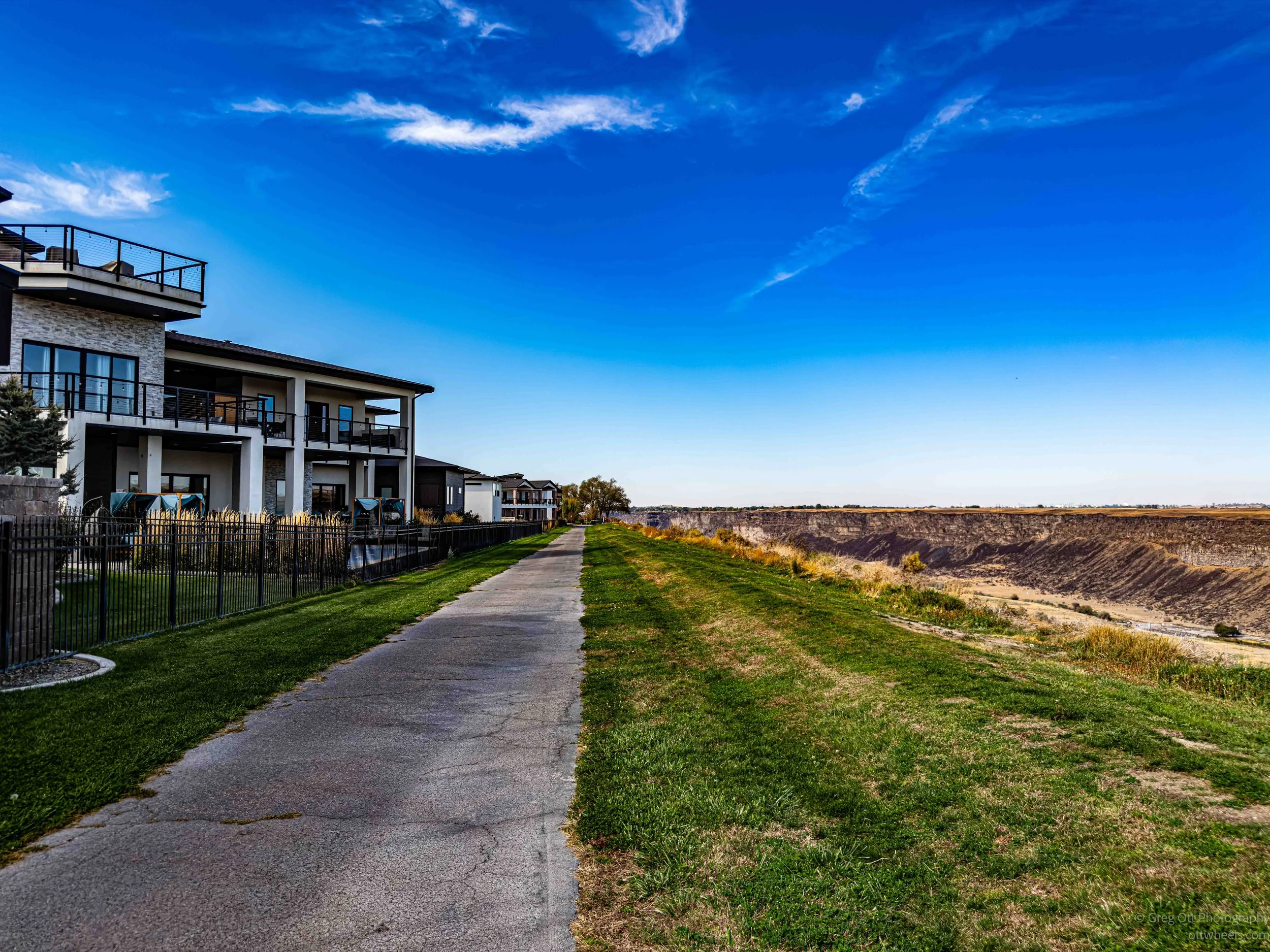
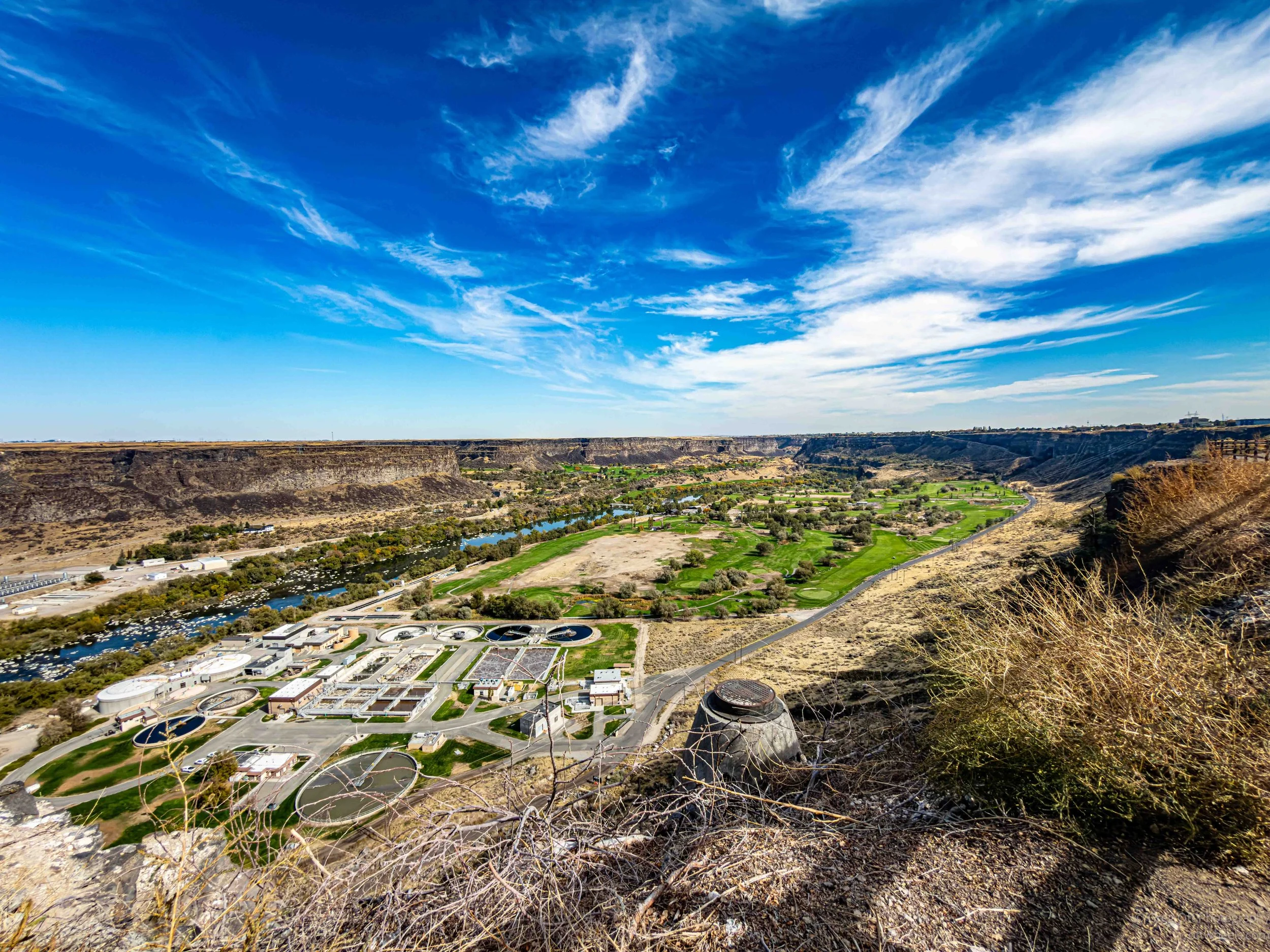
The Snake River Canyon Rim Trail follows the south edge of the canyon, passing overlooks, parks and open stretches of basalt landscape. Much of it is paved, with views down into the canyon and across to the opposite rim. It's an interesting place to ride because the scenery changes constantly, even though you're following the same canyon.
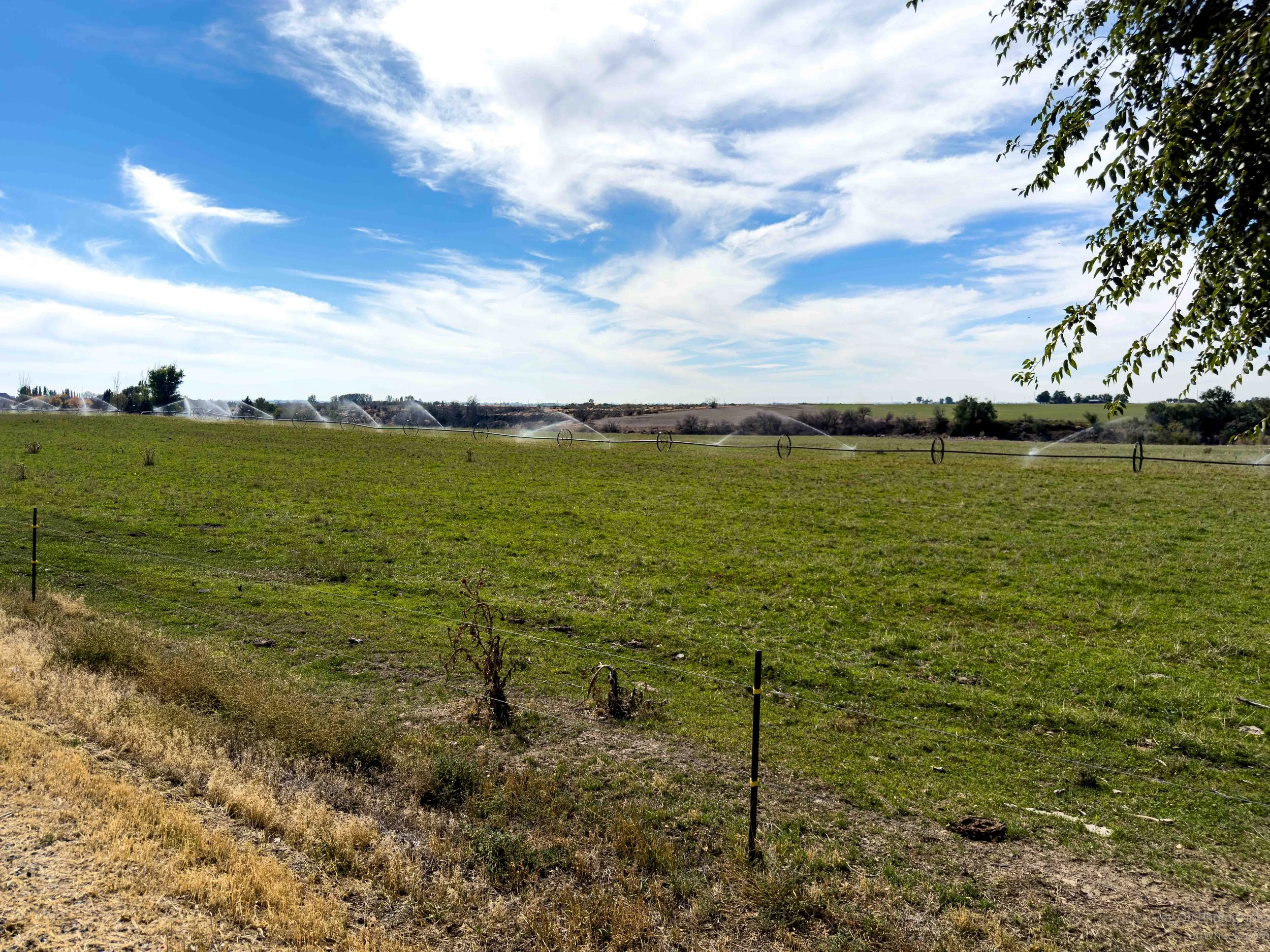
I initially rode toward town for about six miles before realizing I would be spending the rest of the ride on roads. I turned around and headed back toward the bridge. Then I discovered that the trail continued in the opposite direction, toward Shoshone Falls Park, where I had spent the morning. That seemed like a much better choice. I kept stopping to take photographs of the canyon and surrounding landscape.
At one point, I stopped to look at a trail map. Two women were nearby, one in a wheelchair being pushed by her sister. They asked how my ride was going, and we started talking. Both looked athletic, and I learned that the woman in the wheelchair had been injured in a fall while hiking.
We were standing beside a large mound of dirt, and I asked if they knew anything about it. They explained that it was where Evel Knievel had attempted to jump across the Snake River Canyon. I remembered all the publicity surrounding that stunt, but for some reason I had always thought it happened at the Grand Canyon.
On September 8, 1974, Knievel attempted to cross the canyon in a steam-powered rocket called the Skycycle X-2. Almost immediately after launch, the parachute deployed prematurely, and instead of reaching the other side, he drifted back into the canyon and landed near the river. Remarkably, he survived. He had originally wanted to jump the Grand Canyon, but after failing to obtain permission, he turned his attention to the Snake River Canyon in Idaho.
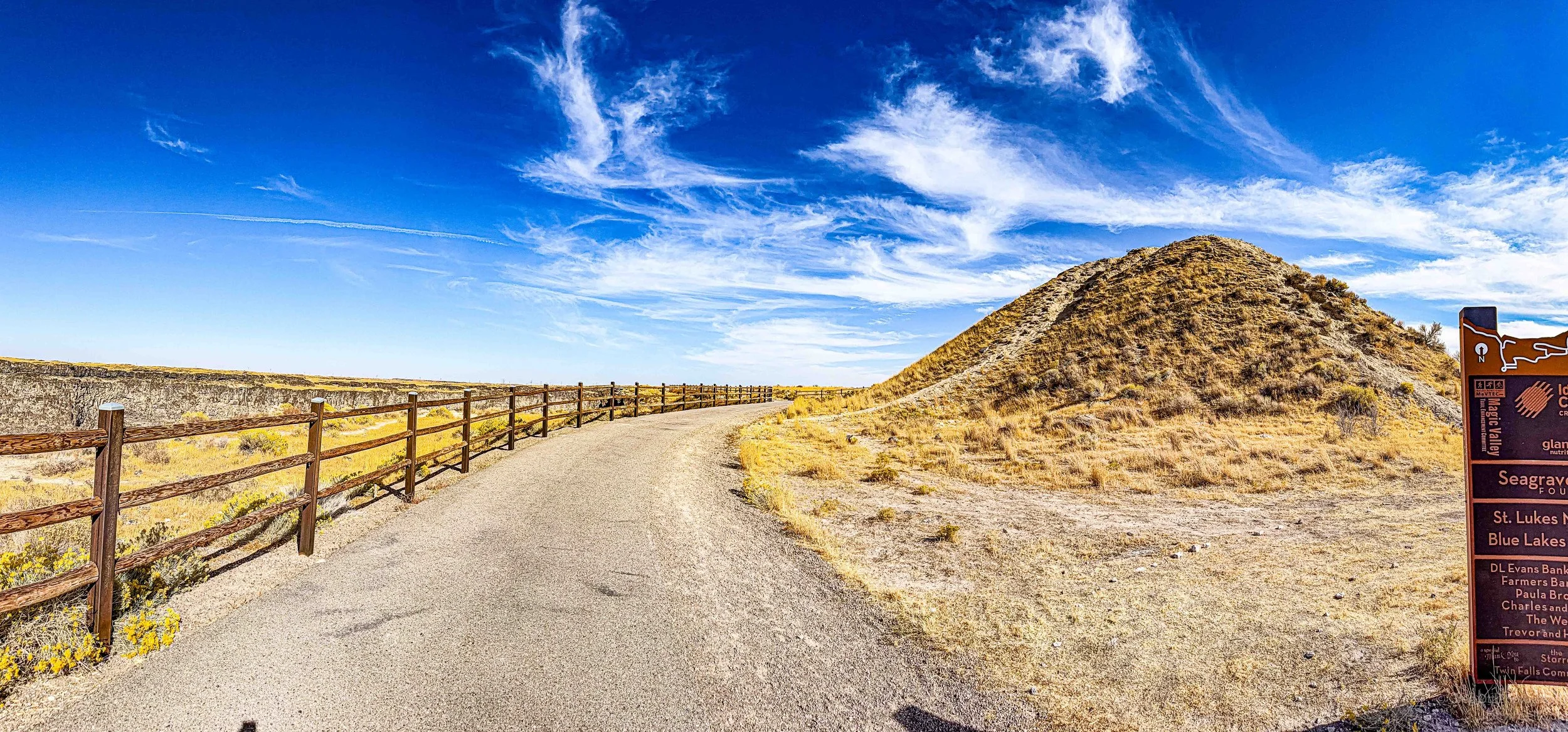
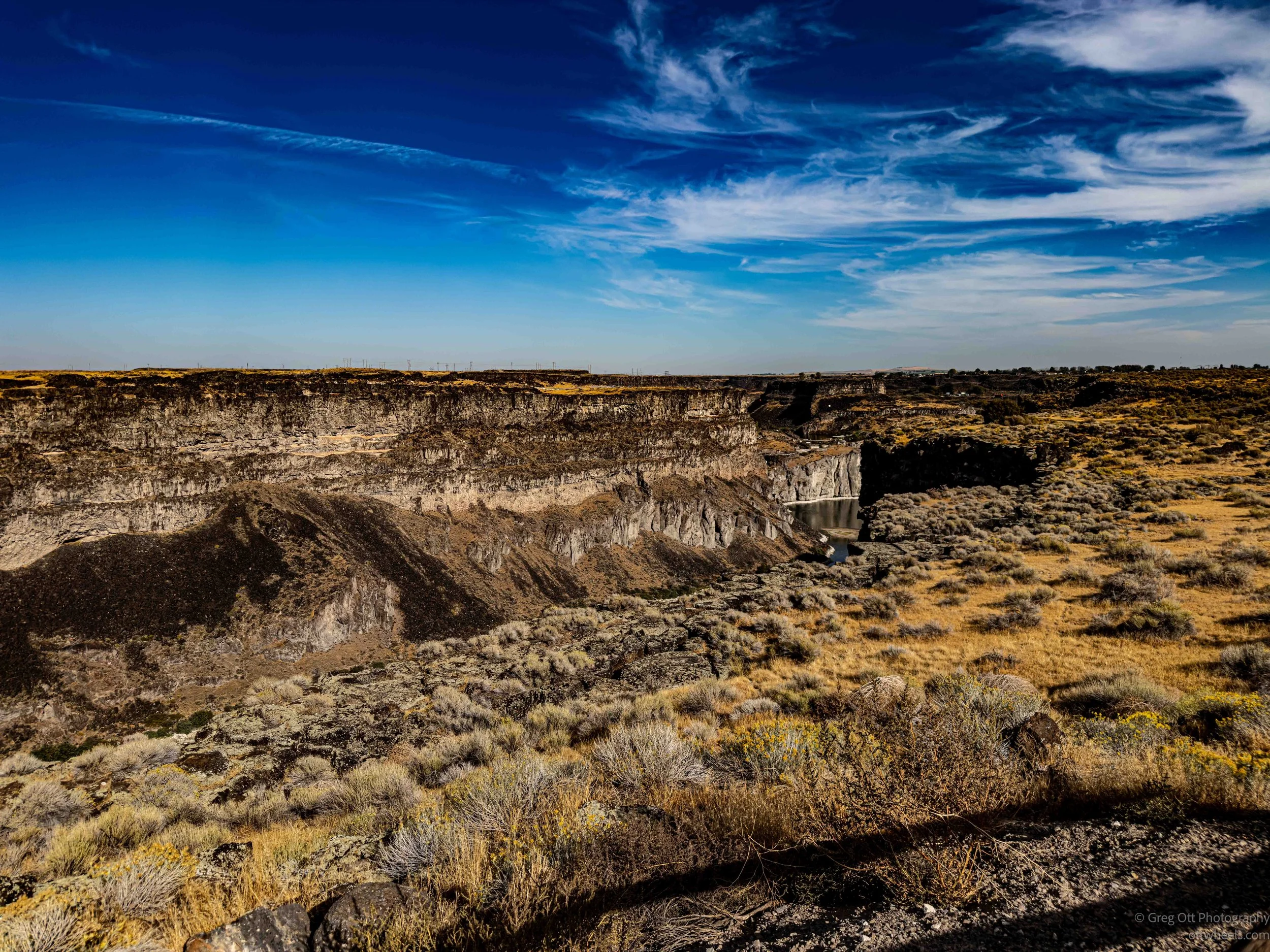
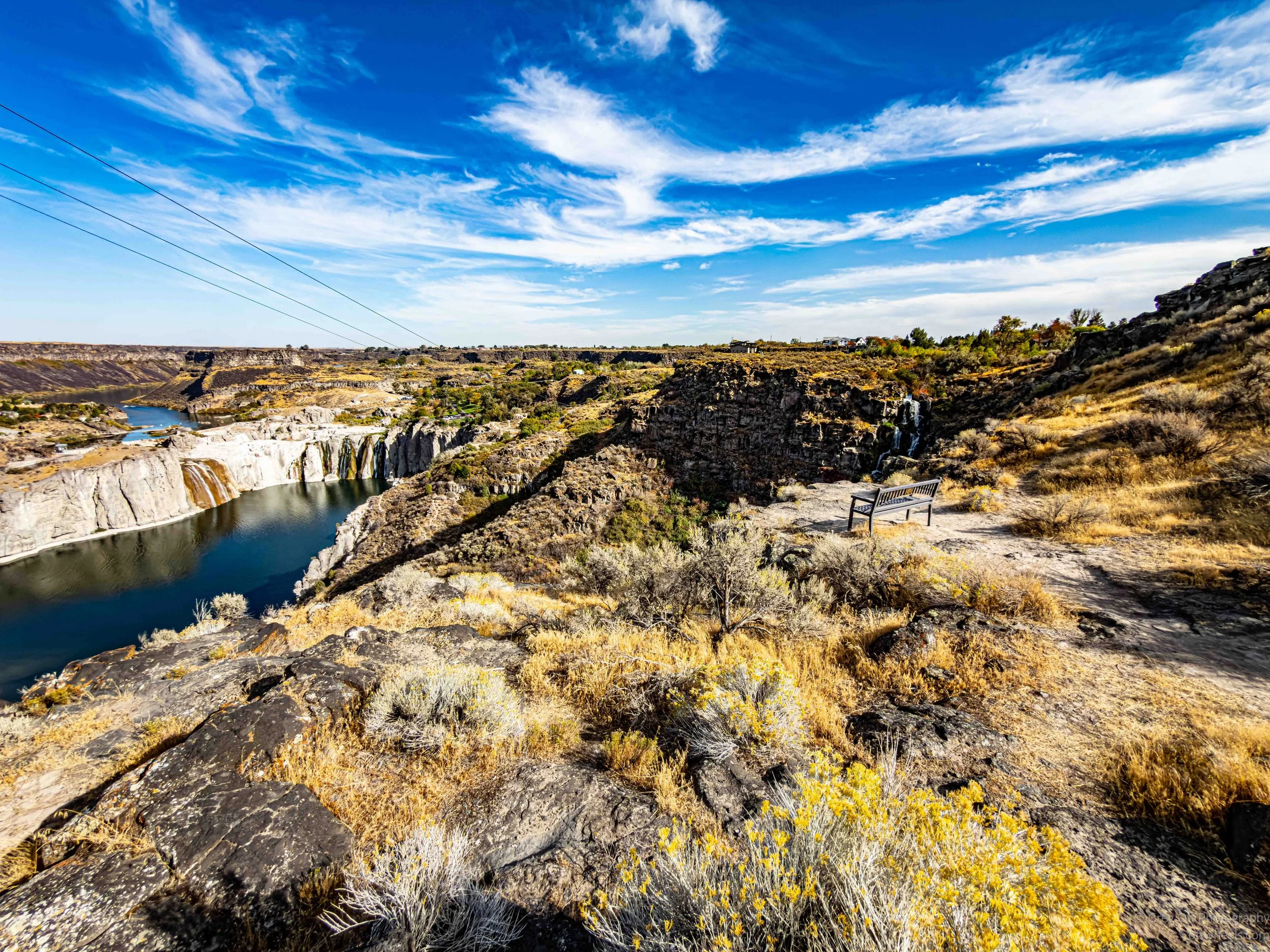
The large dirt mound was the remains of his launch ramp. About a hundred yards farther along the trail, I came across a plaque commemorating the attempt. I hadn't expected to find a piece of 1970s daredevil history in the middle of my afternoon bike ride.
I continued riding toward Shoshone Falls, stopping frequently for photographs. I made it almost all the way to the park but decided to turn around before the steep climb. I had already seen the falls that morning, and the thought of riding back up that hill wasn't particularly appealing.
The sun was getting lower as I headed back toward the bridge. The temperature had dropped, and the cooler air felt wonderful after a day in the sun. By the time I reached the van, I had ridden about 30 miles. What started as a quick stop to photograph a bridge had turned into several hours of BASE jumping photography and an unexpectedly good bike ride.
End Of Day
I didn't bother changing out of my cycling clothes. Instead, I drove to Planet Fitness for a shower. The facilities were very clean, and the shower felt especially refreshing after the ride. I also spent ten minutes in one of the massage chairs, which is never enough time.
Afterward, I started looking for somewhere to spend the night and decided on Massacre Rocks State Park, east of Twin Falls near Neeley, Idaho. I booked a campsite online, and the total came to nearly $58 for one night. The actual camping fee was considerably less, but there was a substantial convenience fee added for using the online reservation system, which was the only way to book. I'm not sure who was being inconvenienced, but it certainly wasn't the state. You would think an online system would reduce administrative costs and save money. Instead, I was paying extra for the privilege of doing the work myself.
It was still light when I left Planet Fitness and headed east on I-84 toward Massacre Rocks. By the time I arrived, there was no sign of the suna. The campground certainly wasn't full, but several campers had roaring fires going.
I never build campfires, although I enjoy sitting around one and relaxing. It's simply too much work for the way I'm traveling. Most campgrounds require you to buy firewood locally, which makes sense because transporting wood can spread invasive insects and tree diseases. Then there's the problem of putting the fire out completely before going to bed. That can take quite a while.
Pouring water onto hot coals creates clouds of smoke and steam that seem to permeate everything nearby. I've also had oily residue settle on the side of the van. Then there's the extra equipment and firewood to carry, neither of which I have much interest in finding room for.
I settled into the van without a fire. Between walking around Shoshone Falls, spending hours photographing the BASE jumpers and cycling 30 miles along the canyon rim, I'd had a full day. I'm not sure exactly when I fell asleep, but the exercise had done its job. I relaxed and was asleep almost immediately.