
Massacre Rocks, Register Rock & Pocatello, Idaho
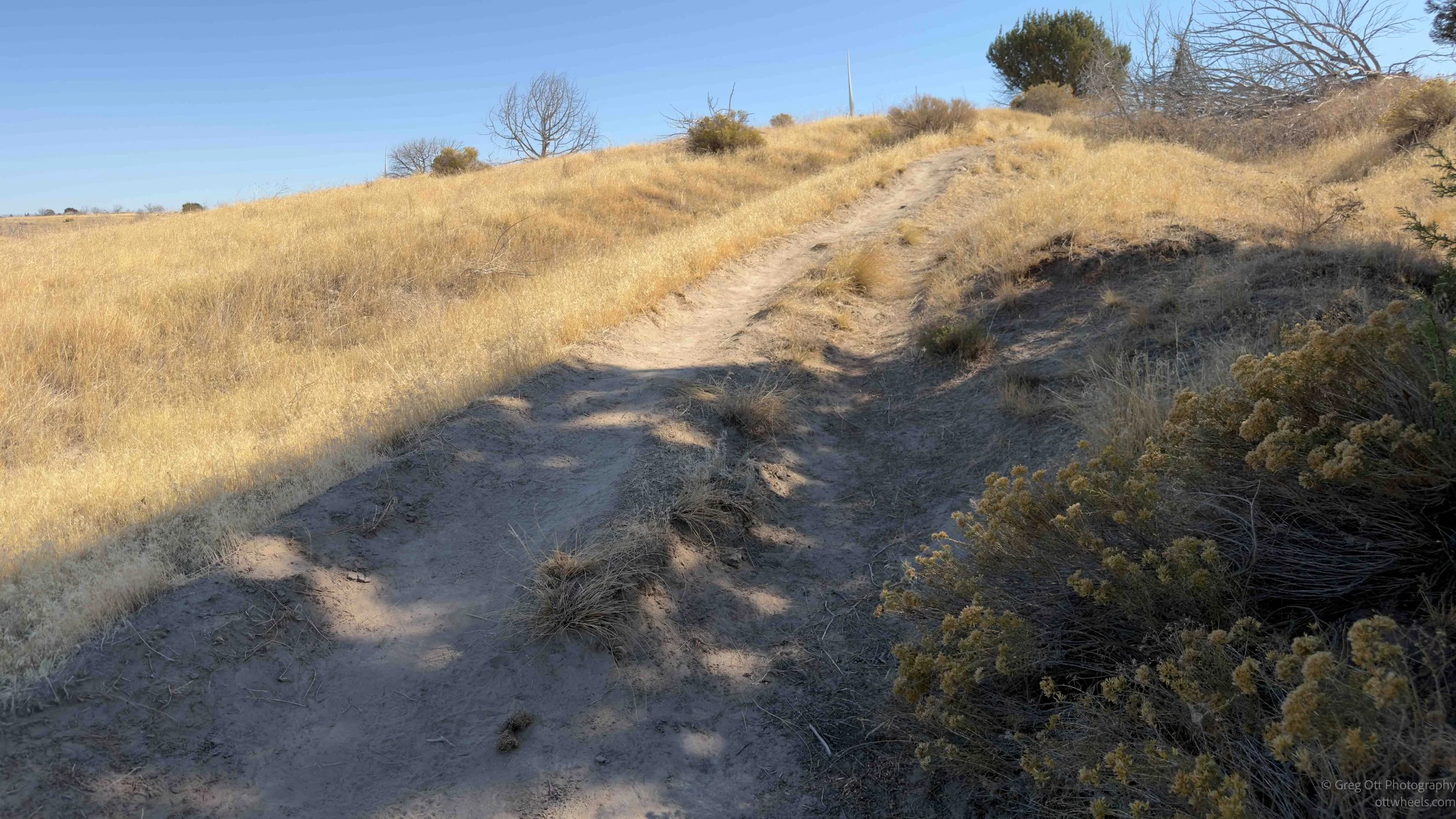
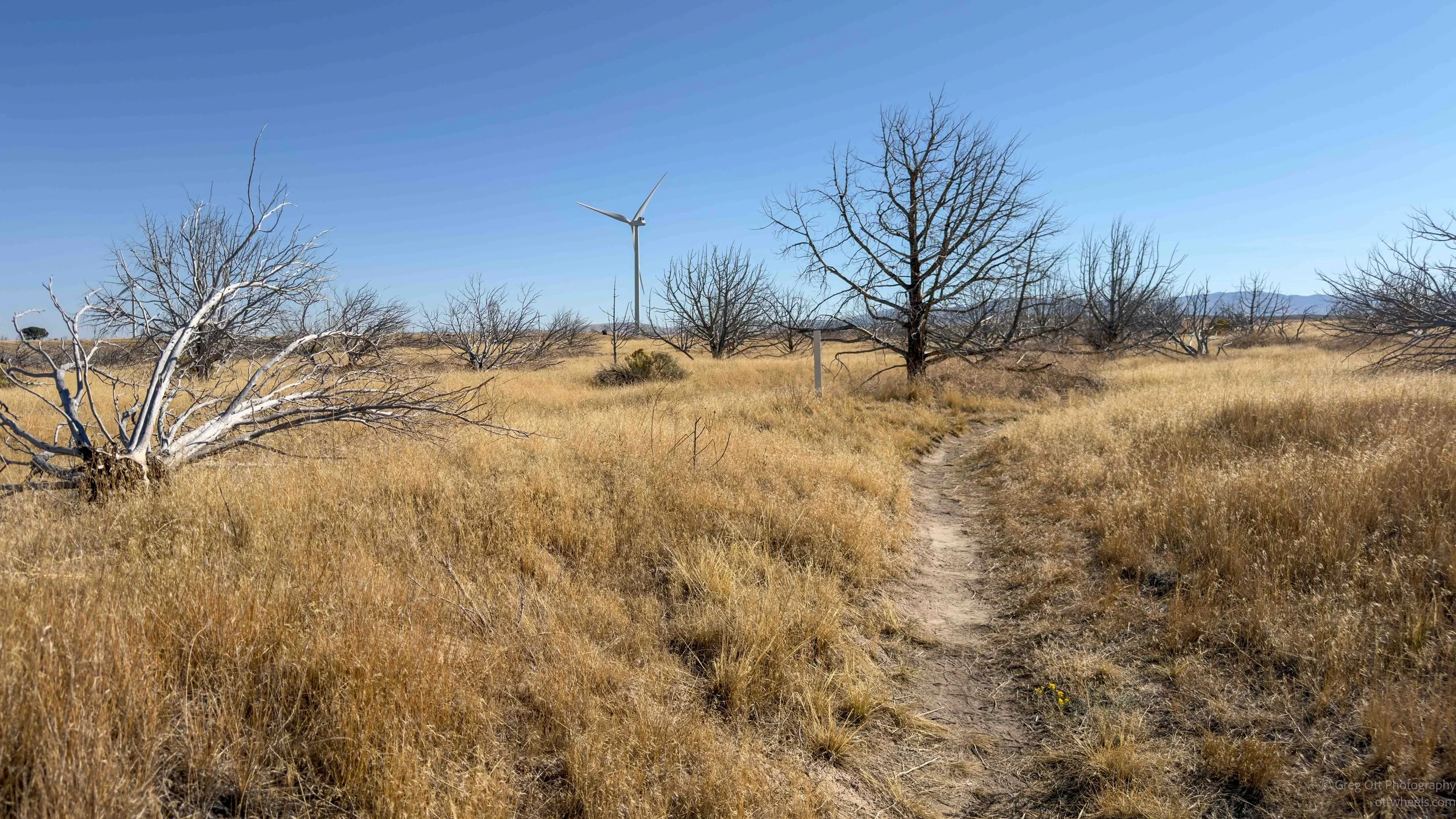
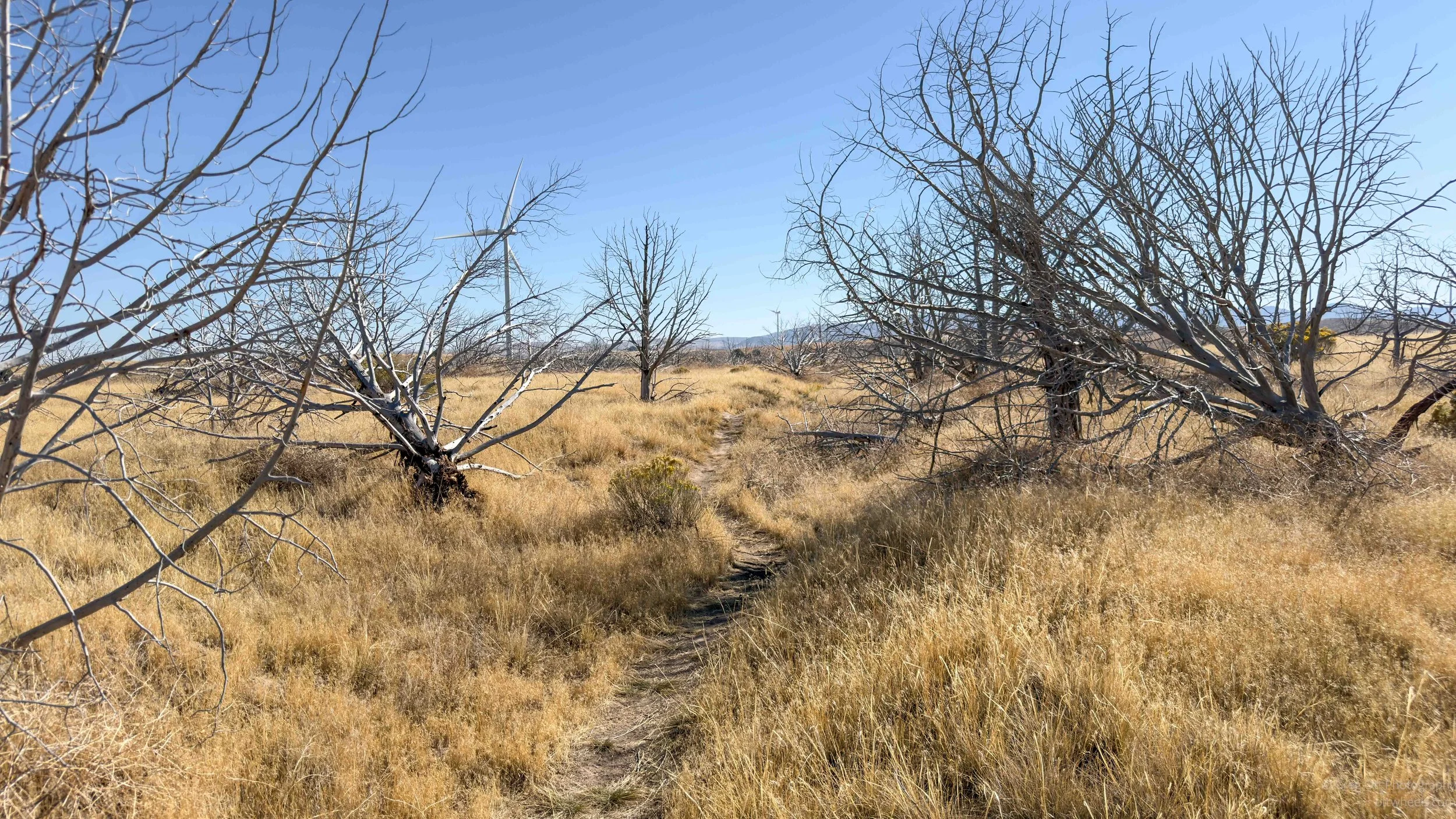
I woke at Massacre Rocks State Park, east of Twin Falls, and stopped at the ranger station before leaving the campground to get some information about the trails. I drove over to the Oregon and California Trail area, parked the van, and headed out for a morning hike.
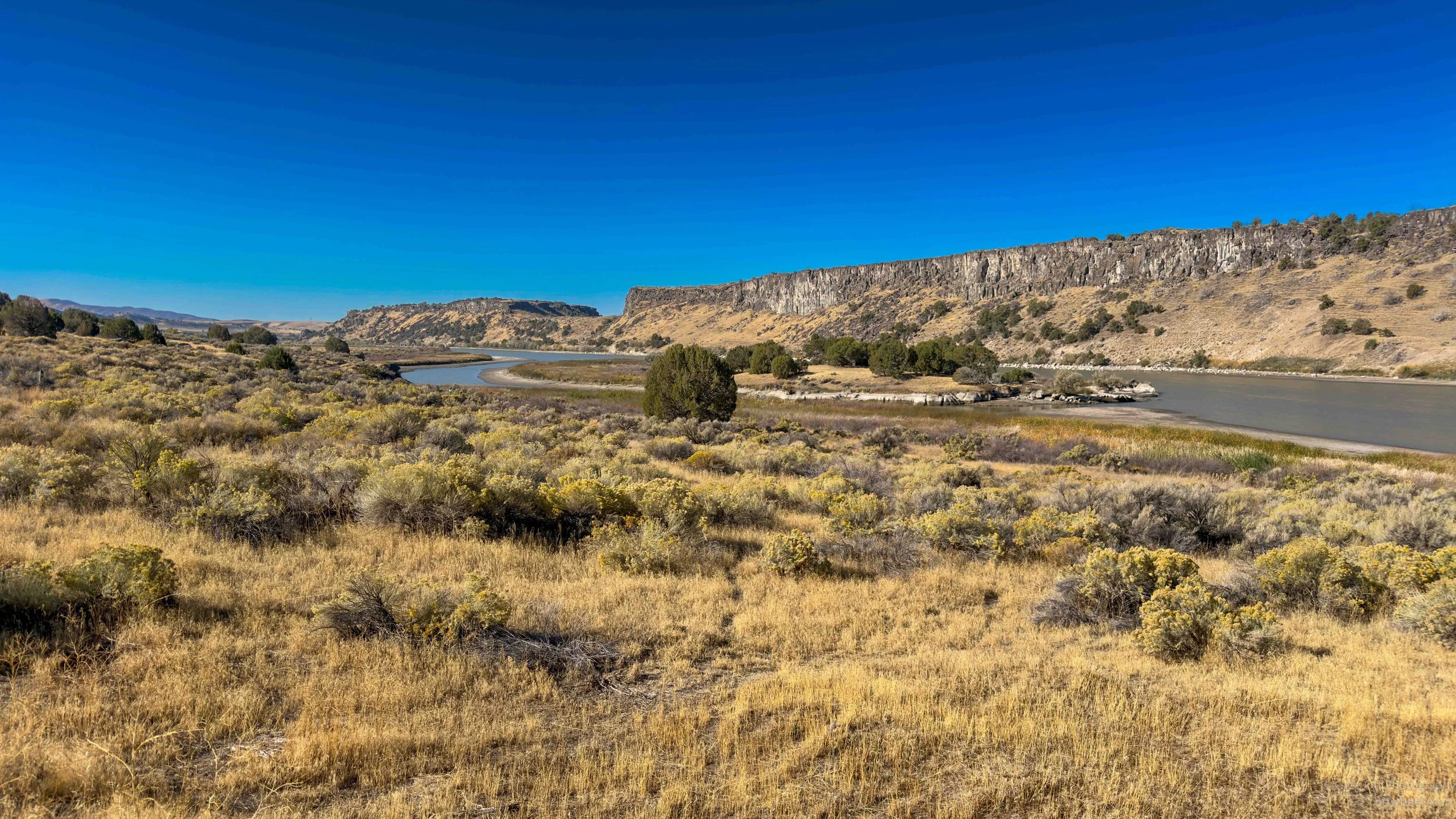
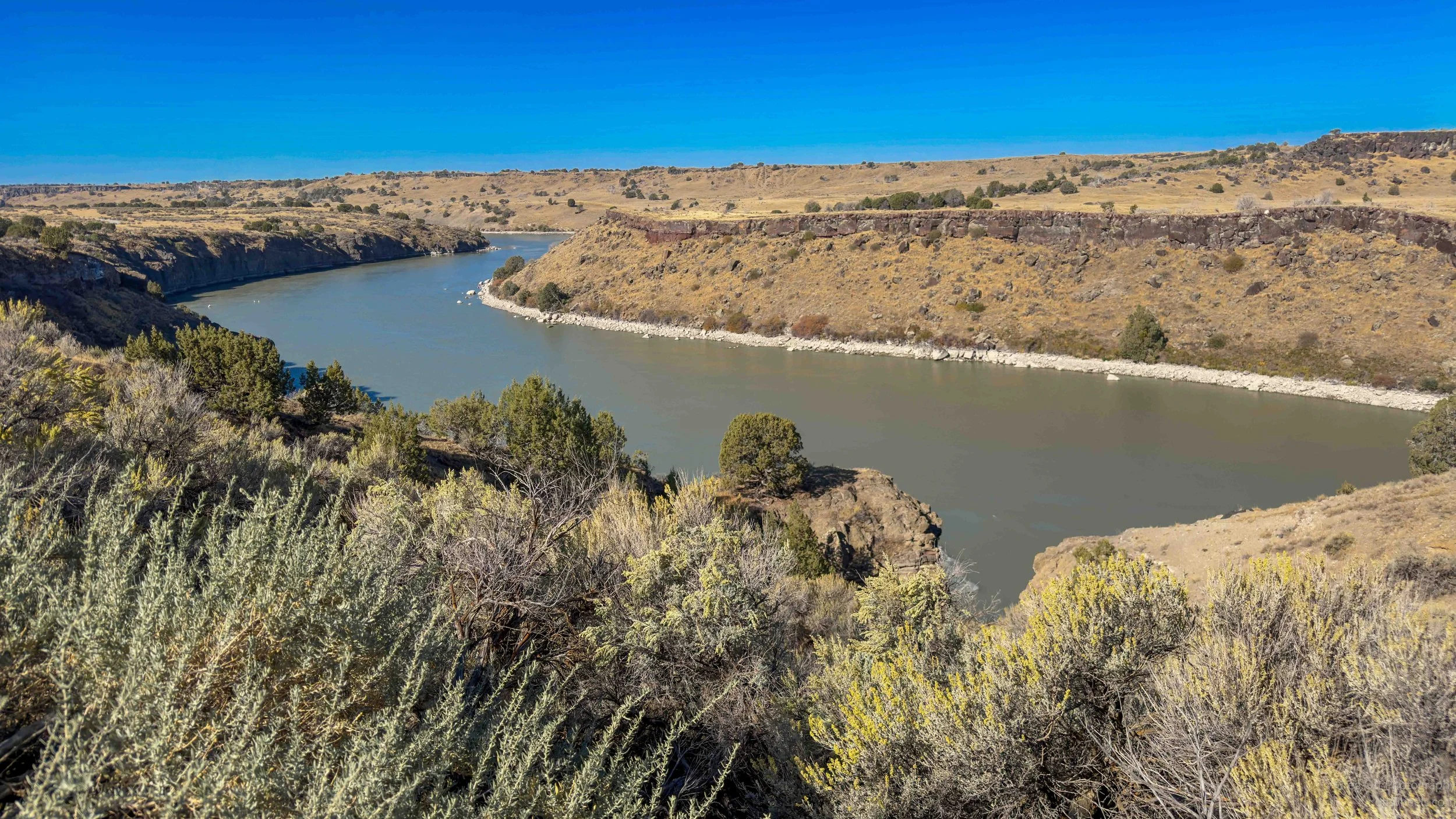
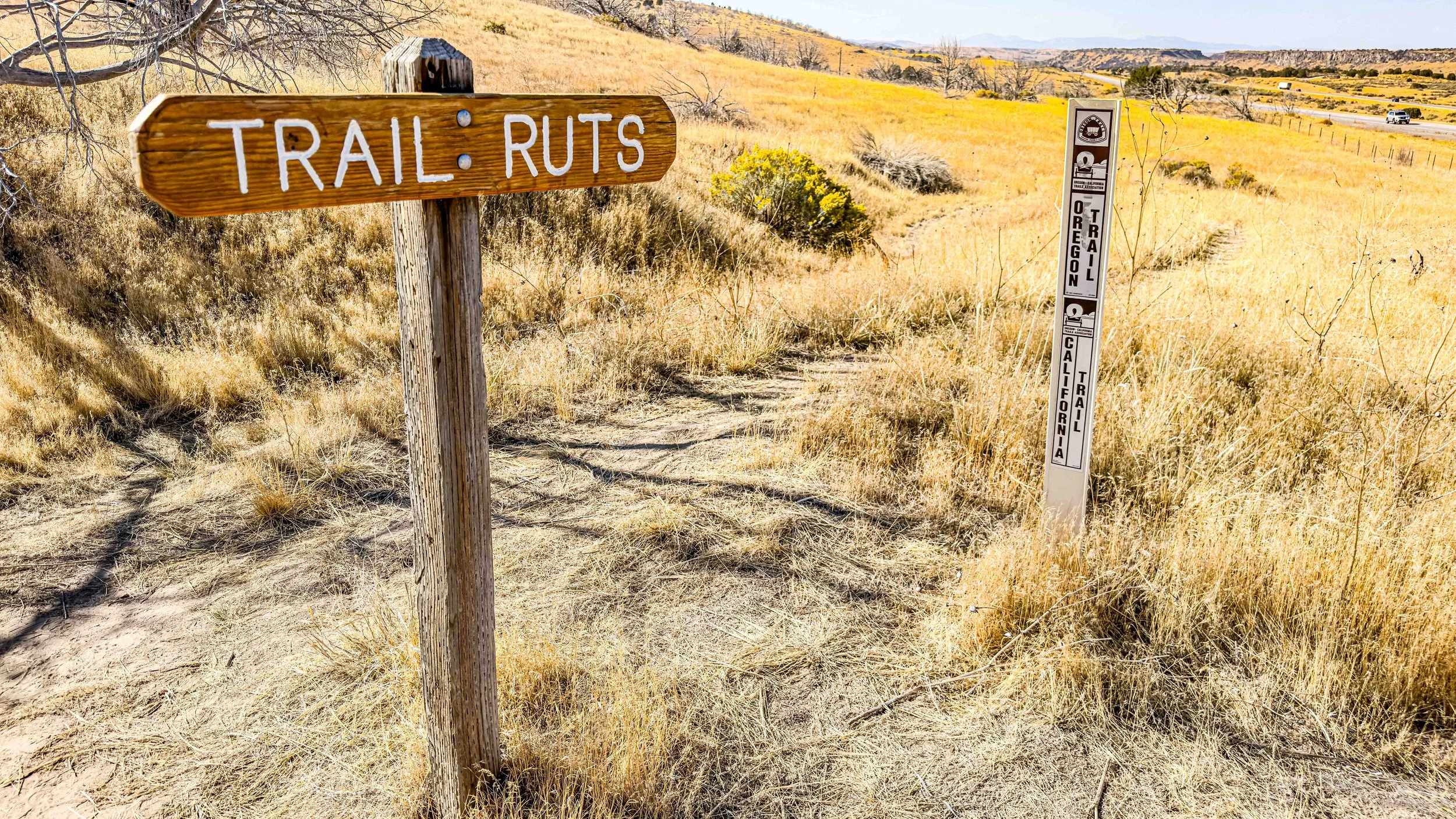
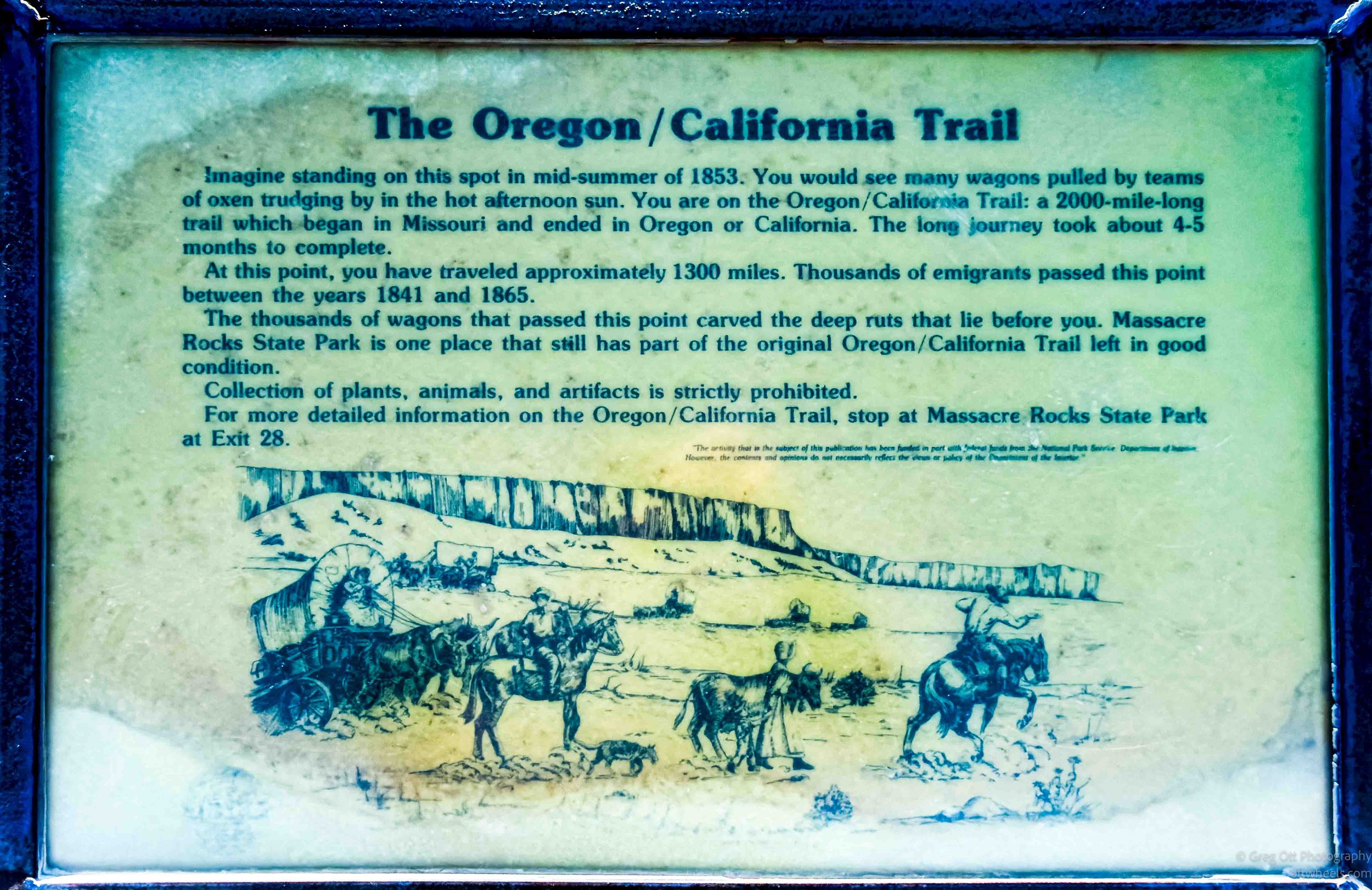
The trail crossed dry grassland above the Snake River, with sagebrush, scattered juniper, and dark volcanic cliffs rising along the water. In places, the old wagon ruts from the Oregon and California Trails were still visible. It was interesting to stand there and realize that thousands of emigrants had passed through this same landscape on their way west. The trail markers and interpretive signs were badly faded, but enough remained to give me some sense of what traveling through this country must have been like 175 years ago.
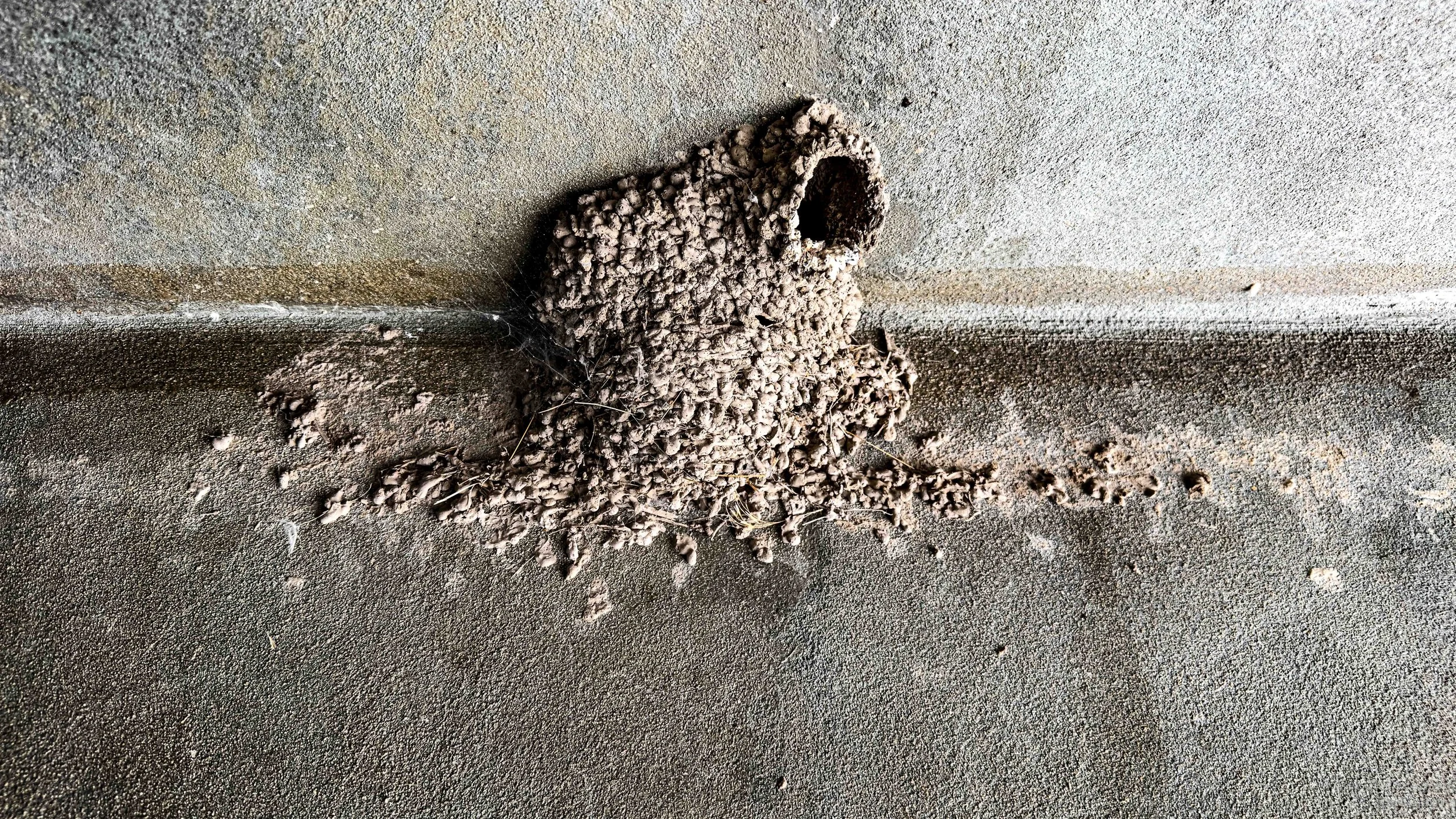
I came across a cliff swallow nest attached to a concrete structure, but never saw or heard its inhabitants. Perhaps they had already flown south for the winter. The nest was an interesting piece of construction, made from hundreds of small mud pellets collected and carefully fitted together. Unlike the open nests of many other birds, cliff swallows build enclosed structures with a small entrance tunnel. Some of the mud had fallen away, but most of the nest was still intact. It was remarkable to think that such an elaborate structure had been built one mouthful of mud at a time.
I hiked out about two miles, and for most of the walk, I didn't see another person. Near the top of a hill, as I turned back, a guy coming up the hill asked what was further along the trail. There wasn’t much further along the trail. We ended up talking for about ten minutes before walking back together. He was from Oregon, in Idaho on business, and had stopped to get in a longer walk. He was actually an ultramarathoner, regularly participating in races of around 75 miles. Somehow, our conversation wandered from running to technology, families, and travel. It's interesting how much you can learn about someone during a chance encounter on a trail.
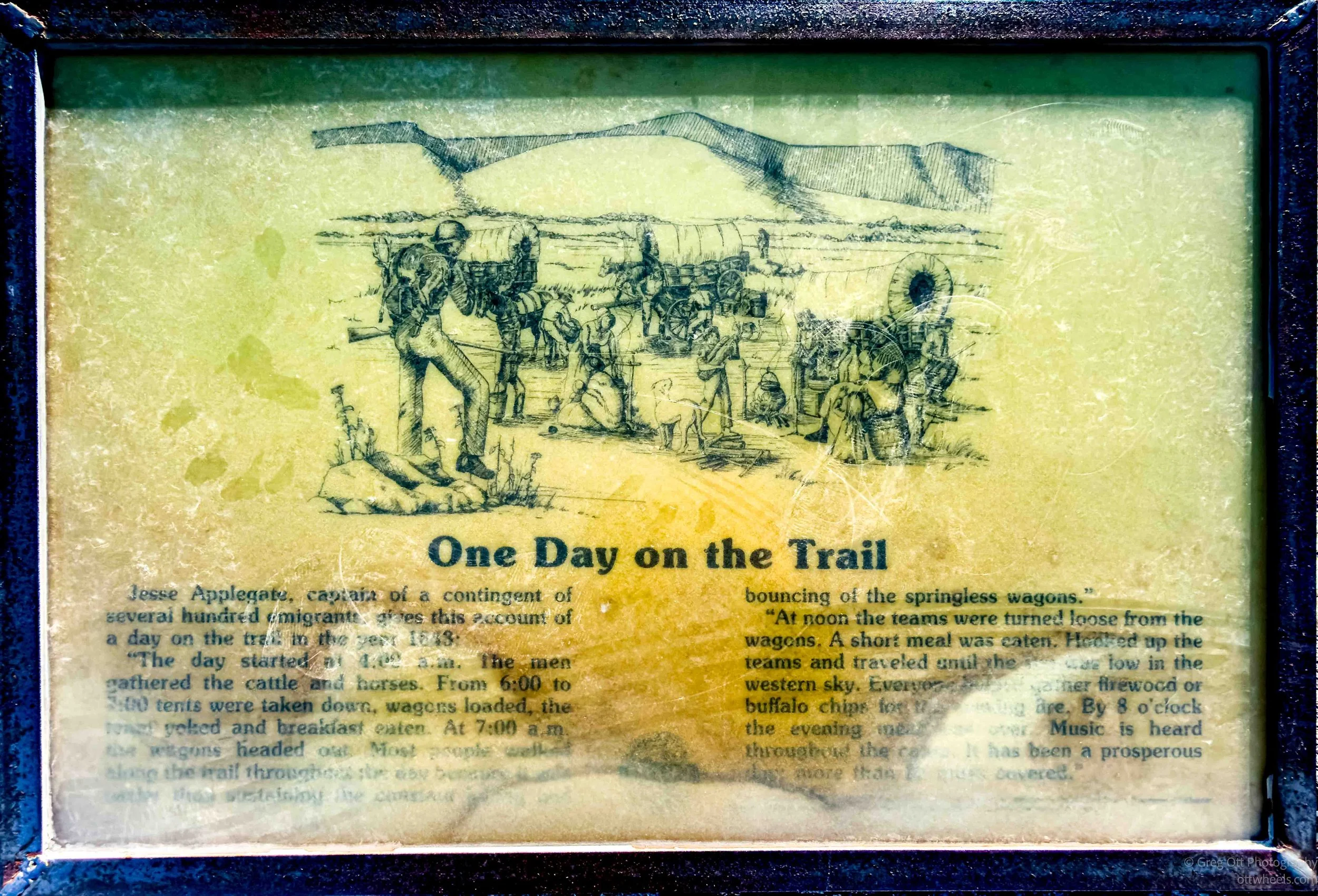
By the time I returned to the van, I was ready to sit down. I made breakfast and relaxed for a while. There is something particularly satisfying about getting out for a good hike early in the morning, returning to the van for breakfast, and knowing there is no particular reason to hurry anywhere.
Register Rock
My next stop was Register Rock, another historic site along the Oregon and California Trails. I had no idea what Register Rock was or why it was significant, but I was curious enough to stop. I ended up spending about 30 minutes walking around, examining the rocks, and reading the historical plaques.
Register Rock is a large volcanic boulder where emigrants traveling west during the 1800s carved their names and sometimes the dates of their passage. It was their way of leaving a record that they had made it this far. Thousands of people traveled through this area on their way to Oregon and California, stopping to rest, water their livestock, and prepare for the next part of their journey. There were no visitor registers, cameras, or social media posts. For some, carving a name into a rock was the only lasting record of their presence.
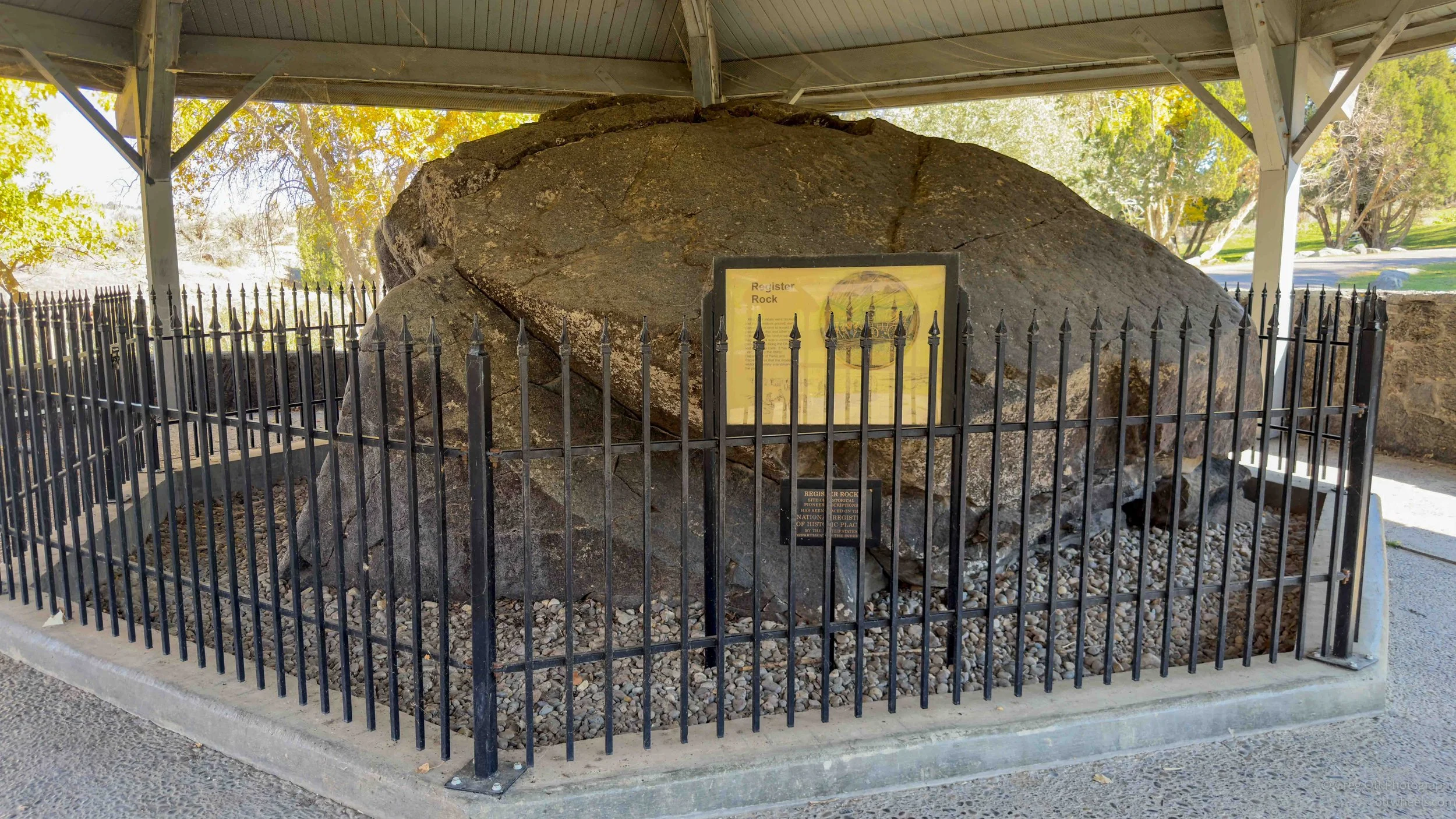
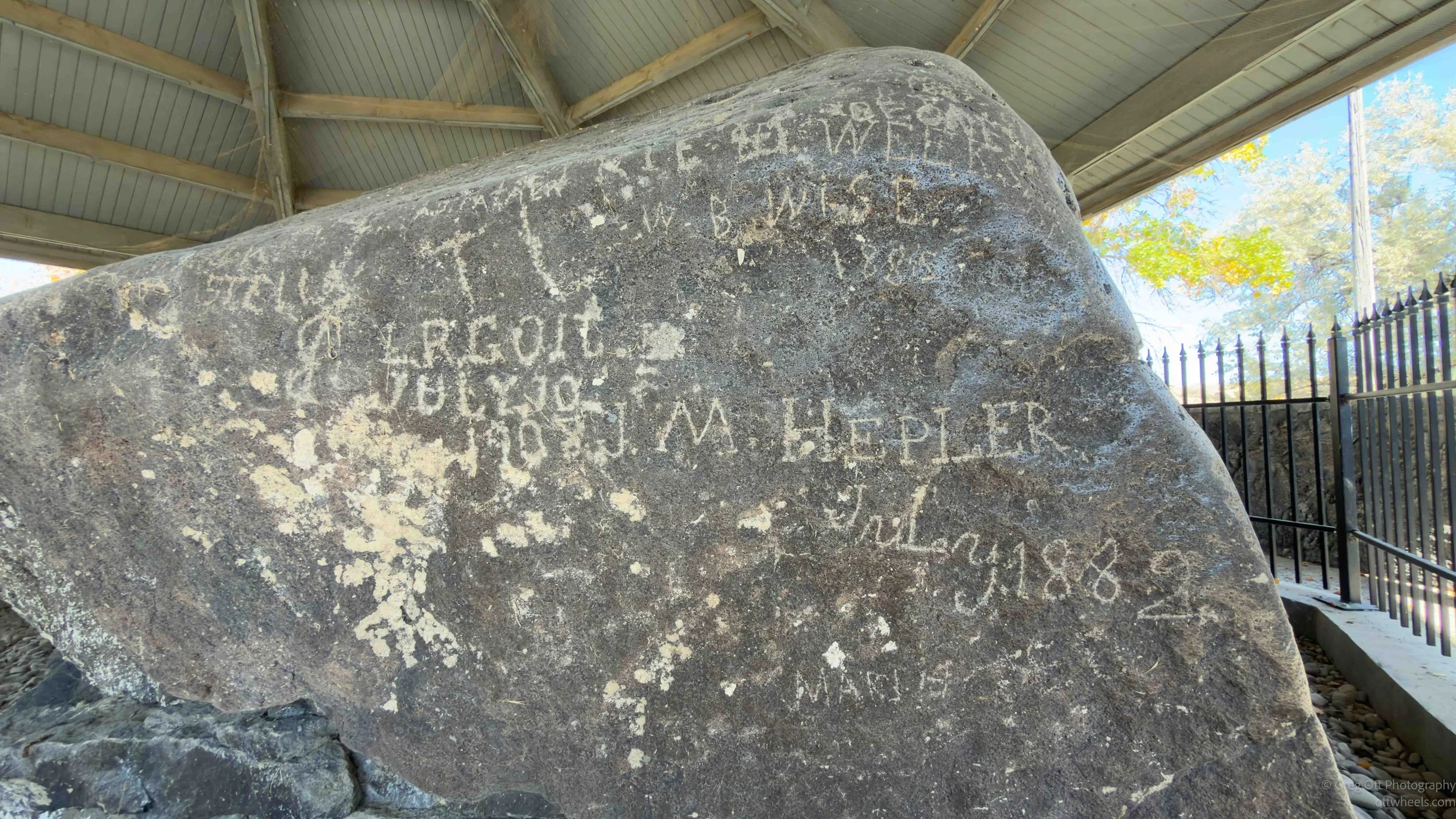
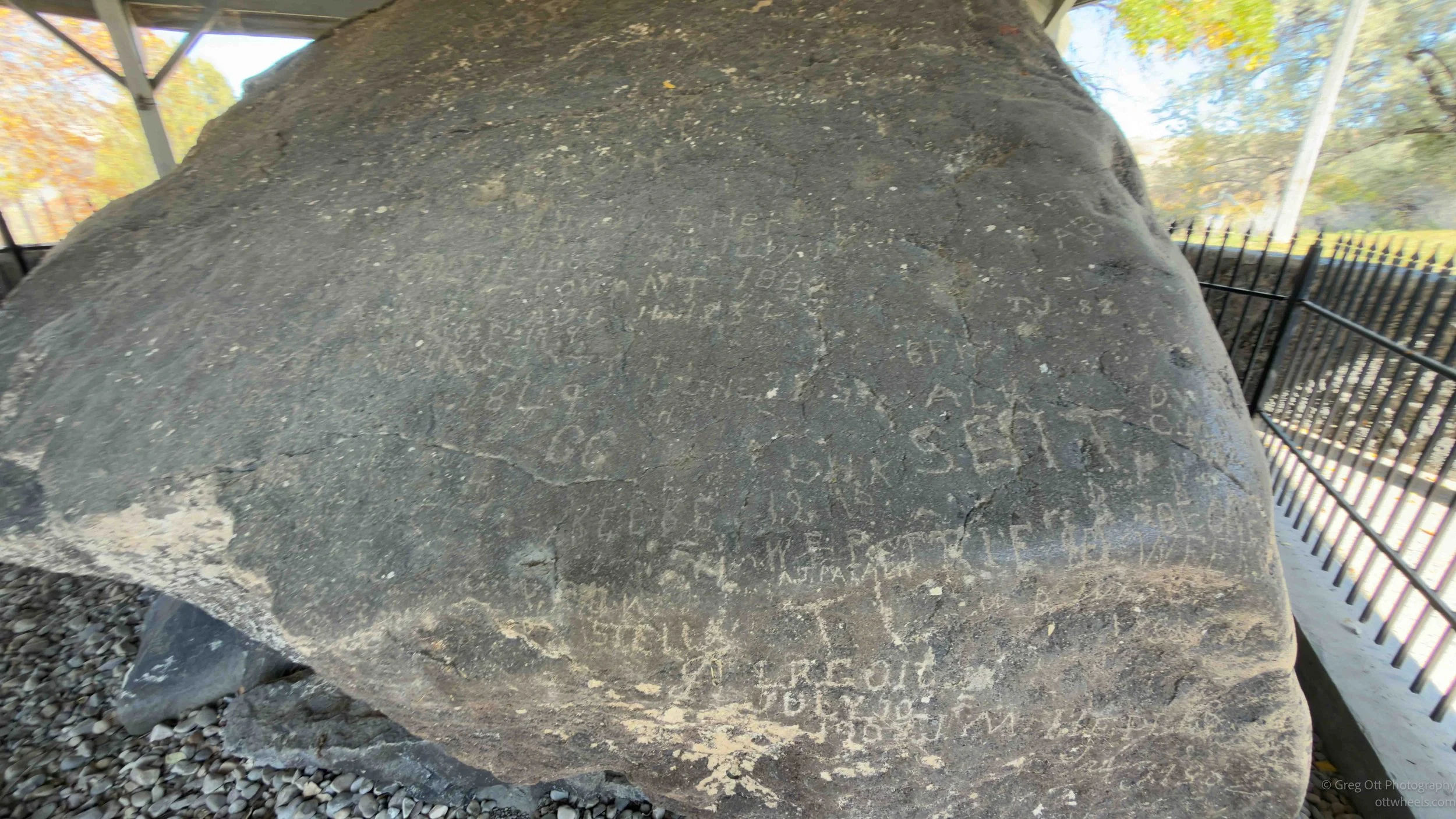
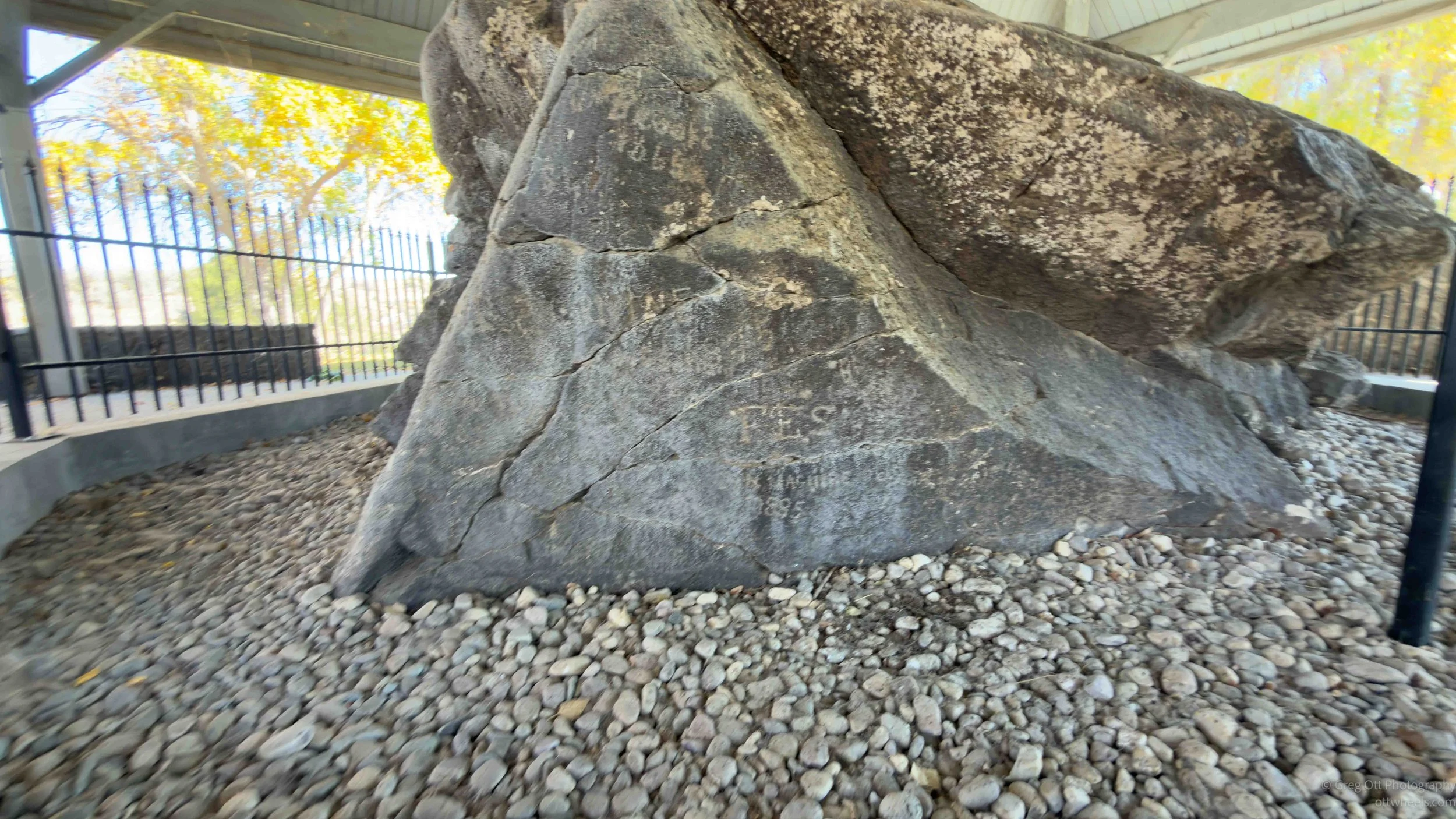
Today, the boulder is protected beneath a roof and surrounded by a fence. I walked around it, studying the names and dates scratched into the dark surface. Some were still surprisingly easy to read, while others had nearly disappeared after more than 150 years of exposure. It was fascinating to think that the people who made those marks had stood in exactly the same place, probably wondering what lay ahead. They had already traveled hundreds of miles, often under difficult conditions, and still had a long way to go.
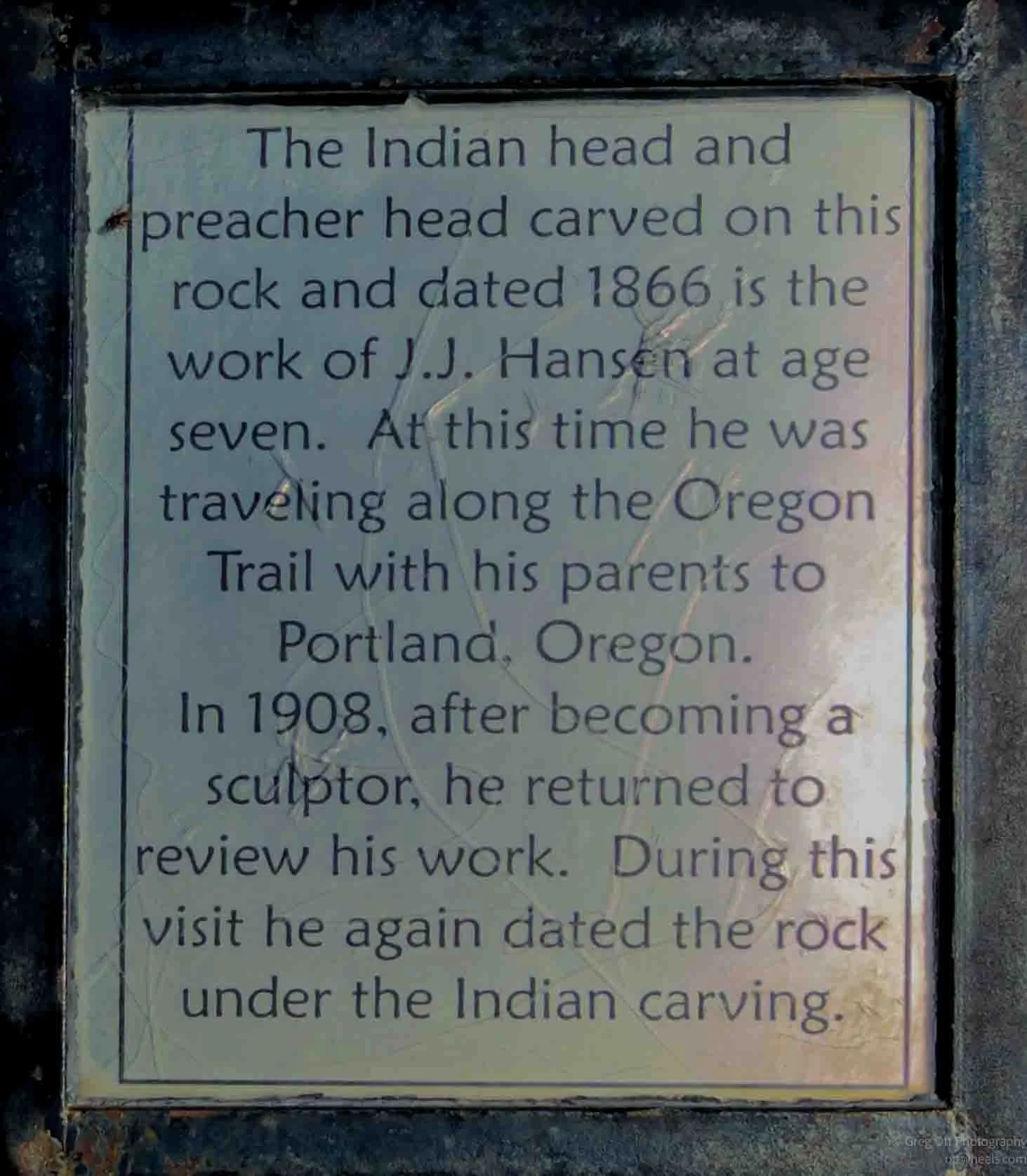
Nearby was another rock with carvings of a Native American head and a preacher, reportedly made in 1866 by a seven-year-old boy named J. J. Hansen while traveling with his parents to Portland, Oregon. According to the plaque, he later became a sculptor and returned in 1908 to see his childhood work. During that visit, he carved another date beneath the original. I found that story particularly interesting. A little boy had left his mark on a rock while crossing the country, then returned more than forty years later to find it still there. I wondered what he must have thought, standing in front of something he had created as a child, remembering a journey that had taken place so long ago.
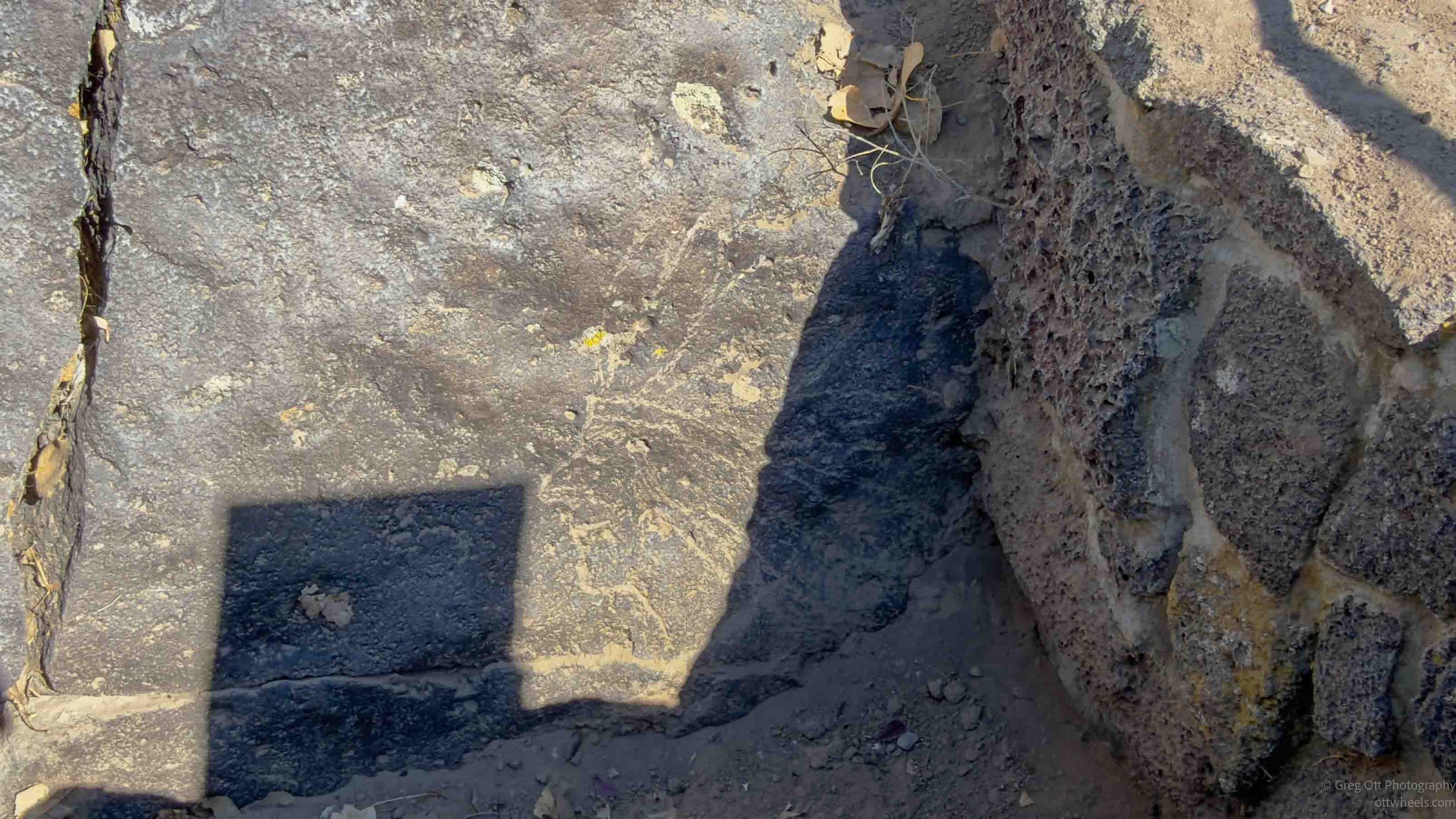
I found Register Rock more interesting than I expected. There wasn't much to see in the conventional sense, just a couple of large rocks covered with names and markings. But those names made the history personal. Instead of reading about thousands of anonymous emigrants traveling west, I was looking at something individual people had actually left behind. It was a small reminder that the Oregon Trail wasn't simply a route across the country. It was made up of thousands of individual journeys, each with its own story, most of which have long since been forgotten.
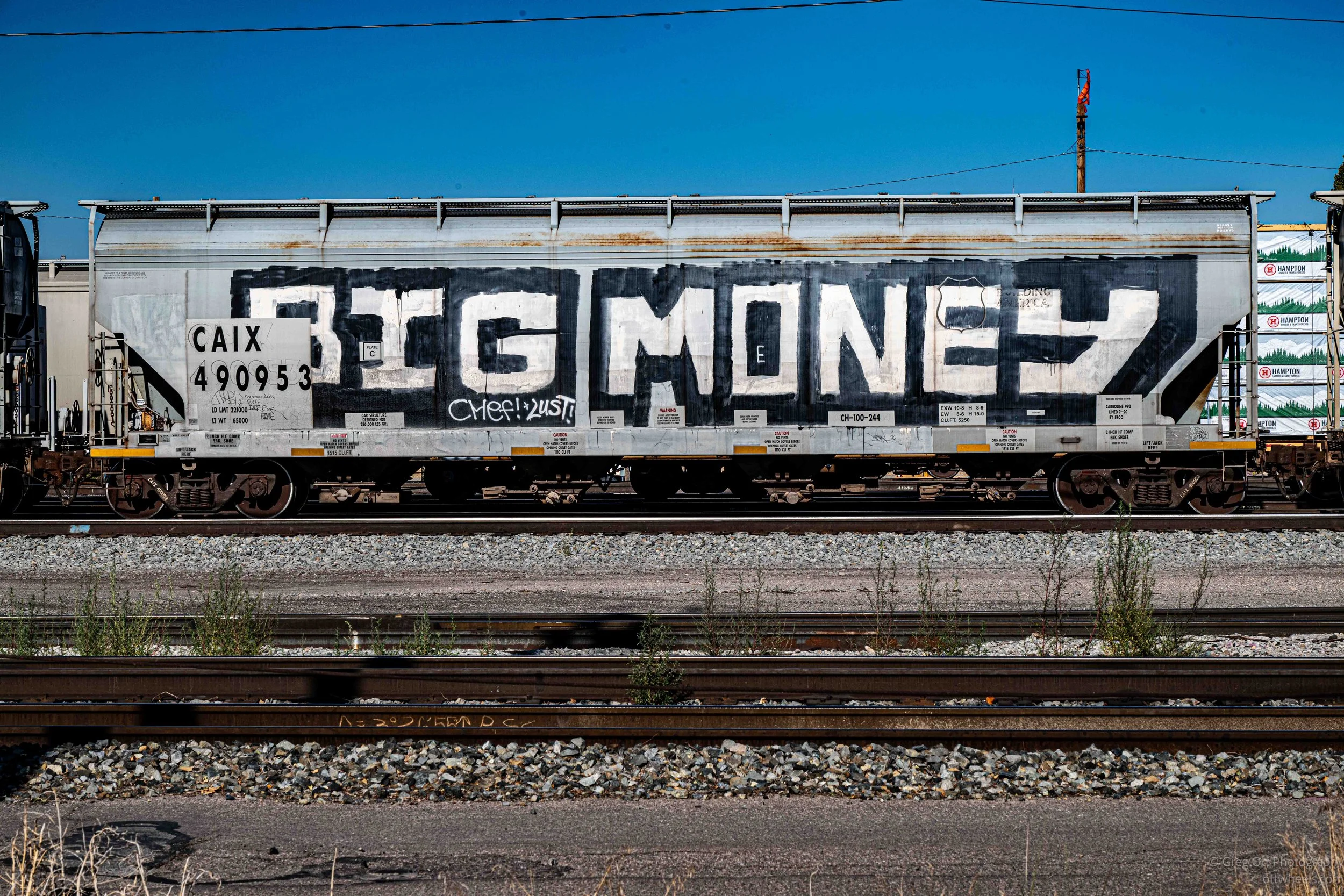
My itinerary had me stopping in American Falls and Bannock, two small towns with little more than a few traffic lights, farm and oilfield equipment, and a gas station or two. I decided to continue on, occasionally stopping to watch mile-long freight trains passing through other small towns before reaching Pocatello, Idaho.
Pocatello
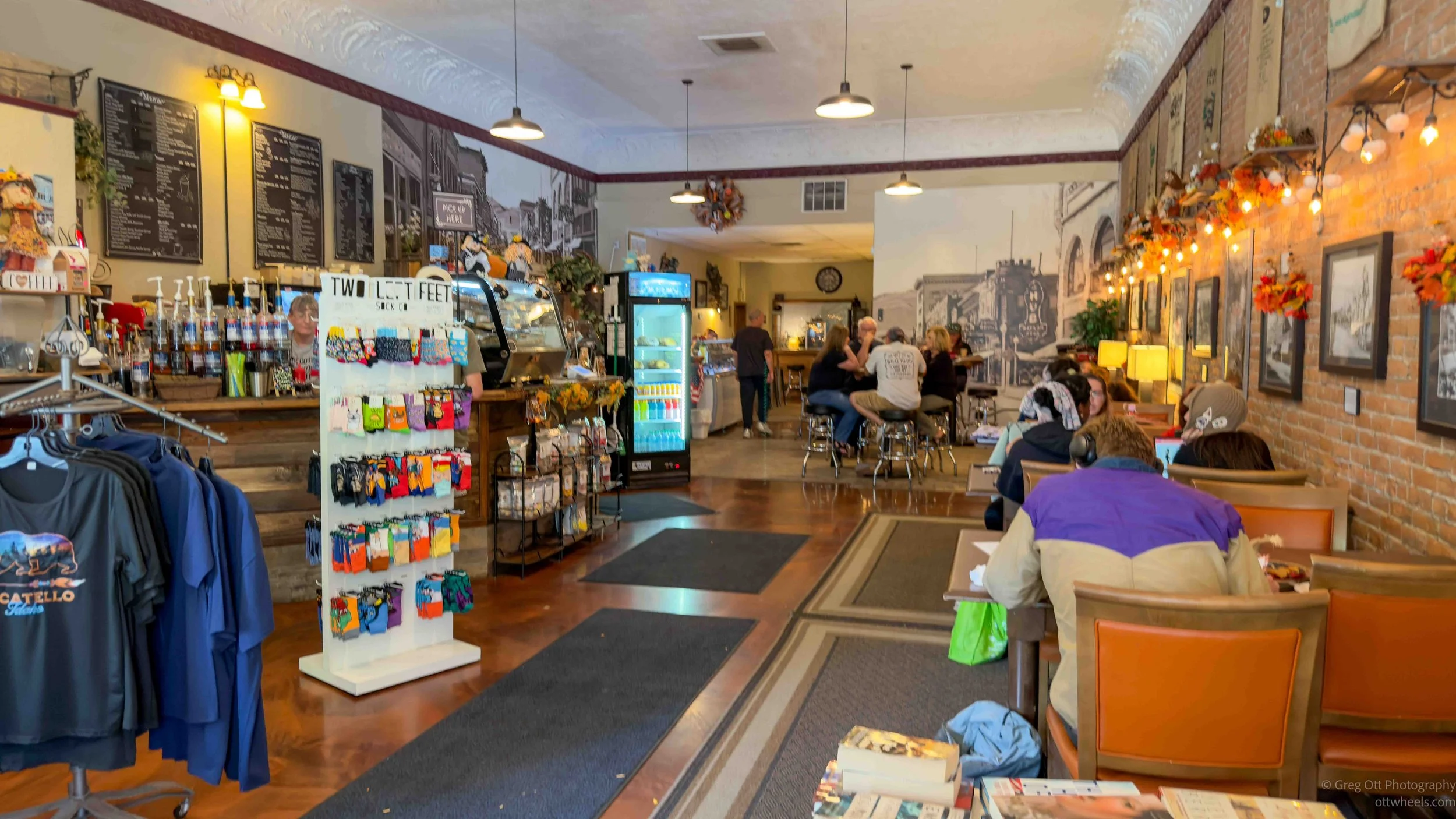
I wandered around Pocatello for a while, exploring the downtown streets before stopping at Gate City Coffee for a break. The owner told me she had just made an apple crumble cake. So, I went for it with a latté. The cake was loaded with apples and had just come out of the oven.
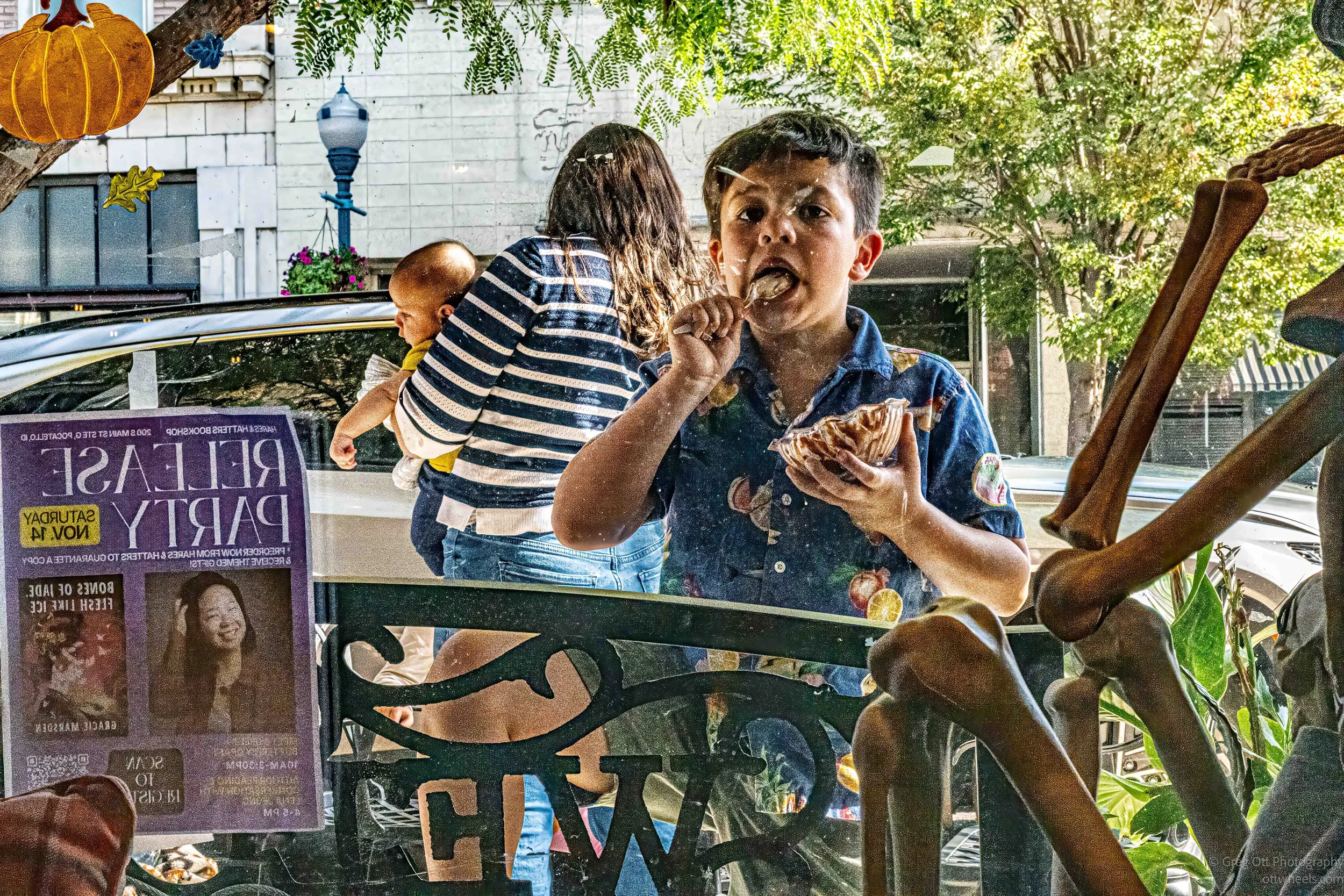
People were reading, students were working on laptops and there were two kids outside being goofy at the front window. They didn’t see me and were making faces in the window which had become a mirror. I almost laughed out loud a few times.


Pocatello is a funky little town, with an interesting mixture of old buildings, small businesses, and signs of better days. After coffe, I wandered into an alley covered with graffiti, drawings, and messages painted and written on nearly every available surface. A squirrel scampered along an overhead power line, chirping as it went. I managed to capture a photograph of its shadow. As I was looking around, a tall, lanky woman with dreadlocks and tattoos stepped into the alley. She was dressed in black, with a distinctly Gothic appearance, numerous piercings, and a red cloth bag with long straps hanging from her left shoulder. She glanced at me, acknowledging my presence with something that was almost a nod, but not quite. She never said a word.

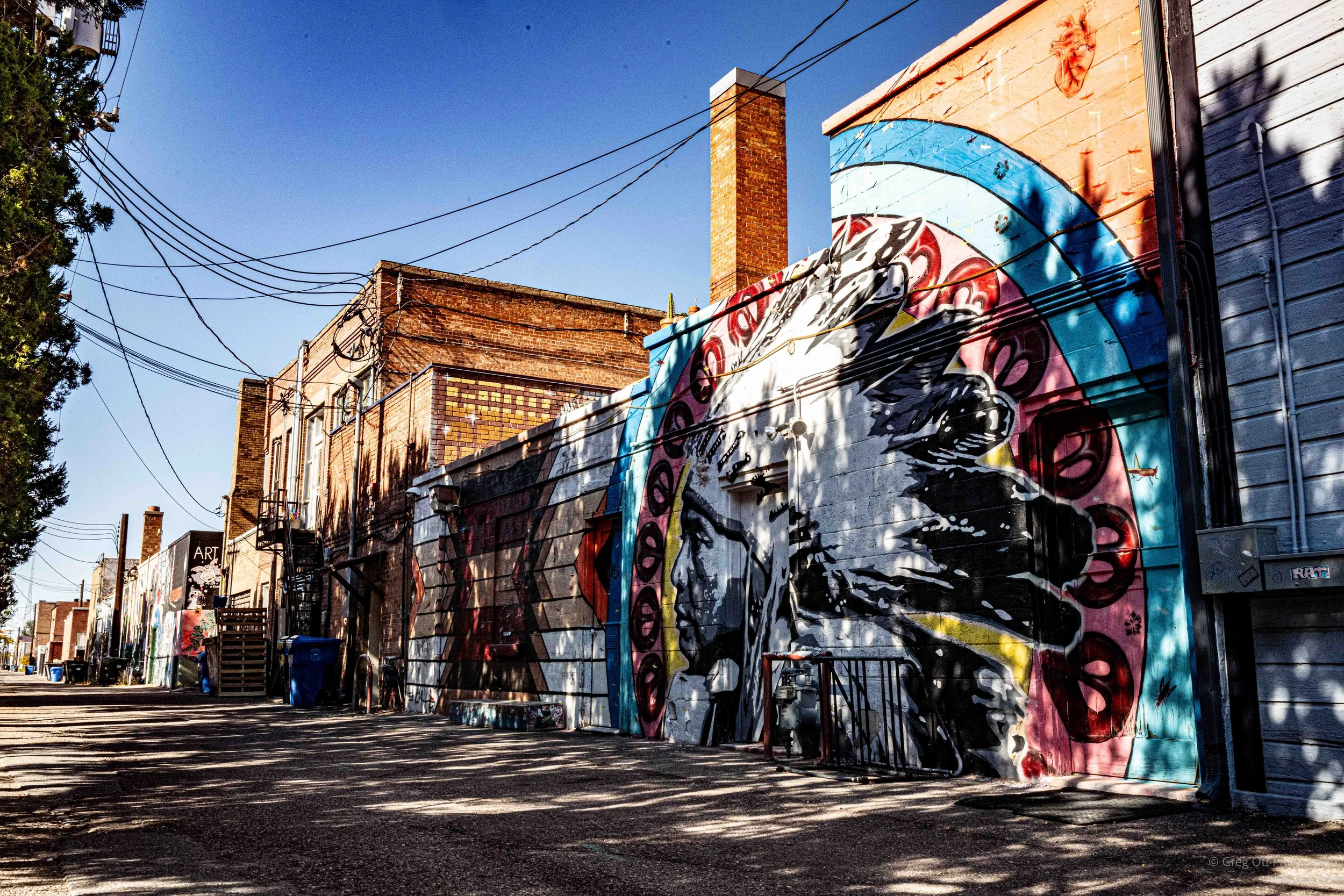
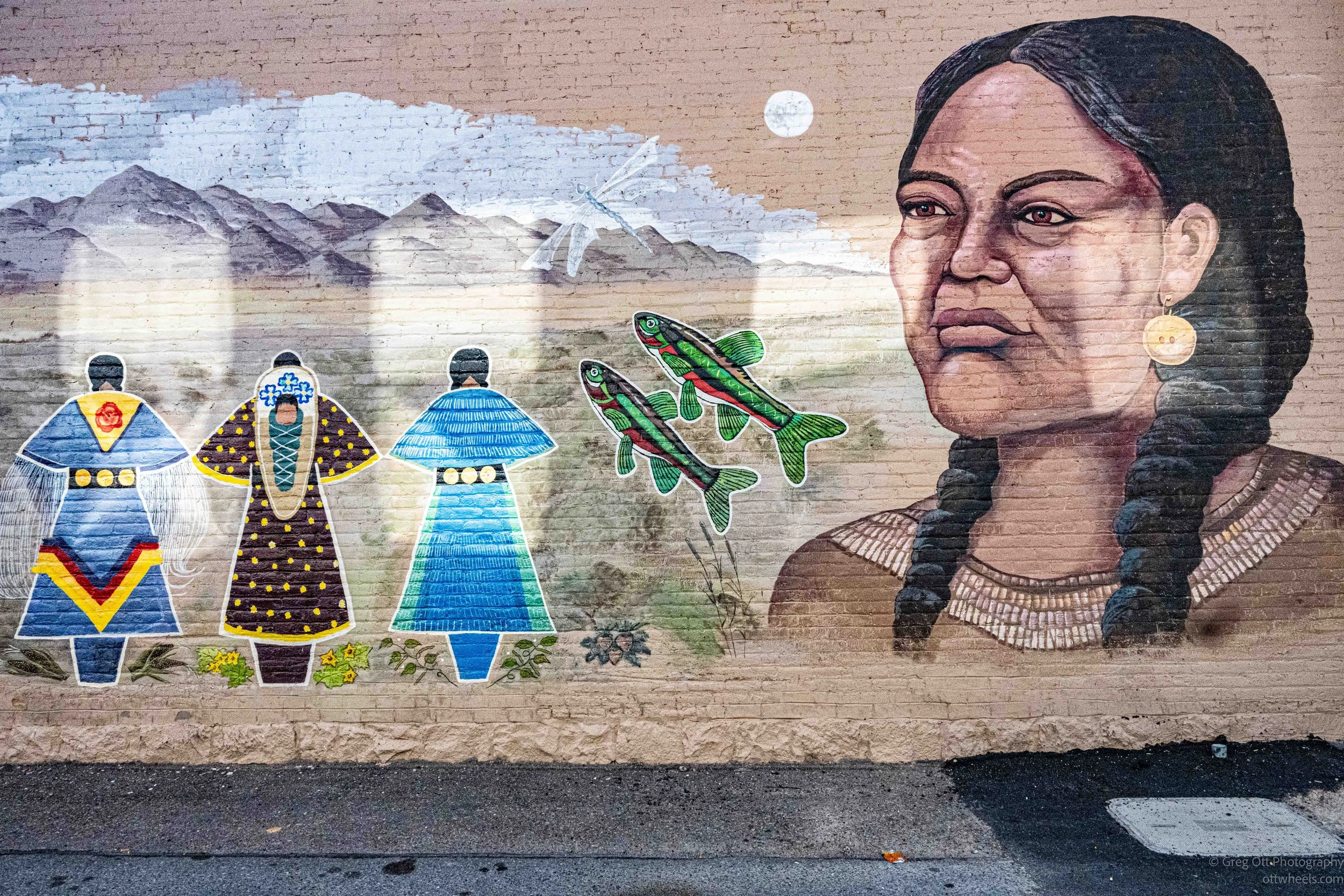
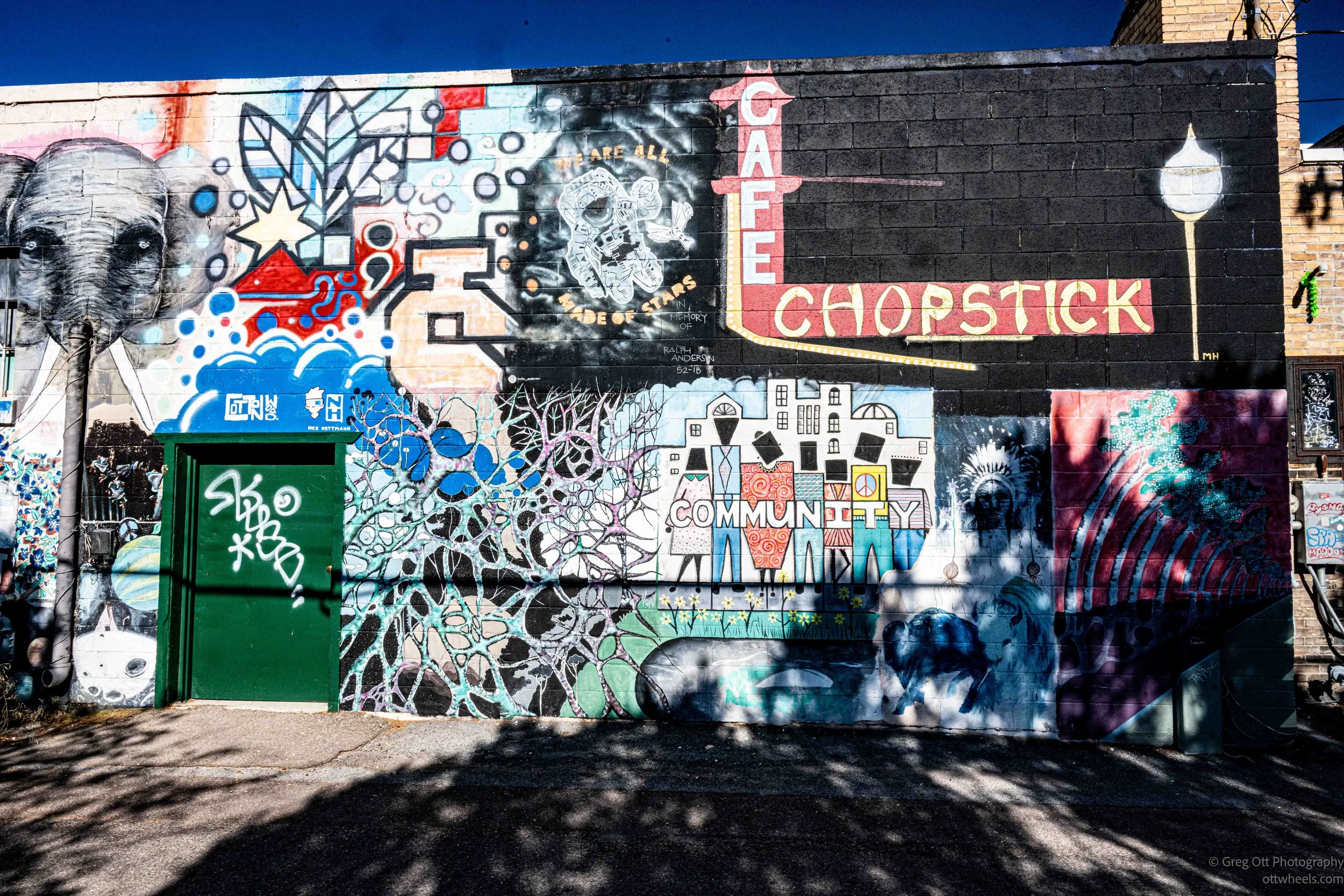
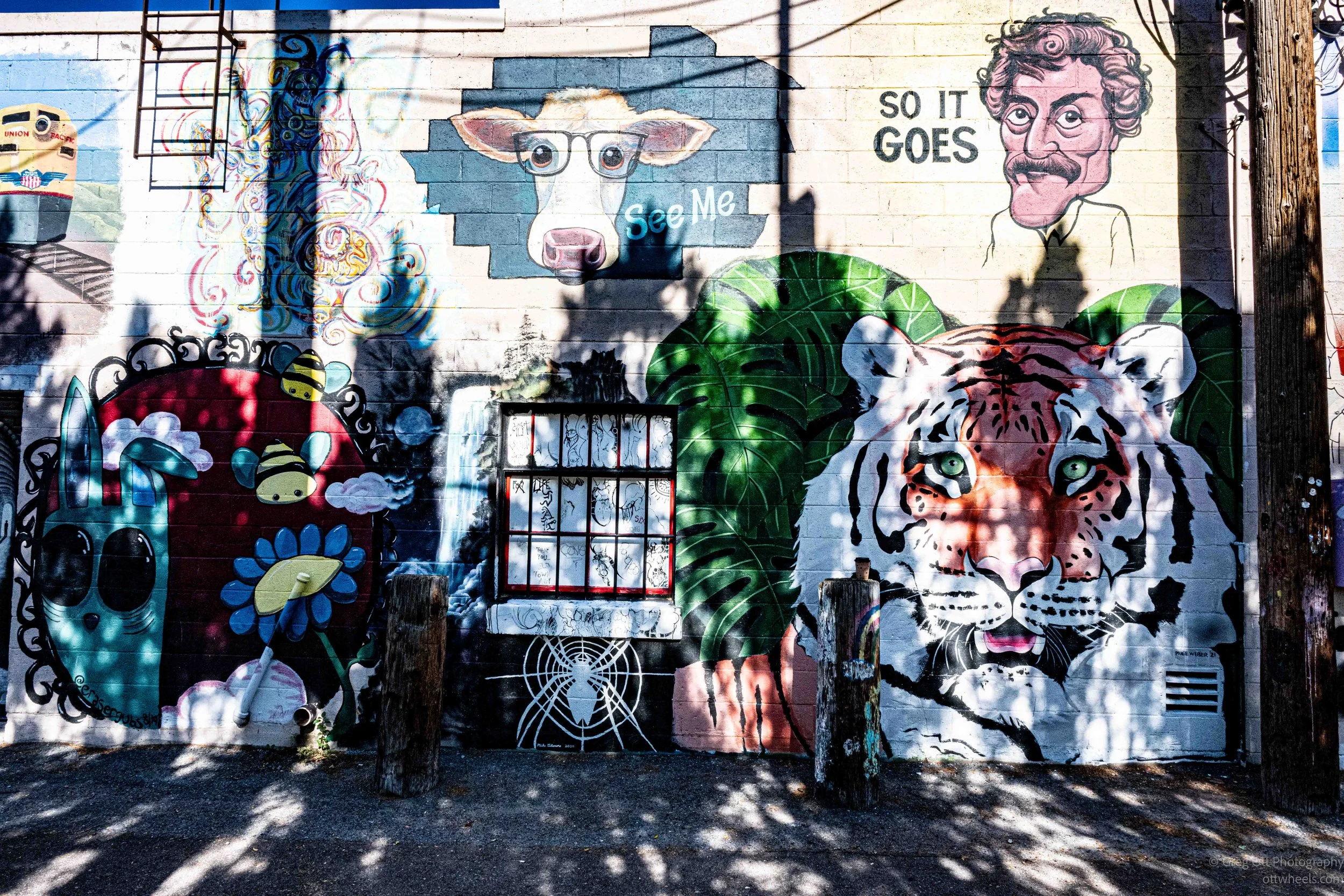
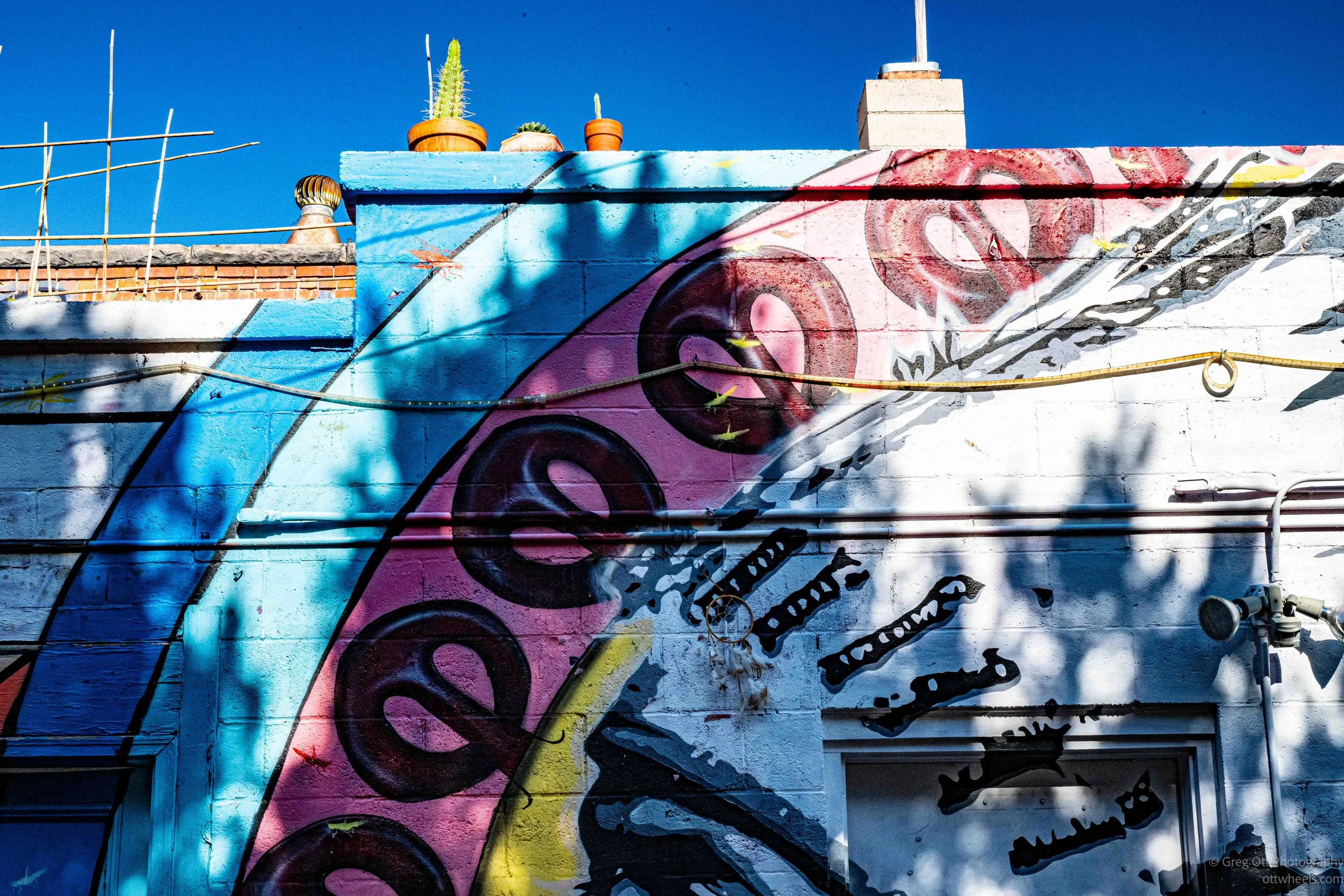
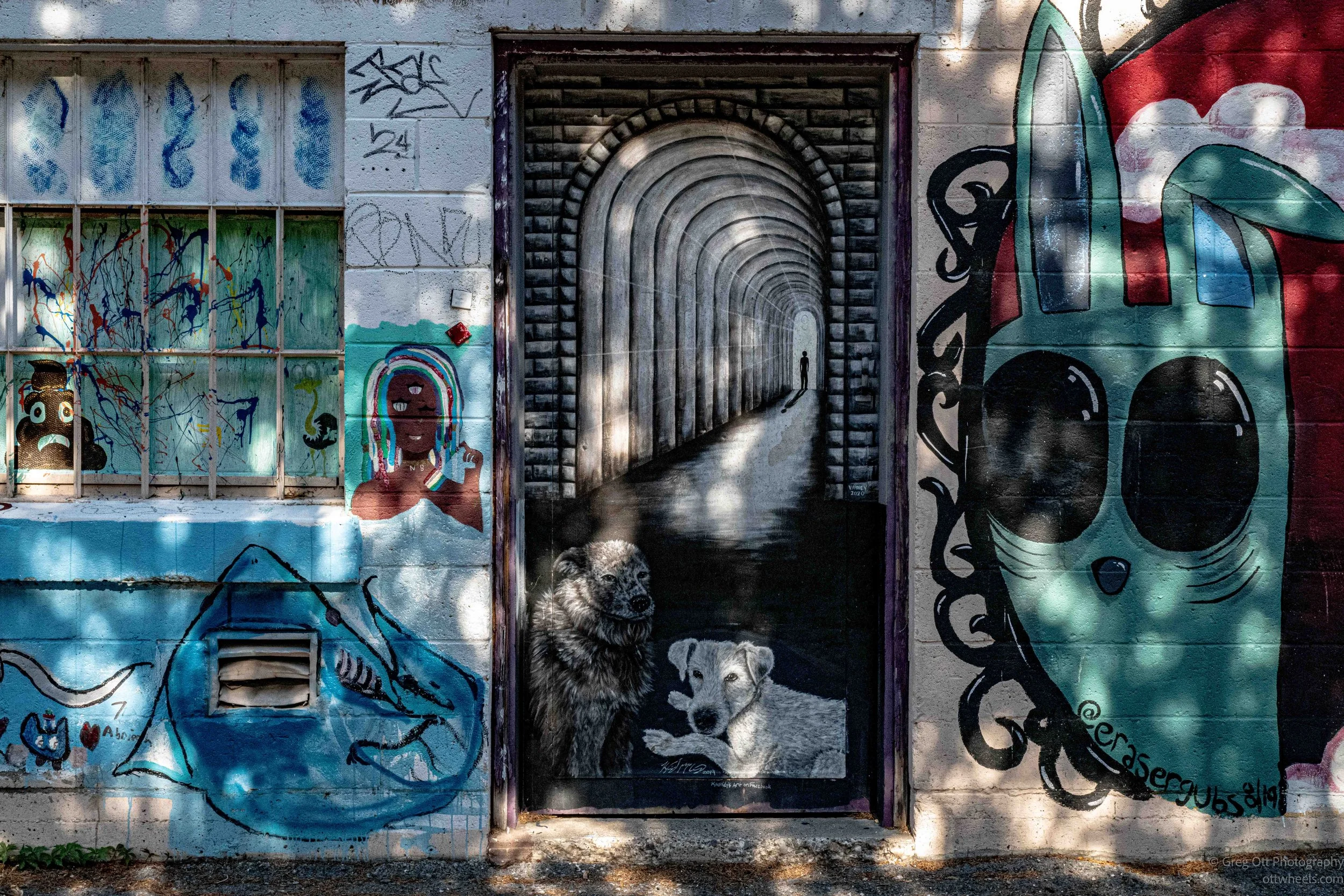
She seemed to know exactly where she was going, yet she was in no hurry to get there. She would move quickly along the alley, then stop abruptly in front of a drawing or a few words scrawled on the wall. She studied each one with surprising intensity, occasionally shaking her head in approval or disapproval, as though she understood something about the artwork that I didn't. There was something almost theatrical about her movements, but nothing suggested she was performing for anyone. I found myself watching her as much as the artwork. I wondered whether she was one of the artists, knew the people who had created the work, or was simply passing through like me. She seemed entirely at home in that alley, and I somehow felt like the visitor.
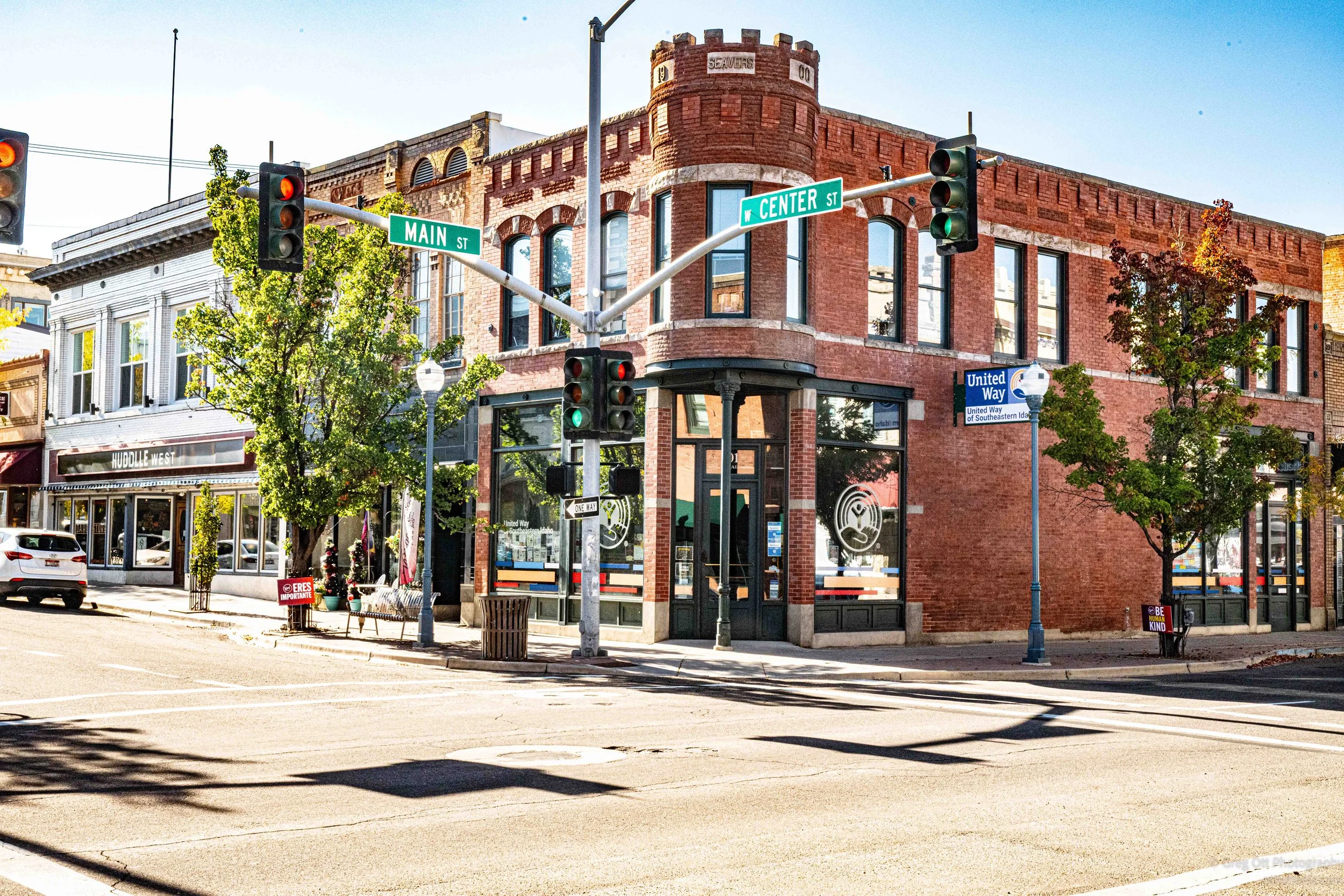
I eventually made my way back to Main Street and tried to imagine Pocatello during its heyday. Many of the original buildings were still standing, with an interesting mixture of Art Deco influences and early twentieth-century commercial architecture. Some had been carefully maintained, while others had been modified or repurposed over the years, not always with much regard for their original character. You could still see traces of what must once have been a prosperous downtown.
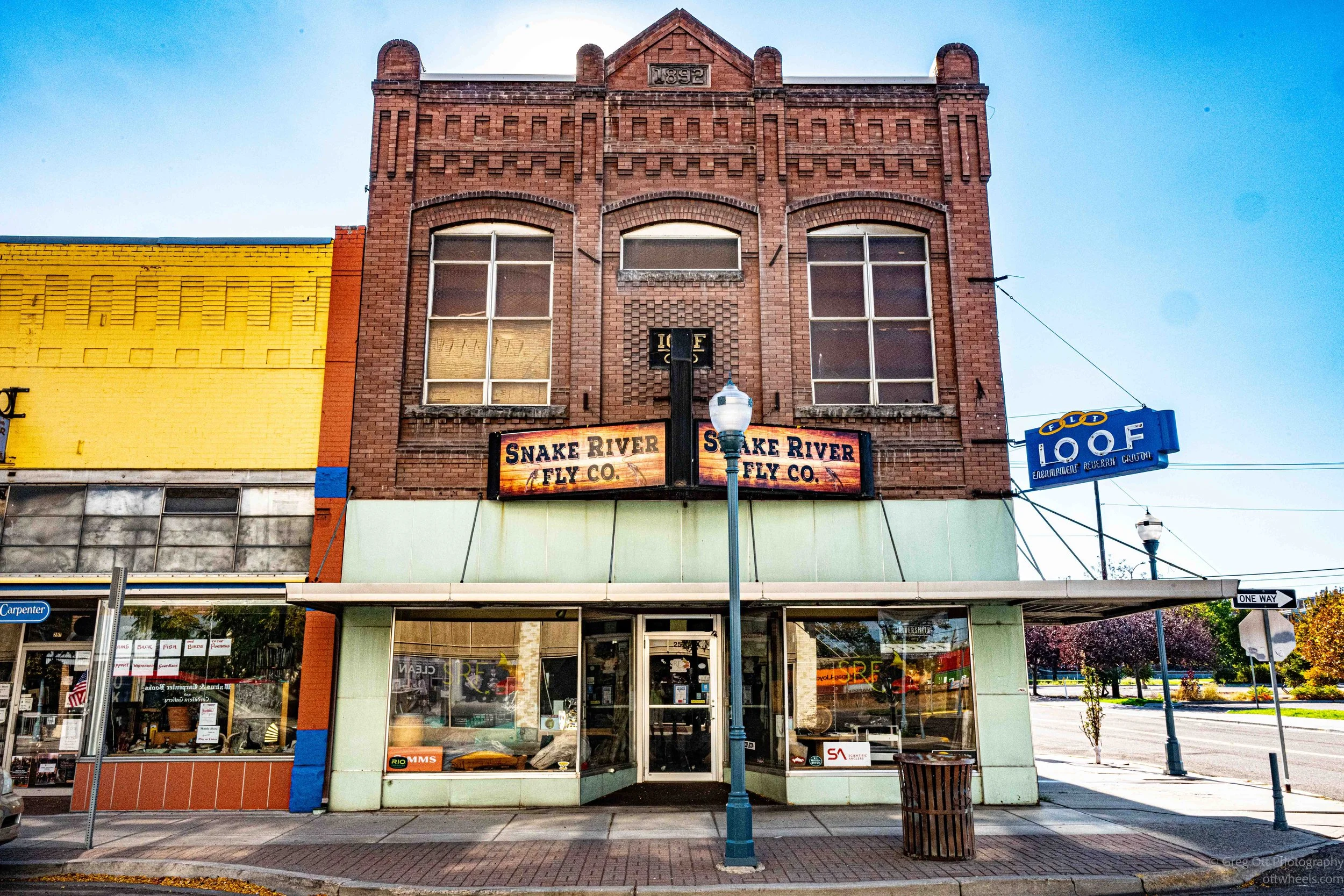
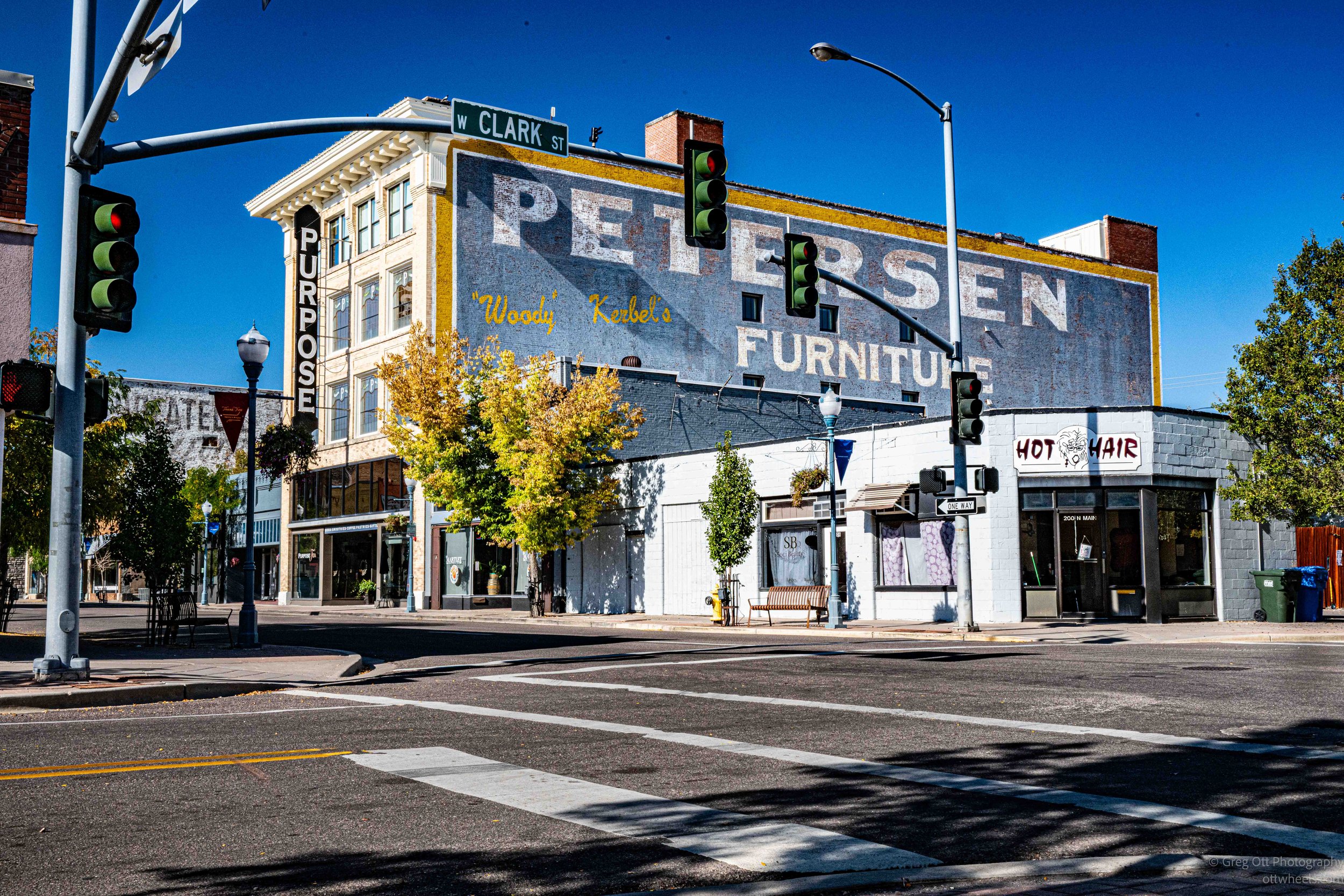
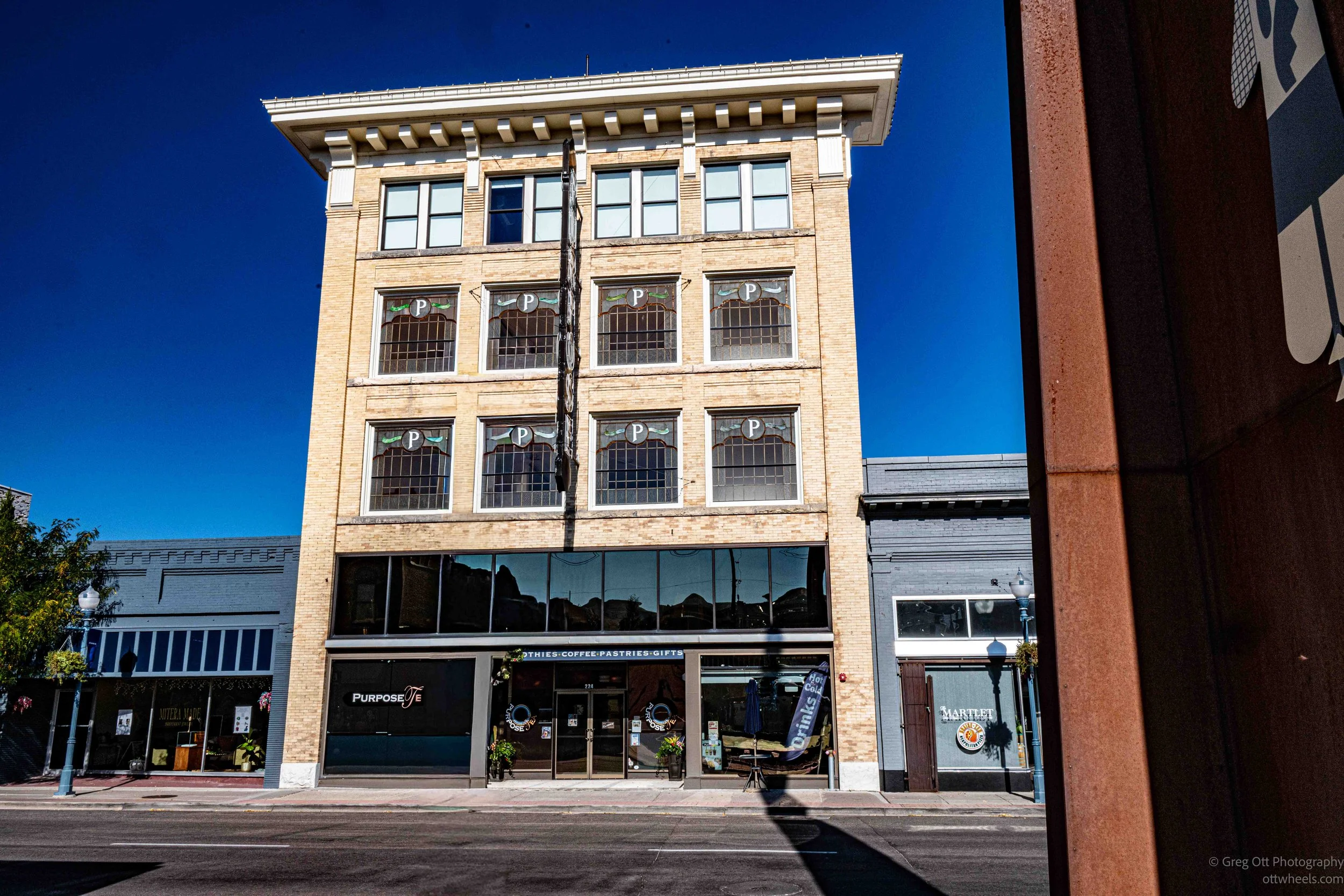
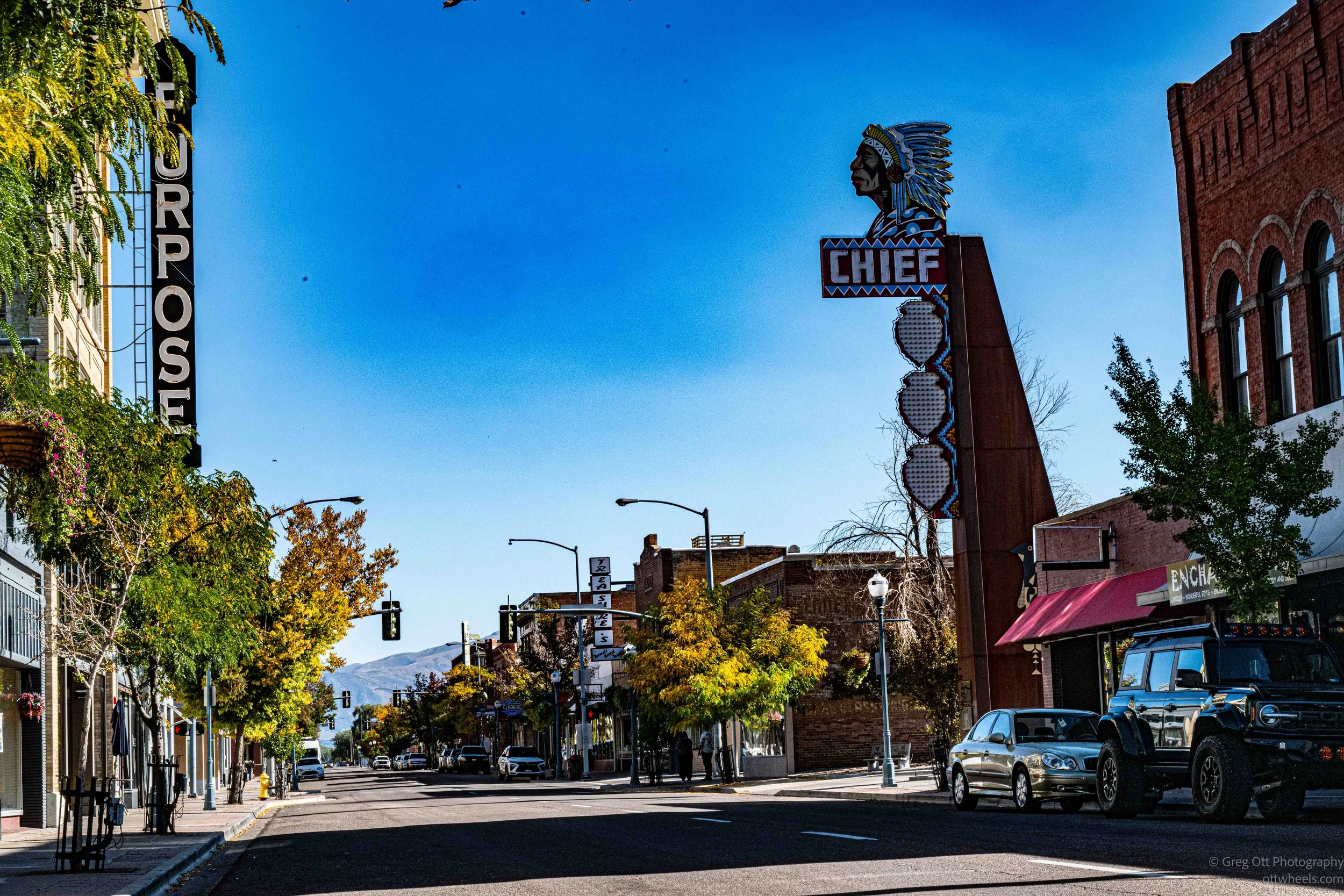
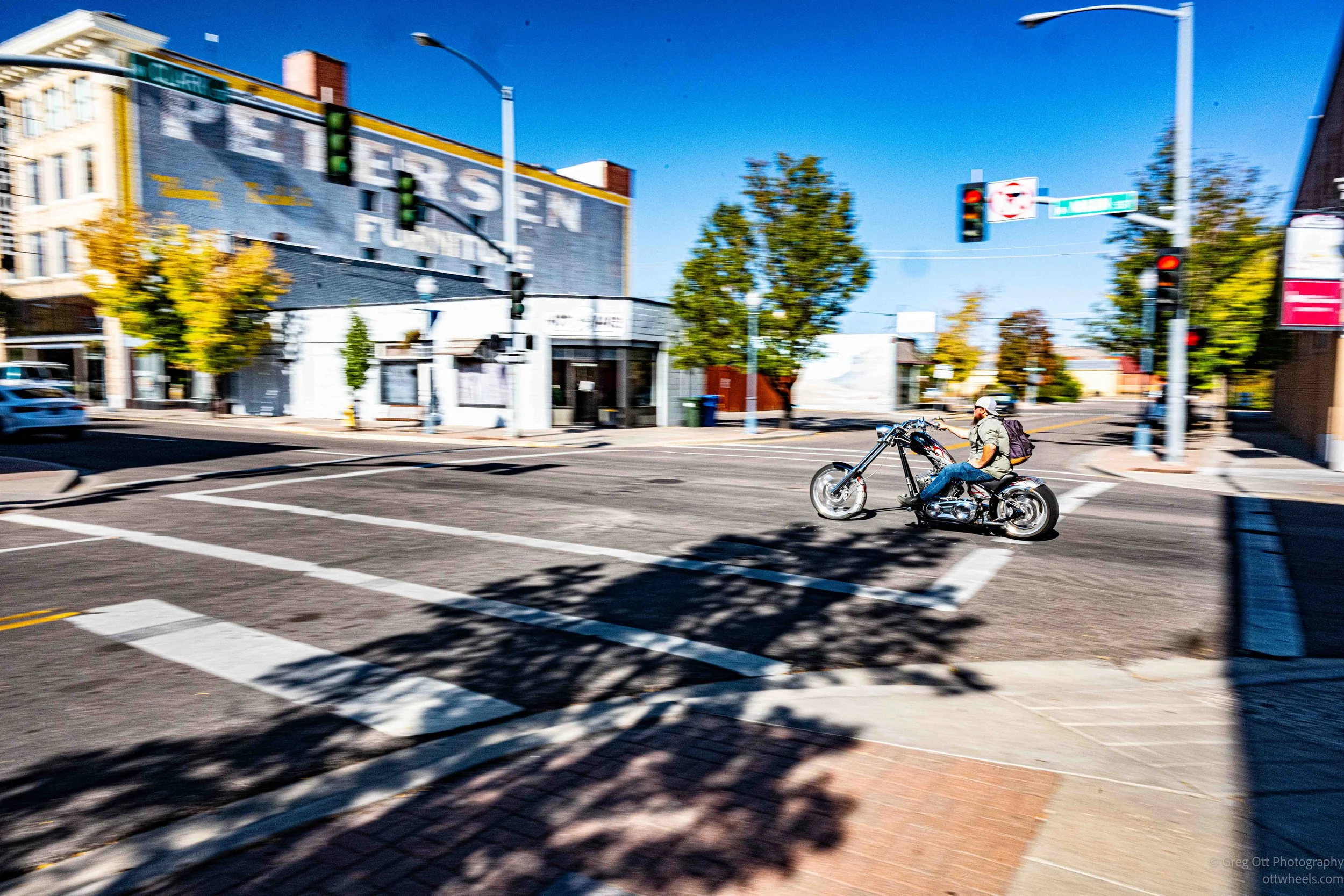
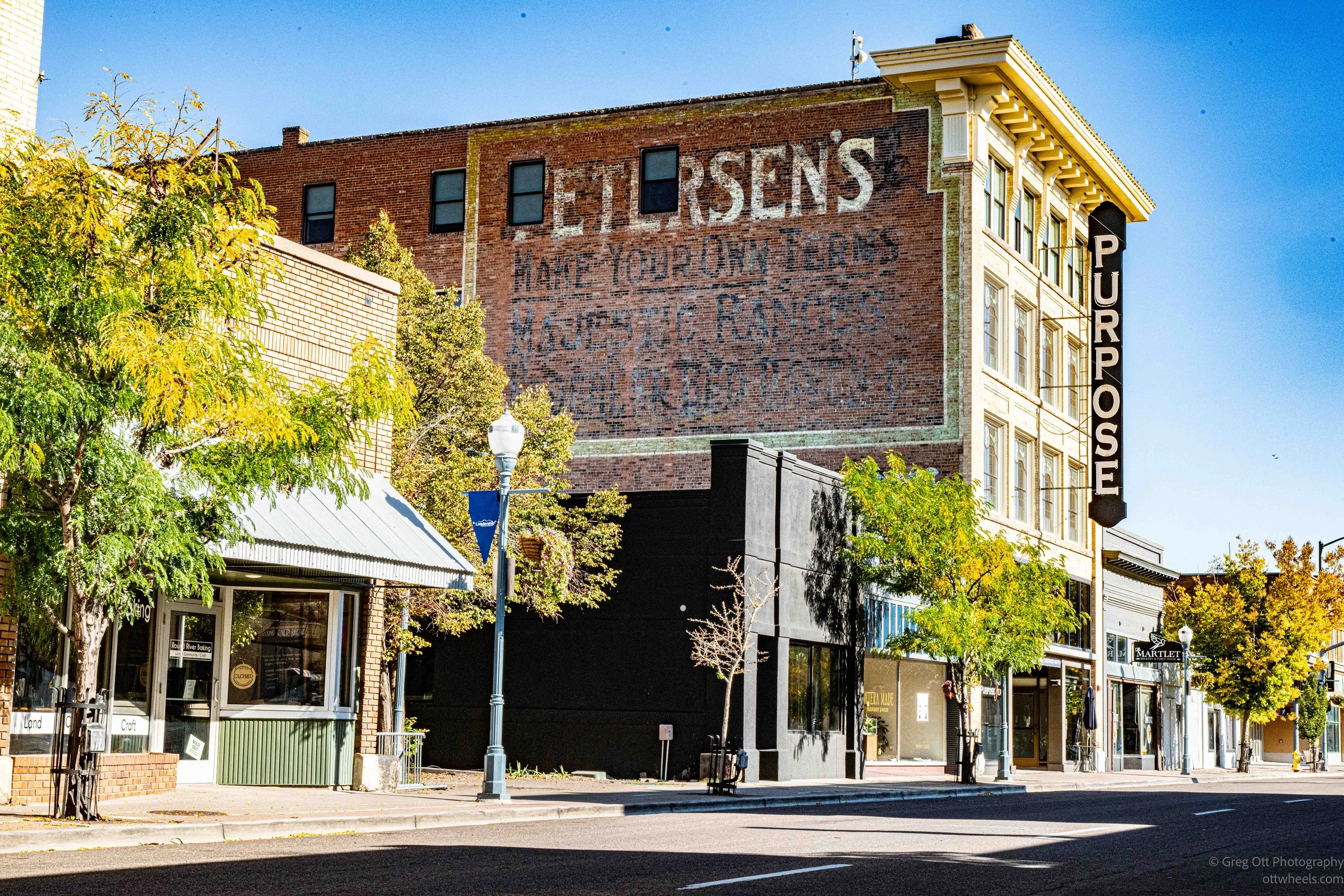
I stopped at a corner to photograph the old Purpose/Petersen Furniture building, studying the lines and angles of its facade. A young guy walking past noticed what I was doing and stopped. "That's a cool image," he said, pulling out his phone to photograph the same scene. We started talking about photography. He told me he wanted to get more involved but didn't have much money for equipment. It was another one of those unexpected conversations that seem to happen when you're walking around with a camera. He had probably passed that building hundreds of times, but something about seeing another person photograph it made him stop and look at it differently.
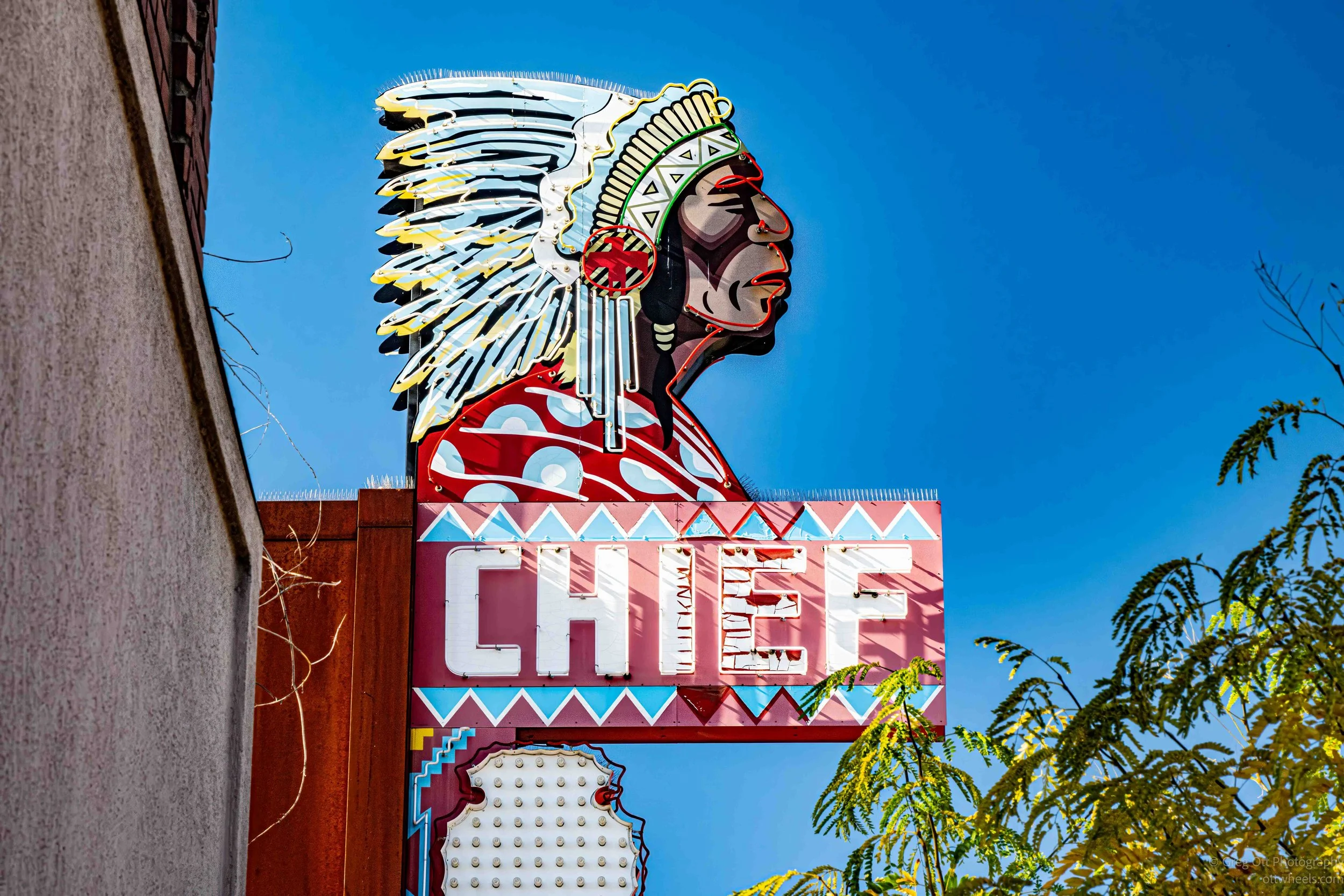
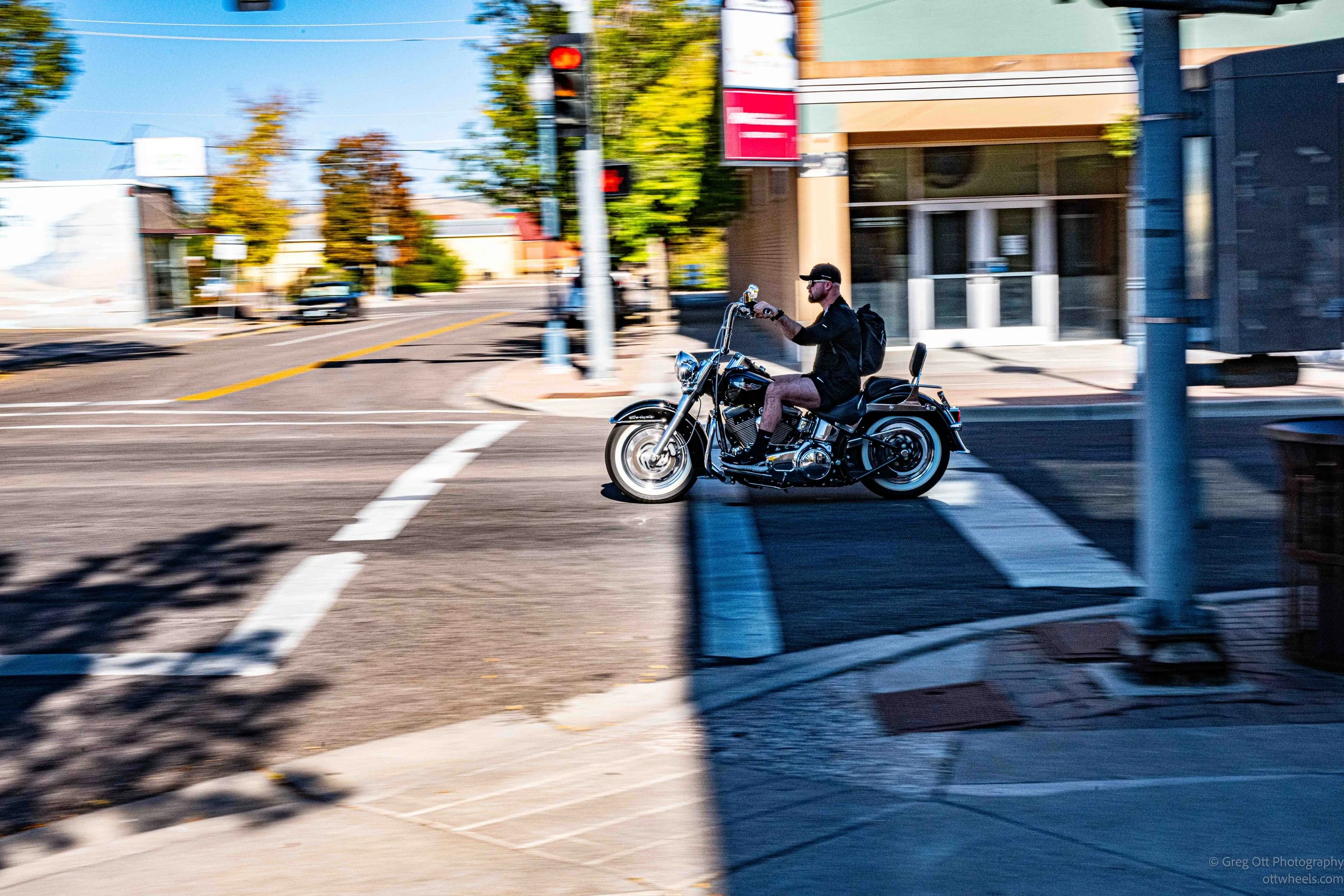
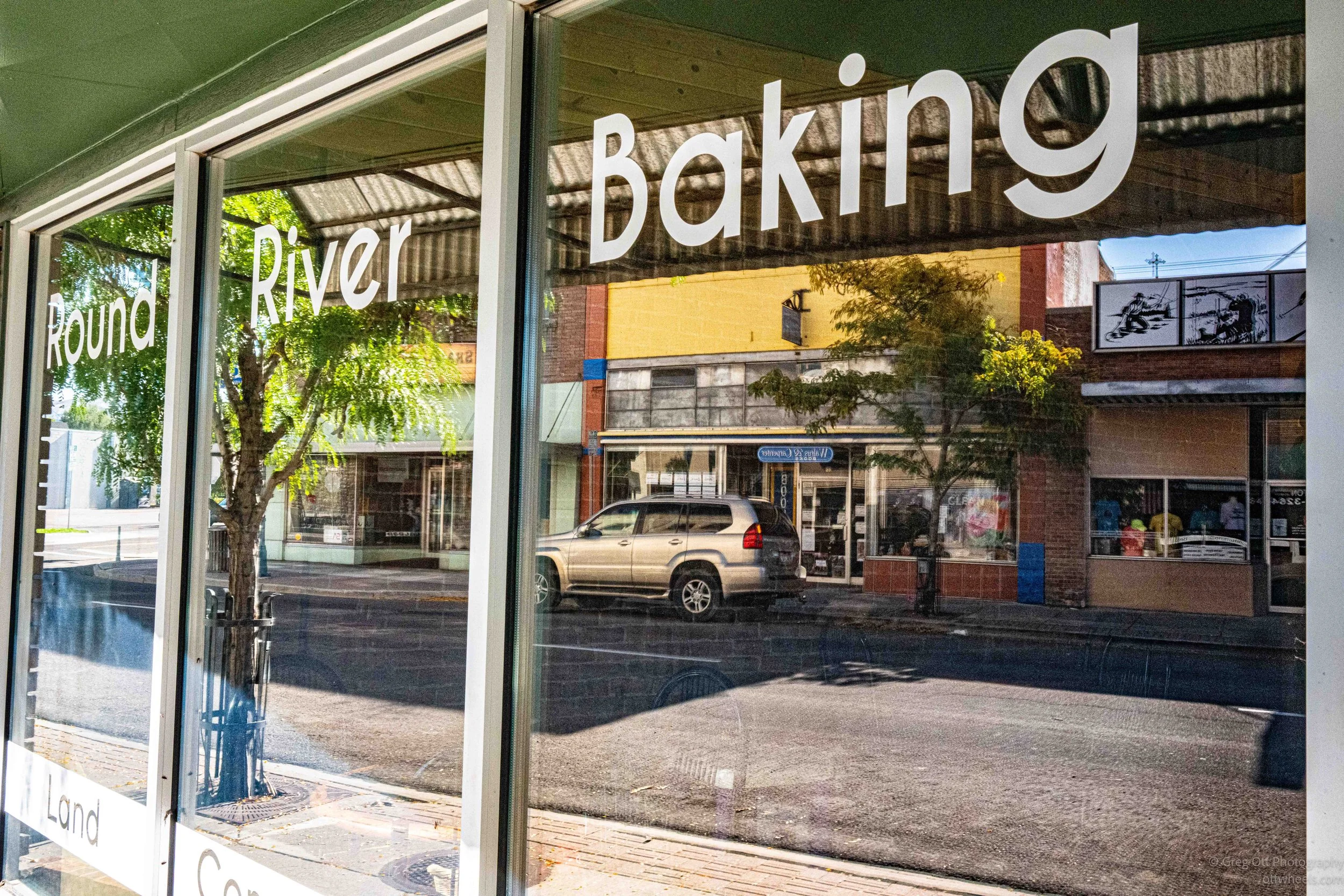
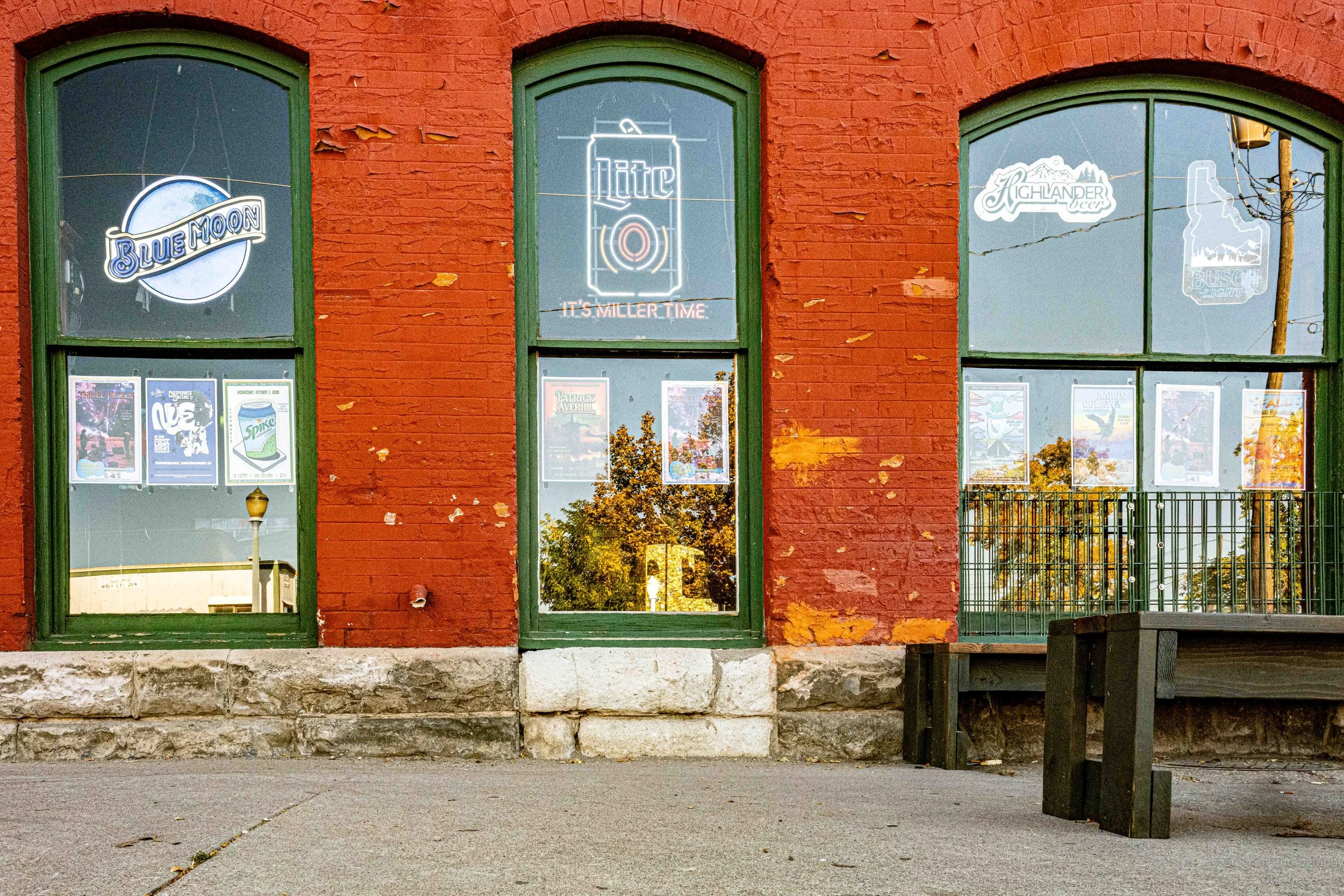
I continued wandering through downtown, stopping to photograph motorcyclists, storefront windows, reflections, and old buildings. I noticed a large neon sign that I later learned was the marquee for the old Chief Theatre, which had burned in the 1990s. The theater itself was gone, replaced by a parking lot, but the sign remained as a reminder of what had once stood there.
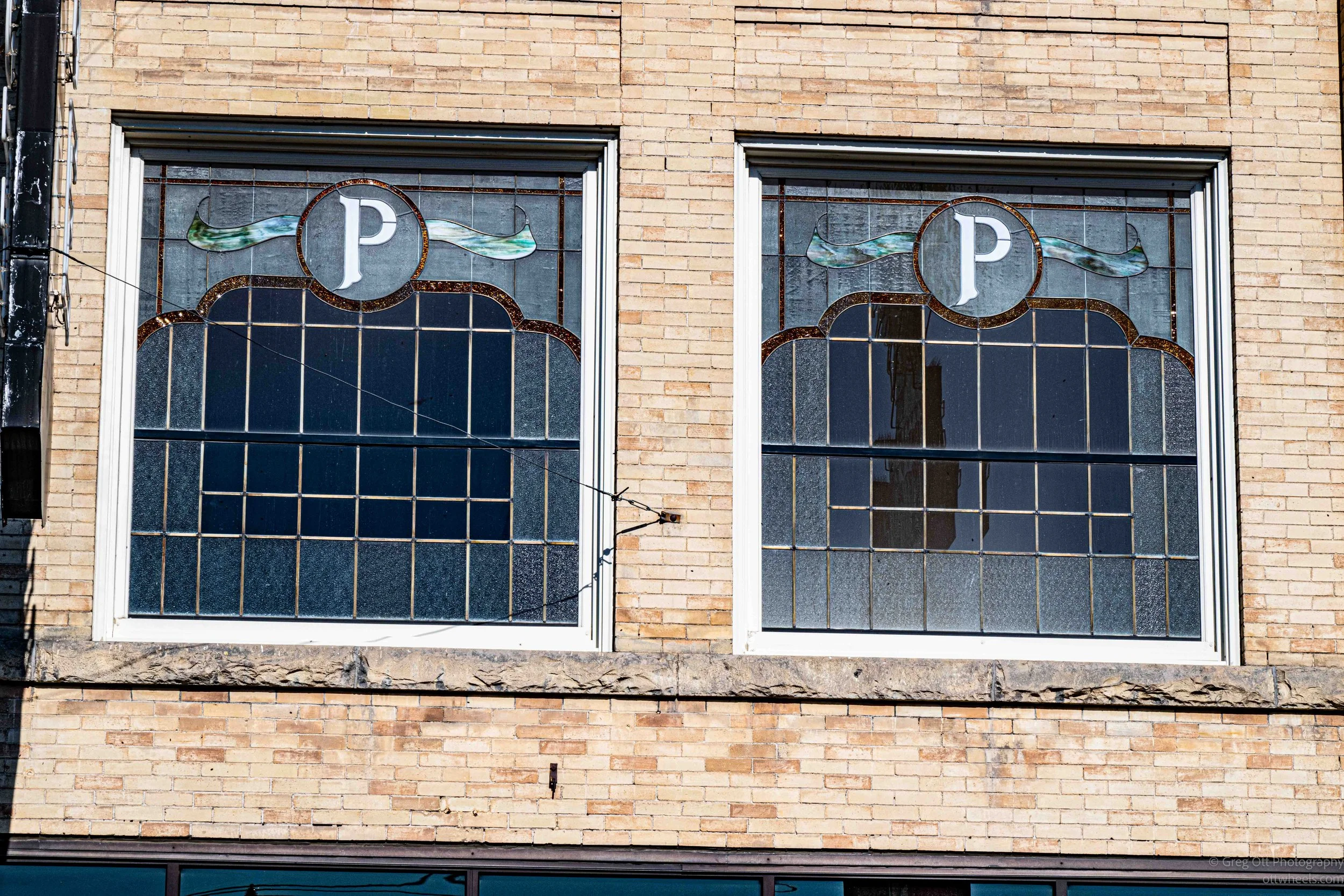
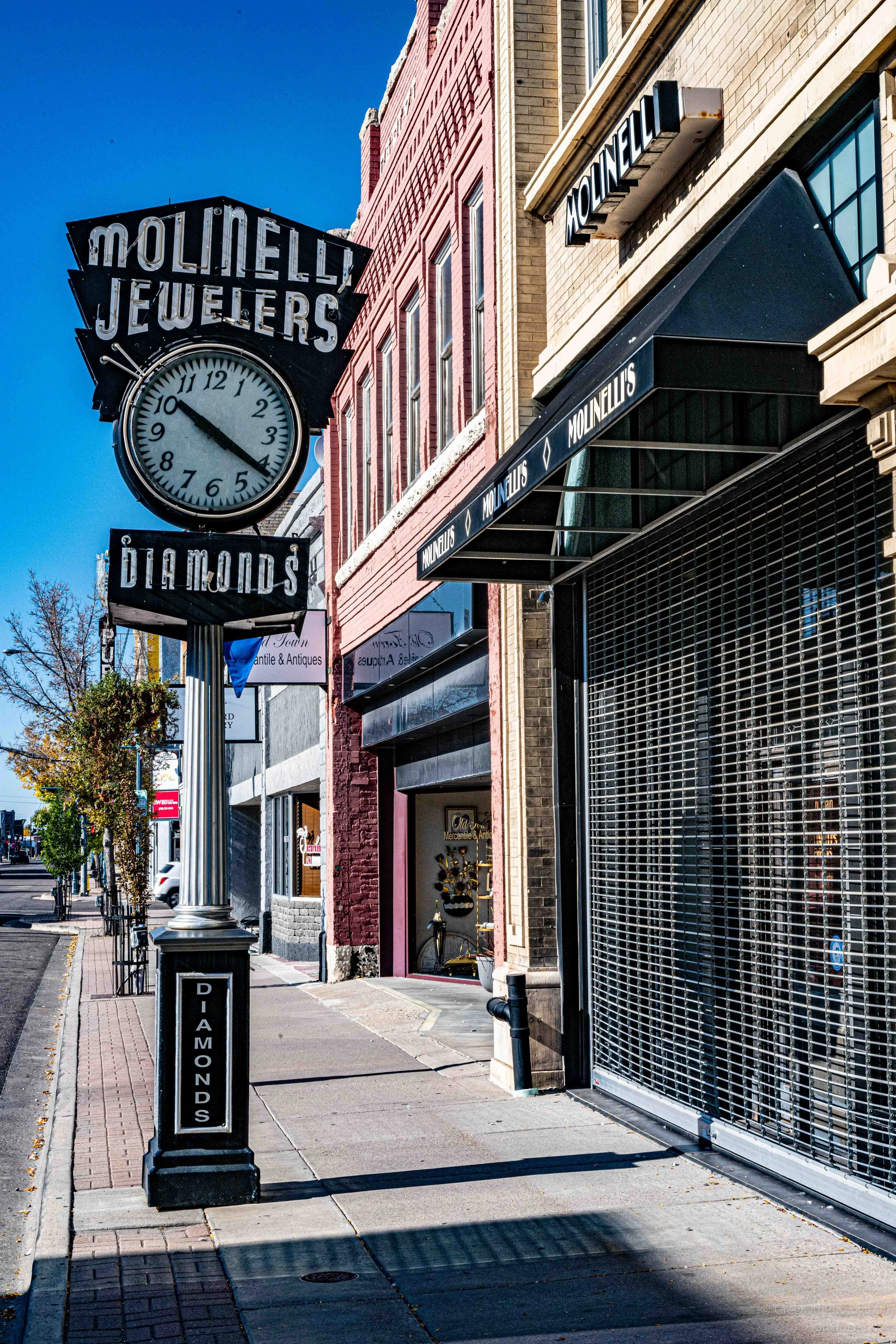
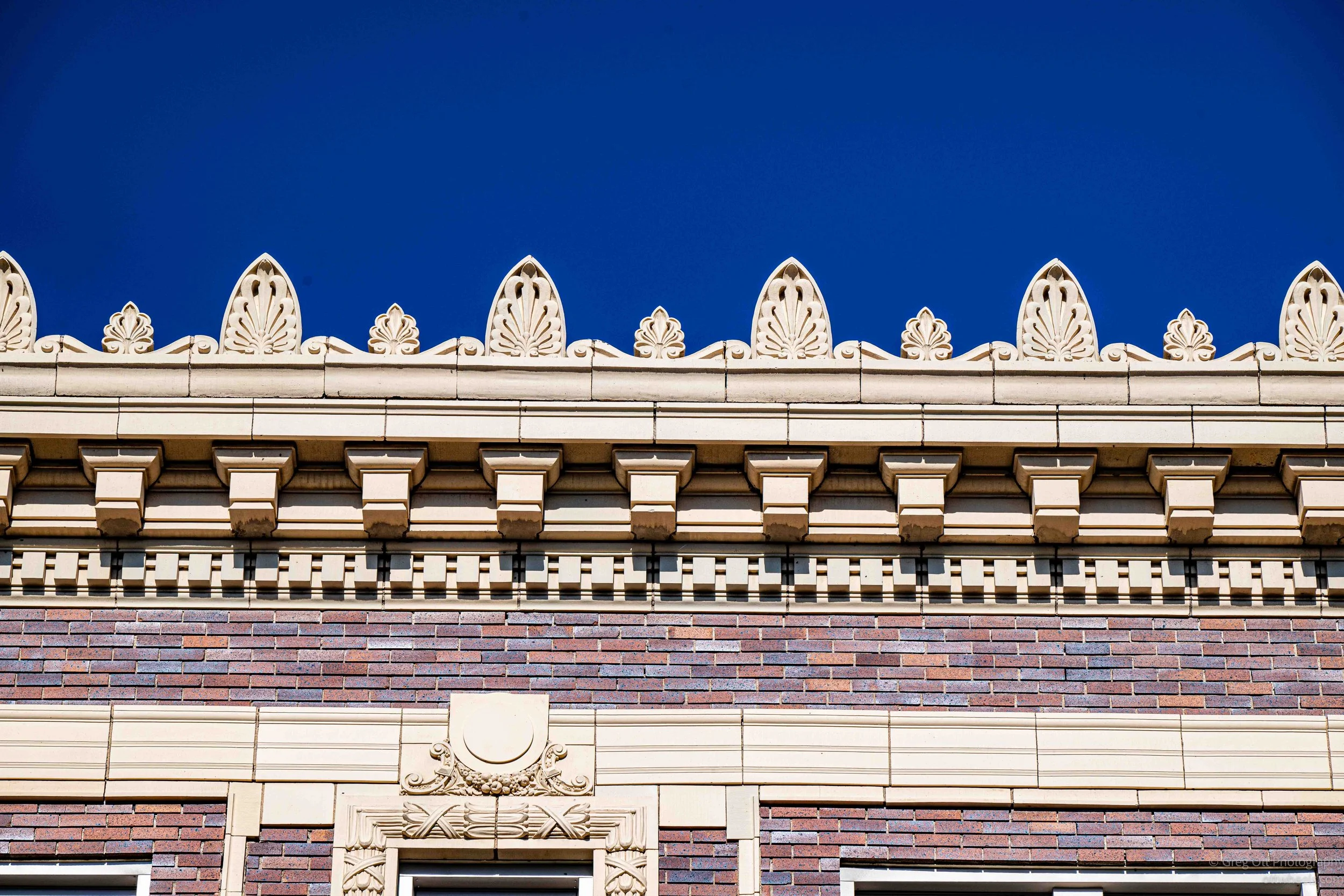
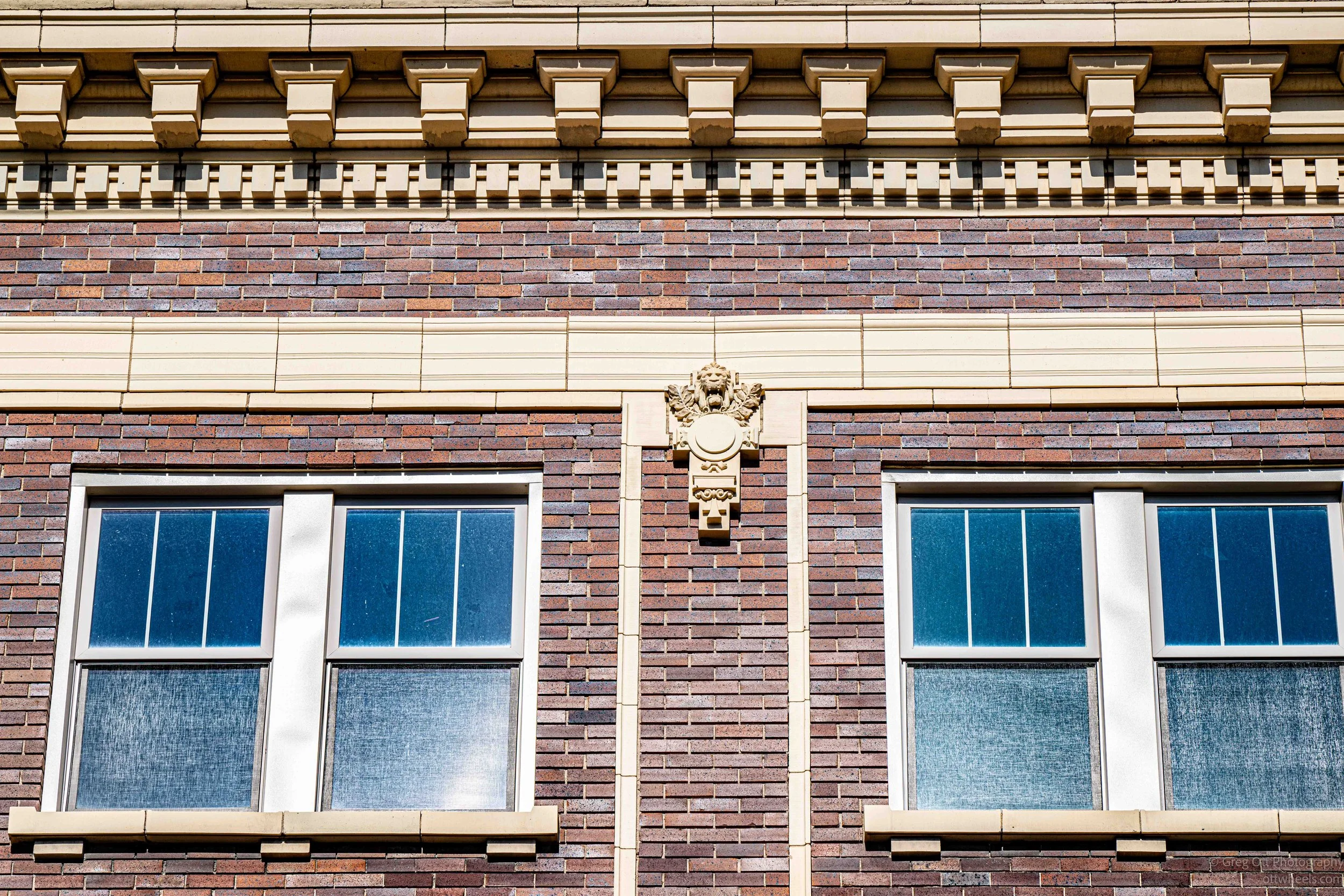
I was particularly fascinated by the architectural details that were easy to overlook from a distance. Ornate stained-glass windows, decorative brickwork near the tops of buildings, and old street clocks with neon lettering. Many of these details had survived decades of changes to the businesses below them. I found myself spending more time looking up at the upper floors than through the storefront windows. There was a surprising amount of craftsmanship in these old buildings, much of it probably unnoticed by people walking past every day.
The Whitman Building
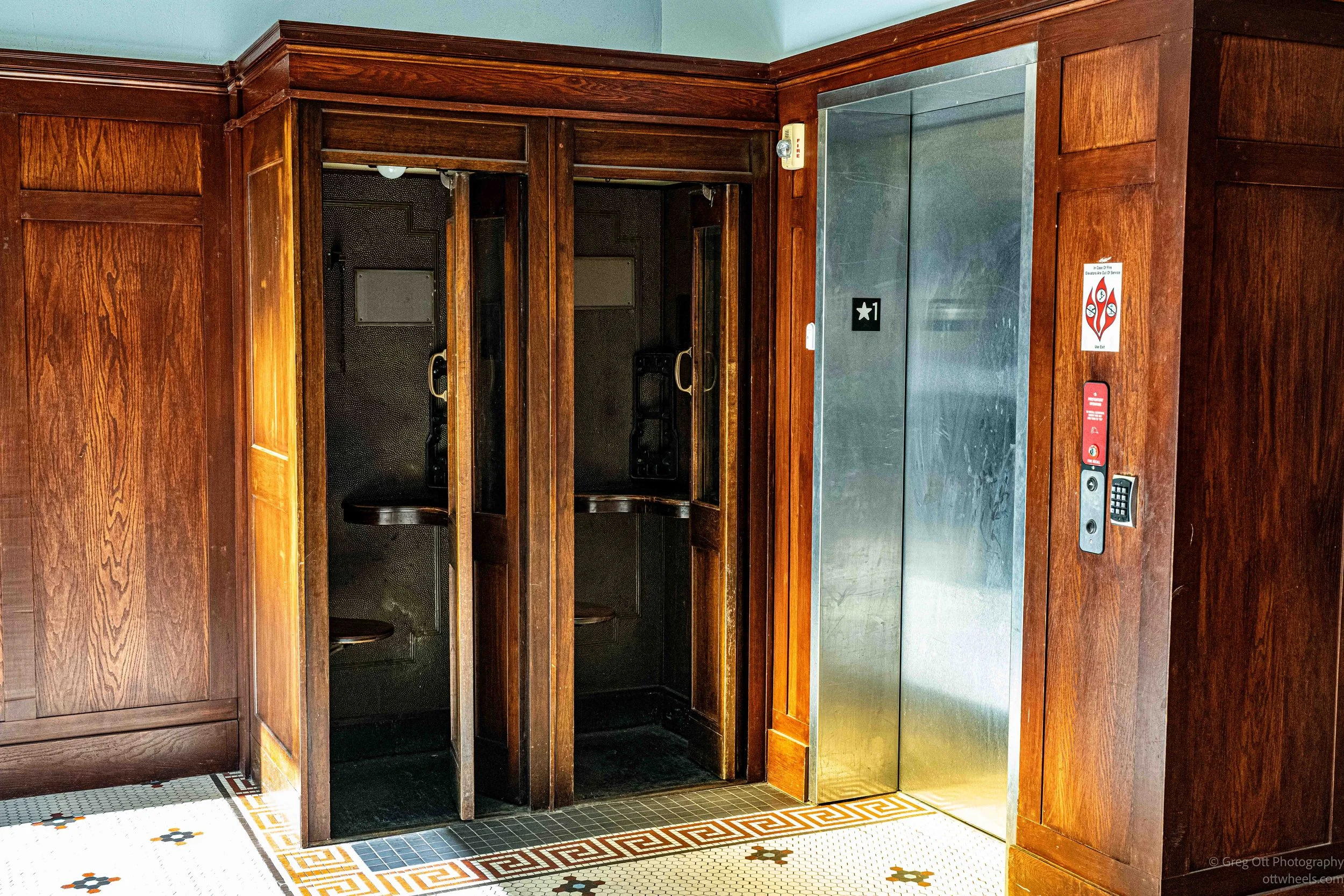
As I was walking, I met a veteran sitting in a wheelchair outside the Whitman Building. I asked him about a building up the street, and he proceeded to tell me about many of the buildings I had seen around town. He wasn't born in Pocatello but grew up here and spent most of his life here. He lived in the Whitman, which is now an apartment building, and seemed to know quite a bit about its history. He suggested I go inside and have a look at the lobby.
The building dates back to 1905, when it was originally constructed as a two-story Eagles Lodge. It was expanded into a four-story hotel in 1914 and was once considered one of Pocatello's finest hotels. The ground floor housed the Princess Theatre, which originally opened as the Lyric Theatre in 1905, became the Grand Theatre in 1909, and was renamed the Princess Theatre in 1912. It featured vaudeville performances and motion pictures before closing as a theater in 1920.
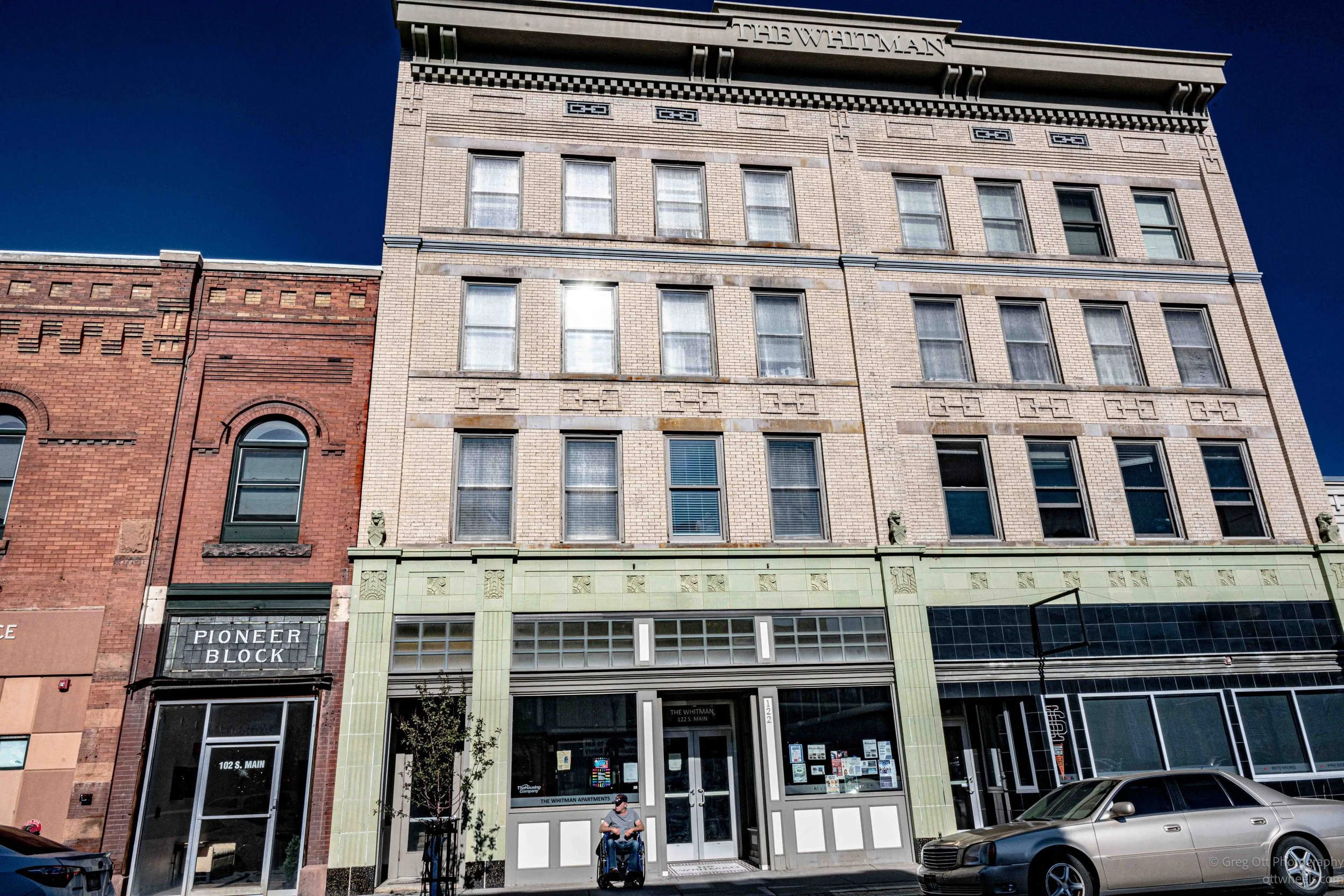
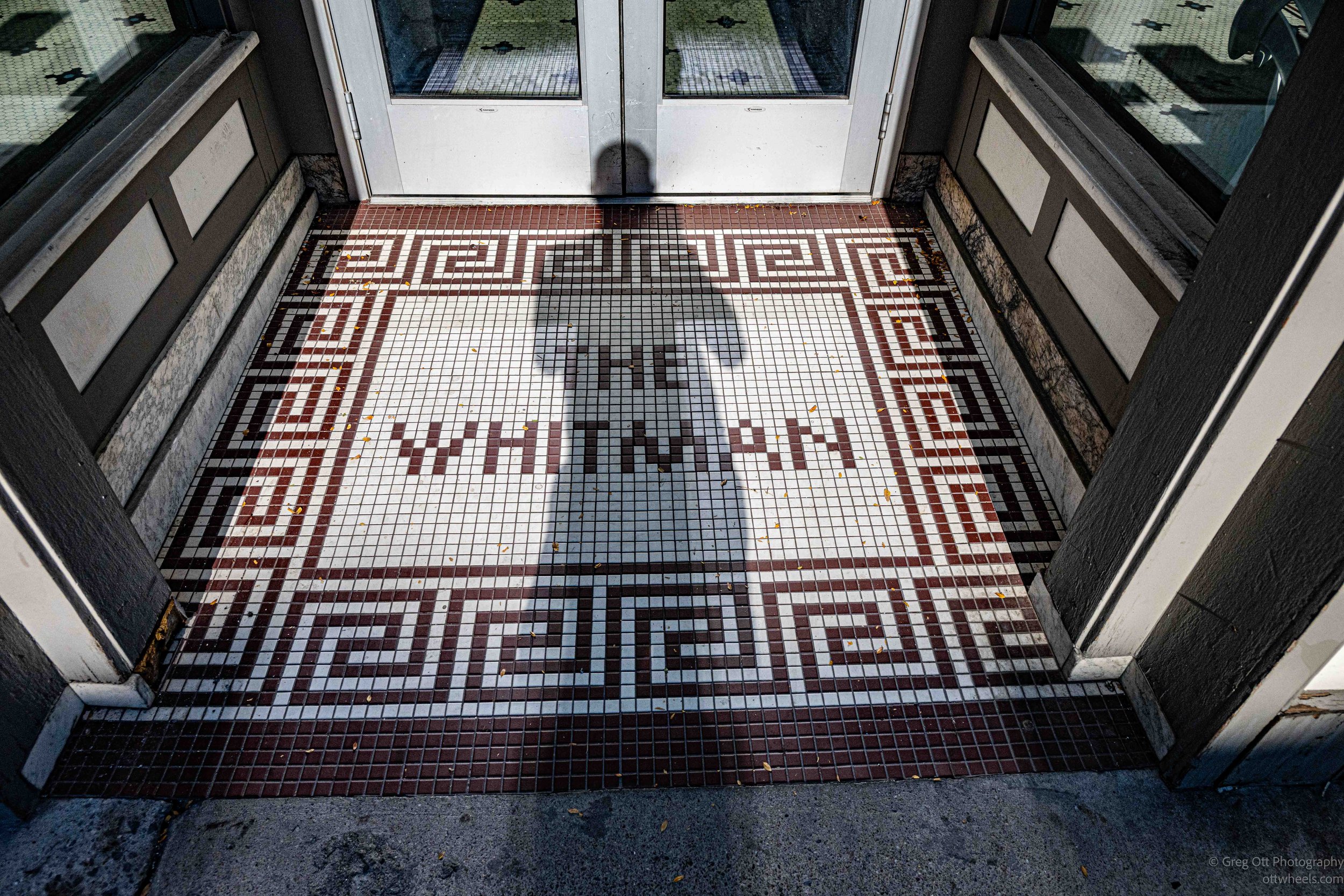
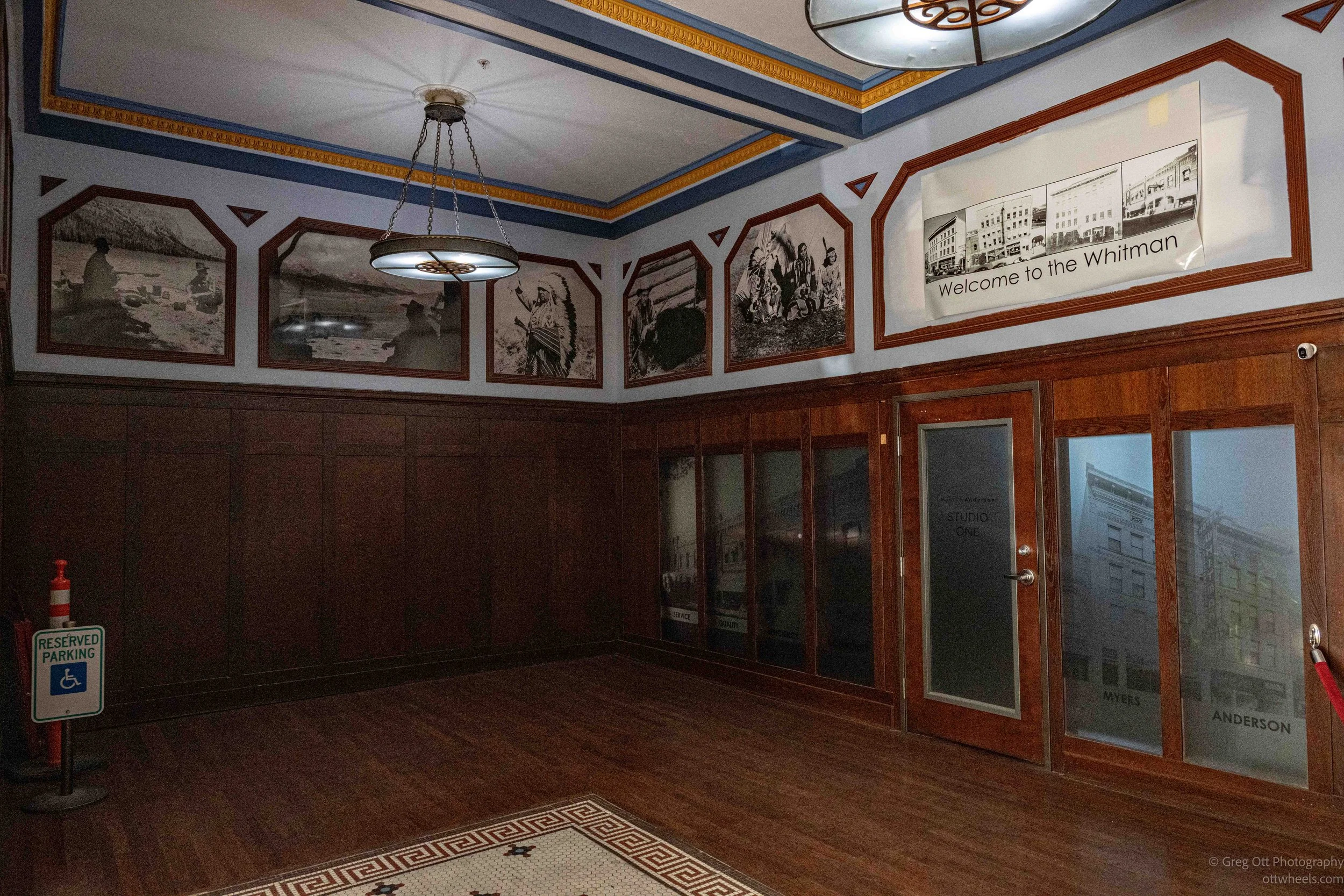
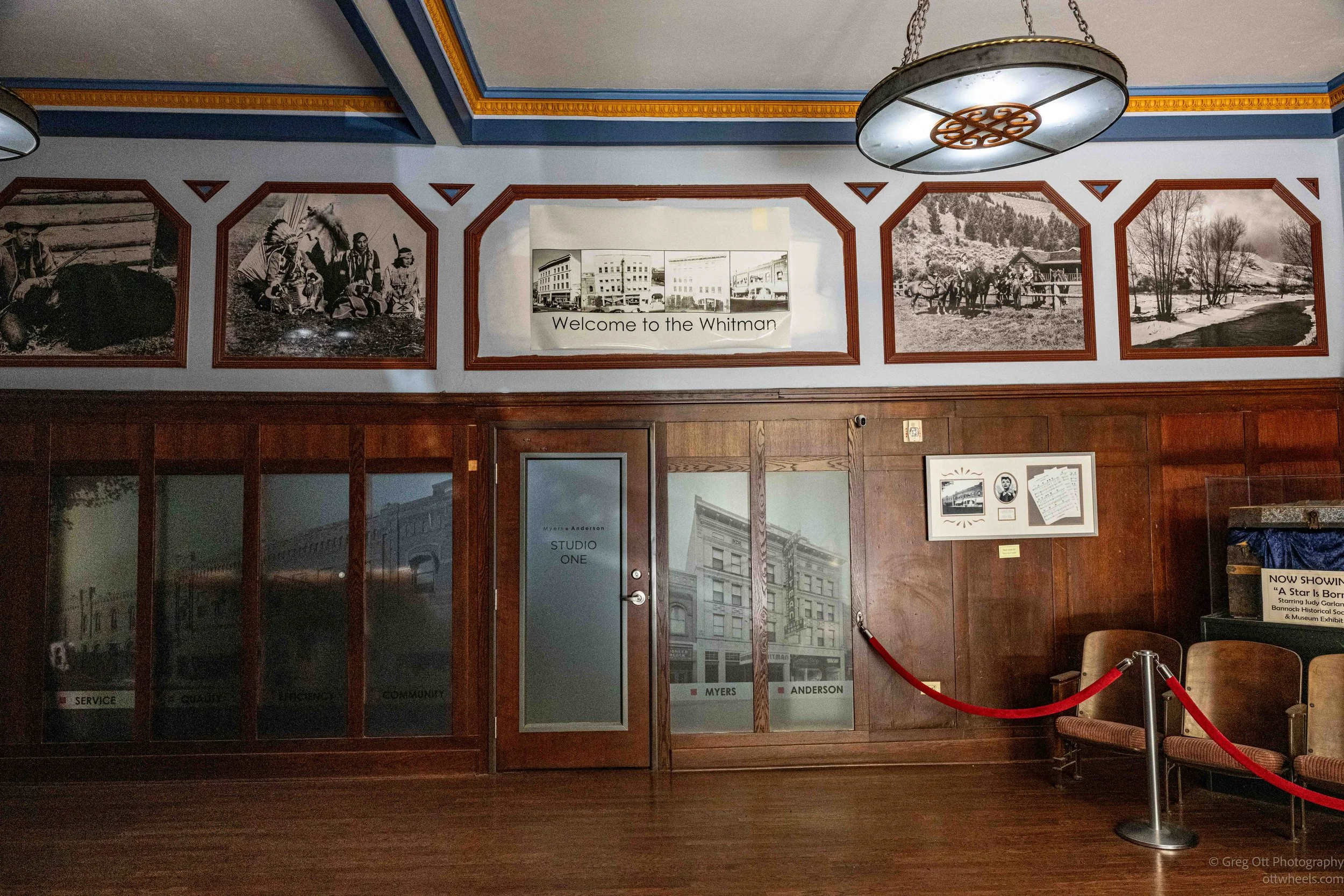
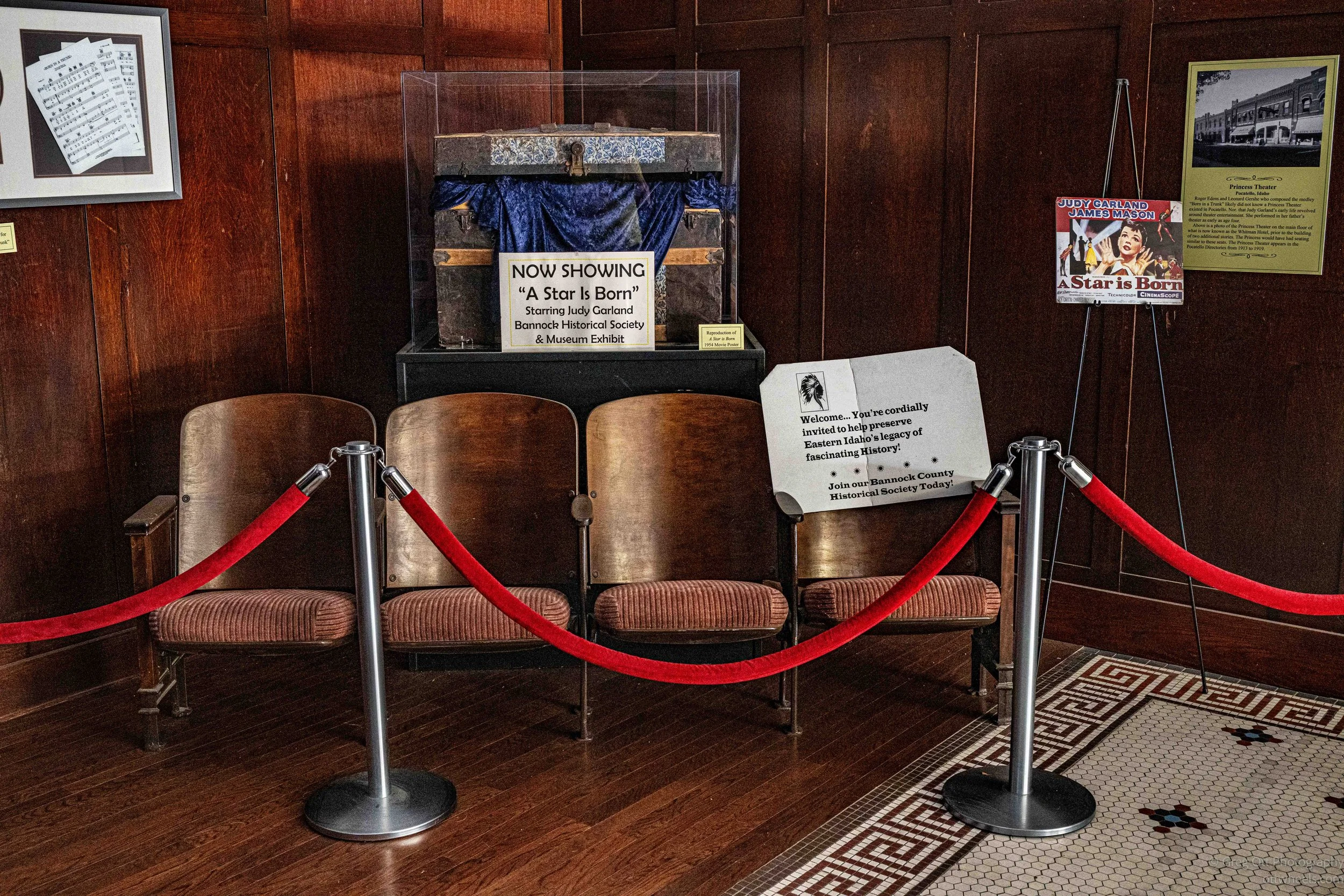
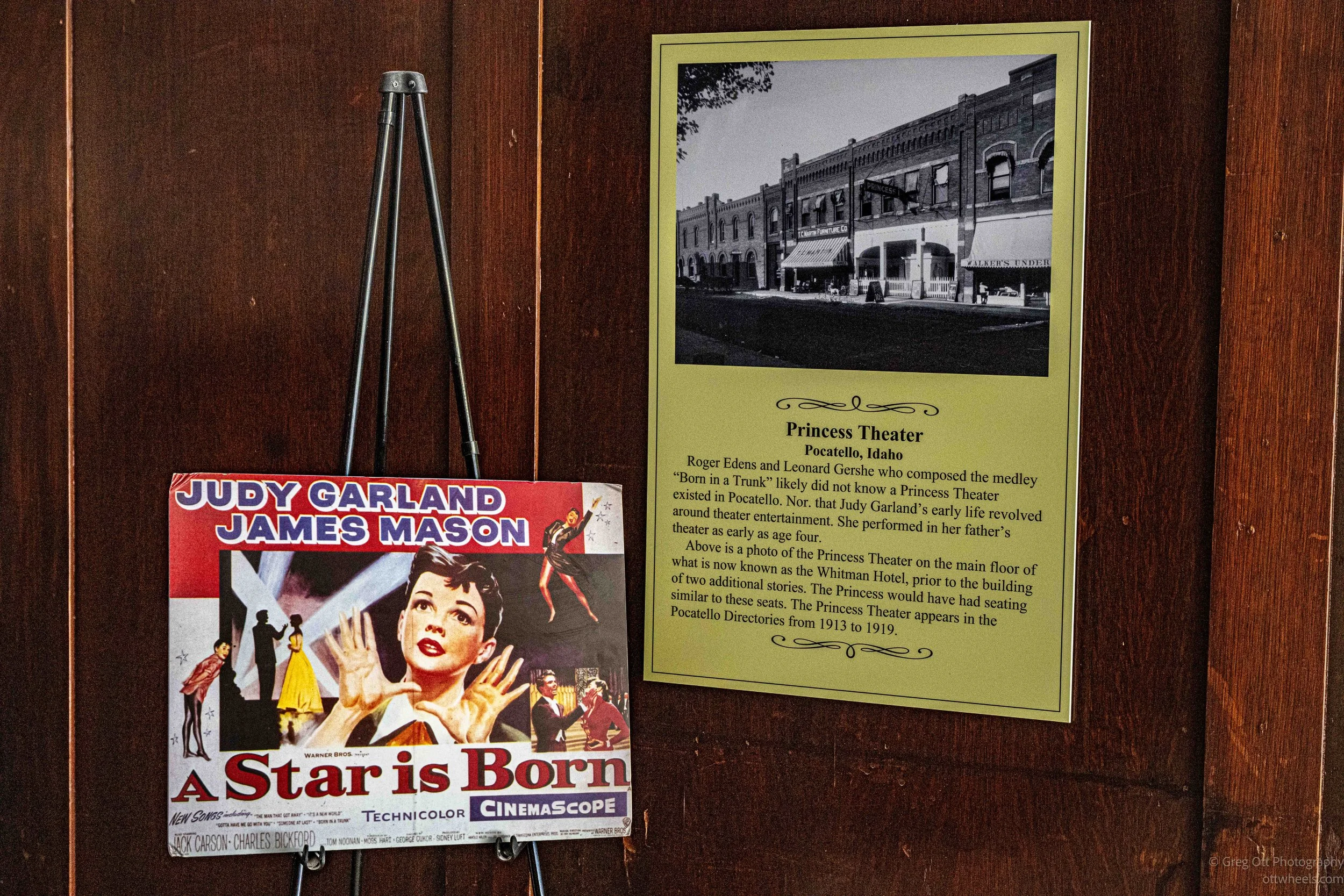
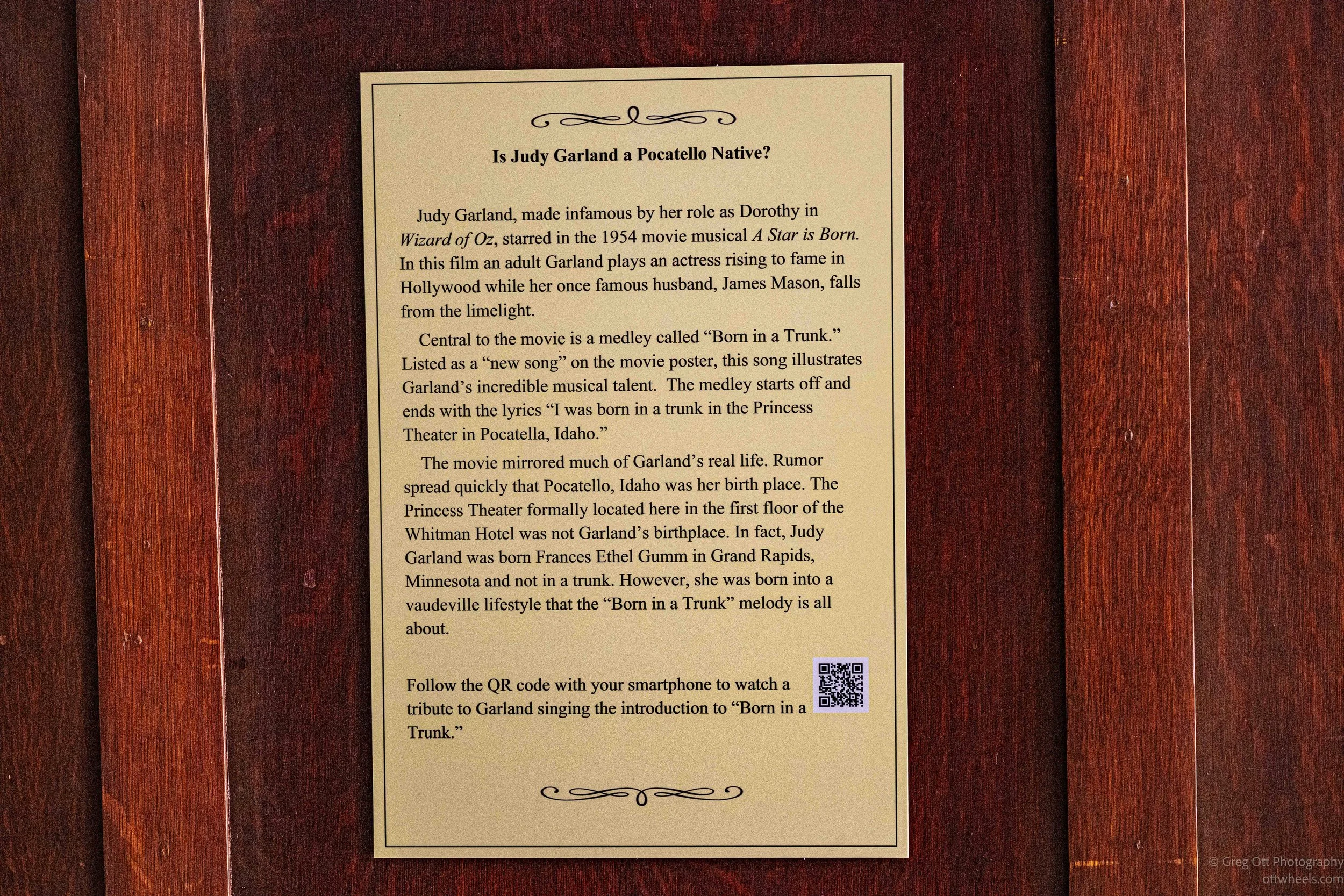
The Princess Theatre gained an unusual bit of fame in 1954 when Judy Garland mentioned it in the film A Star Is Born. During her performance of Born in a Trunk, Garland's character sings about having been born backstage at the Princess Theatre in Pocatello, Idaho. It was a fictional story, but the theater really did exist. By the time the film was released, the theater had already been closed for more than thirty years.
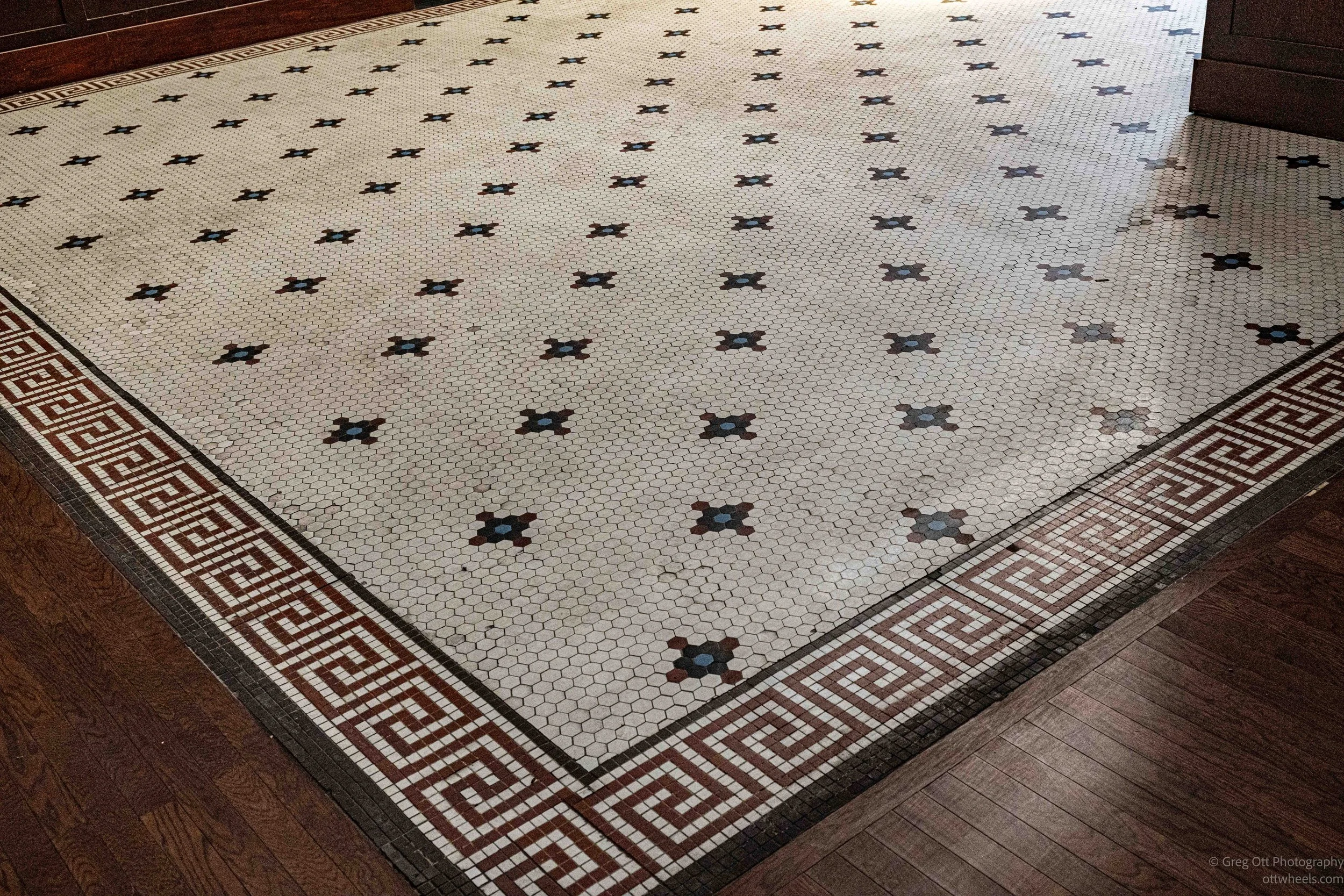
The veteran also told me about a magnificent mahogany bar that once stood in the lobby. I went inside to have a look and tried to imagine what the place must have been like during its better years. The building eventually fell into disrepair but was restored and converted into apartments in the 1990s. The restoration earned a historic preservation award in 2010. It must have been quite an impressive place in its day, and without that conversation on the sidewalk, I probably would have walked right past it without knowing any of its history.
Other Historical Buildings
He suggested that I walk to the other end of town to see the Hotel Yellowstone.
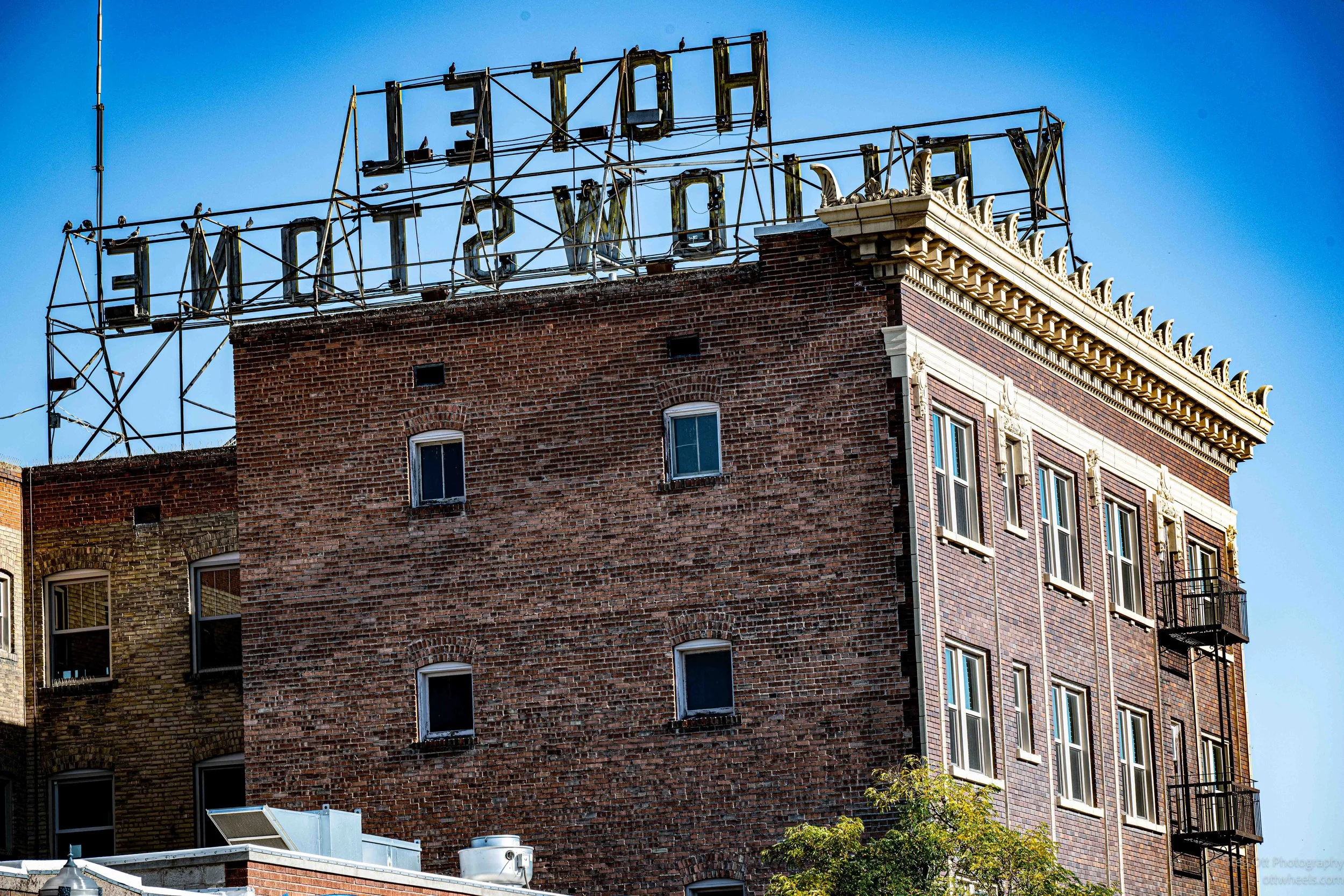
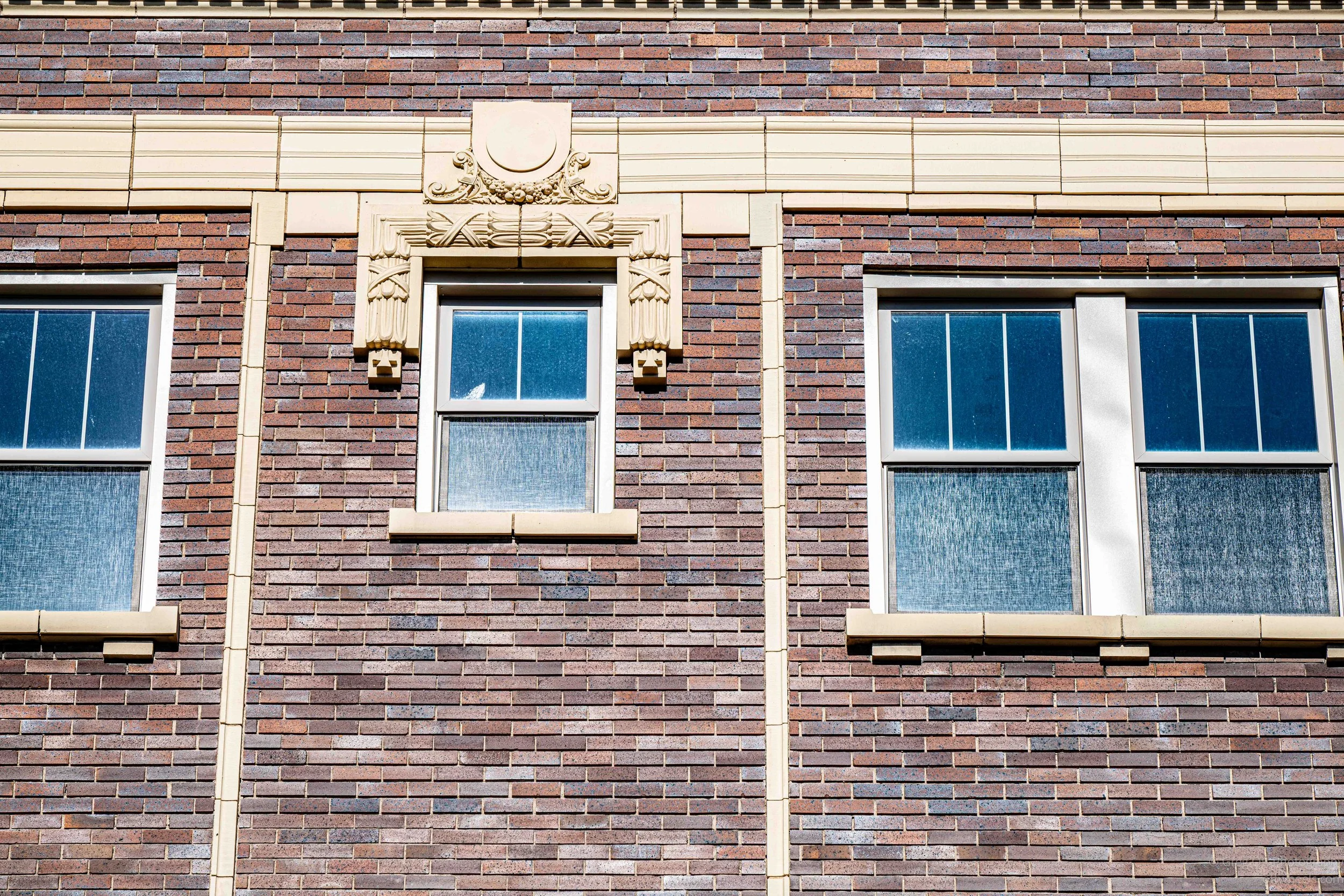
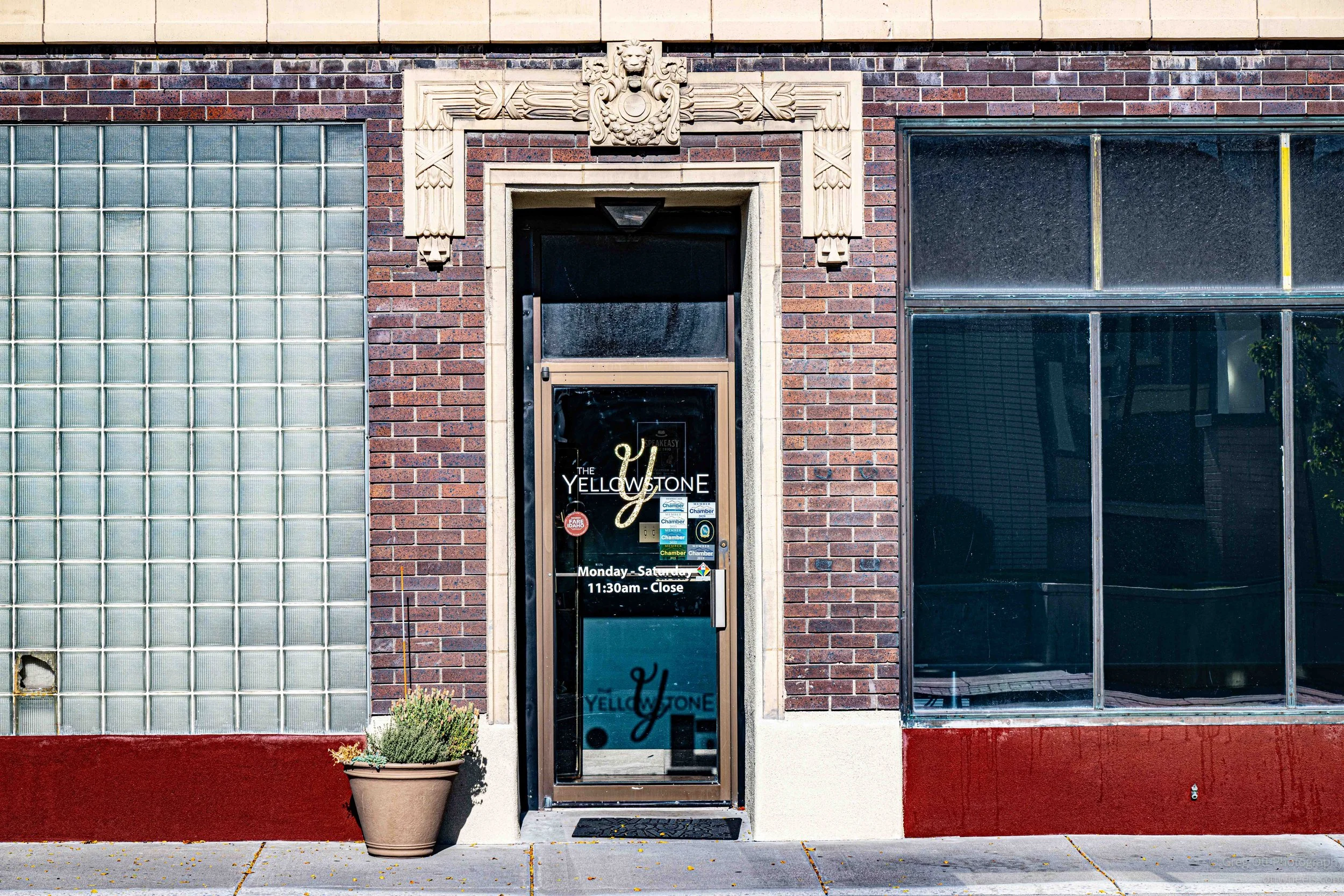
He told me about the old Greyhound Bus Terminal, and the train depot. He said that the Greyhound terminal was in disrepair, but its old neon sign still lit up at night. Before we parted, he had one final suggestion: stay until after dark to see all the neon signs around downtown Pocatello. Apparently, the town looks quite different at night.
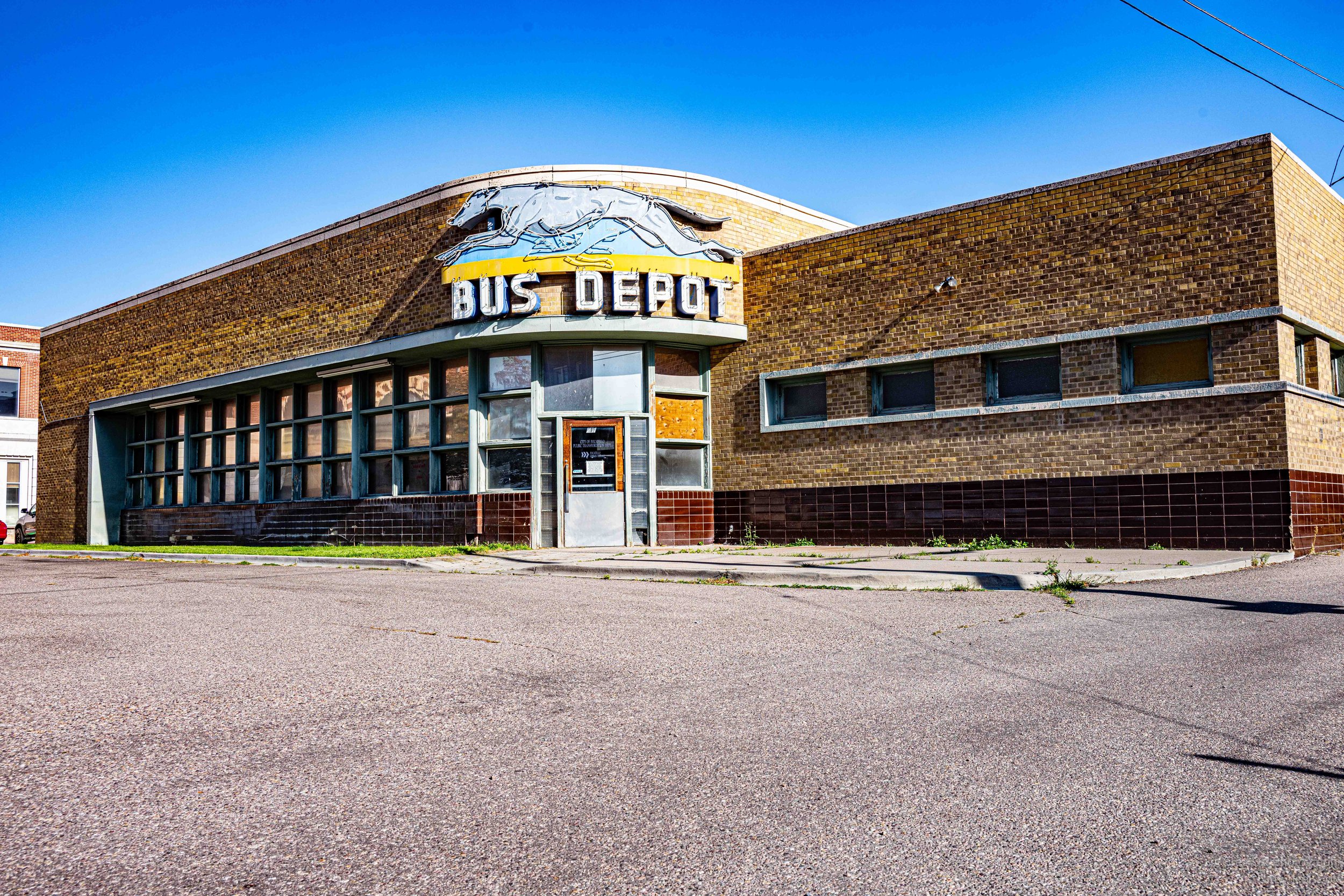
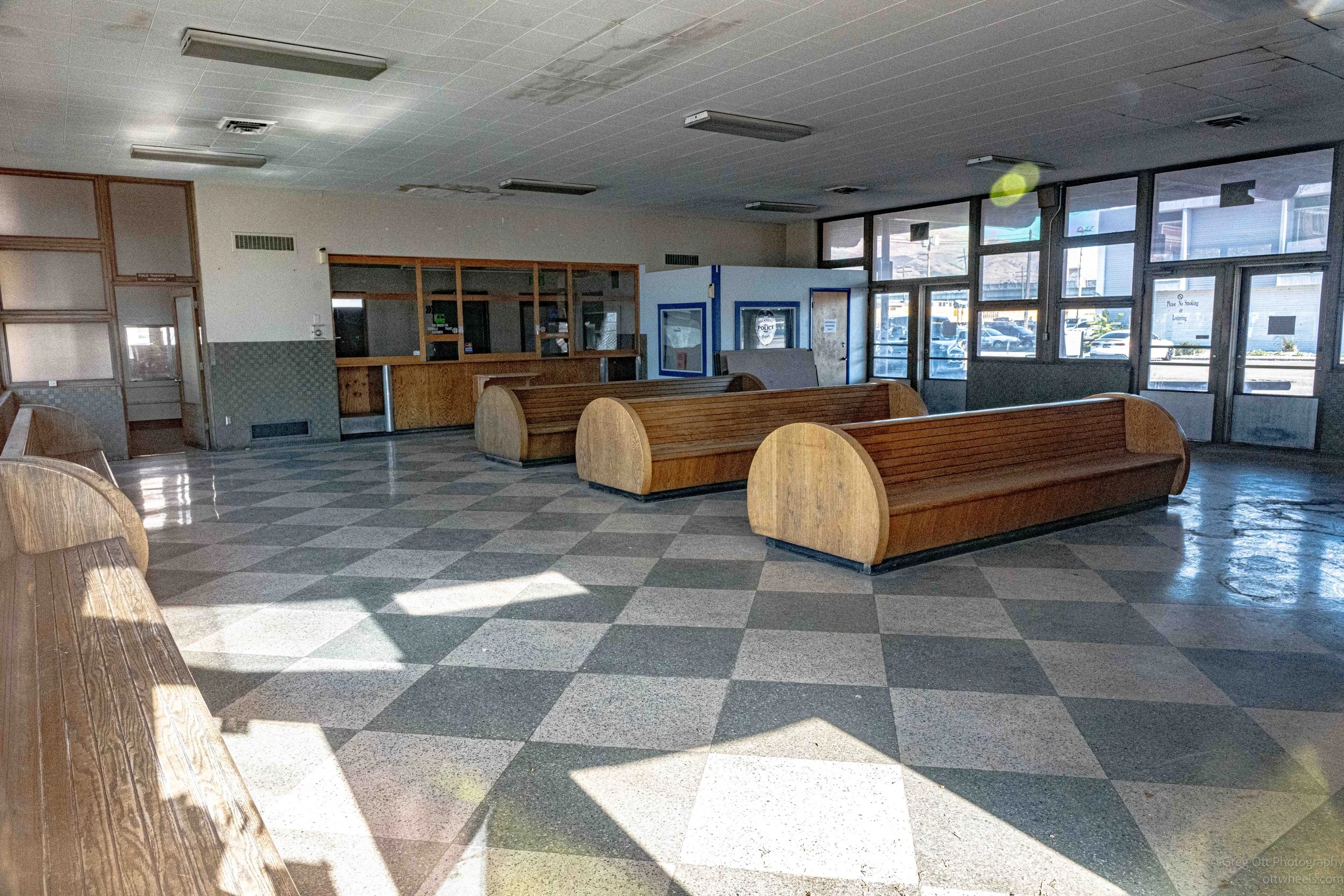
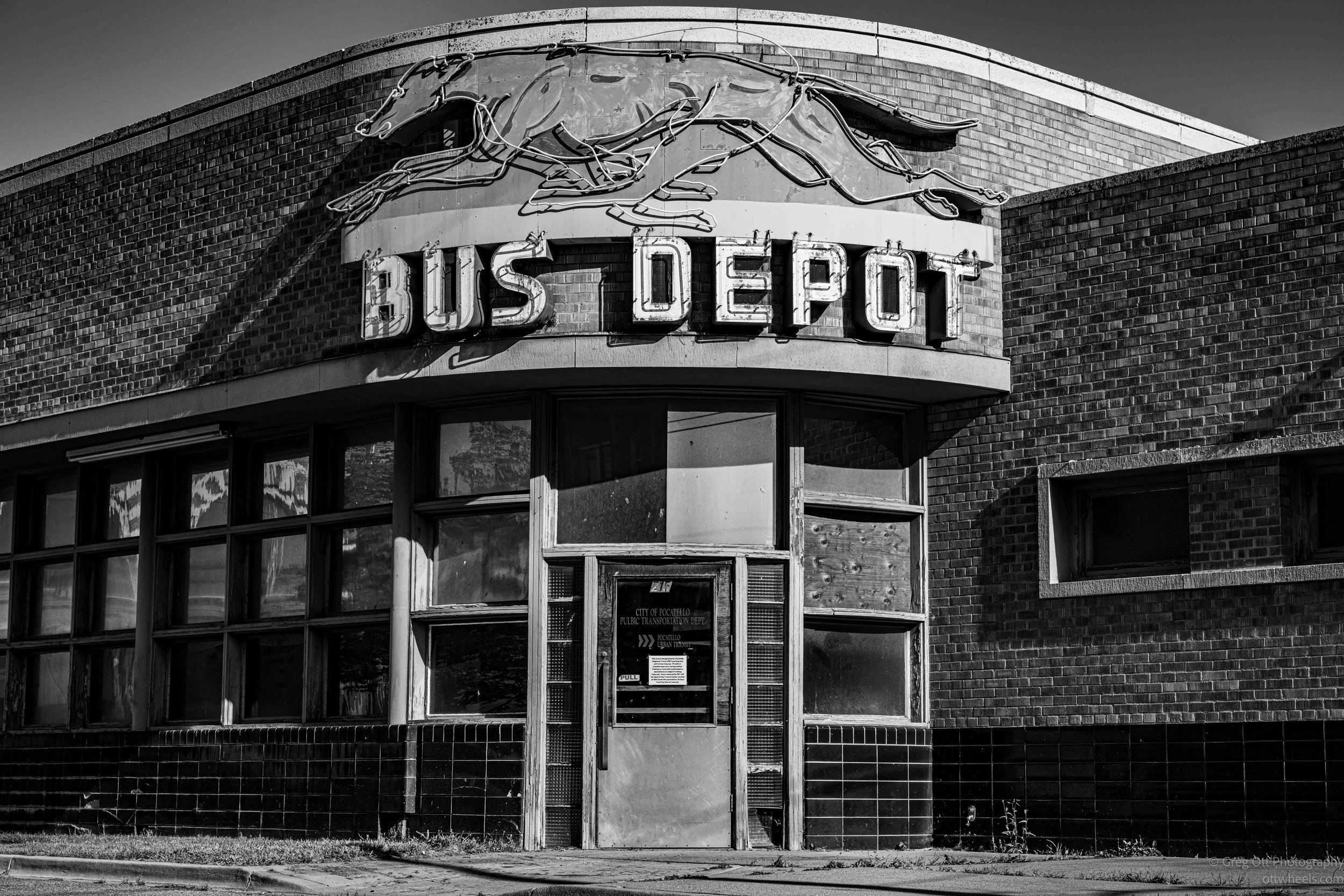
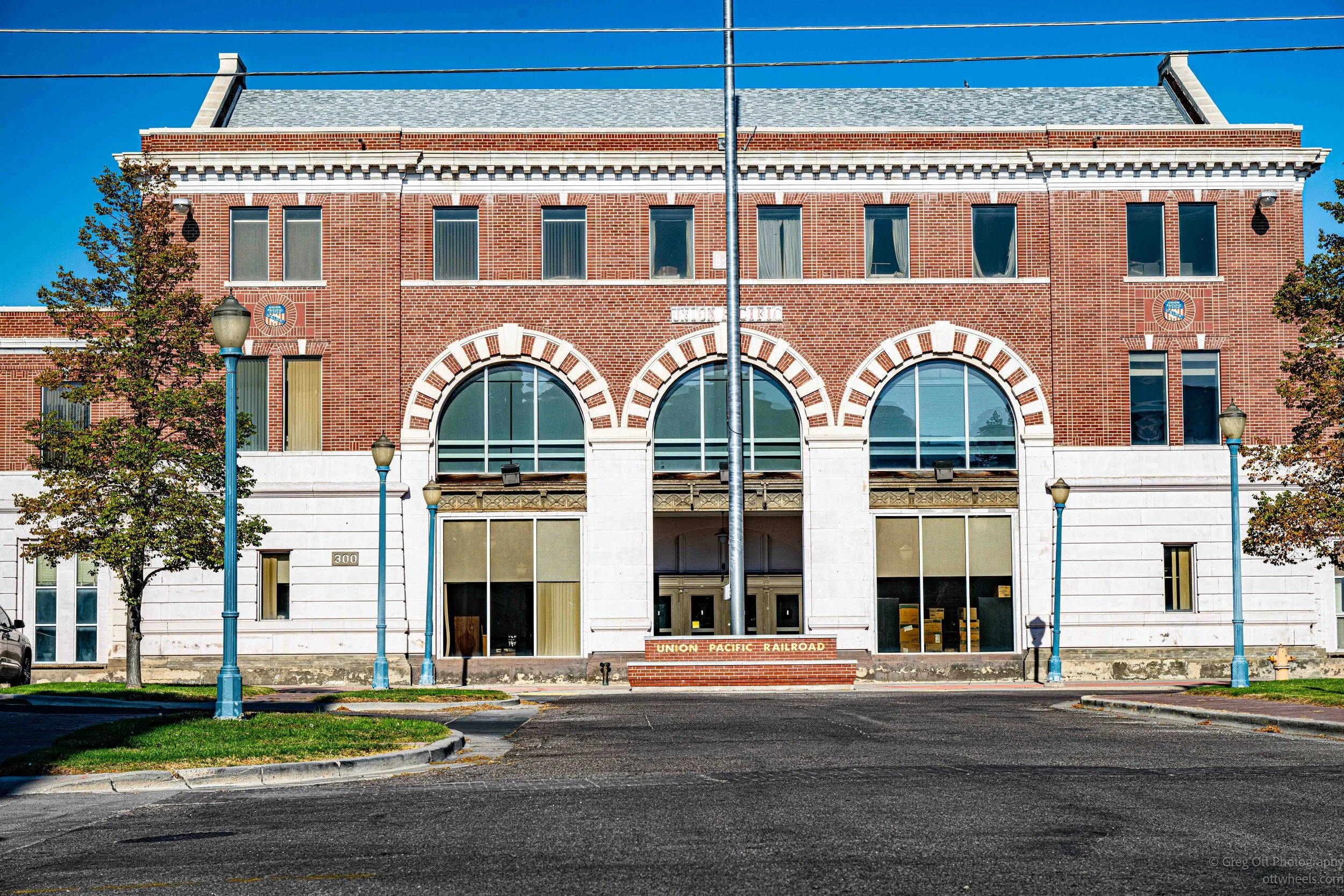
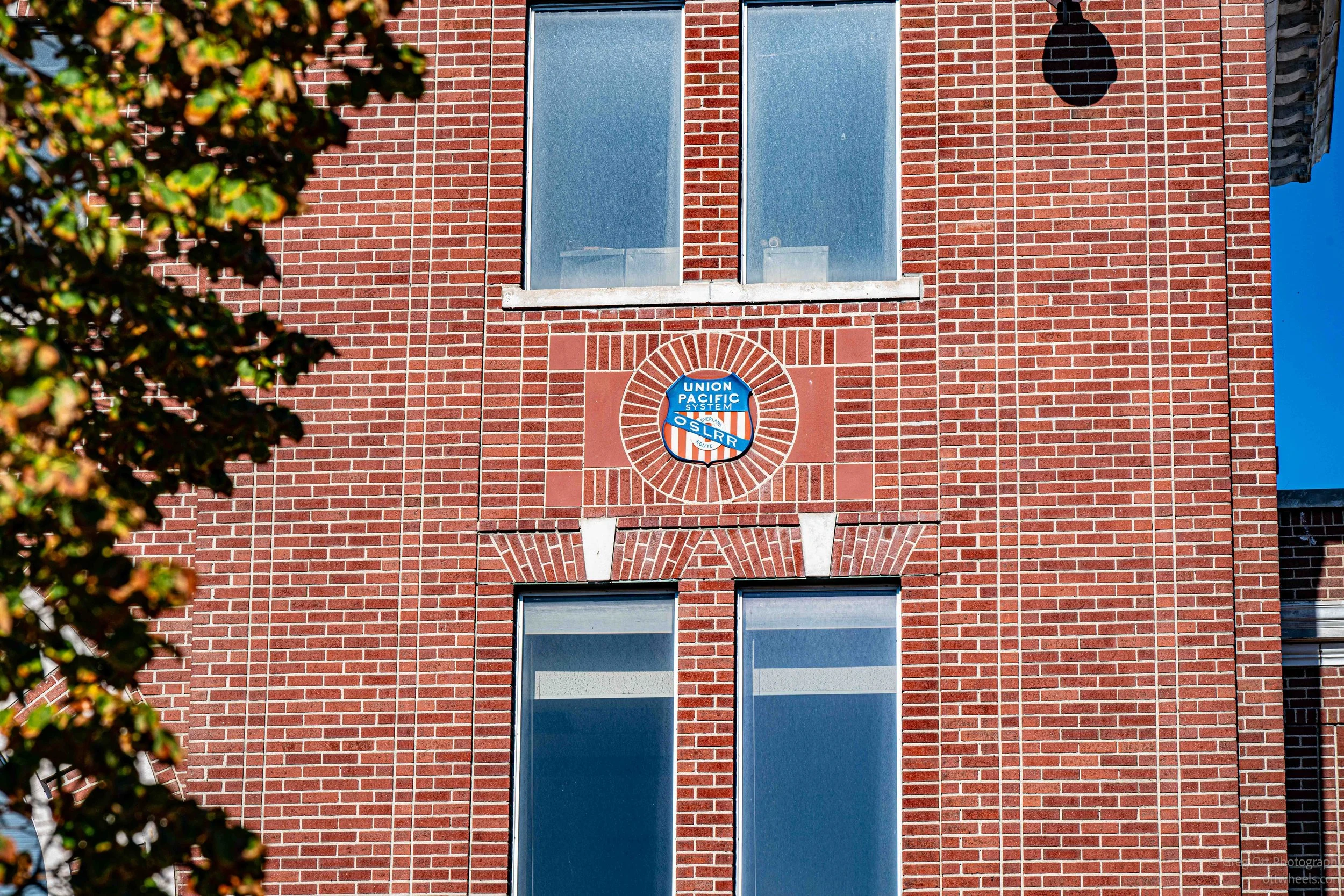
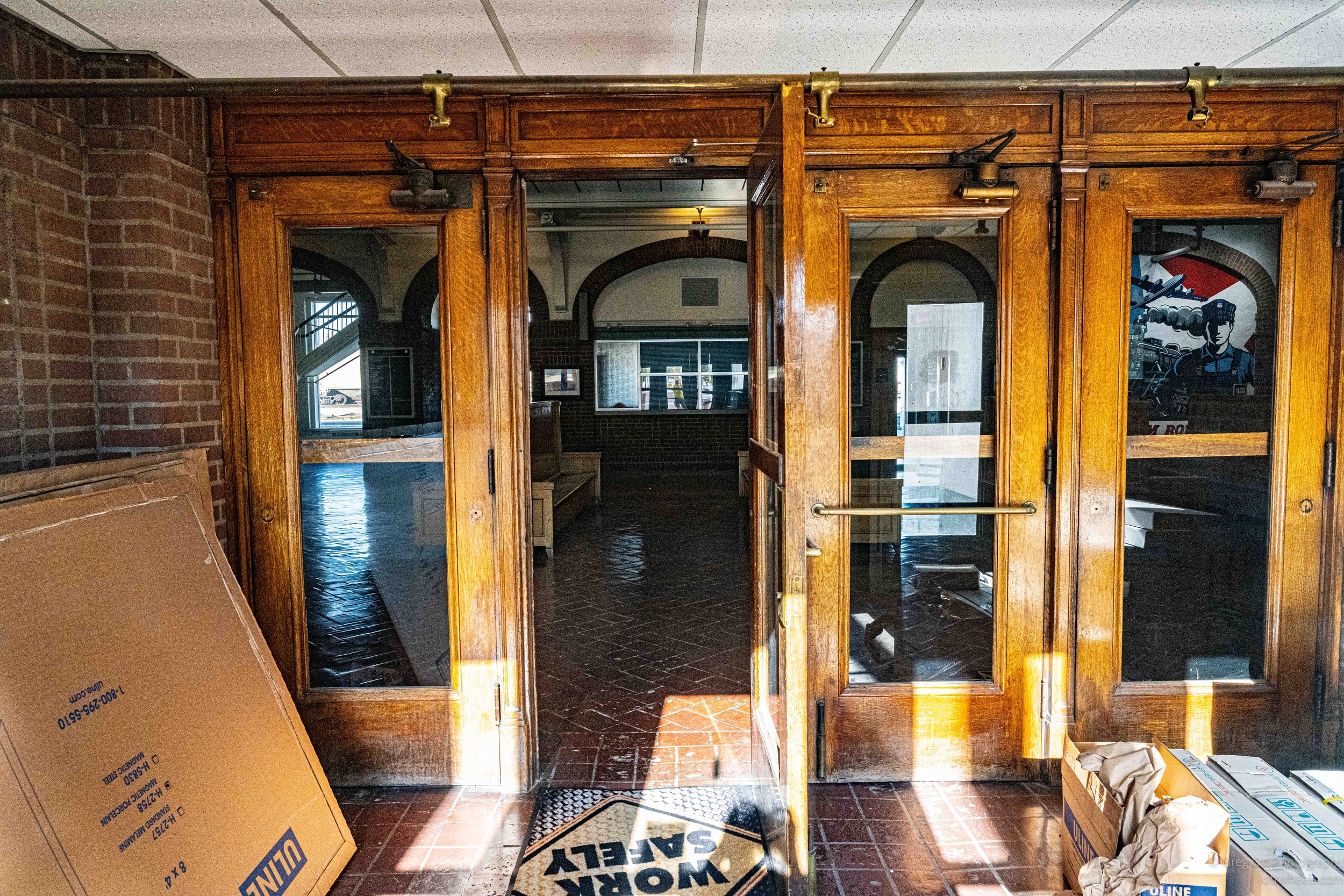
I continued walking toward the railroad tracks, taking a few more photographs before heading back to the van. I would have liked to see the neon lights, but I wasn't going to make it until dark. I still had a couple of hours of driving ahead of me toward Idaho Falls, and I needed to find somewhere to spend the night.
I eventually ended up at a roadside pull-off near the Mazda dealership in Idaho Falls, a place I remembered from the last time I passed through town. By the time I arrived, it was almost 9 p.m., and I was ready to call it a day.
Reflections on Pocatello
As I drove toward Idaho Falls, I found myself thinking about Pocatello and how much the town must have changed over the past 125 years. Like so many towns in the American West, it had experienced its share of prosperity and decline. Industries changed, the movement of goods shifted, and new highways diverted traffic, taking commerce and tourism along with them. The railroad that had once been so important to Pocatello's growth was no longer the economic engine it had been.
I couldn't help wondering why Pocatello hadn't done more to capitalize on its downtown and its history. Revitalizing an old town requires considerable investment, but it also takes a group of people with the vision and determination to make something happen. I had visited other towns, including Bozeman and Livingston, Montana, that had gone through similar economic changes but had managed to reinvent themselves while preserving much of their character. Pocatello seemed to be struggling to make that transition. There were some wonderful old buildings, but much of downtown felt as though it had been left behind. The potential was certainly there.
Yet Pocatello had been an unexpected surprise. I hadn't planned on spending much time there, but I ended up wandering through downtown, studying buildings I might otherwise have passed without a second glance and discovering pieces of the city's history. What made the visit particularly memorable was my conversation with the veteran outside the Whitman. He had spent most of his life in Pocatello and remembered people, businesses, and places that were long gone. Hearing about the town from someone who had witnessed so much of its history was far more interesting than reading about it on a historical marker.
I left feeling that I had only scratched the surface. There were still buildings I hadn't explored, stories I hadn't heard, and I never did get to see those neon lights. Perhaps another time. I hope that when I return, Pocatello will have found a way to build on its past rather than simply watching more of it disappear.