Caribou Creek Trail
The Eagle Trail State Recreation Site was mostly full by late evening. At 7:15 a.m., the guy behind me decided to turn on his loud truck engine and break down his site. His wife sat in the truck texting. Perhaps she wasn’t able to help for physical reasons, I don’t know. He used loud power tools to lower the four jacks that stabilized the camper, and the entire process took almost forty-five minutes. Somehow, I had missed the entire setup the night before. I certainly hadn’t missed the truck running in the morning. Some things make no sense to me. Why intentionally make your truck that loud, then run it for forty-five minutes with eight other people camped nearby? One of life’s little mysteries.
Surprisingly, by 9 a.m., the campground was almost empty again. I made breakfast, pulled a double espresso, and sat down to do a little writing. For some reason, I enjoy writing in the morning more than any other time of day. That fresh cup of coffee doesn’t hurt.
By late morning, I was making plans to visit the northern section of Wrangell–St. Elias National Park. Rather than pushing directly to Glennallen, I decided to use the afternoon to begin exploring the Nabesna Road area. Nabesna receives only a fraction of the visitors who travel to McCarthy, and the road sounded like a good introduction to the scale and solitude of the park. Everything I read suggested checking with the park office first to understand the current road and trail conditions.
I don’t remember exactly how long the drive was to the Nabesna area park office, but as I arrived, a Park Service truck was leaving. On the door was a sign saying they would return at 1:15 p.m. I had about an hour to wait, so I made a light lunch and read a little more about the area. I wanted to hike the Skookum Volcano Trail. It was rated as one of the best trails for views and the possibility of seeing Dall sheep. It was also the more difficult of the area trails, climbing about 1,800 feet. My plan was to stay at Kendesnii Campground, which is 27.8 miles from the office.
As I waited, two vehicles pulled up. One was a pickup with a camper in the bed, and the other was a Class C camper. The guy with the pickup started asking the couple on the porch how they liked their Class C. He was poking around for information on how it handled rutted dirt roads and whether they took it to remote places. They explained that they mostly avoided bad roads. “It doesn’t do well off road,” they agreed.
After a lot more questions, the guy explained that he was looking to upgrade to a van. He pointed toward mine and said, “Debating on buy one built or building it myself.” I assumed he meant my van, since there weren’t many other candidates sitting in the parking lot.
Shortly after that, the Park Service woman returned and opened the office. We all went in, and I was last through the door. The couple said, “You go ahead, you were ahead of us.” Technically, I had been ahead of the guy with the truck too, but he seemed to be in a hurry and I wasn’t. He stepped up to the counter and said, “Here for a fish license.” Not a fishing license. A fish license. I figured he was saving words to speed up the process.
While the ranger asked him what area he needed the license for, he turned around and said to me, “That your van?” I confirmed that indeed it was my van. No other vehicles had pulled in, so I wasn’t sure what else it might have been. He had a lot of questions, but the fish license process kept interrupting the conversation. I told him I would show him the van after I got my questions answered.
When my turn came, I told the ranger what I was planning to do. She asked what I was driving and looked out the window. Then she said, “You may make it, but seriously, I don’t recommend it.” She explained that there were currently eighteen to twenty-four inches of water running over the road. Even if I made it through that, the trail still had up to three feet of snow in places. She told me about a group that had hiked it a week earlier, but they had a lot of gear and clearly knew what they were doing. If I did make it through, she said, Kendesnii Campground wouldn’t be very crowded. I now understood why this area is one of the least visited parts of Wrangell–St. Elias National Park. I told her I was going to do a little more research and decide what to do.
The guy with the truck had already started to pull out, but when he saw me, he came back. “Wasn’t sure how long you were going to be!” he said. I thought again that he didn’t seem to like the word “I.” I asked if he wanted a tour of the van. Then the couple joined us, and everyone started asking questions.
“You built this?” he asked. I explained that it took eighteen months and talked through why I chose the layout. He thanked me, said he needed something like this, and left. The couple stayed longer, and we compared camping styles. They hop from campground to campground, never boondock, and don’t go on many dirt roads. Their setup made total sense for what they like and do. I knew that same setup wouldn’t work for me, just as my van probably wouldn’t make much sense for them.
After more research, I went back inside and asked the ranger for feedback on trails in the area. She recommended the Caribou Creek Trail. She also told me I could overnight at any of the pull-offs along Nabesna Road, and there were many of them. She also explained that I cook stay at the hut at the top. We then talked about living in Alaska. She was born here and loves it. The Park Service job is her summer work. The rest of the year she drives a bus and works as an assistant in the special-needs section of the school.
She told me her son lives with her and likes working on machines. He had wanted to be a pilot but missed this area too much and didn’t like Anchorage or Fairbanks, so he moved back. She looked older than she was, and I found myself thinking that life in Alaska must age people in ways I don’t fully understand.
Caribou Creek Trailhead
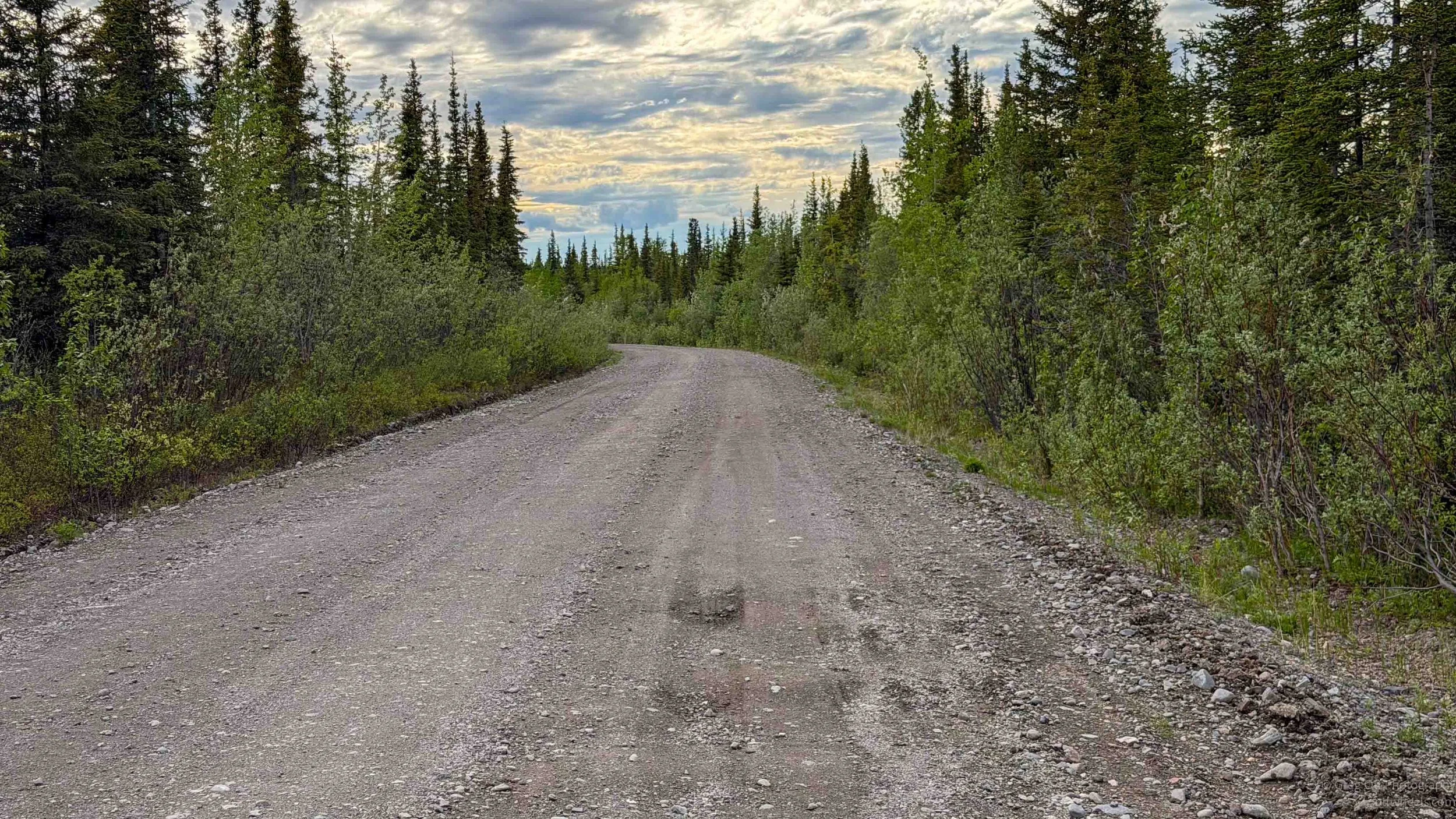
The drive to the Caribou Creek Trailhead was about fifteen miles on partially paved roads. Actually, the road is fully paved, but that was many years ago. Parts are now completely gravel, and other parts may technically be paved but have foot-deep ruts your suspension will not enjoy. The speed limit is 35 mph, and I drove most of it at 20 or below. Several vehicles passed me, including a fairly new Mercedes-Benz van. On roads like that, you are constantly weaving to avoid obstacles while also watching for people trying to pass as you weave. It keeps your attention.
It was 3 p.m. when I got to the trailhead parking area. Where had the day gone? The vehicles that passed me were already there, and people were getting underway. One couple walked for maybe five minutes before turning around and leaving. The couple in the Mercedes camper van headed out, and I noticed she had a full bug net over her head. That was useful information, though I didn’t fully appreciate it yet.
It took me fifteen minutes to get the route into the Garmin 67i and pack everything, including bug spray, bear spray, and water. As I was starting out, I saw the guy from another camper walking back while swatting mosquitoes. He seemed angry, climbed into his camper, and drove away, all in a matter of minutes. I stopped and put on several layers of mosquito repellent, confident that I was now well protected.
I don’t remember ever seeing a trailhead so far from the actual trail. The road beyond the parking area was now a full-blown dirt road, and you had to walk half a mile just to reach the trail. In that half mile, I had six welts on my right hand and could see mosquitoes clinging to the light wool sweater I was wearing. I noticed that if I moved faster, they couldn’t keep up as well. The trick was simple: keep moving and don’t stop for photos.
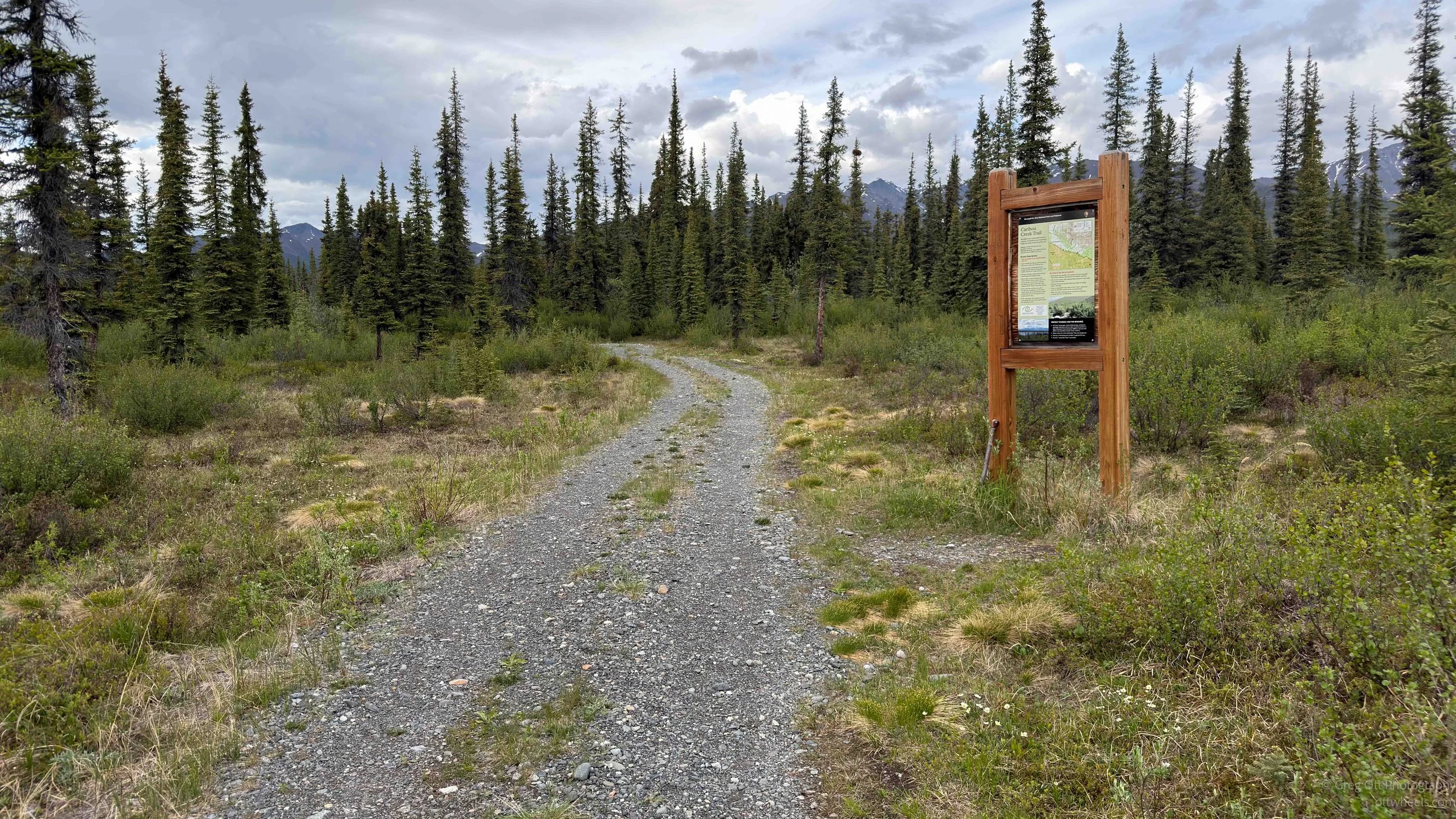
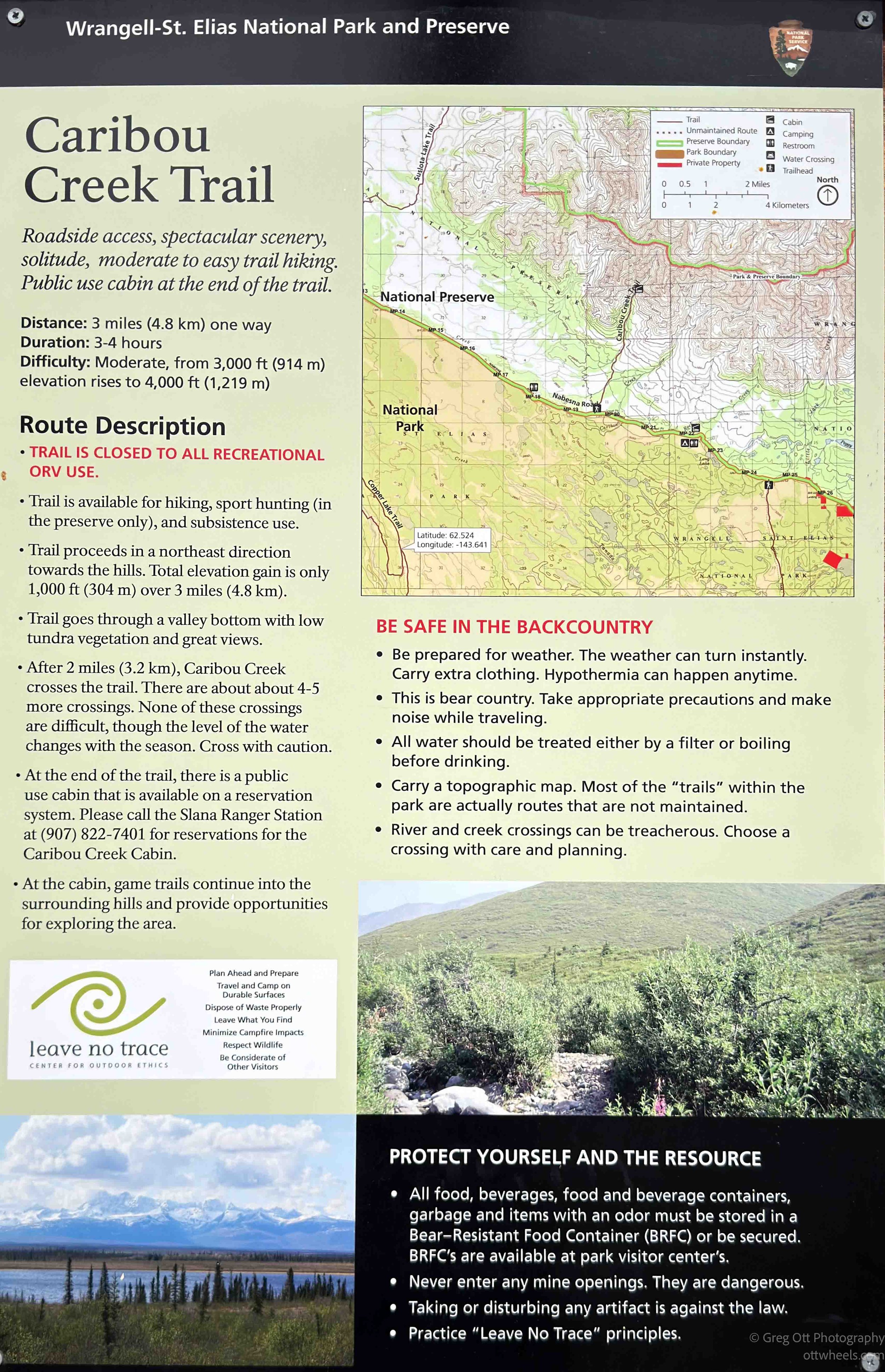
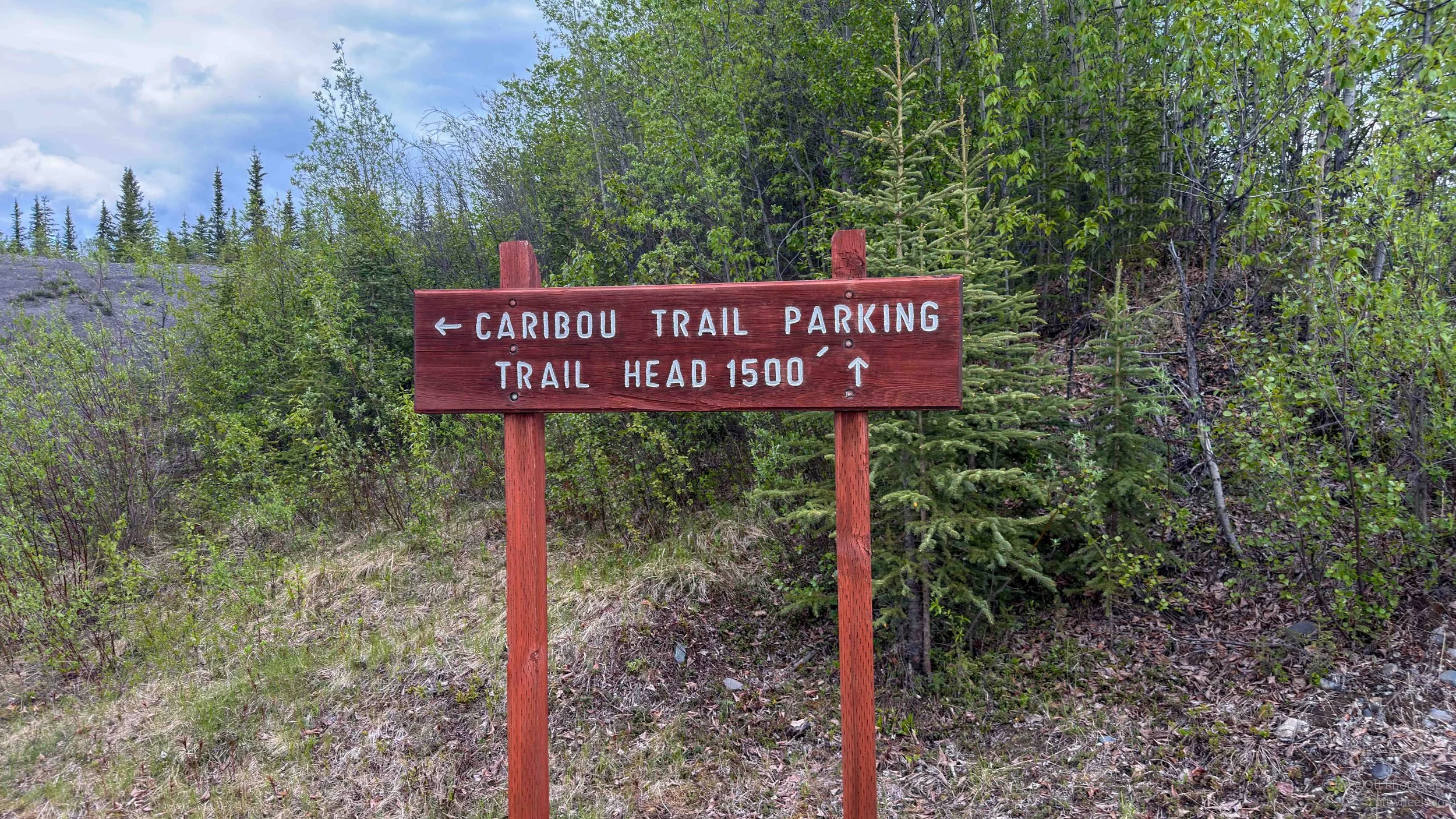
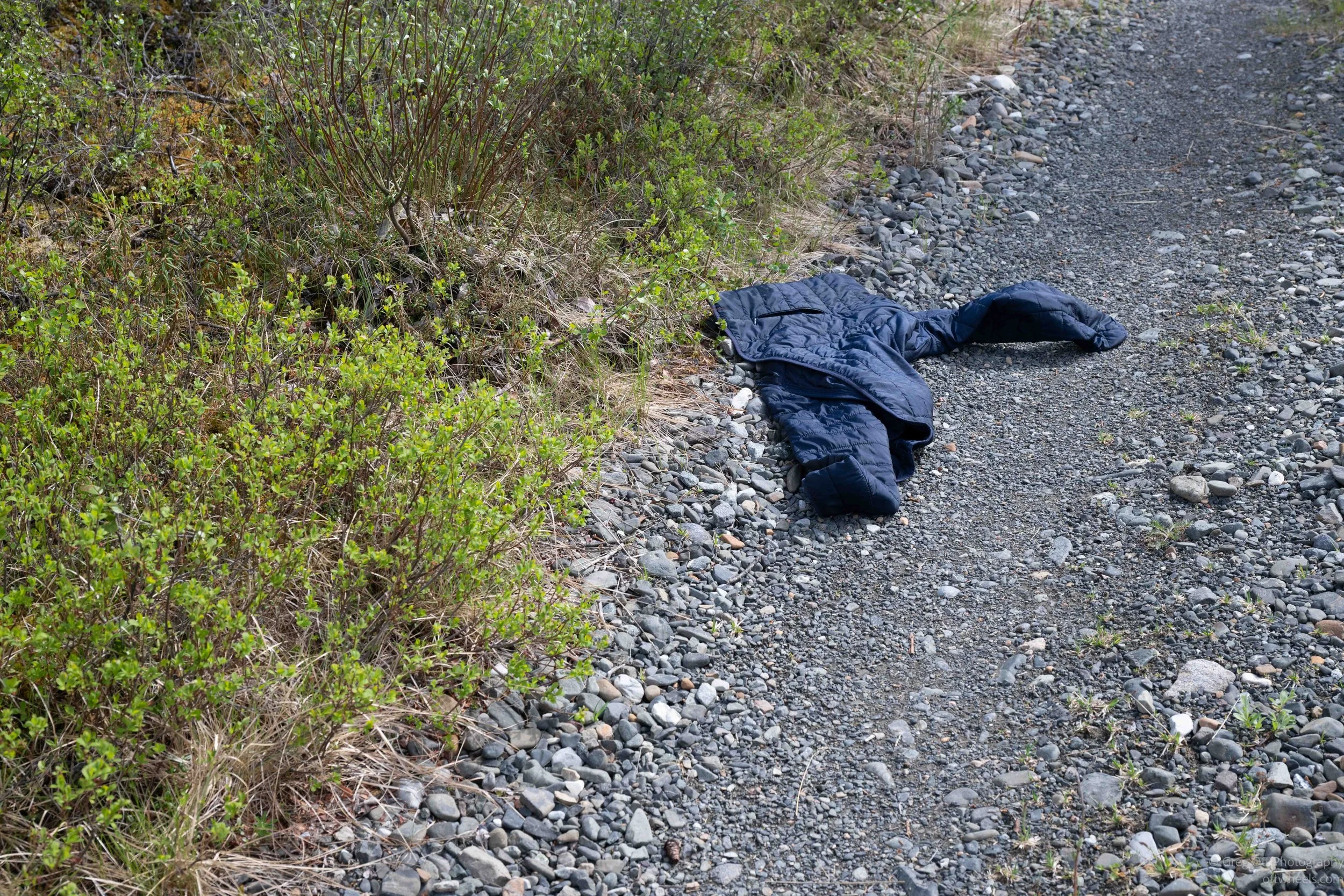
The hike to the hut was about 3.5 miles. About a half mile in, there was a blue jacket lying on the ground. There it was, completely innocent-looking, yet somehow radiating mystery. My mind immediately launched into full detective mode. Had someone stopped for a quick nature break and made a hasty, jacket-free exit? Had a bear enjoyed a particularly satisfying lunch and left the jacket as a sort of Yelp review? I distinctly remembered seeing a couple walk past my van in the parking lot, so I knew someone was just ahead of me on the trail.
Then came the great internal debate. Pick it up and play hero, or leave it as a landmark in case the owner doubled back and I had already lumbered past? After extensive deliberation, and by that I mean at least forty-five seconds of genuine moral wrestling, I left it there. My reasoning was that a jacket in the hand is worth two in the bush, or something like that.
About a mile in, I caught up with the couple. They were talking to a woman who had stayed overnight at the cabin with her dog. They were telling the woman she might see a jacket, and I let them know it was still on the trail, just off to the side now. The couple continued on, and I stopped to chat with the woman.
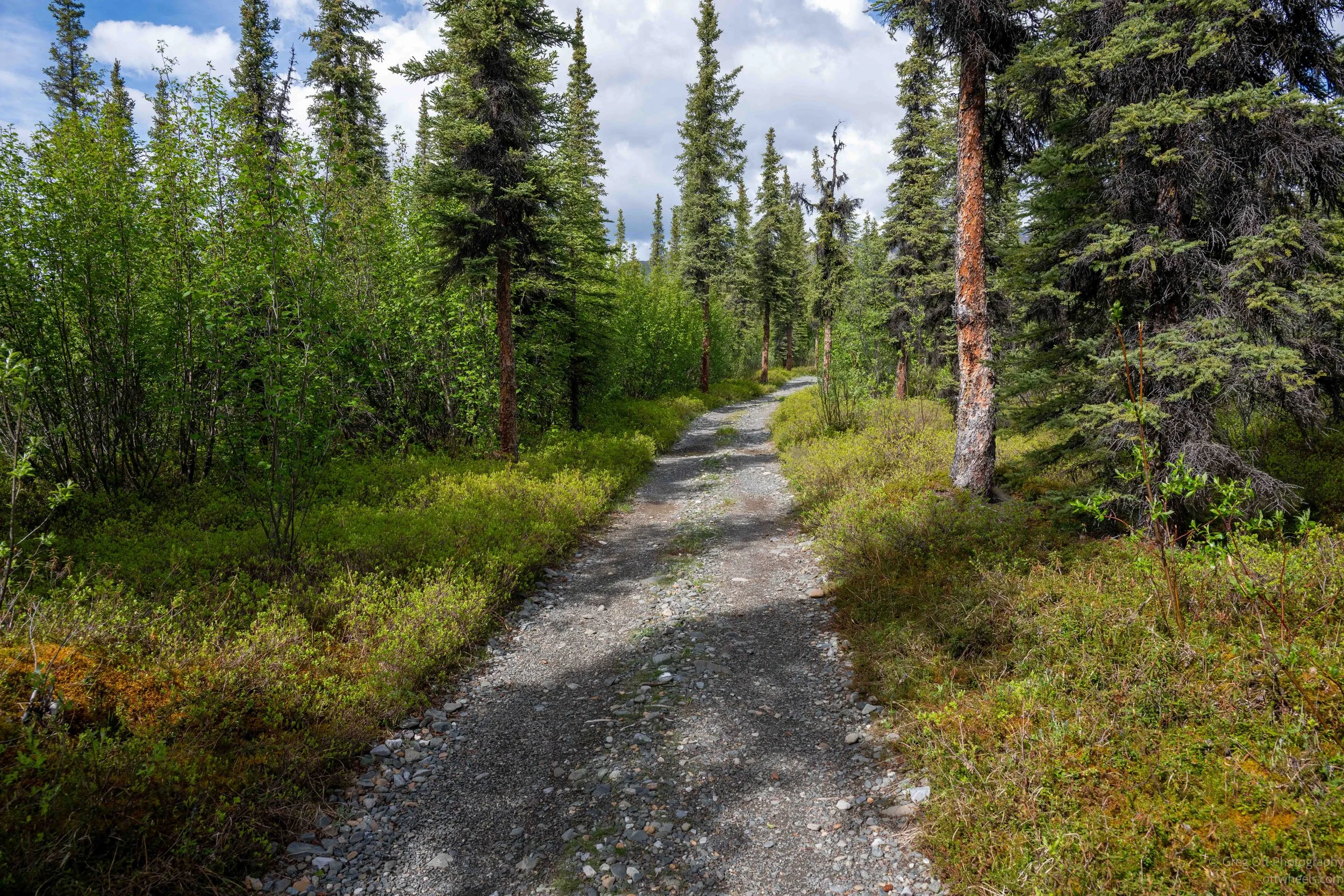
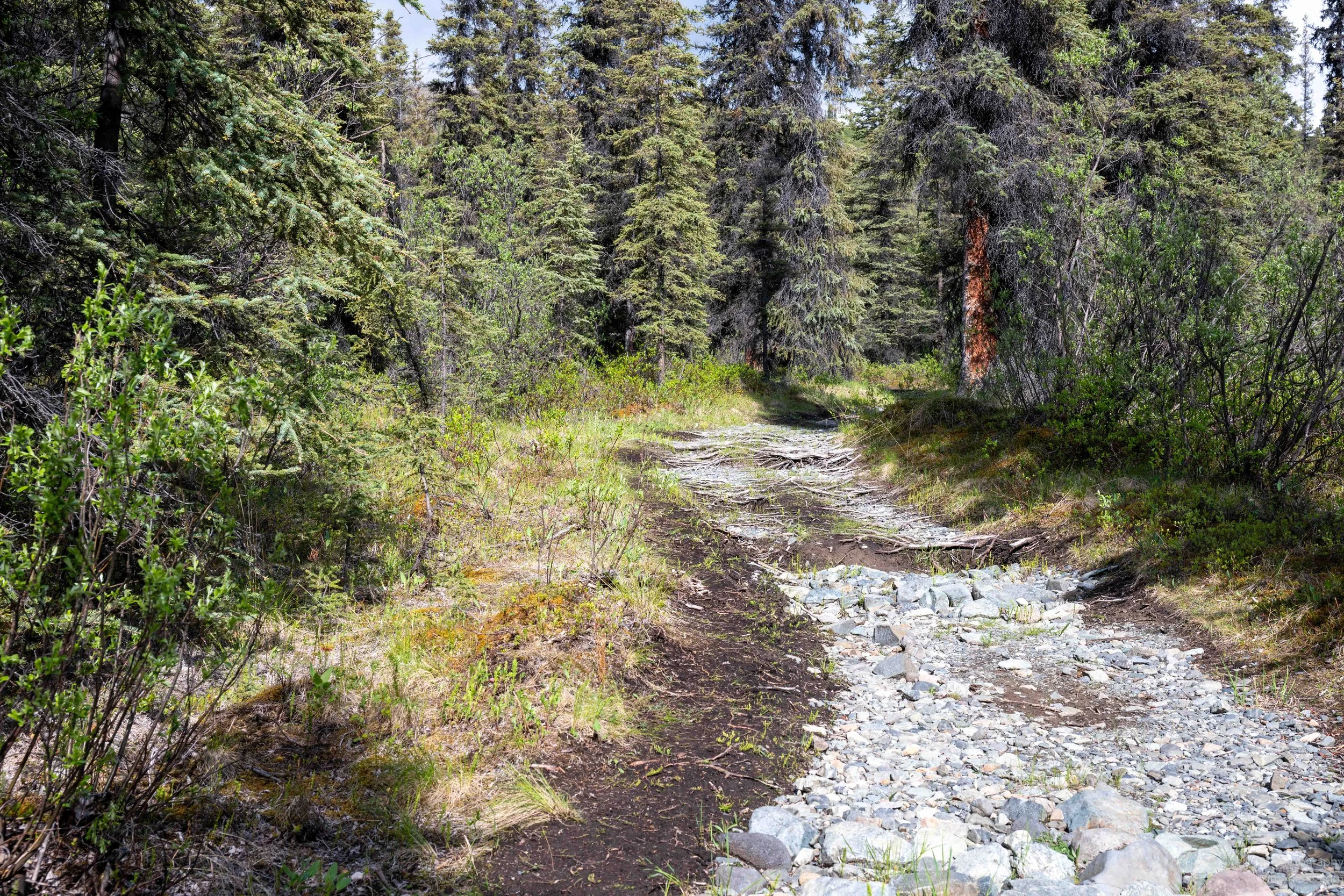
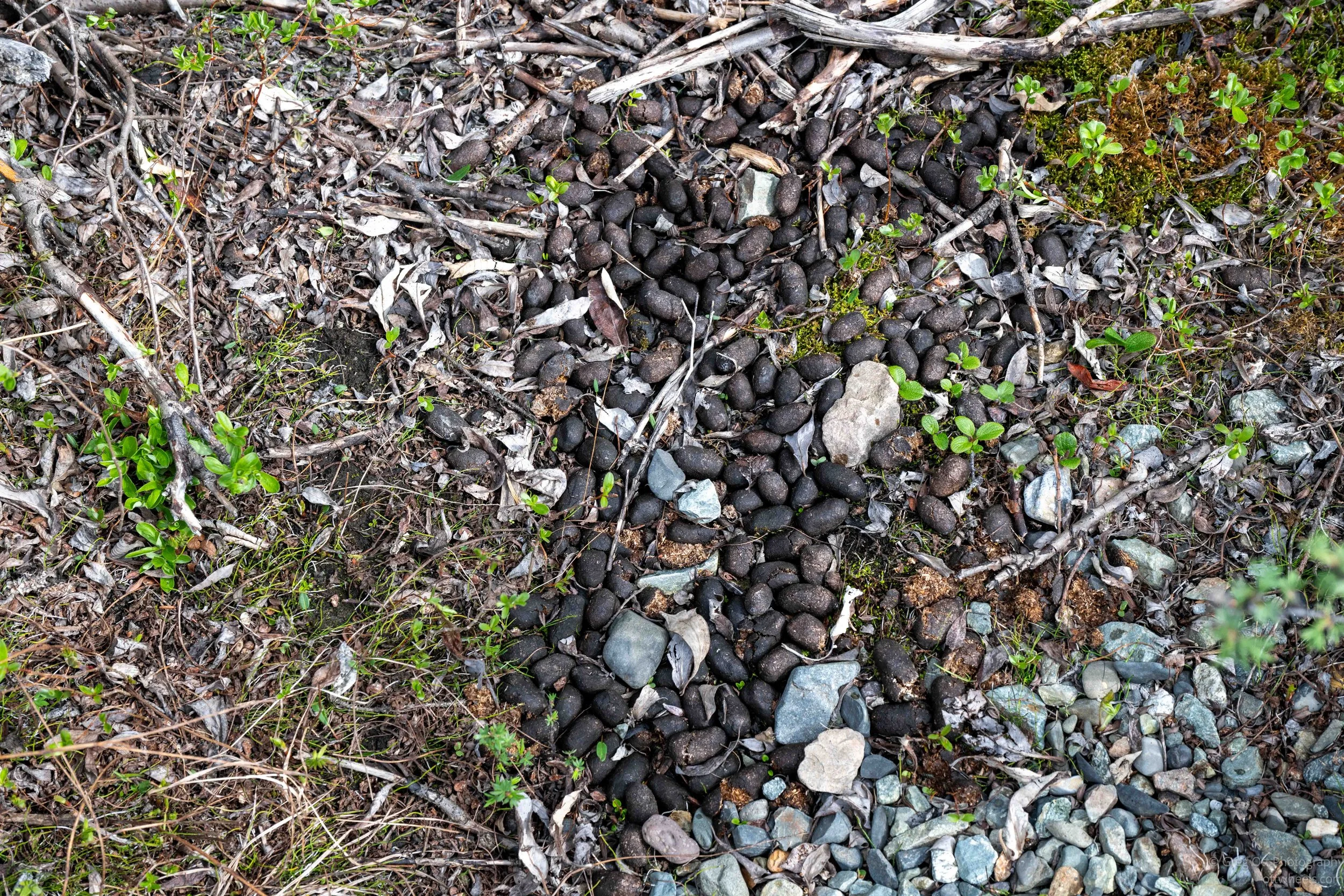
She was from Anchorage and was completely loaded down with a huge backpack. I noticed she had bear spray, an air horn, and a pistol on her belt. She told me it was for bears but that she had never had a bear charge her. Her boyfriend and dad insisted that she carry the gun. Then she said, “If you use a gun on a bear, you better be sure you kill it with the first shot. Once they are wounded, they become more aggressive.” That was a sobering thought. She had seen bear droppings but no bears, then told me to enjoy the hike and the views from the hut.
The air had a floral smell and looking deeper I finally found a few flowers. There must be many more somewhere close I thought.
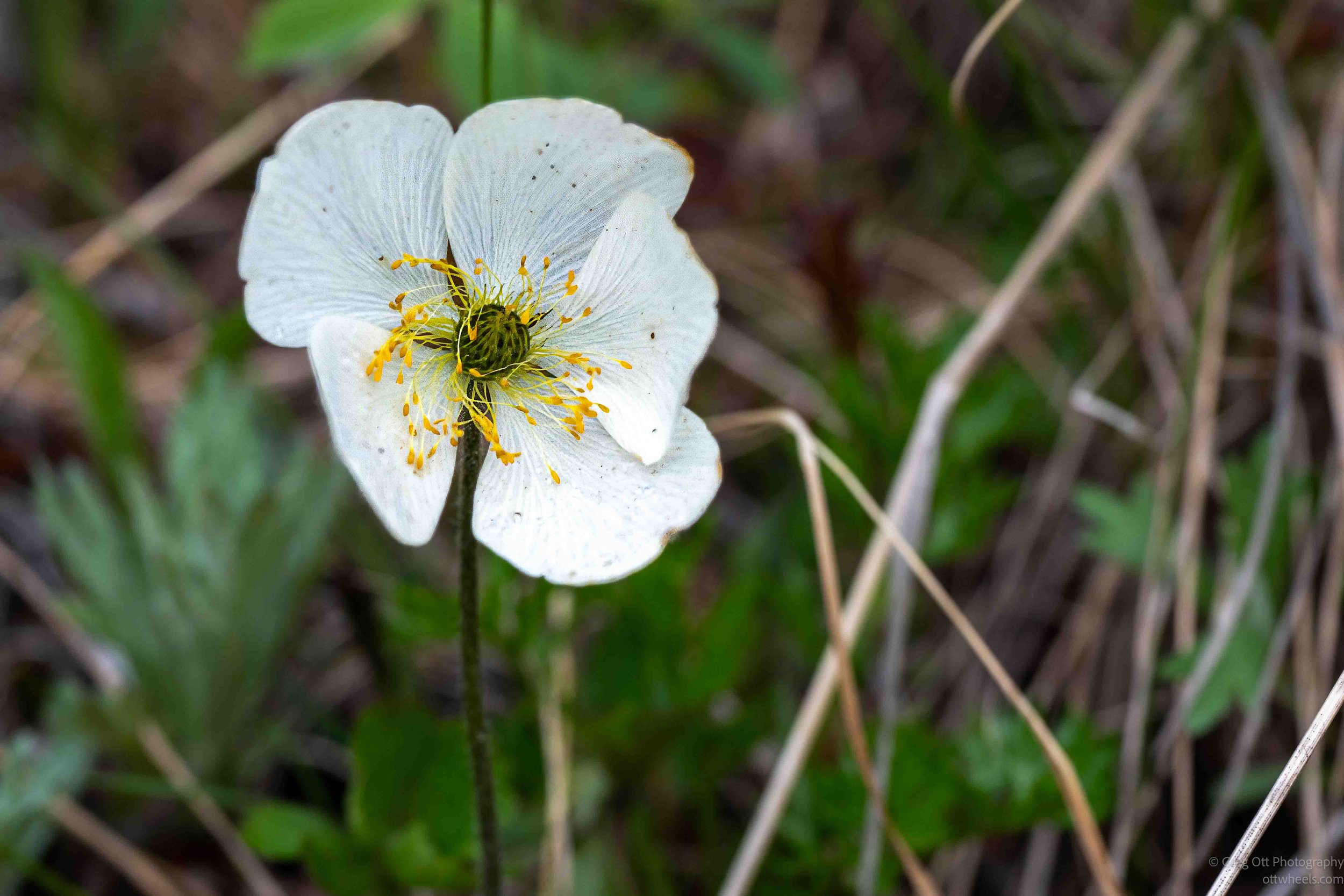
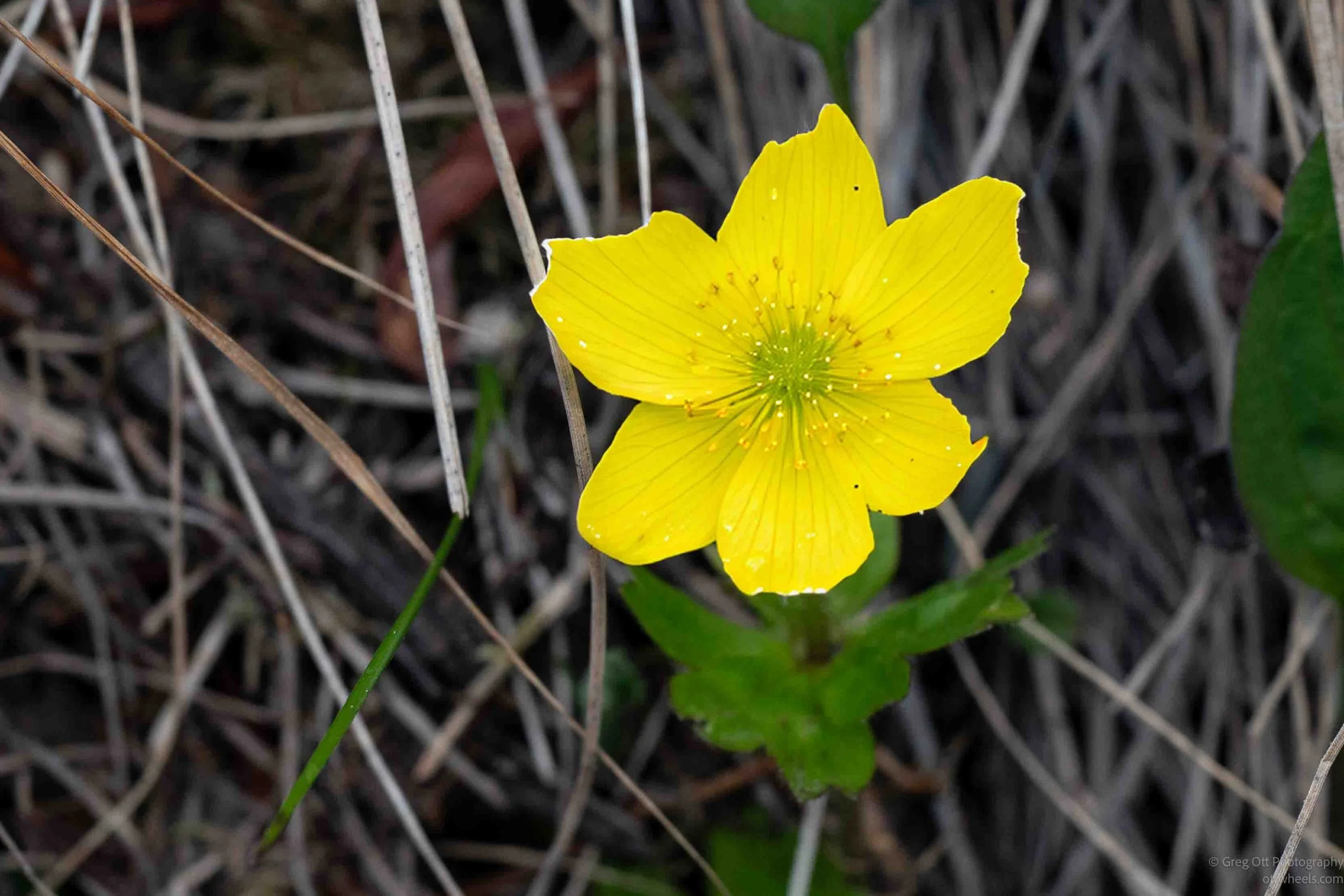
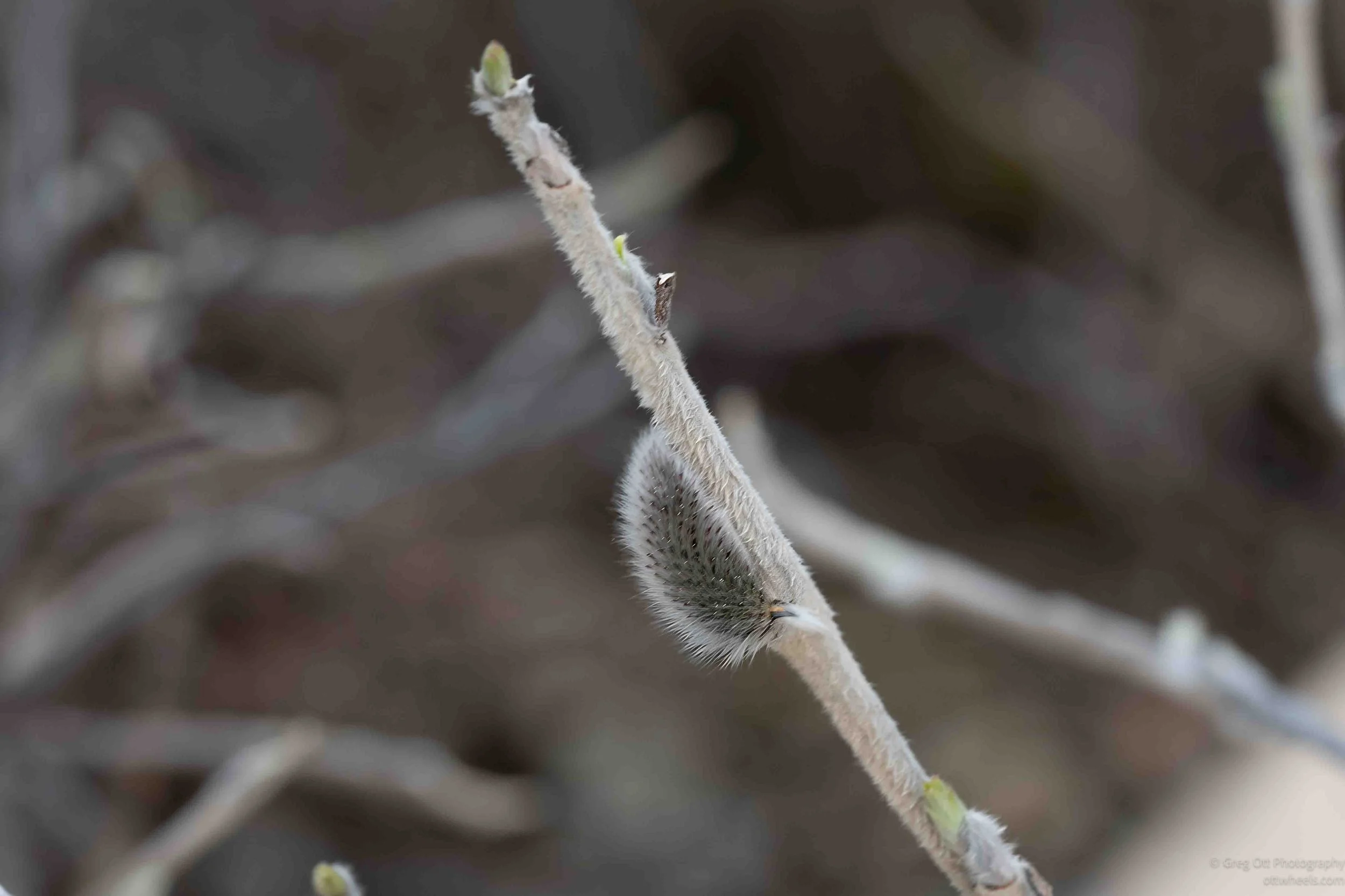
Continuing on, I caught up to the couple about two miles in where the trail came close to the stream. They had ventured off the trail to get photos, so I joined them. It turned out they were from Pennsylvania as well, from Lancaster, and were on their way to Valdez. Somehow we got into a conversation about a woman and her mom they had met. The mom was very proud of her daughter, a squadron leader in an F-35 group. I told them about a YouTube video of a blonde F-35 pilot who periodically posts. After about fifteen minutes, they headed off. I gave them my blog site, and they reached out later that evening.
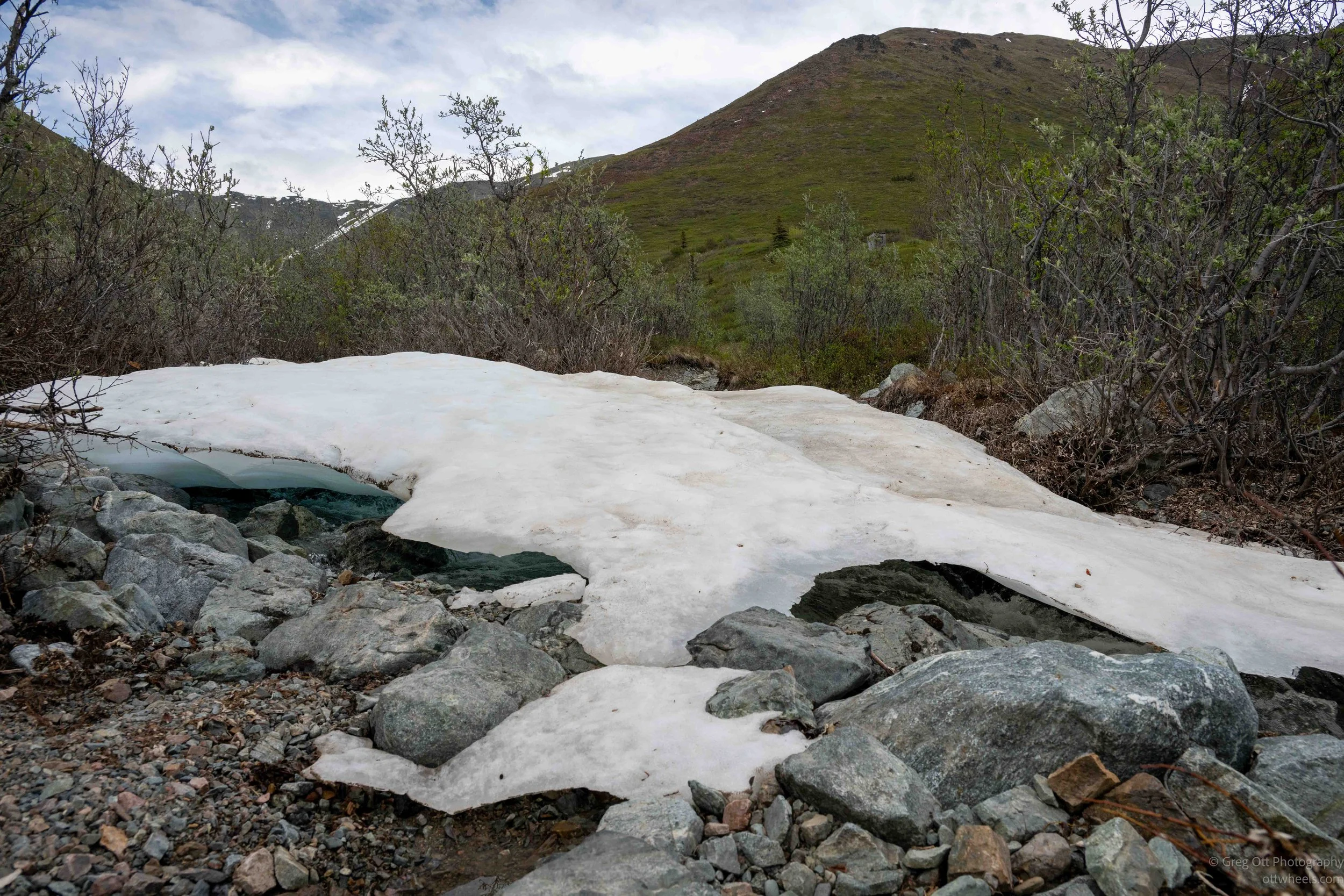
A few minutes later, they were walking back toward me. Kim said the stream was running over the path and they couldn’t get across. I continued walking, thinking that if a woman with a huge backpack and a tiny dog could get across, so could I. After trying to redistribute large rocks that weren’t stable, I walked downstream and found a snow-and-ice bridge. I’m not sure how much longer it would last, but that must have been how the tiny dog got across.
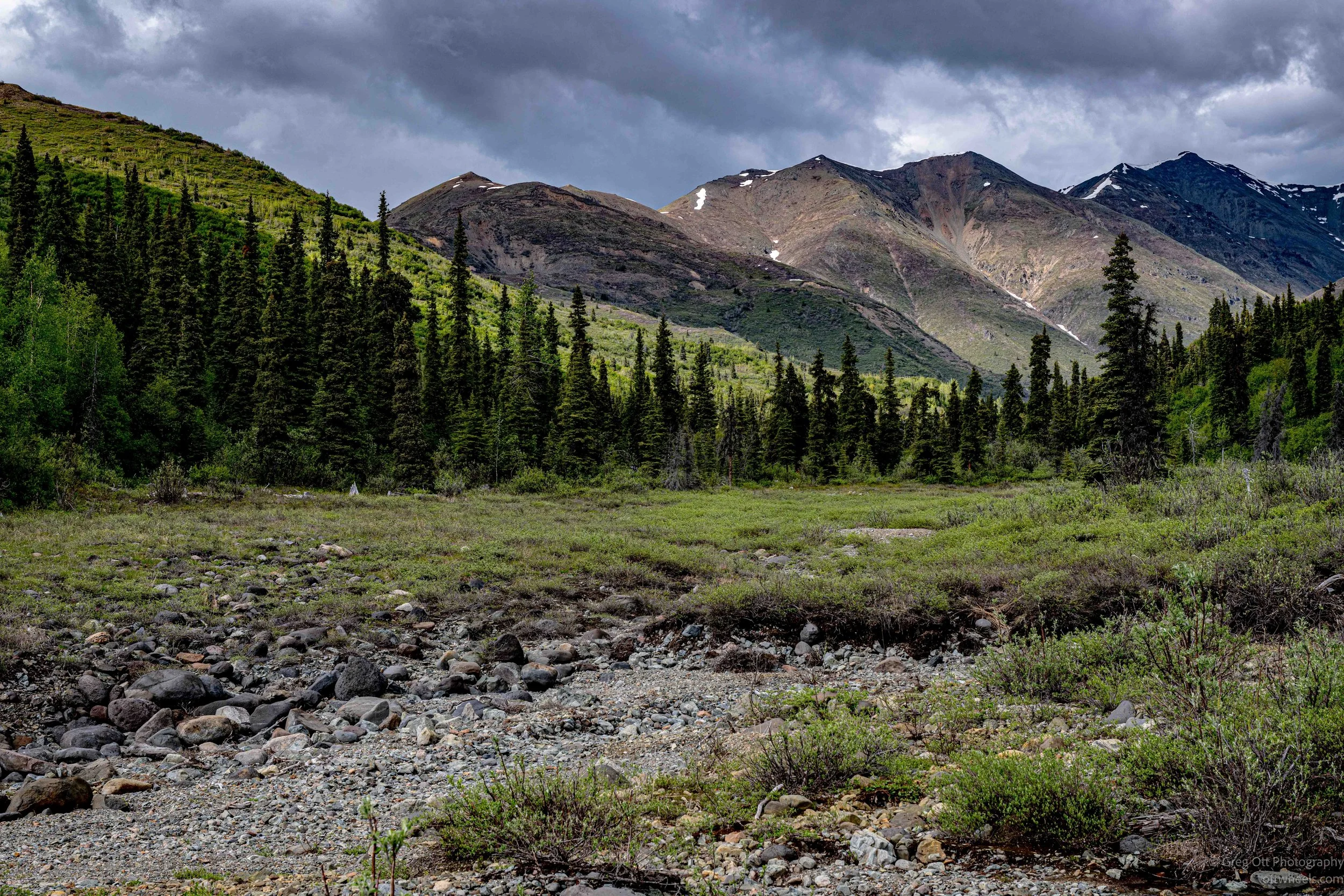
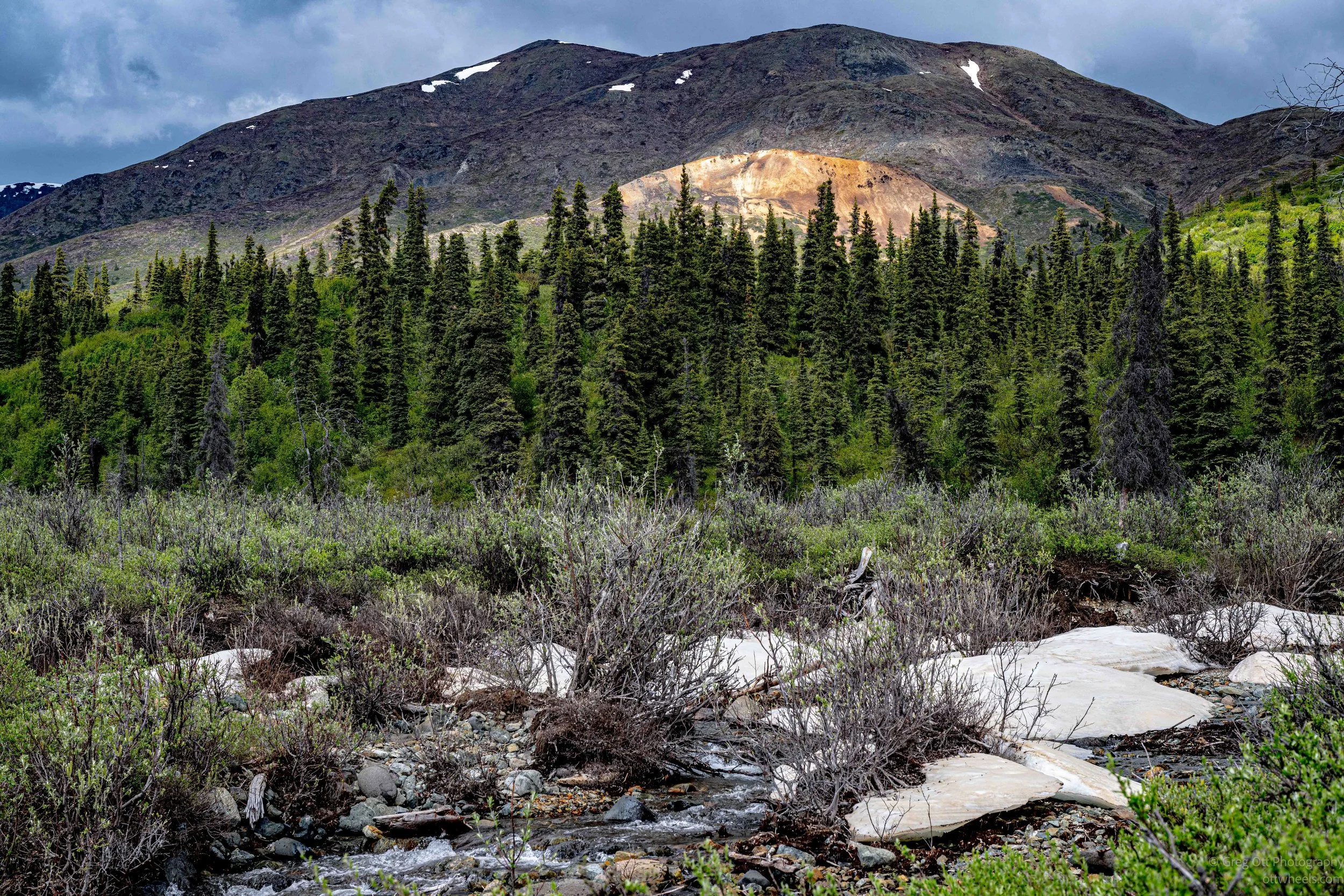
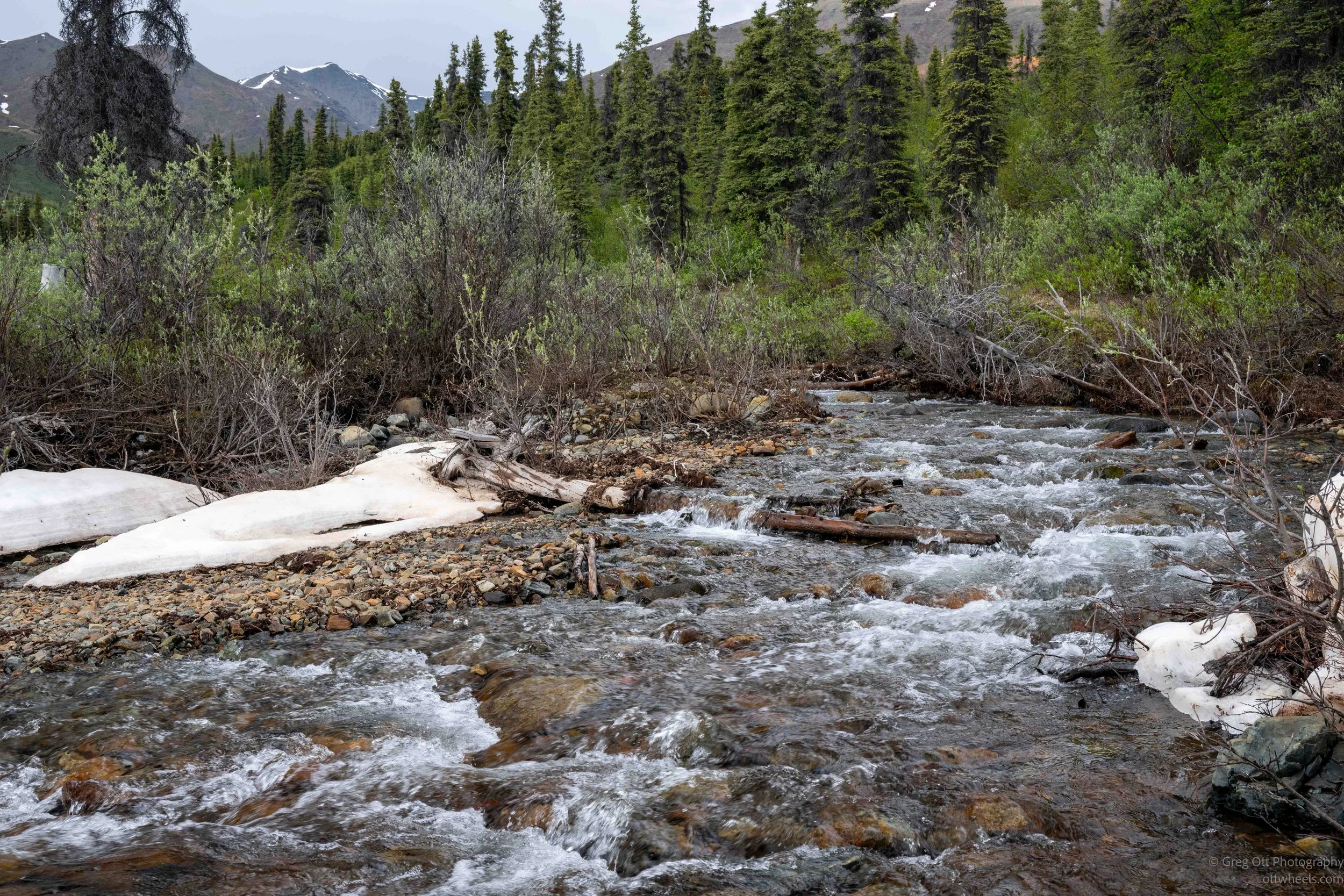
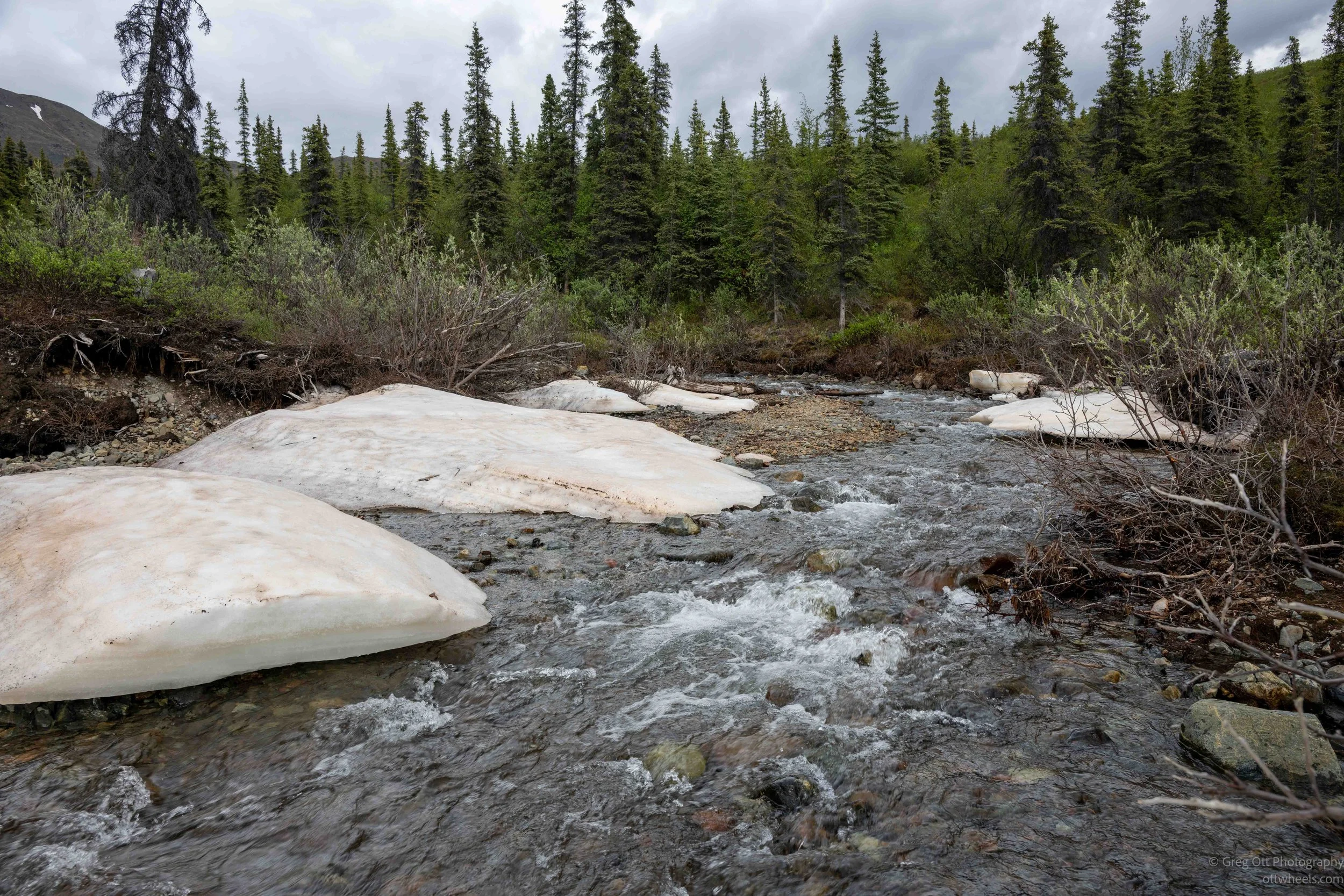
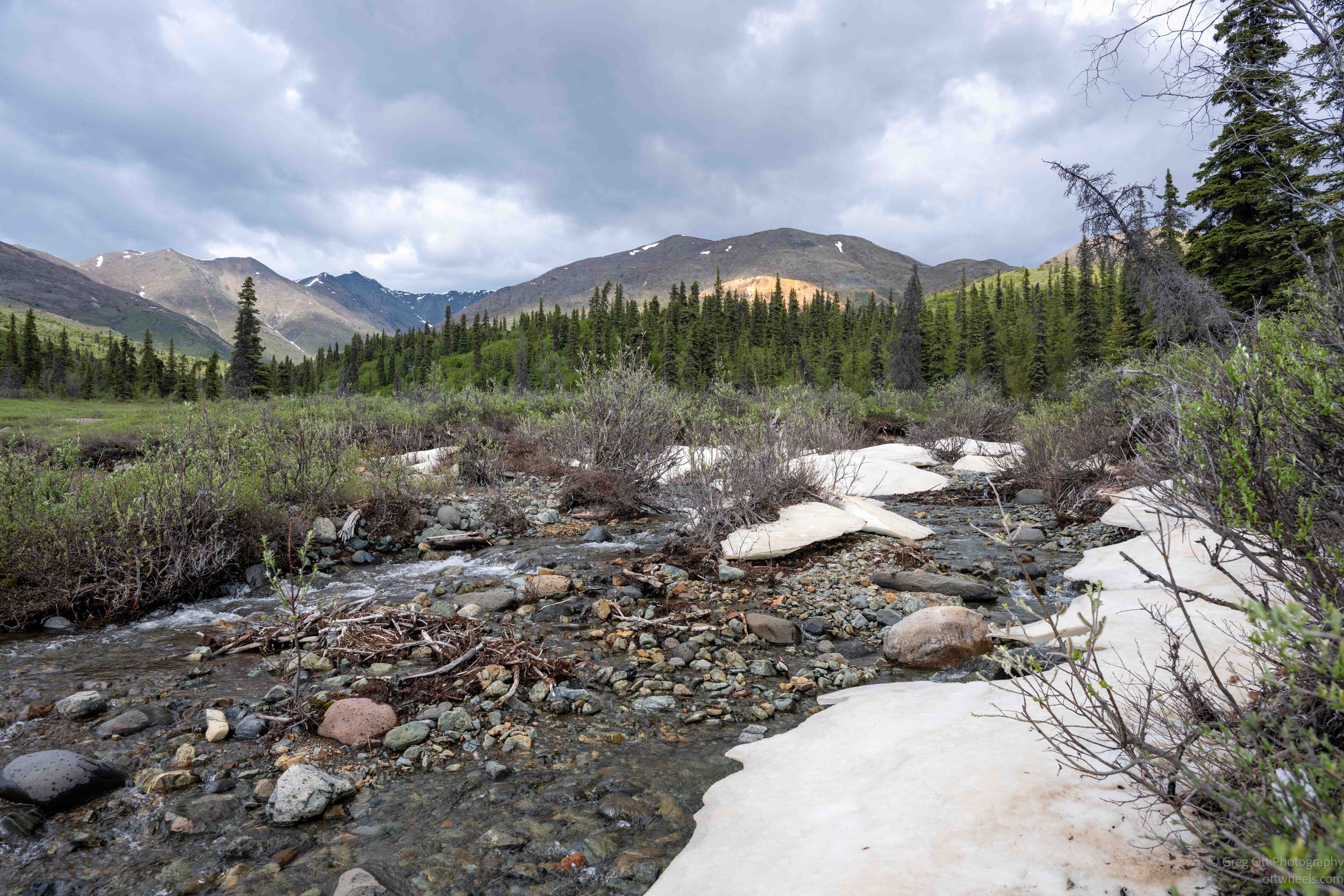
I was back on my way. There was a nice cool breeze, which kept the mosquitoes mostly at bay. The air was very fragrant, though I didn’t see many flowers. There were steep parts of the trail, washed-out sections, places where I had to maneuver around water, and one more ice-bridge crossing near the hut. It was all very doable. I had been prepared for light rain, but it never came. In the distance, I could see sunshine and rain at the same time.
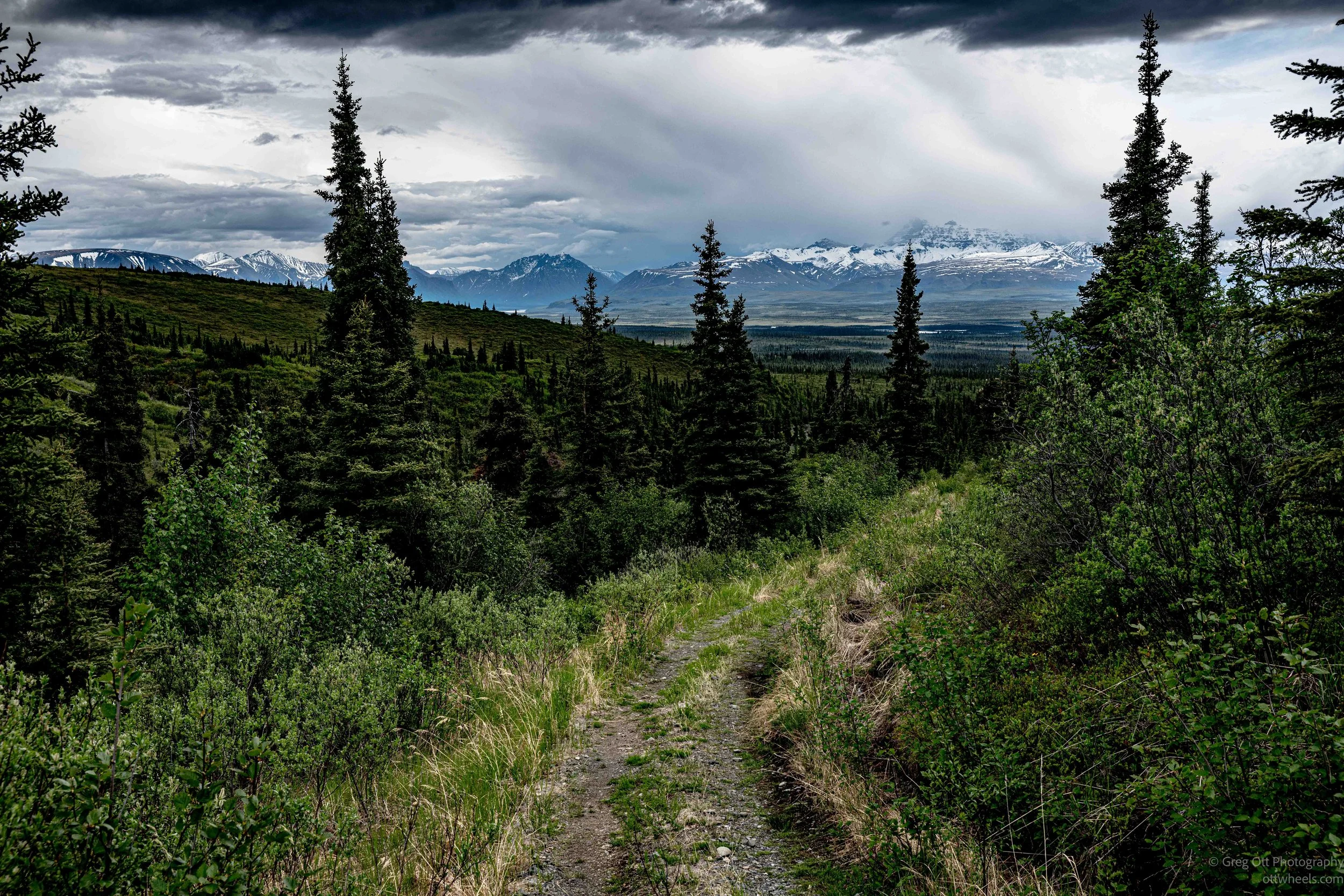
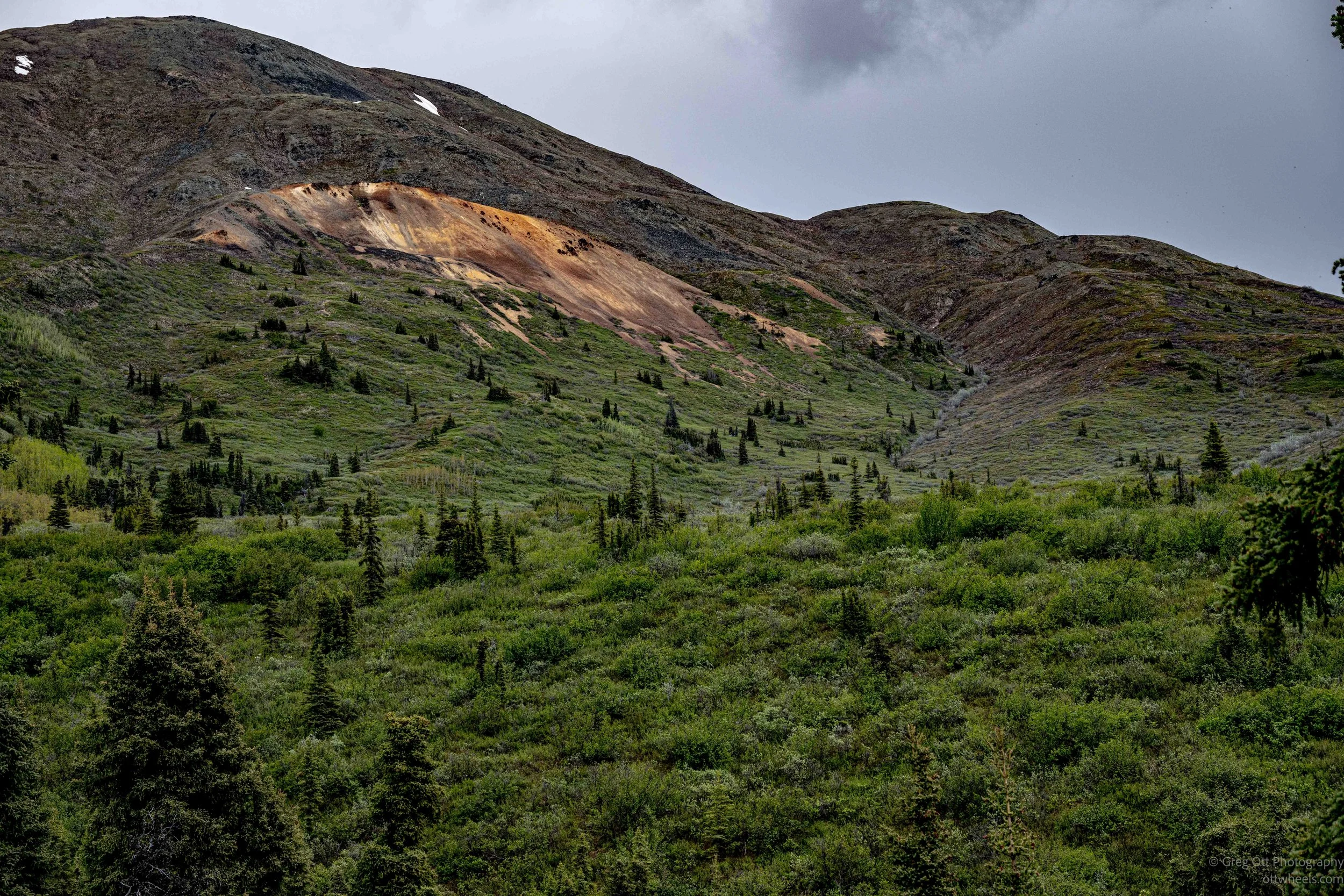
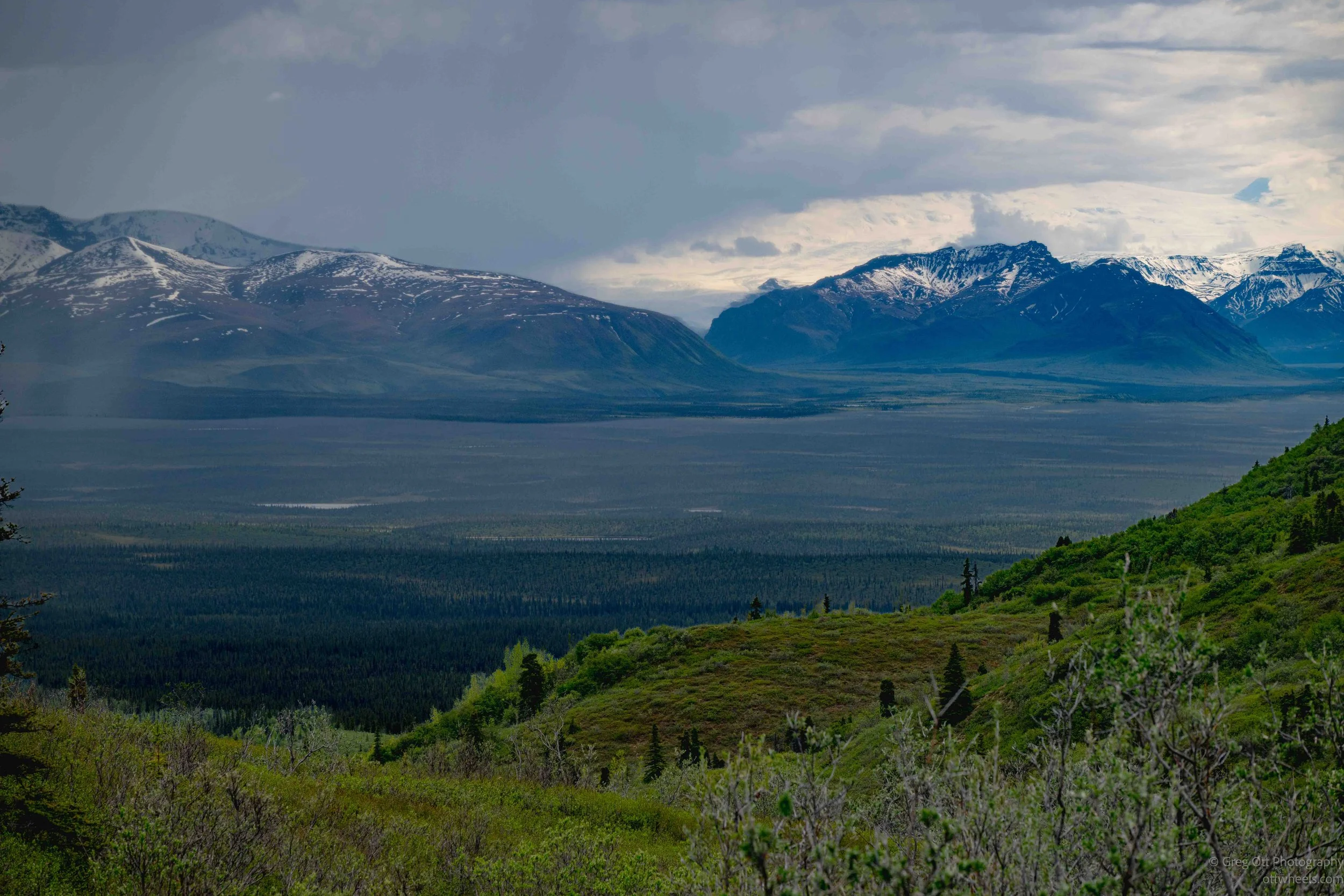
I made it to the end of the trail, and there was the hut. The trail ended halfway up the mountain, and I’m not sure why it didn’t continue farther. Perhaps it just isn’t feasible with the weather and terrain. It certainly would take most of a day to get up to the ridge. I went inside the hut and thought it would have been nice to stay overnight there. It had a wood stove, a stack of precut wood, two bunks, and a desk with some books. There were removable wood panels over the windows to keep the bears out, which was both practical and not especially comforting.
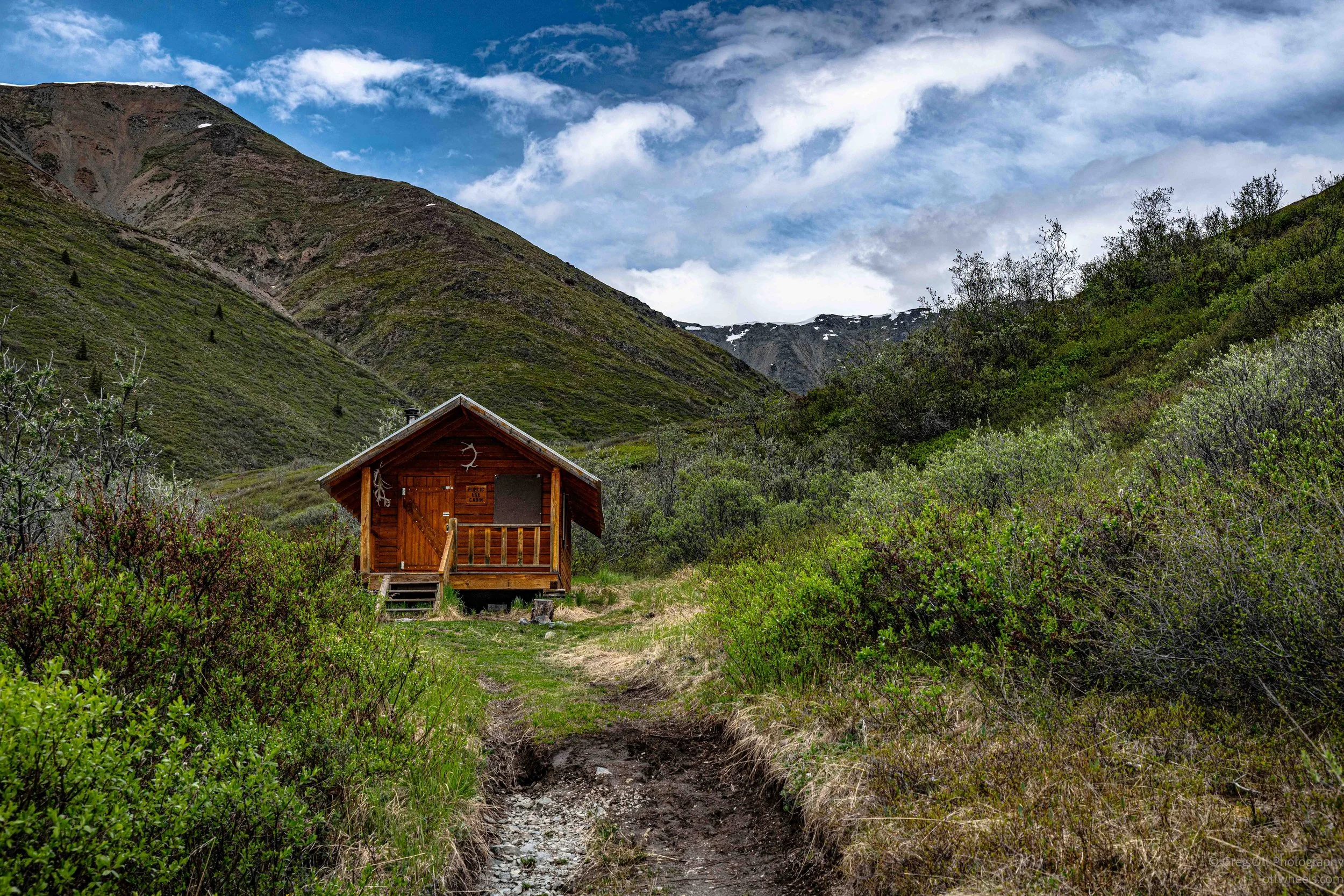
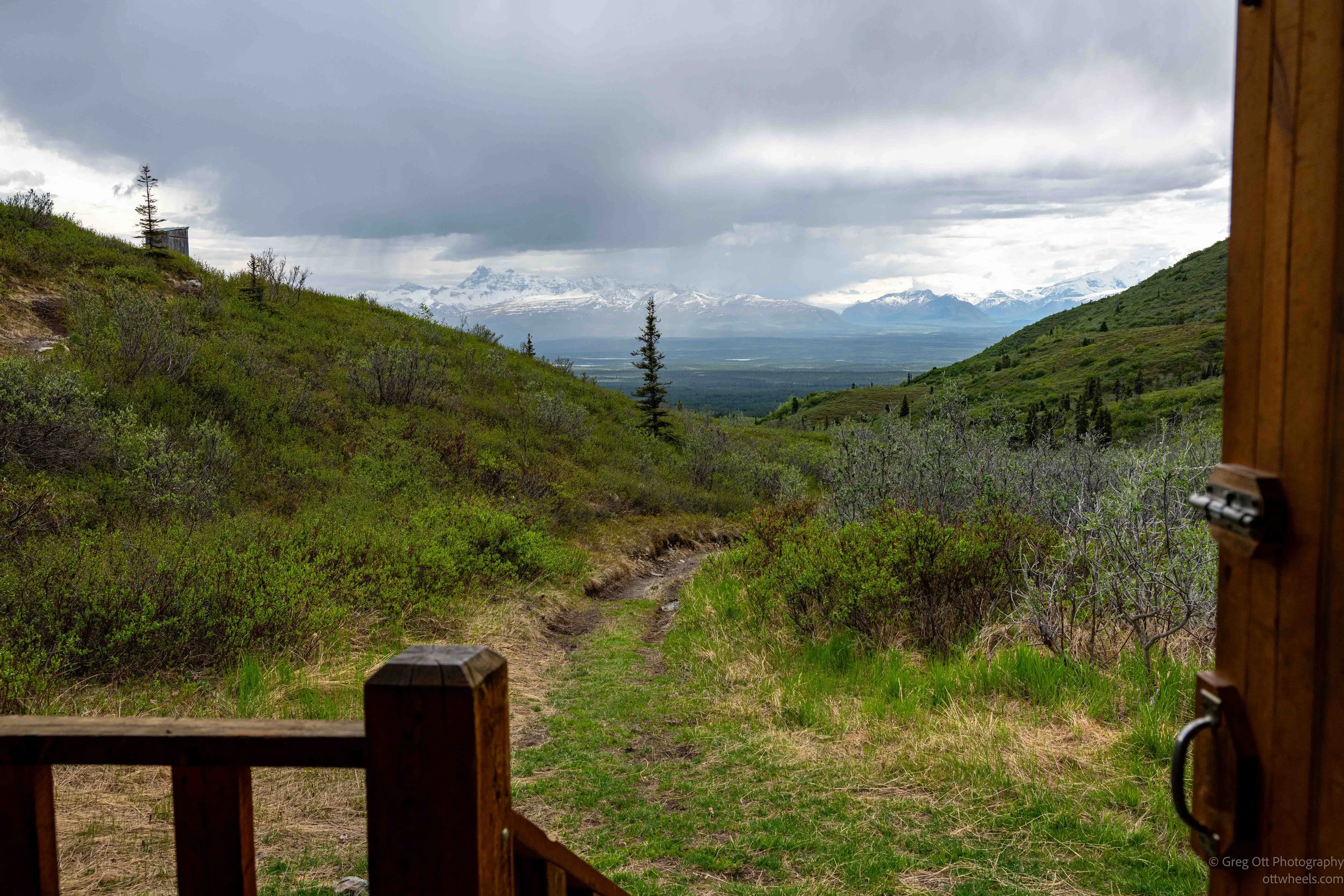
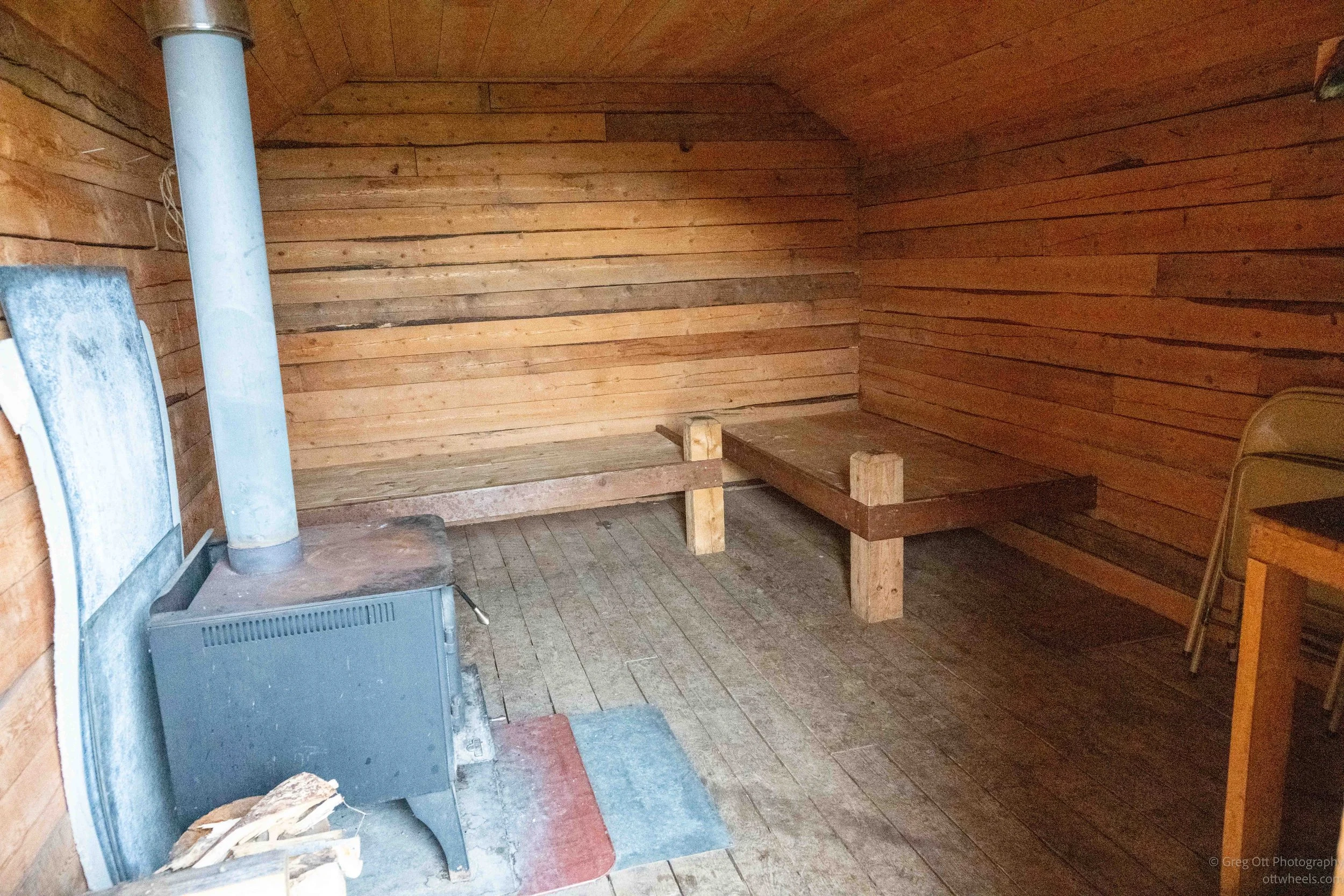
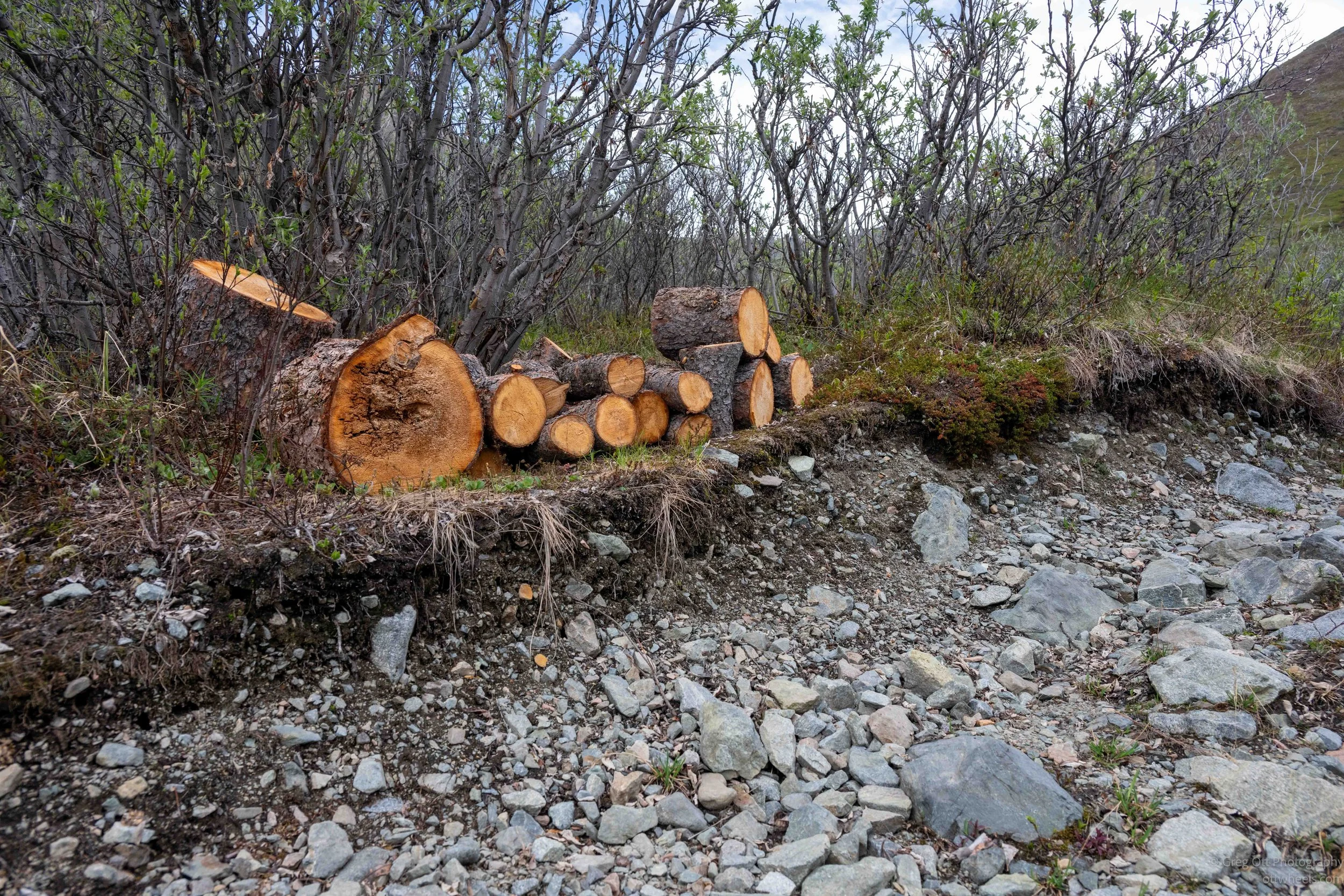
I headed back down, expecting to be at the van around 7:15. I stopped for photos and to look at the ice over the stream. I hadn’t seen anyone else on the trail, and the birds had stopped chattering. It was quiet except for my footsteps and the rushing water. Periodically, I heard a jet flying somewhere, but I never saw the contrails. I assumed the sound was carrying through the valleys. The breeze had picked up, and so had my pace.
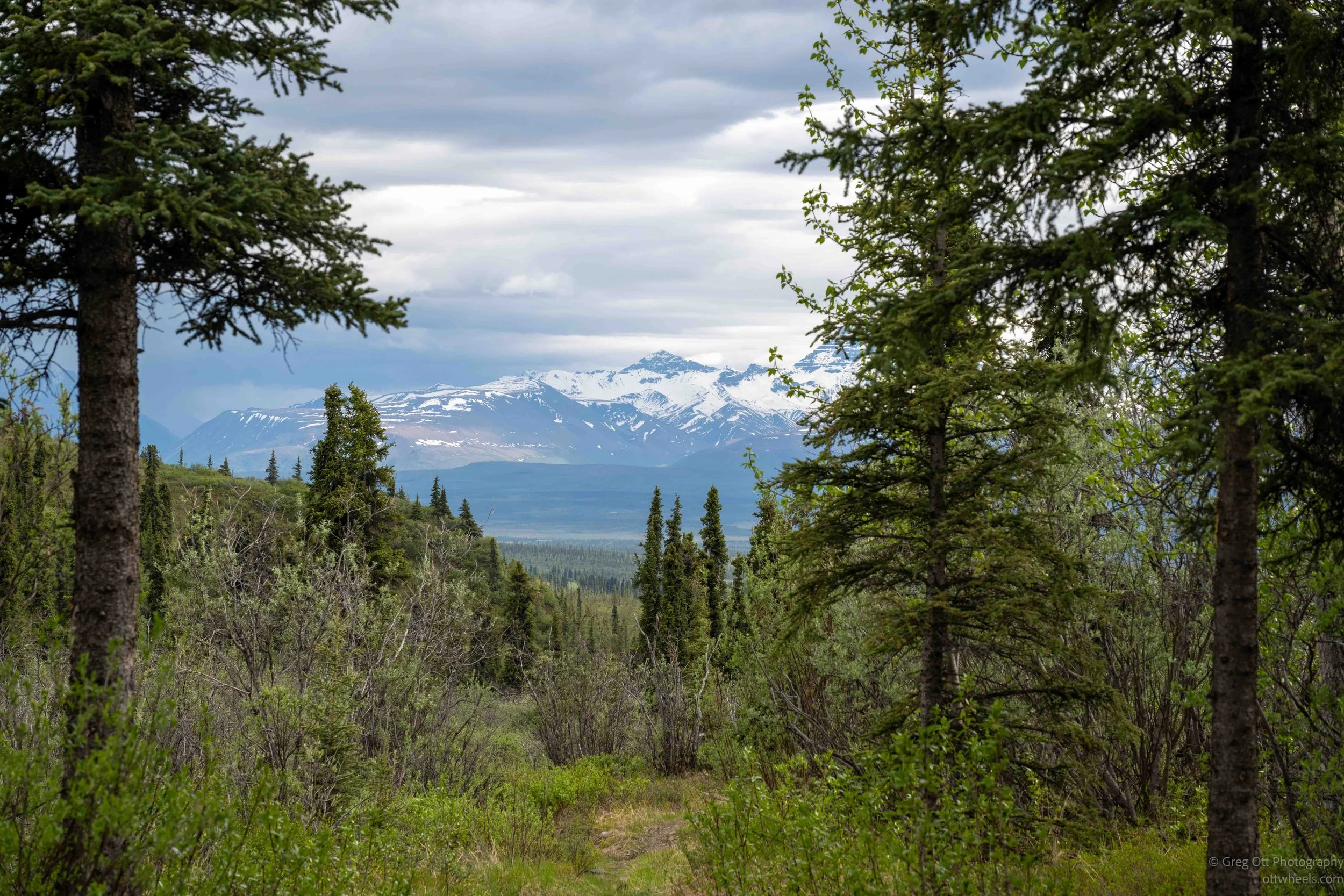
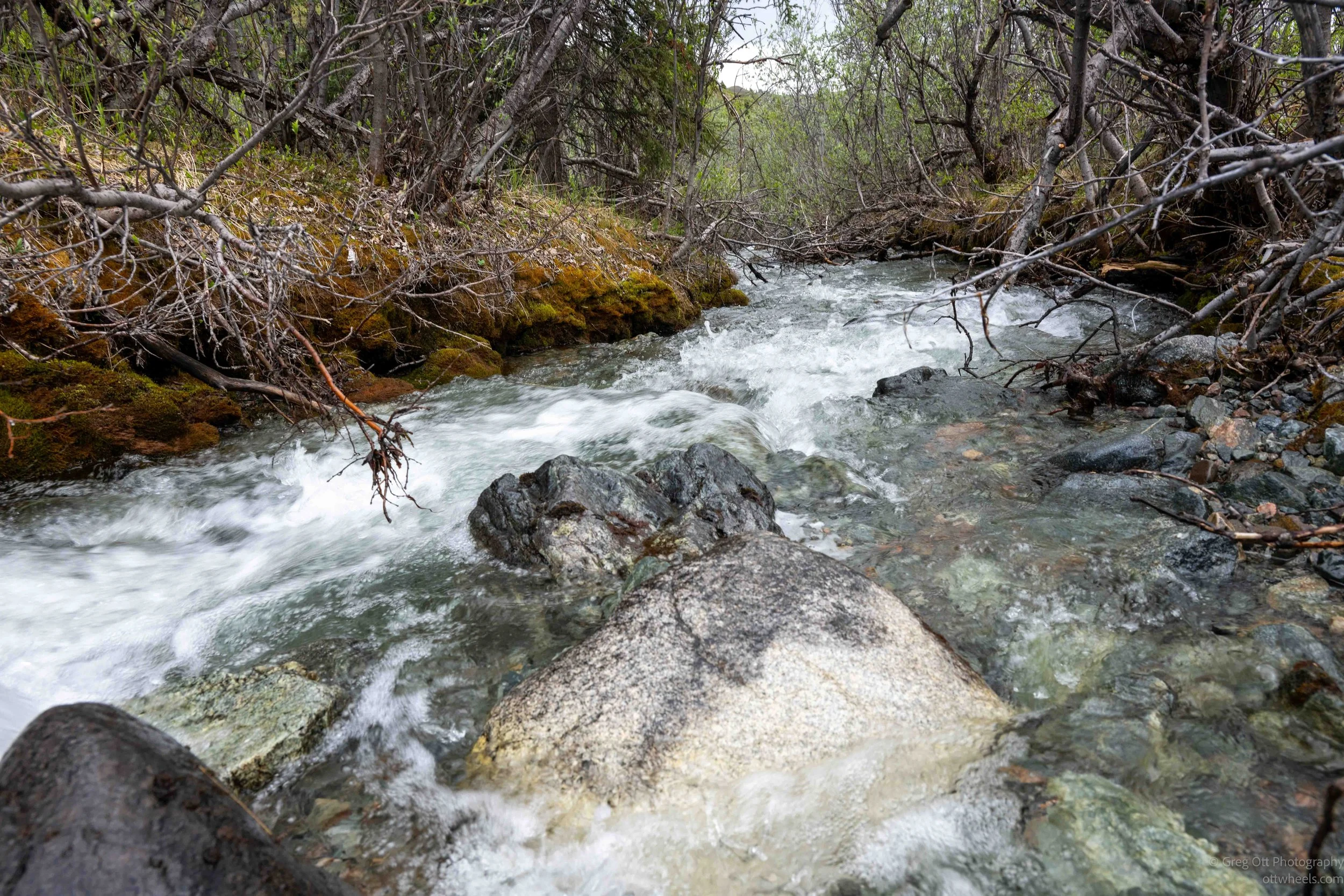
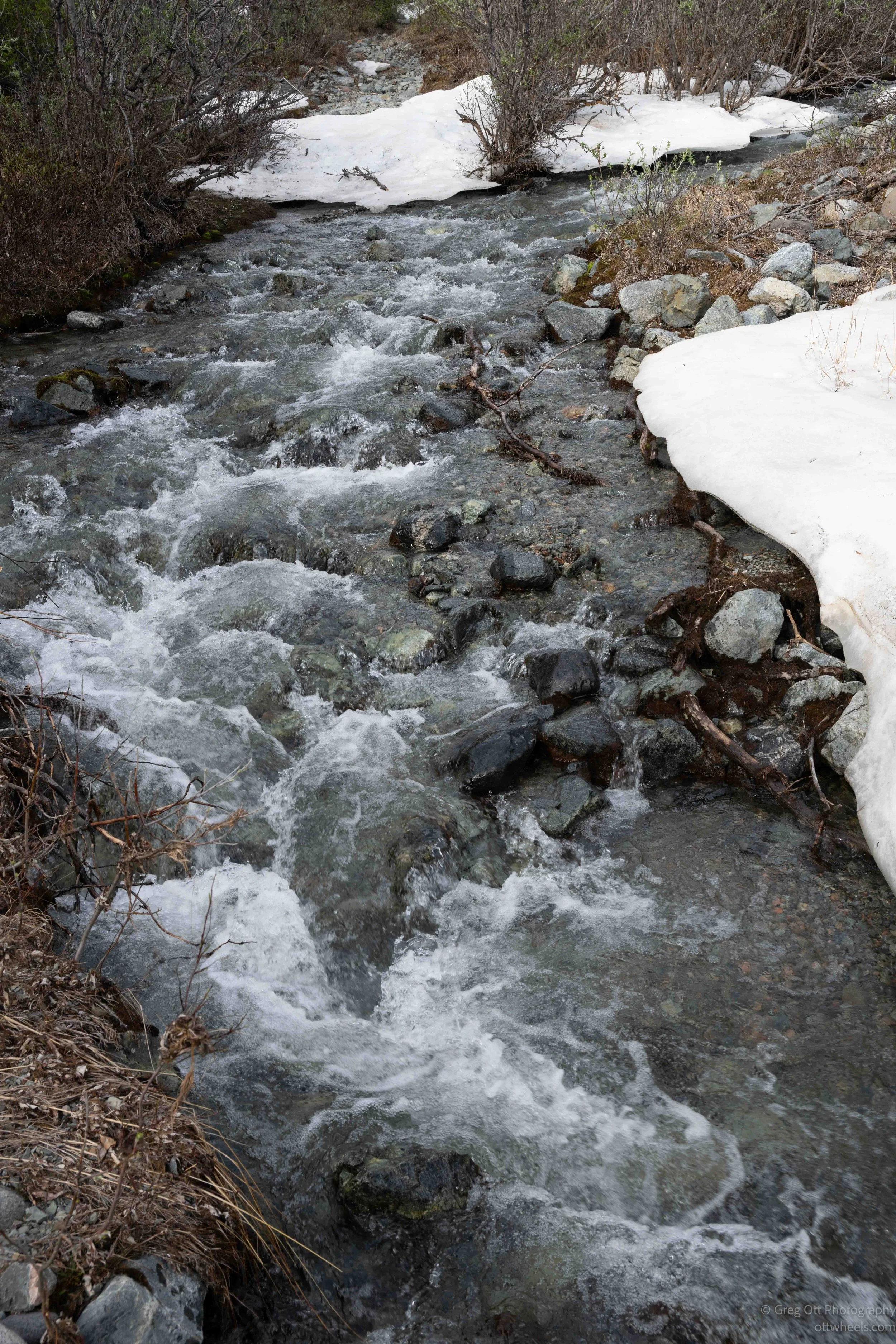
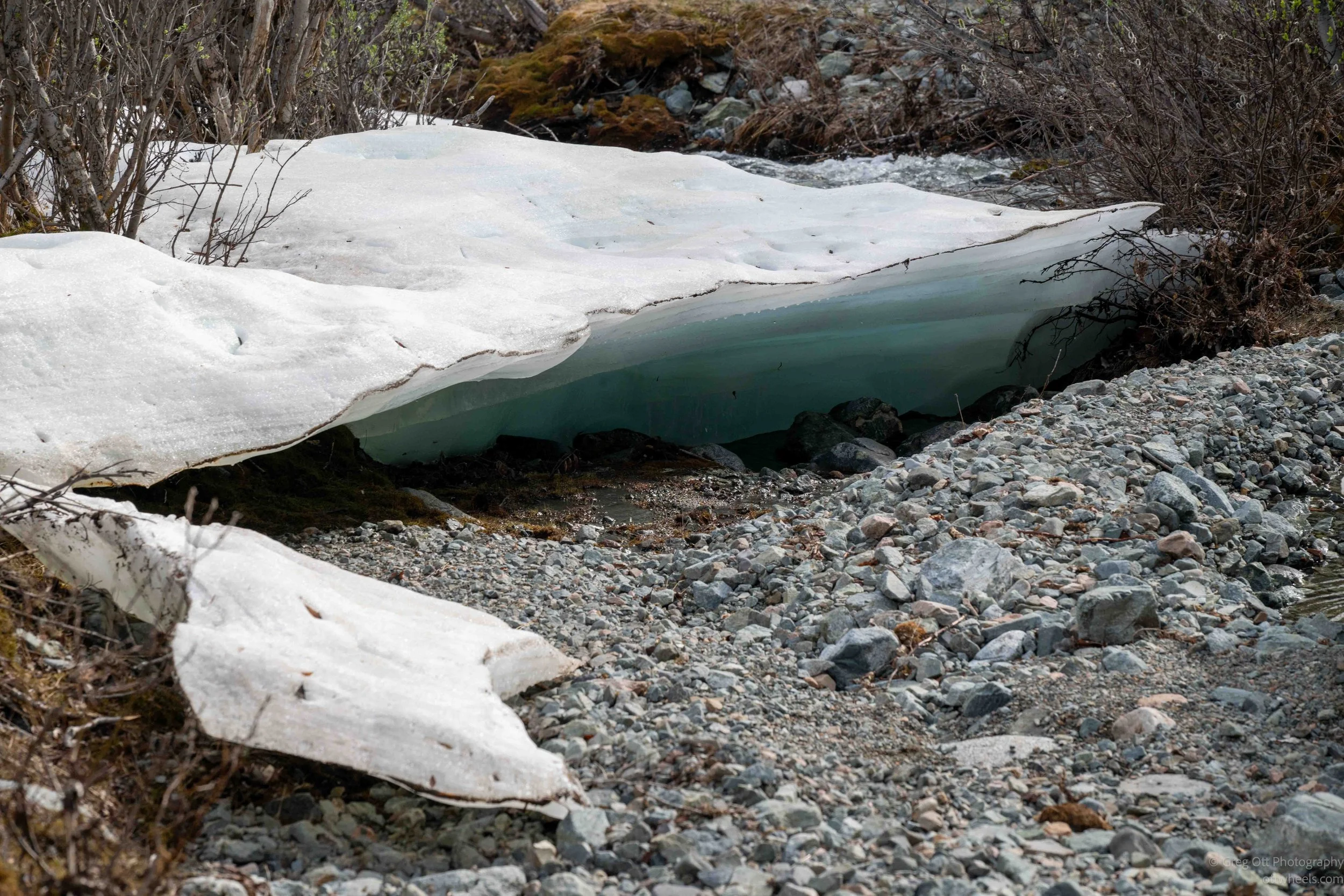
After crossing the lower stream again, the trees blocked the breeze and the mosquitoes came out for their evening meal. I had to walk through swarms of them. They followed me most of the way to the road, where it finally let up a little. The only way to take a photo was to set it up while moving, stop for a second, wave my arms around, take the shot, and then keep moving.
I pulled the keys out as I approached the van, unlocked it without losing a step, and quickly climbed into the driver’s seat. Four mosquitoes followed me in. They didn’t live very long.
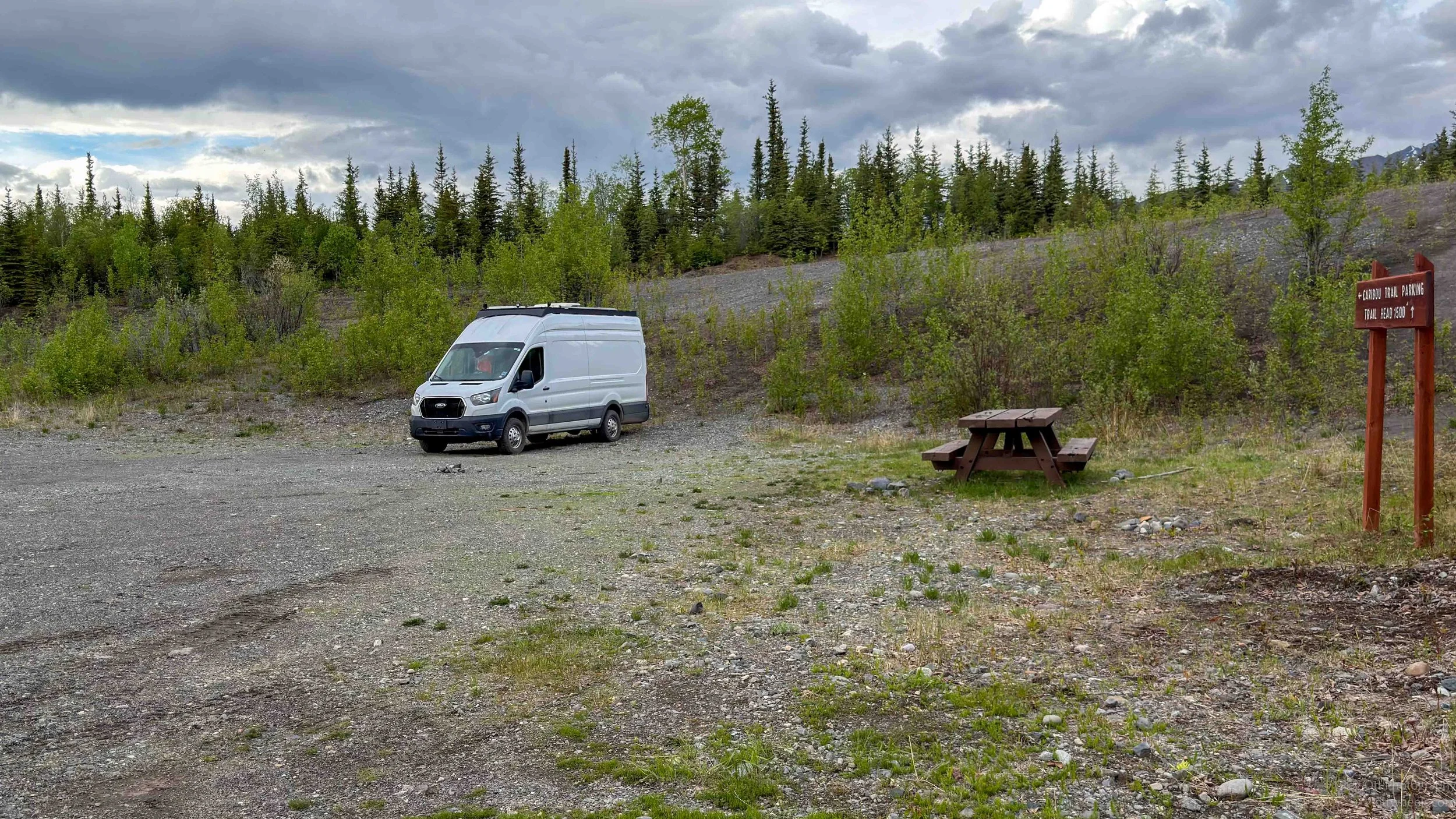
iOverlander showed a spot about a mile away with nice views. I drove off immediately and pulled in. It was level, had a trash dumpster and toilets, and there was no one else there. There was no traffic on the road. I settled in for the evening, made dinner, took a sponge bath, and crawled into bed.
It had been a wonderful day.