
Sun Tunnels Day 2
I woke up rested shortly after noon. The first thing I noticed was the silence—no heater running. I checked the dash panel and saw the temperature sitting comfortably at seventy-two degrees. I slid open the van’s side door and light poured in. The sun had already done its work, warming everything up. It felt easy and calm out there.
I left the door open and made oatmeal for breakfast around 12:20. Why not? I wasn’t going anywhere. I had the place entirely to myself. The sun was shining, some mellow music was playing in the background, and I was genuinely excited to see how the star trails had turned out.
Anyone who has ever sent a roll of film out to be developed, or spent time in a darkroom, knows that feeling. There’s anticipation, hope, and the quiet risk of disappointment all wrapped together. You carry an image in your head—is it going to match what I imagined? Sometimes the results are fine and simply document what you saw. Other times, the images fall flat. And once in a while, they exceed expectations in ways you couldn’t have planned.
Star trails are built from long sequences of images—fifteen-second exposures in my case—that have to be stacked together to create the final photograph. Hundreds of frames become a single image, which means hours of processing and a fair amount of patience.
I started by going through the daylight shots and found a few I really liked. The sunset images were about what I expected, but the shots taken from inside the Sun Tunnels, aimed toward Salt Lake City, surprised me. The stars came through better than I’d hoped.
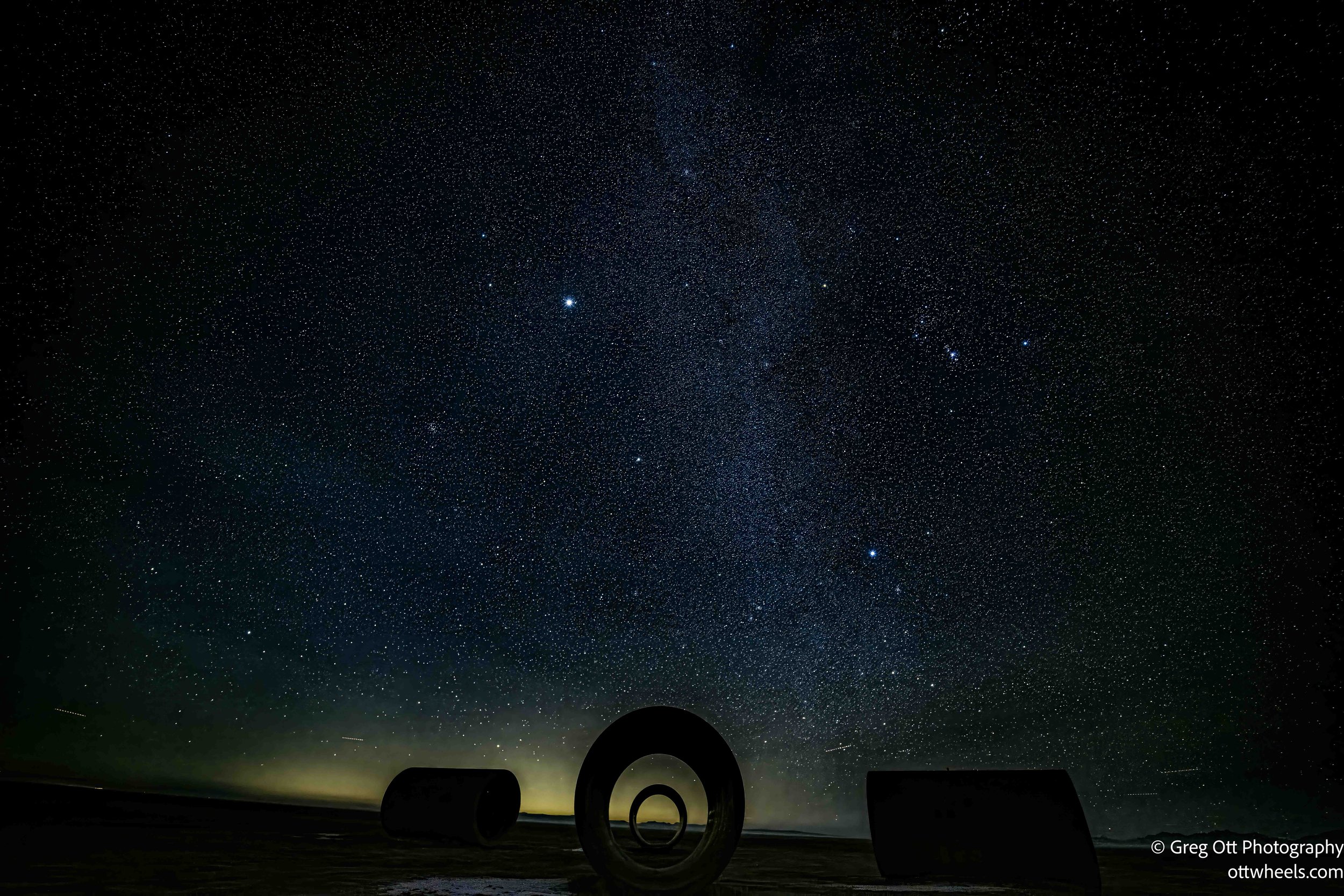
Then came the hard part.
The next hour was disappointing—but also instructive. The combined star trail images didn’t form clean spirals. Instead, they looked more like vibrating or broken lines. I spent the next few hours trying to understand what had gone wrong. The short answer was: just about everything. The tripod was too high and fully extended. The legs were set on shifting sand. The tripod head wasn’t stable enough. All of those small compromises added up.
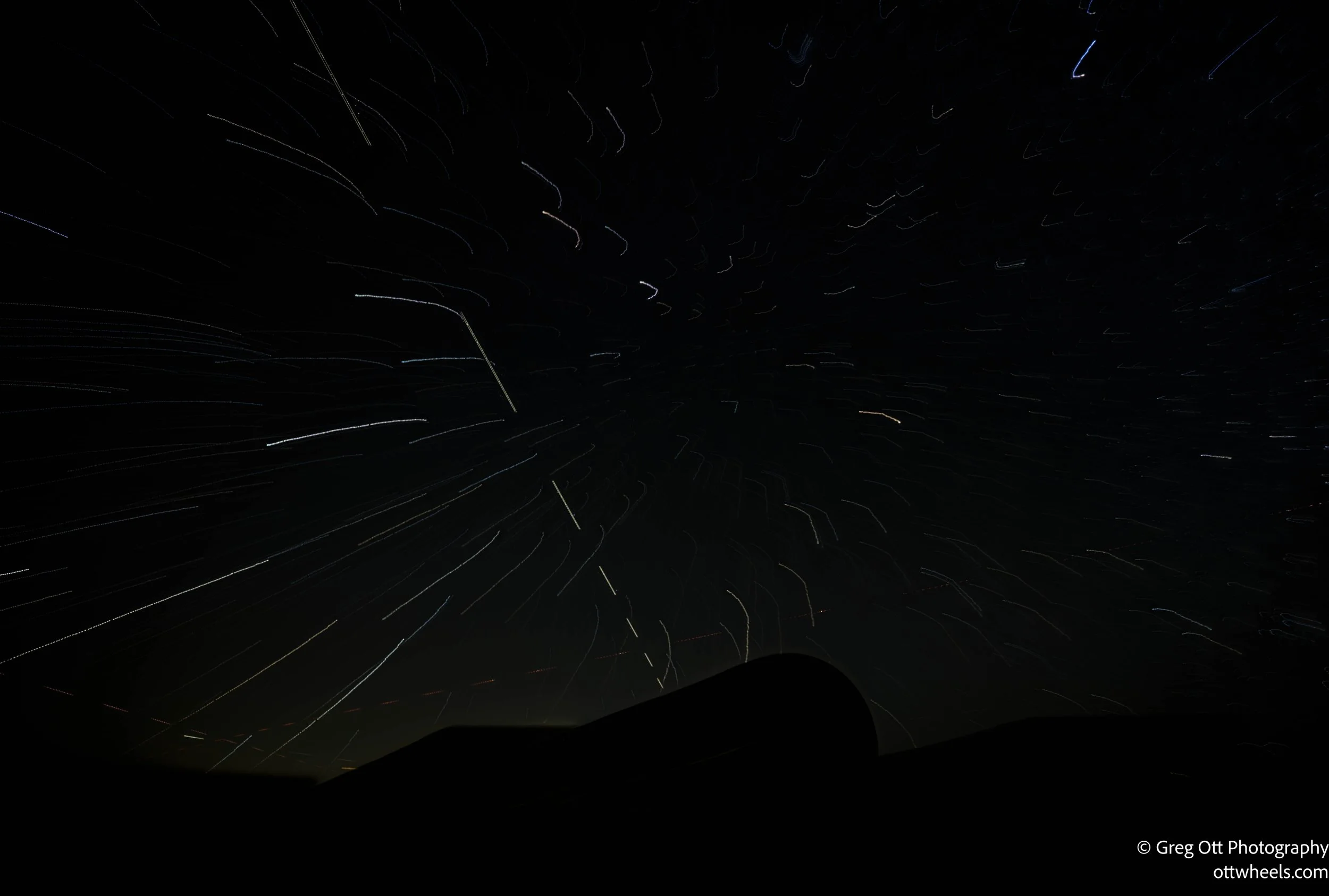
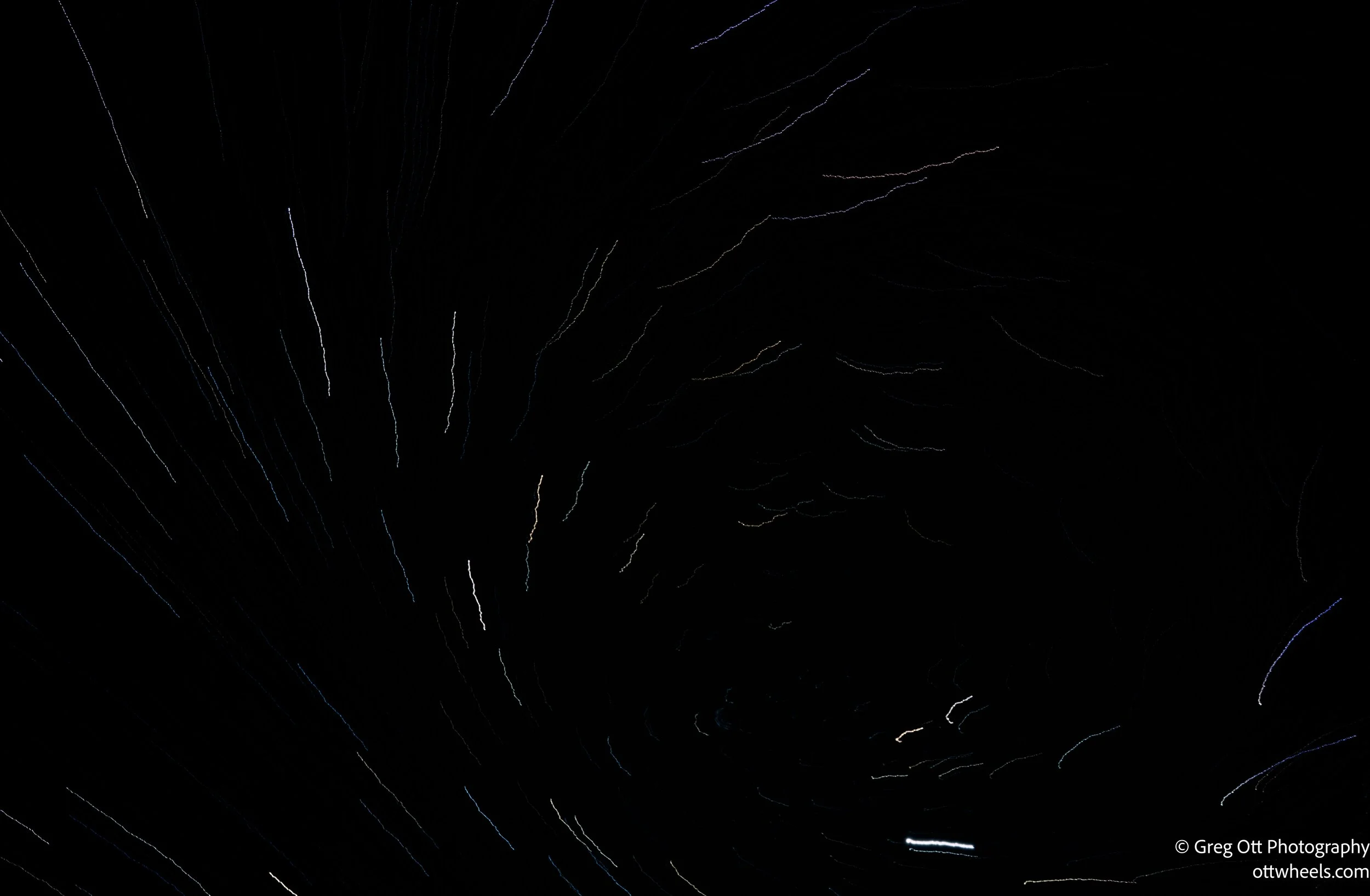
By the end of it, I had written myself a checklist of roughly twenty-five things to verify before attempting star trails again.
Around three o’clock, a car pulled up near the van. A couple stepped out, probably in their late forties, laughing and clearly enjoying themselves. They took turns photographing each other around the Sun Tunnels. My favorite moment was when she had him stick his hands through one of the openings like a set of stocks—it looked genuinely funny from where I was parked. I remember thinking how clever it was and wishing I could see the photo they captured. They stayed for about forty-five minutes, then drove off. The place went quiet again. I decided to take some selfies which I never do.
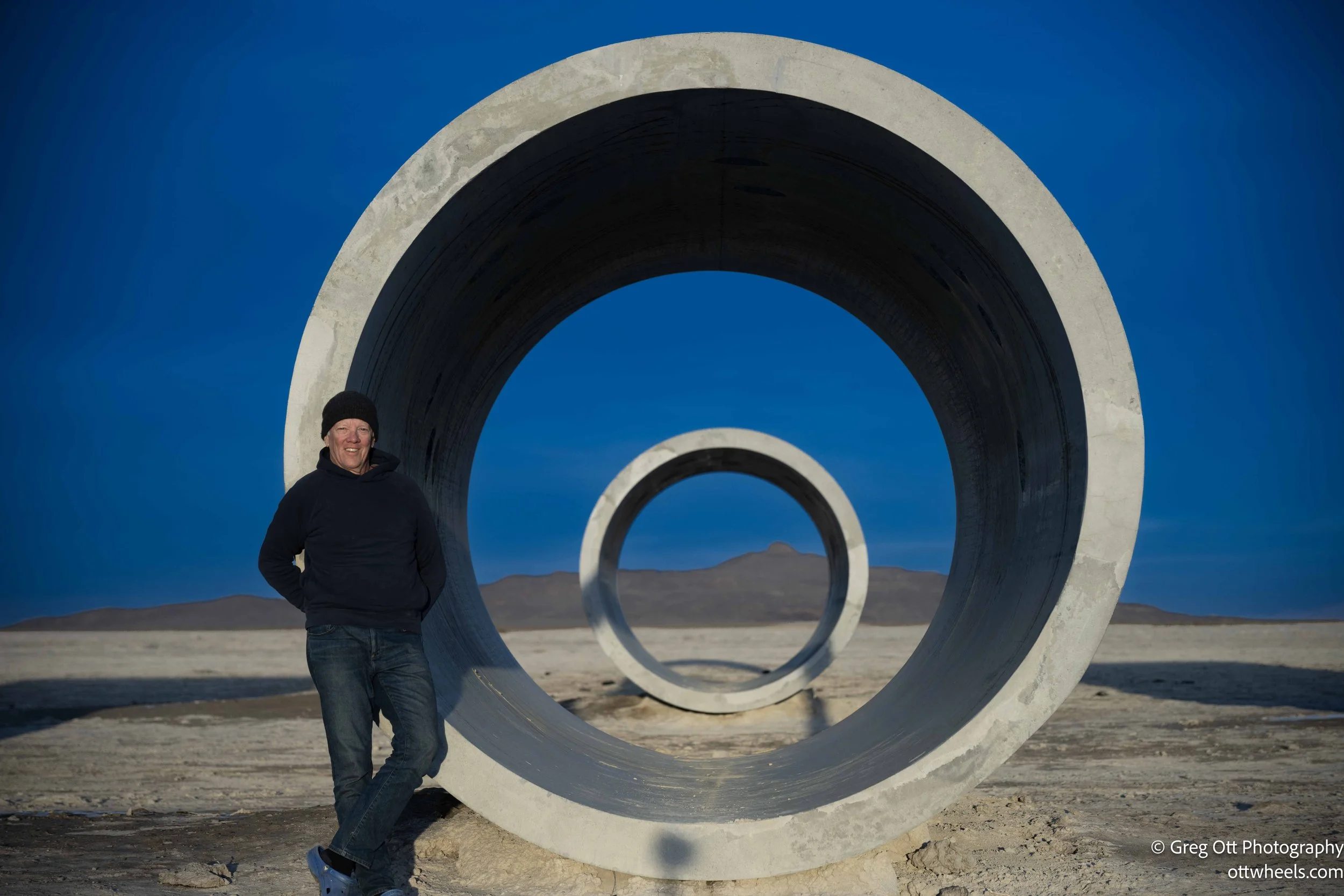
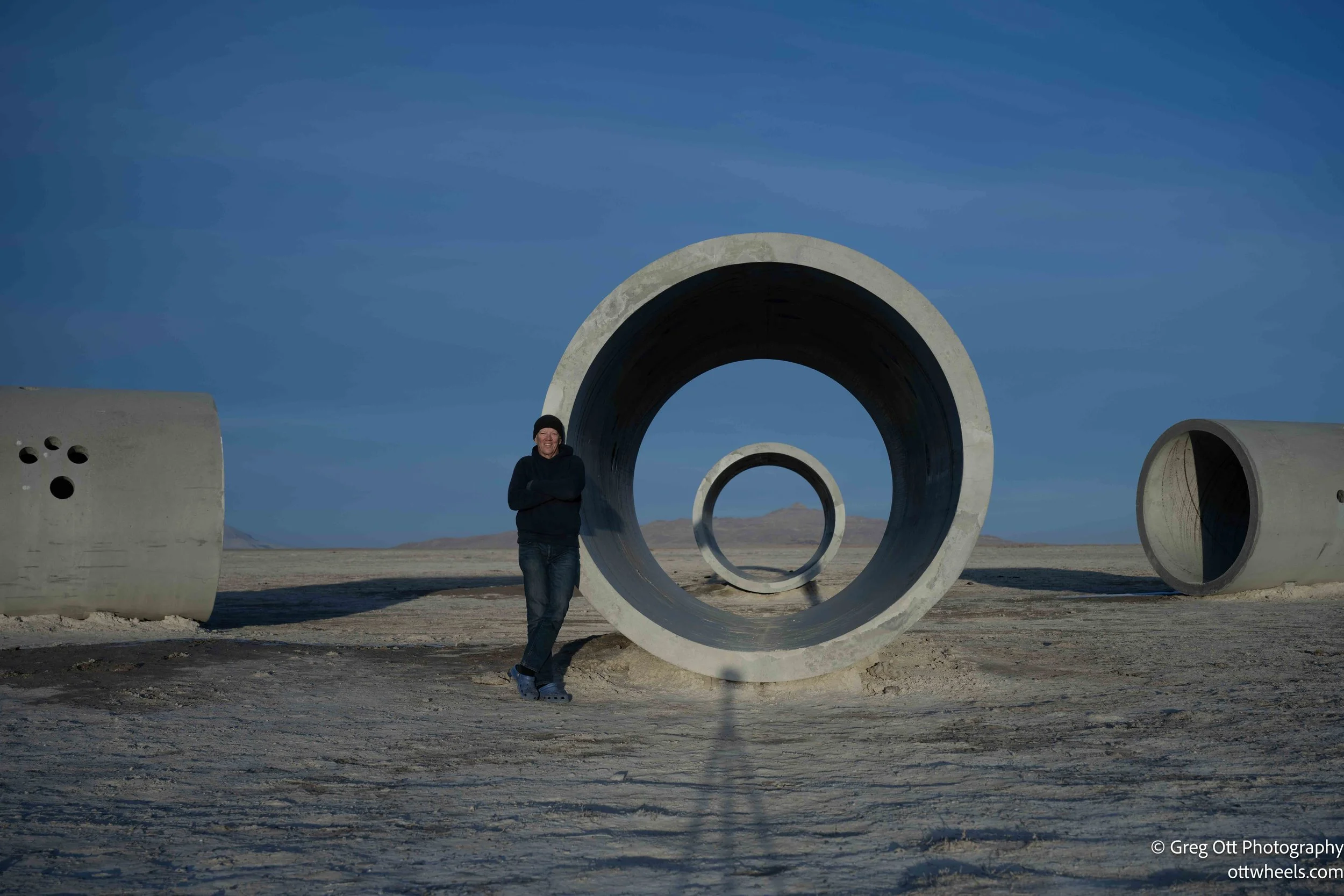
I grabbed the shots everyone else seems to make and post online, but only one of the four ended up in black and white. Stripping the color from that image brought out the texture of the concrete and the shape of the tunnels in a way the color versions didn’t, which is what interested me most.
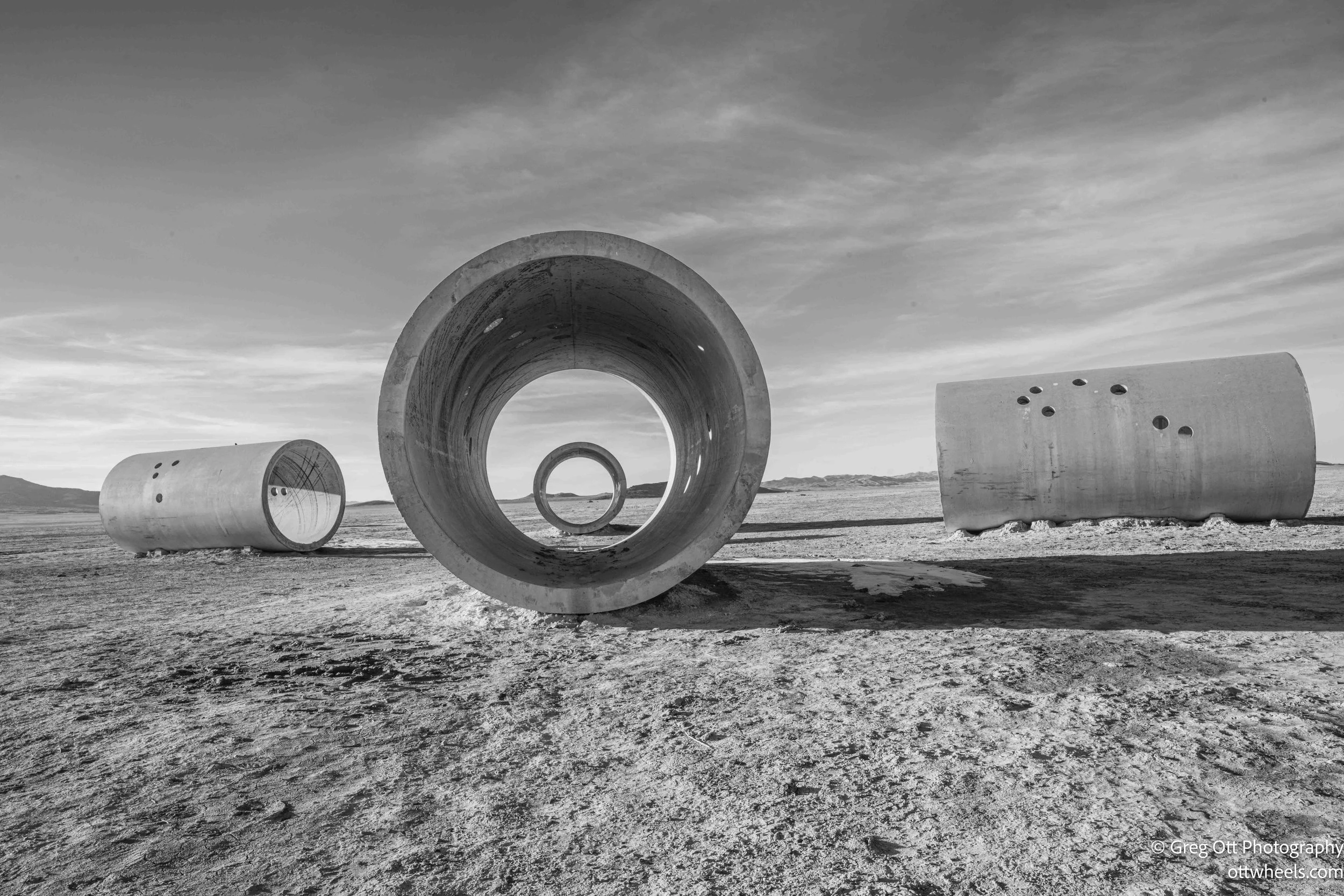
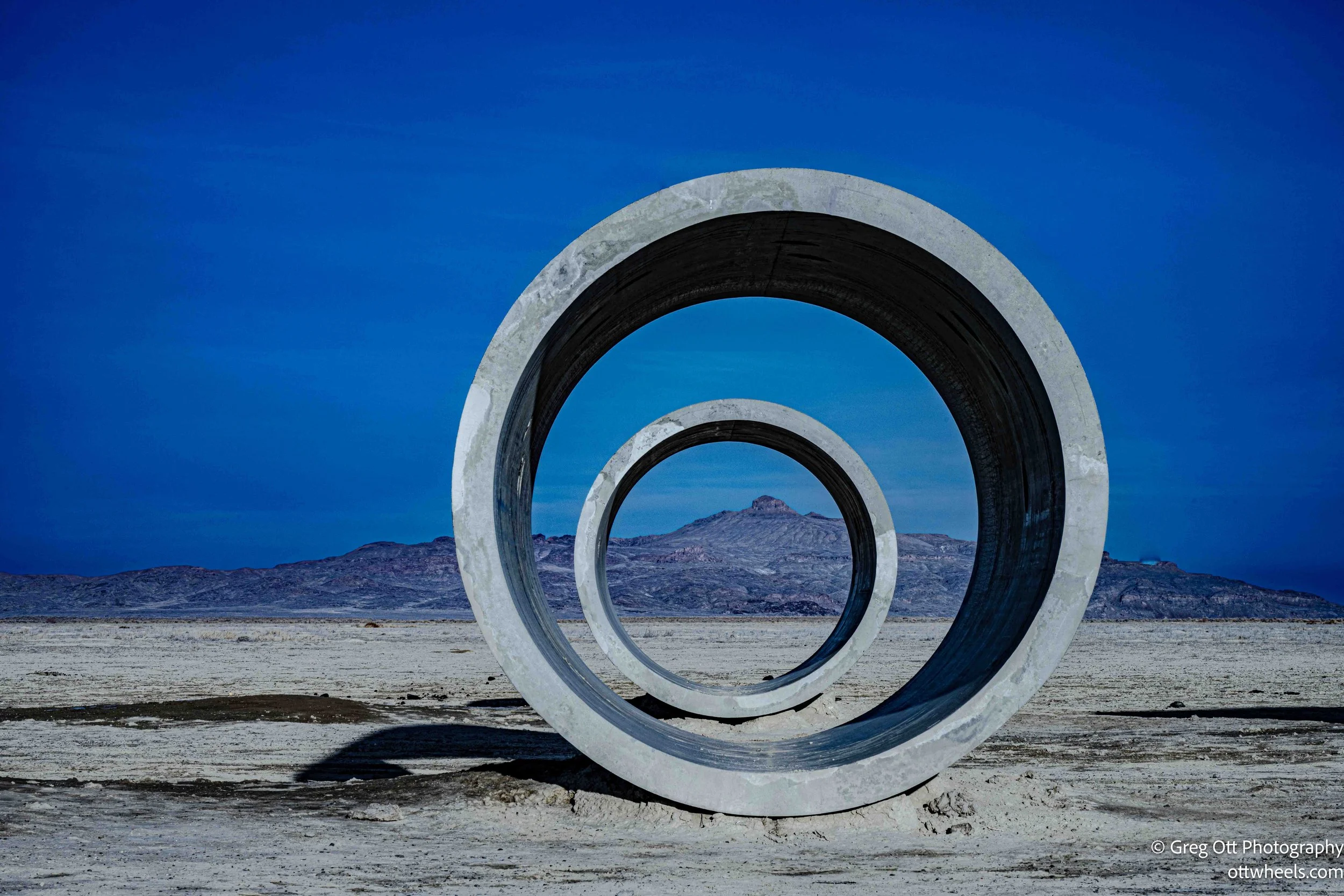
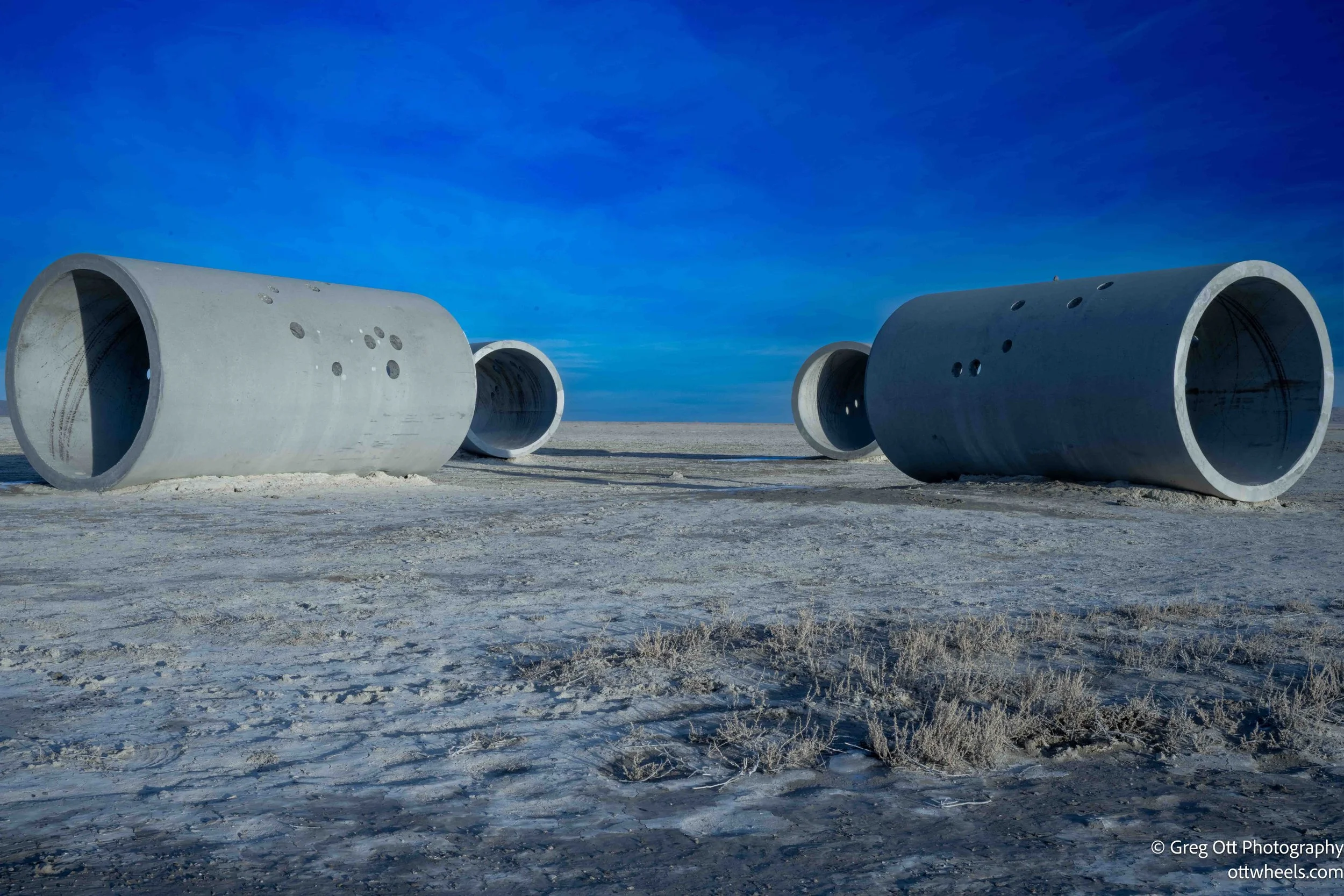
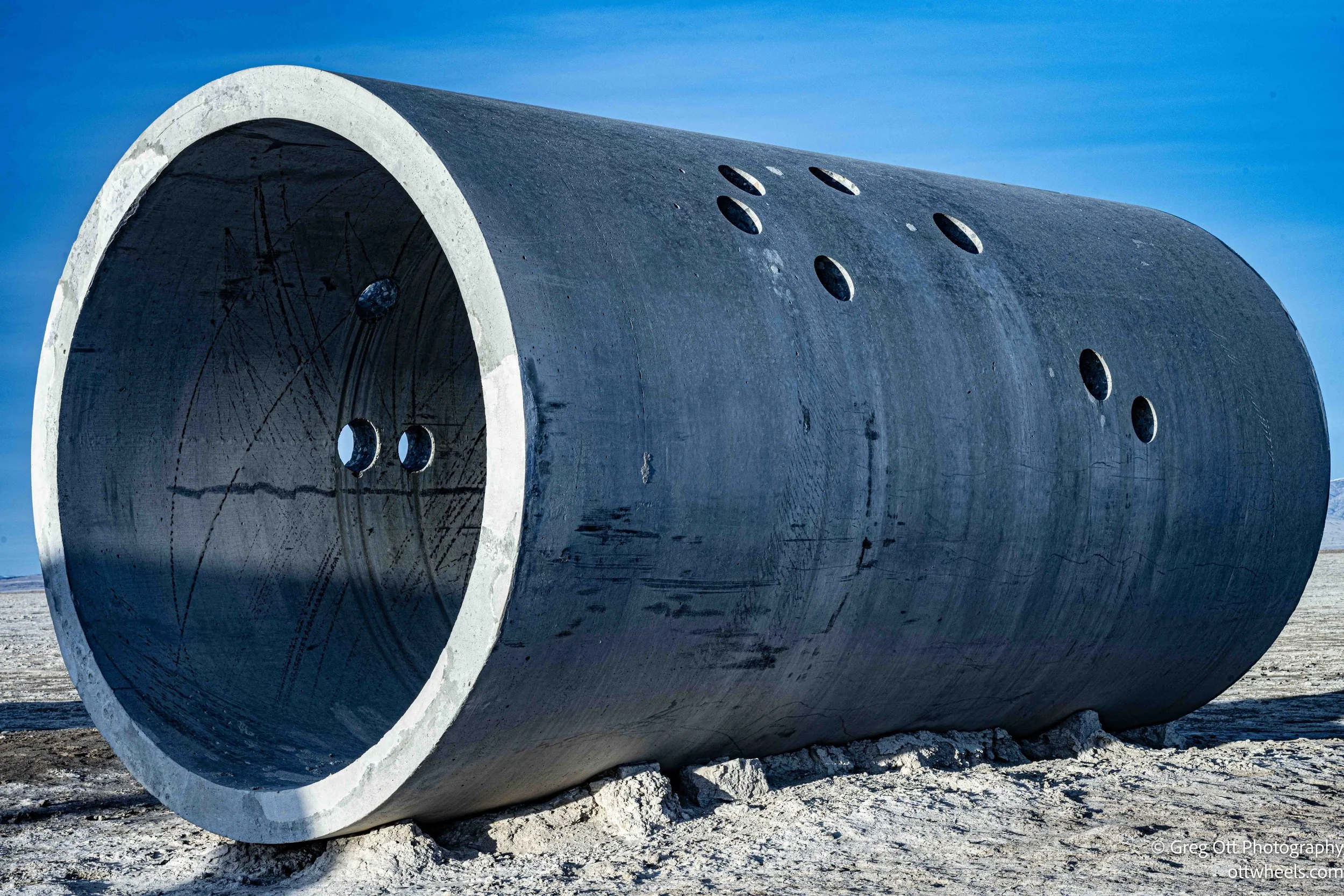
As the afternoon moved on, I worked on a few less obvious images, trying to capture the constellations and the way the tunnels pull your eye toward a specific point. The blue sky showing through the perforations changed the feel of those patterns, making the constellations read differently than they do at night.
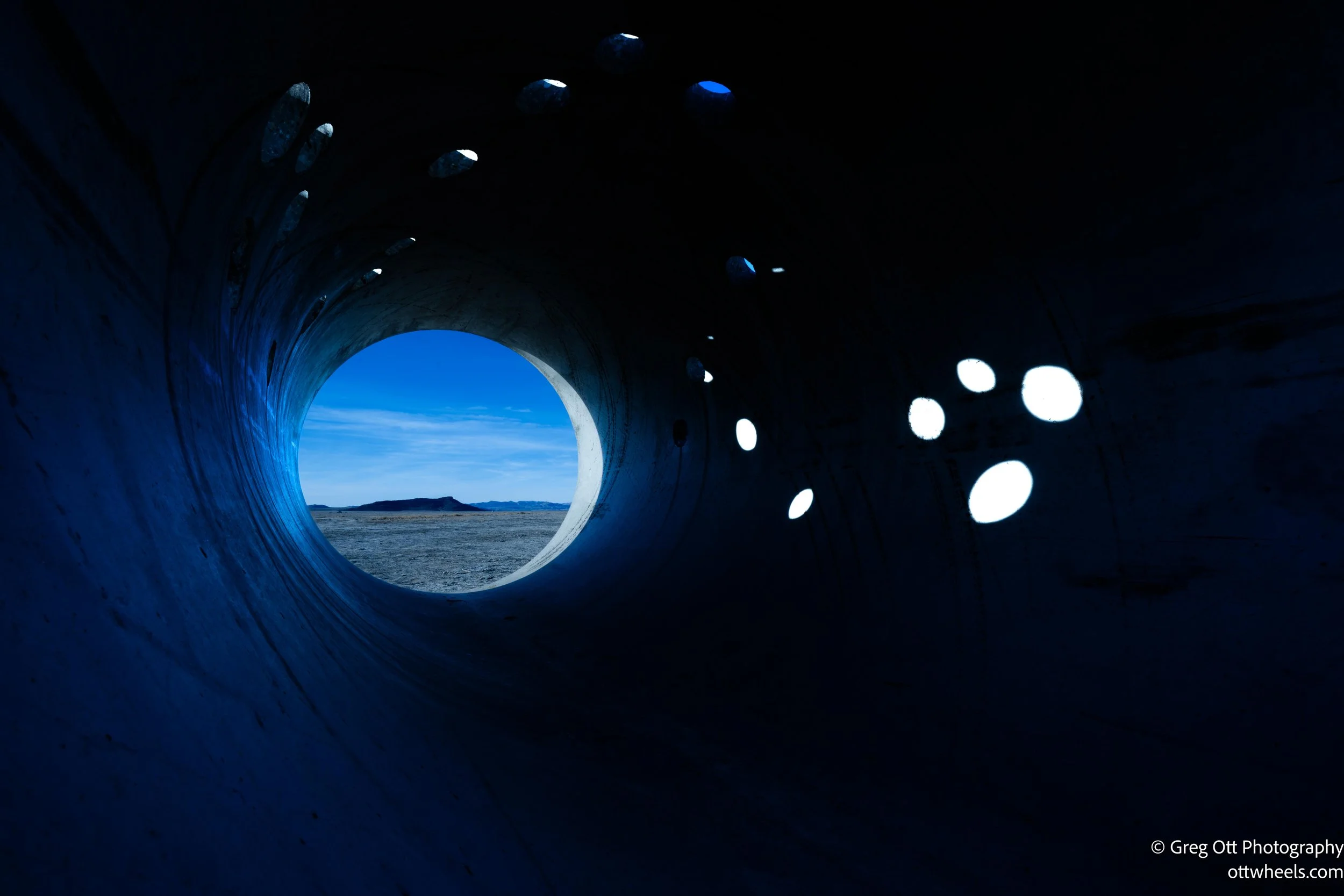
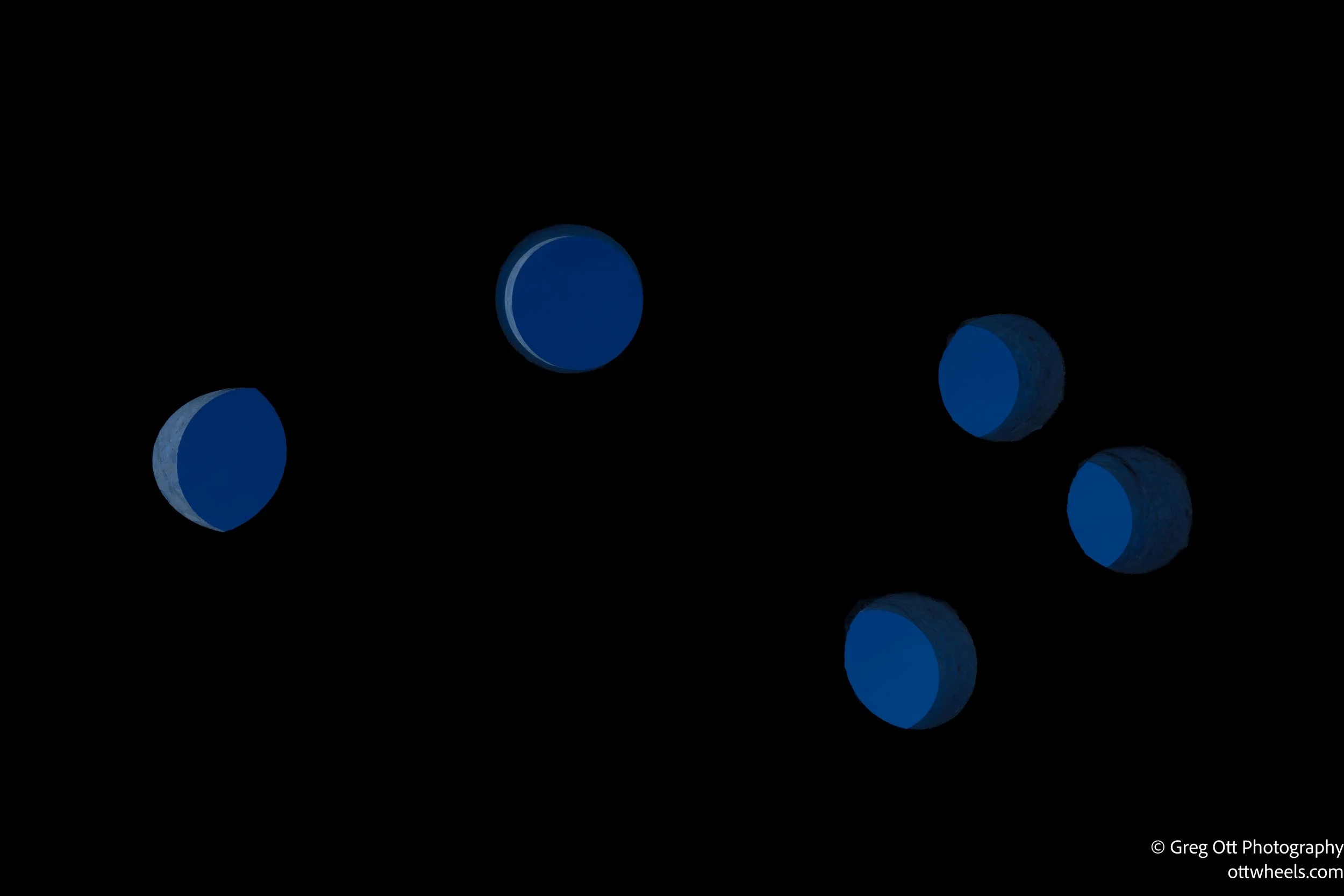
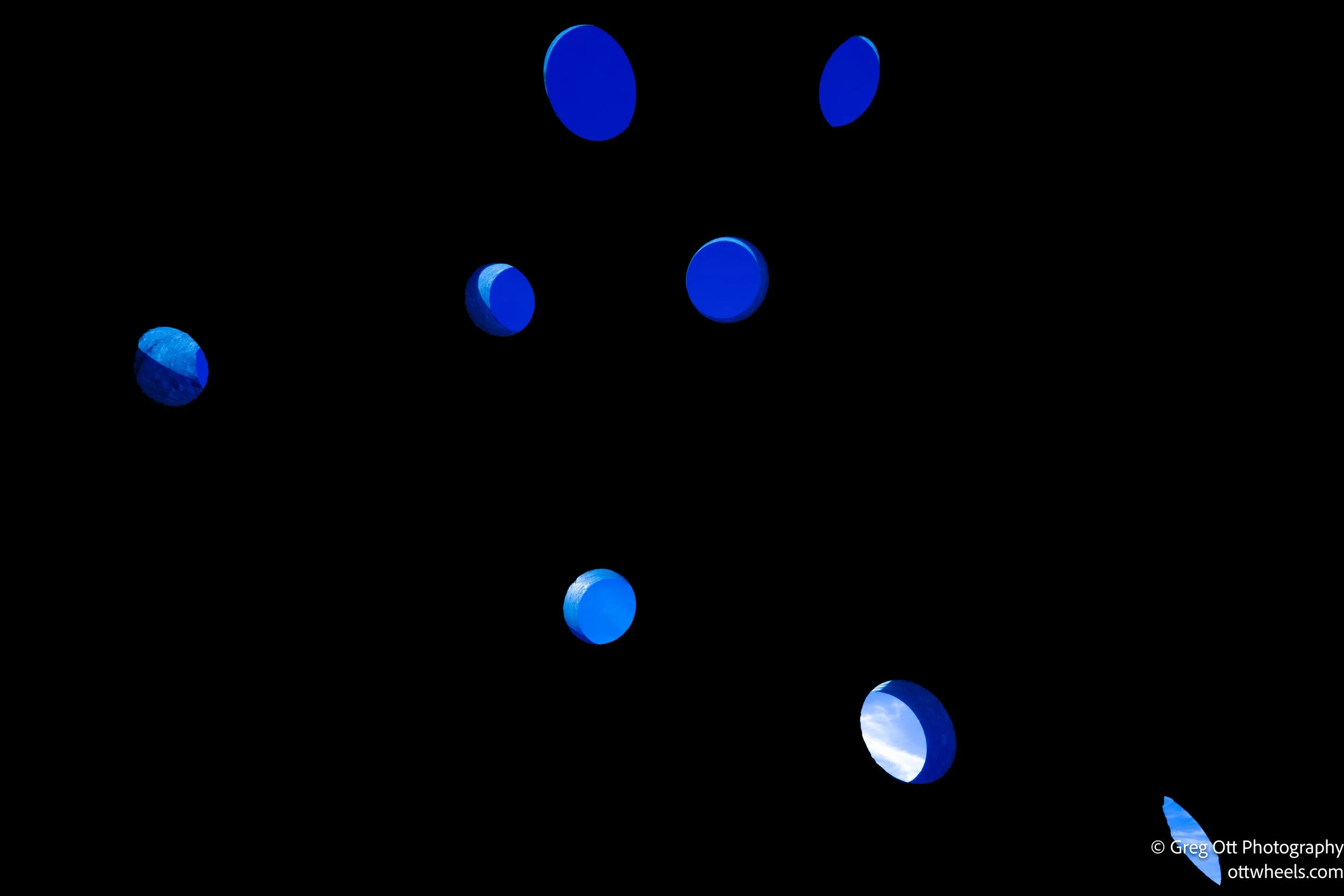
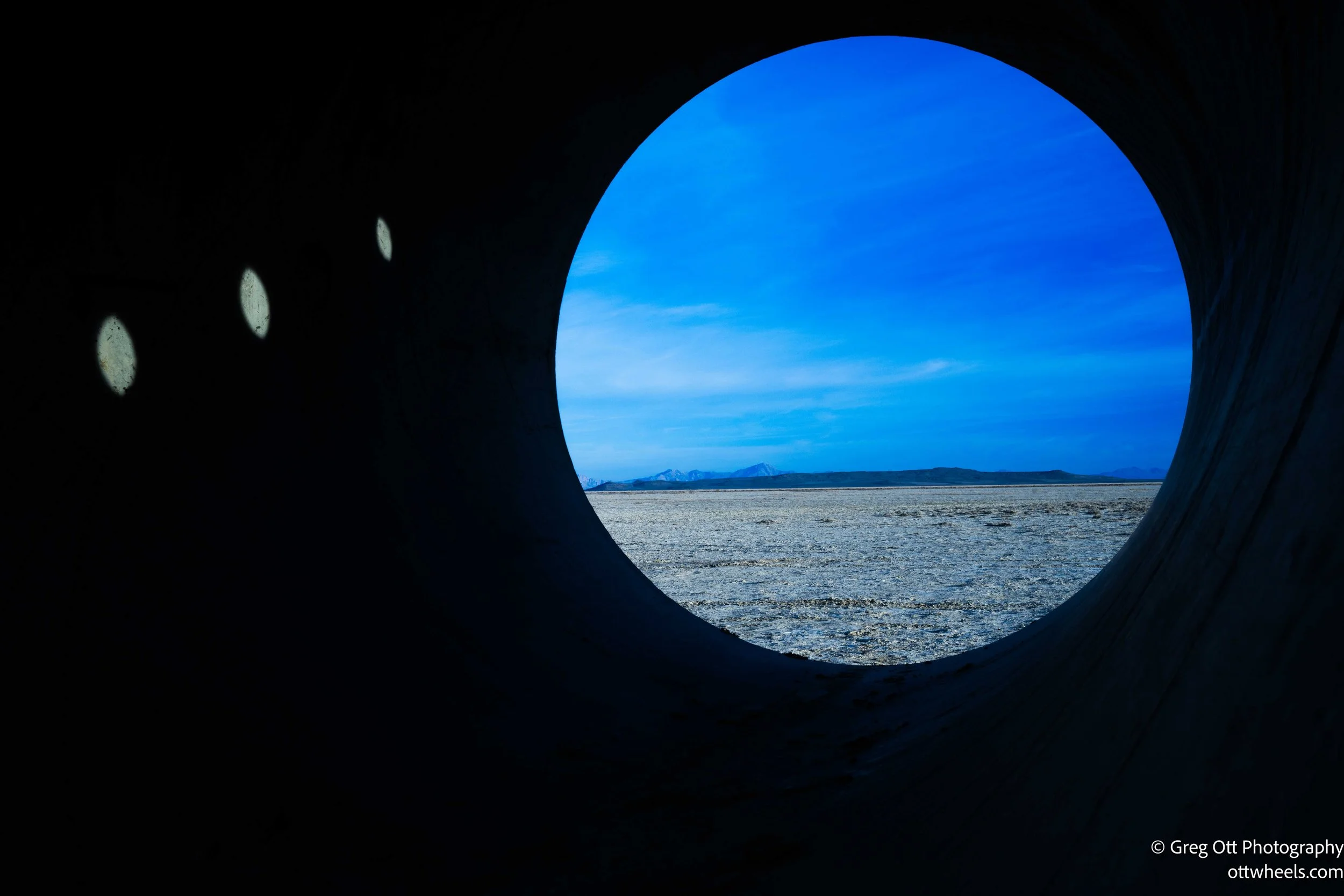
The blue hour and golden hour light were noticeably brighter than the day before. The golds, in particular, reminded me of the yellows used by Vincent van Gogh—bright, layered, and deep, almost glowing rather than reflective.
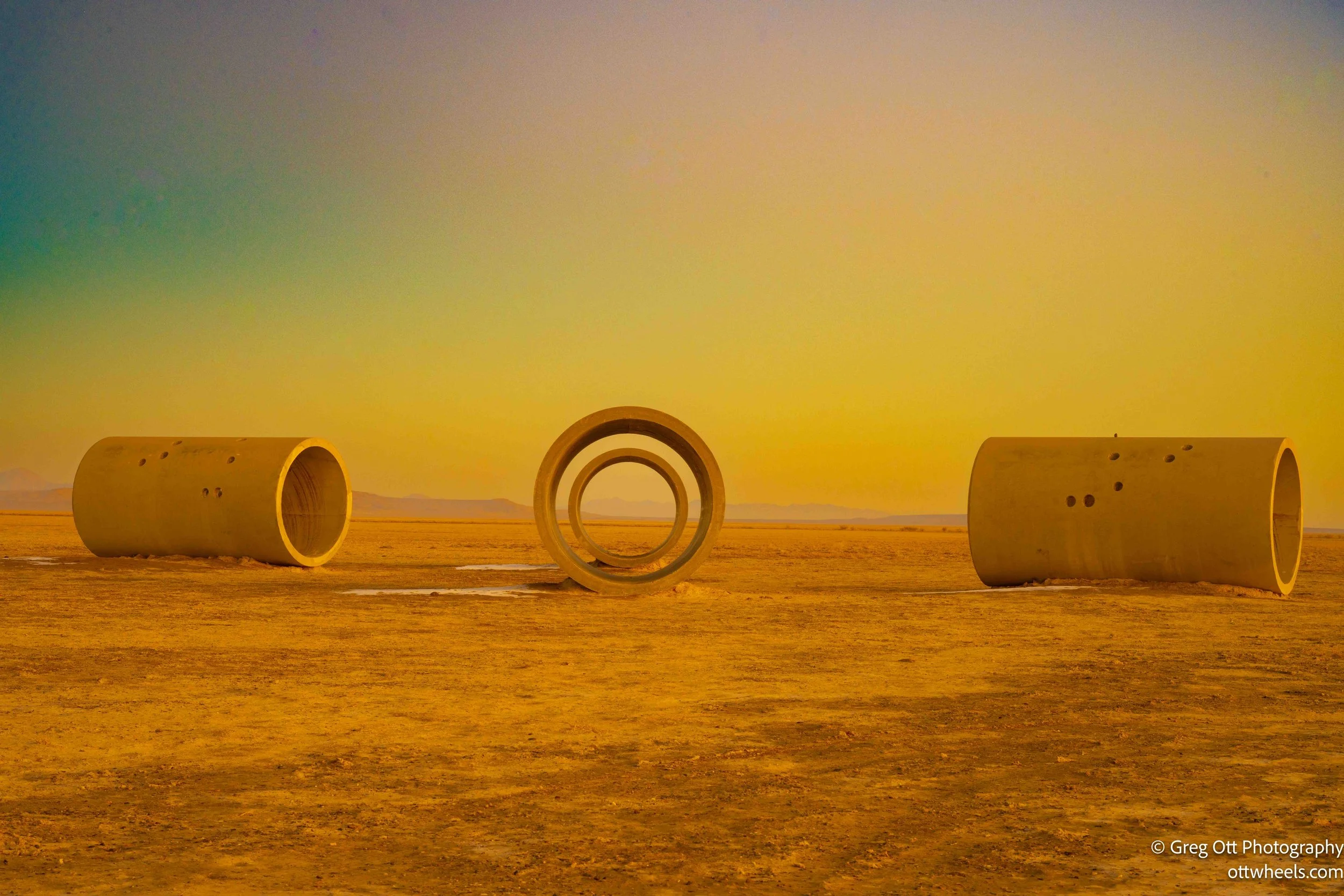
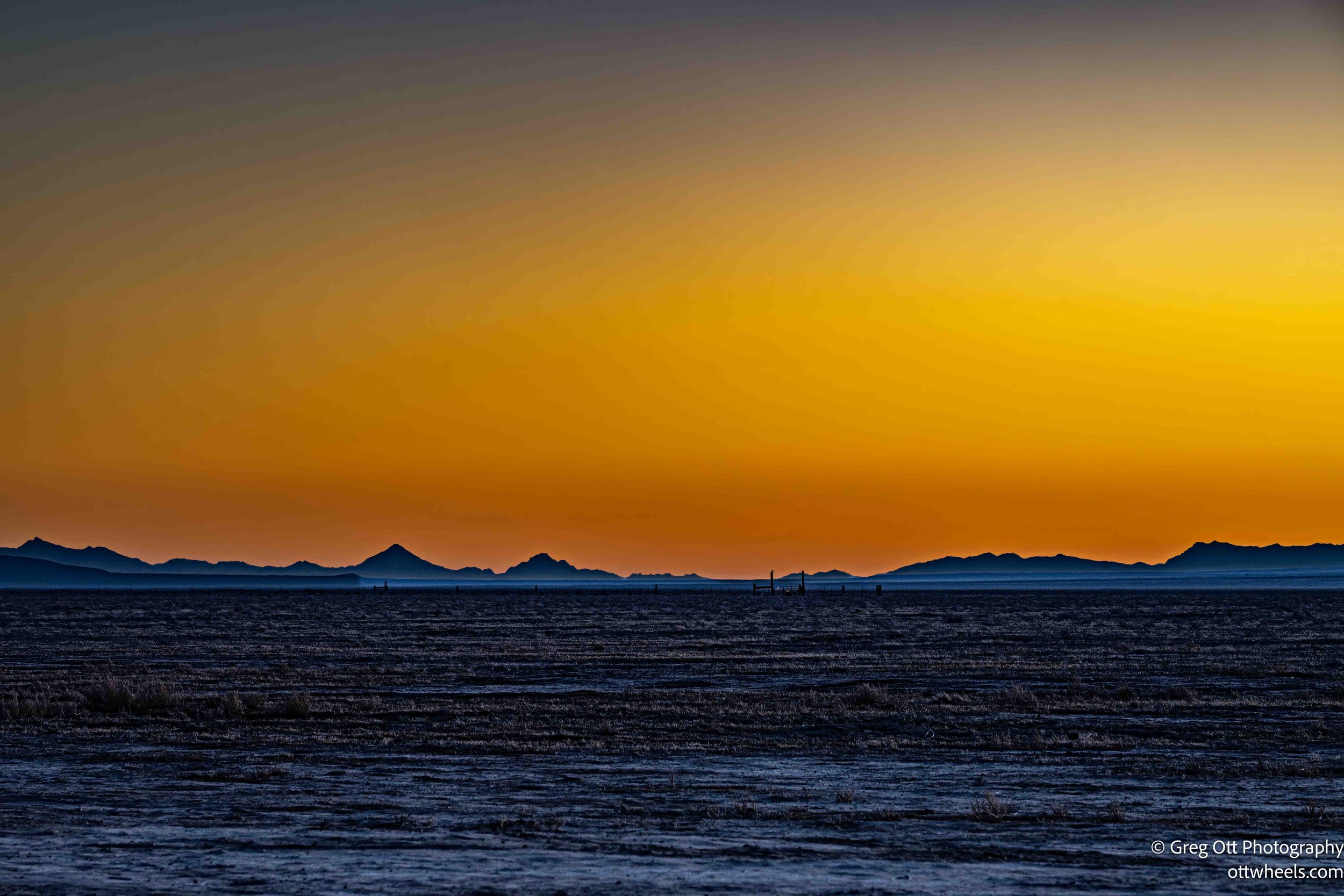
As the sun dropped toward the horizon, the light at the Sun Tunnels shifted from warm reds into deeper purples and then cooler blues, changing the feel of the place once again. The concrete didn’t glow or reflect much of anything; it absorbed the light, flattening contrast and softening edges. Shadows stretched, the desert lost detail, and the openings of the tunnels framed bands of color rather than a single moment. By the time blue hour settled in, the horizon had faded and the tunnels felt less like objects placed in the landscape and more like part of it, marking the quiet transition from day to night.
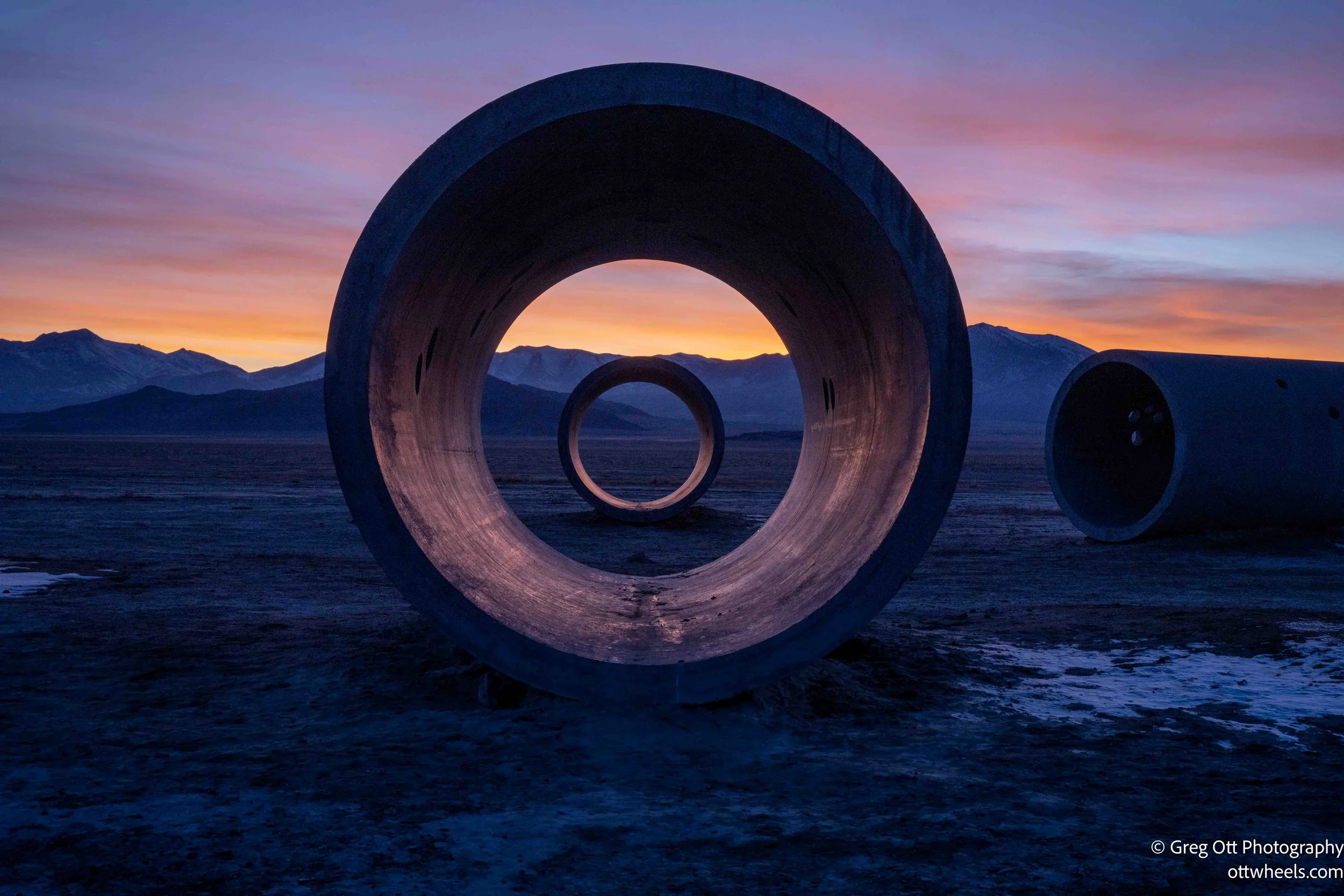
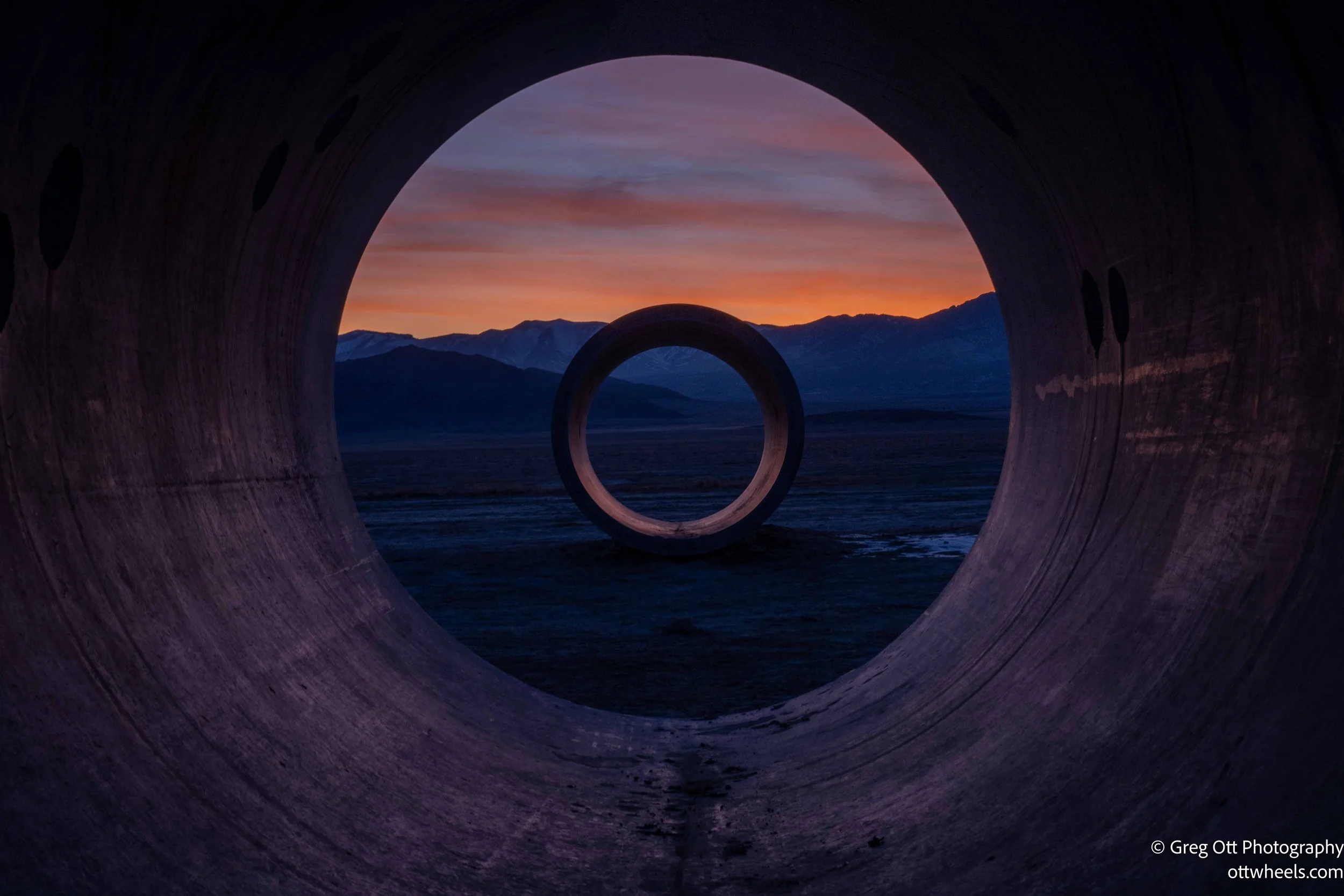
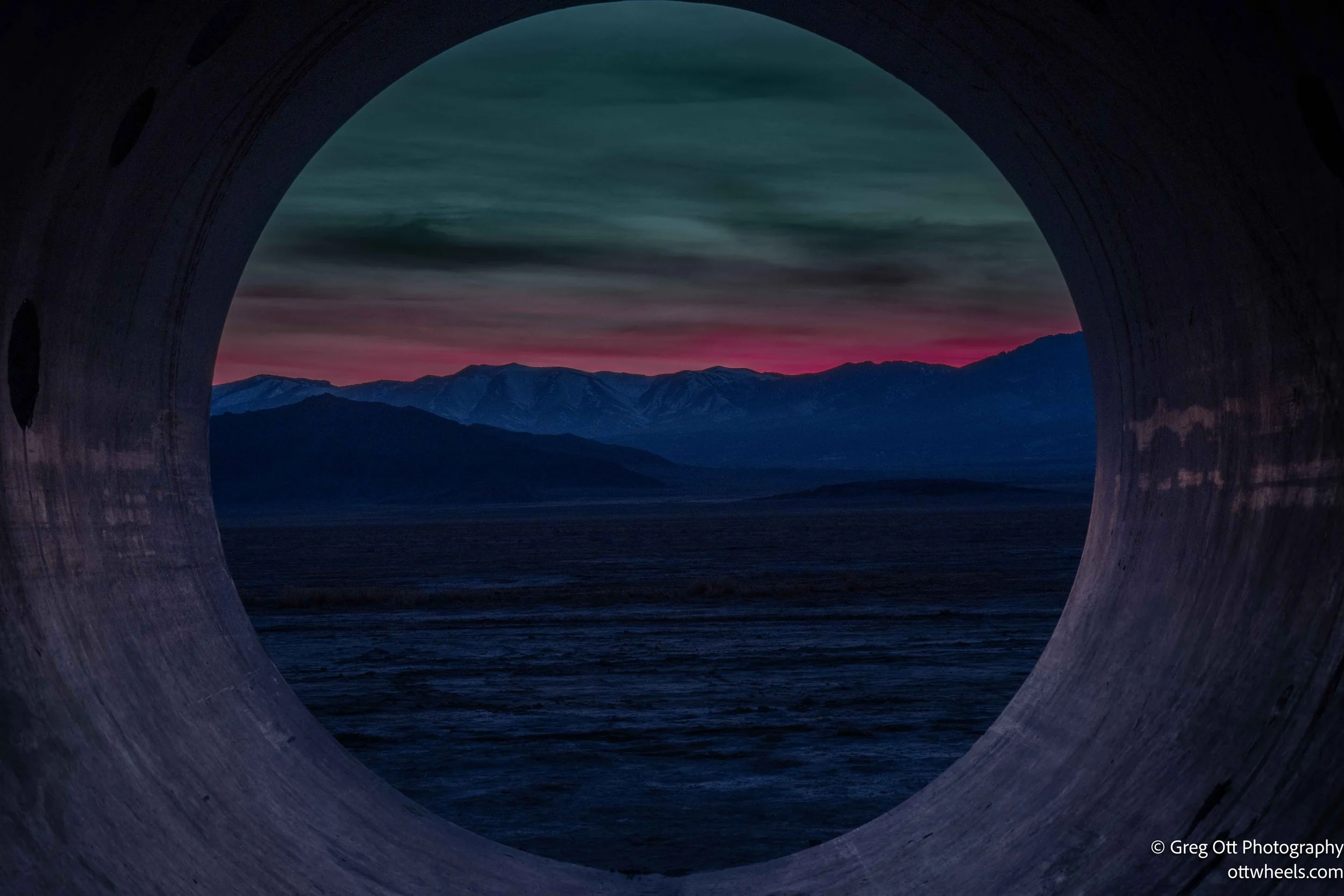
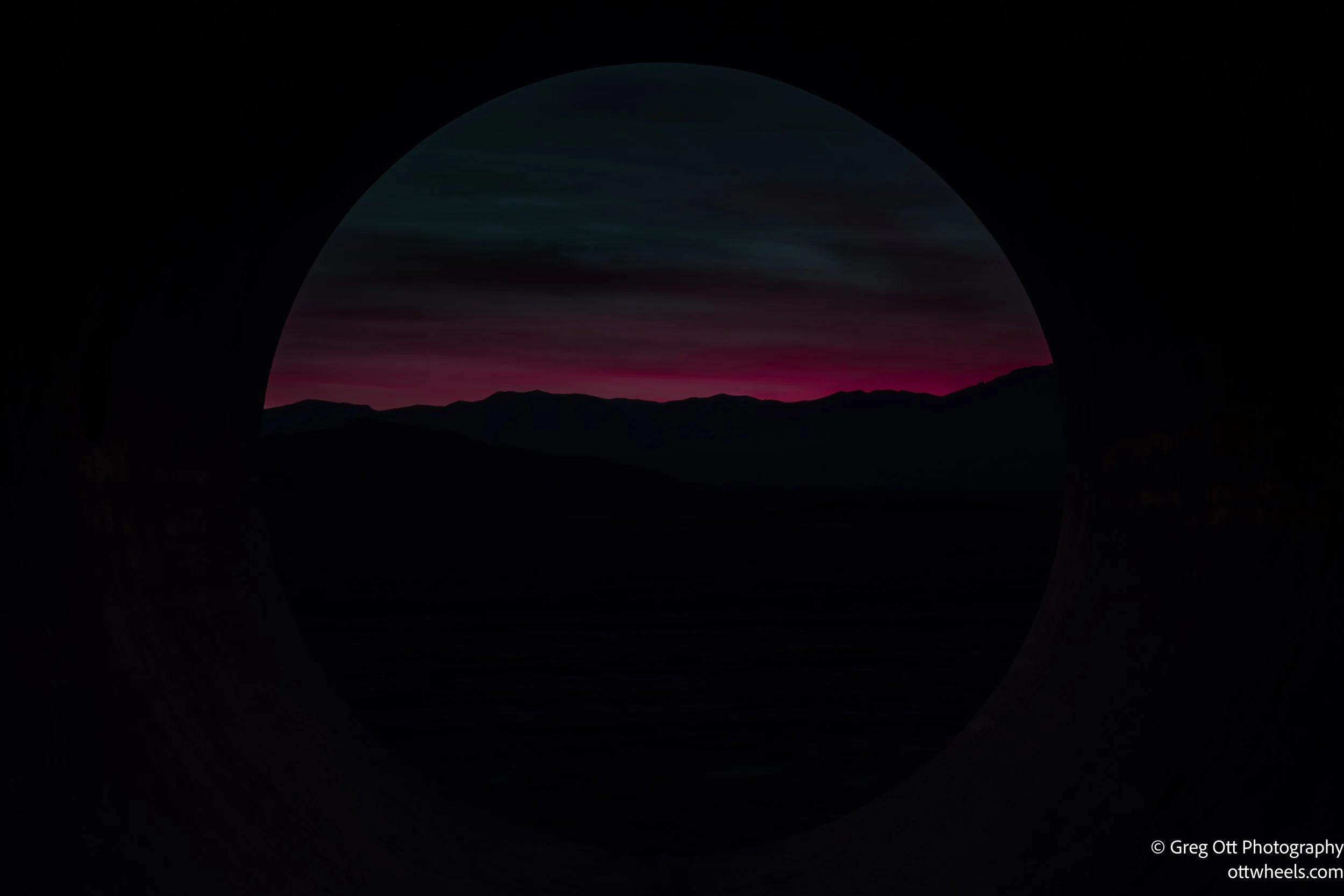
I made another attempt at star trails, but thin clouds began drifting in. The stars were still visible, but they were being partially obscured as the clouds moved through. I decided not to force it. I broke down the gear, went back to the van, and spent the rest of the evening working through the images I’d already captured.
Dinner was simple—spaghetti. My sister had given me some relaxing tea she’d made, so I brewed a cup and settled in. I ended the night watching a rerun of the UConn Women’s Basketball game against Villanova, easing out of the day feeling tired, reflective, and quietly satisfied.
Tomorrow, I’d be on the move again.