Golden Spike / Spiral Jetty
I was pretty sluggish this morning. I didn’t wake until eight at the Sun Tunnels, which felt late after a few long days on the road. I made French toast for breakfast, cleaned up a few parts of the van, and let the morning stretch out instead of forcing it. It felt like one of those slow resets where nothing is urgent and that’s exactly the point. Today I was heading north and east to see the Golden Spike and Spiral Jetty.
The heater had been running for the past two days and barely used any fuel—about 0.7 gallons per day. Even so, I felt uneasy about the fuel situation. I was sitting just under three-quarters of a tank, and before leaving I ran the numbers and figured I’d arrive at Golden Spike National Historic Site with roughly 50 miles left. To complicate things, the GPS instructions wouldn’t stay on my phone, a glitch between Apple CarPlay and Ford Sync. With no cell coverage, I had to rely on Starlink for map data. In the end, I removed the Ford Sync Wi-Fi from the phone, set up the route, and powered Starlink back off.
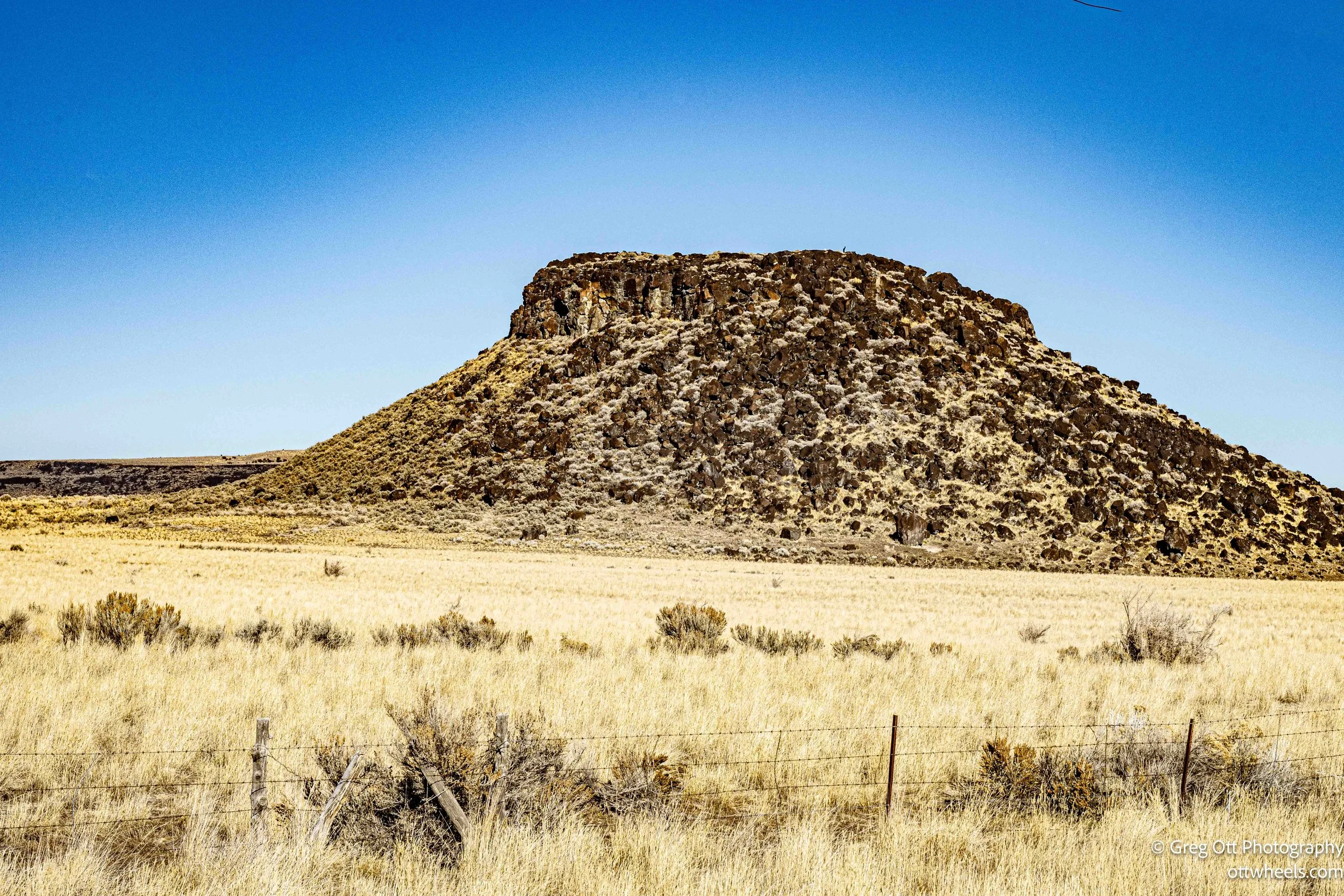
I left the Sun Tunnels and headed north through a landscape that felt more like texture than scenery—muted winter light, pale grasses, low mountains, and long stretches between anything settled. I was on the road around eleven after some morning writing, grateful it hadn’t rained; I’d read the gray mud out here turns slick and nearly impassable. Even dry, the eleven-mile washboard drive back to Route 30 shook everything loose. A few miles in, a truck eased toward me in my lane, hauling three carts, each carrying a small building with a smokestack. He stopped, waved, and waited, as if that were just how things worked out here.
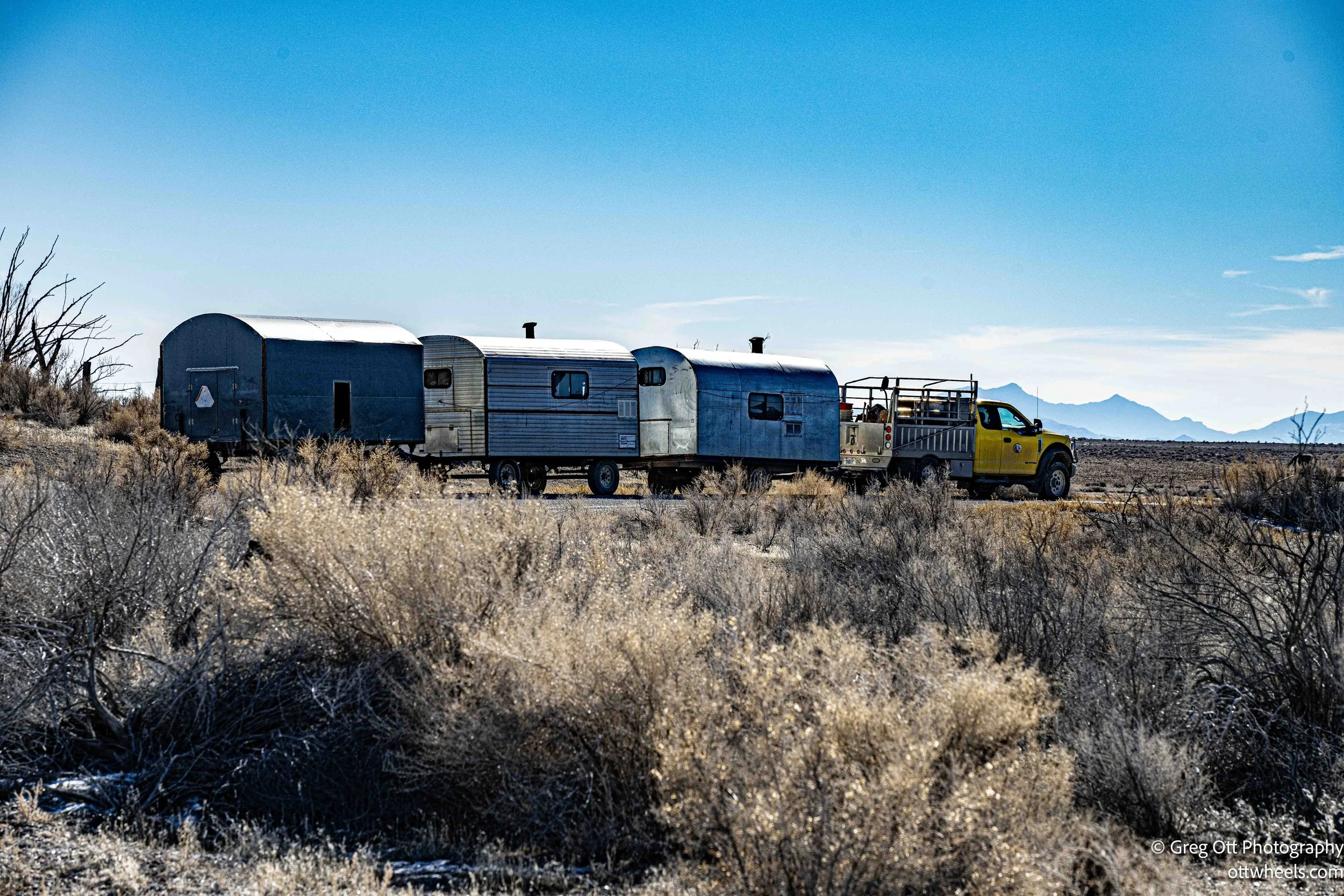
Sheep Sheering Carts?
Sheep
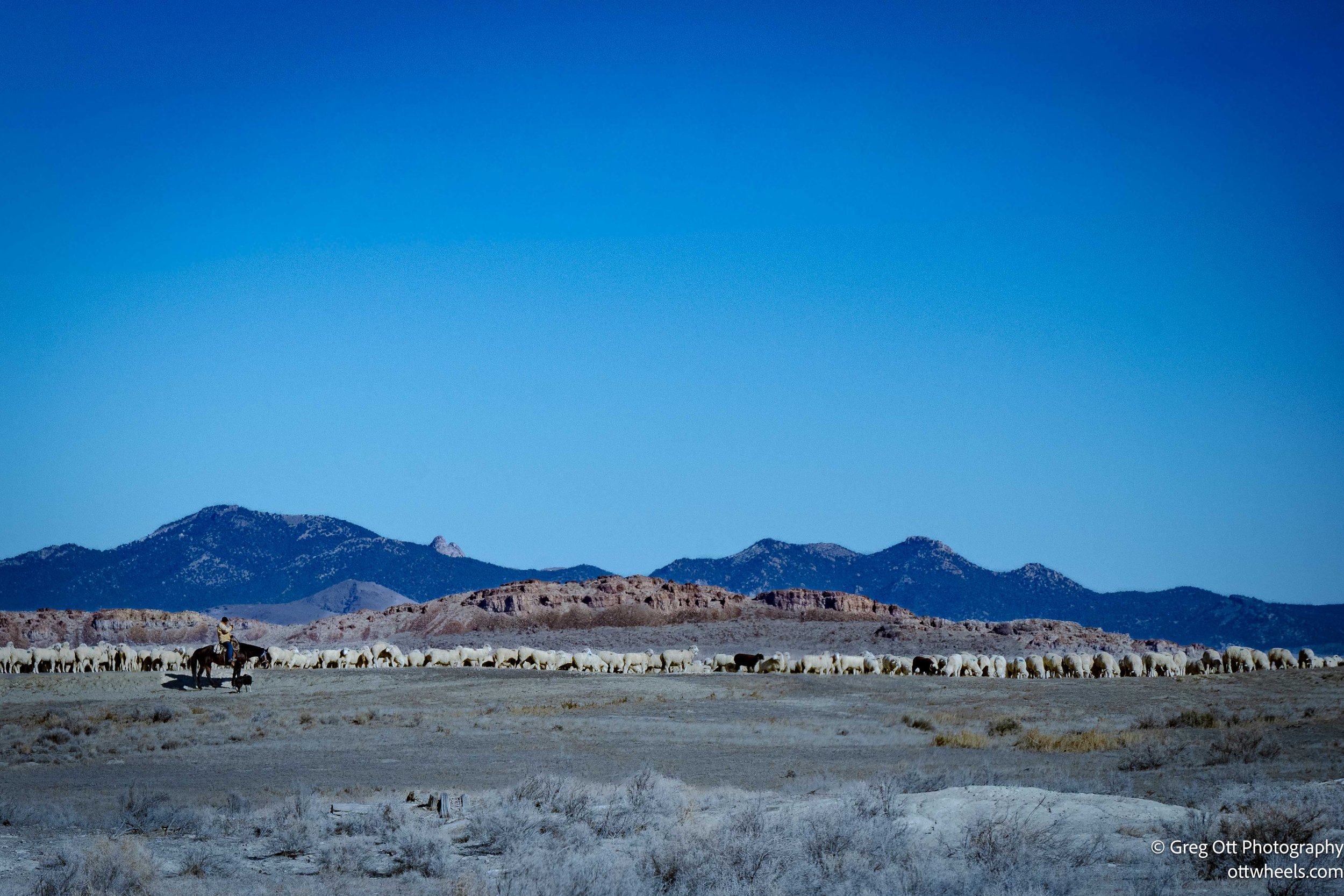
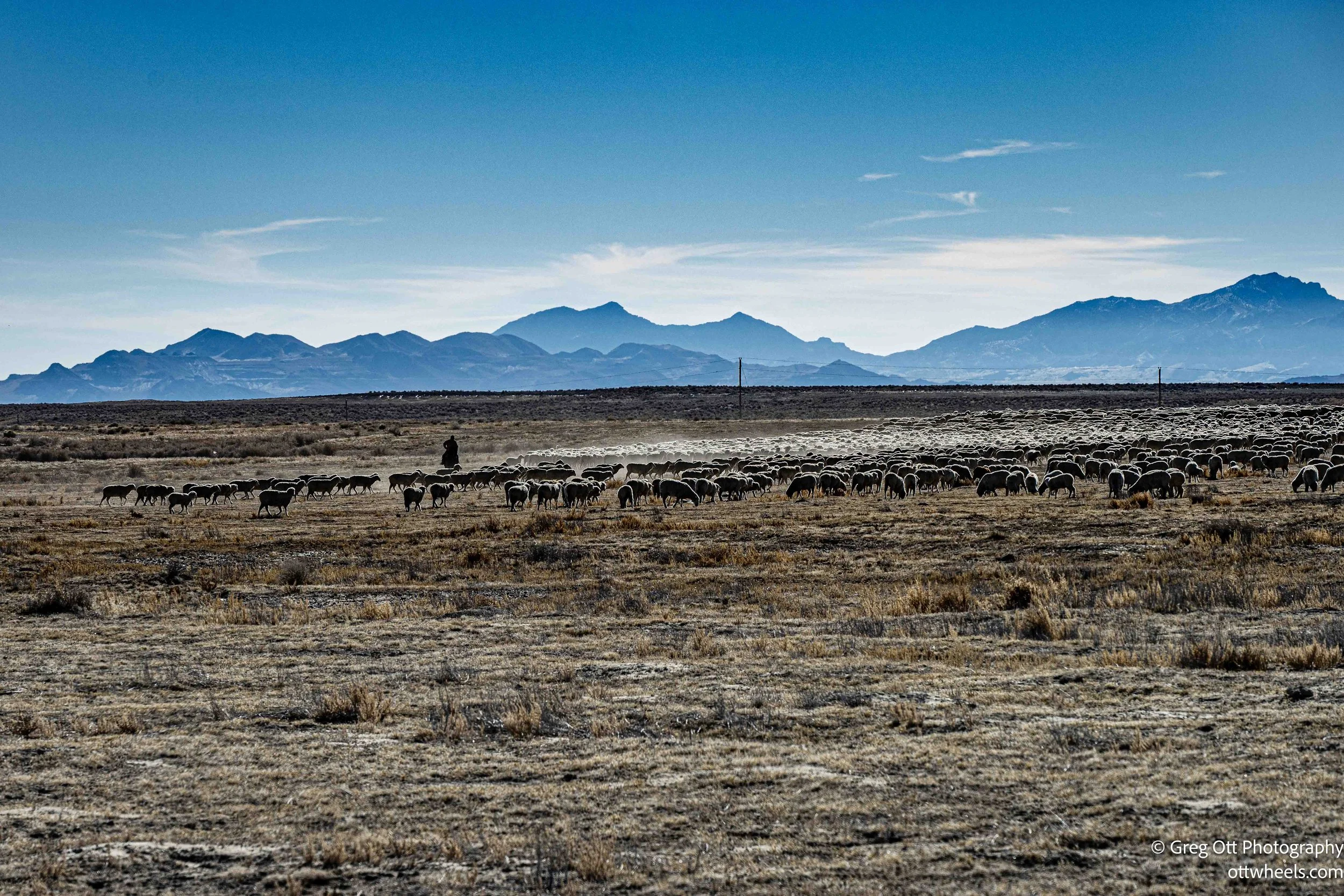
At one point I came across a sheep herder on horseback, moving slowly across the land with four dogs working the edges. There were thousands of sheep—so many that they felt less like individual animals and more like a living surface. When one of the dogs approached, you could see waves ripple through the flock, a subtle shifting as they moved away, then slowly settled back into eating. From a distance it looked almost like wind moving through tall grass, except it was intentional, coordinated, alive.
That moment stuck with me more than any single landmark. The scale of it, the patience of it, the way the land dictated the pace. It felt old, practiced, and quiet—work that belonged exactly where it was. Driving on toward the Golden Spike and later the Spiral Jetty, that image stayed with me. The land out here doesn’t announce itself. It reveals itself slowly, if you’re willing to move at its speed and pay attention.
I continued my struggle down that impossible road. At times I was driving under ten miles per hour. I had the shocks set to soft and it still felt like every bone in my body was rattling. For some reason, the way back seemed even worse than the drive in.
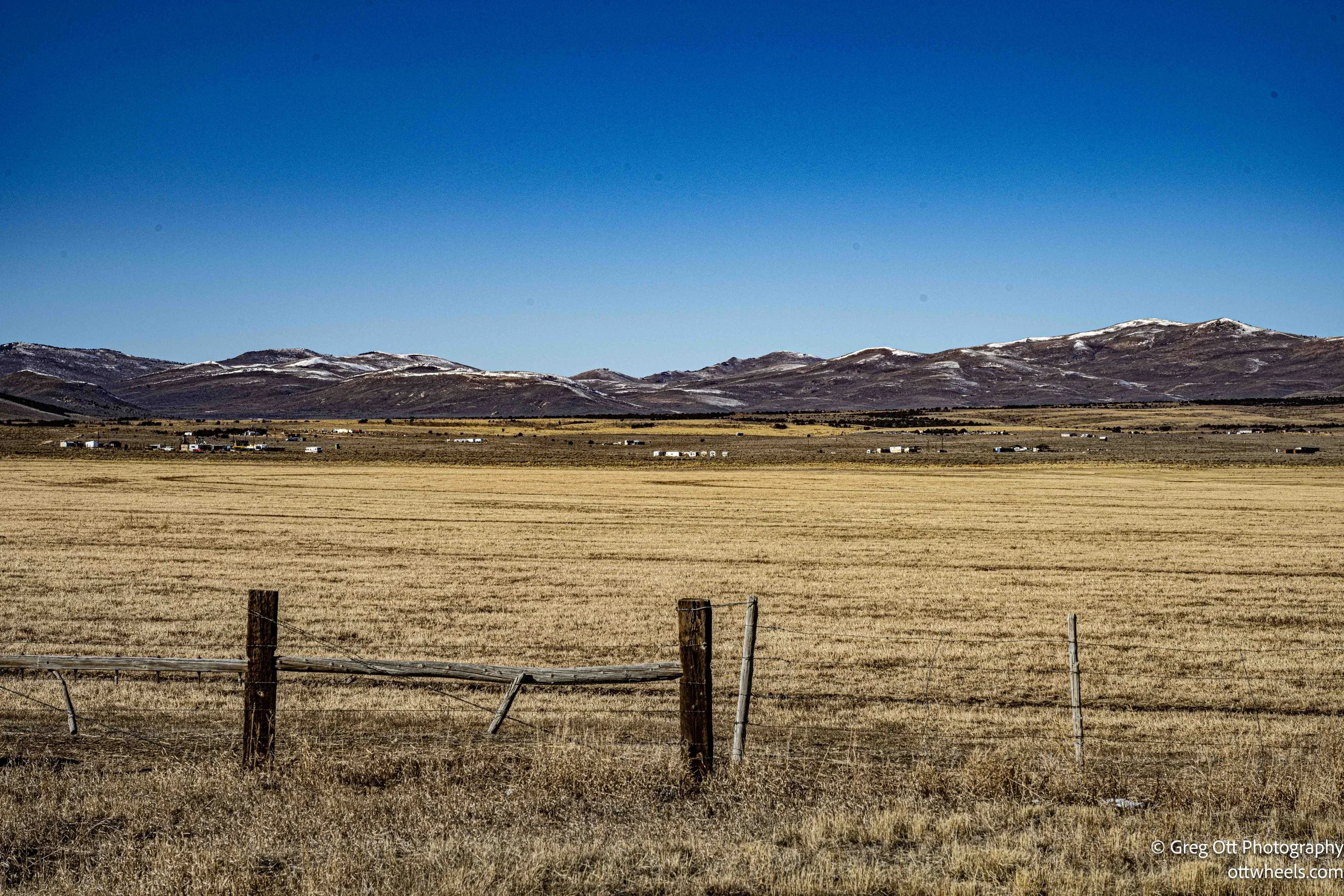
Between the slow speed, stopping for photos, and pulling over just to watch what was unfolding around me, it took nearly 90 minutes to cover eleven miles. I finally reached Route 30 and turned north toward I-80. It isn’t a busy road. A few cars passed in the opposite direction, and one truck rolled by as I pulled over for a snack. The views were wide open, with very few permanent structures. Most of what I saw were trailers—not trailer homes, but camping trailers that appeared to be used as full-time residences. In one spot, four of them were arranged in a box shape, all facing inward.
Around 2 p.m. I pulled into the Flying J at the junction of Route 30 and I-80. I topped off the tank and pointed the van west toward Golden Spike National Historical Park. I arrived just after 3 p.m. and headed straight inside. There’s an entrance fee to access the area where the golden spike was driven, but my national parks pass covered it. I ended up talking with the rangers for a while, asking questions and getting a better sense of how this place fits into the larger story. They suggested starting with the short film on the transcontinental railroad, and, as usual, the National Park Service delivered. The video and printed materials were clear, well paced, and grounded in real history rather than spectacle.
Golden Spike National Memorial
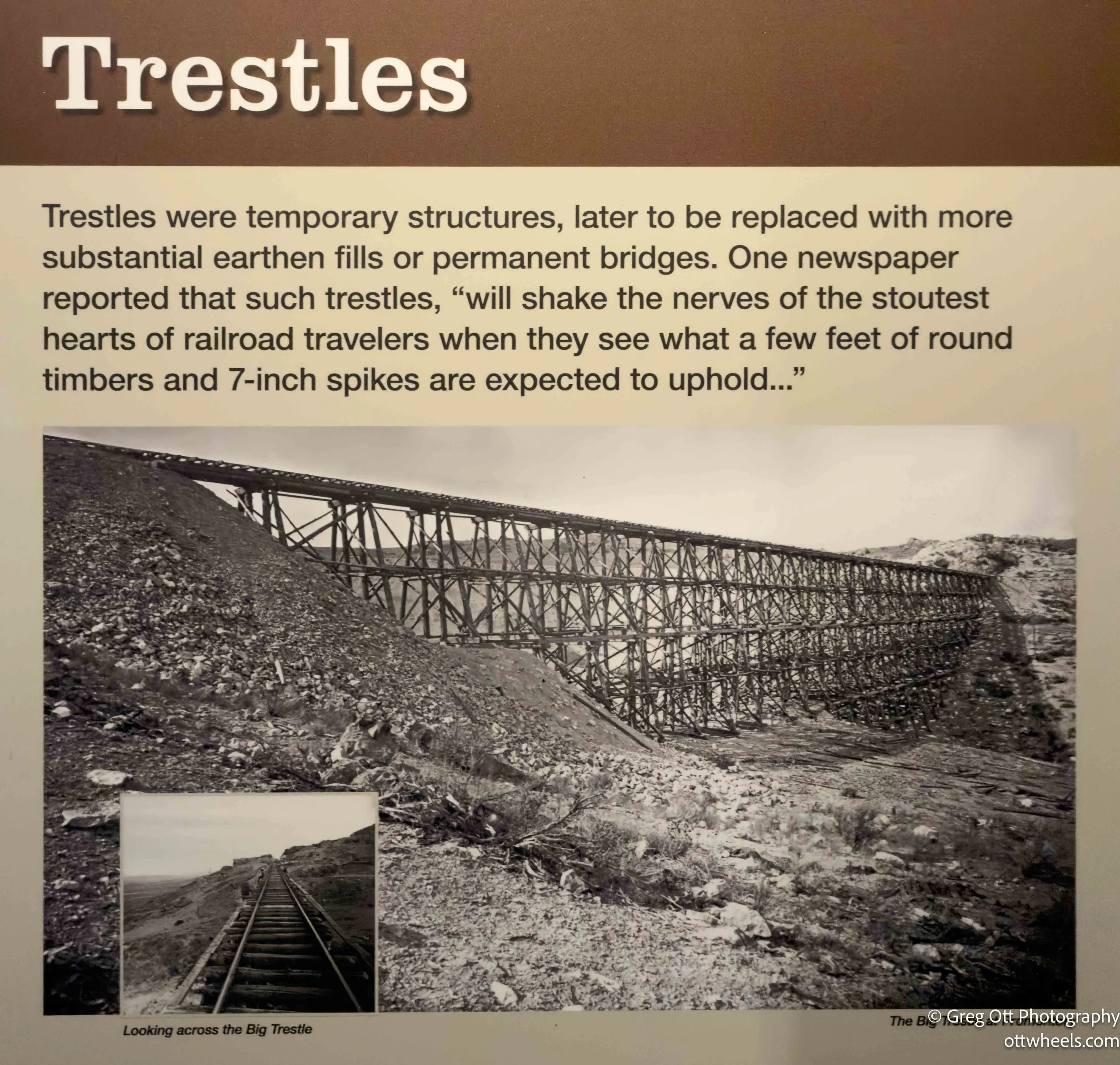
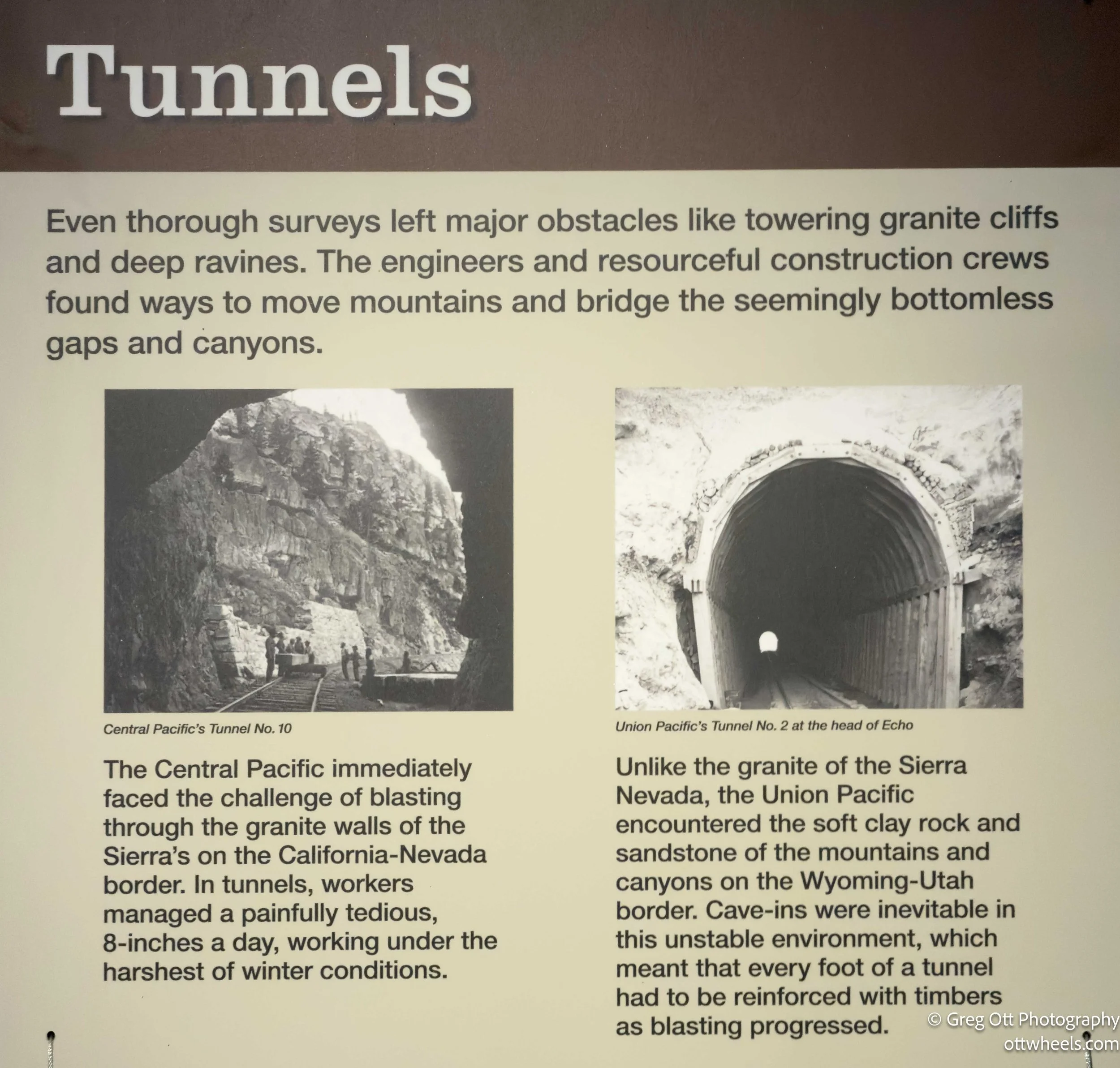
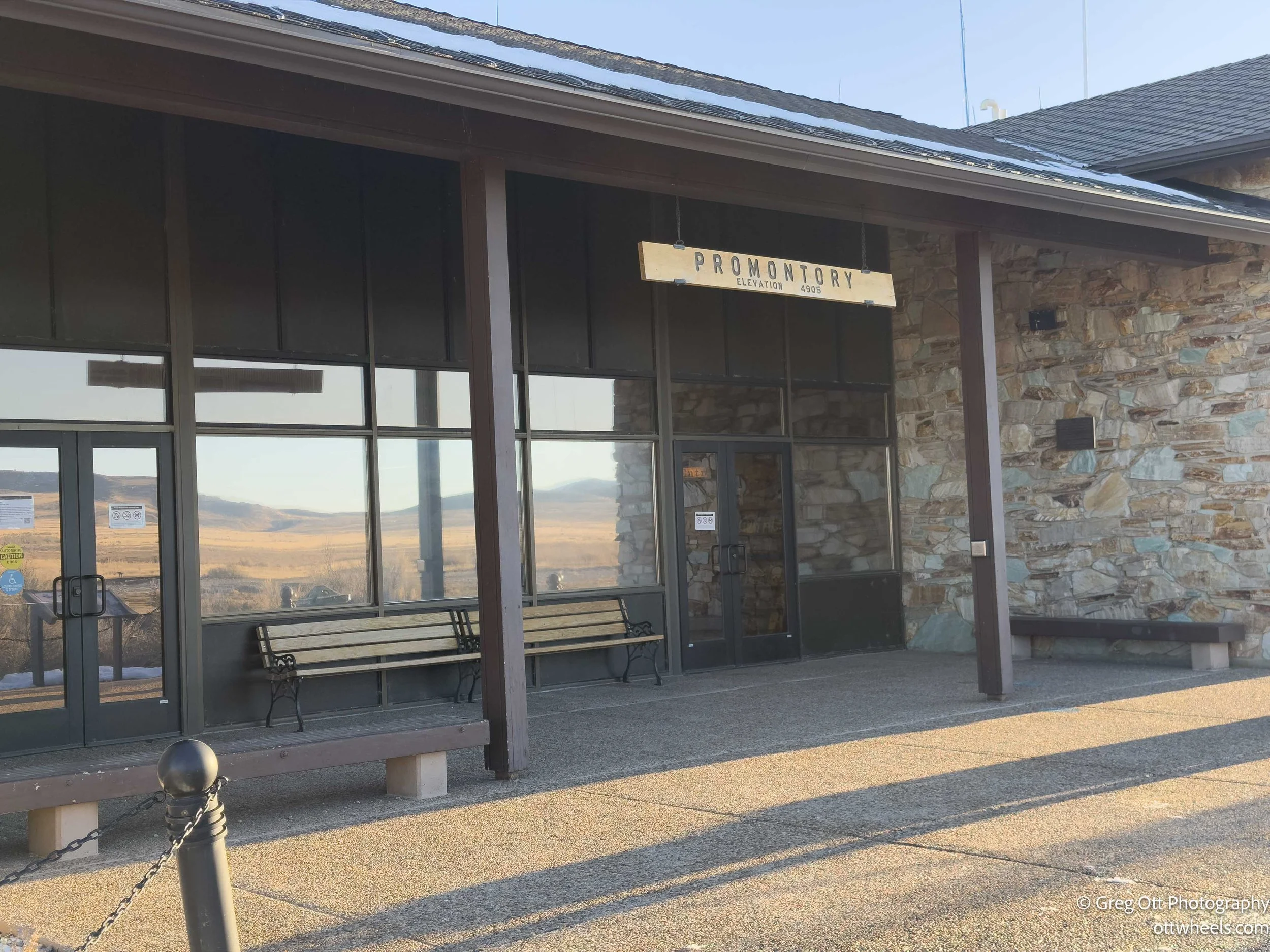
The visitor center itself was fairly modest compared to some of the larger parks I’ve visited, but the exhibits were thoughtfully done. Maps showed the two rail lines inching across the country from opposite directions, slowly closing the gap. There were photographs of the workers, explanations of the engineering challenges, and timelines that helped convey the scale of the project. I spent time reading about the labor force, especially the Chinese railroad workers whose contributions were essential and long minimized. Other displays focused on logistics—how supplies moved, how time was coordinated, and why this particular meeting point mattered. It wasn’t flashy or overwhelming, but it gave me exactly the context I needed before heading outside.
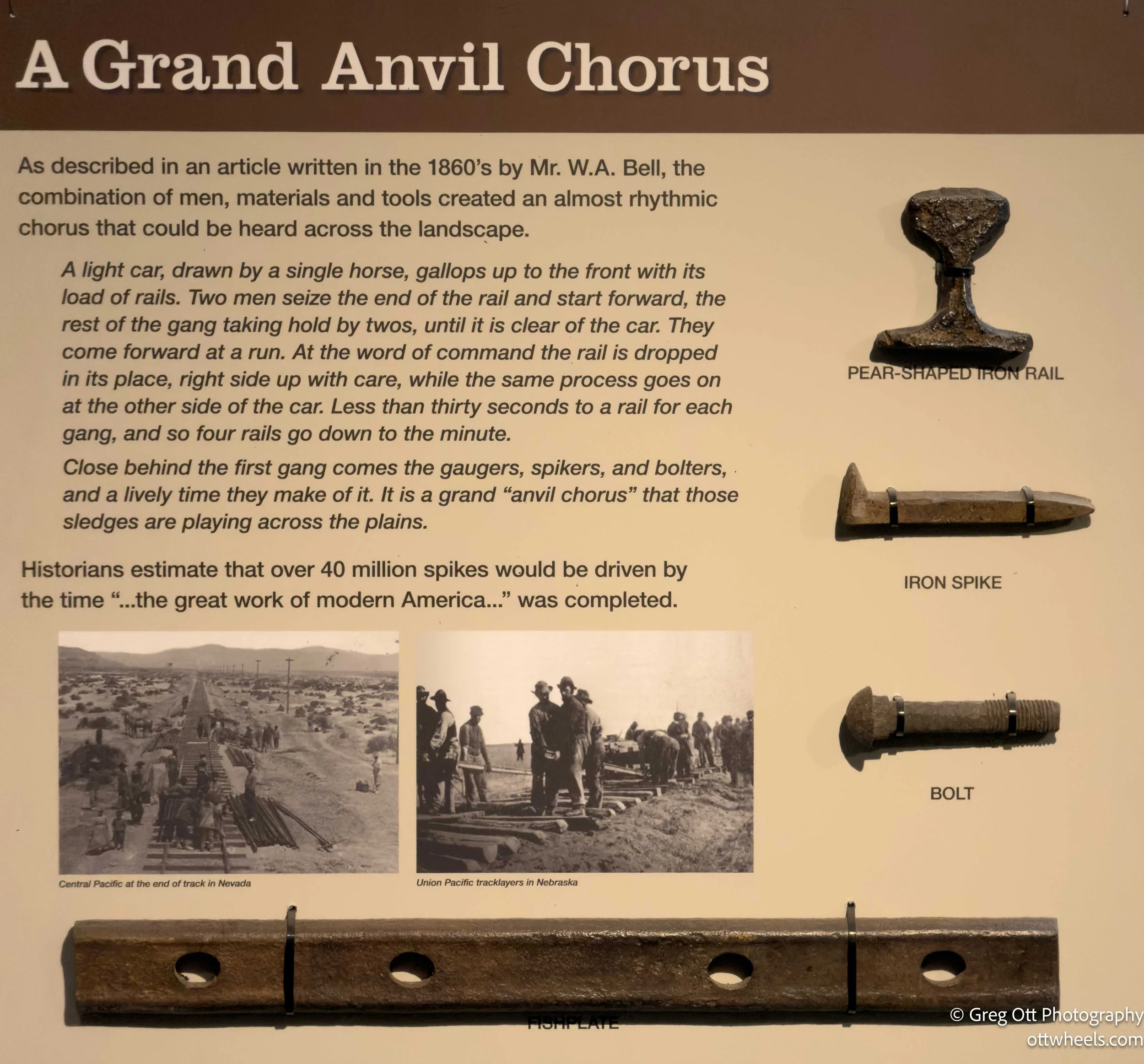
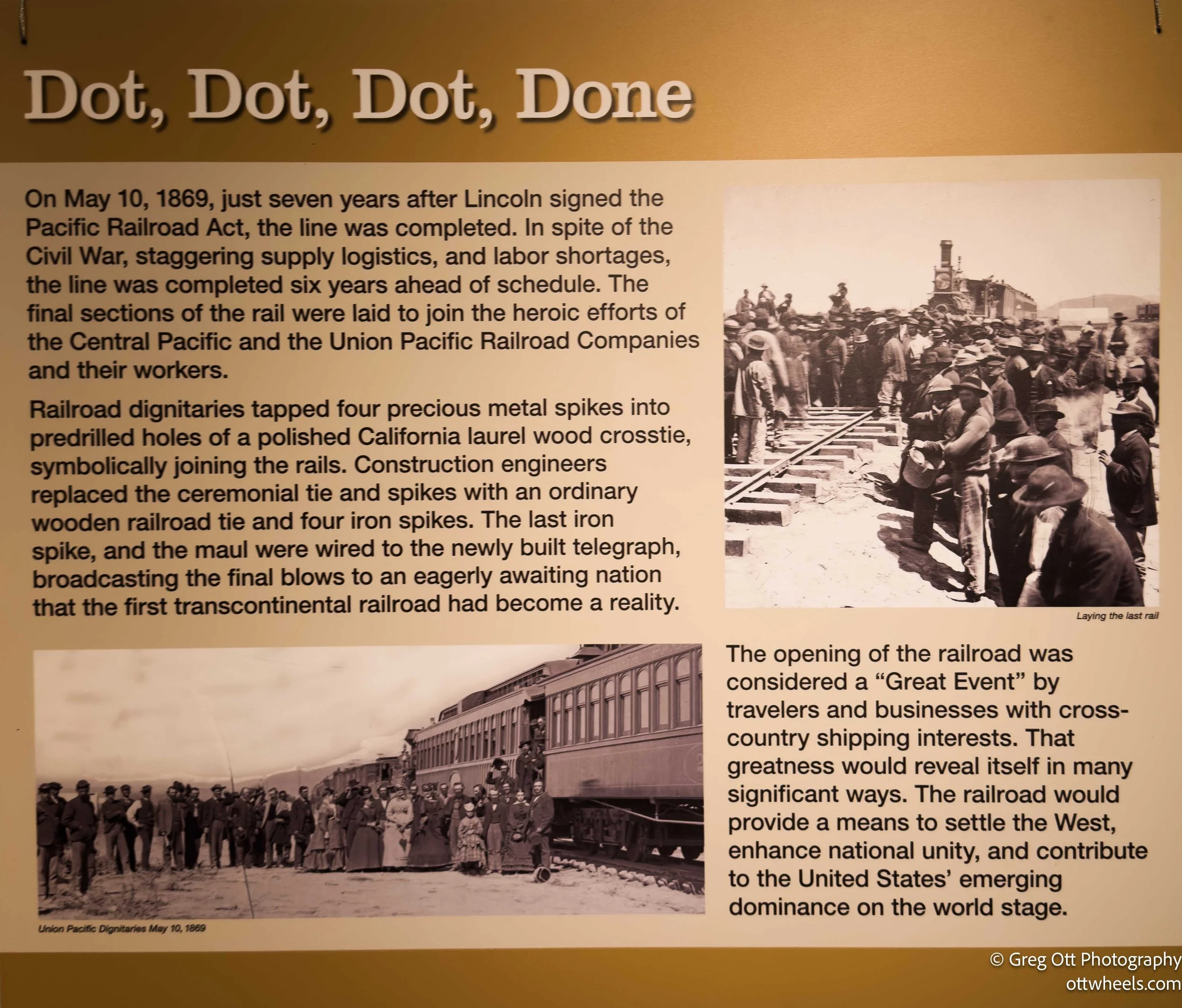
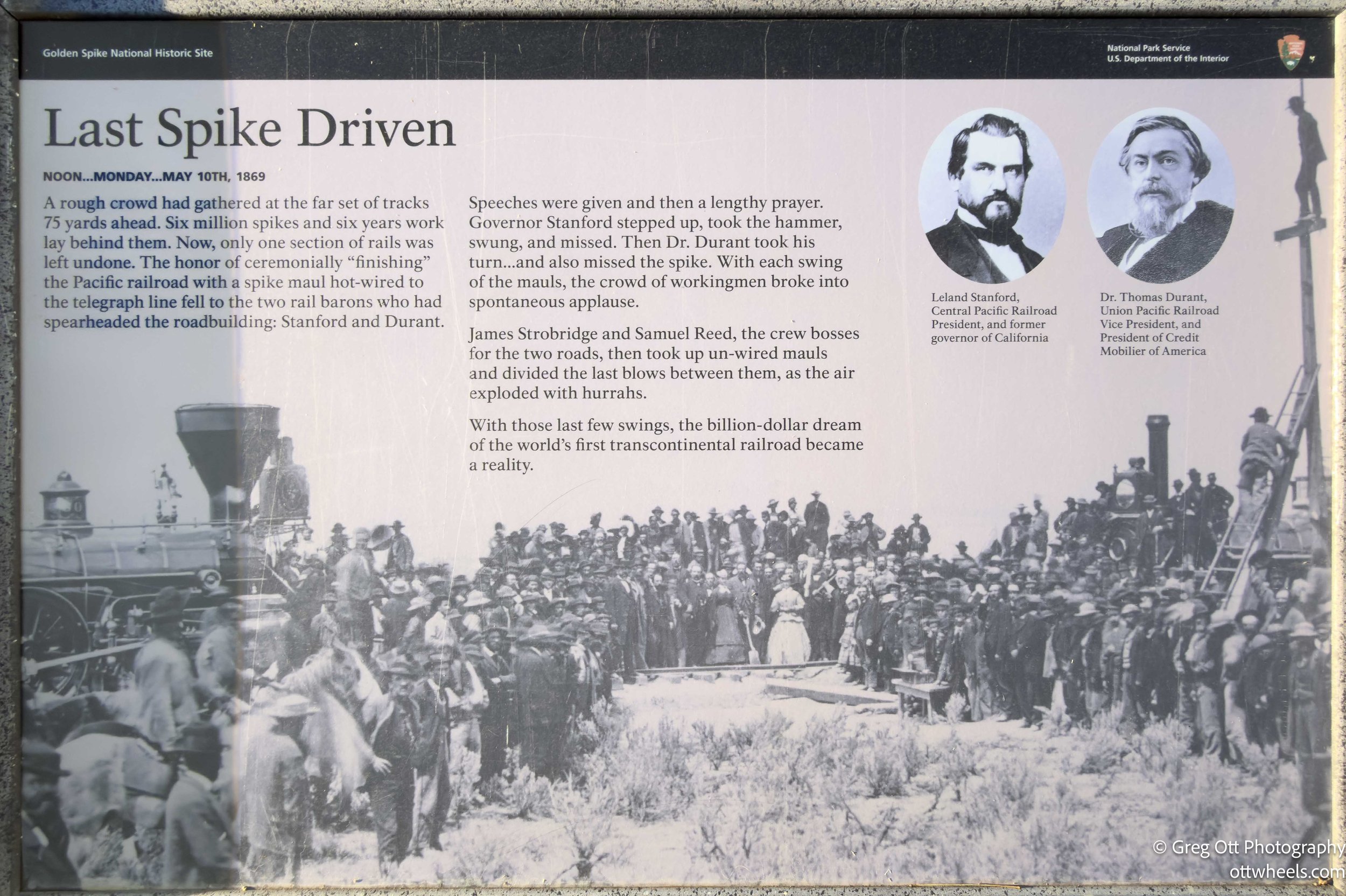
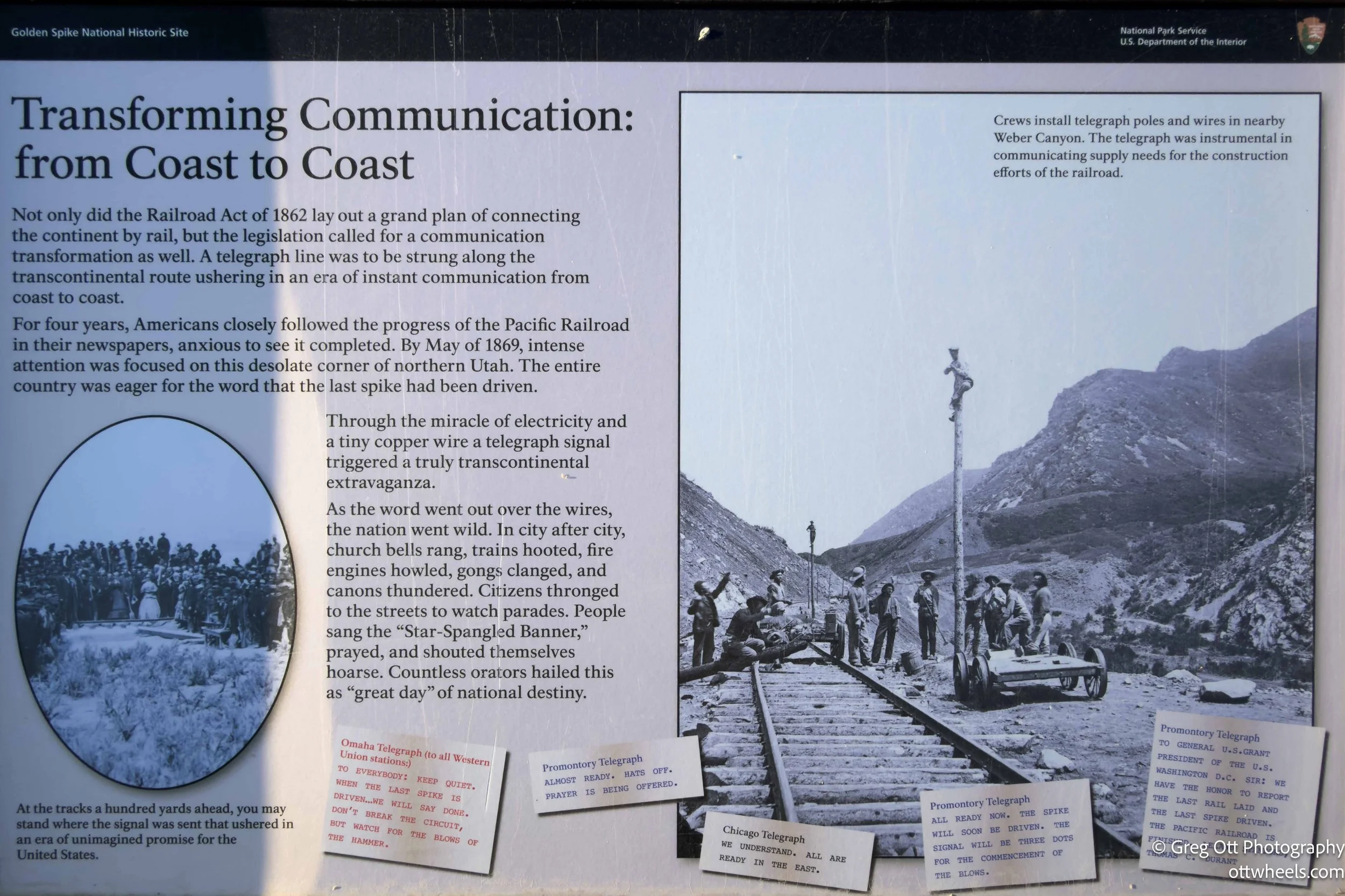
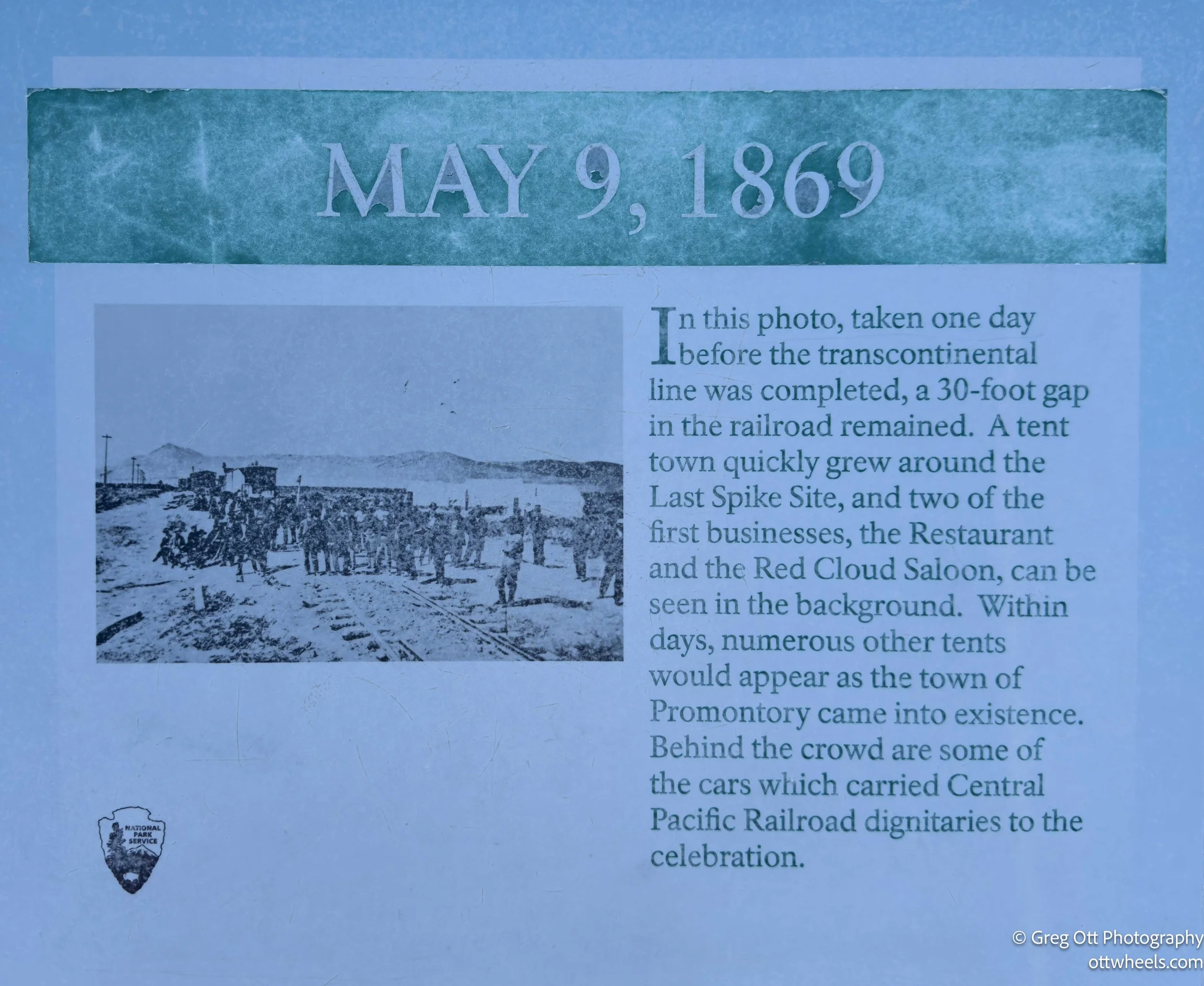
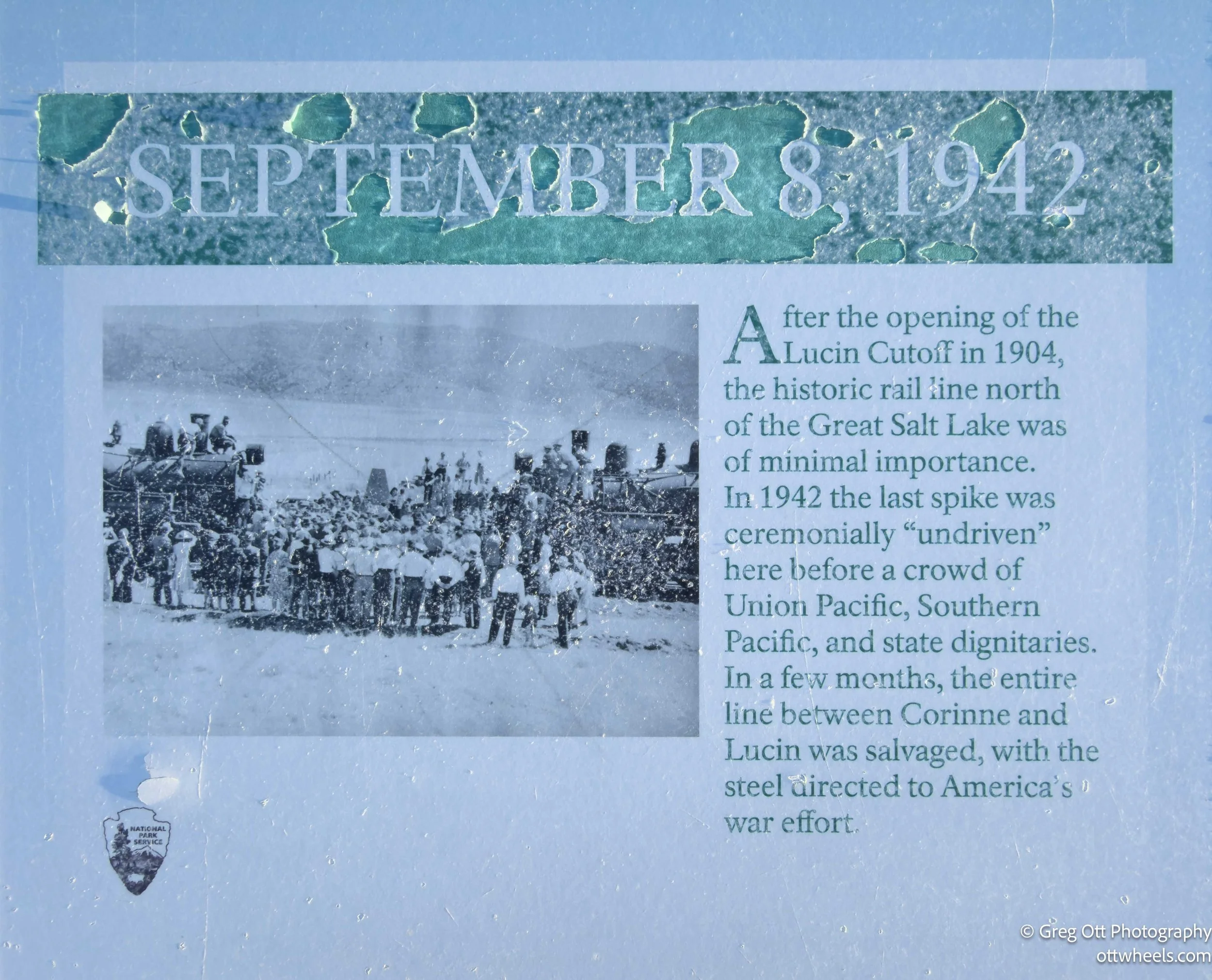
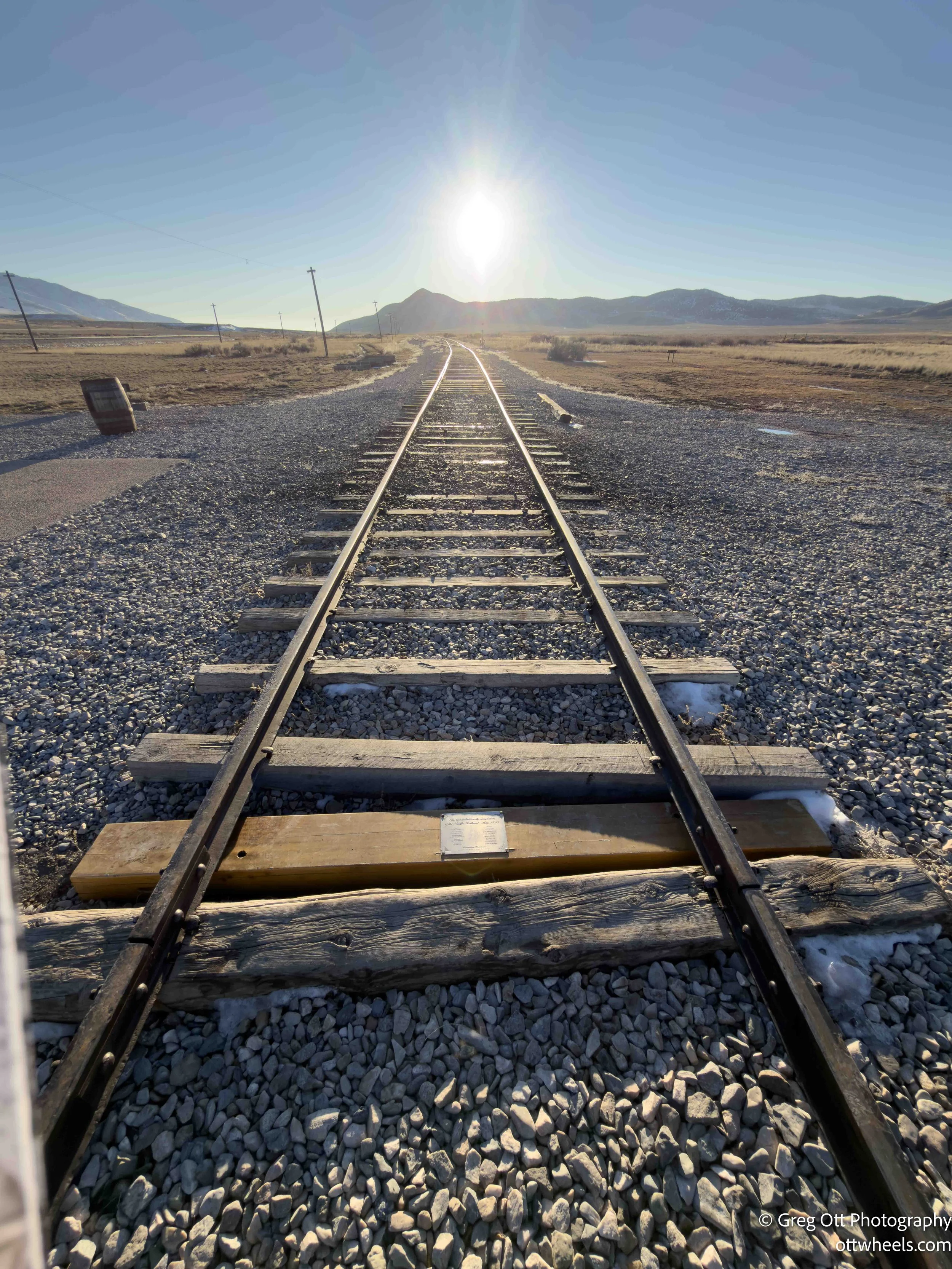
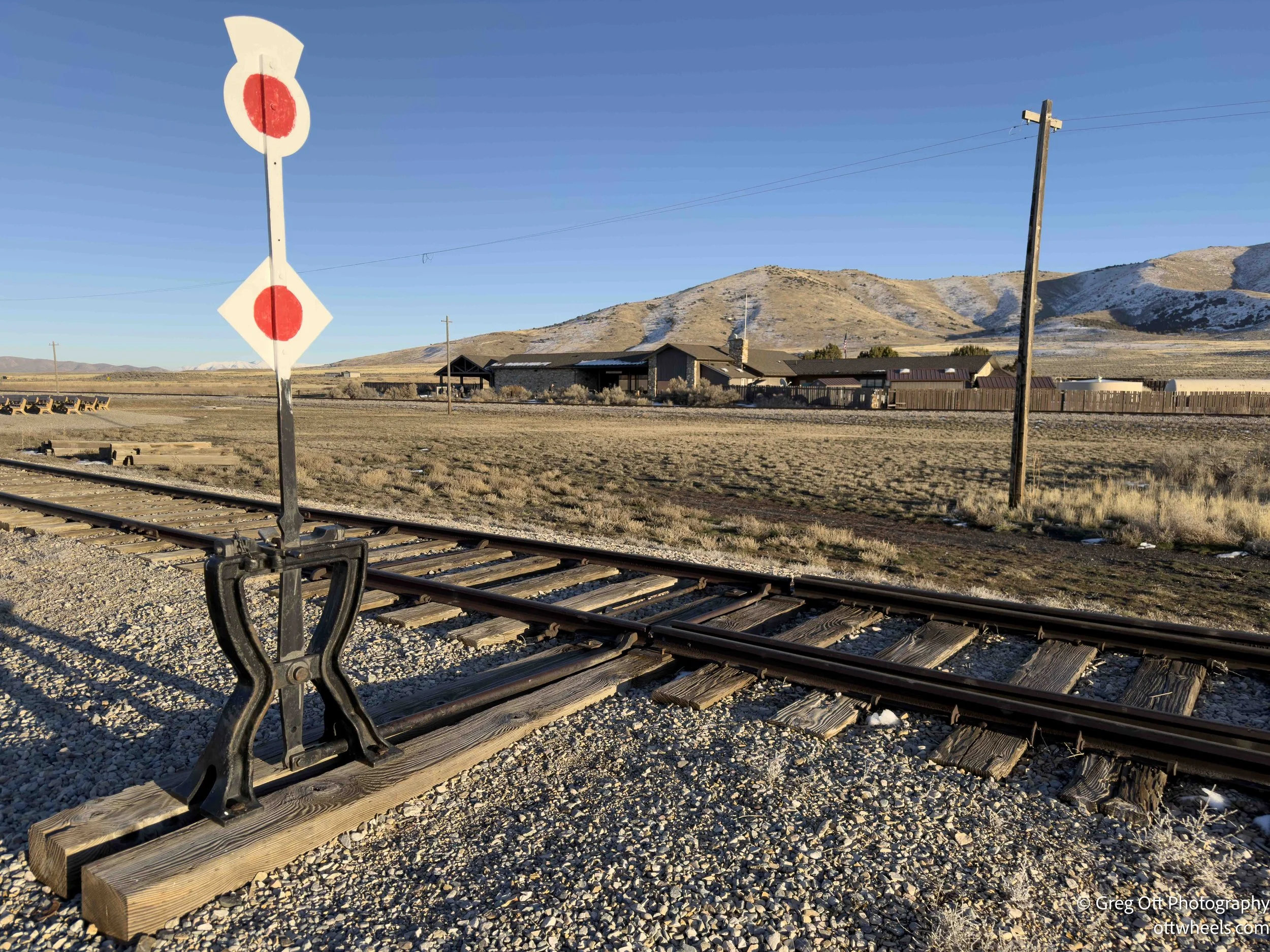
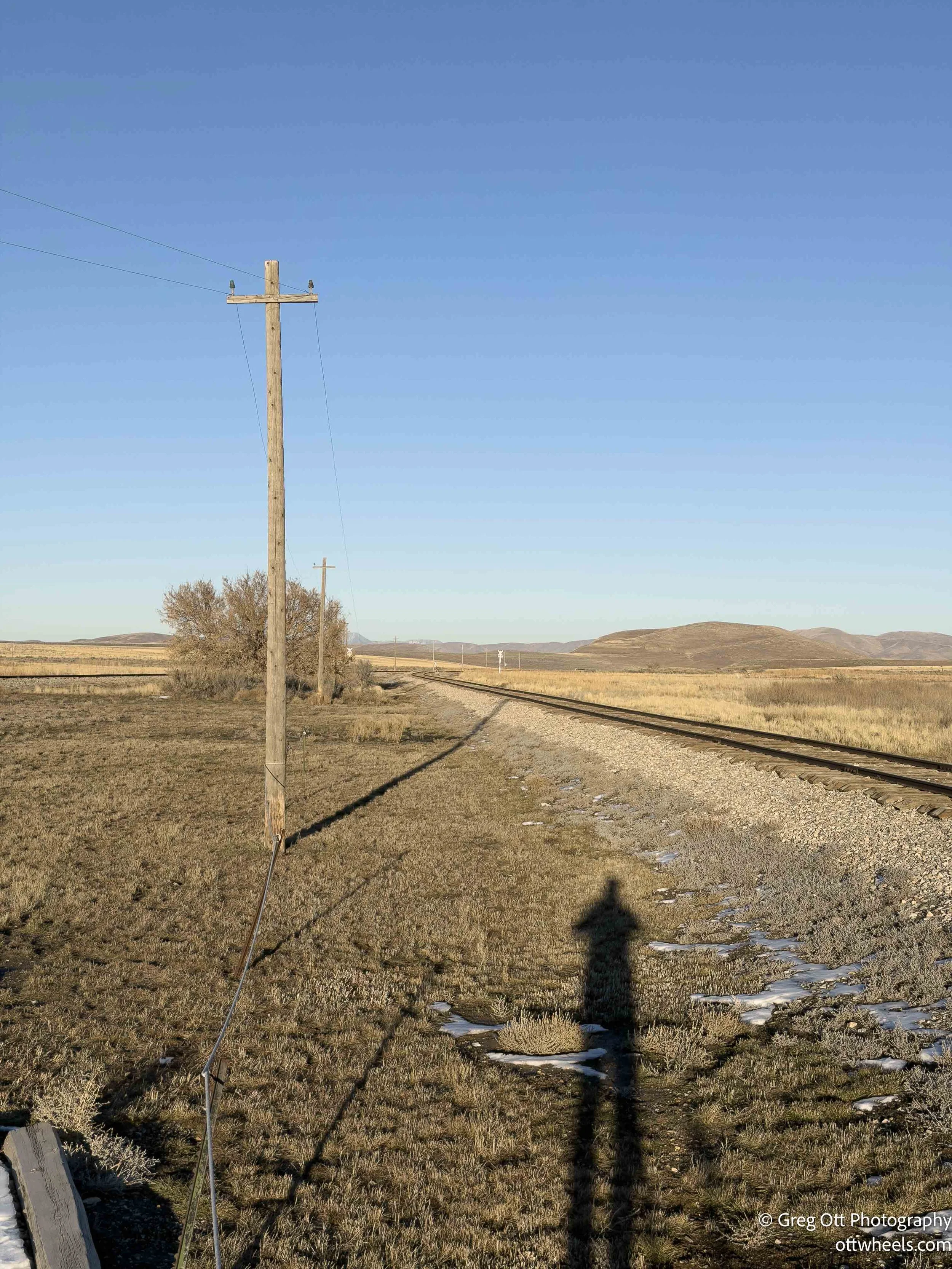
Once out on the grounds, everything opened up. The landscape is broad and quiet, with long views in every direction, and the reconstructed tracks stretch across the flat plain as if they might still be in use. The spot where the golden spike was driven is clearly marked, surrounded by simple monuments and interpretive signs. There’s no grand structure here—just space, sky, and steel. Standing there, it was easy to imagine the moment when the two lines finally met, not as a dramatic celebration but as the end of a long, exhausting effort that permanently changed the country. The setting felt right: unadorned, a little stark, and firmly grounded in the land.
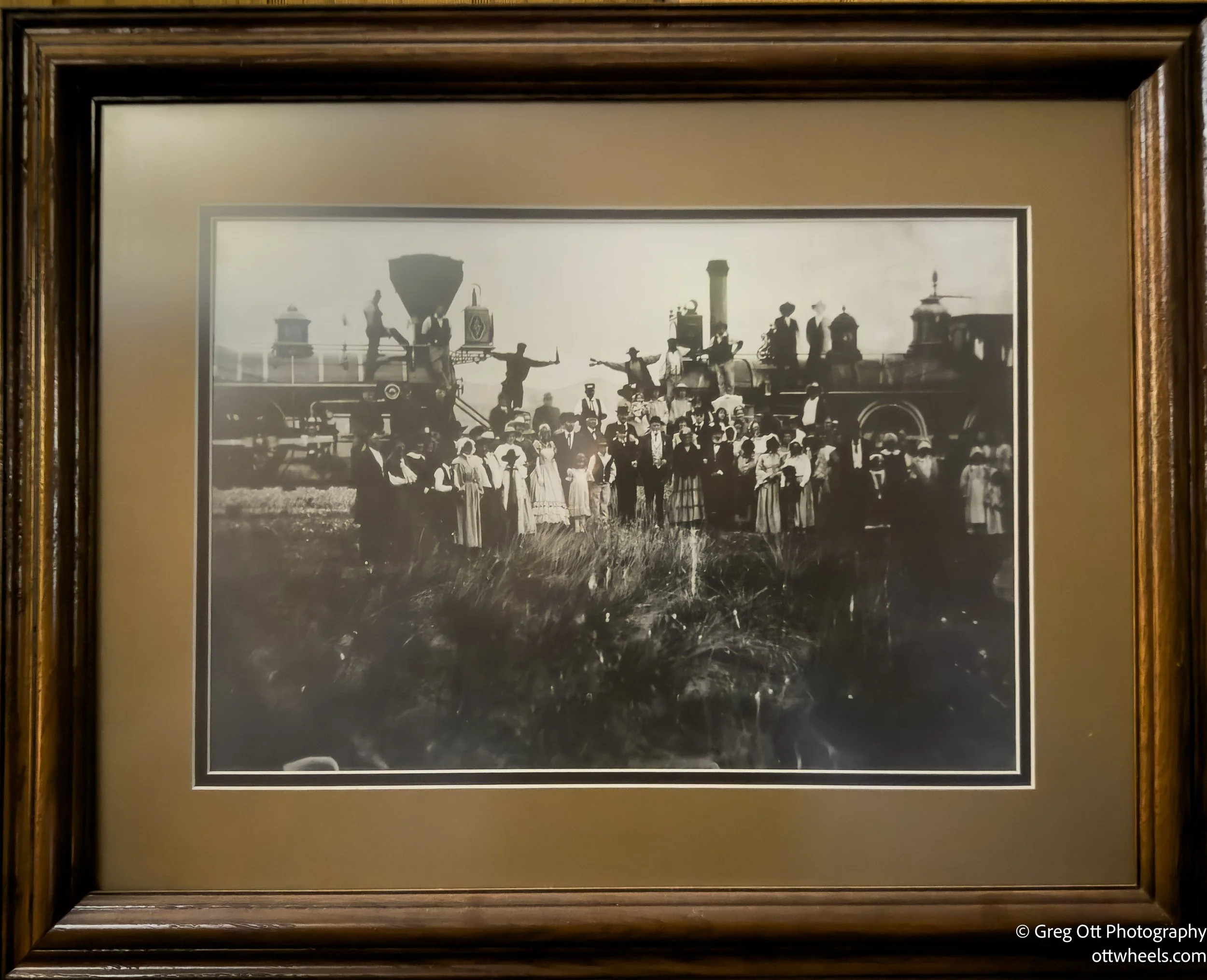
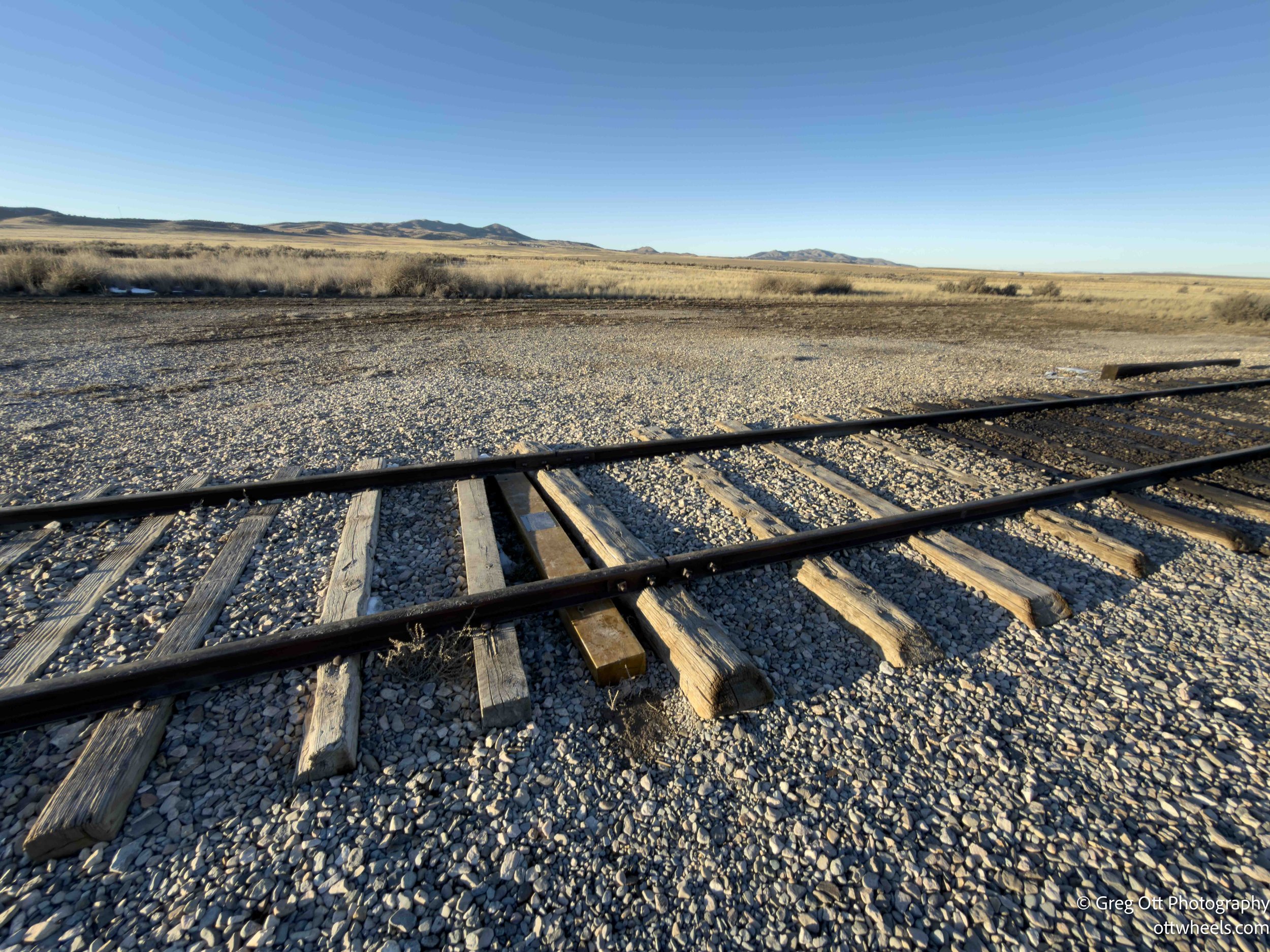
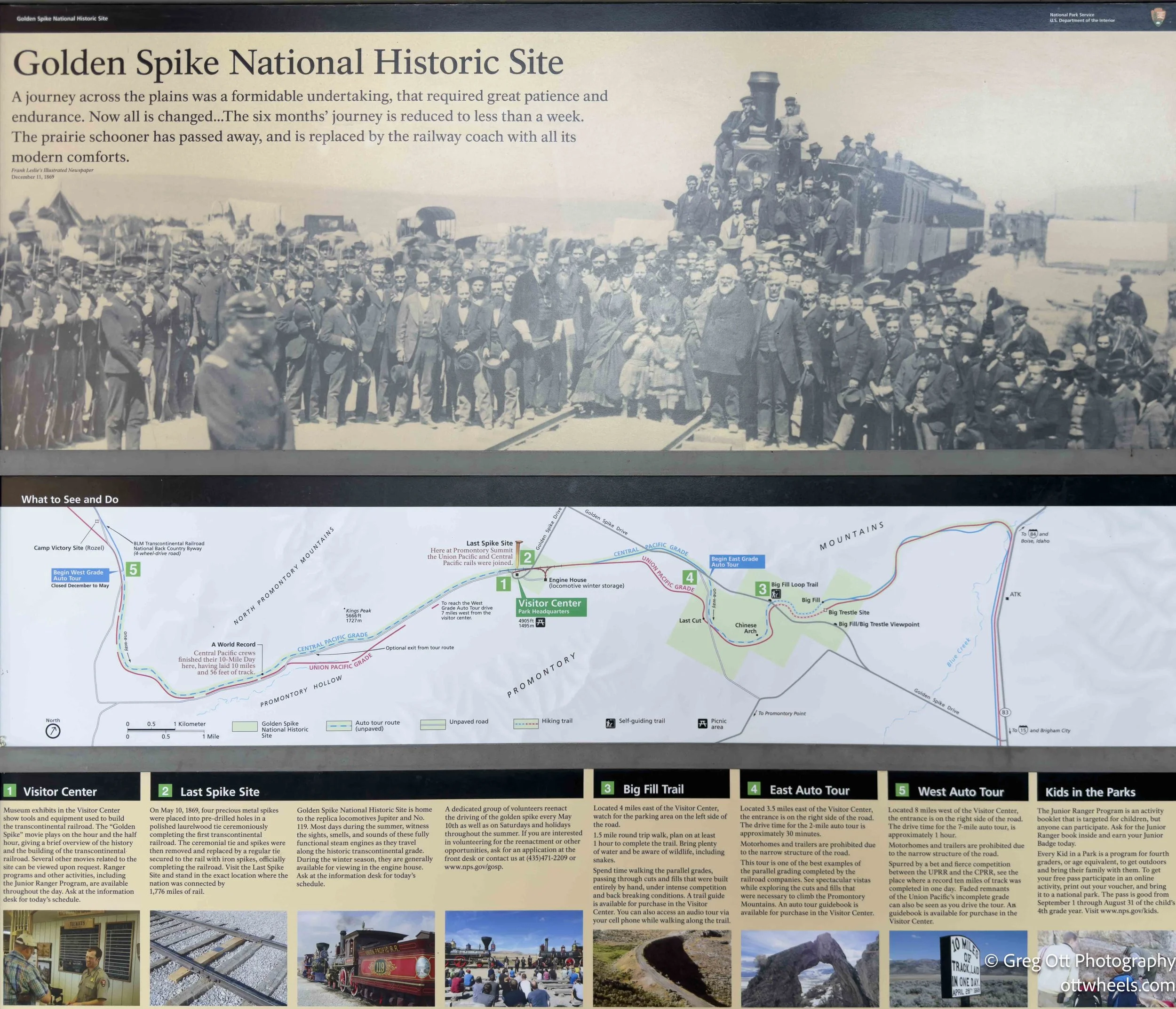
I stopped in the gift shop and picked up two books. One was Nothing Like It in the World by Stephen E. Ambrose, which immediately caught my attention—despite the fact that I already have two unfinished books in the van. I also found a train book for my granddaughter.
Spiral Jetty
As I was leaving, I saw a stack of notices about Spiral Jetty, my next destination. I hadn’t realized the Jetty was on the same road as Golden Spike National Historical Park. After warming up some leftovers, I headed that way. It was about a twenty-mile drive, and roughly half a mile in, the road turned to dirt. My stomach dropped. I kept going, thinking I might turn back, but the road was actually well maintained—for about nine miles. At that point the main road continued straight, while my turn veered left and immediately got worse. With five miles to go, it deteriorated fast. With three miles left, I was creeping along at five miles per hour at times. Another washboard road, this one with deep ruts added for extra fun. The light was quickly changing to that bright afternoon orange. I wanted to stop so many times for photos but continued on.
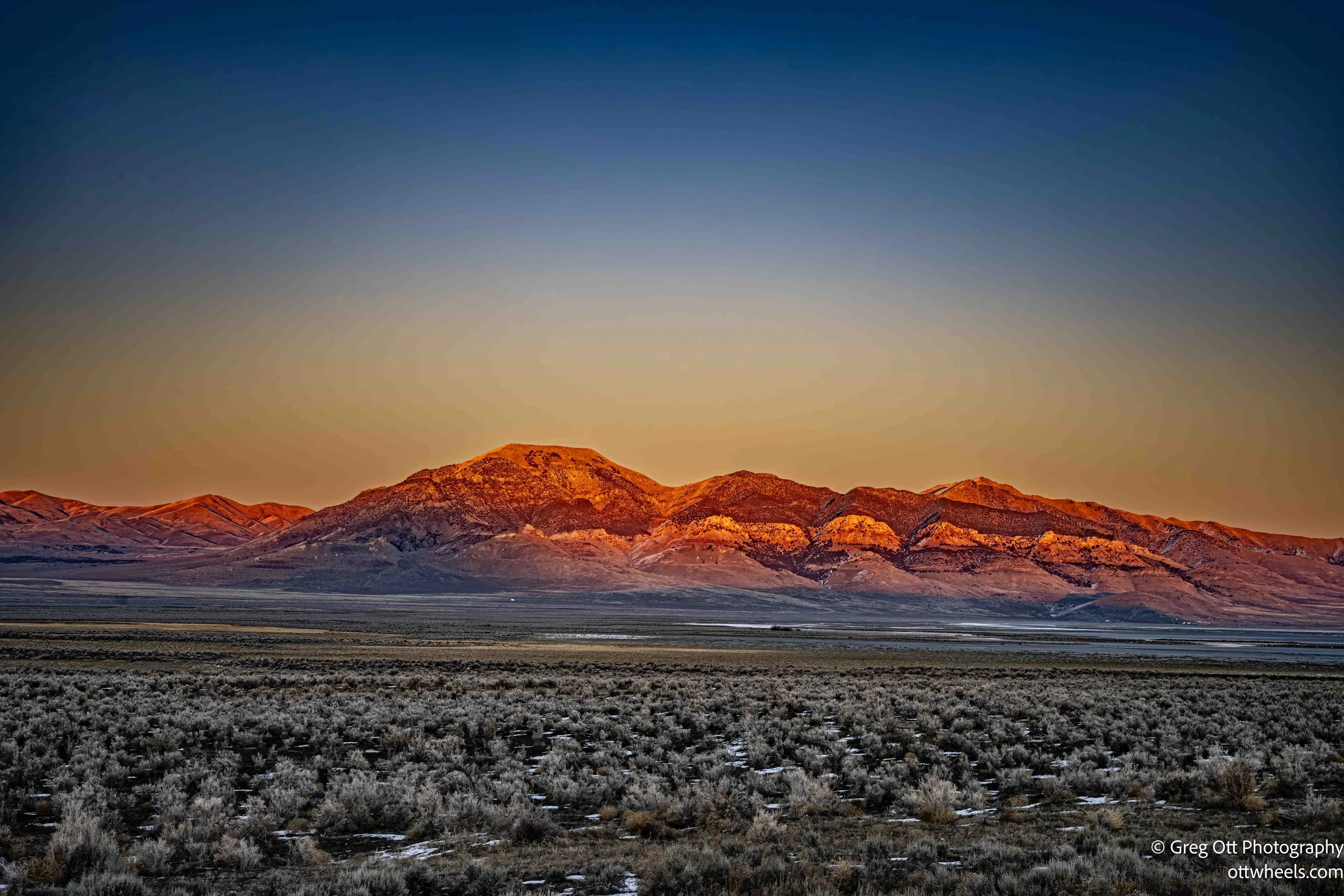
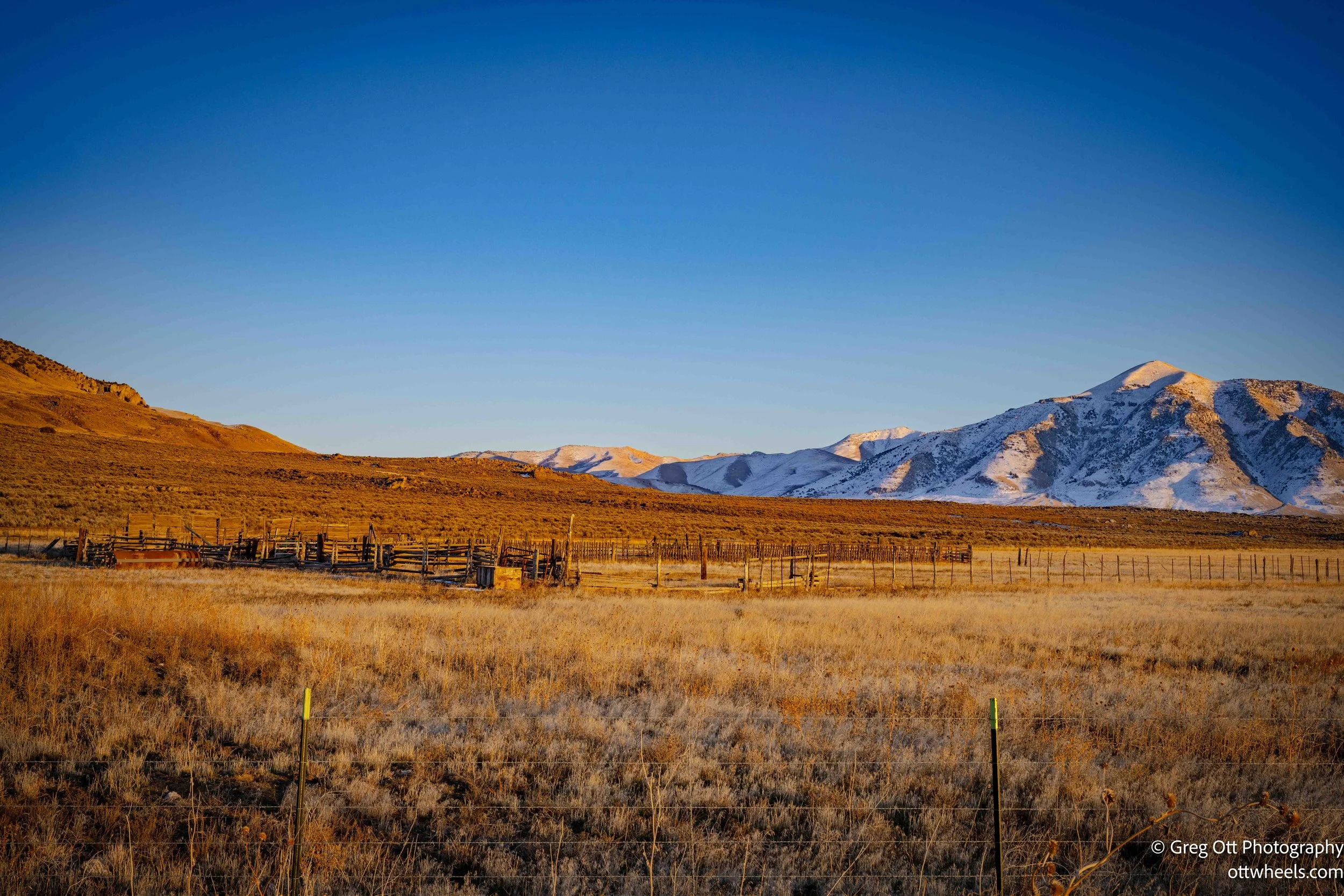
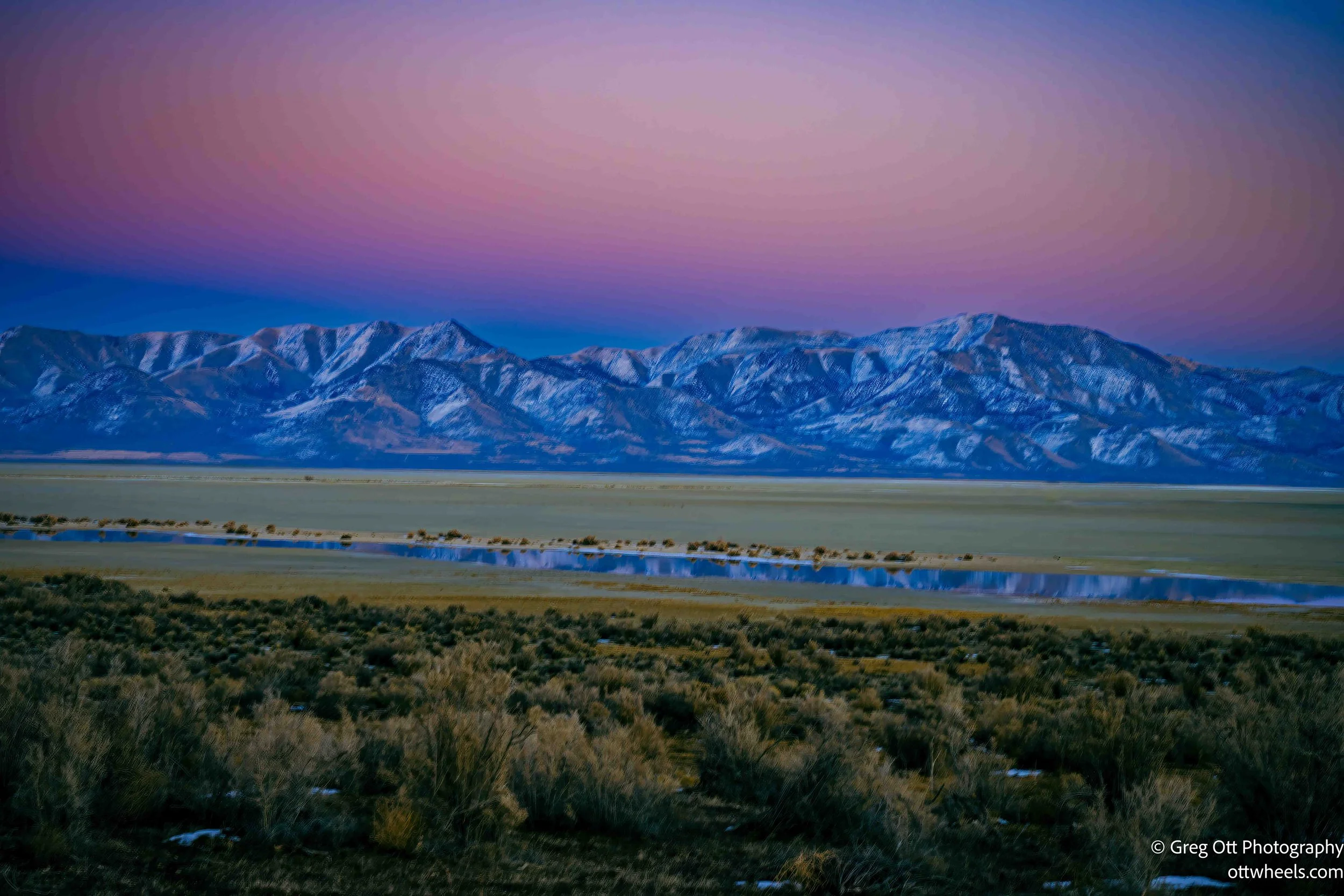
It was closing in on 6 p.m. when I finally reached the Jetty. The colors in the sky were changing by the minute. I assumed air pollution was adding to the textures. The sunset behind the distant mountains was spectacular. I couldn’t see much of the Jetty itself in the fading light, and there were no other cars in the parking lot. I decided to stay the night.
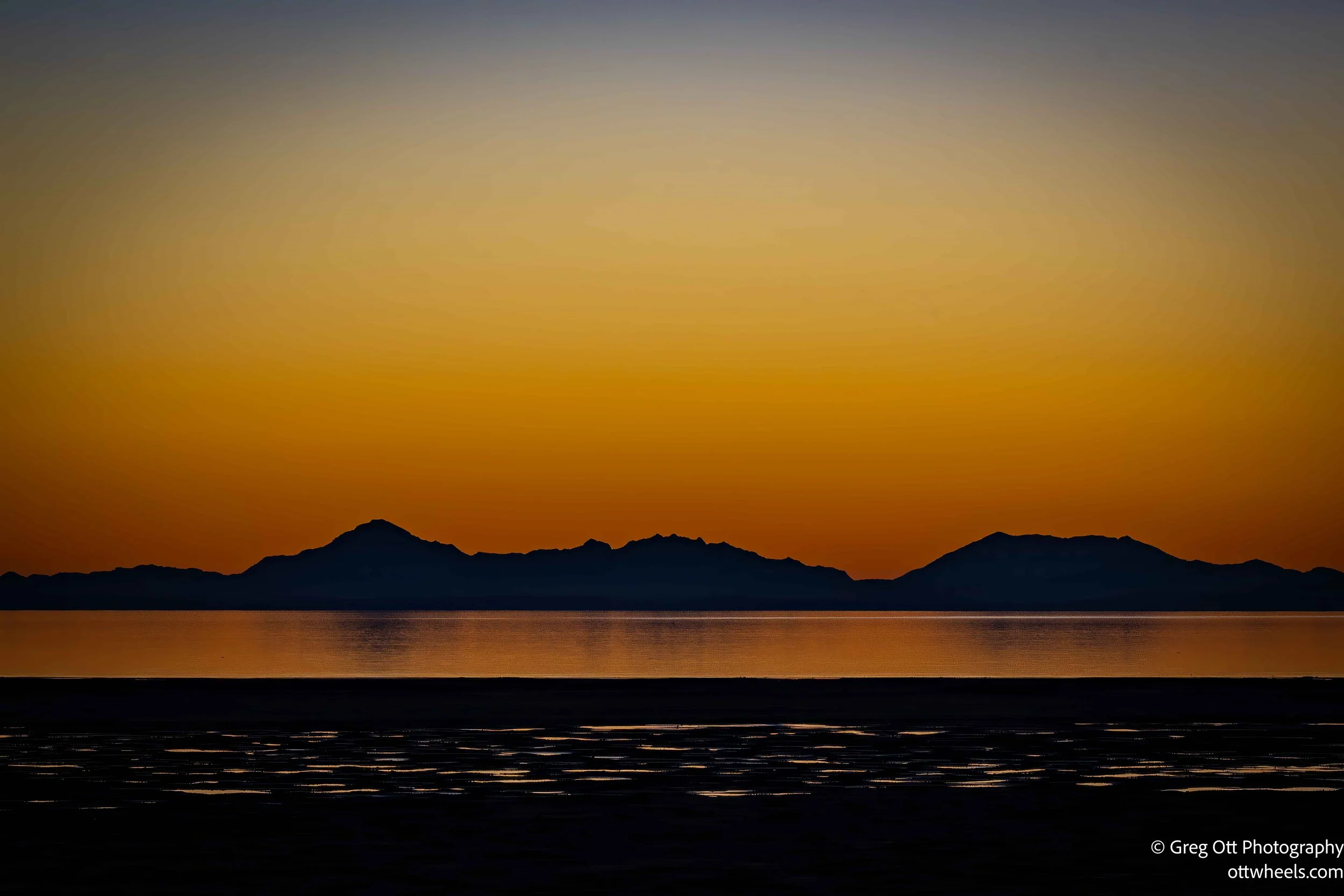
It had been a nerve-racking day, thanks mostly to the roads.