White Pass and Alaska History
Ate breakfast and had a brisk walk to my favorite coffee shop in Skagway, Café on 5th. I passed a house that was being worked on and had a tree made of pipe and welded rebar. On the ends of each rebar was a blue bottle. I stopped to grab a photo and then continued to the café. I entered and the guy said, “Good morning, welcome. Weren’t you here yesterday?” I acknowledged that I really liked their coffee and was happy they had flacky pastries. I ordered a coffee and headed out. They thanked me for coming back and I told them, they’ll probably see me tomorrow.
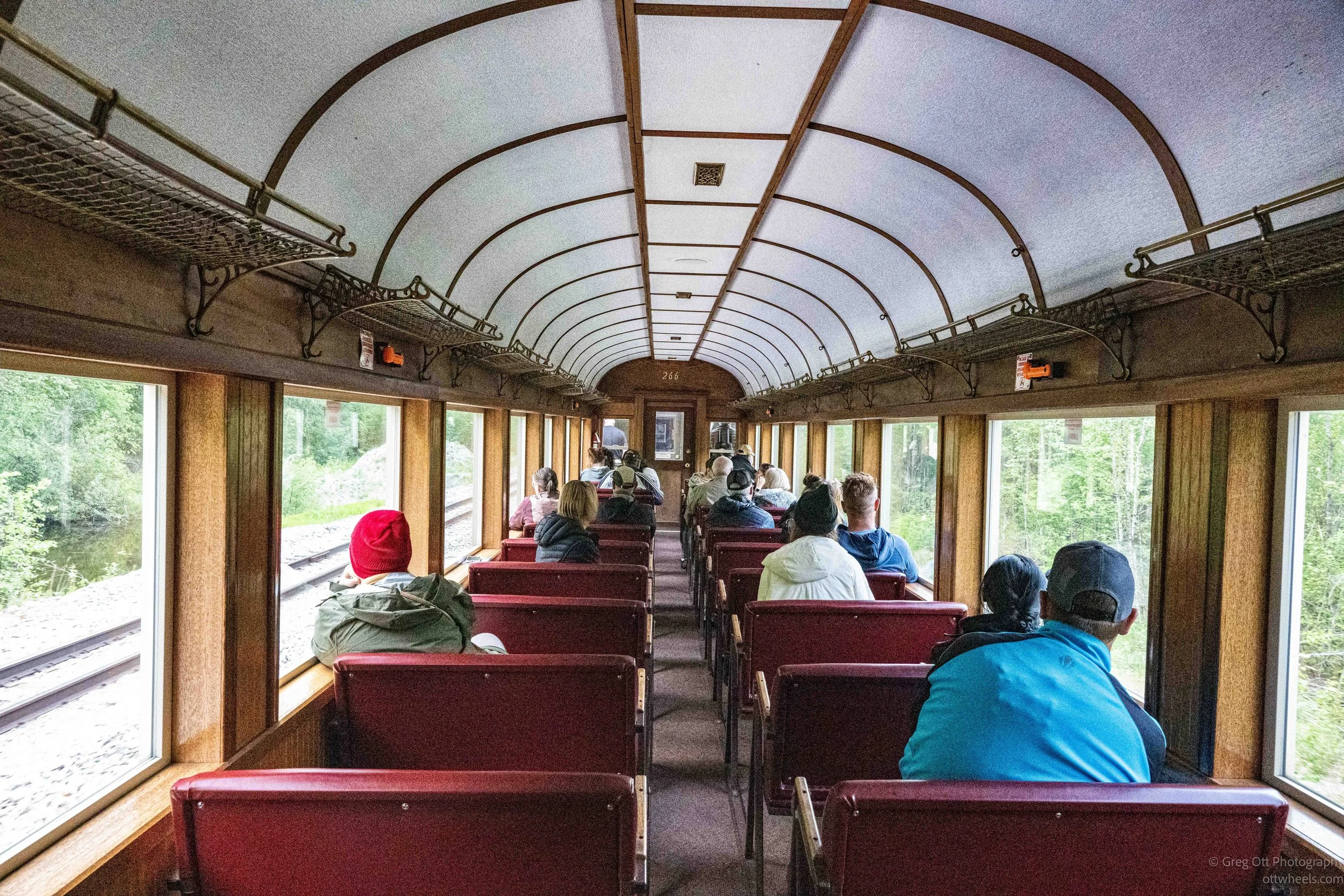
It was six blocks to the train station. I was 10 minutes early. They had told me yesterday when I picked up my ticket that I should be here at 7:45. The train was 15 cars long, and the group I was in was occupying two of the cars. There were 45 people in the group. The train arrived about 10 after 8. They had been picking up peole at the various cruise ships. They seemed to have more people in there cars. I assumed this had to do with negotiated pricing with the cruise operators and train operator needed some minimum to run the train.
The conductor explained that we would get the same views because it was a round trip. So, one side wasn’t better than the other. When the train pulled up, it was if he hadn’t said anything. There was a mad dash to get on. A few of us stood back and just watched. In the end the mad dash didn’t make a difference. There were extra seats on both sides.
The White Pass & Yukon Route was built because of the Klondike Gold Rush. When gold was discovered near Dawson City in 1896, tens of thousands of prospectors arrived in Skagway hoping to strike it rich. Getting to the gold fields, however, was another matter entirely. Before the railroad existed, miners had to haul a year's worth of supplies over White Pass, making repeated trips up steep mountain trails. The route became known as the Dead Horse Trail after thousands of pack animals died from exhaustion, injury, and neglect. To solve the problem, construction of the railroad began in 1898. In just two years, workers blasted through solid granite, carved narrow ledges into mountainsides, and built bridges and trestles across deep valleys. The line reached Whitehorse in 1900 and quickly became one of the great engineering accomplishments of North America.
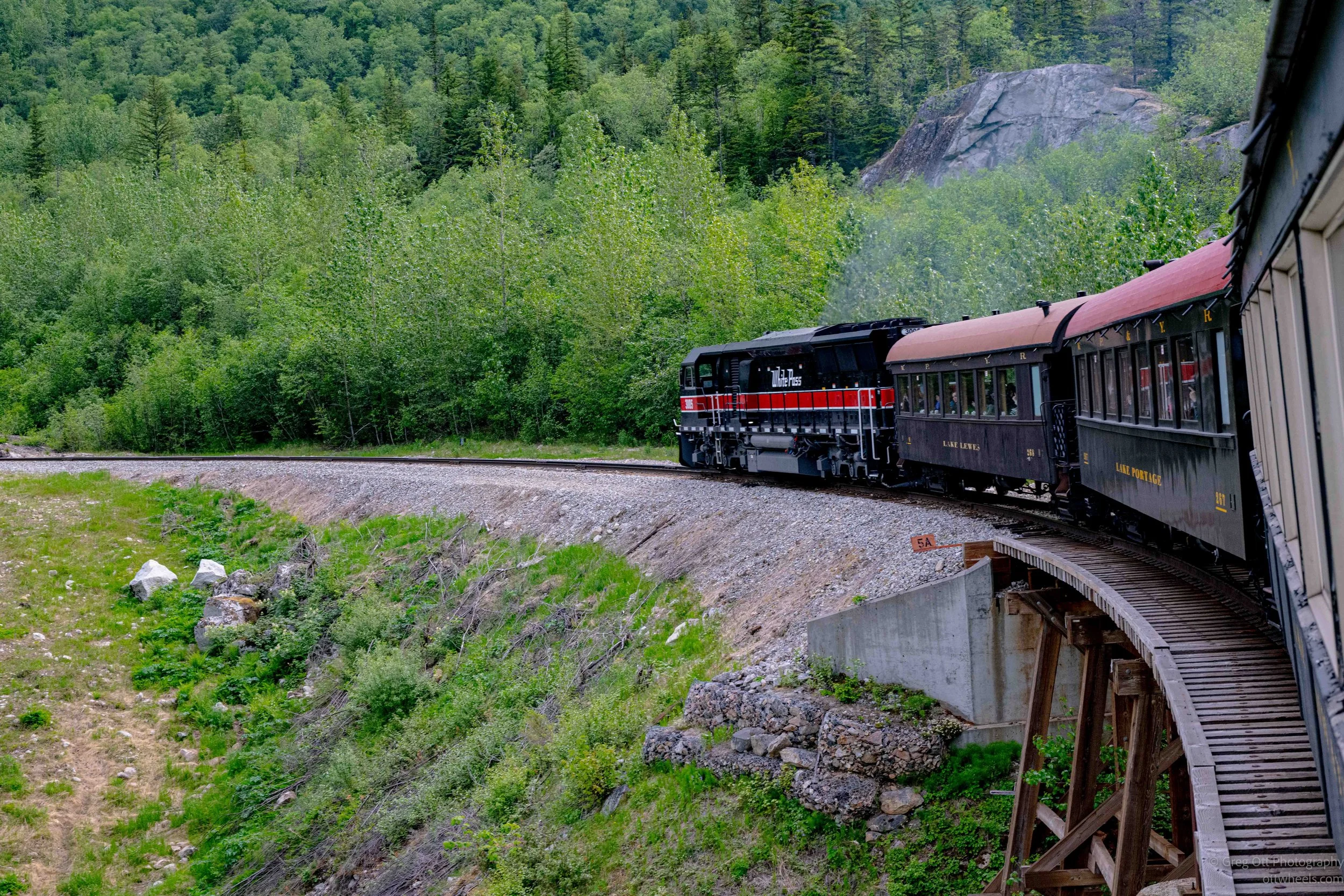
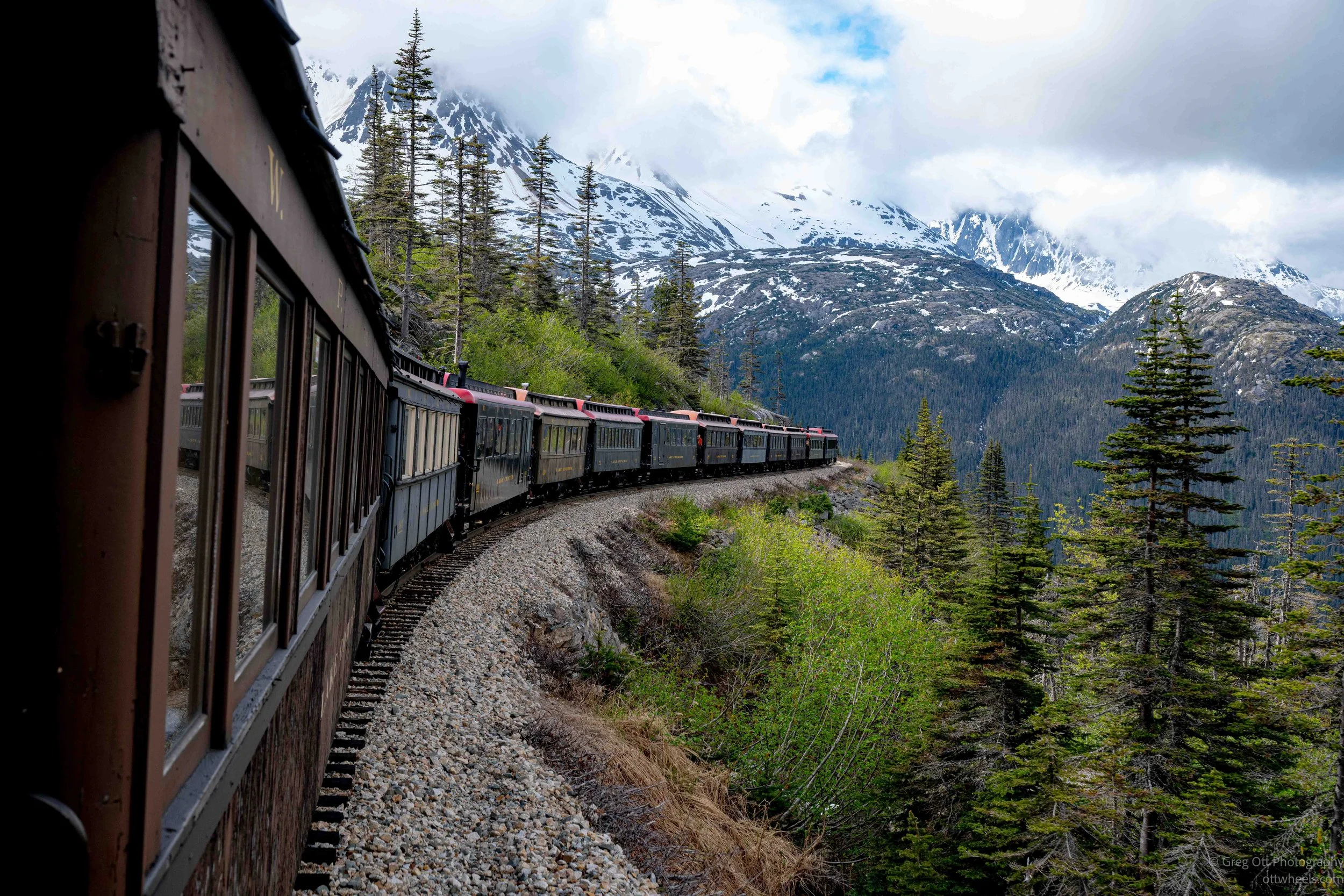
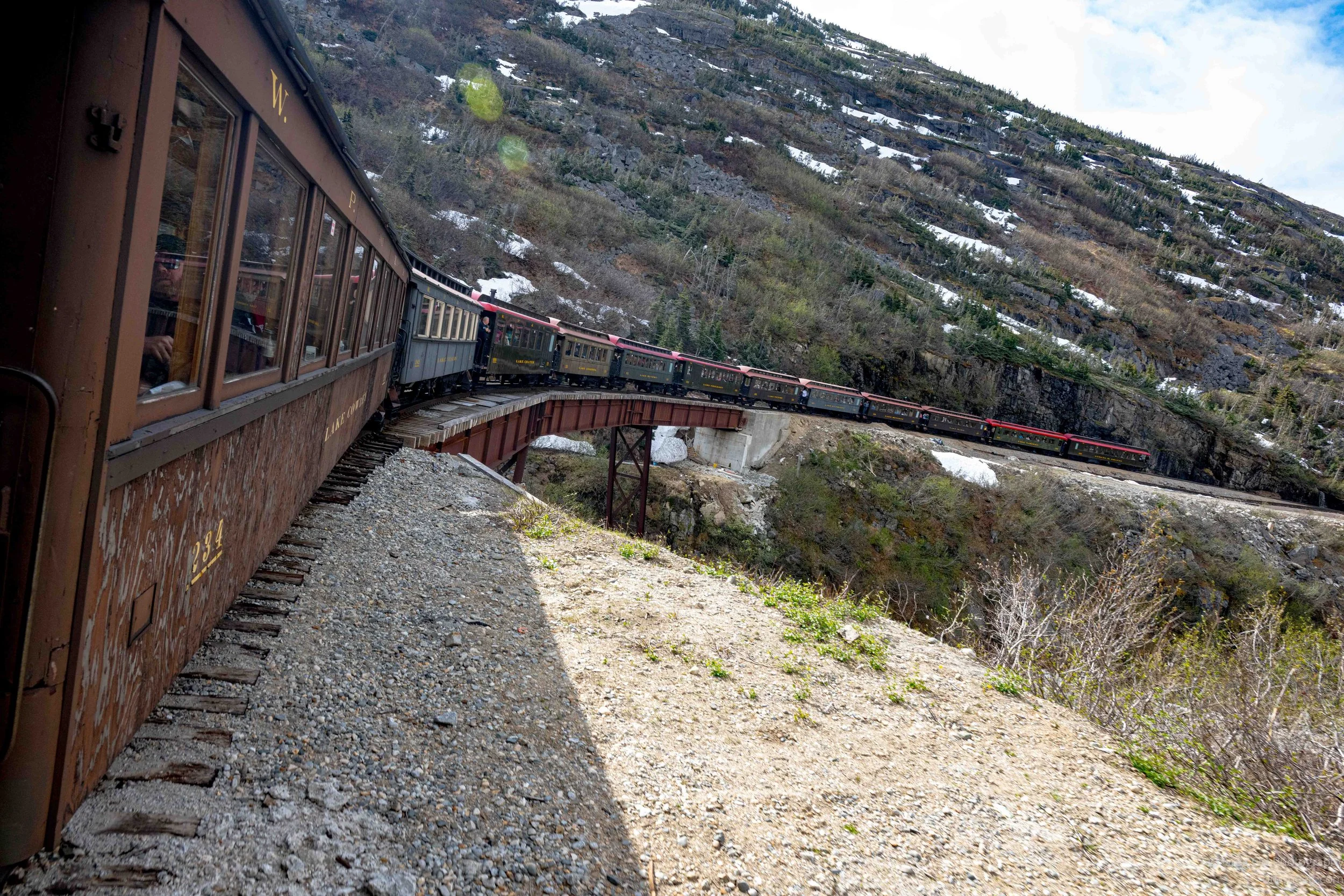
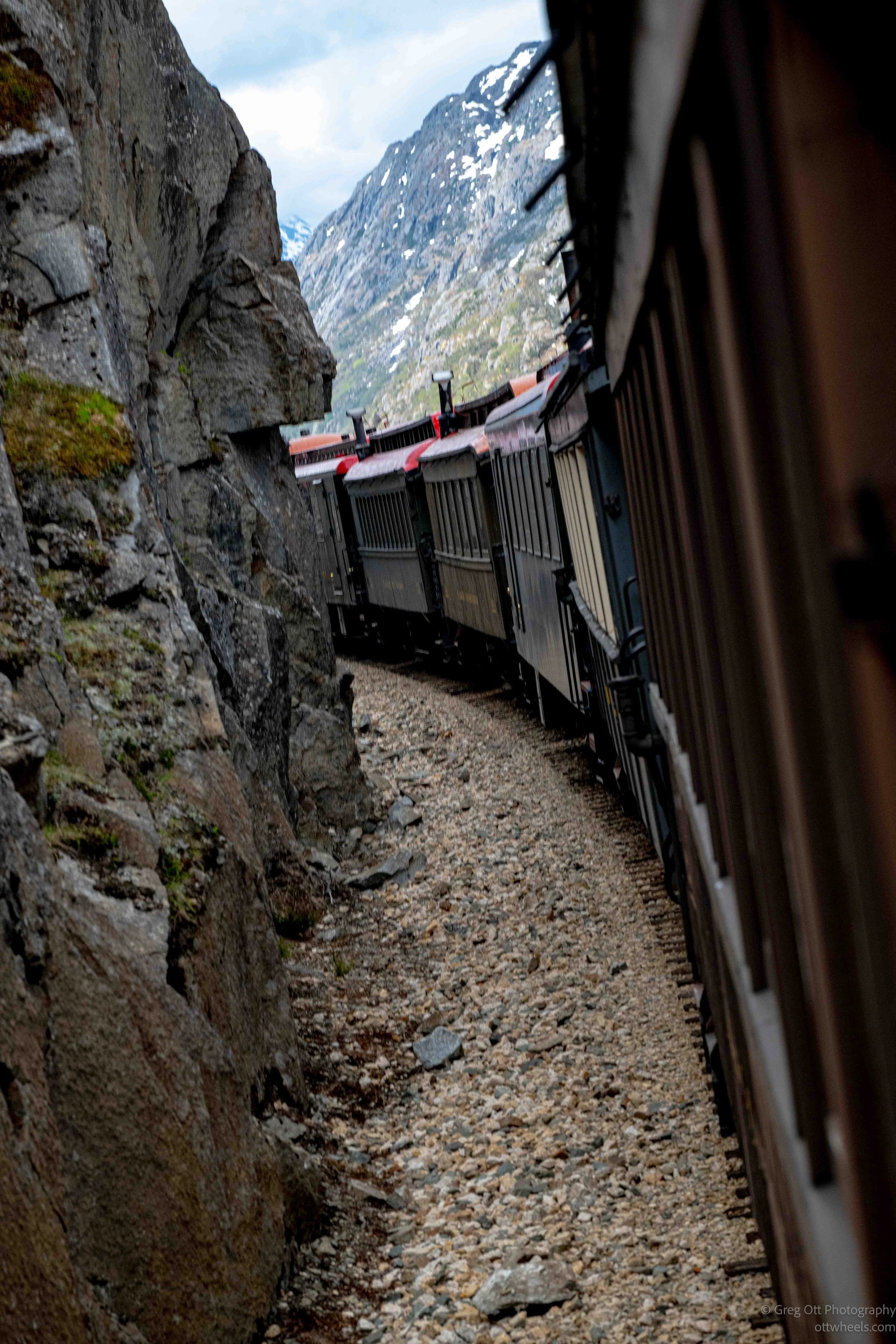
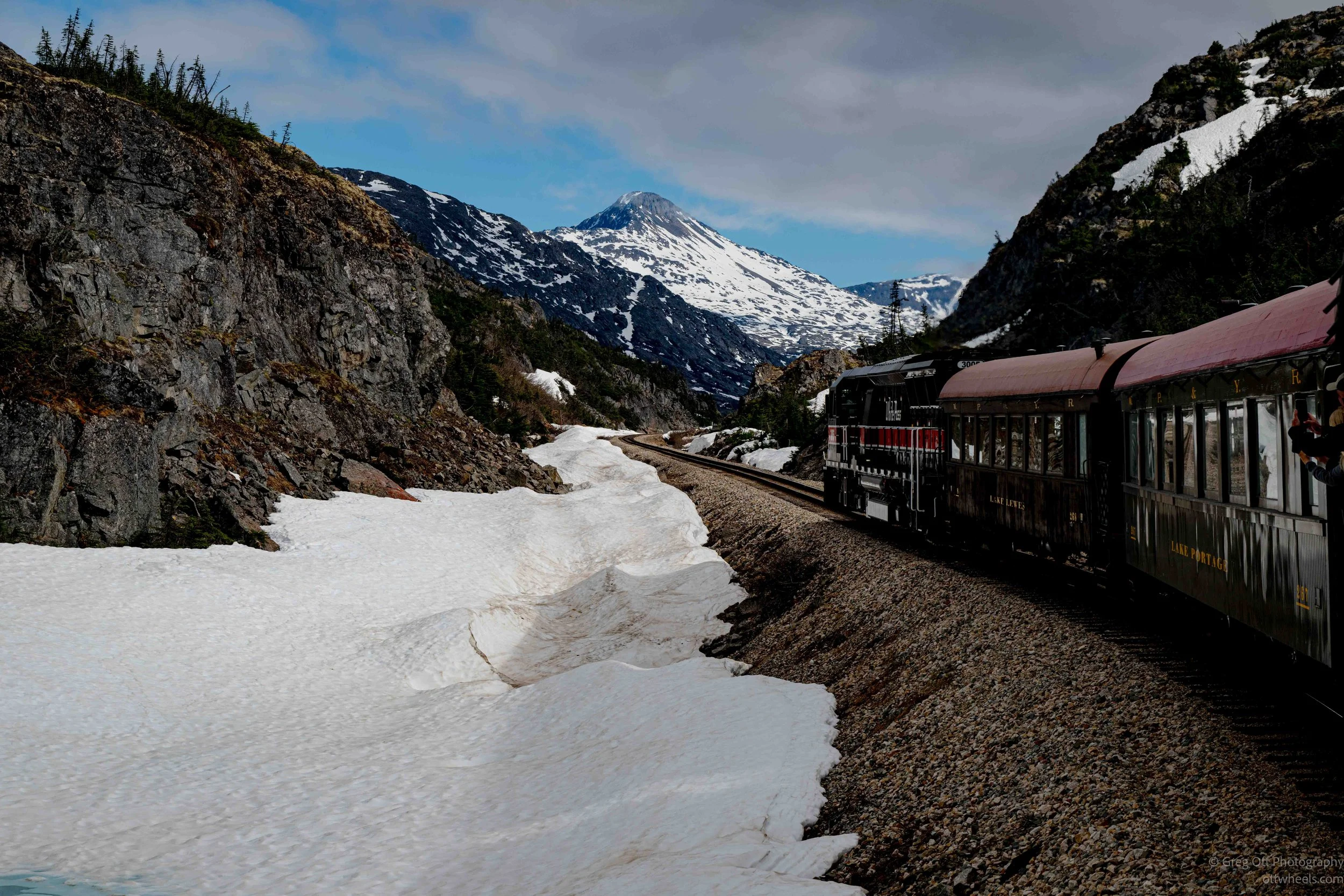
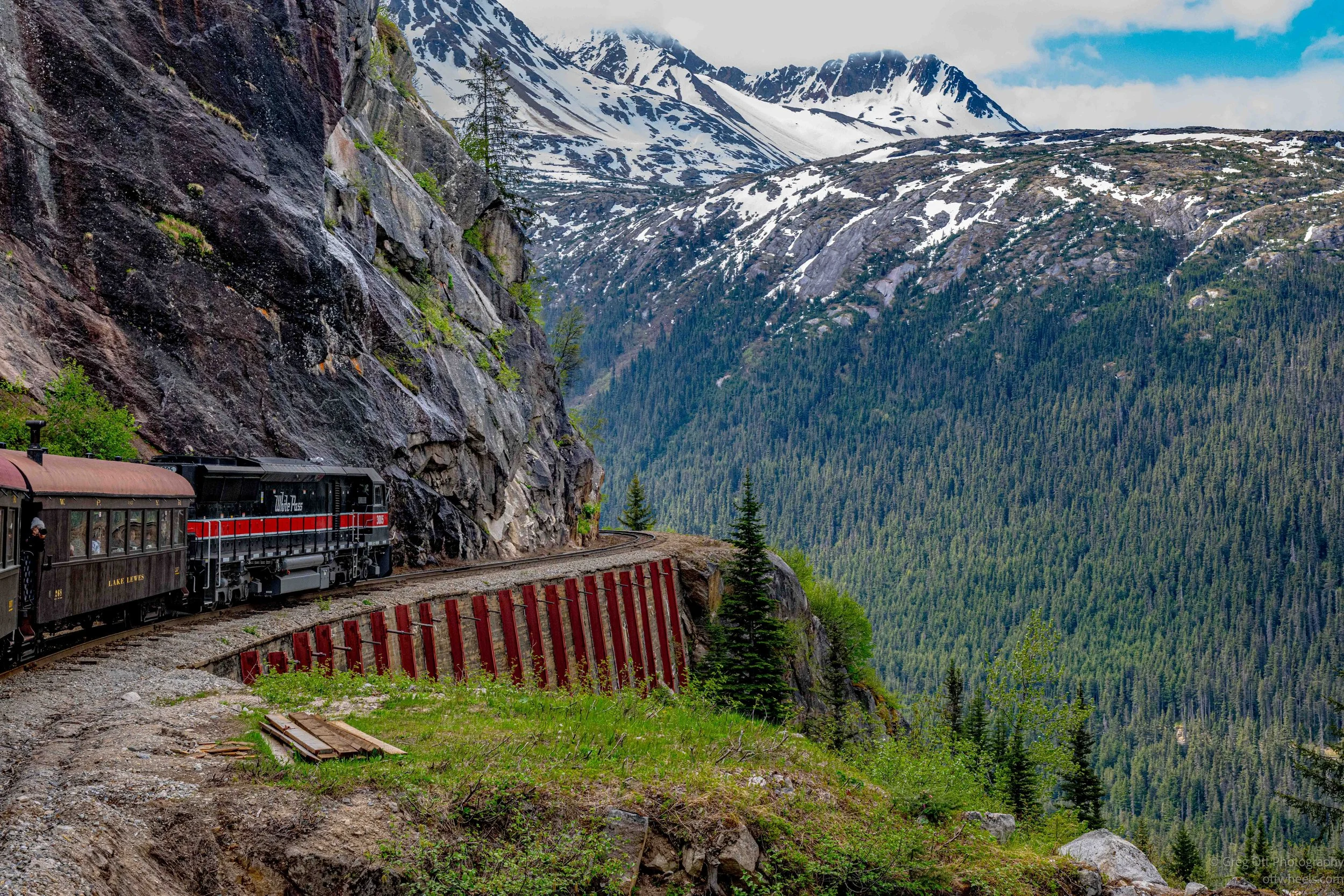
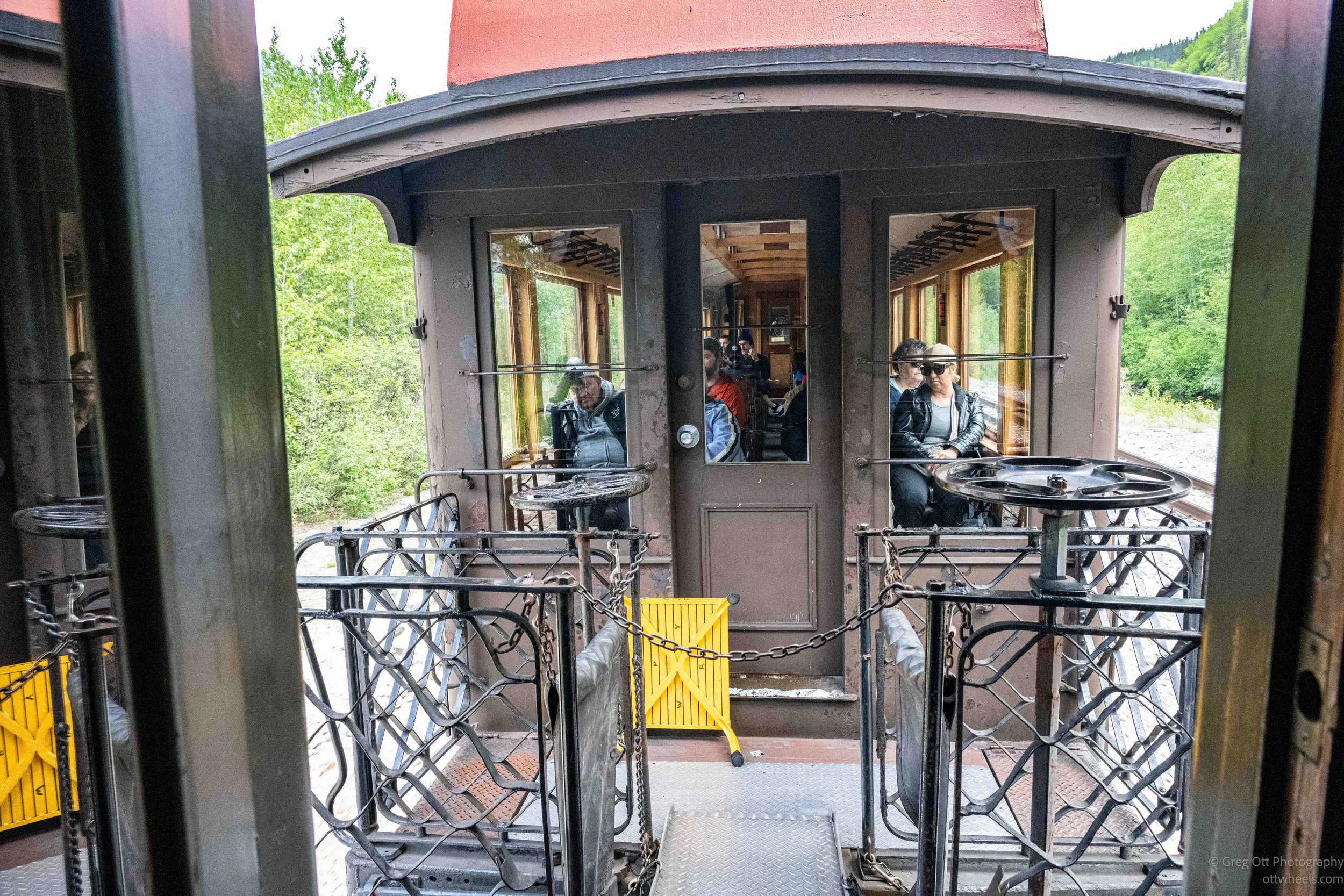
About ten minutes after leaving Skagway, we were finally allowed onto the outdoor platforms to take photos. I grabbed a few shots and then stepped back inside to warm up. A young woman, maybe twenty years old, headed outside with a selfie stick and apparently decided this was her moment to become a social media influencer. For the next twenty minutes she occupied the center of the platform filming herself. Hair flip. Smile. Serious look. Turn left. Turn right. Repeat. Meanwhile, snow-covered mountains, waterfalls, and dramatic scenery rolled by largely unnoticed. By this point, five of us were crowded into the remaining space trying to photograph Alaska around what had become an accidental one-person fashion shoot. The eye-rolling had become almost synchronized.
Eventually I couldn't help myself. I pointed out that I hadn't paid $170 to watch a beauty contest. She immediately went back inside. One couple thanked me, and another woman said, "I wanted to say something, but I'm Canadian." The other couple laughed and replied, "Yeah, we're from Montreal." Apparently the Canadians had reached their limit too but were hoping somebody else would handle the diplomatic incident. With the runway finally cleared, everyone returned to doing what we had paid for: staring out at some of the most spectacular scenery in Alaska.
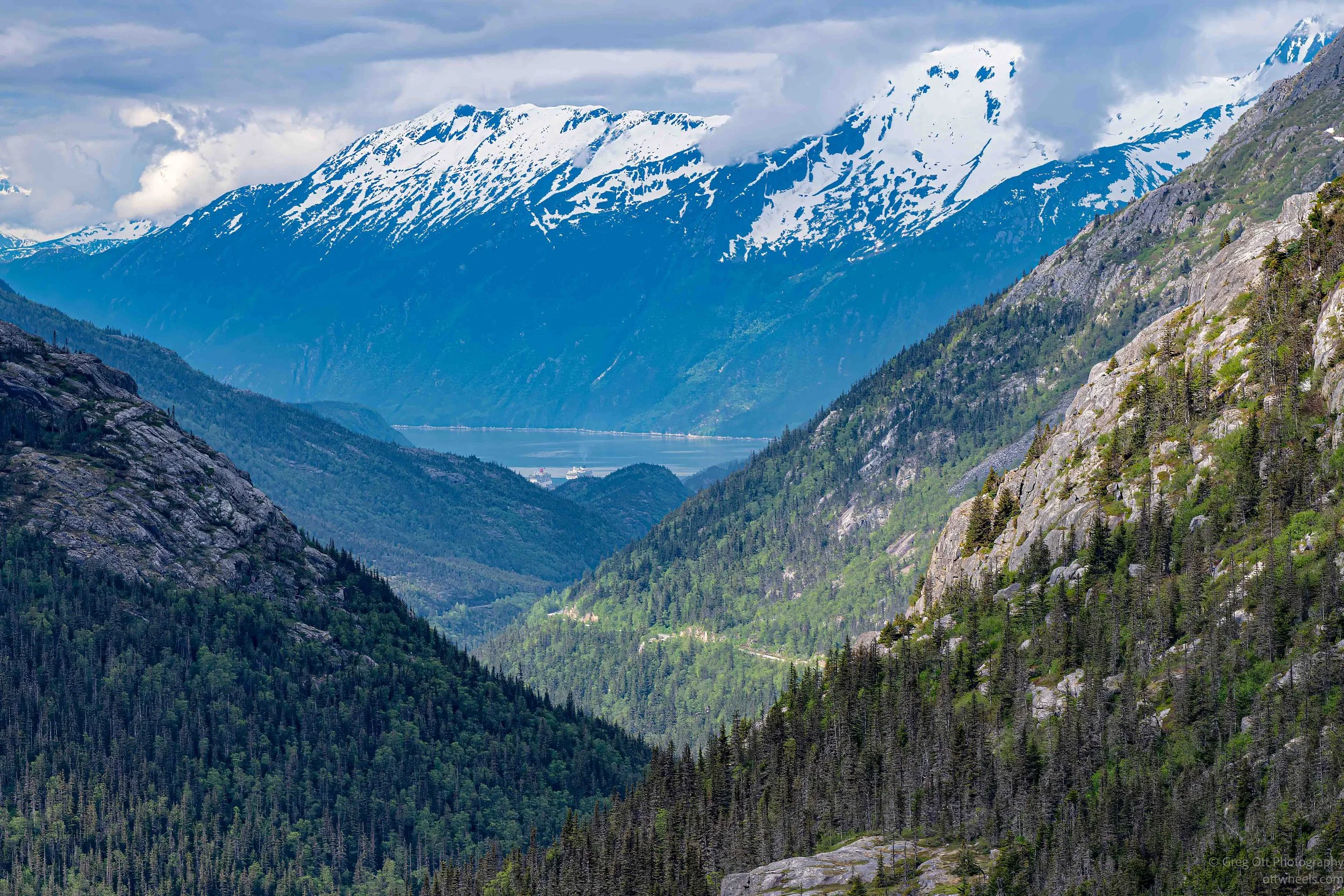
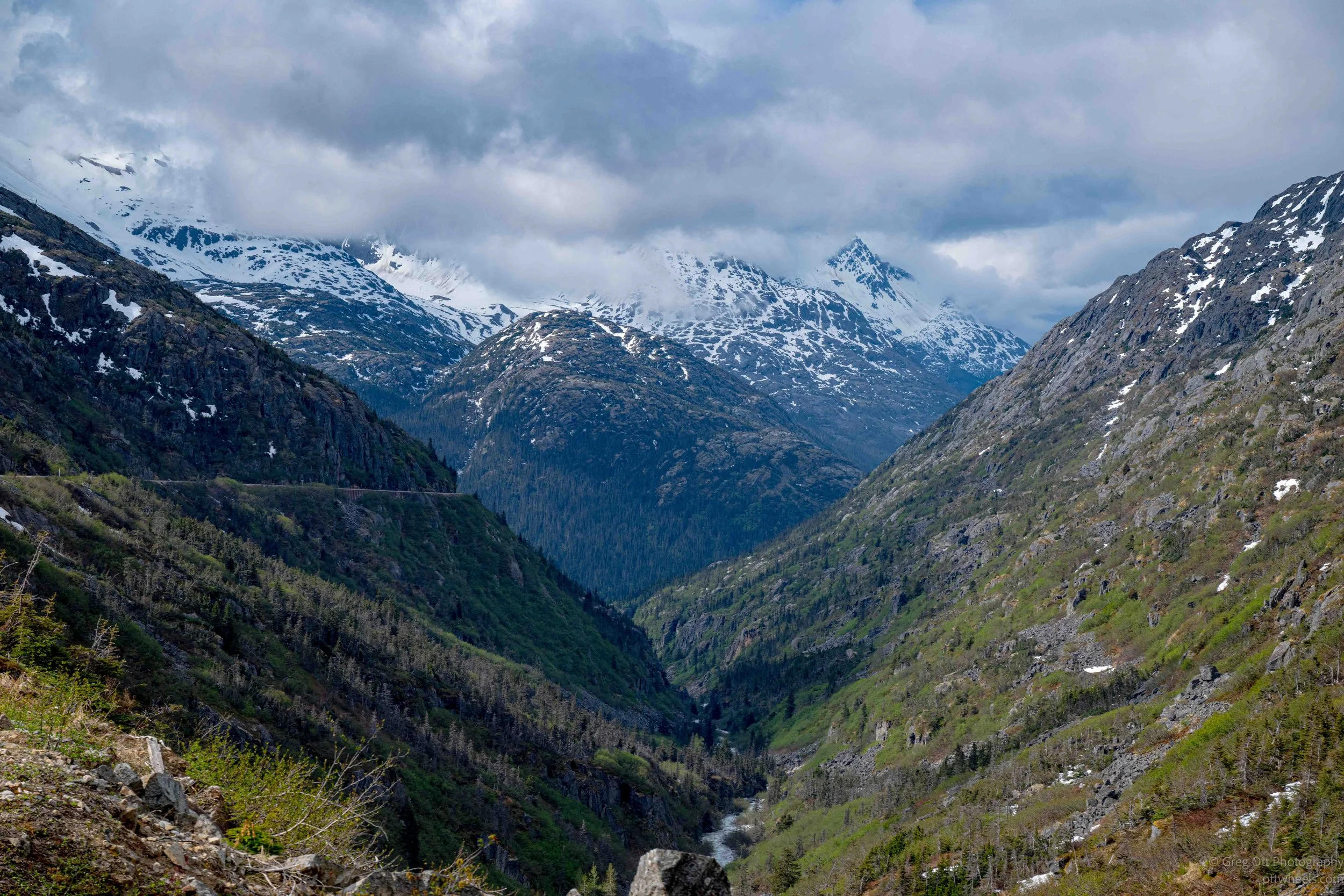
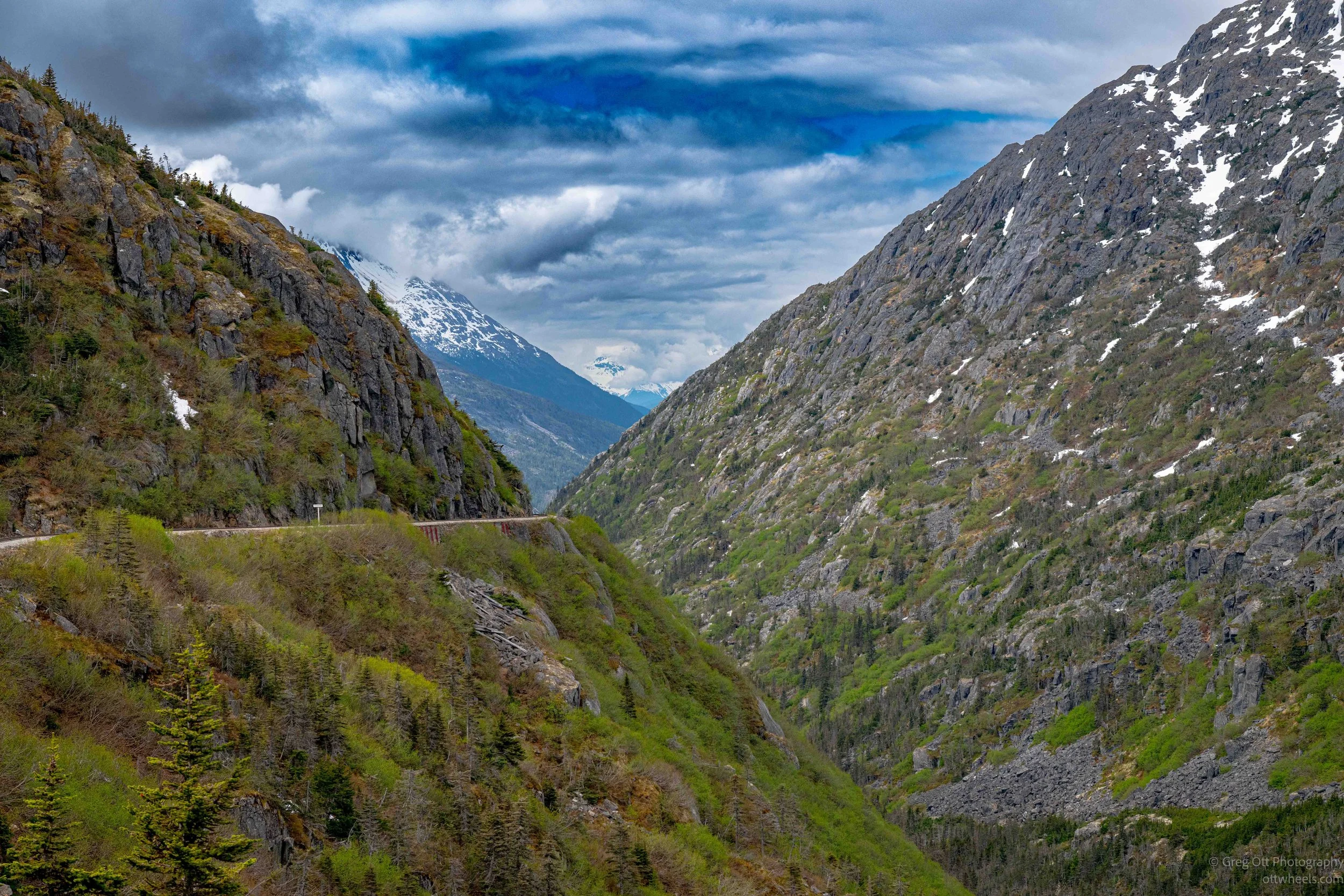
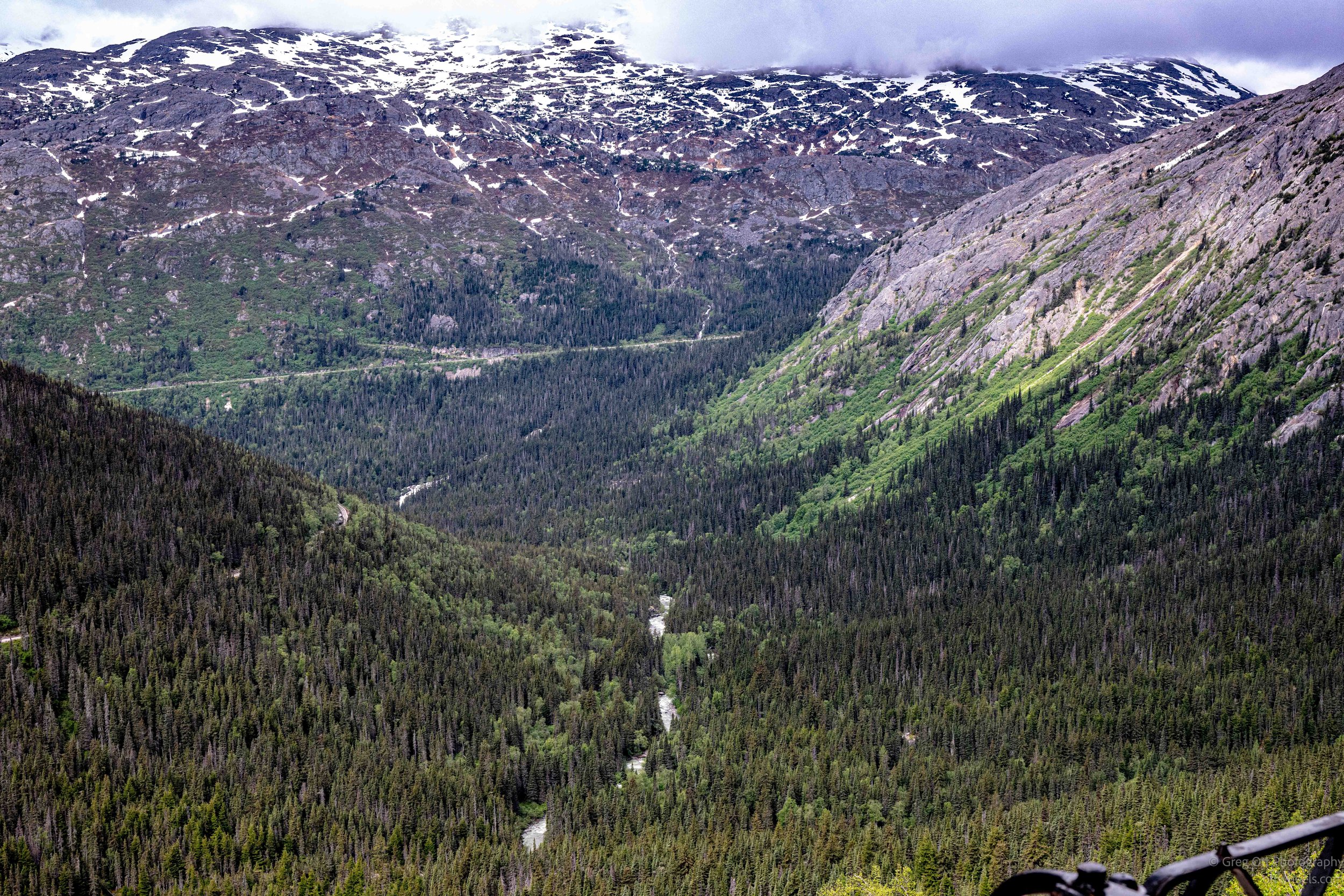
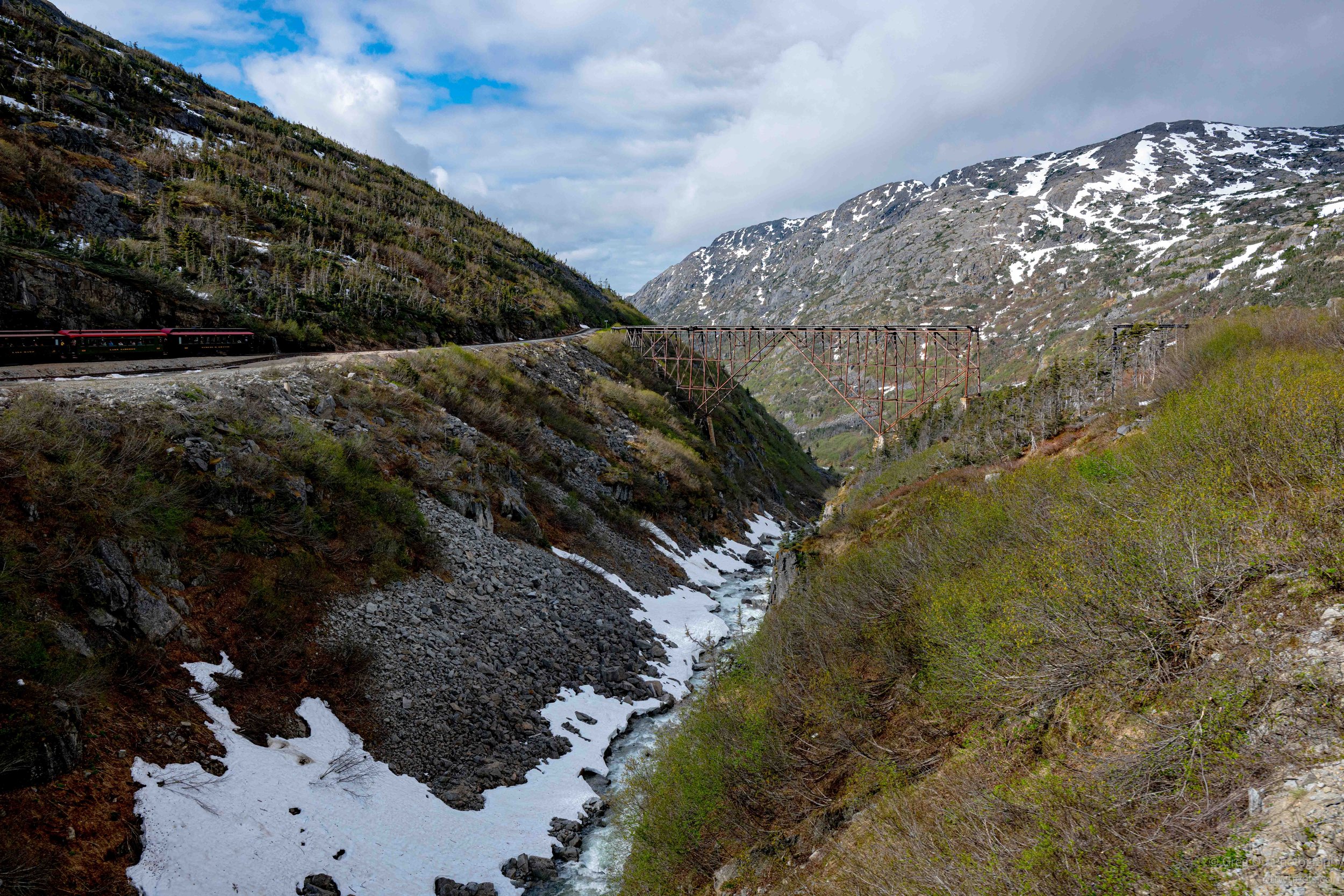
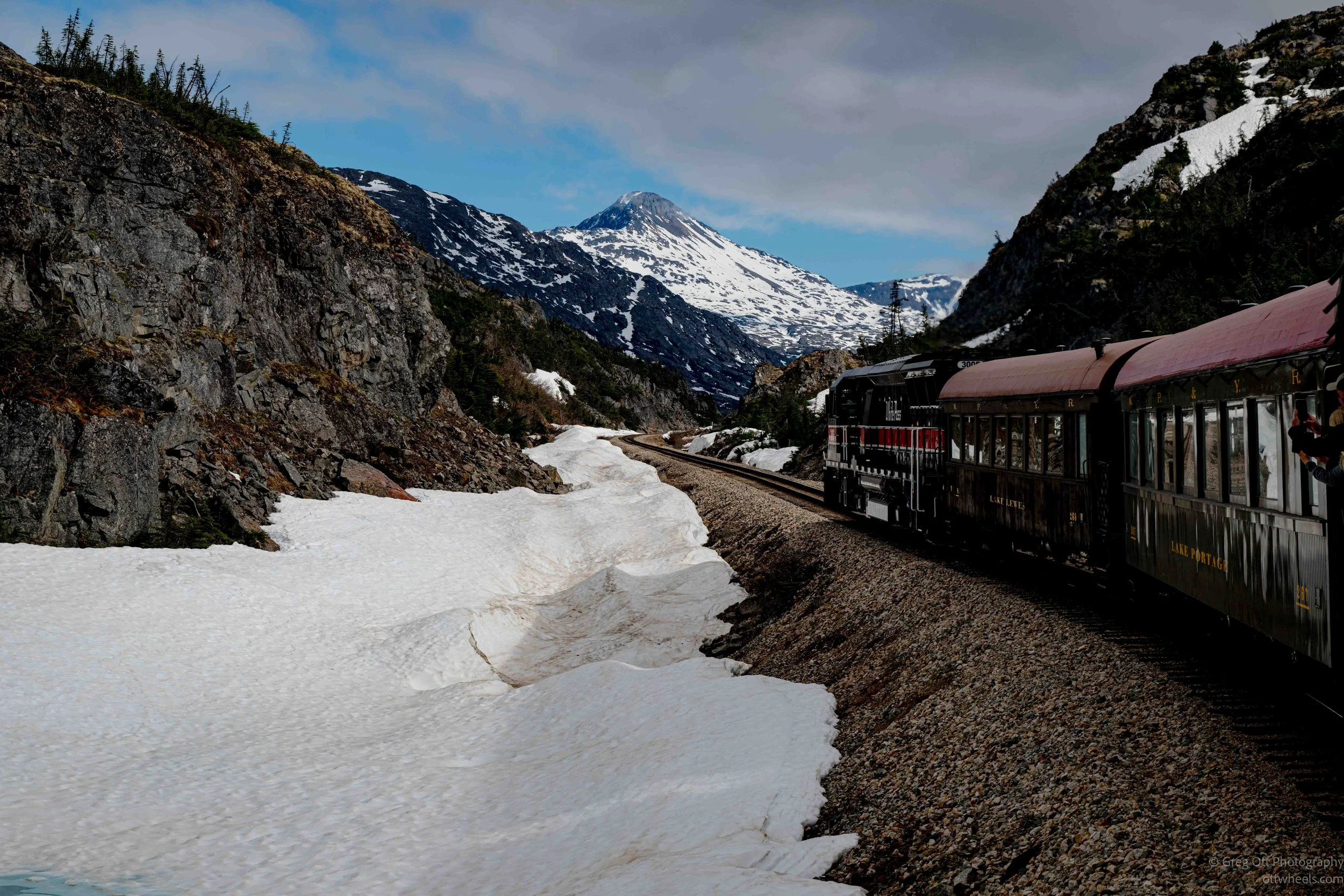
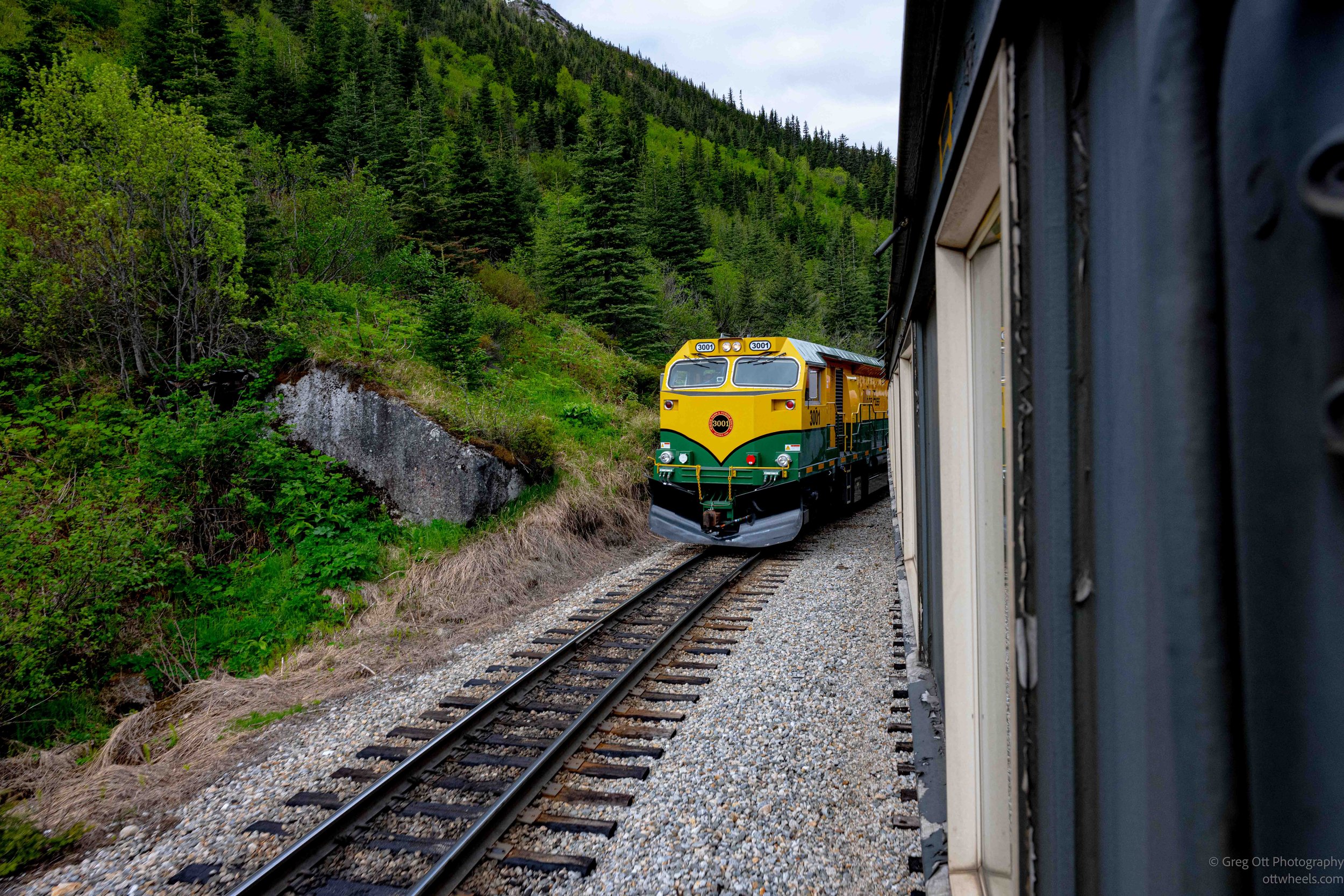
And the scenery really was spectacular. The train climbed steadily through deep valleys lined with waterfalls, dense evergreen forests, and towering granite cliffs. Around nearly every corner there seemed to be another photograph waiting. Looking forward from the open platform, I could often see the locomotive and several cars stretched out along the mountainside as the train rounded sweeping curves. Far below, rivers cut through the valleys and disappeared into the forest. In one direction there were snow-covered peaks partially hidden by clouds. In the other, the valley opened toward Skagway, where I could occasionally see cruise ships sitting in the harbor looking tiny against the massive landscape surrounding them.
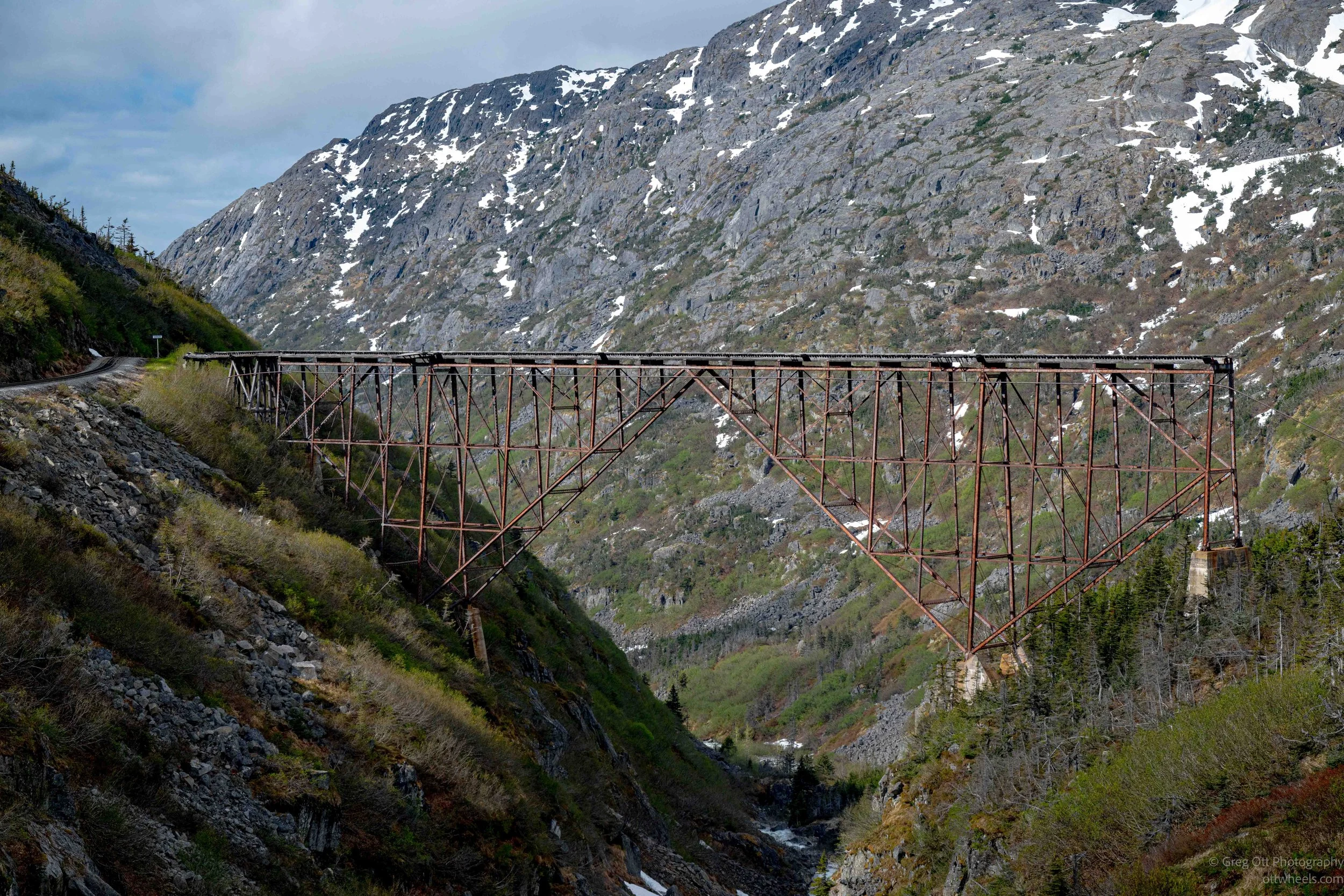
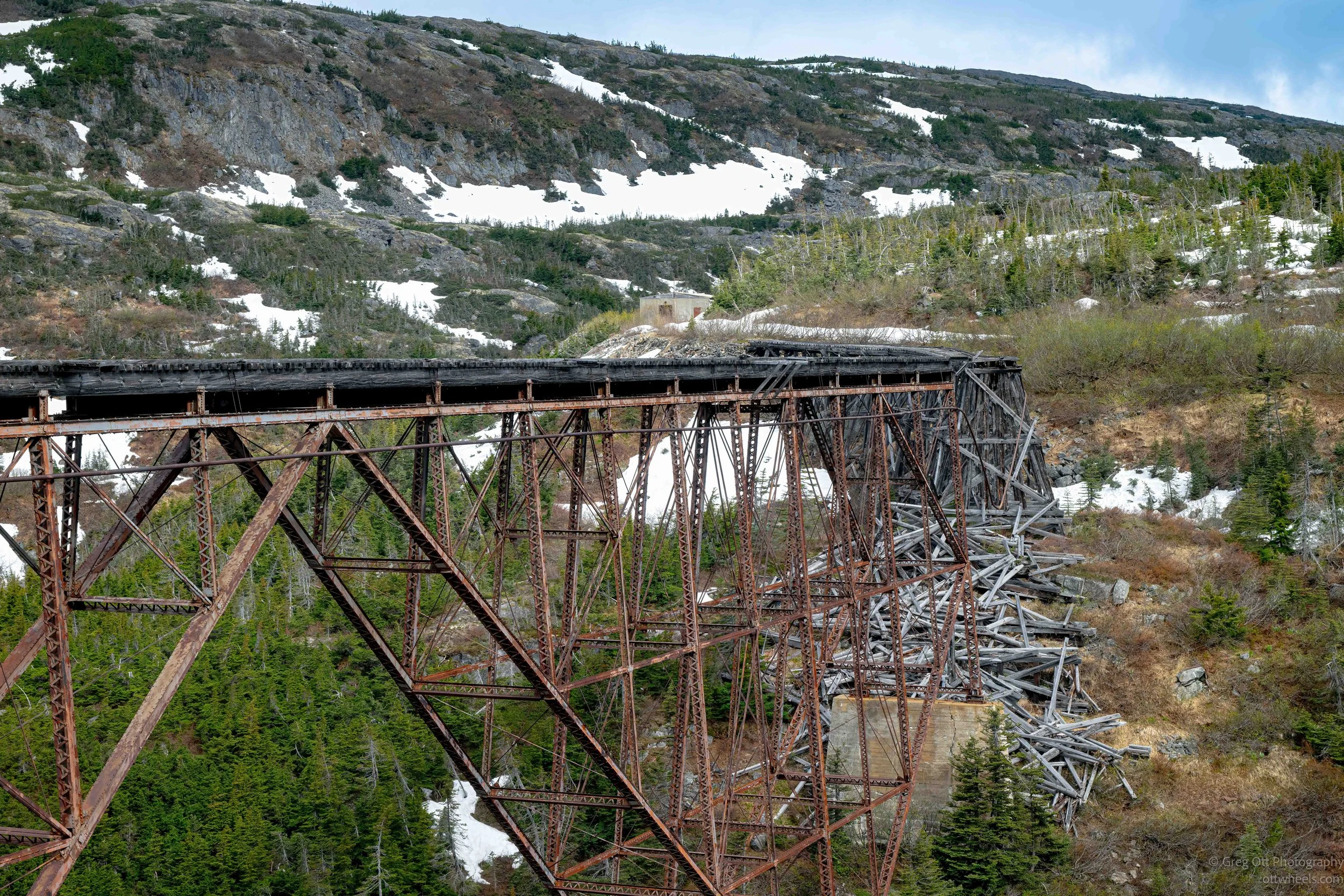
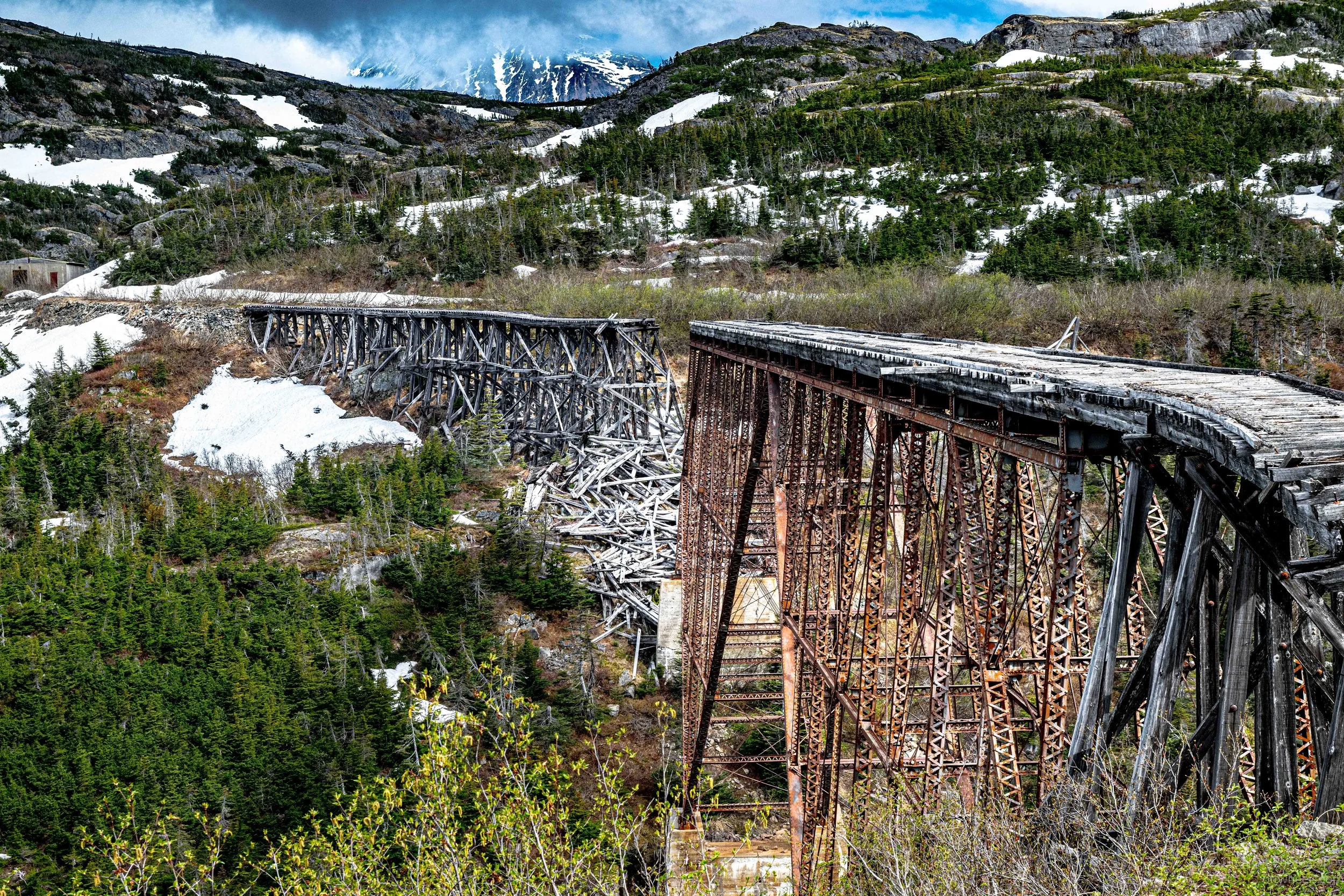
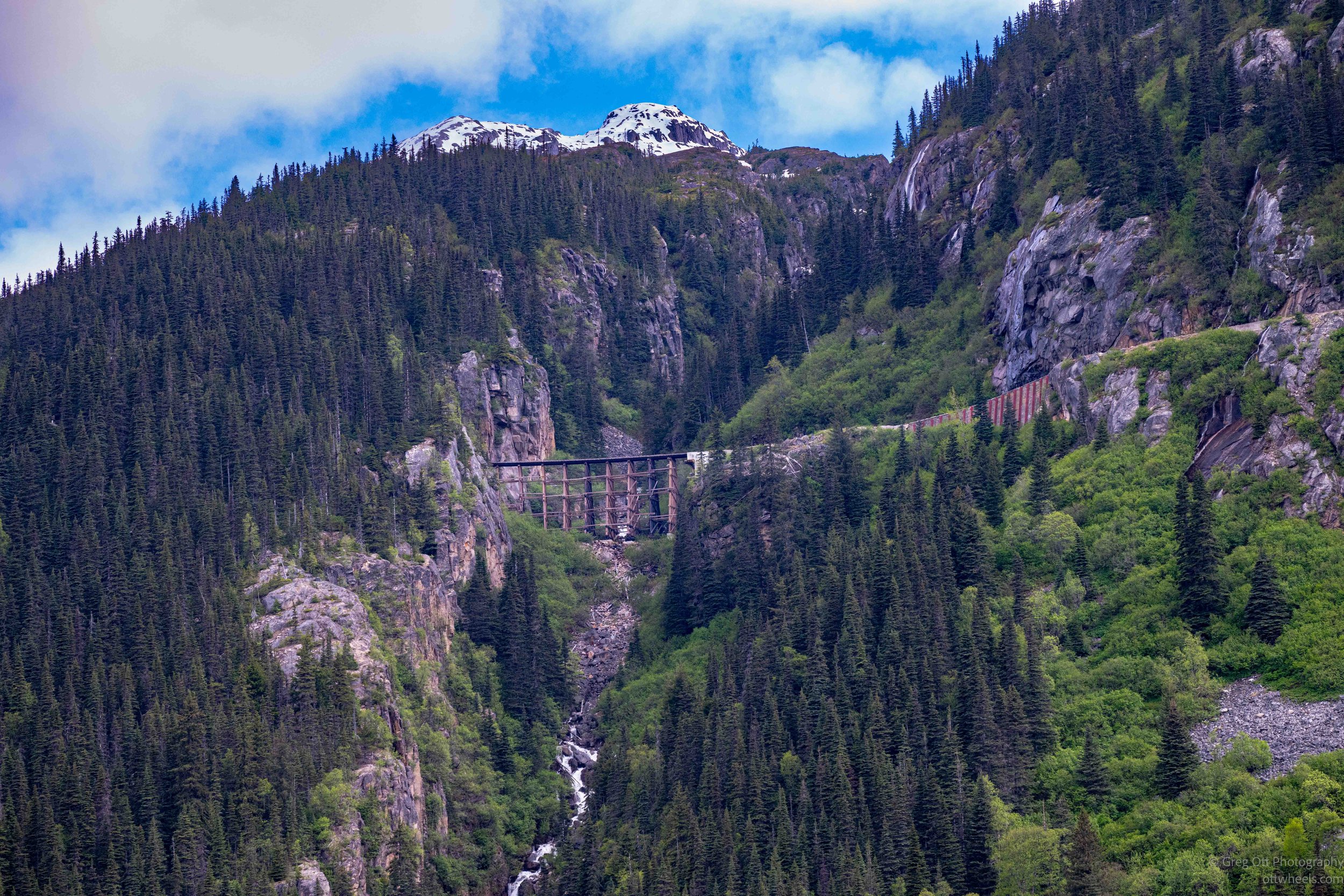
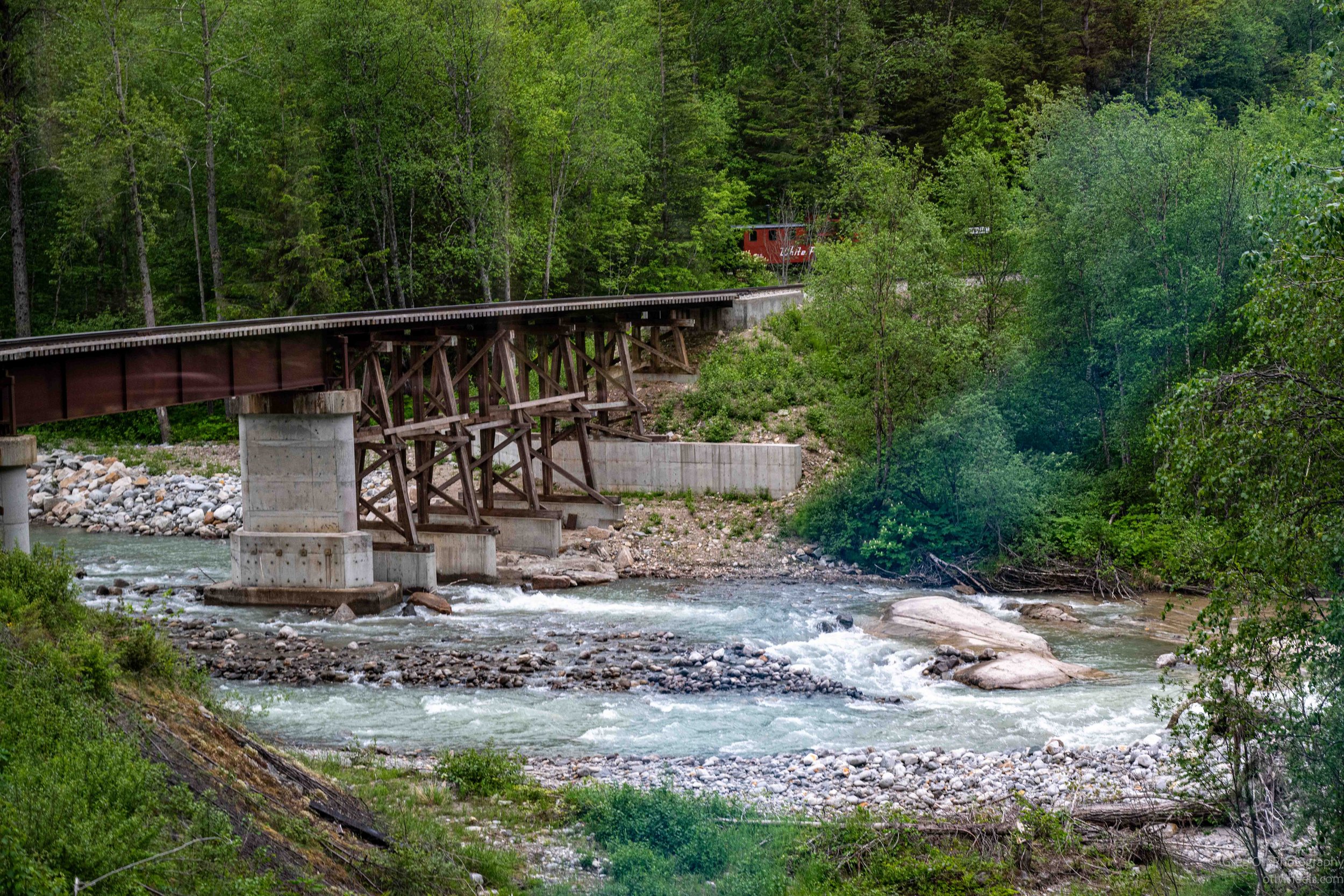
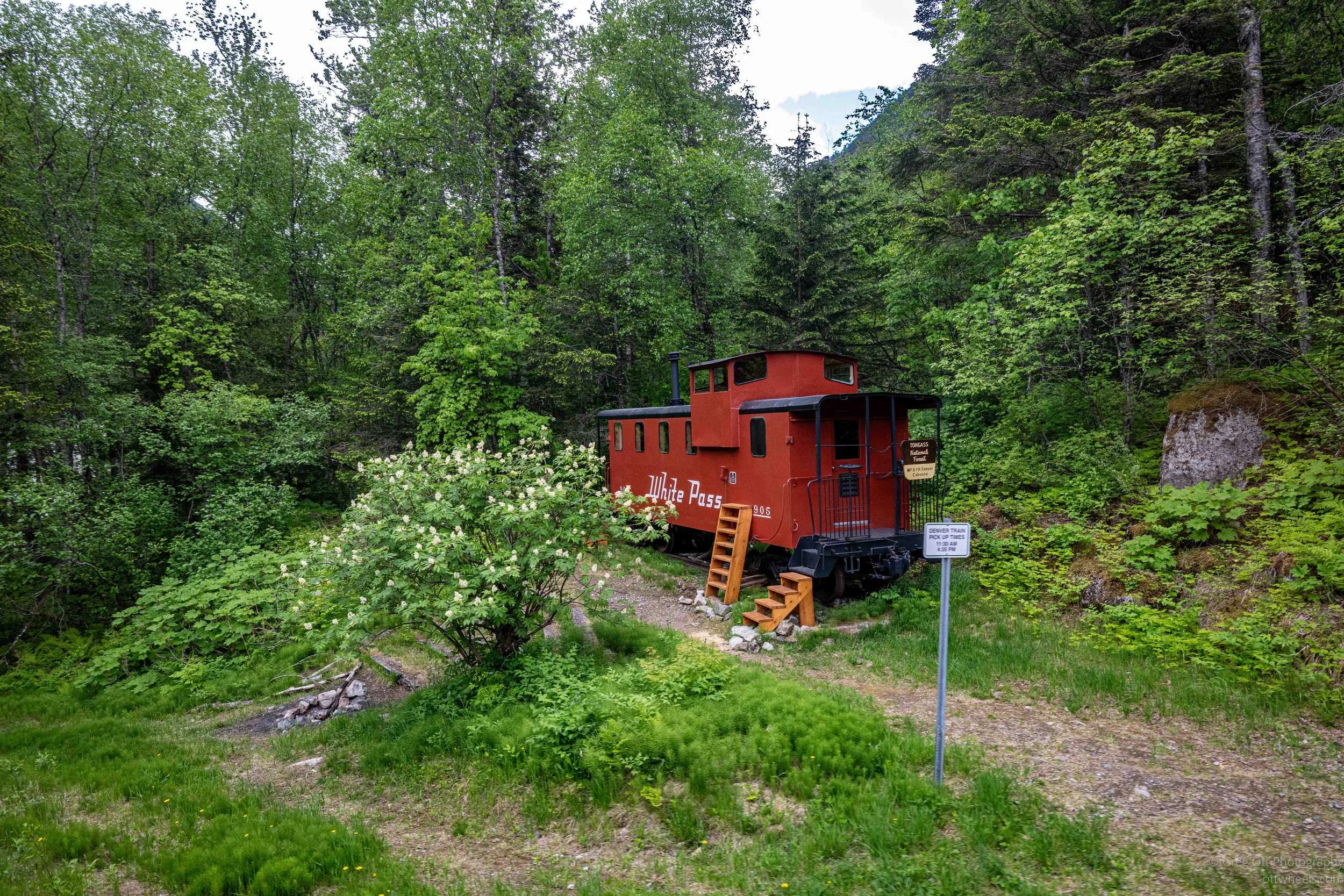
One of the things I enjoyed most was seeing how much history remains along the route. We passed abandoned trestles, old sections of rail line, and weathered structures that looked as though they had been slowly surrendering to the mountains for decades. Some of the old wooden trestles were partially collapsed, while others stood as reminders of the original route built more than a century ago. At one point our guide pointed out a black cross on the mountainside marking the location where a falling boulder crushed two railroad workers. Looking at the steep cliffs above us, it wasn't hard to imagine how dangerous the work must have been. Even today, maintaining the railroad means constantly dealing with avalanches, rockslides, heavy snow, and harsh mountain weather.
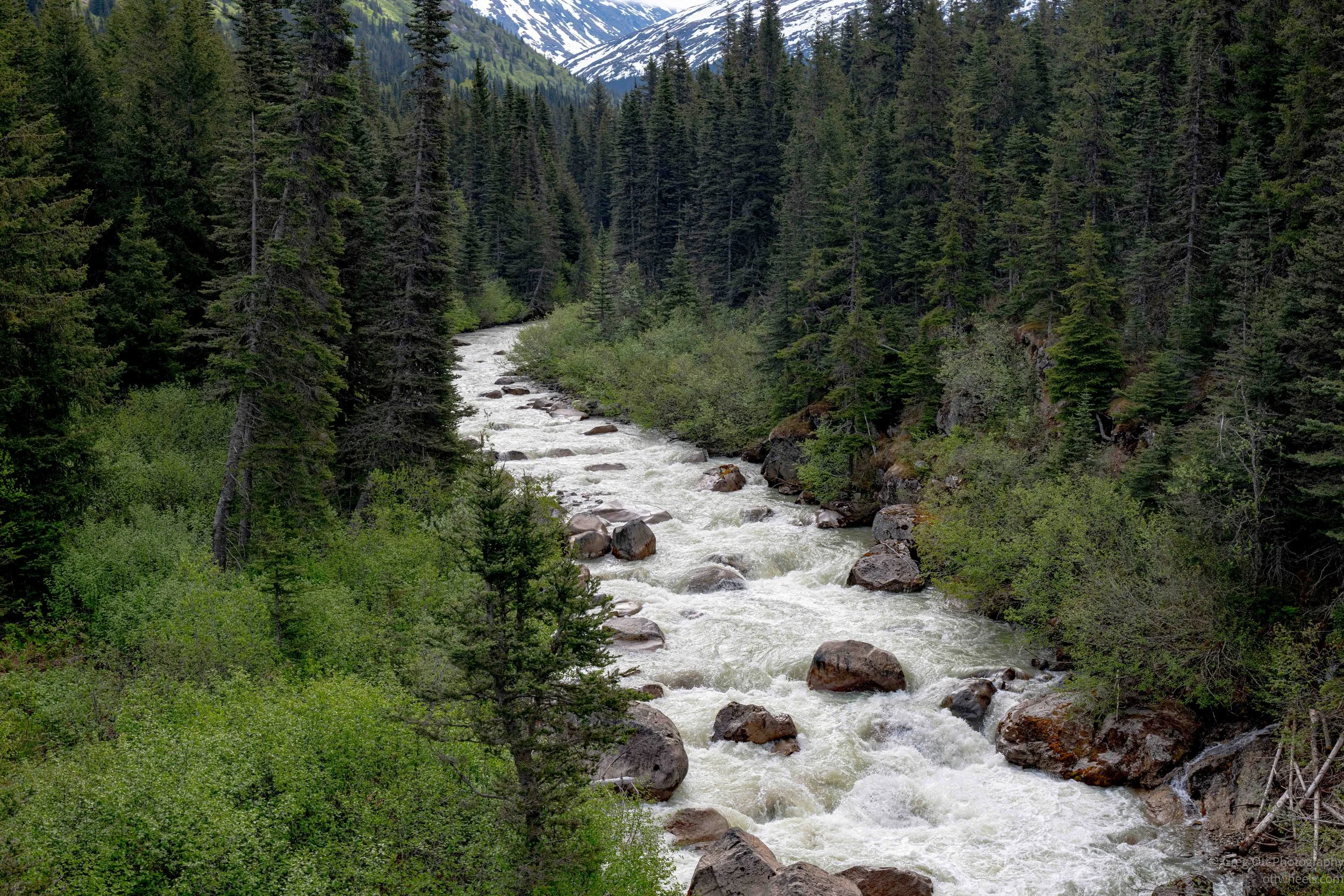
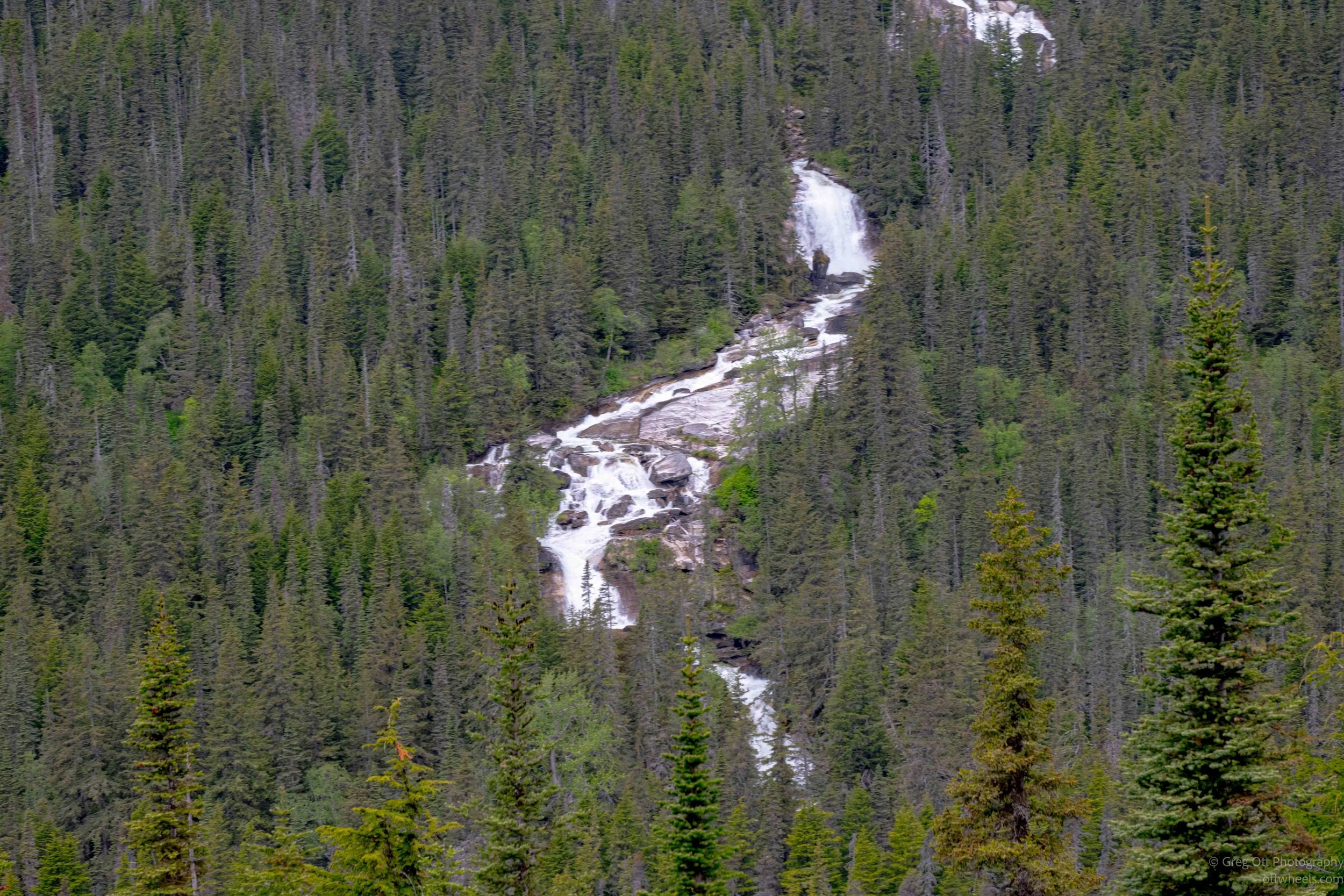
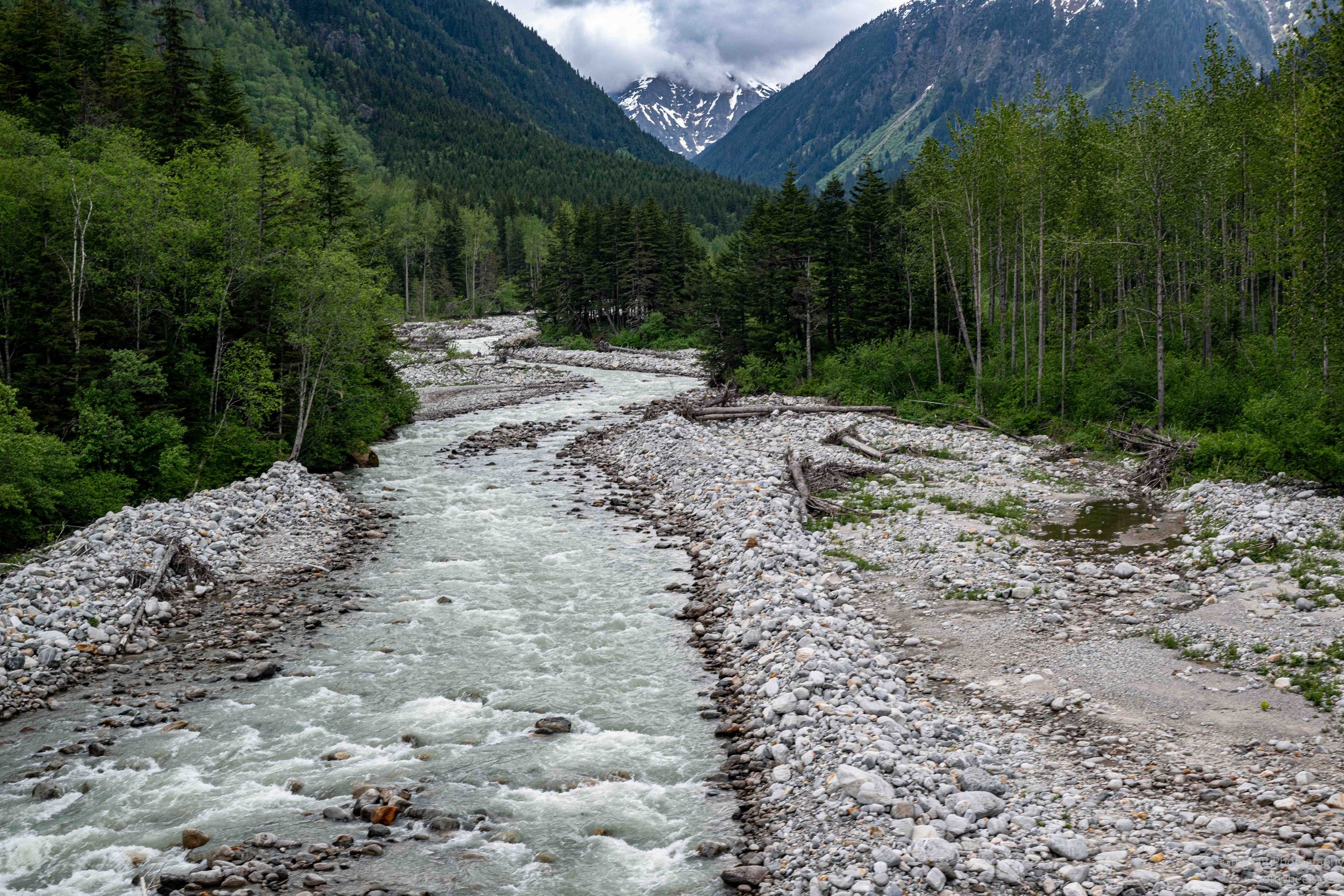
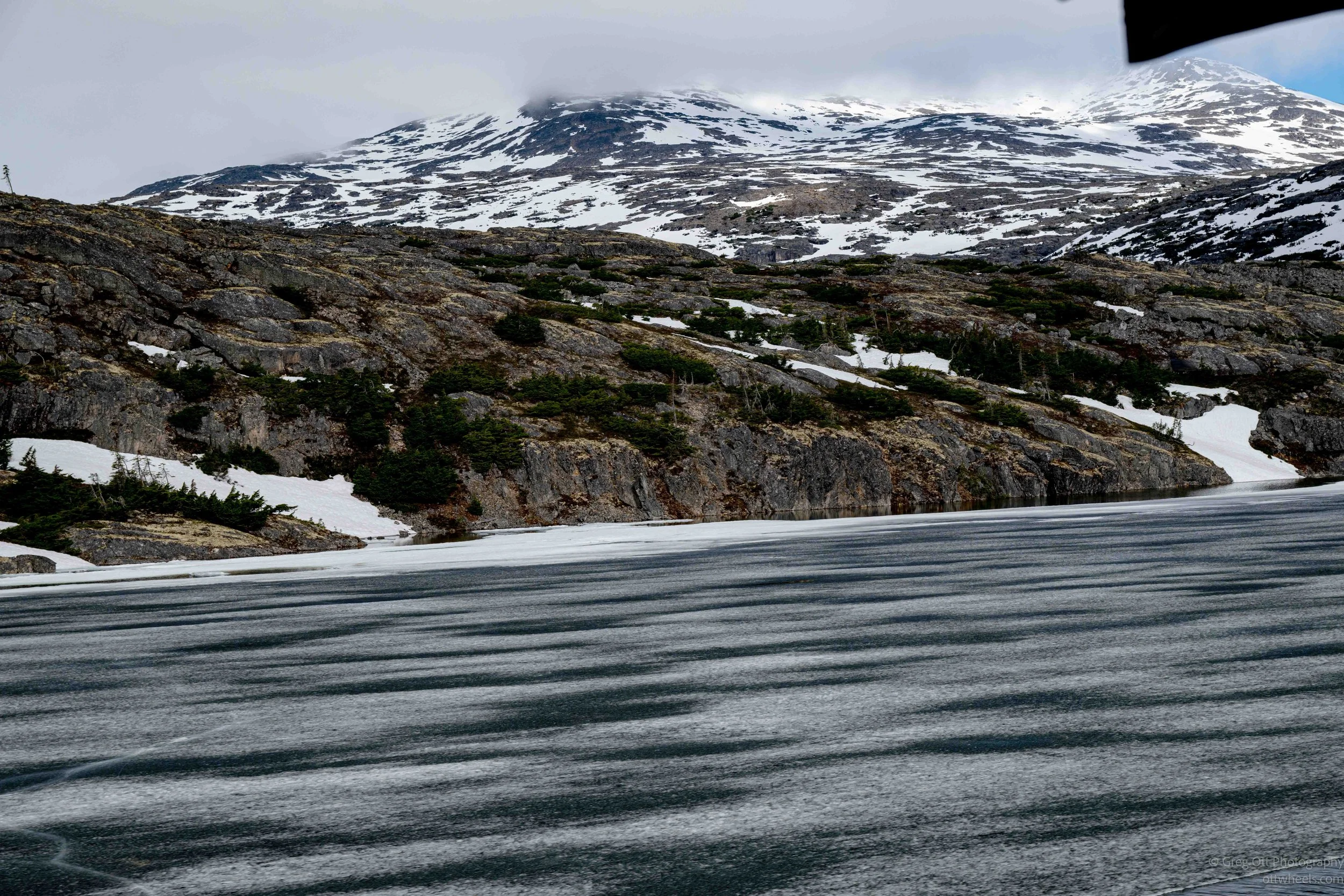
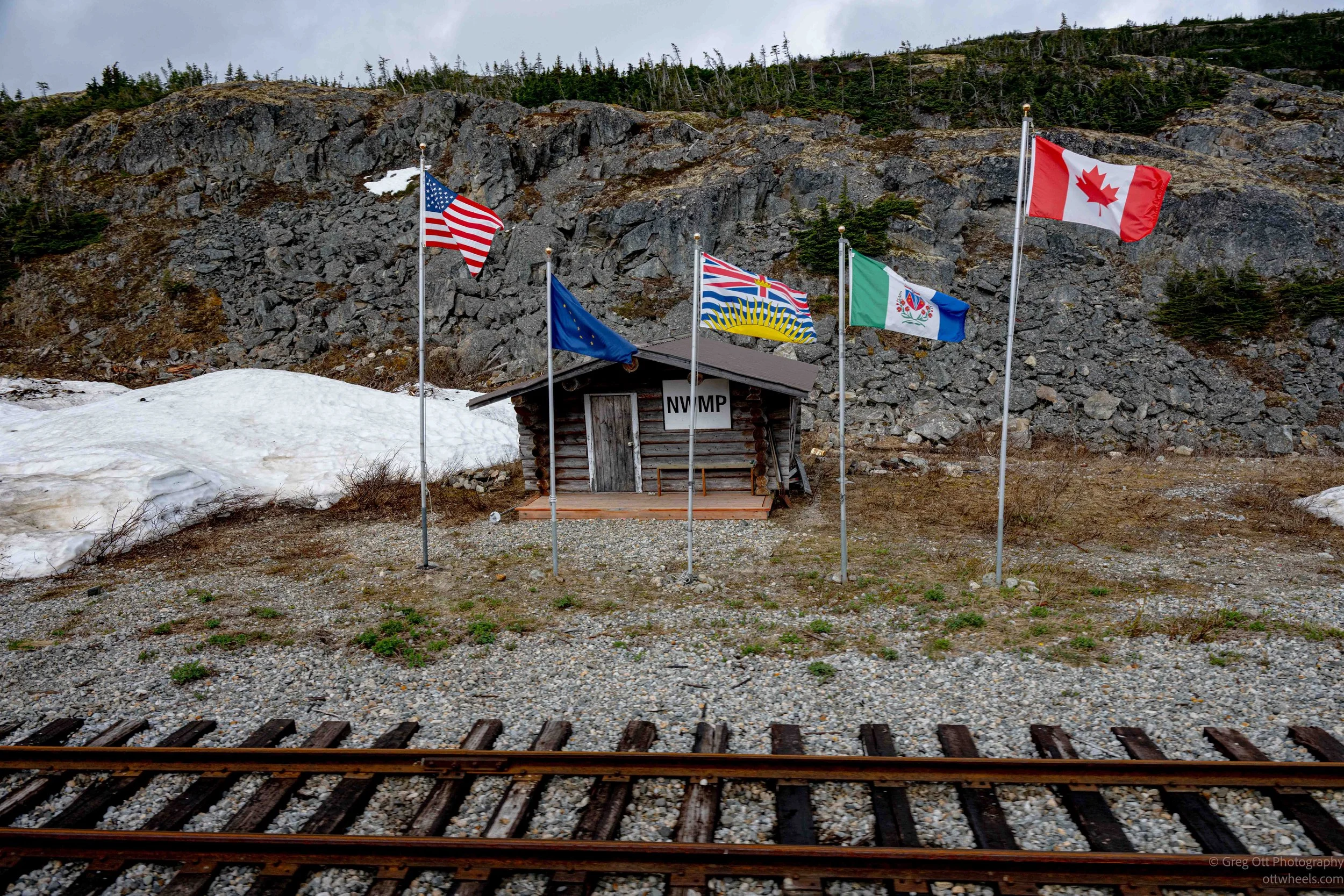
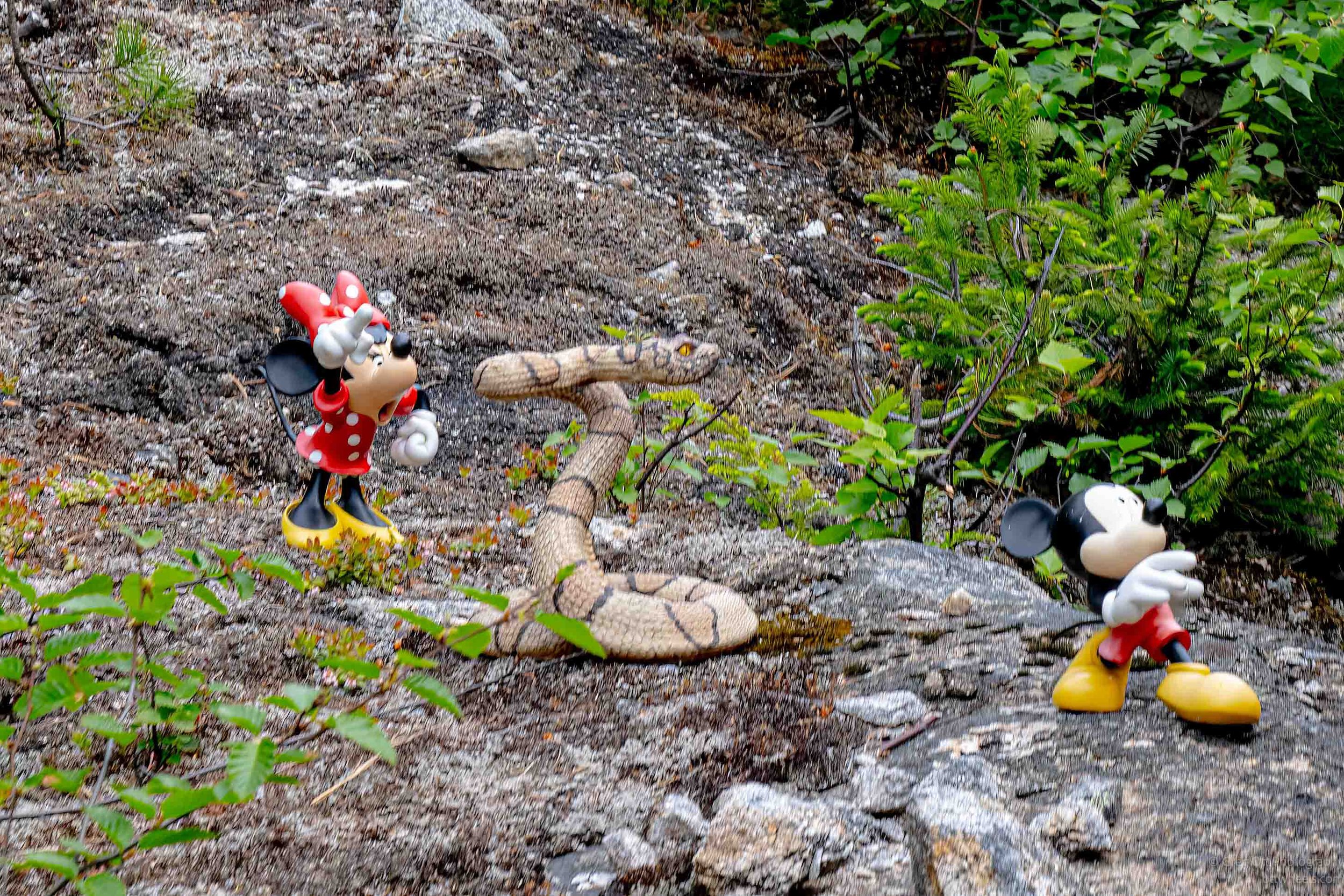
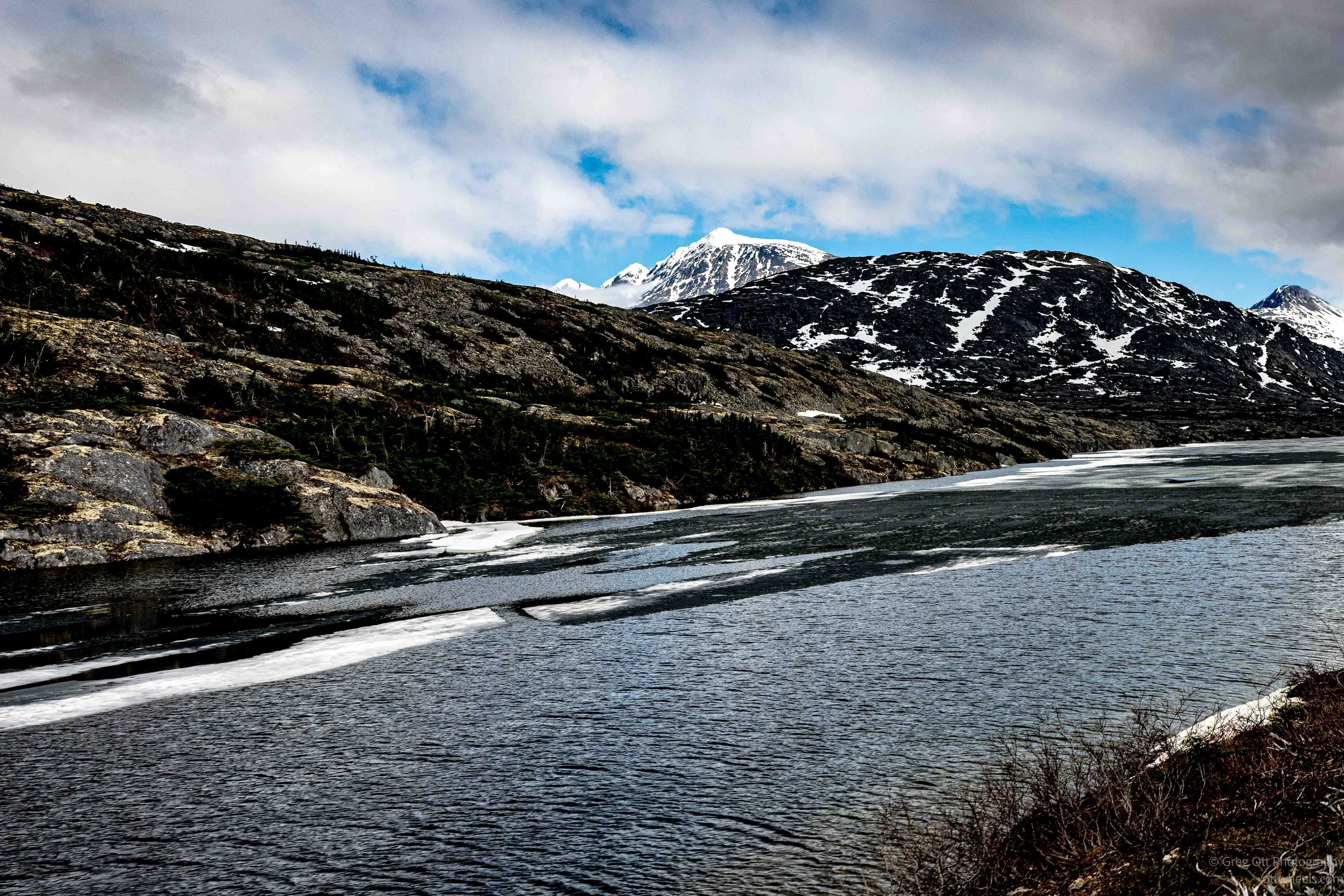
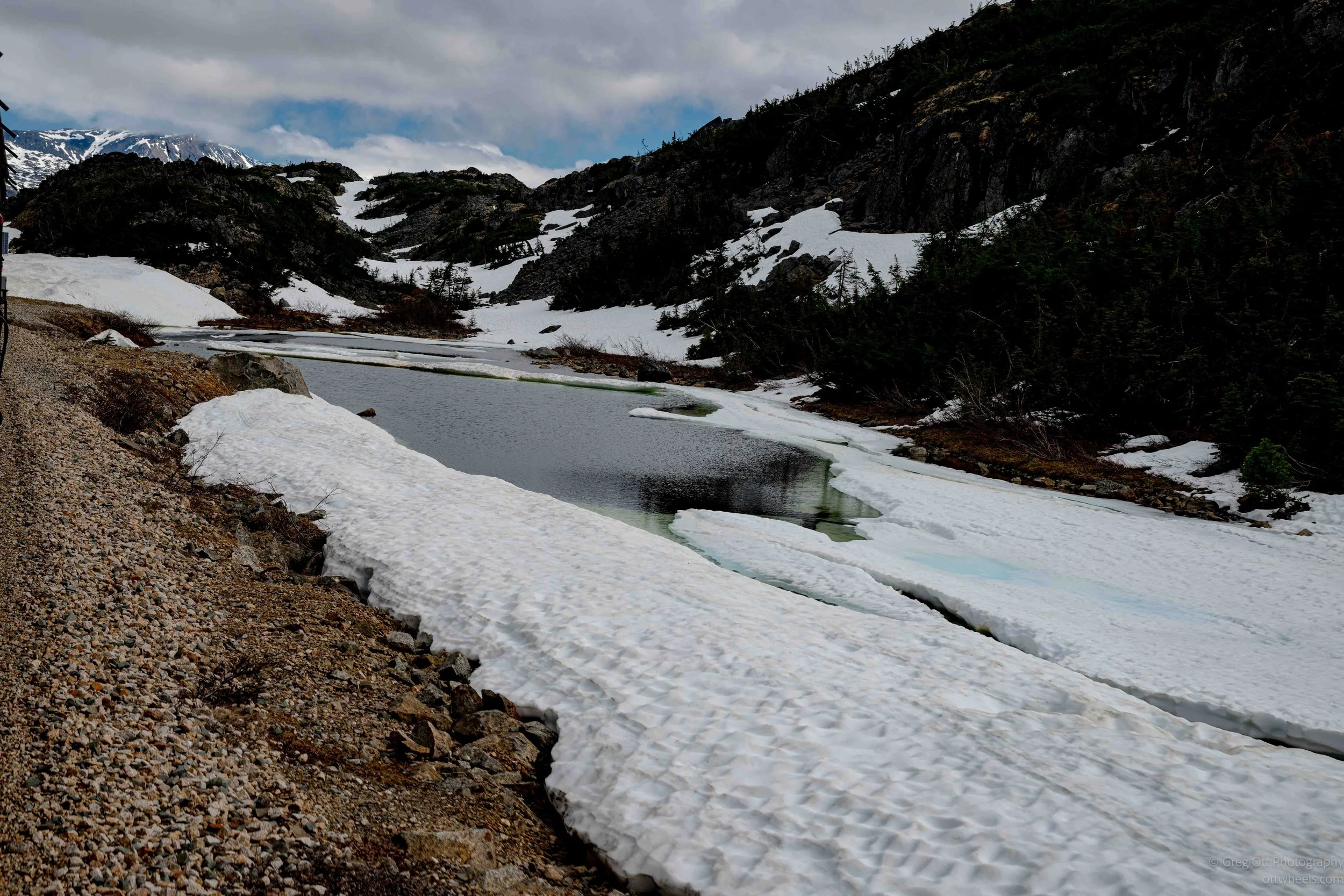
As we climbed higher, the landscape became increasingly alpine. Snowbanks appeared alongside the tracks, small lakes remained partially frozen, and the trees became shorter and more scattered. Near White Pass Summit we crossed into Canada, although nobody needed a passport because the train simply turns around and returns to Skagway. A collection of flags marked the border area, representing Canada, the United States, British Columbia, Yukon, and Alaska. Not far beyond, I spotted one of the stranger sights of the trip: Mickey Mouse and Minnie Mouse apparently fleeing from a giant fake snake perched among the rocks. After all the history and mountain scenery, it was such an absurd sight that everyone nearby started laughing.
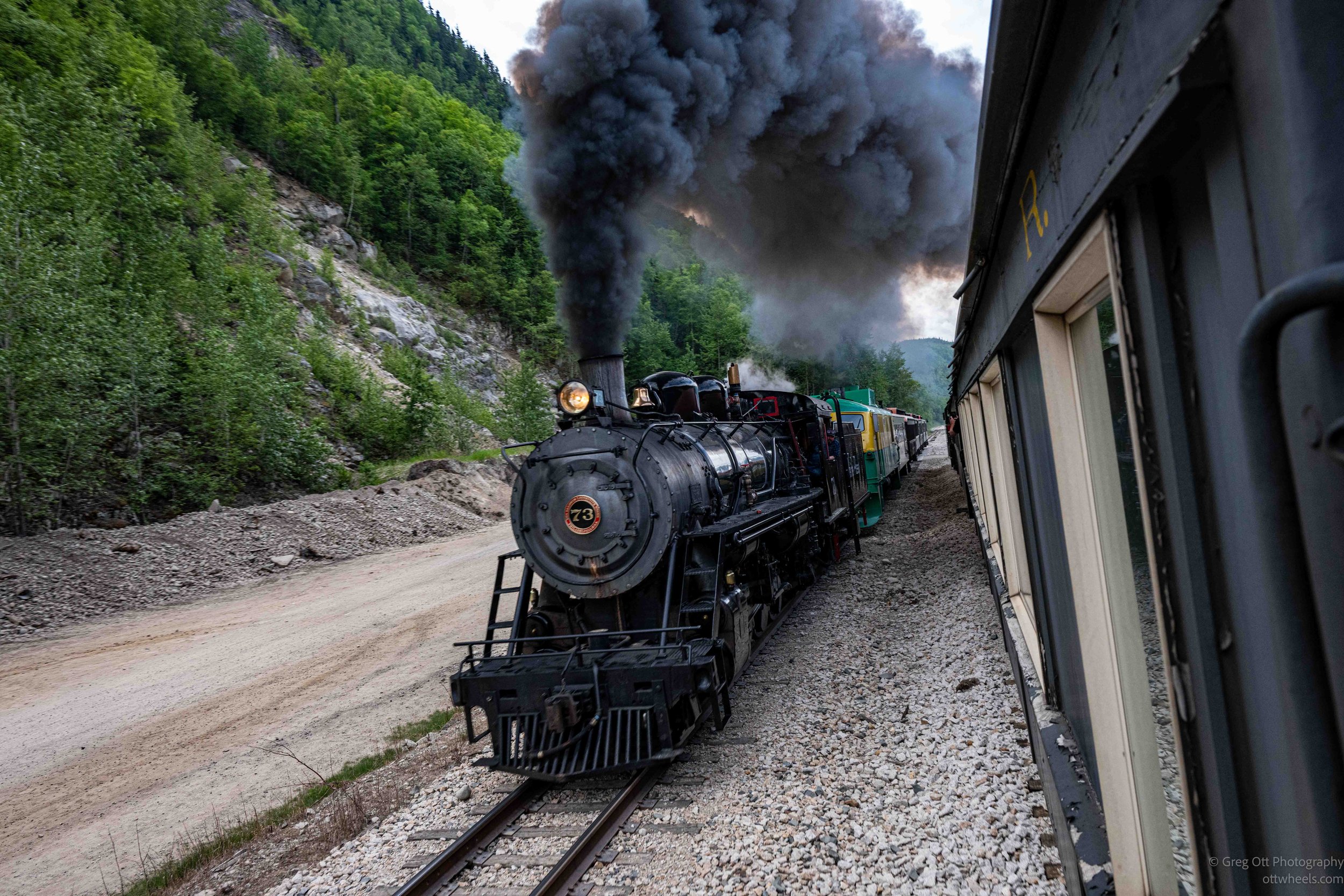
We also passed two trains heading in the opposite direction. One was pulled by a modern diesel locomotive, while the other included historic locomotive No. 73. Built in 1947, No. 73 is one of the White Pass & Yukon Route's famous steam locomotives and still operates on special excursions. Seeing another train emerge around a corner, surrounded by mountains and hanging above the valley floor, felt like stepping back into another era. Today the railroad is operated primarily as a tourist attraction, although it still handles freight service related to mining operations. More than 125 years after it was built, the White Pass & Yukon Route remains both a functioning railroad and a remarkable piece of living history. It was easy to see why so many people consider it one of the great railroad journeys in North America.
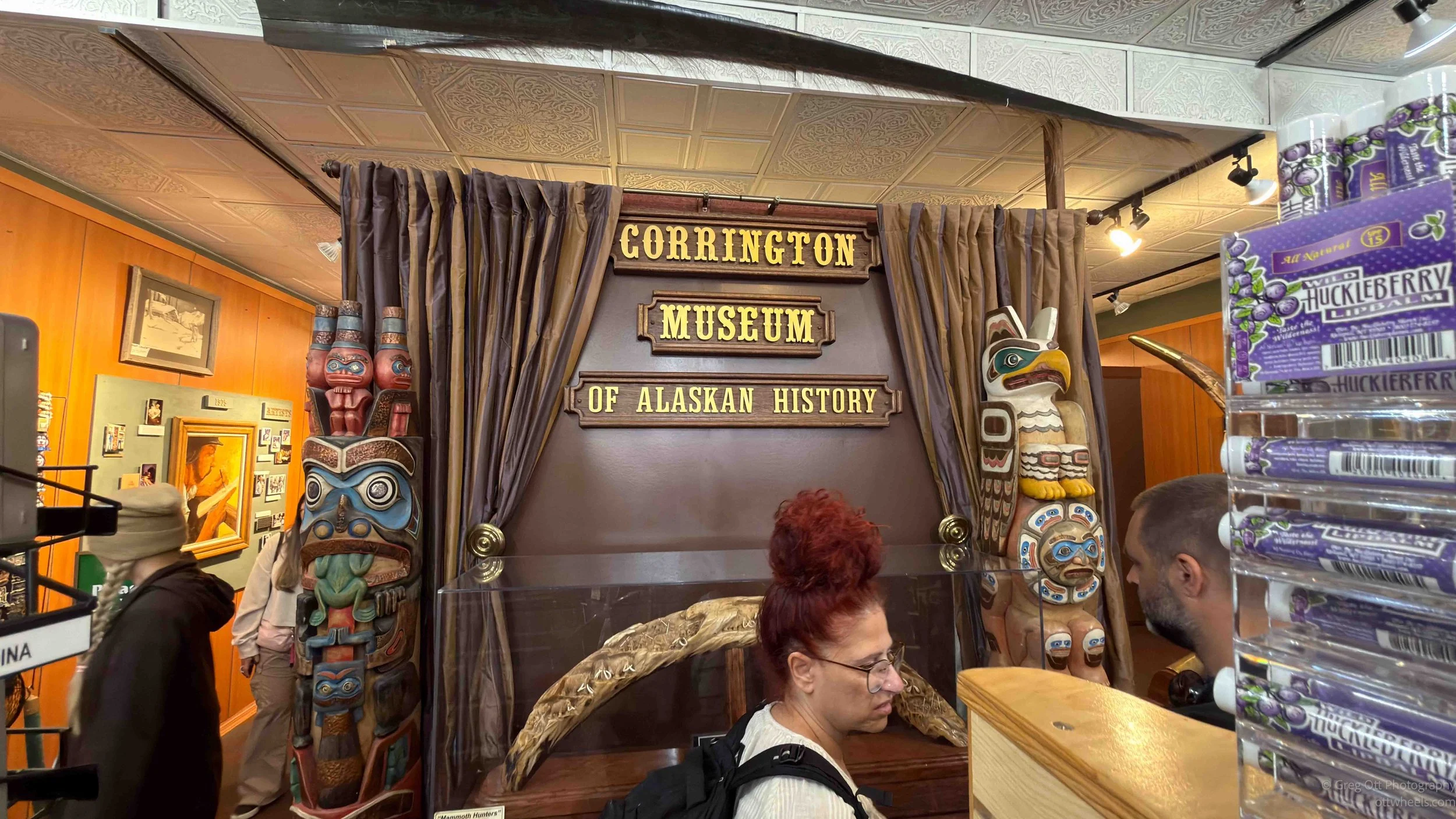
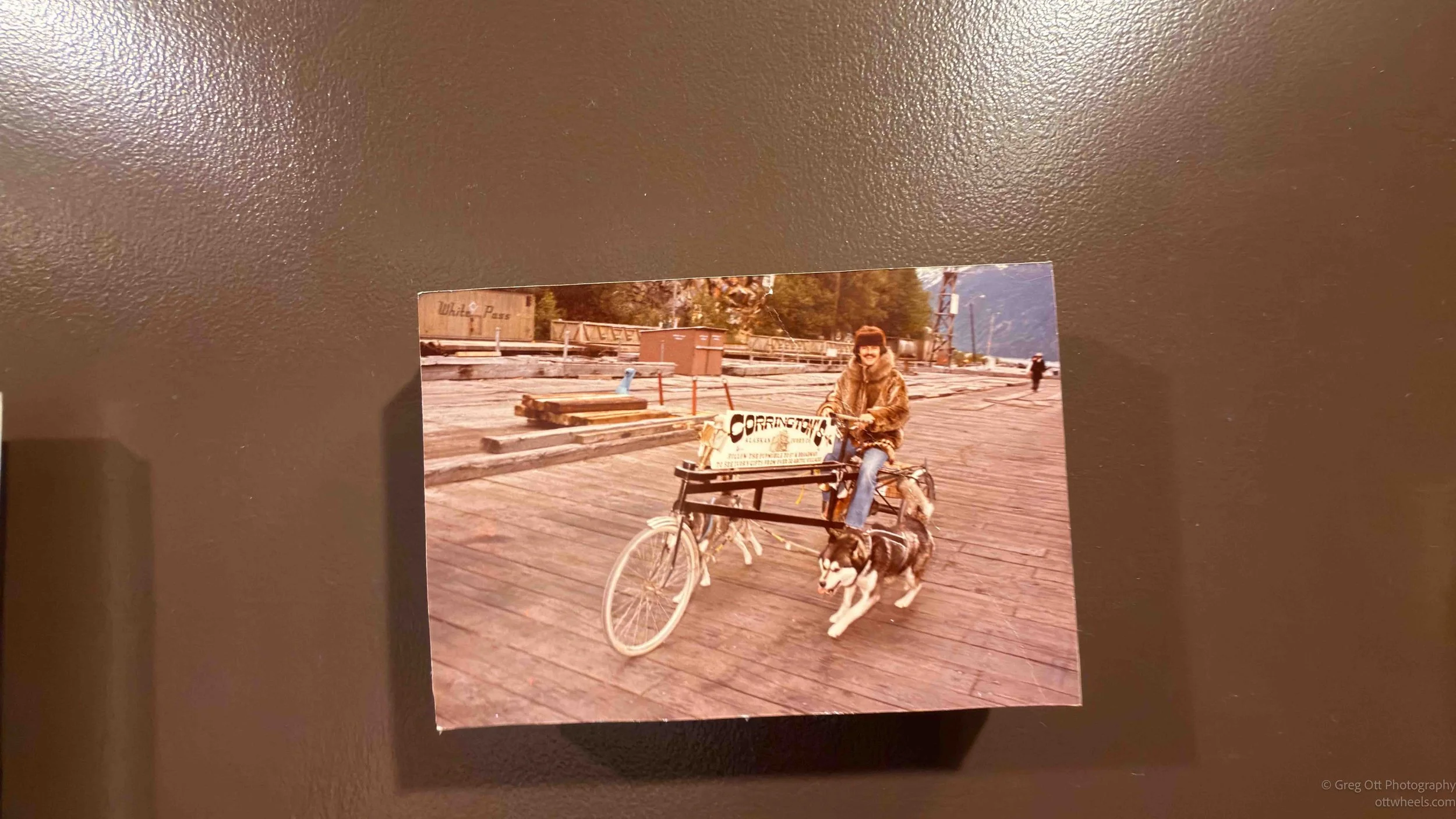
I went back to the Corrington Museum of Alaskan History at 5th and Broadway in Skagway. It is tucked away in the back of a gift shop and would be easy to miss if you weren't looking for it. I had stopped in briefly the day before, but there was too much to absorb in a quick visit. This time I slowed down and worked my way through the exhibits one display at a time. The museum isn't large, but it manages to pack a surprising amount of Alaska's history into a small space.
One display covered the Japanese invasion of Alaska during World War II. As I was reading, a man standing nearby shook his head and quietly said, "I never knew this." He wasn't really talking to anyone. He just seemed genuinely surprised. I told him I had exactly the same reaction a few weeks ago when I first learned about it. He was from Holland and said he had read a lot about World War II but had never come across this part of the story. The exhibit explained how Japanese forces occupied Attu and Kiska in 1942, the first occupation of American territory by a foreign army since the War of 1812. It was one of those pieces of history that seems like it should be better known.
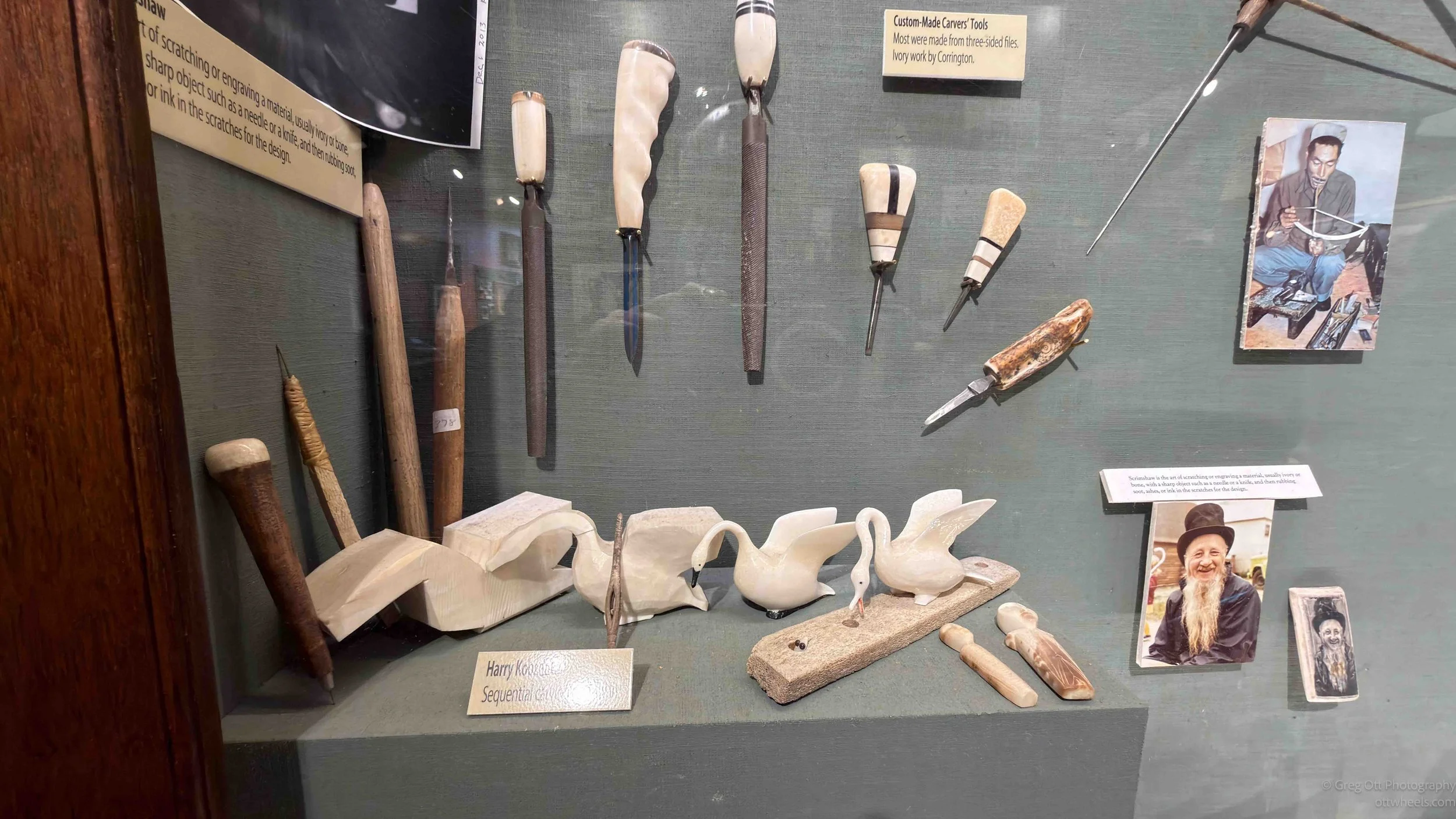
The museum also had an impressive collection of Native Alaskan carvings and artwork. Several displays focused on master carvers and the tools they used. I found myself studying the carving tools almost as much as the finished pieces. One exhibit showed the progression of carving swans from rough pieces of material into finished sculptures. Looking at the completed birds, it was hard to imagine how much patience and skill went into creating them.
One of the most striking pieces in the museum was a massive carved mammoth tusk estimated to be around 30,000 years old. The surface was covered with a detailed scene of prehistoric hunters battling mammoths with ivory spears. The carving wrapped across nearly the entire tusk, and the longer I looked, the more details I noticed. According to the display, the artist spent more than two years completing it.
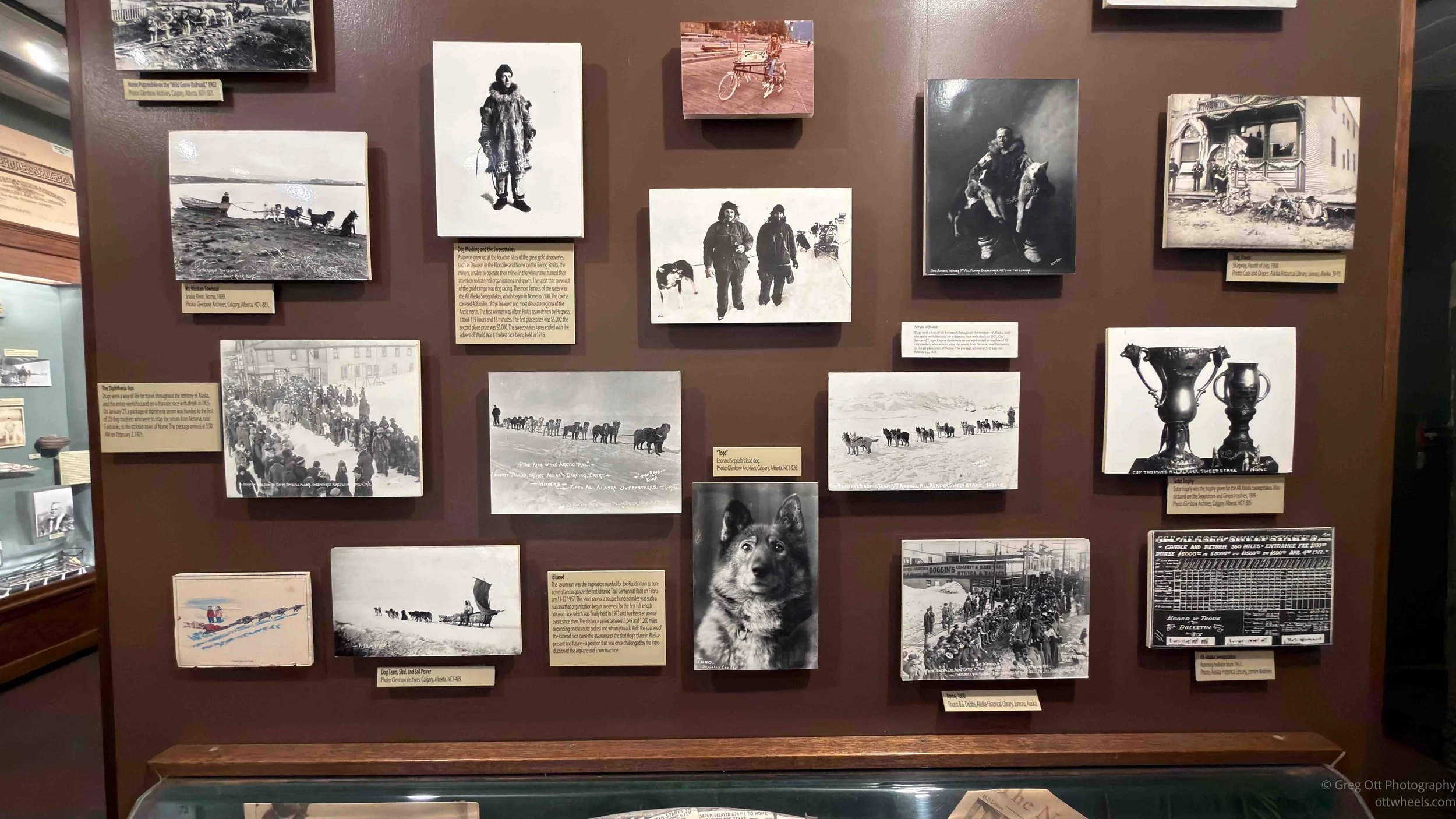
Another section focused on the Iditarod. Before coming to Alaska, I mostly thought of it as a long-distance sled dog race. The exhibits explained how it grew from the legacy of the serum run and helped preserve Alaska's sled dog traditions after airplanes and snowmachines became common. Historic photographs showed mushers, dog teams, checkpoints, and race finishes from different eras. The displays made it easier to understand why the race remains such an important part of Alaska's identity.
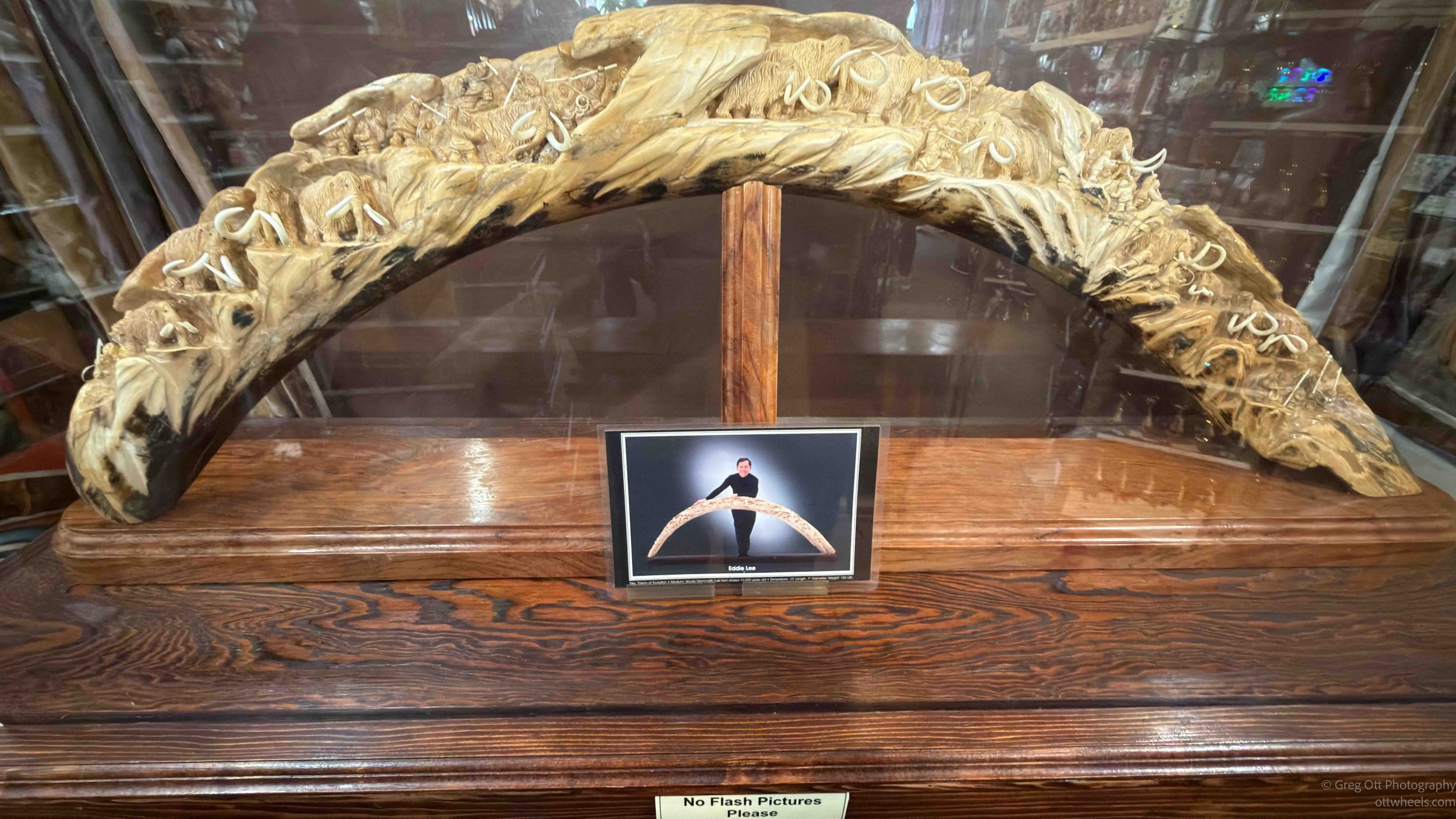
What I enjoyed most was the variety. One display covered mammoth hunters, the next Native carving traditions, then World War II or the Iditarod. None of the exhibits were particularly large, but almost all of them were packed with photographs, artifacts, and stories. It felt less like a formal museum and more like the personal collection of someone who had spent a lifetime preserving pieces of Alaska's past. By the time I finished, I was glad I had come back for a second visit. The first time through I had simply looked at the displays. This time I actually had the chance to read them.