Skagway's KlondikeGold Rush Stories
I tightened the flow, removed some repetition between the museum and film sections, cut a little length, and kept it in your voice.
I woke around 8 a.m. and was surprised to find all of the big rigs around me gone when I stepped outside at 8:30.
After writing the blog and making French toast, I headed into town around 11:30 and walked the mile to the Skagway Museum, housed in the old federal building. Admission was only three dollars, making it one of the better bargains I've found in Alaska. I expected to spend maybe 30 or 45 minutes inside. Instead, I stayed nearly two hours.
Skagway Museum
The museum does an excellent job telling the story of Skagway from multiple angles. There was Gold Rush history, railroad history, military history, Native culture, local characters, and a surprisingly large collection of historic photographs. The photography grabbed me immediately. Some of the images dated back to the late 1800s, and I was amazed by how sharp many of them were. Looking closely, I could pick out faces, storefront signs, railroad tracks, and details in the mountains behind town. In several cases, I recognized places I had walked through earlier that day. It felt like looking through a window into a different version of Skagway.
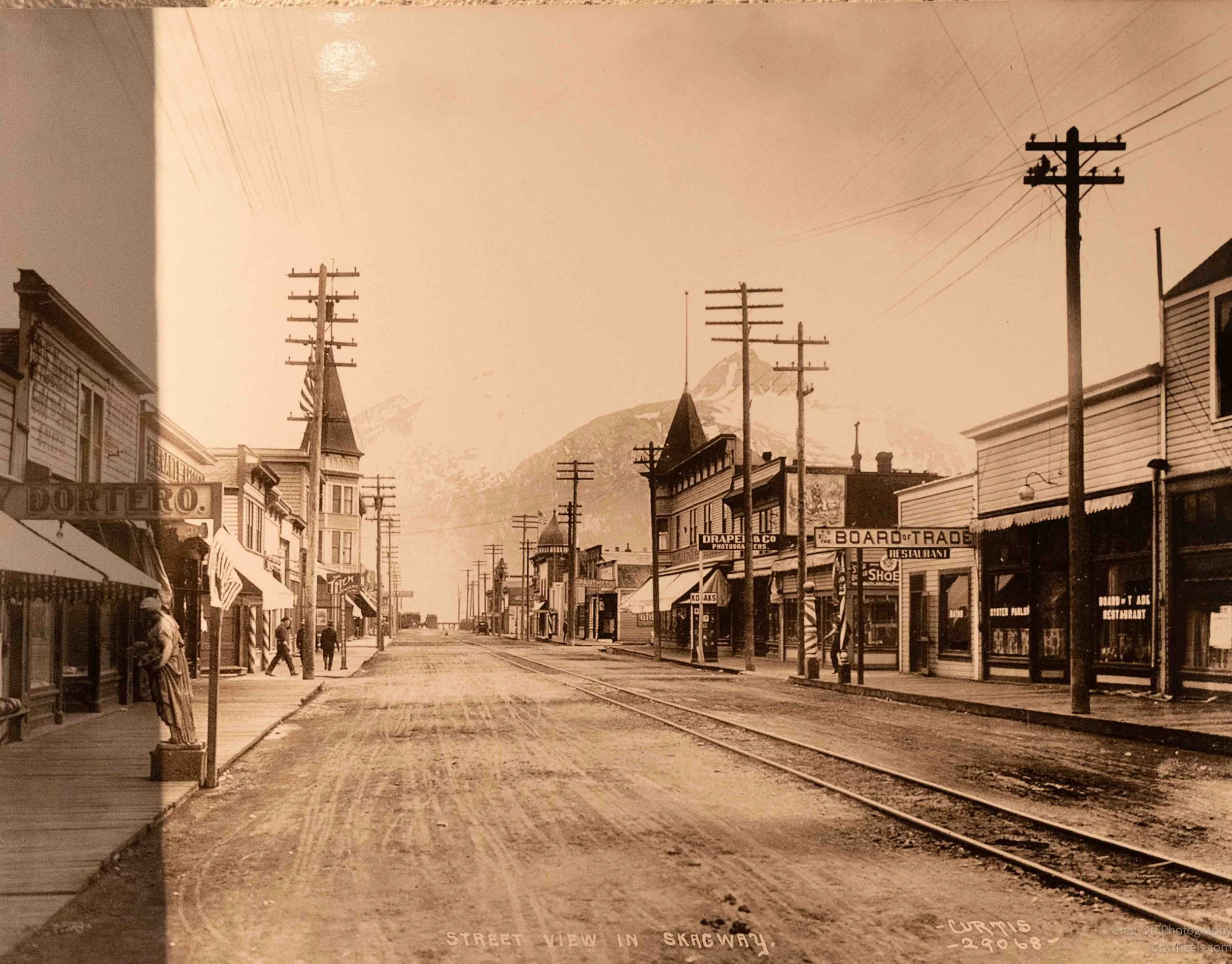
One photograph showed Broadway lined with wooden buildings, dirt streets, railroad tracks, and utility poles stretching into the distance. The mountains in the background were the same mountains I had been looking at all week. The town looked completely different, but the landscape hadn't changed at all. It was one of those images that instantly connected the past to the present.
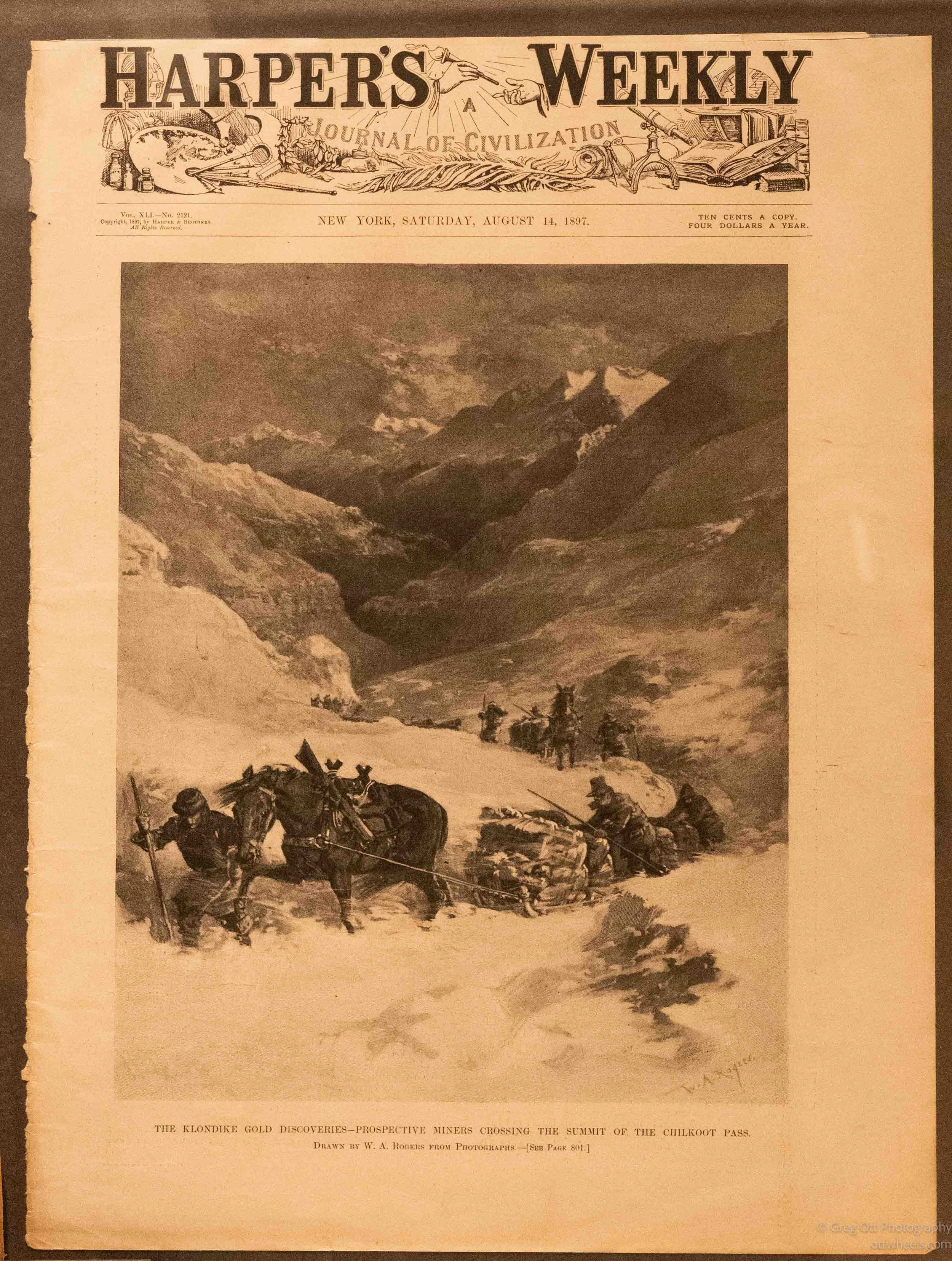
The Gold Rush exhibits helped put the scale of the stampede into perspective. Canada required prospectors entering the Yukon to carry roughly a ton of supplies to prove they could survive a northern winter. Reading the list was one thing. Seeing photographs of people hauling those supplies over mountain passes was something else entirely. Men carried enormous packs, made repeated trips over the same trails, and spent weeks moving equipment only a few miles at a time.
The museum also covered Soapy Smith, Skagway's most notorious con man. During the Gold Rush, thousands of people arrived carrying cash and little experience with frontier life. Through gambling operations, scams, and intimidation, Soapy became one of the most powerful men in town. The museum included photographs taken after he was shot and killed during a gunfight on Juneau Wharf in 1898. There were even autopsy photographs on display. I wasn't expecting that. Seeing those images made the story feel much less like Old West legend and much more like something that had actually happened here.
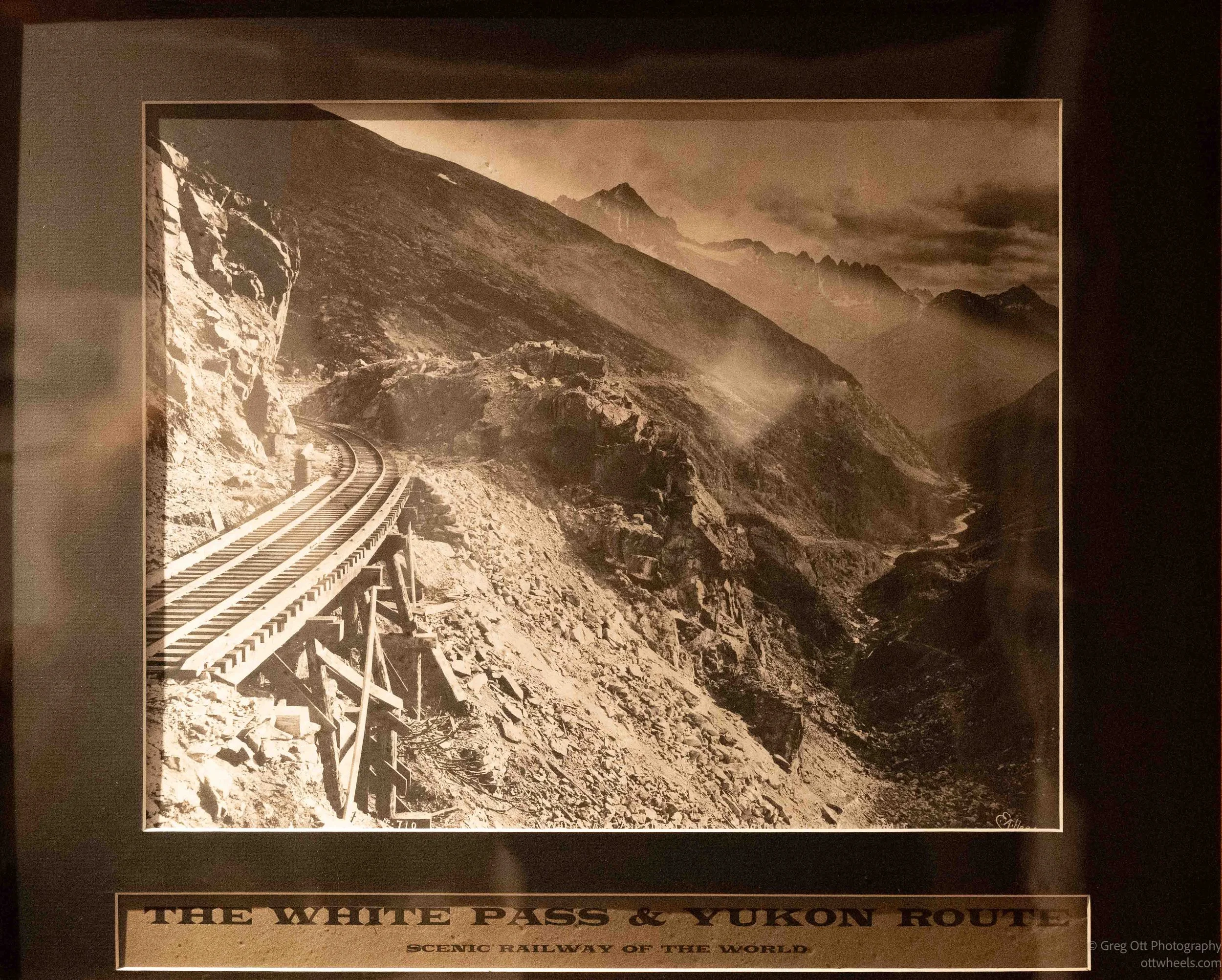
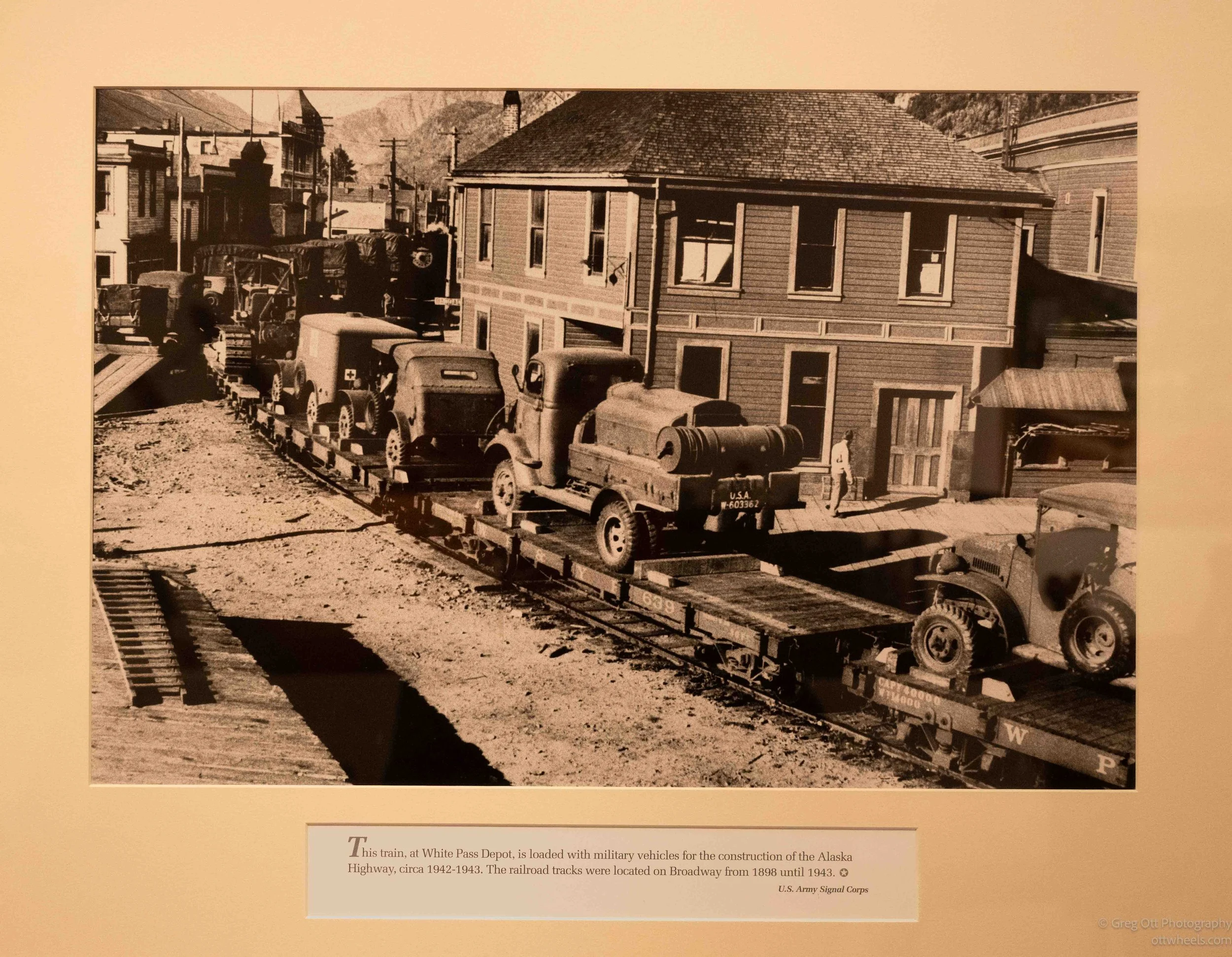
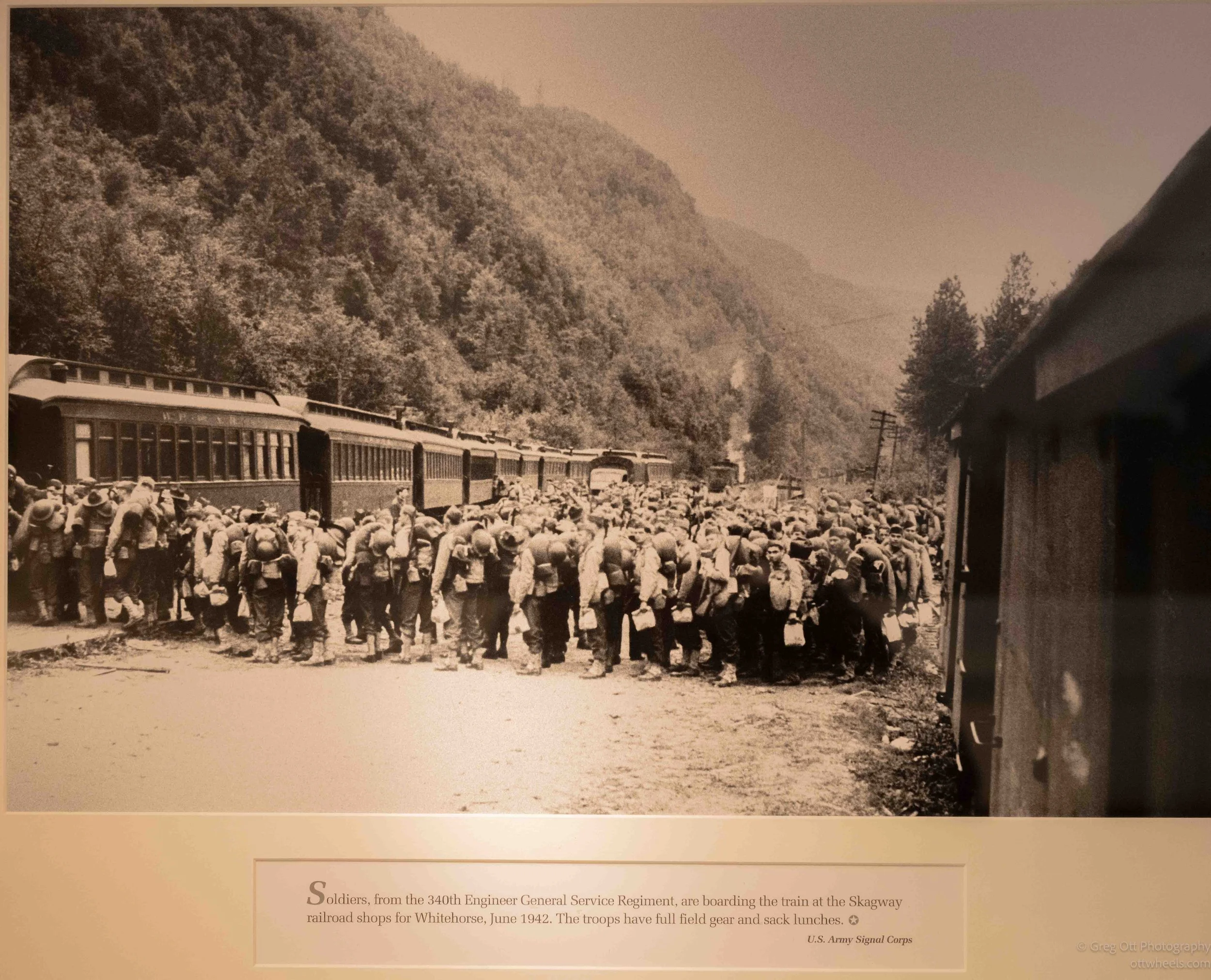
The World War II exhibits were equally interesting. Before visiting the museum, I hadn't realized how important Skagway became during construction of the Alaska Highway. Historic photographs showed military vehicles loaded onto railroad flatcars and trains carrying troops and equipment north into Canada. The railroad, originally built because of the Gold Rush, suddenly found itself playing a critical role in the war effort.
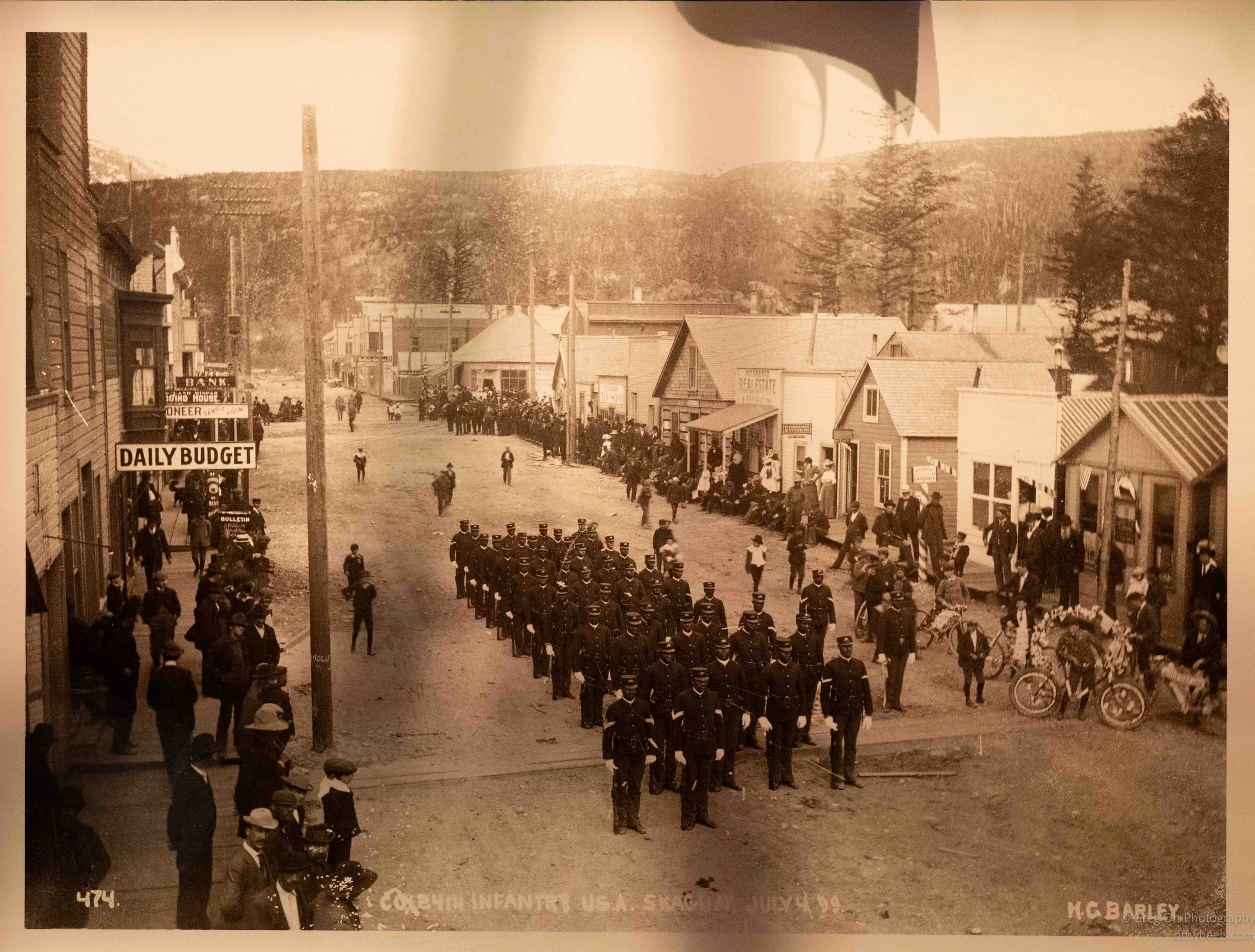
One photograph that caught my attention showed Company L of the 24th Infantry Regiment marching through Skagway in 1899. The all-Black Buffalo Soldier unit had been sent north to help maintain order during the chaotic Gold Rush years. It was a part of Skagway's history I knew almost nothing about before visiting the museum.
Martin Itjen and Mae West
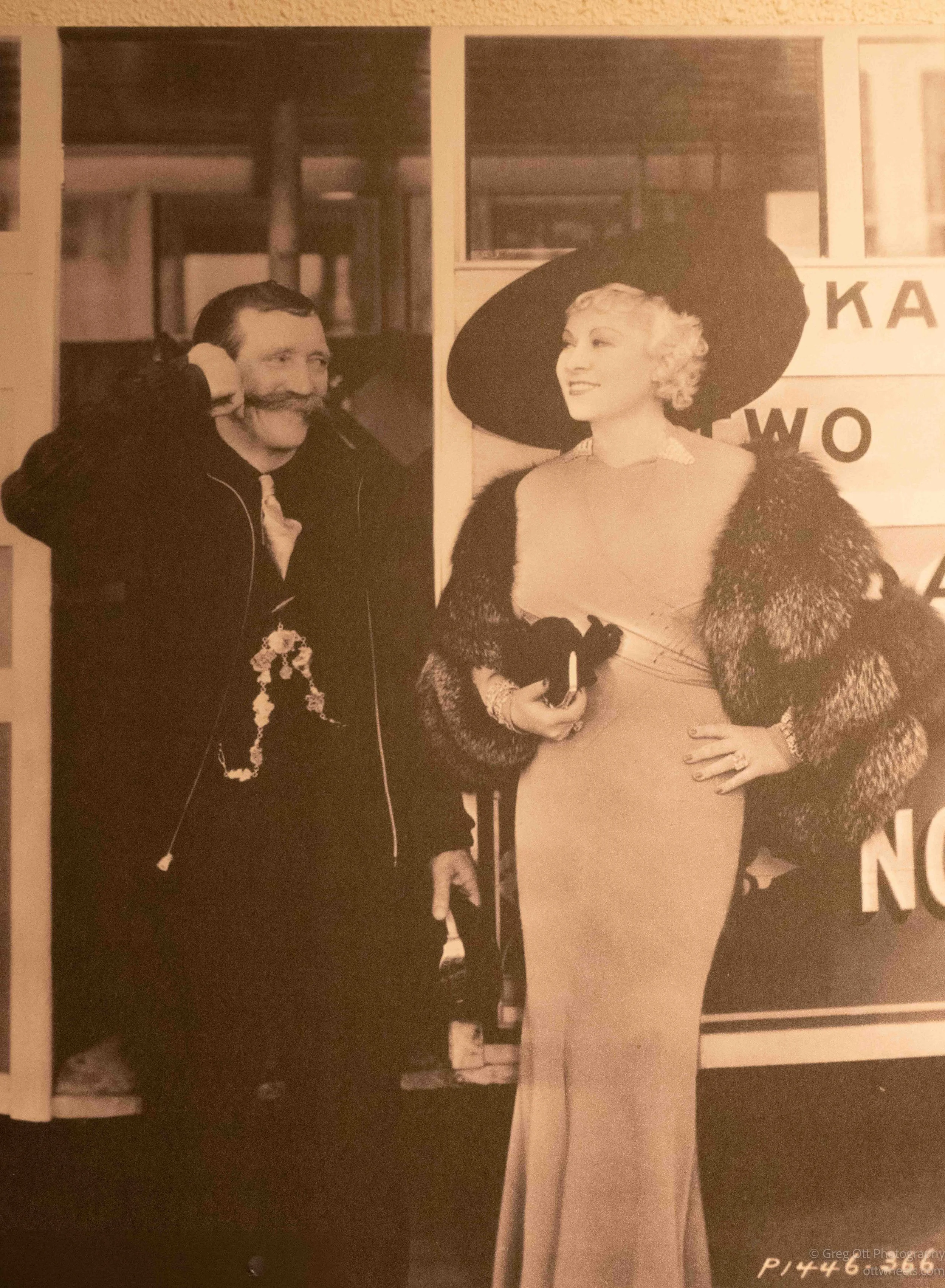
One of the more unexpected exhibits focused on Martin Itjen, who may have been one of the most colorful people ever to live in Skagway. He arrived during the Gold Rush, worked a variety of jobs, opened businesses, and eventually became one of the town's biggest promoters. In 1935, he drove his custom-built Skagway streetcar all the way from Seattle to Hollywood as a publicity stunt. While there, he personally invited actress Mae West to visit Skagway and promised her "a hot time in Skagway when you arrive." The story was so ridiculous I stopped and read the display twice.
By the time I left, the museum had accomplished something I always appreciate. It made the town outside feel more meaningful. I had a much better understanding of the history and what allowed the town to evolve to what it is today.
Downtown Skagway
Afterward, I spent some time wandering through town. Many of the downtown buildings are original structures from the Gold Rush era. Their facades have been preserved or restored to maintain the town's historic character, even though the businesses inside now sell jewelry, T-shirts, ice cream, and souvenirs. Most of the activity centers around Broadway and the adjacent side streets. The entire historic district is surprisingly compact, stretching only about fifteen blocks and including the train station.
Visitor Center
Later in the afternoon, I returned to the Klondike Gold Rush National Historical Park Visitor Center for the film in the auditorium. The museum had given me the facts, but the film brought the story to life. It began with the discovery of gold on Bonanza Creek near present-day Dawson City in August 1896 by George Carmack, Skookum Jim Mason, and Dawson Charlie. When news of the strike finally reached Seattle and San Francisco in 1897, newspapers fueled a frenzy. Within months, tens of thousands of people were heading north.
What struck me most was the sheer difficulty of the journey. The film showed endless lines of stampeders climbing the Chilkoot Trail, carrying supplies on their backs one load at a time. Many spent weeks or months hauling nearly a ton of food and equipment over the mountains. Looking at the photographs and footage, I found myself wondering how many people would even attempt something like that today.
The film also covered the darker side of the rush. One section described the deadly avalanche that struck the Chilkoot Trail in April 1898, killing more than sixty people. Another focused on the White Pass Trail, where thousands of overloaded horses died from exhaustion, starvation, and injuries. The route became known as the Dead Horse Trail. The photographs were difficult to look at and served as a reminder that the gold rush was far more brutal than the romantic stories often suggest.
Even after crossing the mountains, the journey wasn't over. Prospectors still had to build boats at Lake Bennett and travel hundreds of miles downriver before reaching Dawson City. By the time many arrived, the richest claims had already been staked. After months of hardship, many discovered they were too late.
What stayed with me most was how few people actually became wealthy. A handful struck it rich. Many earned enough to justify the trip. Most did not. The Klondike Gold Rush burned brightly but briefly before new discoveries in Nome drew people away. Yet the stories survived, and Skagway remains one of the best places to experience them.
The film also helped me better understand the national historical park itself. It is much more than a visitor center. Much of downtown Skagway is part of the preserved historic district, and the park protects portions of both the Chilkoot and White Pass trails. Even the White Pass & Yukon Route Railroad follows the same transportation corridor carved through these mountains during the Gold Rush. After seeing the exhibits and watching the film, I walked back through town with a completely different perspective.
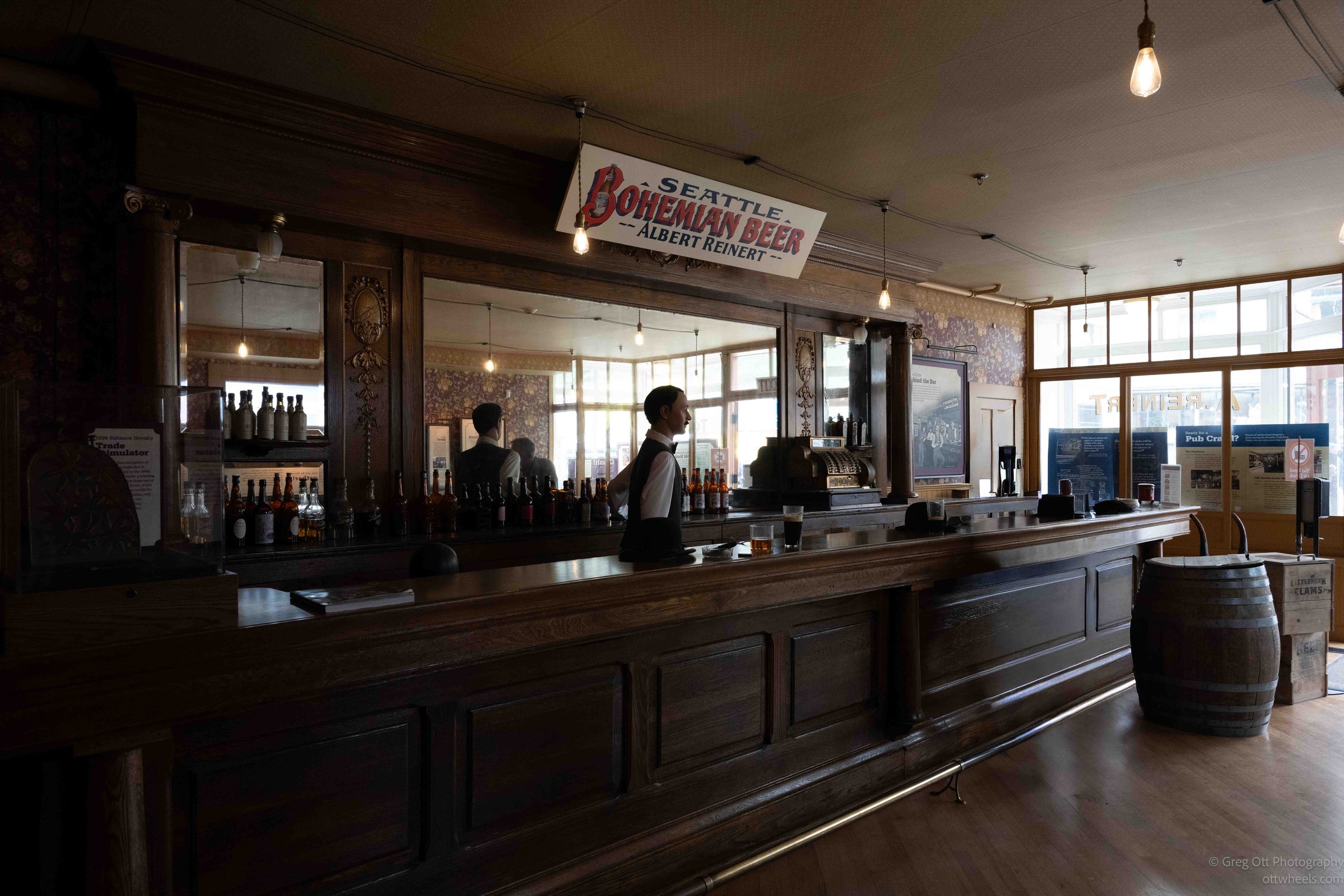
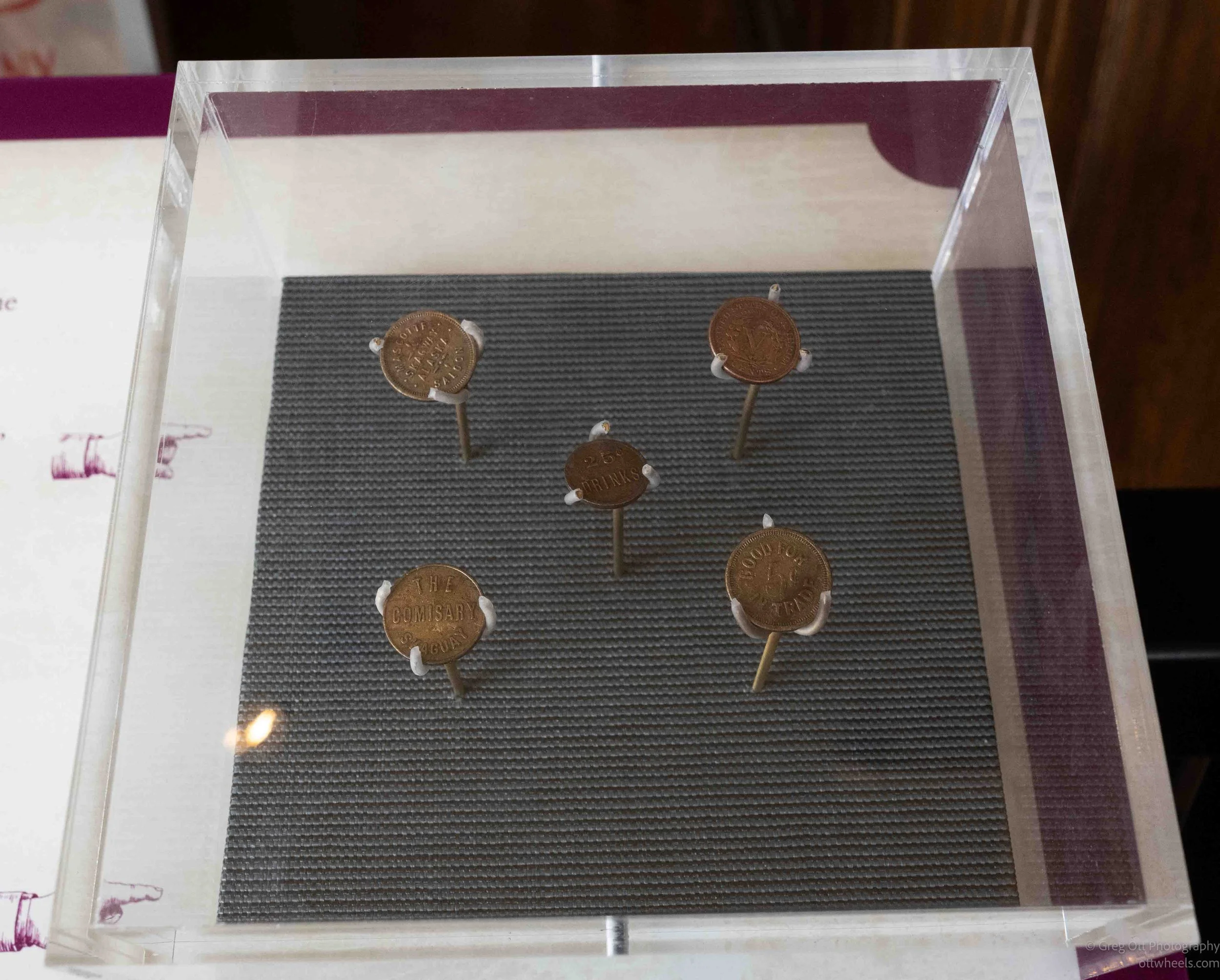
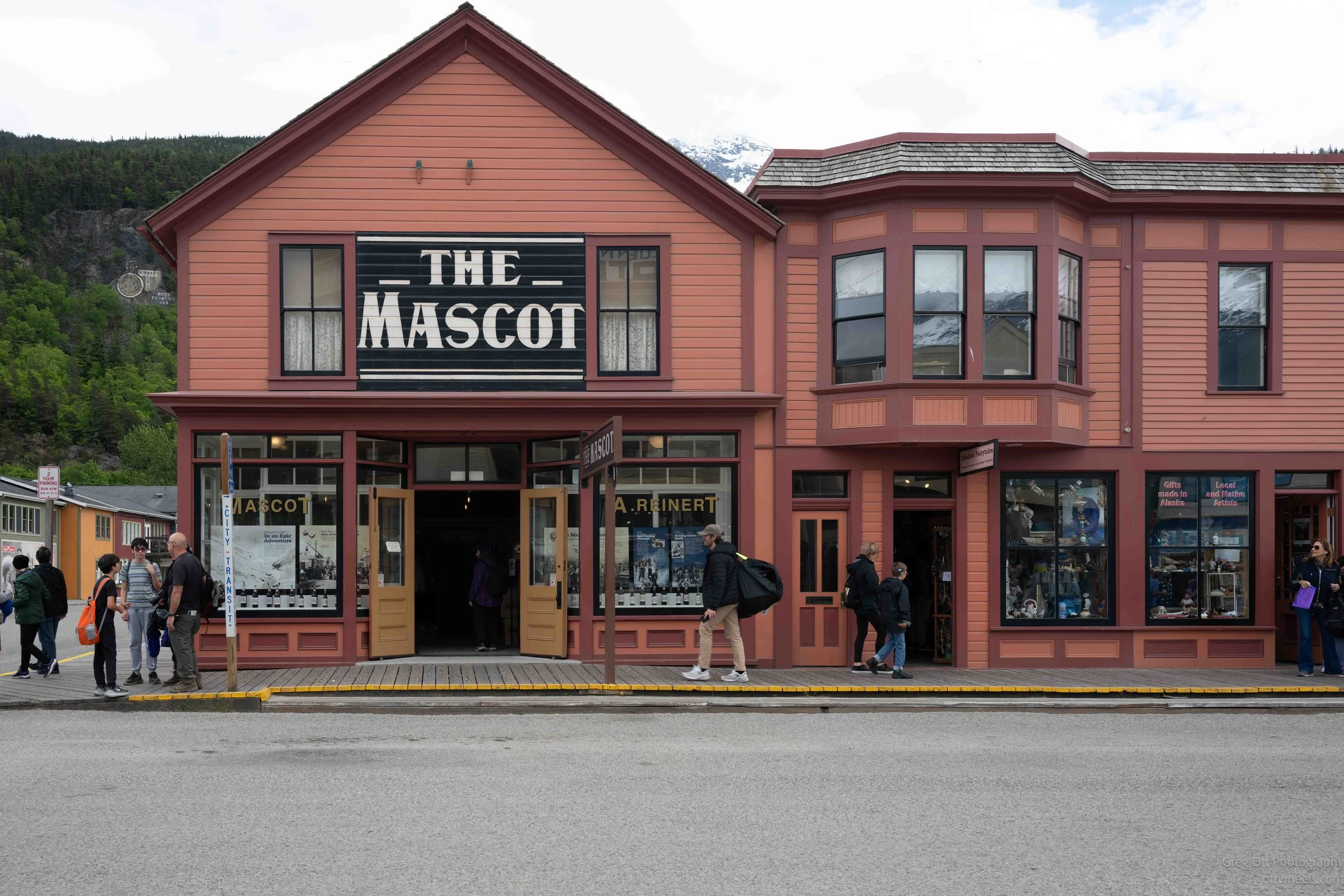
I spent some time watching the steady stream of cruise ship passengers, hikers, and railroad tourists move along Broadway before stopping at The Mascot. The building is one of the structures restored by the National Park Service and one of Skagway's original Gold Rush-era saloons. Stepping inside felt a bit like stepping back into 1898. One detail I found particularly interesting was learning that The Mascot issued its own five-cent tokens that could only be spent there. It struck me as a clever marketing idea. Once someone had a handful of Mascot coins in their pocket, they had a reason to come back. Five cents would buy a beer or a stogie, and it was common for friends to buy drinks and cigars for one another. Standing there, I could easily imagine miners and stampeders gathered around the bar, spending those same tokens while sharing stories of their luck—or lack of it—in the Klondike.
Lower Dewey Lake Trail
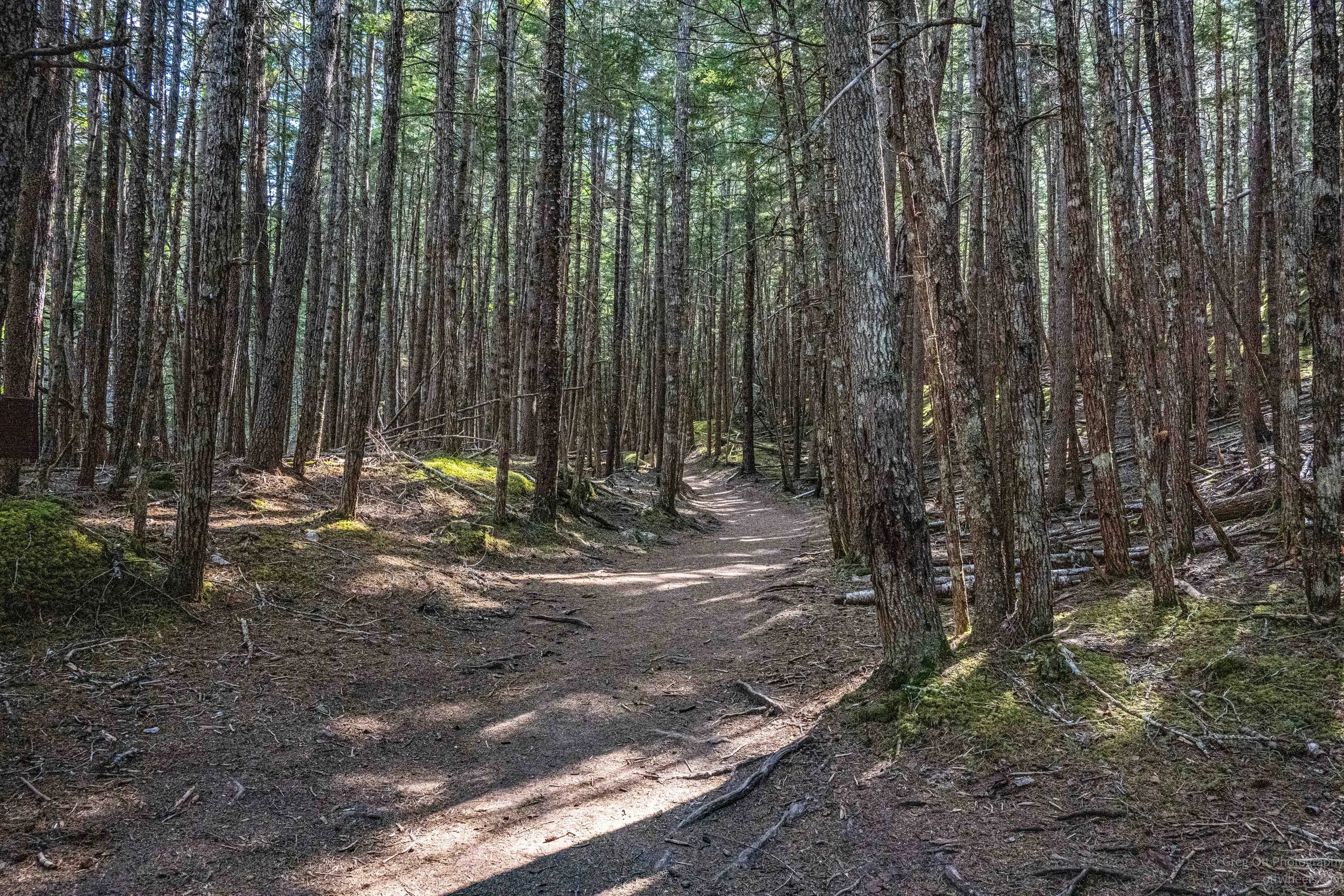
From there I headed up the Lower Dewey Lake Trail. The trail switchbacks steeply up the mountain before looping around the lake. I may have been the only person carrying bear spray, and I was almost certainly the oldest hiker on the trail. The climb reminded me that I haven't done much hiking or cycling in several weeks. I normally prefer to keep moving and simply slow my pace, but this time I found myself stopping occasionally to catch my breath.
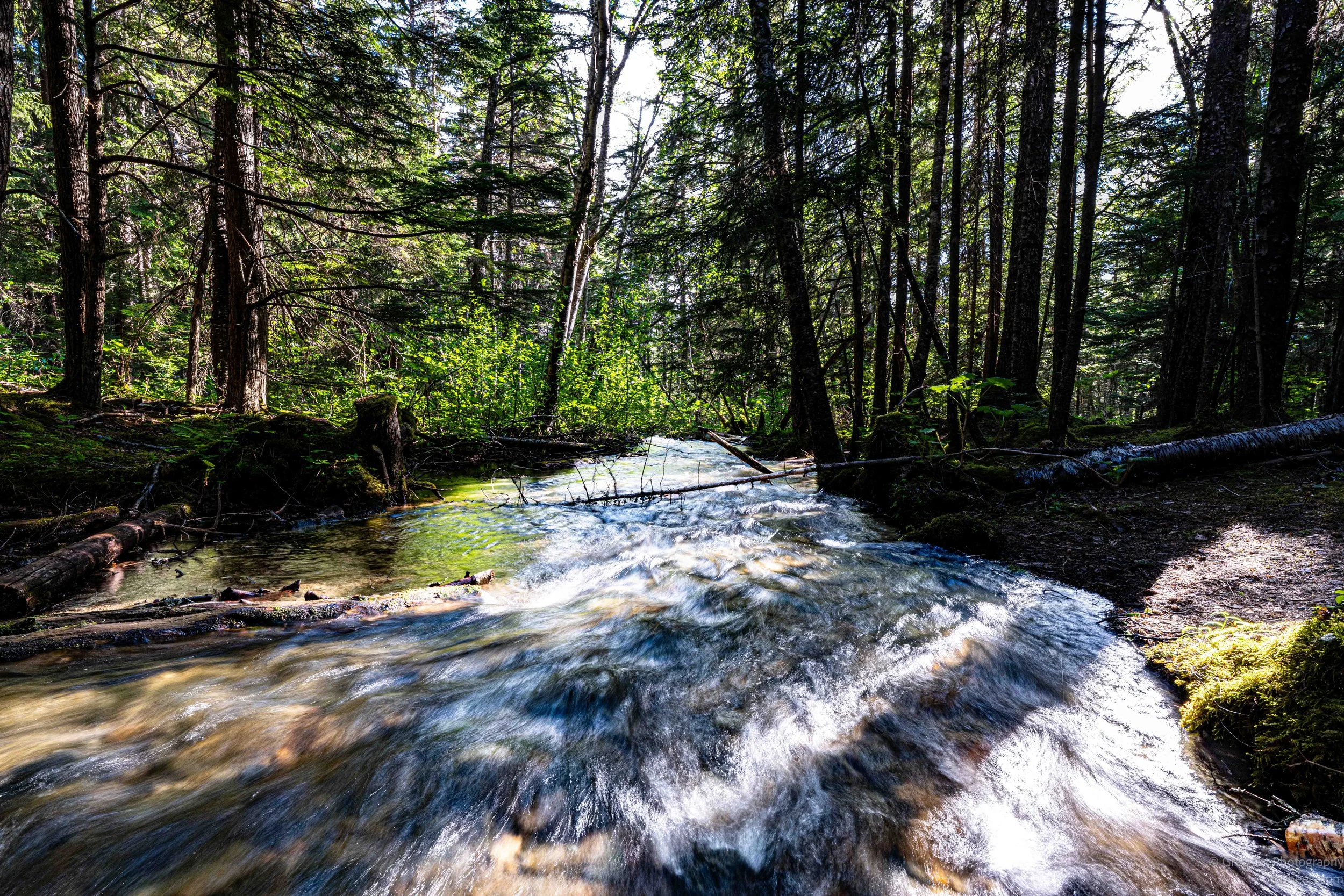
I had hoped for more expansive views, but dense forest covered most of the route. Still, the hike had its rewards. The air was cool and fresh, there were occasional spots for photographs, and several times I stopped just to listen as birds broke the silence. Most hikers turned around before completing the loop, which was actually the easier and more relaxing section of the trail.
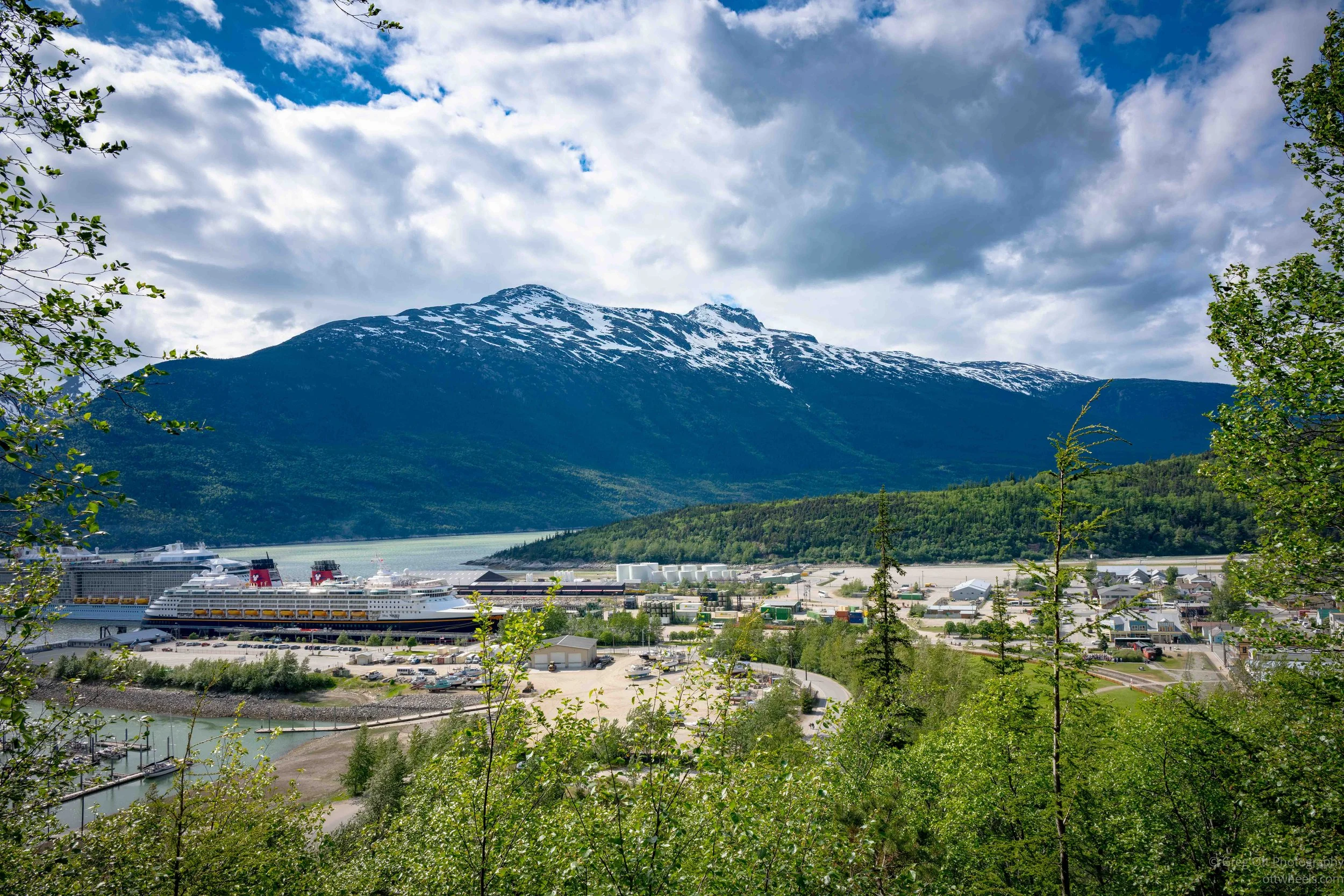
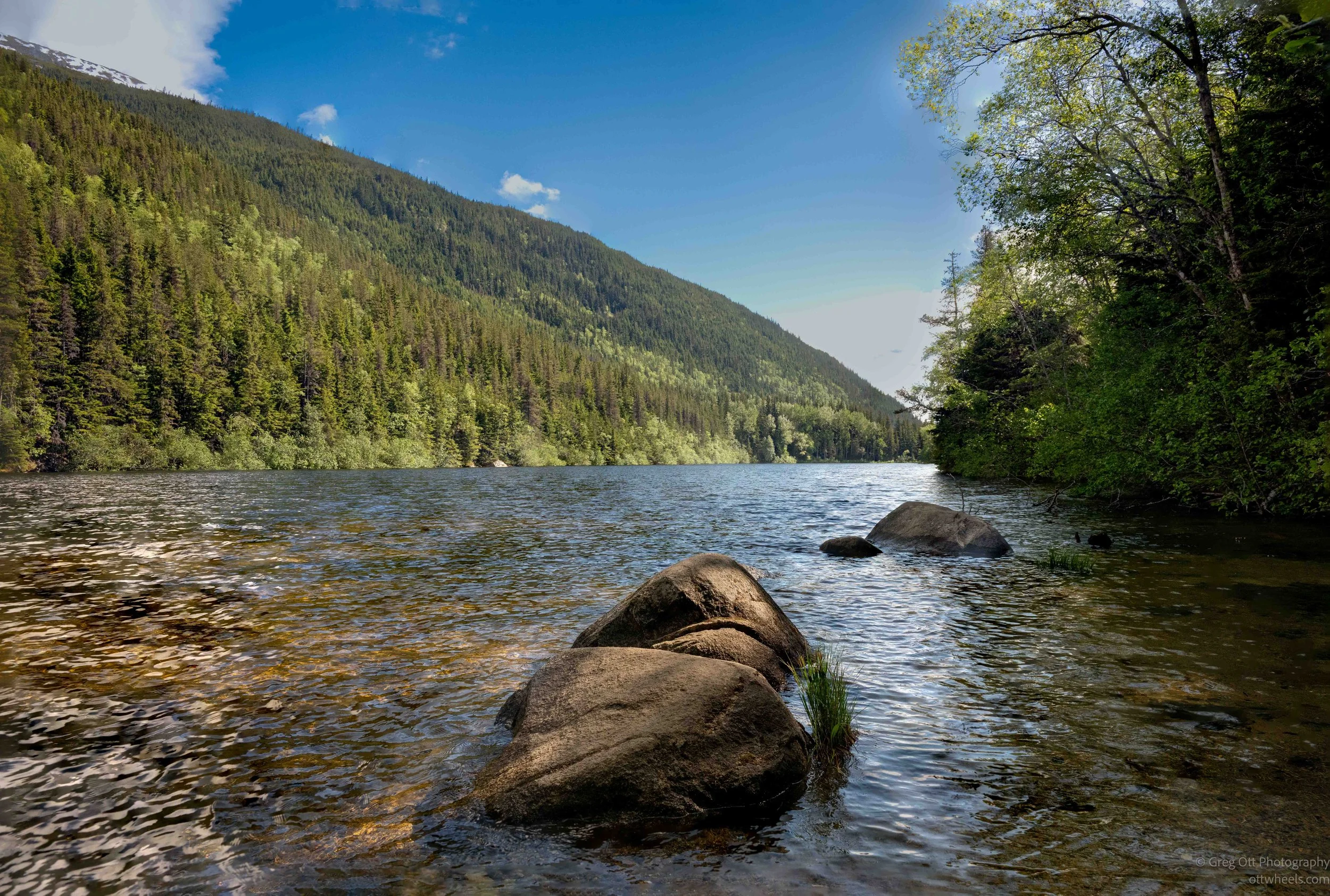
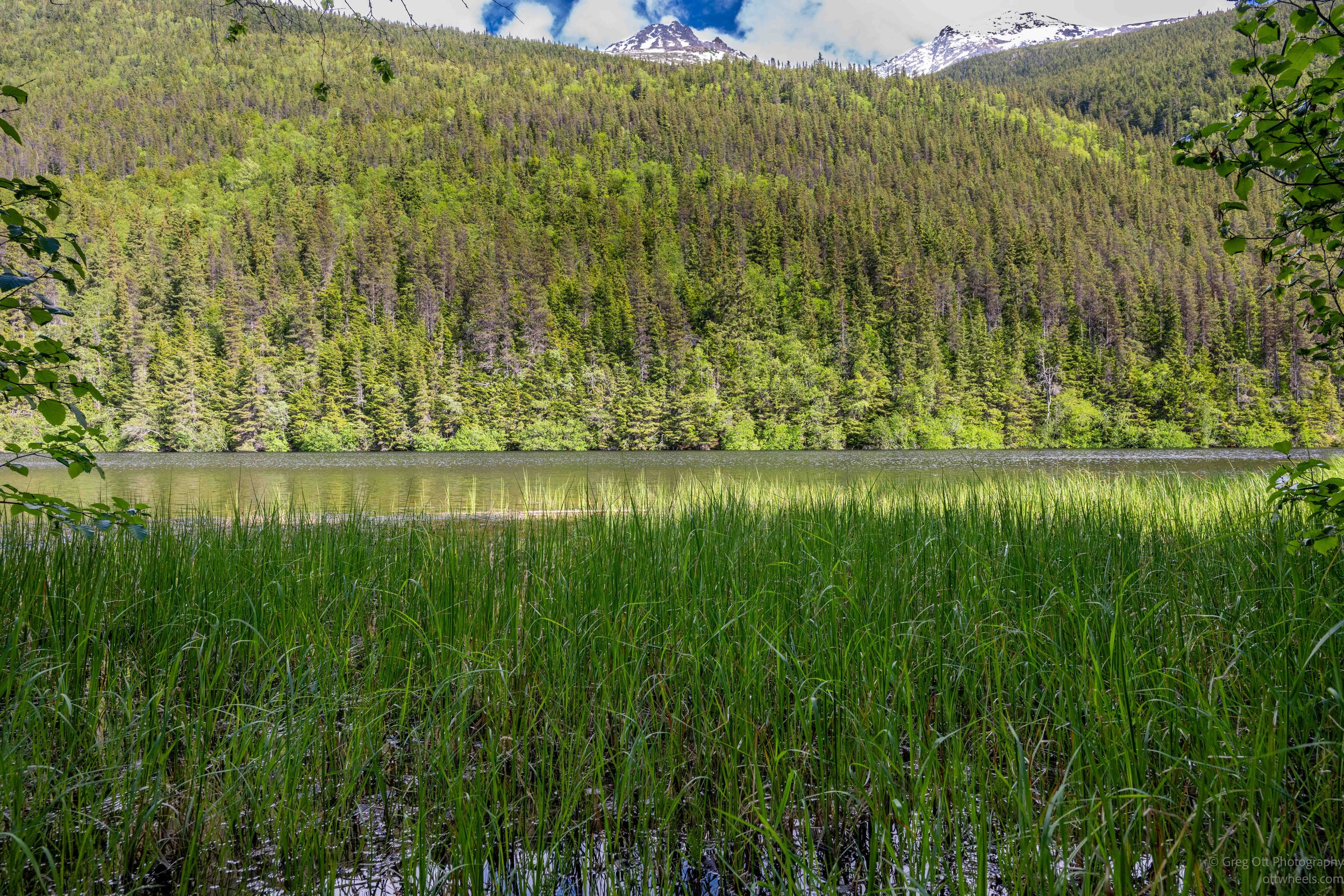
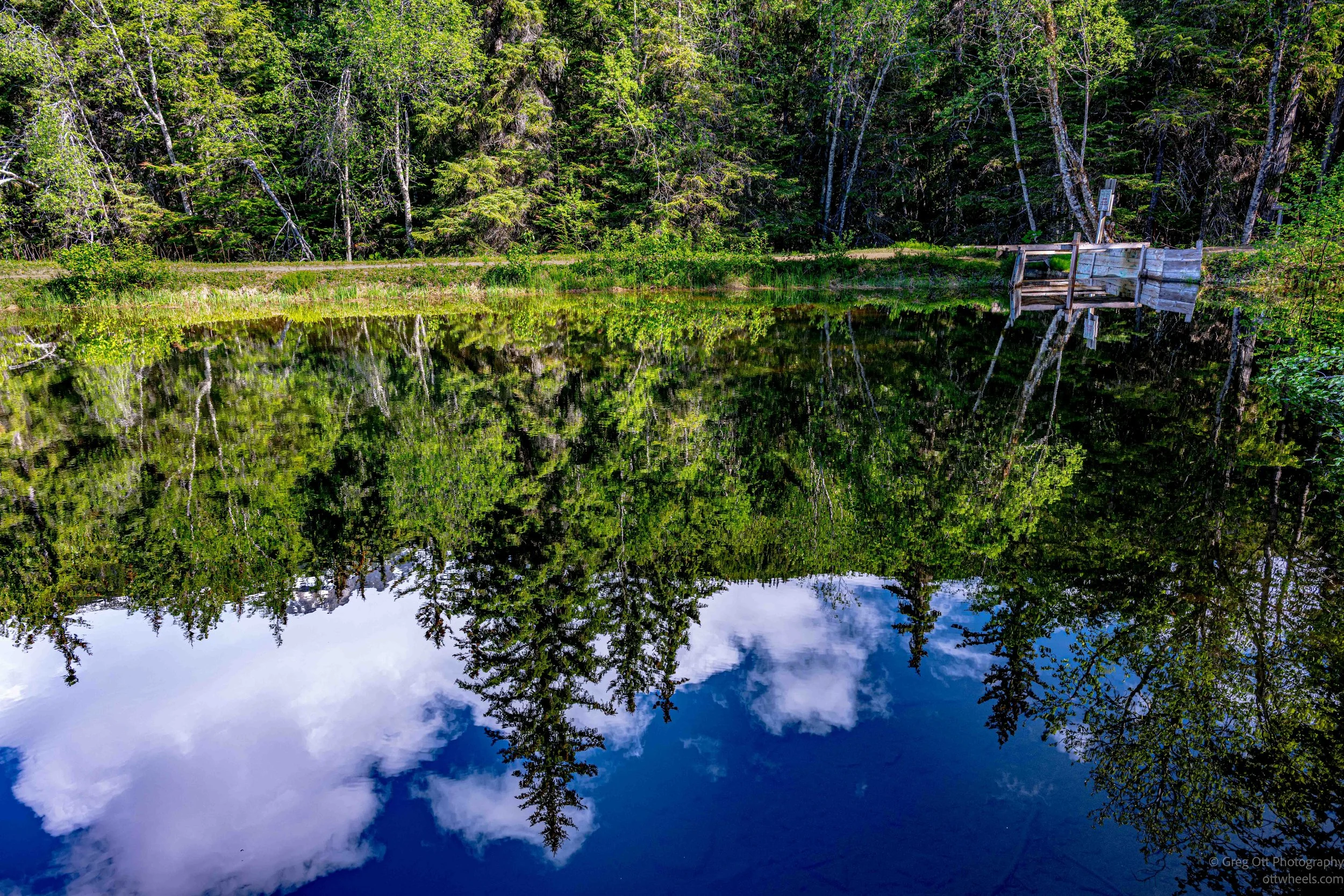
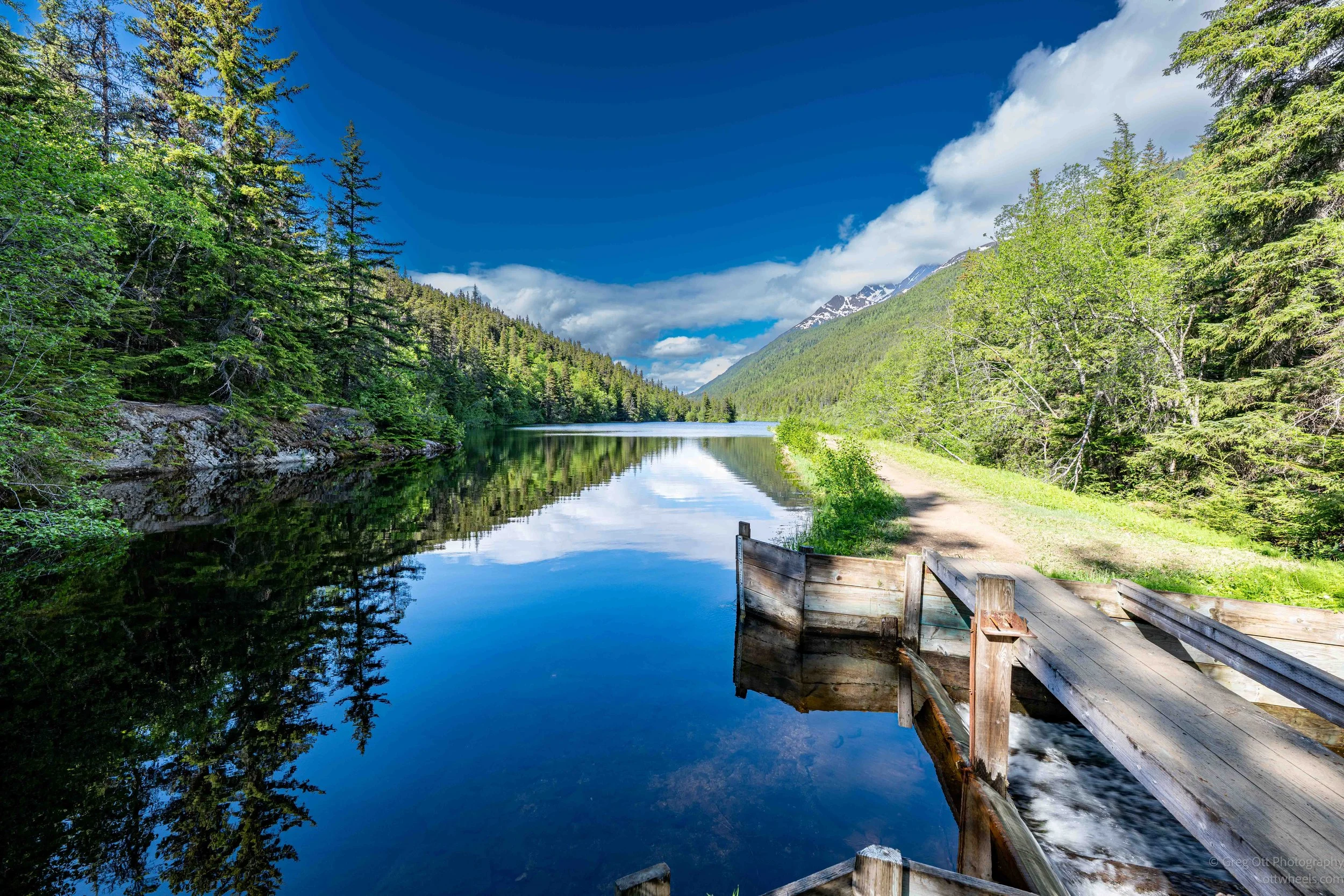
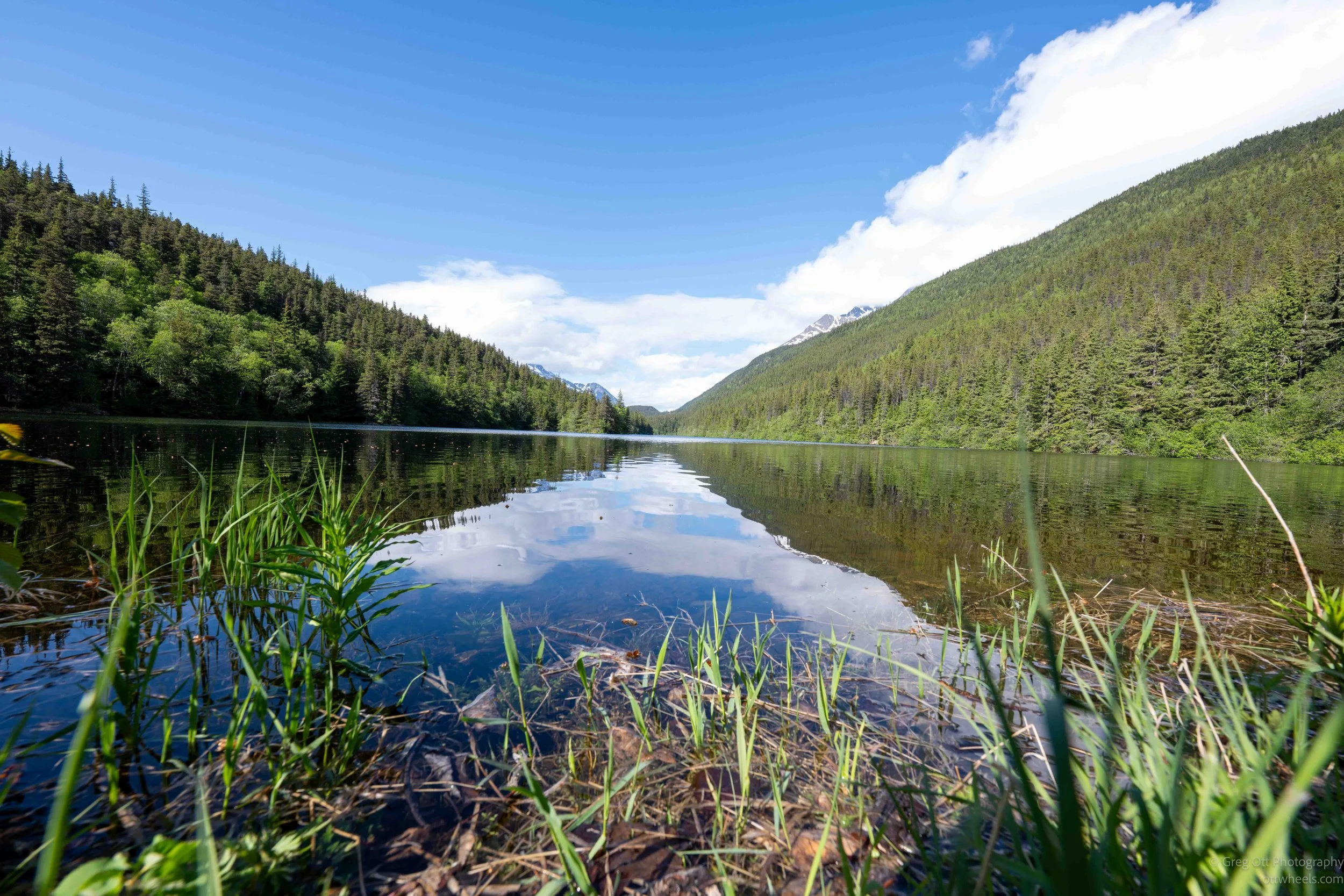
The water in Lower Dewey Lake was remarkably clear. At the southern end, the lake narrowed into a fast-moving stream. A small dam and chute controlled the runoff, and a narrow walkway crossed to the other side. One thing that caught my attention was a rail running along the shoreline. At first I assumed it was there for erosion control, but it continued winding around the perimeter for nearly a quarter mile. I never figured out its purpose.
Ice Cream Reward
I made it back into town around 6 p.m. and treated myself to some ice cream on Broadway. Sitting on a bench, I listened to snippets of conversations drifting by. People compared cruise excursions, talked about friends they had met onboard, made plans for future ports, and checked in with family back home. It was a reminder that many passing through Skagway was having a very different Alaska experience than I was.
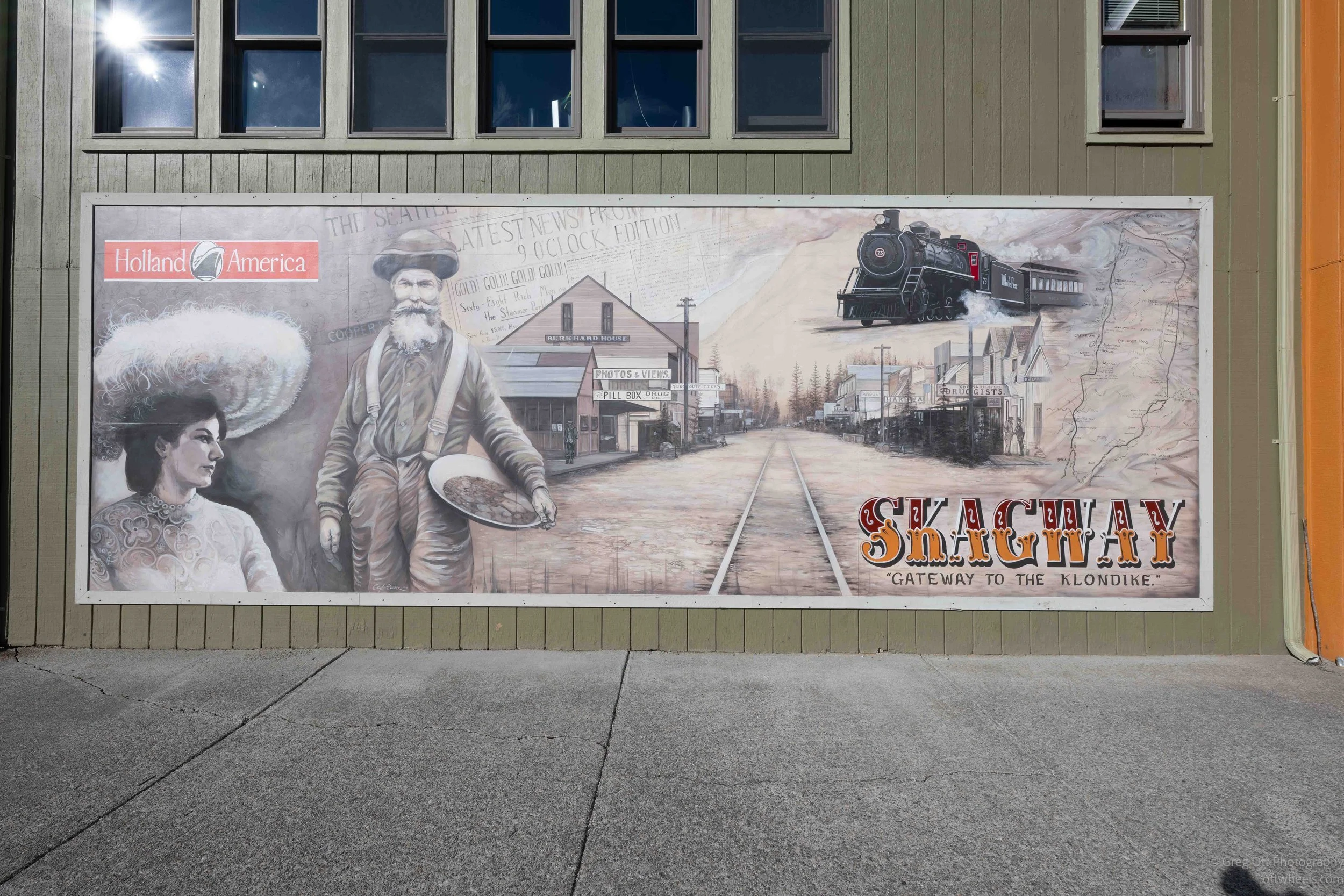
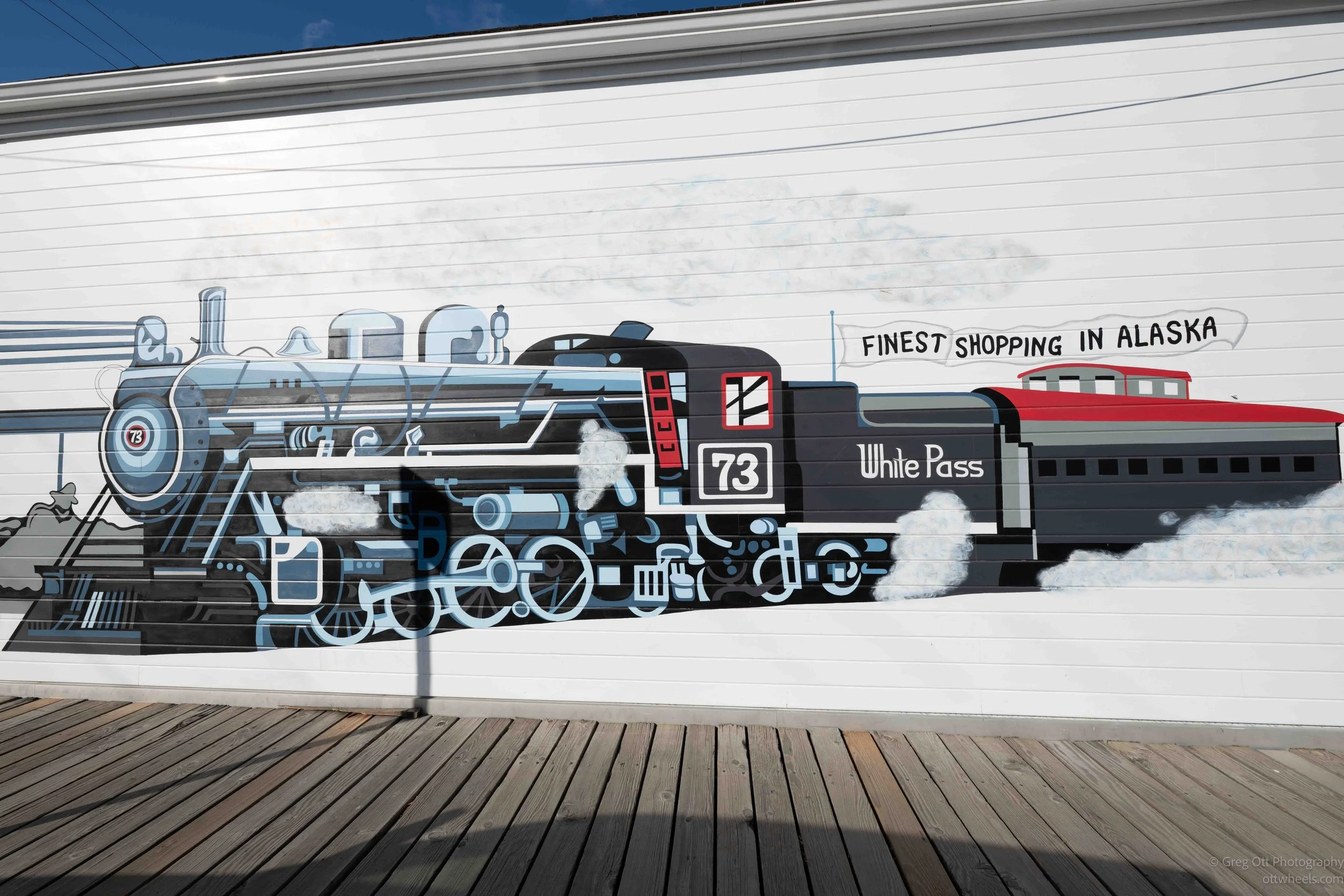
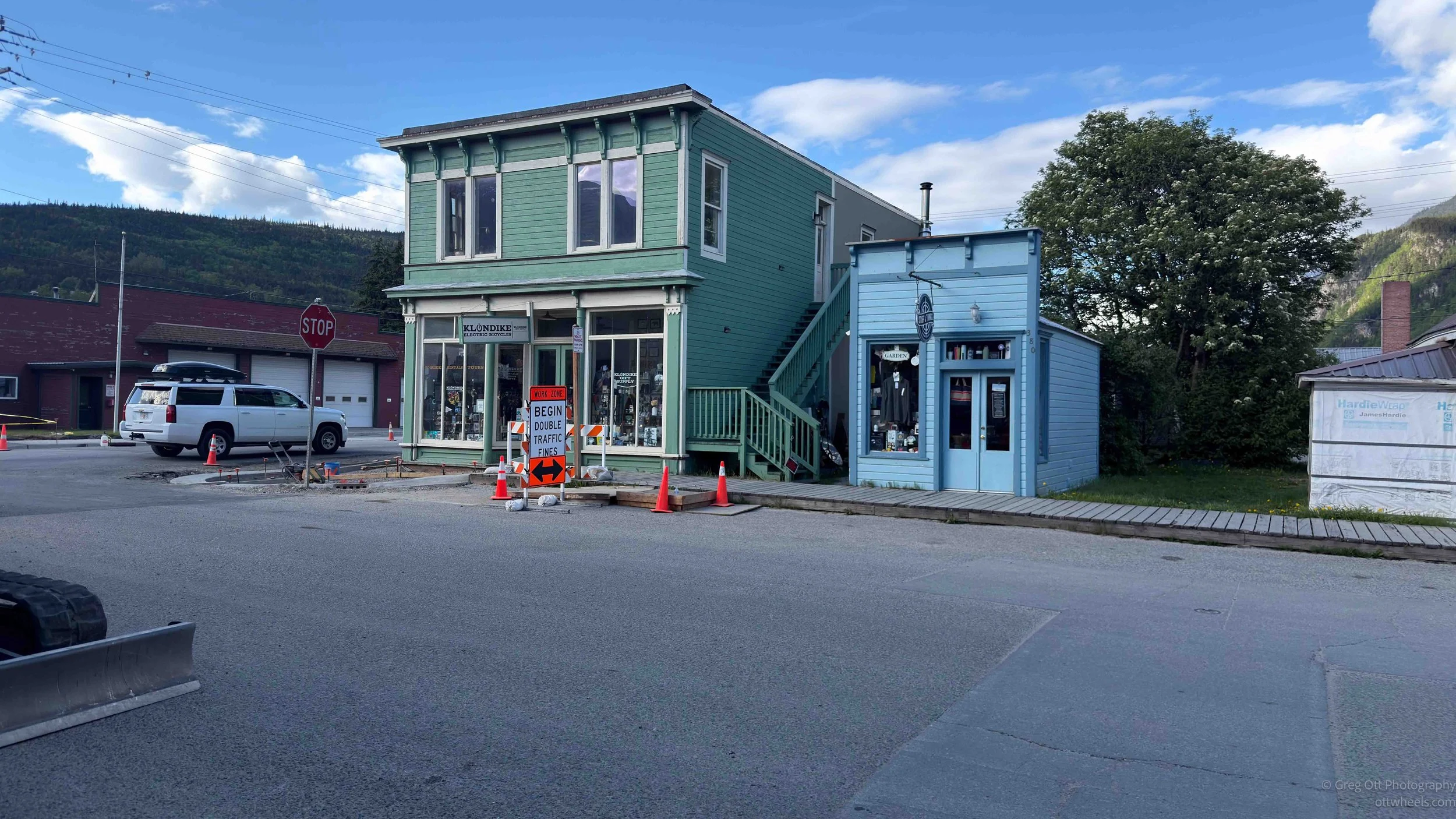
After finishing the ice cream, I wandered around a bit longer hoping to find a few more photographs. As it was getting later, I made the mile-long walk back to the campground, cooked dinner, watched a little YouTube, and turned in for the night.