The Founders Tree
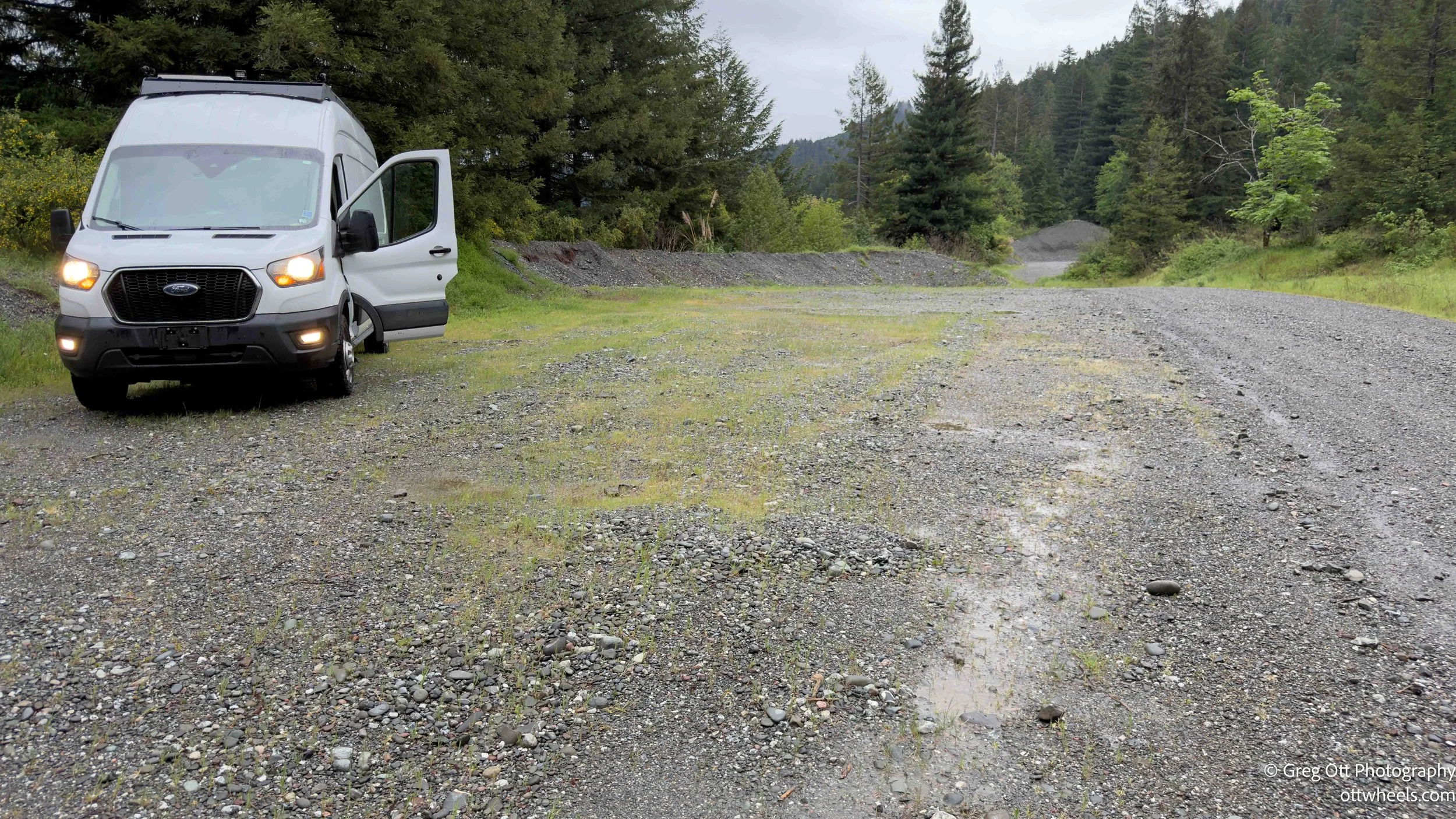
I woke to light rain, and it didn’t seem like it had any intention of letting up. I hadn’t heard a single vehicle all night in this remote spot. It felt more like a staging area than anything else—large piles of gravel sat a hundred yards down the road. I found myself wondering how they even get material up here. The road had narrowed enough on the way in that it didn’t seem built for heavy trucks, but clearly it happens. Someone is driving those loads in without much concern.
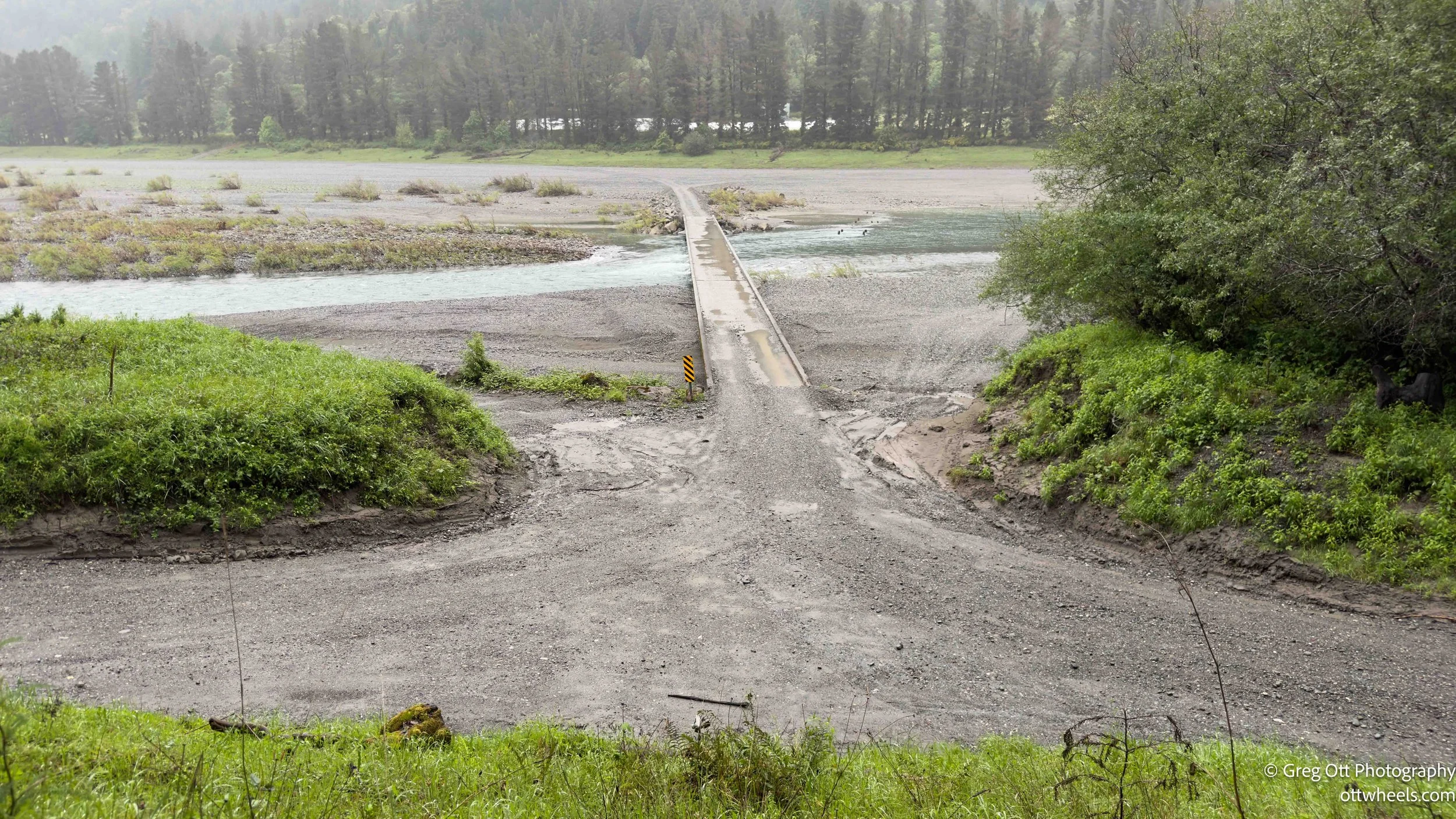
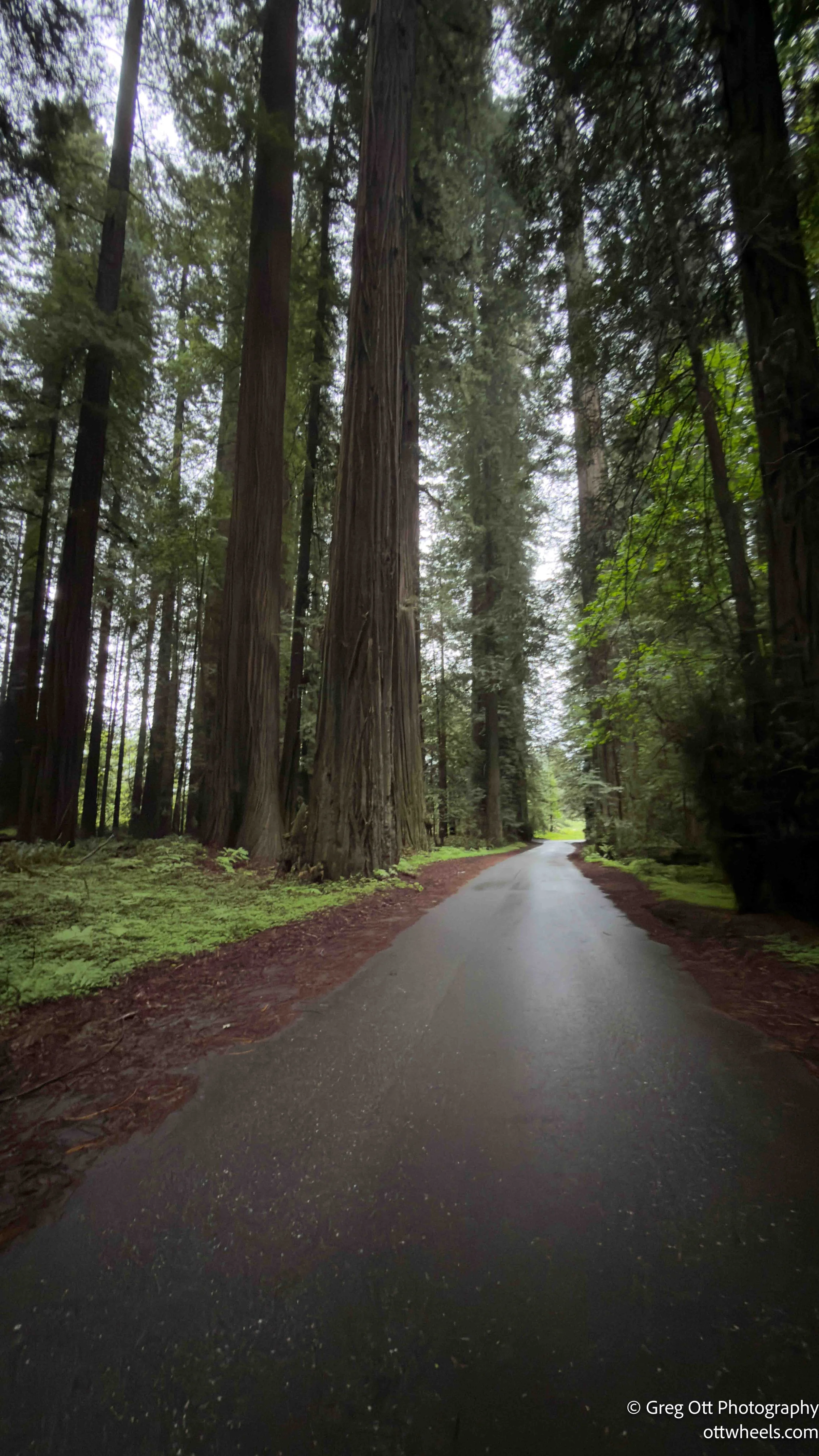
I drove back down toward the main park and, as soon as I entered the redwoods (Sequoioideae), I had to stop. The transition is abrupt. One moment you’re moving through a fairly open landscape, and the next you’re surrounded by trees so large they immediately change your sense of scale. It’s not gradual. It feels like stepping out of open country and straight into a canyon of living walls. The light drops, the air changes, and everything becomes vertical. I stayed in the van and grabbed a few quick images on my phone—the rain made it a good moment to just take it in rather than try to work a full setup.
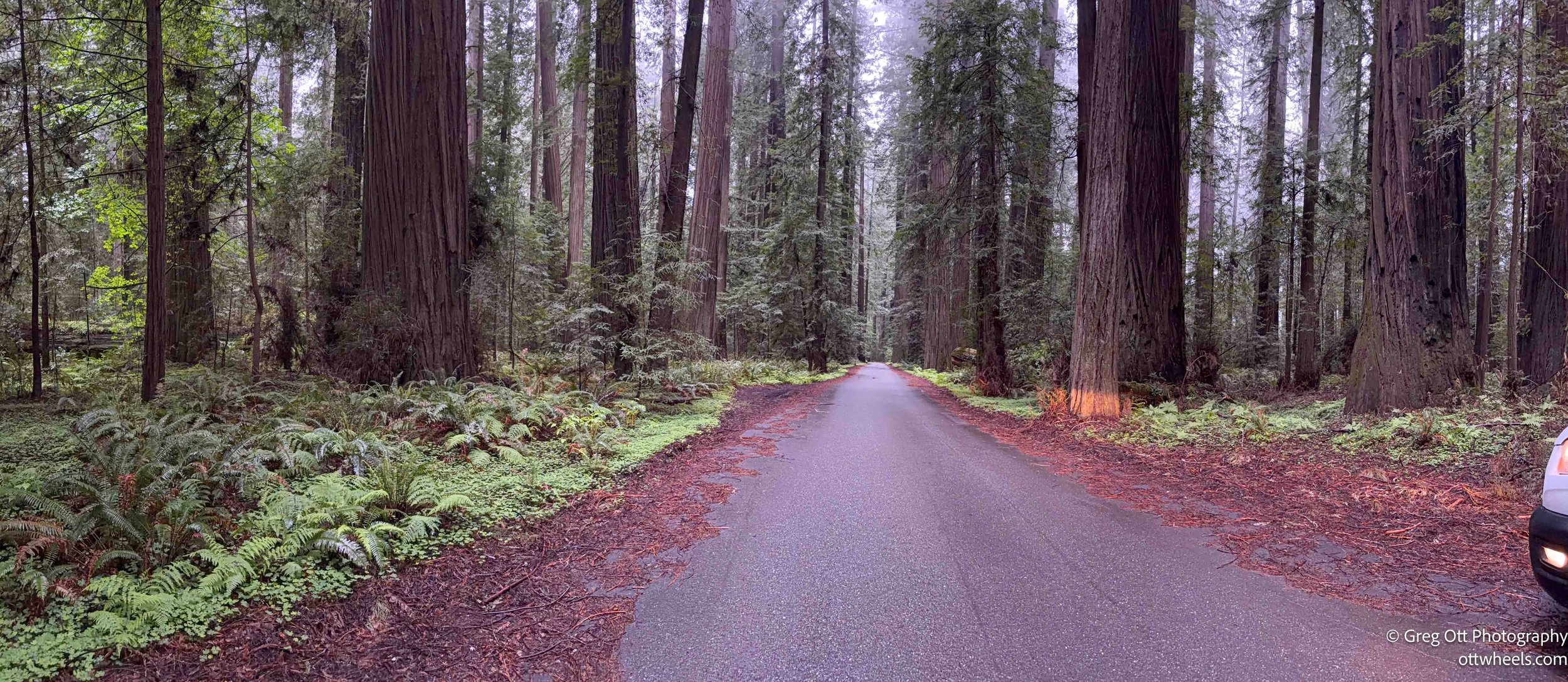
I found a turnout along the Avenue of the Giants that was clear enough of the trees to get a Starlink connection. The rain came and went in spurts. A local cycling club had set up a canopy nearby, but there wasn’t much activity. A few cyclists gathered, geared up, and headed out anyway. They wouldn’t stay dry for long.
Founders Grove
I spent a few hours in the van reading and writing before heading over to the visitor center n Humboldt Redwoods State Park. It has an older feel to it, but it’s full of context—how these forests were first encountered by settlers, how quickly logging operations moved in, and how close much of this came to disappearing. There are displays that walk through early logging techniques, the scale of timber that was taken out of these forests, and the eventual push to preserve what remained. It’s a reminder that what you’re looking at now is only a fraction of what once stood here.
I asked for a brochure on Founders Grove. The woman at the desk handed it over and mentioned they ask for a one-dollar donation—cash only. I told her I didn’t have any cash and asked if there was another way to contribute. There wasn’t. It didn’t matter if I wanted to give more; there was simply no way to process it without cash.
I made my way to Founders Grove and eventually found a parking spot. By then, the rain had picked up again. I waited it out in the van as the lot slowly emptied until only a few vehicles remained.
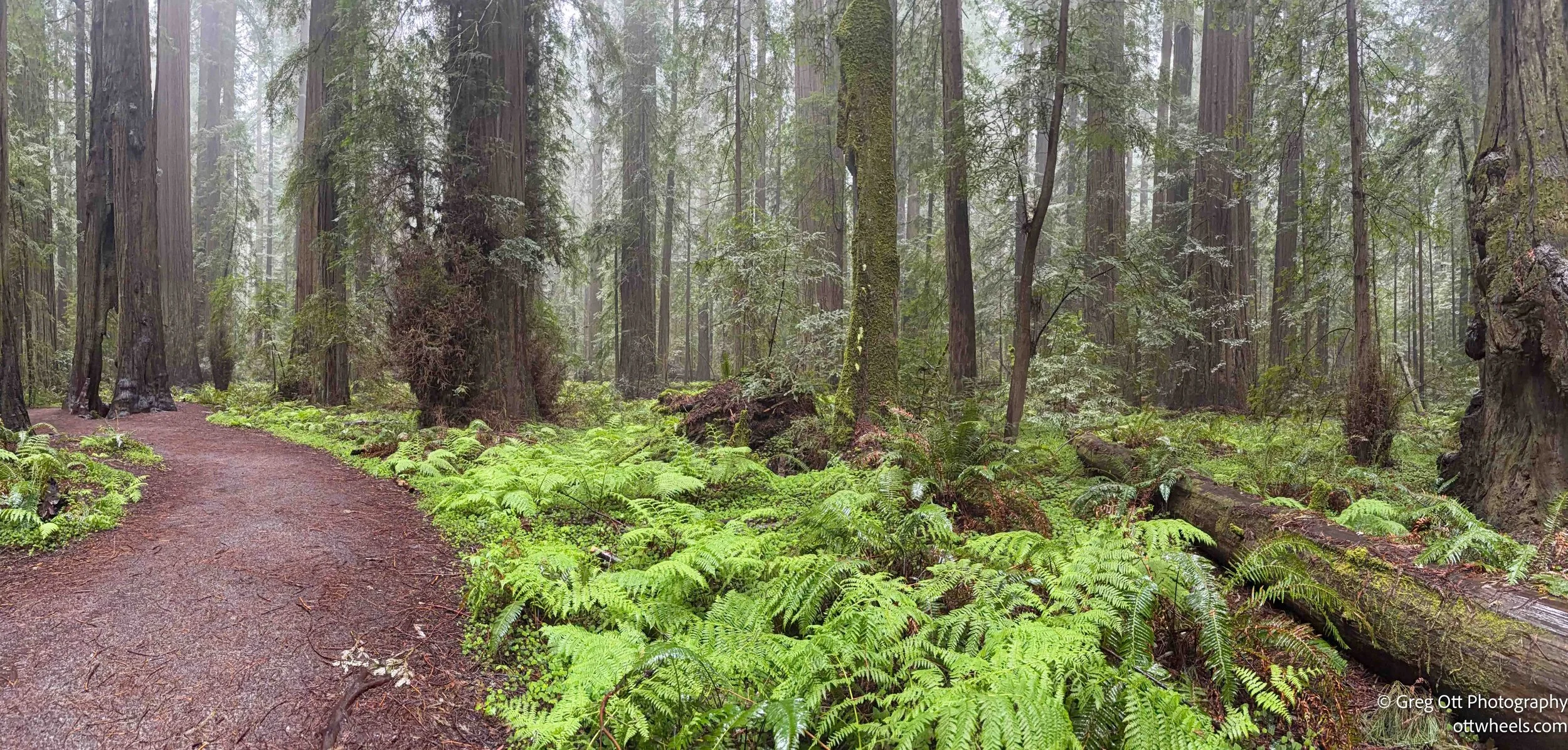
When the rain lightened, I headed out on the half-mile loop. The trail moves through a dense stand of old-growth redwoods, and almost immediately you’re standing at the base of the Founders Tree—one of the largest in the grove. It rises straight up, well over 300 feet, with a trunk that feels impossibly wide when you’re standing next to it. Looking up, you lose sight of the top in the canopy.
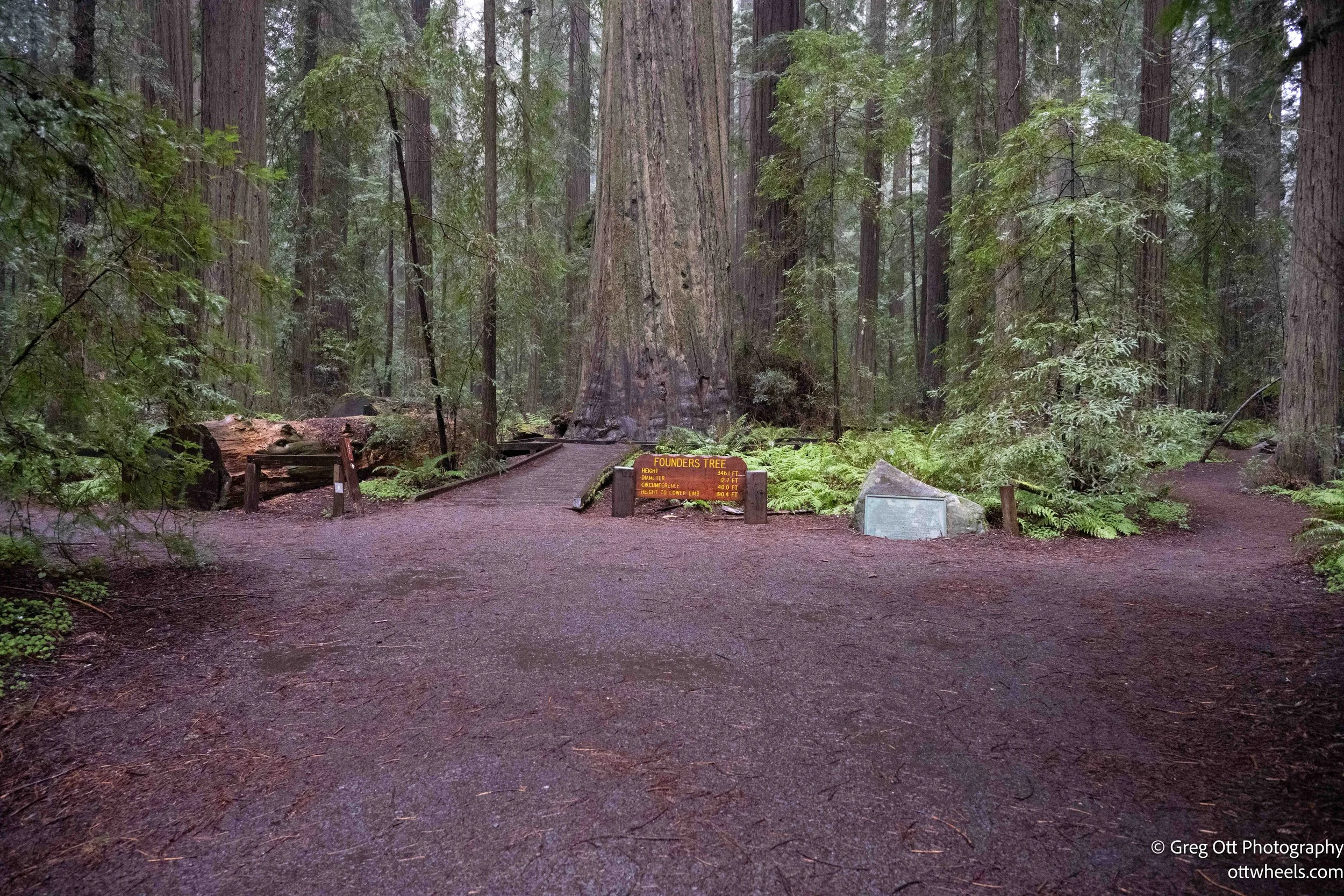
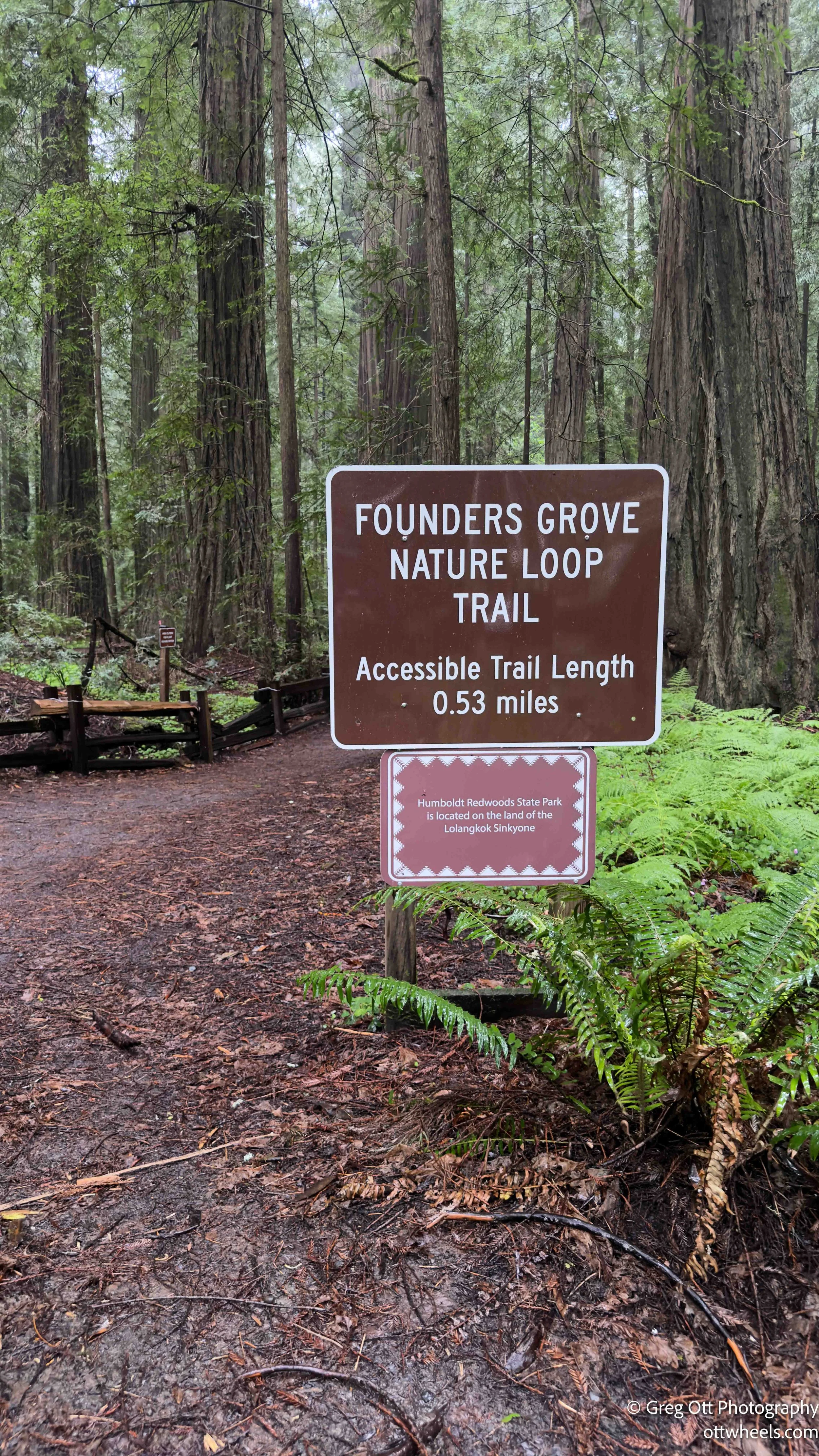
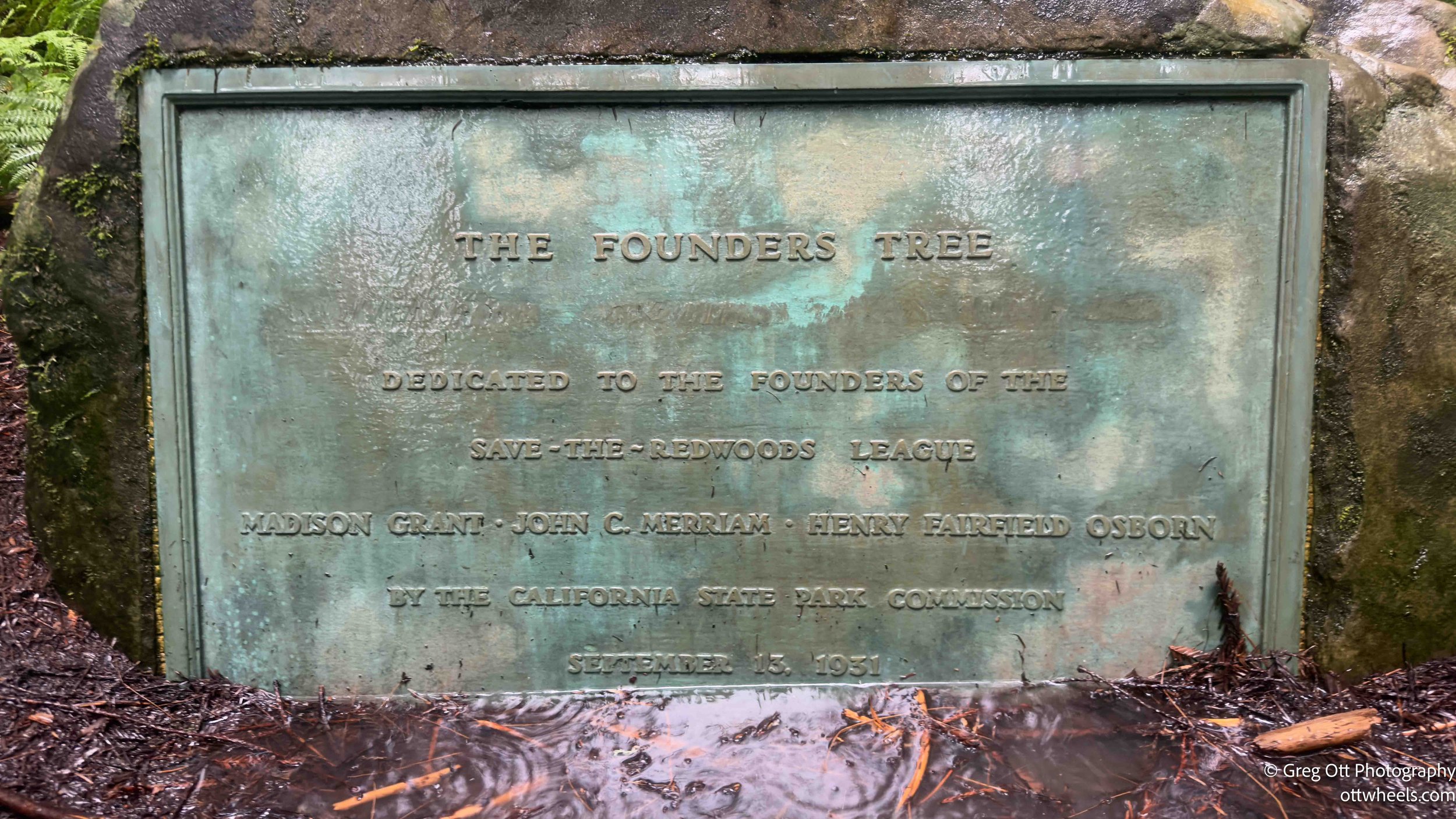
What you’re walking through here is only a small remnant of what once covered much of this region. By the early 1900s, nearly all of the original redwood forest along this stretch of the Eel River had been cut down. Logging was aggressive and efficient—entire hillsides cleared, massive trees reduced to lumber, and the landscape reshaped in a matter of decades. Founders Grove exists because a small group of conservationists and organizations stepped in before it was too late. Groups like the Save the Redwoods League, along with supporters that included names like John D. Rockefeller Jr. and Stephen Mather, began purchasing and protecting the last remaining stands of old growth. This grove became one of the early and most important acquisitions. It represents not just what survived, but the moment the mindset shifted—from extraction to preservation. Walking here, you’re seeing what the original forest looked like before the saws, and why people fought to save what little was left.
Further along the loop, the scale shifts again when you come across one of the fallen giants. A redwood that once stood hundreds of feet tall now lies stretched along the forest floor. Image a tree that is longer than a football field. Walking its length takes time. You move alongside it the way you would a downed structure, not a tree. The trunk is still massive, even in collapse.
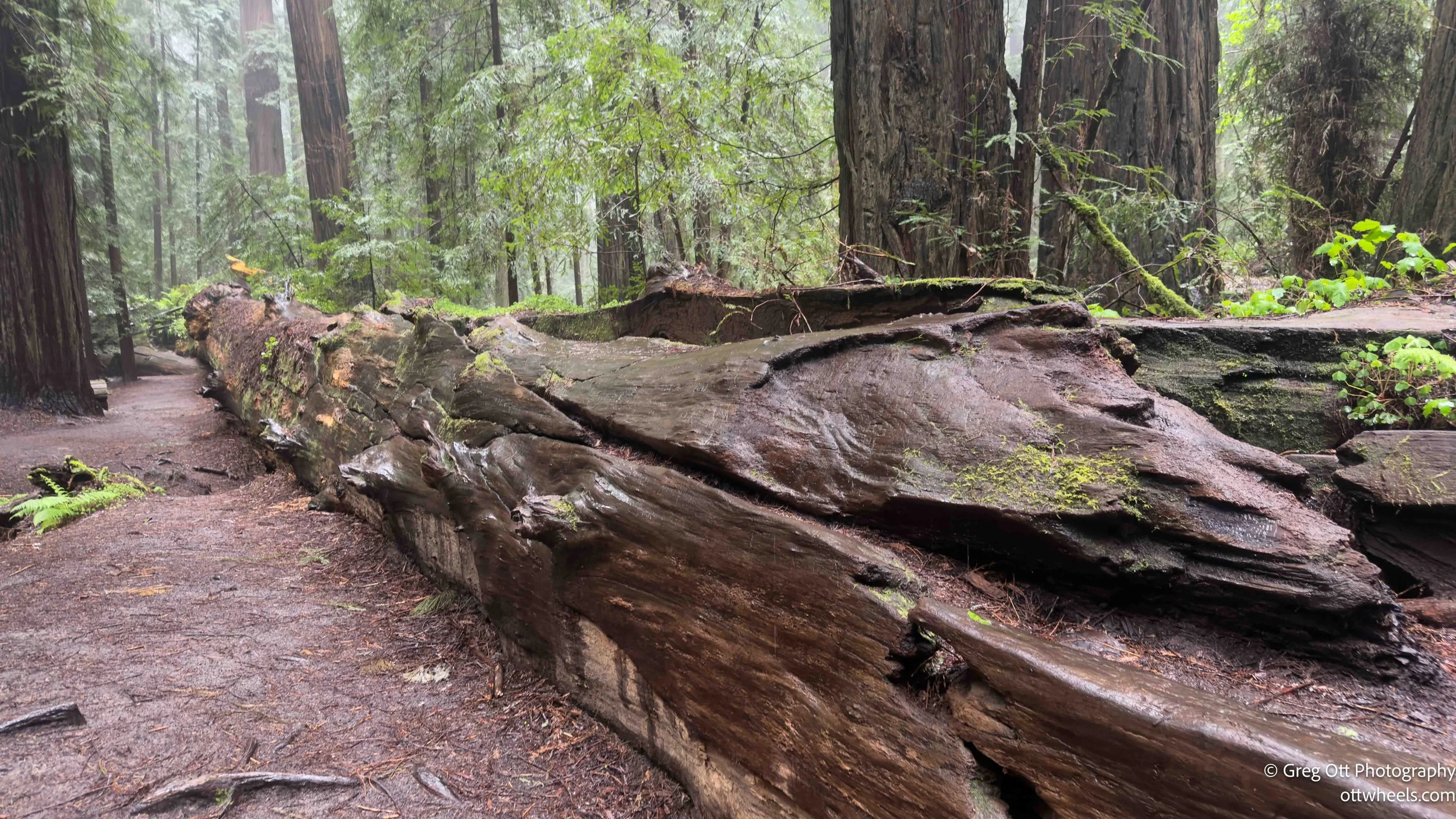
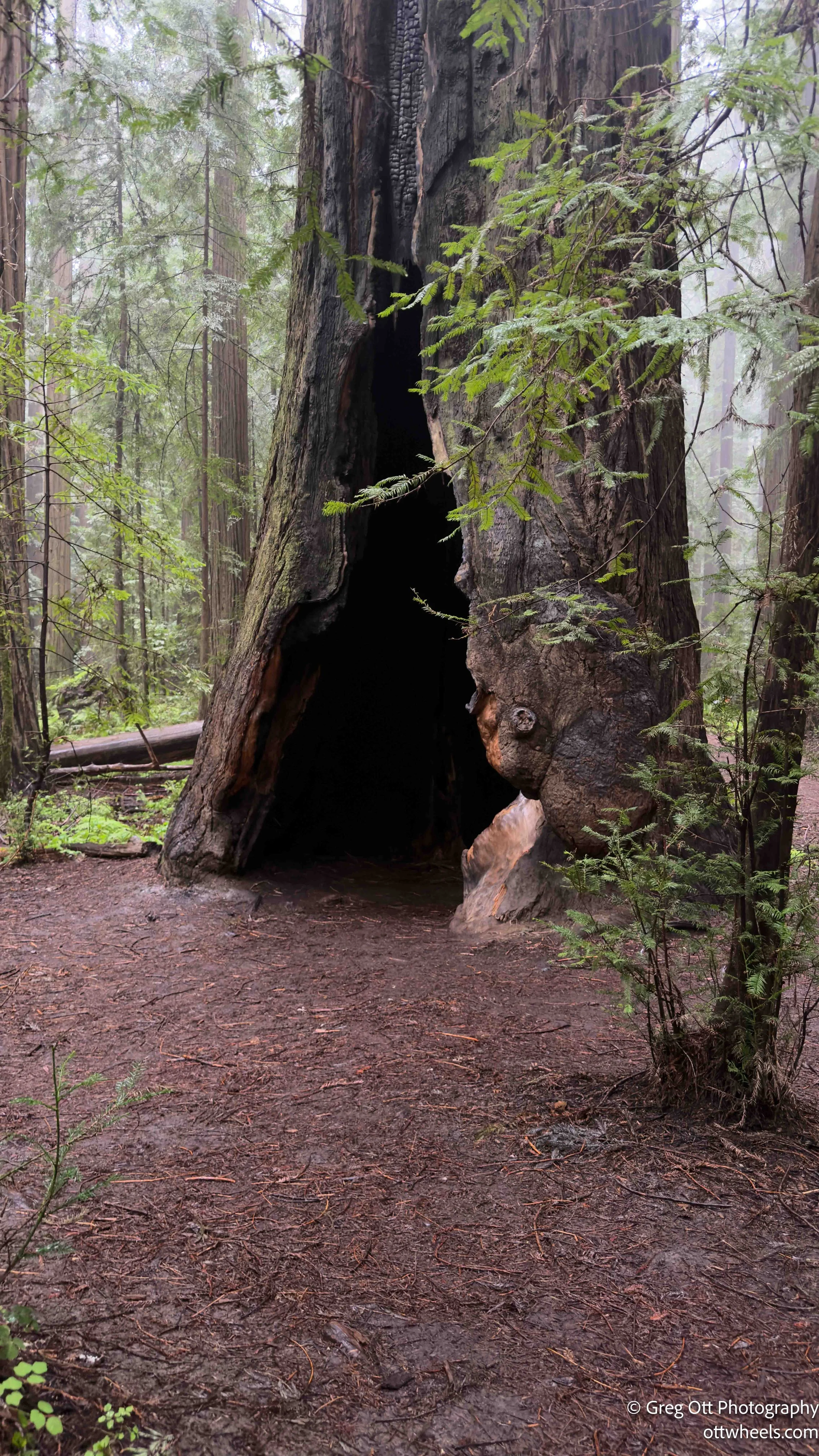
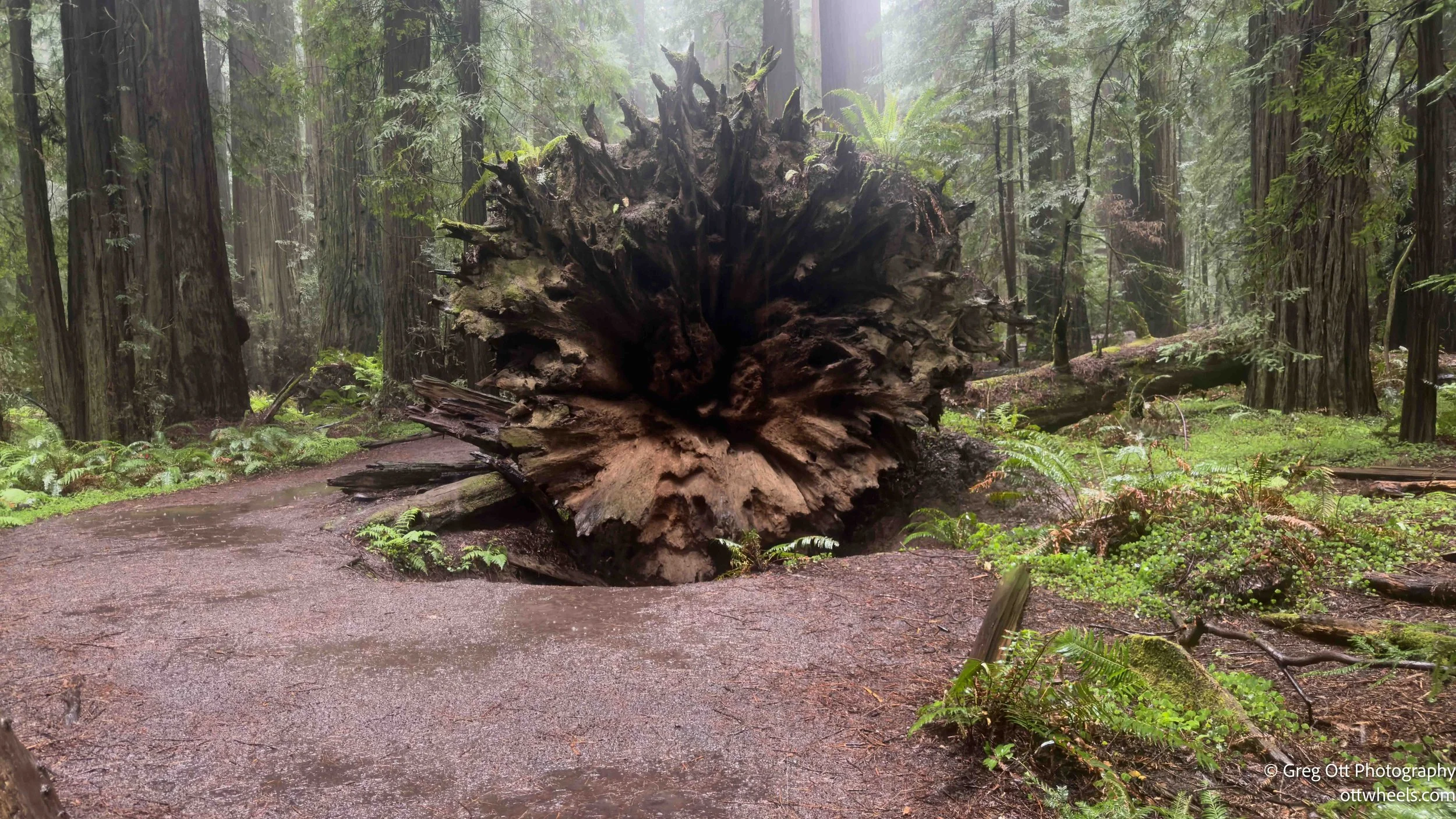
Throughout the grove, there are trees in every stage of decay—standing, fallen, hollowed, and slowly returning to the forest floor. What stands out is how alive the process feels. New growth rises out of old trunks, roots twist over what used to be solid wood, and the forest quietly rebuilds itself around what has fallen.
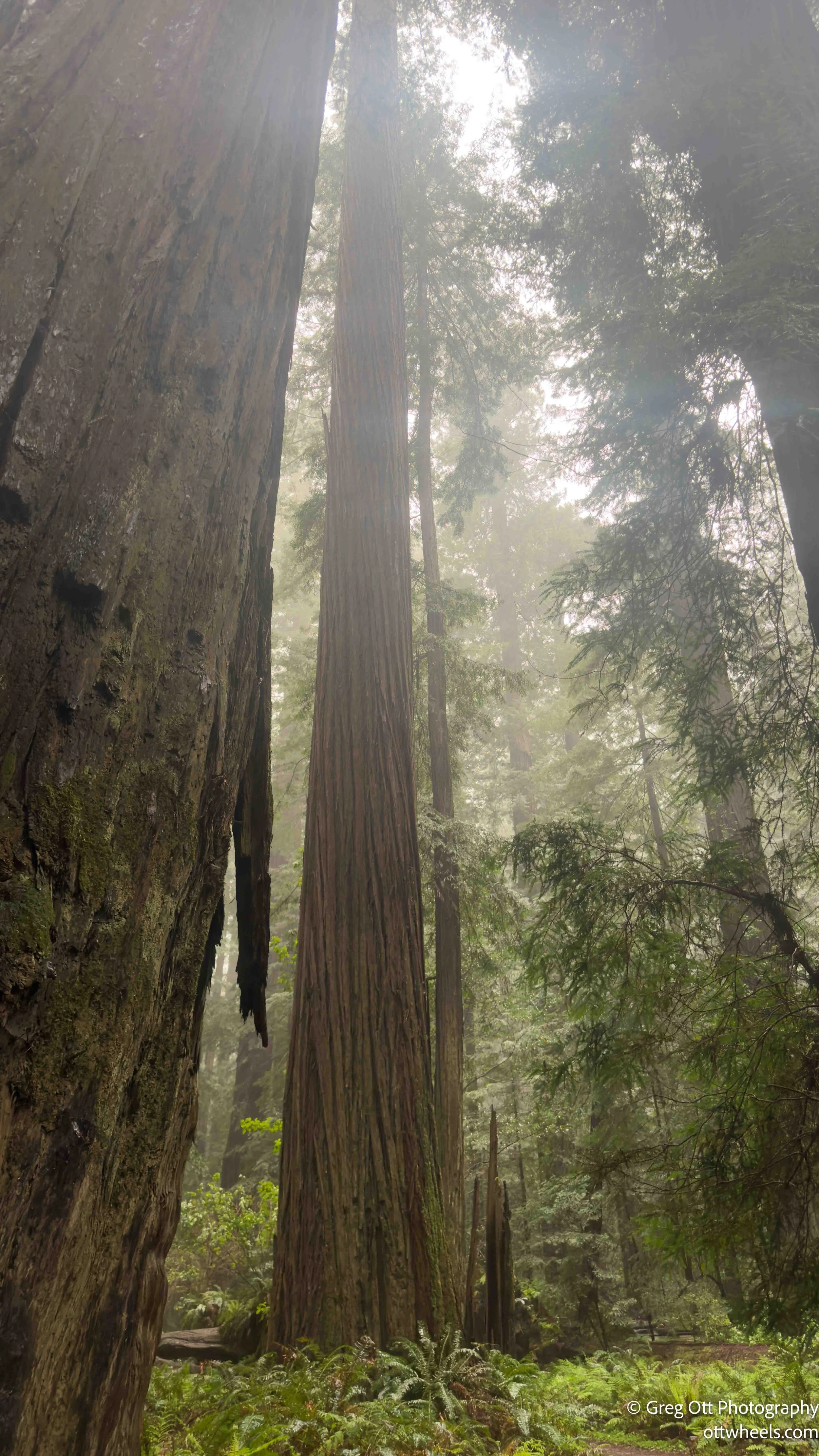
Halfway through the walk, the rain picked up again. I was alone out there, surrounded by these trees, listening to the sound of rain working its way down through the canopy. I had a rain jacket on, but by the time I made it back to the van, I was soaked. I turned on the heat and let everything dry out as best it could.
From there, I drove back to the turnout to reconnect to Starlink and figure out my route north. I eventually settled on a spot in Arcata, CA near an EV charging station. It worked out well. It was Saturday night, but most of the nearby businesses were already closed. The town has a mix of breweries and restaurants, though the rain kept things quiet. I pulled in around 8:30, already dark, and got a strong Starlink connection.
I had dinner at Humboldt Brews—basic pub fare, nothing complicated. I sat at the bar and worked through a few photos. At one point, Brenda and Colin stopped and asked if I was a photographer. She’s taking a digital photography class and noticed a black-and-white image I was working on. We talked for a few minutes before they headed out and wished me safe travels.
Earlier, before going inside, I overheard a local explaining to the staff what had happened across the street back in February. An entire block had burned to the ground. The fire started in one building and quickly spread, taking everything with it. By the time it was out, there was nothing left but rubble. It was too dark to see much detail, but you could make out the empty space where buildings used to stand.
I made my way back to the van around 8:30 and settled in for the night.