Point Arena Lighthouse and Redwoods
It rained through the night, and I woke at 7:15 to a steady drizzle. When I opened the side door of the van, fog surrounded everything. The ocean, about 100 feet below, was just visible, and I could see birds flying out to the rocks offshore. The sound of waves breaking below was steady and calming. I pulled out the induction cooktop and made French toast, using up the last two eggs. There’s something satisfying about cooking breakfast like that—door open, fresh air, and nowhere you need to be.
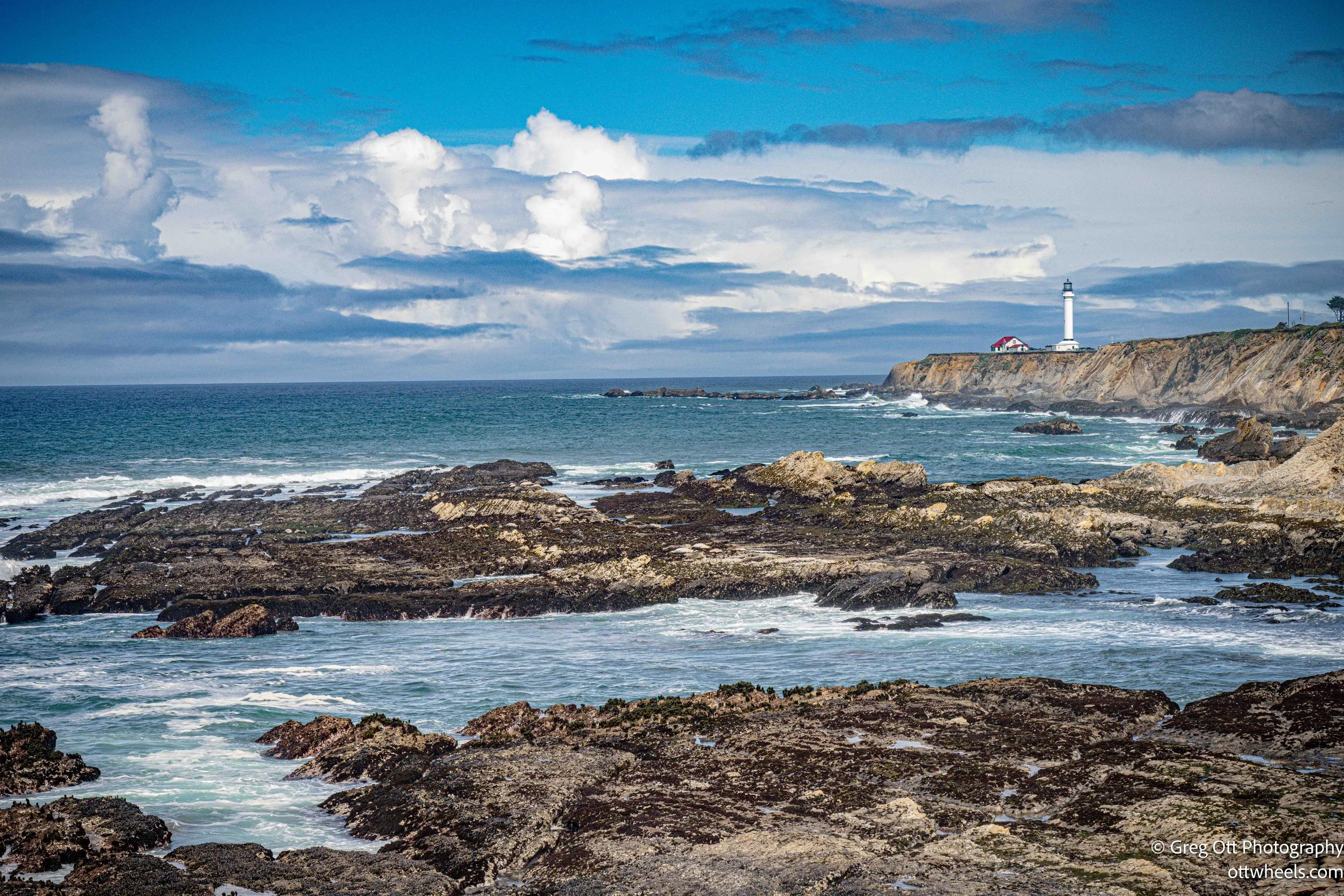
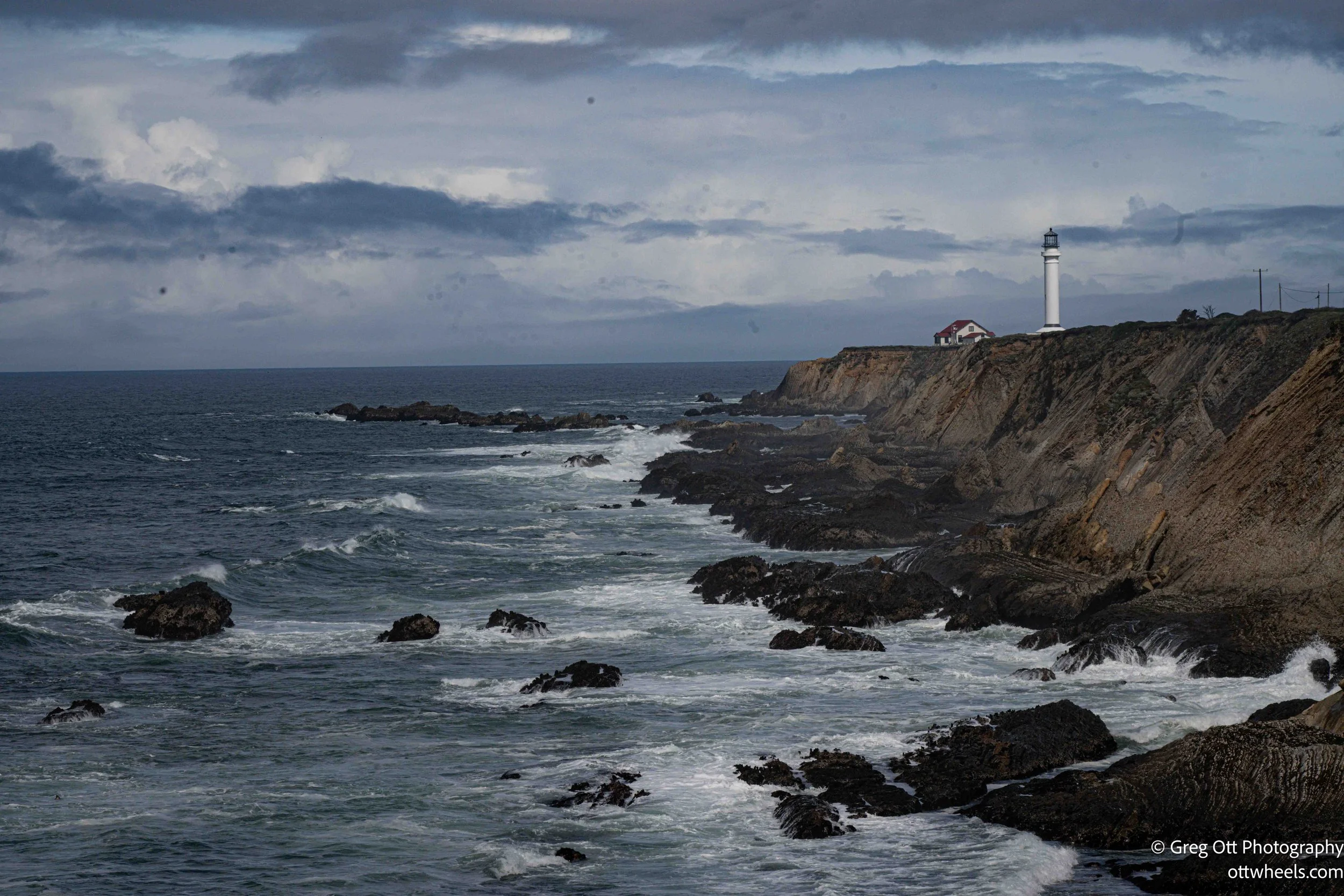
I spent some time online—emails, blog updates, and working through a few recent photos. As I packed up, the fog started to lift. I drove about ten miles back toward the lighthouse near Point Arena to see if I could get a few images. The construction crew was gone, and I made it to the entrance. There was a five-dollar fee to enter and climb the lighthouse, but having been to dozens of them, I skipped the climb. Instead, I worked the road and surrounding areas, looking for better angles.
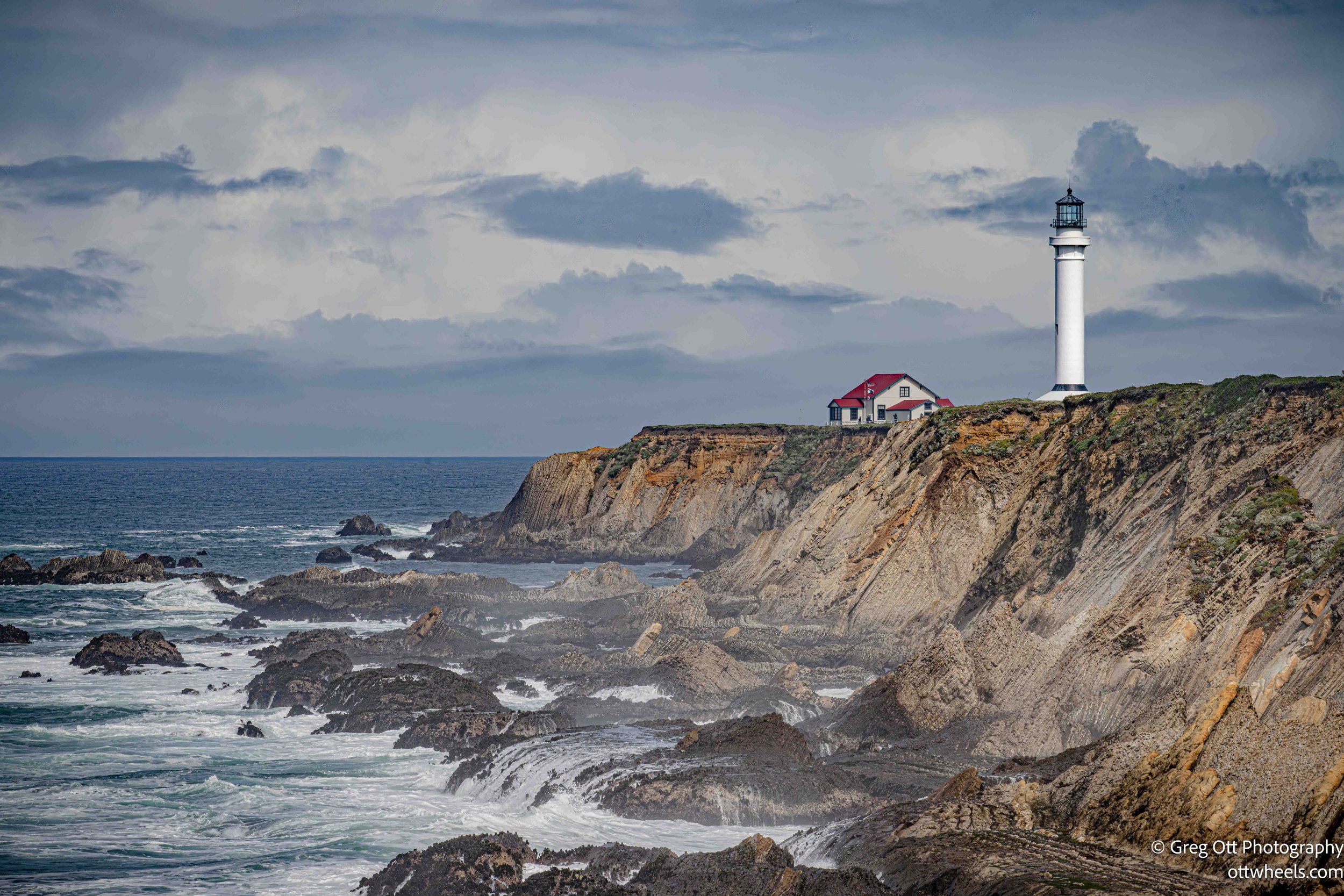
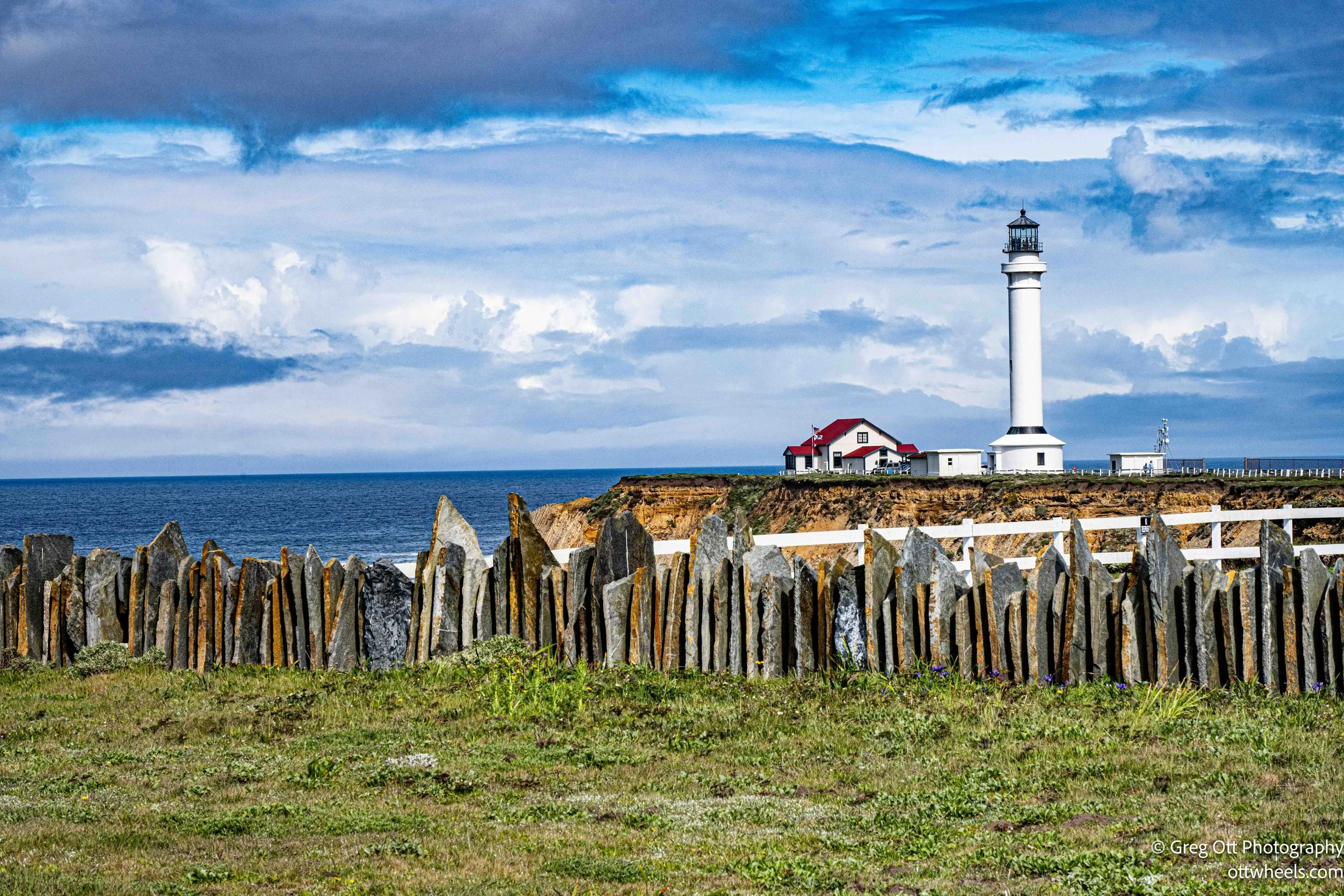
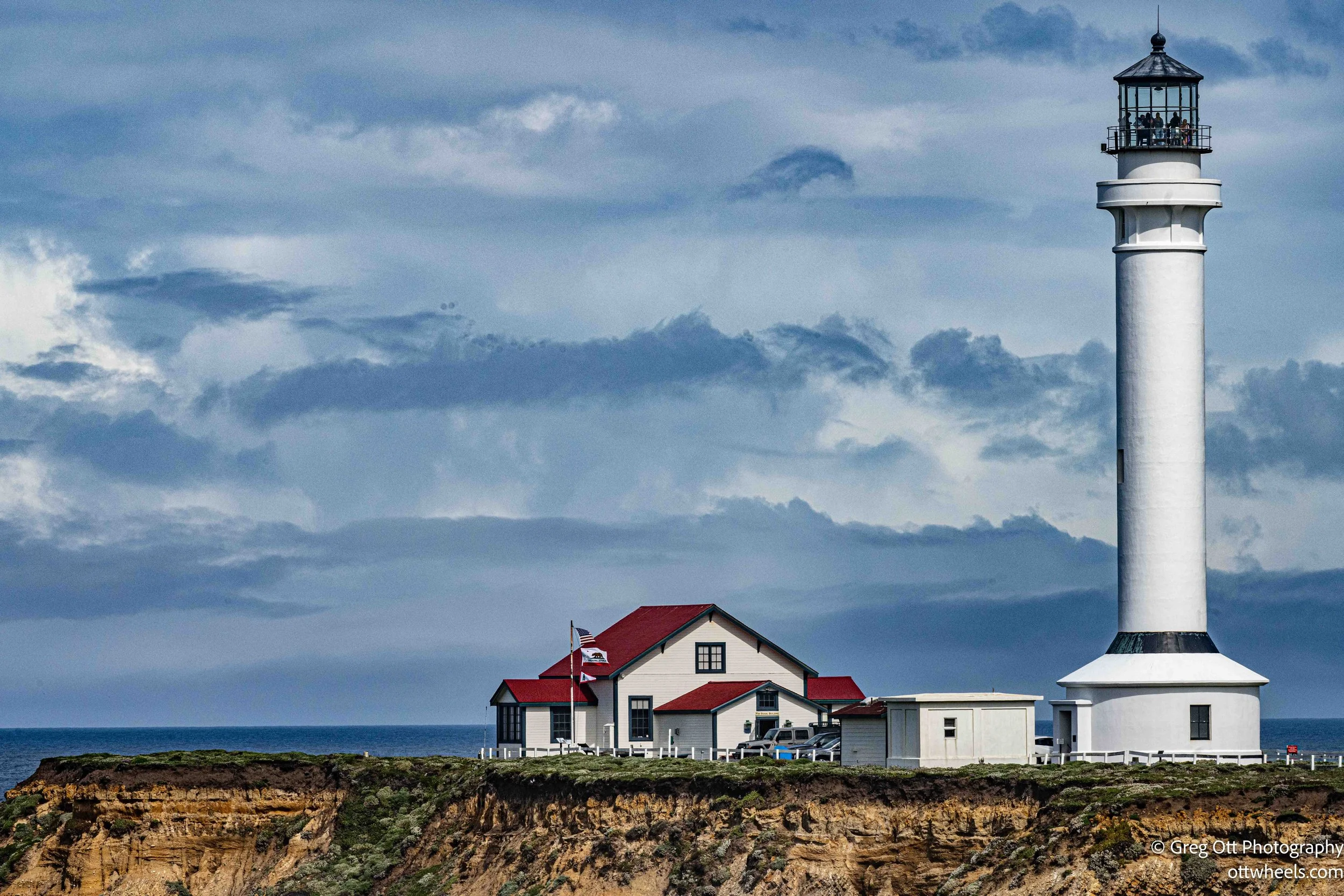
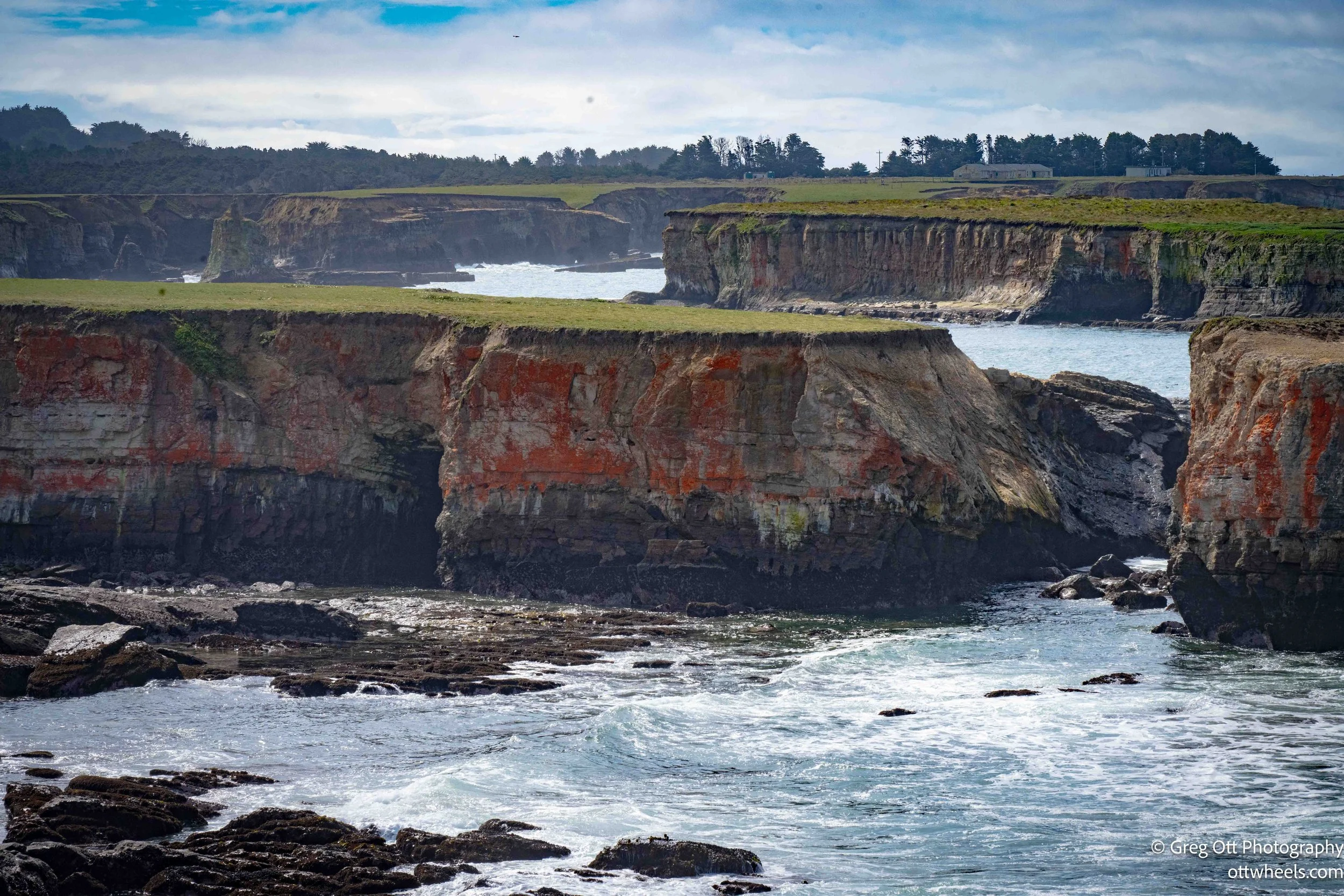
The landscape there is dramatic—lush vegetation, sheer cliffs, and rugged coastline. I stayed well back from the edge. I’ve seen how unstable those dirt cliffs can be after rain, and it’s not something to test. The air was heavy with moisture, and the sun pushed in and out behind the clouds.
Heading north, I passed Manchester State Park and stopped at a small grocery store attached to an Ace Hardware. There aren’t any chain stores in these towns—just small, independent places that carry a bit of everything. This one was larger than most and even had a butcher. I stocked up for a few days. At checkout, one line barely moved while a cashier talked with a family about her mom and some ongoing problems. The other line moved quickly. No one seemed bothered. People just waited, nodded to each other, and carried on.
I made lunch in the parking lot and took a break. It was noon, and I had a little over two hours to get to the redwoods. I took my time heading north, pulling over when I could to let faster traffic pass. Instead of extra lanes, the state uses turnouts—simple and effective.
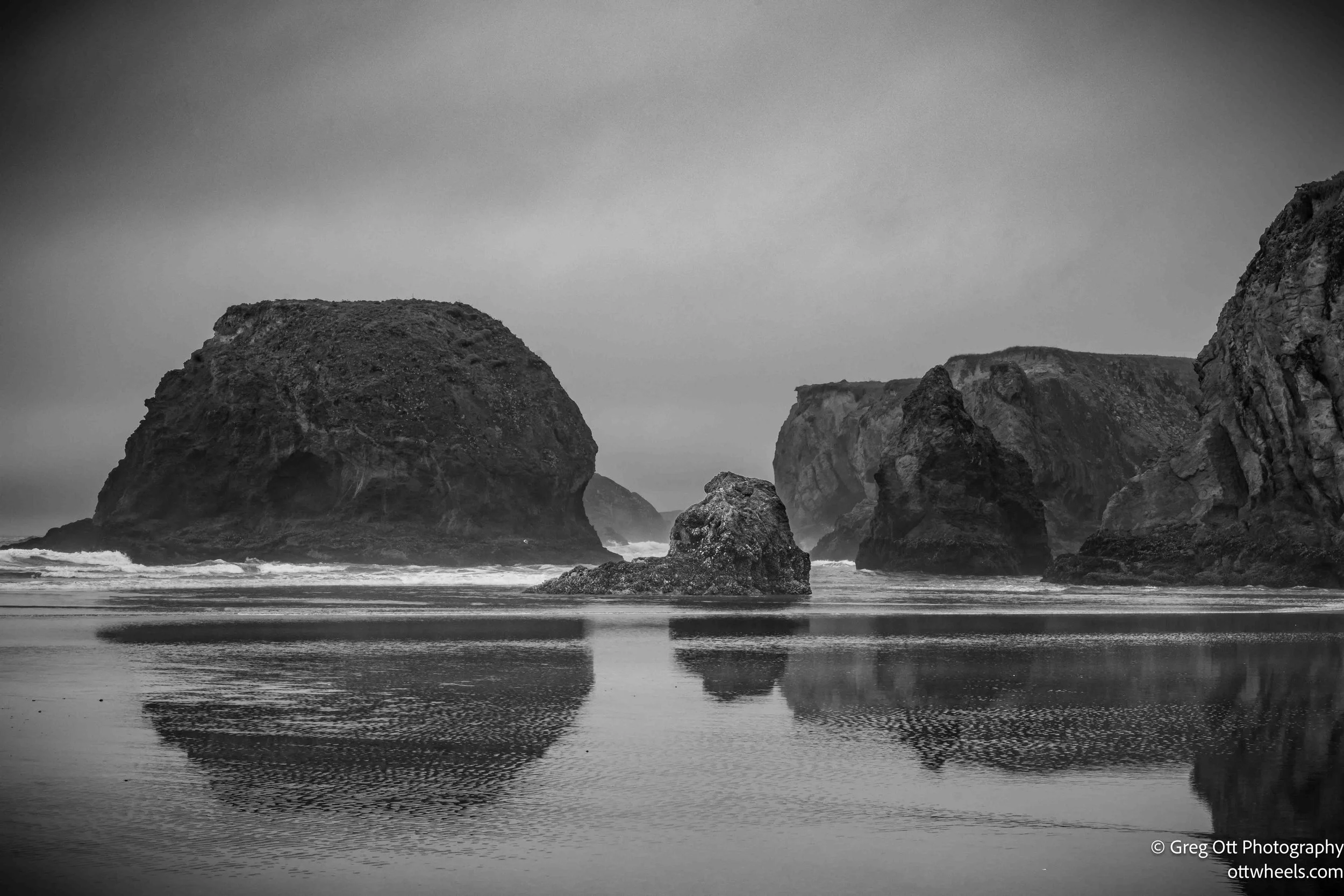
At one point, I came across a stretch with plenty of roadside parking and grabbed the camera. The rocks were massive, and the scene had that soft, diffused light you get with fog hanging offshore. There were houses built right up to the edge of the cliffs, closer than I would have expected.
The long beach below would periodically fill with water, creating reflections of the rocks that came and went with the tide. The scale was hard to miss—people on the beach looked small against the formations. I stood there for a while, watching the reflections form, then fade back into the sand.
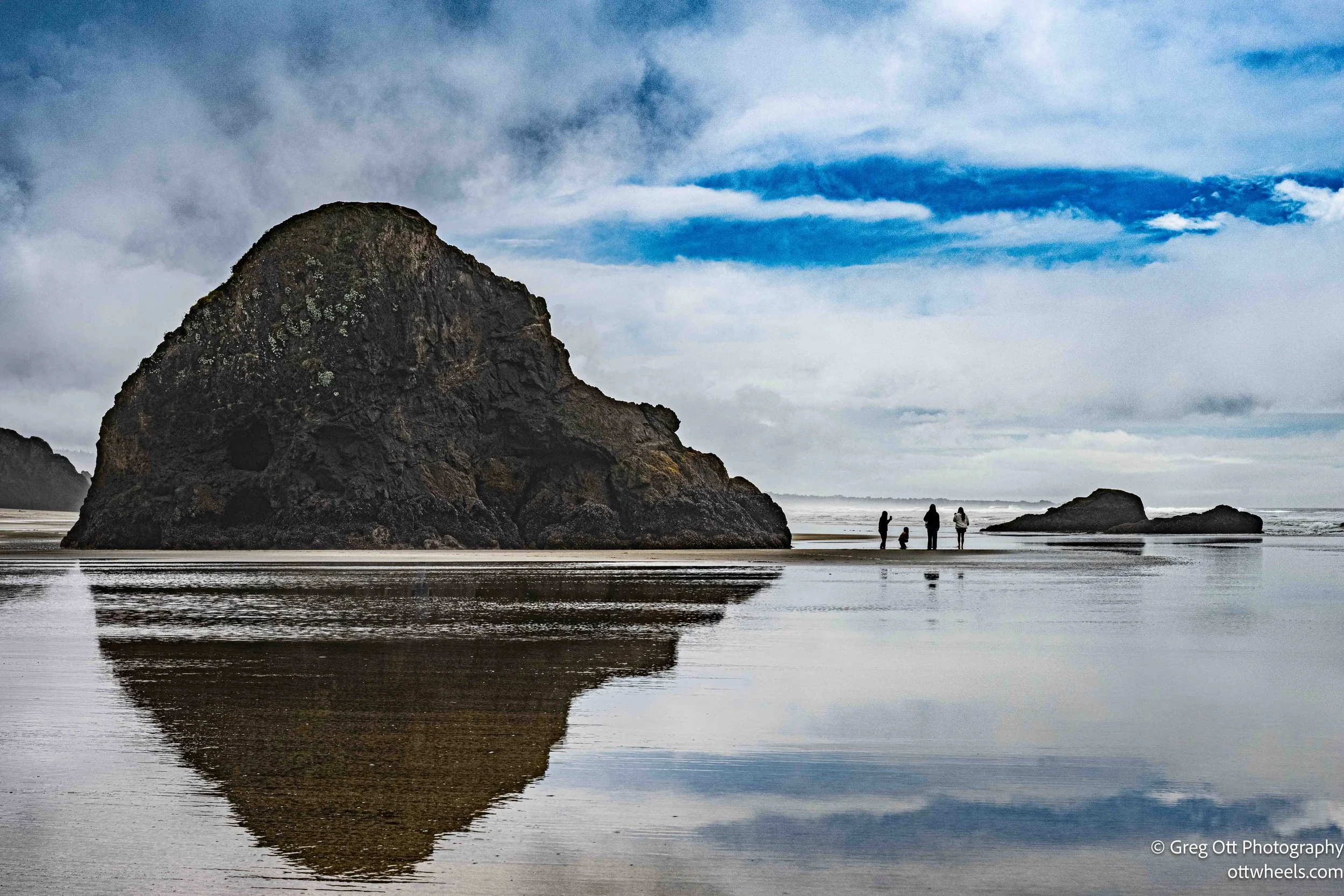
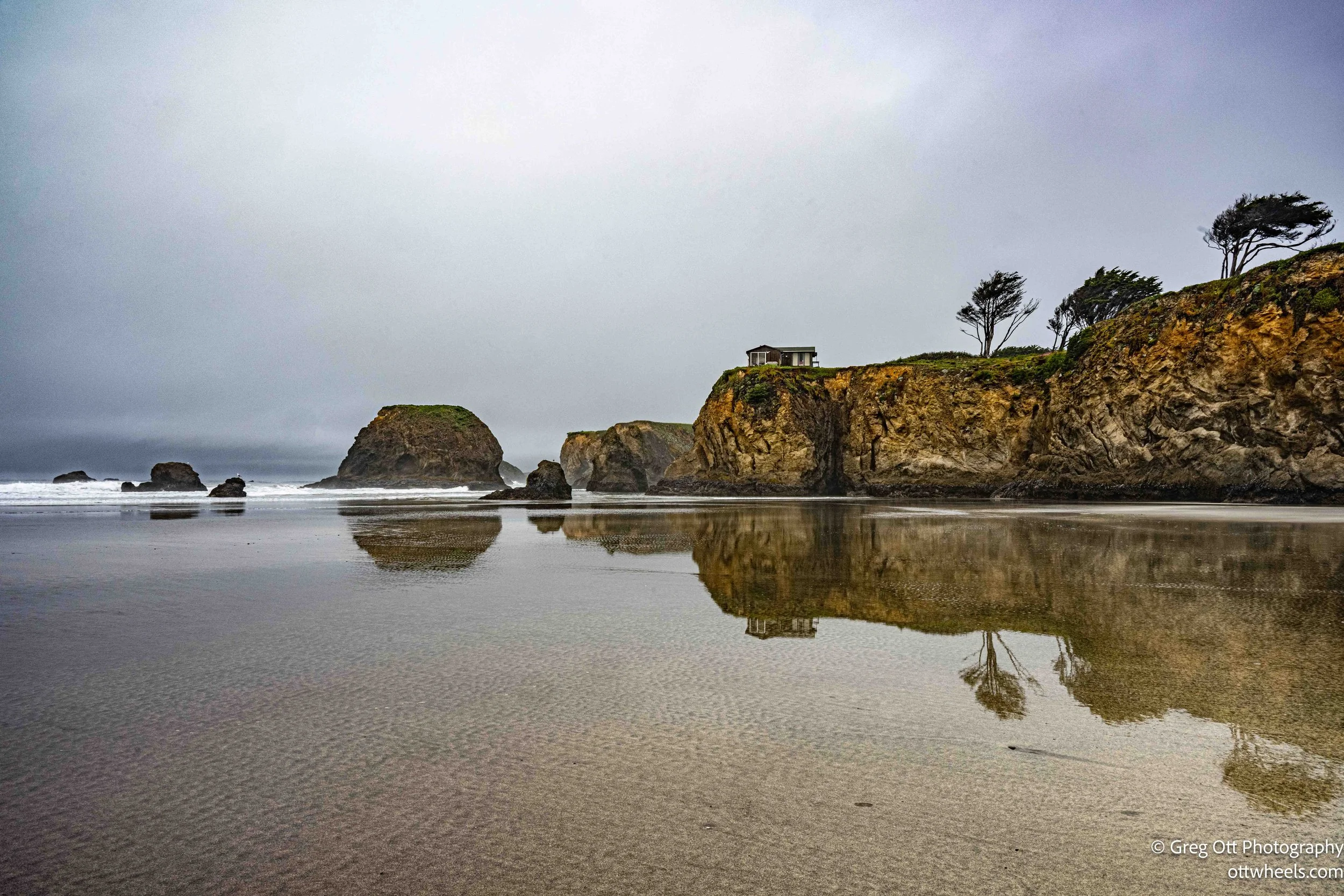
I drove through towns with familiar-sounding names—Elk, Mendocino, Little River, and others. I still had a drive ahead to the redwoods. Route 1 eventually turned inland and connected with U.S. Route 101. The transition was immediate. The open coastline gave way to tighter roads winding through hills and into dense forest. The terrain shifted from low coastal brush to steep, green mountains, and then suddenly into towering redwoods. The trees rose straight up from the roadside—massive, close together, and completely different from anything along the coast just a short drive earlier.
I stopped for gas in Phillipsville, not sure when I would see another station. A family pulled in with their music blaring, cutting through the quiet of the small mountain stop. It kept playing as they filled up, then all went inside for snacks before heading south.
I made my way onto the Avenue of the Giants and pulled off at several spots to walk among the trees. “Tall” doesn’t really capture what you’re looking at. I stood next to a fallen tree, and its diameter was as tall as my van. You see signs for drive-through trees along the route, but until you stand next to one of these, it’s hard to understand the scale.
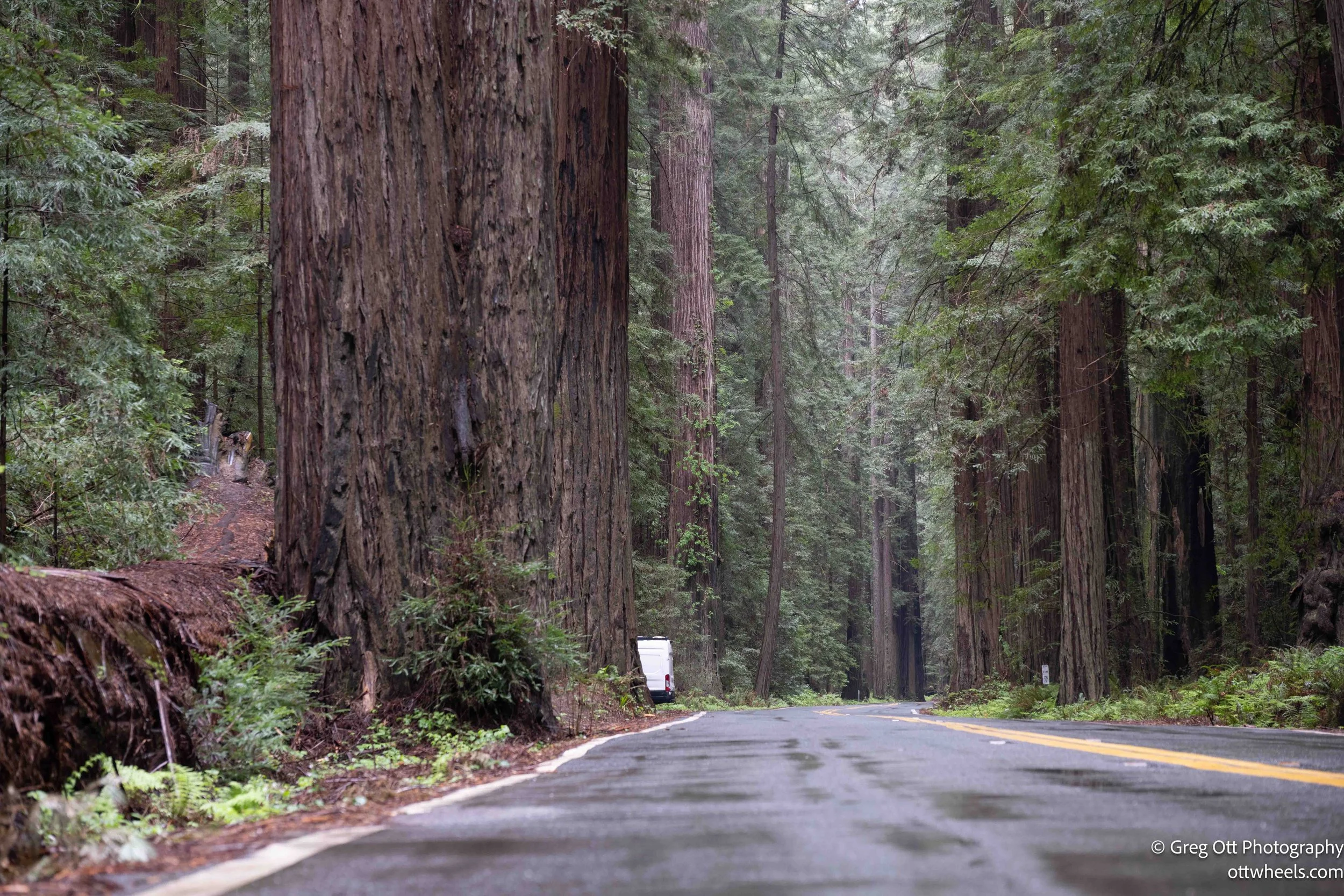
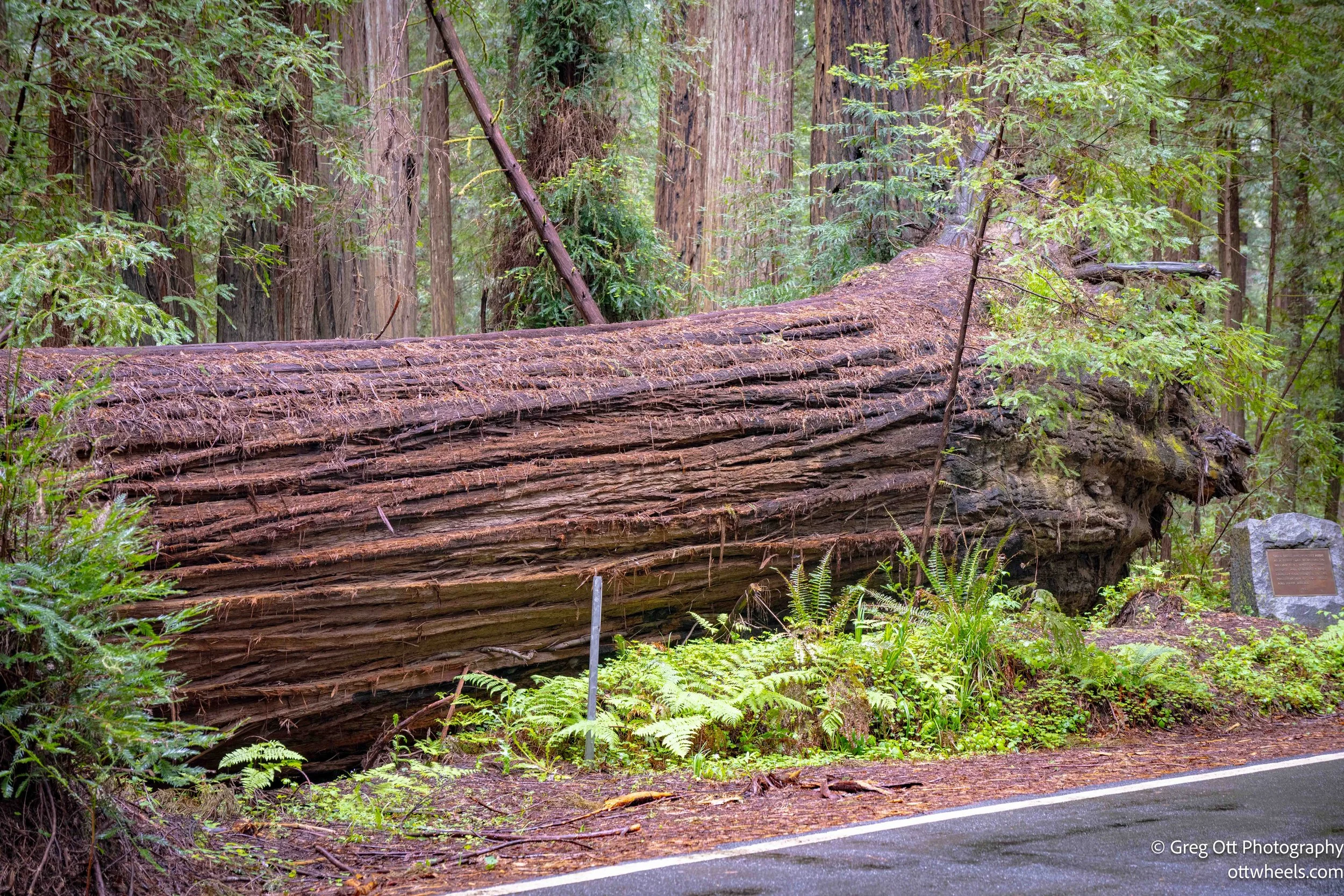
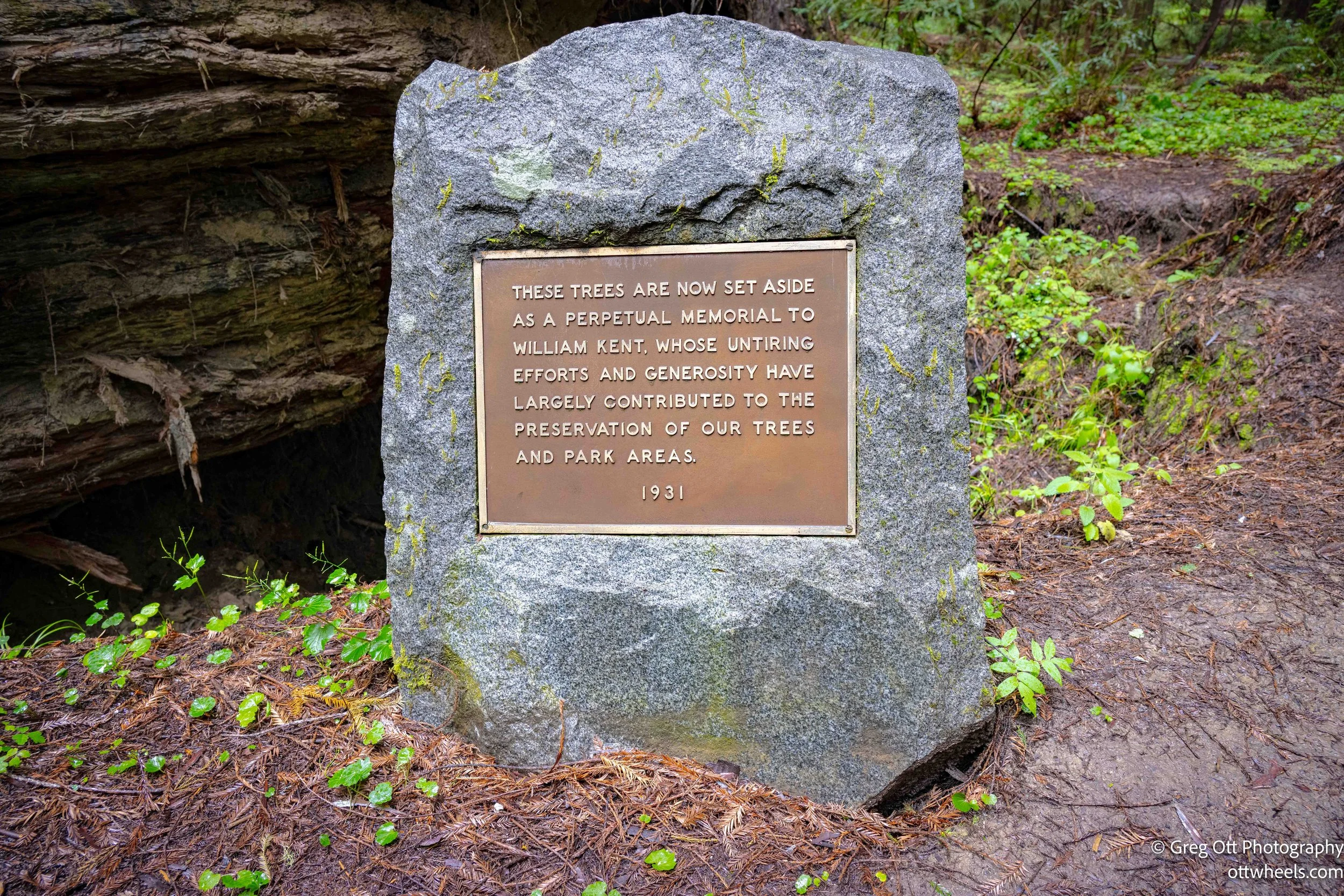
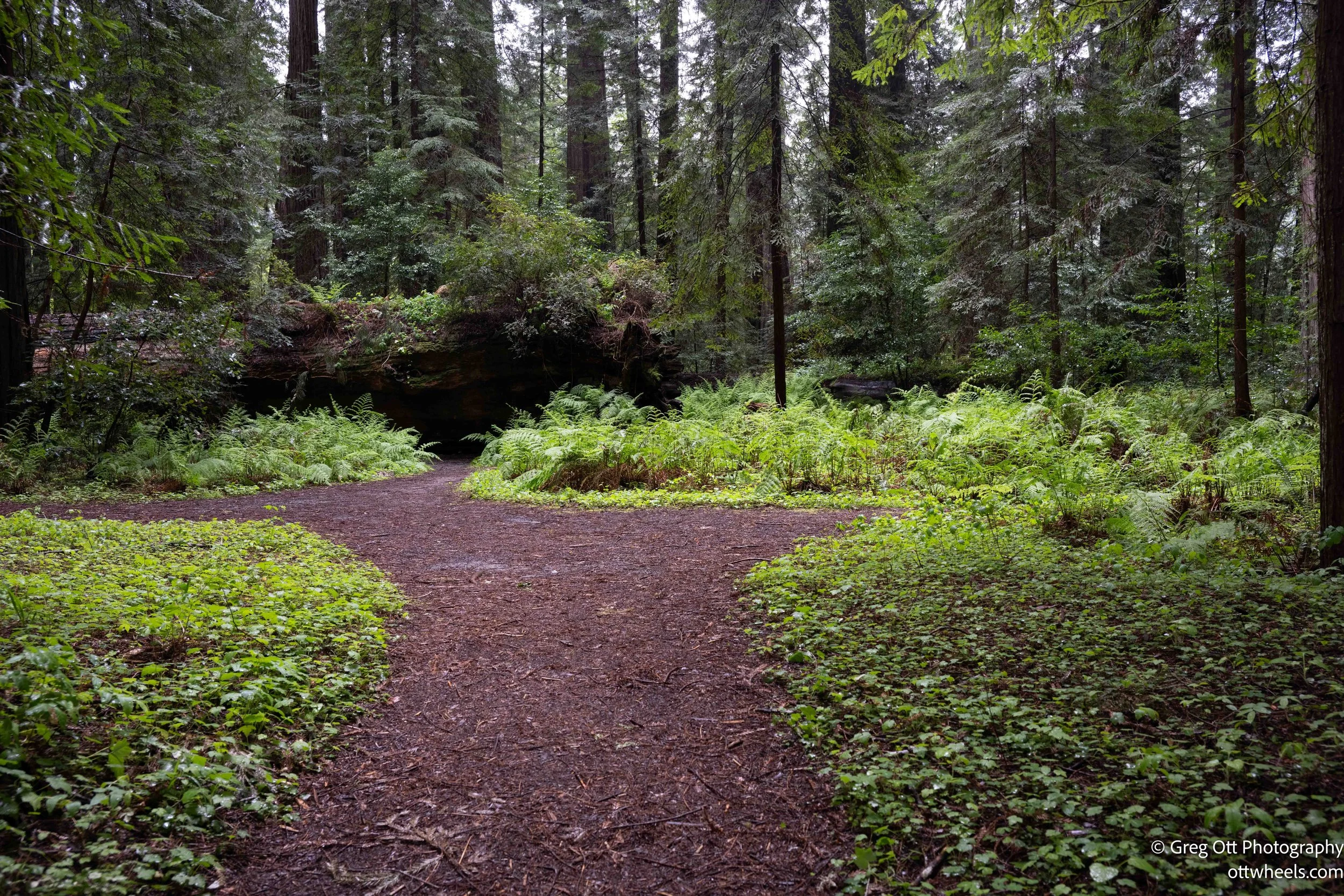
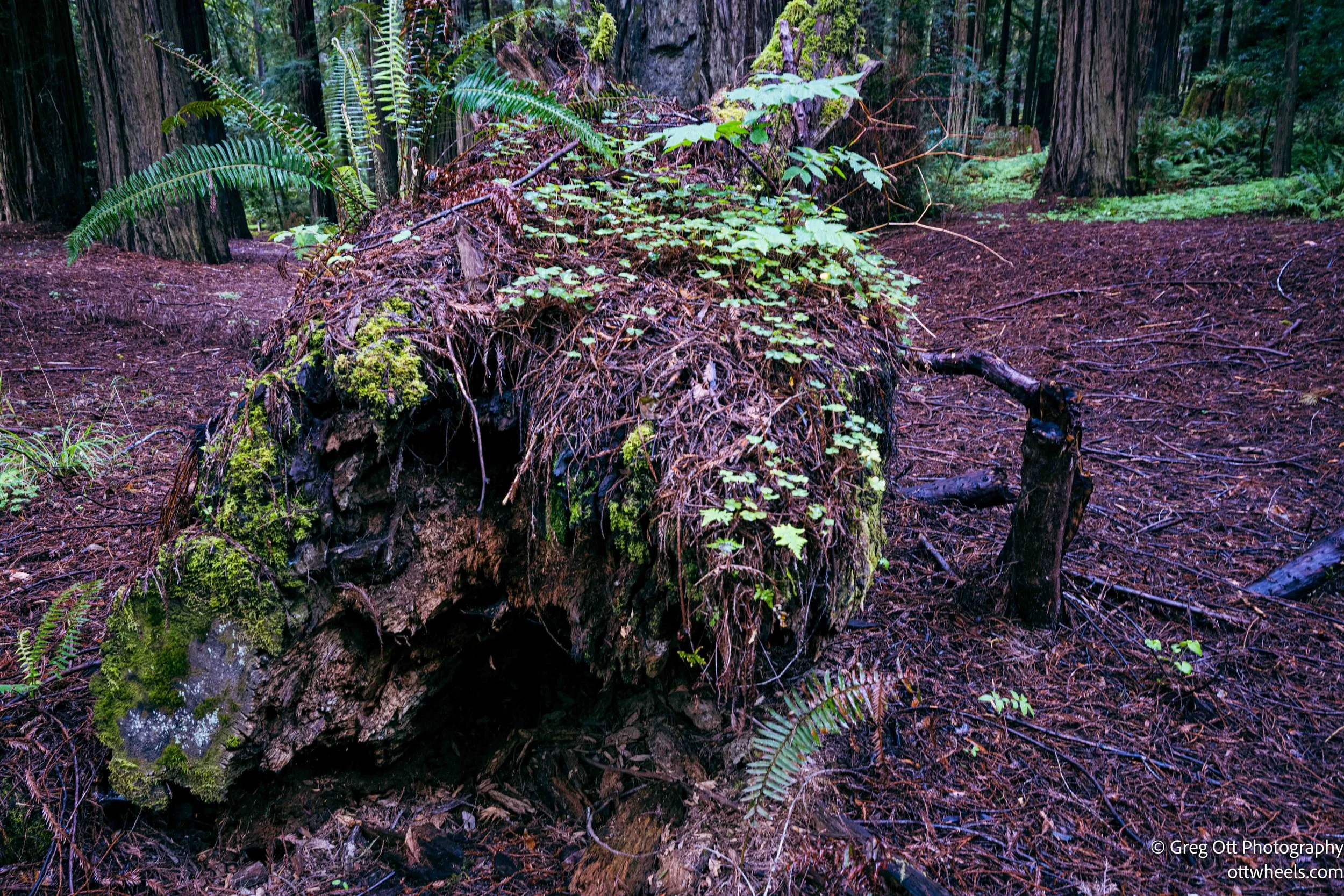
Walking through the grove, everything changes. The air is damp, the ground is thick with decomposing material, and sound is muted. There’s no crunch underfoot—just a soft, cushioned surface. A bird might call occasionally, but there’s very little movement. Even the light feels filtered, taking on a darker, almost reddish tone as it comes through the canopy. Everywhere you look, there’s decay and new growth at the same time—ferns, clover, vines, and young redwood shoots, all layered together. It feels like a forest left alone to do exactly what it’s supposed to do.
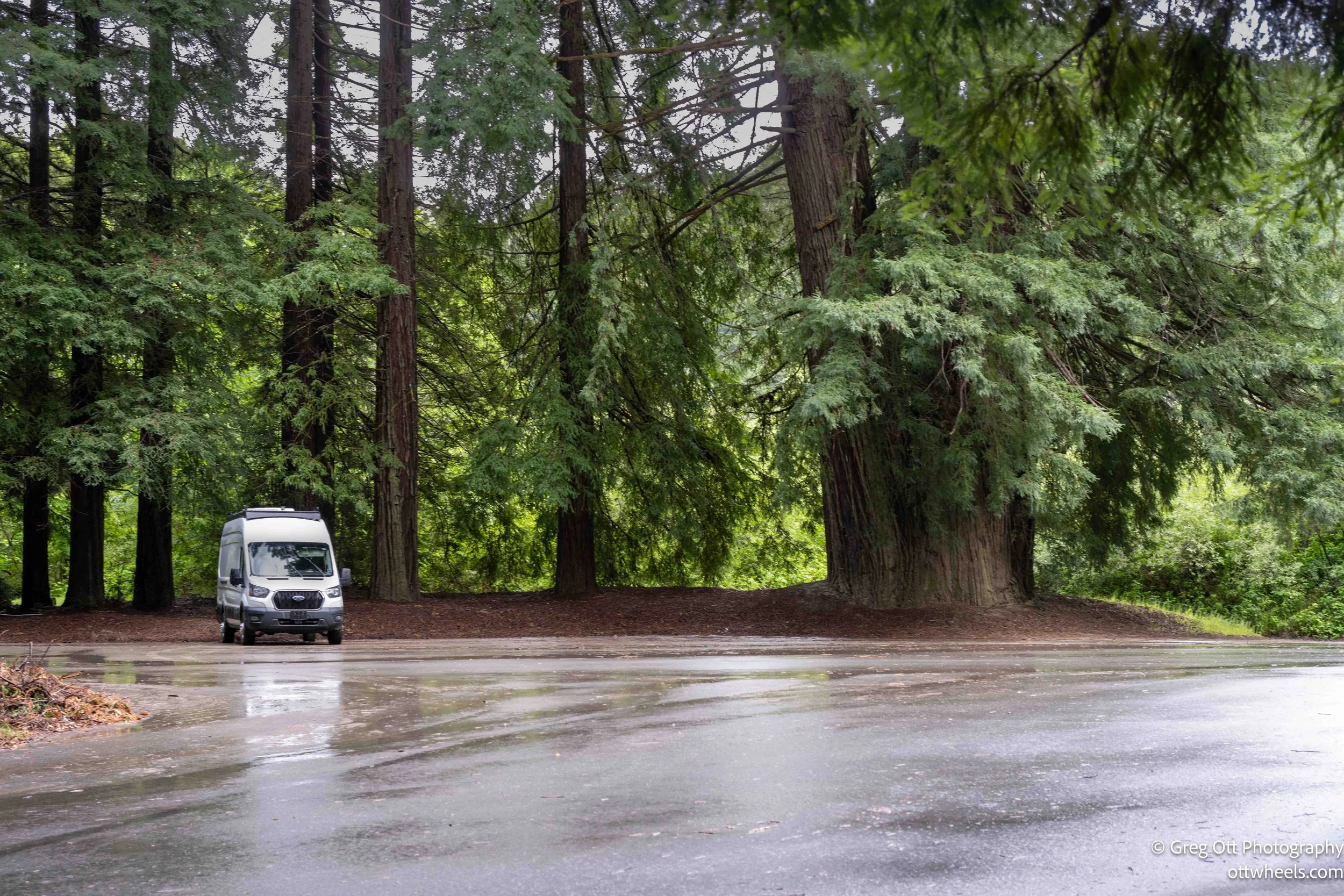
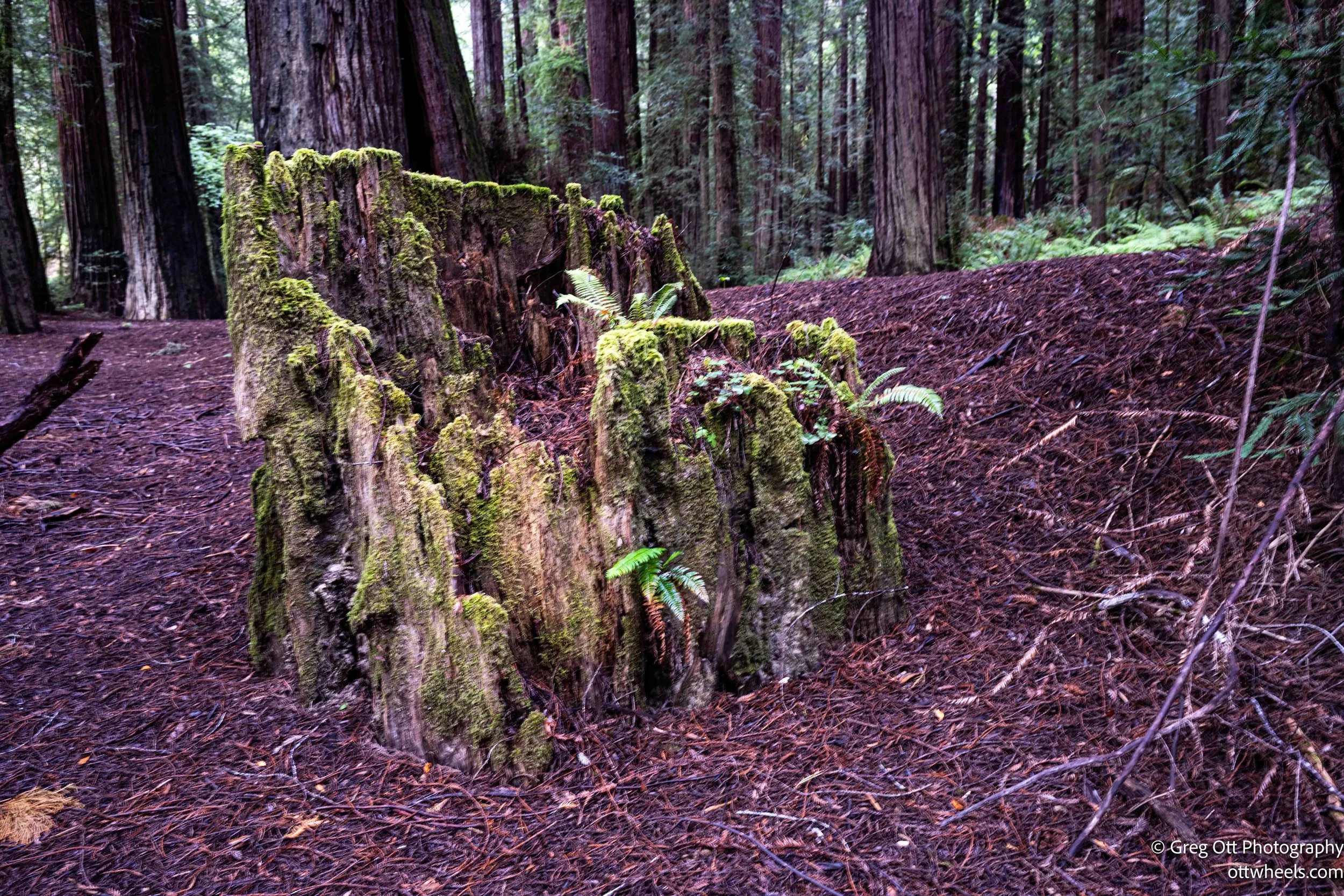
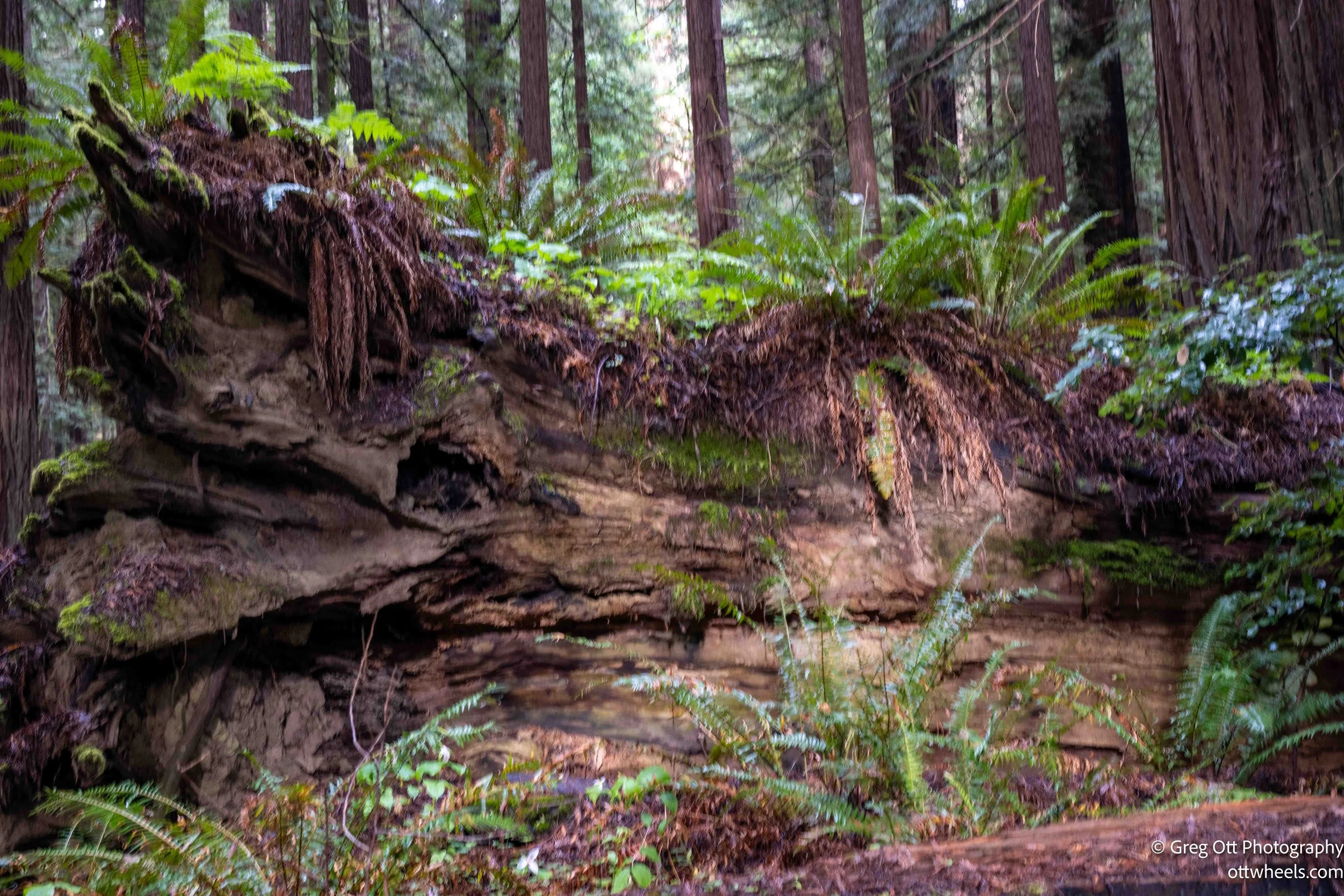
It started to get dark, and I checked the time. It was only 6 PM, but the canopy made it feel much later. My headlights came on as I followed the road, redwoods tight to both sides. Rain had been coming and going for a couple of hours and was starting to steady as I looked for a place to stop.
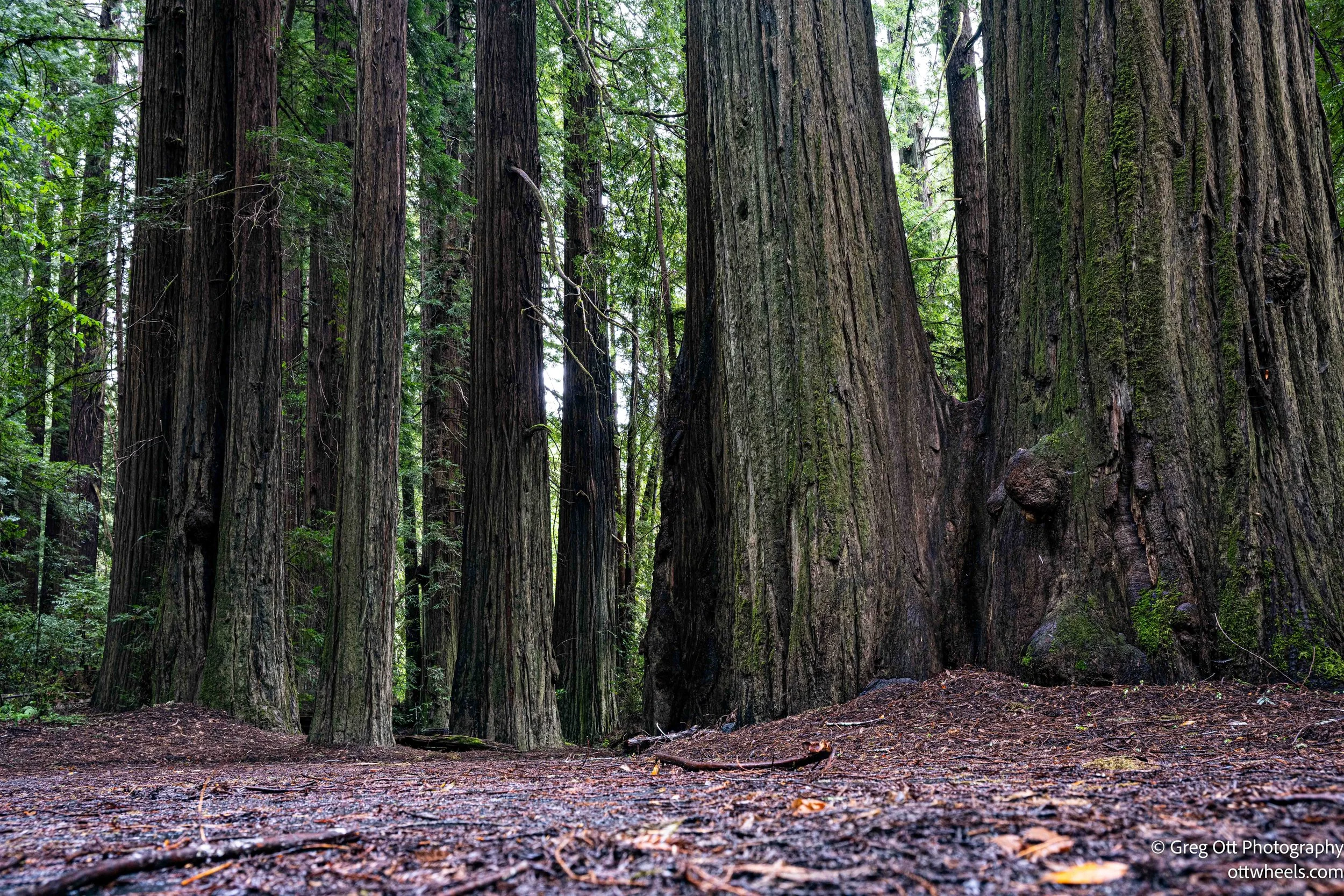
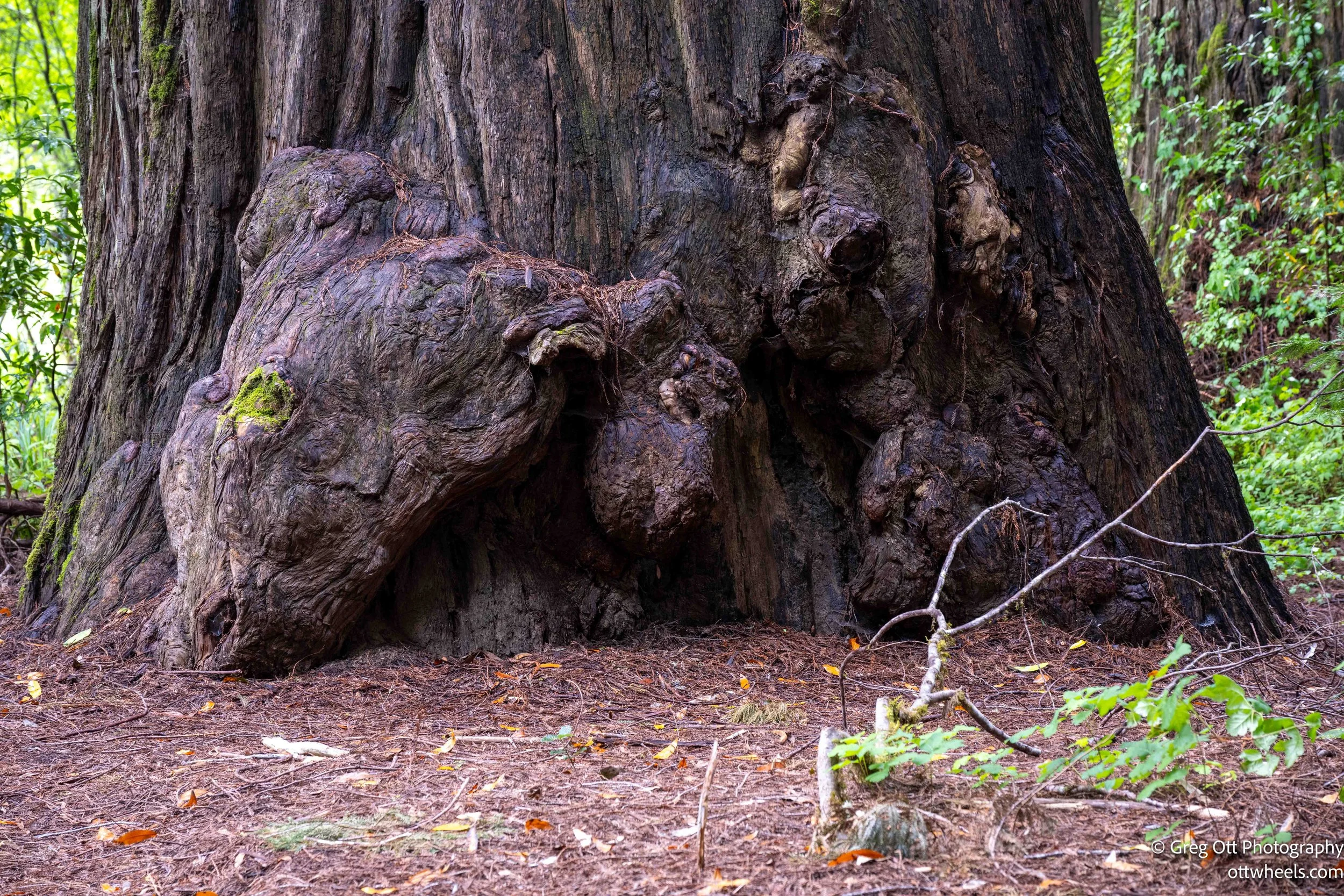
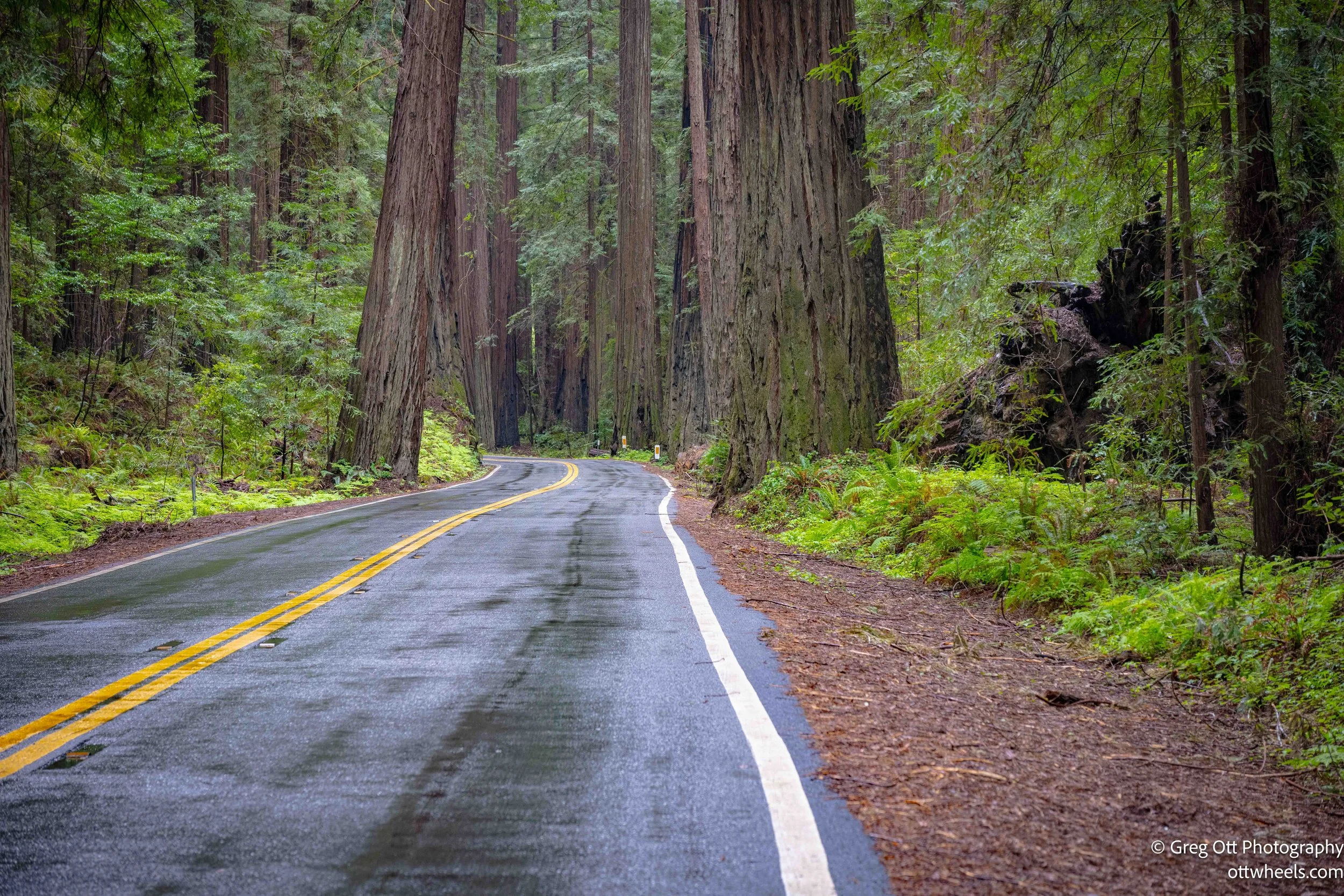
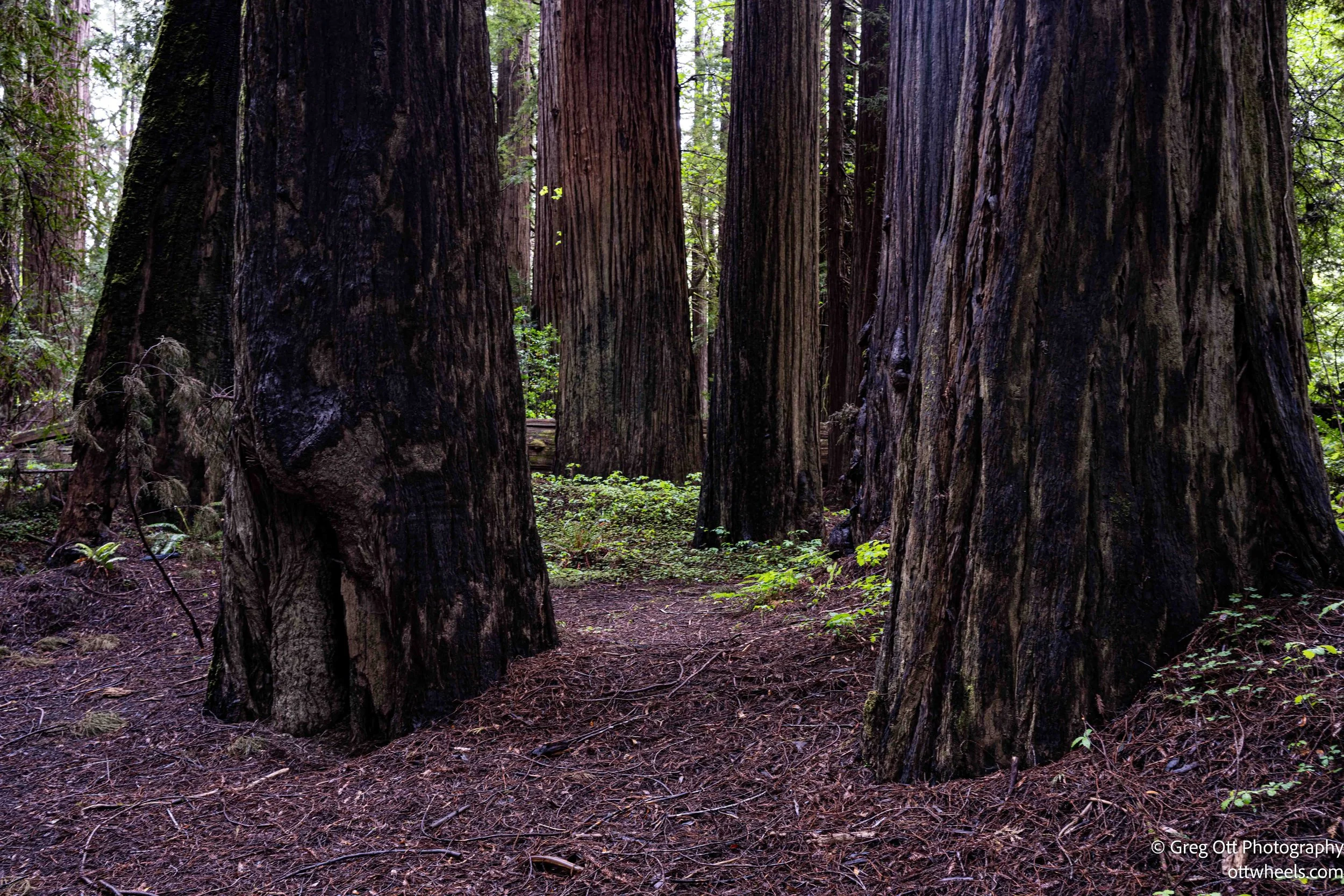
I found a spot inside the park, about 25 minutes from the visitor center, near a river. The road wound through dense trees and then climbed, narrowing in places to a single lane. The turns were tight, and I wasn’t sure what I’d find ahead. Eventually, I reached a steep dirt road leading down to a narrow concrete bridge, with water running high and close to the surface. It didn’t feel like a good decision to go farther. I spotted a small turnaround just ahead, pulled in, and parked there instead. It was a better option than being down near the river if the water rose overnight.
A car passed about 15 minutes later. After that, it was completely quiet for the next 12 hours.