Prudhoe Bay
In the middle of the night, my room became unbearably hot. I tried adjusting the radiator but apparently pushed the knob in exactly the wrong direction. By 7 a.m., heat was pouring into the room and there was no chance I was going back to sleep. I needed to be out of bed anyway if I wanted breakfast at the Deadhorse Camp cafeteria.
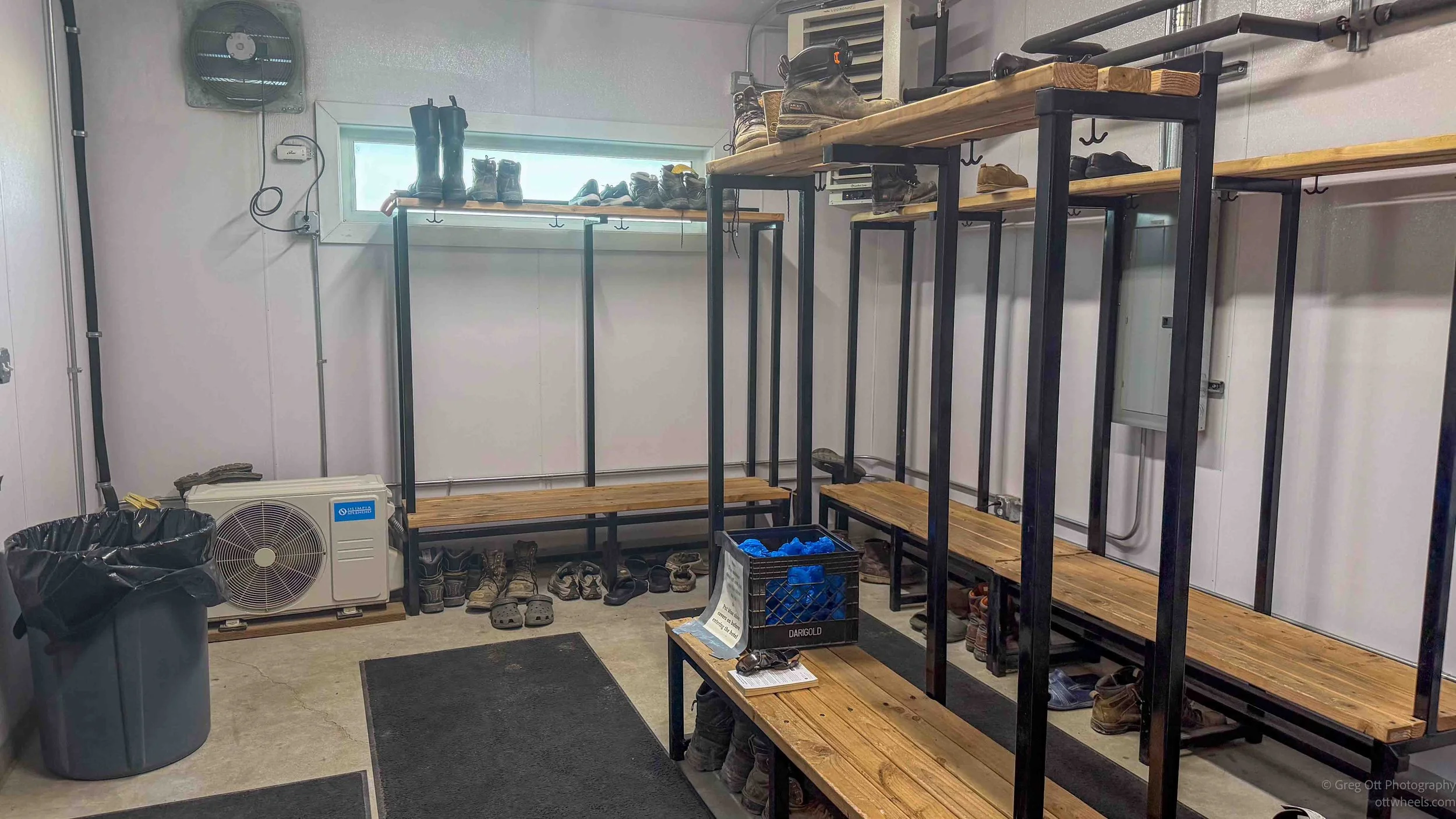
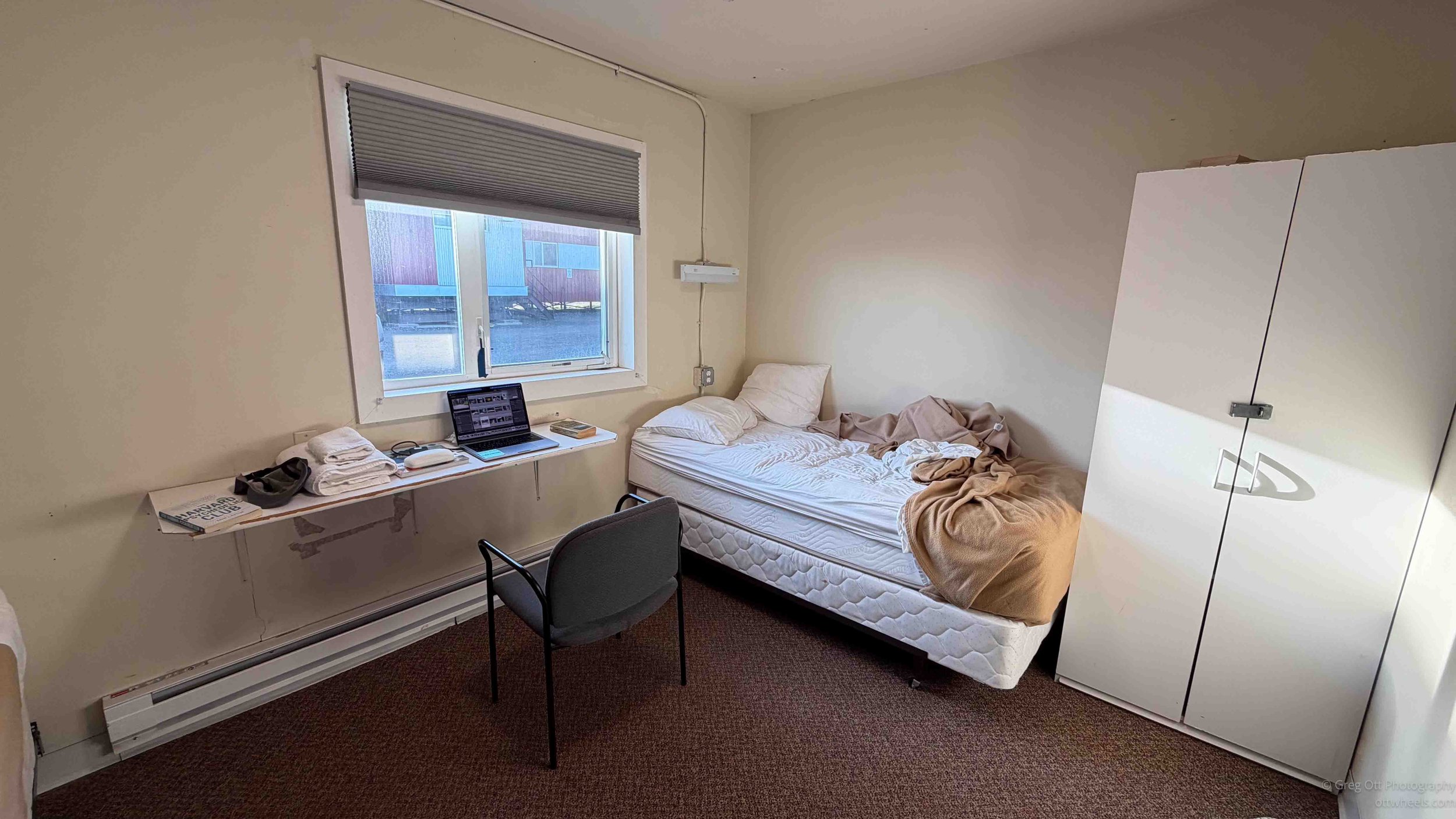
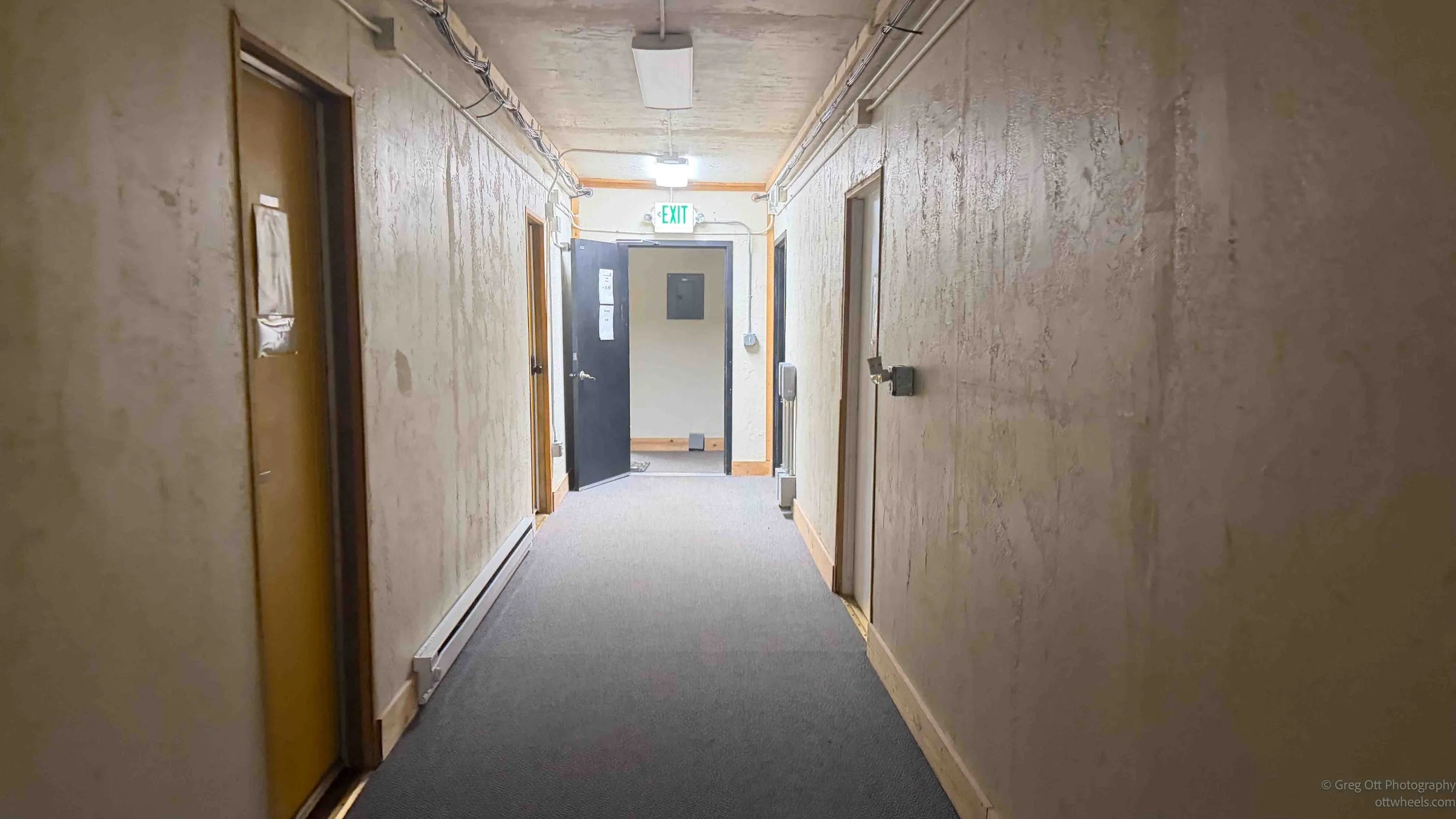
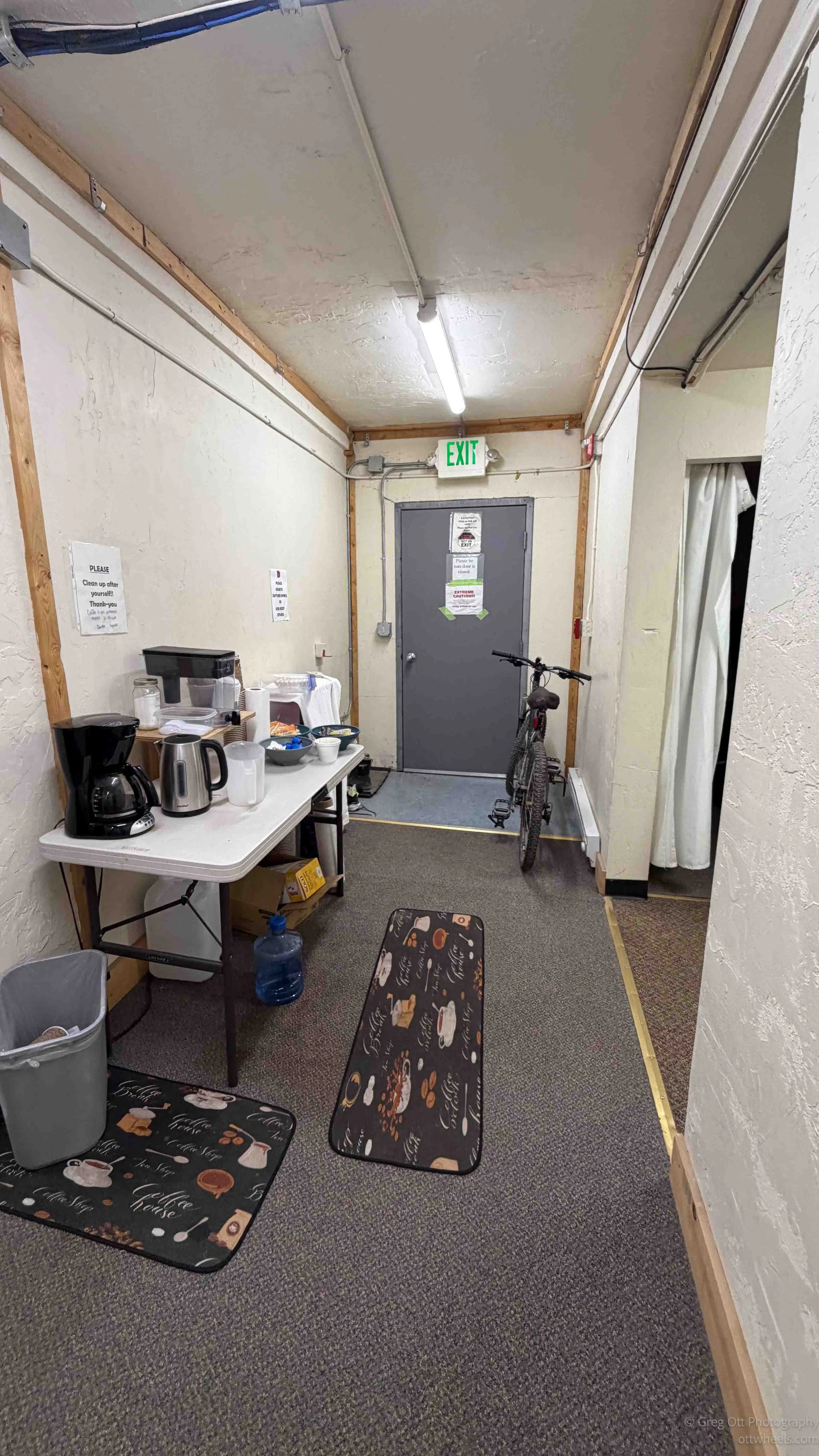
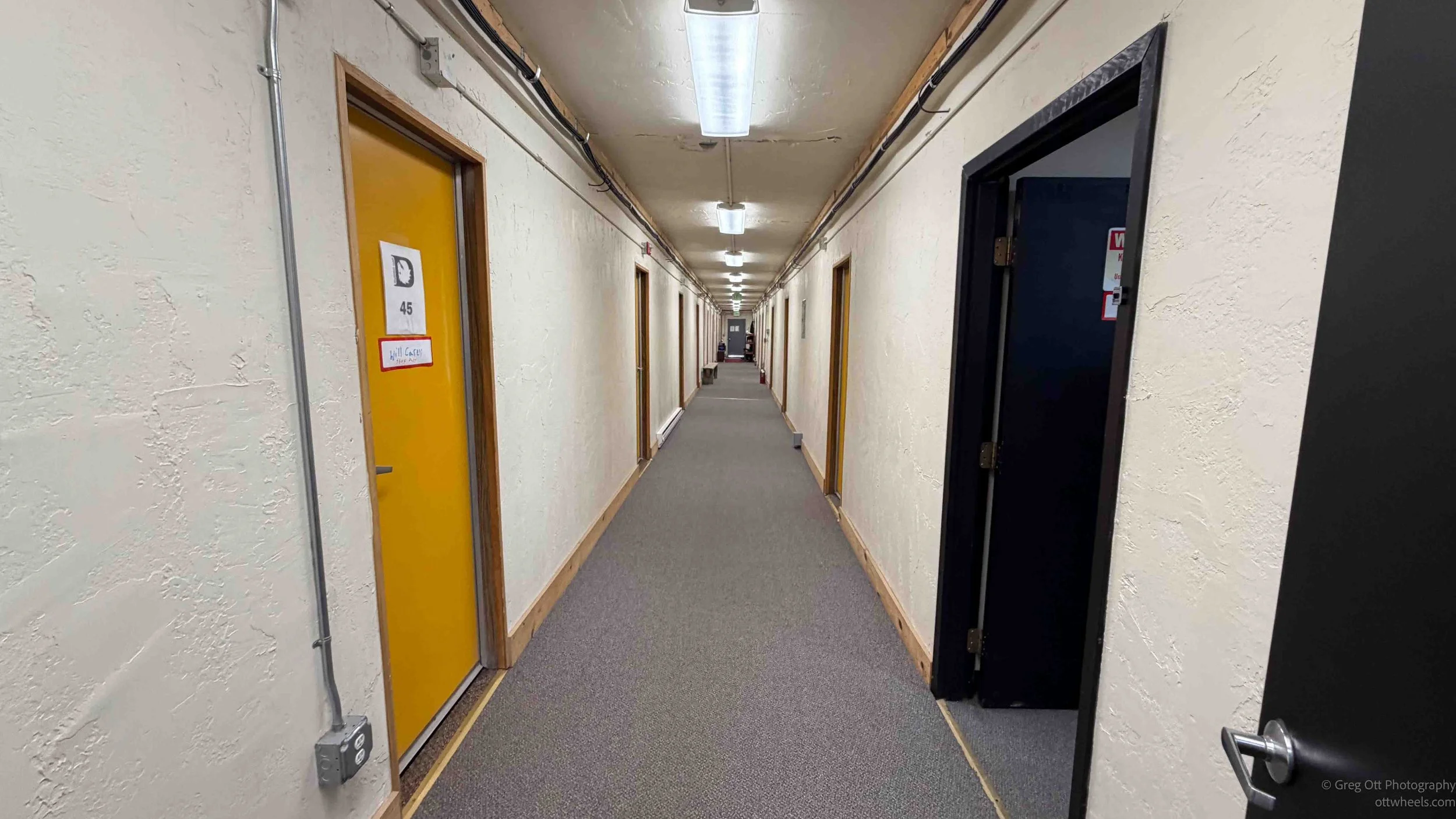
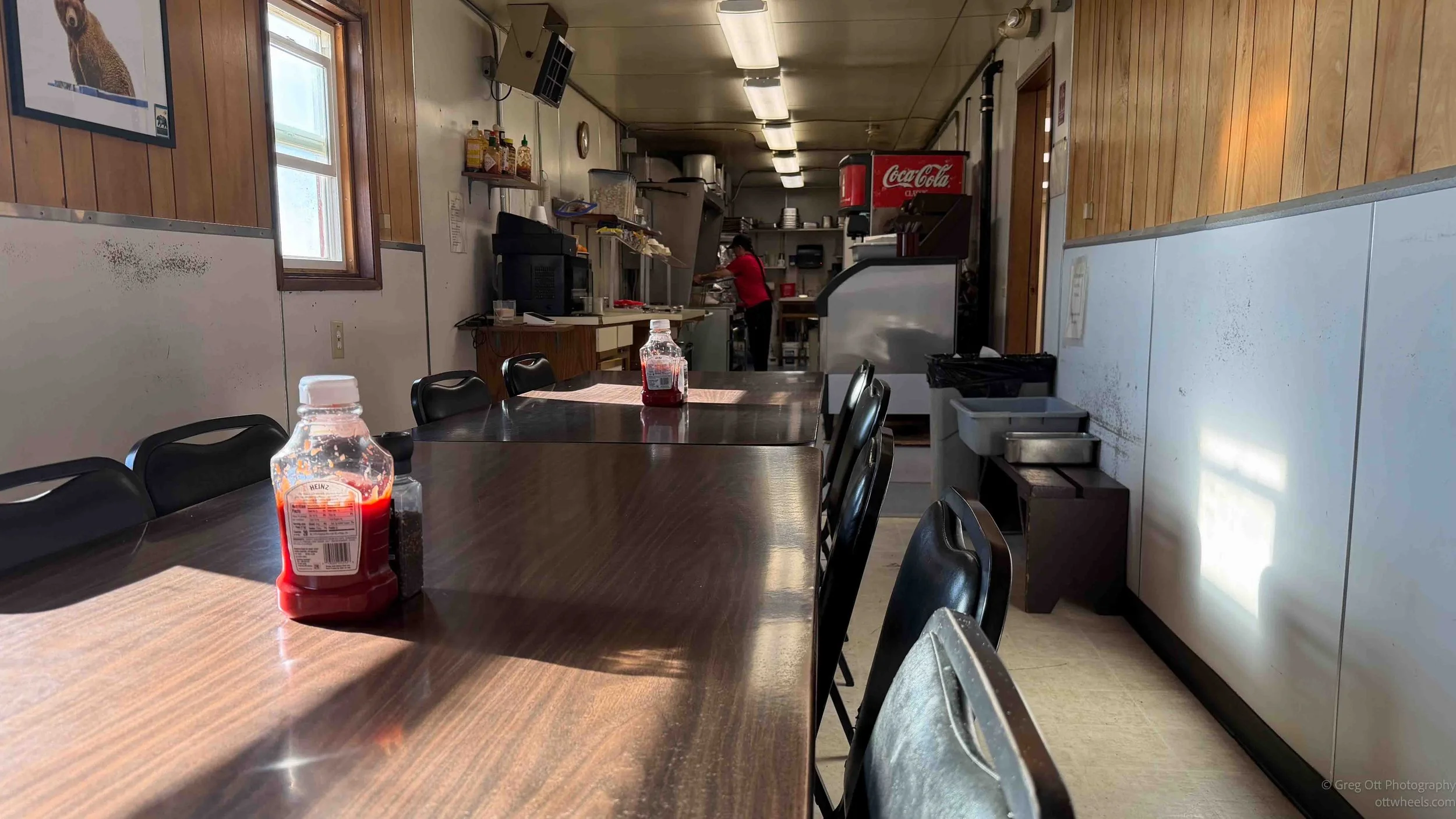
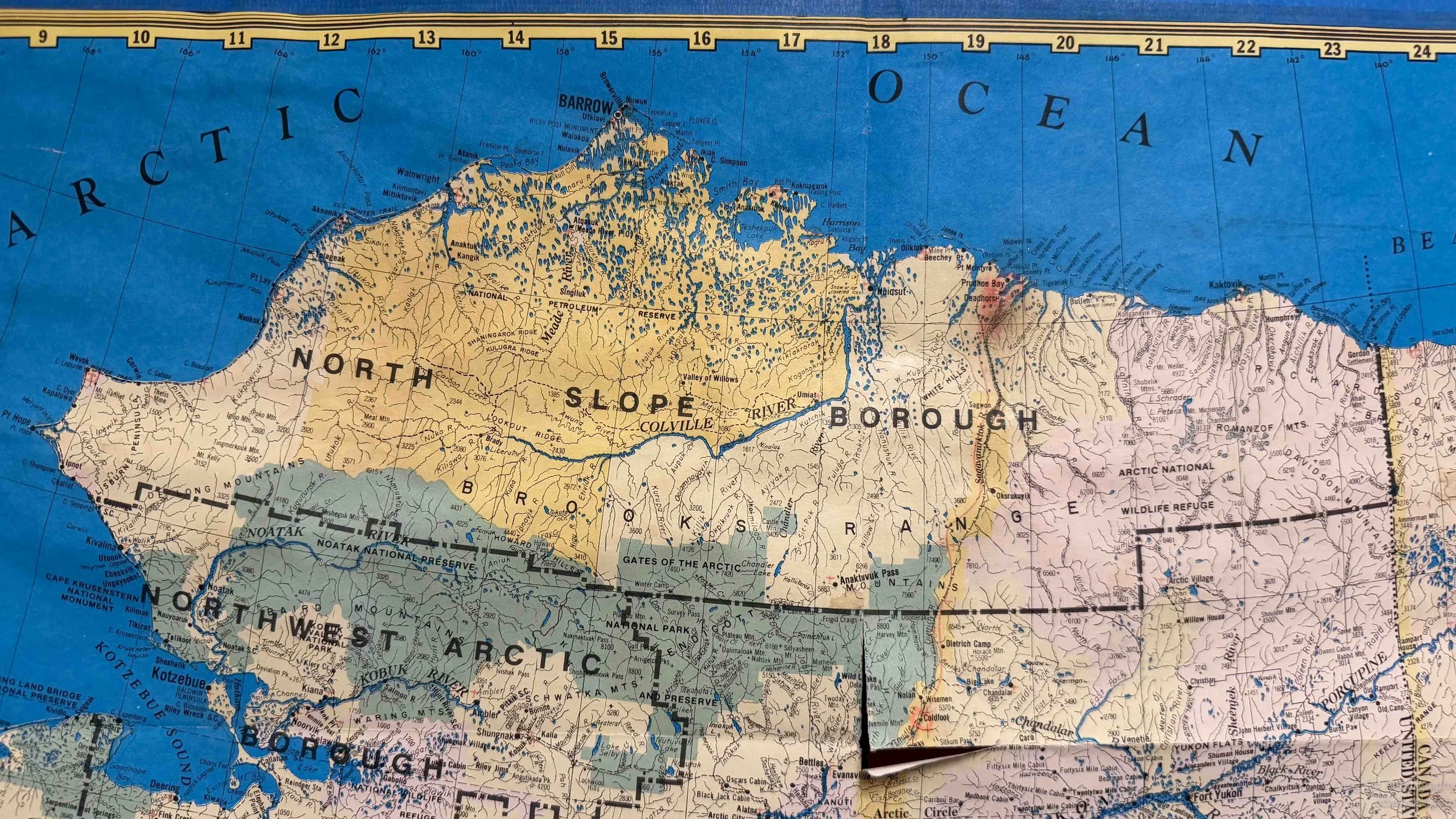
This was my second day at camp. When I arrived, the oil-field workers were still eating, so I let them finish before getting breakfast. Many of the same faces from dinner the night before were there, along with a few new ones. Two tour groups were leaving at 8 a.m. and were comparing schedules, trying to figure out where they might cross paths later in the day. Deadhorse Camp was also running guided tours at 9 a.m. and 3:30 p.m. I was booked on the afternoon tour, which would take us through the restricted Prudhoe Bay oil field to the Arctic Ocean. The night before, I had been told there were only two of us signed up. The other tours were more focused on looking for caribou, muskox, Arctic fox and seeing different parts of the North Slope.
Once again, the food was really good. A different cook was working breakfast, and the buffet had biscuits and gravy, small potatoes, bacon, yogurt, fresh fruit, bagels, French toast and juices in the refrigerator. Eggs were cooked however you wanted them. Most people, including me, went back for seconds. My goals for this trip were pretty simple: get into the Arctic Ocean, experience the Dalton Highway and stop at the Arctic Circle. Everything else was extra.
During breakfast, I explained to Will, the IT guy, that I had been having trouble with the Internet the night before and still couldn't get online. He checked the connection records and found my purchases. Apparently, I had bought the one-hour plan rather than what I thought I had purchased. I reconnected, bought the cheapest 24-hour plan and suddenly I could work again.
The two Italians who had ridden their bicycles all the way from Argentina had finished breakfast in the other room. I stopped to say hello and gave them my contact information. They had found a ride back to Fairbanks and were making their final plans for getting back to Europe. They told me a little more about what they planned to do next, and I wished them a pleasant trip home and success with whatever adventure came after this one.
I asked the cooks if they minded if I just hung out in the cafeteria and worked. My choices were going back to my room and working on a tiny shelf in front of the window or sitting at a large table with coffee only a few steps away. It wasn't much of a decision. There was another advantage to staying in the cafeteria: I got to listen to the stories. The evening cook had apparently performed in plays in New York City and sang while she worked. Travelers came and went, oil workers stopped in, and everybody seemed to have a story about how they ended up in Deadhorse. It was becoming a cast of characters, each on an adventure of their own.
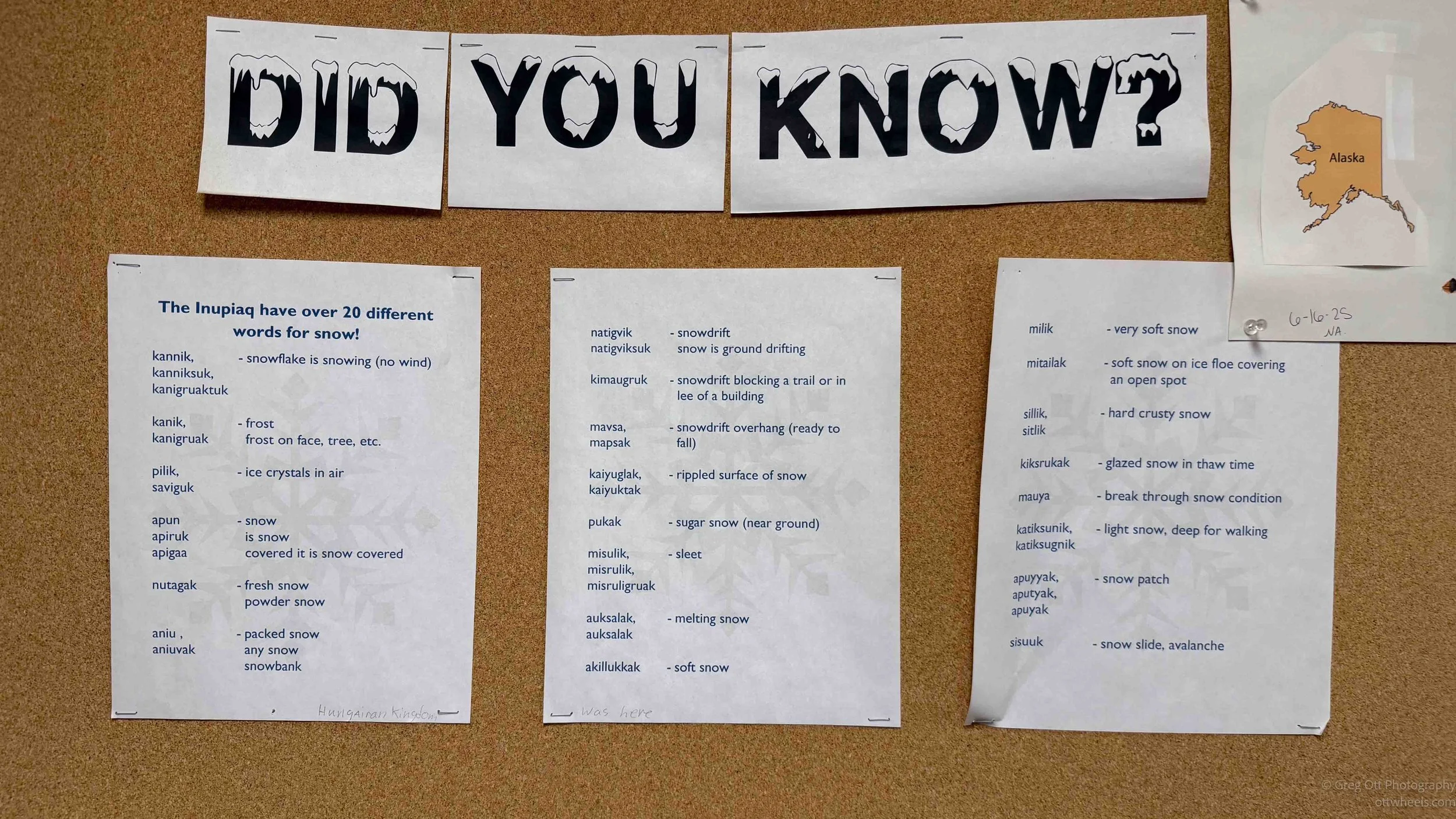
Around 11, they kicked me out because a group was coming in for lunch, so I moved across the hall and continued sorting photographs. A little later, the guy who kept the other building clean came into the room with his lunch and asked if it would bother me if he turned on the television. I'm not sure how much television he actually watched because we immediately started talking. Sammy was from Puerto Rico and worked up here seven or eight months a year. He had a house in the Tampa Bay area and liked to travel. His next trip was going to be Argentina. He told me about working in Deadhorse, where there really isn't much to do when you're off the clock, and we talked about retirement and what he wanted to do when he finally stopped working. He also gave me suggestions for places I should visit, particularly islands in the Caribbean.
After Sammy left, a woman came in to eat lunch. She turned out to be my tour guide for the afternoon. She had only been in Deadhorse for about a month after responding to an online job posting through an app that seemed to be popular with people looking for seasonal work up here. Somehow the conversation turned to travel, and she told me she was looking for someone to travel with. She had a camper trailer somewhere in New York and suggested maybe we could travel together. She then told me about the last two guys she had traveled with and why neither arrangement had worked out. The last one, she said, wanted her to pay for everything.
I tried fairly quickly to shut down where this conversation seemed to be going. I told her I was perfectly happy doing my own thing. It is a lot simpler this way. No cats, no dogs and nobody else I need to worry about. She never seemed to completely get the message, but eventually she had to go back to work. I ate lunch around 12:30 and then returned to my room for a few more hours of work before the tour.
Through the Prudhoe Bay Oil Field
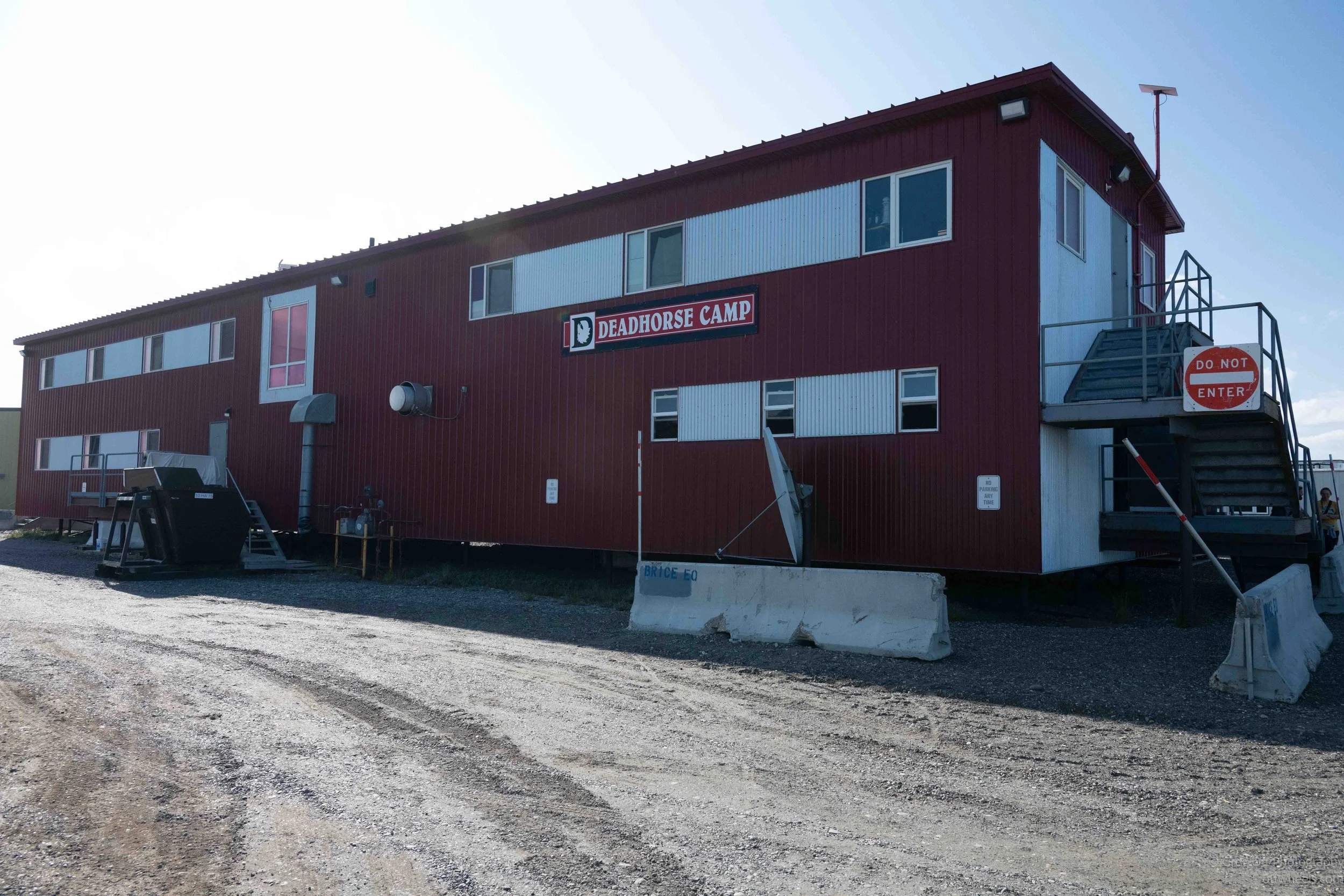
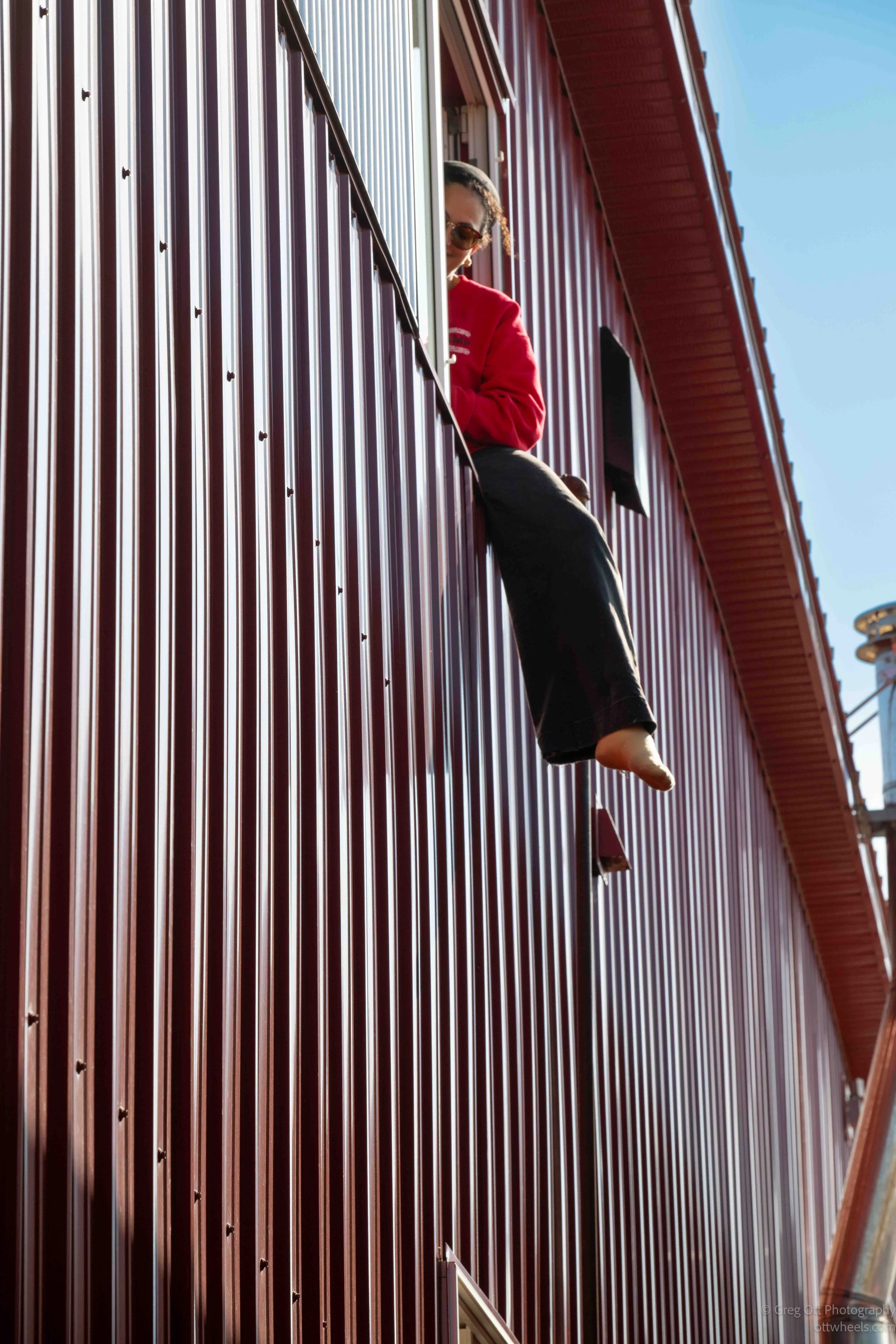
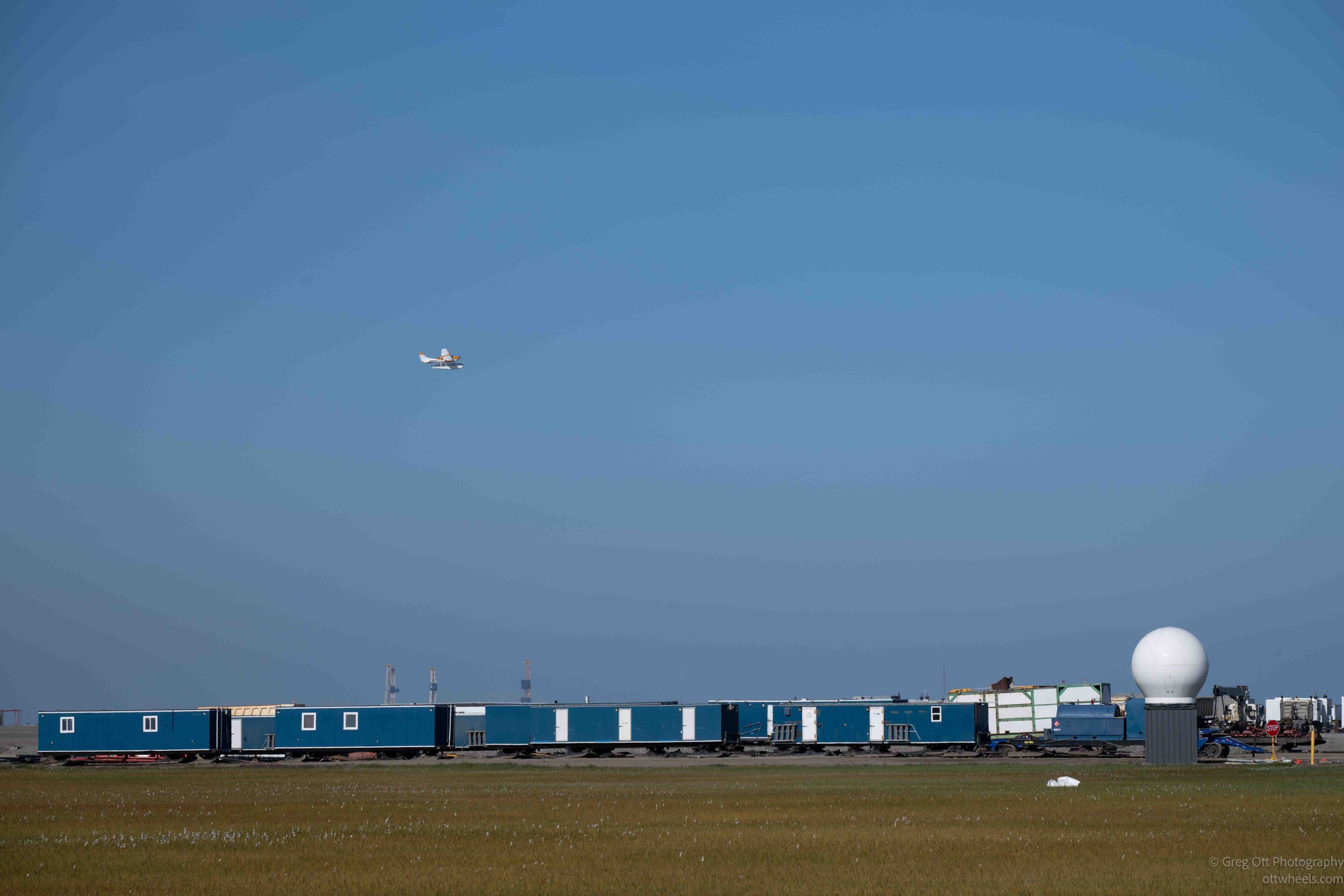
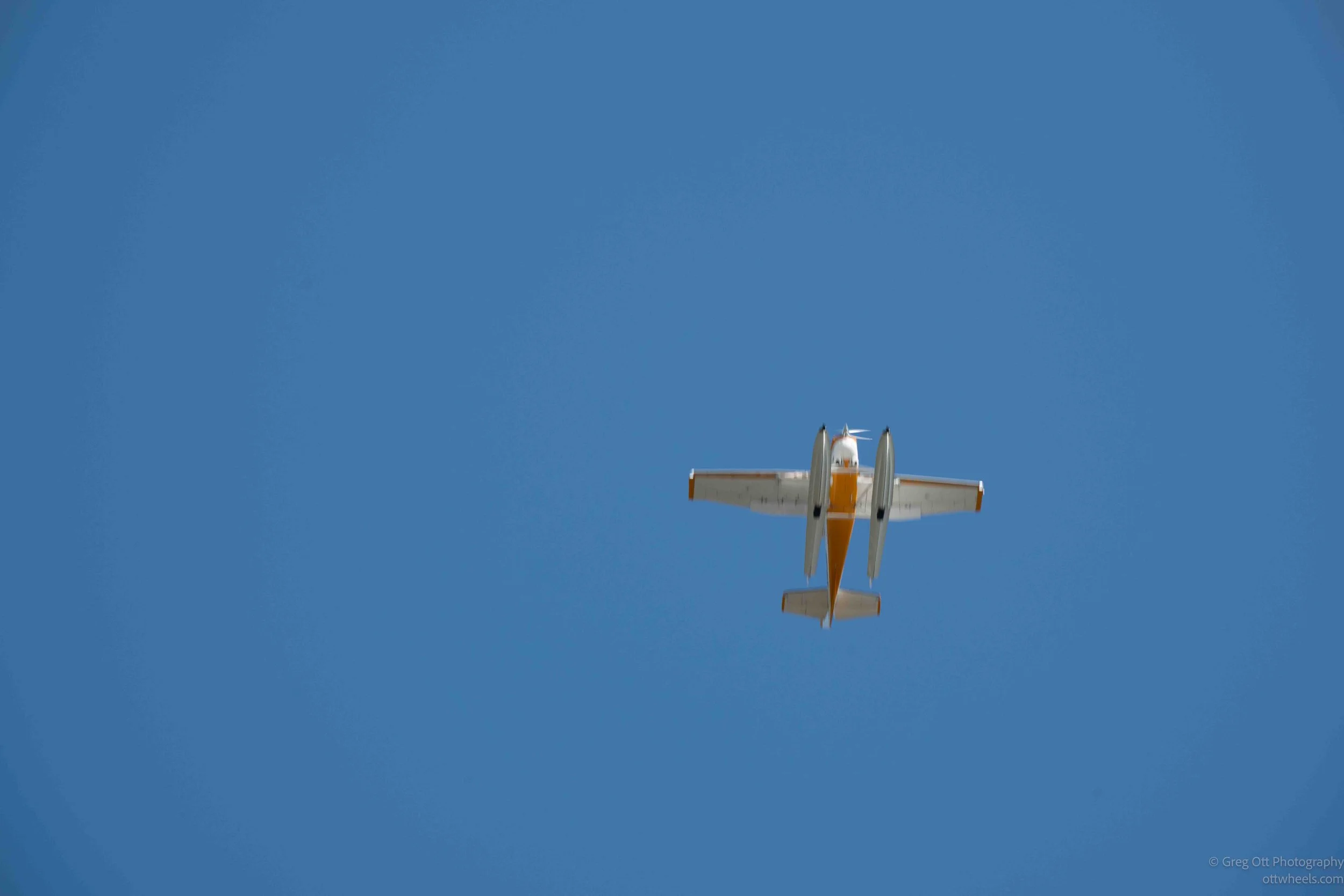
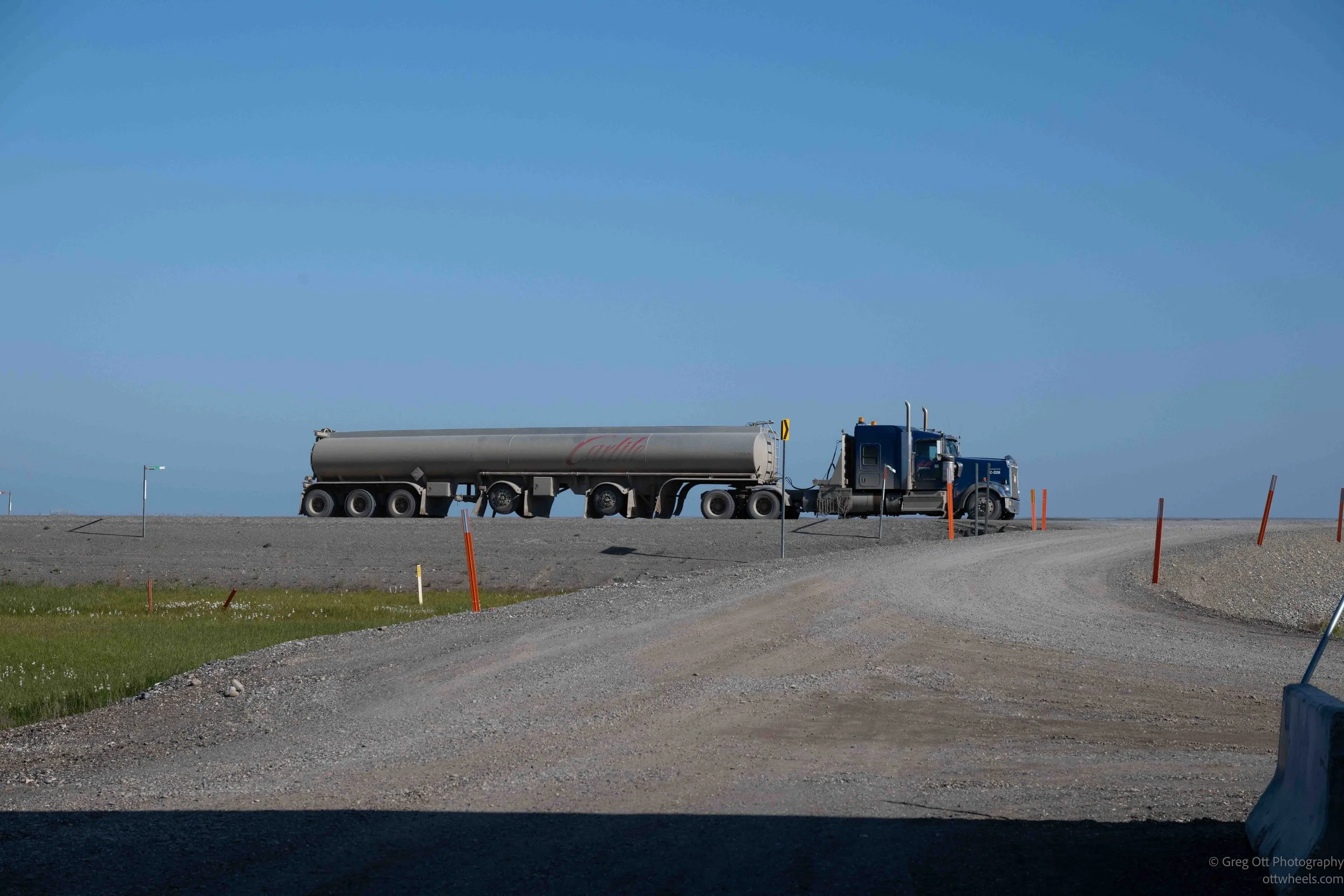
The tour started at 3:30, and most of us were there about fifteen minutes early. I walked around taking photographs of whatever was nearby—the camp buildings, a floatplane passing overhead after taking off, industrial buildings to the north and one of the endless trucks driving past. At one point, I noticed one of the staff sitting at a second-floor window with one foot hanging outside. I'm not sure where everybody came from. The previous night I had been told there were only two people registered for the afternoon tour, but by the time we pulled out there were only three empty seats on the bus. Fortunately, one of them was beside me.
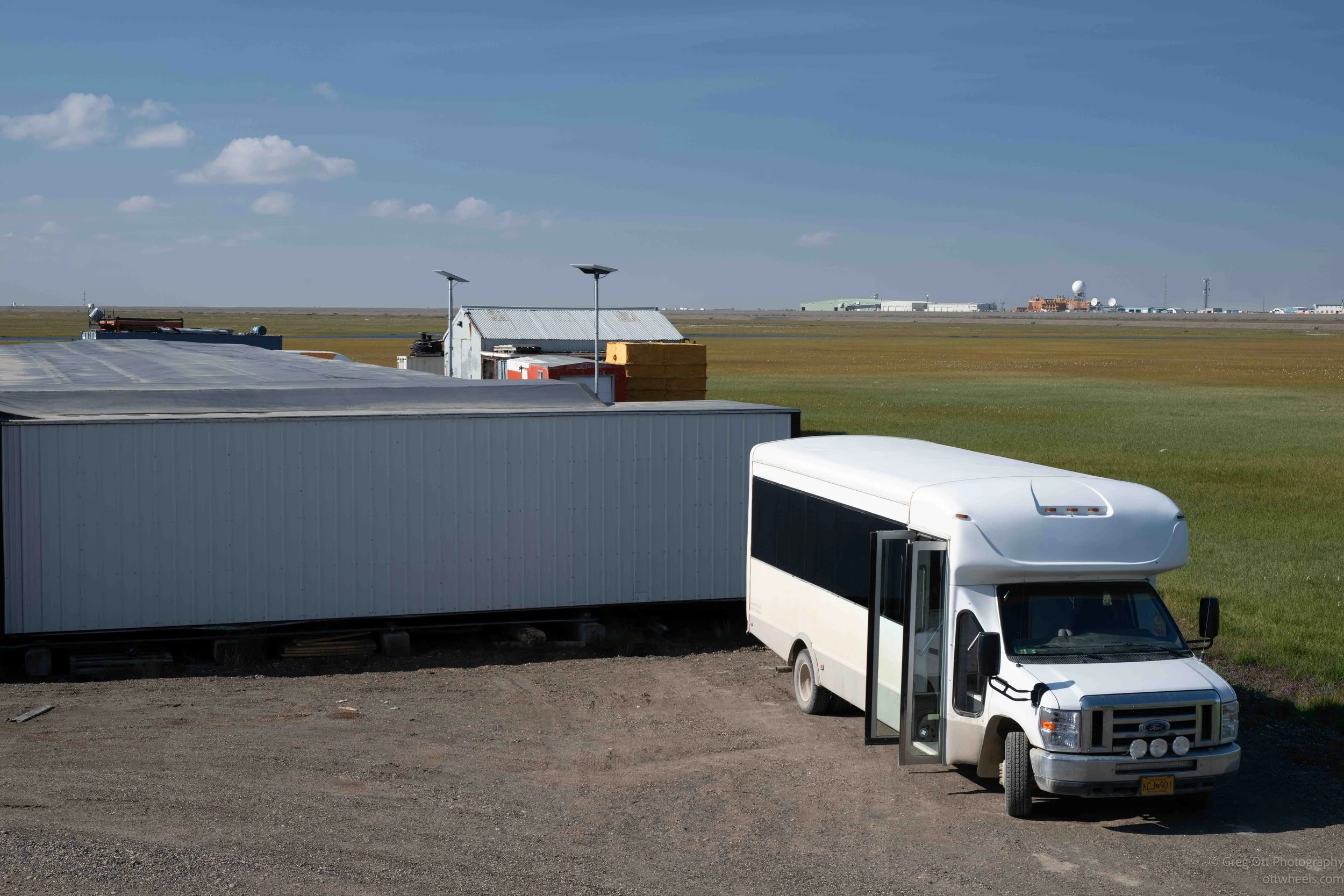
As we were leaving, the couple sitting in front spotted a muskox and a grizzly near the buildings. Unfortunately, they neglected to tell anyone until we had already passed them. Our driver asked that if anybody saw any more animals, they might consider letting the rest of us know. It was supposedly one of the hottest days of the year and felt like it was somewhere in the 70s. Naturally, the air conditioning on the bus wasn't working. Our driver—the same woman who had been talking to me about traveling together—didn't know how to turn it on because she said she had never needed it before. Will, the IT guy, also drove tours and knew the bus. He came aboard, pushed a few buttons and suddenly the air conditioner in the back roared to life. That earned a round of applause, and we were finally on our way.
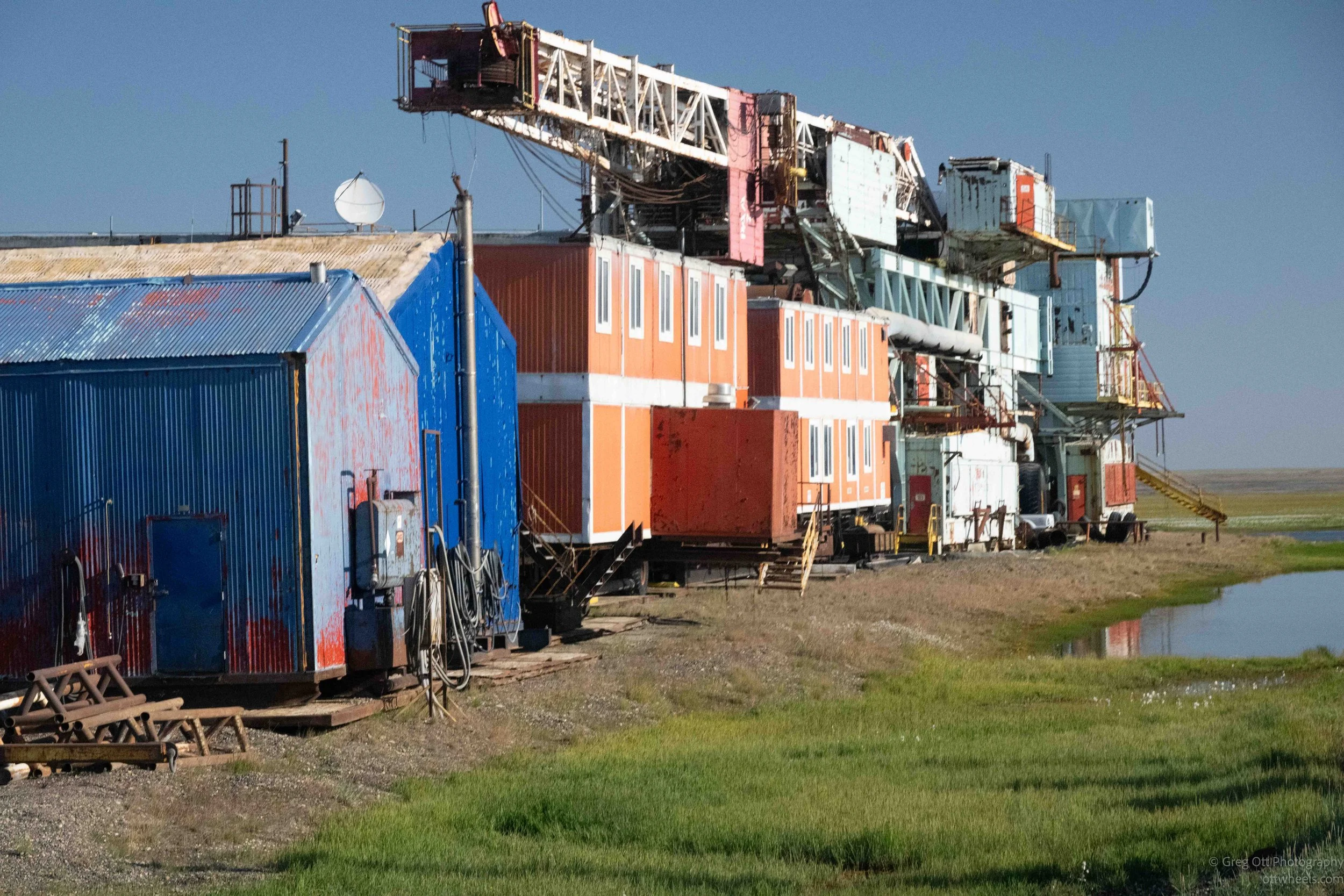
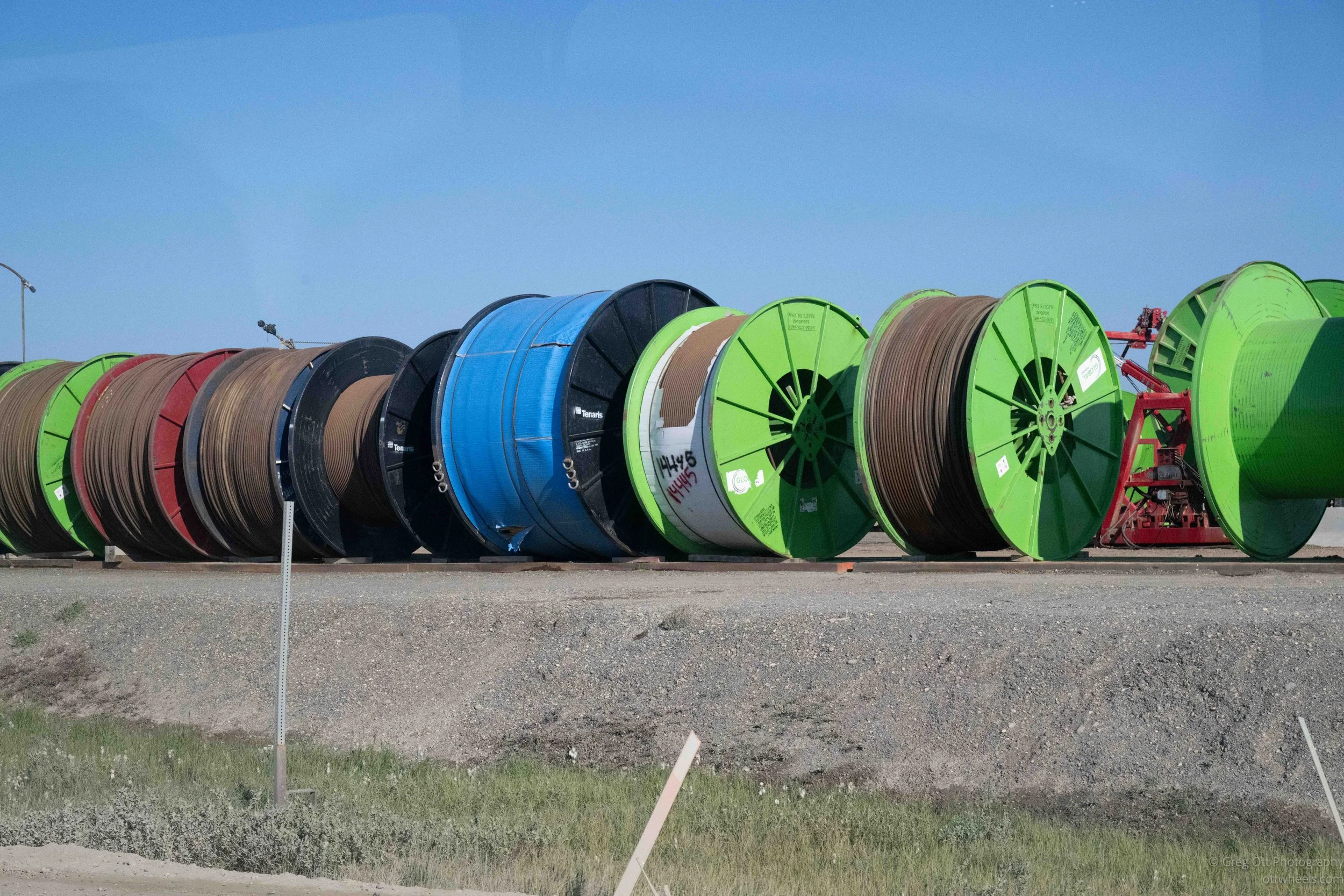
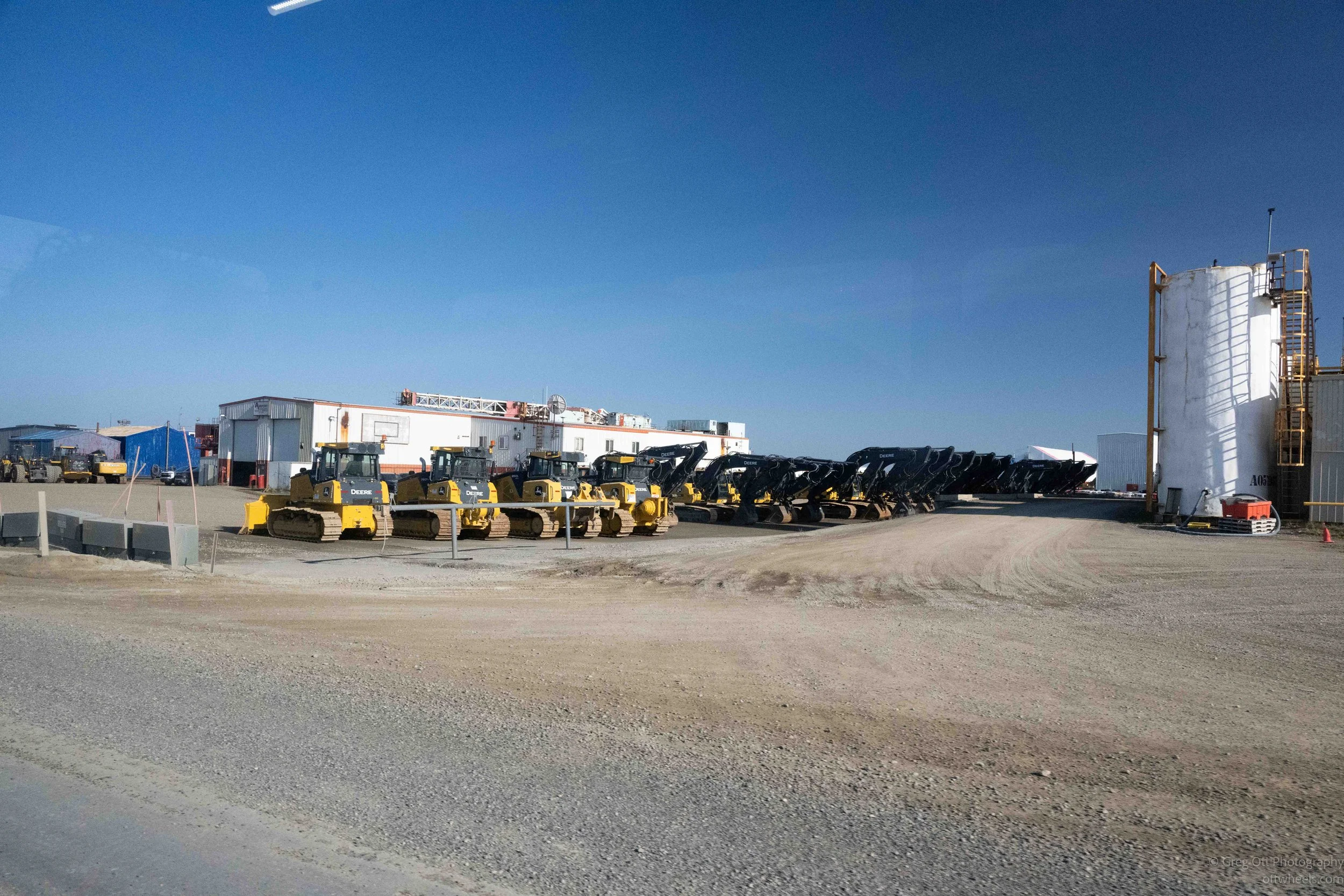
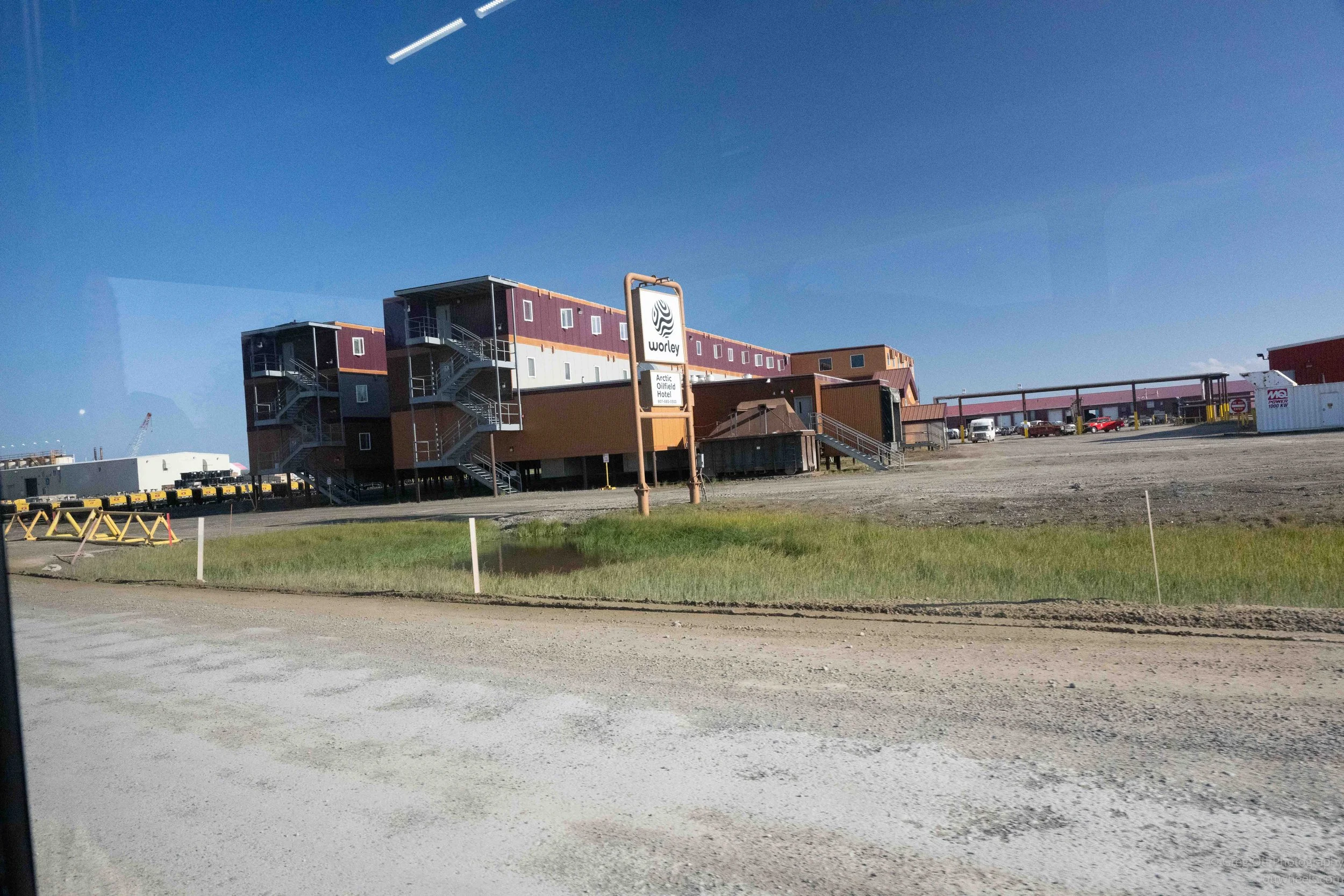
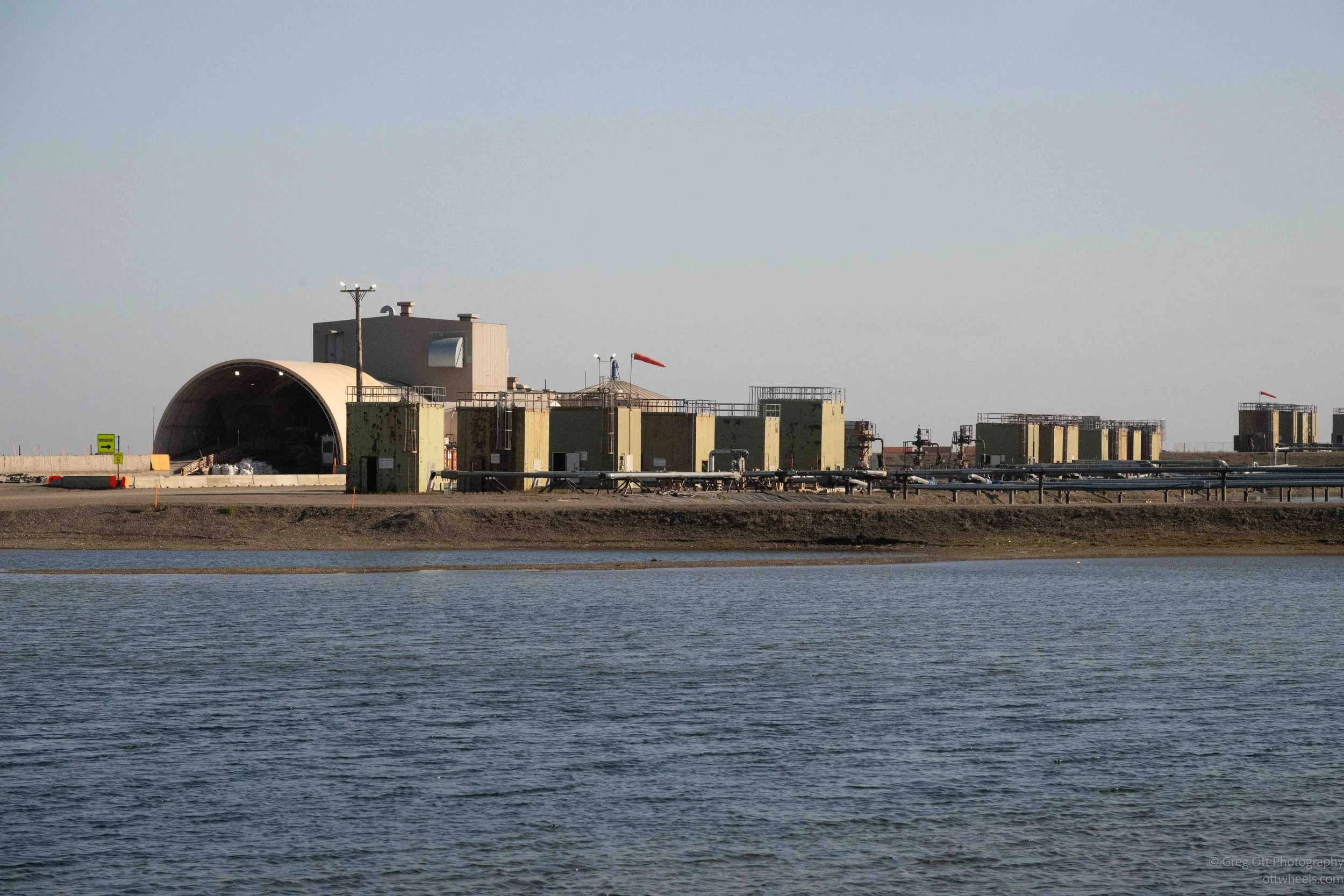
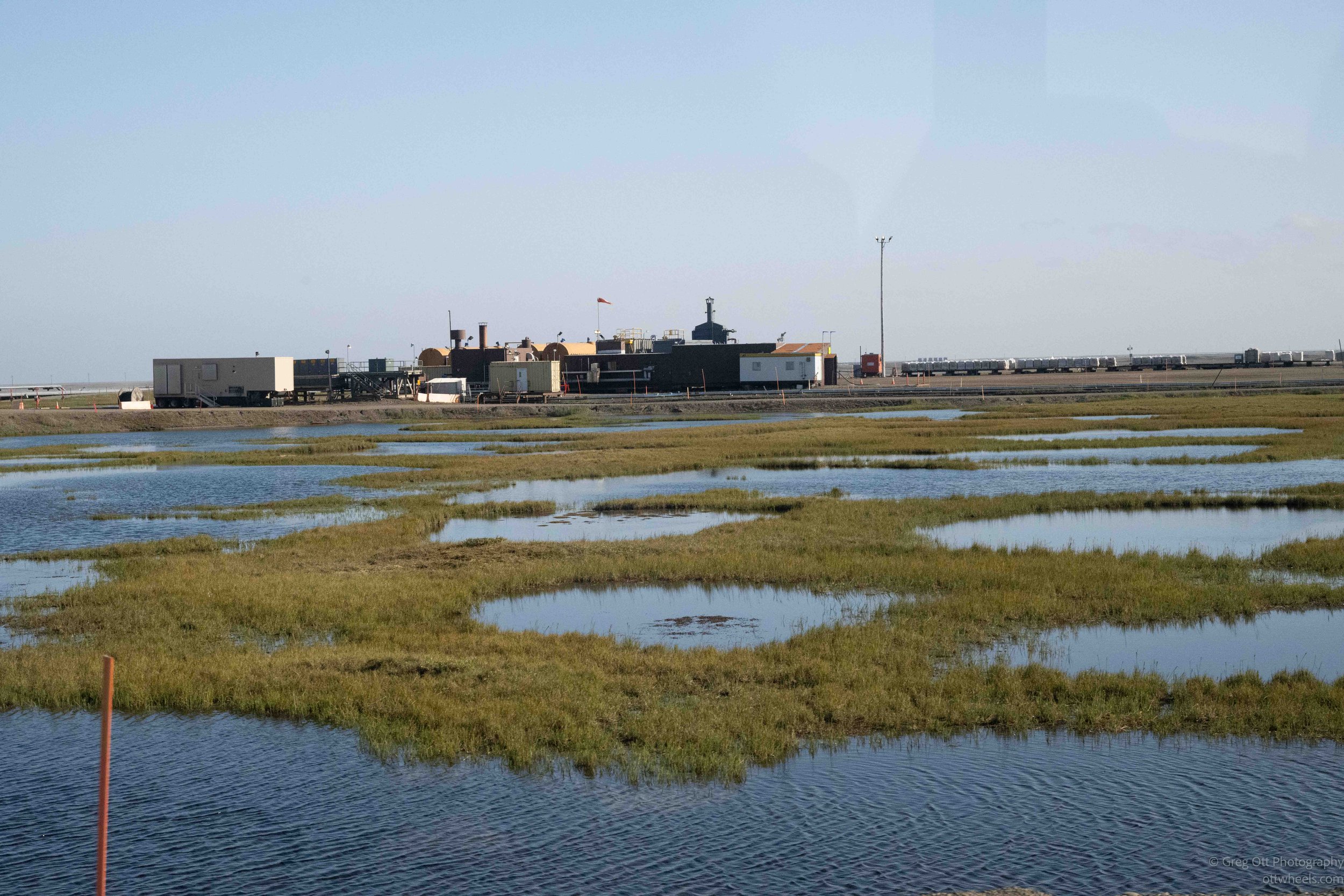
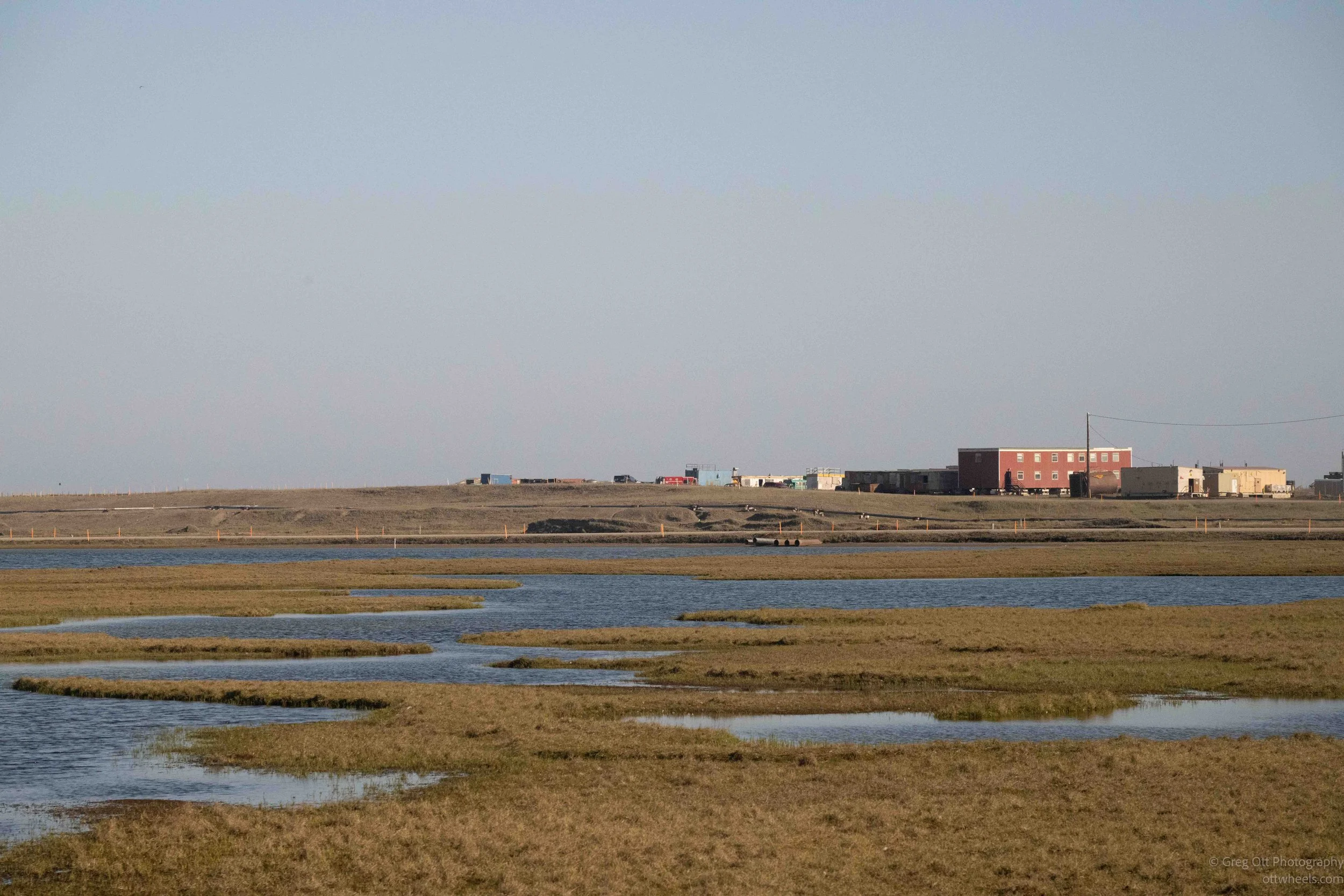
We passed the Aurora Hotel, where there was an espresso bar and restaurant, and then an almost endless collection of equipment yards, containers, pipe, temporary-looking buildings and machinery. Huge reels held industrial cable and tubing, some brightly painted green, blue and red. Elsewhere, insulated pipes ran above the tundra in parallel lines, bending and branching until they looked like some enormous plumbing diagram laid across the landscape. The drilling rigs were impossible to miss. Some were brightly painted orange or blue, towering over a landscape that otherwise barely rises above sea level.
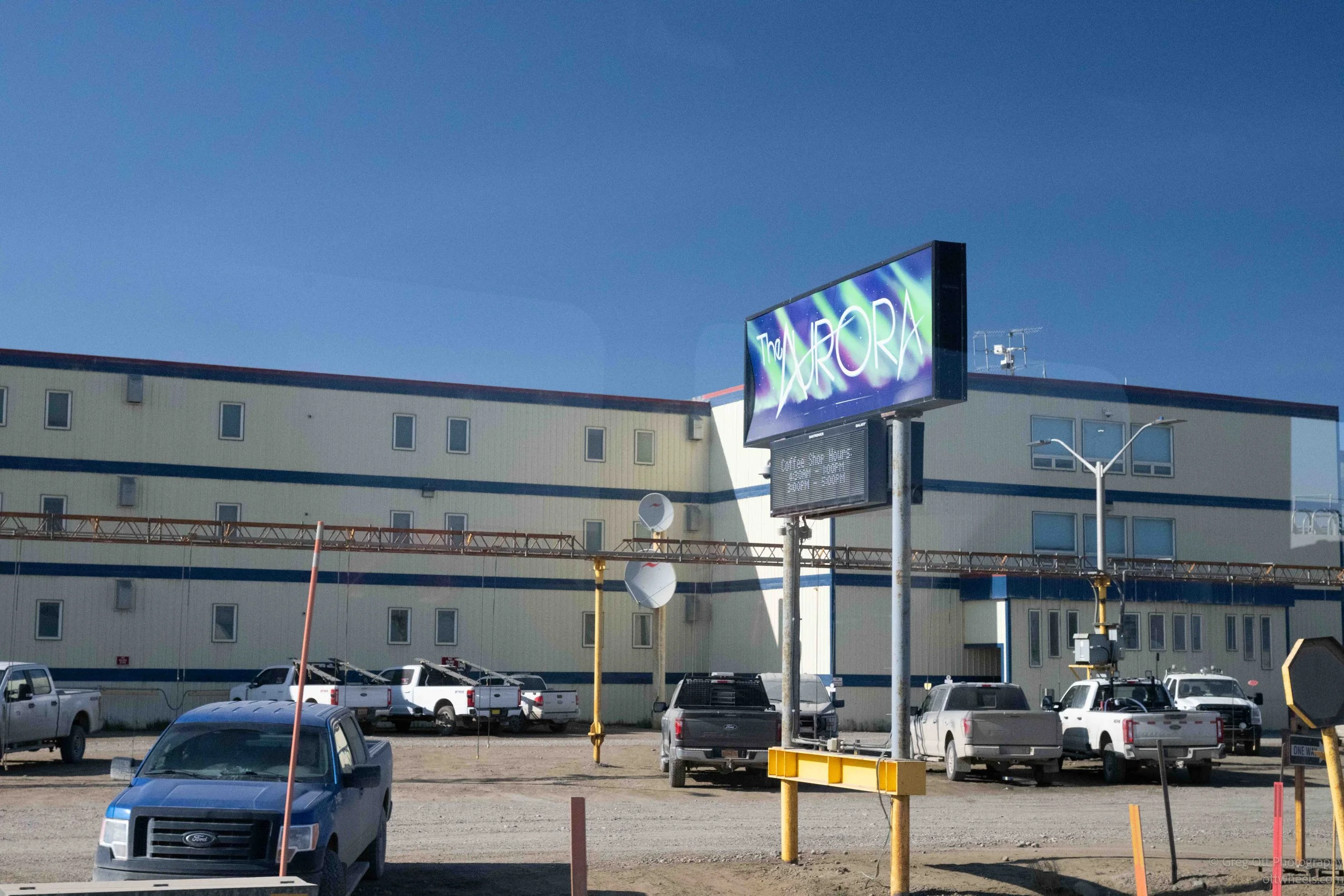
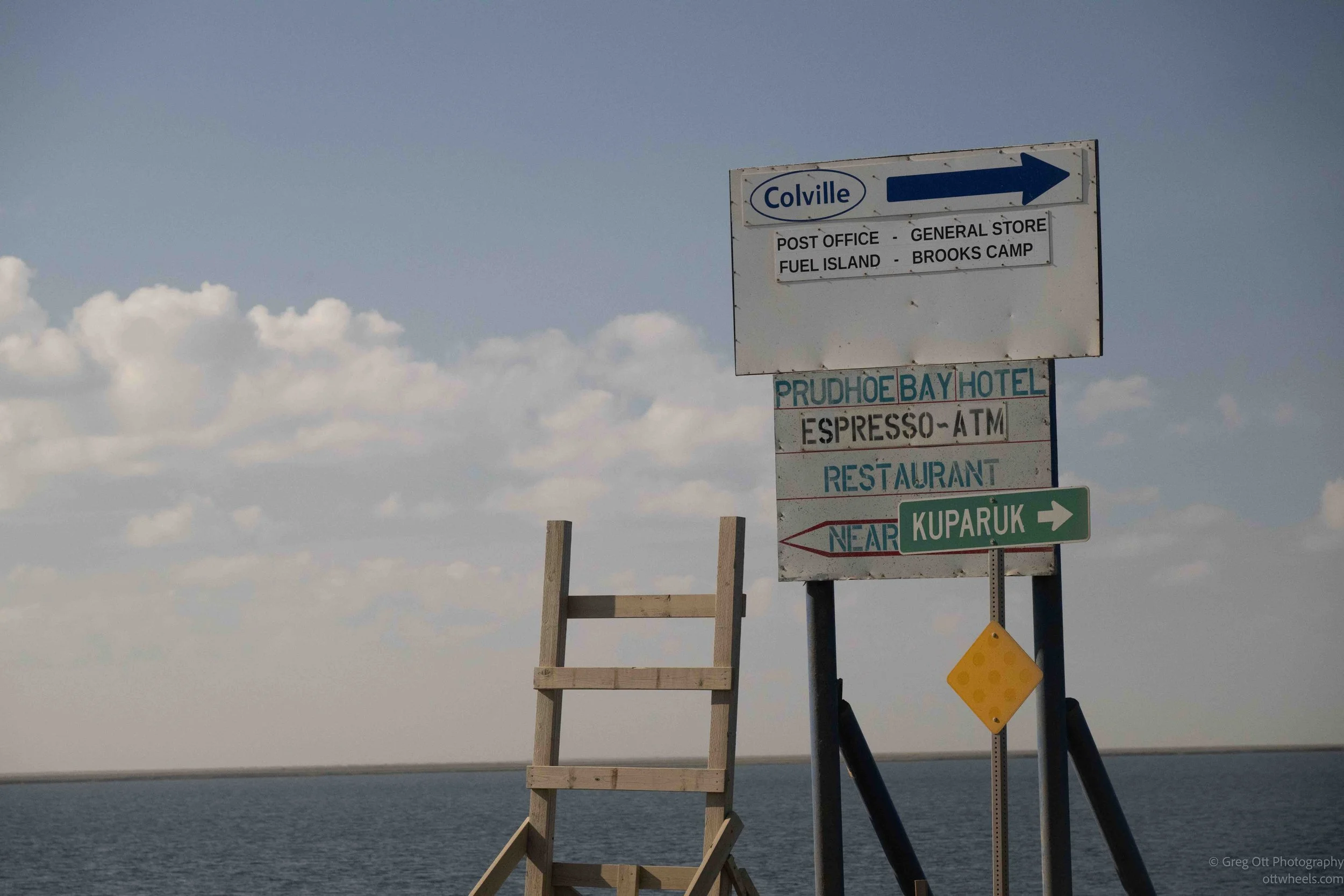
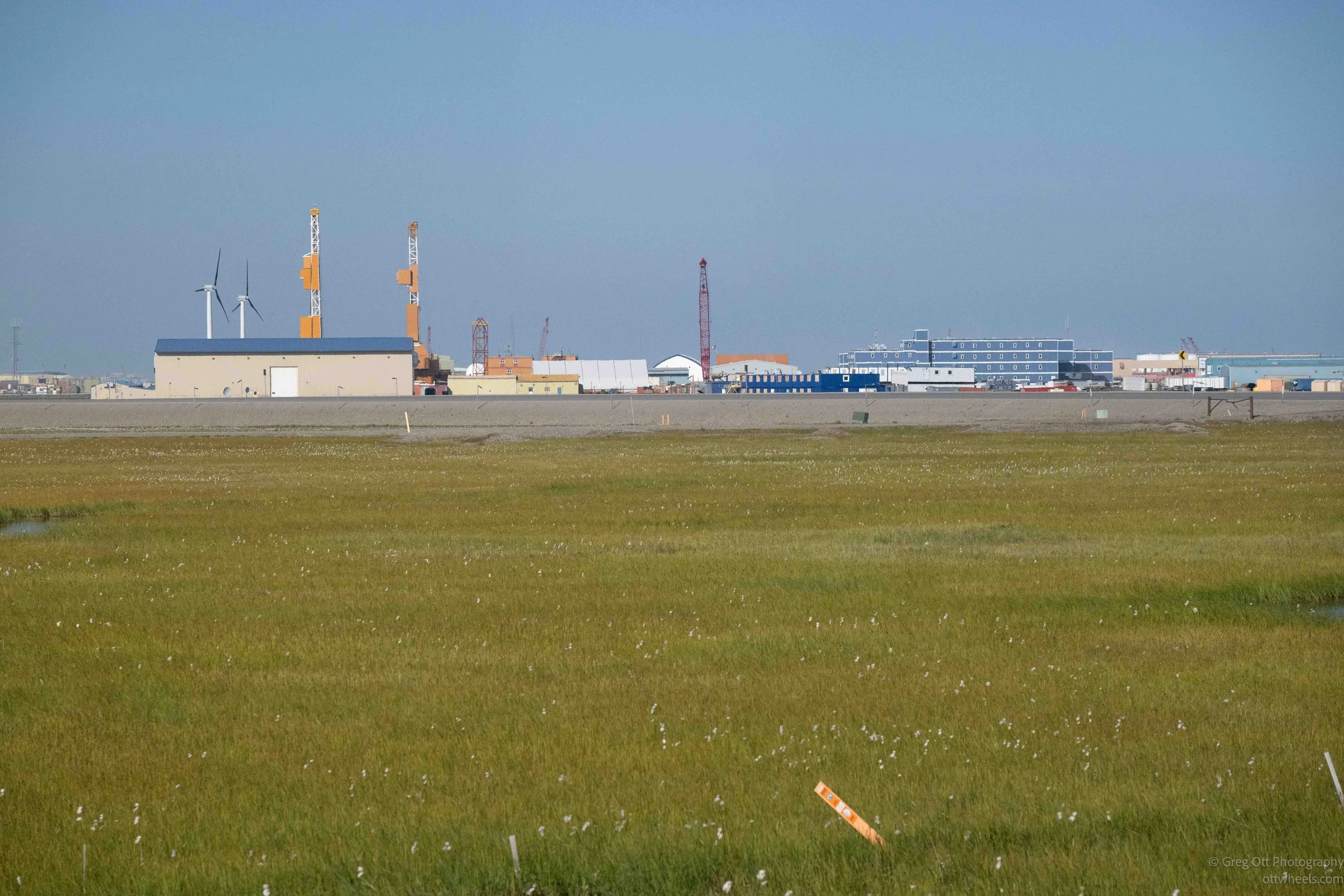
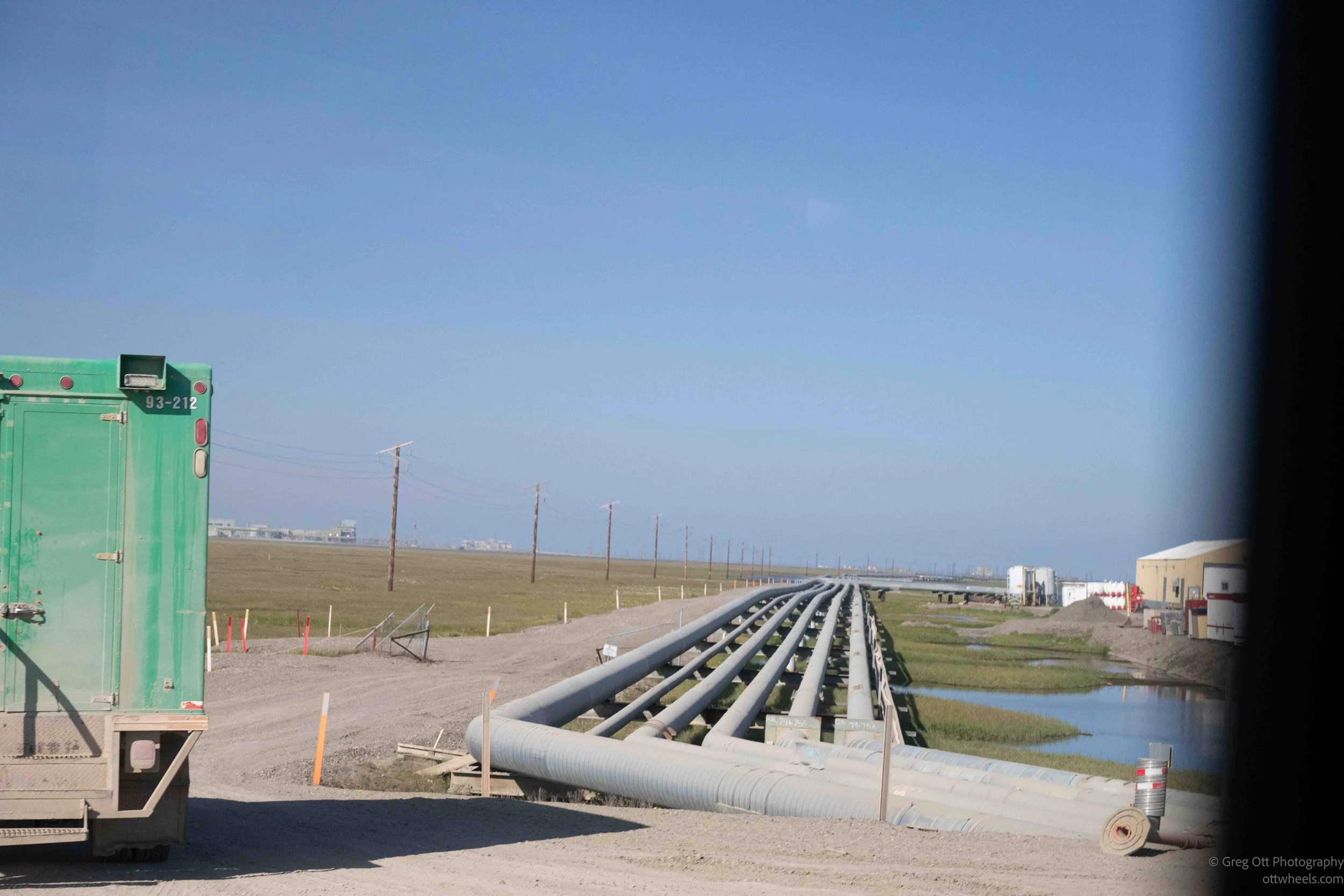
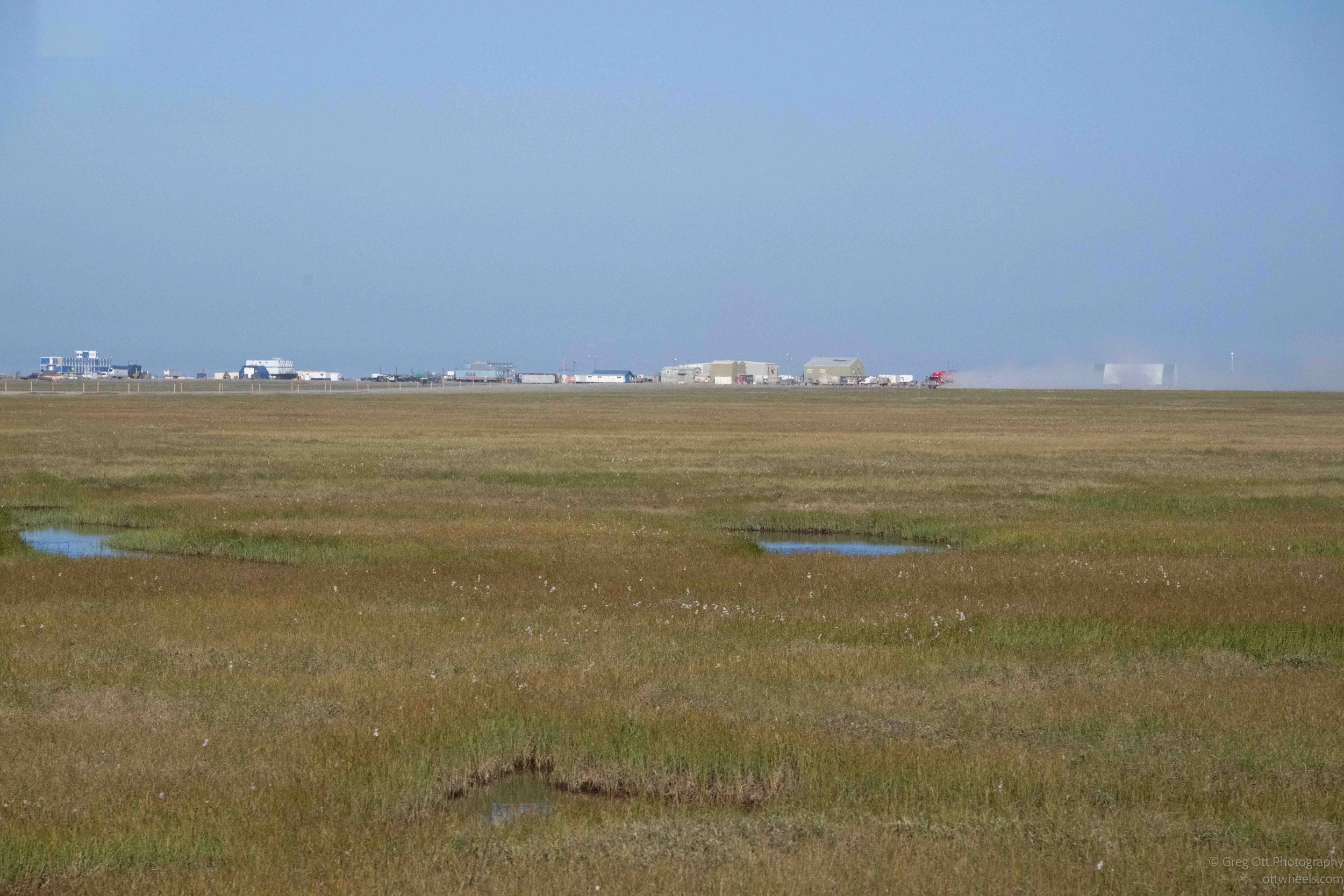
Many North Slope drilling rigs are designed to be moved rather than permanently anchored in one place, and much of the infrastructure is concentrated on gravel pads to reduce the amount of tundra disturbed. From the bus it produced a strange landscape. A collection of enormous drilling rigs or industrial buildings would appear, followed by miles of flat tundra and shallow ponds, and then another cluster of machinery would rise on the horizon.
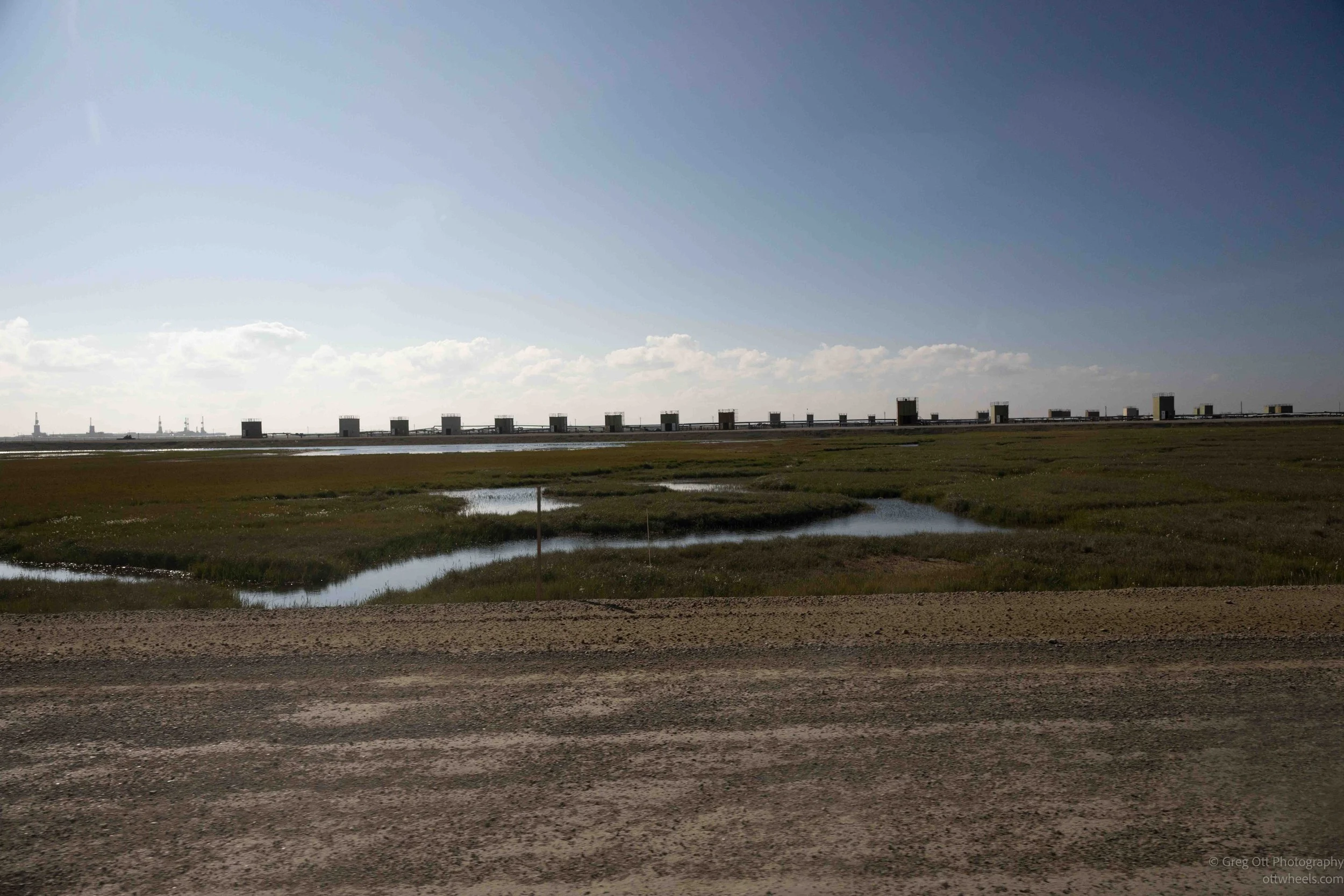
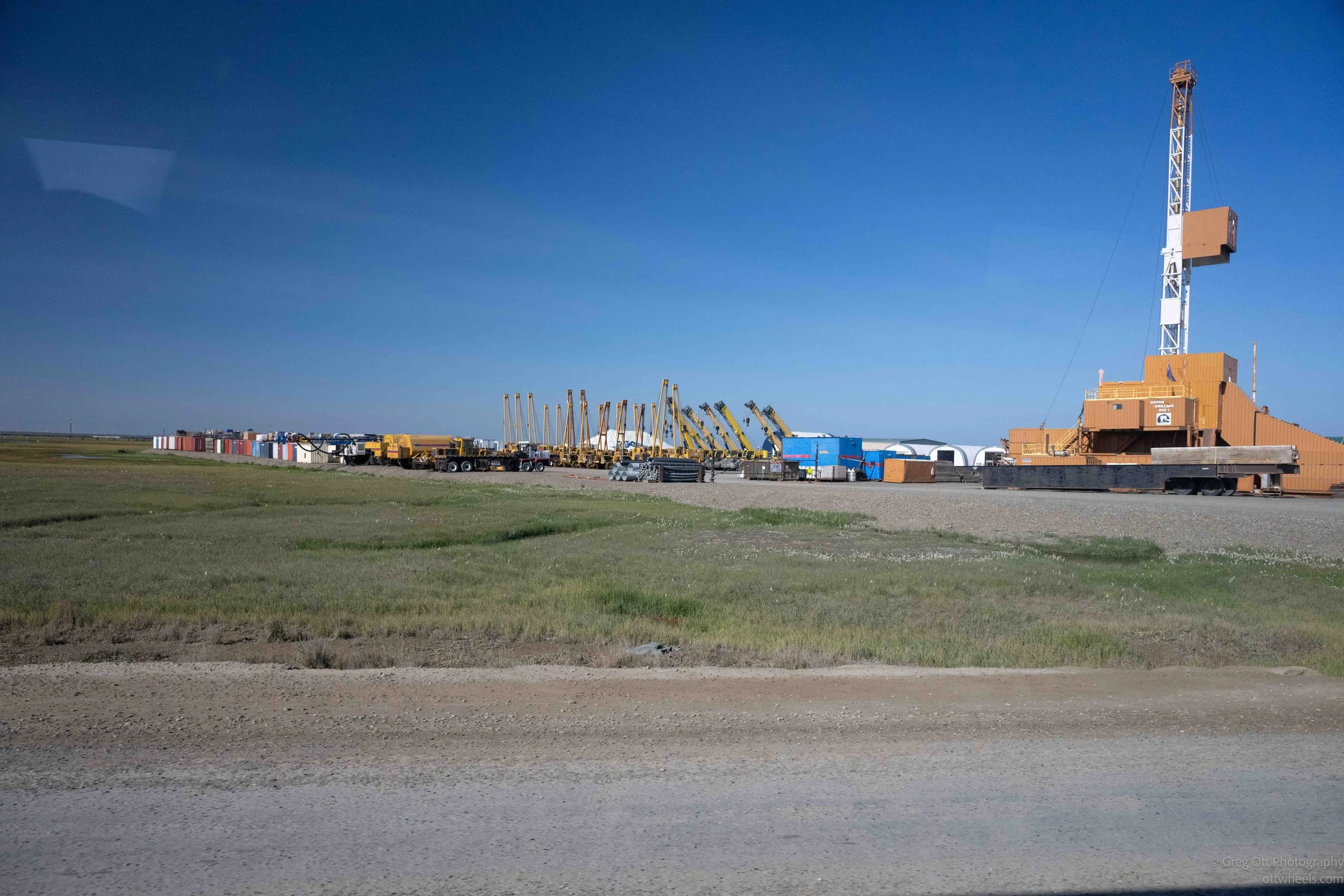
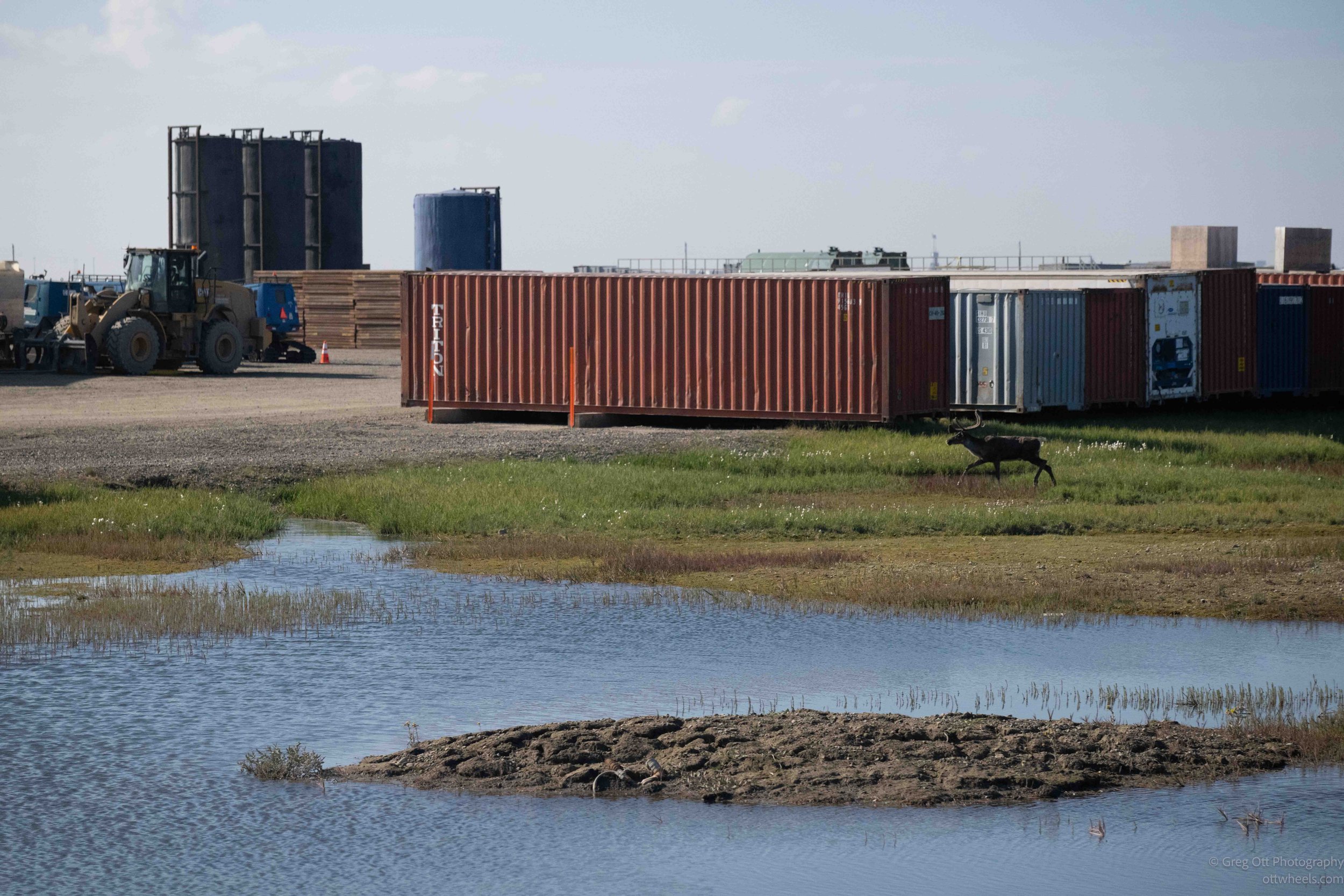
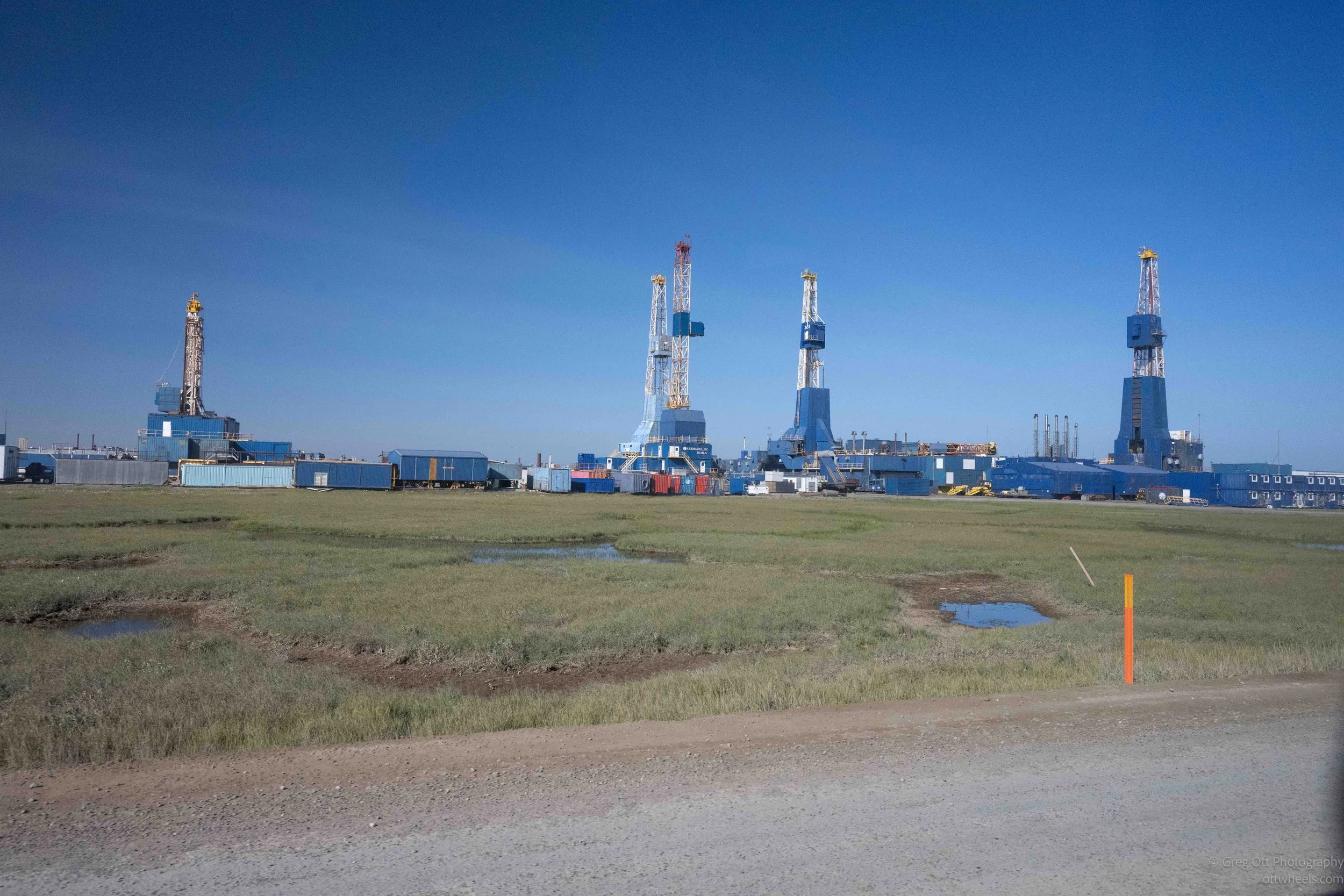
We passed a seawater treatment facility, and this was one part of the explanation I didn't completely understand at the time. Water from the Beaufort Sea is treated and injected into the reservoir, but it isn't simply heated and pumped underground to loosen the oil. Water injection is primarily used to maintain pressure in the reservoir and help move oil toward producing wells. Prudhoe Bay also reinjects large quantities of natural gas underground to help maintain reservoir pressure.
Once oil reaches the surface, what comes out of a well isn't simply crude oil. The production stream can contain oil, natural gas and water, which have to be separated and measured. With multiple companies sharing fields, processing facilities and transportation infrastructure, accurately accounting for what each operation produces matters. Eventually the crude enters the pipeline system that carries it south toward Valdez on Prince William Sound. There is an extraordinary amount of engineering underneath what, from the bus window, mostly looked like pipes running everywhere.
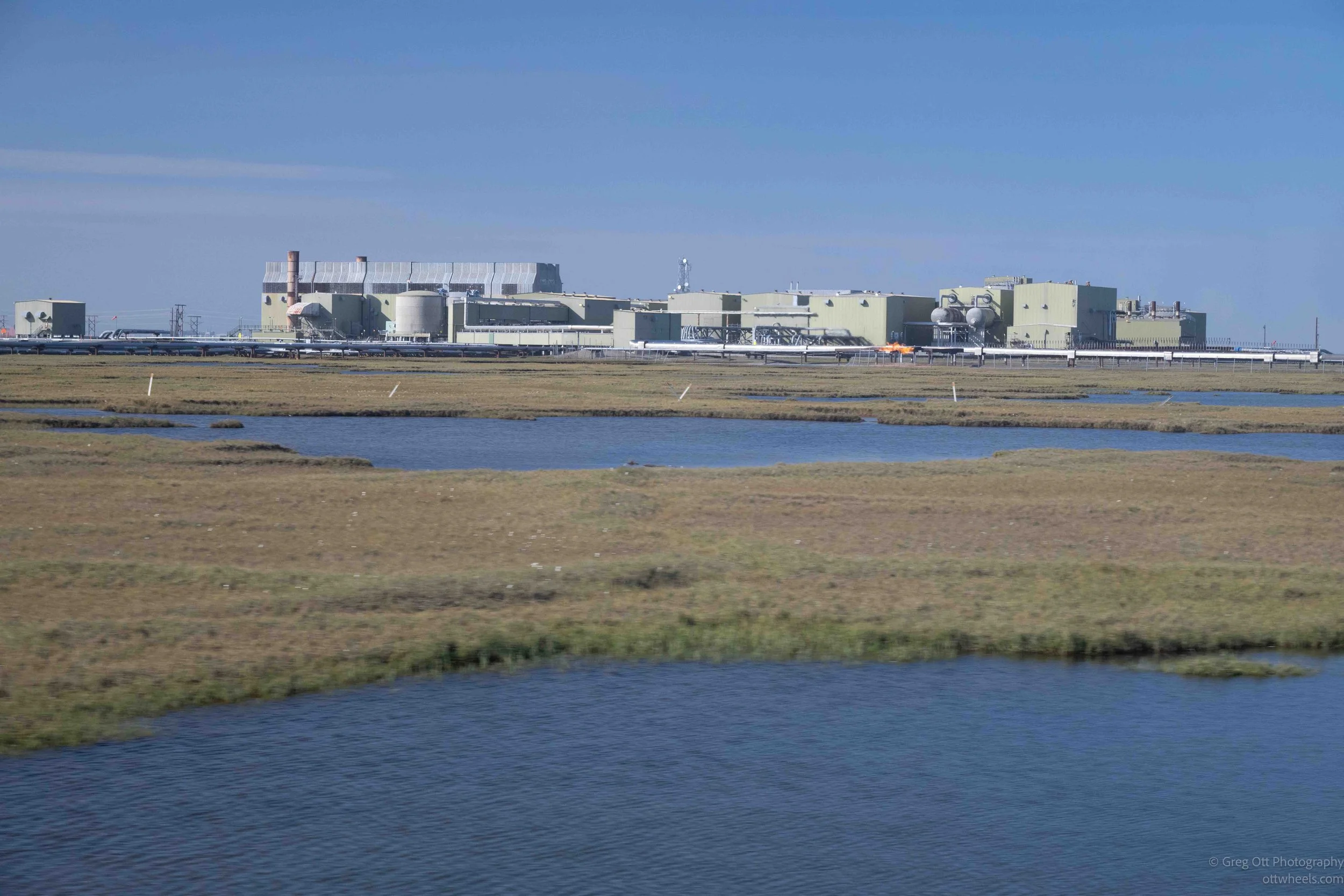
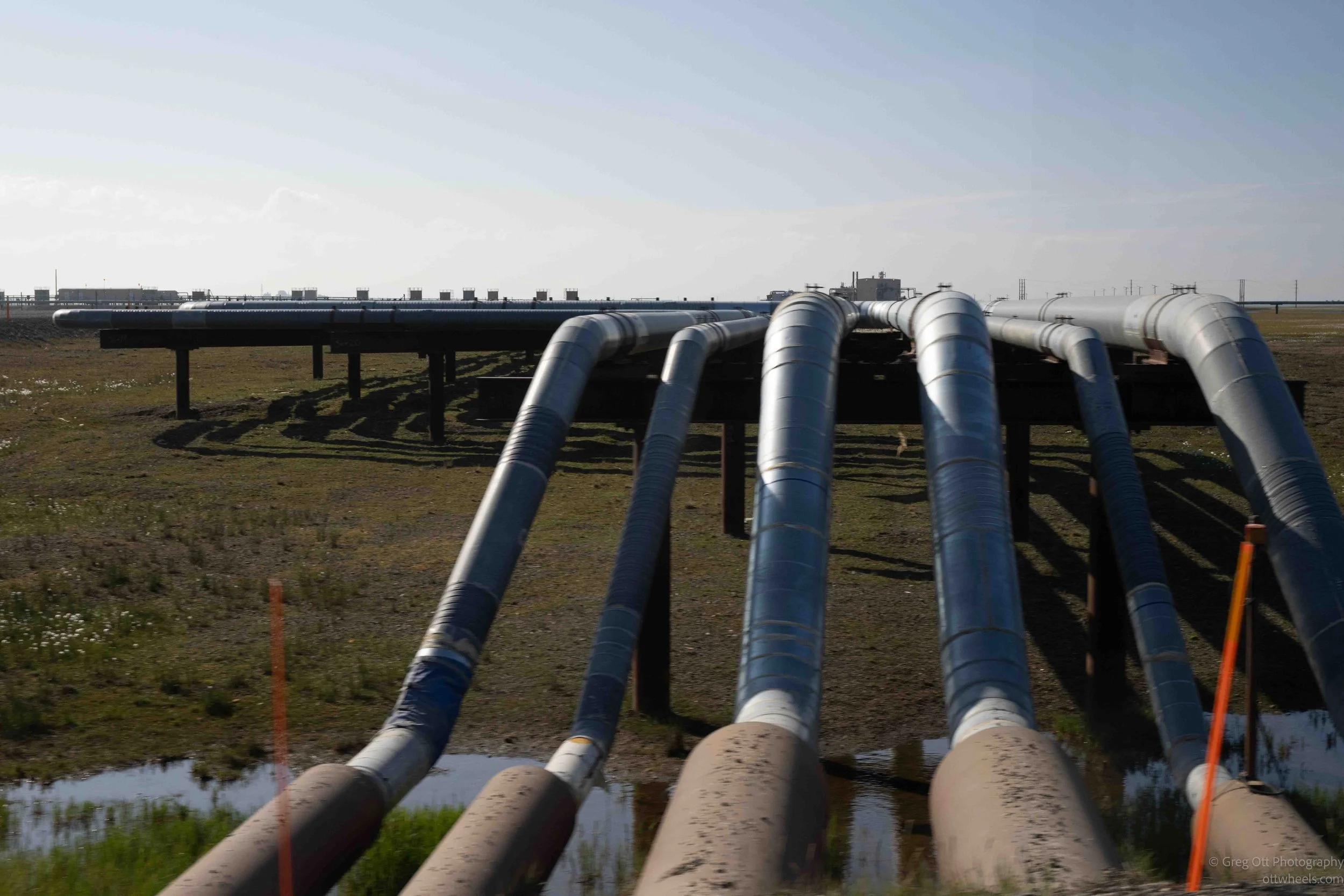
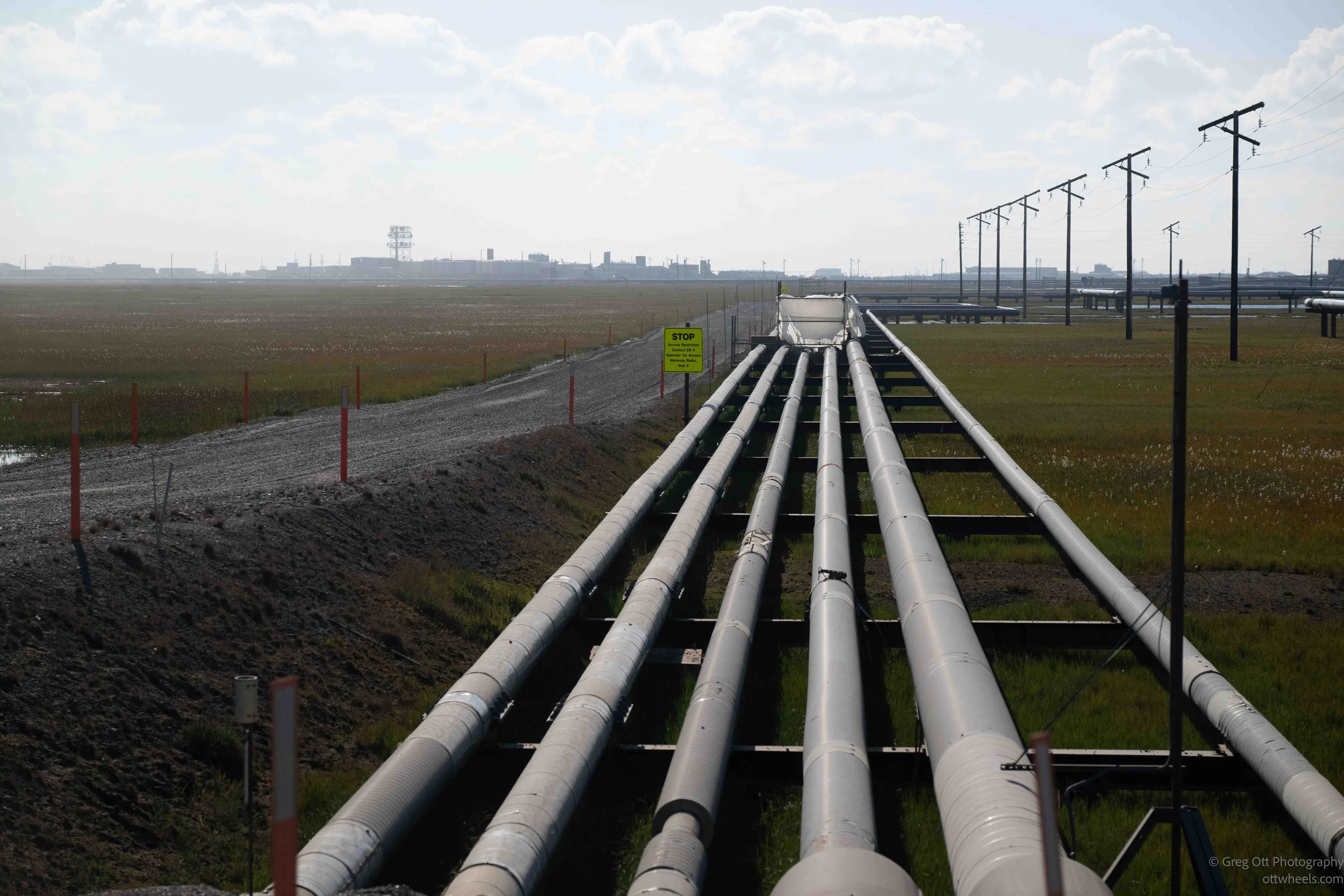
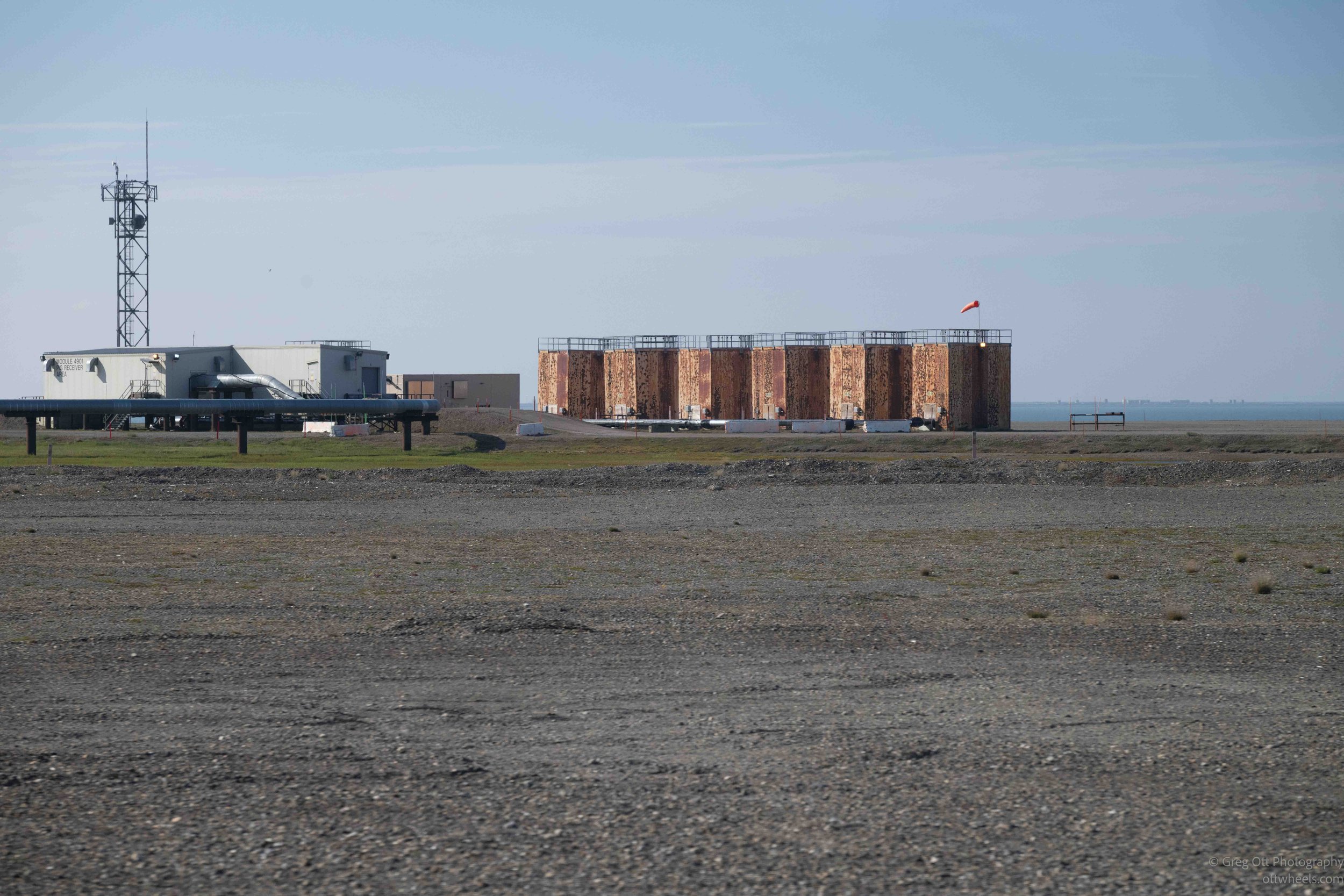
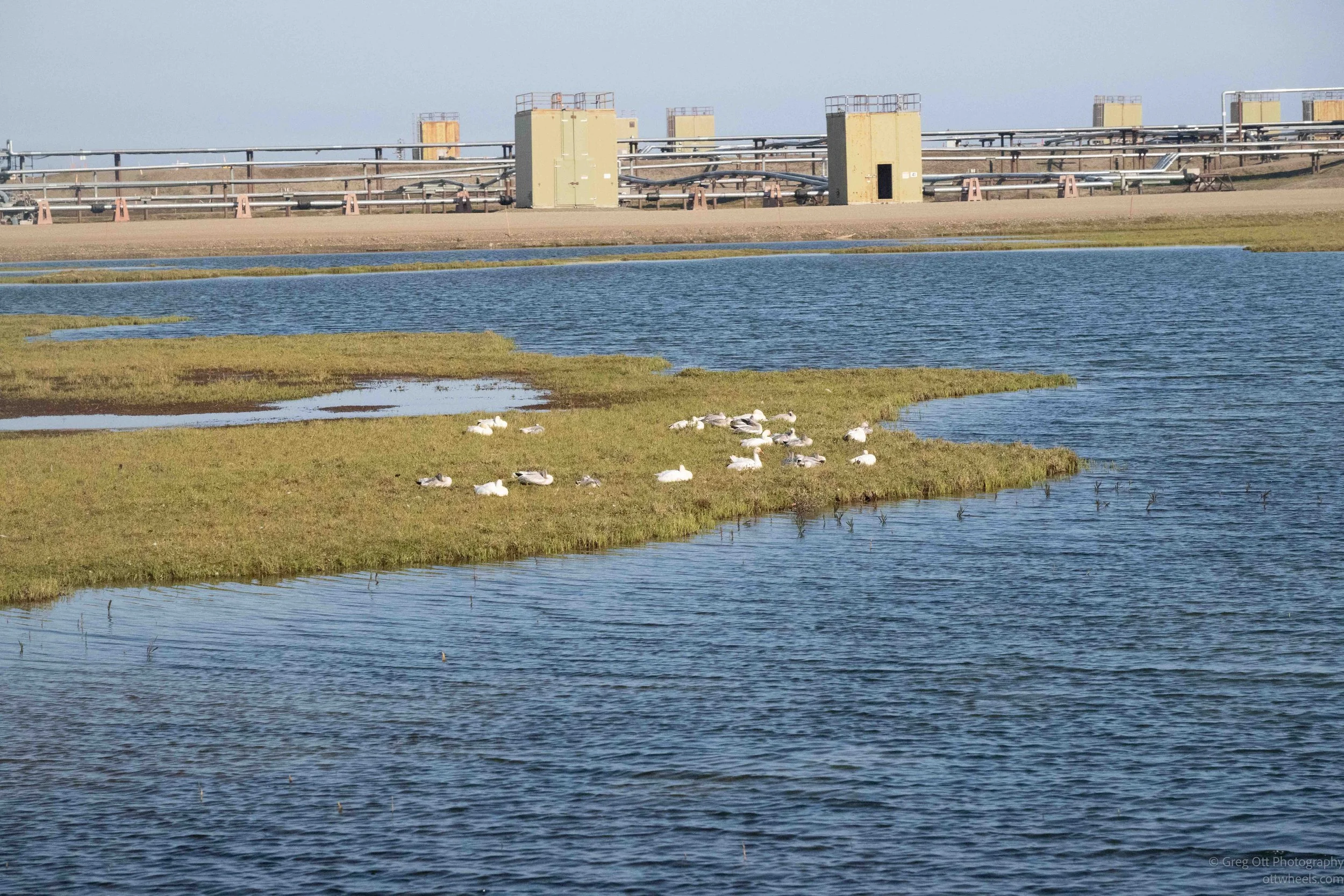
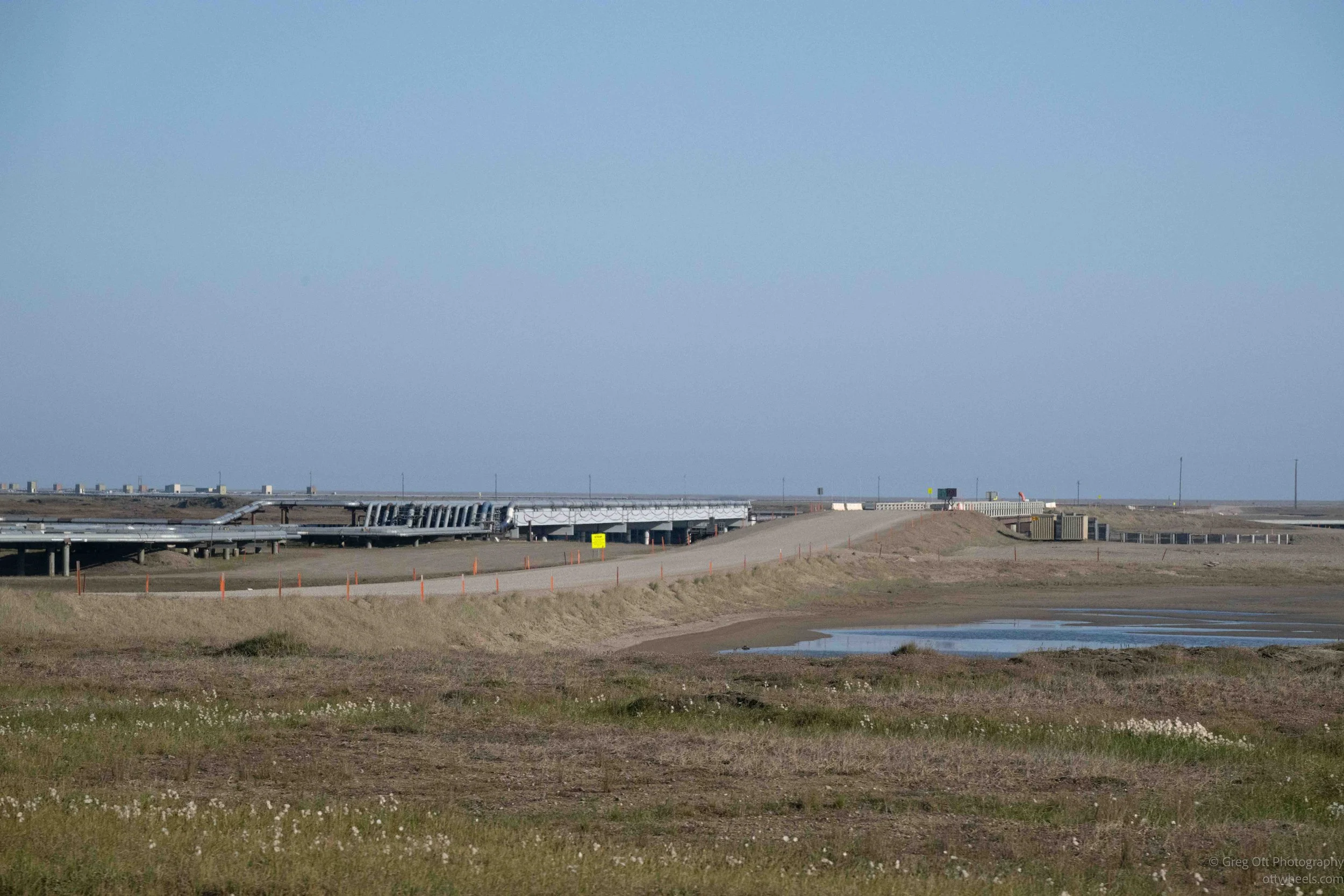
And there really were pipes everywhere. They sat above the ground on supports rather than being buried in the permafrost, sometimes five or six lines running side by side. They disappeared toward buildings in the distance, crossed roads and turned at strange angles. In some places the pipes dominated the view; in others they almost disappeared into the tundra, surrounded by ponds and wetlands stretching toward an absolutely flat horizon.
The scale is difficult to understand from ground level. Our guide described the oil-producing area as roughly 100 by 100 miles. That shouldn't be interpreted as a continuous 10,000-square-mile industrial complex. The actual developed footprint is only a fraction of that, but North Slope oil development is spread across a huge region, with Prudhoe Bay only one part of it. Over the decades, thousands of production, injection and exploration wells have been drilled across the North Slope.
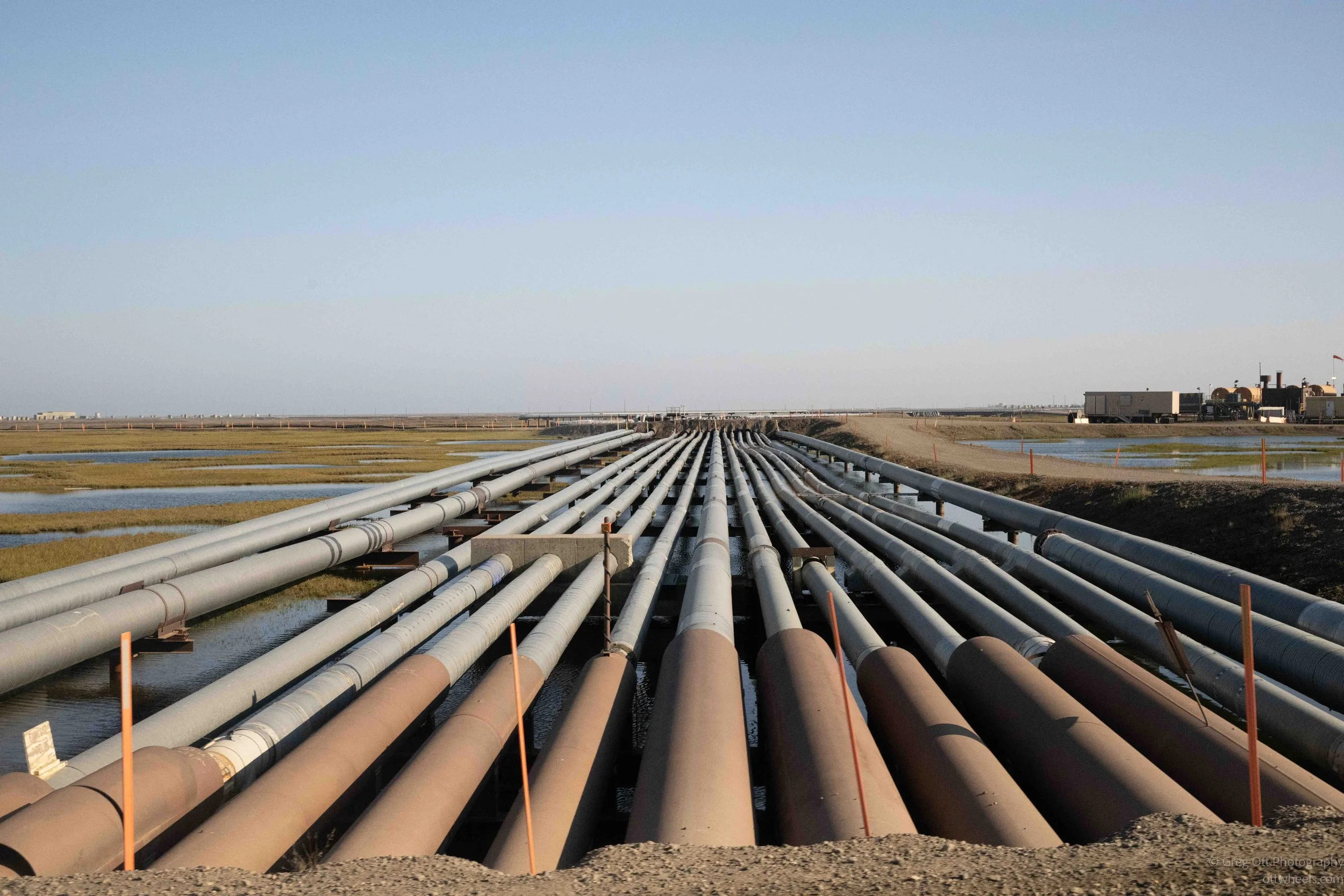
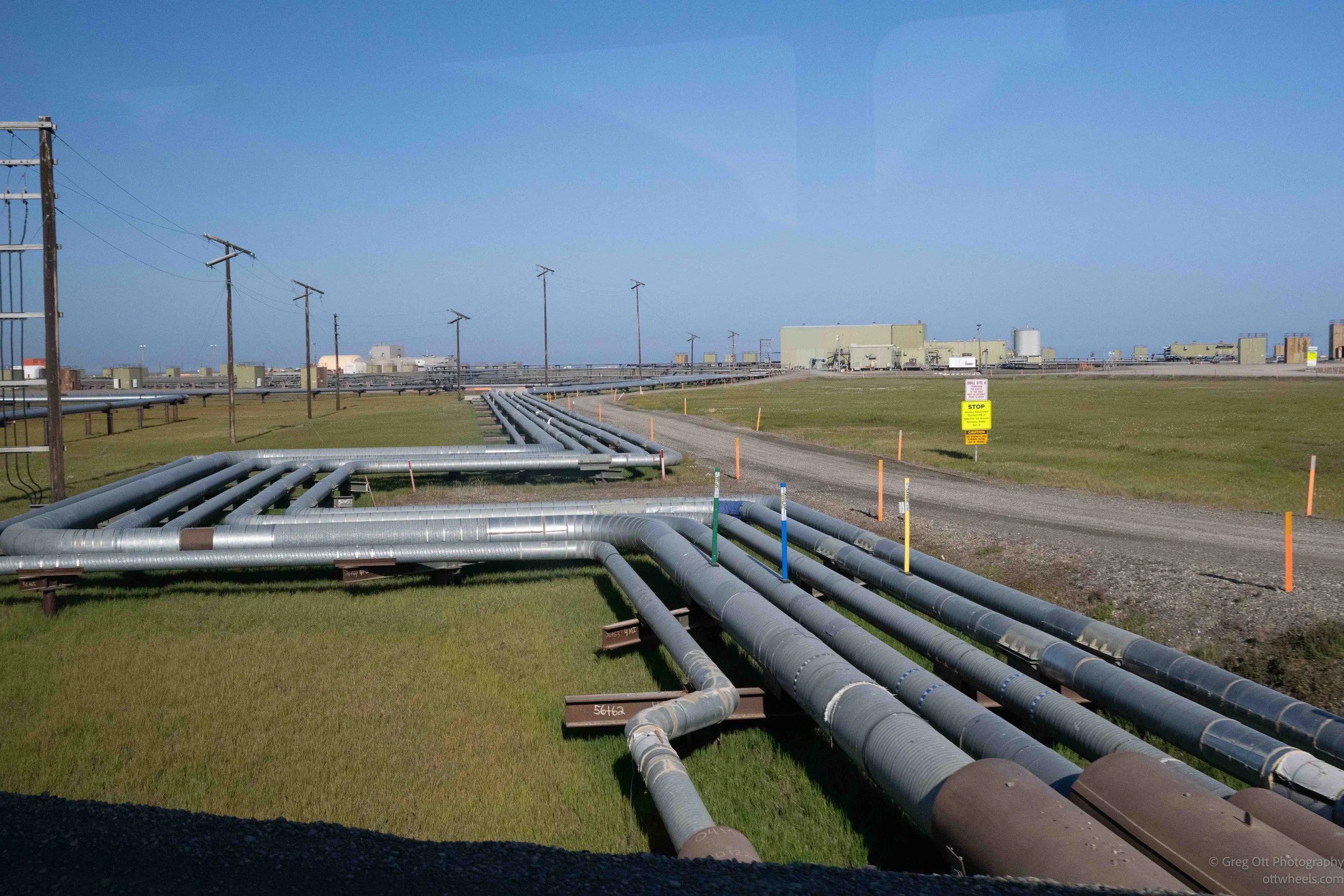
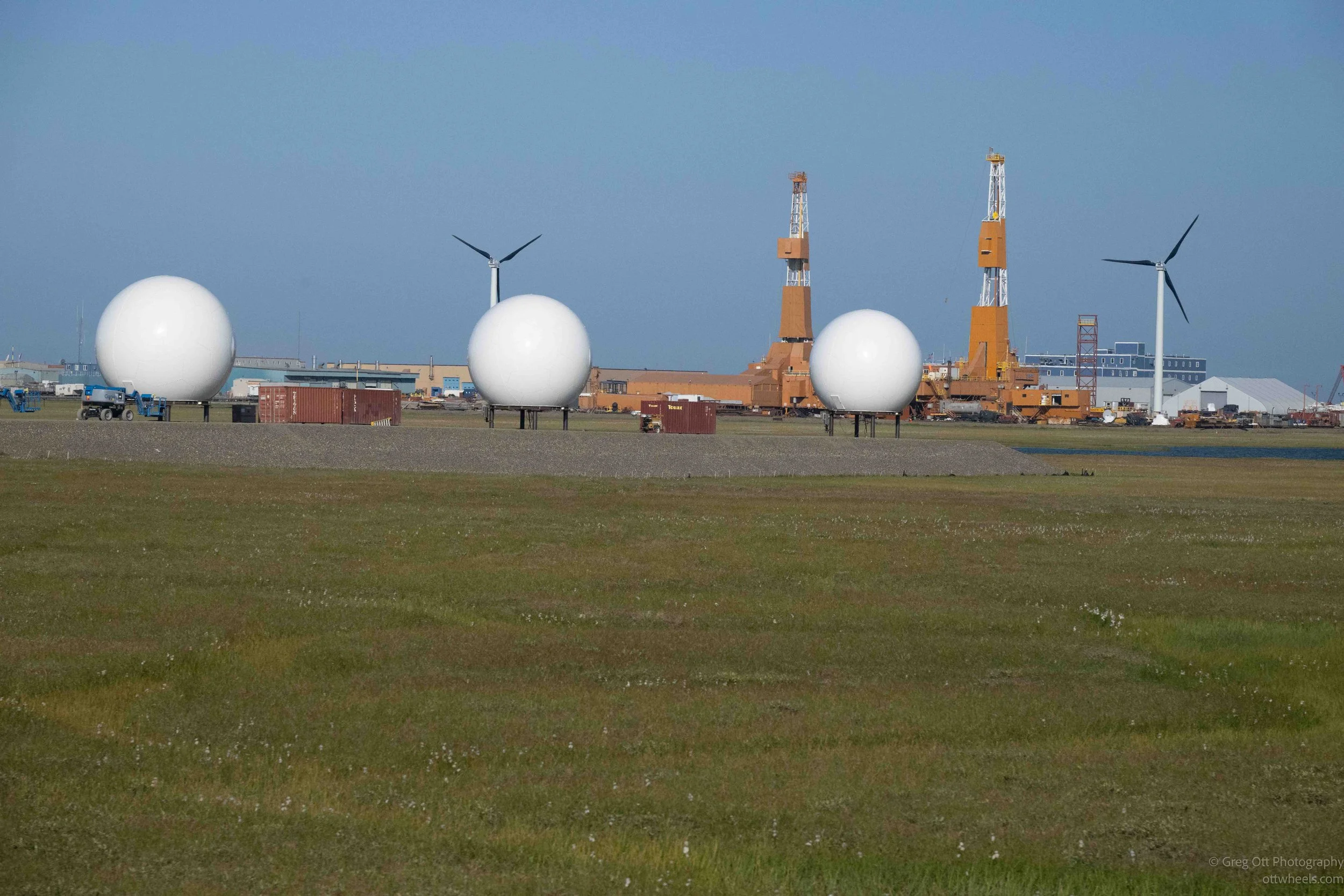
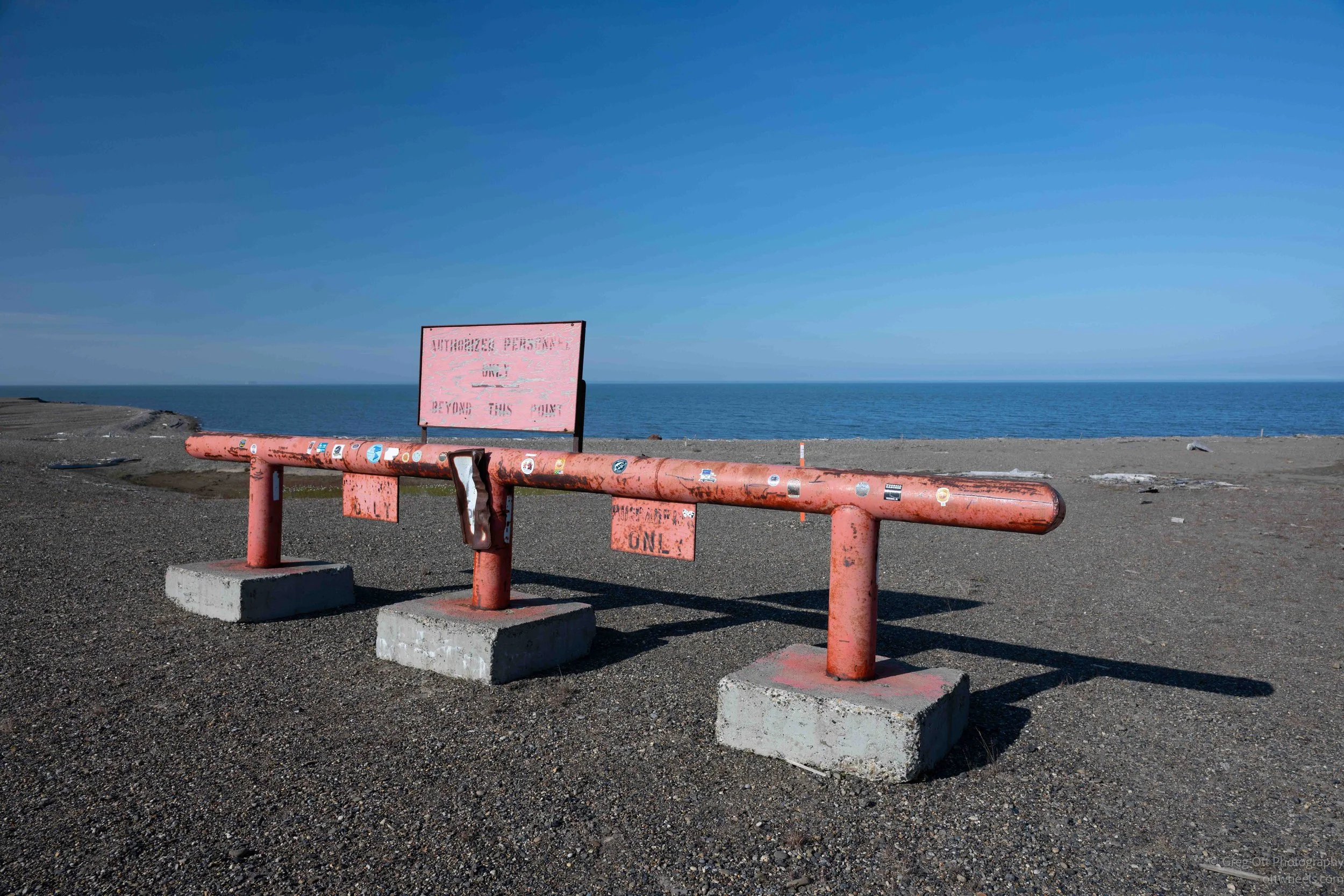
Before we could enter the restricted Prudhoe Bay oil field, everyone had to turn in a passport or driver's license for a security check. Our driver tried to get a longtime security guard, who was approaching retirement, to say a few words over her microphone. He took the box of IDs without saying a word and went back inside. After the checks were completed, our IDs were returned and we were cleared to continue toward the Arctic Ocean.
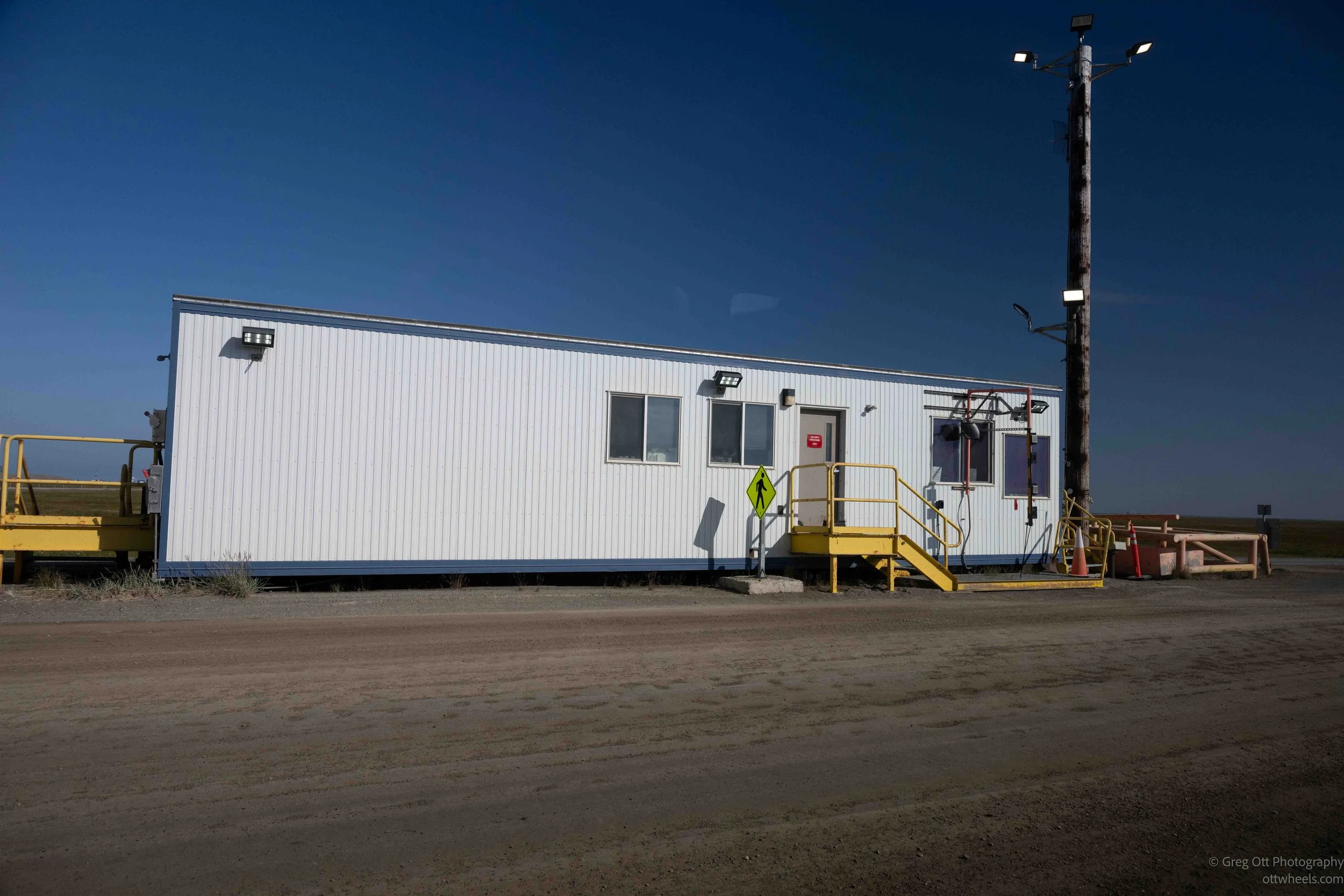
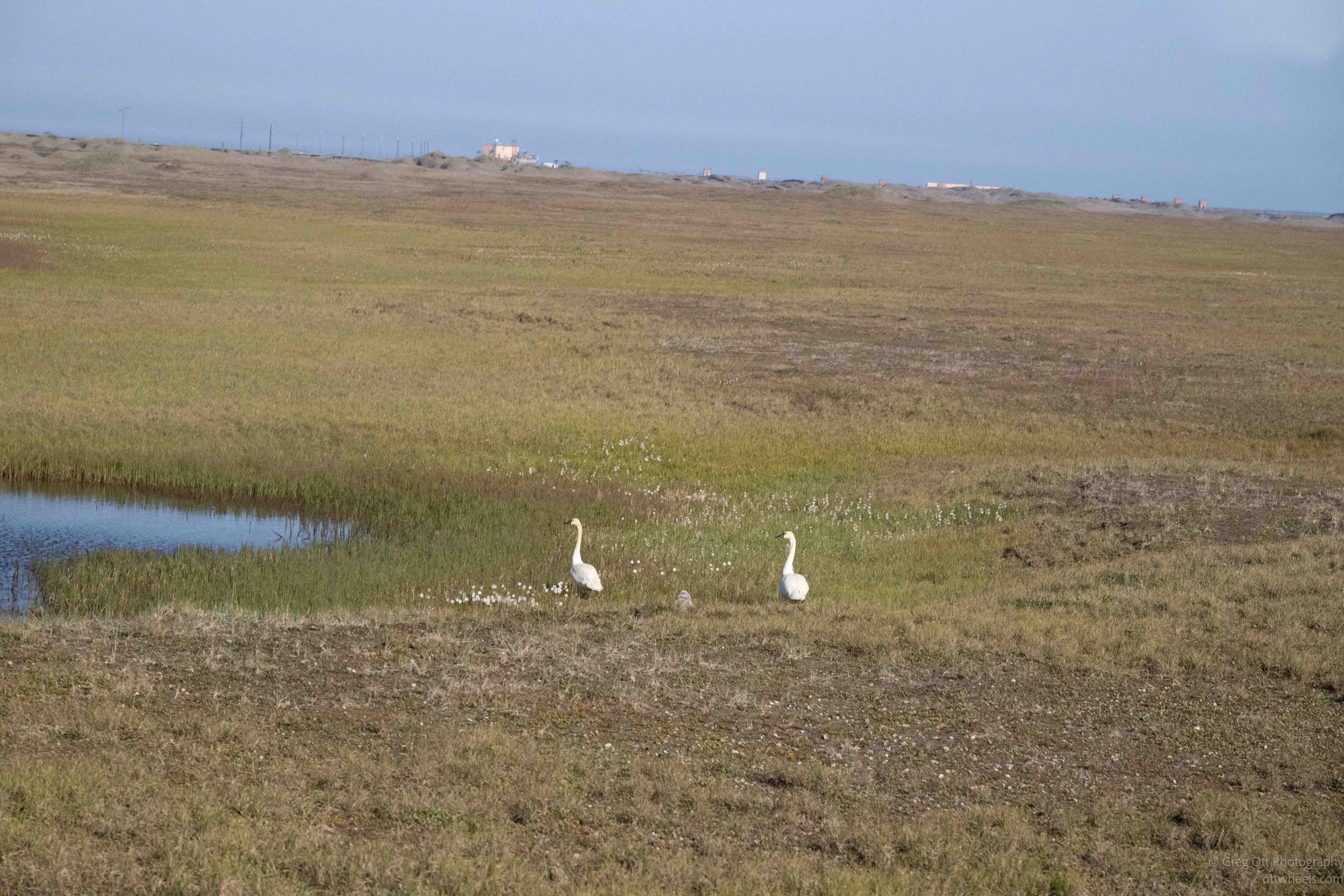
Near the security station, the industrial landscape of drilling rigs, storage tanks and elevated pipes was broken by stretches of tundra and shallow ponds. We saw caribou, lots of birds and supposedly a muskox I never found. Permafrost here can extend roughly 2,000 feet underground, preventing summer meltwater from draining and creating the wetlands that cover the tundra.
The Beaufort Sea changes just as dramatically. Nearshore ice can grow six or seven feet thick by late winter, with much thicker pressure ridges offshore. Then, for a short summer, the ice retreats before the entire landscape begins freezing again.
The Arctic Ocean
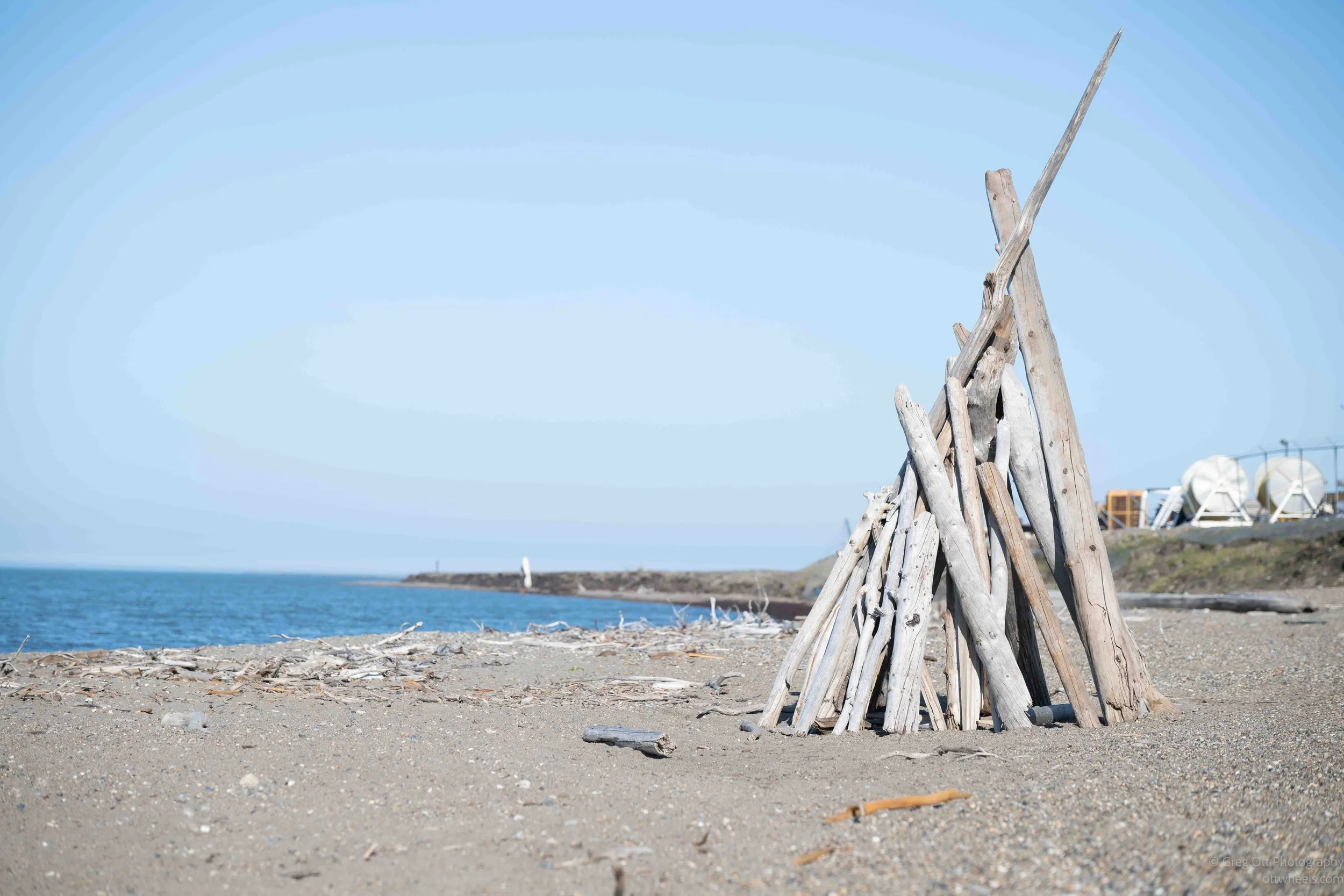
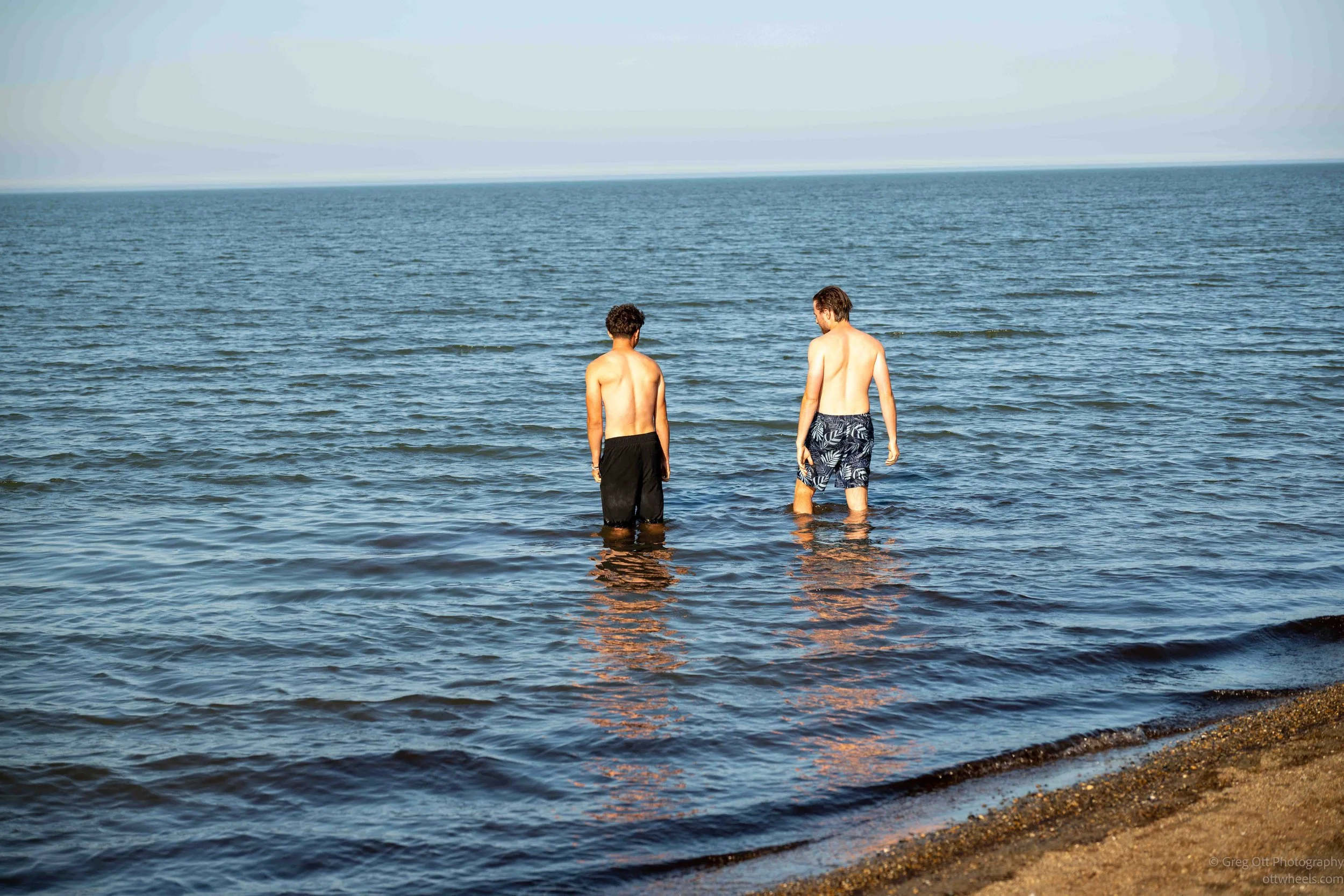
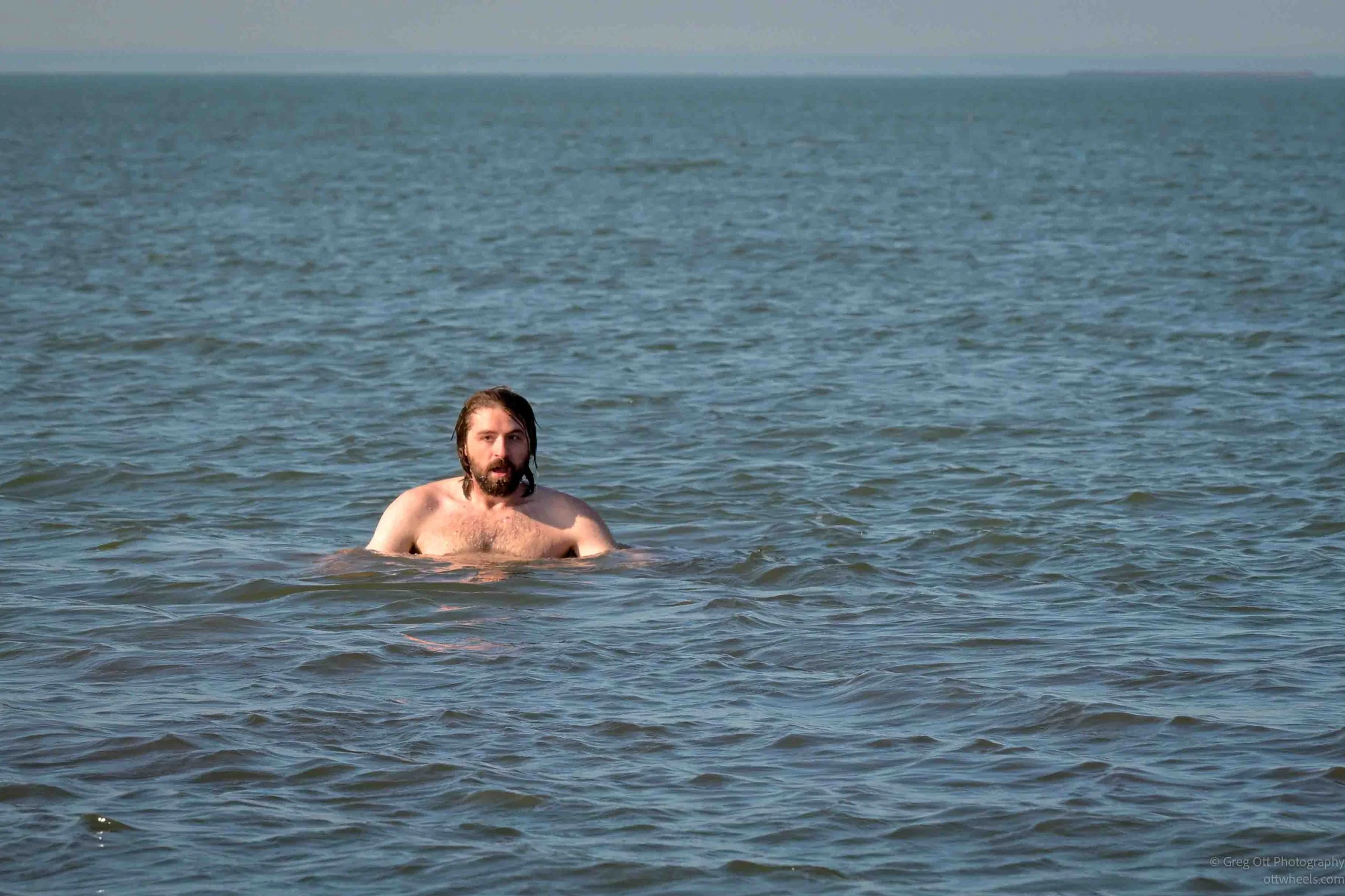
Eventually we reached the shore of the Arctic Ocean at Prudhoe Bay. Someone had stacked driftwood into a teepee-like structure near the beach, almost as if it were marking where we should enter the water. Two young guys were among the first ones in. They had brought swimsuits, walked straight into the water and immediately announced that it was cold.
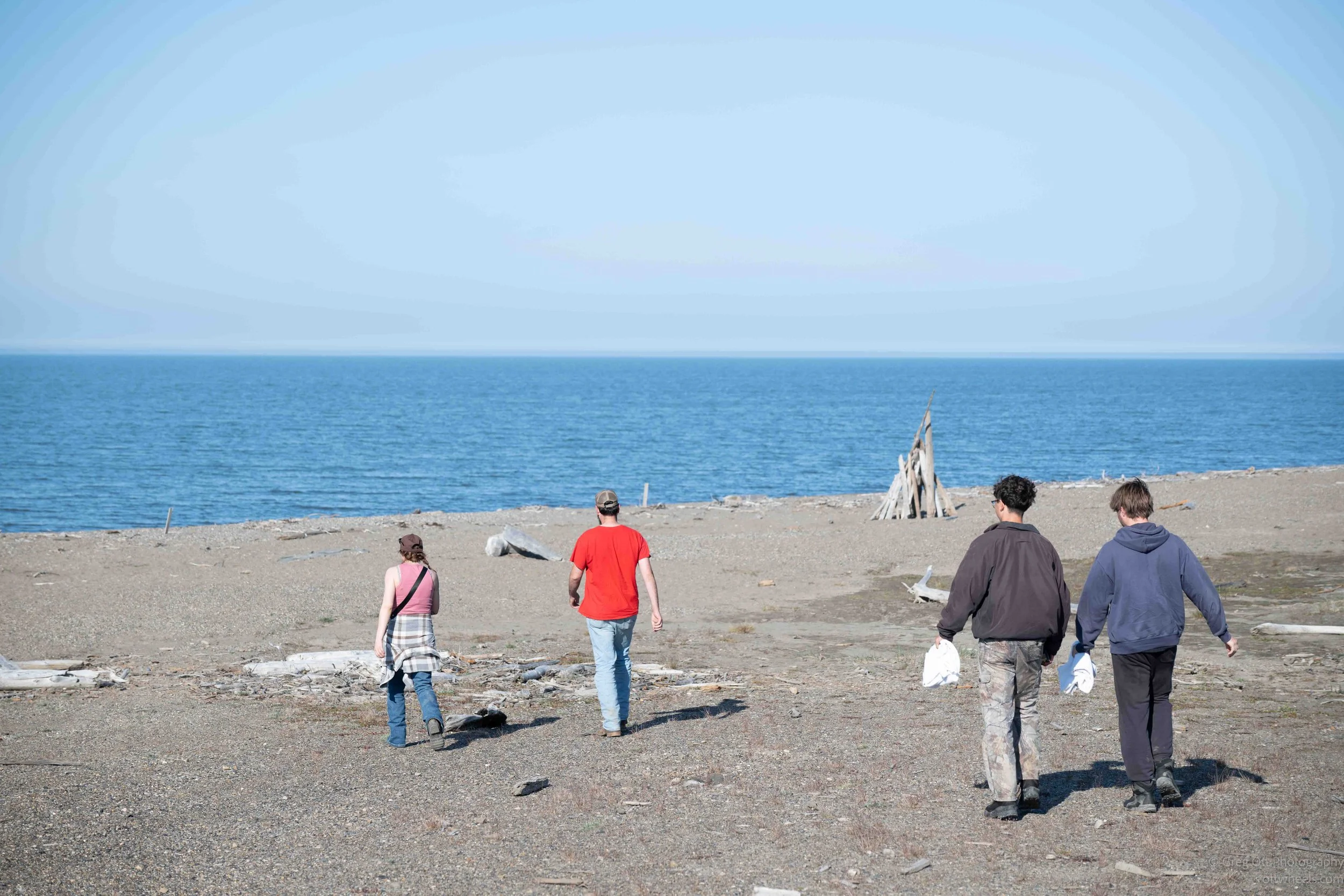
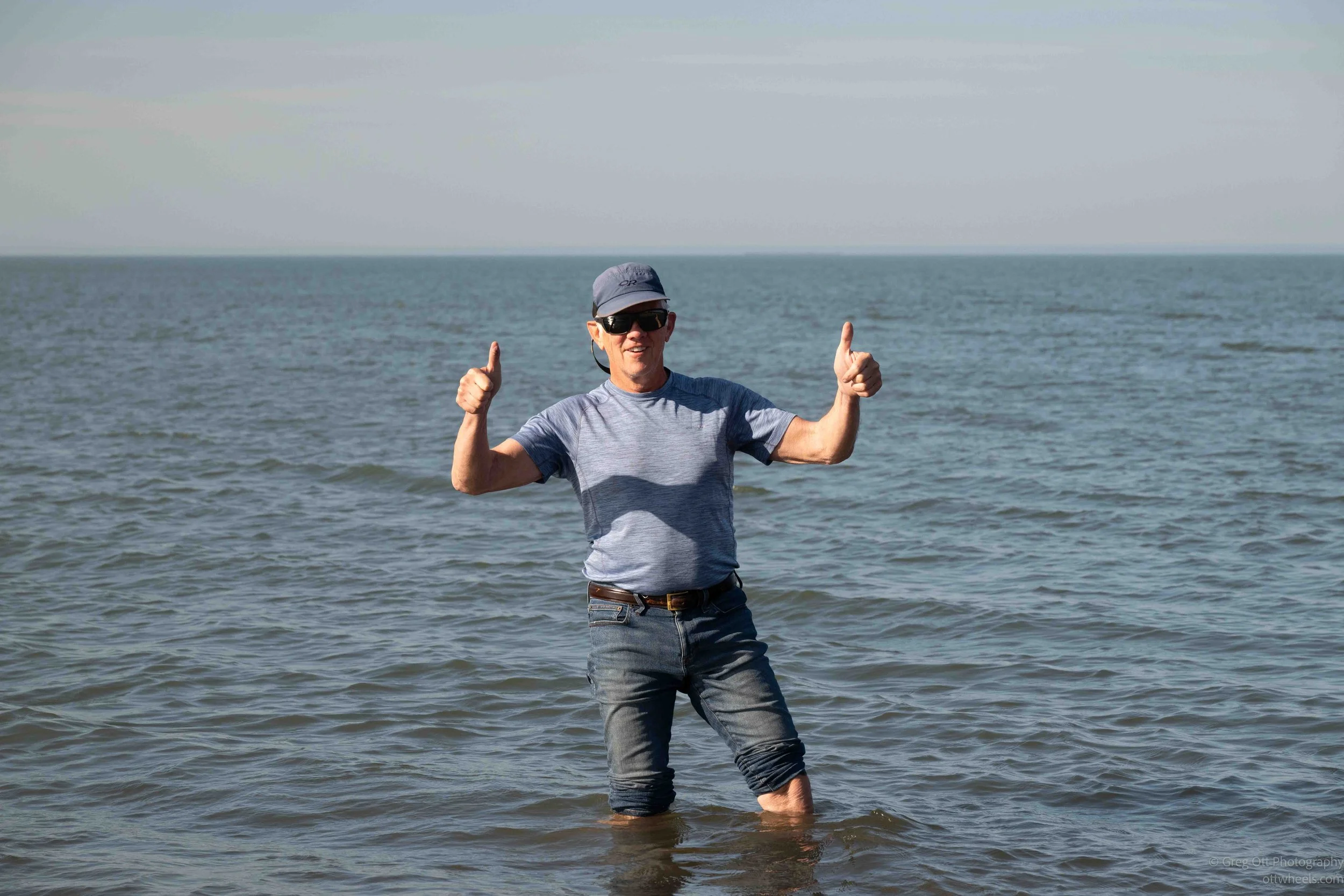
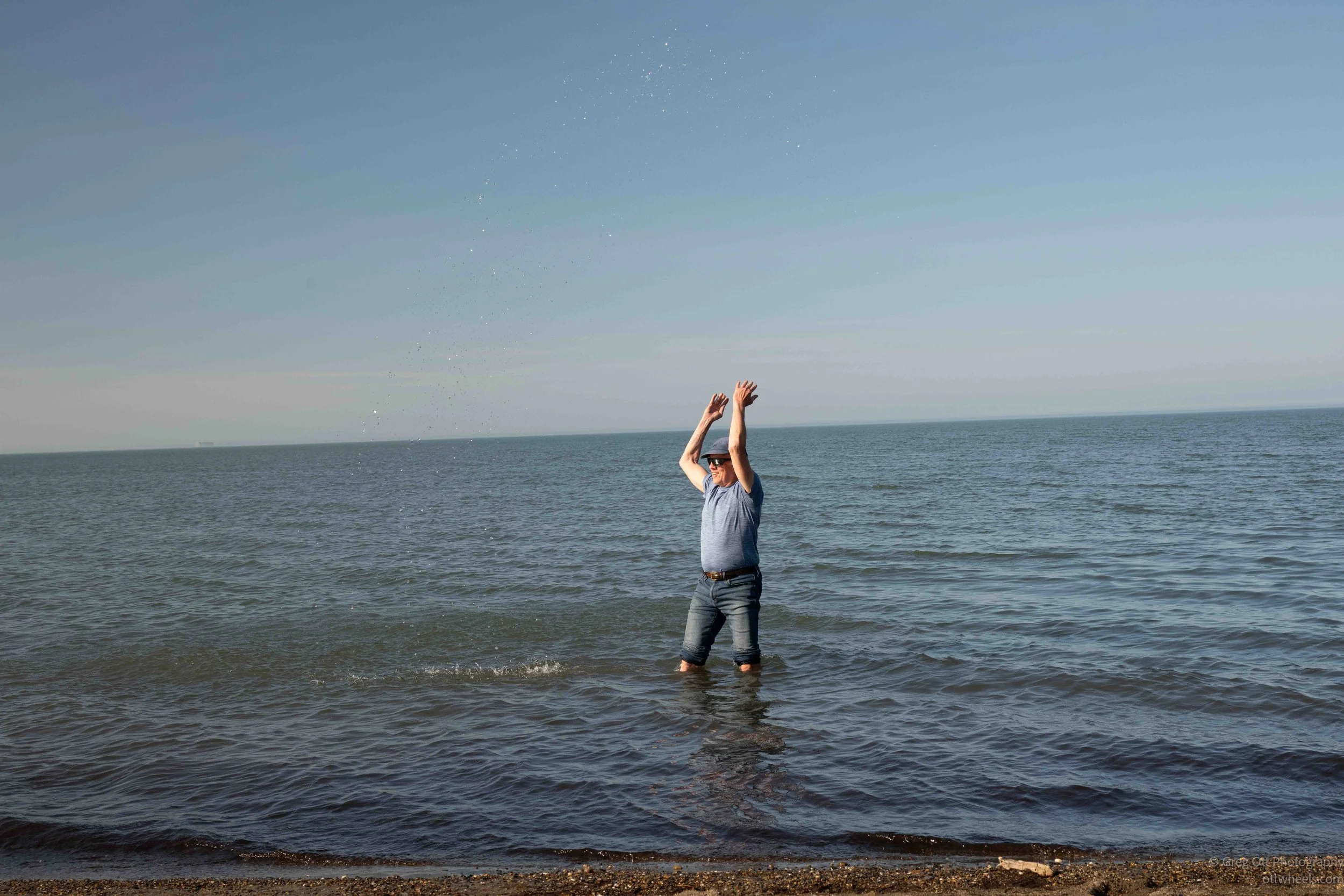
I had read that seawater freezes at around 28.5°F and knew the Beaufort Sea remains extremely cold even during summer. I wasn't planning to swim. I rolled up my jeans, handed my camera to someone and walked in. Much to my surprise, the water didn't feel particularly cold. It certainly didn't feel like the temperatures I had been reading about. The shallow water along the beach had been sitting under a warm Arctic sun all day, and it felt considerably warmer than I expected. I wouldn't try to assign a temperature to it based on my legs, but it was comfortable enough that I stood there for photographs rather than immediately running back onto shore.
I'd guess about half the people on the bus went into the water in one form or another. Some actually swam, while others, like me, were satisfied with being able to say we had stood in the Arctic Ocean. We had about thirty minutes at the beach before it was time to leave.
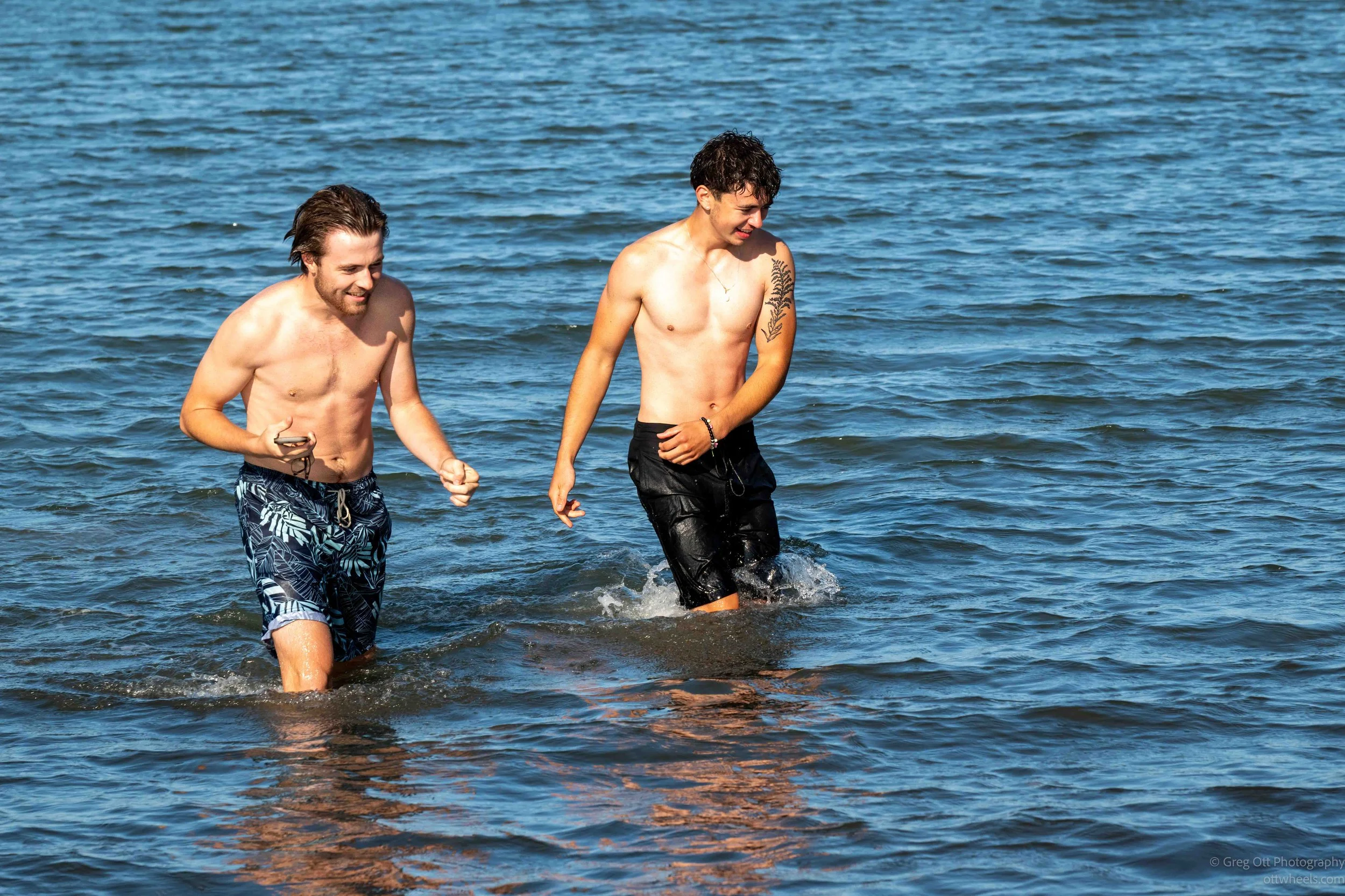
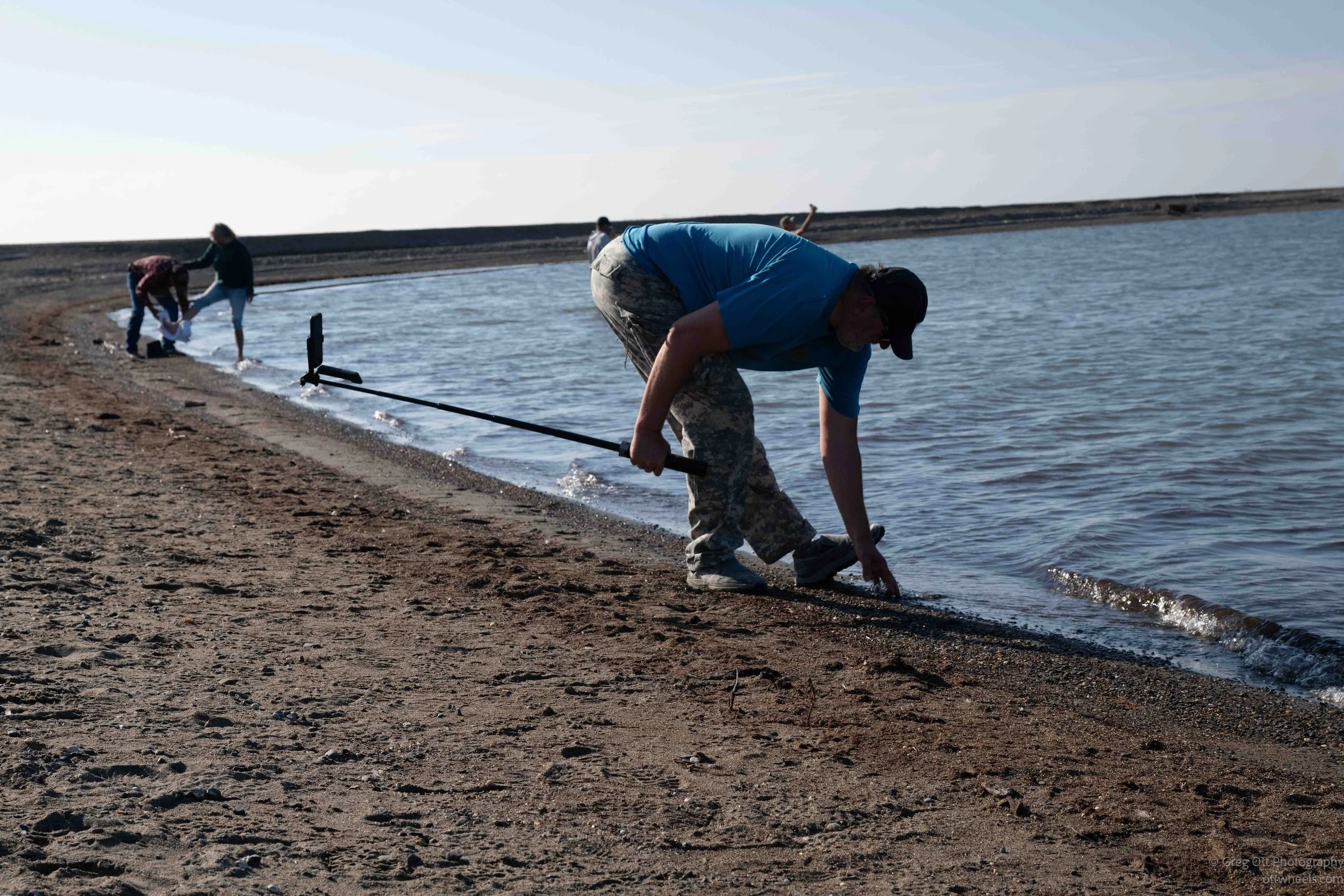
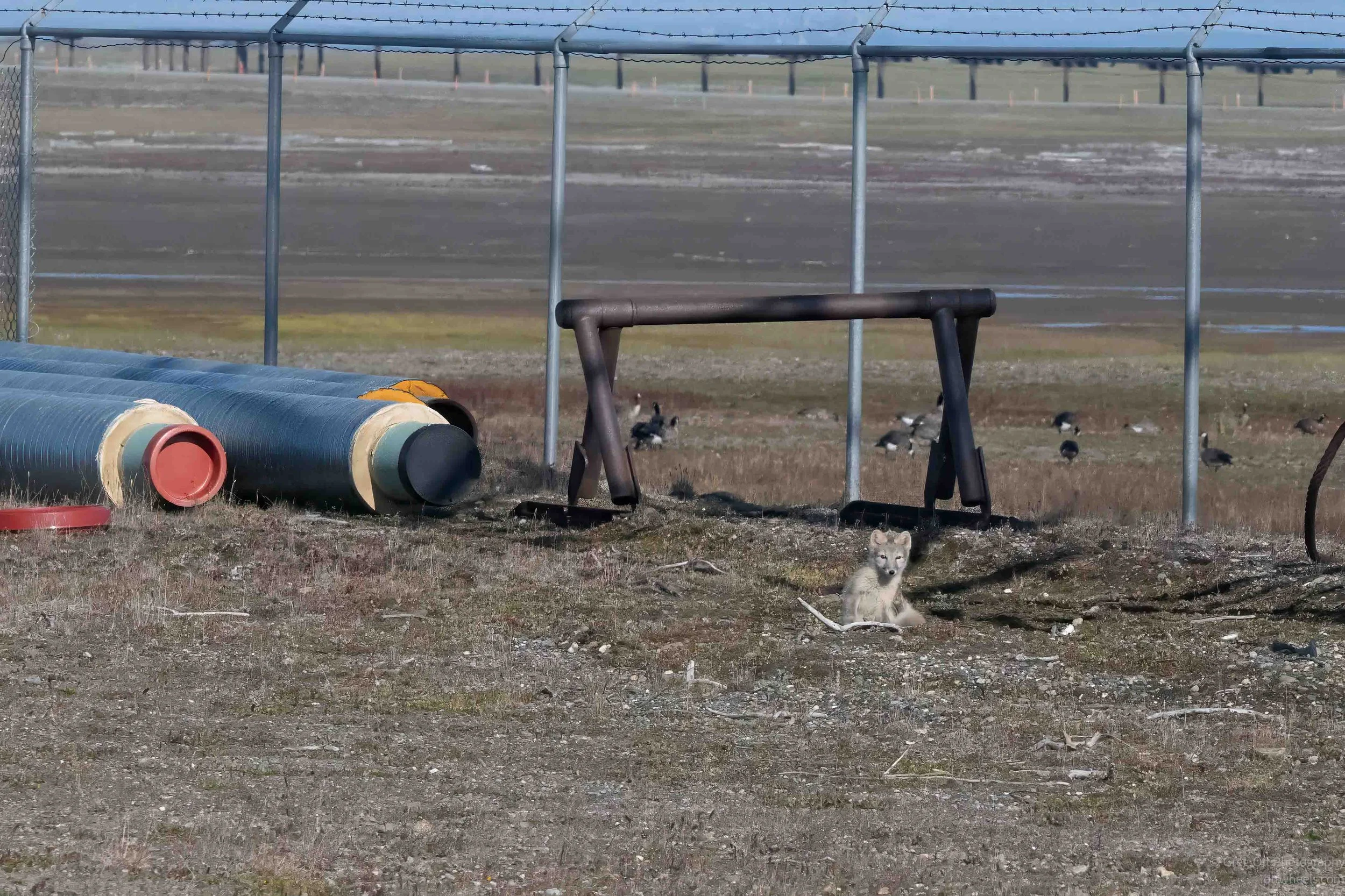
As we were pulling away, someone spotted an Arctic fox nearby and we stopped for photographs. That would be the last time we really stopped for pictures. This isn't a photography tour, and it really isn't an oil-field tour either. You're traveling through a restricted industrial area for one primary reason: they can get you through security to the Arctic Ocean and then get you back out again.
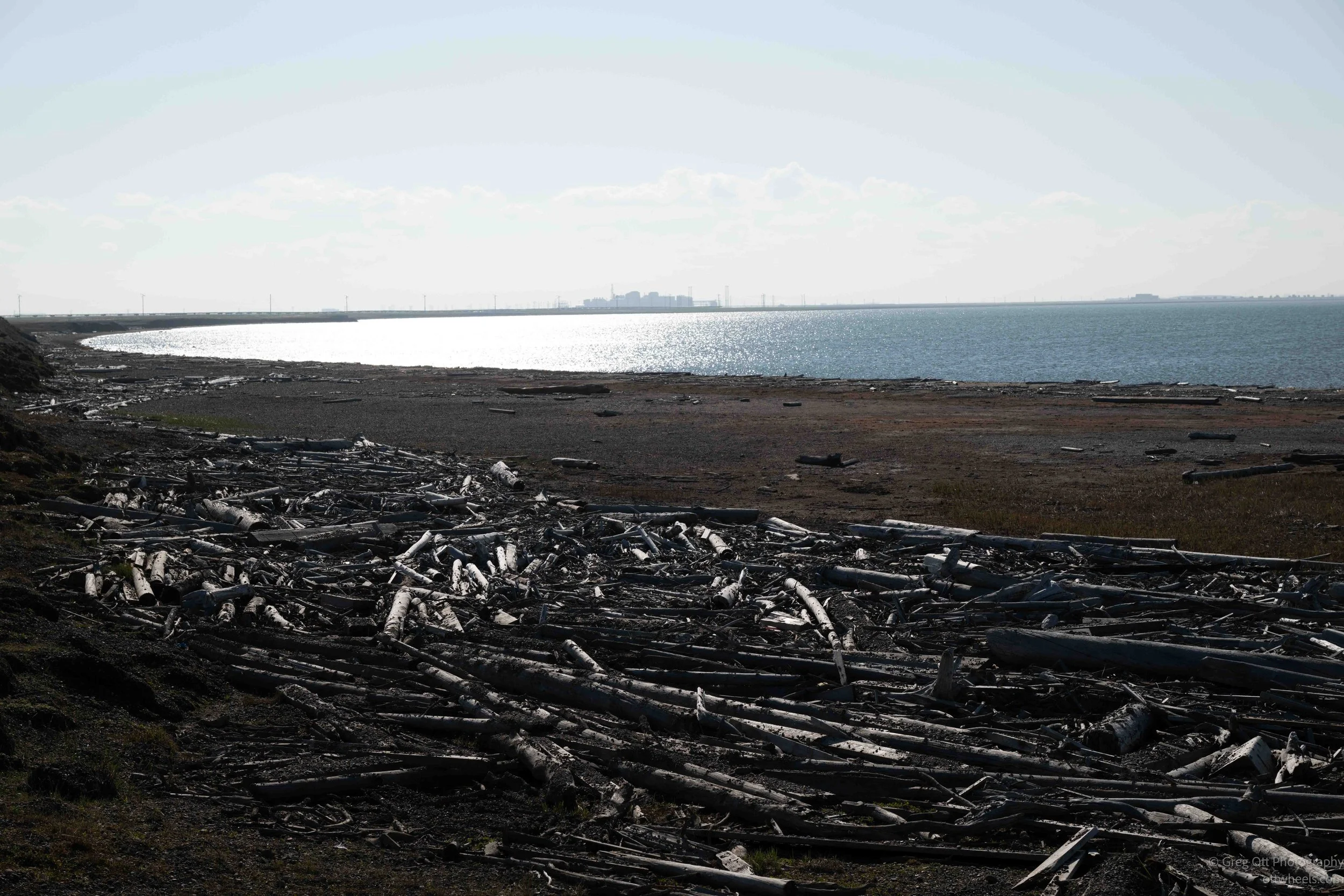
On the return trip, our driver stopped to hand in the security radio and then we continued toward camp. We slowed a few times for birds in the road and around the ponds. As we approached Deadhorse Camp, there was a muskox off to the side, but we didn't slow enough for me to get a photograph.
During the drive, our driver happened to mention that dinner at Deadhorse Camp was an all-you-can-eat buffet. The two young guys behind me immediately shouted, "What? Really? All you can eat?" Several of us assured them that it was true. They had just graduated from high school in the Midwest and were traveling around Alaska in a Subaru Crosstrek. They carried tents but also slept in the car. They were looking for work and talking to people along the way, trying to figure out what they might be able to do in Alaska or somewhere else. They were willing to do almost anything and work hard. Mostly, they wanted to travel and see the world.
Dinner With Another Cast of Characters
Dinner brought an entirely new group of people into the cafeteria. Some had spent the previous two days driving up from Fairbanks and were already preparing to turn around and drive back, but after the Dalton Highway, a real cooked meal sounded pretty good. One couple was traveling with their 19-year-old son on an extended multi-month trip from Florida. They owned a business there that allowed them to travel while someone else kept things running at home. Somewhere along the way, they had met someone who gave them a large amount of salmon, which they had frozen. After dinner they gave two big pieces to the teenagers.
Then the teenagers discovered there was ice cream in the freezer. They both said, "Really?" almost simultaneously and jumped out of their chairs, which had most of us laughing. They were good kids—humble, inquisitive and adventurous. They didn't seem to need much more than a place to sleep, something interesting over the next horizon and, apparently, unlimited food and ice cream.
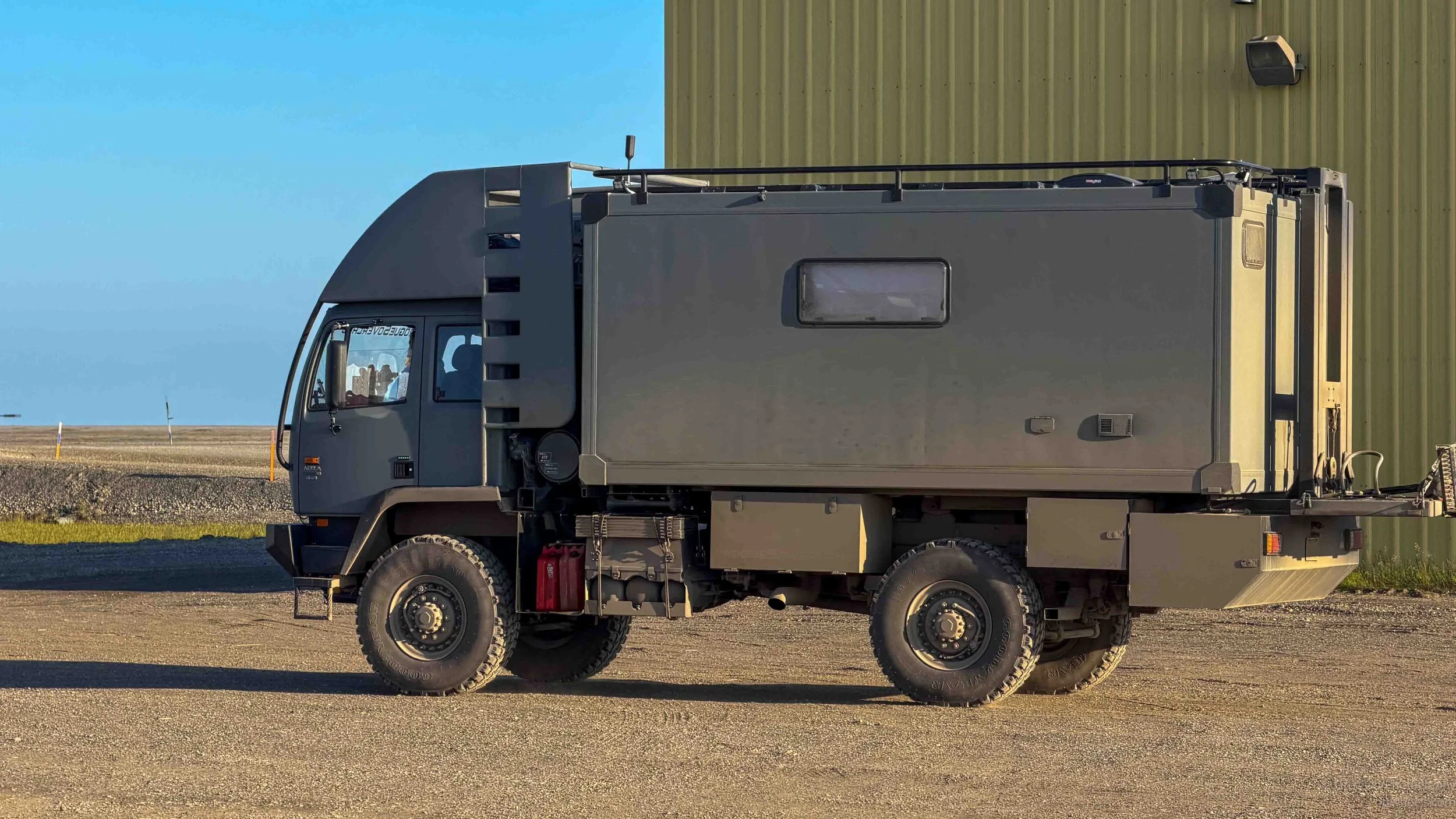
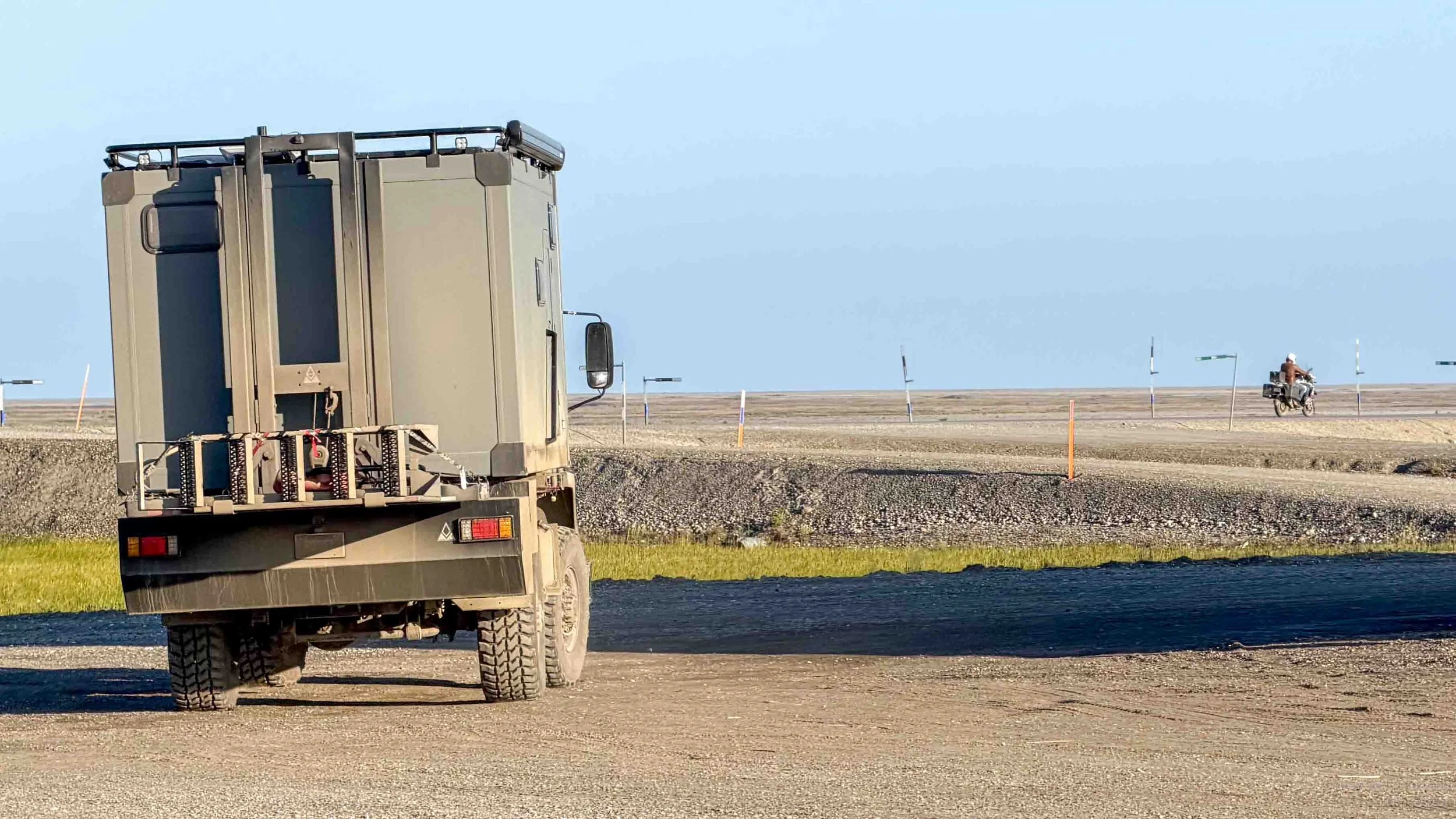
After dinner, I met the Florida couple outside beside their rig. He was traveling on a motorcycle while his wife and son took turns driving what looked like a military expedition vehicle converted into a home on wheels. They had considered buying an Airstream but decided this thing would survive their travels better. I looked at the rig and said, "You paid a lot more for this." They agreed. I had looked at vehicles like it online before, and some of these large expedition trucks cost hundreds of thousands of dollars, with the biggest versions reaching well into seven figures.
He was planning to eventually drive all the way to the tip of Argentina. His solution for traveling through Latin America was to find some South Americans or Mexicans to come along and help keep him out of trouble. He didn't speak any Spanish, which seemed like it might make the trip even more interesting.
Eventually, I headed back to my room because there really wasn't anywhere else to go. I pulled out Coming Into the Country and read for a couple of hours. After spending the afternoon surrounded by drilling rigs, pipelines, industrial buildings and an Arctic landscape that seemed to stretch forever, John McPhee seemed like a pretty appropriate way to end the day.