Studio Bell & Central Library
Still recovering from traveling for days now, I woke to the sound of diesel truck motors, cars passing and planes taking off. I drove to a more quiet spot and made breakfast and made and stopped somewhere for a coffee and spent some time catching up.
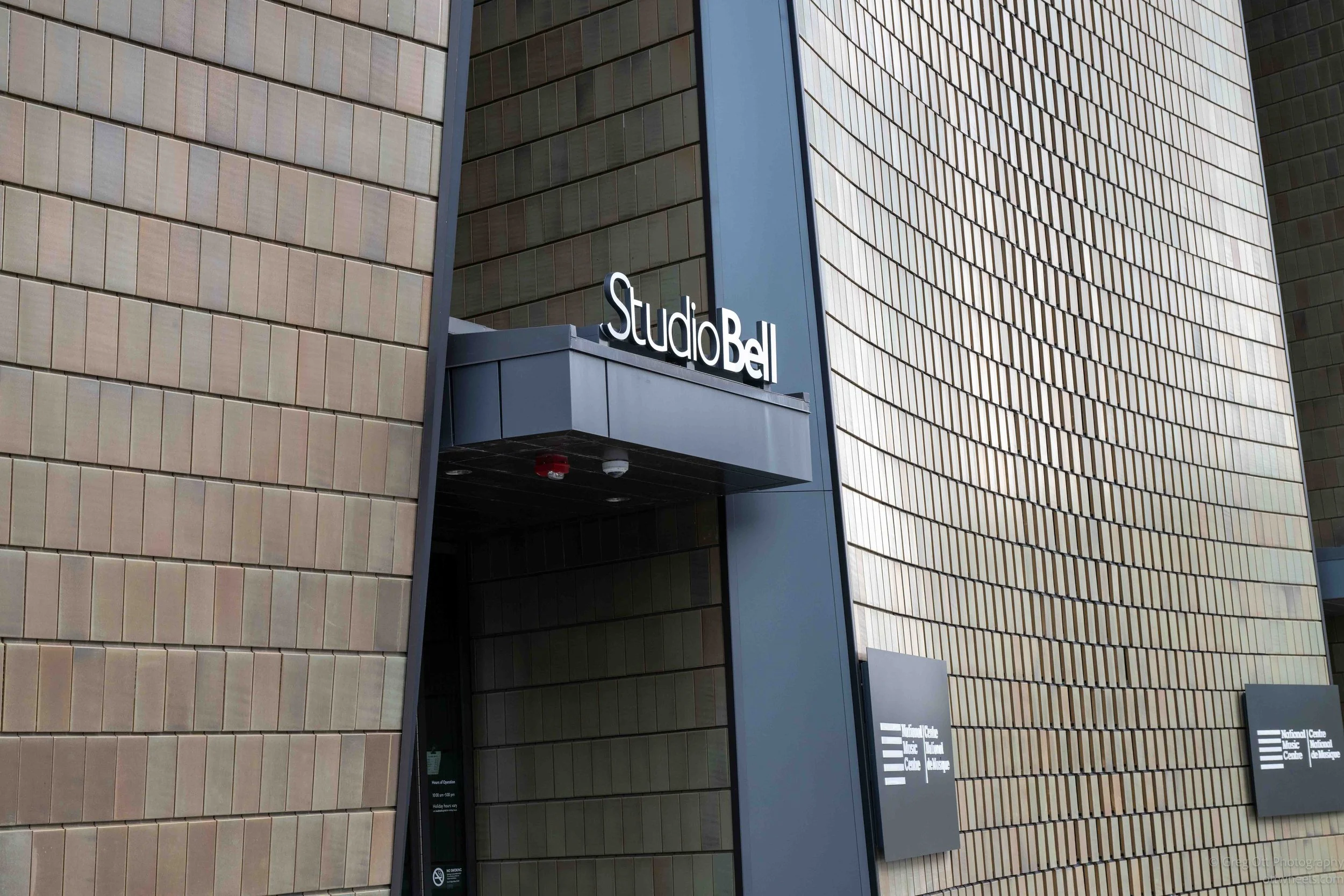
Studio Bell — National Music Centre
I went to Studio Bell primarily because I wanted to see the Canadian Music Hall of Fame. I knew it was part of the National Music Centre, but I really hadn't given much thought to what else might be inside the building. I expected something centered mostly around famous Canadian musicians and perhaps some history of recording. It turned out to be much more than that. The museum covers five floors and traces Canadian music while also exploring musical instruments, recording technology, songwriting and the evolution of how music is created and heard.
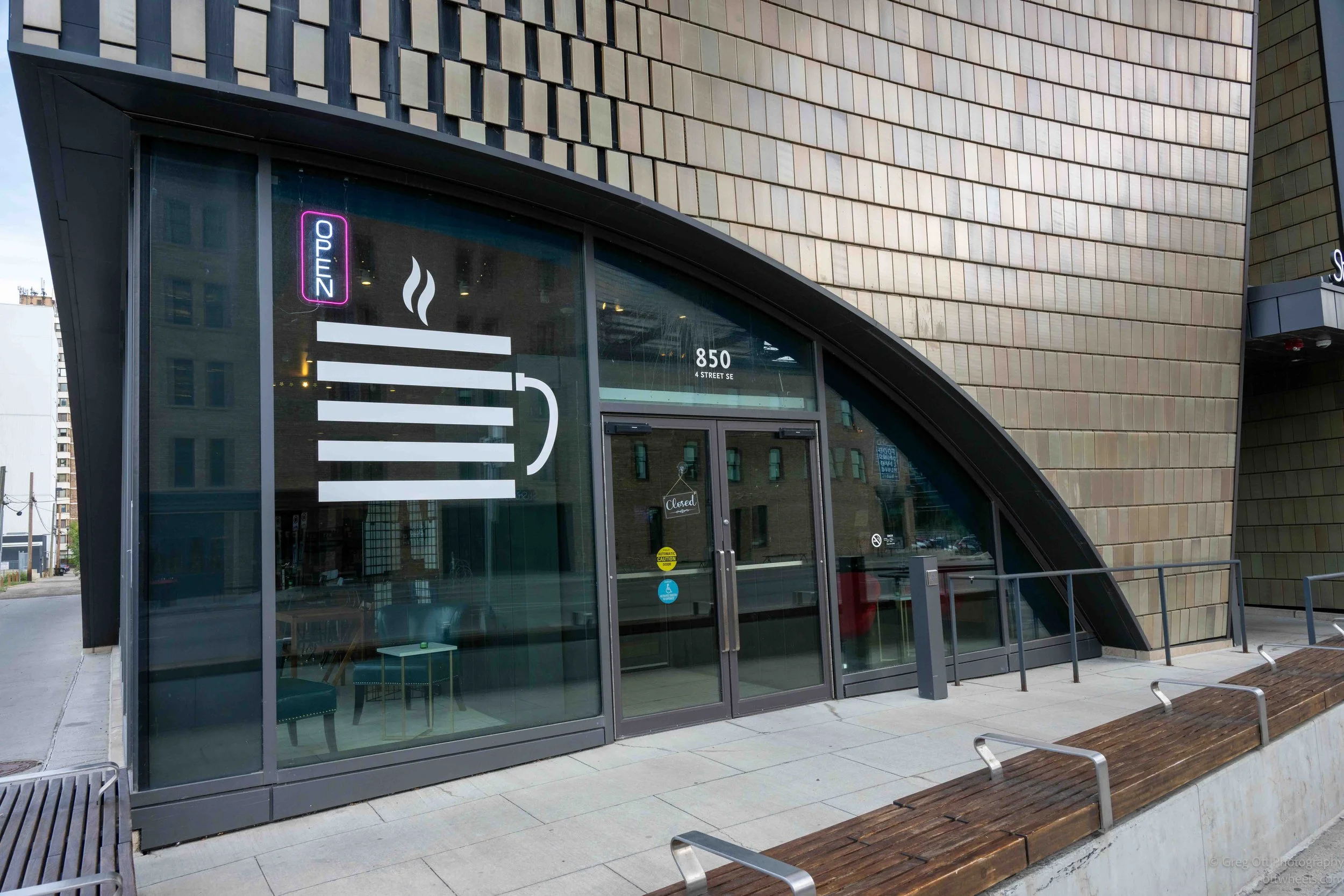
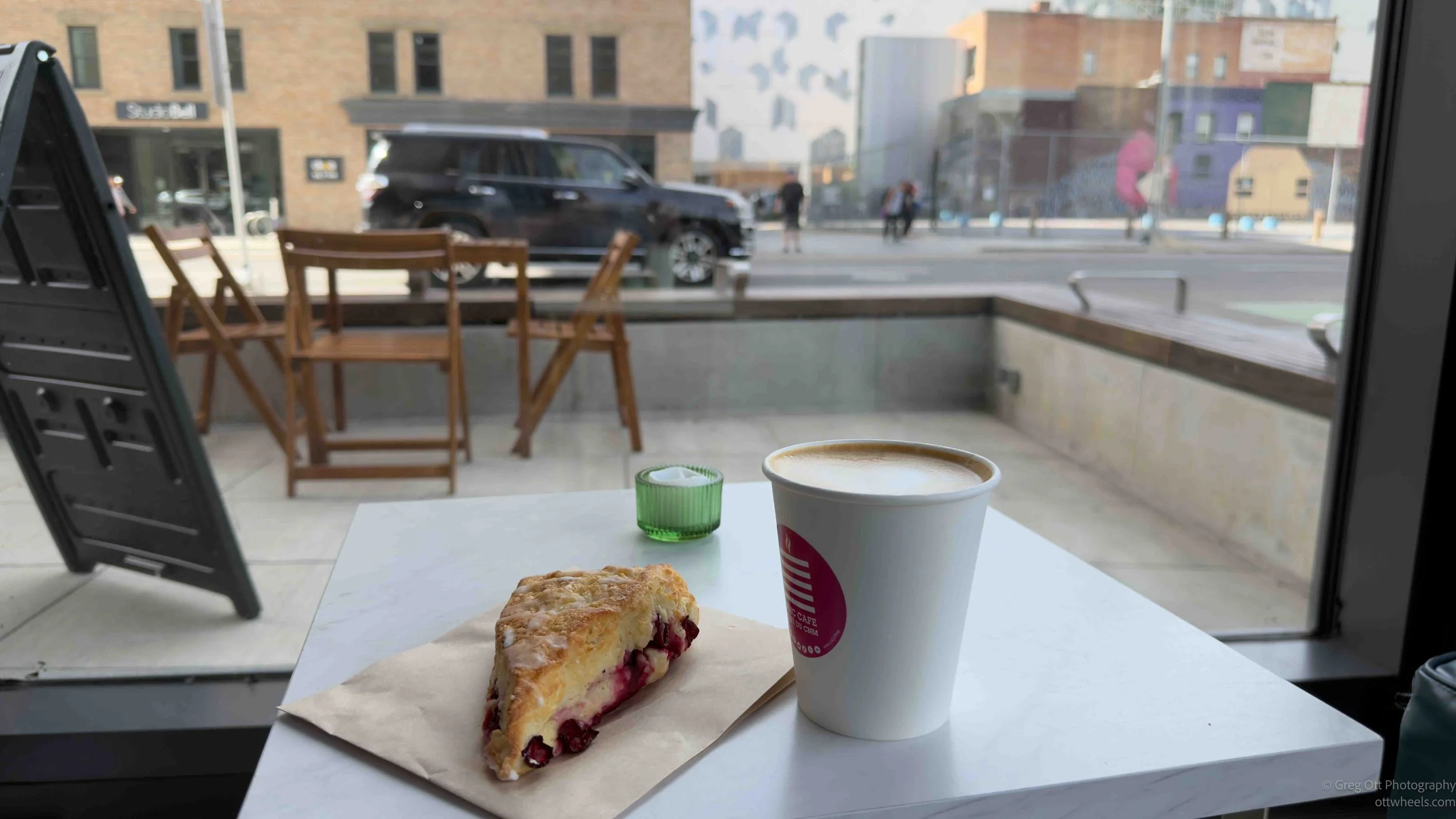
Before starting through the museum, I stopped at the gift shop and café for a coffee and cranberry scone. This was another museum where I thought they were leaving money on the table. For a national museum devoted to music, the selection of books was surprisingly small. I looked through what they had and found only one book about Oscar Peterson, despite an entire exhibition upstairs devoted to him. There were plenty of musicians represented in the museum that books have been written about. The food selection was similarly limited. Anyway, what they did have worked out fine. The coffee was good, the cranberry scone was delicious, and after finishing both I headed upstairs.
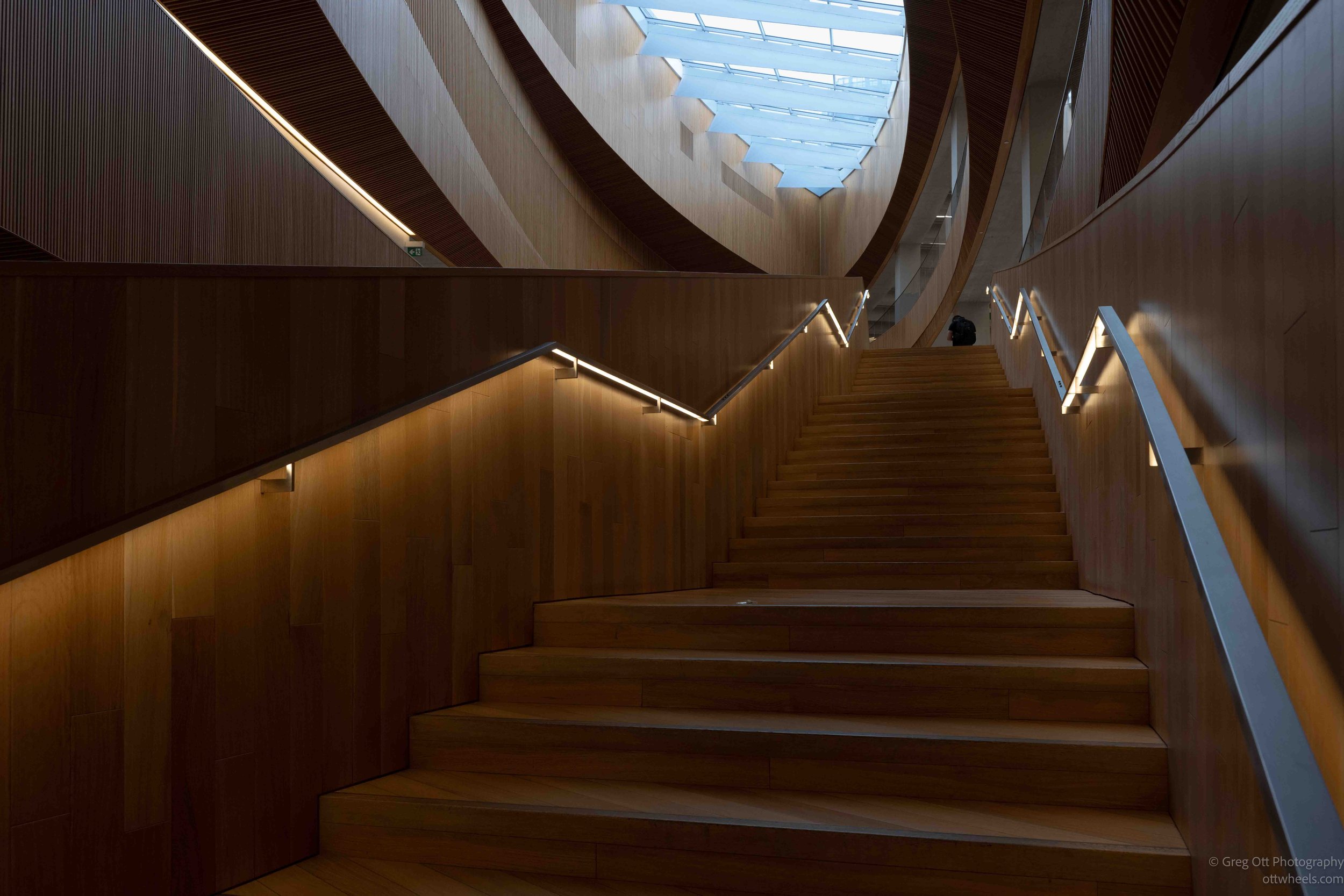
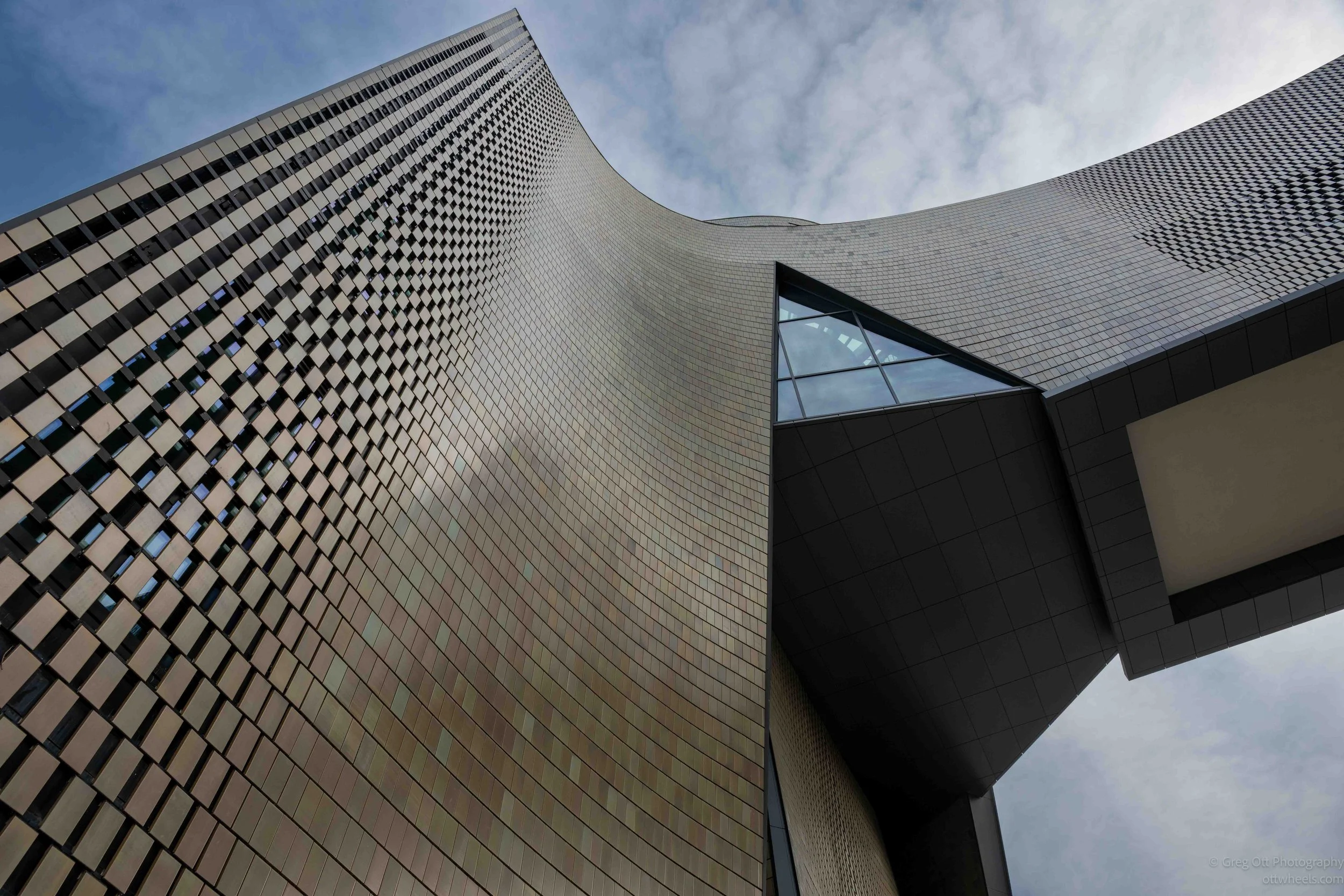
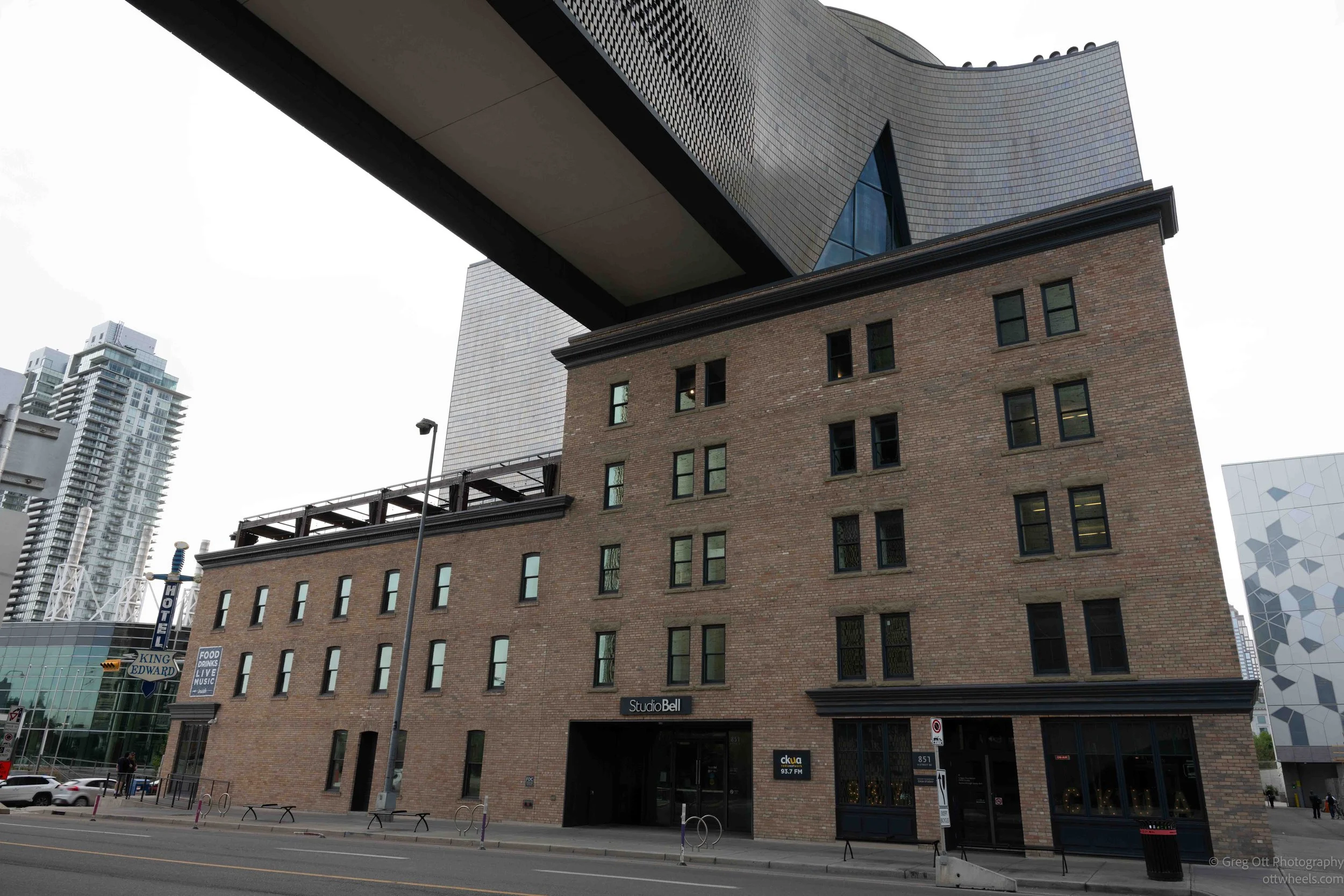
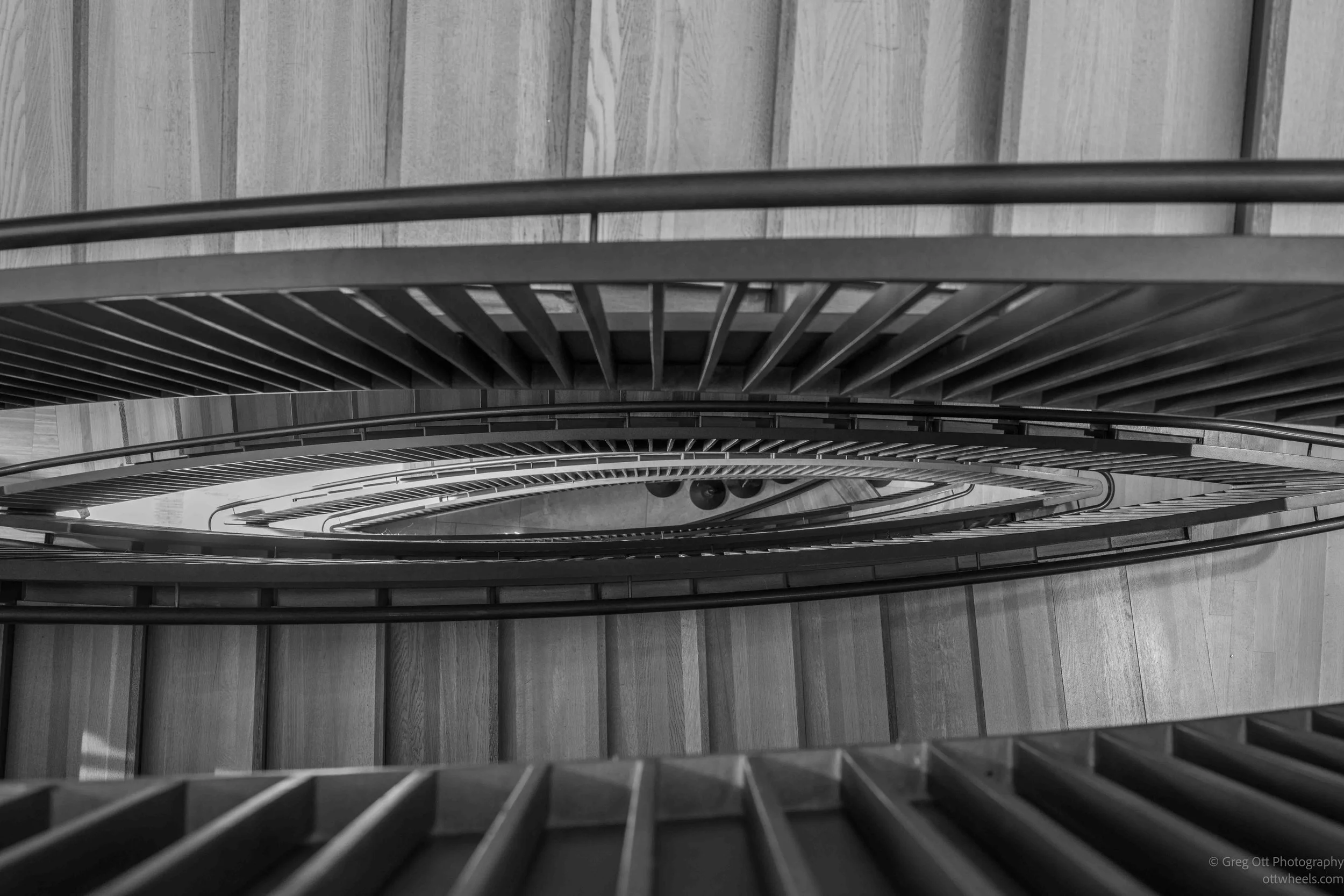
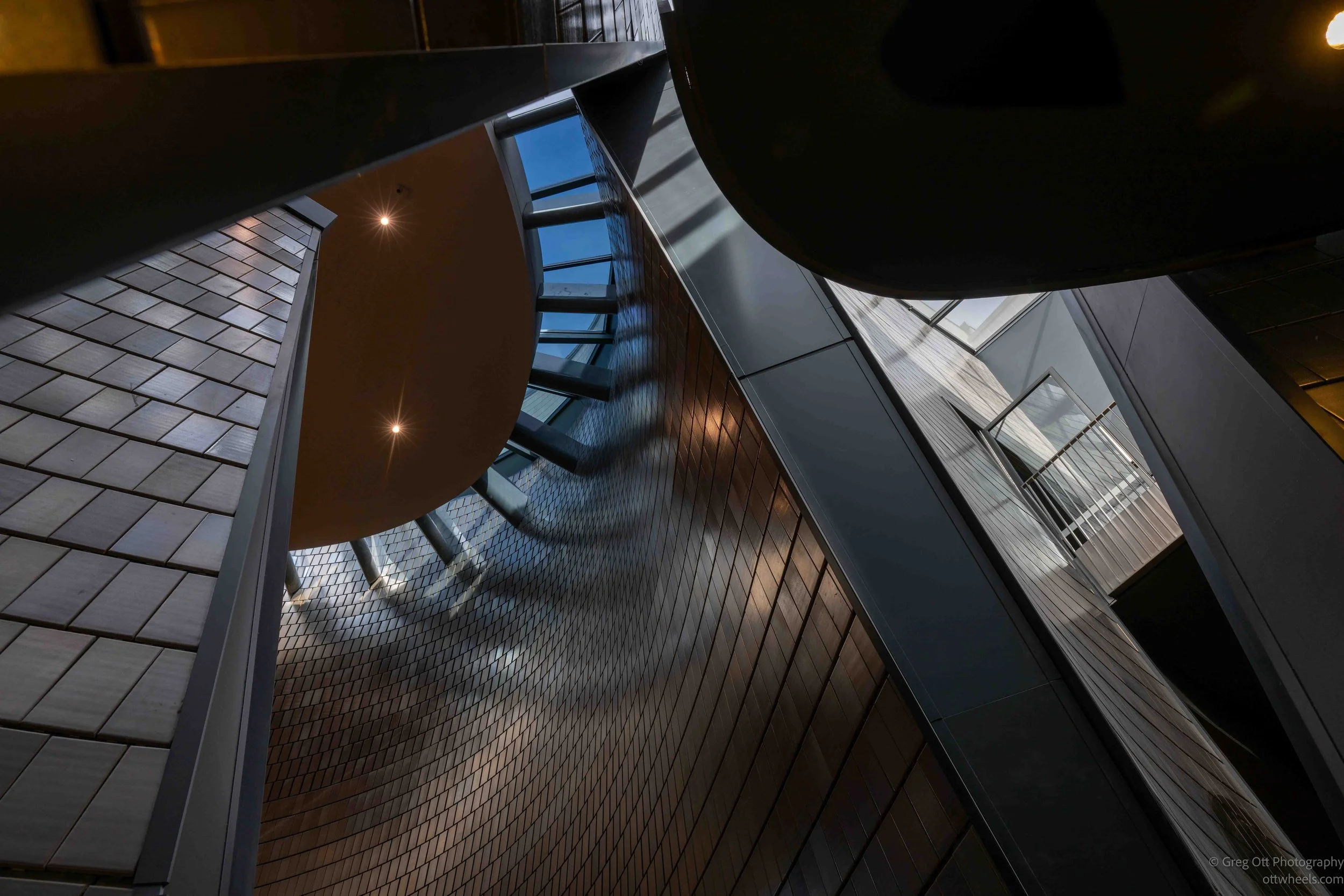
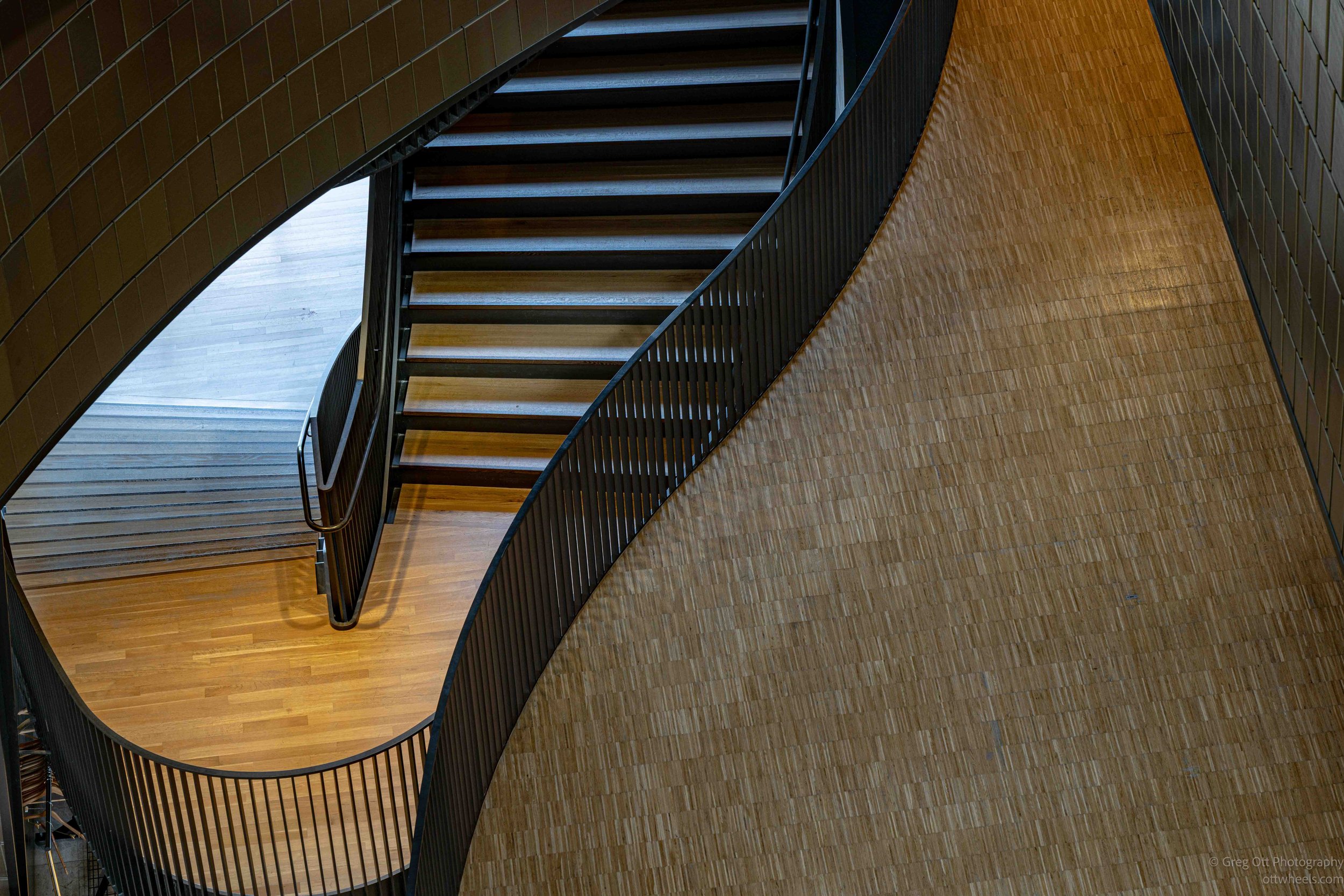
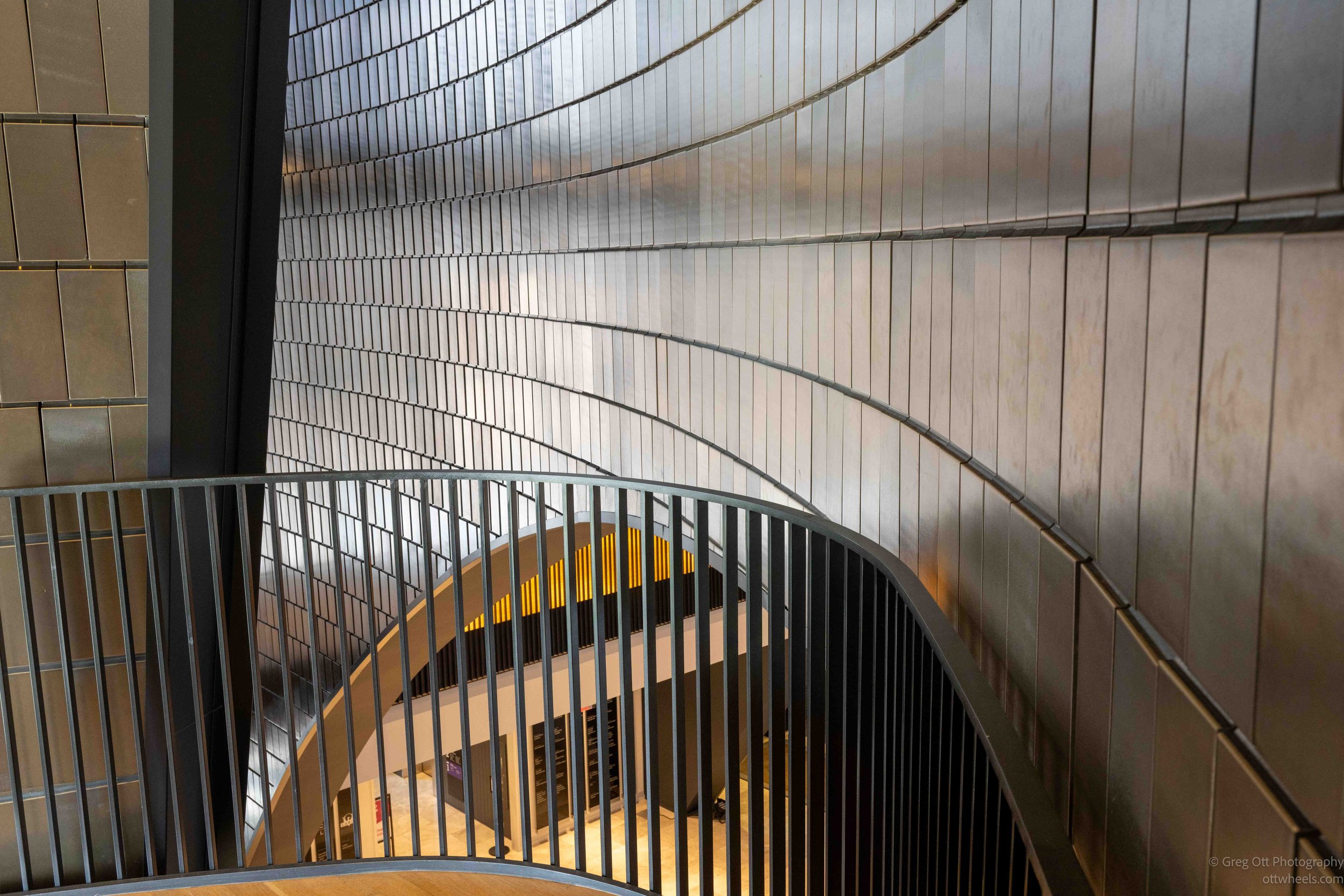
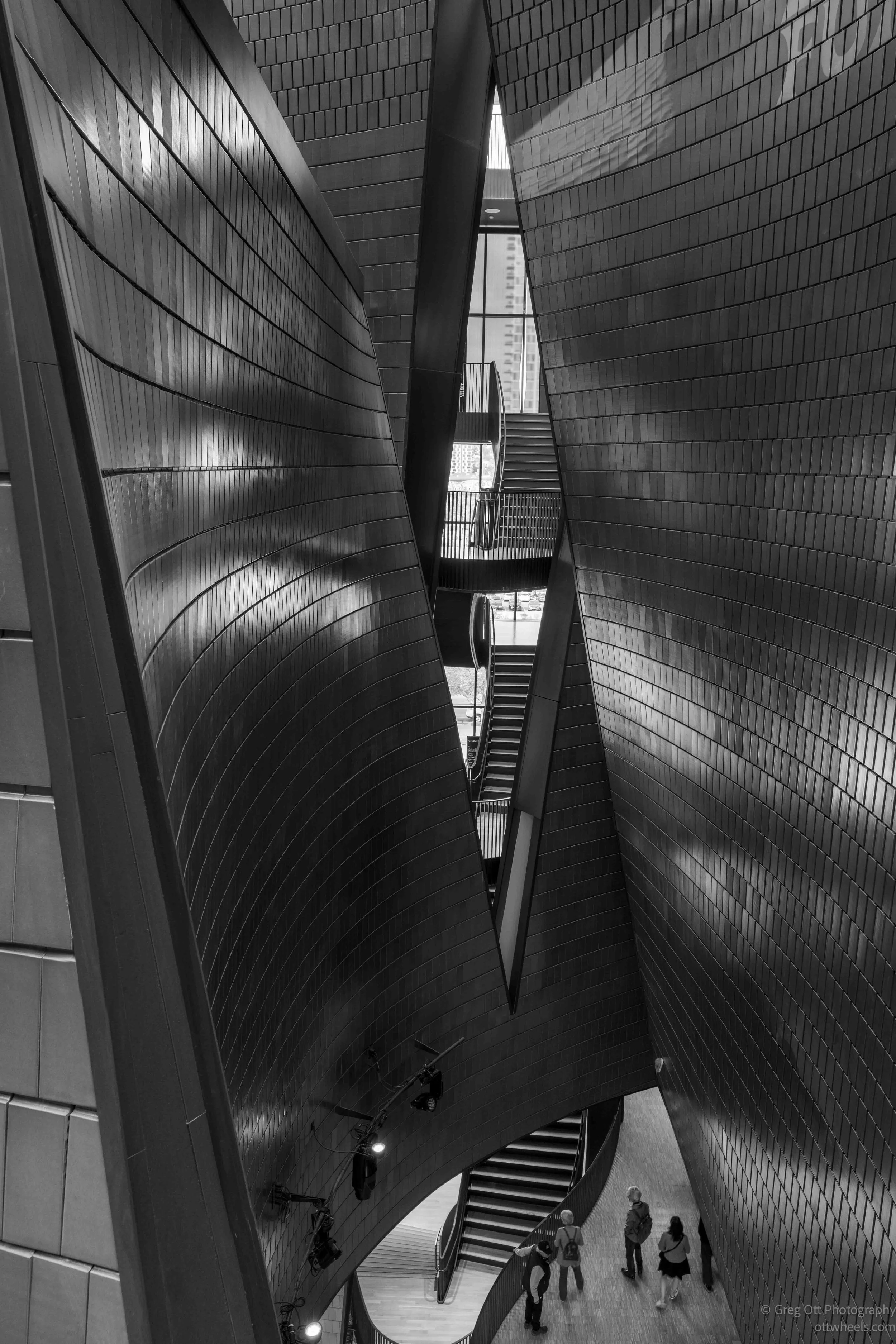
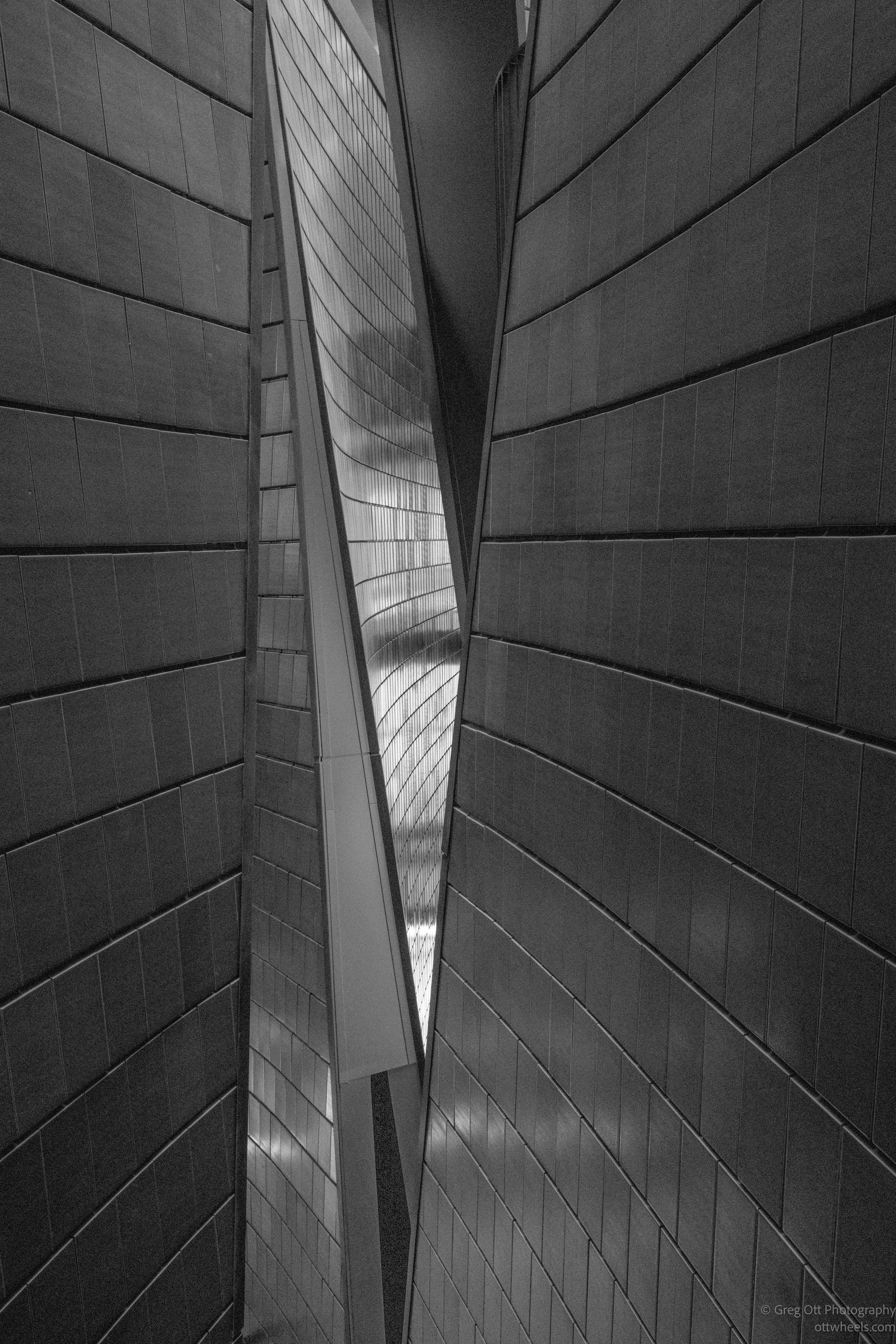
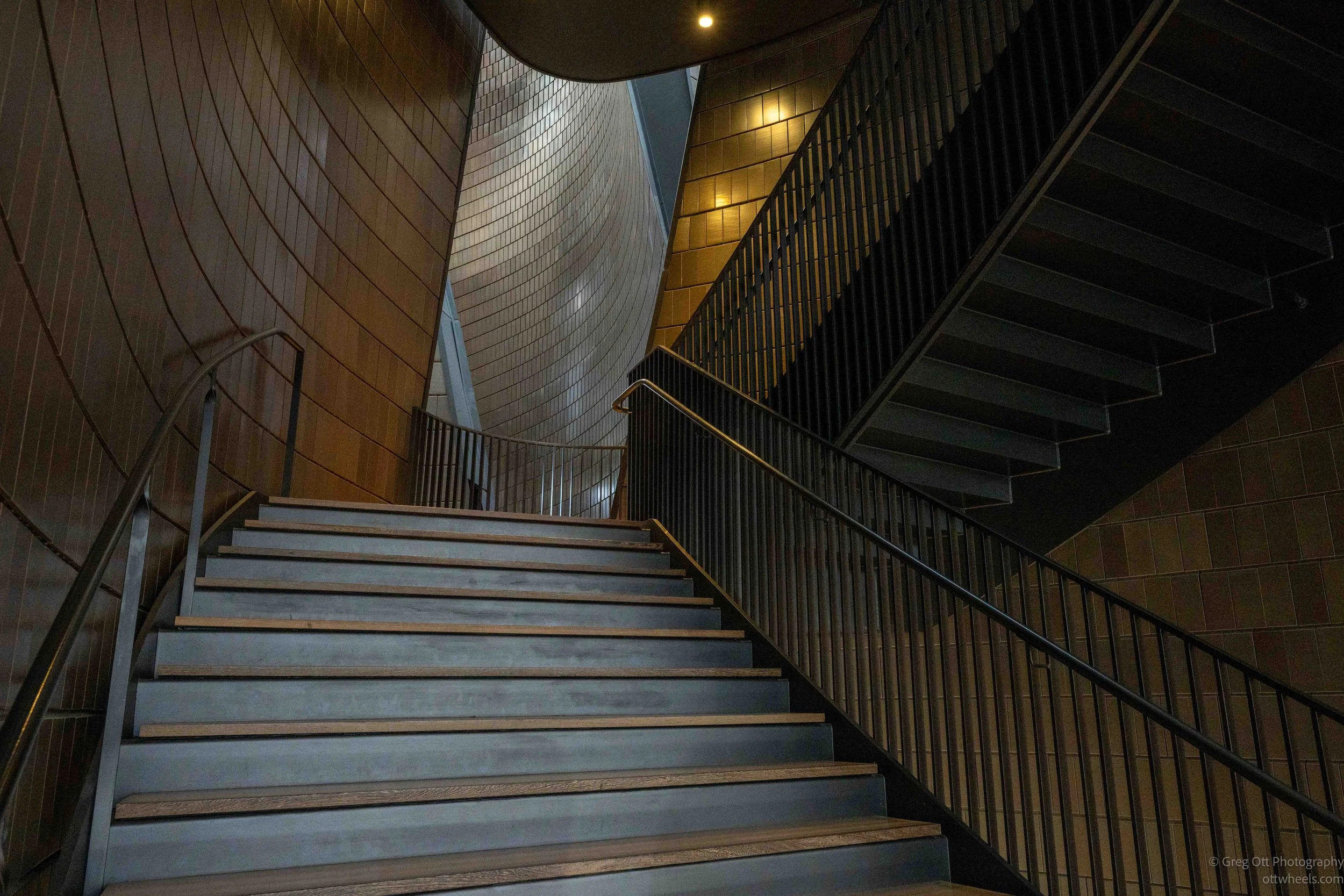
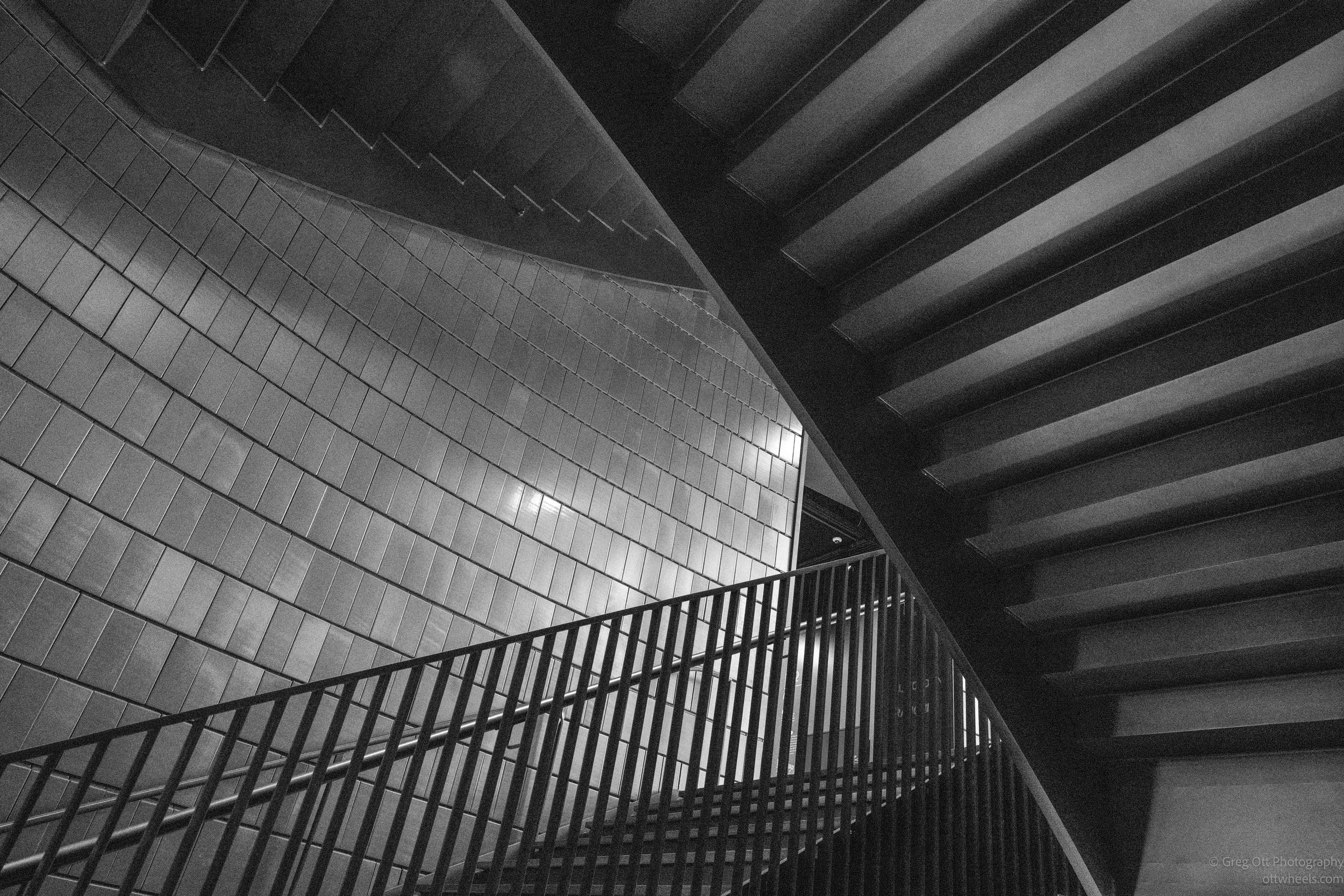
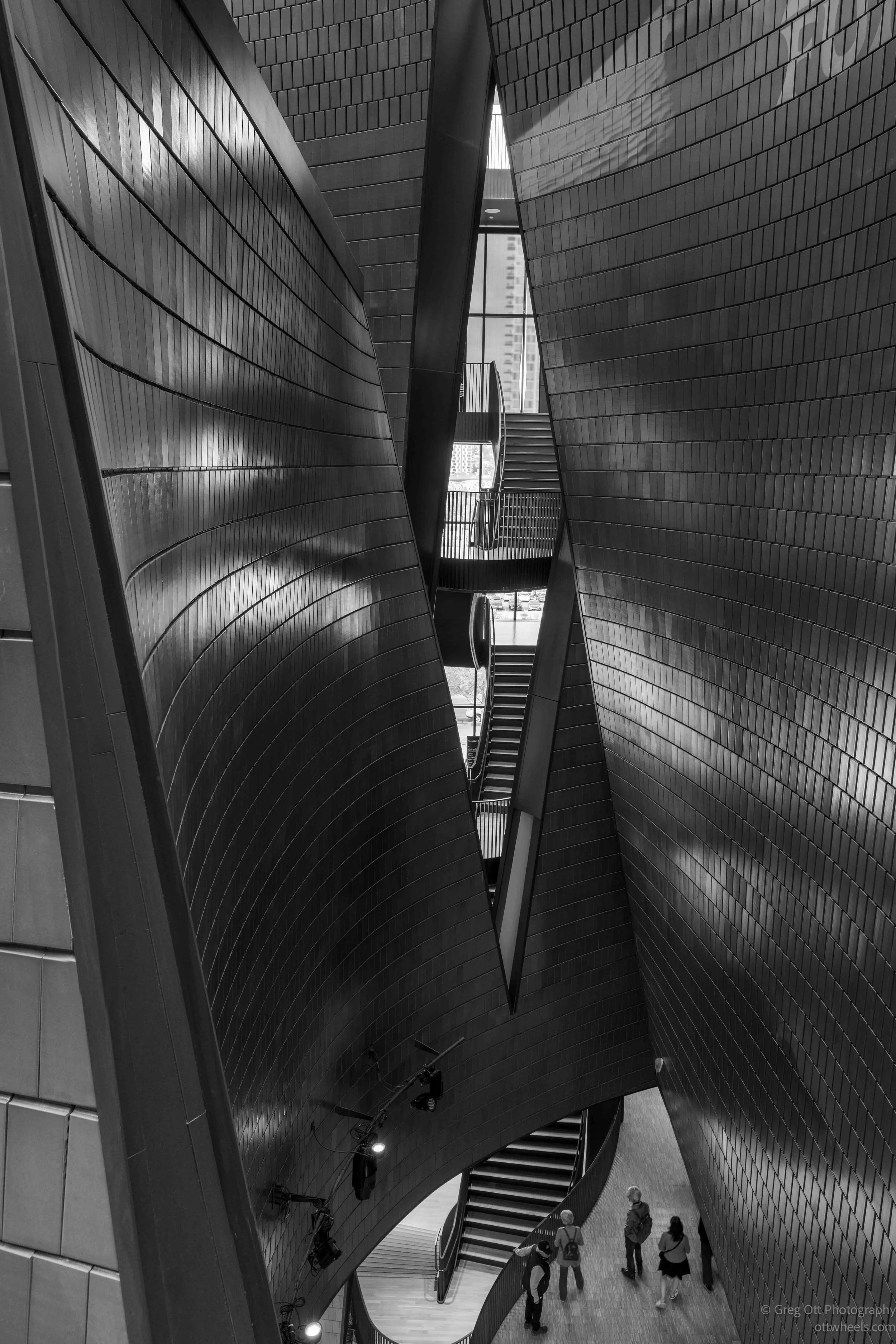
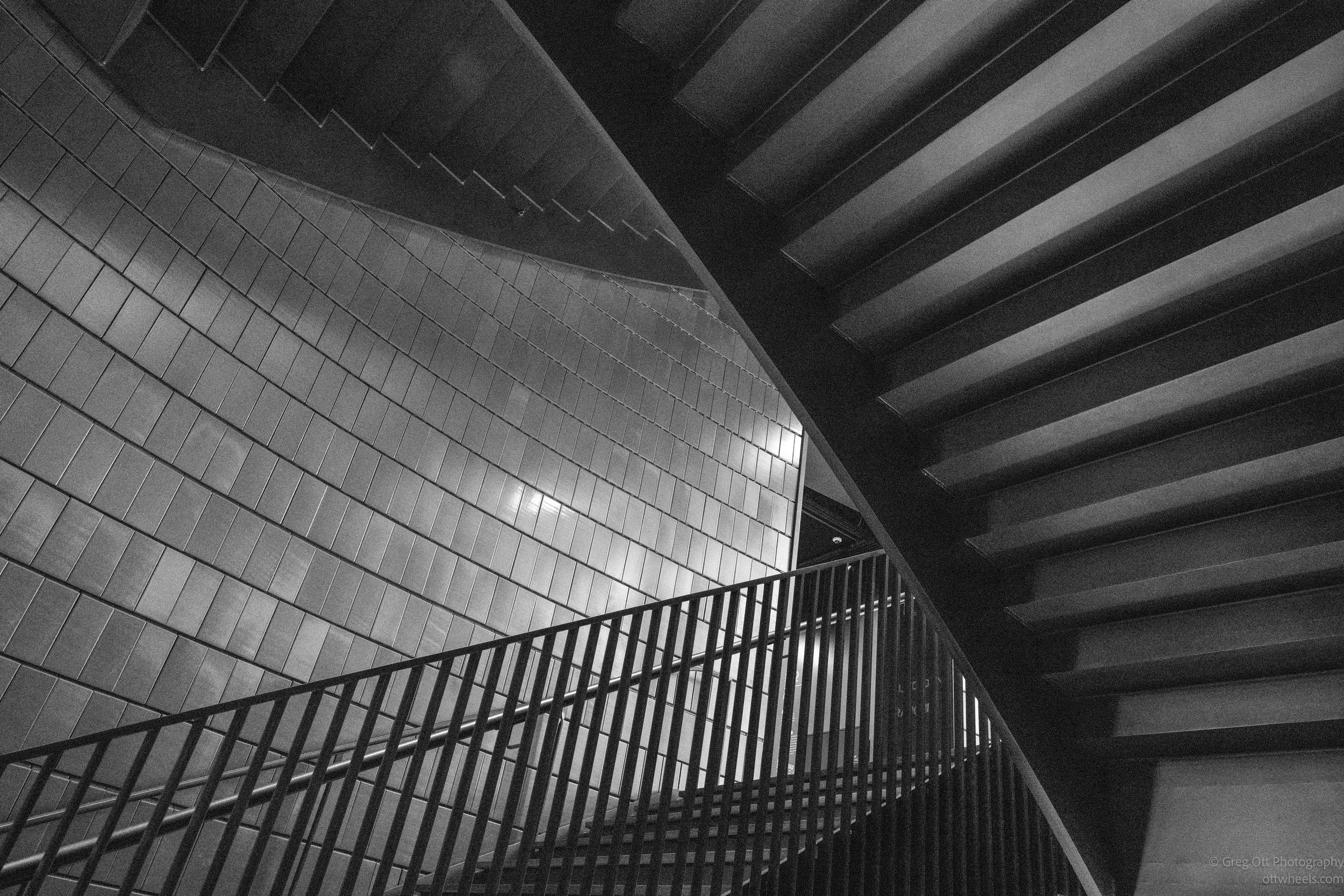
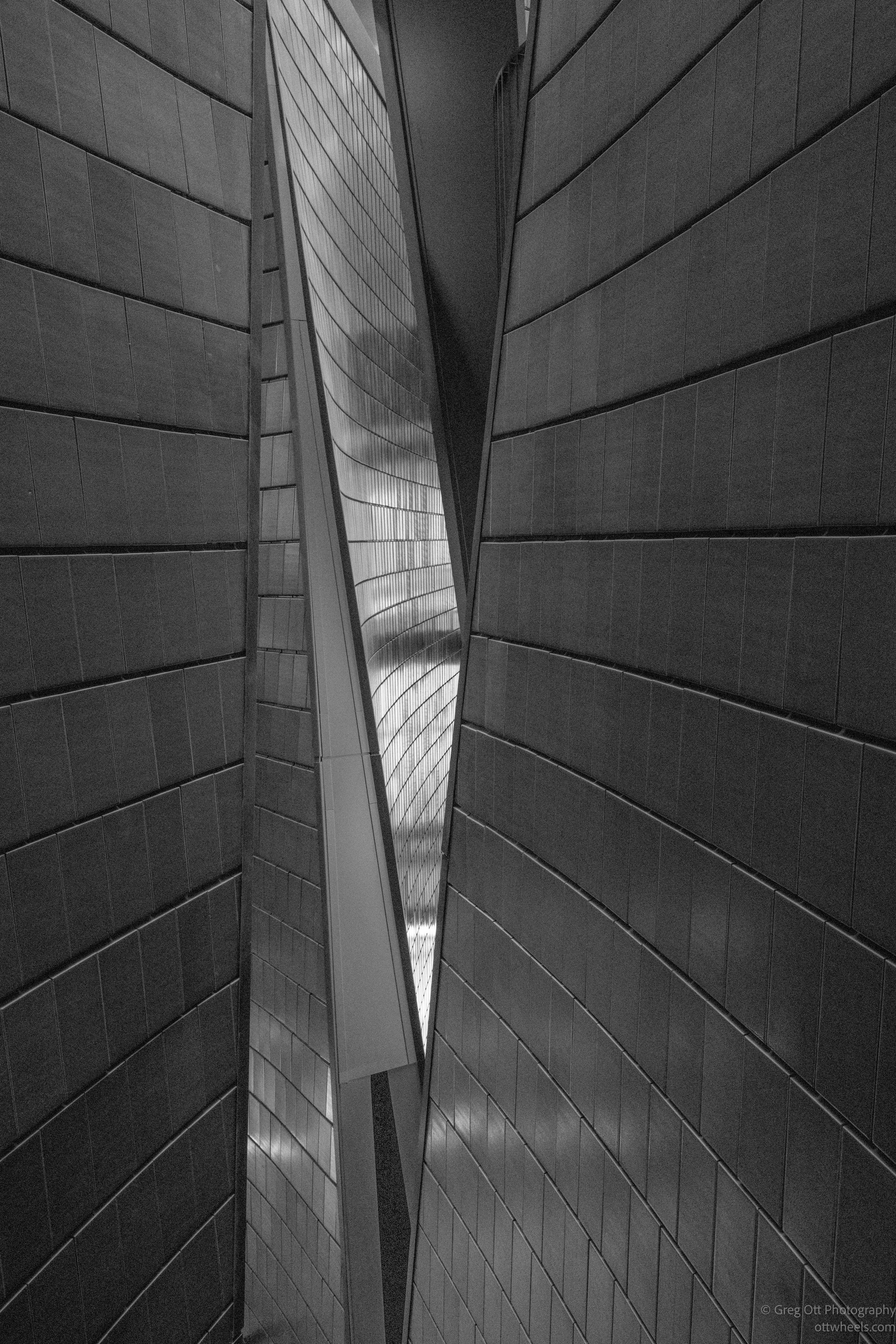
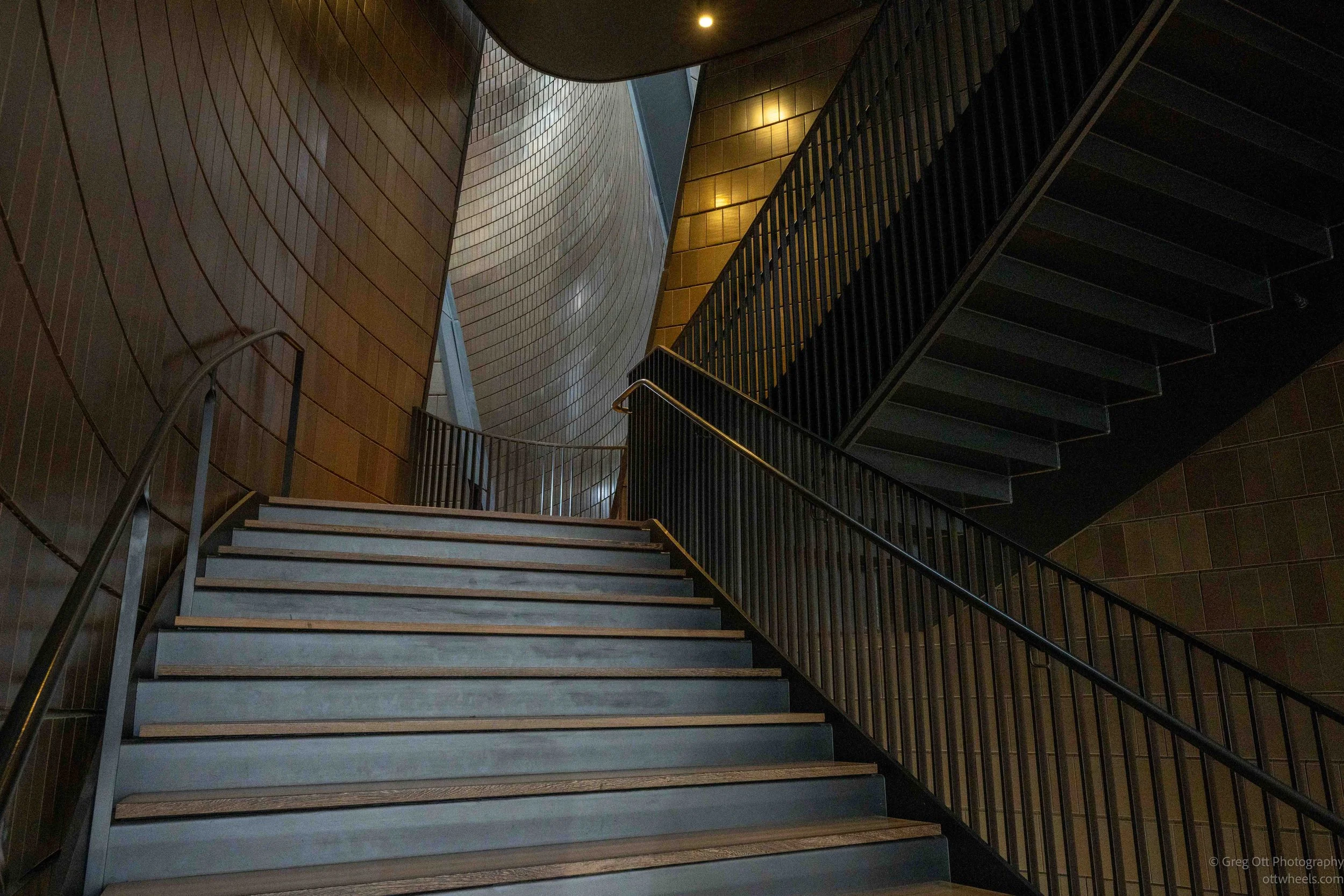
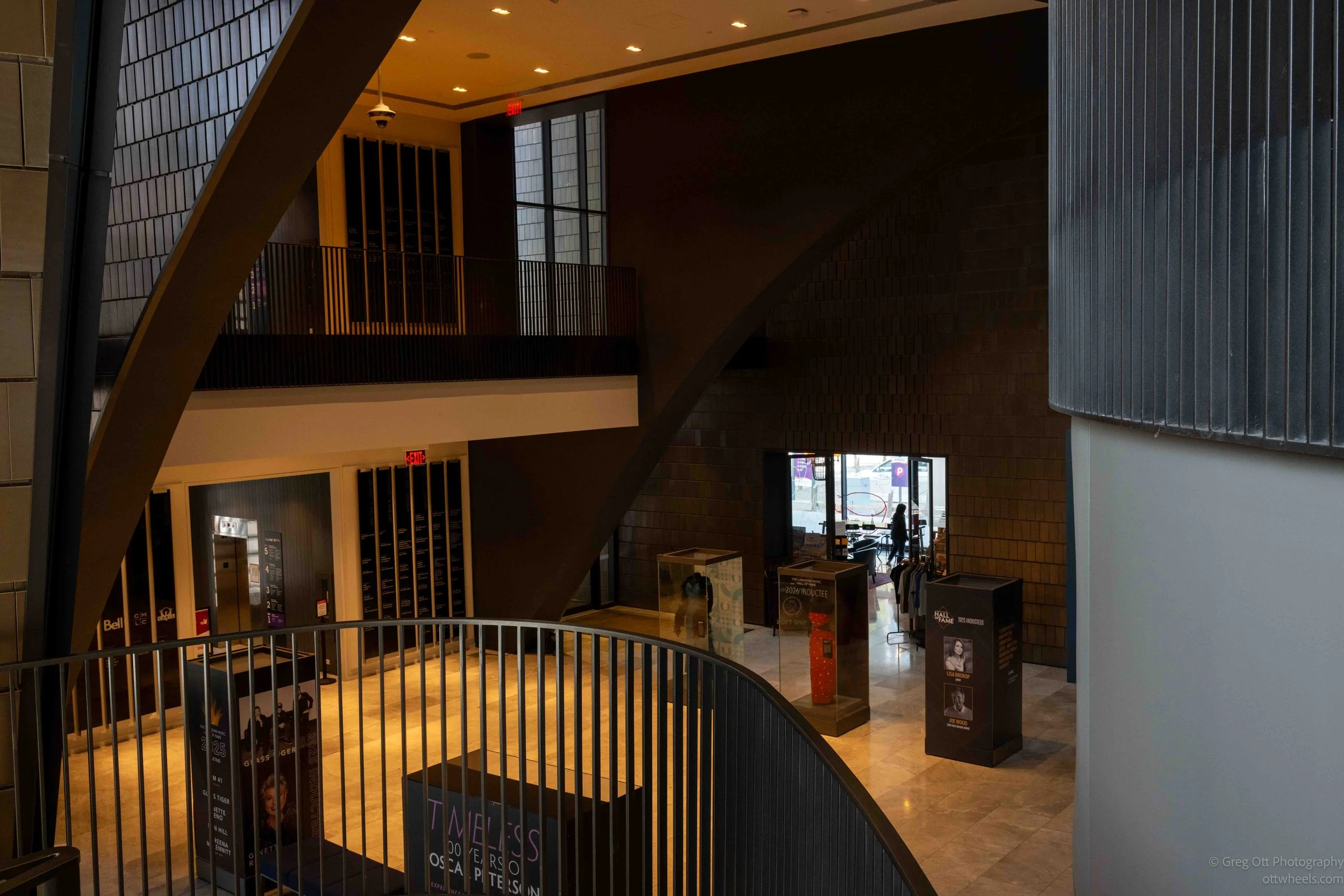
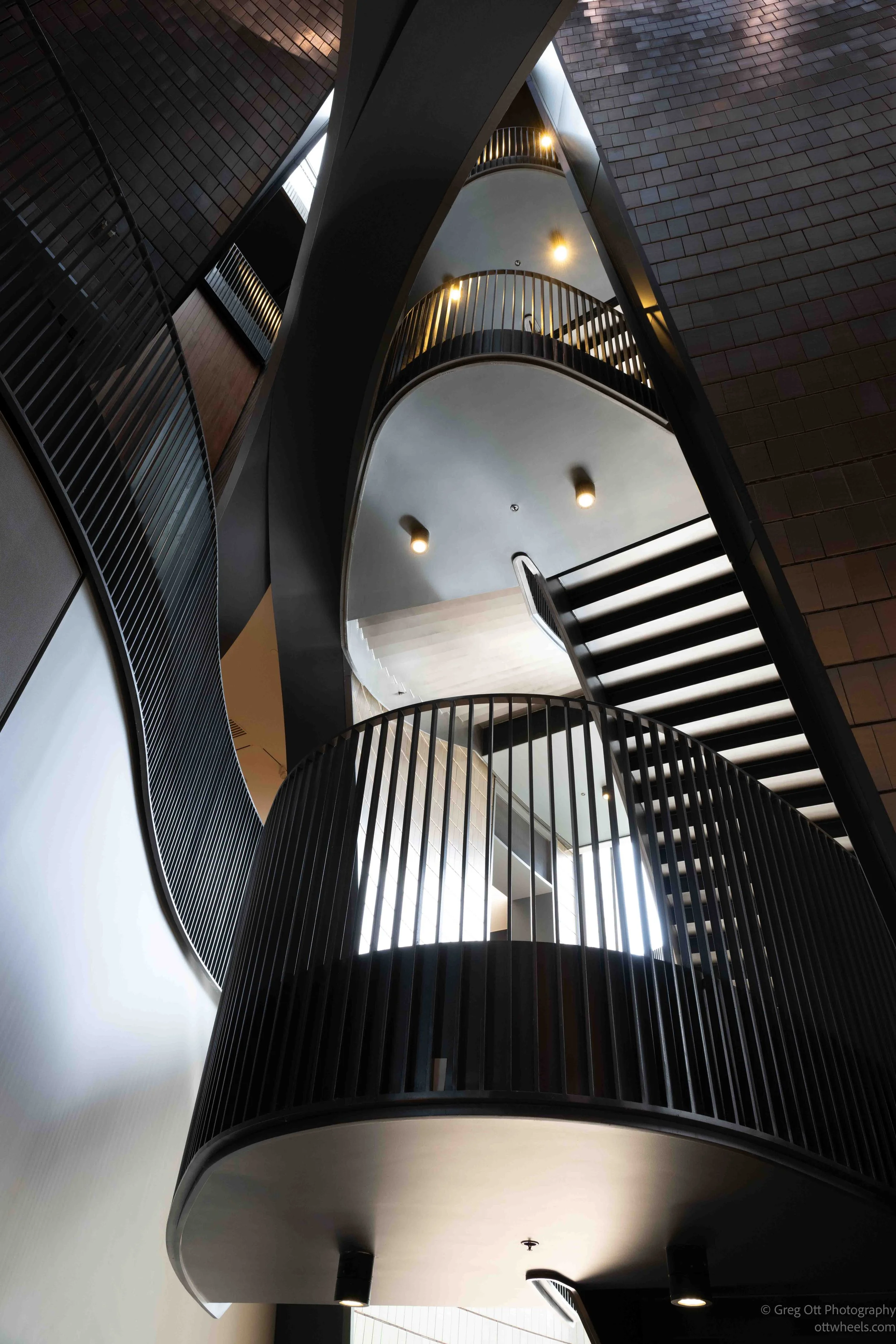
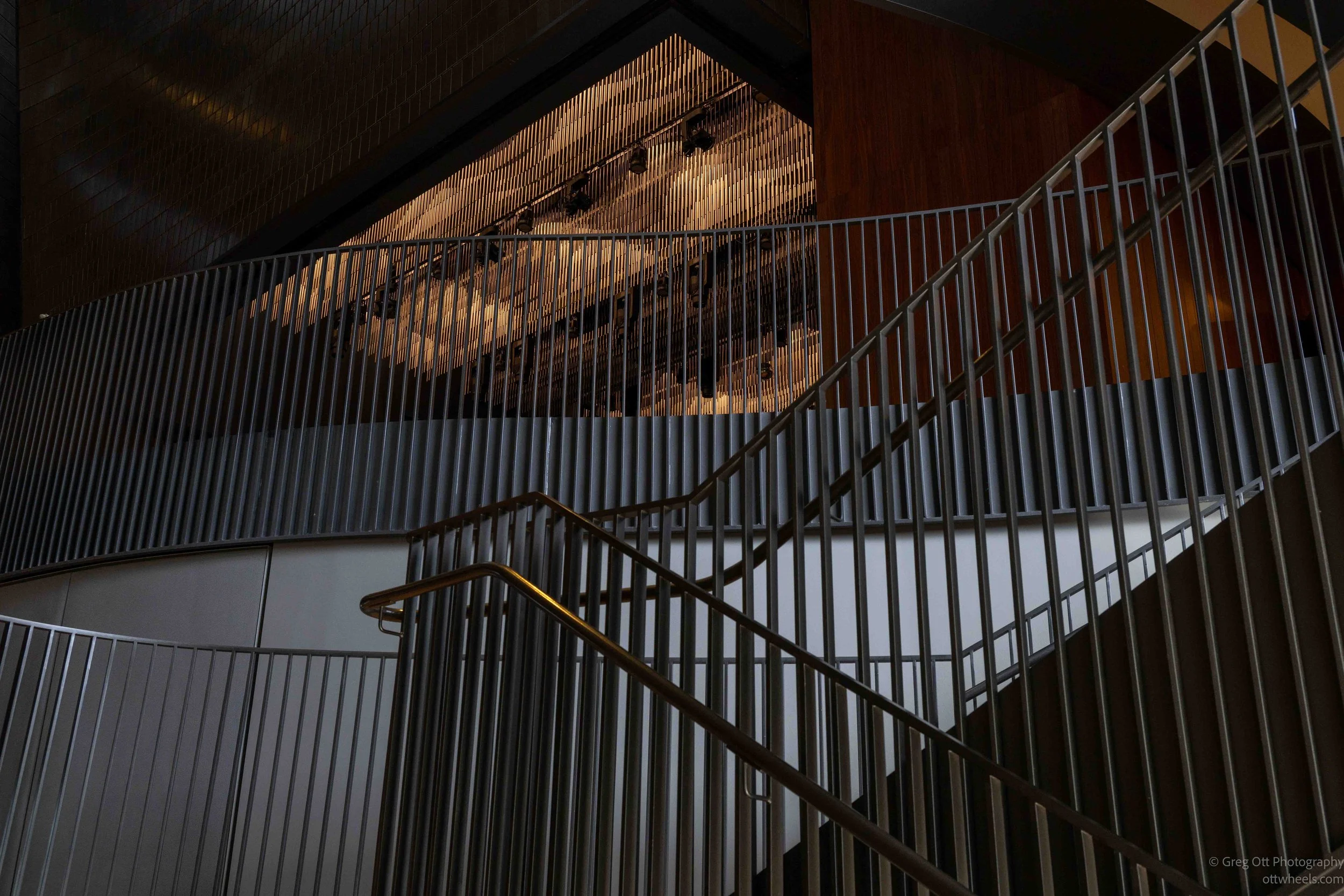
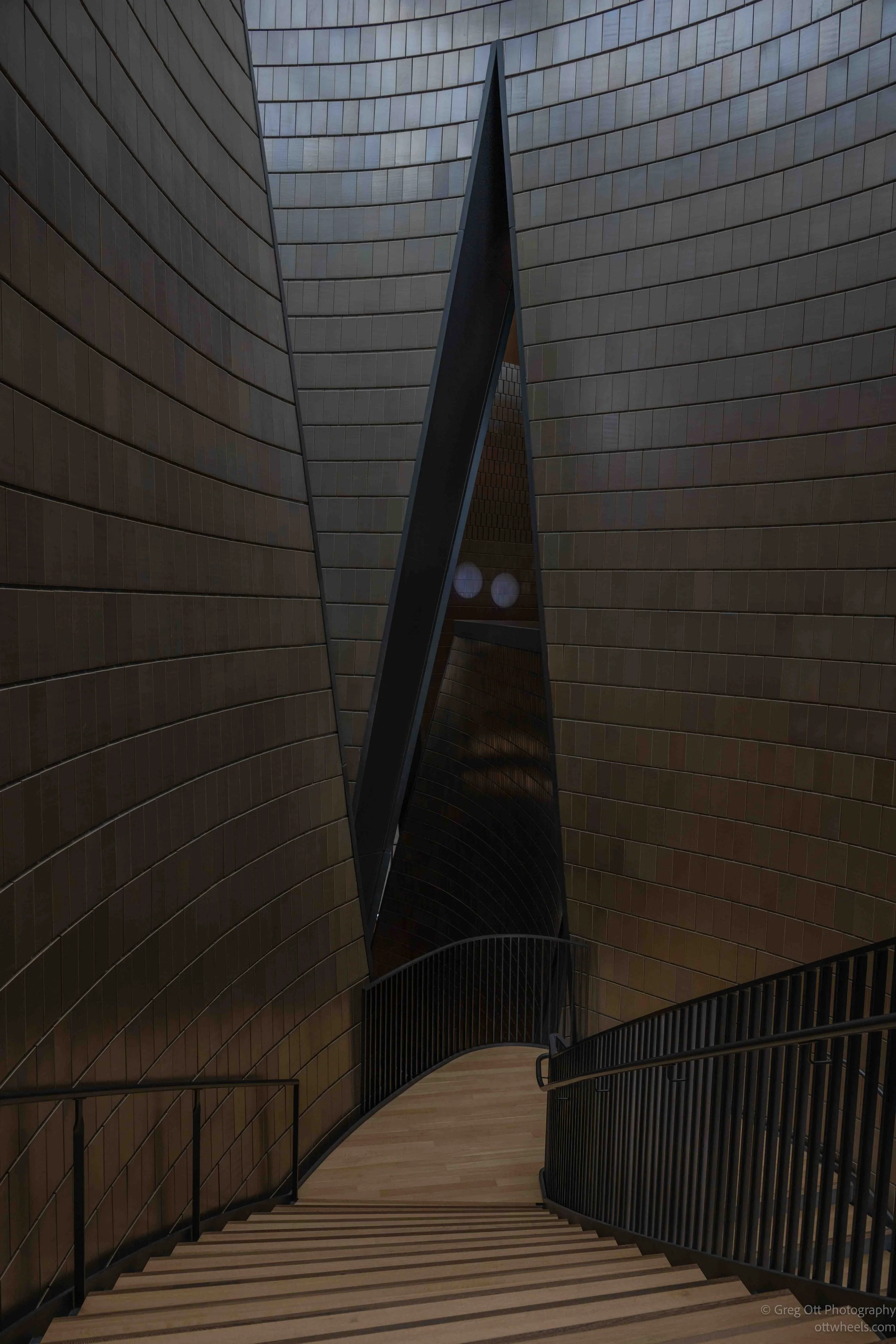
I hadn't made it very far before the building itself started competing with the museum for my attention. Studio Bell (architecture) is five stories of exhibition space built within nine curved, interlocking towers (Where is the book on this building?). The walls are covered in glazed terra cotta and seem to bend, separate and come back together as you move through the building. The architect, Brad Cloepfil of Allied Works Architecture, designed the towers with the shapes of resonant musical vessels in mind. I knew none of this when I walked in, much of it I had to look up later. I simply started climbing the stairs and suddenly found myself looking at the walls, openings, railings, shadows and repeating patterns instead of the exhibits.
That changed the visit for me. Everywhere I looked there seemed to be another composition. Curves crossed straight lines, dark openings were surrounded by bright walls, and stairways disappeared into strangely shaped spaces above me. Openings between the galleries provided completely different views depending on where I stood. I would walk a few steps, stop, take another photograph and then notice something else. I had come to photograph and learn about musicians and unexpectedly found myself photographing architecture.
I decided to start at the top and work my way down, so I took the stairs to the fifth floor and began with the Canadian Music Hall of Fame, the main reason I had come to Studio Bell. The level is devoted largely to Canadian music legends, with instruments, clothing, photographs and memorabilia from performers inducted into the Hall of Fame. There were names I knew immediately and others that reminded me that my knowledge of Canadian music was nowhere near as complete as I thought.
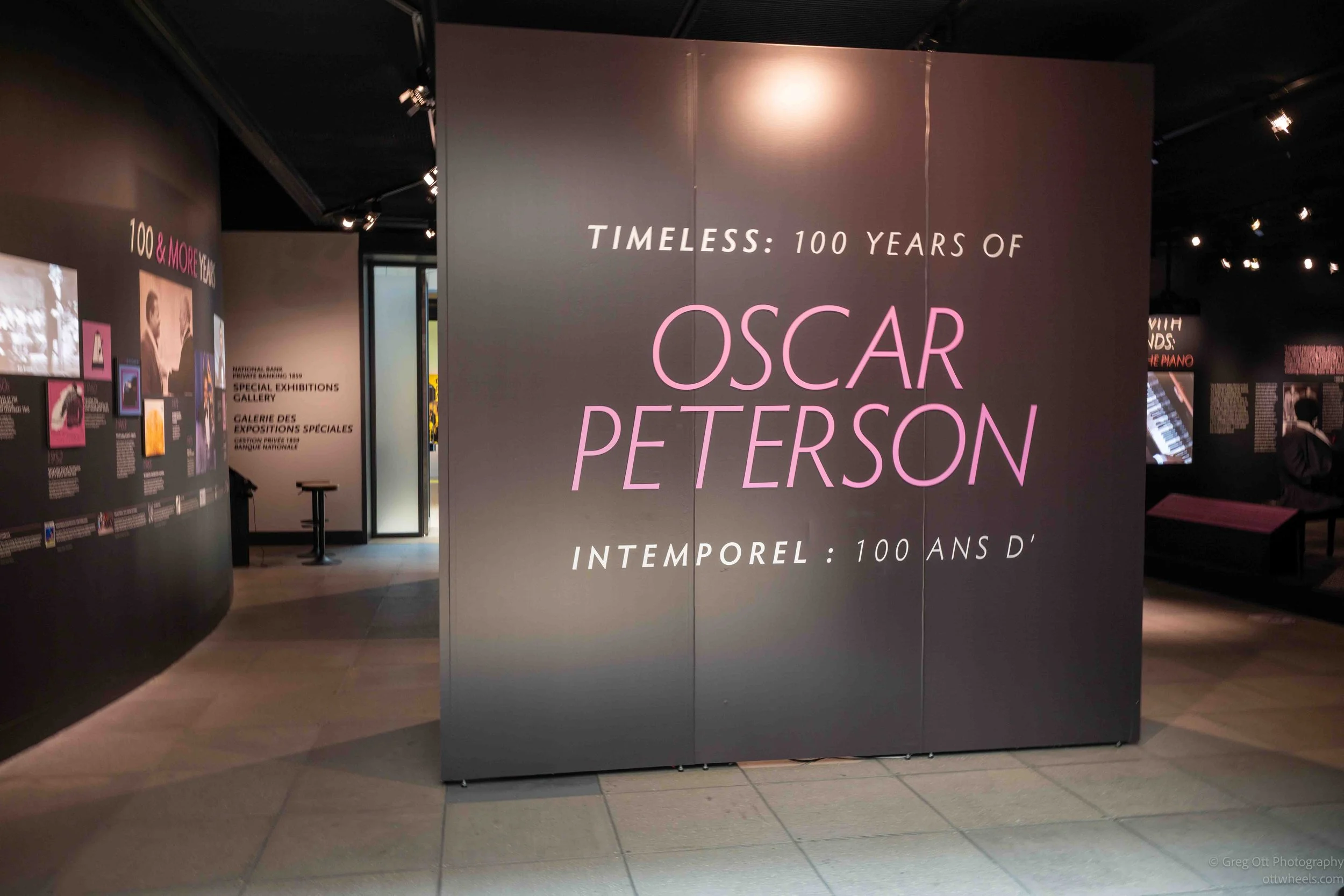
The exhibit that interested me most was Timeless: 100 Years of Oscar Peterson, created to mark what would have been Peterson's 100th birthday. I already knew quite a bit about him. Peterson was born in Montreal in 1925 and was a child prodigy who went on to become one of the great jazz pianists of the twentieth century. I had read about him over the years and listened to interviews with him.
One part of Peterson's story that has always stayed with me wasn't really developed in the exhibition. As a teenager, he wanted to leave high school and devote himself completely to music. His father agreed, but essentially made the decision conditional: if Oscar was going to quit school to become a pianist, he had to put everything he had into becoming the best pianist he possibly could be. Peterson accepted the challenge. Considering what followed, he certainly kept his end of the bargain.
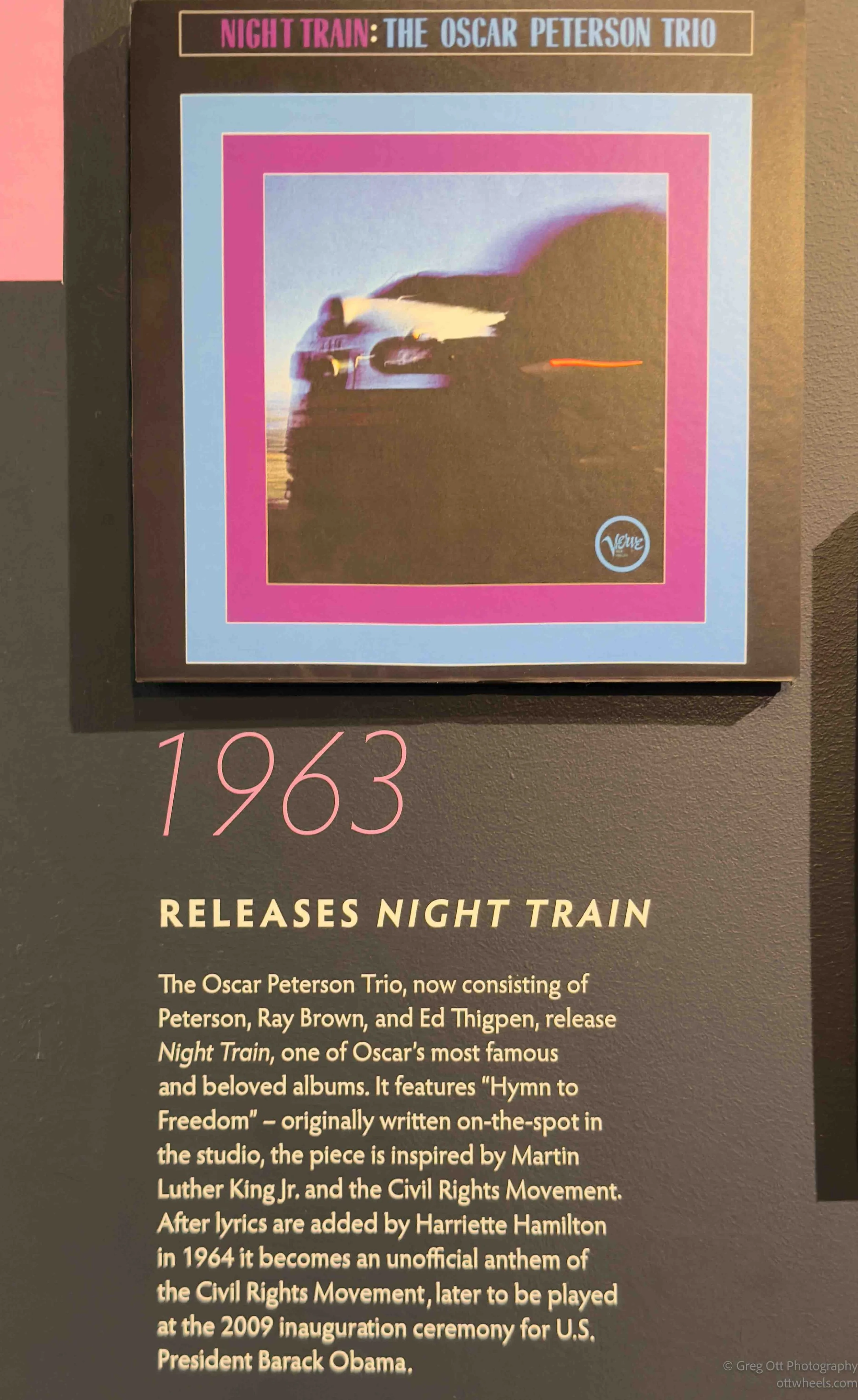
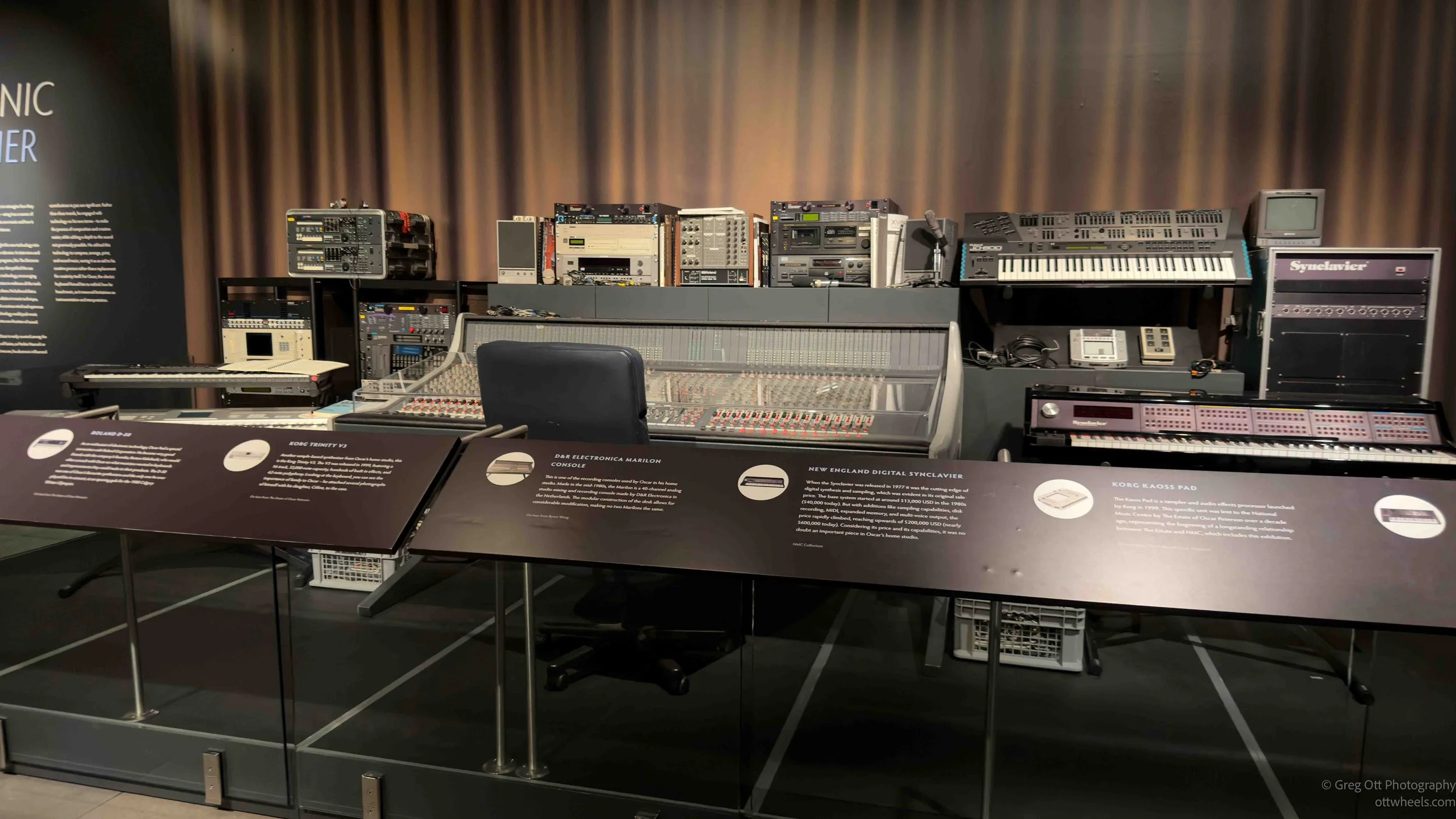
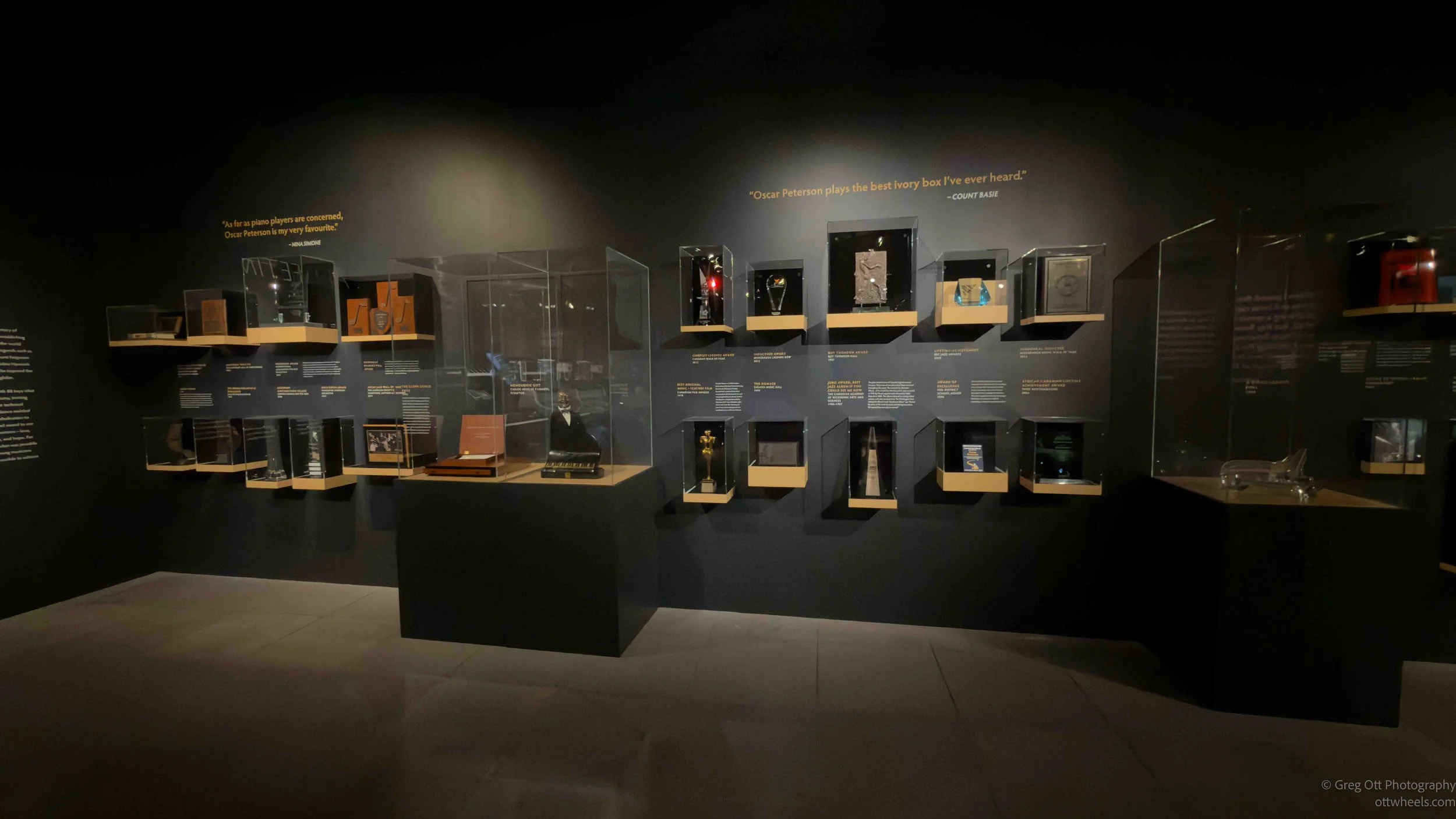
Jazz had been a big part of my life for decades. When I lived near Washington, D.C., I saw some of the great jazz musicians perform at One Step Down, a small jazz club that became one of my favorite places to hear live music. Later, I tried to give my kids some appreciation for jazz as well. I played CDs by Miles Davis, Stan Getz, Oscar Peterson and many of the other musicians I loved. I'm not sure how successful I was at converting them into jazz fans, but they certainly grew up knowing the music. The exhibition filled in pieces around music that had been part of my own listening history for years.
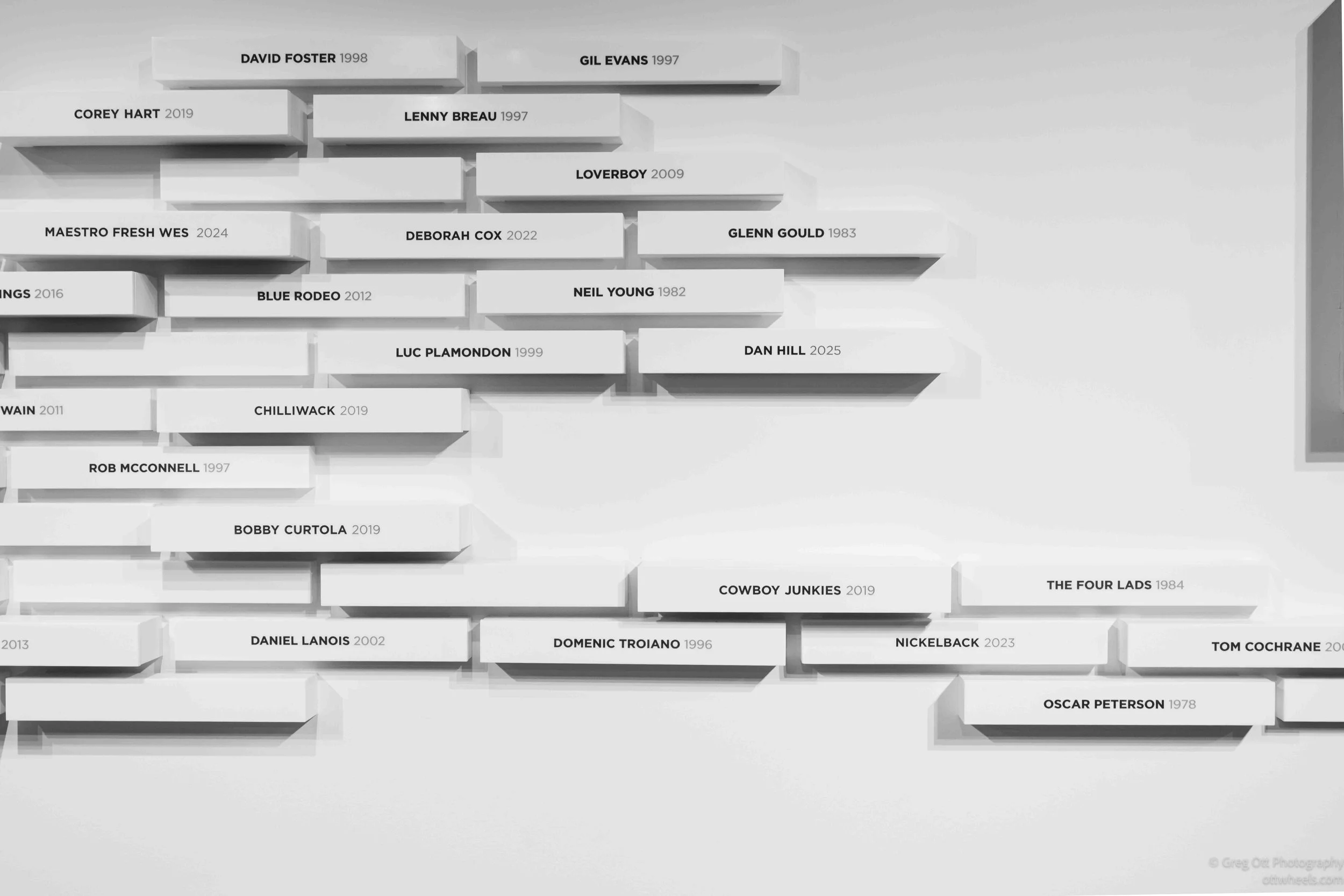
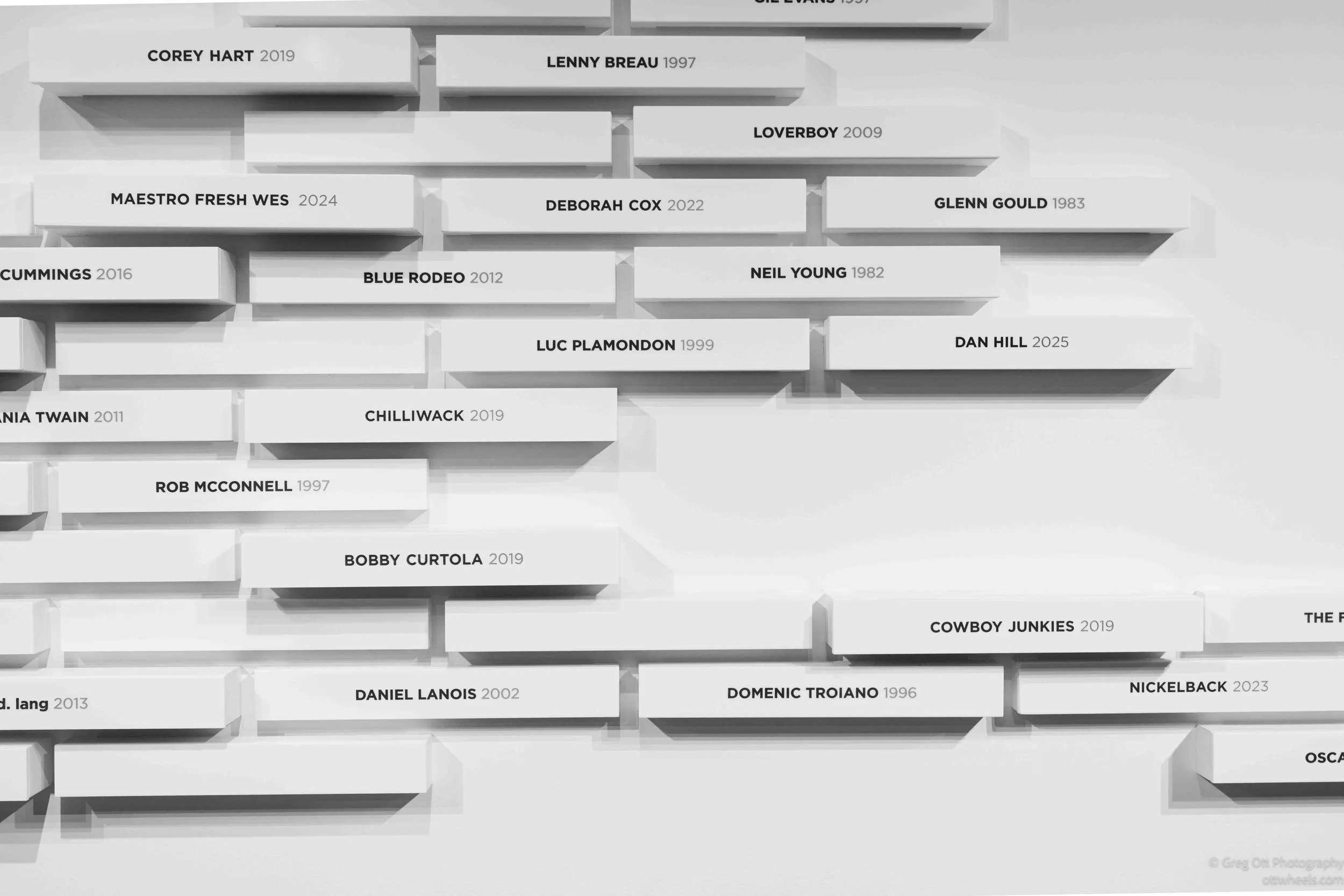
From there I started working my way down through the building. The fourth floor contains the Canadian Songwriters Hall of Fame, the Canadian Country Music Hall of Fame and the ADISQ Hall of Fame, which recognizes musicians from Quebec. The songwriting section was particularly interesting because it brought together so many musicians and songs I had known for years. Seeing names such as Joni Mitchell, Leonard Cohen, Neil Young and Gordon Lightfoot together also made it obvious just how much influence Canadian musicians have had far beyond Canada.
As I continued downward, I also started realizing how many musicians I had listened to for much of my life were Canadian. Some I had always known were Canadian, while others I had simply thought of as part of the North American music I grew up with. For some reason, I assumed Leonard Cohen was a New Yorker. Walking through the exhibits and repeatedly coming across familiar names gave me a much better appreciation for how much Canadian musicians had contributed to the music I listened to.
The third floor broadened the story beyond individual performers and into the relationship between music, sound and society. Some of the exhibits explored what sound actually does to us—how our brains respond to music, how it can affect memory and emotion, and how music and sound can be used therapeutically. I found this particularly interesting because I had read Oliver Sacks' Musicophilia: Tales of Music and the Brain, which explores many of these same ideas through the experiences of people whose relationships with music were altered by neurological conditions. The book wasn't mentioned anywhere in the exhibits, but I kept thinking about it as I moved through this part of the museum. Music can trigger memories that seem otherwise inaccessible, affect movement and mood, and sometimes reach people in ways that ordinary language and therapy cannot.
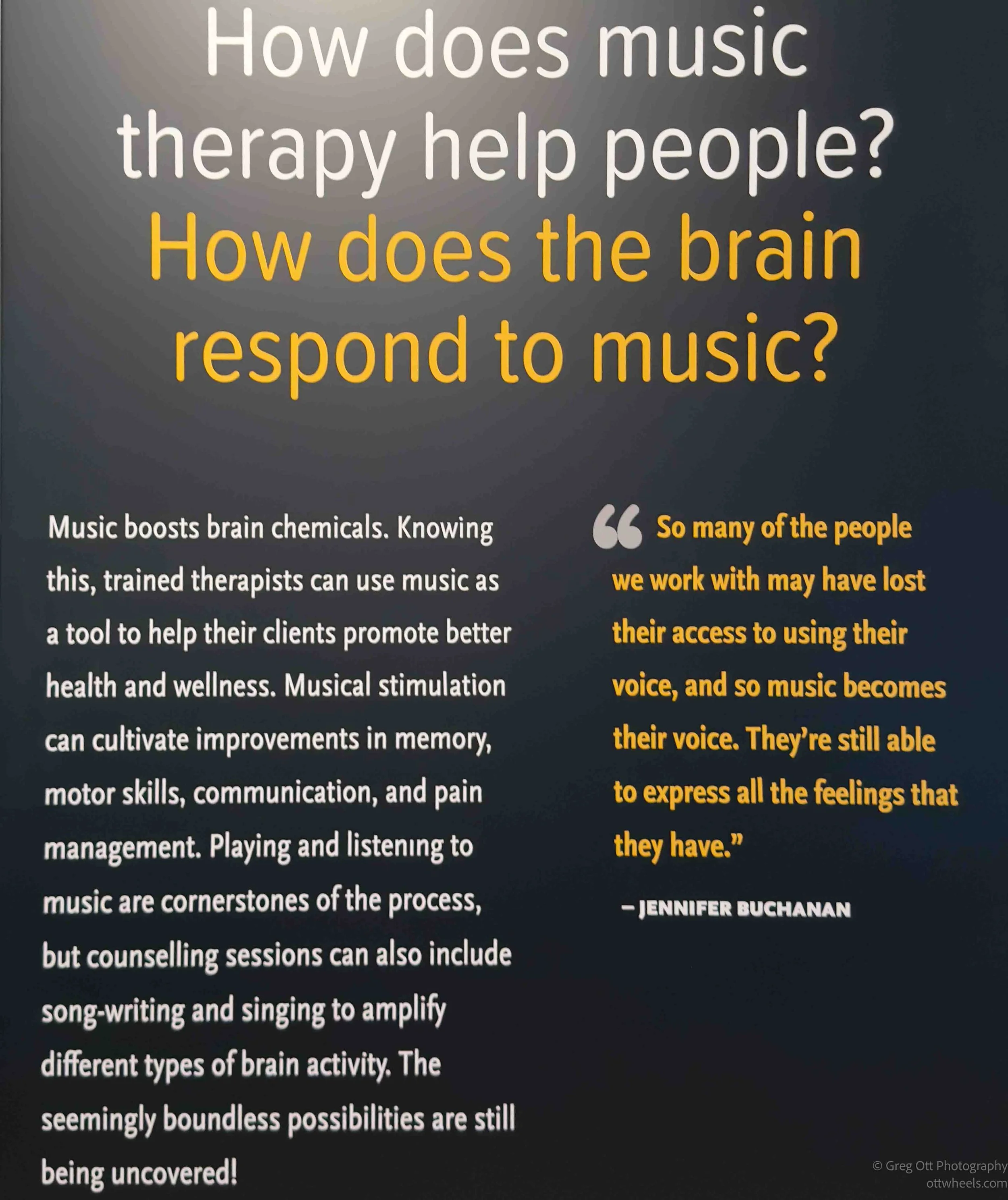
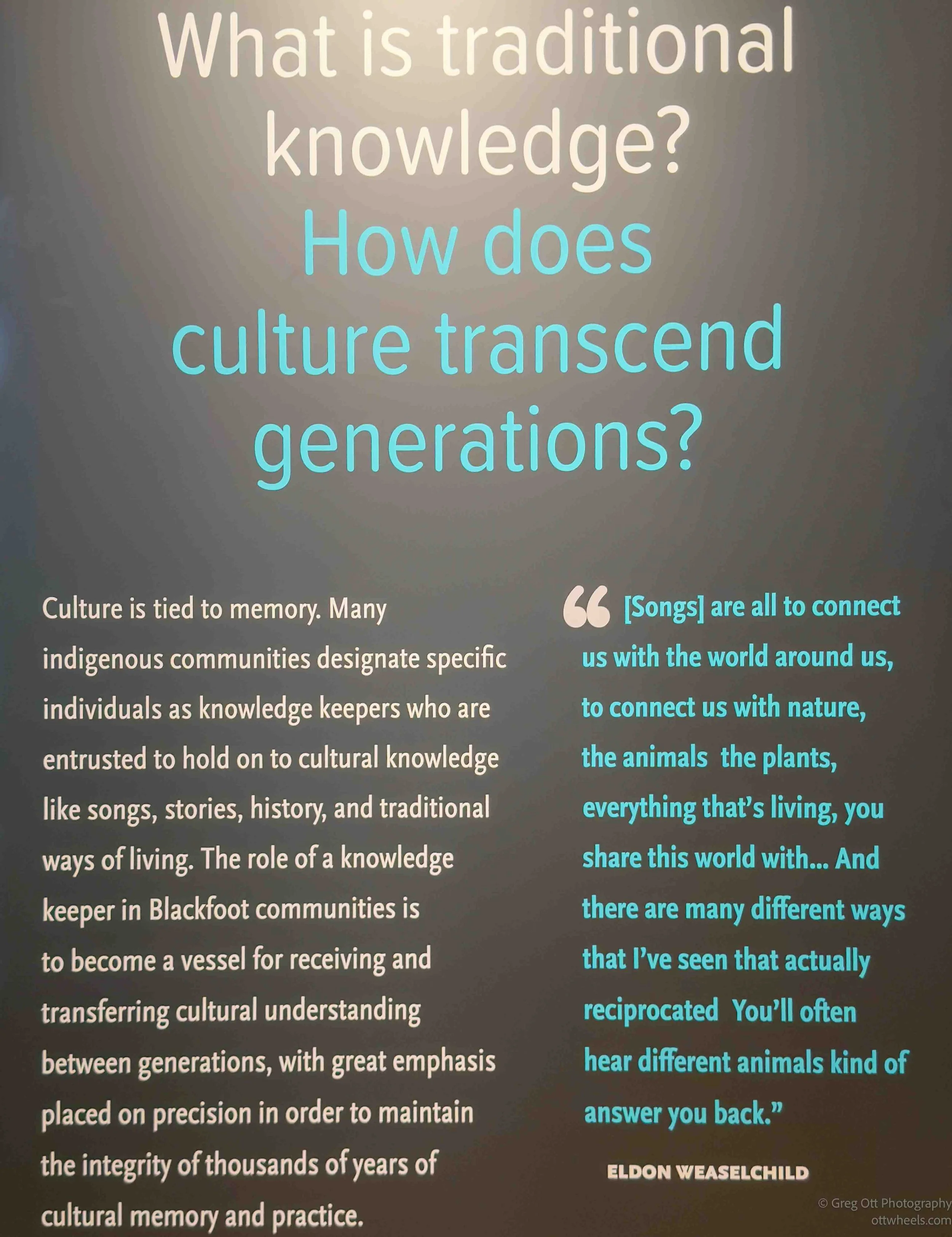
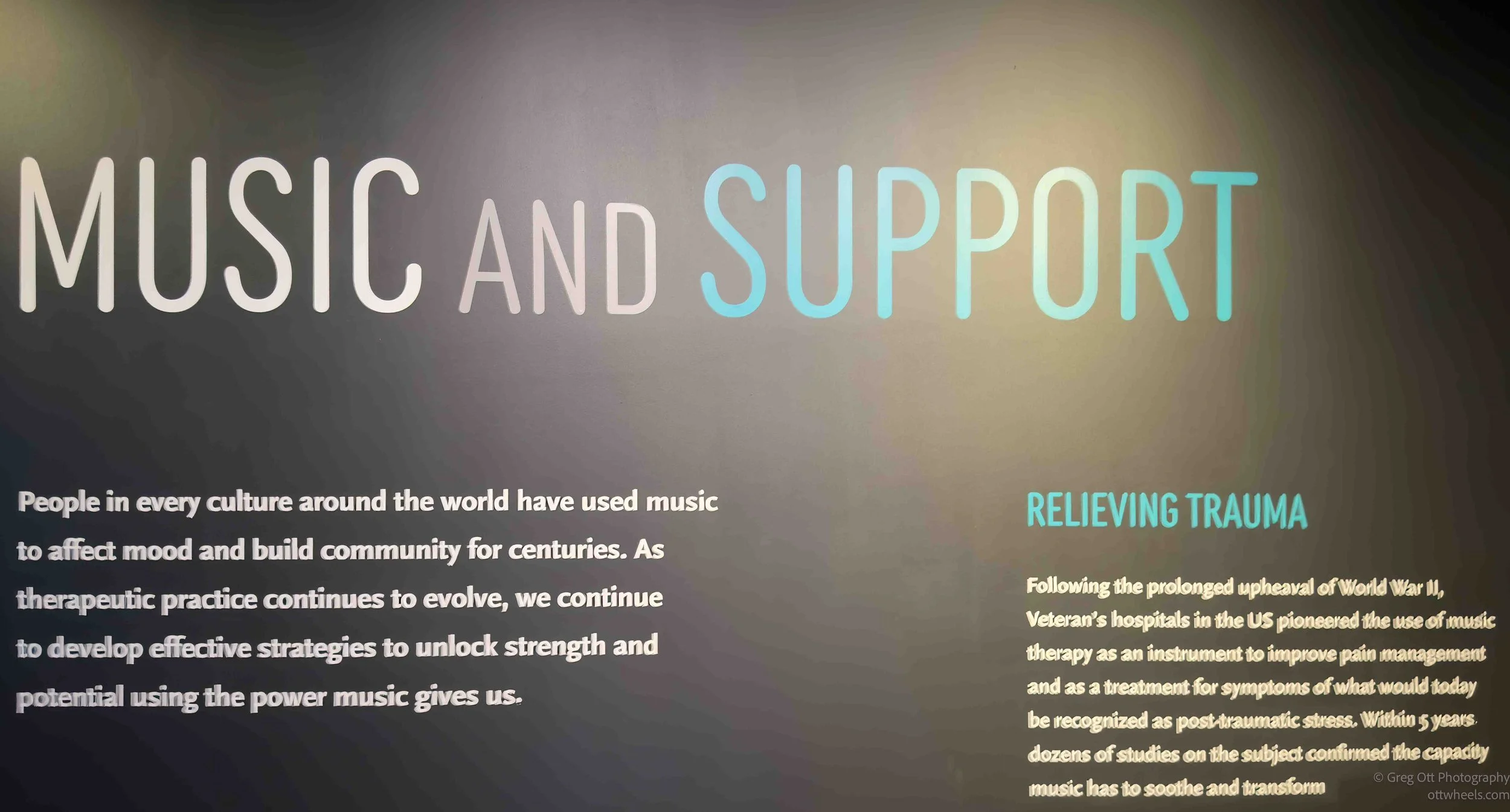
Other exhibits looked at music from a cultural and social perspective. Speak Up! focused on Indigenous musicians who have used music not simply as entertainment, but as a way to preserve culture, tell stories and address social and political issues. Taken together, the exhibits made this floor feel less like a history of musicians and instruments and more like an exploration of why music matters in the first place. It connected the physical experience of sound with memory, identity, culture and the ways people communicate with one another.
By then I was having trouble deciding whether I was looking at the exhibits or the building. Moving downward through the open interior kept giving me completely different views of the architecture. I would stop to look at an exhibit, turn around and find another combination of curves, openings, stairways, shadows and repeating patterns that I wanted to photograph. The building had become as much a part of my visit as the music.
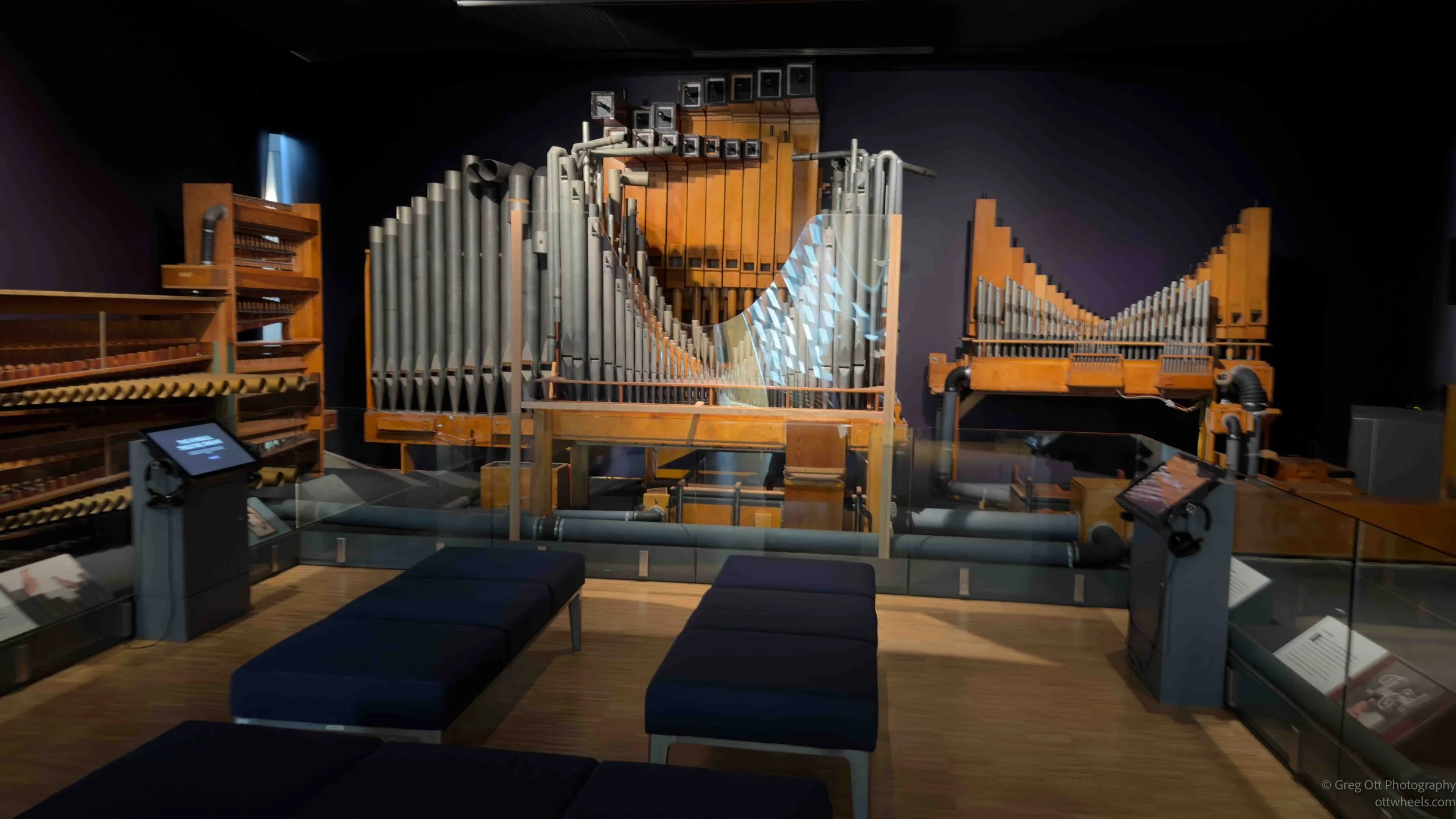
The lower levels moved more into instruments, sound and the technology used to create and record music. There were interactive exhibits where visitors could experiment with guitars, mixing equipment and vocals, along with pieces from the National Music Centre's enormous collection of musical technology. One of the more unusual objects was the massive Kimball Theatre Organ, an instrument from the silent-film era that stretches about 64 feet.
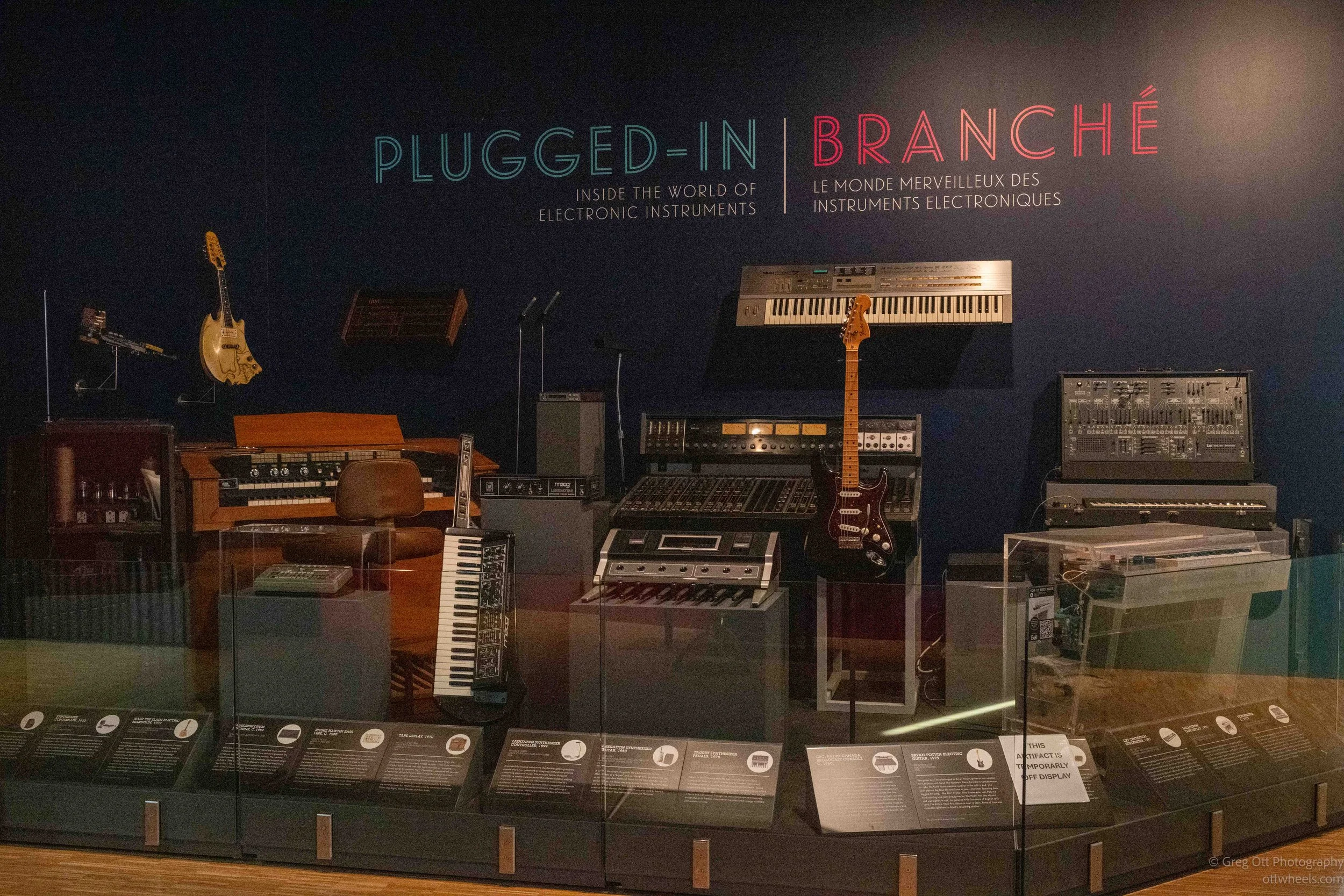
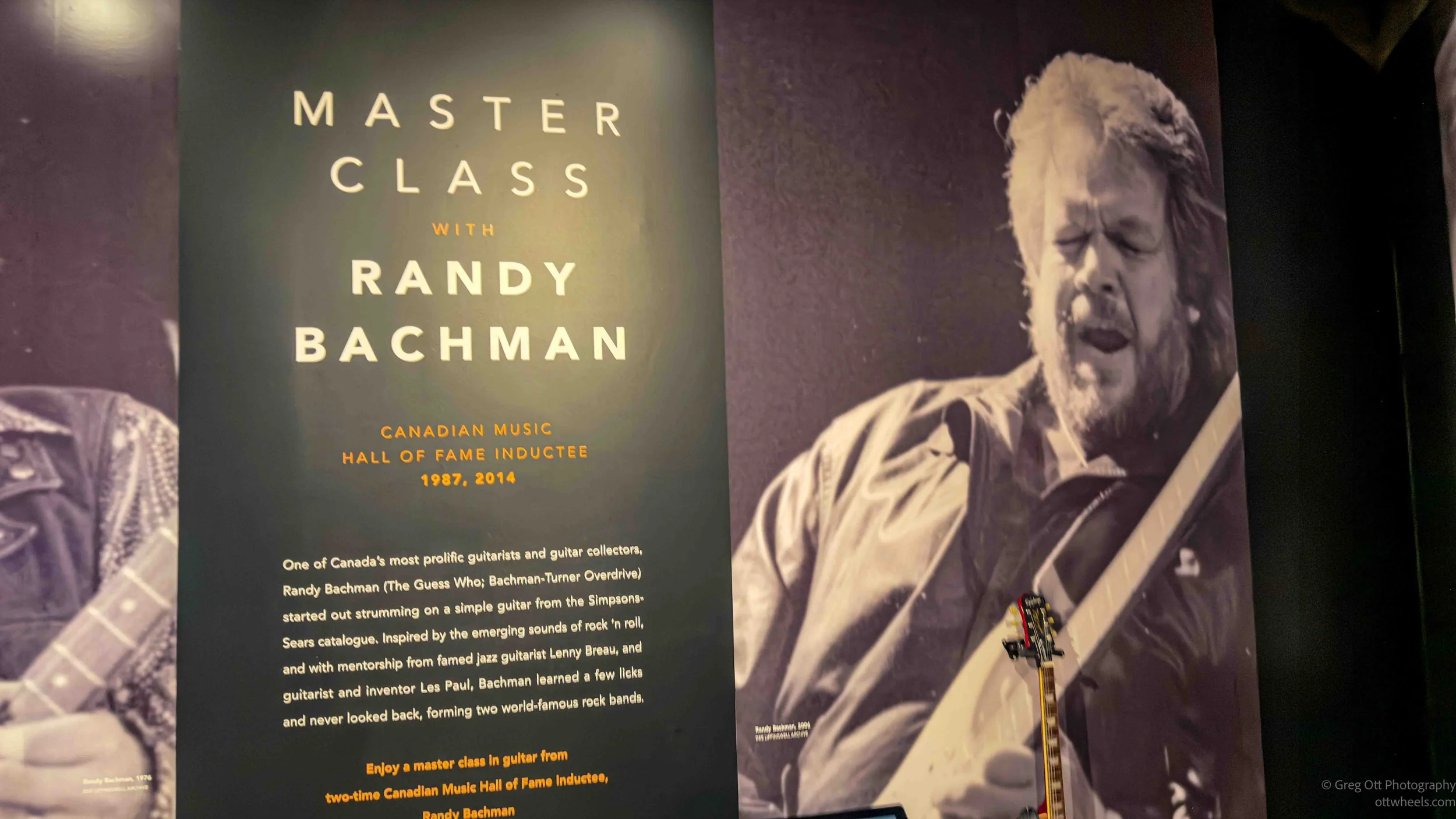
Another section explored Canadian innovations in music technology and included equipment associated with Randy Bachman and the distinctive guitar sounds of The Guess Who and Bachman-Turner Overdrive. That brought another round of recognition. I had forgotten how many of my favorite rock artists were Canadian.
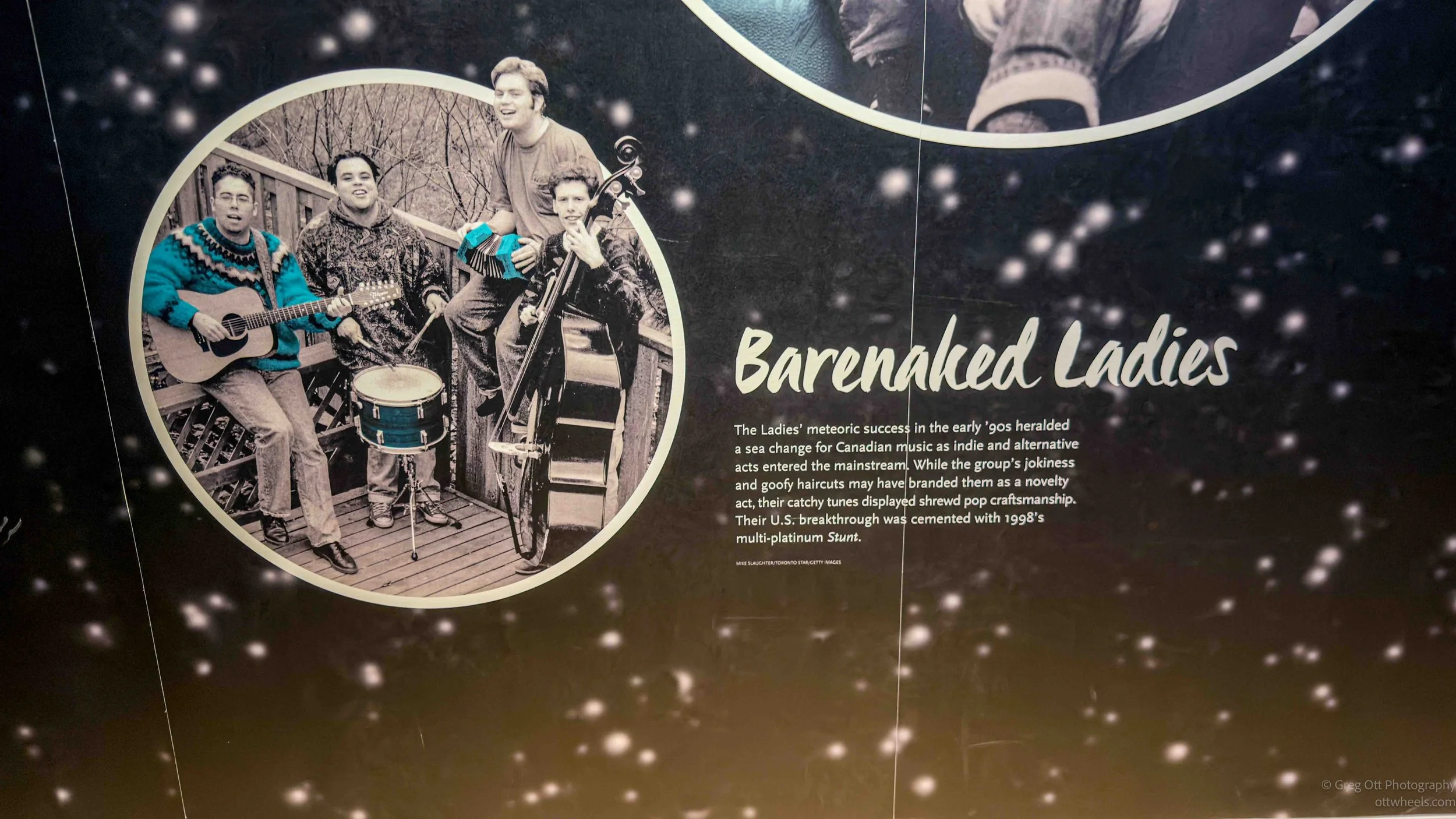
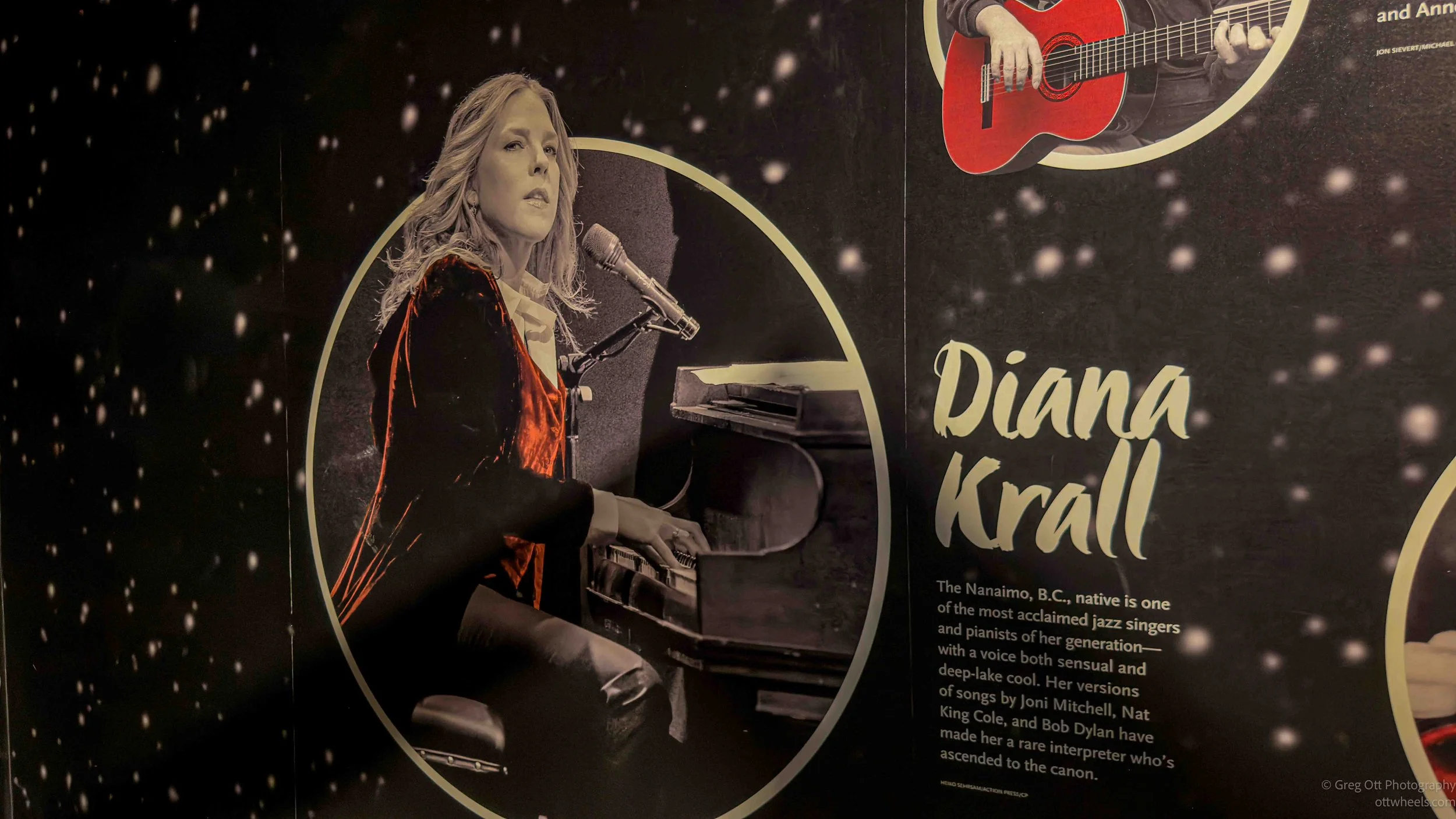
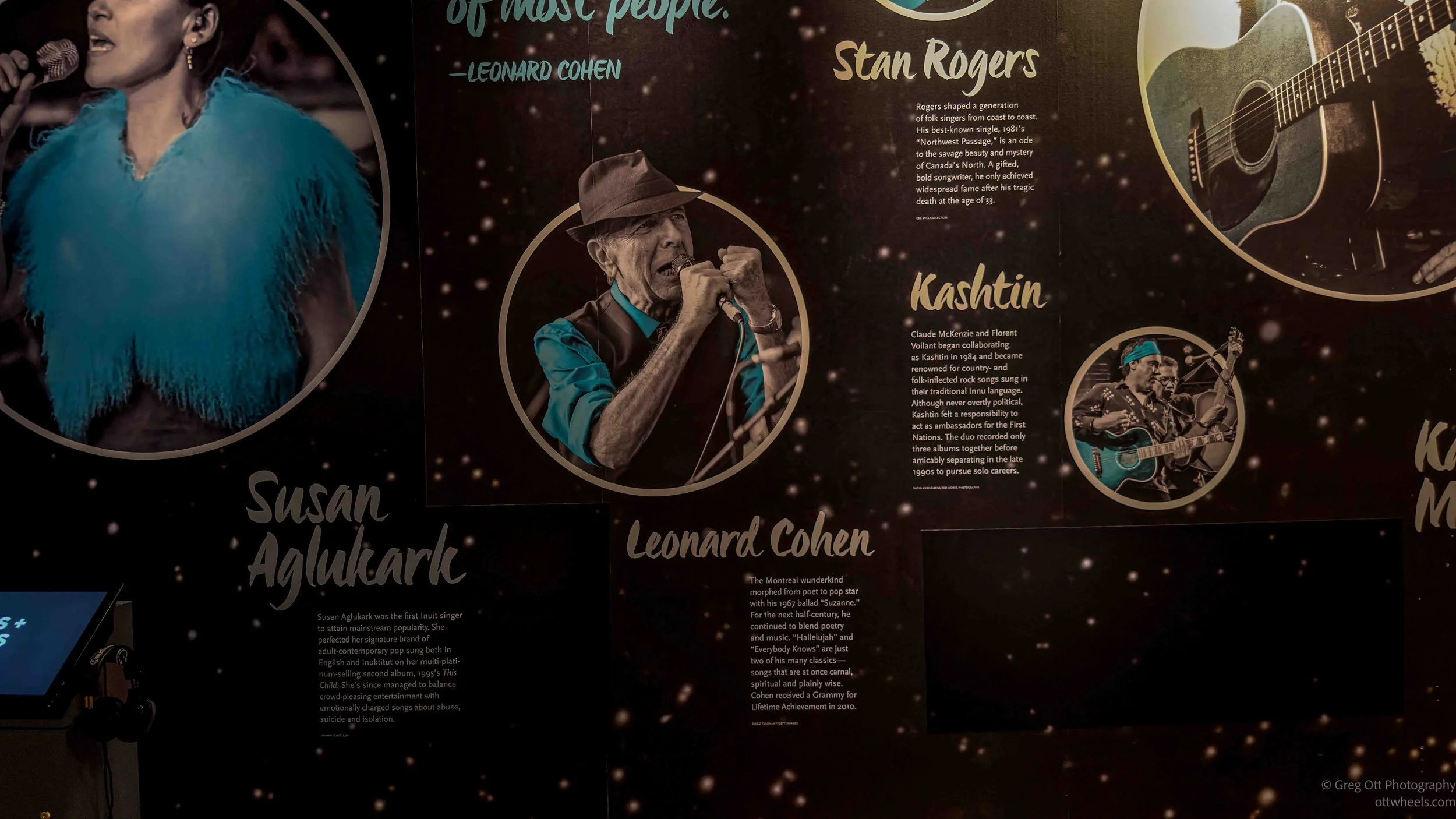
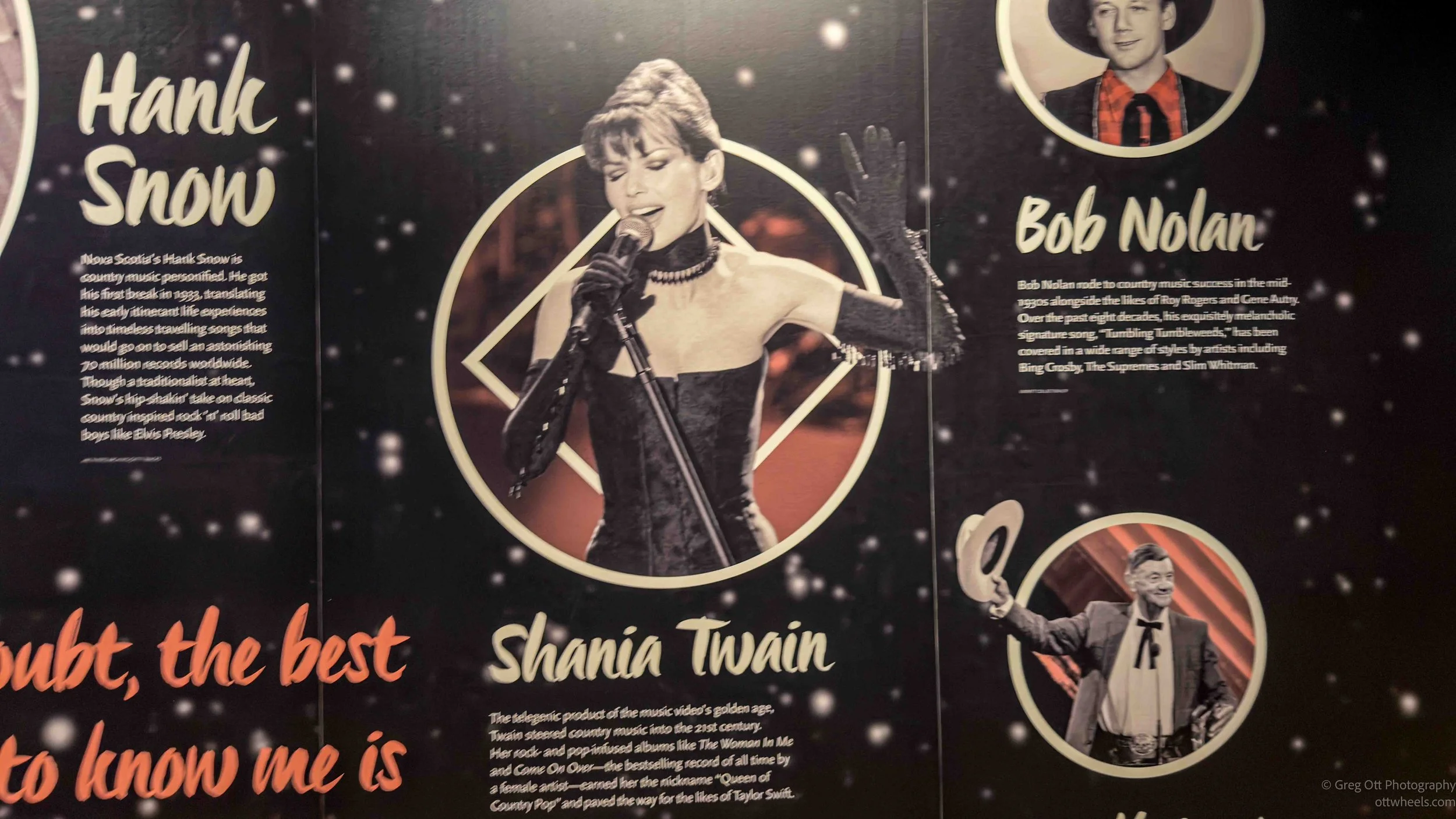
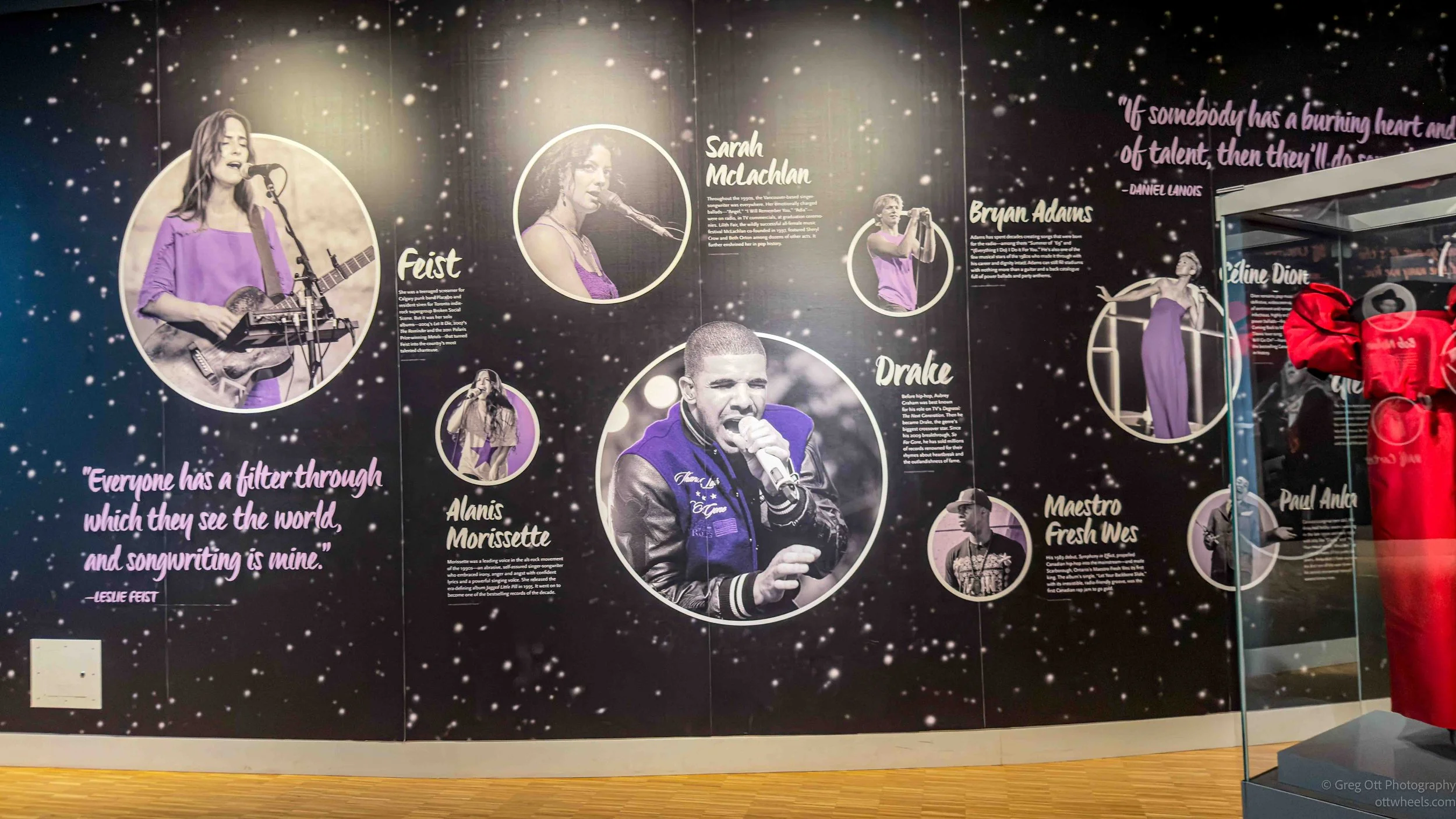
By the time I reached the bottom, Studio Bell had become two museums for me. One was the museum I had expected, filled with Canadian musicians, instruments, recording equipment and the history of music. The other was the building itself. I had walked in thinking primarily about Oscar Peterson and the Canadian Music Hall of Fame and ended up spending almost as much time looking at walls, curves, stairways, shadows and patterns. For a photographer, that was the part of Studio Bell I hadn't expected at all.
Calgary Central Library
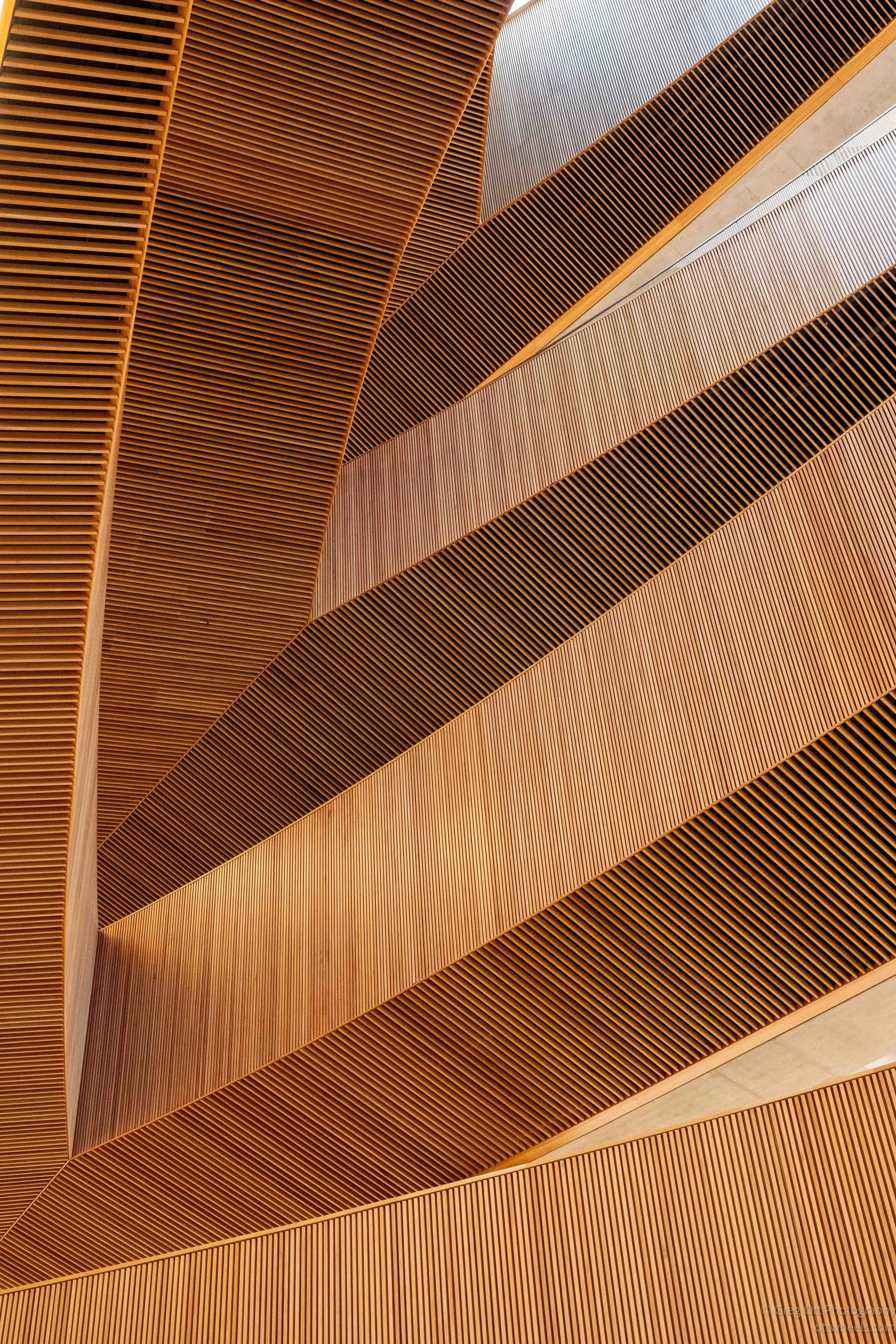
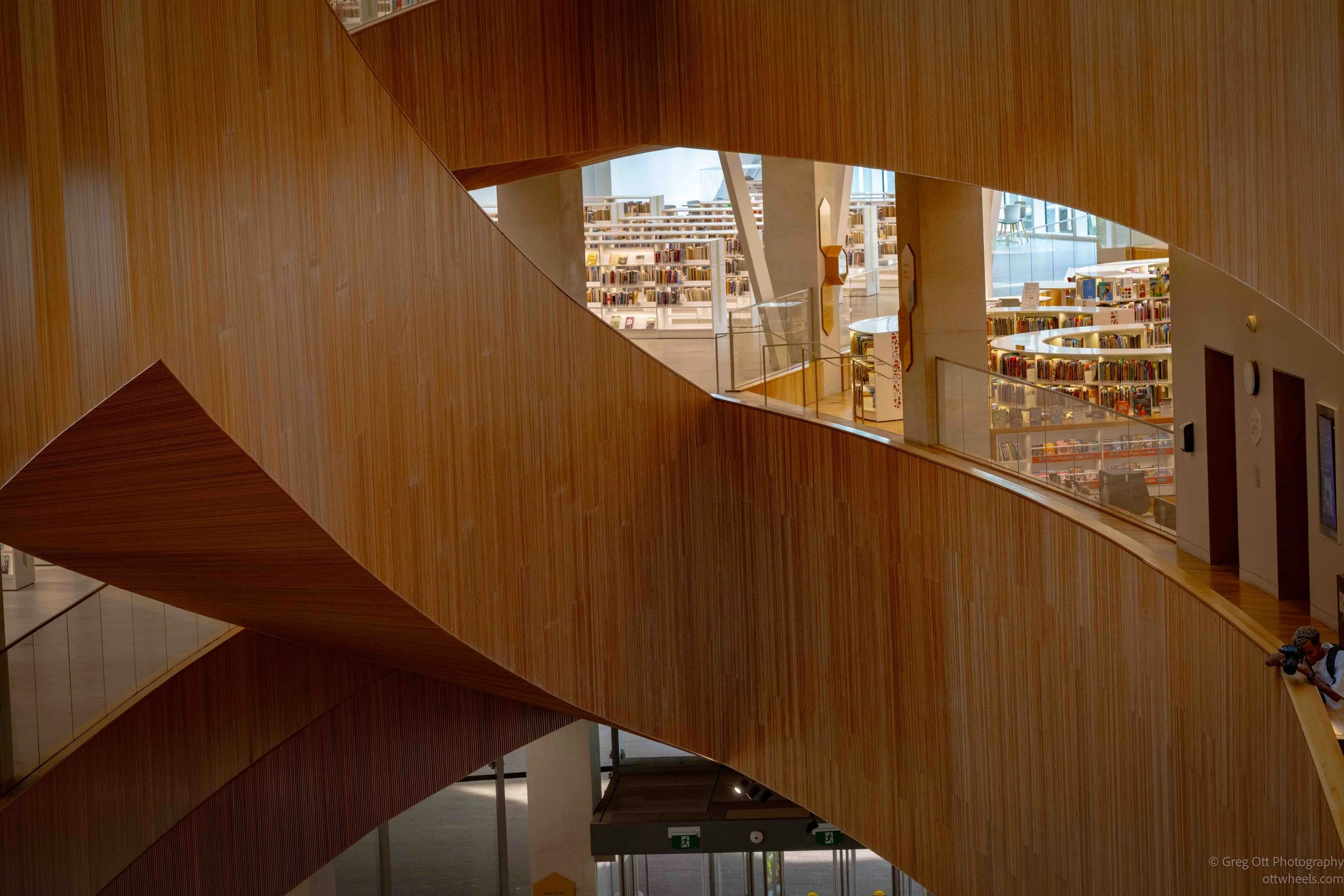
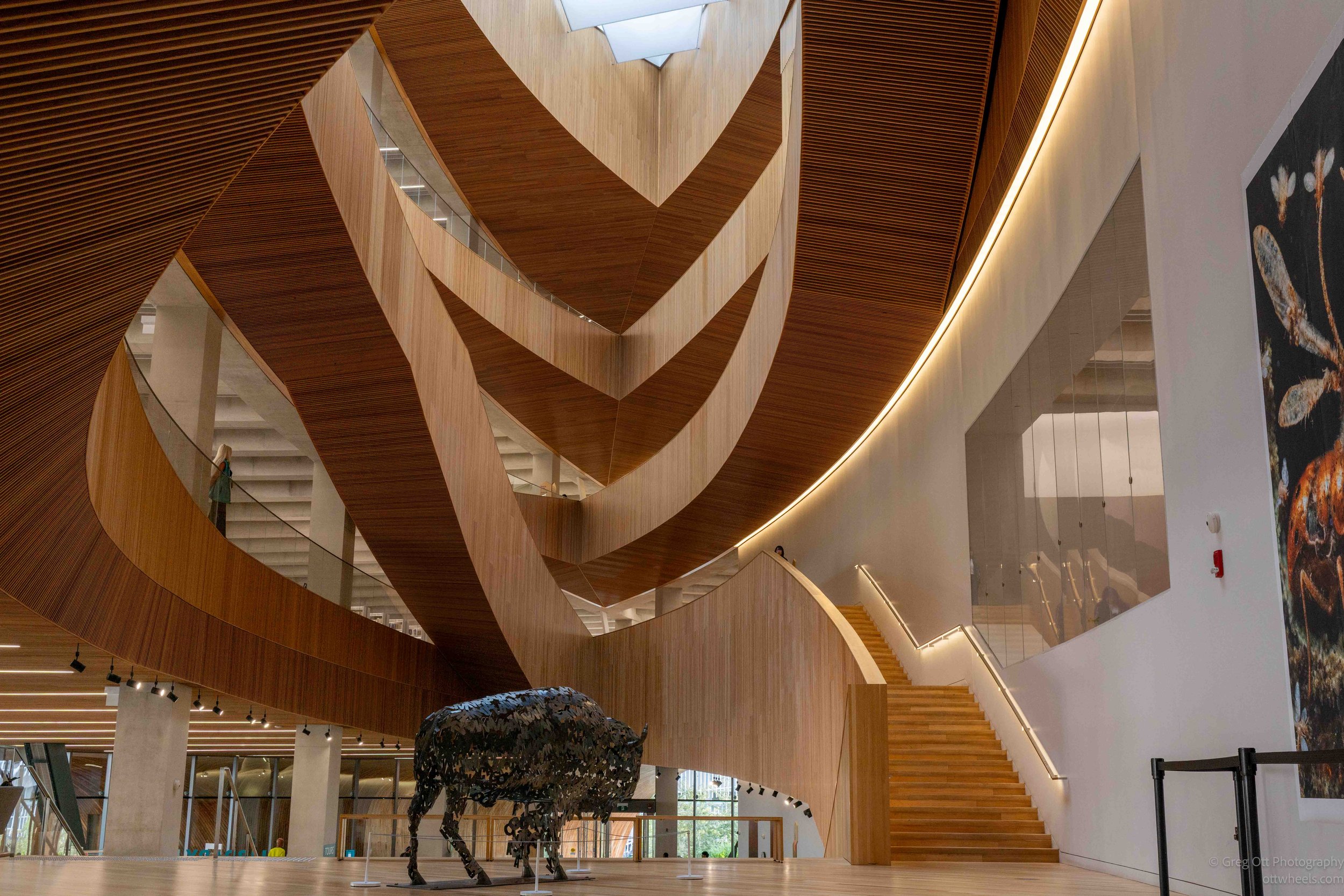
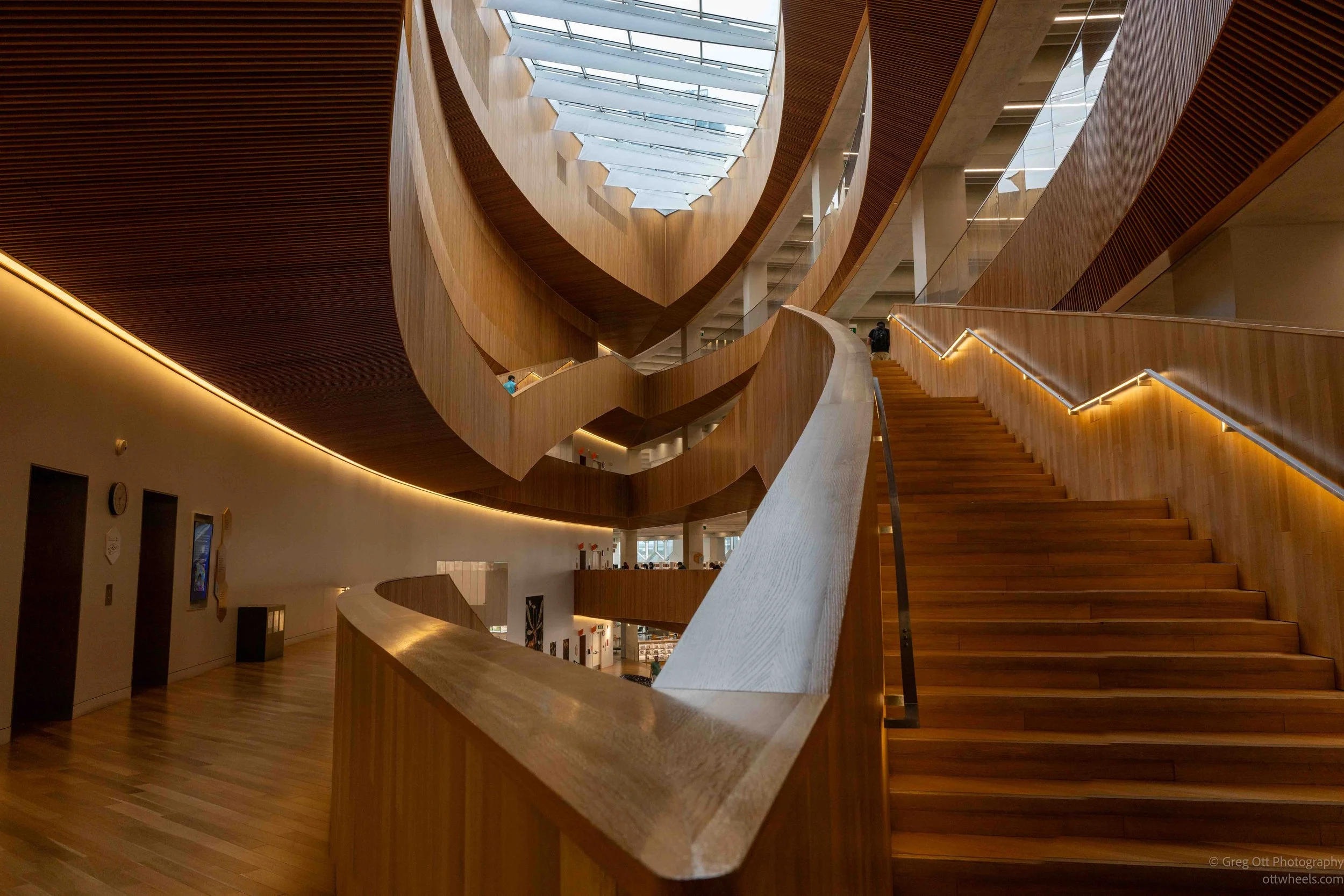
From Studio Bell, I walked over to the Calgary Central Library, another building I wanted to see primarily for its architecture. The library is one of Calgary's signature modern buildings, and it deserves to be. The sweeping wooden entrance, enormous windows and curved interior spaces make it feel more like a major cultural institution than simply a place to check out a book. Once inside, the architecture continues upward through a huge central atrium, with stairways, bridges and curved balconies creating interesting shapes and sightlines throughout the building.
Unfortunately, the area immediately surrounding the library was a very different experience. I didn't spend nearly as much time photographing the exterior as I had planned. There were a large number of homeless and visibly distressed people around the building and along the nearby streets. I passed people lying or passed out on the sidewalk, arguments taking place, people talking to objects that weren't there, and police dealing with individuals who appeared to be in serious distress. I also had several uncomfortable encounters of my own, which I don't need to recount here.
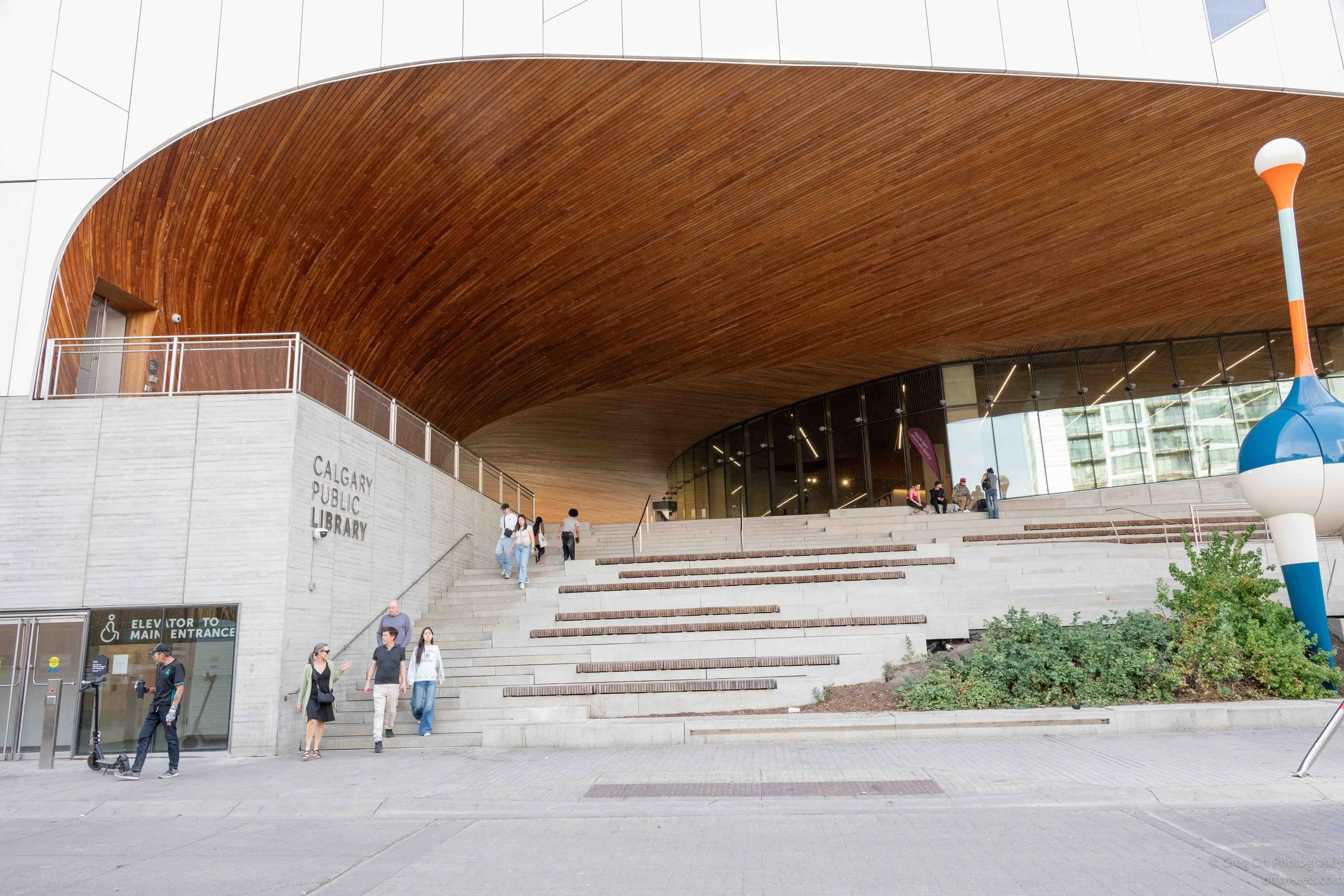
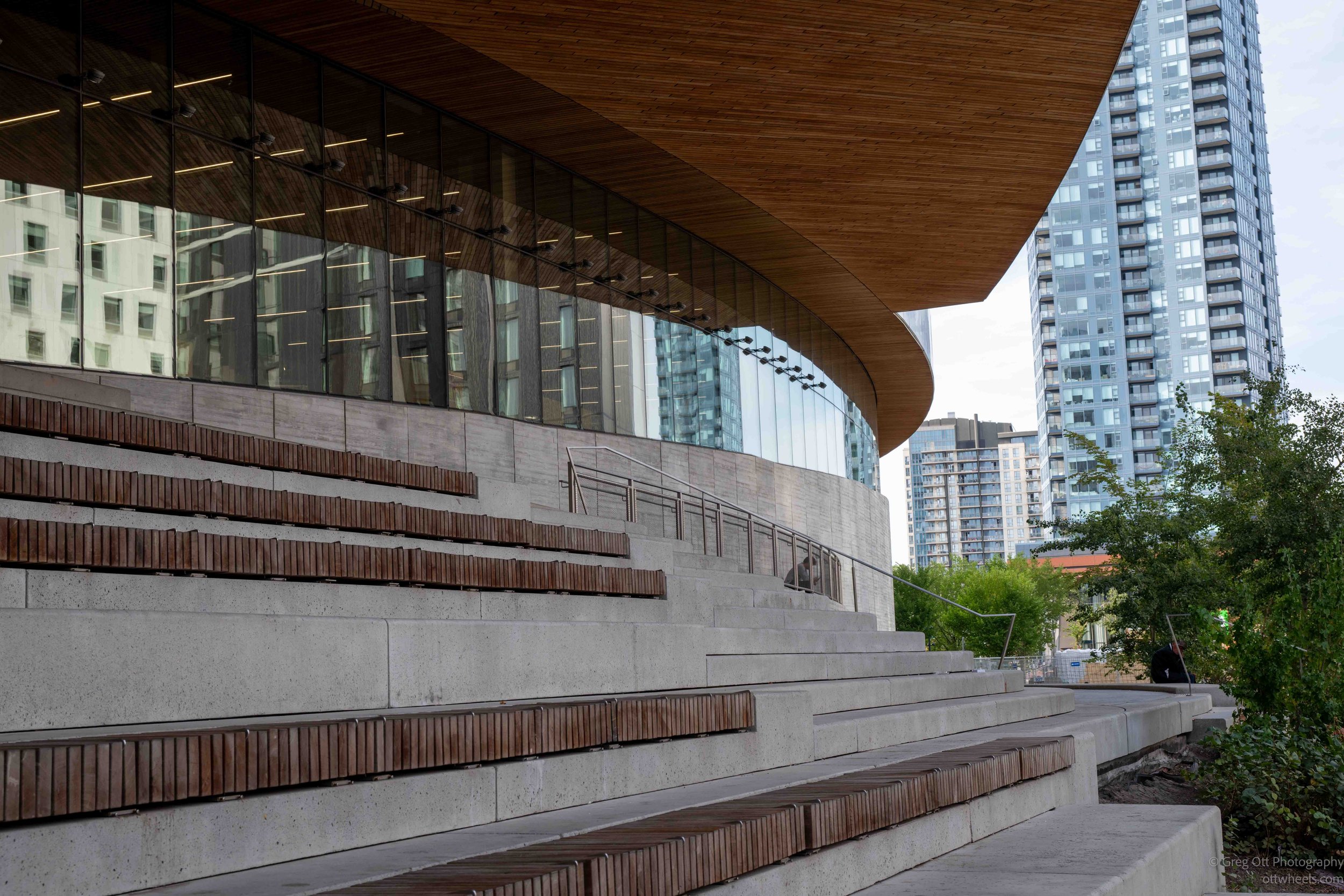
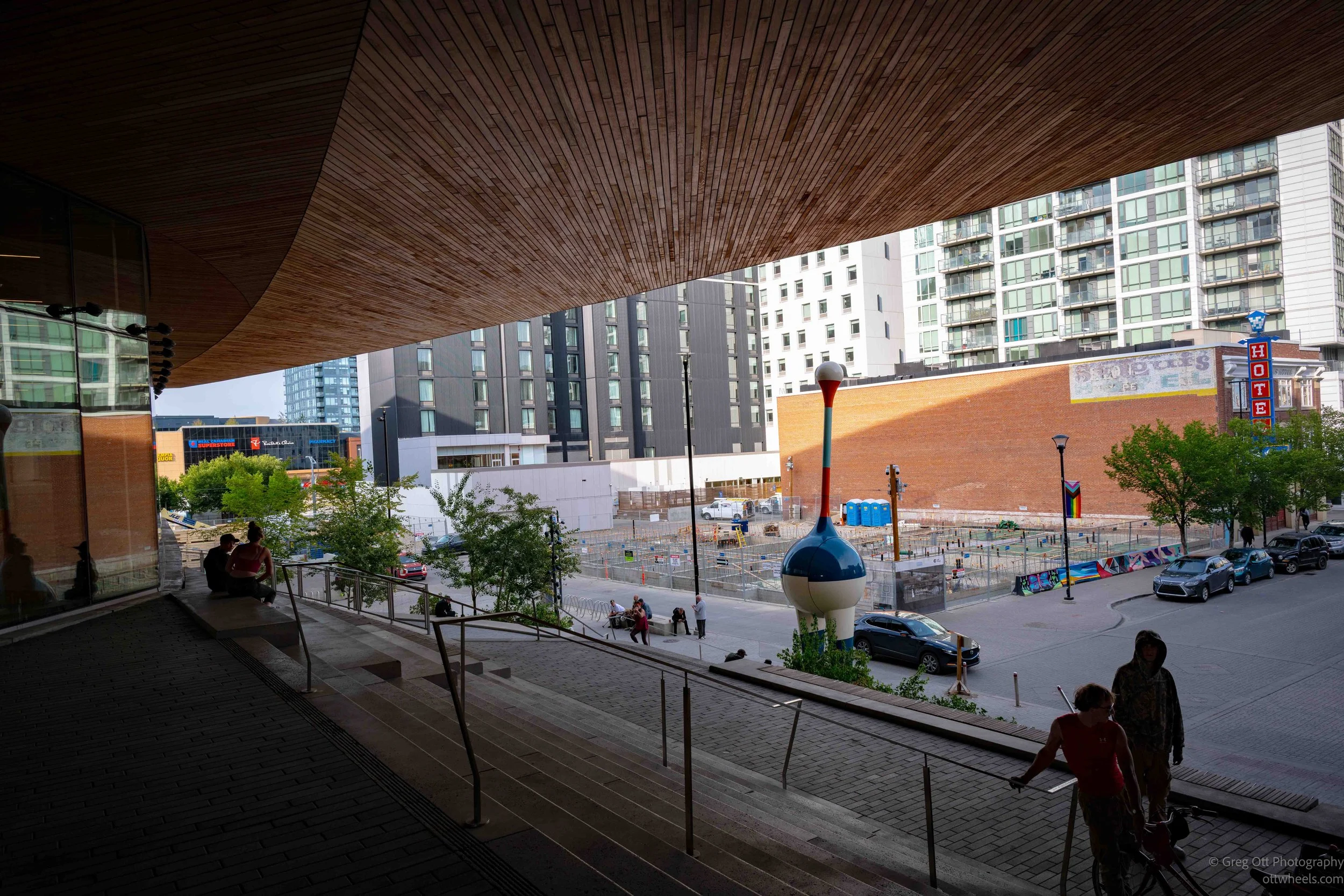
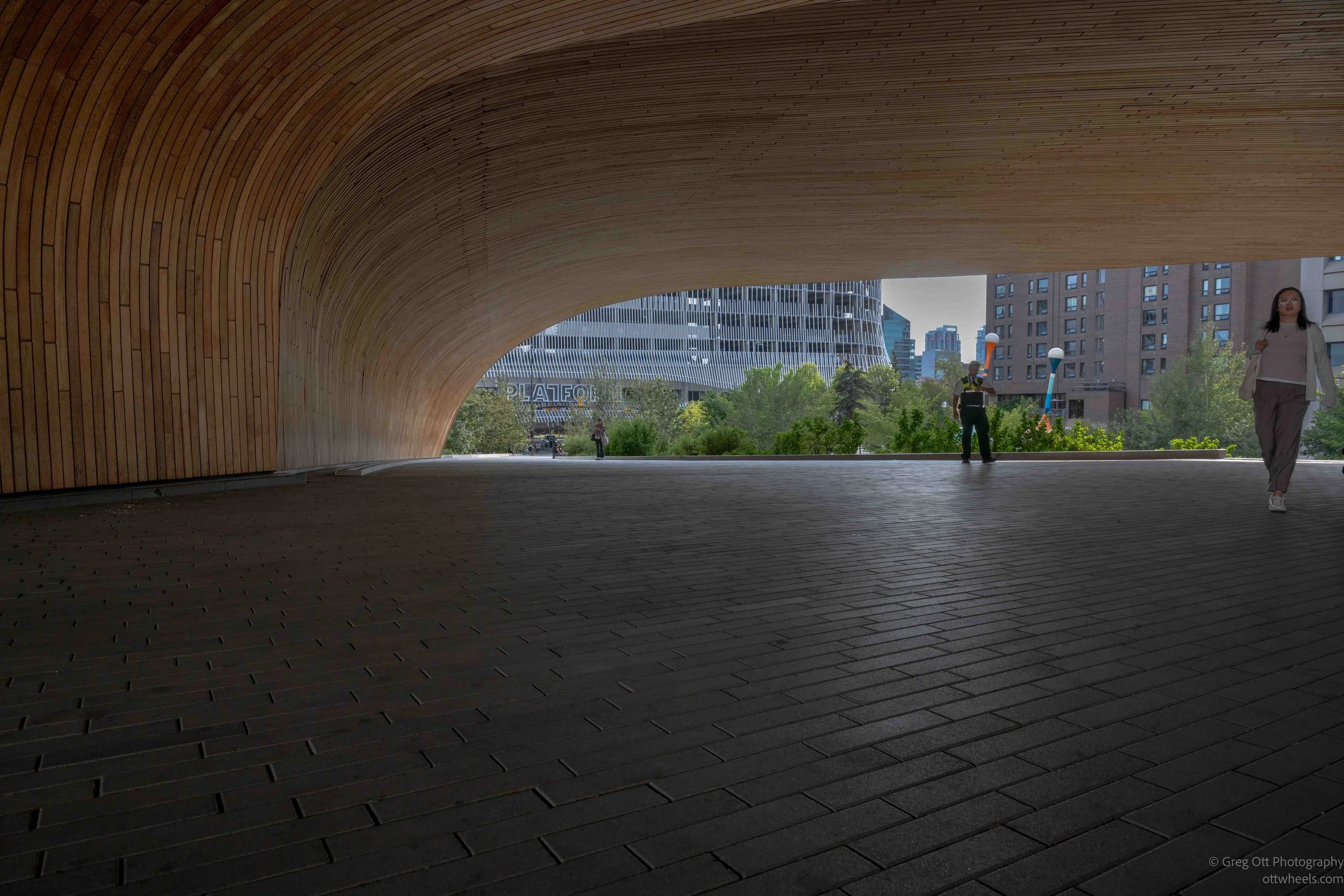
What bothered me most was the contrast. Calgary has invested in a remarkable public building that should be a source of civic pride and a place where residents and visitors want to spend time, yet the environment immediately around it made me reluctant to even stand outside with a camera. It was embarrassing to see such an impressive public space surrounded by so many people who were clearly struggling, both for the people themselves and for a city that apparently hasn't found an effective way to deal with the problems concentrated in this part of downtown. I wanted to photograph the building. Instead, after taking only a few exterior photographs, I went inside.
As I entered the building, three security officers were carrying out a woman that had passed out. Despite all of this, I was absolutely amazed with the architectue. This was after having visited the Belle music hall of fame.
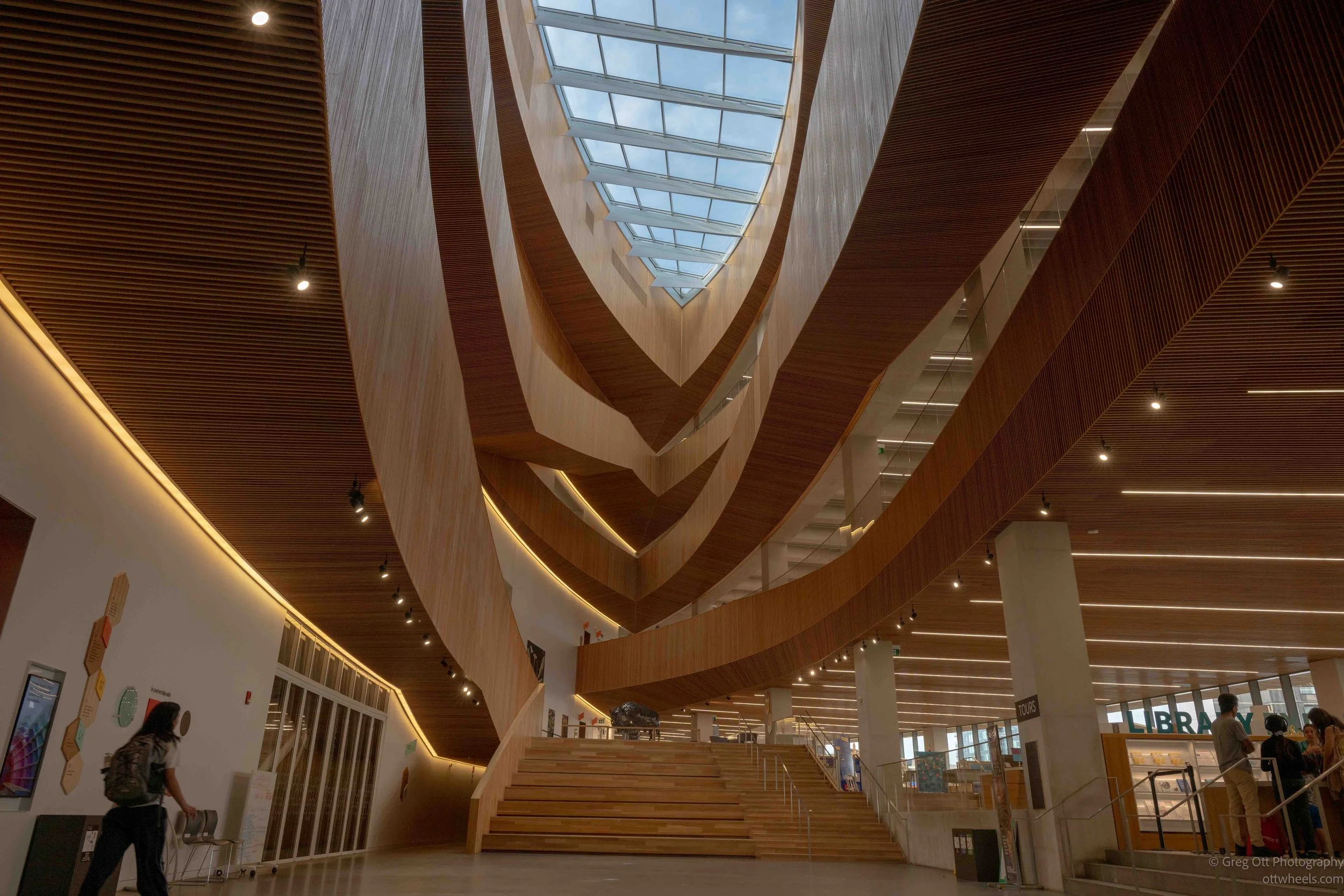
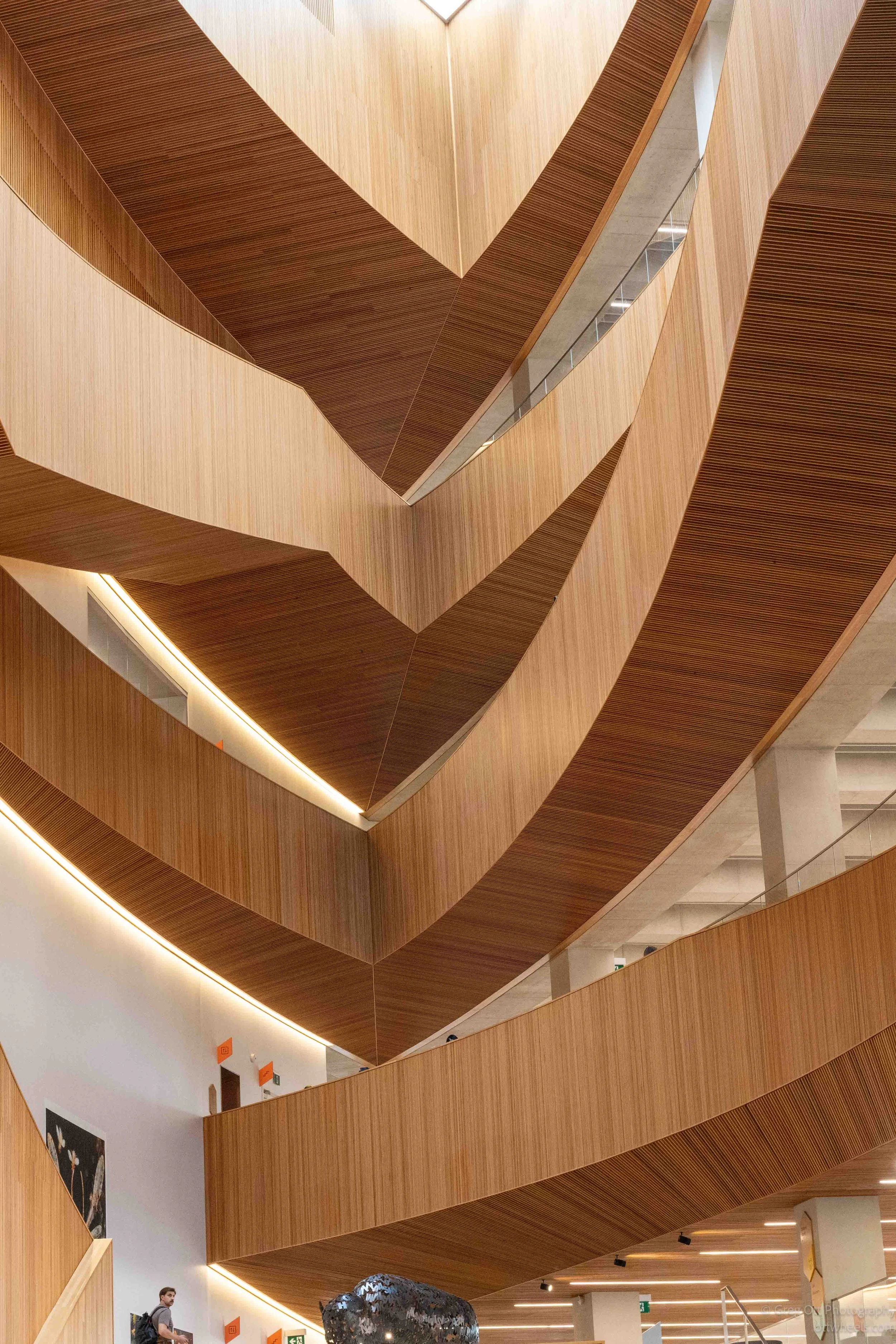
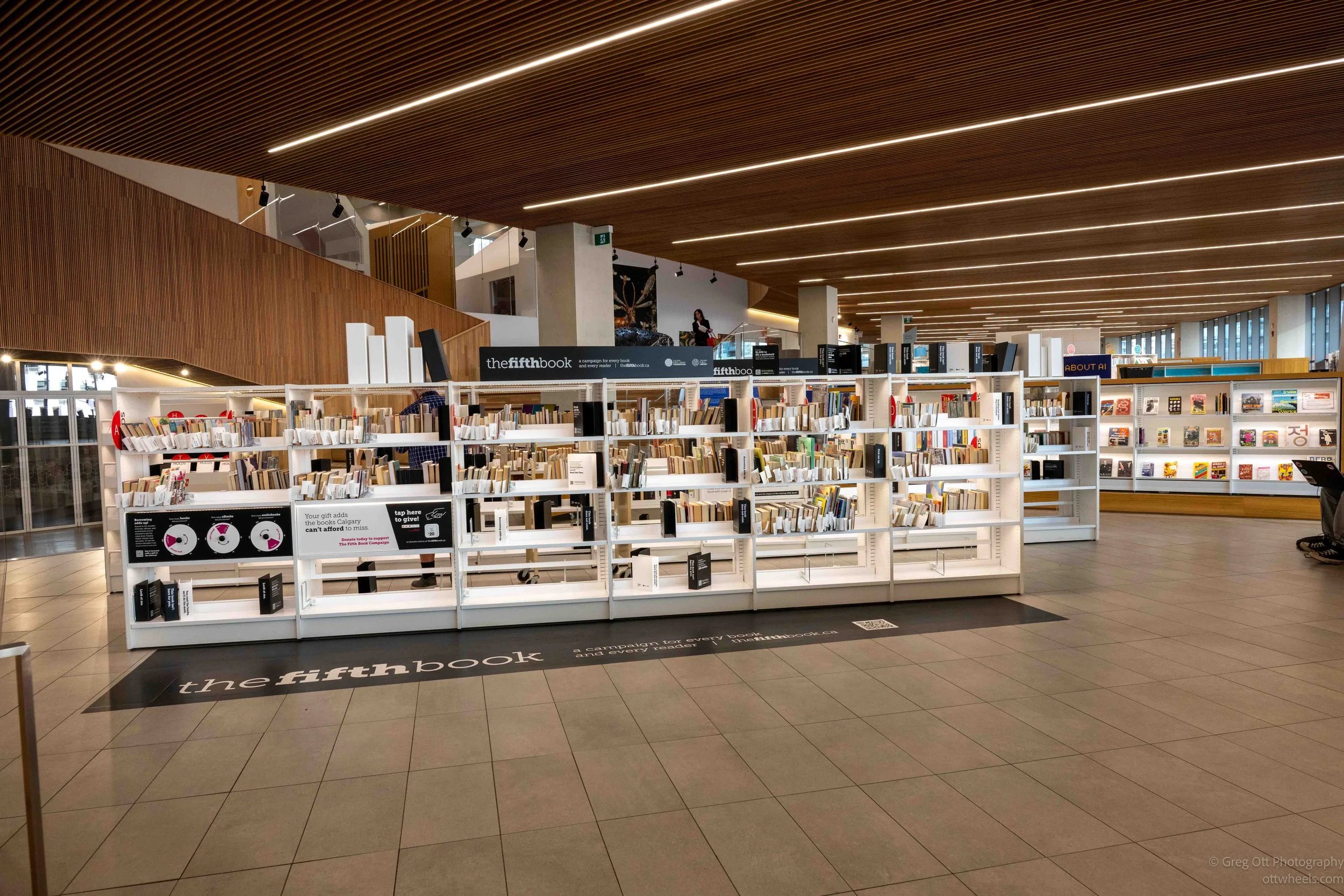
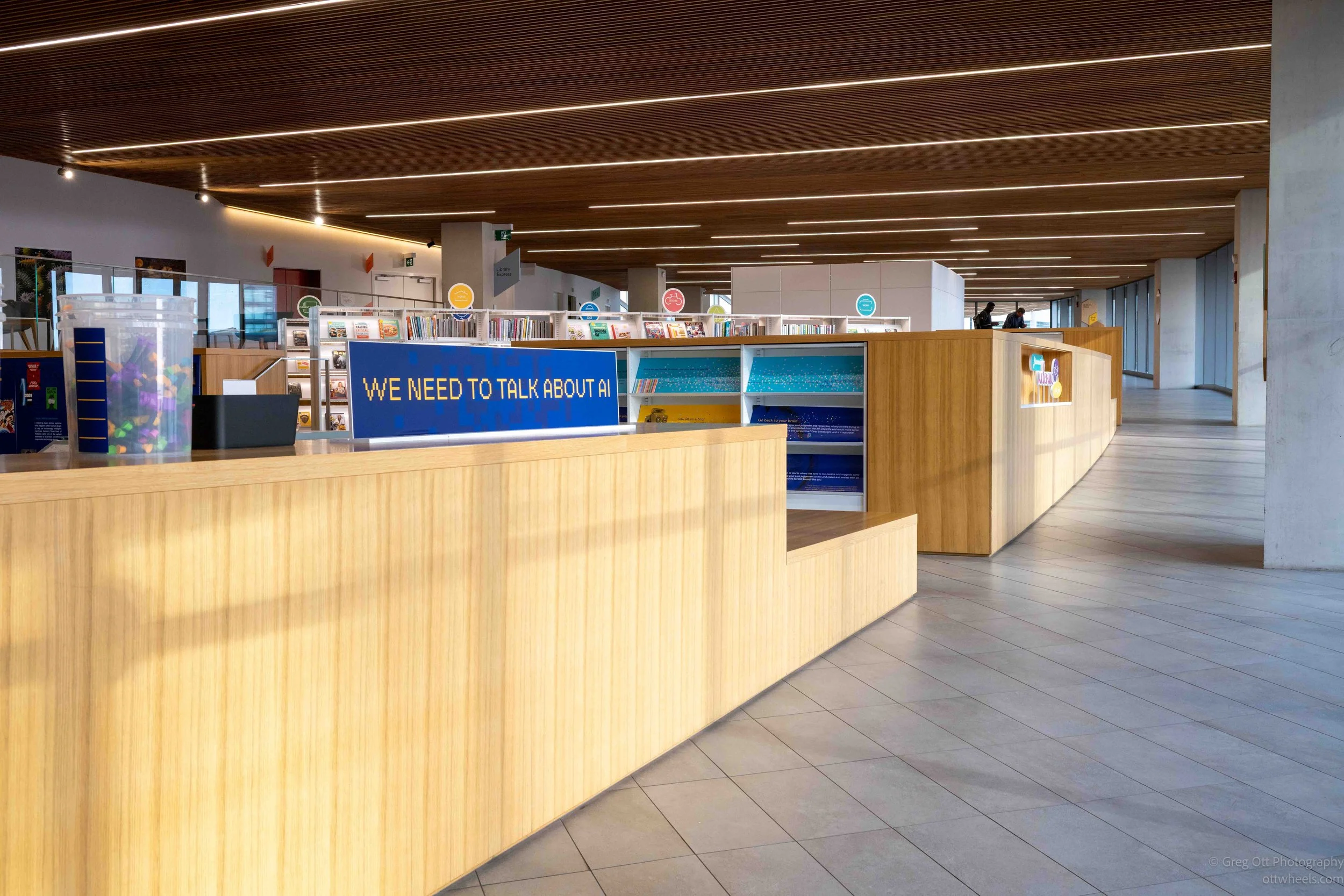
Inside was the building I had come to see. The architecture was spectacular, and there seemed to be another interesting angle everywhere I looked. The wooden curves of the entrance continued into the enormous atrium, where daylight poured through the glass and the different levels opened onto one another. After spending so much time photographing the patterns and shapes at Studio Bell, I found myself doing much the same thing here. Calgary had unexpectedly given me two very different buildings to photograph in a single afternoon.