North From Whitehorse, YT
The day started for the third time at Baked Café and Bakery in the heart of Whitehorse. As I was standing in line I saw Jy Pel sitting waiting for his coffee, the person I was chatting with the night before. He had a Baked T-Shirt on. I said, I see you like this place as well. We chatted for a few minutes and then he was off to work.
I only stayed for about 30 minutes while I drank my latté and enjoyed my croissant. There were other shops in the building, and I bought a card. The woman in the shop asked where I was from, and I asked her about living here. She told me it had been an unusually cold winter. At one point, she said, the temperature dropped to around −60°C (-78°F) . We talked briefly about how cold that really is. She explained that some propane heating systems struggle at those temperatures because propane no longer vaporizes easily enough to supply fuel to furnaces and other appliances. It was difficult to imagine what a week of that kind of cold would feel like and no heating.
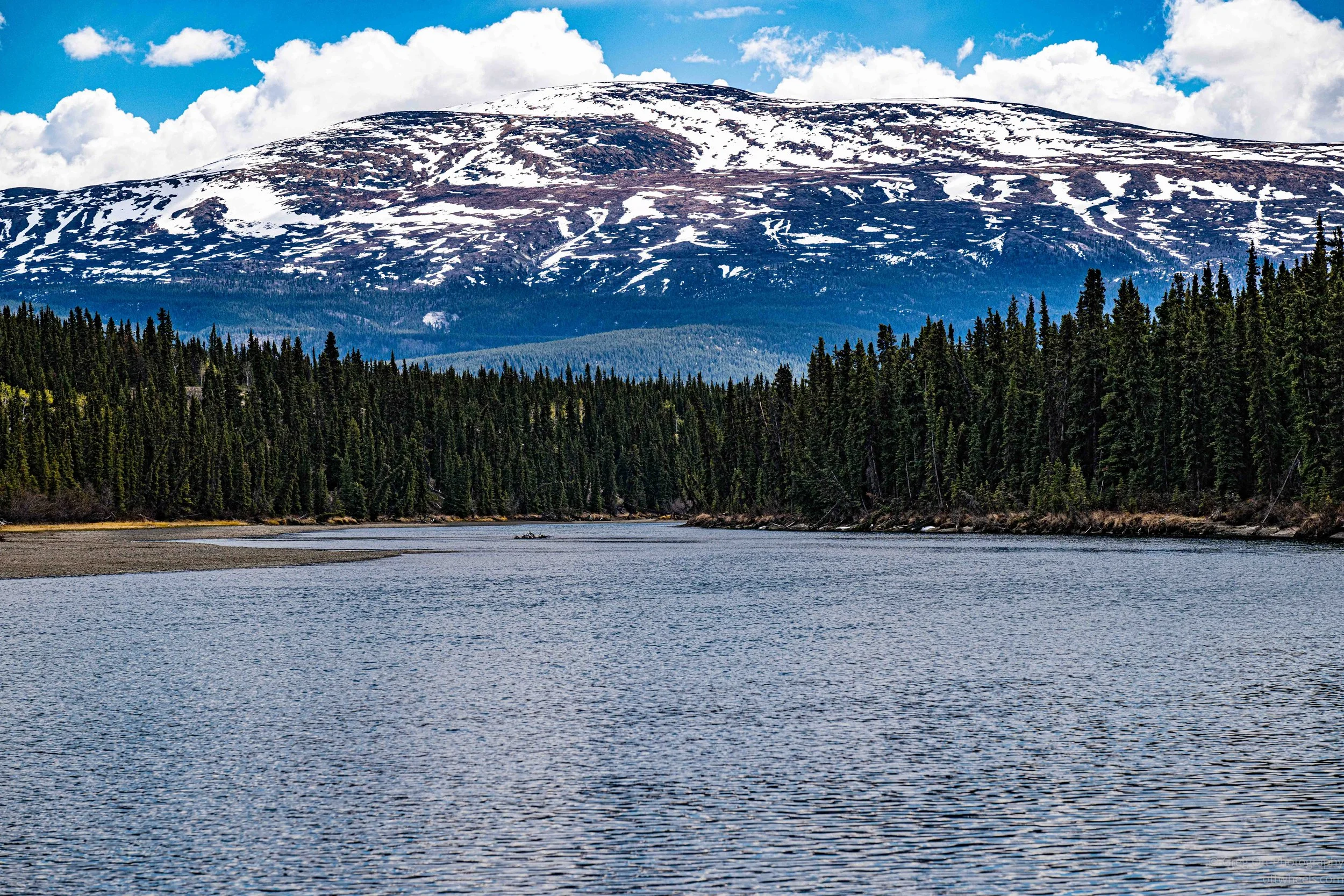
I left Whitehorse heading north on the Alaska Highway toward Haines Junction. The weather couldn't seem to make up its mind—high winds, clouds, brief patches of blue sky, and even some sunshine. Somewhere along the way, a sign with a camera symbol pointed down a dirt road. Curious, I followed it for about 4 km and arrived at a small lake with a historical plaque. Three vehicles were scattered around the area, but I didn't see another person. It was quiet, so I took a short walk and a break from driving.
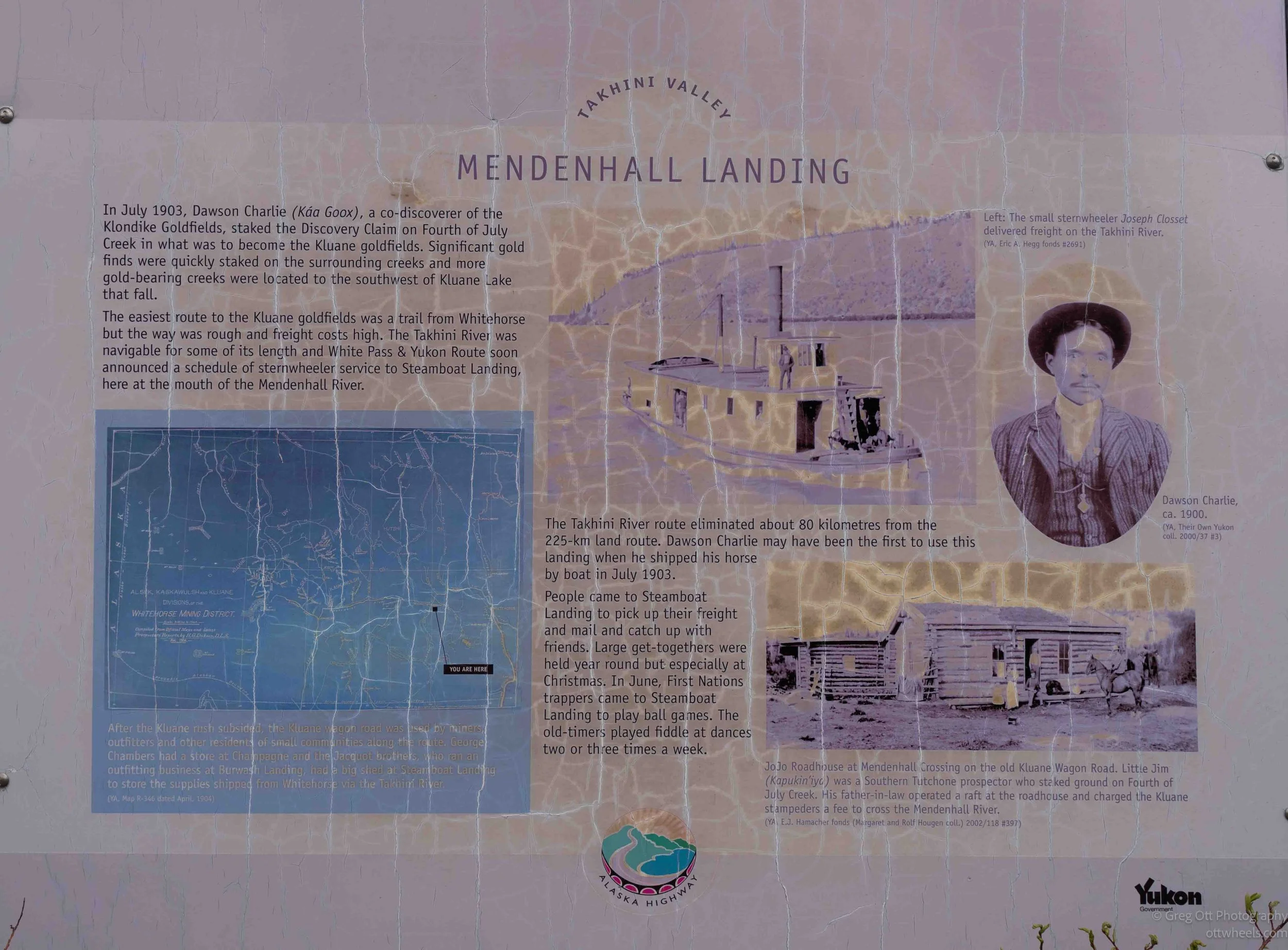
A plaque described Mendenhall Landing, an important transportation stop during the Kluane gold rush of 1903. Prospectors heading for the newly discovered goldfields used sternwheelers on the Takhini River to shorten what would otherwise have been a long overland journey from Whitehorse. Freight, mail, and people passed through here, and the landing became a gathering place where residents, trappers, and travelers met, exchanged news, and attended dances and community events. Today, there is nothing left to suggest that this was a gateway to the goldfields a century ago.
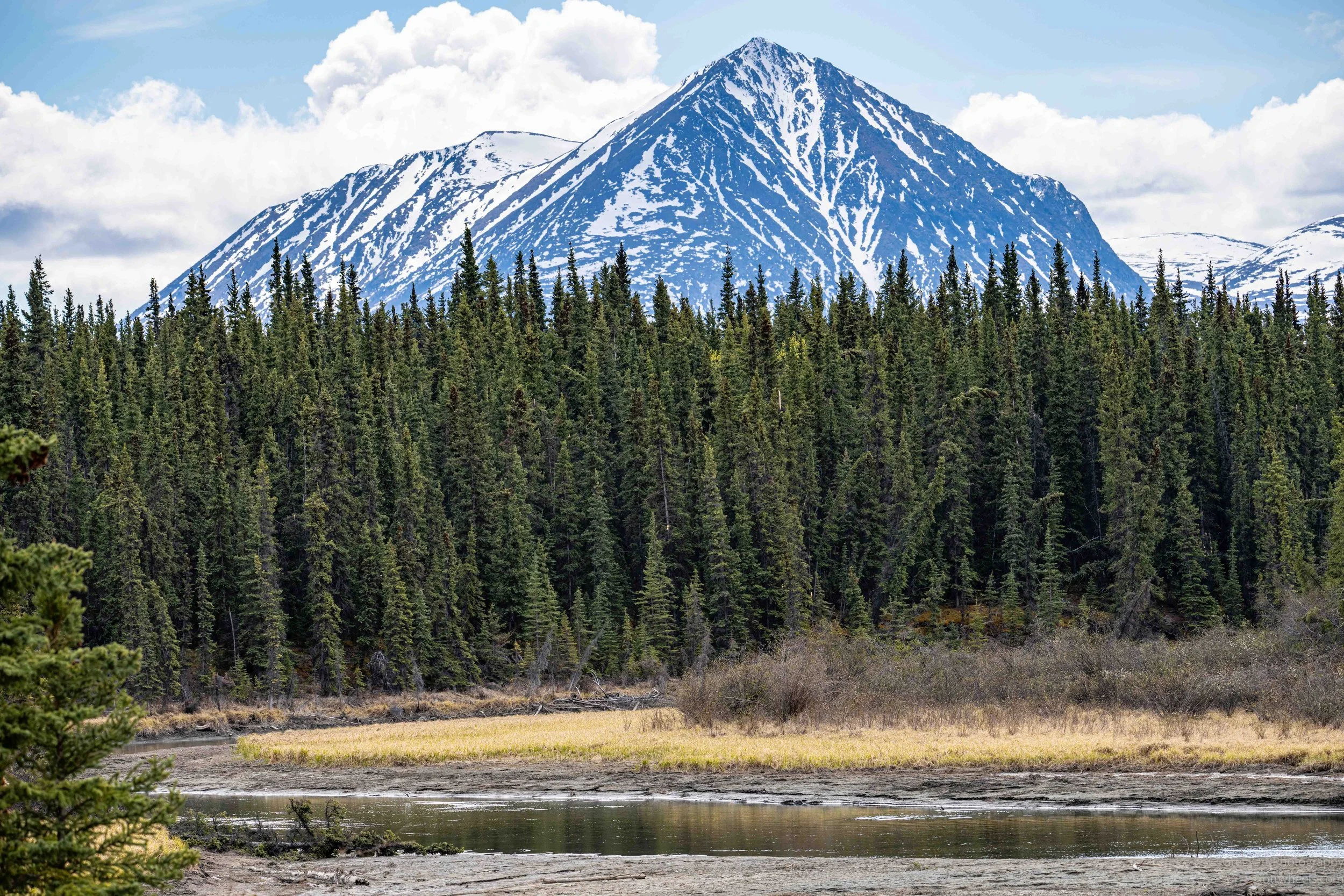
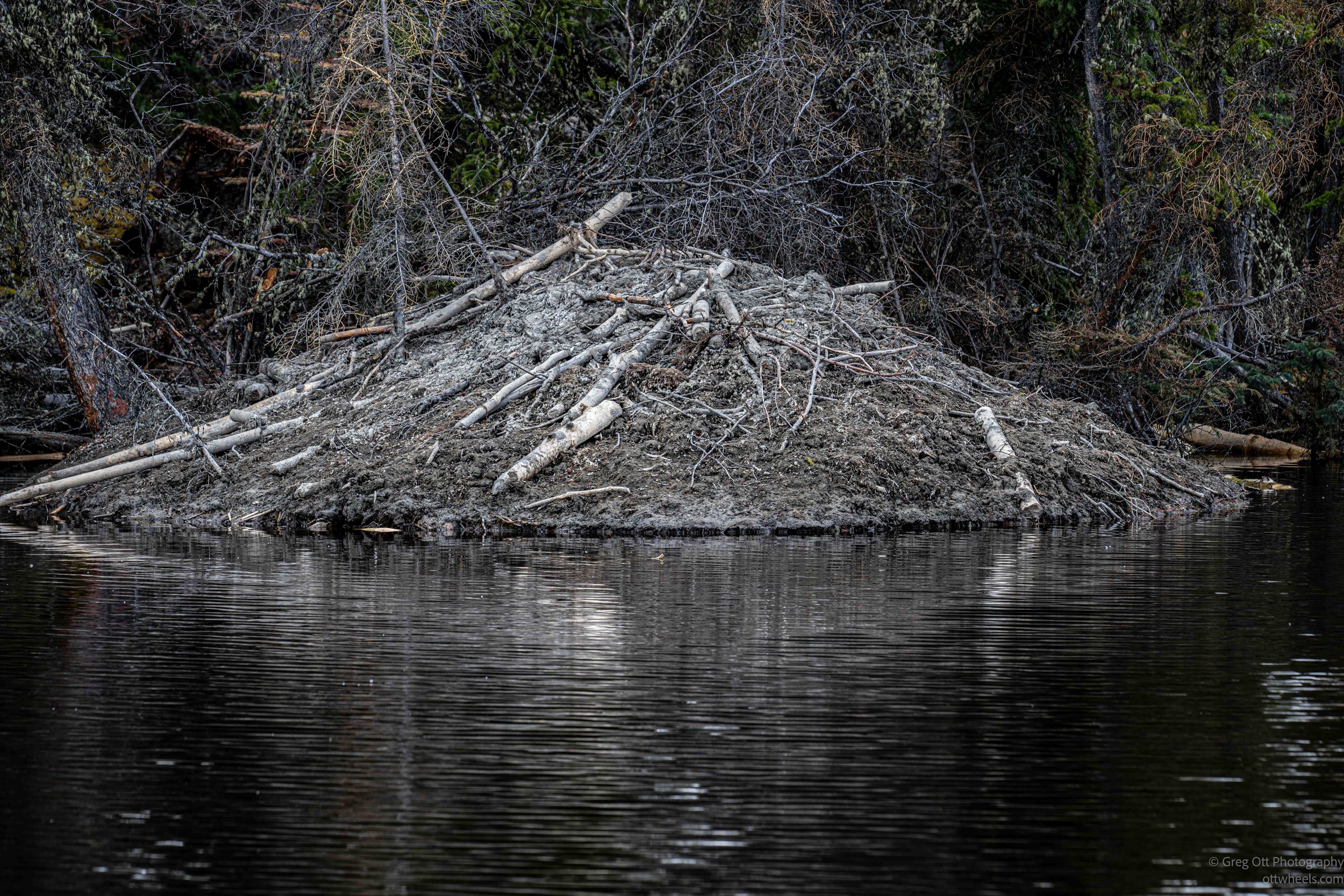
Nearby was an enormous beaver lodge rising from the water like a small island of mud, sticks, and branches. Until then, I had never really distinguished between a beaver dam and a beaver lodge. The lodge is the beavers' home, while a dam is built across flowing water to raise the water level around it. This one was created by the North American beaver, the only beaver species found in Yukon and Alaska.
The size of the lodge immediately caught my attention. It was far larger than any I had seen before and must have been maintained for many years, perhaps even by multiple generations of beavers. I stopped to take a few photographs but saw no sign of its occupants. The water was calm and the entire area was silent. Later, I read that beavers are primarily nocturnal, which would explain the lack of activity, although I have seen plenty of beavers working in broad daylight. Somewhere inside that tangled mound there may have been an entire beaver family resting, waiting for evening before venturing out to continue the never-ending work of repairing, expanding, and maintaining their home.
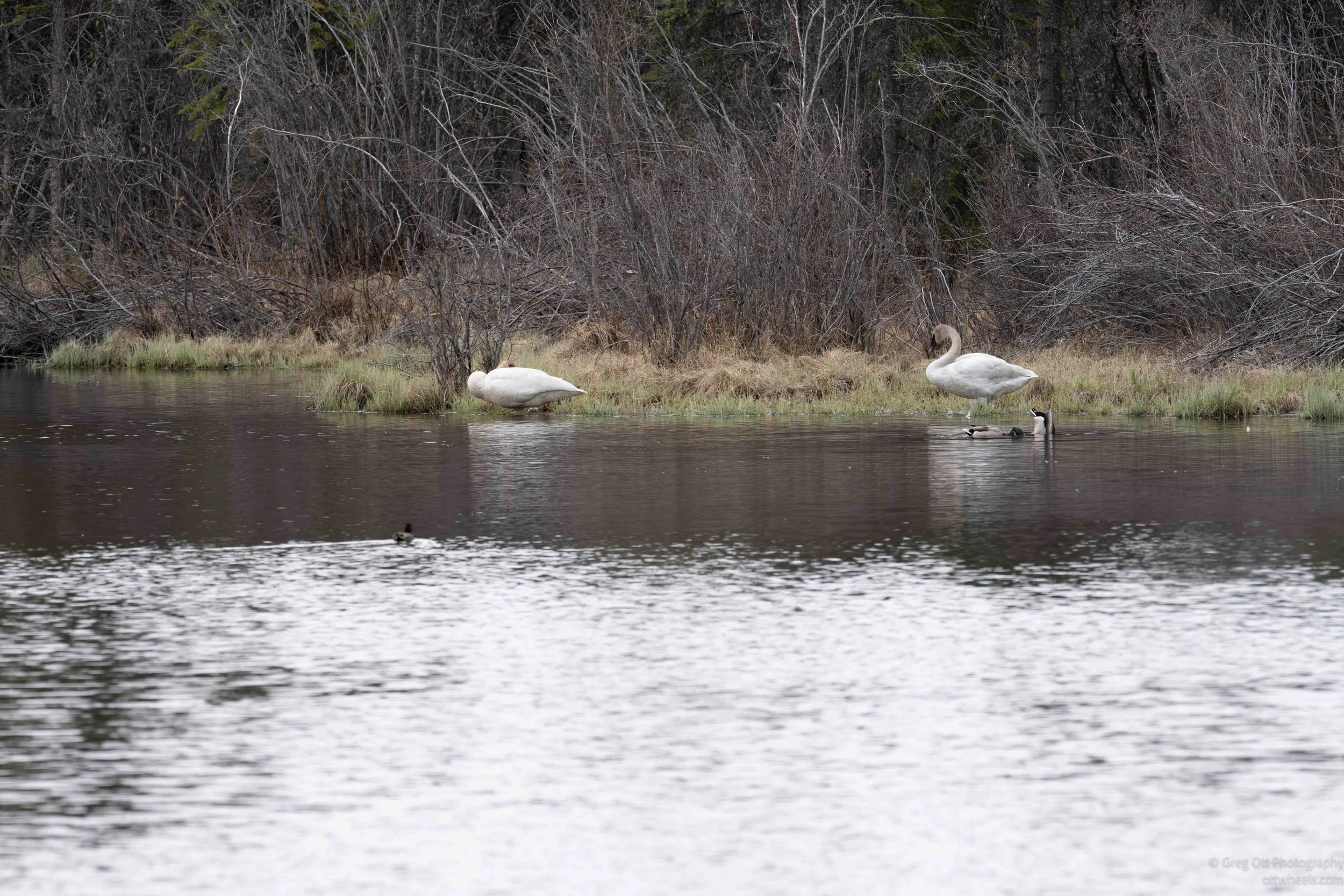
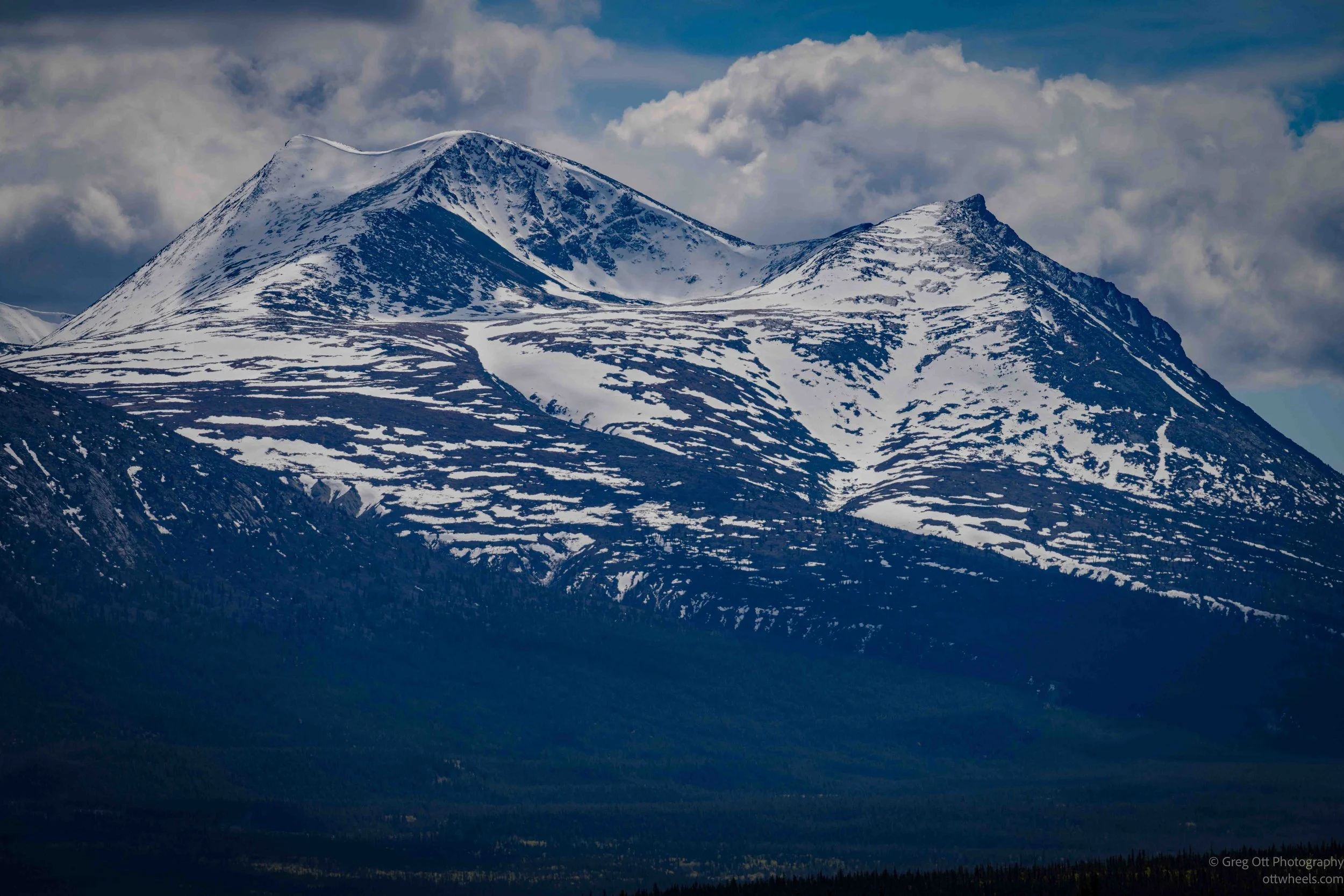
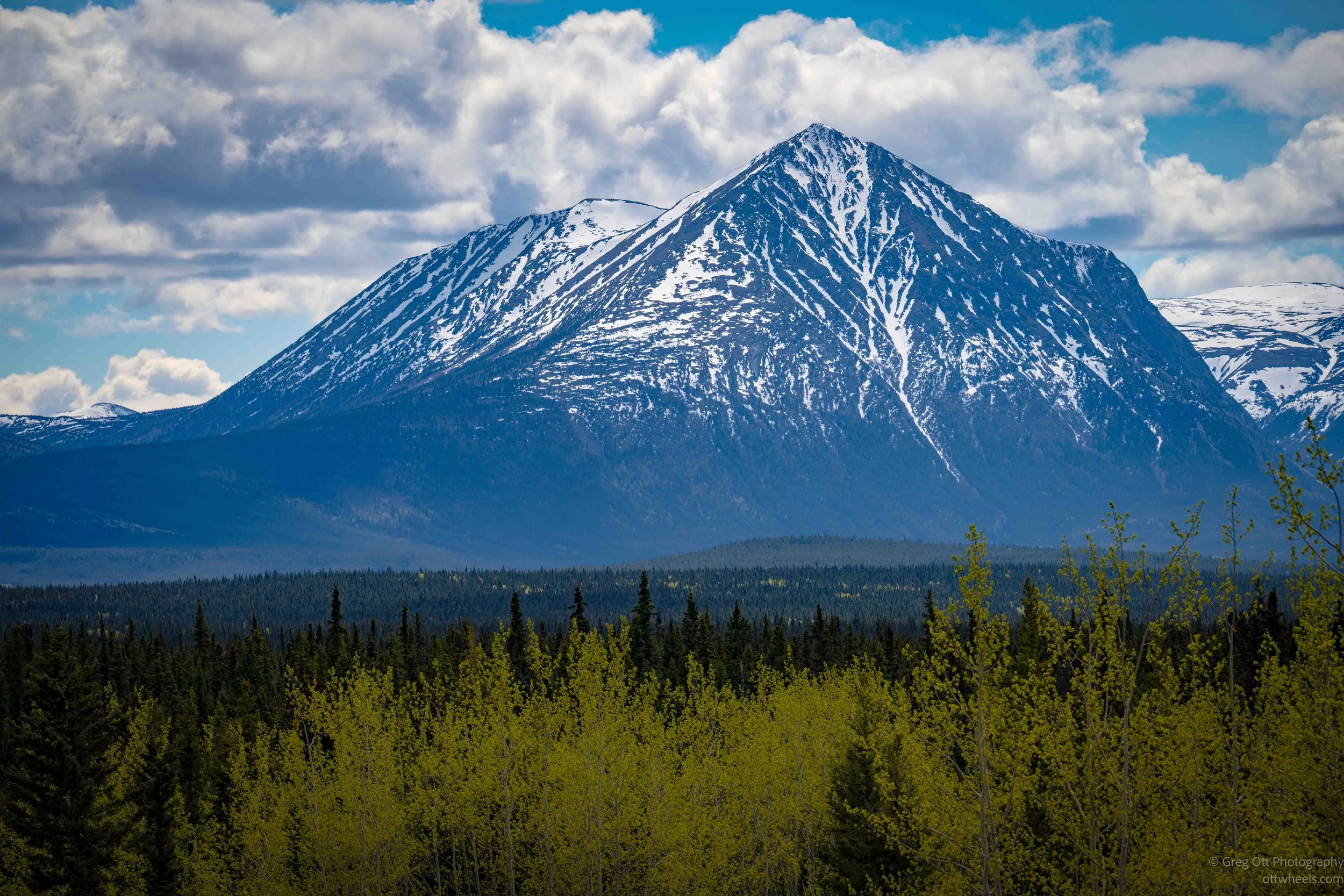
I continued my journey north and only stopped a few times for photos. The sky had cleared enough outside of Haines Junction to capture a couple clear images.
Fuel has become something I think about differently up here. I continue to stop for gas stations even when it has been only 30 minutes since my last fill-up. The distances between towns can be long, and I've heard enough stories about people running out of fuel to make me cautious. Most of those stories seem to begin with someone saying, "I thought I had plenty left."
Realistically, I would probably be fine. My AAA coverage is valid throughout North America, and I carry two spare gas cans in the van. Still, being stranded on a remote stretch of highway waiting for assistance doesn't sound like much fun. Fuel stops have become less about whether I need gas and more about whether I know when I'll see the next gas station that has gas. When one appears, I usually pull in. A few extra minutes at the pump is a small price to pay for peace of mind.
Kluane National Park and Reserve Visitor Centre
I stopped in Haines Junction at the Kluane National Park and Reserve Visitor Centre. The 30-minute film was surprisingly good and provided an overview of the region's wildlife, geology, and Indigenous cultures. It explained how glaciers shaped the landscape and highlighted the vast icefields and mountain ranges that make Kluane one of Canada's most dramatic national parks.
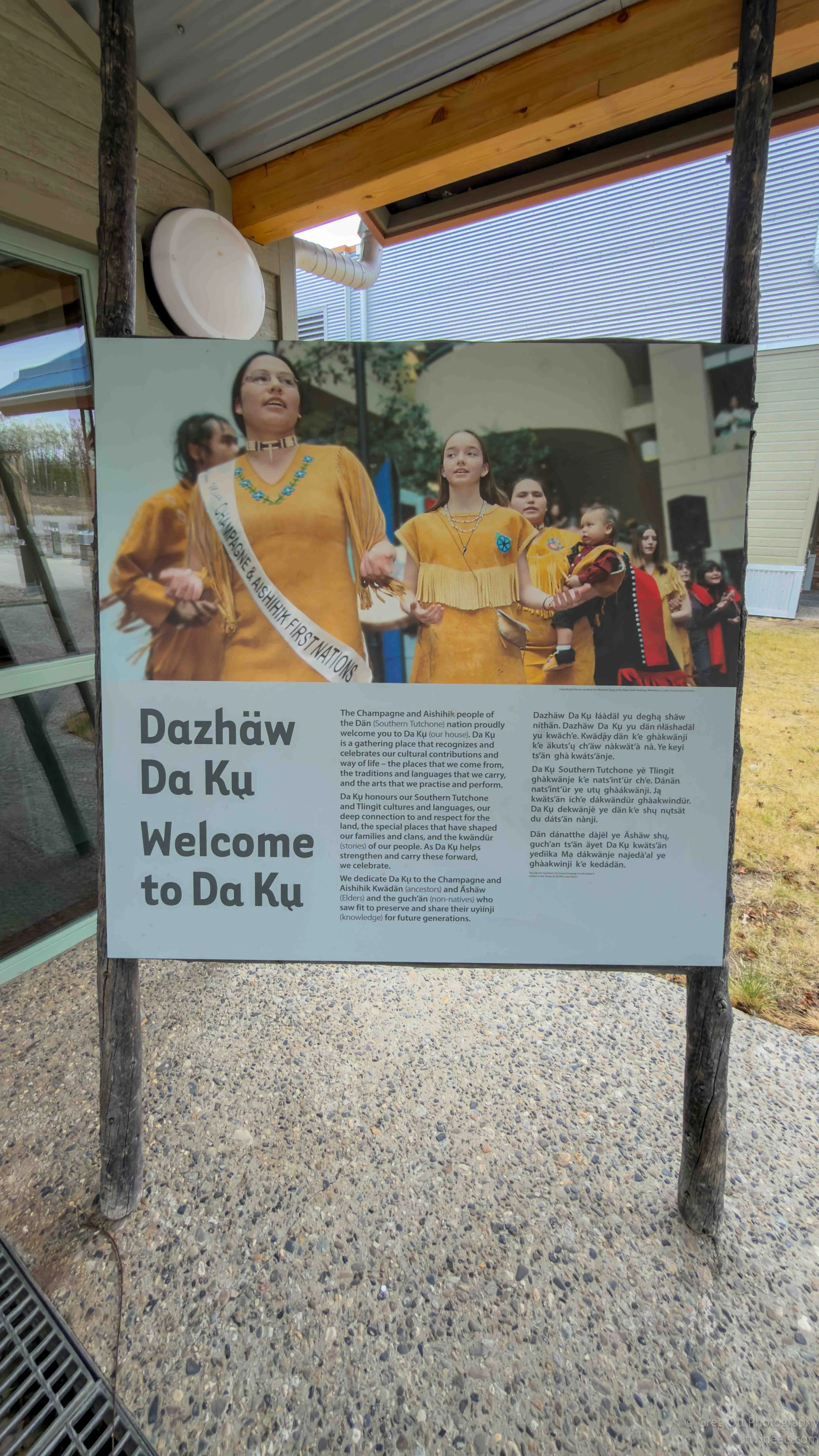
The exhibits covered everything from grizzly bears, Dall sheep, and moose to the long history of the Southern Tutchone people, whose ancestors have lived in the region for thousands of years. I found the displays on the Southern Tutchone language particularly interesting. Many local place names are still written in the language, and the alphabet includes characters and symbols unfamiliar to most English speakers, such as Ł, ǜ, and apostrophes that represent sounds not found in English. Seeing those names throughout the exhibits was a reminder that this landscape has a much deeper history than the roads, visitor centres, and national park boundaries suggest.
I spent some time looking through the displays and speaking with one of the staff members about hiking opportunities. I came away thinking I might be a few weeks too early in the season. Many of the higher-elevation trails still had significant snow coverage. Before discussing any hikes, she made sure I was carrying bear spray. The visitor centre maintains a database of recent wildlife sightings, and she pointed out where grizzly bears, black bears, sheep, and other animals had recently been seen. She also suggested a drive north to Soldiers Summit, one of the most accessible viewpoints in the area.
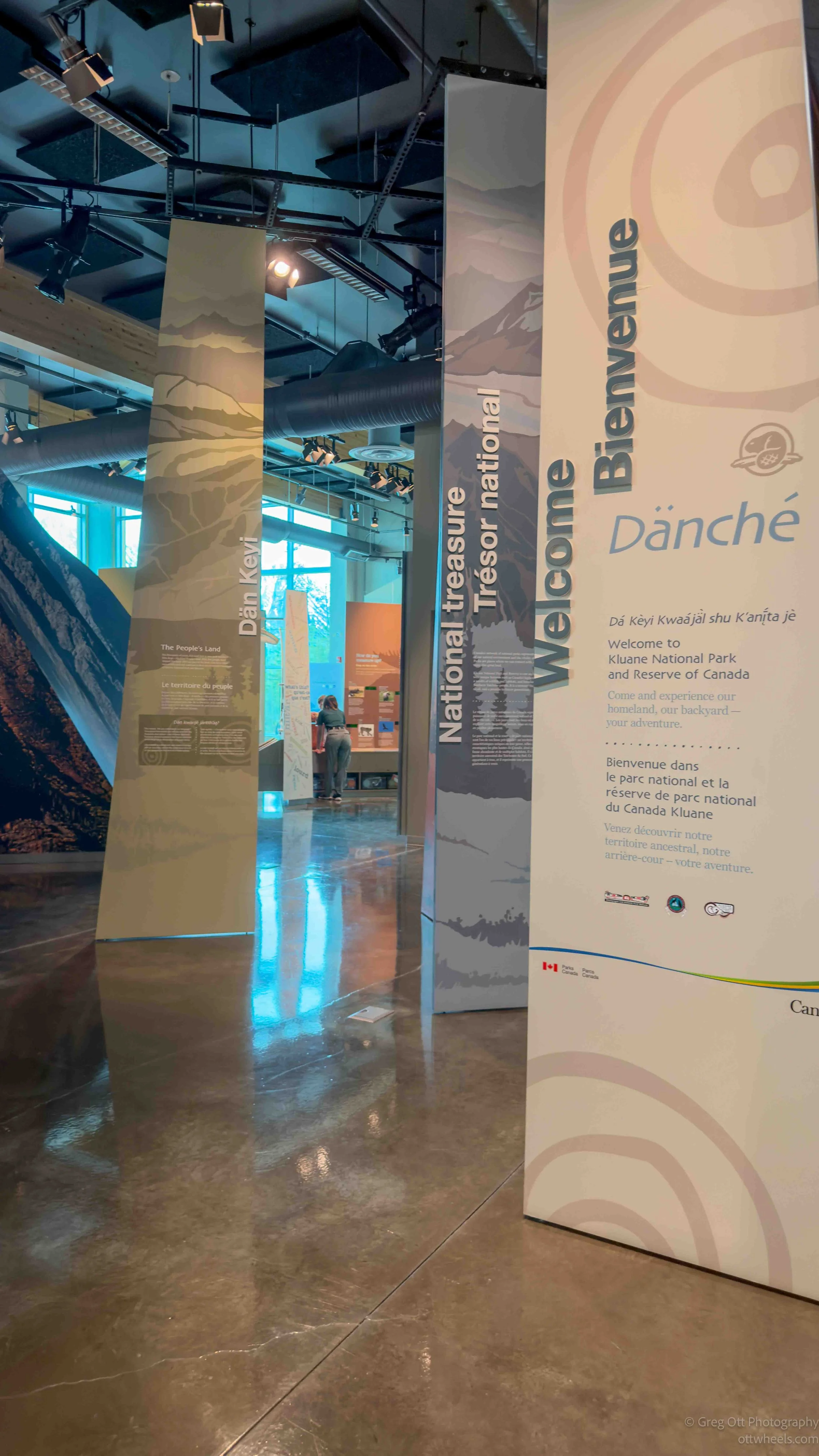
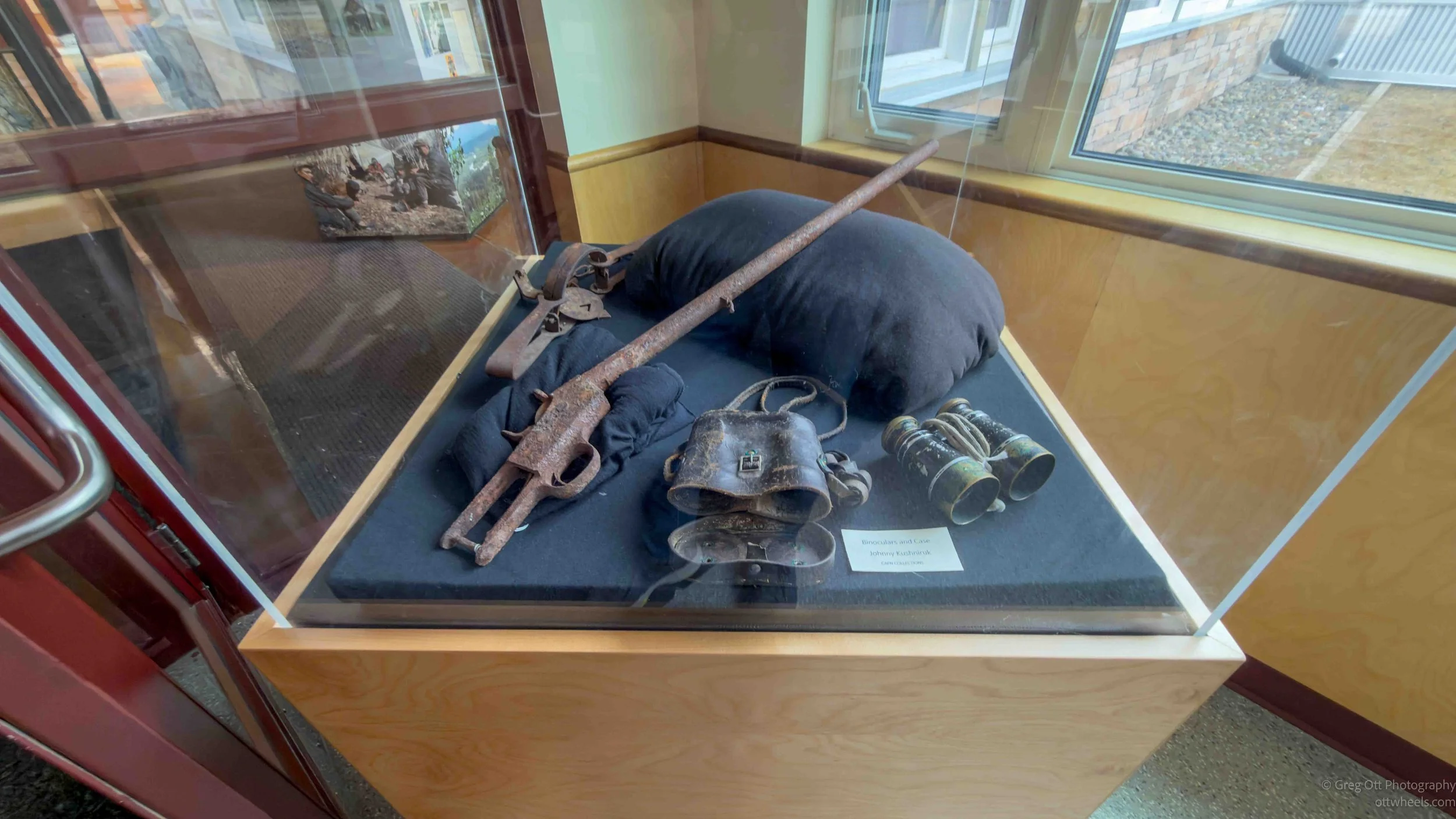
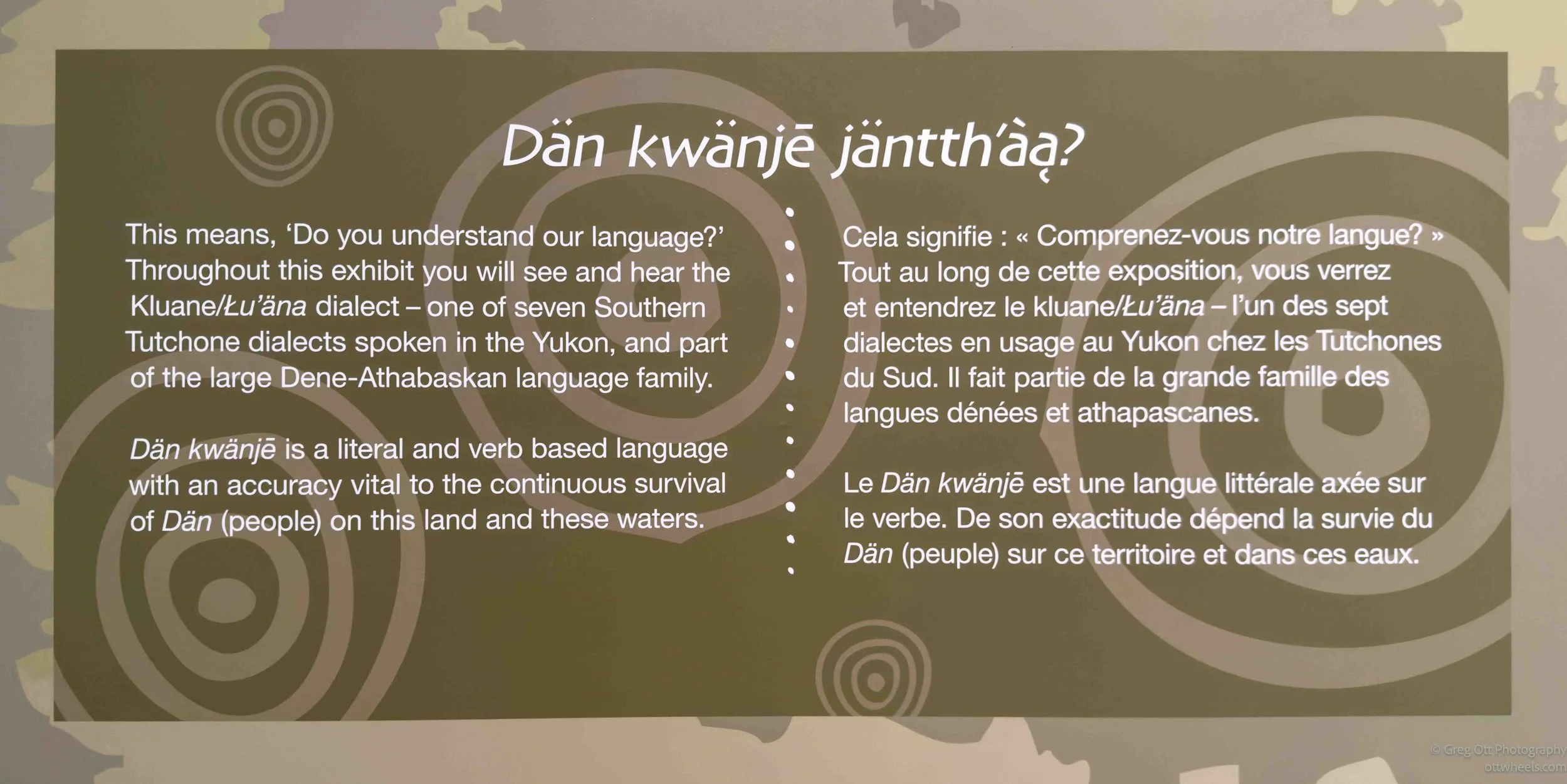
By the time I left, the wind had picked up and visibility was beginning to deteriorate. Clouds hung low over the mountains, hiding much of the scenery that Kluane is famous for. Rather than push farther, I decided to start looking for a place to spend the night and hope for better conditions the next day.
I pulled into a rest area north of Haines Junction. Traffic on the Alaska Highway was almost nonexistent. Rain had started to fall, and with the temperature dropping, I suspected it wouldn't be long before it turned to ice. The wind was also beginning to pick up, so I decided there was little point in continuing for the day. As I settled in for the evening, I glanced out the window and spotted a few rabbits quietly feeding on the grass along the edge of the forest. It was a small reminder that, despite the weather, life out here carried on as usual.