Mendenhall Glacier Nugget Falls Trail
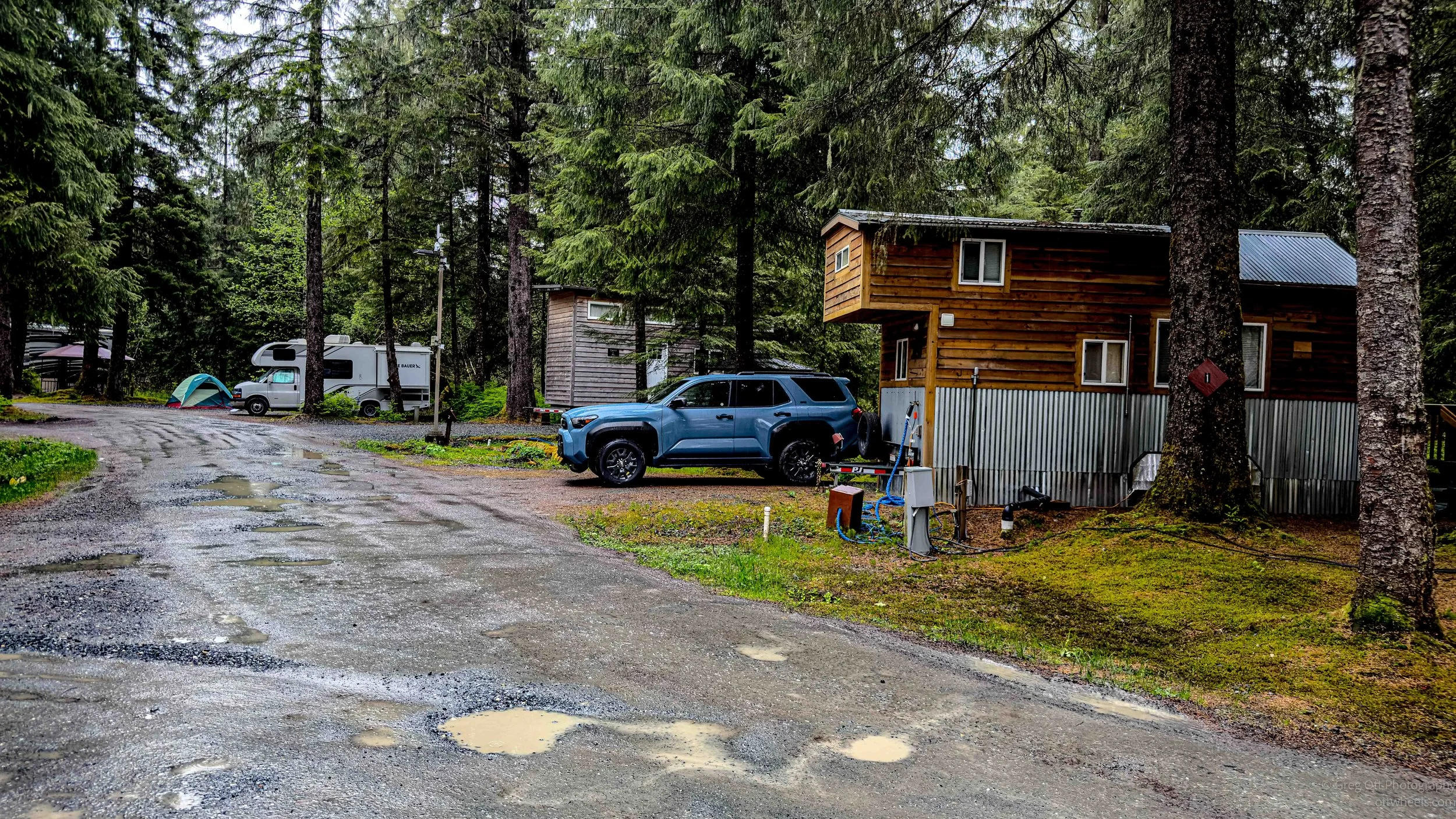
It rained most of the night, and I still haven't been able to get the glycol pump replaced. As a result, the heat in the van is still not working. Even in June, temperatures continue to drop into the upper 30s at night. Before bed, I pulled on a hat, plugged in the 12-volt heating blanket, and called it good enough. It's not exactly the setup I envisioned when I built the van, but it has been getting me through these cold Alaskan nights.
The rain continued through most of the morning, so I headed over to Heritage Coffee Roasting Co. a few miles away. My plan was to wait until the morning rush had ended before arriving. When I walked in, there was almost no one there. Success, I thought. I ordered a coffee, found a table, and started working through emails, blog updates, and a few other online tasks. The quiet didn't last long. A few minutes after 10 a.m., people started pouring in until a line stretched across the shop. I've really begun to notice that life here seems shifted later than what I'm used to. Campgrounds stay active later into the evening, people arrive later, and mornings seem slower to start. With nearly eighteen hours of daylight this time of year, the normal schedule feels stretched out.
Back at the van, I spent part of the morning documenting camera settings and workflow notes. One thing I've learned over the years is that every time I solve a photography problem, I eventually forget exactly how I solved it. I've started keeping detailed notes on autofocus settings, custom buttons, focus modes, filters, Lightroom workflows, and all the little tricks that seem obvious in the moment but somehow disappear from memory six months later. Future Greg should hopefully appreciate the effort.
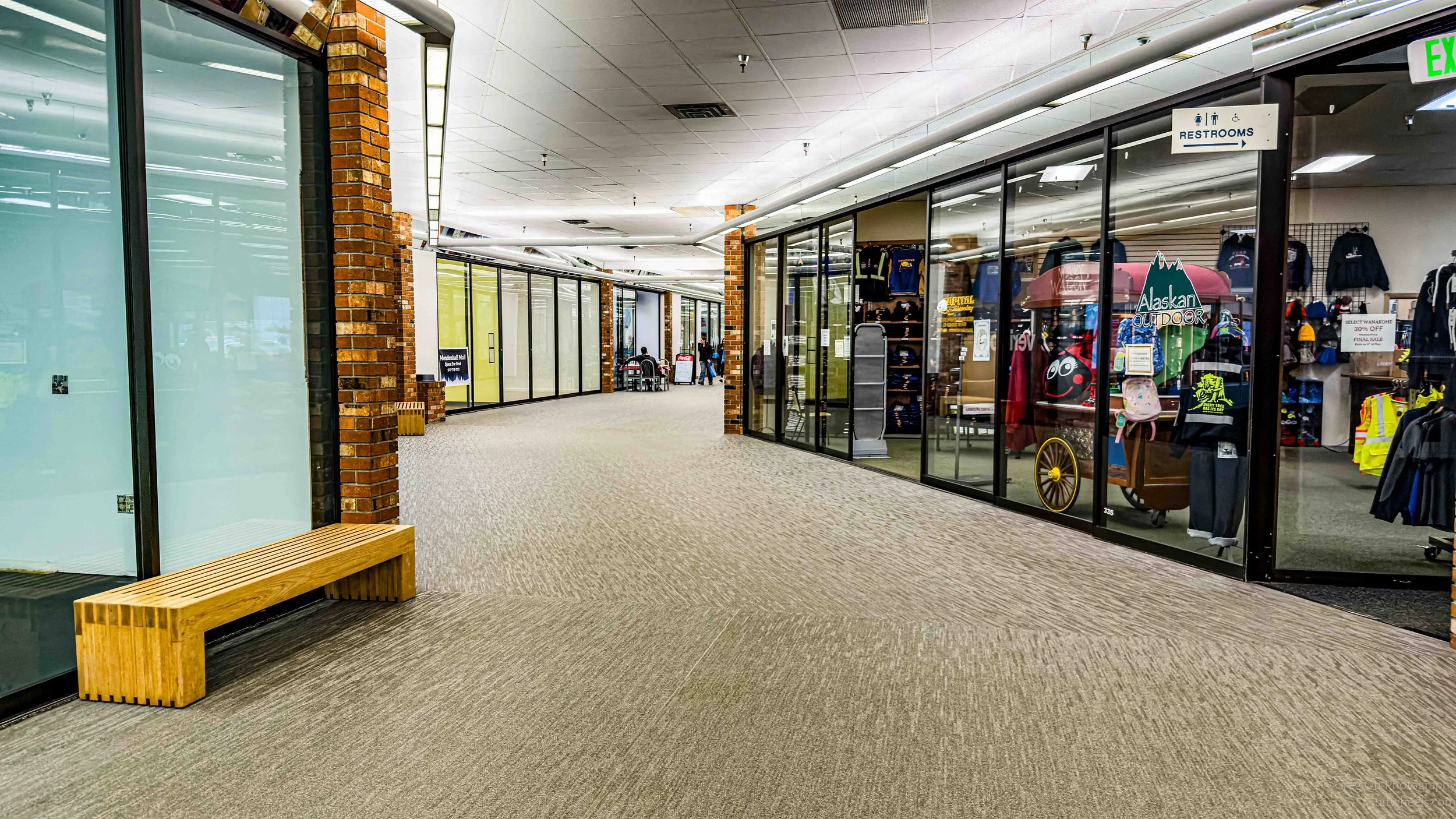
Google showed a bookstore only 381 feet away, which sounded simple enough. After driving around the building multiple times without finding anything that remotely resembled a bookstore, I finally walked into one of the businesses and asked for directions. The woman behind the counter smiled and offered to show me.
Along the way she asked where I was from and mentioned that she had grown up in the Midwest before moving to Alaska many years ago. We stopped at a set of doors and she pointed ahead. "This is the mall," she said.
The building looked nothing like any mall I had ever seen. From the outside it appeared to be a large industrial warehouse built from corrugated metal panels wrapped around a steel frame. Most of the businesses had storefronts facing the parking lot, each with their own exterior entrance. Only after walking through the doors did it become obvious that everything was connected by a long interior hallway running through the middle of the building. Every store seemed to have two entrances, one facing outside and one facing the corridor. It felt less like a traditional shopping mall and more like a practical Alaskan solution to winter weather. You could move from store to store indoors while still allowing every business to maintain direct access from outside.
After wandering through the bookstore for a while, I grabbed lunch at one of the small restaurants inside the mall and then returned to the van to wait for the rain to stop. By early afternoon the clouds finally began to lift, and with improving weather I headed toward Mendenhall Glacier, less than ten miles away.
A long entrance road leads into the recreation area, and there was a steady stream of people heading in. Tour buses, trolleys, courtesy vans, rental cars, and pedestrians all seemed to be converging on the glacier. Even before reaching the visitor center, it was obvious that this was one of the most visited attractions in Alaska. I'd read that during peak summer months the Nugget Falls Trail can become so crowded that you practically shuffle along shoulder to shoulder with everyone else. It was busy when I arrived, but not unpleasant. There were plenty of people around, yet it never felt overwhelming. Judging by the number of buses arriving every few minutes, however, I could easily imagine what July might look like.
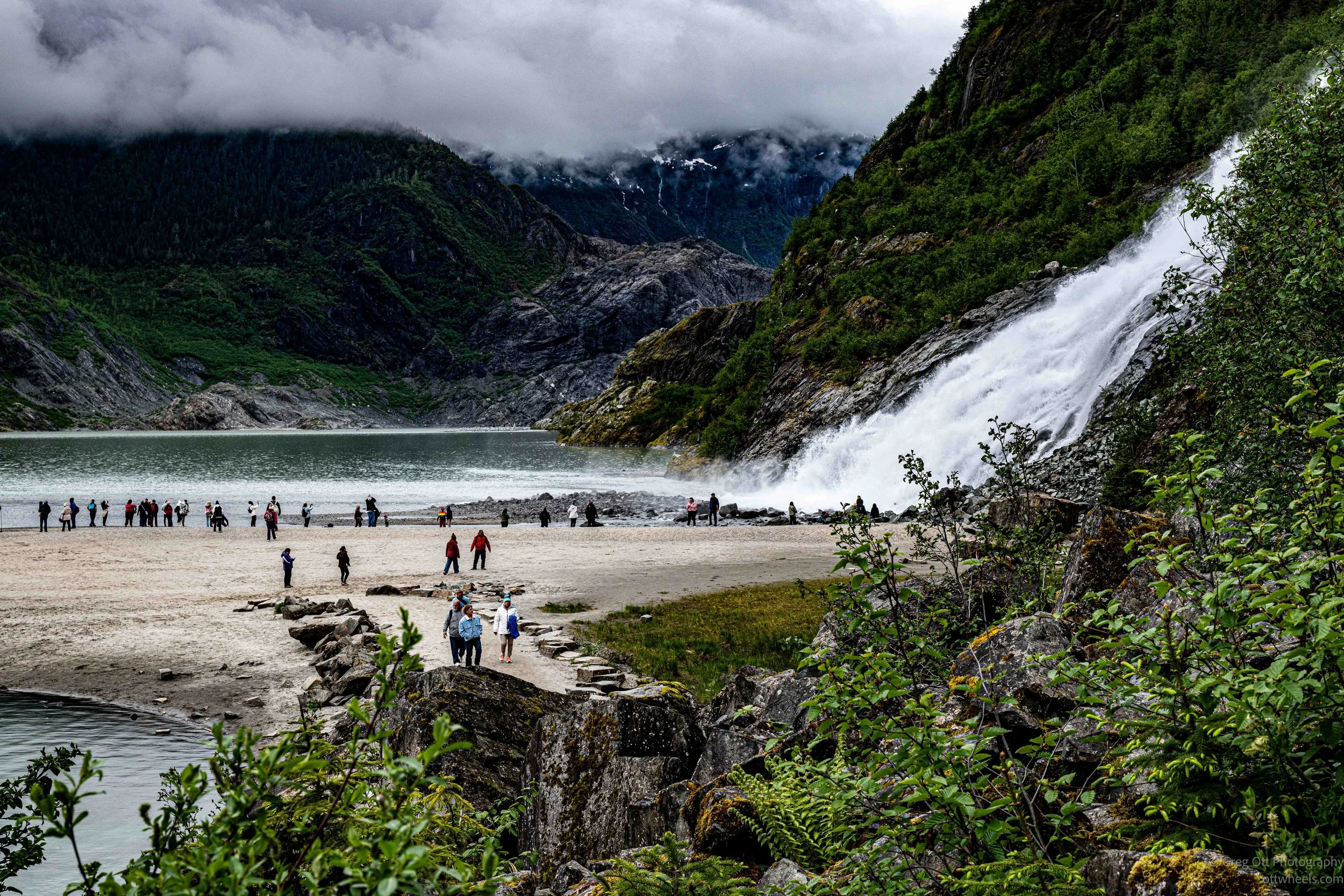
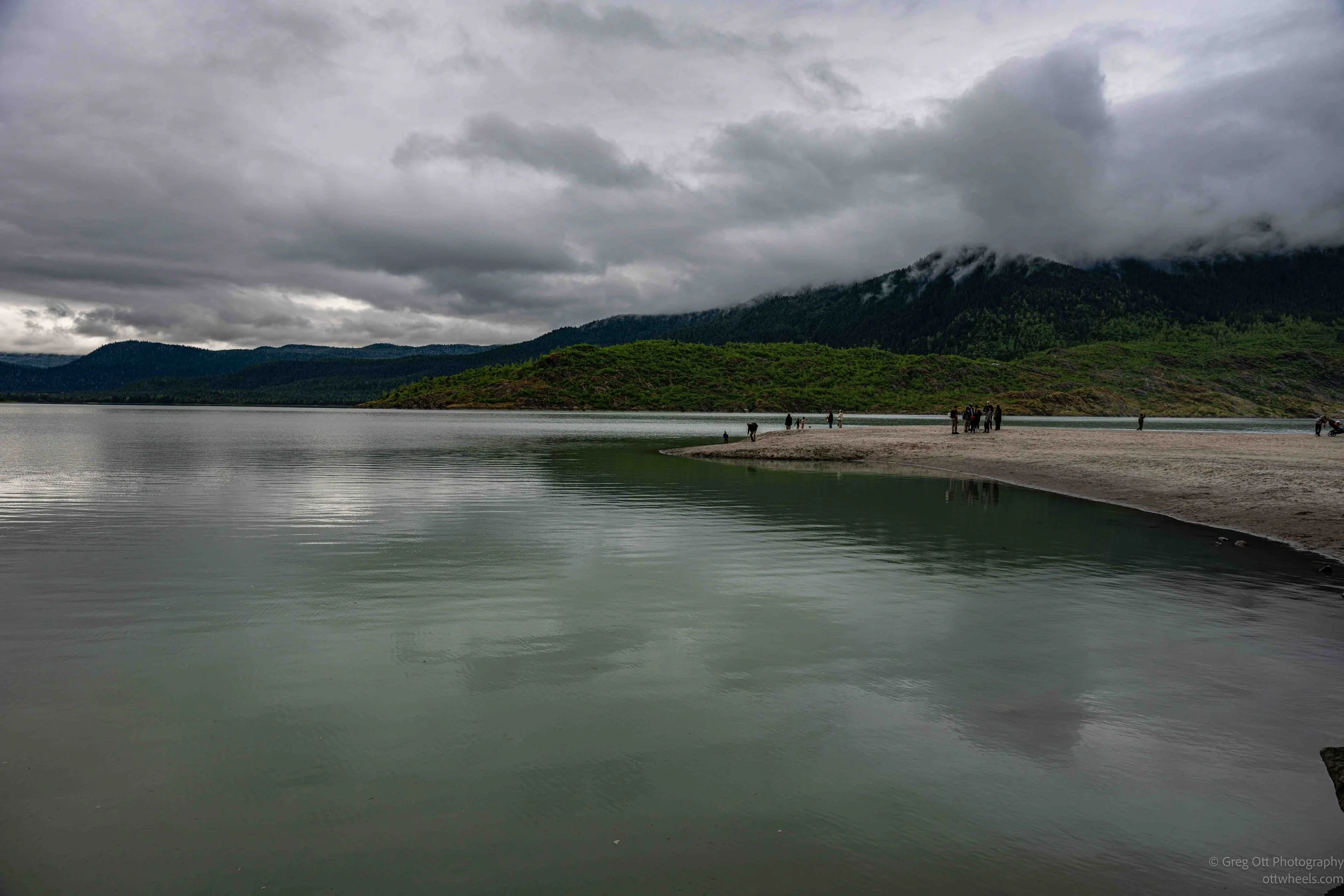
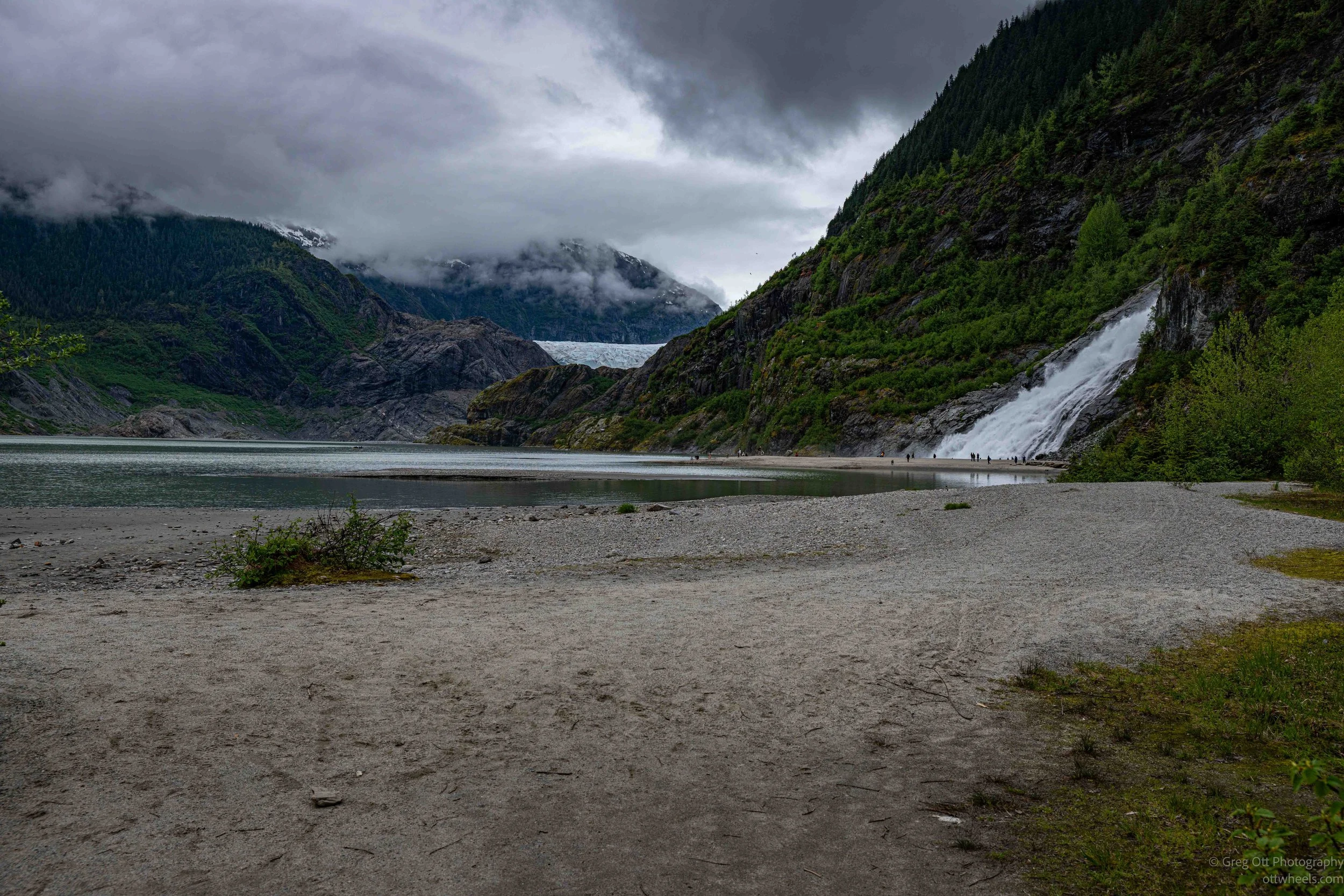
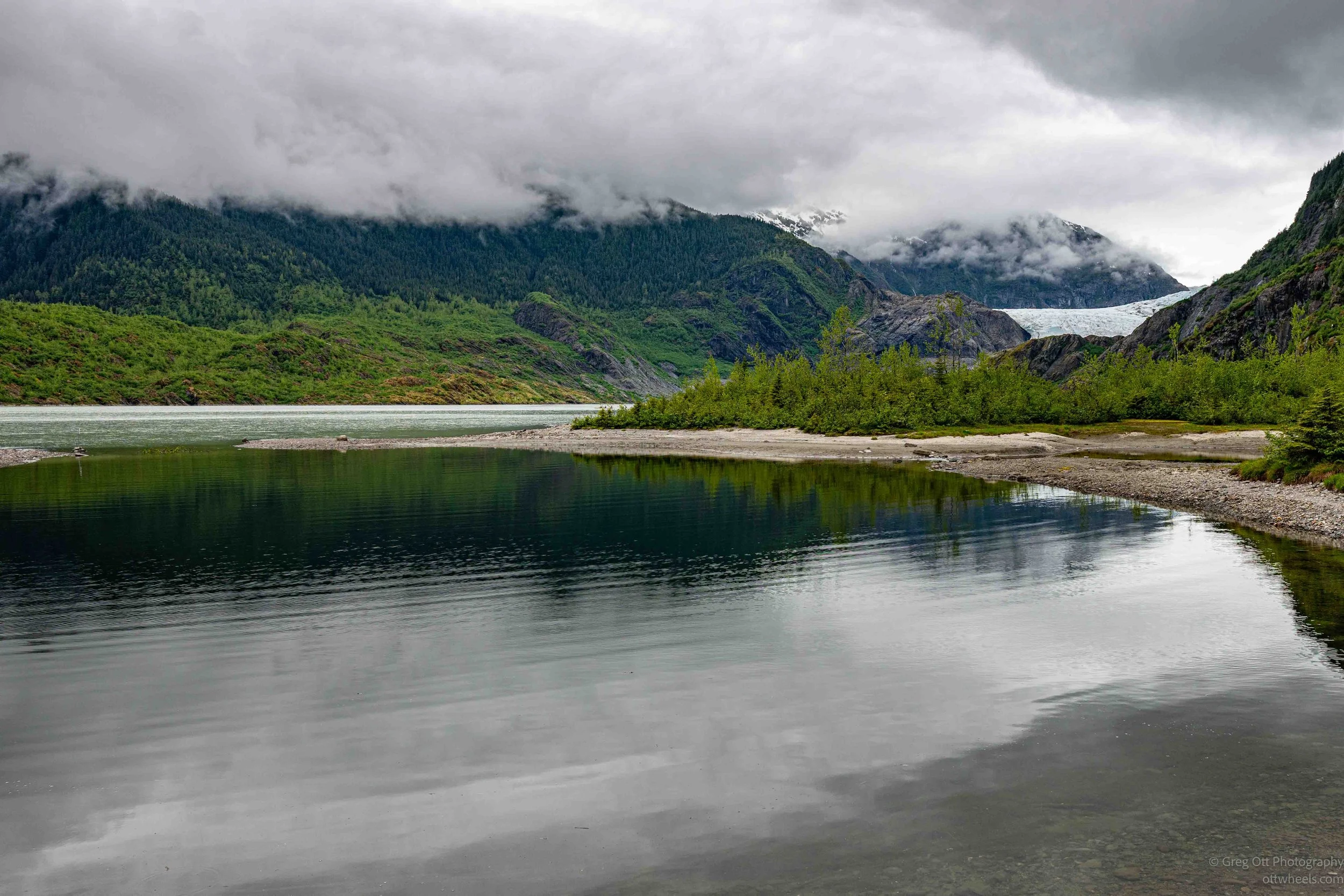
The trail itself was an easy walk. Cool air drifted down from the glacier, low clouds hung on the mountainsides, and fog wrapped itself around the peaks above the valley. I spent much of the hike wandering down side trails and small overlooks, stopping frequently to photograph the glacier, the lake, and the surrounding mountains. The weather wasn't ideal for photography. The heavy overcast flattened the scene, but the clouds hanging on the mountains created a mood that I found appealing. The glacier would appear and disappear as wisps of fog drifted across the valley.
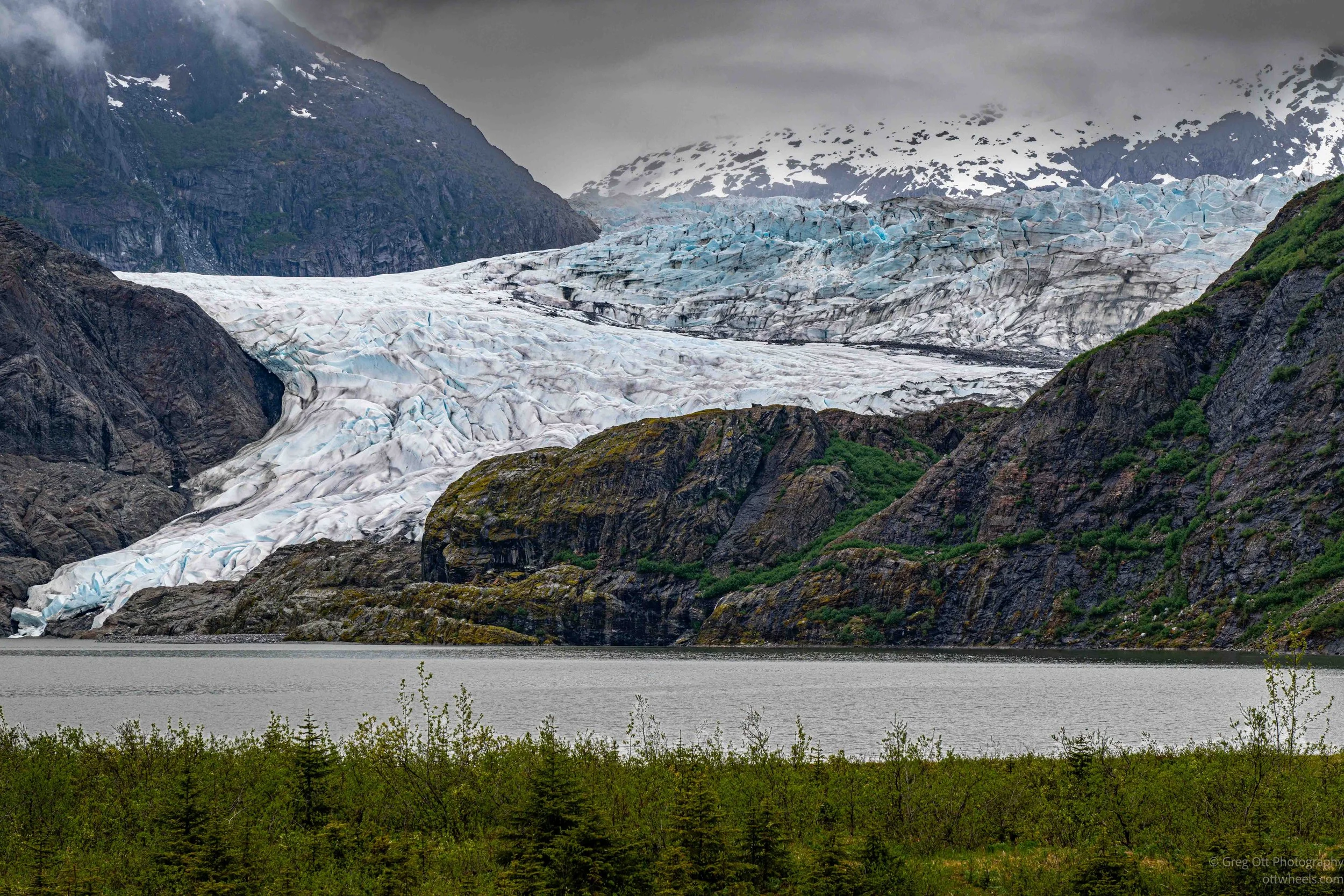
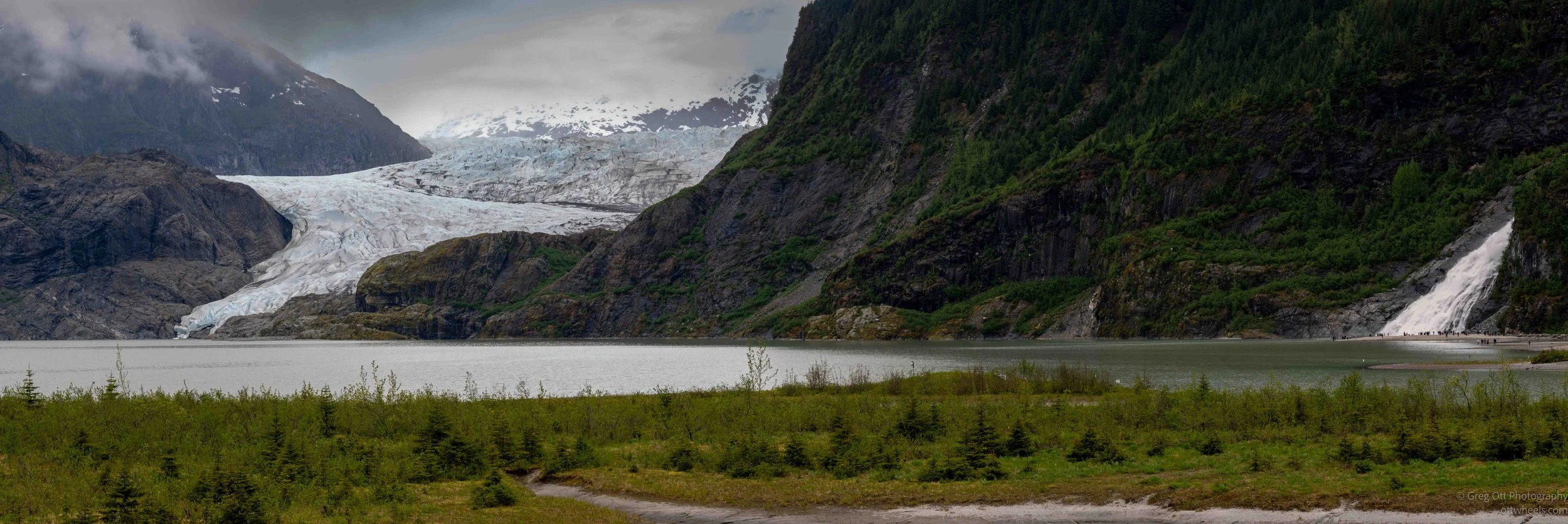
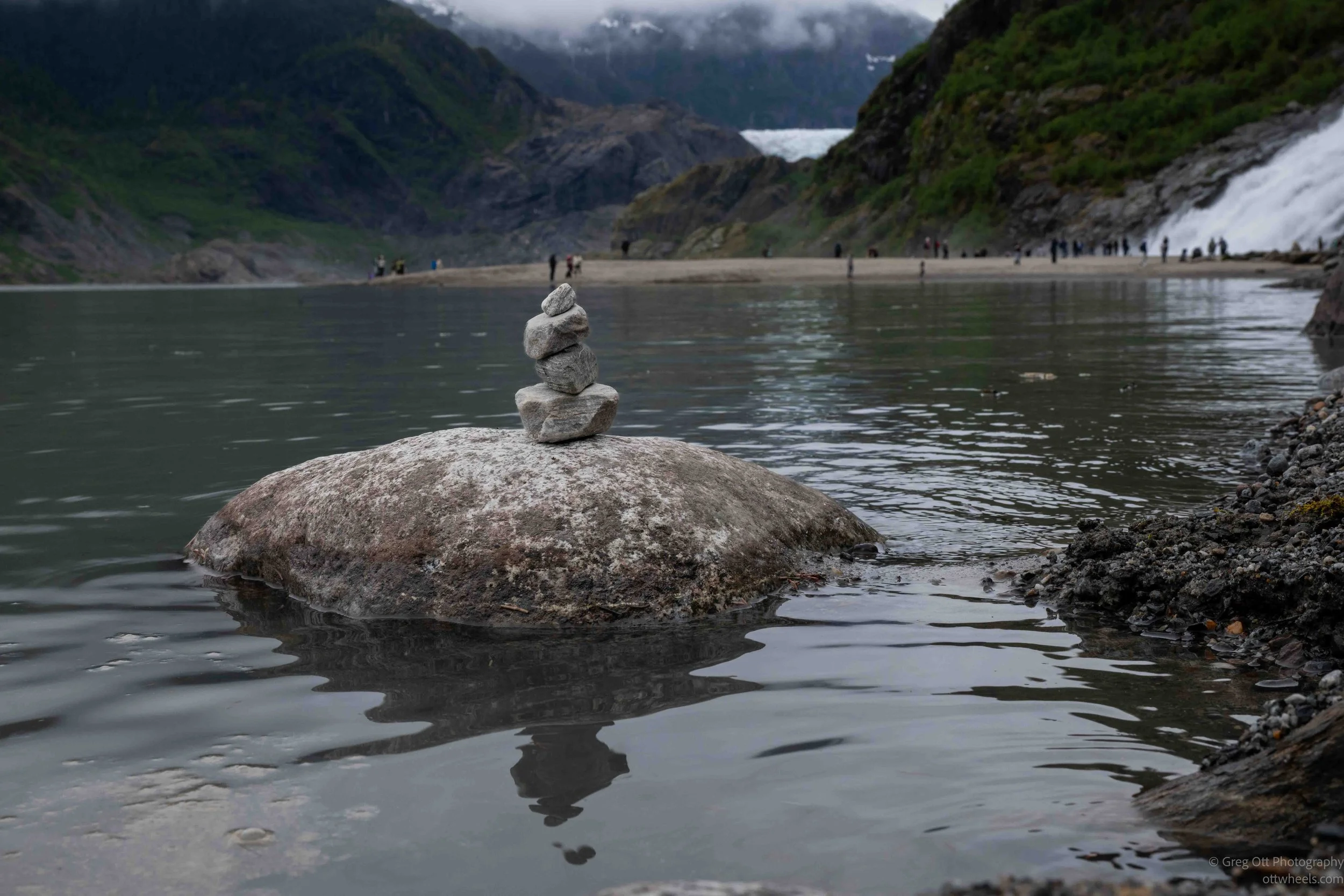
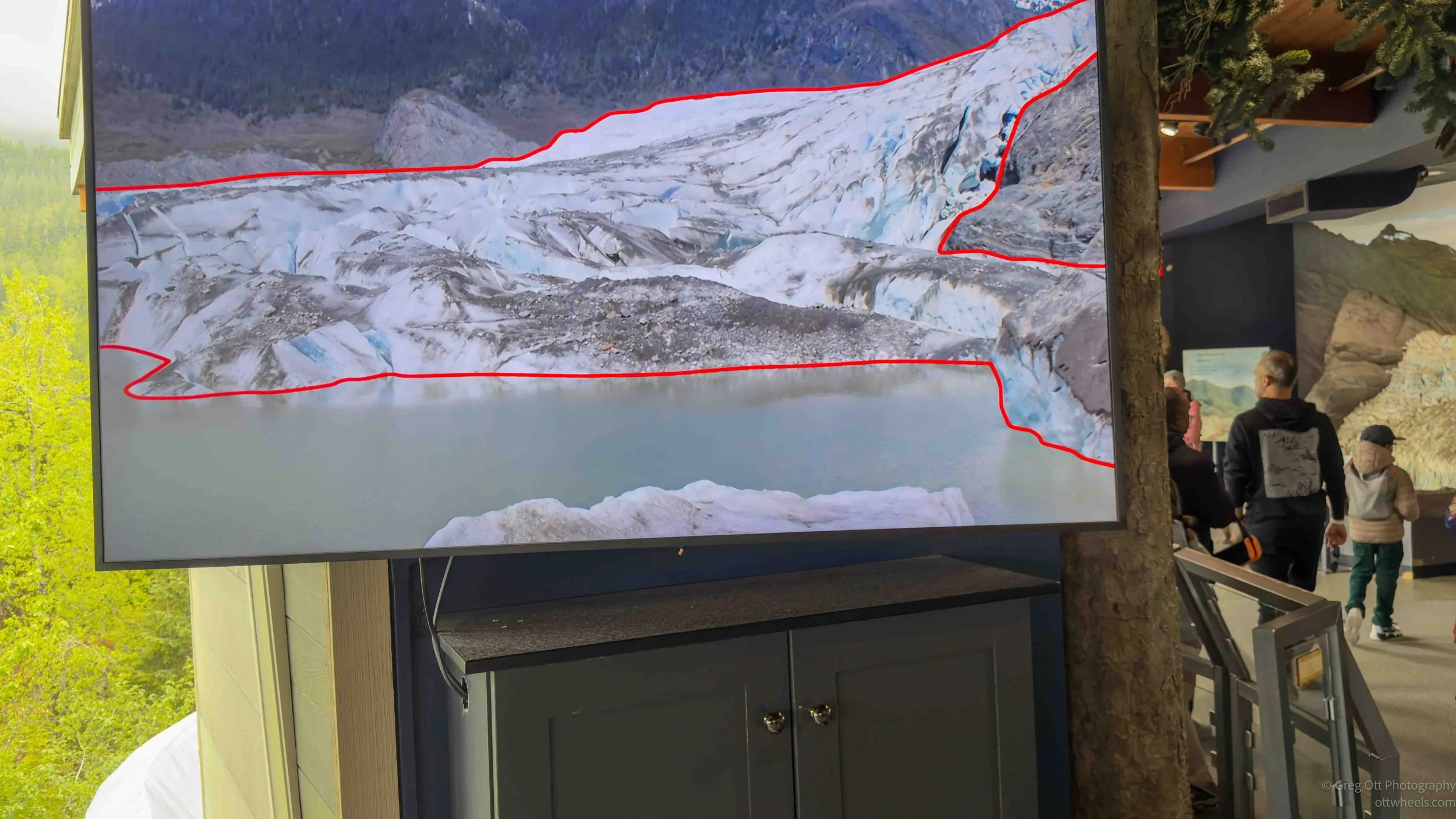
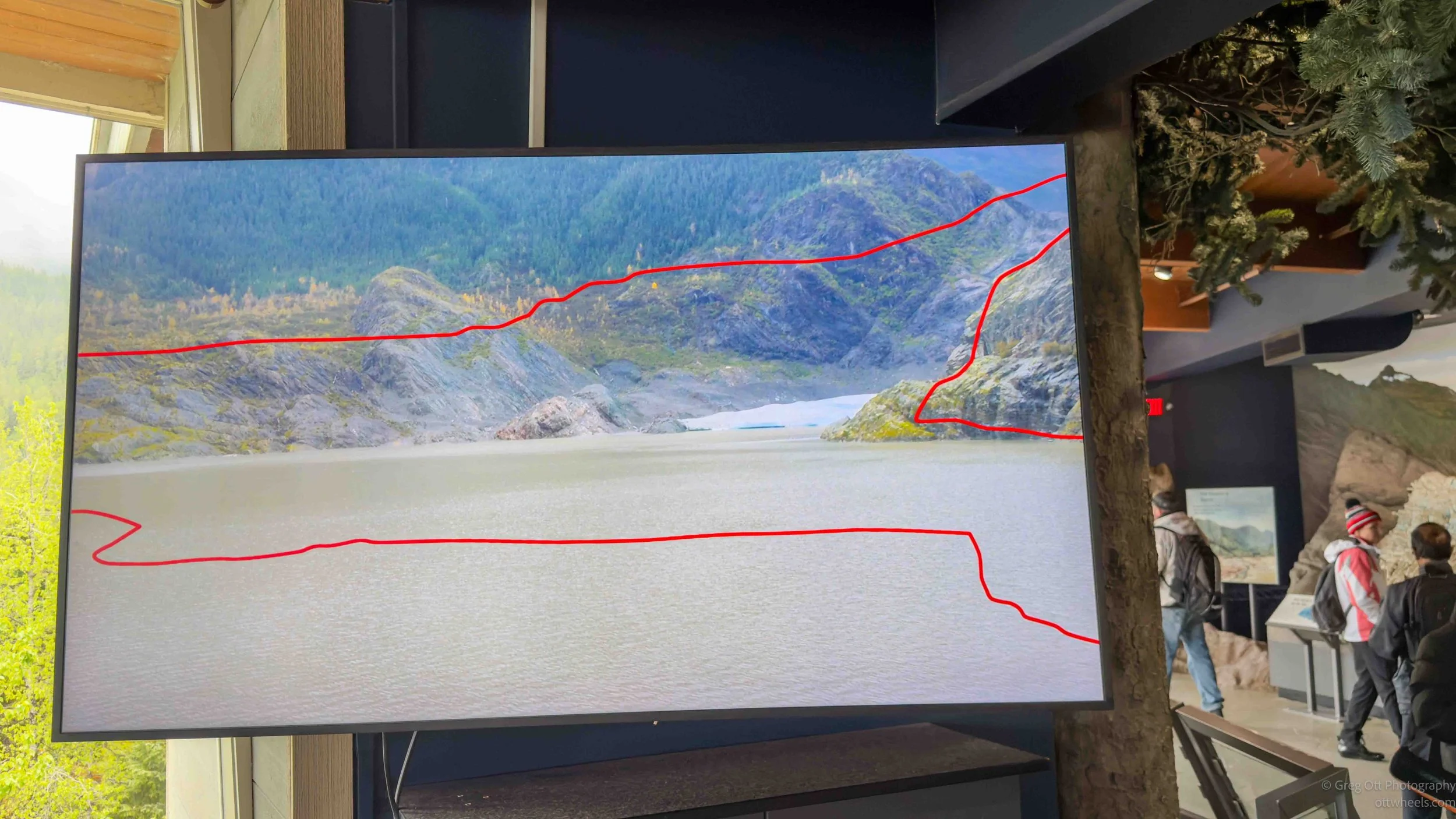
One of the interpretive signs along the trail explained just how dramatically the glacier has changed. Standing there looking out across the lake, it was hard to imagine that in the late 1950s the glacier extended far beyond its present location. According to the display, ice roughly eighty feet thick occupied areas that are now open water, beaches, and forest. The lake itself exists because the glacier retreated. Looking around, I realized that much of what visitors see today simply wasn't there seventy years ago. Trees have grown where ice once stood. Entire landscapes have emerged within a single lifetime. It's one thing to hear statistics about glacial retreat. It's another thing entirely to stand in a place where the evidence is directly in front of you.
One of the things I enjoyed most was listening to all the different languages being spoken around me. Every few minutes I heard conversations from somewhere else in the world. At one overlook I heard four people speaking French and walked over to ask where they were from. "France," they replied. I laughed and said I had figured that part out, but where in France? It turned out they were from a village near the Swiss border. When I mentioned where I had worked in Switzerland, they immediately recognized the area. For a few minutes we stood in Alaska discussing towns in Europe while looking at a glacier. They had arrived from Vancouver on a cruise ship and planned to spend nearly three weeks exploring Alaska. Eventually we exchanged goodbyes and continued on our separate ways.
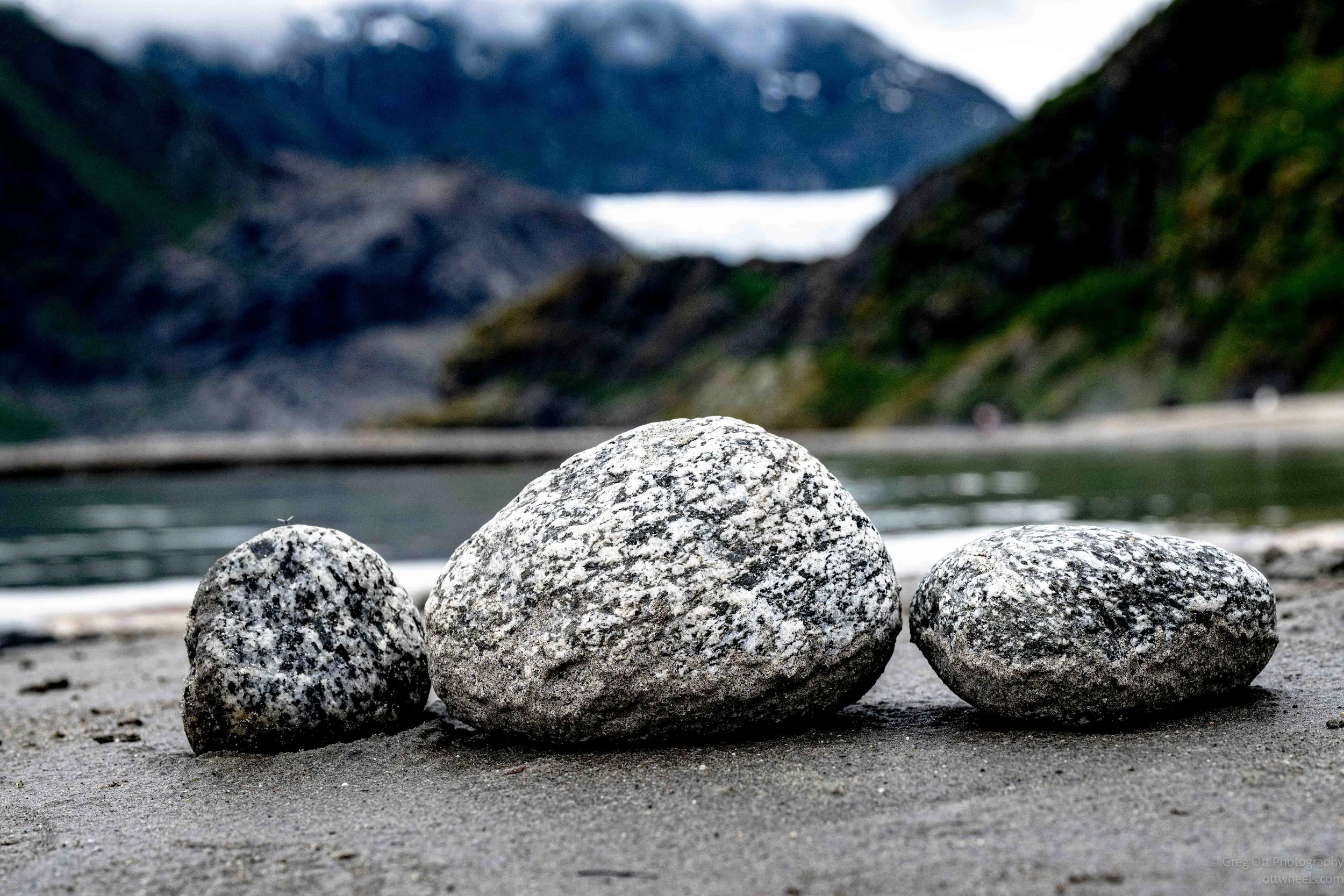
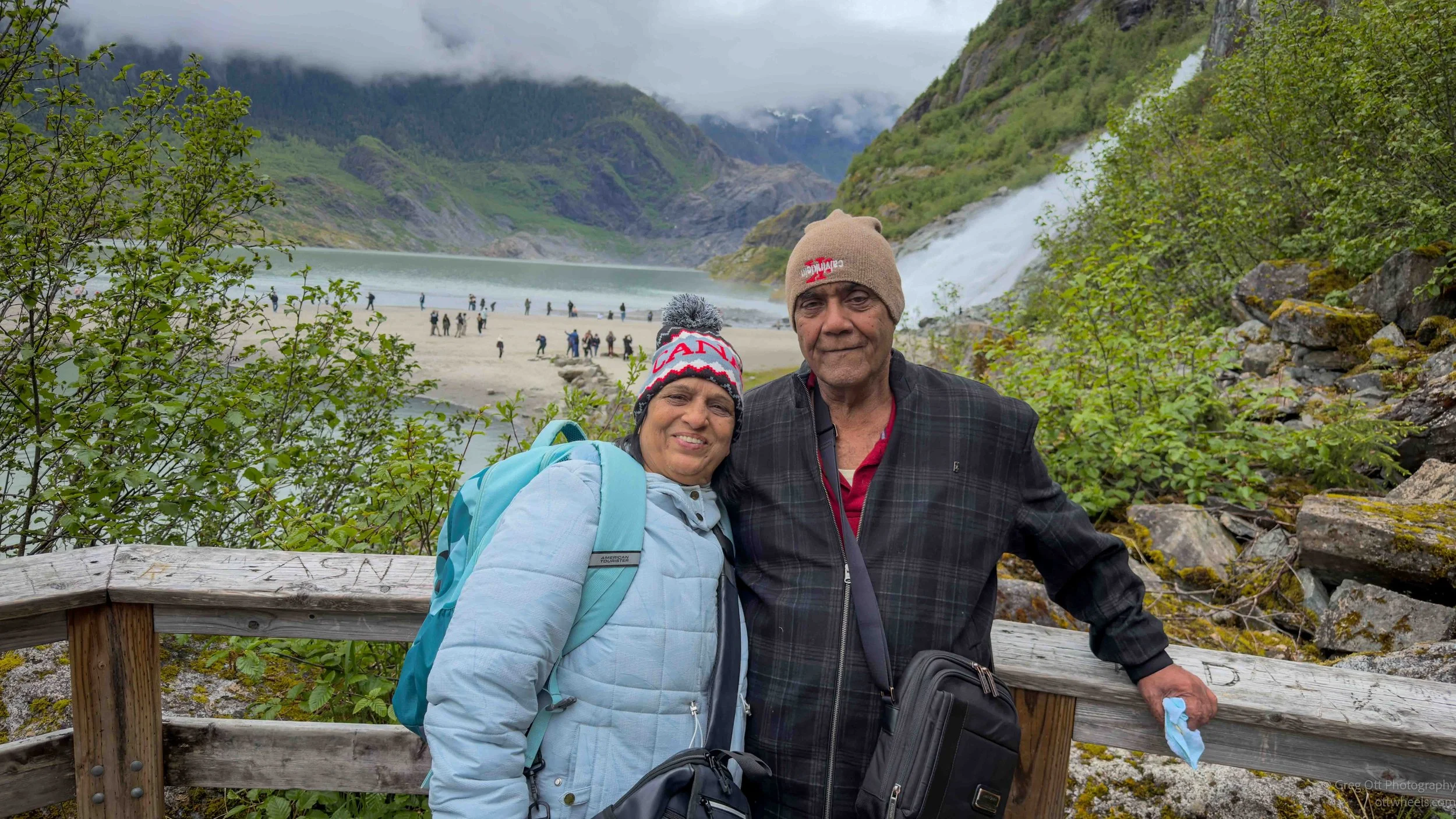
A little farther down the trail, an Indian couple asked if I would take their picture. After handing back their phone, we started talking. They were visiting family in California and had extended the trip into Alaska. A relative worked as a vice president at Google, while his wife had spent decades working for Microsoft.
We talked briefly about technology, travel, and how different Alaska felt from the places they normally visited. Encounters like that have become one of the unexpected pleasures of this trip. I arrive somewhere to see a place and often leave remembering the people.
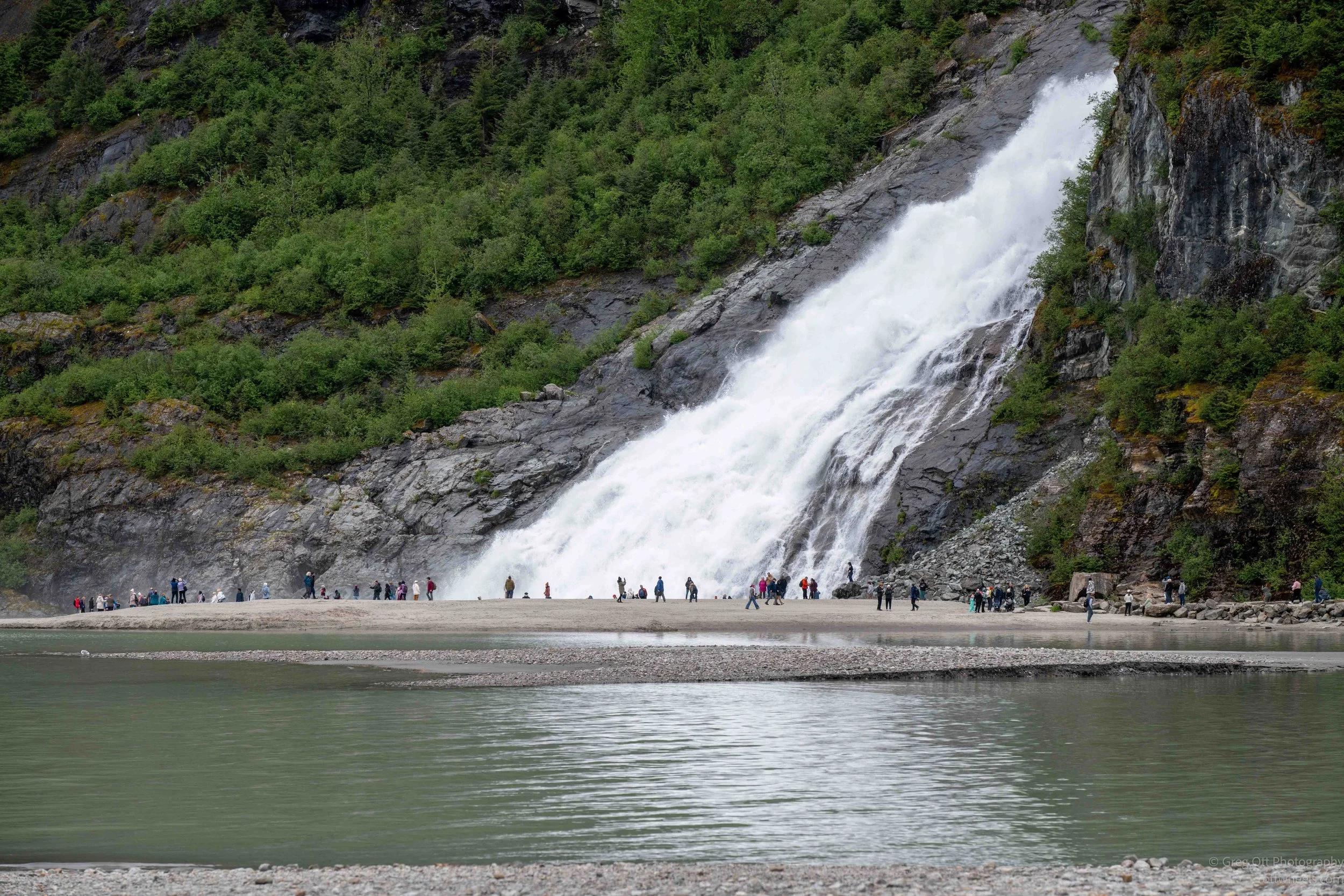
By the time I reached Nugget Falls, I found myself watching people almost as much as the waterfall. Families were posing for photographs. Friends were taking selfies. Couples handed phones to complete strangers and trusted them not to run off with them. I probably took pictures for half a dozen groups. Everyone seemed determined to leave with proof that they had stood beside the falls.
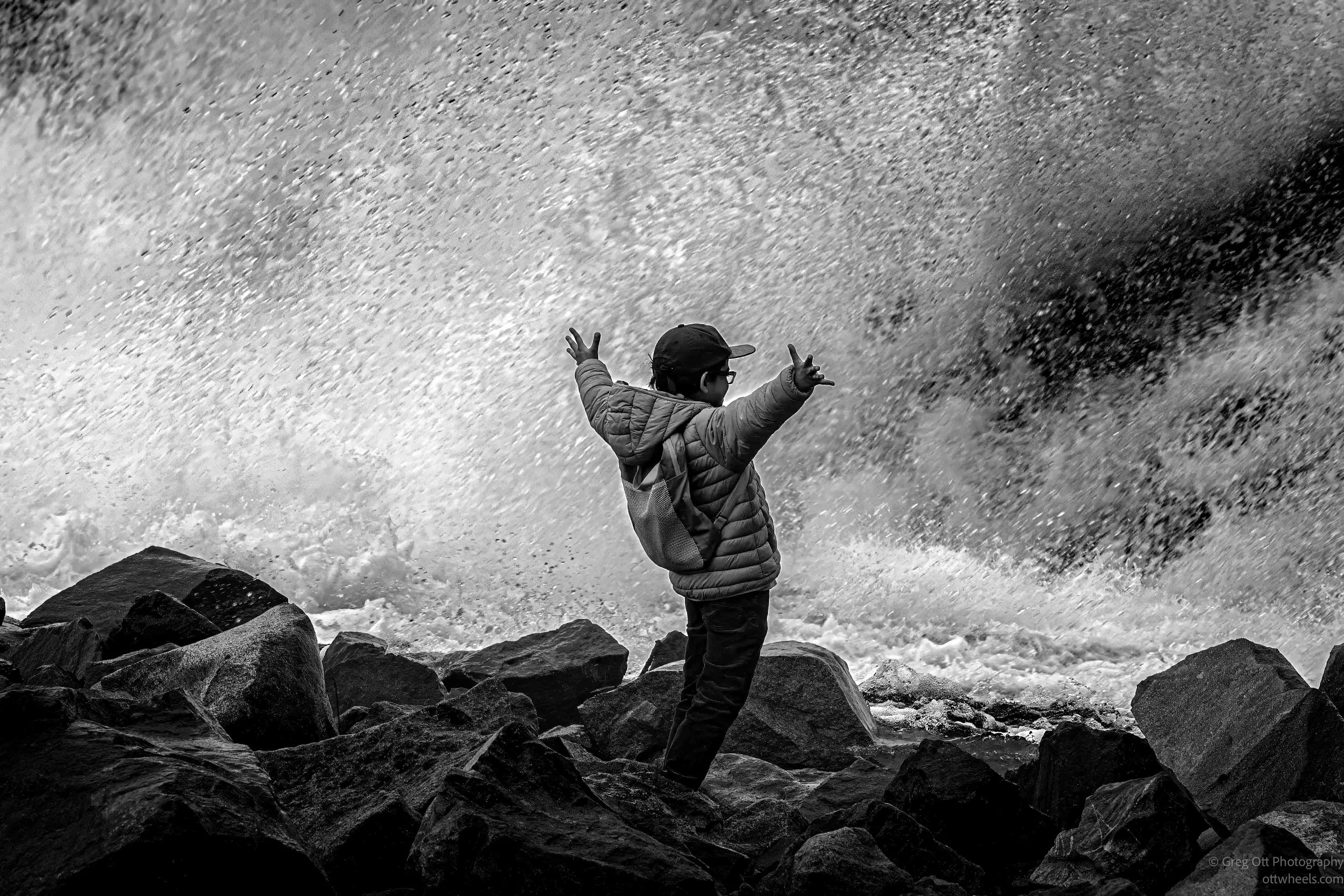
One moment stood out above all the others. A young boy had climbed onto the rocks near the base of the waterfall. The roar was deafening and the spray blasted across the shoreline. He stood there with his arms spread wide, completely absorbed in what was happening around him. His mother kept asking him to turn around so she could take his picture, but he either couldn't hear her or simply didn't care. The waterfall had captured his entire attention. What struck me wasn't the scene itself but his reaction to it. He wasn't posing. He wasn't performing for a camera. He was simply experiencing the moment with a level of enthusiasm that adults rarely allow themselves. The photograph isn't really about a waterfall. It's about that brief instant when a child encounters something so large and overwhelming that every bit of self-consciousness disappears. Converting the image to black and white felt natural because the emotion was the story, not the color.
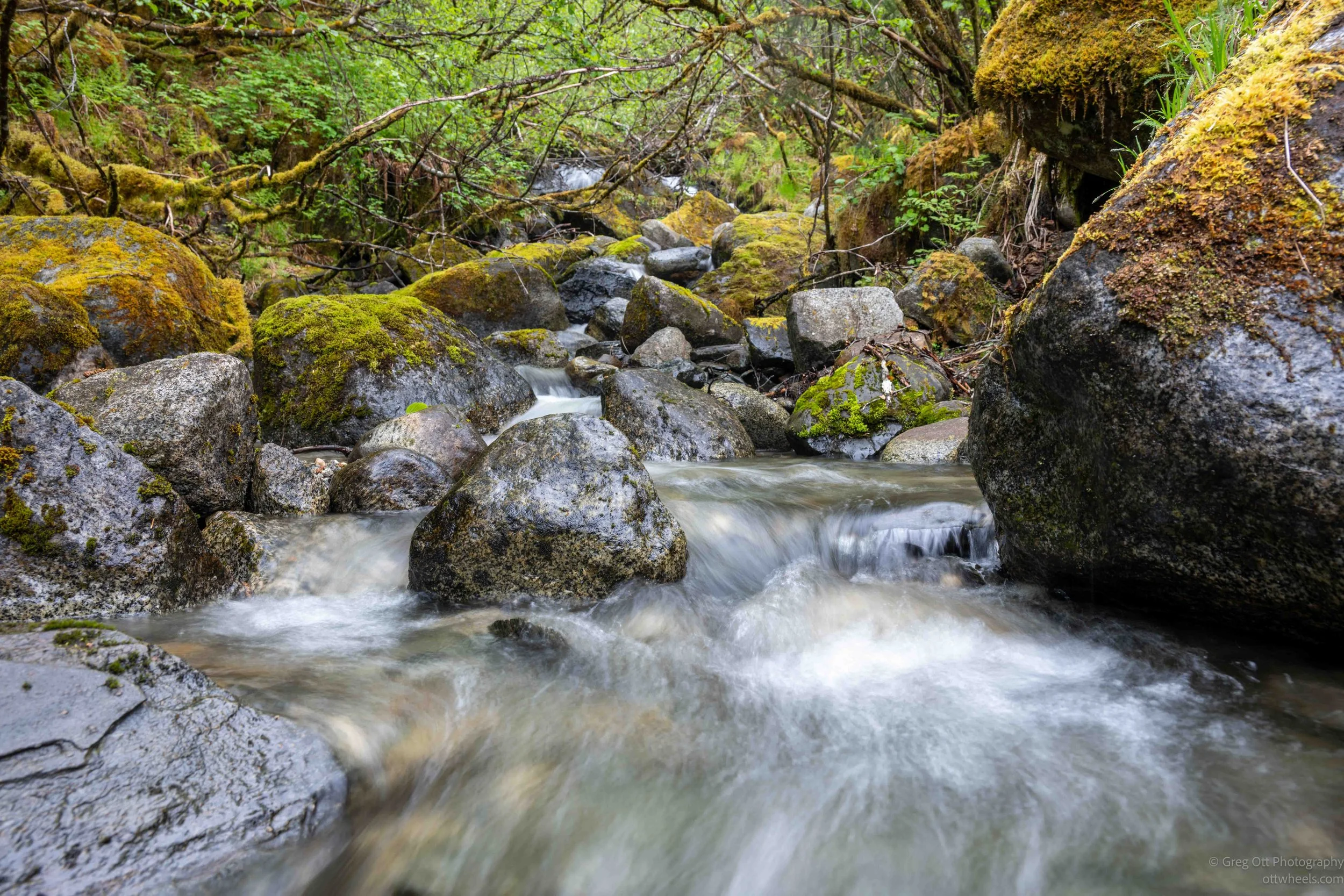
On the return trip, I drifted down a side trail that paralleled the main path. After a few minutes I remembered reading that a bear had been spotted nearby earlier in the day. I was alone, carrying a camera instead of bear spray, and had no idea where the trail ultimately led. That seemed like a perfectly good reason to reverse course. The trail would still be there tomorrow. The bear might be too.
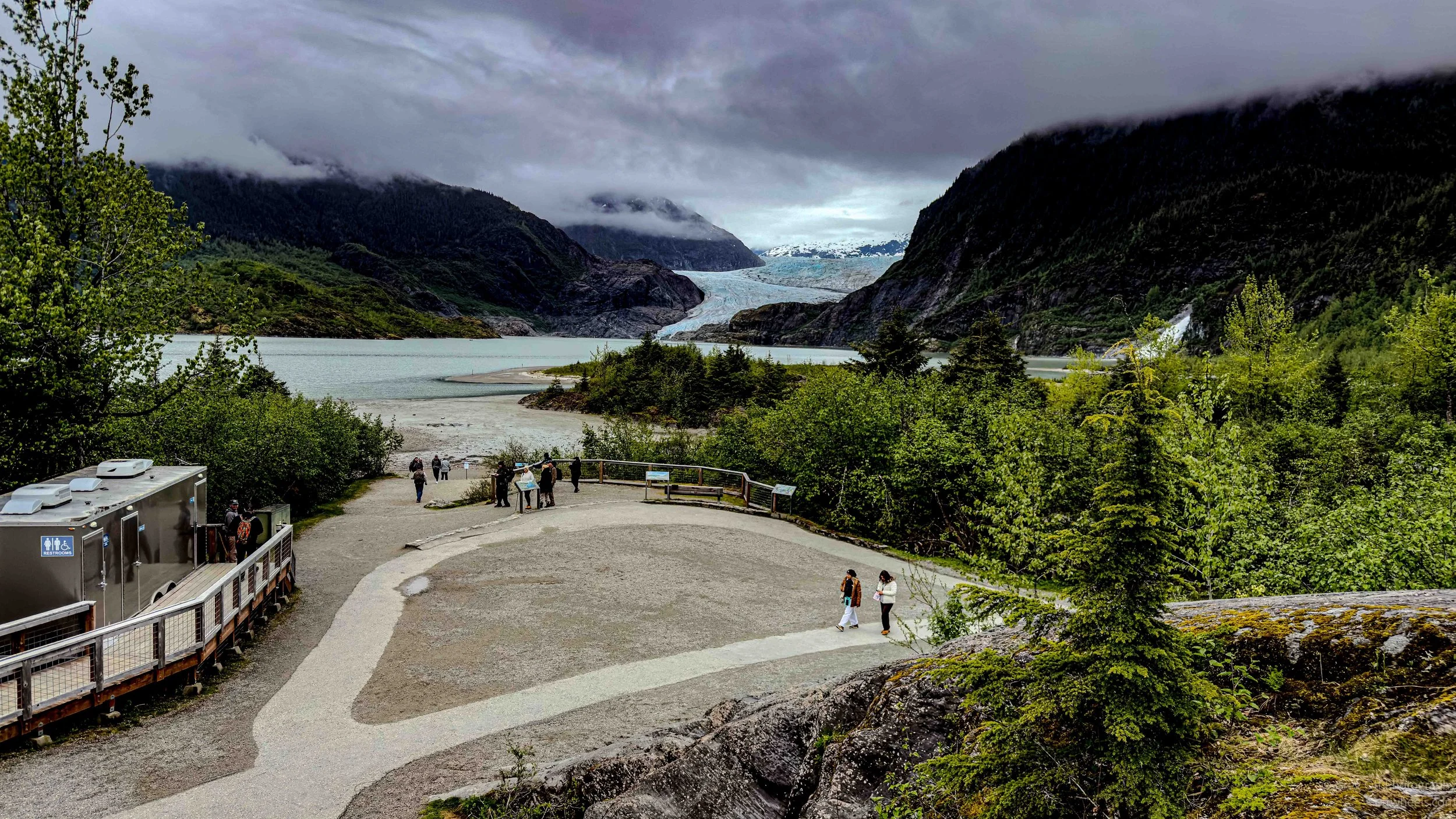
Before leaving, I stopped at the visitor center overlooking the lake and glacier. Many visitors assume it is part of a national park, but the facility is actually operated by the U.S. Forest Service as part of Tongass National Forest. The exhibits cover far more than the glacier itself. Displays explain how glaciers form and move, the geology of Southeast Alaska, salmon runs, local wildlife, the temperate rainforest ecosystem, and the history of the region's Indigenous peoples. The most interesting exhibit was a time-lapse presentation assembled from photographs taken over many decades. Watching the glacier retreat year after year was striking. The change seemed subtle from one photograph to the next, but when viewed over decades the scale became impossible to ignore. Entire sections of ice disappeared, new land emerged, and forests slowly occupied places that had once been buried beneath ice.
I made it back to the van around six o'clock and spent the evening editing photographs from the day. The conditions had been challenging. The flat overcast light made it difficult to create separation between the ice, rock, water, and clouds. I experimented with crops, contrast adjustments, and different interpretations of the glacier scenes. The photograph of the boy standing in the spray quickly became my favorite image of the day. Sometimes the strongest photograph isn't the grand landscape everyone traveled to see. Sometimes it's the human response to it.
Dinner was simple but satisfying. I cooked rice, boiled a couple ears of corn on the cob, and made a Boca burger topped with cheese and mixed sprouts. After a day spent hiking, photographing, editing, and talking with people from half a dozen countries, it was exactly the kind of uncomplicated meal that works well in a van. Outside, the clouds still clung to the mountains surrounding Juneau. Inside, the heating blanket was already plugged in and waiting for another cold Alaskan night.