A Day in Juneau, AK
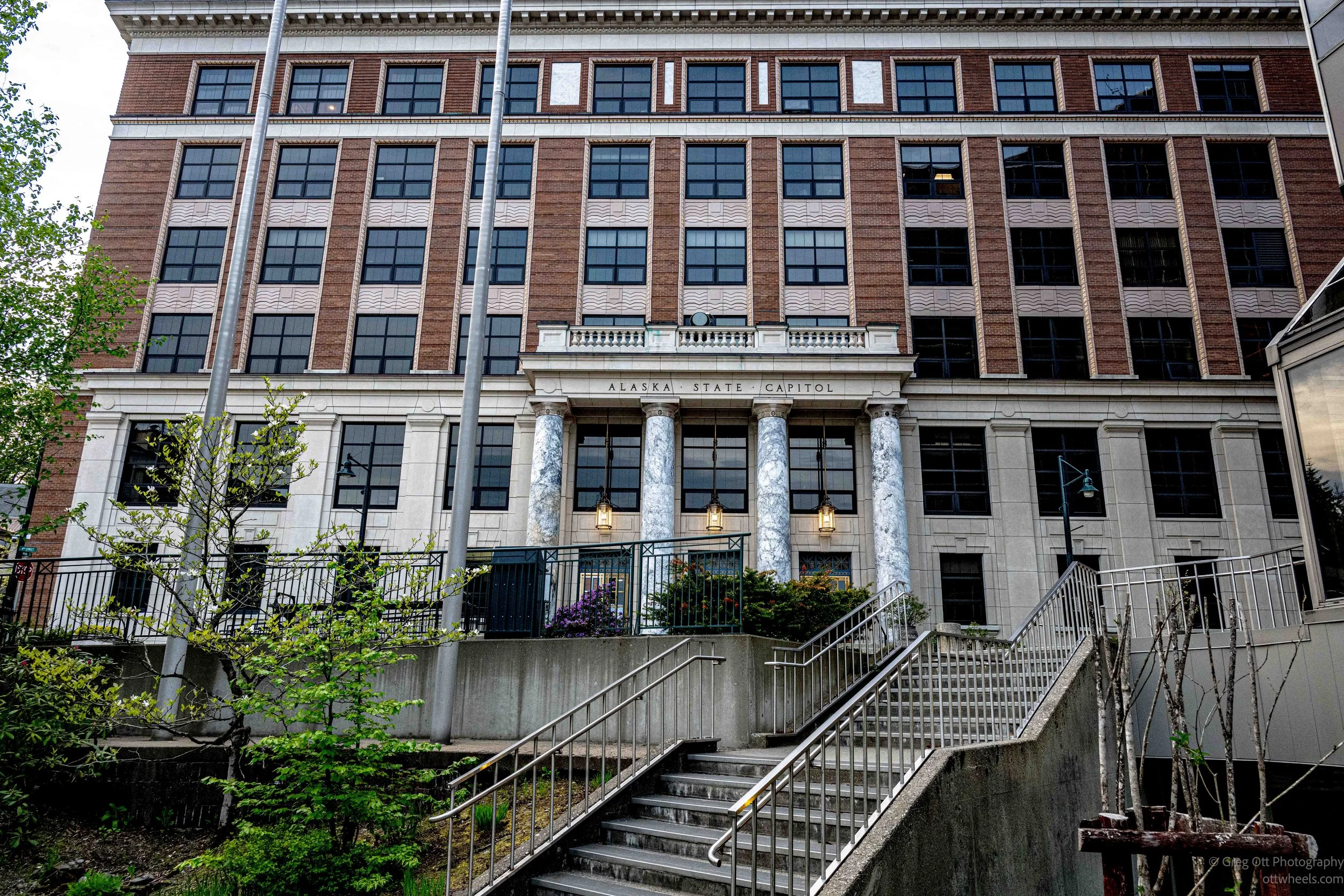
Today was my introduction to Juneau. The plan was simple: visit the Alaska State Capitol, walk around town, and get a better sense of the city beyond the cruise ships and postcards.
As all days should begin, this one started with caffeine. Glacier Nalu Campground was about 20 minutes from downtown, and I decided to try a local coffee shop rather than another chain. I ended up at Coppa on Glacier Avenue and found plenty of parking on the nearby side streets. They make their own pastries, but by the time I arrived they were already out of both plain and chocolate croissants. I settled on an apple brioche tart. It looked far better than I expected, although it tasted more like a really good donut than a flaky French pastry. In hindsight, I probably should have ordered the almond everything croissant. The shop had the feel of a neighborhood gathering place. Customers walked in and greeted employees by name, and most seemed to be local residents or government workers from the nearby office buildings. Everyone was friendly, and it felt like the kind of place where the staff already knows your order before you reach the counter.
I had been warned that parking near the Capitol was difficult. The Capitol sits above downtown in a neighborhood filled with attractive older homes and government buildings, so I expected to spend some time hunting for a space. Naturally, I found one almost immediately, about 150 feet from the entrance. The signs indicated a two-hour parking district, but nobody seemed able to explain exactly how it worked. One person told me they hadn't owned a car in years. Another attempted an explanation but started with, "I'm not sure." Most of the people I spoke with simply parked in underground garages and never thought about it. Whatever the rules were, nobody seemed overly concerned about them.
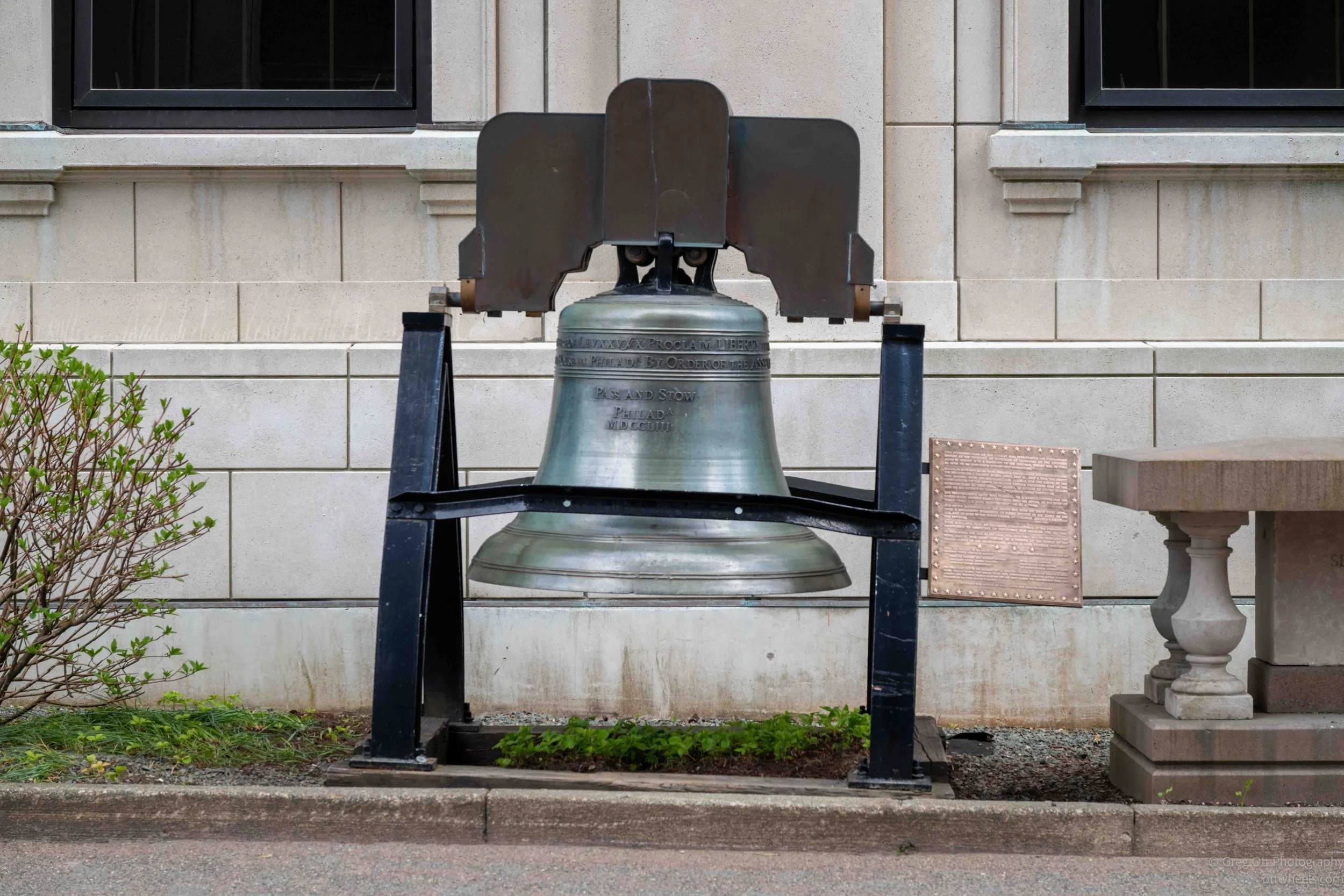
I spent a little time photographing the Capitol from the outside. Near the building I found Alaska's Liberty Bell replica, something I've seen at a number of state capitols during my travels. What surprised me was finding one in Alaska because the bells were distributed in 1950, nearly a decade before Alaska became a state. It turns out the program included not only the 48 states, but also major U.S. territories such as Alaska, Hawaii, and Puerto Rico. The bells were cast in France as part of a nationwide Savings Bond campaign and sent throughout the country. Knowing Alaska received its bell while it was still a territory made it a more interesting piece of history than I initially realized.
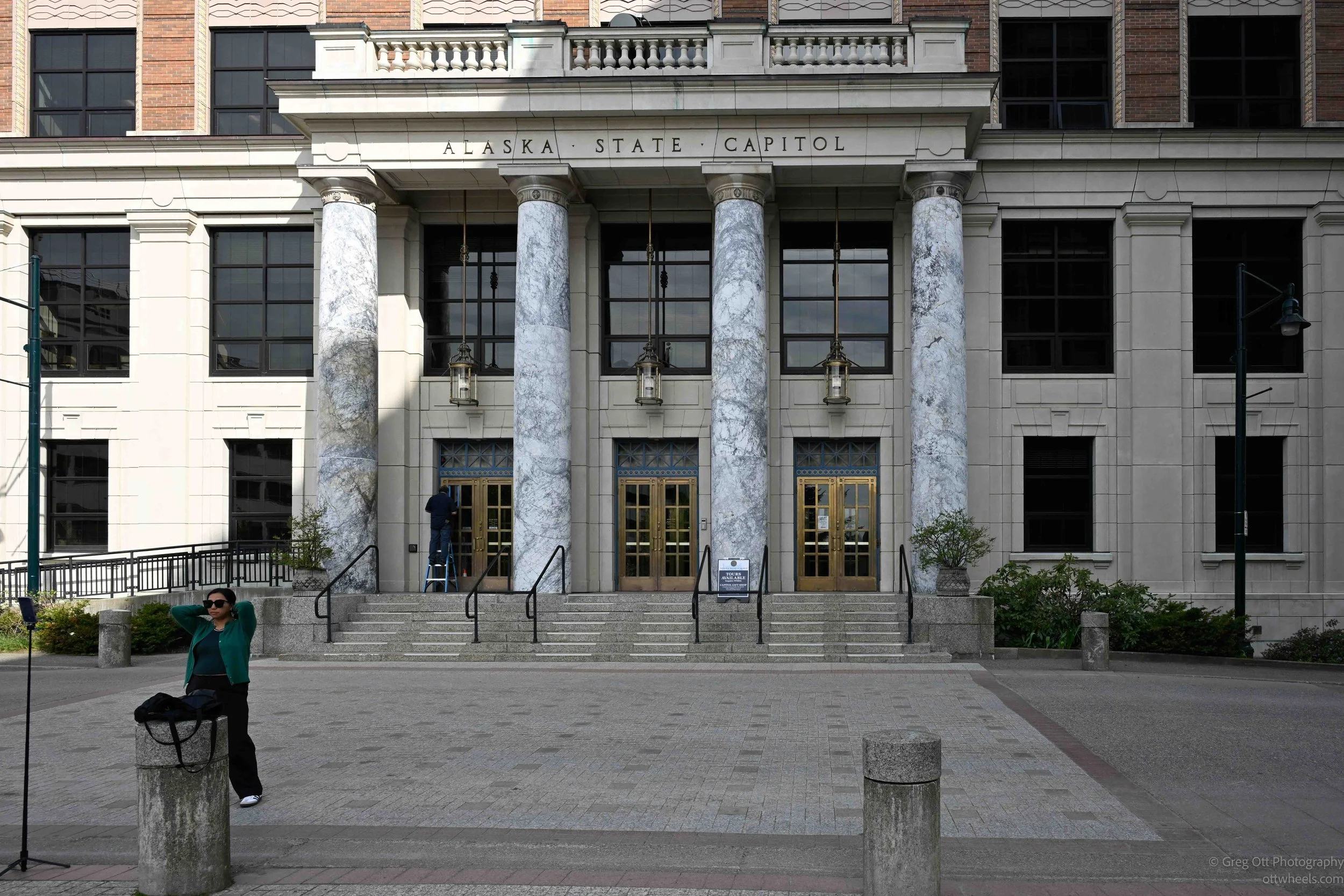
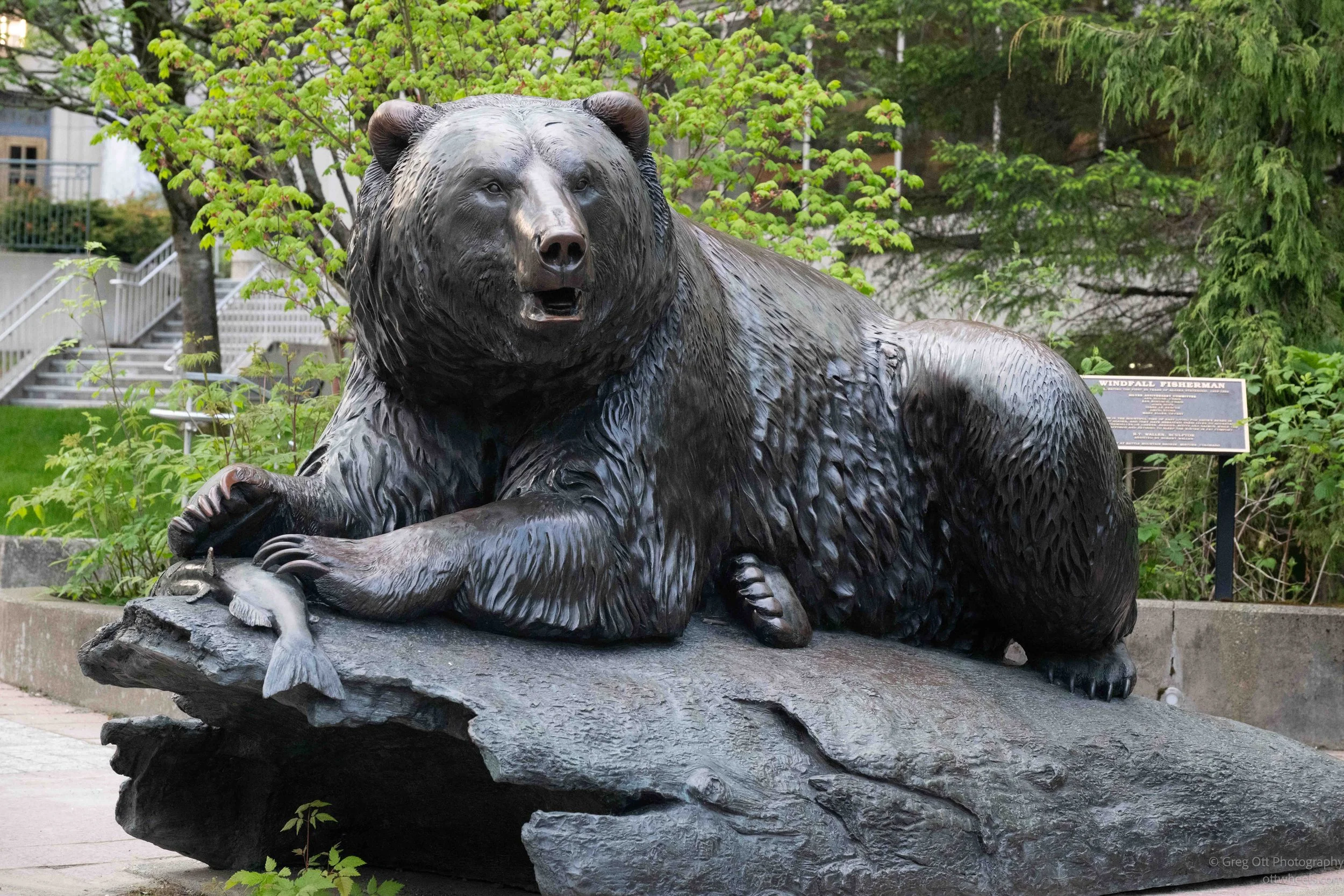
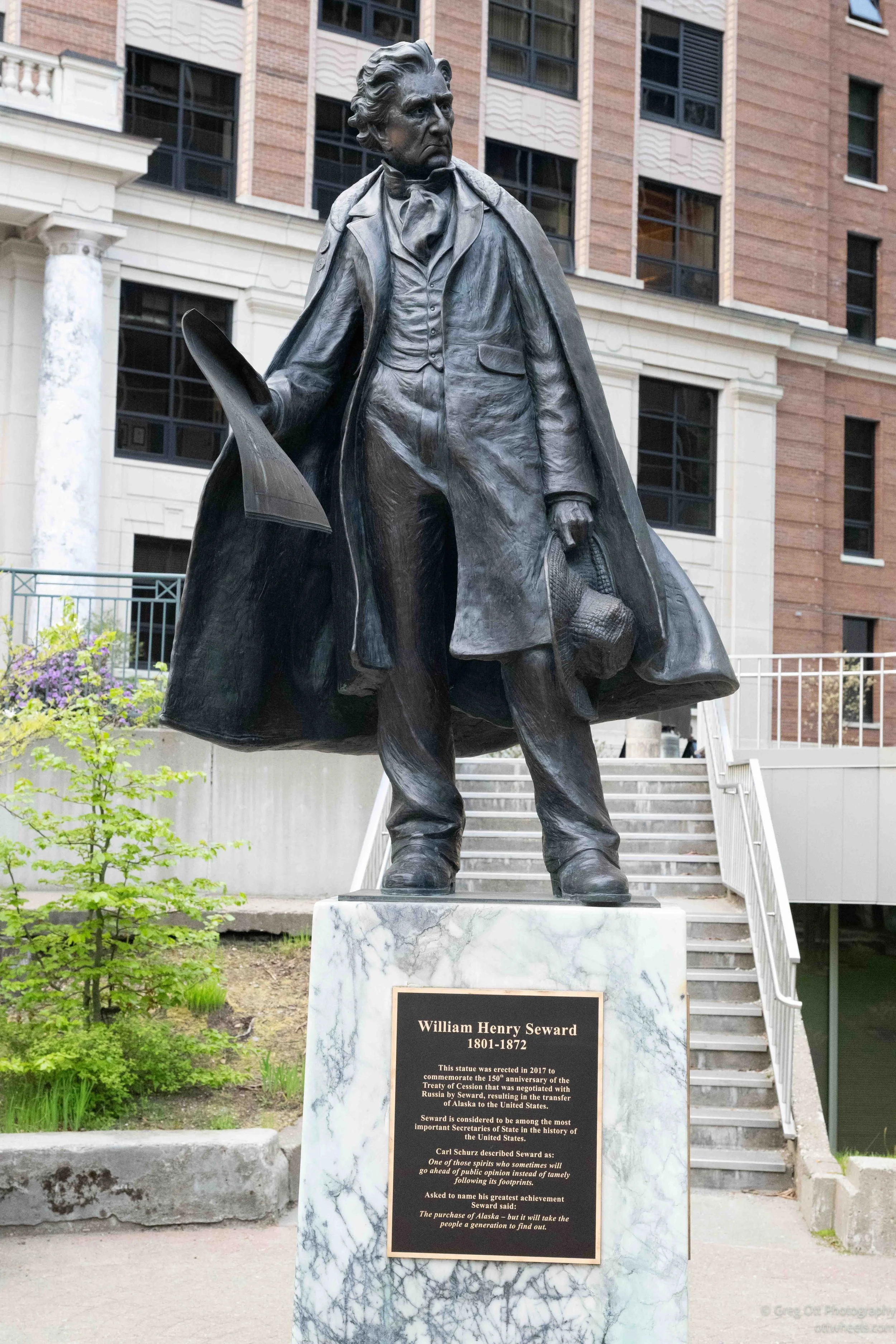
The Capitol offers both guided and self-guided tours. I chose the self-guided option and, after sending my camera gear through security, one of the officers suggested taking the elevator to the fifth floor and working my way down. He had worked there for many years and quickly proved to be one of the more entertaining people I met that day. He told me a story about the post office, which was once located on what had been the second floor of the building. Federal regulations apparently required that a post office be located on the first floor. Rather than move the post office, they simply renumbered the building. The first floor became the ground floor, the second floor became the first floor, and the problem disappeared. It sounded like the sort of practical government solution that could only happen in Alaska.
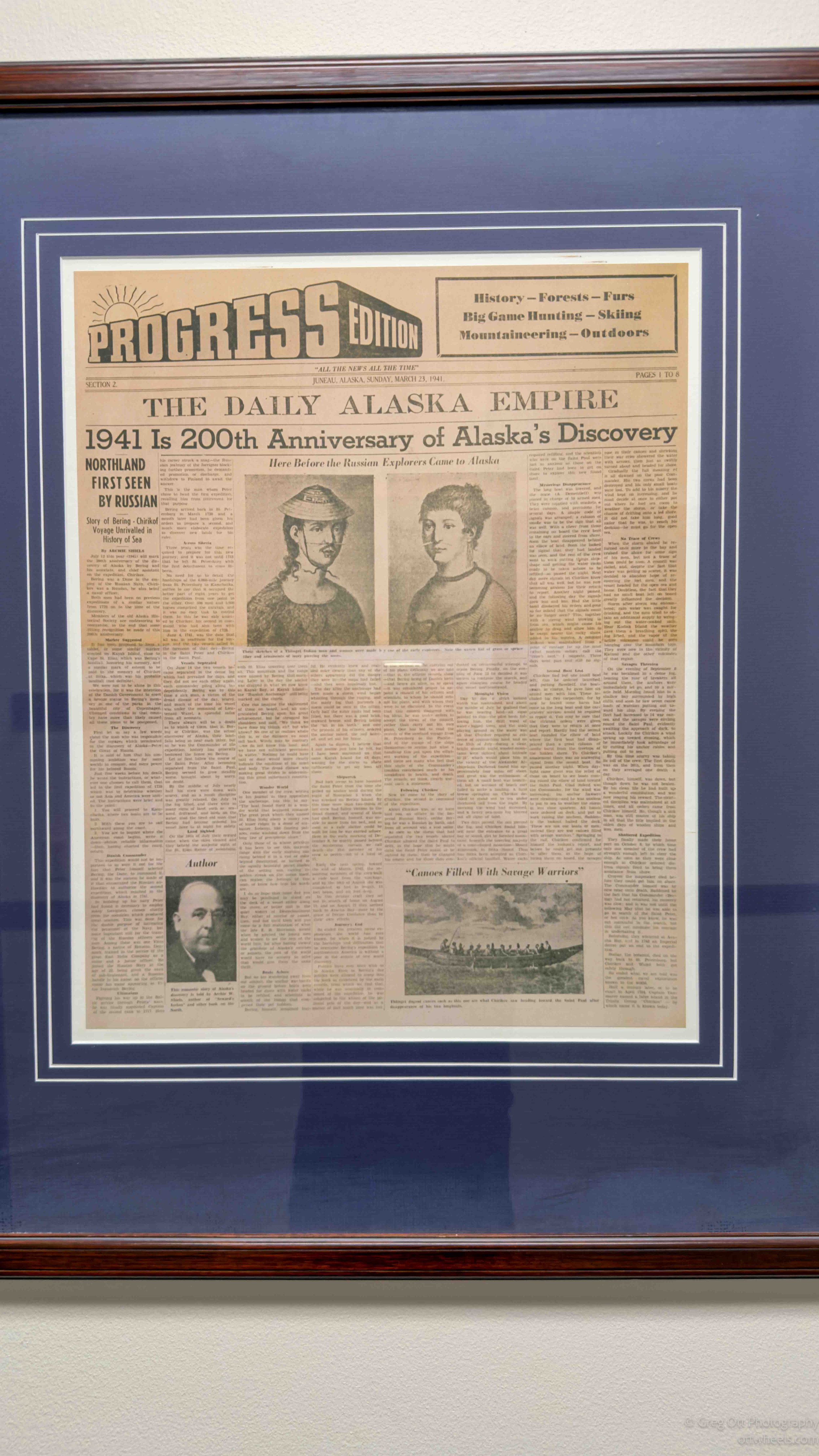
The Alaska State Capitol is unusual compared to most state capitols. There is no grand dome, no rotunda, and no massive ceremonial staircase. The building was originally constructed as the Federal and Territorial Building and opened in 1931. When Alaska became the 49th state in 1959, it became the state capitol. In many ways it still feels more like an office building than a traditional capitol. What it lacks in architecture, however, it makes up for in history. Every hallway seemed covered with photographs, paintings, maps, newspaper articles, plaques, and exhibits. Rather than rushing through, I found myself stopping every few feet to read something else. Each floor seemed to focus on a different aspect of Alaska's history, and by the end it felt more like touring a museum than a government building.
One artist whose work appeared repeatedly throughout the building was Eustace Paul Ziegler. Before arriving in Juneau, I had never heard of him. Ziegler spent decades painting Alaska and became one of the state's best-known artists. His work documented Native communities, miners, fishermen, frontier settlements, and everyday life during a period when Alaska was changing rapidly. Many of the paintings felt almost like historical records. Looking at them, it was easy to imagine how different life must have been only a century ago.
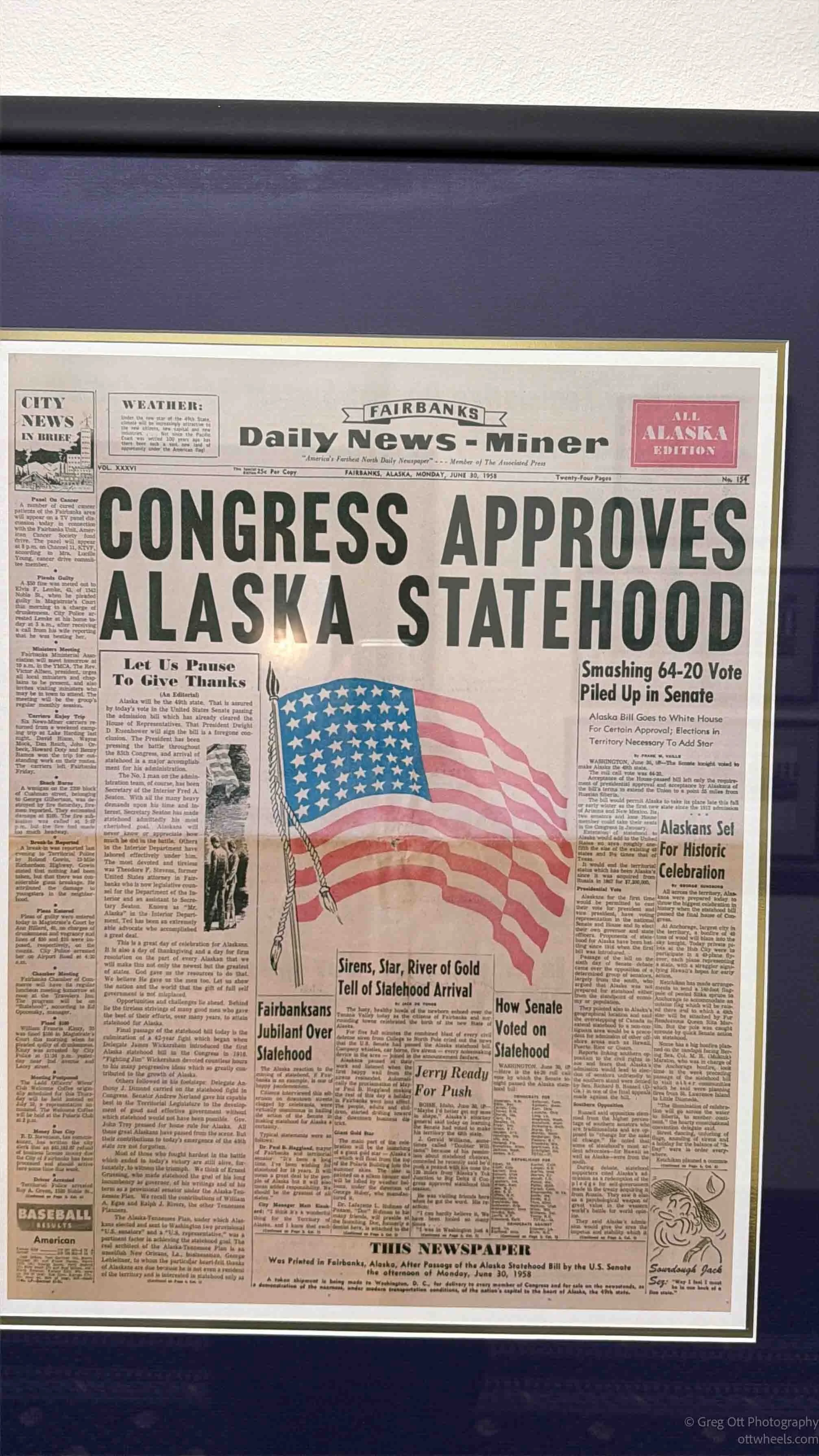
My favorite exhibits were on the fourth floor because they covered events I actually remembered hearing about growing up. There were displays on the massive 1964 earthquake, Alaska statehood, Eisenhower signing the legislation that admitted Alaska into the Union, and other moments that shaped modern Alaska.I was also surprised to find that Alaska was admitted in on a vote of 64-20 as the 49 state. There were many senators that didn’t think they should be admitted.
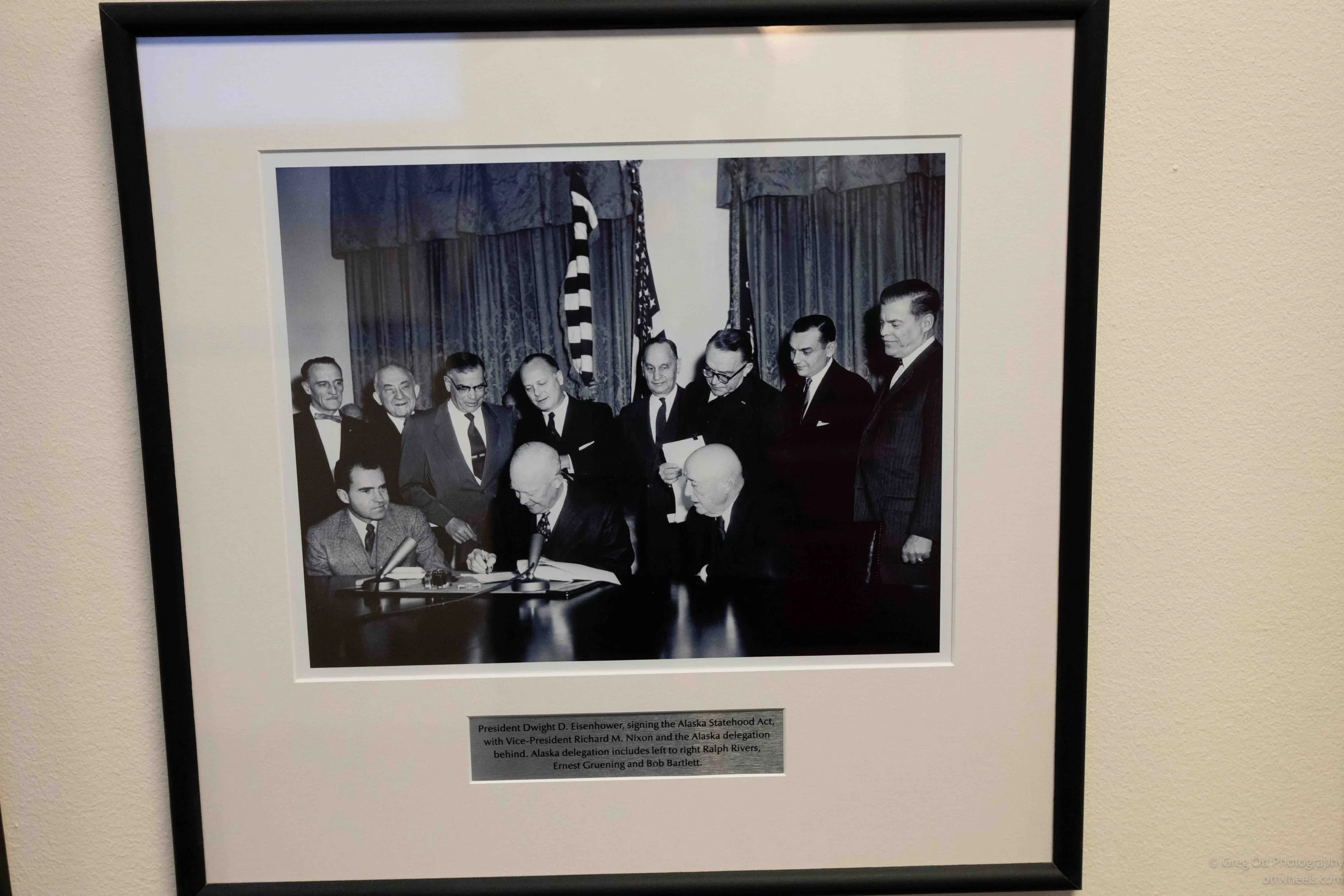
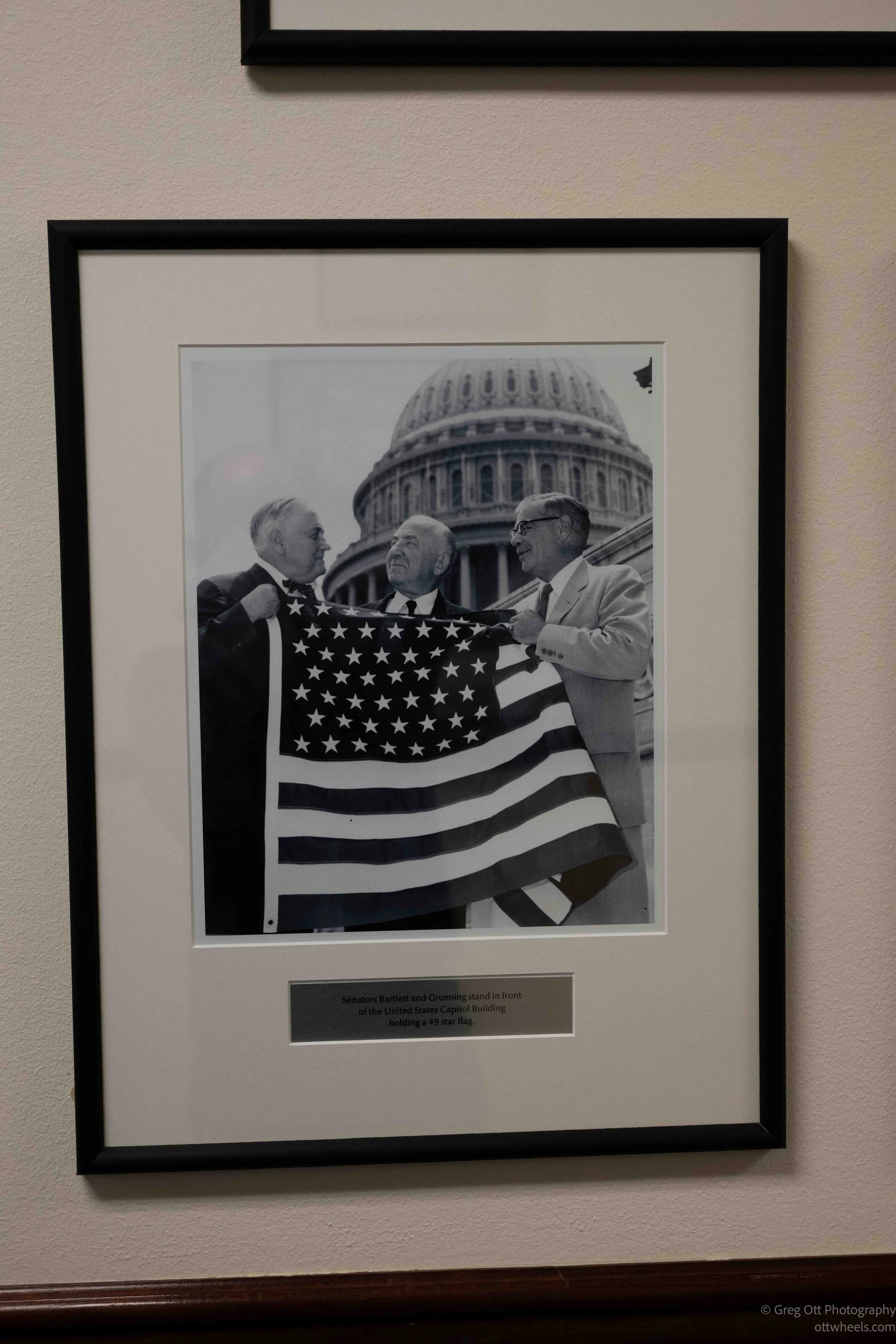
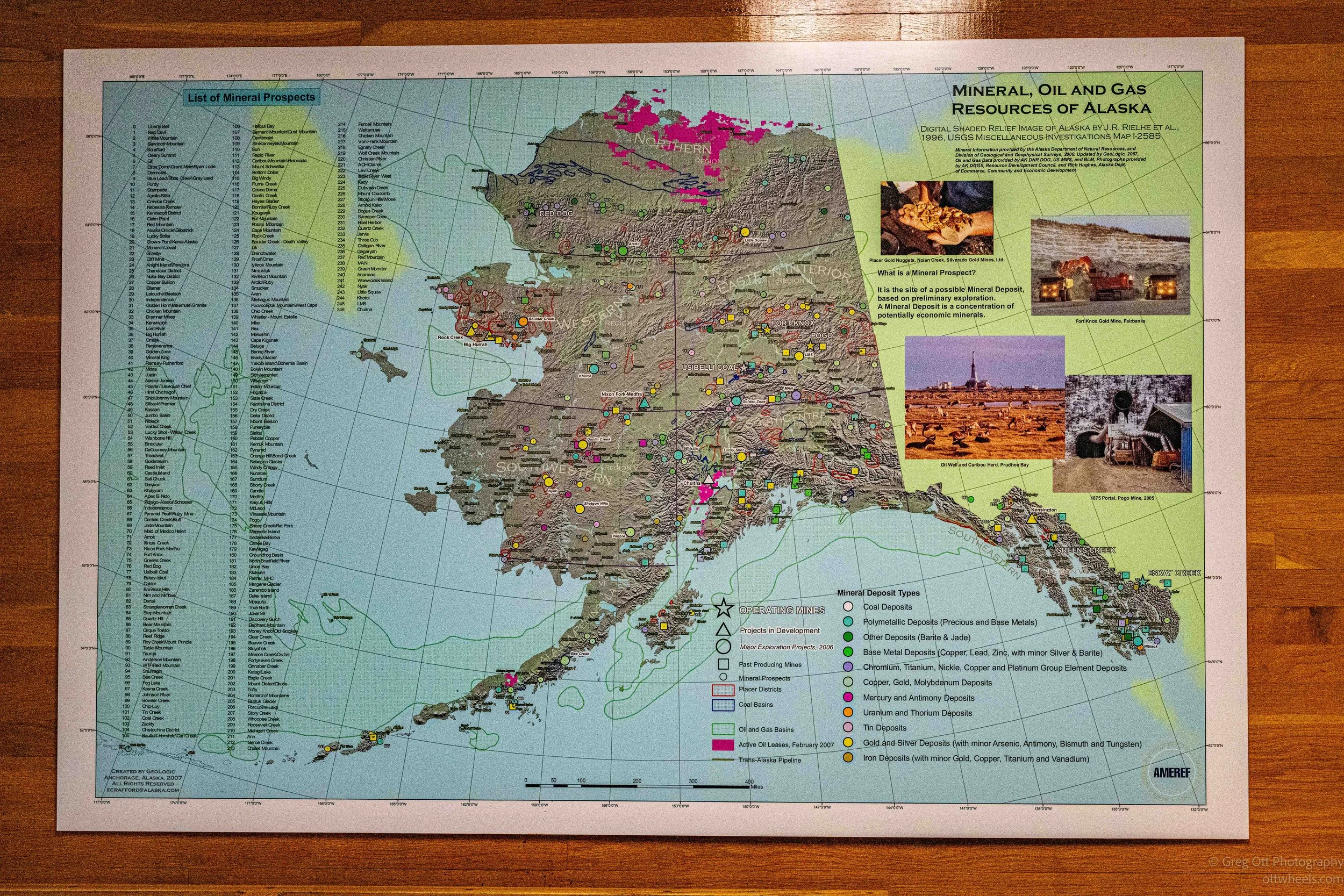
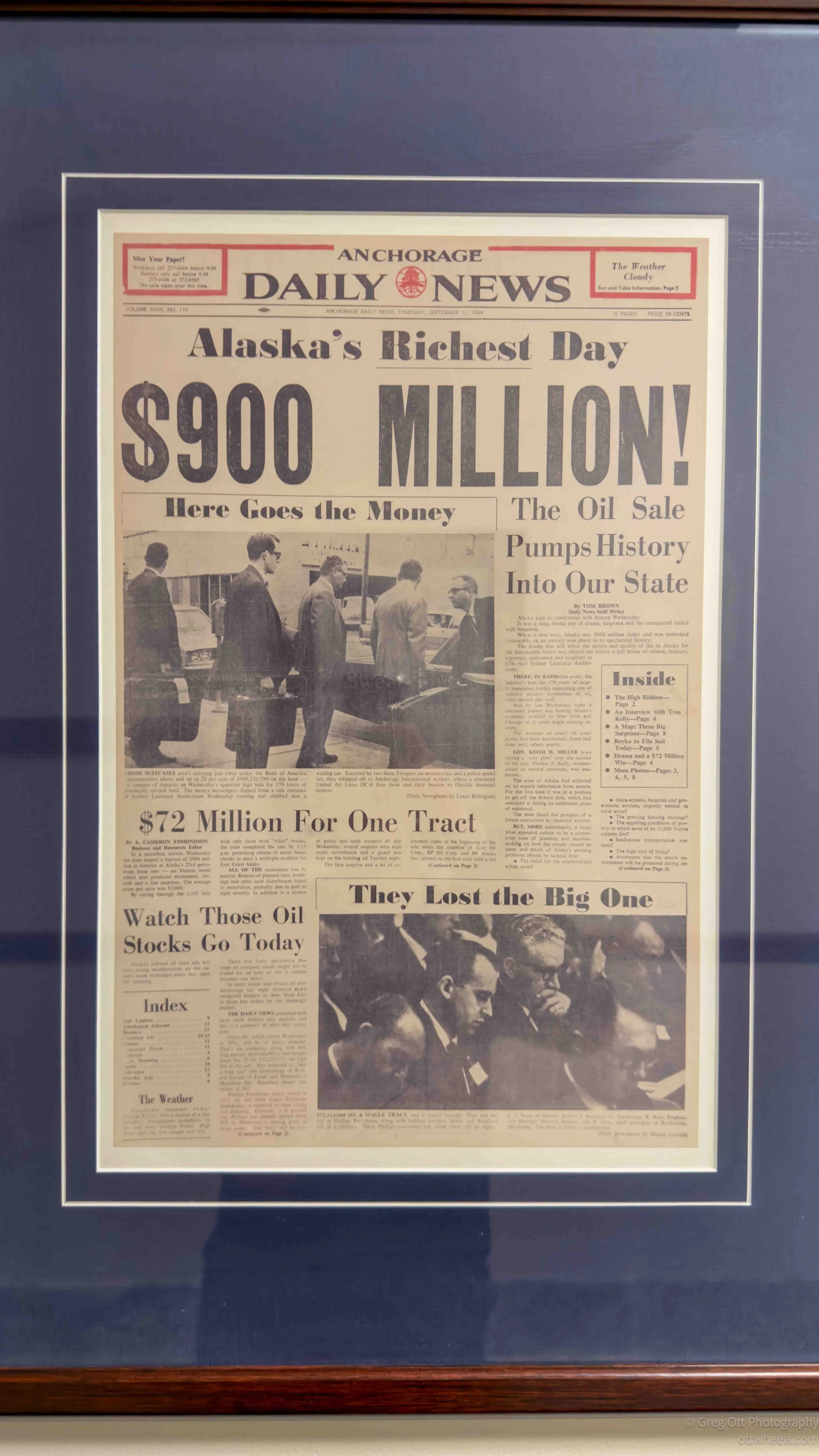
There was an area about mineral resources, the gold rushes, and the auctioning of oil drilling rights. The huge oil lease auctions transformed the state's finances.
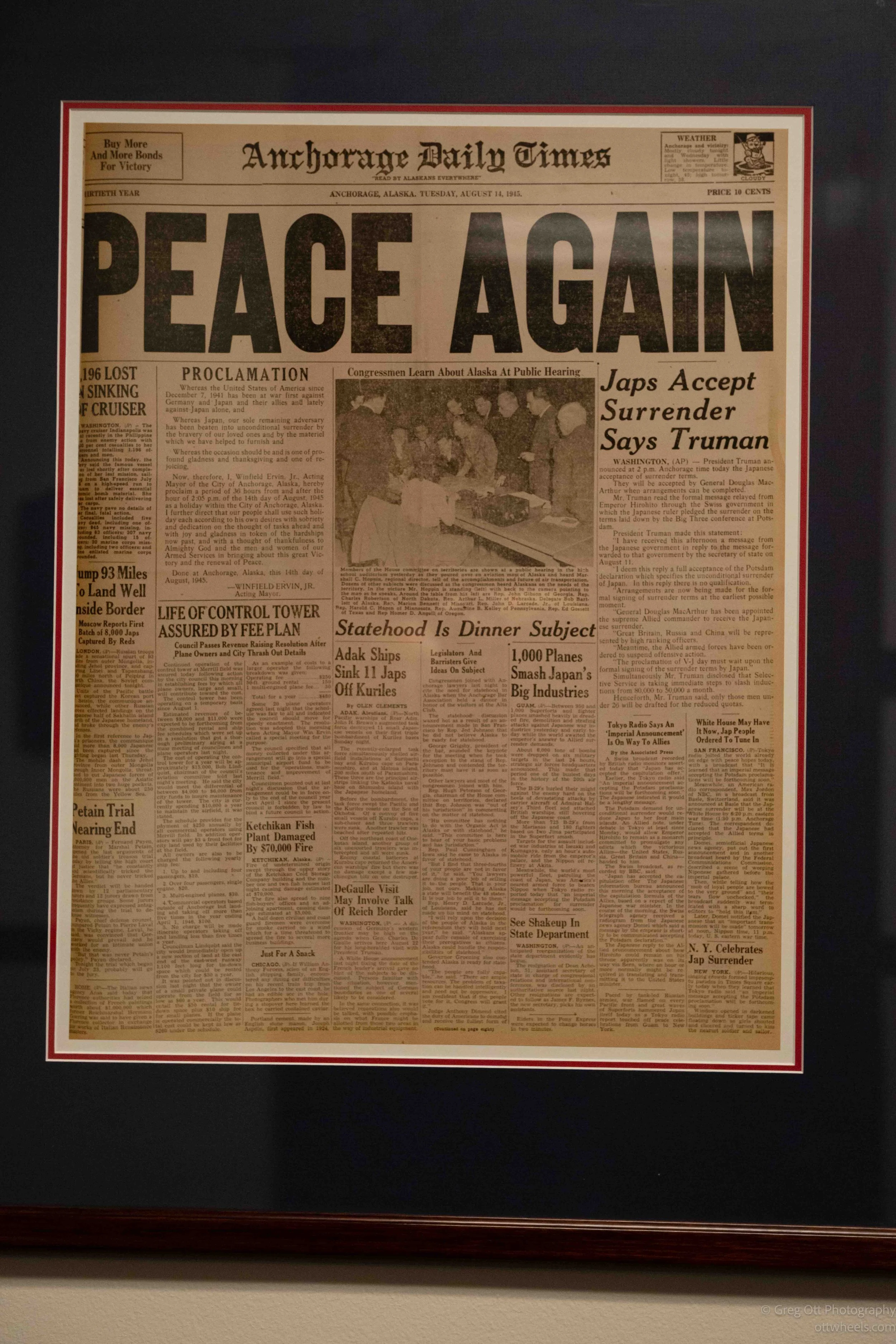
I spent quite a bit of time reading newspaper articles about World War II and the Japanese occupation of Attu and Kiska. Most Americans never learn much about that chapter of the war, yet enemy forces occupied American soil in Alaska for nearly a year.
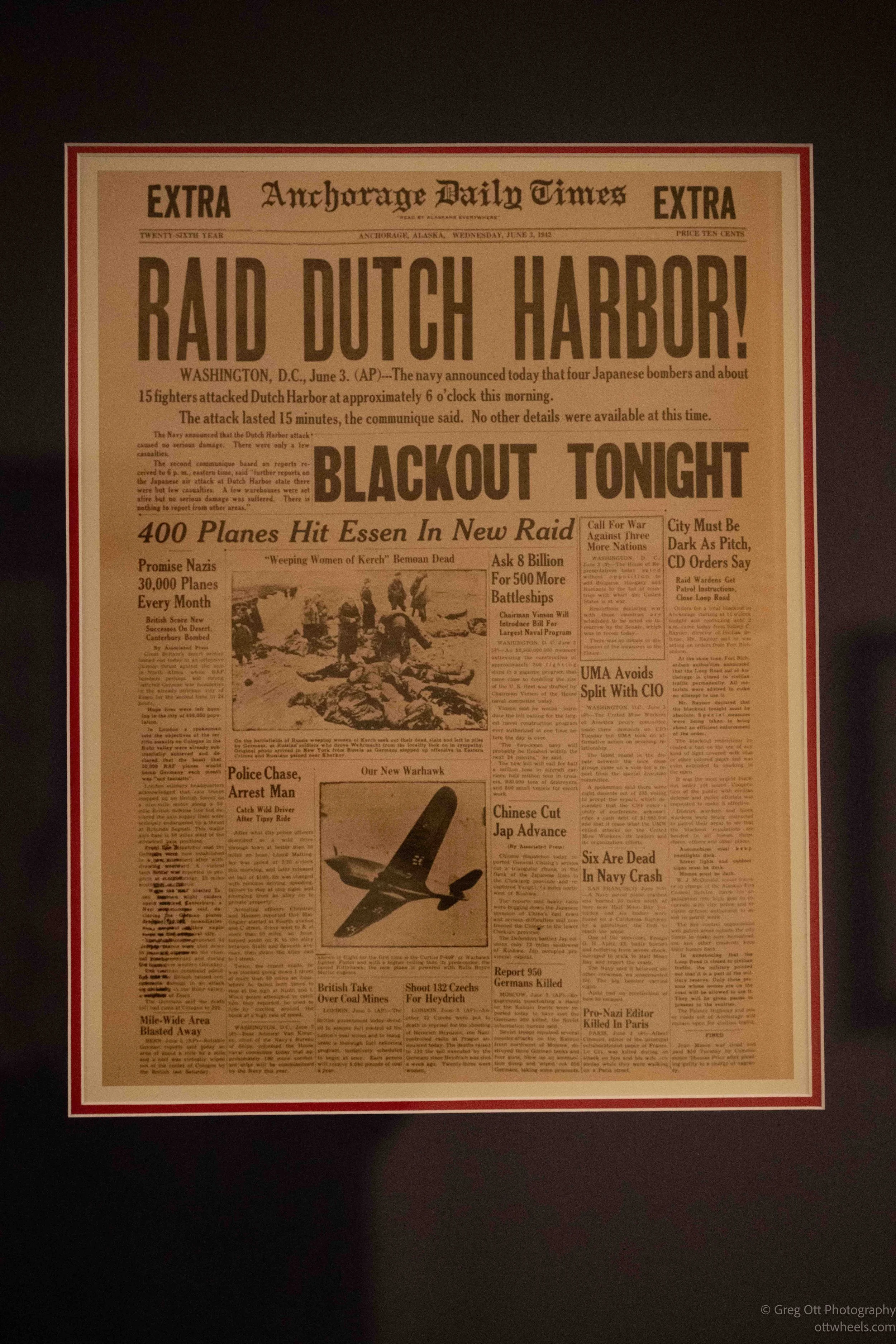
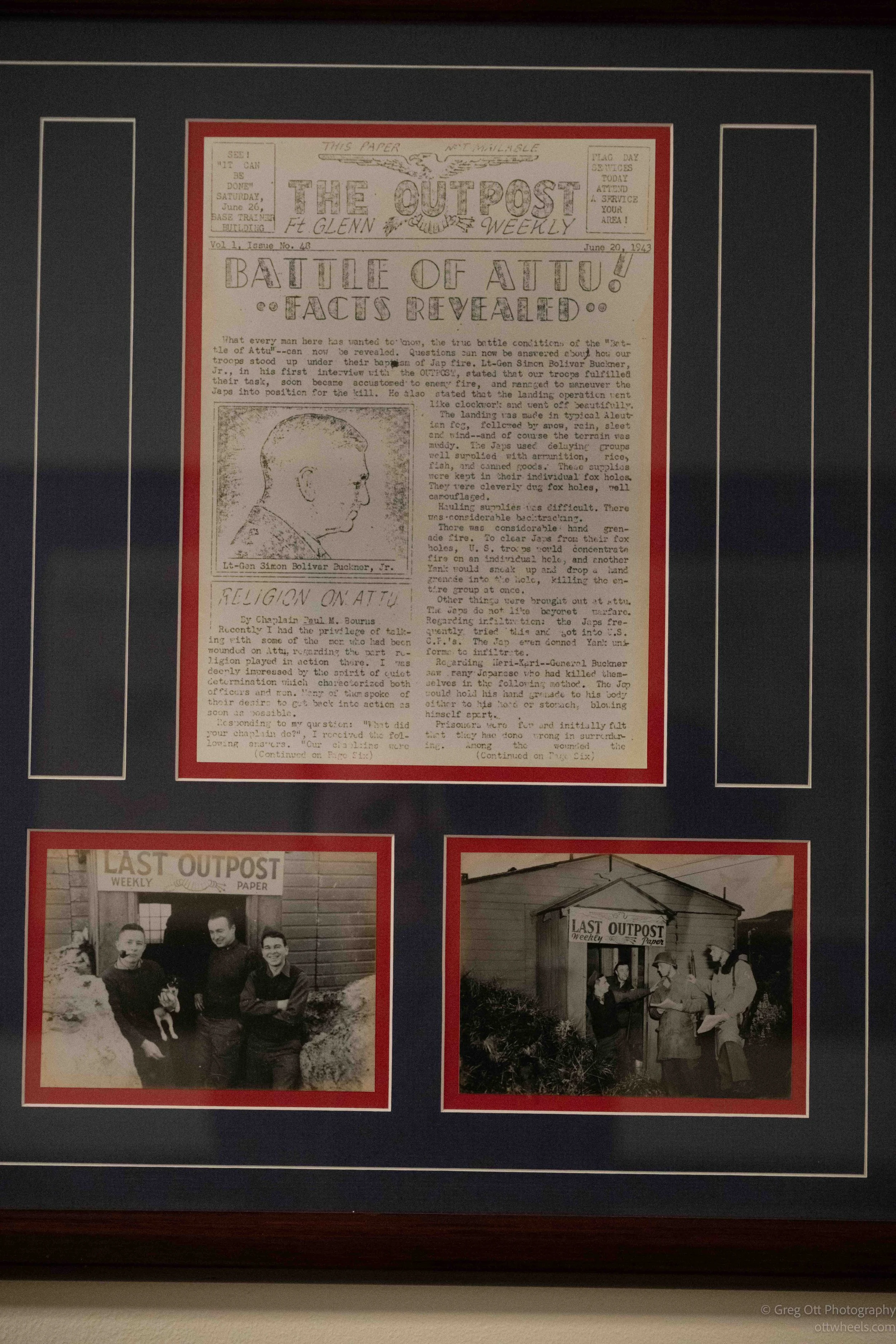
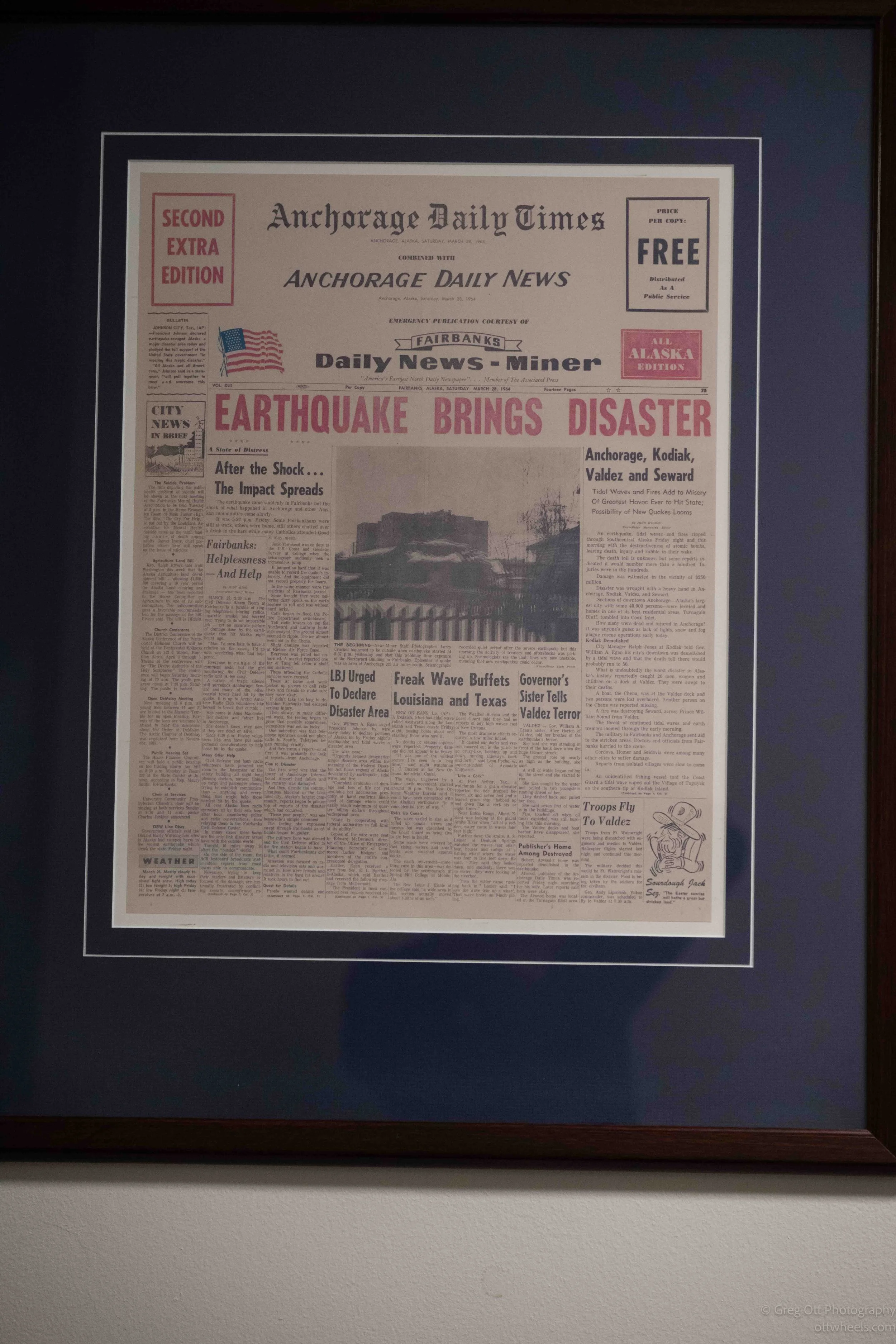
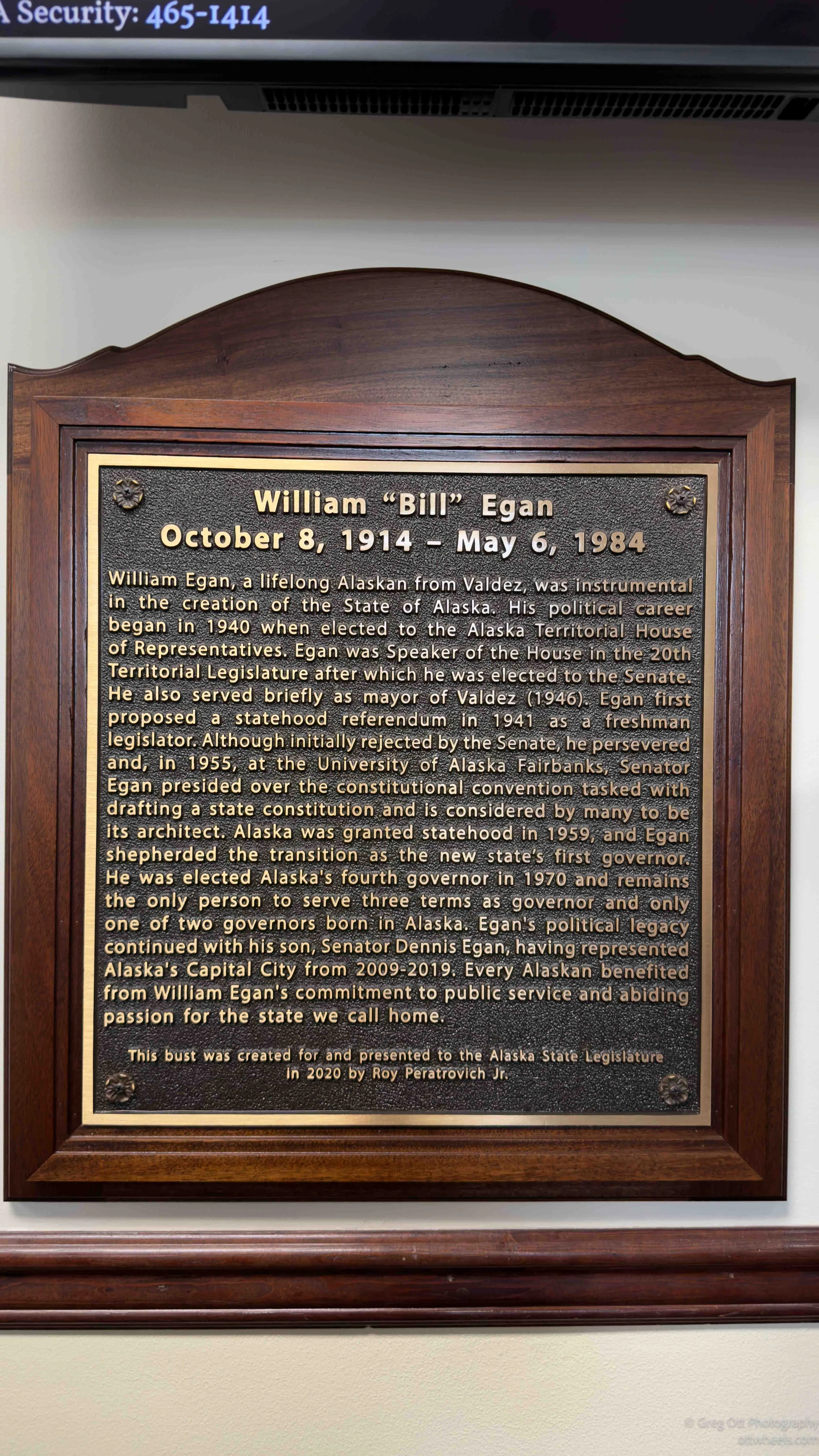
The floor containing the Governor and Lieutenant Governor's offices was filled with displays about the people who have led Alaska since statehood. Portraits lined the hallways, accompanied by photographs and information about their time in office. I spent some time reading through the exhibits and was surprised by how much history was packed into the space. It felt less like a government office building and more like a timeline of Alaska's political history, showing how the state's leadership has changed over the decades.
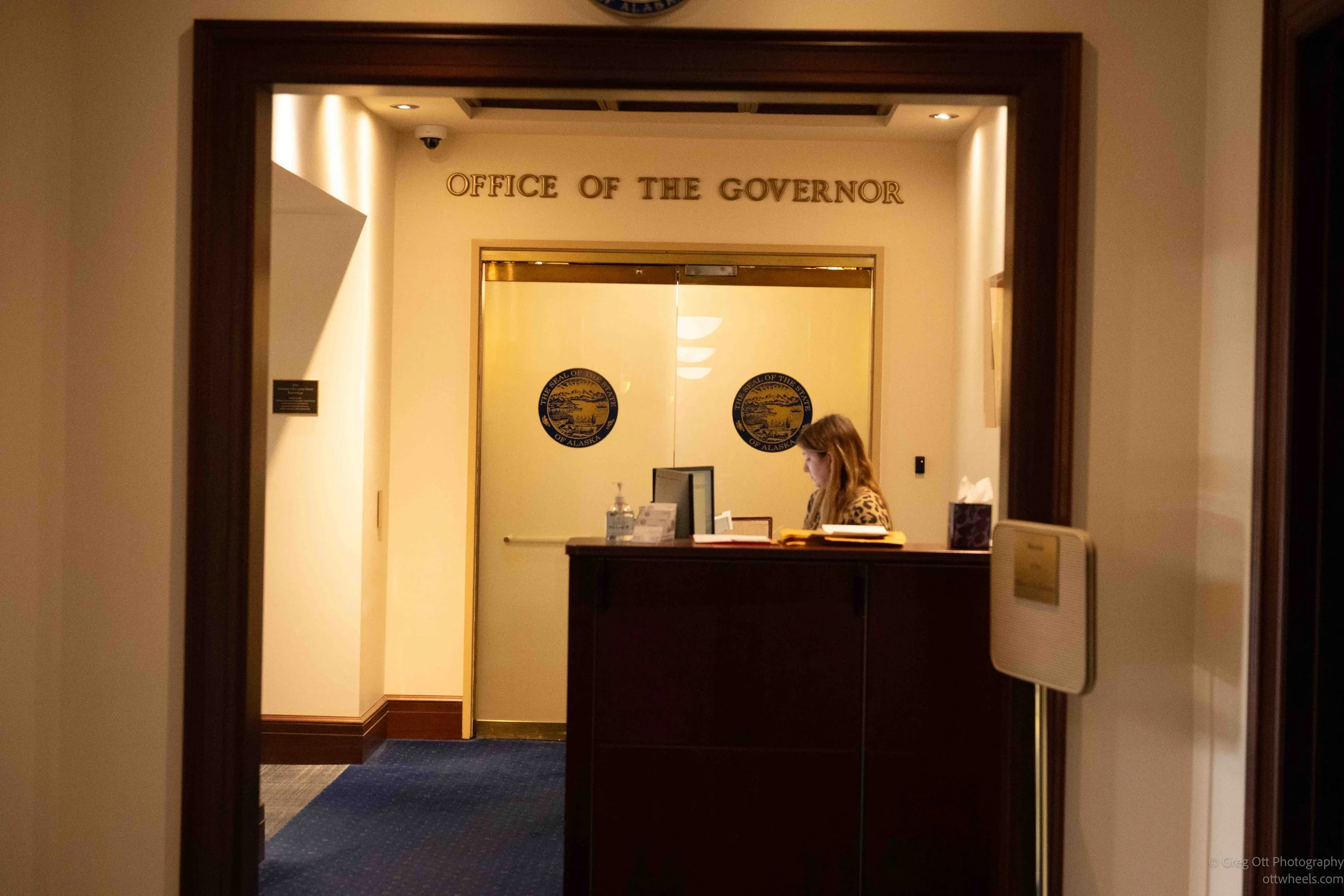
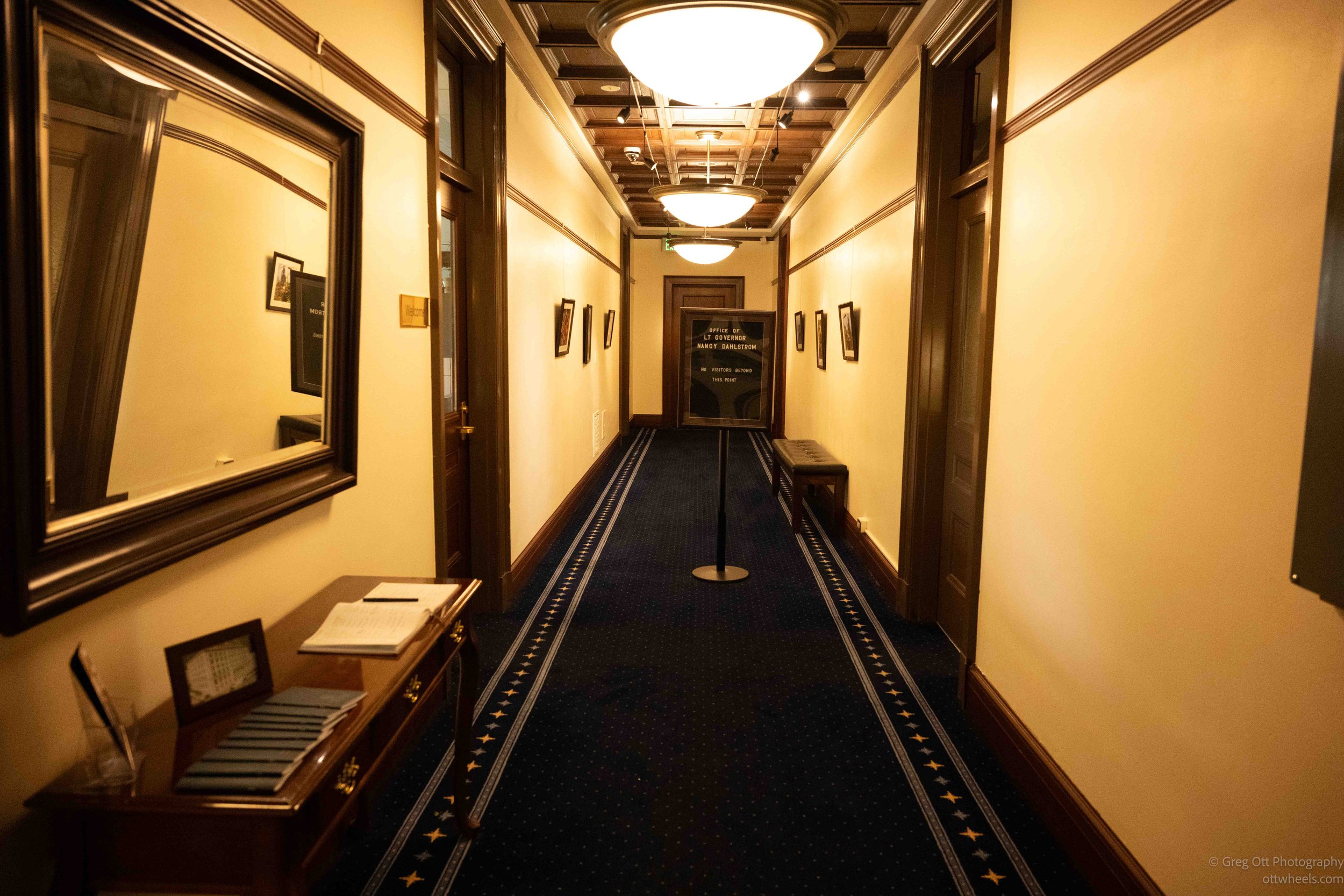
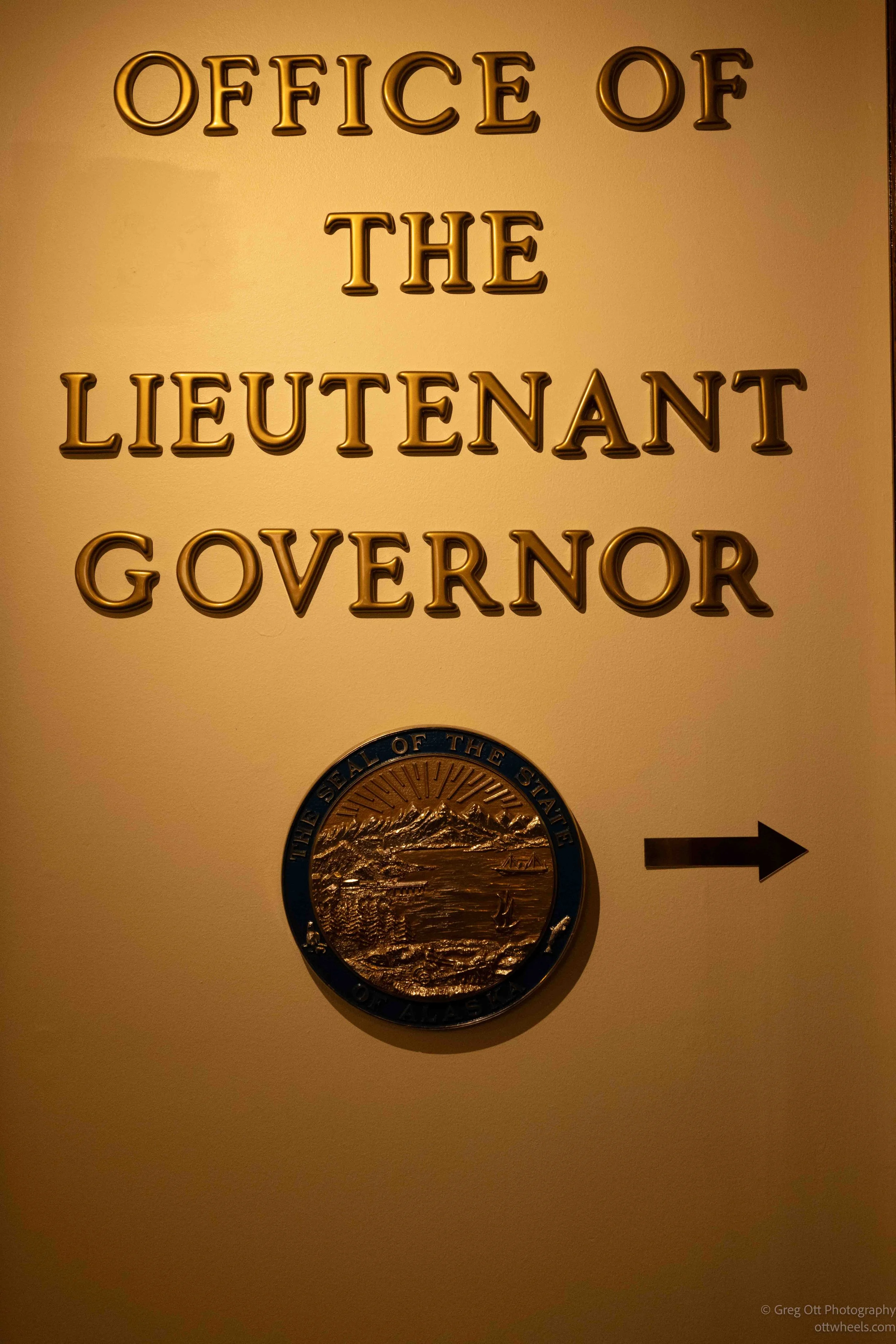
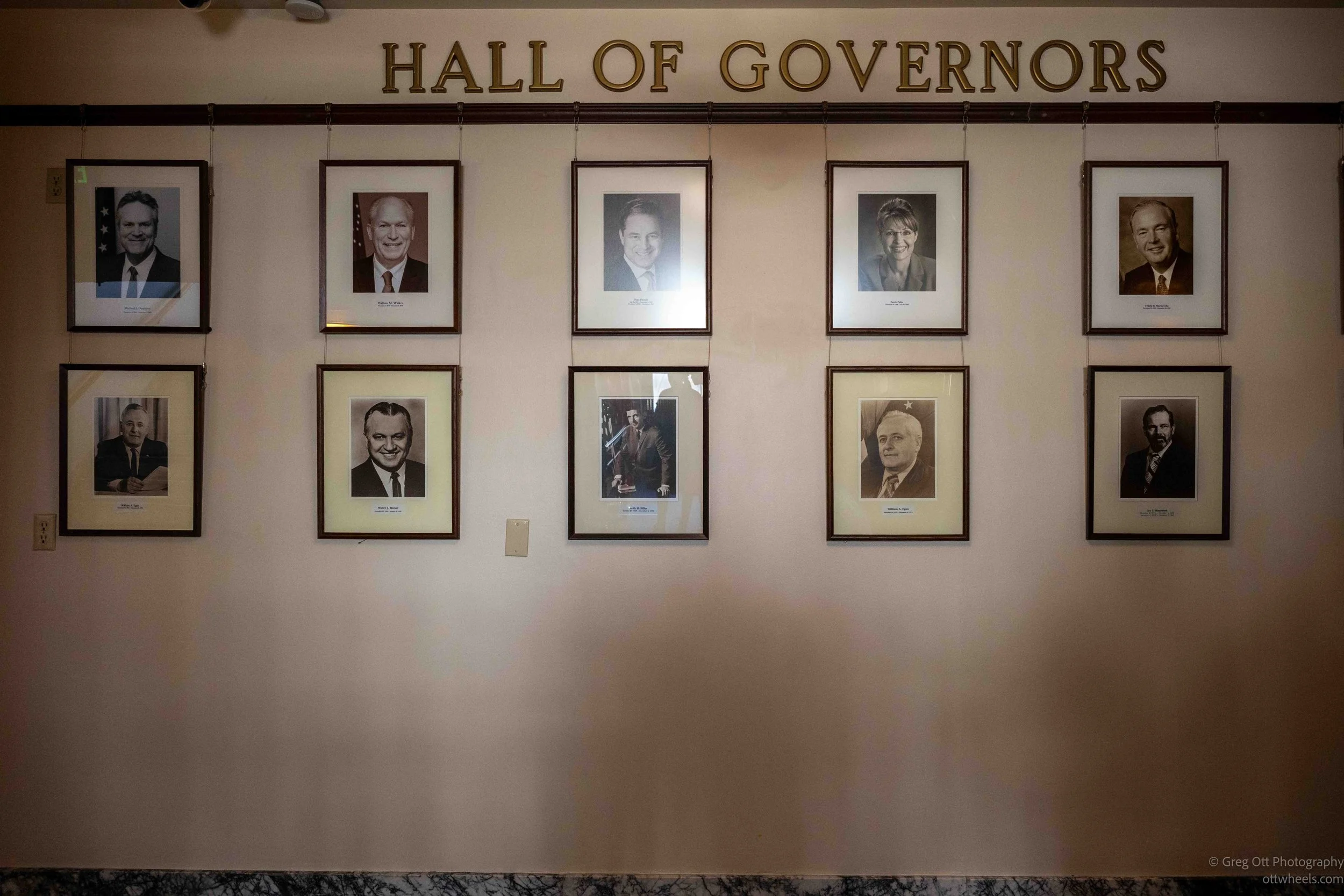
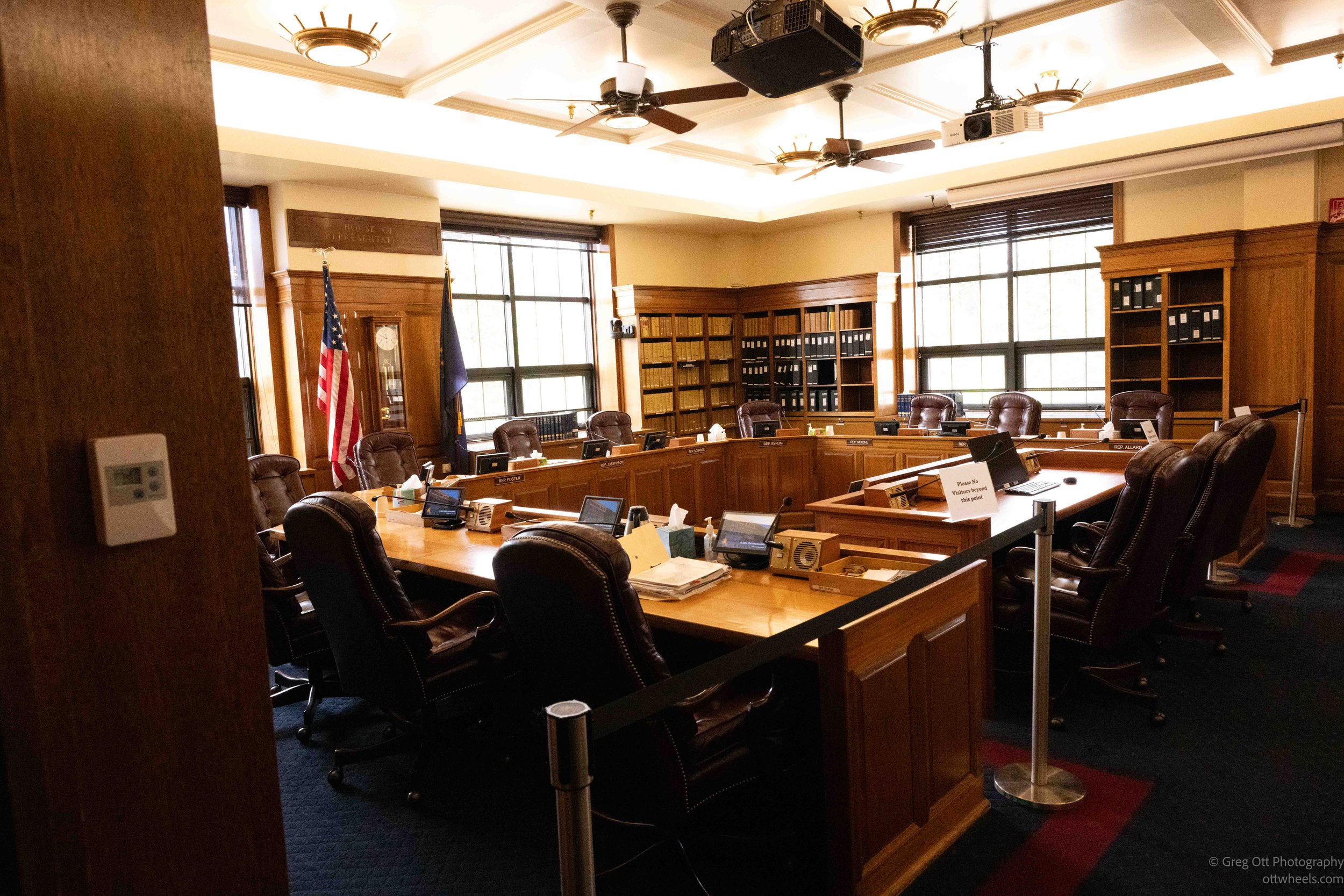
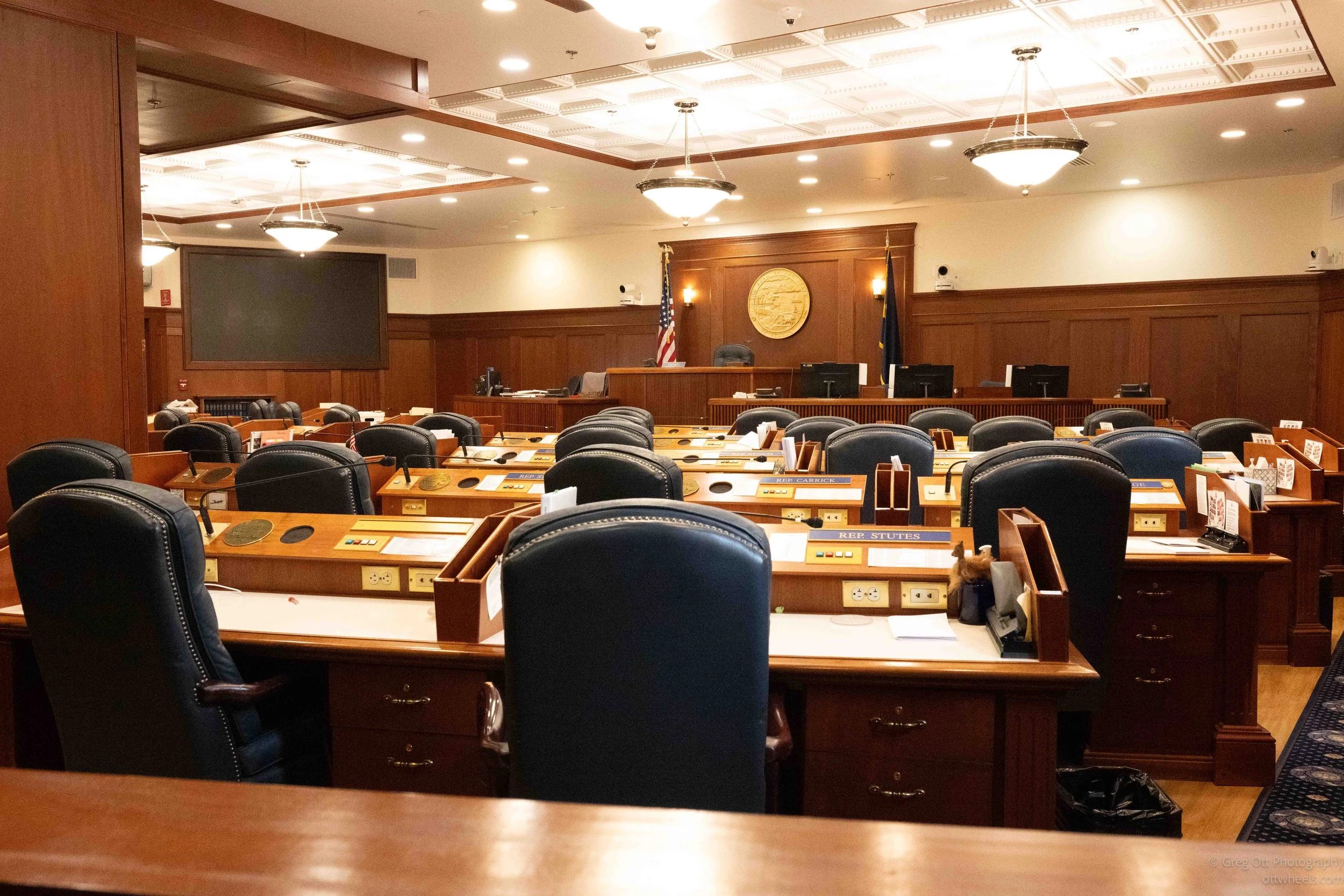
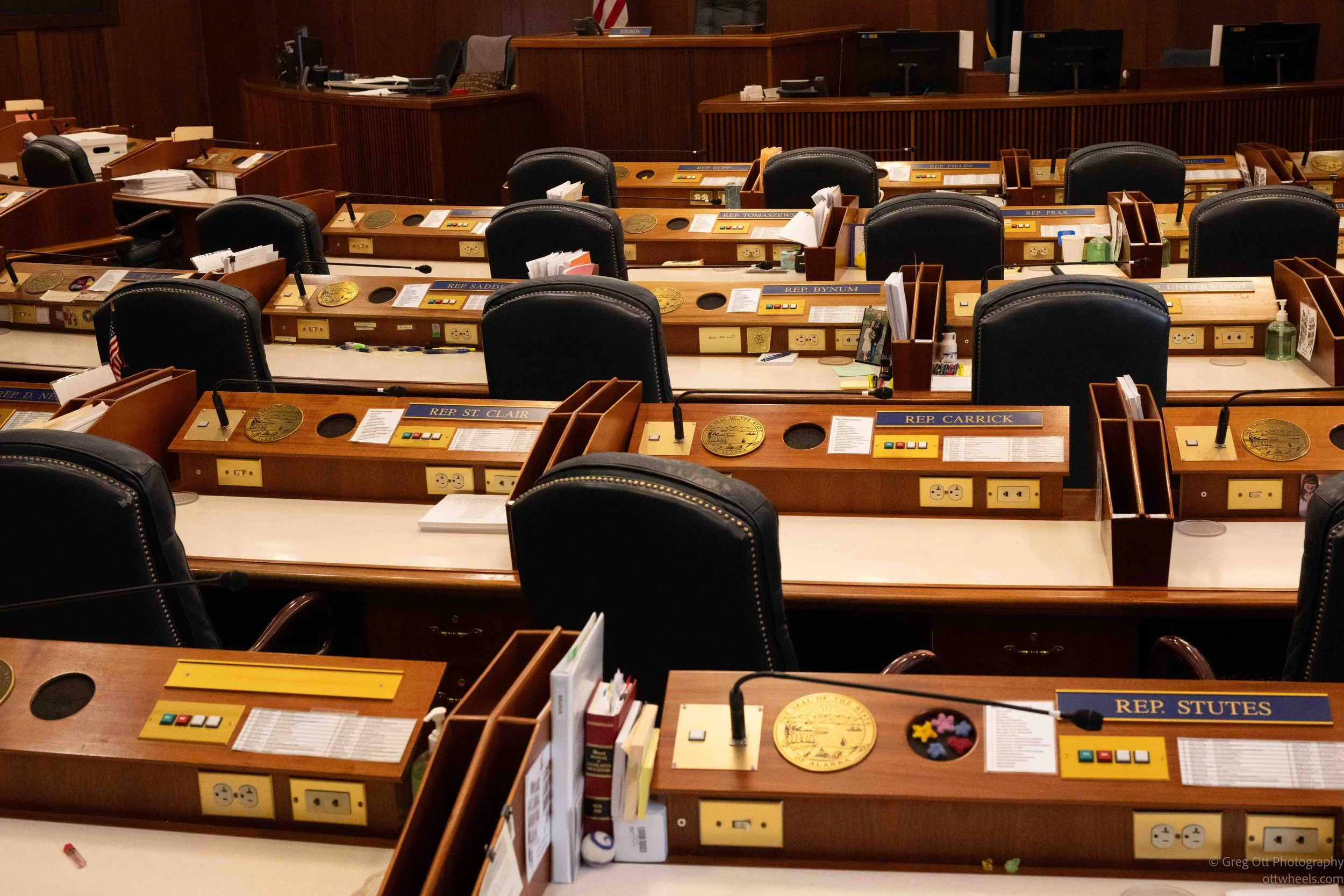
I did finally find the legislative area. I left with a sense that a lot centers around the finance committees. There were several finance offices open to the public.
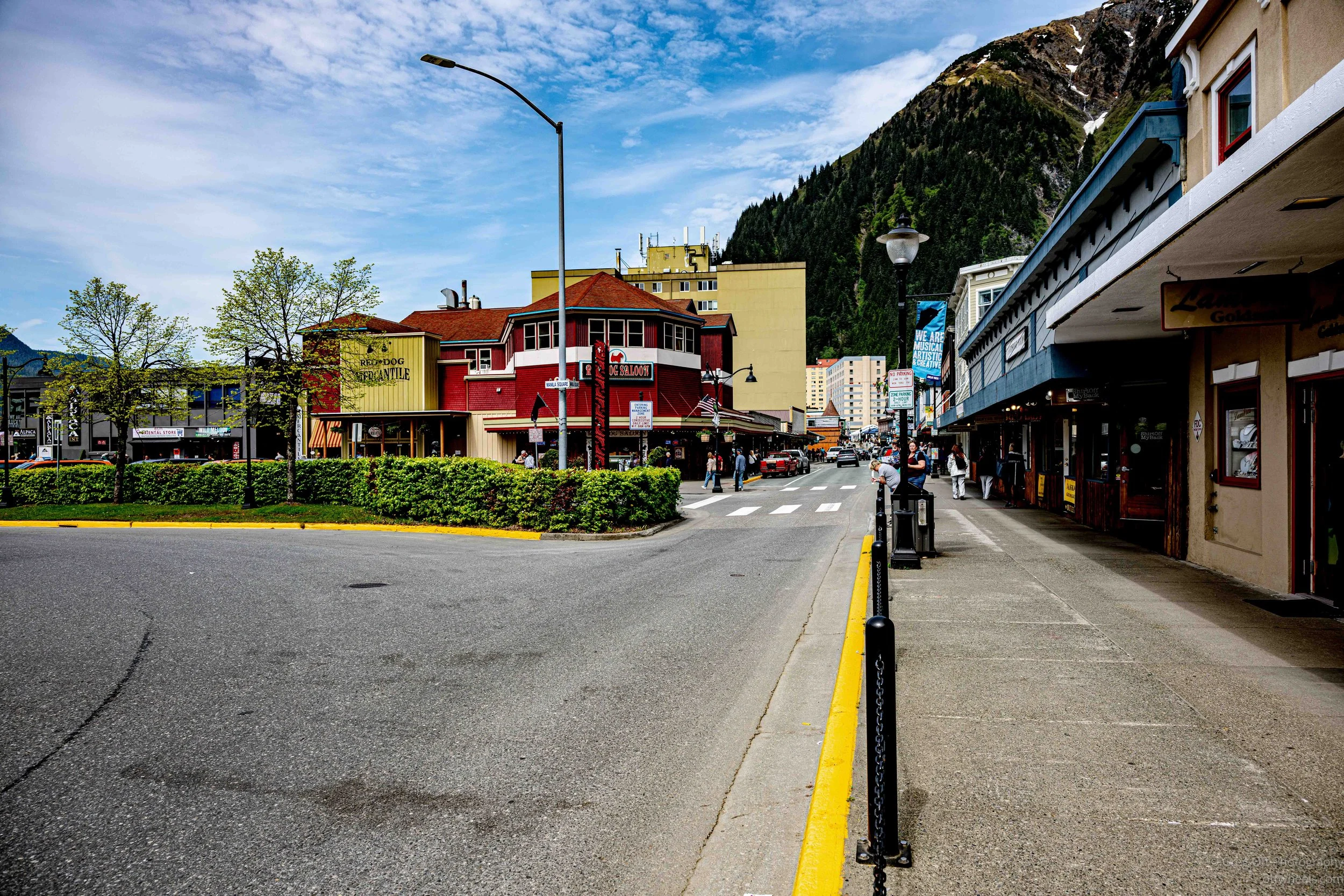
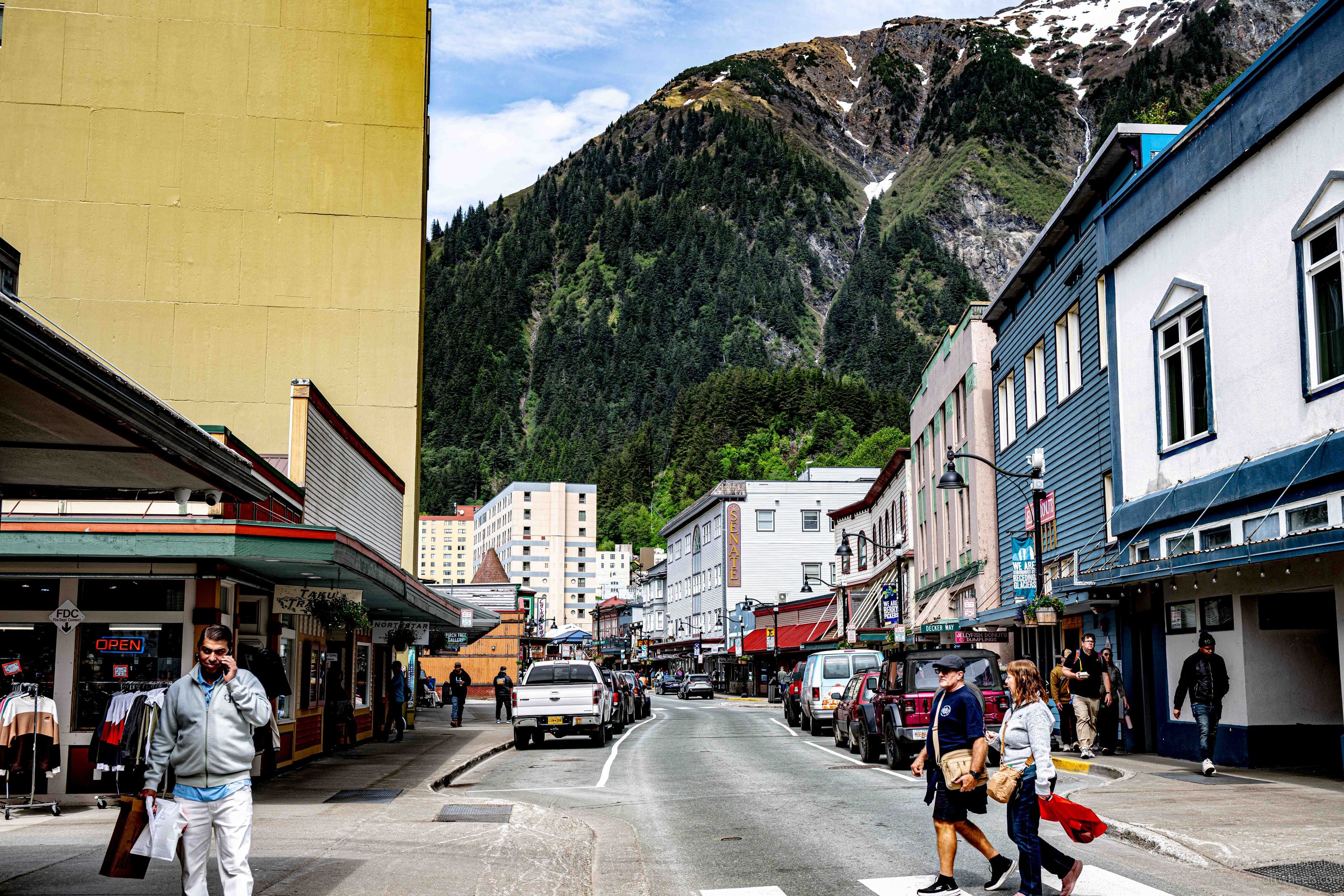
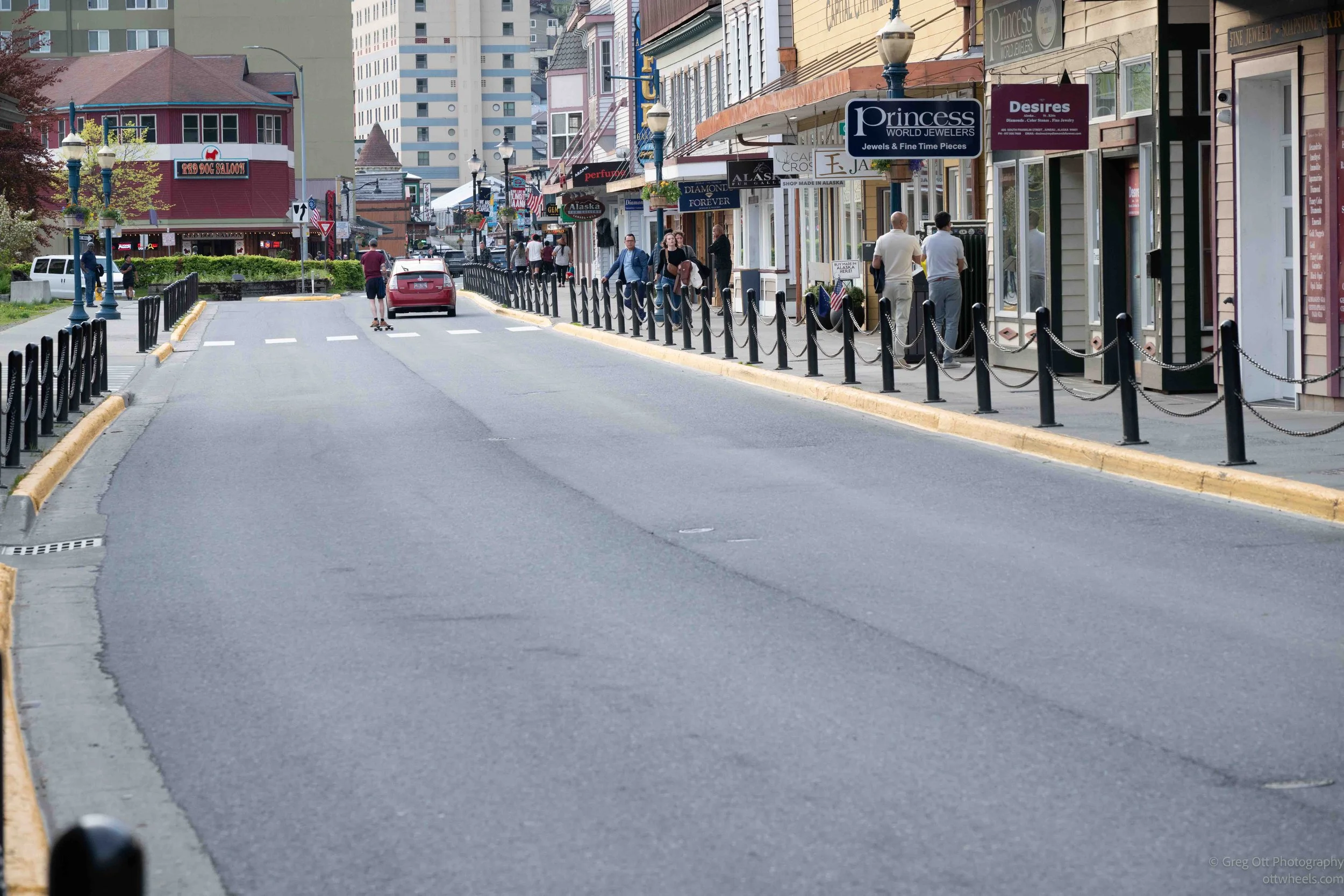
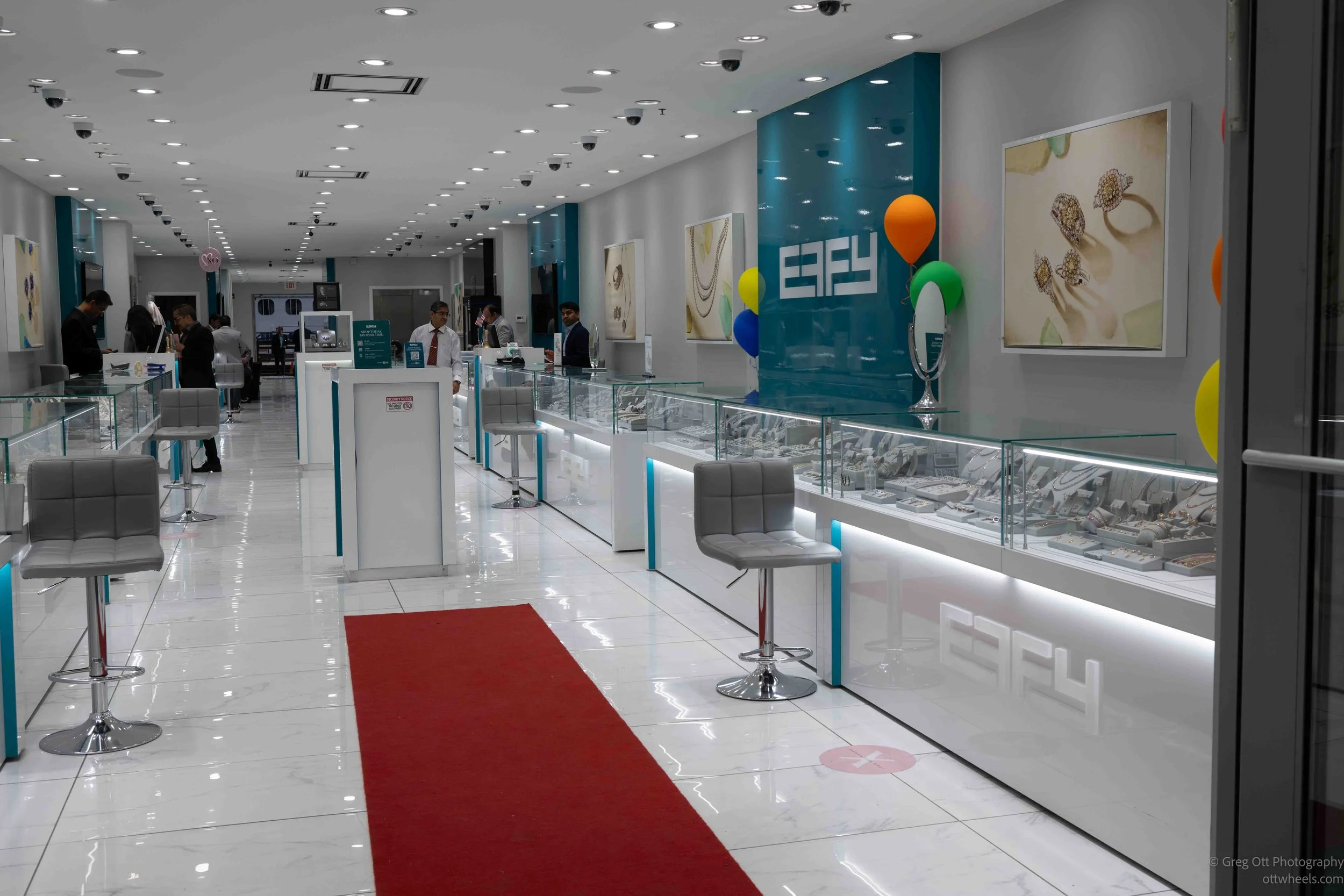
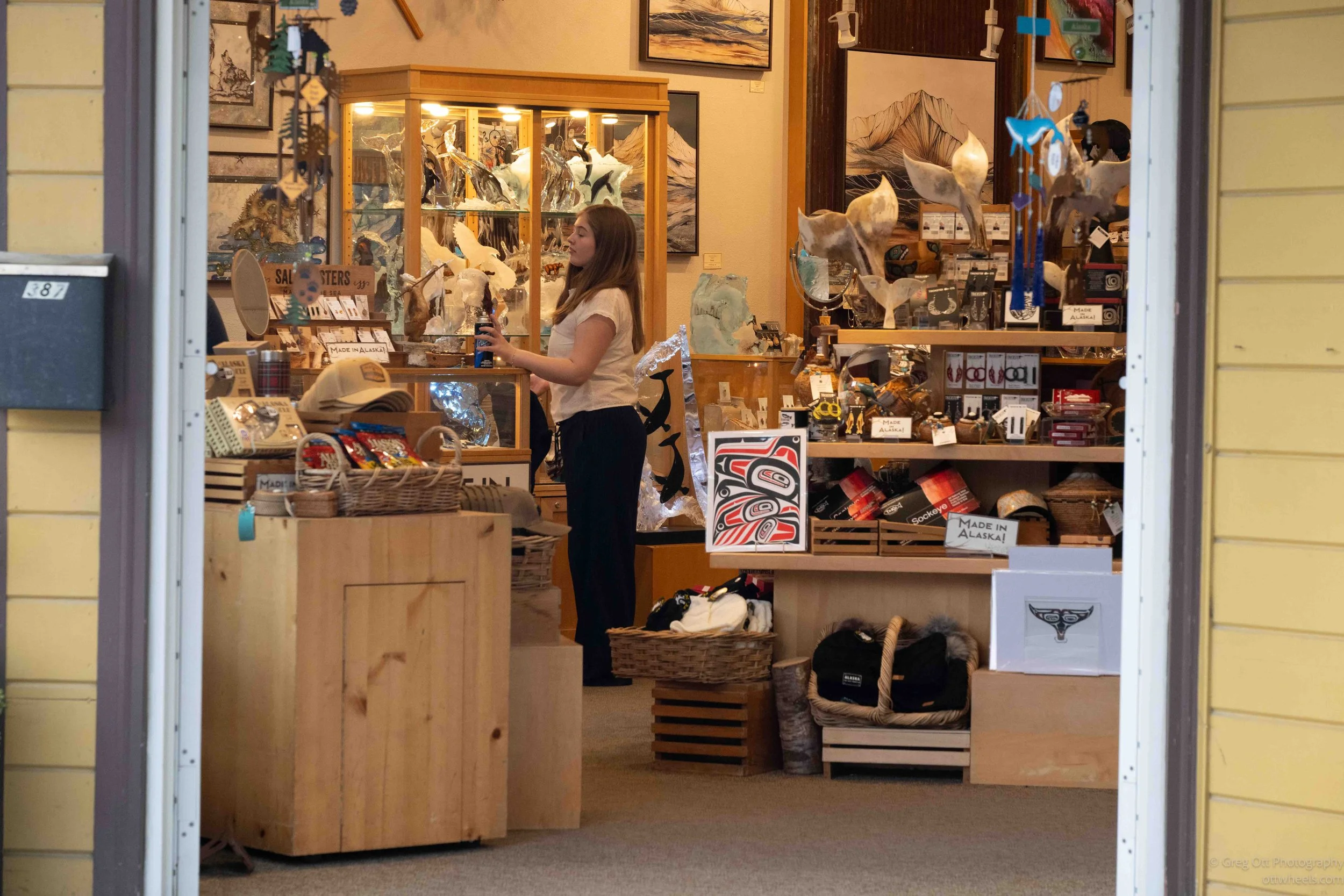
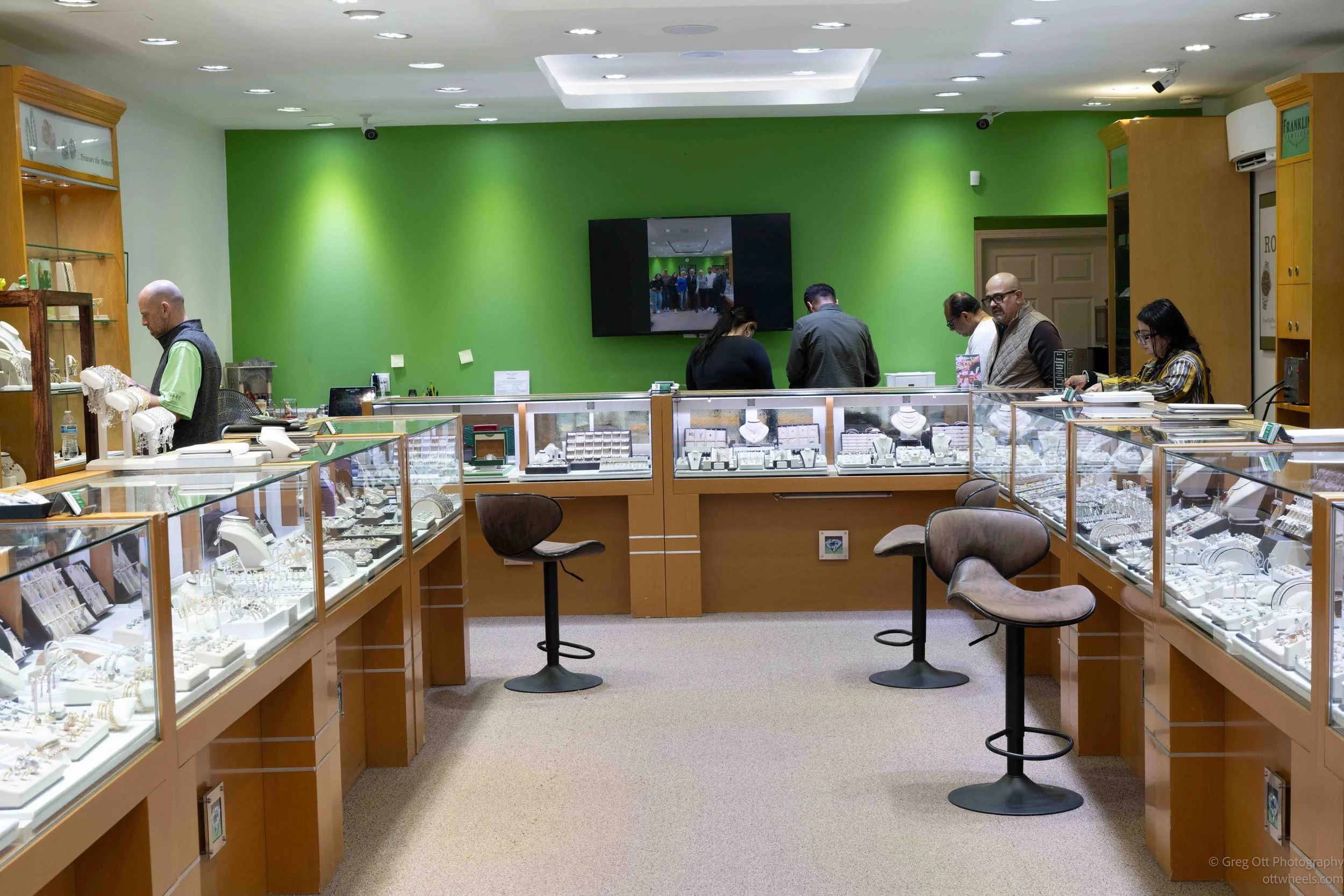
After leaving the Capitol, I headed downtown looking for lunch and ended up at one of the Heritage Coffee locations. The larger shop served sandwiches and wraps, and there was plenty of seating. The food was good, the coffee was good, and I suspect the place becomes considerably busier later in the summer. Downtown Juneau is clearly built around cruise ship tourism. Block after block is filled with jewelry stores, souvenir shops, excursion offices, and gift stores. What surprised me was how uncrowded everything felt despite having three large cruise ships in port.
A shopkeeper explained why. She said that when a ship first arrives, thousands of passengers pour into town at the same time and descend upon the shops like a highly organized shopping expedition. For an hour or two, everyone seems determined to buy a sweatshirt, a magnet, a stuffed moose, and some piece of jewelry before civilization collapses. By afternoon, the frenzy is over and people spread out across town. Listening to her describe it was hilarious because she sounded like a wildlife biologist explaining seasonal migration patterns.
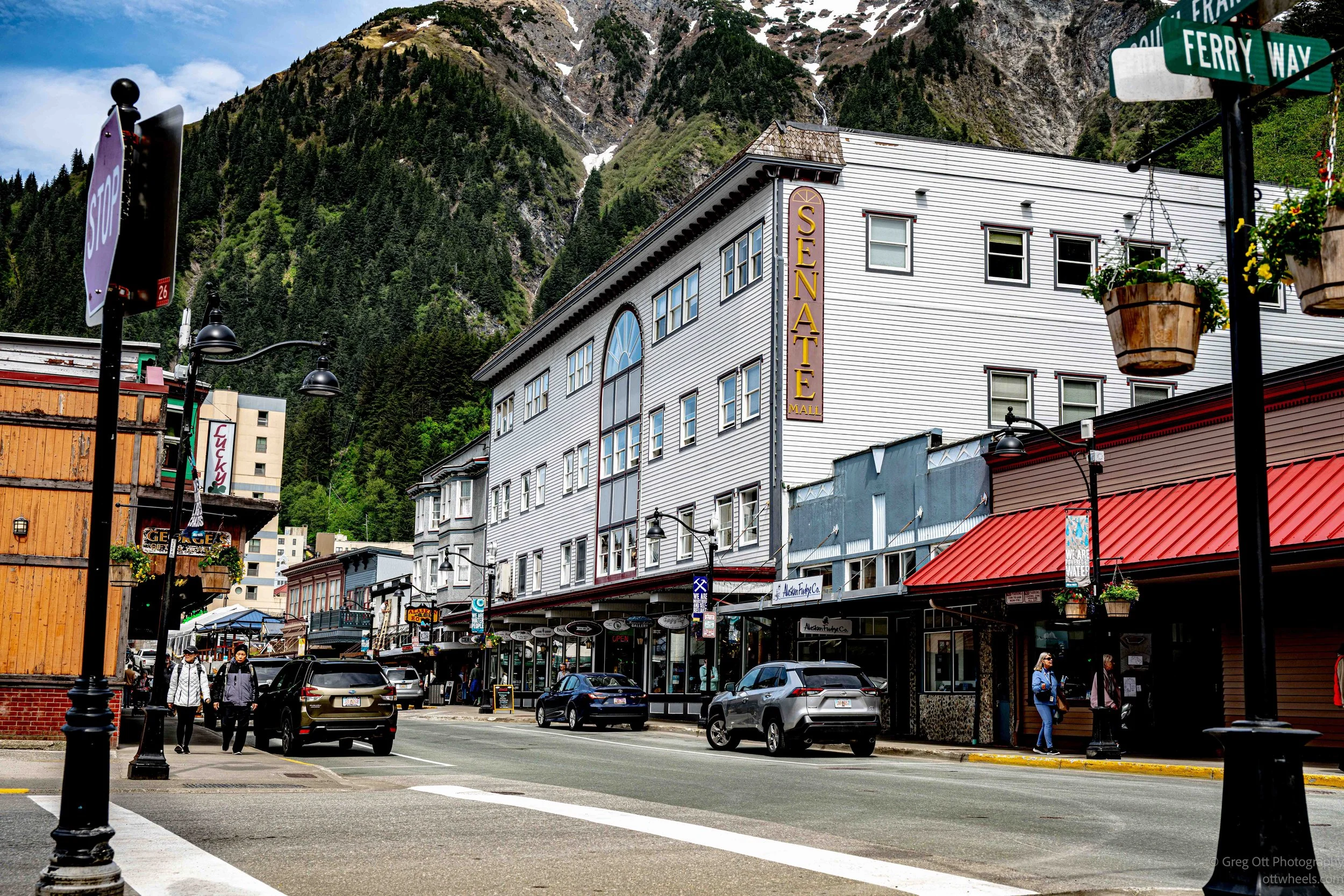
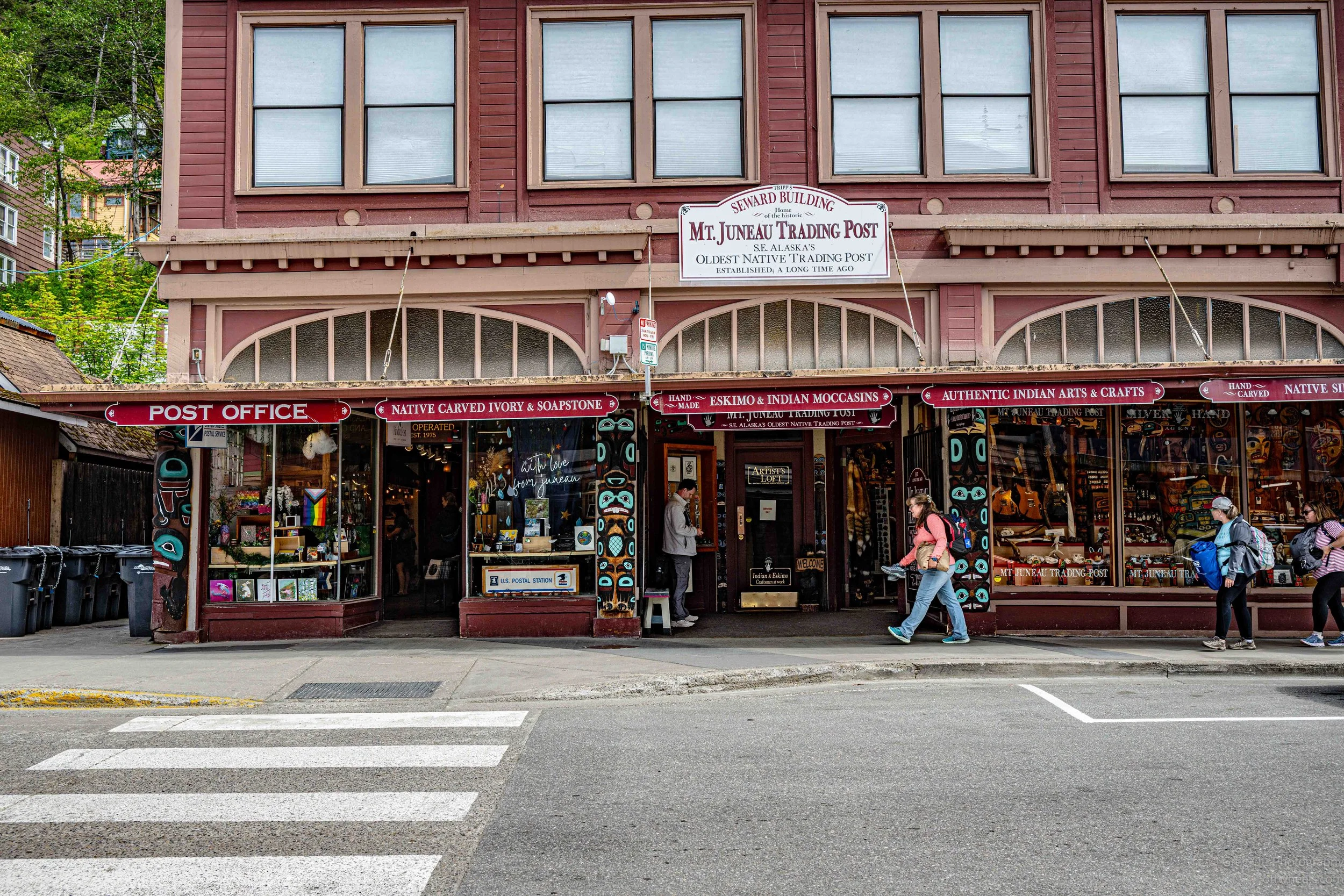
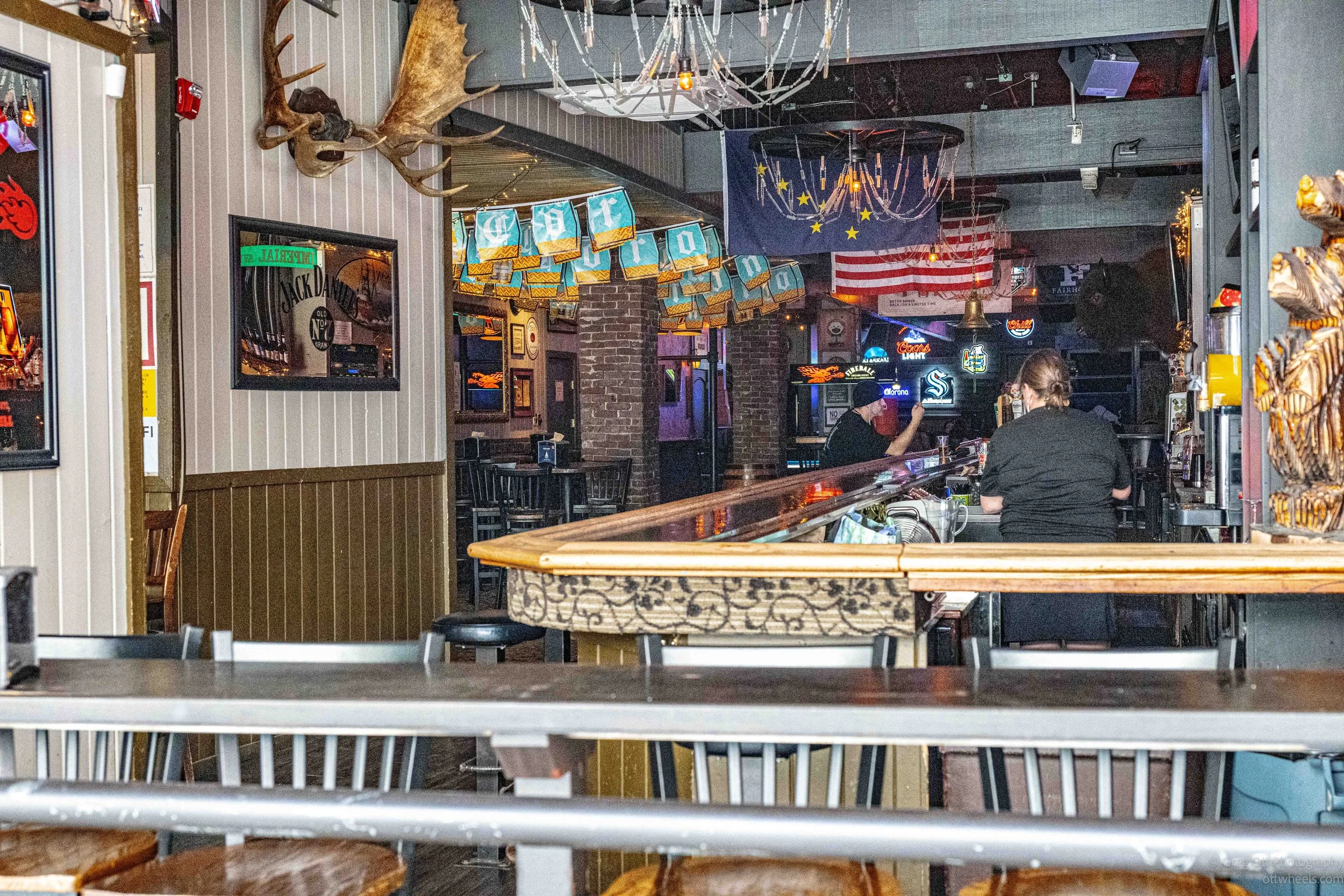
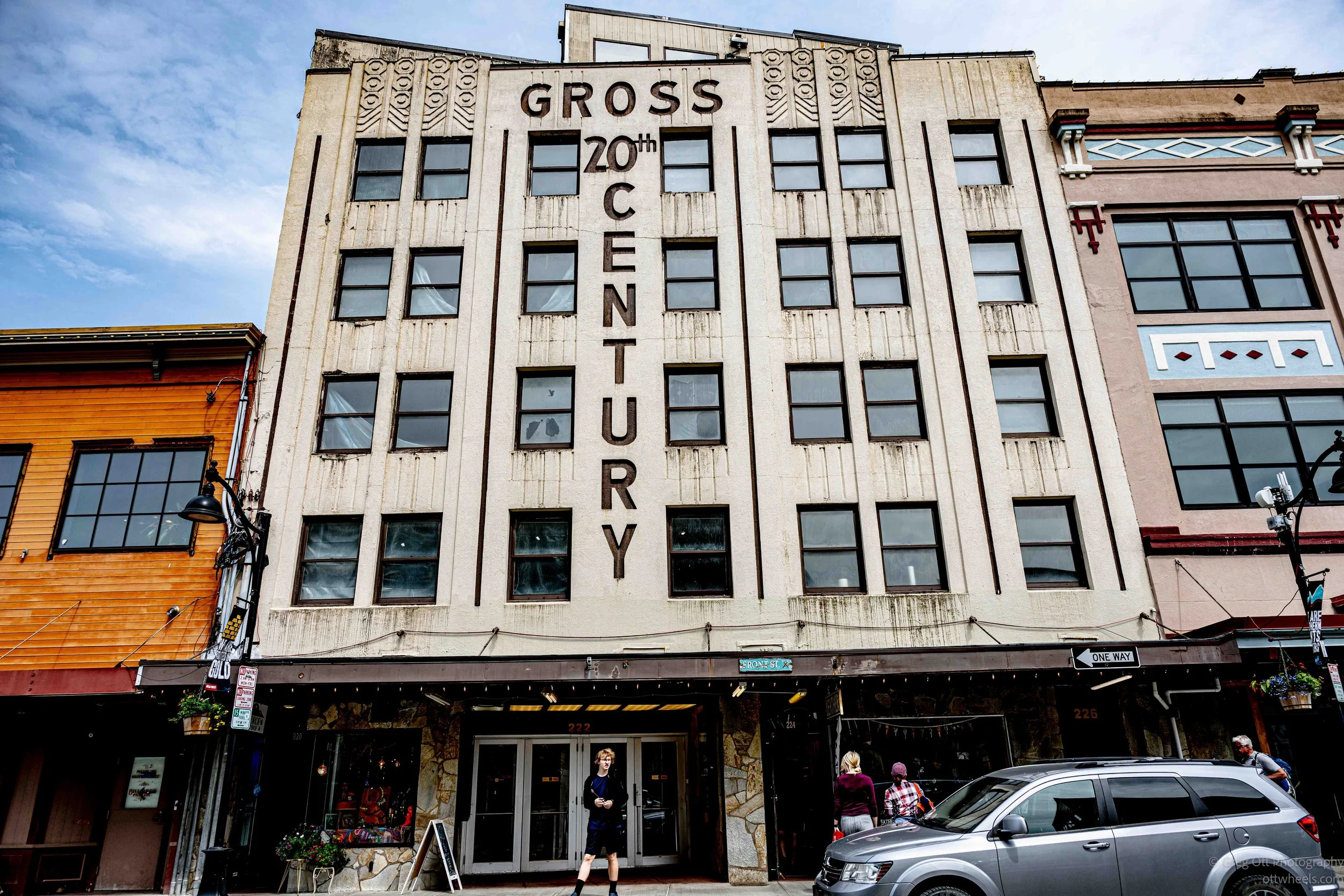
I eventually headed back to Glacier Nalu Campground. I had searched for something closer to town but wasn't finding many options. My only real complaint about Glacier Nalu was the tree cover. The campground itself was pleasant, but the trees made Starlink performance miserable. The manager found another site for me that would be available through Sunday. It had a clear view of the sky and would give me six days in Juneau without constantly watching bandwidth crawl along.
Back at camp, I answered a few emails, did some shopping, and debated whether to go for a bike ride or spend more time downtown. The decision was made for me when a woman across from my campsite stopped to say hello. She, her husband, and their teenage son had moved into the campground earlier in the year. They were downsizing and experimenting with a different lifestyle. She mentioned that the snow had been particularly bad this year but said temperatures in Juneau generally don't get much below about -15°F. She was originally from Illinois, her husband was from Florida, and they had lived in Alaska for many years.
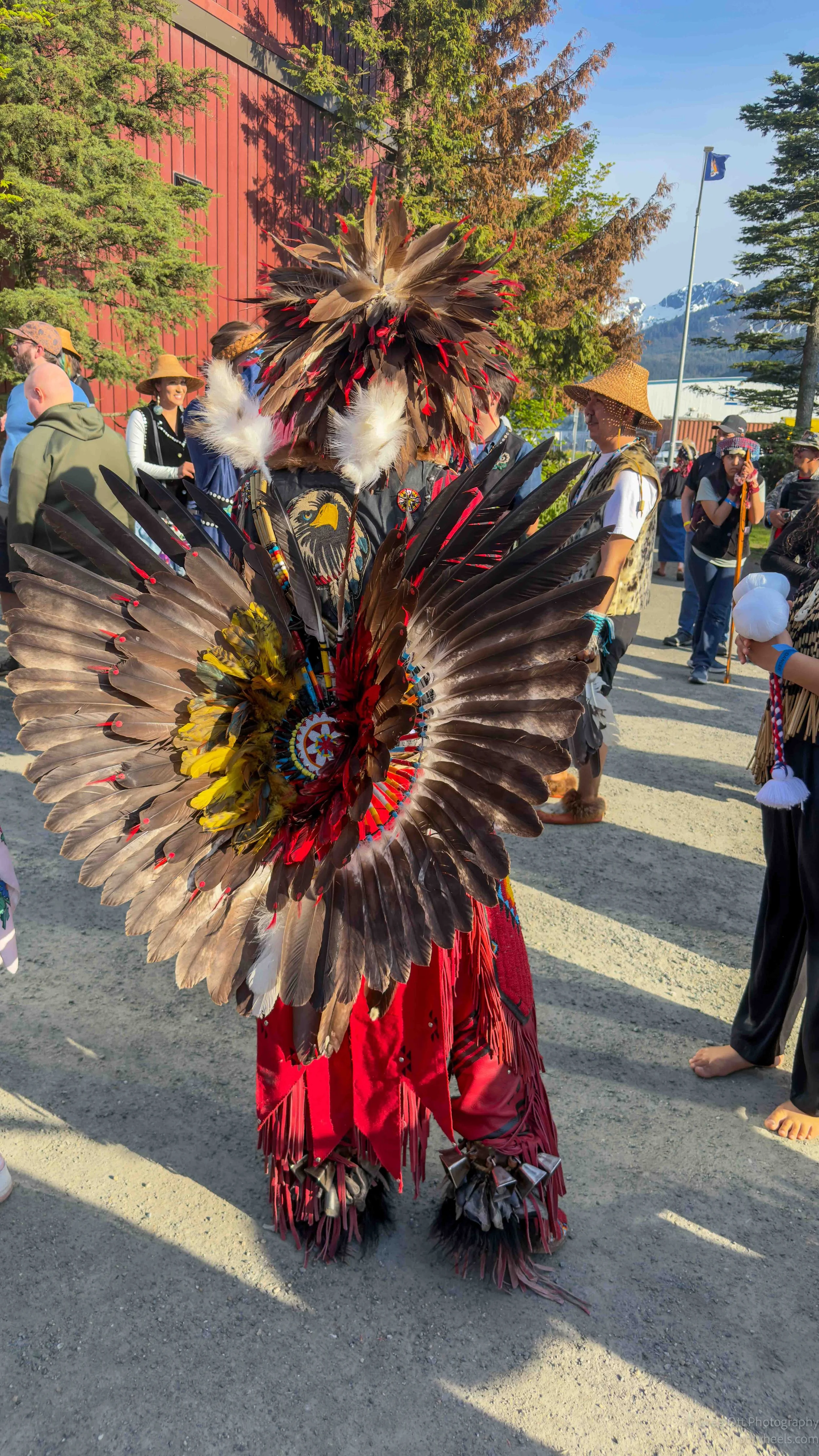
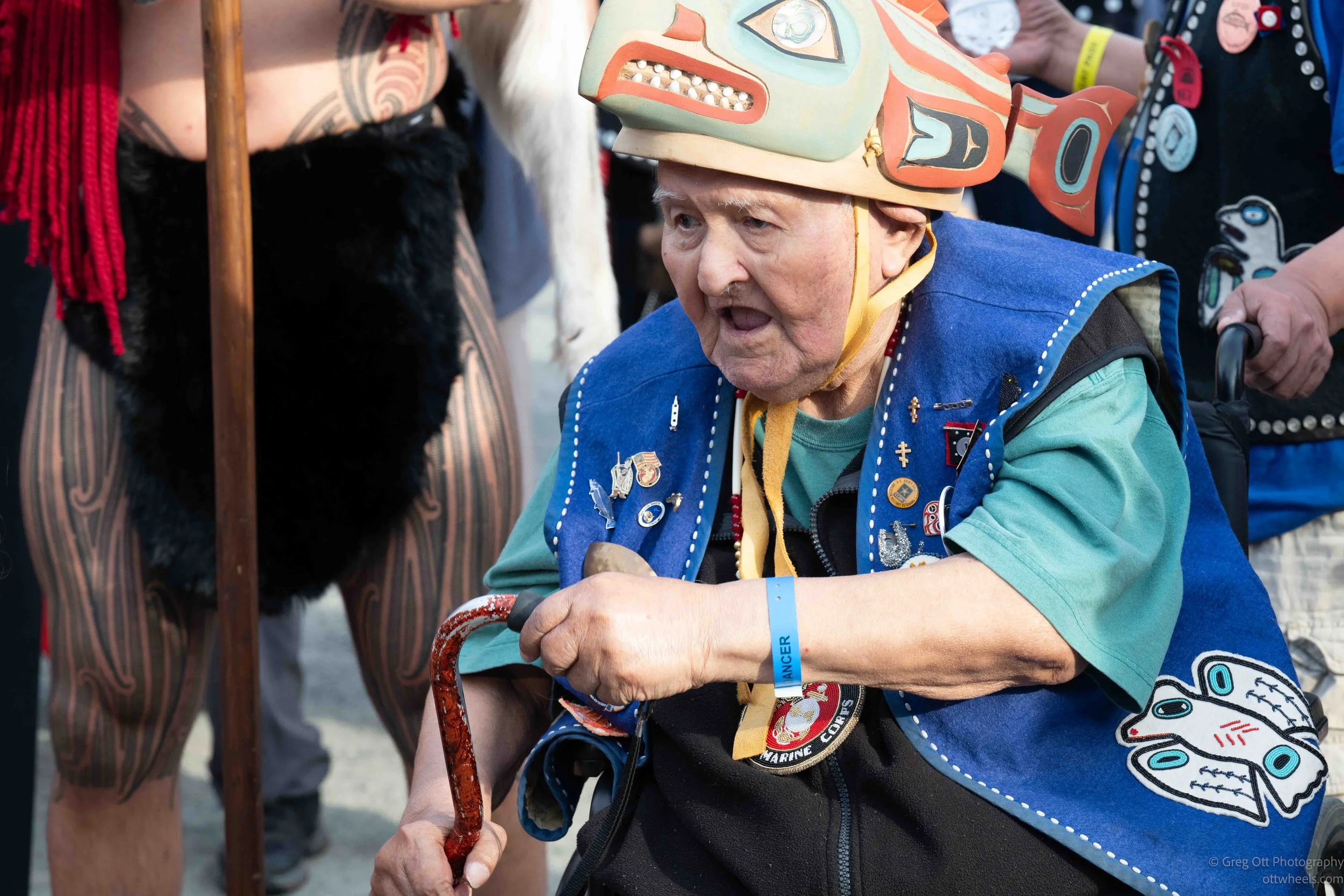
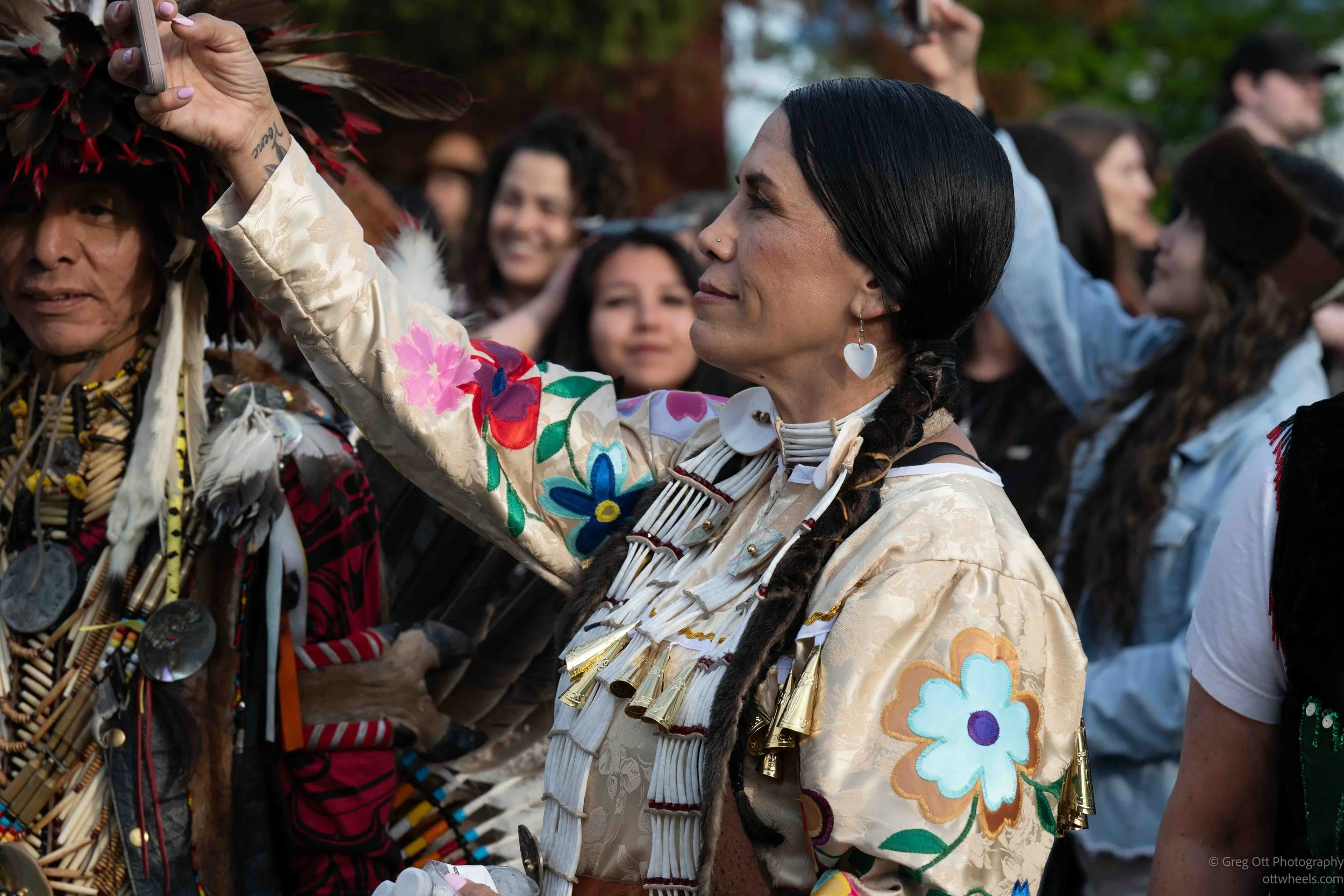
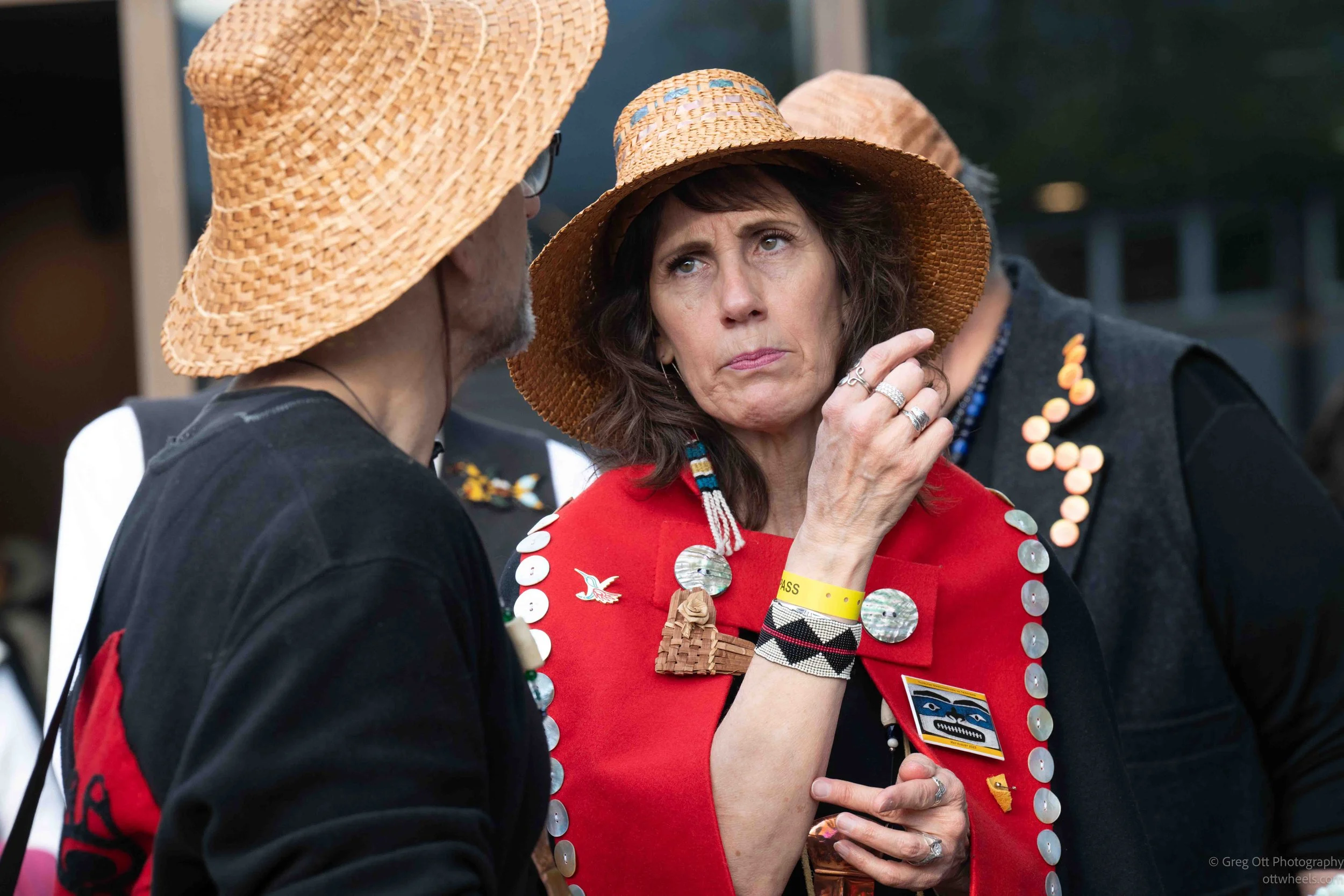
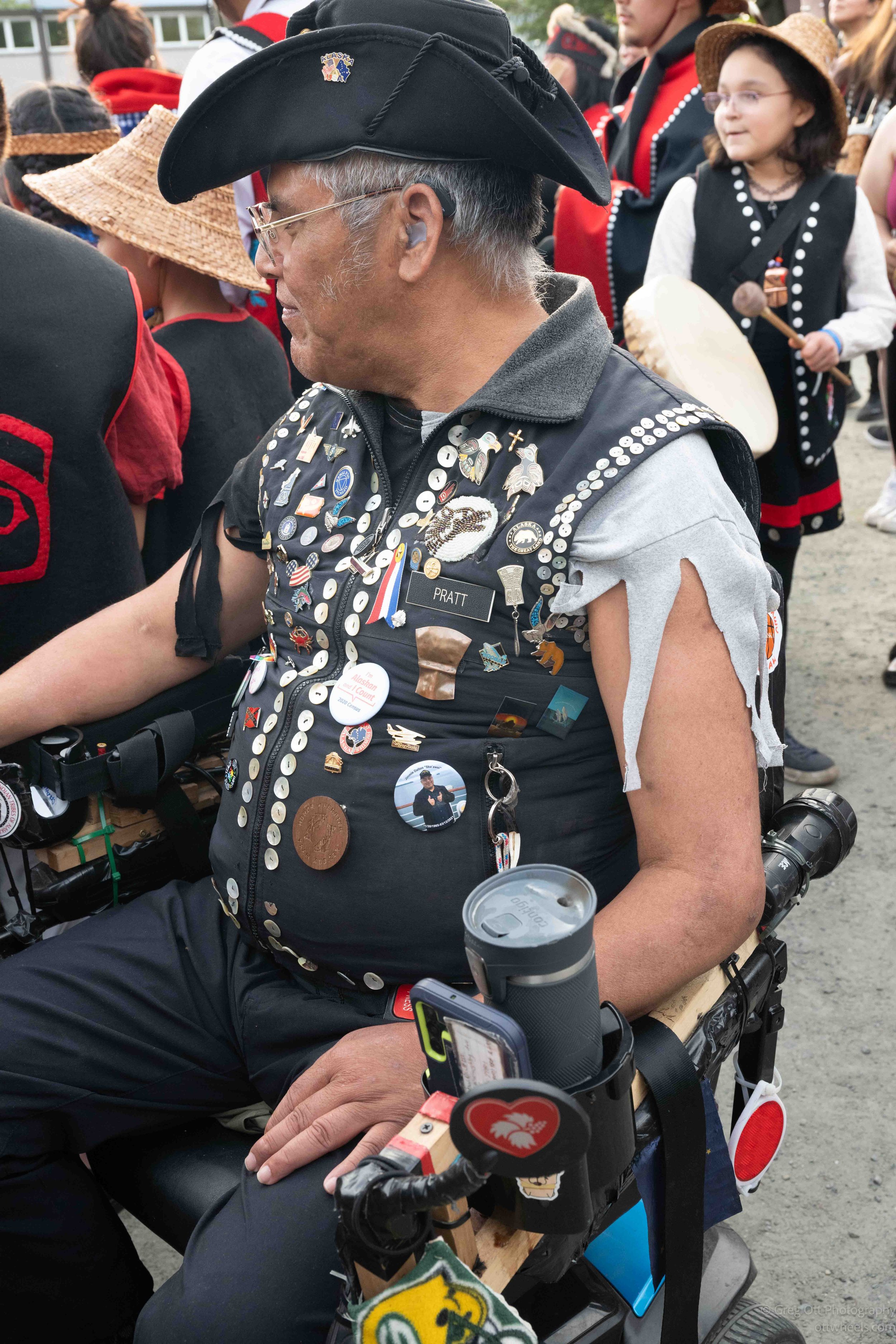
Eventually the conversation turned to Celebration 2026. She explained that it is the largest gathering of Tlingit, Haida, and Tsimshian people in the world and is held every two years in Juneau. Communities from throughout Southeast Alaska, British Columbia, Washington, and beyond come together to celebrate their cultures through dance, music, art, language, and storytelling. More than anything, she described it as a giant reunion. Families reconnect, elders are honored, traditions are shared, and younger generations learn from those who came before them. She gave me directions, suggested parking near the high school, and recommended that I spend most of my time outside Centennial Hall where people gathered before and after the performances.
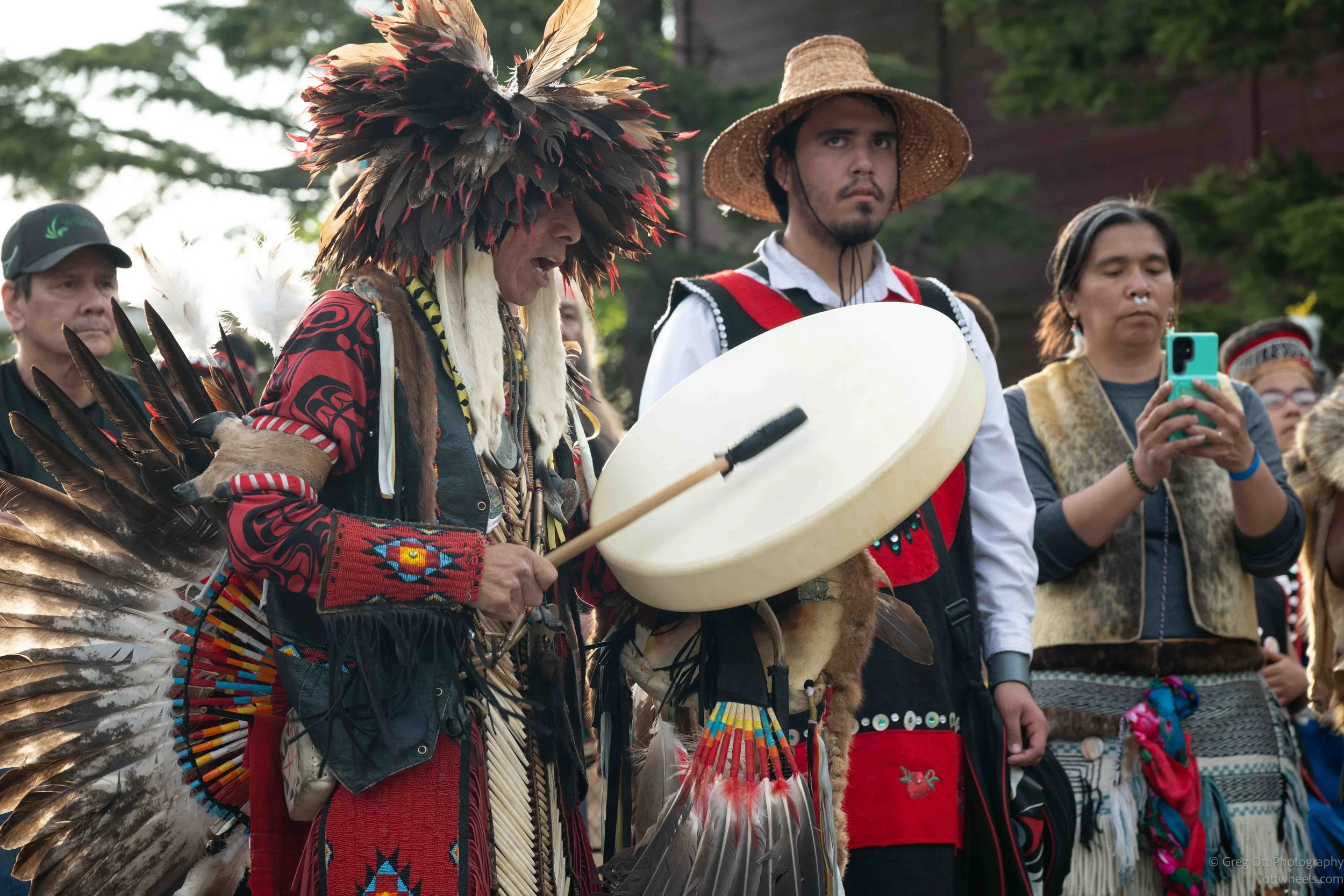
That turned out to be excellent advice. I spent nearly two hours outside Centennial Hall photographing people arriving, leaving, and greeting one another. One thing became obvious almost immediately: there was a deep respect for elders. I also noticed a greeting unlike anything I had seen before. People would gently place their foreheads together until their noses touched. Sometimes a hand rested on a shoulder or around a waist. Their eyes would close and they would remain there for several moments before embracing. It wasn't rushed or ceremonial. It felt sincere, personal, and deeply respectful.
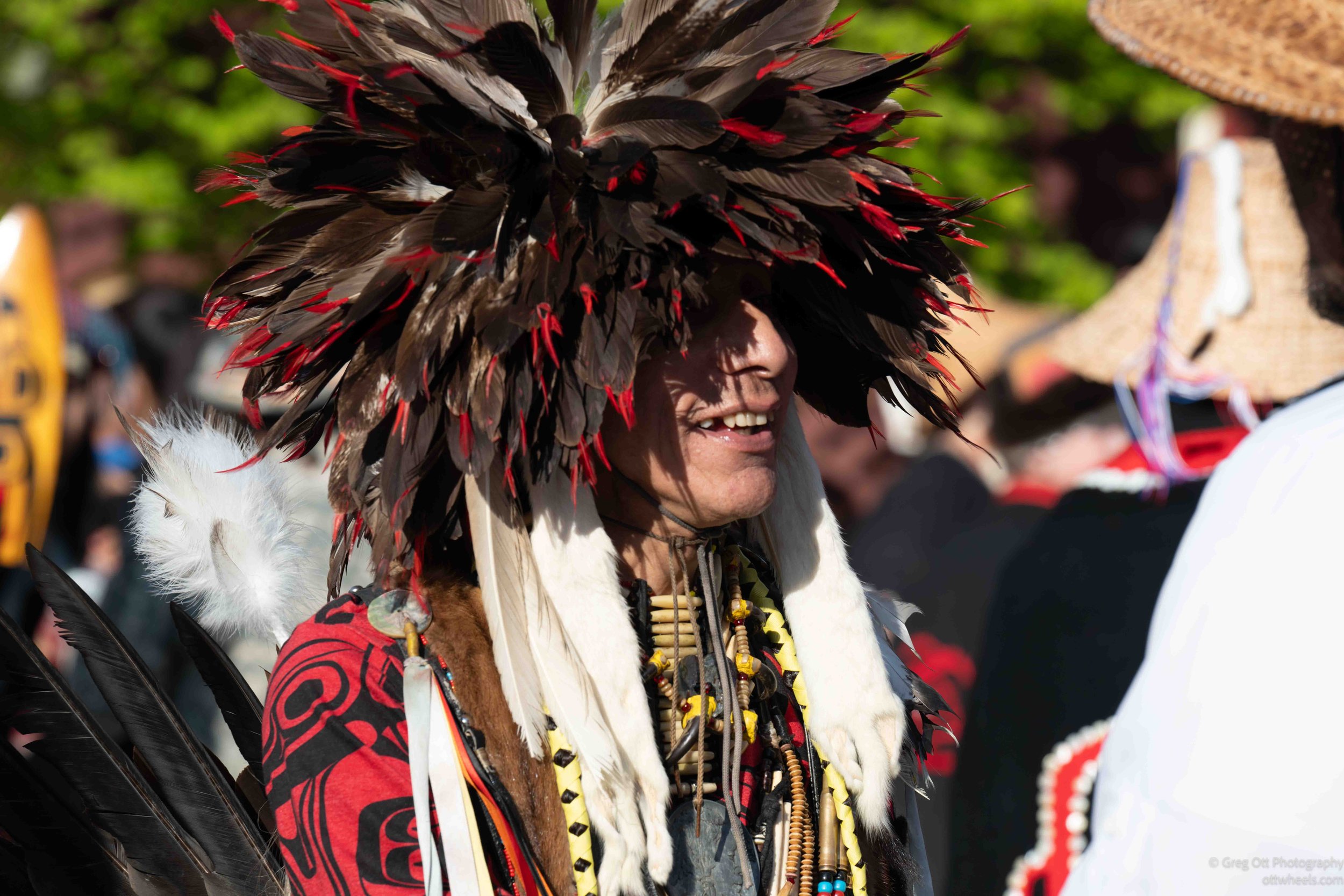
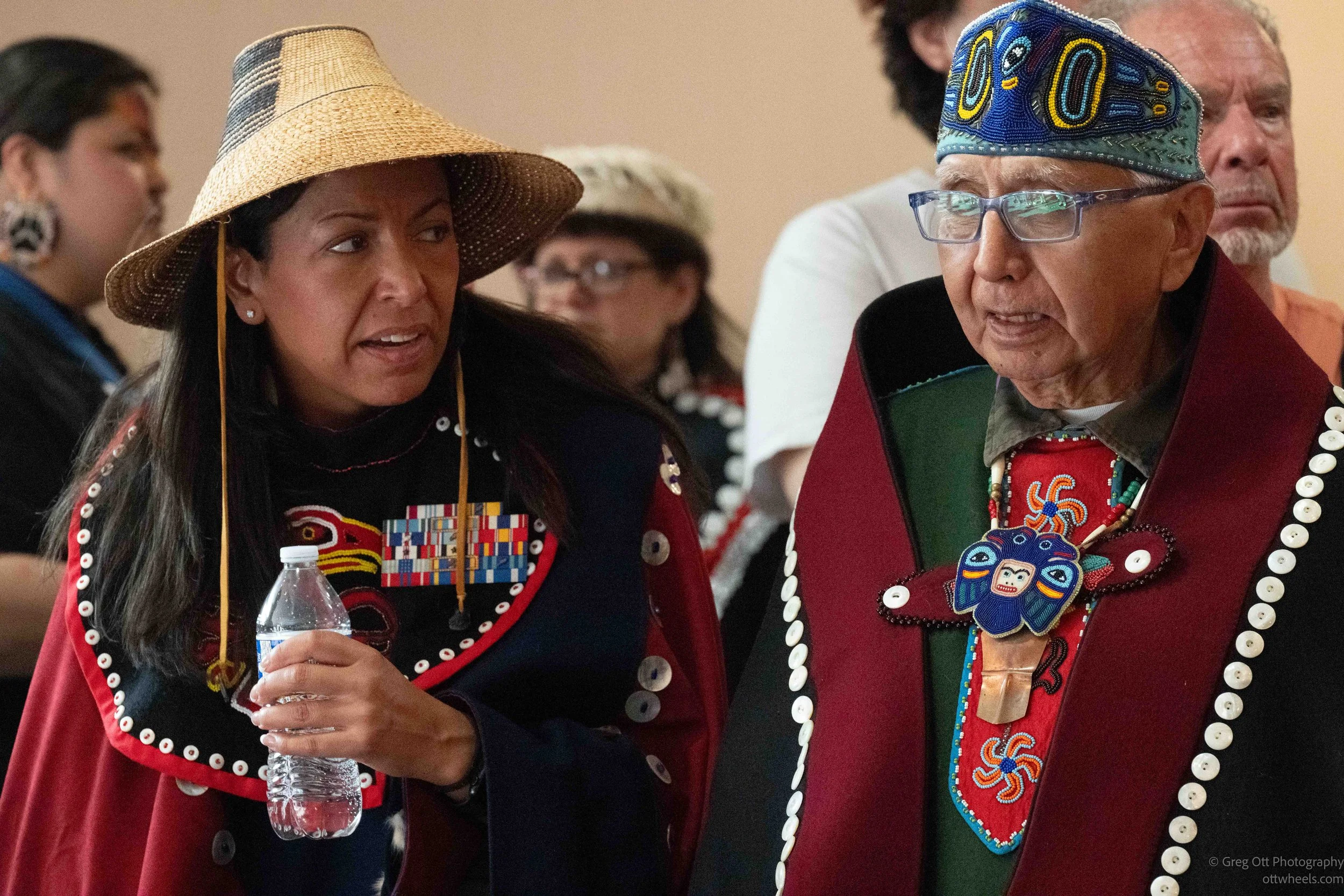
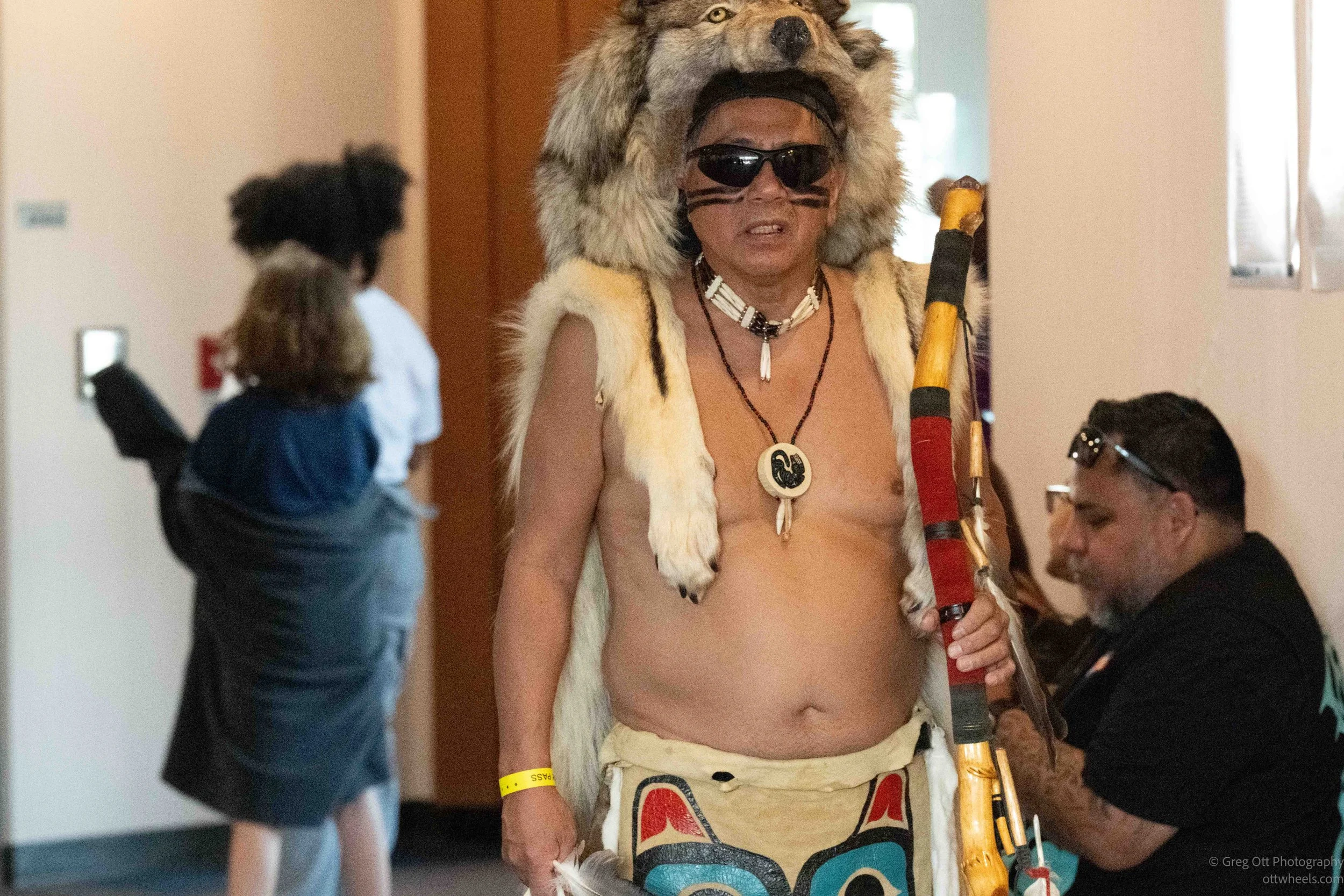
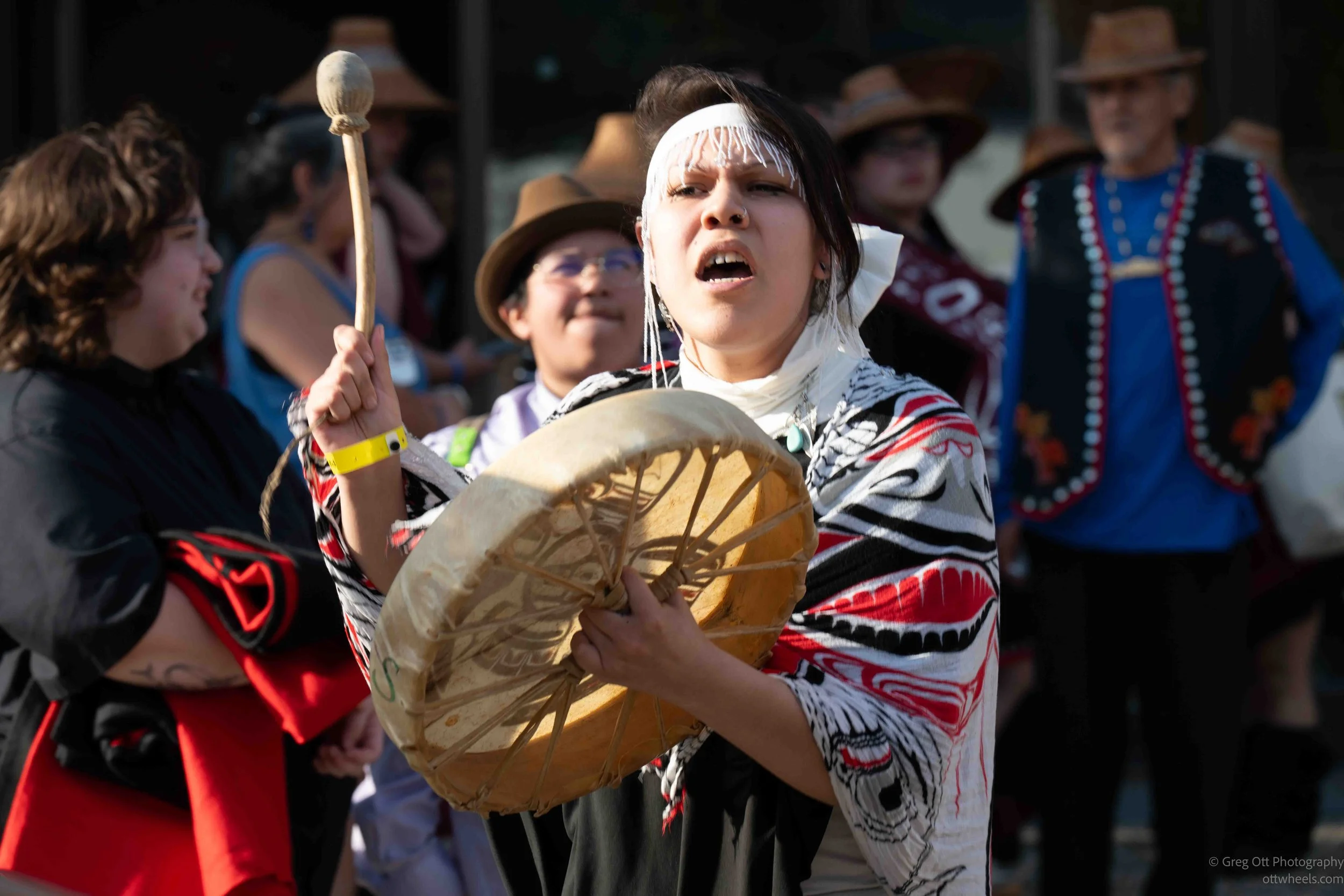
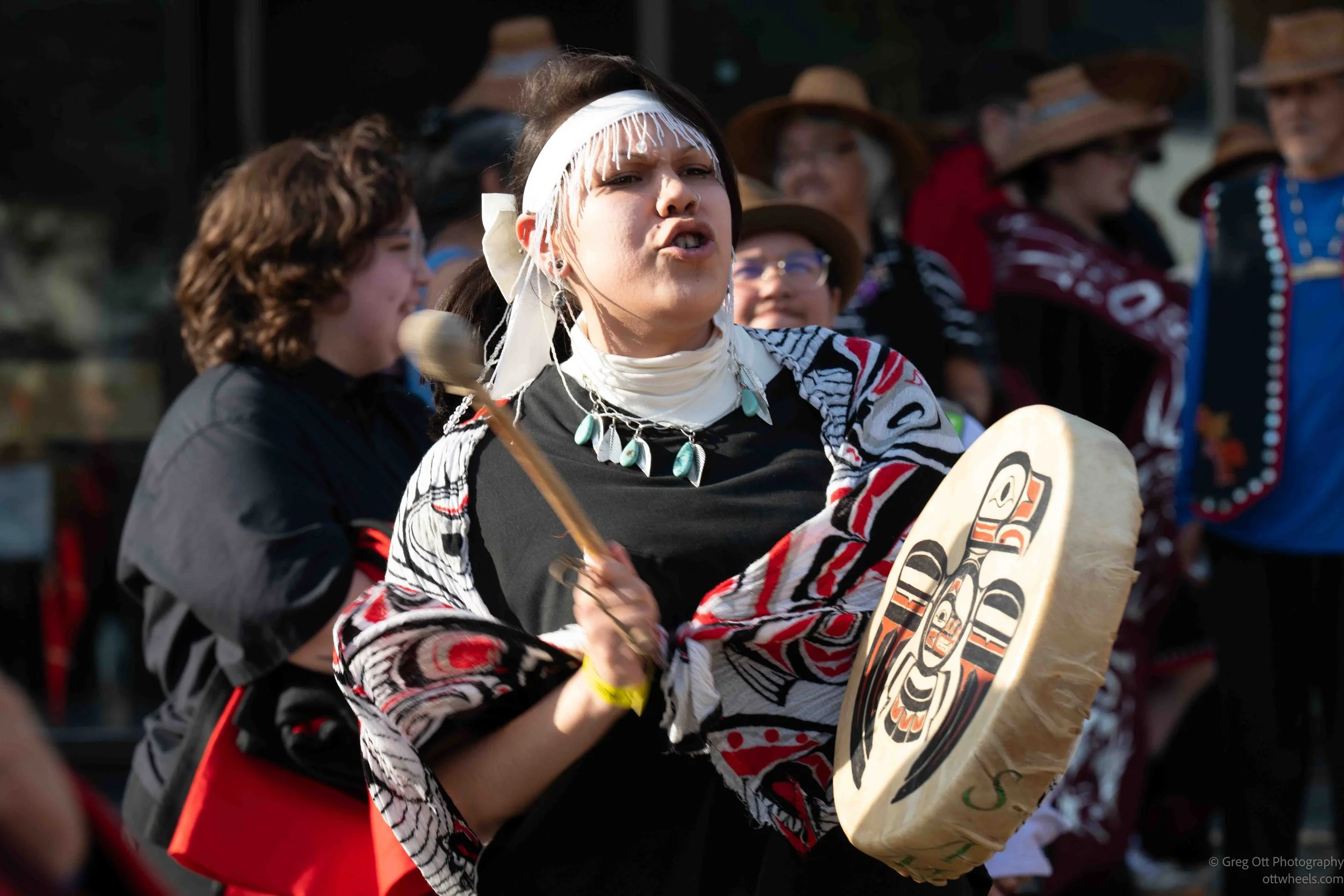
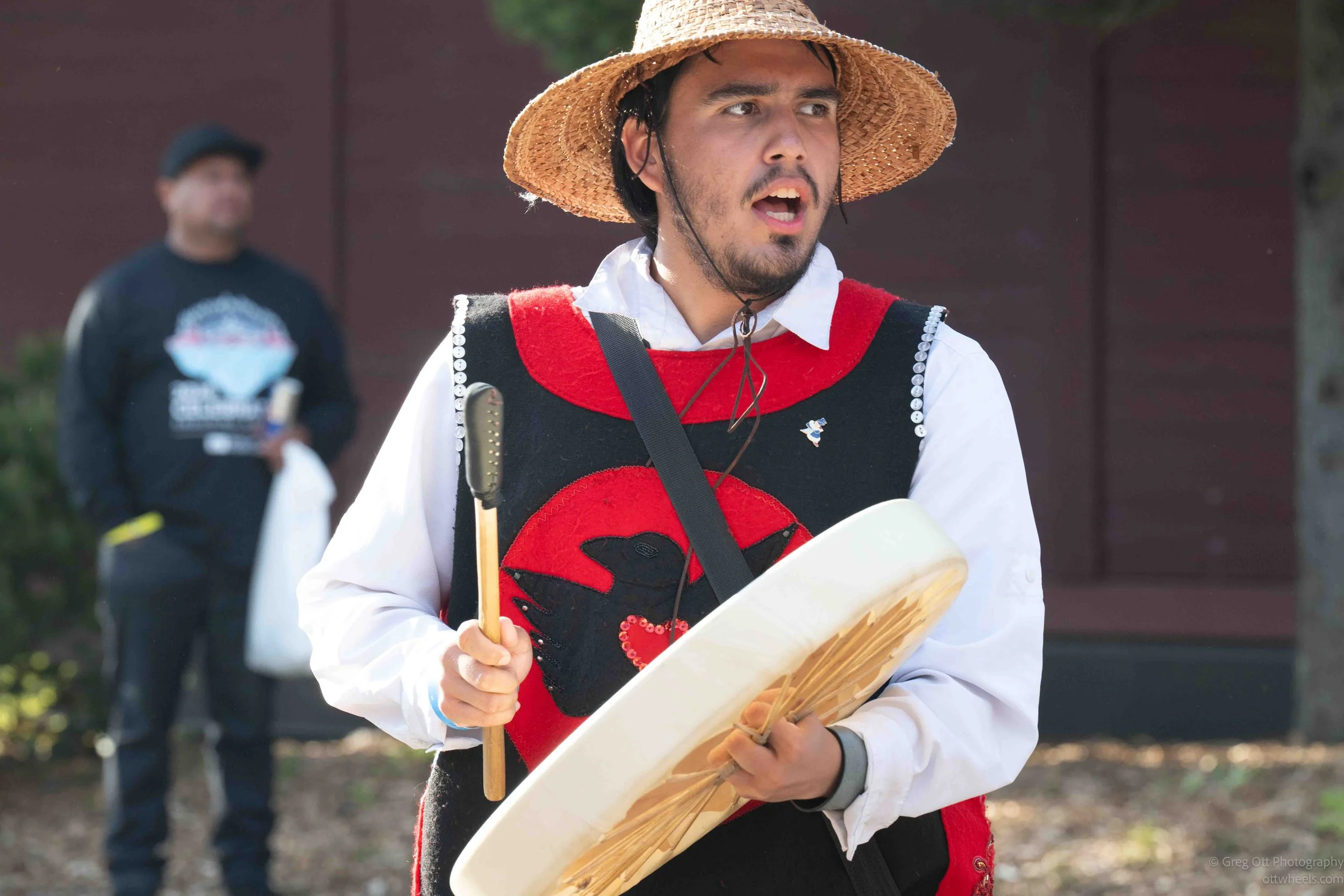
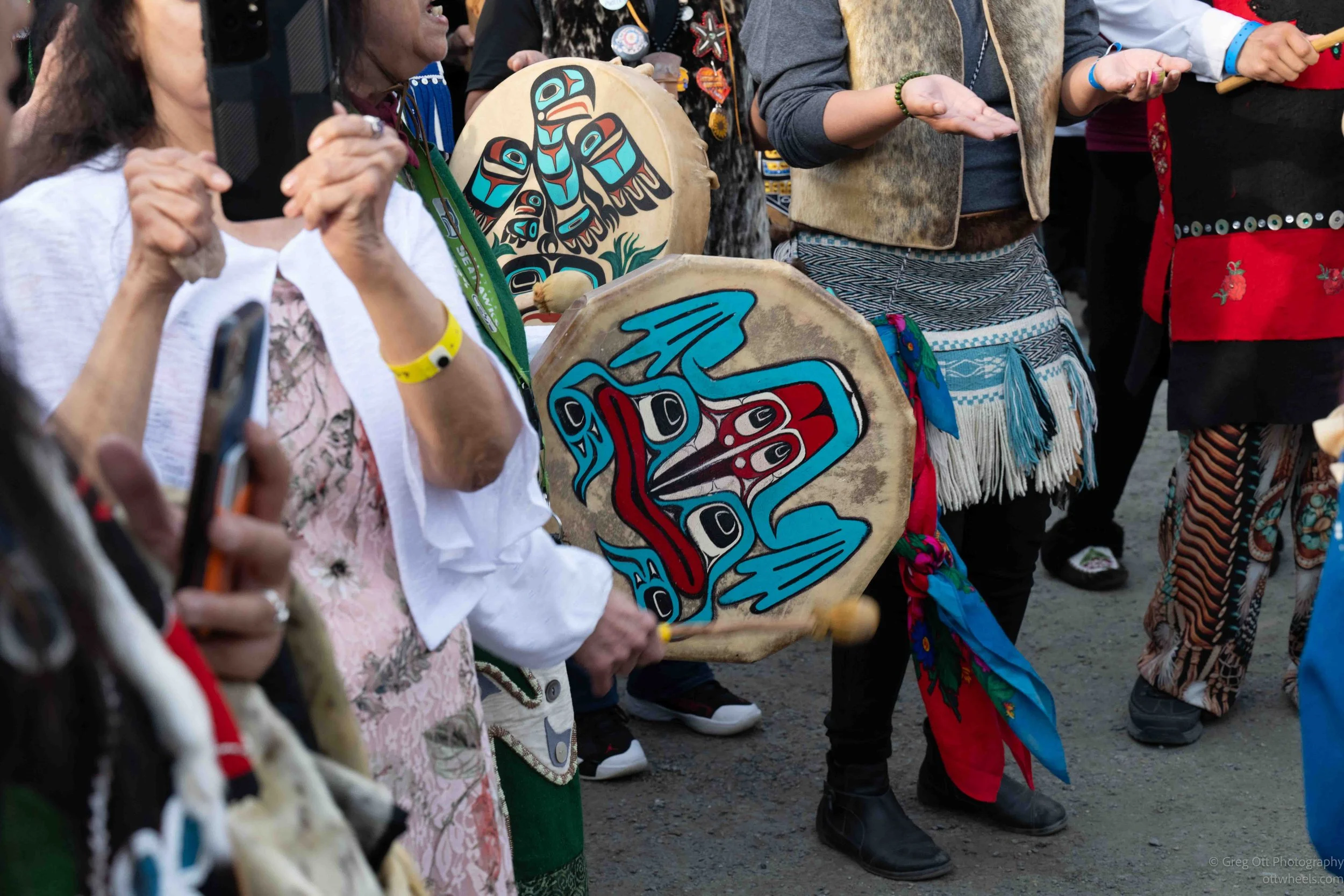
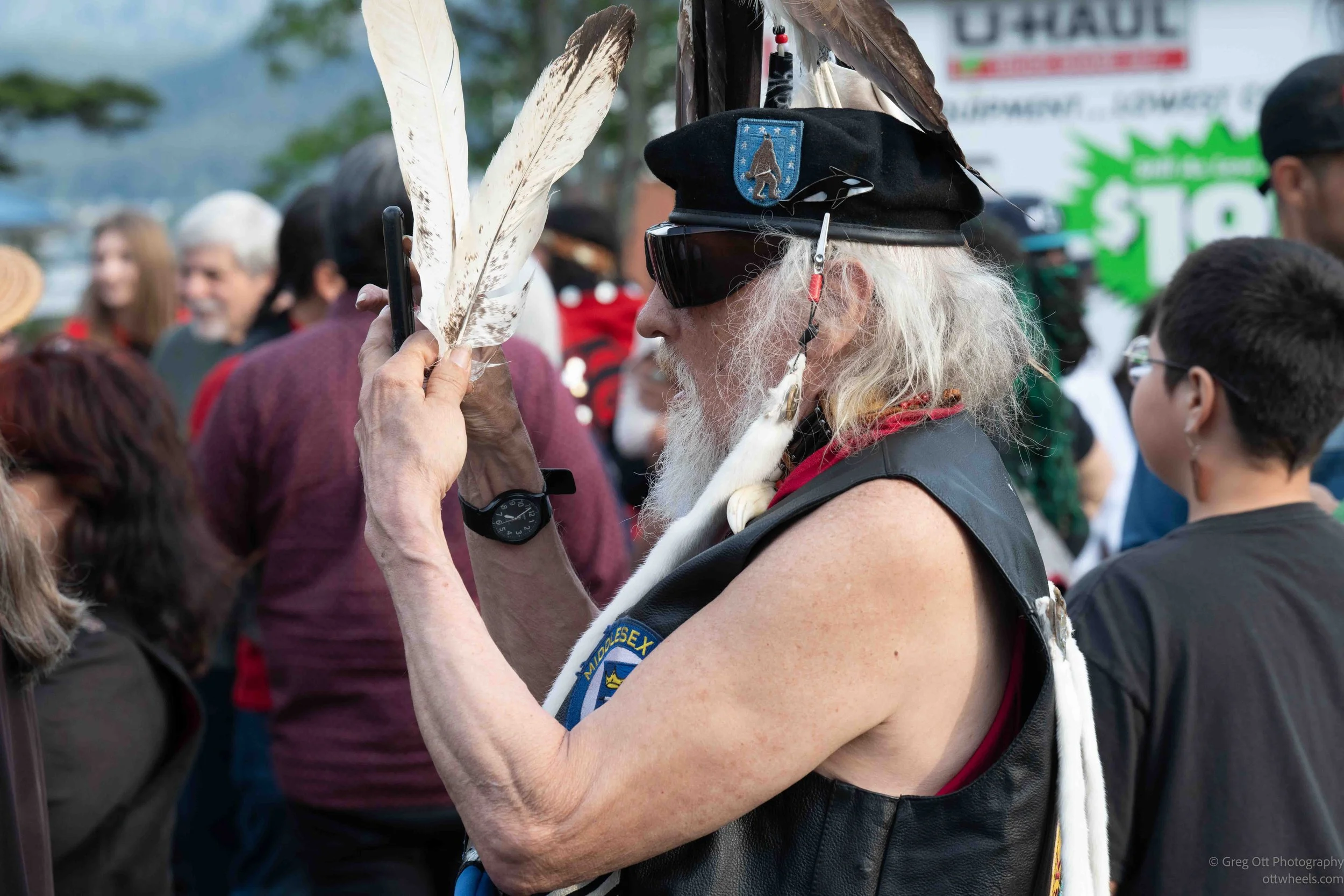
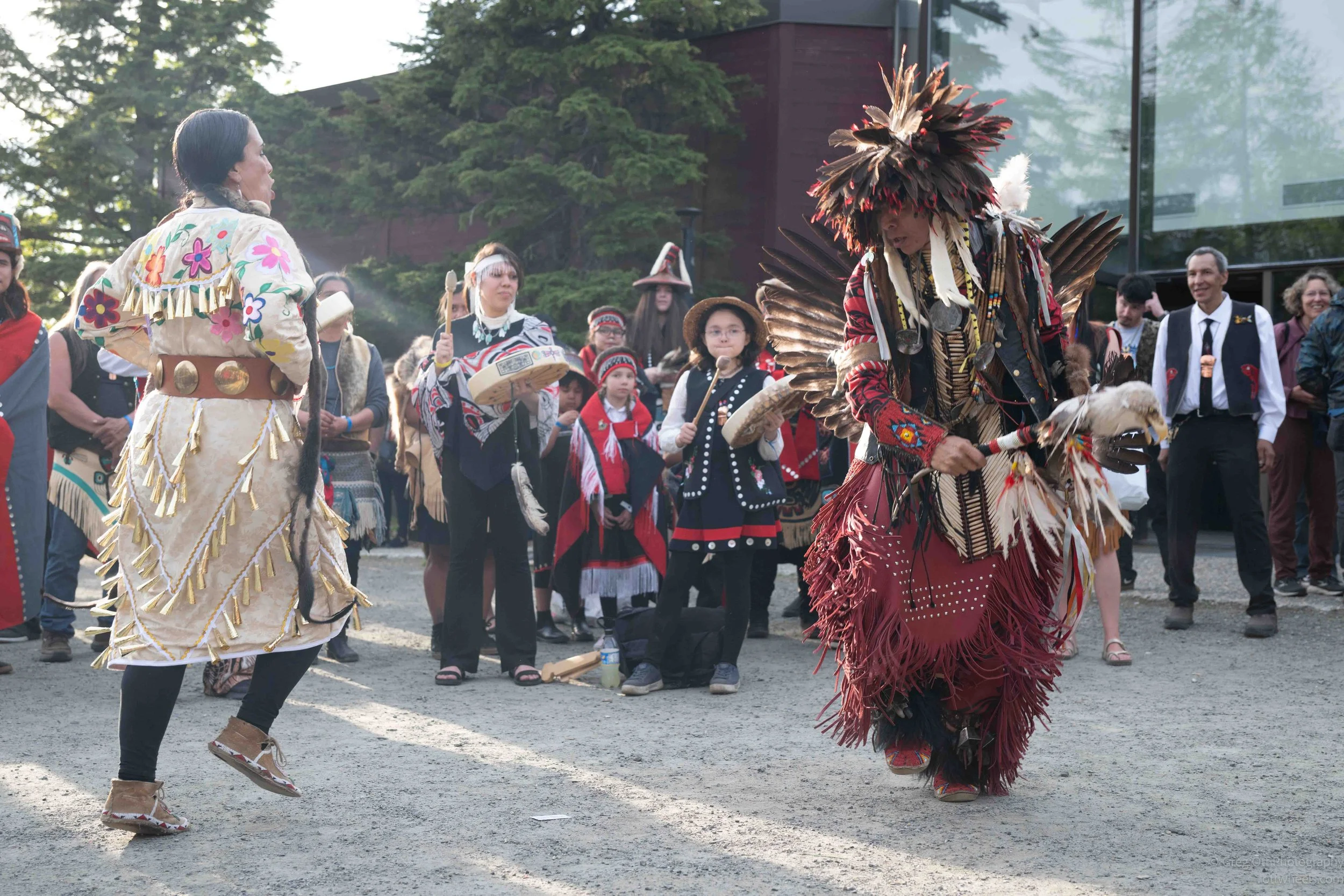
I didn't understand the meaning behind the regalia, facial designs, tattoos, carvings, or woven symbols, but it was obvious they carried significance. Nothing appeared decorative for the sake of decoration. Every piece seemed connected to family, clan, history, or place. Standing there with a camera, I had the sense that I was only scratching the surface of what I was seeing. There were stories everywhere, and I lacked the knowledge to fully understand them.
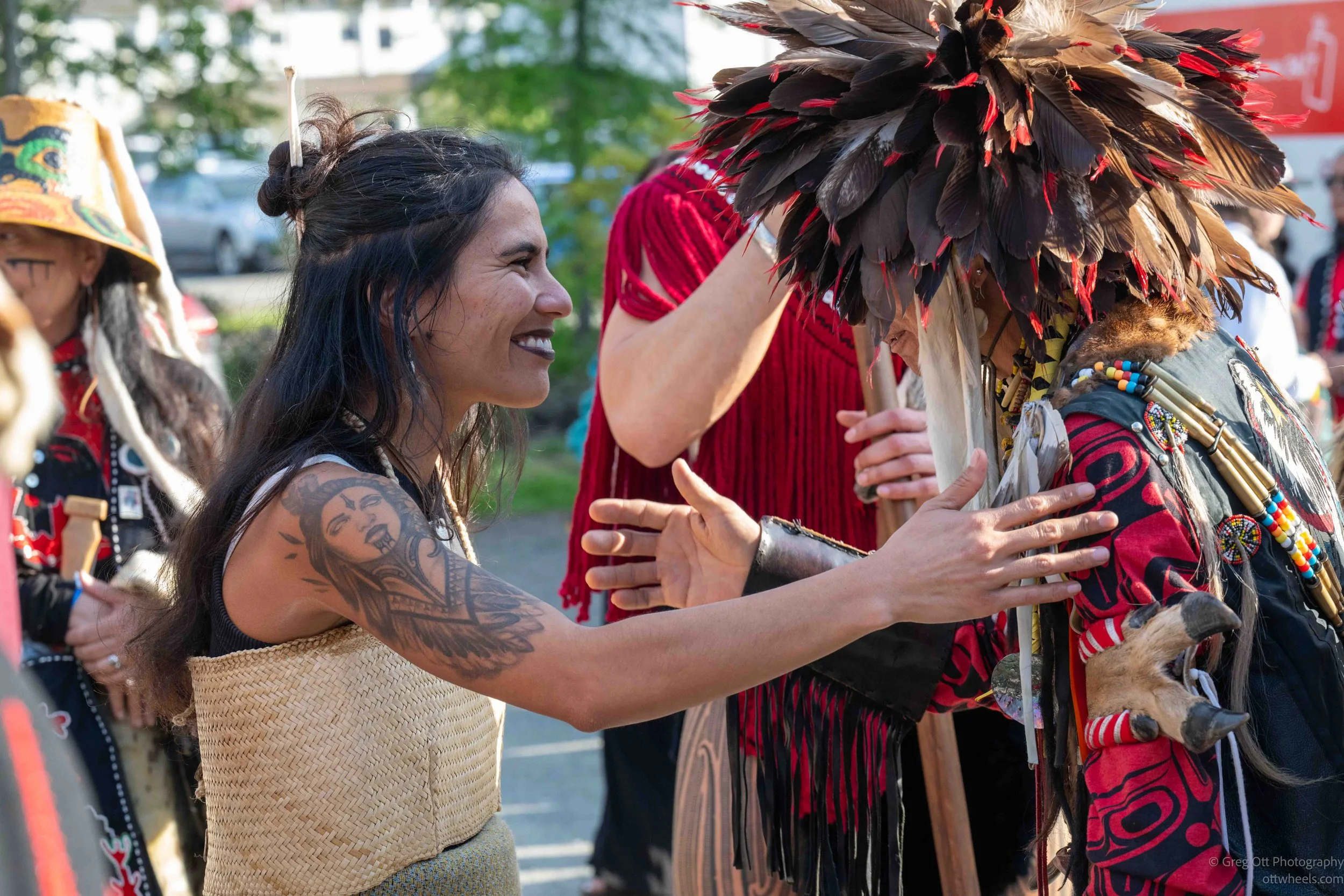
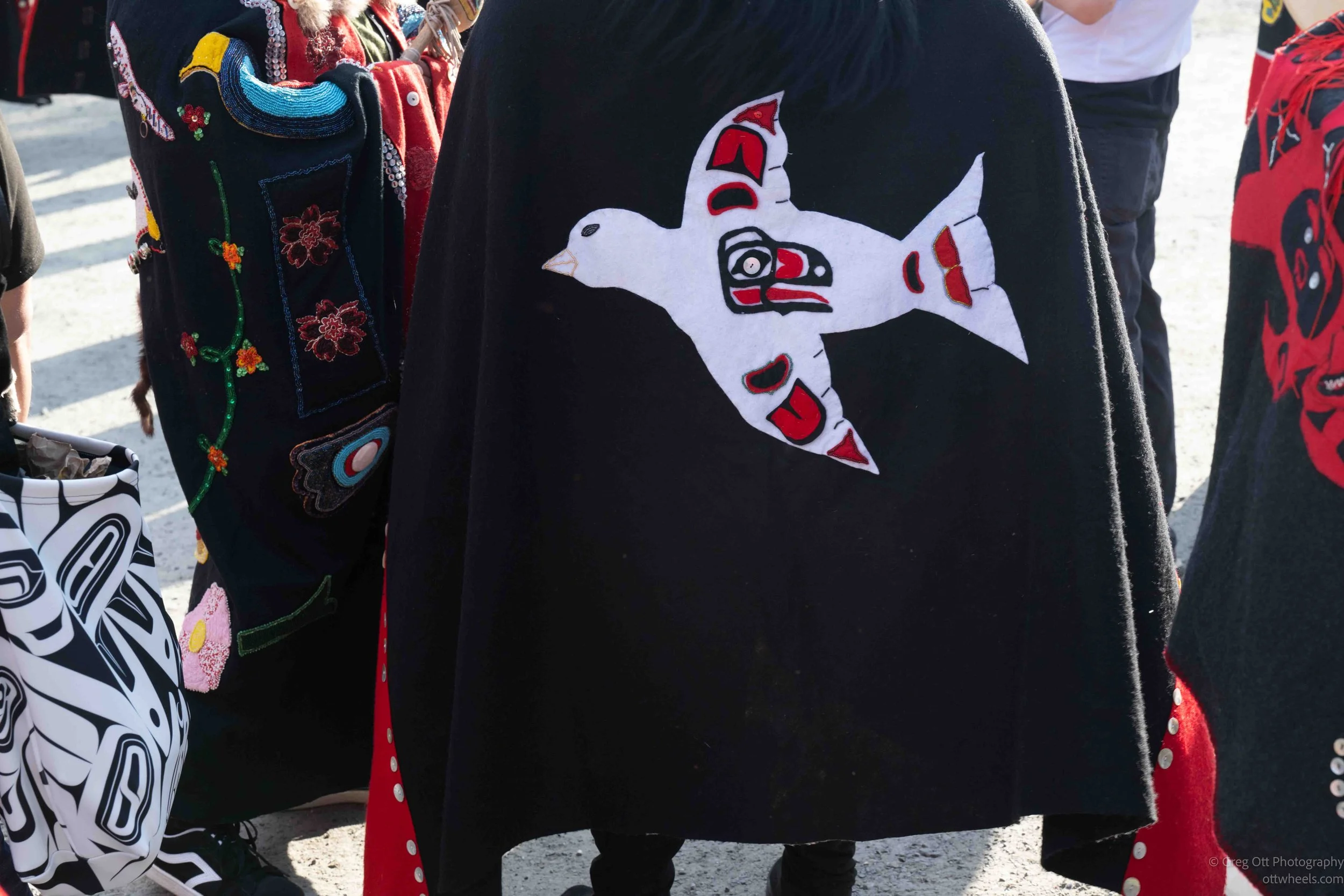
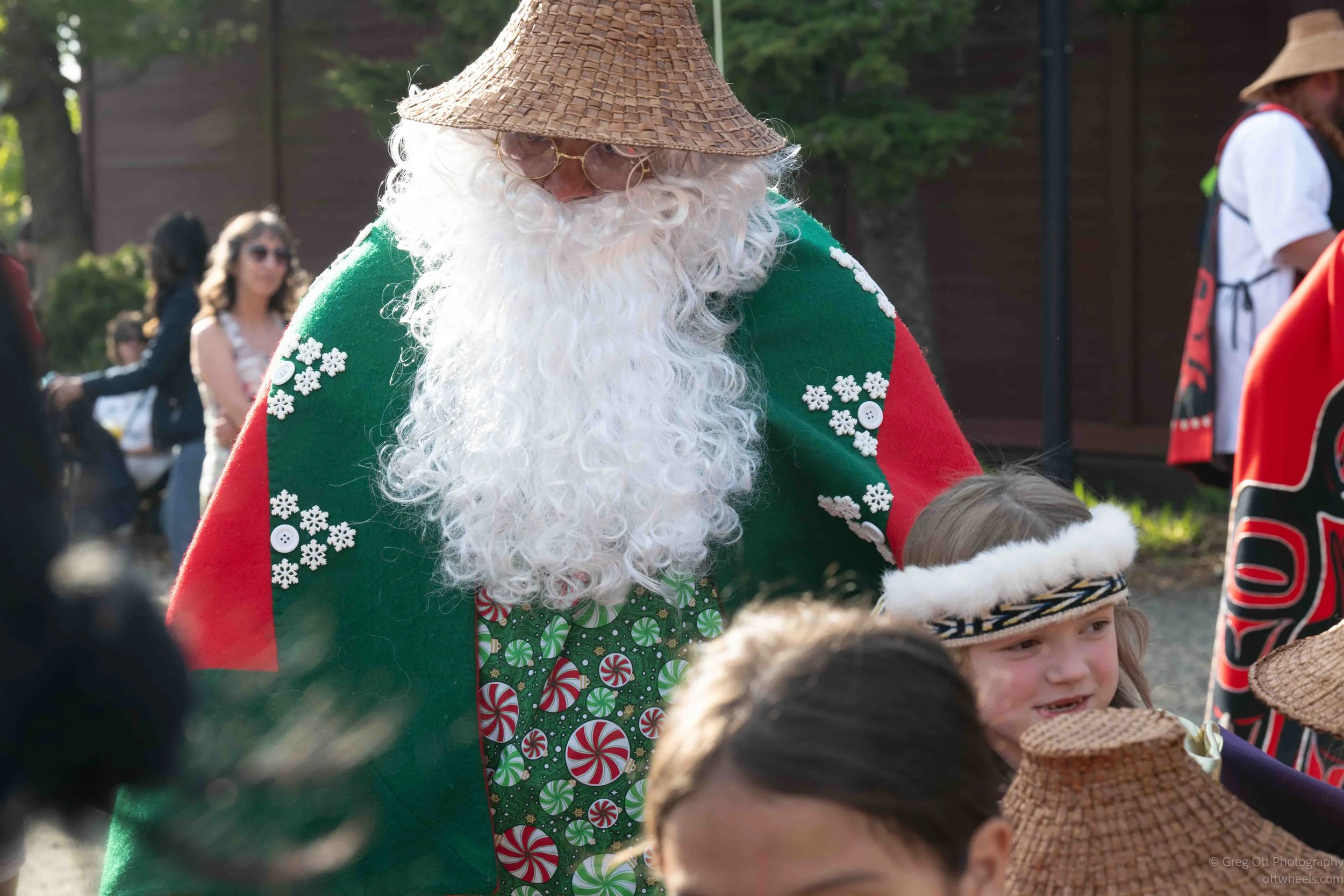
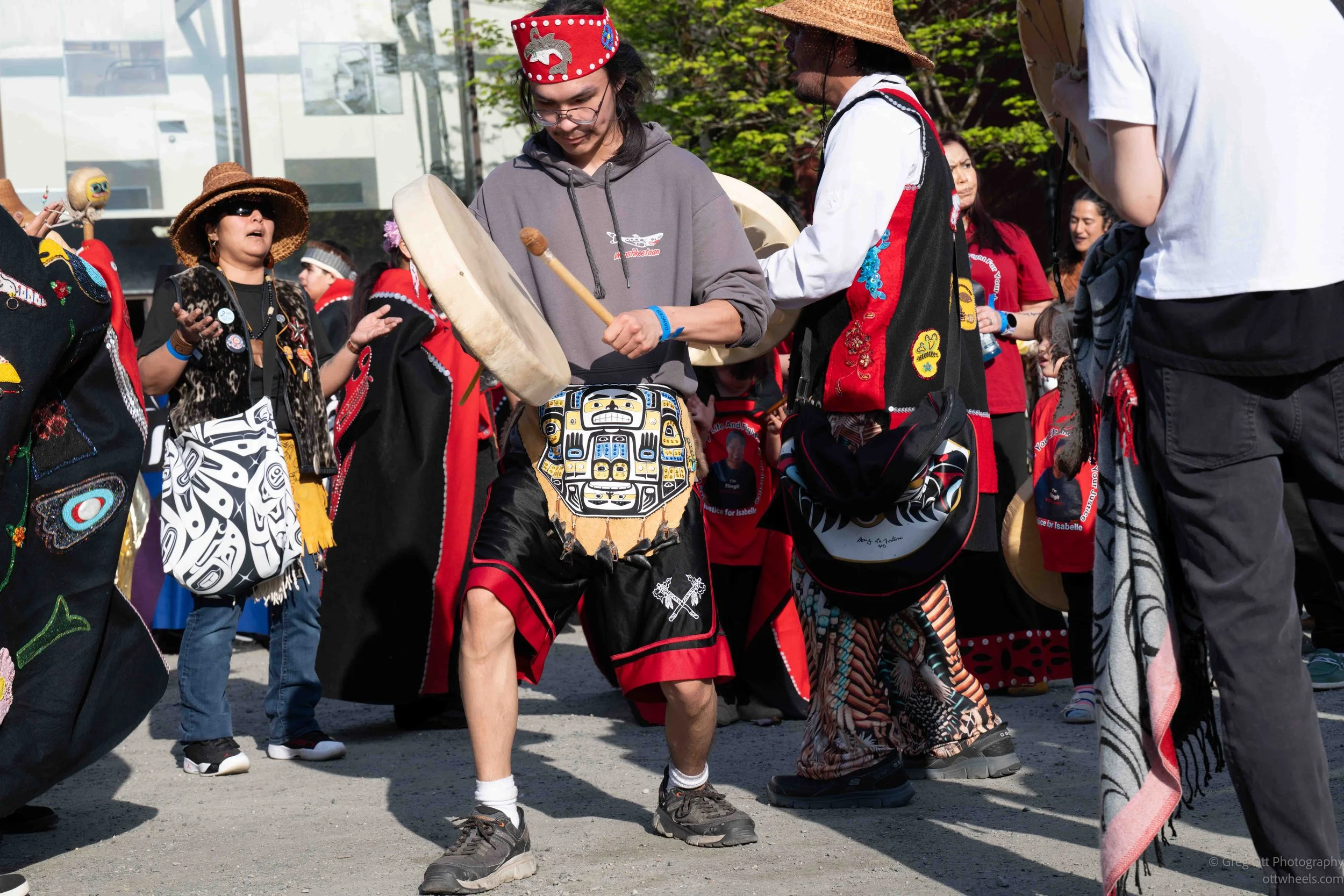
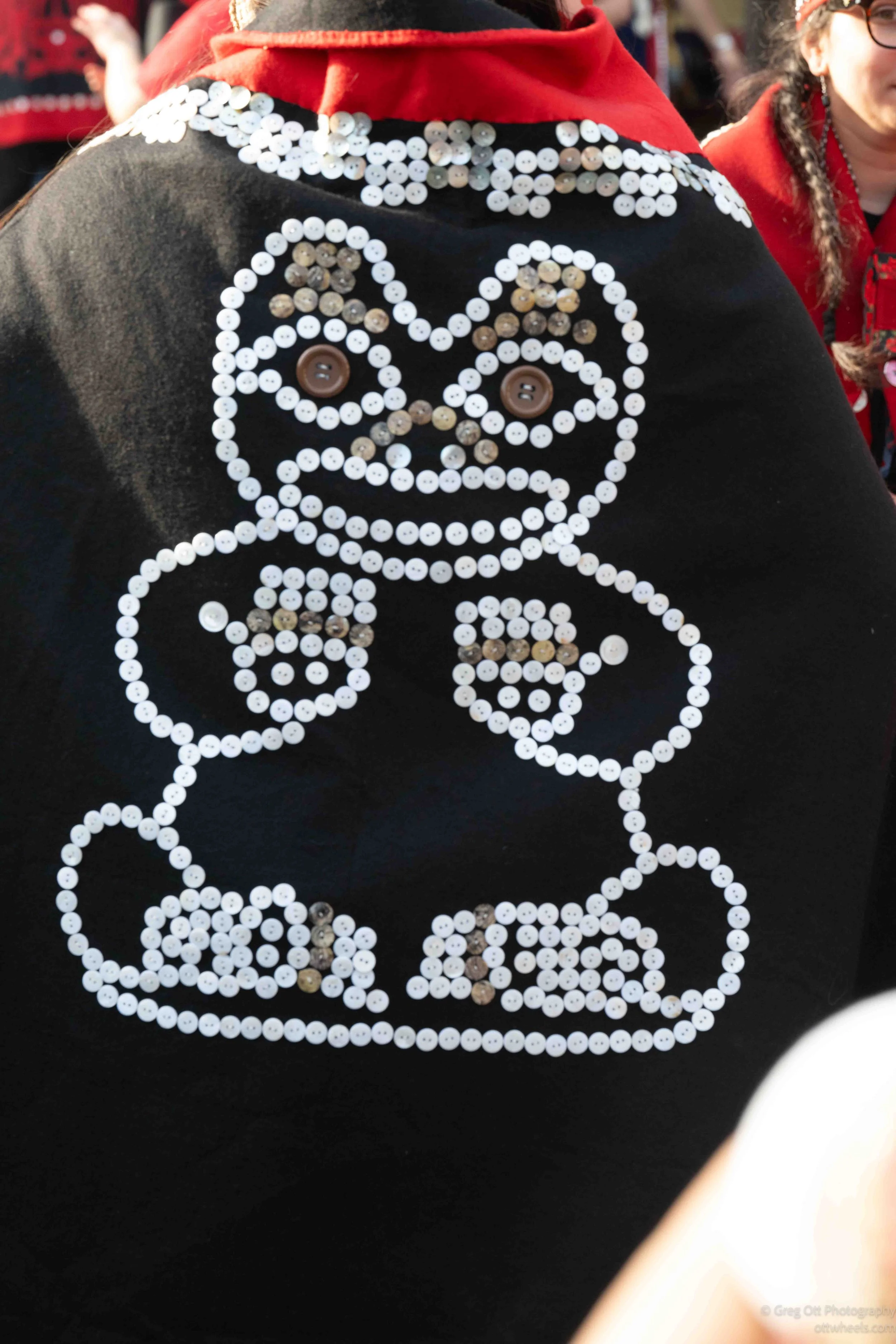
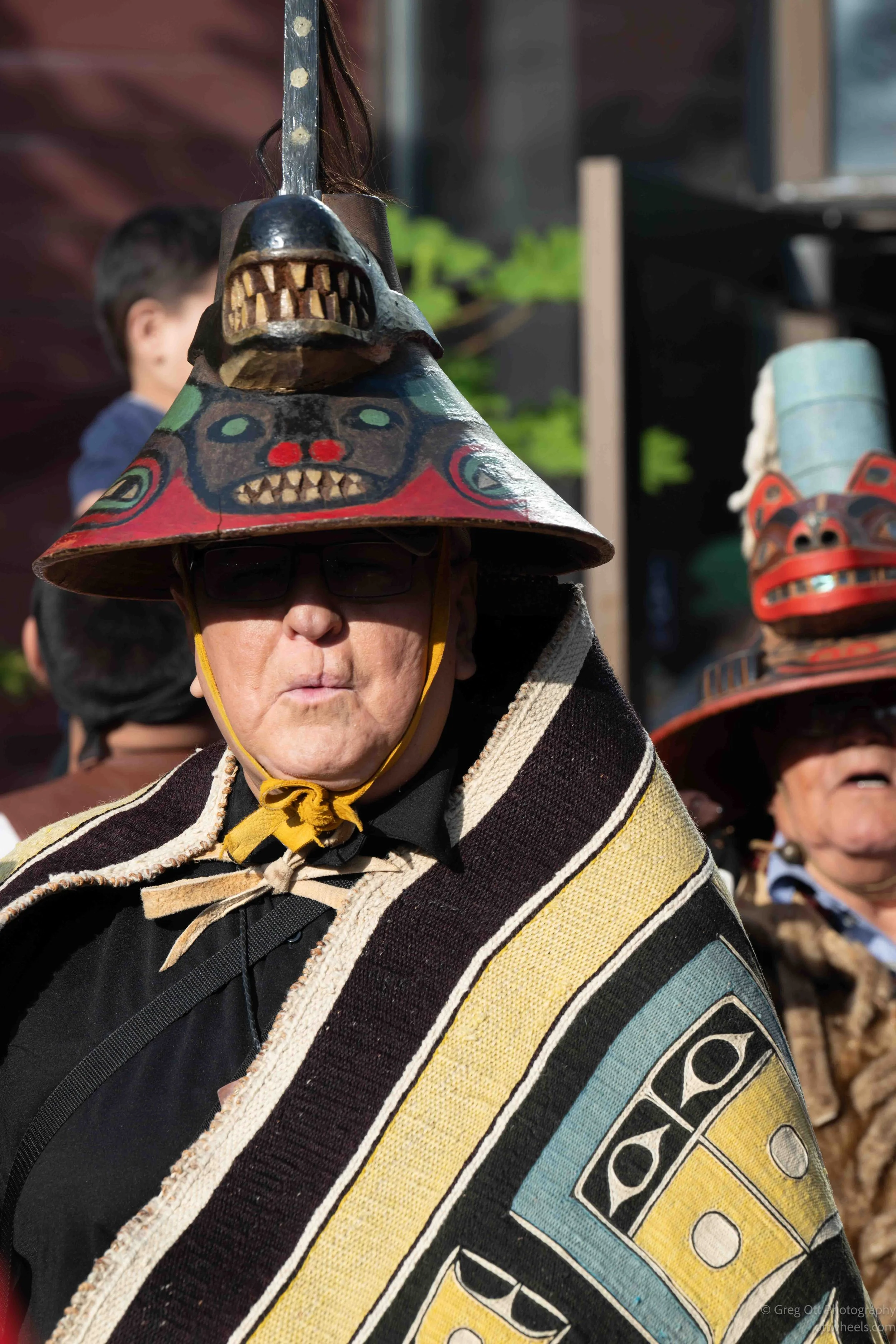
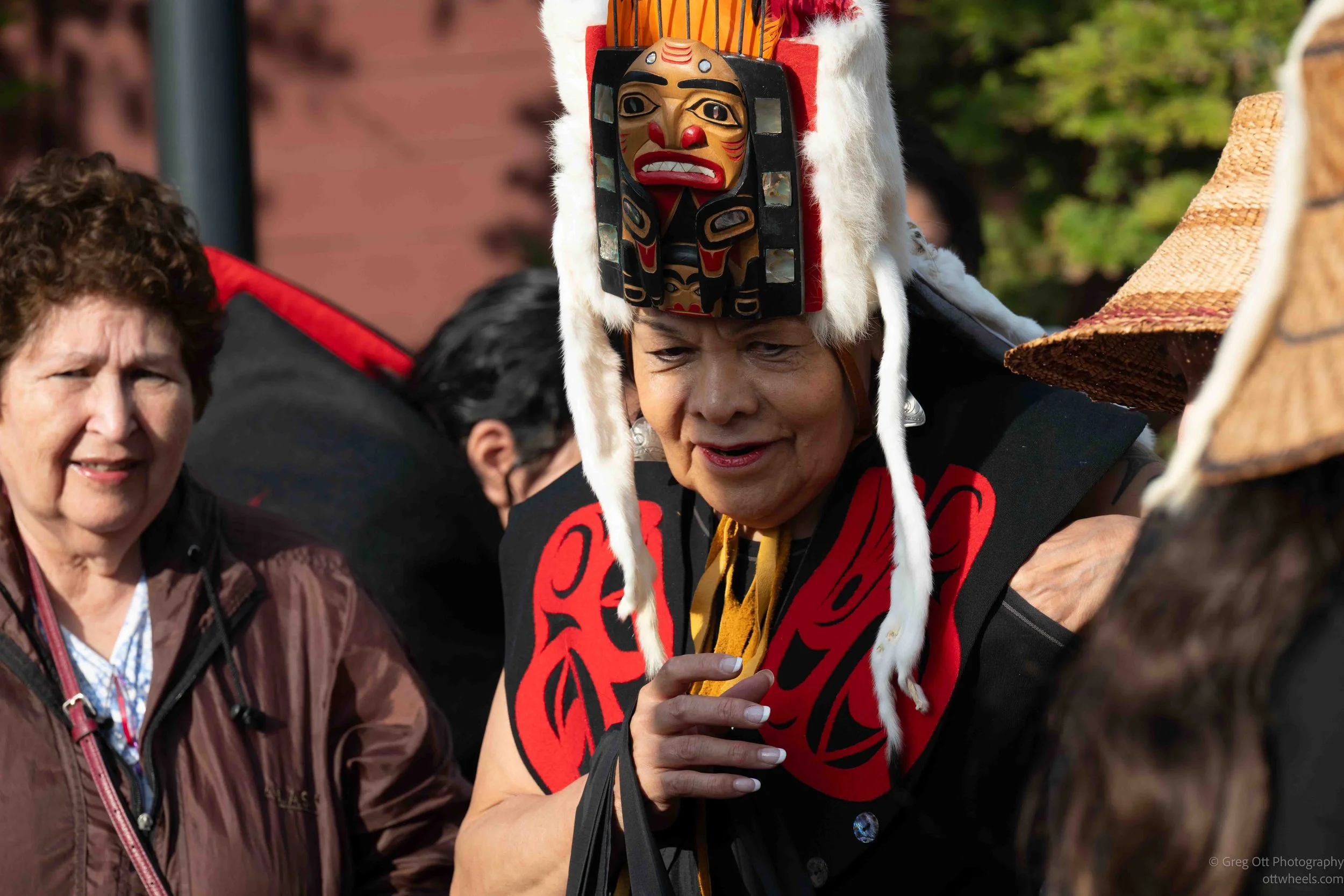
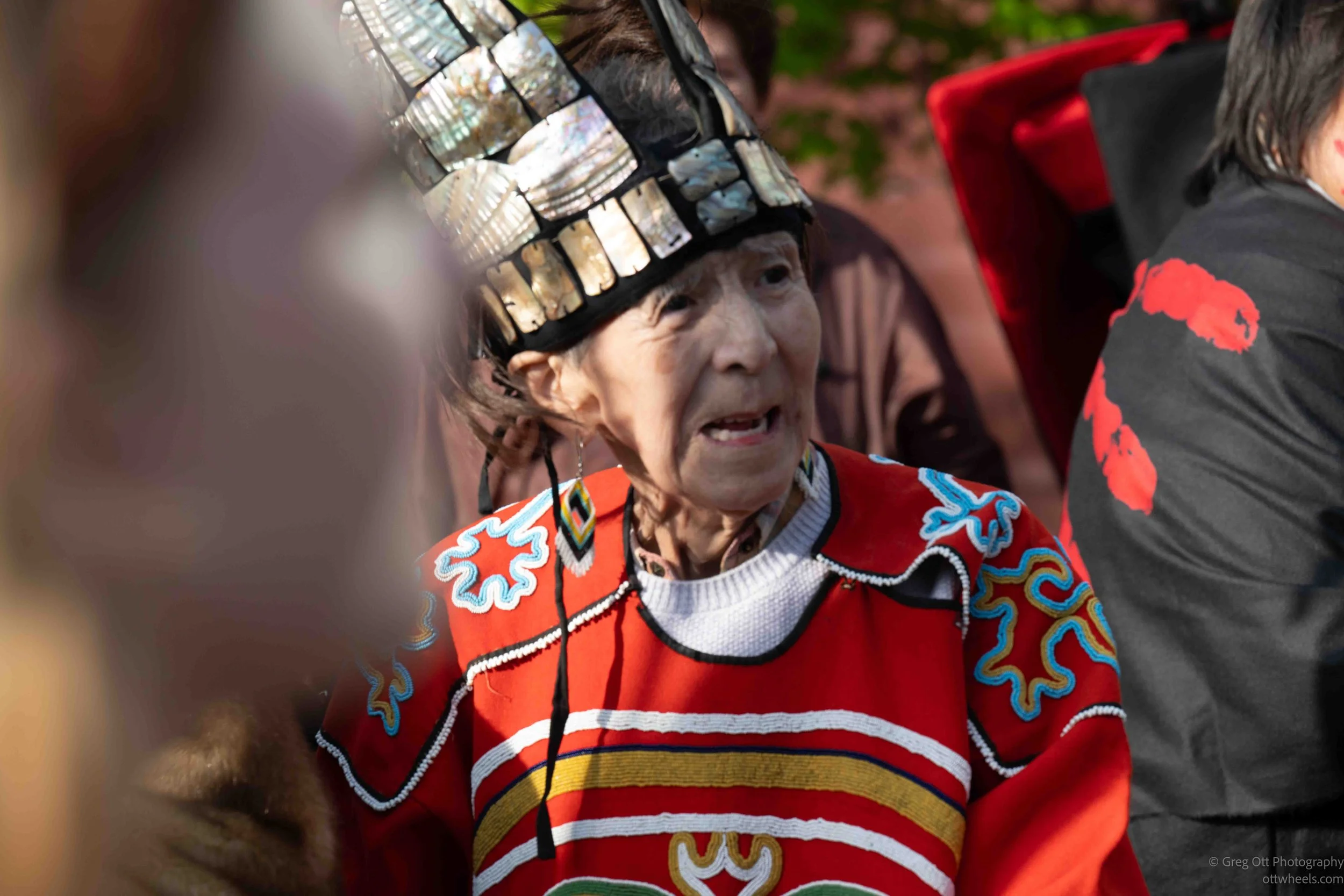
As the evening progressed, I watched dancers emerge from the hall, families gather in small groups, children run between relatives, and elders greeted with obvious affection. It felt less like attending a public event and more like watching an enormous family reunion. The dancing itself was fascinating, and I realized the dance was often more than just movement, but included facial expressions.
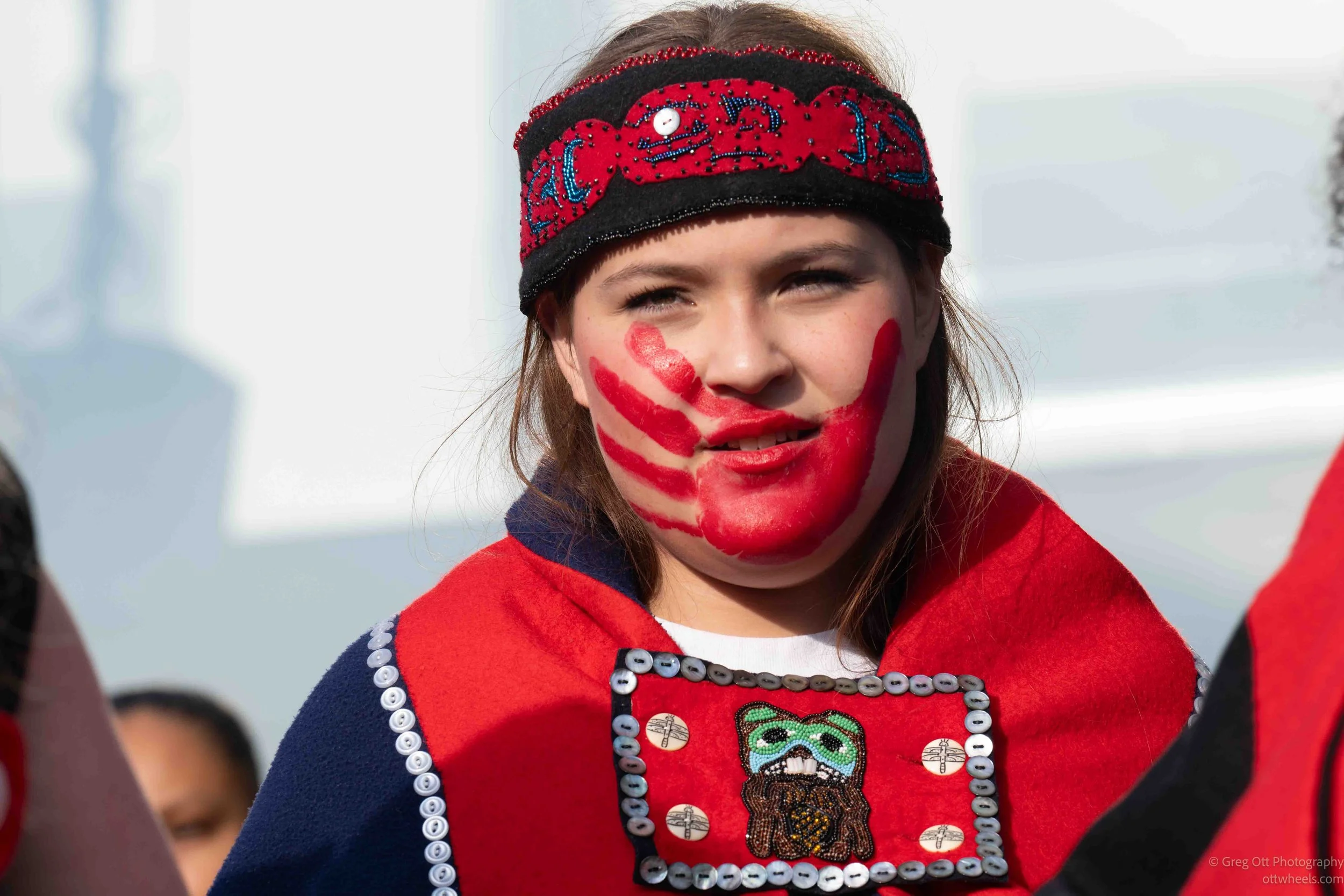
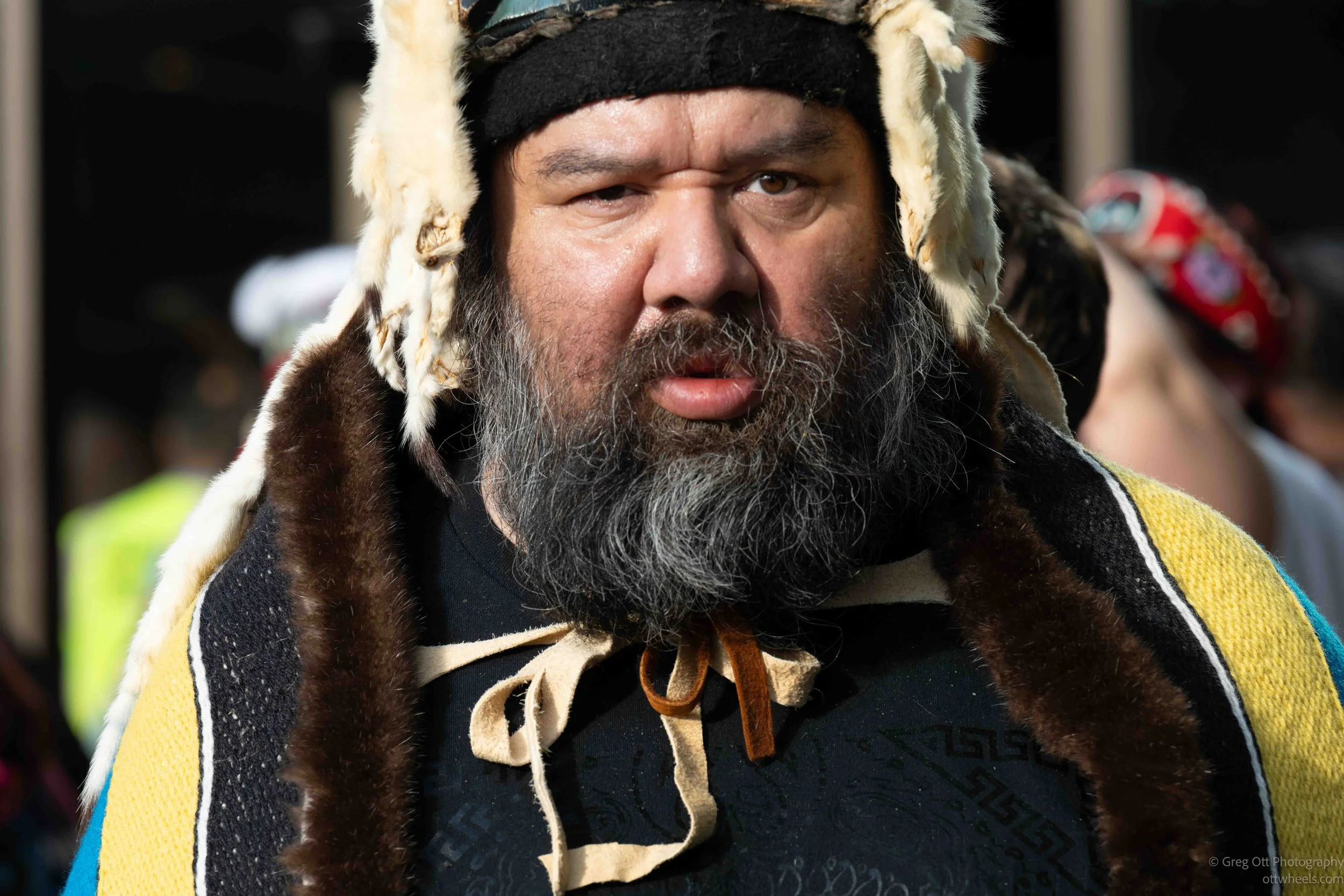
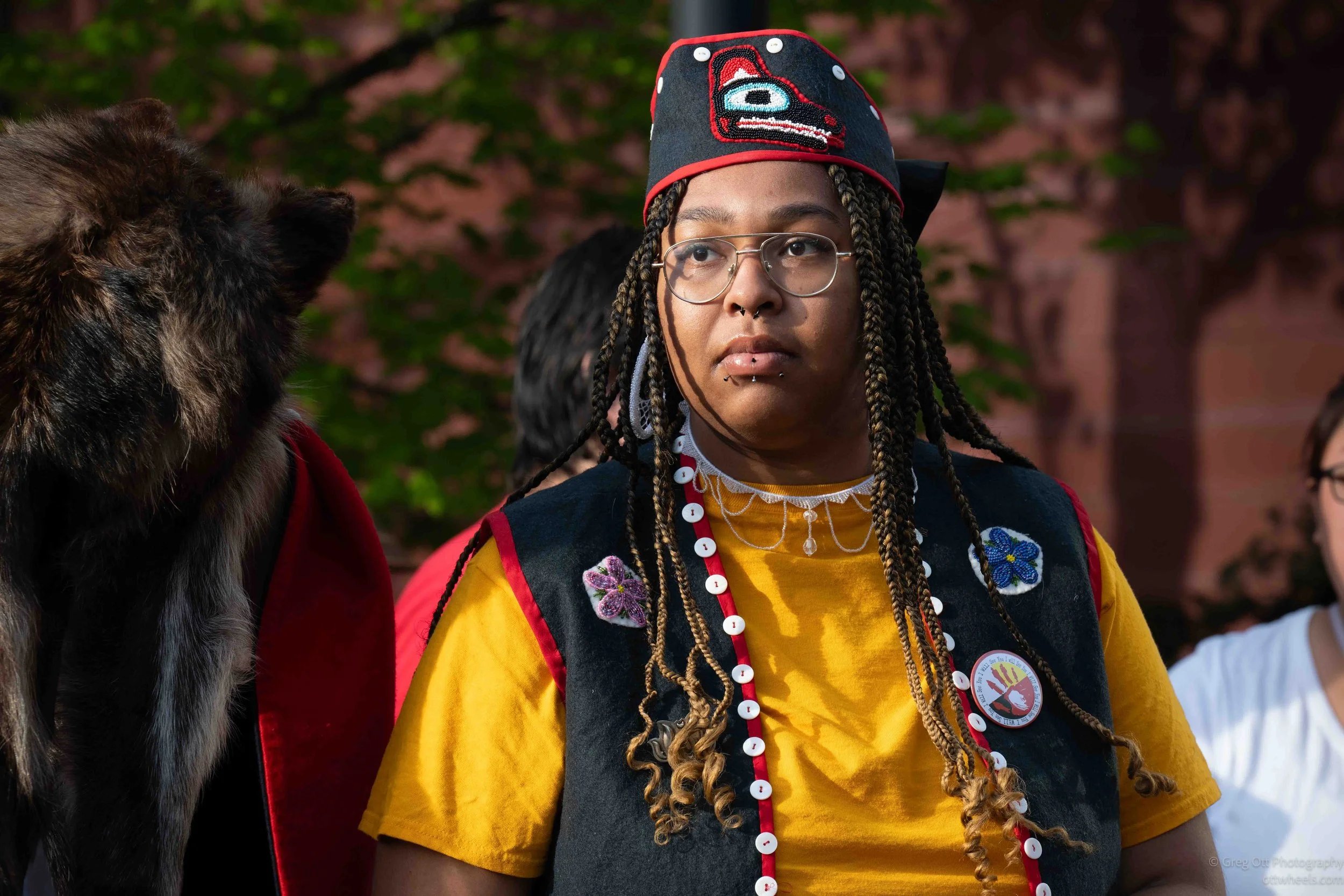
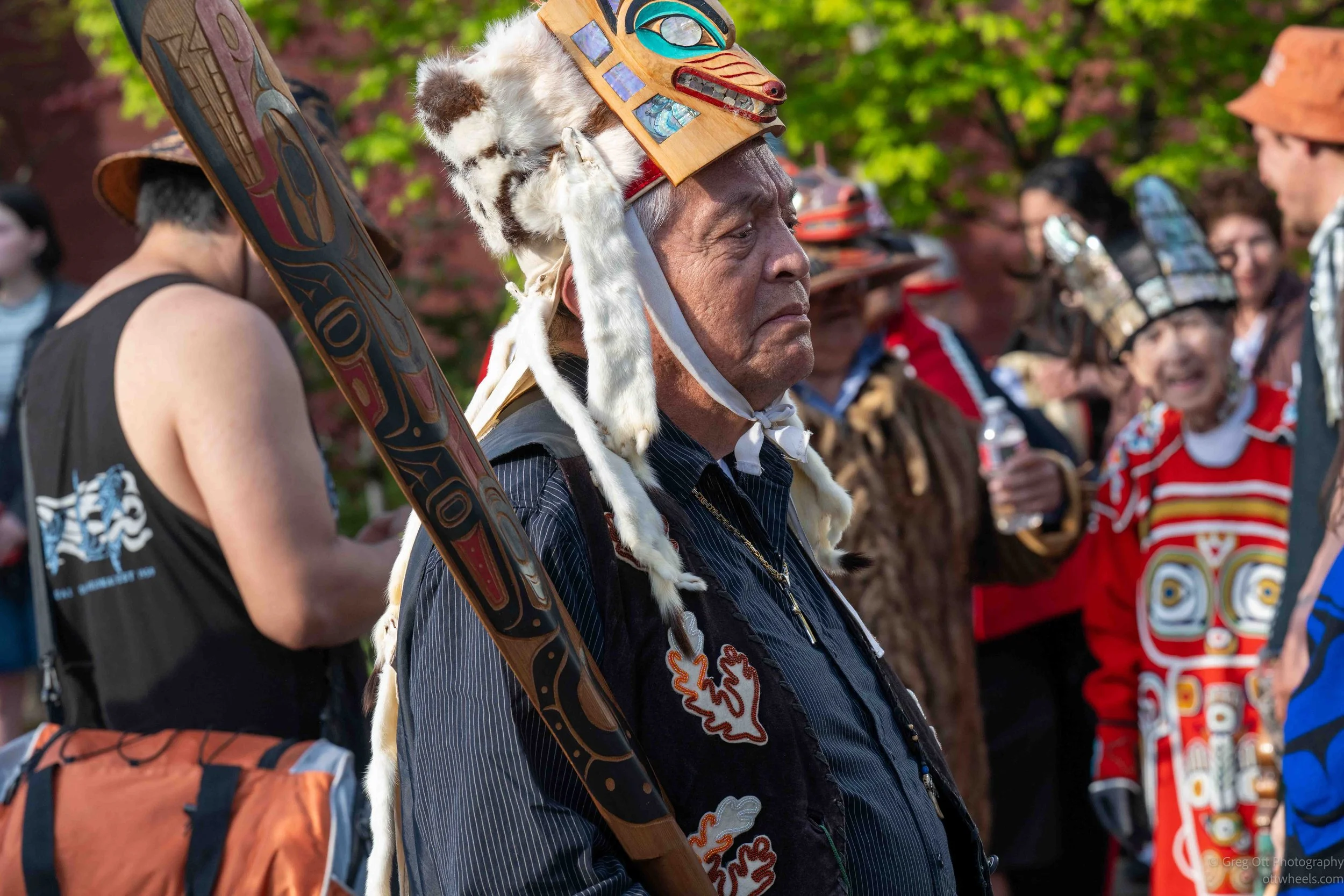
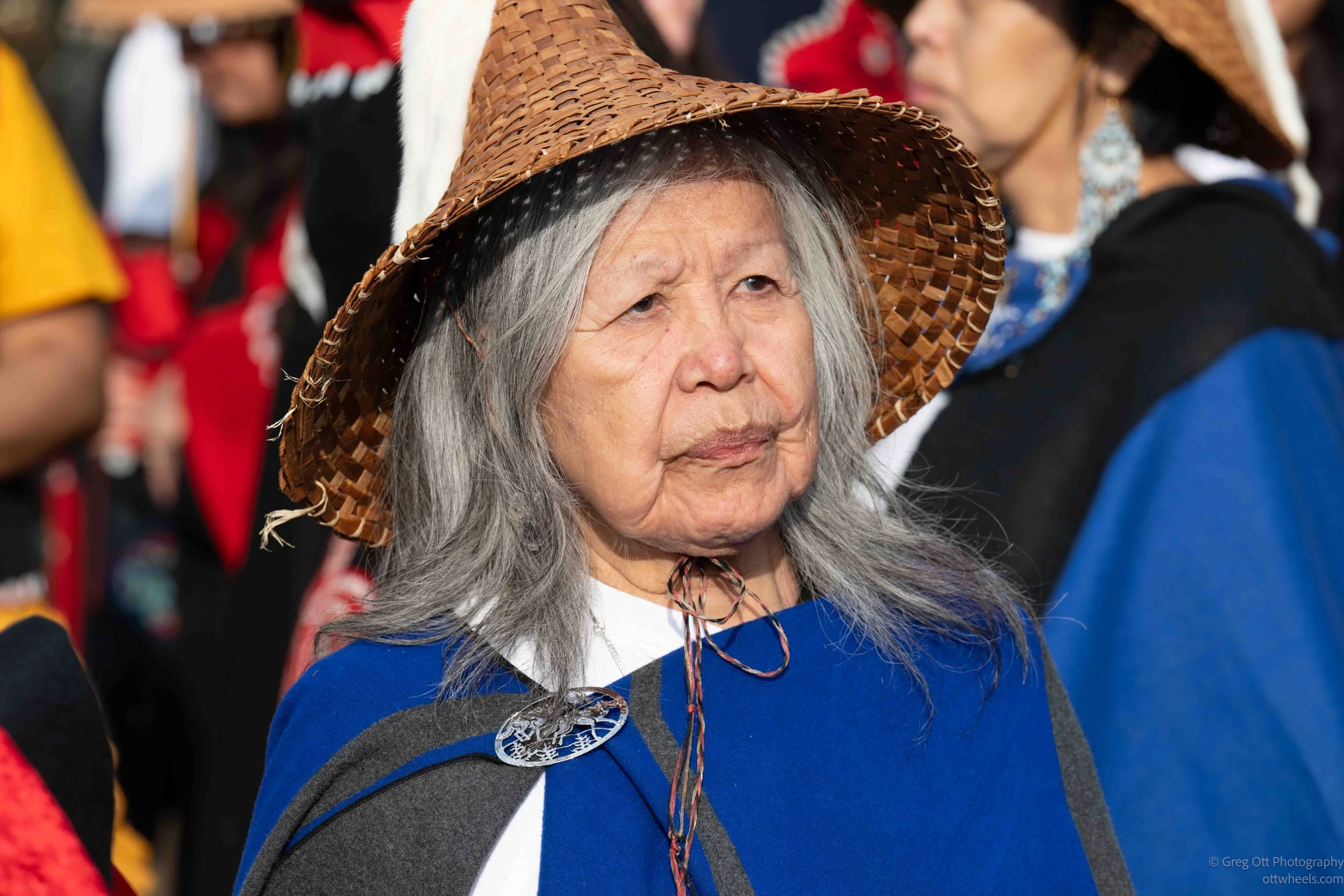
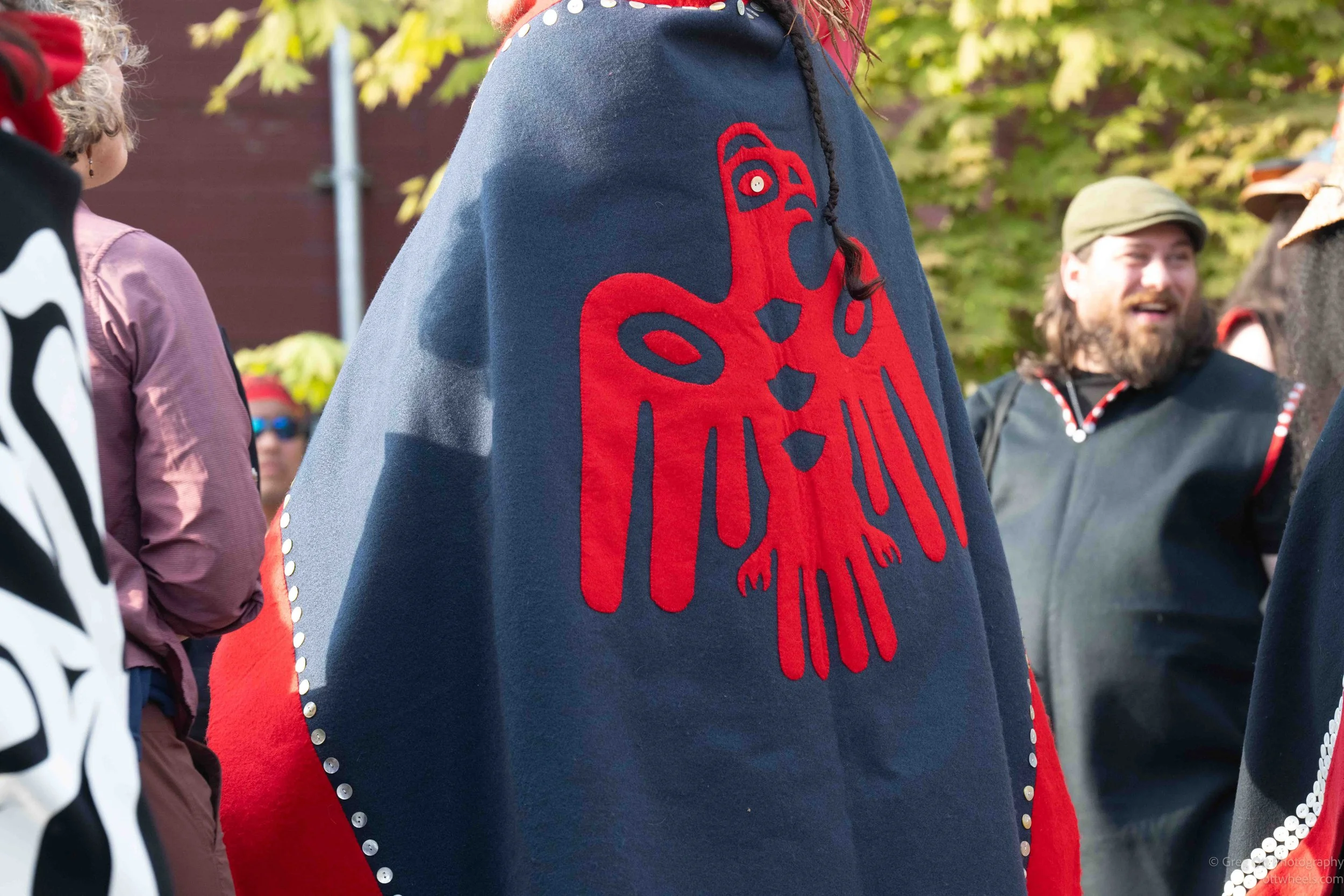
I found myself equally interested in the interactions taking place around movement as well. People weren't simply attending a performance. They were reconnecting with communities, histories, and relationships that stretched back generations.
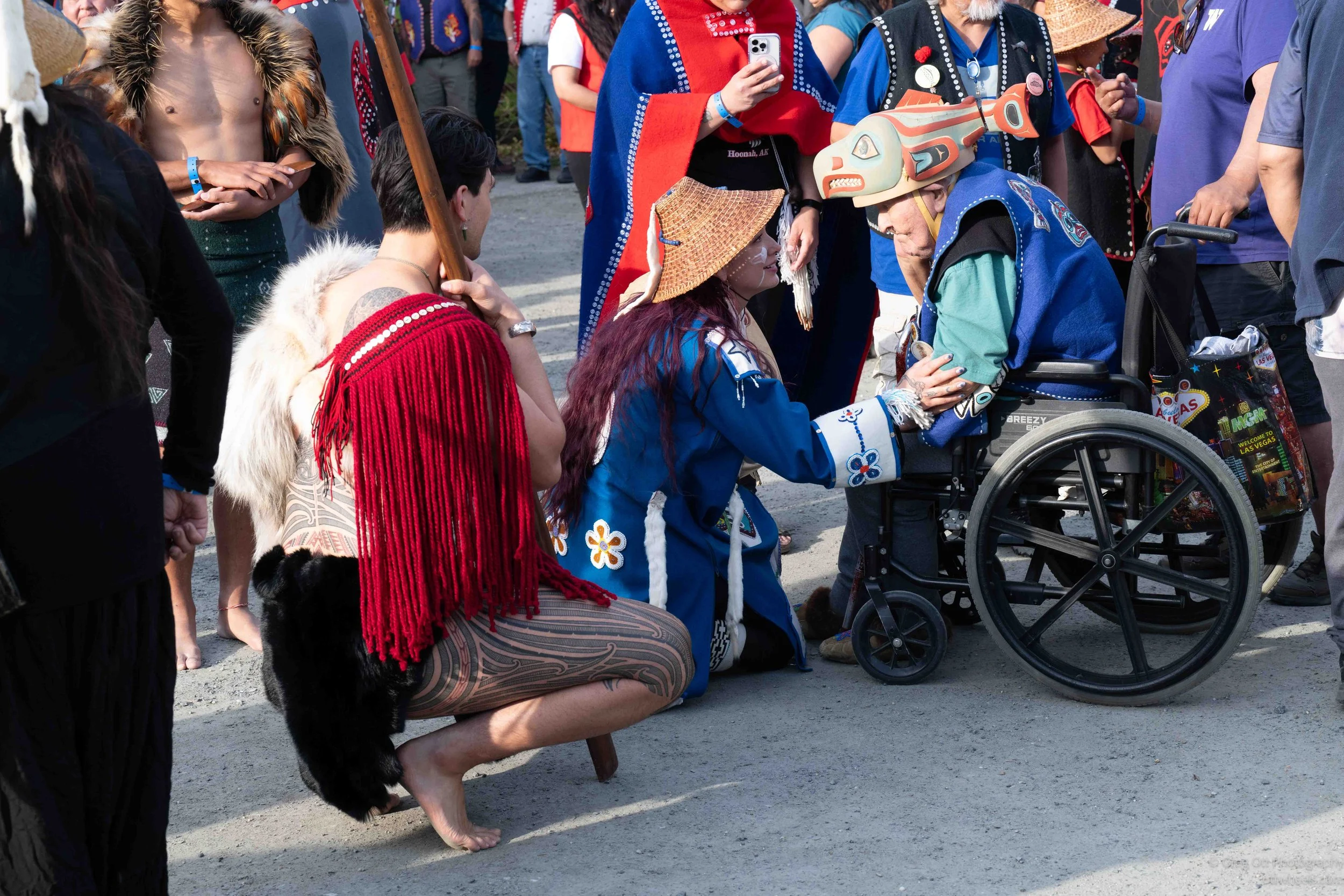
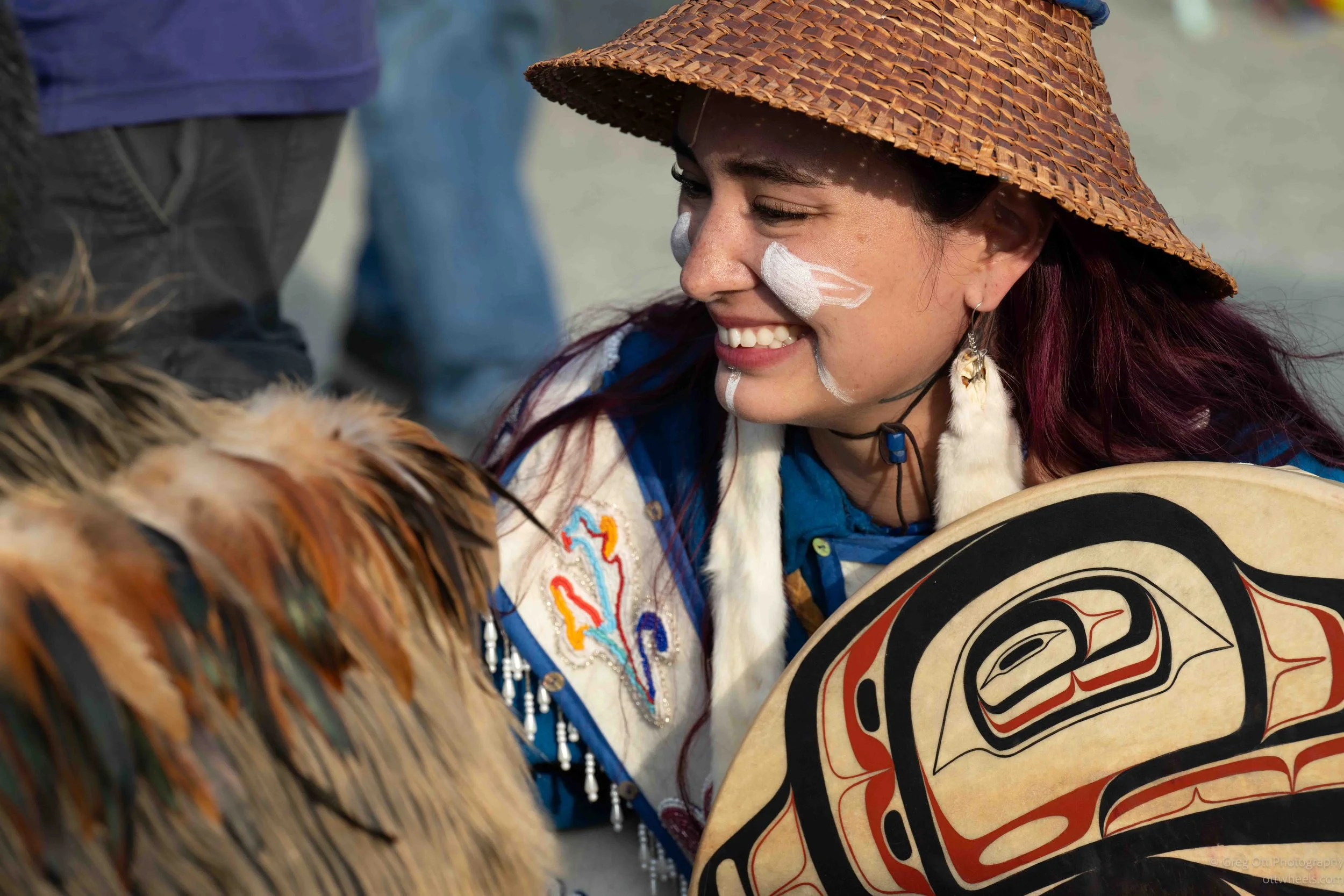
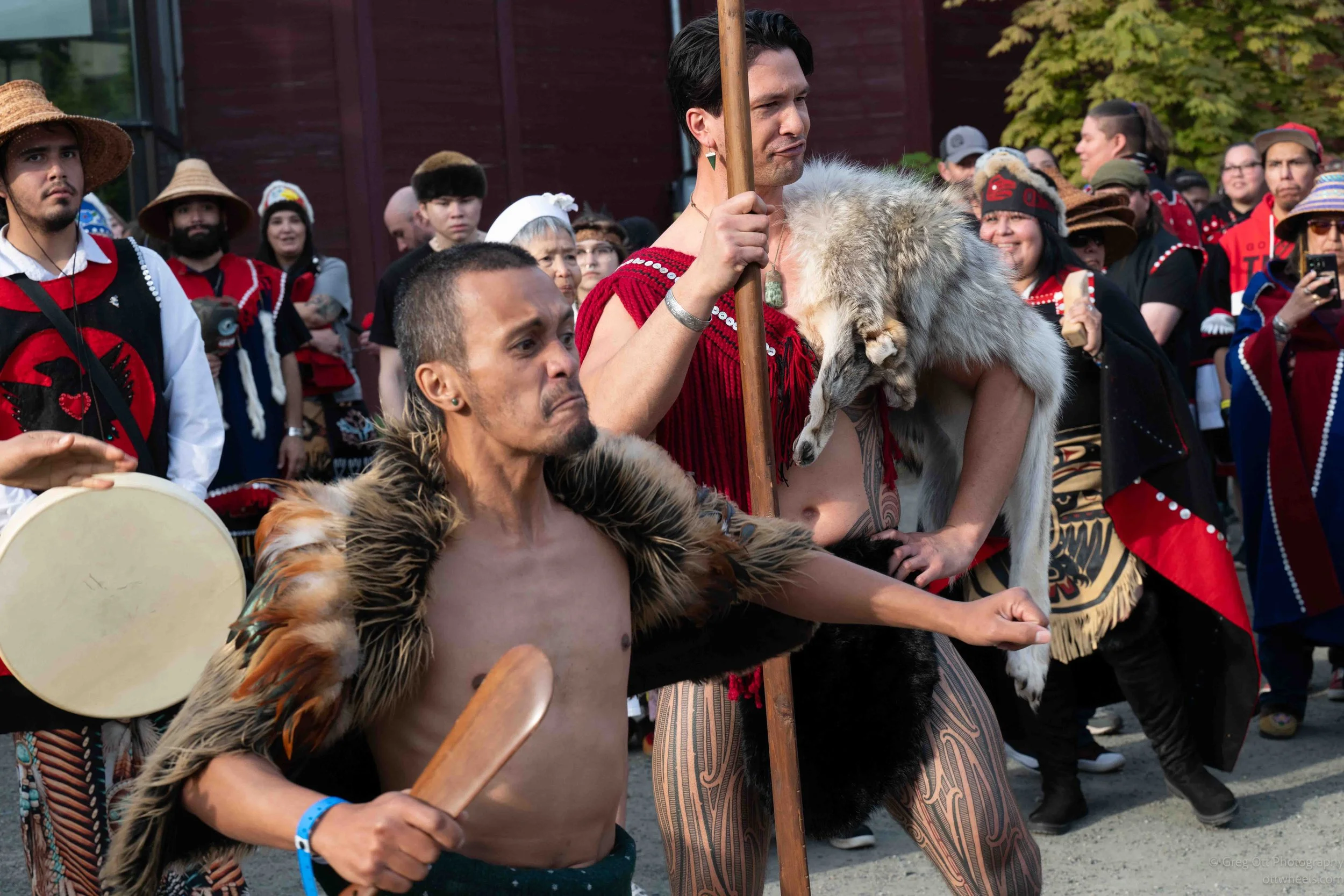
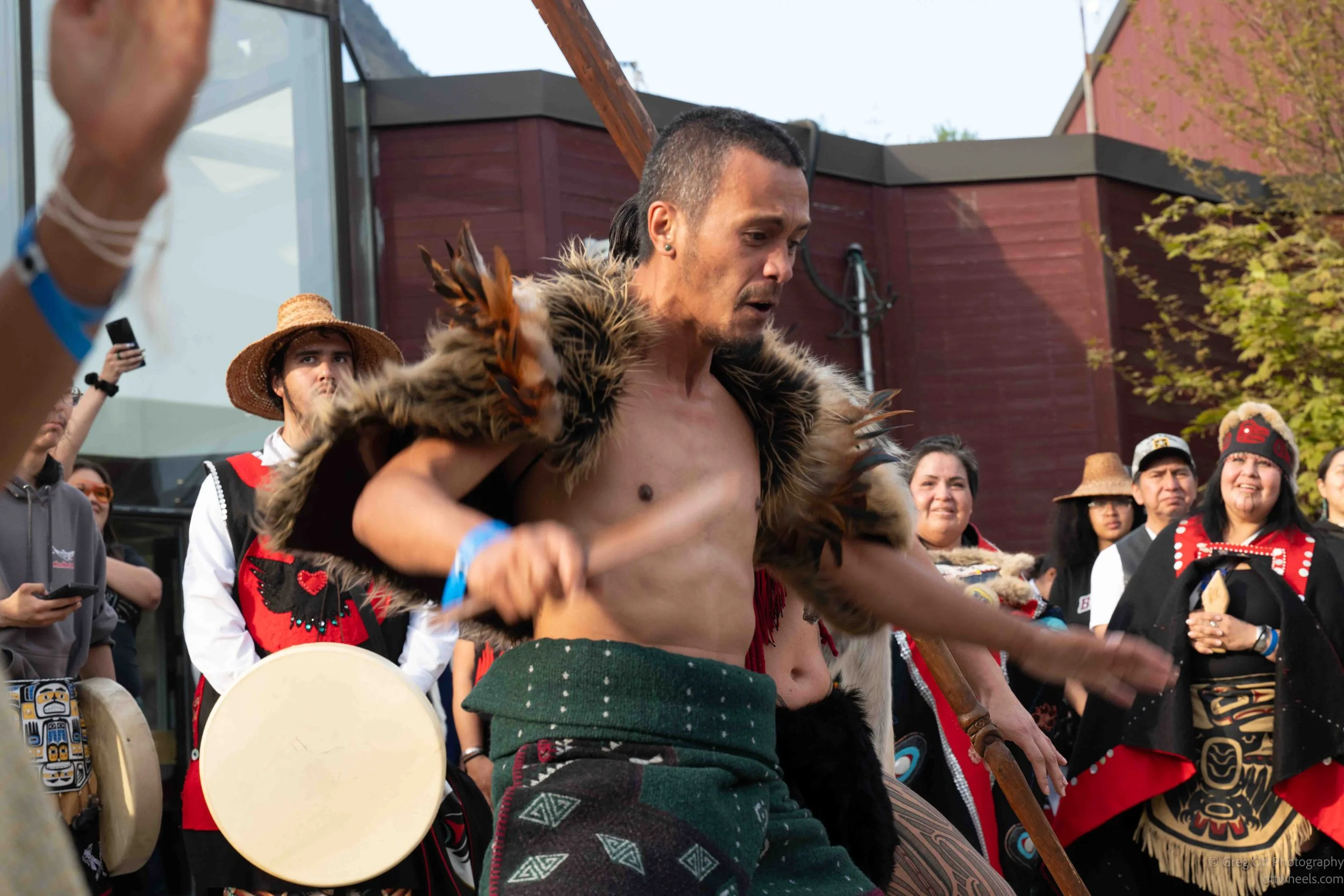
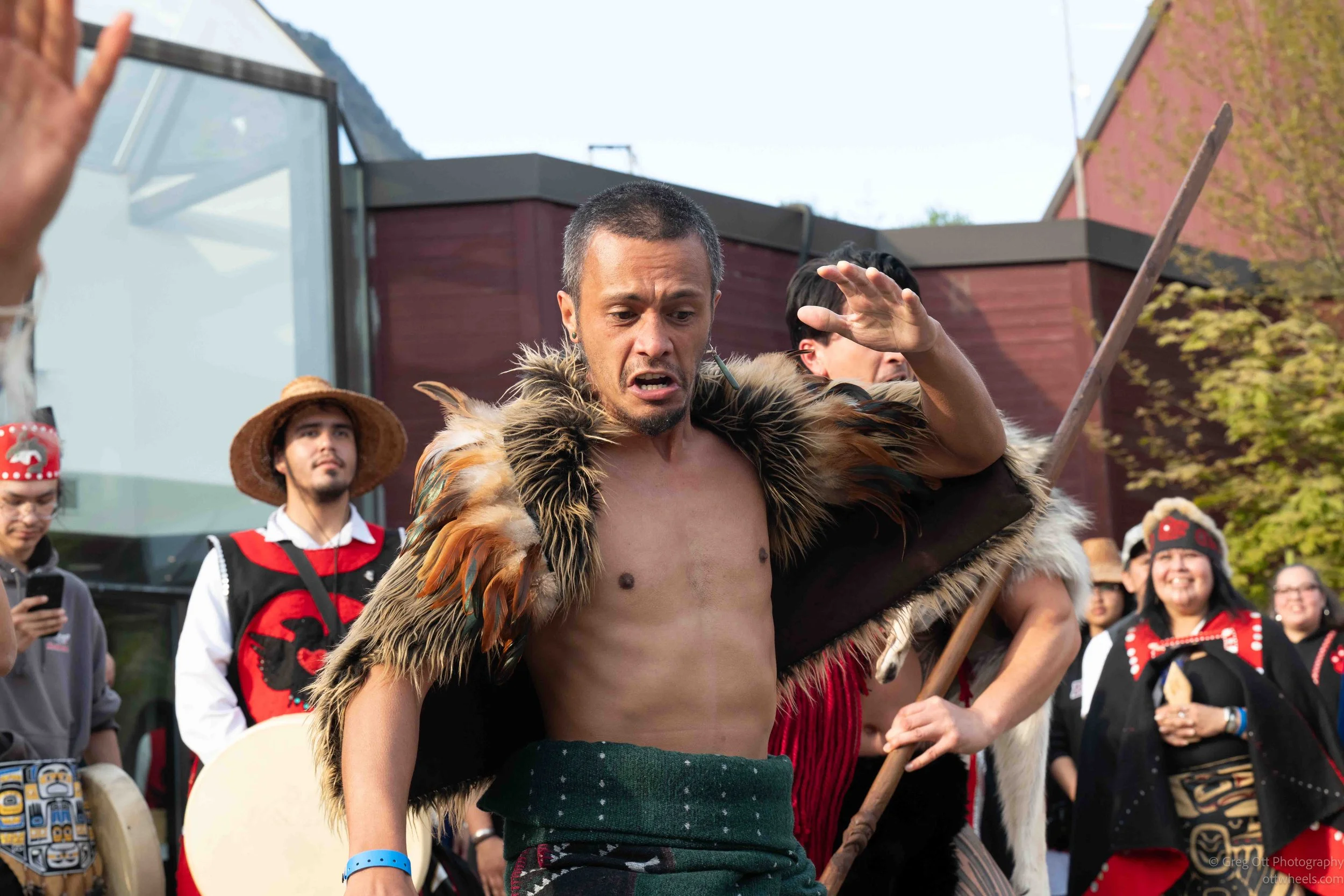
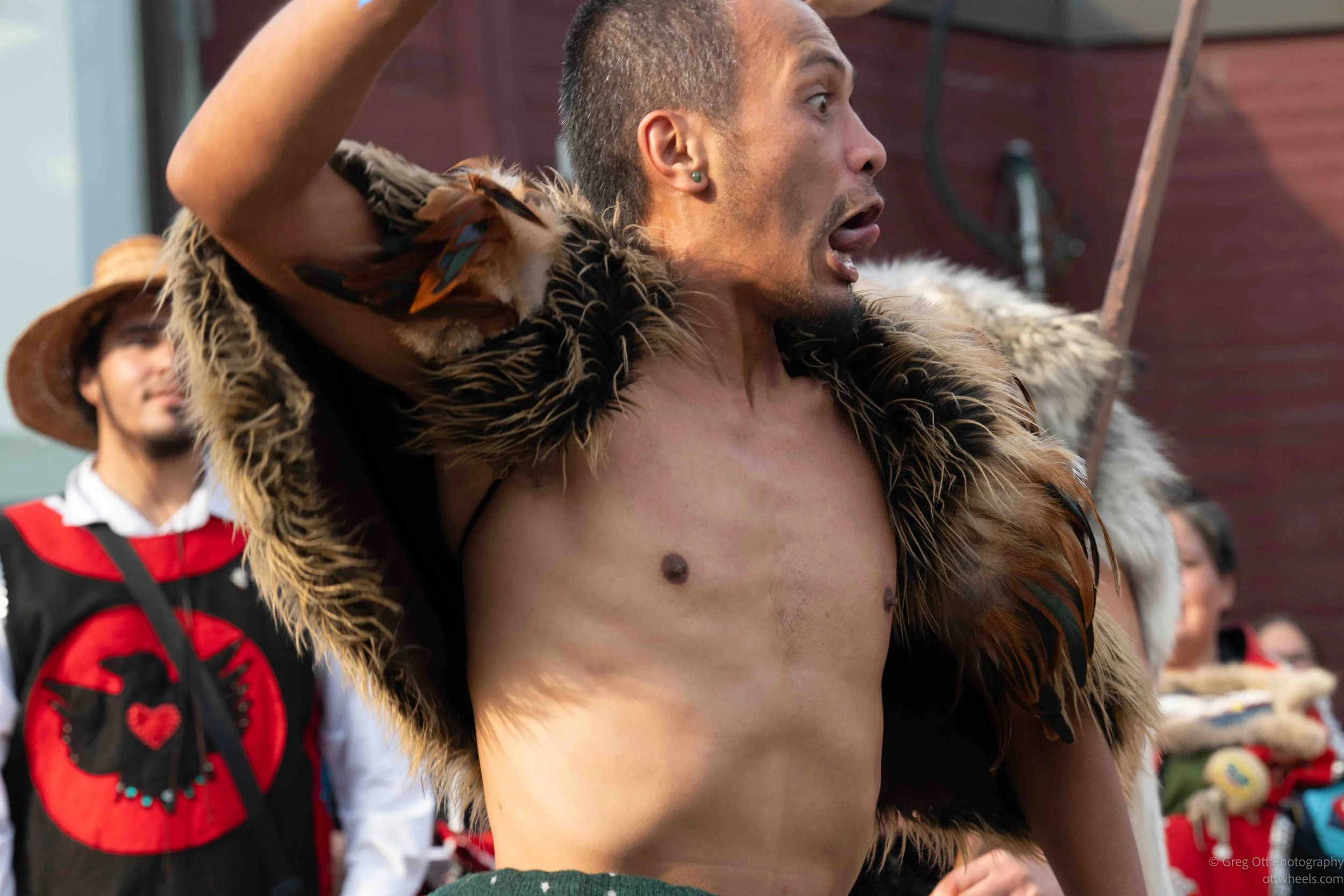
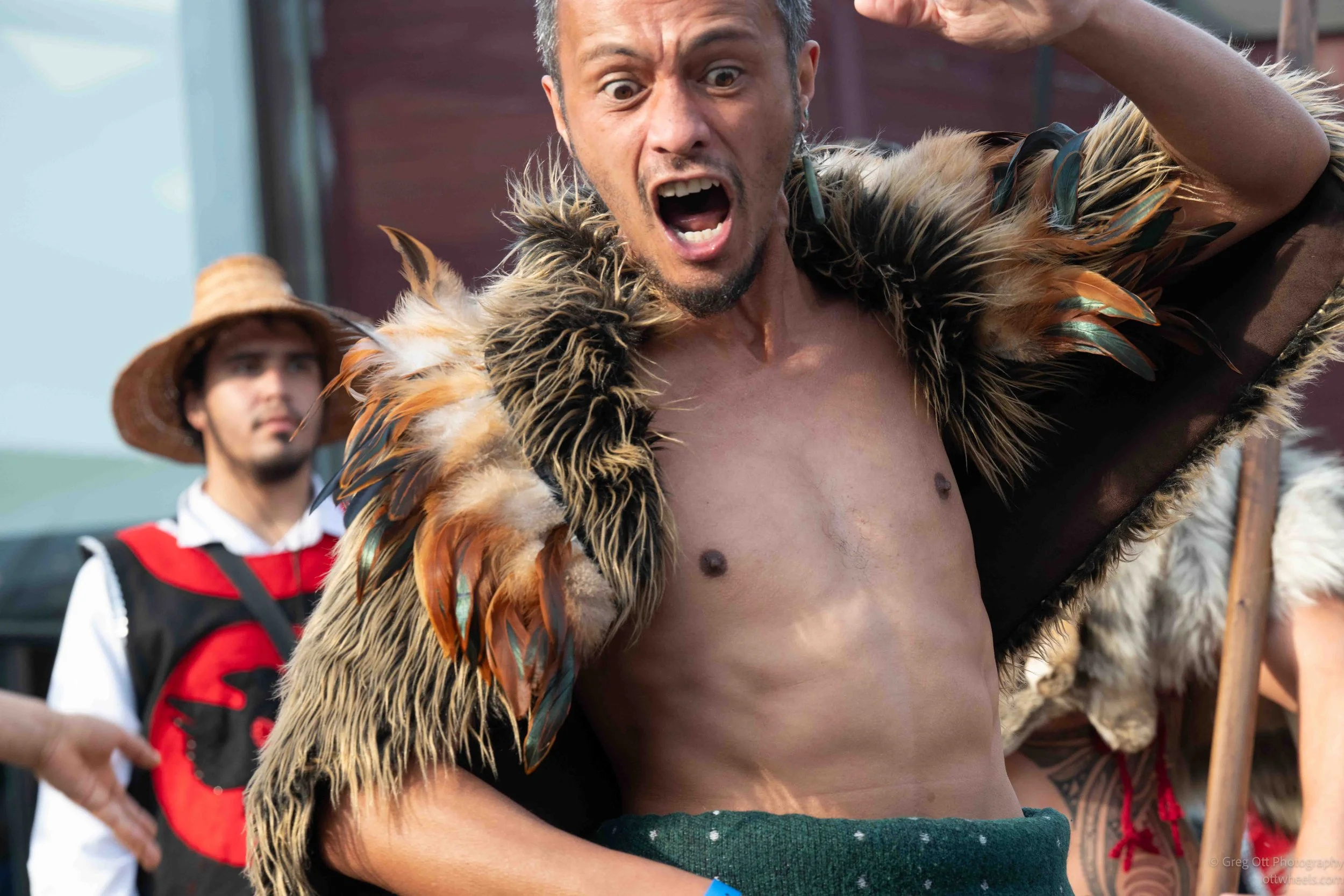
By seven o'clock the day's events had ended and people slowly drifted away. I walked toward downtown as the evening sun began bathing the city in warm golden light. Along the way I stopped for ice cream at the mall and ordered Oregon Strawberry. Having recently visited the Tillamook factory, I already knew that was a good decision.
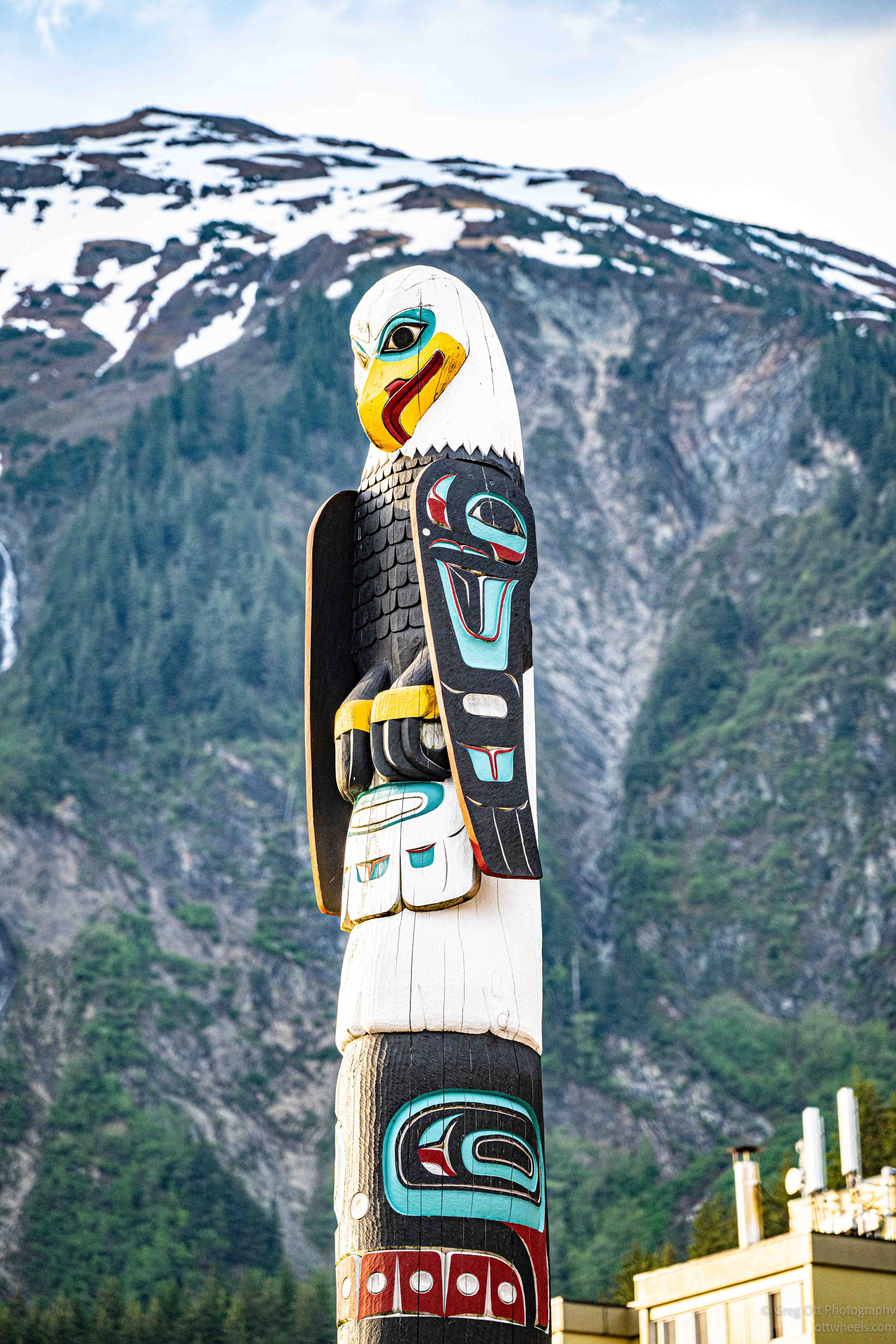
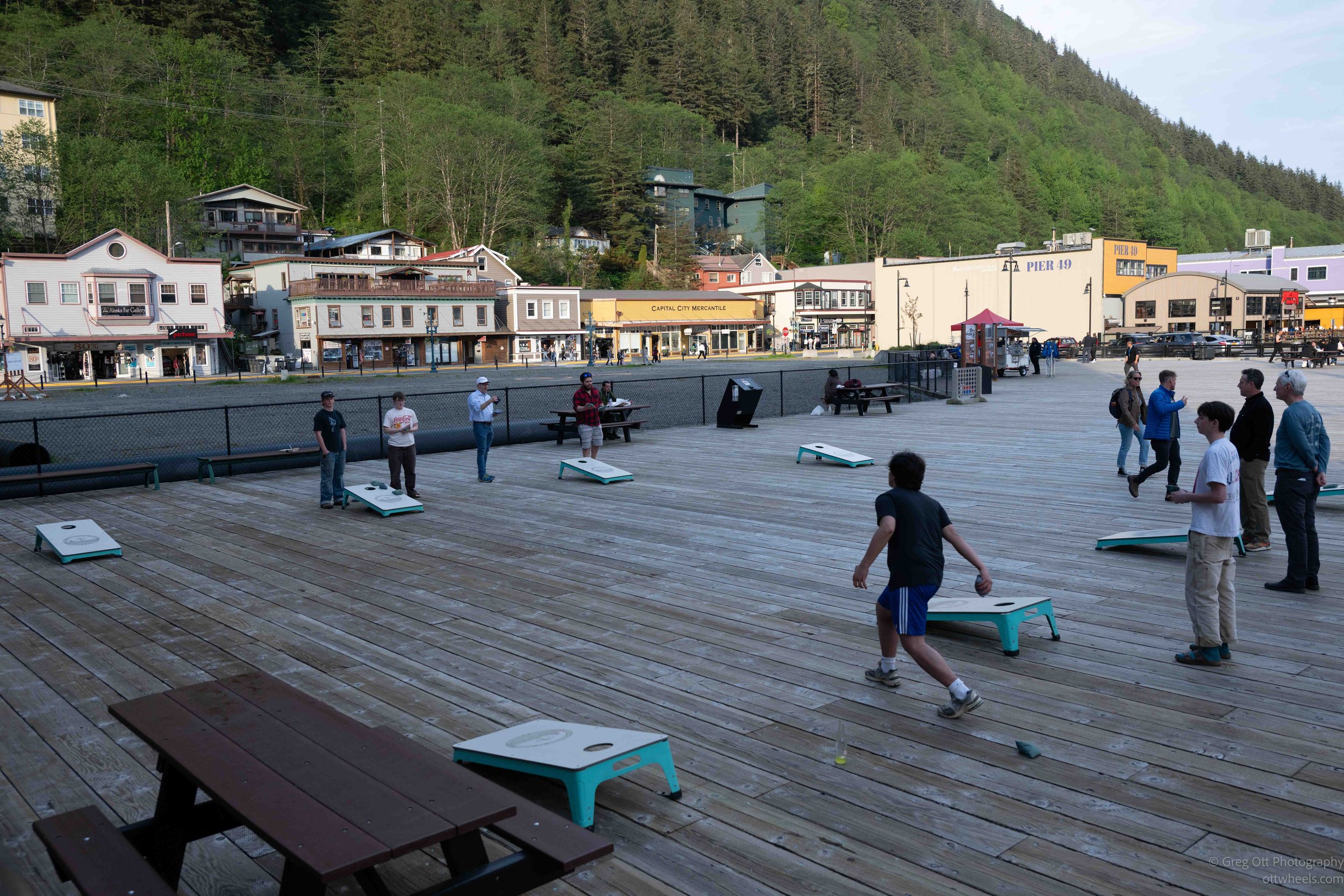
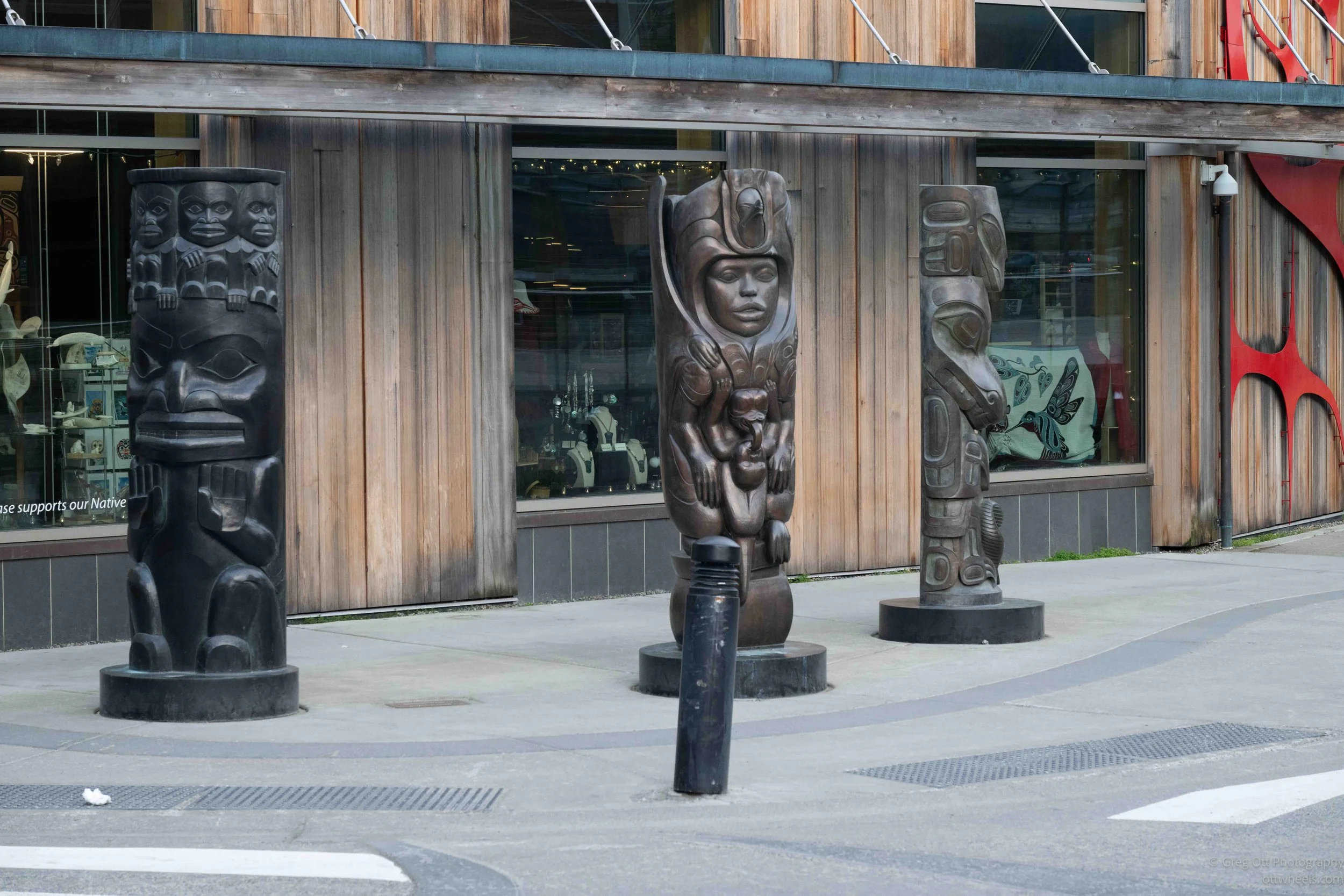
From there I wandered along the waterfront and boardwalk. I photographed people playing shuffleboard, giant totem poles, and murals.
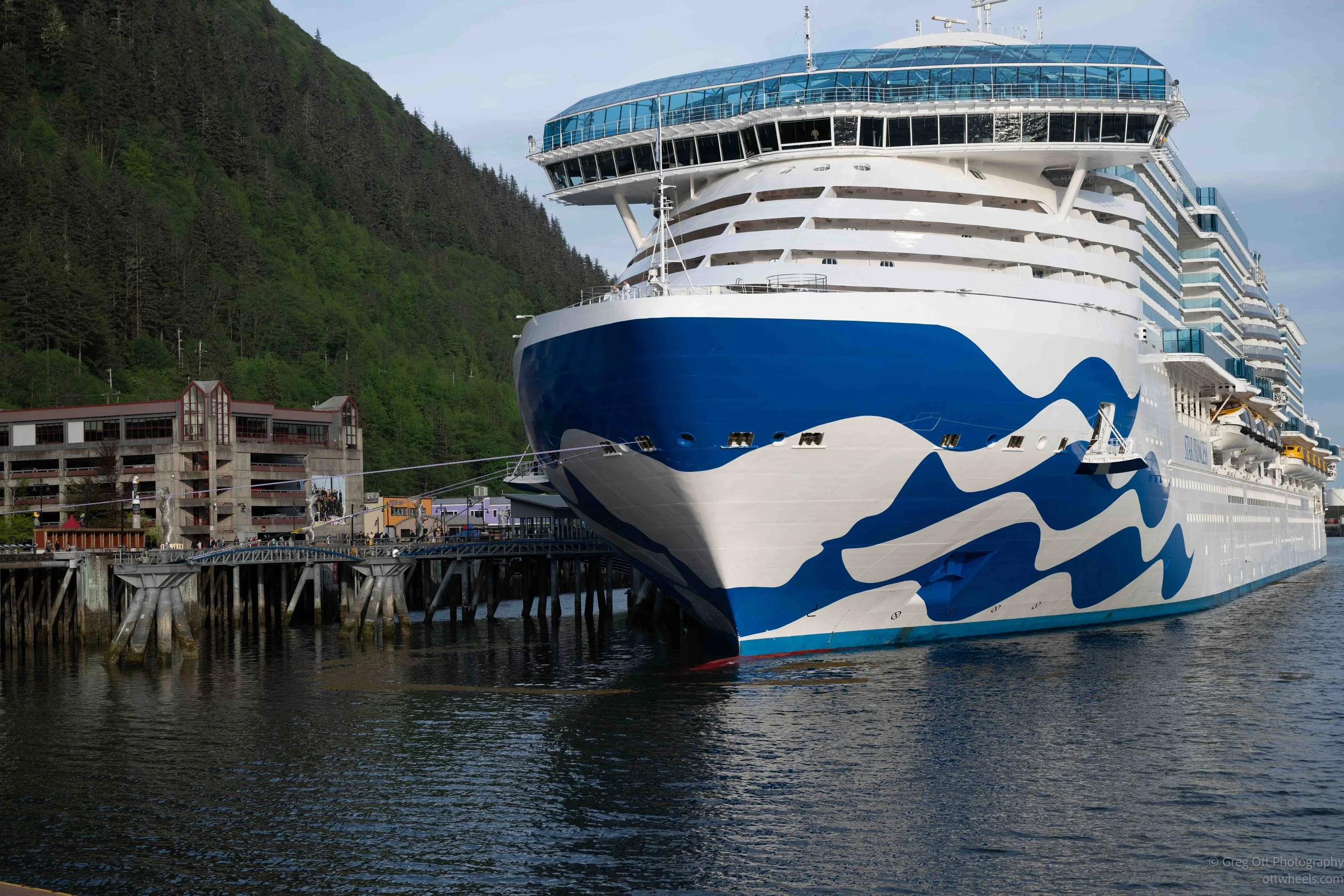
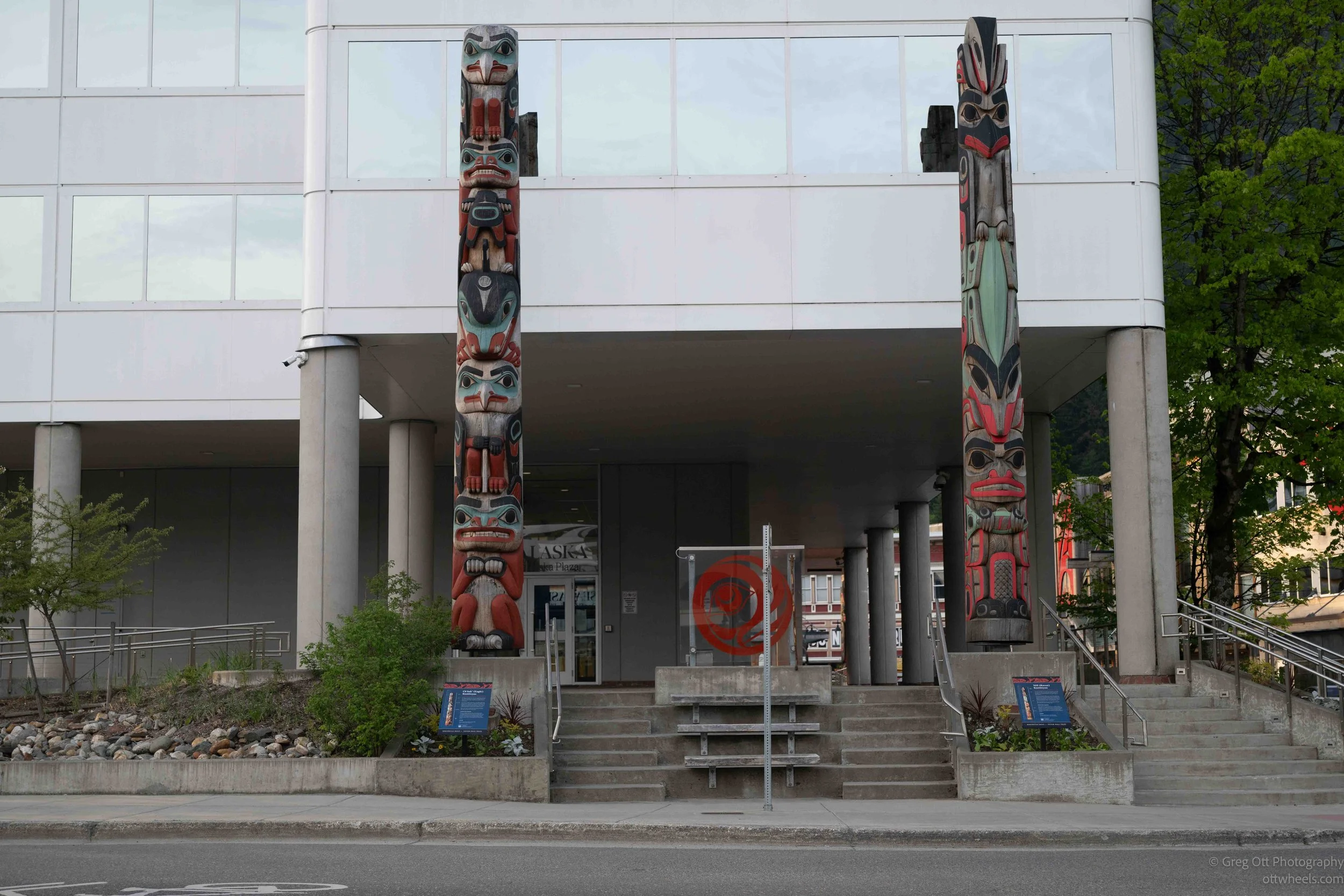
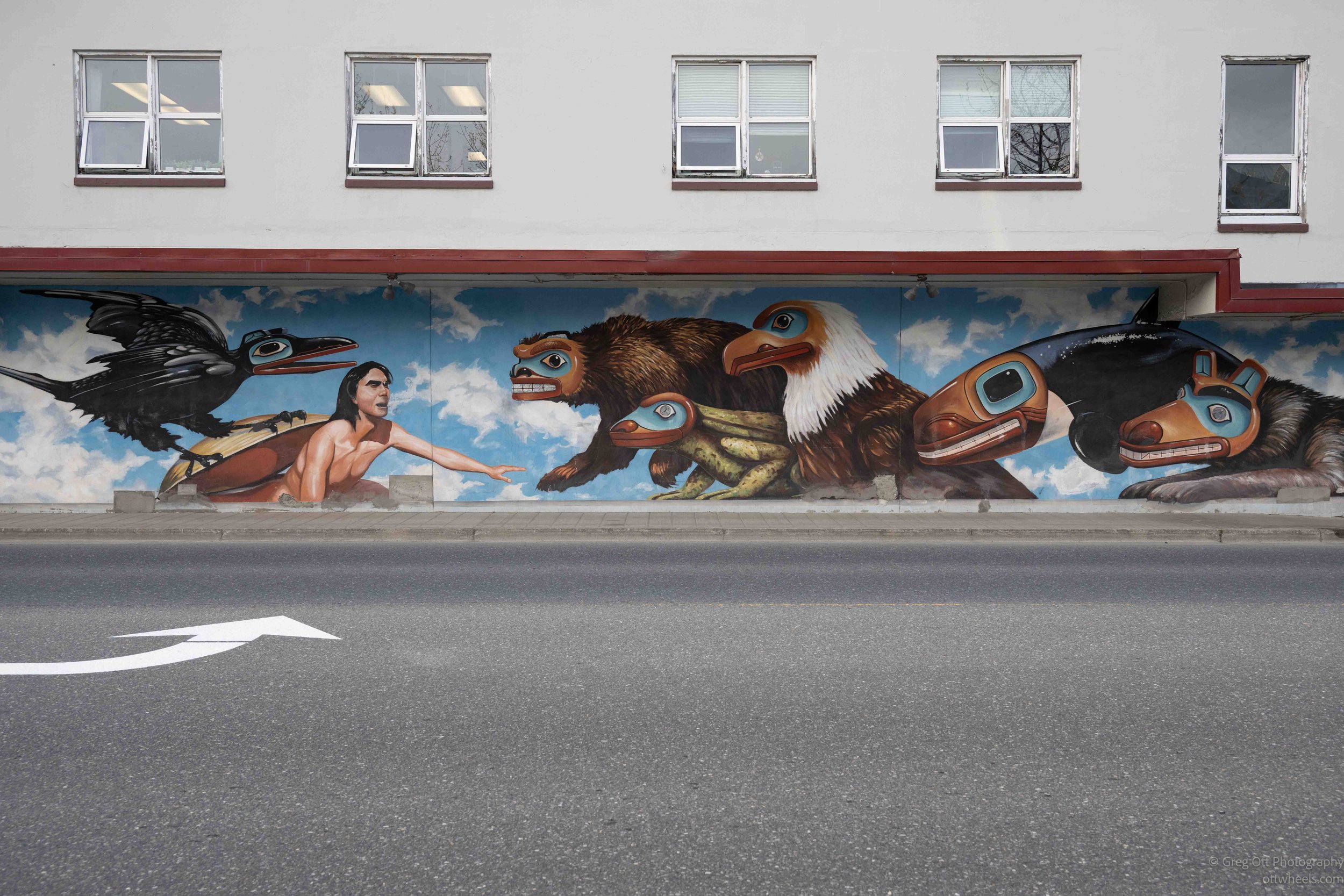
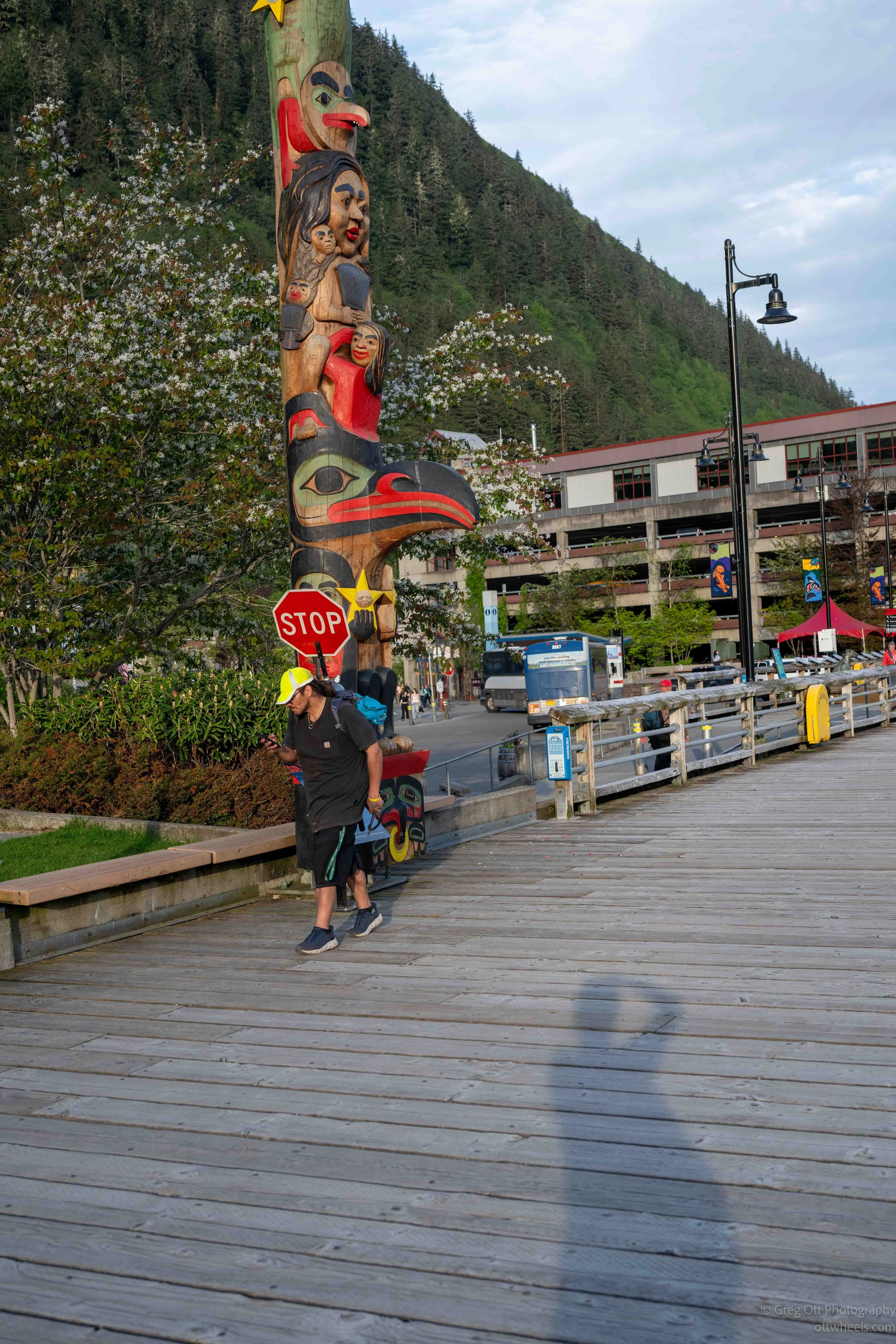
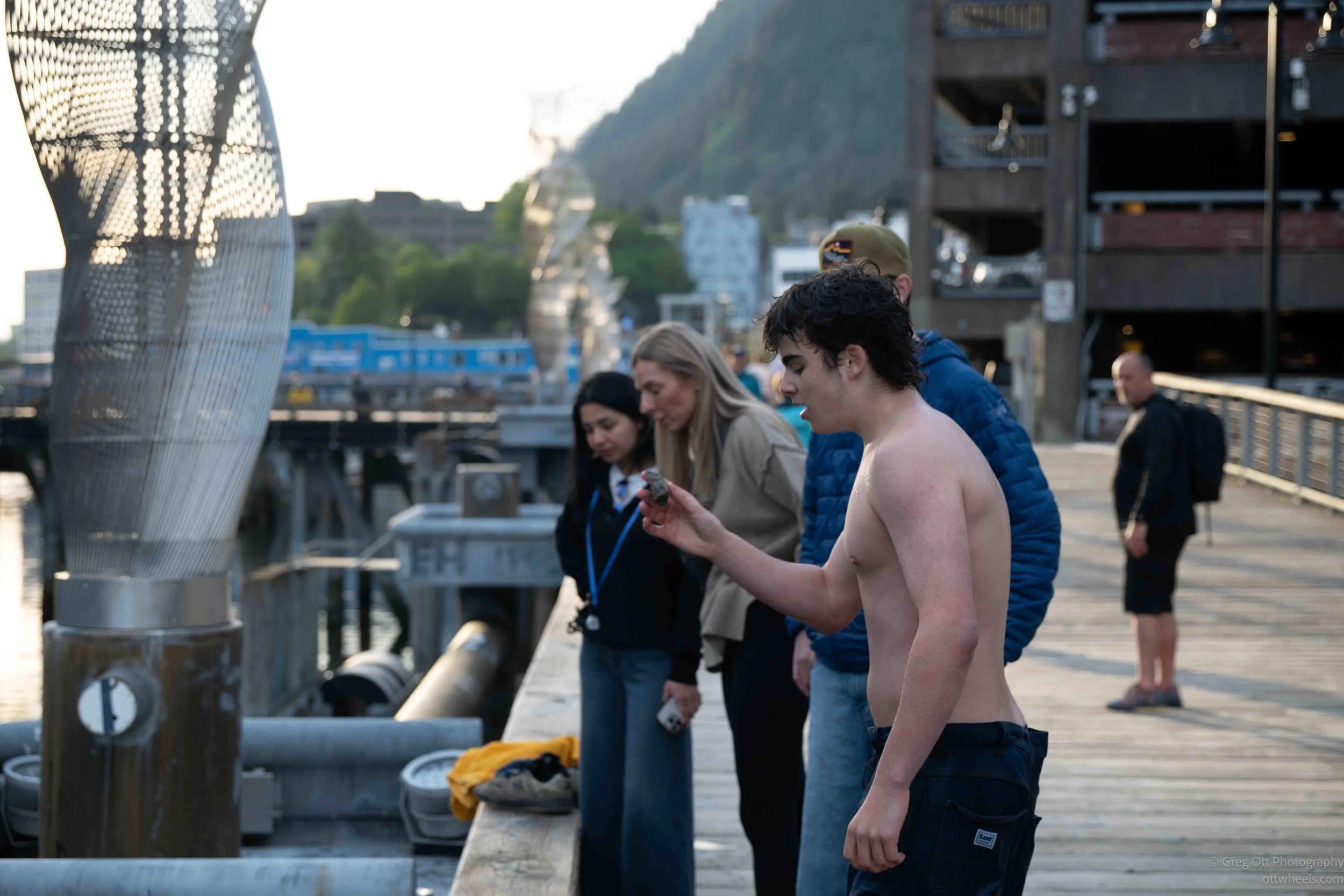
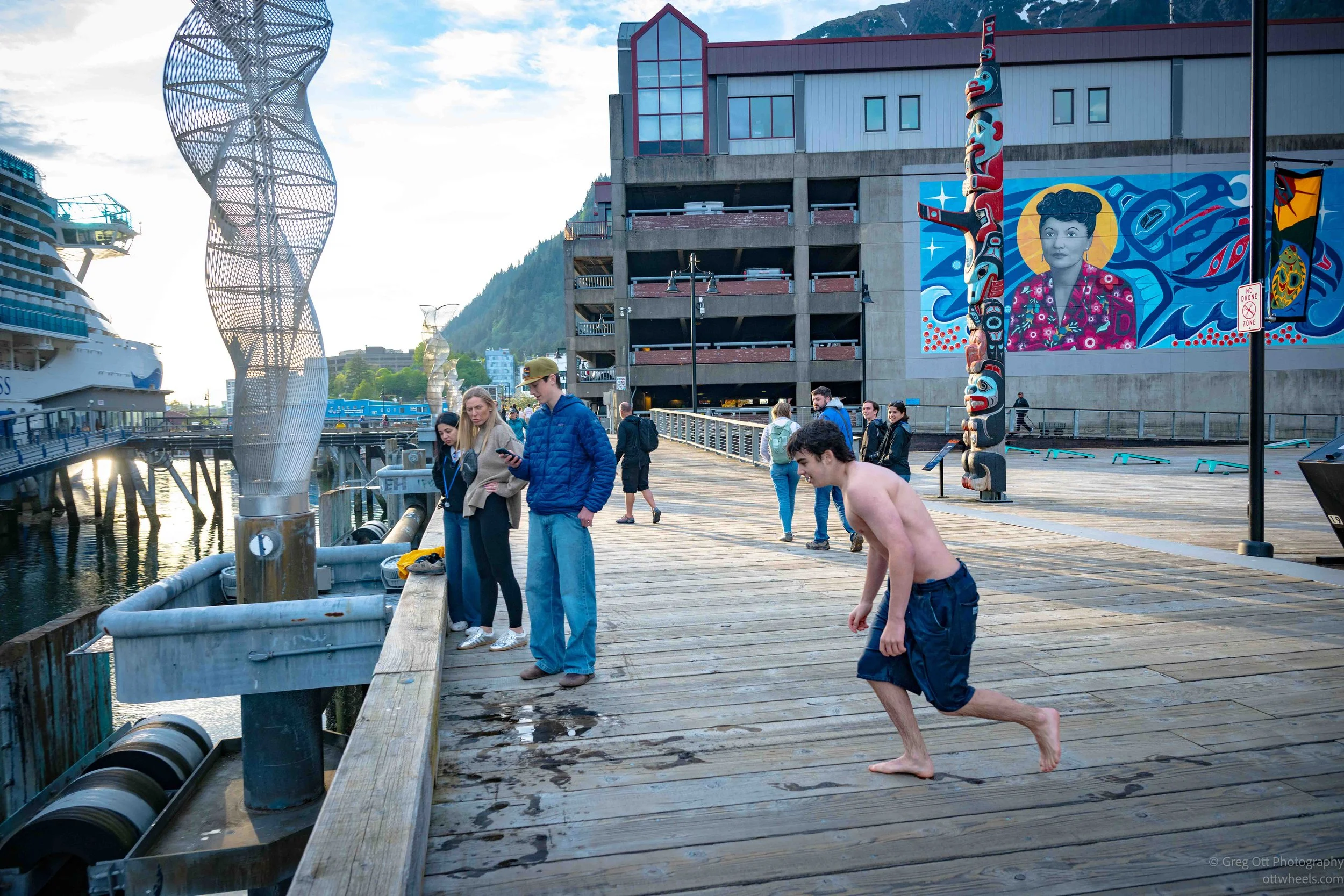
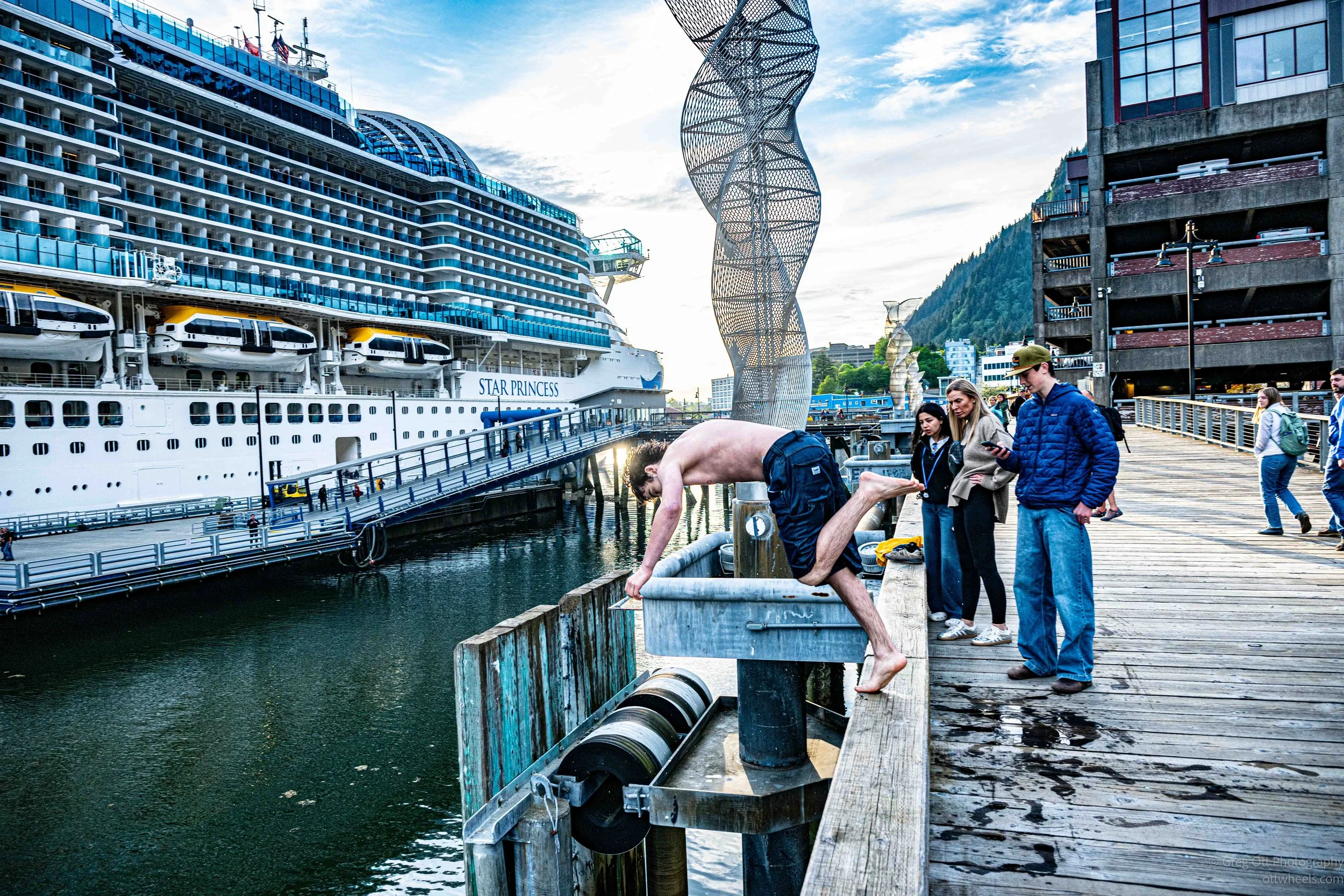
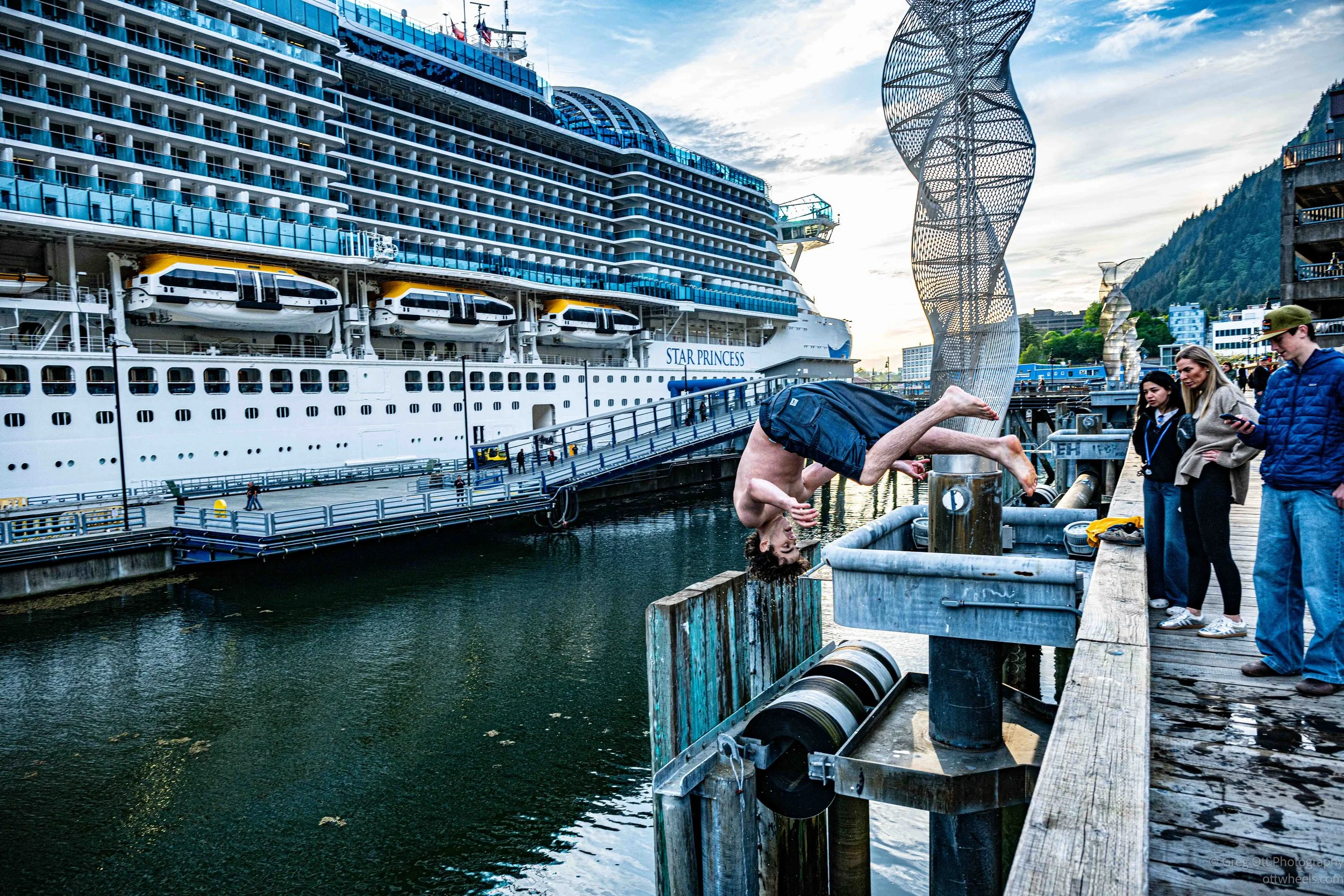
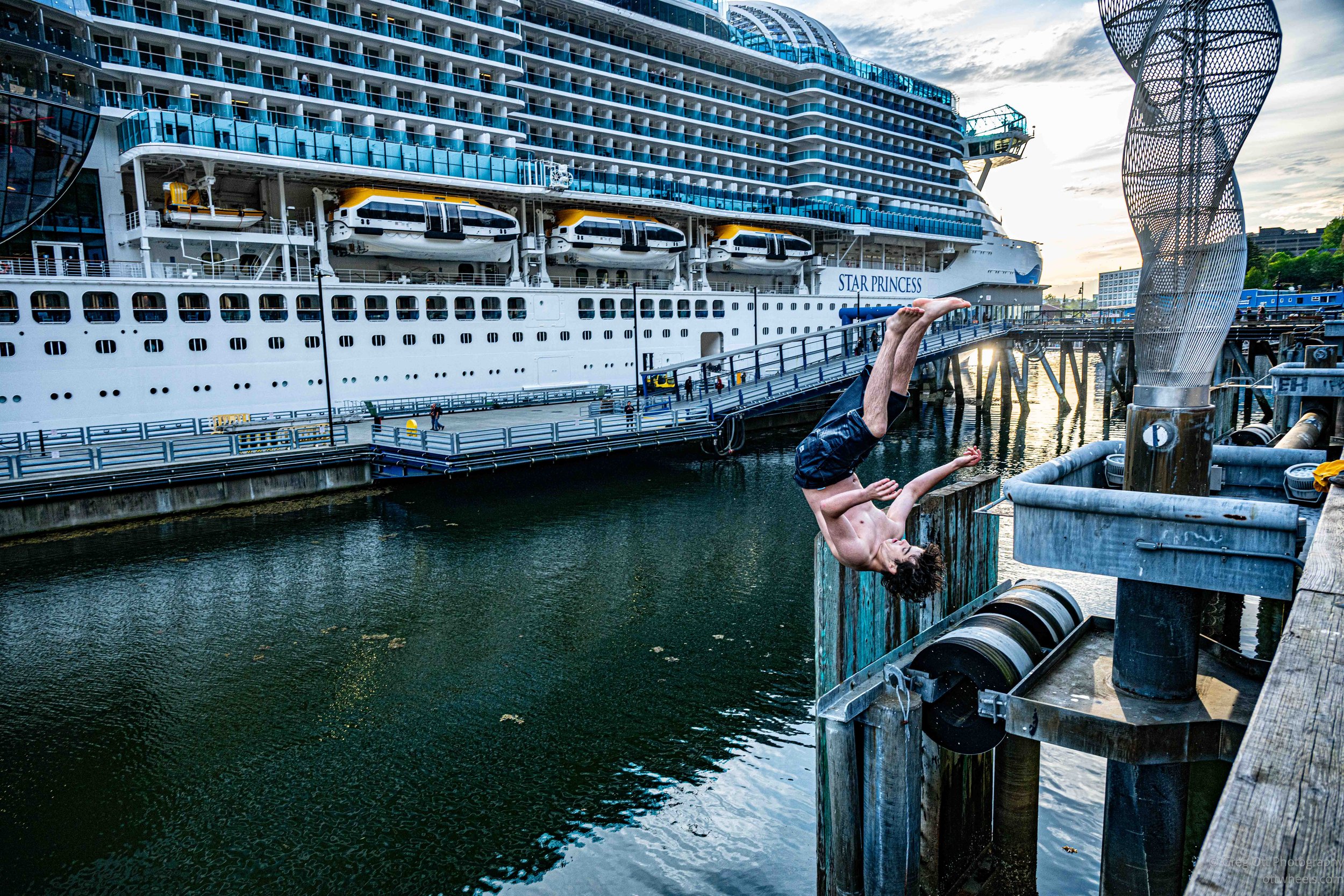
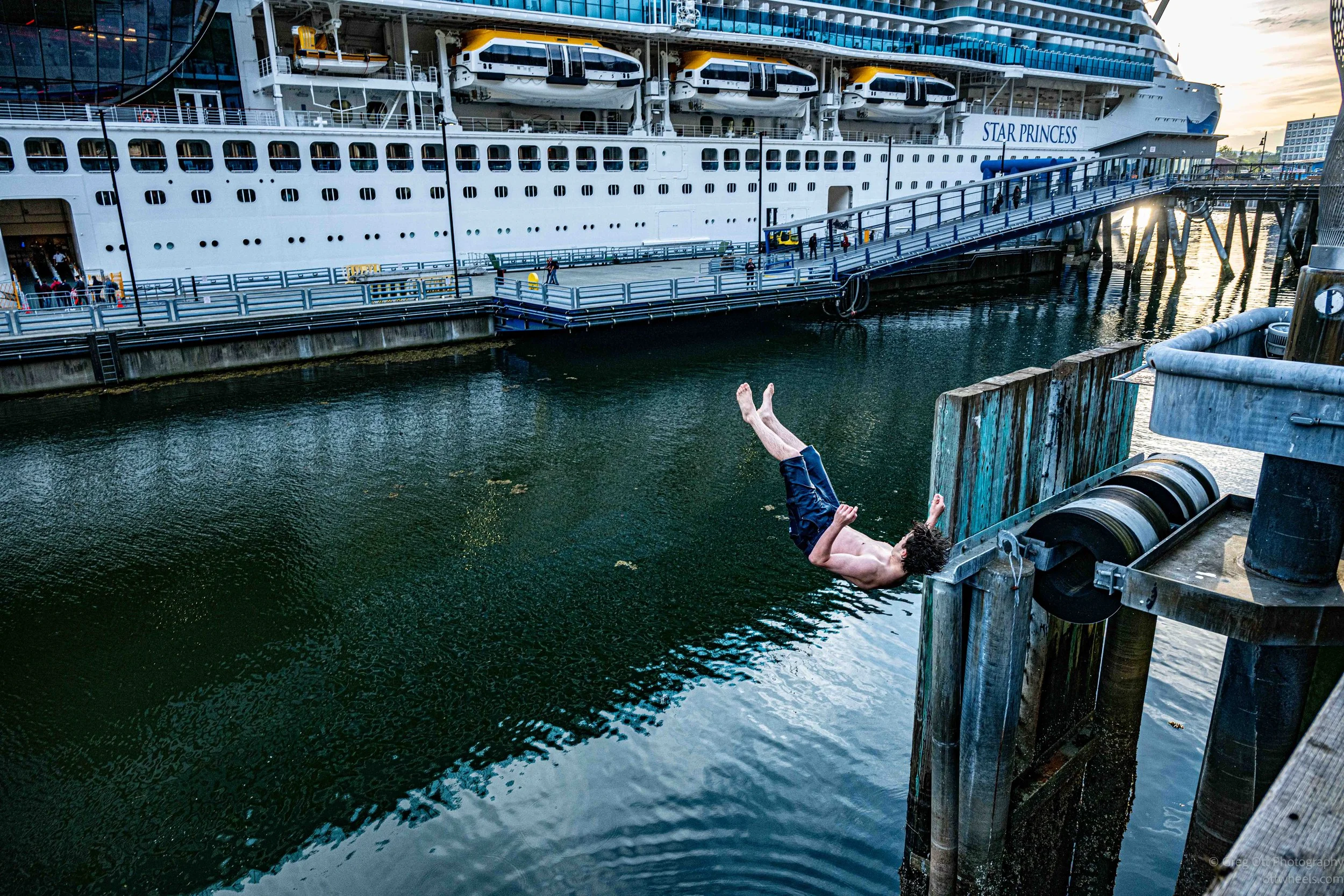
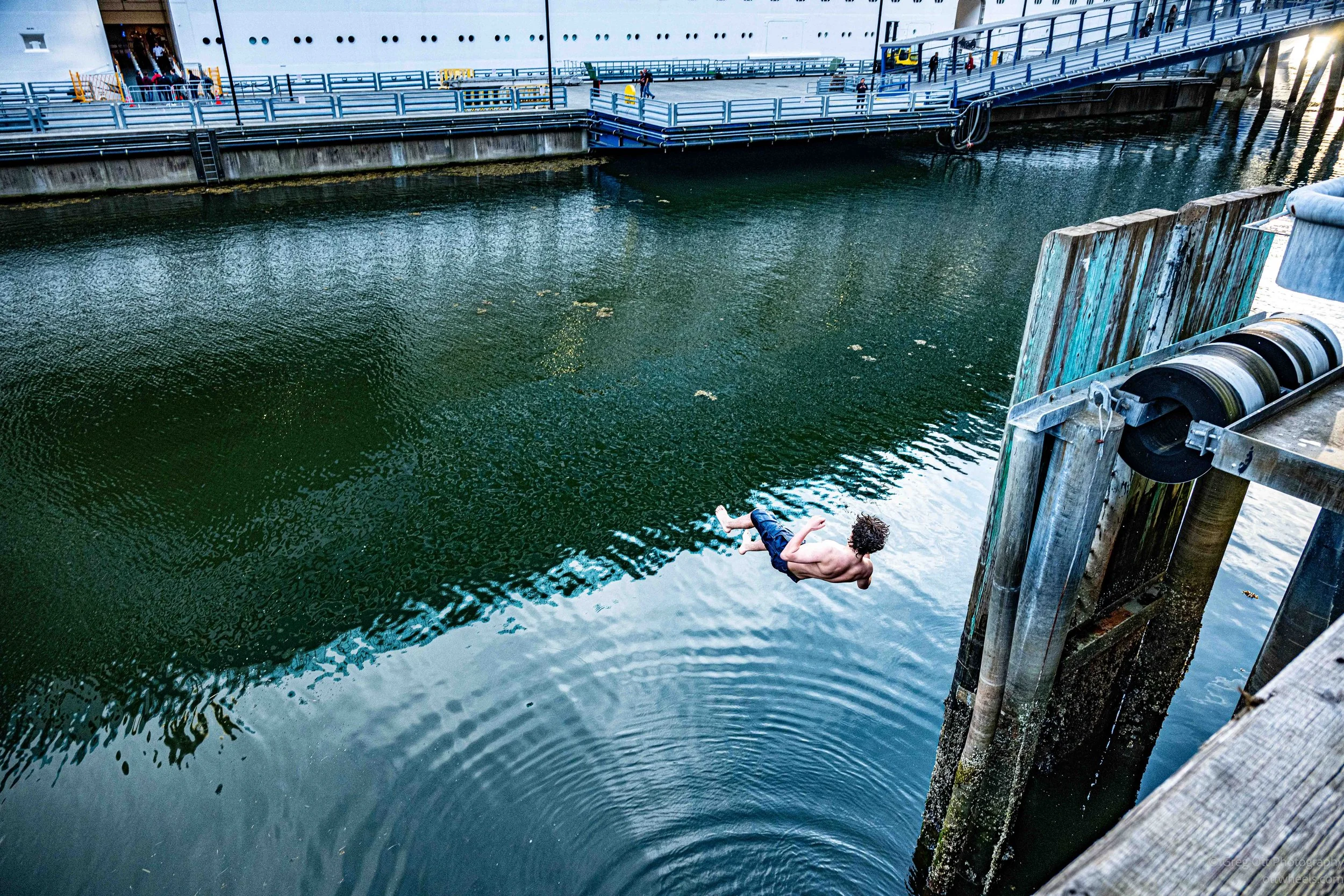
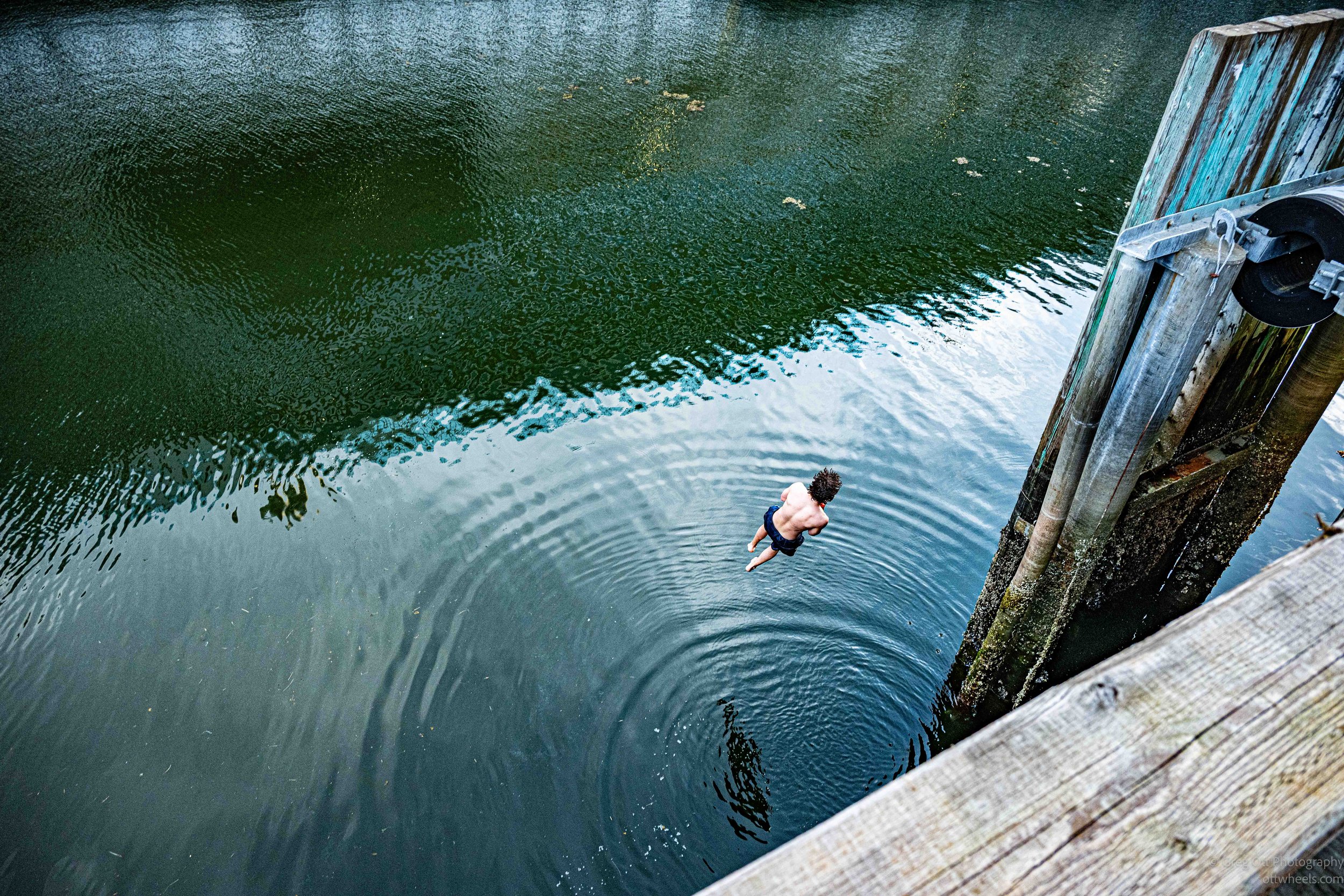
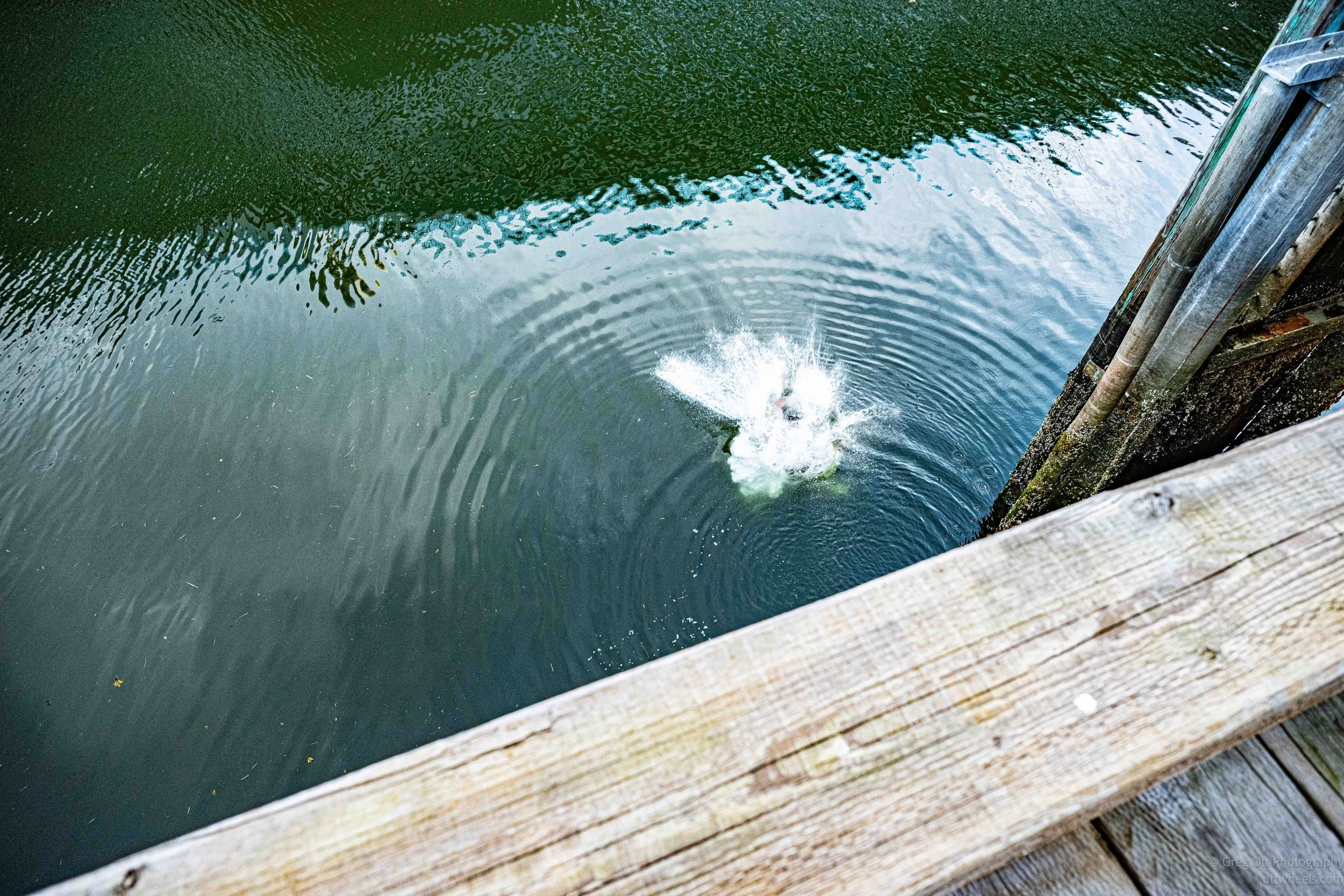
A teenager was repeatedly launching himself off the side of a wharf into the water below. After one jump he ran over to see the photographs and immediately started reviewing them. Every image was met with some variation of "Sick, man!" or "So rad!" He was genuinely excited and asked if I could send him copies.
Nearby, passengers stood on the balconies of the cruise ships dressed as though they were heading to opening night at the Metropolitan Opera. Men wore jackets and ties. Women wore dresses that looked entirely incompatible with Alaska. I spent several minutes trying to figure out where they were going. I had spent the day around photographers, hikers, dancers in regalia, teenagers jumping into cold water, and people wandering around in fleece jackets. Yet somehow there was a parallel universe floating beside the dock where formal evening attire seemed perfectly reasonable. I never solved the mystery. Perhaps there was a black-tie event hidden somewhere between the gift shops and the fishing charters.
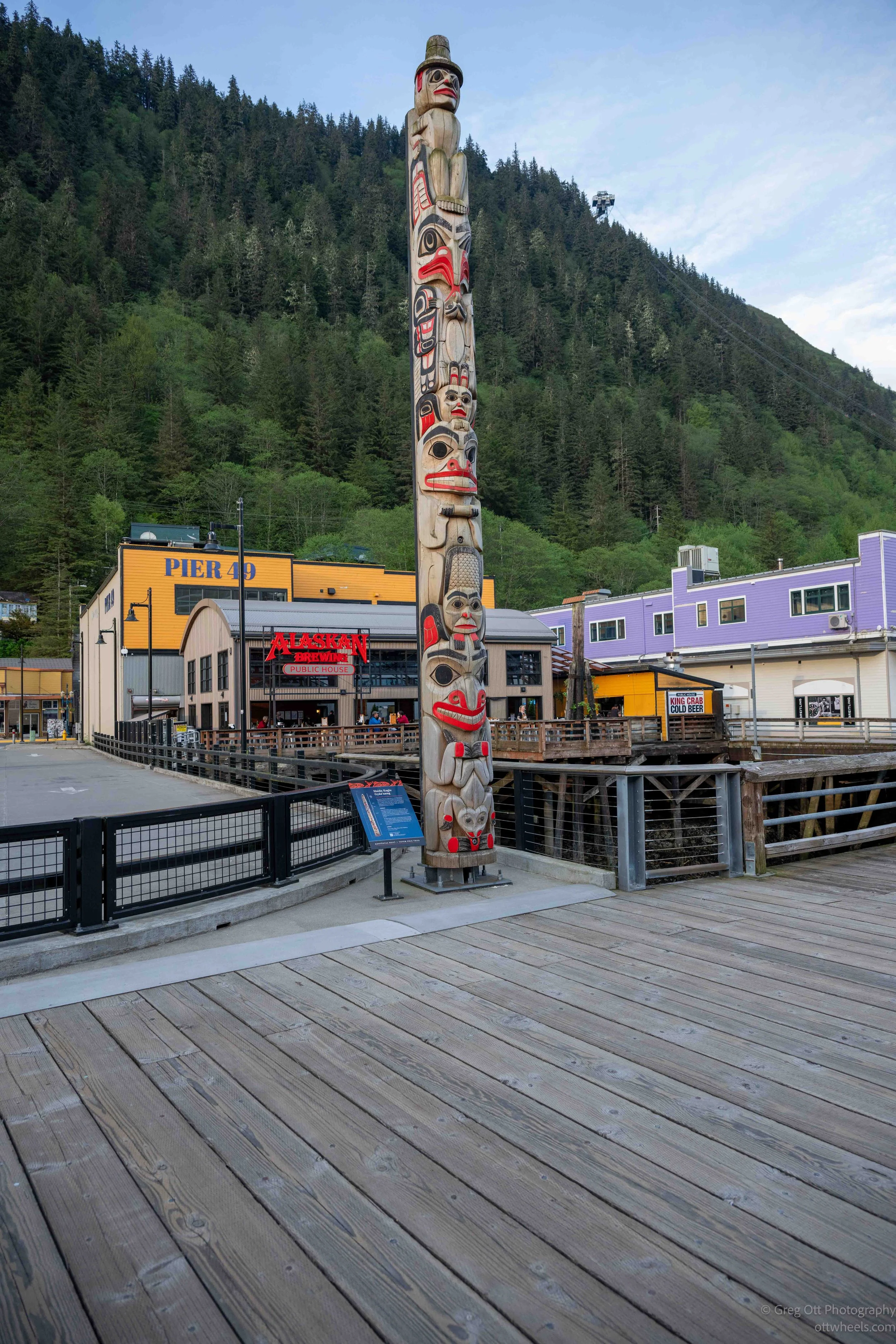
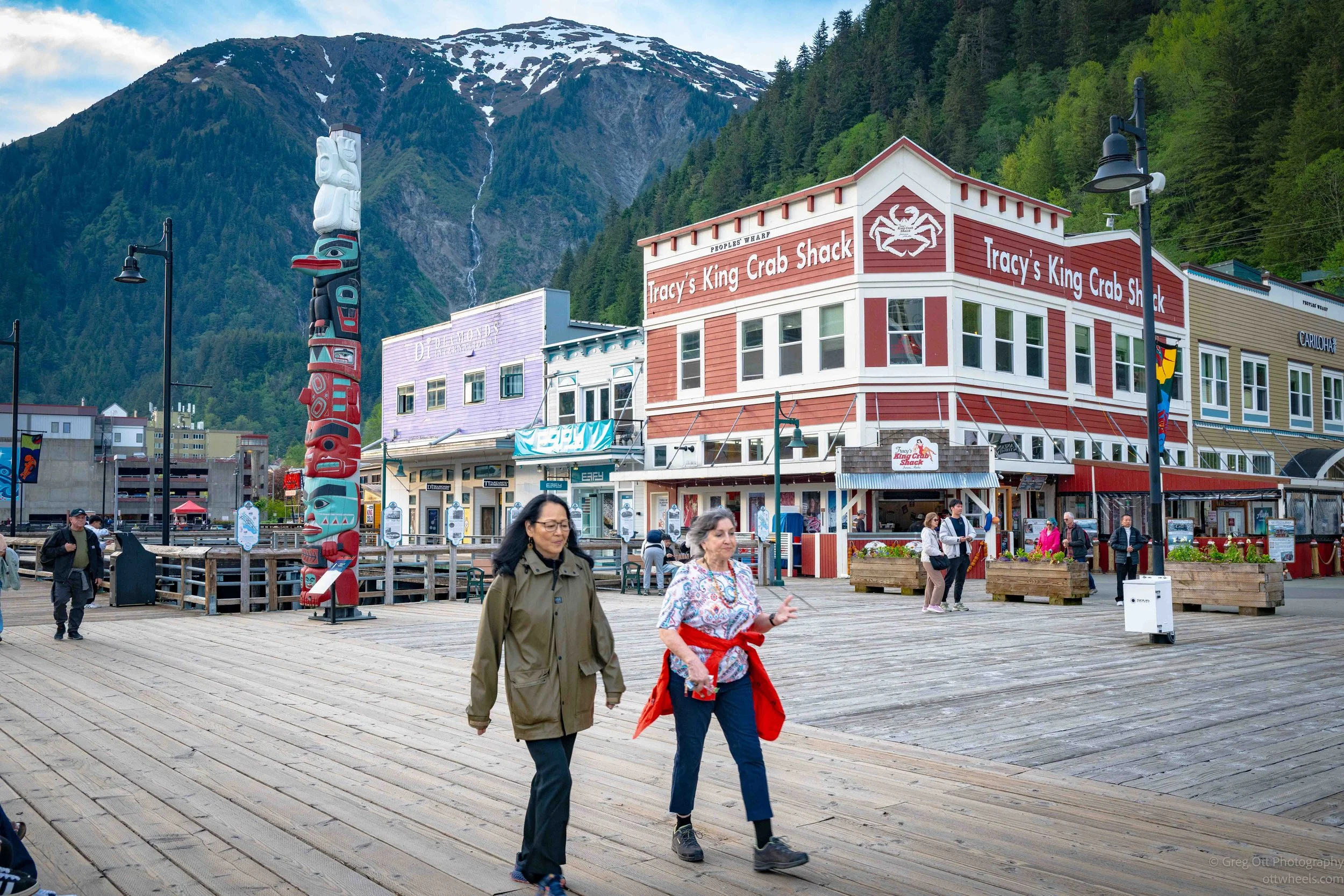
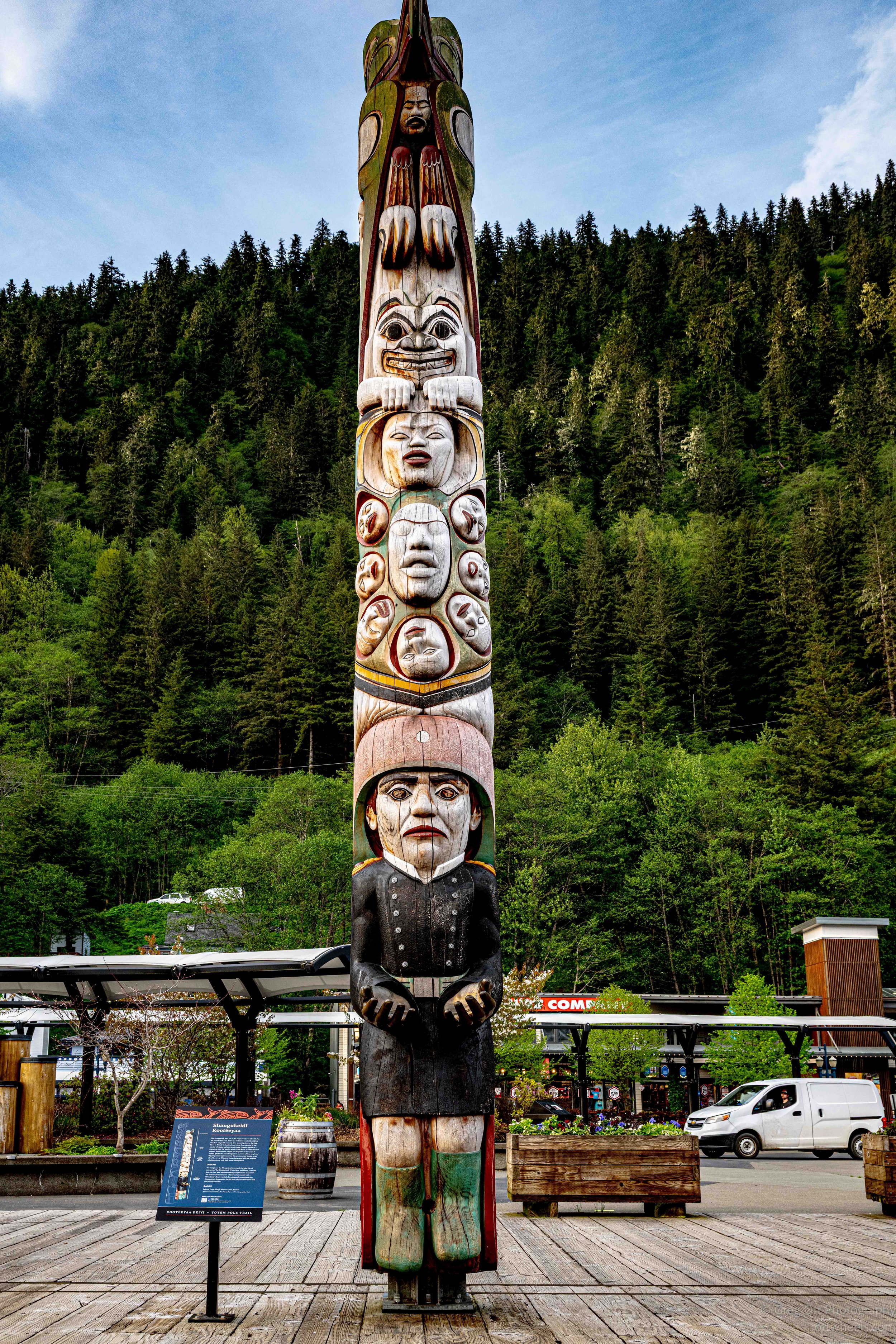
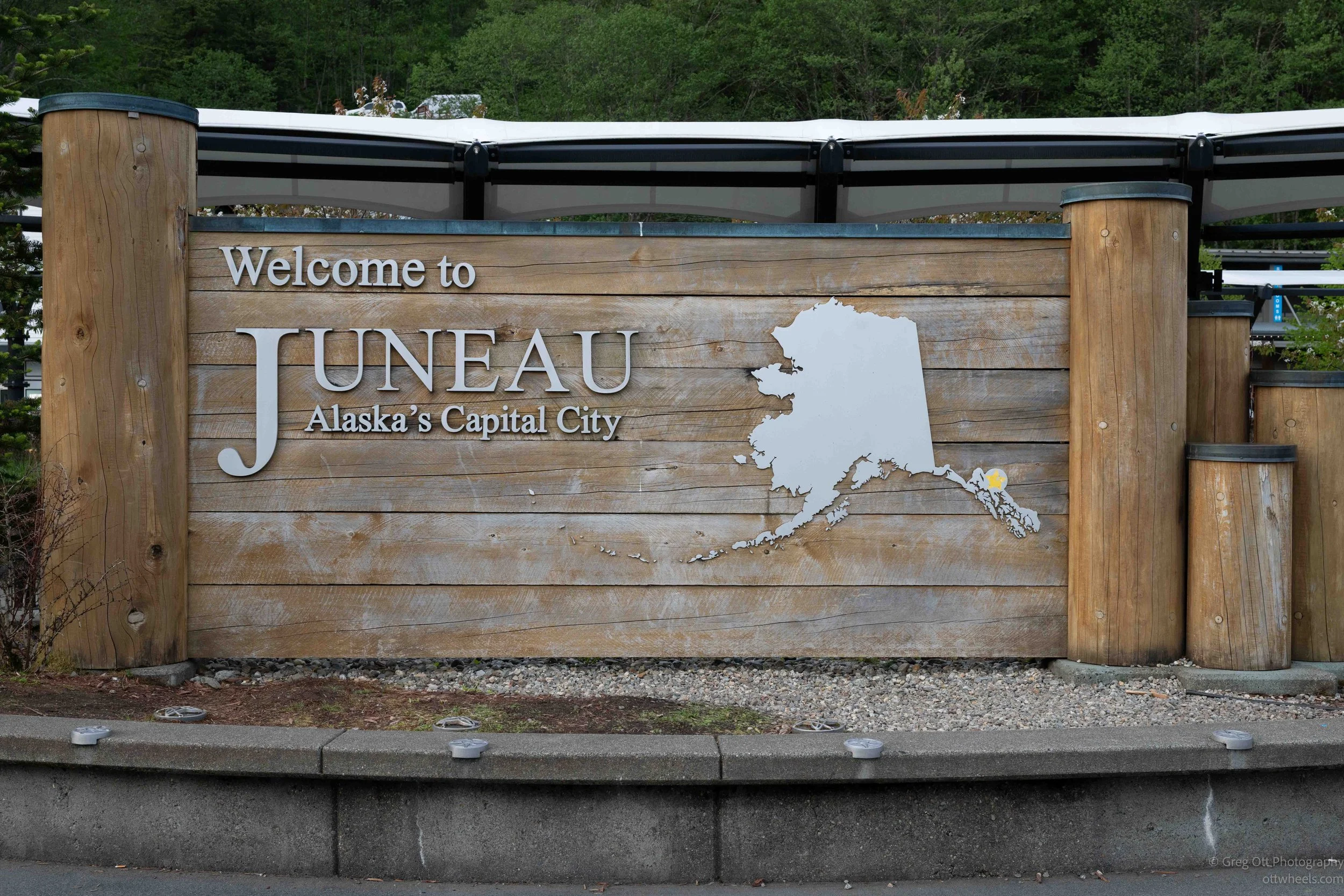
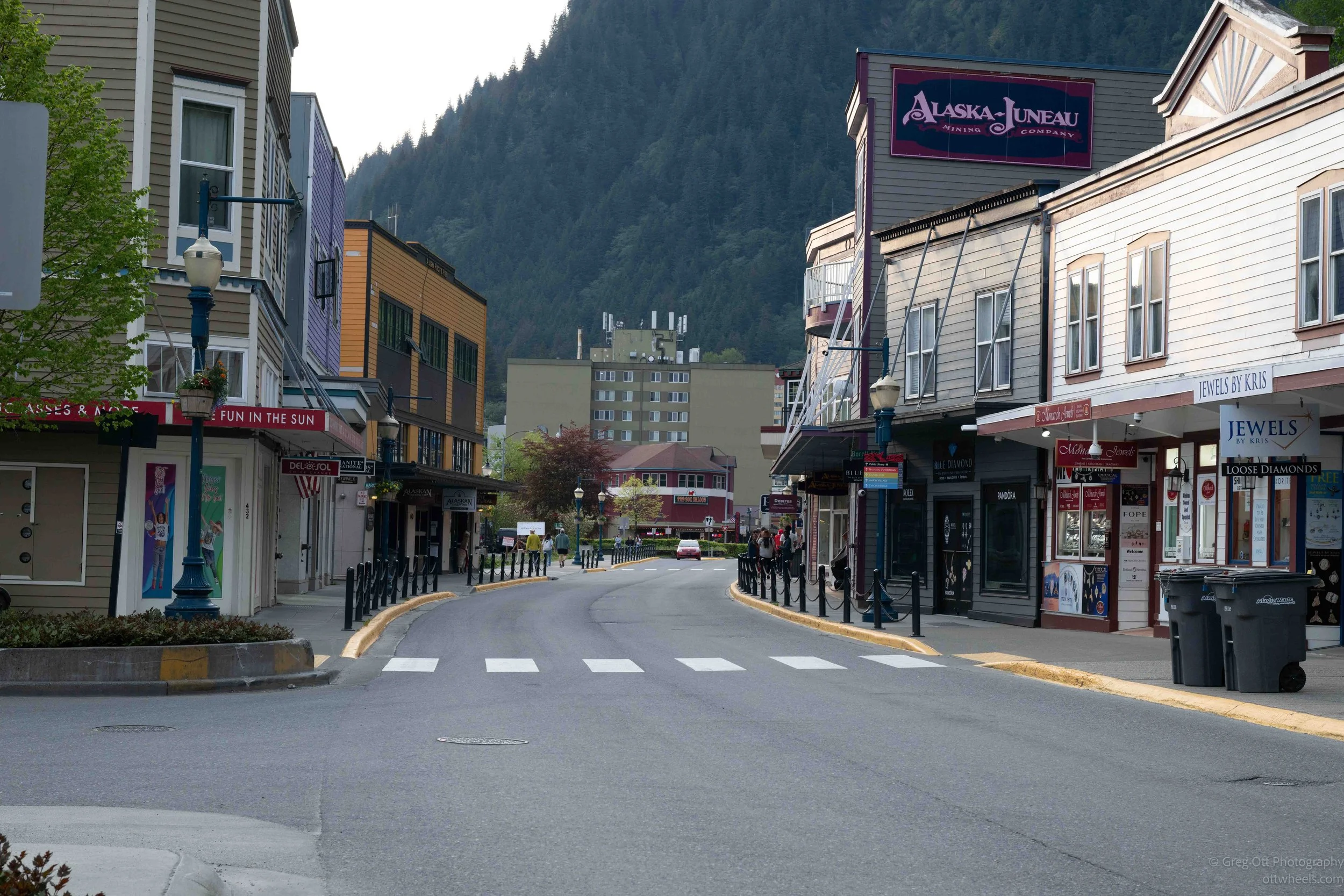
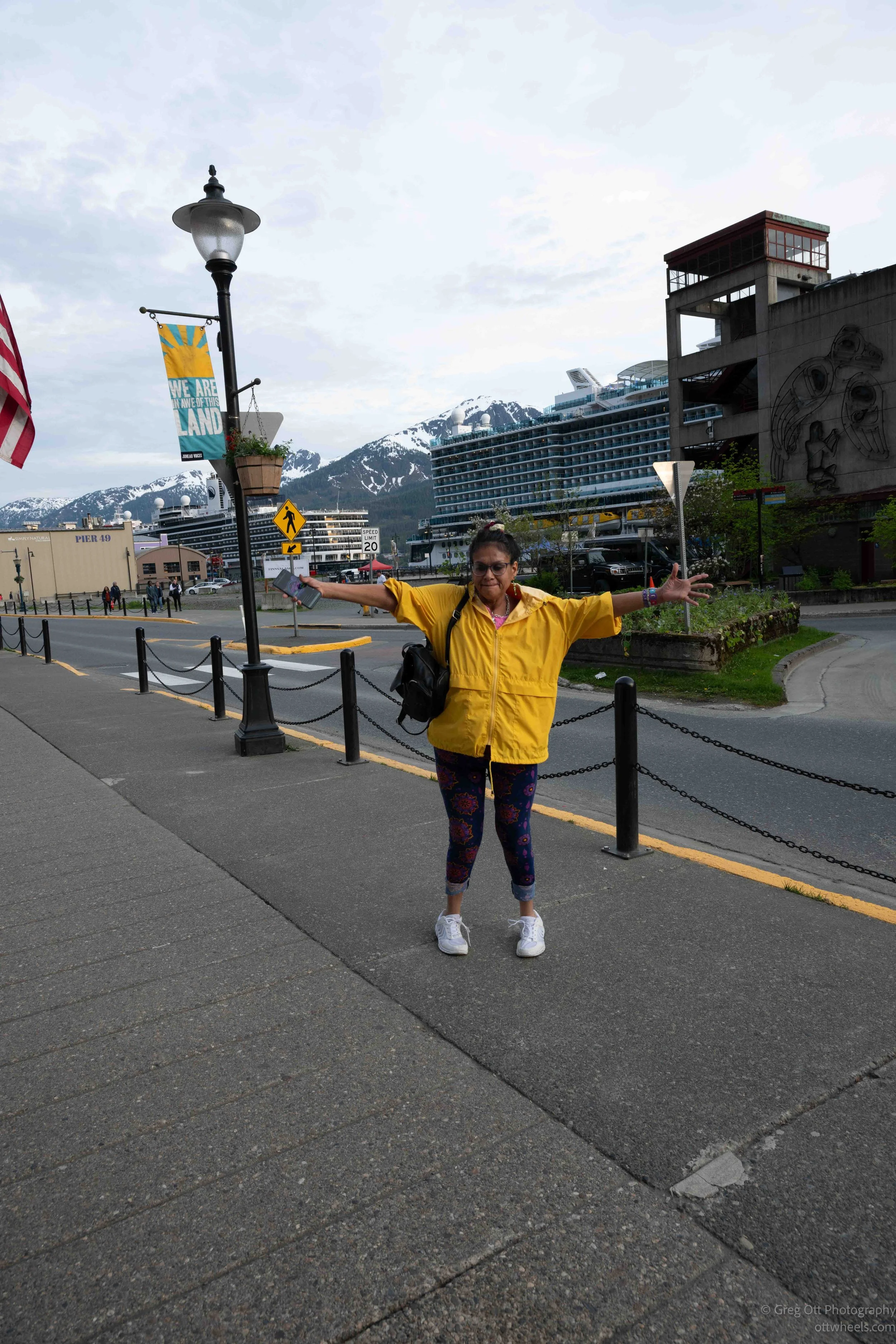
The streets themselves were surprisingly quiet. Many stores remained fully staffed despite having few customers. Some shops had more employees than shoppers. One woman was dancing by herself to music coming from a portable speaker. I stopped and made a few photographs. "Alaska proud!" she shouted before sticking out her hand for a shake and dancing away down the sidewalk.
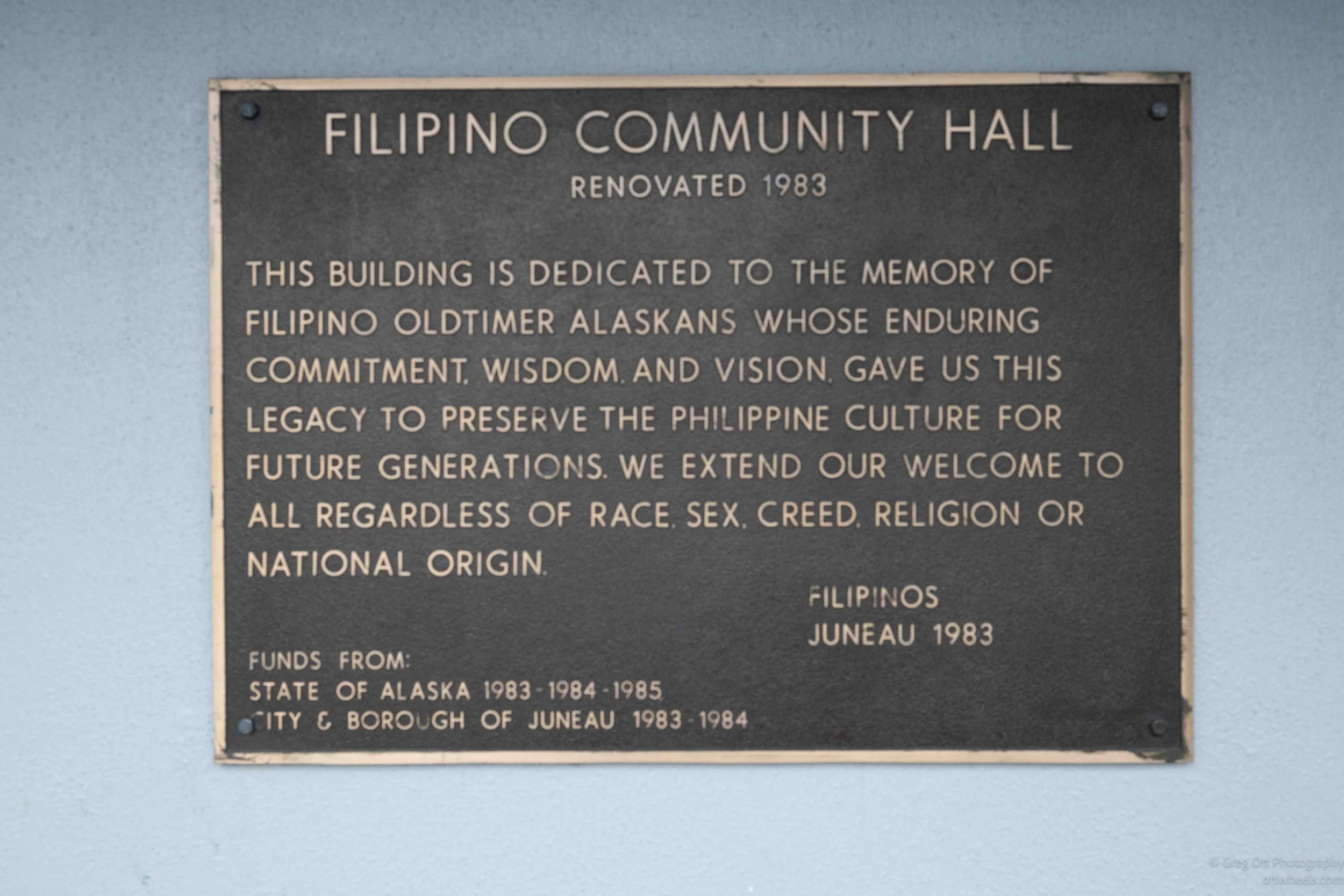
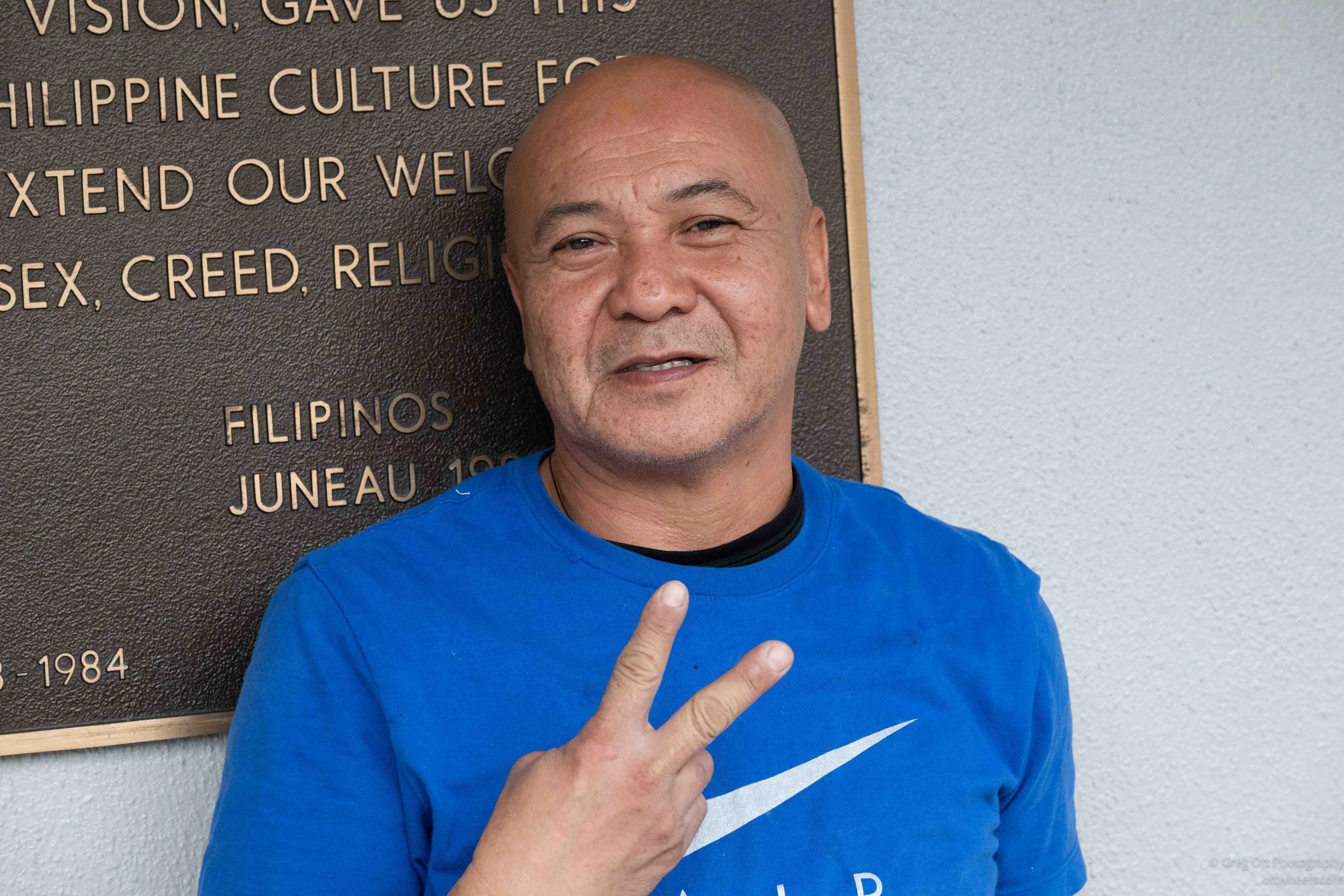
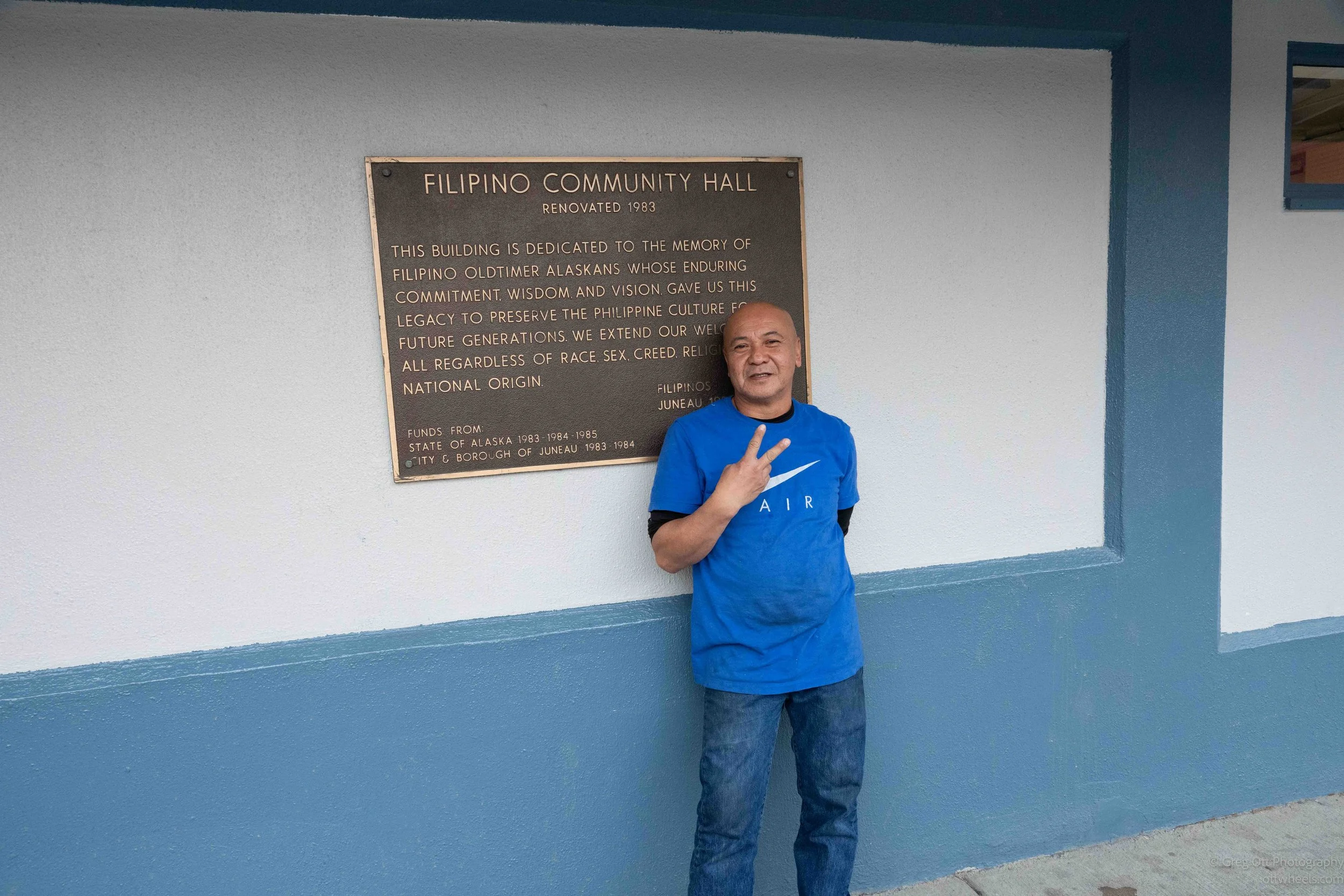
A little later I stopped to read a plaque about the Filipino community in Alaska. A man standing in a doorway said hello, and before long we were talking. His name was Bong. He was Filipino-American and was preparing to move to Los Angeles for the summer. I told him he was doing it backwards and should spend the winter in Los Angeles and the summer in Alaska. He laughed and agreed but said circumstances had other plans. When I asked if I could take his photograph beside the plaque, he happily posed. Before I left he pointed toward the building and said, "If you come back to Juneau, knock on the door." It was one of those simple travel conversations that somehow sticks with you.
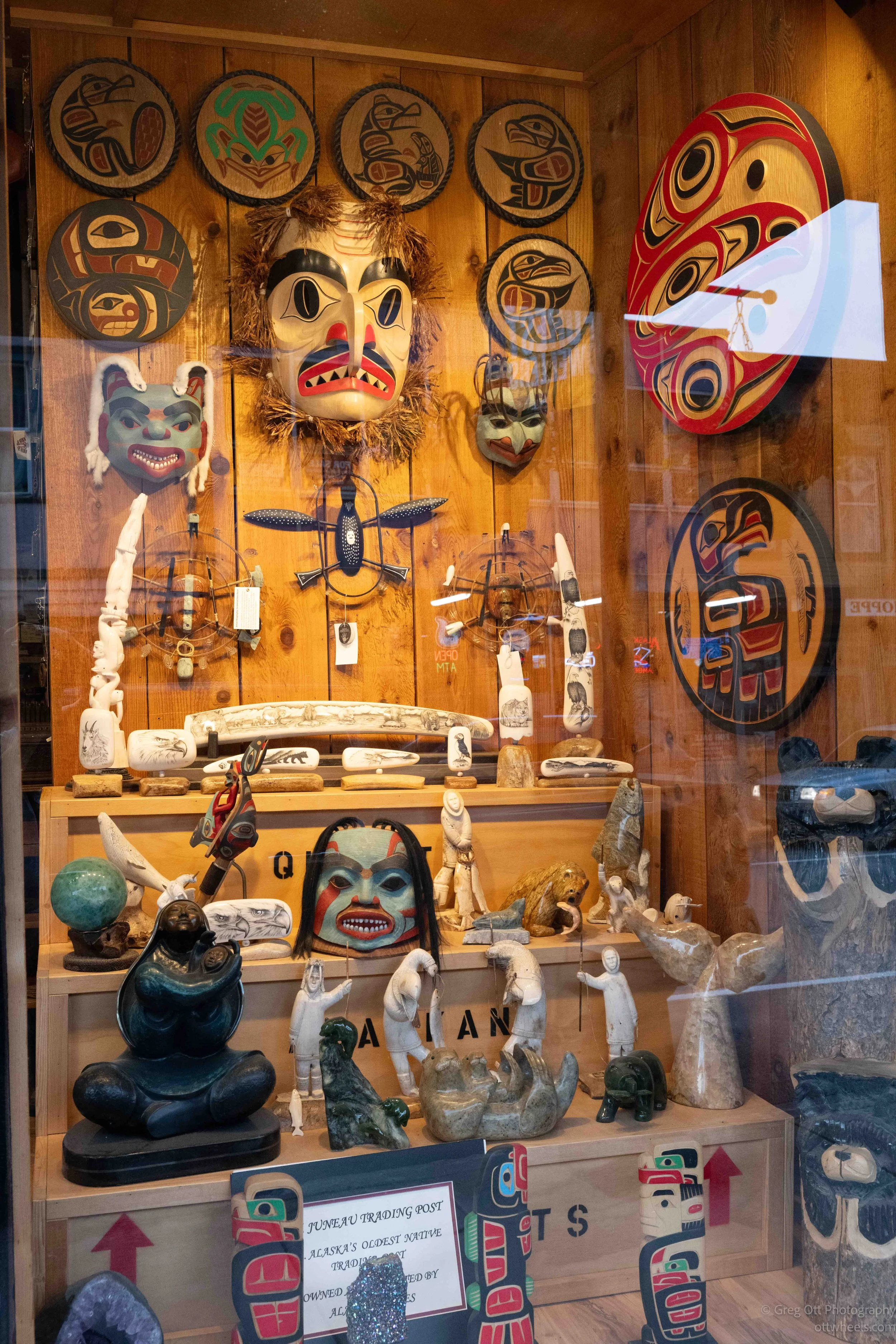
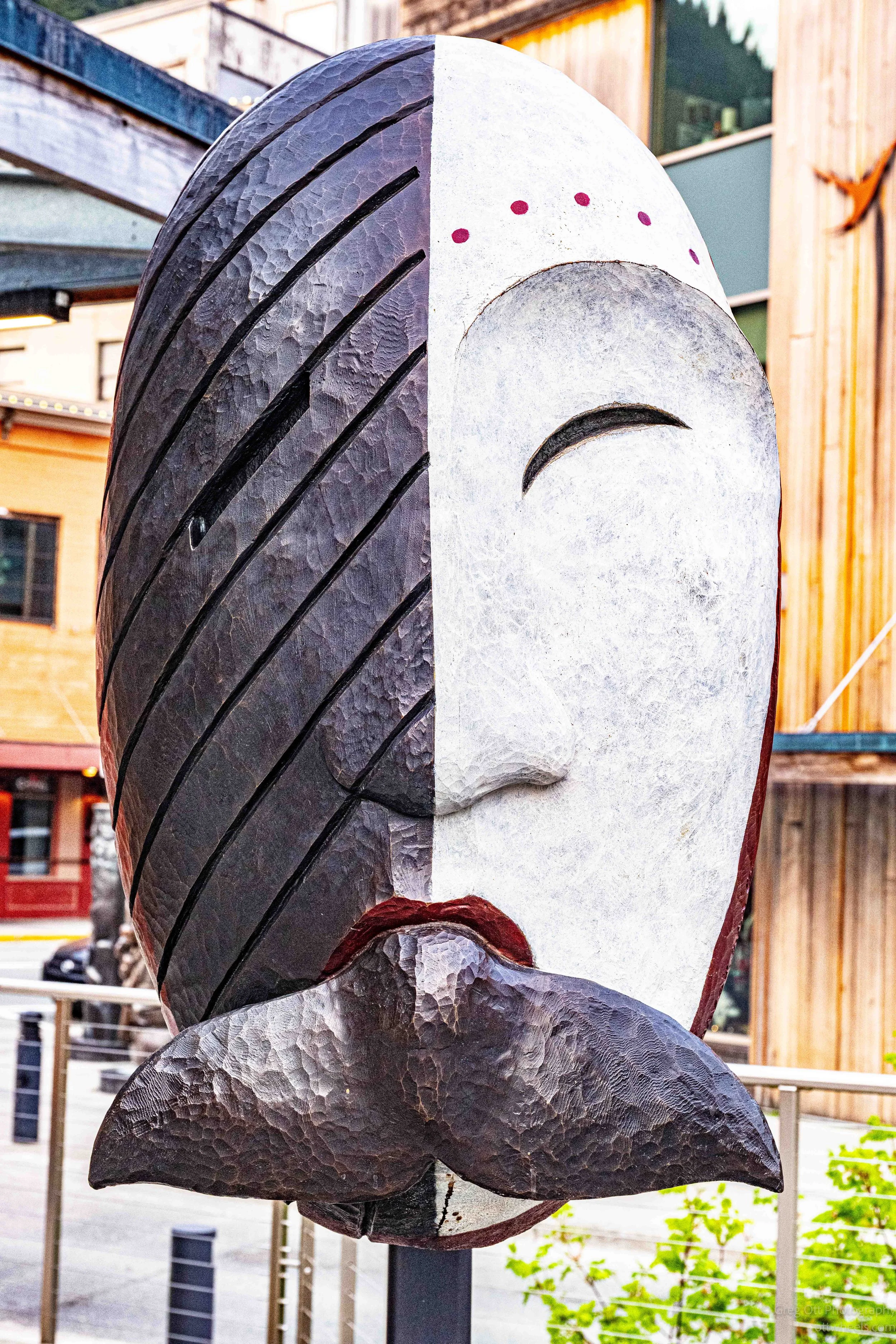
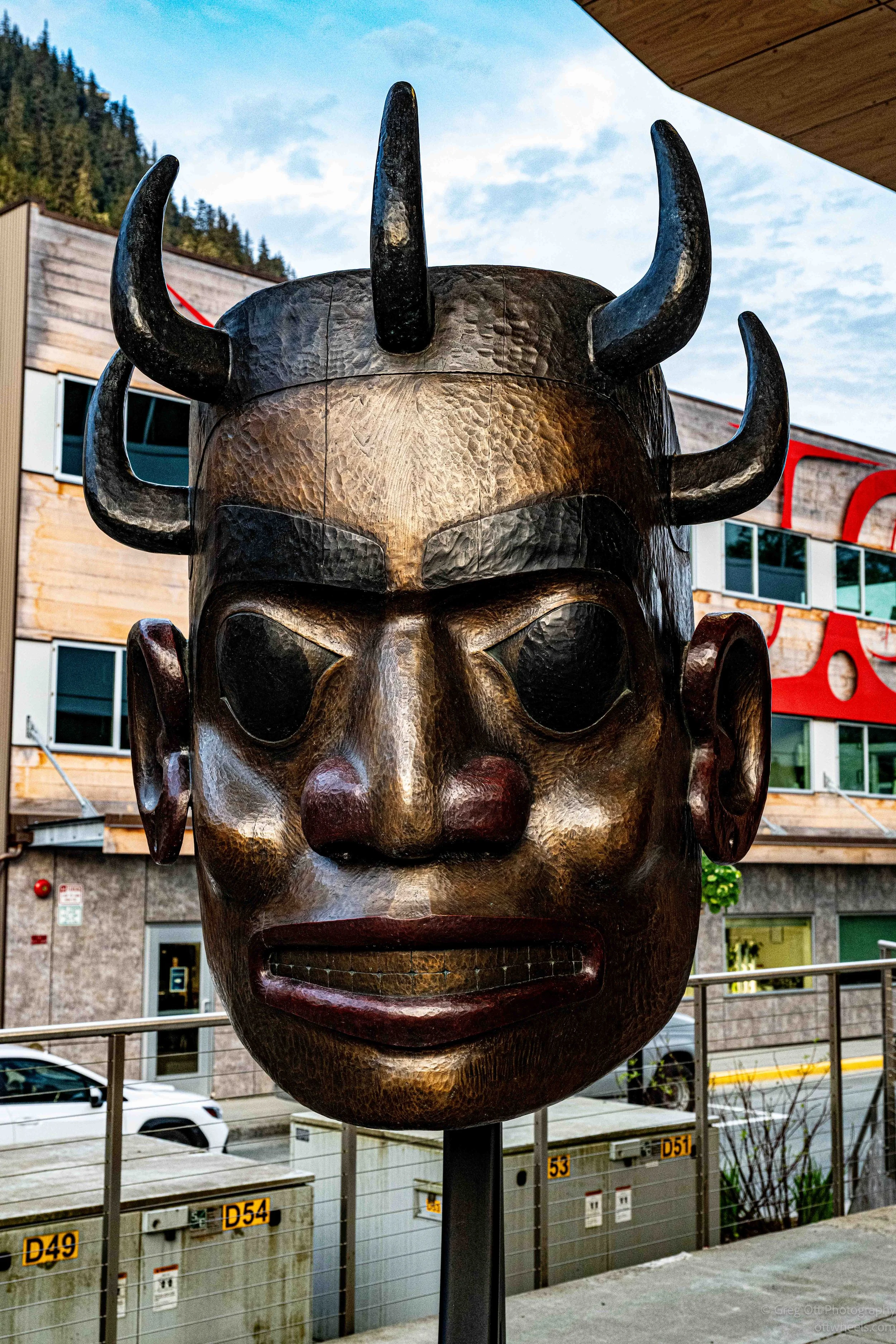
I started heading back to the van capturing images along the way. I noticed a lot of different masks a long the way.
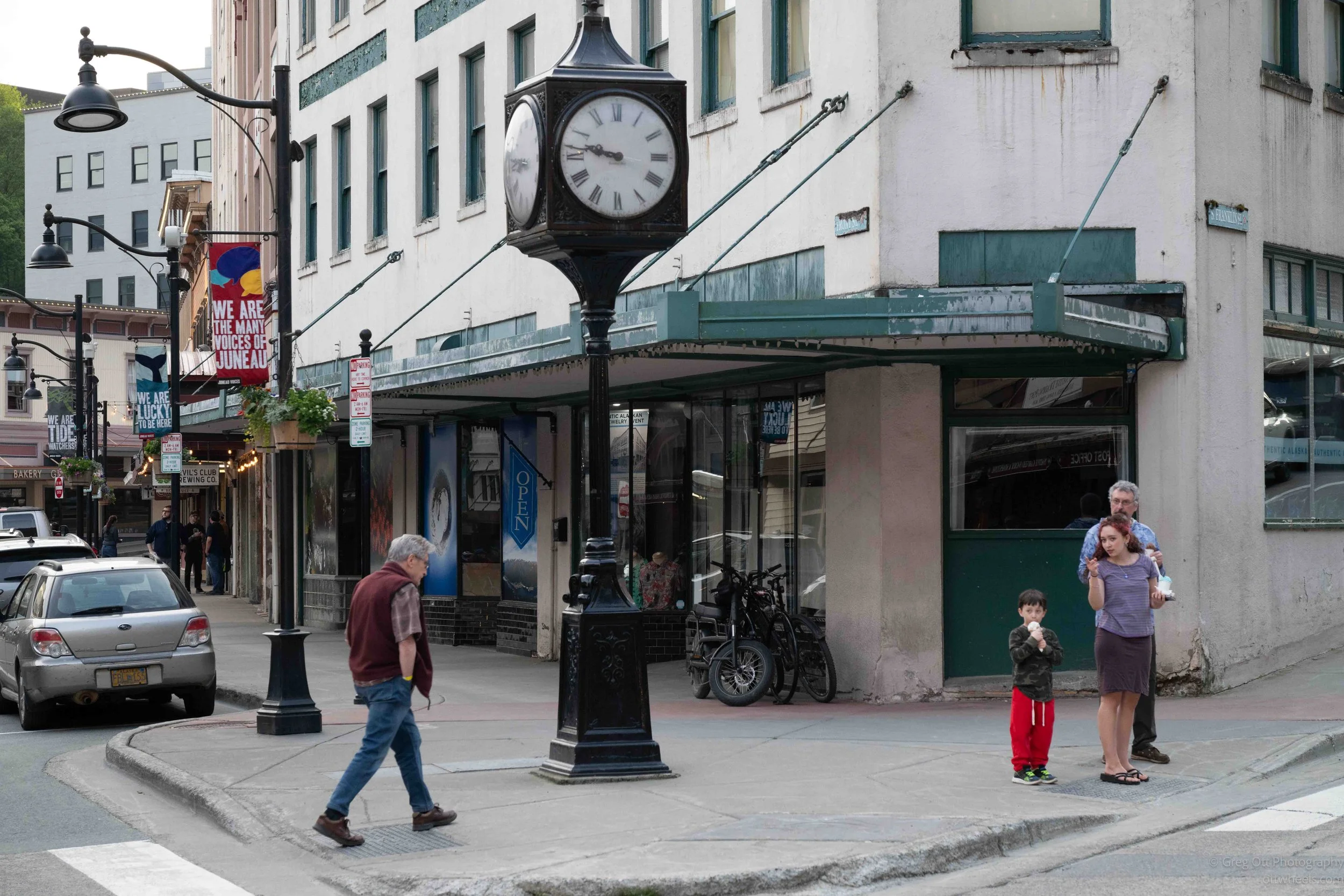
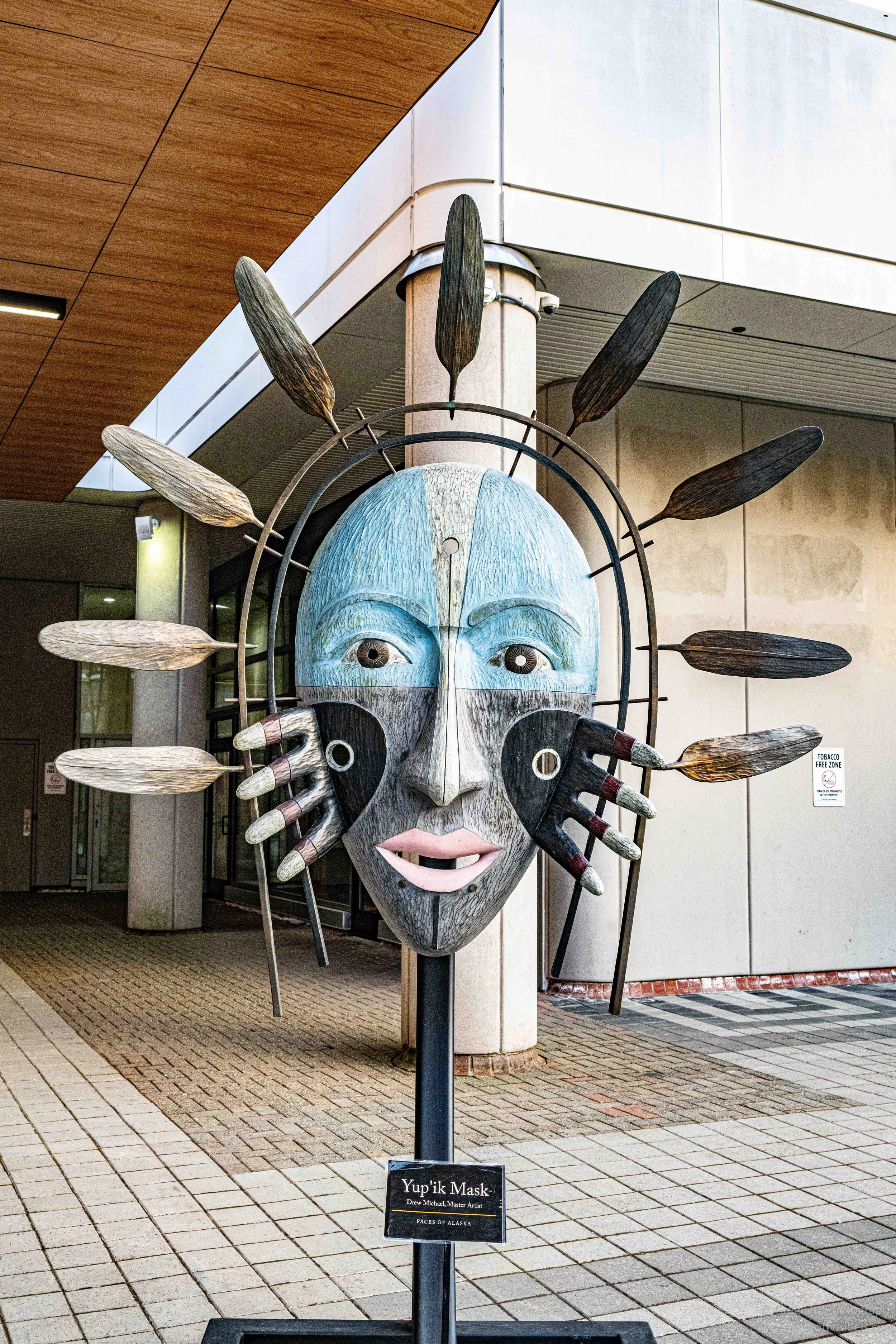
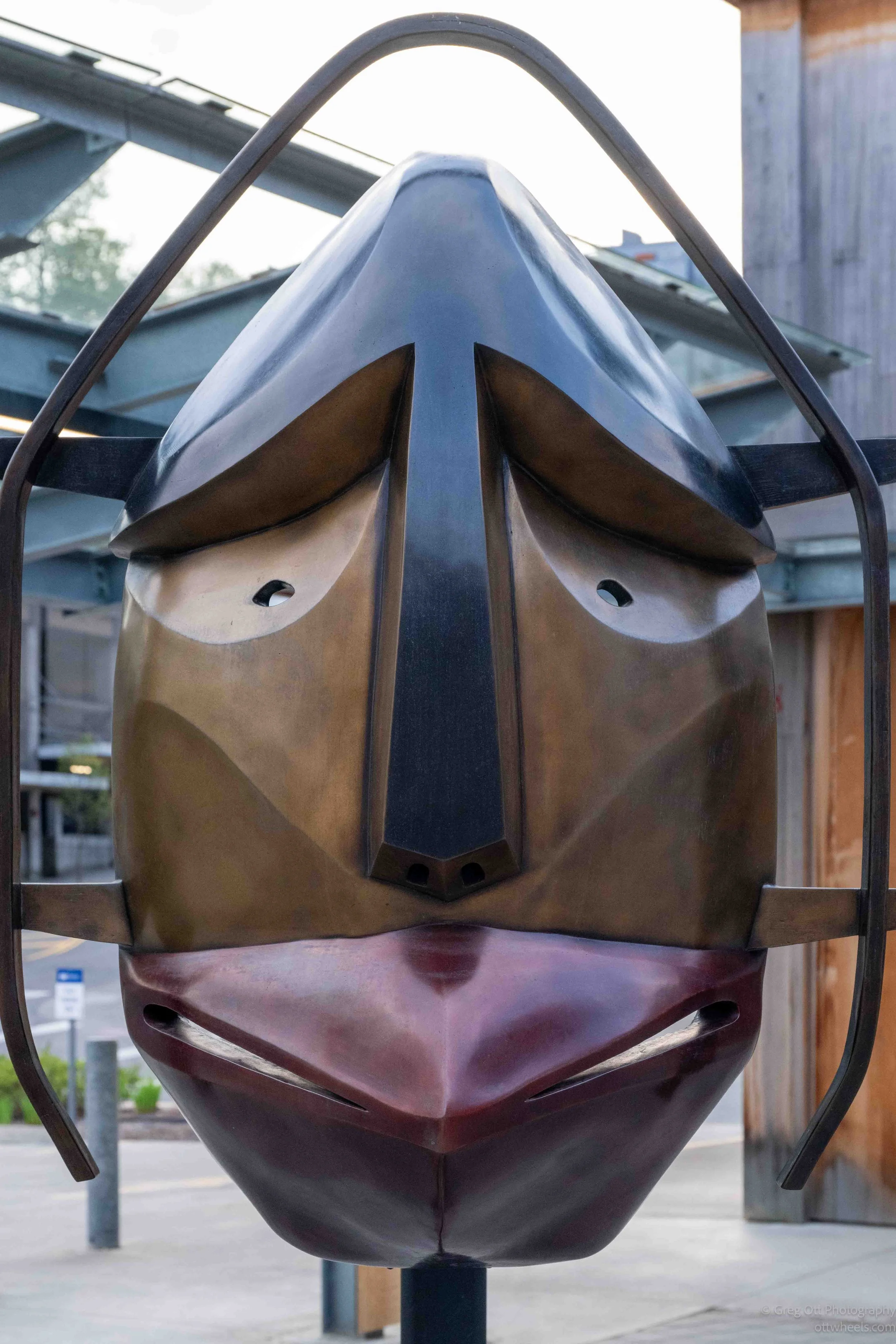
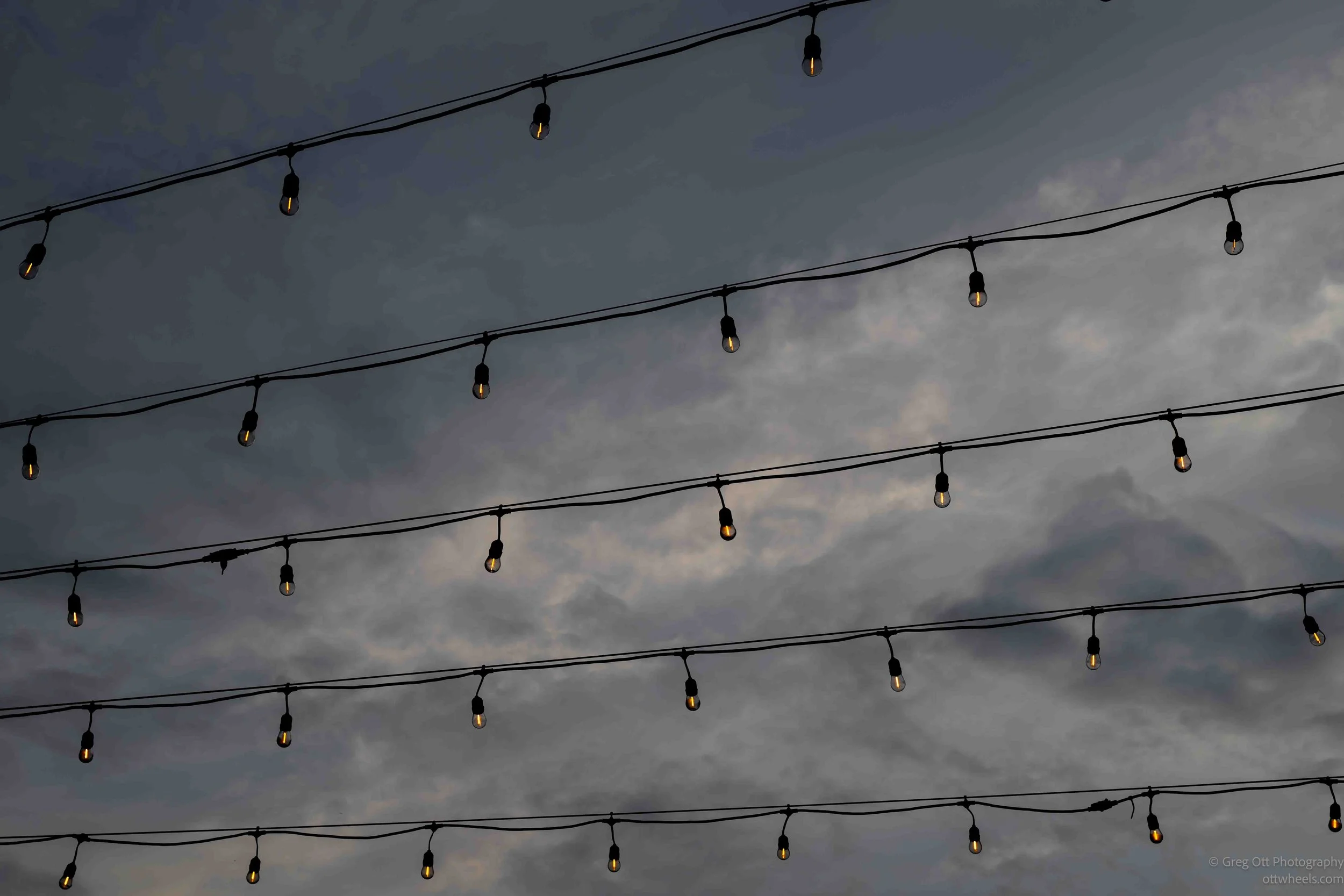
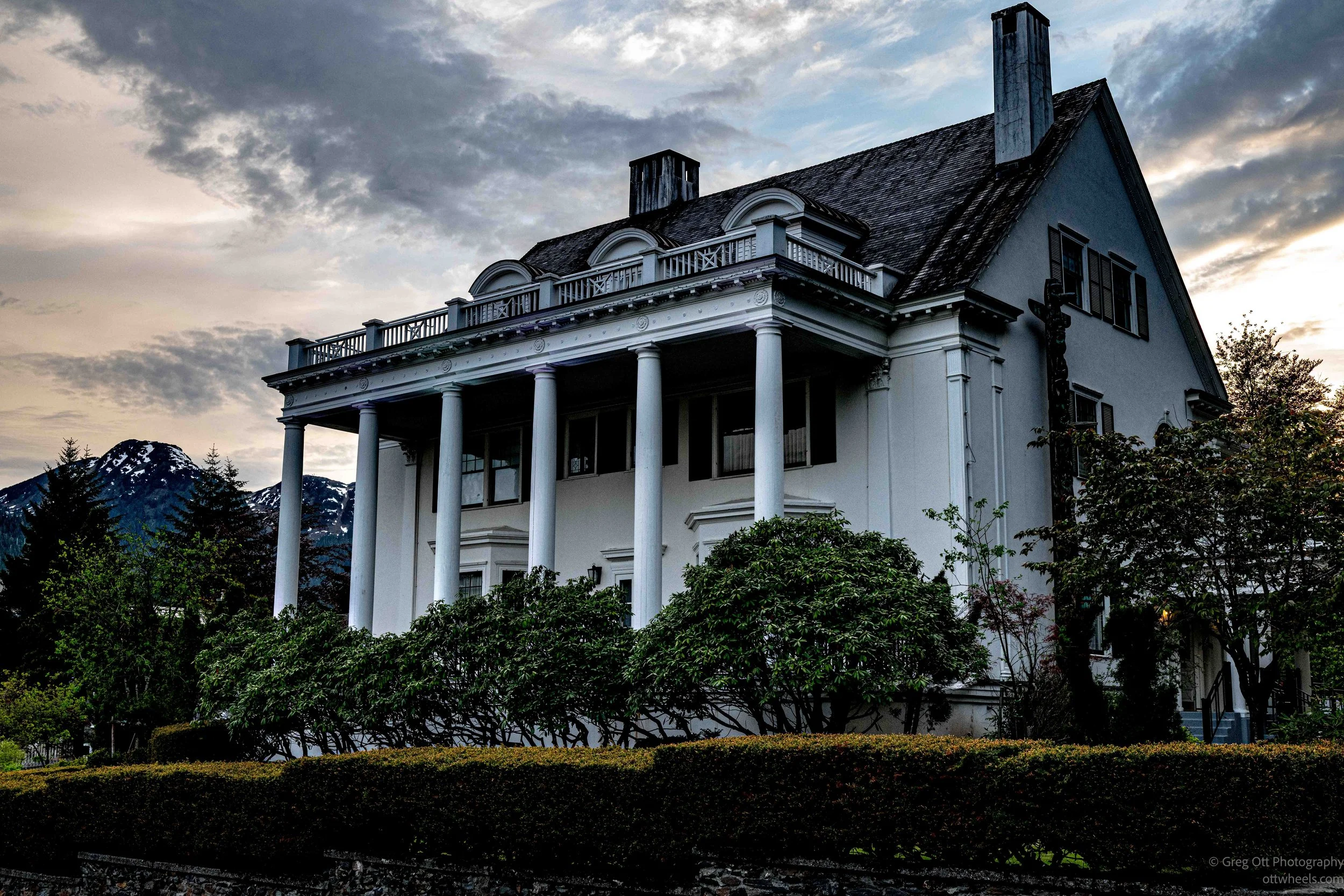
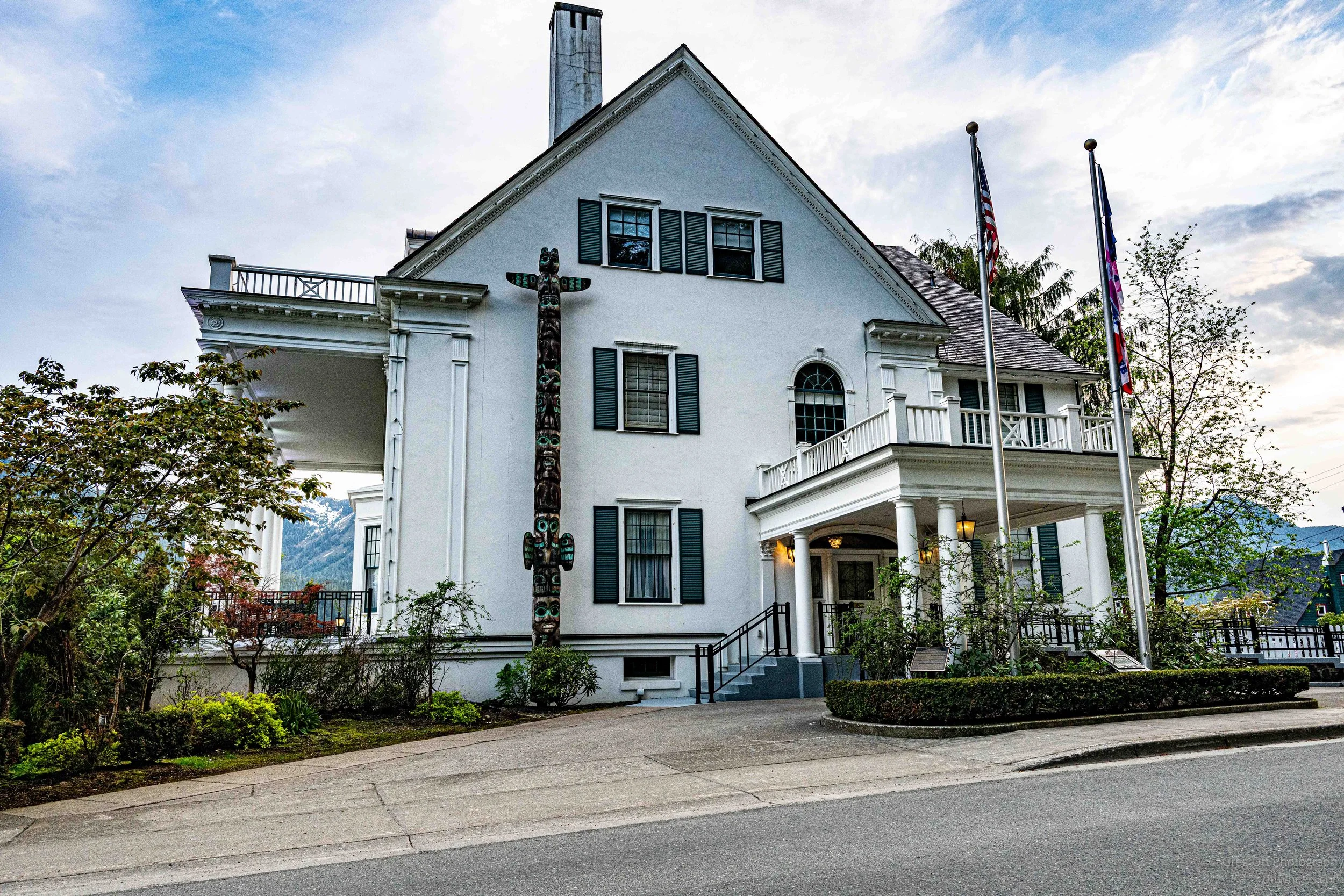
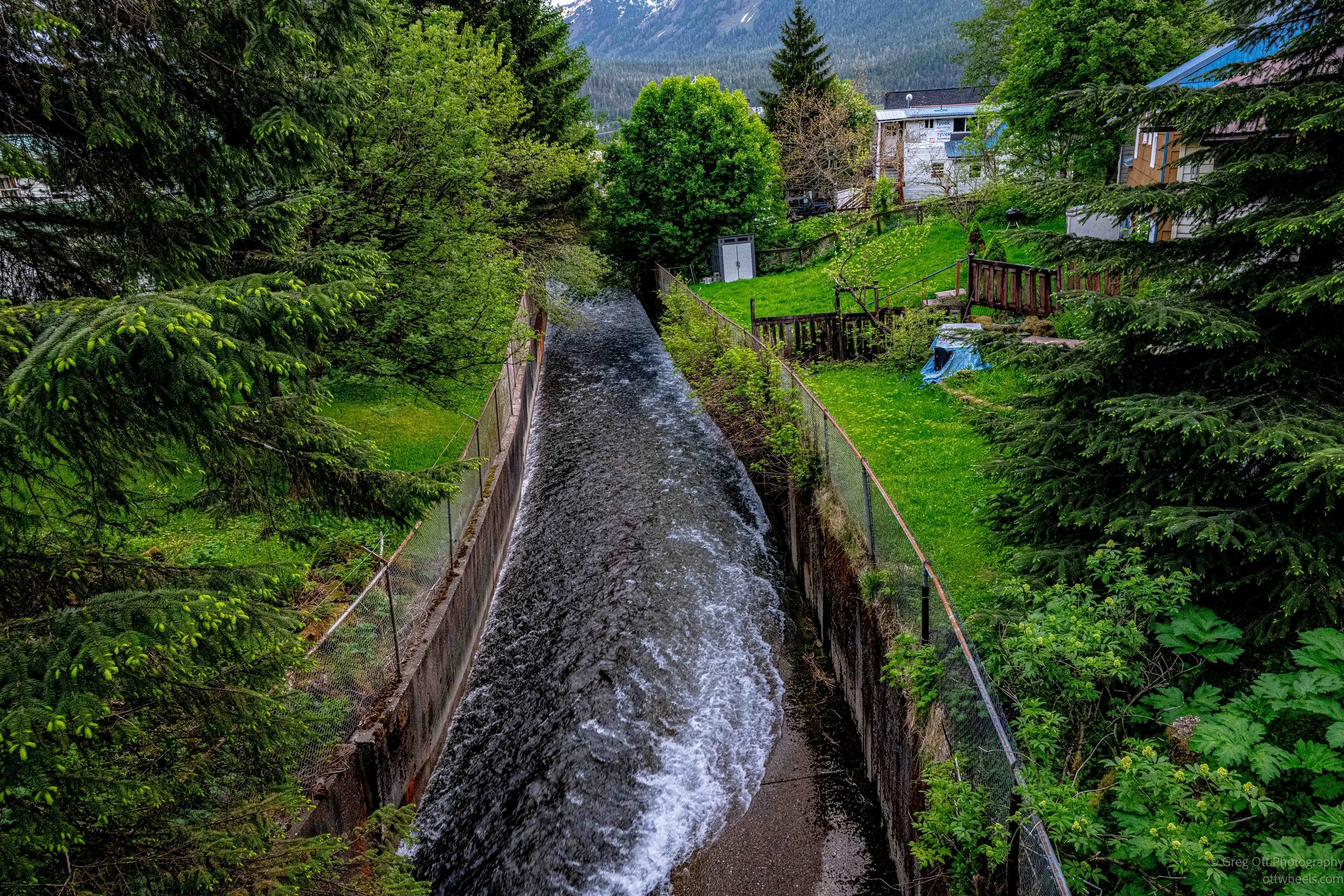
Eventually I wandered through some of the older residential neighborhoods, passed the Capitol again, stopped at the govenor’s mansion, and followed the roads back toward the van. Beautiful homes overlooked the water, and the evening light lingered far longer than it would have in the lower 48. It was after 9 p.m. when I finally started driving back to the campground, yet it was still remarkably bright outside.
Juneau had turned out to be far more interesting than I expected. I arrived planning to see a capitol building and walk around town. Instead, the day became about conversations, unexpected encounters, and getting a glimpse into a place that feels very different from the what I’ve seen north of the border.