Alaska State Museum
Yes it rained again in Juneau. I extended my stay at Glacier Nalu Campground for a few more days. The temperatures didn’t drop as much as the night before, and I forgot to set my sleep app to wake me up. I eventually heard my neighbor opening and closing her van door and figured it was probably time to get moving.
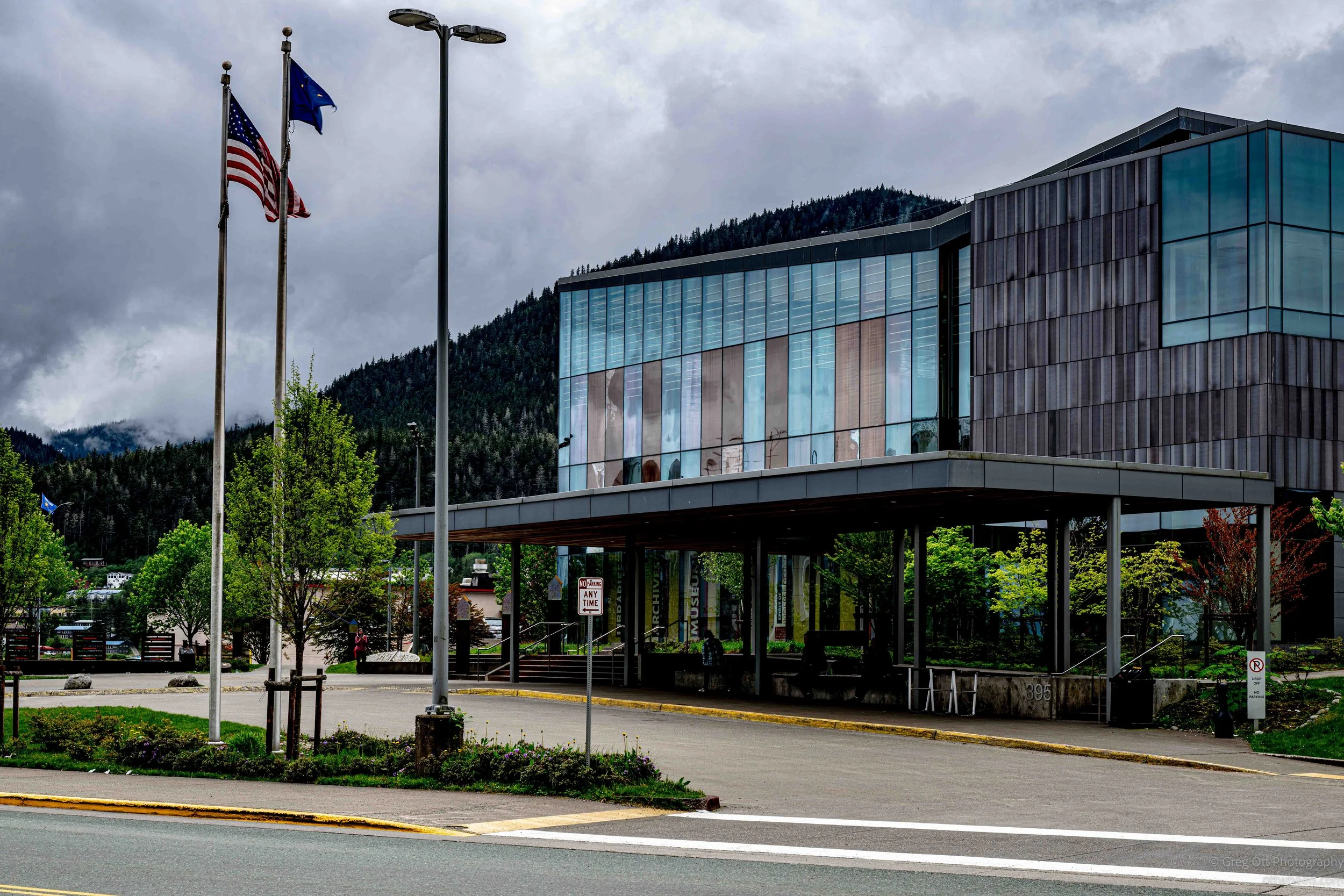
My plan was simple: coffee and a pastry. Unfortunately, both cafés I tried were closed. I checked to see if the Alaska State Museum had a café and found that they did, so I headed downtown.
I found parking almost directly in front of the museum. The sign near the van was the usual two-hour parking limit, but the zone designation was missing. I checked with both Claude and Gemini to see if parking restrictions were enforced on weekends, but neither seemed particularly confident. Inside the museum, I asked one of the guards. He told me not to worry about it and that they don't ticket on weekends. Whether that applies to all of downtown Juneau or just that particular area, I still don't know.
I then asked where the museum café was located and learned that both the café and gift shop were closed on Sundays. Since I still hadn't had my coffee, I headed over to Heritage Coffee, about six blocks away.
The streets were noticeably busier than they had been earlier in the week. More cruise ships had arrived, and downtown was full of visitors. When I walked into Heritage, there was a line of at least thirty people stretching through the shop. Most of the conversations around me sounded like cruise passengers comparing excursions and making plans for the day. Some people were taking other peoples orders on the phone. About thirty minutes later, I finally reached the counter. Every pastry was sold out, so I settled for avocado toast and coffee.
Around 10:45, I headed back to the Alaska State Museum. As I walked through the door, one of the staff members immediately asked, "Did you find coffee?" I told them I had. "I need that first cup of coffee to get started," I said. All three of them immediately agreed, and one of them laughed and said, "It helps take the morning edge off."
Alaska State Museum
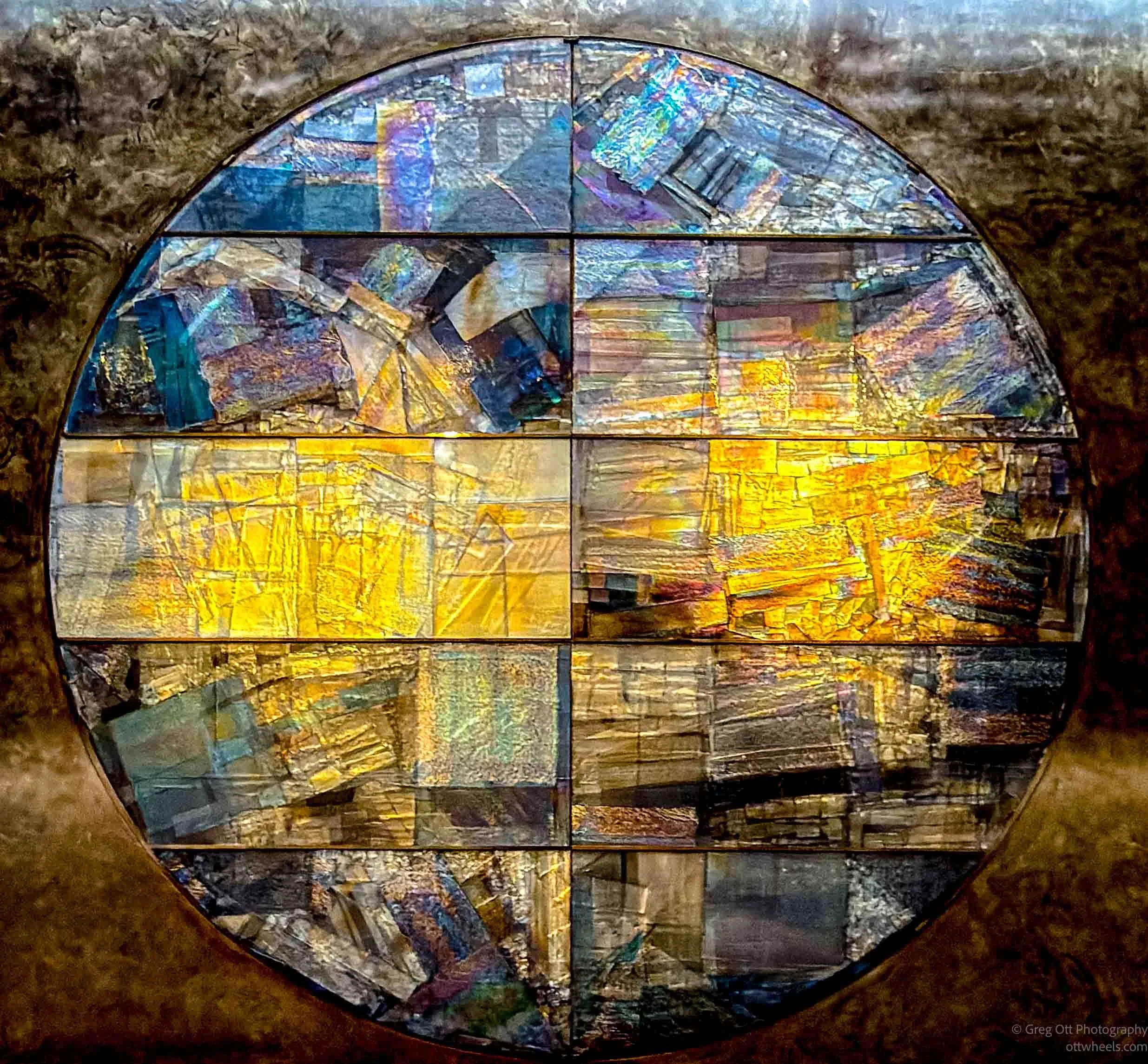
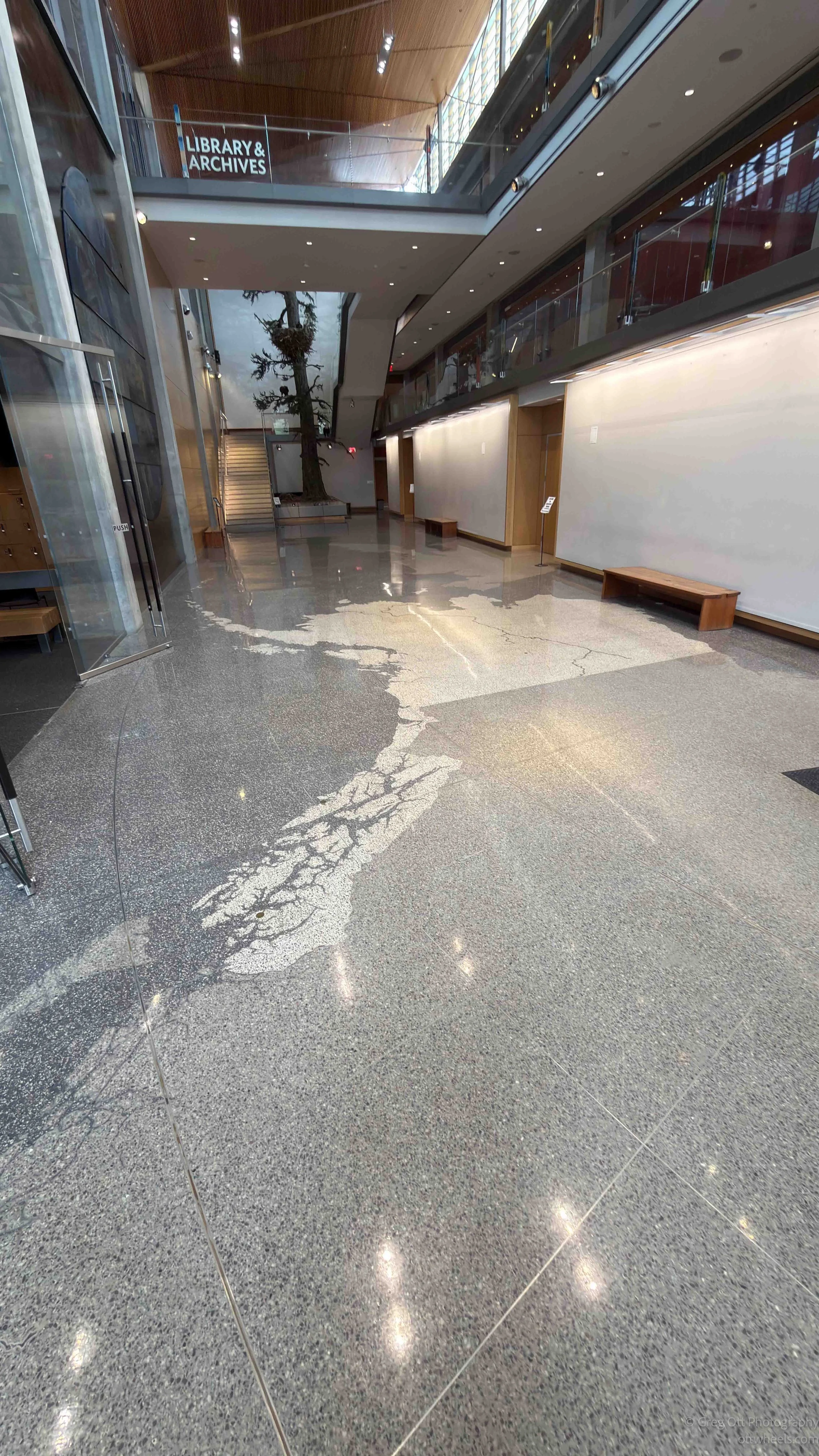
The Alaska State Museum is filled with so much history going back 15,000 years. I expected a fairly standard state museum, but I ended up spending hours wandering through exhibits that covered everything from Indigenous history and Russian settlement to mining, whaling, oil spills, World War II, and fashion.
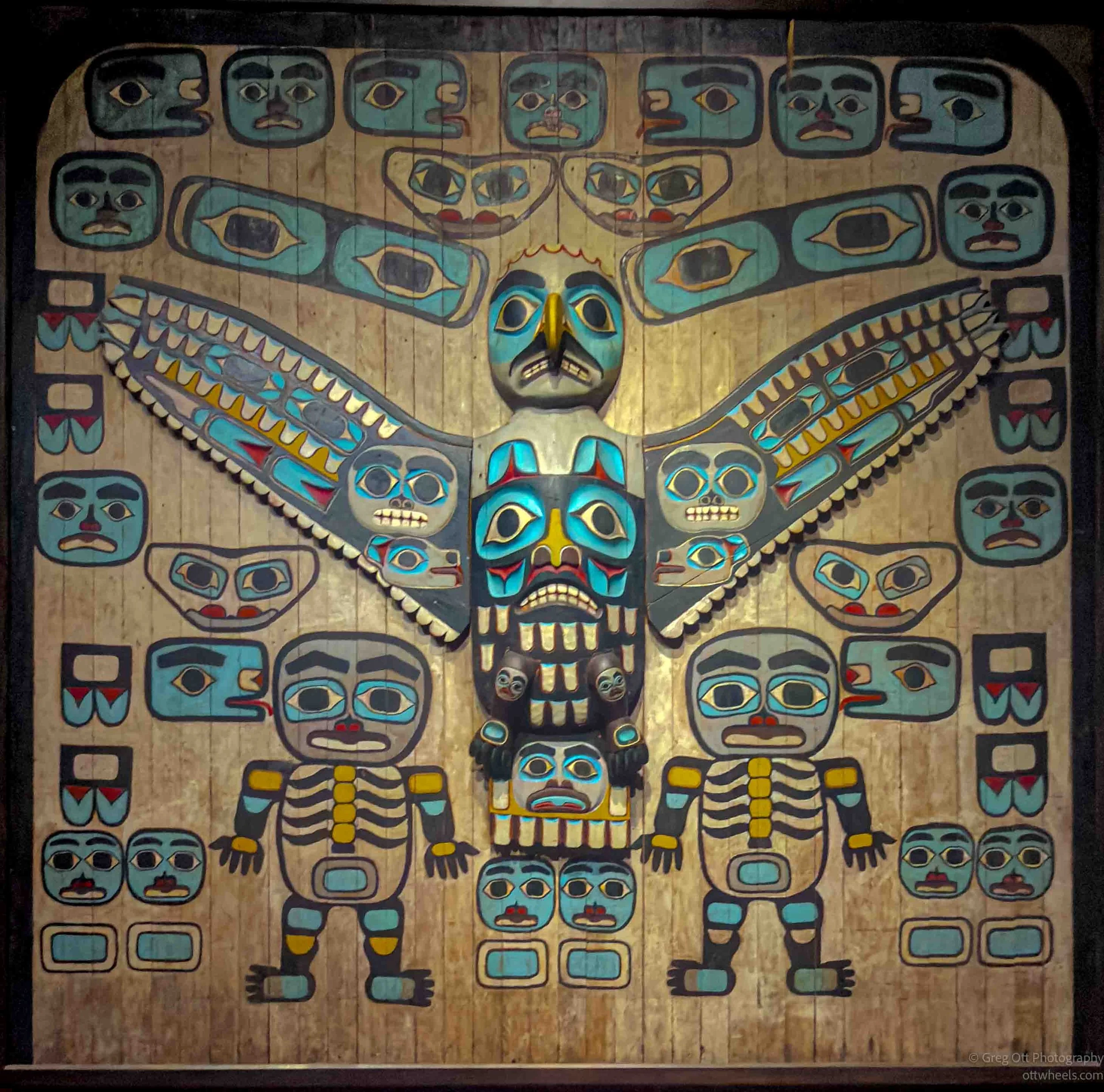
One of the sections that grabbed my attention focused on the first peoples of Alaska. Archaeologists believe the earliest migrants crossed from northeast Asia over the Bering Land Bridge more than 14,000 years ago. What I found most interesting wasn't the migration theory itself, but the museum's emphasis that Indigenous history did not begin when Europeans arrived. Several exhibits pushed back against the idea of calling everything before European contact "prehistory." The displays described societies with established legal systems, trade networks, educational traditions, health practices, social structures, and complex languages that had developed over thousands of years. I found myself stopping several times to read those panels more carefully because they challenged the simplistic version of history most of us learned in school.
The exhibits on Athabascan culture were equally fascinating. Their knowledge of plants and animals was remarkably sophisticated. They understood medicinal uses for many plants, had detailed knowledge of animal behavior, and viewed the natural world through a framework of respect and reciprocity. One panel explained that success in hunting wasn't simply about skill. It was also tied to character, humility, hard work, and service to family and community. Reading those descriptions gave me a better understanding of how deeply connected survival, ethics, and culture were in Alaska's Indigenous societies.
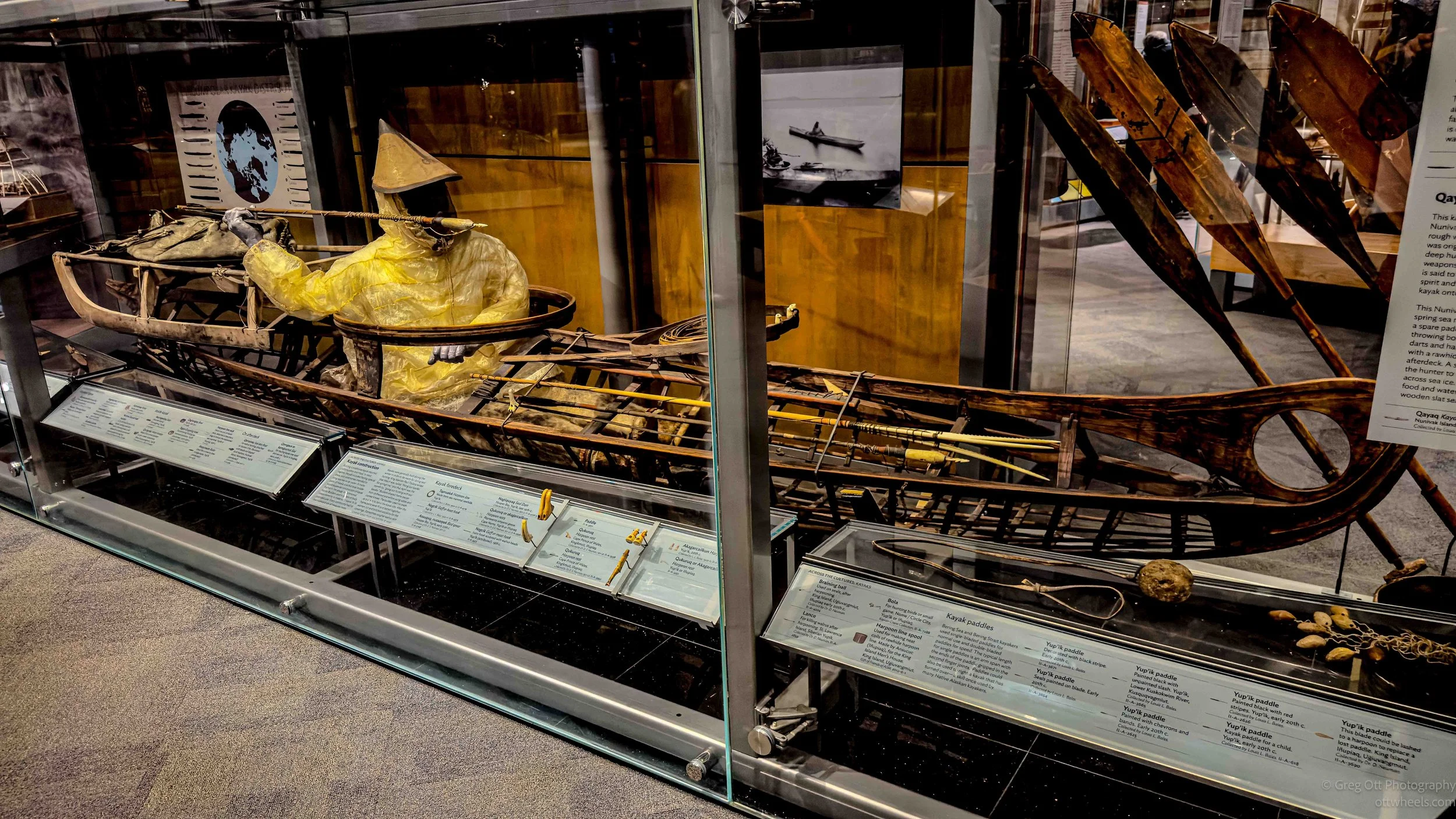
Another section covered traditional whaling practices, and honestly, it sounded insane. Hunters pursued whales from small skin-covered boats in some of the harshest waters on earth. They carried sleds on the boats so they could haul them across sea ice when necessary. The museum described how specialized weapons and hunting techniques were developed over generations, including darting systems designed to quickly affect the whale's nervous system. Looking at the equipment and imagining people chasing whales in the Arctic from what amounted to oversized kayaks made my palms sweat.
The museum also covered the arrival of the Russians and their influence throughout Alaska. Along with the fur trade came Russian settlements, Russian culture, and the Russian Orthodox Church. Many Alaska Native communities converted, and the church remains an important part of life in parts of Alaska today. It was interesting to see how Indigenous traditions and Russian religious influences blended together over time rather than completely replacing one another.
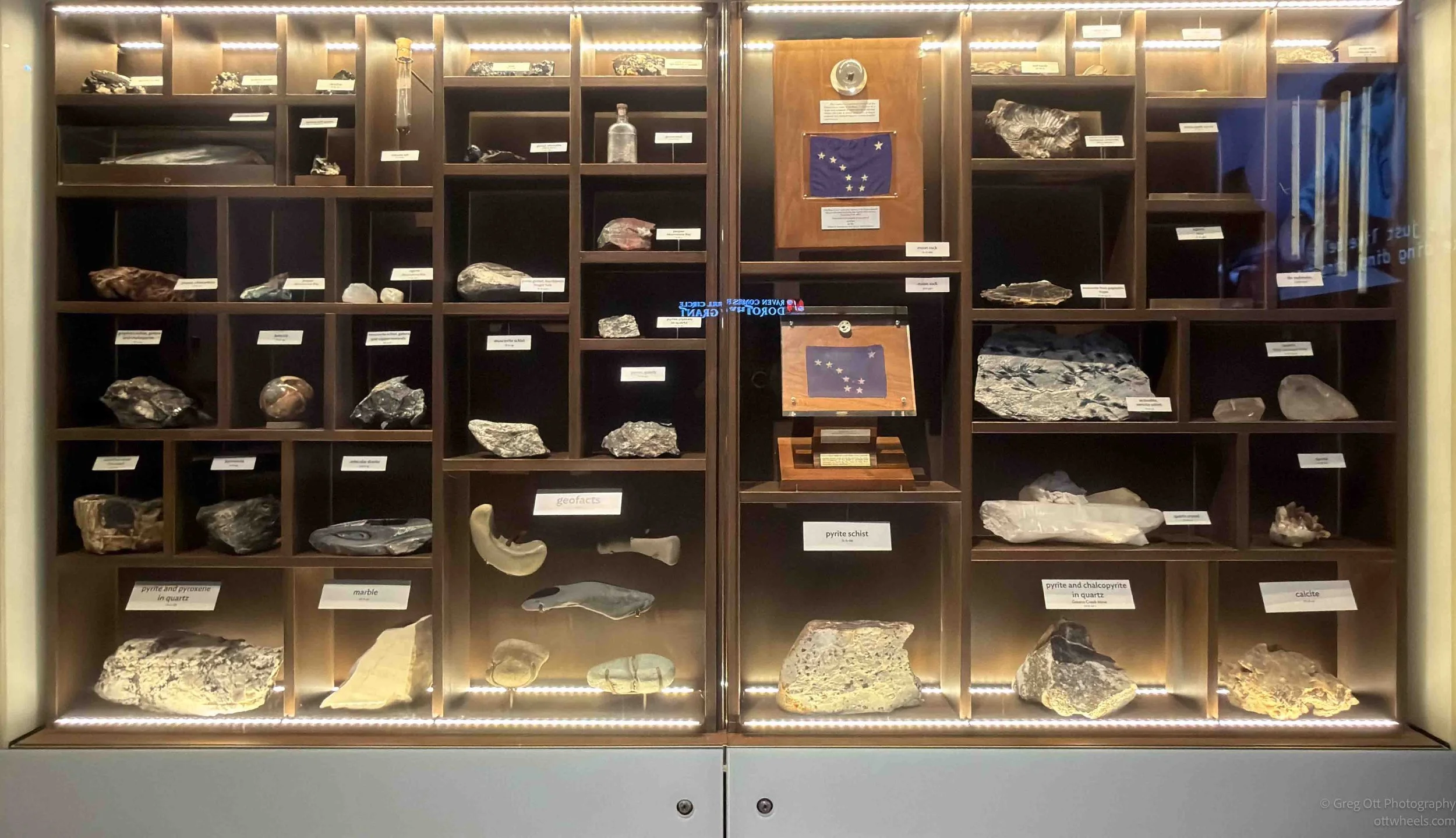
One exhibit didn't pull any punches about mining. The displays described how mining brought wealth and development but often came at tremendous cost to Native communities. Traditional lands were taken, fish and wildlife habitat was damaged, and many of the resources people depended on for survival were disrupted or destroyed. Juneau itself sits on land that once belonged to the Áak'w Kwáan Tlingit, and the museum explained how Native land claims were frequently ignored as mining interests expanded. I was surprised to learn just how many different minerals have been mined in Alaska over the years. One small fact that stuck with me was learning that bismuth, one of those mined minerals, is the active ingredient that gives Pepto-Bismol its name.
The section on the Exxon Valdez oil spill was sobering. In 1989, approximately 11 million gallons of crude oil spilled into Prince William Sound and eventually contaminated roughly 1,500 miles of shoreline. The photographs alone were difficult to look at. The spill killed hundreds of thousands of seabirds, fish, and marine mammals and changed parts of the ecosystem permanently. One fact that stood out was that Prince William Sound's herring population never fully recovered. More than thirty-five years later, the effects are still being felt.
I also spent quite a bit of time in the World War II exhibits. Before coming to Alaska, I knew very little about the Japanese invasion of the Aleutian Islands. The museum explained how Japan occupied Attu and Kiska in 1942, making Alaska the only part of North America occupied by enemy forces during the war. The Battle of Attu was particularly brutal. American planners expected a quick operation but instead found themselves fighting in terrible weather against a determined enemy. The museum also covered the strange story of Kiska, where Allied forces landed expecting a major battle only to discover that the Japanese had secretly evacuated the island weeks earlier. Even without an enemy present, fog, confusion, friendly fire, and mines still caused significant casualties.
One exhibit I didn't expect to enjoy was a collection of clothing by Haida designer Dorothy Grant. Normally I walk through fashion exhibits pretty quickly, but this one stopped me. The black, red, and white patterns immediately caught my eye. Some of the jackets and capes incorporated ravens, whales, and other traditional Indigenous artwork into modern clothing. I kept circling back because every time I looked at a piece, I noticed something I had missed before.
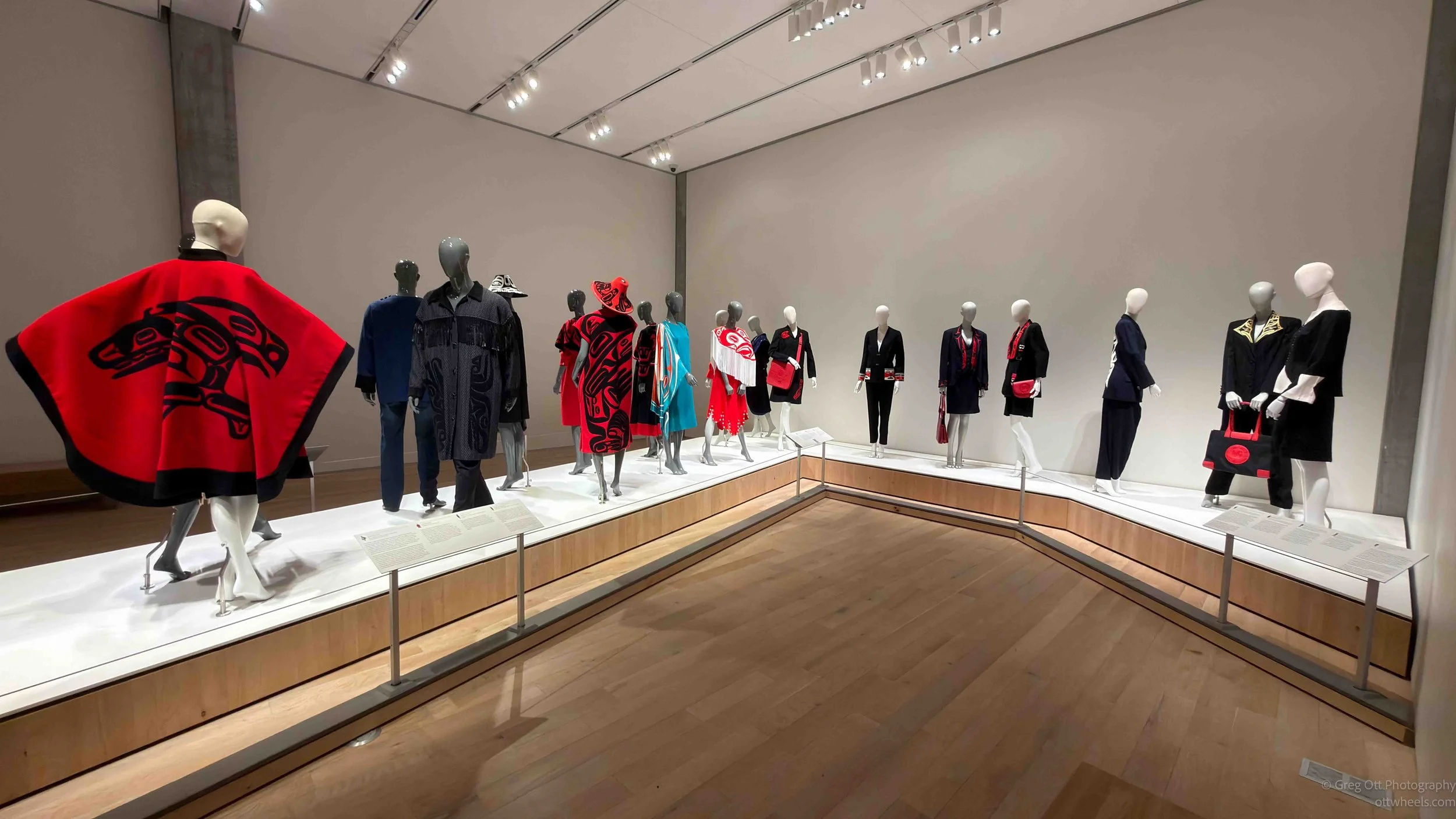
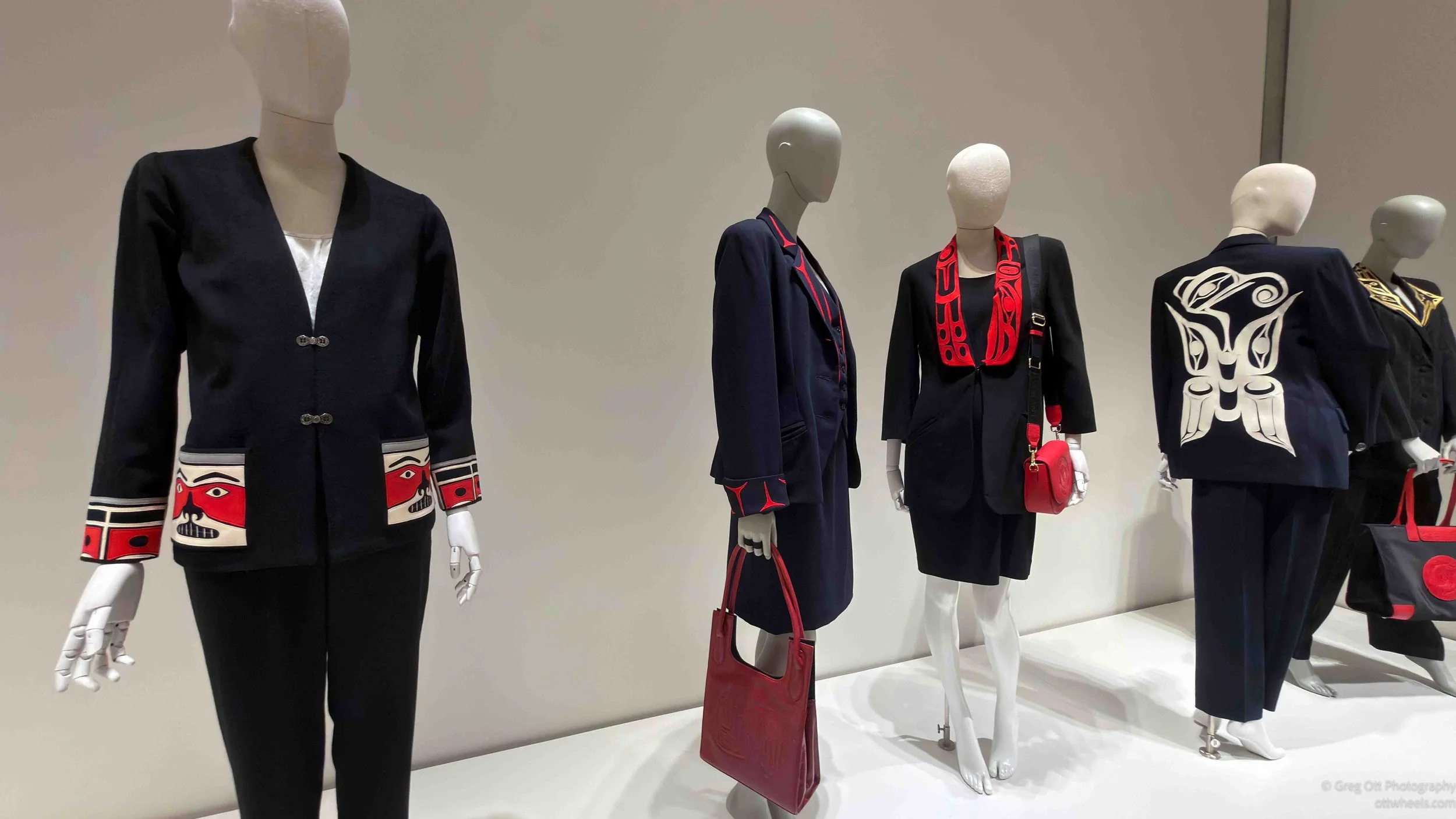
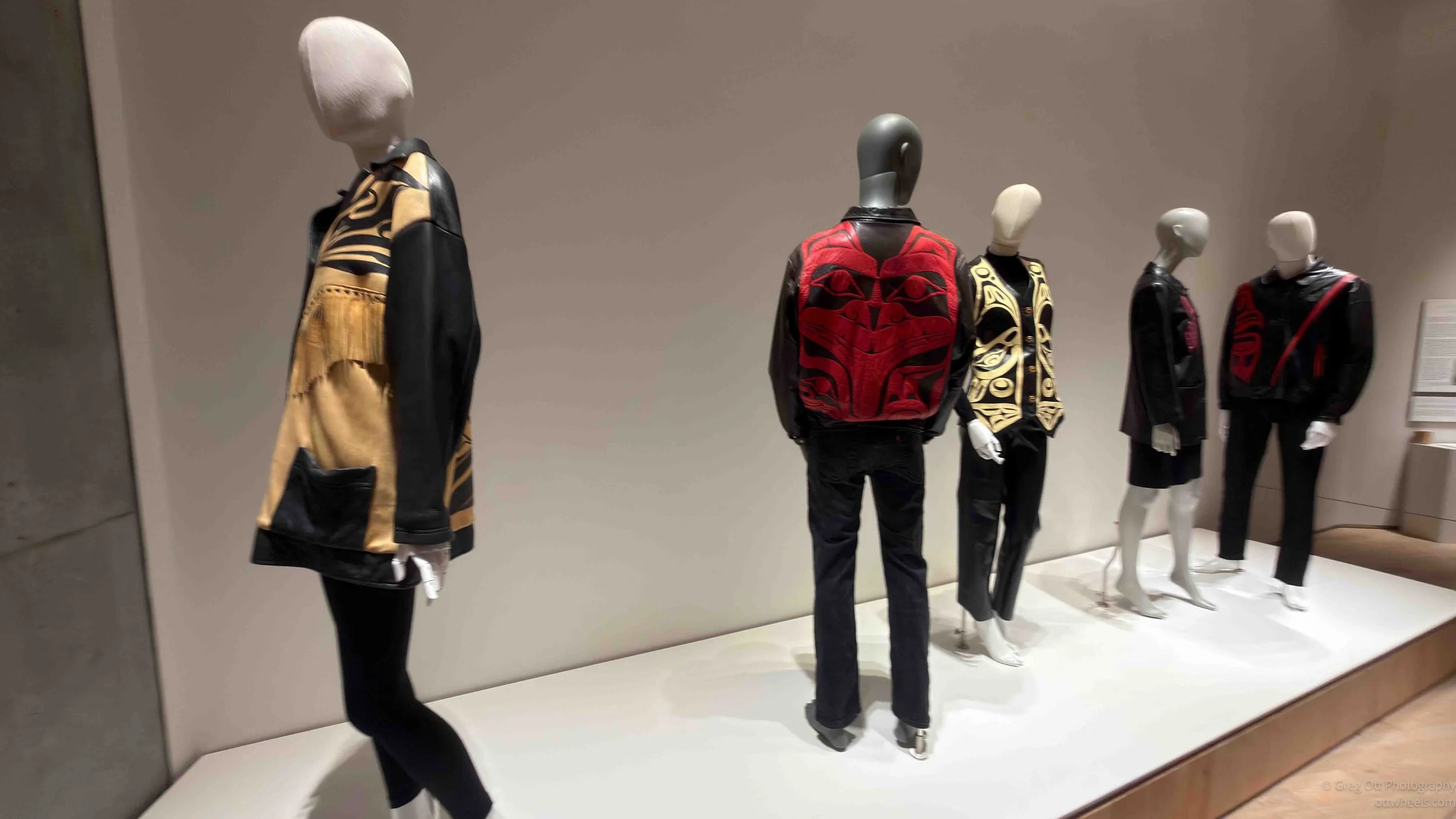
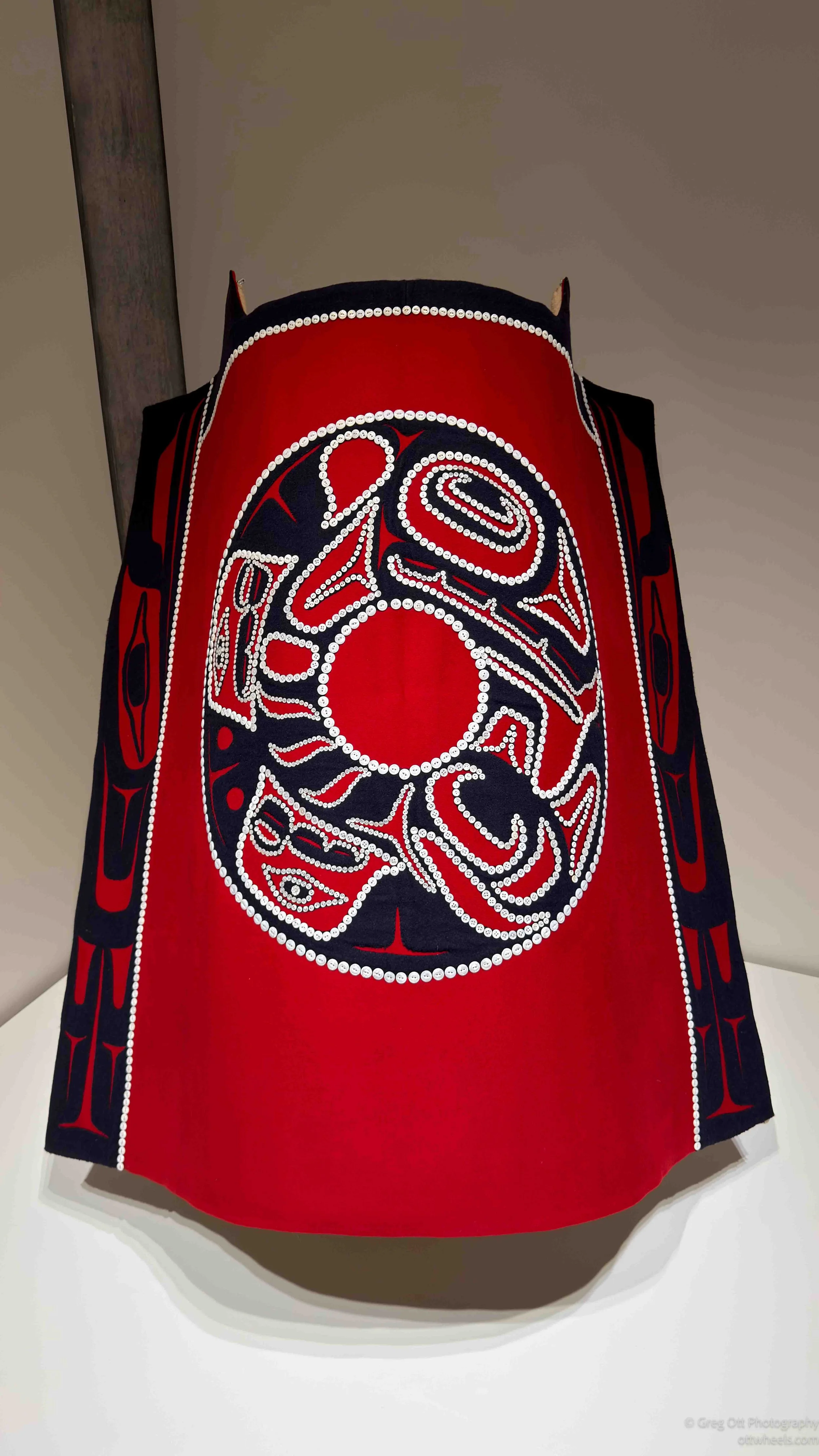
By the time I finally left the museum, it was already 2 p.m. What I liked most was that the museum wasn't trying to tell a single story. It covered thousands of years of Indigenous history, Russian settlement, mining booms, environmental disasters, war, art, and modern Alaska. I walked in looking for coffee and a place to stay dry. I walked out feeling like I understood Alaska a little better.
Walking Juneau
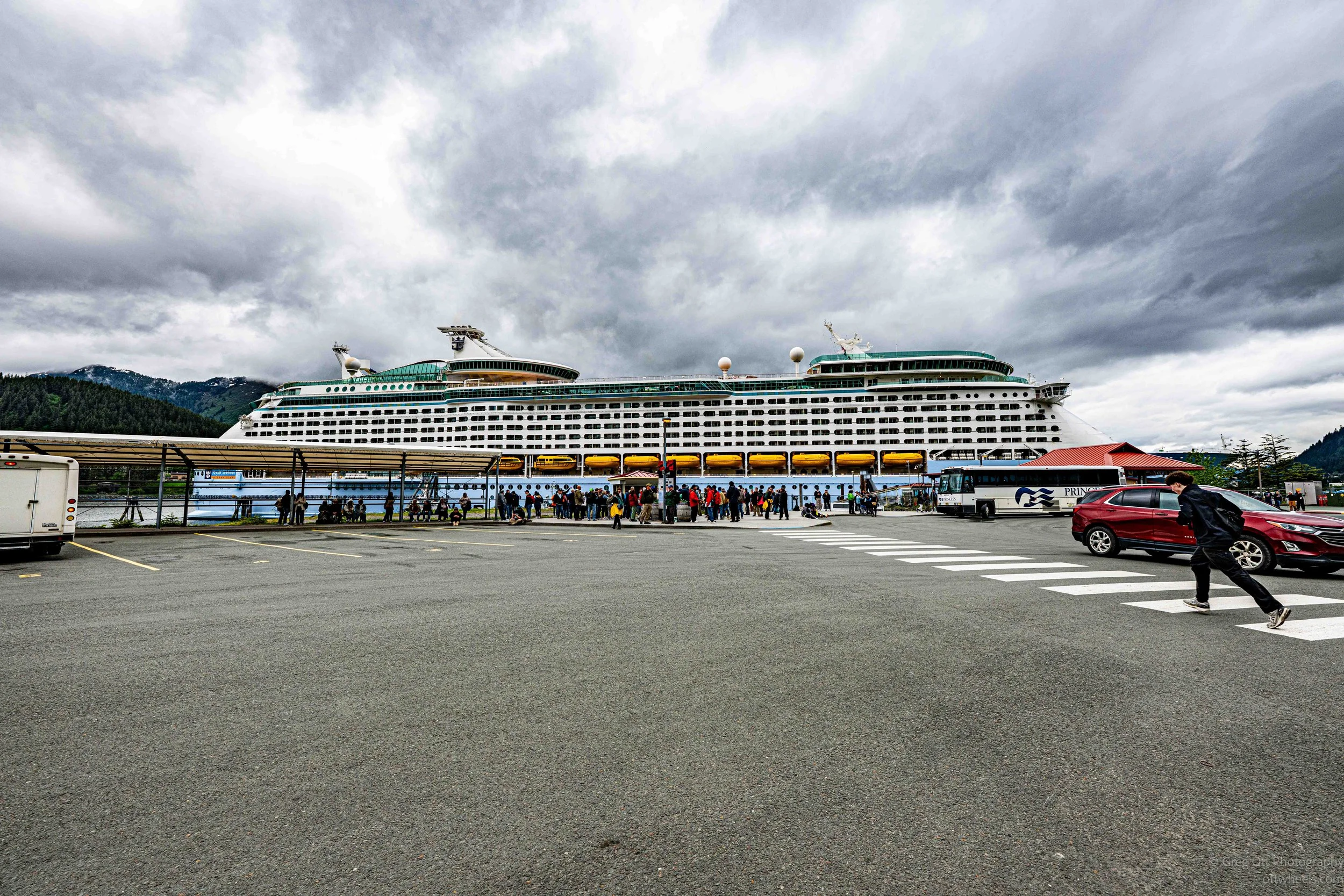
After leaving the museum, I decided to spend the rest of the afternoon walking along the waterfront. The rain had finally eased up, and Juneau's cruise ship district was buzzing with activity. Several large ships were tied up at the docks, and the town felt completely different from the quieter atmosphere I had experienced earlier in the week.
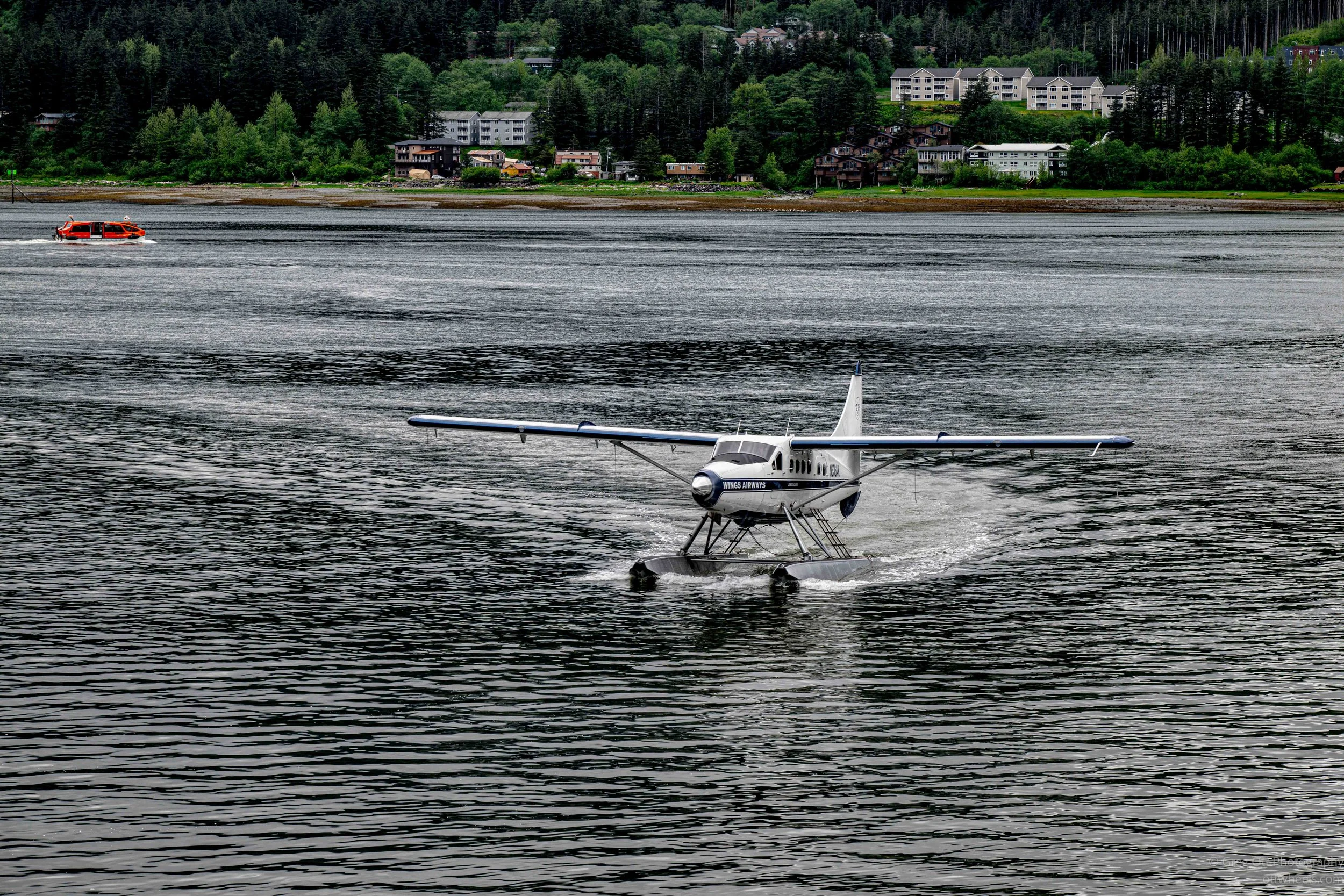
As I walked south, a couple of floatplanes landed on the water near the harbor. Watching them touch down never seems to get old. One after another they skimmed across the surface before turning and taxiing toward the docks, weaving their way between boats and tour vessels. In most places seeing an airplane land on the water would be unusual. In Alaska it seemed as normal as watching a city bus pull up to a curb.
I stopped at the mall again and rewarded myself with another ice cream before wandering through a bookstore for a while. Outside, the impact of the cruise ships was impossible to miss. Every restaurant had a line stretching out the door. The sidewalks were packed, and nearly every conversation I overheard involved excursions, departure times, or plans for the next port.
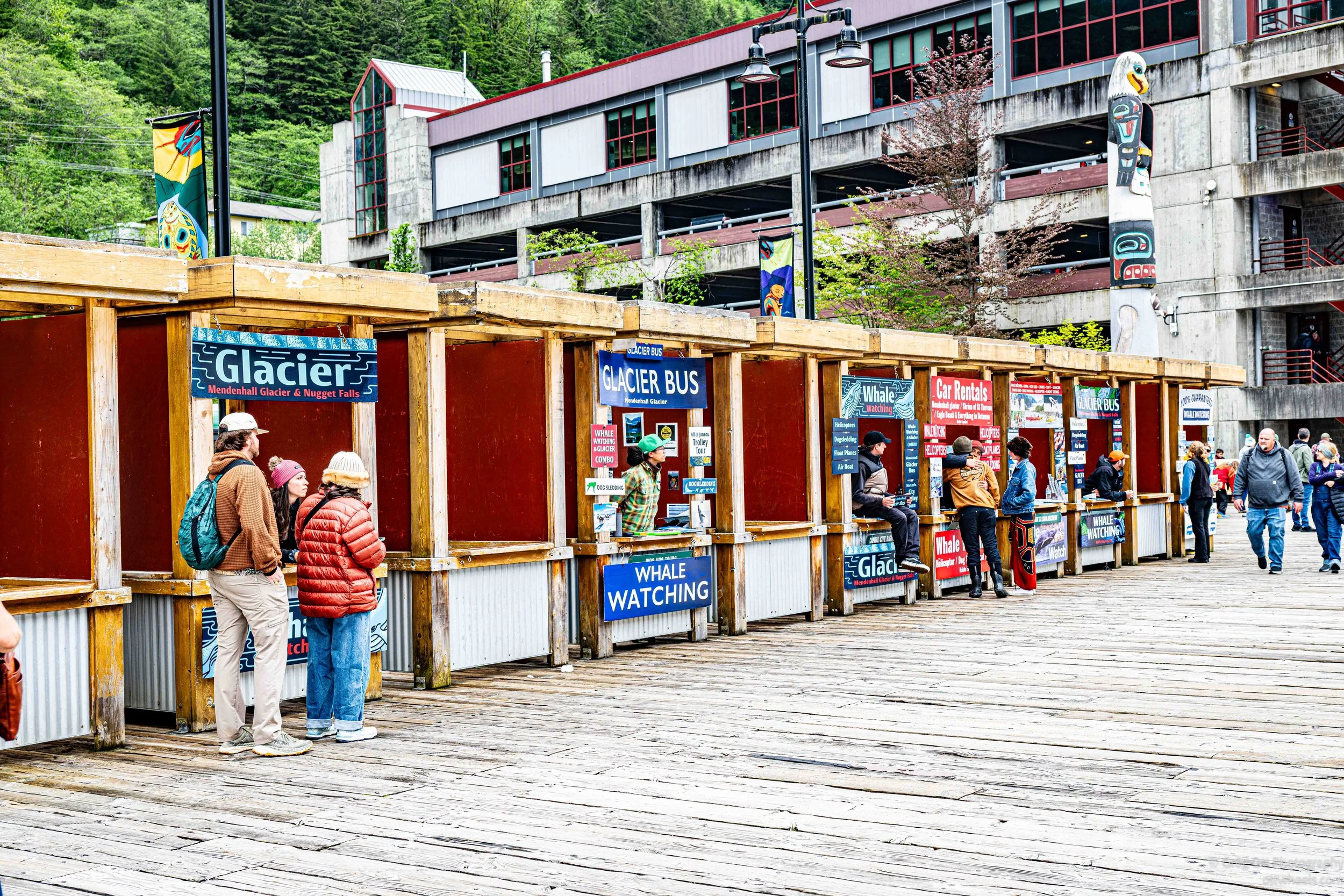
The boardwalk had changed dramatically since my previous visit. Earlier in the week many of the booths had been empty. Now every one of them seemed occupied by someone trying to sell something. Representatives called out to passing tourists, offering whale watching tours, glacier excursions, helicopter flights, car rentals, fishing charters, and every other adventure imaginable. It felt less like a small Alaskan city and more like a temporary carnival built around the arrival of the ships.
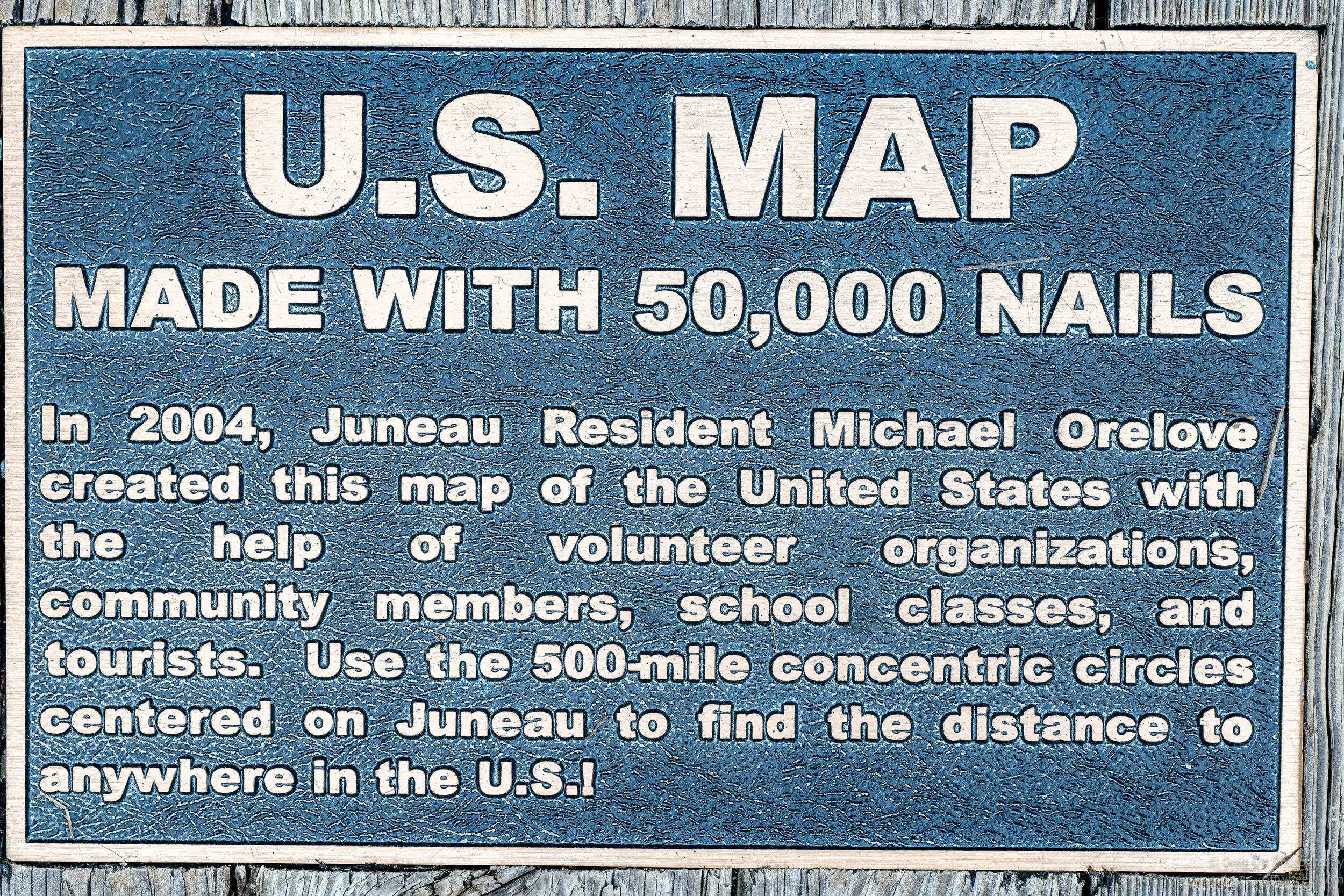
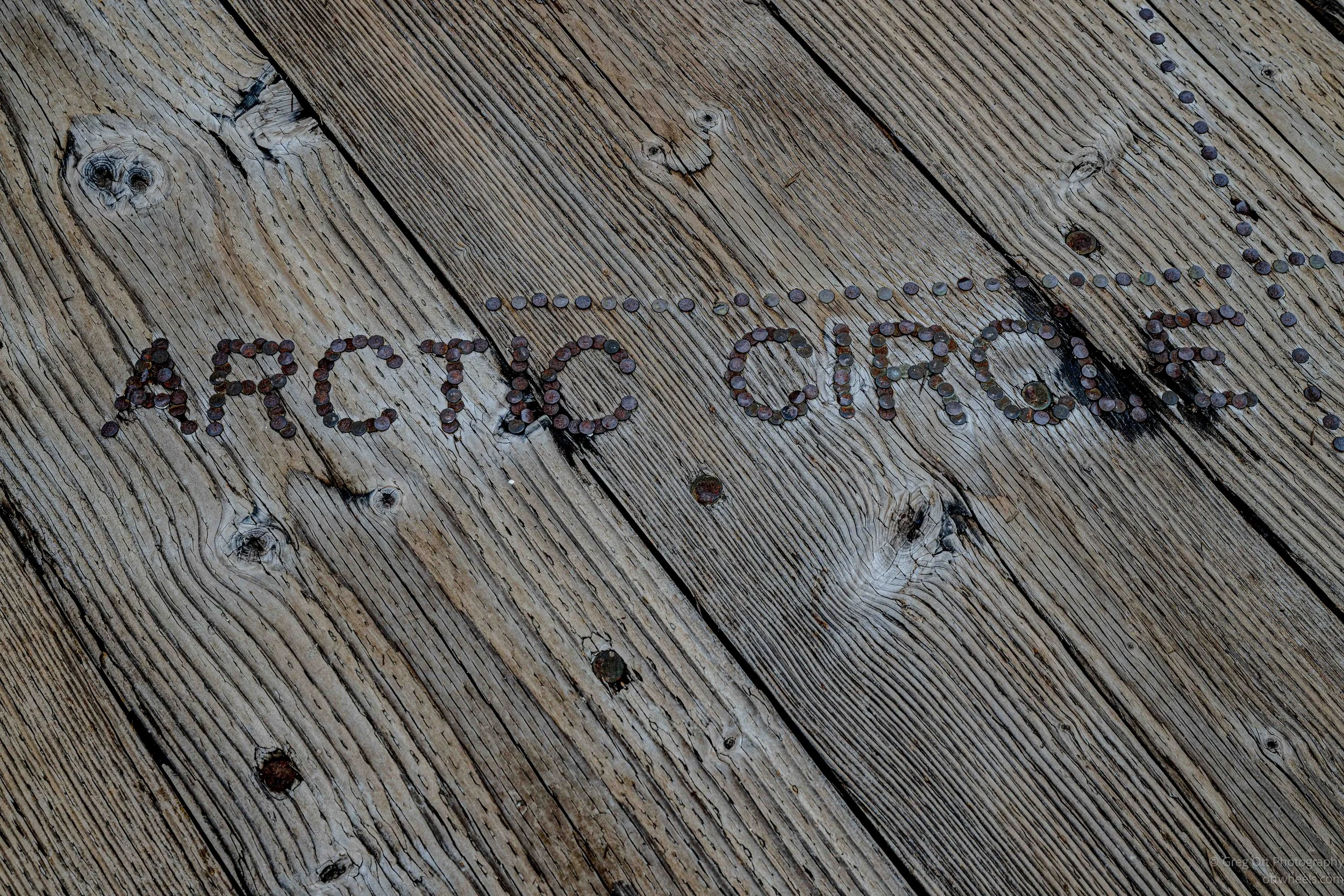
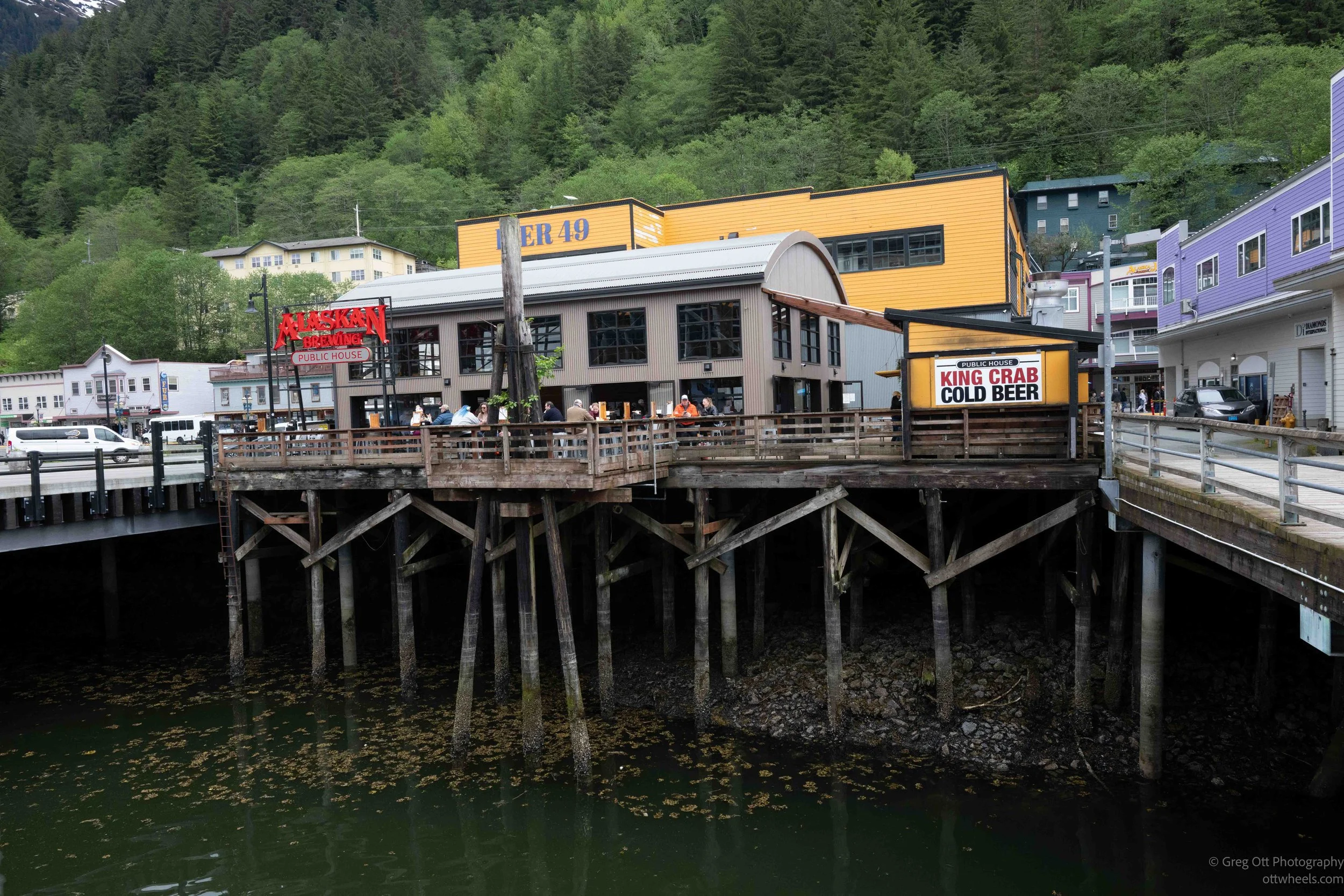
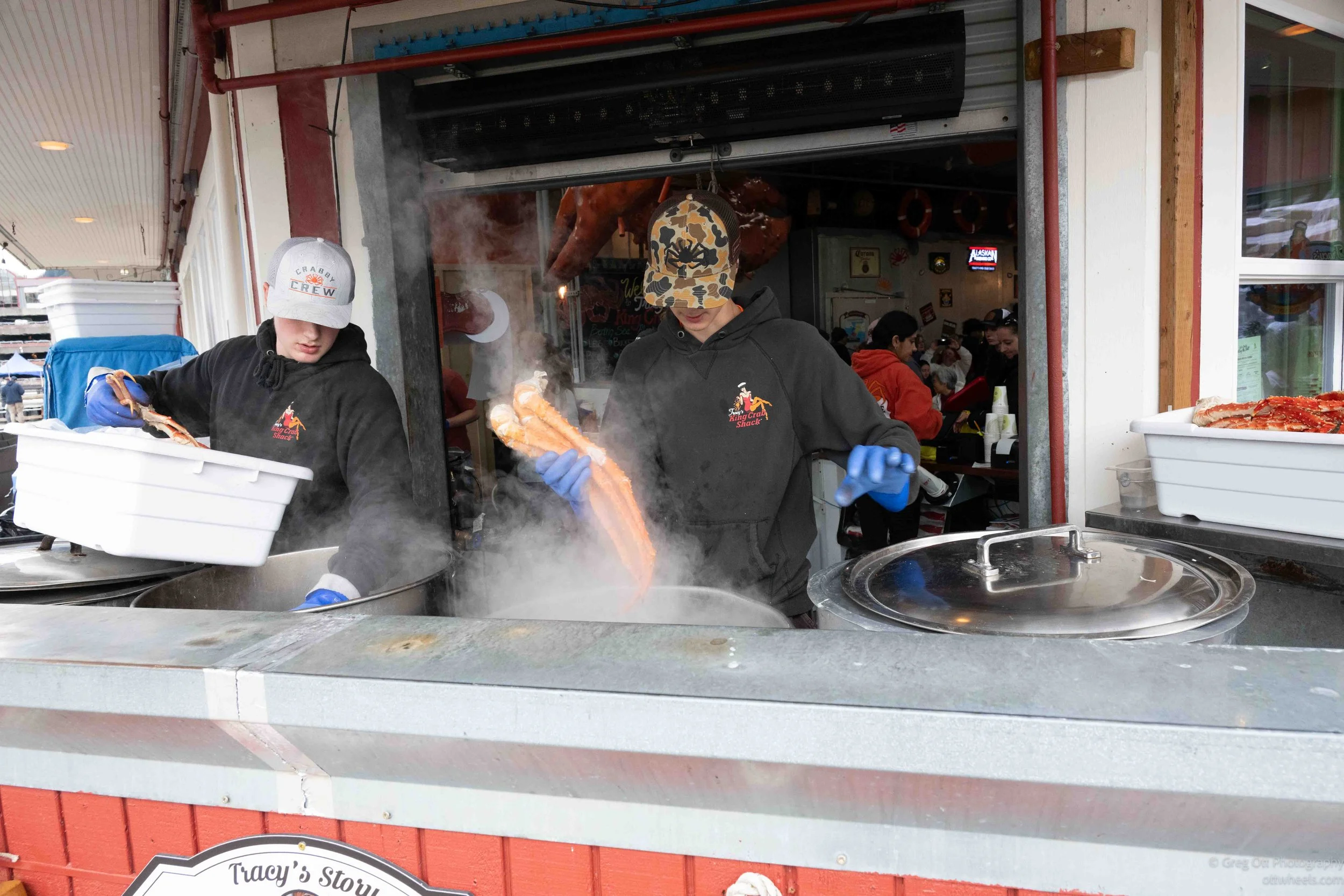
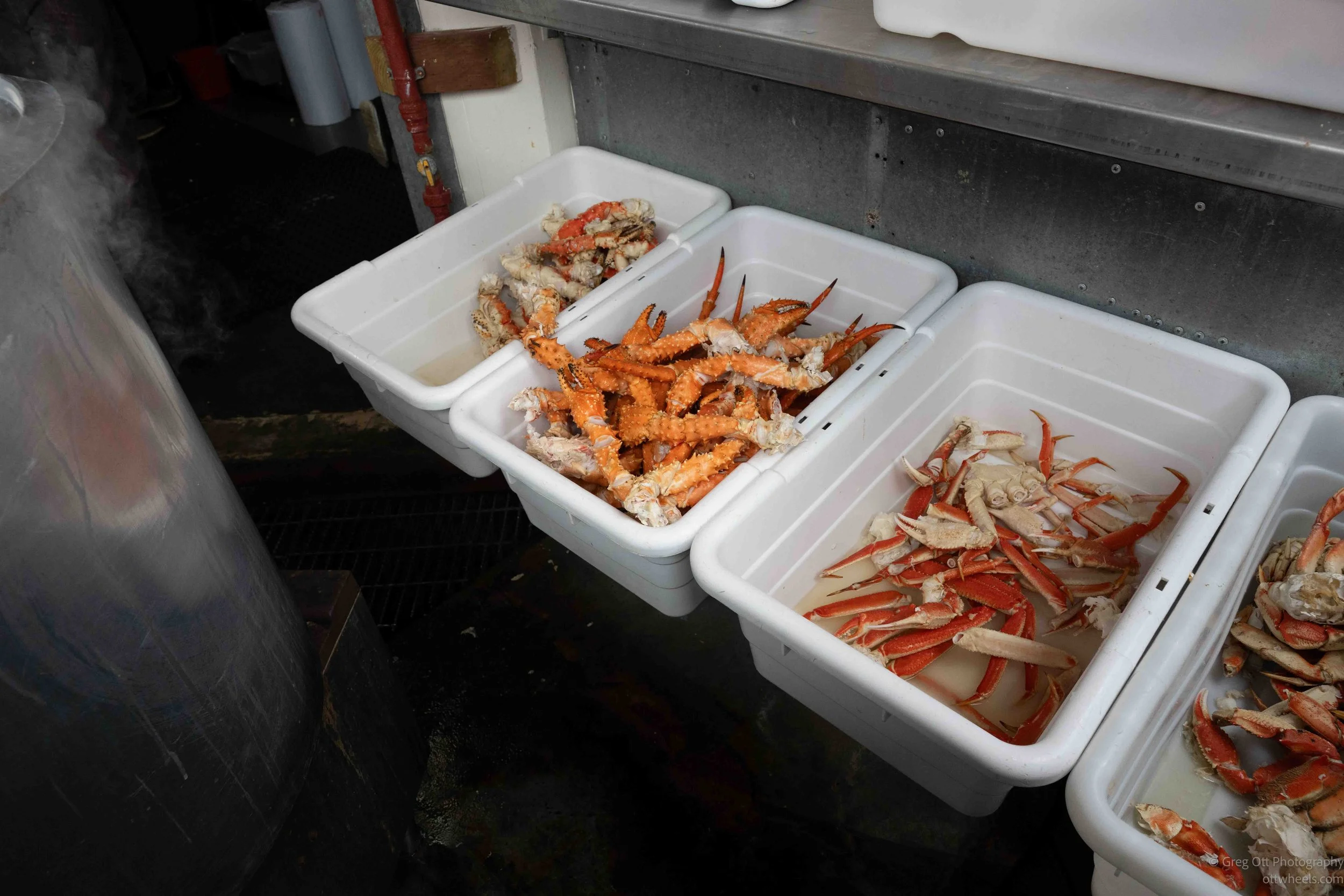
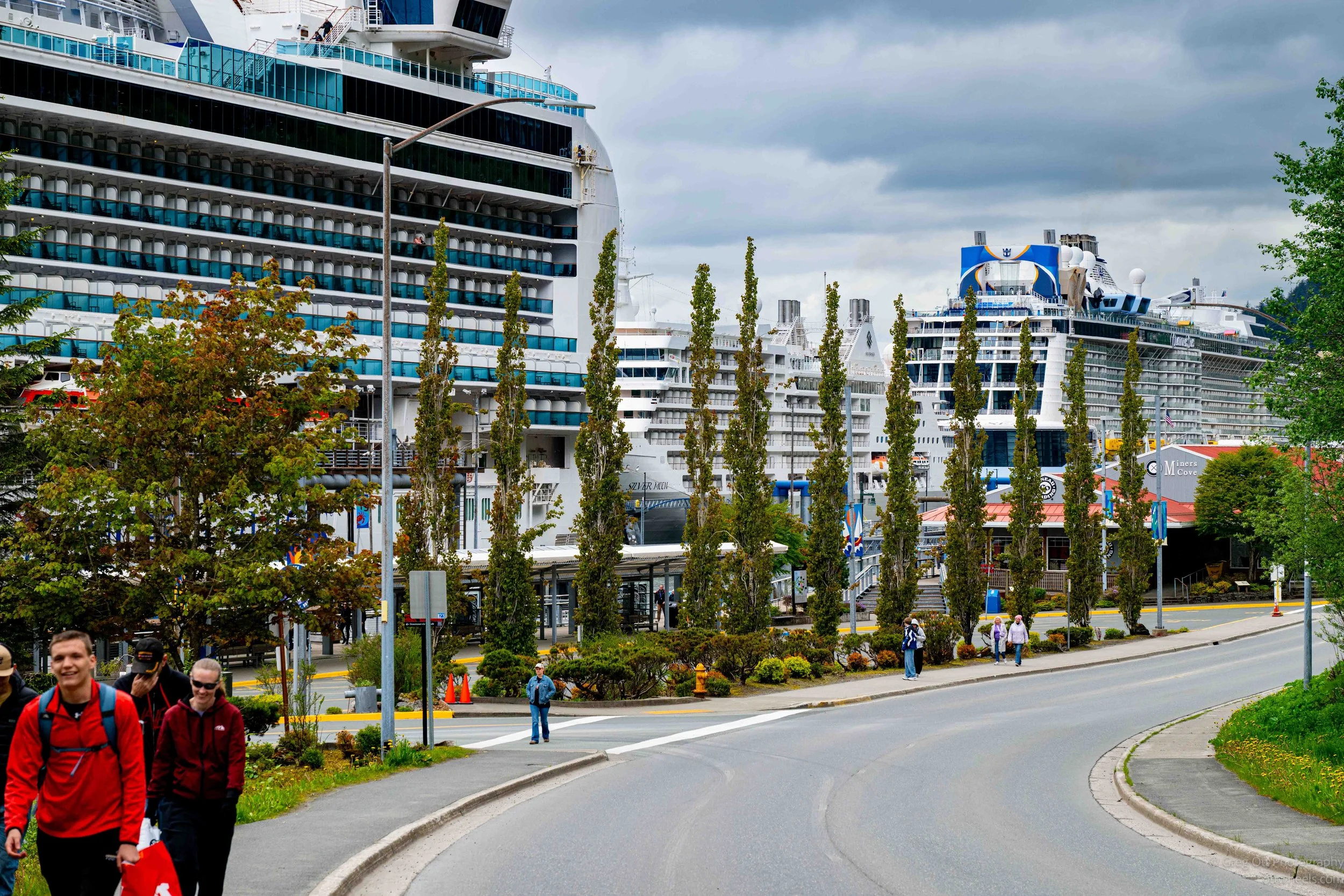
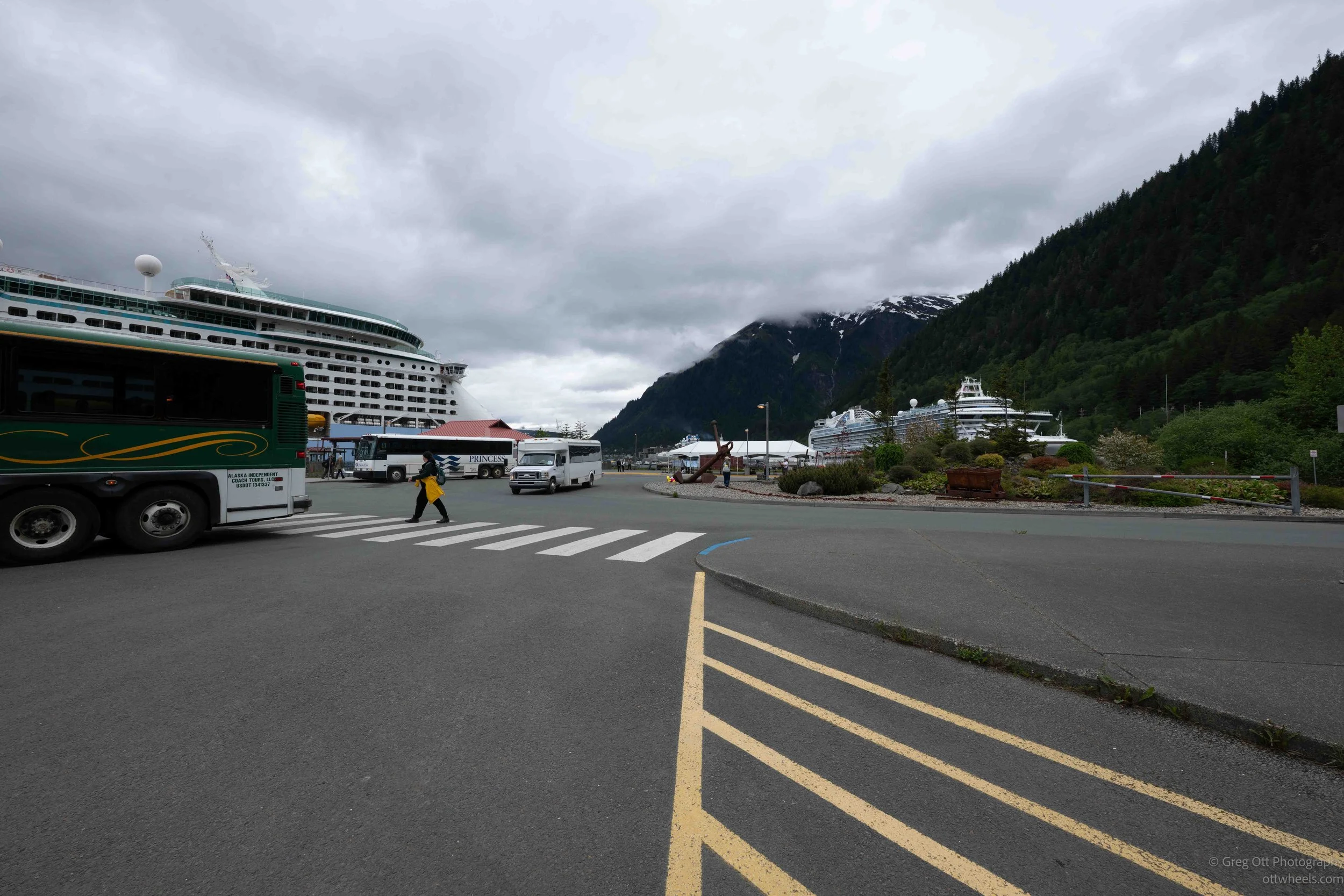
I continued walking south, eventually making my way all the way to the last cruise ship at the end of the docks. Buses constantly arrived, unloaded passengers, and disappeared again. At one point I overheard two boys proudly telling their father that they were sailing on the biggest cruise ship in port. I looked down the line of ships and couldn't help but smile. Their ship wasn't even close to being the largest one there, but that didn't seem to matter to them.
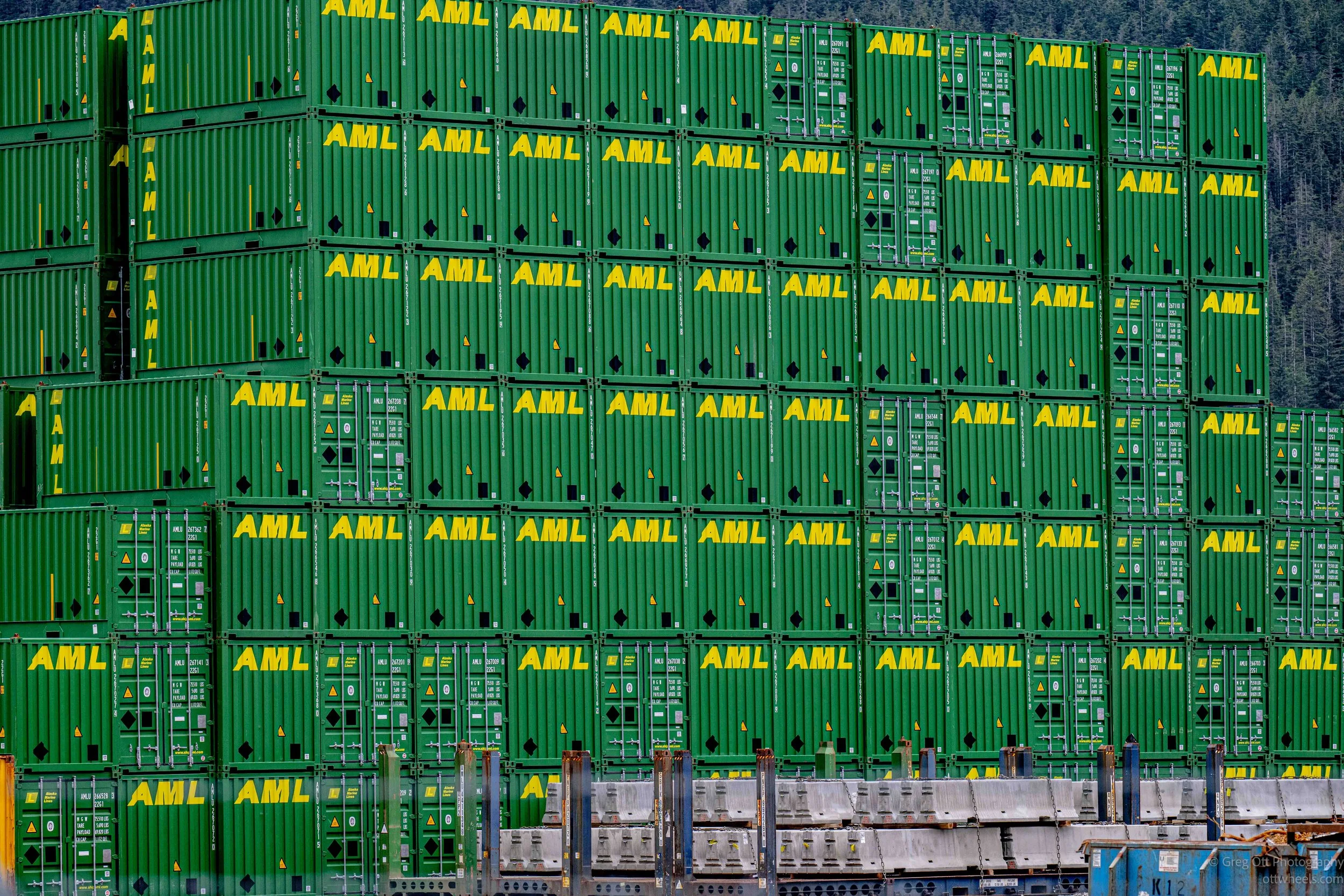
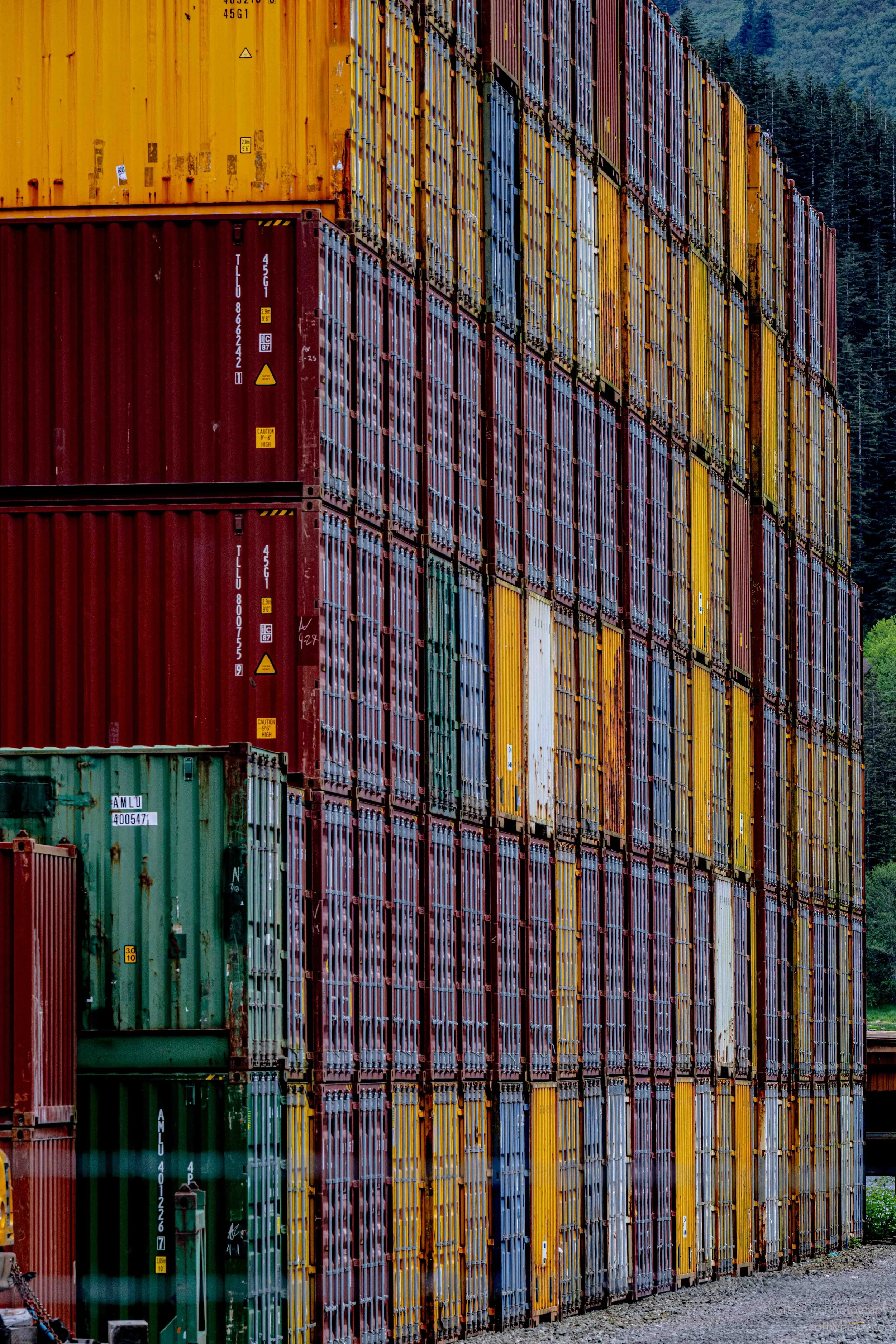
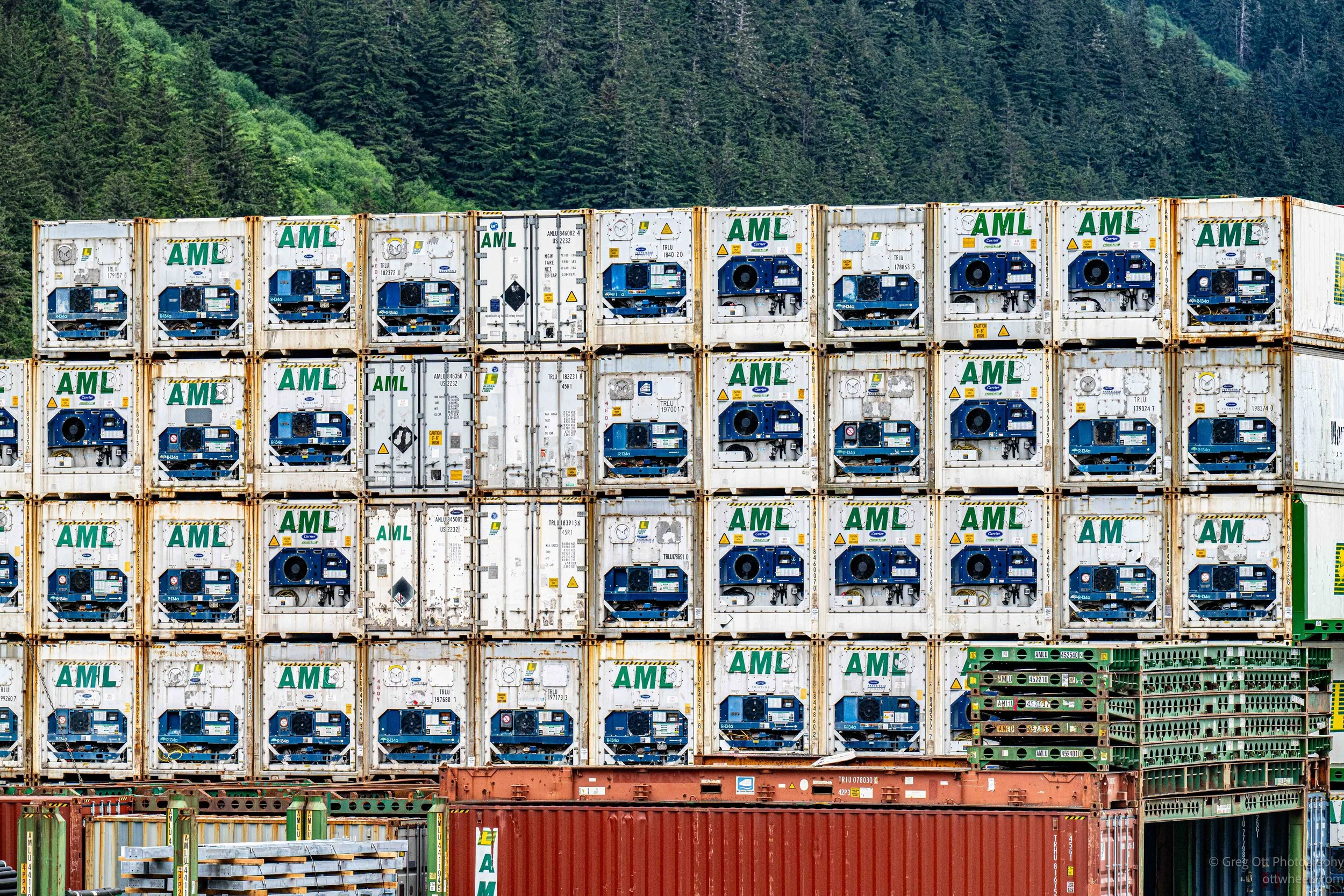
One thing that caught my attention was a large stack of shipping containers near the industrial section of the waterfront. There wasn't anything particularly beautiful about them, but I found myself staring at the patterns, colors, and sheer scale of the stacks. Maybe it's the engineer in me. Sometimes I find industrial scenes just as interesting as mountains and wildlife.
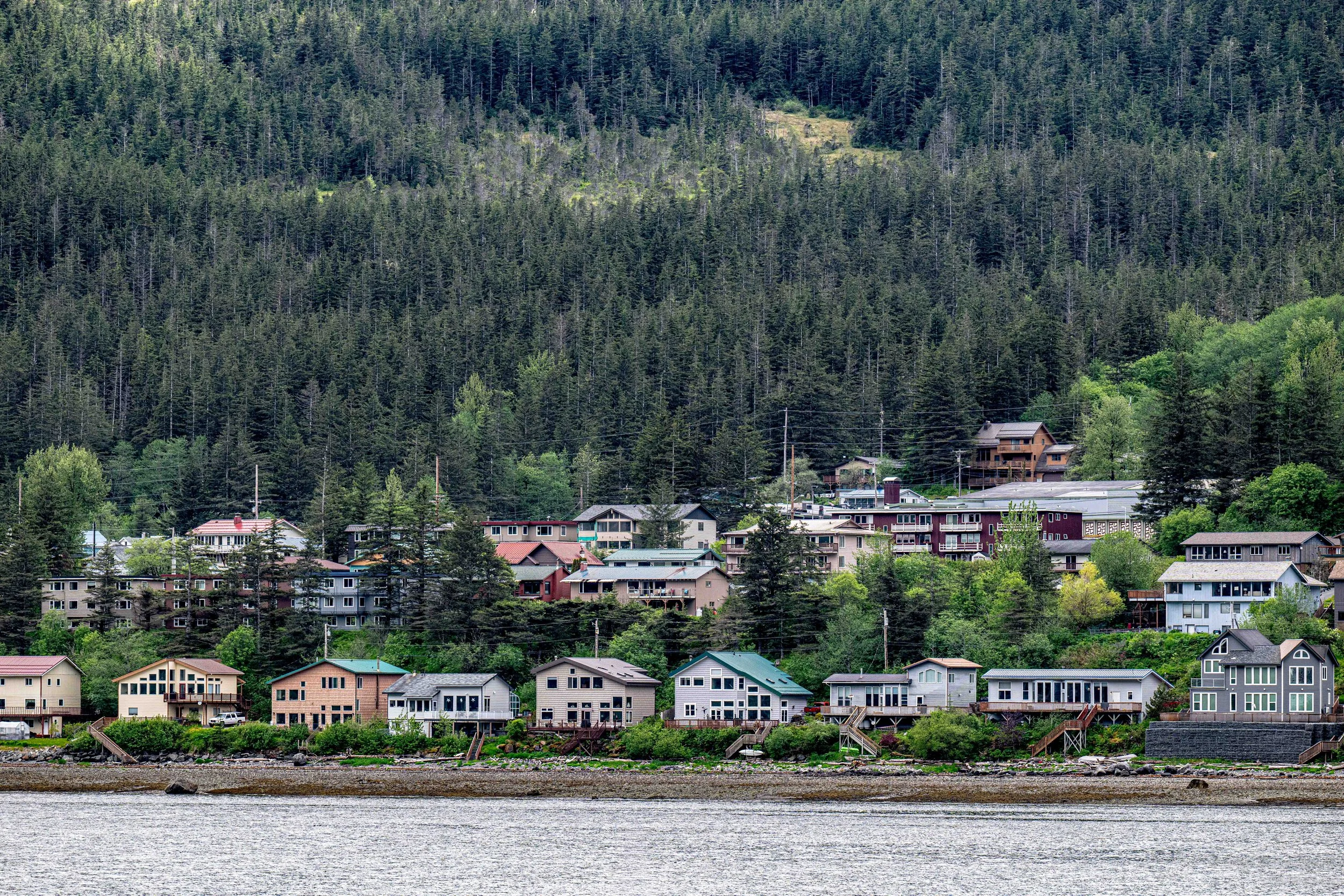
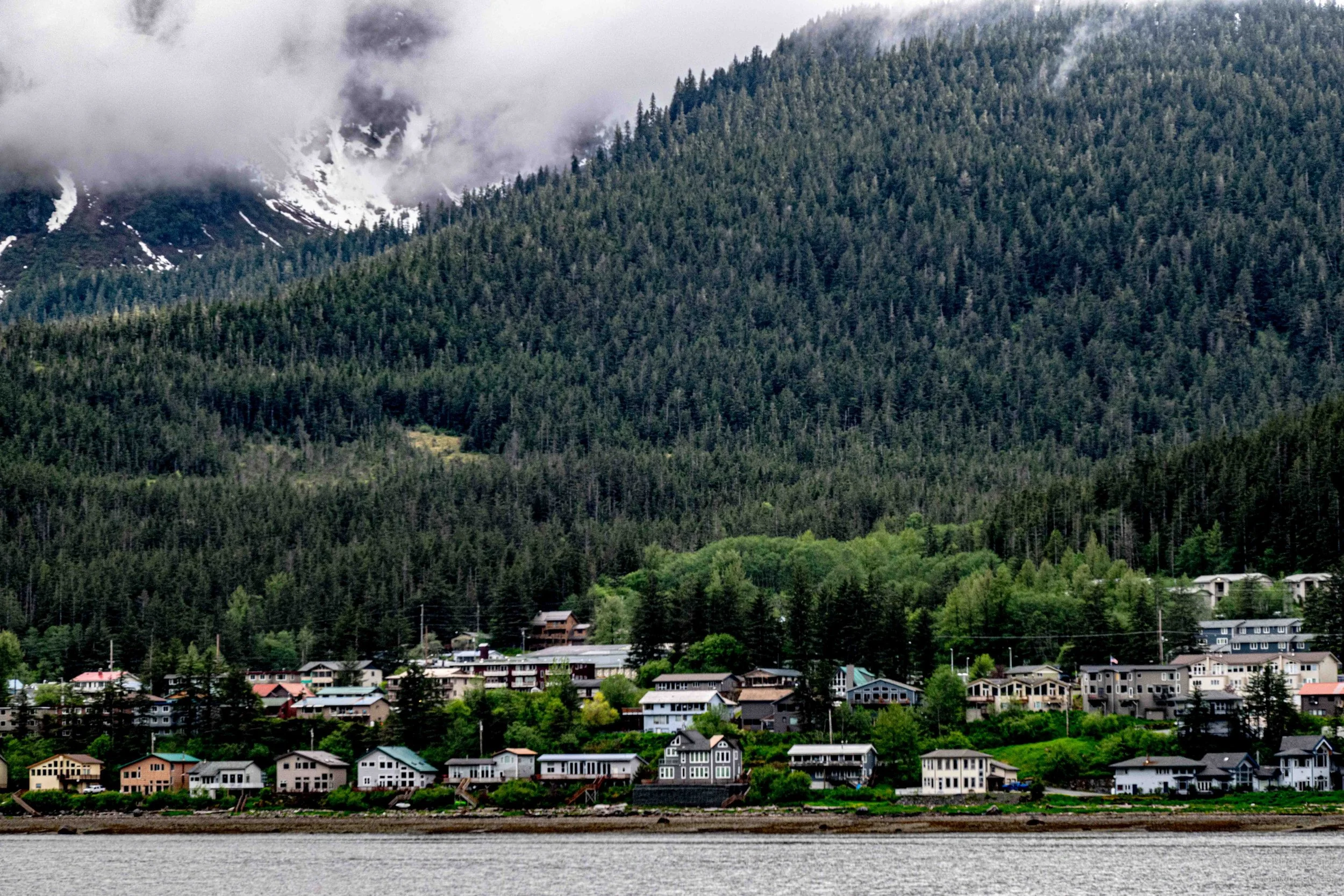
By the time I made it back to the van, my watch showed a little over five miles of walking. Rather than heading straight back to the campground, I drove over to the whale statue near the waterfront. From there I had a good view across the channel toward Douglas Island. The light wasn't particularly dramatic, but I thought the homes climbing the hillside might make an interesting photograph.
While I was standing there with my camera, a teenager stopped and asked if I was getting any good shots. We ended up talking for a few minutes. He was interested in photography and was curious about what I was shooting. I told him I was actually waiting for one of the cruise ships to leave port. Earlier I had been told roughly when it would depart, and I thought it might make a good image heading out through the channel.
I waited about forty-five minutes. I heard the ship's horn echo across the water and watched some activity around the docks, but the light never really came together the way I had hoped. Eventually I decided it wasn't going to happen and headed back to the campground.
The evening was mostly spent taking care of the less glamorous parts of life on the road. I filled the gas tank, dumped the gray water tank, and topped off the fresh water supply. Once everything was squared away, I made dinner and settled in for the night.
While cooking, I put on The Matrix, which I've probably seen more times than I can count. The movie played in the background while I ate, processed photographs from the day, and worked on blog post. The rain seems to have stopped as another Juneau day comes to an end.