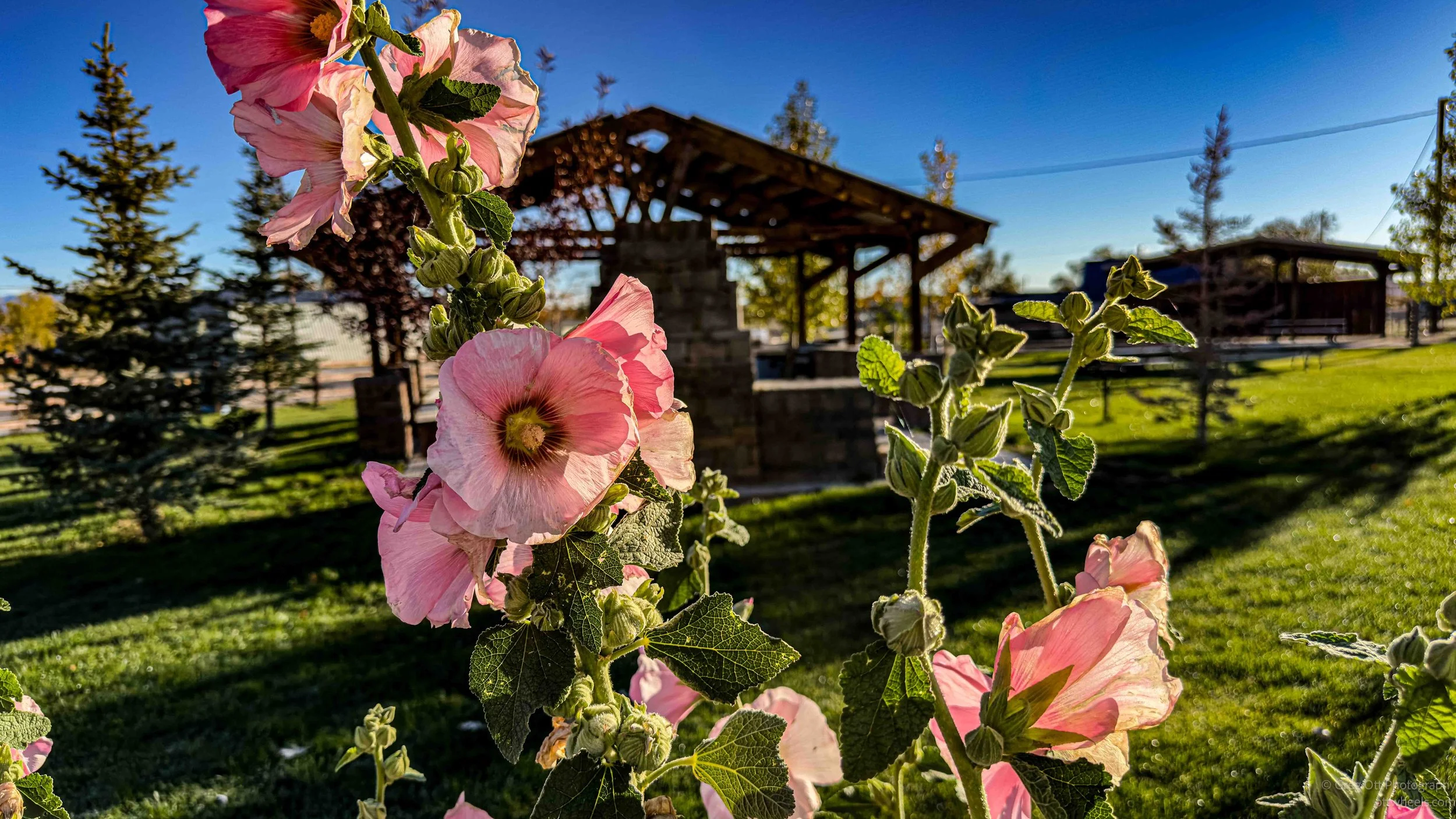
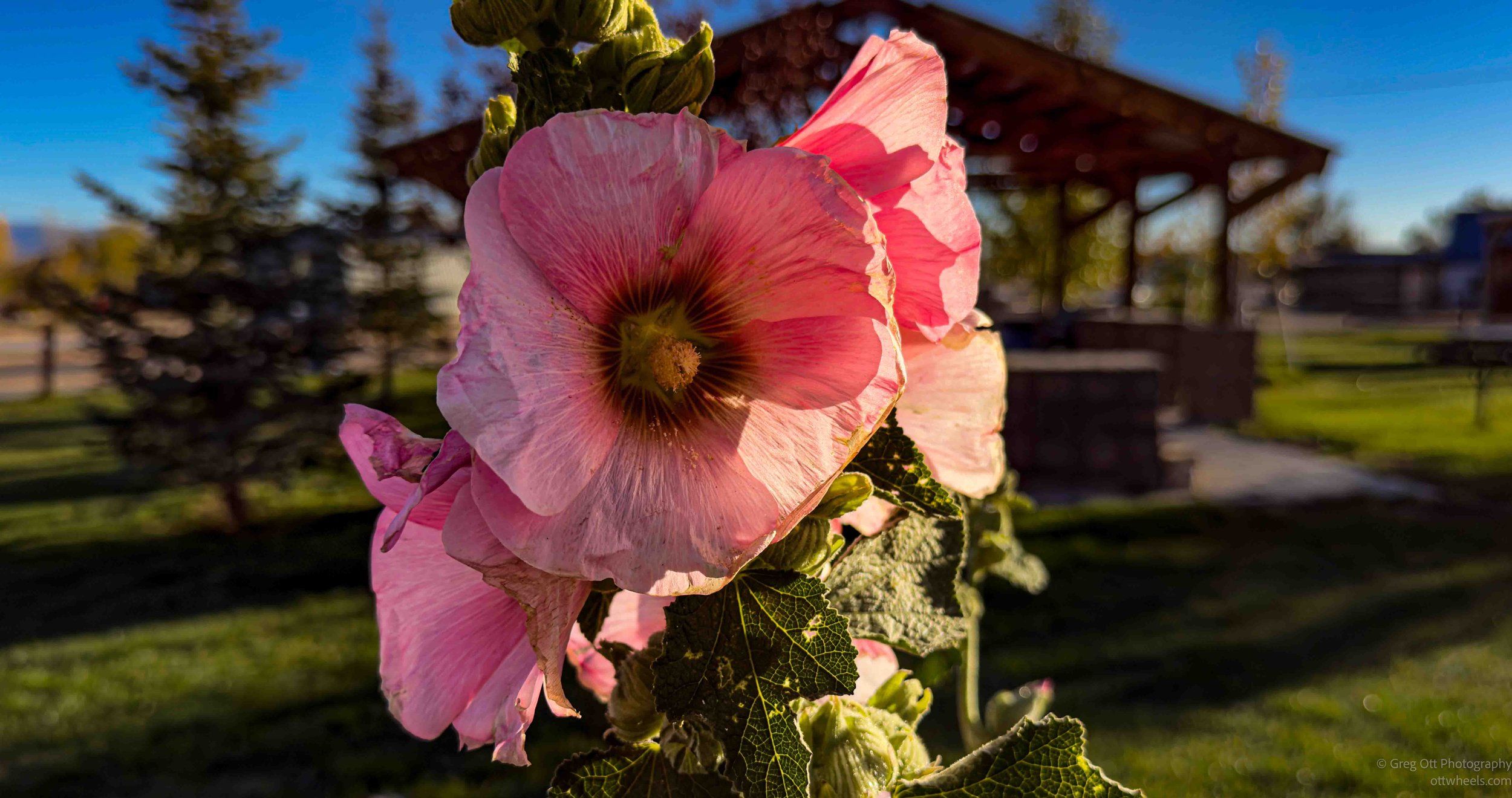
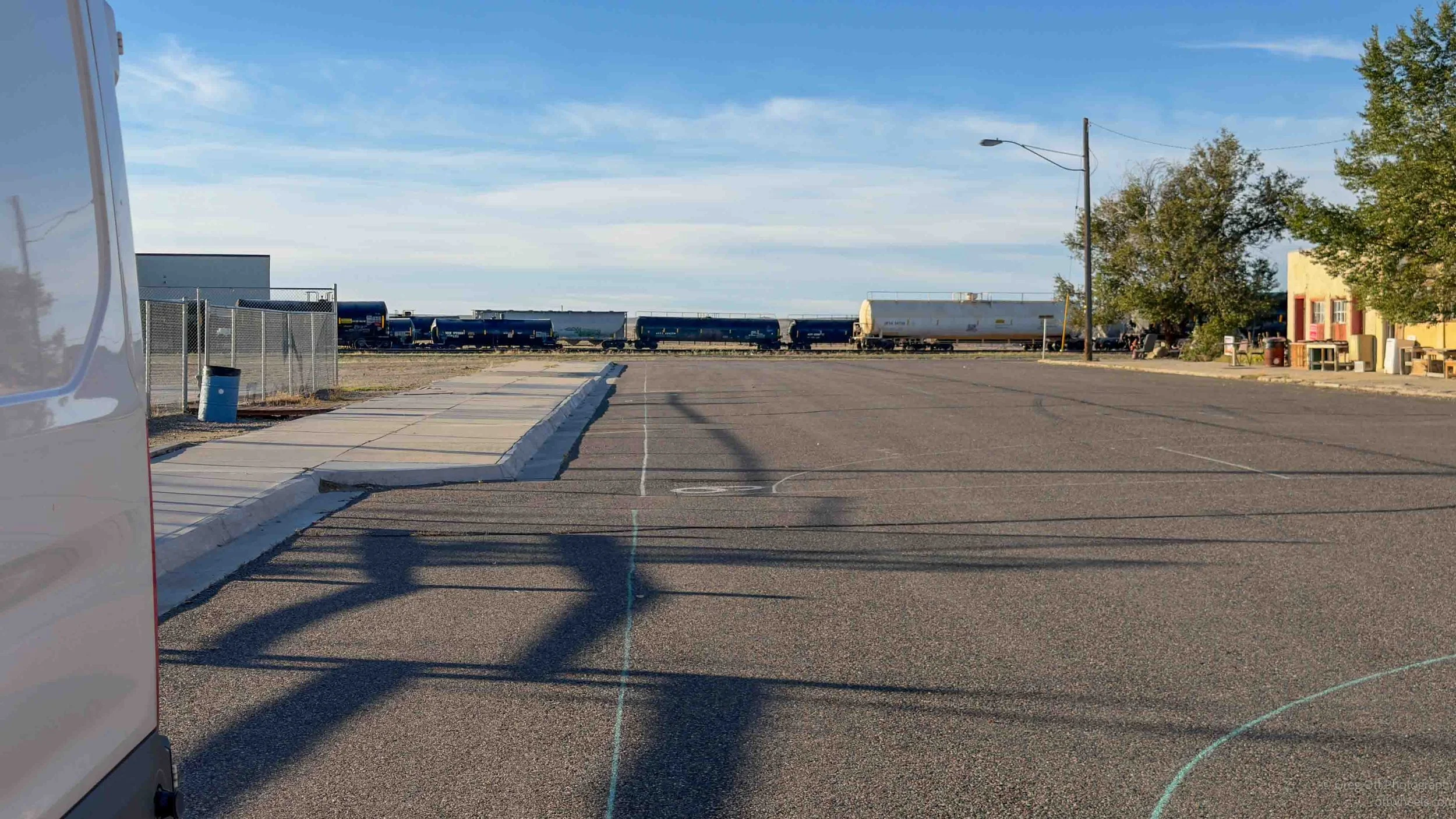
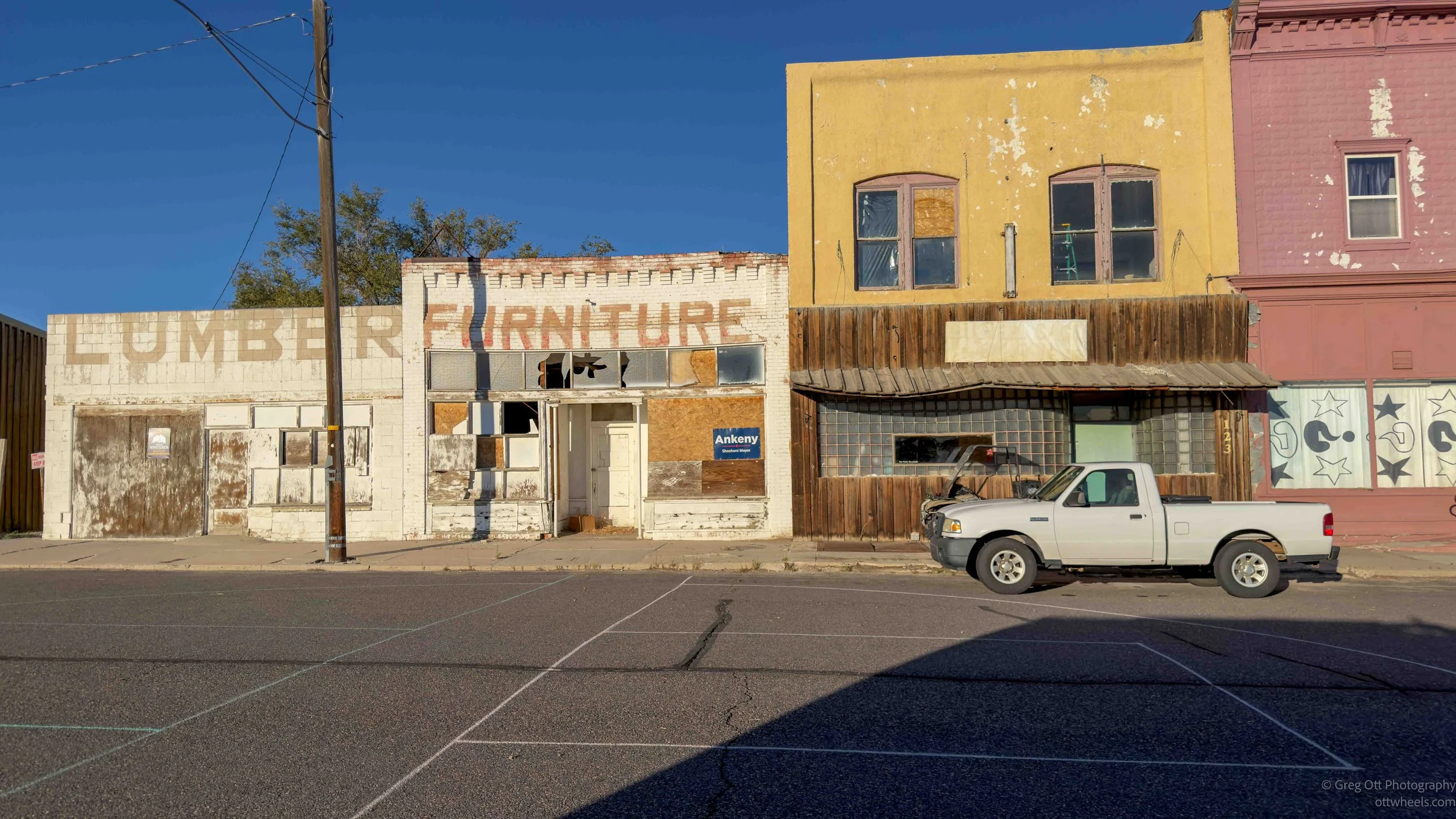
I spent the night parked beside a small community park in Shoshoni, Wyoming, a town of about 470 people. Despite its location along US-26, the town was surprisingly quiet, perhaps because it was the weekend. With hardly any traffic, I had a good night's sleep.
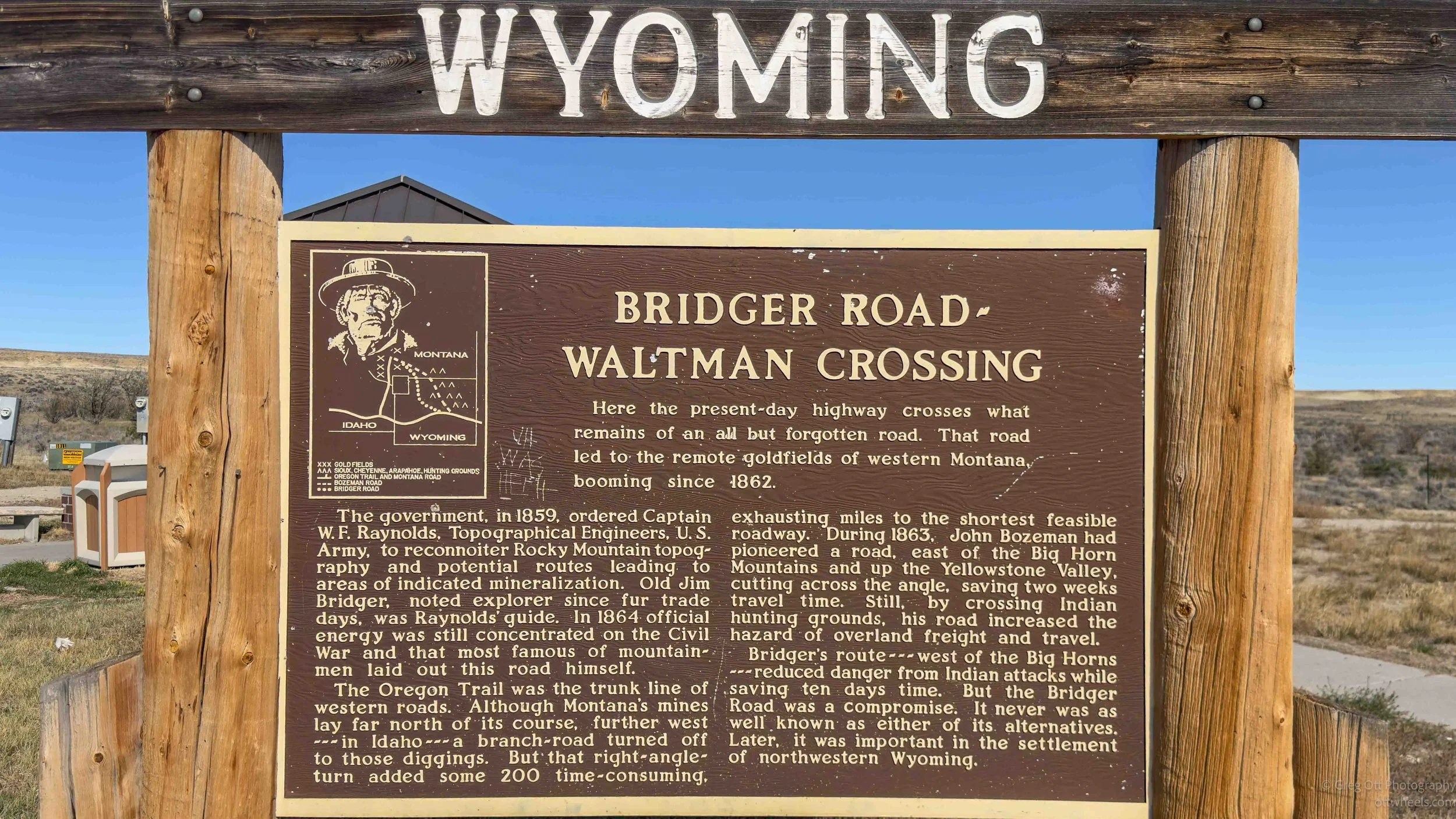
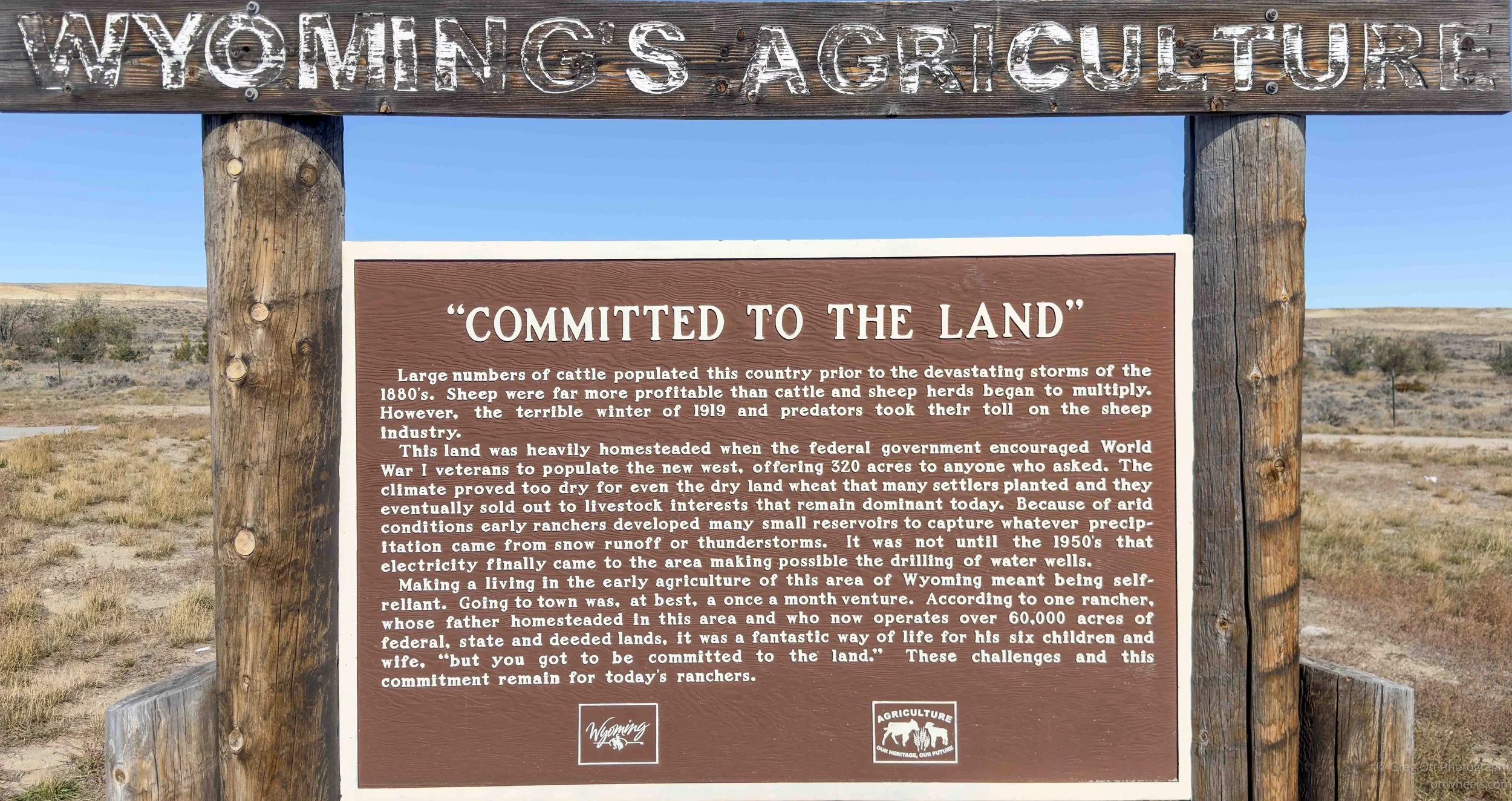
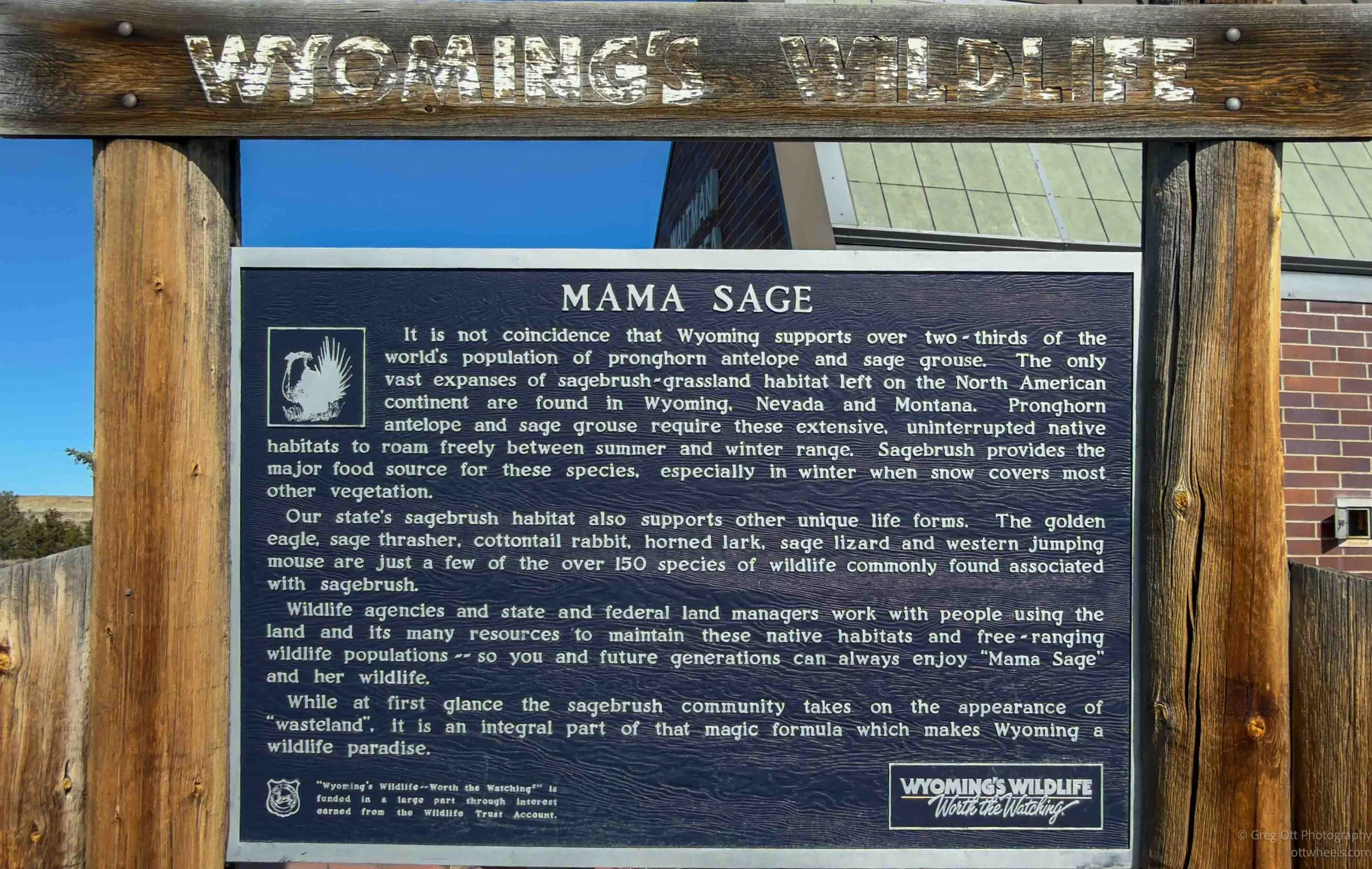
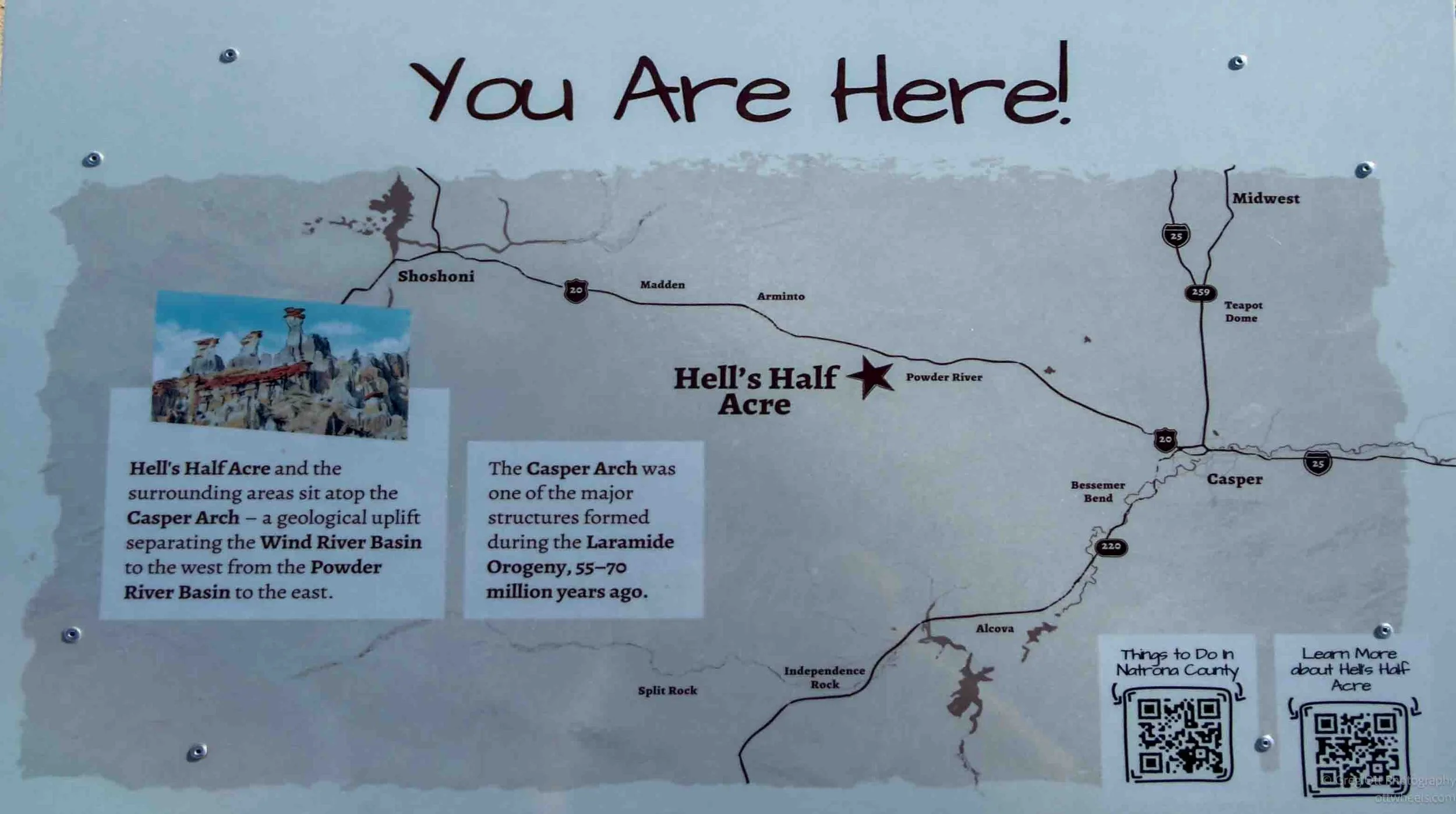
I left around 7 a.m. and headed east toward Hell’s Half Acre. After about 40 miles, I pulled into a large, quiet roadside rest area with flush toilets. The morning sun was shining directly onto the side of the van, so I opened the door, made my usual double espresso, and settled in to do some writing. I hadn't realized I was only a few miles from my destination, and by the time I got back on the road, it was nearly 11:30 a.m.
Hell’s Half Acre
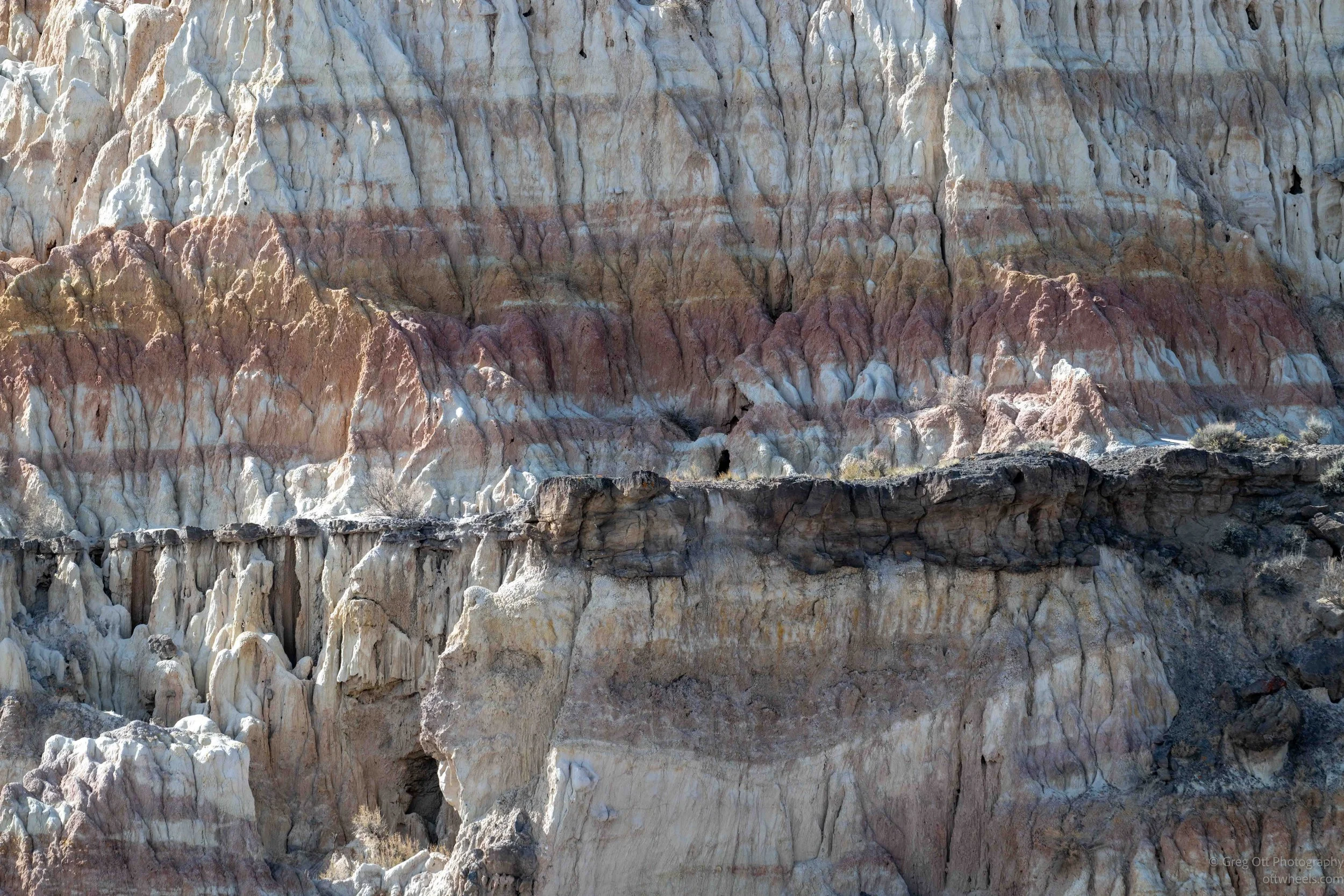
Hell’s Half Acre is a rather misleading name for a geological formation covering more than 300 acres of eroded badlands west of Casper, Wyoming. The landscape appears almost without warning. One moment you're looking across relatively flat grassland, and the next you're standing at the edge of an enormous depression filled with jagged rock formations, narrow gullies, steep ridges, and deeply eroded cliffs. It was quite a contrast to the surrounding countryside.
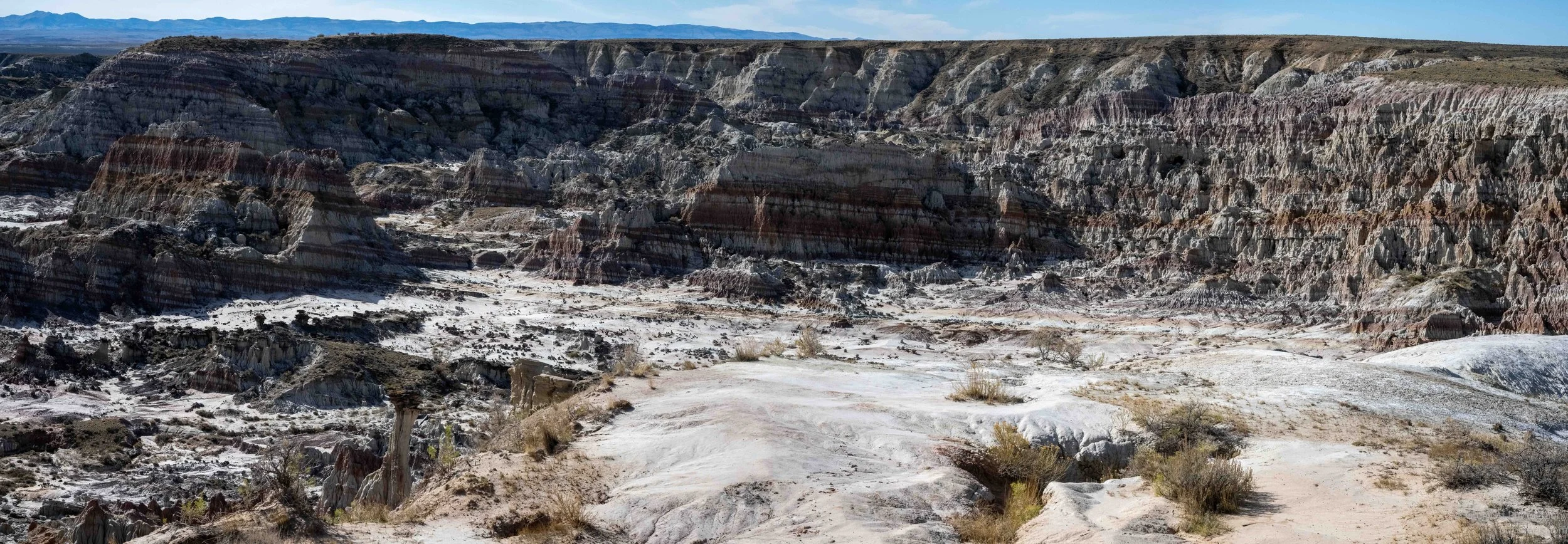
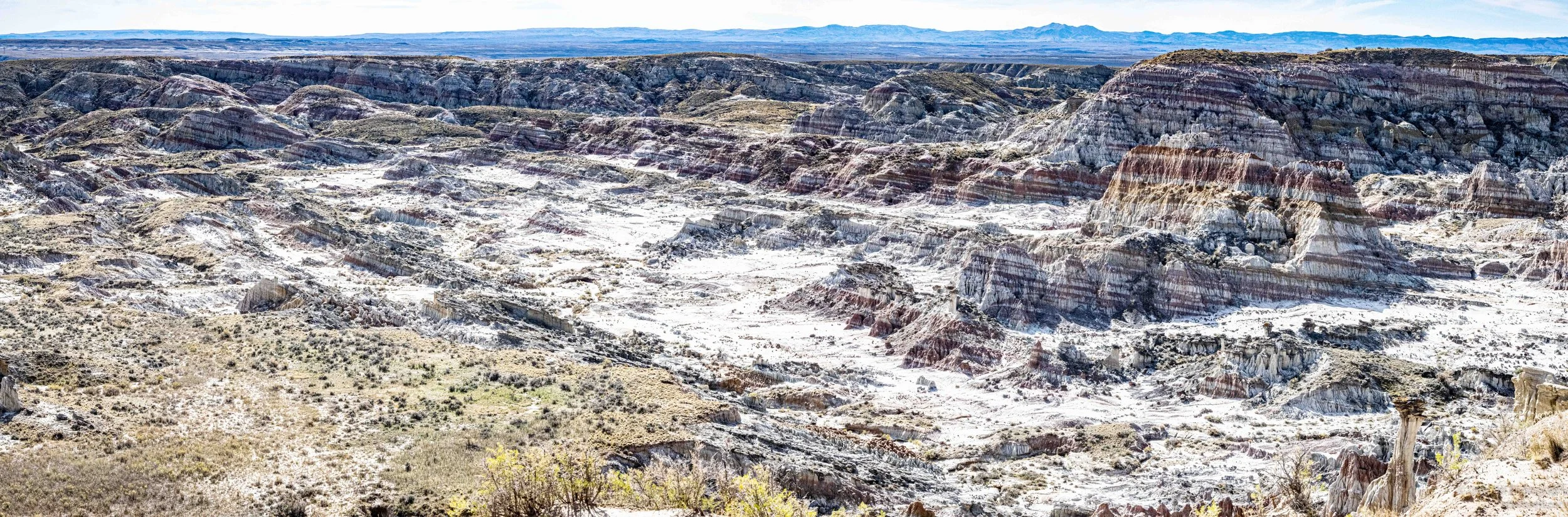
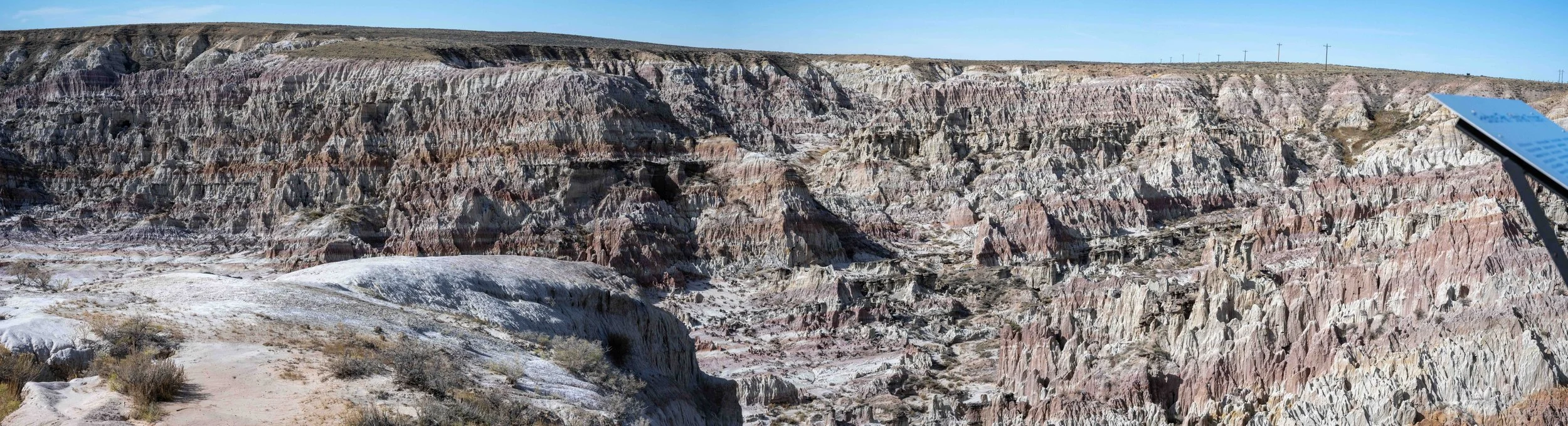
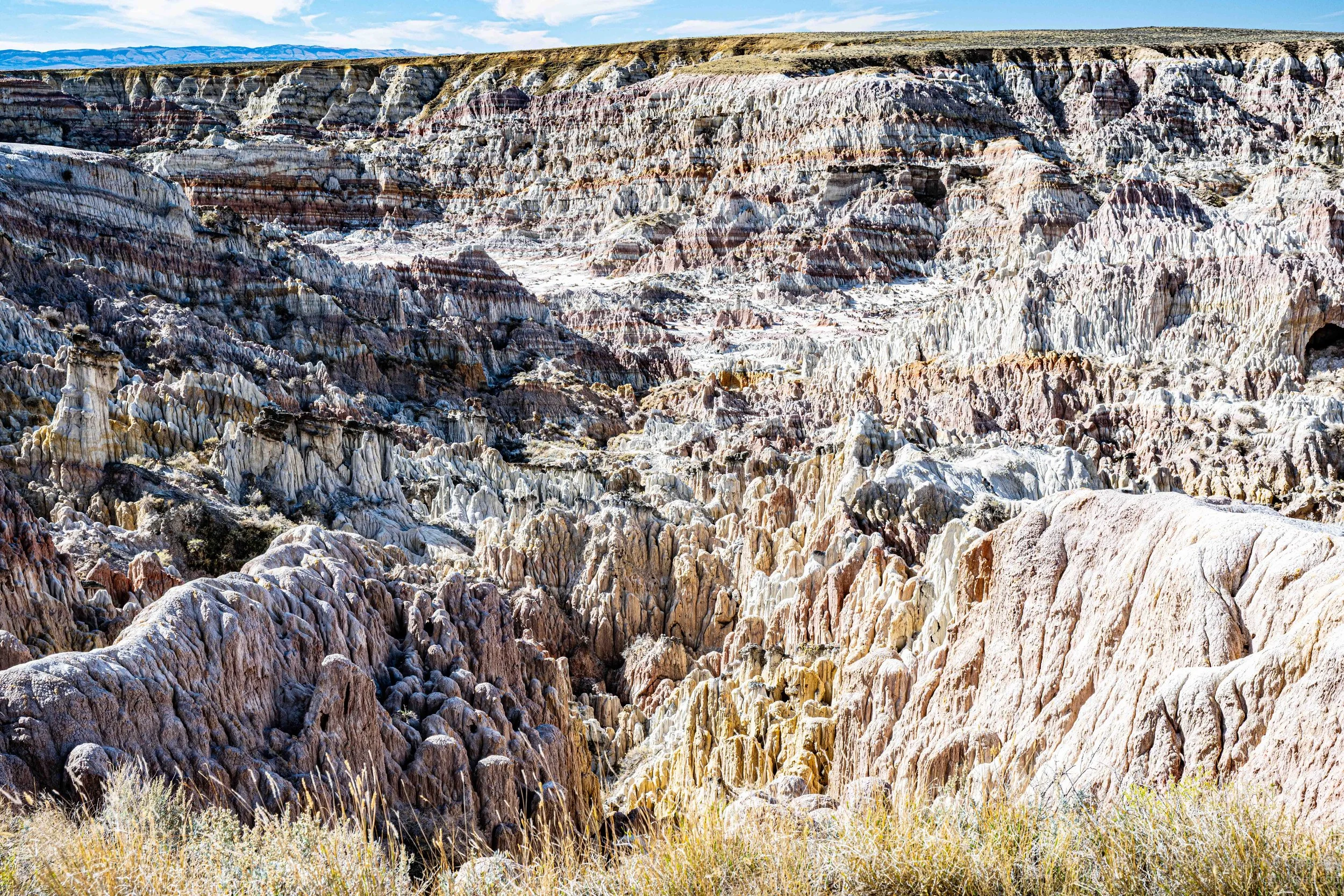
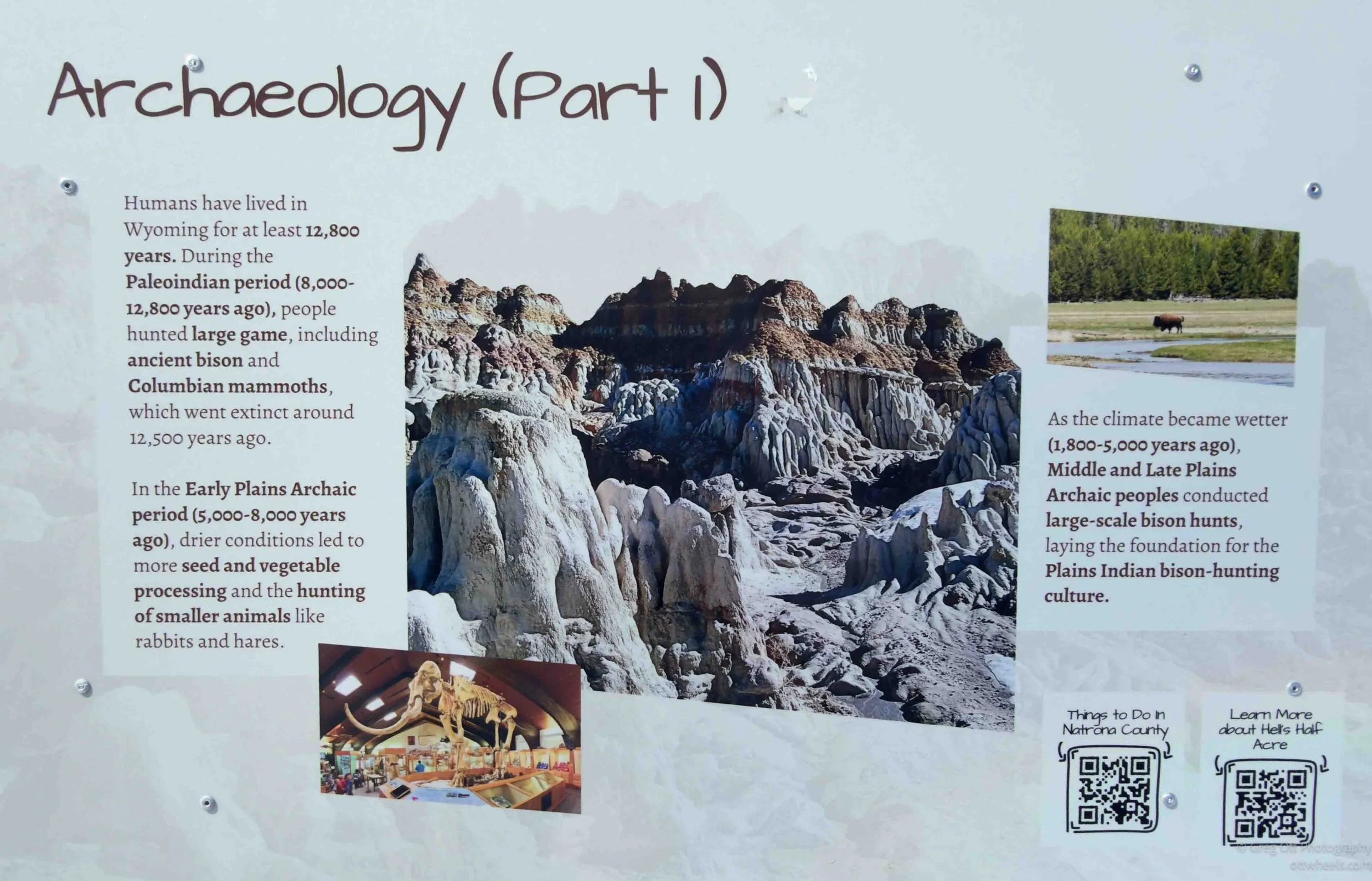
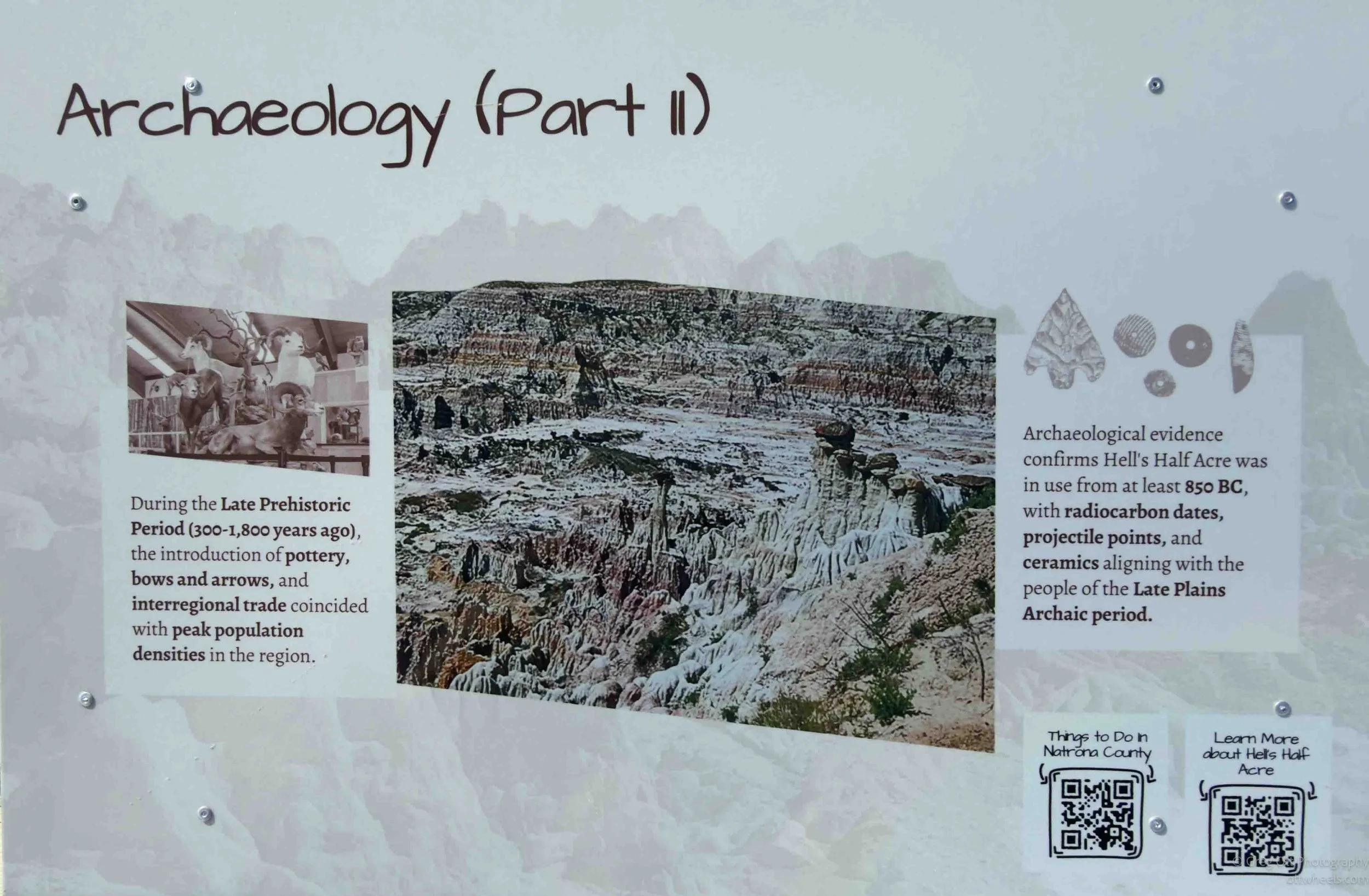
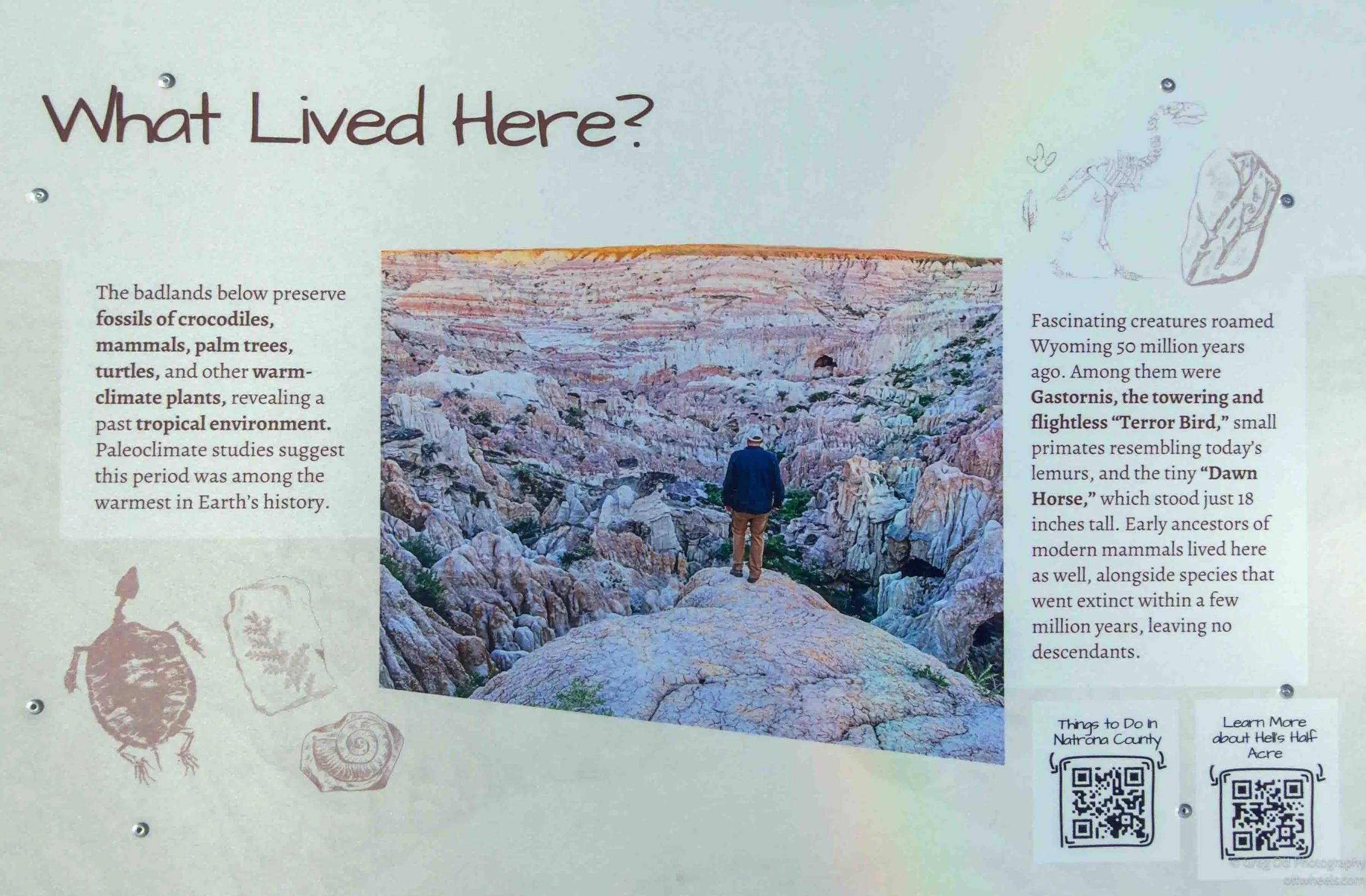
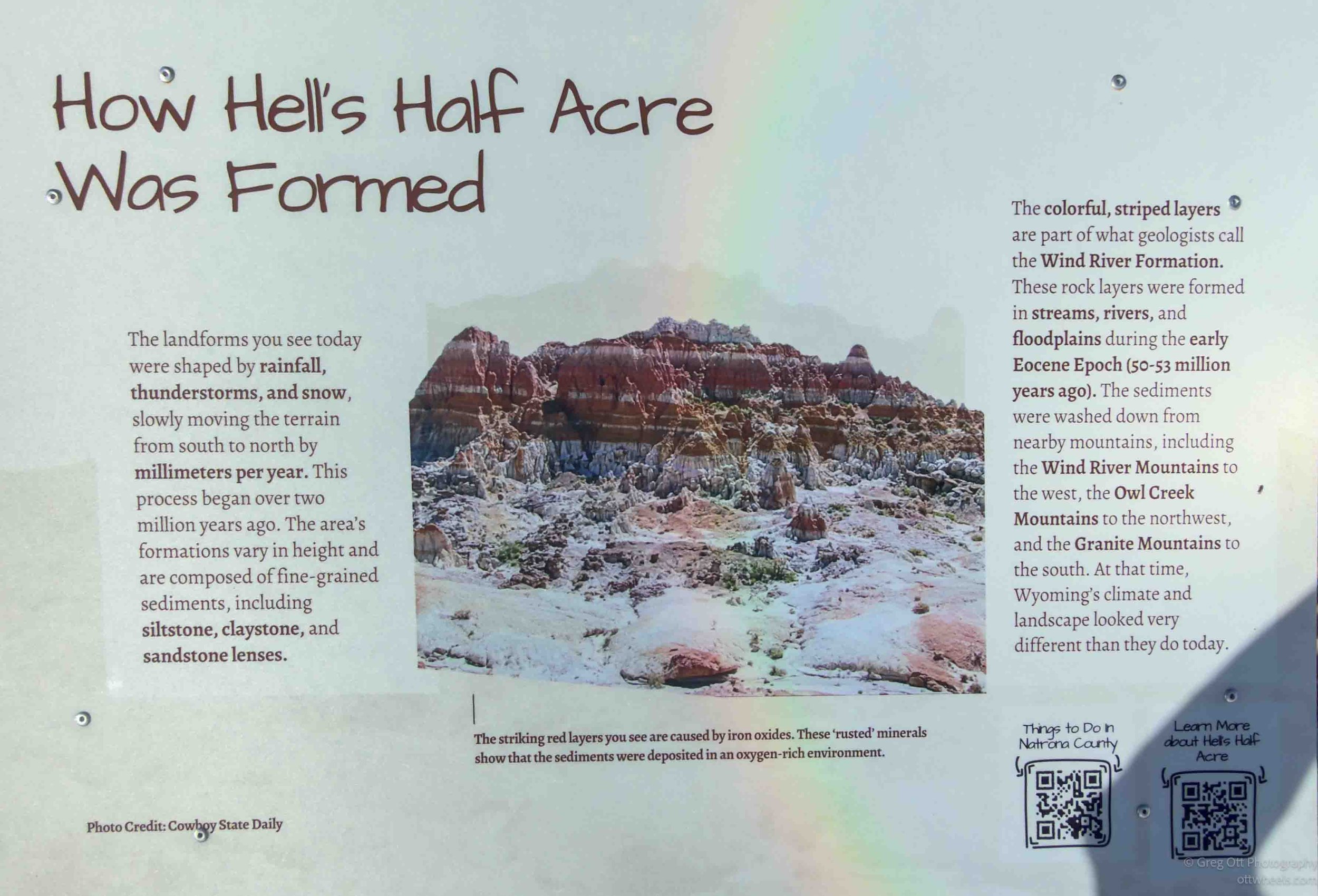
I spent some time walking along the viewing area, trying to make sense of the unusual landscape. There were a number of interpretive signs explaining the geology, archaeology, and history of the area. I found them interesting and spent quite a bit of time reading them. According to the signs, the rock layers were deposited by rivers and streams some 50 to 53 million years ago, when Wyoming had a much warmer climate. The formations we see today began taking shape about two million years ago as rain, snow, freezing temperatures, and erosion gradually carved away the softer layers of sandstone, siltstone, and claystone.
I was fascinated by the geology. Some of the ridges were razor thin, while others had broad, rounded tops. Deep shadows filled the narrow gullies, and the exposed layers of rock created patterns that seemed to run in every direction. It was difficult to imagine that millions of years of erosion had produced such a strange landscape in the middle of the Wyoming prairie.
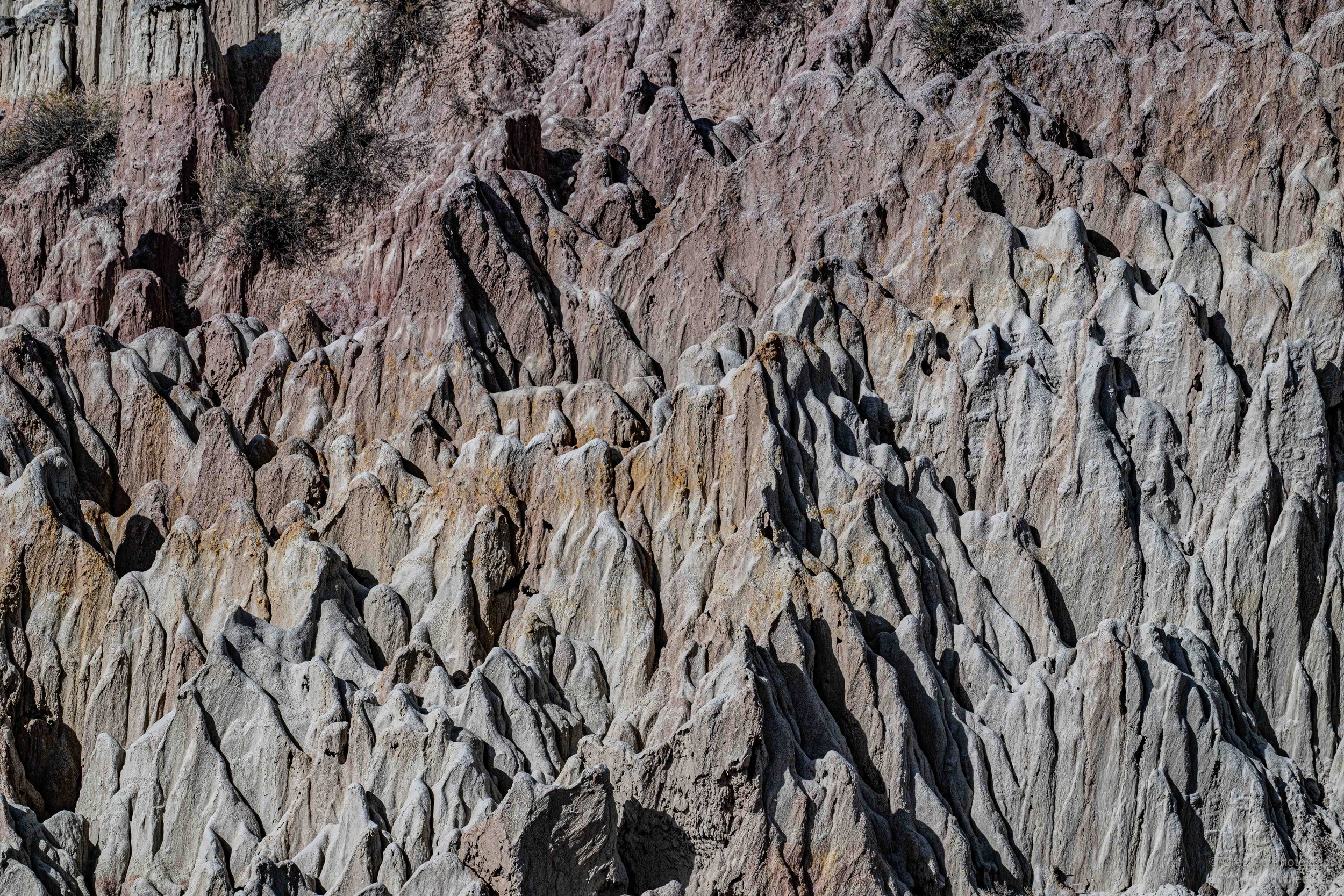
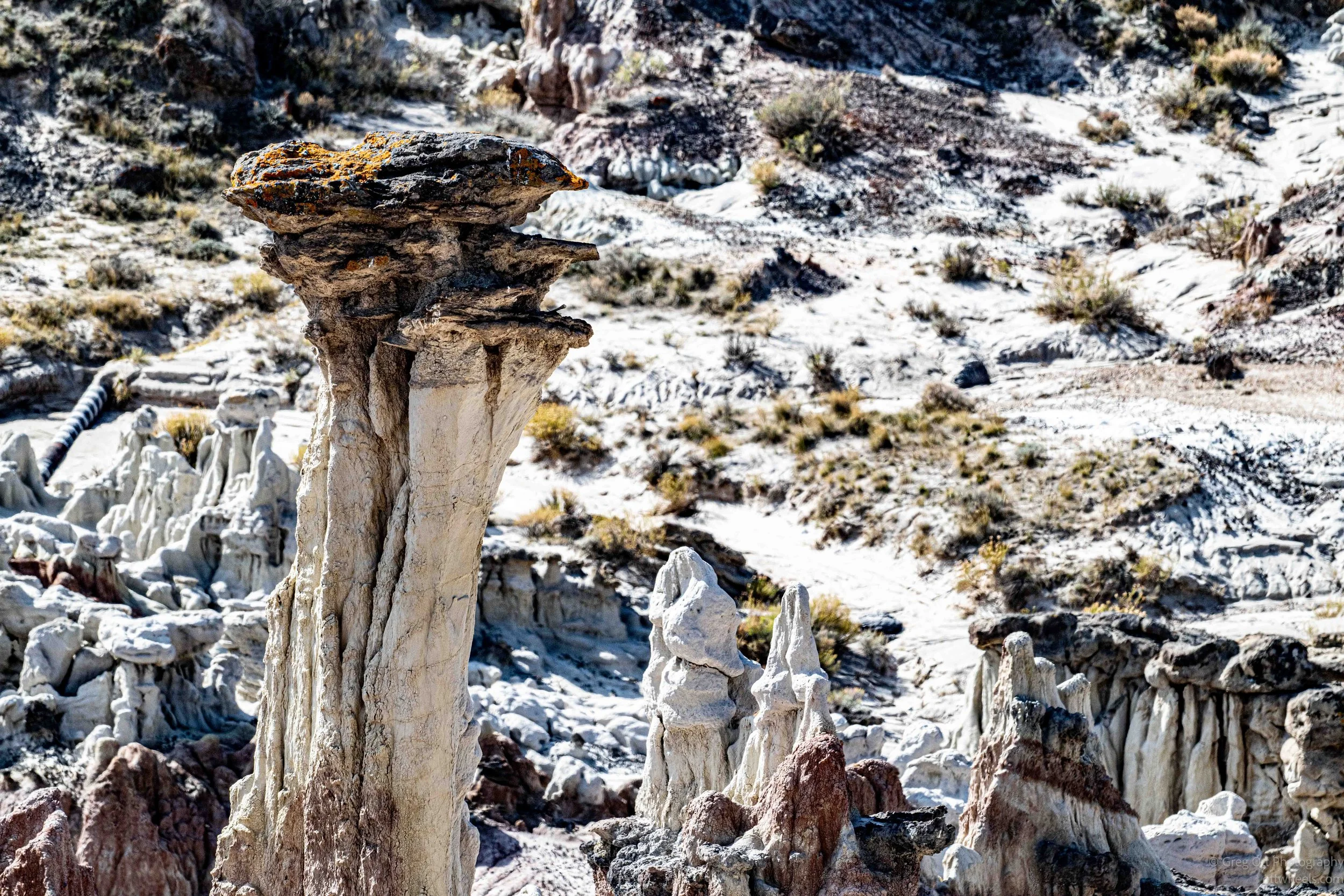
One of the signs described the fossils found in the area, including crocodiles, turtles, palm trees, and mammals that lived here when the climate was almost tropical. There were also some rather unusual creatures, including a large flightless bird called Gastornis and an early horse that stood only about 18 inches tall. Another sign covered the archaeology, explaining that people had been visiting the area for thousands of years. Archaeologists have found projectile points, pottery, and other artifacts dating back to at least 850 BC.
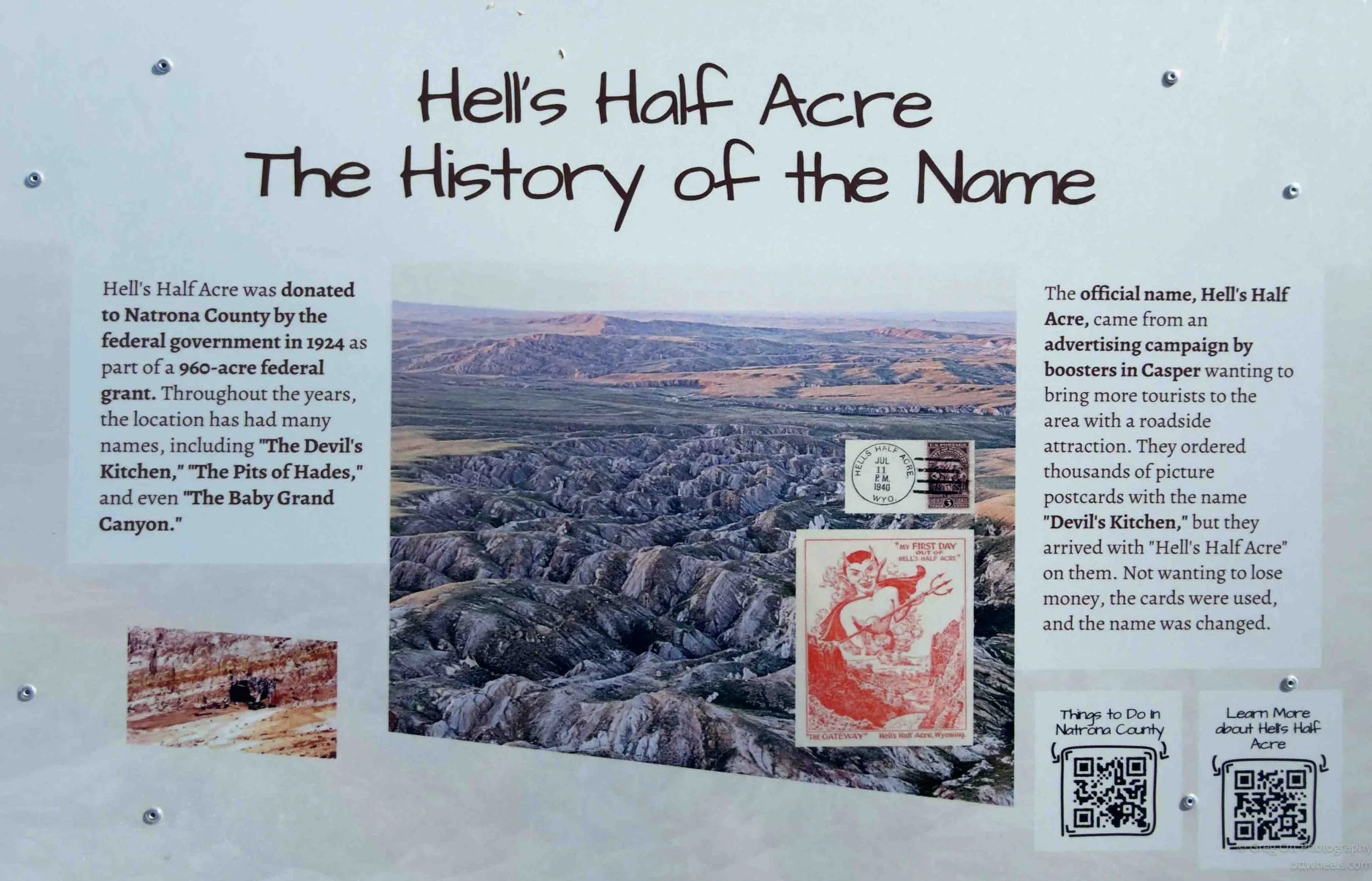
I also learned how the area got its unusual name. It had previously been called the Devil's Kitchen, the Pits of Hades, and even the Baby Grand Canyon. Apparently, some promoters in Casper ordered thousands of postcards advertising the Devil's Kitchen, but the postcards arrived with the name Hell's Half Acre instead. Rather than throw them away, they used them, and the name stuck. I found that rather amusing.
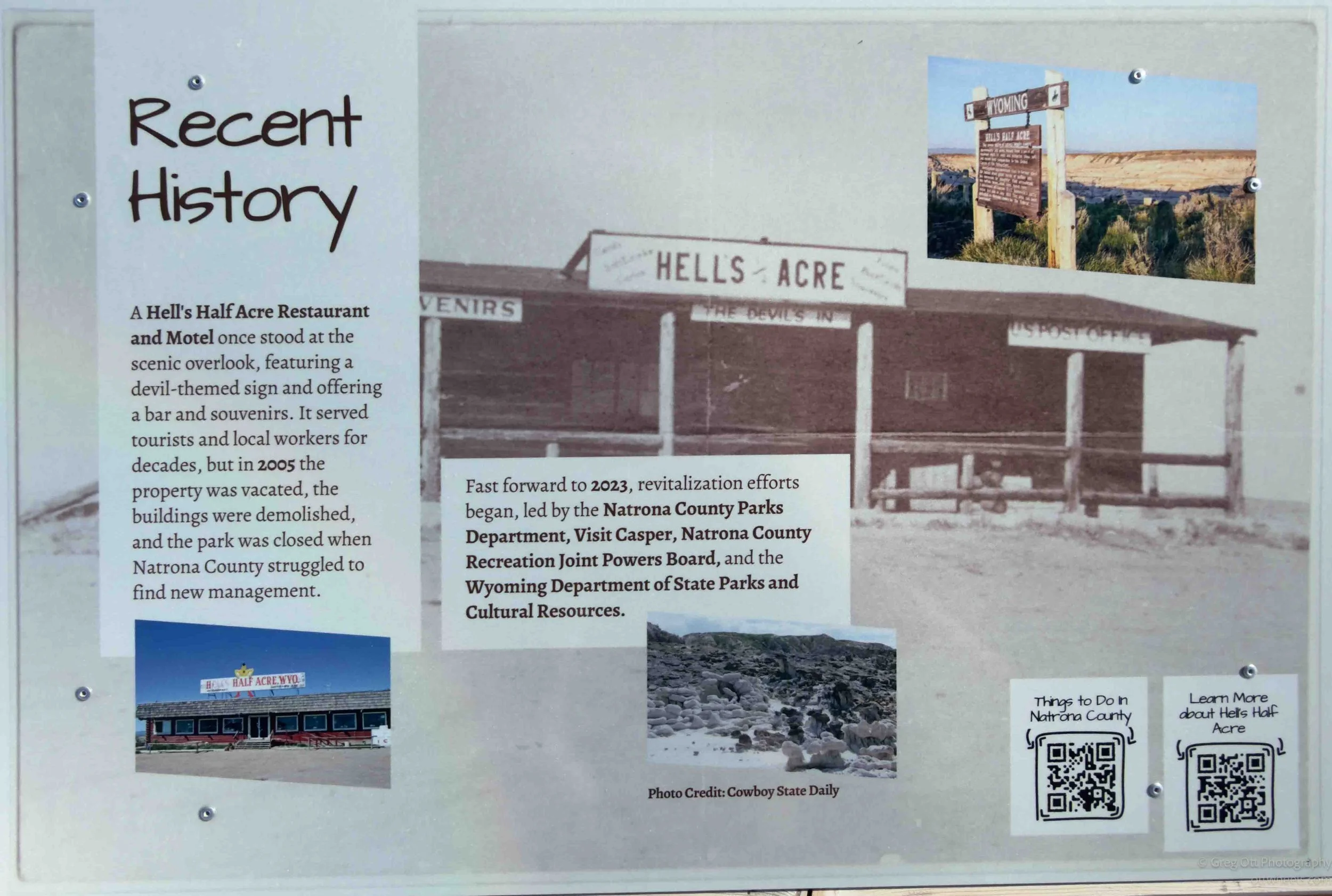
There was once a restaurant, motel, and souvenir shop at the overlook. They operated for decades before closing, and the buildings were eventually demolished in 2005. The site was largely neglected for years before restoration efforts began in 2023. The viewing area had recently been rebuilt with wooden walkways, railings, and interpretive signs, making it easy to look out over the formations.
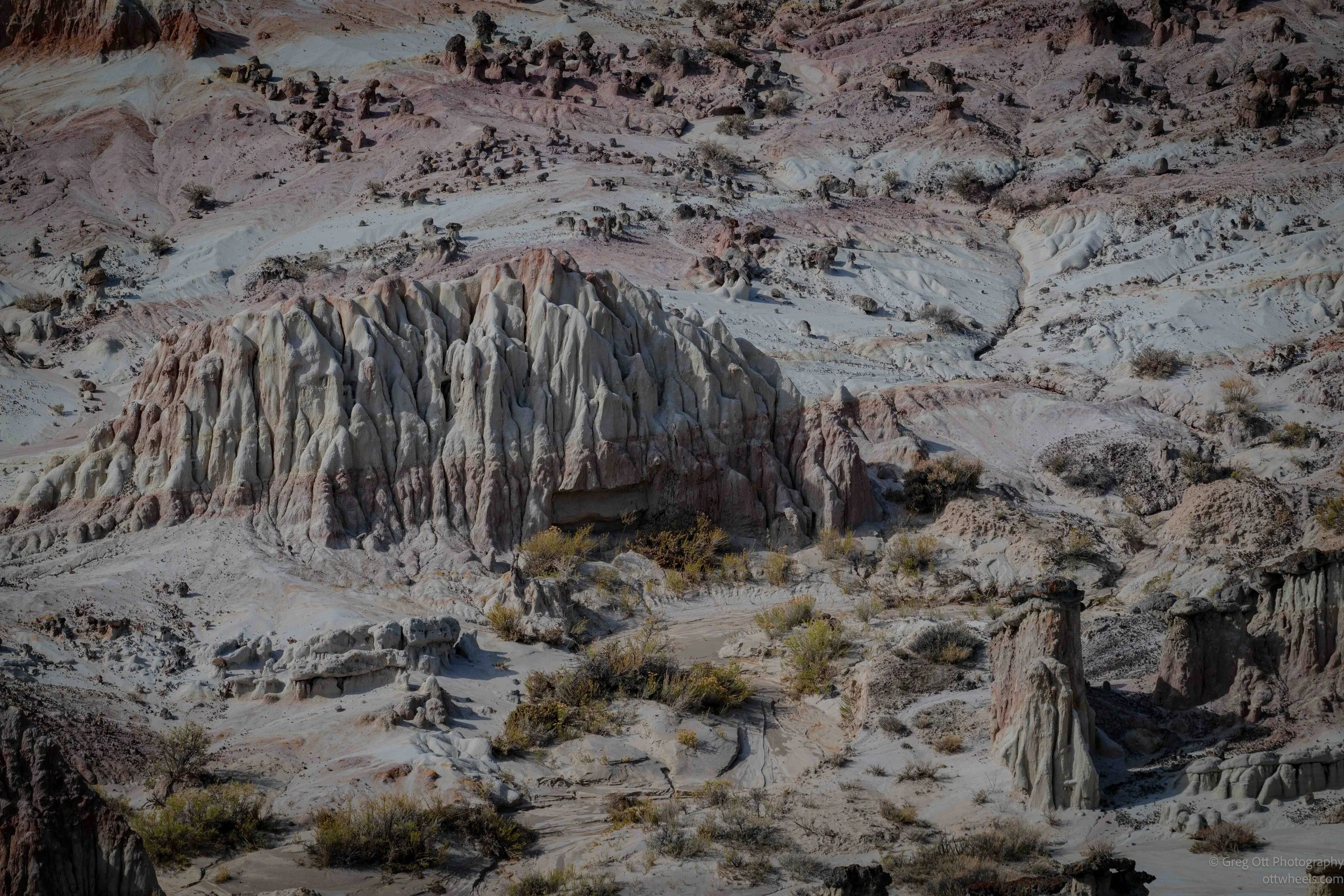
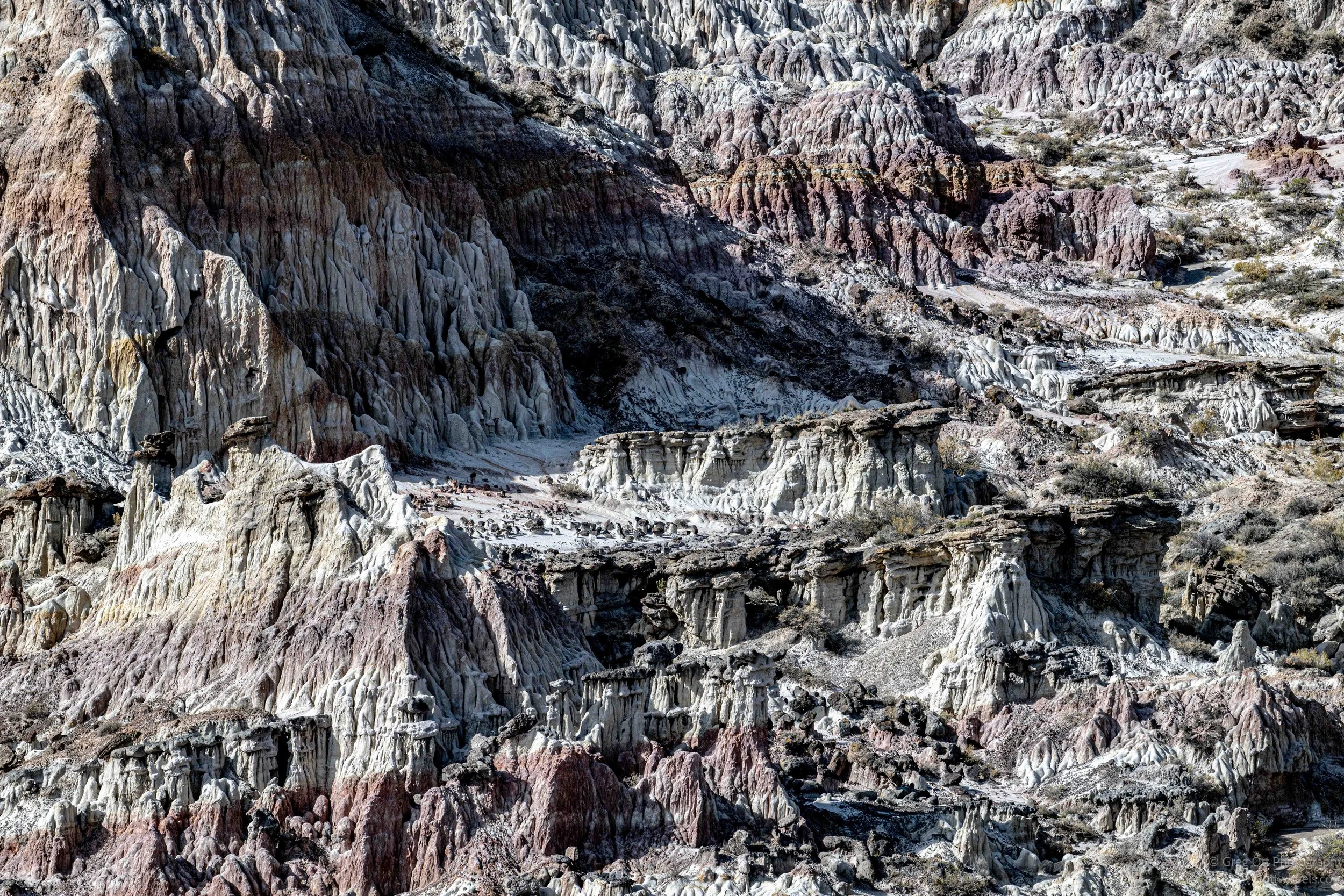
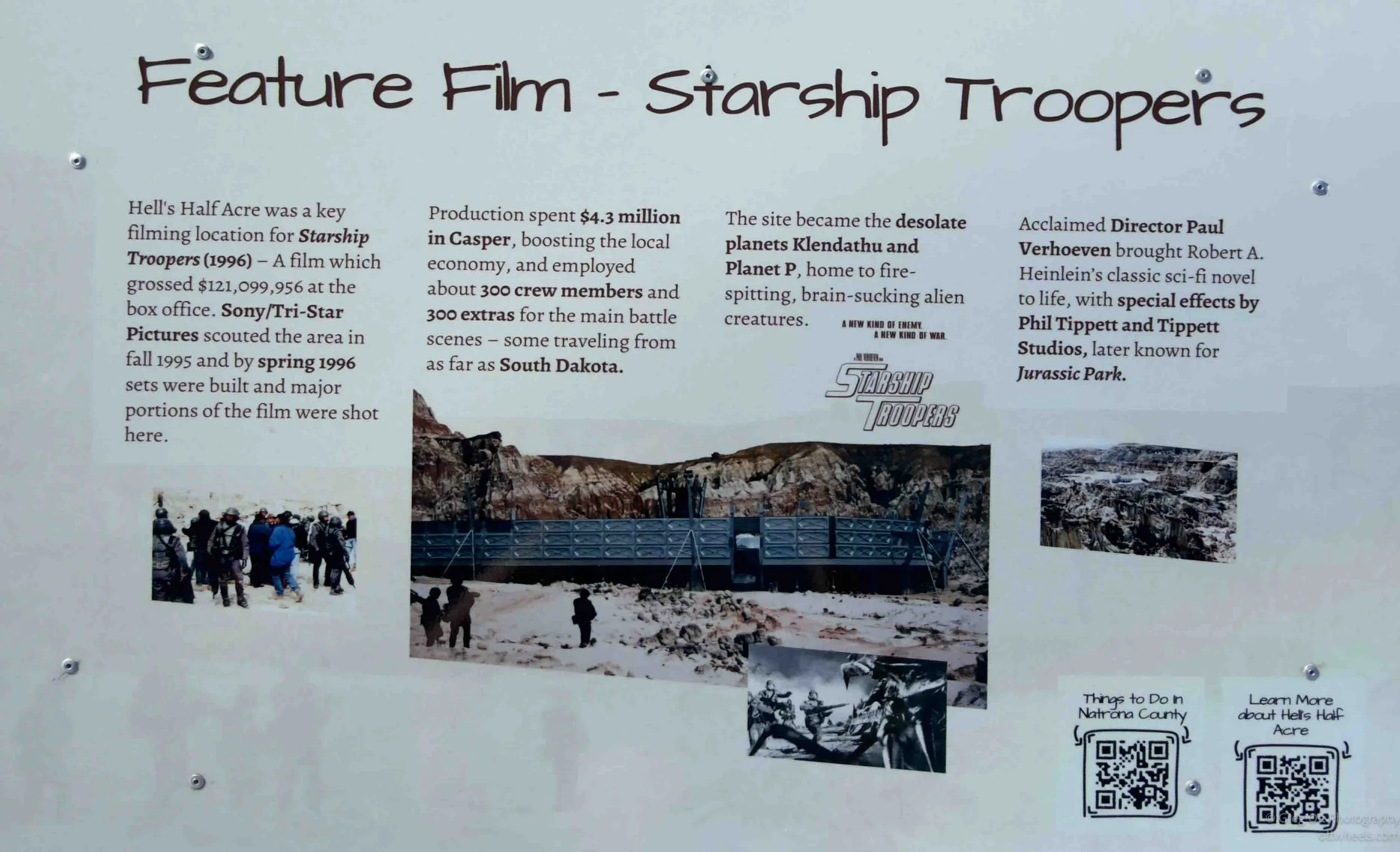
Another sign caught my attention because it described how the area had been used in the 1997 science fiction movie Starship Troopers. The production company spent $4.3 million in nearby Casper and employed hundreds of people while filming scenes here. The formations represented two alien planets in the movie. Looking out across the badlands, I could understand why they had chosen this location. I hadn't seen the movie, but it might be worth watching just to recognize the landscape.
I had hoped to hike down into the formations, but the information I found indicated that access below the rim was restricted. Later, after talking with other visitors, I learned that there was a route down and that people occasionally ventured into the badlands. I would have enjoyed exploring the formations from below, although the steep, loose terrain looked challenging.
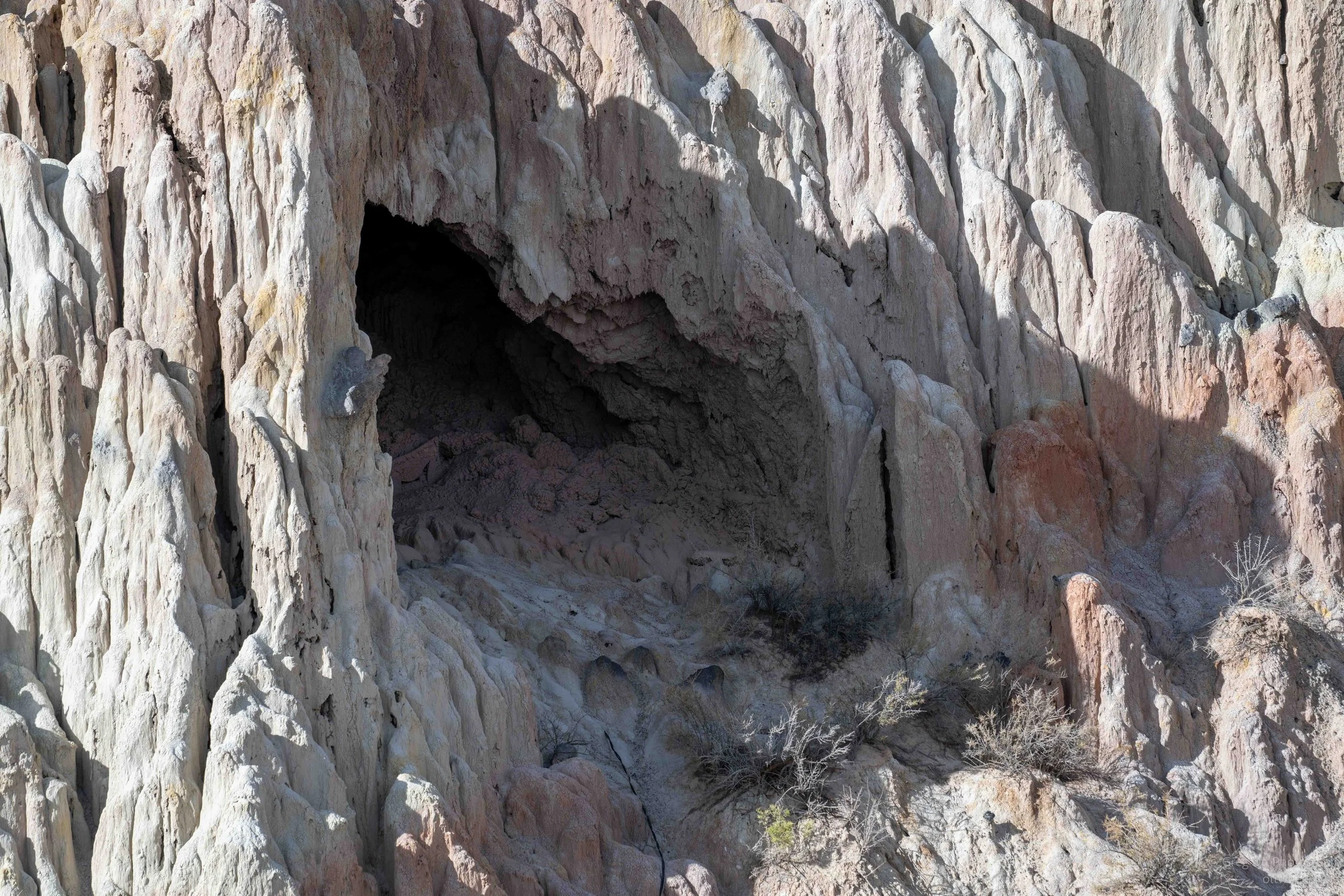
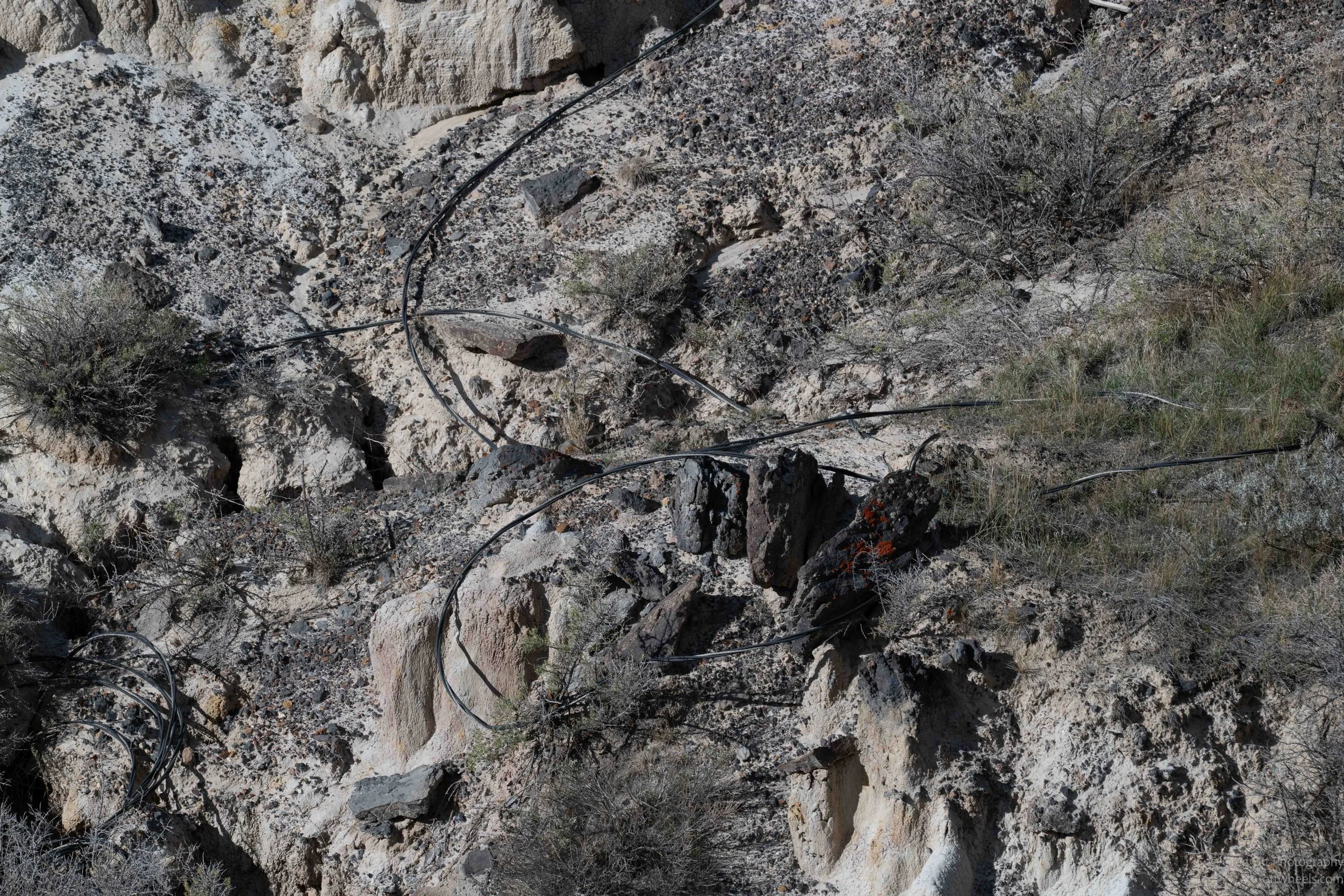
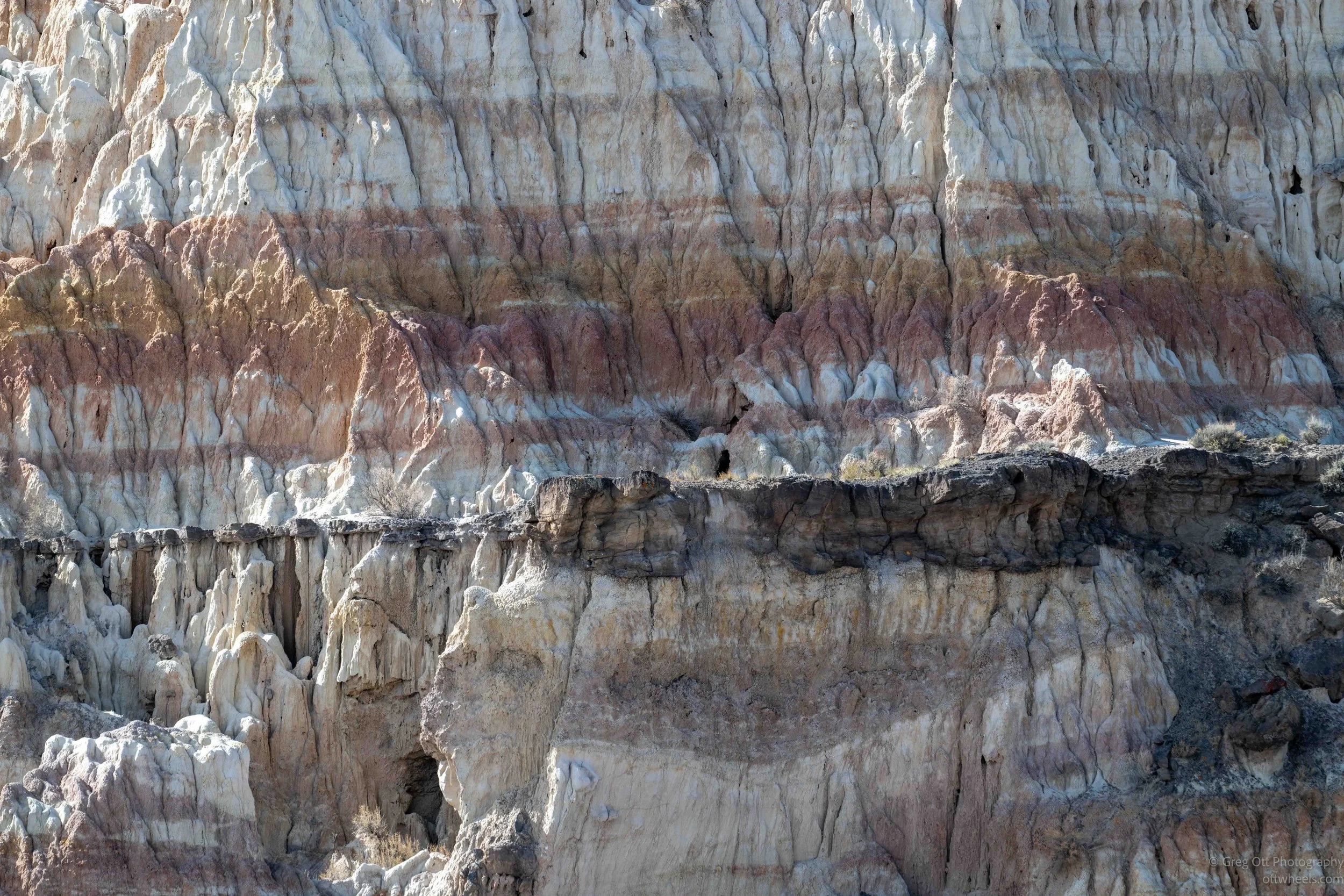
Instead, I spent about an hour walking along the viewing area, reading the signs, and looking for interesting photographic compositions. The changing position of the sun made a noticeable difference. Shadows that initially concealed entire gullies gradually shifted, revealing details in the rock while hiding others. I found myself returning to the same formations to see how the light had changed. I could easily have spent more time here, especially if I'd been able to explore the badlands from below.
An Unexpected Drone Lesson
At some point, Chris and Kimberli arrived with quite a collection of drones and equipment. Curious, I wandered over to see what they were doing. They were flying small FPV drones through the formations, skimming along ridges, diving into gullies, and weaving between the rocks at remarkable speeds. Unlike the drones I usually see being used for photography, these were fast and incredibly maneuverable. They wore headsets that allowed them to see through the drone's camera, almost as though they were flying inside it.
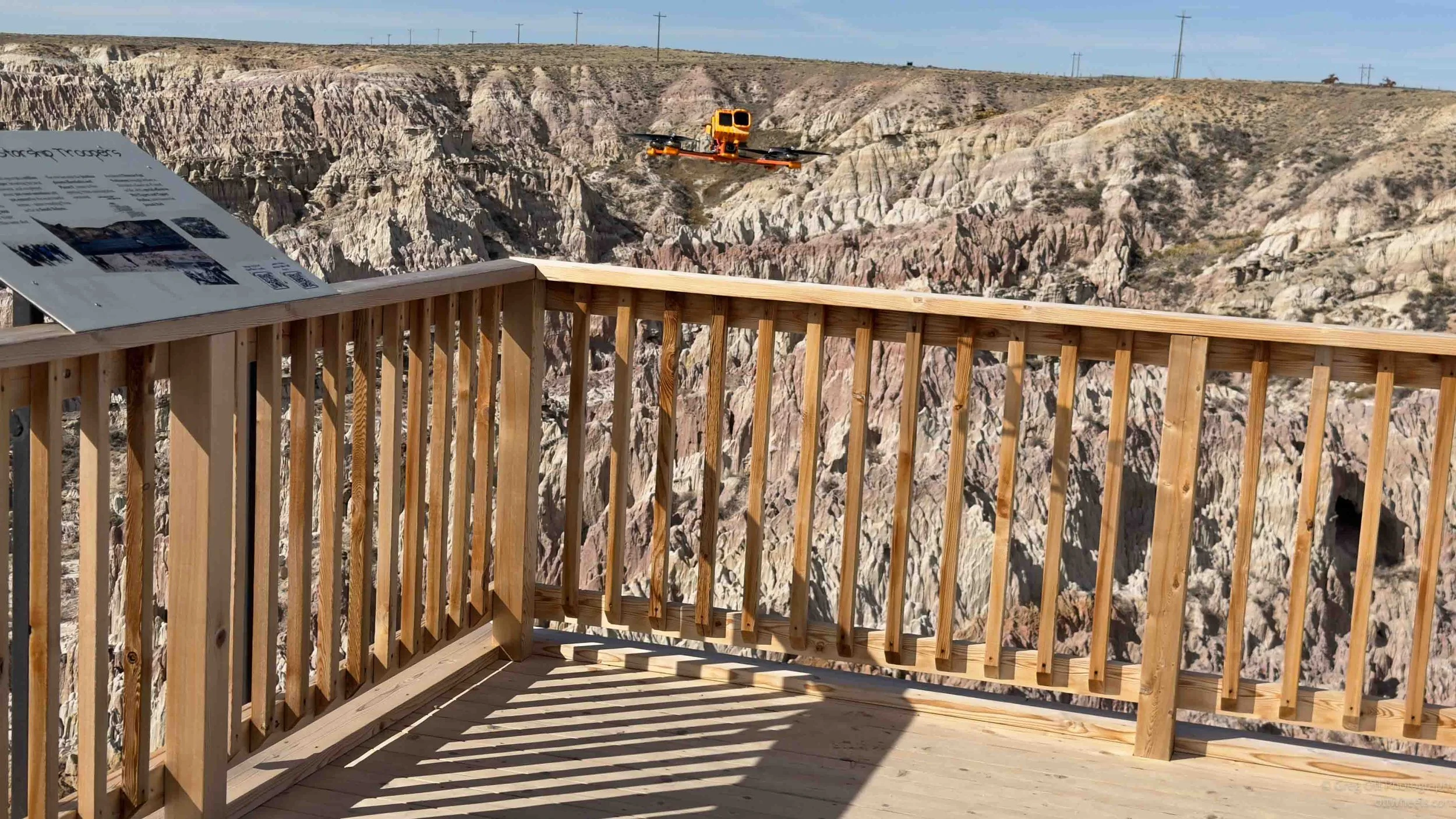
They let me try the headsets and watch some of their footage. Seeing the formations from that perspective was extraordinary. I jokingly told them this was becoming my Drones 101 class. Chris has a software background and has developed an application to help tune drones and reduce jitter in recorded video. With my own background in software engineering, we had plenty to talk about.
They also run Odyssey Aerials FPV, producing replacement drone components using computer-controlled machining equipment. The business helps support their passion for flying, and they're hoping to expand it. I was impressed by the combination of software, electronics, machining, and flying skills involved.
I ended up spending several hours with them before they packed up and left sometime after 2 p.m. It was one of those unexpected encounters that made the day more interesting than I'd anticipated. After they left, I sat in the sunshine for a while, enjoying the quiet and looking out over the formations before continuing east toward Casper.
Casper and the Platte River
I had originally planned to do a bike ride in Casper, which has an extensive network of trails along the North Platte River. Unfortunately, by the time I stopped for fuel, drove into town, and located a suitable trailhead, there wasn't enough daylight left for the ride I had in mind. Instead, I decided to go for a walk.
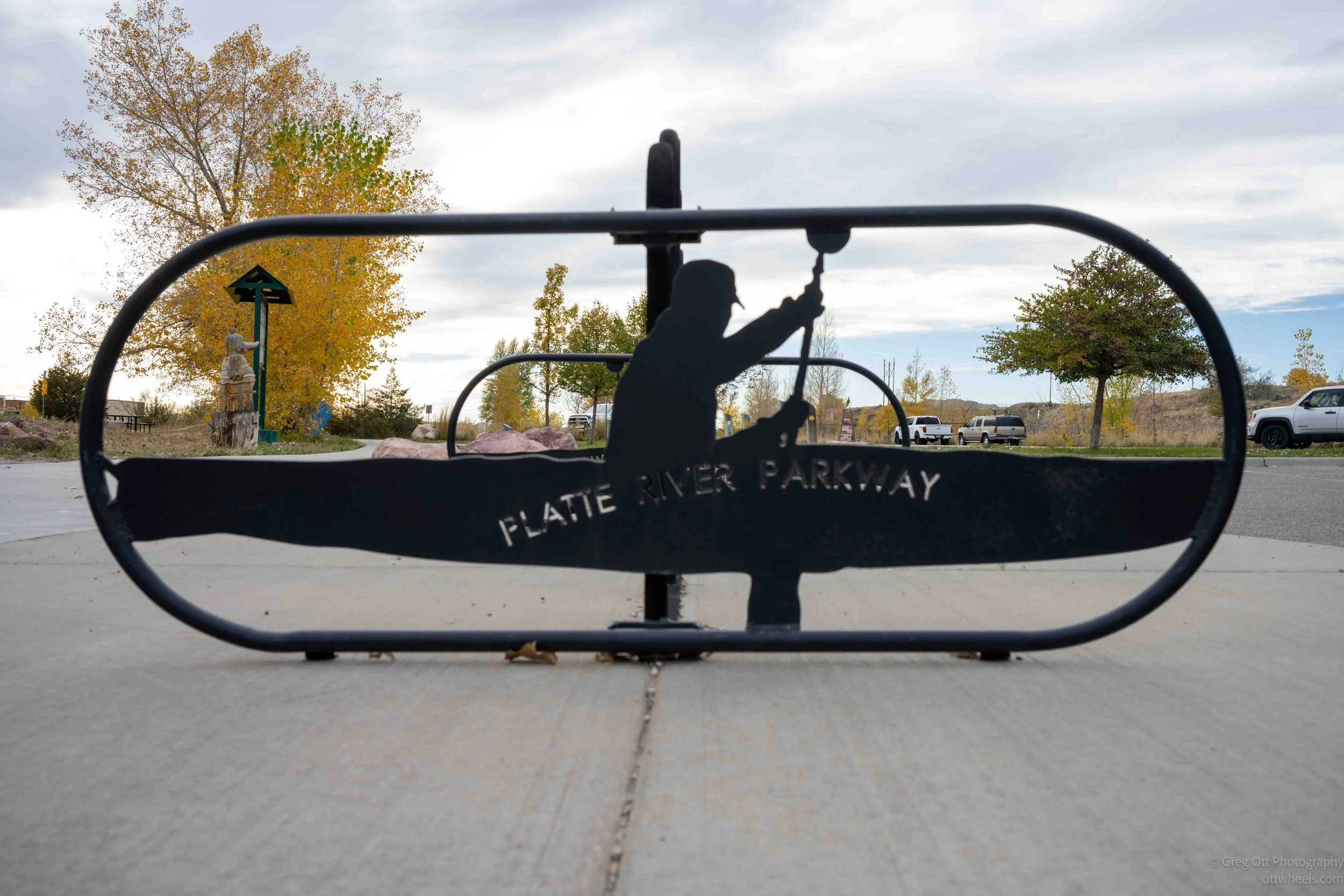
I ended up hiking about three miles along a section of the Platte River Trails. Unfortunately, the section I chose wasn't particularly scenic. Construction work prevented access to much of the riverfront, and the opposite side of the trail was also partially torn up.
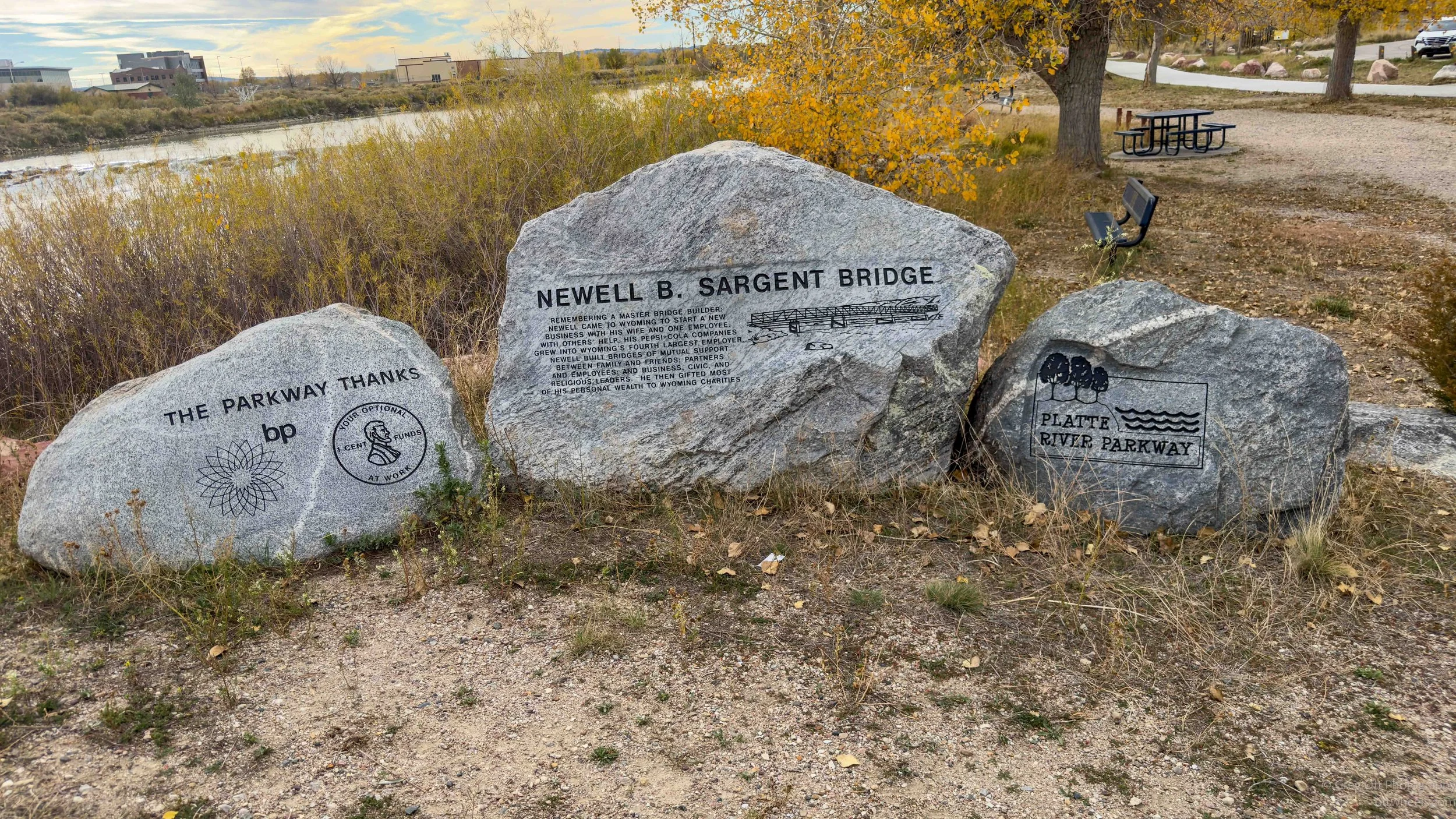
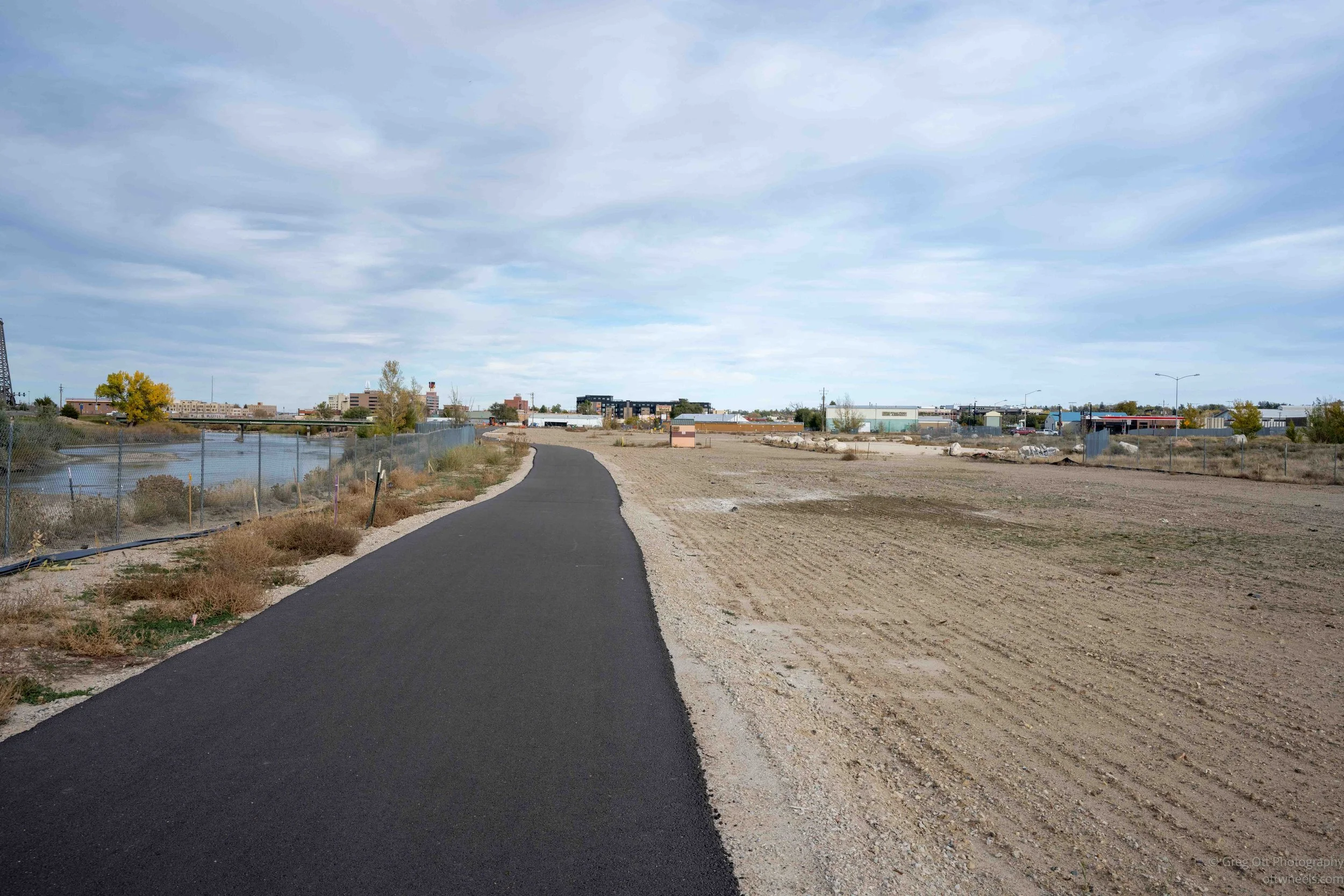
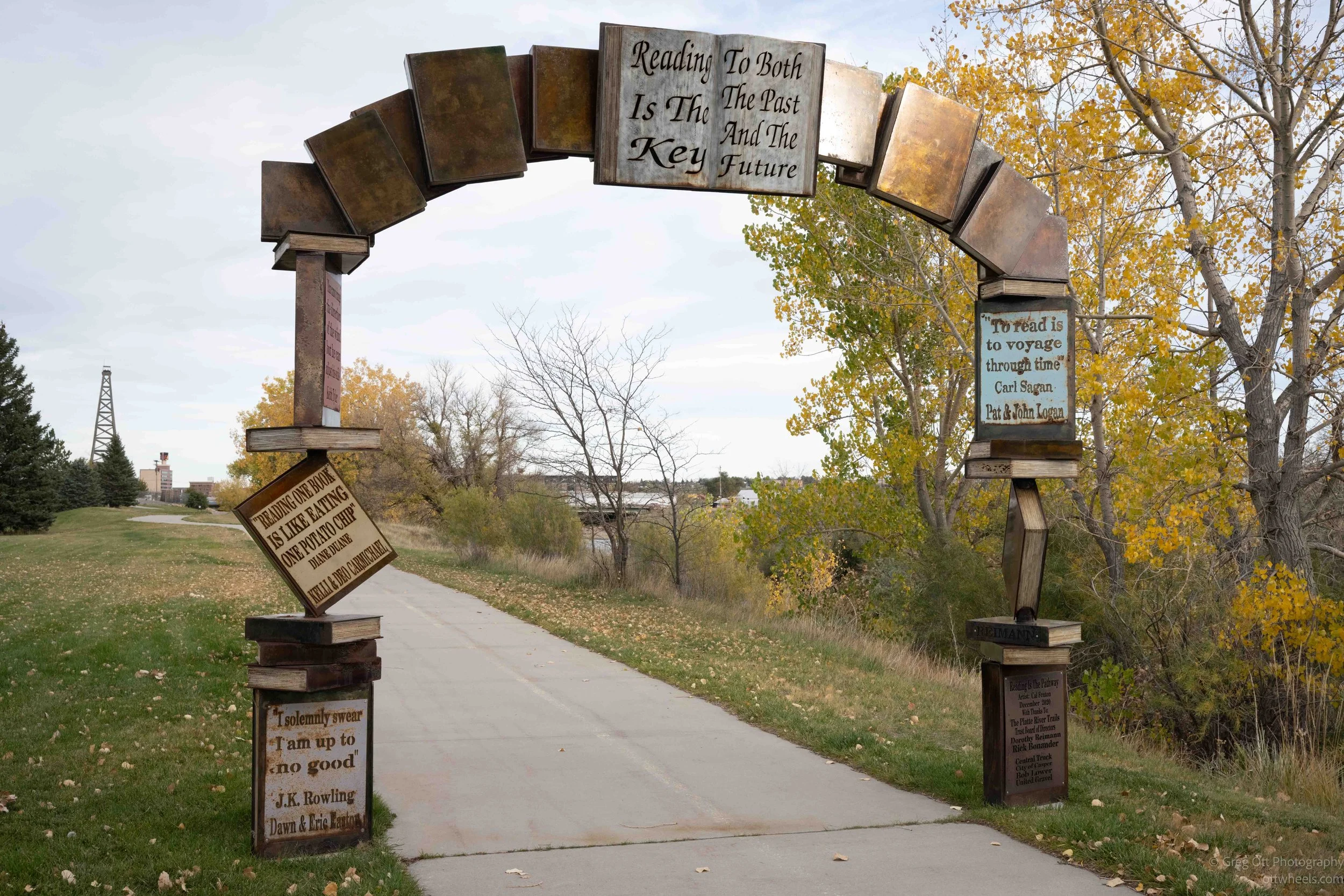
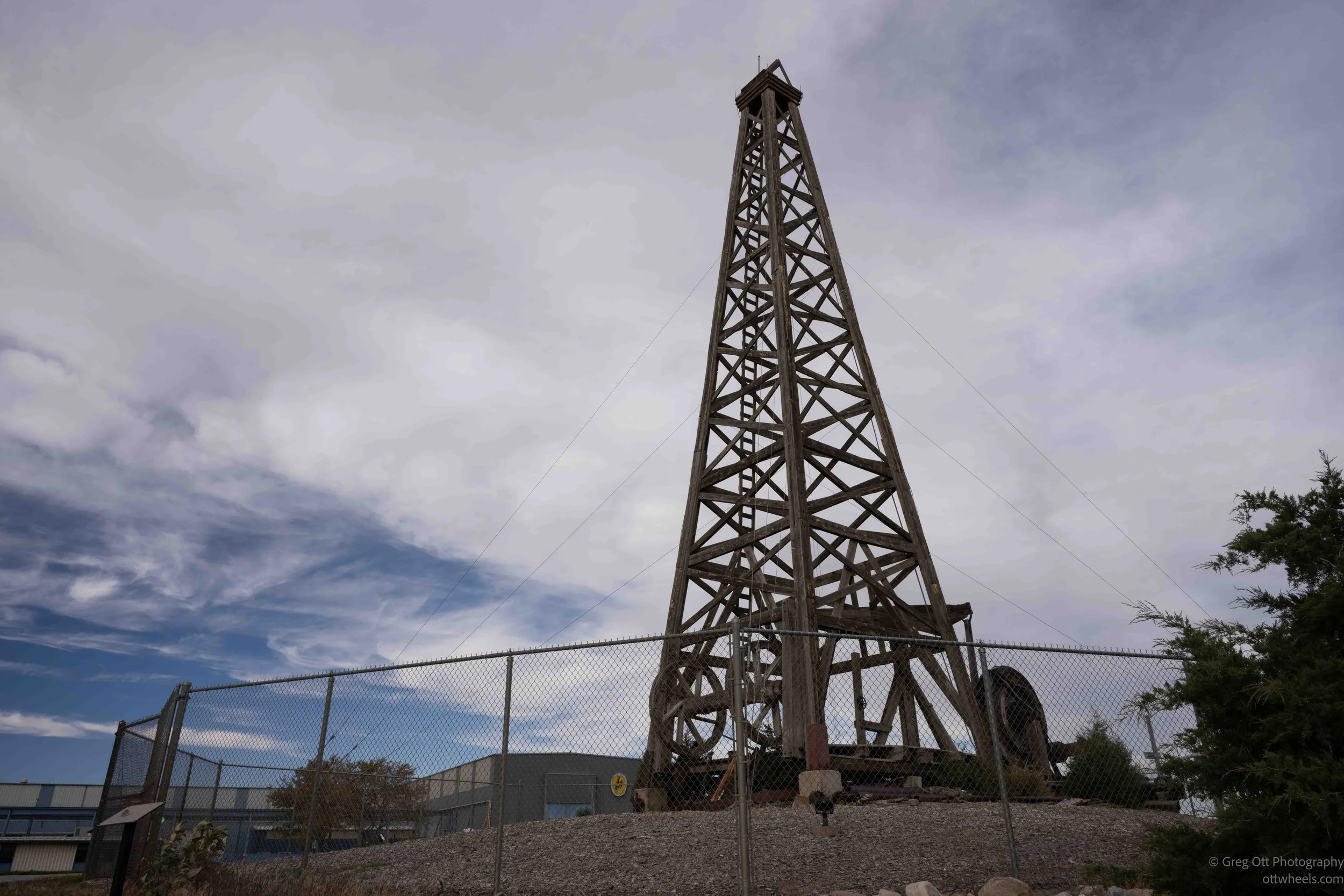
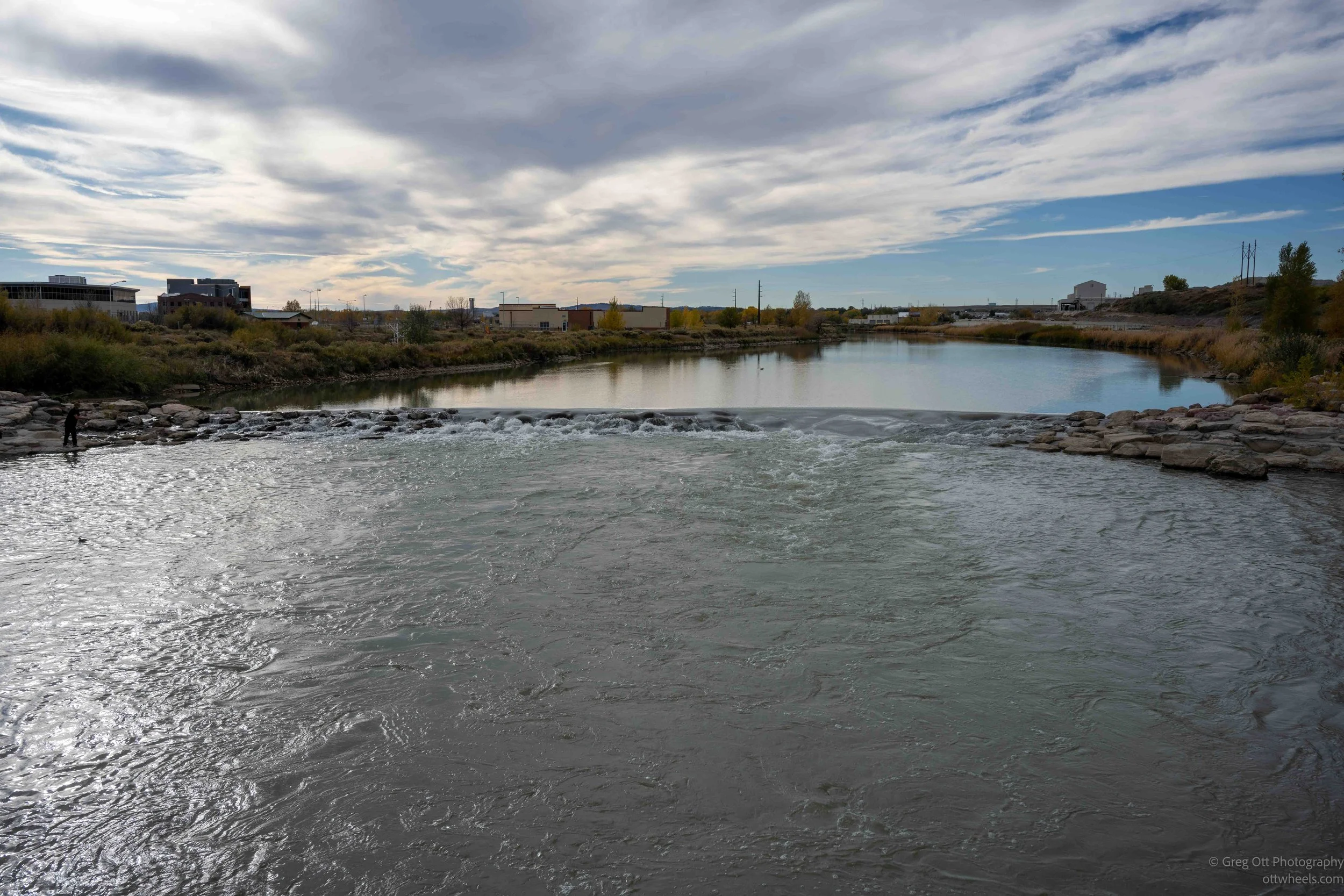
Construction seemed to be everywhere in Casper. The interstate, several major roads, and numerous side streets were all being worked on. It made getting around town more complicated than I expected, and my walk was mostly an exercise in getting some movement after spending much of the day sitting.
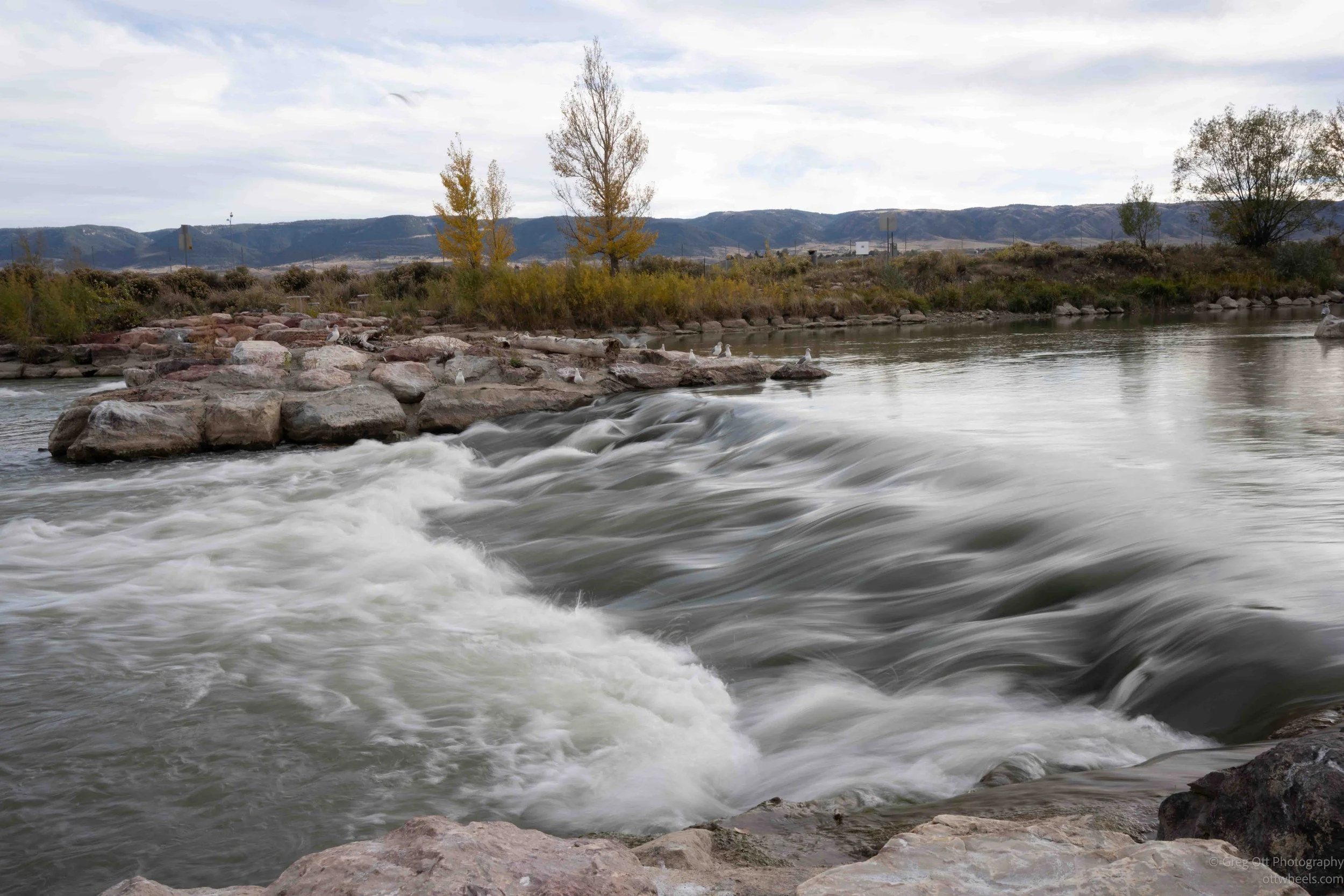
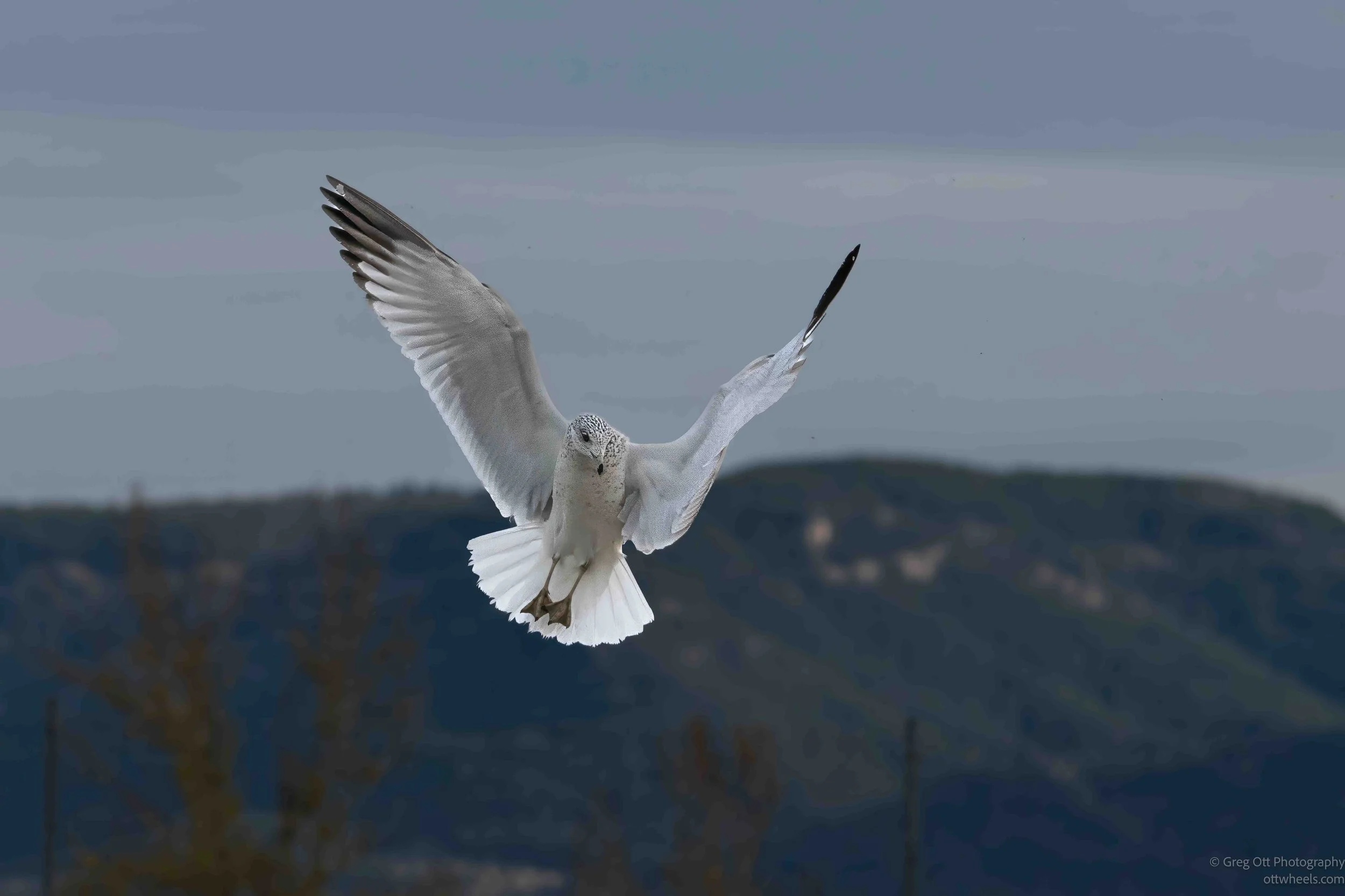
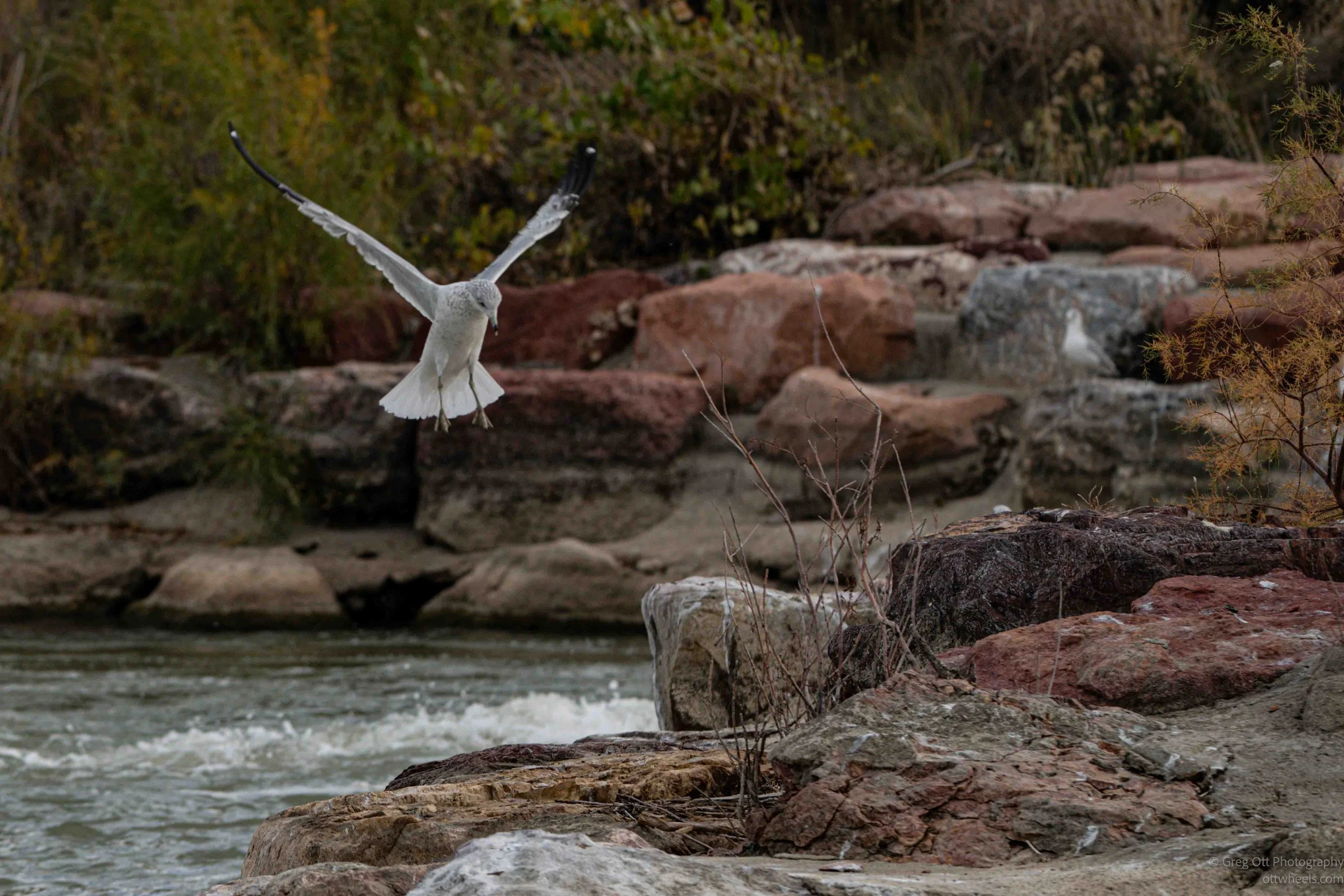
I was disappointed that I couldn't get closer to the river. I had hoped to find some interesting views or perhaps a few opportunities for photographs, but there wasn't much that caught my attention. Near the end of the walk, I stopped to photograph sea gulls that were hunting along the river.
A Good Pizza to End the Day
By the time I finished walking, I was ready for dinner. I had been thinking about pizza and found Racca's Pizzeria Napoletana in Casper.
I prefer thin-crust pizza with fresh ingredients, rather than the heavy, doughy pizzas that seem so common in most places. Racca's specializes in Neapolitan-style pizza, cooked in a wood-fired oven at temperatures approaching 900°F. The intense heat cooks the pizza in just a short time, leaving the crust lightly charred while keeping the center soft.
It was exactly what I had been looking for. I ordered a pizza, a salad, and a large glass of water. The pizza was very good, with a thin crust and nicely balanced ingredients. After a somewhat disappointing walk, it was a pleasant way to finish the day.
I left the restaurant around 7:30 p.m. and drove out of Casper, looking for somewhere quiet to spend the night. I eventually found a roadside pullout away from town that looked suitable.
There wasn't much traffic, and the area seemed peaceful. After a day that had started in Shoshoni, included several hours exploring the geology of Hell’s Half Acre and an unexpected introduction to FPV drones, I was ready to call it a night.