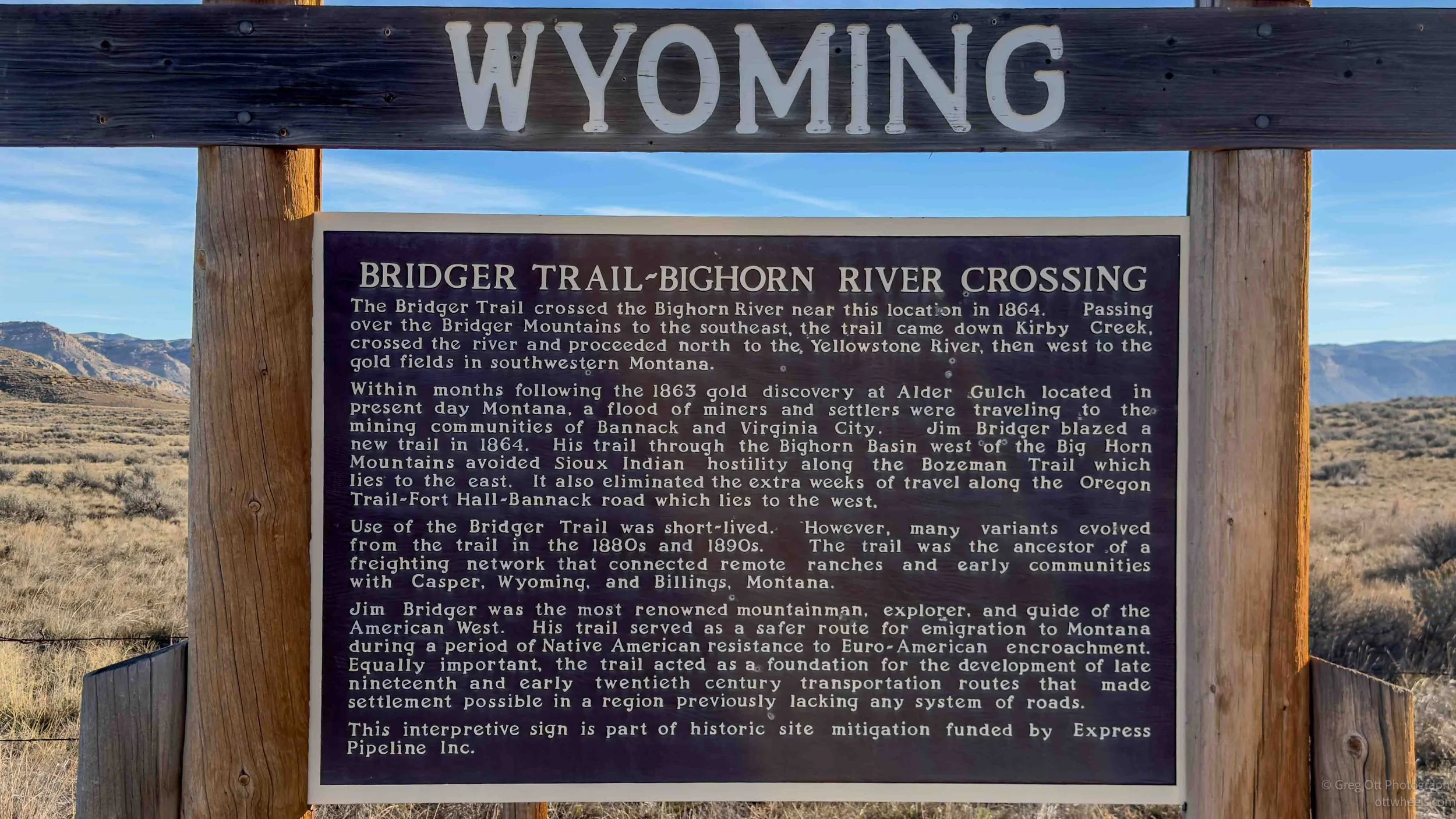
I woke up at the Bridger Trail–Bighorn River Crossing trailhead outside Thermopolis, Wyoming. The trail was established by Jim Bridger in 1864 as a route to the Montana goldfields. After breakfast, I drove into town and found the Storyteller and Jackrabbit Java Café on Broadway Street. I ordered coffee and settled into a table by the window to do some writing.
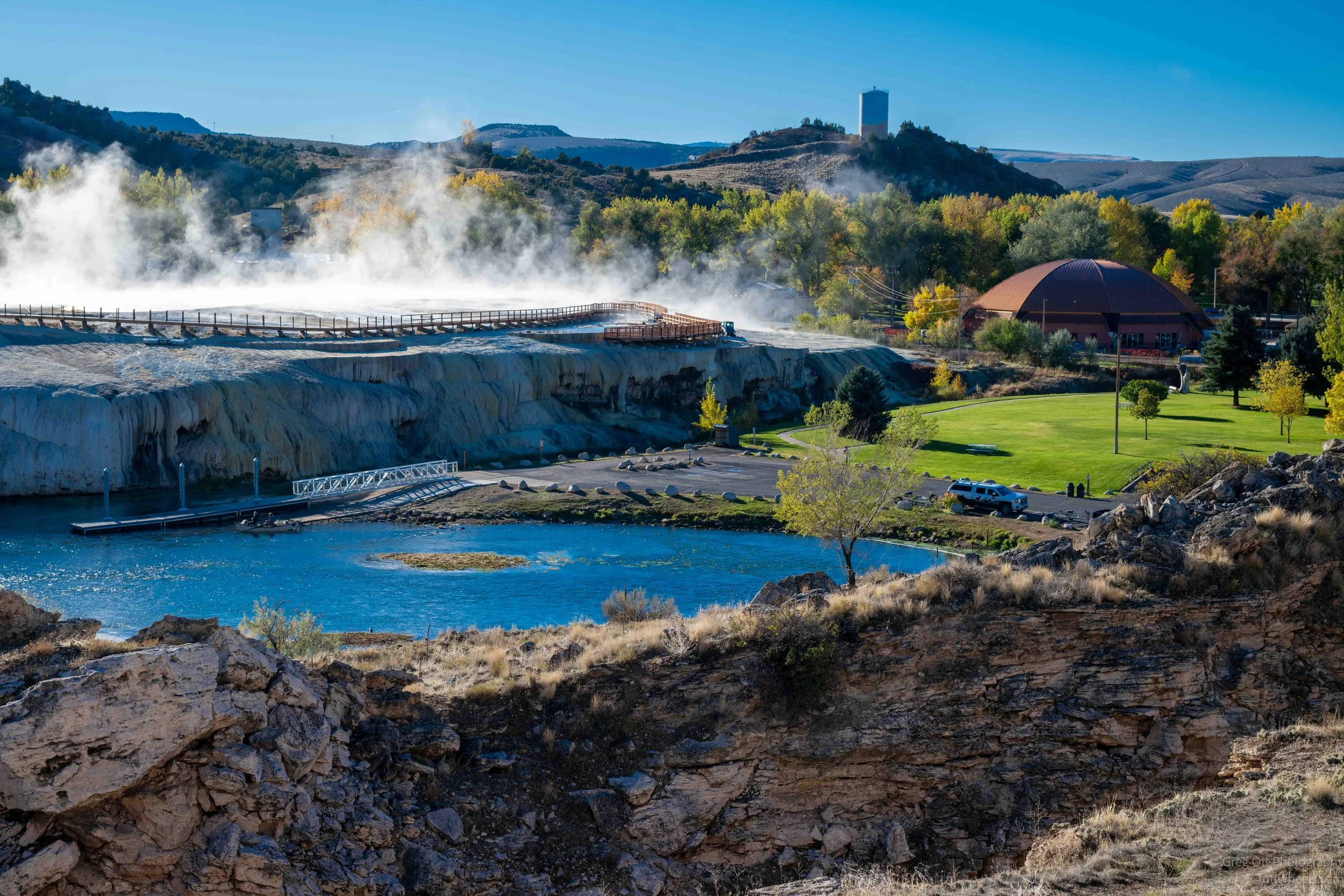
At a nearby table, a veteran and a woman were talking with customers as they came and went. They seemed to know everyone. A woman in a wheelchair, covered with various gadgets, decorations and symbols, left the café and stopped at the curb to light a cigarette. The people at the table knew her and commented on how much she smoked. I watched as she finished her cigarette, pulled out a vaping device, took several puffs, then lit another cigarette before heading down the sidewalk. The conversation turned to how she could possibly still be alive.
While sitting there, I noticed several large swastikas incorporated into the brickwork near the top of the building across the street. Curious about their history, I asked one of the women working at the café. She disappeared into the back and returned with a copy of The Official Visitor Guide to Thermopolis, opening it to an article titled "The Swastika: Cowboy Good Luck." I already knew that the swastika was an ancient symbol used in India for thousands of years, particularly in Hinduism, Buddhism and Jainism, where it represents good fortune and prosperity. It was also used by some Native American cultures. What I didn't know was that cowboys in the American West had adopted it as a good luck charm, decorating saddles, bridles, spurs and clothing with the design. The Corneil Building was constructed around 1917, before the Nazis adopted the symbol, and its brickwork reflects that earlier tradition.
The woman also shared a few stories about visitors who had become upset after noticing the swastikas. Some assumed the building was associated with a white supremacist group, while one man insisted the symbols were anti-American. I found those reactions surprising, particularly since the building was obviously constructed long before the Nazis came to power. It seemed these visitors knew the symbol only through its association with Nazi Germany and were unaware of its much longer history. What started as a simple question about the building turned into an interesting discovery about a piece of American Western history I knew nothing about.
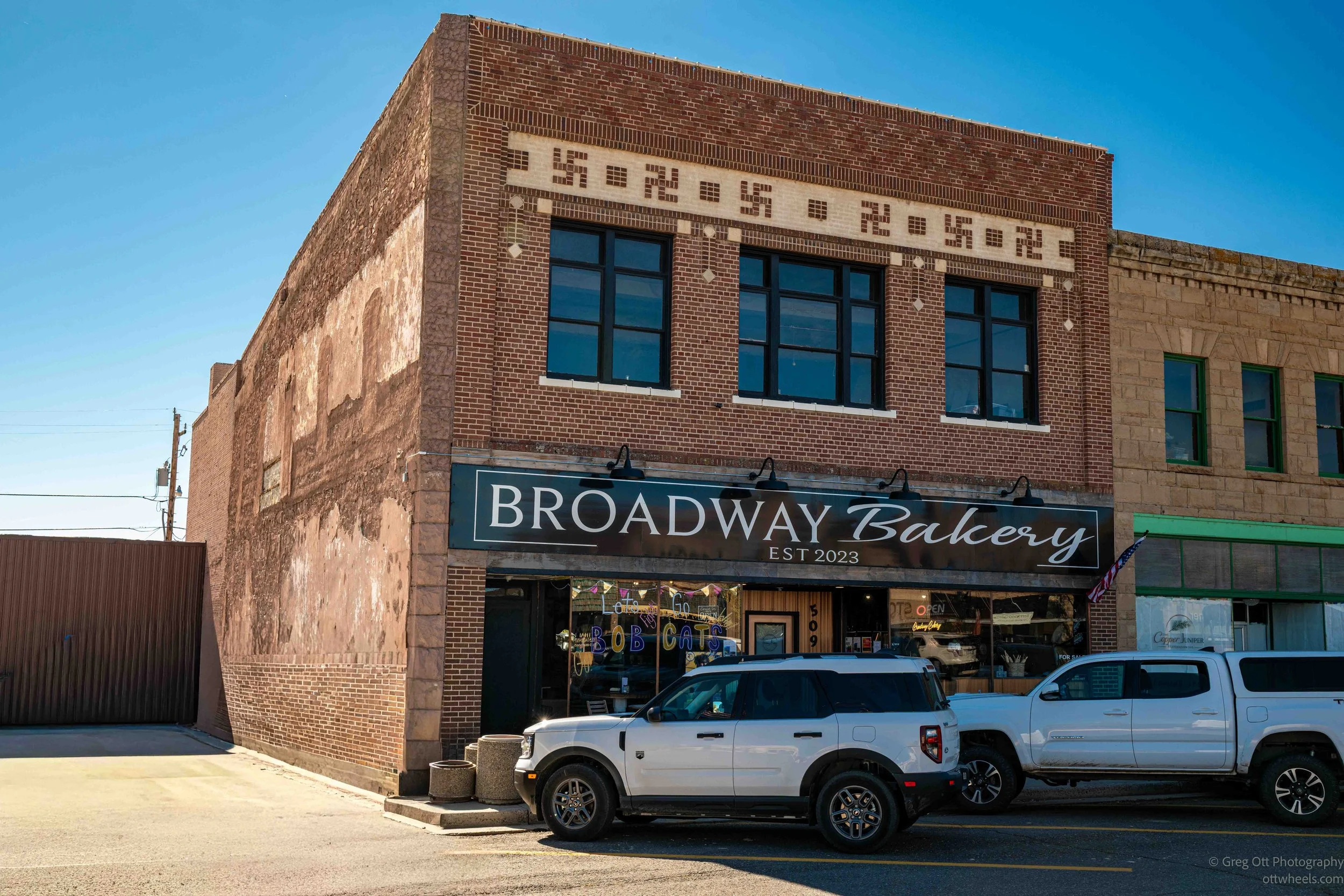
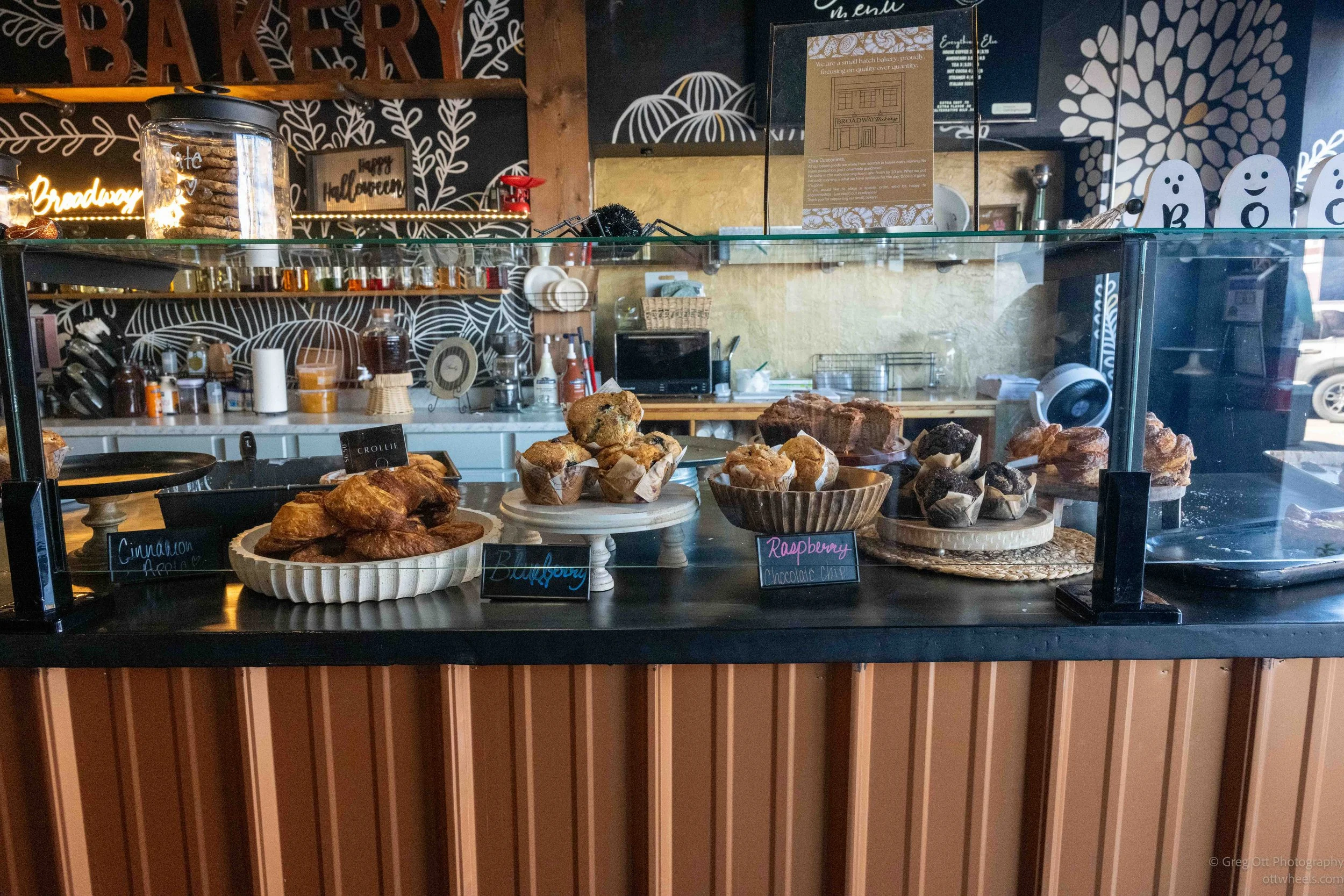
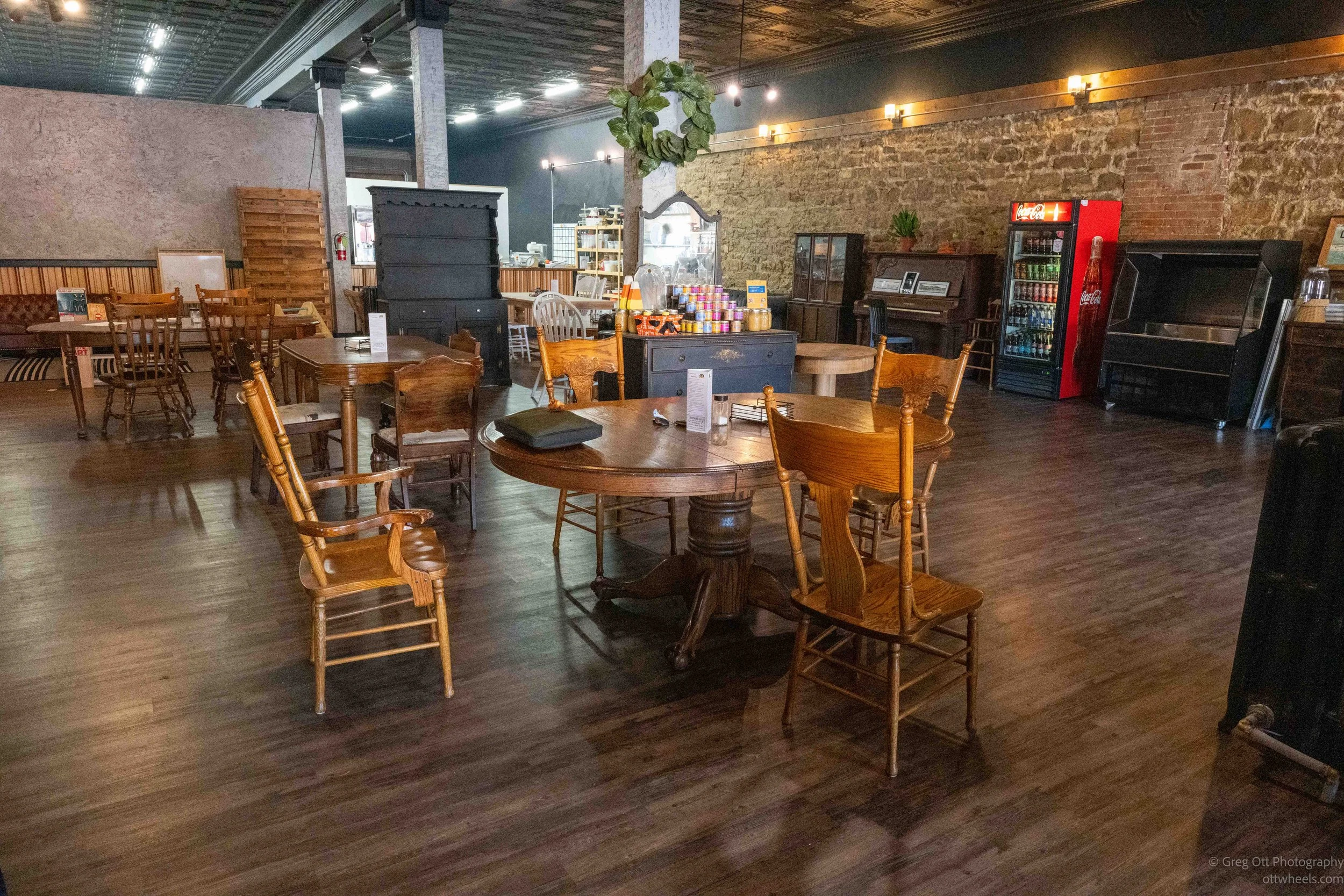
By 11:30, I was ready for lunch and walked across the street to Broadway Bakery, which occupies the ground floor of the building. I ordered a chicken salad sandwich on freshly baked sourdough bread. The interior was wonderfully eclectic, with mismatched antique tables and chairs, exposed brick walls and an old pressed metal ceiling. Nothing matched, but somehow everything worked together.
One beautiful oak table reminded me of a family table my sister now has. It had large carved bear claw feet and could be extended to about nine feet. Seeing it brought back memories of family gatherings around our own table.
I opened my MacBook and connected to the WiFi, which clocked an astonishing 625 Mbps. Eventually, I noticed the woman at the counter locking the front door and cleaning the floors. I asked if they were closing, and she told me to take my time. She still had at least another 30 minutes of cleaning to do.
Before leaving, I asked what she recommended seeing in Thermopolis. She mentioned the dinosaur museum, hot springs and several other attractions, but said that if I had time for only one, I should visit the Hot Springs County Museum.
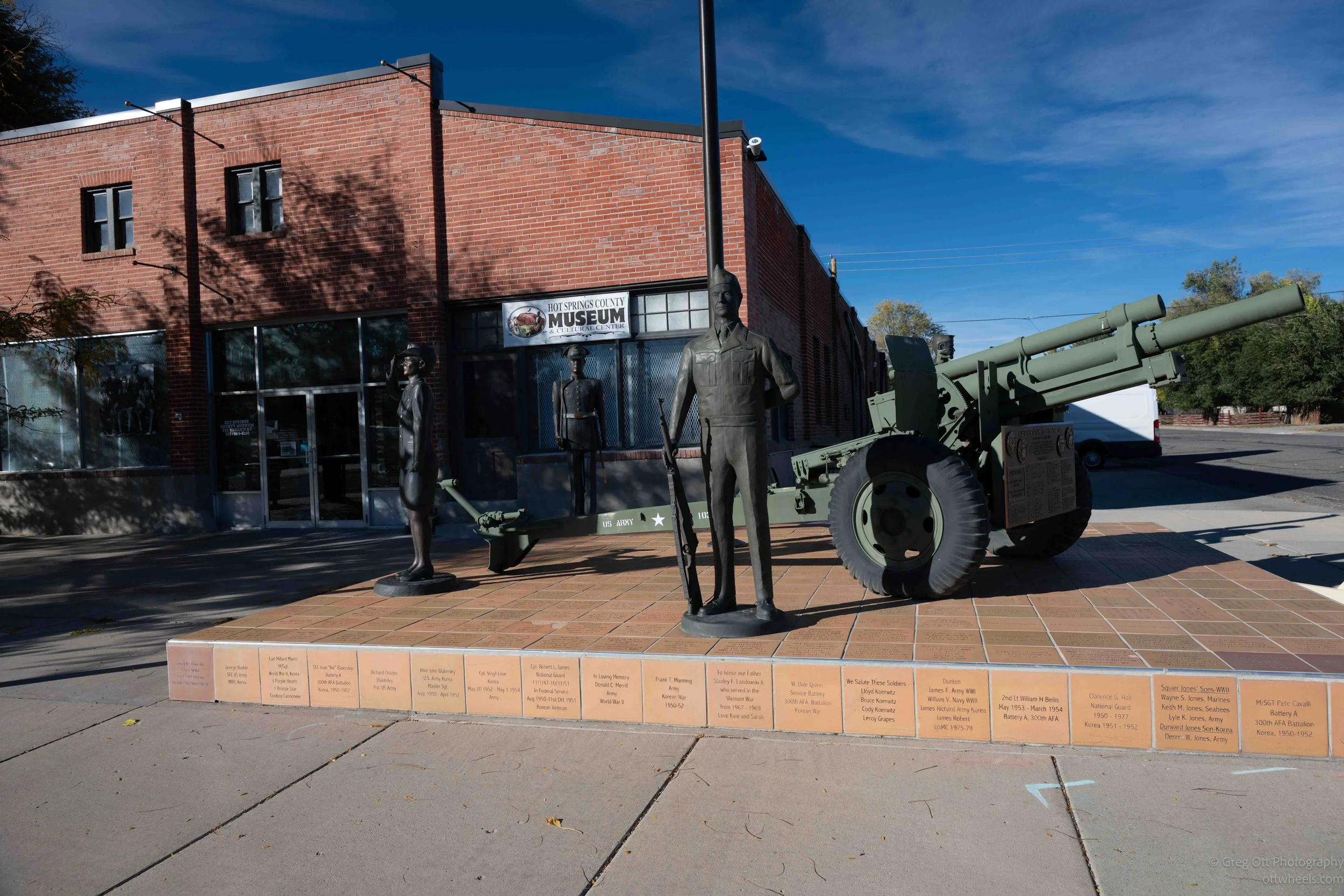
Hot Springs County Museum
I left the bakery shortly after 1 p.m. and walked to the museum, expecting to spend perhaps an hour. Instead, I was still exploring when I went to the front desk to ask what time they closed. One of the two women looked at her watch and seemed genuinely surprised. "Oh, we close at 4." It was already 4:10. They had been talking and I guess they lost track of time.
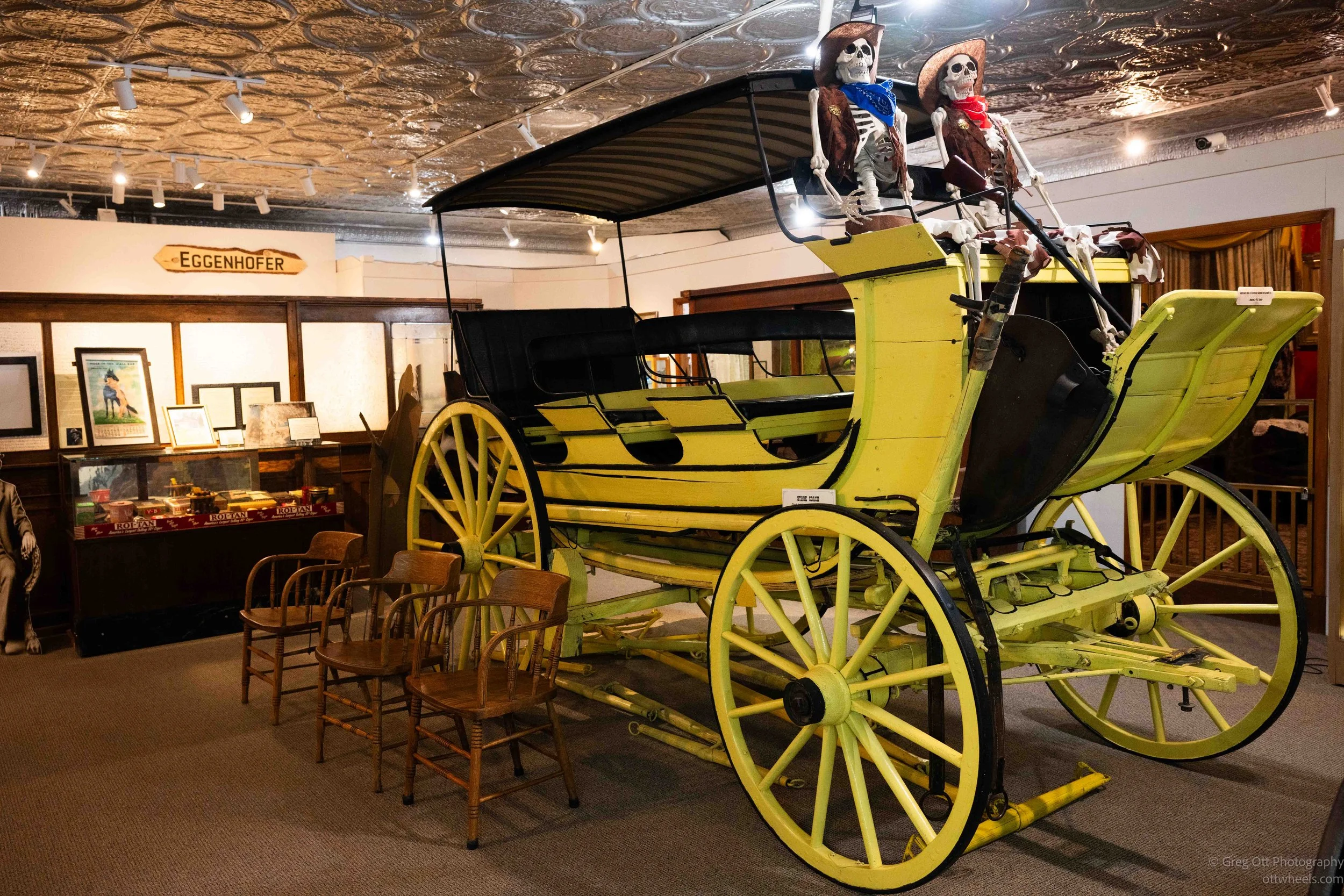
The museum was filled with the history of Thermopolis and the surrounding region. One exhibit featured a bright yellow horse-drawn stagecoach that once carried tourists through Yellowstone National Park. Two skeletons dressed as cowboys were sitting up front, apparently still waiting for passengers.
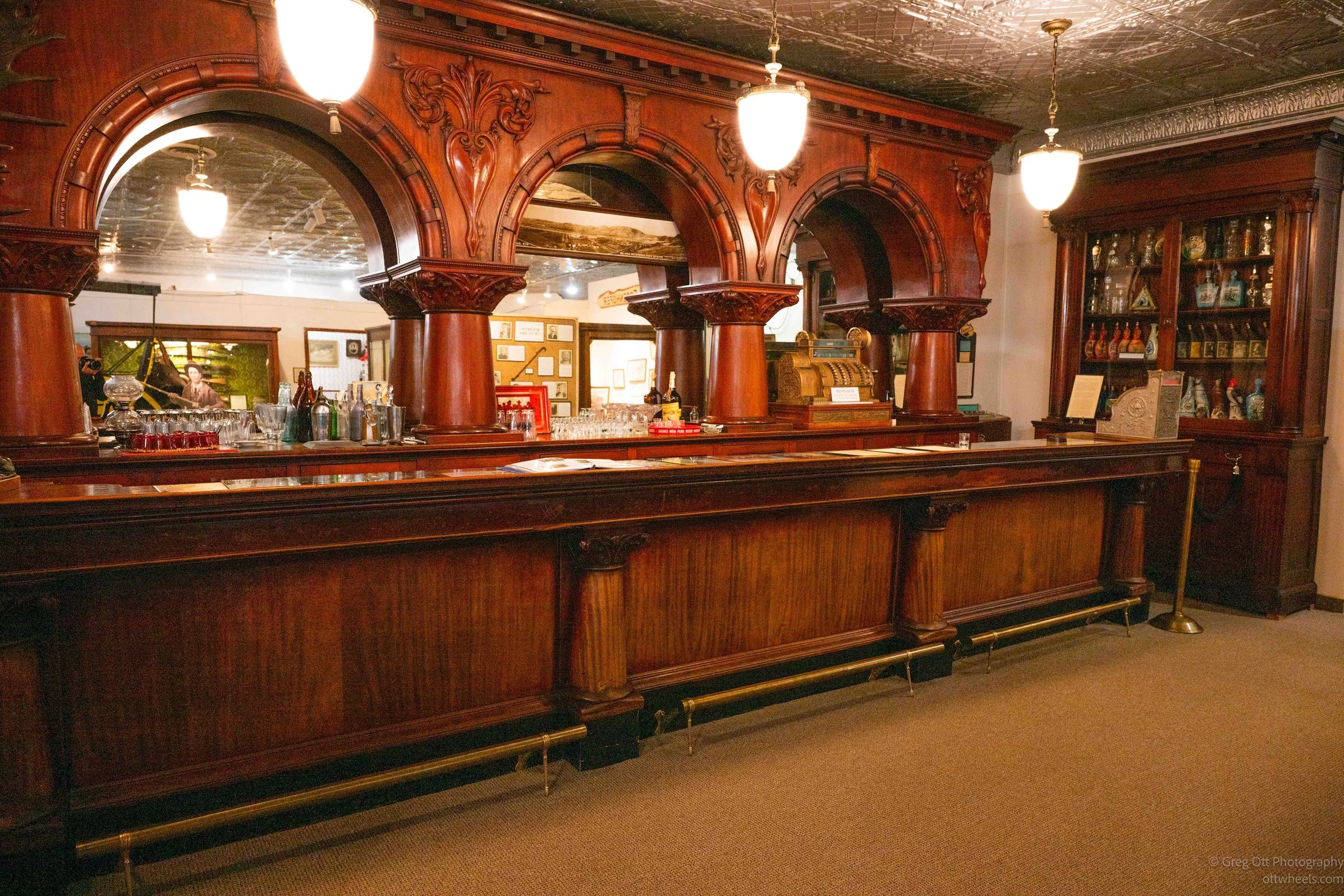
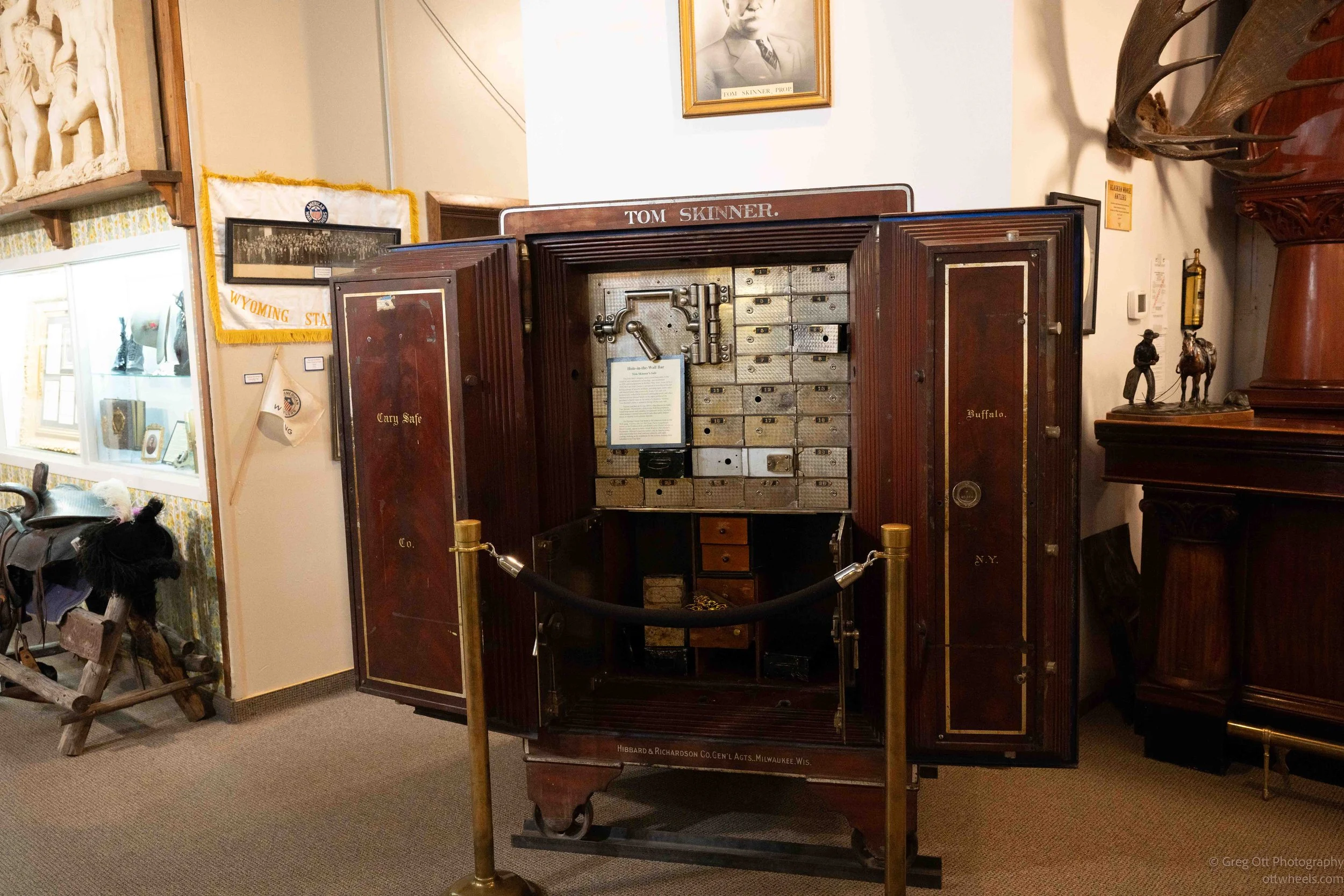
One of the museum's most impressive exhibits was an enormous, beautifully carved cherrywood bar from the original Hole-in-the-Wall Saloon. The wood was harvested in New York, shipped to Ireland to be carved, and eventually purchased by Tom Skinner at the Chicago World's Fair. The bar ended up in Thermopolis, where Butch Cassidy, the Sundance Kid and members of the notorious Hole-in-the-Wall Gang reportedly stopped for drinks. Skinner was also rumored to have hidden money from the gang's 1899 Wilcox train robbery in his safe, which is now displayed nearby. Even more interesting, Robert Redford once tried to purchase the bar for his personal collection, but the museum refused to sell it. Looking at the elaborate carvings and massive wooden arches, I could understand why he wanted it. It's quite a piece of Old West history to find in a small-town museum.
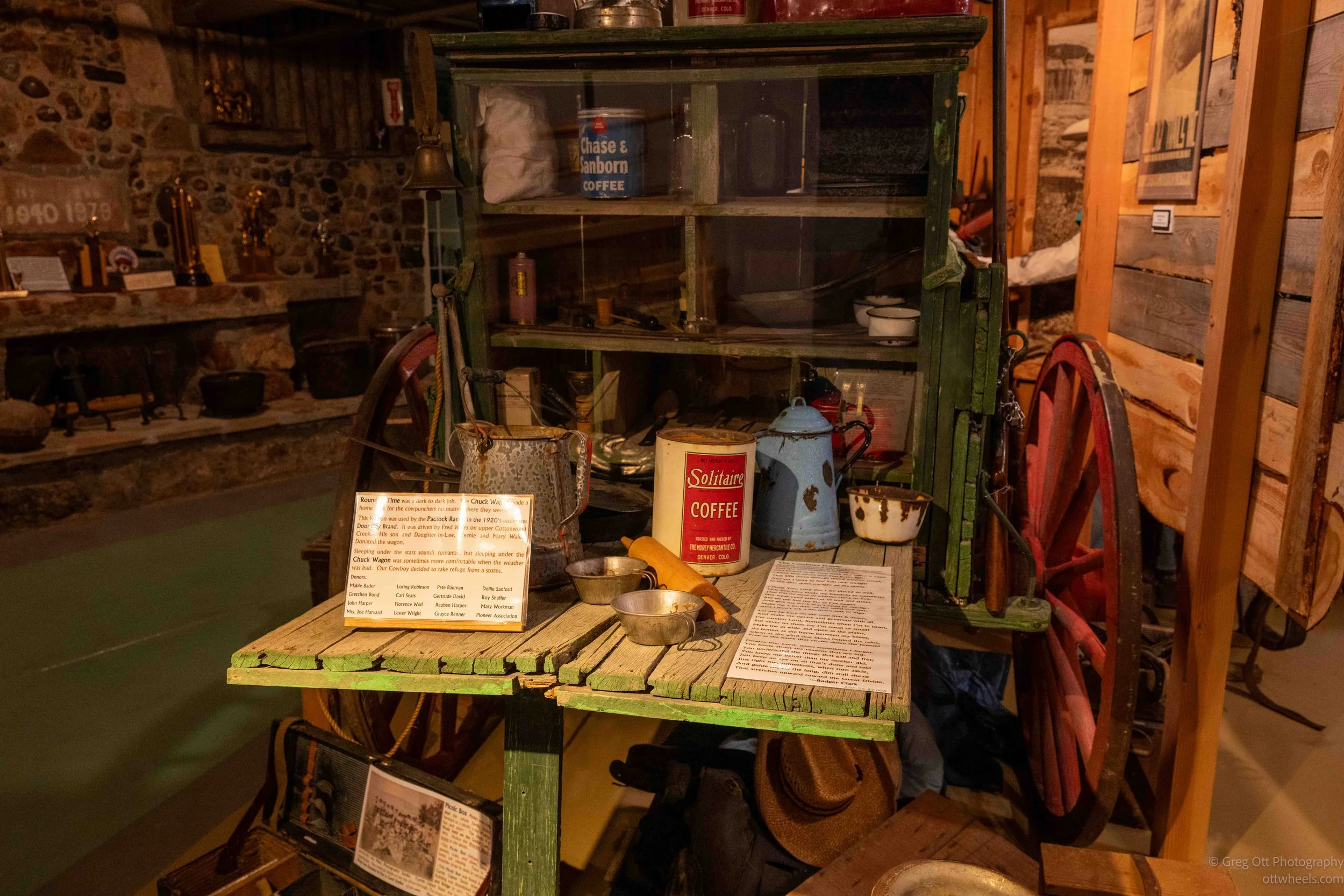
Another section recreated how cowboys camped on the range, complete with a chuckwagon and cooking equipment. There was also a reconstructed early Wyoming town with storefronts and businesses.
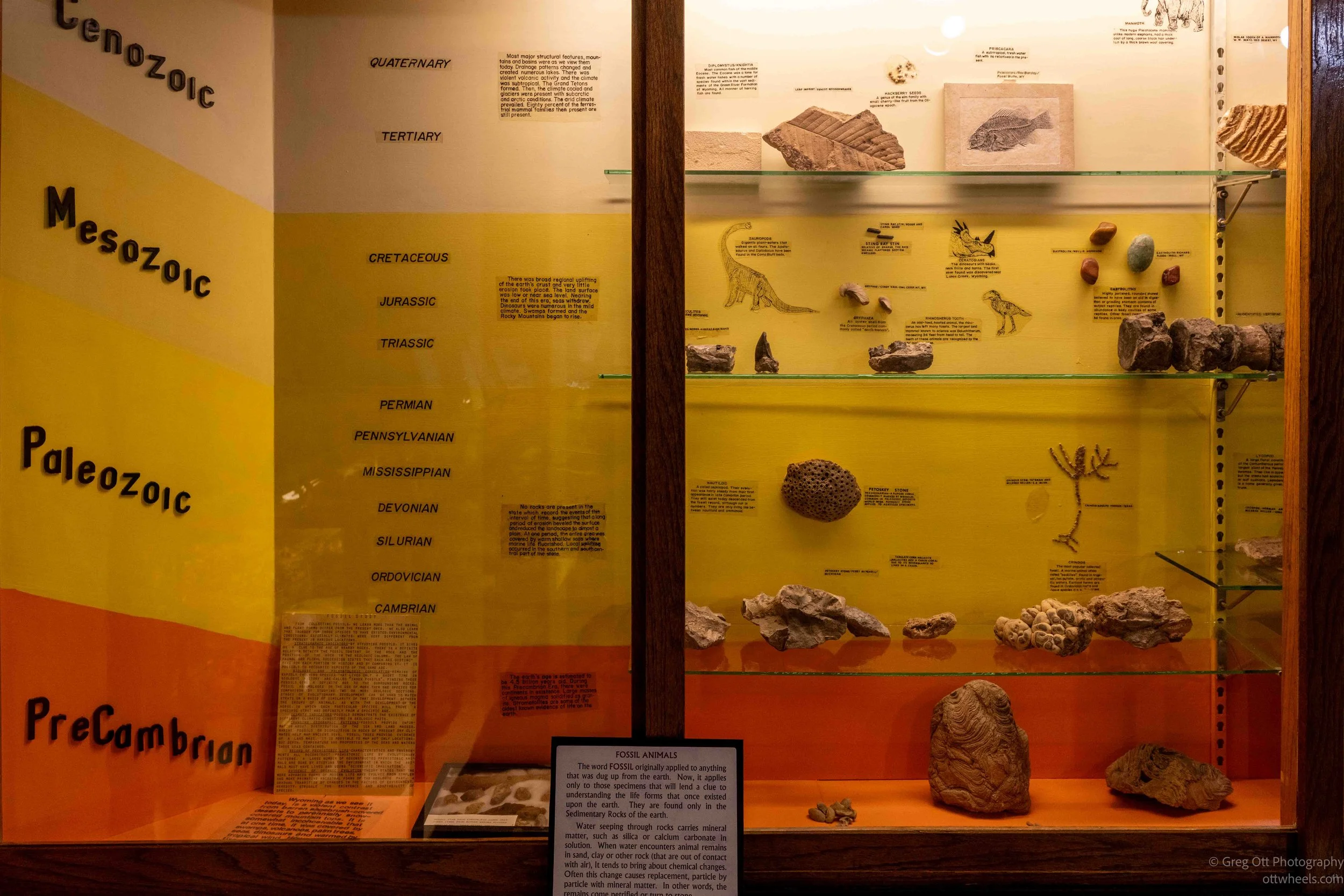
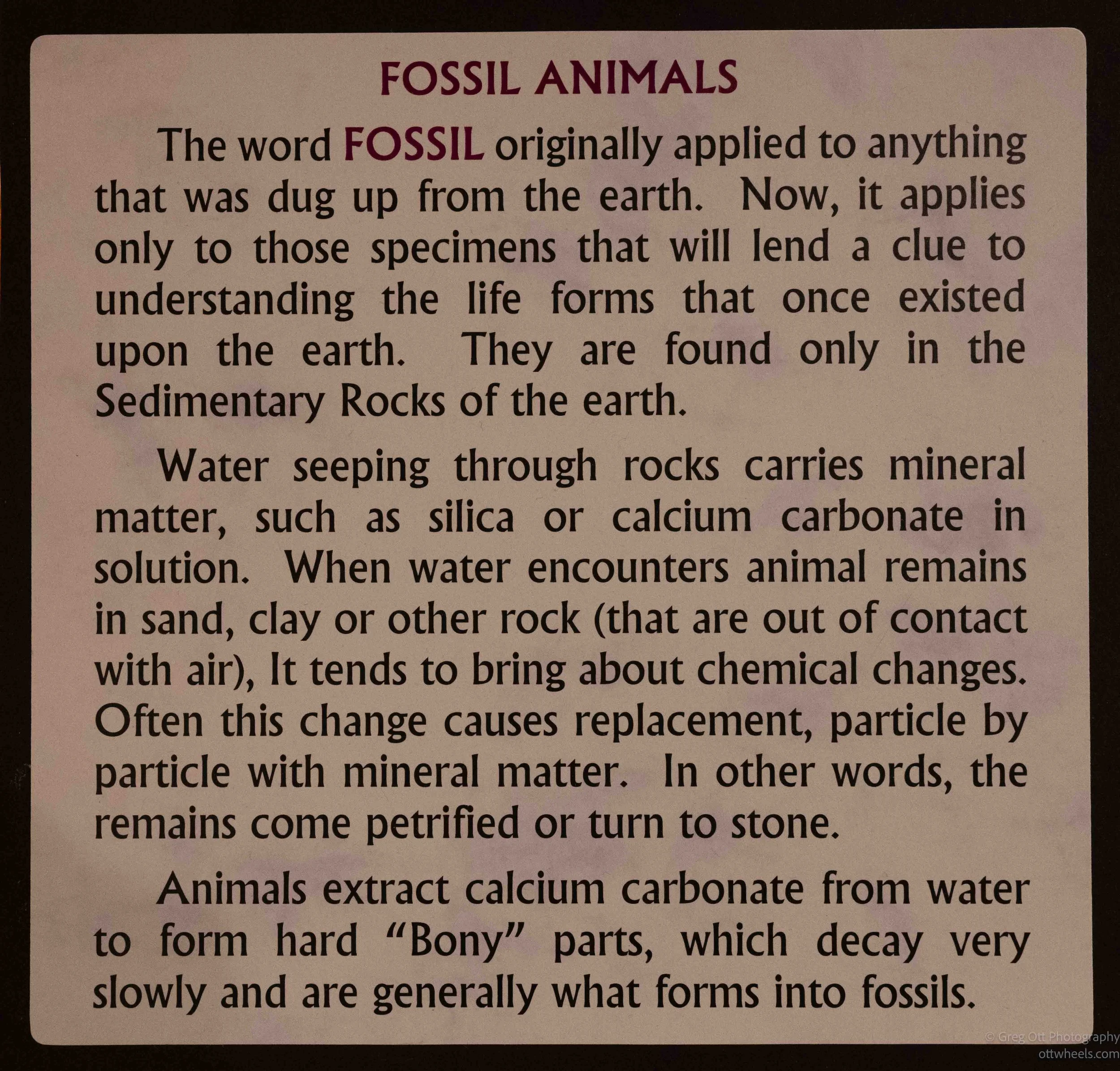
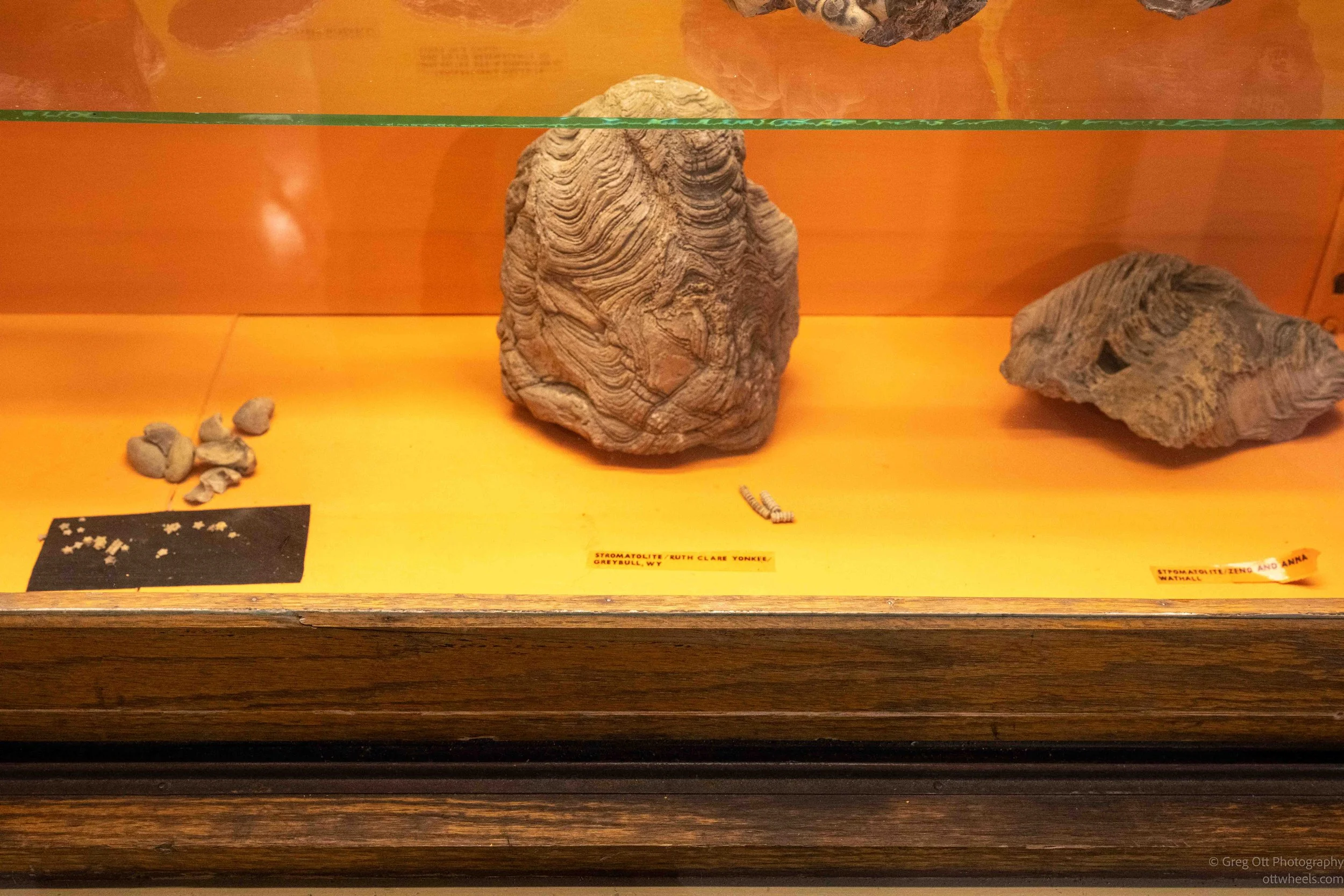
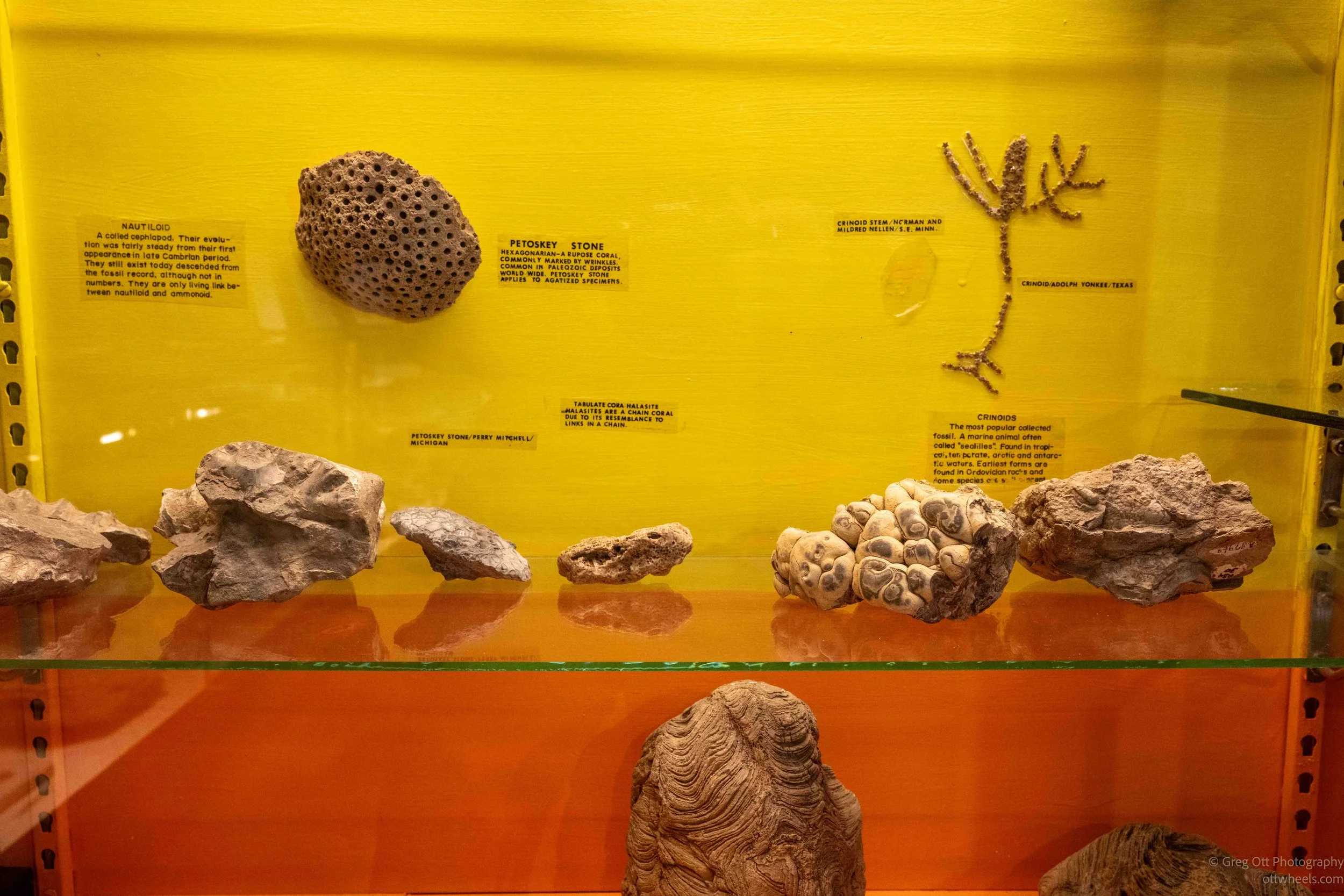
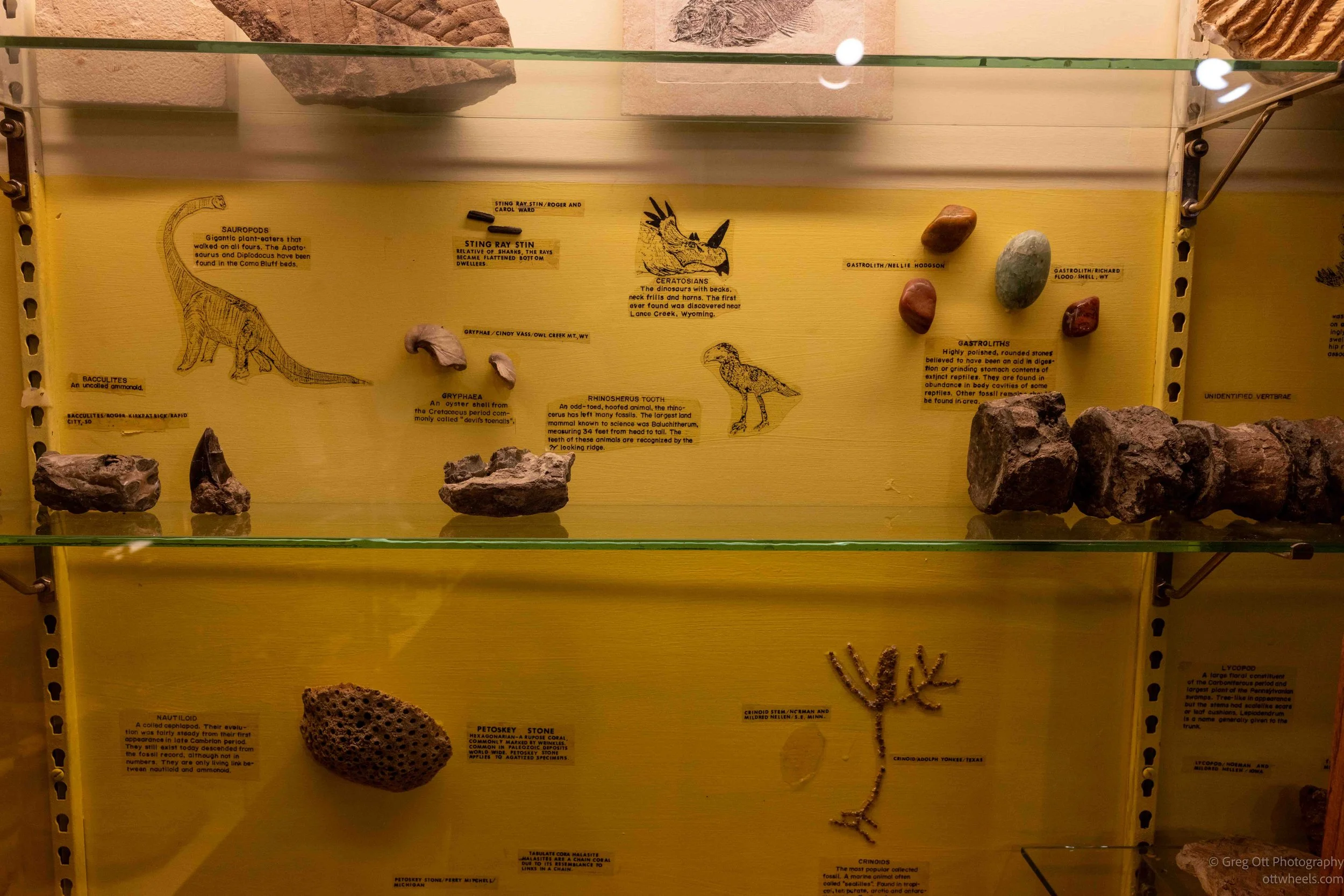
I particularly enjoyed the geology exhibits. Fossils of ancient fish, plants, corals and other marine organisms were arranged by geological period, covering billions of years of Earth's history. Some of these creatures had lived when much of Wyoming was covered by shallow seas. It was fascinating to think that the mountains I'd been driving through contained evidence of an ancient ocean.
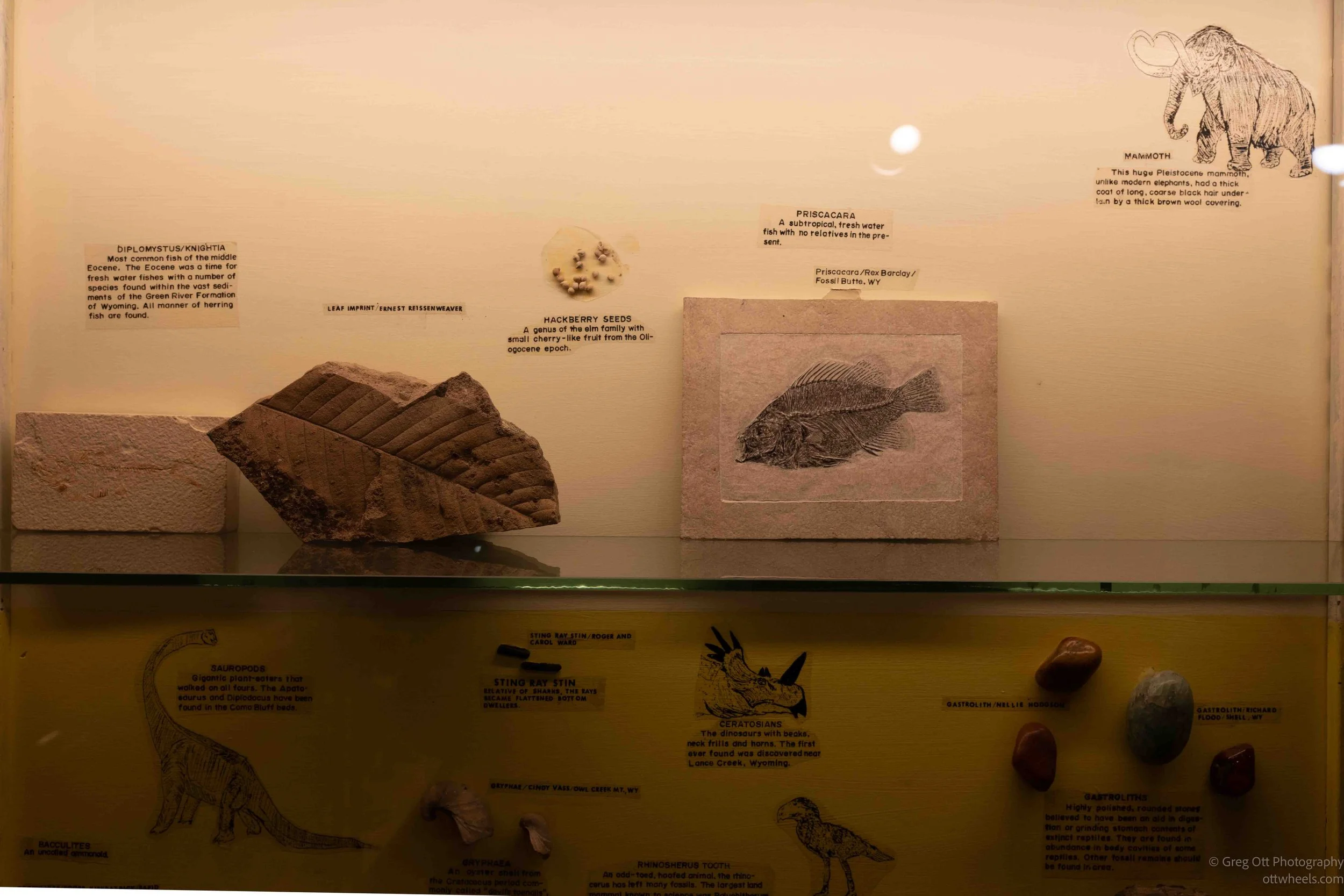
The woman at the bakery had given me excellent advice. Three hours had passed before I knew it, and there was still more to see.
Wind River Canyon
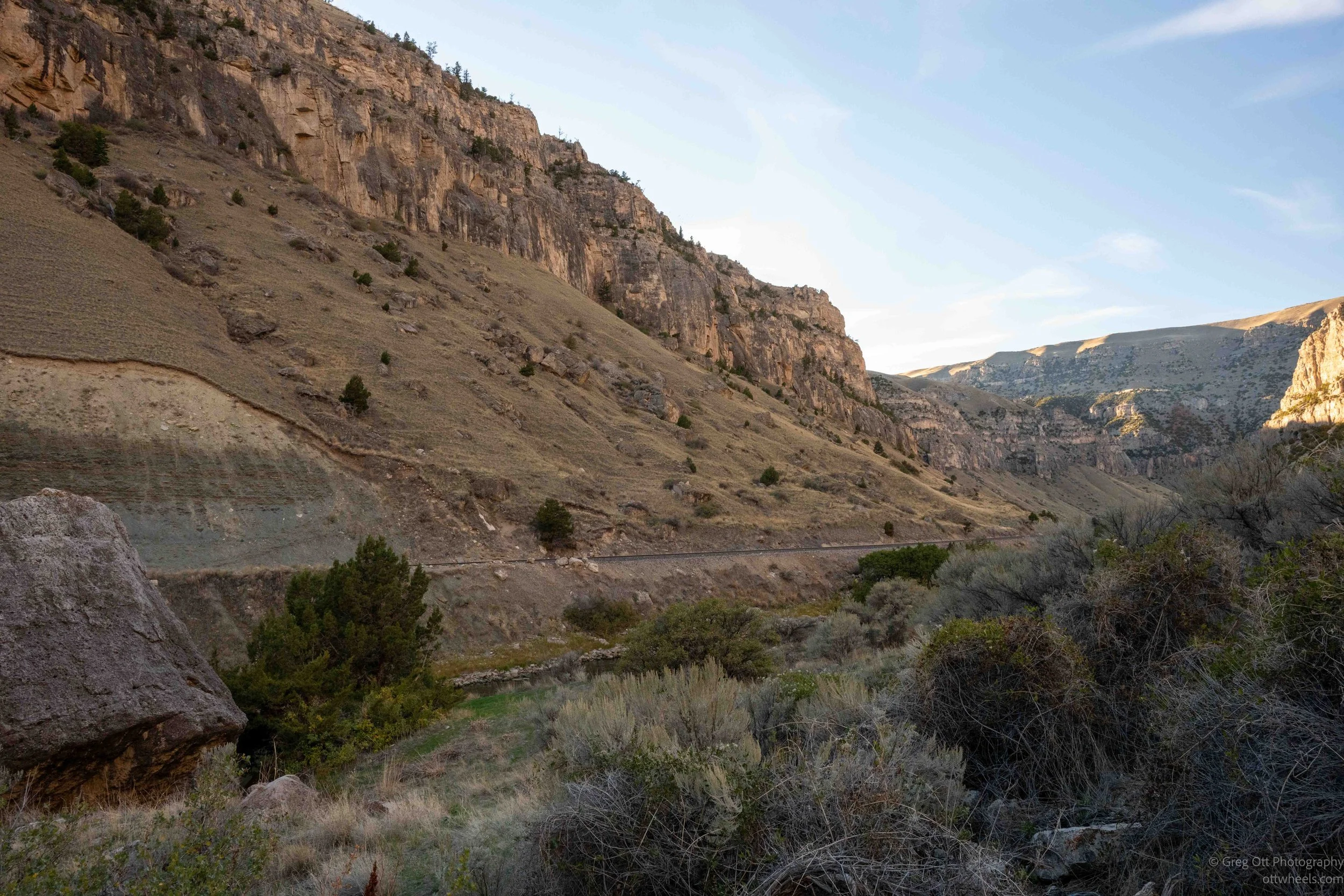
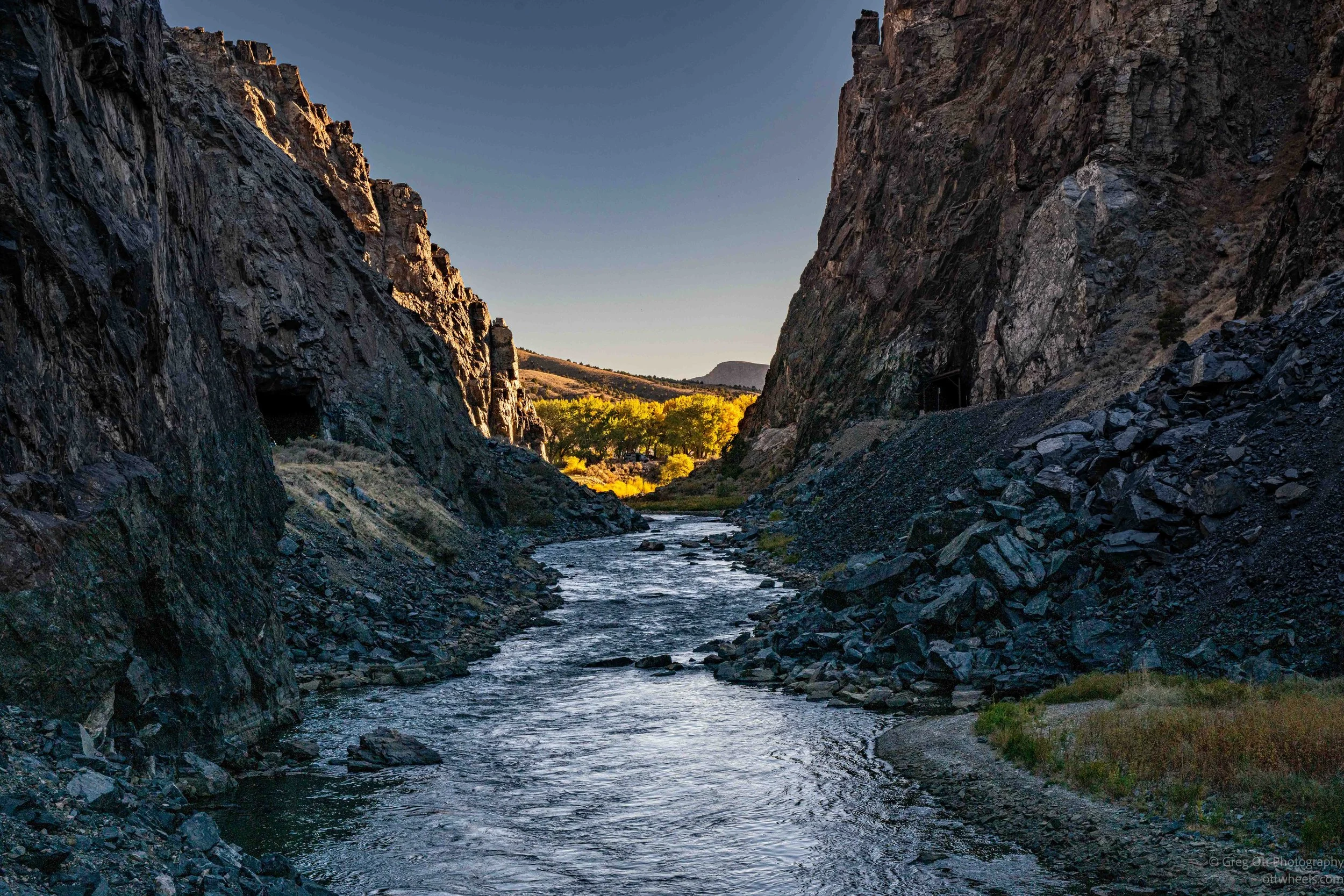
After leaving the museum, I headed south on Highway 20 through Wind River Canyon. The highway follows the river between towering rock walls, with a railroad running along the opposite bank. The late afternoon sunlight illuminated the tops of the cliffs while much of the canyon remained in shadow. At one opening, the river led toward a brilliant stand of yellow autumn trees.
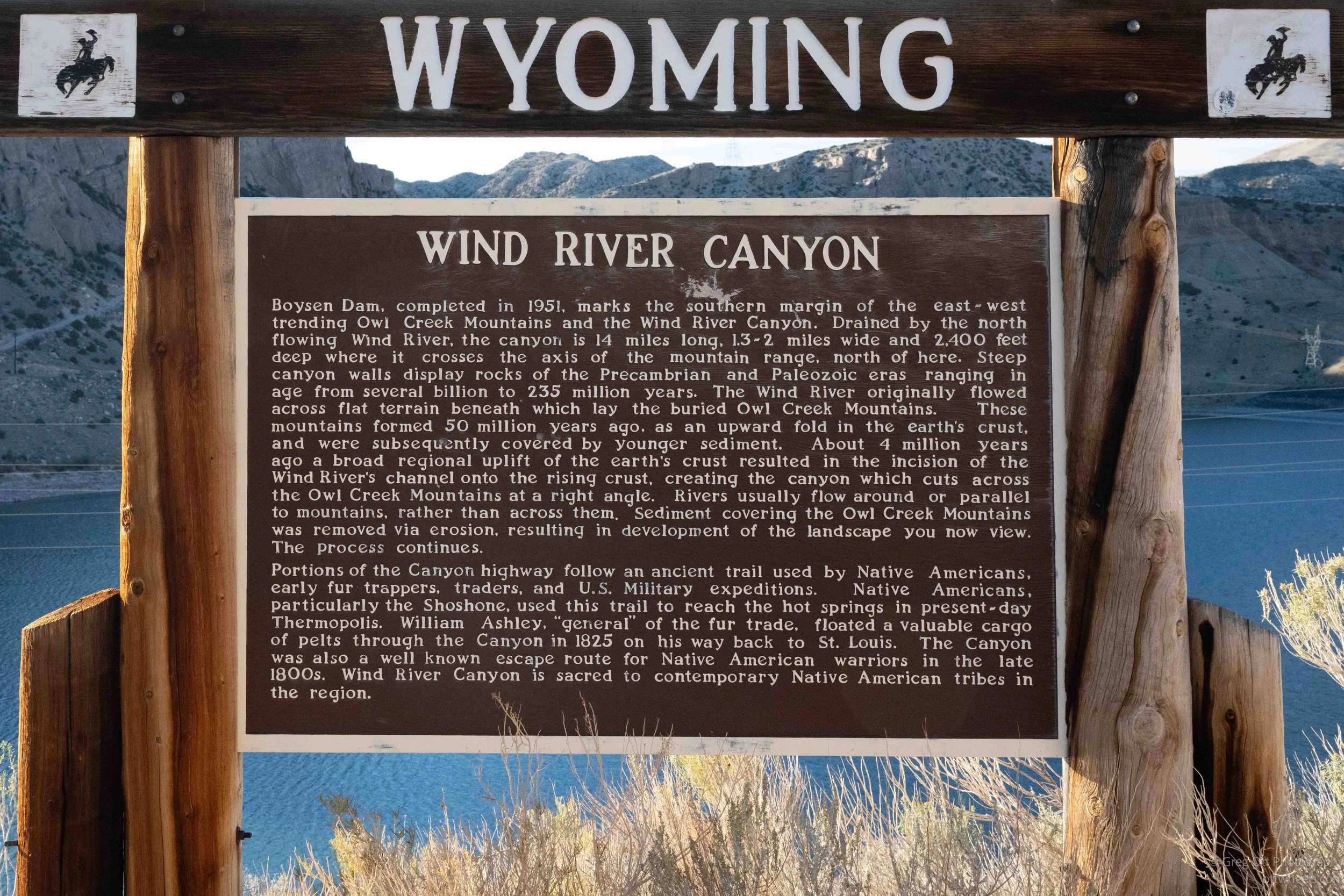
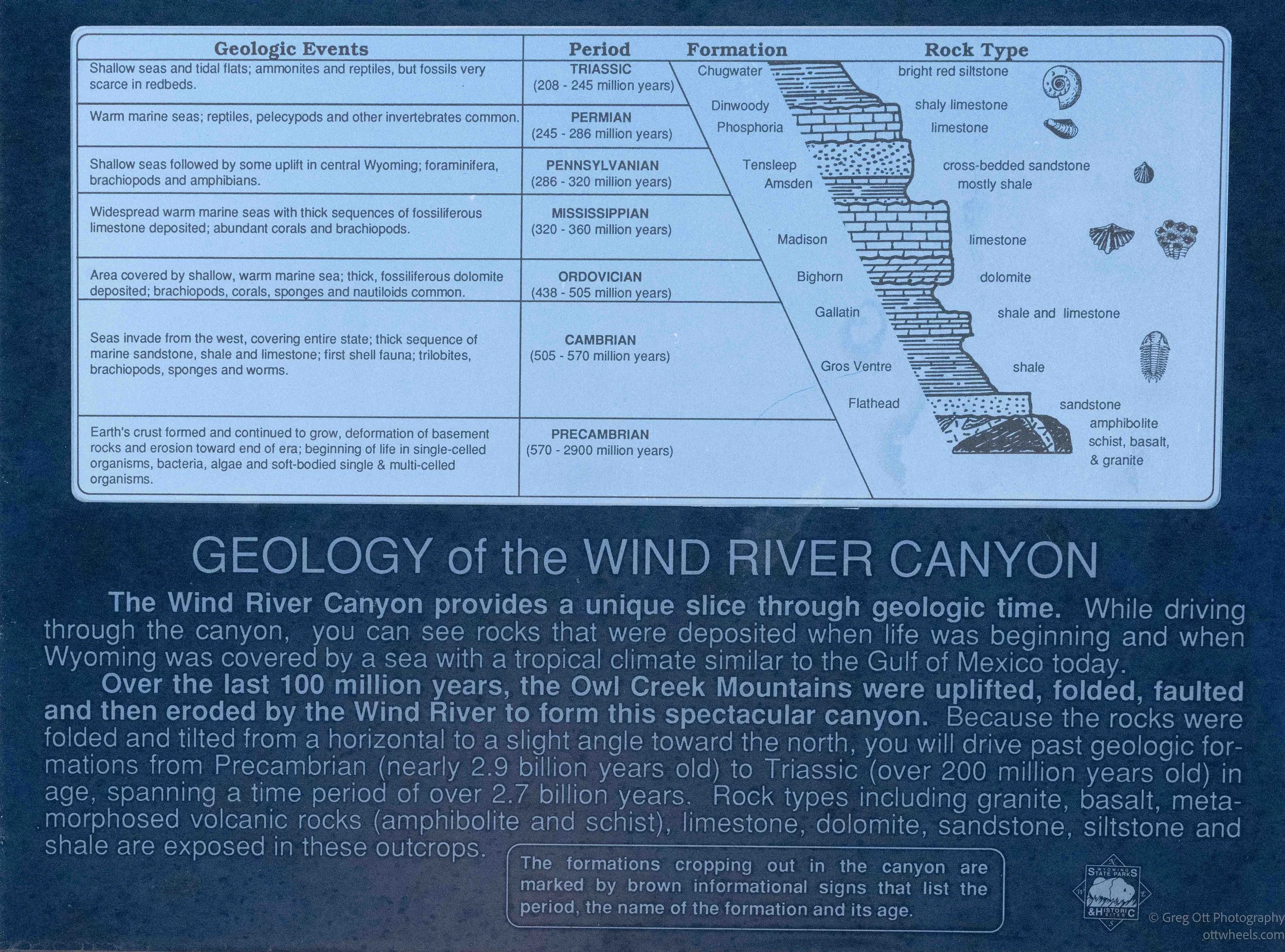
The canyon exposes rocks ranging from hundreds of millions to nearly three billion years old. After spending three hours looking at fossils and geological exhibits, I found myself paying closer attention to the rock formations along the highway. It was like driving through the exhibits I'd just seen.
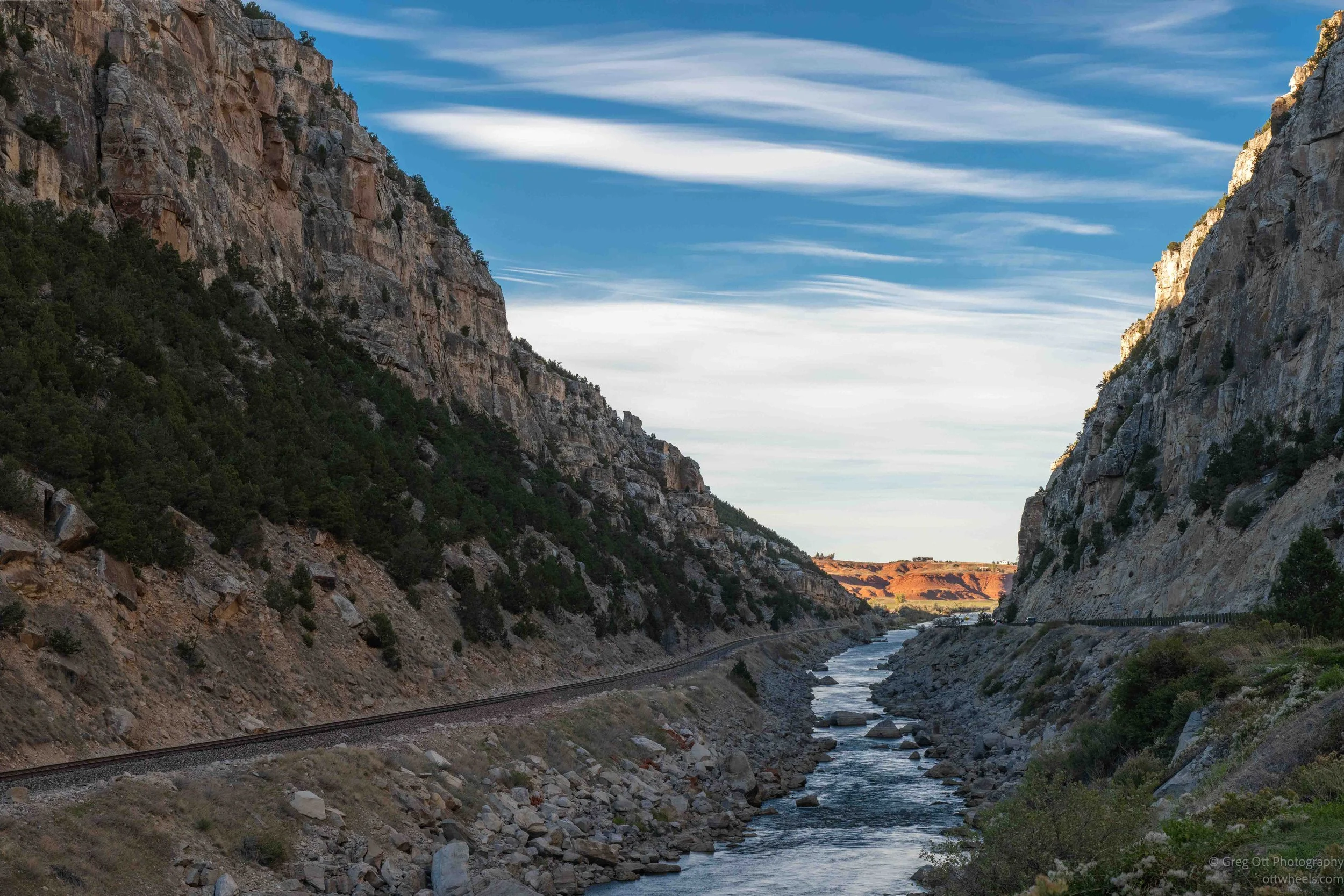
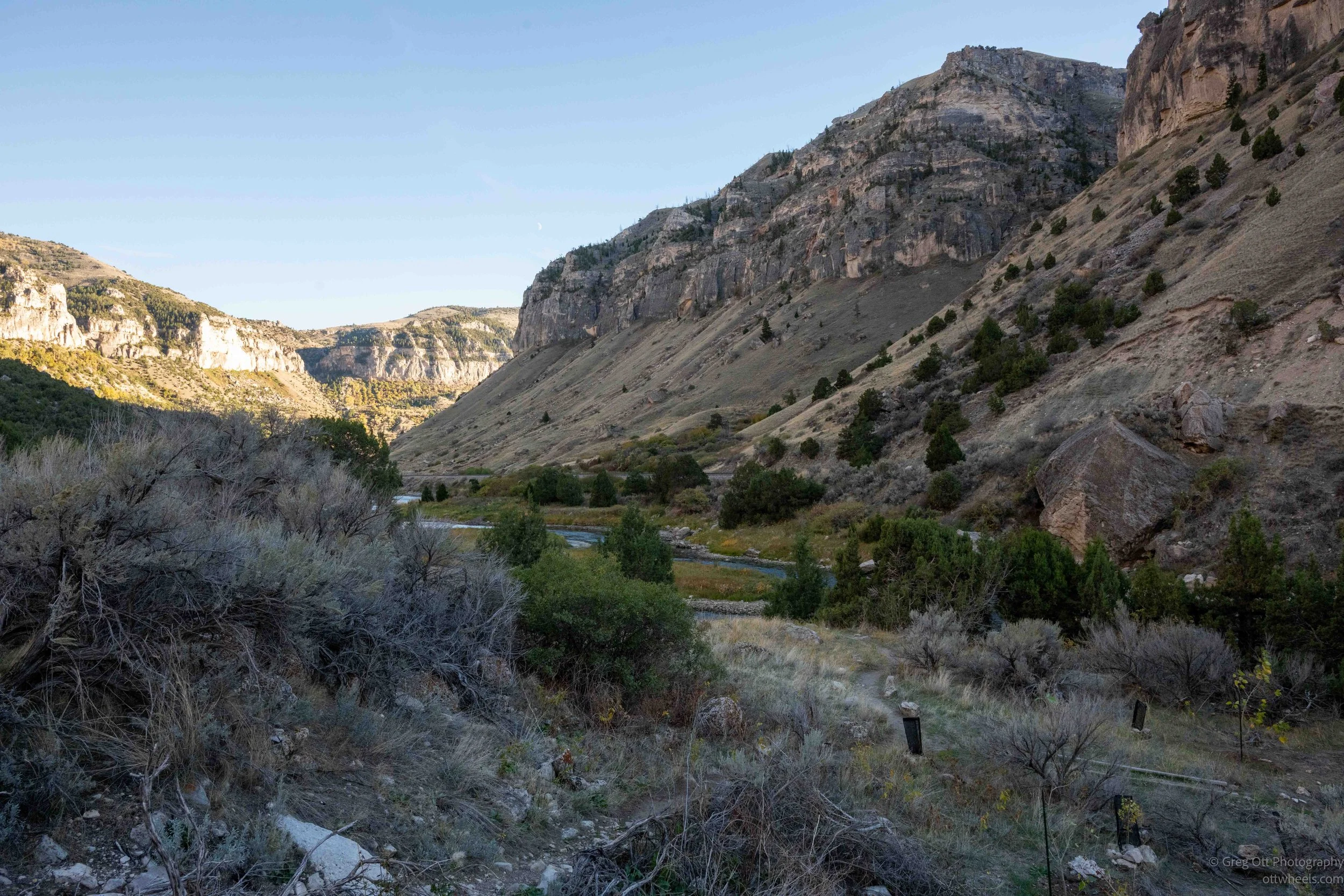
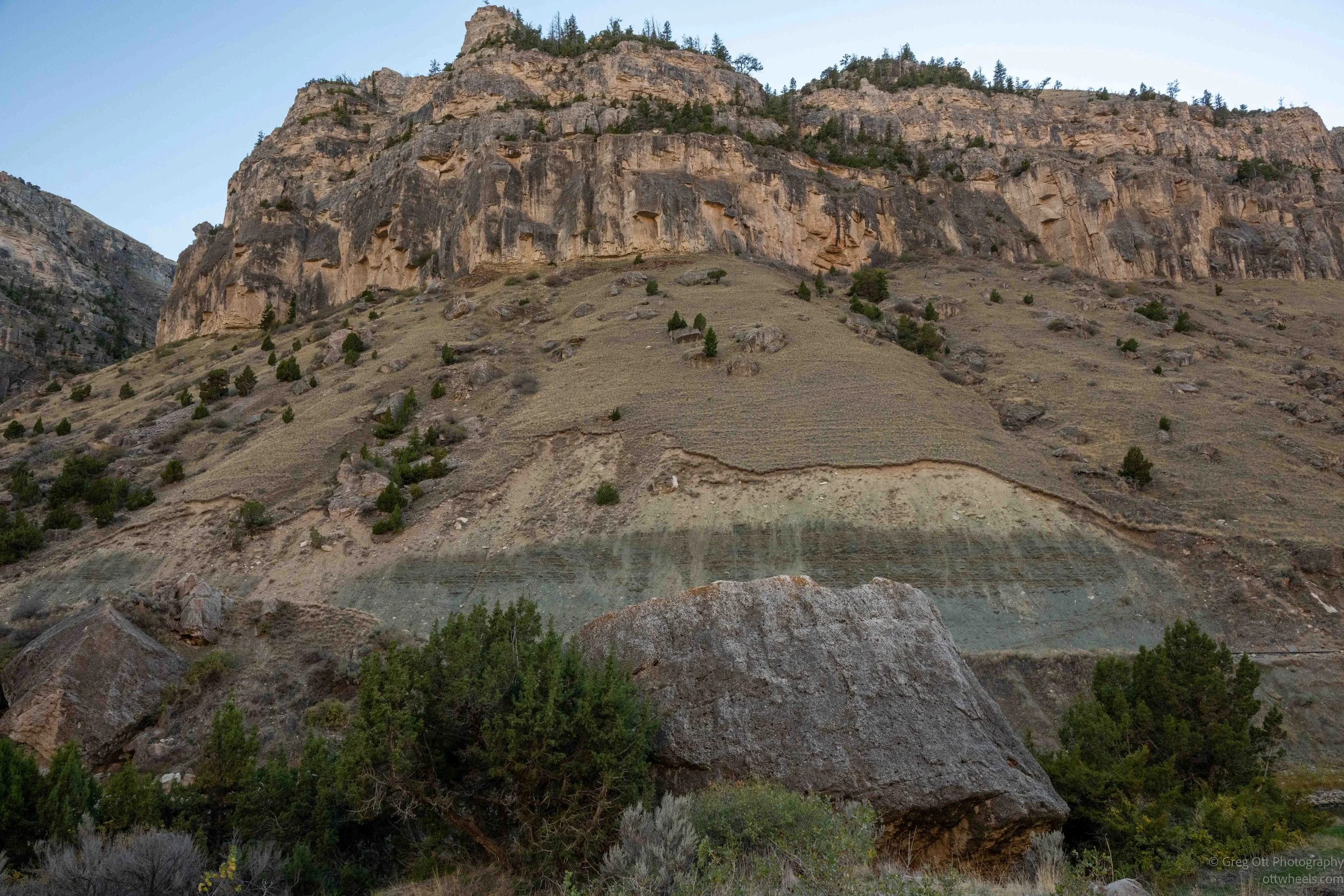
I also learned that the Wind River and Bighorn River are actually the same river. At a place called the Wedding of the Waters, just south of Thermopolis, the Wind River becomes the Bighorn River. Early explorers gave the two sections different names before realizing they were connected, and the names stuck.
In the 1990s, I wrote real-time software using an operating system called VxWorks, developed by Wind River Systems. The company was founded in California in 1981 by Jerry Fiddler, who named it after Wyoming's Wind River Range, where he enjoyed vacationing. I had never given much thought to the name back then, but driving through this part of Wyoming brought back memories of those years writing software.
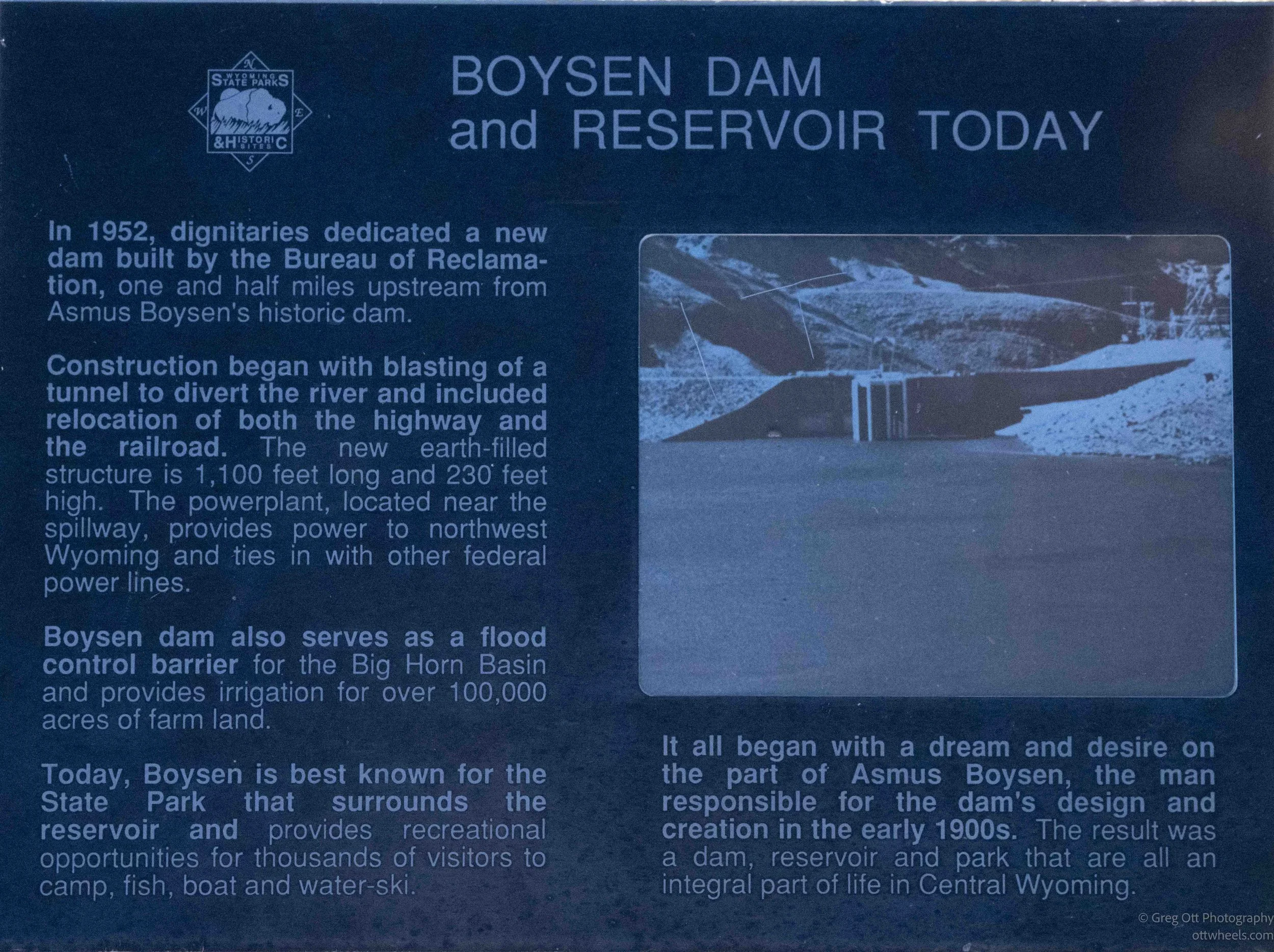
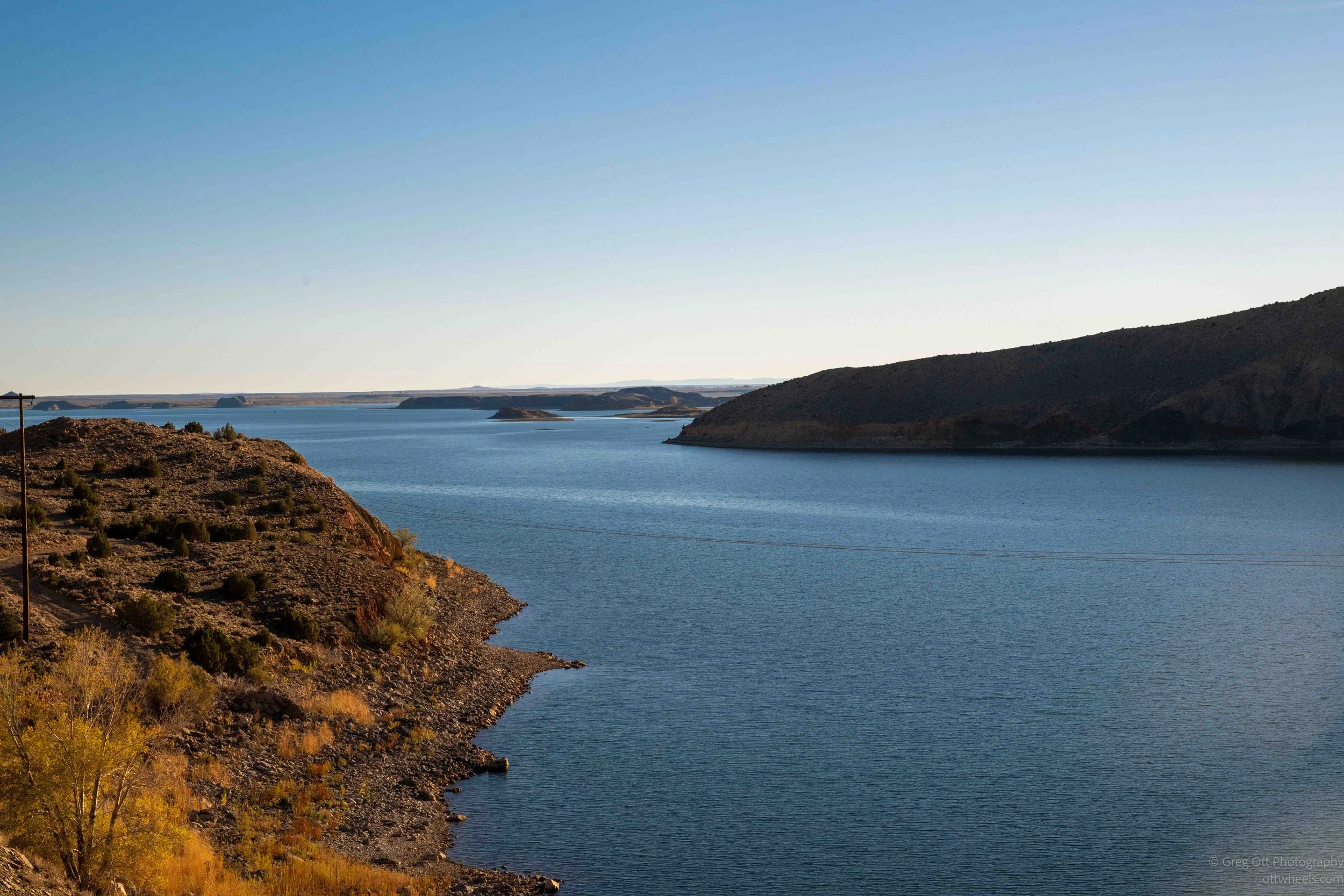
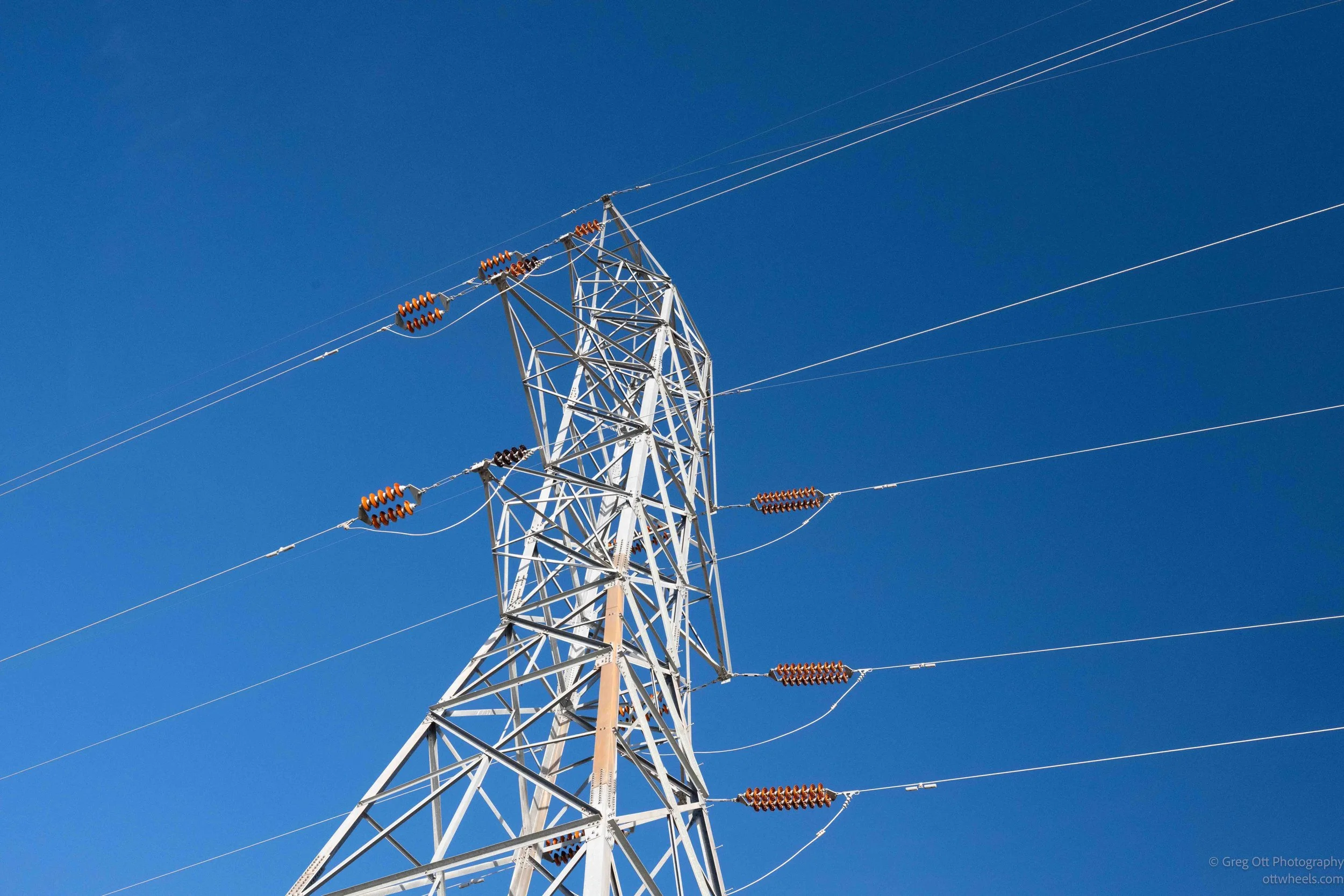
Near the southern end of the canyon, I passed Boysen Dam and Reservoir. The dam was completed in 1951, and the reservoir provides flood control, irrigation water and hydroelectric power. The landscape opened up considerably as I continued toward Shoshoni.
Shoshoni, Wyoming
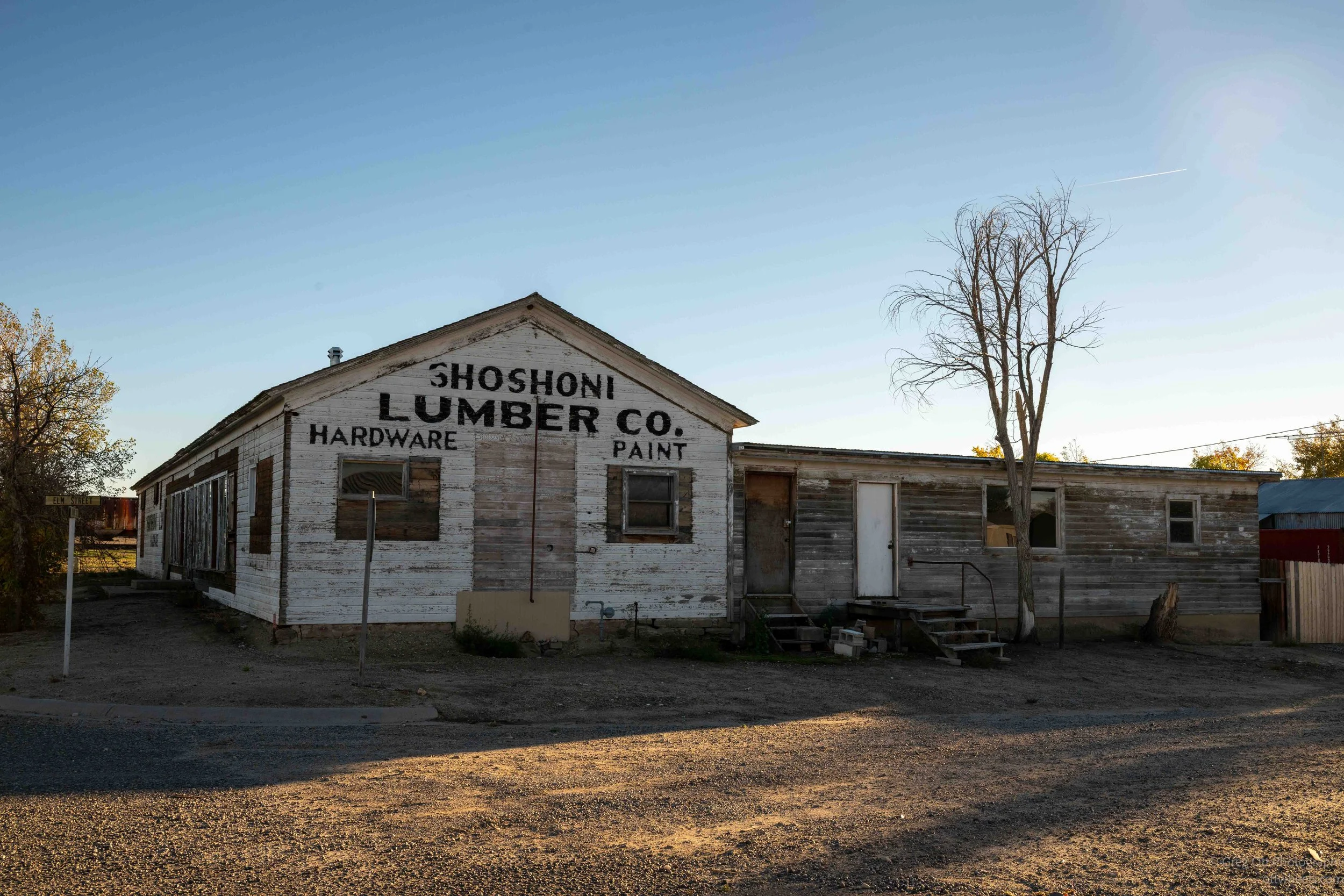
I reached Shoshoni shortly before dark. Driving through town, I noticed the weathered Shoshoni Lumber Company building, its faded lettering still advertising lumber, hardware and paint. It looked as though it had been standing there for a very long time.
I found a quiet street near a park and pulled over to make dinner. There was almost no traffic, and the town seemed deserted. After sitting there for a while, I decided there was no reason to drive any farther and stayed for the night.
I'd started the morning looking for a coffee shop and a place to write. Instead, I'd learned about cowboy swastikas, discovered an excellent museum and driven through a canyon exposing billions of years of geological history. Not a bad day for having no particular plans.