Meeteetse
I left Cody and drove south on Highway 120 to Meeteetse. Before exploring the town, I parked and spent some time catching up on blog posts. The writing never quite keeps pace with the driving. Tourist season had just ended, and it seemed that nearly every business in town had decided to close for a week or ten days. The streets were almost deserted.
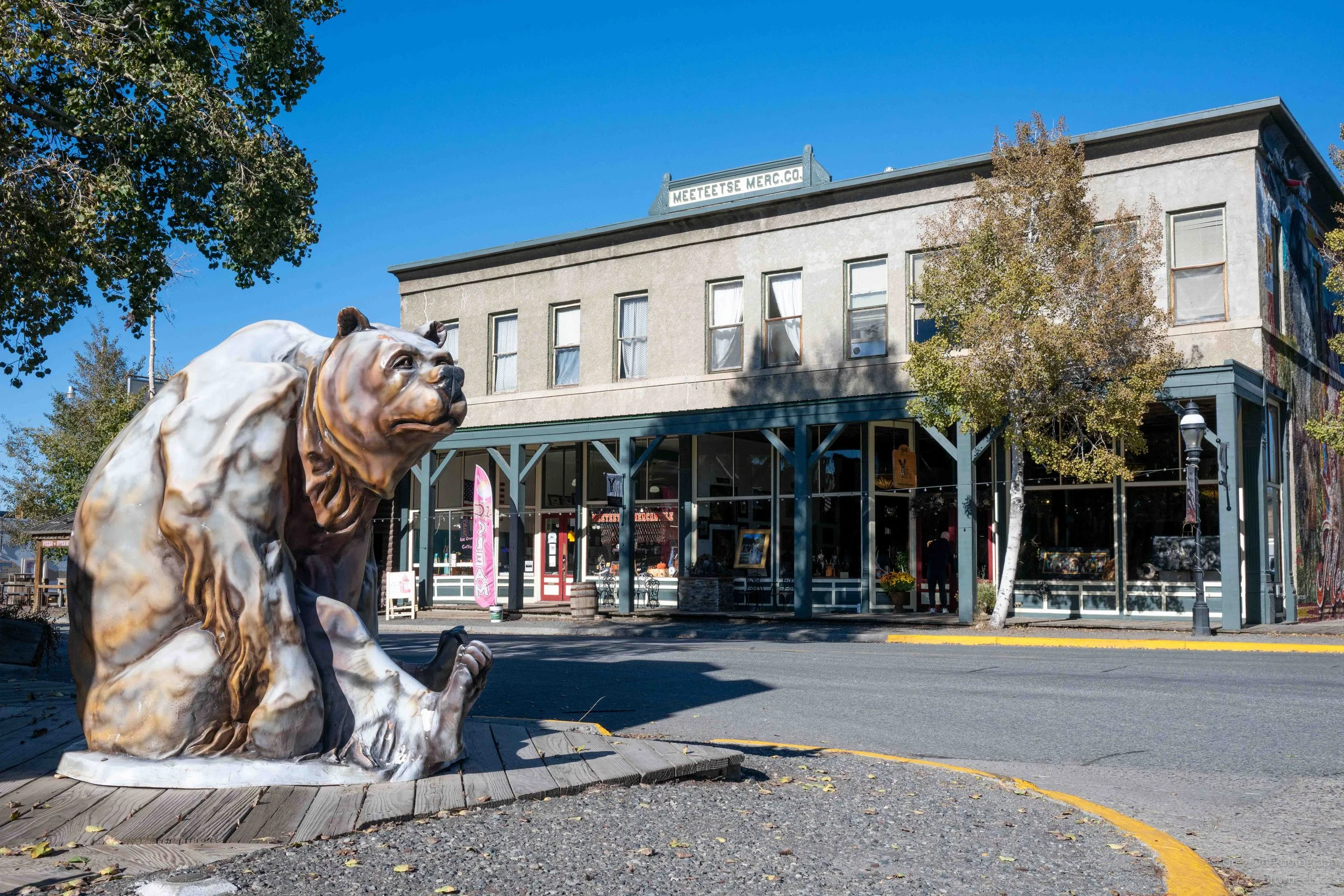
Meeteetse is a town of just over 300 people. The main street, State Street, is about a block long and lined with historic buildings. Most have covered porches and wooden boardwalks out front. The largest is the Meeteetse Mercantile, a two-story stucco building with its name painted across the top. A large bear sculpture sits on the corner across from it, looking like it's waiting for something.
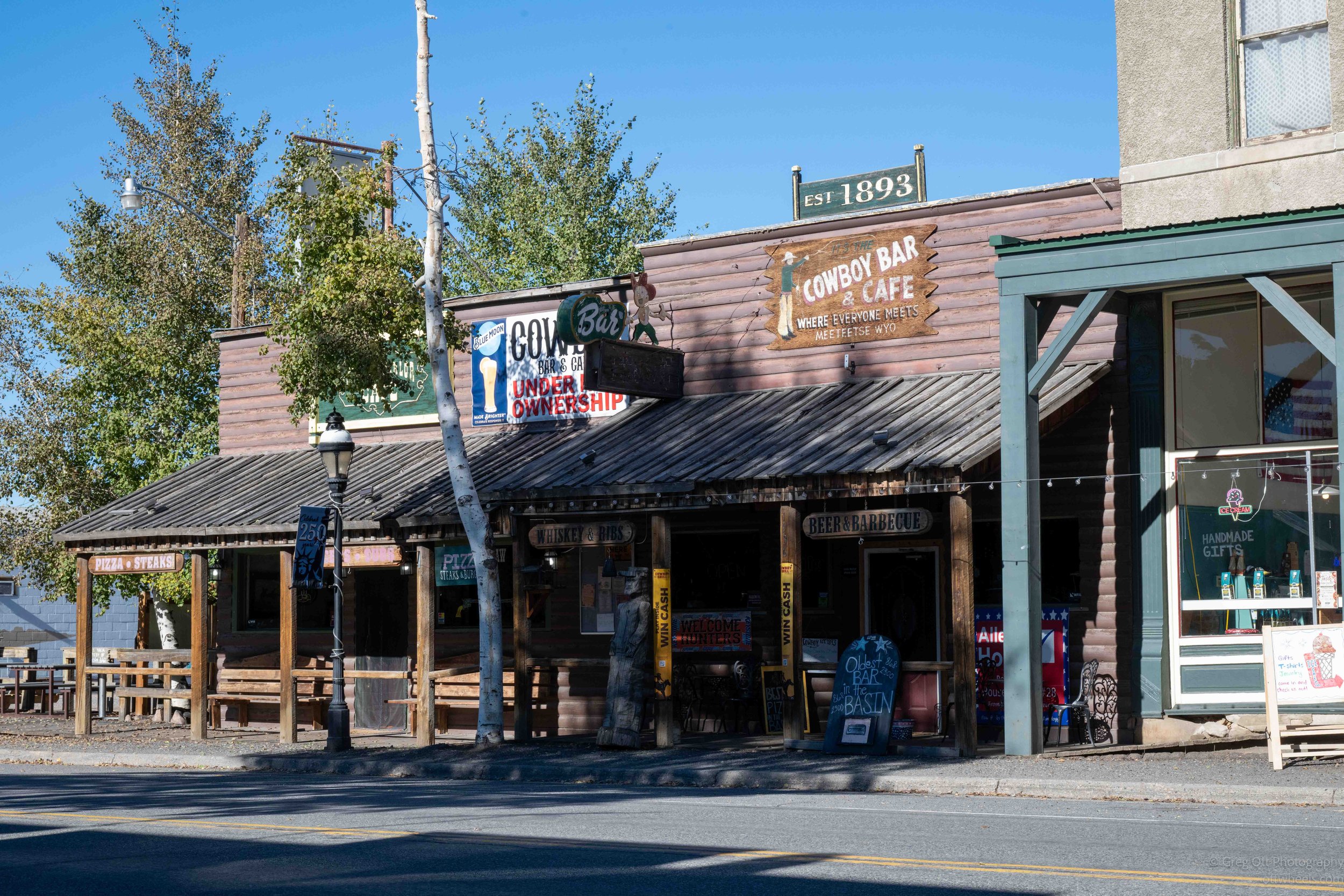
A few doors down is the Cowboy Bar & Cafe. The sign on the roof says it was established in 1893, and a chalkboard out front calls it the oldest bar in the basin. A banner announced that it was under new ownership.
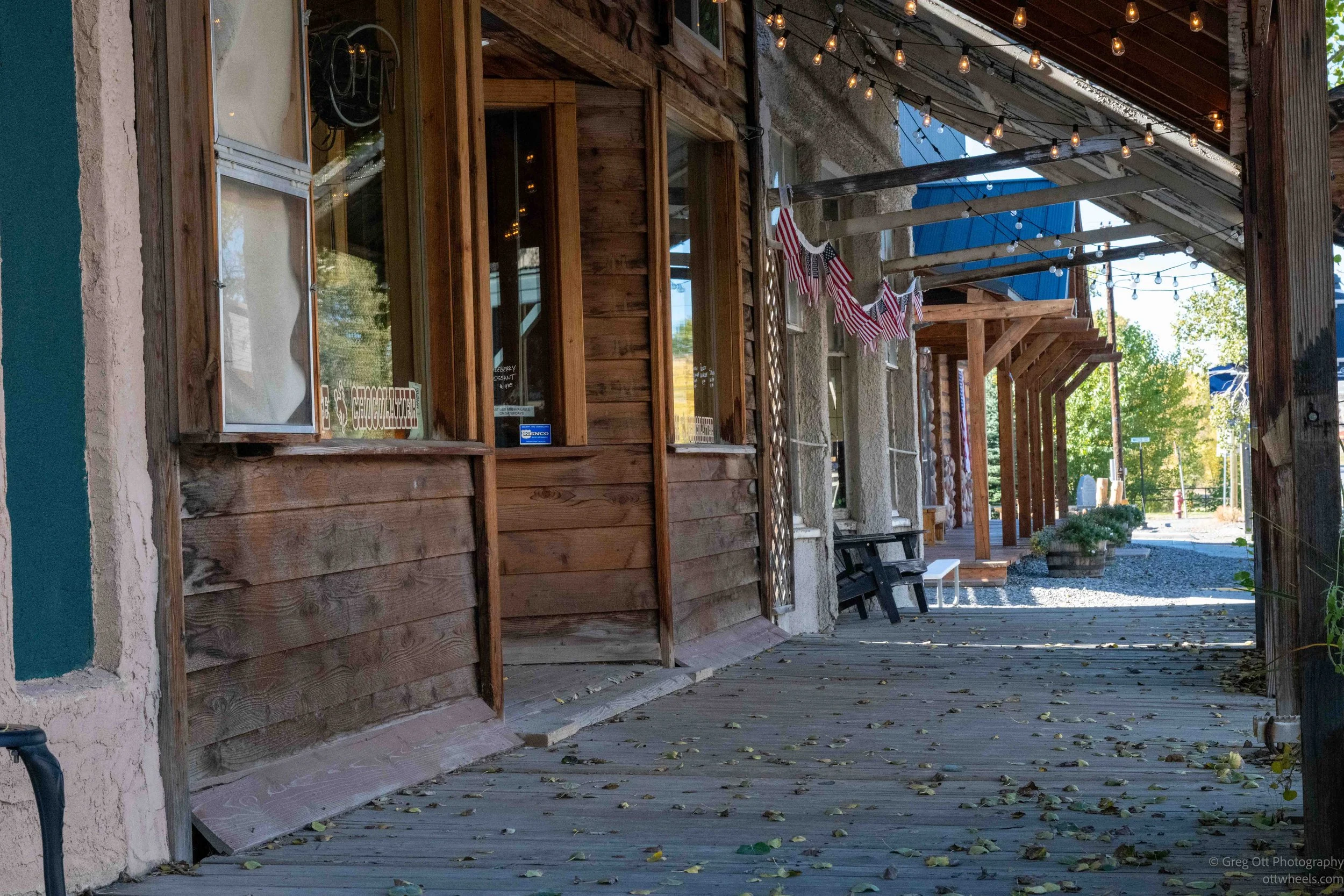
I walked along the wooden boardwalk past the chocolatier. Fallen leaves had blown across the boards, and there wasn't another person in sight. There was a Conoco station, and around the corner on Park Avenue were a few more shops and the post office. That was about the extent of downtown Meeteetse.
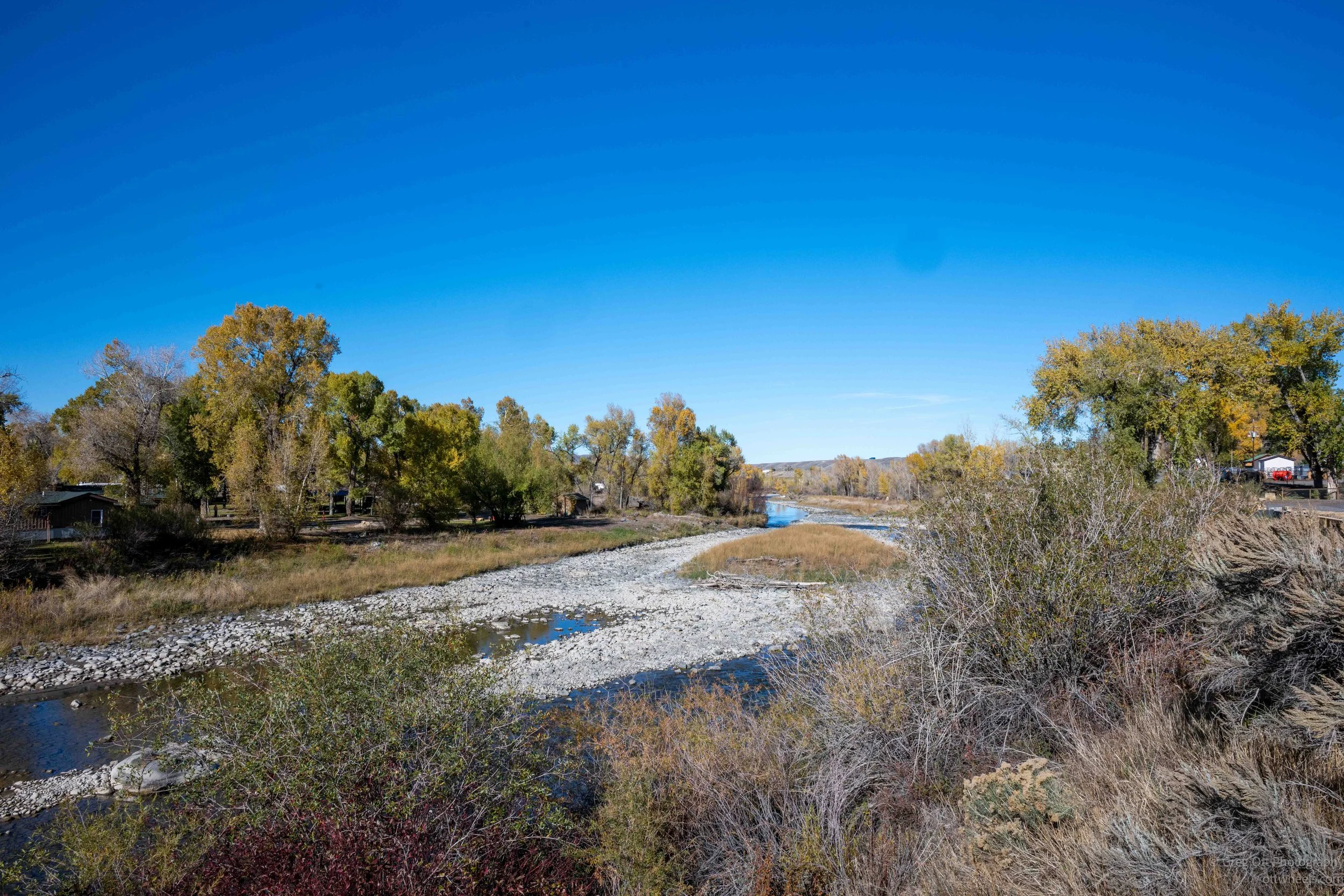
I walked down to the Greybull River and took one photograph. There was water flowing beneath the bridge, but only a fraction of what would be there when the river was running high. Most of the riverbed was pale, dry rock, with a few narrow channels winding through it. Cottonwoods along the banks were turning yellow, adding a little fall color to an otherwise dry landscape.
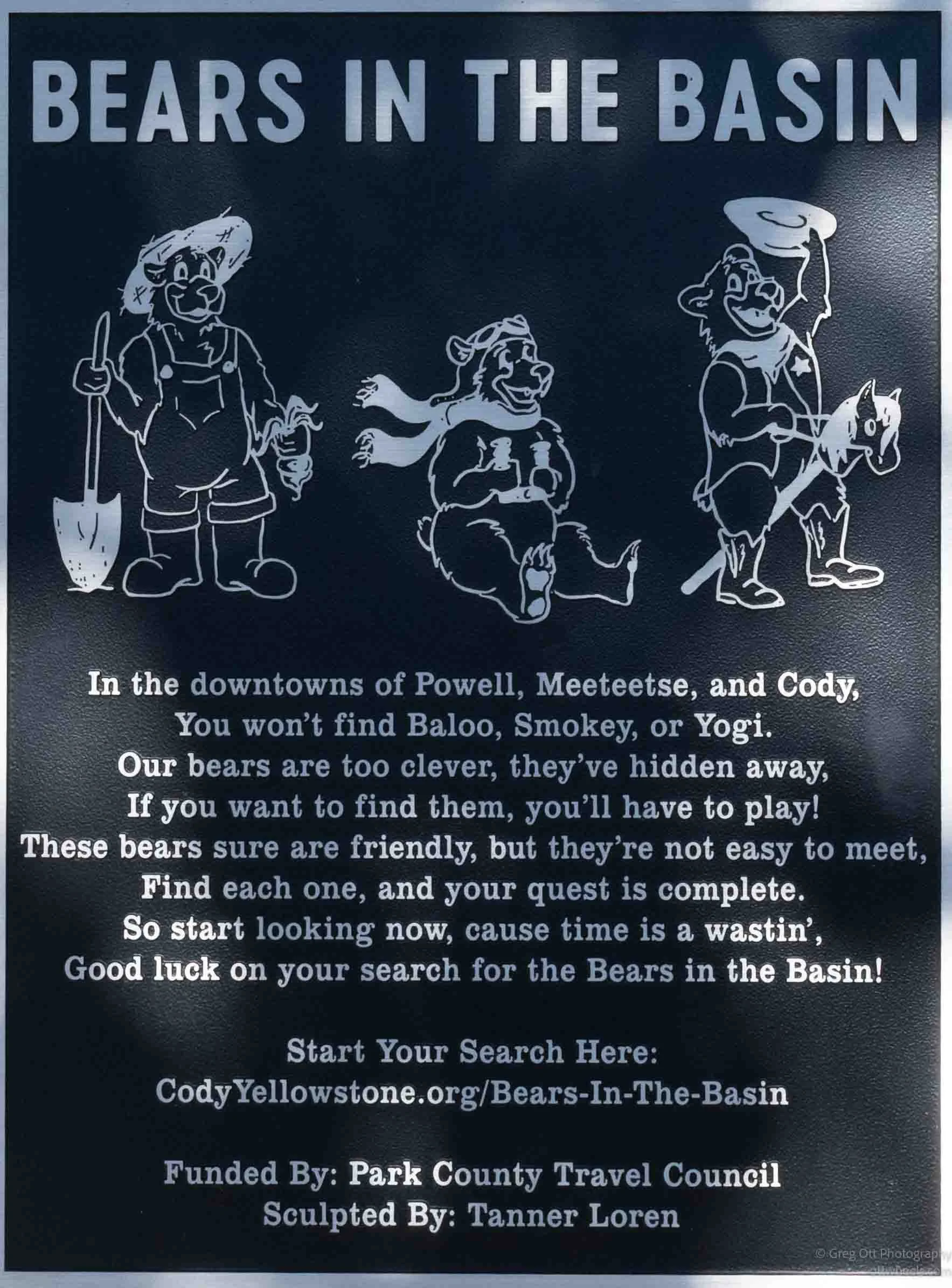
Back in town, I came across a plaque explaining Bears in the Basin, a scavenger hunt for small bear sculptures hidden throughout the downtown areas of Powell, Meeteetse, and Cody. The project was funded by the Park County Travel Council, and the bears were sculpted by Tanner Loren.
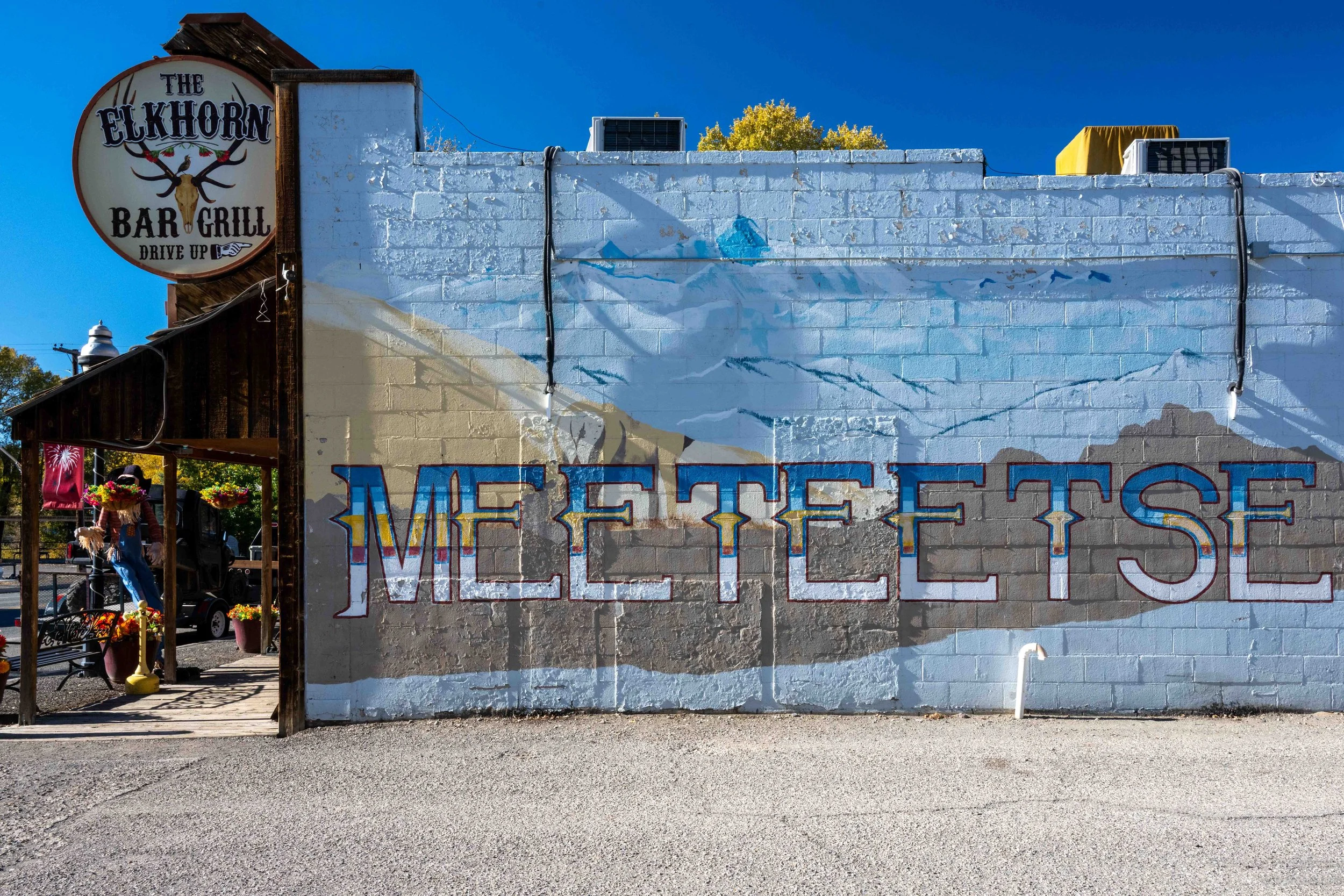
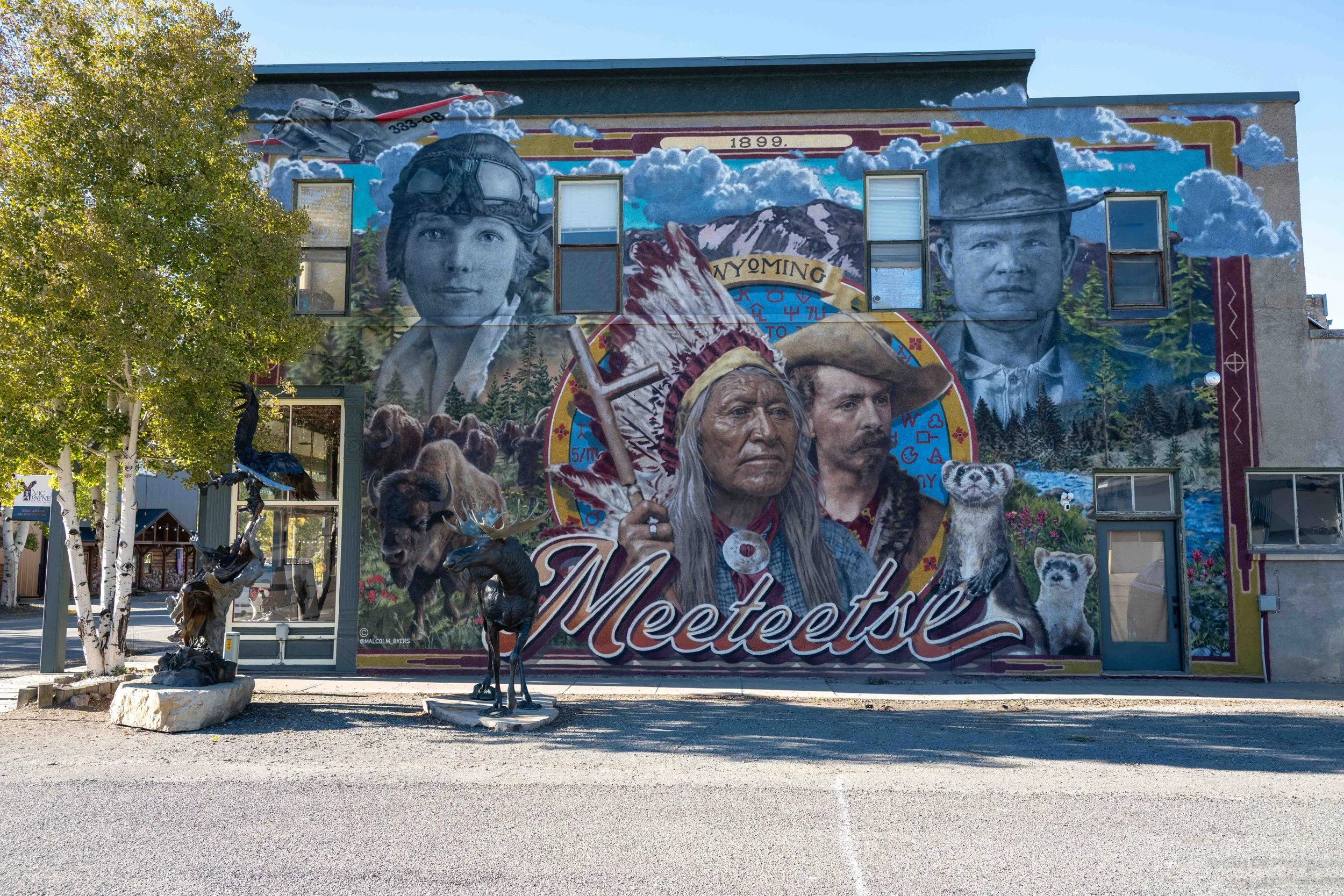
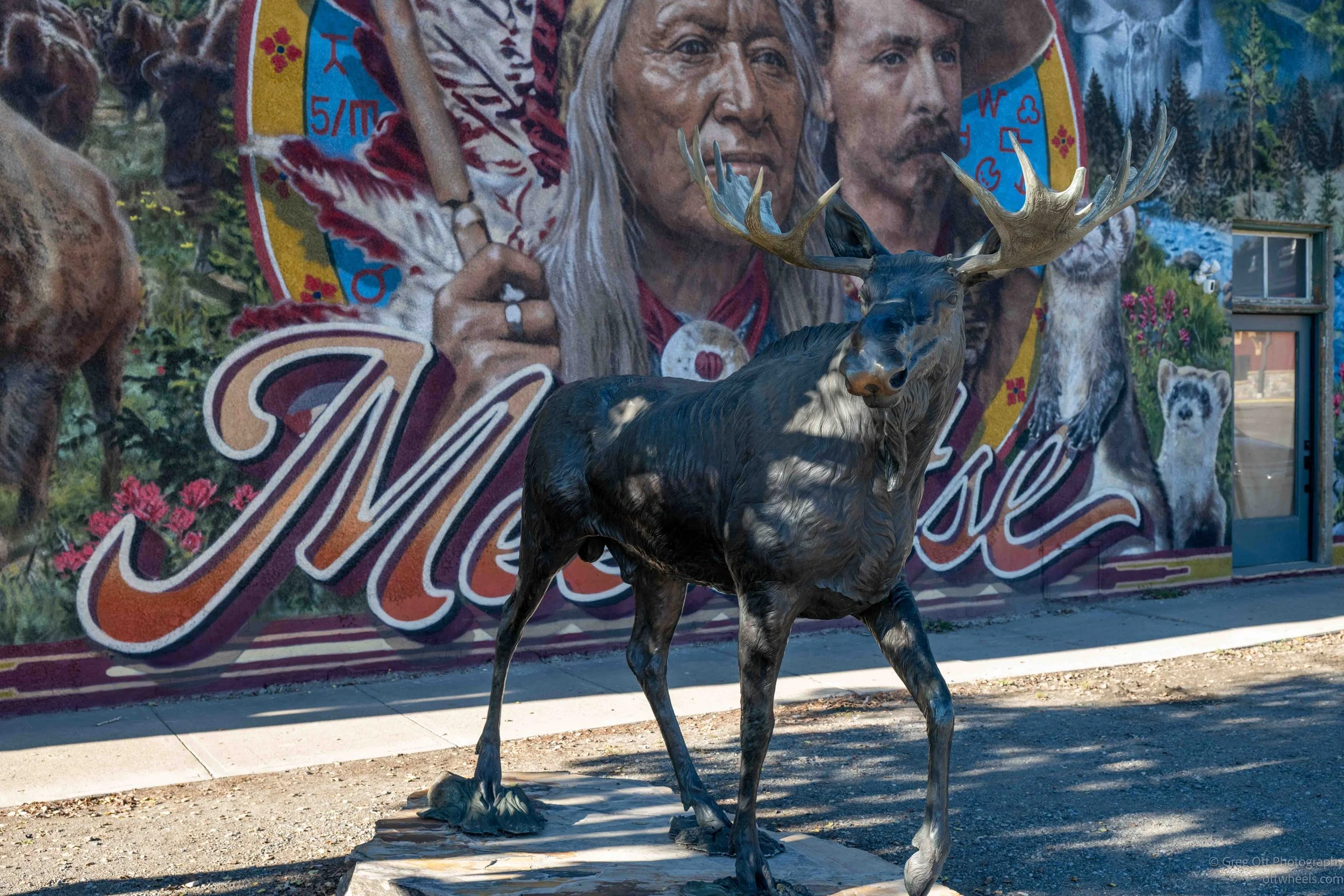
Around the corner, the Elkhorn Bar & Grill has the town's name painted in large letters across its side wall, with mountains rising behind it. It's the kind of mural that makes you stop for a photograph.
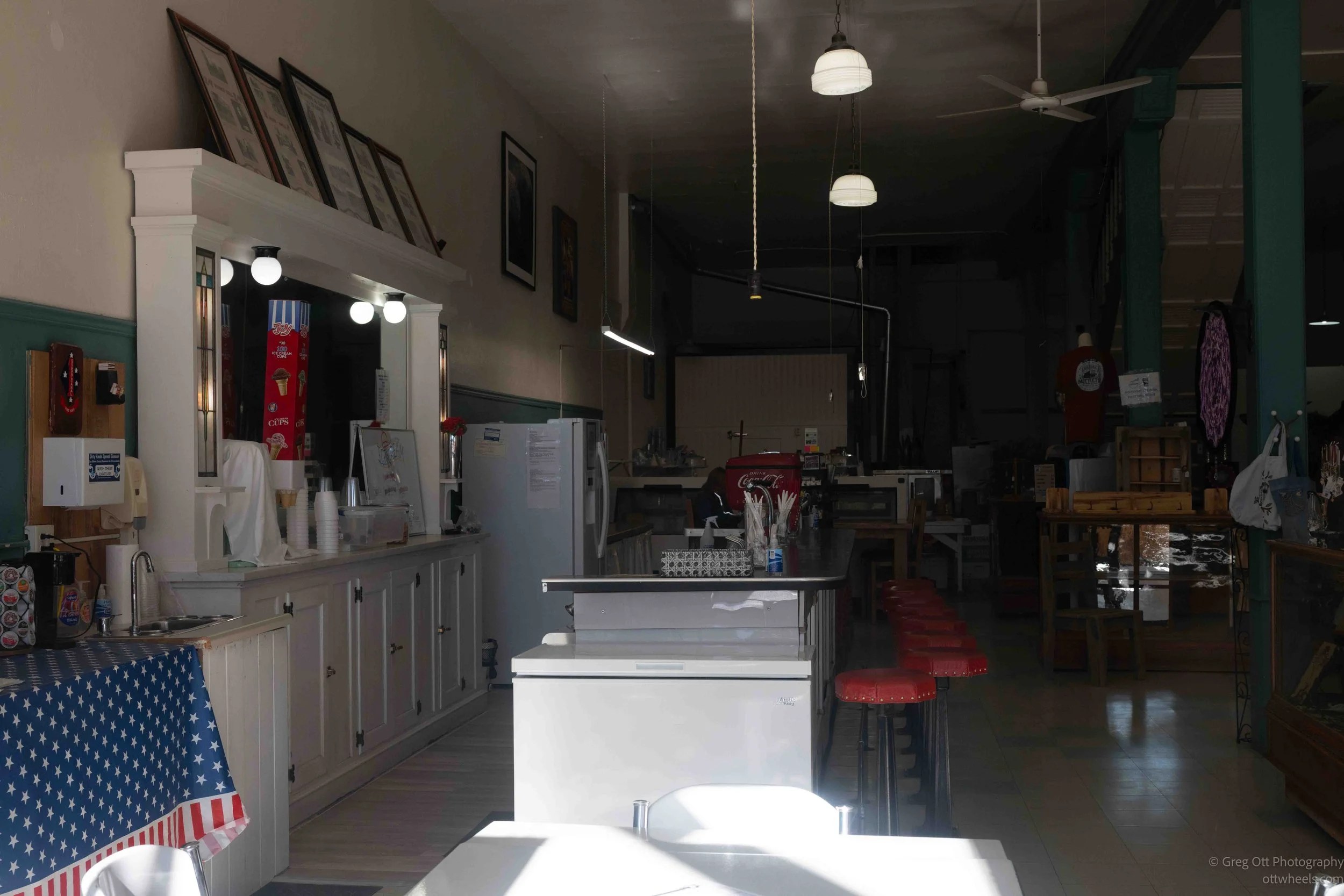
Inside the closed Mercantile, I could see an old soda fountain with red stools lined up along the counter. The building also houses the Vic Payne Studio & Gallery, which, fortunately, was open.
Vic Payne Studio & Gallery
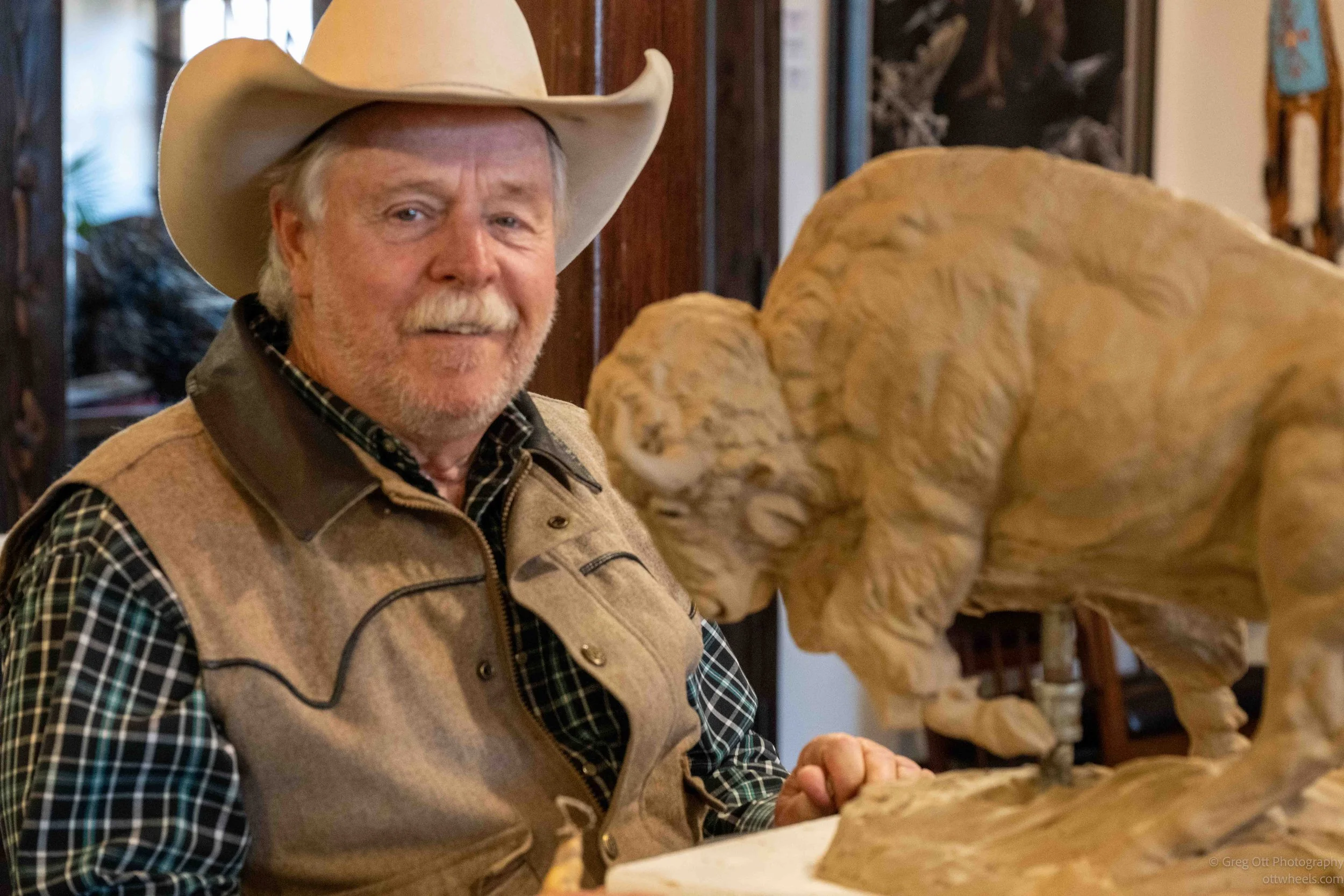
I stopped in at the studio and gallery, mostly because it was the only place open in town. It was a surprisingly impressive art gallery for such a small community. I spent some time looking at the bronze sculptures before noticing a man working on a clay buffalo near the back of the gallery. That was Vic Payne.
I had no idea who he was when I walked in. It turns out he's been sculpting Western bronzes for more than 40 years, and his work is known well beyond Wyoming. You'd never guess it from talking to him. He was friendly and easygoing, and he continued working on the buffalo while we talked.
I told him I'd recently visited the Whitney Western Art Museum in Cody, where I'd seen a large bronze sculpture cut open to reveal its internal construction and supports. I admitted that I had no idea how anyone could take a relatively small clay model and turn it into a sculpture large enough to stand in a park or in front of a government building. Vic was happy to explain the process.
Everything starts with the clay. The sculptor builds and refines the original until it's exactly what they want, because every subsequent step reproduces that work. A rubber mold is made around the sculpture, supported by a rigid plaster shell. Once the mold is finished, it's opened and the original clay is removed. Hot wax is then brushed or poured into the mold to create a hollow wax reproduction. The wax is carefully cleaned up, and additional details are finished by hand.
A network of wax channels is attached to the reproduction to provide pathways for the molten bronze. The entire assembly is repeatedly dipped into a ceramic slurry and coated with sand until a hard shell forms around it. The shell is heated in a kiln, melting the wax and leaving an empty cavity in the exact shape of the original sculpture. This is the lost-wax casting process.
Molten bronze is poured into the ceramic mold and allowed to cool. The shell is then broken away, the metal channels are removed, and the surface is carefully finished. Finally, a patina is applied to give the bronze its color and character. Larger sculptures are cast in multiple sections that are welded together, with internal supports added where needed. That explained the hollow sculpture I'd seen in Cody.
Our conversation eventually turned to artificial intelligence. Vic told me that people have begun photographing his sculptures and feeding the images into AI software. They can then use computer-aided design and automated cutting equipment to reproduce the work as physical objects. He said the technology is improving, and the copies are becoming increasingly convincing.
But Vic made an important distinction between copying a sculpture and creating one. Someone has to imagine the scene, decide what the figures are doing, understand the story, and work through countless artistic decisions to bring everything together. The finished sculpture represents years of experience, observation, and creative judgment. In his view, reproducing the physical object is a mechanical process, while everything that went into creating the original is the art. As a photographer, I found that an interesting distinction to think about.
Vic mentioned that sculpting runs in his family, although I didn't learn the full story until I did some reading afterward. His father, Ken Payne, was a well-known Western sculptor. When Vic was ten, the family moved from Dallas to a ranch in New Mexico, where he grew up around cattle and horses. His mother owned a foundry and helped him cast some of his earliest sculptures. Vic's son Dustin is also a bronze artist, making it three generations of sculptors.
I later learned that Vic had purchased the old Meeteetse Mercantile after it had fallen into disrepair and restored it to house his studio and gallery. In May 2024, the Caleco Bronze Foundry in Cody, where his sculptures were cast, was destroyed by fire. Reports indicated that he lost approximately $8 million worth of work representing eight years of production. It's difficult to imagine losing that much creative work in a single fire.
Vic told me he was helping Justin and Tiffani Gerlach establish a new bronze foundry in Meeteetse. From what I understood, the new foundry would initially concentrate on casting sculptures for Vic and Dustin. It sounded like an important step toward rebuilding what had been lost in Cody.
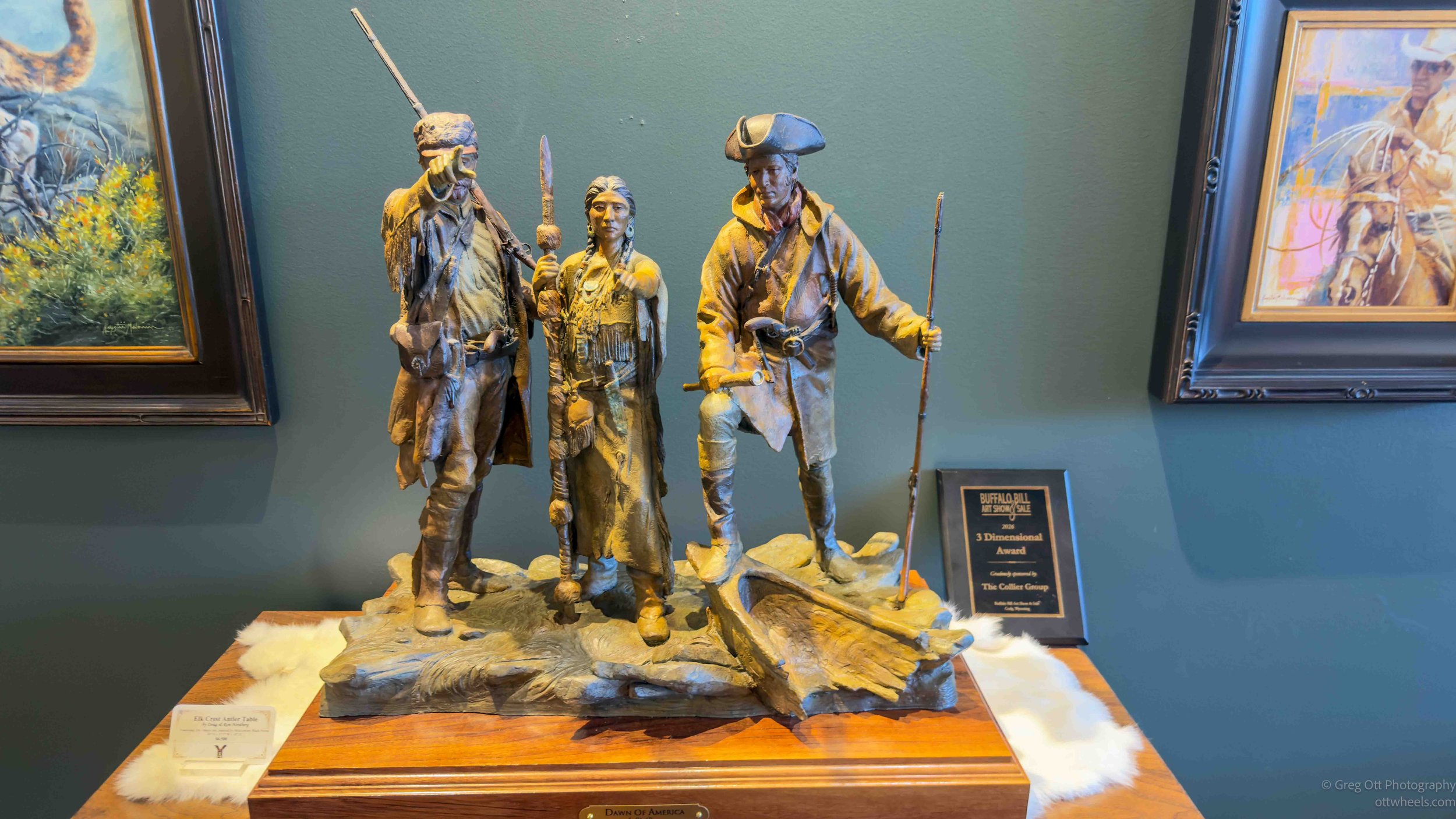
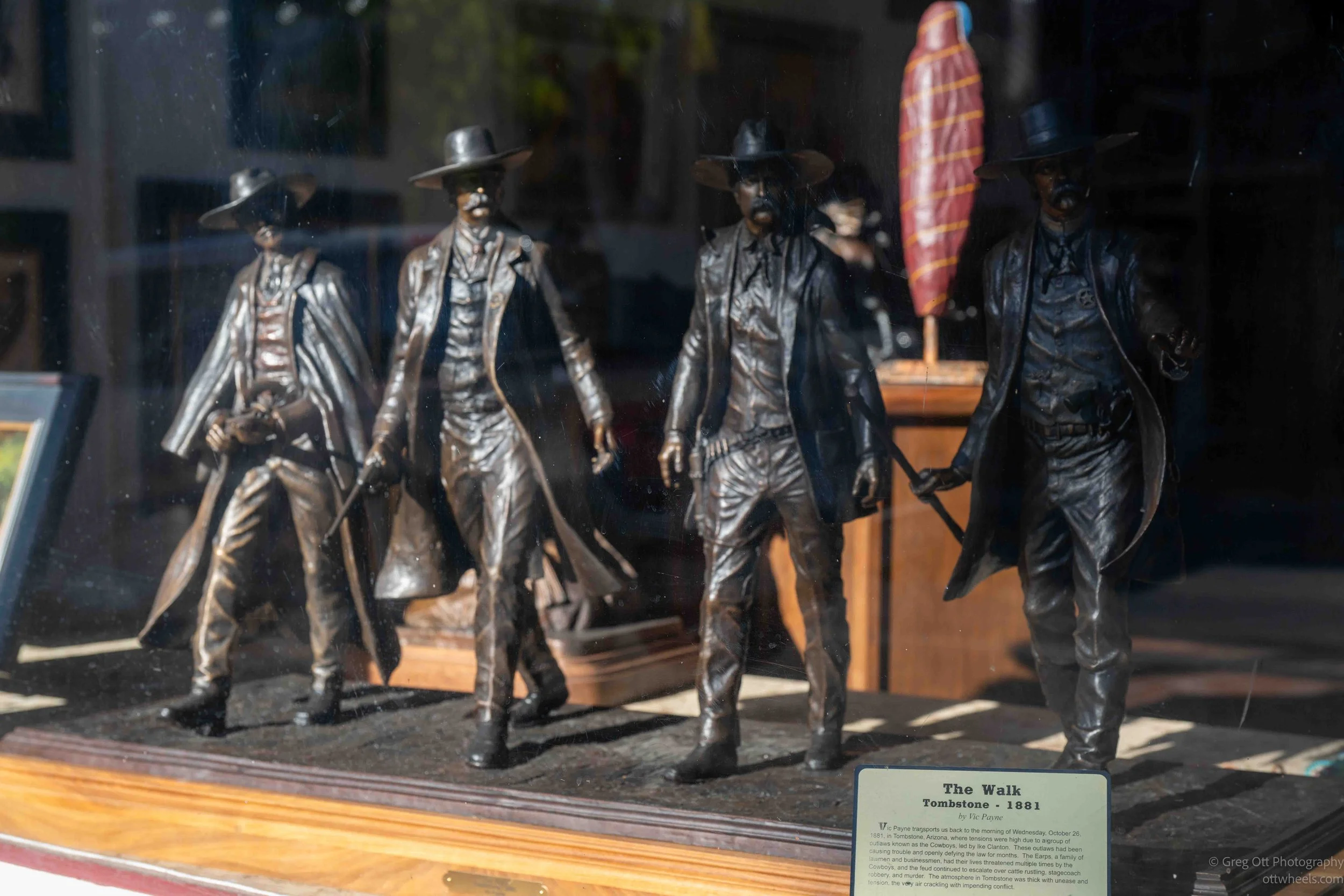
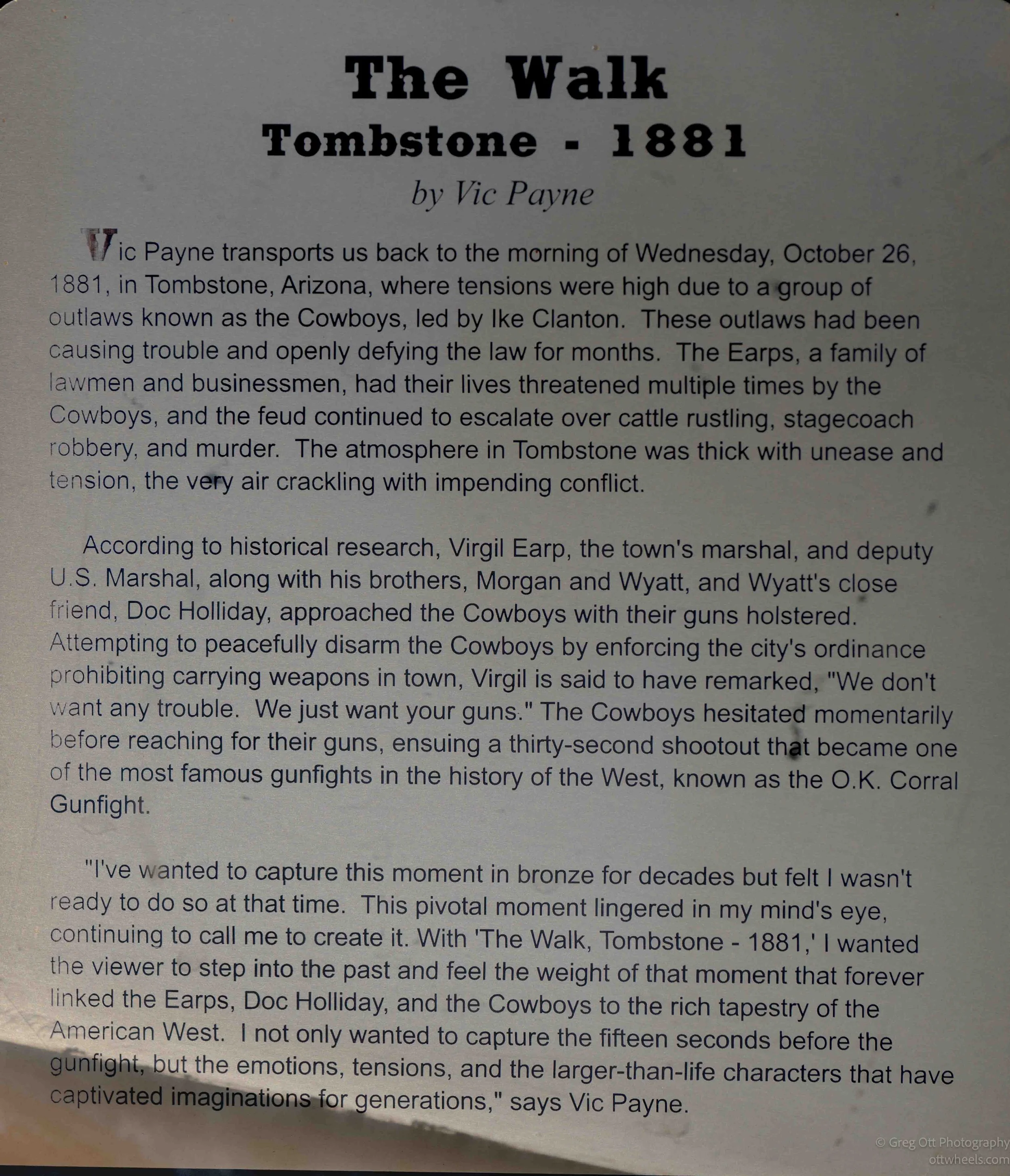
One of Vic's sculptures displayed in the front window caught my attention. Titled The Walk, Tombstone – 1881, it depicts the Earp brothers and Doc Holliday walking toward their confrontation with the Cowboys at the O.K. Corral. According to the accompanying plaque, Virgil Earp told the Cowboys, "We don't want any trouble. We just want your guns." The gunfight that followed lasted about thirty seconds. Vic wanted to capture the fifteen seconds immediately before the shooting began.
I hadn't expected to spend part of my afternoon talking with an accomplished sculptor, much less learning about bronze casting and discussing the role of AI in art. It was one of those unexpected encounters that make traveling through small towns so interesting.
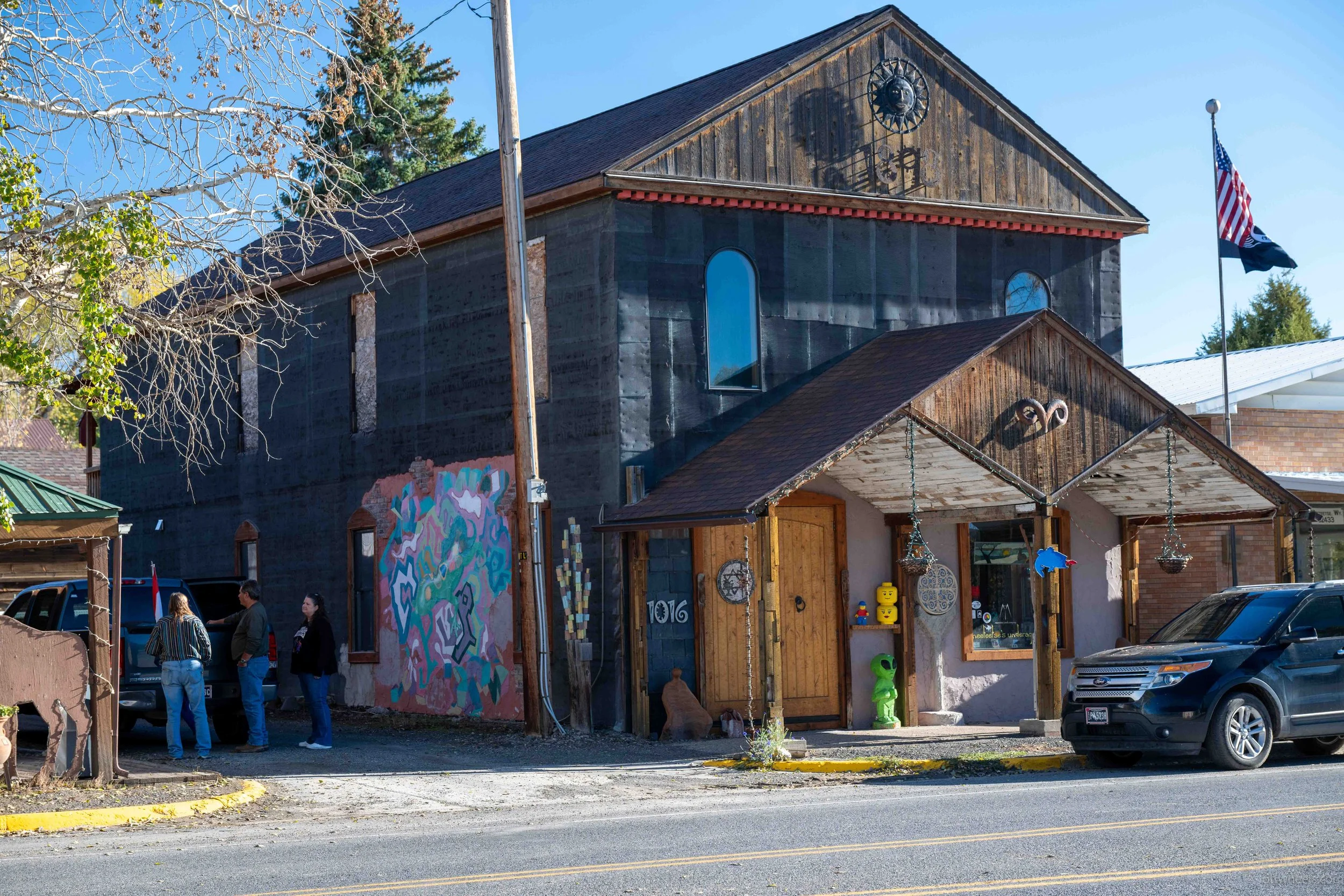
Before leaving Meeteetse, I passed one more old building that caught my attention. Much of its exterior siding had been stripped away, exposing the black tar paper underneath. A bright abstract mural covered one side, and a green alien stood beside the front door. Meeteetse certainly keeps you guessing.
Thermopolis
From Meeteetse, I drove southeast to Thermopolis, a town of about 2,700 people along the Bighorn River. The name comes from Greek and means "hot city," which seems appropriate for a place known for its natural hot springs. It was late afternoon when I arrived, and most of the businesses had already closed.
Thermopolis was founded in 1897, a year after an agreement with the Shoshone and Arapaho made the hot springs available for public use. That agreement also established the tradition of free public bathing, which continues today at the State Bath House. The area became Wyoming's first state park in 1897, long before the railroad reached town around 1910. For many years, people made their way here primarily to enjoy the mineral waters.
The hot springs are located right in town at Hot Springs State Park, where water emerges from the ground at approximately 135 degrees. Visitors can soak for free at the State Bath House, while Hellie's TePee Pools offers several indoor and outdoor pools for an admission fee.
I parked in front of Hellie's and ended up spending three hours there. The pools range from approximately 94 to 104 degrees, and I moved between them until I lost track of time. It was wonderfully relaxing after a day of exploring. I also met several locals in the hot tubs, which is about the best way I know to learn about a town. People are usually happy to talk when they're sitting in warm water with nowhere in particular to go.
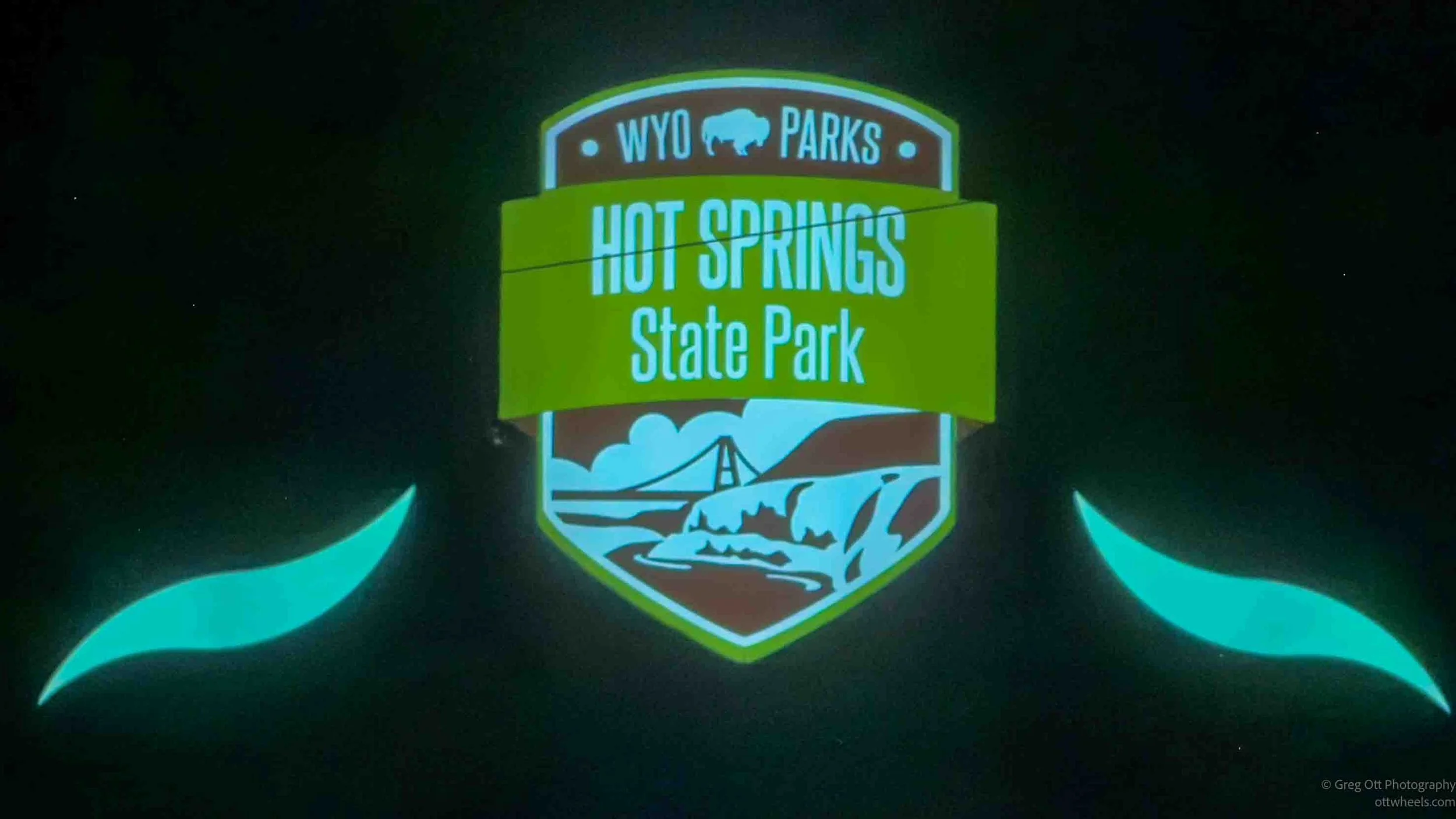
By the time I got out, the sun was nearly gone. The last rays illuminated Roundtop Mountain behind the park, turning its slopes a brilliant orange. Everyone in the hot tubs seemed to notice, and for several minutes we watched the mountain change color as the sunlight slowly faded. By the time I walked back to the van, it was dark, and the park sign was glowing against the night sky.
From there, I drove to a trailhead about 10 miles outside of town. There wasn't another vehicle around, and it was wonderfully quiet. I'd started the day expecting little more than a walk through a small Wyoming town and ended up meeting a remarkable artist, learning about bronze casting, and spending three hours soaking in natural hot springs. Not a bad day at all.