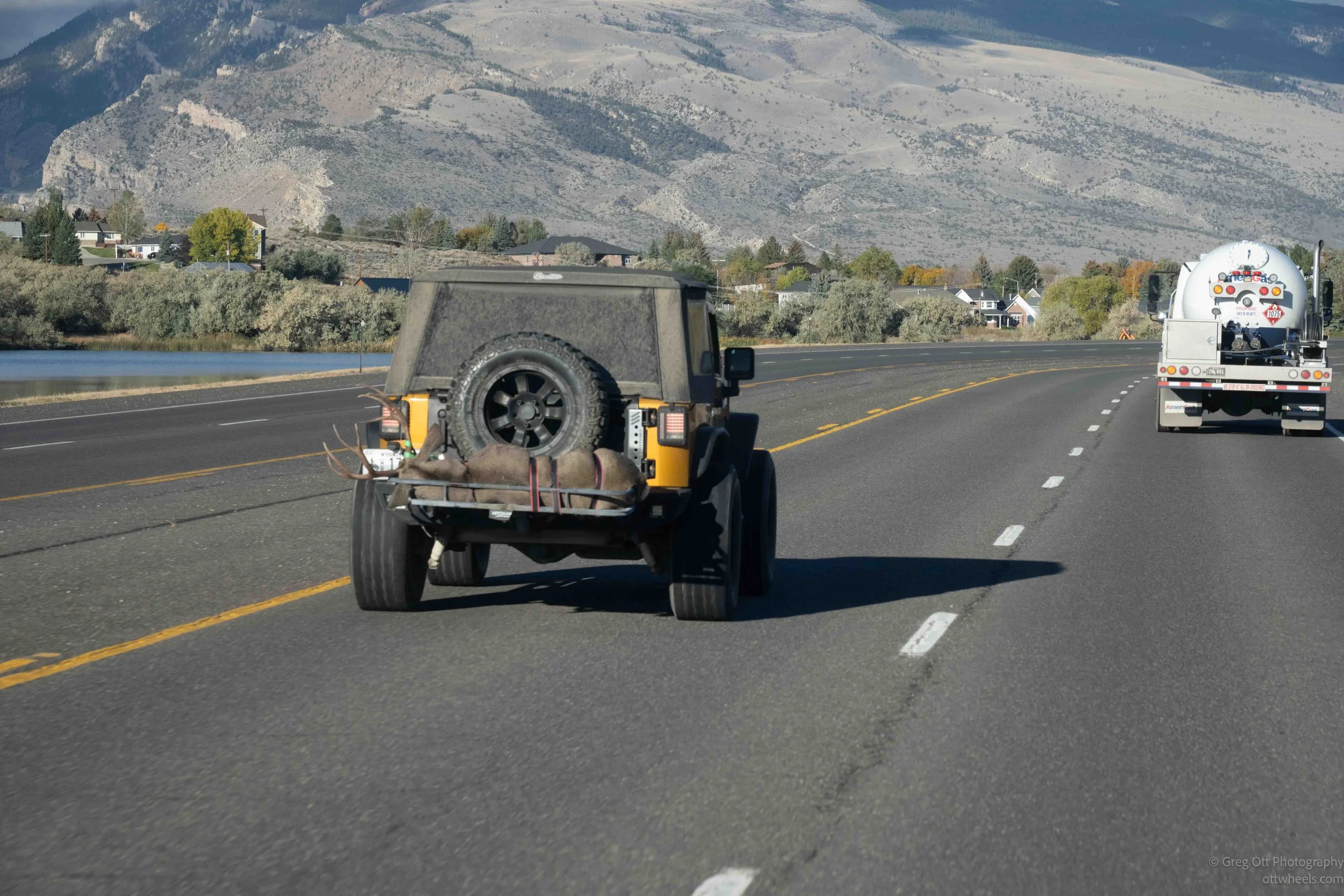
I woke up at the BLM staging area outside Cody and drove into town, about a 10 minute drive. Along the way, a Jeep passed me with an elk strapped to a rack on the back. Hunting season was clearly underway, and I couldn't resist taking a photograph. It wasn't something I see every day, but I suspect nobody around Cody would give it a second thought. Just another fall morning in Wyoming.
My first stop was Rawhide Coffee for a coffee and a bagel. I opened my laptop and spent the next three hours catching up on the blog. It's one of those places that invites you to come in, find a comfortable seat, and stay awhile. Over the course of the morning, I watched the customers arrive in waves. First came those grabbing coffee on their way to work, followed by the retirees meeting up for their morning conversations. Students arrived in two separate waves, and by lunchtime, the crowd had shifted to people looking for a little afternoon boost. It was an enjoyable place to spend a few hours and watch the daily rhythm of a small town.
I then headed up the street to the Buffalo Bill Center of the West, where I spent the rest of the afternoon. By then, the wind had picked up. It was one of those hold-your-hat Wyoming winds that makes even a short walk across a parking lot an adventure.
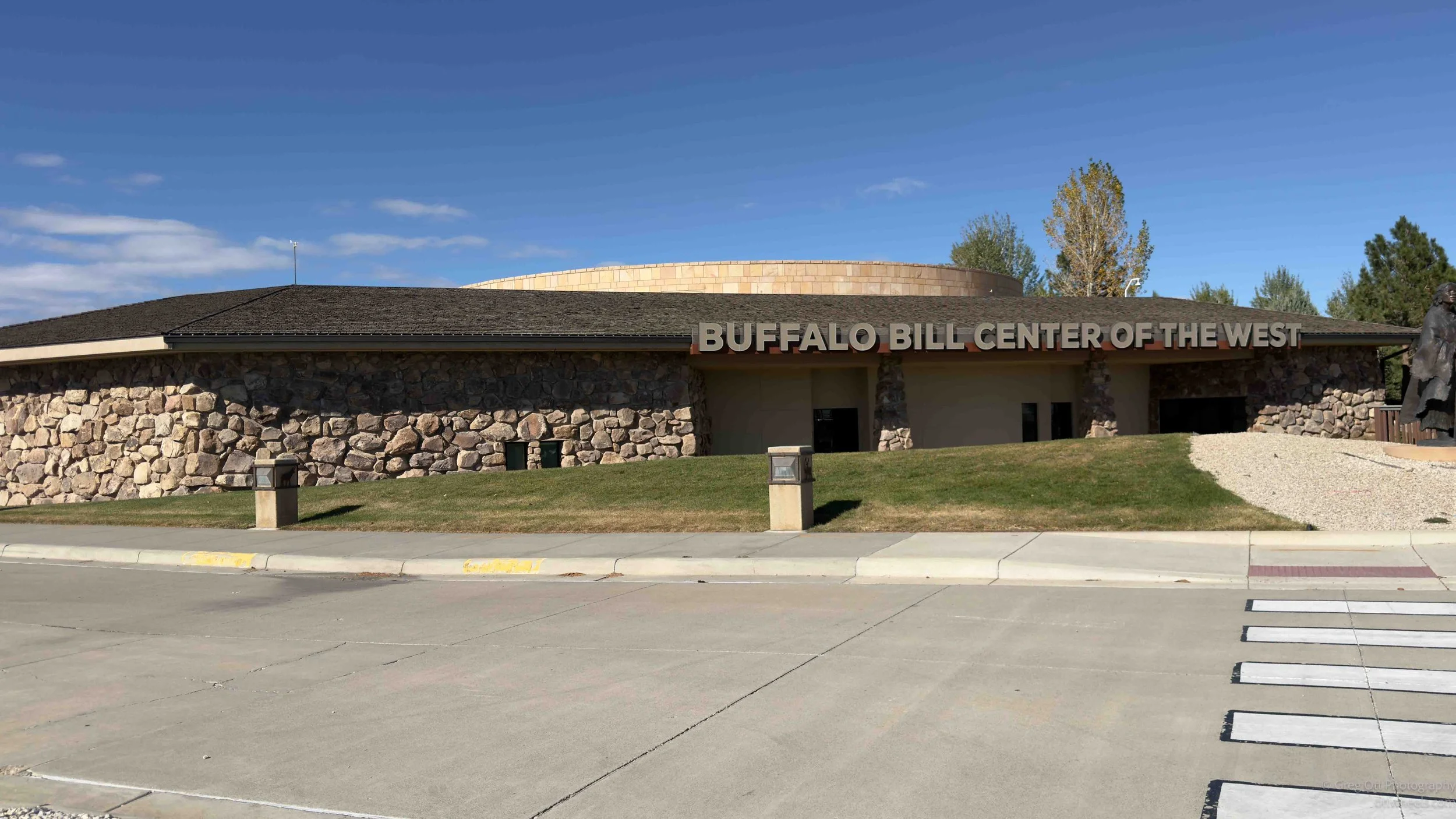
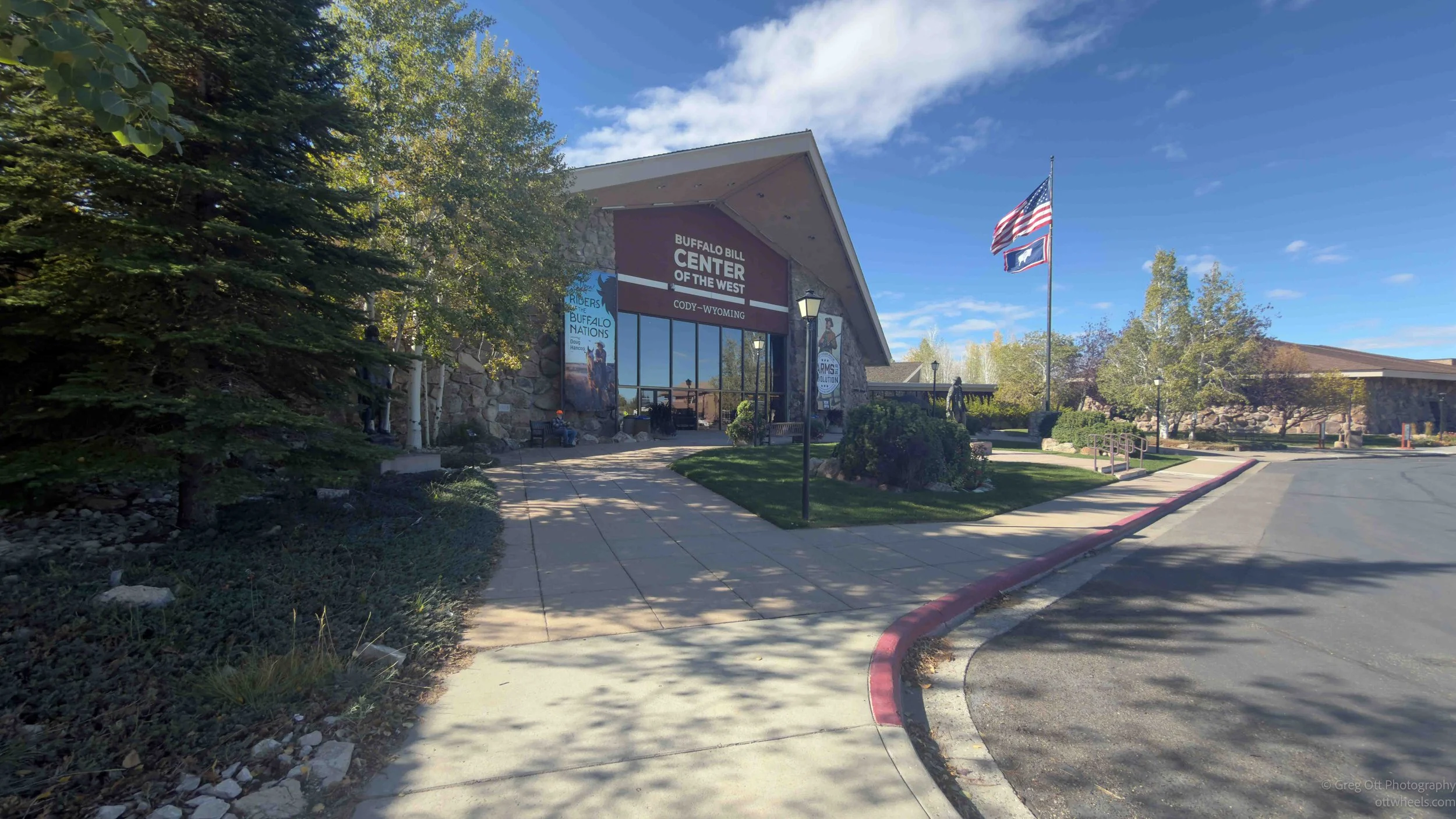
The Buffalo Bill Center of the West is actually five museums under one roof: the Buffalo Bill Museum, Plains Indian Museum, Whitney Western Art Museum, Draper Natural History Museum, and Cody Firearms Museum. There's also the McCracken Research Library. It's an enormous collection covering the history, art, wildlife, and cultures of the American West, and considerably more than I expected when I arrived.
The Center's history goes back to the death of William F. "Buffalo Bill" Cody on January 10, 1917. Cody and six other men had founded the town in 1896, and just seven weeks after his death, on March 1, 1917, the Buffalo Bill Memorial Association was formally established to preserve his memory. His niece, Mary Jester Allen, envisioned something more ambitious, a national memorial honoring both her uncle and the early pioneers of the American West. In 1927, the first Buffalo Bill Museum opened in a modest 50 by 70 foot log building modeled after Cody's TE Ranch house. Over the following decades, it expanded into the enormous complex that exists today. Originally known as the Buffalo Bill Historical Center, it was renamed the Buffalo Bill Center of the West in 2013.
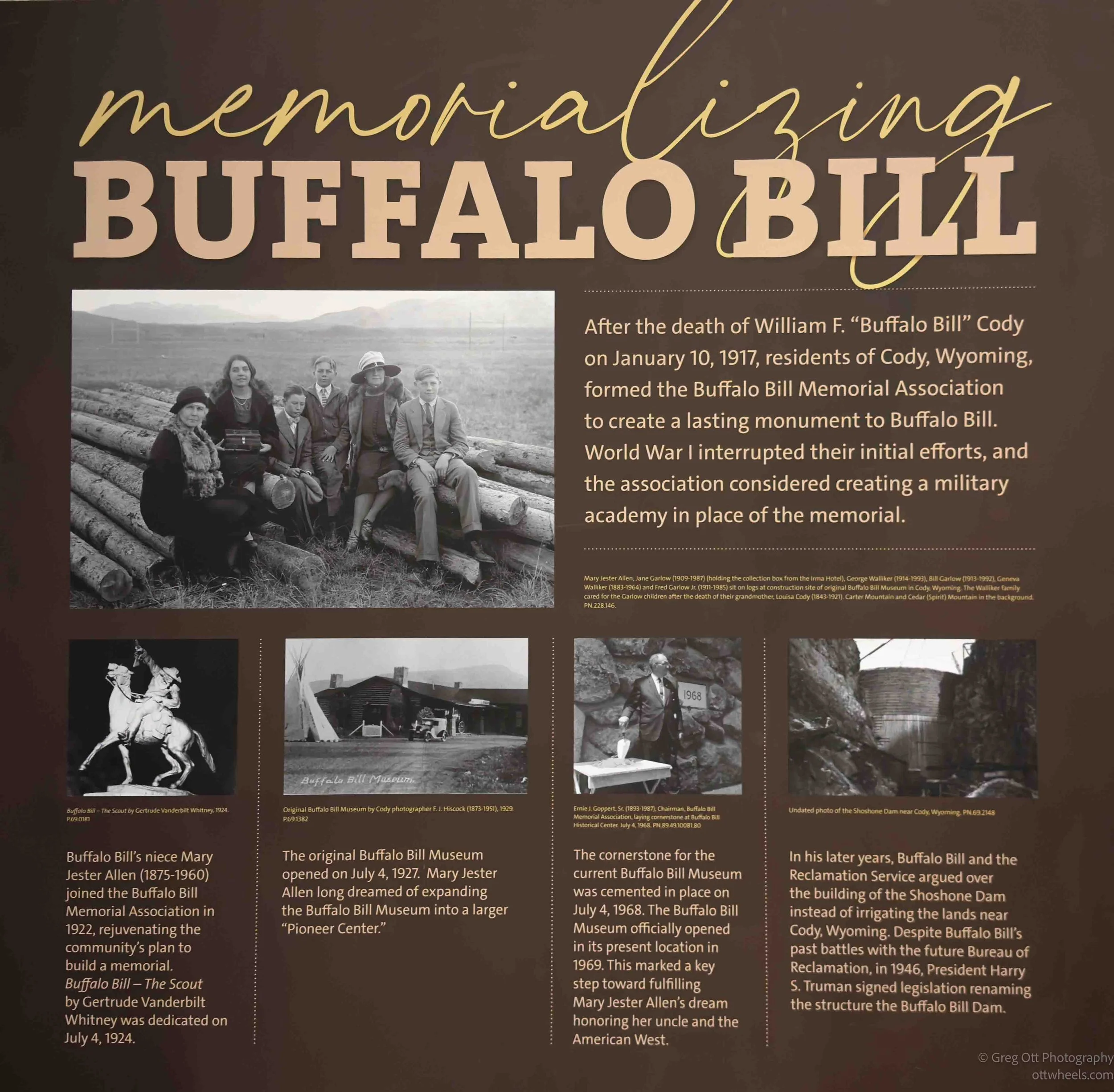
One nice feature is that the admission ticket is valid for two days. After spending an entire afternoon there, I could understand why. There's simply too much to see in a few hours, especially if you enjoy taking your time reading the exhibits. If you want to explore all five museums properly, you'll probably need that second day.
Before starting through the museums, I decided I needed another coffee. They had a proper high-pressure espresso machine, which raised my hopes. The woman behind the counter was from Cody and had worked at the museum for more than ten years. We talked for about ten minutes, and she gave me some helpful advice about what to see and in what order. The Buffalo Bill Museum was first on her list. When I went to pay, she told me the coffee was on her.
Unfortunately, it was so watered down that I could barely drink it. Still, her advice was worth far more than the coffee, which worked out rather well since the coffee was free. I decided to follow her recommendation and start with the Buffalo Bill Museum. After all, it seemed like the logical place to begin learning about the man who gave the town its name.
Buffalo Bill Cody
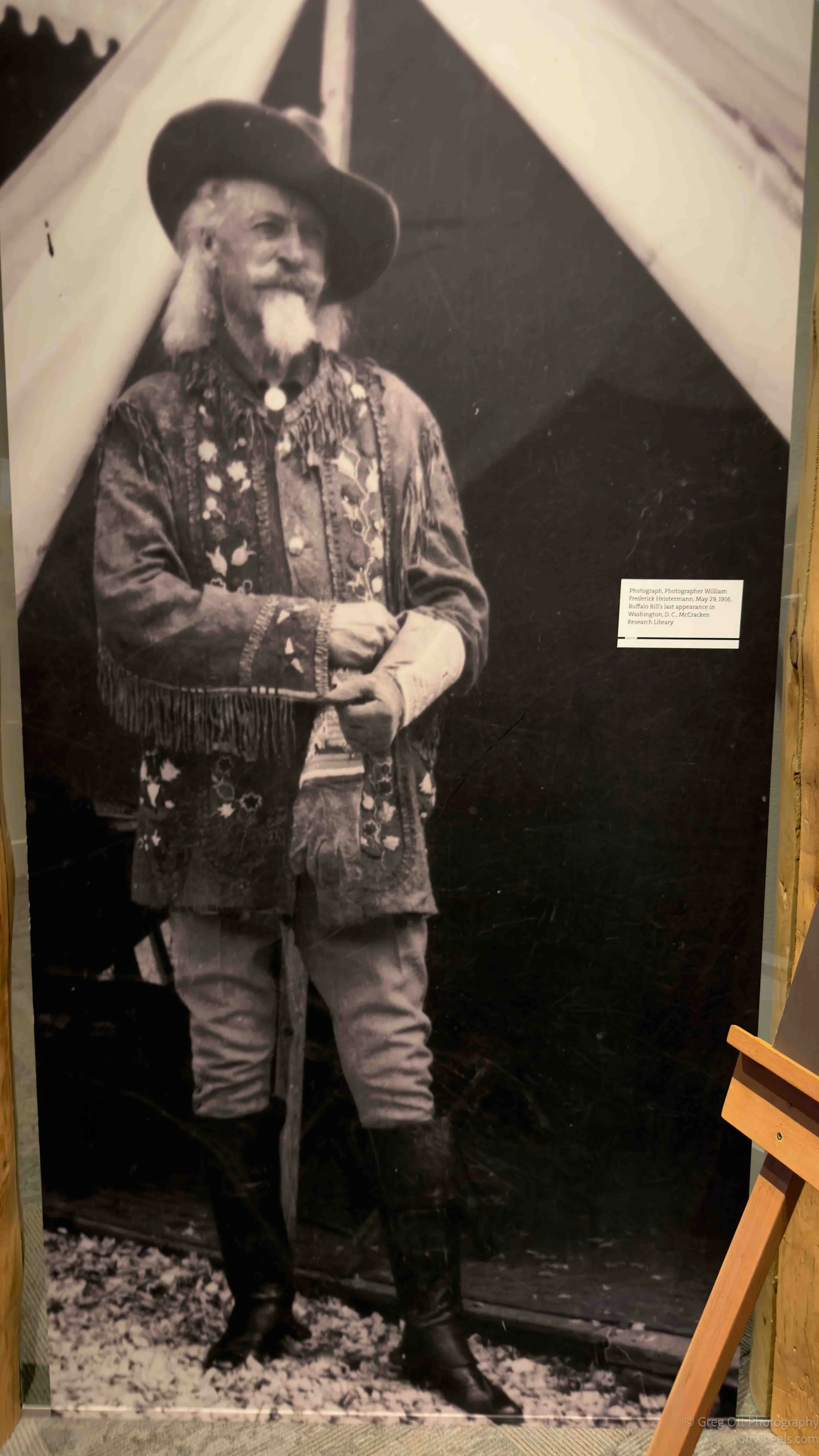
I started where she told me to, at the Buffalo Bill Museum. Bill Cody was born in Iowa in 1846 and grew up in Kansas while the territory fought over slavery. One plaque told how his father was stabbed at a public gathering for speaking against it. He survived the stabbing but died of an illness a few years later, leaving Will as head of the household at 11. Farther along, I stopped at a Pony Express saddle behind glass, with a Wells Fargo mail pouch beside it. Cody rode for only two months before his mother persuaded him to quit, but he later turned the ride into an act in his Wild West show. The plaque said it drew on his experiences, “both factual and fanciful.” That seemed like something to keep in mind as I walked through the rest of the museum.
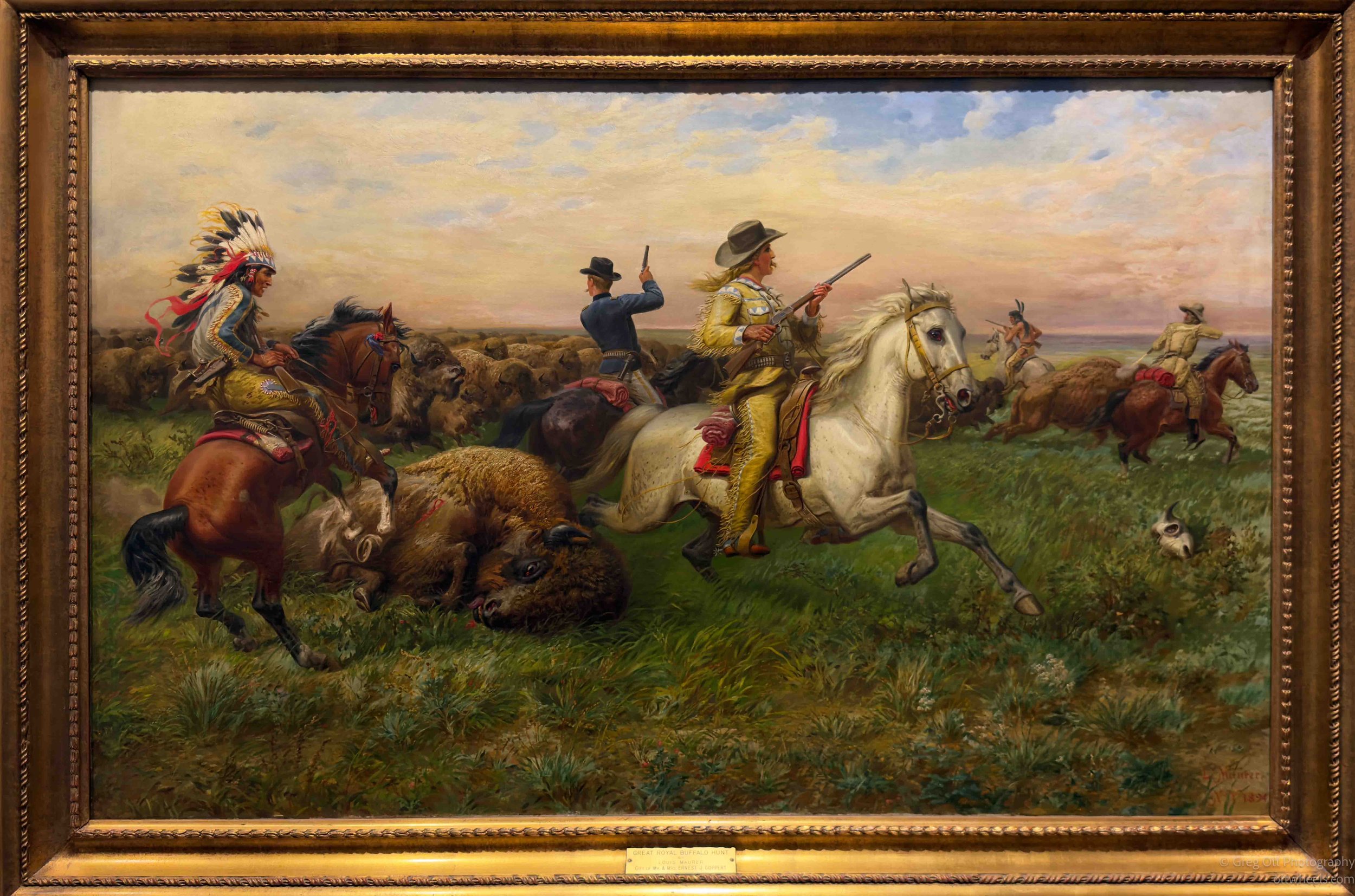
He got the Buffalo Bill nickname hunting buffalo to feed the construction crews of the Kansas Pacific Railroad. Thousands of them. Later in the exhibits, I came to a panel about his support for bison conservation. His buckskin coat hangs in a case with two rifles crossed in front of it. Sheridan made him chief of scouts for the Fifth Cavalry in 1868, and in 1872 he was one of only four civilian scouts awarded the Medal of Honor during the Indian Wars. The medal itself wasn’t there; it was on loan to a museum in Texas.
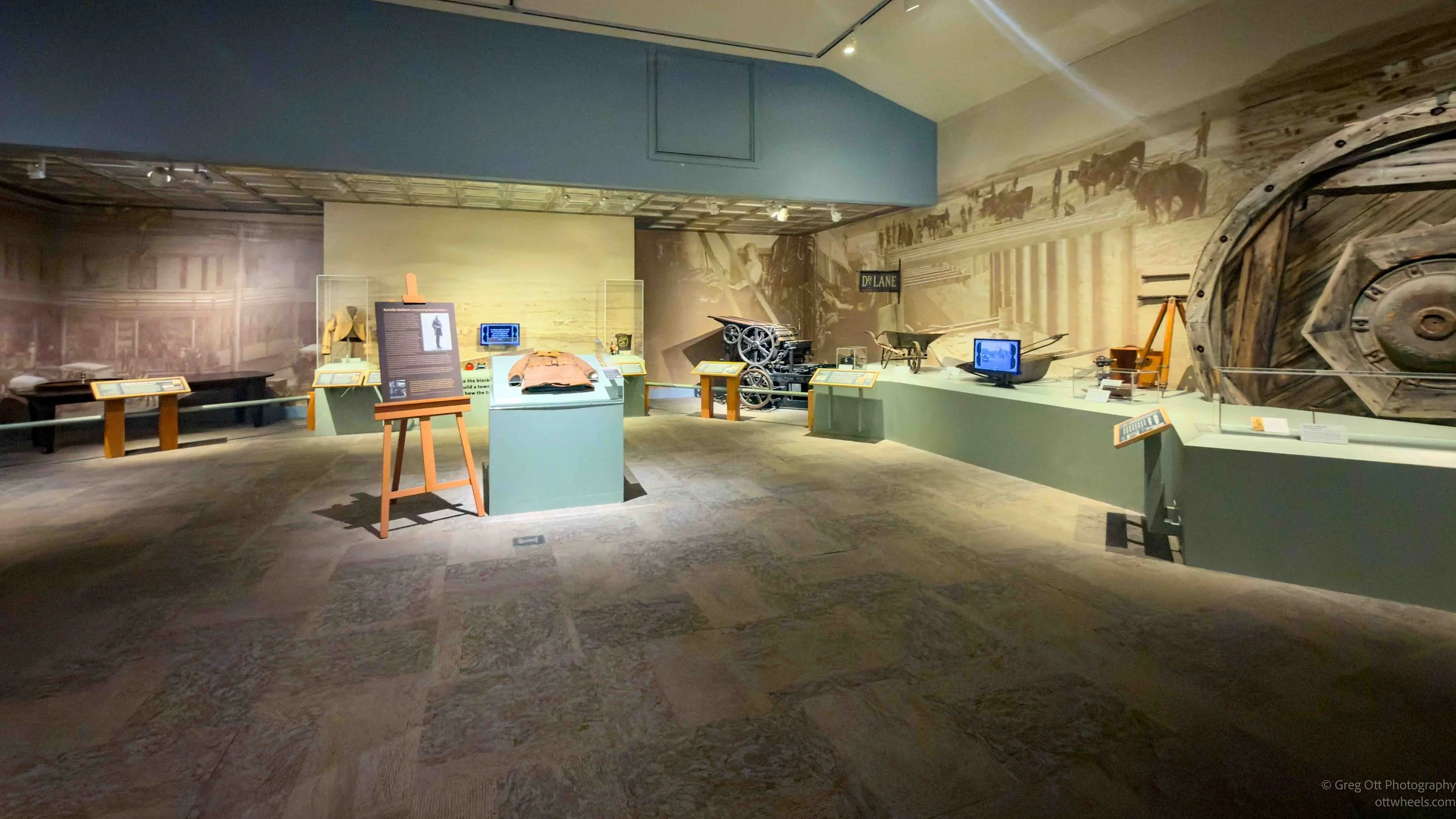
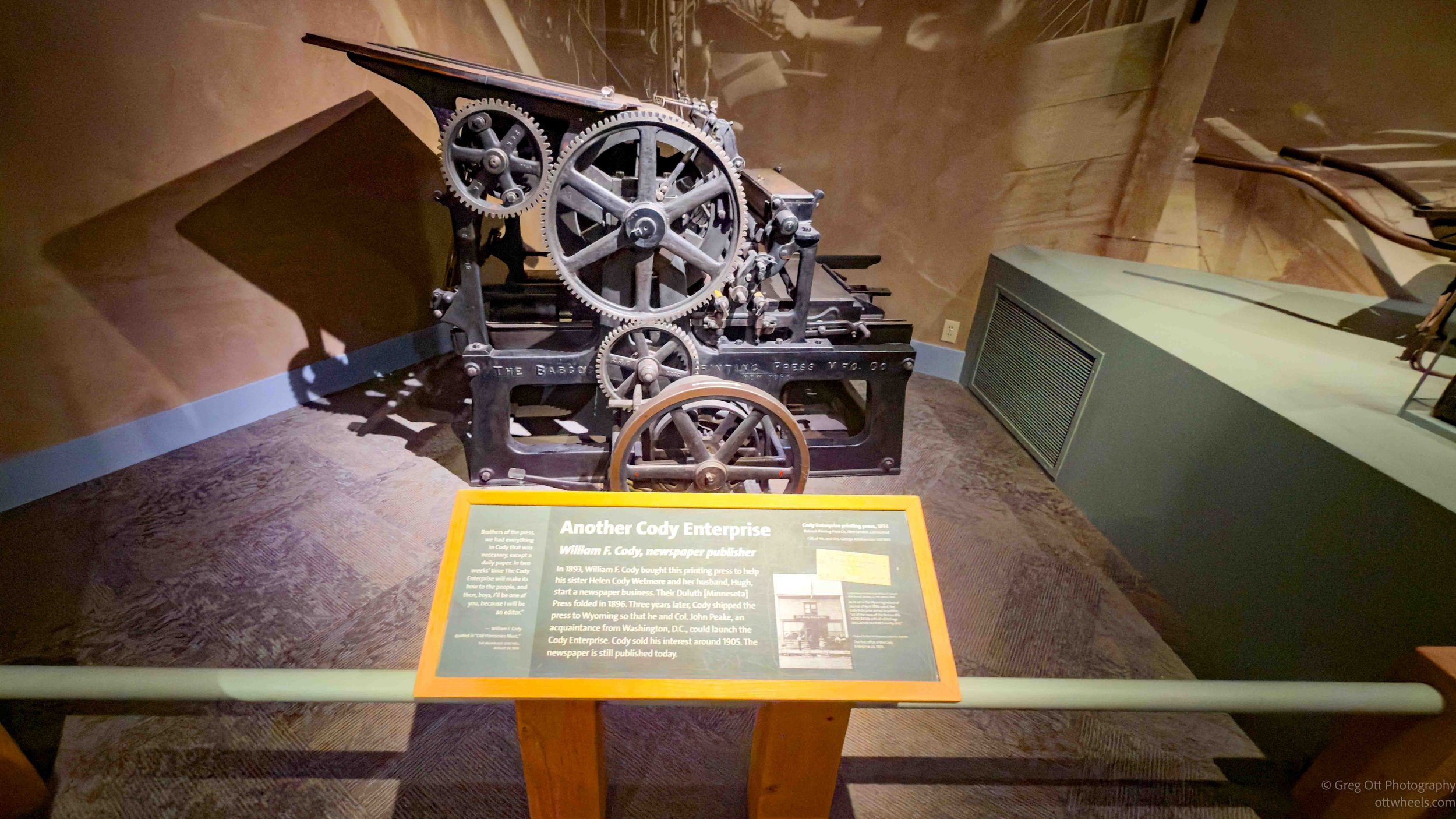
Then came the show, which he launched in Omaha in 1883 and took to Europe during its run through 1913. That would seem like enough to keep a person busy, but Cody kept starting things. There’s a roulette table from the Irma Hotel, which he built in Cody and named for his youngest daughter. It drained his money, and he mortgaged it twice. I also came across the printing press he bought for his sister’s newspaper in Duluth. When the paper folded, he shipped the press to Wyoming and started the Cody Enterprise. It’s still published.
The family history slowed me down. He married Louisa Frederici of St. Louis in 1866, and they had four children. He outlived three of them and spent much of his marriage on the road. In 1904, after 38 years, he filed for divorce. Louisa fought it, and the judge sided with her, ruling that incompatibility wasn’t grounds for divorce. They stayed married until he died in 1917 at his sister’s home in Denver. He never retired. He’s buried on Lookout Mountain, west of the city, overlooking the plains.
The Wild West Show
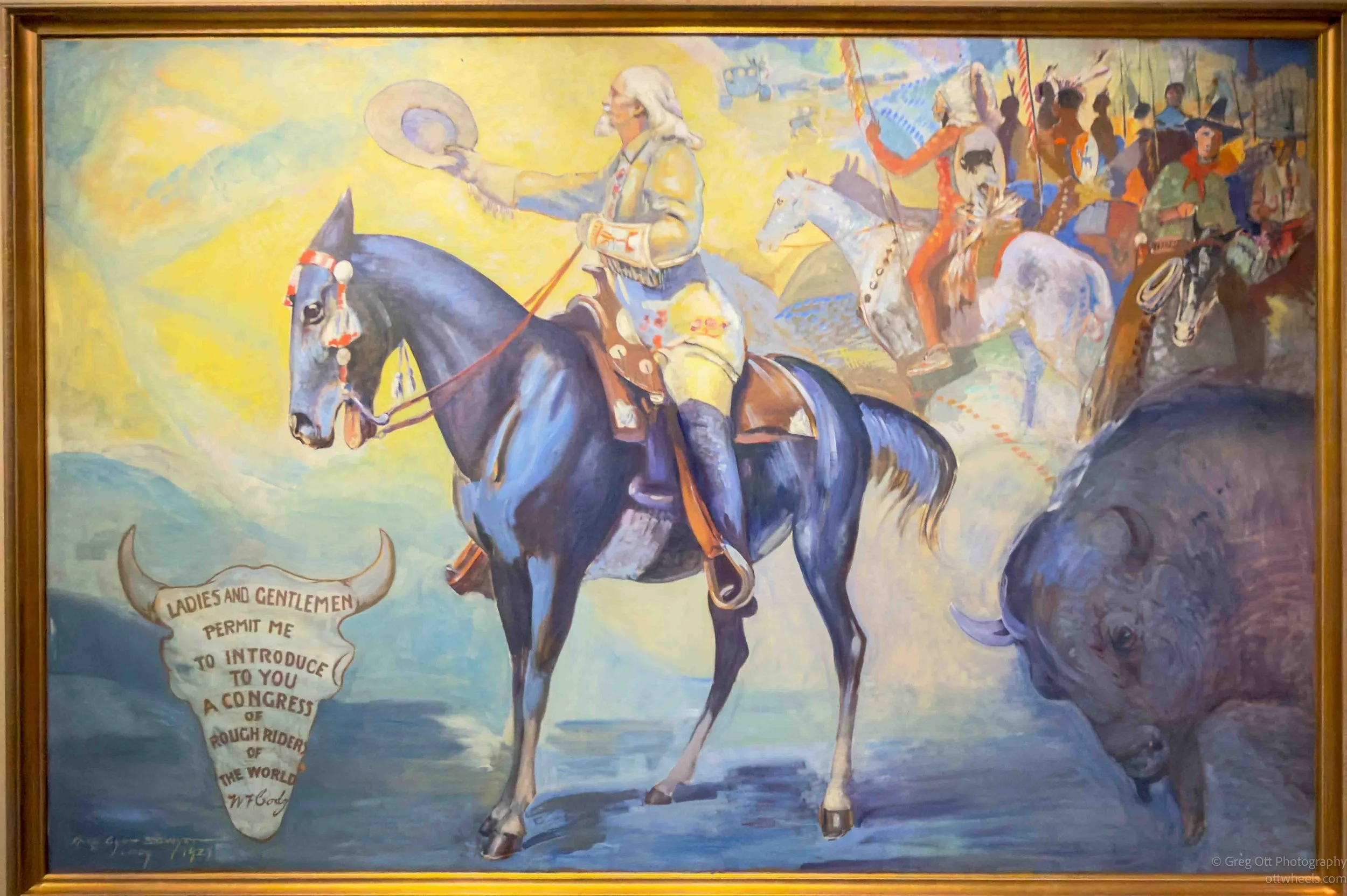
The next area was about the show. In one painting, Cody’s opening line is lettered on a buffalo skull: “Ladies and gentlemen, permit me to introduce to you a Congress of Rough Riders of the World.” The show ran from 1883 to 1913, thirty years, and spent most of them on the road.
New York came early. In the summer of 1886, Cody brought the show to Erastina, an amusement ground on Staten Island. Seventeen ferries carried the crowds over for two performances a day, with 360,000 spectators for the run. When that closed in September, it moved to Madison Square Garden for the winter and was restaged indoors as “The Drama of Civilization.”
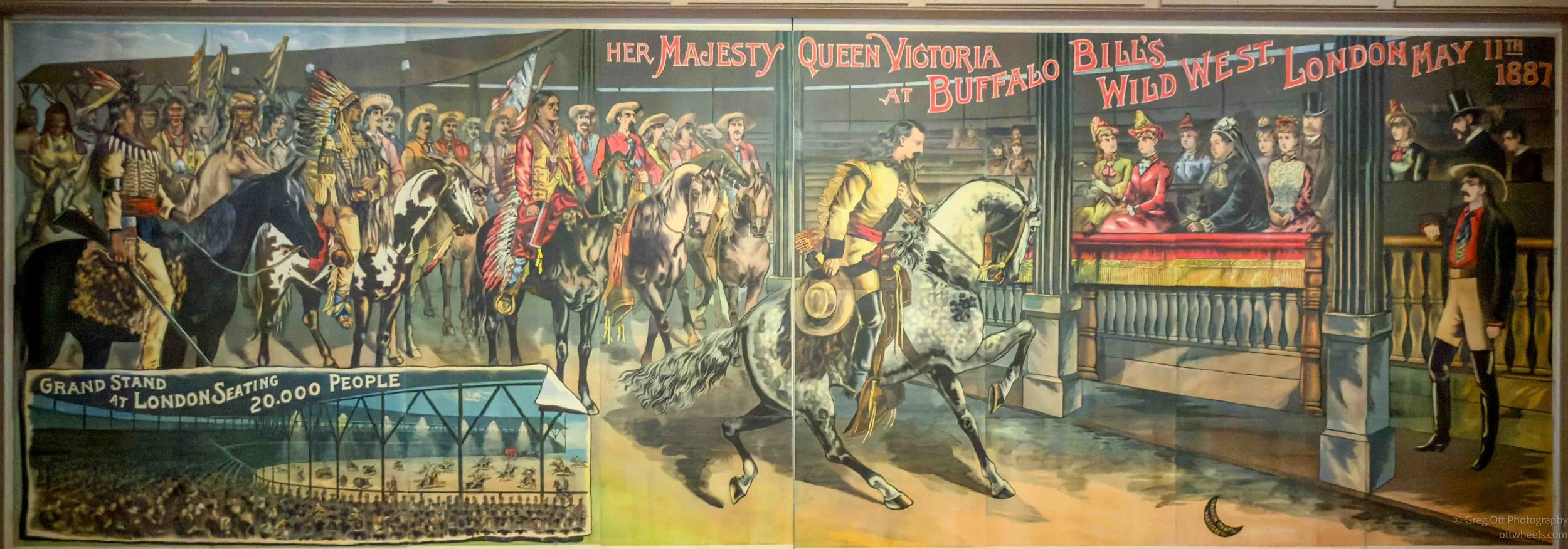
The next spring it went to London. A poster across one wall shows Queen Victoria at Buffalo Bill’s Wild West, May 11, 1887, with a grandstand seating 20,000. It was the first public performance she had attended since her husband died a quarter century earlier. She asked for another performance on the eve of her Jubilee. The London run closed in October 1887 after more than 300 performances and 2.5 million tickets. The show kept going back. There were eight European tours, four between 1887 and 1892 and four from 1902 to 1906.
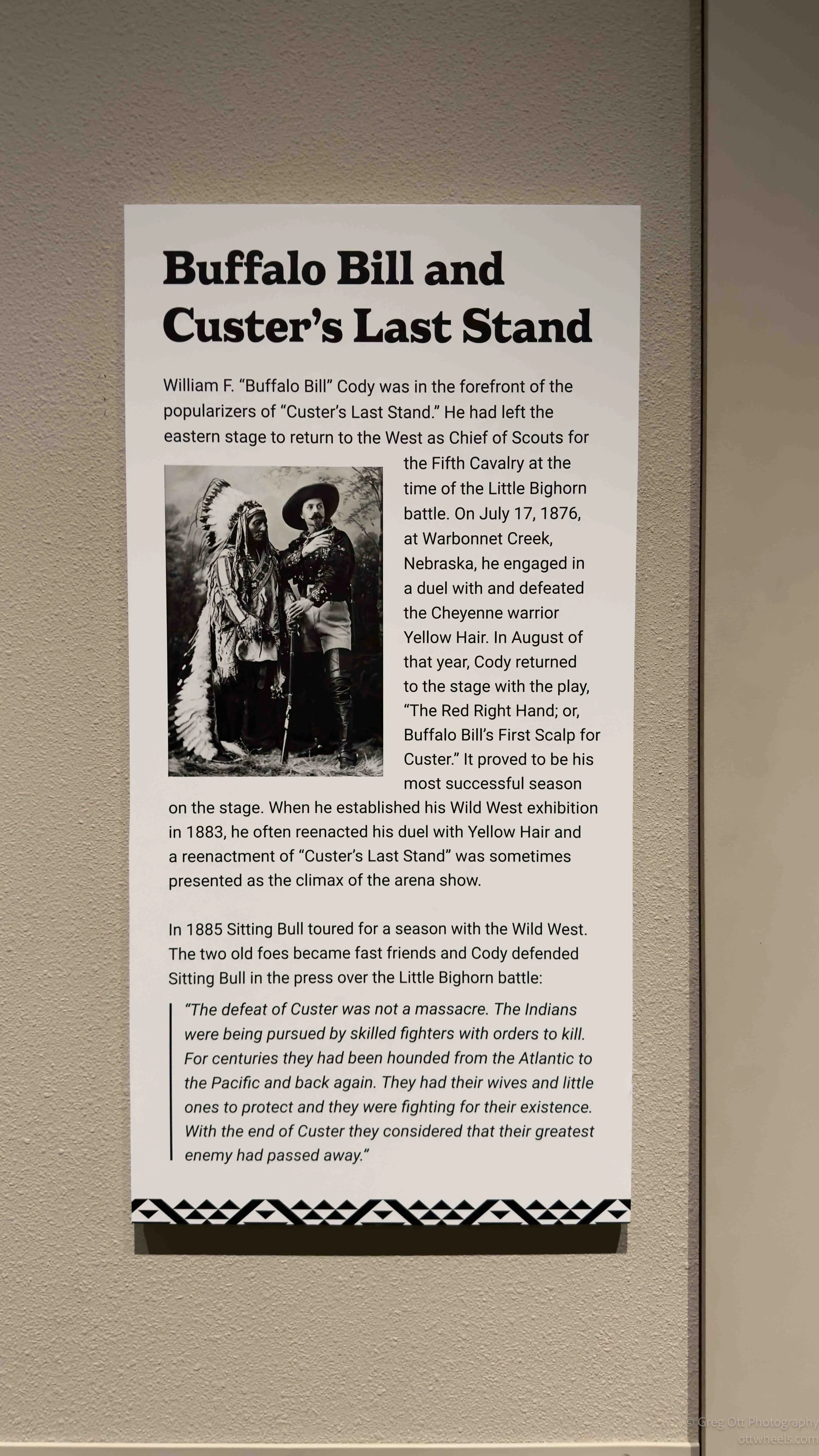
The performances were mostly reenactments: Pony Express rides, attacks on wagon trains, stagecoach robberies. One plaque explained that three weeks after the Little Bighorn, Cody fought and killed the Cheyenne warrior Yellow Hair at Warbonnet Creek. He reenacted that duel in the show, and some nights Custer’s Last Stand was the finale. In 1885, Sitting Bull toured with the show for a season. The two became friends, and Cody defended him in the press: “The defeat of Custer was not a massacre.” Not every reviewer bought the drama. One New York paper noted in 1894 that the settlers were always attacked the moment they lay down to sleep, and that Buffalo Bill and his cowboys always happened to be nearby with apparently nothing to do but rescue them.
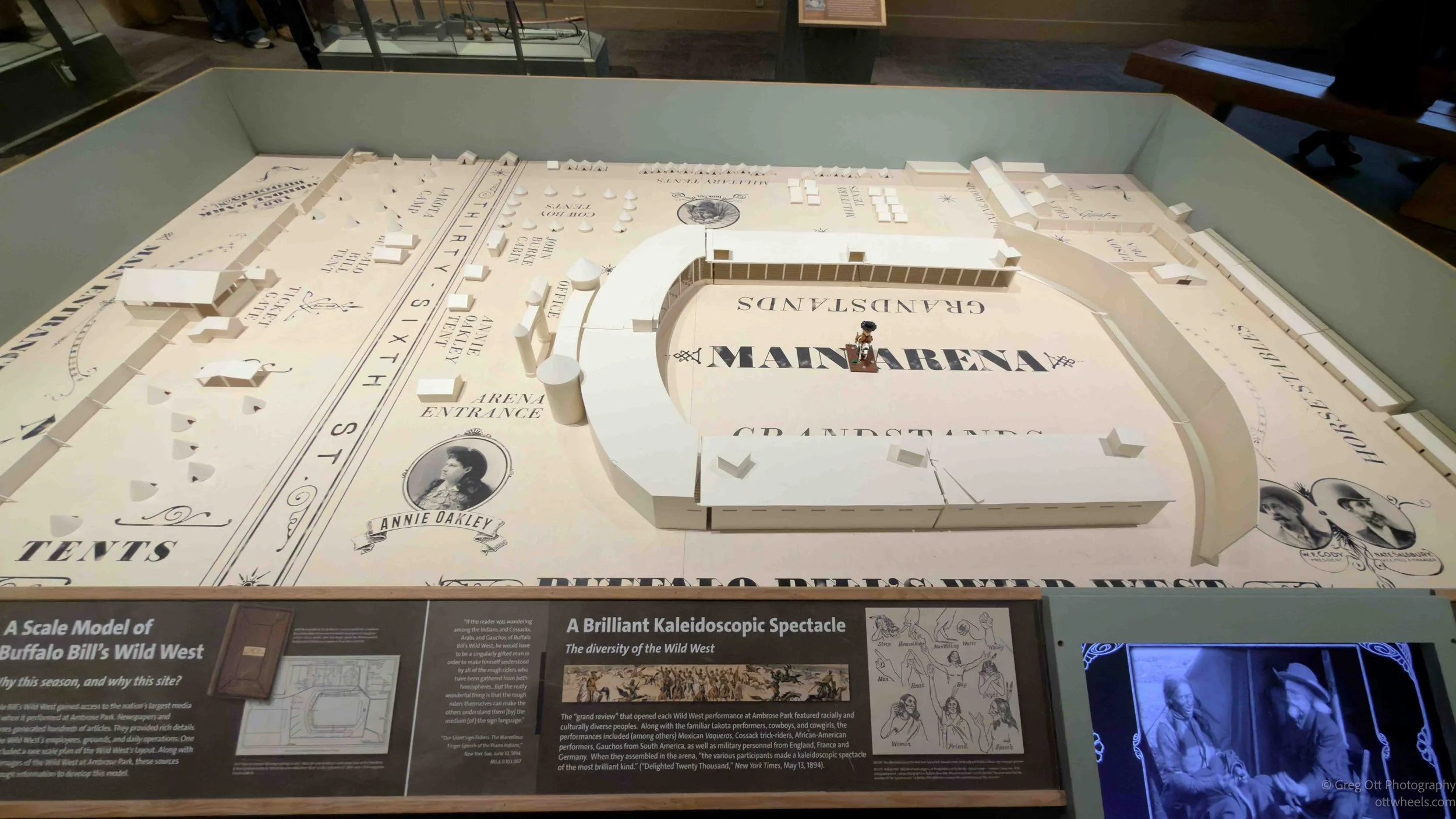
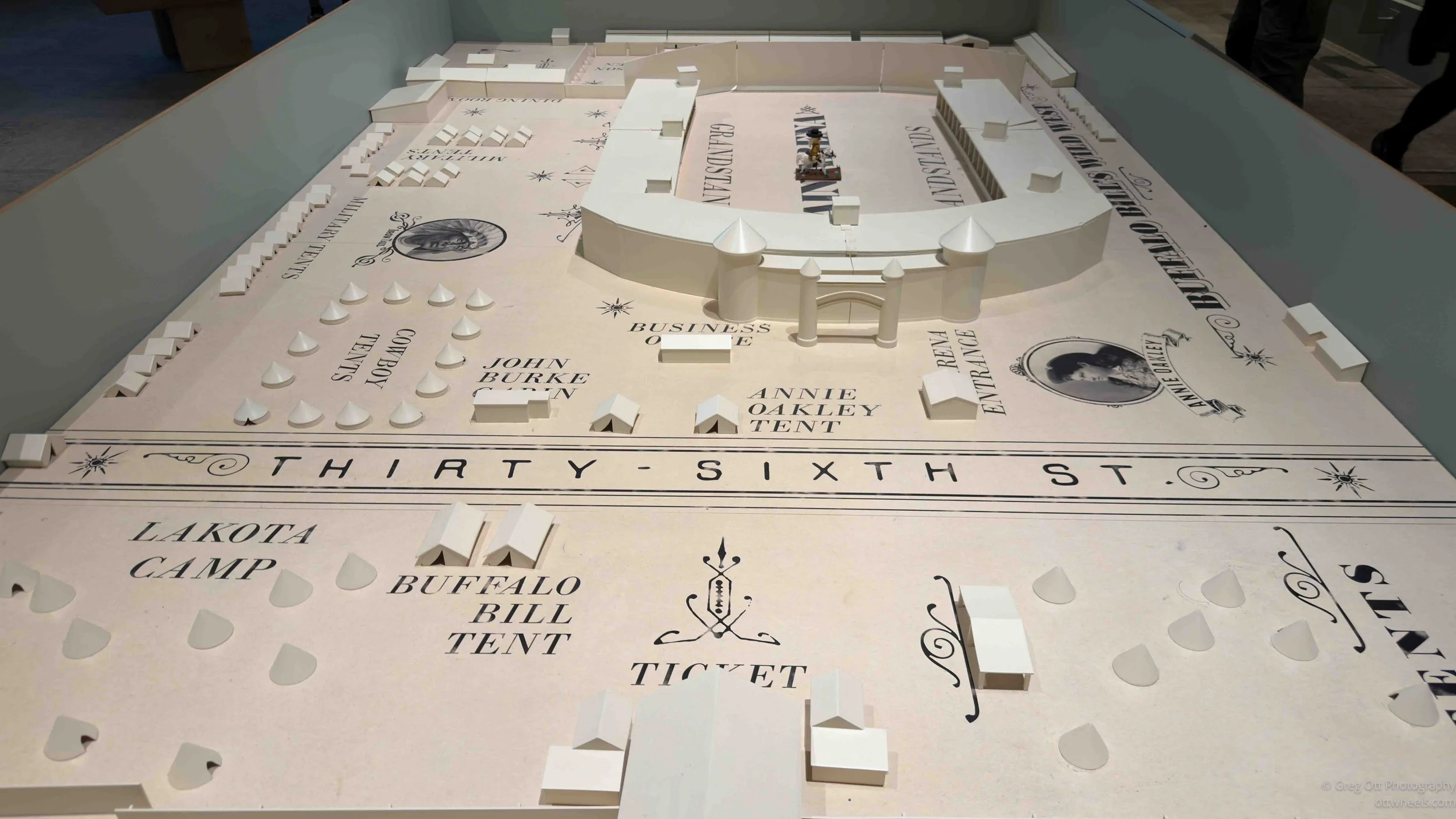
That 1894 season is laid out in a scale model of Ambrose Park in Brooklyn. It has grandstands around the main arena, a Lakota camp, cowboy tents, Annie Oakley’s tent, and Buffalo Bill’s tent across Thirty-Sixth Street. The grand review that opened each performance included Lakota performers, cowboys, Mexican vaqueros, Cossack trick riders, African-American performers, South American gauchos, and soldiers from England, France, and Germany. Feeding 700 employees was a job in itself. Cody wrote to his brother-in-law that expenses were $4,000 a day and called it “the tightest squeeze of my life.” The season lost money.
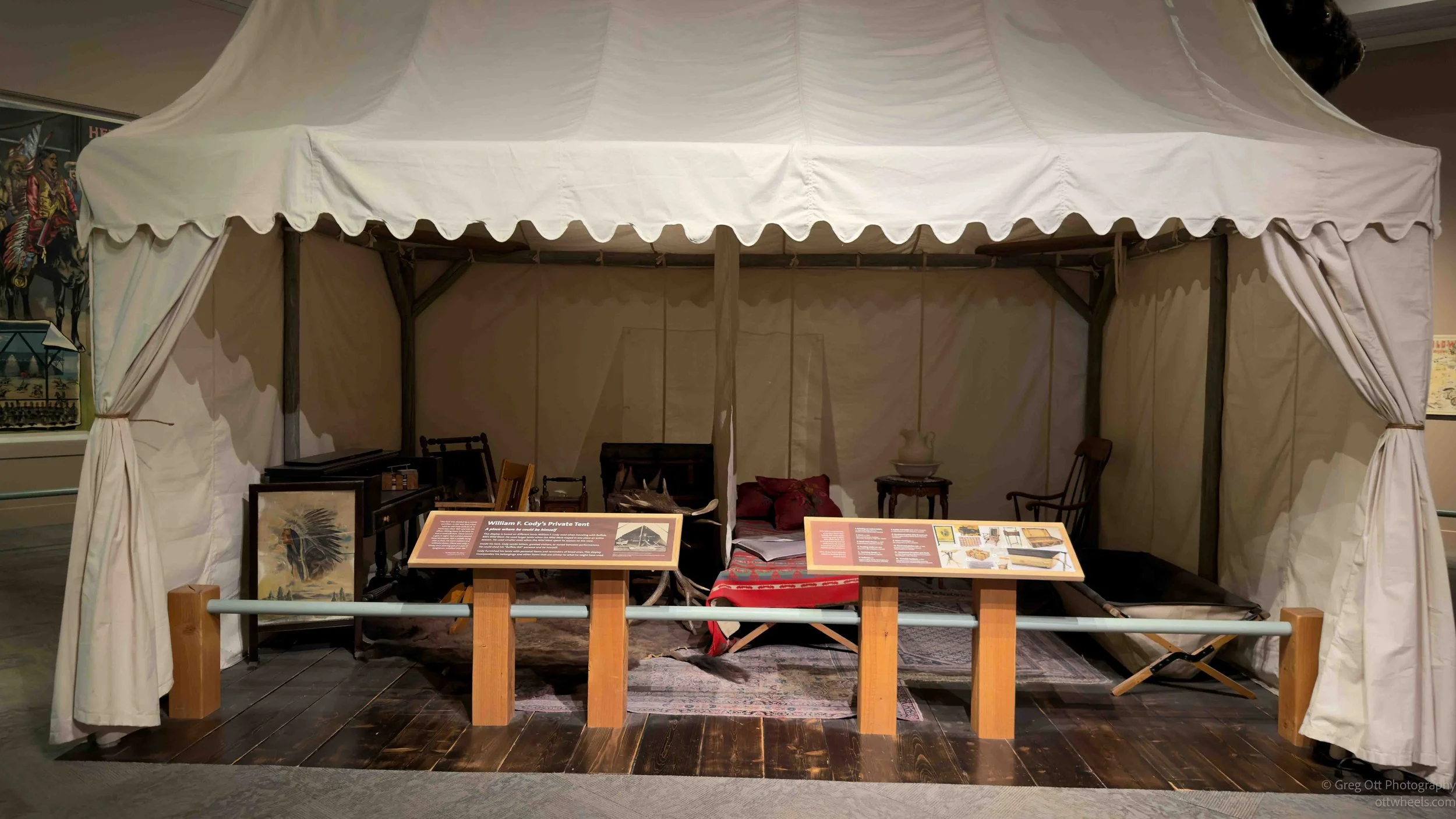
Nearby was a reconstruction of his private tent, with a cot, a rocking chair, a writing desk, and a pitcher and basin. The plaque said he used larger tents when the show stayed in one place for a season and smaller ones when it moved. Inside, he wrote letters, met visitors, rested between performances, and could set aside the Buffalo Bill persona. For thirty years, that was home.
I spent the last hour of my visit at the Whitney Western Art Museum, which turned out to be a wonderful surprise. The quality of the collection was impressive, with some remarkable paintings and sculptures depicting the American West. I could easily have spent several more hours wandering through the galleries.
The museum has an interesting history. It traces its beginnings to 1924, when sculptor Gertrude Vanderbilt Whitney created Buffalo Bill—The Scout, a large bronze statue of Buffalo Bill Cody on horseback. Whitney not only donated the sculpture but also purchased land that eventually became part of the Buffalo Bill Center of the West. Her involvement helped establish Cody as a center for Western art, and in 1959, the Whitney Gallery of Western Art opened its doors. It's remarkable that a town the size of Cody has such an outstanding collection.
There were a surprising number of sculptures throughout the museum, something I particularly enjoyed. One exhibit that fascinated me explained how large bronze sculptures are made, beginning with the artist's original model, followed by molds, wax castings, and the casting of molten bronze before the individual sections are assembled and finished. I had never given much thought to just how complicated the process was, especially for the enormous outdoor sculptures. It gave me a new appreciation for the amount of work involved.
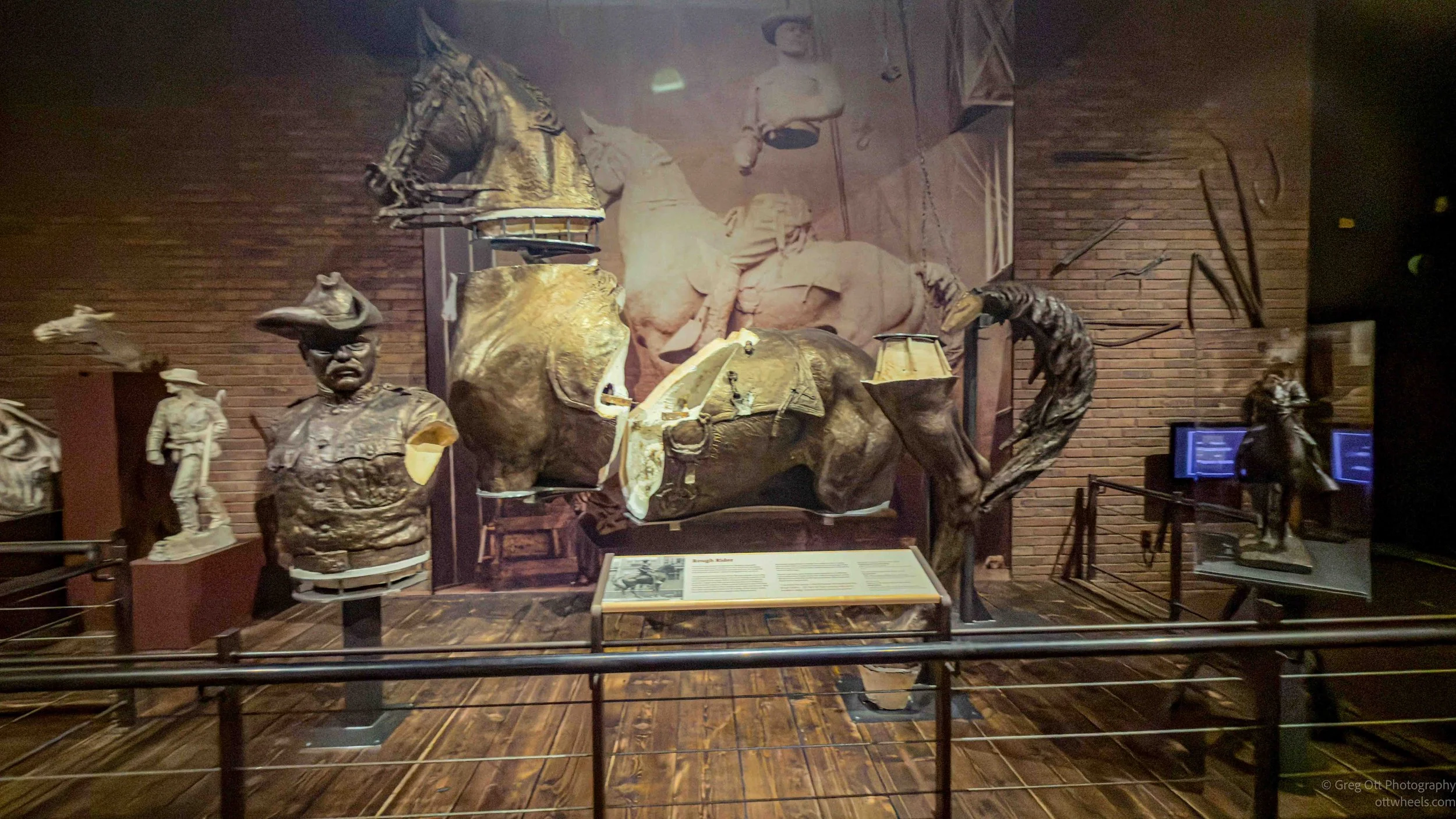
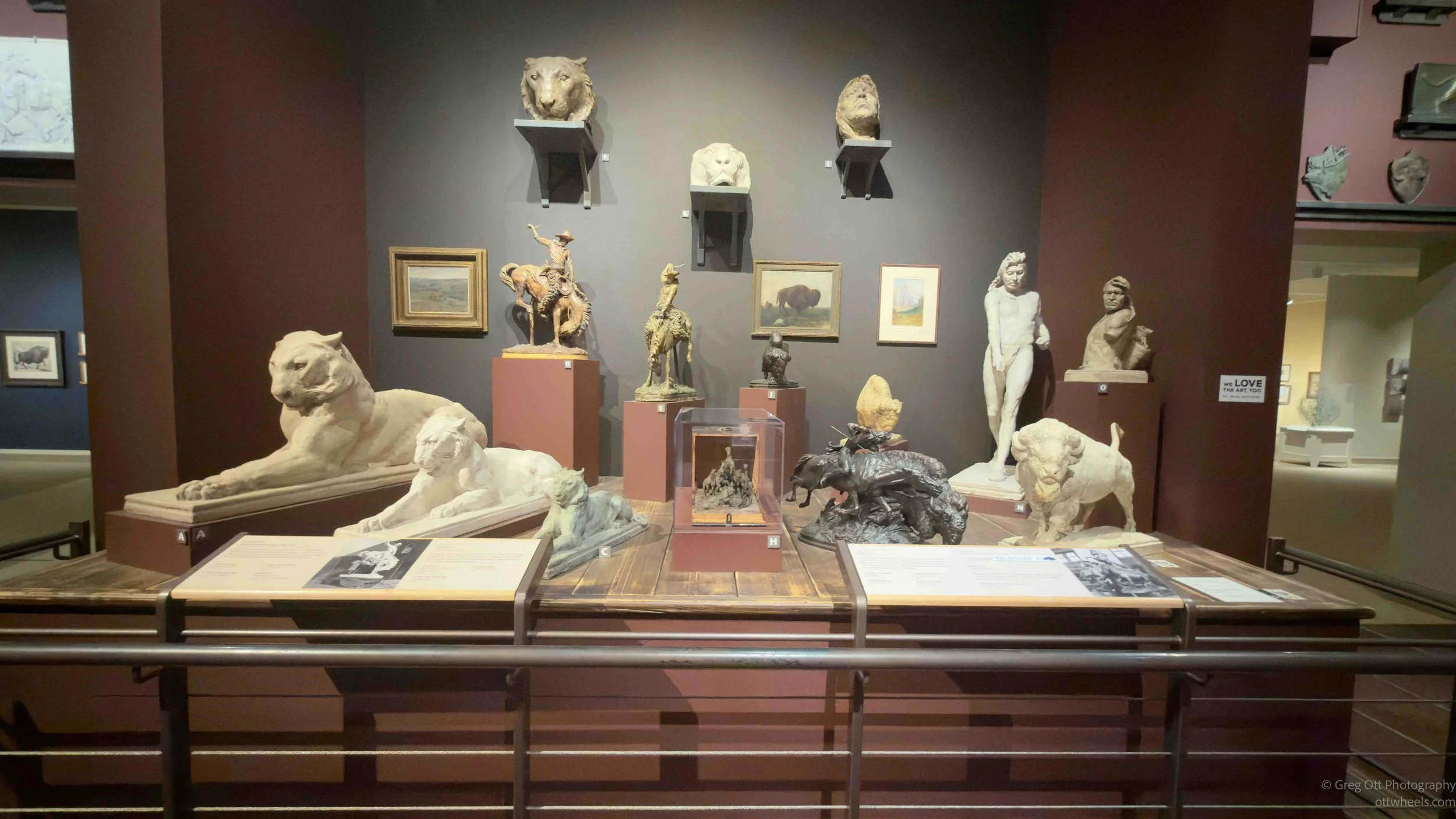
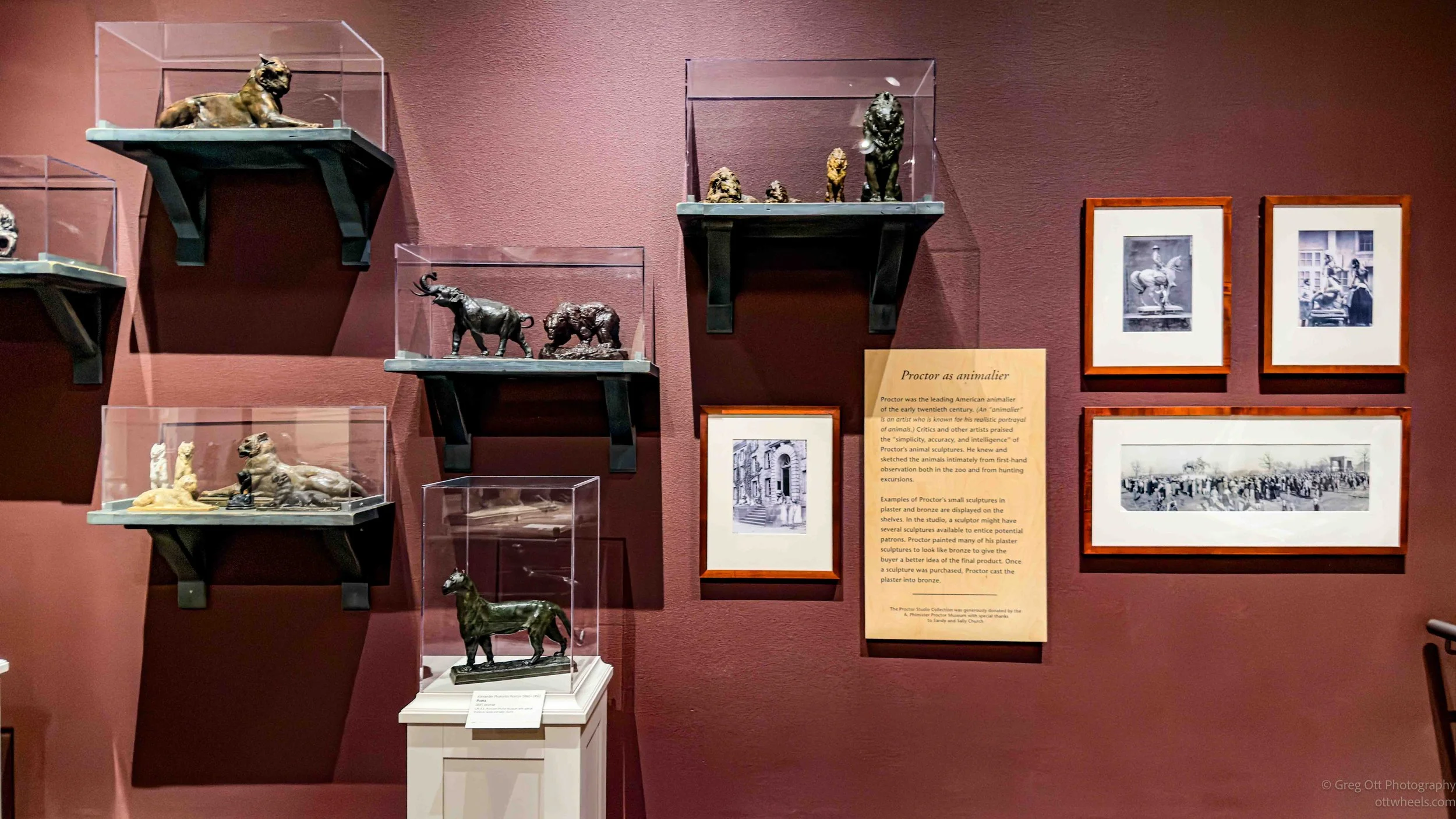
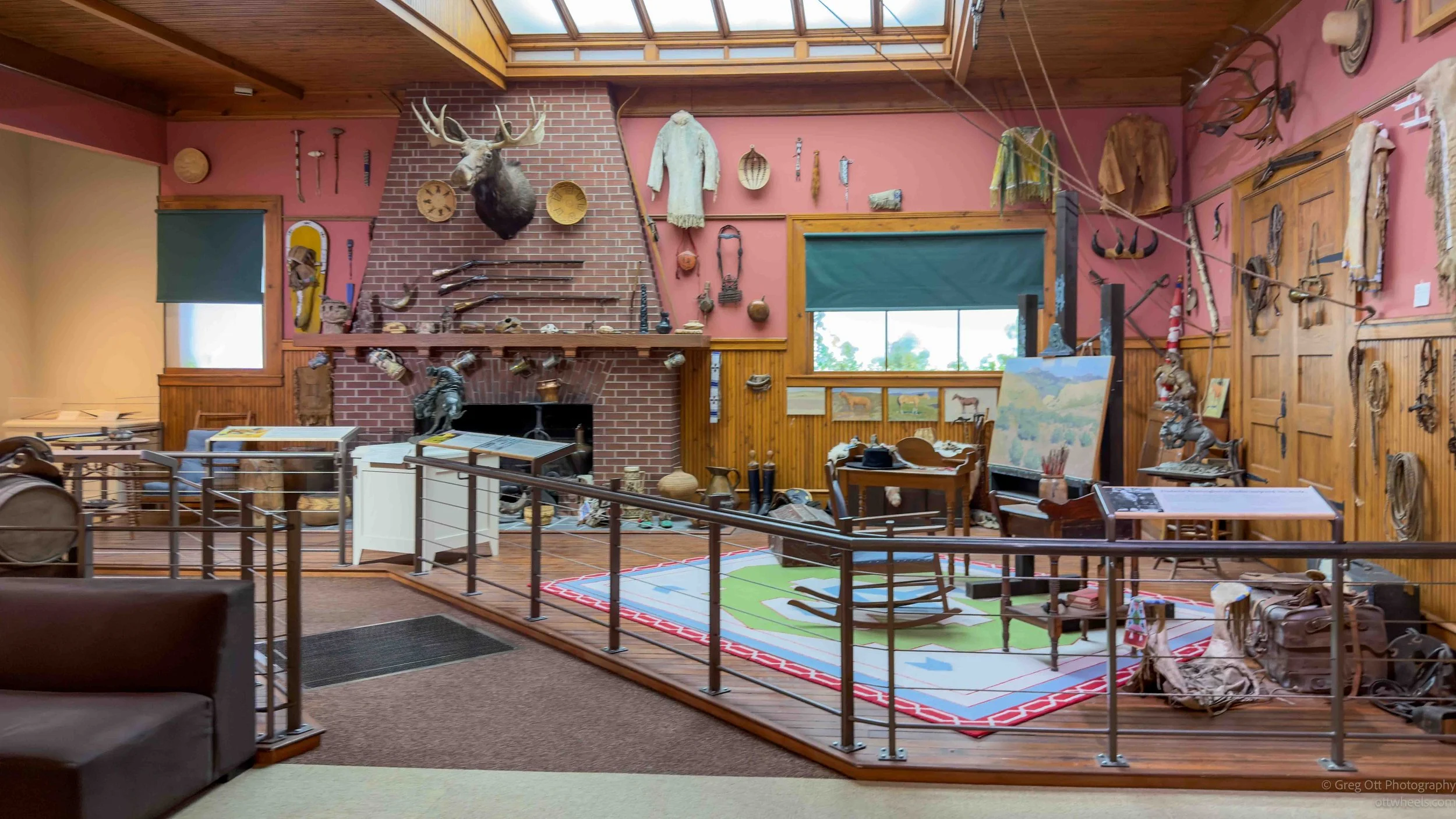
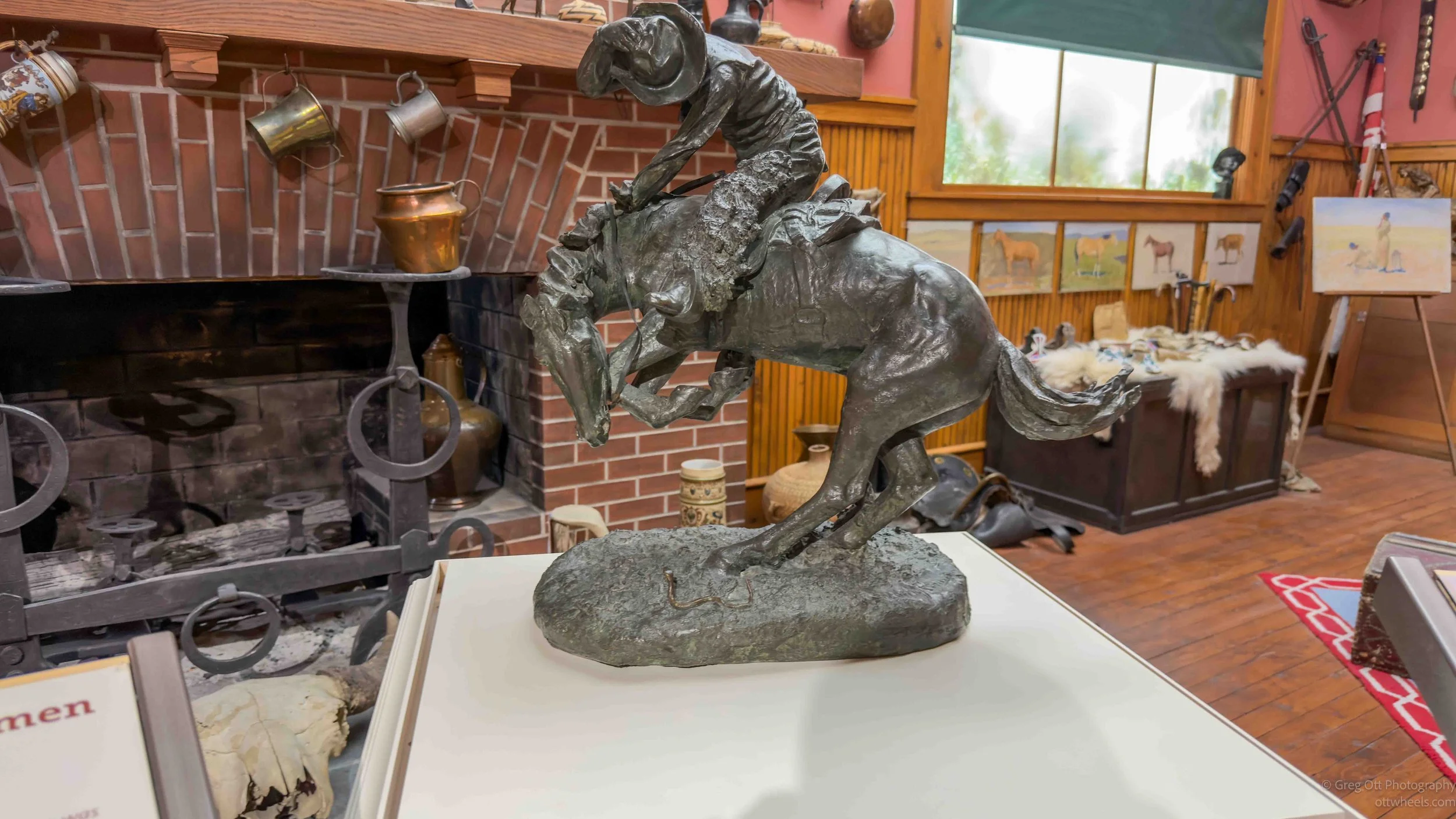
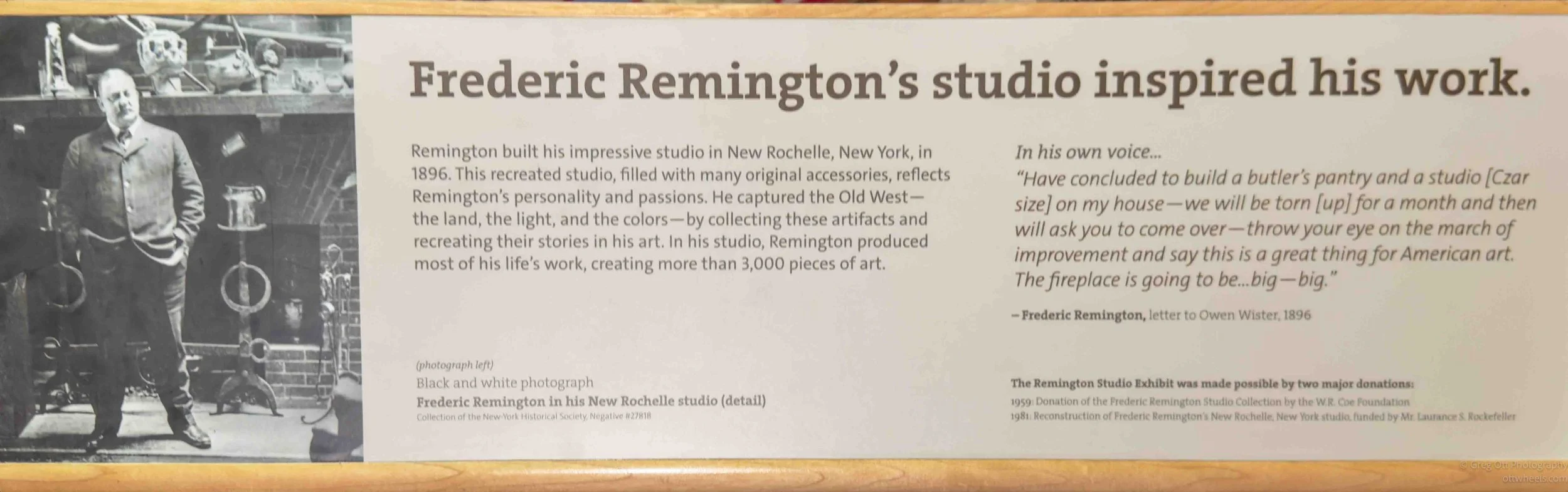
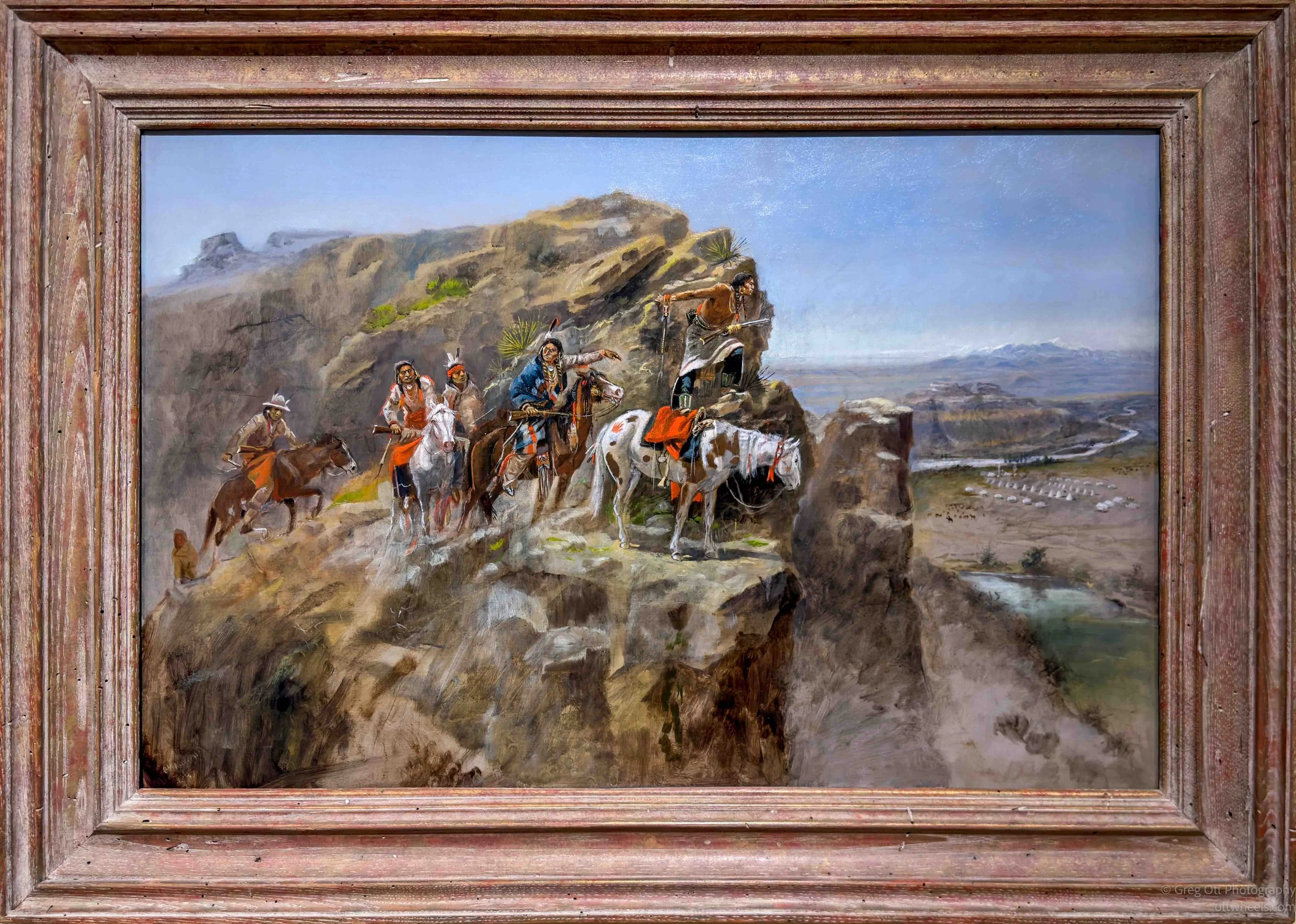
My favorites were the works of Frederic Remington and Charles M. Russell, two artists whose sculptures and paintings have become almost synonymous with the American West. Remington's ability to capture movement in his bronze sculptures is remarkable, particularly the horses and riders that seem ready to leap off their bases. They recreated his studio and presented many of his well know pieces.
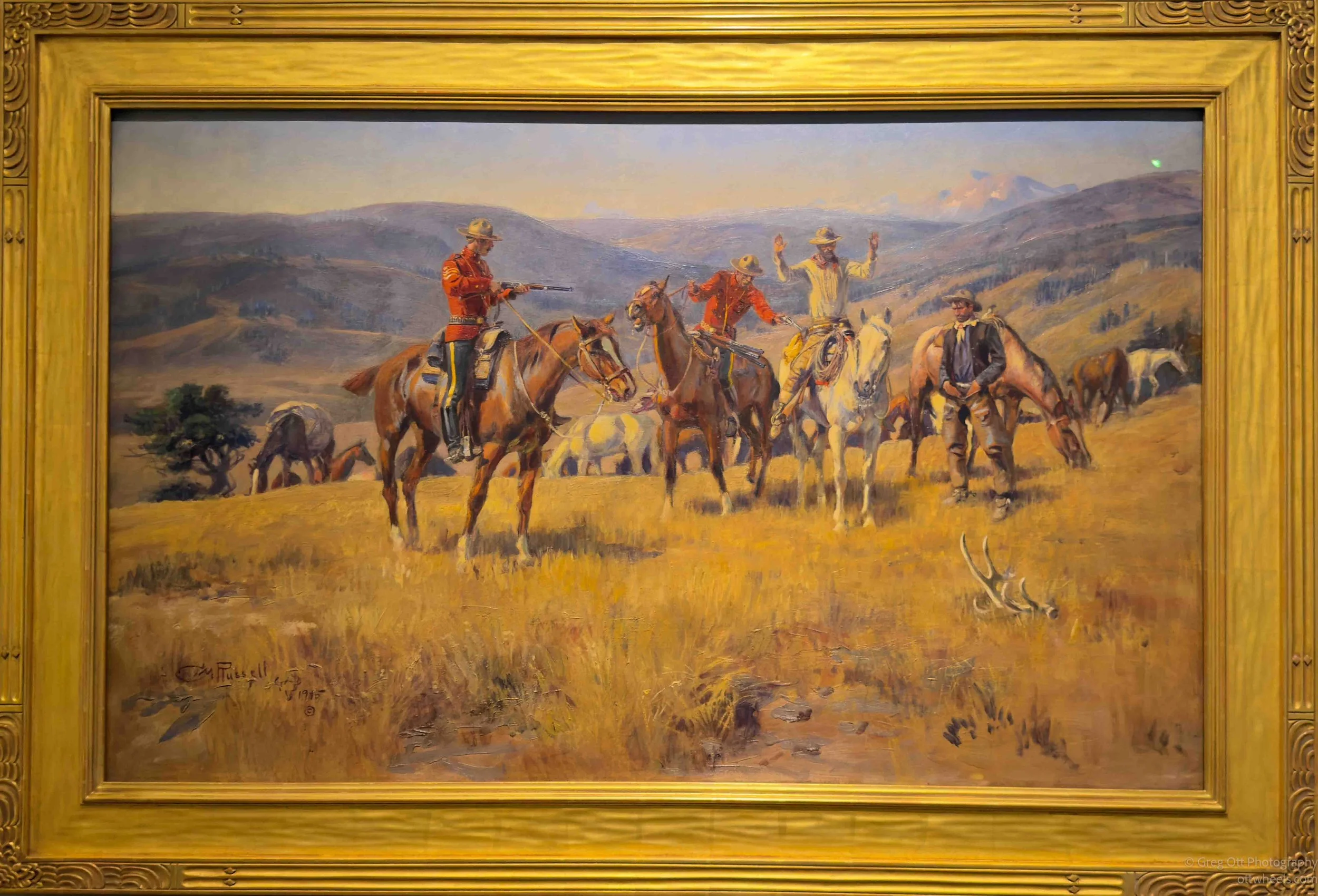
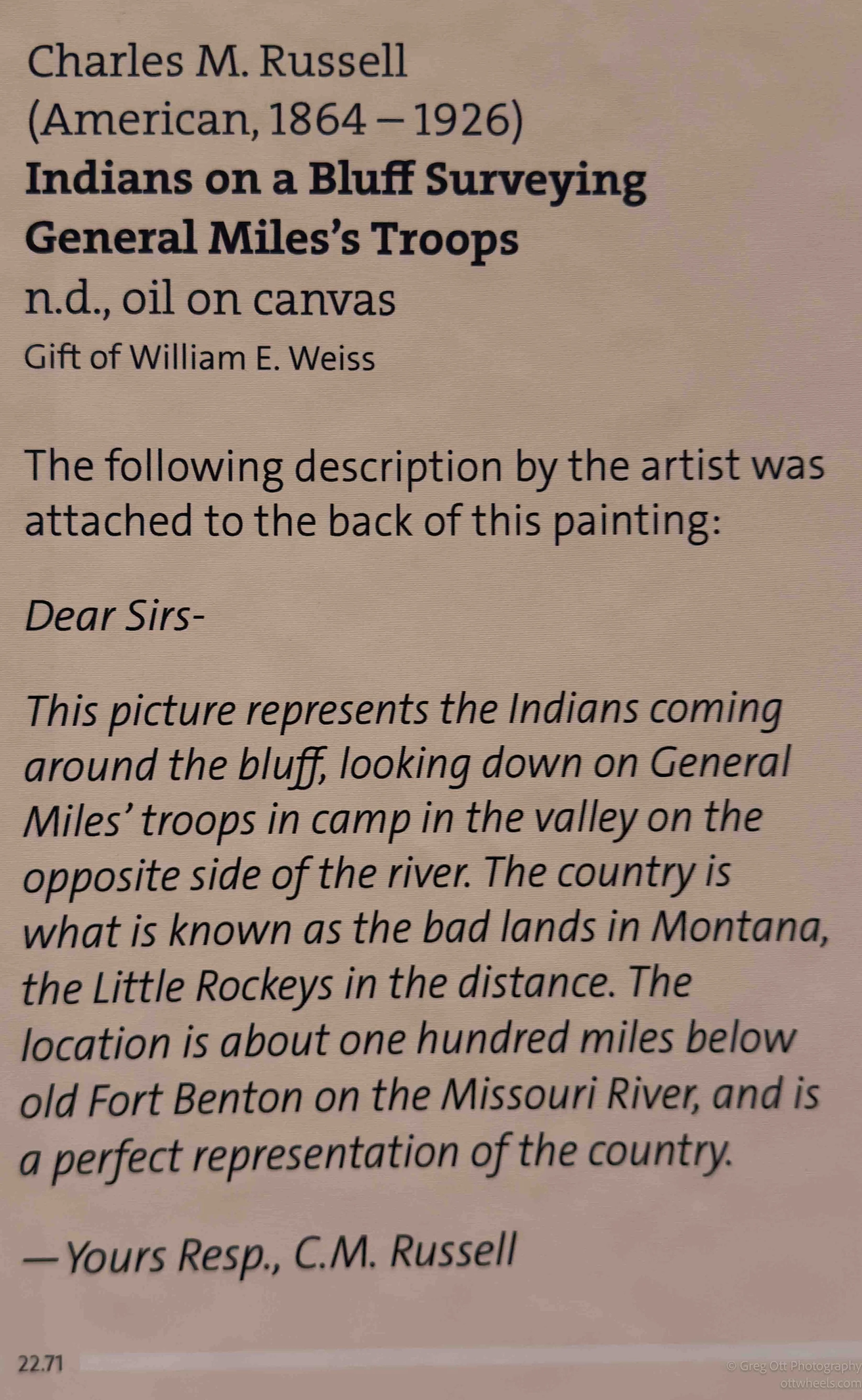
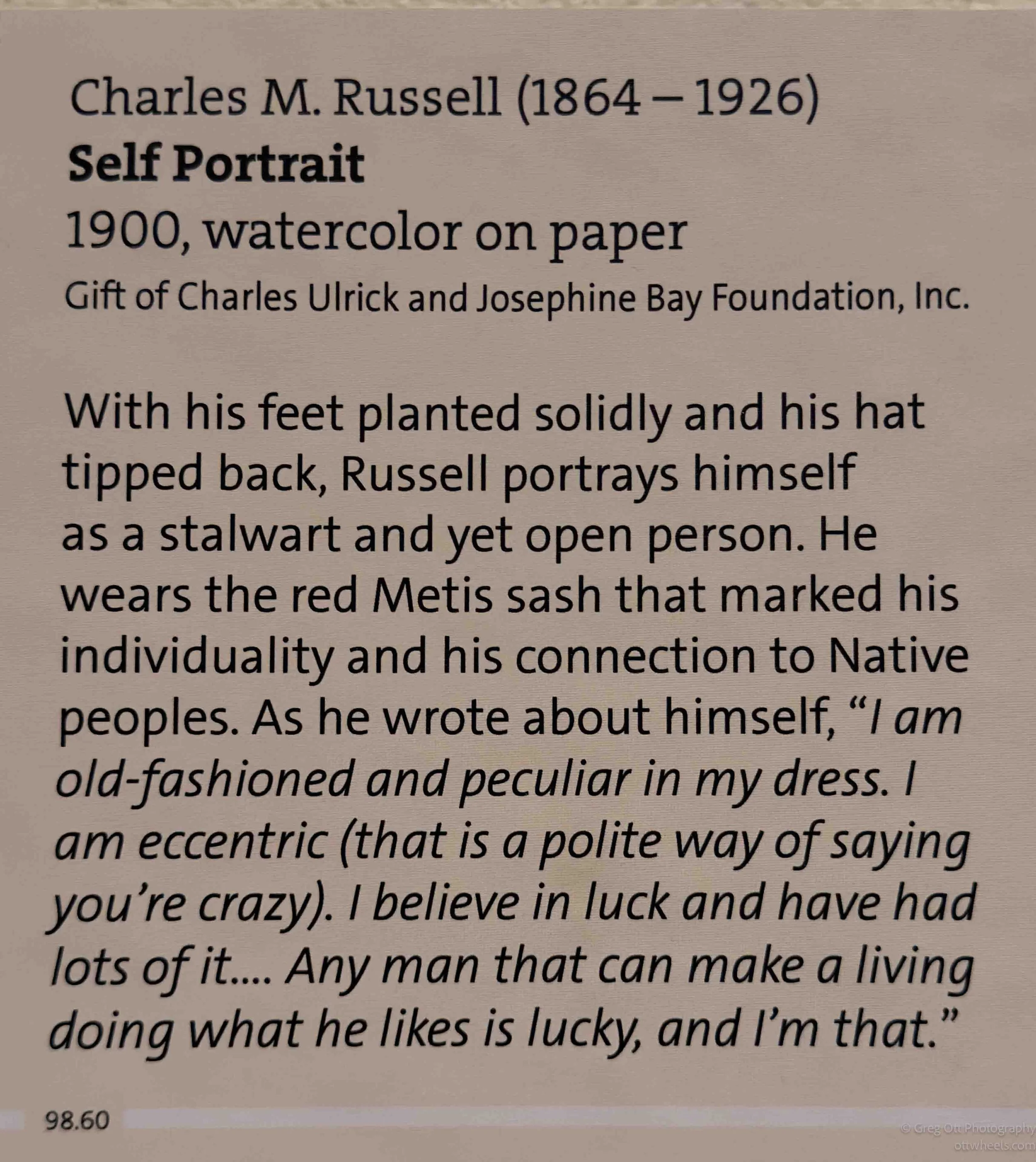
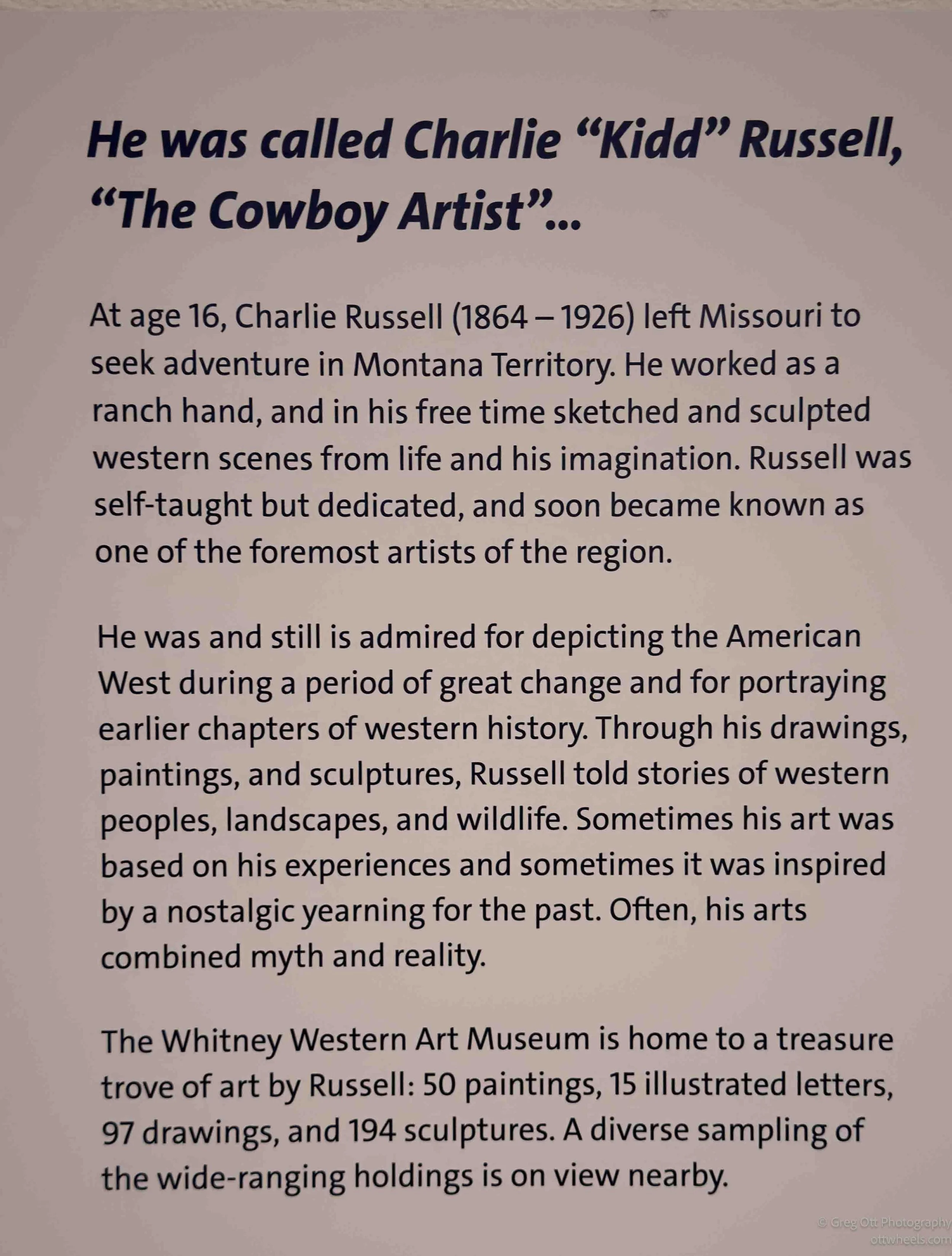
I had become familiar with Charlie Russell's life and work during my visit to the Heritage Museum in Helena, Montana, so I was particularly interested in seeing more of his paintings and sculptures at the Whitney. Russell left Missouri at just 16 and headed to Montana, where he worked as a ranch hand before becoming one of the best-known artists of the American West. Unlike many artists who painted the West from imagination or secondhand accounts, Russell had actually lived much of what he portrayed. That familiarity comes through in his work, particularly in the details of the people, horses, and landscapes.
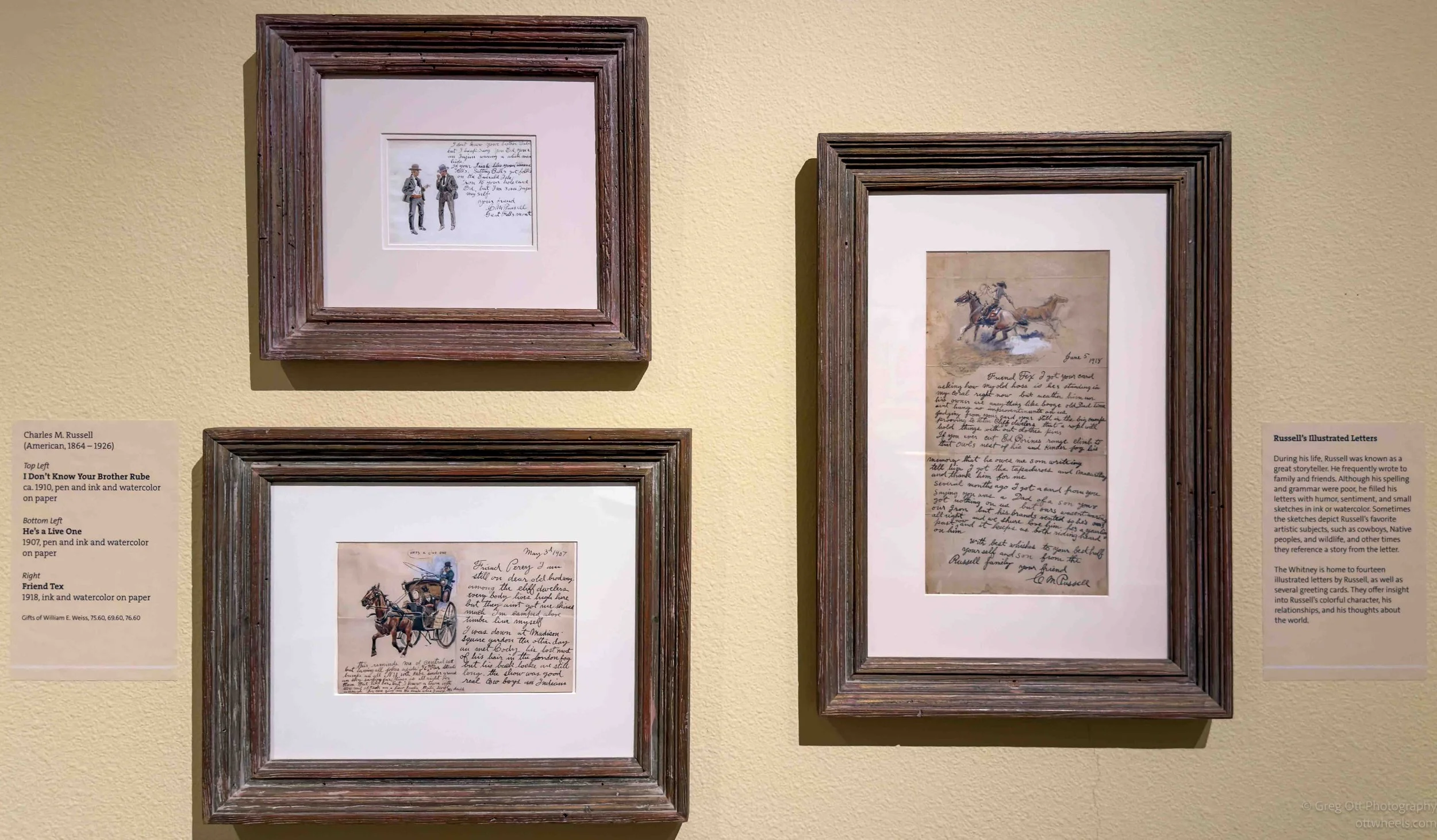
One of the things that fascinated me most was his correspondence. Russell was a self-taught artist, and writing apparently didn't come as naturally to him as drawing. His letters were often accompanied by wonderfully detailed sketches and watercolors that sometimes seemed to tell the story better than the words themselves. I was amazed at the time and effort he put into these illustrations, even in letters to friends. Some were miniature works of art, complete with horses, cowboys, and scenes of life in the West. He clearly enjoyed communicating through his drawings, and I found myself spending as much time studying the letters as his larger paintings.
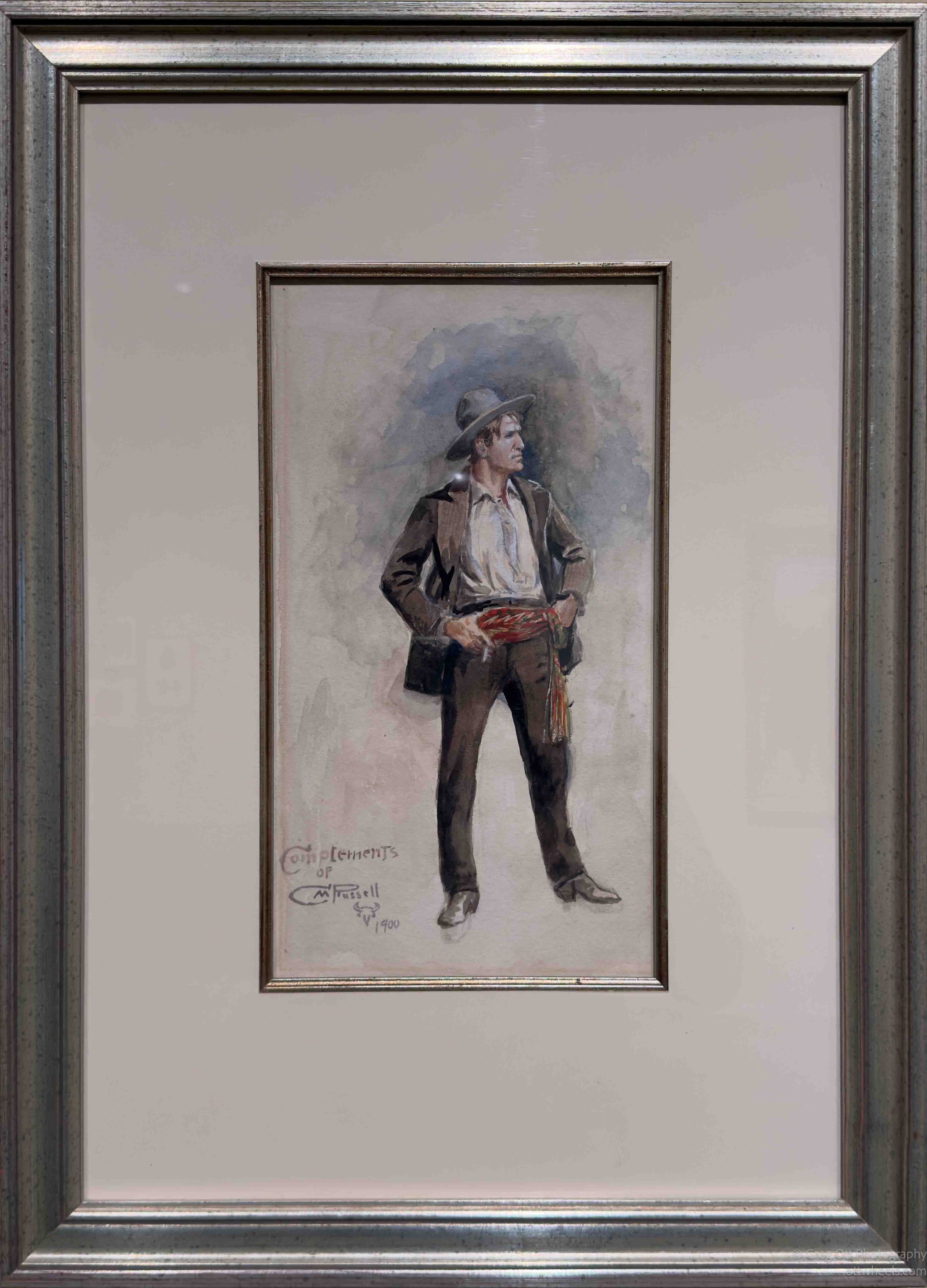
Seeing more of Russell's work at the Whitney added to what I'd learned about him in Helena. I particularly enjoyed his self-portrait from 1900, with his hat tipped back and a red Métis sash around his waist (his signature). The accompanying description included a wonderful observation Russell made about himself: he considered himself eccentric, believed he'd been lucky in life, and felt fortunate to make a living doing something he loved. I liked that. There were many excellent pieces by other artists throughout the museum, but Russell's work was especially interesting because I was beginning to know something about the man behind the paintings.
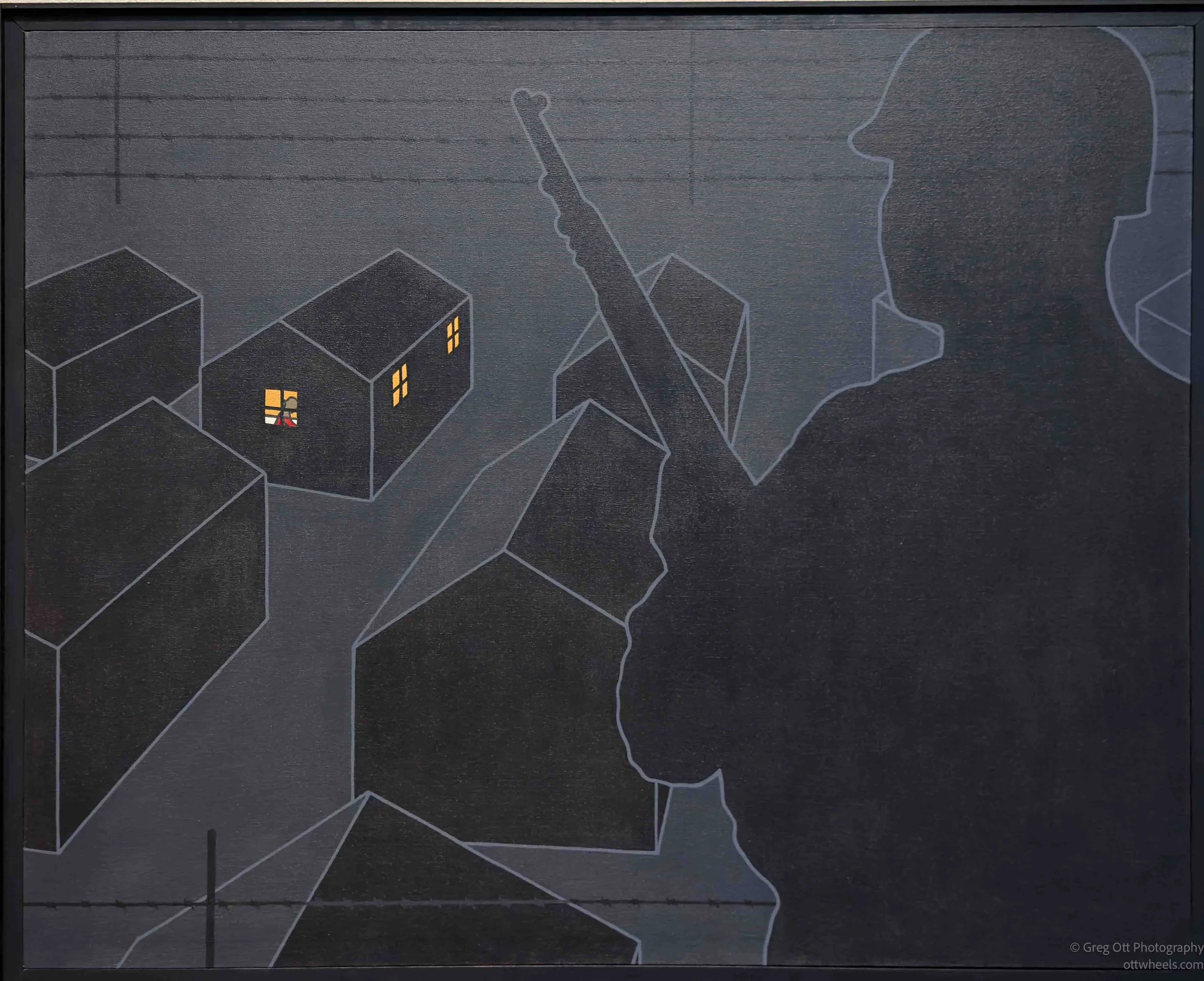
One painting that caught my attention was Night Watch #2 by Roger Shimomura, an artist whose work I had seen before. Shimomura was a professor of art at the University of Kansas for 35 years, and his paintings combine elements of Japanese woodblock prints, American Pop Art, and comic book illustration. His style is quite distinctive, with flat colors, strong outlines, and relatively simple compositions that often carry a much deeper message.
This particular painting depicts a guard watching over the Minidoka incarceration camp in Idaho, where Shimomura and his family were held during World War II. He was only a small child at the time. The painting is almost entirely dark, with the enormous silhouette of an armed guard dominating the foreground. A few small windows glow in the buildings behind him, suggesting the lives of the families confined inside. It's a powerful image, made even more interesting when you understand the artist's personal connection to the subject. I find it fascinating how an artist can communicate so much with such a simple composition.
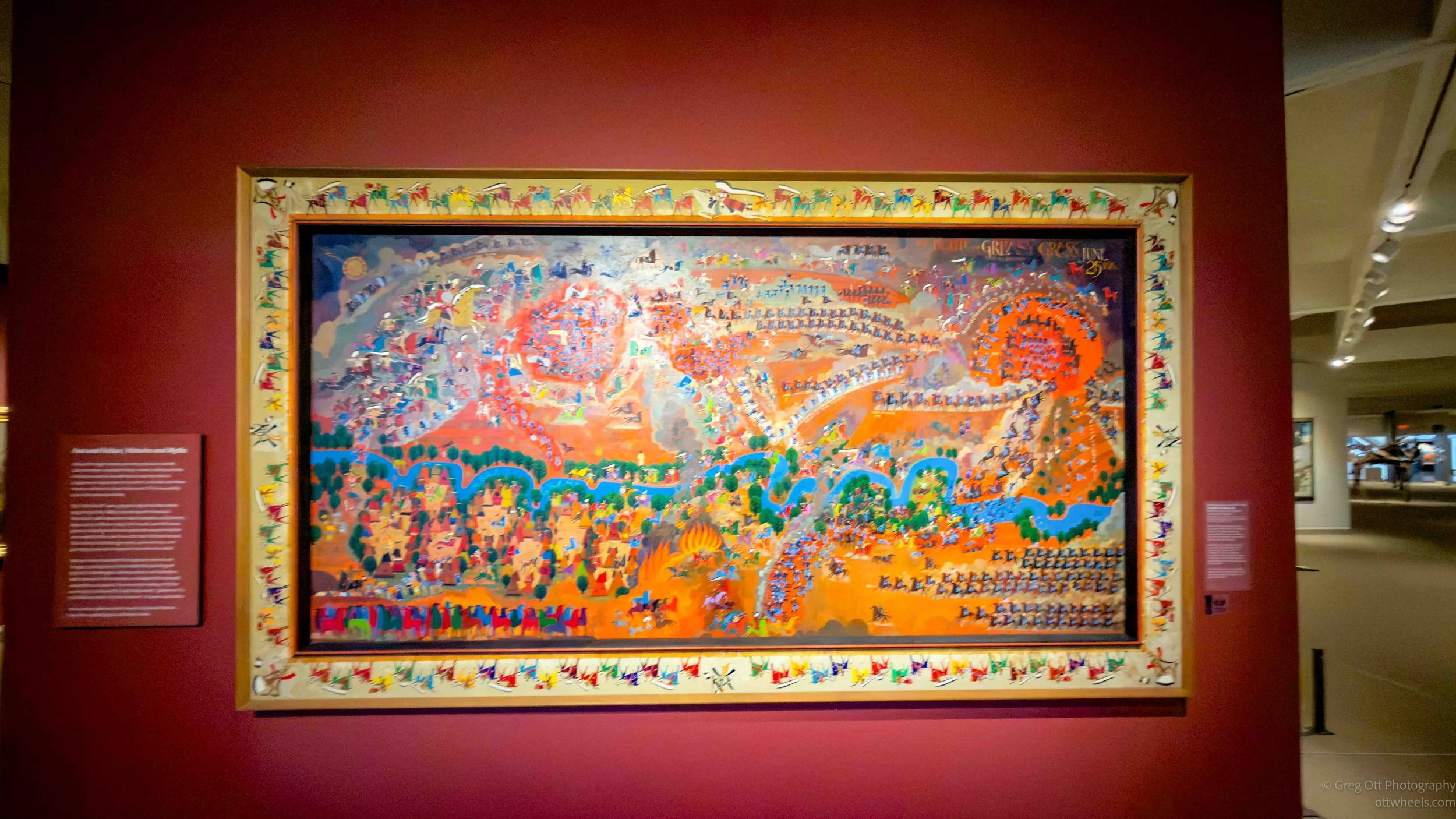
Photographing the artwork throughout the museums was a challenge. Many of the galleries used small, bright halogen spotlights that created reflections on the paintings, often distorting parts of the images. I tried changing my position and shooting from different angles, but it was almost impossible to eliminate the reflections completely.
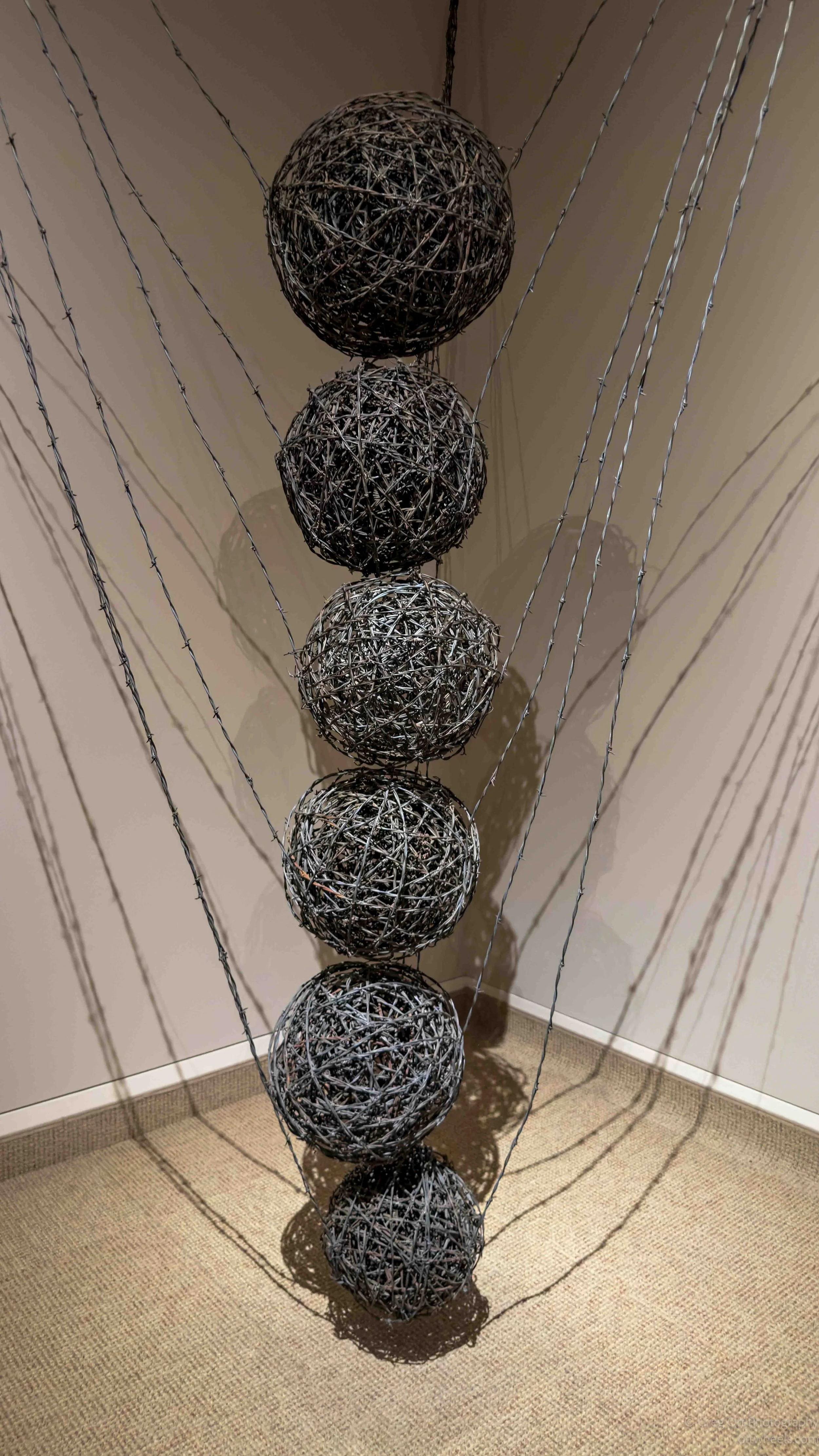
One enormous painting that caught my attention depicted the Battle of the Little Bighorn, better known as Custer's Last Stand. It was an incredibly detailed and colorful work, with hundreds of figures spread across the battlefield. There was so much happening that I found myself moving from one section to another, trying to follow the various scenes. I also enjoyed a rather unusual sculpture made from balls of tangled barbed wire, arranged vertically and surrounded by strands of wire. They reminded me of the tumbleweeds I've seen blowing across the open landscapes of the West, although these looked considerably less inviting.
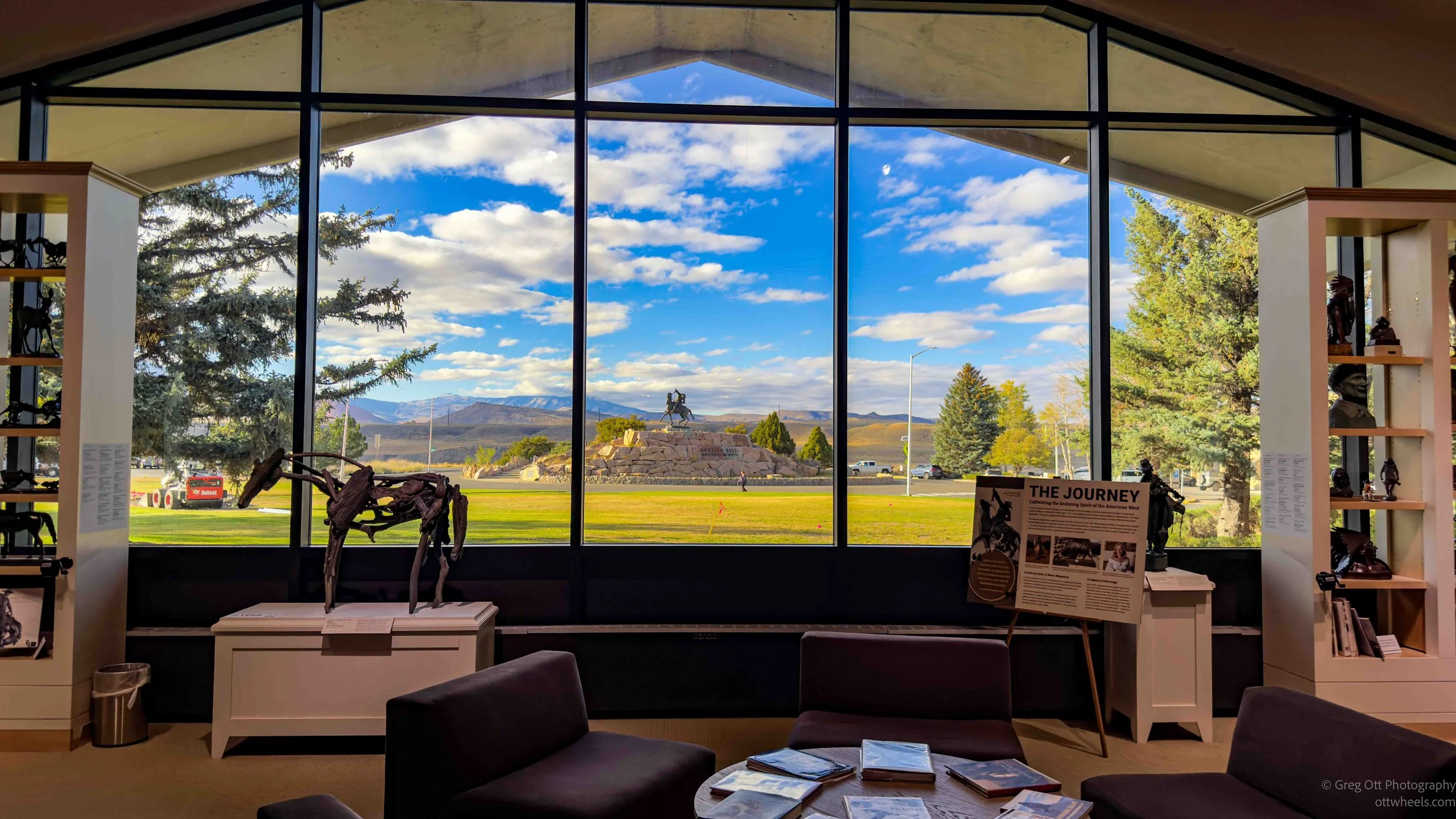
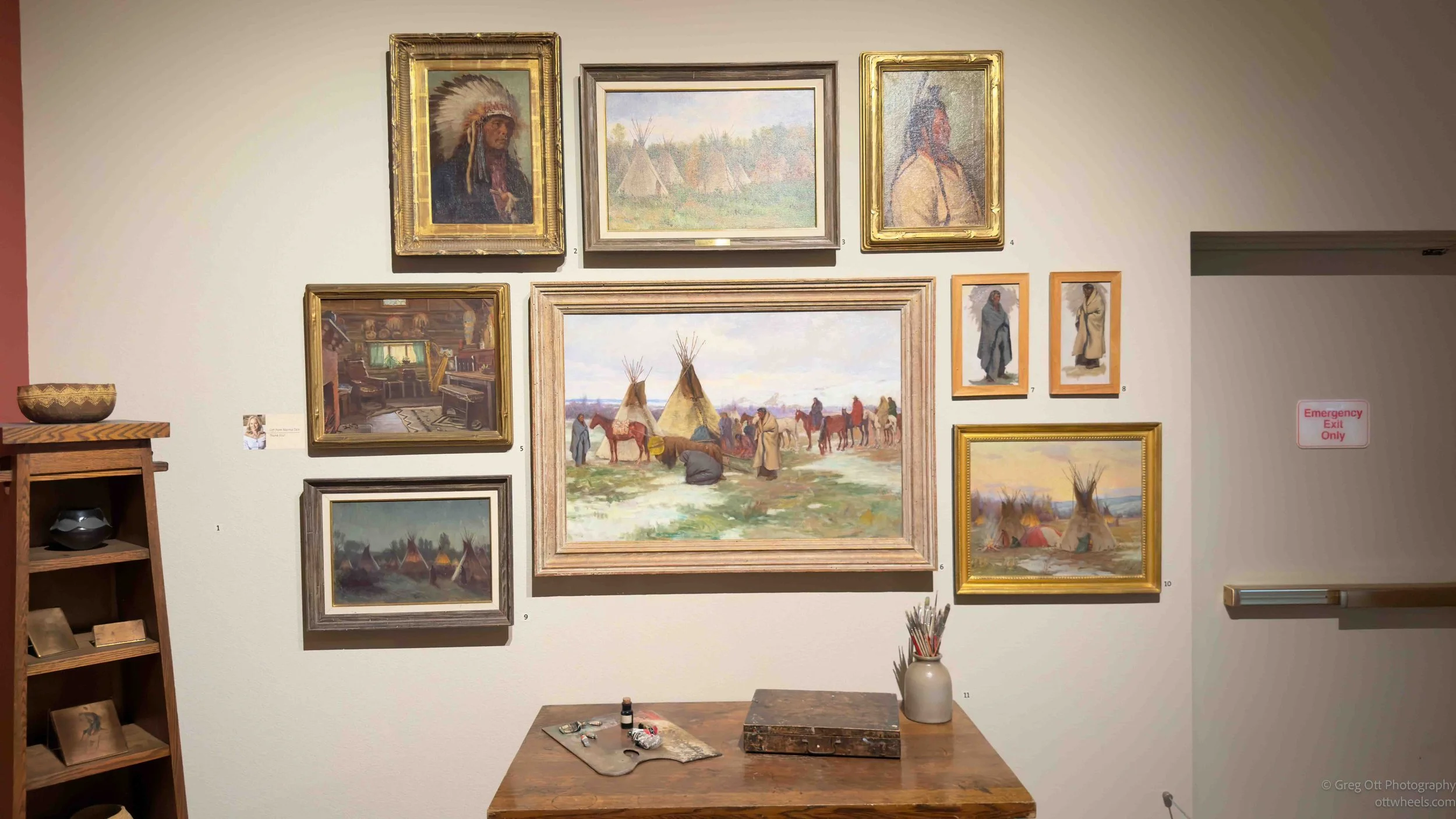
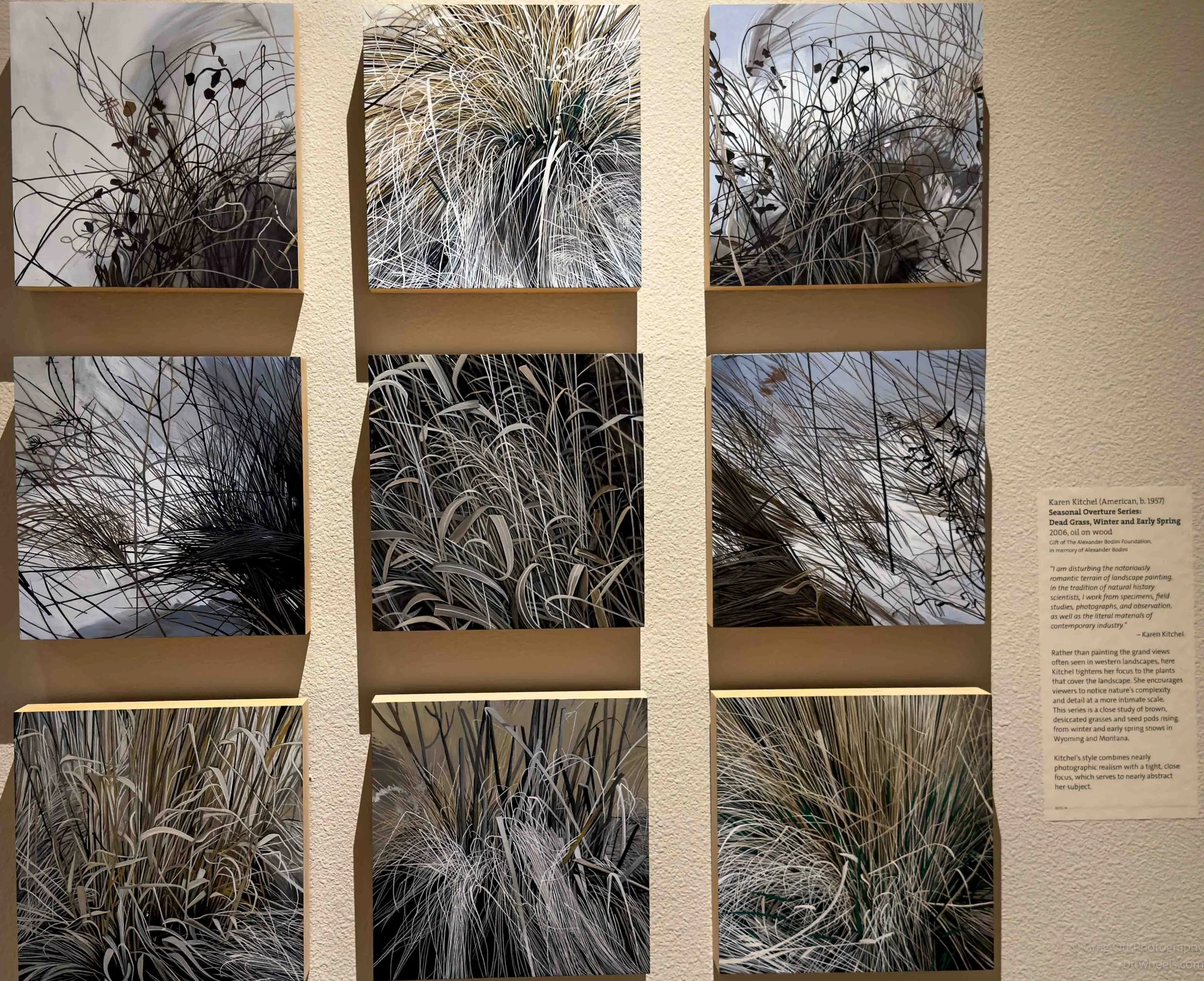
I particularly liked the museum's open gallery spaces, including a large seating area with floor-to-ceiling windows overlooking the grounds and the mountains beyond. There was a wonderful mixture of traditional Western art and more contemporary pieces. Another display that held my attention was a wall of paintings, many by Joseph Henry Sharp, depicting Native American life. The collection was impressive, and I kept finding something else worth stopping to examine. I was running out of time long before I ran out of things to see.
By the time I finished, the museum was closing at 5 p.m., and I regretted not having more time. Of the five museums at the Center, the Whitney was one I would have liked to explore at a much slower pace.
Around 5:30 p.m., I found my way to Wy Thai on the outskirts of Cody. There was only one other customer, a young man probably in his twenties, who had ordered his meal extremely hot. He had sweat running down his forehead but was laughing about it, saying he enjoyed the heat because it helped him breathe so much better. He was talking with the waiter, who was also the owner's son, about Apple Pay and how he wished Walmart would accept it. I joined the conversation, mentioning that Walmart already accepted Apple Pay in Canada and that I wished they would do the same in the United States. Interestingly, about a week later, I forgot to bring my wallet into a Walmart, and the cashier told me I could use Apple Pay. When I asked when that had happened, he said it was slowly being rolled out to stores. I ordered one of the curries with brown rice and enjoyed a relaxing dinner.
Before leaving, I asked if they minded me parking overnight in the lot beside the restaurant. There was a church next door, and they explained that the church owned the parking lot while they leased their restaurant space, so they couldn't give me permission to stay there. Fair enough. I appreciated their explanation and was glad I'd asked.
I stopped at Albertsons to pick up a few groceries before heading back downtown to photograph some of Cody's lights after dark. Unfortunately, there was still quite a bit of traffic, and parked cars made it difficult to get the photographs I wanted. By 8 p.m., I decided to call it a day and drove back to the BLM staging area about ten minutes outside town, where I'd spent the previous night at the BLM staging area.