Exploring Singing Canyon in Escalante
This was one of those lazy days that seem to happen only when the road finally loosens its grip on you. I was alone at Deer Creek Campground in the Grand Staircase–Escalante, and the quiet felt complete rather than empty. The sun was already high and doing its work, warming the rock wall that bordered the campground. I had the van door open, the stream running just behind me, and the sense that there was nowhere else I needed to be. By mid-morning, the air had softened, drifting inside as if it had been invited.
I let the day unfold without much structure. I read for a while, wrote a bit, answered a few emails, and watched the light slide slowly across the rock face across the way. The warmth made it easy to linger, to stretch time instead of compressing it. After lunch, I finally pulled out the park information and started paging through it, not with any urgency, just looking for something nearby that made sense for the afternoon.
That’s when I settled on Singing Canyon, a small slot canyon just off Burr Trail Road, roughly five miles from the campground. On the map it looked simple enough, but the drive told a different story. Burr Trail Road was paved, but it clung to the landscape in a way that demanded attention—high, narrow stretches with steep drop-offs and no guardrails. I drove slowly, fully aware of the exposure, gripping the wheel more tightly than I would have liked. It wasn’t a drive you relaxed into; it was one you stayed focused through, especially in a high-roof van.
When I finally pulled off at the small turnout, the tension of the drive lingered for a moment before fading. There was no formal trailhead, no signs announcing what was there. The canyon sat quietly across the wash, its tall sandstone walls rising abruptly from the desert floor. It felt almost surprising that something so contained and sculpted could exist so close to the road, unnoticed by most people who passed by.
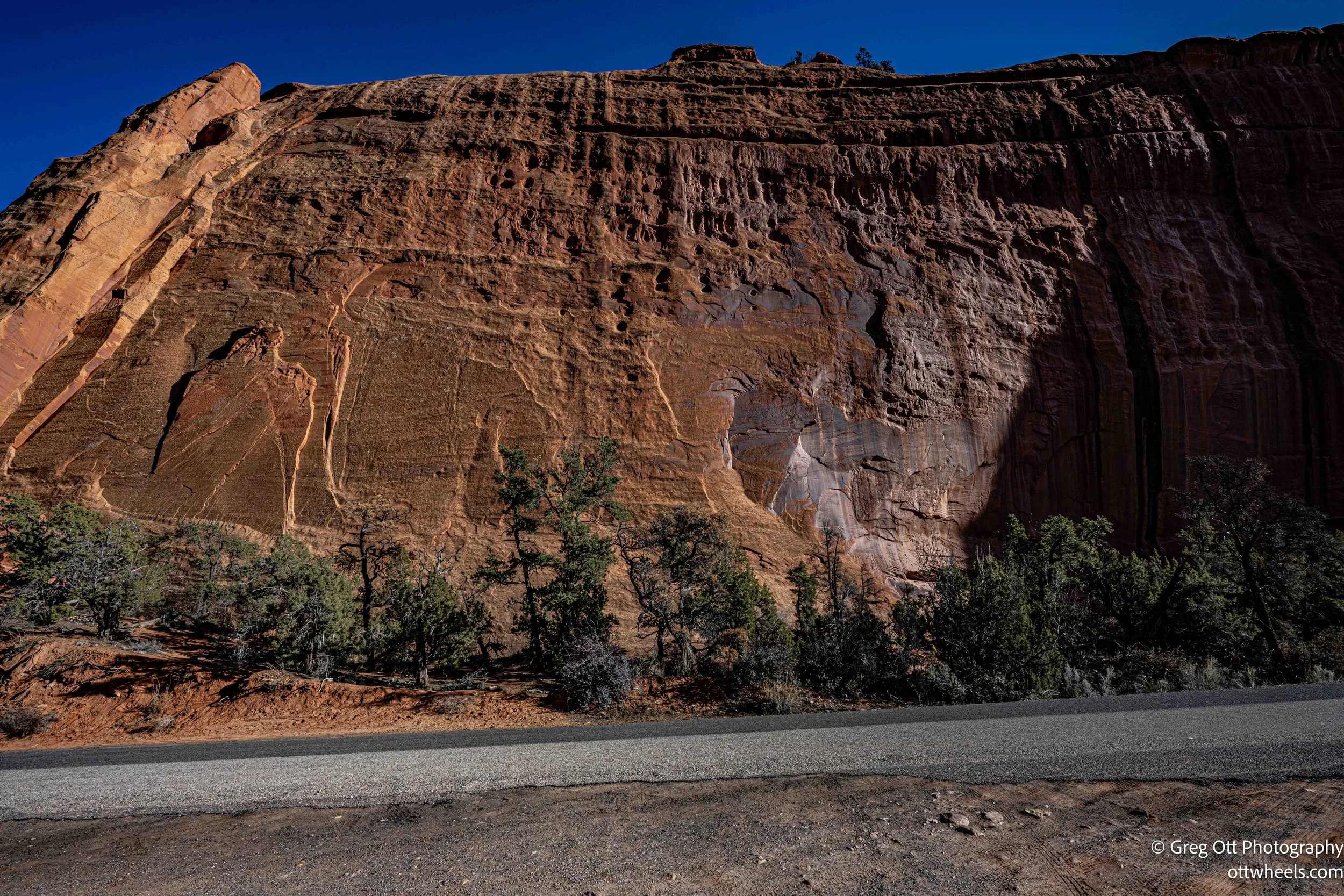
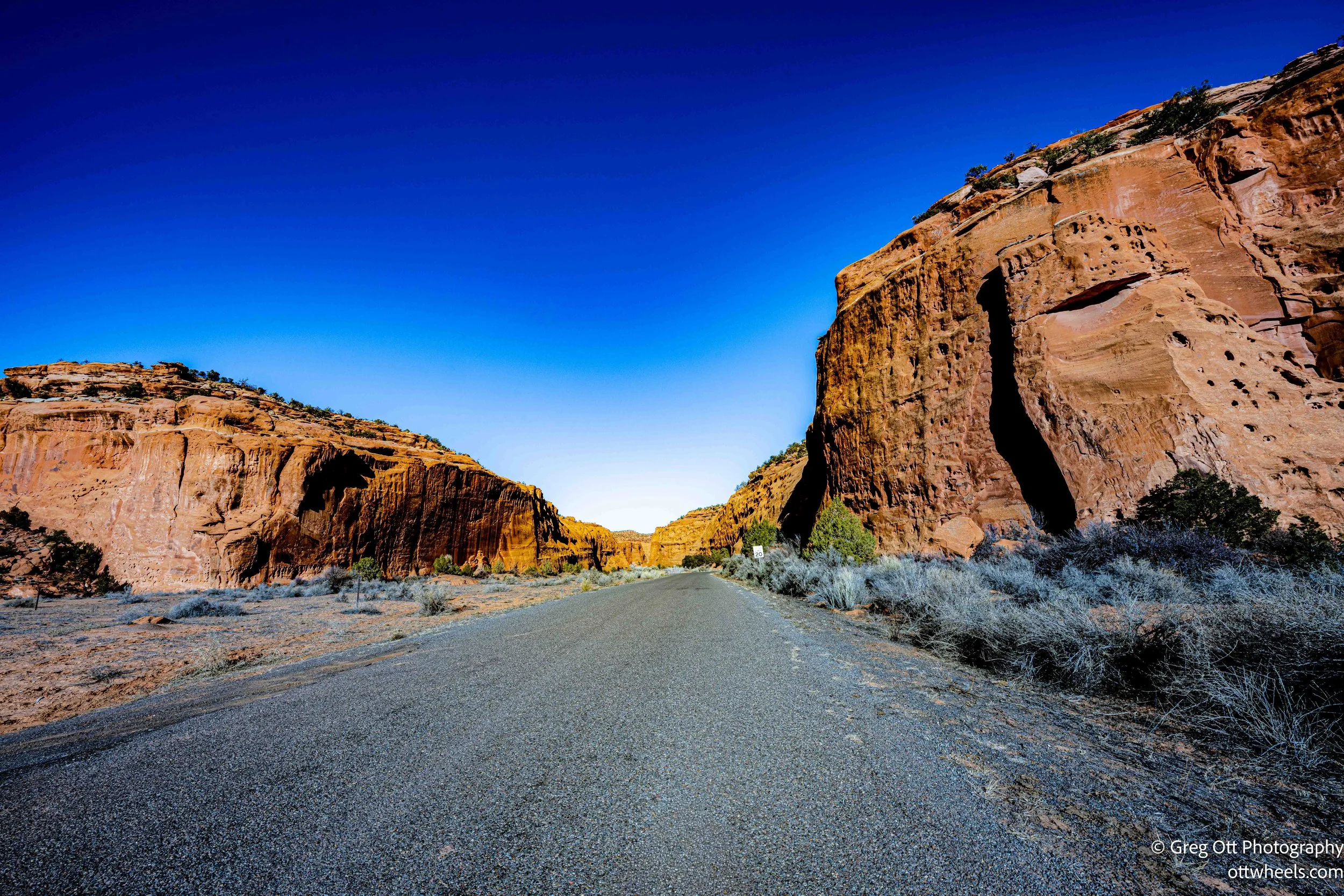
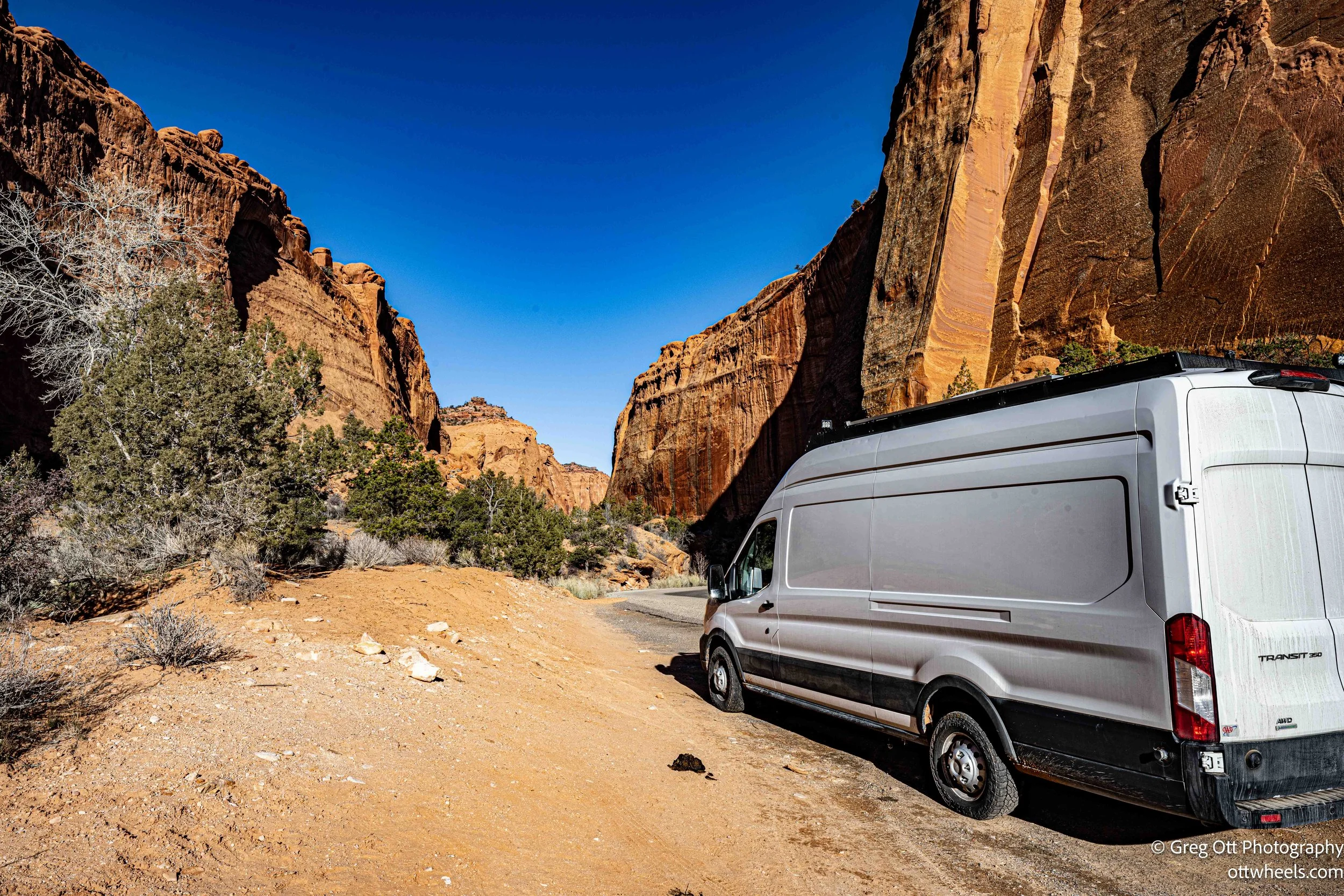
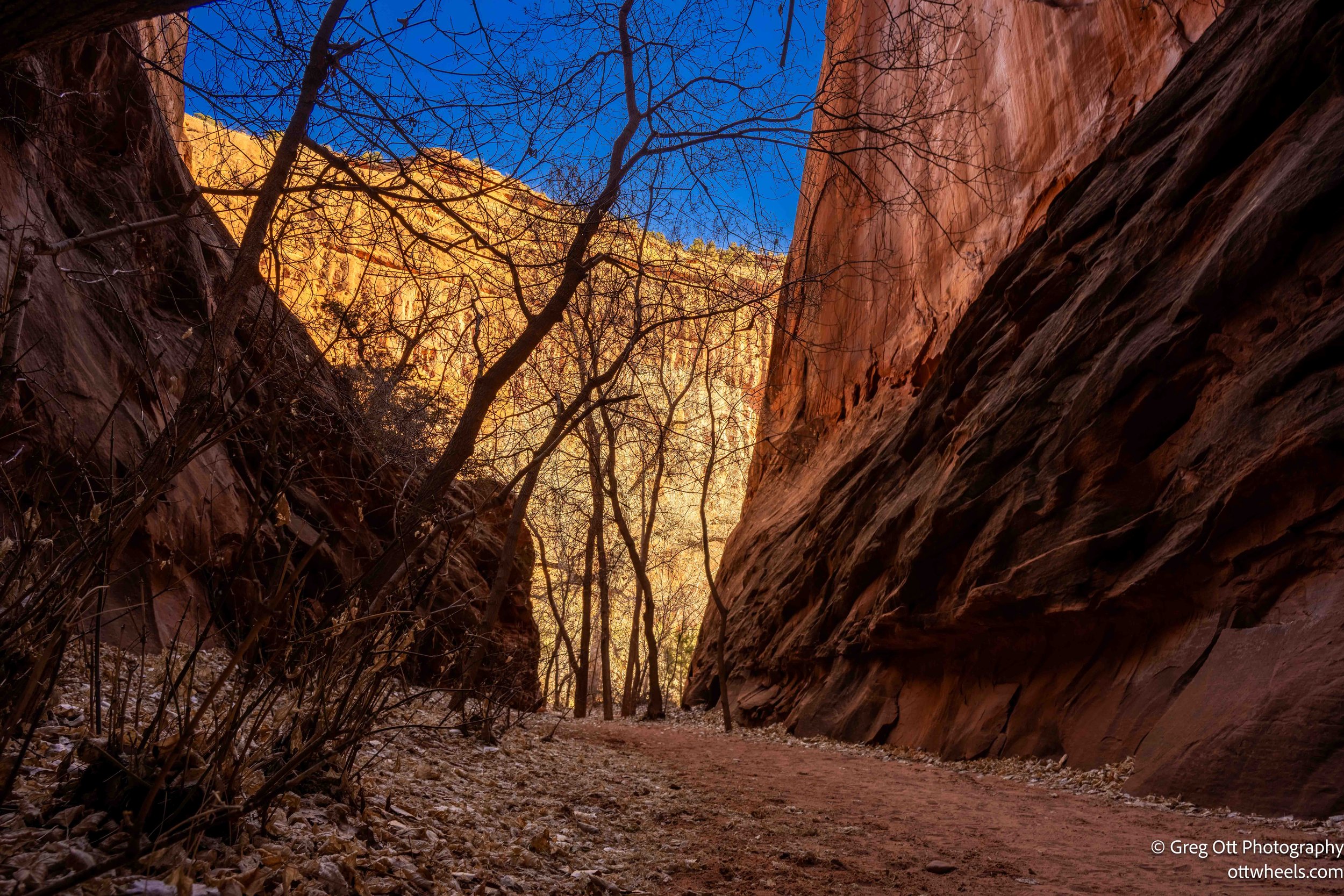
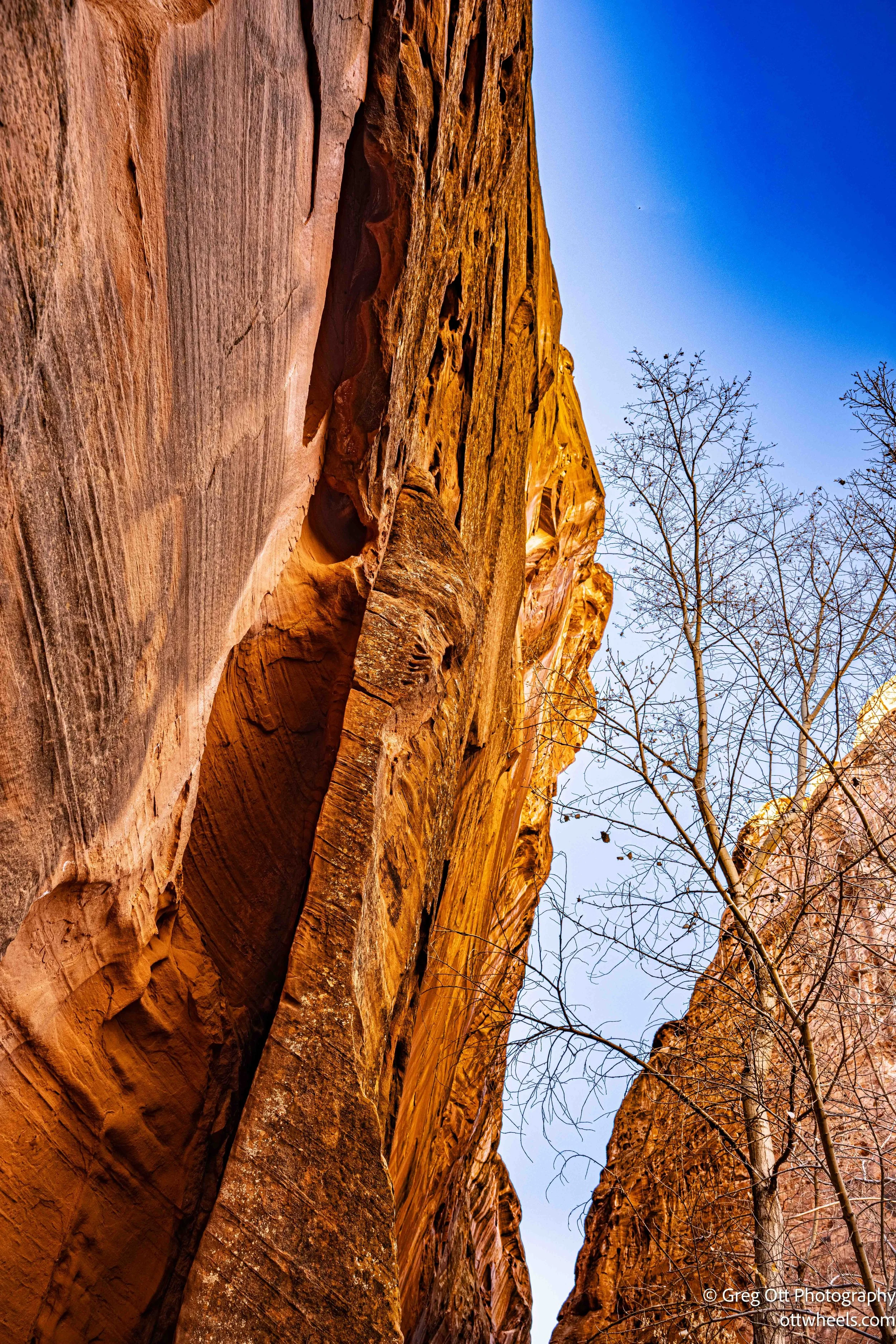
The walk into the canyon took only minutes, but the space quickly changed the feel of the afternoon. The walls narrowed and smoothed, catching the late-day light in shifting patches of gold, red, and muted blue. The canyon was short, barely a quarter mile, but it didn’t need to be longer. I moved slowly, stopping often, letting the light settle where it wanted. When I turned back toward the road, the slot had done exactly what I hoped it would—offered something quiet and complete, without asking much time in return.
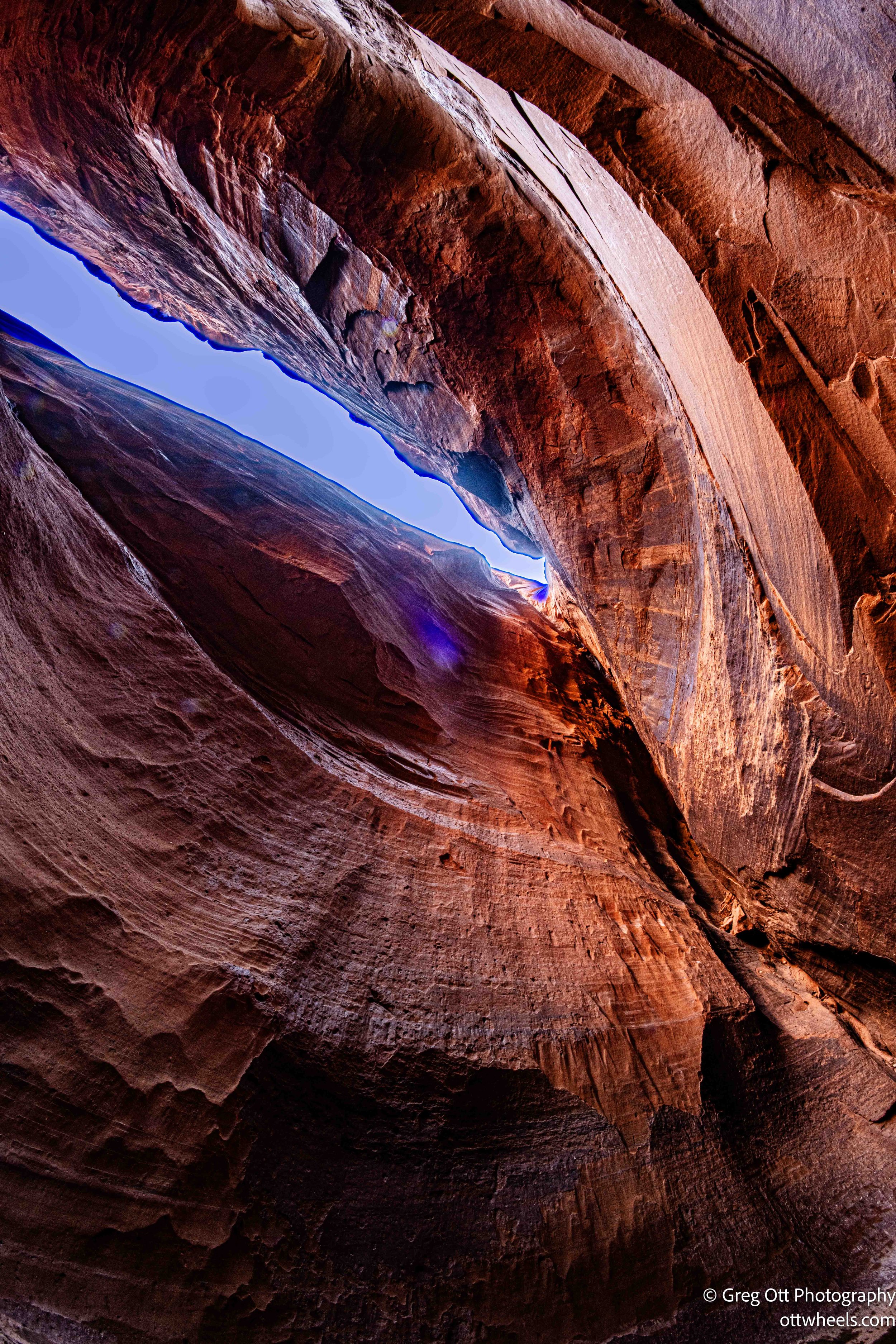
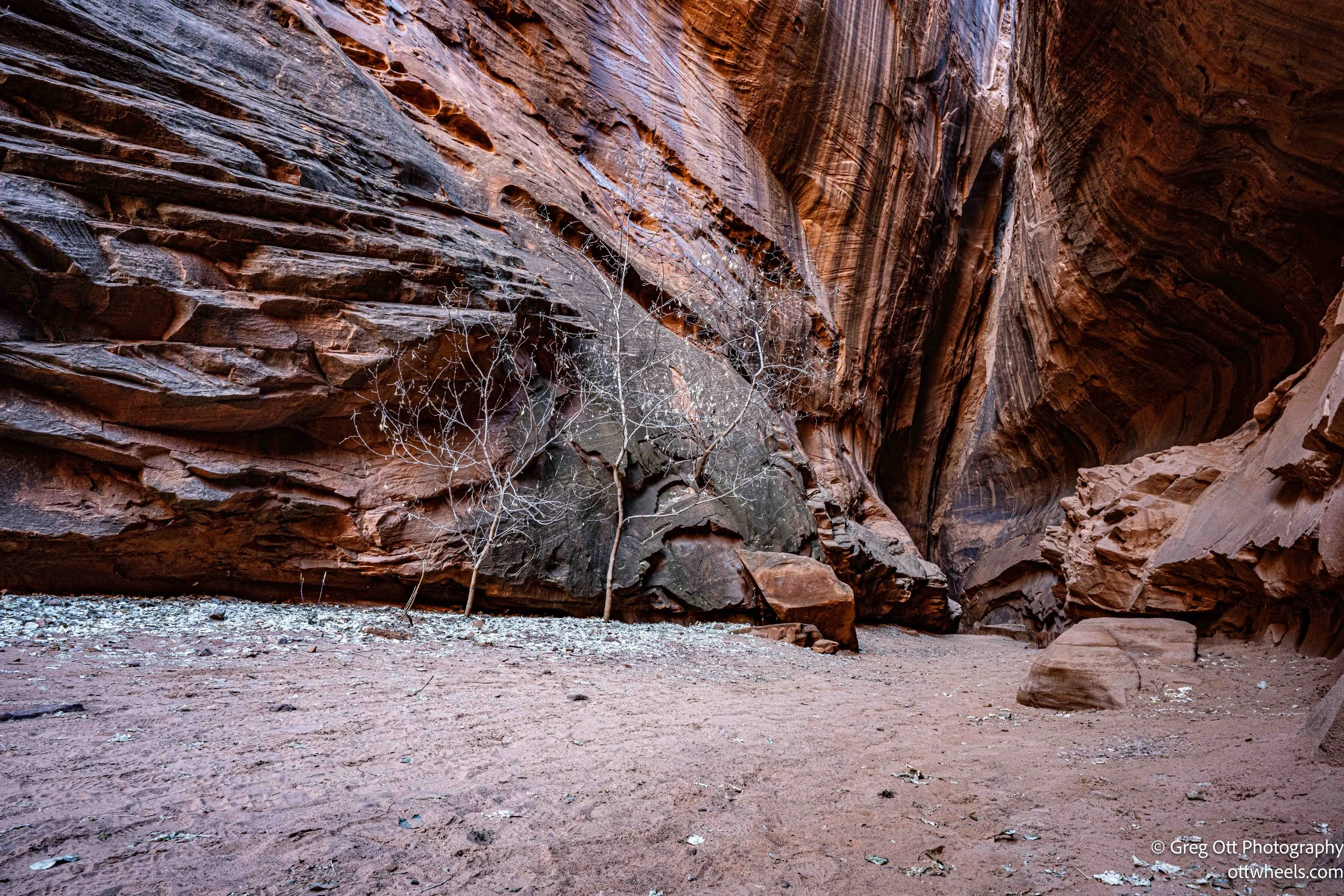
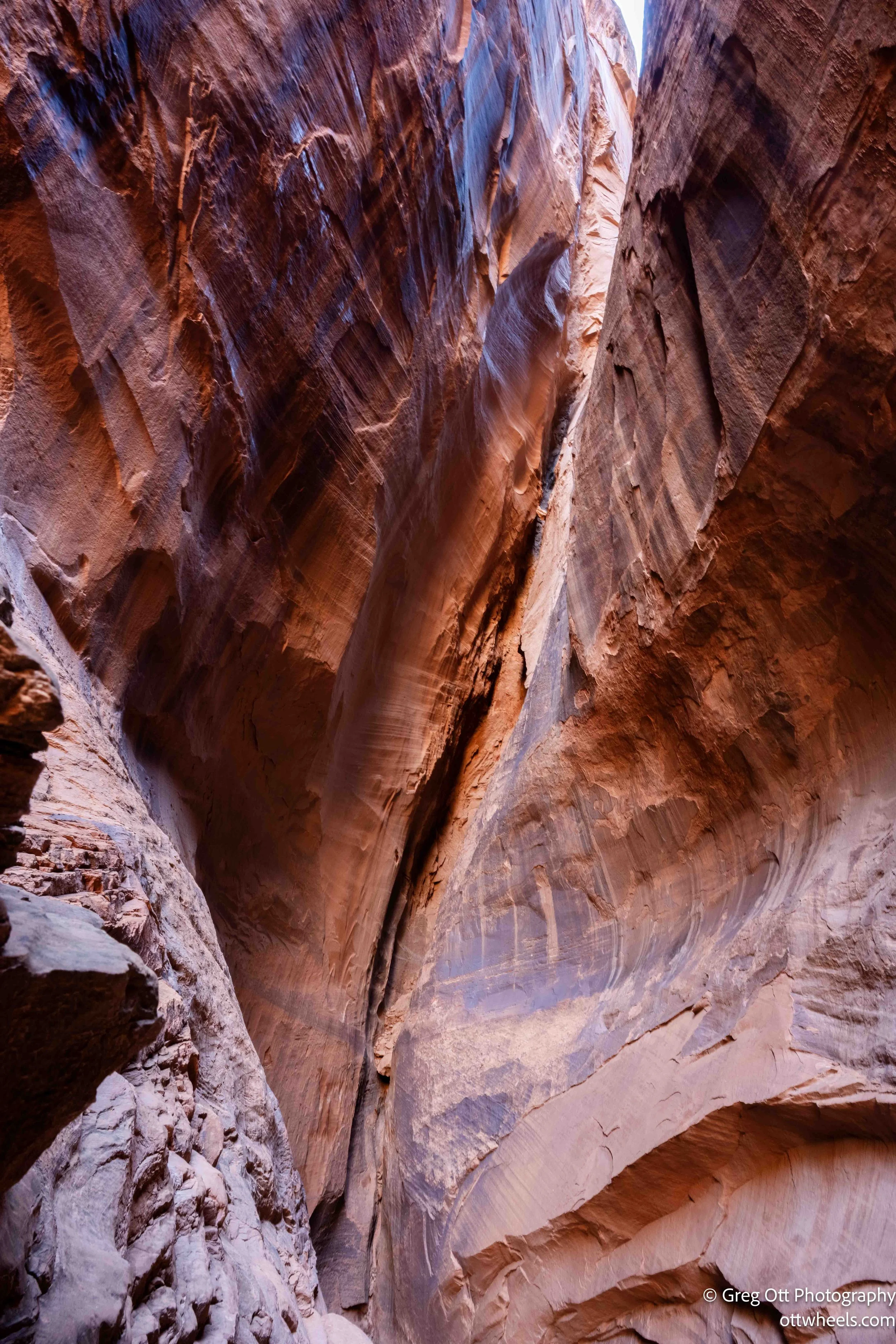
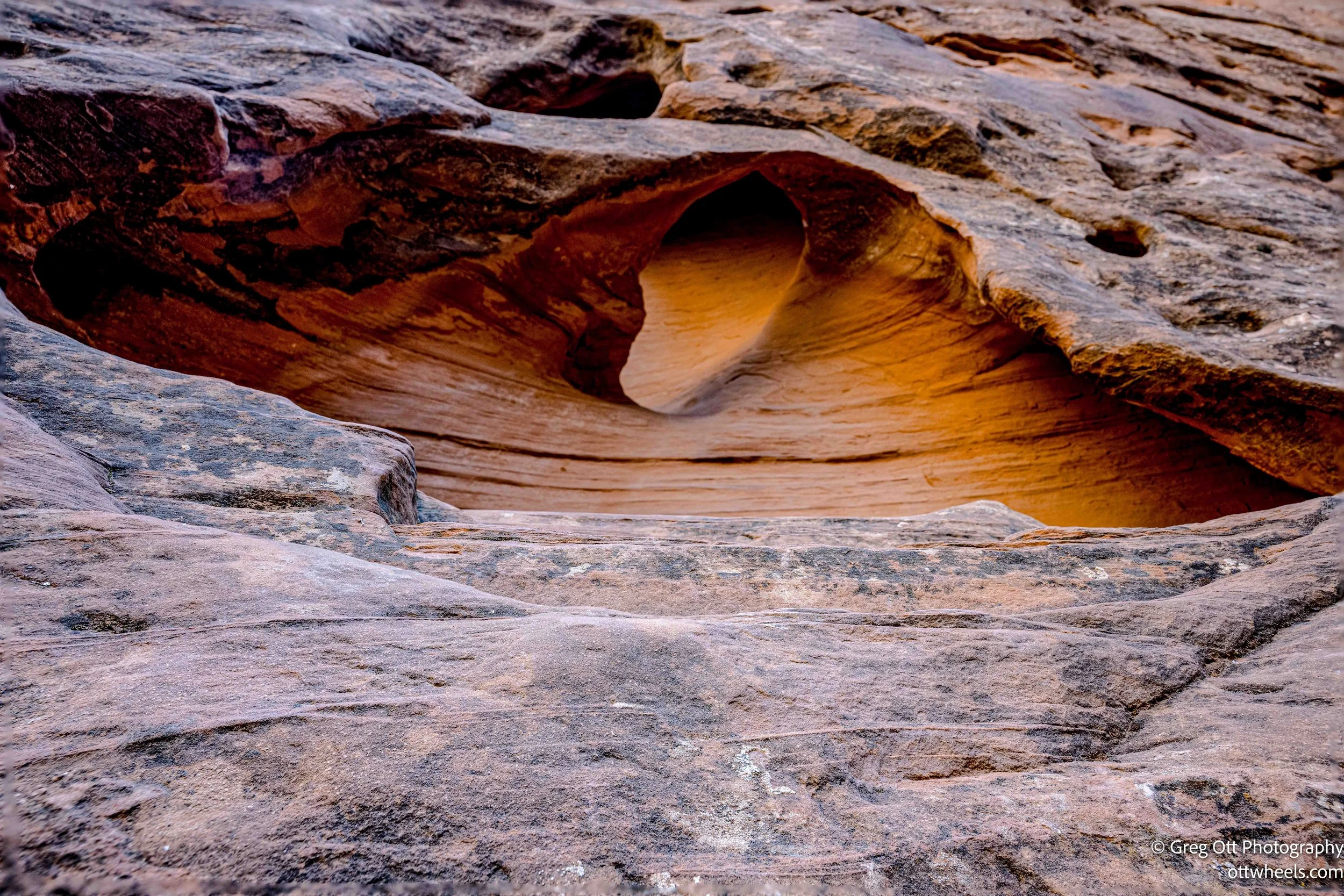
At one point I heard a truck, then voices, and it sounded like they were coming from somewhere above me. That made no sense. I knew there was no road up there, no rim trail, nothing that should have carried sound from overhead. About ten minutes later, a couple entered the canyon with a dog, and it finally clicked. The shape of the canyon warped the sound, bending it along the walls so it echoed in strange ways, making it feel dislocated and out of place. They weren’t especially friendly, so I gave them space and kept working. The walls deserved the attention anyway—smooth, sculpted sandstone punctured by small holes and pockets where softer stone had eroded away. Some openings were no larger than a fist, others wide enough to cast deep shadows. The rock felt massive and close at the same time, the canyon tall enough to loom but narrow enough to make every surface feel within reach.
It was after three when I started the drive back toward the campground. I stopped often, partly to photograph, partly just to let the light settle. The sun was low enough now to dance across the landscape, flashing off canyon walls and open fields, sometimes blinding me as I rounded a curve. At one point, I decided—against my better judgment—to pull off on a steep section of road carved into the side of the mountain to grab a few photos. I eased toward the turnout slowly, the grade steep enough to feel wrong the moment I committed. When I lifted my foot off the brake, the van began to drift backward. I slammed the brake hard, heart racing. I tried the gas, but not enough at first, and the weight of the van pulled me back again. The engine groaned when I gave it more throttle, fighting gravity before finally finding traction. The van crept forward, slowly, reluctantly, until I cleared the worst of it. I didn’t stop again after that. Some photos just aren’t worth it.
Even so, I still found myself pulling over once or twice more where the road felt safer, unable to ignore how good the light had become. Eventually I made my way back into Deer Creek Campground. As I pulled in, I noticed another van ahead of me—same make, same model, same color, even plates from the same state. The woman driving passed my site, paused briefly, then turned around and left the campground altogether. Just like that, I had the place to myself again.
It was five o’clock. For the next two and a half hours, I settled back into the quiet rhythm of camp, working on a pot of fifteen-bean soup and catching up with my brother. The day had been calm, tense, surprising, and quiet all at once. By the time the light finally faded, it felt complete.