Escalante to Capitol Reef
I woke early and spent the morning doing very little, which felt exactly right. I relaxed in the van at Deer Creek Campground in Escalante, Utah, listening to the quiet and letting the day take shape on its own terms. The light crept in slowly, warming the rock walls around the campground, and for a while I didn’t move at all. Hanging over everything, though, was the drive I knew was coming. I wasn’t looking forward to heading back over that crazy, narrow, winding road that crosses the peak of a mountain, with sheer drops on both sides and absolutely no margin for error. Even sitting still, the thought of it added an edge to an otherwise calm morning.
So I procrastinated. I read a little. I stared out the window. I found reasons not to rush. I made lunch later than usual and lingered over it, stretching the morning well into the early afternoon. Eventually, around noon, I accepted that it was time to move on. I locked everything down in the van and headed out, aiming toward Factory Butte—an area I had passed before but never stopped at, always telling myself I’d come back another time.
As I pulled onto the road, Google Maps recalculated and showed an alternate route, one that completely bypassed the stretch I’d been dreading. I smiled to myself, realizing how much energy I’d wasted worrying about a road I wouldn’t even have to drive. The tension eased almost instantly. The landscape opened up, and instead of bracing myself, I settled back into the drive.
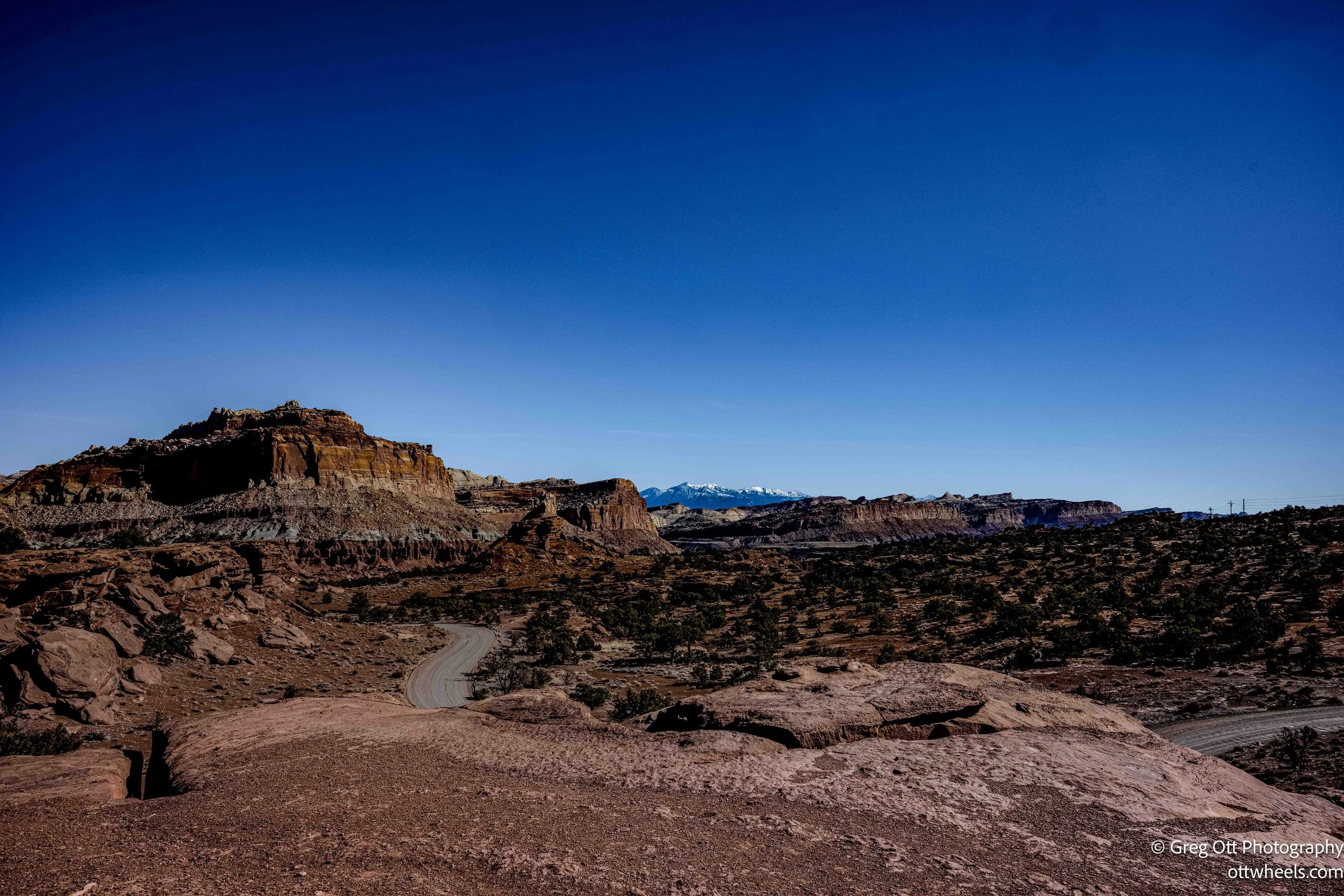
That road carried me gradually toward Capitol Reef National Park, and the transition felt subtle but noticeable. The farther I went, the more the scenery slowed me down—not in a dramatic way, but in a steady, grounding one. I drove for about an hour before I started pulling over for photos. There was no plan behind it. The views simply asked for pauses. Each stop stretched a little longer than the last, until I realized I wasn’t rushing anymore. I was just moving when it felt right.
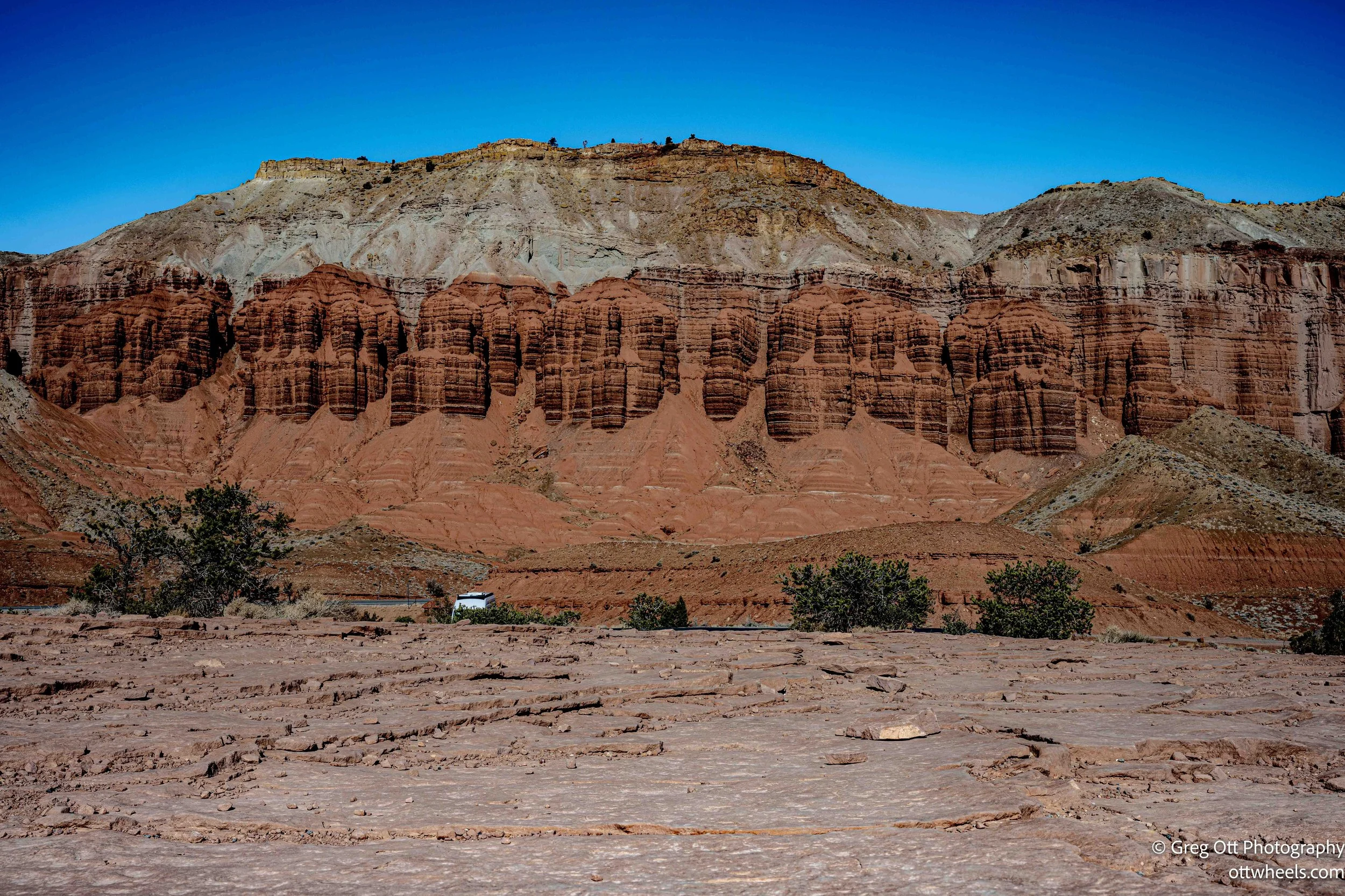
Capitol Reef has a different energy than much of southern Utah. It doesn’t announce itself the way places like Zion or Bryce Canyon do. There are no immediate crowds, no single iconic overlook that defines the park. Instead, it unfolds quietly. The land is shaped by the Waterpocket Fold—a massive wrinkle in the Earth’s crust that runs for nearly one hundred miles—and that geologic tension gives the park its character. Layers bend and tilt, cliffs rise and fall, and long valleys feel both open and contained at the same time. It’s a place built on slow processes, and it asks you to slow down with it.
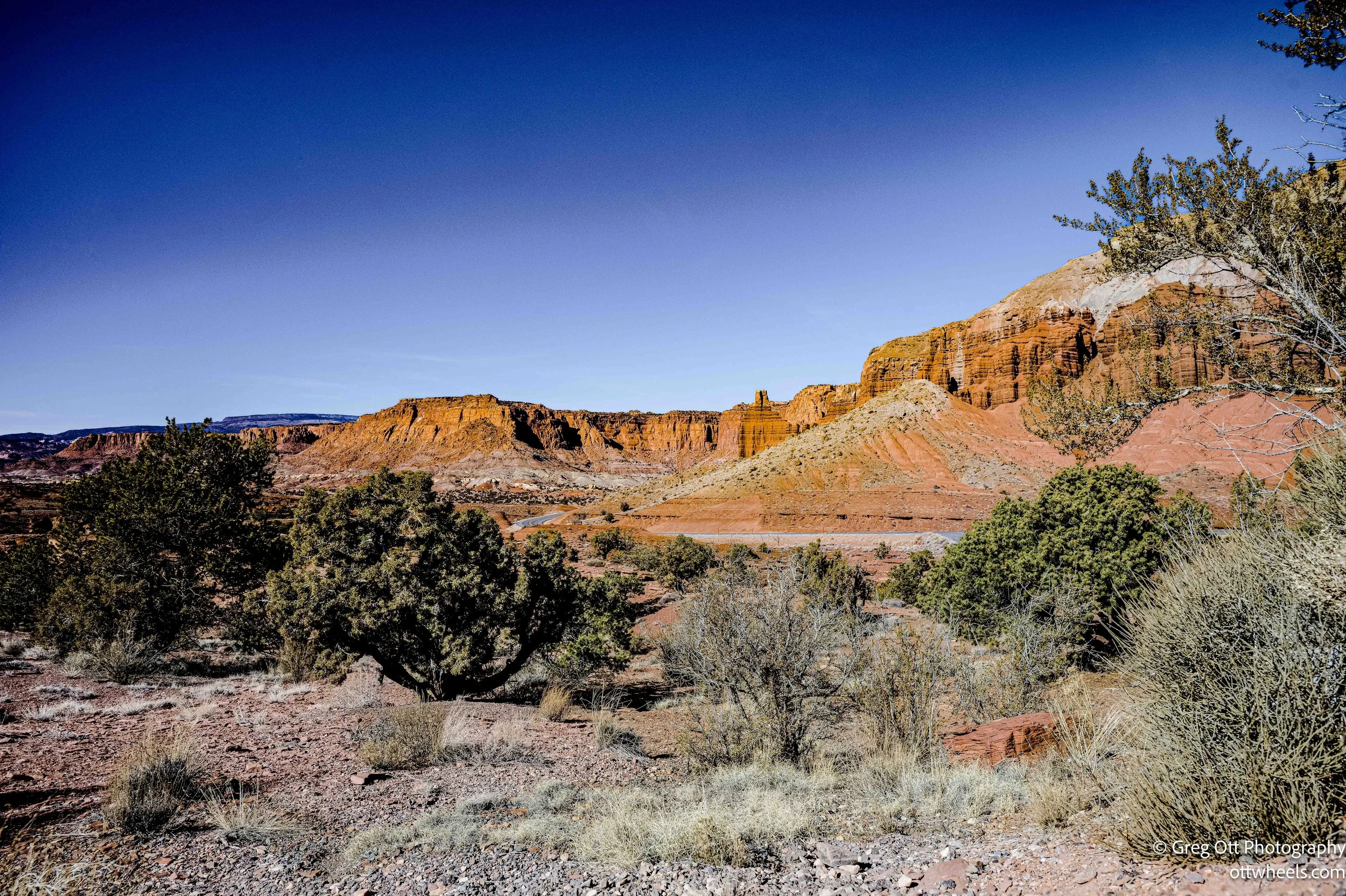
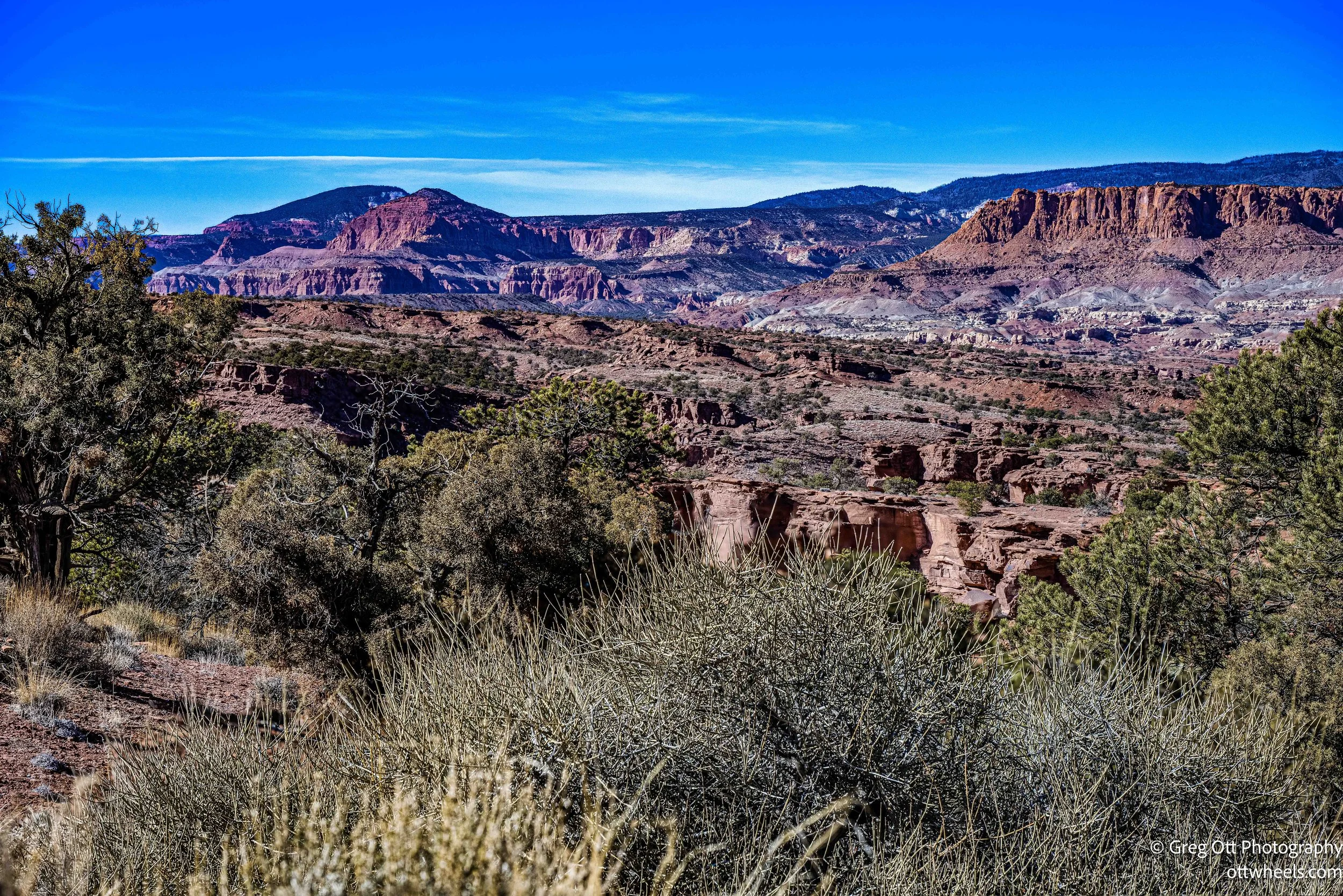
That’s what sets Capitol Reef apart from Escalante, even though they sit so close together. Escalante feels raw and exploratory, full of side roads, trailheads, and places that require commitment. It invites wandering and uncertainty. Capitol Reef, by contrast, feels settled and reflective. There’s history layered on top of the geology—orchards planted by early settlers still growing near the Fremont River, remnants of a time when people tried to carve out a life in an unforgiving landscape. The park isn’t about chasing highlights; it’s about paying attention.
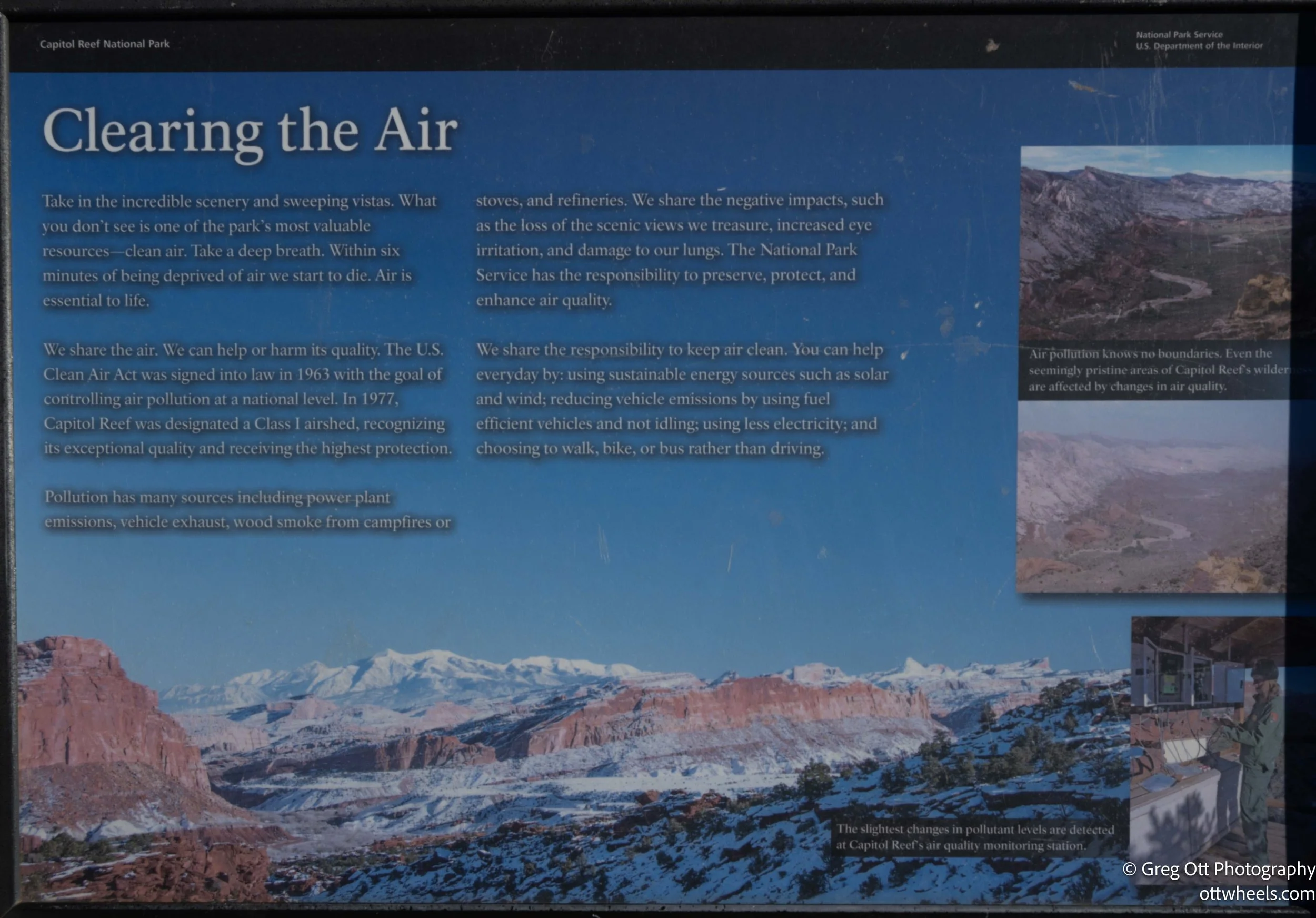
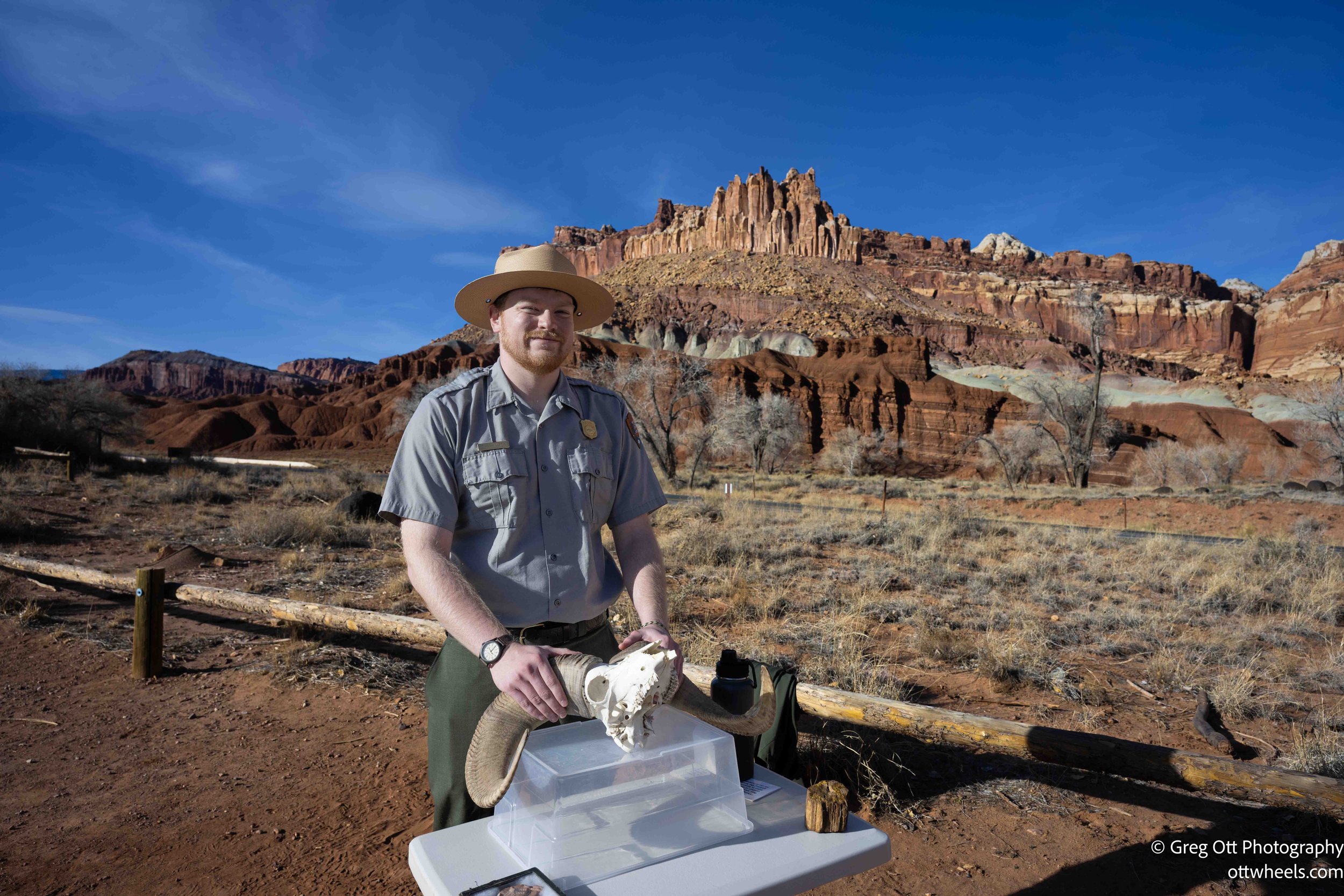
I reached the visitor center around 2:45 in the afternoon. I’d been there a few weeks earlier, but this visit felt quieter, almost suspended. A ranger mentioned there would be a short talk in about fifteen minutes about how the area was settled, who came here, and why they stayed. It would also touch on some of the wildlife. I stopped to read a plaque about clean air. When the talk started, I was the only one there. Instead of a presentation, it turned into a conversation.
We talked about my trip and about the land itself. I asked about the large, round, ball-shaped rocks scattered around the area—odd, almost out of place. Tim explained that they originated from a volcanic event roughly eighty miles away. What made them interesting wasn’t just their source, but their journey. They weren’t deposited here directly. They were carried by glaciers thousands of years ago, slowly transported and then abandoned when the ice retreated. When the glaciers receded, the rocks stayed behind, quiet evidence of forces that once moved across the land on an entirely different scale.
We also talked about visitor numbers. This time of year, the park sees around eighty people a day. In the spring, that number can swell to twelve hundred. Standing there nearly alone, it was easy to understand the appeal of being here now, in this quieter window, when the park feels less like a destination and more like a place.
When the conversation ended, I didn’t feel any urge to keep driving. The day had already given me what it had to offer. By four o’clock, I pulled into the campground and shut the engine off. I opened the door and let the sun pour into the van, warming the space and settling the air. Outside, everything was still. No agenda. No miles to cover. Just the light, the quiet, and the relief of knowing I didn’t have to be anywhere else.
It felt good to stop early. To choose stillness over movement. Some days aren’t about distance or destinations. They’re about recognizing when you’ve arrived, even if you didn’t plan to.