Drive To Edmonton, AB
This isn’t a particularly interesting blog post, but it does capture the feel of traveling the long distances through western Canada. The goal for this section of the trip was simply to get to Edmonton. By this point, I had already spent two long days driving from Fairbanks to Dawson City, much of it on dirt roads and through areas filled with wildfire smoke.
I had already been to Whitehorse several times, a town I enjoy, but I didn’t need to explore it again. I had also already driven the Alaska Highway north from Mile 0 in Dawson Creek, British Columbia, so much of what was ahead was familiar. I forced myself not to re-explore places I had already seen and not to stop for photographs unless I needed a break. With the distances I was covering each day, I knew I would need plenty of those.
By the time I reached Edmonton, I had covered roughly 1,940 miles (3,120 km) since leaving Fairbanks. The route took me southeast to Tok, then over the Taylor and Top of the World highways to Dawson City, south through Whitehorse, along the Alaska Highway through the Yukon and northern British Columbia, and eventually through Hythe and into Edmonton. Looking at the individual distances makes me realize just how much ground I covered in only a few days.
| Route | Miles | Kilometers |
|---|---|---|
| Fairbanks → Tok | 202 | 325 |
| Tok → Dawson City | 186 | 300 |
| Dawson City → Whitehorse | 332 | 534 |
| Whitehorse → Hythe | 900 | 1,450 |
| Hythe → Edmonton | 318 | 512 |
| Total | 1,938 | 3,121 |
August 25, 2026: Dawson City, YT → Whitehorse, YT
I woke up on Midnight Dome in time for sunrise over Dawson City. After the previous evening watching the moon rise from the dome, it was a nice way to begin the morning before getting back on the road. I packed up the van and started south toward Whitehorse. Everyone around me was still asleep. I skipped breakfast, took a few pictures on top of the mountain and was off.
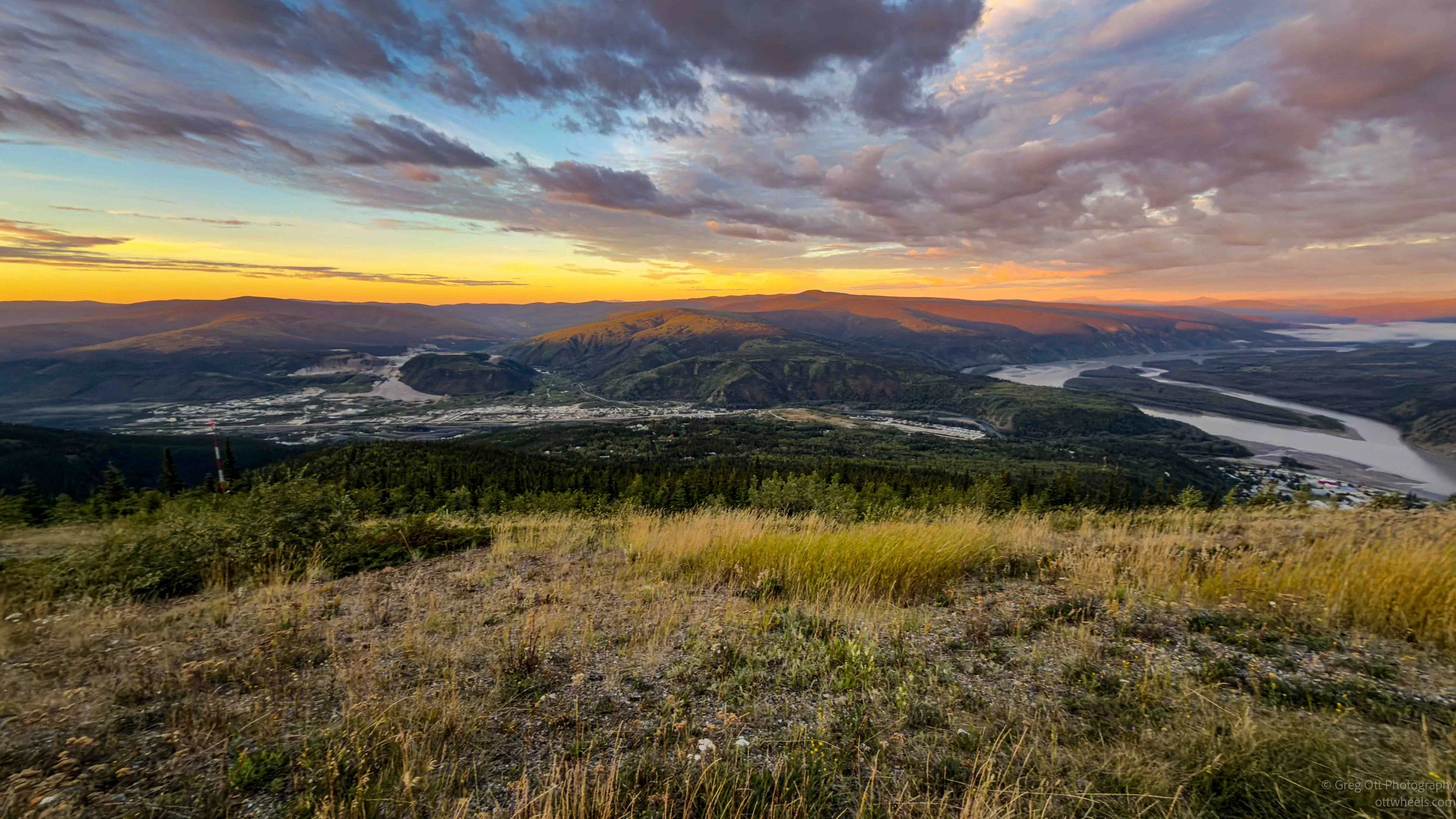
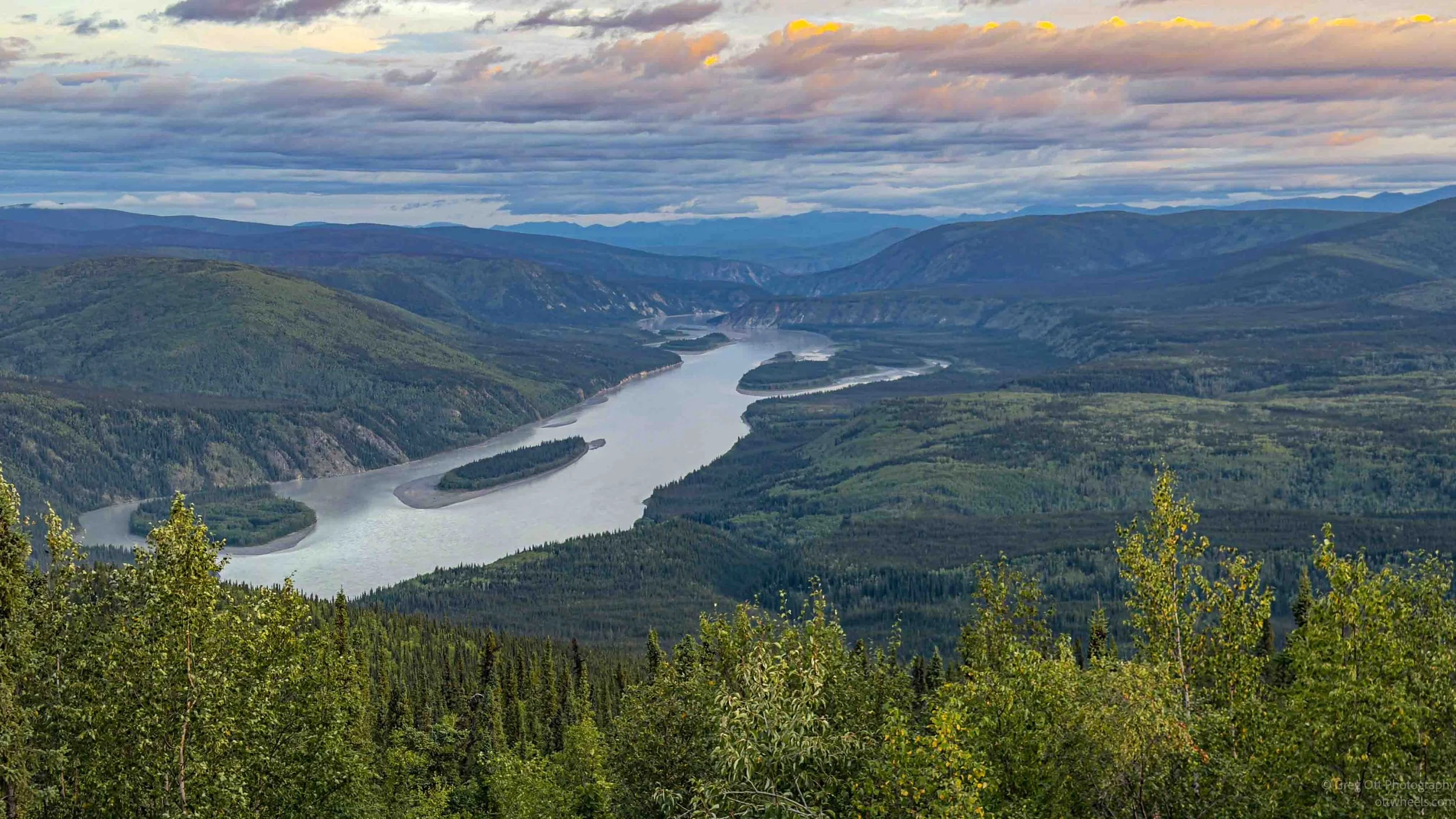
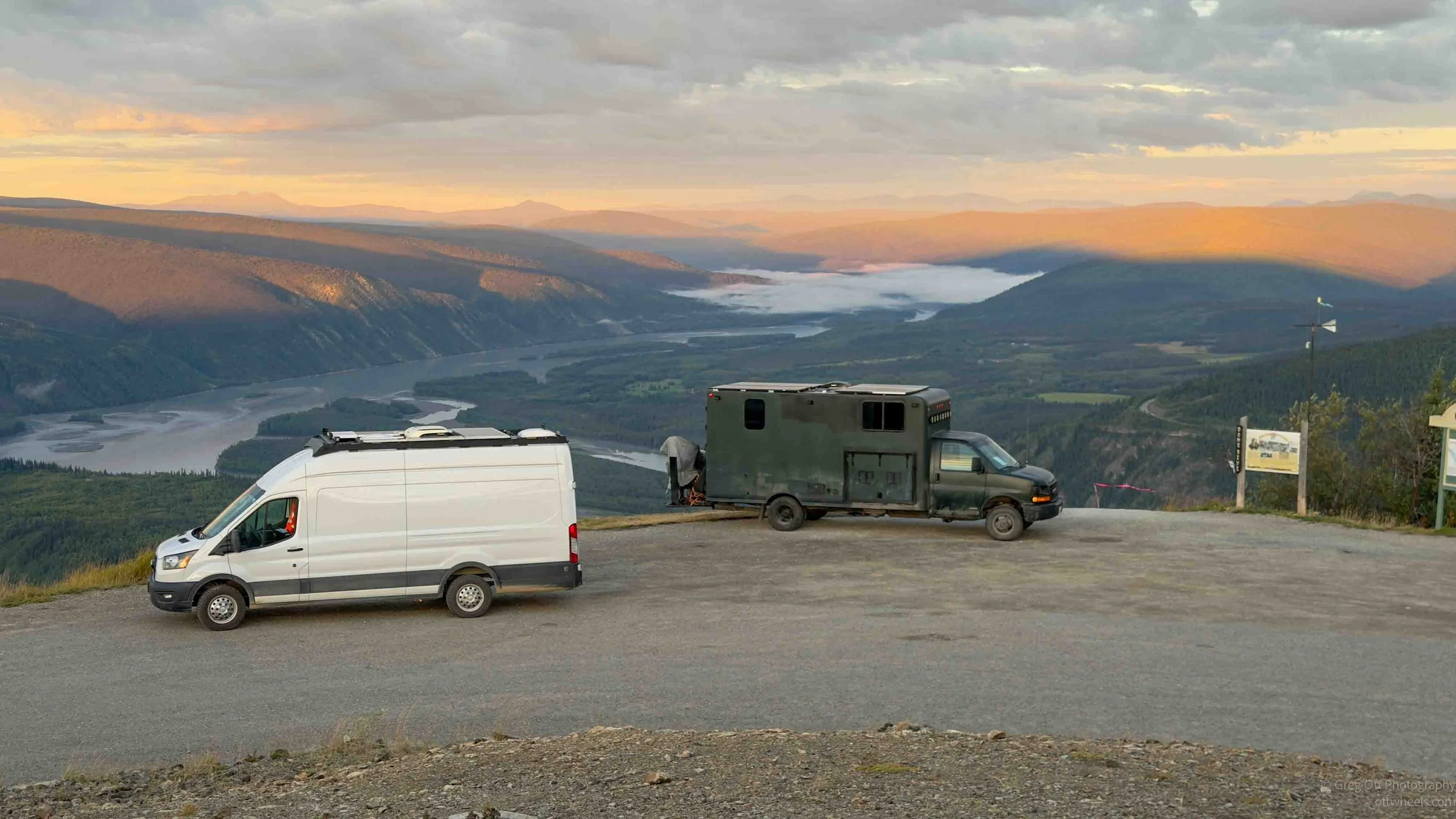
The road south from Dawson City was much better than what I had driven over the previous two days, although there were still sections of dirt and gravel. There wasn’t much traffic early in the morning, and for long stretches I had the road mostly to myself. After about two hours, I pulled into a dirt turnoff and stopped for a break. I made breakfast and coffee, rested for a while, and then got back on the road.
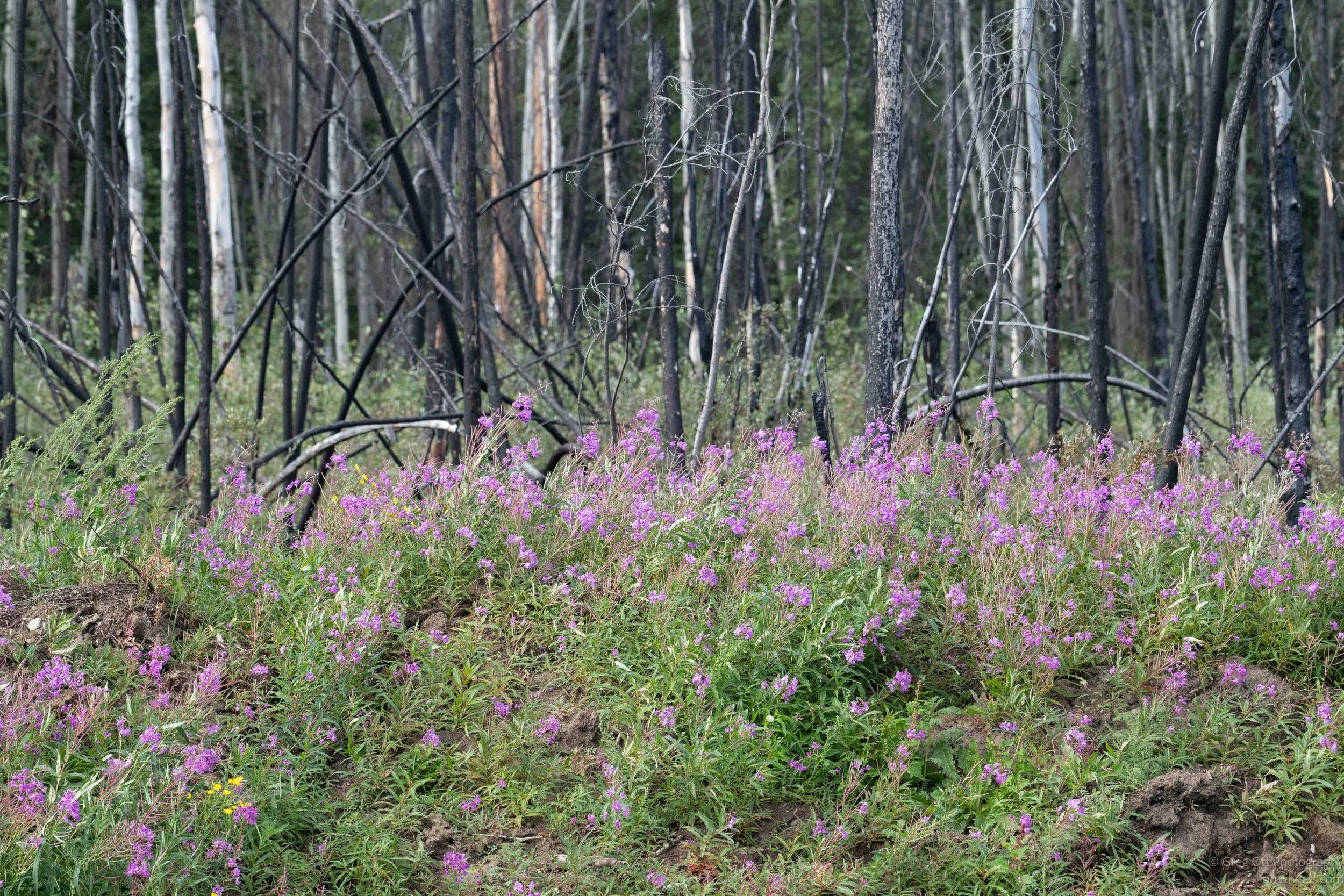
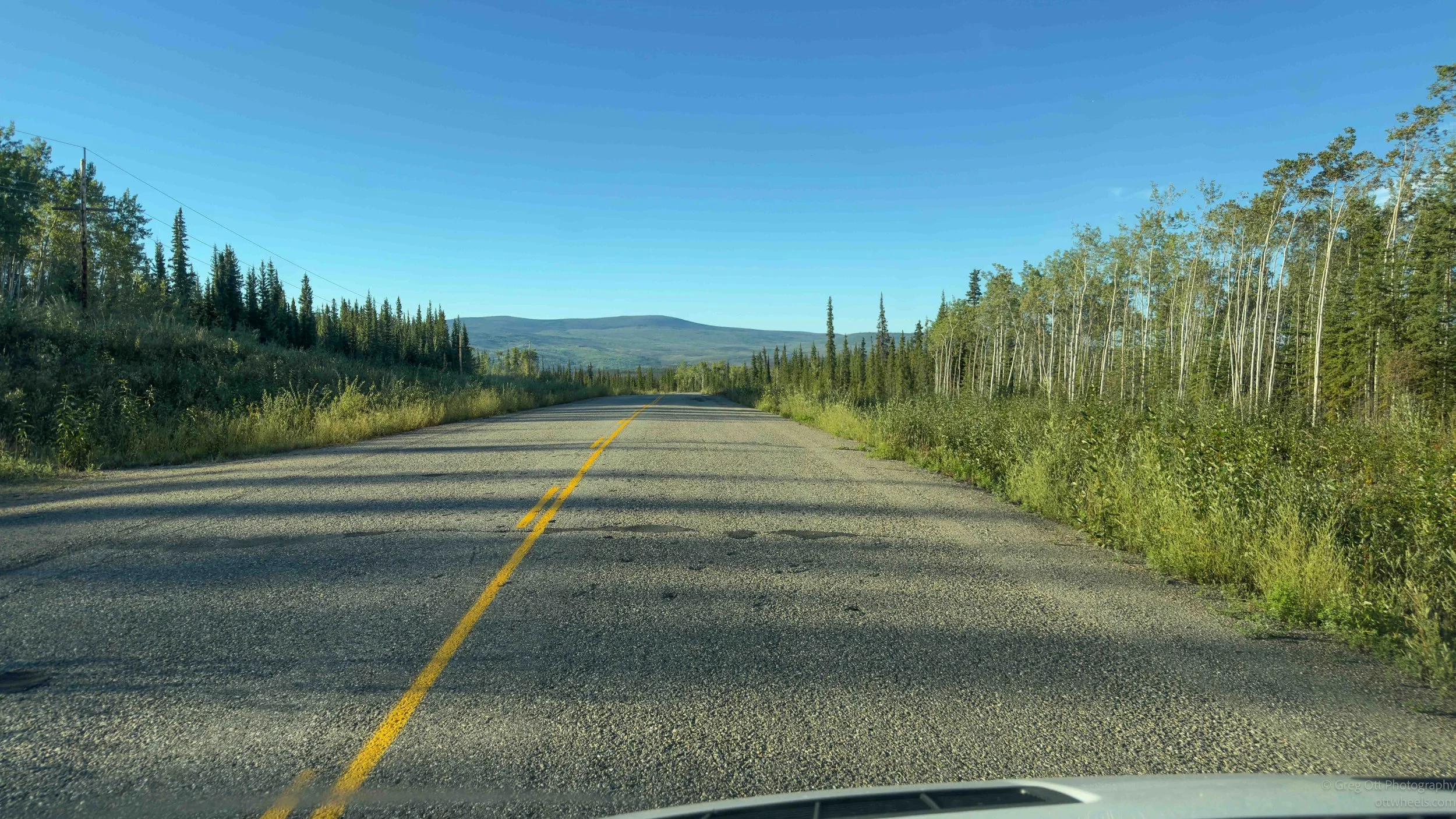
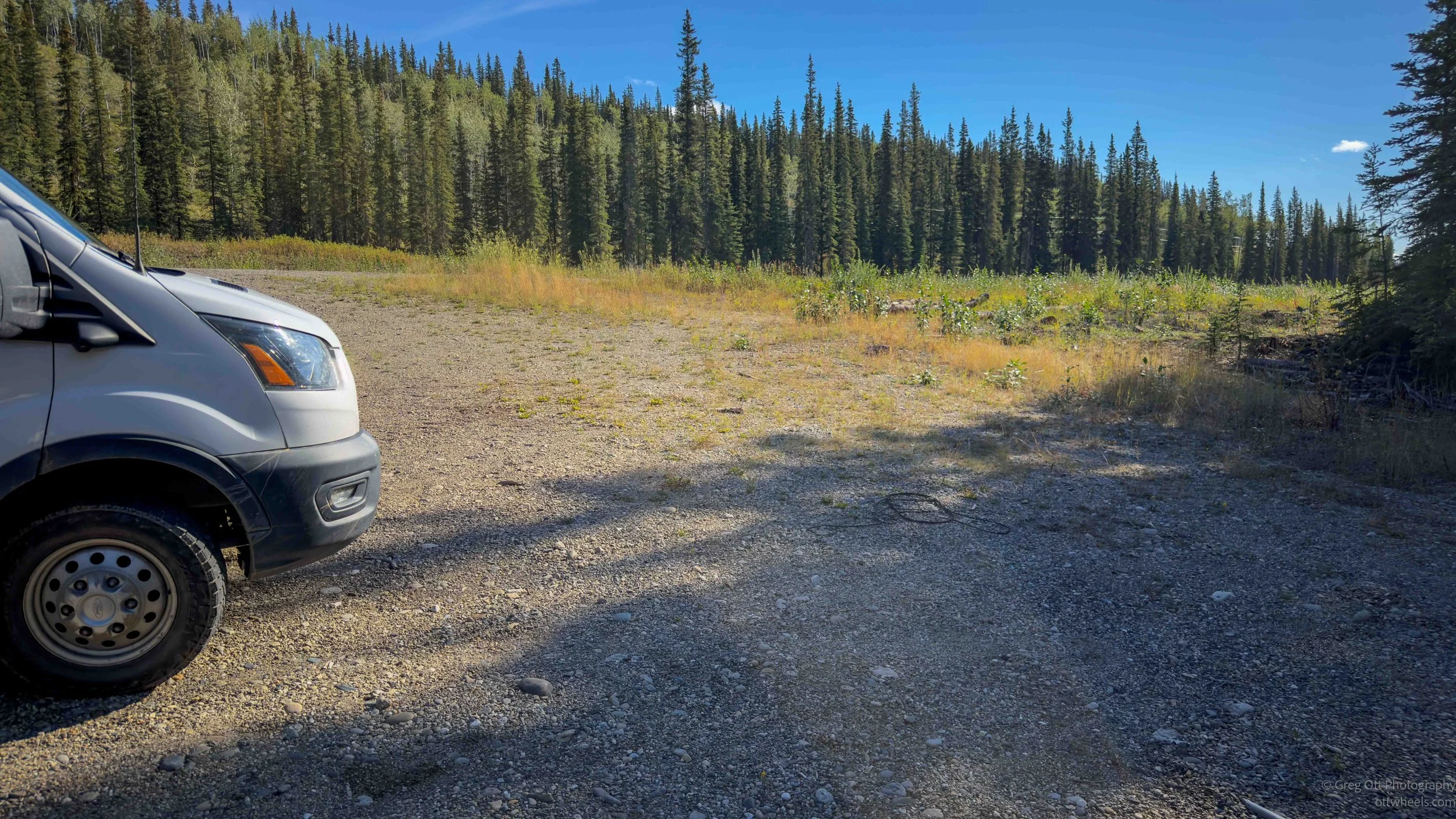
By around 10 a.m., I could tell the day was getting busier without looking at a clock or counting cars. The time between vehicles passing me had steadily shortened. It was a small change, but after spending so much time on nearly empty roads, even a modest increase in traffic was noticeable.
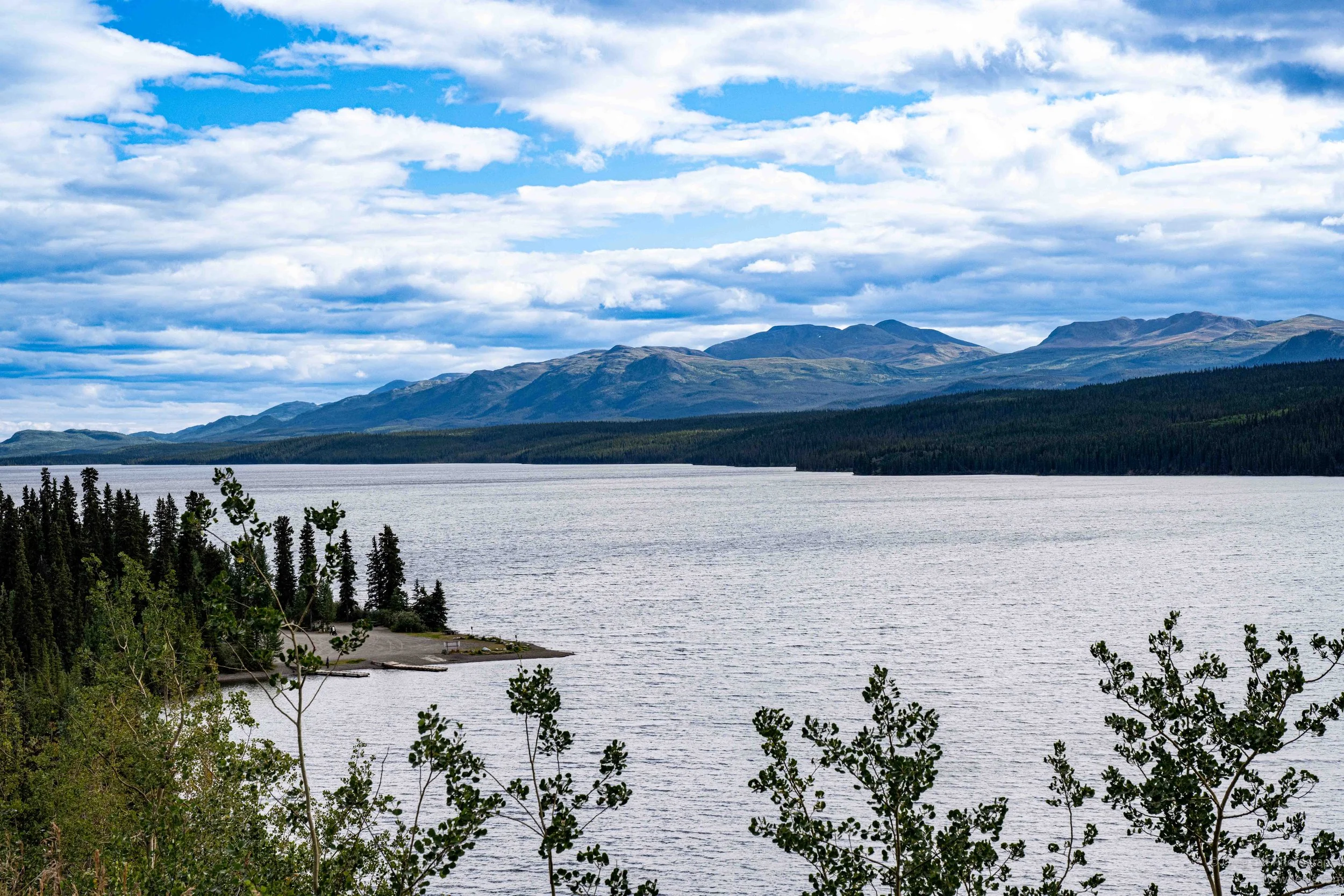
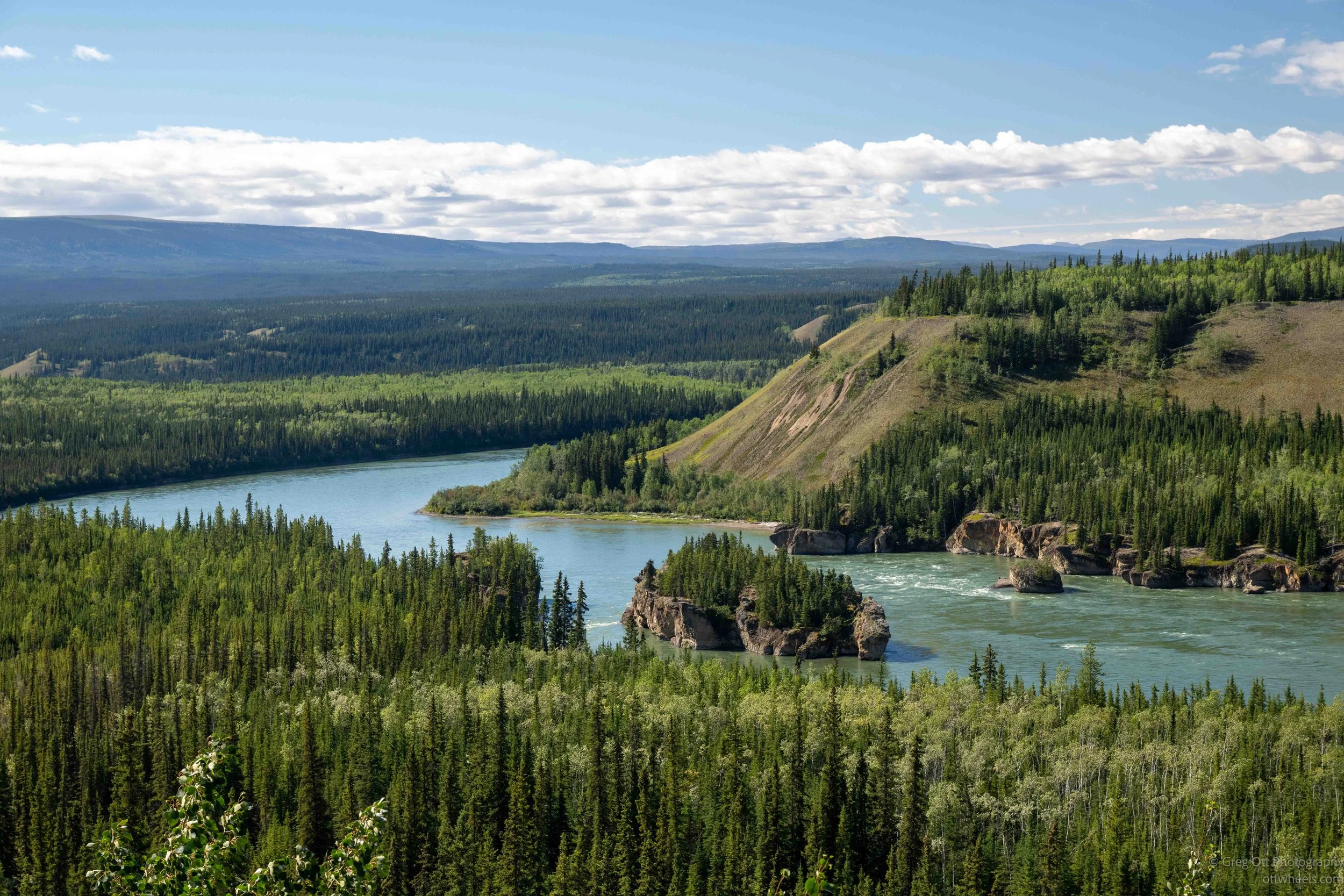
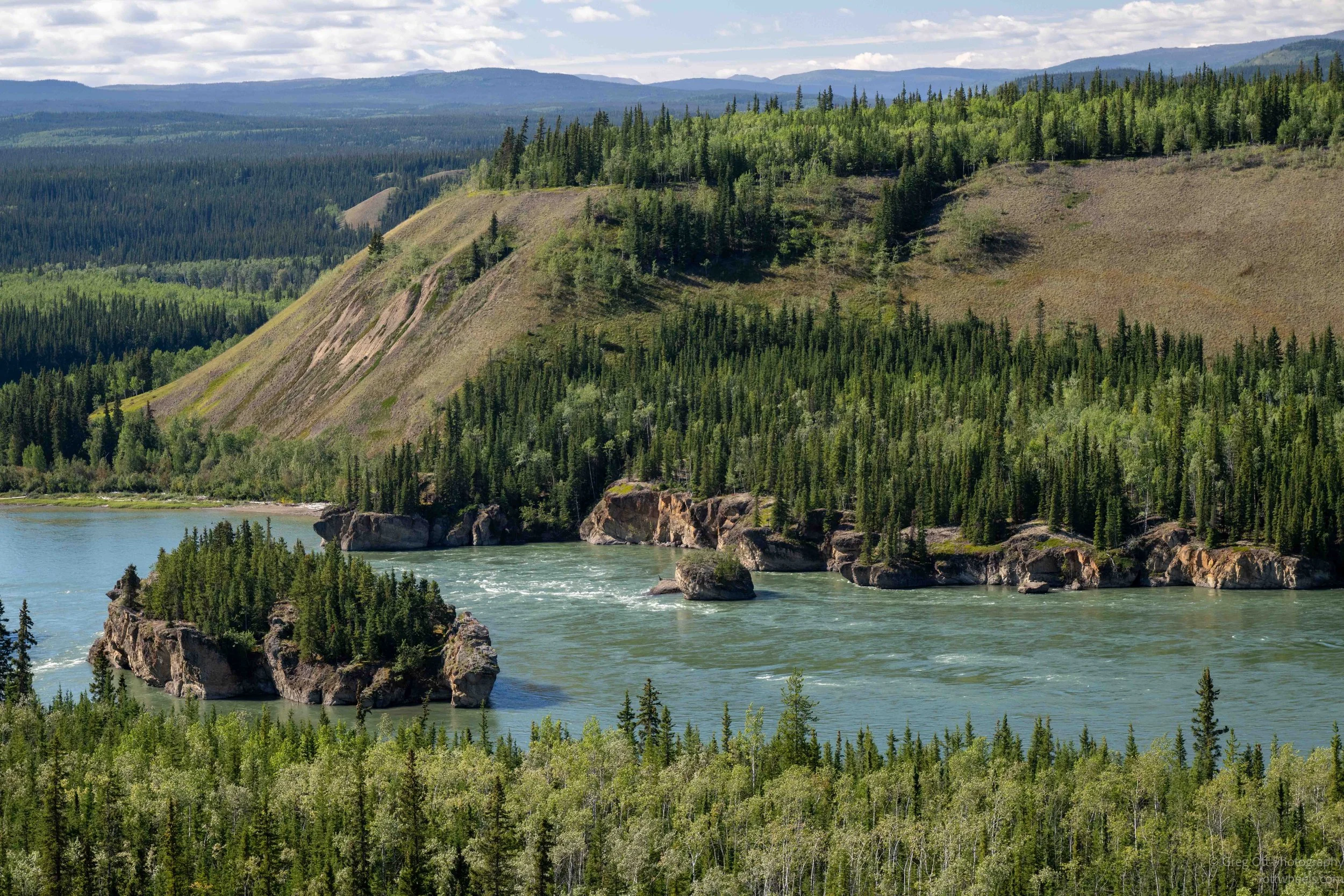
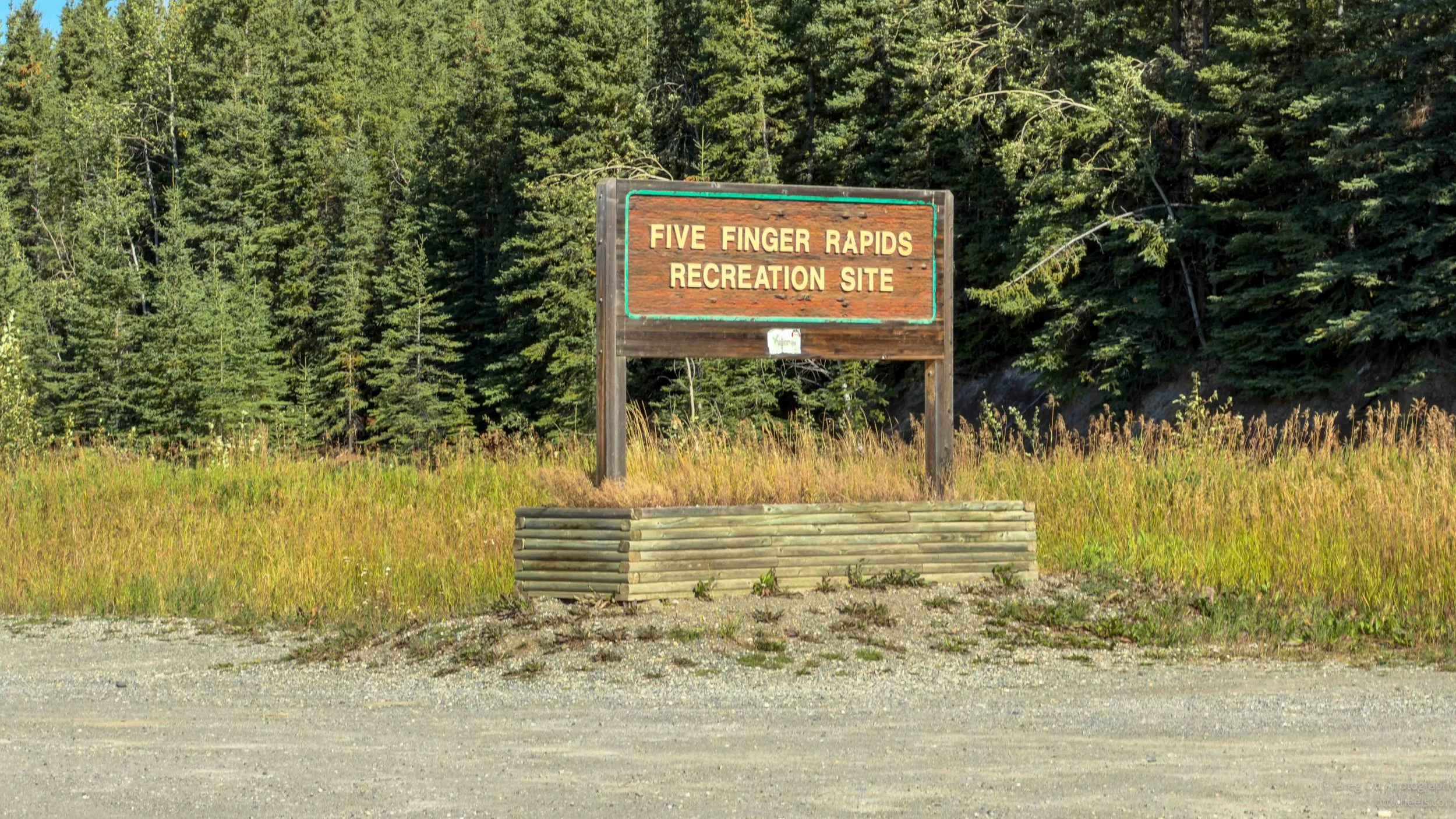
I stopped at the Five Finger Rapids Recreation Site, a place I remembered from my drive north. Looking out over the Yukon River, it was hard not to think about the thousands of people who came through here during the Klondike Gold Rush in handmade boats and rafts, carrying everything they owned toward Dawson City. The five large rock formations divided the river into several channels, and choosing the wrong one could put you into dangerously fast water. Later, sternwheelers had their own problems getting through and sometimes had to winch themselves through the narrow navigable channel until some of the underwater rock was eventually blasted away. I had just left Dawson City, so the story felt a little different this time. I had driven in a comfortable van over the same enormous distances these people had crossed with very little idea of what was waiting for them. Standing above the river and looking down at the rapids made their journey to the Klondike seem a little more real.
When I reached Whitehorse, I had been on the road for 10 hours with breaks. I stopped at the Real Canadian Superstore on 2nd Avenue to stock up on groceries. I bought vegetables, lettuce and the other things I needed for the next several days. The lettuce I’ve been finding in this part of Canada has been surprisingly nice, although almost everything also seems expensive. I had been through Whitehorse several times by now, so there was no reason to spend much time exploring. This stop was about groceries, fuel and continuing south.
Around 7 p.m., I pulled into the place in town where I knew campers were allowed to stay overnight. Almost every spot was already occupied, but there was one left. The couple in the camper beside me had apparently just arrived themselves and were getting out as I pulled in. They waved as they walked past. I parked the van, made dinner and relaxed for the rest of the evening. After another long day of driving, it didn’t take long before I fell asleep.
August 26, 2026: Whitehorse, YT → Toad River Stop on the Alaska Highway
I started the morning at Baked Café & Bakery in downtown Whitehorse. I had planned to spend some time writing, but when I opened my laptop I discovered the battery was almost completely depleted. So much for writing. Instead, I had a croissant and a latté and sat watching people for a while. I had been here several times when I came through Whitehorse three months earlier, and it was interesting to recognize some of the same faces. After spending so much time moving from place to place, there was something familiar about coming back to a café and seeing people I remembered.
I like Whitehorse. If it weren’t so cold in the winter and so isolated from almost everything else, I could imagine living here. Although, given the current relationship between Canada and the United States, I’m not sure Canadians are exactly opening their arms to Americans looking to move north these days.
I stopped for gas on the way out of town, and it was a little after 9 a.m. when I finally headed south on the Alaska Highway. This was going to be another day devoted mostly to covering distance. I drove 858 kilometers (533 miles), stopping every couple of hours to get out of the van, stretch and take a break. One thing I noticed throughout the day was that most of the traffic seemed to be heading north. After weeks of traveling through Alaska and the Yukon, I was now moving in the opposite direction, steadily working my way south.
I did allow myself a few stops for photographs. I pulled over at Summit Lake, which had been frozen when I drove north through here in May. Three months later it looked completely different, the open water stretching toward the mountains under a constantly changing sky. Farther south, the mountains became harder to drive past without stopping. Clouds and patches of sunlight moved across the slopes, occasionally illuminating one ridge while leaving another almost completely in shadow.
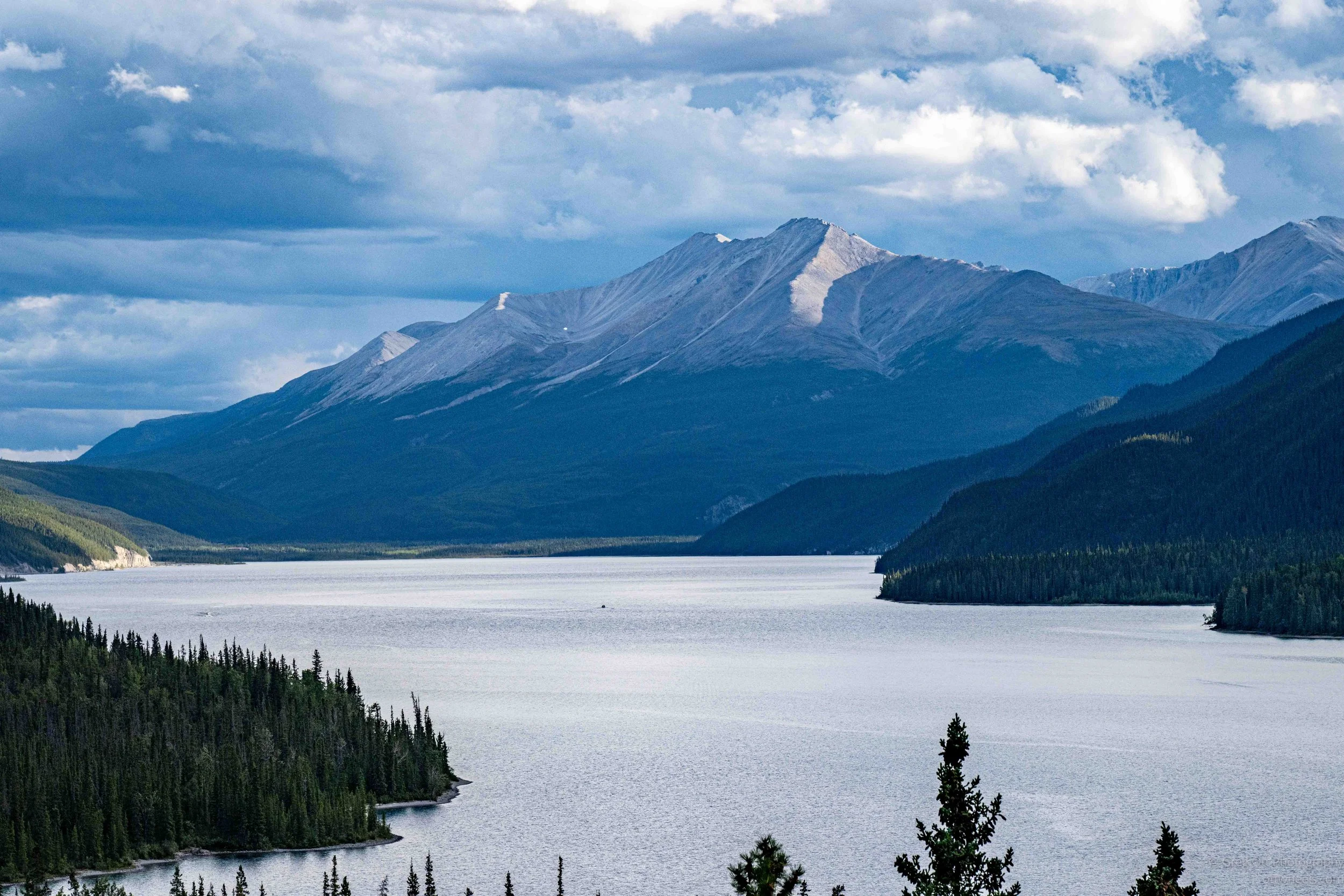
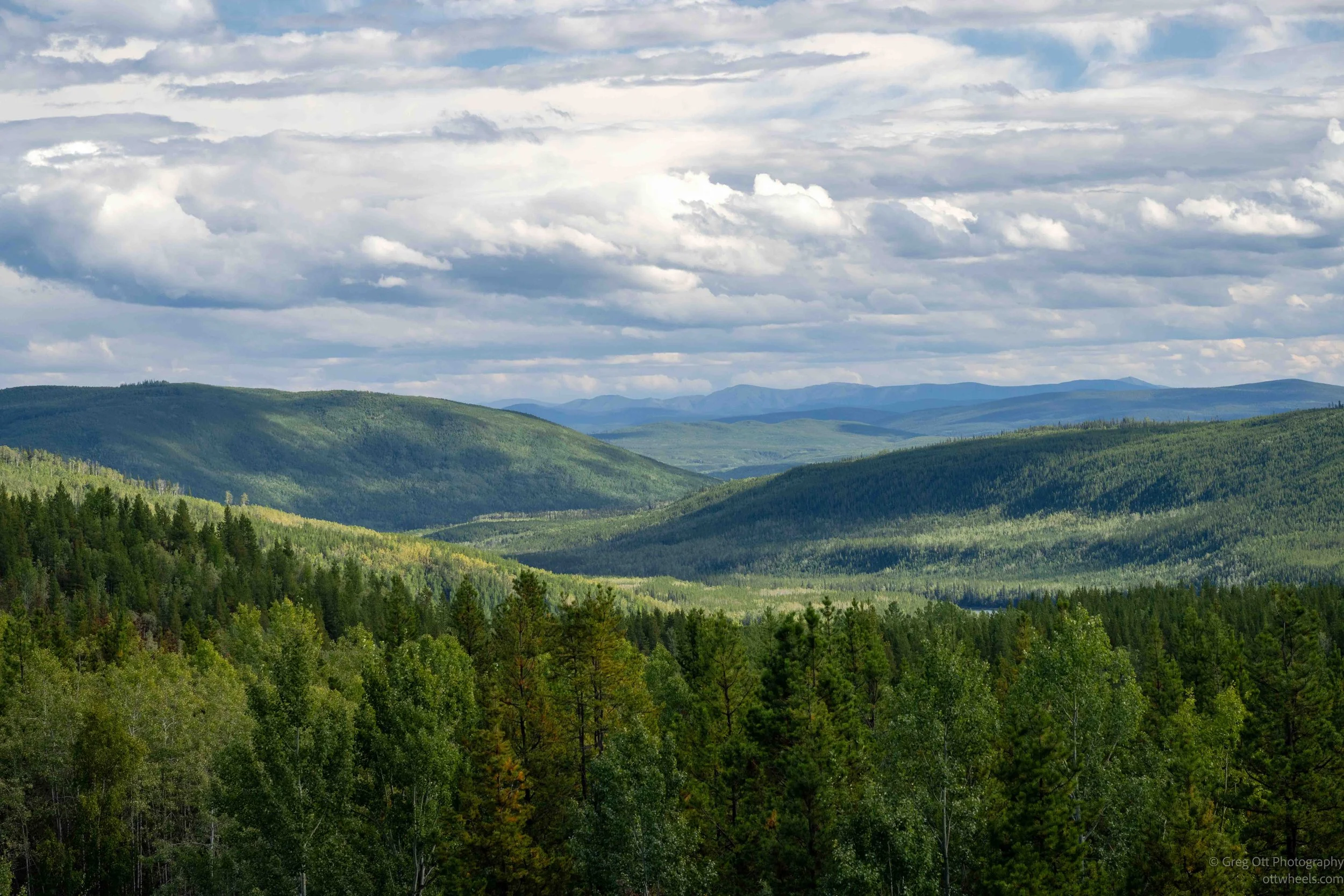
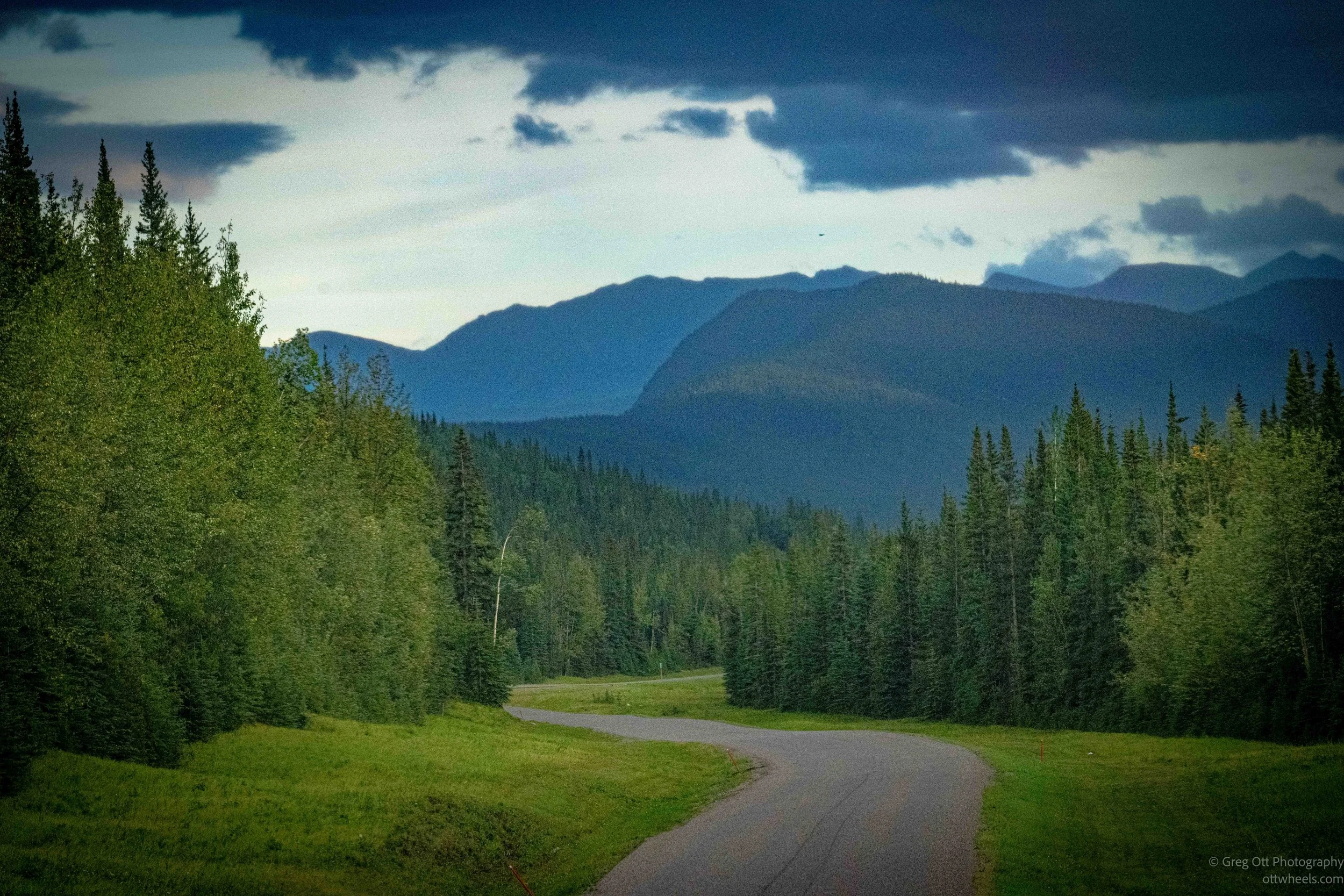
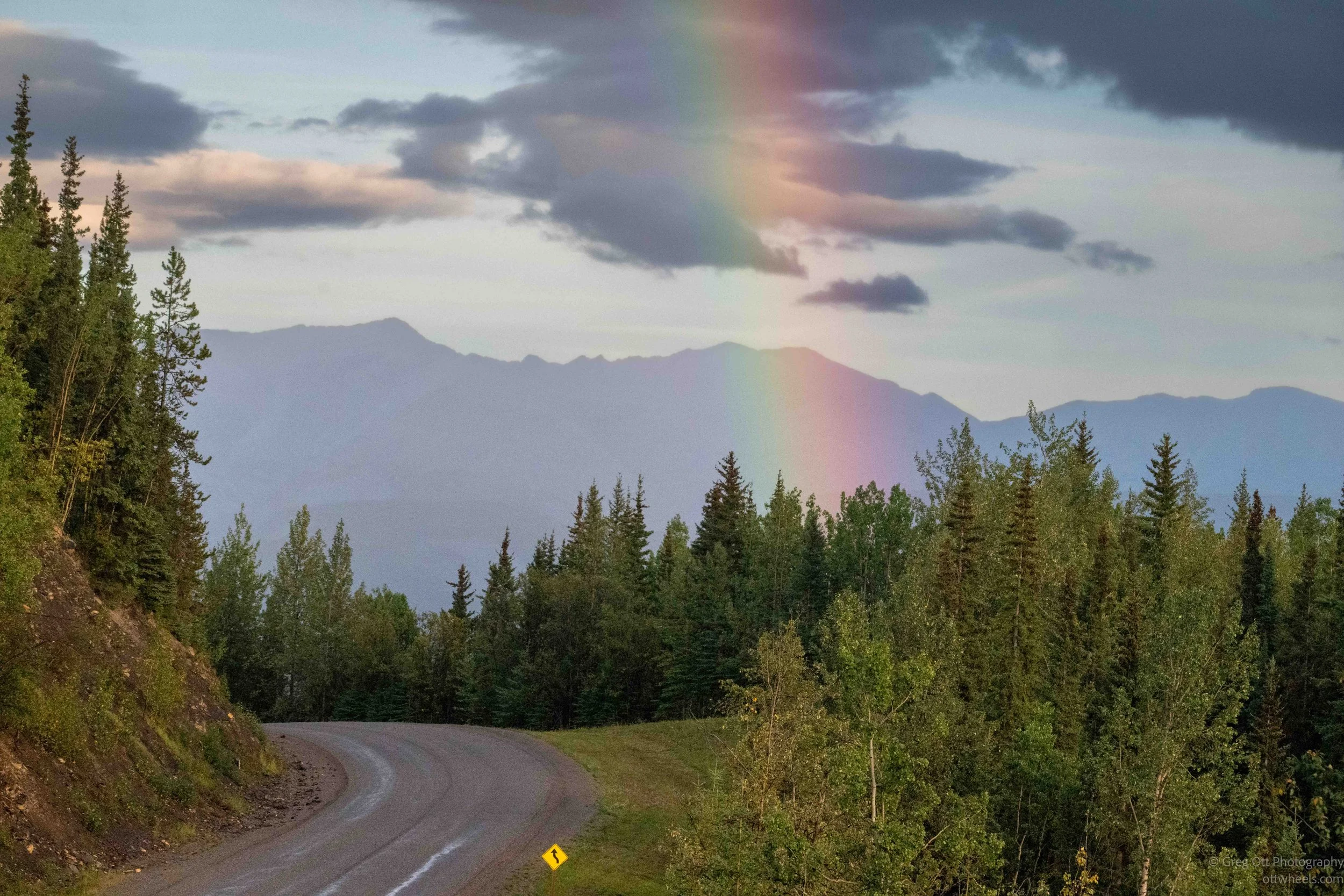
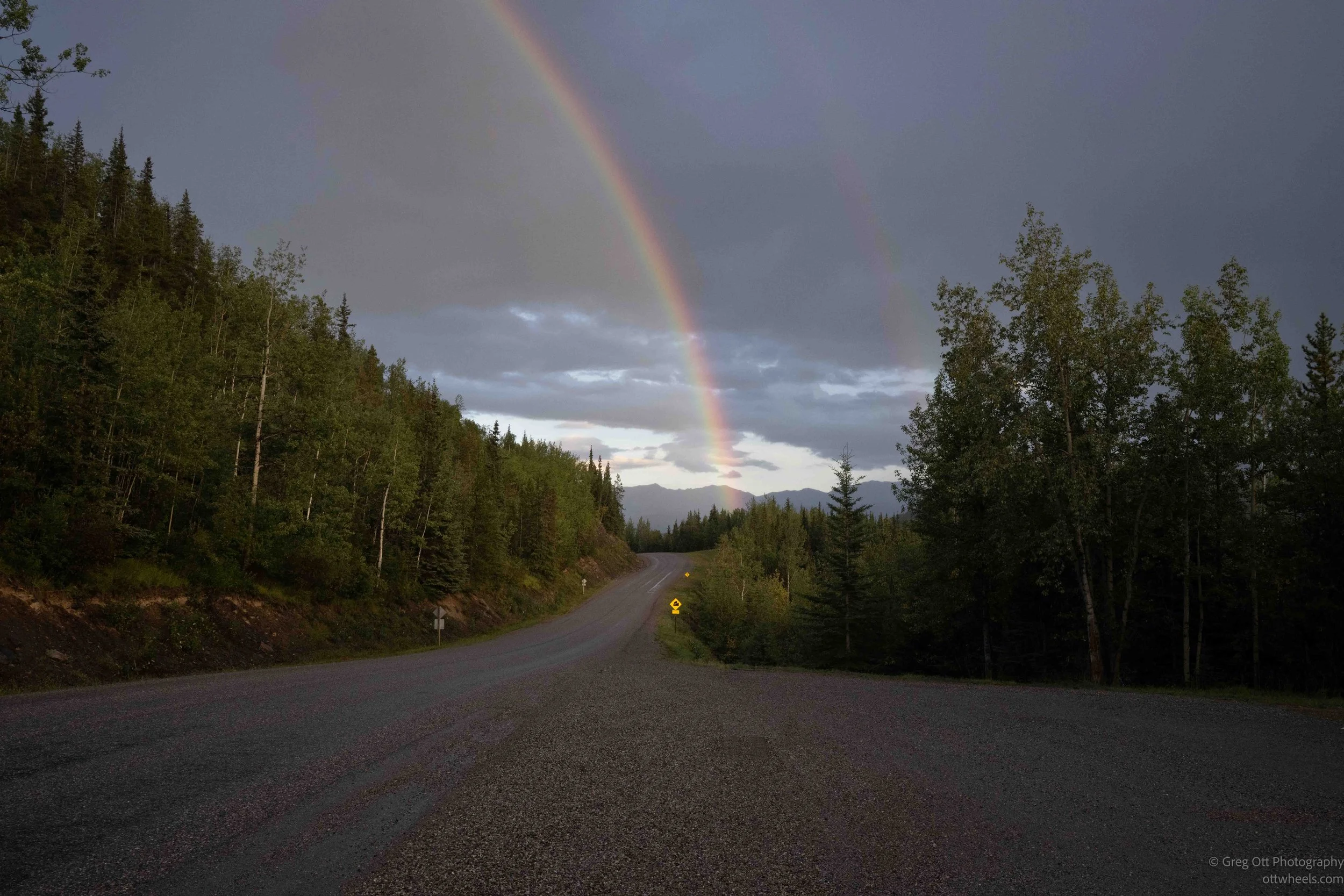
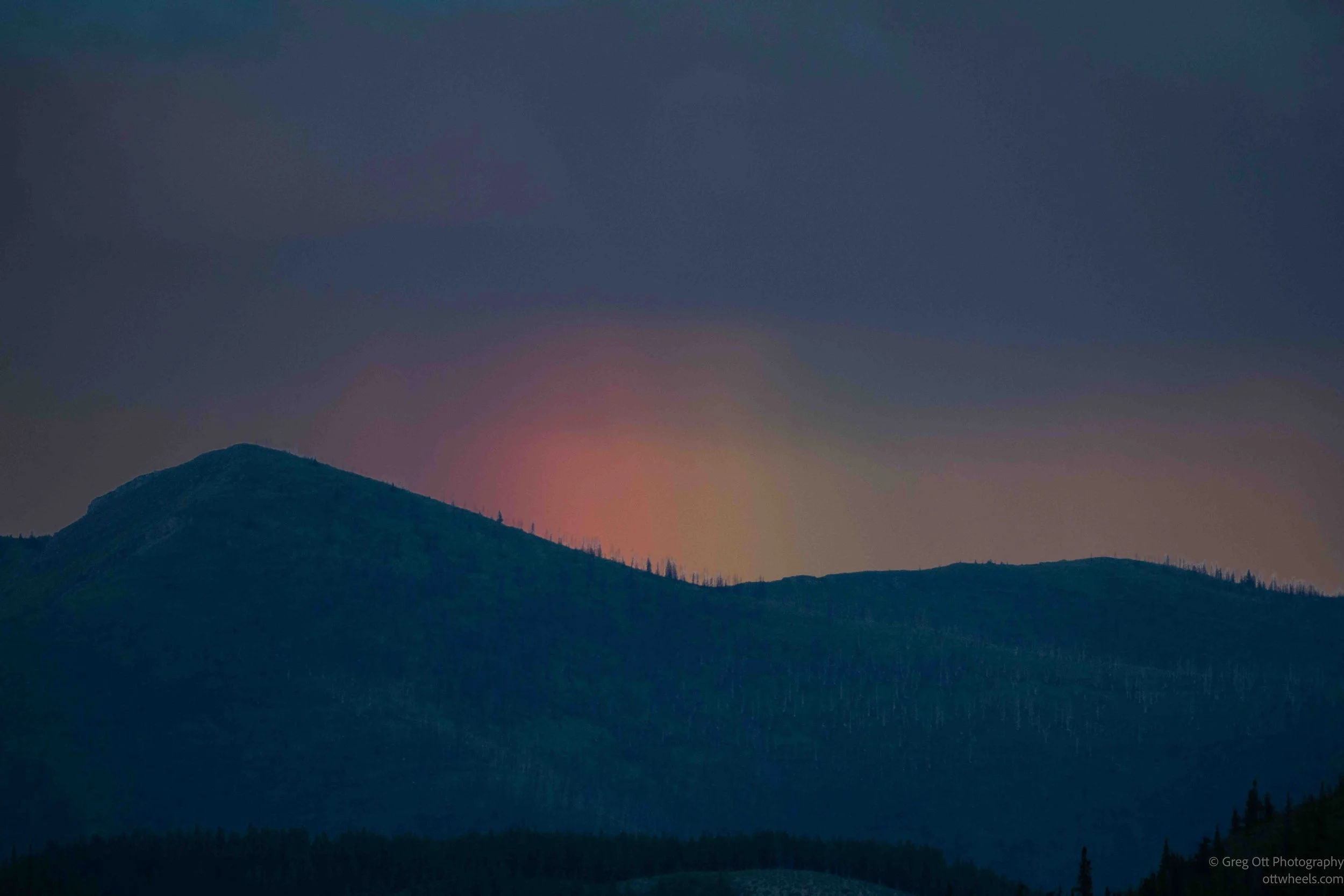
At one point a rainbow appeared against the dark sky and mountains. I pulled over again. It was one of those scenes that changed quickly enough that there wasn’t much time to think about it. The rainbow seemed to drop directly into the mountains, while a second, much fainter arc appeared beside it. A little later, the low sun lit the clouds and distant ridgelines in orange and yellow. I had told myself I wasn’t going to keep stopping for photographs, but there are limits to that kind of discipline.
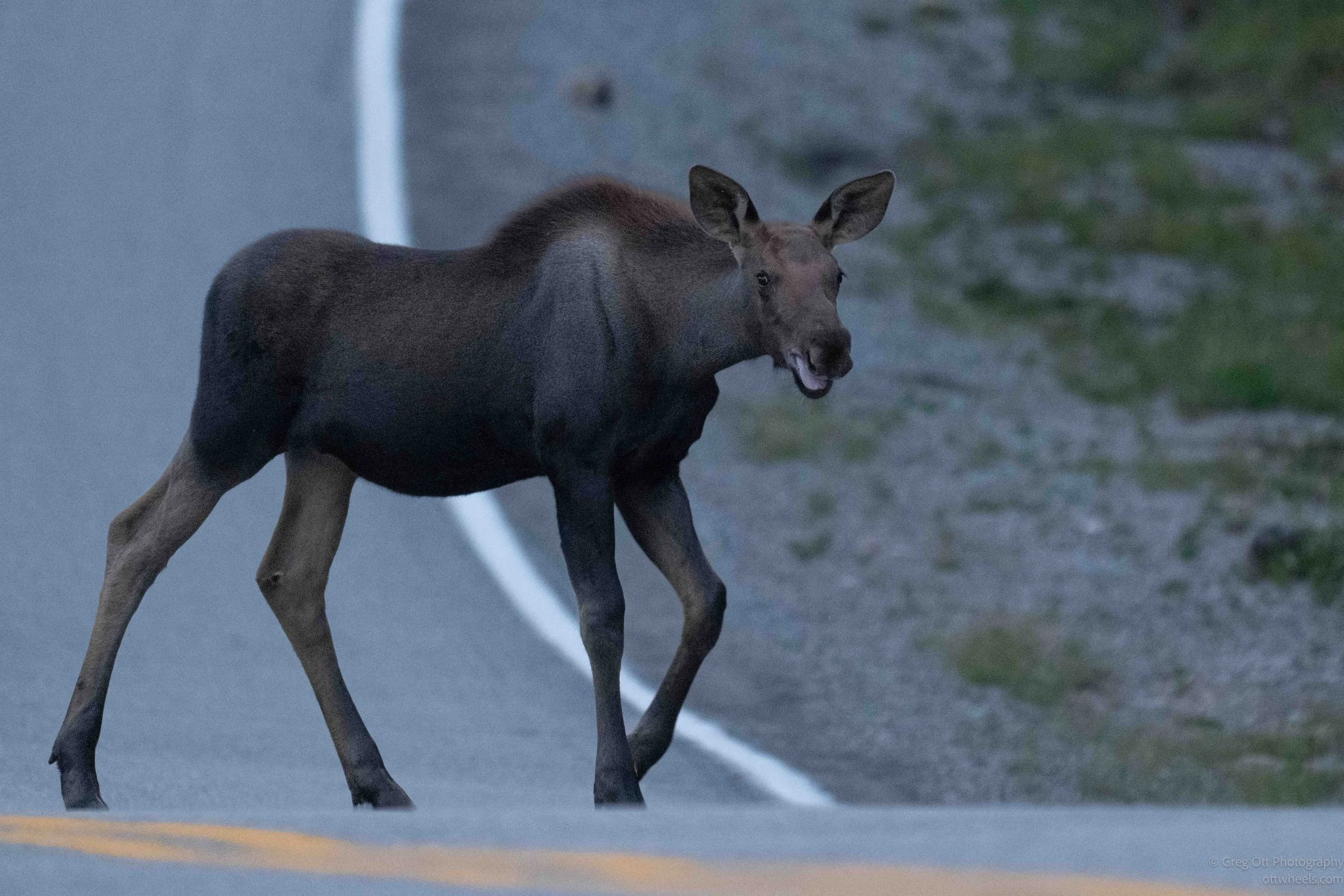
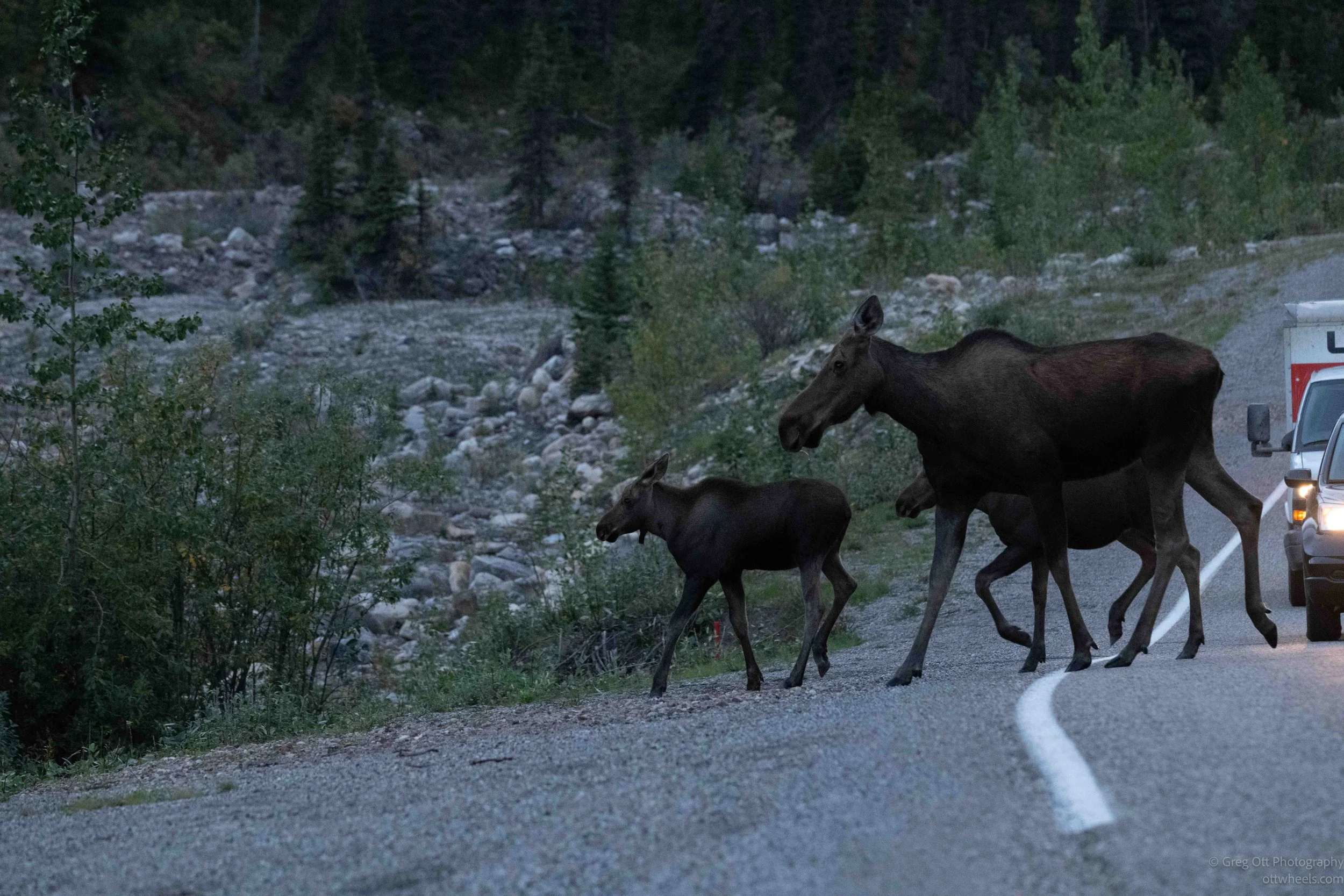
As evening approached, I came across a cow moose and calves along the highway. They stood near the edge of the road before crossing, giving me another reason to stop. The calves stayed close to their mother as they moved across the pavement. After seeing so much wildlife farther north, it was a reminder that I hadn't exactly left the wilderness behind.
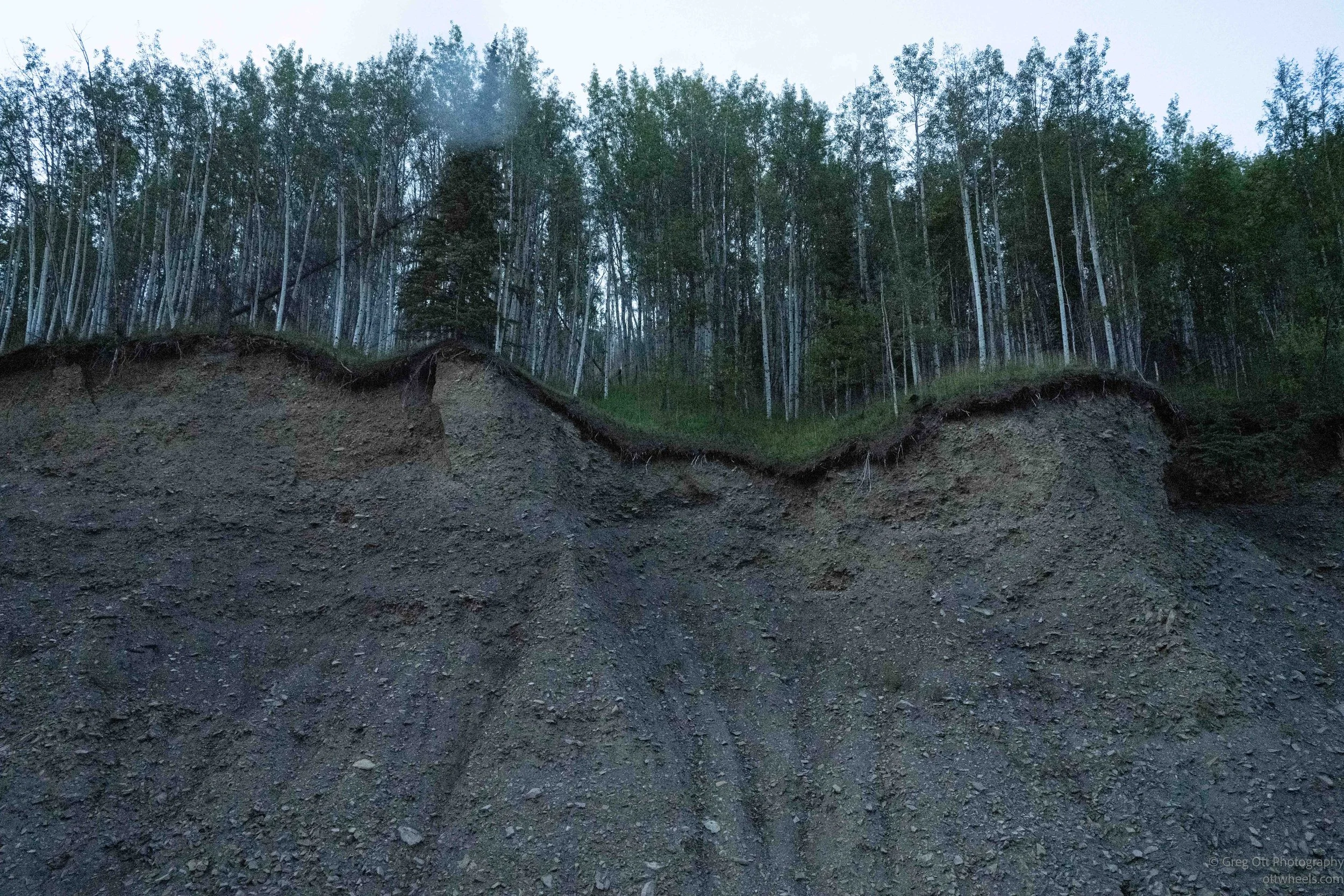
I drove for about another hour before finding a place to pull off beside the Toad river. I had originally stopped because of the trees growing along the top of a steep exposed bank. There appeared to be only a thin layer of soil above the rock and gravel underneath, yet the trees were growing right along the edge. Looking at it, I wondered how deep their roots could possibly go and assumed much of the surrounding terrain must be similar.
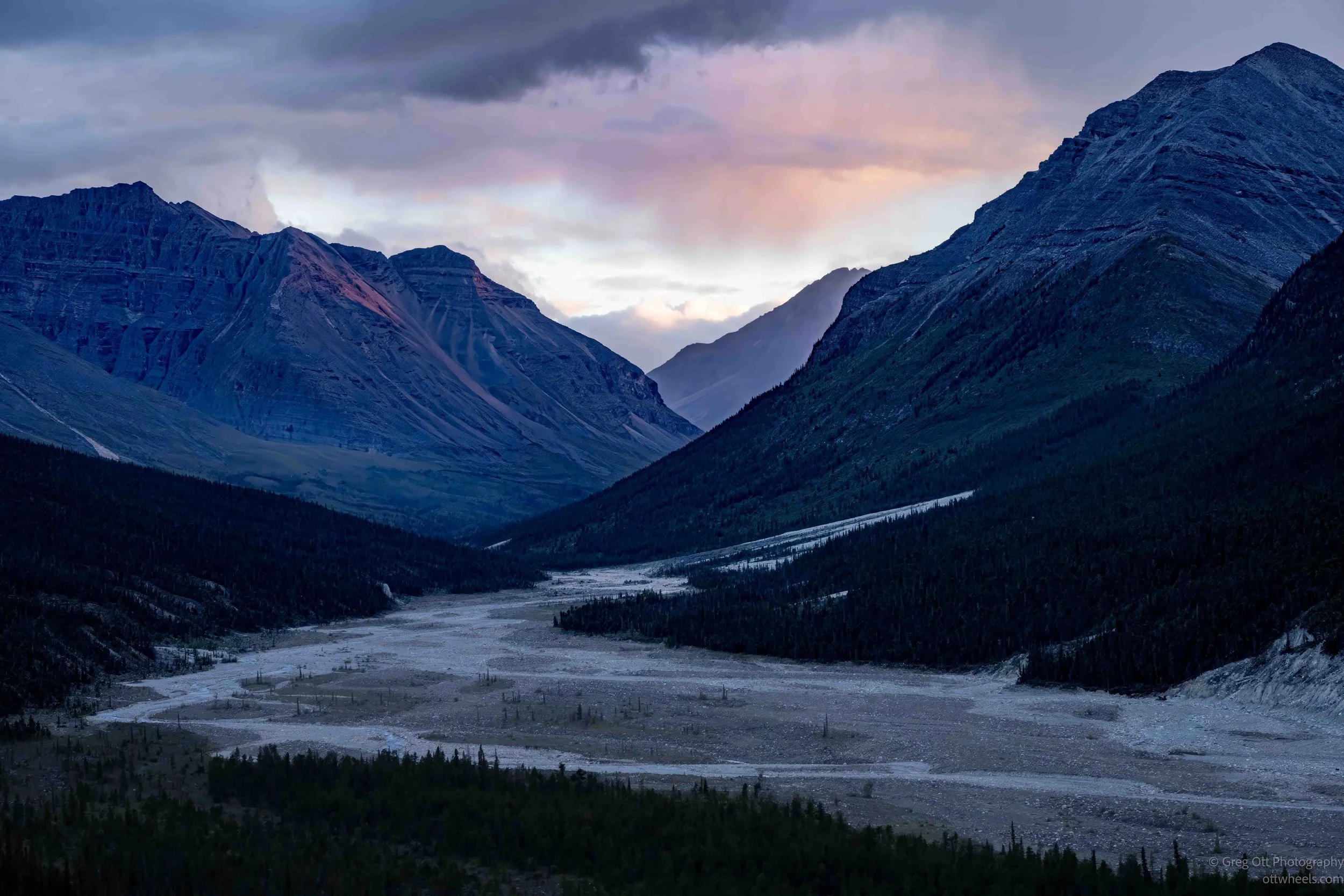
The pullout turned out to be a good place to stop for the night. Behind the van was a stream, and about a hundred yards upstream the water rushed over rocks, creating a constant sound that I could hear from where I was parked. I was getting tired, and darkness was approaching surprisingly quickly. It was a little after 8:30 p.m., and I found myself noticing how rapidly the days seemed to be changing as I traveled south. Sunset had been around 10 p.m. in Dawson City the night before, and only a couple of nights earlier in Fairbanks there had still been light close to 11.
After 858 kilometers, I was exhausted and not particularly hungry. The sound of the water behind the van was enough for the evening. I was done driving for the day.
August 27, 2026: River Stop on the Alaska Highway → Hythe, BC
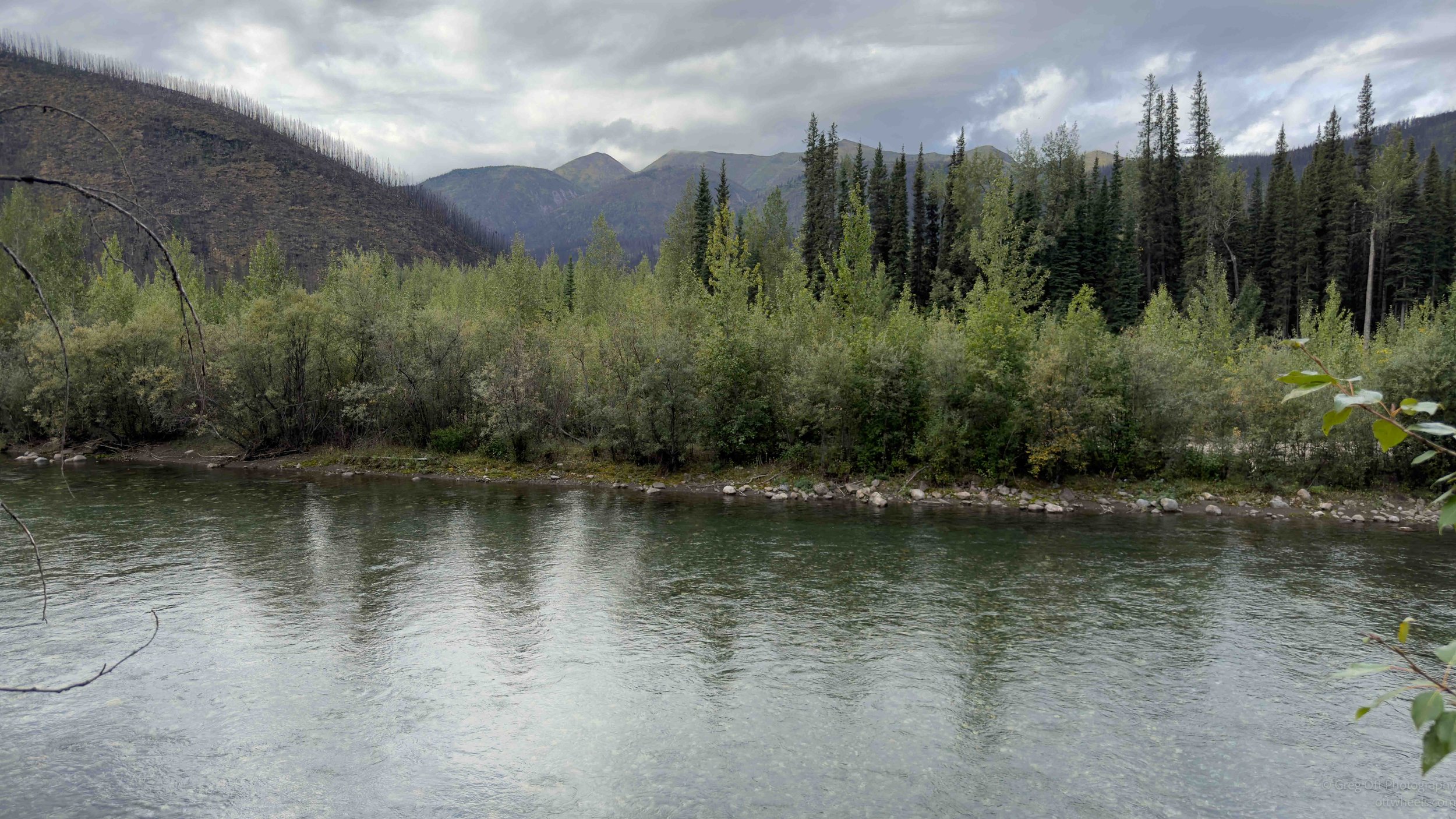
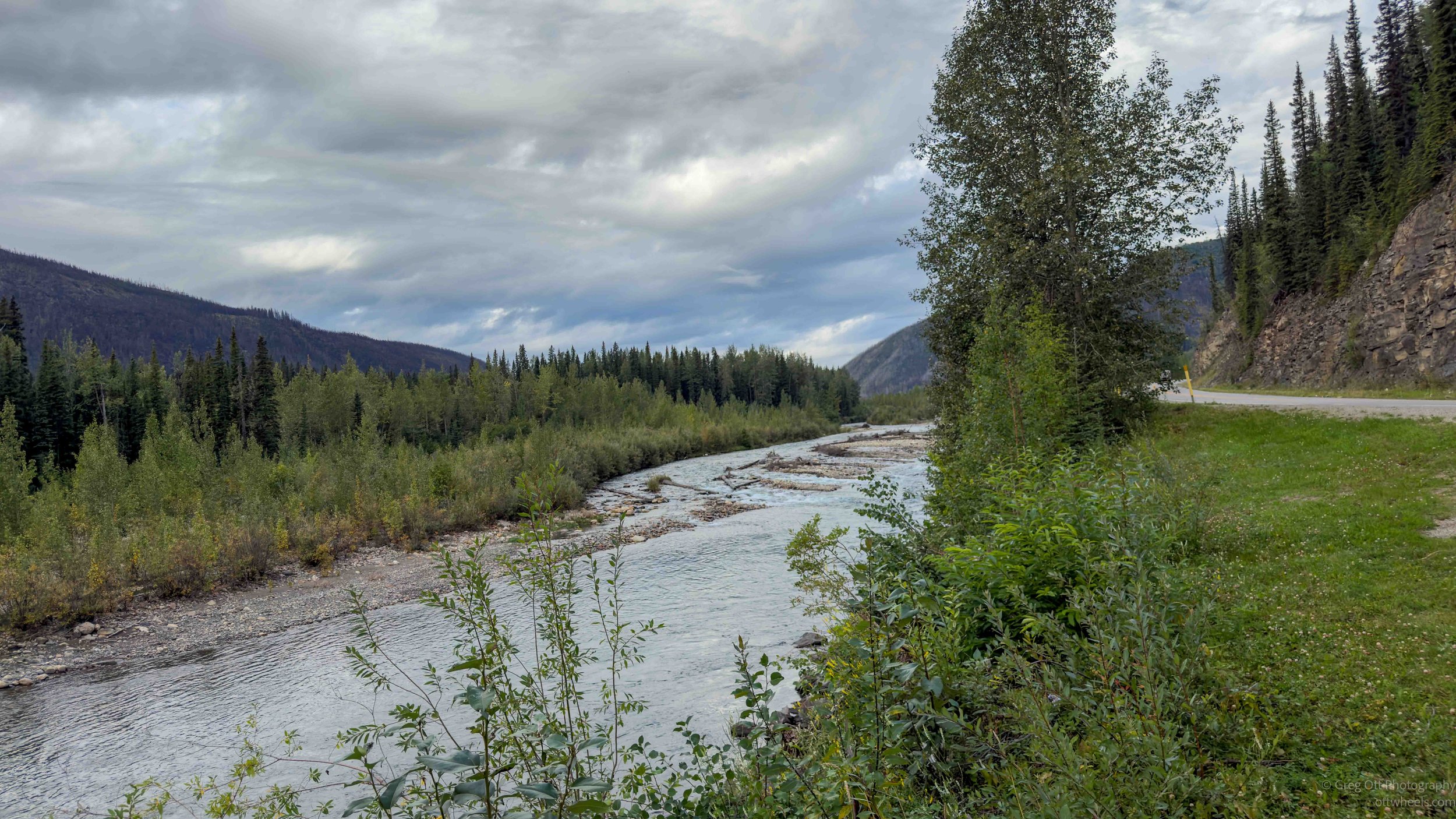
I woke beside the river after a quiet night. Before leaving, I walked around the turnout and took a few photographs. The river ran alongside the highway, with mountains and thick forest surrounding it. After the previous day's 858 kilometers, I wasn't in any hurry to start driving again, but Edmonton was still a long way south. Eventually I climbed back into the van and began another day on the Alaska Highway.
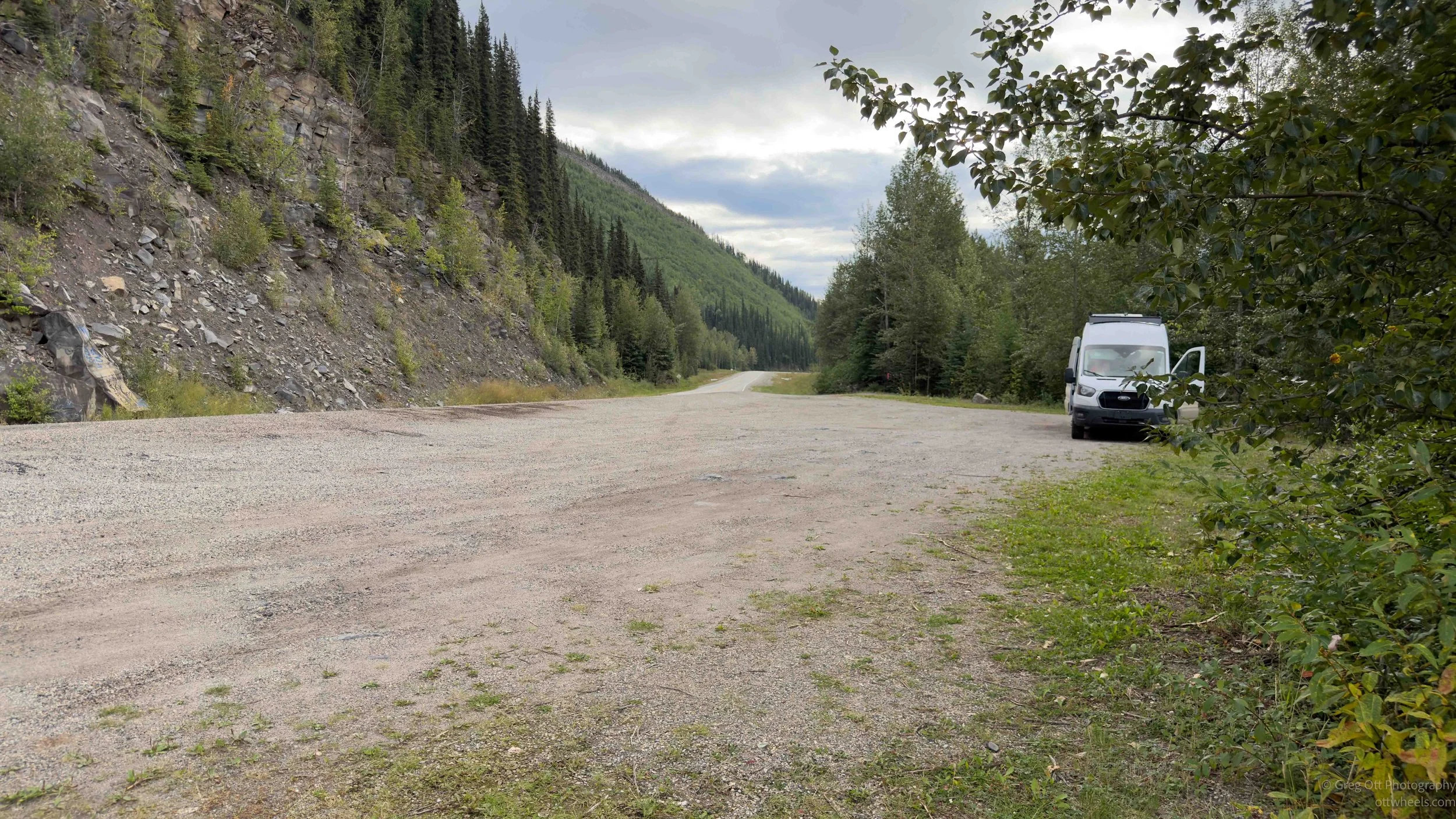
A few hours later, I pulled into a turnout that I remembered from my drive north in May. The overlook had a small interpretive area, and scattered around it were rocks that travelers had left behind with names, messages and dates painted or written on them, marking their trips north to Alaska. I walked around for a few minutes, then returned to the van and took a 30-minute nap.
When I woke up and stepped outside, I could smell smoke. It wasn't subtle. The surrounding landscape was disappearing behind it, and the smoke seemed to be getting thicker by the minute. I checked online and found several fires that appeared capable of contributing to what I was seeing, including two fires in Canada and the fire I had passed near Tok a few days earlier. Whatever combination of fires was responsible, there was an enormous amount of smoke being pushed across the region. The important thing at that point was that the Alaska Highway south was still open.
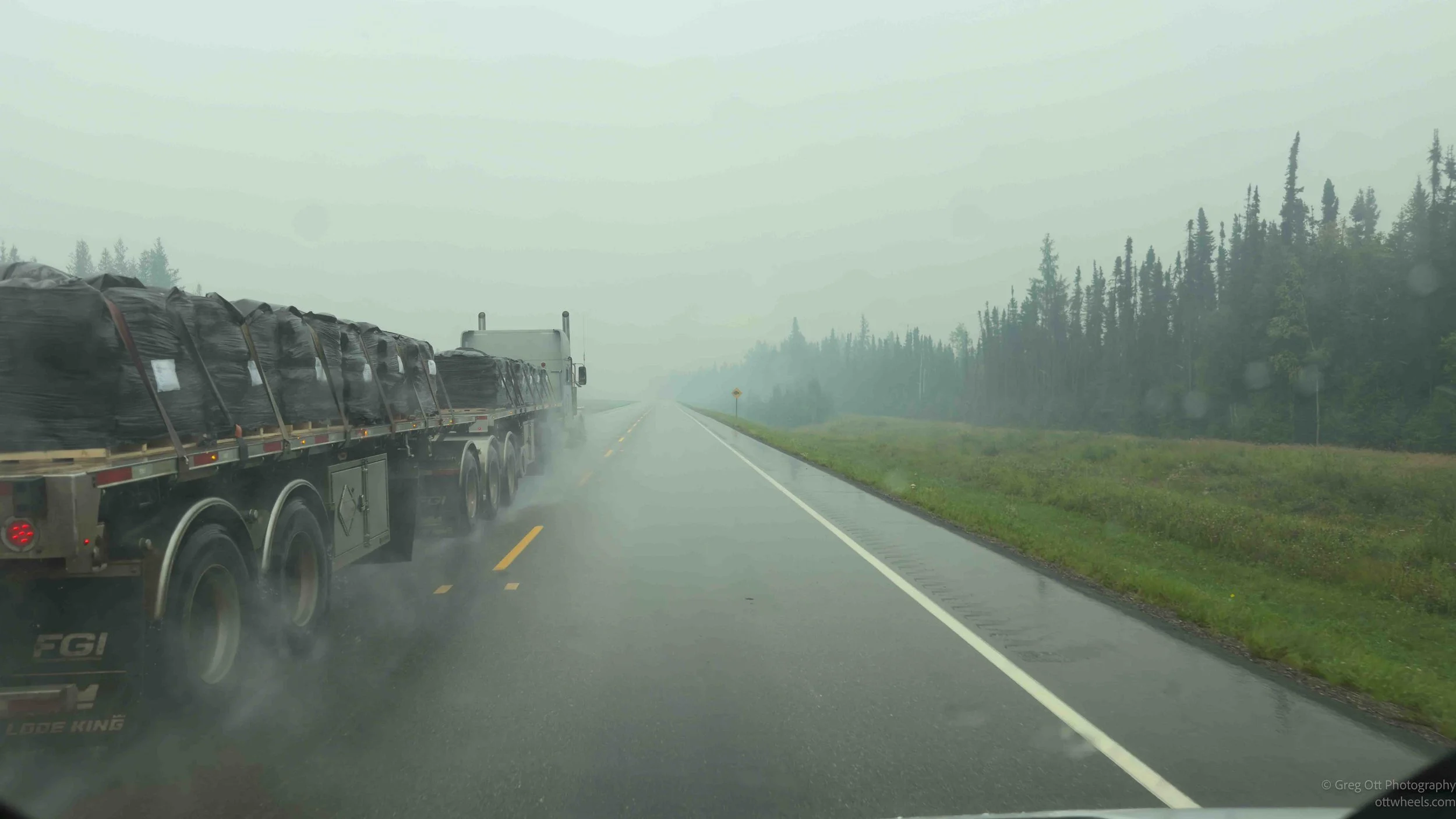
By the time I pulled back onto the highway, visibility had deteriorated dramatically. At times I could see perhaps a hundred feet ahead. Then the rain started. It would come down heavily for a while, mixing with the smoke and road spray and reducing visibility even more. Trucks would emerge from the gray in front of me and then gradually disappear back into it.
I came up behind a truck traveling about 30 km/h down one of the hills and decided that was exactly where I wanted to be. I wasn't interested in passing anyone or trying to make time. I settled in behind the truck and followed it south. Its taillights gave me something to follow through the smoke, rain and spray, and for the next couple of hours I was perfectly happy moving at whatever speed the driver in front of me thought was appropriate.
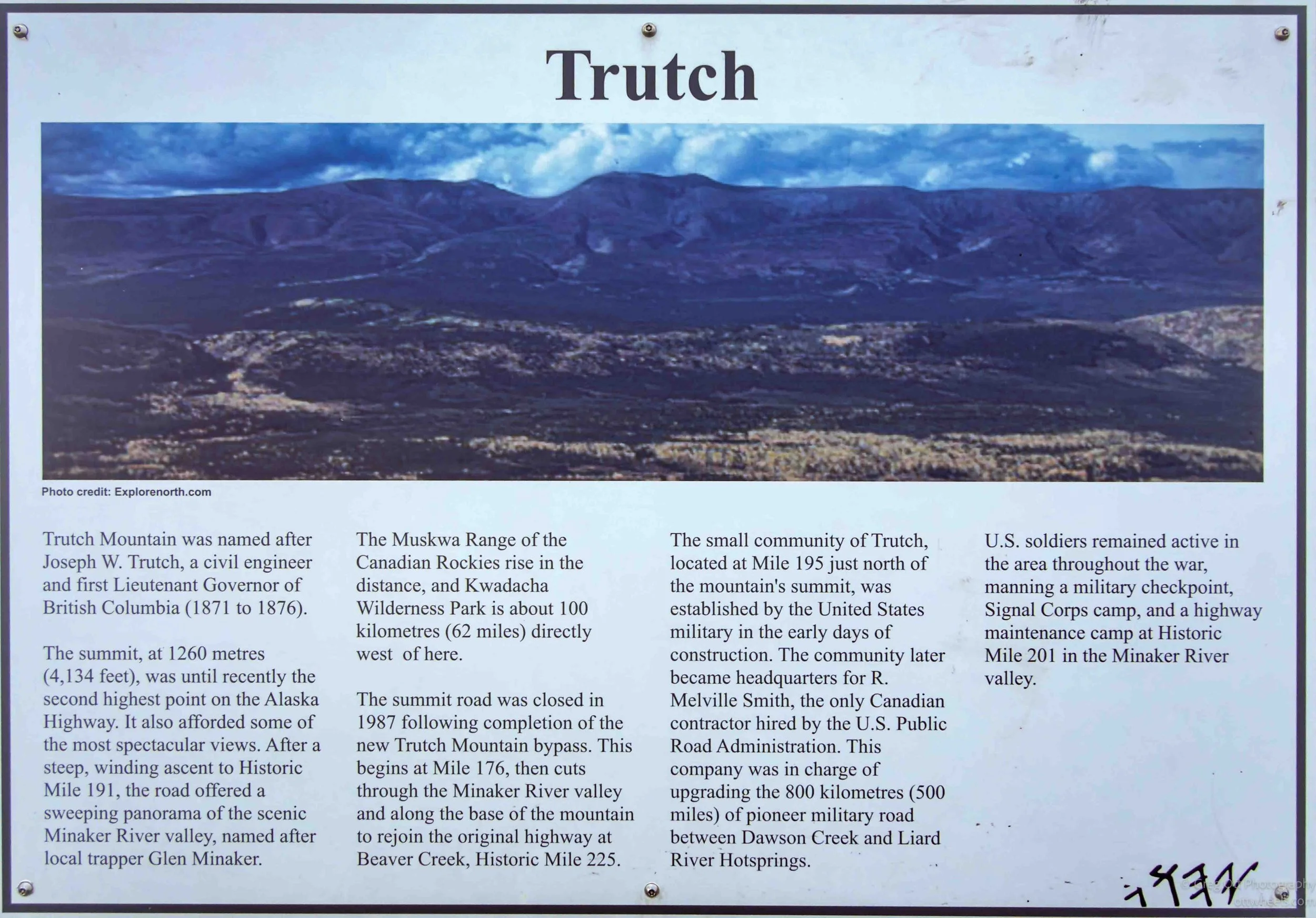
Eventually I pulled over again for another break. It had become one of those driving days where distance mattered much less than simply staying alert. The conditions changed constantly. Sometimes the rain would clear a little smoke and visibility would improve, and then a few kilometers later I would drive into another dense pocket and everything beyond the highway in front of me would disappear again. There were many signs about the history of the area, and I stopped to read them all as I stretched. I still had a couple hours a head of me.
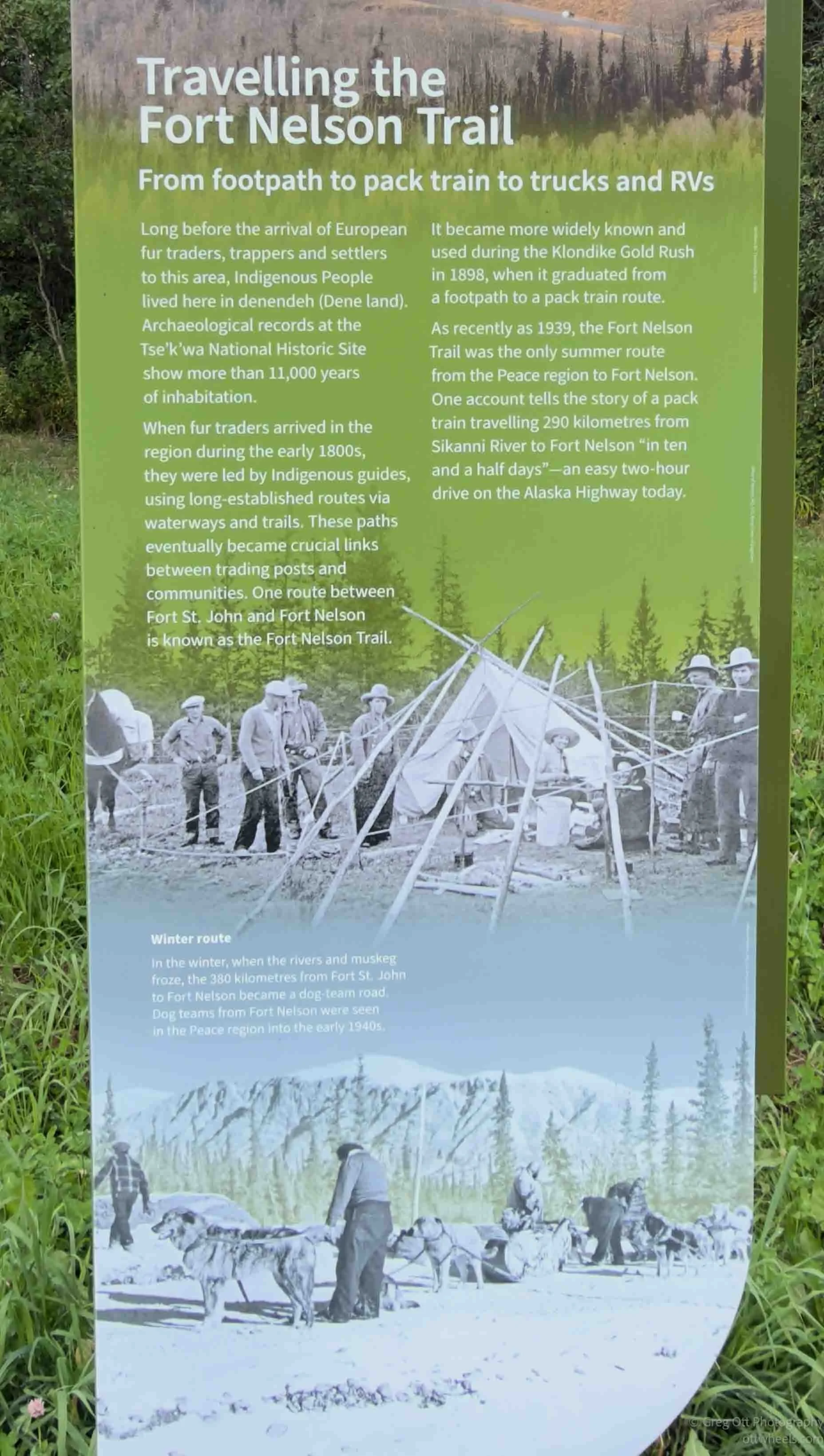
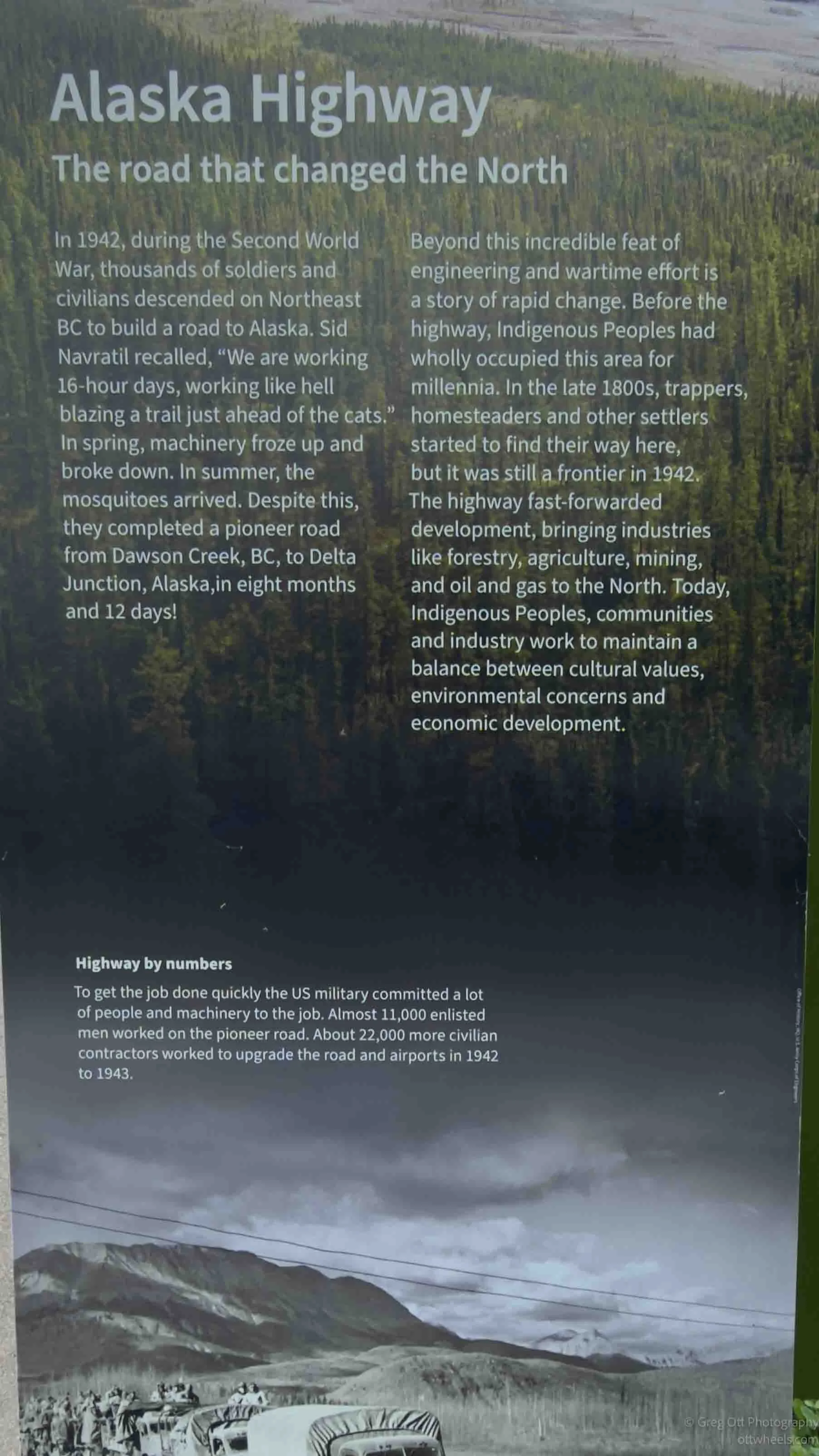
It was after 9 p.m. when I finally reached Hythe, British Columbia, and by then my immediate concern was finding somewhere to stop for the night. Hythe had a town campground with showers, which sounded more than adequate. I pulled in and discovered that registration was online. I booked a basic tent site—no electricity, water or sewer—I didn't anything but sleep.
As soon as I parked and turned off the engine, I could feel the tension from the day begin to disappear. I had driven another 530 kilometers (329 miles), much of it through smoke, heavy rain and some of the worst visibility I had encountered on the trip. I had spent hours concentrating on the small piece of highway I could see in front of me, often following the taillights of a truck through the gray.
I was tired enough that nothing else mattered very much. I was safely off the road, the van wasn't moving again that night, and it didn't take long before I fell asleep.
August 28, 2026: Hythe, BC → Edmonton, AB
The air was clear when I woke up in Hythe, a welcome change after the smoke and rain of the day before. I took a shower in a large portable unit at the campground that looked like a cargo container mounted on skids. Everything was built into it, and it was clean, simple and functional. I made breakfast, stopped for gas and was back on the road.
One thing I had been noticing as I traveled south was the price of gas. In the more remote stretches of the Yukon and northern British Columbia, I had seen regular gas as high as C$2.49 a litre. By the time I reached Hythe, I paid C$1.59 a litre. A difference of 90 cents a litre seemed enormous, particularly when filling the van.
With plenty of breaks along the way, I finally made it to Edmonton. I drove directly downtown without realizing that a large country music festival was taking place at multiple locations around the city. Downtown was packed with people and traffic, and after several days on mostly empty highways, I wanted nothing to do with it. I got out of the center as quickly as I could and found a large parking lot where I could stop and figure out what I was going to do.
My plan had been to find a campground and stay in Edmonton for three days. I spent the next hour searching, only to discover that virtually everything was booked for the weekend. Between the festival and a summer weekend, I apparently hadn't chosen the easiest time to arrive in Edmonton. I was going to have to get creative about where to sleep, but I decided that problem could wait. After all the driving, smoke and rain of the previous few days, I wanted a relaxing dinner.
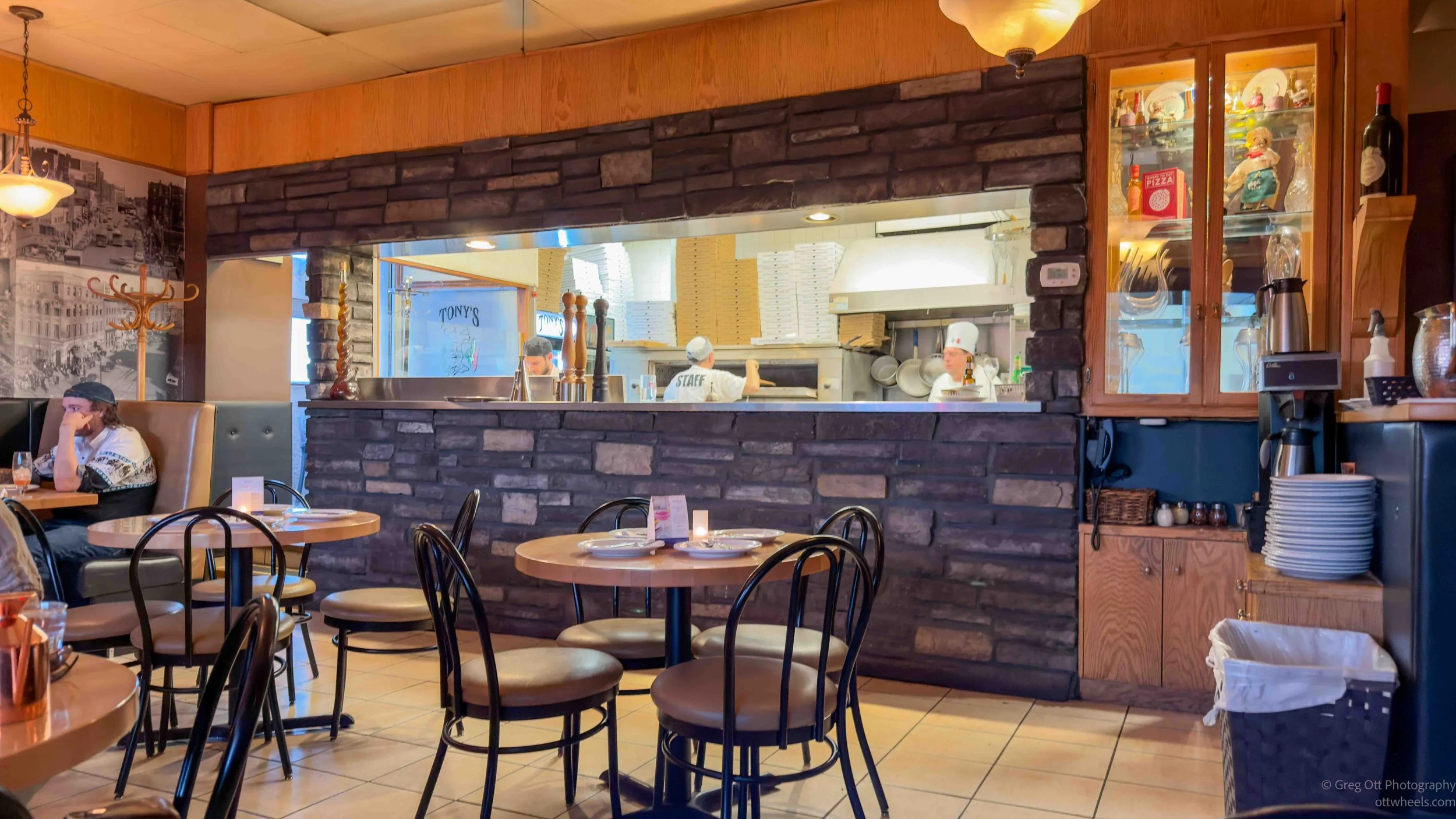
I ended up at Tony's Pizza Palace, an old-school Italian restaurant that felt as though it had been transported from an Italian neighborhood somewhere and dropped into Edmonton. There were Italian photographs and memorabilia on the walls, tables packed fairly close together and an open kitchen where I could watch pizzas being made. Stacks of pizza boxes surrounded the kitchen, and there seemed to be a steady stream of people who knew the place and knew the people working there. This wasn't a restaurant trying to create the atmosphere of an old neighborhood Italian restaurant. It actually was one.
The owner, Sal, seemed to know many of the customers. At one point he stopped beside the table next to me and asked two women how everything was. One of them looked at him and said, "Sal, I've been coming here since I was a kid. I've never had a bad meal in 30 years." I had the distinct impression that the comment was at least partly for my benefit. I was the stranger sitting nearby, and she wanted me to understand that I had come to the right place.
Before I ordered, they handed me the beer menu. One name immediately caught my attention: Czechvar. I hadn't seen it in many years. It reminded me of a trip through the Czech Republic many years ago, when I stopped in Plzeň on my way to Prague. After days of driving through the Yukon and British Columbia, finding a Czech beer in an Italian restaurant in Edmonton was an unexpected connection to a completely different trip.
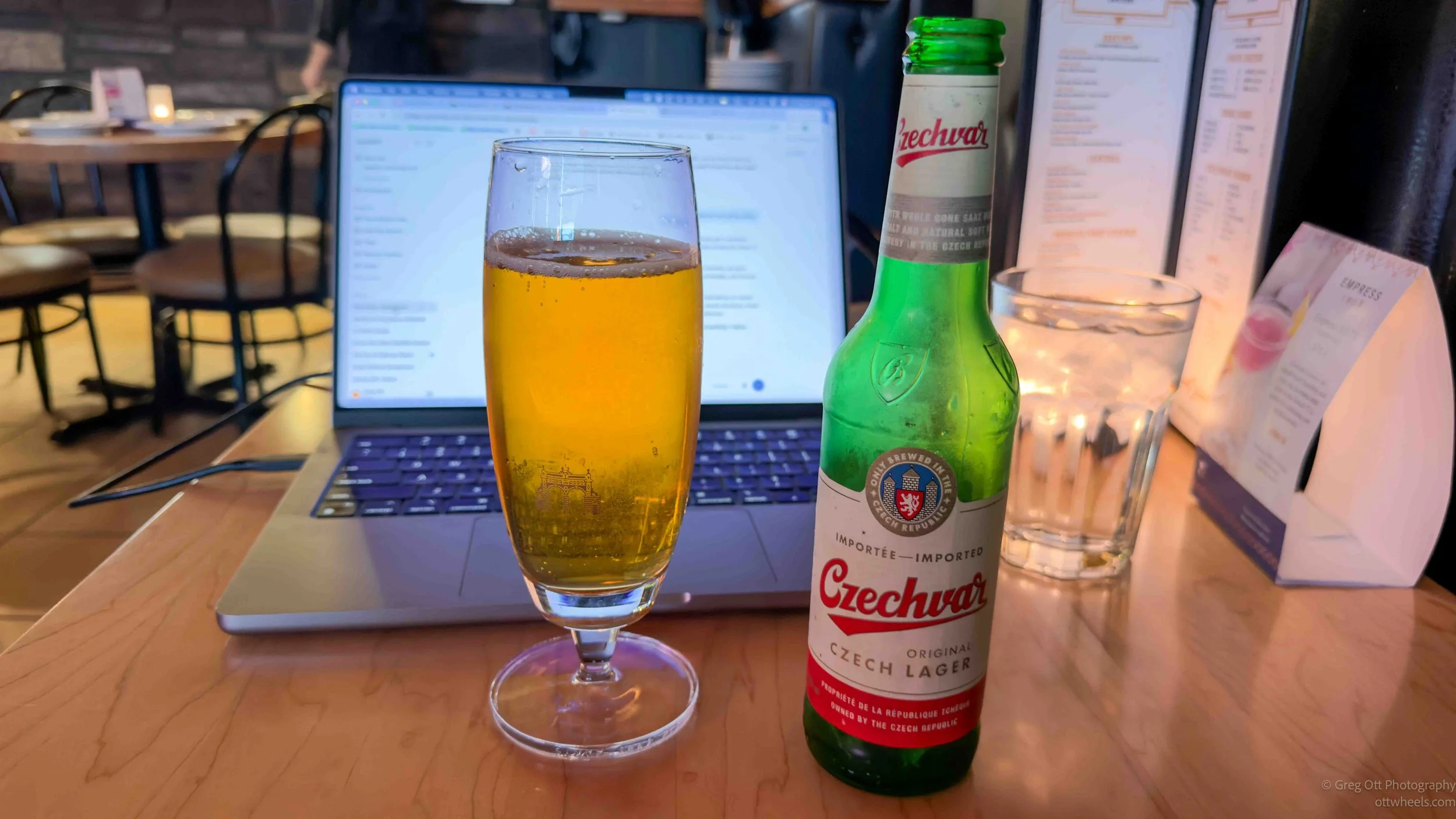
I ordered a prosciutto pizza, which I knew I probably shouldn't have, but by that point I was committed. It came out exactly the way I like Italian pizza: thin crust, not overloaded with toppings, and enough flavor that it didn't need anything else added to it. Between the pizza, the Czech beer and watching Sal and the kitchen staff work a few feet away, I stayed longer than I had planned.
There was also a running conversation between the customers and the kitchen that made it obvious this wasn't a particularly formal place. At one point, one of the waitresses said to one of the cooks, "Is your girl out of jail?" Everyone in the room heard it. A loud guy sitting nearby immediately pointed toward his girlfriend and answered, "Yeah, she saw her on the street yesterday." Nobody seemed particularly surprised by any of this. The conversation just continued.
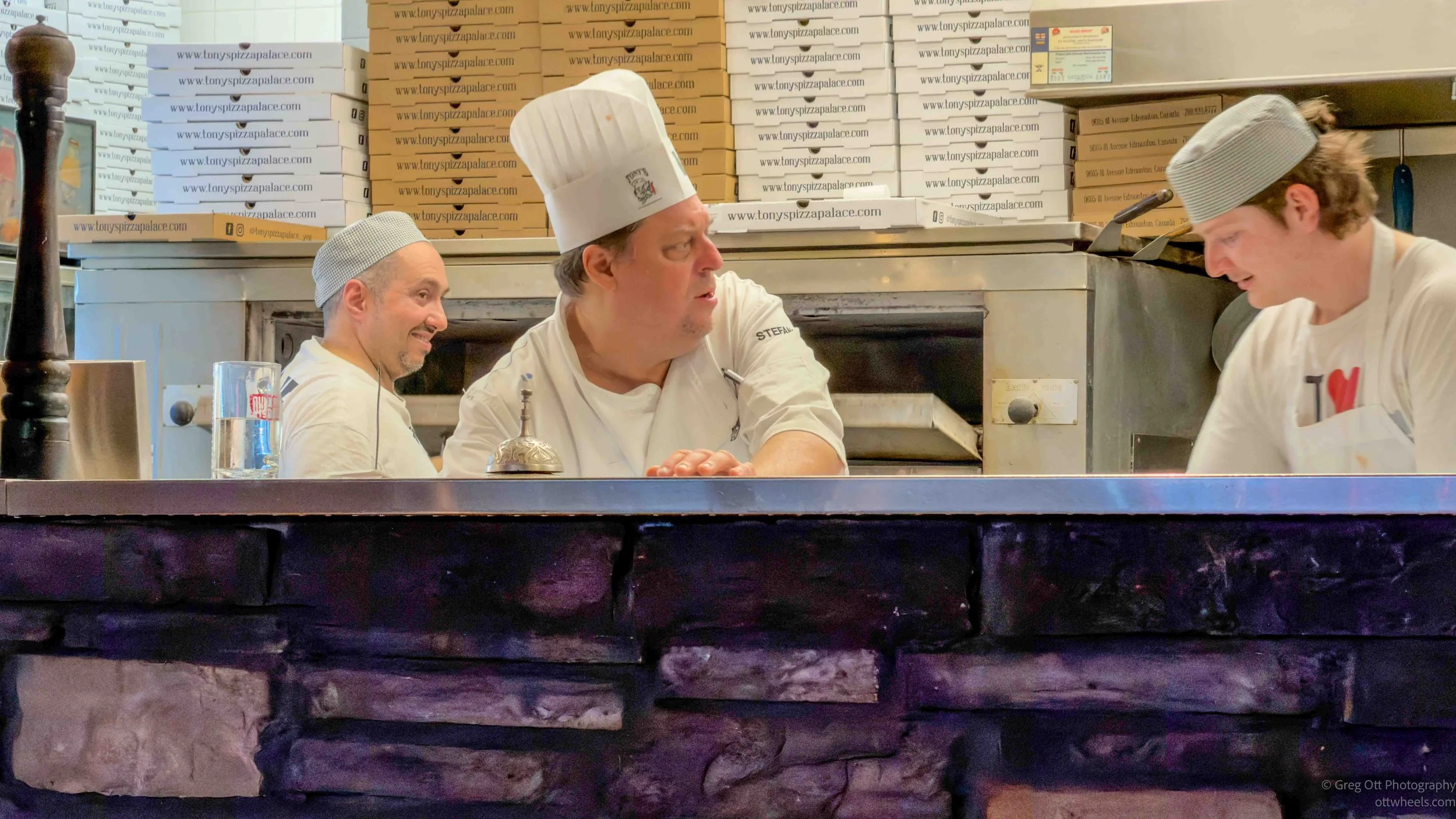
I had just paid my bill when another man came through the door and headed straight toward the kitchen window. In a voice loud enough for the entire restaurant to hear, he demanded, "Who's that punk that just walked out? He was disrespectful." He pointed toward the table where the loud guy had been sitting and added, "I know he sits over here." For a moment, I wondered whether this was about to turn into something considerably more serious.
The three women with him—his wife, sister and a friend—were having none of it. They immediately started trying to calm him down. "Let's just eat and enjoy ourselves," his wife told him. Eventually they got him over to what was clearly their booth, and then Sal came over. He knew exactly what to do. There wasn't a confrontation or a big scene. Sal talked with them and brought over the wine they apparently always ordered, and things settled down.
None of this made Tony's feel like a bad restaurant. Quite the opposite. Everyone else seemed to take the whole thing in stride, as though I had simply wandered into the middle of another evening in a restaurant where customers had been coming for decades, people knew which booth belonged to whom, Sal knew what wine they drank, and everybody knew everybody else's business. I was the outsider. They were just having dinner.
I had parked the van about two blocks from Tony's. By the time I walked back it was around 9:30 p.m. and completely dark. Across the street was an old Italian church, and despite everything happening elsewhere in Edmonton, this neighborhood was quiet. There were only a few cars along the street and almost no traffic. After spending an hour earlier trying unsuccessfully to find a campground, I started wondering why I needed to go anywhere at all.
I checked the local rules and found that sleeping in a vehicle on the street could result in a fine, but I wasn't somewhere that appeared likely to create a problem for anyone. The van was legally parked, the neighborhood was quiet, and I wasn't planning to put anything outside or make myself obvious. After several days of pushing south and another long day getting to Edmonton, I had no interest in driving around the city in the dark searching for something that might not be any better. I closed everything up, settled into the van and decided to stay where I was for the night.