Chetwynd, BC
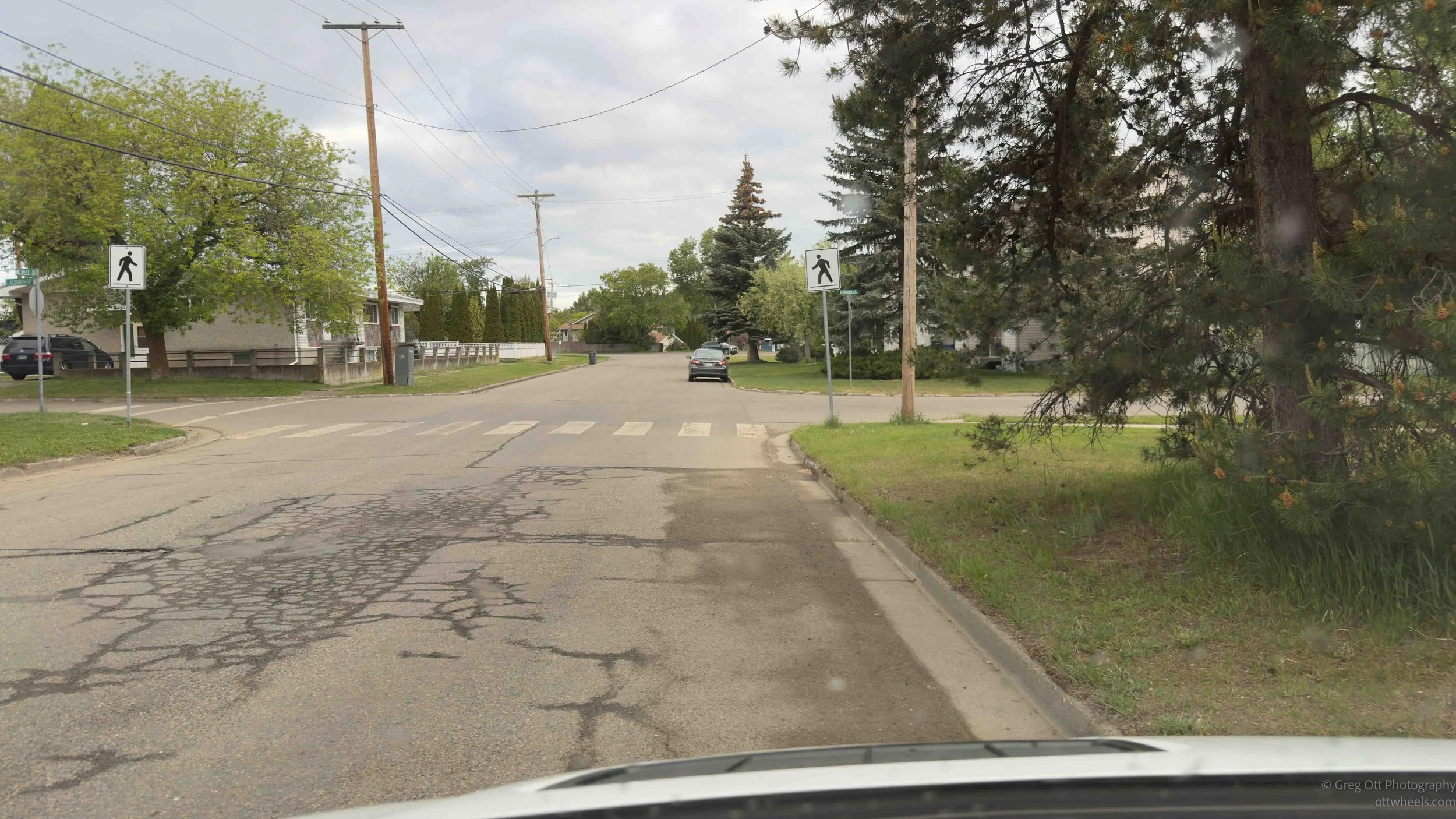
My spot in Prince George the last night ws extremely quiet. It was 7 a.m. and I still hadn’t heard a single car go by. I drove back to the park I had visited the day before, made breakfast, and took a short walk before starting what was going to be another long day of driving north.
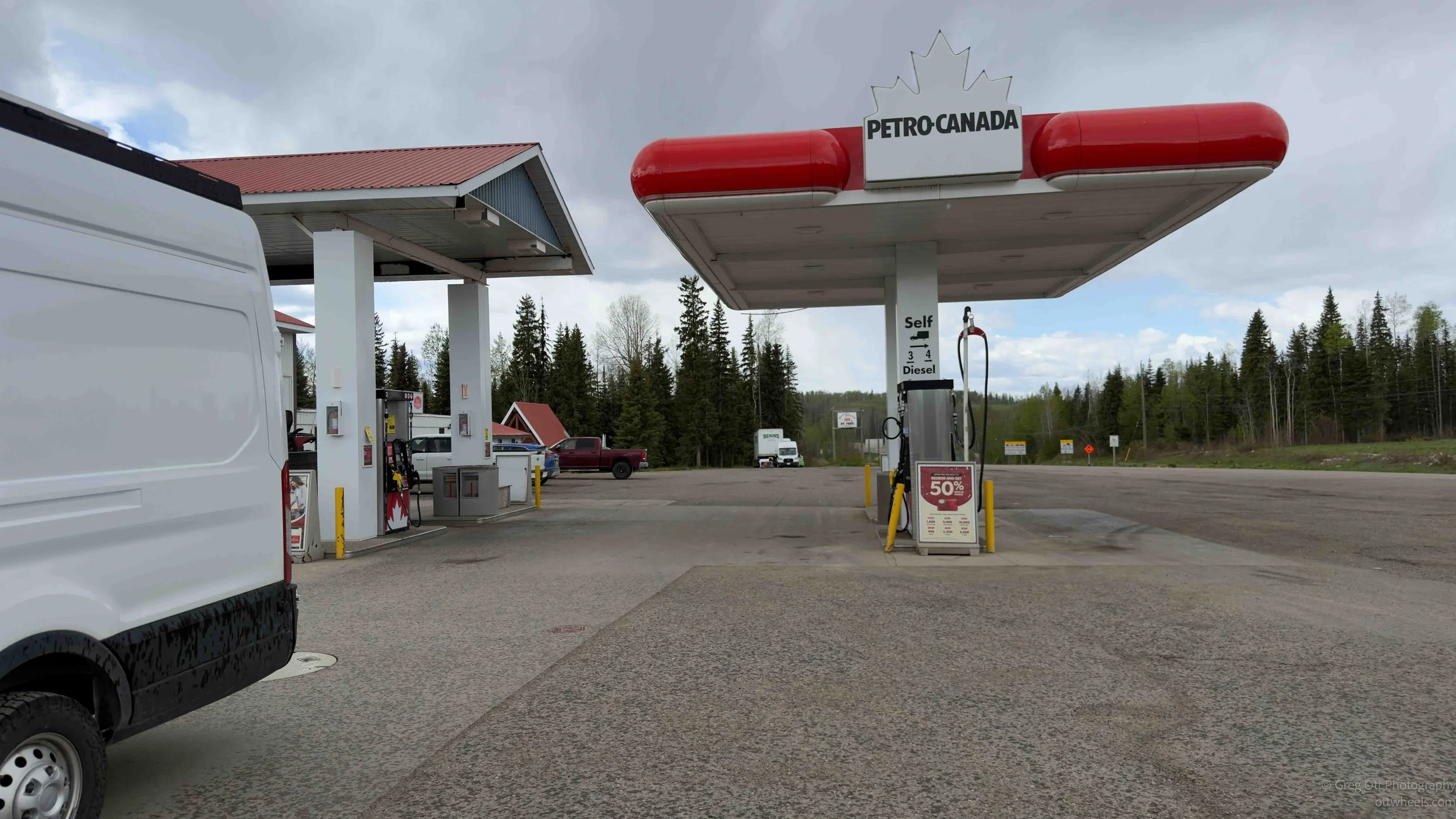
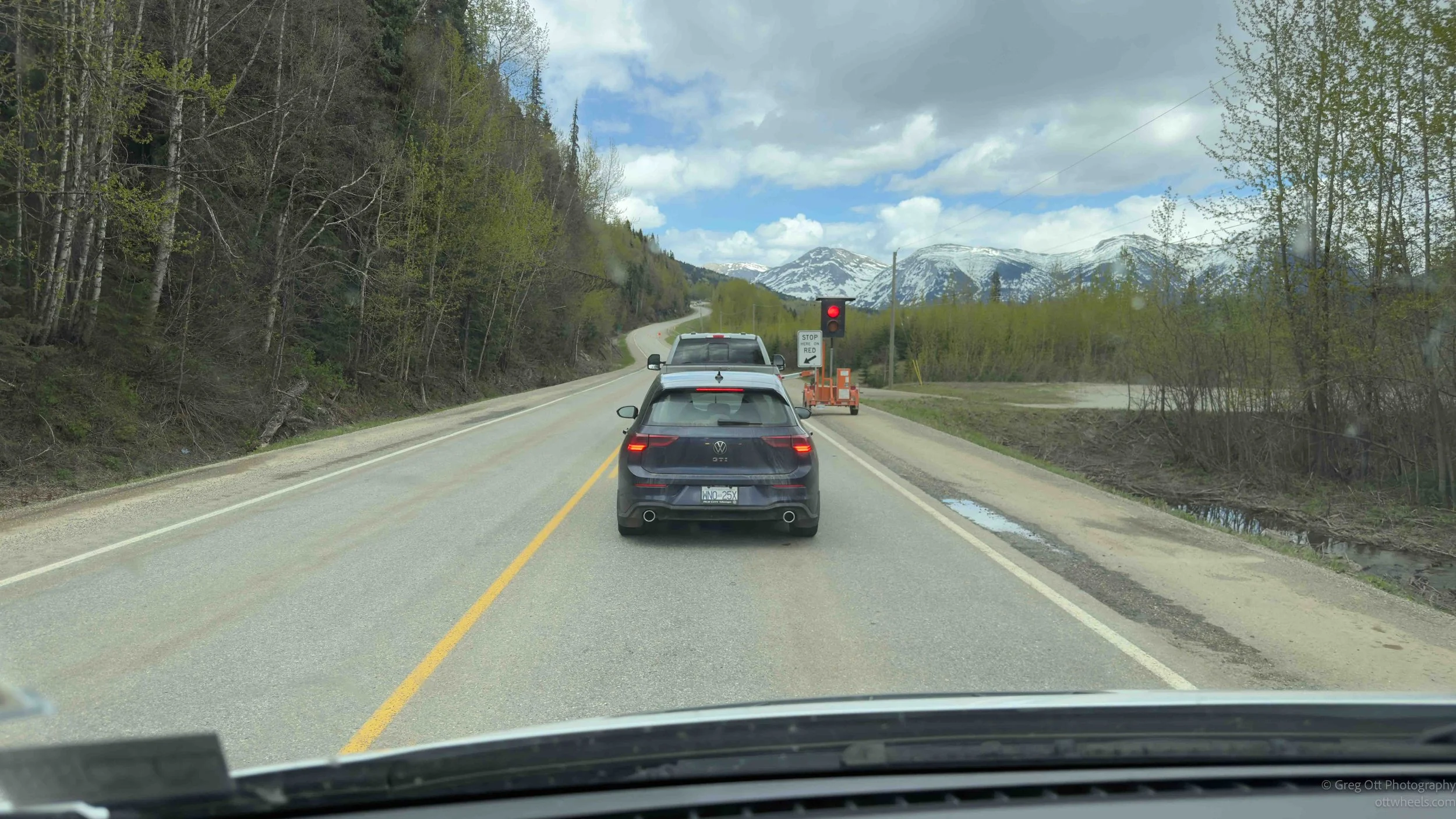
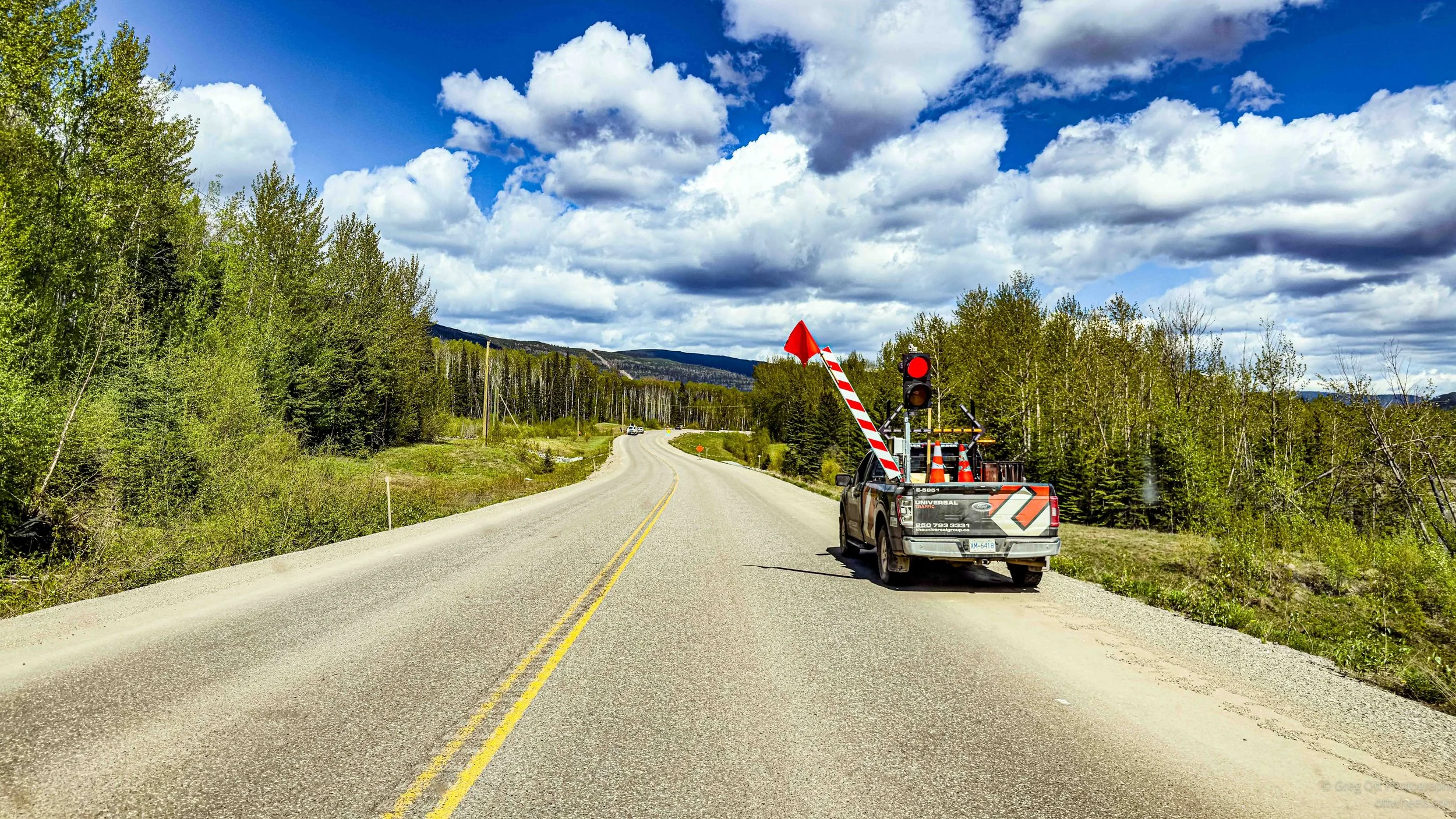
I was surprised how quickly the traffic dropped off once I got outside the city. The few cars that were on the road all seemed to be in a hurry. People would blast past me at high speed, only for all of us to end up stopped together ten minutes later at another construction zone. Then I’d pass the same vehicles sitting at a rest area. The whole thing became almost comical after a while.
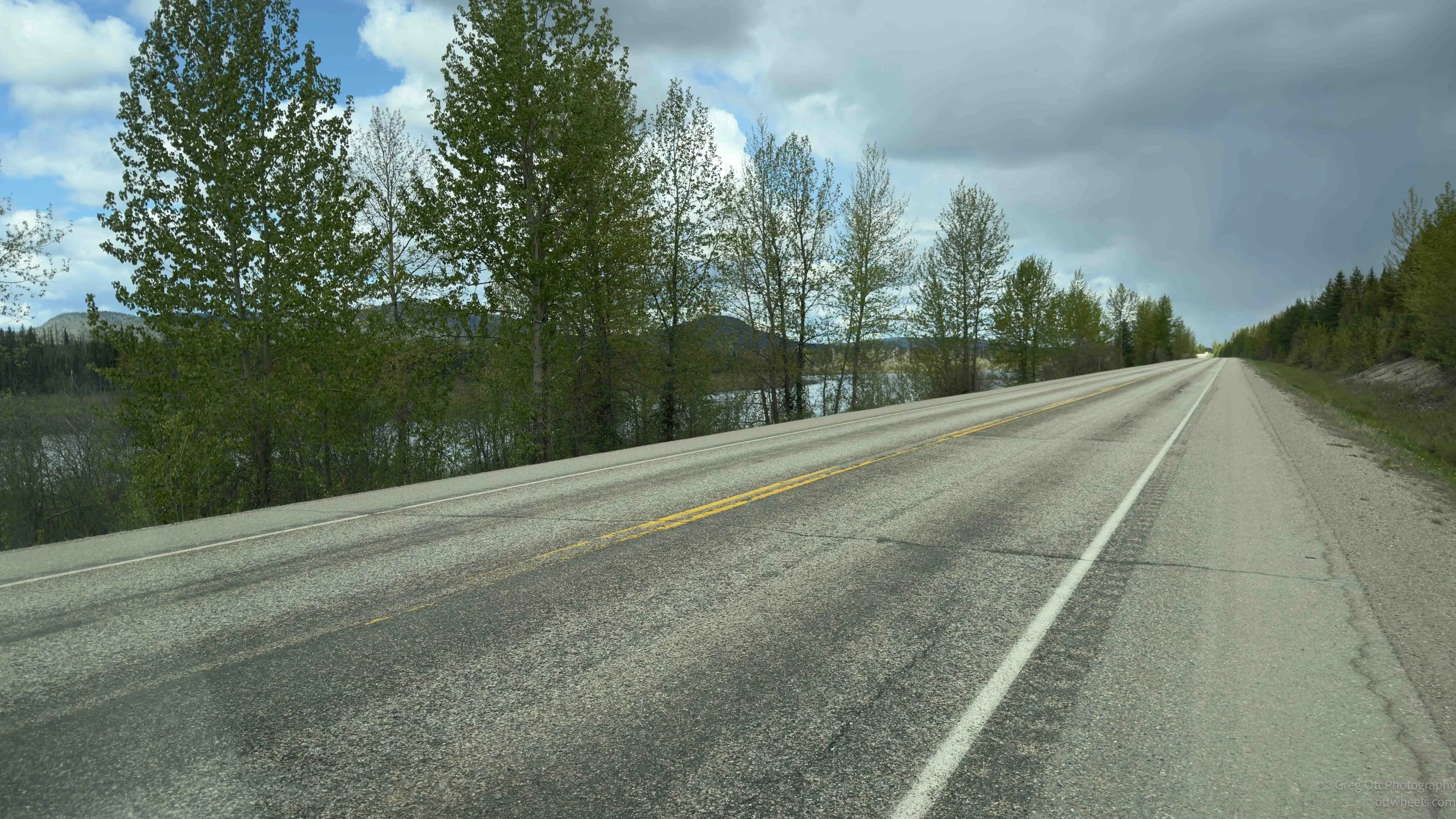
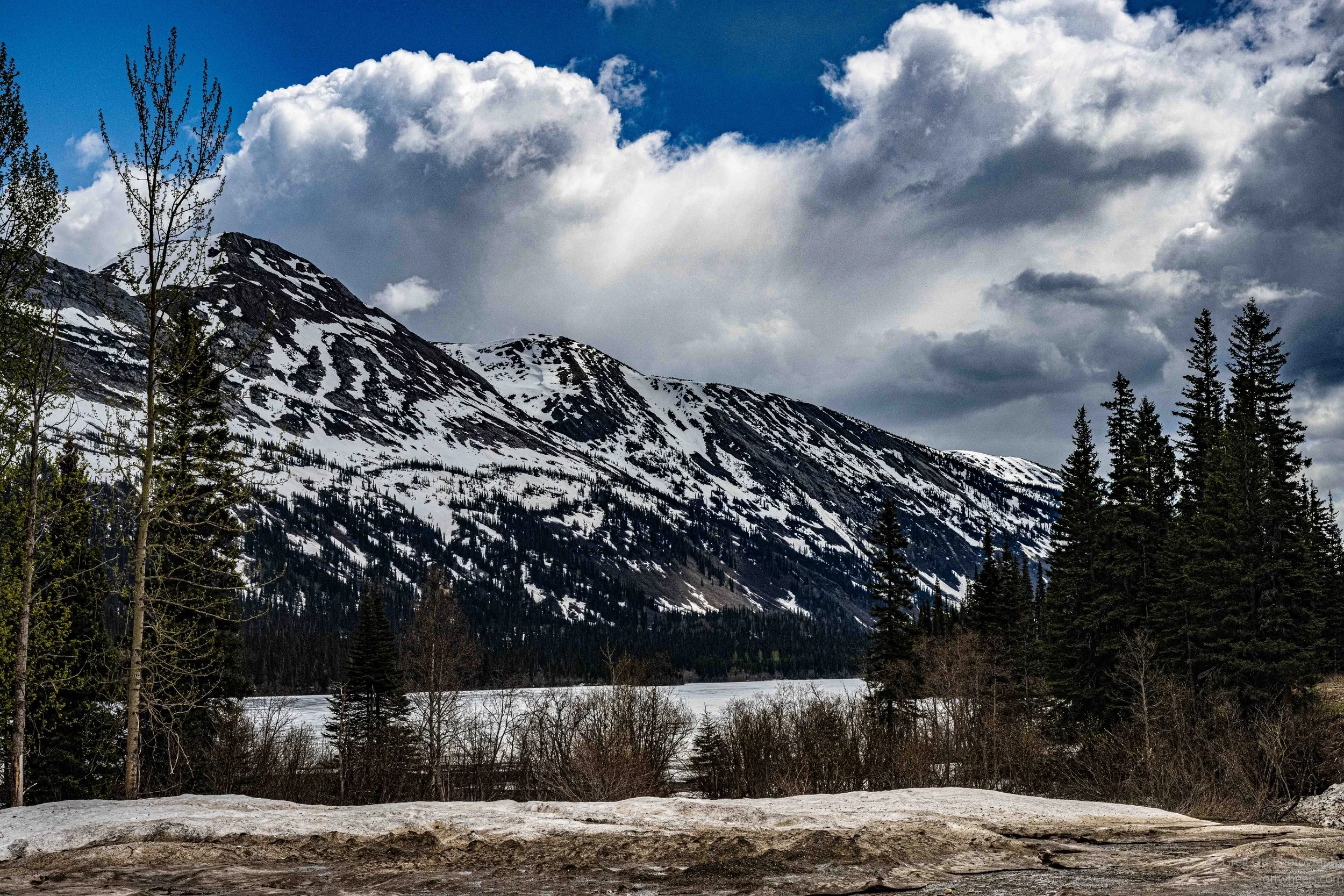
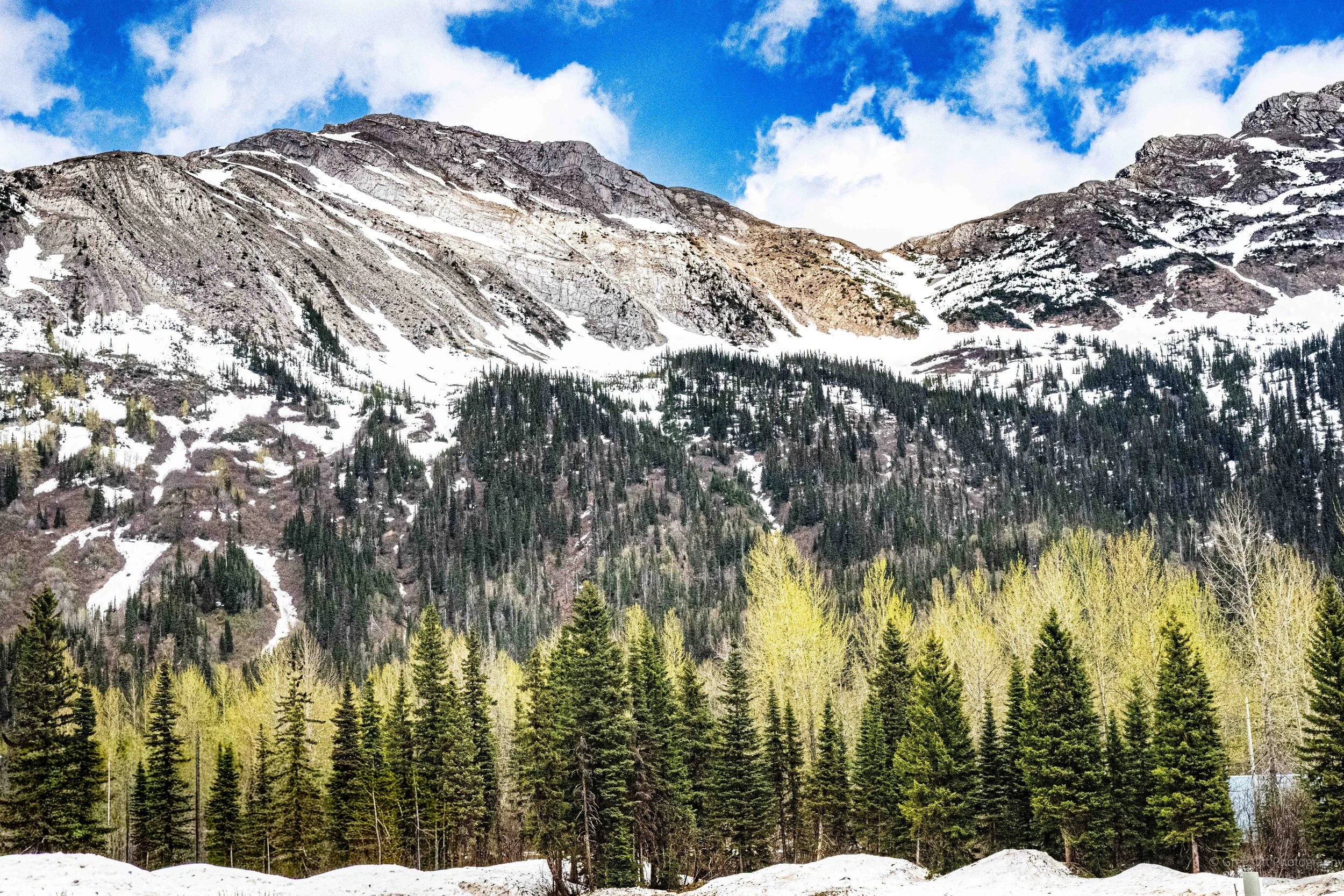
Around 1 p.m. I came down a mountain and suddenly there was a beautiful lake off to the side of the highway still covered in ice. It was Azouzetta Lake. Apparently the ice can get extremely thick there during the winter and linger well into spring. It was still covered in ice. The contrast between the frozen lake, dark evergreens, and bright sky made the entire area feel far more northern and remote than where I had started the morning.
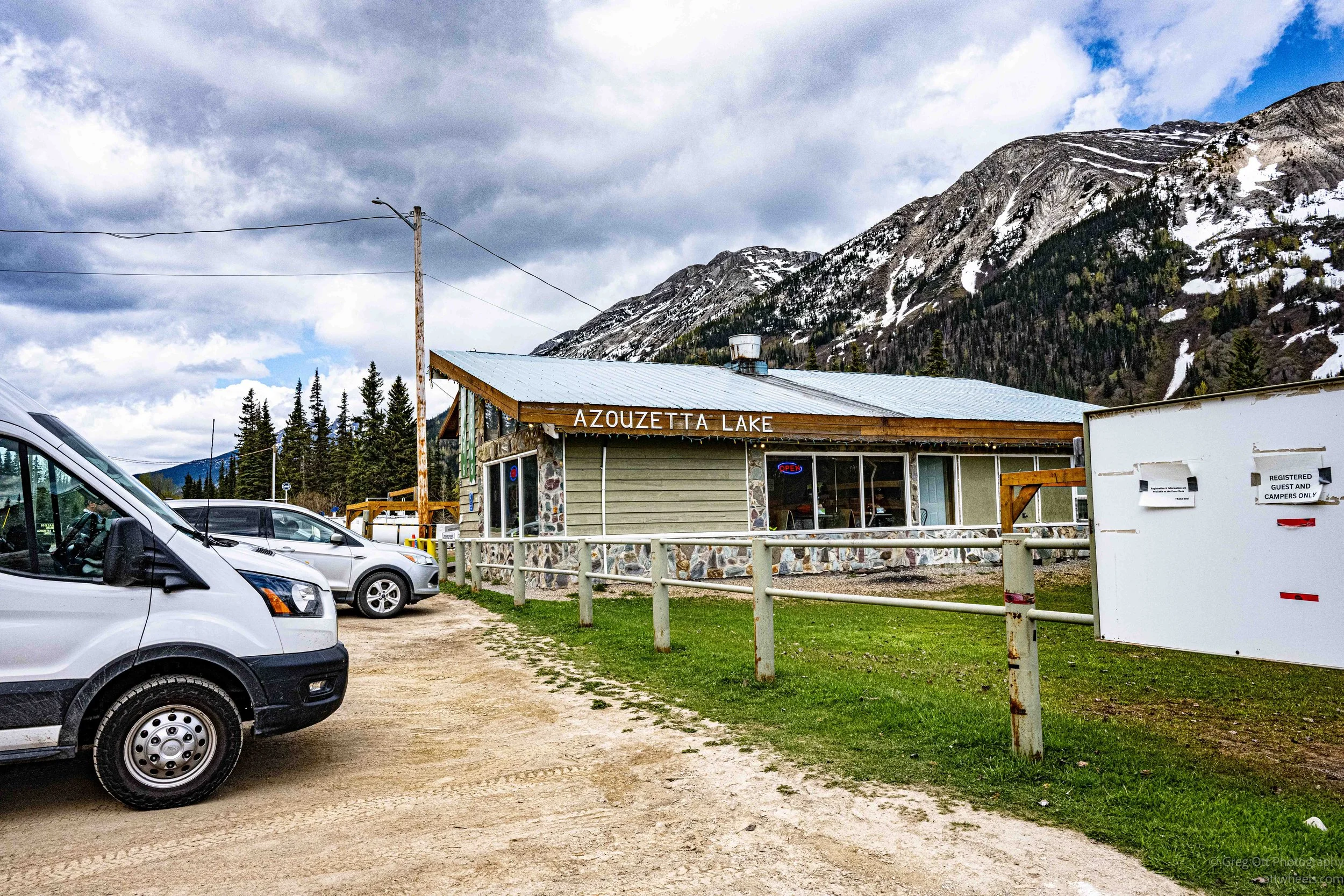
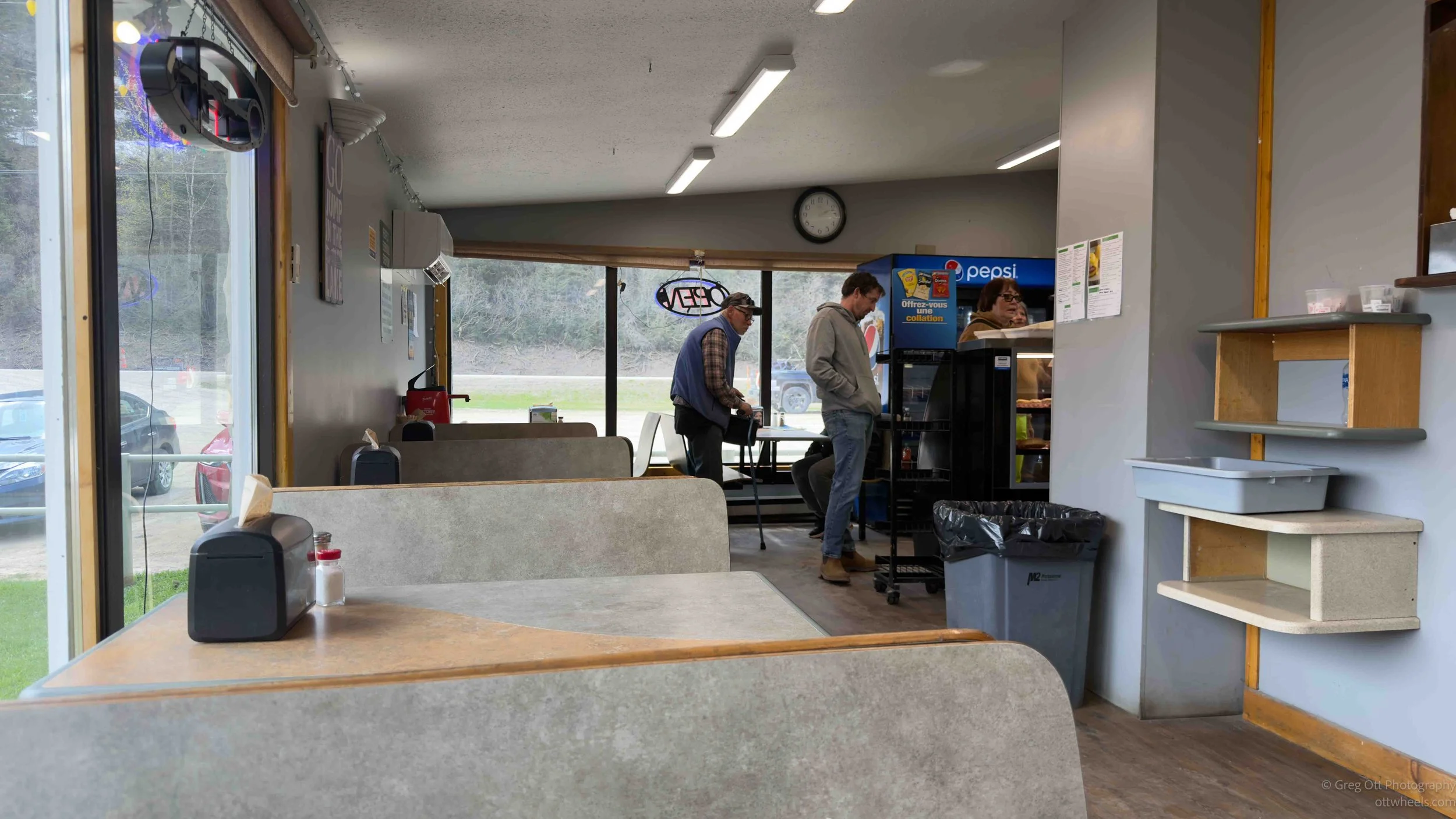
At the bottom of the hill I stopped at Café 97 for lunch. It was simple grill-style food, but it felt good to stop for a while and relax. The place clearly served as a local gathering spot. Almost everyone seemed to know the people working in the kitchen. Conversations bounced around the room about work, travel, road conditions, and who had seen who recently.
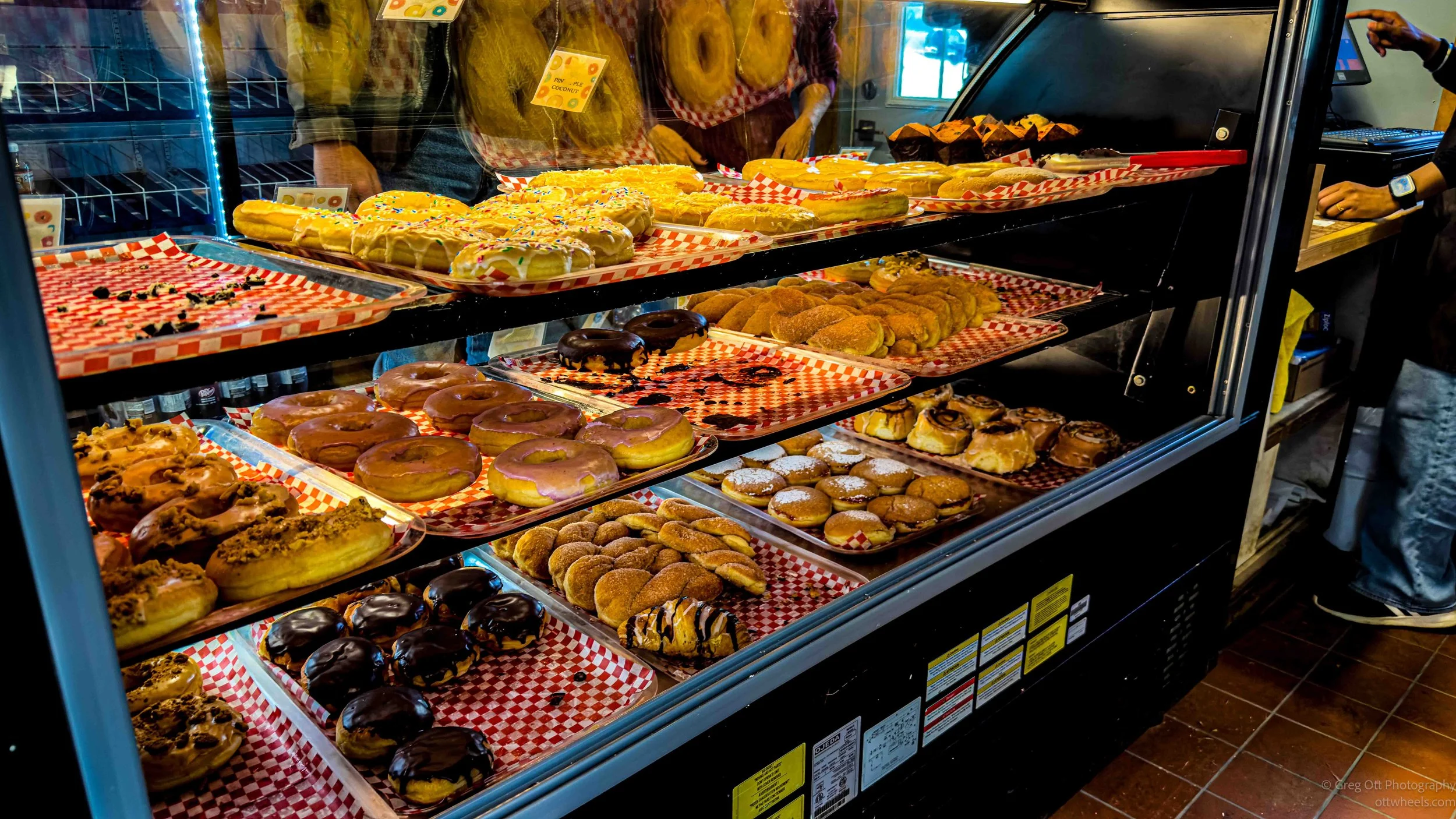
One guy had just returned from Ireland. I couldn’t believe he had flown from Ireland to Vancouver, Washington, and then driven all the way back up here. That sounded exhausting. The big seller there seemed to be the donuts. People were buying them constantly and the café clearly had a reputation for them.
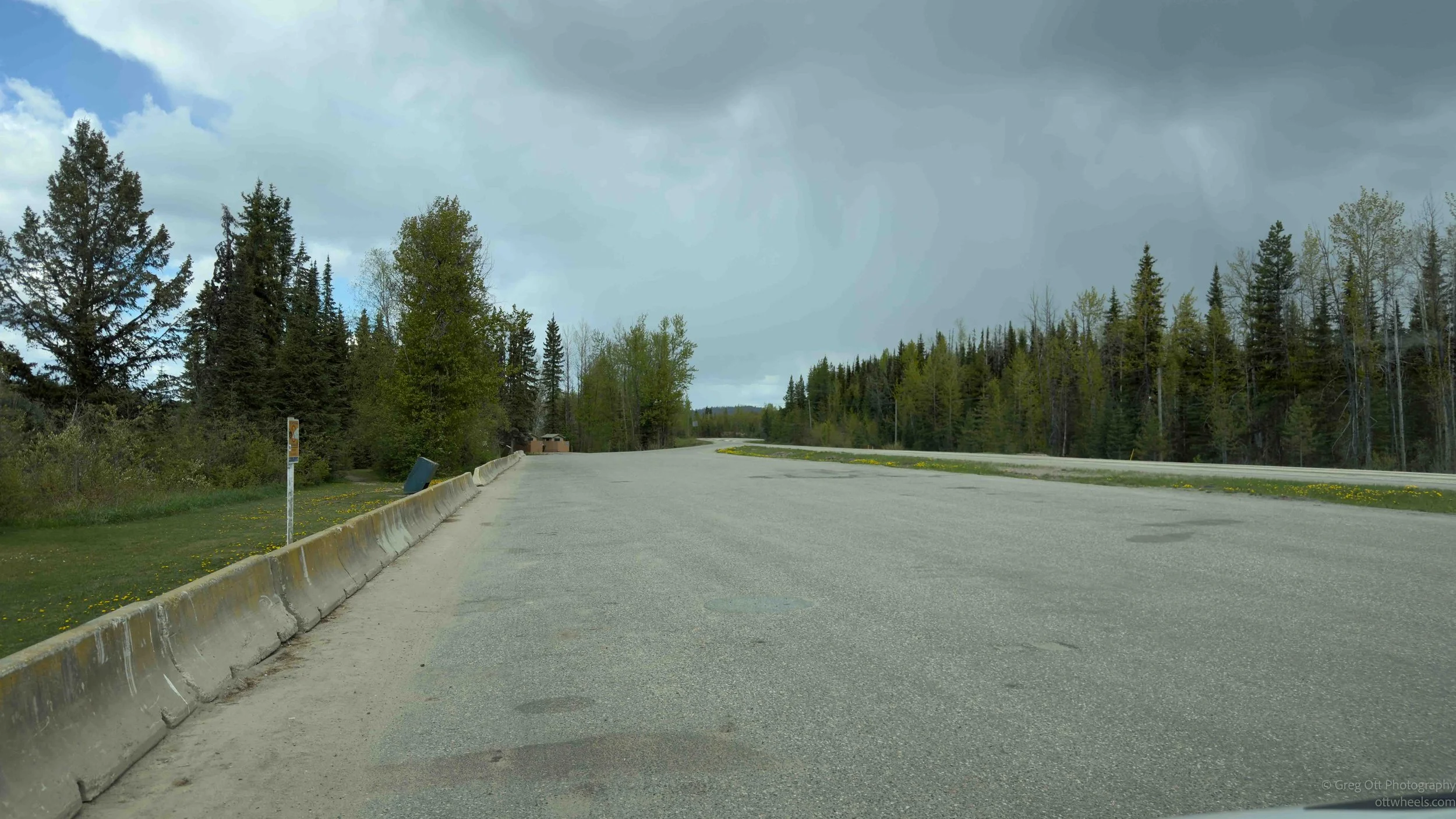
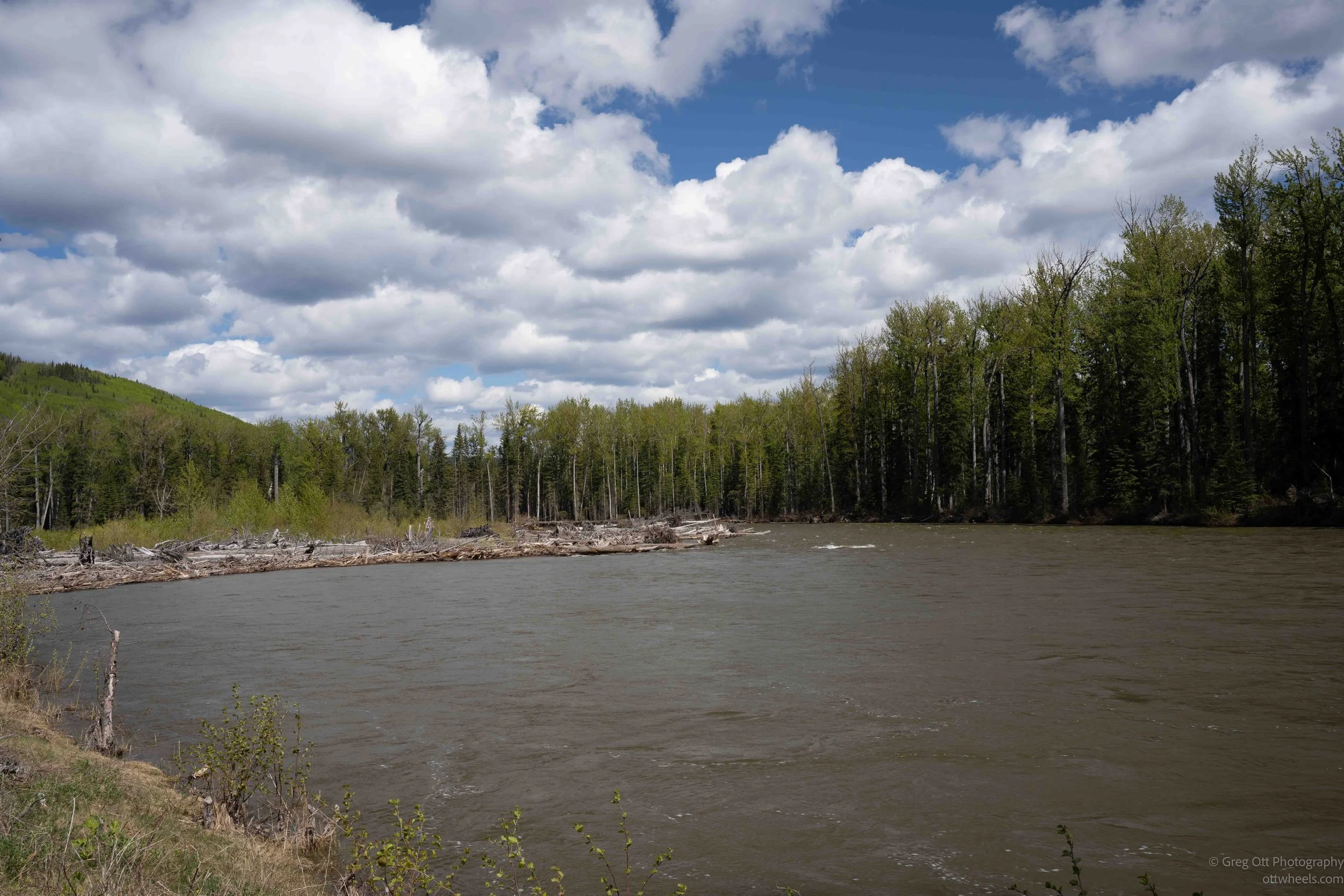
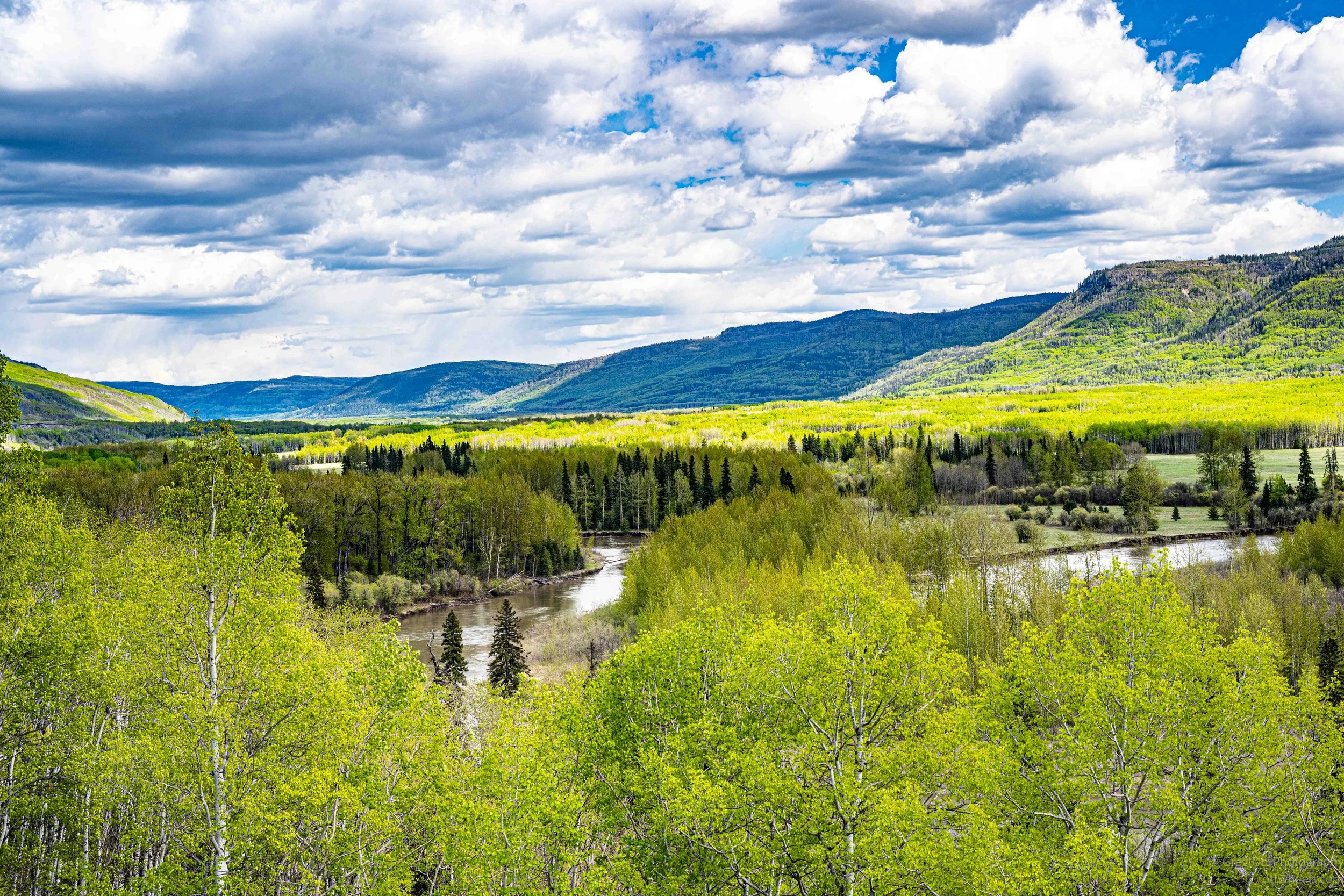
I stopped several more times at roadside pullouts and rest areas as I continued north. At one stop I could see logs periodically floating down the river. Some would collect temporarily at a bend while others would slowly break free and continue downstream. The sky had opened up by then and the scale of the landscape started to feel much larger. Wide valleys, rivers, mountains, and long stretches of highway disappearing into the distance.
Chetwynd, British Columbia
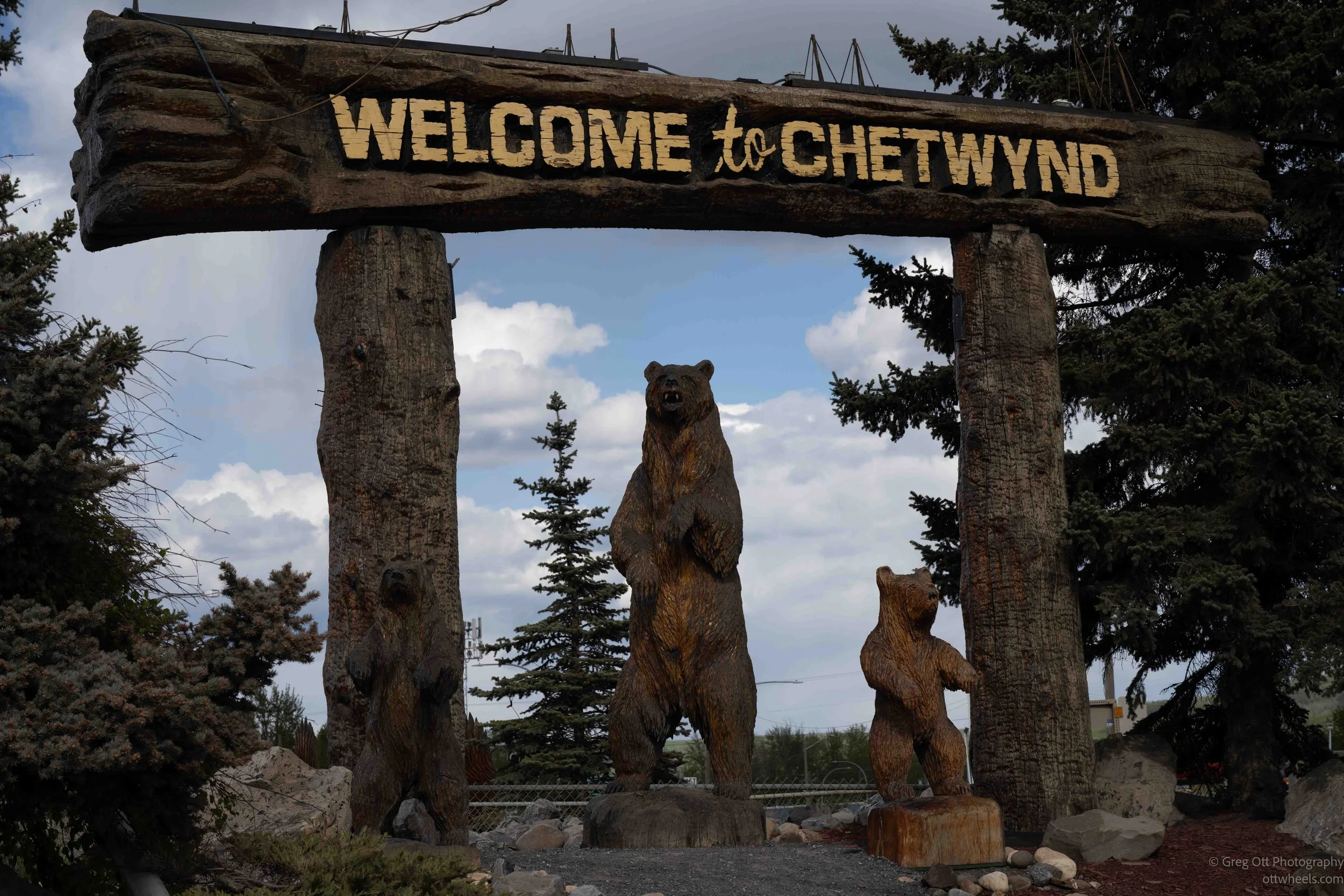
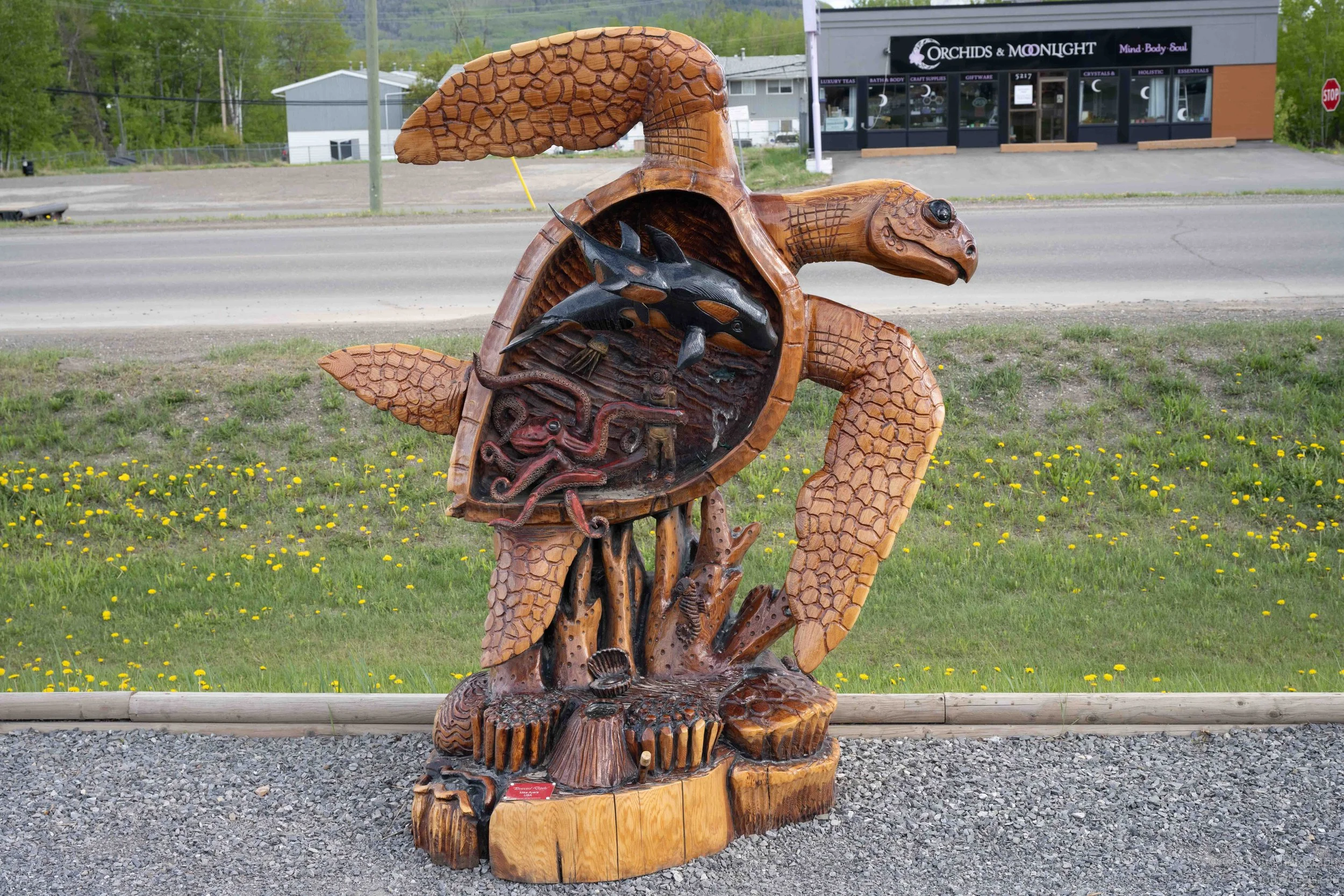
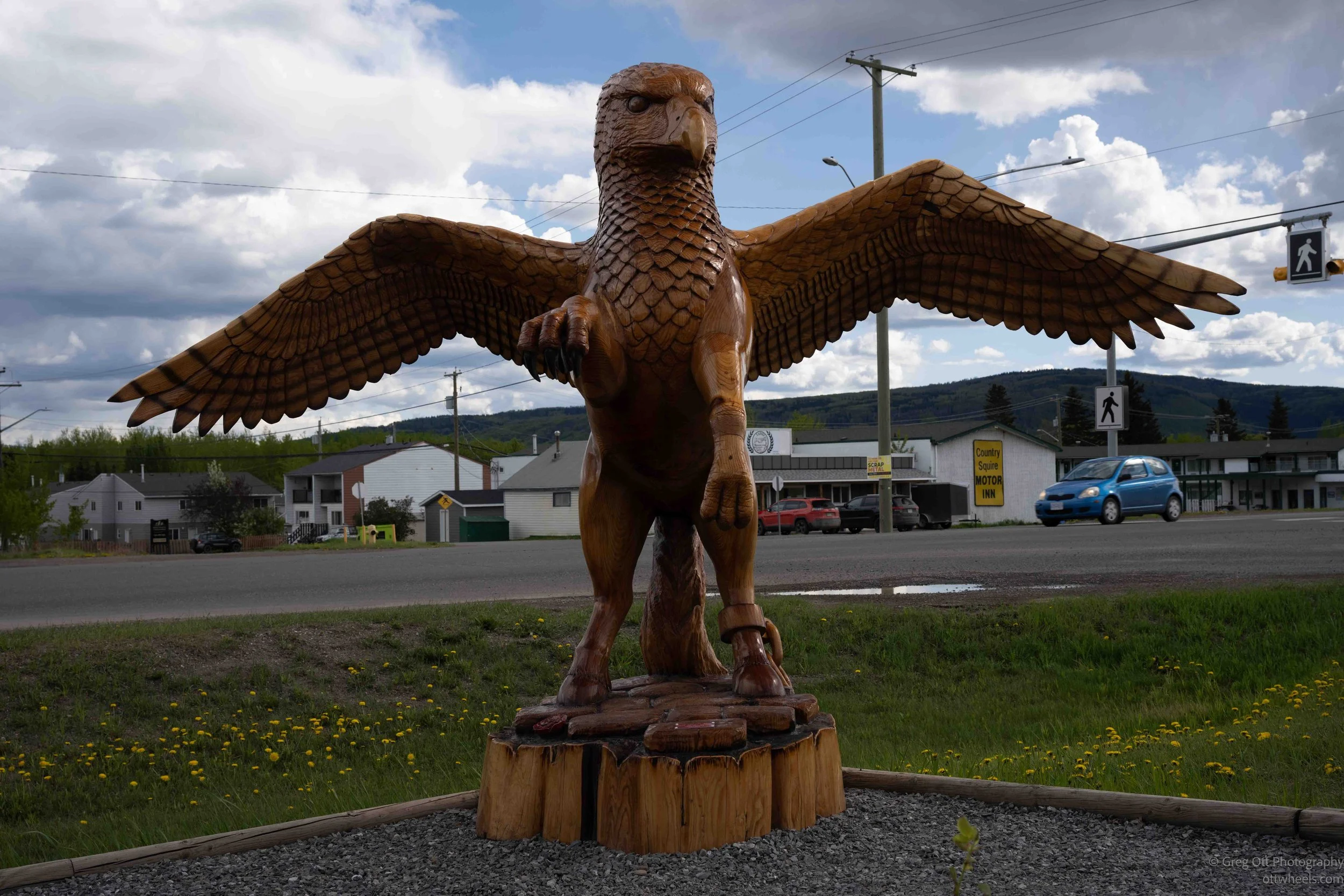
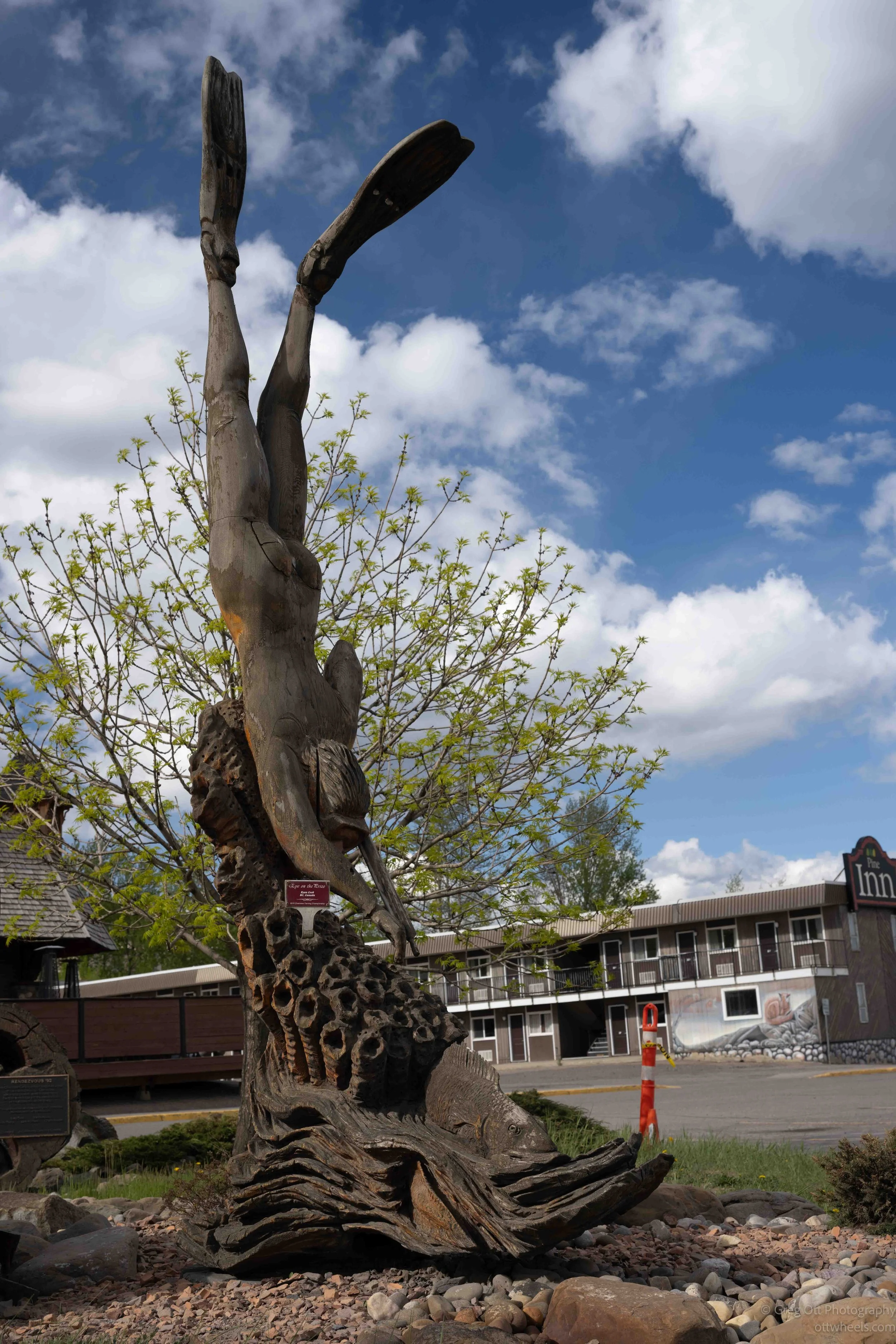
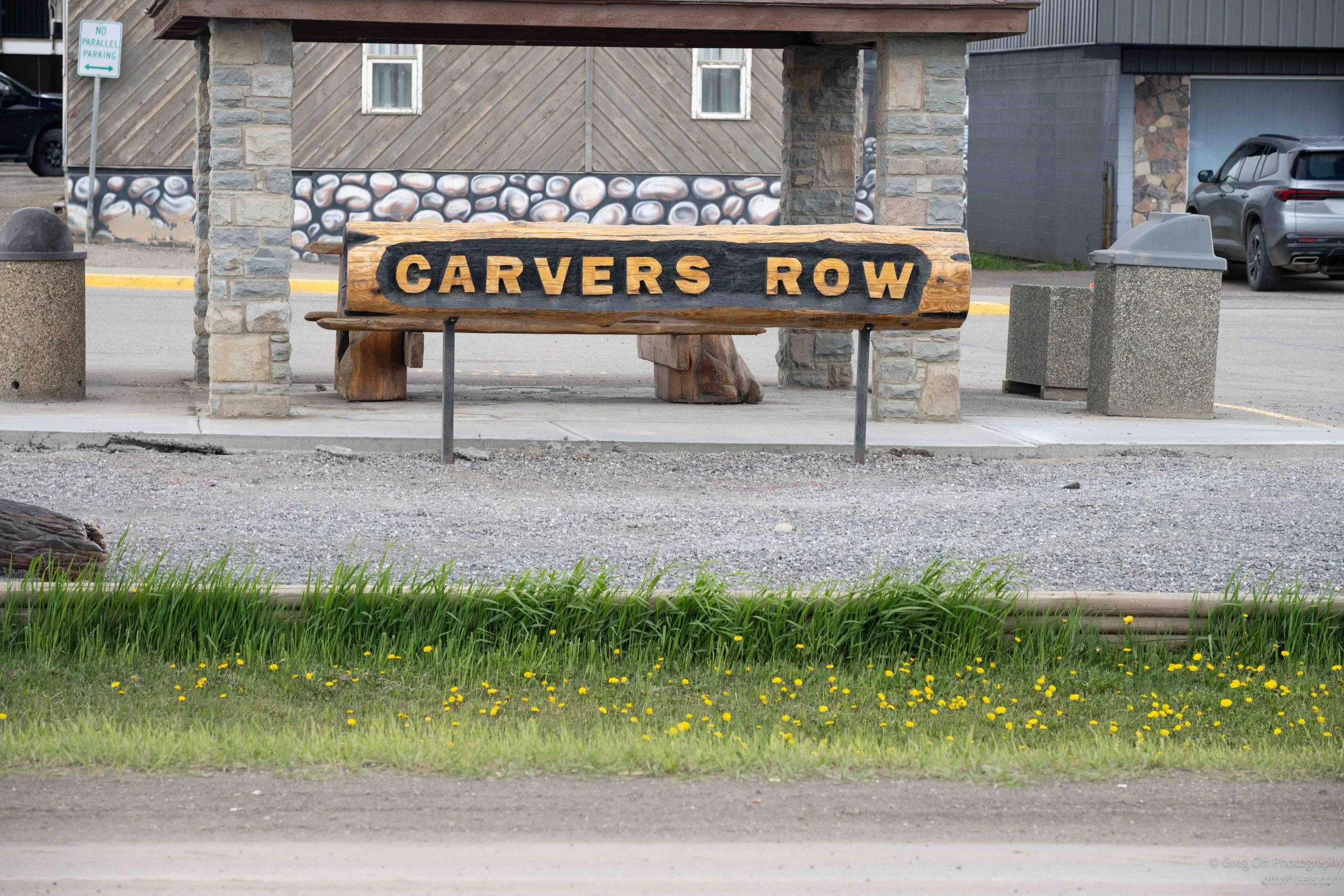
I eventually pulled into Chetwynd where large wood carvings lined sections of the Cariboo Highway, Highway 97. Right away I noticed a sign for the “20th Annual Chainsaw Carving Championship – June 11–14.” I parked and started walking around taking photos.
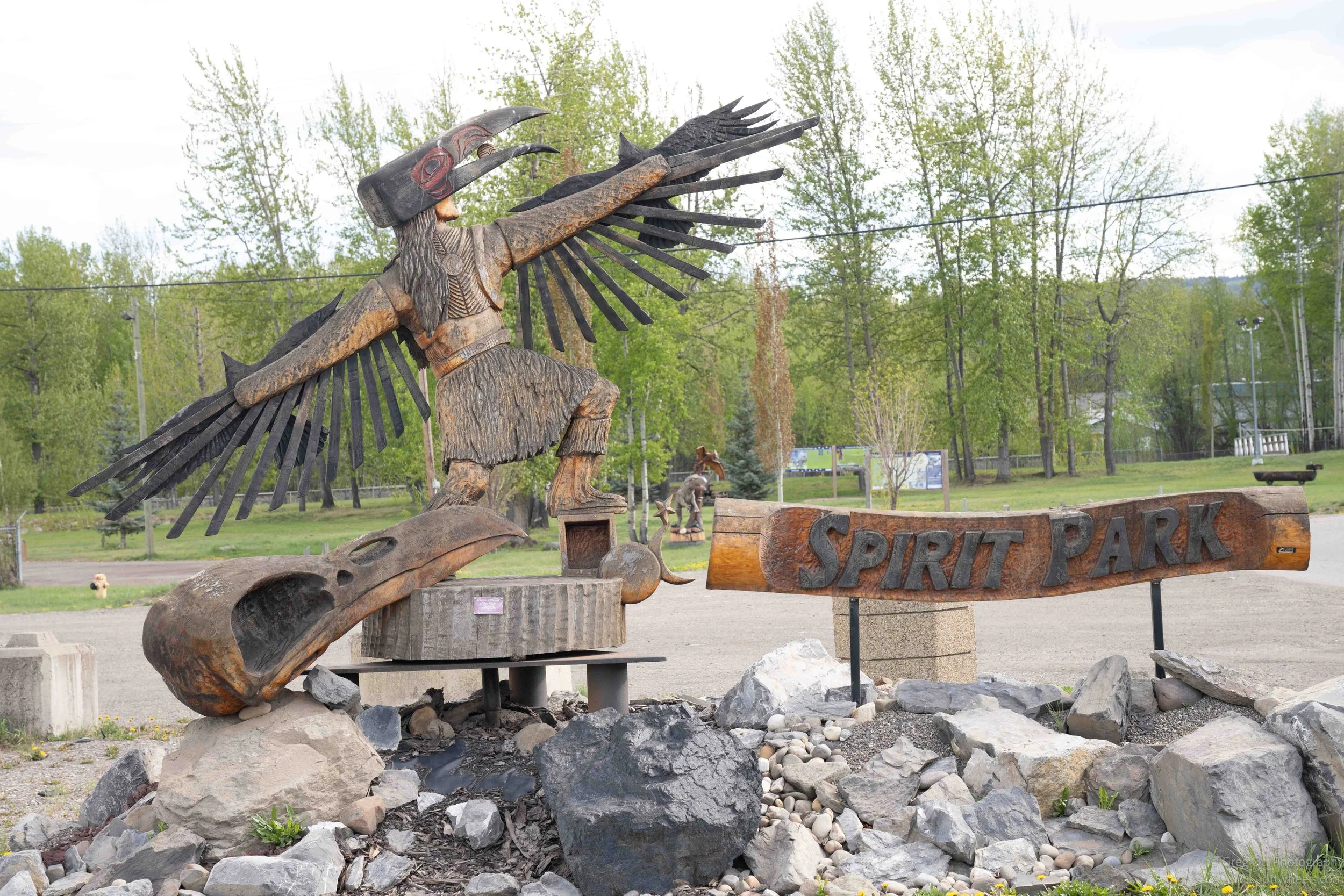
The carvings were everywhere. Bears, eagles, wolves, dragons, Indigenous-inspired themes, fantasy creatures, historical figures, and abstract designs were scattered throughout town. Some were polished and incredibly detailed while others looked rougher and more experimental. I started noticing artist names from Canada, Japan, Germany, the United States, and other countries on tags.
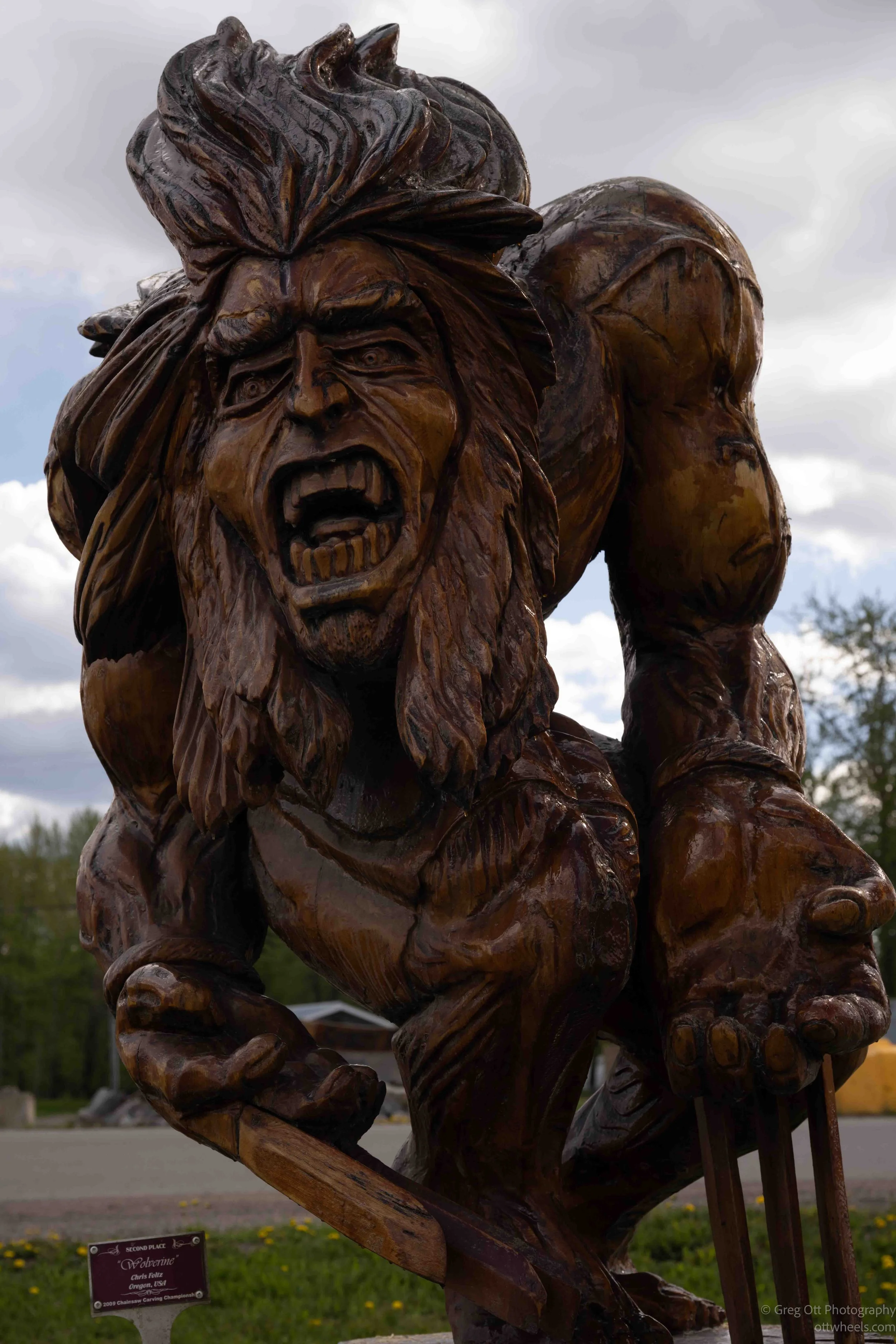
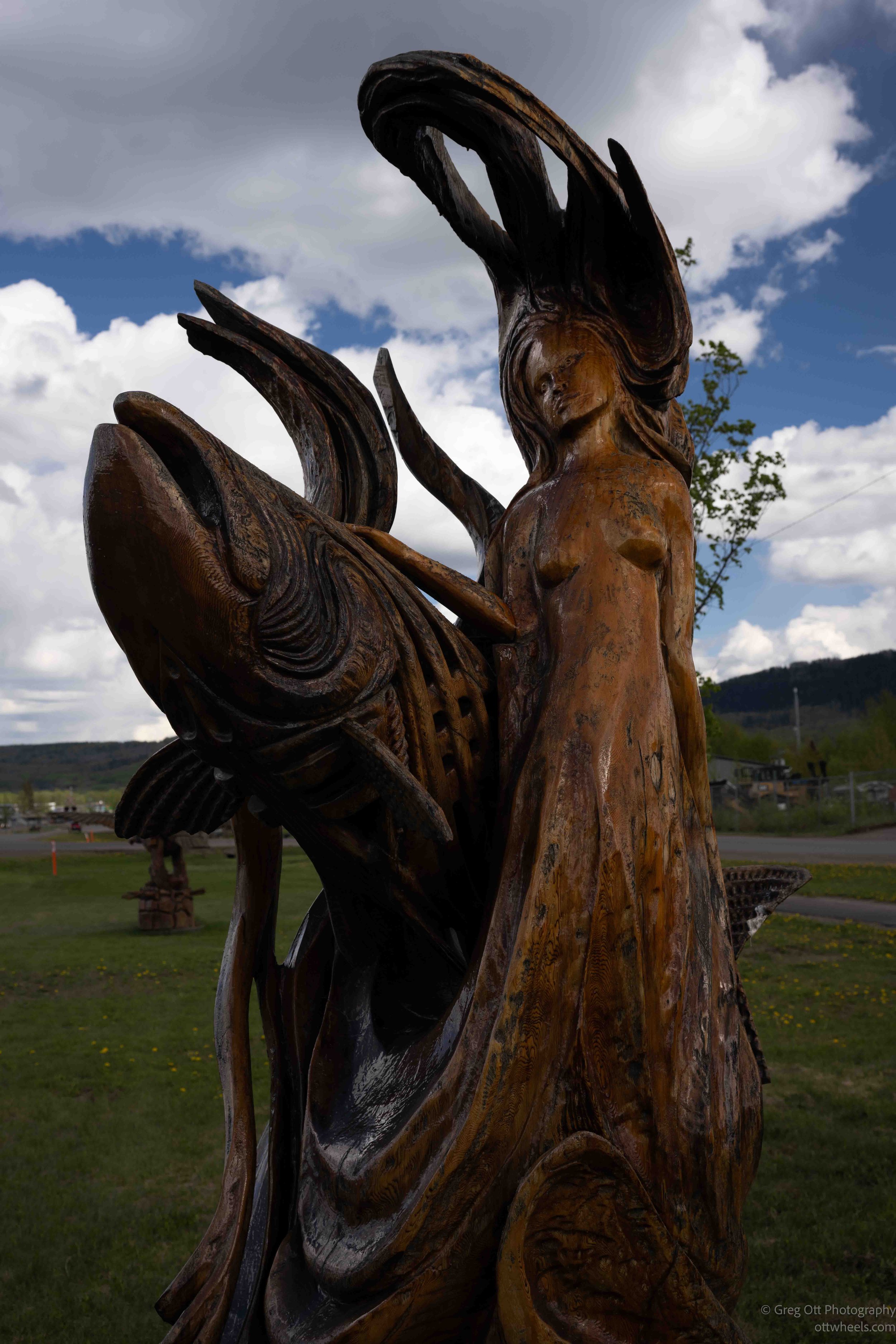
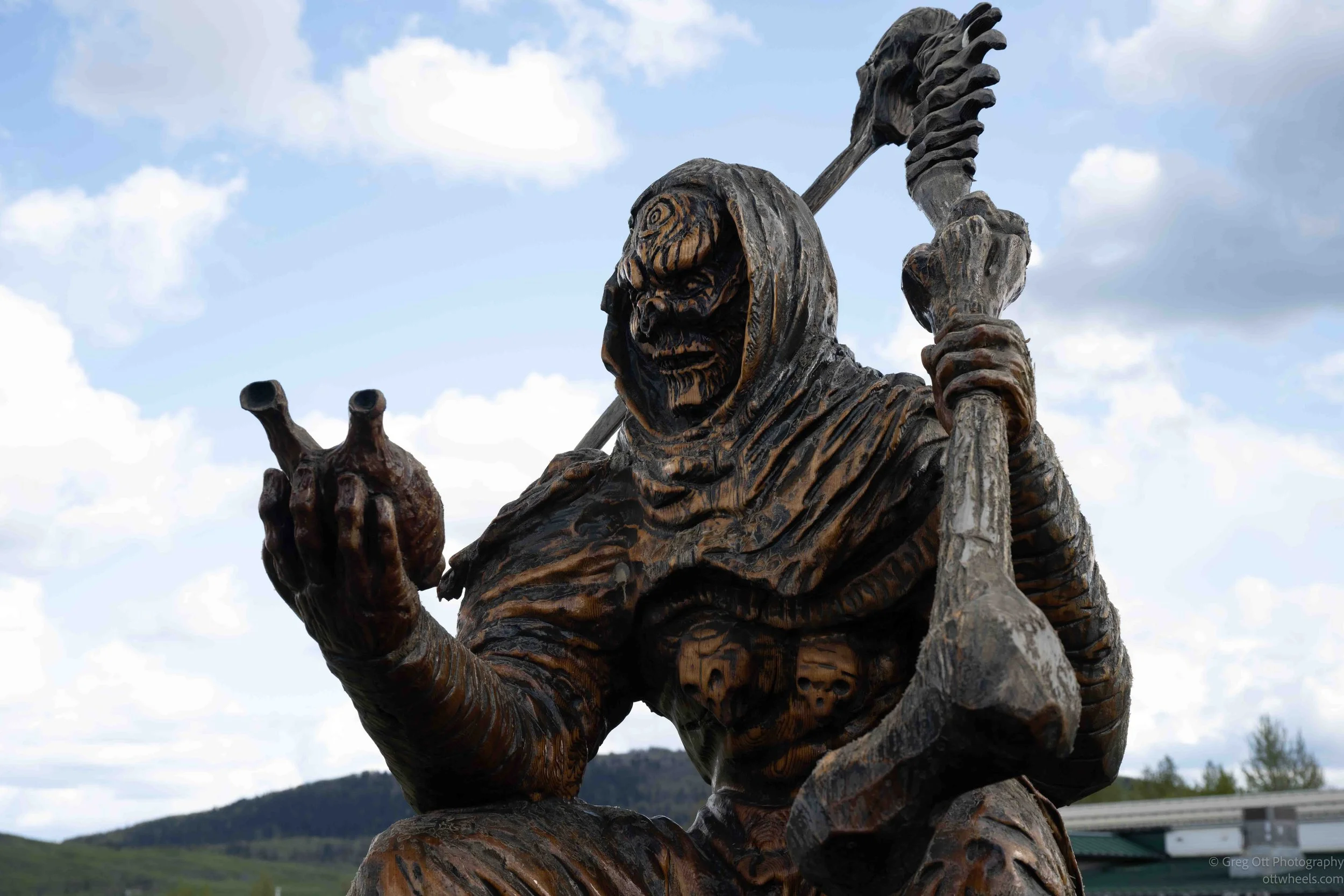
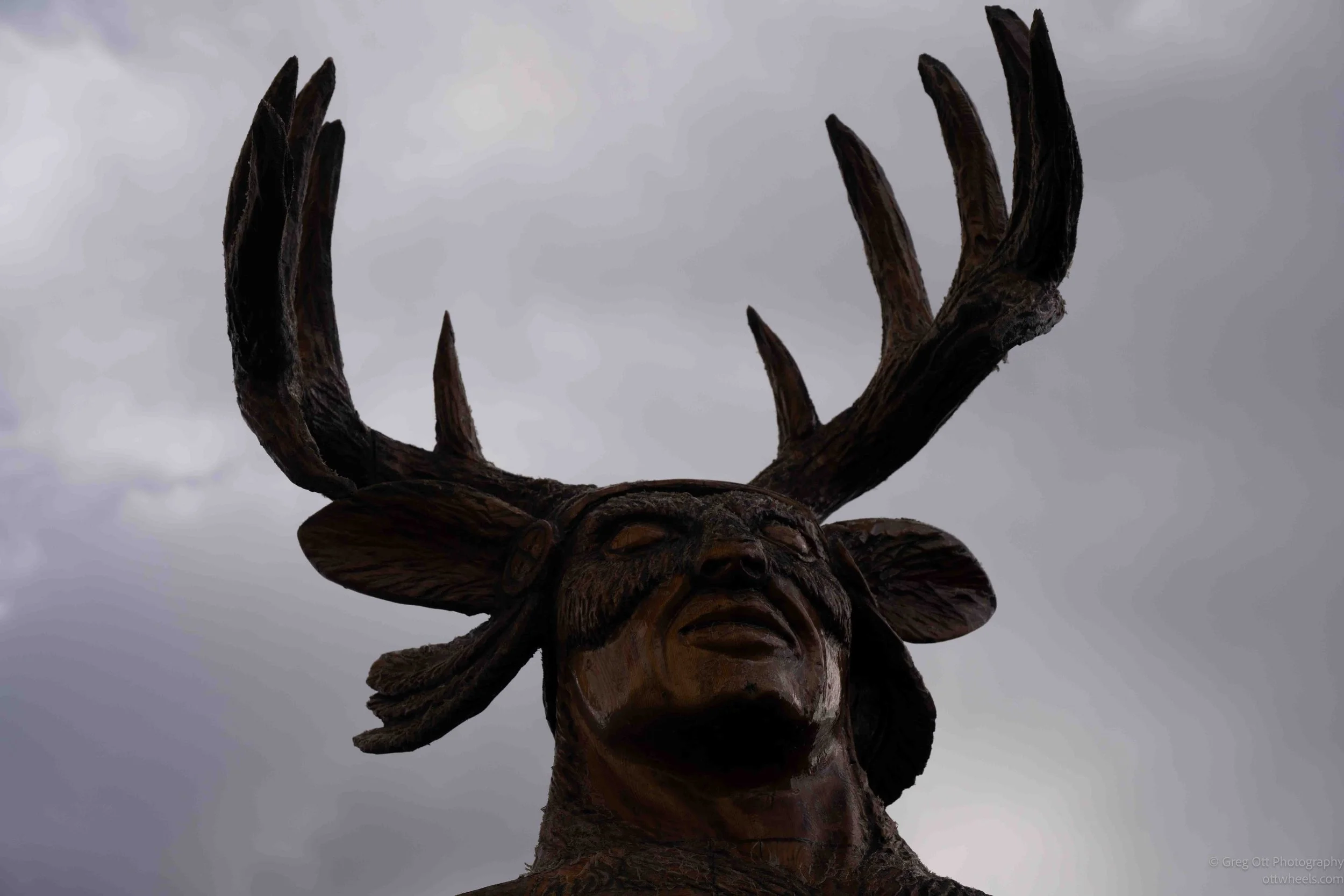
I stopped someone on the street and asked about the carvings. He explained that each year the town invites about a dozen chainsaw carvers from around the world to compete. The committee brings them into town, covers their lodging, and hosts the competition over several days while visitors walk around watching the sculptures slowly emerge from massive cedar logs.
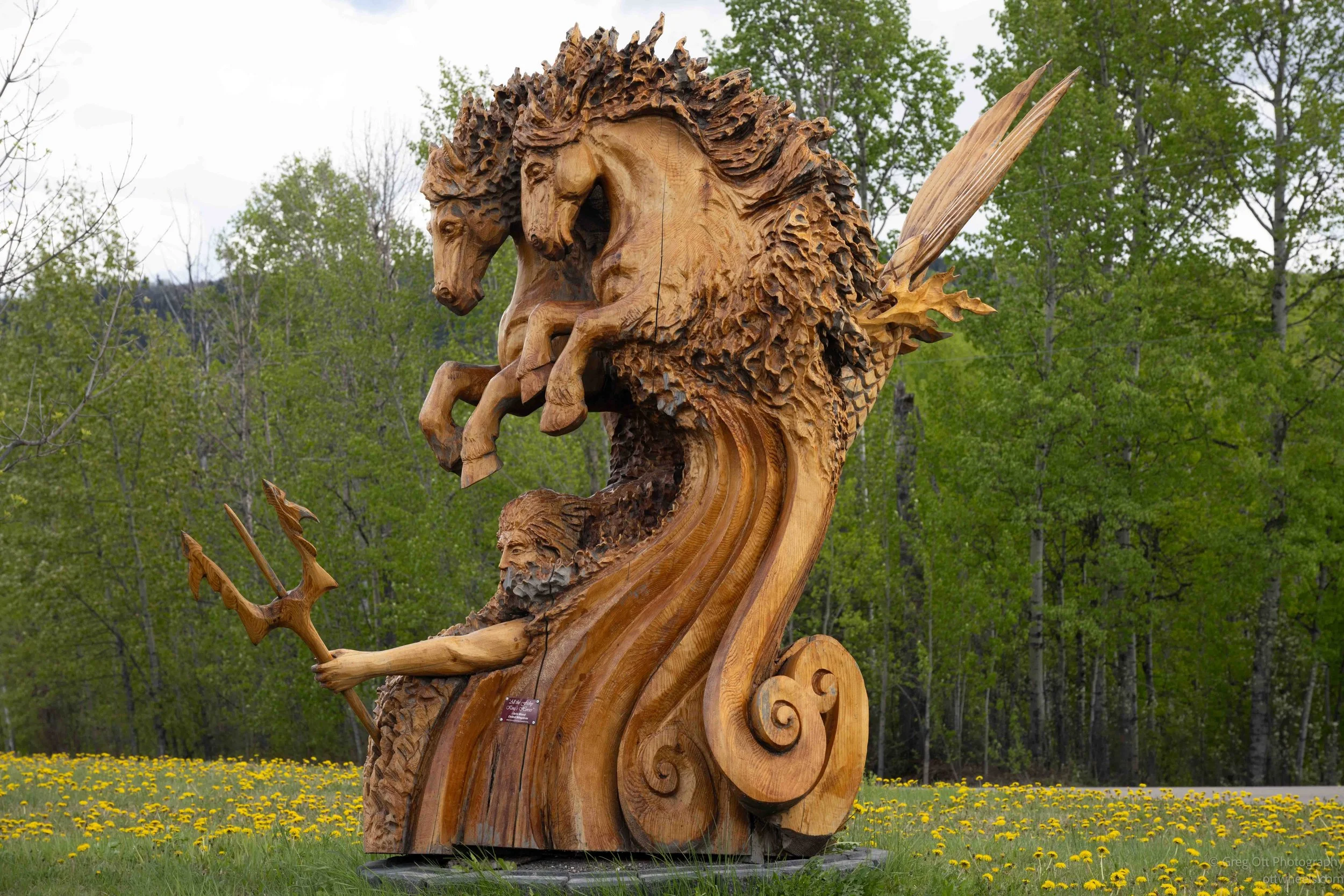
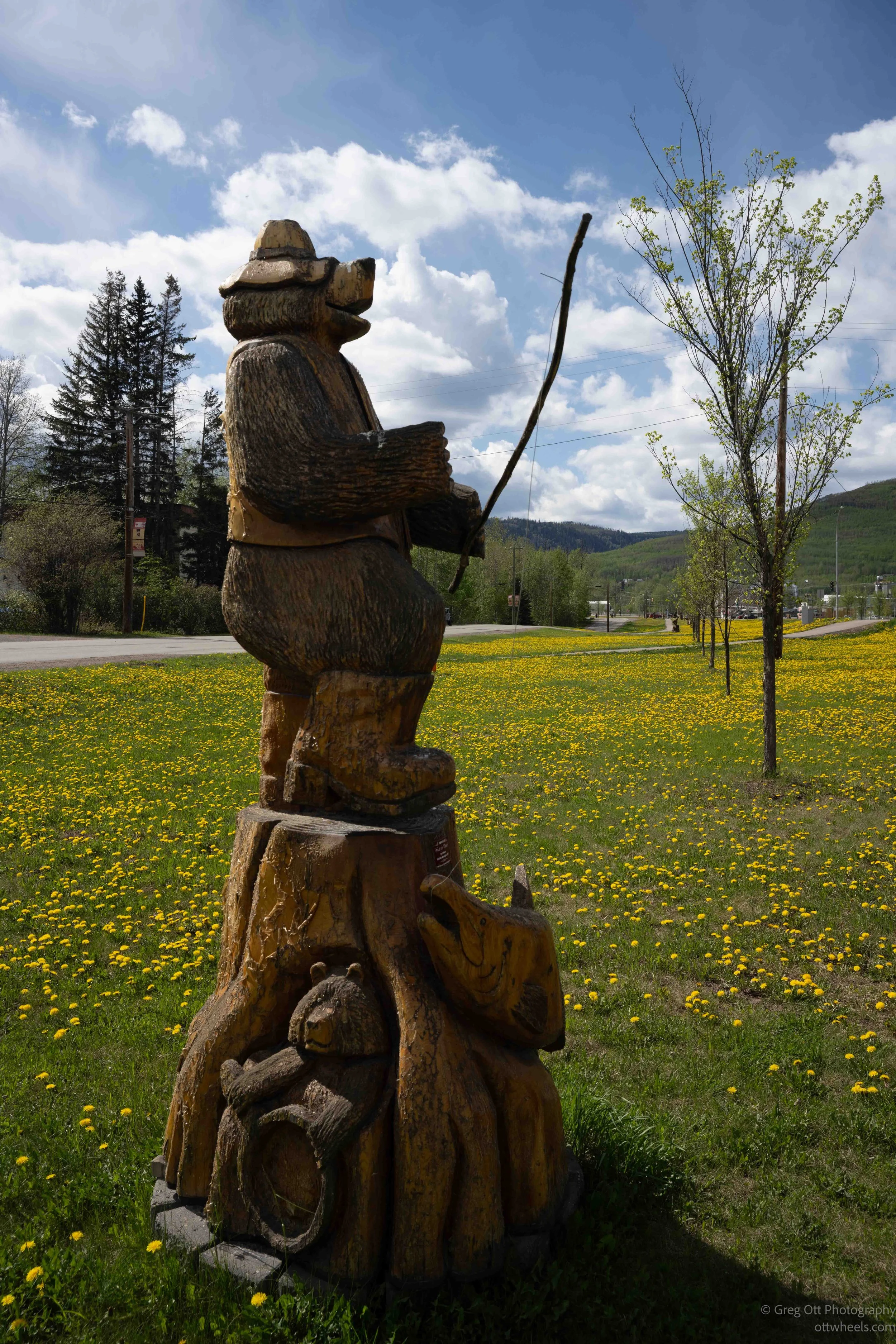
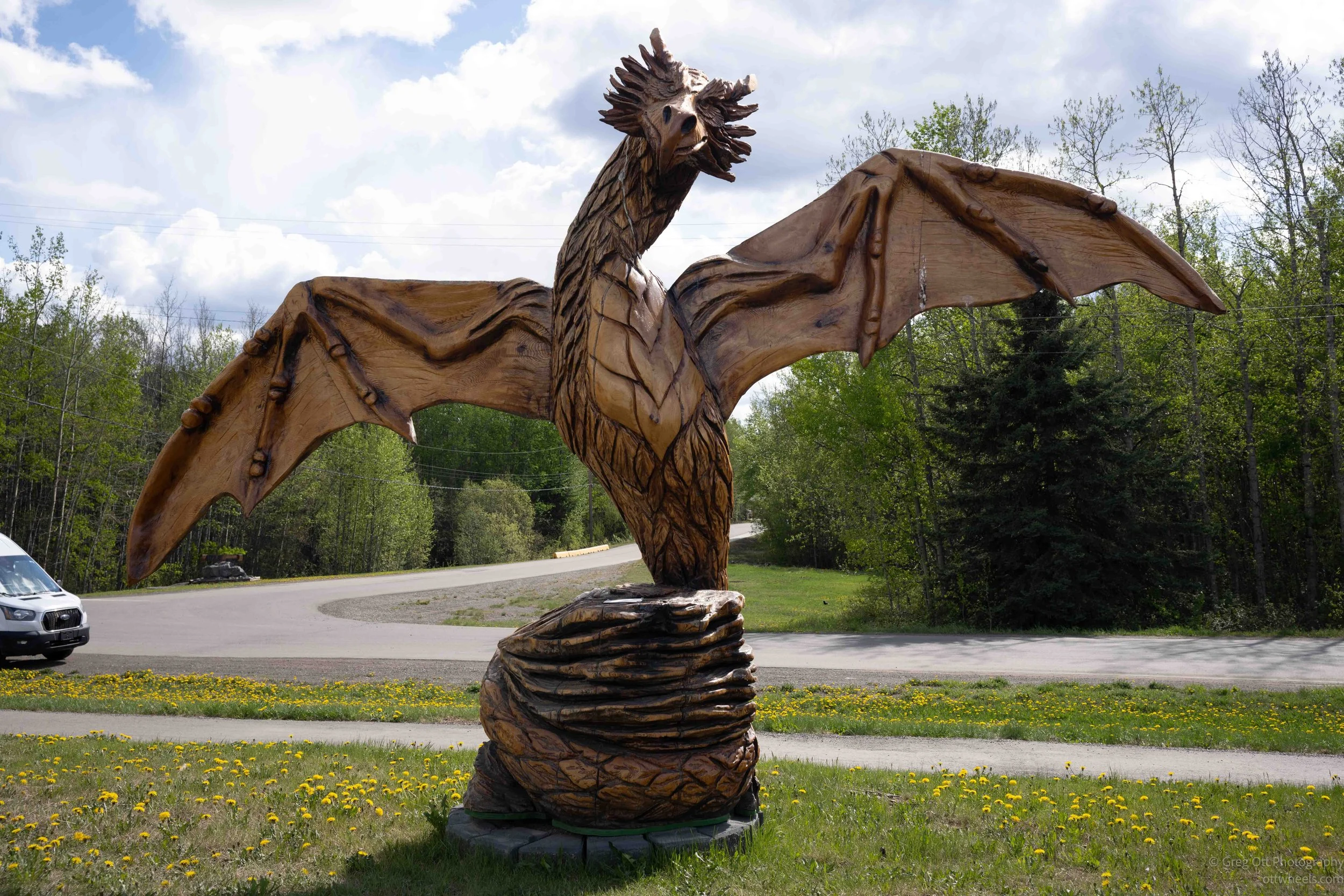
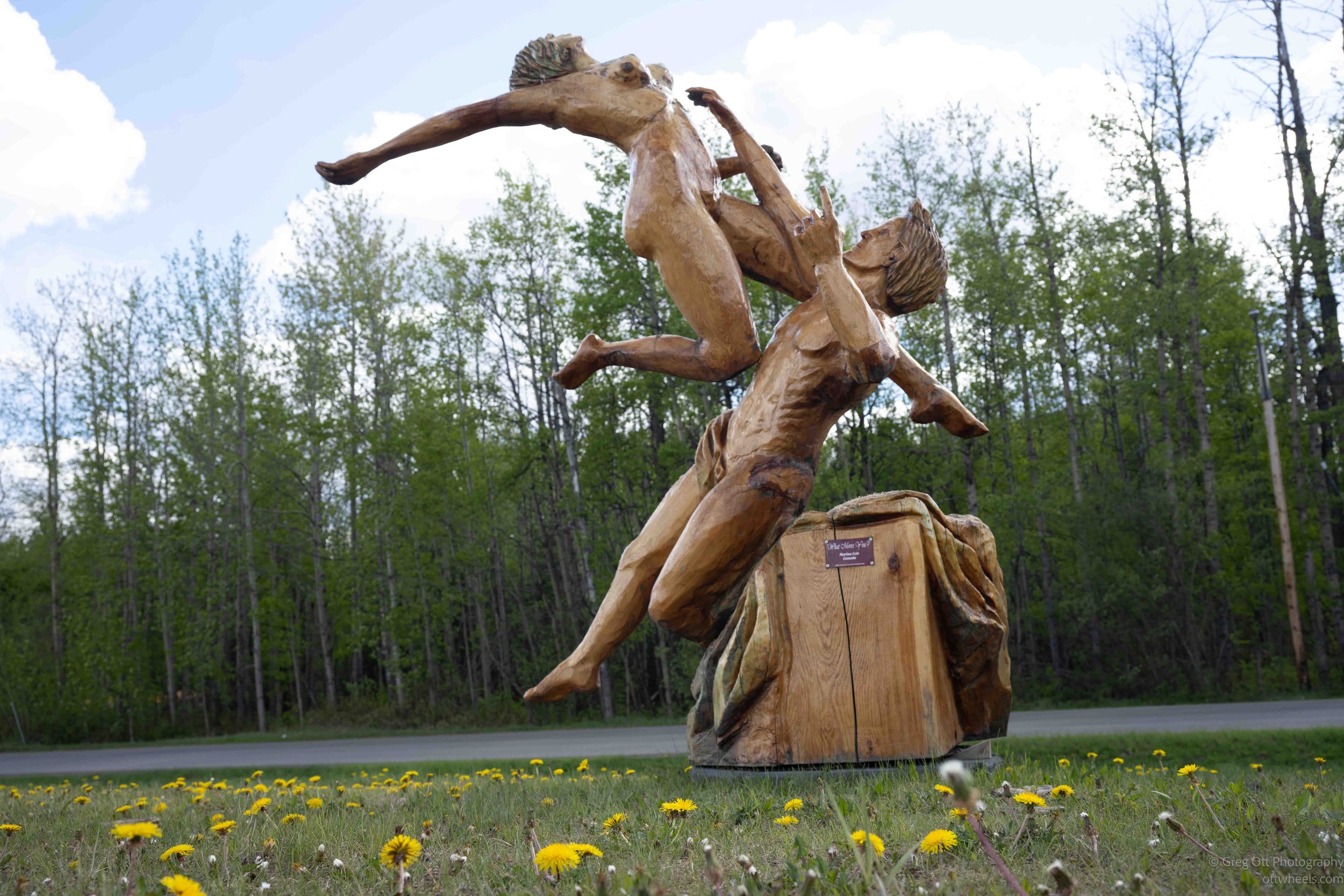
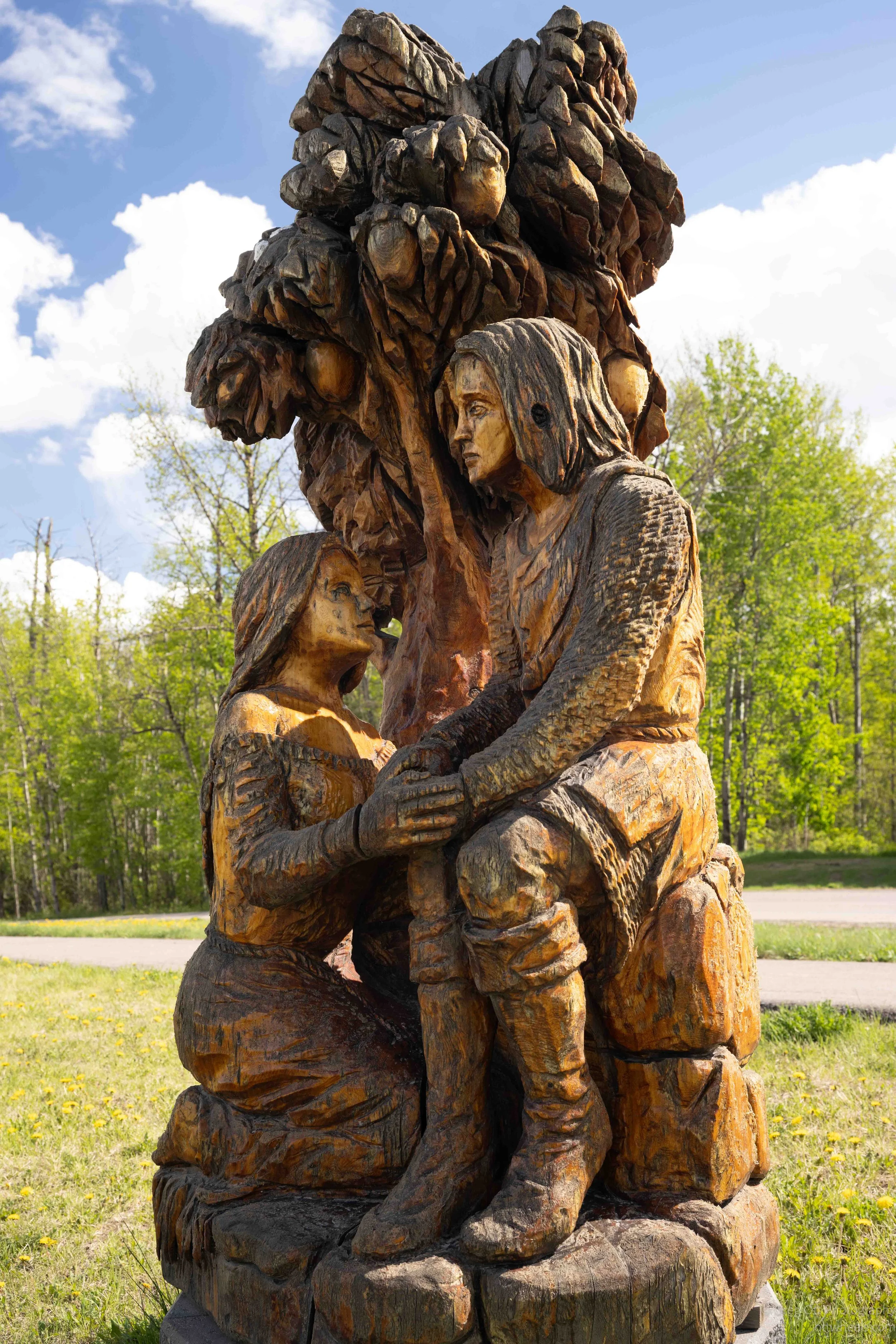
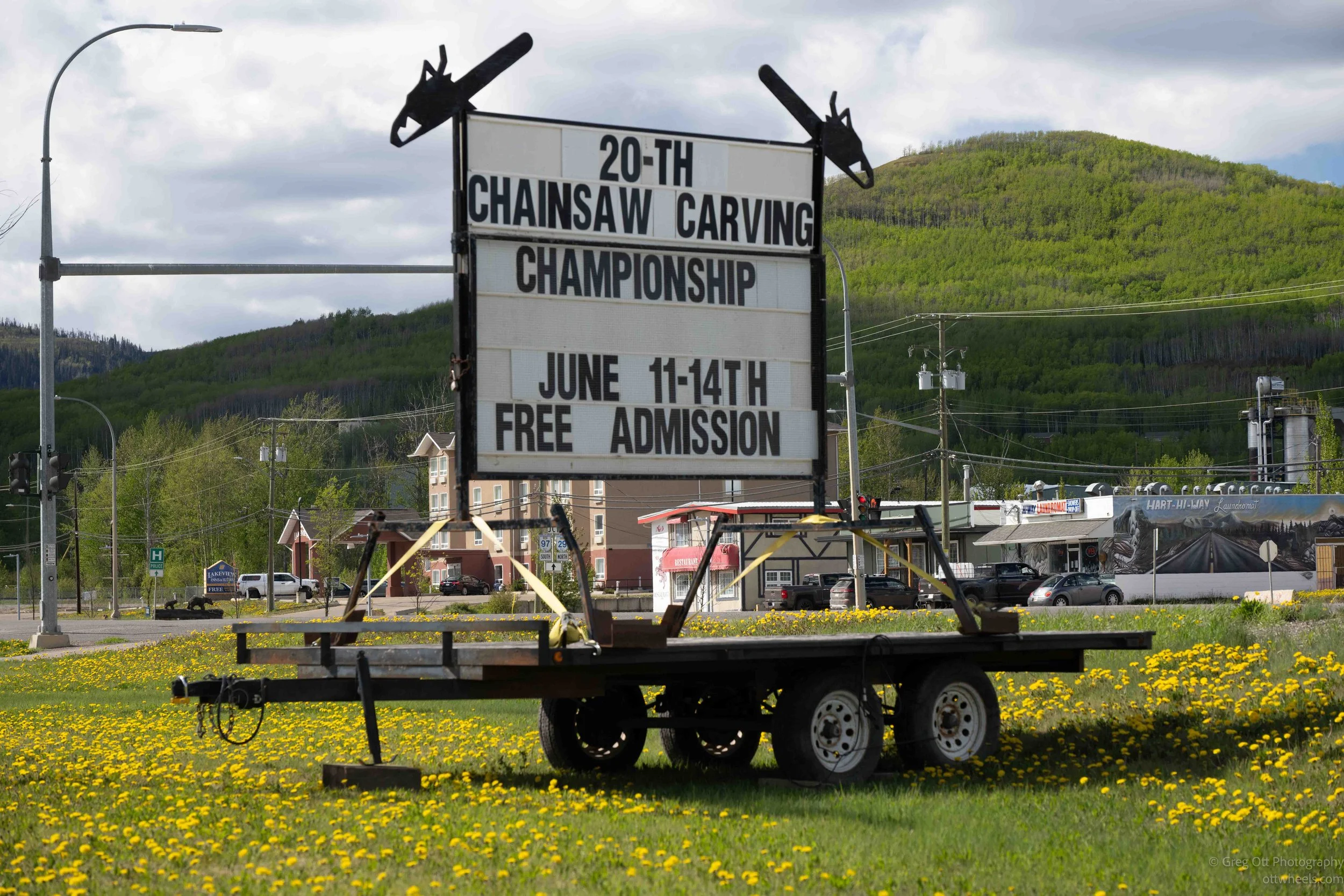
The event started in 2005 and has become one of the best-known chainsaw carving competitions in the world. Originally the carving project grew out of efforts to deal with the huge number of trees damaged by the mountain pine beetle infestation throughout the region. Instead of simply cutting and removing dead trees, Chetwynd turned carving into a public art project. Over time the competition grew into an international event and completely transformed the town.
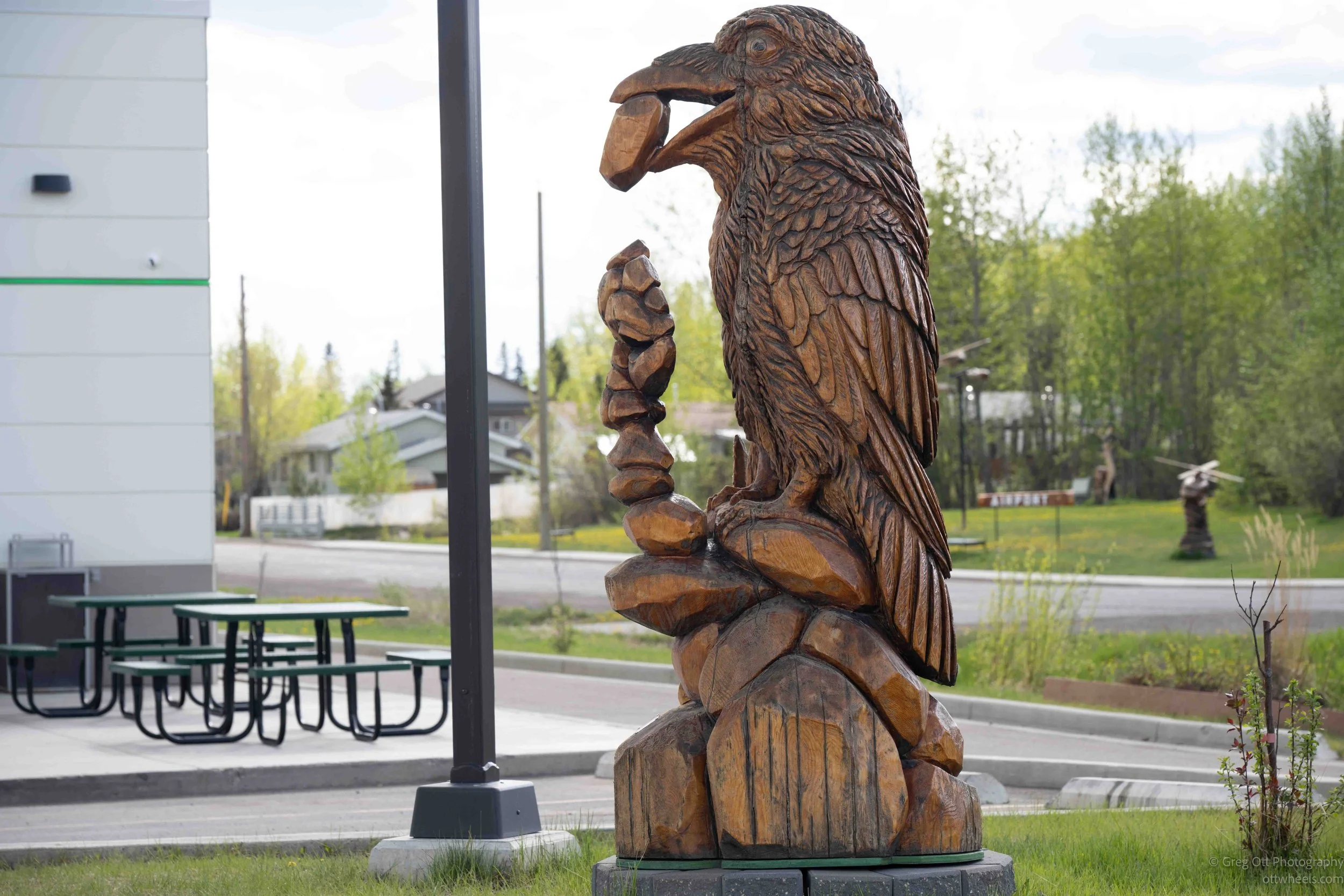
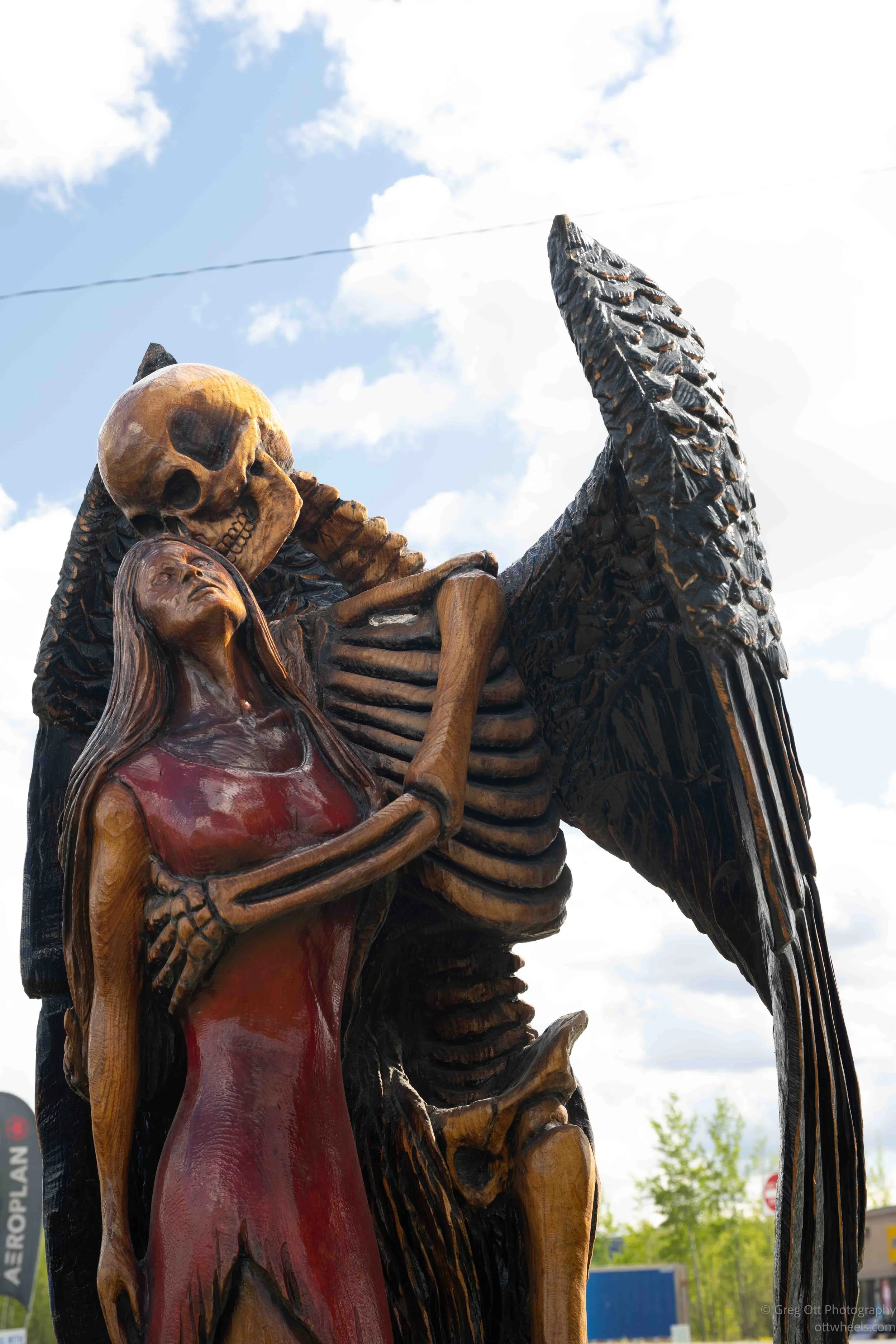
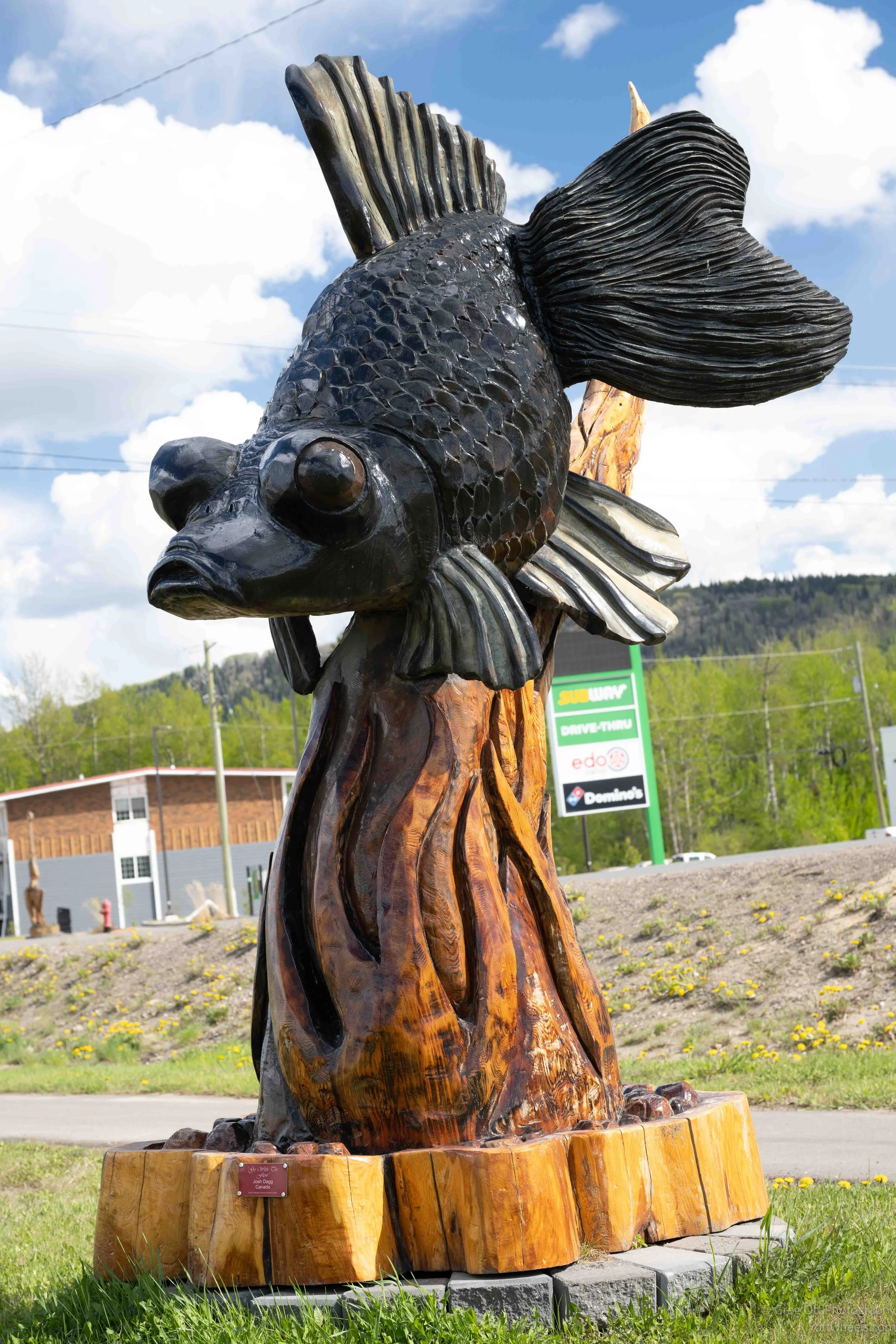
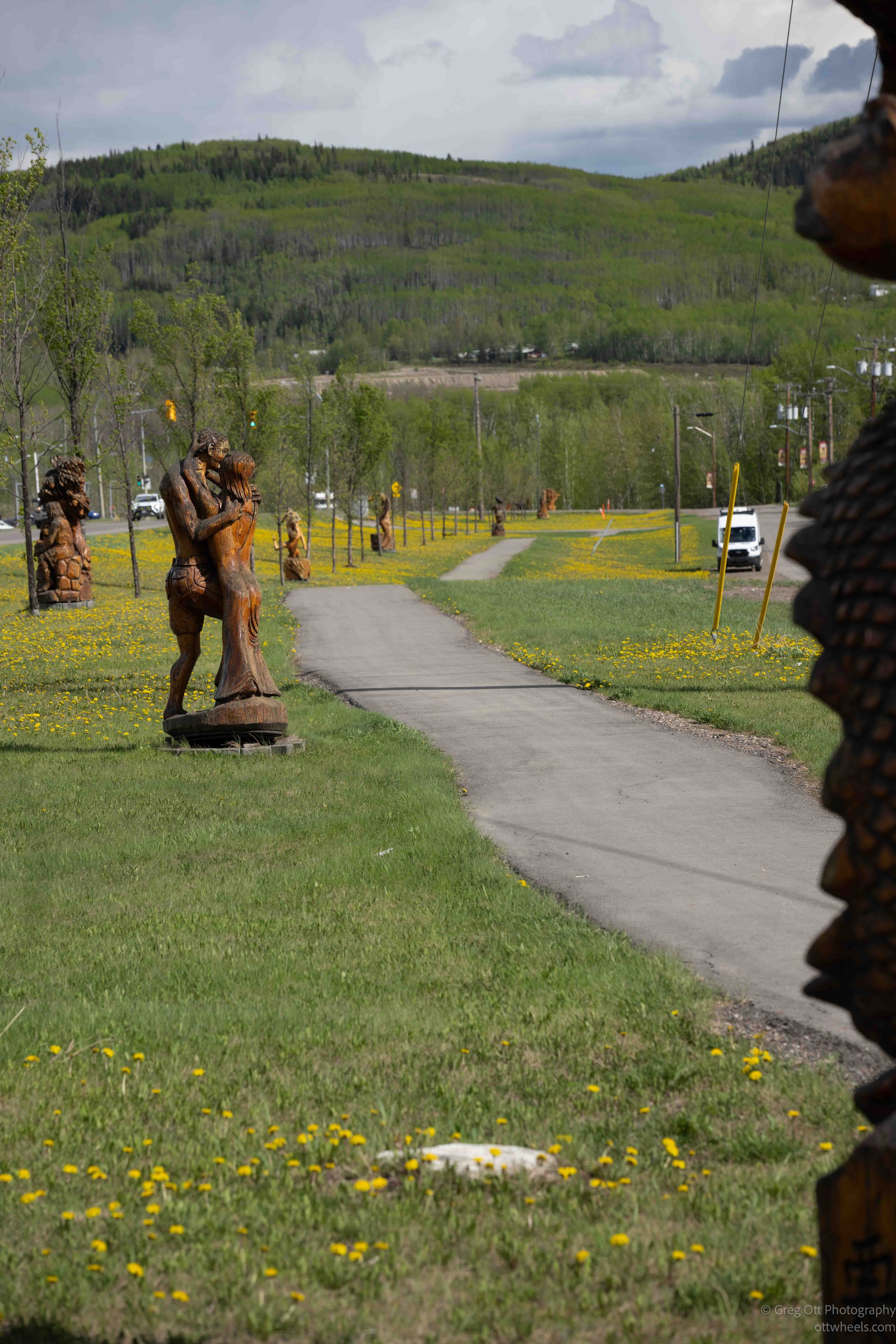
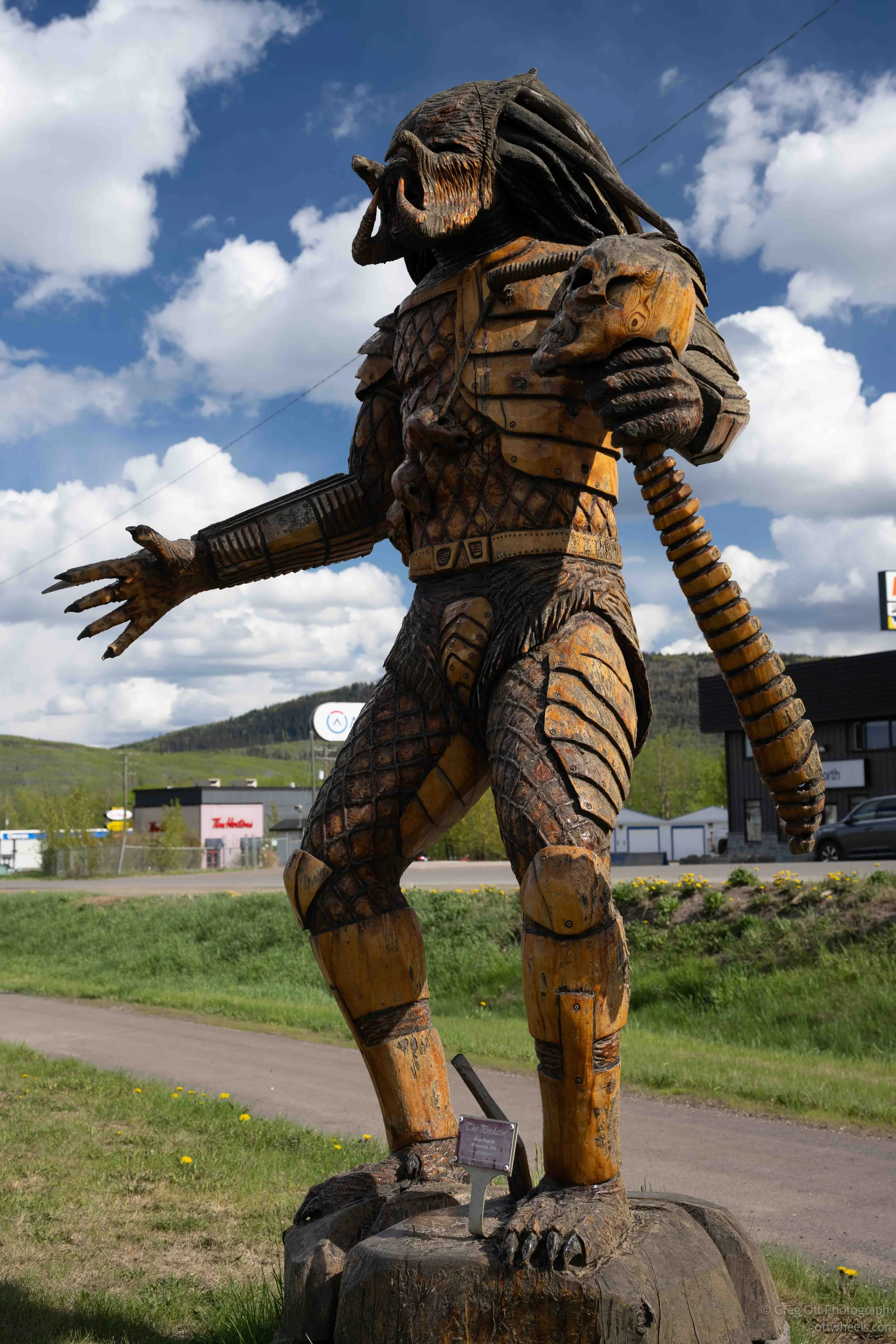
The carvings are created from giant western red cedar logs roughly eight feet tall and up to four feet across. The artists only have around 35 hours spread across four days to complete their sculptures. Most of the shaping is done with chainsaws, but smaller detail tools, grinders, torches, and sanding equipment are also used to finish the pieces. Spectators can walk through the competition area while the artists work, watching giant rough cuts slowly turn into incredibly detailed sculptures.
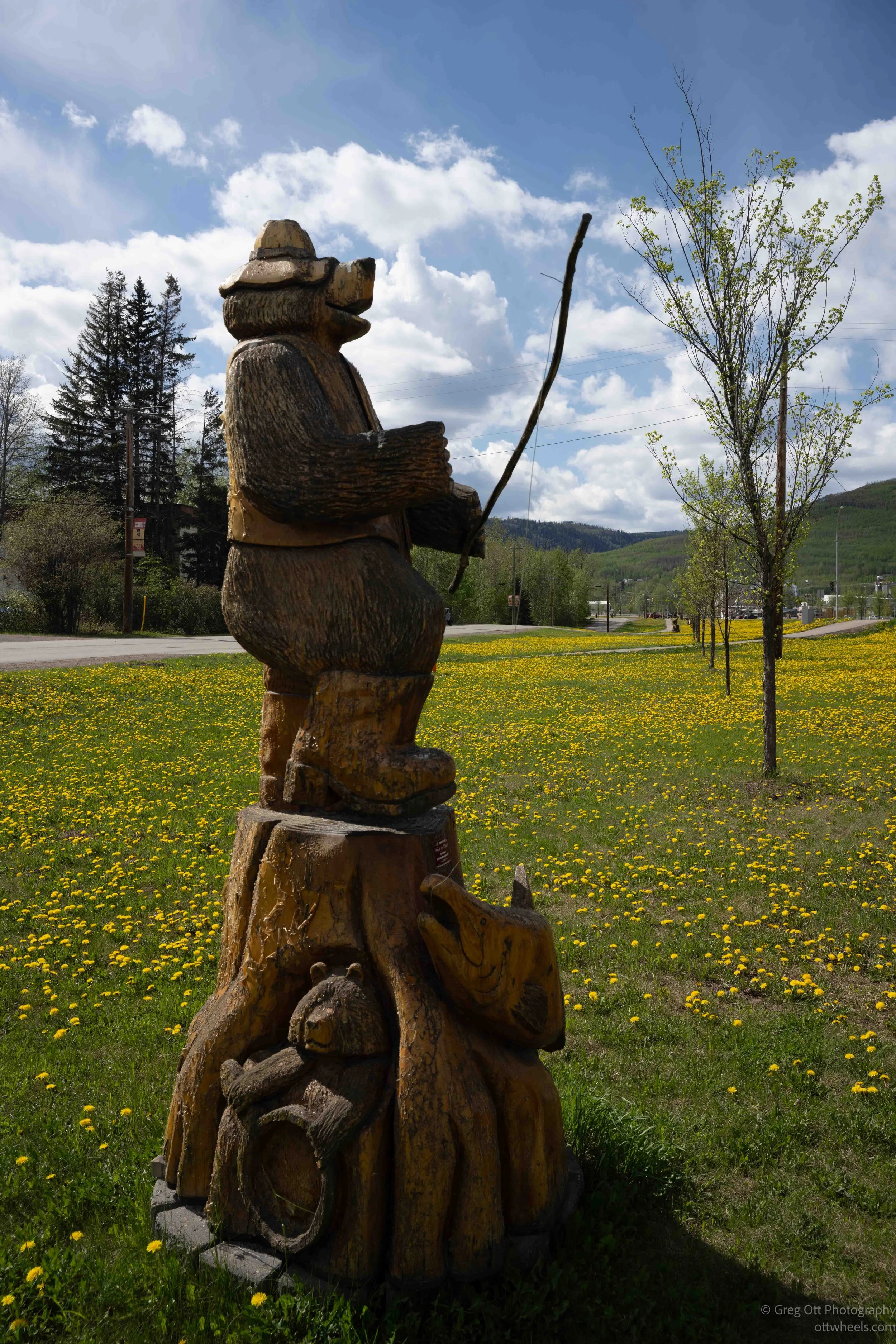
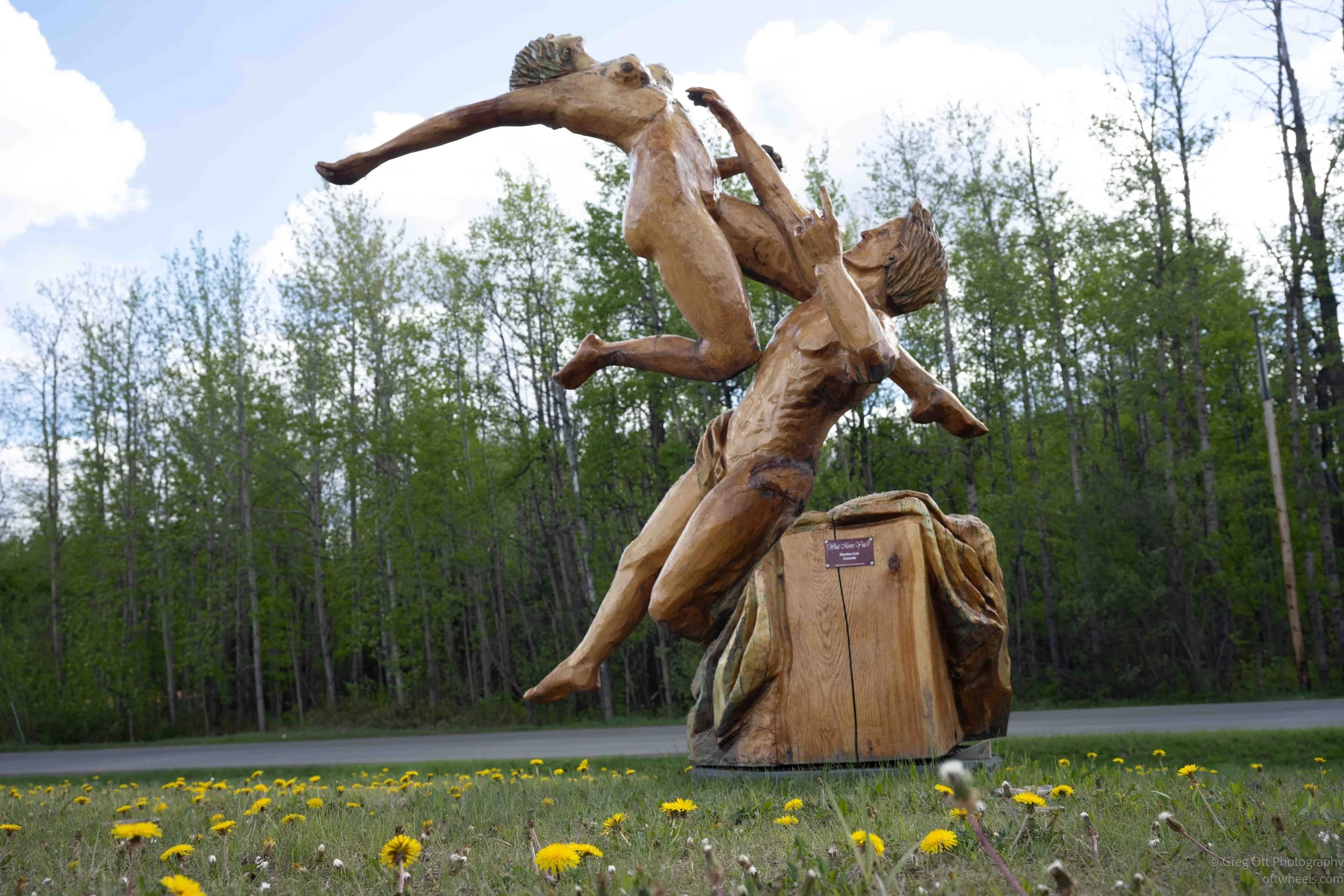
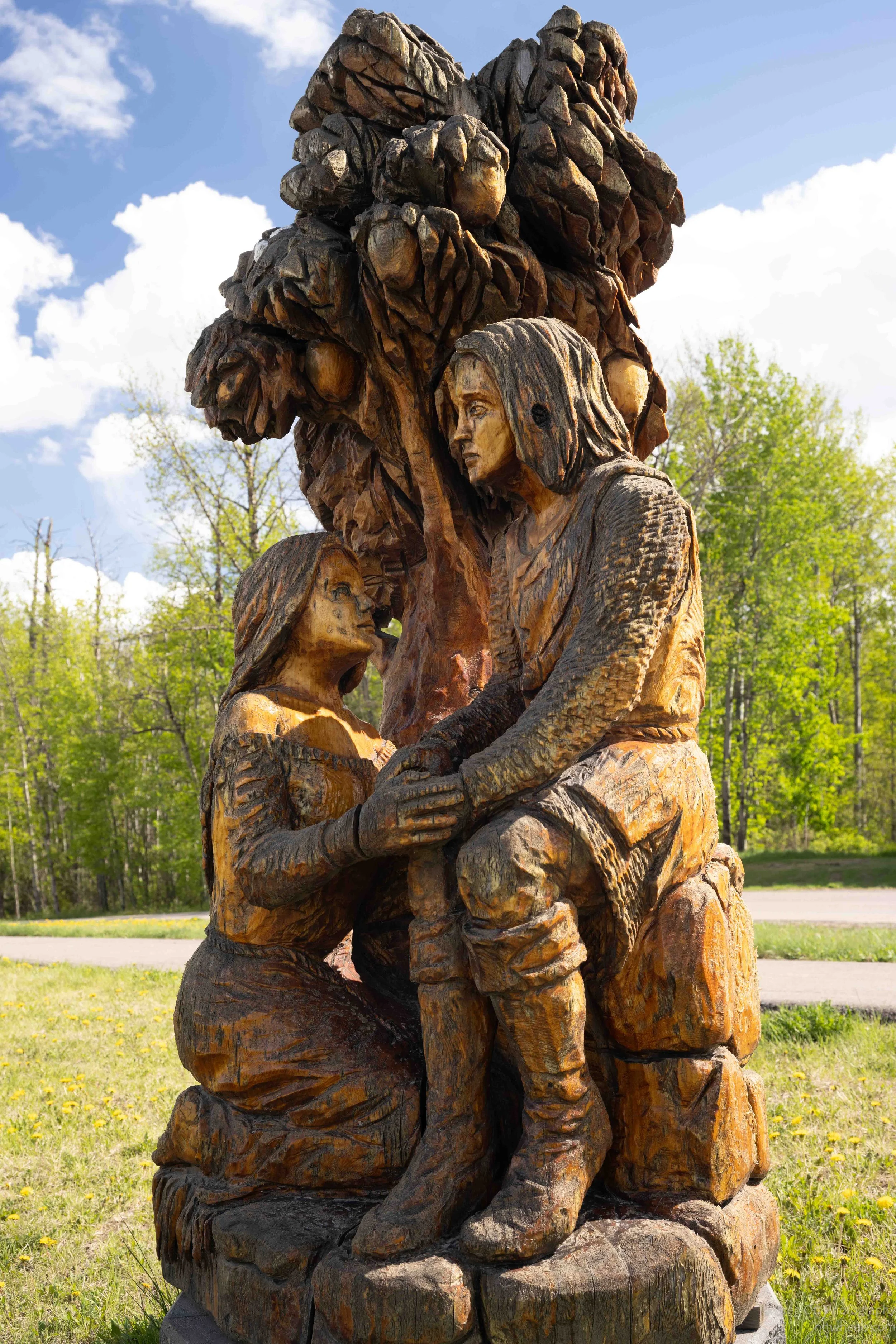
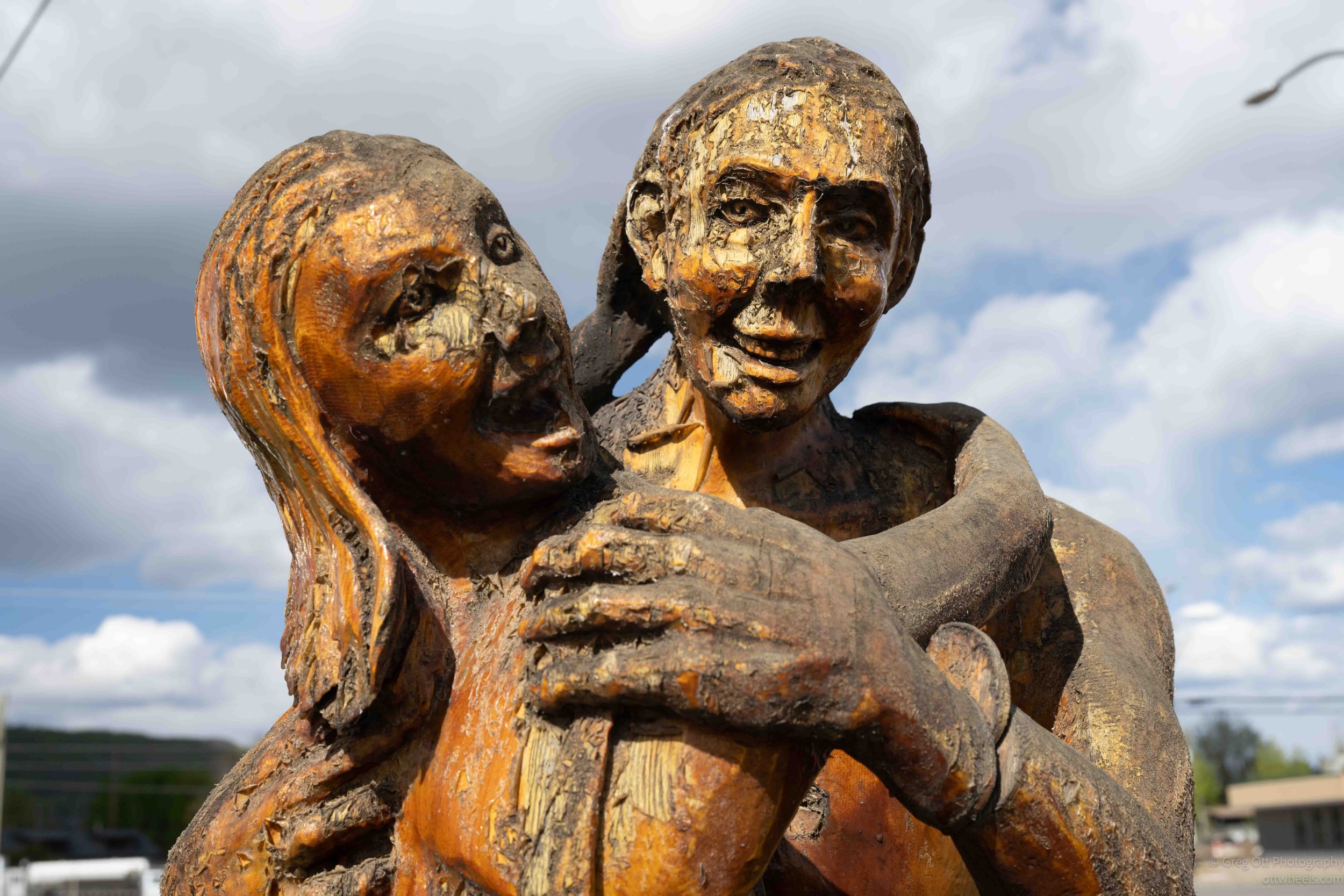
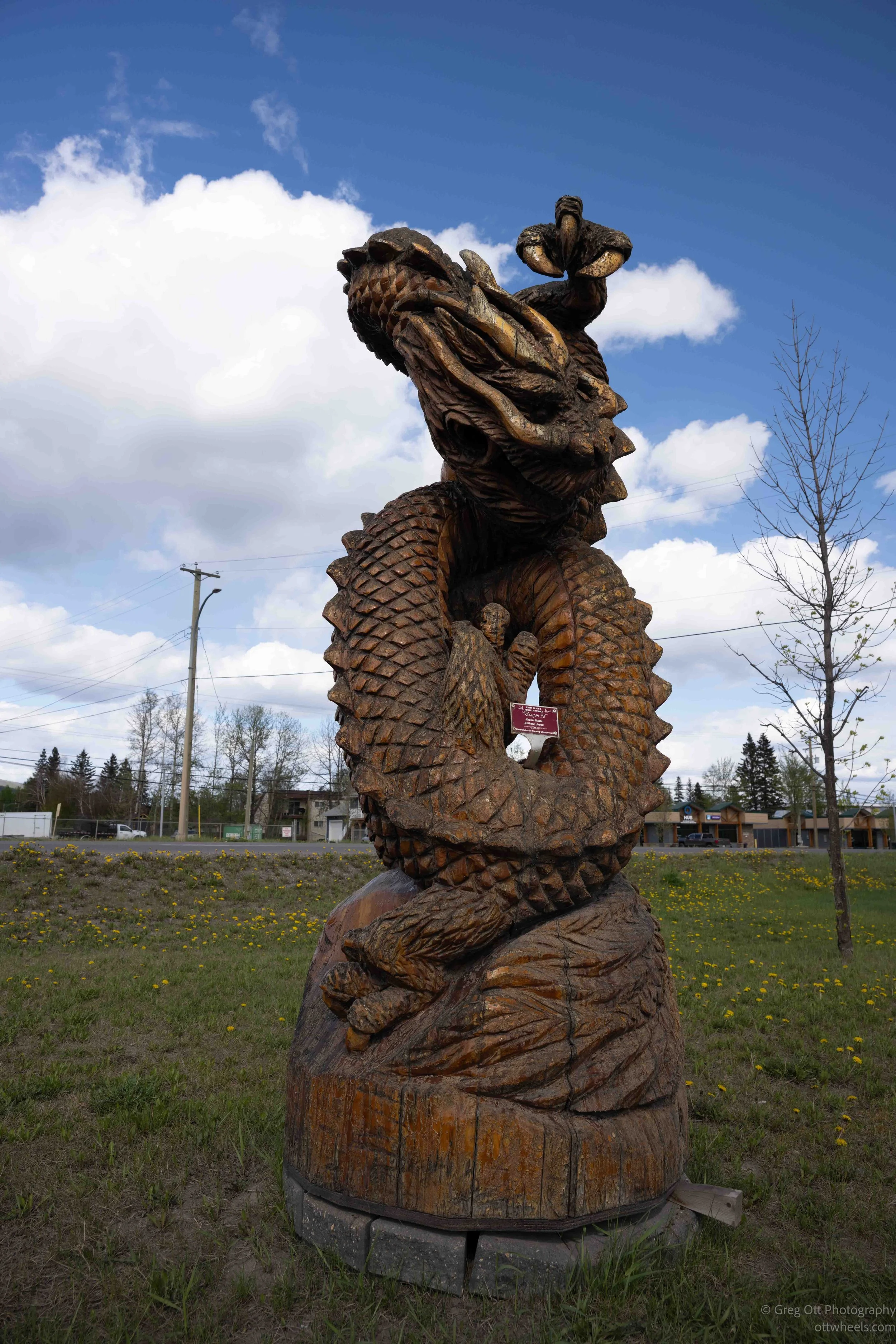
The guy I was talking to explained that the carvings remain in town after the competition ends. Every year more are added throughout Chetwynd, which is why there are now well over 100 sculptures spread across parks, sidewalks, businesses, hotels, and public spaces. The whole town almost feels like an outdoor museum.
He told me that if I drove over to the A&W, last year’s competition carvings were displayed there. I drove over and immediately noticed how new and polished they looked compared to some of the older carvings around town. The themes also seemed to shift over time. Some older pieces focused more heavily on wildlife and traditional northern imagery while newer carvings pulled in fantasy themes, modern styles, and even pop culture influences.
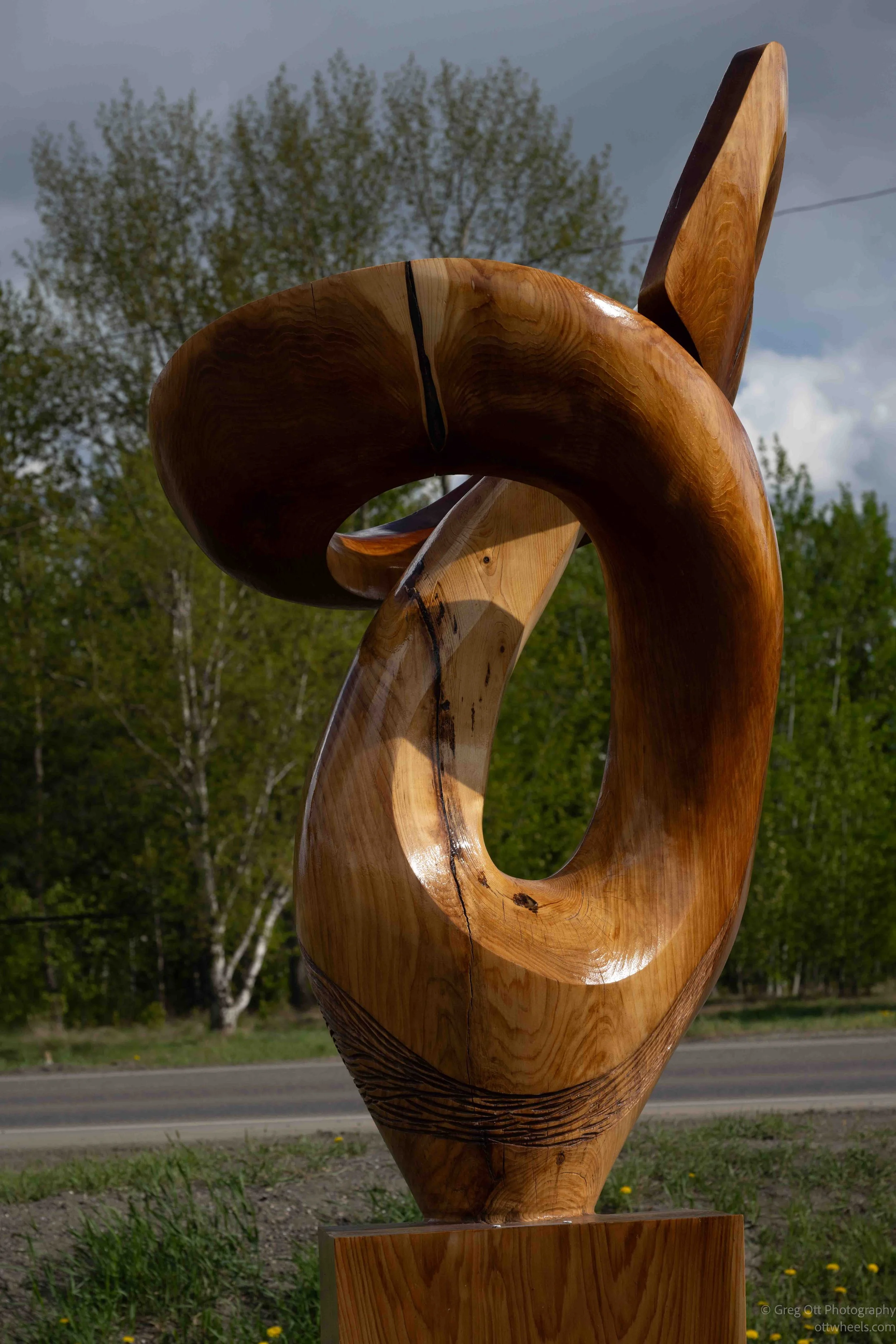
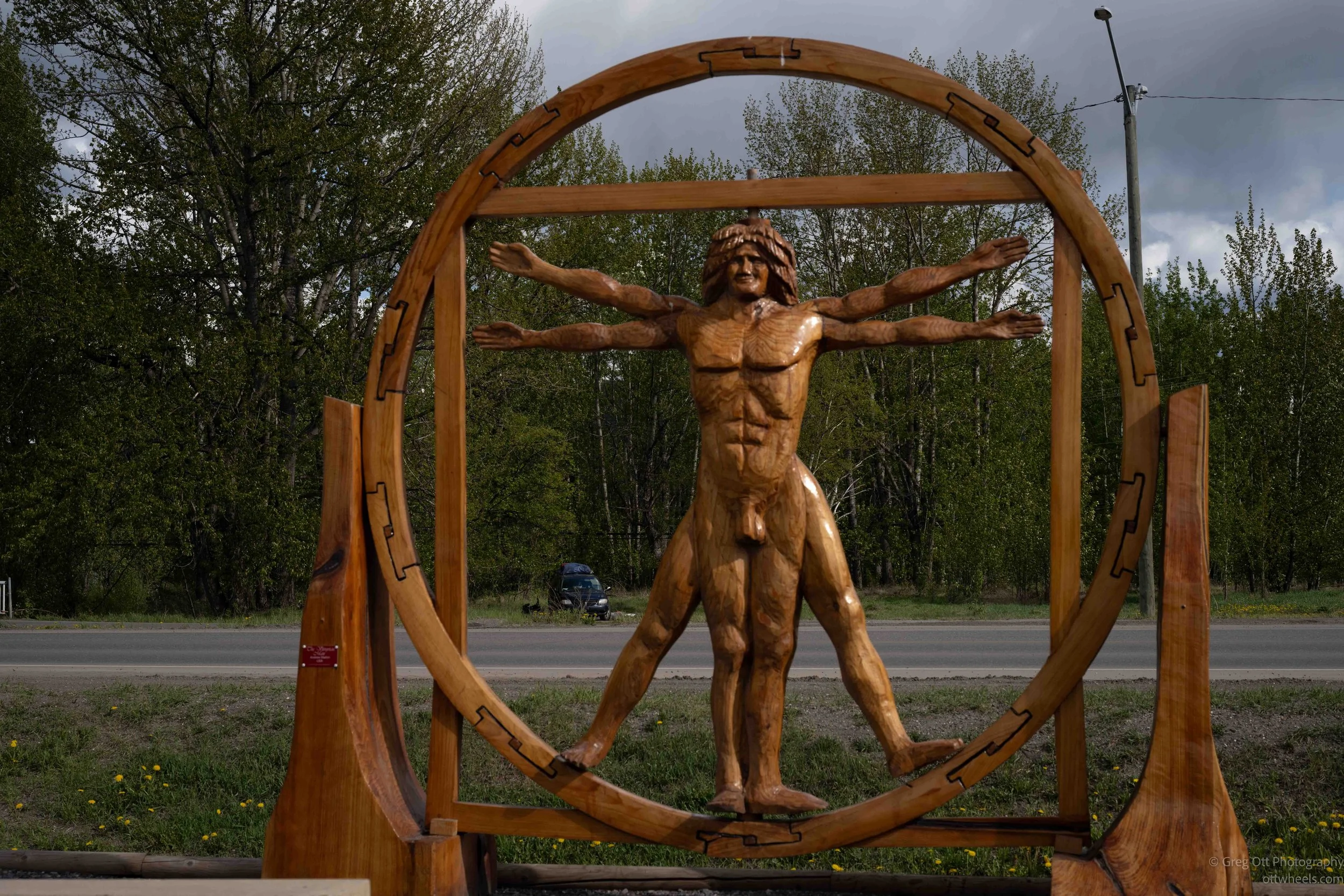
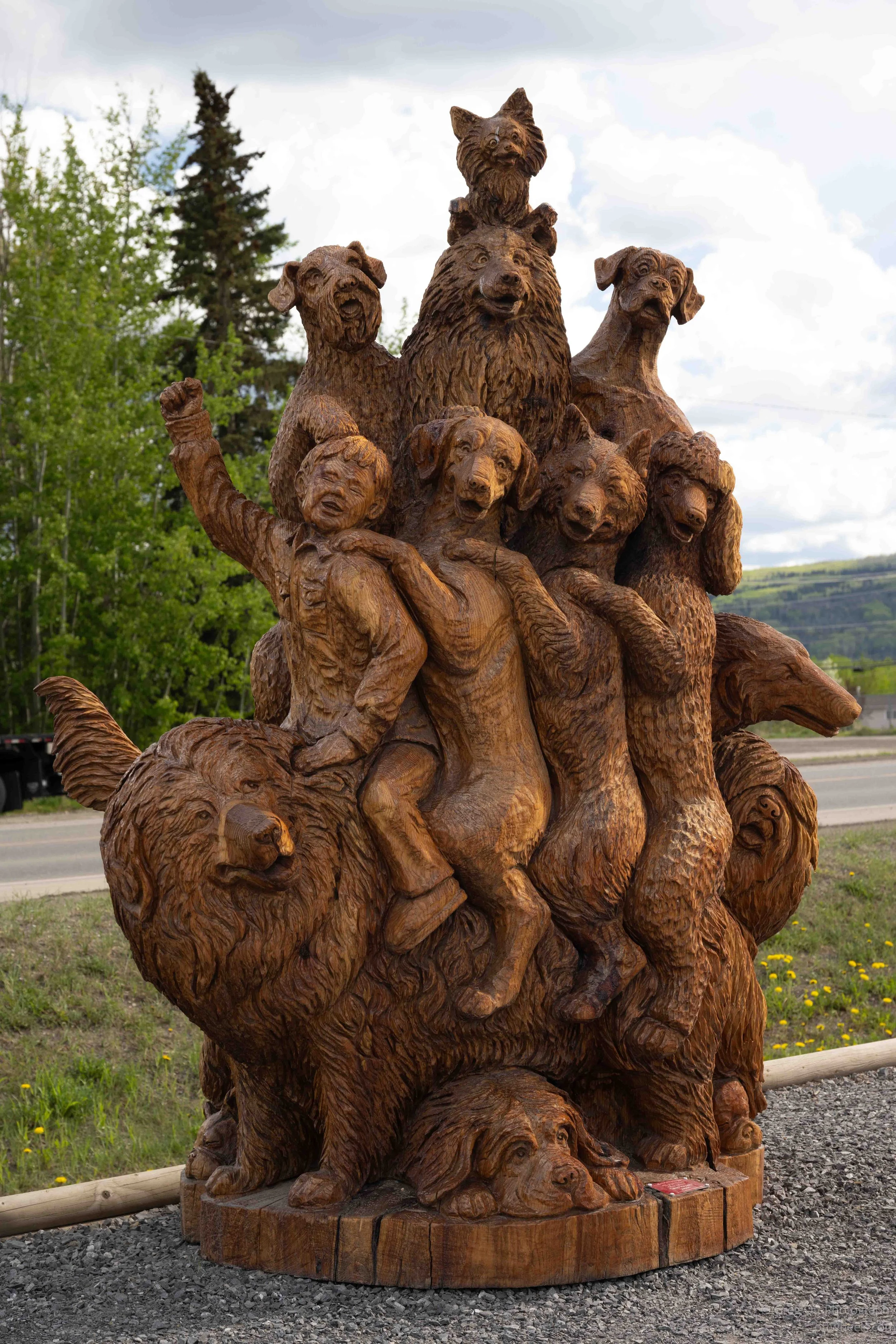
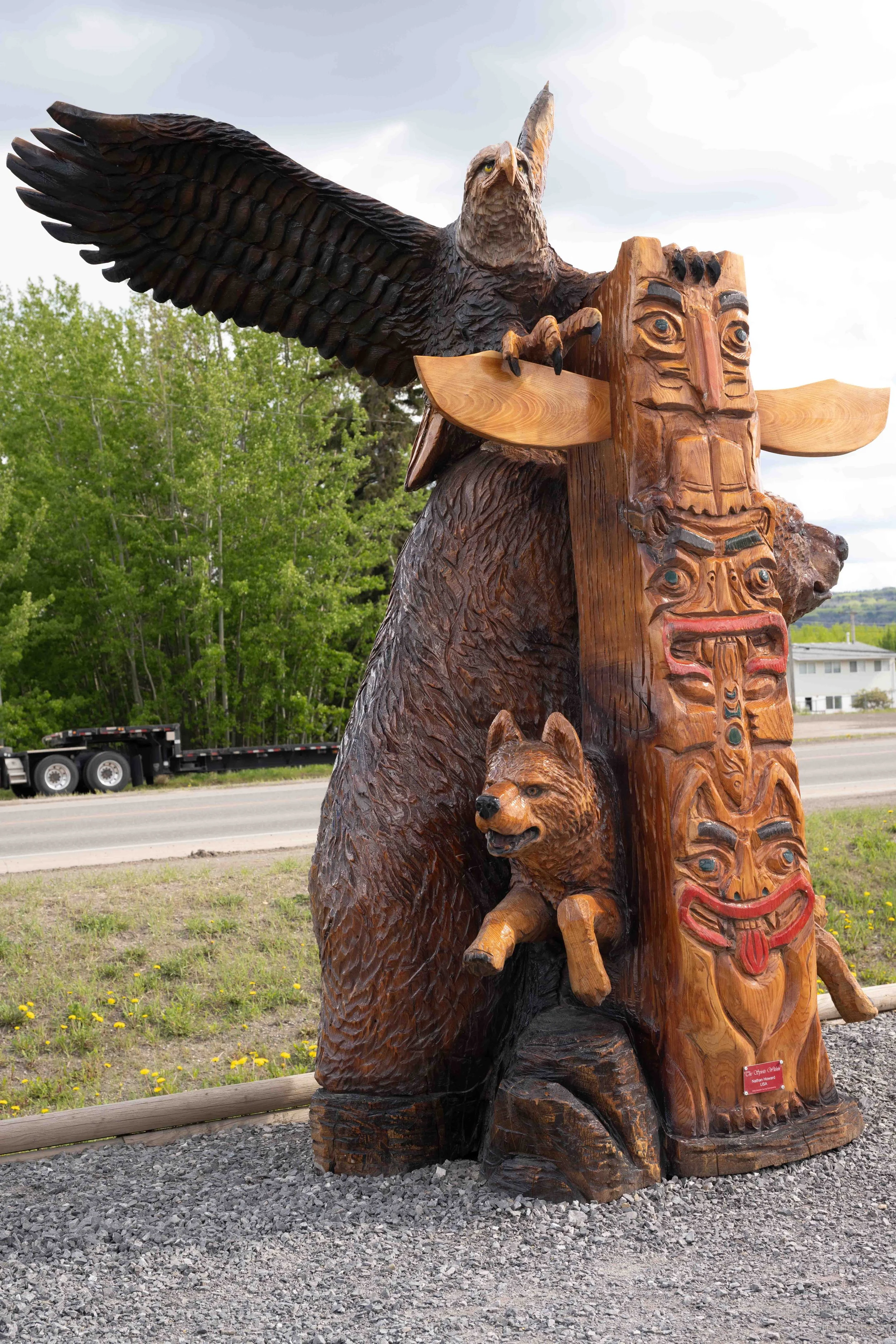
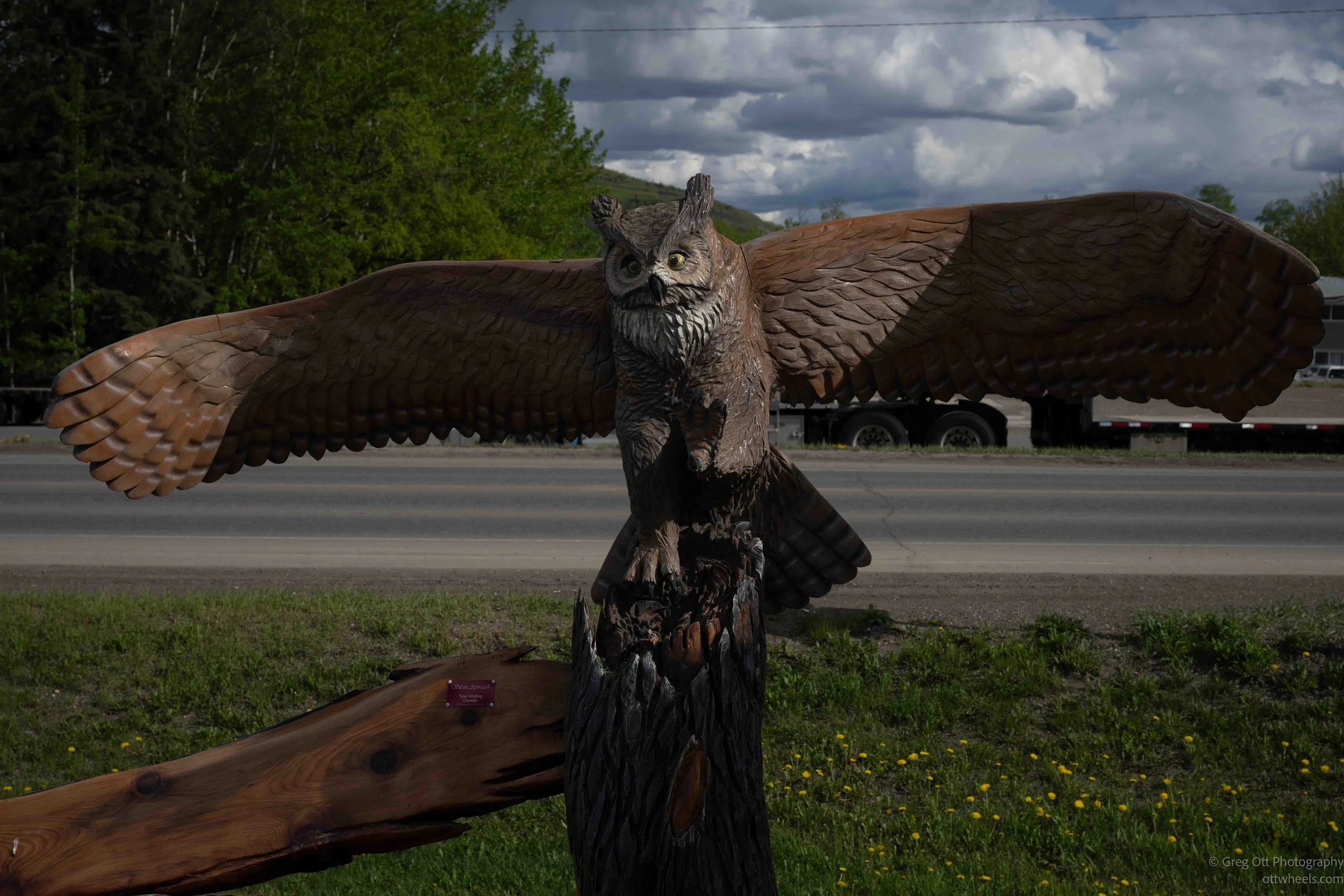
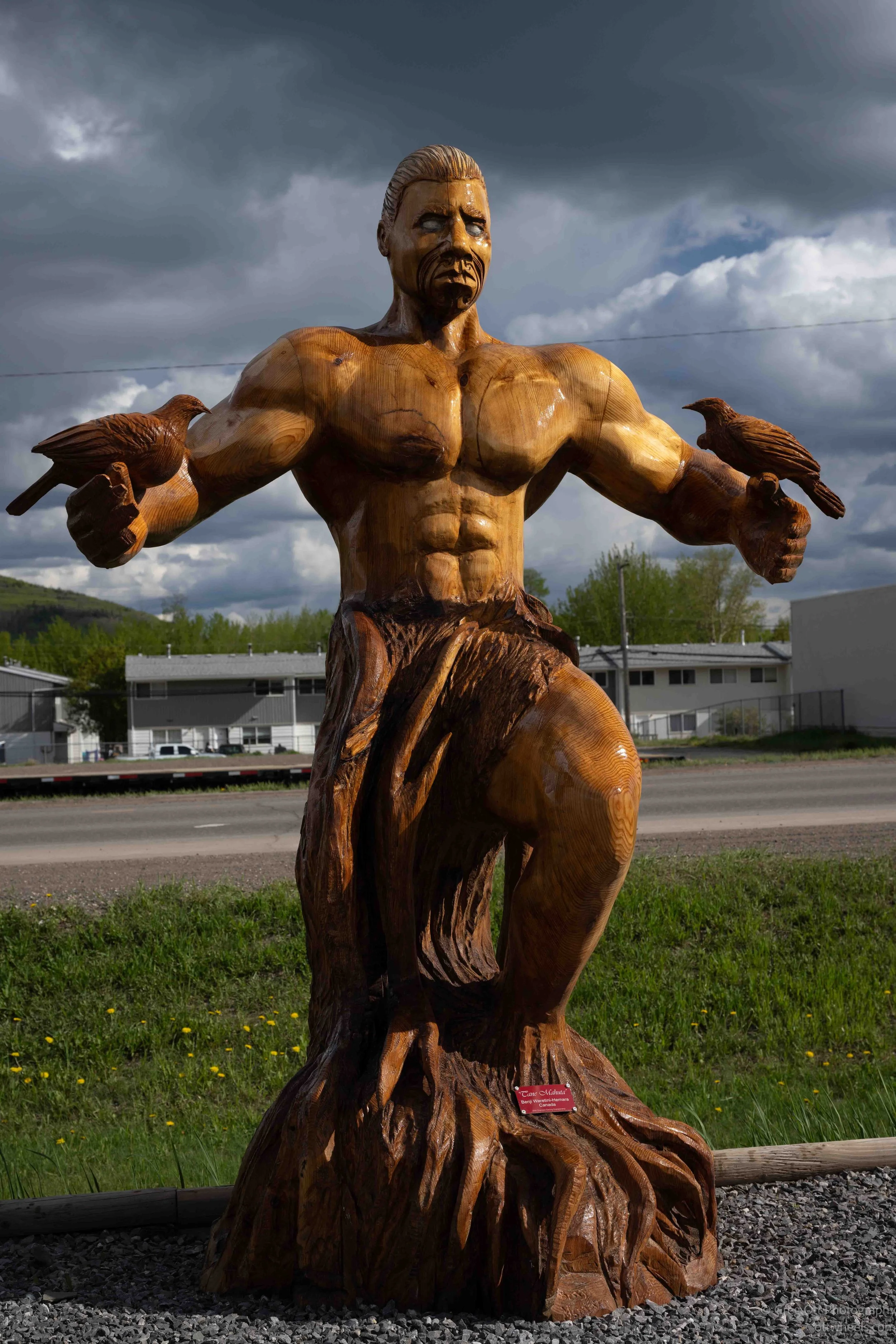
Last year’s winner was Mike Reichert from Germany with a carving titled Guardians of the Wild. The amount of detail in many of the sculptures was difficult to comprehend when you remembered they had largely been created with chainsaws.
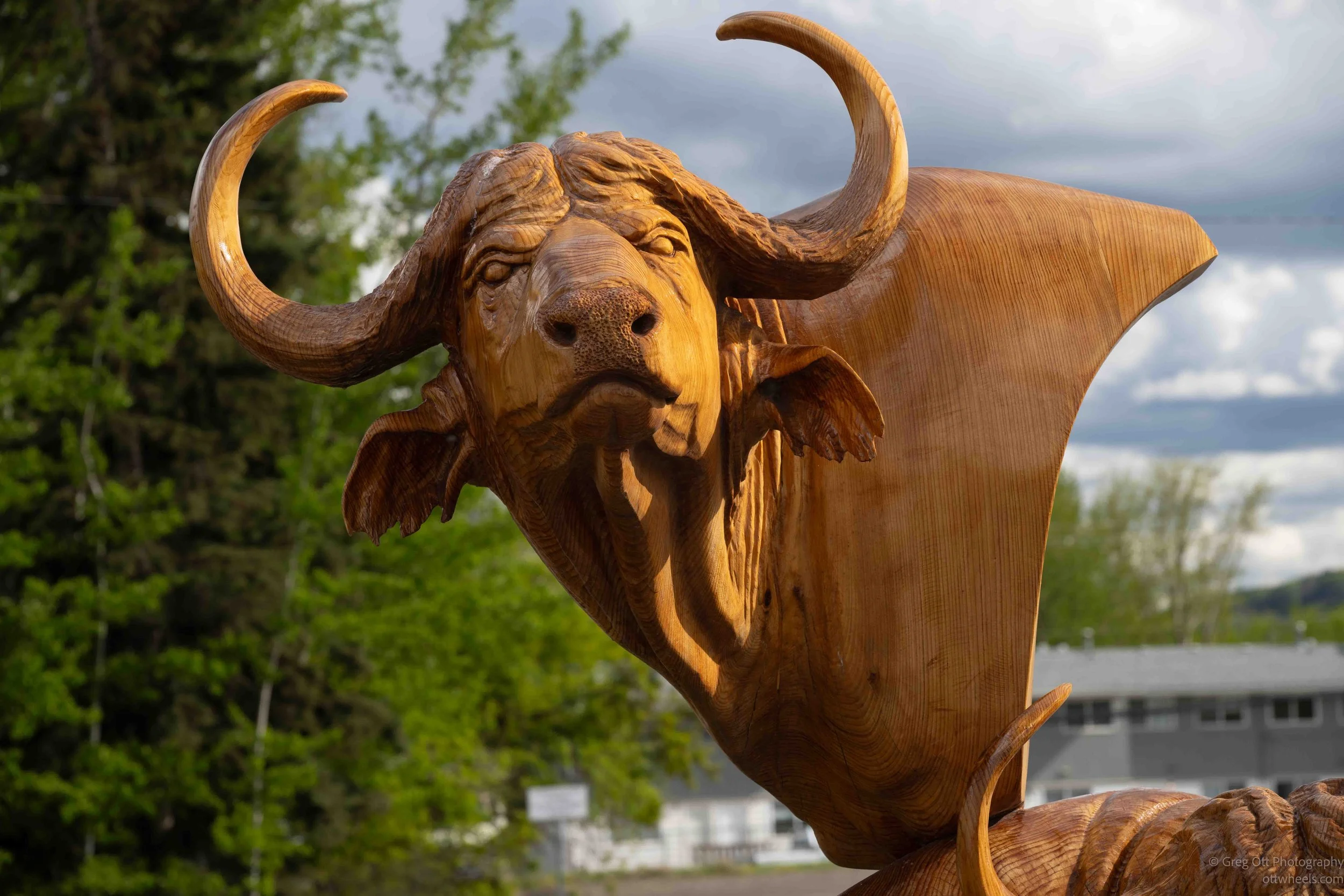
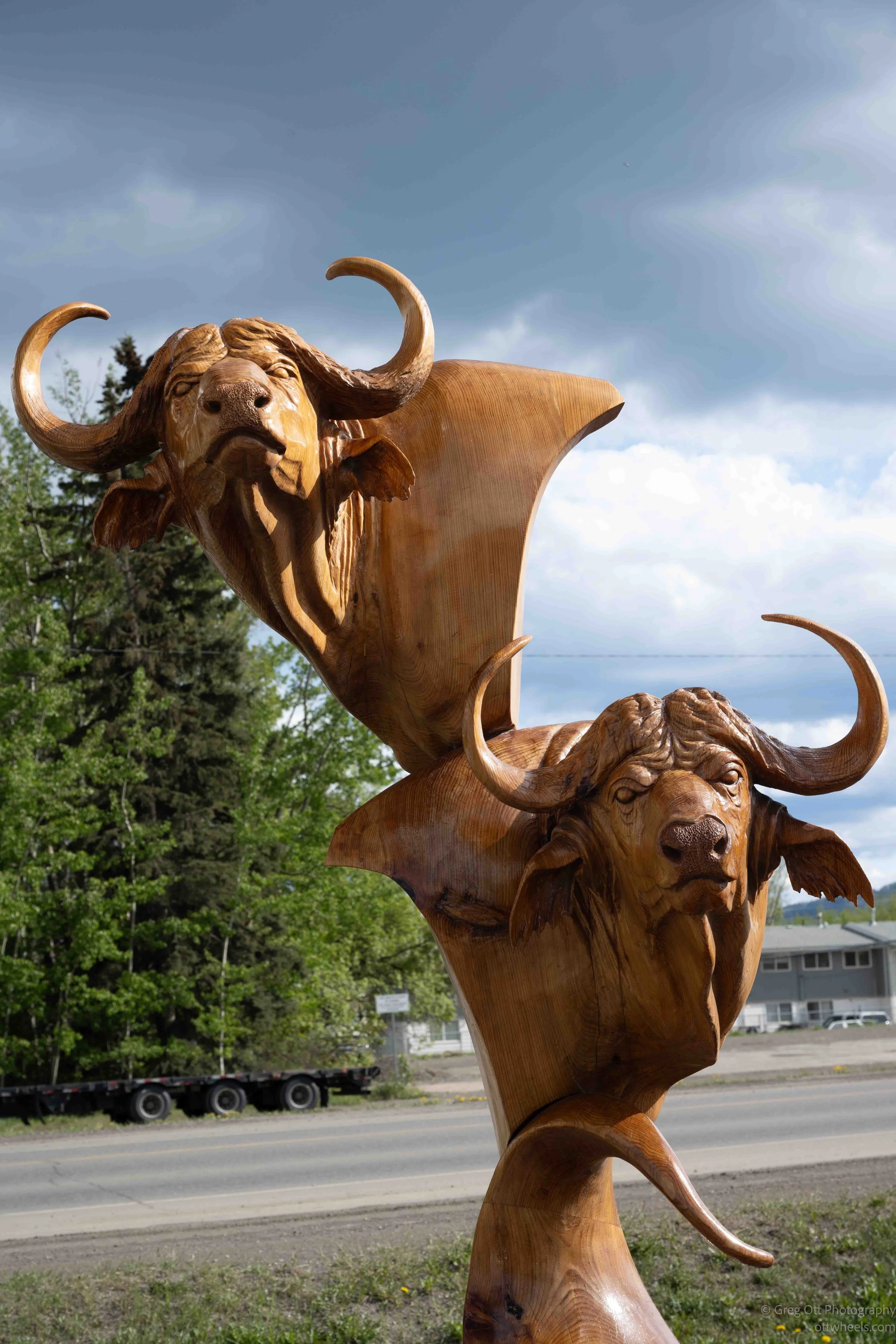
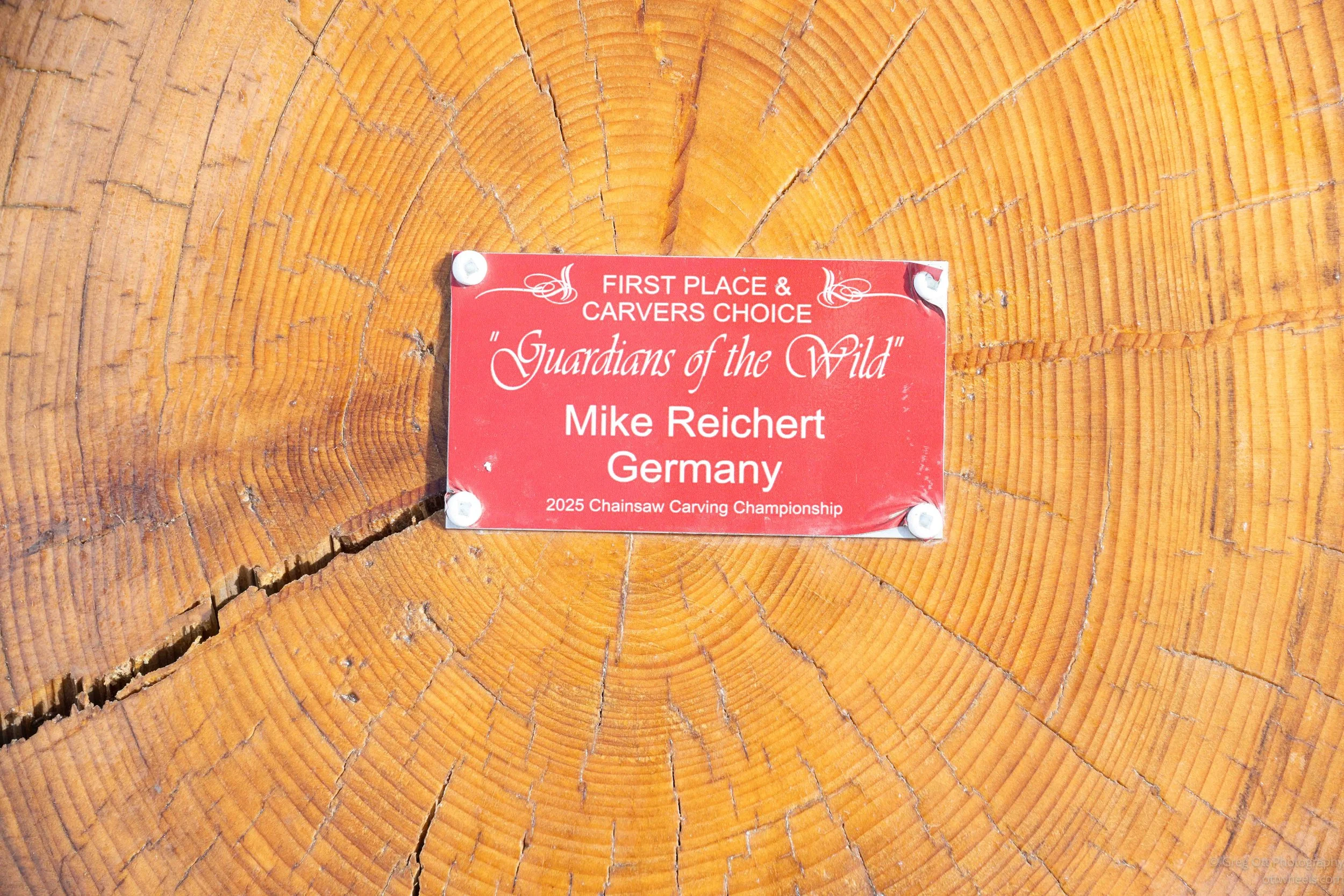
I ended up spending several hours walking around town photographing and studying the carvings. Every few blocks there seemed to be another one tucked beside a business, hidden in a park, or standing near an intersection. Chetwynd turned into one of those unexpected places that completely changes the rhythm of a travel day. What should have been a quick stop became an entire afternoon. (chetwyndchainsawcarvings.com)
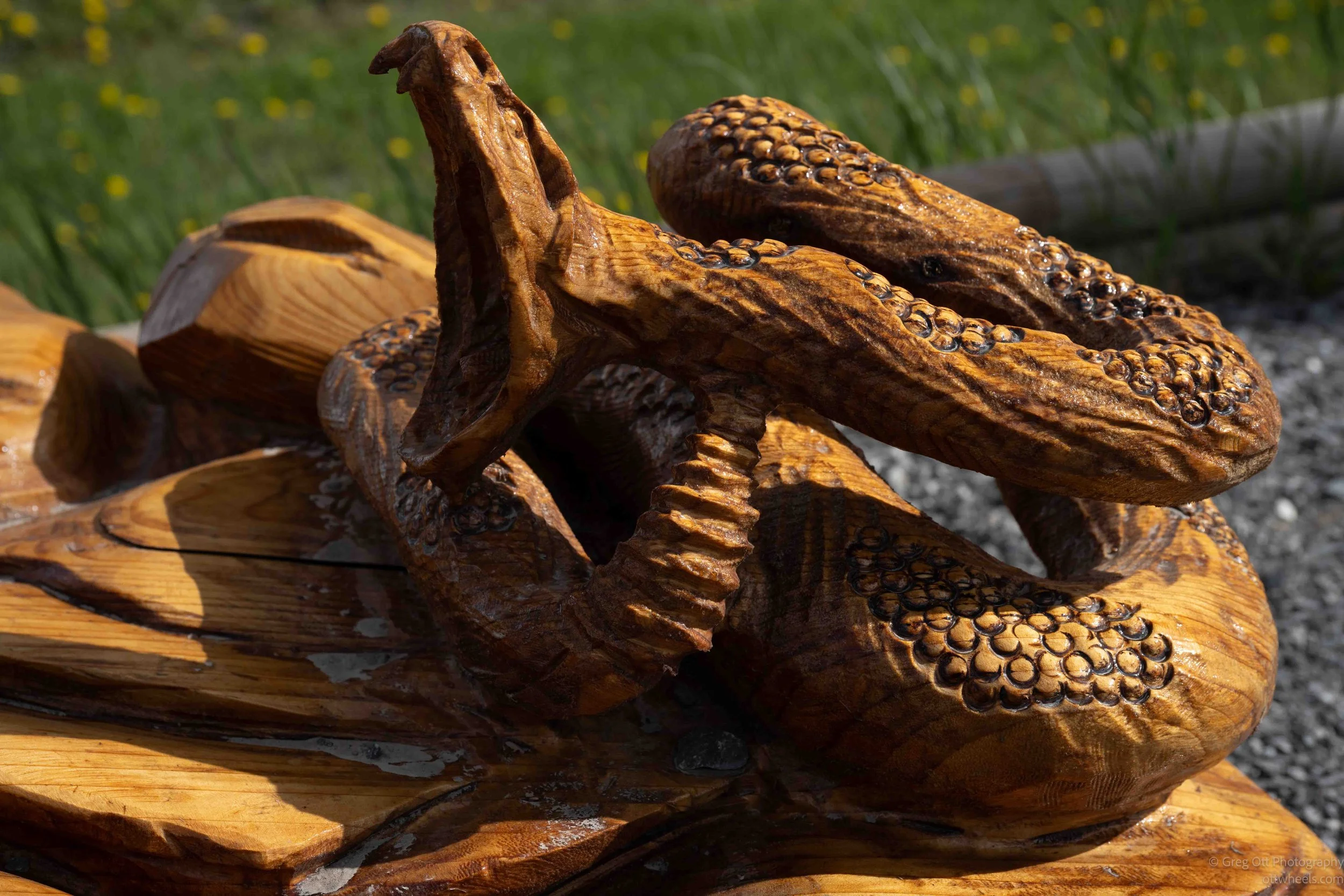
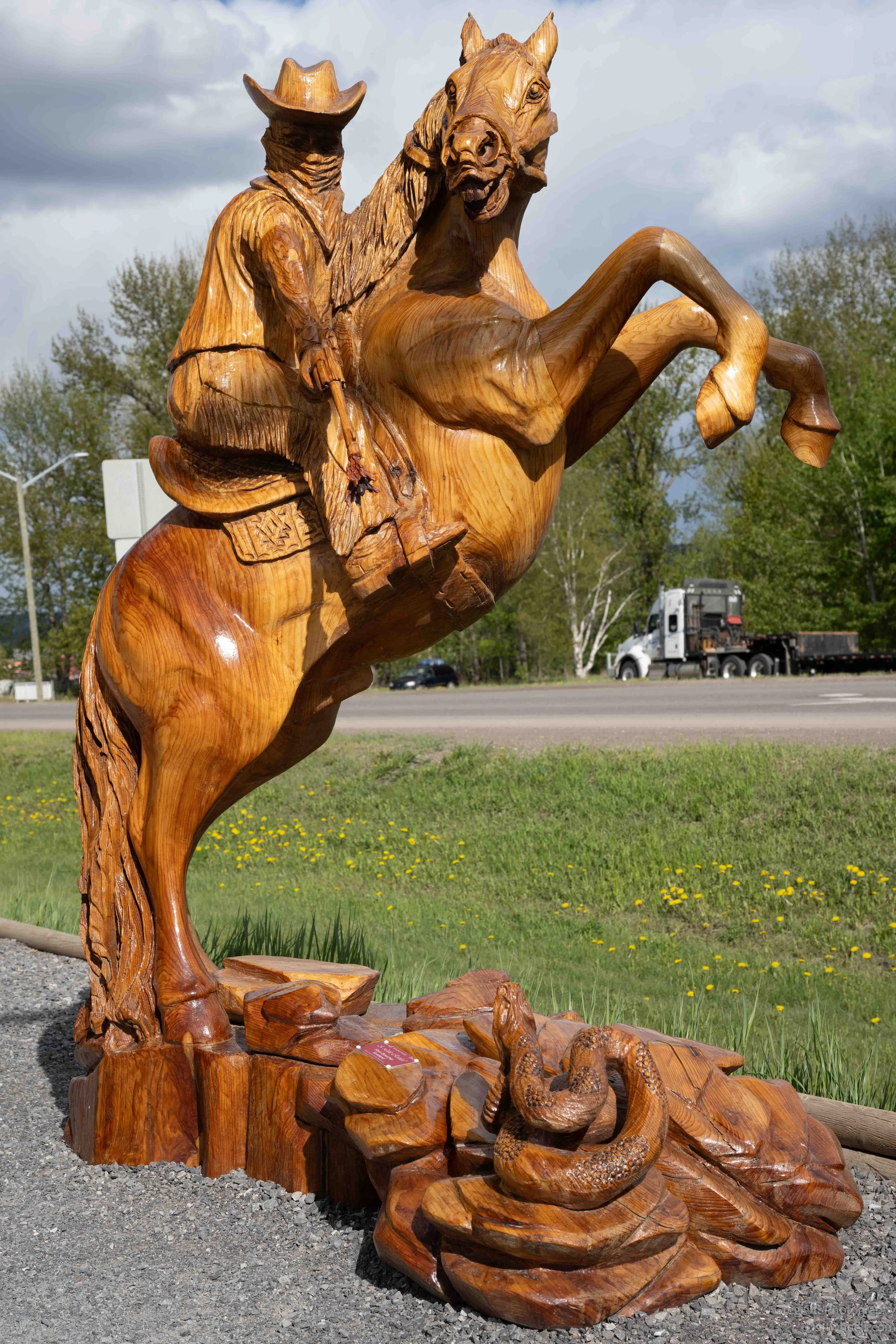
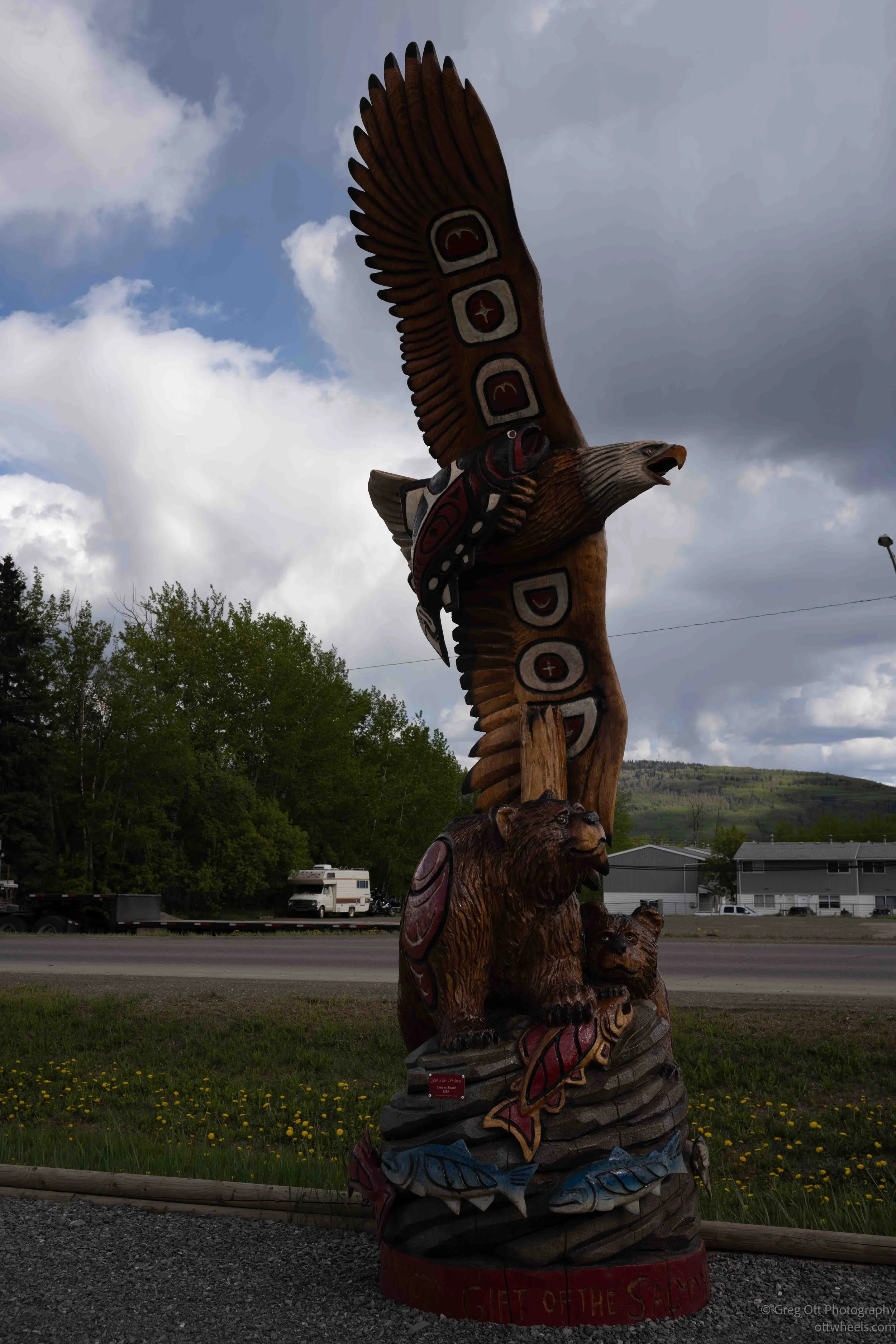
By then it was after 5 p.m. and I still had more driving ahead of me.
I was also running low on water in the van and, ironically, right where I had parked there was an RV water fill station. The timing could not have worked out better. I spent more time than expected topping everything off before finally getting back on the road.
As I made my way toward Dawson Creek, Mile 0 of the Alaska Highway, the evening light began turning golden. By the time I entered town the sun had lit up everything around me.
I stopped at Walmart to do some shopping and noticed five other RVs already in the parking lot. Signs were posted everywhere: three-hour parking limit, customers only, no overnight parking, no camping. Even so, people were clearly still trying their luck.
By 10 p.m. it was still slightly light outside and Walmart had already closed. A large converted school bus camper pulled in beside me. I decided to move to the opposite side of the parking lot to get farther away from highway noise. The parking lot was already starting to quiet down for the night.