
Four Museums in Fort Benton
I woke up in the parking lot at the U.S. Forest Service office in Fort Benton, Montana, moving a little slower than usual. I had two glasses of red wine with dinner the night before, which is more than I normally drink. I made breakfast and then drove over to Moon Eyes Coffee to get the day started.
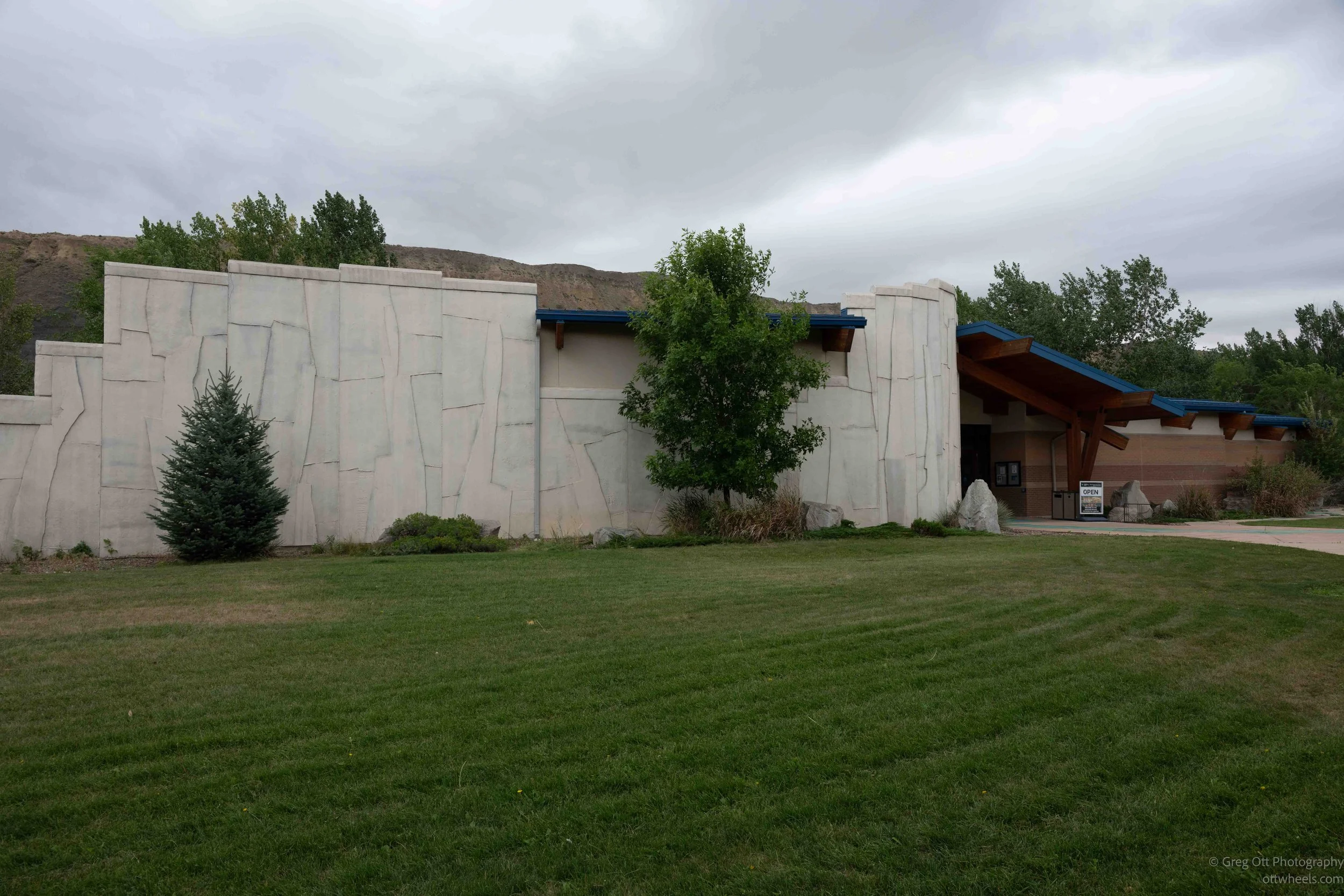
The Missouri Breaks Interpretive Center was supposed to open at 7 a.m., at least according to what I had read, but when I checked at 8 it was still closed. It was the day after Labor Day, so I figured maybe they had enjoyed an extra glass of wine too. I went back around 9, and this time the doors were open. I had planned something of a whirlwind tour of Fort Benton’s four main museums in a single day, and this was my first stop.
Missouri Breaks Interpretive Center
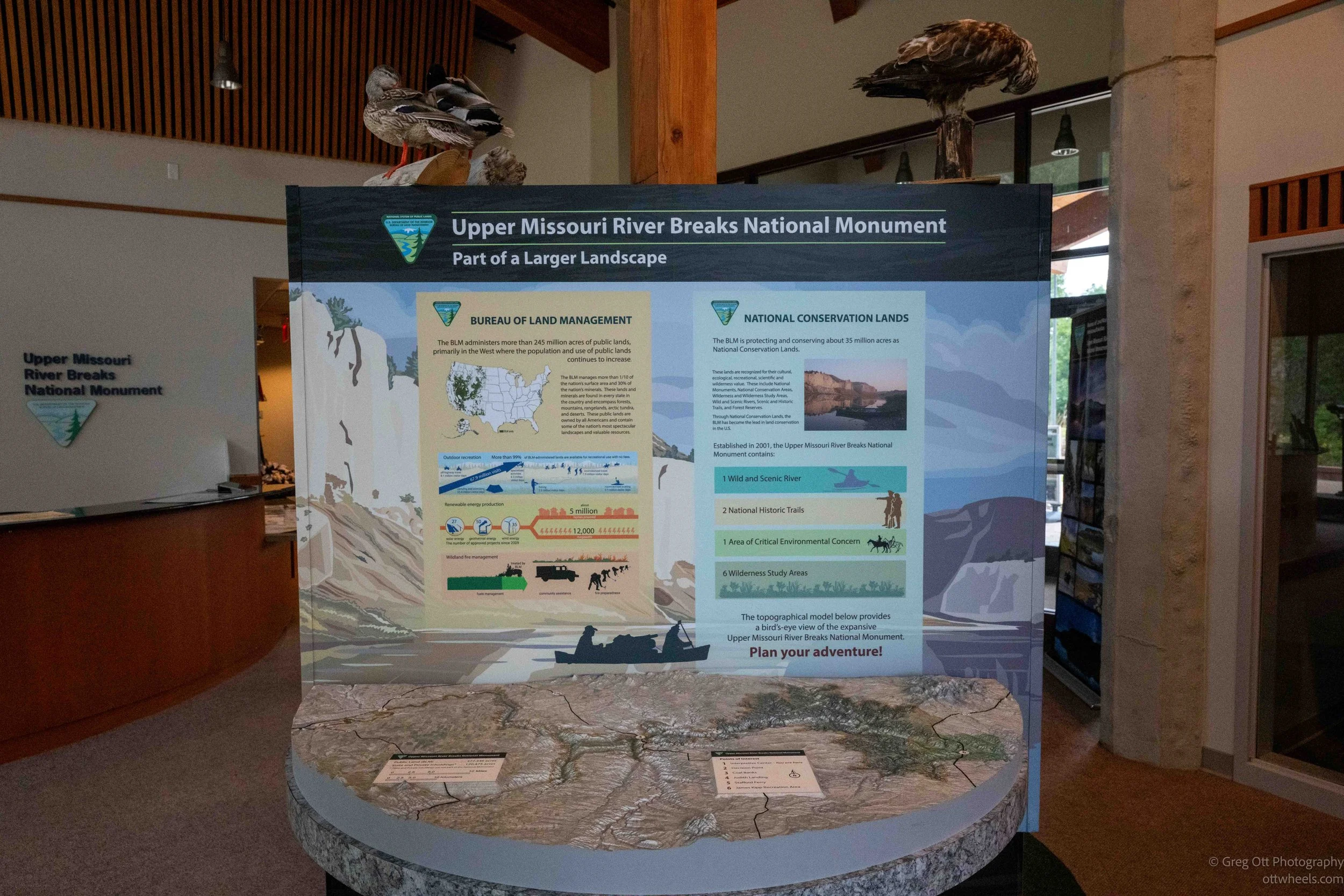
The center is devoted to the Upper Missouri River Breaks National Monument and the landscape surrounding the Missouri River. One of the first exhibits explained how the Bureau of Land Management manages the monument as part of the National Conservation Lands system. A large relief map showed just how extensive the Breaks are and helped put the surrounding country into perspective.
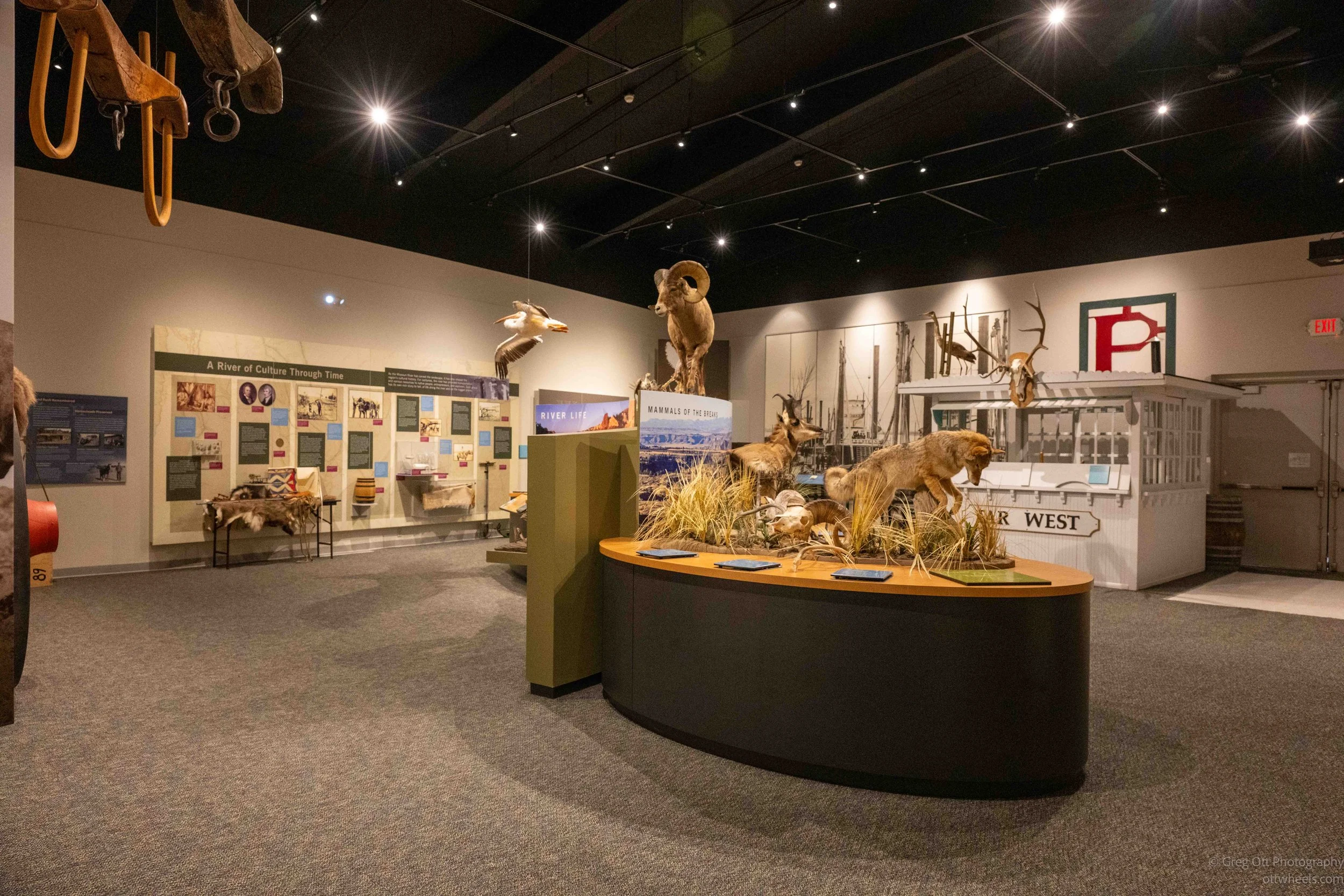
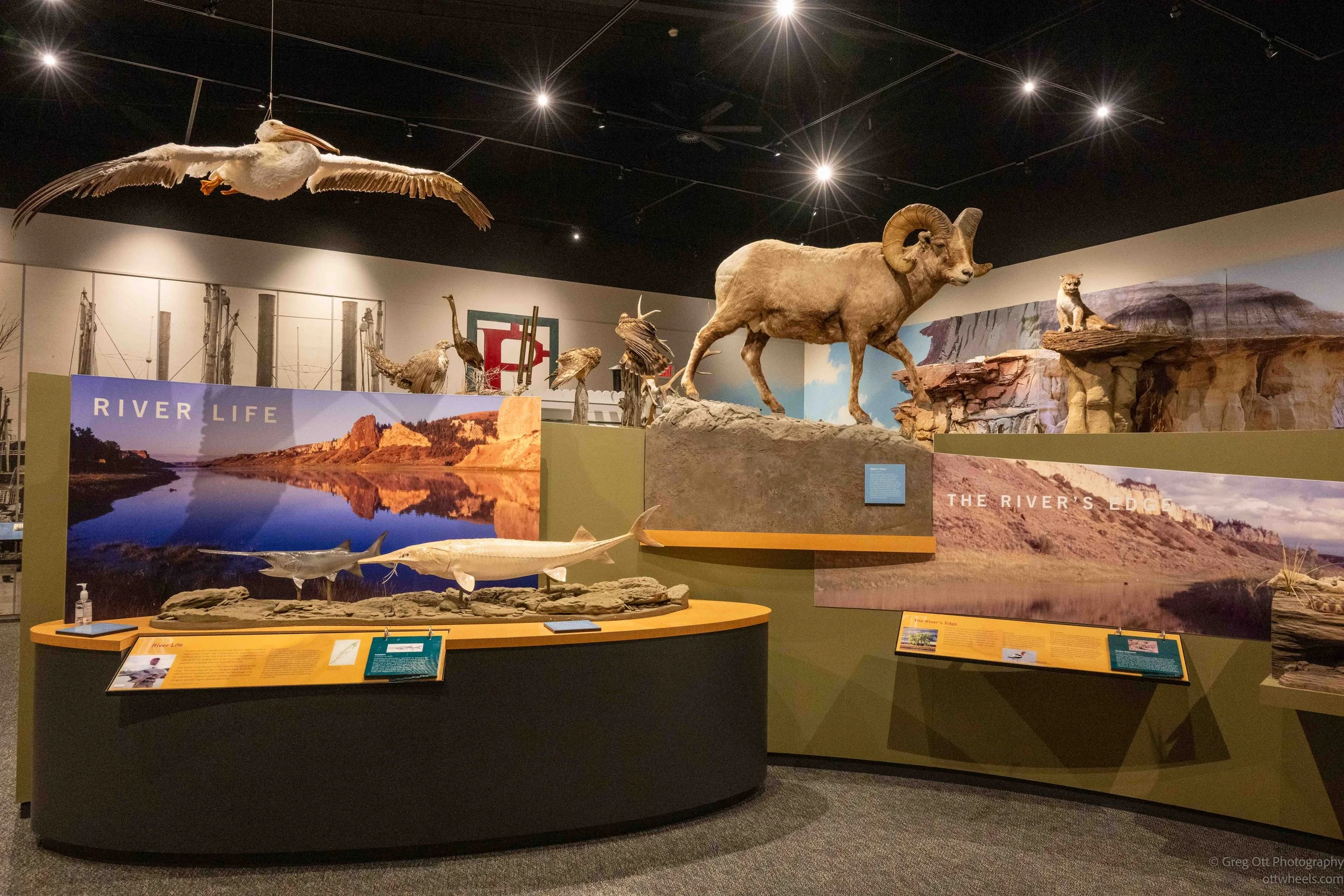
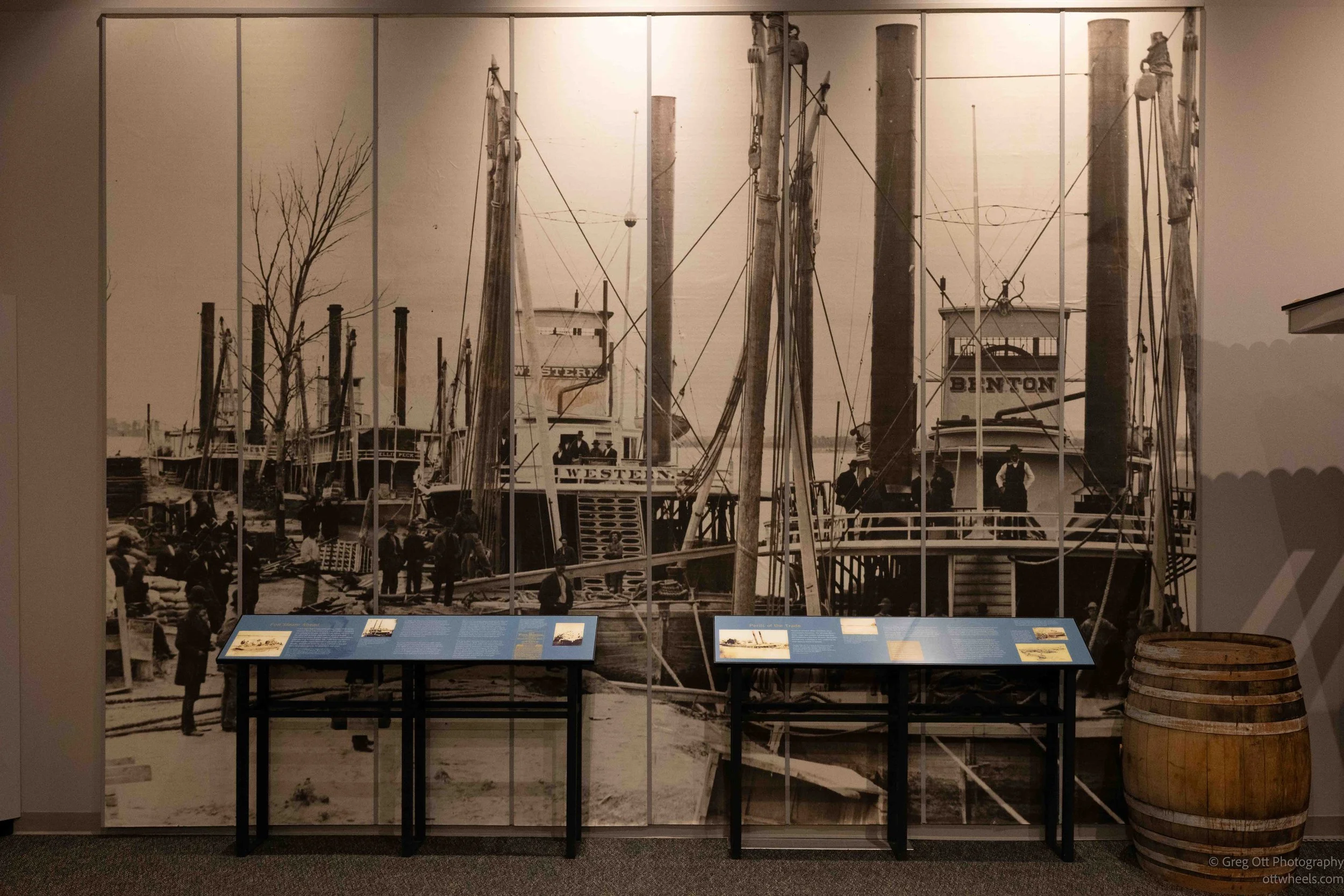
The main gallery combined the natural history of the river with the human history that developed along it. There were displays of bighorn sheep, pronghorn, birds, fish and other animals found throughout the Breaks, along with exhibits on the river itself and the steep bluffs and cliffs that define much of the region. Another section dealt with the years when steamboats traveled the Missouri, including an enormous historic photograph of boats crowded along the riverfront at Fort Benton. It was a useful reminder that this quiet little town was once one of the most important transportation points on the upper Missouri.
I also watched a film called White Cliffs, Wild River. It covers the natural and cultural history of the 149-mile Upper Missouri National Wild and Scenic River corridor, including the White Cliffs region, the wildlife that inhabits it and the journeys of Lewis and Clark and others who passed through this country. Between the film, maps and exhibits, I had a much better sense of what people meant when they referred to “the Breaks.”
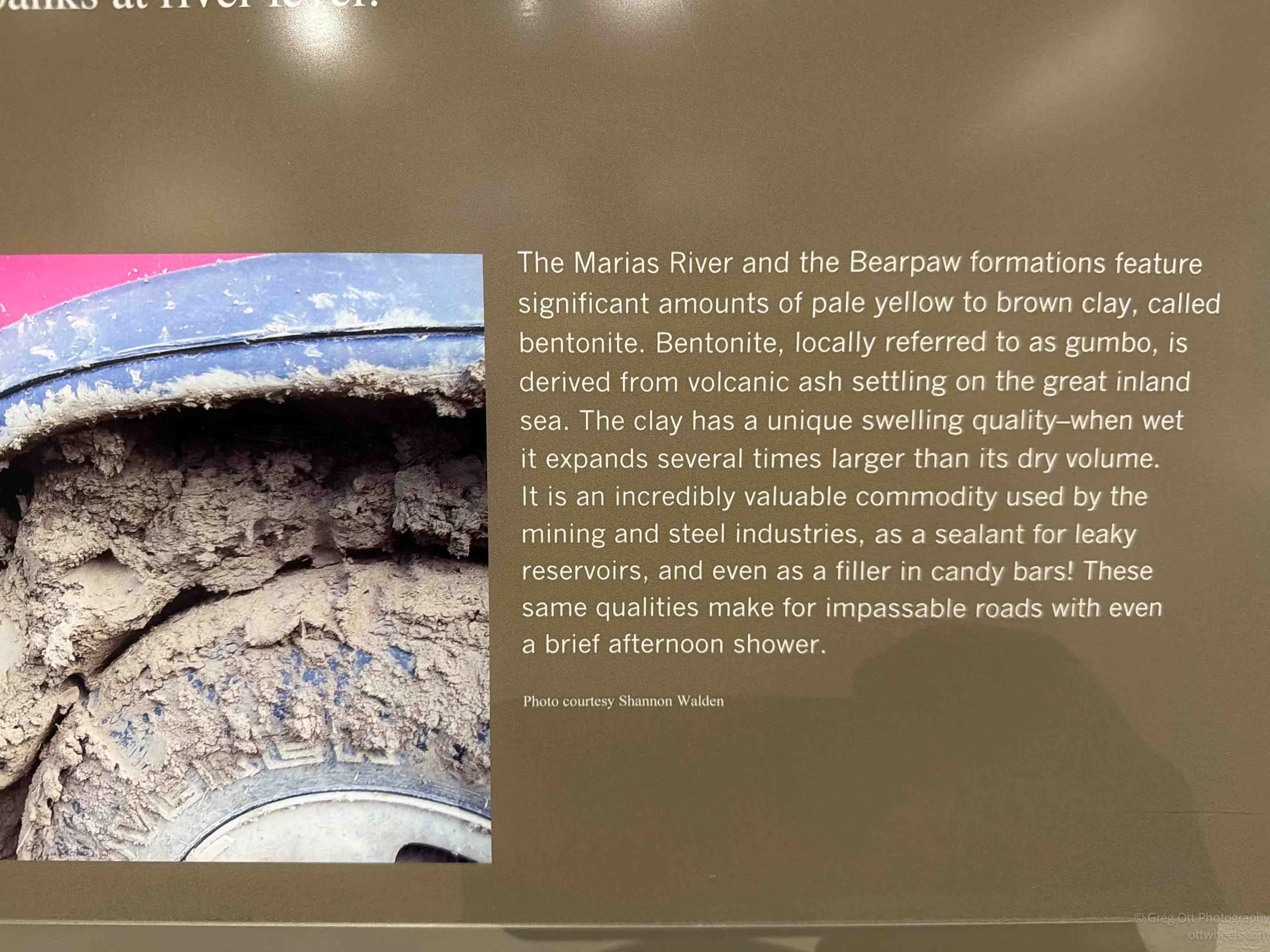
One display caught my attention for a completely different reason. It explained that the Marias River and Bearpaw formations contain large amounts of bentonite, a clay formed from volcanic ash that settled into the ancient inland sea. Locally it is sometimes called gumbo, and when it gets wet it can expand several times its dry volume. That also explains why some of the dirt roads in this part of Montana can become nearly impassable after even a brief rain.
Then came the part that made me stop and reread the sign. The exhibit said bentonite is used by the mining and steel industries, as a sealant for leaking reservoirs, and “even as a filler in candy bars.” What I learned afterward is that this is misleading: food-grade bentonite can be used during food processing to filter and clarify fats such as cocoa butter, but it is removed before the finished product is made. In other words, it may play a role in producing chocolate, but it is not actually used as a filler in the candy bar you buy at the store.
I was also able to get my National Parks Passport book stamped here, even though the site is managed by the Bureau of Land Management rather than the National Park Service. The interpretive center isn’t very large, but the exhibits are well done and give a solid introduction to both the Missouri Breaks and the history of the river. I spent a little less than two hours there before heading to the next museum.
Museum of the Upper Missouri
Next up was the Museum of the Upper Missouri. I bought a $12 ticket, and the woman at the desk told me it was good for all three of Fort Benton’s paid museums. Since the Missouri Breaks Interpretive Center had been free, that meant I could visit four museums for a total of $12. That seemed like a pretty good deal.
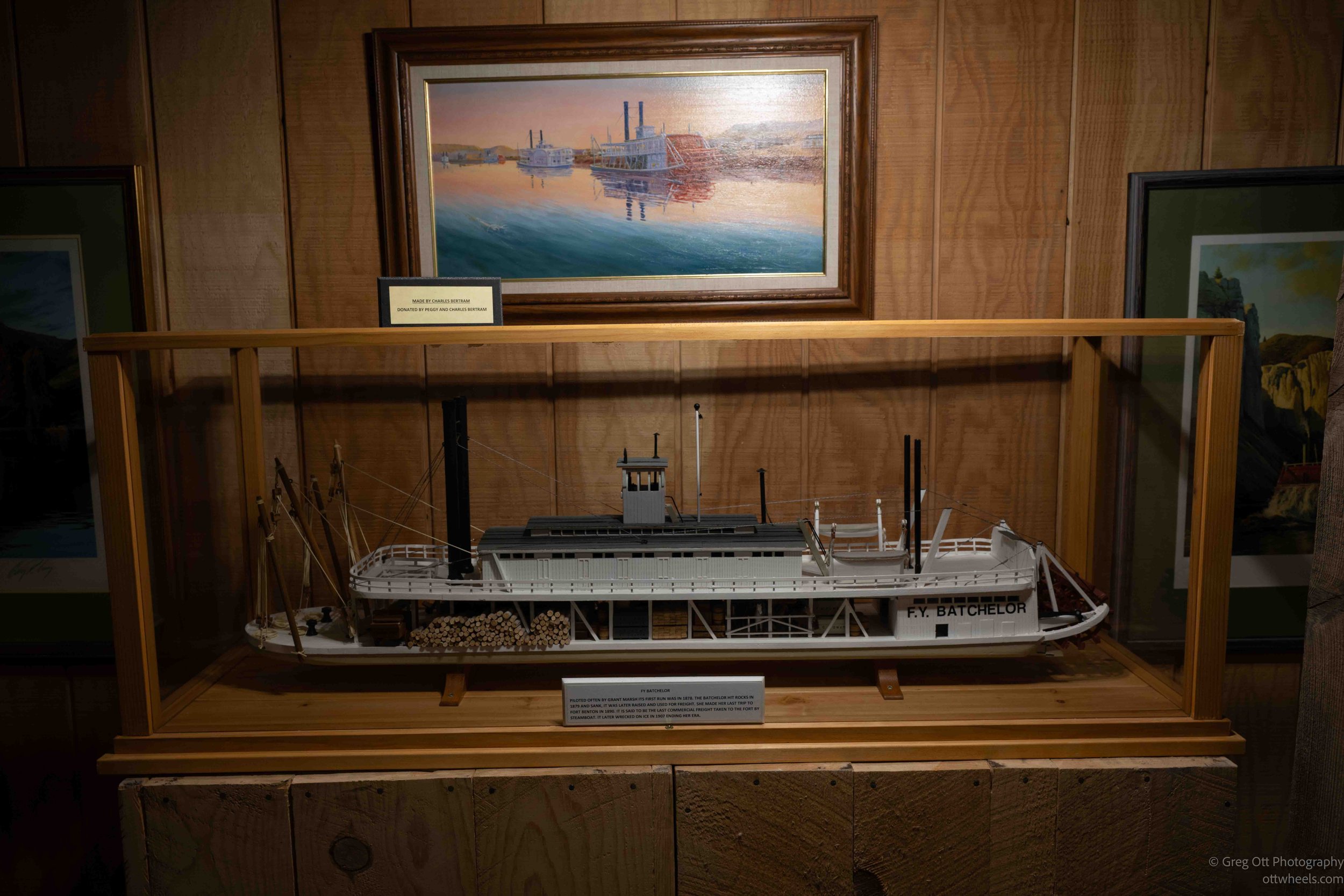
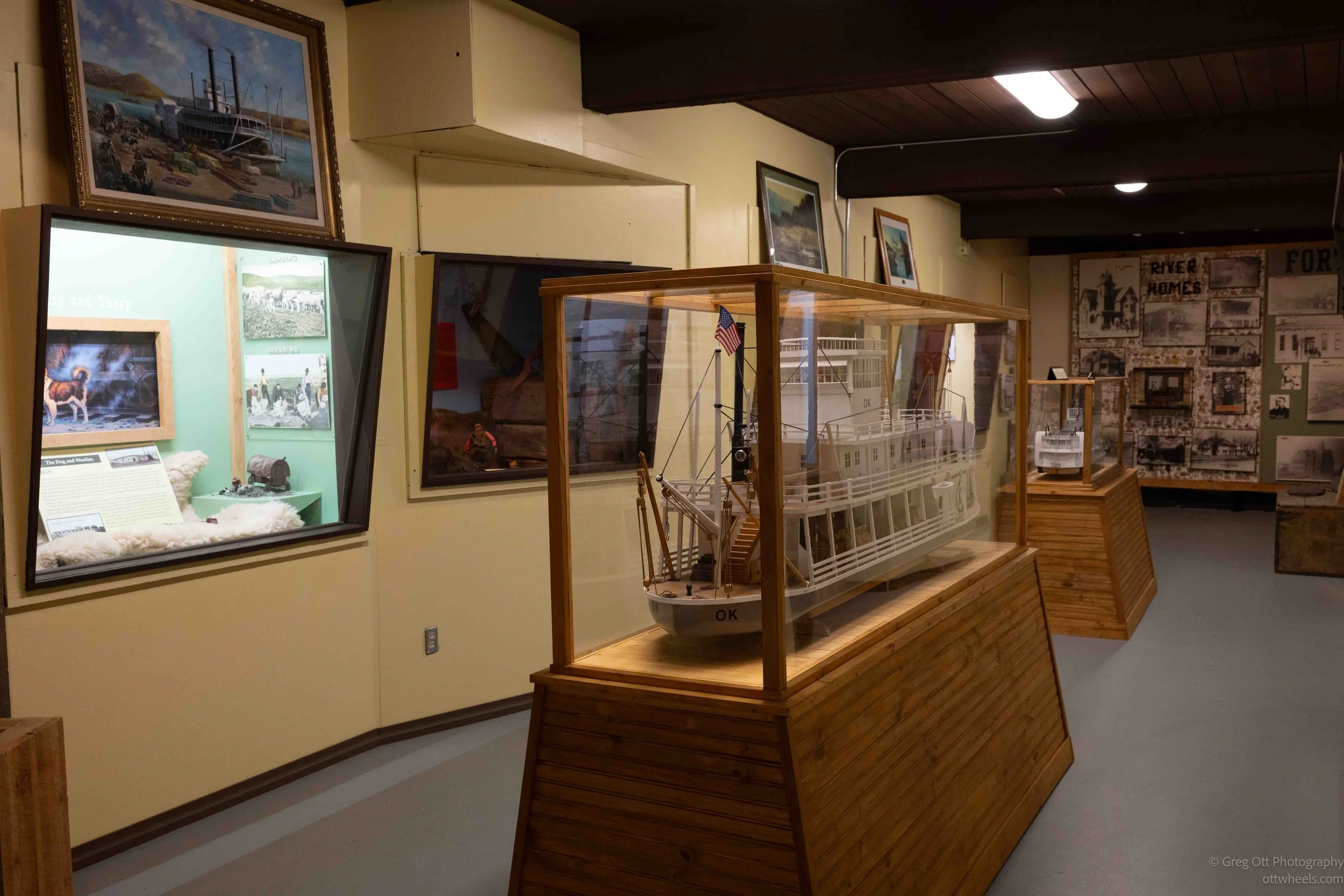
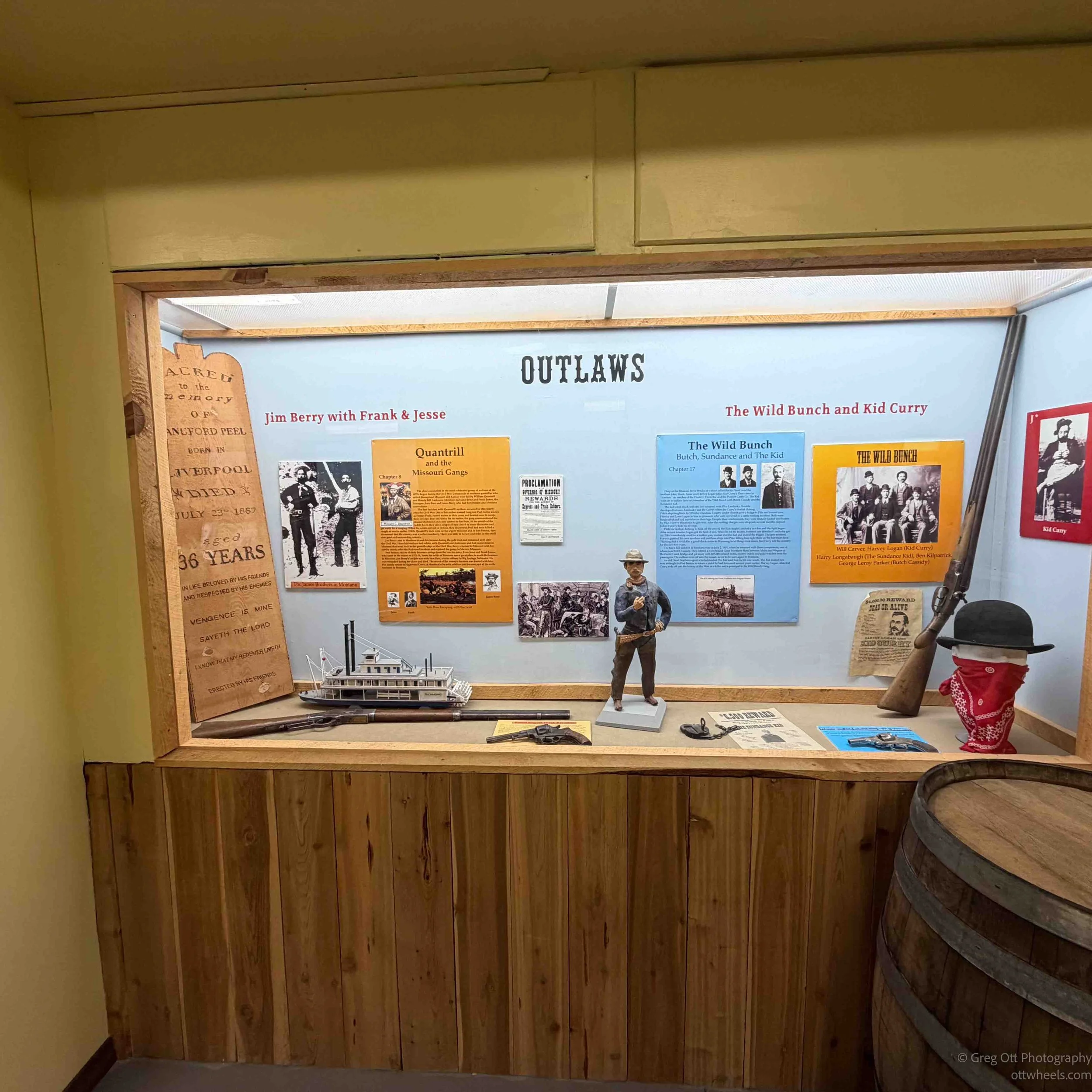
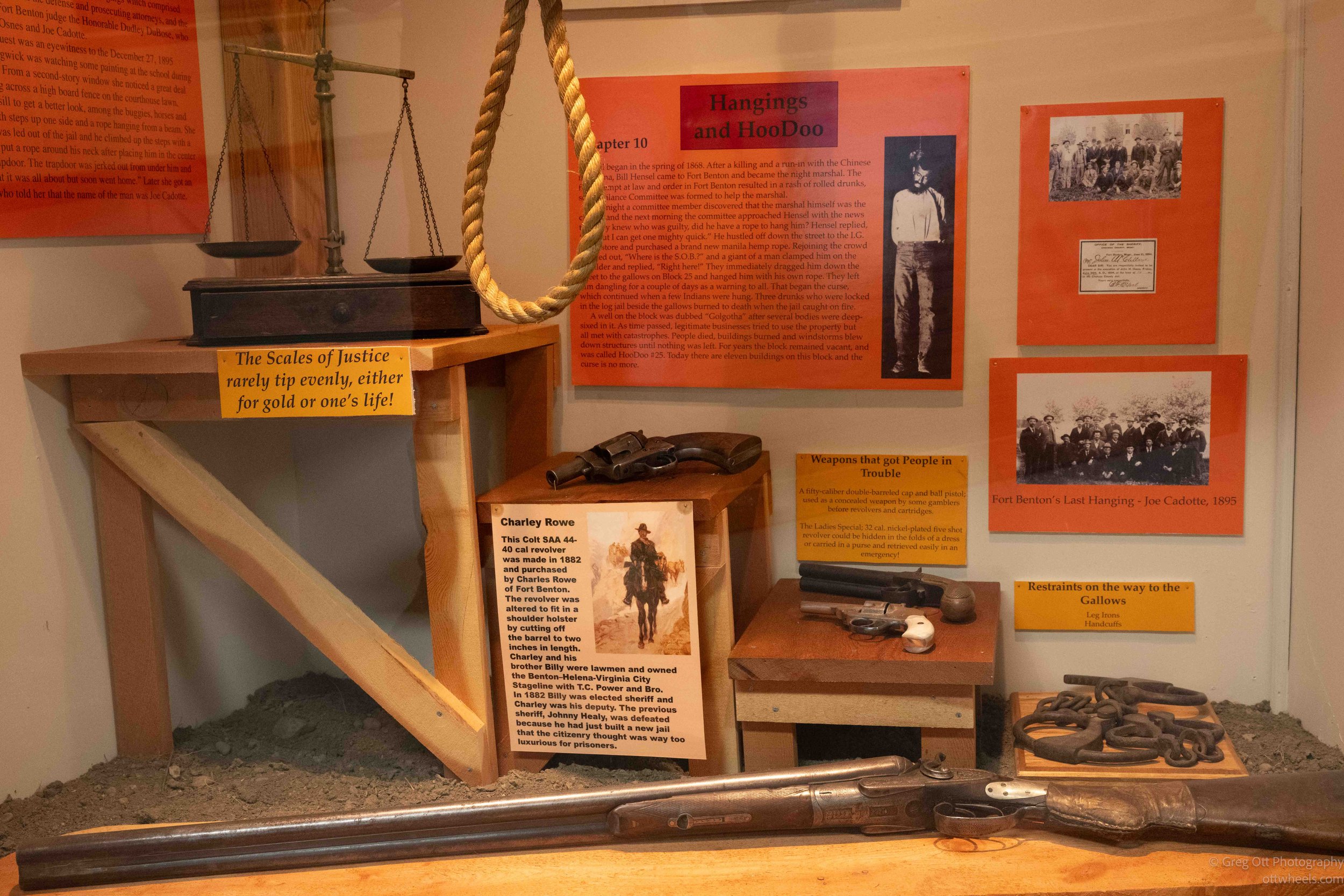
This museum focused on Fort Benton’s years as a river town and the head of navigation on the Missouri. There were large steamboat models, paintings and photographs of river traffic, along with displays about outlaws, vigilantes, public hangings, weapons and some of the people who passed through town during its rougher years.
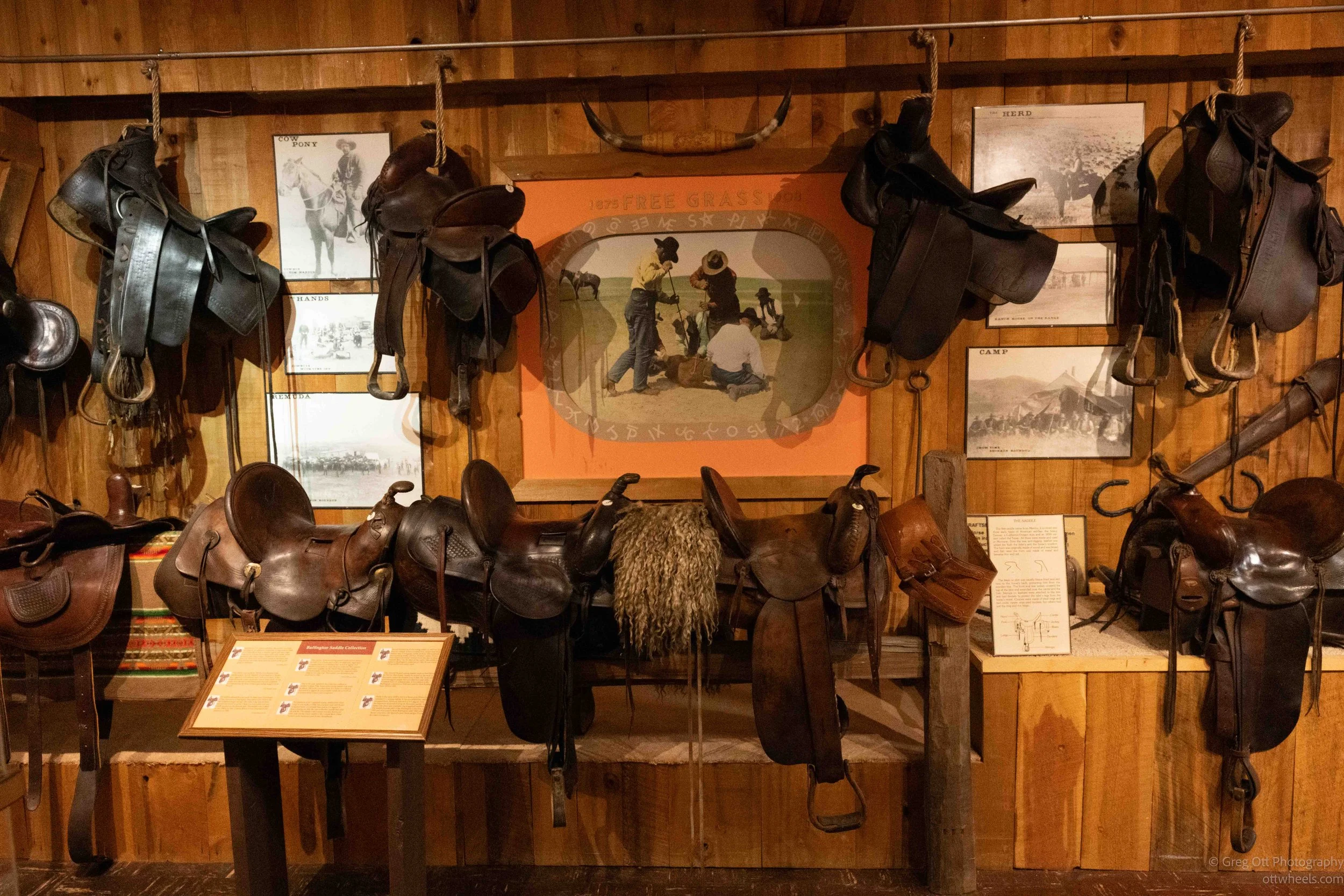
The problem was that much of it felt redundant with Historic Fort Benton next door. I had expected this museum to give me more of the town’s history, especially since there is so much of it spread along Front Street on the historical plaques. Instead, some of the exhibits seemed disconnected from the main story. There was a large saddle display, for example, and another scene showing Native Americans killing a buffalo, but I never really understood how those displays fit into the larger narrative of Fort Benton.
The material itself was interesting, but the presentation felt dated. Many of the exhibits relied on dense blocks of text, older cases and collections of objects without enough explanation tying them together. There was plenty of history here, but I kept thinking that the museum could have done much more to tell the story of Fort Benton as a town and to connect the individual exhibits into something more coherent.
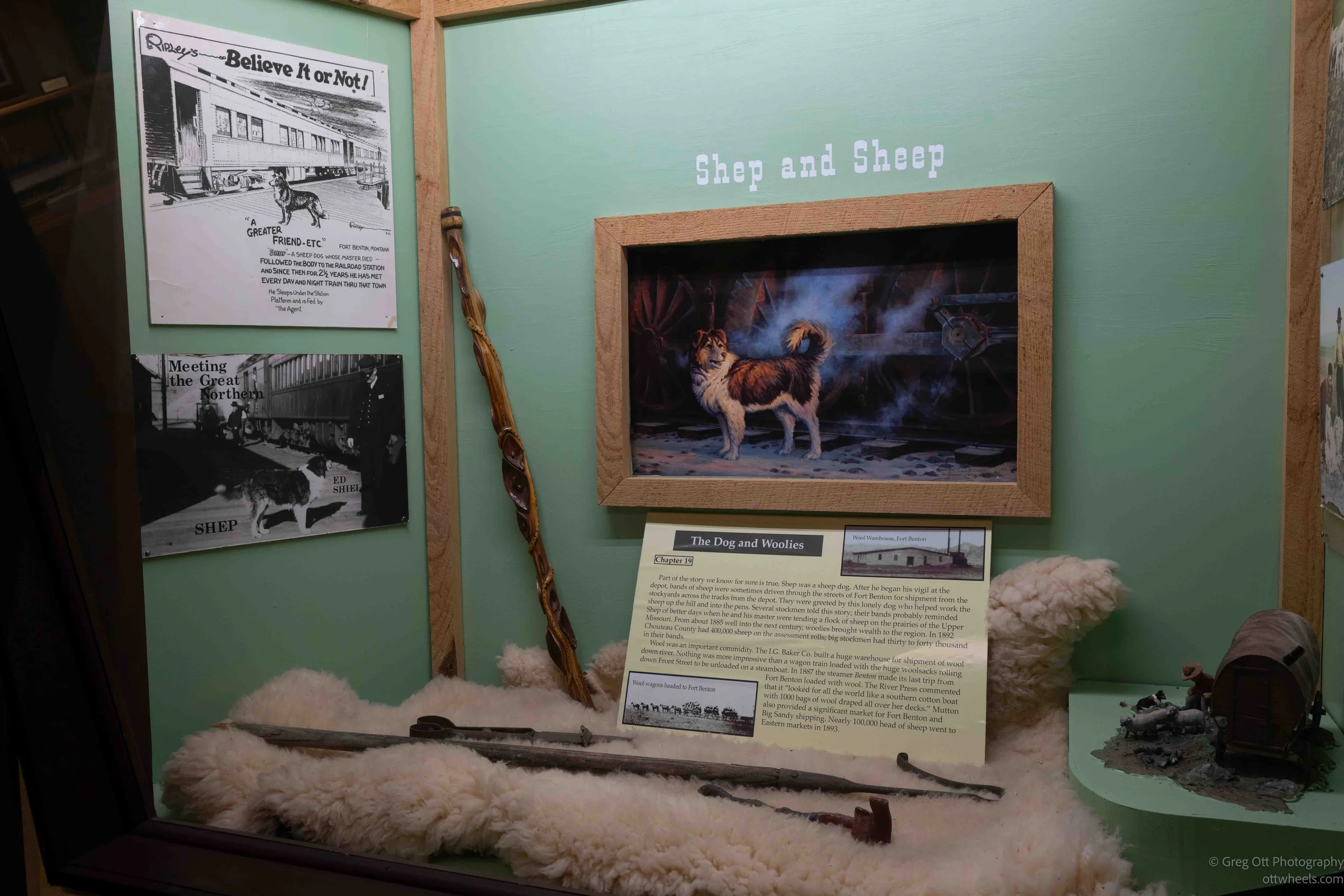
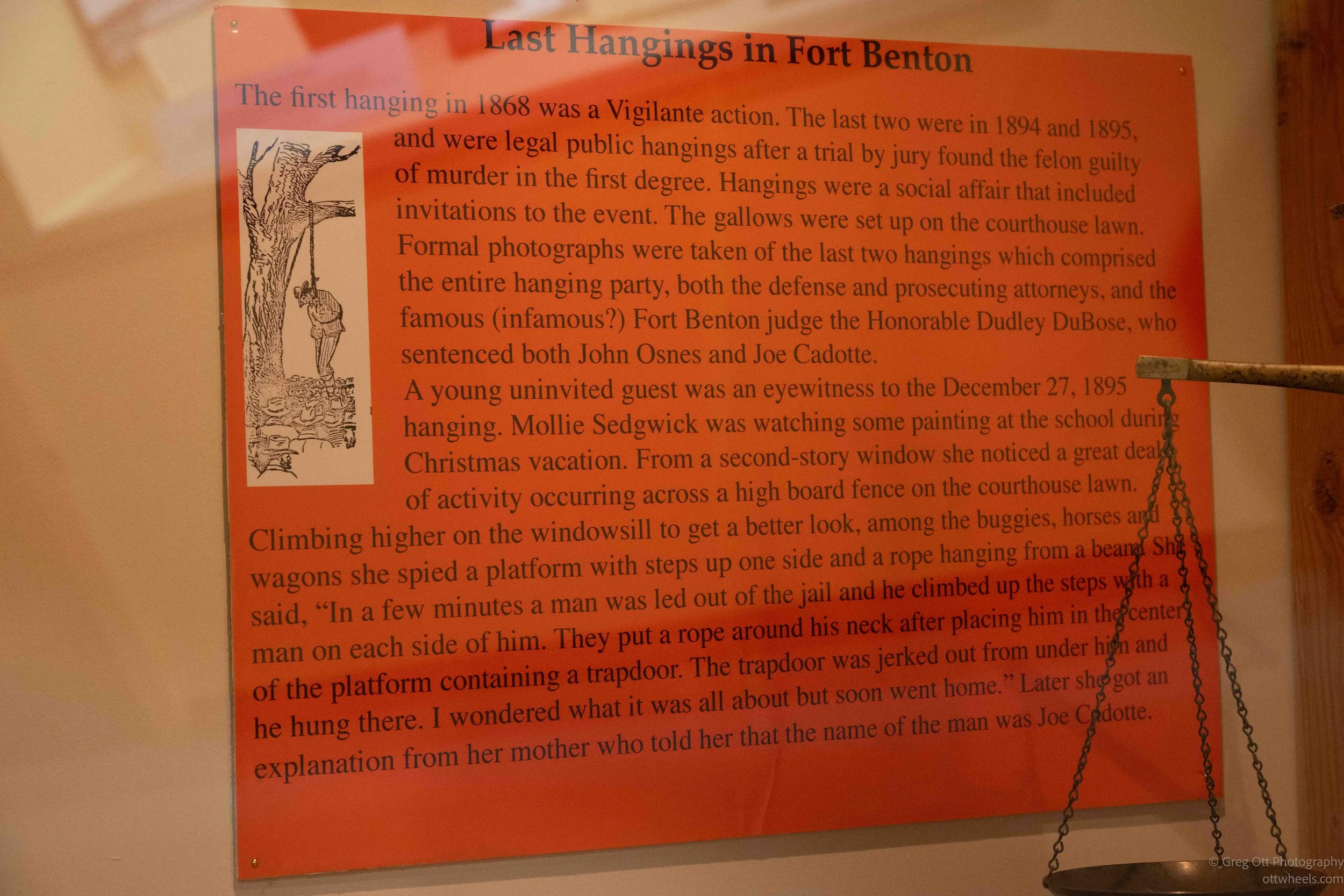
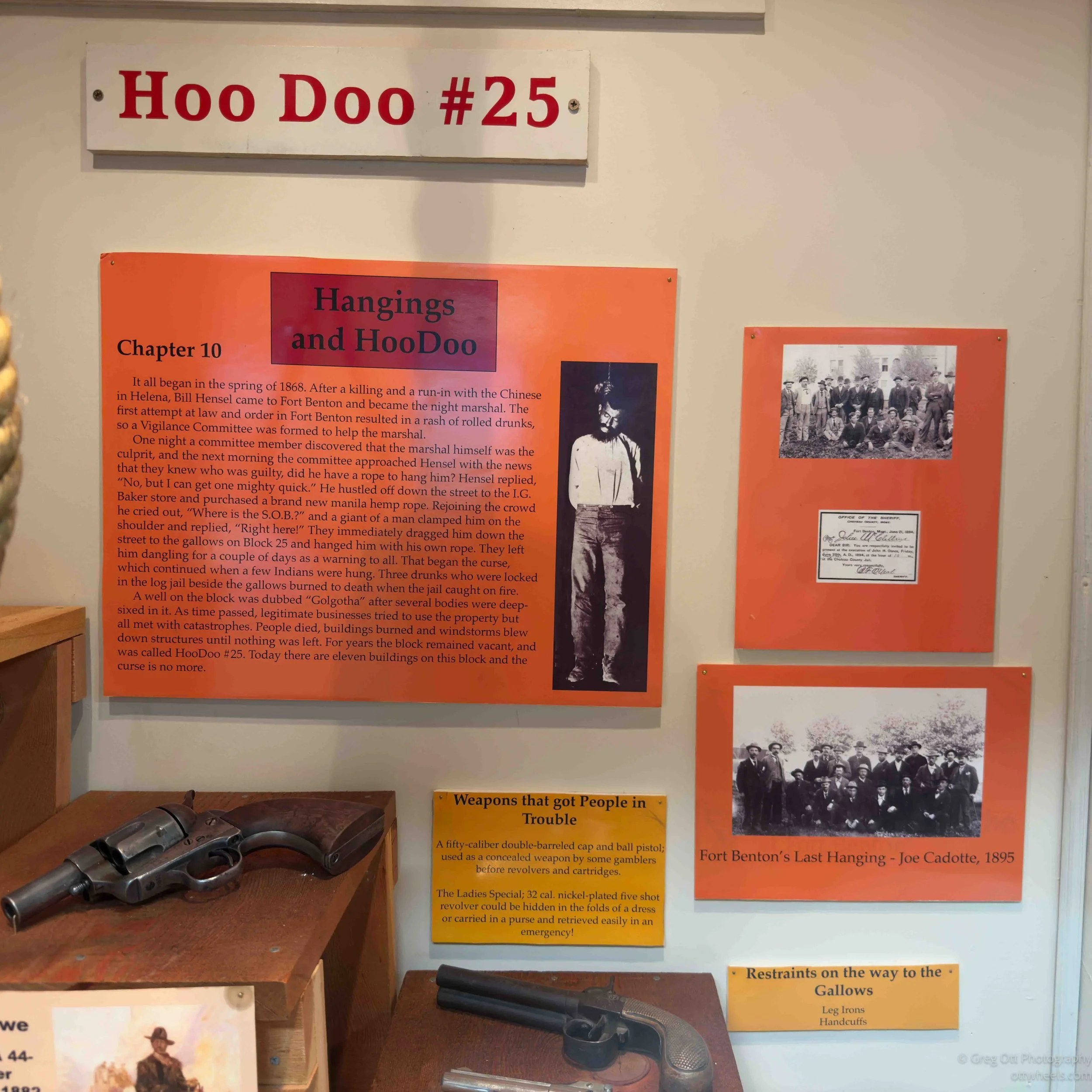
One of the more memorable sections covered Fort Benton’s last public hangings. The final two took place in 1894 and 1895 after murder convictions, and the exhibit explained that hangings were treated almost as public social events, complete with spectators and formal photographs. Nearby were ropes, restraints, firearms and other artifacts tied to the town’s frontier history, which gave this part of the museum a much darker tone.
I did like the steamboat models. Combined with the historic photographs and paintings, they helped show just how important river traffic once was here. Fort Benton feels quiet today, but the riverfront was once crowded with boats, freight, passengers and supplies, and that part of the museum did a good job of bringing that period to life.
Historic Old Fort Benton
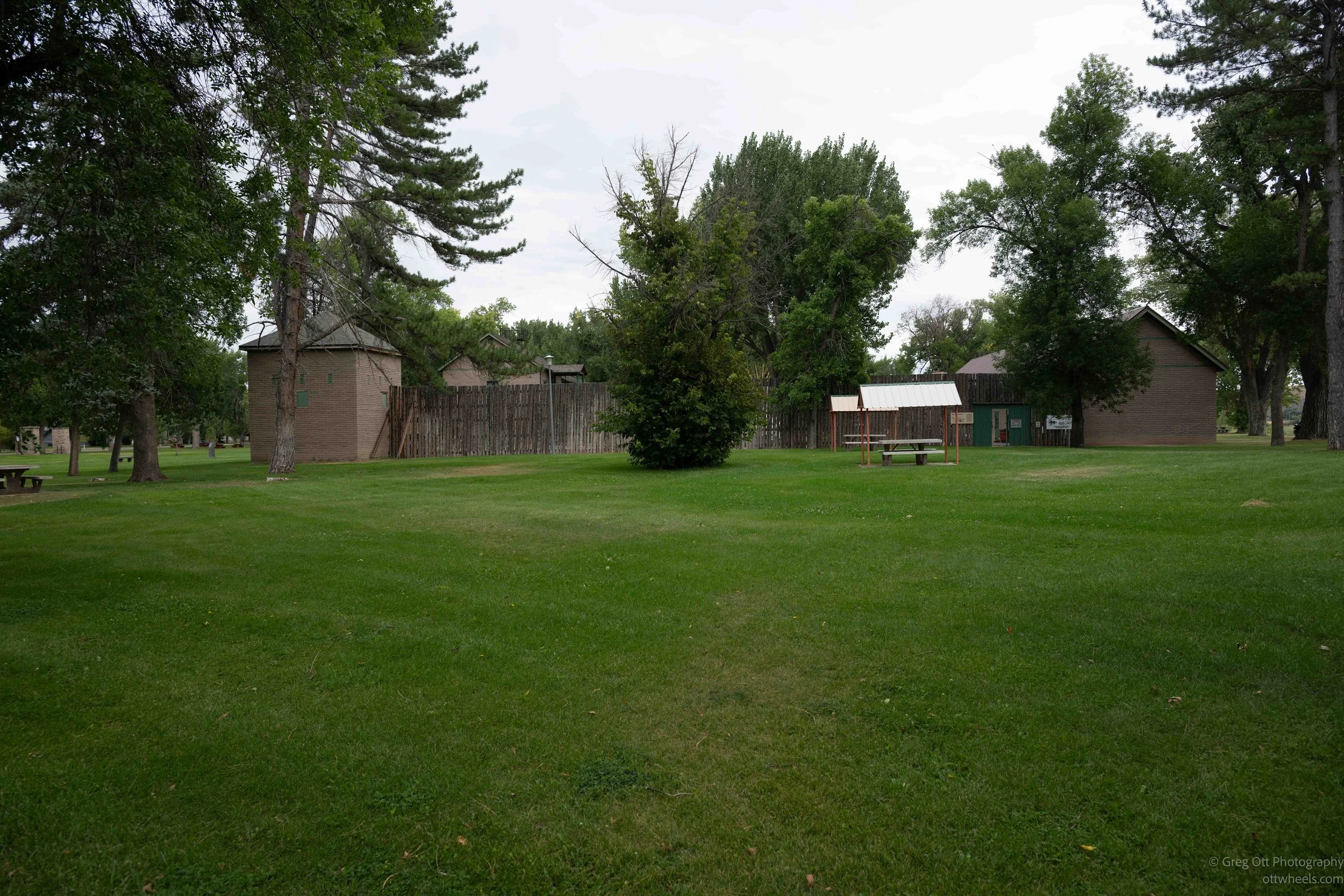
Museum number three was Historic Old Fort Benton, and this may have been my favorite of the day. Only a small section of the original fort survives, but much of the complex has been reconstructed on the historic site. The original northeast blockhouse remains, while the trade store, warehouse, blacksmith and carpenter shop, and Bourgeois House have been recreated around it.
I started in the trade store, where I showed my all-museums admission sticker and was greeted by a very knowledgeable staff member. He explained how the fort functioned as a fur-trading post, with trade between the Blackfeet, other Native groups, French and American traders. Goods traveled up the Missouri River to Fort Benton and then moved overland across the region, which helped explain why the town calls itself the “Birthplace of Montana.”
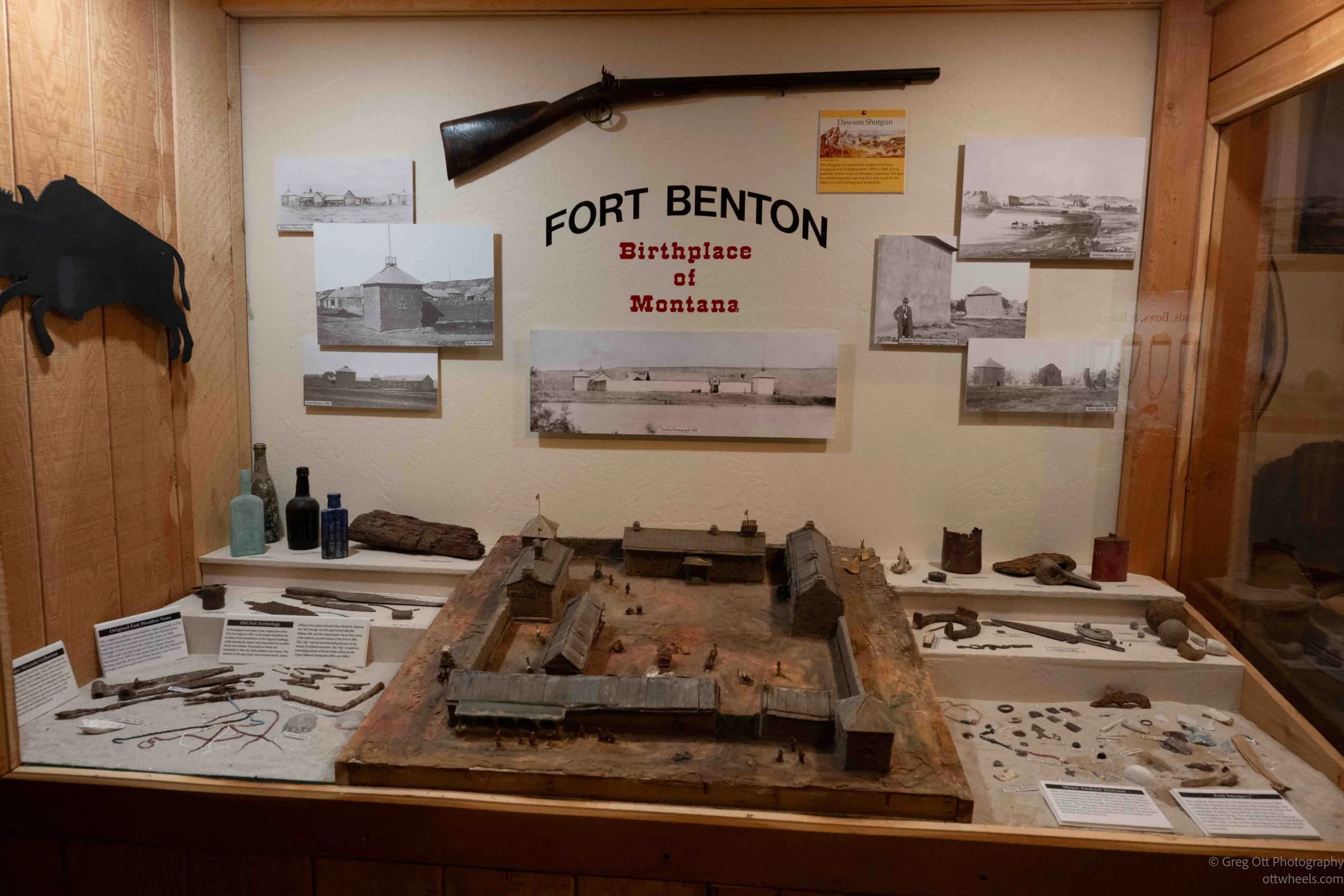
He also showed me a model of the original fort and described how the buildings were arranged around the central yard. That made the rest of the visit much easier to understand. The reconstructed trading post was filled with furs, buffalo robes and period goods, and it was much easier to imagine the fort as a working commercial outpost rather than simply a collection of old buildings.
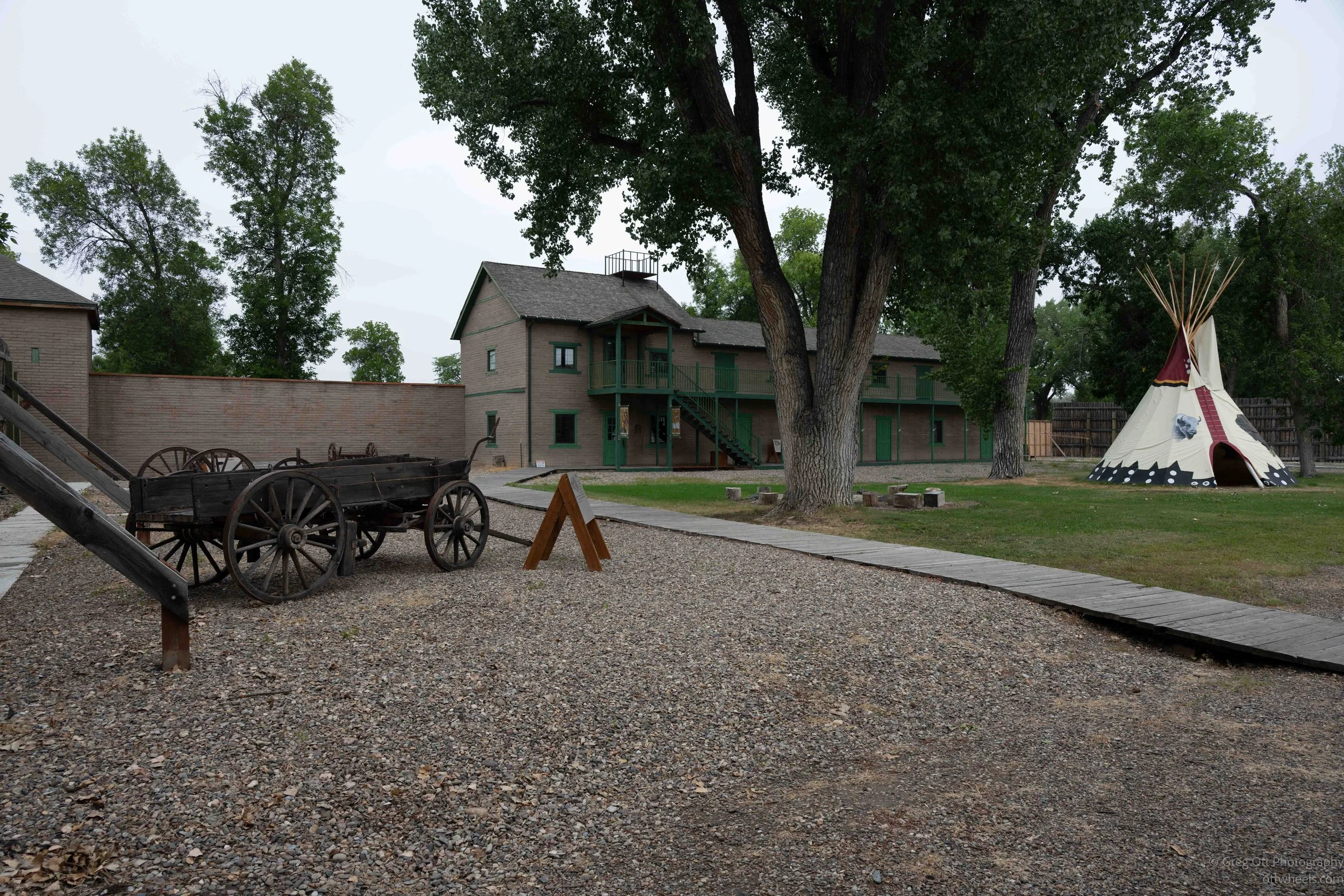
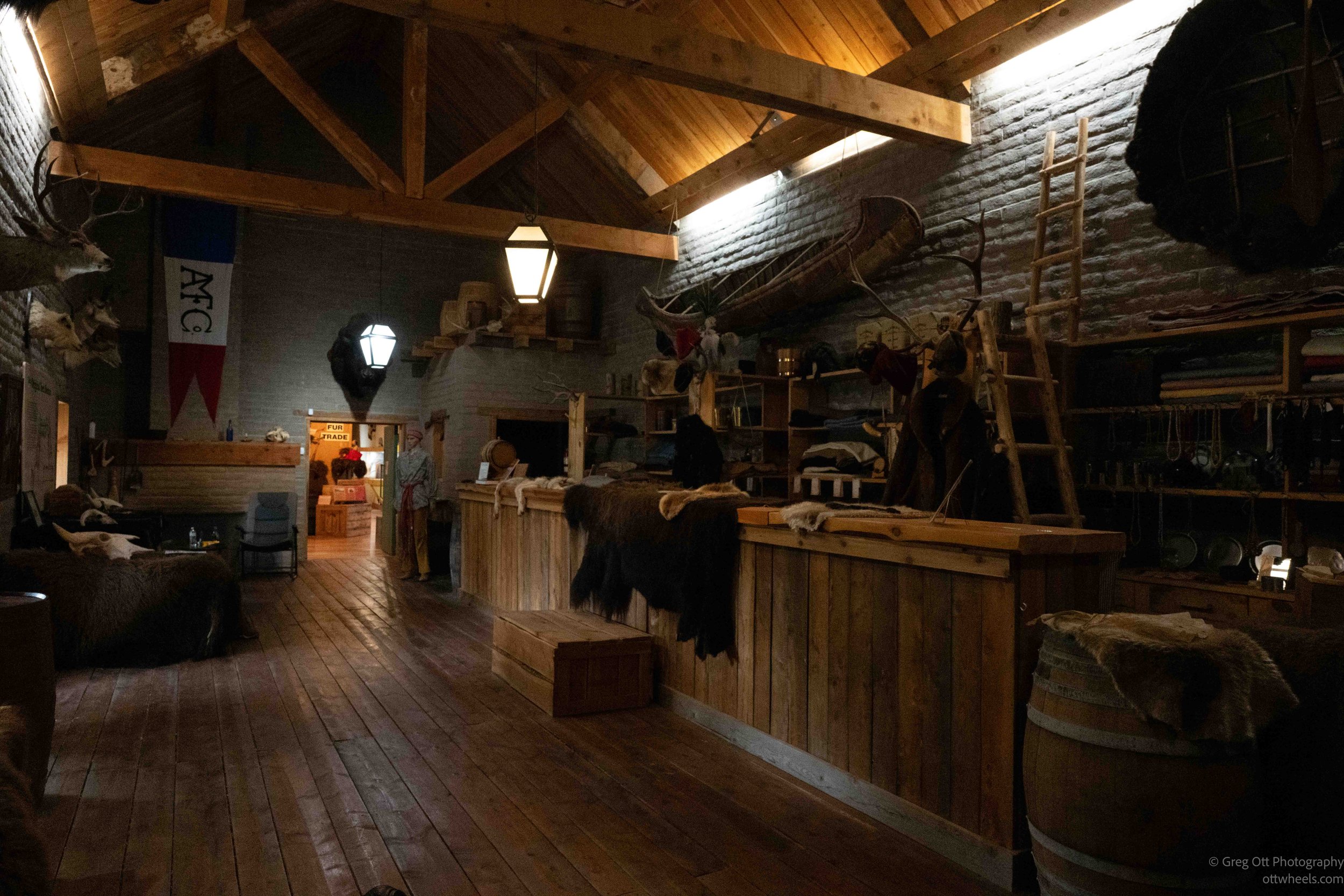
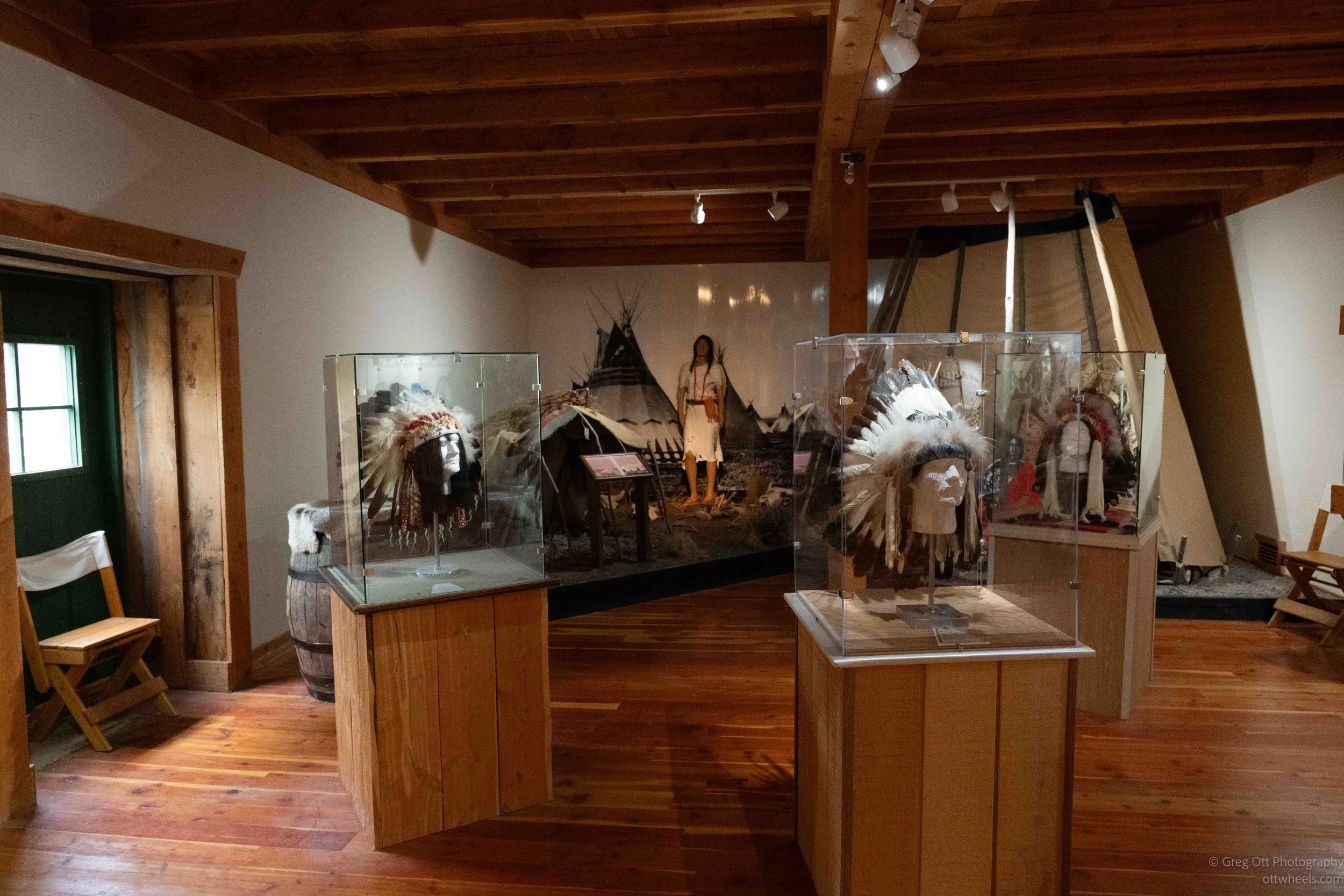
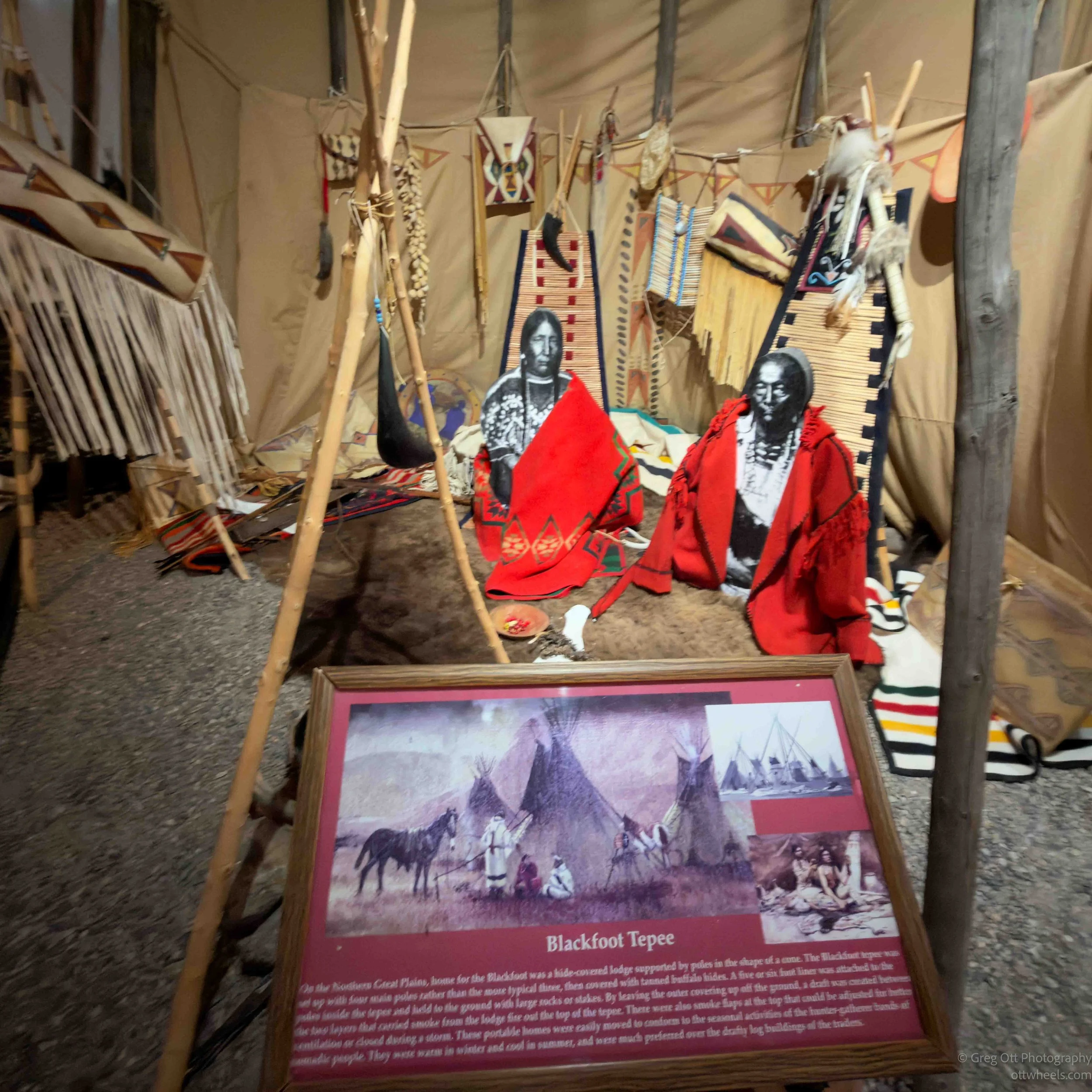
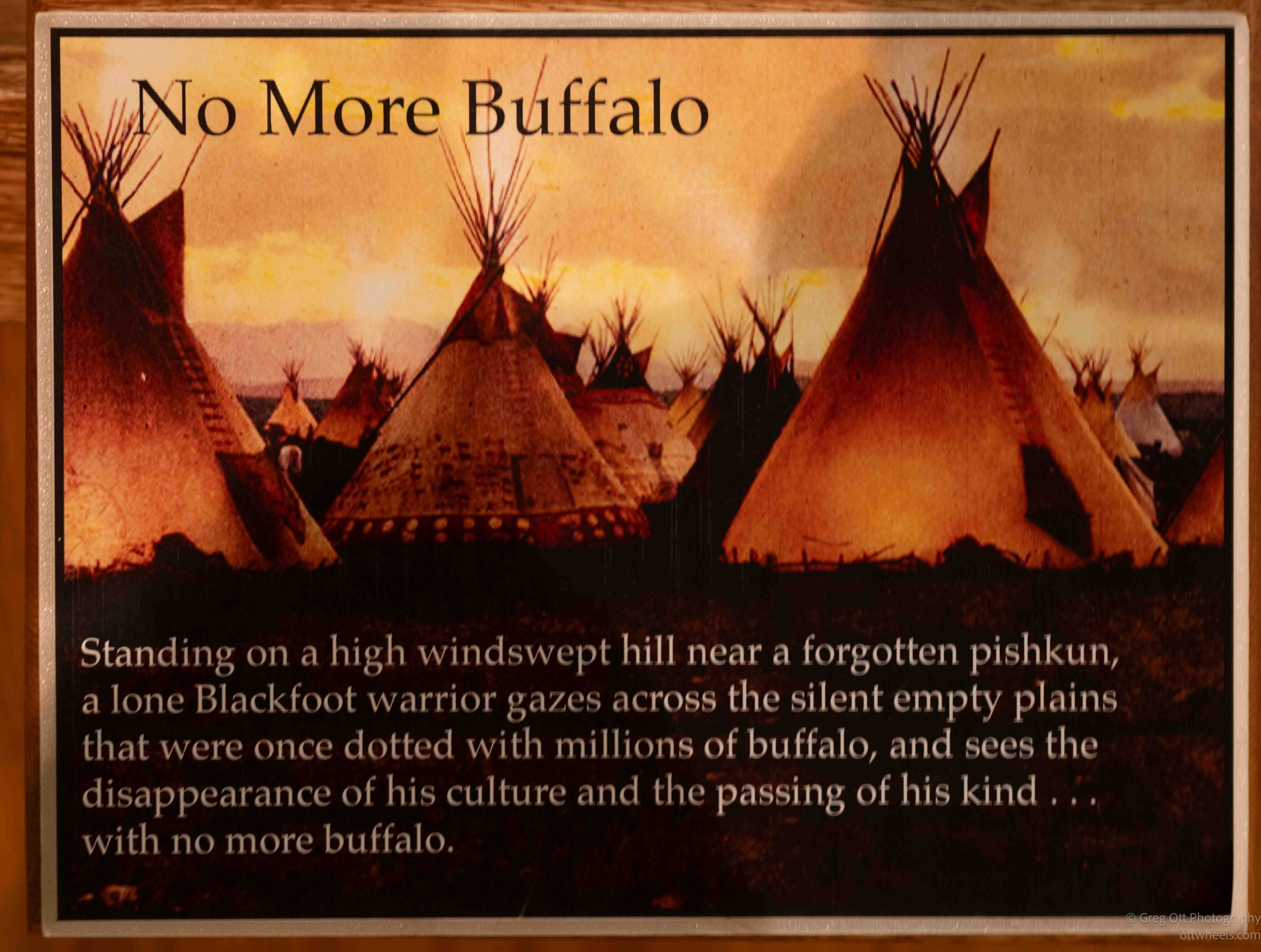
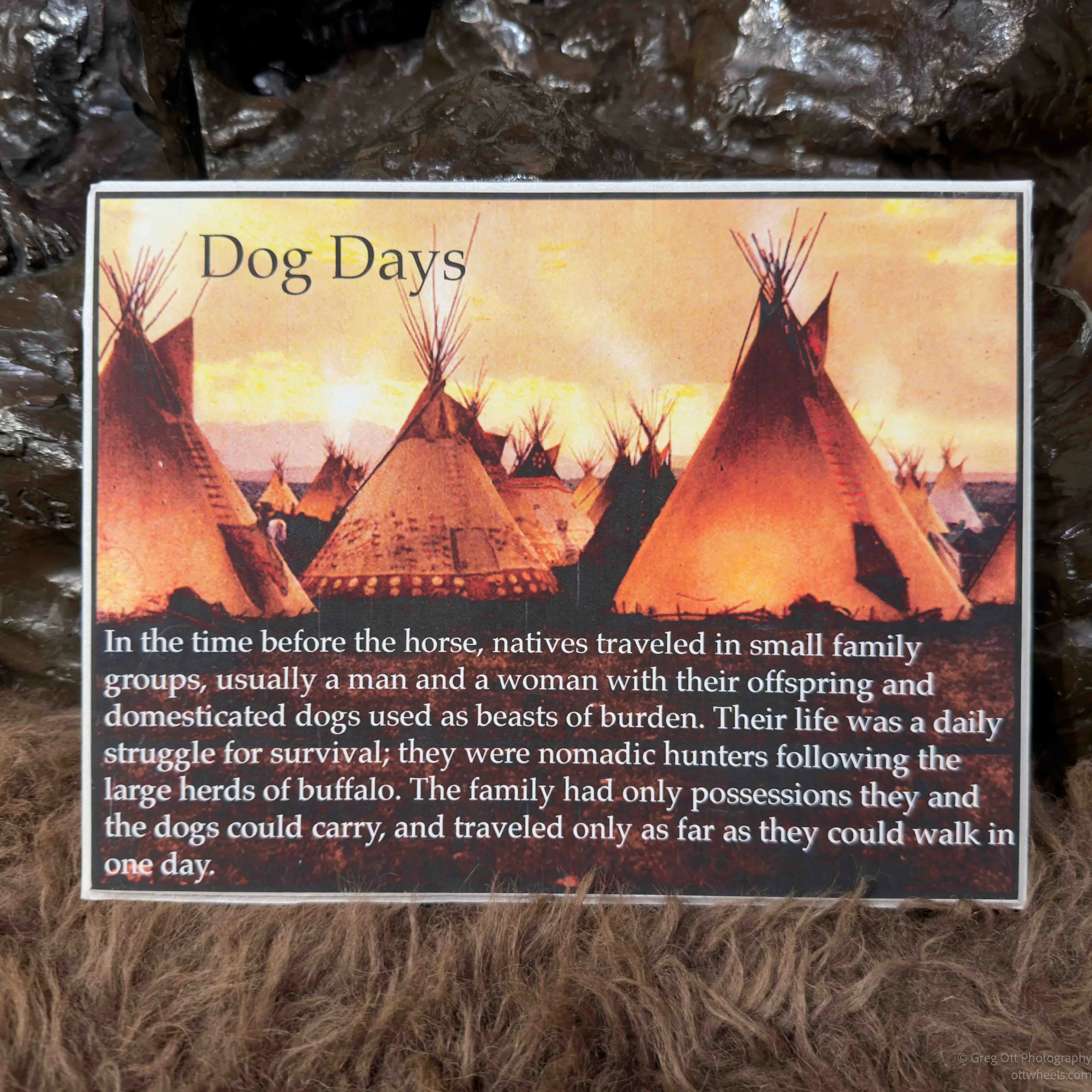
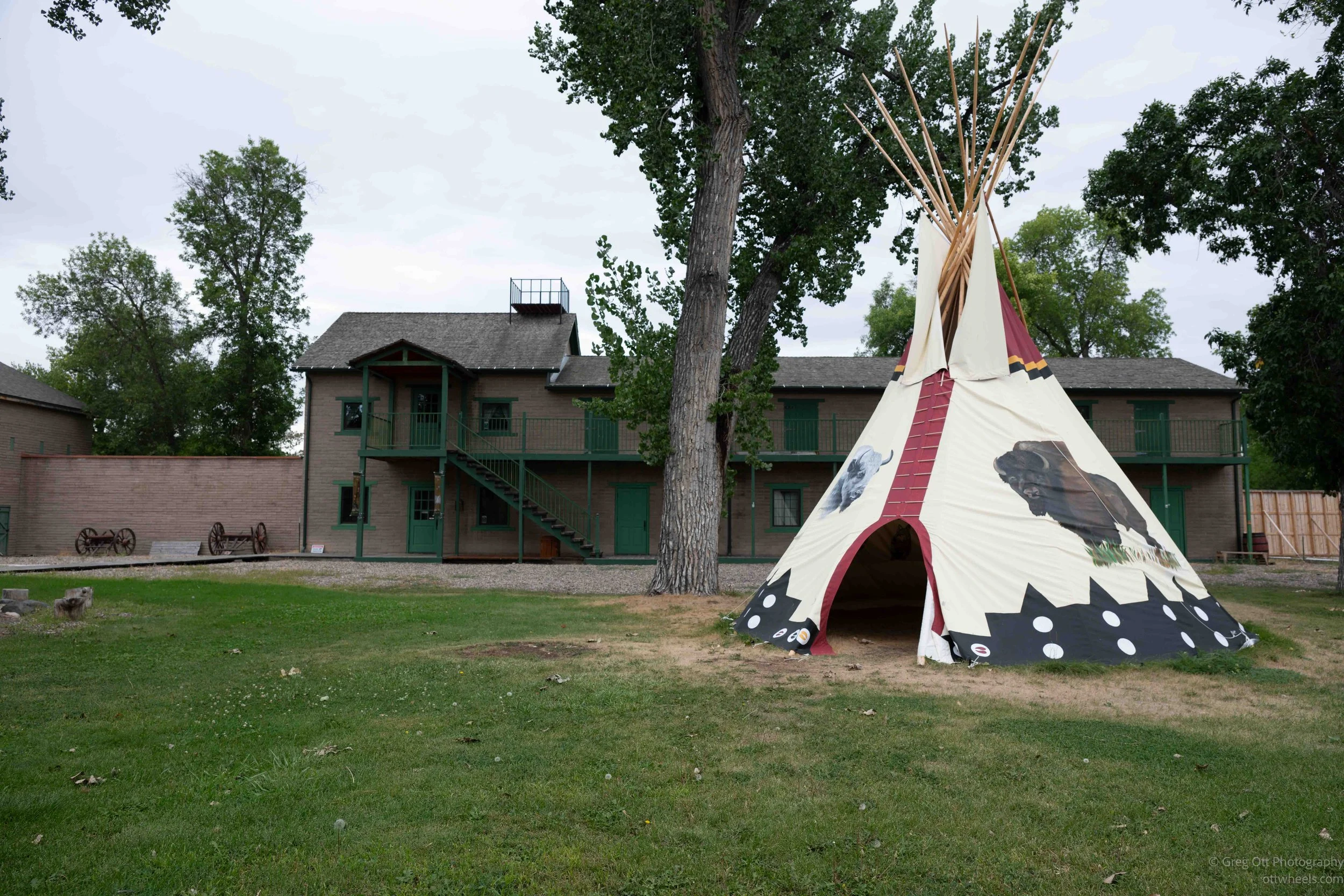
The exhibits also spent time on Blackfoot life and the importance of the buffalo to the people of the northern plains. Tipis, clothing, tools and other objects showed how closely daily life was tied to the land and the buffalo herds. The later disappearance of those herds was treated as a major turning point, and several of the exhibits made that part of the story feel much more immediate.
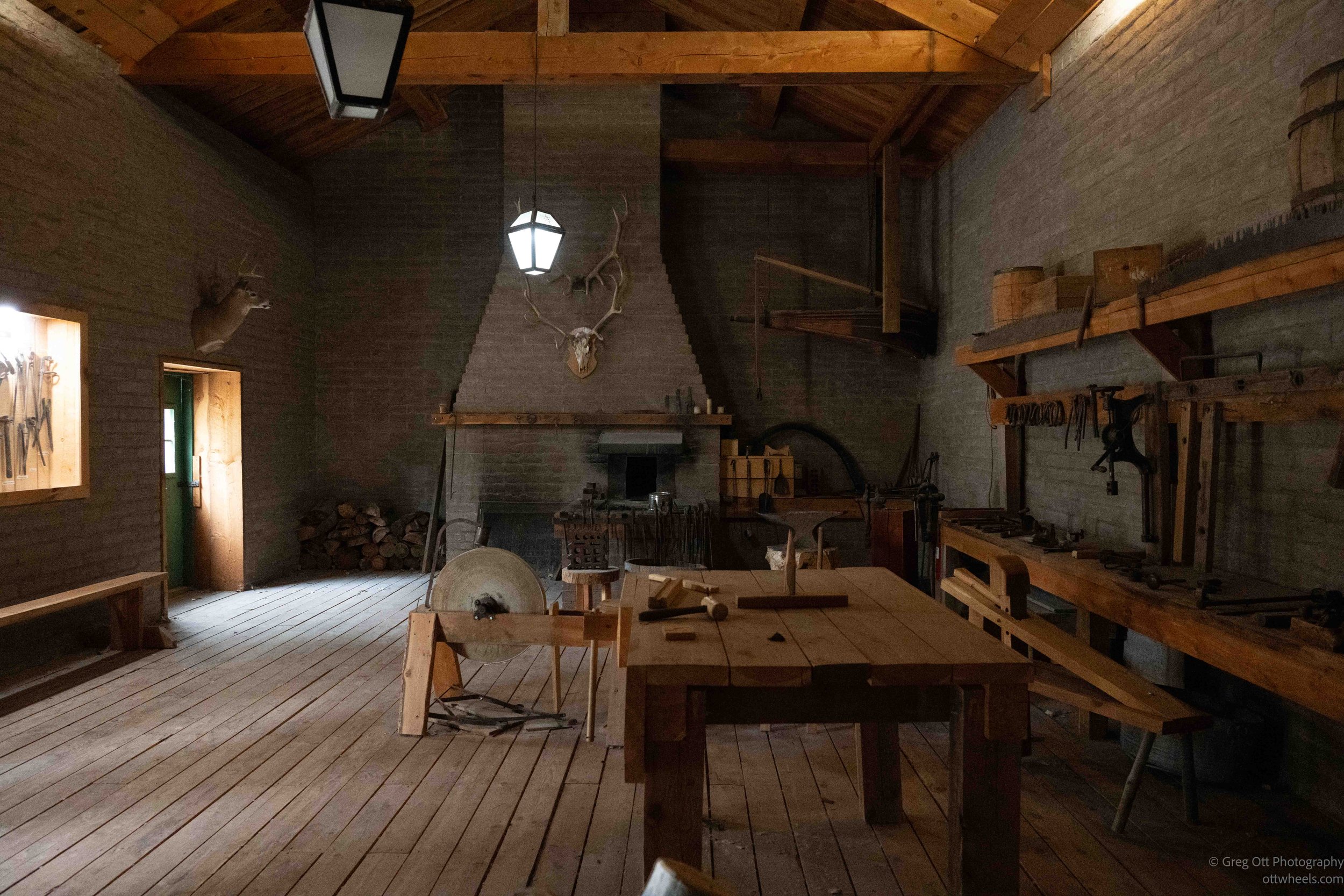
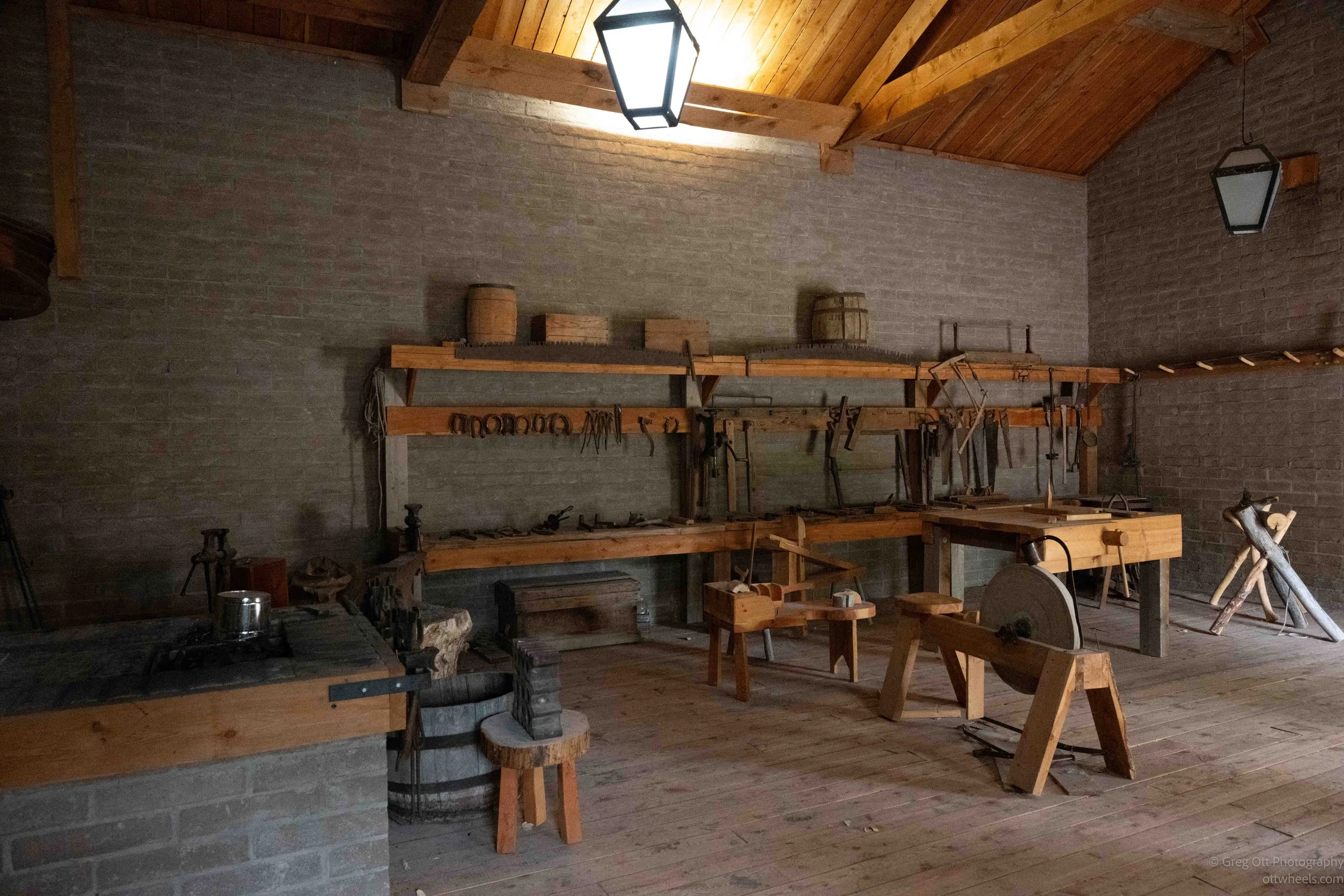
Nearby, the blacksmith and carpenter shop was particularly convincing, with benches, tools, grinding wheels and forges laid out as they might have been. In a place this remote, those trades would have been essential. Wagons, tools, weapons and other equipment all had to be repaired locally, and the shop helped show how self-contained the fort had to be.
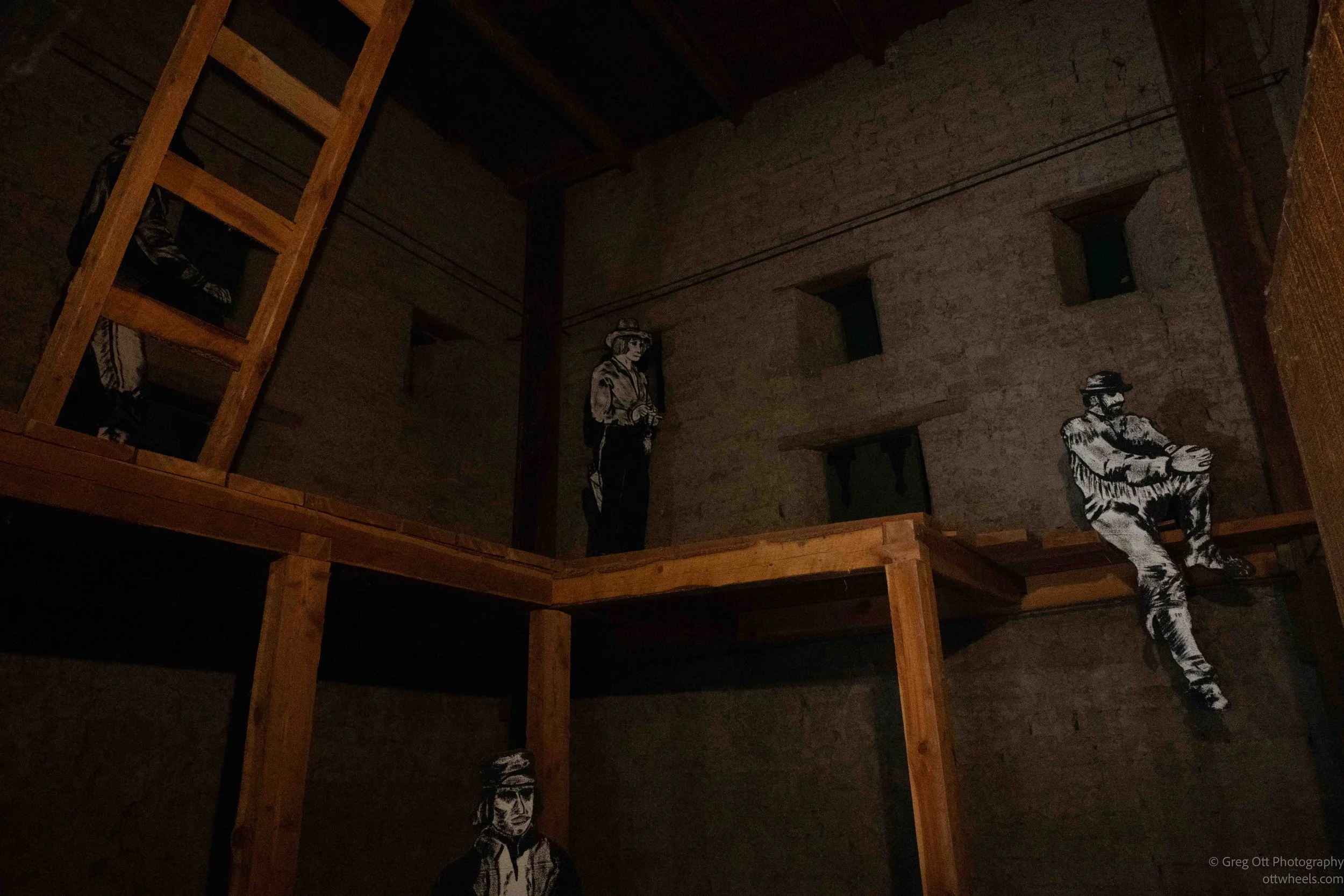
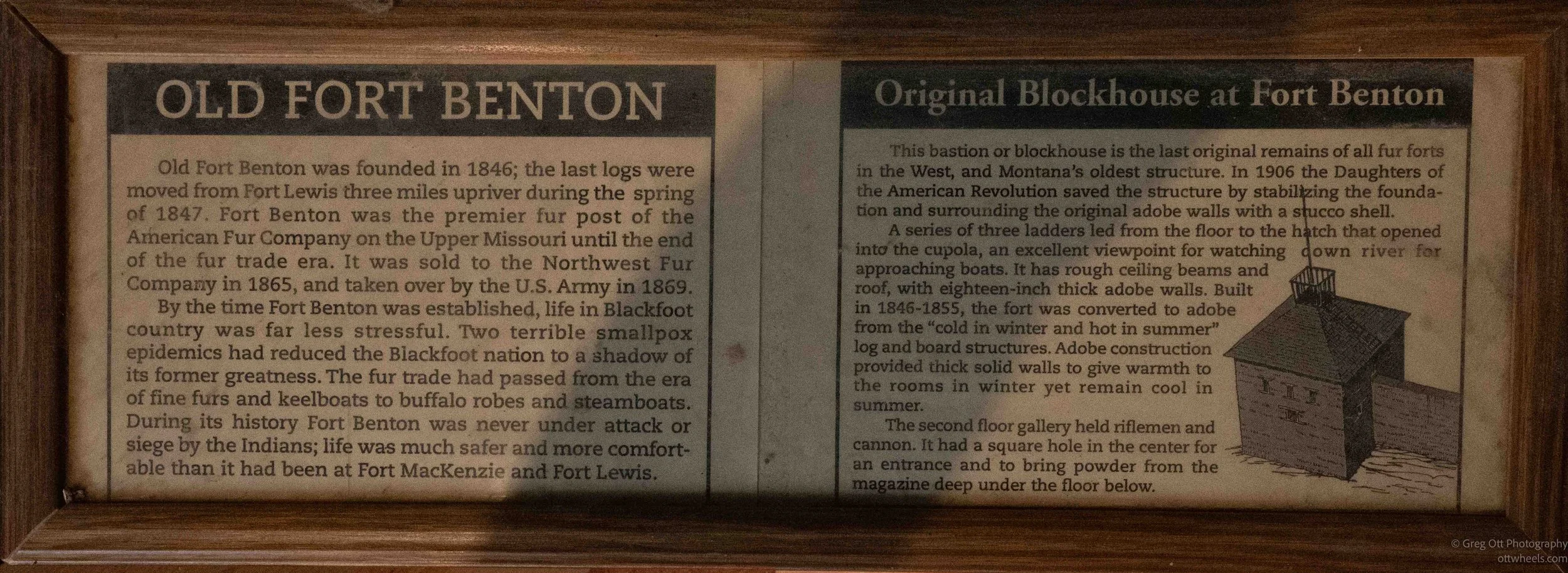
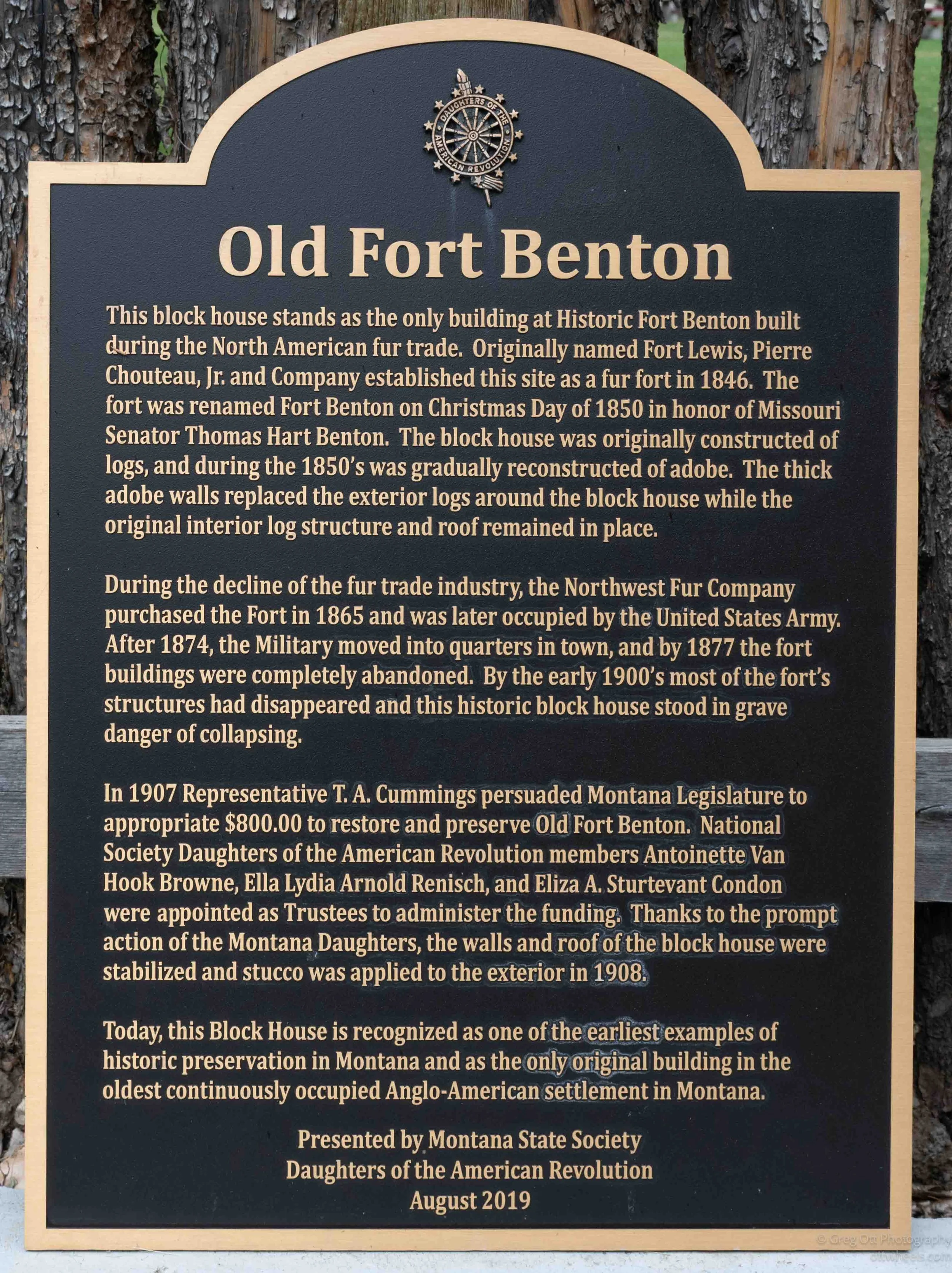
Beside the blacksmith shop is the only remaining section, the original northeast blockhouse. Fort Benton was founded in 1846, originally as Fort Lewis, and renamed Fort Benton in 1850. By the early 1900s most of the fort had disappeared, but the blockhouse survived and was later stabilized and restored. Inside, the heavy adobe walls, narrow openings and dark interior felt far more authentic than the reconstructed buildings around it.
Across the grounds, the Bourgeois House held a beautiful collection of Western art and bronzes. Several pieces centered on buffalo hunts, starvation, horse raids, Native families, and the disappearance of the buffalo herds. I spent more time there than I expected, and the artwork added a different dimension to the story being told elsewhere in the fort. It is an exquisite collection, although the lighting made it very difficult to photograph.
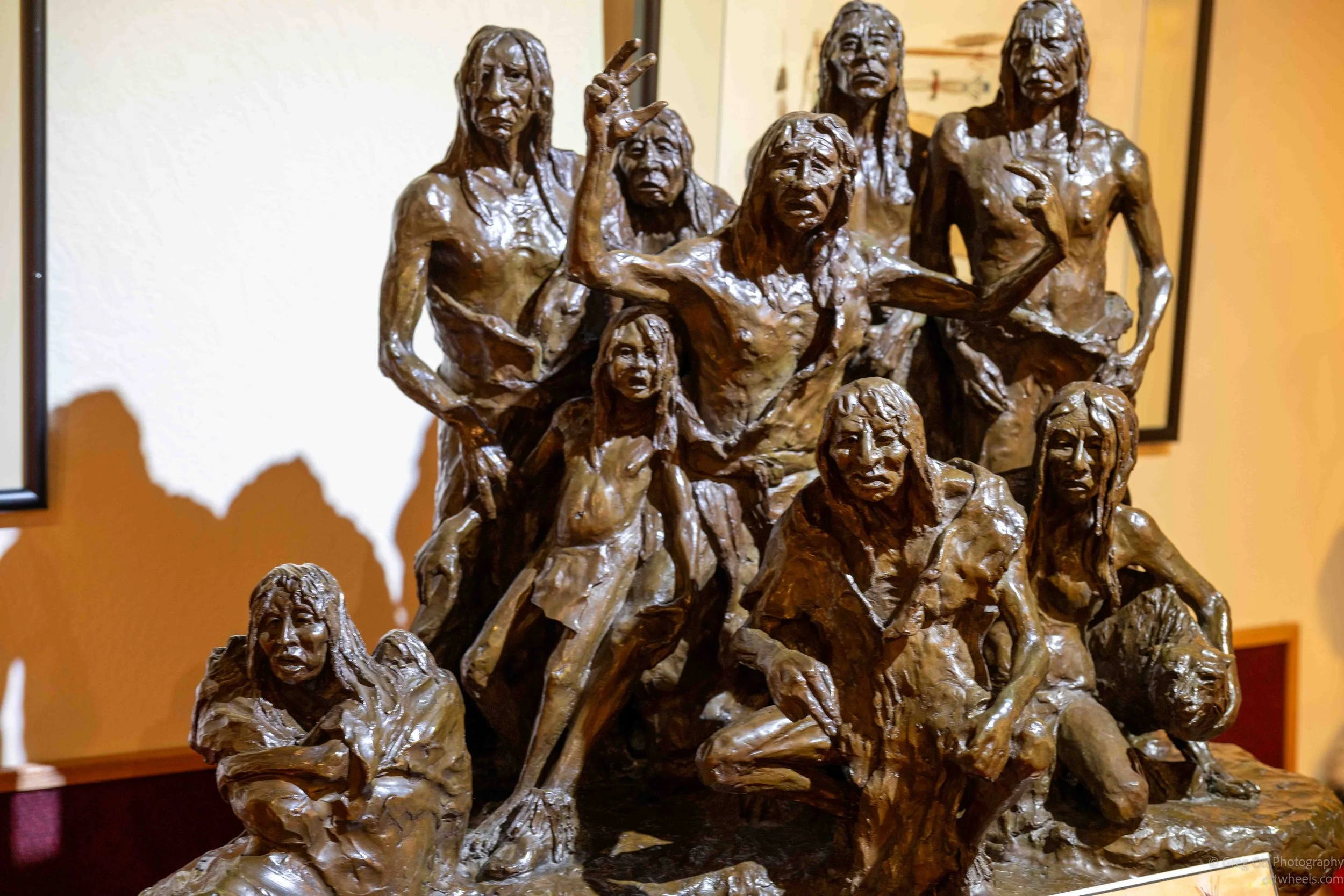
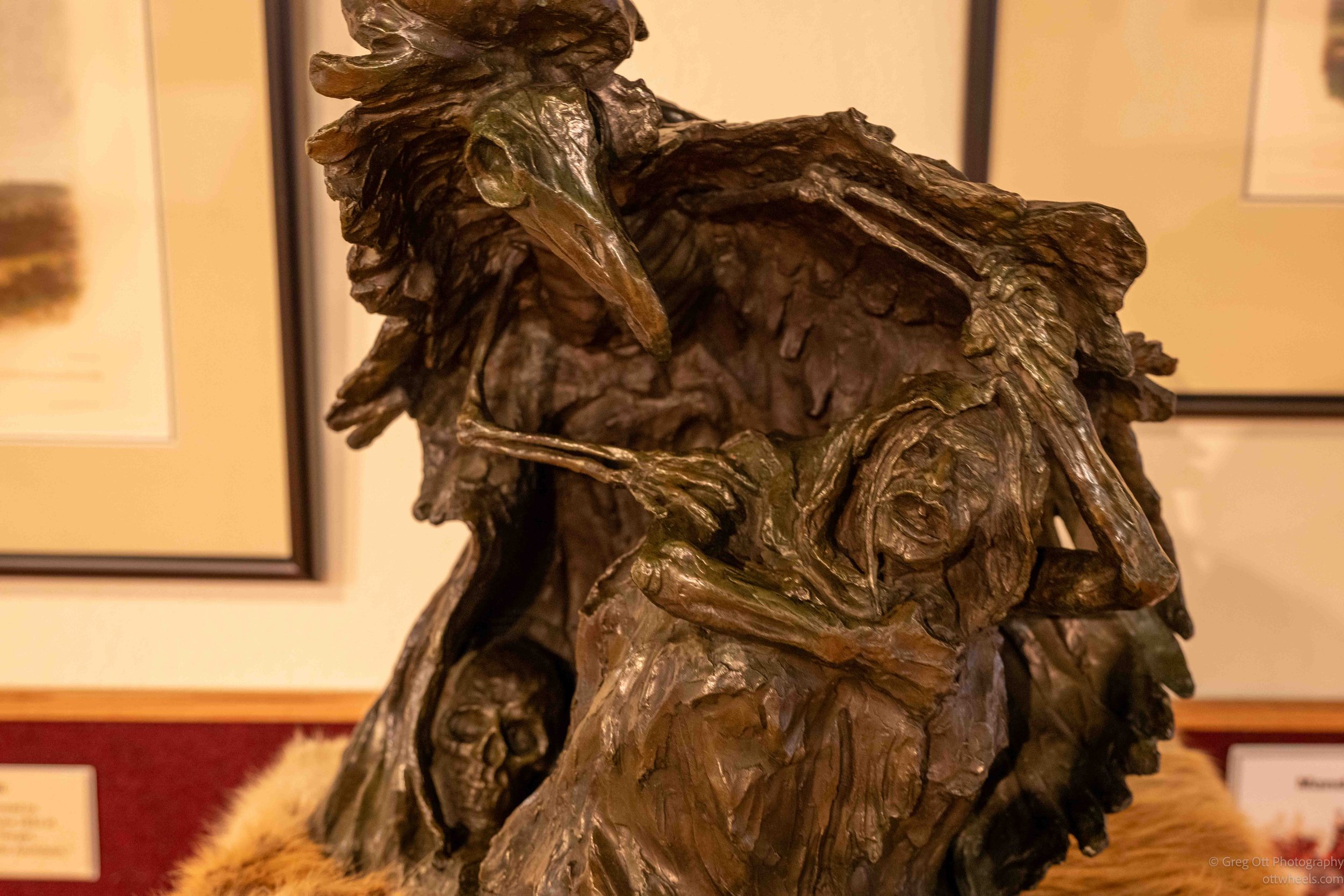
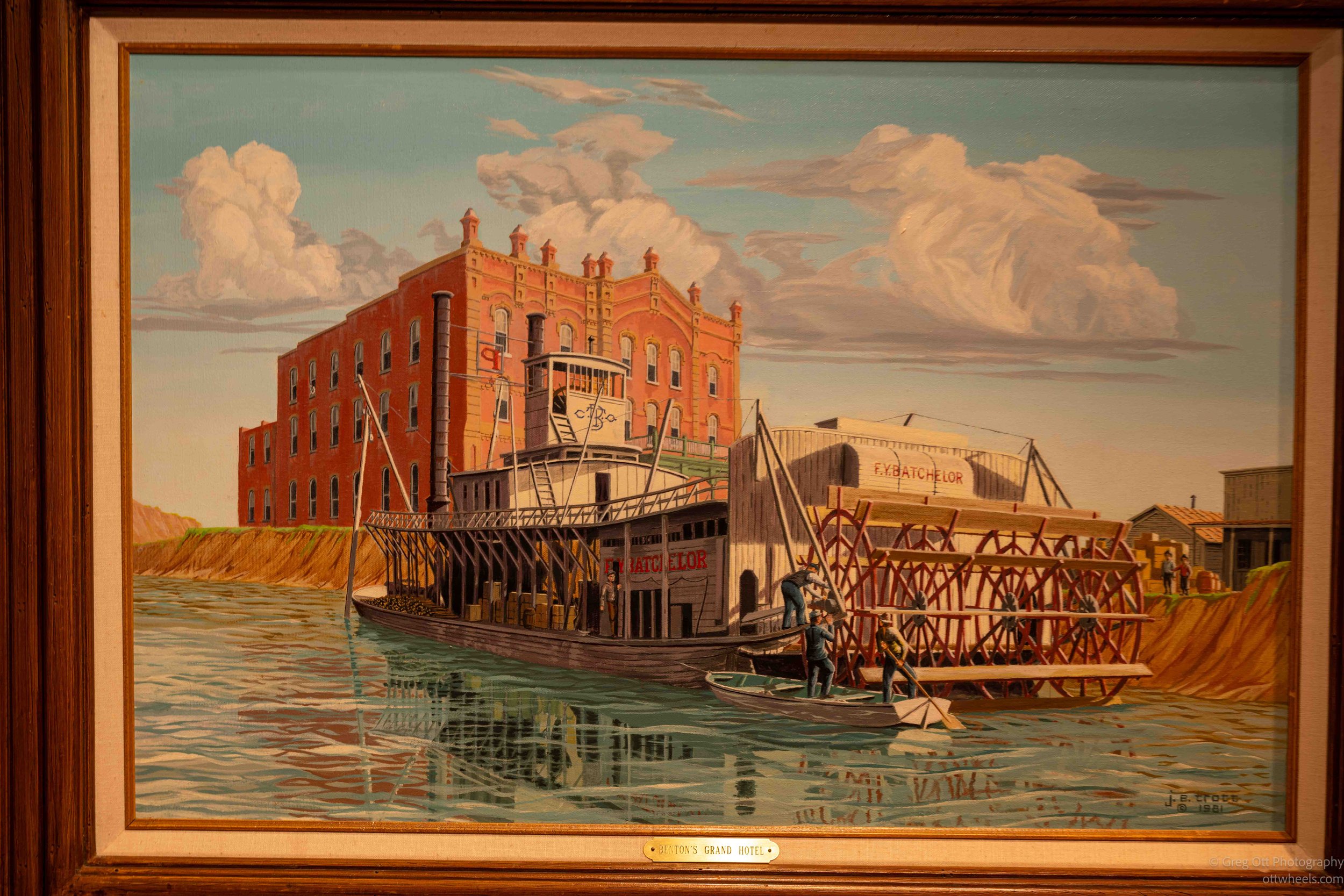
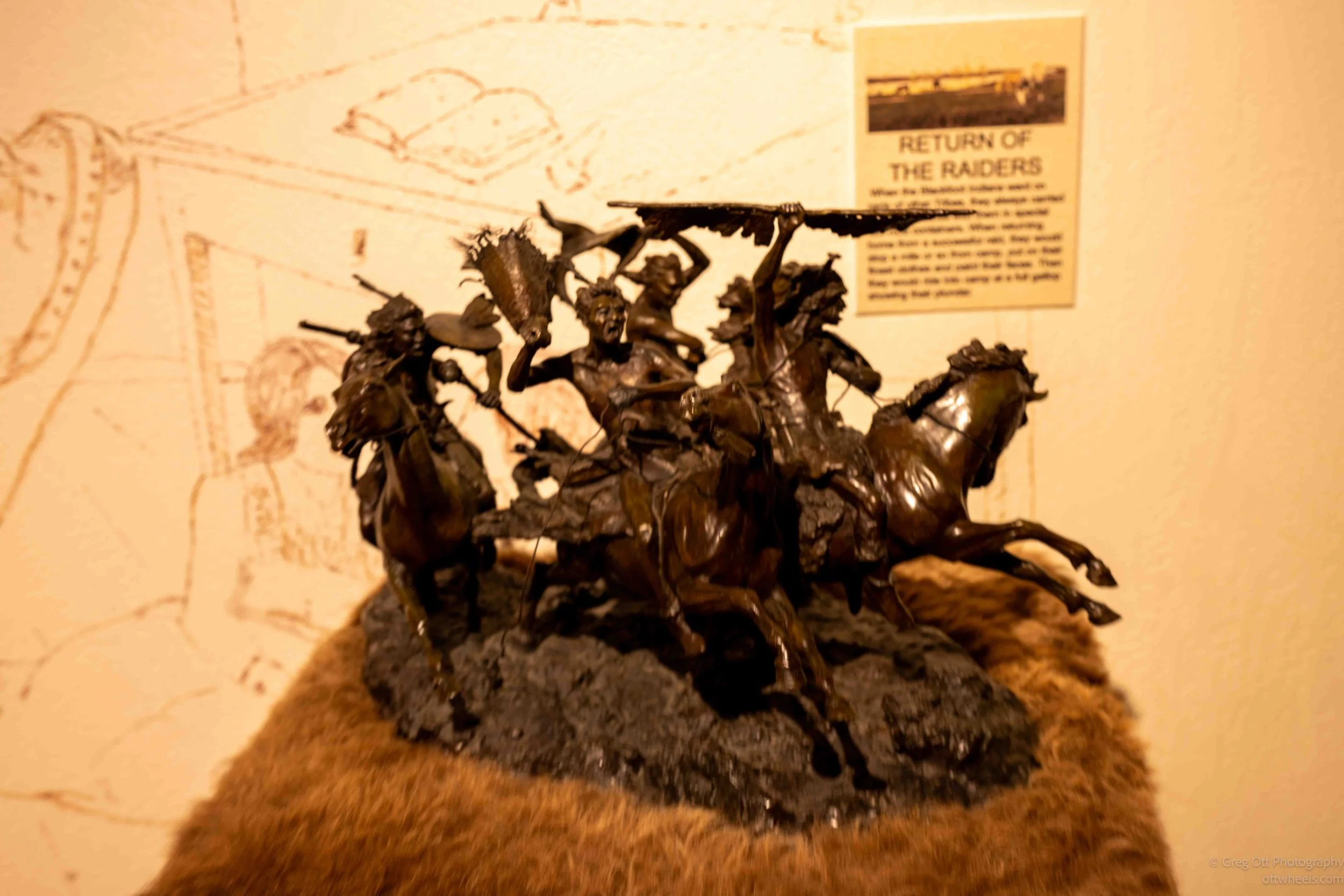
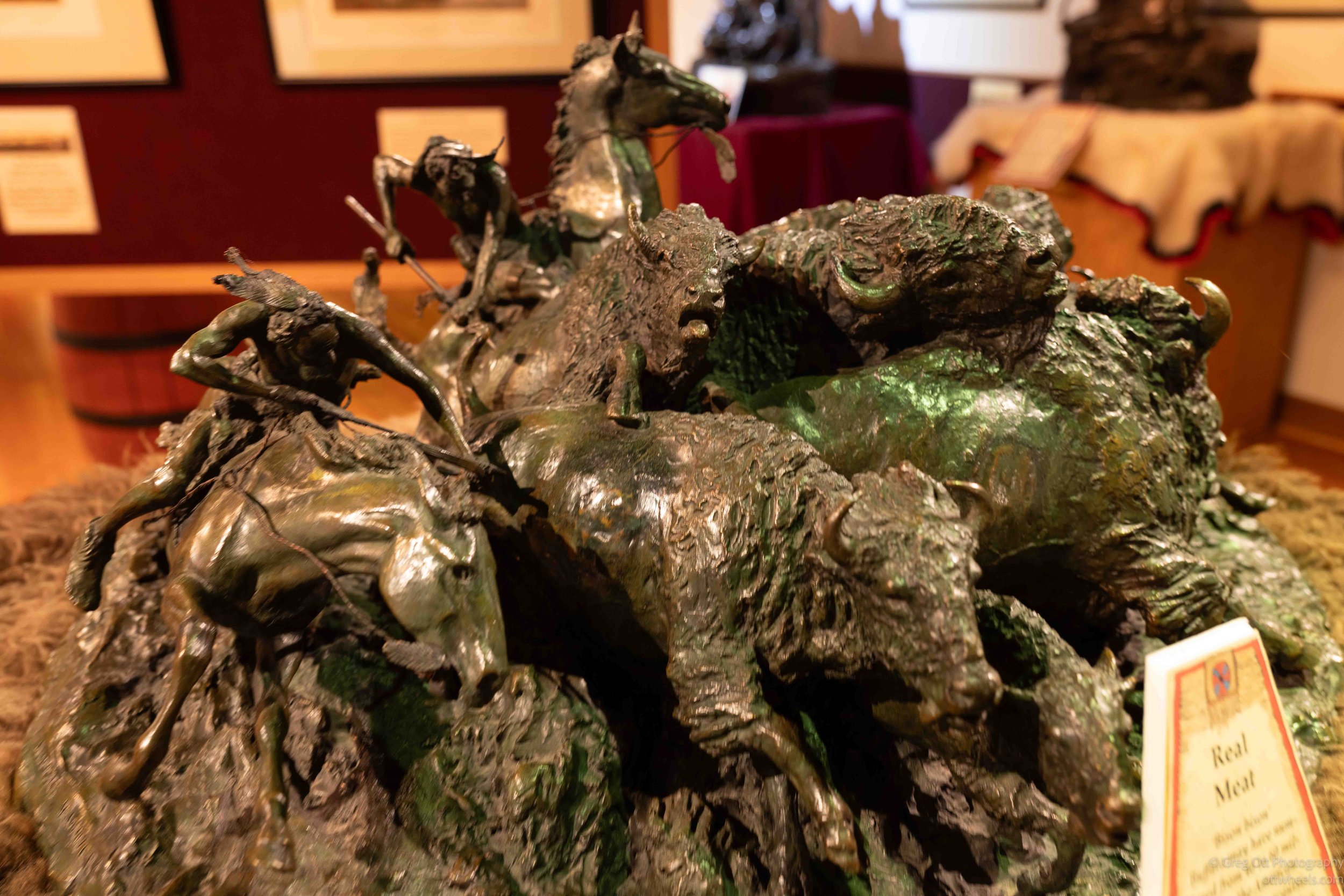
This museum worked much better for me than the Museum of the Upper Missouri next door. Instead of just displaying objects, it gave me a clear sense of how the fort functioned, why it was important and why Fort Benton played such a large role in the early development of Montana.
Fort Benton’s War Memorials
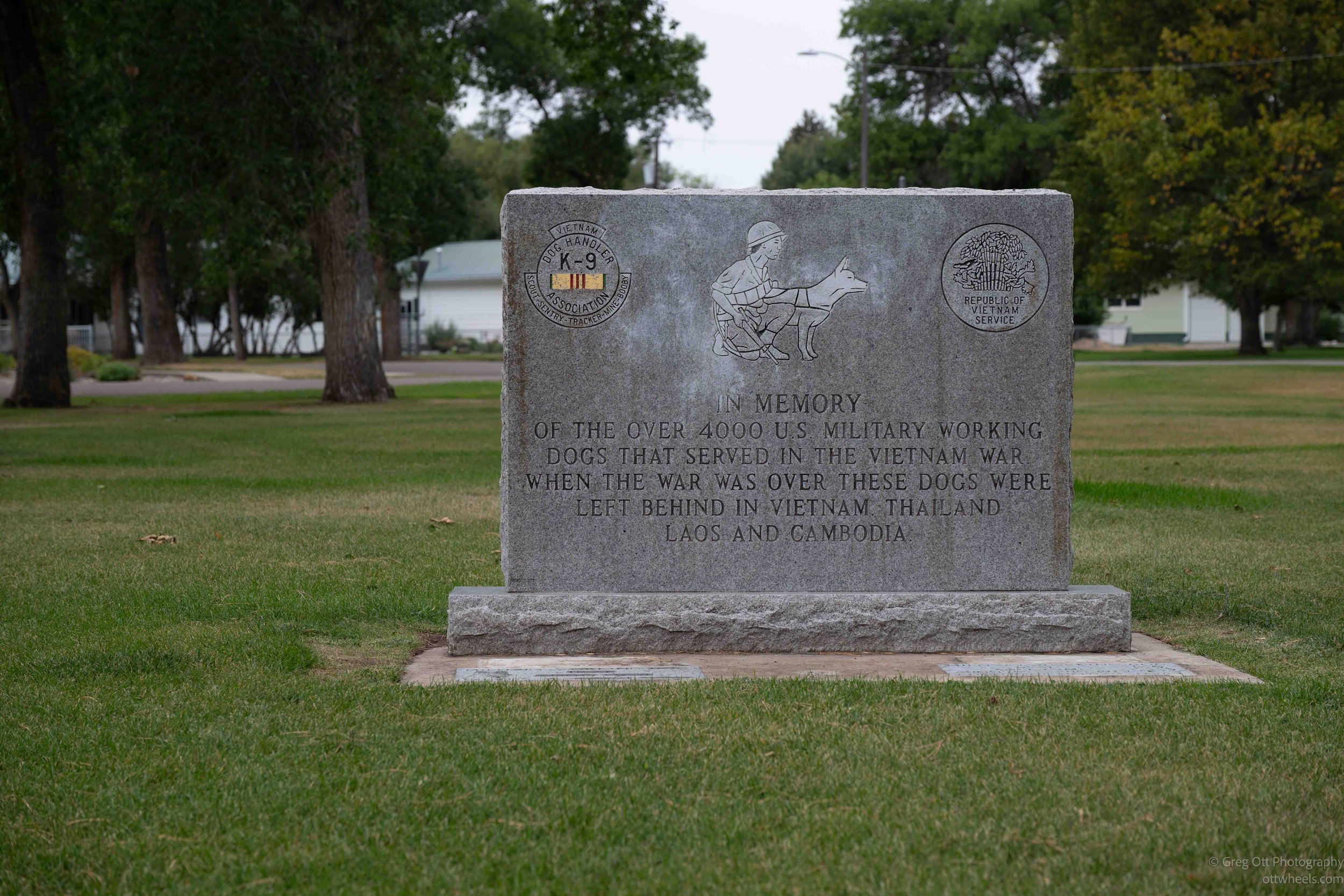
Nearby was a small war memorial area that turned out to be more interesting than I expected. One monument honored the more than 4,000 U.S. military working dogs that served during the Vietnam War and were left behind when the war ended. Given Fort Benton’s devotion to the story of Shep, the faithful dog who waited for years at the train station for his owner to return, it somehow felt fitting that the town would also have a memorial to military dogs.
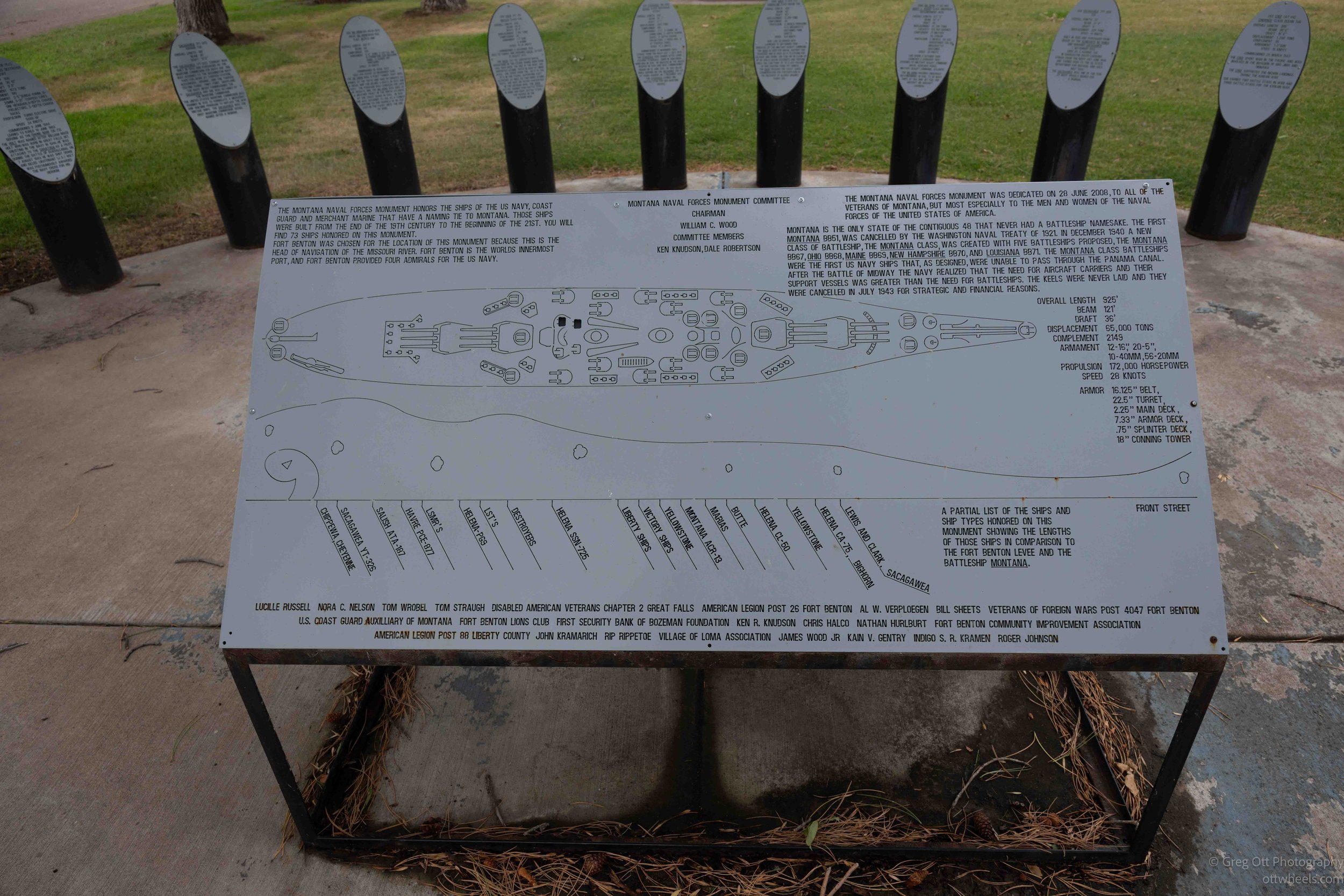
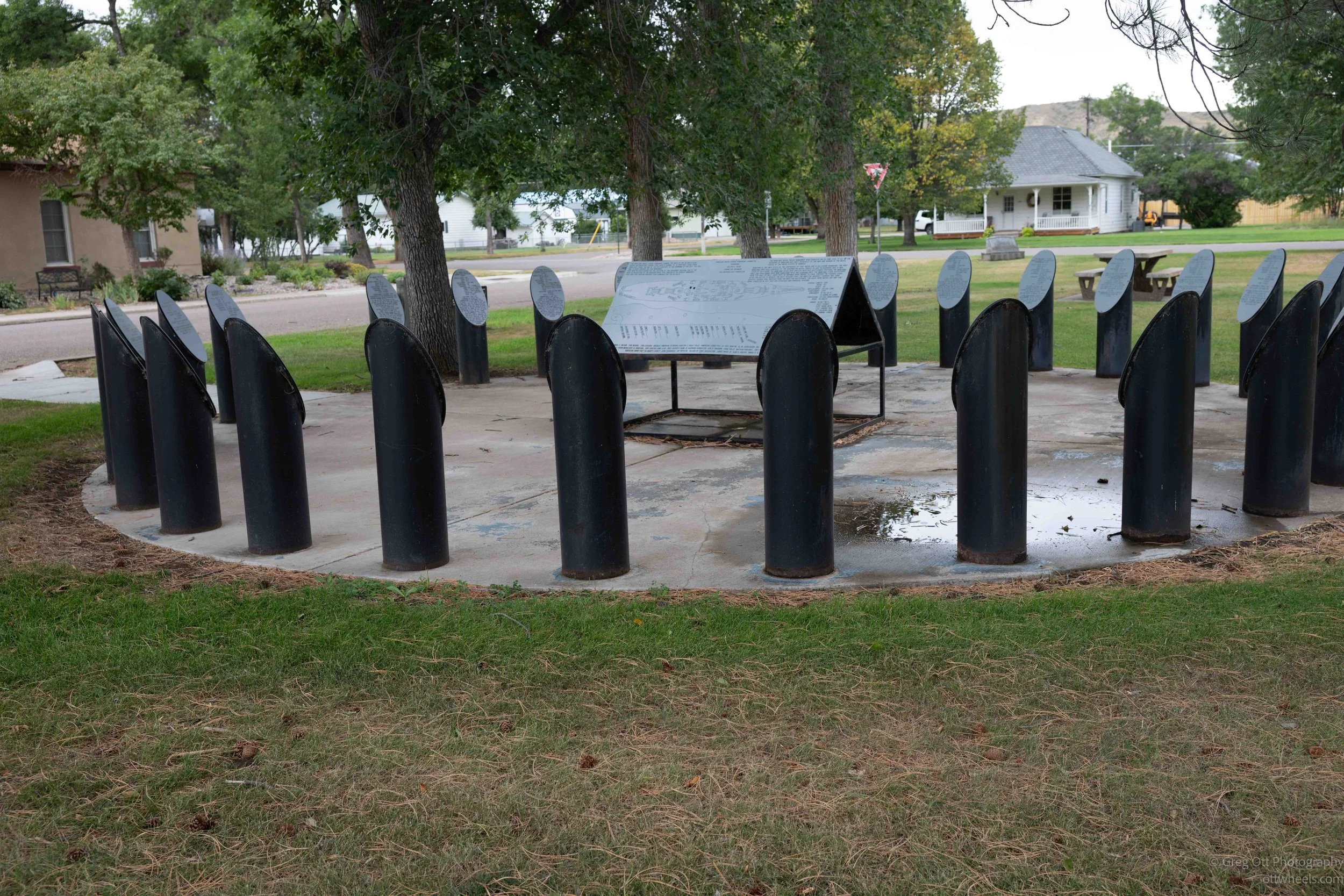
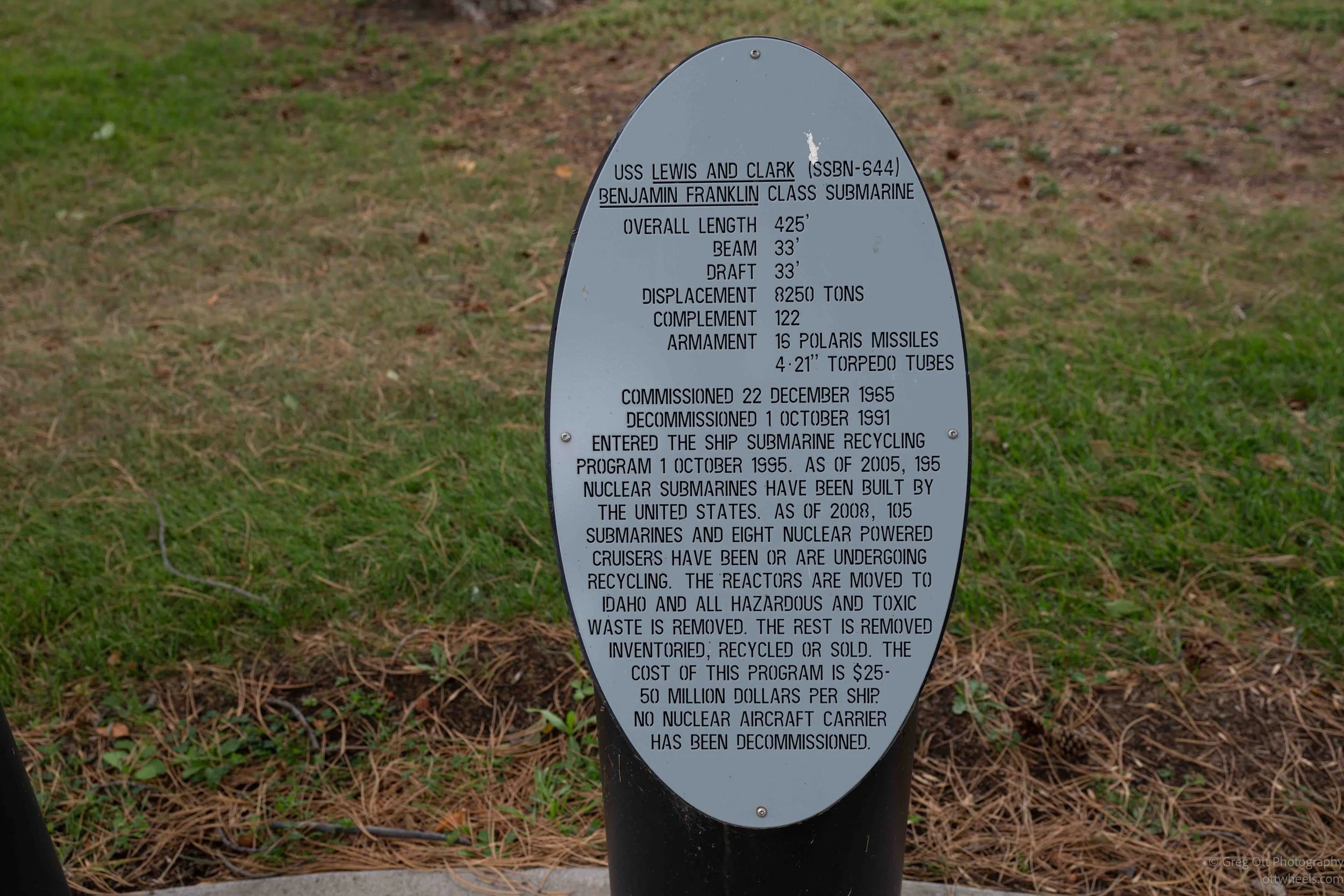
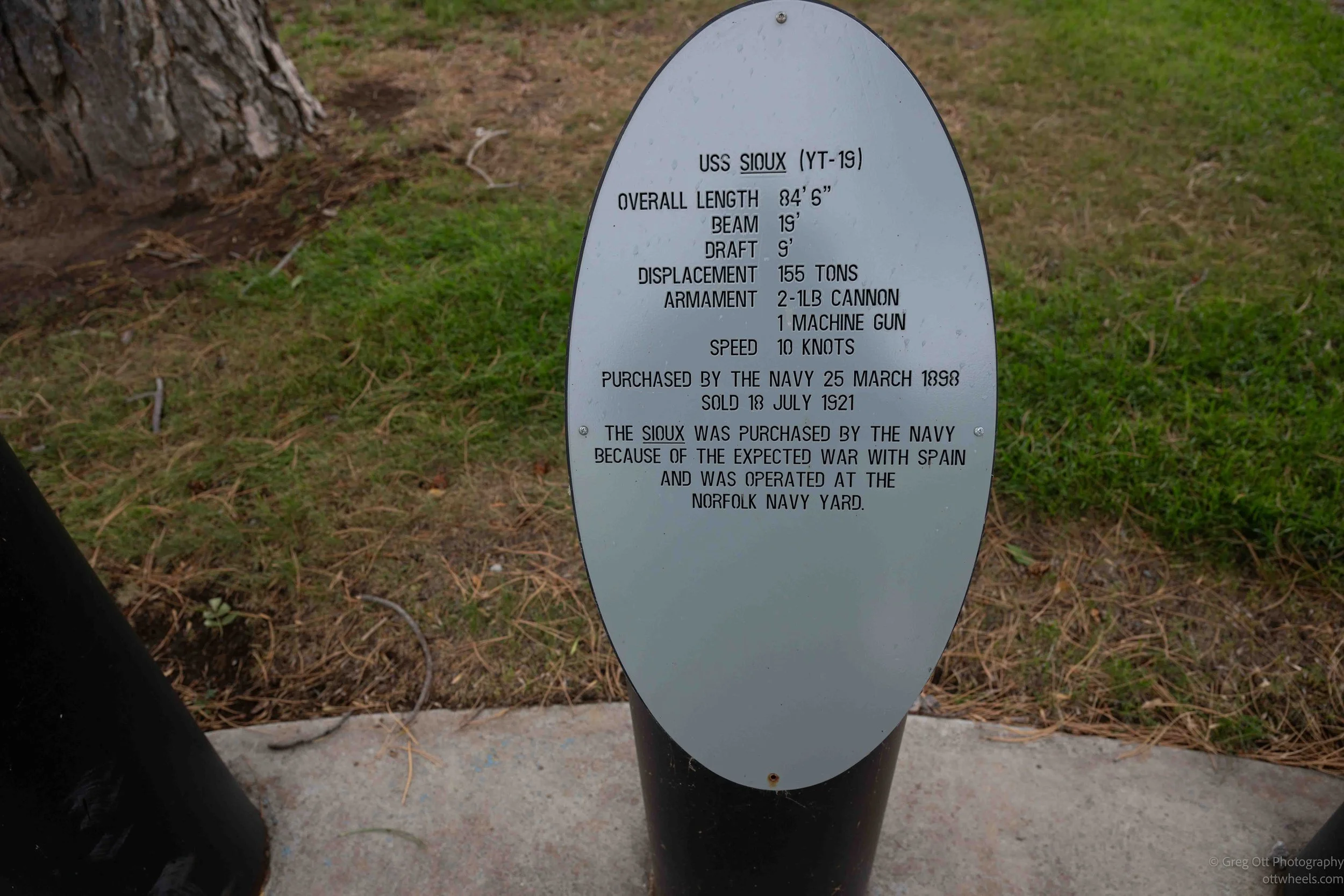
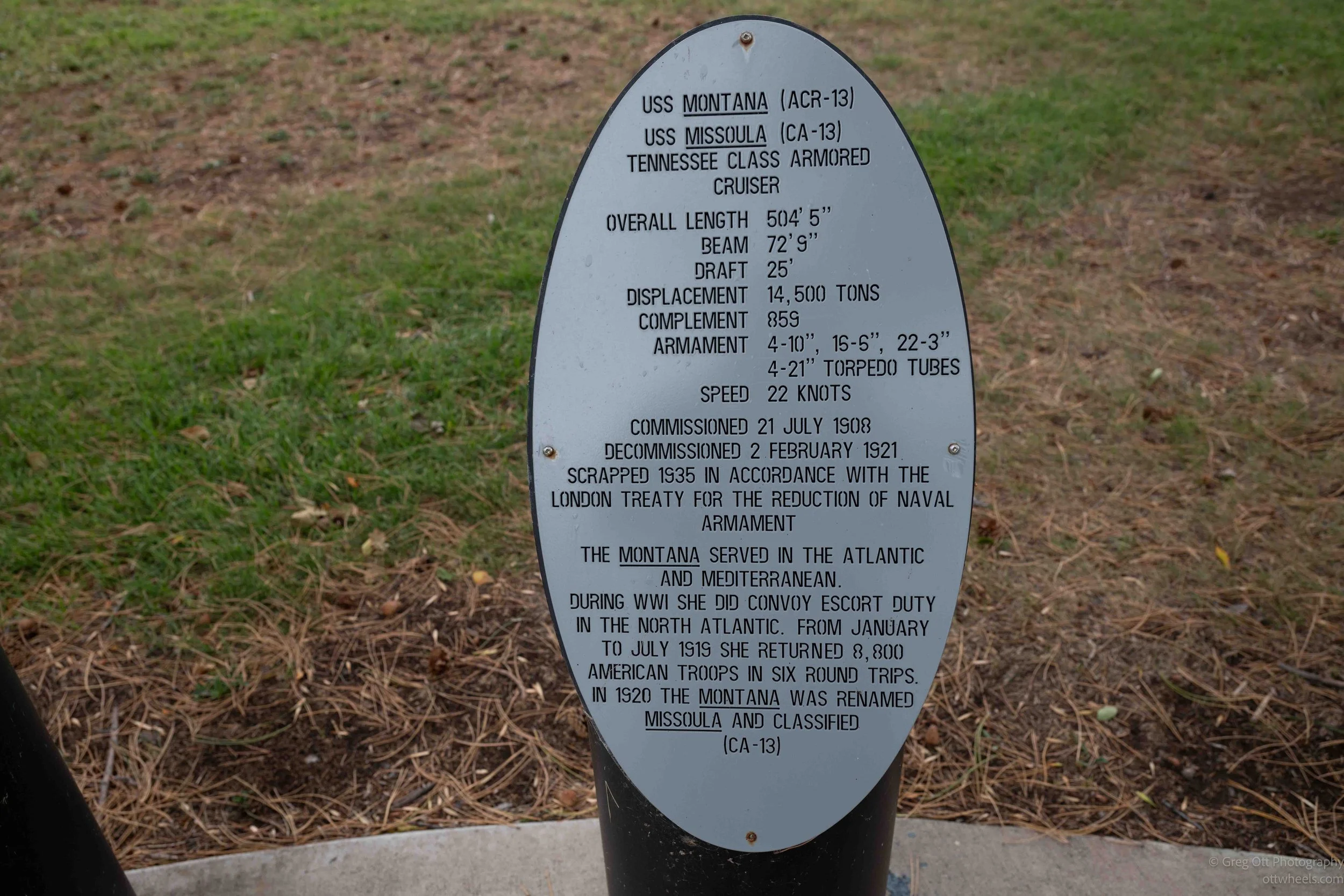
There was also a Montana Naval Forces Monument, which seemed a little unexpected this far from the ocean. A circle of markers documented individual Navy ships connected to Montana, including the USS Montana, USS Sioux, and the ballistic-missile submarine USS Lewis and Clark, with unusually detailed information about their size, armament, service and fate. It was thoughtfully done, but by then I was watching the clock. I still had one museum left to visit, so I cut the memorial stop short and headed on.
Museum of the Northern Great Plains
The fourth museum was the Museum of the Northern Great Plains, and this one was very different from the others. Instead of concentrating on Fort Benton itself, it told the broader story of life on the prairie: farming, settlement, machinery, weather, household life and the constant challenge of making a living from dry land. The exhibits covered everything from breaking the sod with early plows to threshing, harvesting and the later mechanization of agriculture.
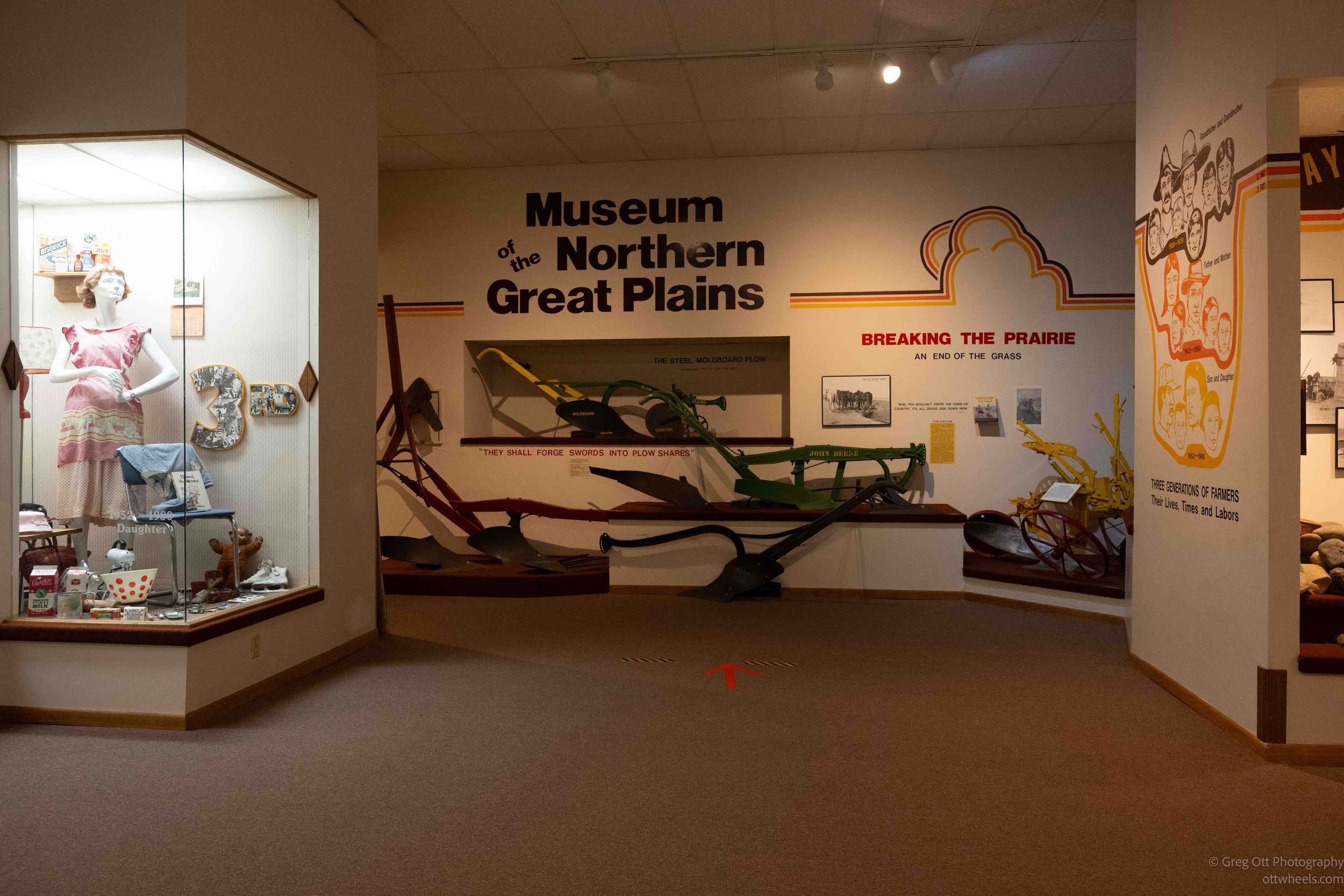
There was an enormous collection of restored farm equipment, and much of it looked almost new. Tractors, threshers, harvesters and implements from John Deere, Caterpillar, International Harvester and other manufacturers filled several galleries. I liked that the machinery wasn’t just lined up as old equipment; the displays tried to explain how farming methods changed and why particular machines mattered.
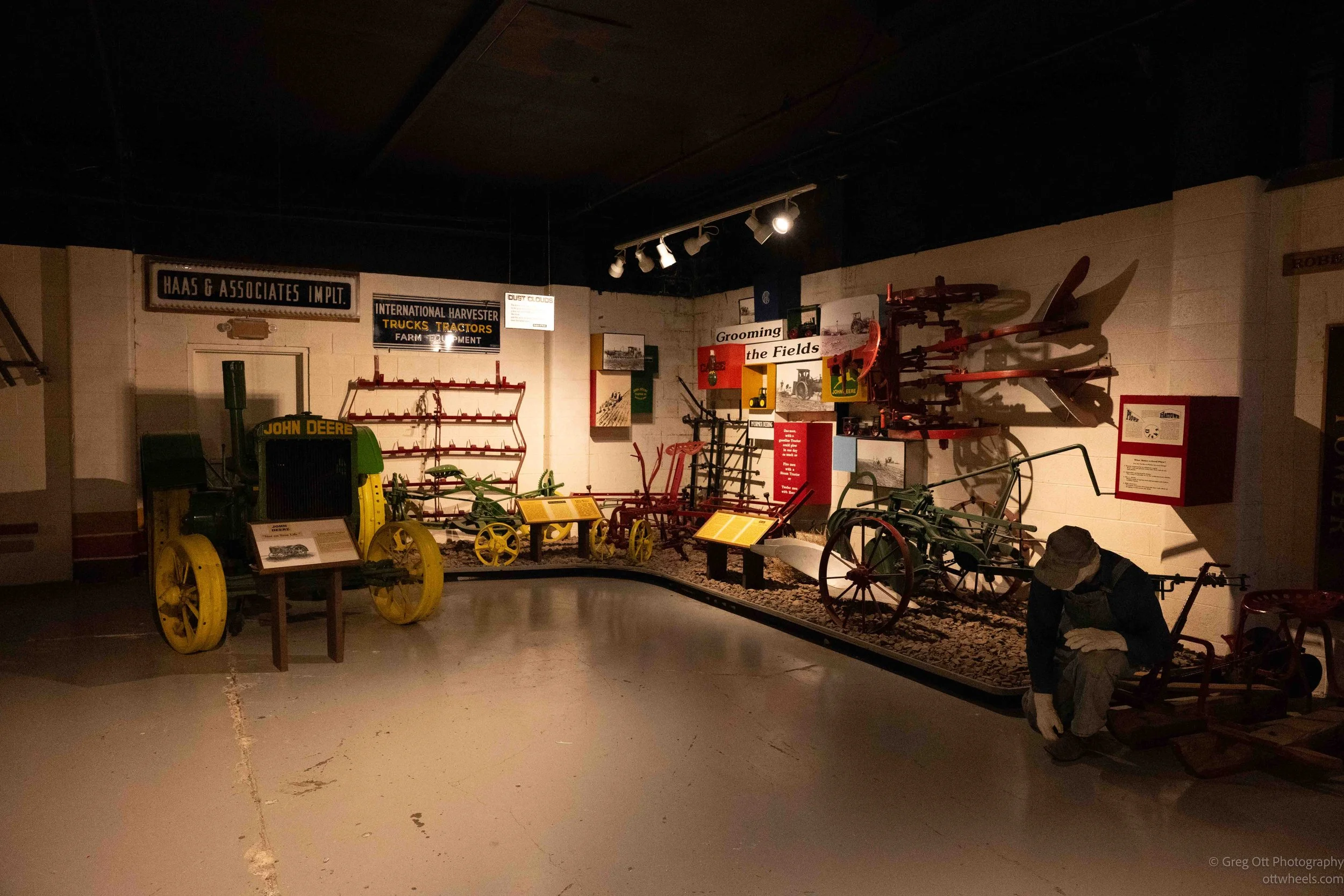
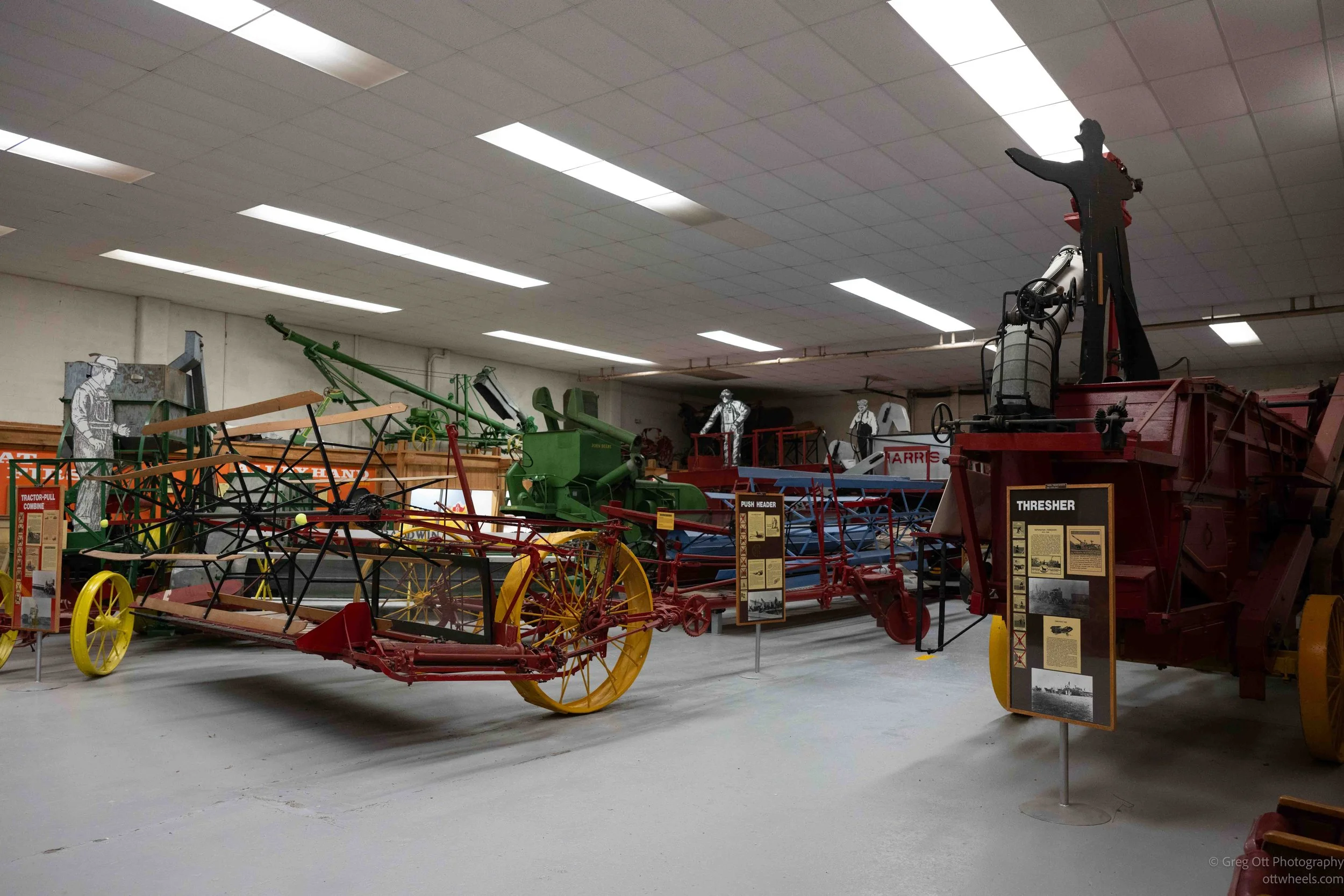
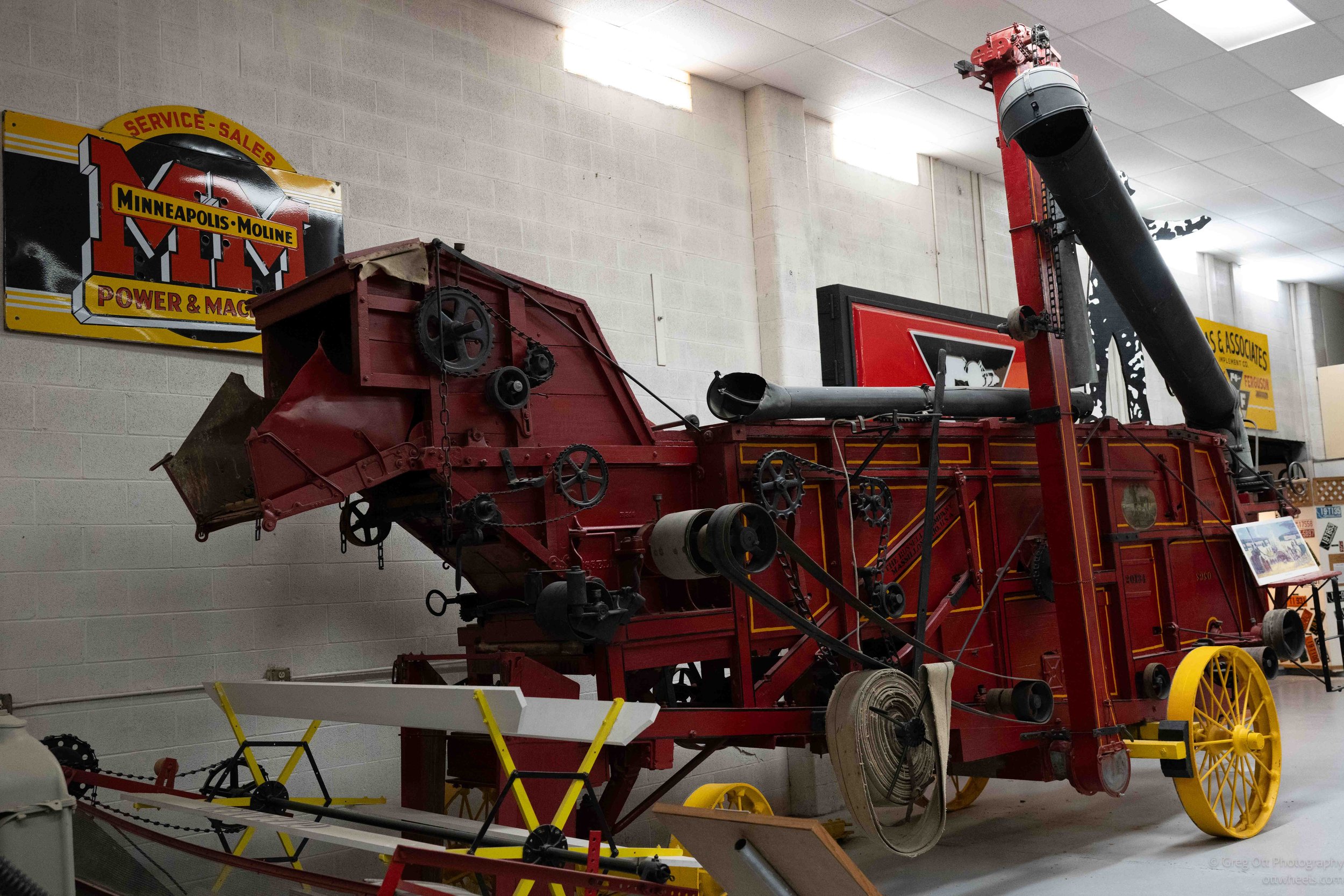
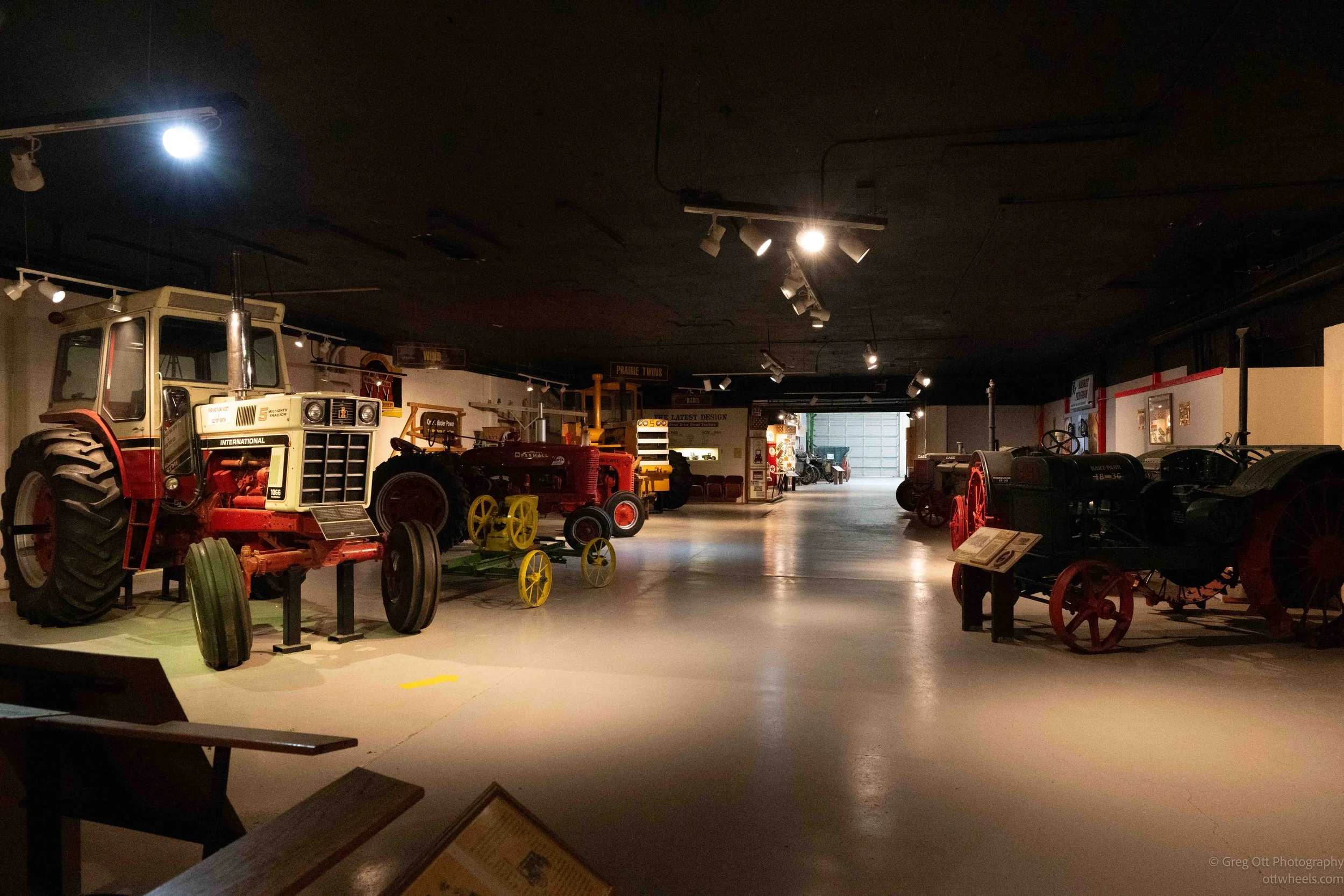
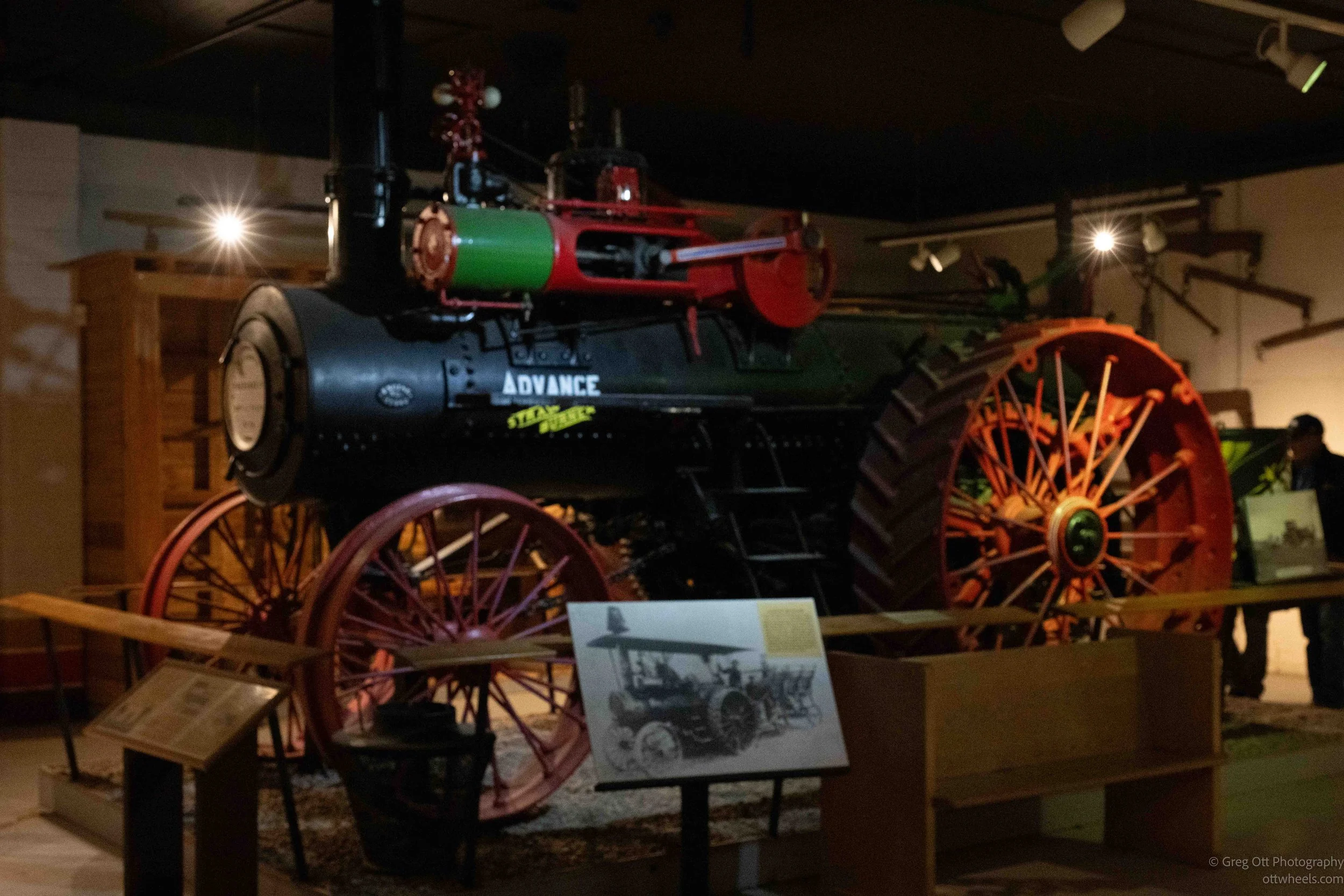
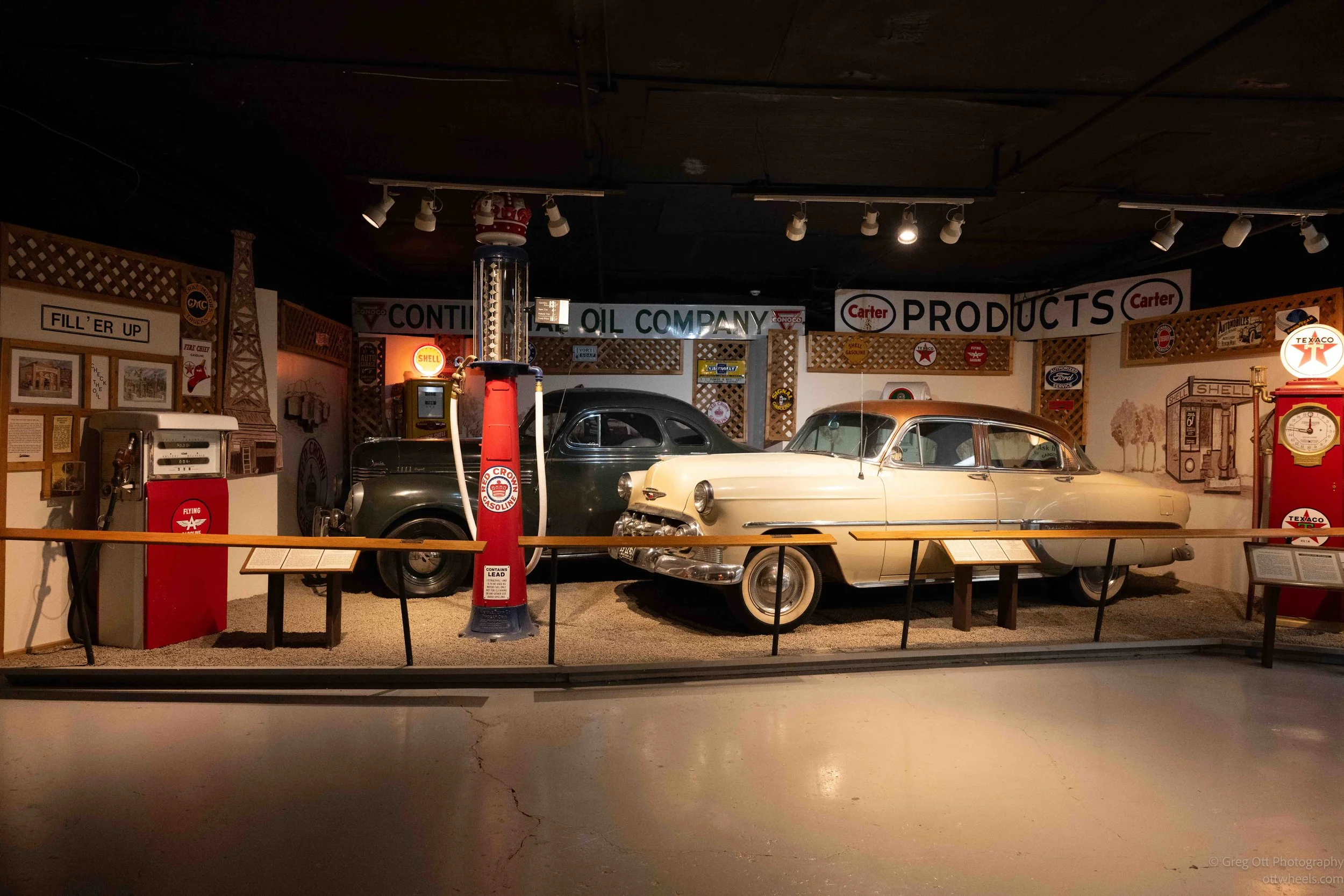
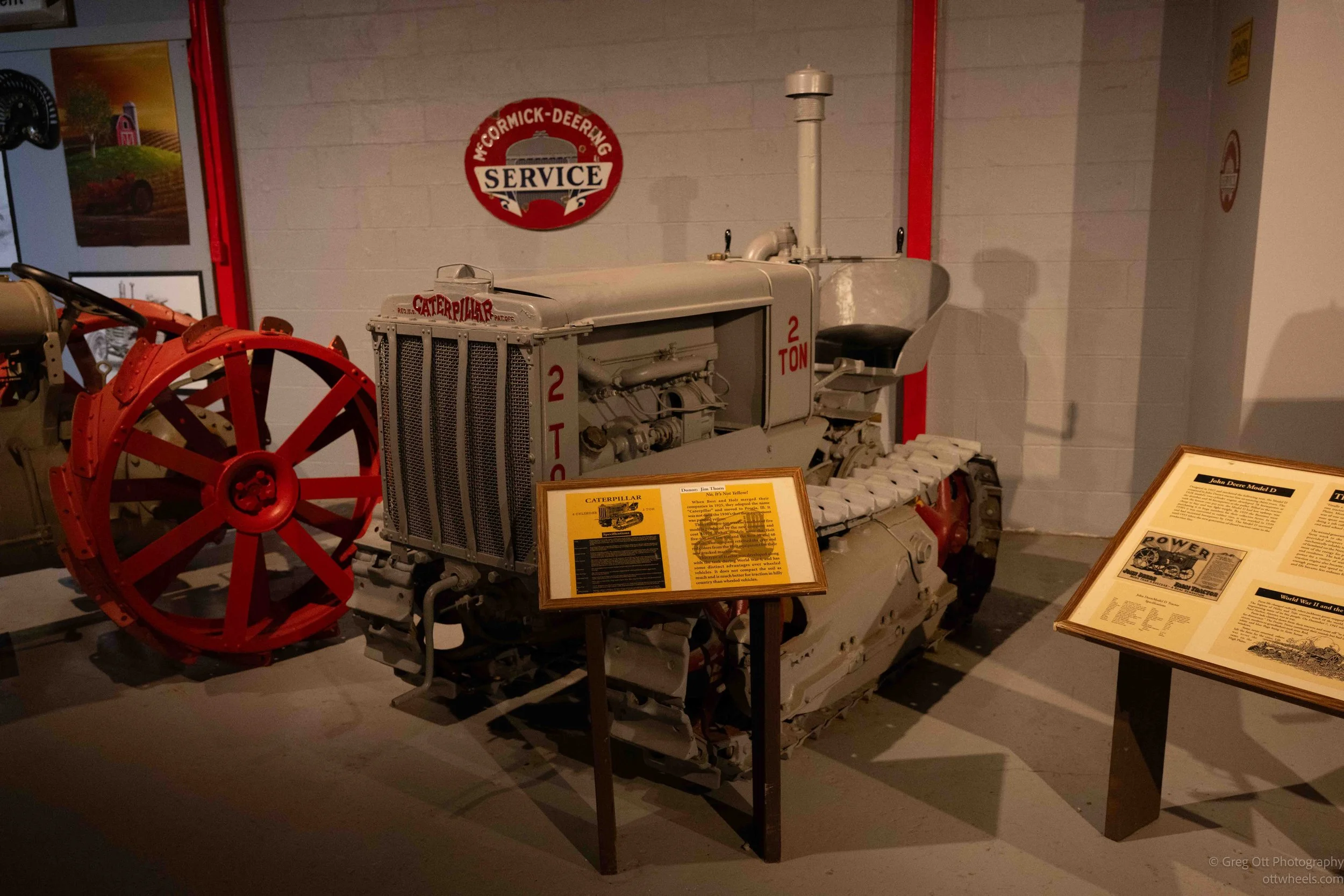
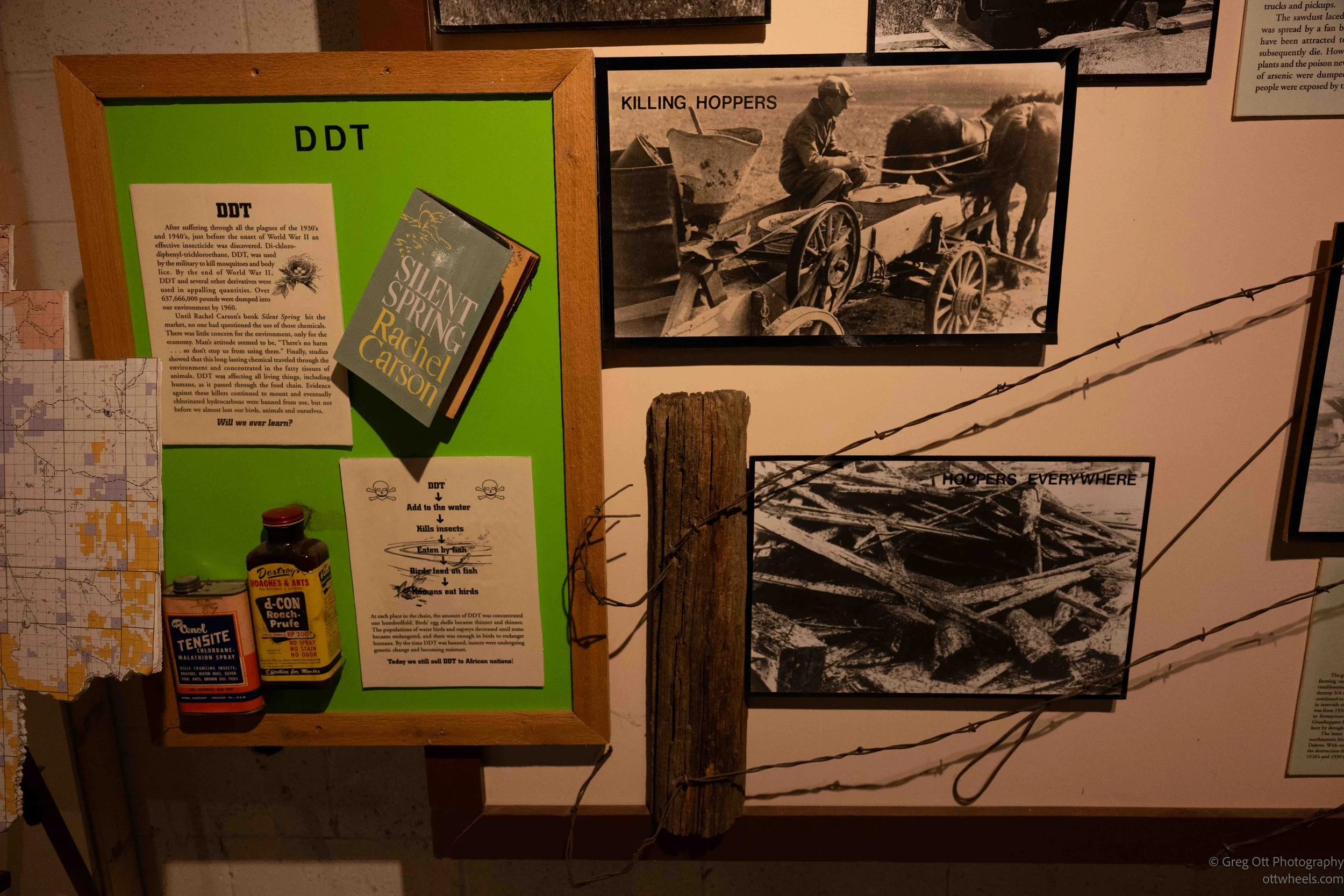
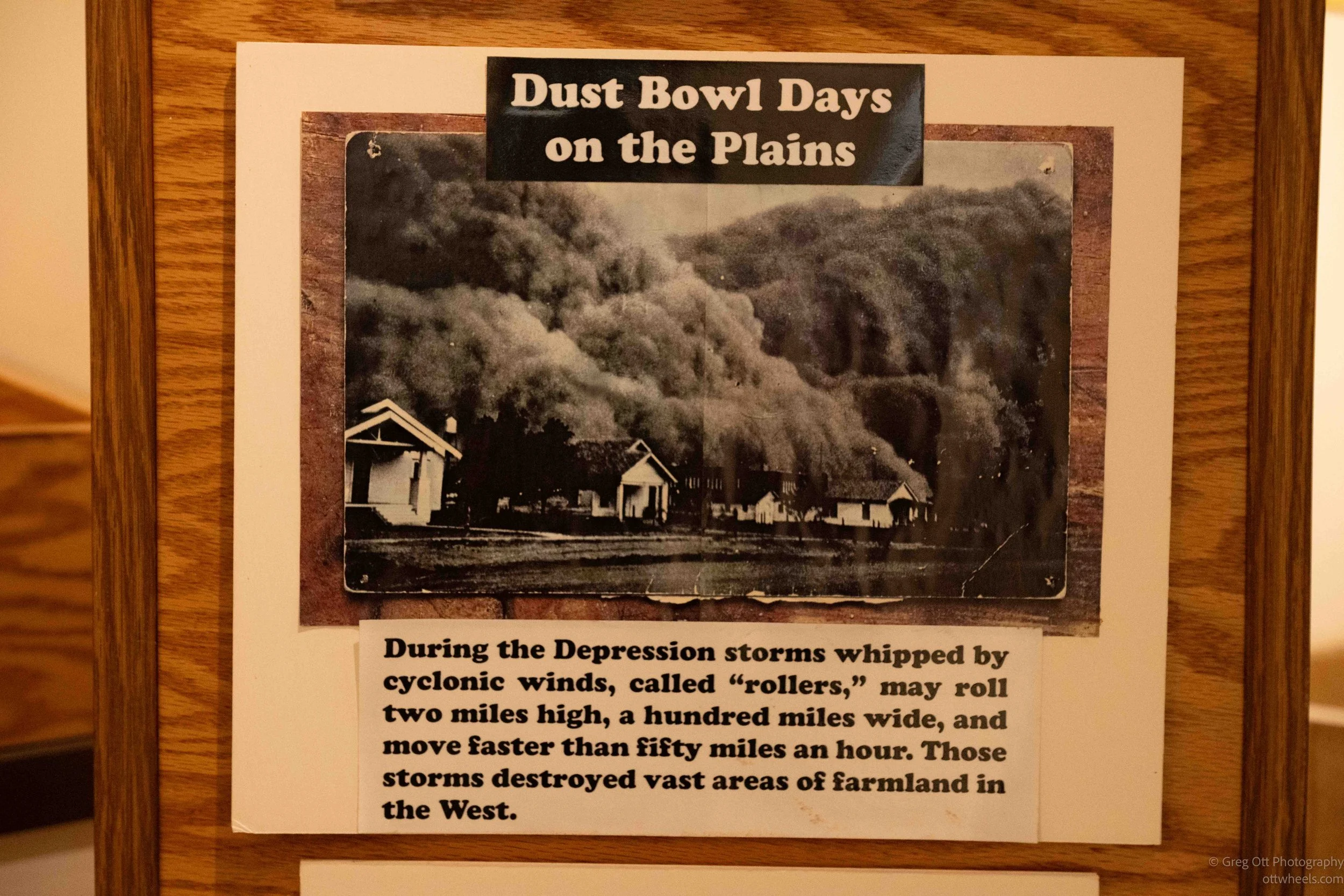
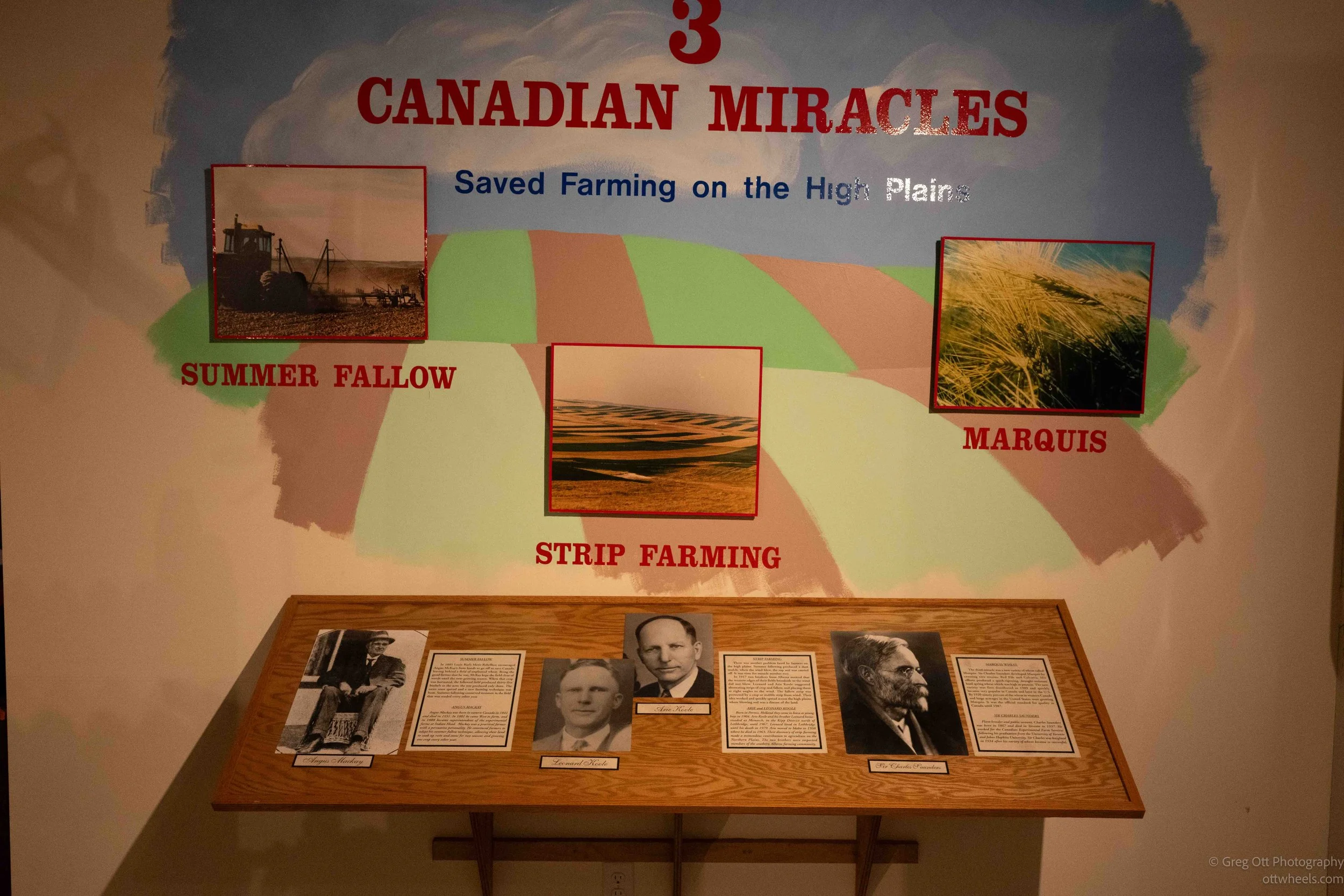
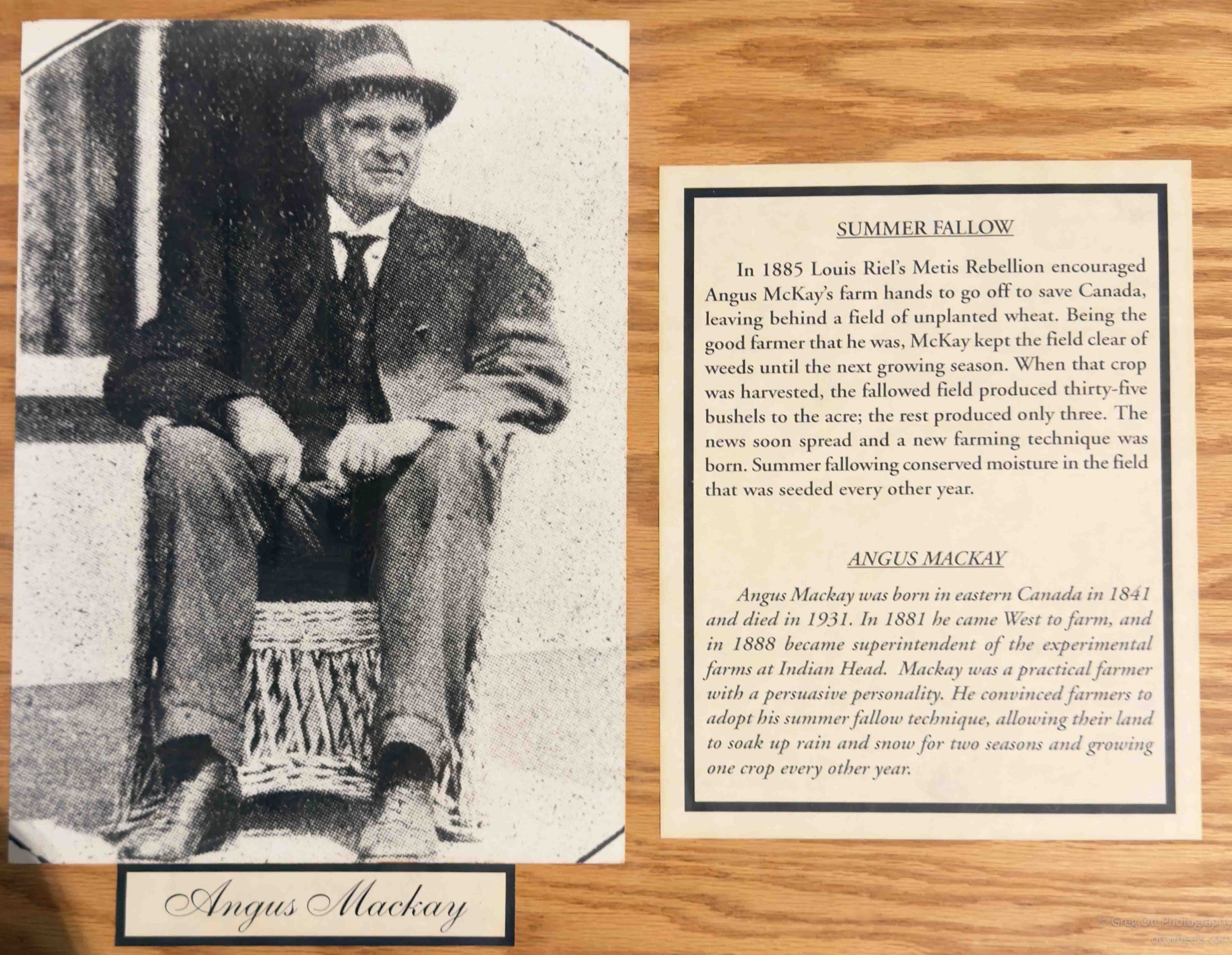
The museum also spent quite a bit of time on the techniques that made farming possible on the northern plains. One display covered summer fallow, strip farming and the development of Marquis wheat, all attempts to conserve moisture or improve crop reliability. Another moved into the Dust Bowl years, grasshopper infestations and eventually the widespread use of DDT. The exhibits made it clear that farming here was always a combination of innovation, risk and trying to stay one step ahead of the climate.
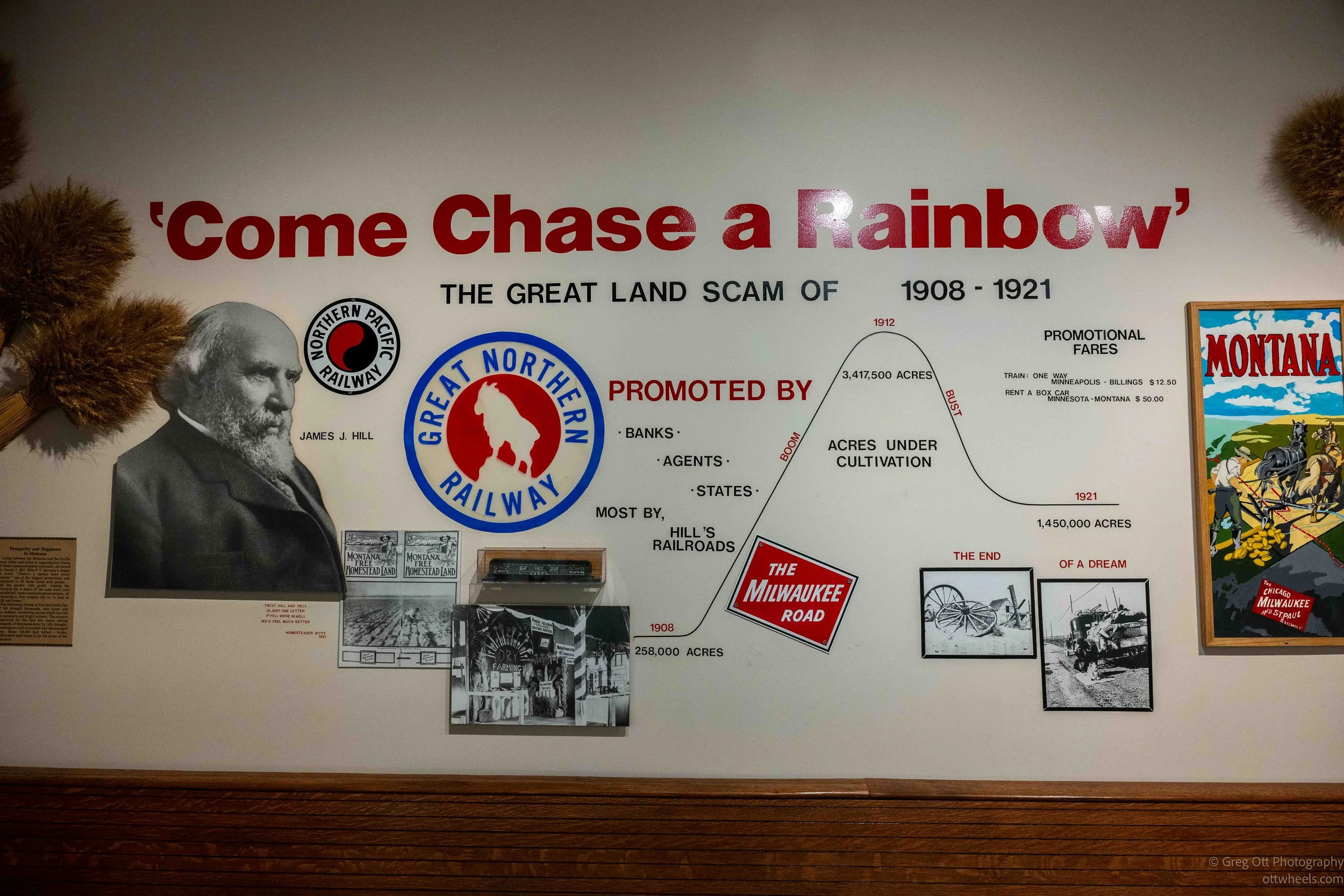
There was also an interesting section on the railroads and land companies that promoted settlement on the plains. One large display called it the “Great Land Scam” and described how railroads aggressively advertised Montana farmland to settlers with promises that often did not match reality. It was a good counterpoint to the shiny machinery and success stories elsewhere in the museum.
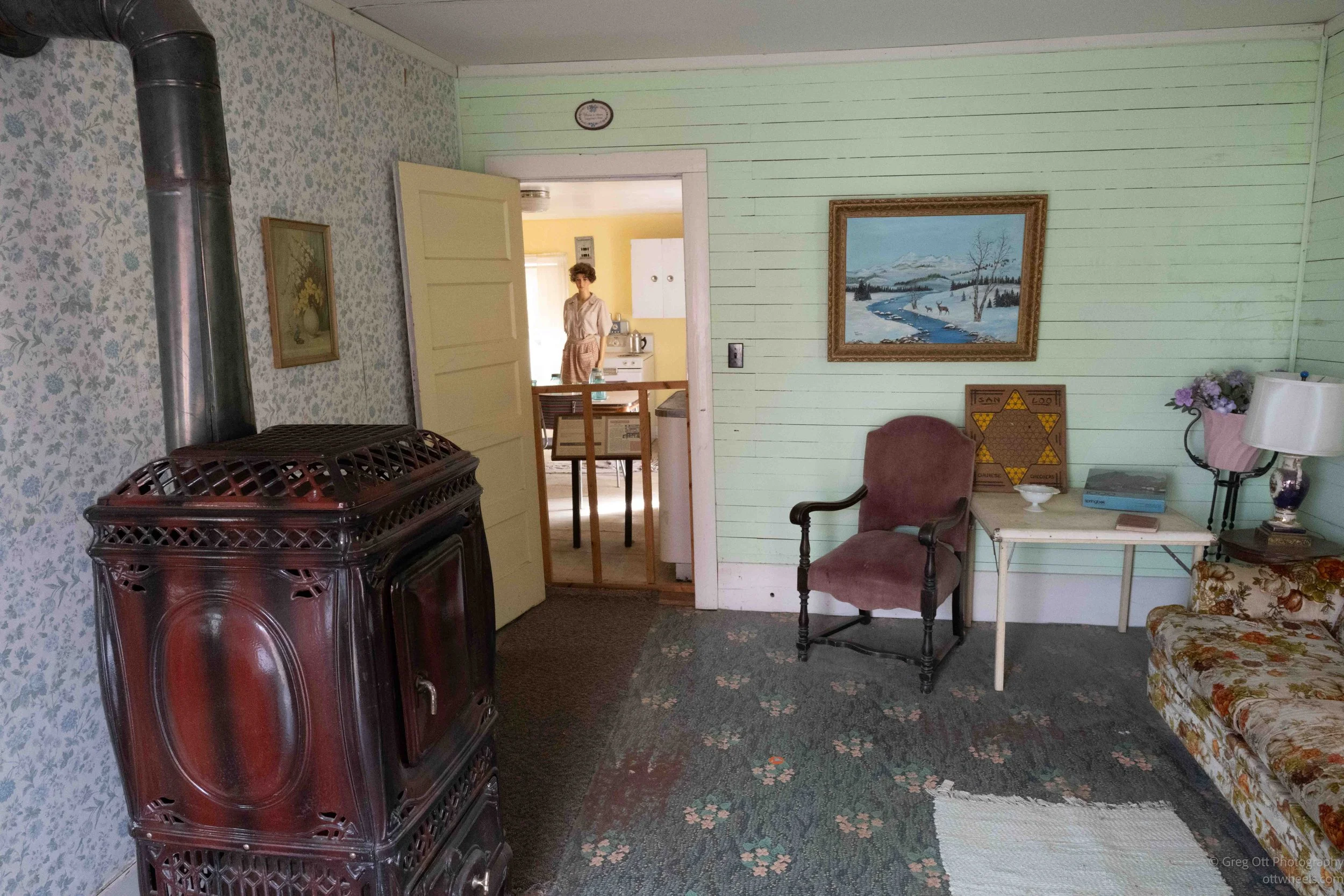
Agriculture was only part of the story. Other exhibits recreated kitchens, parlors and work areas from prairie homes, with wood stoves, dishes, furniture, spinning wheels, looms and quilts. There was also a display on William Hornaday and early conservation efforts to save the American bison, along with a large buffalo group in the center of the gallery.
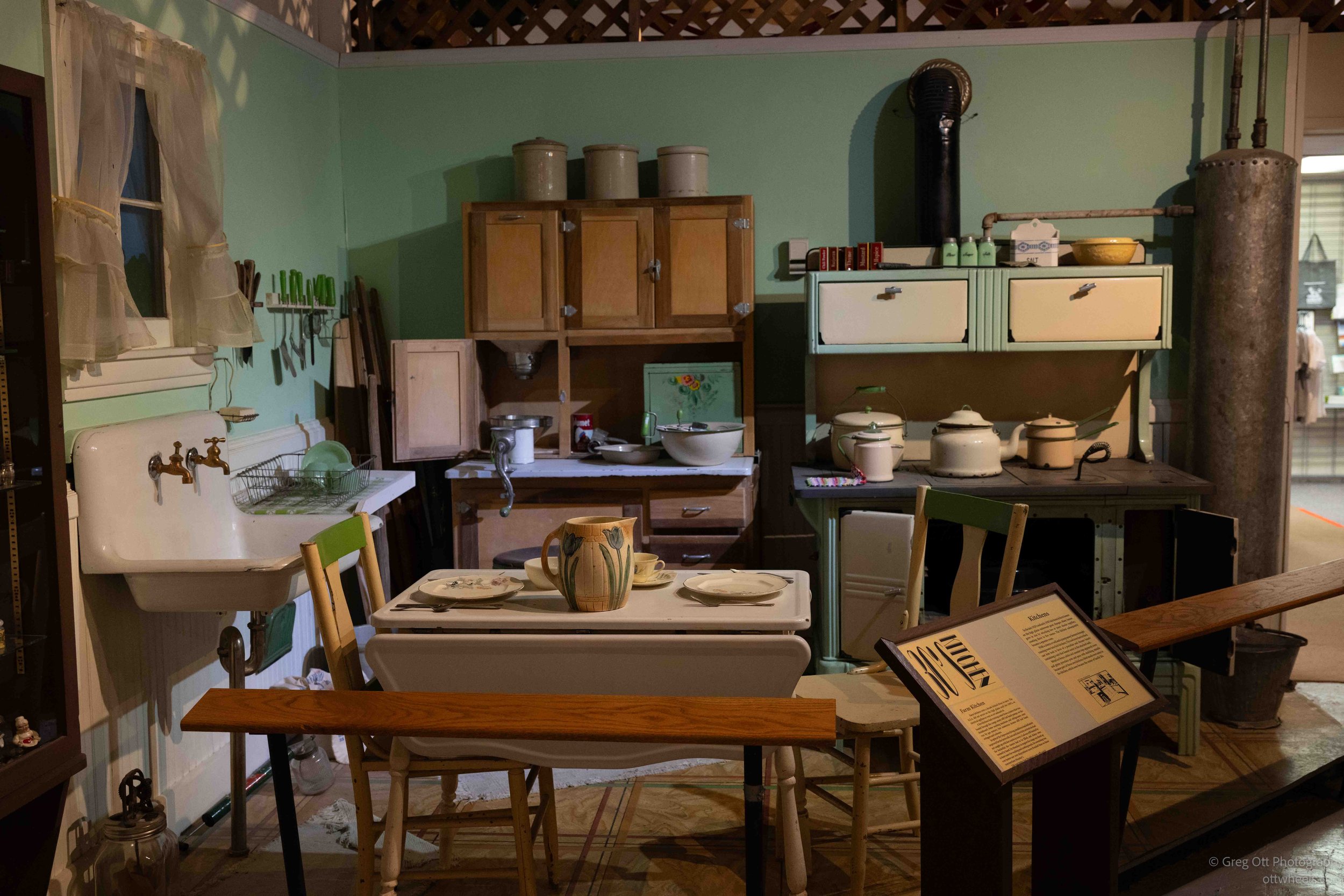
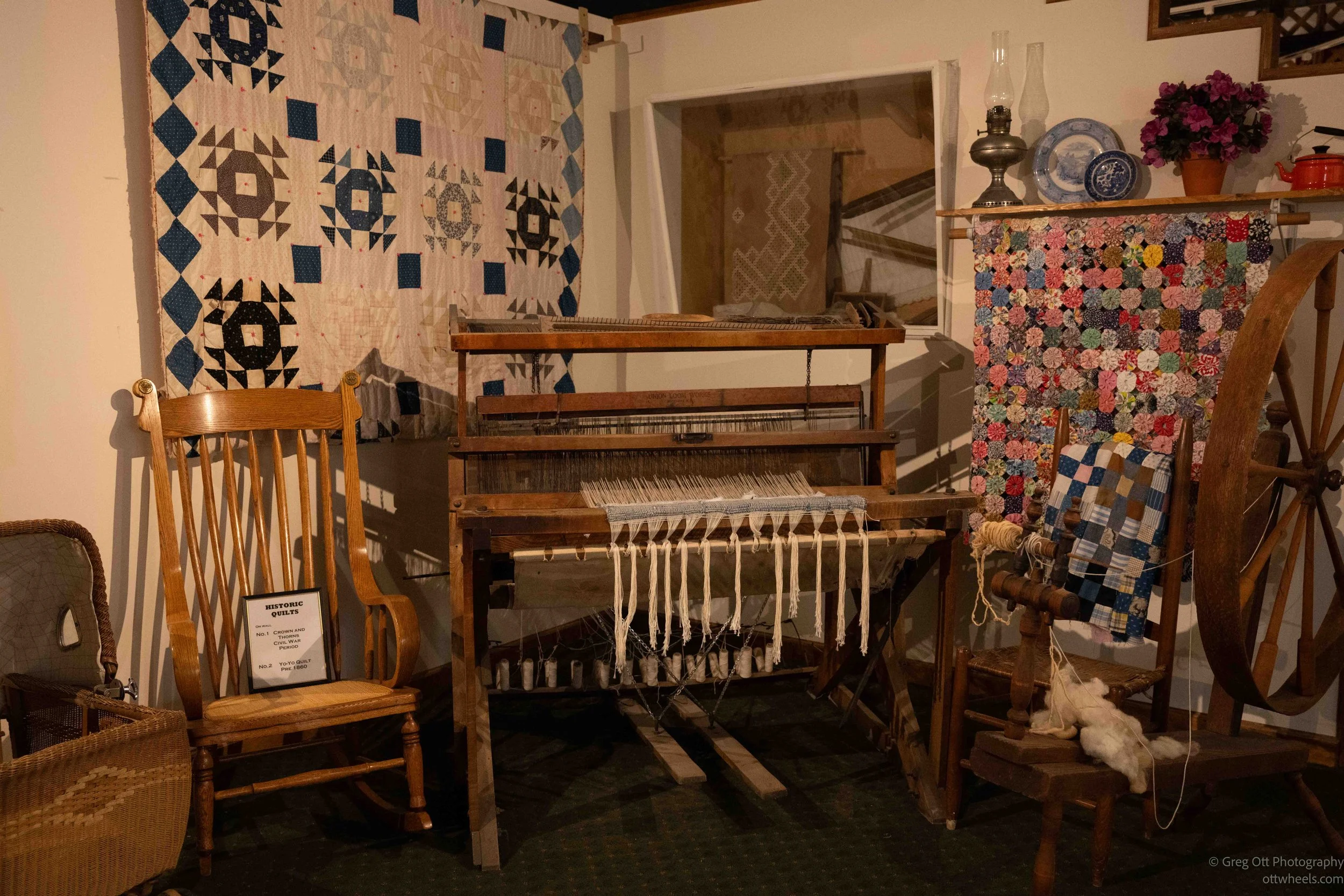
By the time I finished inside, the museum had technically closed. I assumed I had run out of time, but the woman at the desk told me it would take her a while to finish closing everything and suggested that I go outside and look around the Homestead Village.
That turned out to be worth the extra time. The village was made up of historic buildings that had been moved to the museum grounds and arranged to create a small prairie town. There were houses, a barn, storefronts, a church, a general store and even an old service station with vintage gas pumps. One building was filled with shelves of old medicines and pharmacy bottles, while others recreated the kind of homes and businesses that would have served these farming communities.
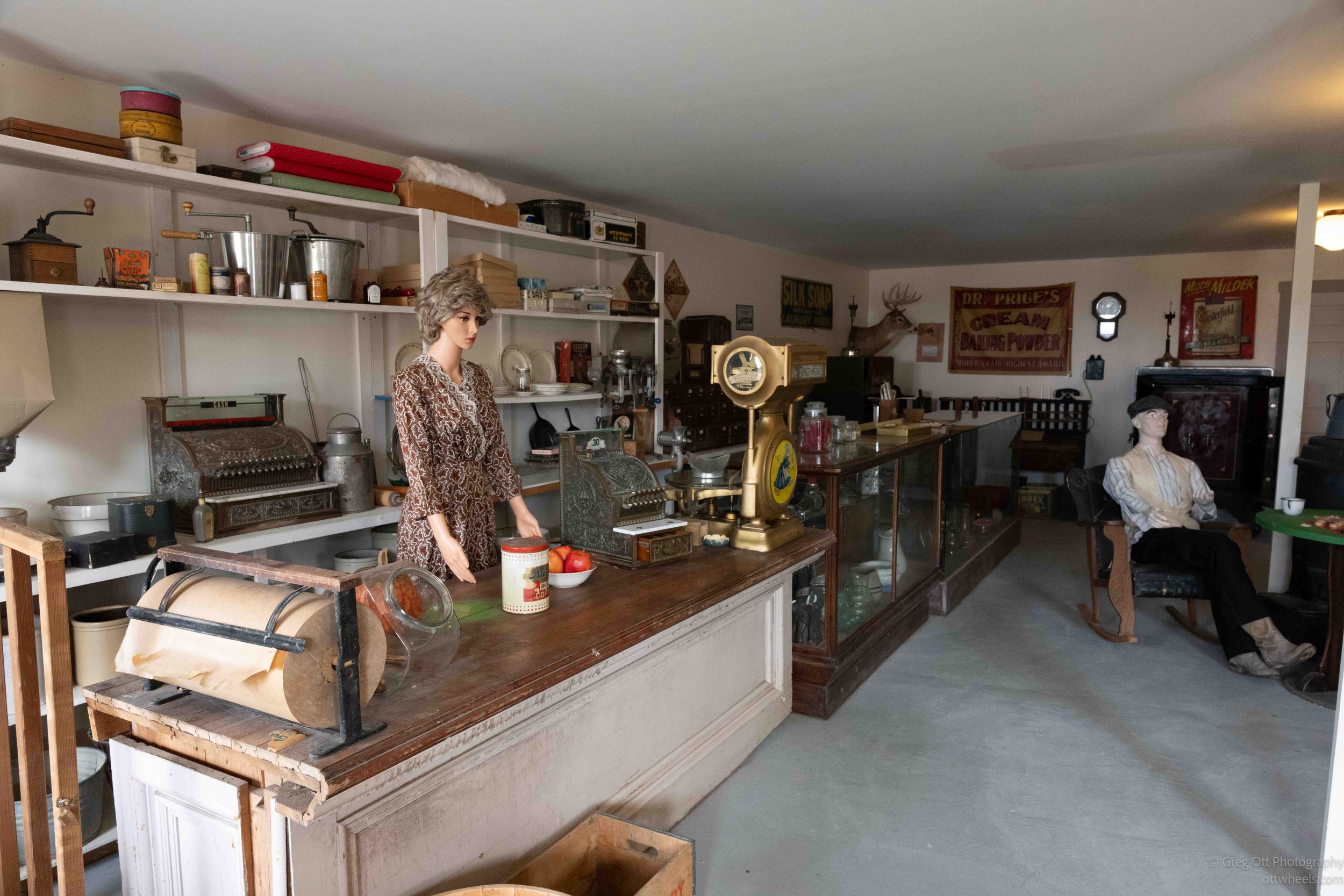
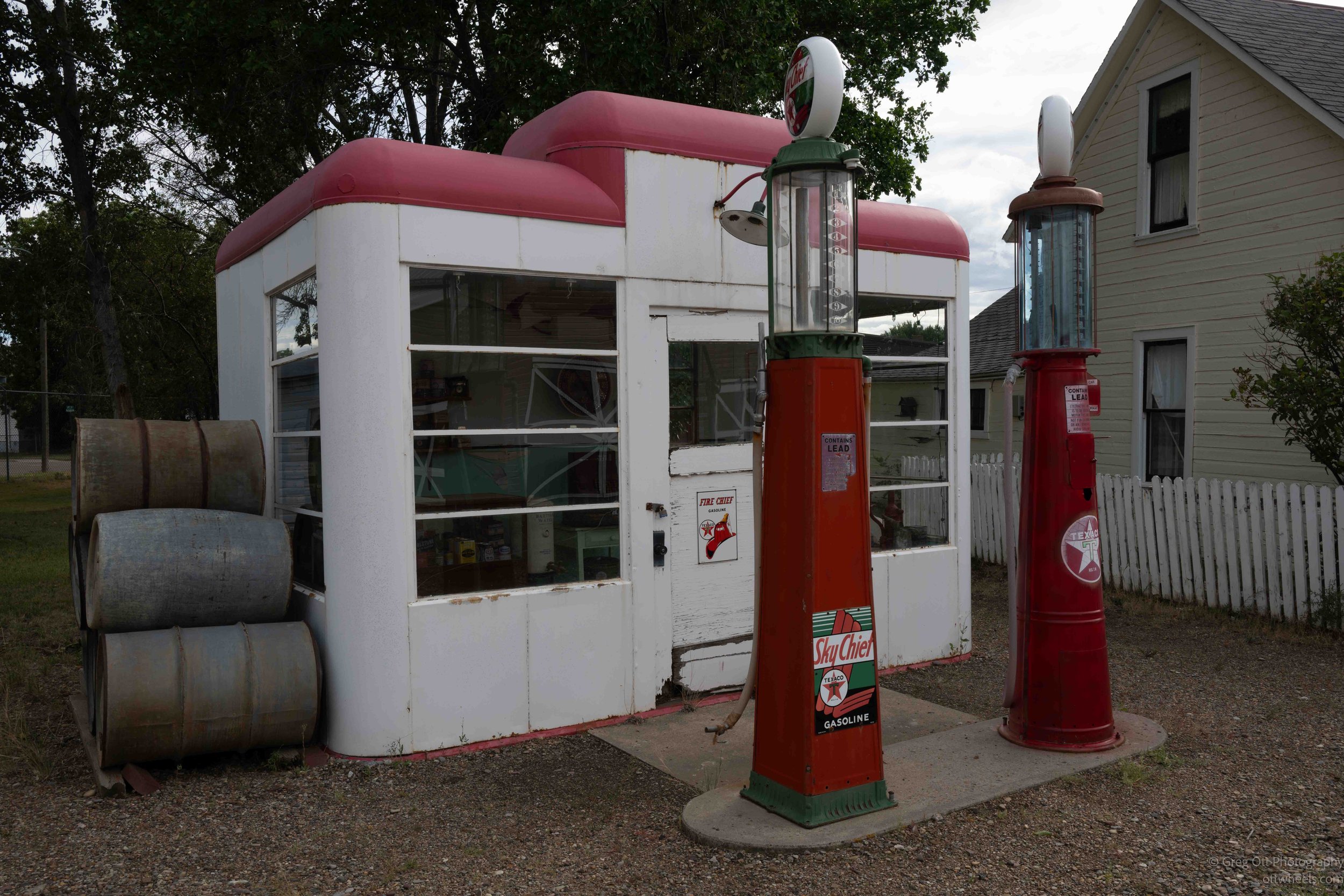
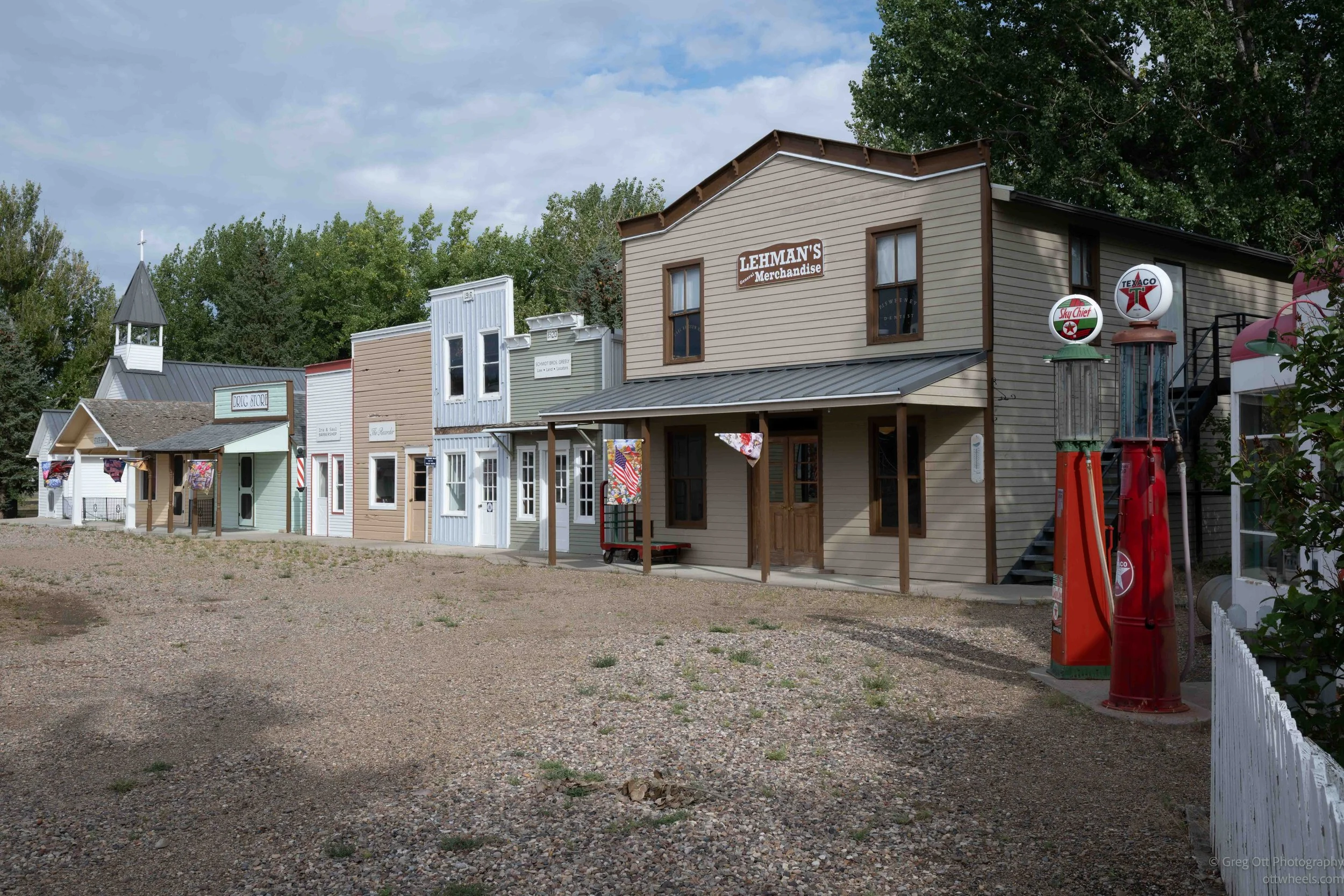
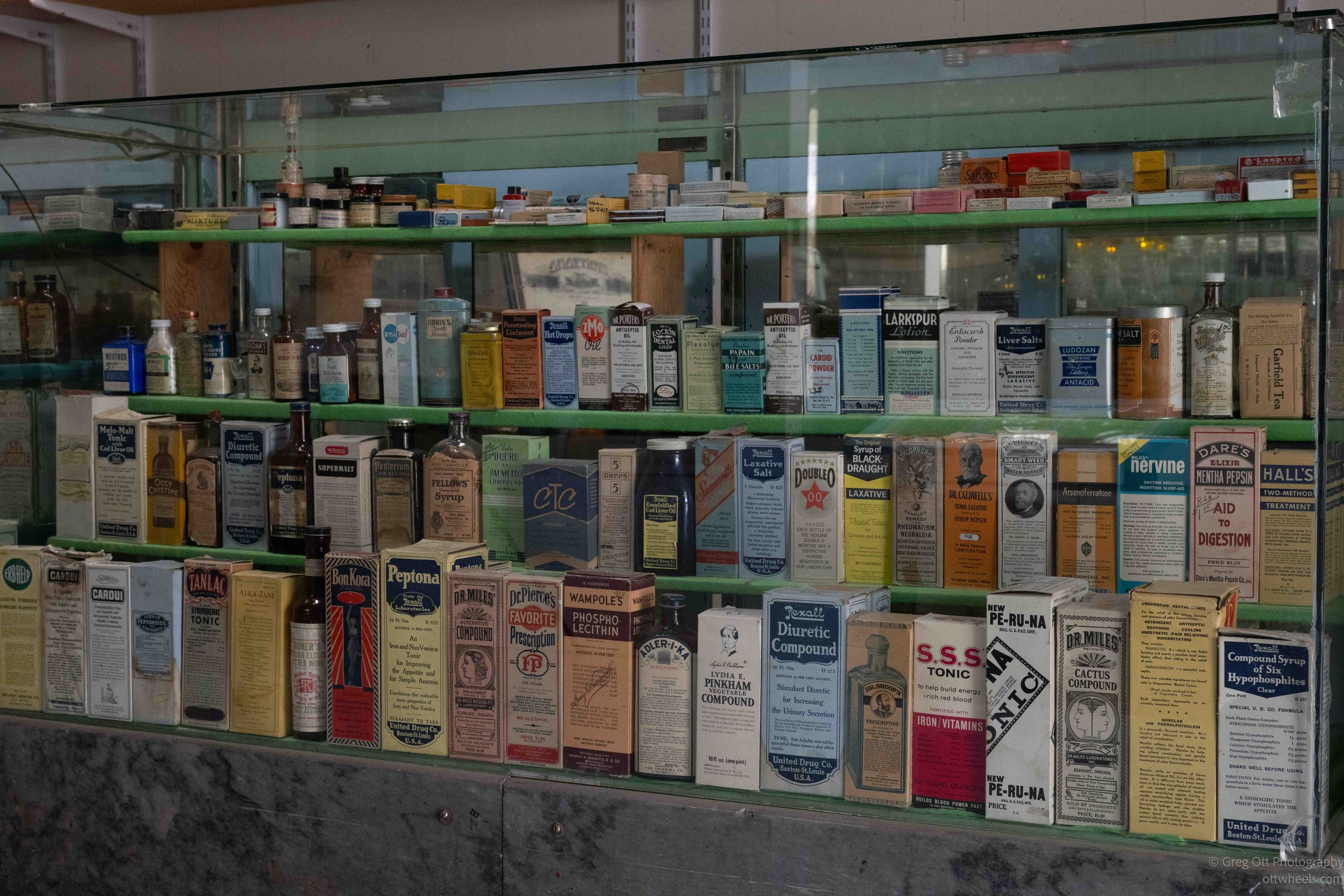
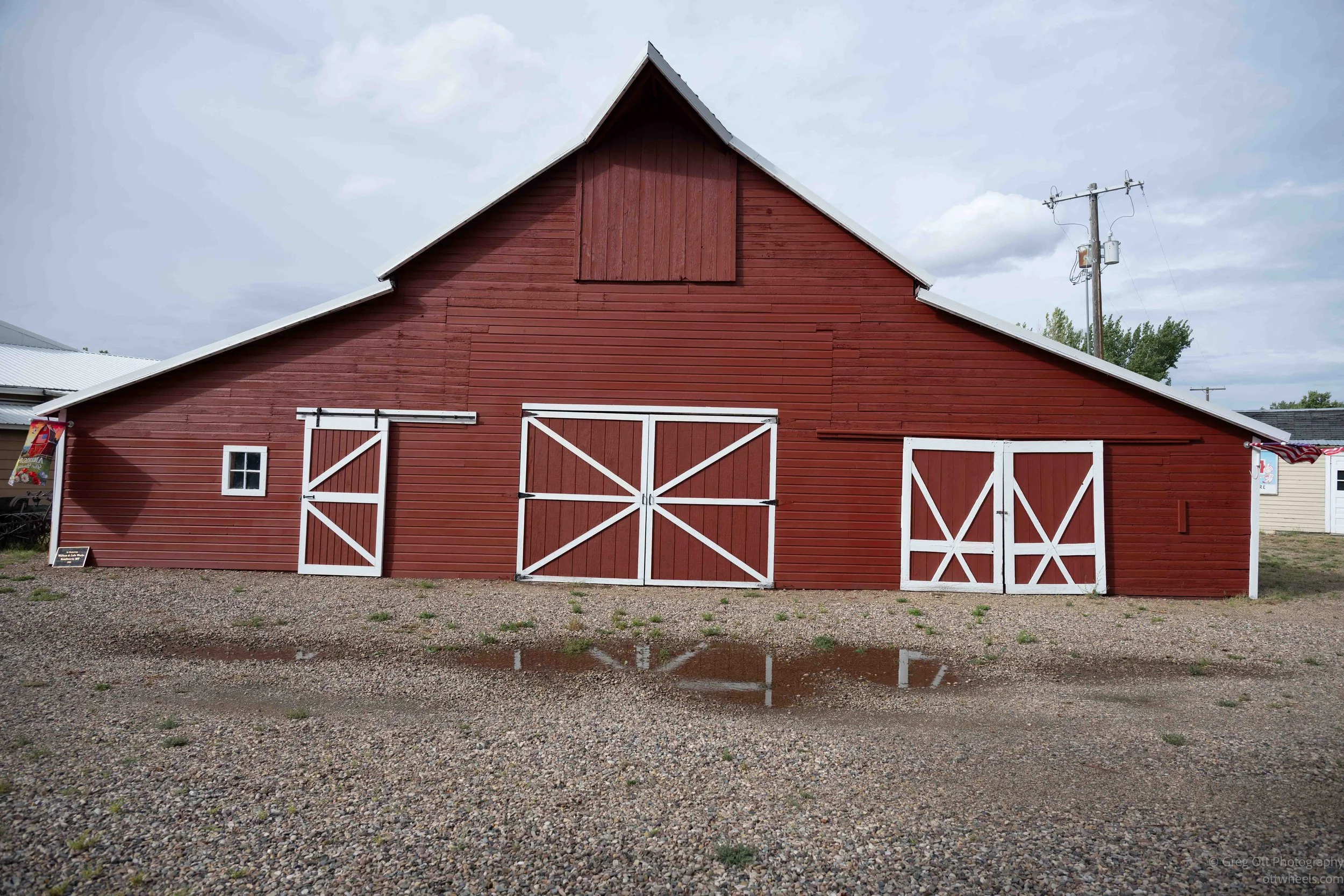
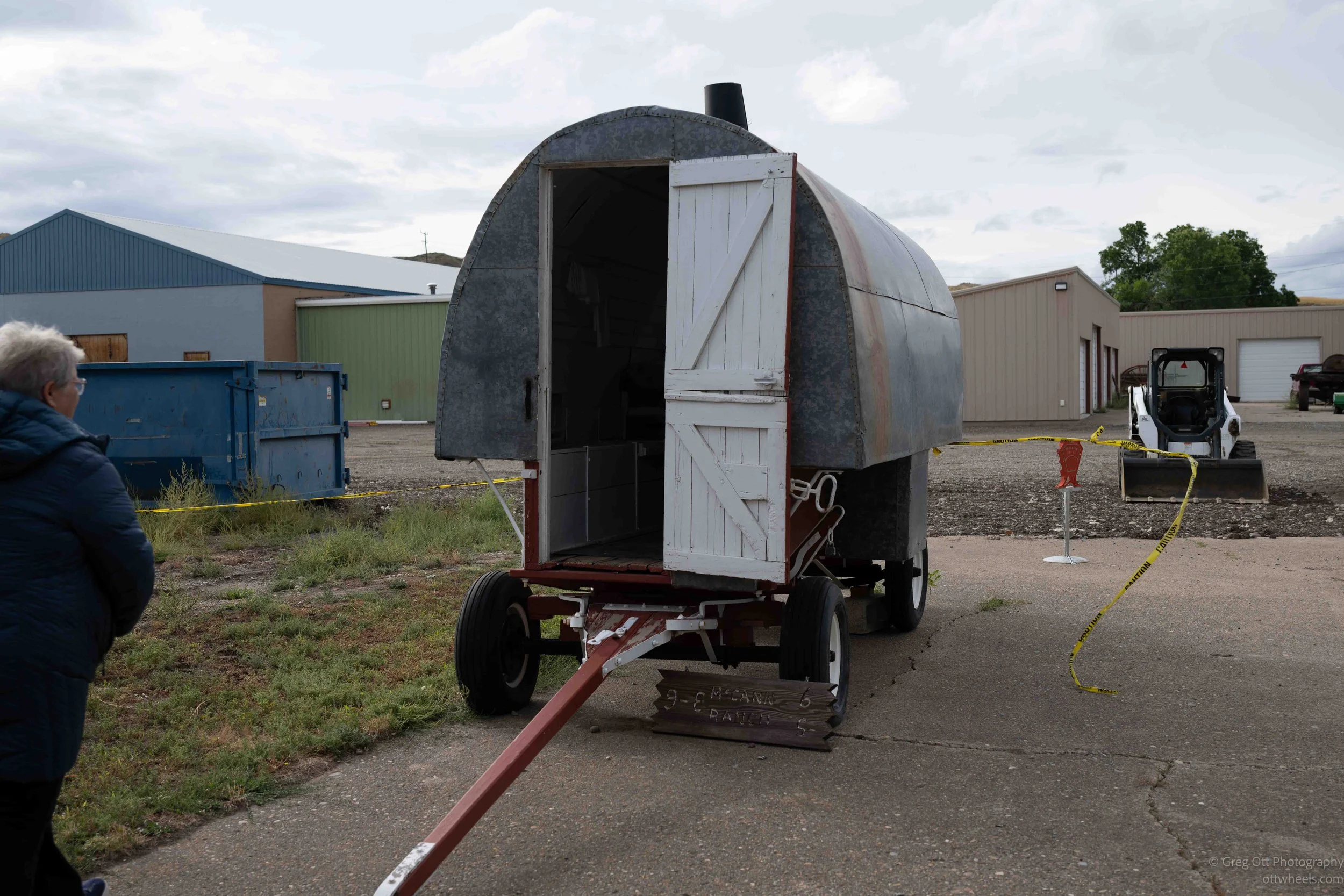
There was also an old sheep wagon and several other structures scattered around the grounds. Walking through the village after seeing all the machinery and household displays inside helped tie everything together. The museum had shown how people farmed the prairie; the village showed the kind of communities they built around that work.
I was glad I had pushed to fit in this fourth museum before closing. It was much larger than I expected, and between the farm machinery, the history of settlement and the outdoor village, it probably deserved more time than I was able to give it.
The Evening
It was already 5:30 when I finished at the museum, and I noticed I was getting low on gas. Since I planned to leave in the morning, I decided to fill up before heading back for the night. On the hill ahead of me I could see a small gas station with a single dispenser and two vehicles getting gas as I pulled in.
A woman in a vehicle marked emergency services was in the vehicle while pumping gas, and as I got out to stretch and wait I could hear her talking to someone about an accident. A man on the other side of the pump walked over, after she was done to speak with her, and she told him the situation was being handled. They clearly knew each other. After shutting down her side of the dispenser, they talked for another few minutes before she drove away.
When I pulled forward, the man said hello and asked where I was from. We ended up talking for a bit about Fort Benton. He told me the woman who had just left was the county coordinator for emergency services, and that he was on his way to pick up his son from football practice. I had actually seen the team practicing across the street from the prairie museum earlier. Before leaving, he said, “Enjoy Fort Benton. It’s a quiet place.” After a couple of days there, I had to agree.
I drove around town for another half hour and noticed that the intersections weren’t always consistent. Some had stop signs, some had yield signs, and others were four-way stops. It was never really a problem, but I had to pay attention and make sure I knew when it was actually my turn to go.
I eventually parked along Front Street and took one more walk beside the Missouri River. As it started to get dark, I headed back to the Forest Service parking lot for the night.