Fort Benton to Great Falls
I woke up in the National Forest Service parking lot after a very quiet night. This was my second night there, and it isn't unusual for the Forest Service to allow overnight parking in some of its lots. I've stayed in similar places before.
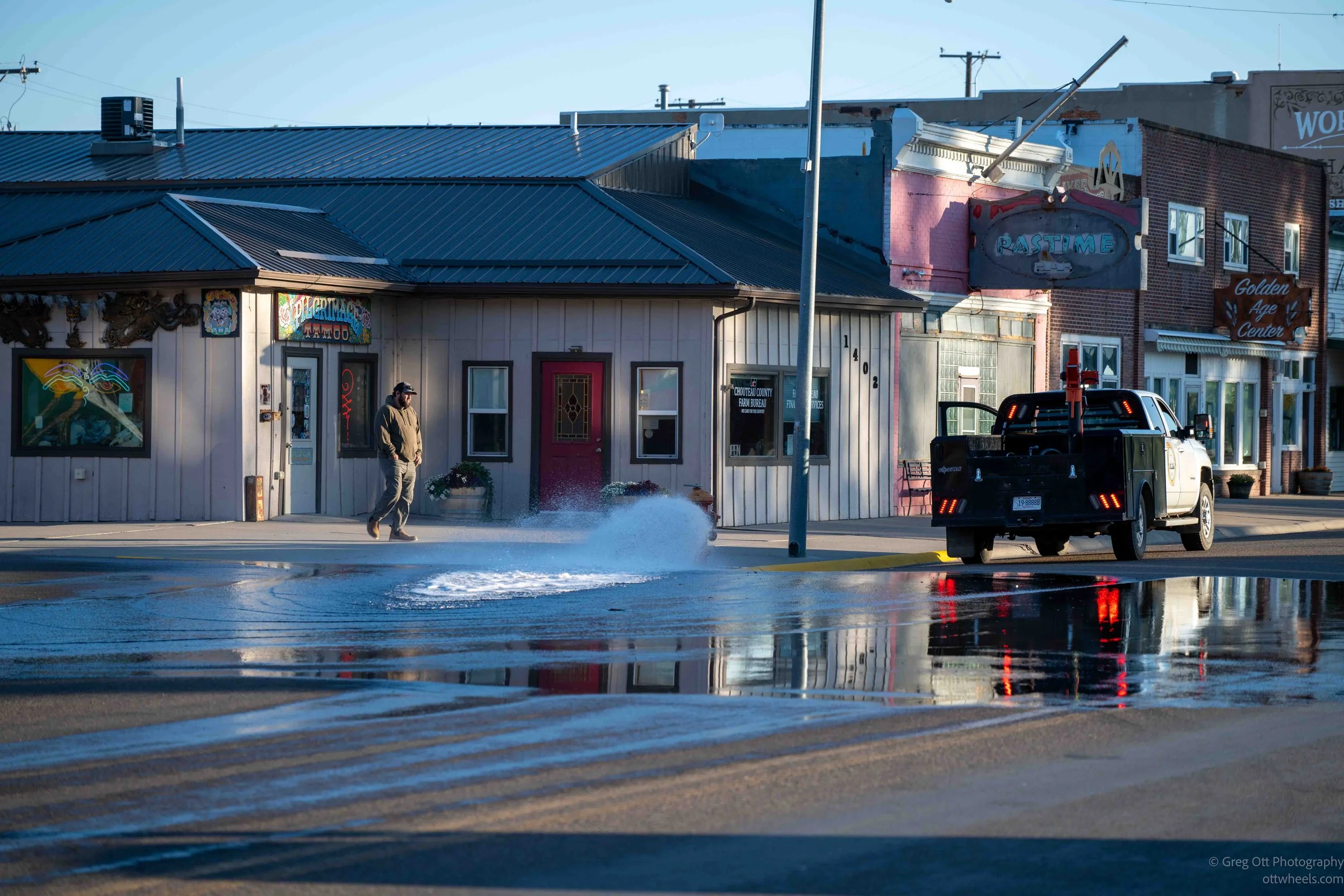
Before leaving Fort Benton, I watched firefighters testing the hydrants and stopped at Moon Eyes Coffee on Front Street. I talked for a while with the owner about the business and how seasonal it is. He's been there for five years and clearly loves Fort Benton.
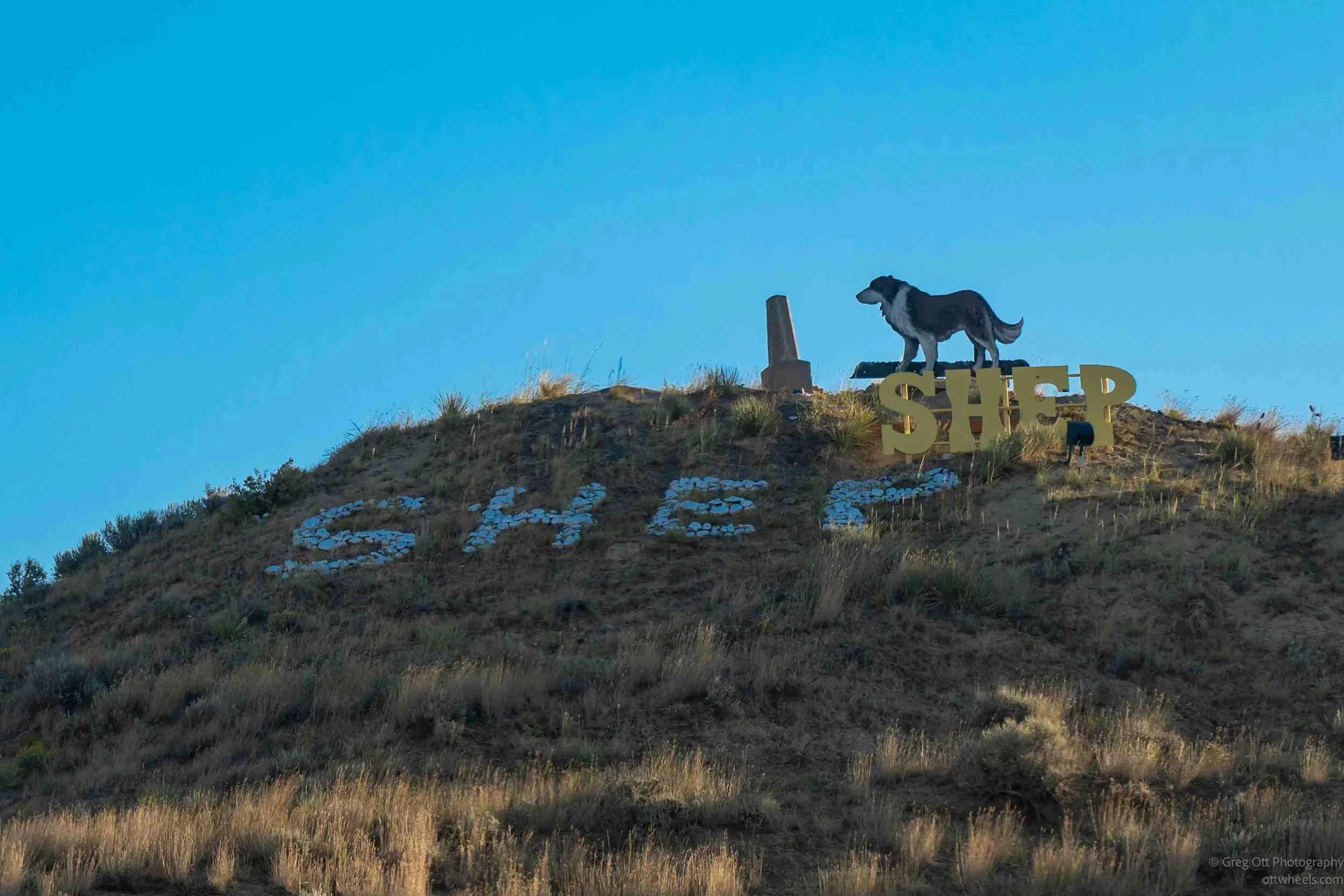
I then headed north out of town. Just outside Fort Benton, I passed the gravesite of Shep again. I could easily have spent another day exploring the area, but it was time to keep moving.
Loma
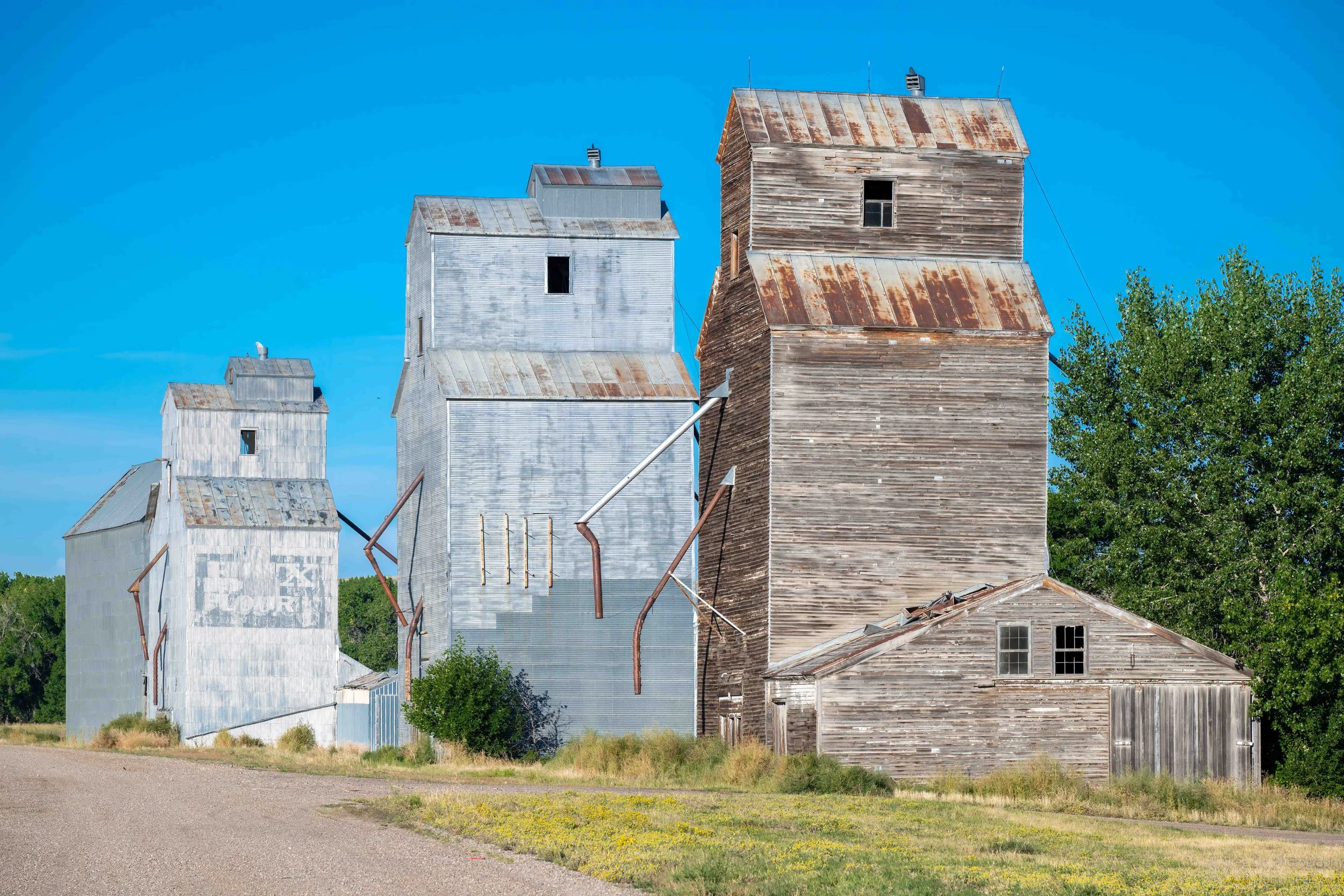
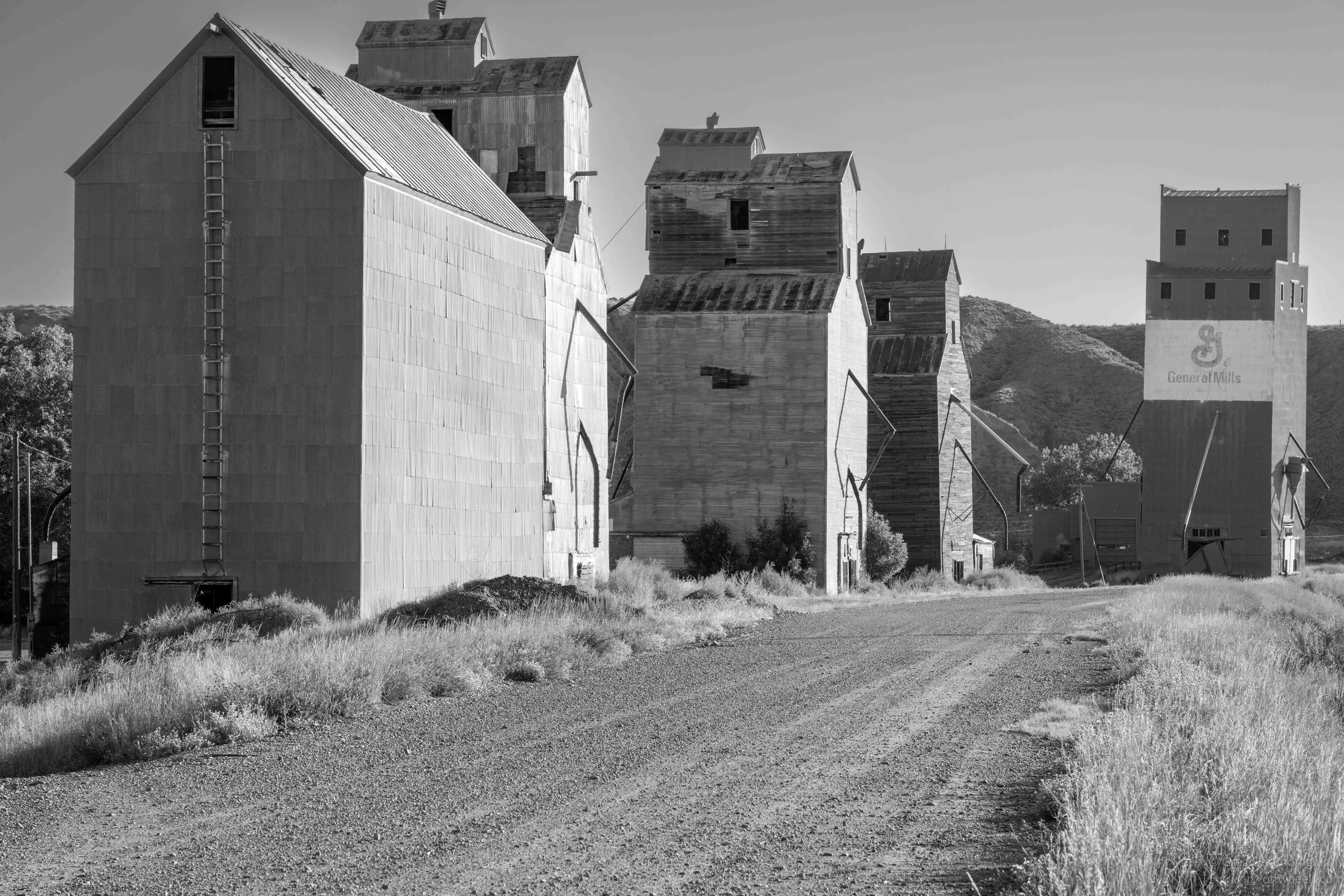
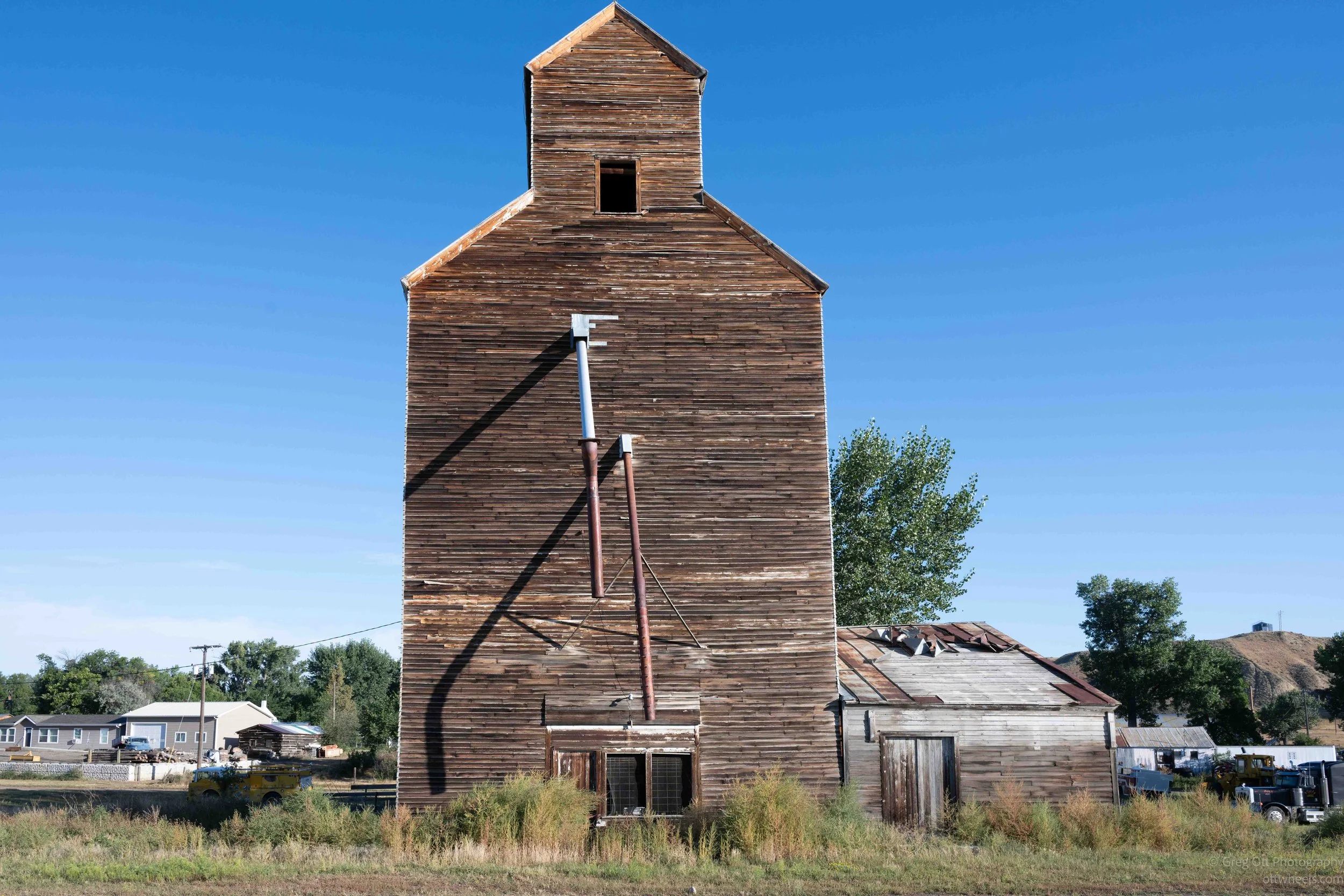
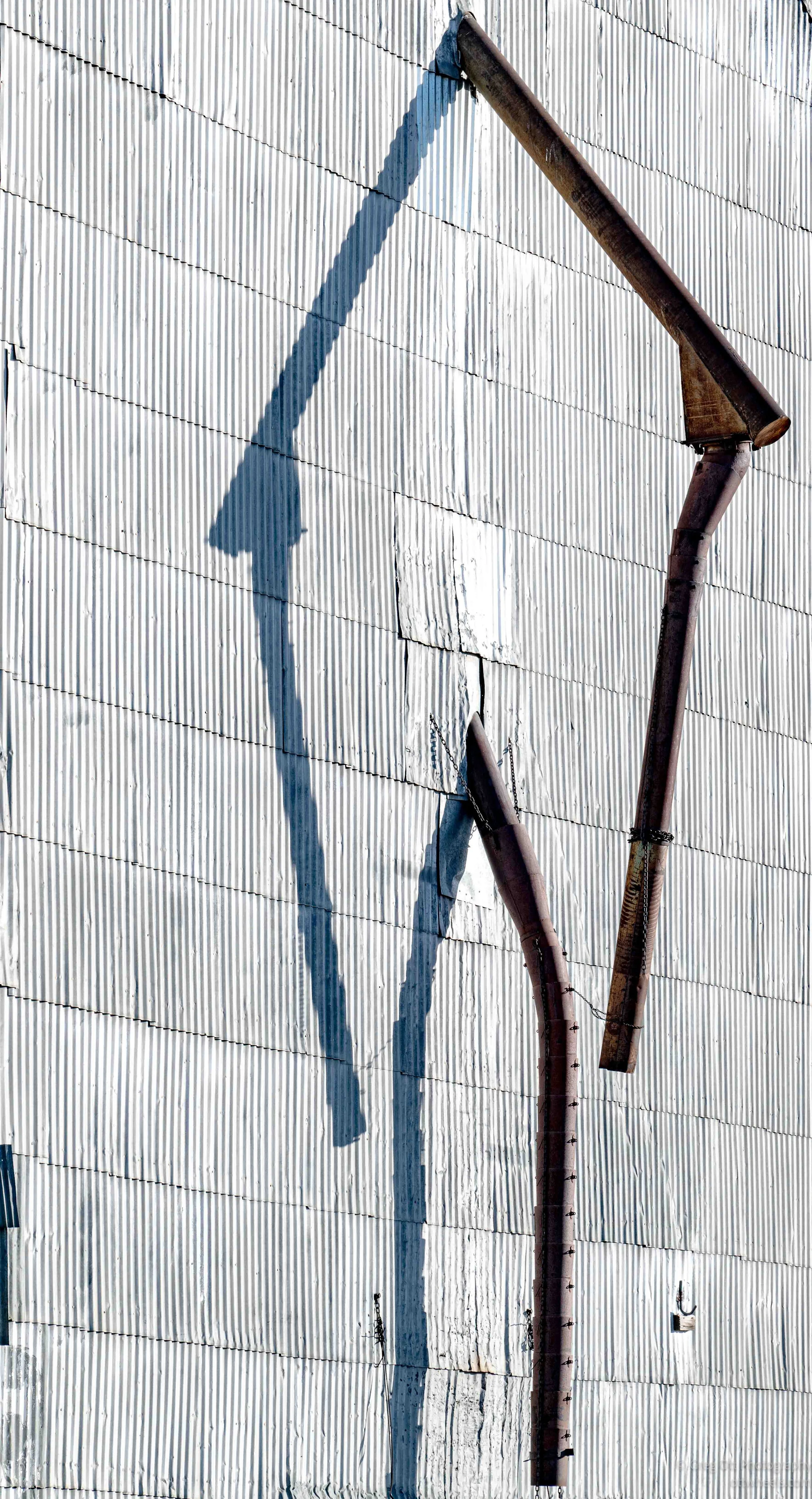
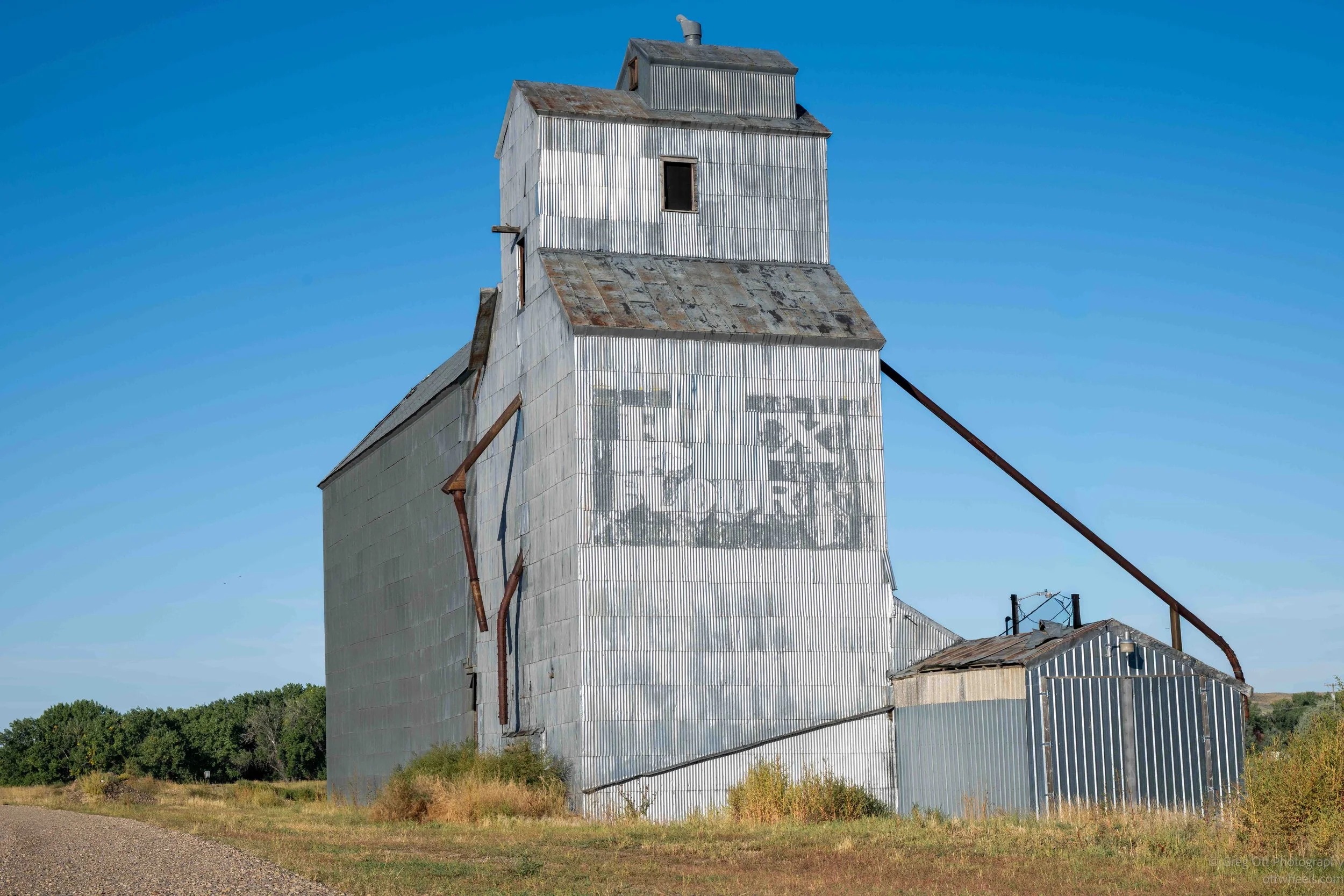
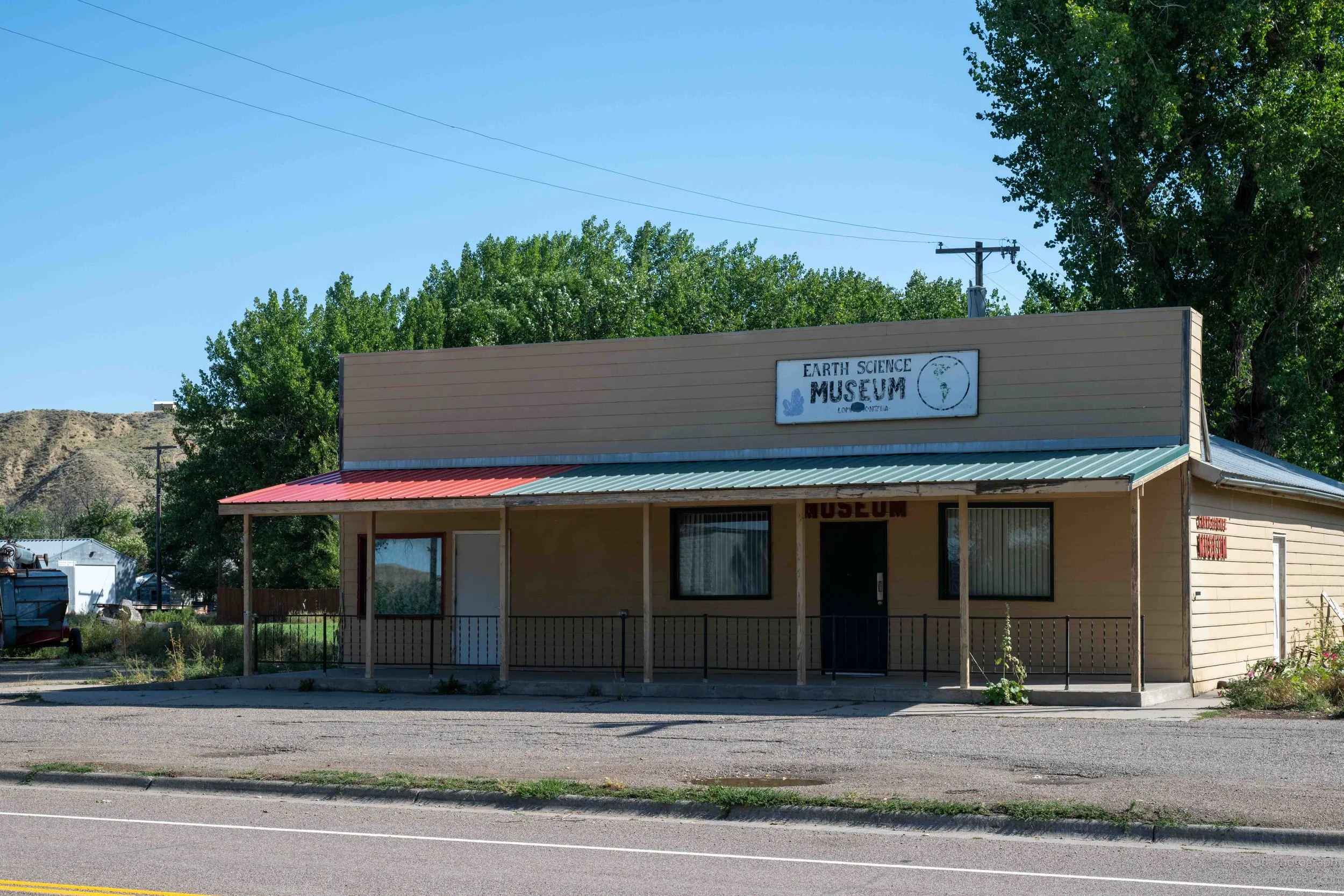
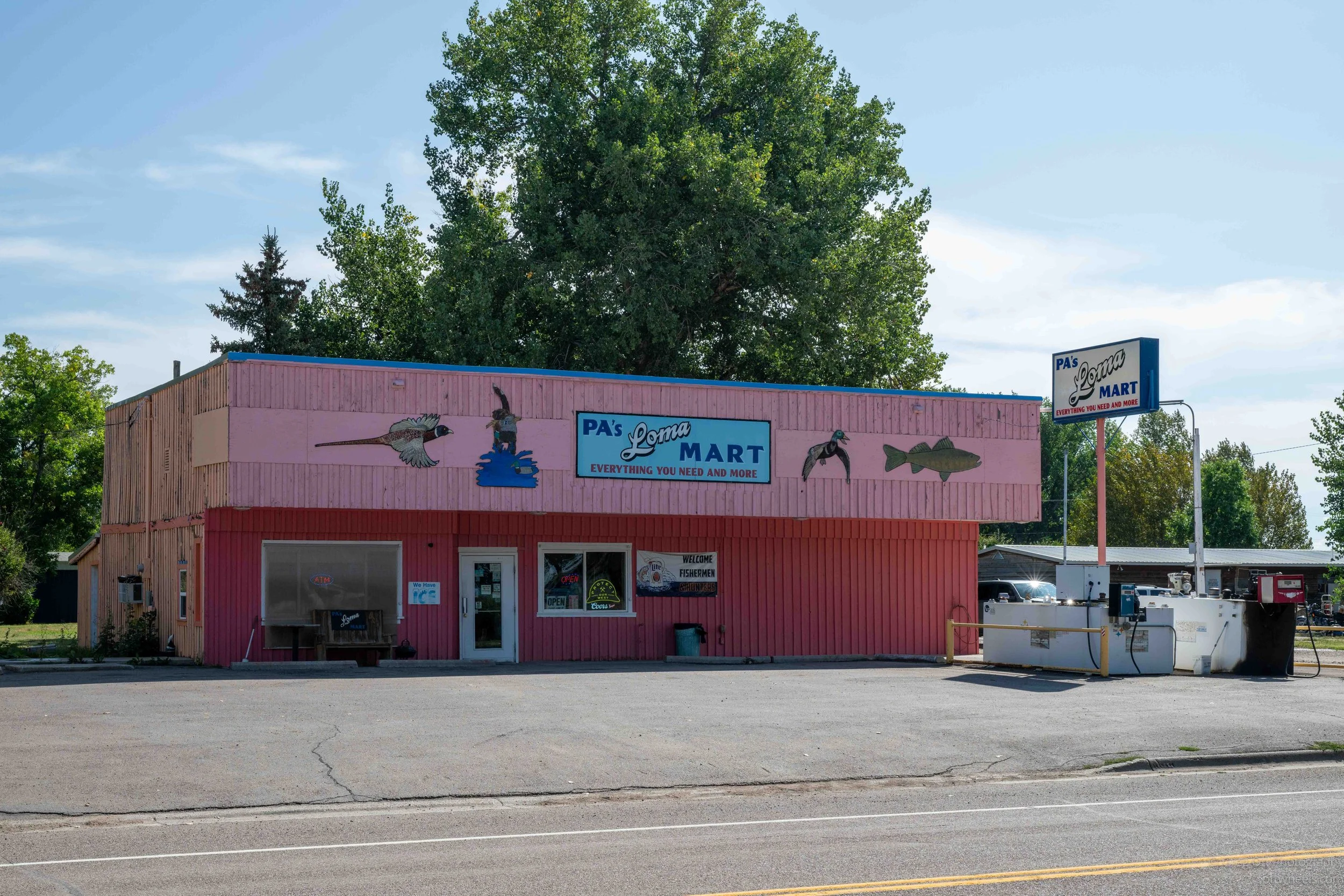
I stopped in Loma to photograph the old grain elevators and noticed an Earth Sciences museum nearby. I couldn't tell if it was open, and from the outside it looked more like an attempt to draw passing tourists into an adjoining shop than a traditional museum. I wasn't quite sure what to make of it, so I took my photographs and continued on.
Virgelle Ferry
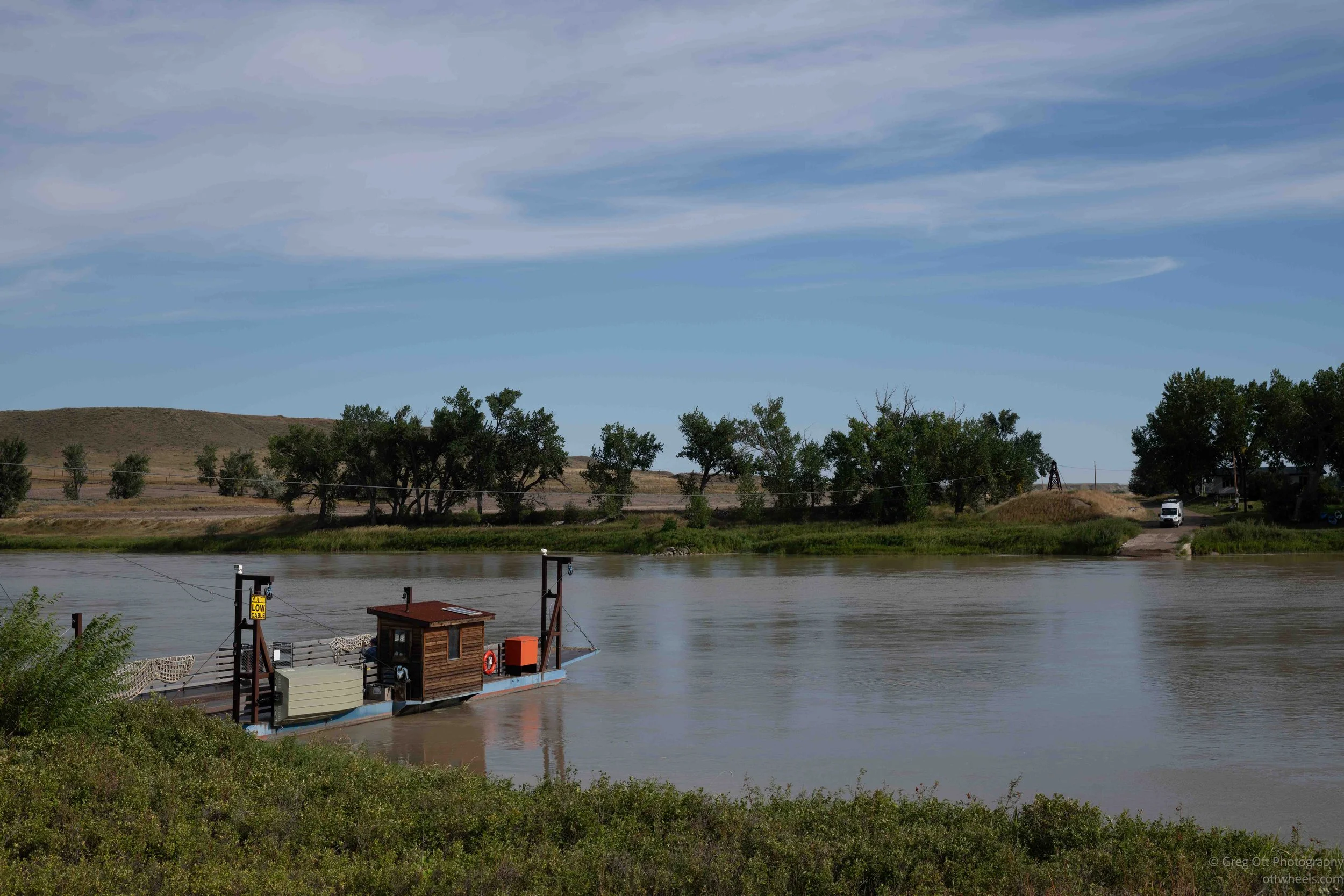
I had been told that the Virgelle Ferry might not be around forever, so I decided it was worth the detour while I was nearby. From Highway 87, the road dropped toward the Missouri over about eight miles of gravel. There were many structures that had been abandoned along the 11 mile dirt road.
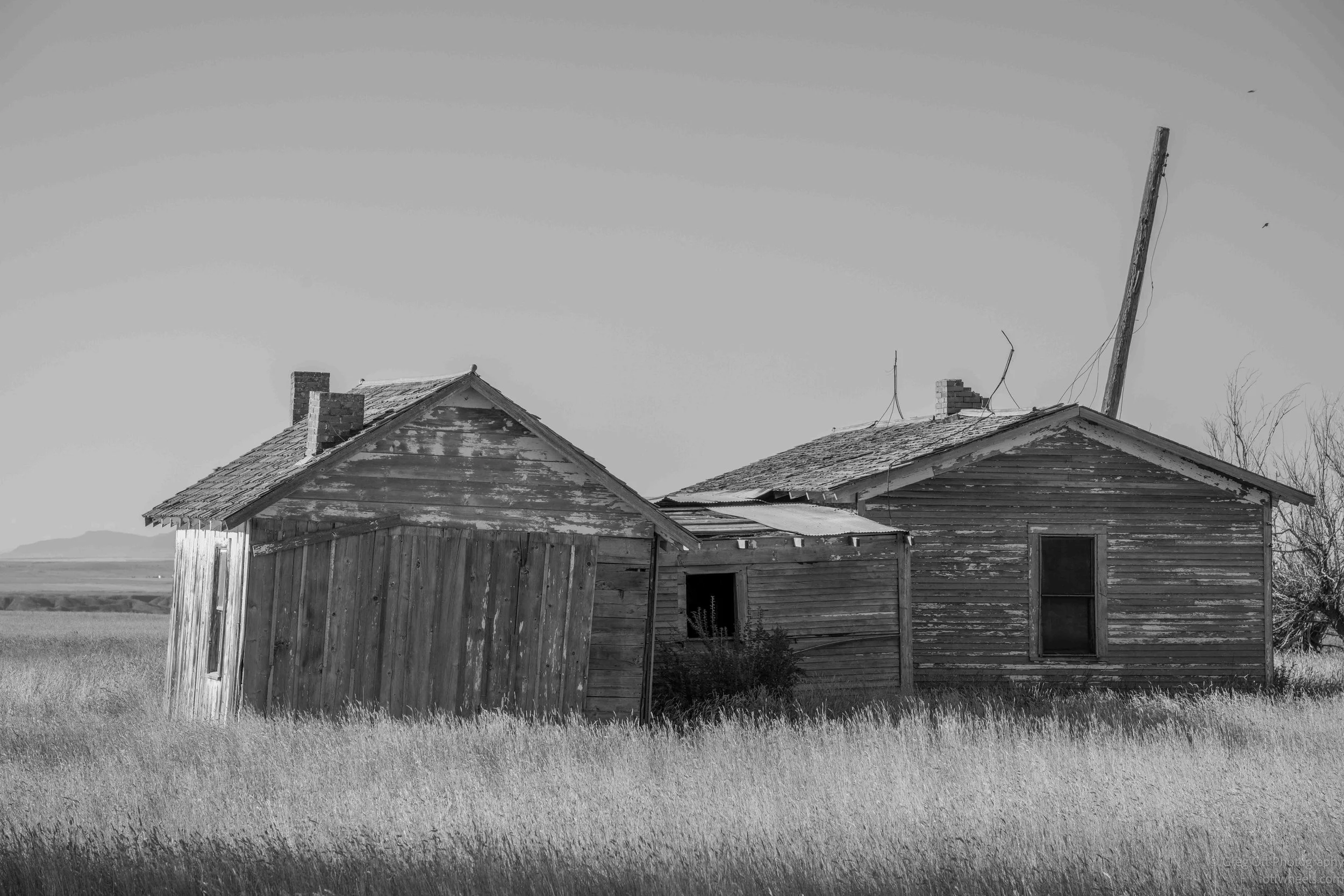
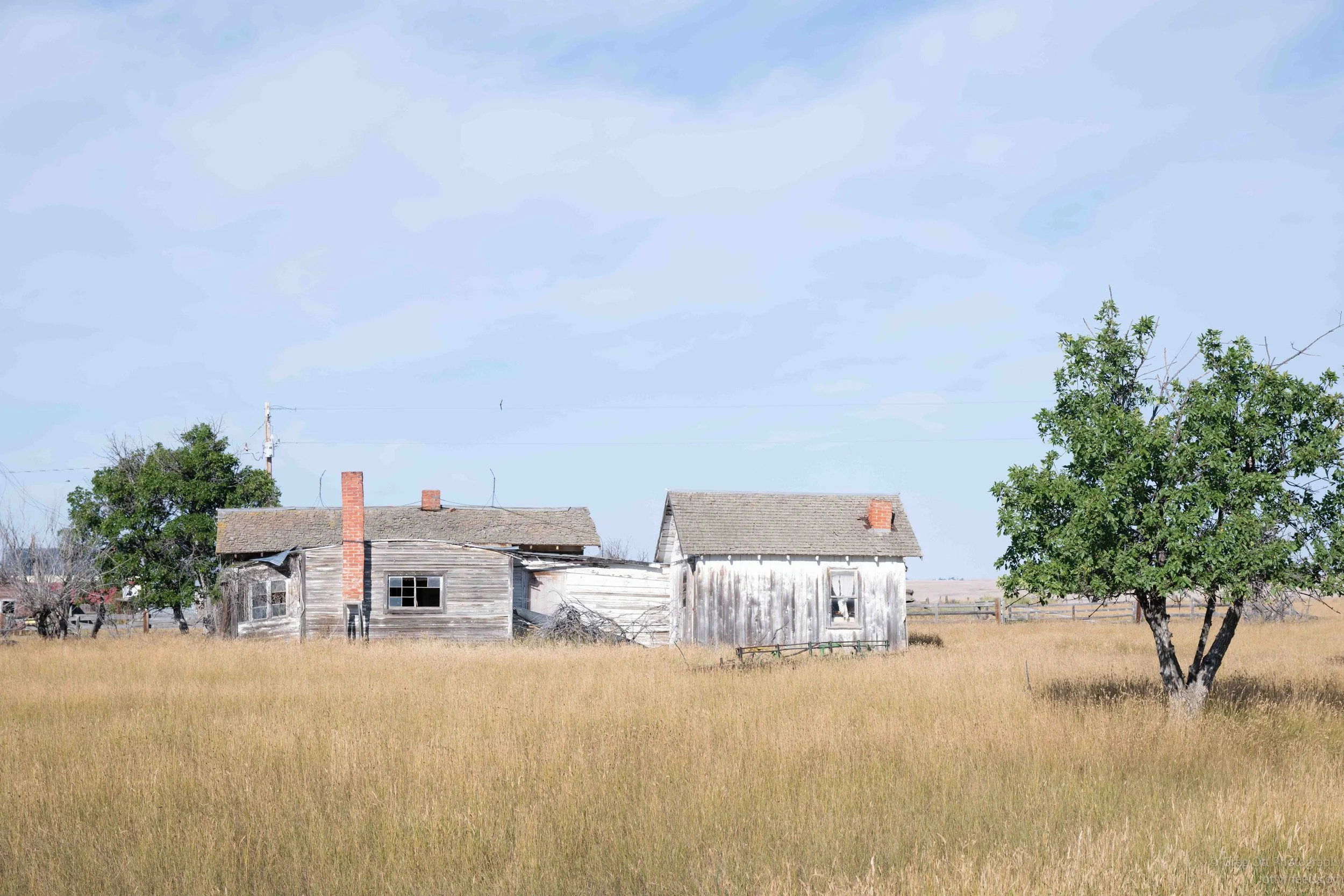
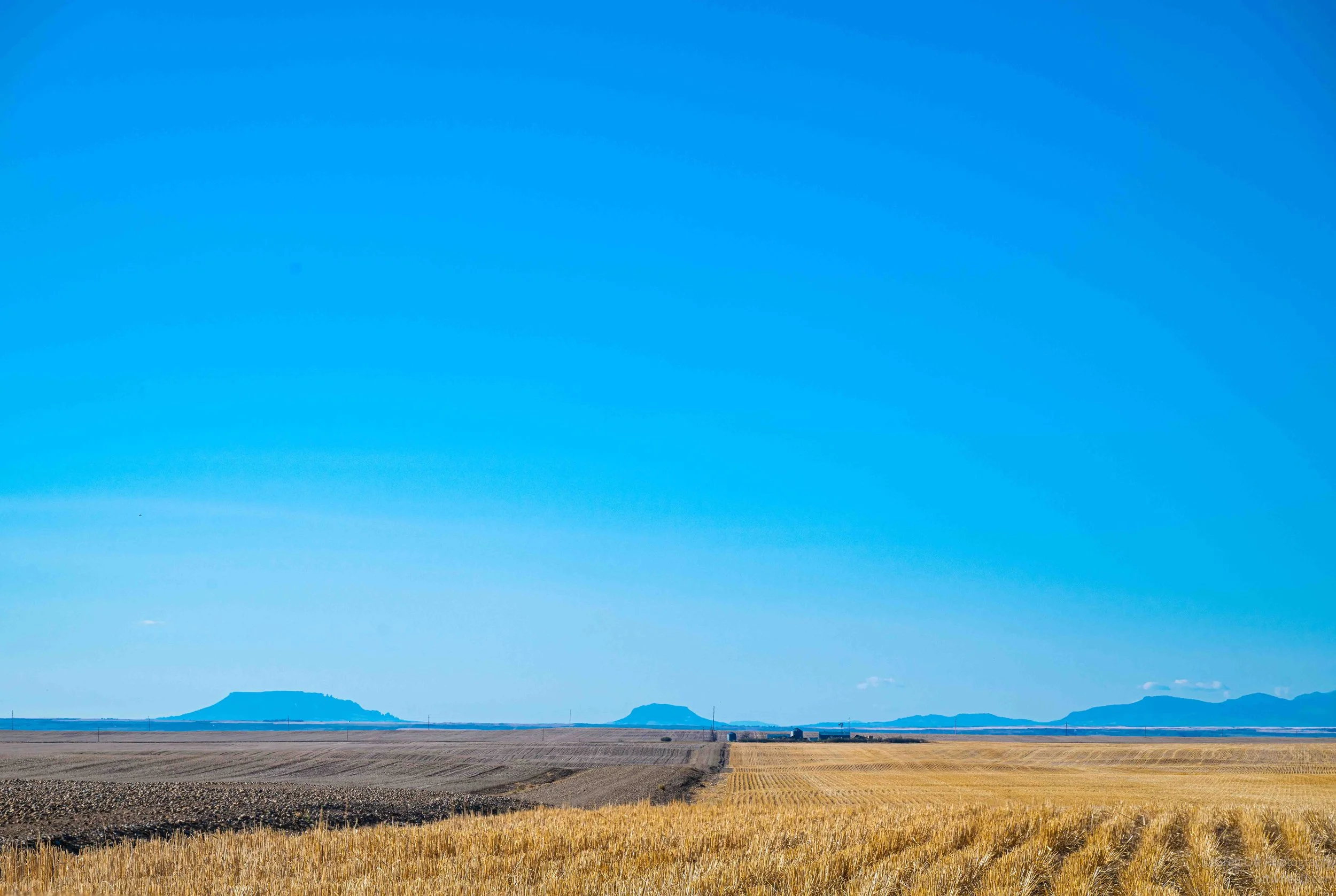
A mile or two before the ferry, I came to an old concrete underpass with no height marking. It looked lower than my ten-and-a-half-foot van, and the ground beneath it was wet and soft. Fortunately, I found a bypass and continued toward the river. Just before the ferry is the town of Virgelle (Prounounced ver-JILL, not ver-JELL). I was told that Virgelle was named by combining the names of two women—Virginia and Ella.
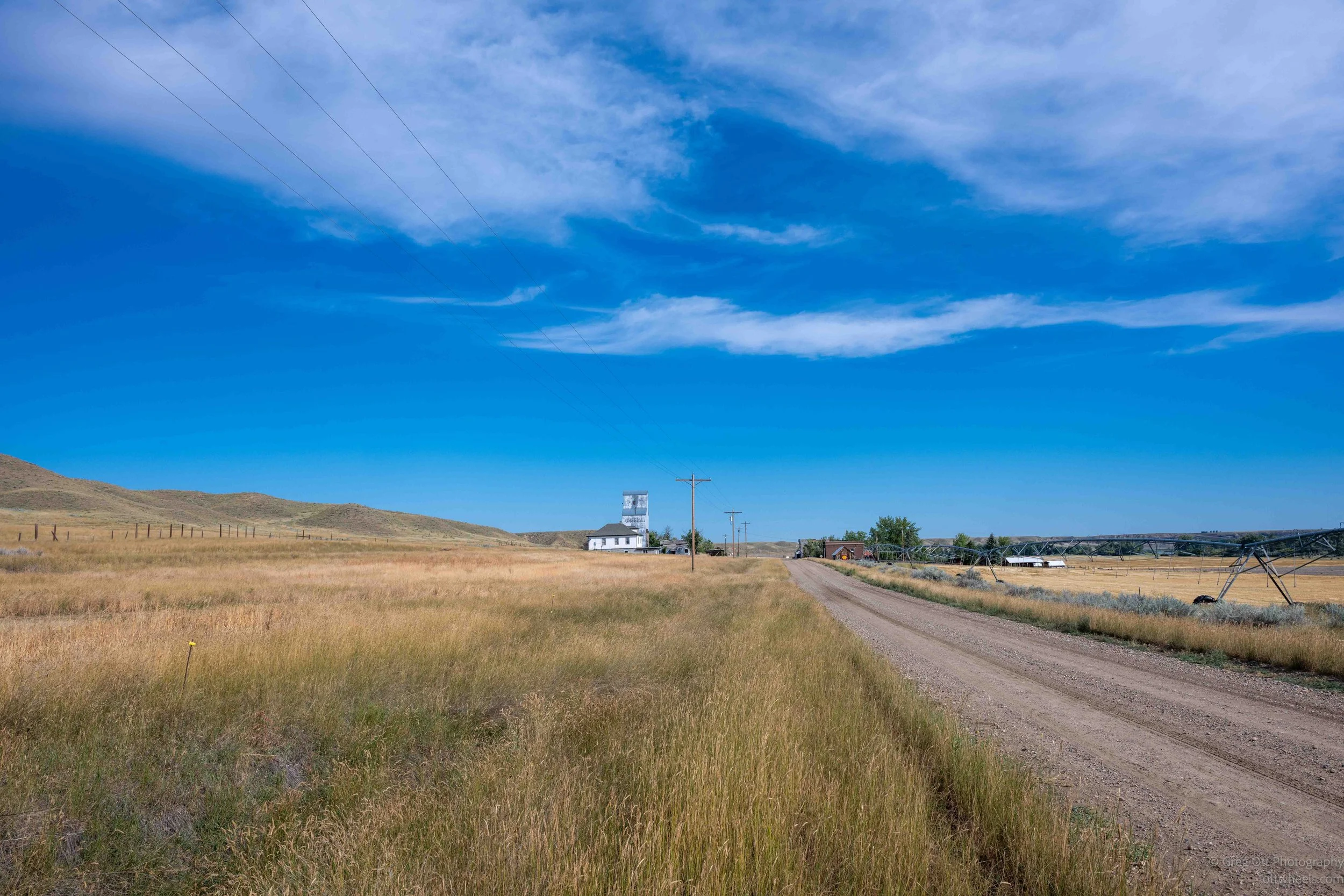
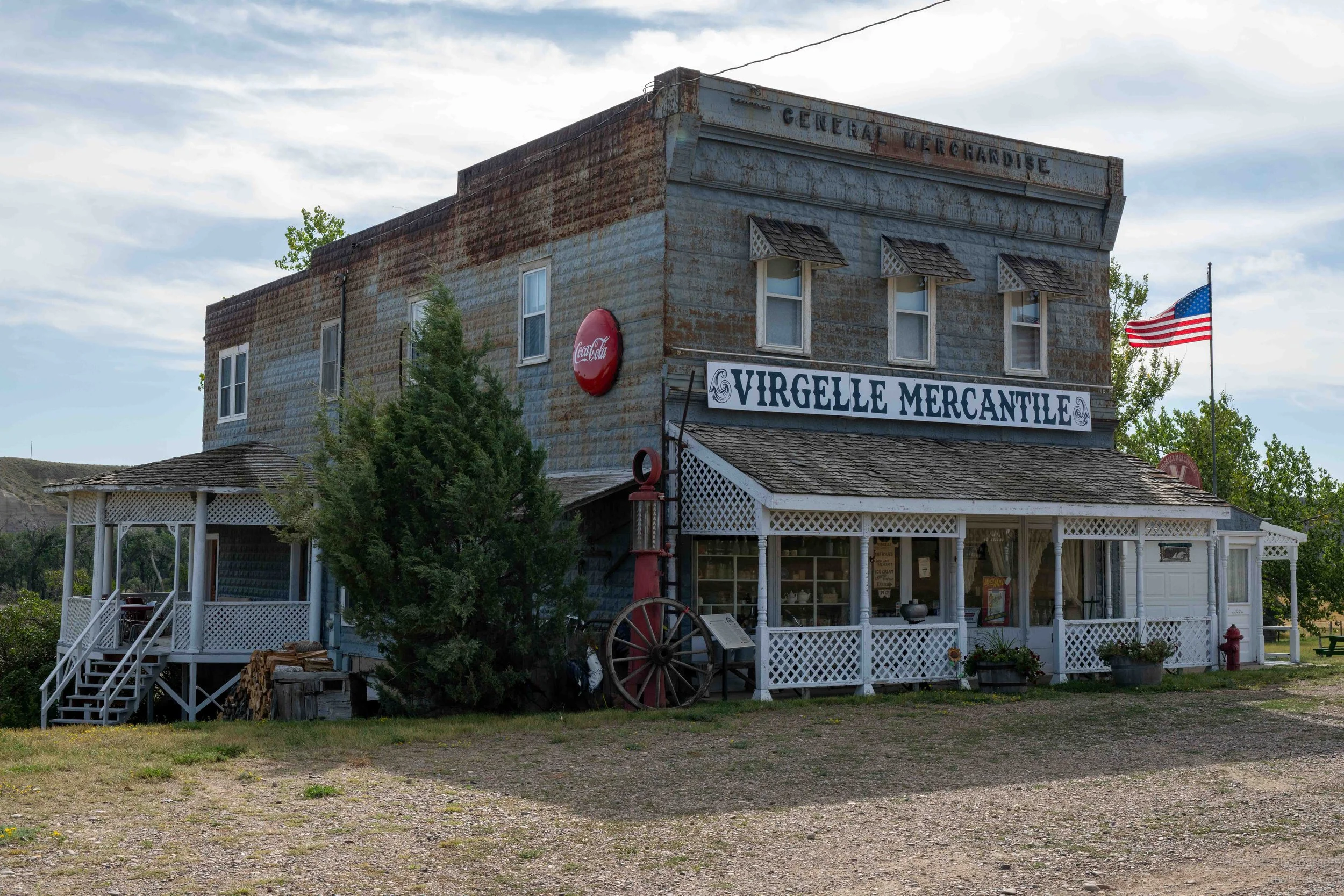
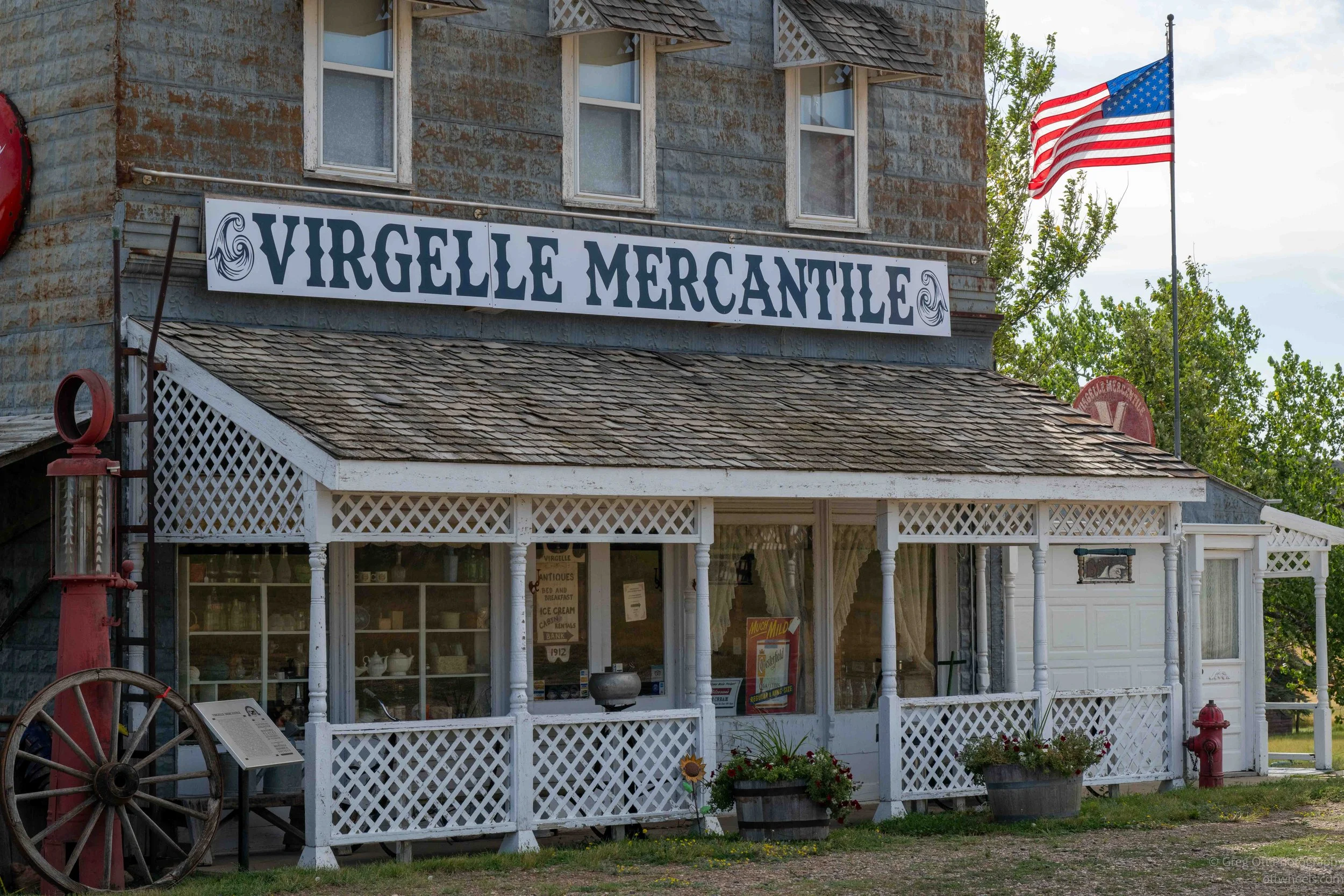
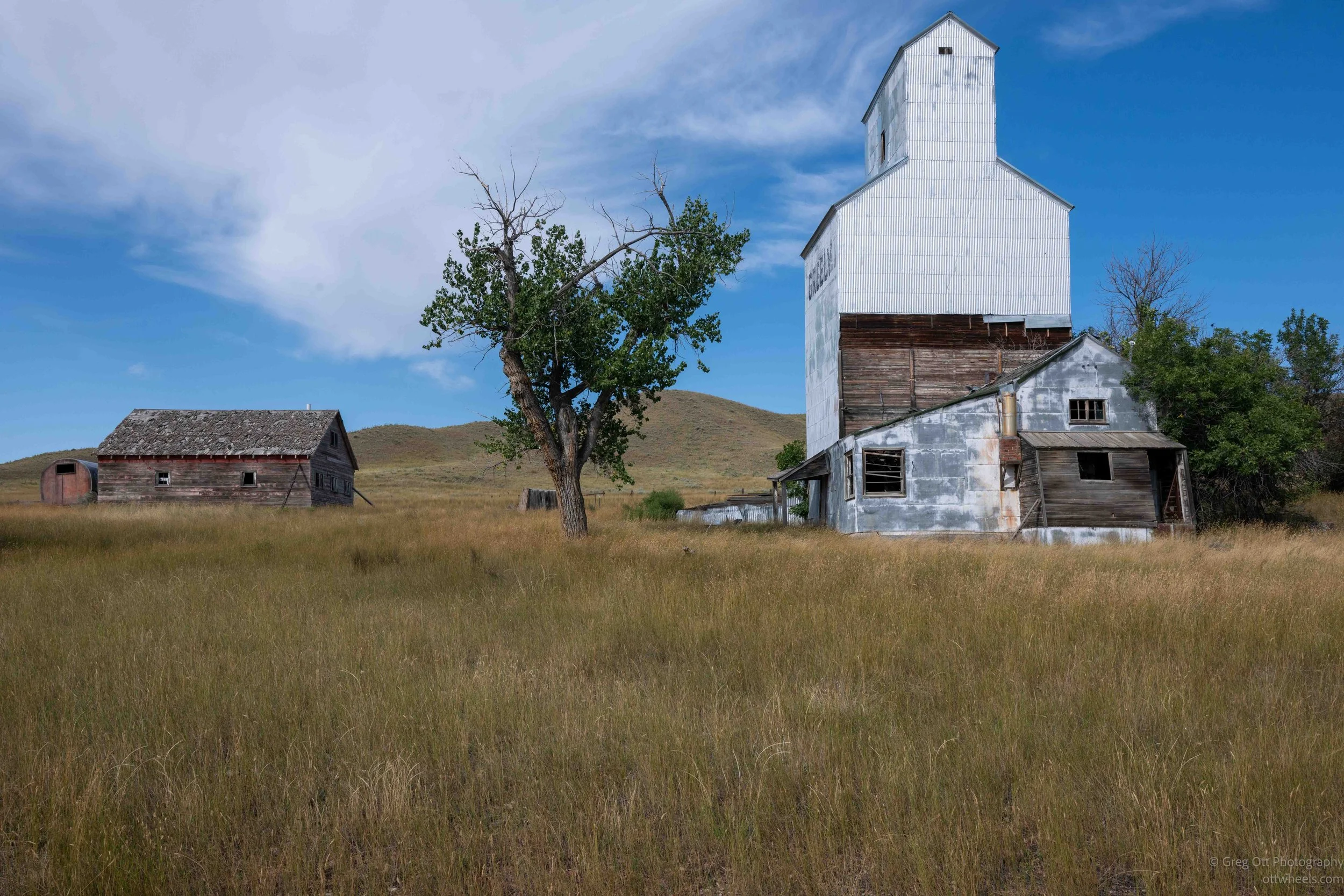
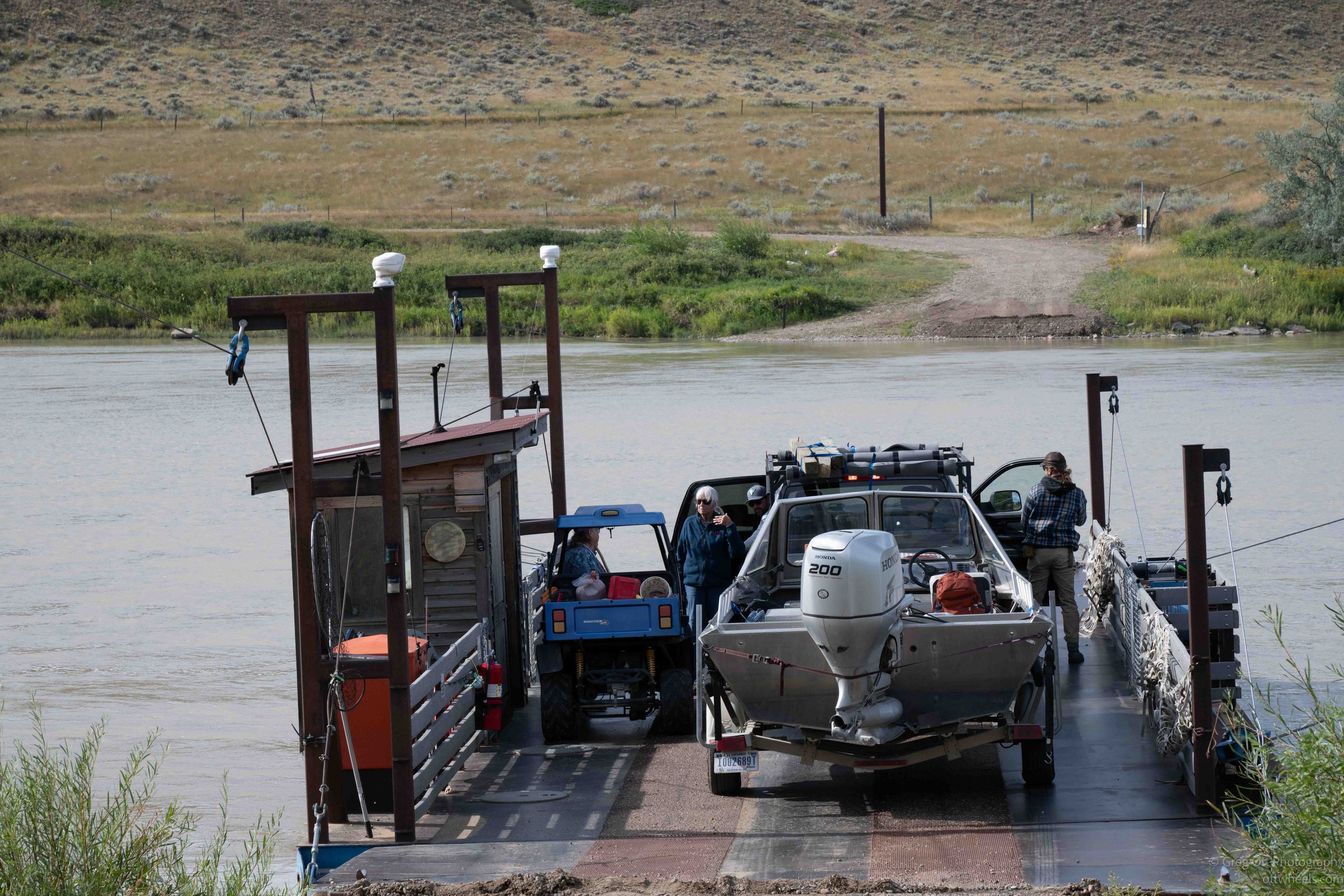
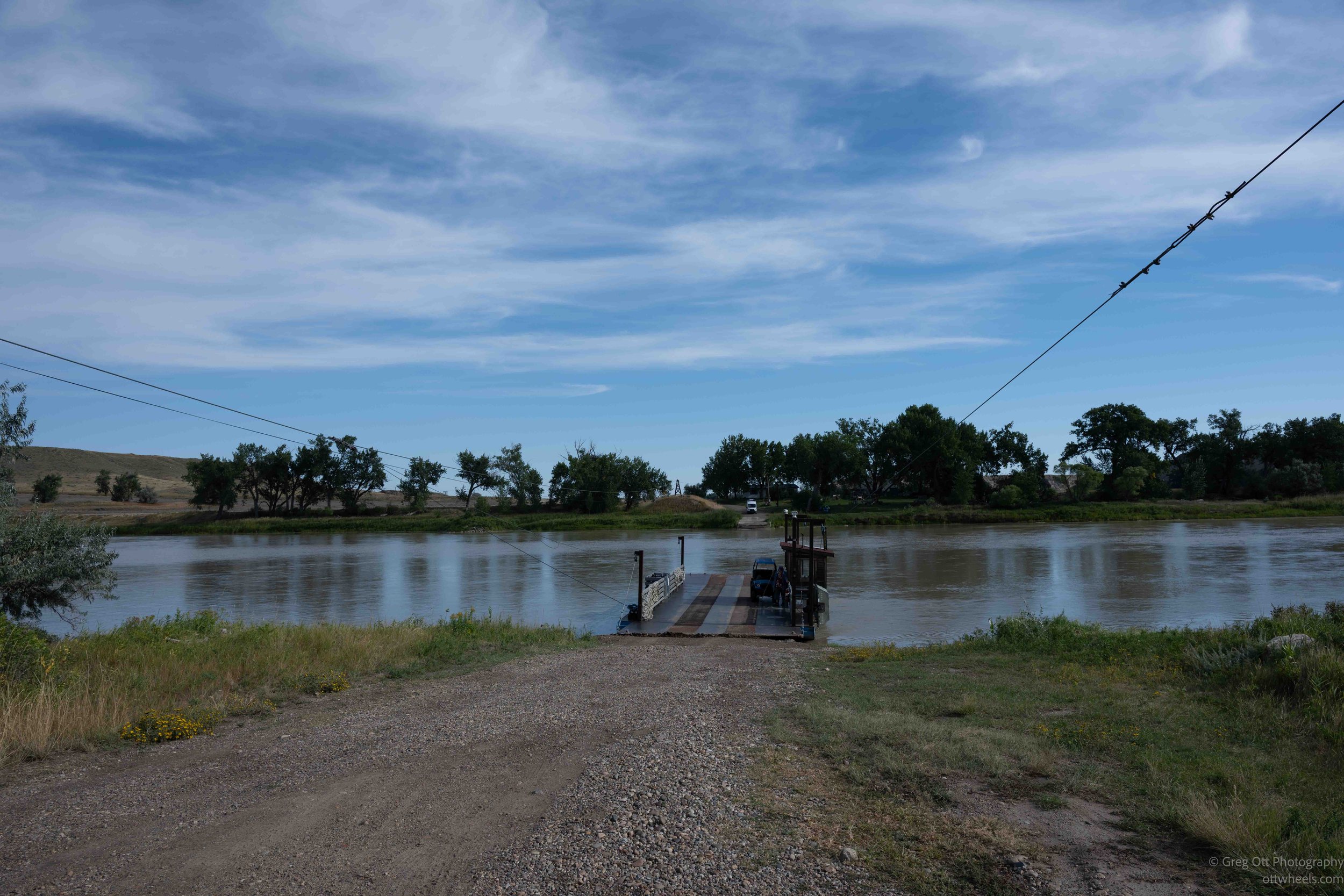
The ferry itself was simple and wonderfully old-fashioned, a small working crossing in a place where there is no easy alternative. The operator that day was Bev, a retired teacher who lives in the house beside the landing. I expected to cross, take a few photographs, look around for a while, and leave. Instead, I spent close to an hour talking with her.
Bev told me that people come from all over the world to see the ferry, and most of them stop and talk. In all the years she has been operating it, she could remember only one person who stayed behind the wheel looking angry, never got out, and never said a word. Everyone else seemed to understand that this was not a place to hurry through.
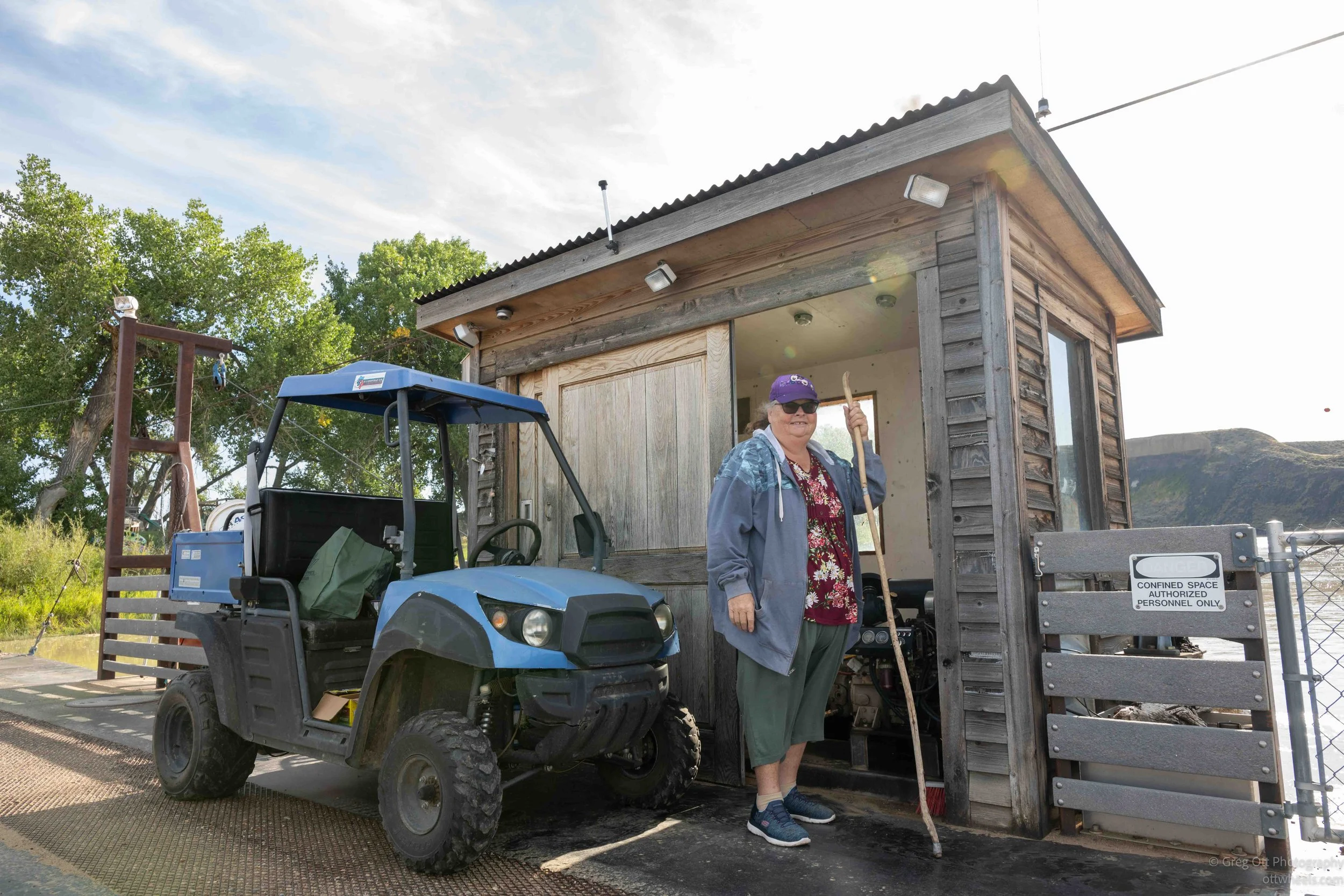
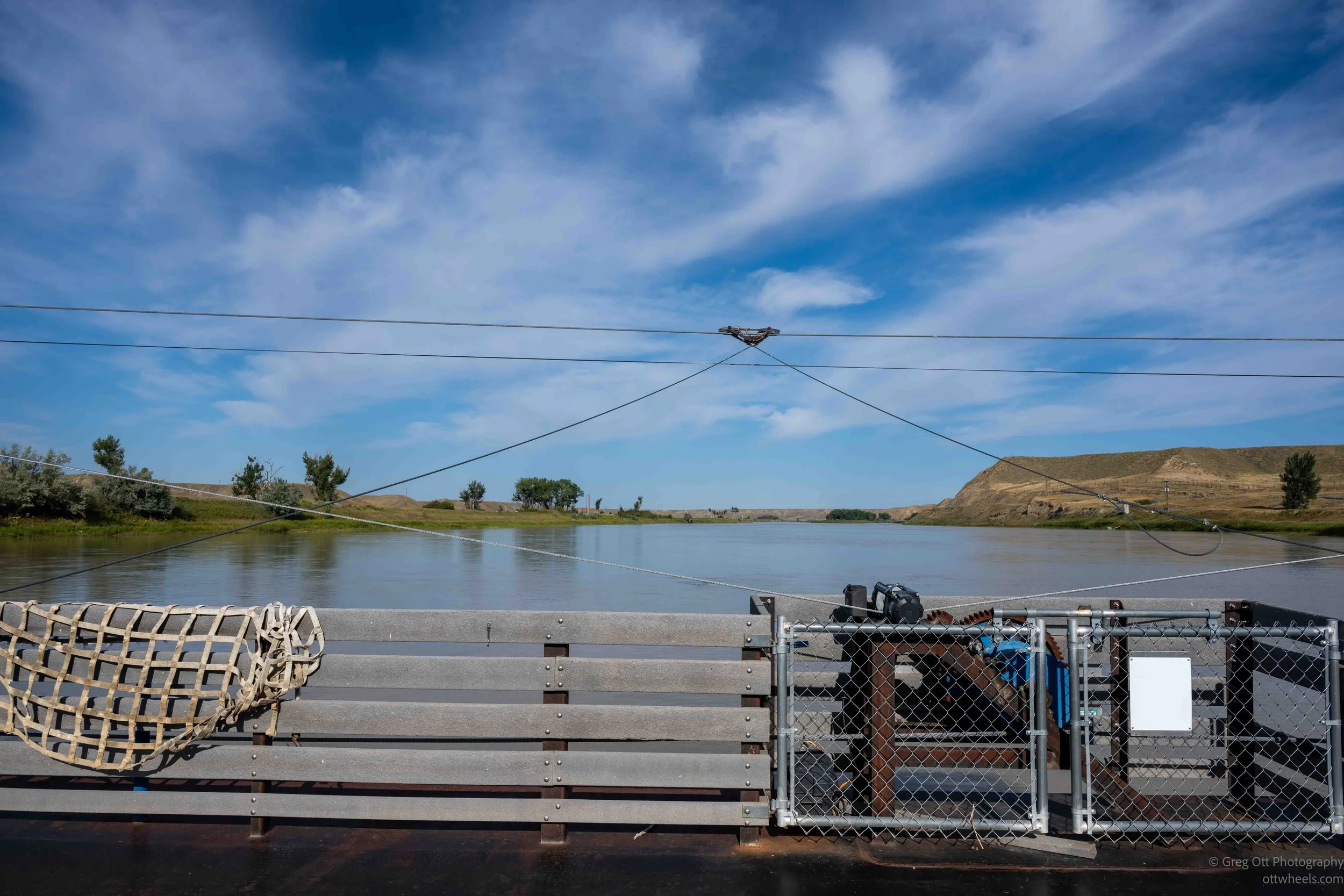
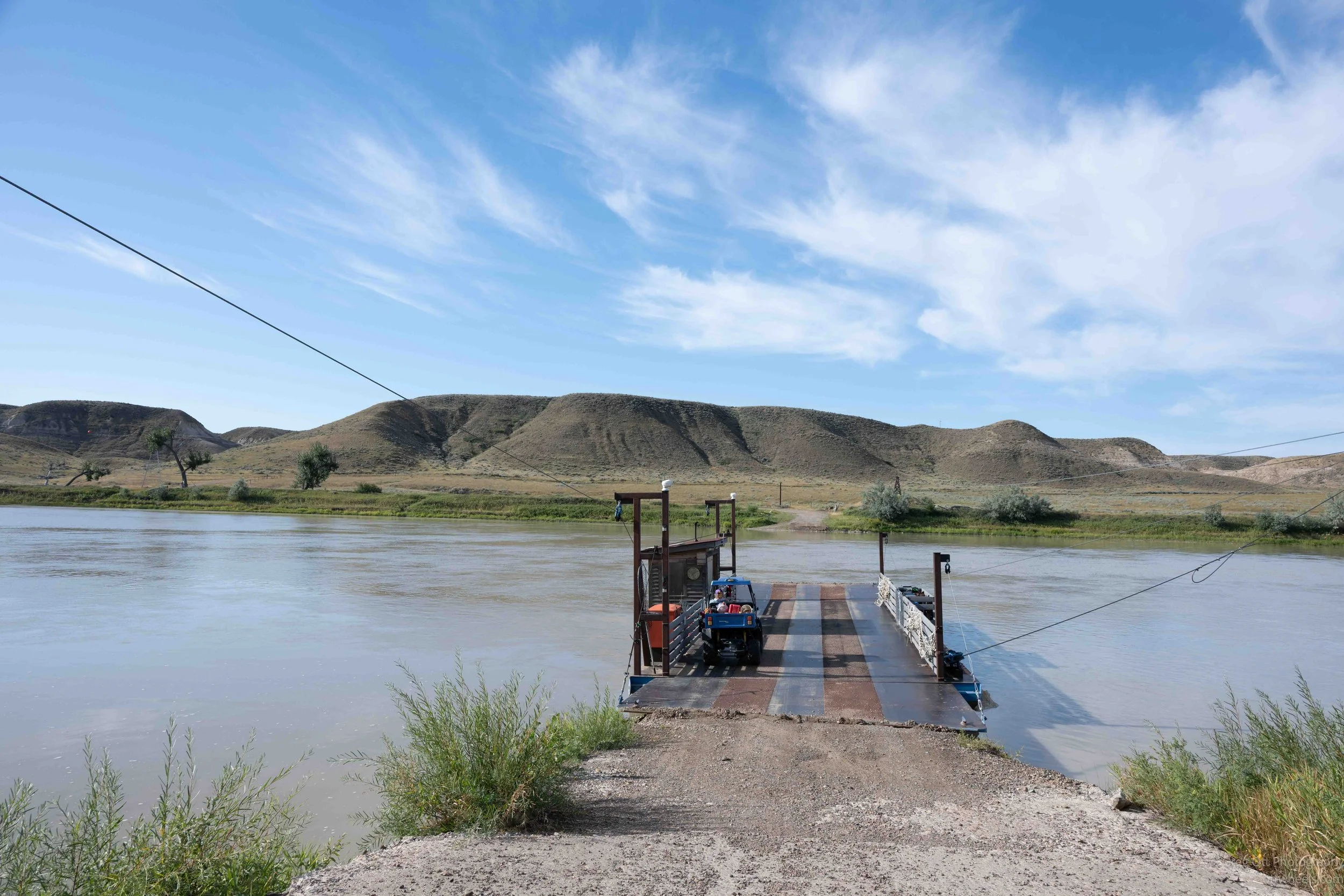
She had spent more than twenty years teaching Native American children in schools around Montana and used some of her time away from school to visit Native communities around the country and learn about their traditions. We also talked about Alaska. She had taken her children there for several weeks and traveled through the coastal waterways so they could experience Alaska from the water. After my own months in Alaska, especially along the coast, that immediately caught my attention. There is still an enormous amount of Alaska I have barely seen.
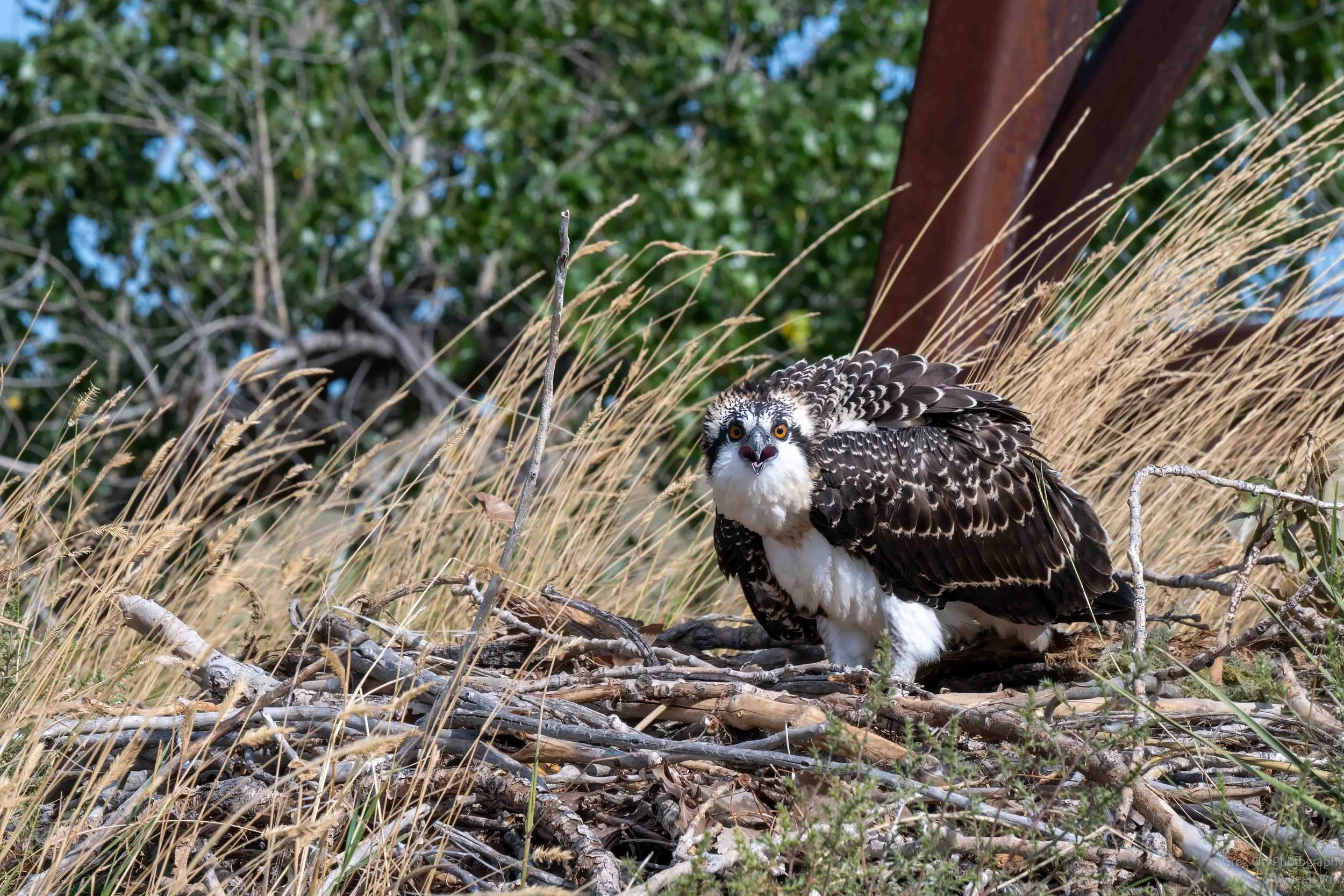
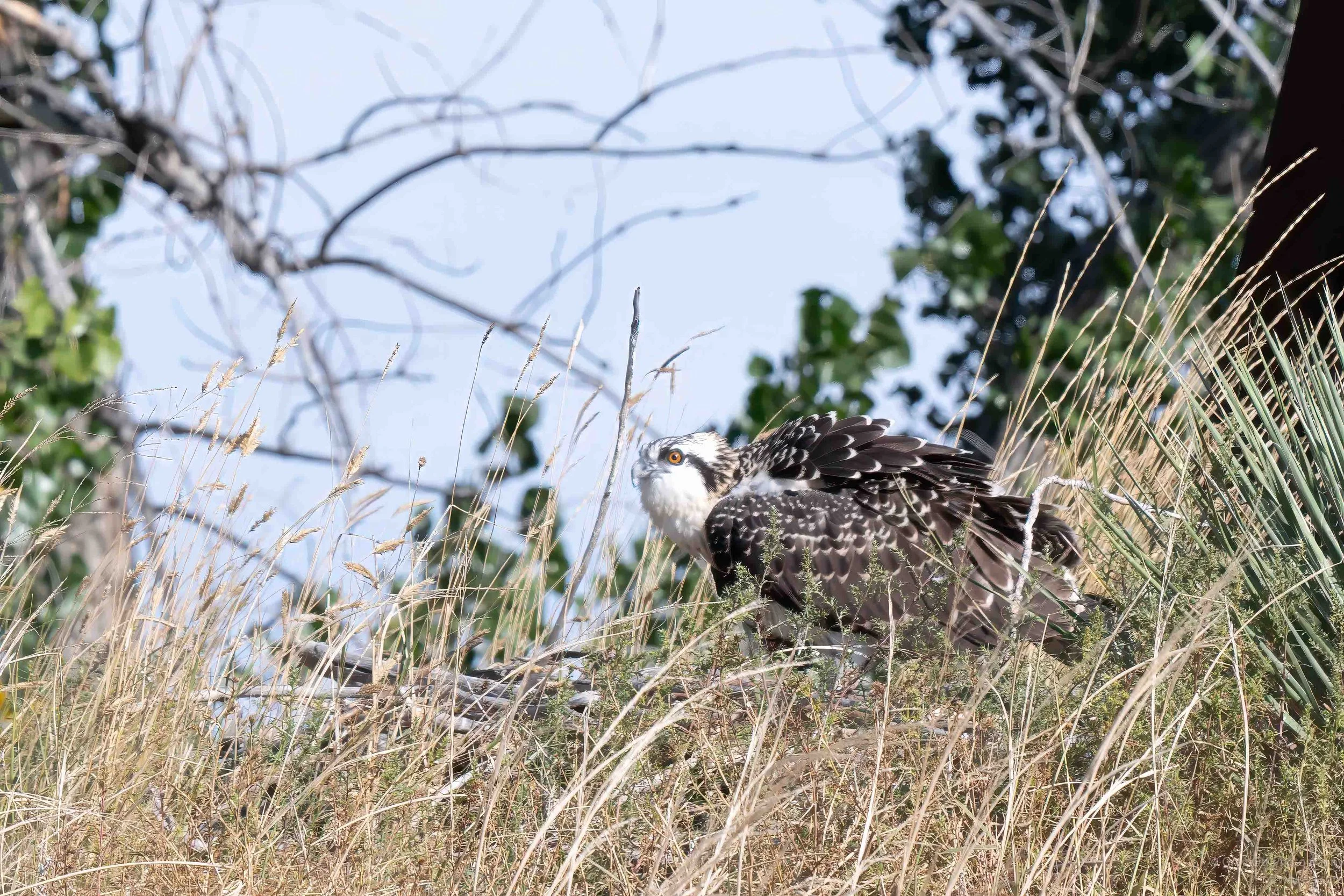
While we were talking, I noticed a young osprey on the hillside near one of the ferry cable supports. Its nest had been blown from the opposite side of the Missouri into the river and floated downstream until it caught near the bank. Bev's twelve-year-old grandson had gone over, rescued both the nest and the young bird, brought them back across the river, and placed them on the hillside. He named the bird Bobbie. While I was there, Bobbie was repeatedly trying to fly while its mother circled overhead. I spent some time trying to photograph it, although it was tucked close to the ferry structure and difficult to isolate.
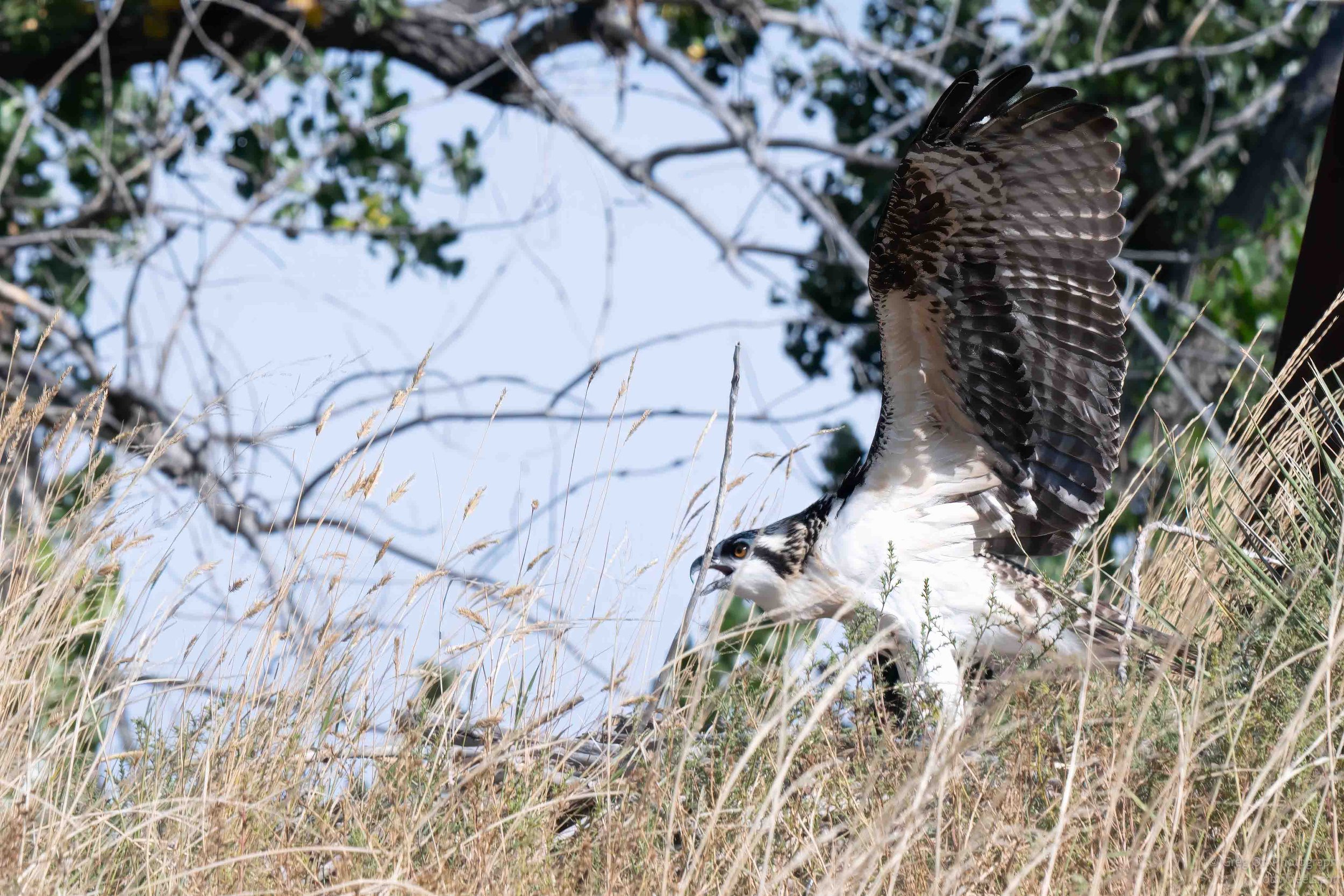
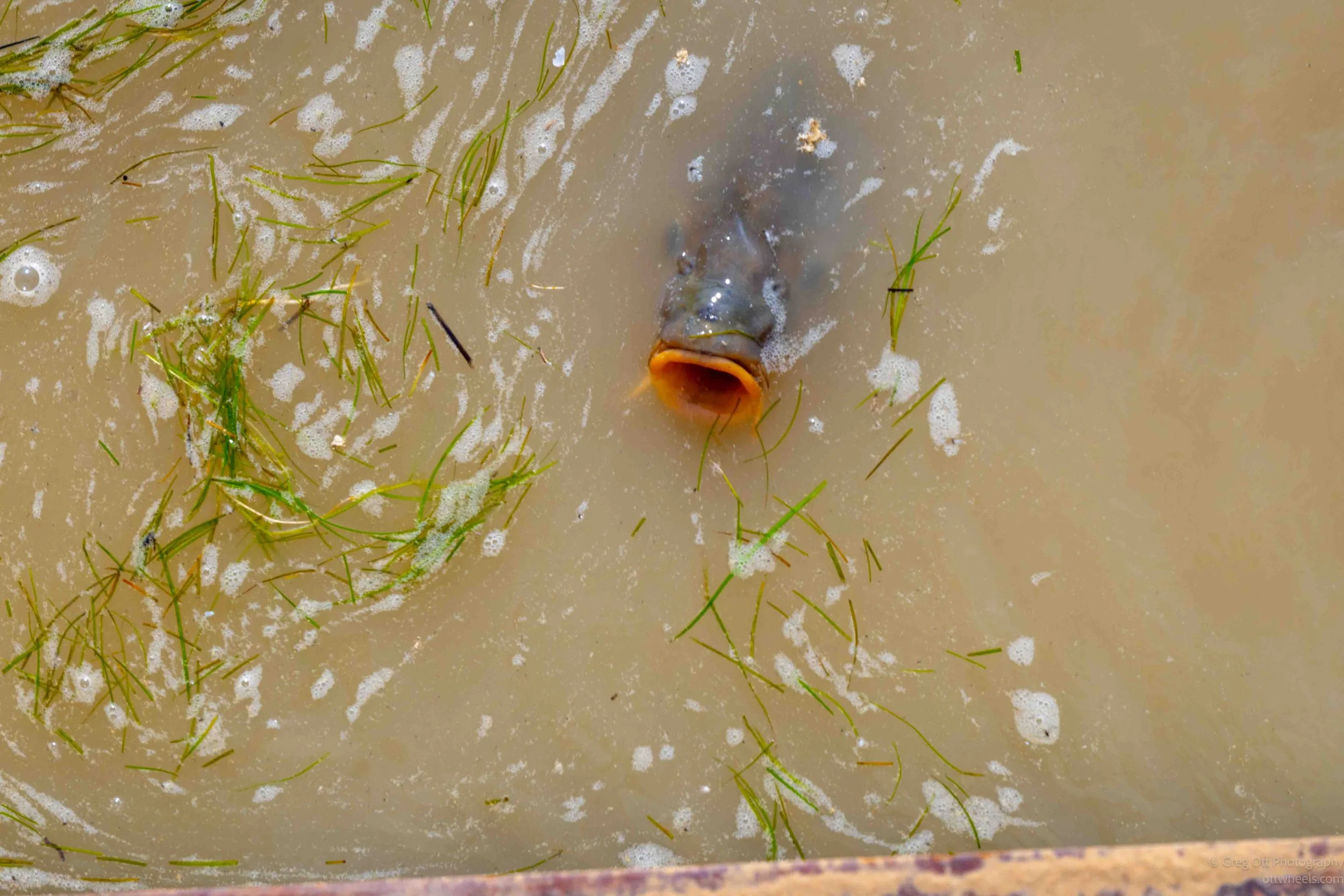
The conversation wandered in the way good conversations do. At one point a carp jumped out of the Missouri, which led Bev to tell me about buying her granddaughter a Mickey Mouse fishing rod. Somehow the child managed to catch a carp weighing around twenty-five pounds. Her granddaughter insisted that they eat it. Carp would not normally have been Bev's first choice for dinner, but they cooked it anyway, and she said it tasted surprisingly similar to salmon.
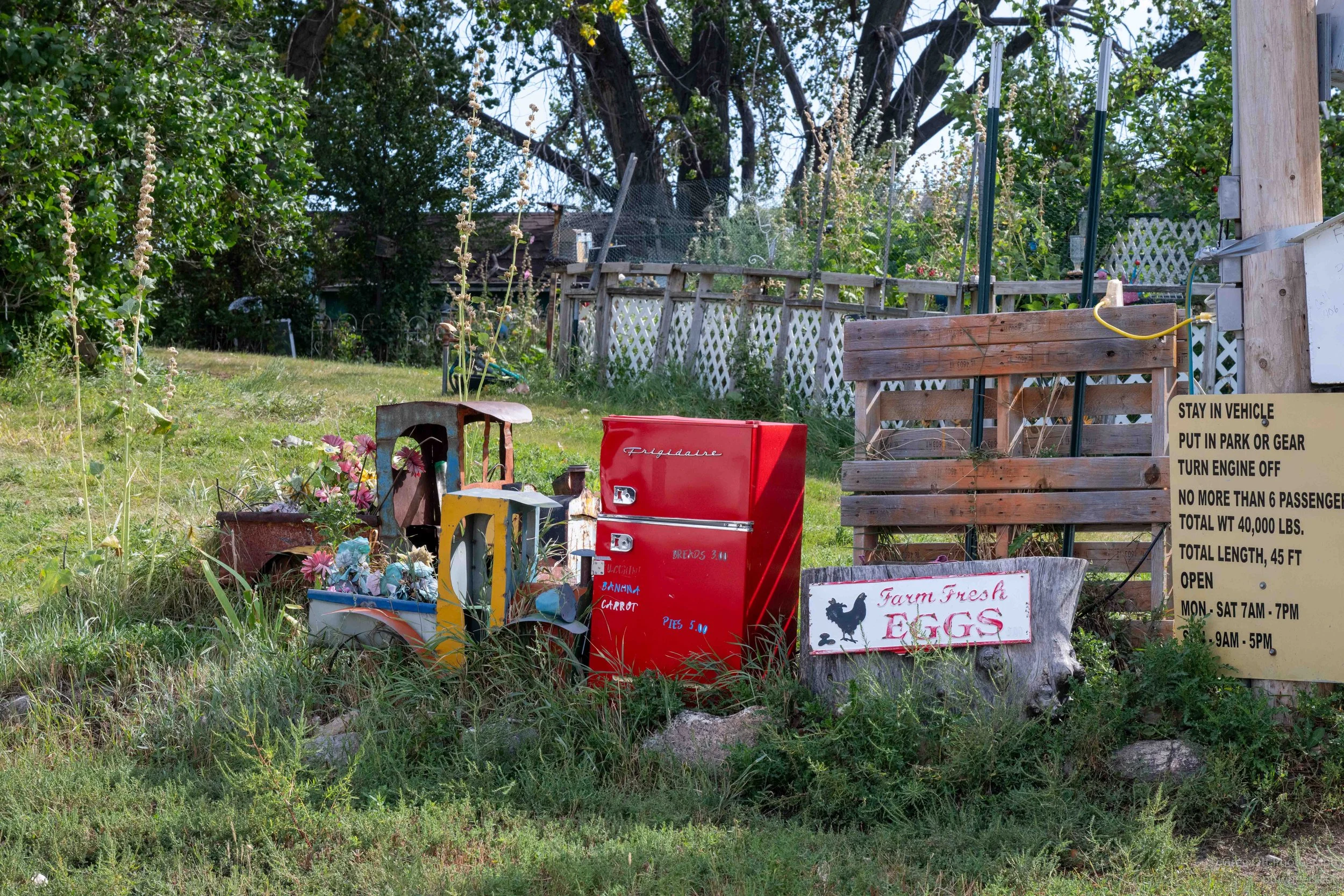
She also told me about her life beside the ferry. Her family had been connected with the place for a long time, and the house sits on land leased through an unusually long county arrangement. She gardens, cans food for the winter, keeps around seventy chickens, and sells eggs. We talked about plums because she had a large crop and was preparing to can them. Listening to her describe it, nothing sounded particularly complicated. She simply produces much of what she needs, keeps her expenses low, and seems perfectly comfortable with the life she has built.
That led into a discussion about hunting and how her family once used nearly every part of the deer and other animals they killed. Very little was wasted. She also mentioned a disease affecting deer in the area called bluetongue. She described sick deer repeatedly going to water, drinking and drinking, and eventually dying. I had never heard of it before, but it was clearly something local people were watching closely.
The longer we talked, the less the ferry seemed like the reason I had driven all the way out there. It had simply provided the setting. Bev seemed completely rooted in this remote place without being cut off from the wider world. She had spent decades teaching, traveled widely, raised a family, learned from other communities, and now operated a ferry on the Missouri while gardening, canning food, raising chickens, and meeting travelers from around the world.
I probably would have stayed longer, but eventually a man arrived towing a boat and needed to cross. That seemed like a good signal to move on. A few miles up the gravel road, I saw the mother bird again flying over the fields before heading back toward the river. I had driven out expecting to see an old ferry. What I remembered most on the way back was Bev, the stories, and the small dramas taking place around one quiet crossing on the Missouri.
Great Falls
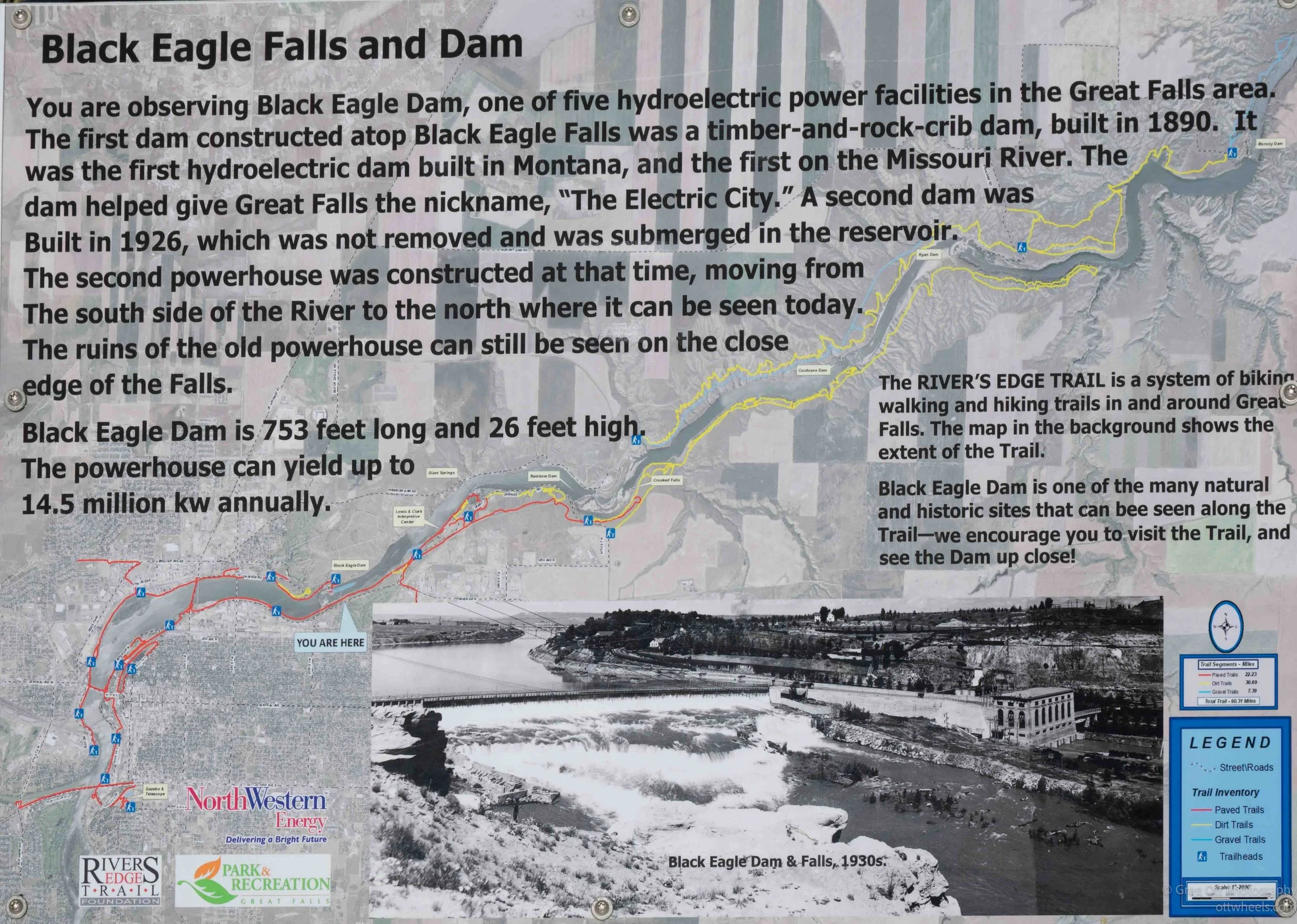
I had initially decided to skip Great Falls, but two nights earlier Tay had told me I should at least stop at the dam. That single recommendation ended up changing the day. I visited the dam, then the Lewis and Clark Interpretive Center, and stayed in town for dinner. I passed on the C. M. Russell house, which I regretted a few days later. There was clearly more history in Great Falls than I had given it credit for, so it has gone onto the list of places I need to revisit.
Google first took me to the wrong side of the dam, so I backtracked through Great Falls and followed the south side of the Missouri instead.
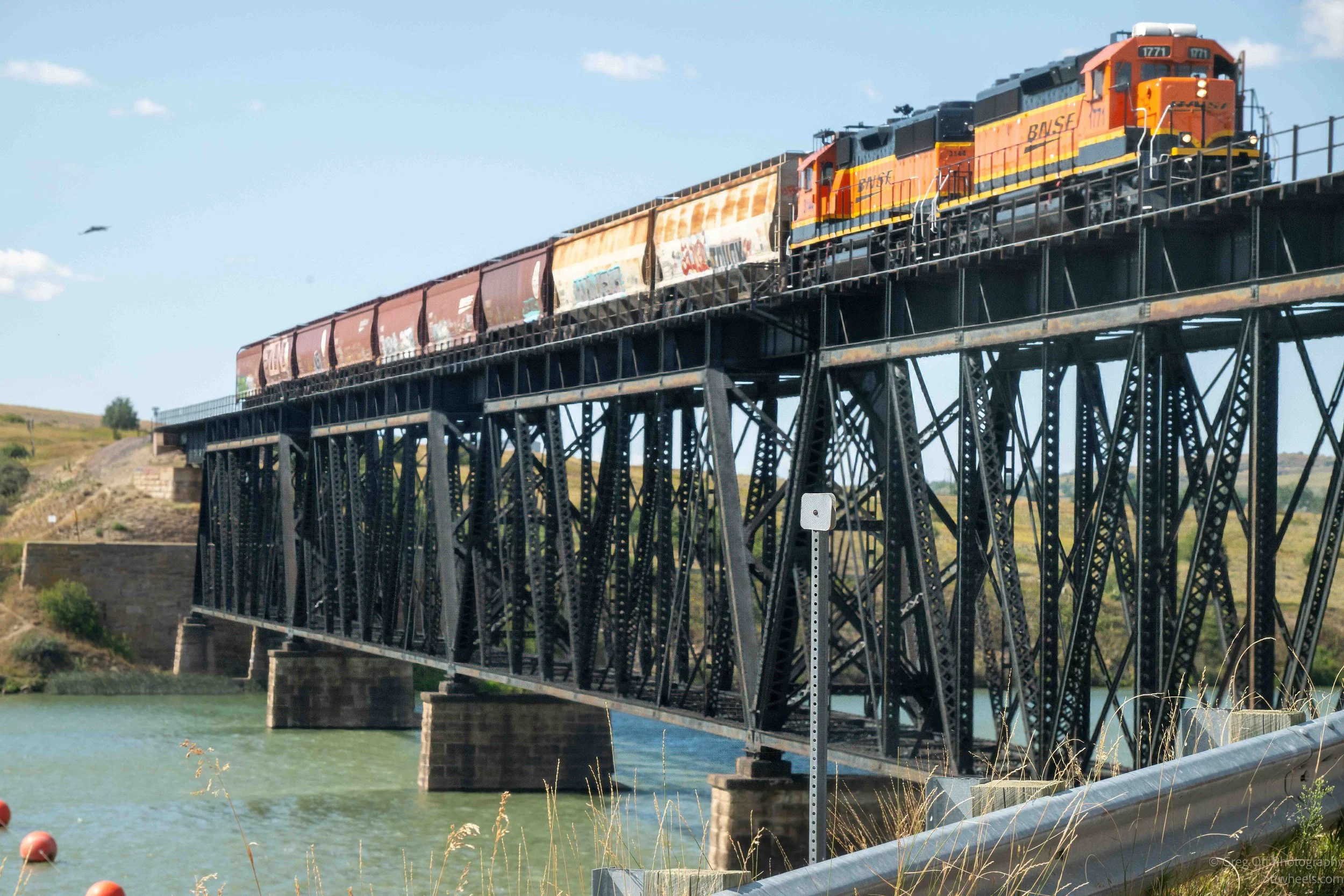
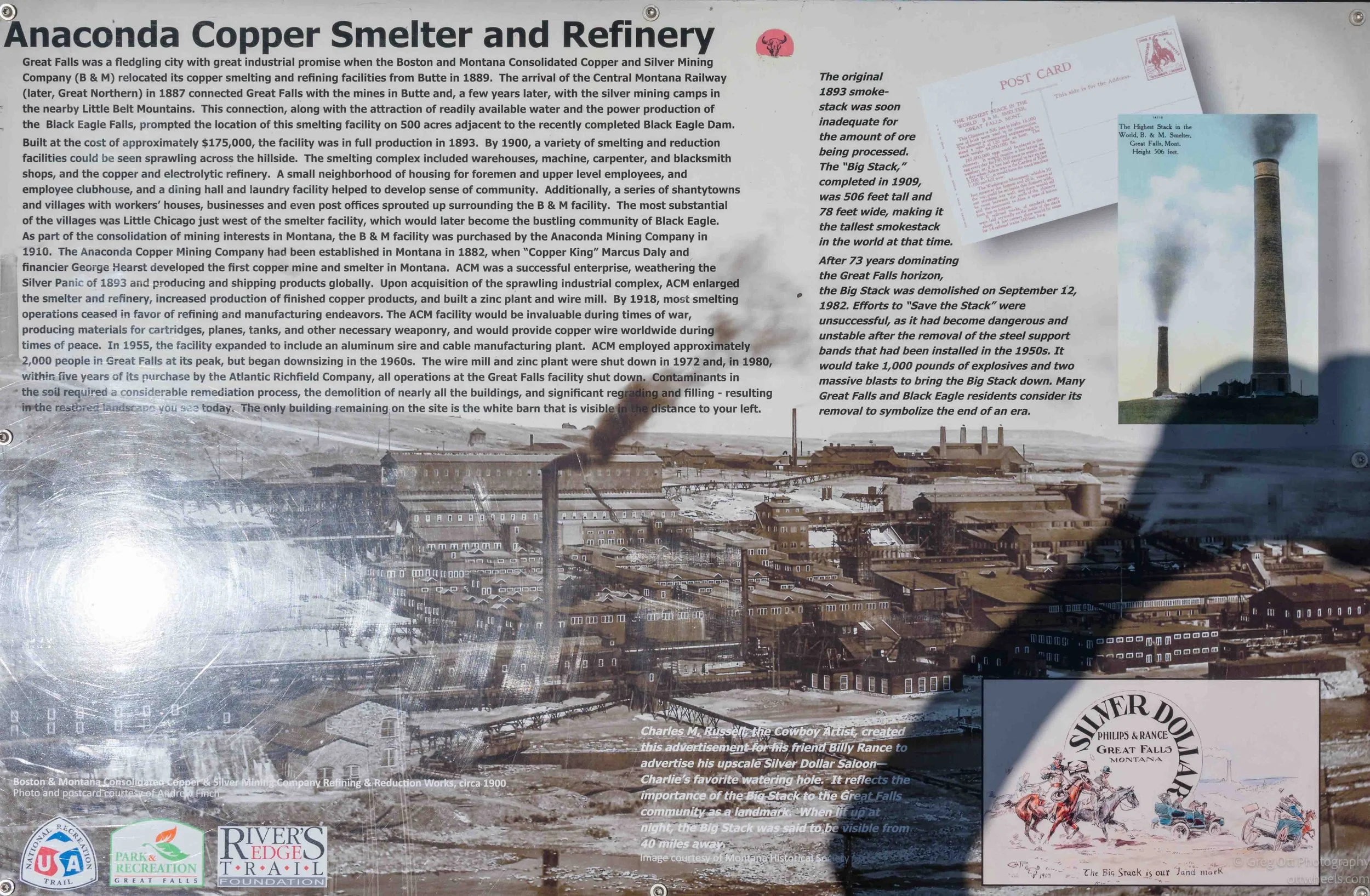
There I met a woman visiting from Arizona who had grown up in Great Falls. She began telling me about the falls and then pointed across the river toward the remains of the old Anaconda Copper Smelter and Refinery. As a child, she had come out to this same spot to watch the smokestacks being demolished. Apparently the explosives did not bring them down quite as planned. Looking across the river now, only remnants remain, but from the historical images it was obvious that this had once been an enormous industrial complex.
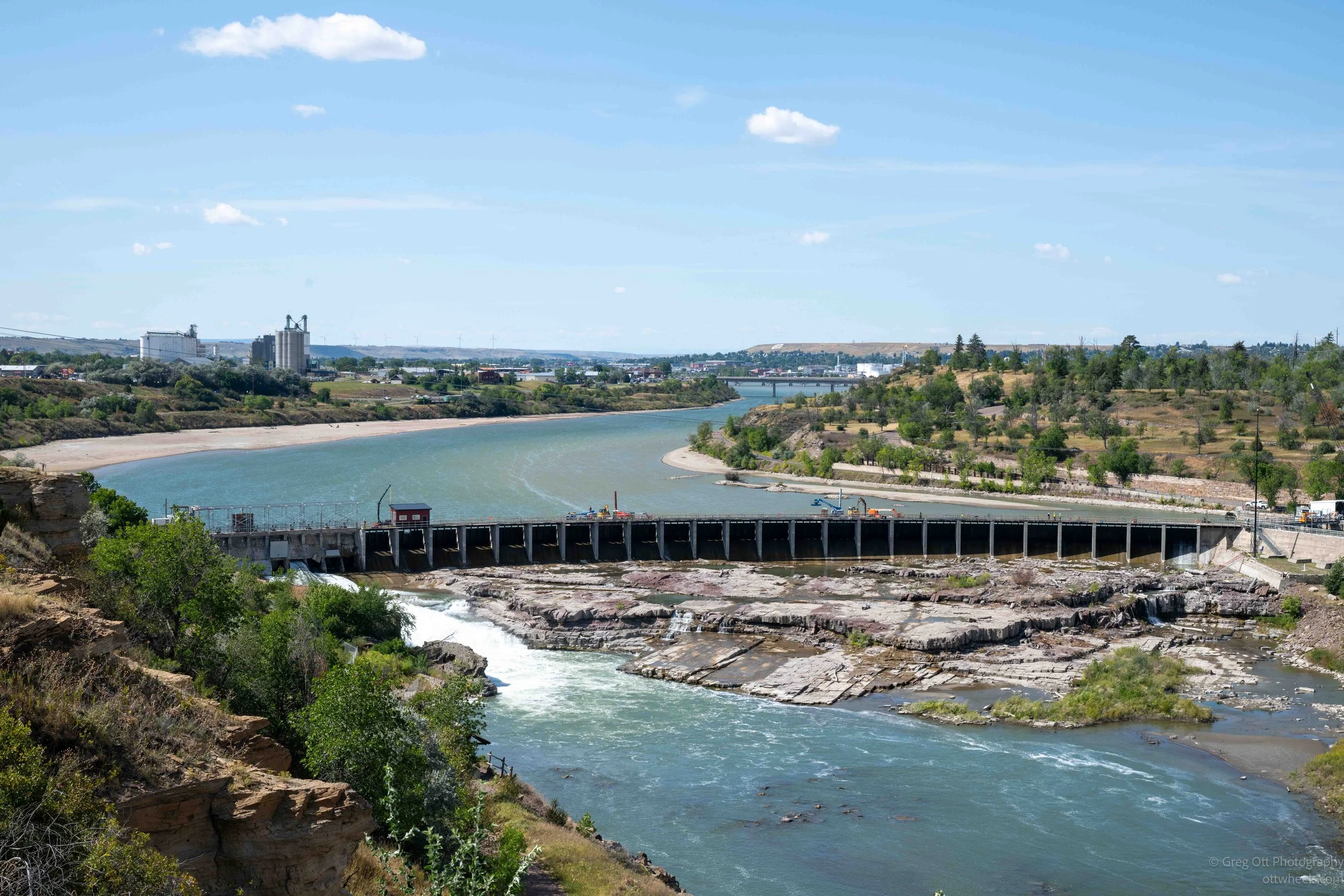
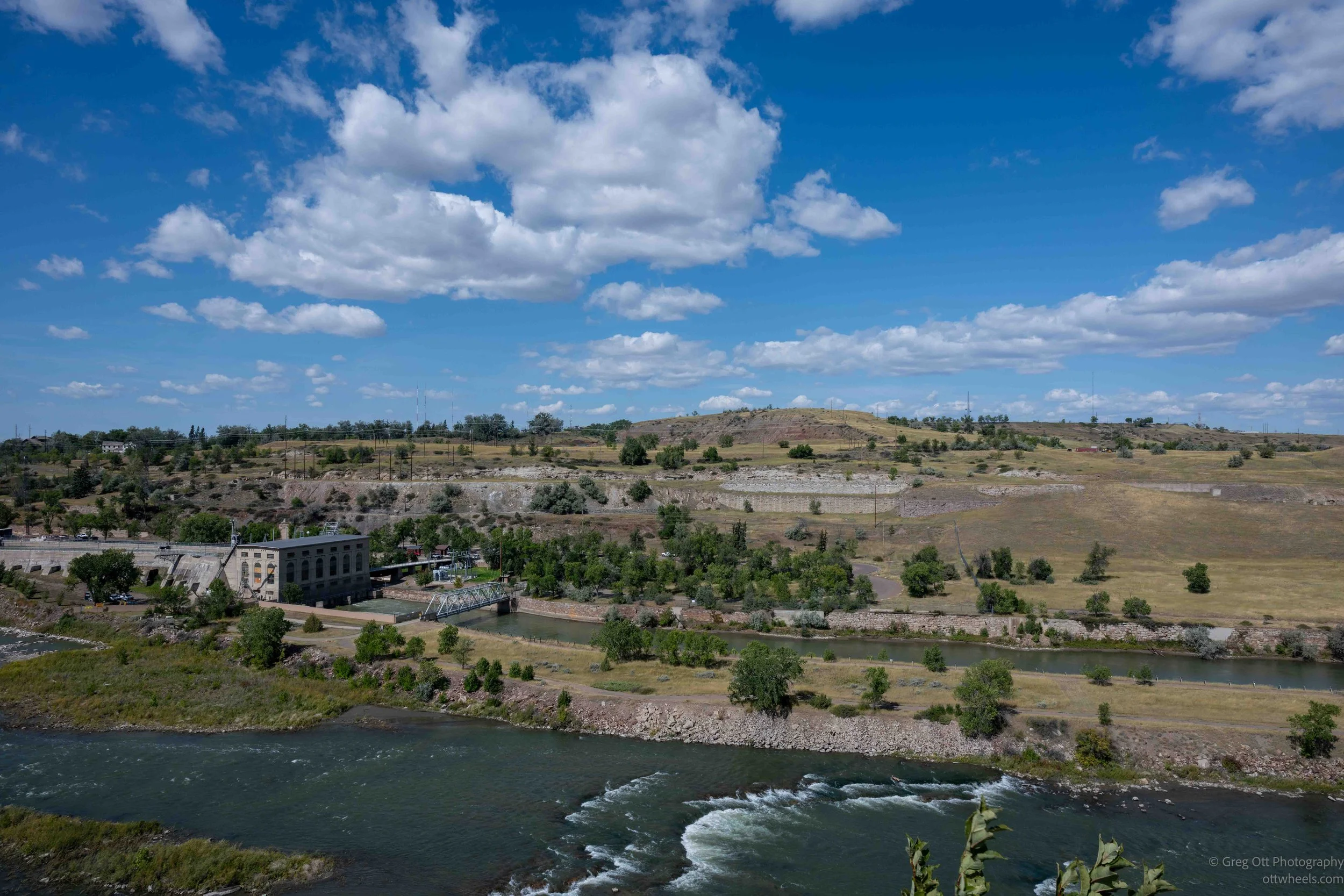
Looking upstream, the contrast was just as striking. About a mile away, a large oil refinery sits across from the river and parkland, another reminder that the Missouri here has long been both a natural landmark and an industrial corridor. Before leaving, the woman told me not to miss the Lewis and Clark Interpretive Center just downstream. She pointed toward it and said it was exceptionally well done.
Lewis and Clark Interpretive Center
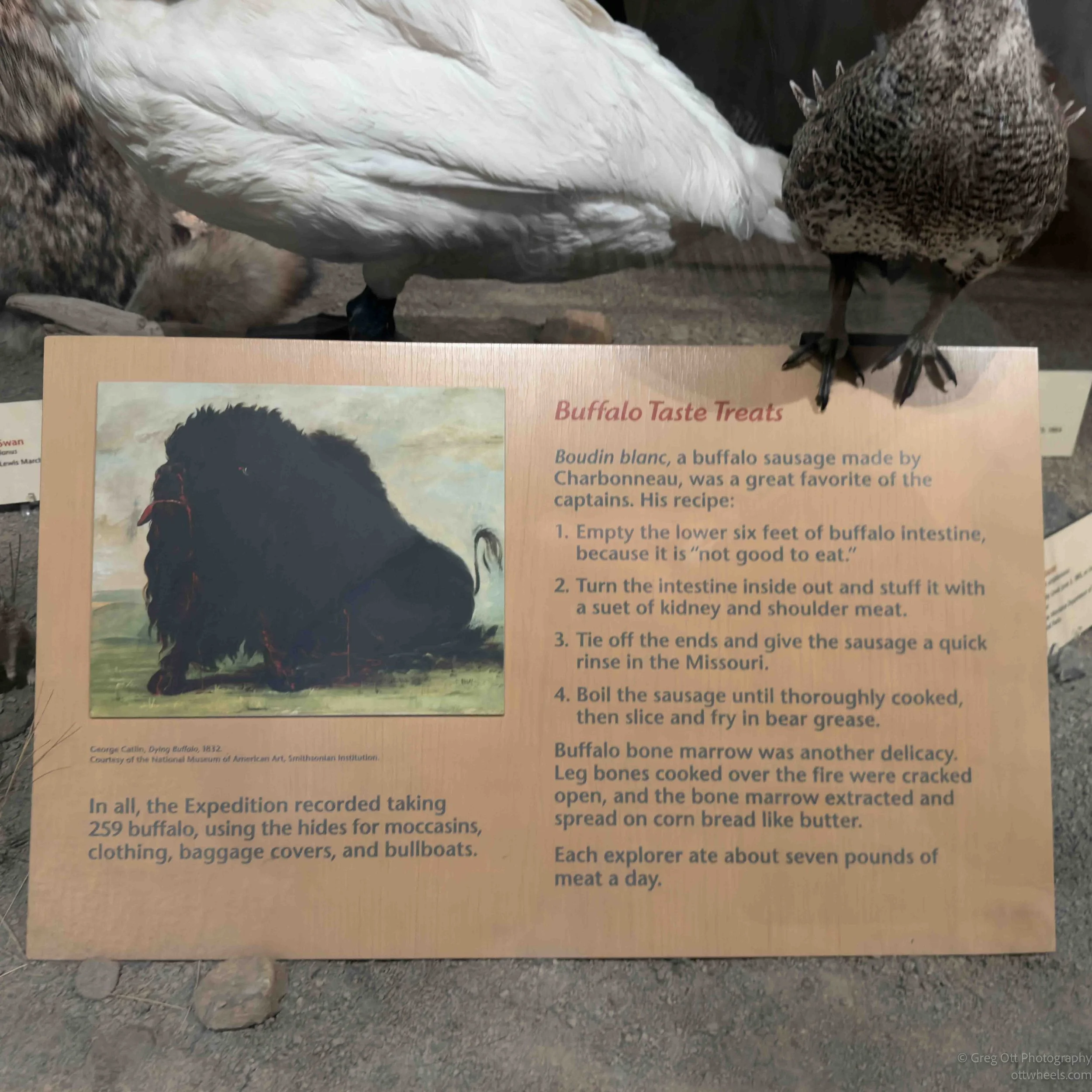
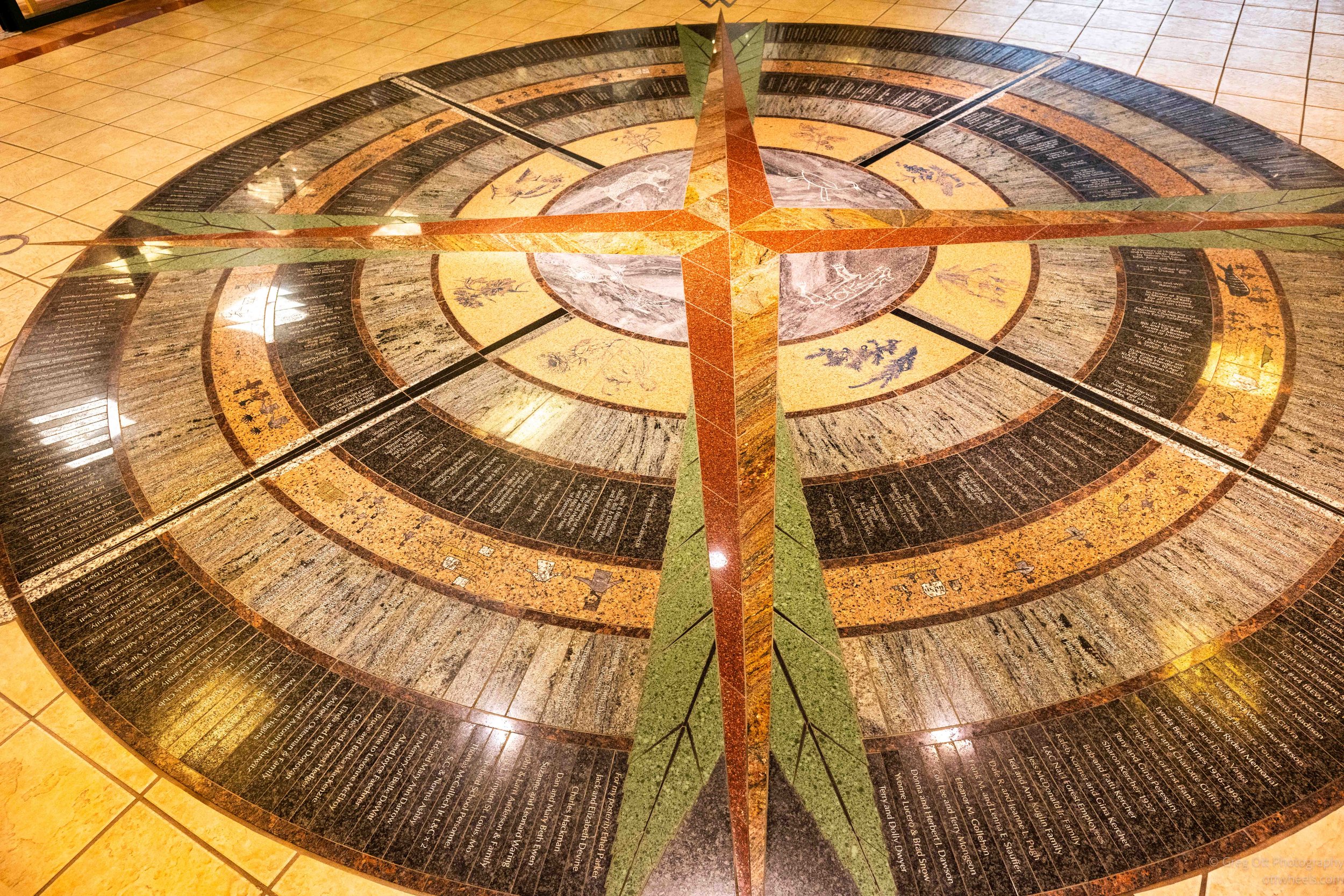
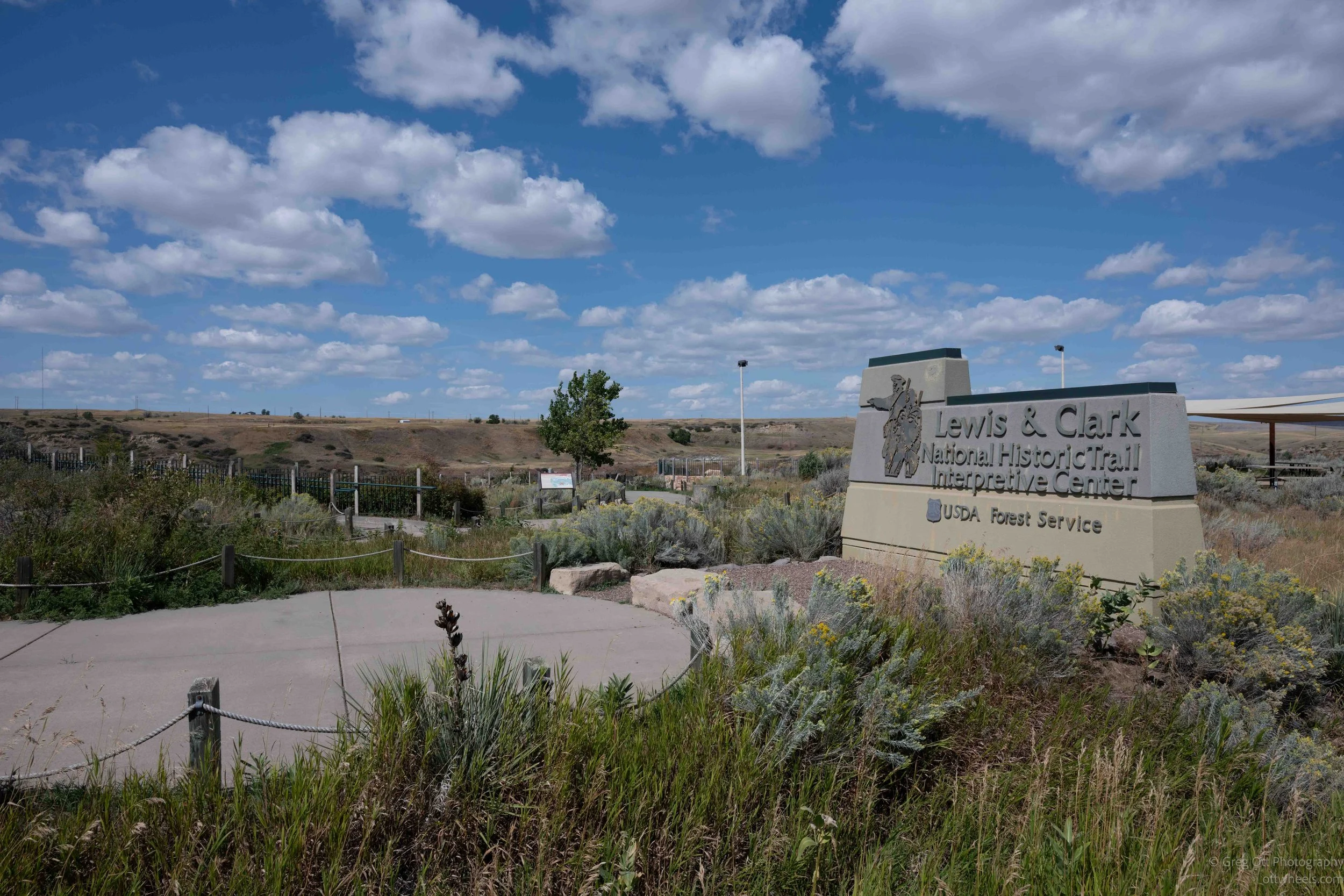
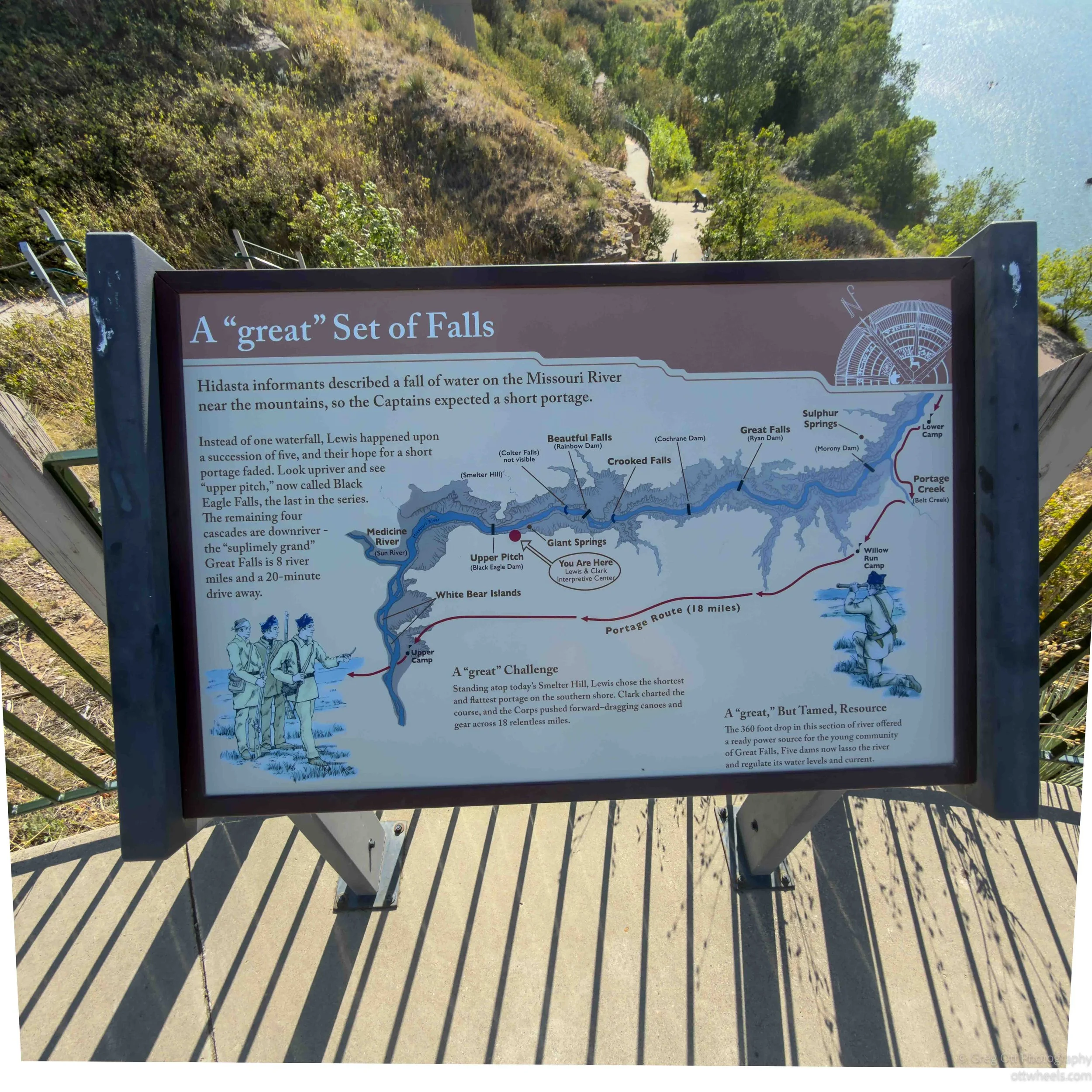
She was right. I started with the twenty-minute film tracing the expedition from St. Louis to the Pacific and back, then worked through exhibits that focused on the challenges Lewis and Clark faced along the Missouri. Several sections dealt specifically with Great Falls, where the expedition discovered that the “great fall” described to them was actually a series of five major falls. Instead of the short portage they had expected, they were forced into an eighteen-mile overland haul around the cascades, dragging canoes and supplies across difficult prairie terrain.
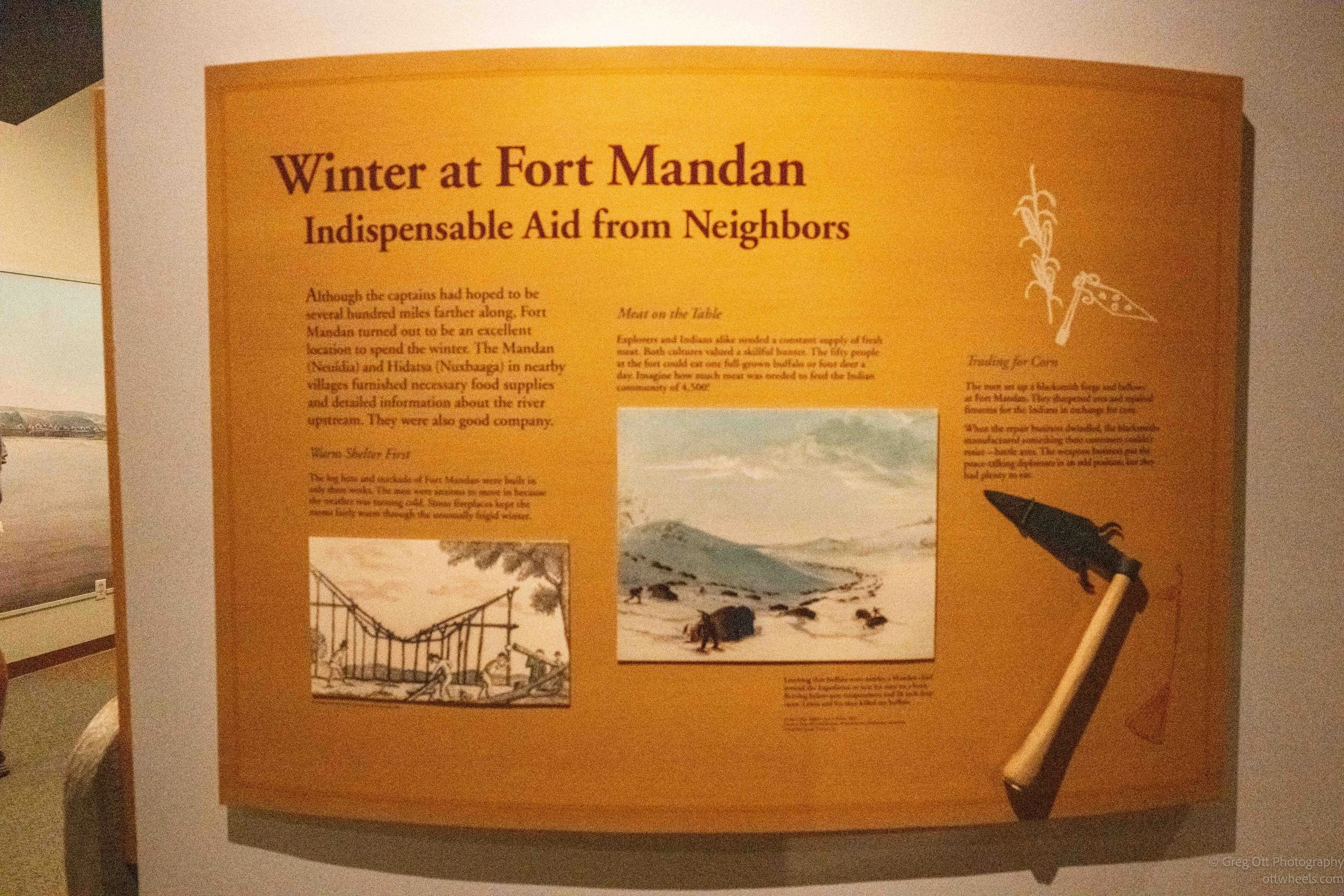
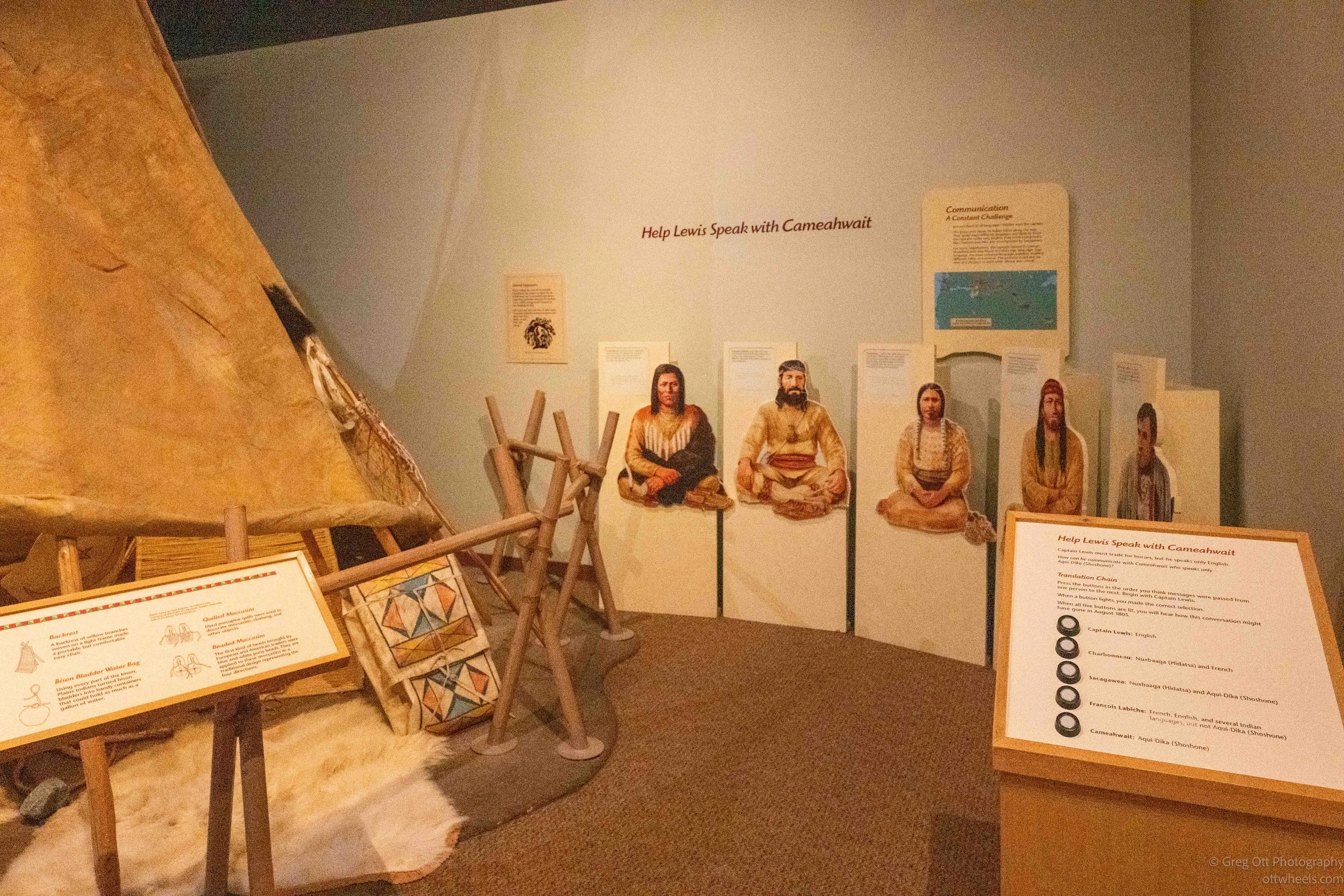
Other exhibits broadened the story beyond the falls. Displays described the expedition’s winter at Fort Mandan and the essential help they received from nearby Native communities, as well as the later winter at Fort Clatsop near the Pacific. One section focused on communication between the expedition and Native peoples, showing how complicated even basic conversation could be when information sometimes had to pass through several interpreters and languages.
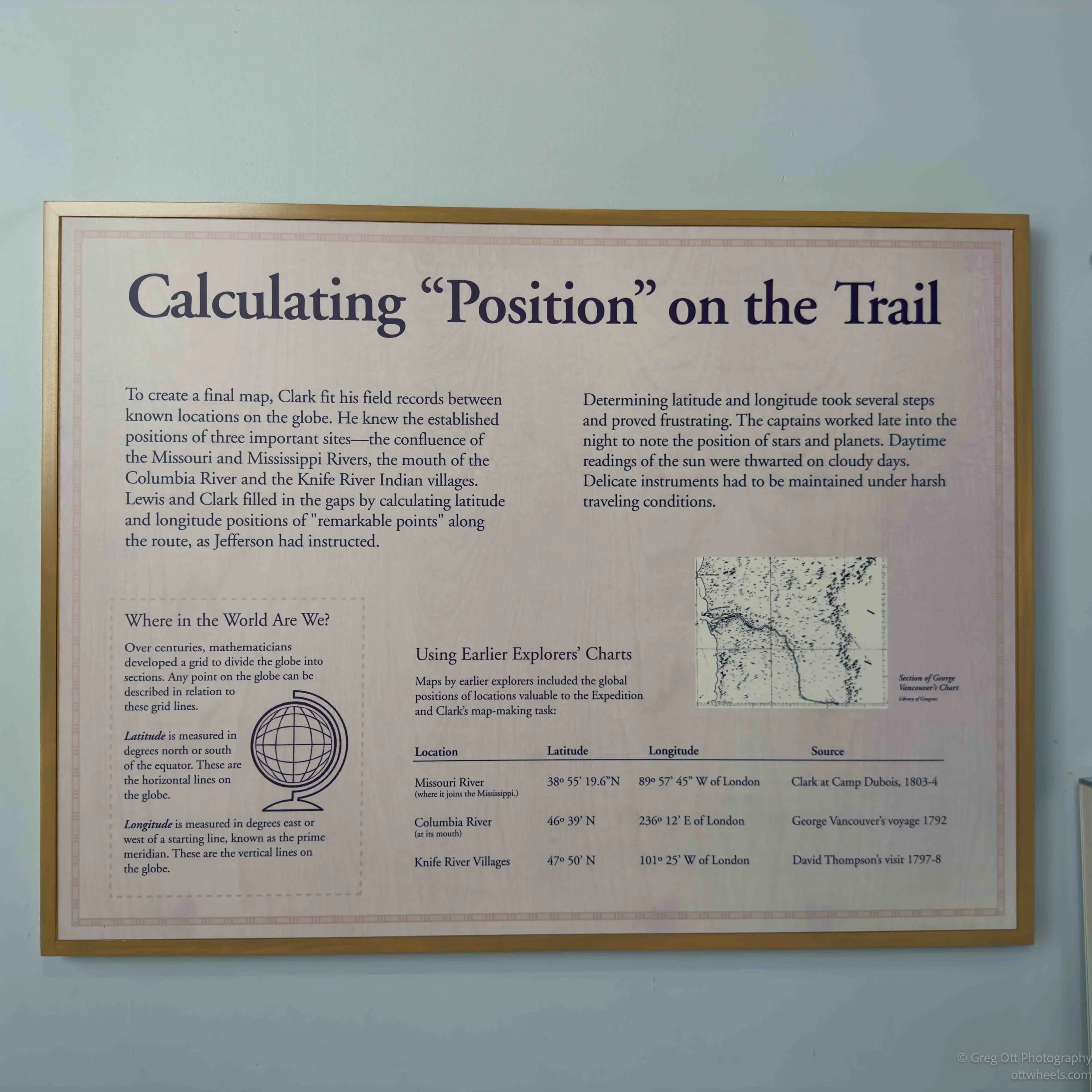
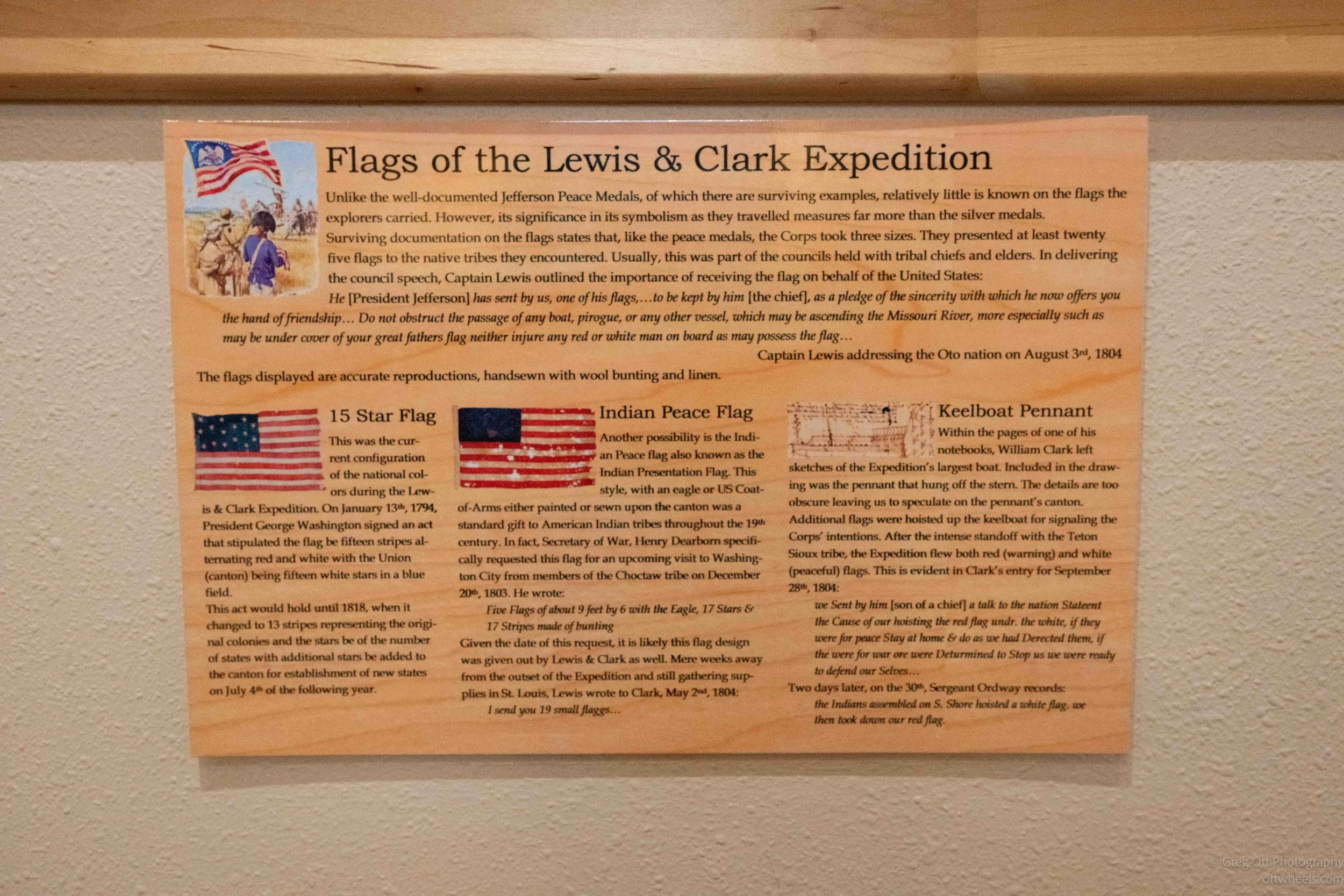
There were also exhibits on the practical science of the expedition, including navigation and mapmaking. Clark had to determine latitude and longitude using astronomical observations and then fit those measurements between a handful of locations whose positions were already known. Another display examined the flags carried by the expedition and the role they played in formal meetings with Native nations.
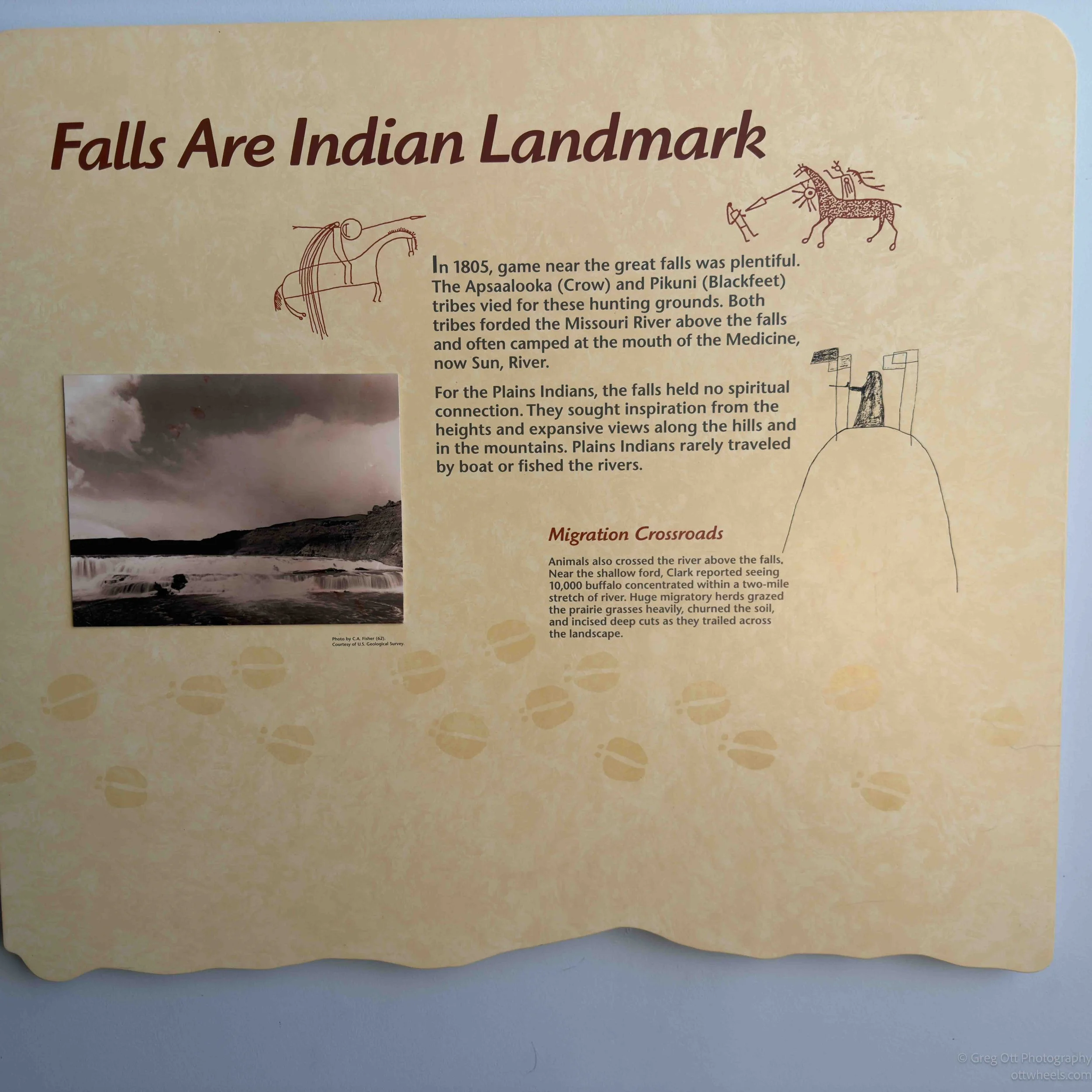
What I found most interesting was that the museum did not present the Missouri as empty country waiting to be explored. One exhibit emphasized that the falls were already well-known landmarks to Plains tribes, including the Crow and Blackfeet, long before Lewis and Clark arrived. By the time I left, Great Falls felt less like a quick stop at a dam and more like one of the important historical points along the entire Missouri River journey.
At the end of my visit, I resisted buying yet another book about the Lewis and Clark expedition. At the front desk, I asked for a few restaurant recommendations, and the woman working there clearly knew the local scene. She asked what kind of atmosphere I wanted, how much I cared about price and food quality, and what kinds of food I liked. I told her I would eat almost anything but generally avoid beef, and that I was looking for somewhere relaxed where I could also spend a little time on my computer. She pulled out a map, circled several places, and numbered them in order of preference.
I ended up at The Station District Bar and Eatery, number two on her list for what I was looking for. There was some kind of post-conference gathering happening upstairs, with people in suits and dresses mixed in with a few of us in jeans. A couple stopped to ask what I was working on, and when I explained that I was retired and just processing some photos, they wanted to see them. About fifteen minutes later, my tacos and mango drink were ready. The place was an interesting setup, almost like an upscale food court, with different food counters, a bar, and open seating where you could order from anywhere and just hang out.
I drove to Walmart for groceries and passed the enormous oil refinery across the street. It didn’t smell anything like the refineries I’ve encountered in New Jersey or Louisiana, but it was certainly a blot on the landscape. I could also see the open flare burning above the complex, and I still don’t really understand why that constant flame is necessary.
From there, I drove about thirty minutes south to an area called Cascade, MT, along Old U.S. Highway 91 beside the Missouri River. The river was noticeably narrower here and flowing north toward Great Falls. It was already dark when I arrived, and a huge blue bus was taking up most of the parking area. A Subaru was parked behind it, and I had just enough room to squeeze in behind the Subaru without blocking anyone.
What I didn’t realize until the next morning was that this was a boat launch area with five clearly marked campsites. By chance, I had parked perfectly inside one of them. I left the roof vents open so I could hear the river flowing about fifty feet away. It turned out to be another very quiet place to spend the night.