I woke up in the same place for the third night in a row. There was suddenly a lot more traffic outside, and I realized it was the first day of school at the nearby grade school. A long line of cars wound down the street for two blocks, made a turn and continued toward the school, while a school bus went past with hardly any kids on it. It struck me as strange. School districts spend enormous amounts of money buying buses, hiring drivers, maintaining them and organizing routes, yet here was a nearly empty bus passing a long line of parents driving their children individually. There are plenty of reasons parents might choose to drive their kids, especially on the first day, but I couldn't help wondering why we invest so heavily in a transportation system and then barely use it.
I decided to get moving and drove south to what appeared to be the last Starbucks before leaving Calgary. I spent some time there reviewing my itinerary and planning the next few days, then continued toward the Montana border. The drive was uneventful, but the border wasn't. I waited about 45 minutes to get into the United States, and once I reached the booth the questioning became more complicated than usual.
The officer asked how long I had been in Canada and I answered, "Three months." She wanted to know what I had been doing in Canada for three months. Then I realized what I had said. I told her I had only been in Canada for about 10 or 12 days; the three months was Alaska. I had spent most of the summer there and was now returning through Canada. She wanted to know why I had said three months in the first place, and the exchange was becoming increasingly confrontational. I apologized and explained that I had simply been thinking about Alaska when I answered.
Then she asked if I had any weapons, alcohol or vegetables in the van. I told her I had an apple and some bananas. She asked me to unlock the side door and went through the refrigerator. A few minutes later she came back with an avocado and said she had also found some blueberries and raspberries that I had forgotten were still in a container. "You know I could fine you $300 for each item?" she said. I hadn't intentionally hidden anything; I had simply forgotten the berries and didn't realize the avocado was prohibited. She took the items, handed me a sheet listing foods and other items that couldn't be brought into the United States and finished with, "Welcome home."
After crossing the border, I stopped at a gas station and convenience store on the Blackfeet Reservation. I thought I would buy a some beer (stouts) and asked the guy behind the counter if they had any. Unfortunately they didn't have stouts, he told me, but even if they did he couldn't sell them to me for another hour. He explained that there had been a problem with parents buying alcohol, drinking and then arriving to pick up their children from school intoxicated, so alcohol sales there didn't begin until after 5 p.m. I had never encountered a restriction quite like that before.
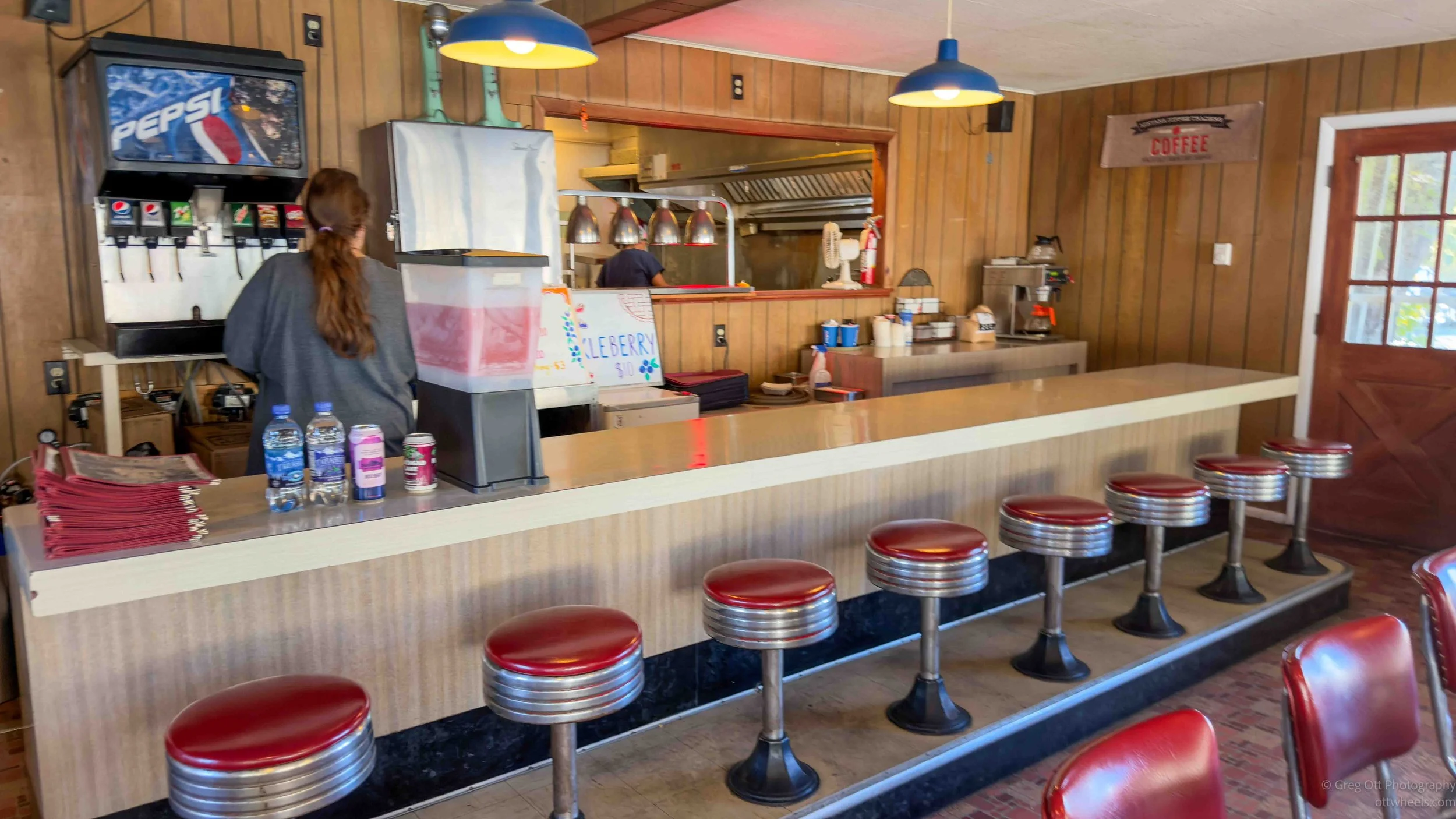
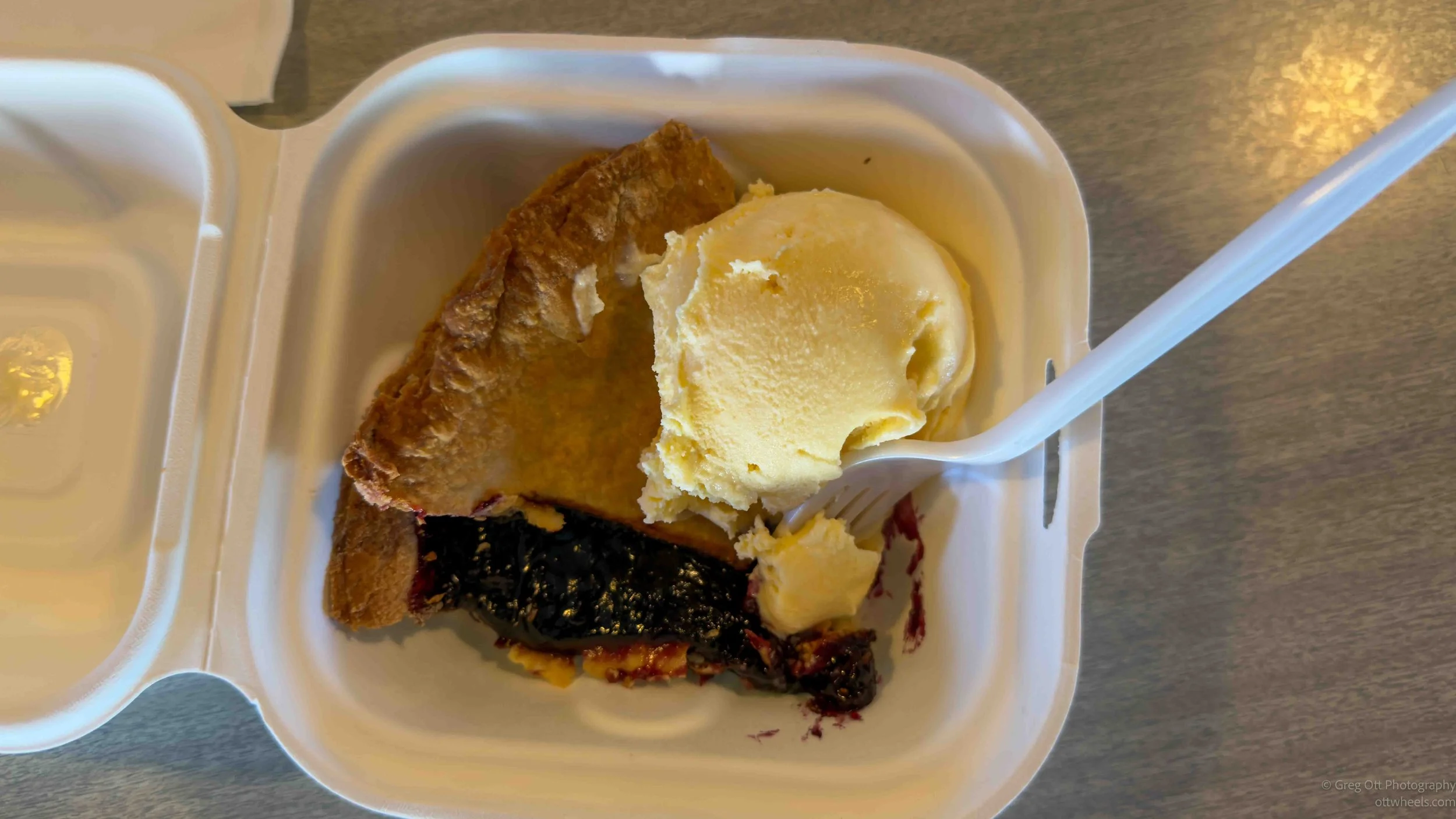
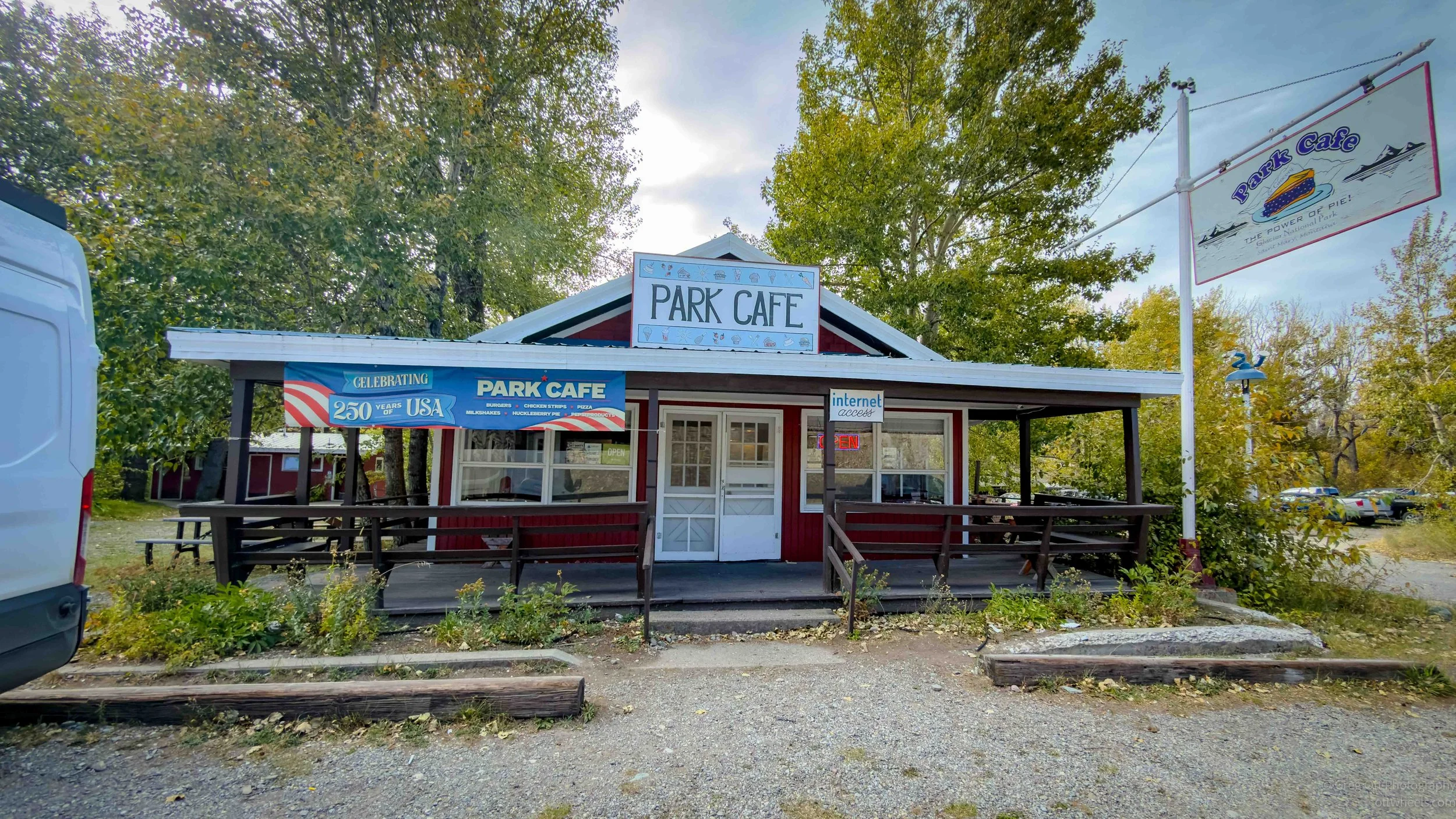
Next door I found something less complicated: pie and, yes, ice cream. The pie of the day was huckleberry, which seemed appropriate for arriving in northern Montana. I told them I was eating there, but the pie arrived packaged in Styrofoam. When I asked for a plate and silverware, they told me they were takeout only. There were tables and chairs, though, and four other people were sitting at them waiting for takeout orders, so I opened the container and ate my huckleberry pie and ice cream right there. It was delicious and just came out of the oven.
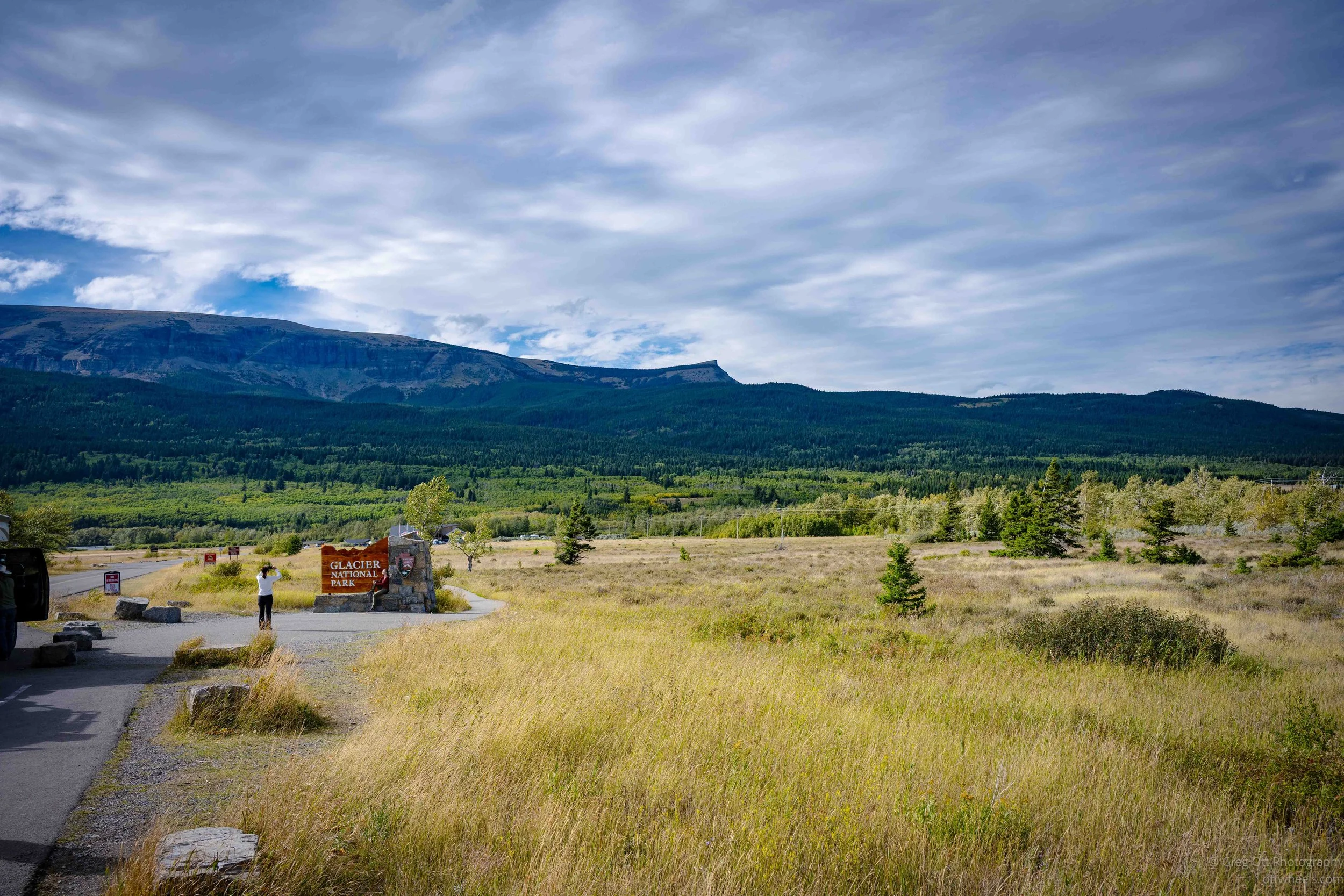
From there it wasn't far to the St. Mary Visitor Center at Glacier National Park. One of the first things I did was sign up for the Logan Pass Star Party that evening. Glacier, together with Waterton Lakes National Park across the Canadian border, is an International Dark Sky Park, a designation recognizing places that protect the natural night sky by limiting artificial light and light pollution. Waterton-Glacier was the first International Dark Sky Park (IDSP) in the world to cross an international border. For someone interested in photography, that immediately caught my attention. I was looking forward to photographing the stars and learning more about the night sky.
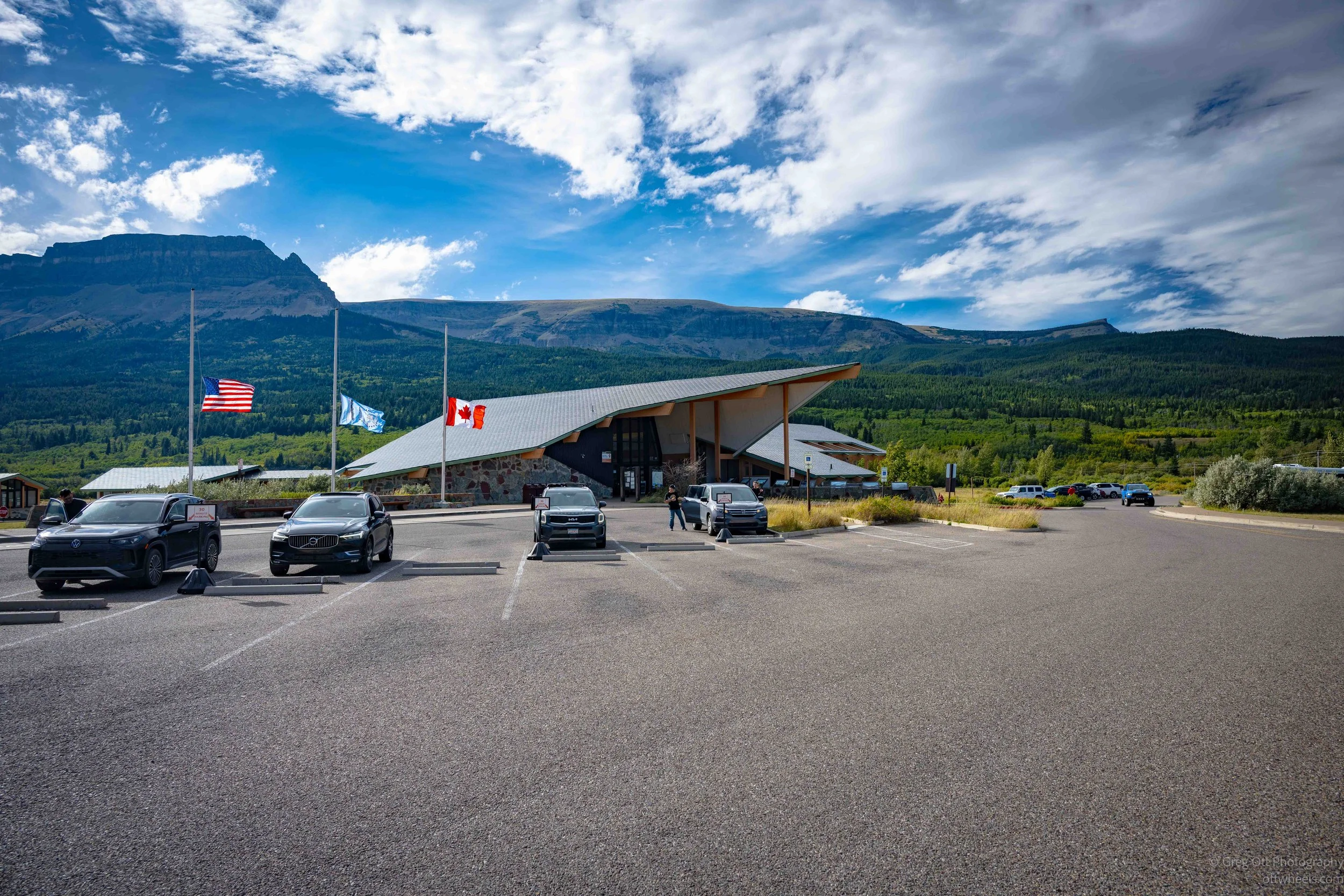
I walked through the visitor center and then drove farther into the park to Rising Sun, where I wanted to spend some time along St. Mary Lake. Near the picnic area was a sign warning of bear activity that day. I walked down for a quick look at the lake, but with the warning fresh in my mind I didn't wander far. I went back to the van and spent some time reading about Glacier National Park, not knowing that heavy rain was about to settle over the area for most of the next few days.
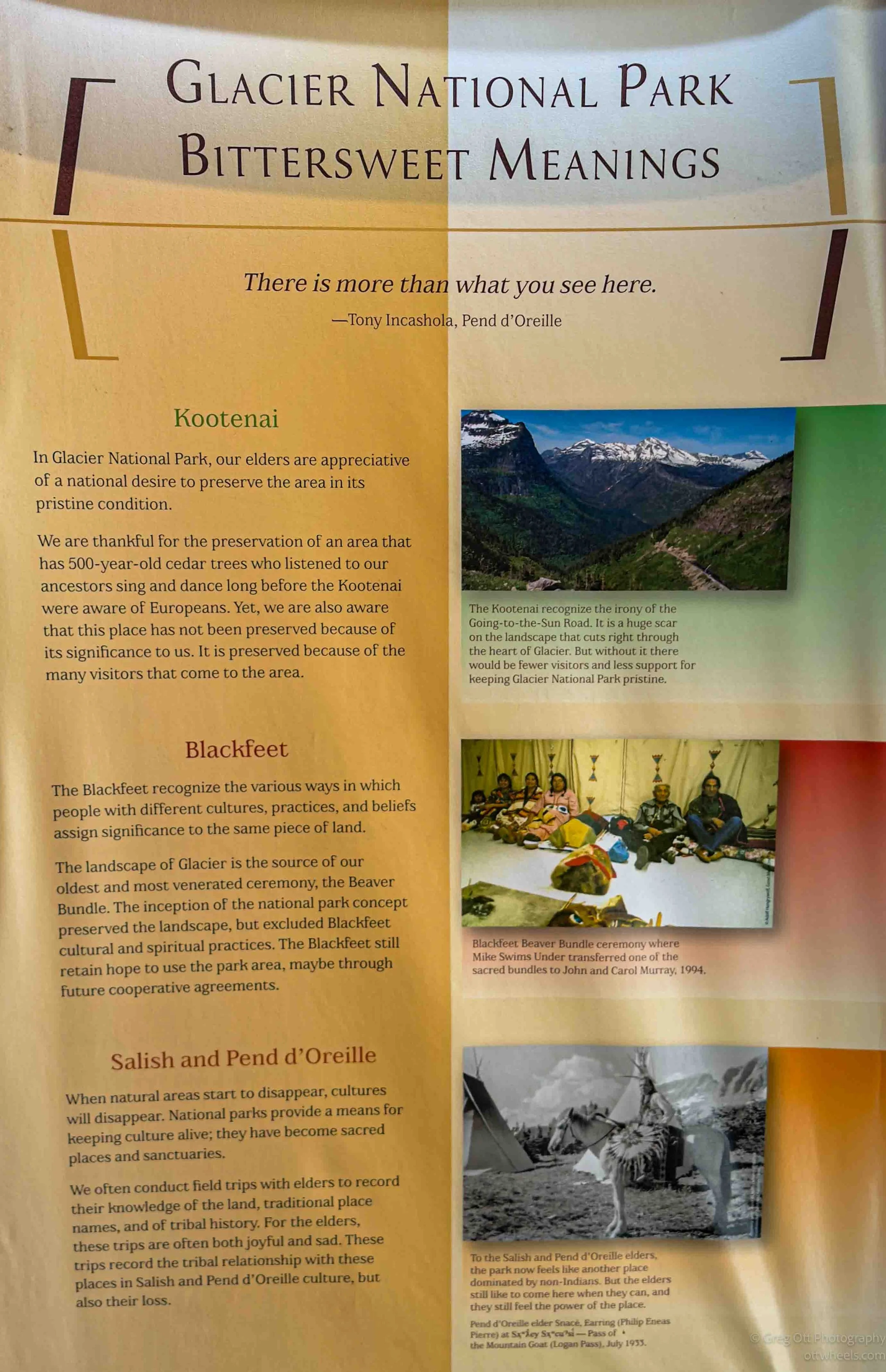
One of the exhibits that caught my attention dealt with the different meanings Glacier National Park holds for the Kootenai, Blackfeet, Salish and Pend d’Oreille people. The display made the point that preserving the landscape as a national park was not a simple story of protecting untouched wilderness. For the tribes, these mountains, valleys and forests were already places of ceremony, memory, hunting, travel and spiritual importance. The Blackfeet section was especially striking because it explained that creation of the park protected the physical landscape while also restricting cultural and spiritual practices that had taken place there for generations.
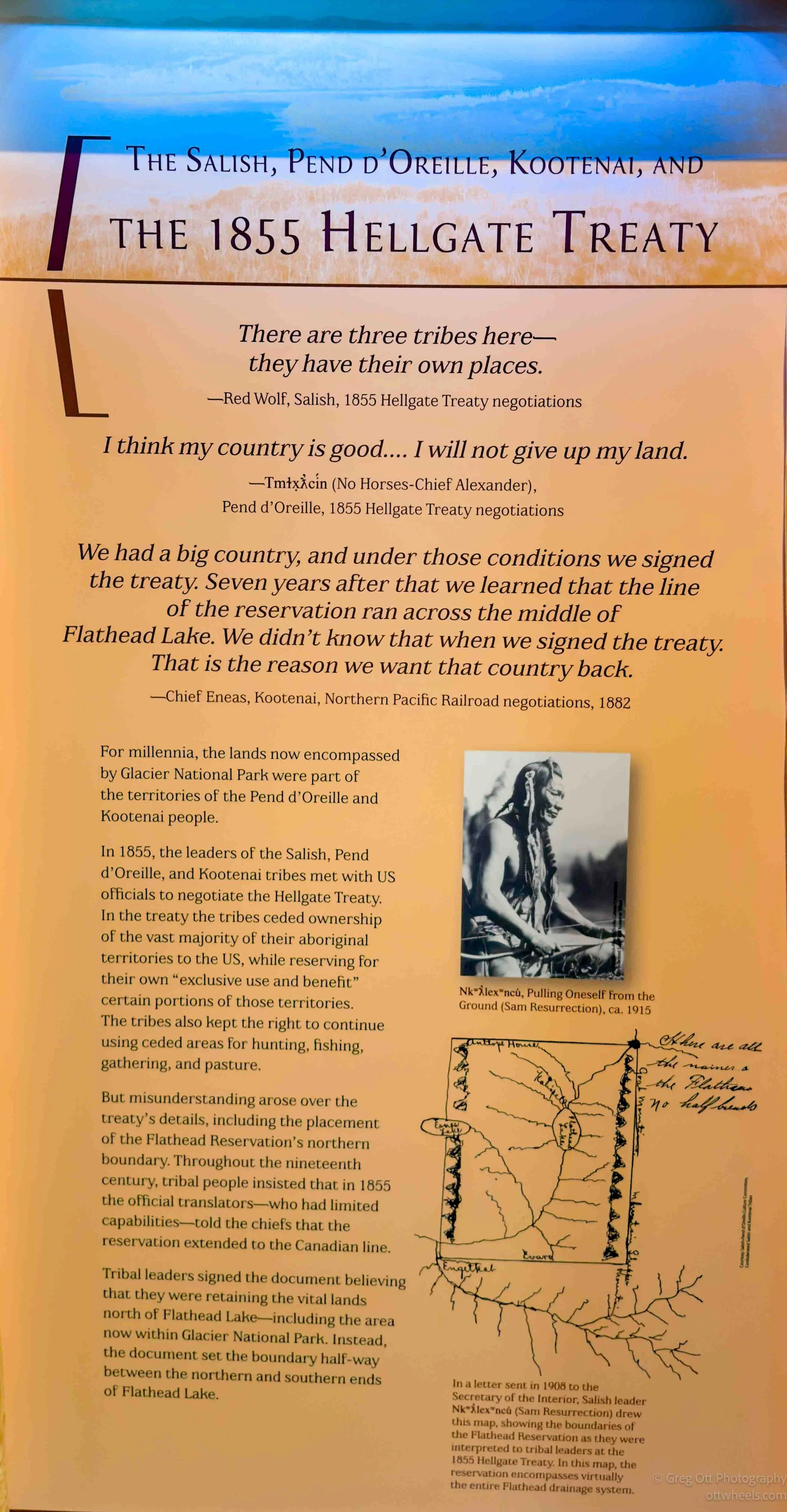
Another exhibit focused on the 1855 Hellgate Treaty involving the Salish, Pend d’Oreille and Kootenai. Tribal leaders ceded most of their traditional territory while retaining rights to hunt, fish and gather in parts of the ceded lands, but serious disputes followed over how the boundaries had been described and translated. The display explained that some tribal leaders believed the reservation would extend much farther north, including lands that are now within Glacier National Park, only to learn later that the official boundary had been drawn differently. It was a reminder that the history of the park is not only about glaciers, wildlife and scenery, but also about people whose relationship with this land extends back thousands of years.
Across the road from the picnic area was the main Rising Sun complex, a small seasonal hub inside the park with the Rising Sun Motor Inn and cabins, a restaurant, general store, gift shop and campground nearby. St. Mary Lake was only a short distance away, and visitors could also connect with park transportation and other activities there. It wasn't a town, but it had the feel of a small outpost inside the park.
I went into the store and asked about camping. The woman working there warned me that there had been a lot of bear activity and said tents and soft-sided campers weren't being allowed. She couldn't book a site herself because the campground reservations were handled separately, but she suggested I check recreation.gov. Much to my surprise, there were plenty of campsites available.
I drove through the campground and found Site 61, which had a little more open sky than most of the others and therefore gave Starlink a better chance of working. Most of the campground was empty, which seemed strange for Labor Day weekend. I reserved the site for one night, but recreation.gov showed the rest of the week as unavailable.
While I was outside doing a few things around the van, a very young couple walked past. Their names were Erica and Cy, and I asked them if they knew what was happening with the campground reservations. They said people had apparently booked the sites for the rest of the week. Erica was a traveling nurse, the second one I had met recently, and she had taken advantage of a long weekend to come to Glacier. I told them how frequently I had met traveling nurses during 2022 and 2023 and how there seemed to be fewer now. She said much of the demand had been related to COVID and that staffing had become more normal again.
They had also started building their own van. So far they had installed a bed and a few other things and were taking their time figuring out the rest. I offered to show them mine and gave them a tour. We talked for a while about van construction and traveling before they headed back to their campsite.
Around 7:30 p.m. I started driving toward Logan Pass for the Star Party. I hadn't gone far before I came to a sign restricting vehicles to a maximum length of 21 feet. My van is 22 feet long. No one at the visitor center had mentioned the restriction when I signed up, and I hadn't noticed anything about it in the information I was given.
Since I had never been to Glacier before, I went online thinking there must be another way to Logan Pass. There was another way around the park, but ultimately the section of Going-to-the-Sun Road leading to Logan Pass had the same vehicle-size restriction. In hindsight, I probably could have taken a chance, but I decided to be cautious and follow the rule. The road across the mountains is narrow and winding, and this wasn't the place where I wanted to discover why the Park Service had established a 21-foot limit.
I drove back to the campground somewhat frustrated. It wasn't the $5 I had paid for the Star Party that bothered me. It was that no one had mentioned the restriction when I registered. I would gladly have paid more if transportation had been available. It also made me think about how people with mobility problems or other disabilities must feel when everything about an activity appears accessible until they reach the one step, doorway, trail or transportation connection that makes it impossible to continue. For me it meant missing one evening program. For someone dealing with that kind of barrier every day, it must become exhausting.
There was another problem I needed to solve. My hike the following morning started at Logan Pass, so I wouldn't be able to drive to the trailhead either. This time I found the solution before leaving and booked the 6 a.m. shuttle from the St. Mary Visitor Center.
While on recreation.gov, I realized that this was the last night of camping at Rising Sun. The park service would shutdown camping even before the Labor Day weekend was over. This was another thing that made no sense to me, but I assume there must be a reason.
The forecast for tomorrow showed only about a 15 to 20 percent chance of rain, but I packed everything for the hike anyway, including the new rain jacket and rain pants I had just bought in Calgary. I went to sleep a little after 10 p.m. with my alarm set for 4:50.