I had planned a hike for the morning, but it was rainy and windy, so I drove to another Starbucks closer to where I was going to hike, ordered a coffee and spent some time writing. It was still raining when I finished, so I decided to do some shopping at Mountain Equipment Company (MEC), basically the Canadian version of REI. Parking was difficult, and I was about to give up when a spot opened in the store’s parking lot.
My current rain jacket had never done a particularly good job of keeping me dry, and I didn't own rain pants, so I decided it was time to upgrade both. I picked out what I thought would work and talked with one of the employees, but after a few minutes I realized he didn't really know much more about rain gear than I did. I found another sales associate and explained that my current Gore rain jacket wasn't performing the way I needed it to. He started asking some very specific questions about taped seams, multiple layers, zipper overlap and breathability. My answer was basically no to all of them. He then looked at the jacket and pants I was carrying from the previous employee and explained that they weren't going to perform much better than what I already had. He took me over to the Patagonia section and showed me several jackets and rain pants that were designed to actually keep me dry while hiking.
I was also surprised by the prices. The Canadian prices were considerably lower than what I had seen for the same products in the United States. In one case, the Canadian-dollar price was about C$100 less than the U.S.-dollar price I had seen, and once I factored in the exchange rate, the difference was even greater. I left MEC with a new rain jacket and rain pants and, conveniently, the weather was going to give me an immediate opportunity to test the jacket.
It was close to 1 p.m. when I headed to Nose Hill for a hike overlooking Calgary. I initially drove to the wrong entrance, realized my mistake and backtracked about three kilometers to the Calgary Winter Club trailhead, where I found a parking spot close to the trail.
I followed the 3.2-mile South Nose Hill Loop on AllTrails. Nose Hill is a huge open area rising above the surrounding city, and the beginning of the hike involved a steady climb up onto the hill. The park itself is fairly well contained, but there are so many trails crisscrossing one another that it is surprisingly easy to take a wrong turn. I managed to do that several times, and AllTrails would eventually let me know that I had wandered off the route. I was also continuing to test my skills with the Garmin GPSMAP 67i. I still don't feel like I've mastered it. At this point, it seems to have mastered me.
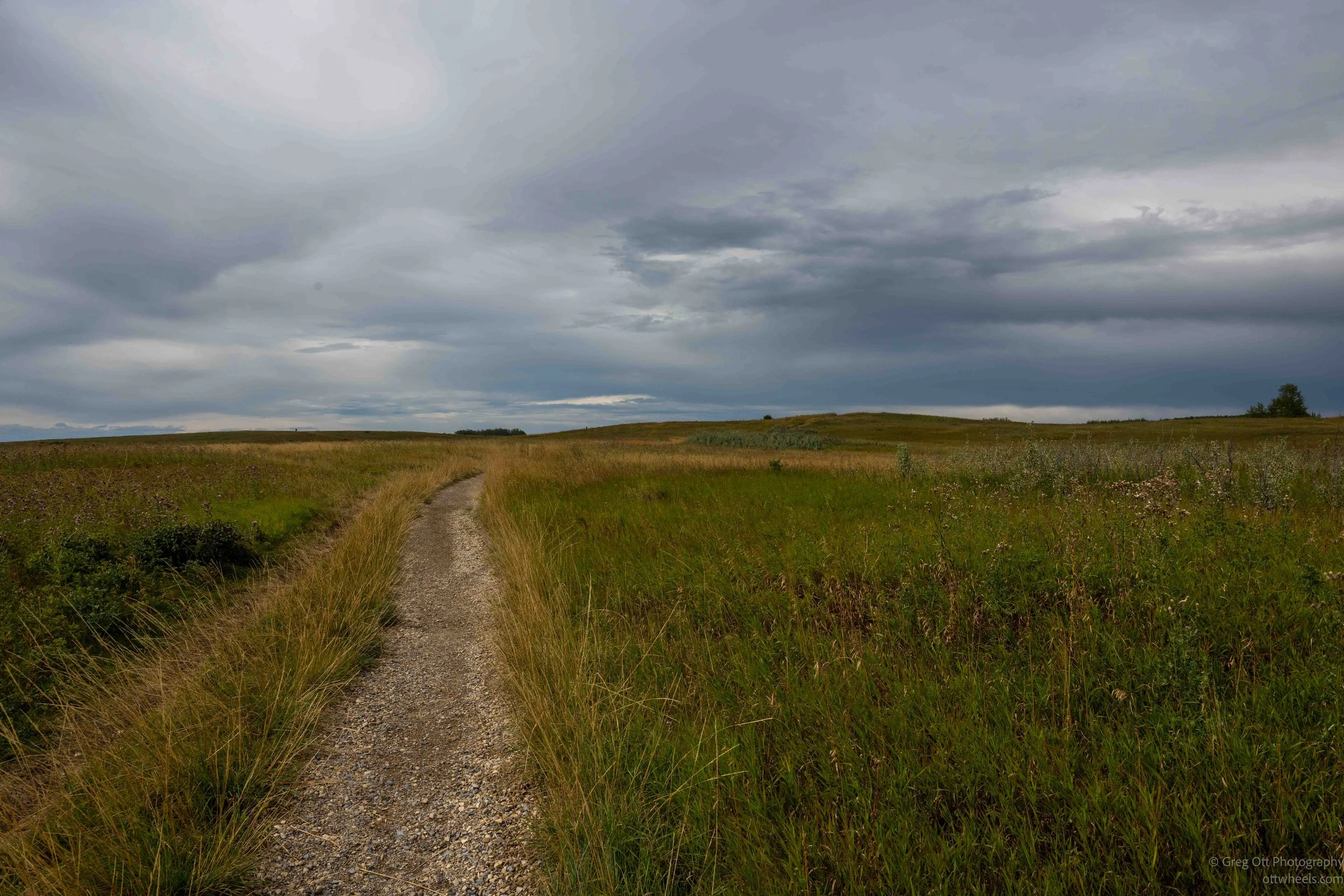
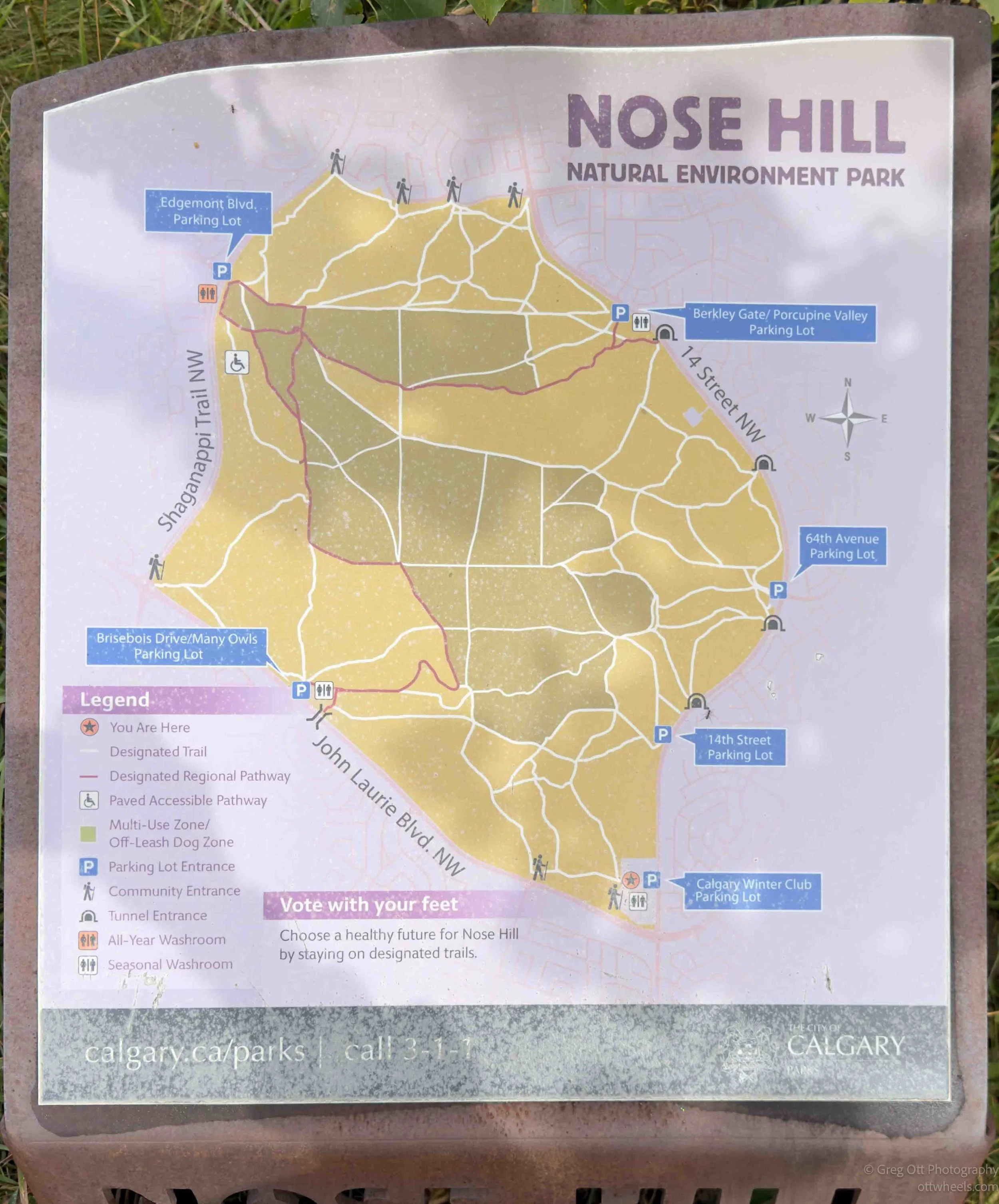
I wore my new rain jacket for the hike, and the weather provided a pretty good test. It was raining lightly when I started, and every once in a while the sky would turn dark enough that I thought I might have to turn around. Then the clouds would move through, the sun would come out and everything would brighten again. Even when the sun was shining, occasional raindrops were still being carried across the hill by the wind.
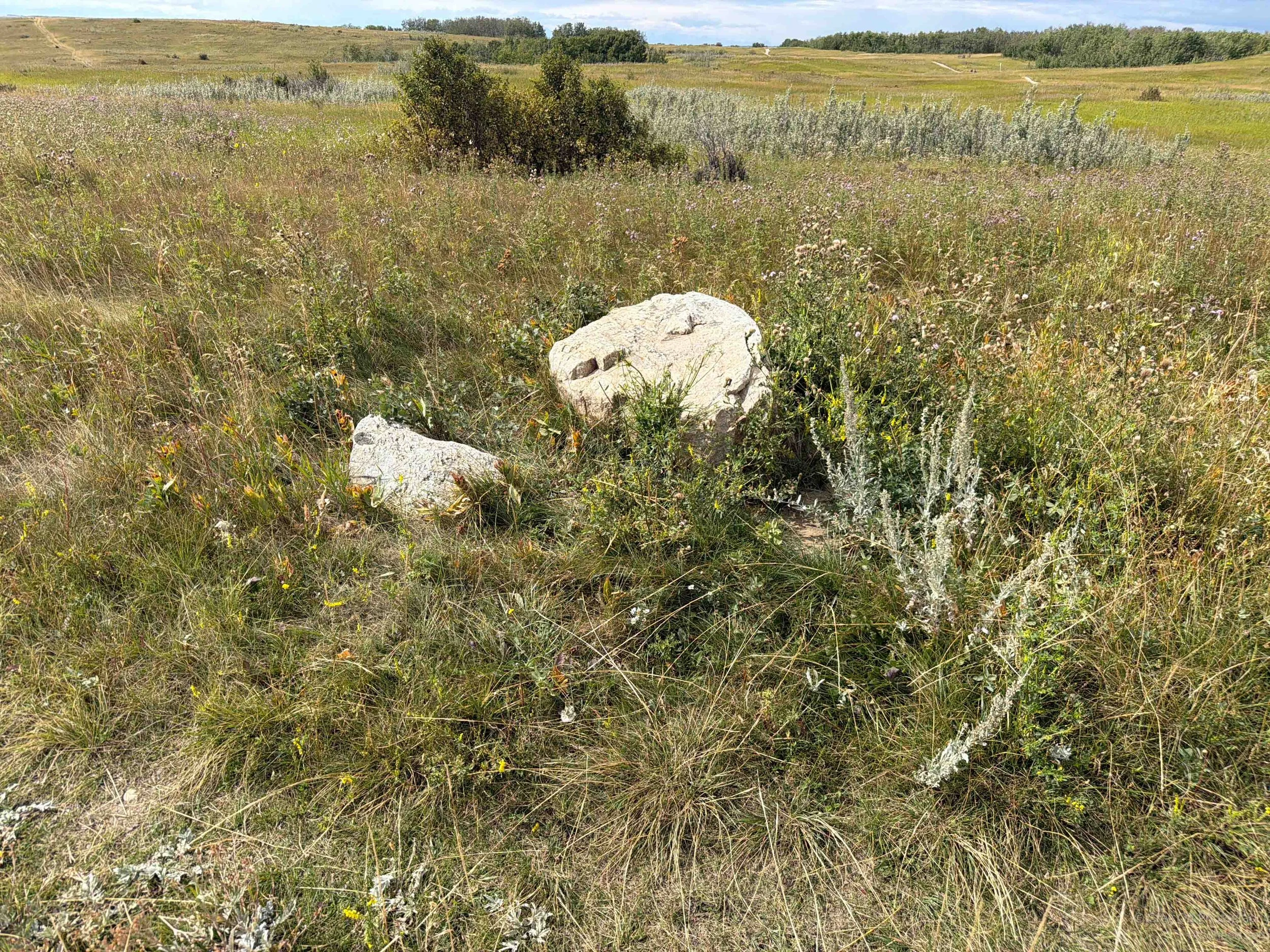
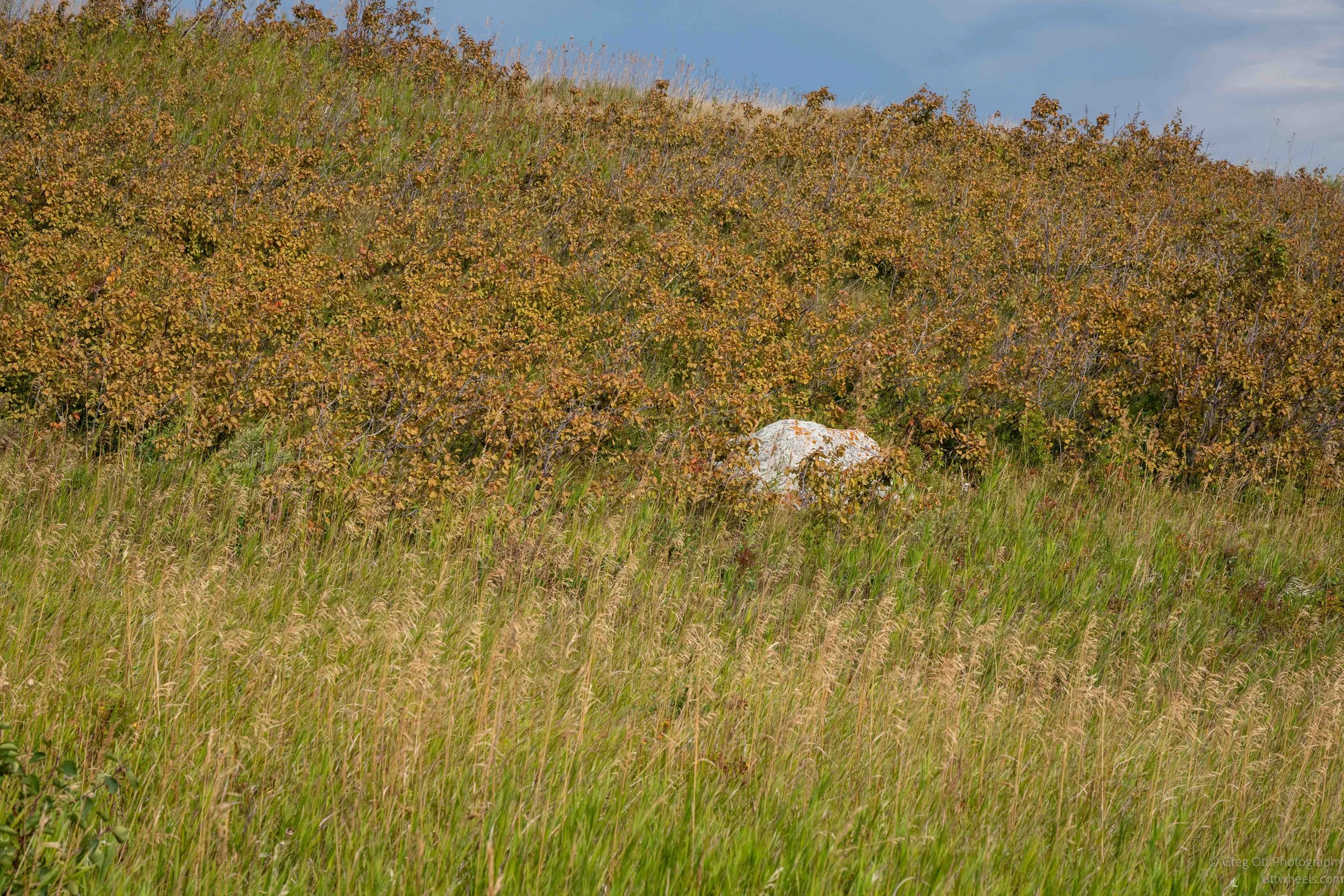
About half a mile into the hike, I began noticing an occasional large boulder sitting by itself in the middle of an otherwise open grassy field. They seemed strangely out of place. I later learned that these are glacial erratics, rocks carried here by glaciers during the last Ice Age and left behind as the ice retreated. Over thousands of years, soil and vegetation developed across the landscape, burying many of the smaller rocks, while some of the larger boulders remained exposed. That explained why I could walk across a wide stretch of grass with almost no visible rock at all and then suddenly come across a boulder that looked as though someone had dropped it there.
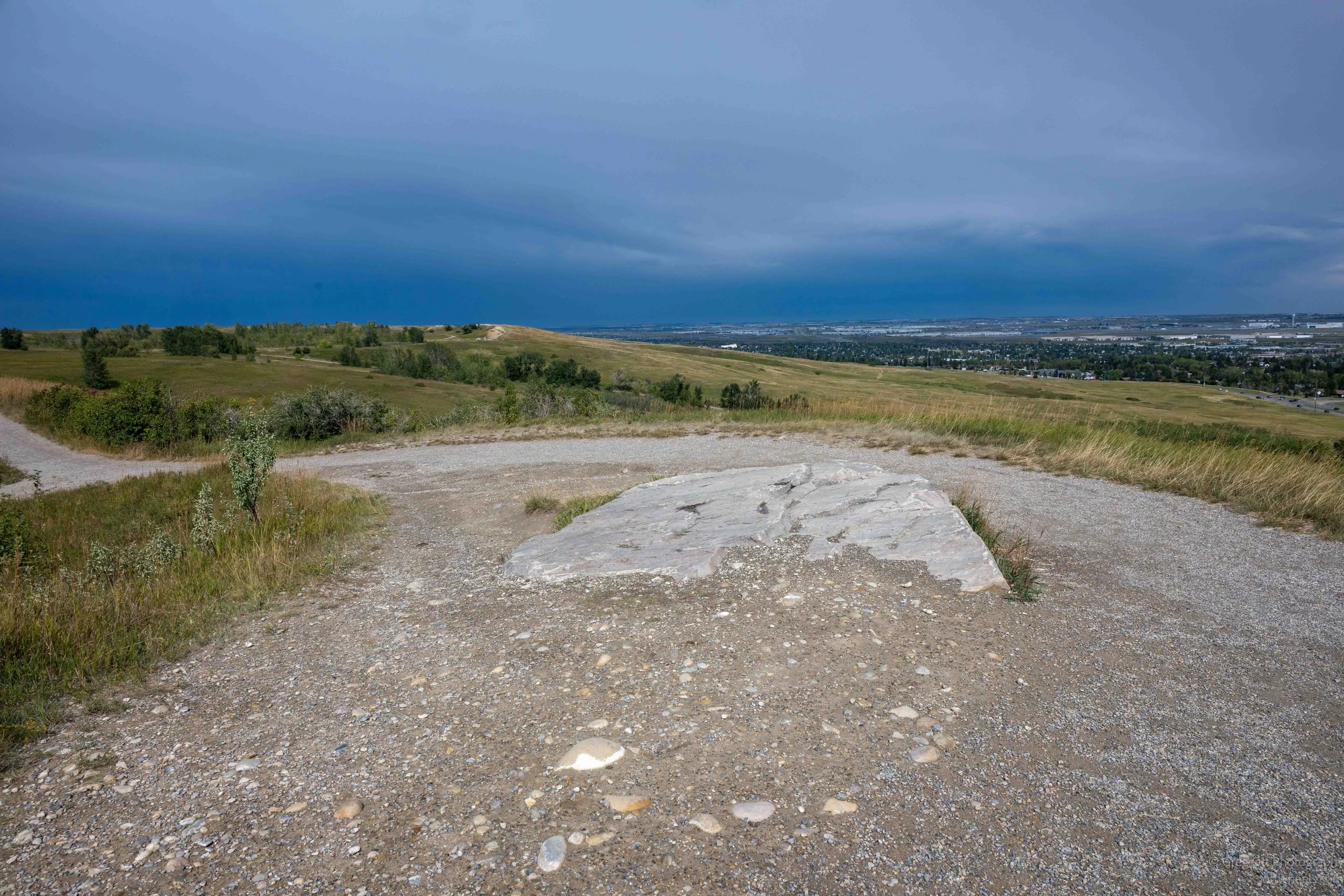
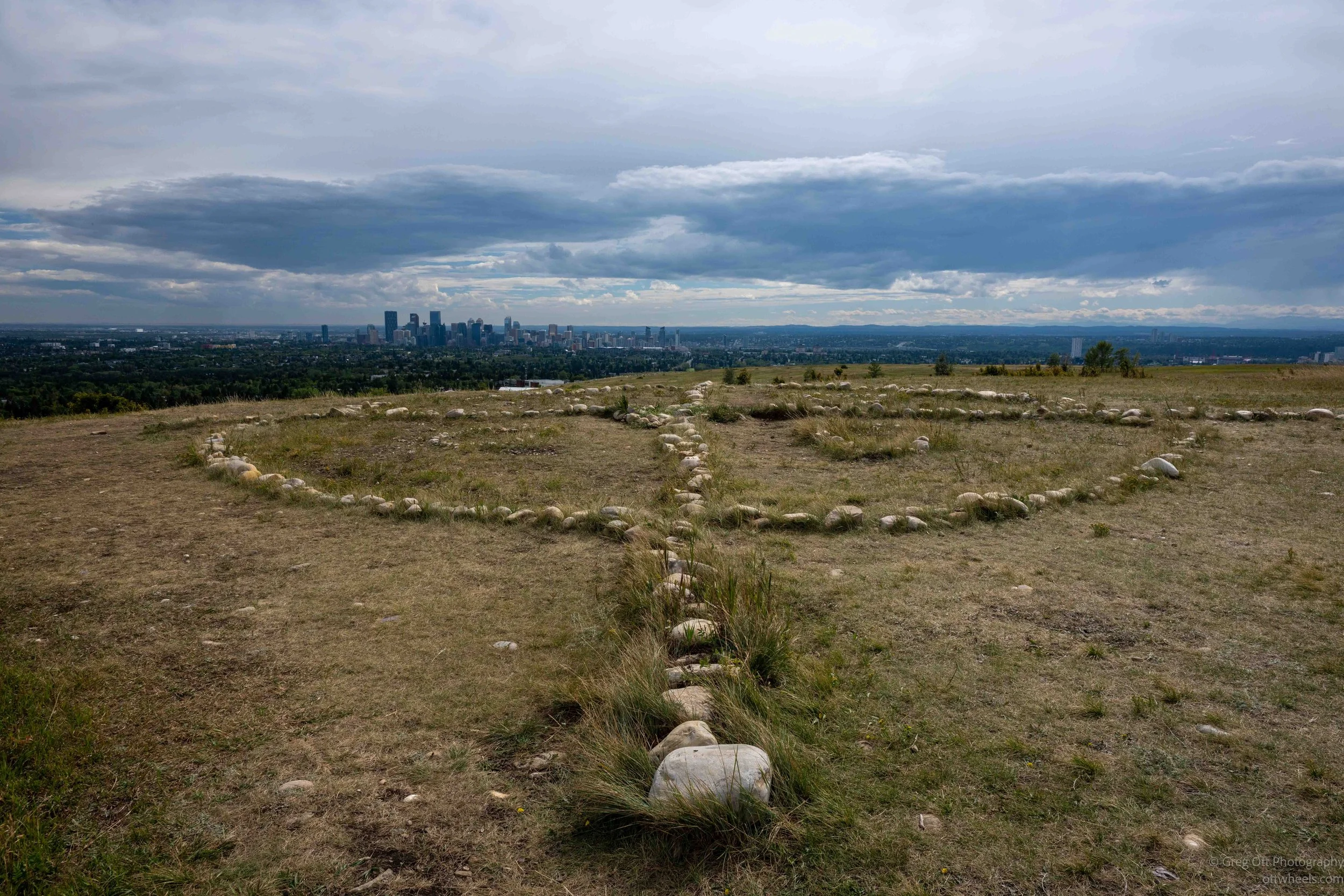
Then I came across a Blackfoot medicine wheel overlooking Calgary. The stone formation was built in 2015 by members of the Blackfoot Confederacy as a sacred landmark, with the four sections representing the four nations of the Confederacy. Nose Hill itself has been important to Indigenous people for thousands of years, with evidence of tipi rings, stone cairns and other archaeological sites found throughout the park. I was surprised to see the medicine wheel sitting completely exposed on the hill and still intact. With so many people passing through the area, I would have expected someone to move the stones or vandalize it, but thankfully it appeared that people respected what it represented.
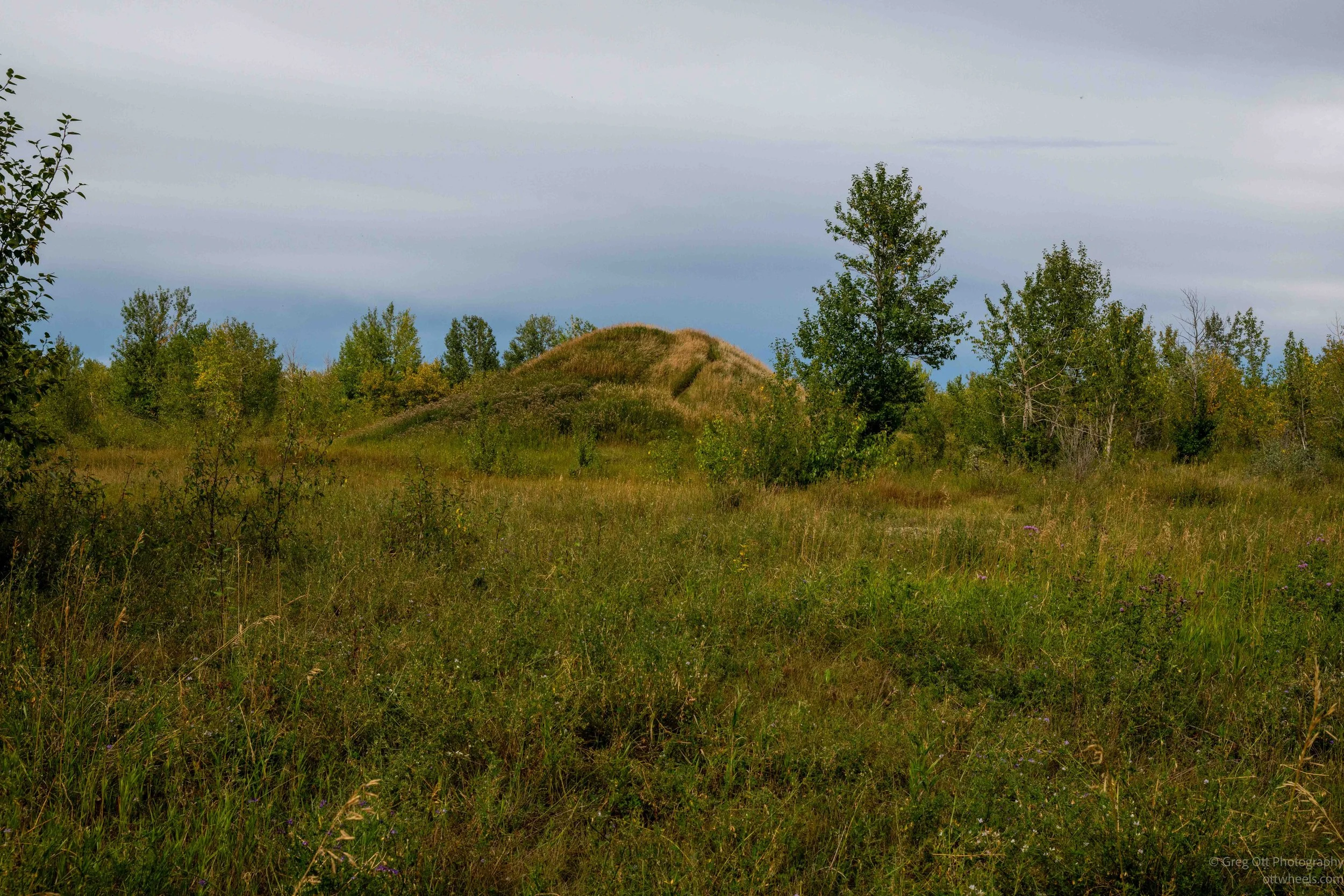
As I continued along the trail, I noticed a number of strange grass-covered mounds scattered across the landscape. Nose Hill has a natural surface created by glacial activity, although parts of the hill were also disturbed by gravel mining and other human activity over the years. It was sometimes difficult to tell what was natural and what had been left behind by people.
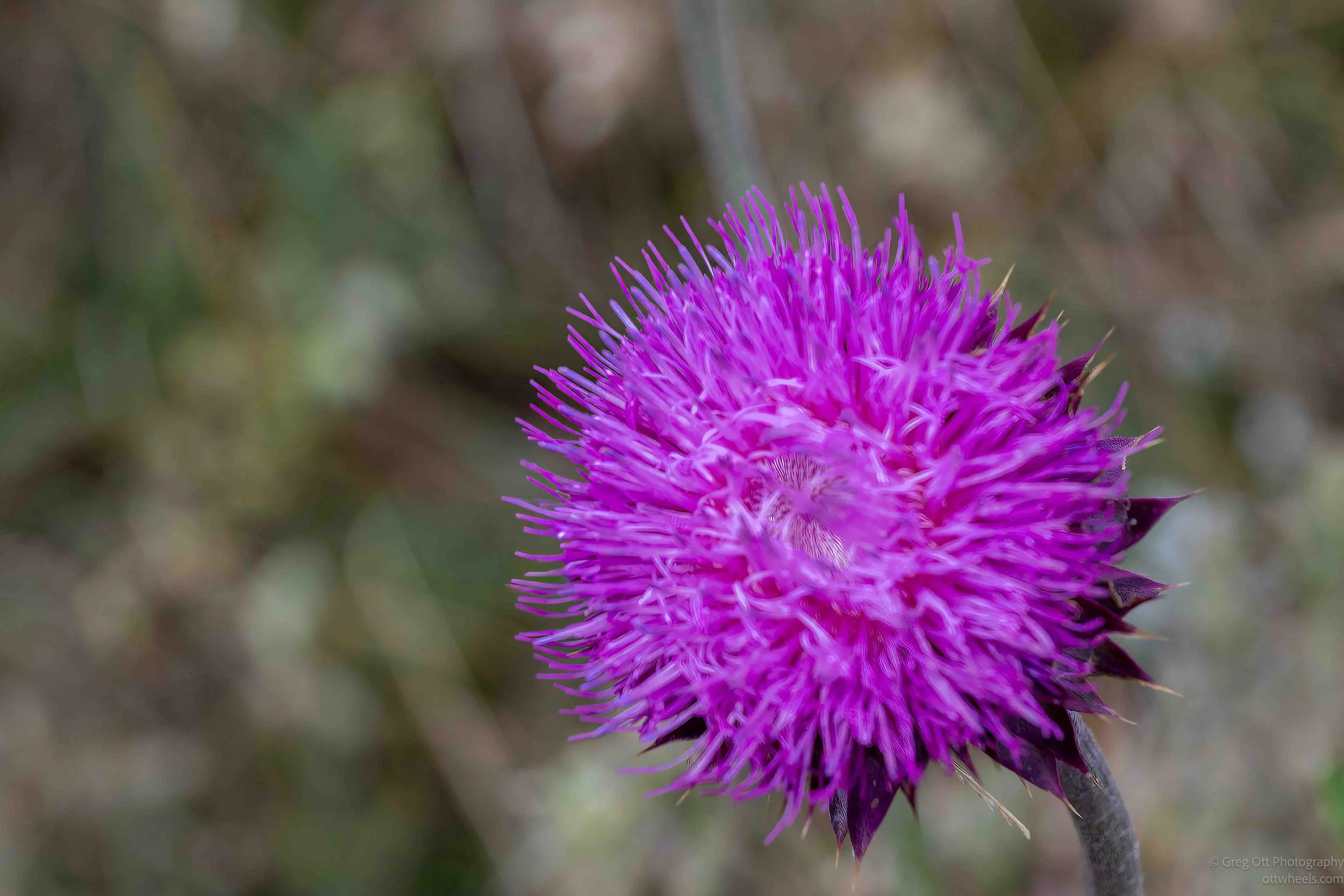
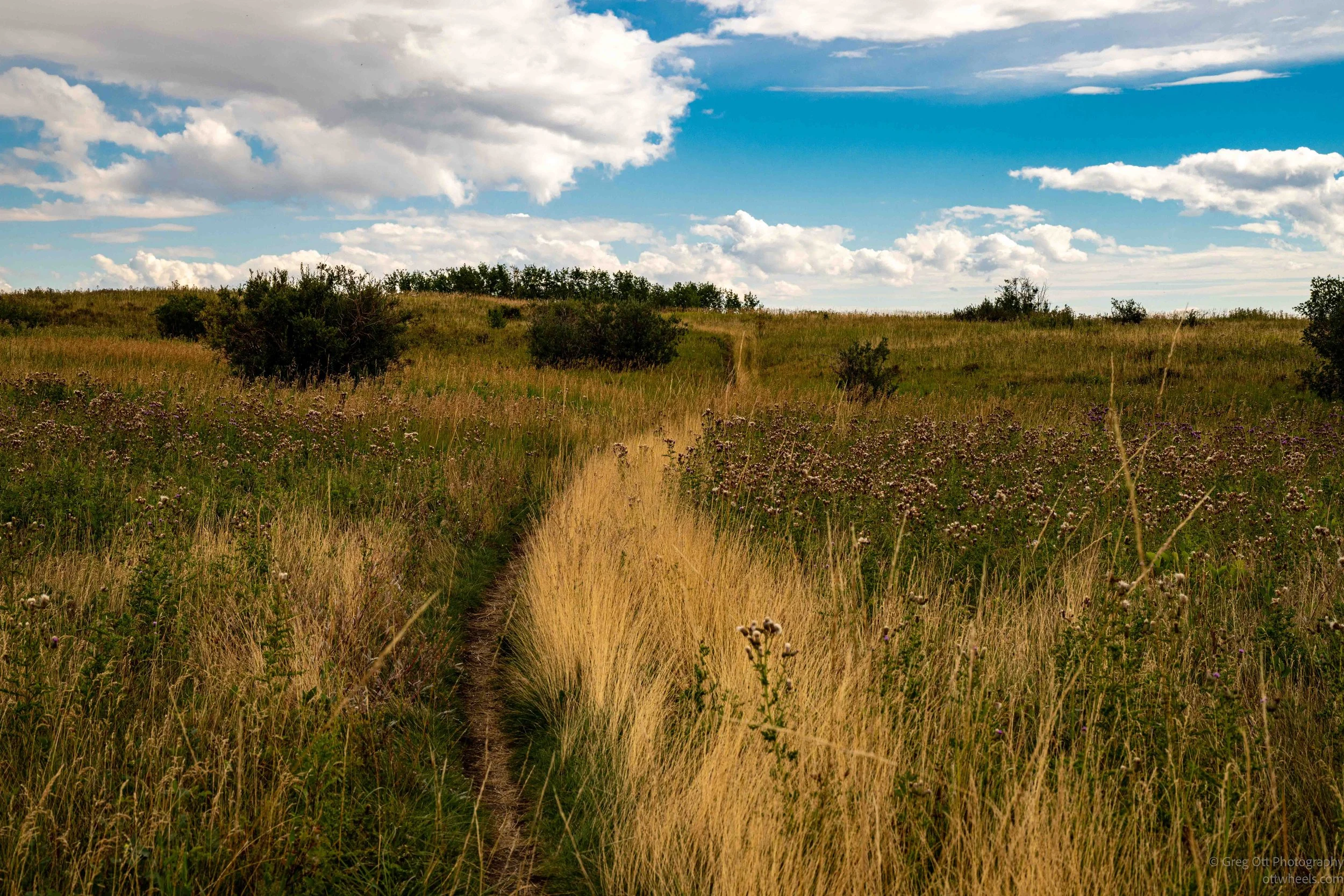
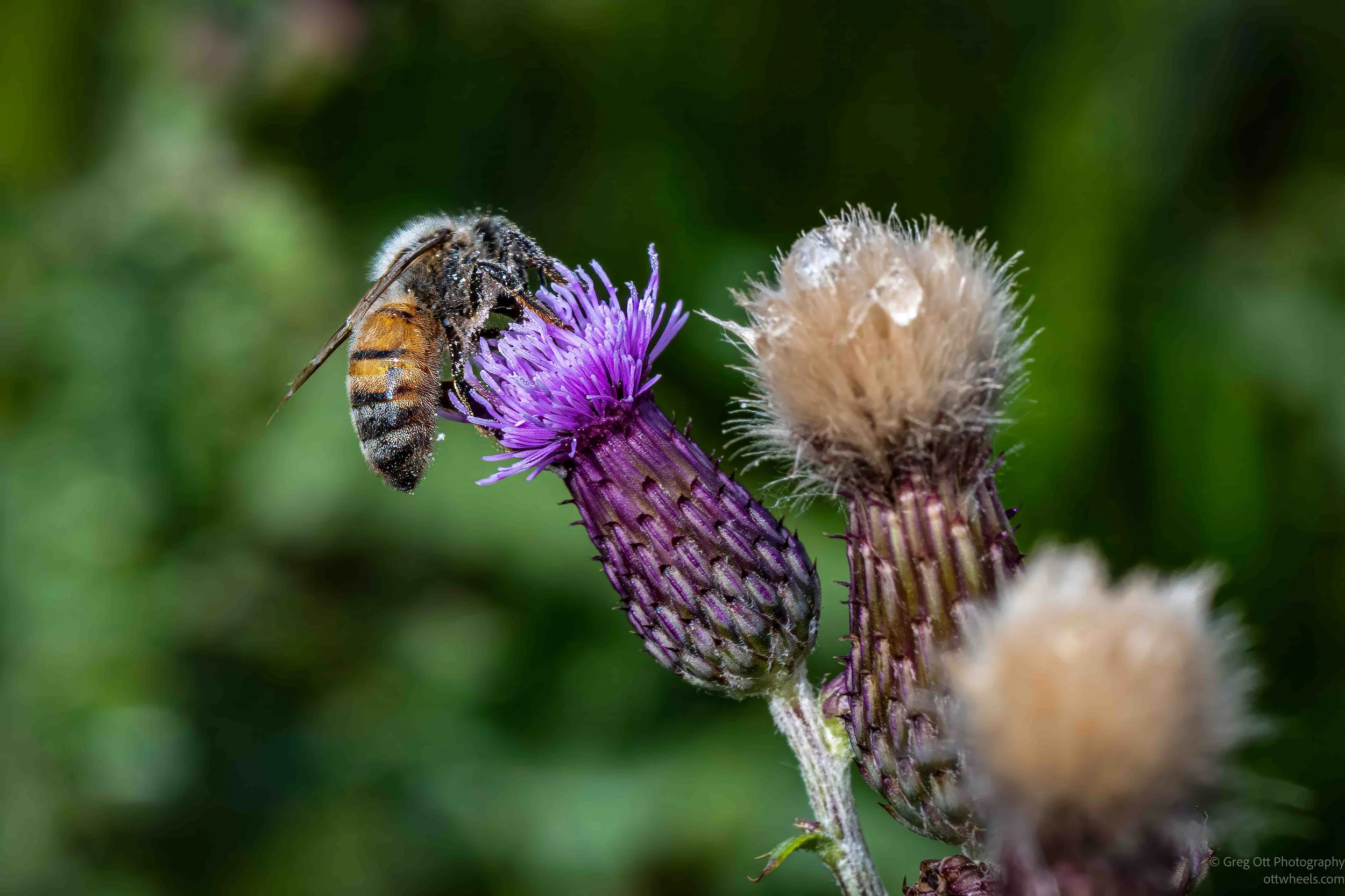
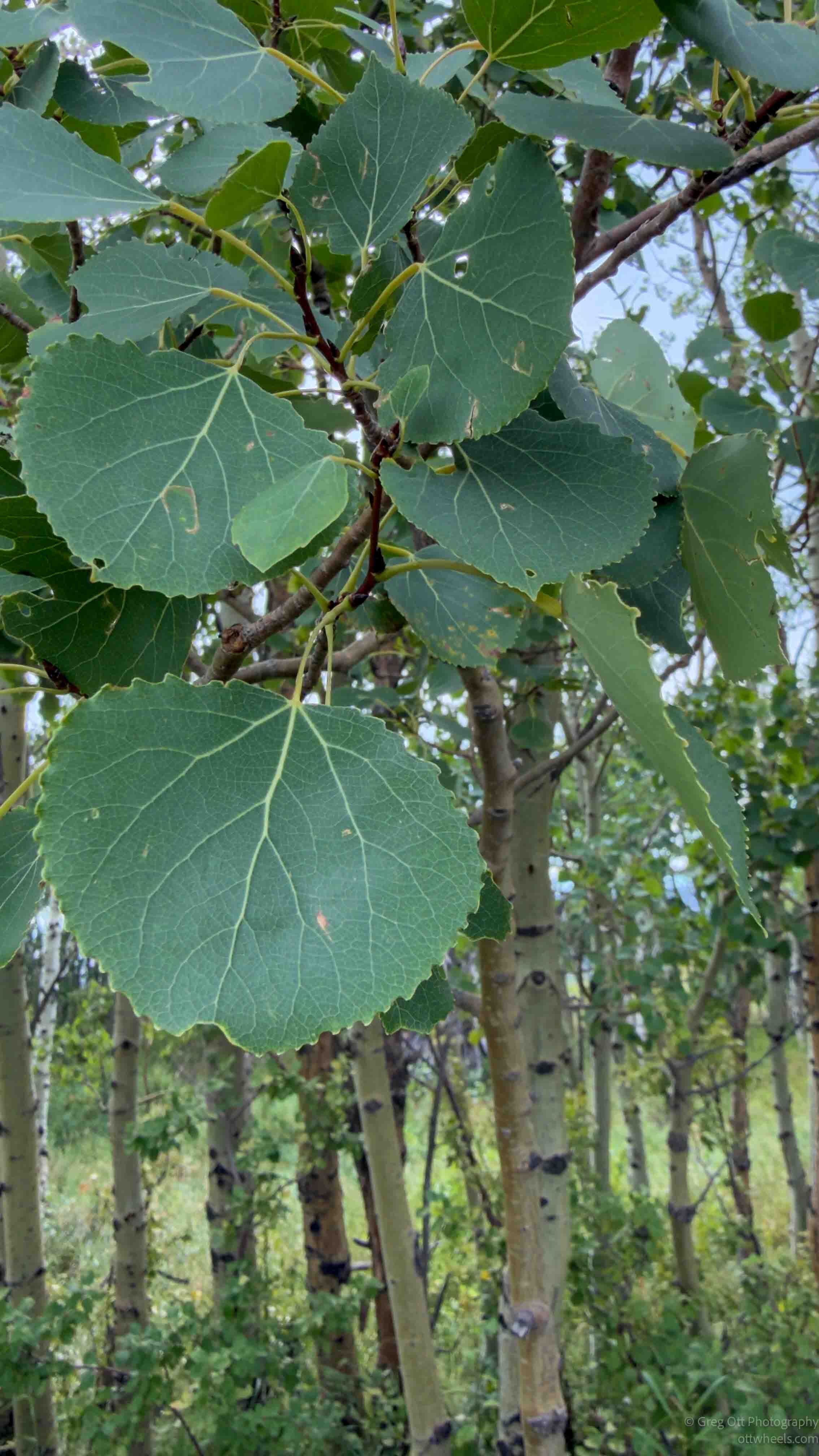
The rest of the hike alternated between wide-open grassland and narrow trails that disappeared into stands of aspens and tall grass. In places the grass was almost shoulder high, while other sections opened onto rolling prairie with small groups of trees and shrubs scattered across the hill. There were thistles everywhere, and I stopped to photograph a bee that was so covered in pollen that it looked like it had been dusted with flour. The weather continued to change almost by the minute. One moment I was walking beneath dark clouds and the next I had blue sky and bright sunshine.
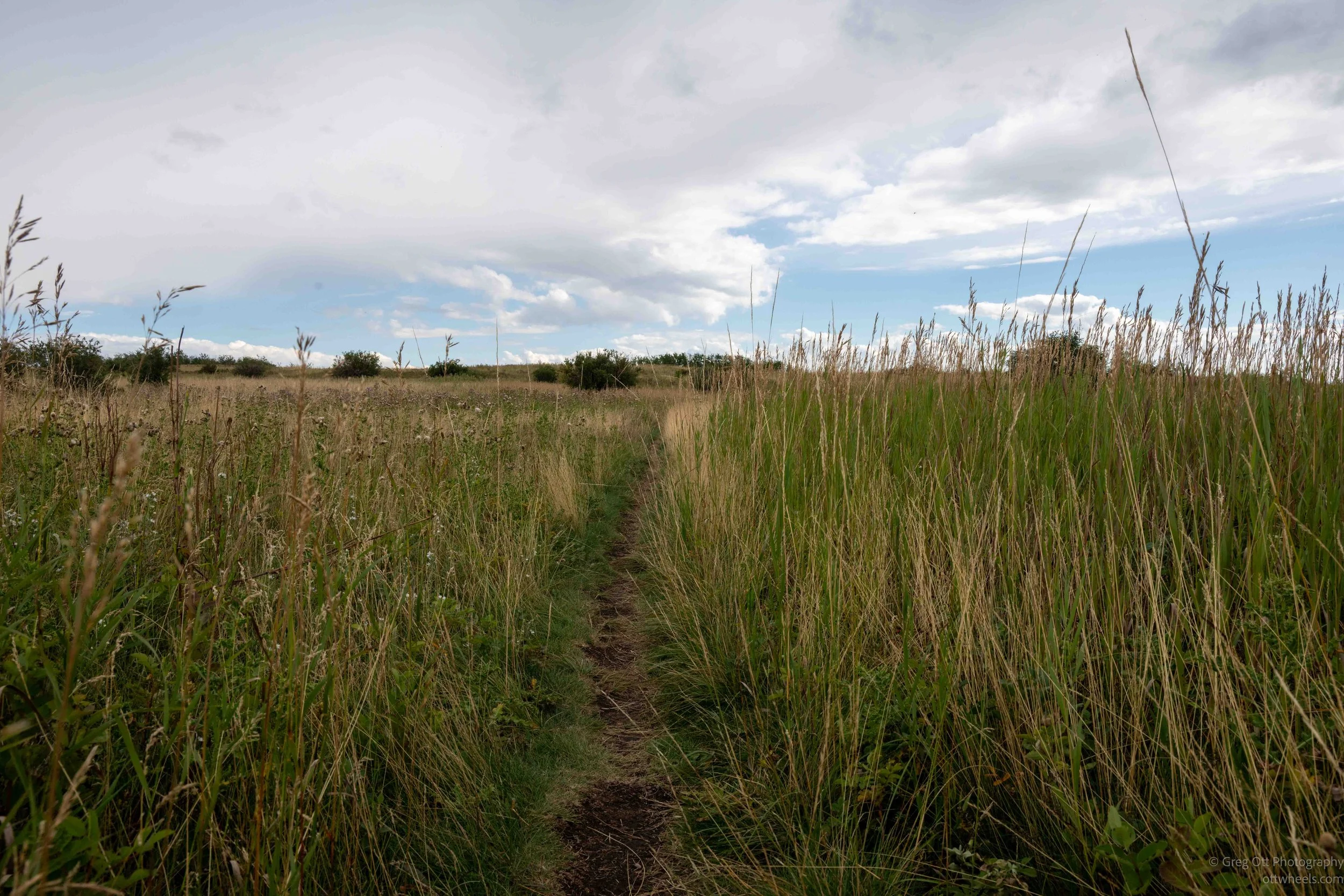
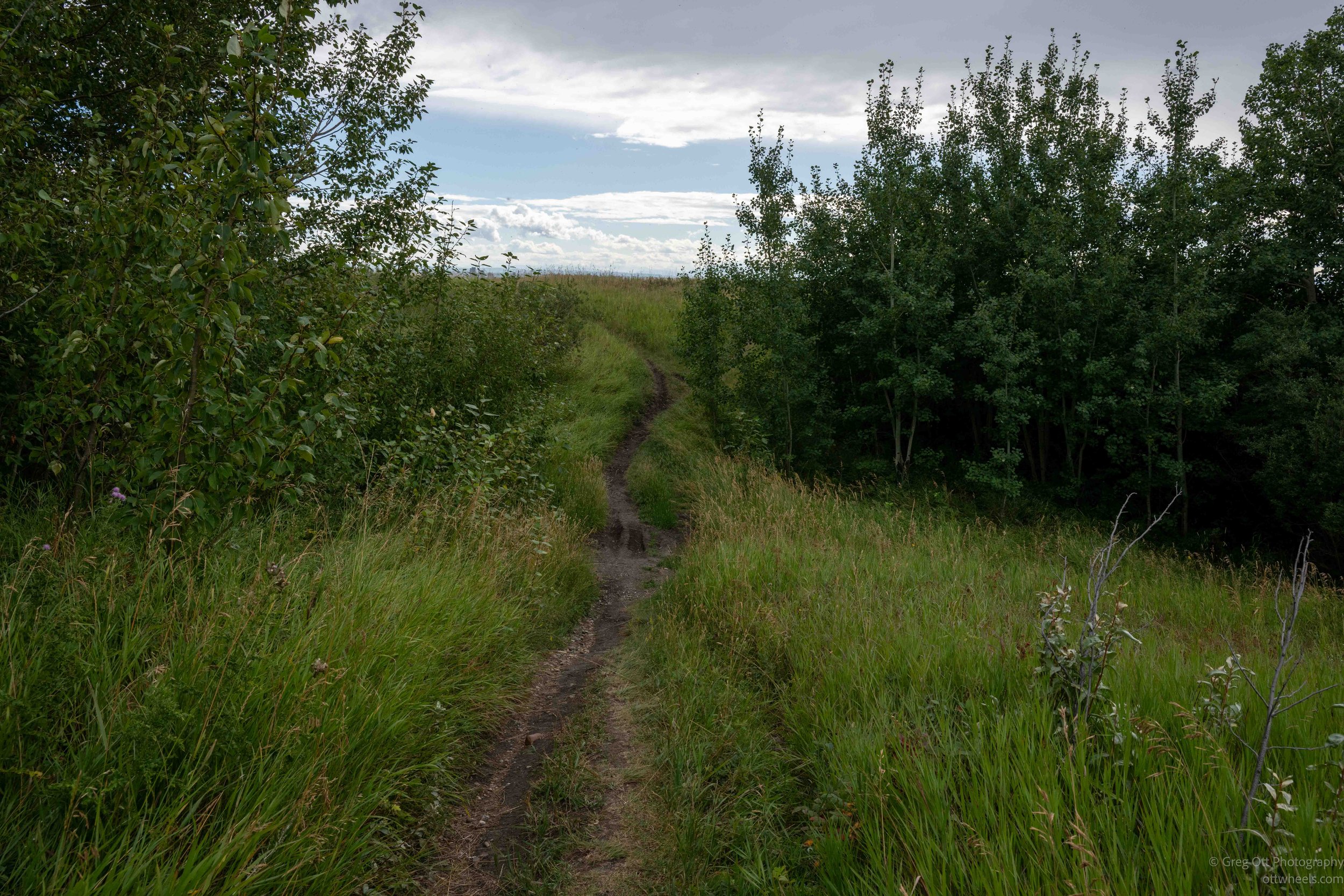
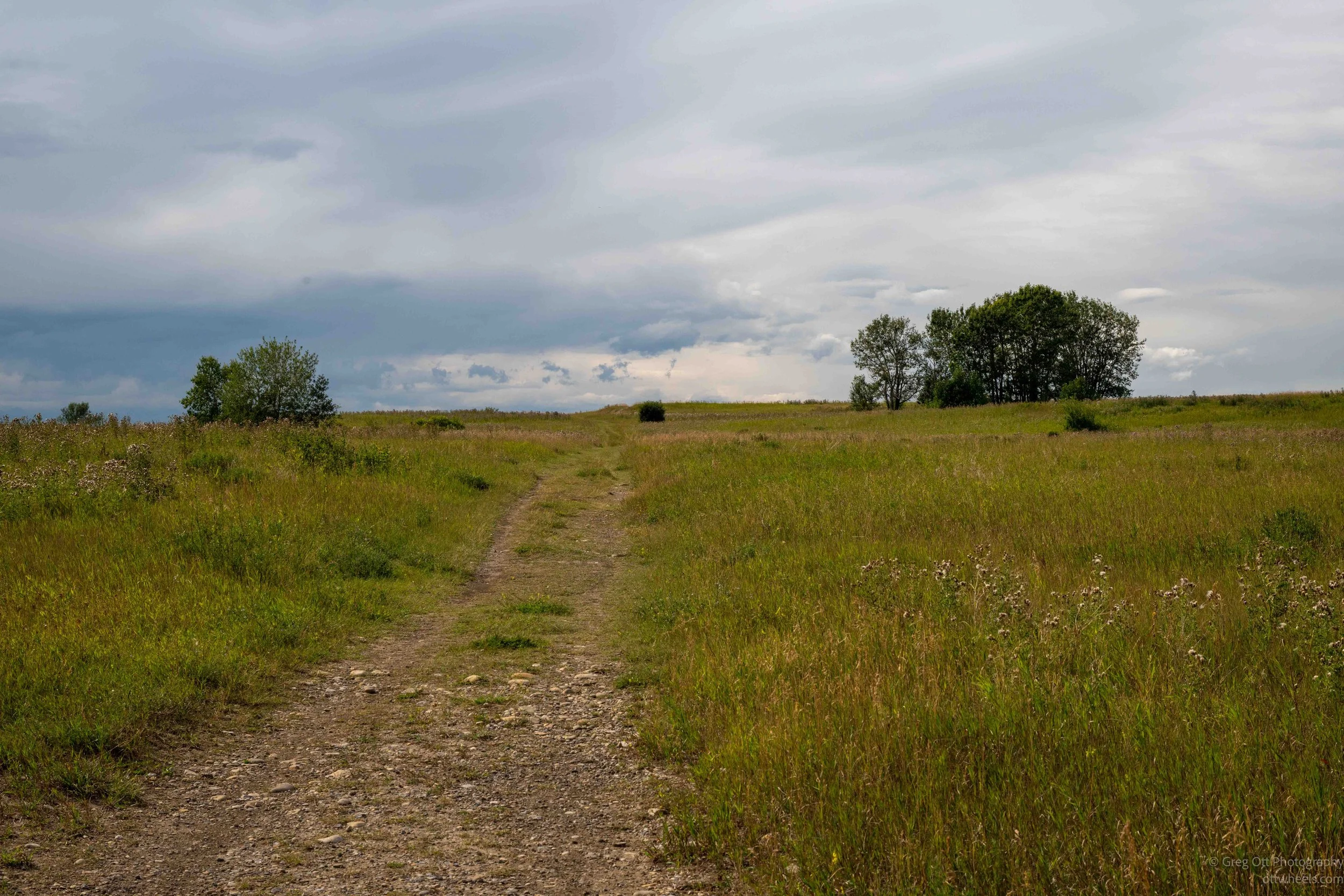
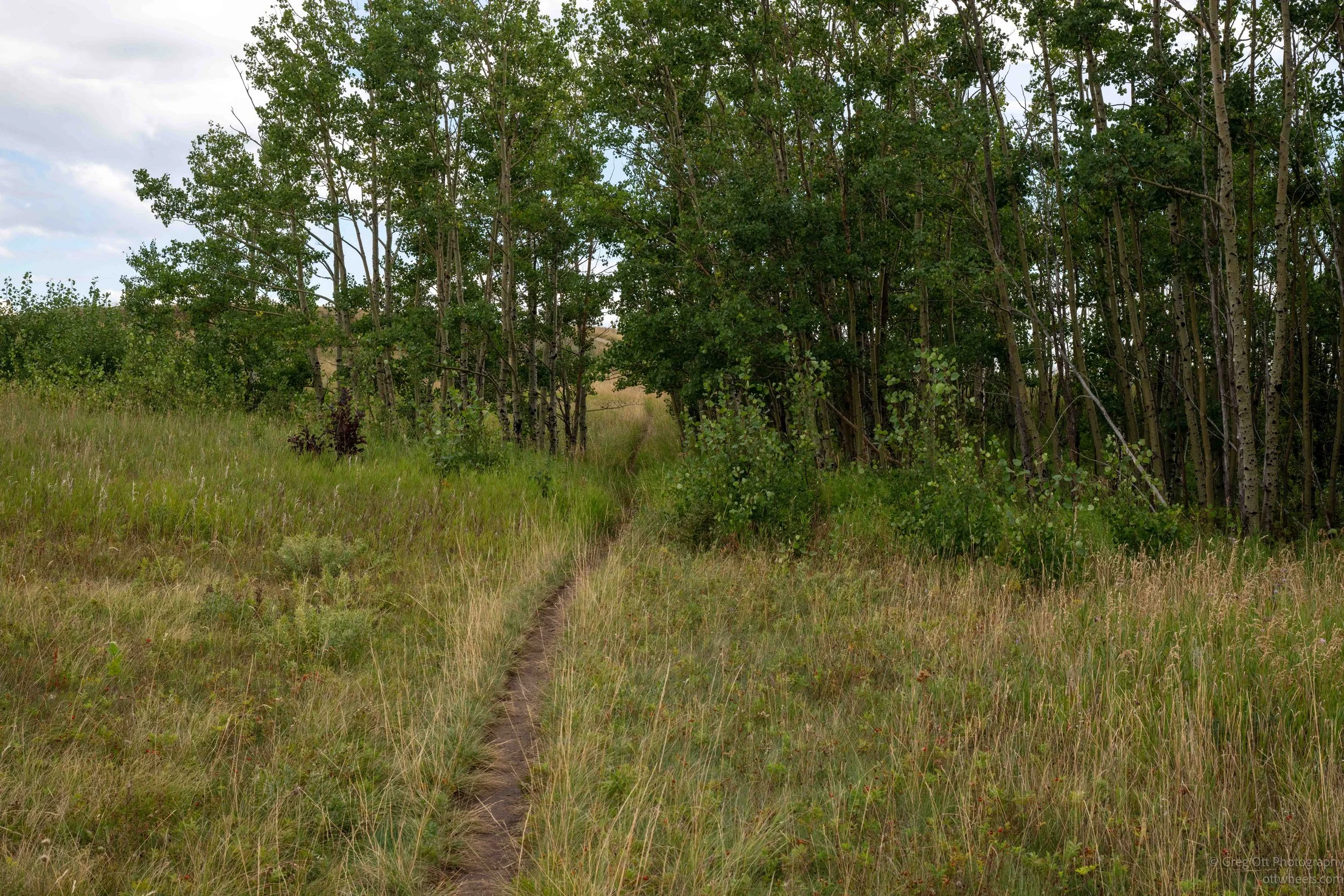
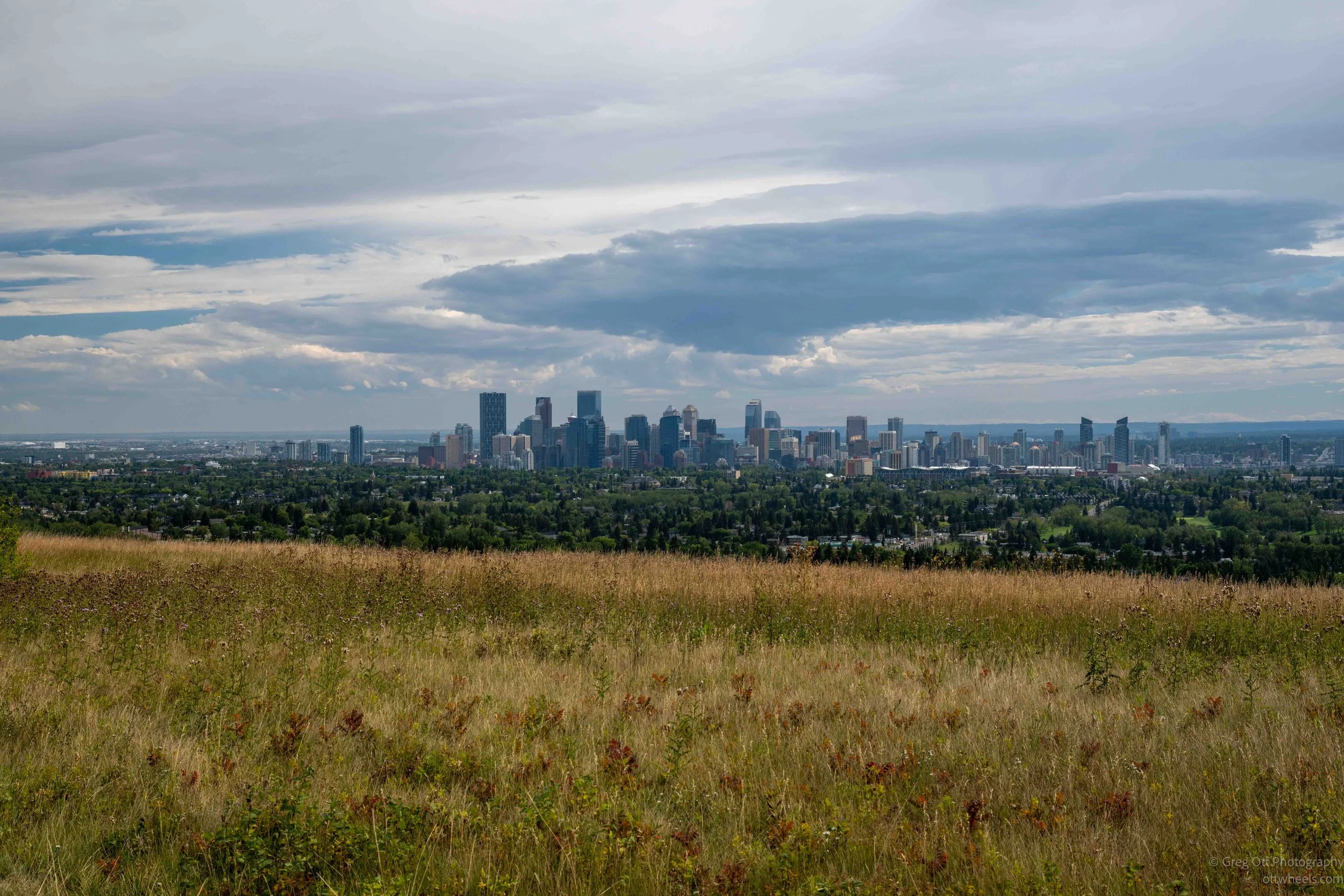
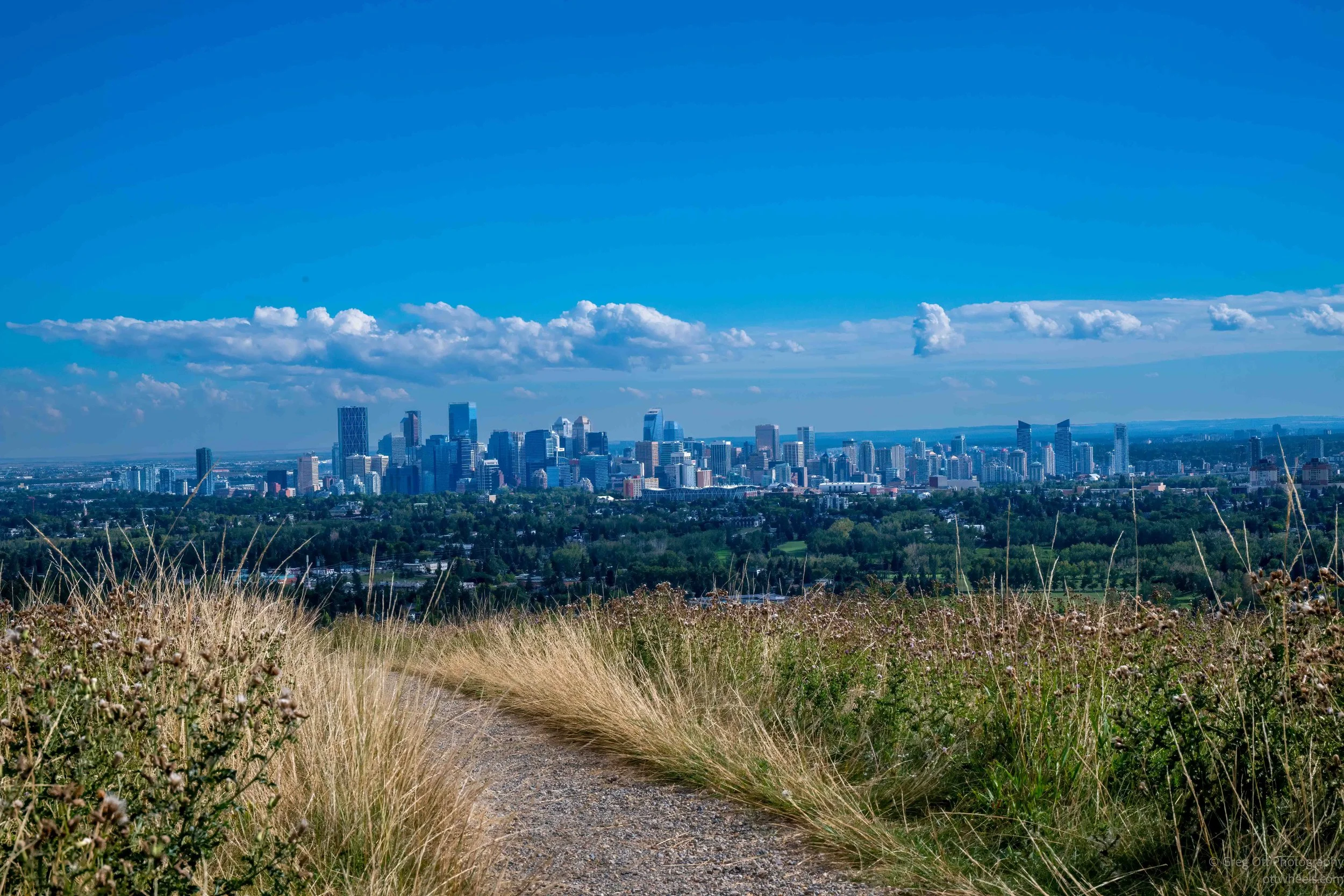
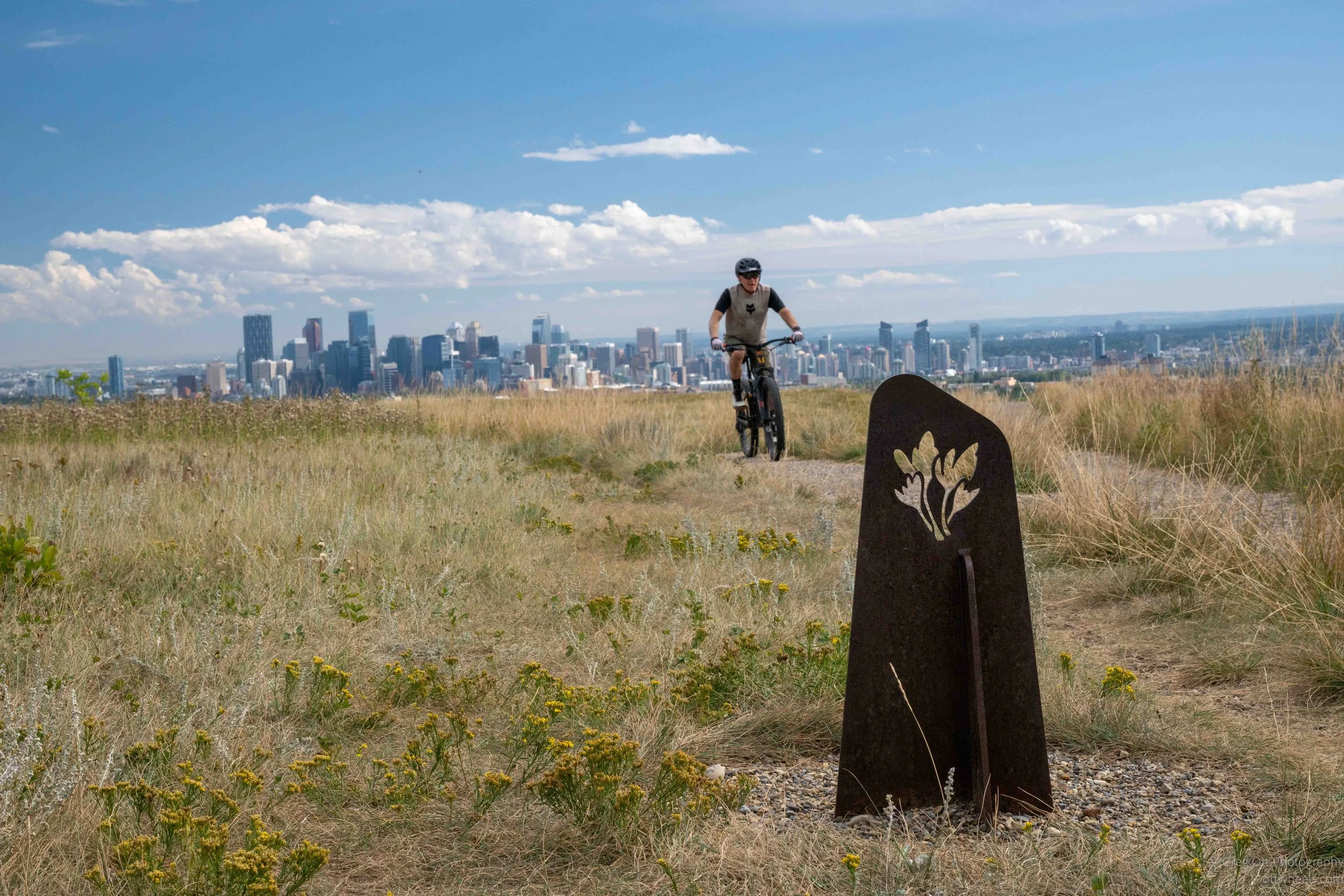
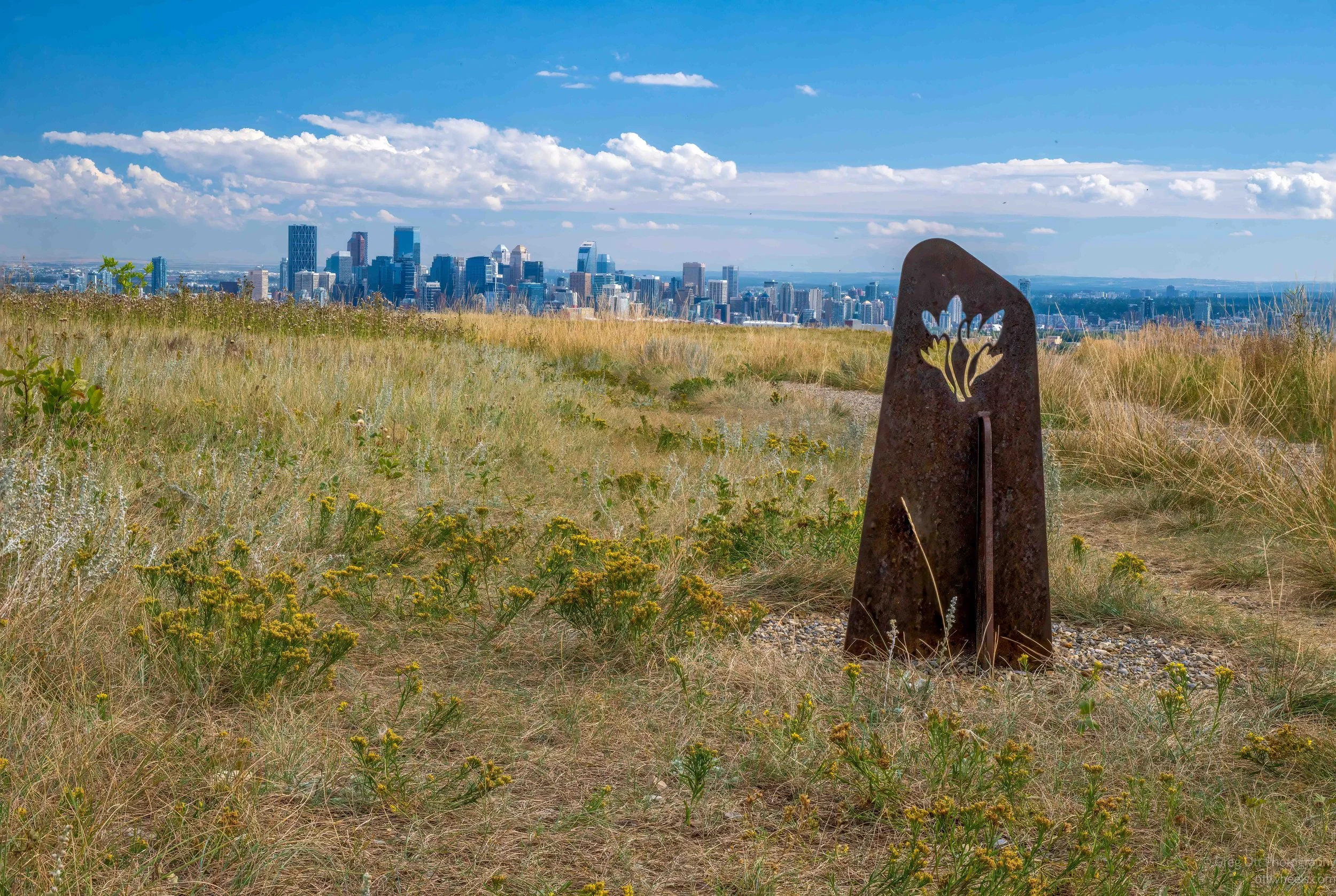
As I worked my way around the loop, Calgary kept appearing in the distance. From the higher sections of Nose Hill, the downtown skyline seemed to rise directly out of the prairie, which was a strange contrast after spending much of the hike surrounded by grass and trees. The trails were also busy with walkers, runners and mountain bikers, but it never felt crowded. By the time I started heading back down, the rain had mostly disappeared and the city was sitting under a bright blue sky. It was hard to believe it was the same afternoon that had started with me sitting in Starbucks waiting for the rain to stop.
I went to Contemporary Calgary that evening for Free First Thursday. The gallery is housed in Calgary's old Centennial Planetarium, and I went in expecting rooms filled with contemporary paintings, photography, sculpture and other forms of art. Instead, there was surprisingly little to see, and I found the whole visit disappointing.
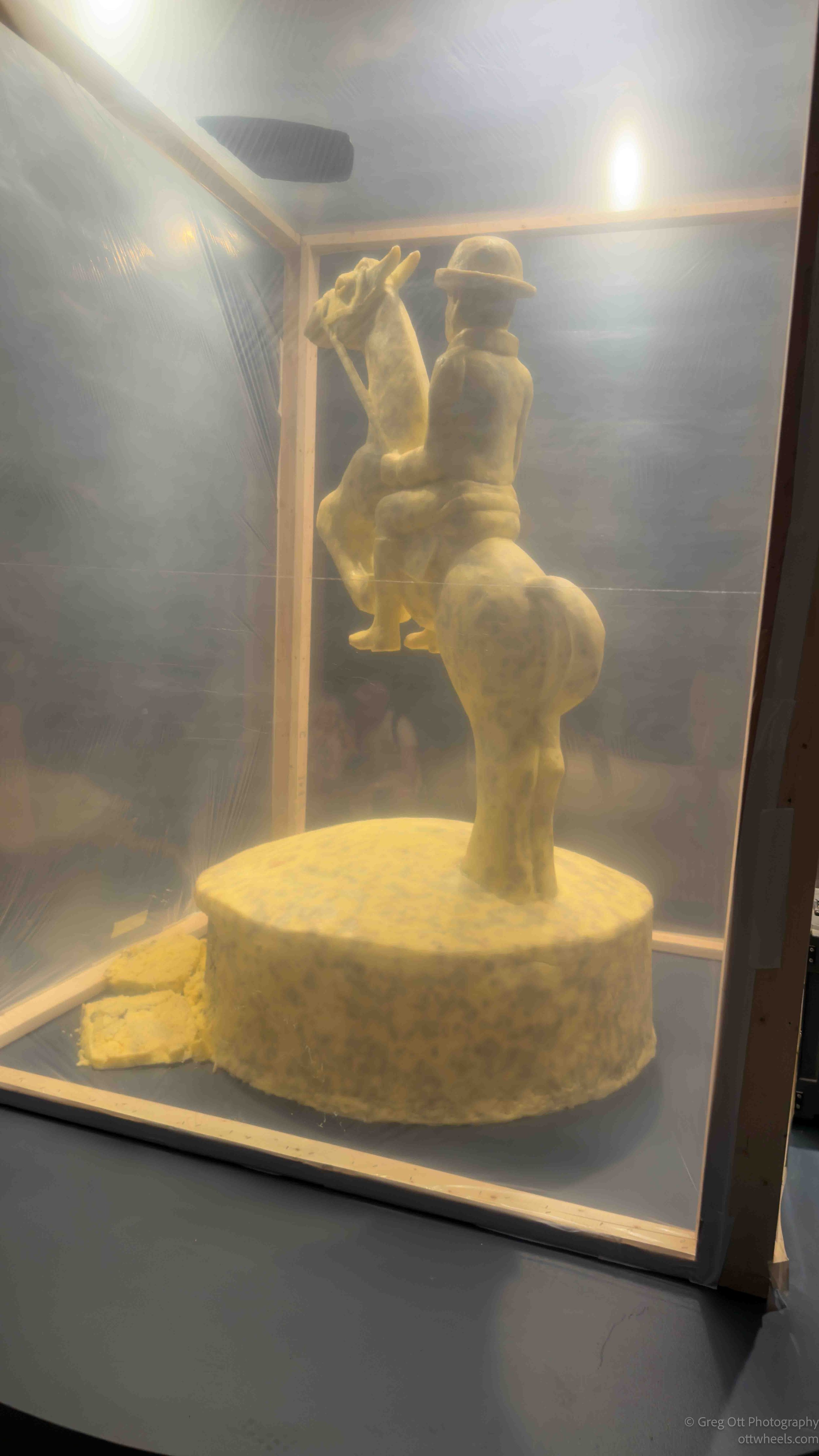
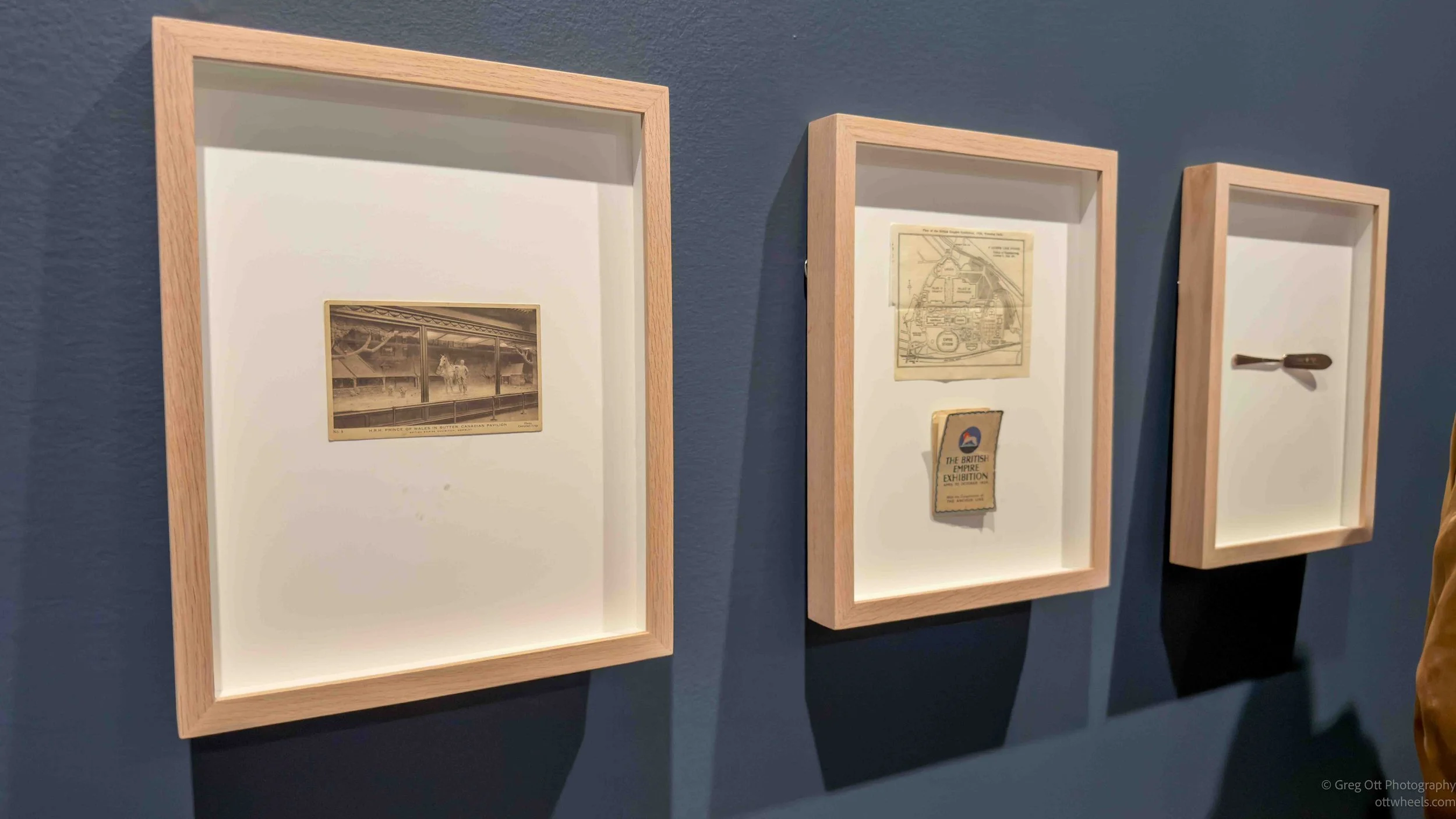
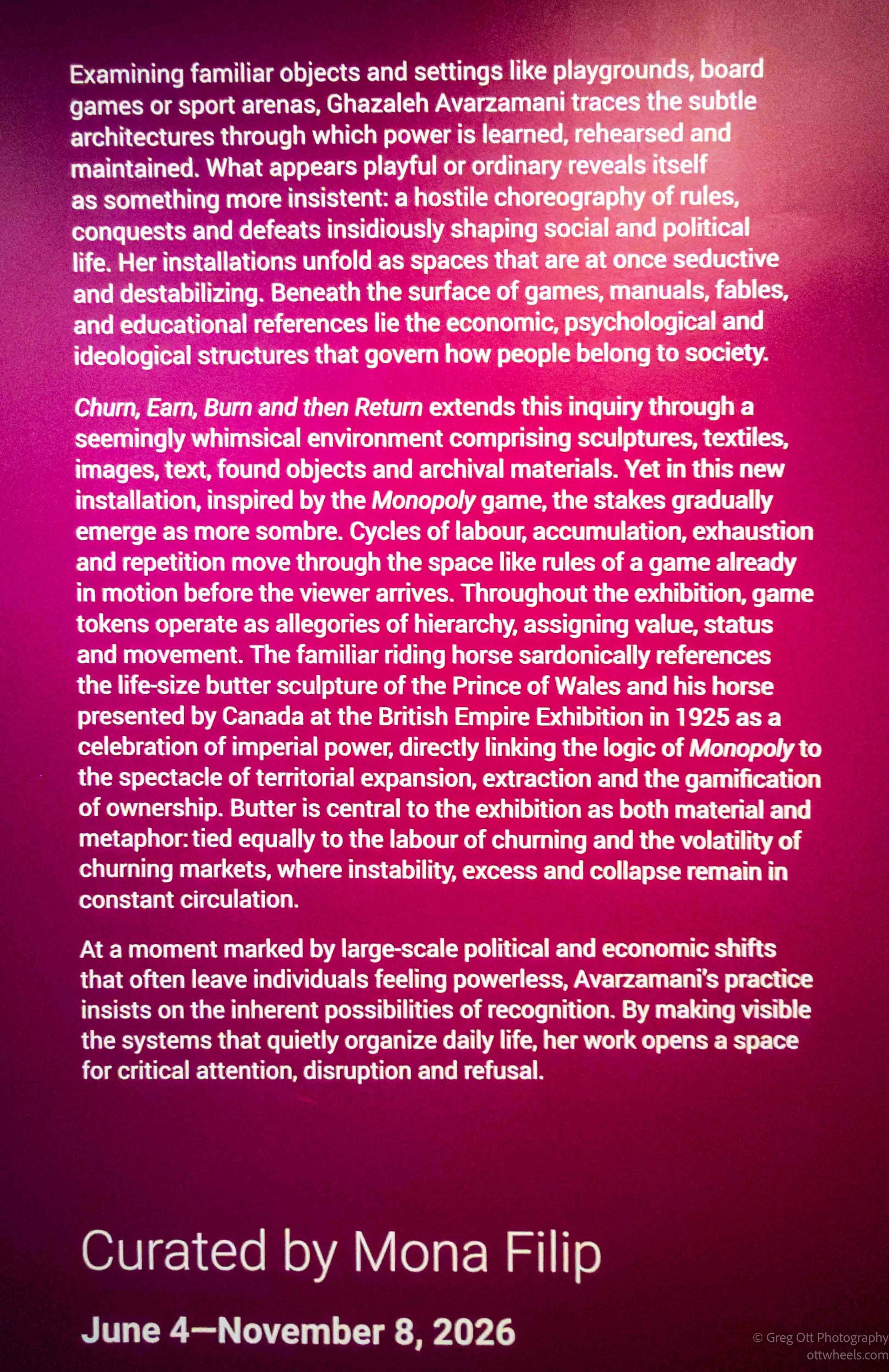
One of the main exhibitions was Ghazaleh Avarzamani's Churn, Earn, Burn and then Return, which transformed part of the gallery into a giant version of a Monopoly board. There were oversized game pieces, wooden buildings, banners and other objects intended to explore capitalism, inequality, ownership and the accumulation of wealth. I understood what the artist was trying to say, but for me the message overwhelmed the art. The exhibition eventually led to its centerpiece: a 1,000-pound sculpture made from butter, based on a butter sculpture of the Prince of Wales and his horse that Canada displayed at the British Empire Exhibition in 1925. It had been sitting there for months, was beginning to deteriorate and, unfortunately, smelled like it.
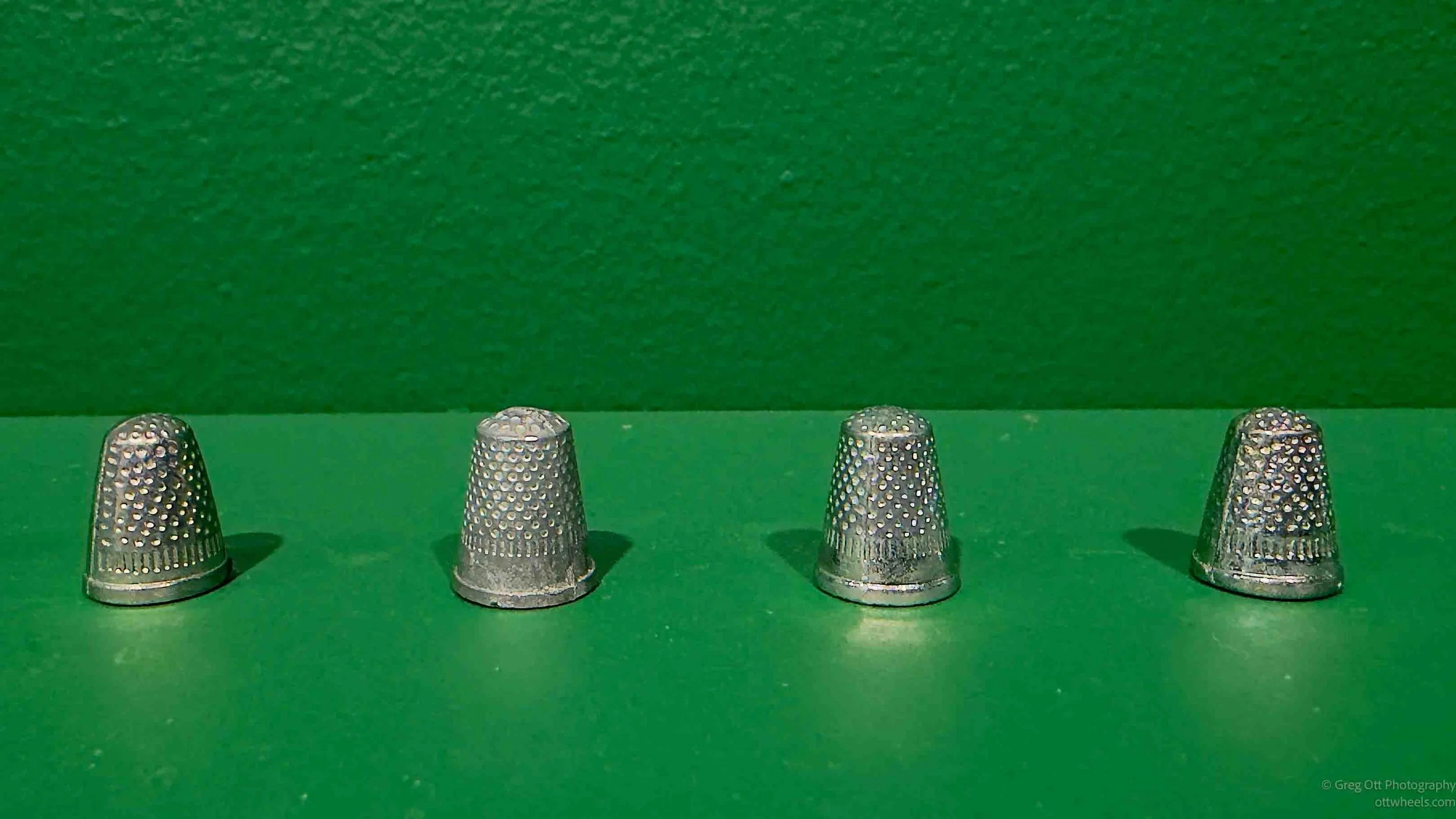
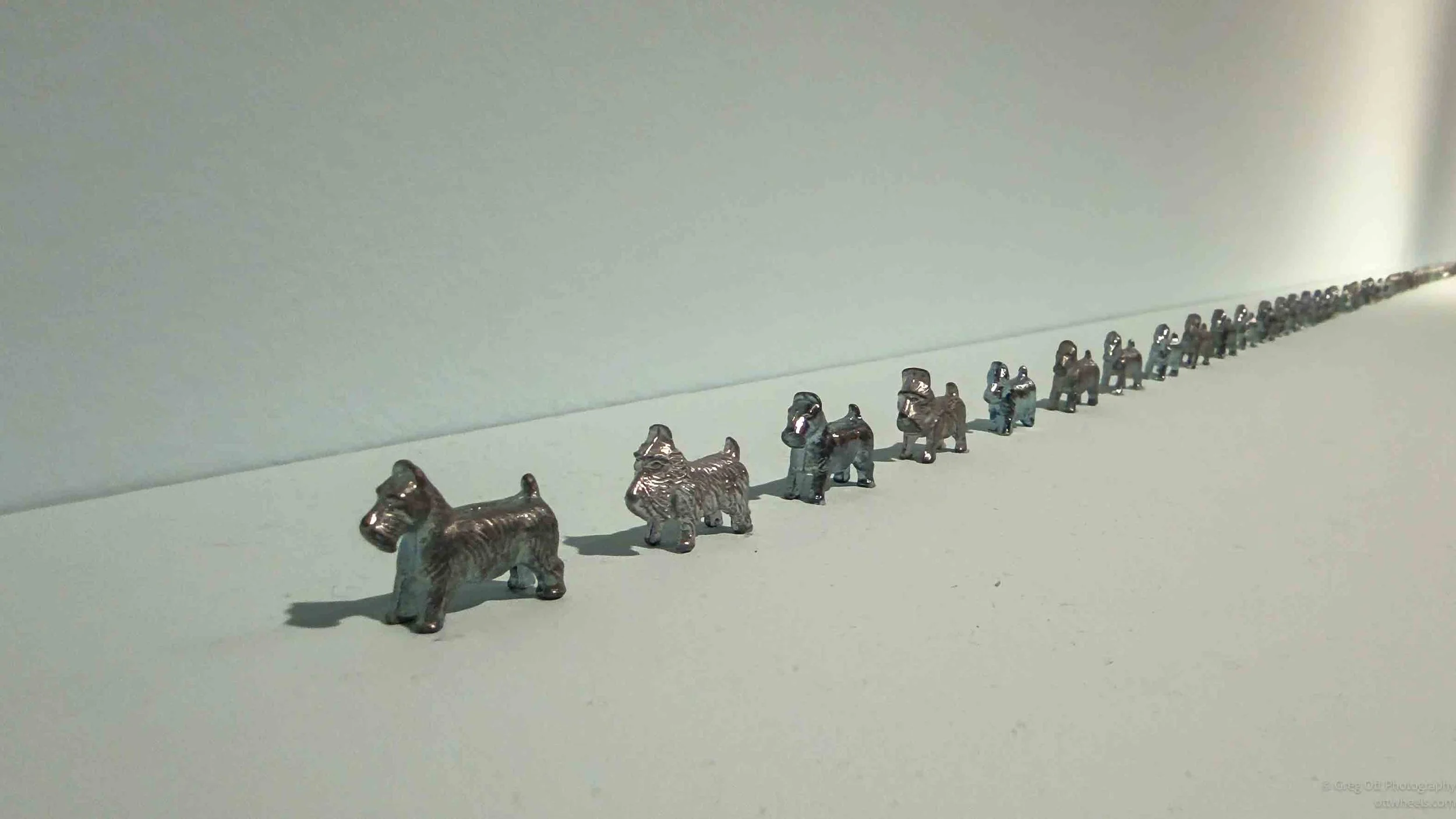
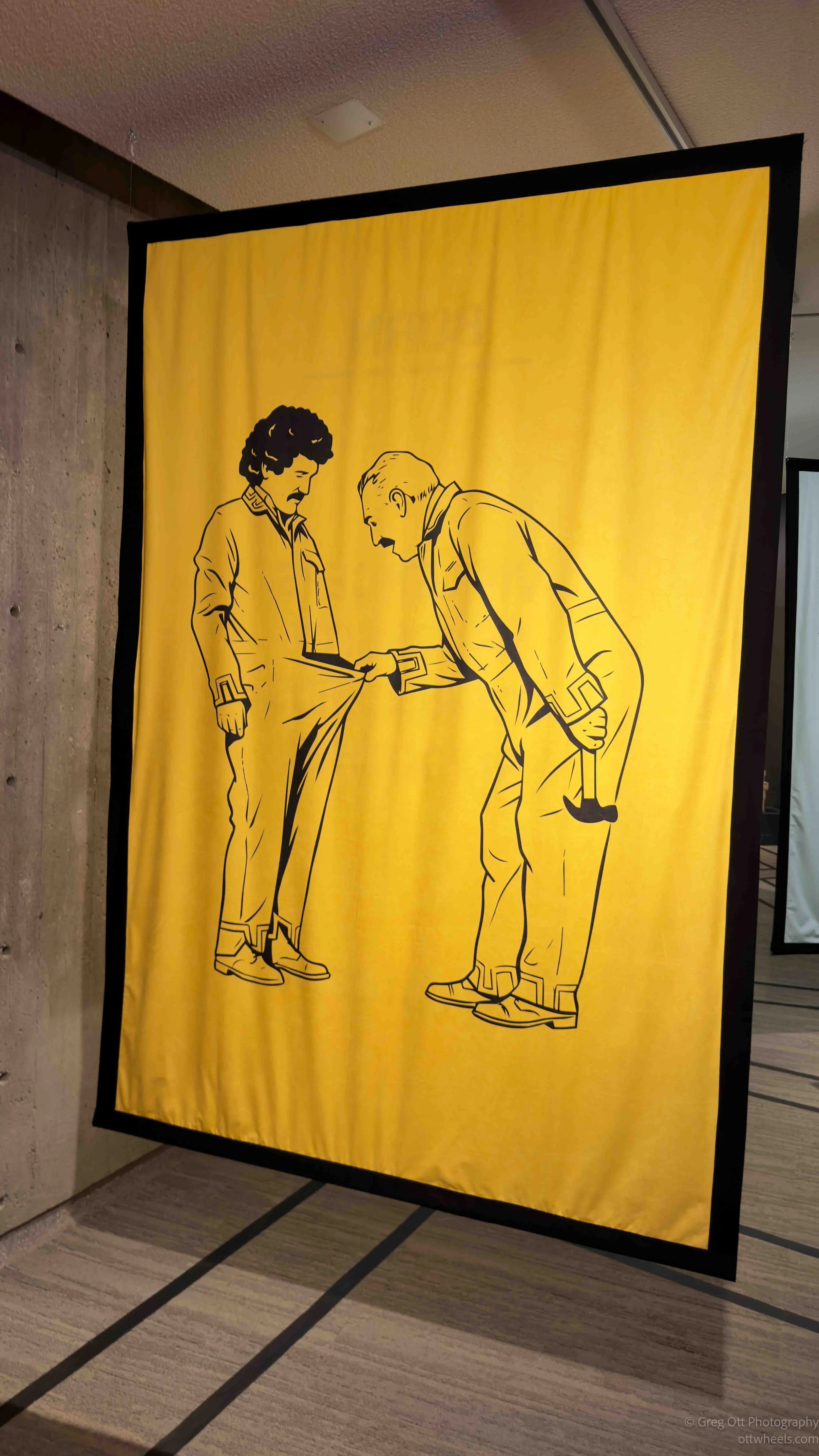
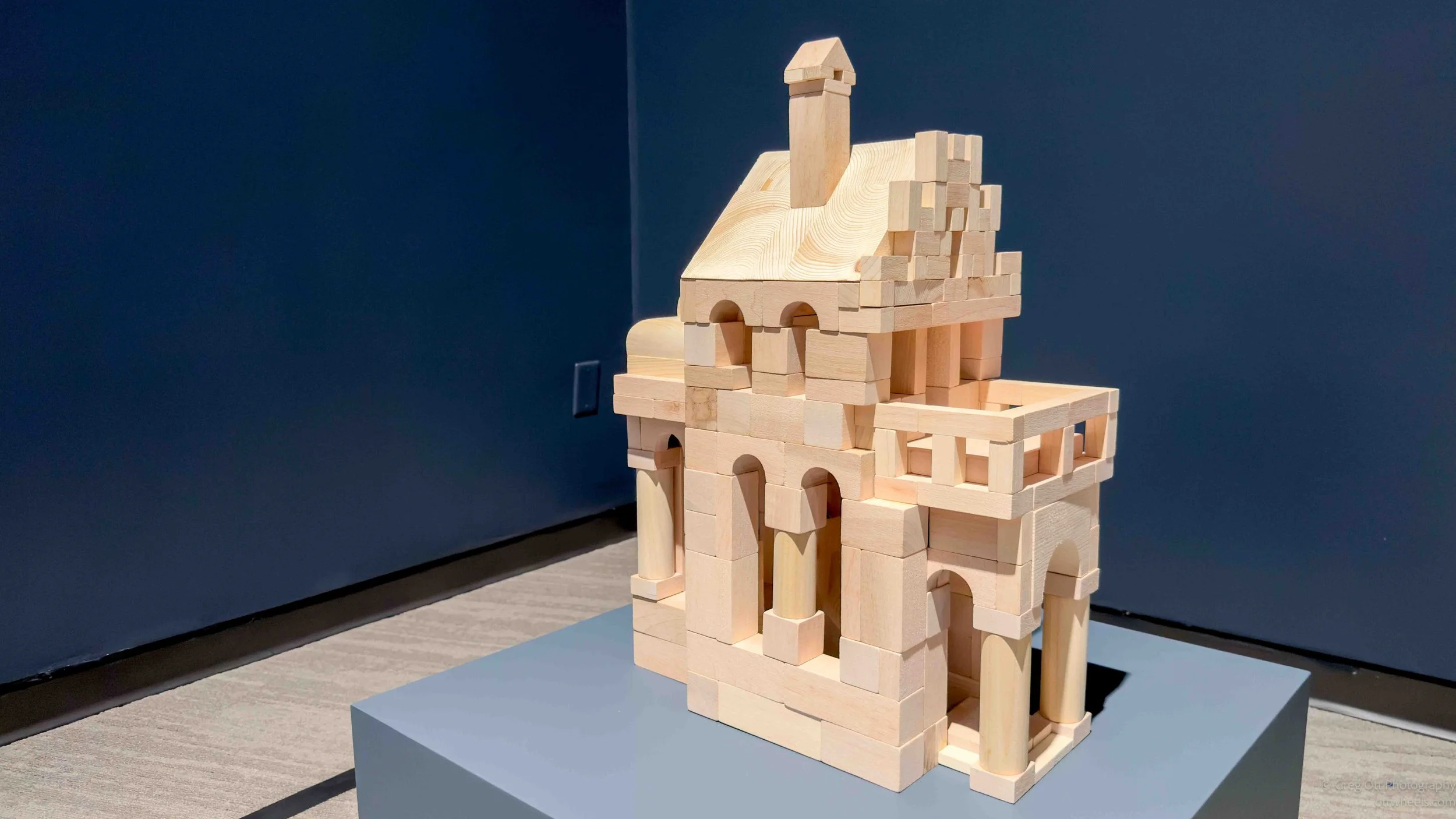
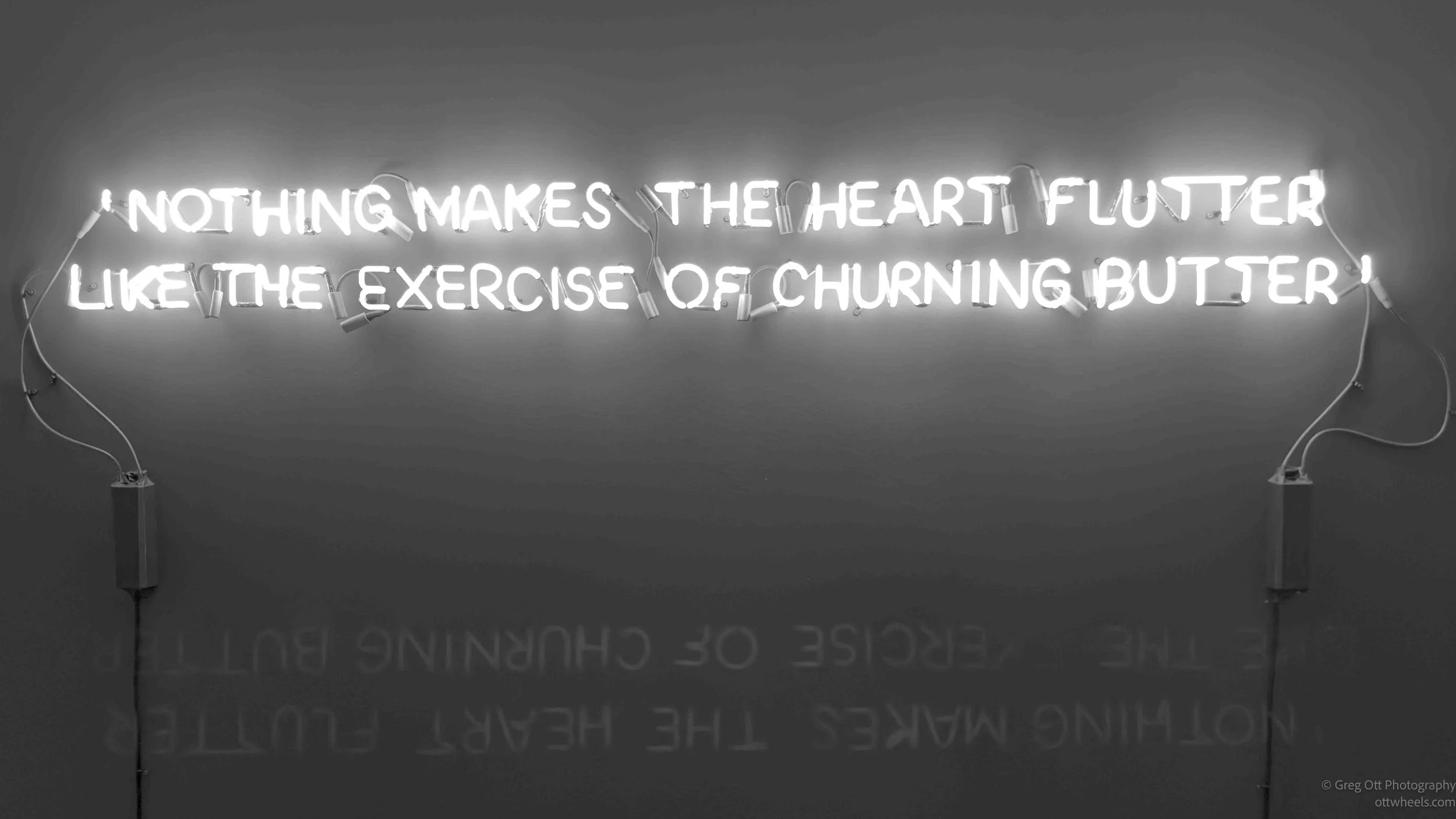
There were also three large photographs that I found interesting and a video installation by Jane Jin Kaisen depicting a strange funeral procession. I didn't understand what I was watching at the time, but I later learned that Burial of This Order was intended as a symbolic funeral for a social order built around hierarchy and division. That explanation helped put what I had seen into context, but it didn't solve the larger problem: there was almost nothing in the gallery.
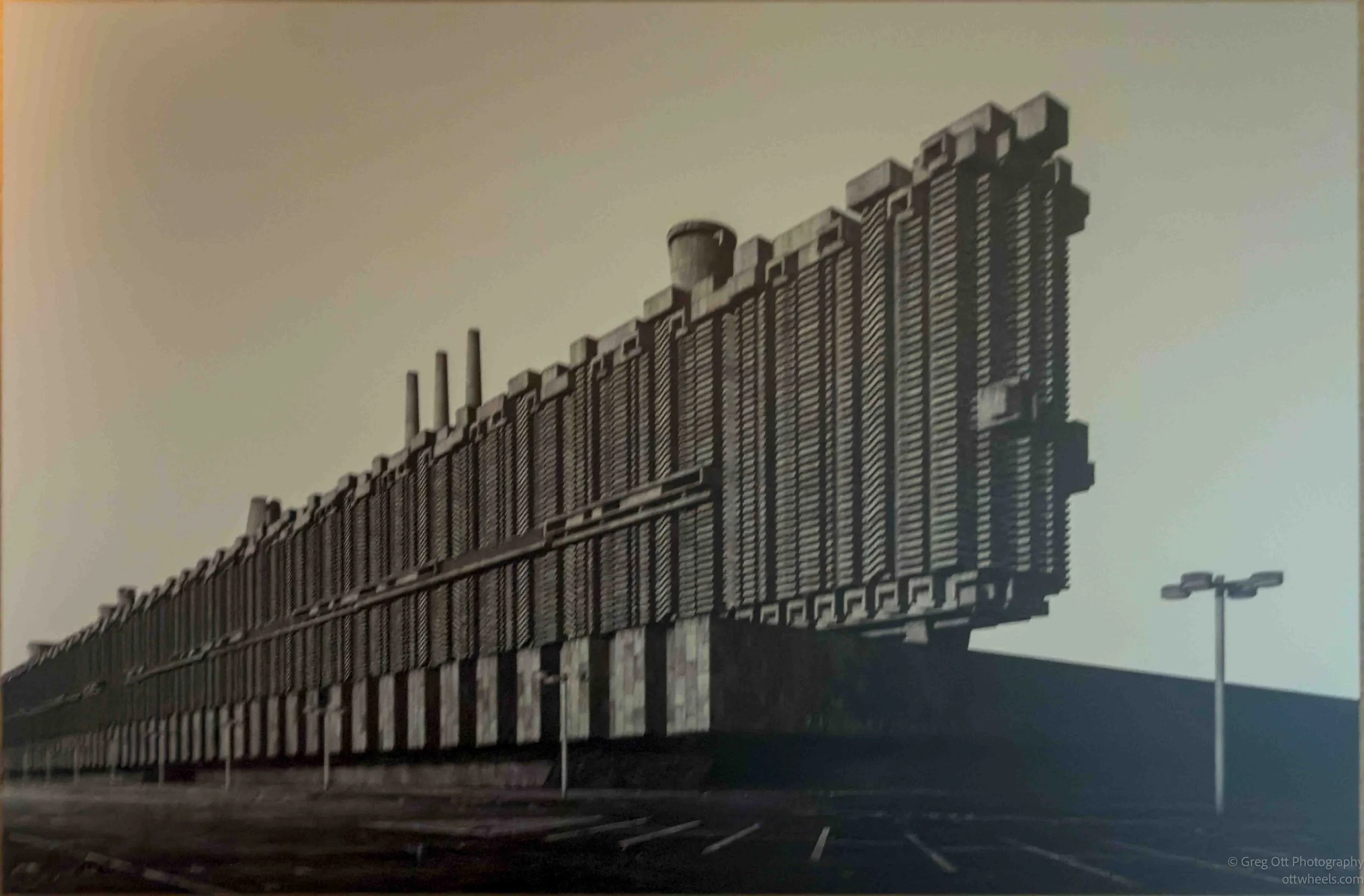
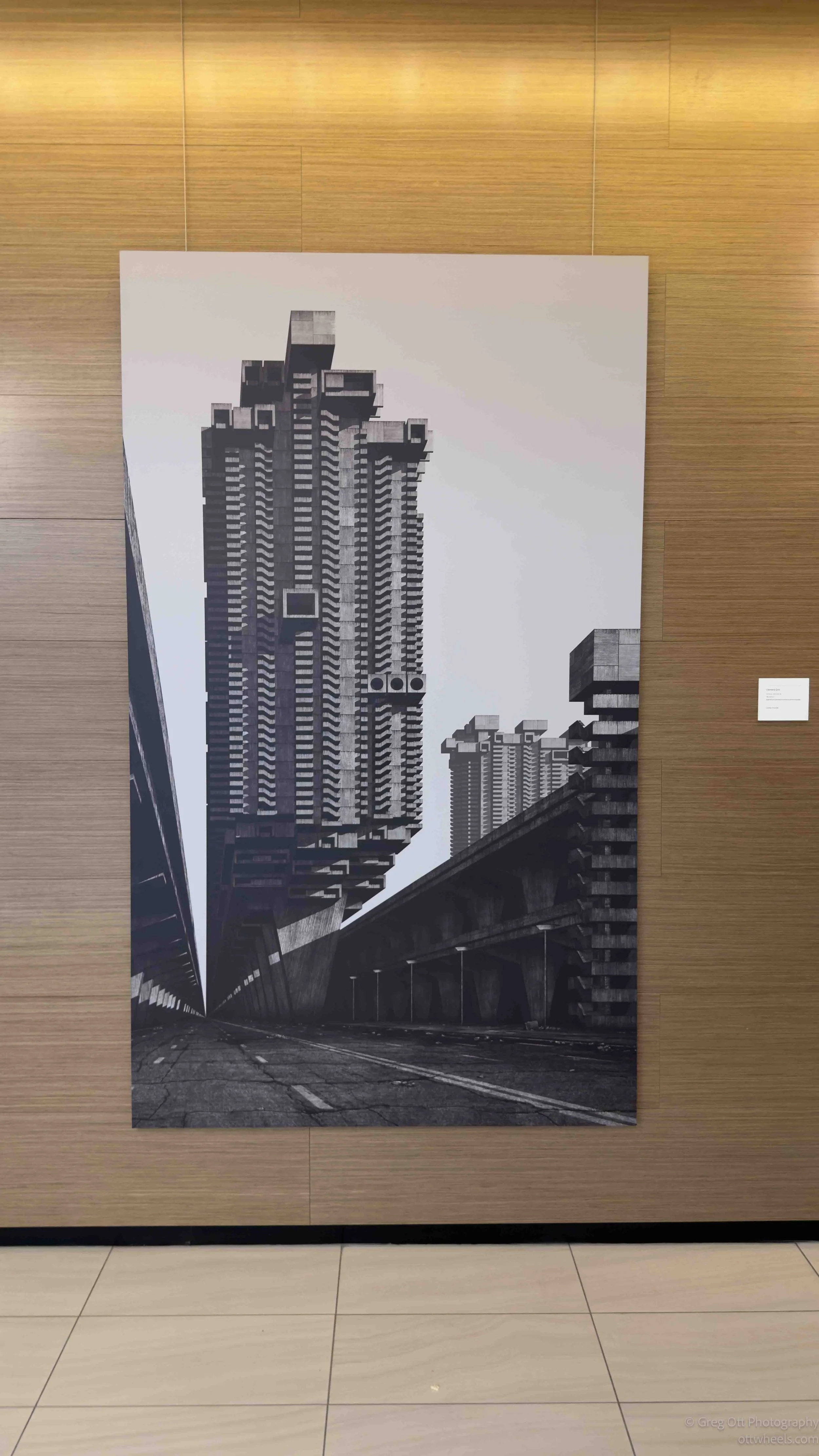
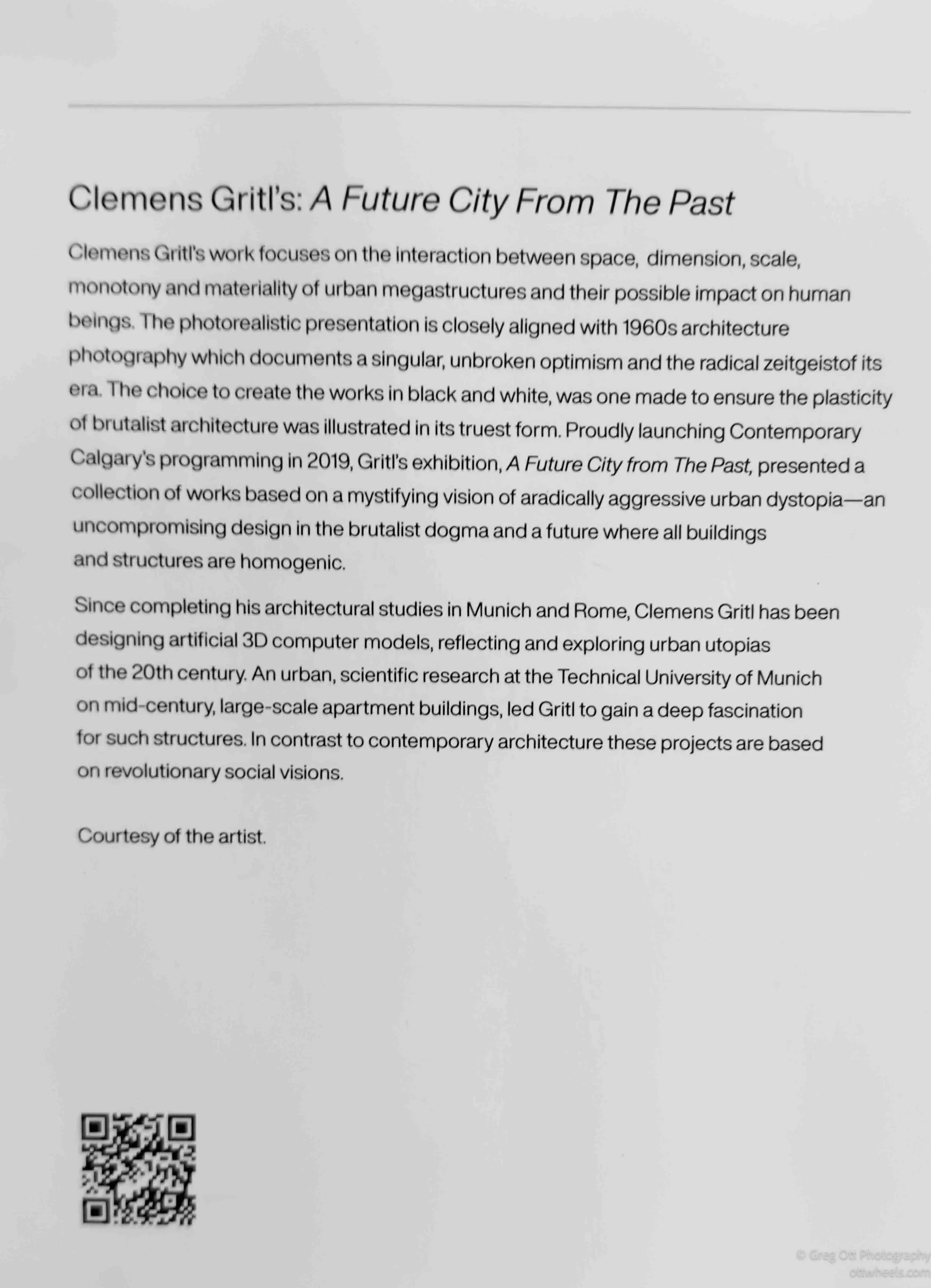
The one part of the gallery I found genuinely interesting was a series of enormous black-and-white architectural images by Clemens Gritl called A Future City From the Past. The buildings aren't photographs of real places, but photorealistic images created from 3D computer models inspired by the massive Brutalist architecture and urban planning of the 1960s. I liked the scale and starkness of the images and the way the buildings seemed both believable and slightly disturbing, as if this really could have been somebody's vision of the city of the future.
At one point, I asked another couple, Alex and Rue, if there were more galleries somewhere in the building. They laughed and said they had just been asking each other the same thing. We stopped and talked for a while. They had just moved to Calgary from Montreal that week. He was from Montreal and worked in finance, while she was a journalist originally from Russia. They had met in Japan while both were living and working there for an extended period before eventually moving to Montreal. They were fun to talk to, and meeting them turned out to be one of the better parts of the visit.
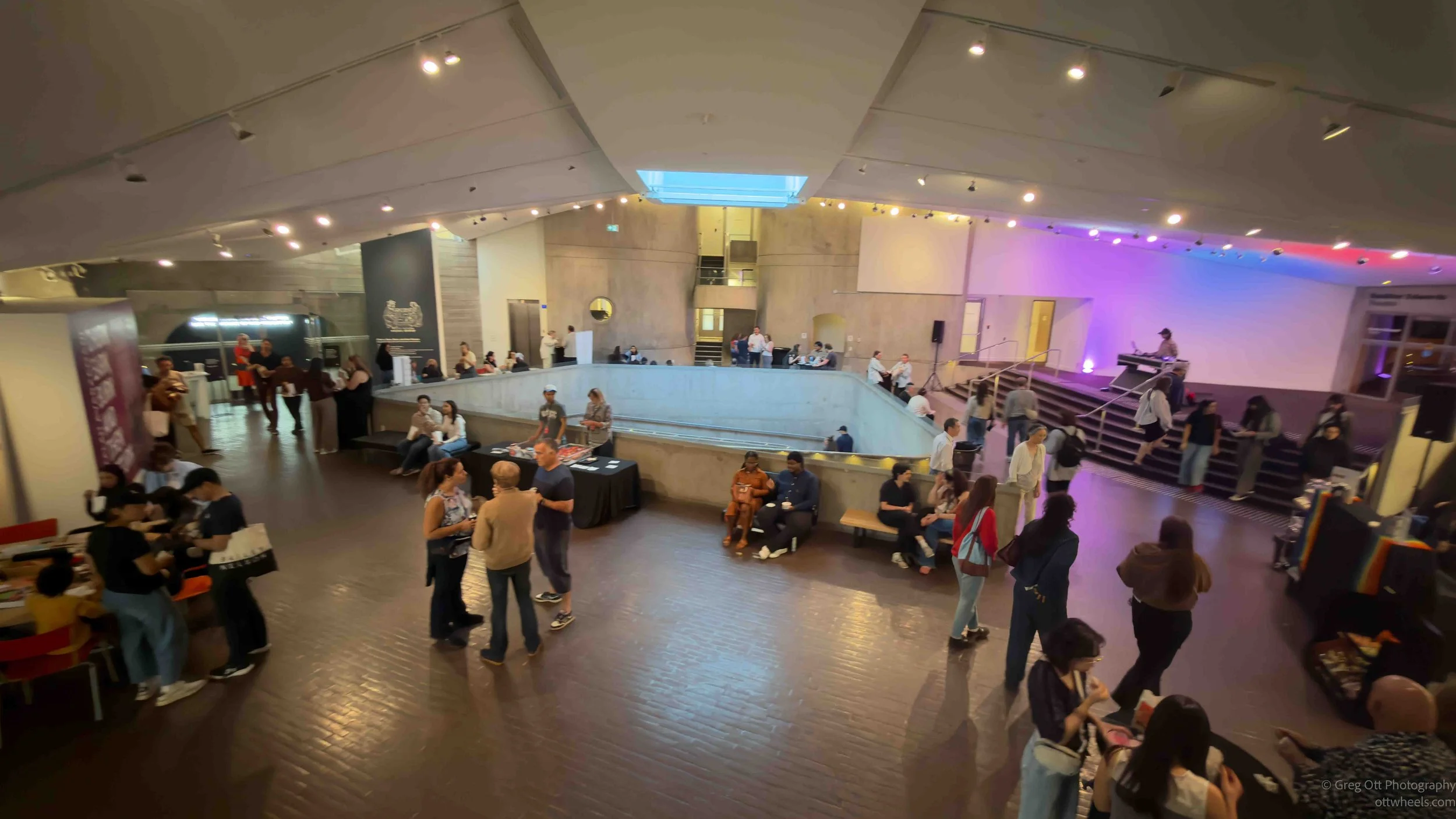
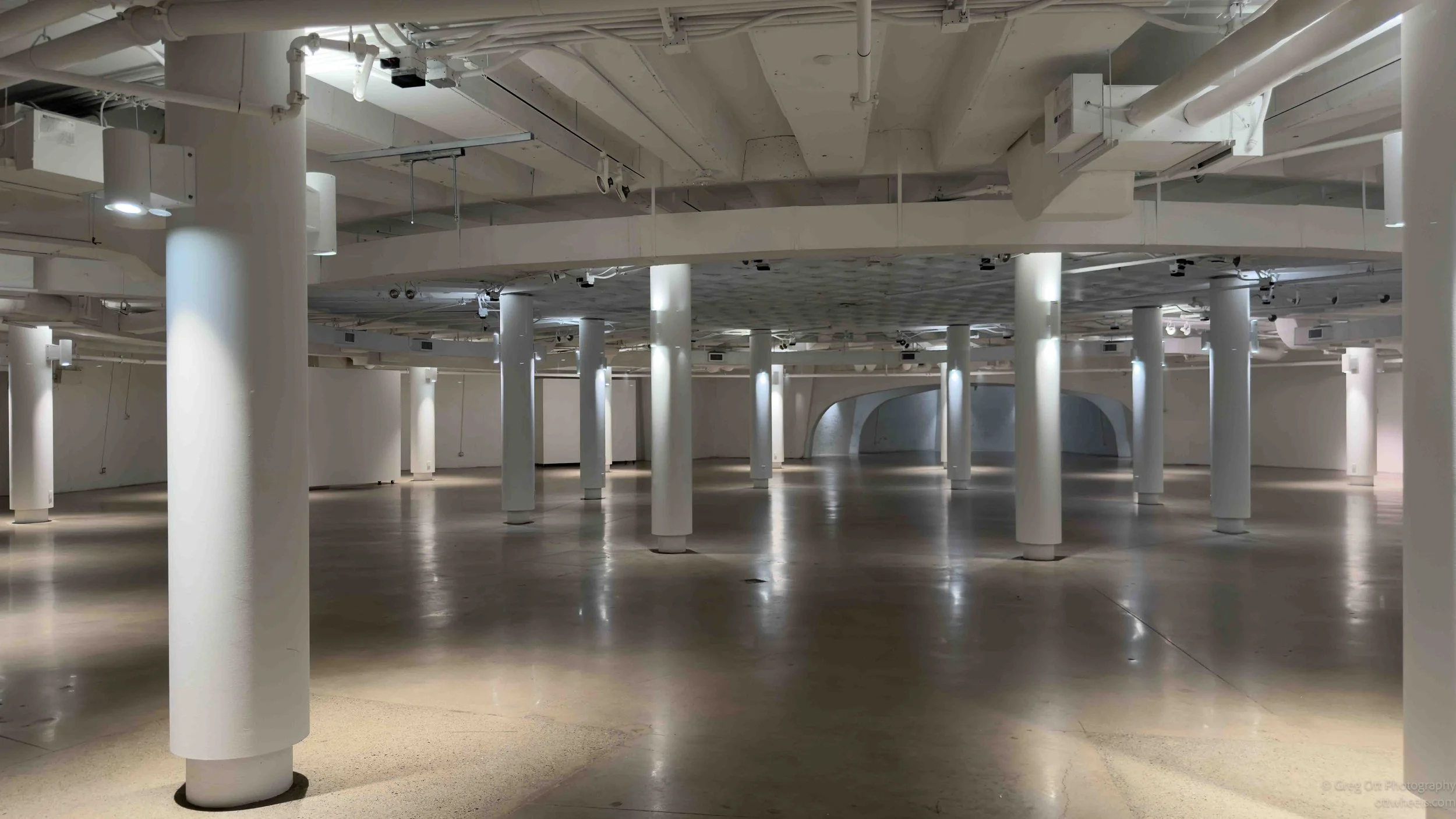
The other positive was the free ice cream and popcorn. Beer and wine were available for purchase, and a DJ was playing music that gave the evening more of a social-event atmosphere than an art-gallery atmosphere. It was enjoyable enough as an evening gathering, but I had come to see contemporary art, and there simply wasn't much of it to see.
I left disappointed and decided to return to National at Westhills. It turned out to be Burger and Beer Thursday, with the beer included for the price of the burger. Colorado and Georgia Tech were playing football on all the televisions, but the entertainment for me was at a large table nearby where a fantasy football group was holding what appeared to be its draft. A large whiteboard was leaning against the wall, several people had computers open, and everyone seemed to have a stapled packet about 20 pages thick that they periodically flipped through. Every once in a while there would be cheering from the table or a collective groan when something happened.
I asked one of the staff if they were actually betting money, but they didn't know. I wondered how much money was involved and whether what they were doing was even legal. Whatever was going on, they were certainly buying enough food and drinks to keep the restaurant happy.
It was getting close to 10 p.m. when I left. I stopped to fill the van with gas and then headed back to my quiet overnight spot for the night.