There was a 21-foot vehicle restriction on the road to Logan Pass, and my van is 22 feet long, so driving myself to the Hidden Lake Nature Trail was not an option. I booked the 6 a.m. shuttle from the St. Mary Visitor Center instead. I was up at 4:50 making breakfast and then drove about twenty minutes through thick fog to the visitor center. The parking lot was nearly empty when I arrived, but just before six the shuttle appeared out of the gray.
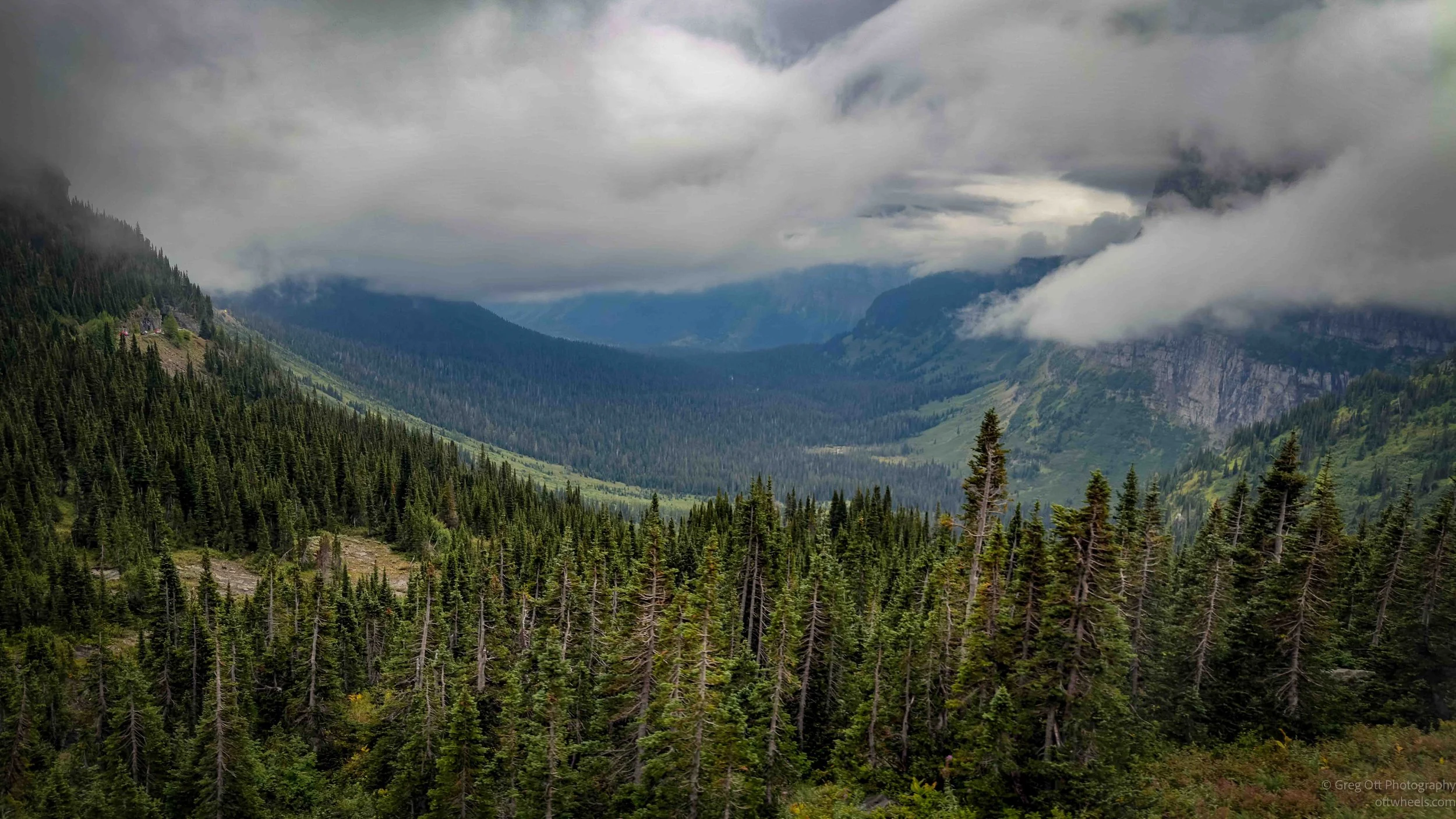
The ride toward Logan Pass was slow. Brenda, the driver, was having the same problem I would have had behind the wheel: she could barely see the road. We stopped at Rising Sun to pick up another group, along with her husband, Herb, who had been driving their shuttle. The higher we climbed, the worse the fog became. I was sitting directly behind Brenda, and at one point I could barely make out the tunnel ahead of us. By then I was very glad I had not tried to find some way to drive up myself.
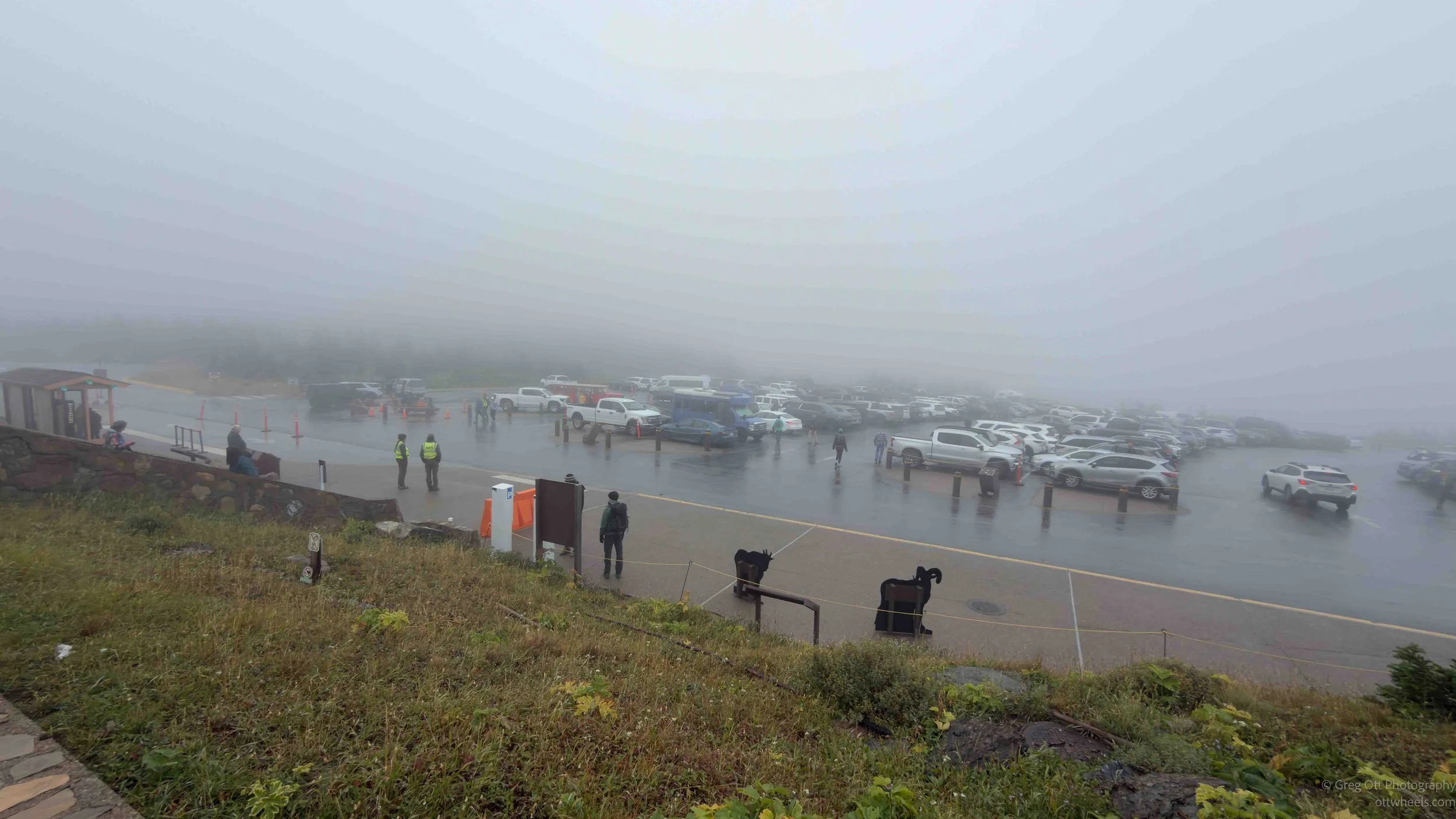
When we reached Logan Pass, visibility was probably ten feet. It was cold, wet, and completely socked in. Most of the people on the bus were planning to hike the Highline Trail, roughly twelve miles, and they disappeared into the fog almost immediately. I wandered around for about ten minutes before finding the Hidden Lake trailhead, but I could not see where the trail went. I even pulled out a flashlight, although that did not help much. I could have followed the Garmin or AllTrails, but hiking for several hours through cold fog simply to say I had done it did not sound appealing, and there was no chance of getting the photographs I had come for.
The shuttle was still sitting at the drop-off area, so I walked over and asked Brenda if she could take me back down. She and Herb both thought I had made the right decision. I ended up being the only passenger, and what looked like a failed hiking morning turned into something far more interesting.
Brenda and Herb were Blackfoot, and during the drive down they began telling me about their lives and family. Brenda was especially proud that she and her siblings had all gone to college and then returned to the Blackfoot community. She talked about her grandparents and her mother being sent to schools where they were required to speak English. Today she and Herb deliberately speak Blackfoot with each other as one way of keeping the language alive. They also talked about hunting elk, deer, and bear, and gathering berries, roots, and other plants.
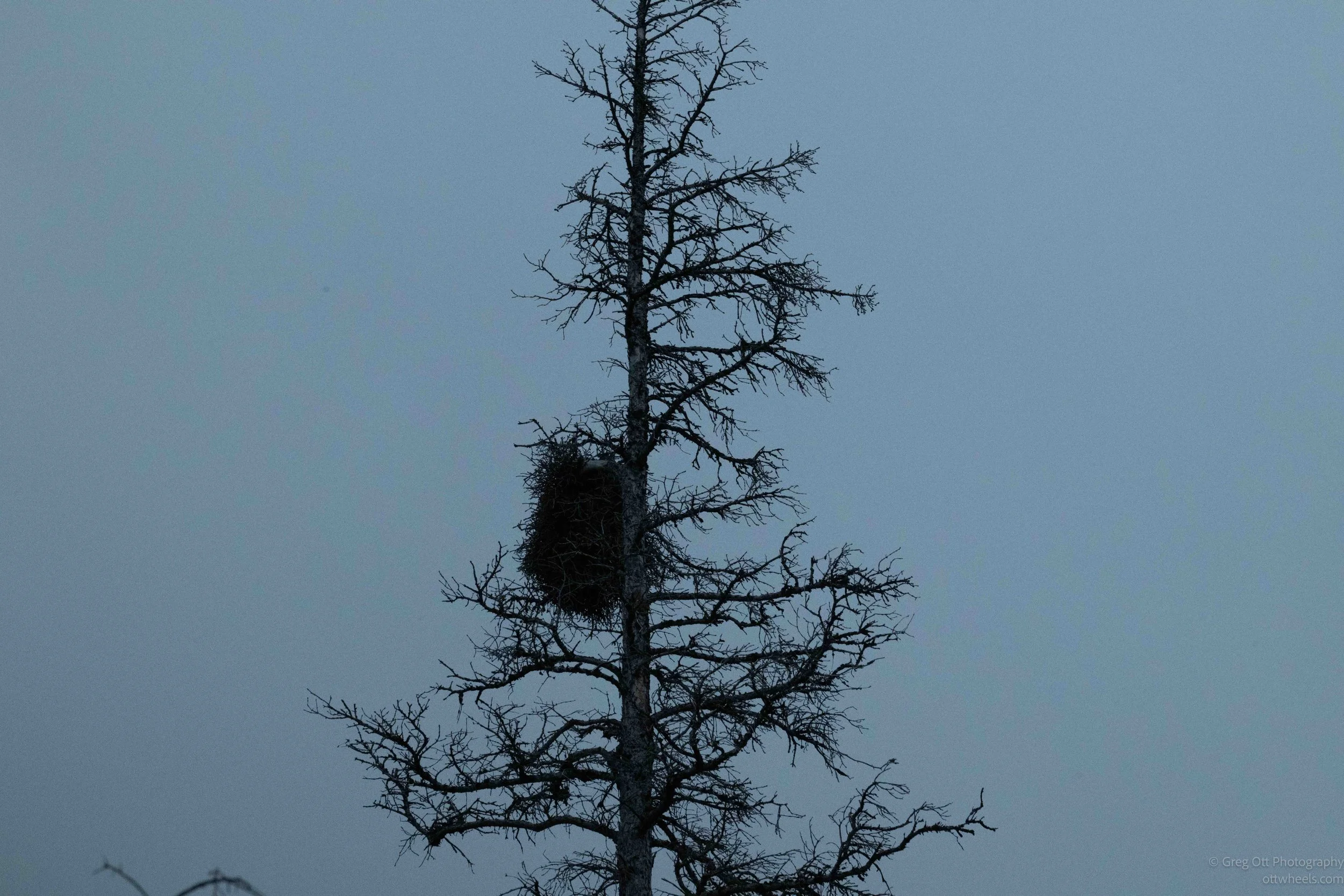
As we descended, we stopped several times while they pointed things out along the road. We saw a large nest that none of us could identify, deer near the roadside, what looked like a grouse, and eventually grizzly bears appearing below us through the fog. I almost certainly would have missed them without Brenda and Herb knowing where to look. When Herb got off, he kissed Brenda and said something to her in Blackfoot. I asked what he had said. It meant, “Be safe. I love you.”
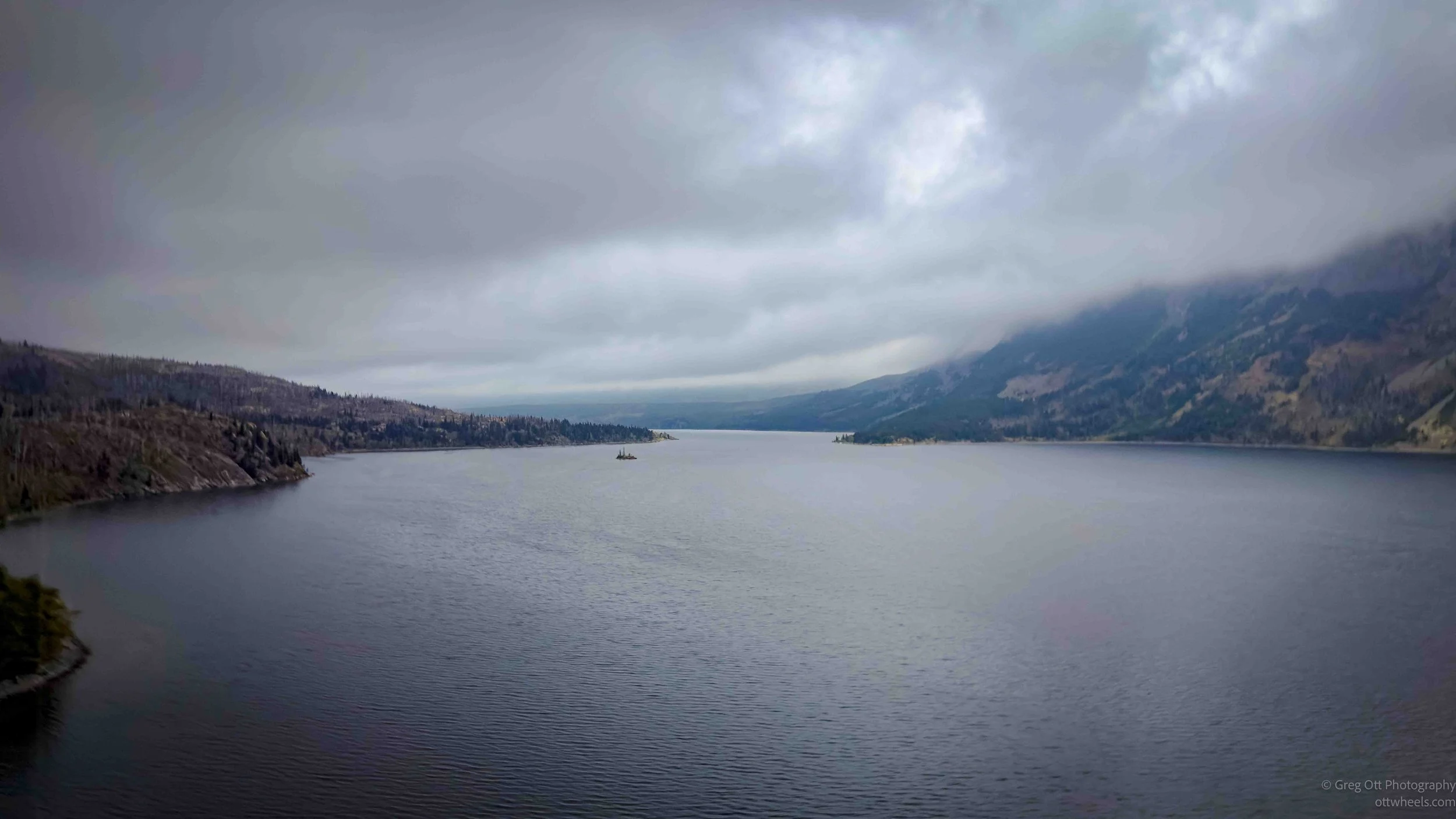
After he left, Brenda continued talking about her children, family gatherings, and life in the community. I had started the morning hoping to hike and photograph Hidden Lake. Instead, I spent part of it alone on a shuttle listening to a Blackfoot woman tell me about her family, her language, and her life. It was not the morning I had planned, but it was probably more memorable.
Back at St. Mary, the fog was beginning to lift. Rangers told me conditions were also improving at Logan Pass, and there happened to be one seat left on the 10 o’clock shuttle. For another dollar, I decided to try again.
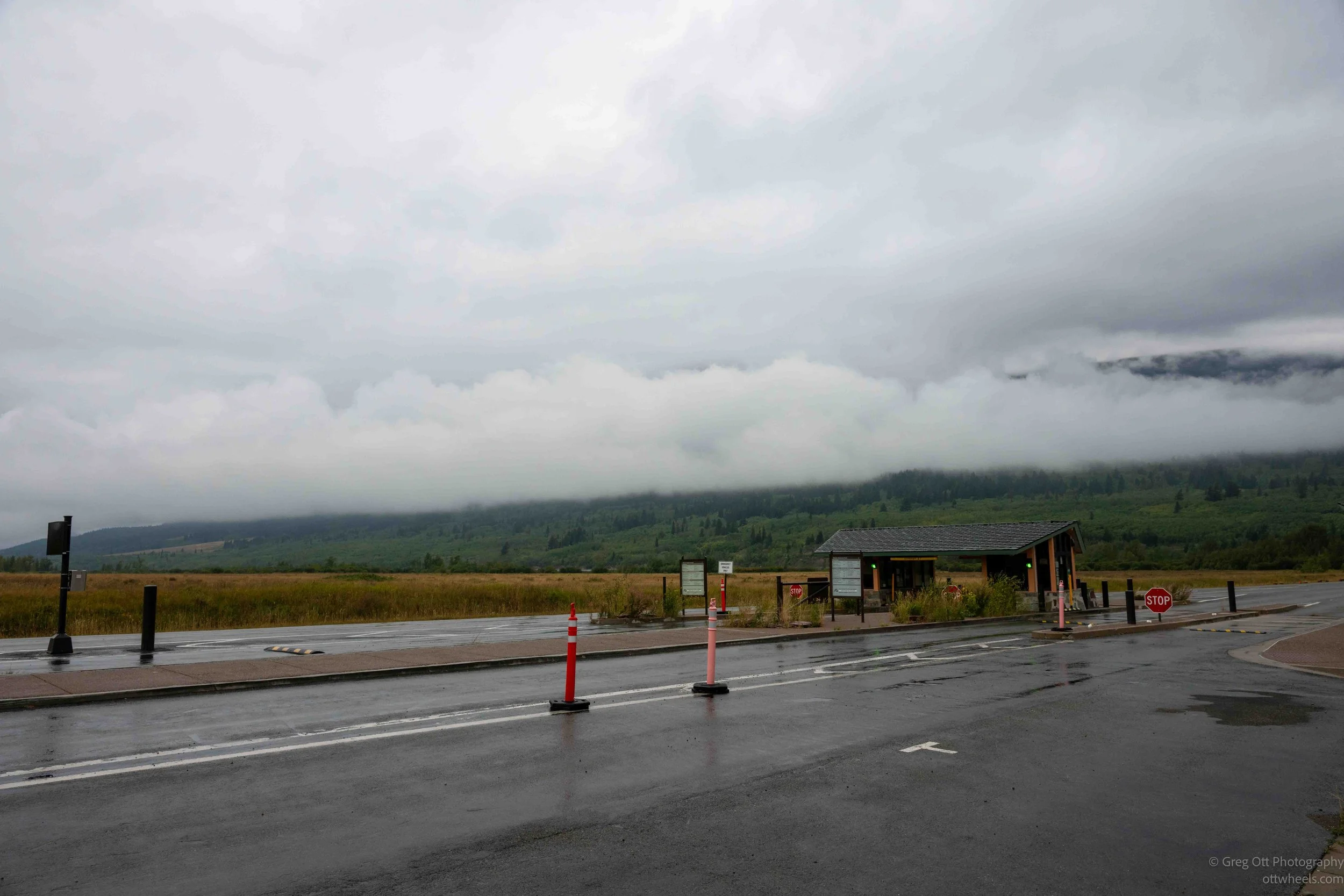
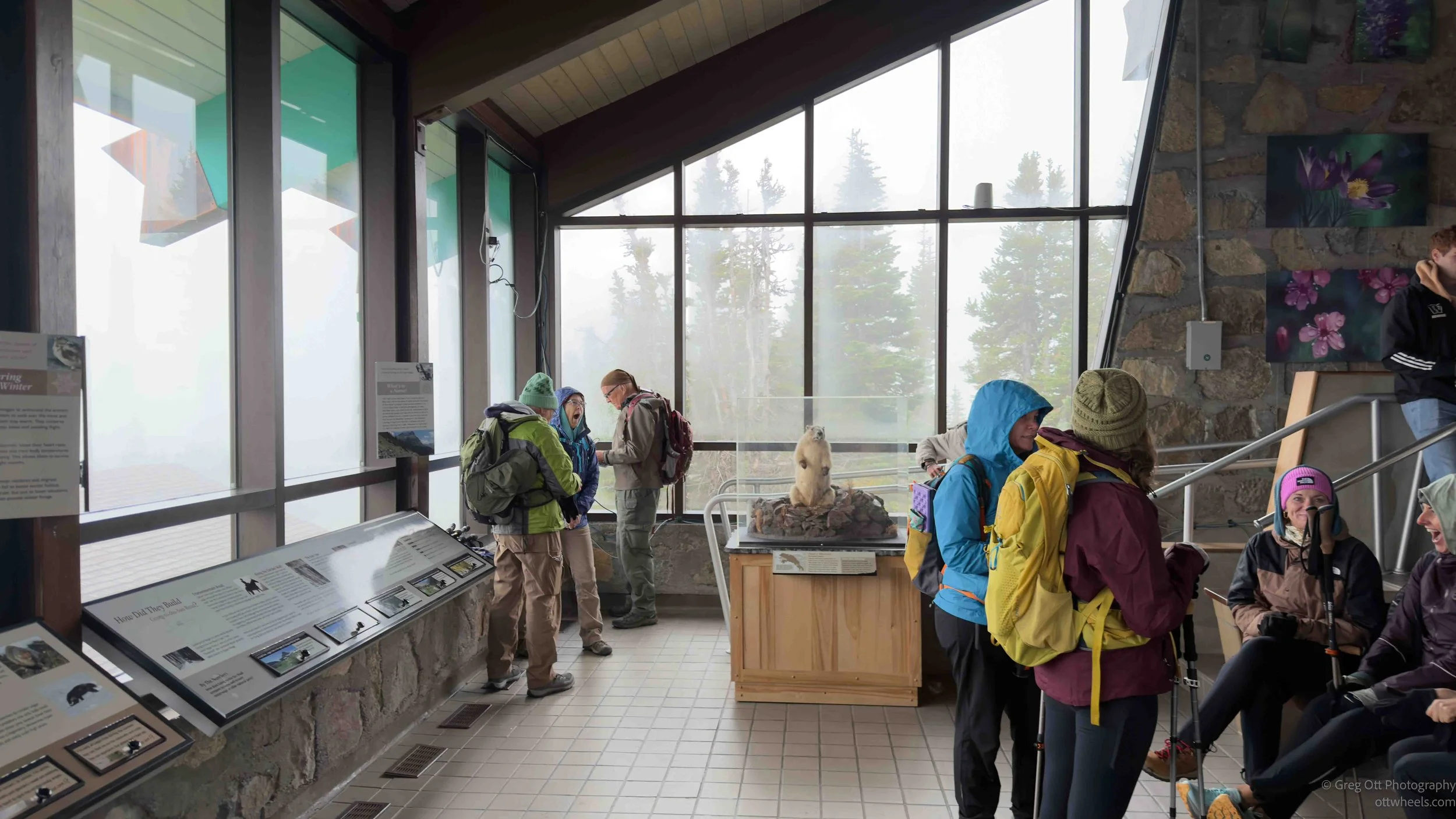
The second shuttle was packed, and when we reached the top, conditions had technically improved. I could now see perhaps fifty feet now instead of ten, and I could actually see the visitor center. That was progress, but when the rangers said the fog was slowly lifting, they were using the word slowly very accurately.
Inside the visitor center I recognized several hikers from the 6 a.m. shuttle. Some had turned around and come back rather than continue into the fog, which made me feel considerably better about my earlier decision. Rangers were busy answering questions about the trails and visibility, so I asked a slightly different one: was there any sun nearby where I could actually go hike? The ranger pulled up a webcam from the Two Medicine area, and on the screen was something I had almost forgotten existed that morning: blue sky.
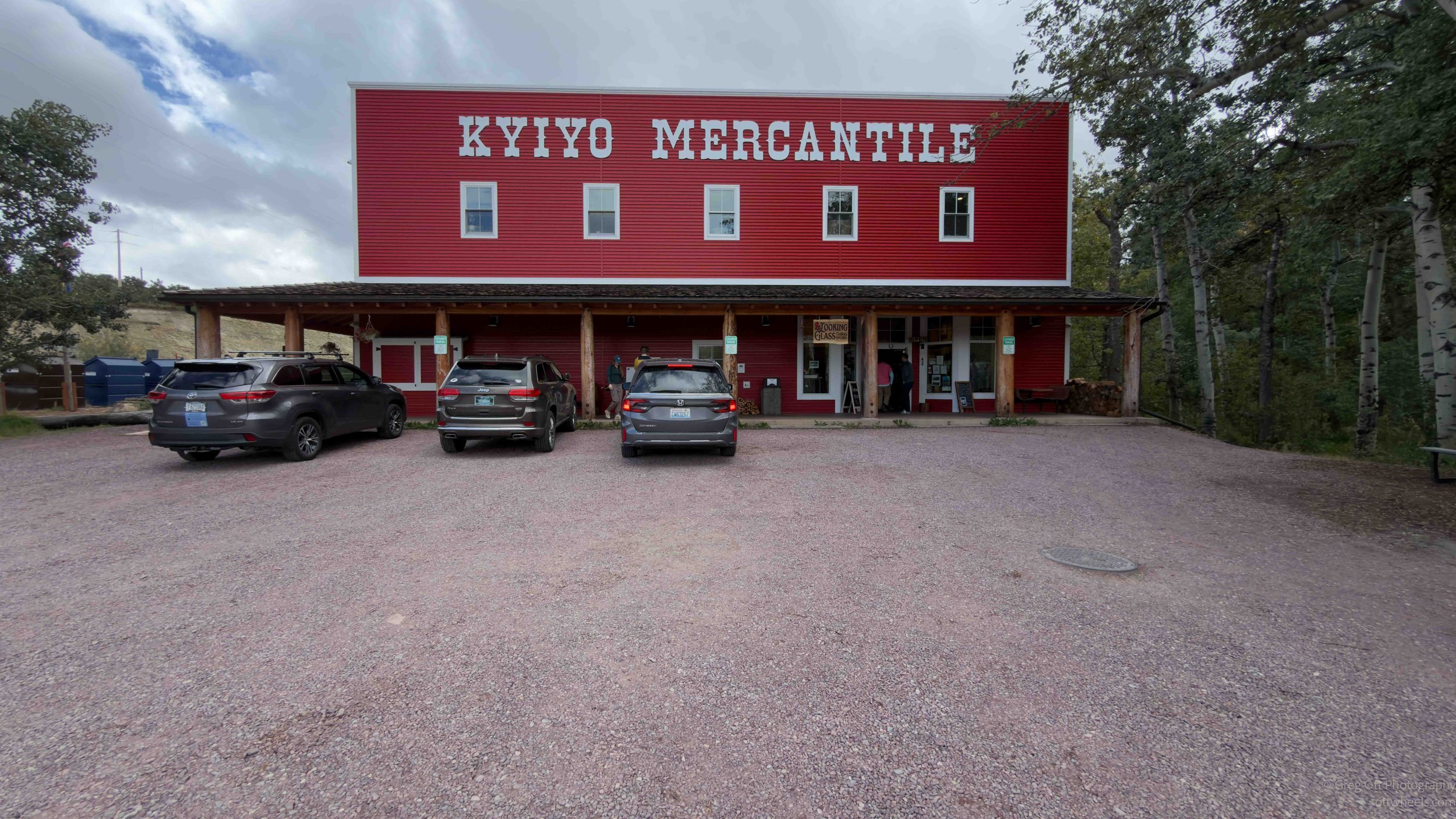
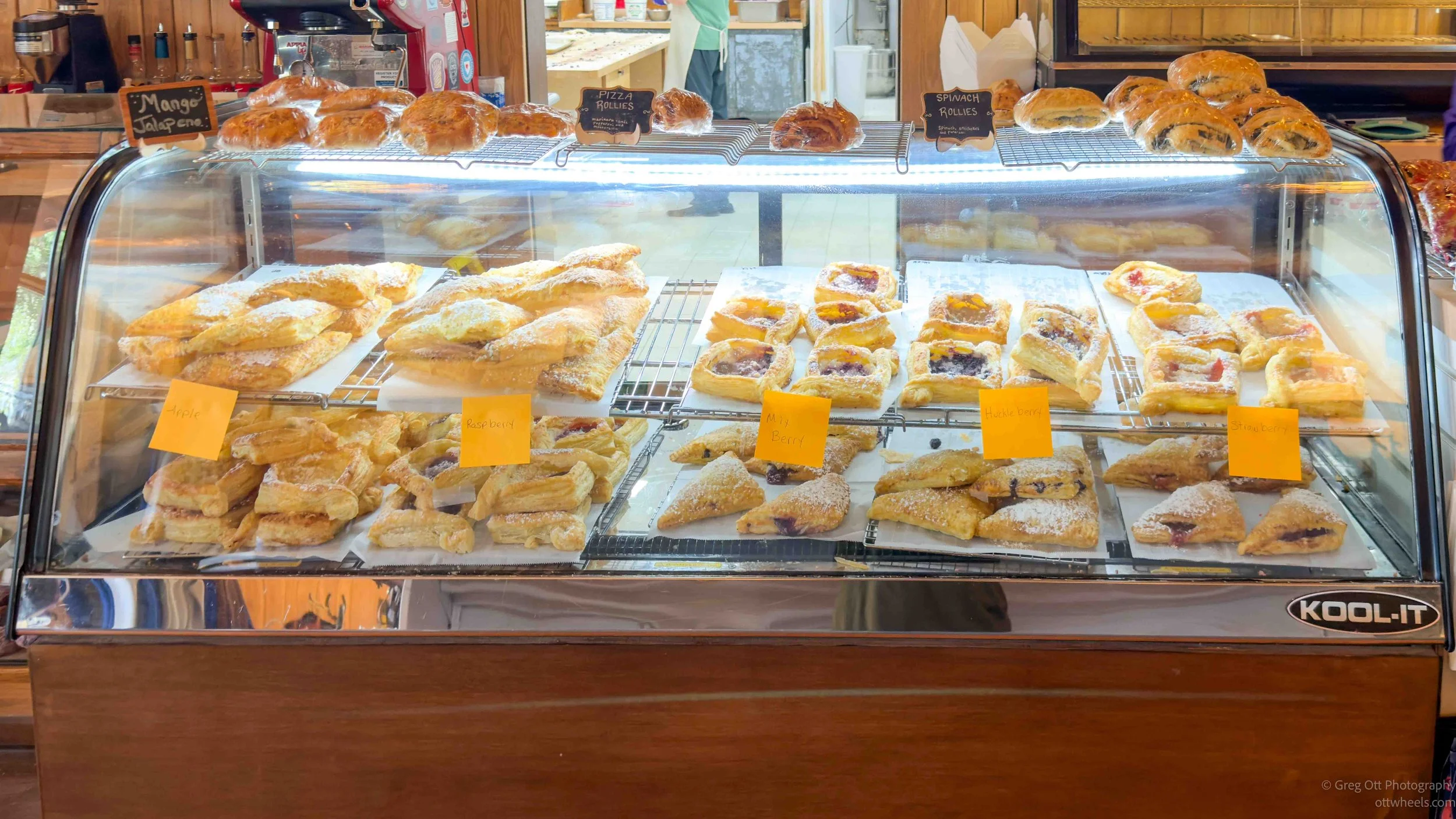
Four other people from the first shuttle had been listening and decided to ride back down too. Earlier, I had asked Herb where I could get a good cup of coffee, and he had told me to stop at the Kyiyo Mercantile in Kiowa. He also kept mentioning the pastries. He knew the owner, although he assured me that had nothing to do with the recommendation.
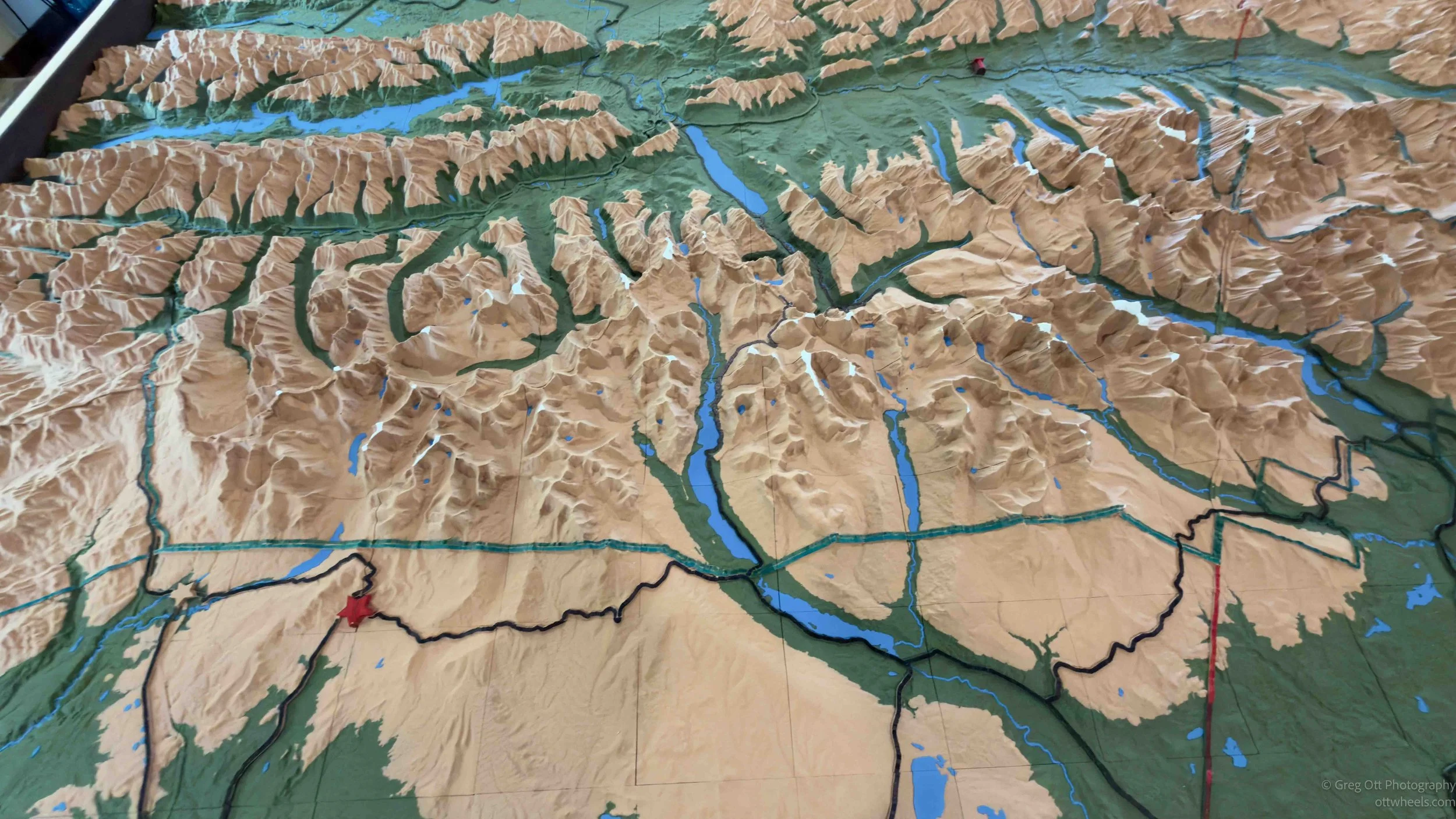
I stopped there for lunch and discovered he had been right. I ordered an apple turnover made with thin, flaky layers of dough and an espresso. The cashier told me there were no tables, but there were two rocking chairs upstairs. A woman sitting near the counter welcomed me while quiet meditative music played nearby. As I ate, I noticed a large three-dimensional map of Glacier National Park hanging on the wall. It appeared to have been cut with a CNC machine and assembled from individual layers. The woman came over and showed it to me, and when I pointed out the cutting marks on the pieces, she said she had never noticed them before.
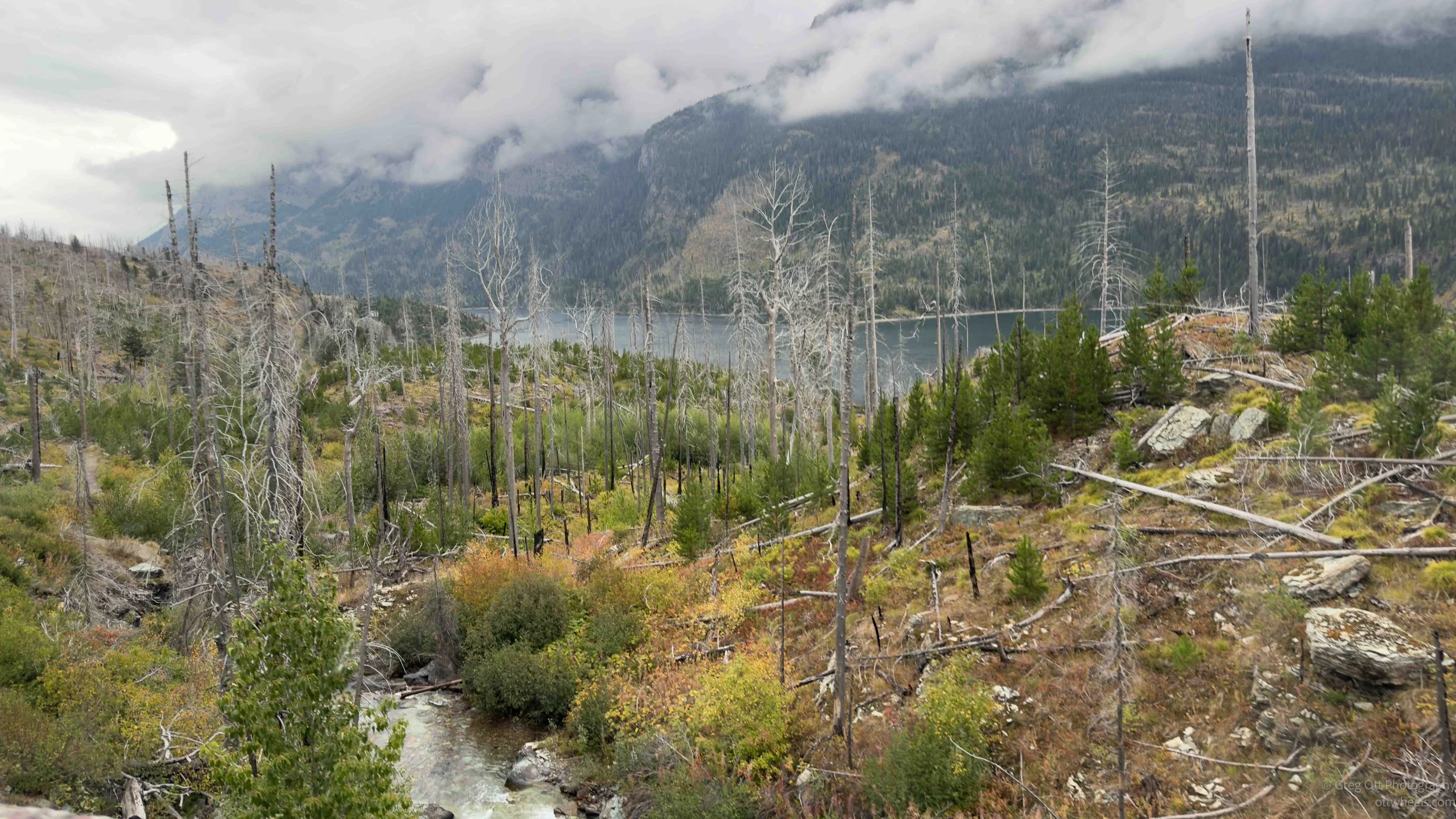
From the mercantile in Kiowa, I headed toward Two Medicine. The road alternated between broad, open stretches and narrow sections through the forest with very little room along the edges. Before long I started pulling over for emergency vehicles passing me; trucks with flashing lights, an EMT vehicle, an ambulance, and two park police SUVs. Eventually a woman standing in the road flagged me down. I rolled down the window and she said, “I hope you’re not in a hurry.” I told her my day had already gone nothing like I had planned and it had changed several times. She smiled and said, “Some days are like that.”
There was no easy place to turn the van around, so I shut off the engine and asked what had happened. Someone had driven off the road and dropped twenty or thirty feet into the trees below. I didn’t ask for any more details. Whatever frustrations I had been having with fog, shuttles, and abandoned hikes suddenly seemed pretty insignificant. When traffic finally started moving again, I continued to the Two Medicine entrance and showed the ranger my pass. I mentioned the accident, and she said, “Yeah, I was the one who called it in.”
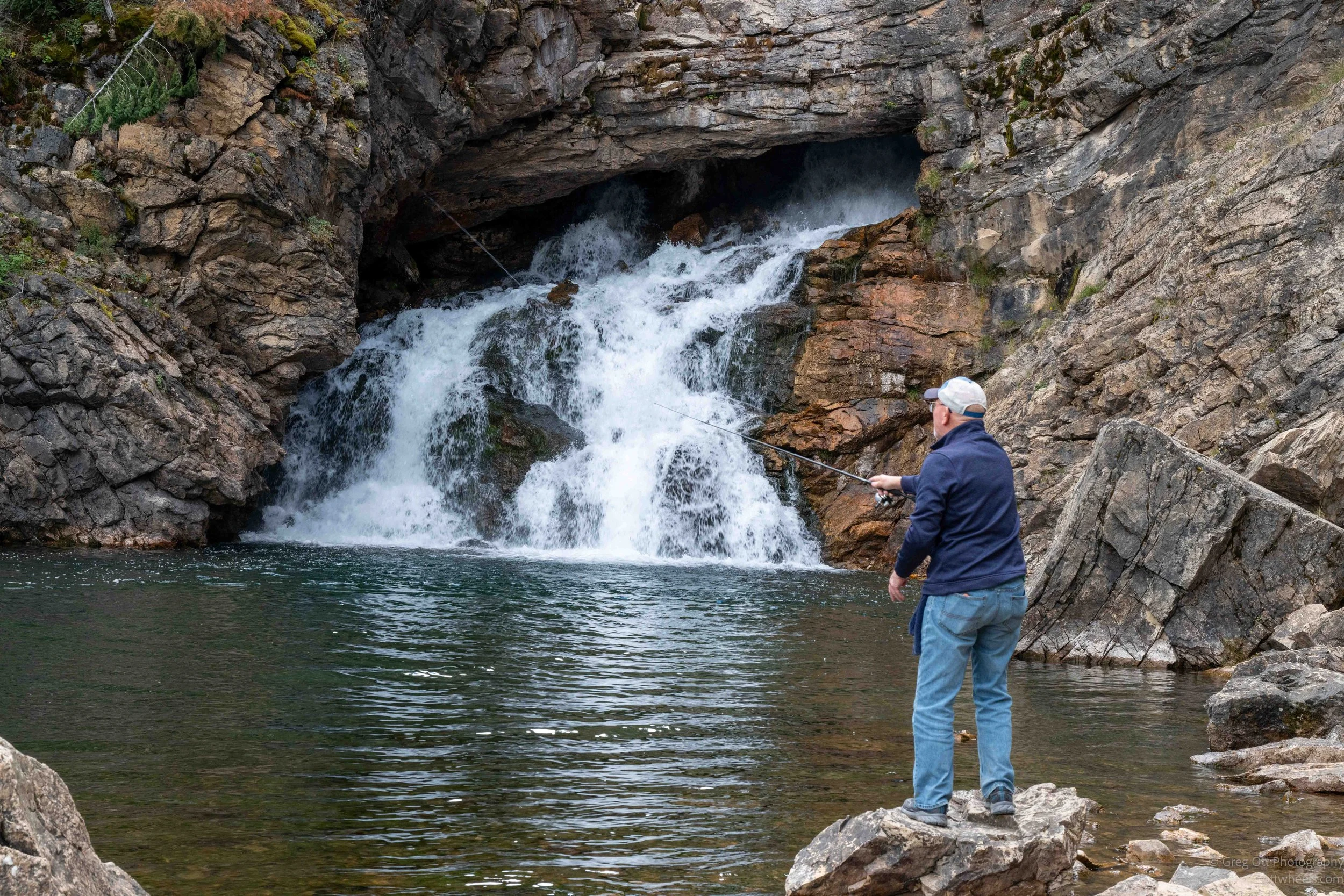
Two Medicine was considerably clearer than Logan Pass, and apparently everyone else had figured that out before I did. The area was busy and parking was difficult to find, but eventually I found a spot at the Running Eagle Falls Nature Trail. The walk to the falls is short and mostly level, passing through trees and low vegetation before reaching the creek and the rock wall beyond. Running Eagle Falls is unusual because the water can come over the top of the cliff during high flow and also emerge from an opening lower in the rock. That afternoon there was no water coming over the top, so the waterfall seemed to be pouring directly out of the side of the cliff.
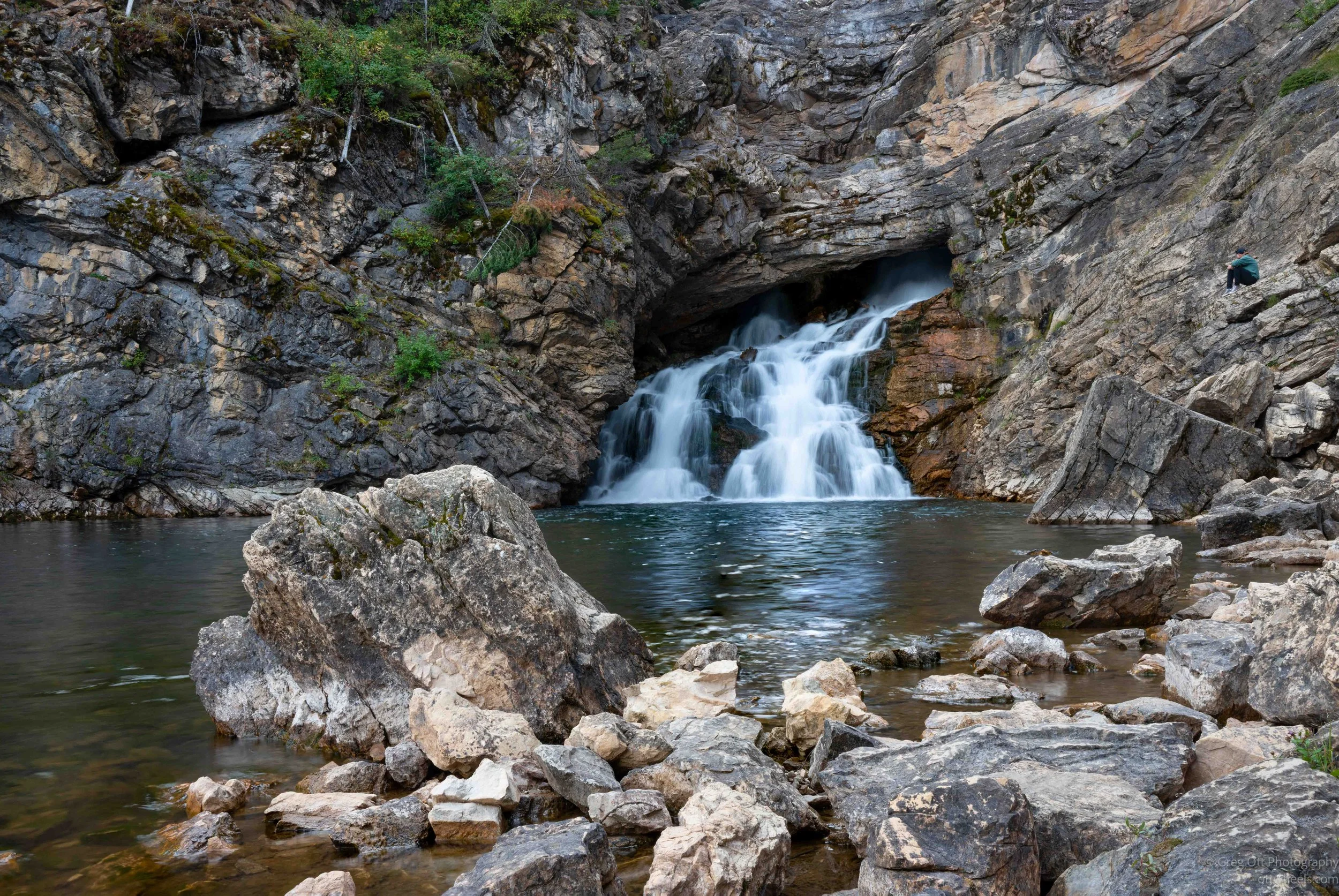
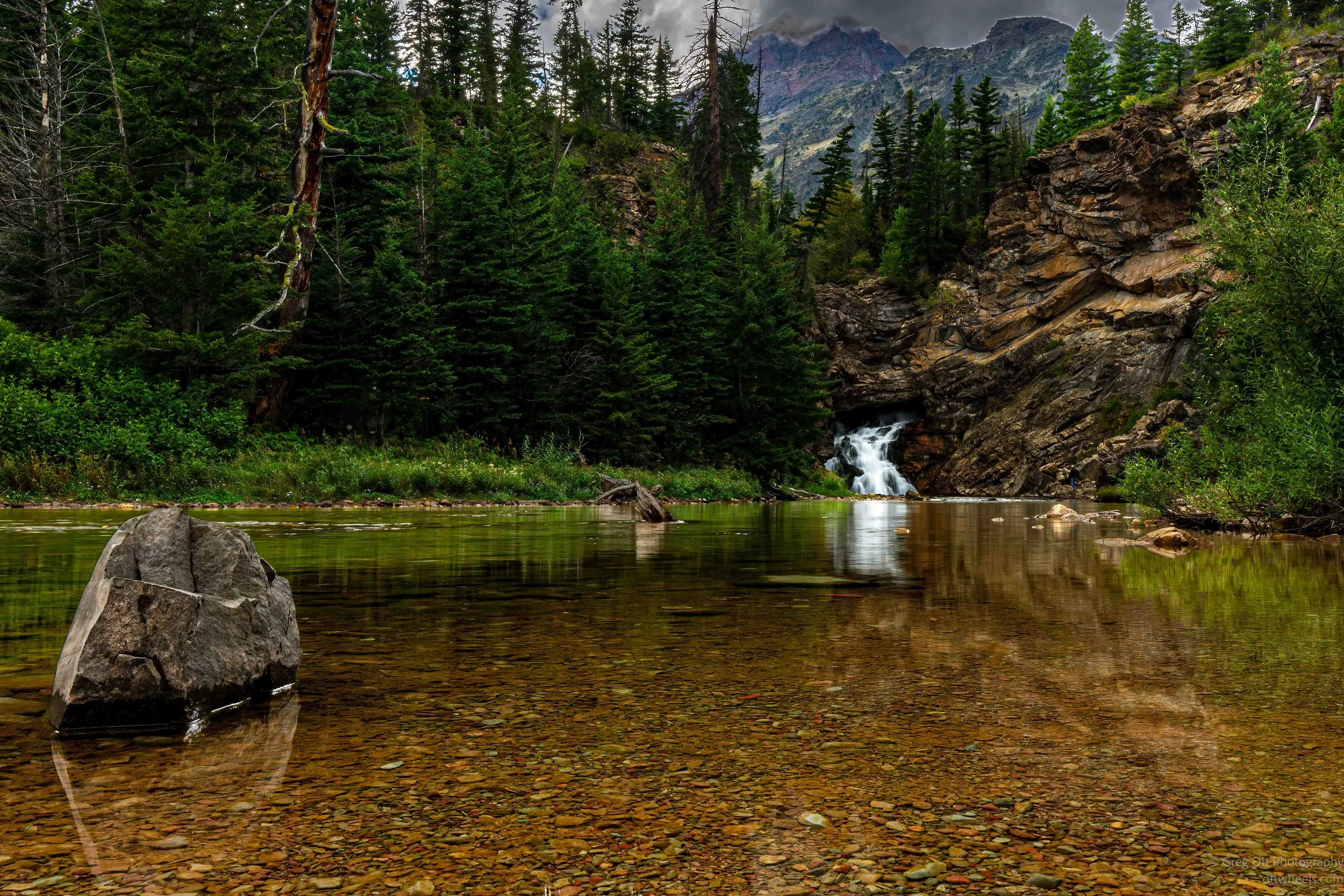
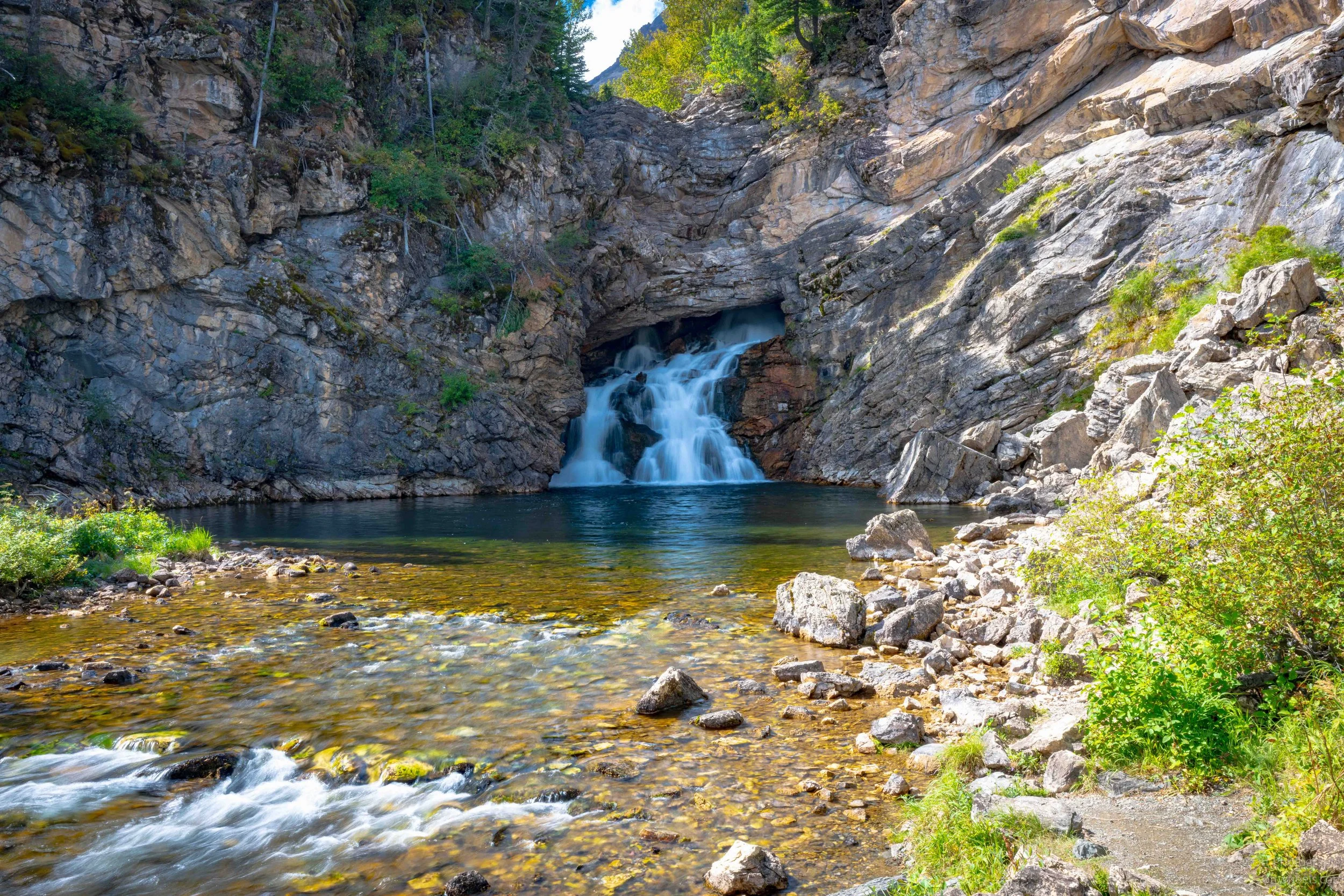
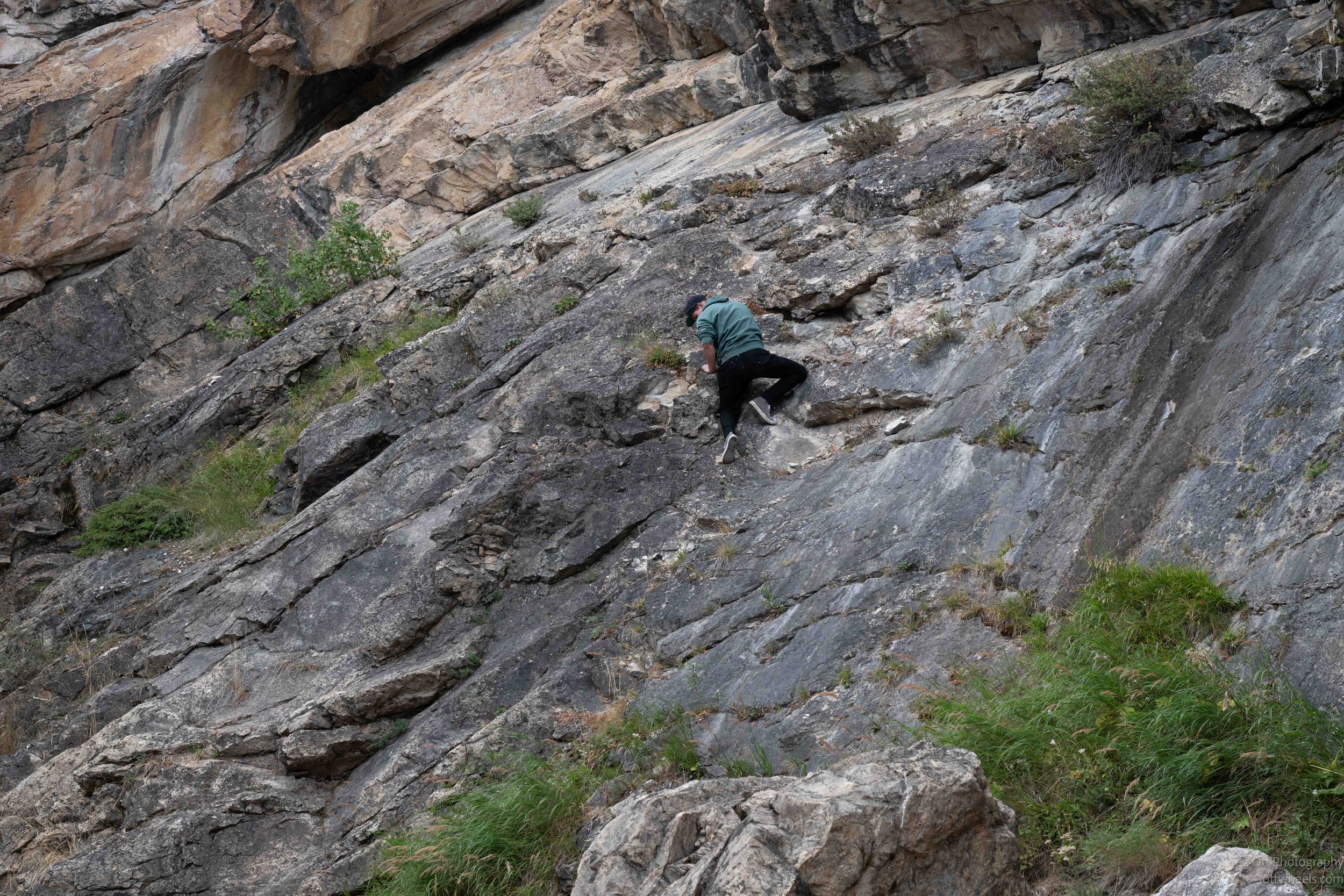
For the first time that day, there were even patches of sunlight. I stopped trying quite so hard to make the day follow a plan and spent some time wandering around with the camera. I photographed the water moving over rocks, people stopping along the creek, the falls appearing out of the dark rock face, and some of the smaller plants along the trail. After hours of staring into fog, simply being able to see some distance and watch sunlight come and go across the landscape felt like a major improvement.
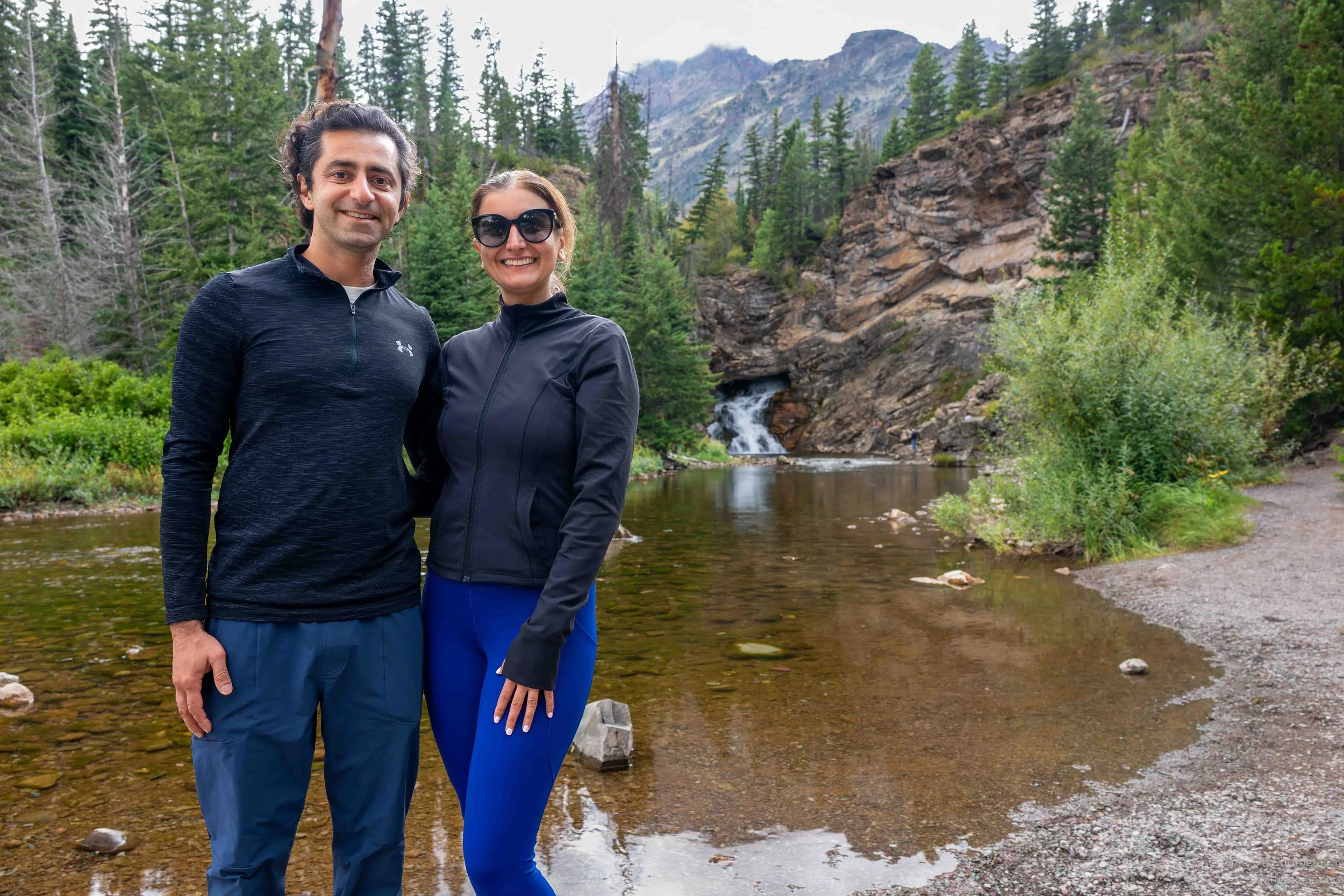
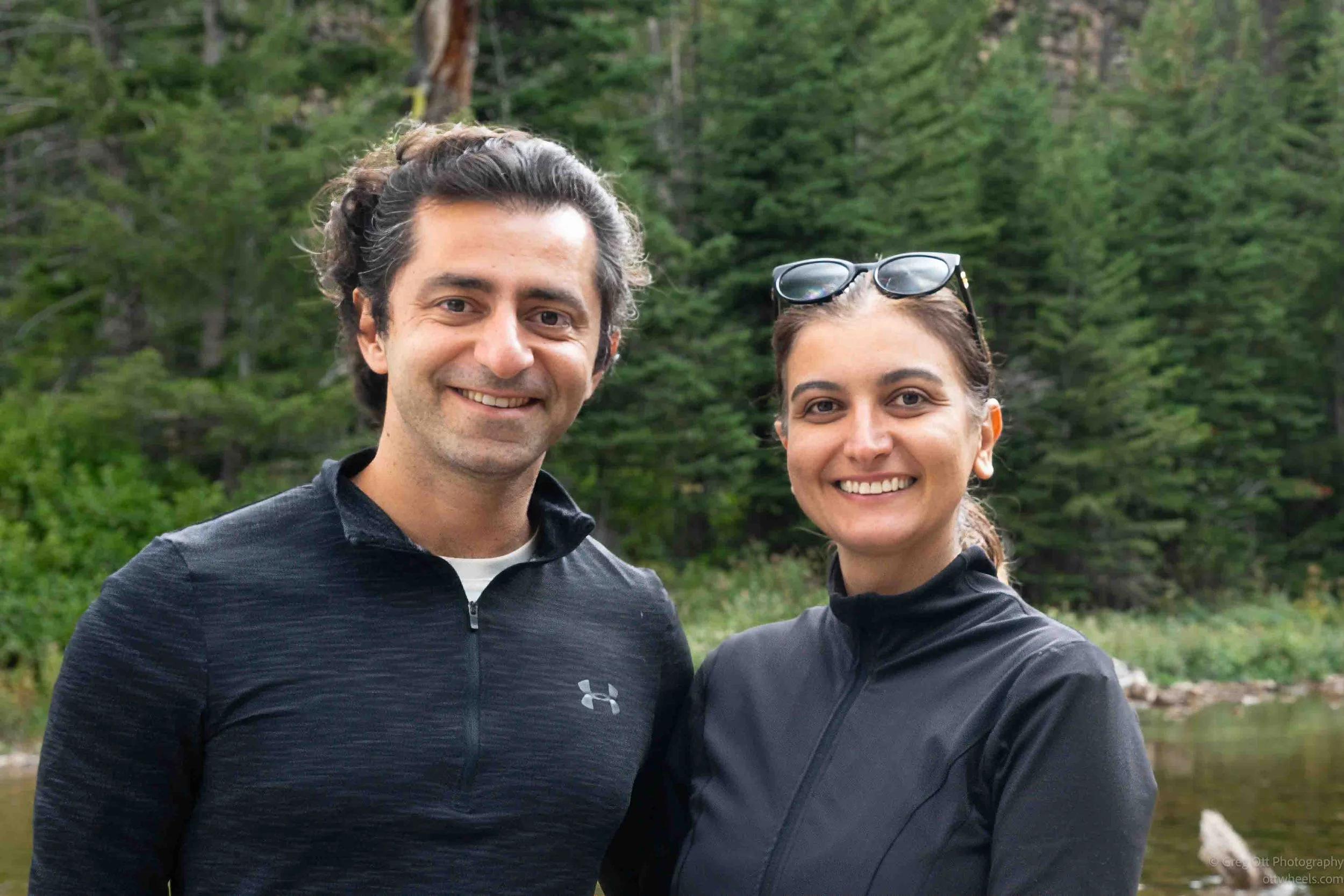
On the way back to the van, I ran into a couple I had already talked with twice on the shuttle. Sara and Moj had flown into Denver and driven north to Glacier, and this was now the third time we had crossed paths. We stood there talking for another twenty minutes before I took a photograph of them and we finally went our separate ways. They were a lot of fun to talk with, and by this point running into them again felt almost inevitable.
Later in the afternoon I drove farther into Two Medicine to the lake. This time there was parking. The mountains were finally visible, but the light was difficult, with bright areas breaking through while much of the landscape remained dark. I tried photographing the mountains and lake for a while, but never really found the light I wanted. The final boat trip of the day was loading and had already sold out, so I decided I would come back the next day with the kayak and perhaps take a bike ride through the area afterward. At the time, that seemed like a perfectly reasonable plan. Unfortunately, it wasn’t going to happen.
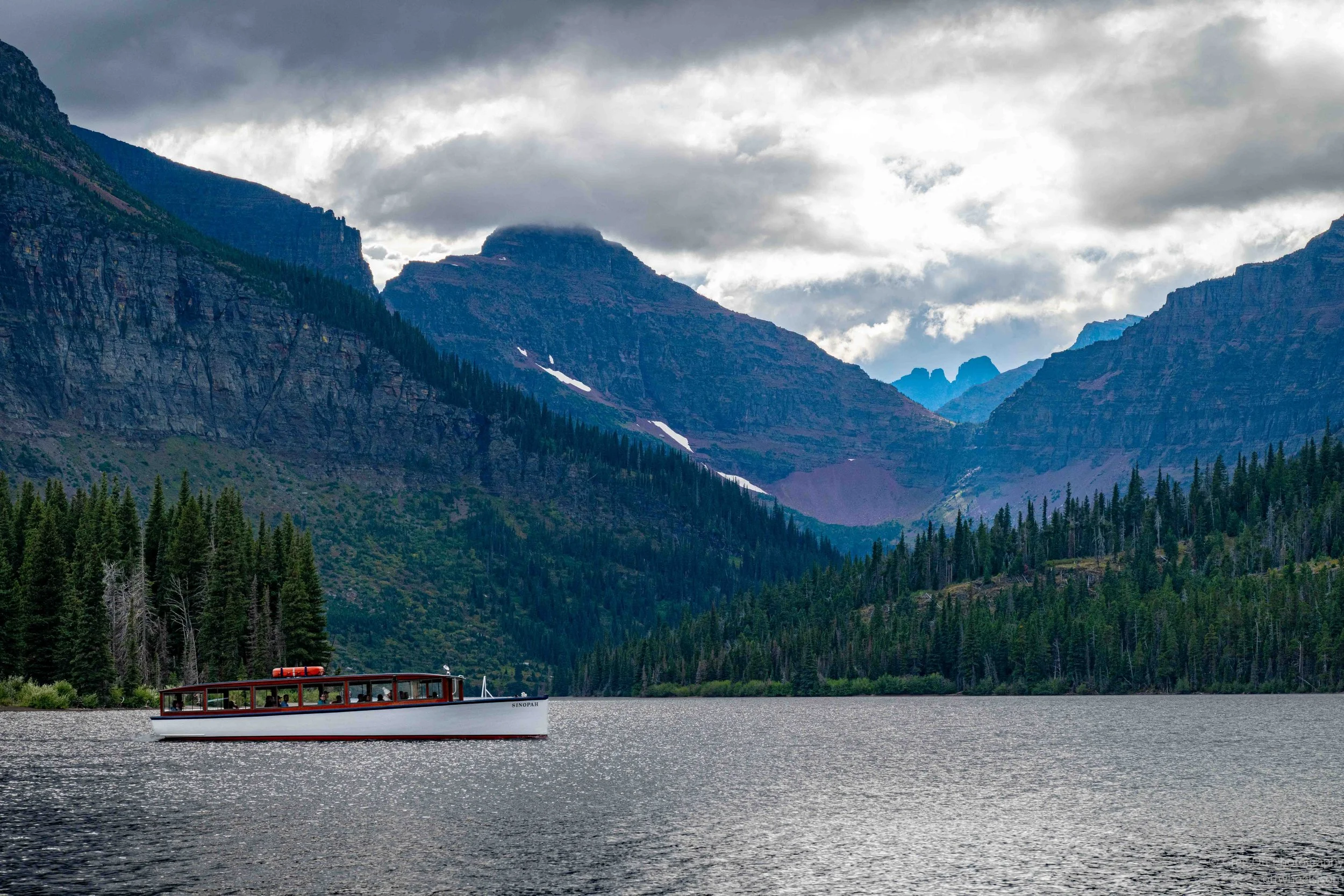
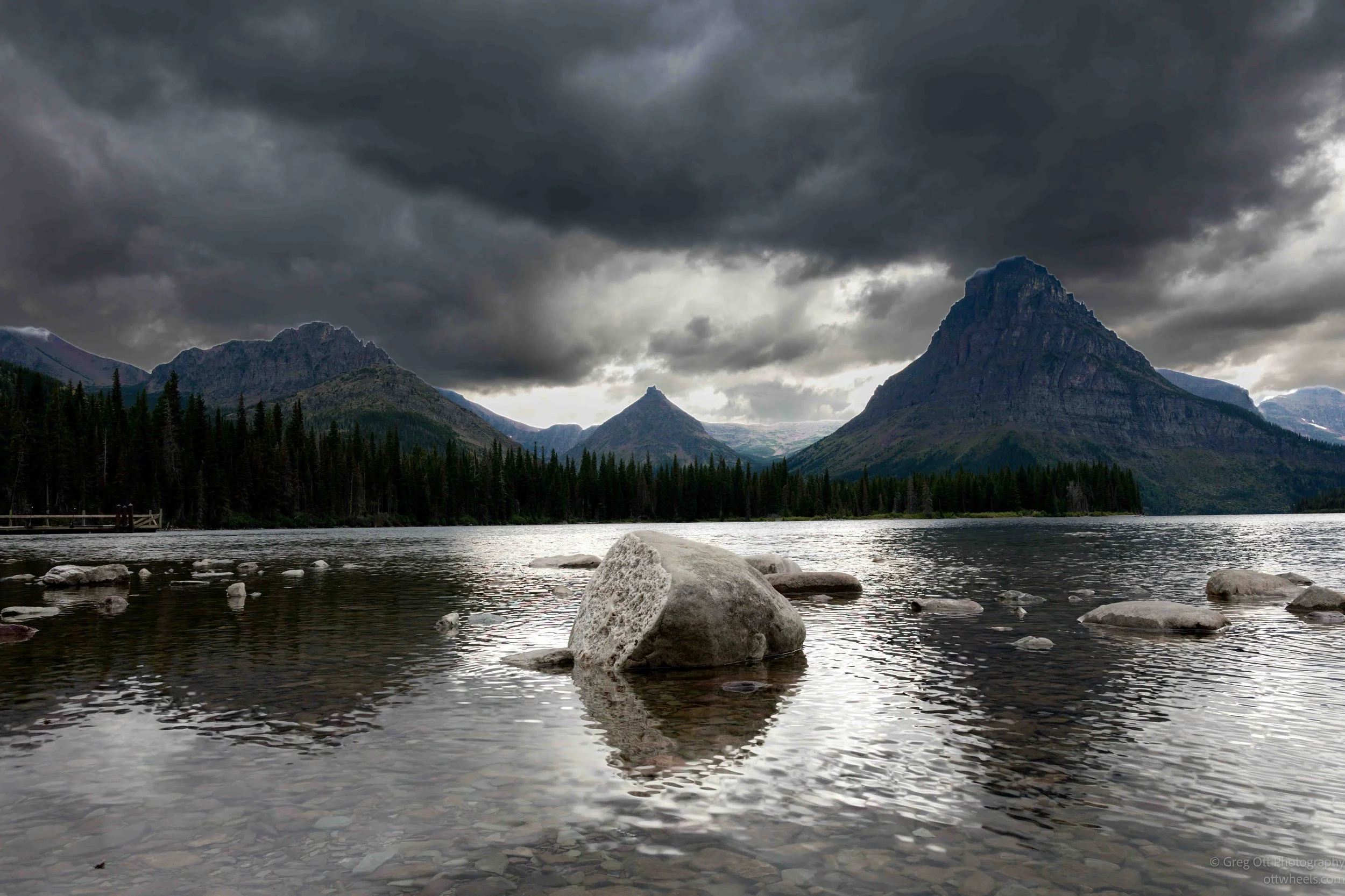
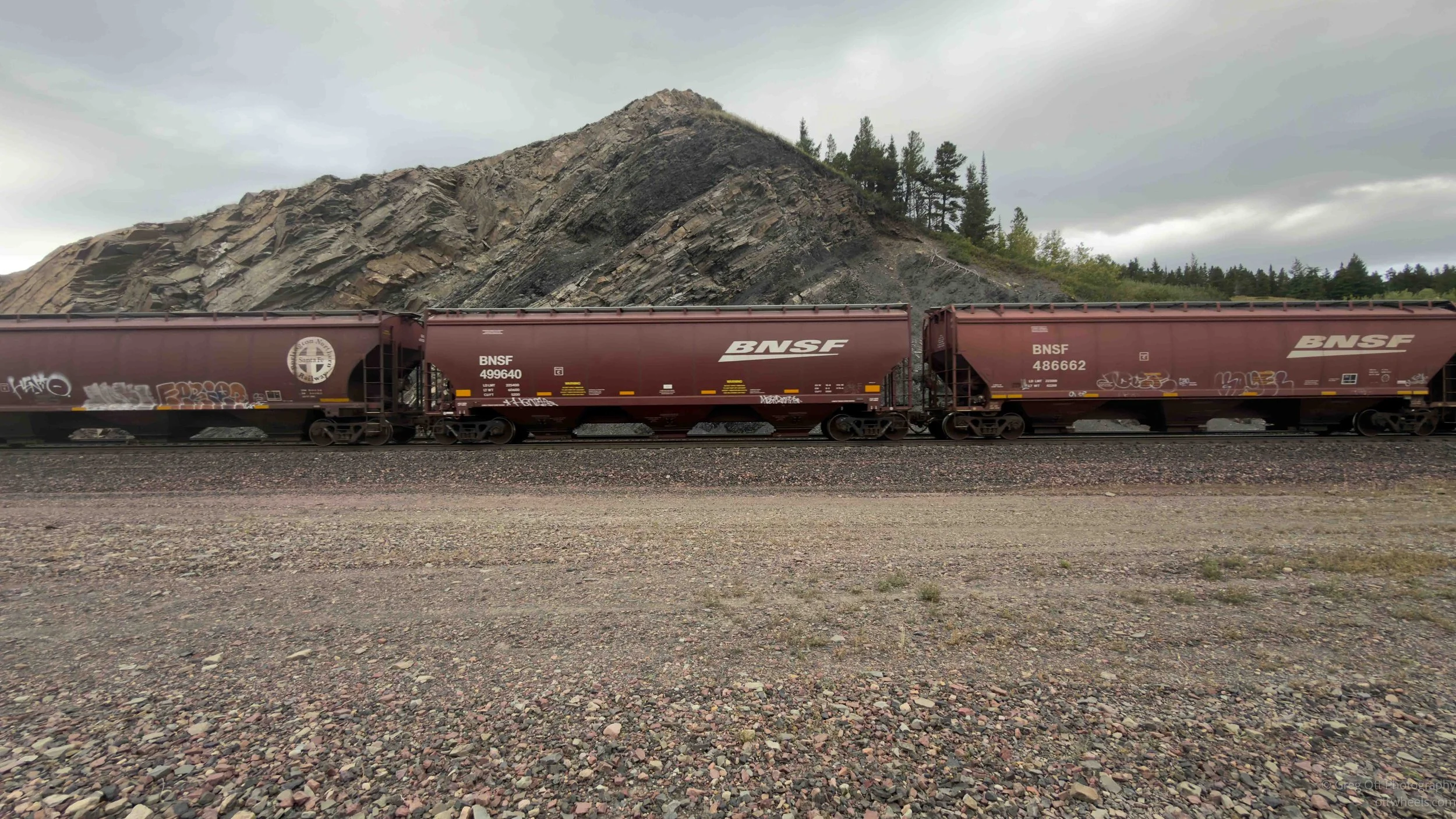
It was getting close to seven when I finally left Two Medicine. I had found a boondocking spot in the Lewis and Clark National Forest on top of a hill overlooking the valley, and light rain was starting and stopping as I pulled in. It was near the train tracks that ran along RT-2.
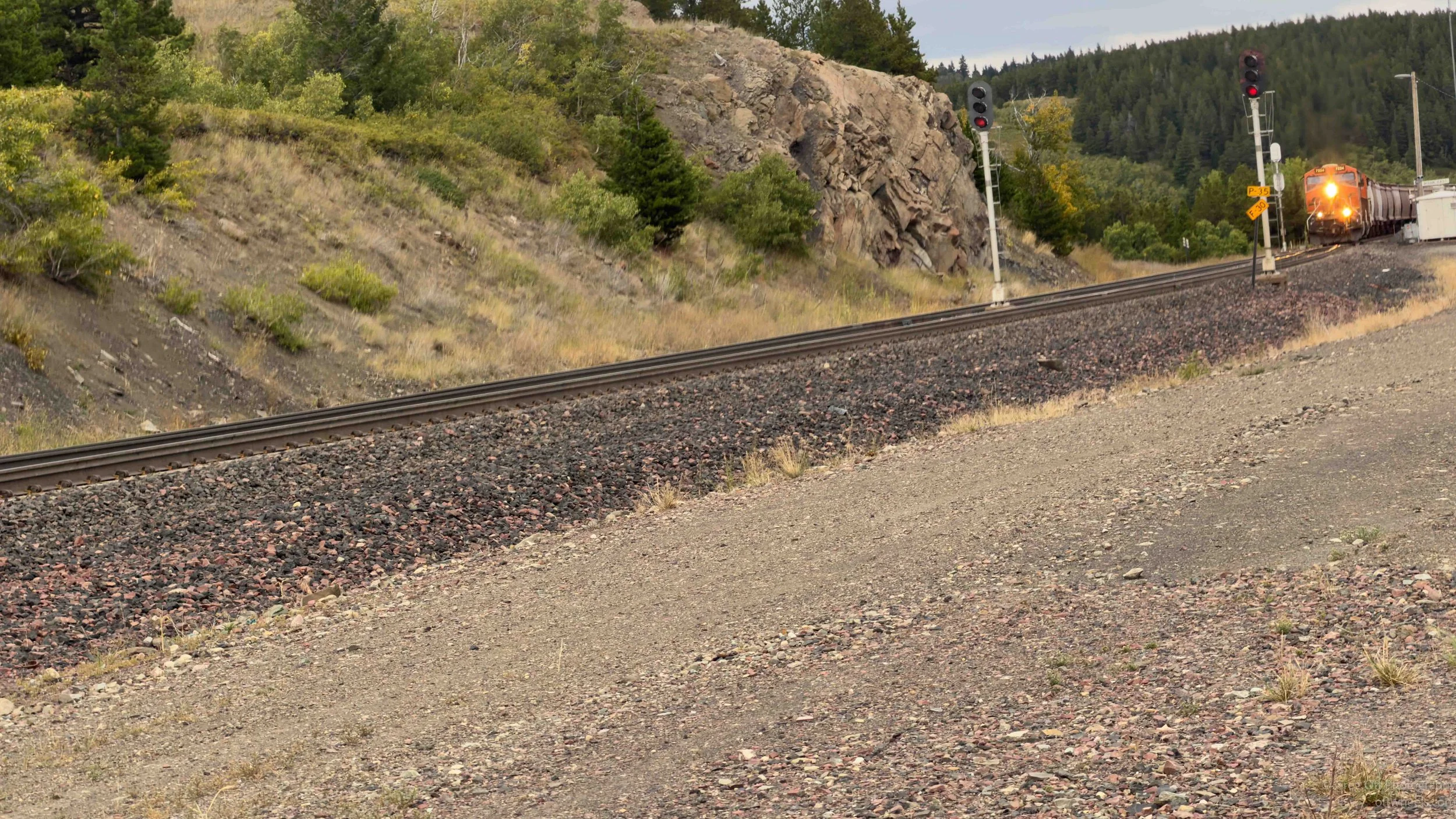
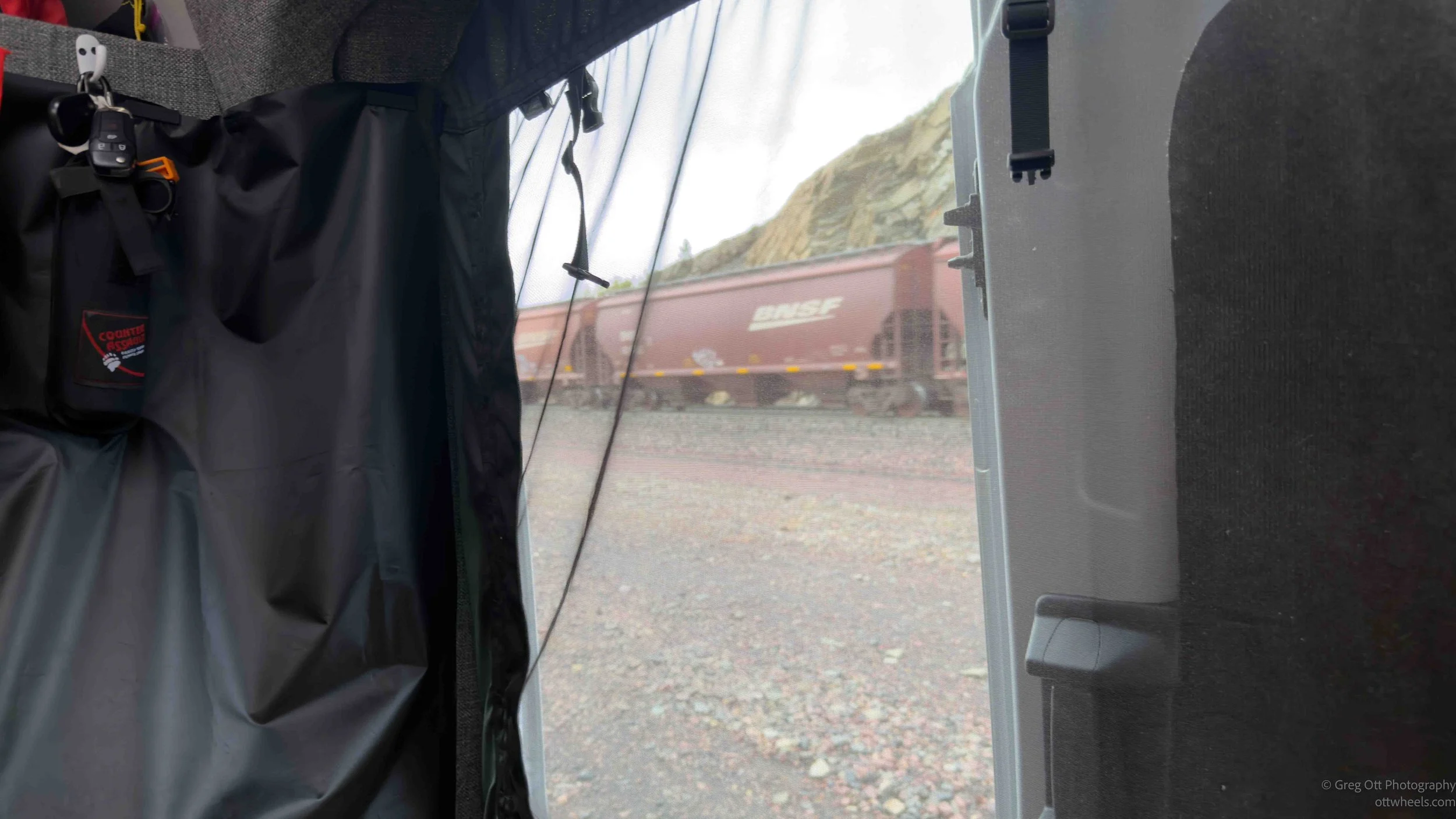
It had been a very long day after getting up before five and repeatedly trying to make something happen. I had started with a fairly simple plan—hike, take photographs, and explore Glacier—but nature had different ideas. By the end of the day, I had finally stopped fighting it and simply followed wherever the day went.