Sun Valley Idaho Bike Ride
I spent the night at the Craters of the Moon National Monument campground. The quiet of the lava fields had a relaxing energy and I slept well. When I woke up, I stayed in bed for a while and read a little more about Craters of the Moon. I kept thinking about the cobalt-blue lava flows I had seen the day before. When I finally stepped outside around 9 a.m., I was surprised by how empty the campground was. I hadn’t heard anyone drive away.
I wanted to do some writing, but I had a few repairs to take care of first. My recent backcountry drives in Montana had loosened some cabinet supports, and one cabinet door had to come off so I could get to the problem. I had been trying to figure out how to repair it without removing the microwave and a bunch of other pieces. Sometime during the night, I woke up with a solution and made a note.
After breakfast, I spent about two hours working on the cabinet, and the repair went very smoothly. I also had to crawl under the van and reattach a few sagging wires. Checkout time at the campground was noon, and I was starting the engine at 11:59.
Sun Valley
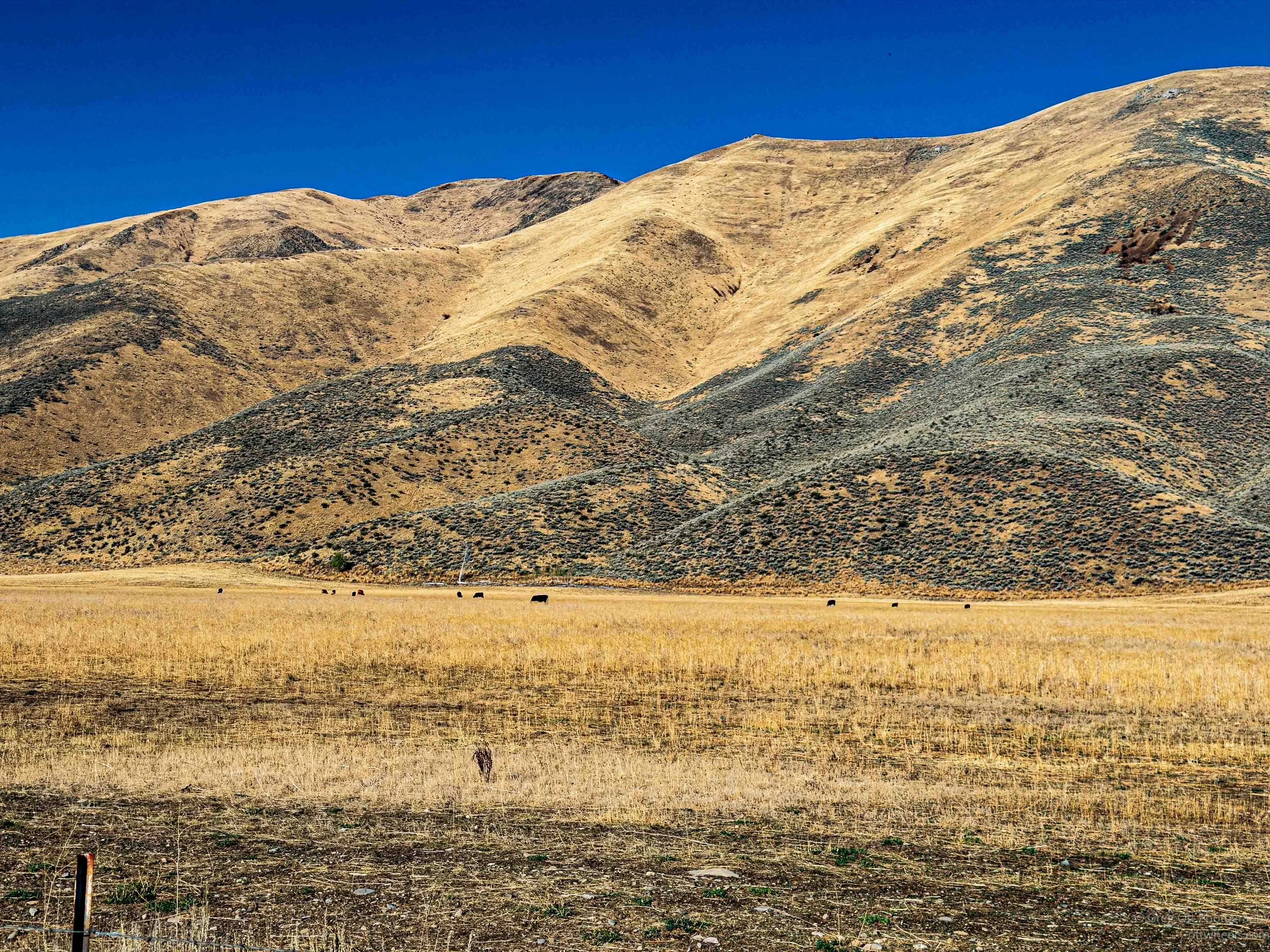
Sun Valley Lodge was a little more than an hour away. The drive started out through the open high desert, with sagebrush, dry grass and long views across the valley. As I got closer to the Wood River Valley, the landscape changed. There were more trees, irrigated fields, patches of yellow in the aspens and cottonwoods, and dry golden hills rising closer to the road. The deep blue sky and late-season light made the whole drive feel much softer than the black lava landscape I had just left behind.
I had noticed the bike trail as I drove up the valley. In Bellevue, I passed a trail sign that said “Sun Valley 18,” and that immediately got my attention. Eighteen miles each way meant a 36 mile ride, which was exactly what I needed. I found parking at Sun Valley Lodge a little after 2 p.m. and immediately changed into my cycling gear.
Before heading out, I made sure the Garmin bike computer and rear light were charged. The tire pressure was down to about 25 psi and needed to be closer to 65, so I pulled out the battery-operated pump and filled both tires. I packed two liters of liquid and enough food for the ride, and by 2:45 I was ready to go.
I headed south from Sun Valley Lodge toward Bellevue on the Wood River Trail. On the way out, it felt like I was going downhill almost the entire 18 miles, although a strong headwind made sure it didn’t feel particularly easy. I kept thinking about the ride back. If I was losing elevation for 18 miles, I was going to have to gain all of it again, and I expected the return trip to be the harder half.
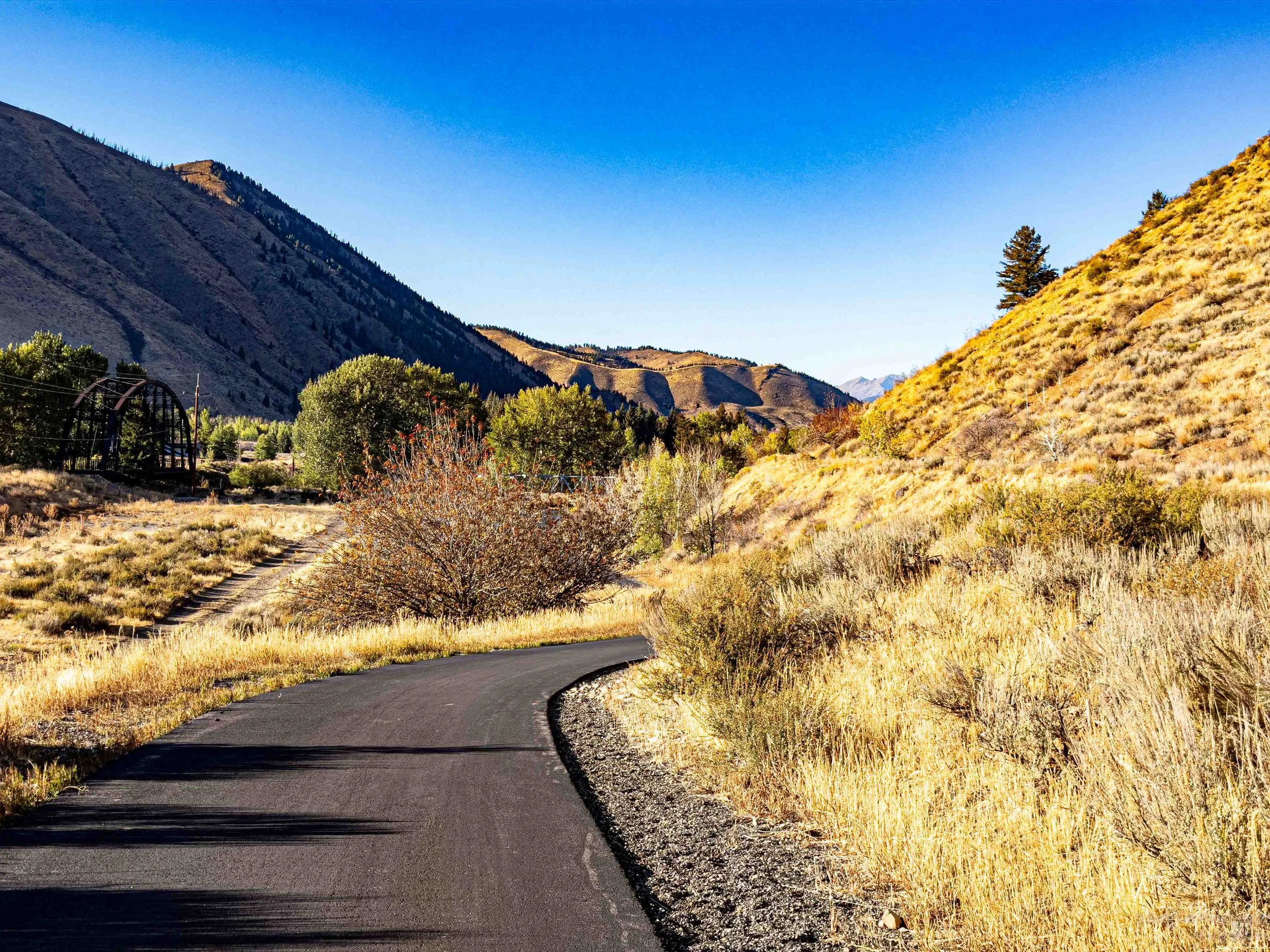
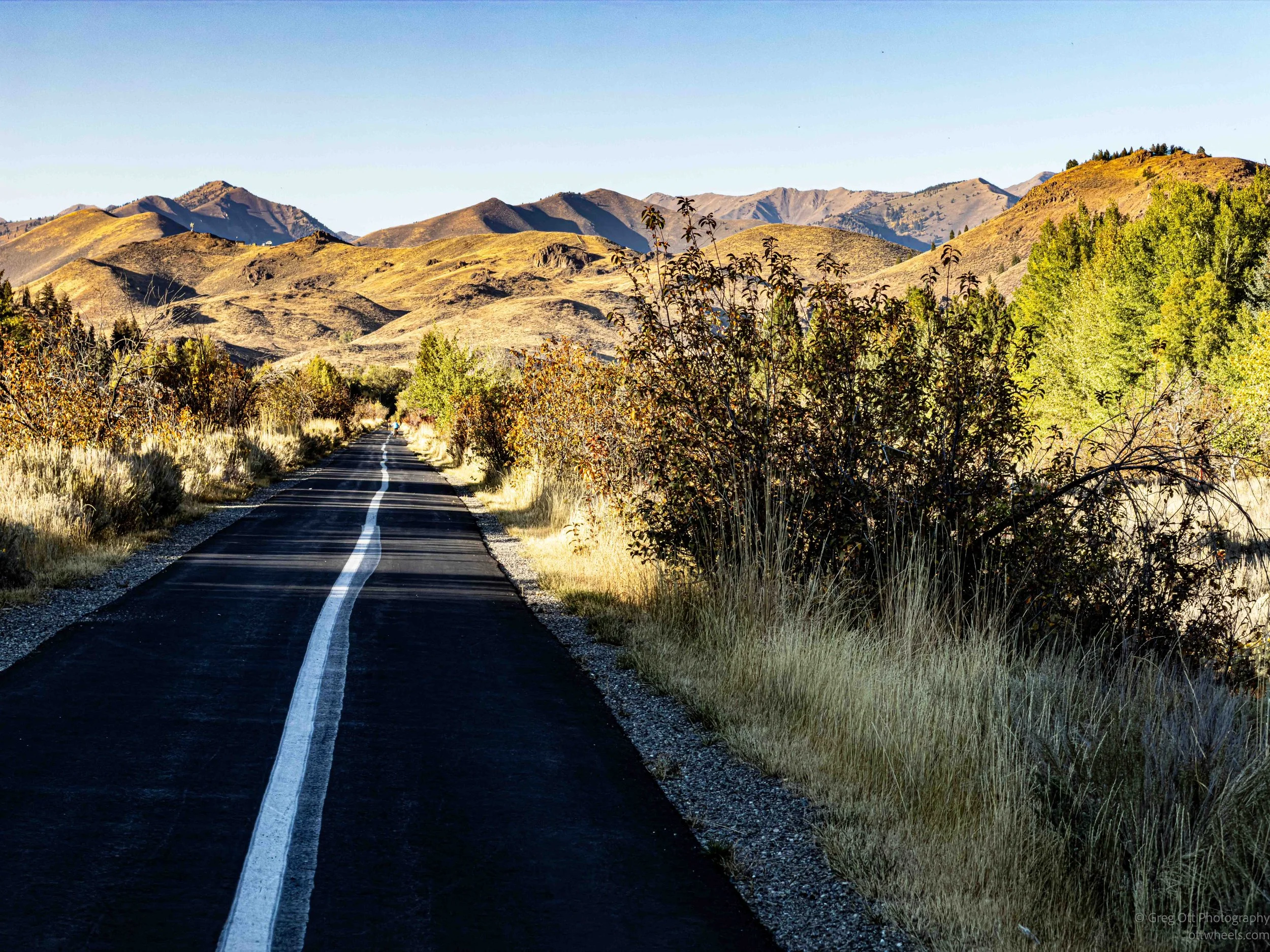
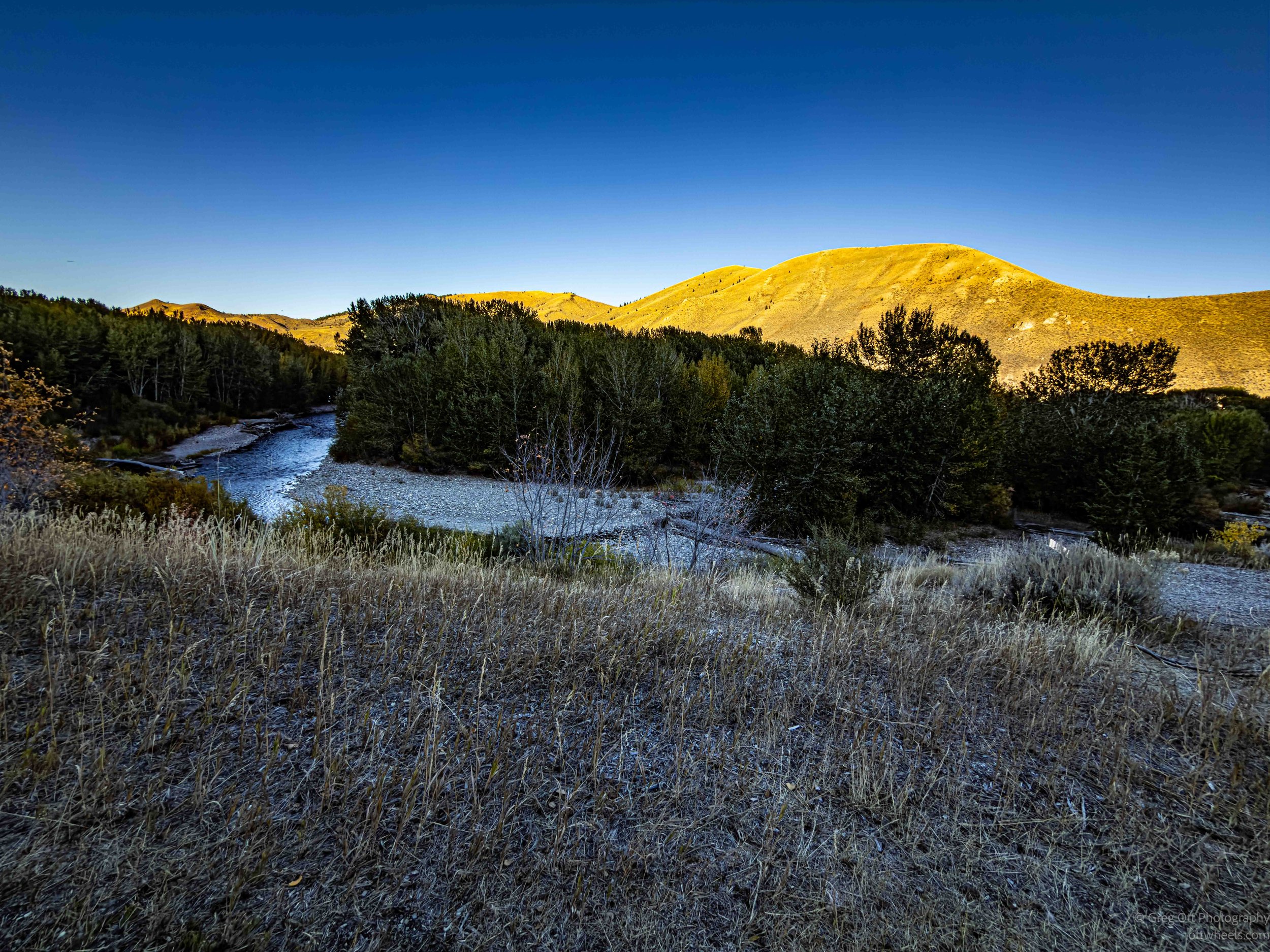
It wasn’t until I was riding that I really started thinking about why the trail felt the way it did. Much of it follows the old Oregon Short Line railroad through the Wood River Valley. It is a meticulously maintained trail. The railroad reached Hailey in 1883 and Ketchum the following year, at a time when mining was driving much of what was happening in the valley. Trains carried ore out and brought supplies back in, and more than a century later I was riding a bicycle over essentially the same route.
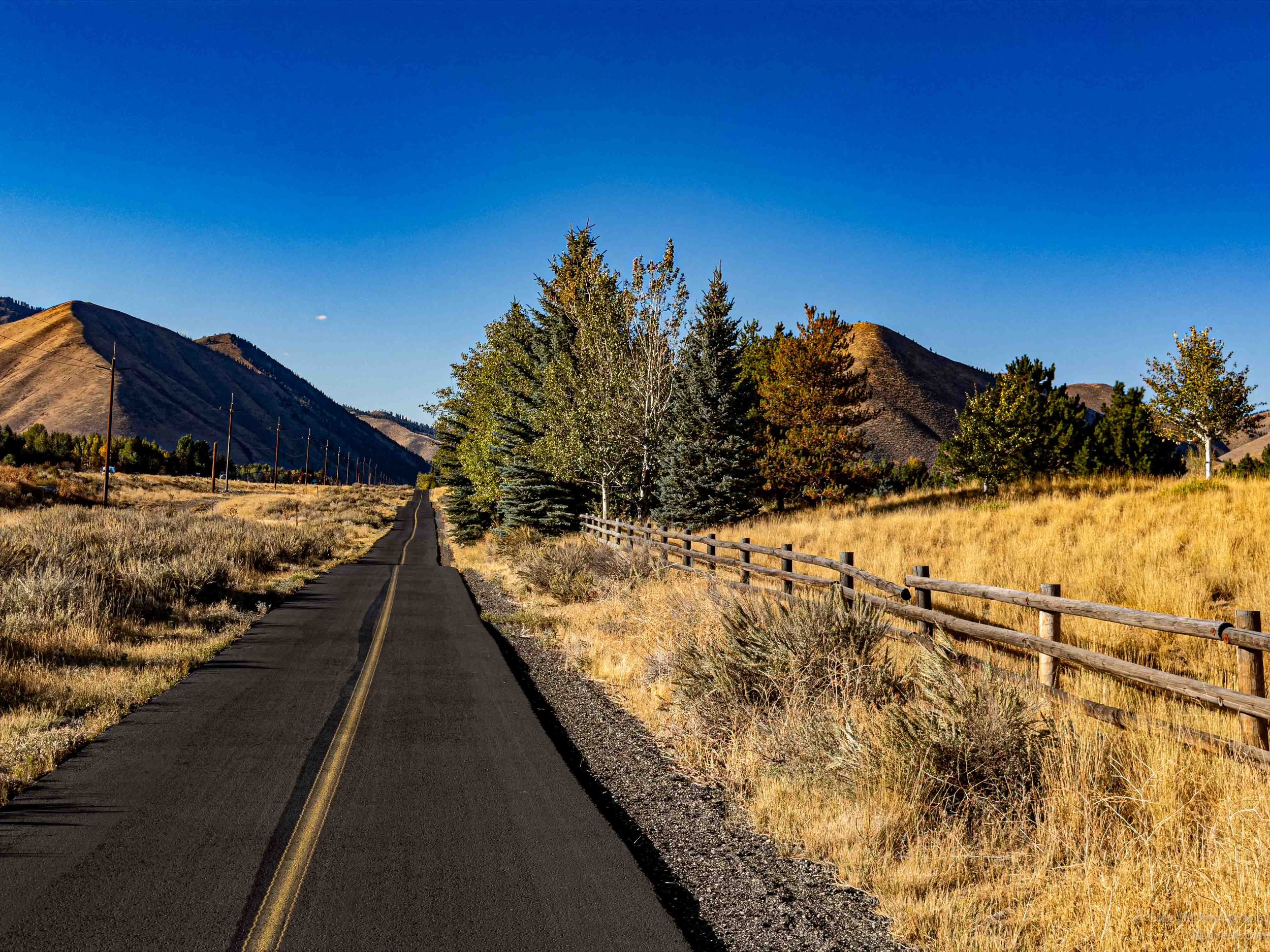
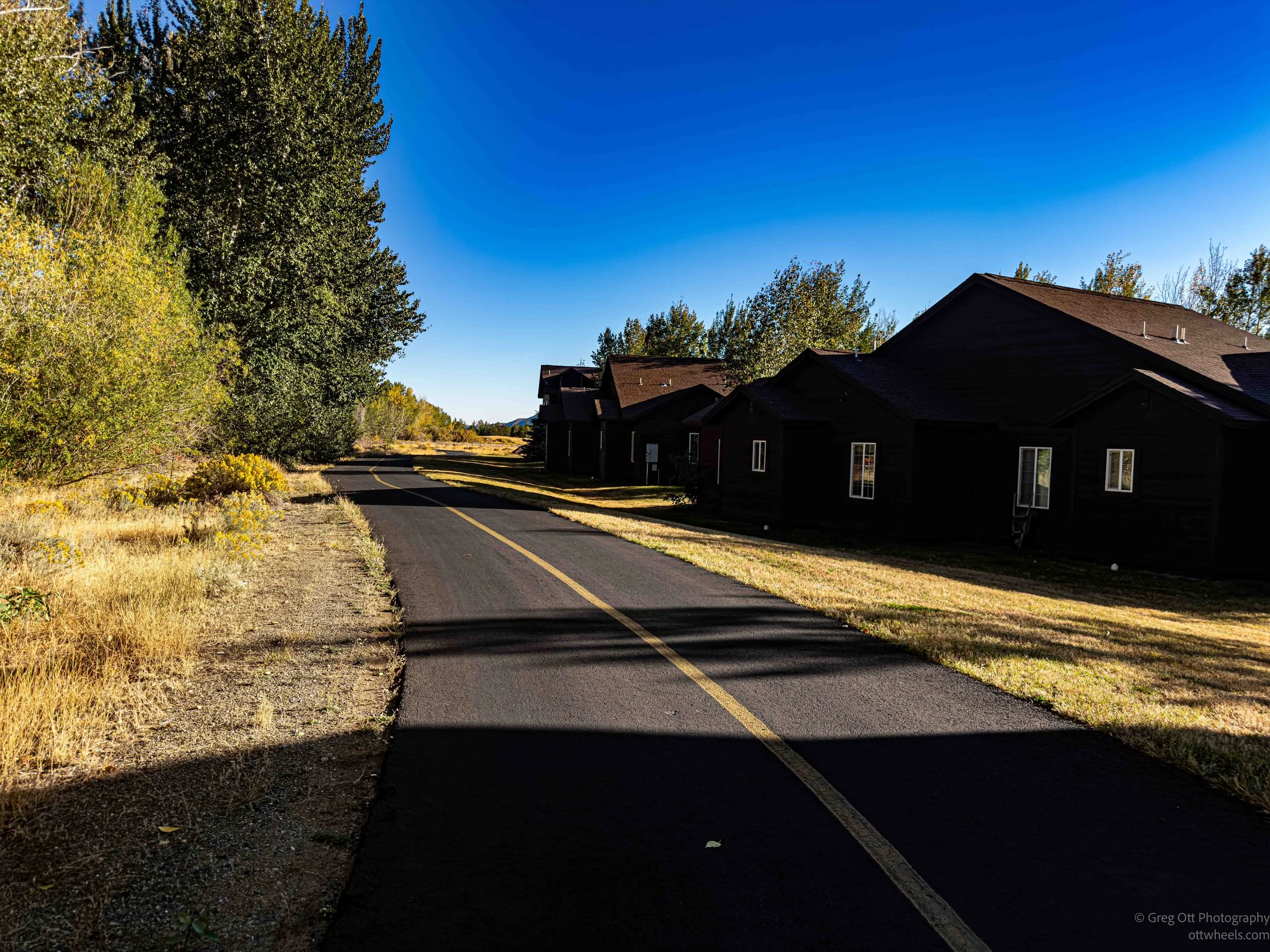
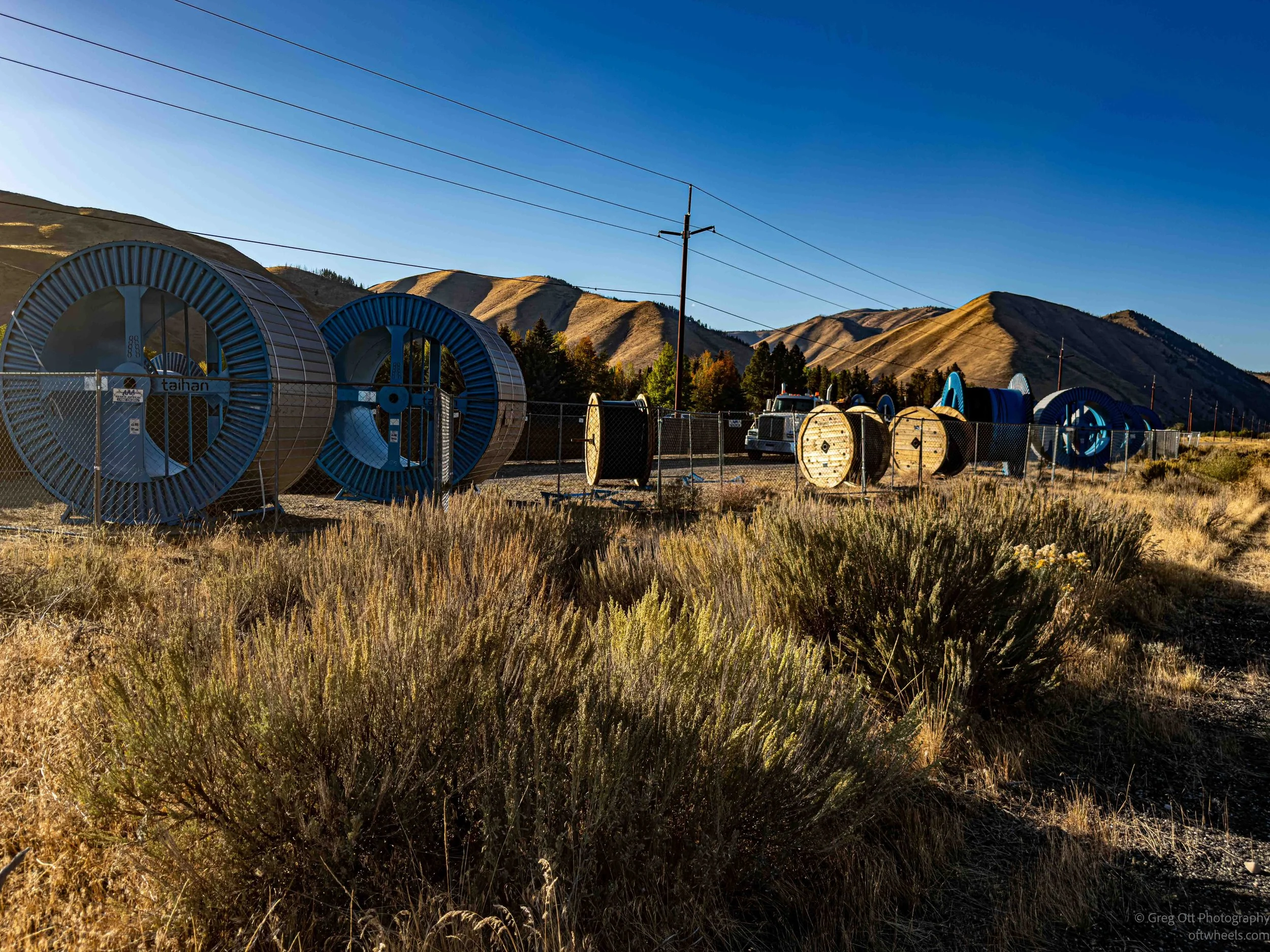
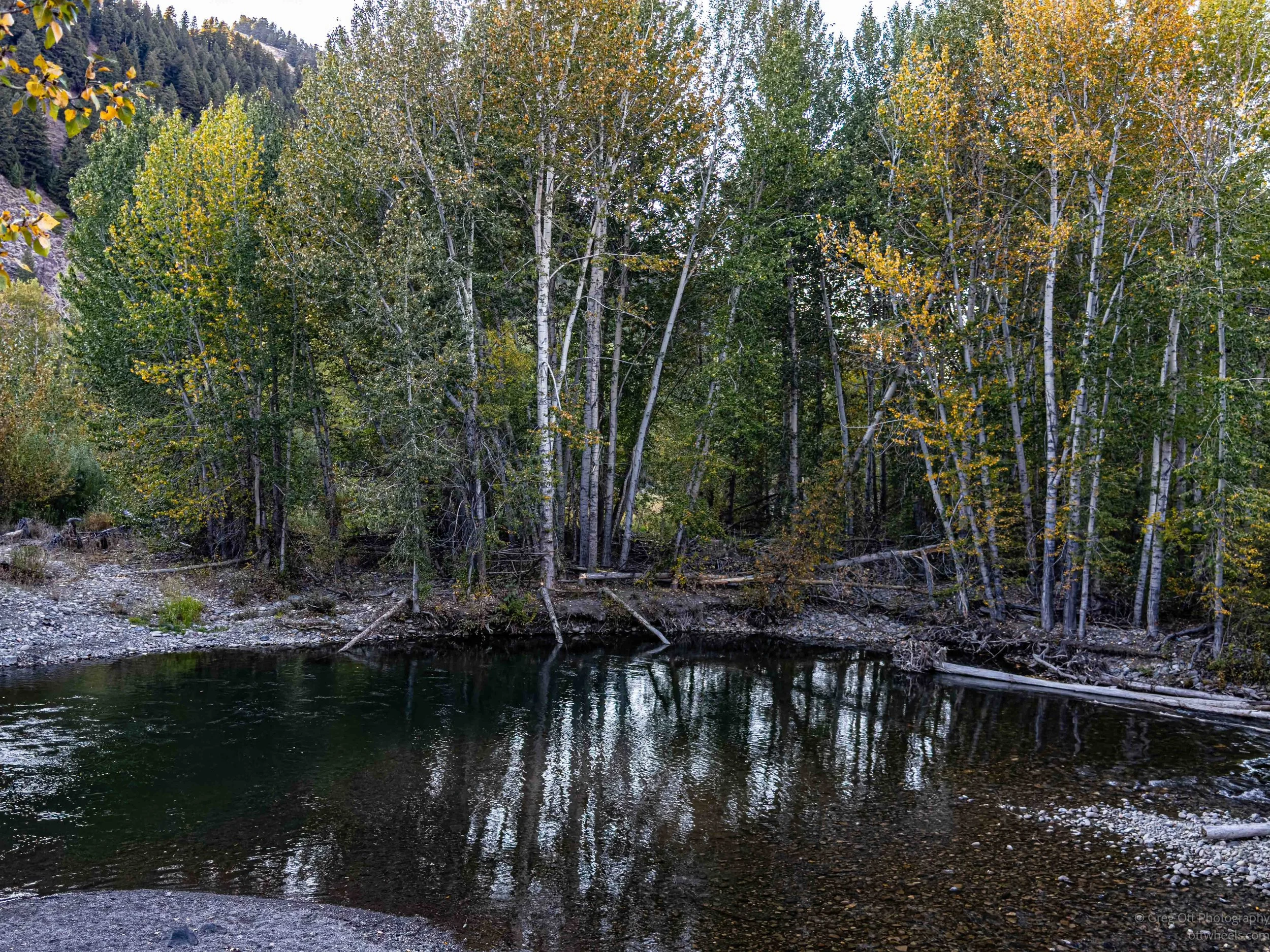
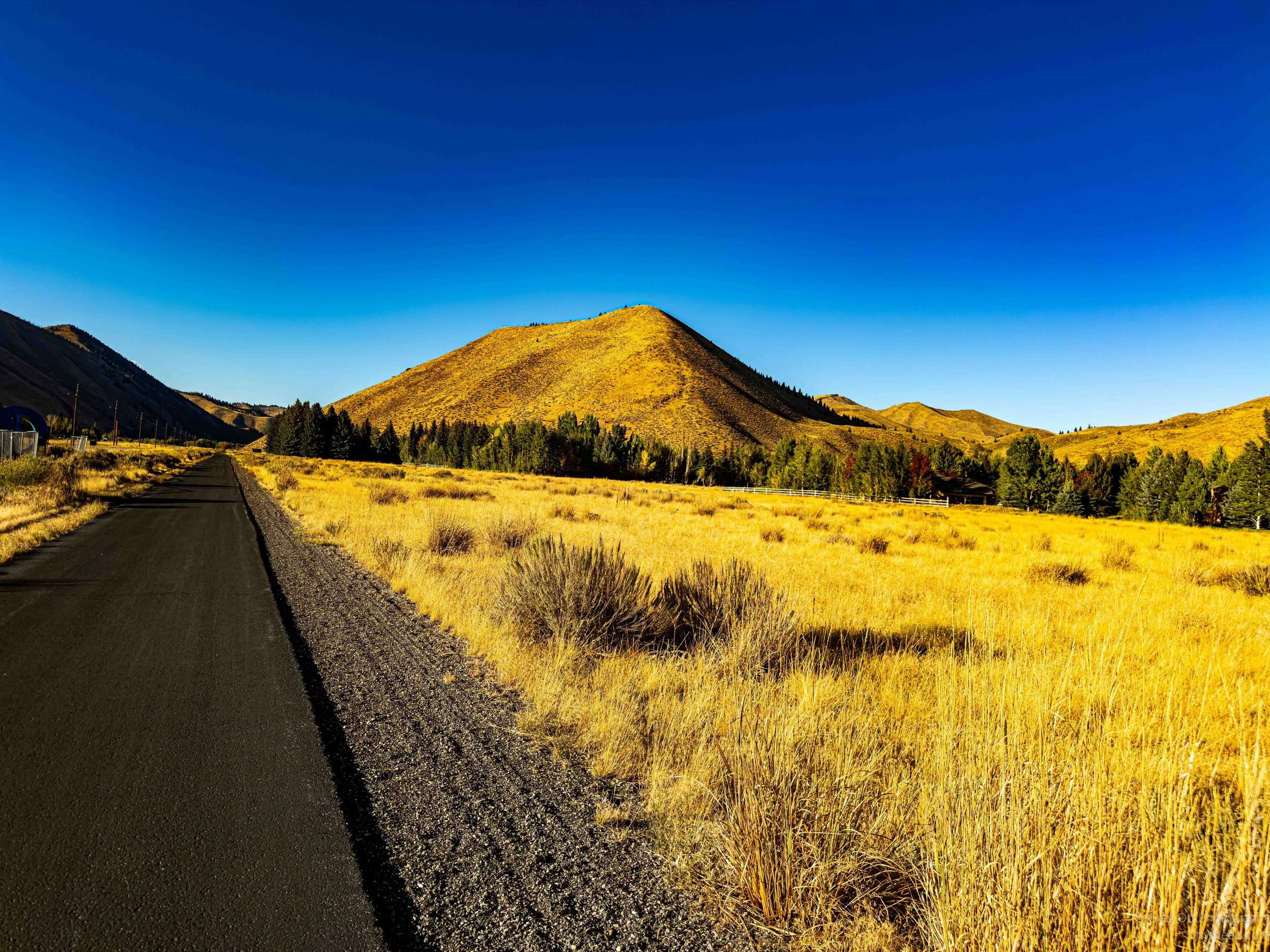
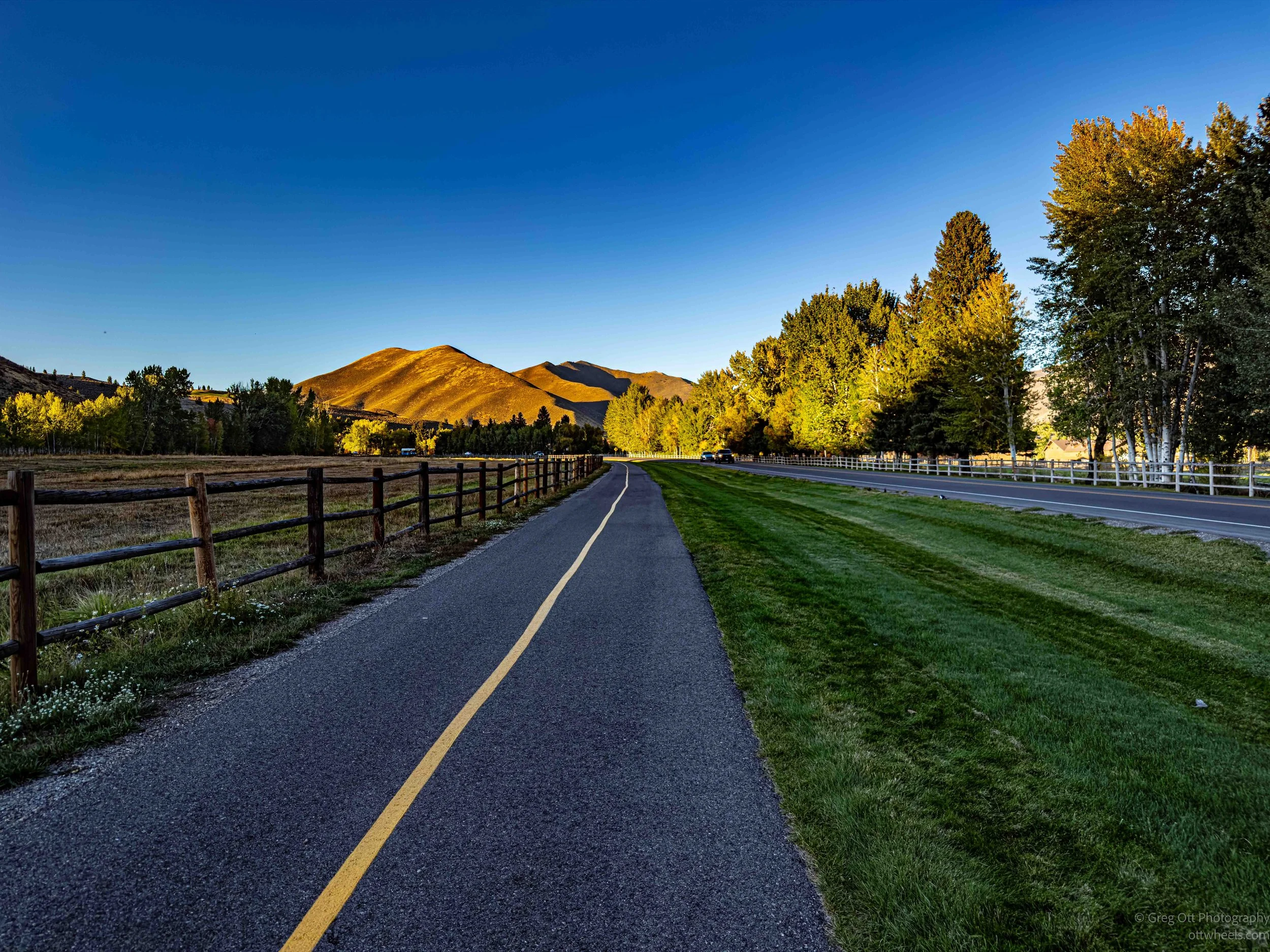
The scenery changed constantly. In some places I was riding through groves of aspen and cottonwoods, the leaves just beginning to turn, with patches of yellow catching the light. Then the trees would open up and I would be back out in the wide-open valley, with dry golden grass, cattle scattered across fields and those deep blue western skies that seem almost too saturated to be real. The trail would run straight for a while, then curve around a hillside or drop back toward the river.
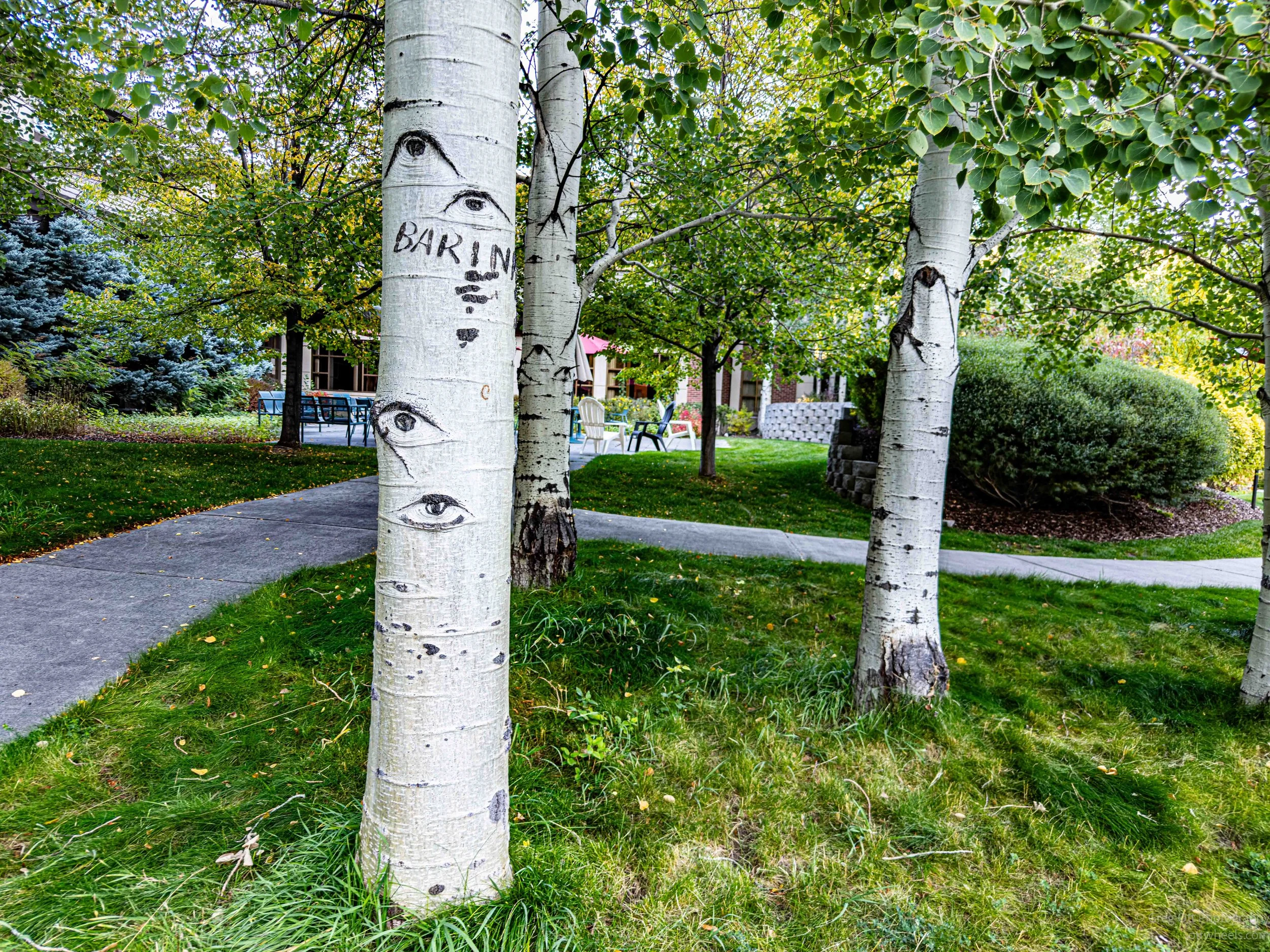
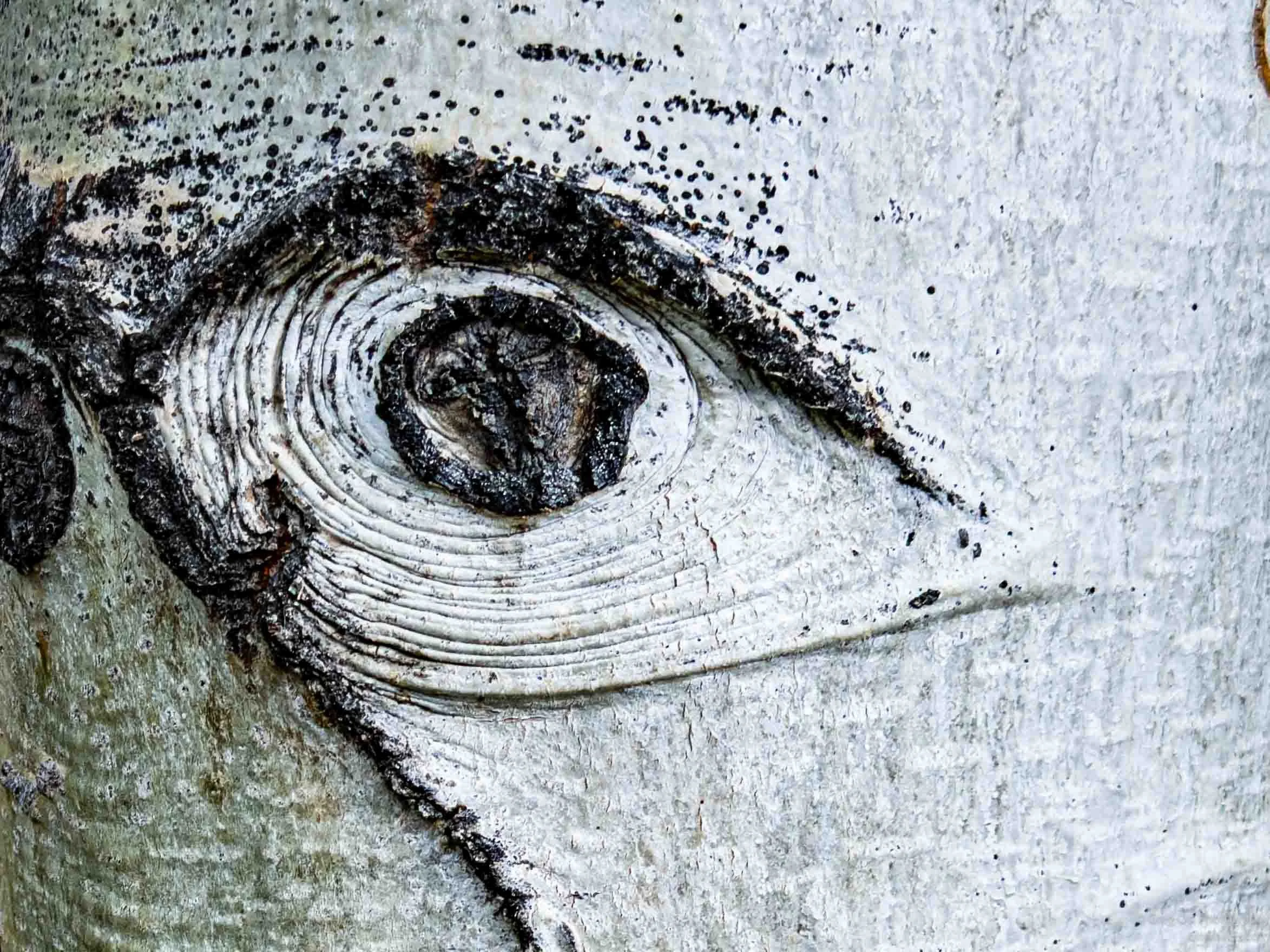
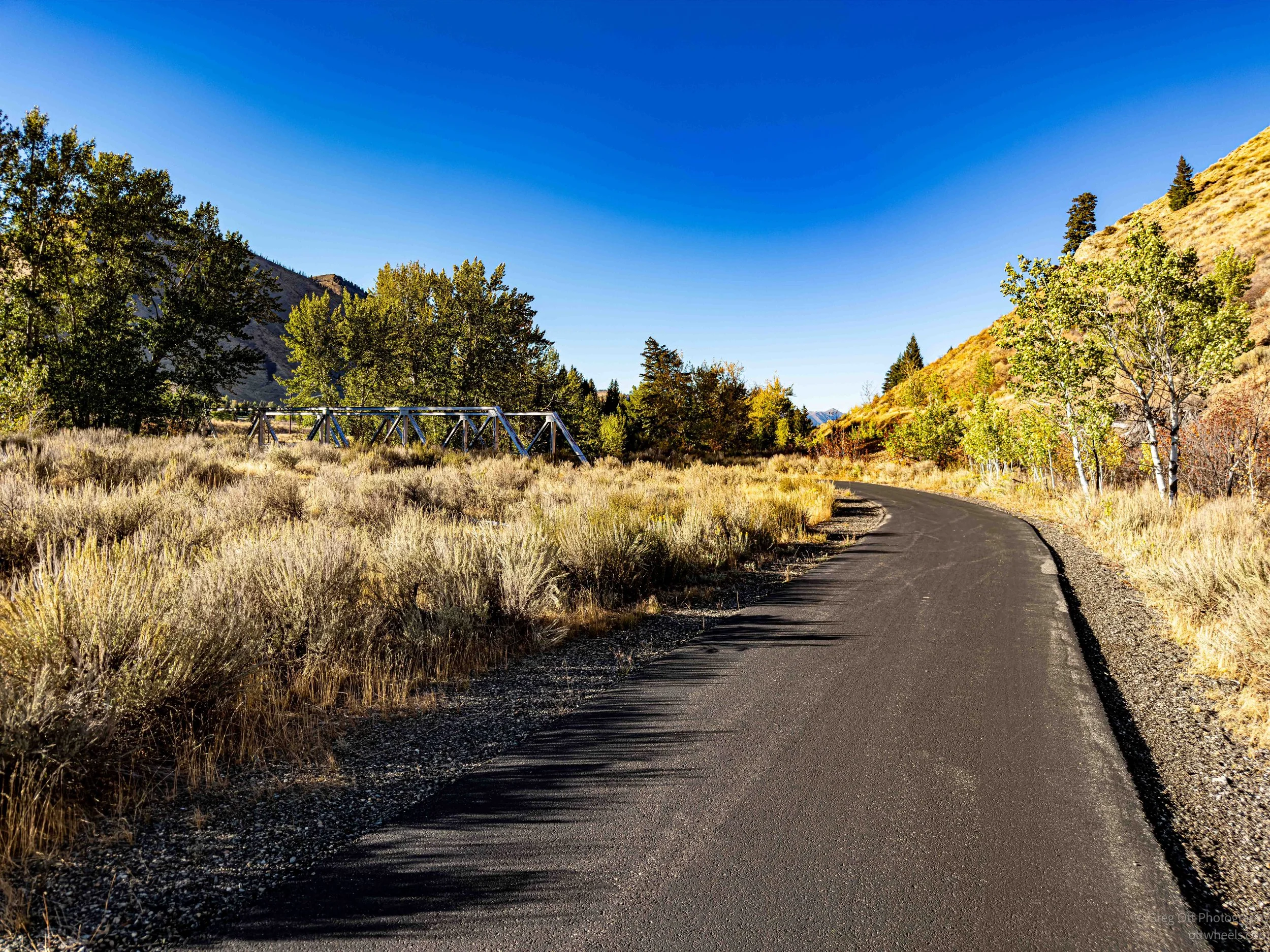
The railroad later became part of a very different chapter in the valley’s history. When Union Pacific developed Sun Valley Resort and opened the lodge in 1936, the railroad brought skiers and other visitors into Sun Valley. That helped explain some of the things I was passing along the trail. Near the Cold Springs Bridge, I stopped to read a sign explaining that the bridge had once carried Union Pacific trains, including ski trains bringing people north from Los Angeles and San Francisco. The bridge itself dated to 1884, had originally crossed the Snake River in Oregon, and was later moved here. Standing there with my bike, it was one of those places where the old railroad was no longer something abstract in a history book. I was looking directly at a piece of it.
Passenger service eventually disappeared, and the railroad itself was abandoned in the 1980s. The Blaine County Recreation District began converting the corridor into a trail in 1984, and today it runs through Bellevue, Hailey, Ketchum and Sun Valley. One of the nice things about riding an old railroad grade is that railroads couldn’t tolerate steep climbs. The grade changes slowly and steadily, generally around a couple of percent rather than suddenly pitching upward. What had felt like an almost continuous downhill ride toward Bellevue became a long, gentle climb on the way back. It was noticeable, but nothing like riding a road that repeatedly climbs and drops over the terrain.
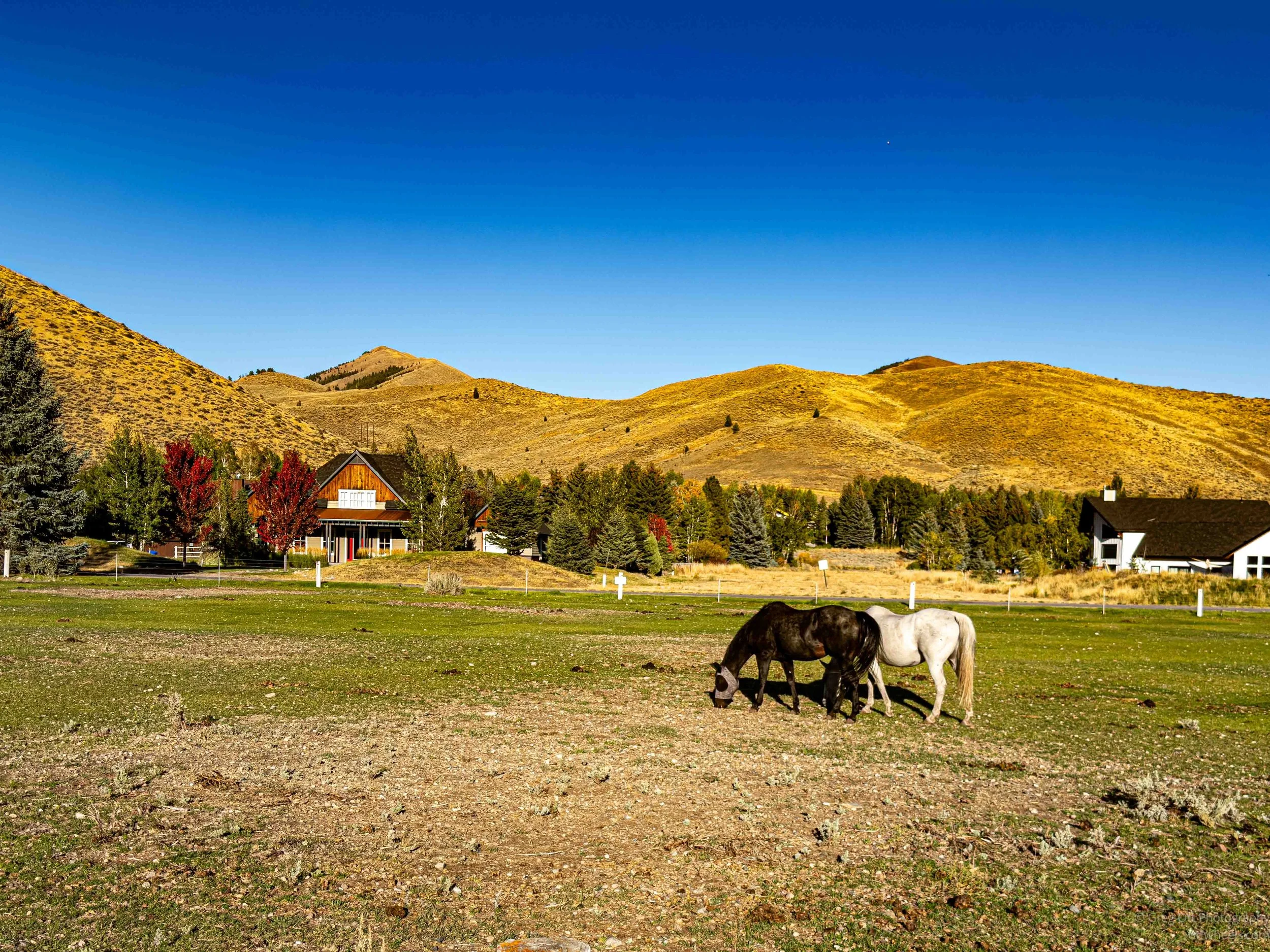
I stopped a lot on the return trip for photographs, which probably made the climb feel easier as well. The late-afternoon light kept getting better. The hills that had looked brown and flat earlier in the day started glowing gold as the sun dropped lower, while the valleys and groves of trees slipped into shadow. In a few places the trail itself became a dark ribbon running through bright yellow grass, with the mountains lit up beyond it.
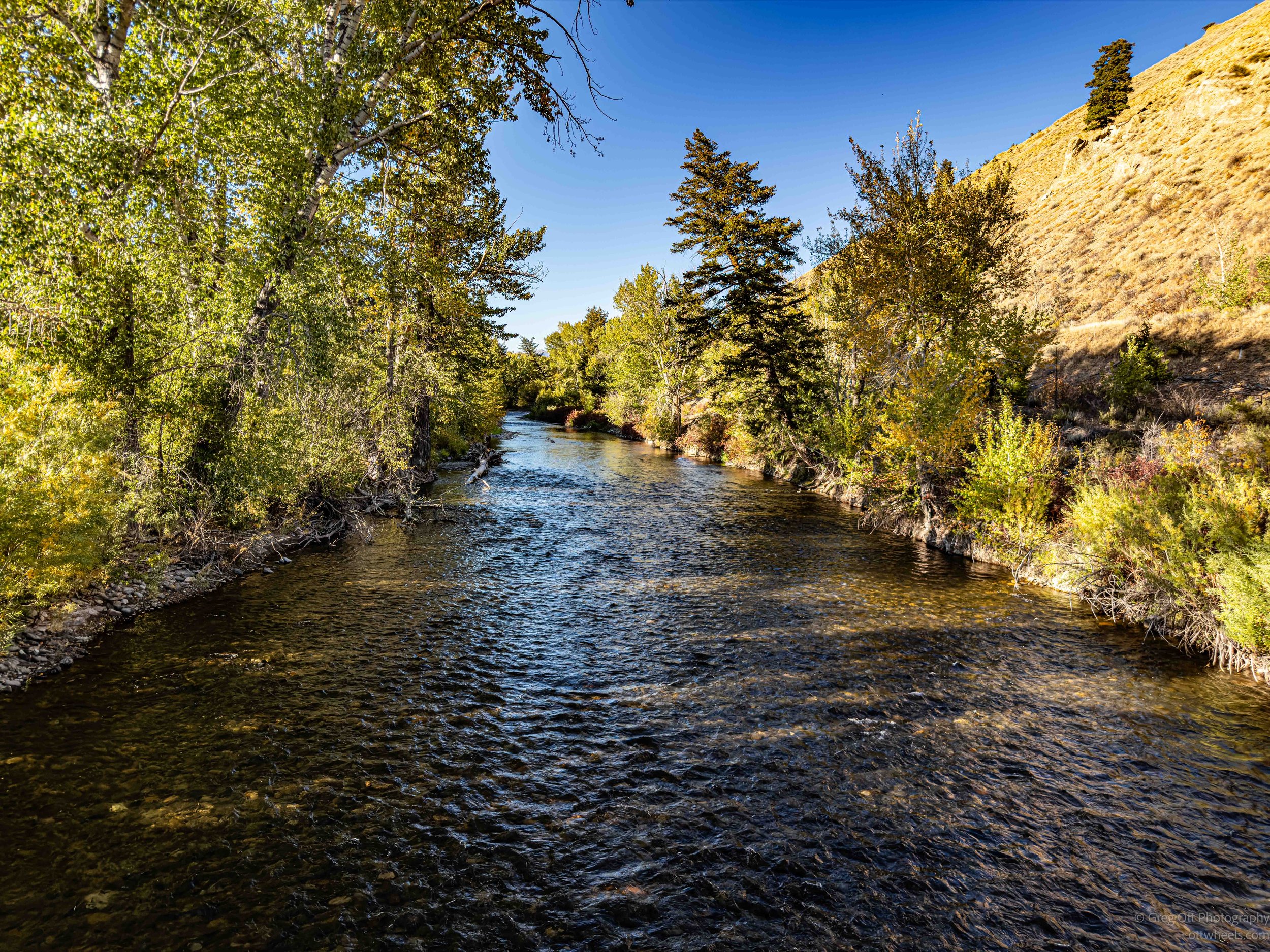
I crossed the Big Wood River several times and stopped more than once just to look. The water was clear and dark in the shadows, with sunlight catching the shallower sections. There were old railroad bridges, fences, horses, cattle and broad open stretches where I could see for miles. The combination of deep blue sky, gold hills and green cottonwoods was almost too good, and every time I thought I was finished taking photographs I would round another bend and stop again.
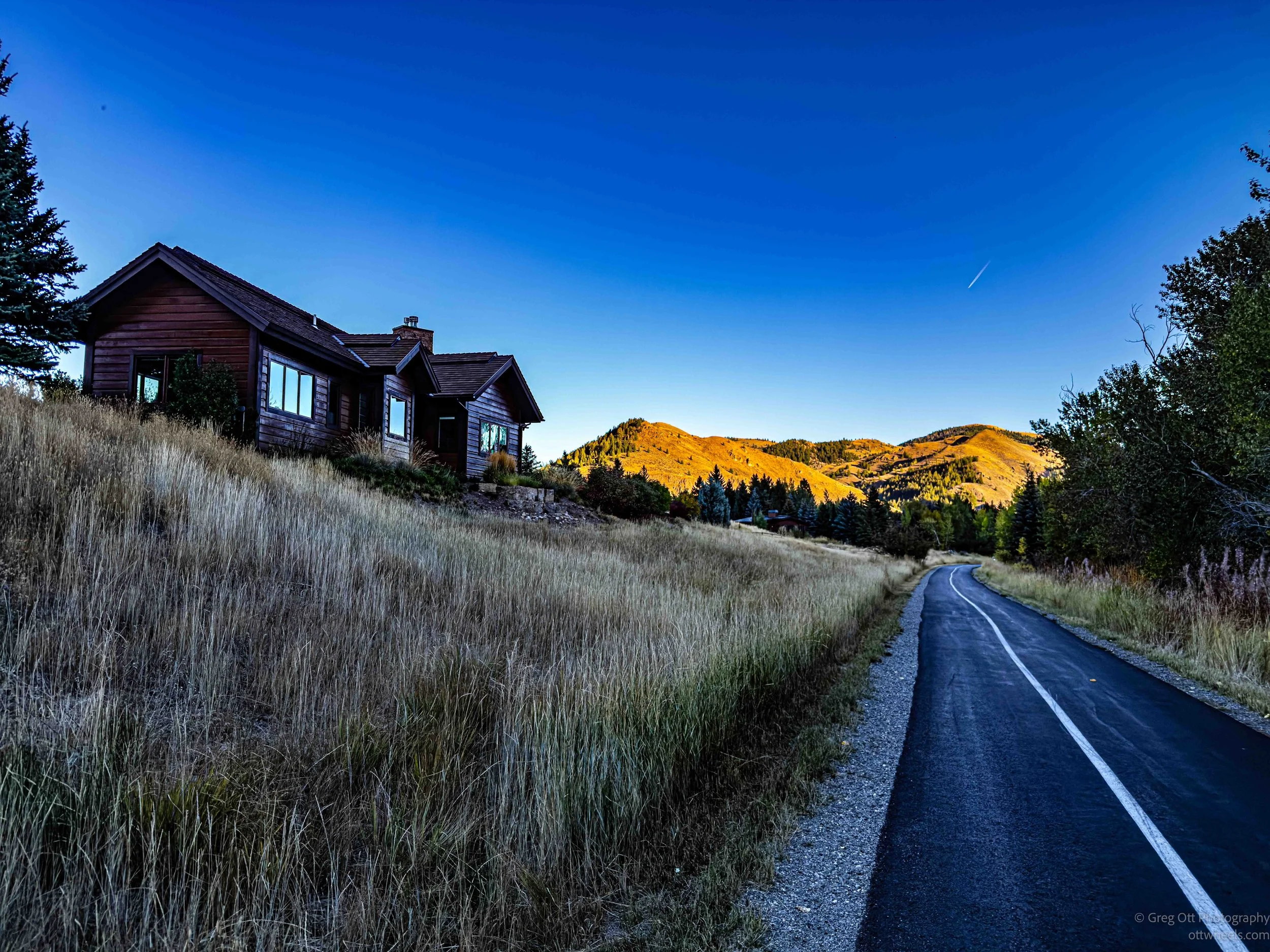
As I got closer to Ketchum, the valley became more developed, with beautiful homes tucked against the hills and along the trail. I found myself wondering what some of them cost. Given where I was, probably more than I wanted to know. They were large without always being flashy, lots of wood, stone and glass, carefully placed to take advantage of the views. It was a very different landscape from the open fields and ranches farther south, but the trail somehow tied all of it together.
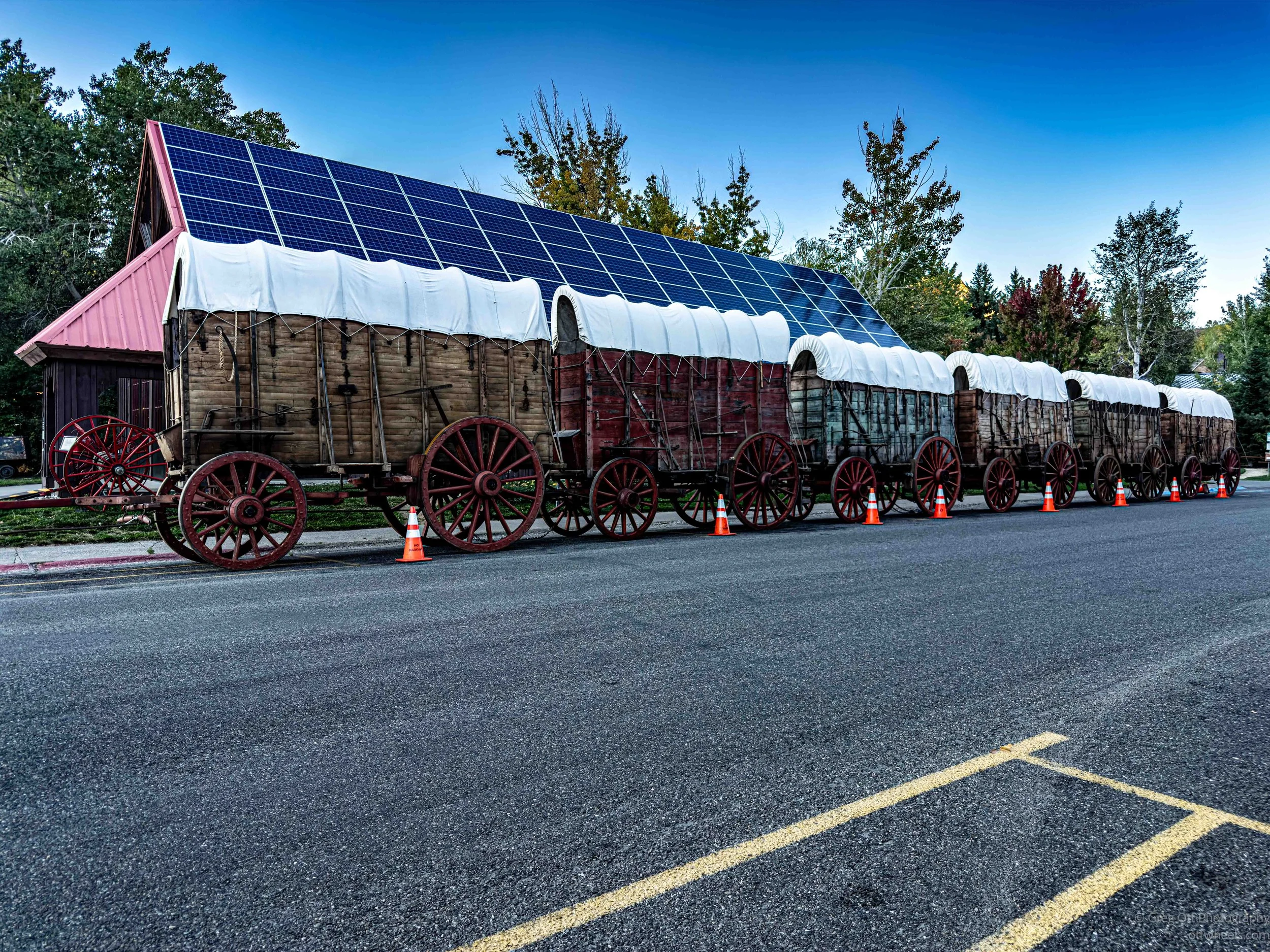
In Ketchum I came across a long row of old covered wagons parked along a street, something I certainly hadn’t expected to see. A woman was walking toward me as I came through, so I moved over to give her room and apologized. She laughed, held up the ice cream she was carrying and said, “Look at me, ice cream in hand and you riding your bike. That’s what I should be doing instead of eating ice cream.” We both laughed and kept going. It was one of those little exchanges that lasts maybe ten seconds but sticks with you.
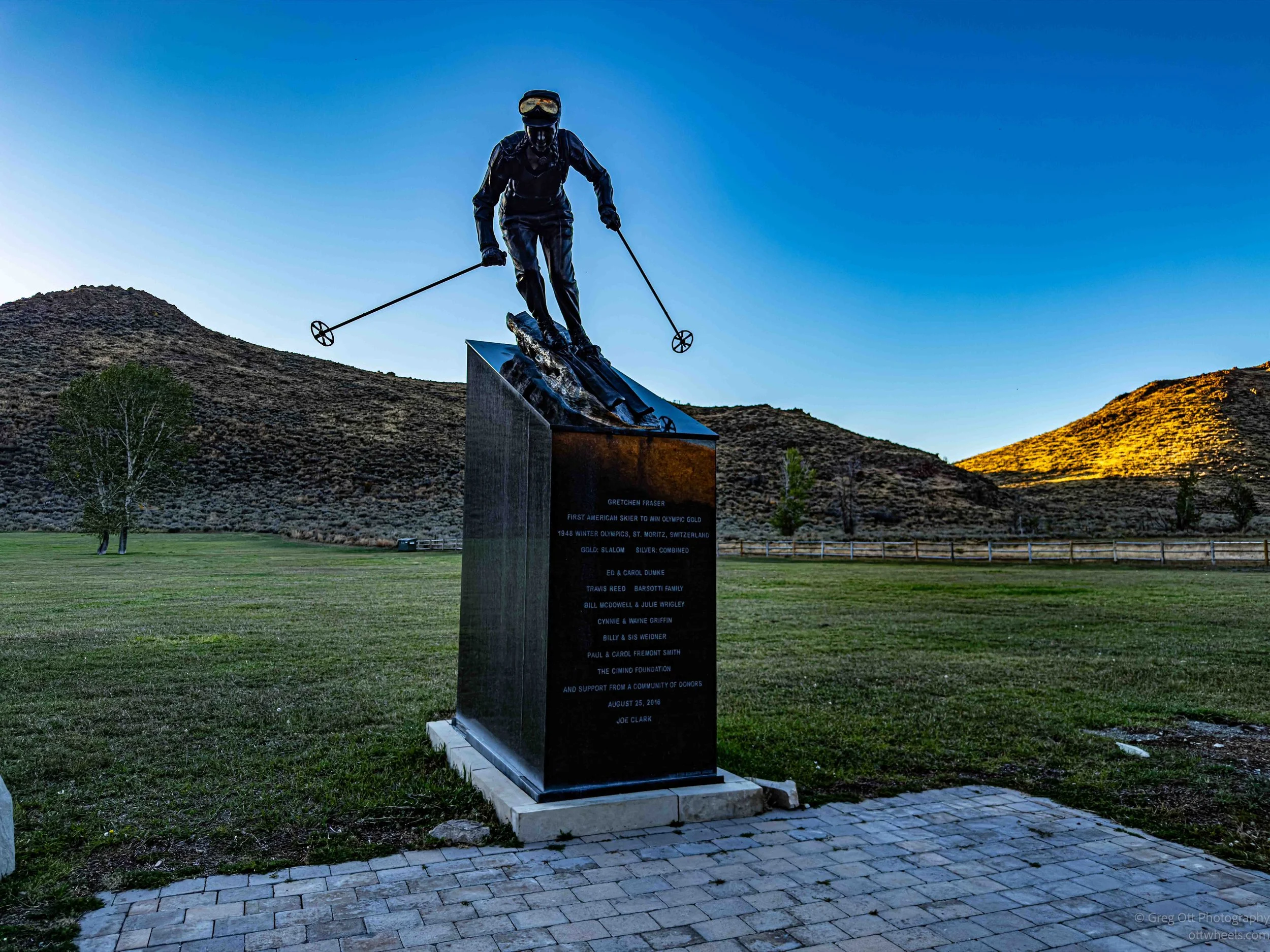
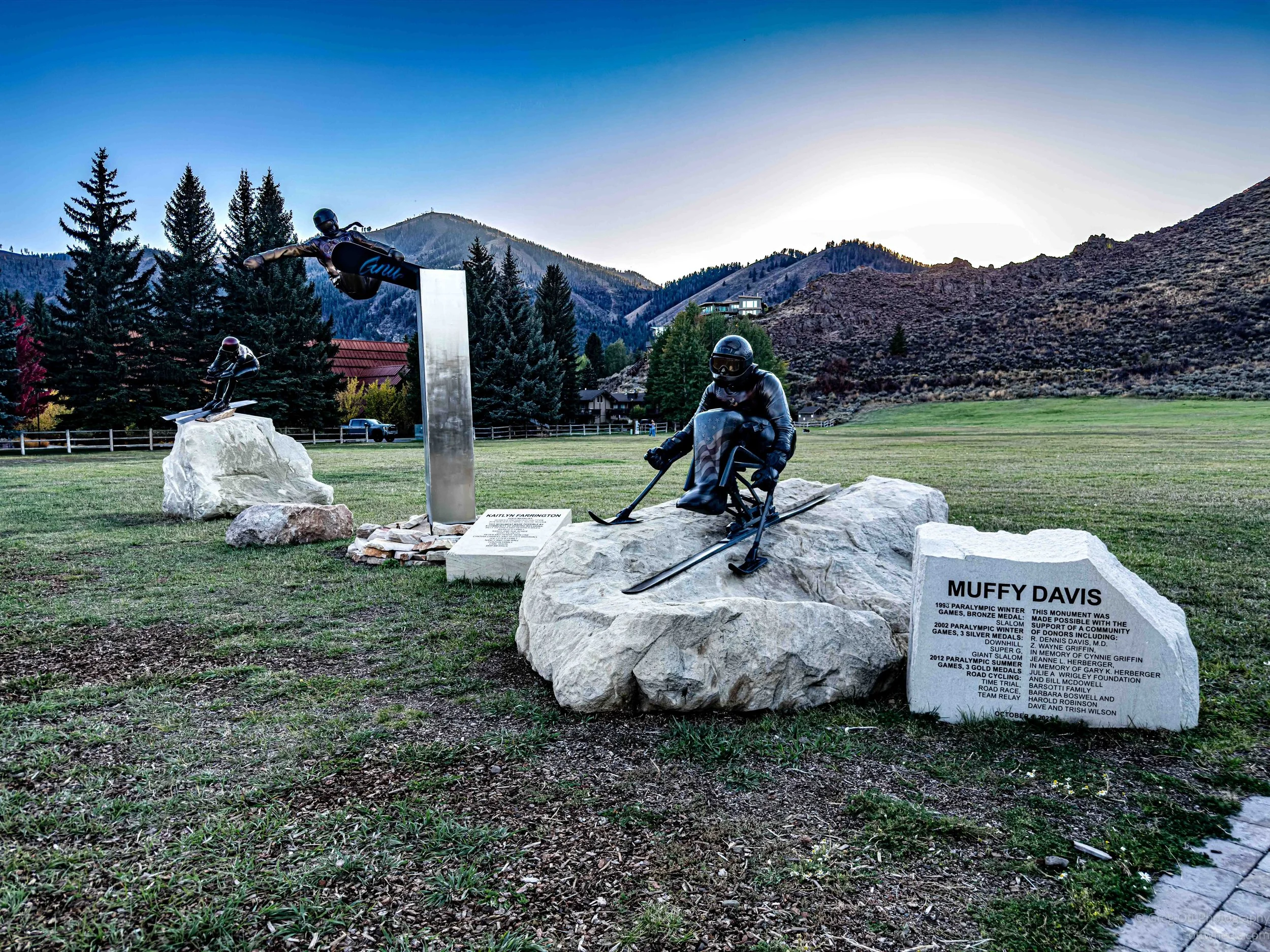
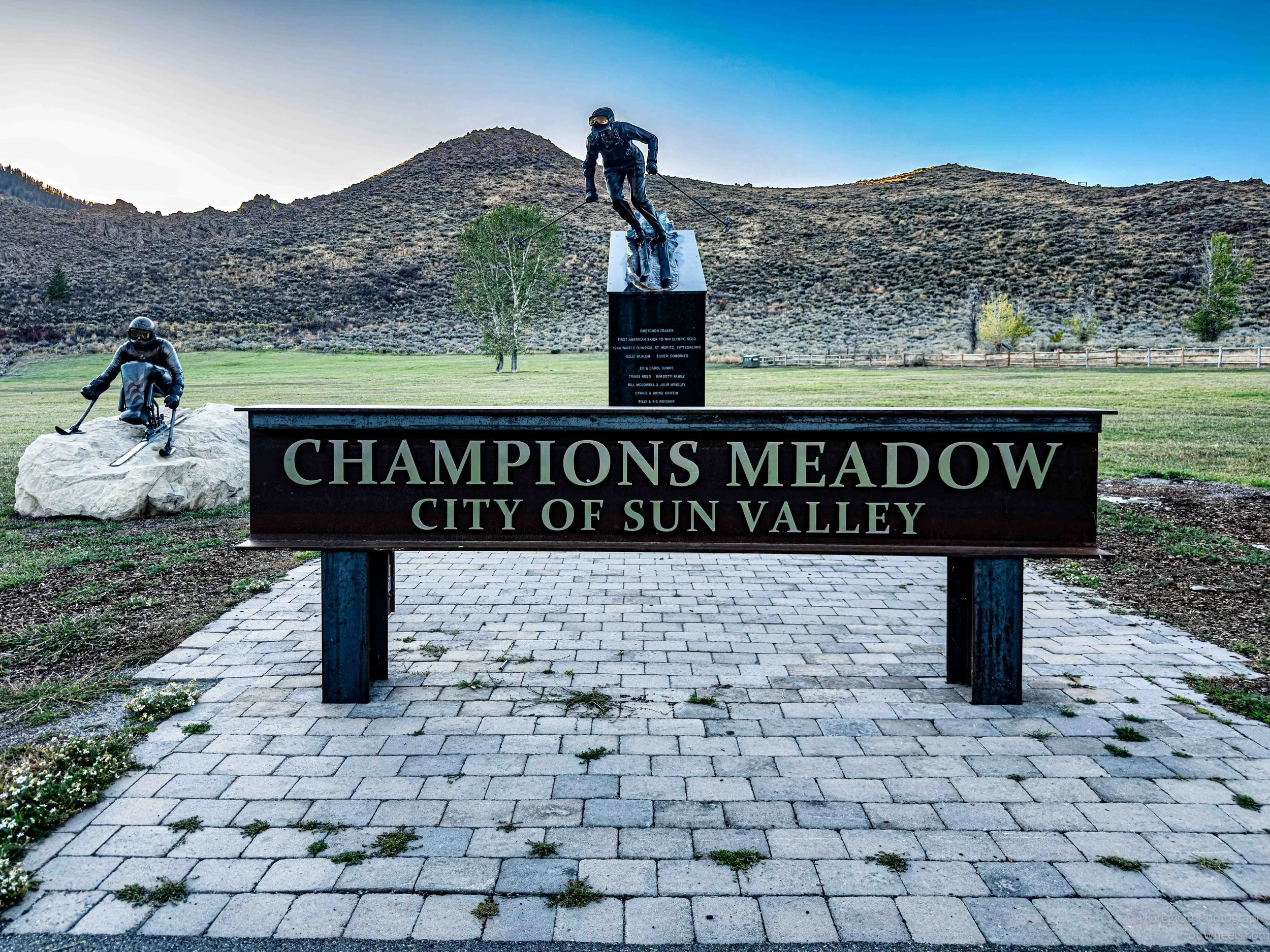
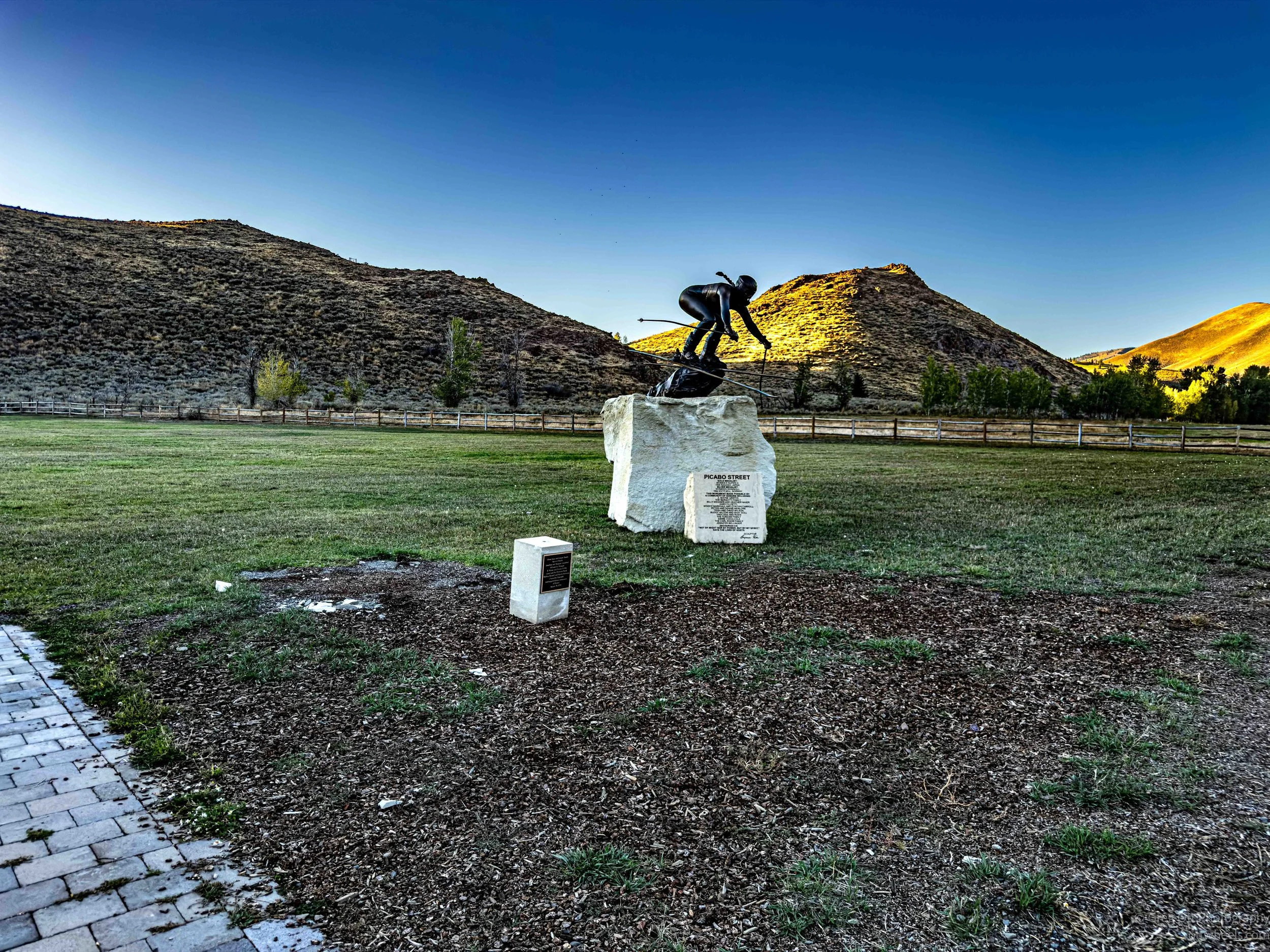
By the time I got back toward Sun Valley, the light was close to sunset. The hills were glowing orange and gold while much of the valley floor was already in shadow, and everything had that brief late day contrast that disappears almost as quickly as it arrives. Near the end I passed Champions Meadow and the ski statues, which seemed like an appropriate way to finish a ride that had connected so much of the valley’s history, mining, railroads, skiing and now a paved bike trail, without me really thinking about any of that when I started out that morning.
I headed toward Hailey, where there was a community overnight site with trash containers, water, toilets and even a dump station, all free. On the way, traffic suddenly slowed to about 45 mph. Two elk were standing on the other side of a fence, apparently waiting to cross the highway. I looked to my left and noticed a car parked in a field. Then I saw why. The field was full of elk. I pulled in, grabbed the camera and got out.
There had to be more than 150 elk feeding in a recently harvested wheat field. I stayed for about half an hour and mostly just watched. They were hundreds of yards away, and even with the 600mm lens there wasn’t enough light to get sharp photographs. It was rutting season, and the males weren’t exactly cooperating. They were constantly moving through the herd, feeding, watching one another and occasionally calling.
The sounds were more interesting than the photographs. I heard calls and warnings I had never heard before, including some that sounded surprisingly close to the moo of a cow. With that many elk in one field during the rut, I kept expecting two bulls to square off. I also found myself watching the edges of the field, half expecting a coyote to appear. Neither happened. Eventually it became too dark to see anything, but I stayed a little longer just watching and listening. The camera on the tripod did help in providing more light to watch.
I pulled into Hailey around 9 p.m. and made dinner. It had been a fun day, and riding the bike had allowed me to see far more of Sun Valley and the Wood River Valley than I ever would have from the van. It is a beautiful area, and after spending the day riding through it, I understood why my friends had chosen to live there.
Unfortunately, I didn’t get to see them on this trip. Maybe later in the fall, or perhaps when we are all back near New York City. Either way, I was glad I finally got to see the place they call home.