Leaving Canyonlands NP
It was an absolutely crazy driving day.
I left the campground around ten in the morning. There wasn’t another soul there. As I pulled out, I stopped to do a quick walk-around and check everything. A National Park Service ranger had pulled up behind me and asked if everything was OK. I gave him a thumbs up and waved him on. Quiet, orderly, and calm—about to be none of those things.
The drive out of the park took longer than I expected, crawling along at 35 and 45 miles per hour. A few of the curves genuinely took my breath away, not because they were fun, but because of how close the road hugged sheer cliffs. The curves had guardrails. The straight sections—where you’d really like one—did not. It was beautiful, but it demanded attention.
I stopped in Moab to fuel up at the Maverik station, the same one where I’d filled my water tanks a few nights earlier. Standing at the pump, I started noticing how many different languages were being spoken around me—English mixed with Spanish, a Native American language, and what sounded like familiar French. For a town surrounded by red rock and desert, it felt unexpectedly international.
From there, I headed south on UT-191 toward what my itinerary optimistically labeled “Cedar Mesa.” There aren’t many towns along that stretch, but I stopped in Blanding and topped off the tank anyway. I still had about three-quarters of a tank, but out here that kind of caution feels reasonable. Running out of gas is not an abstract problem in southeastern Utah.
On the edge of town, I passed Jaroen Thai & Sushi and noticed the open sign. That alone felt surprising. Mormon towns don’t exactly thrive on Sunday dining, and winter hours out here are often unpredictable. I found a place to turn around and parked behind the restaurant. The neighbors had pet deer in a large fenced pen, and the deer watched with mild suspicion as a large van rolled in beside them.
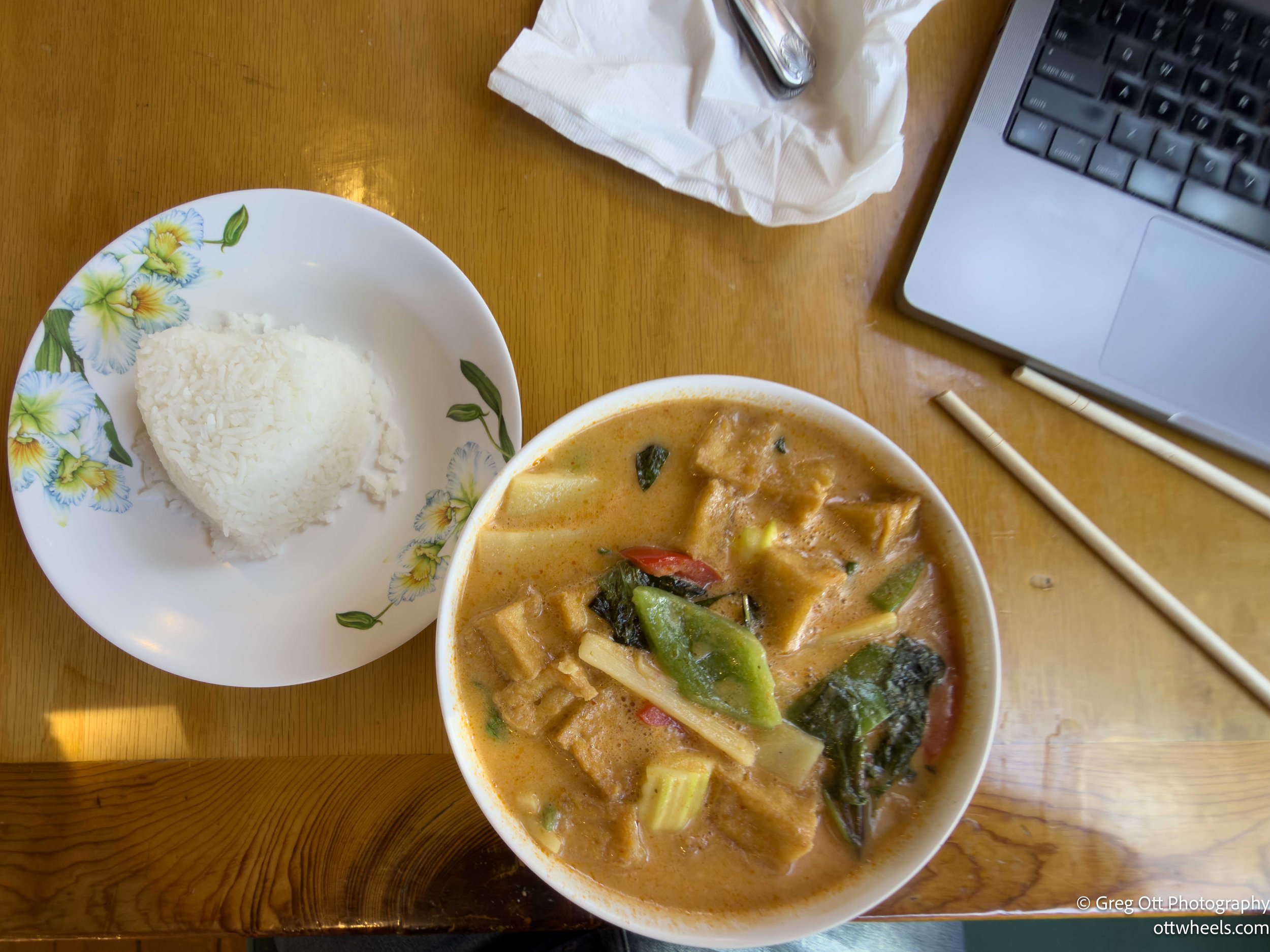
Inside, the place was warm and quiet. Two people were seated in a booth speaking Thai. To my untrained ear, the rhythm and pitch patterns sounded very close to Vietnamese. I took a seat by the window, got the Wi-Fi password, and opened my laptop, though I didn’t get much done. There were two menus—one Japanese and sushi, the other Thai. I ordered the Thai red curry with tofu, a go-to for me.
The food came out in about ten minutes and was excellent—fresh, balanced, and far better than I expected in the middle of nowhere. The waiter, who was Native American, stopped by every few minutes to check that everything was okay. The owner came over as well, making sure the food tasted right and asking if I needed anything. I asked how a Thai restaurant ended up here, of all places. They had bought the existing restaurant and explained that winter is slow, but locals support them, and people will drive down from Moab. From spring through fall, things pick up, and summer brings tour buses. Somehow, it all works.
I had definitely eaten more than I should have, but it was a delicious surprise.
After lunch, the trip toward Cedar Mesa started getting strange. I recognized some of the roads from a few weeks earlier, but Google Maps had other ideas. It told me to turn left at a spot where I’d just crossed a cattle guard, with nothing but trees on either side of the road. No sign. No indication of a road. Just forest. I turned around, drove back about a mile, and then Google abruptly announced a right turn onto a dirt road.
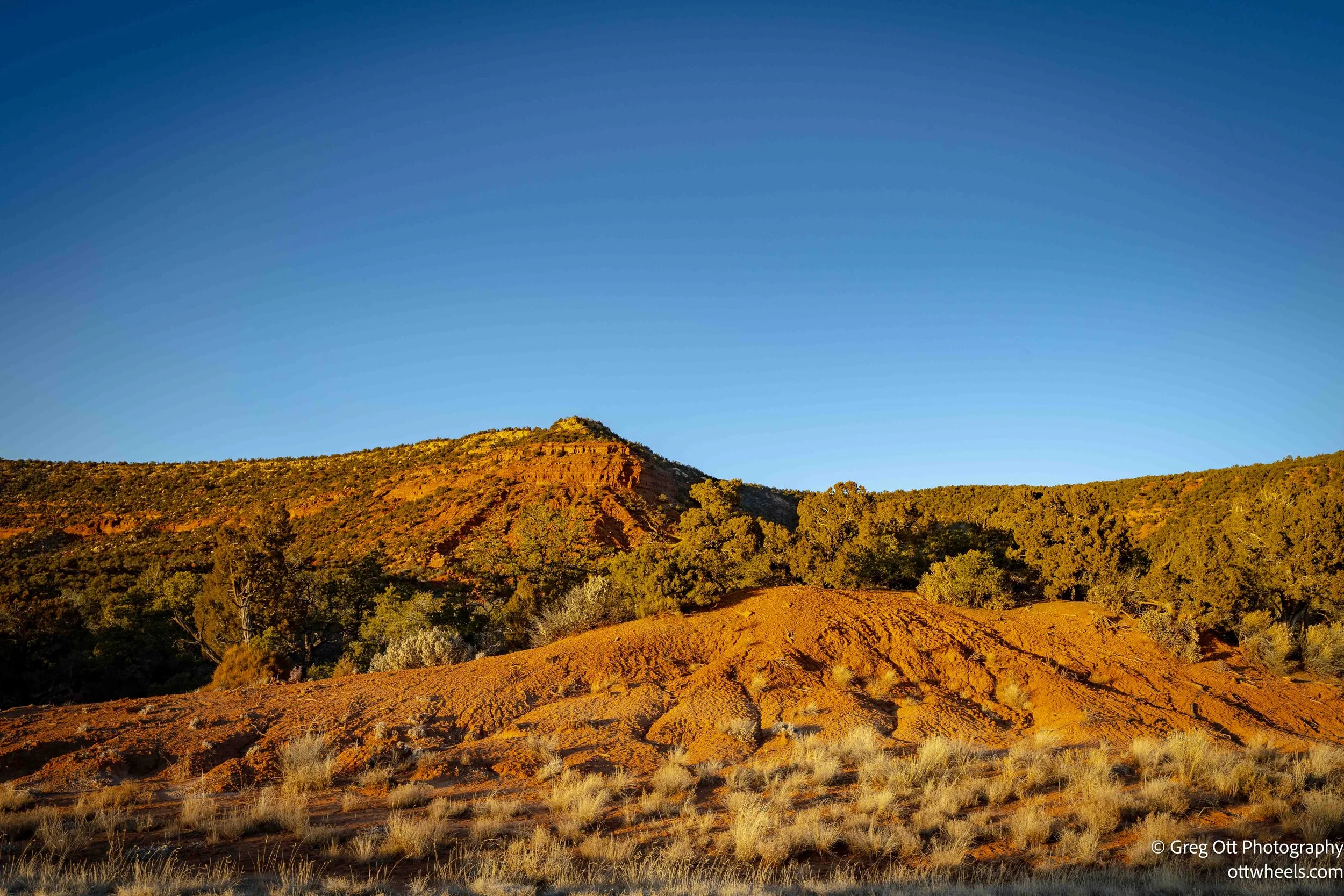
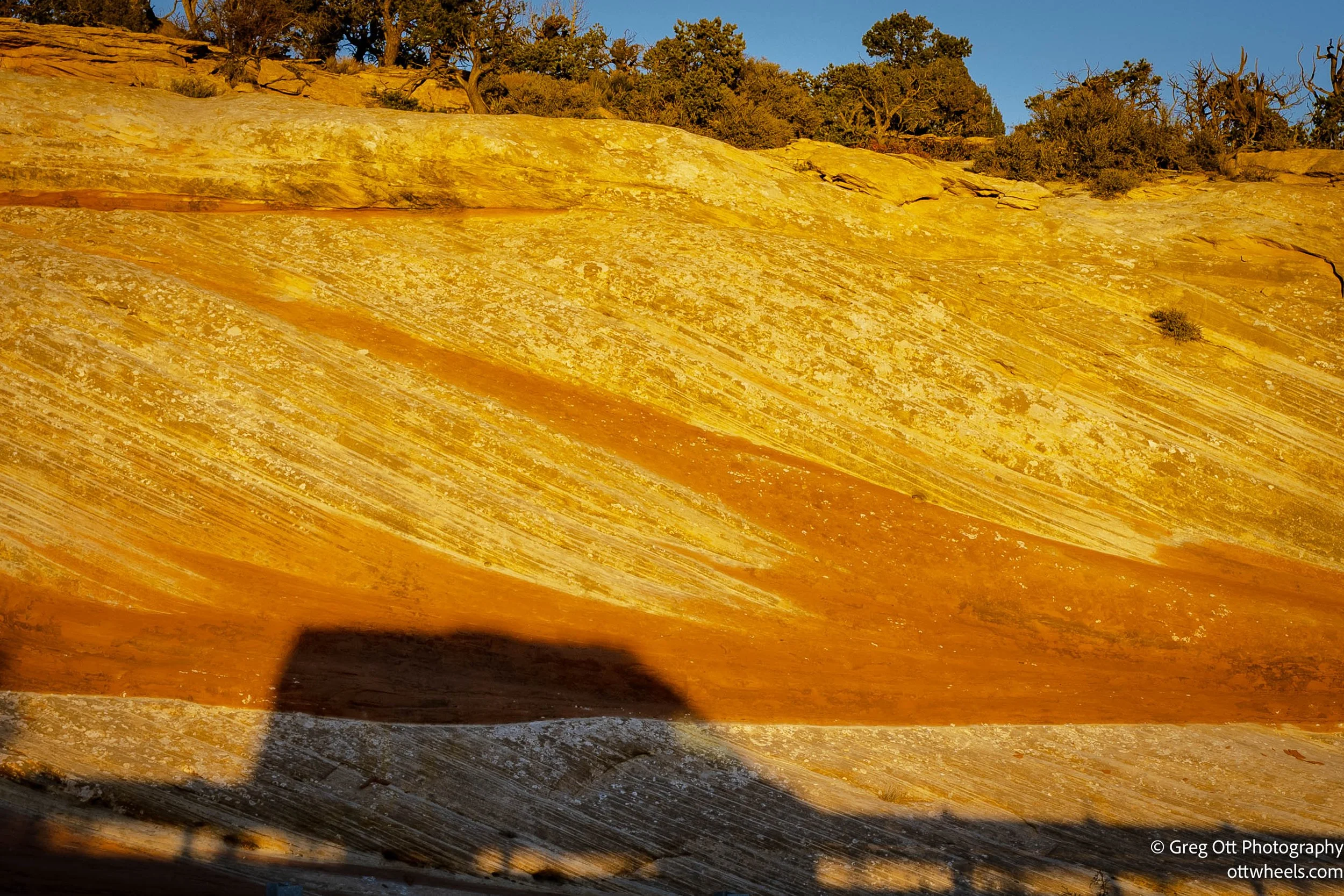
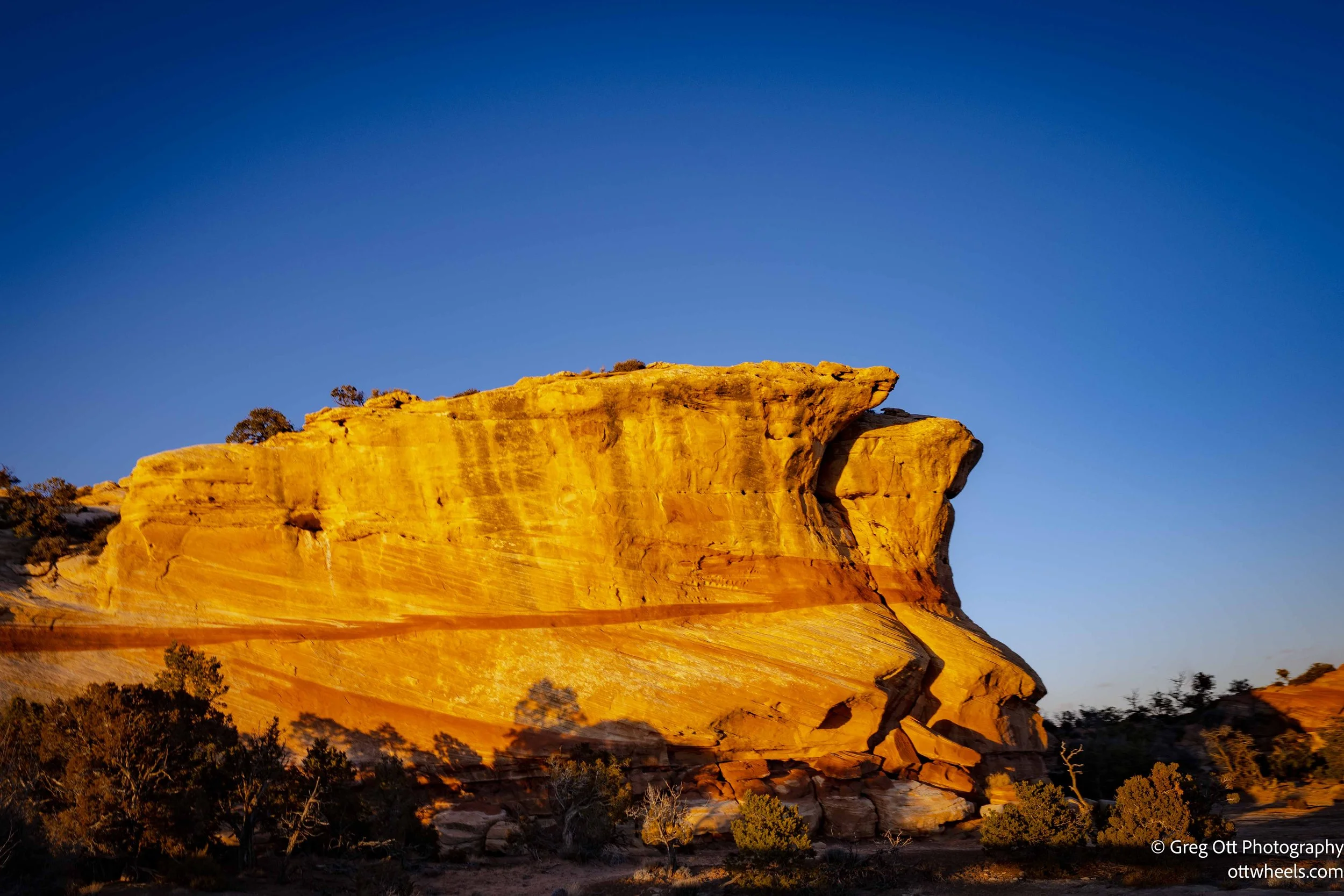
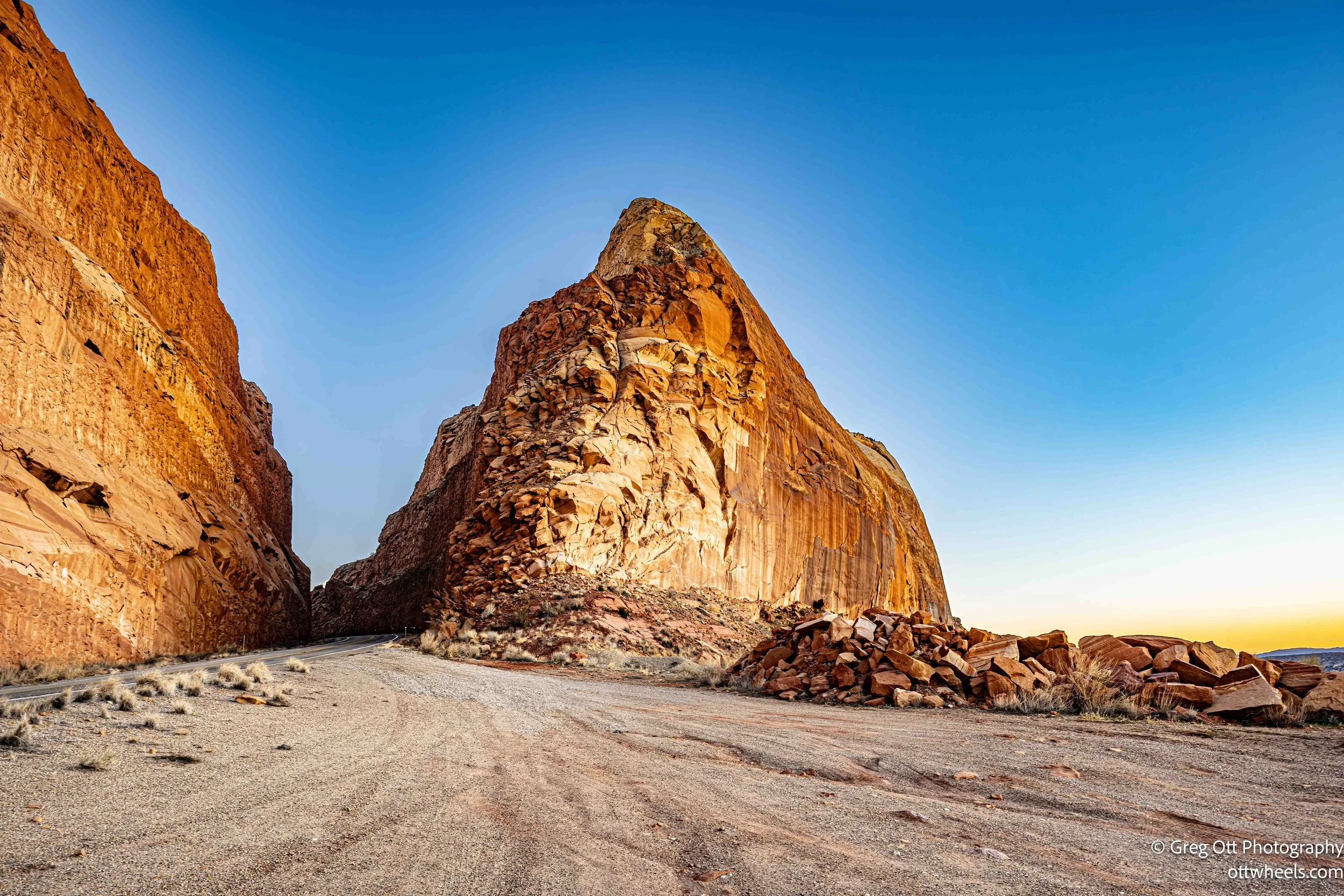
I followed it for about a mile until I reached a BLM sign announcing a day-use fee. Looking at the map more closely, I could see the road dead-ended a few miles ahead, with nothing particularly interesting at the end. What Google had marked as prehistoric huts were actually on the other side of the mountain, accessible by a completely different route—and not without serious hiking.
At that point, I decided to cut my losses and head back toward Blanding.
That’s when Google decided I should drive the Moki Dugway.
Now, I knew exactly what that meant. Warning signs everywhere: dirt road, ten percent grade, no guardrails, narrow switchbacks, 15 mph speed limit. In a van, it’s not “adventurous”—it’s irresponsible. Any strong wind and I might be at the bottom of a canyon. I refused to go further. I turned around and let Google complain and recalculate until it finally produced a safer route. The truly ridiculous part? The non–Moki Dugway route was actually fifteen minutes faster.
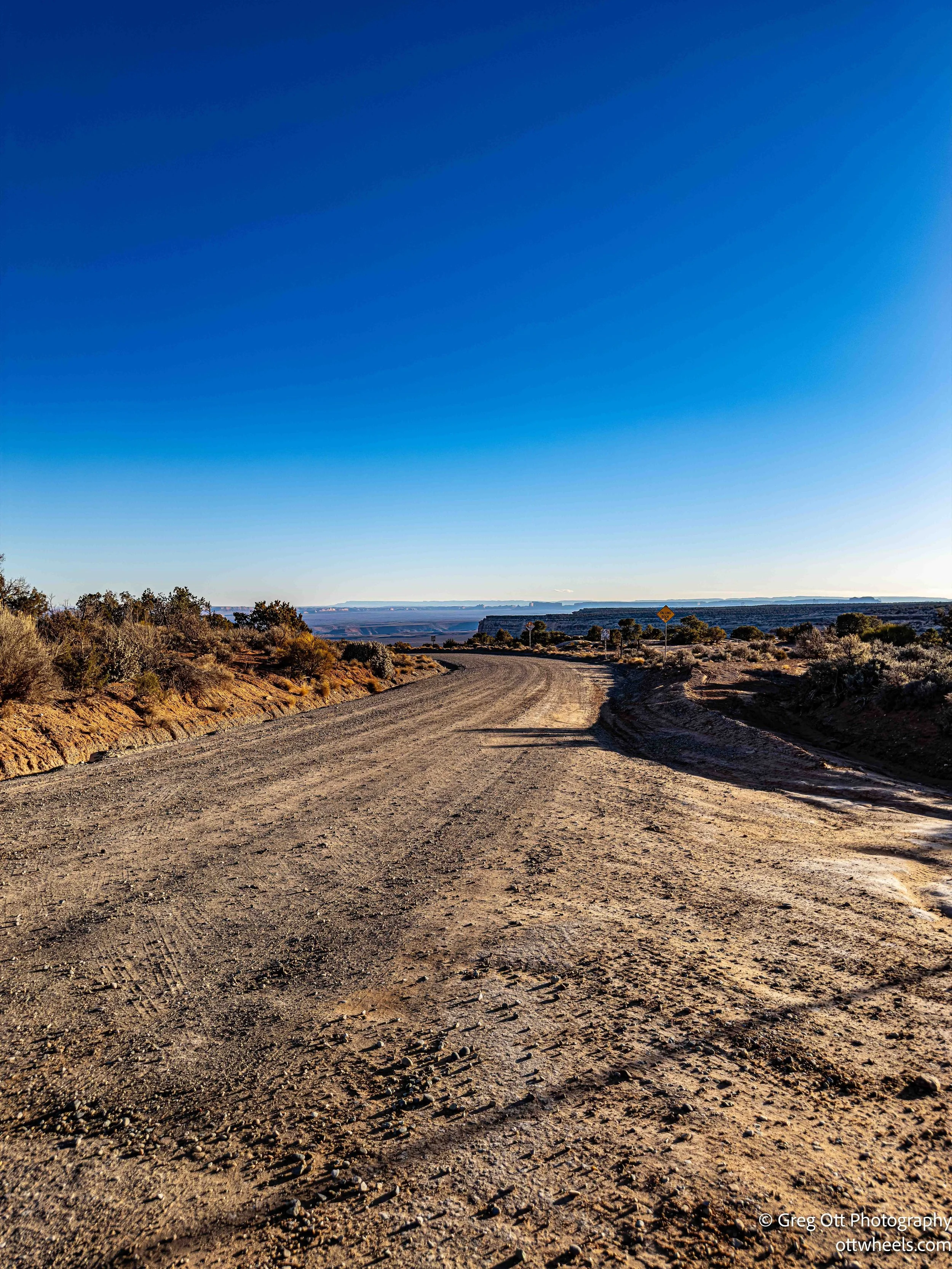
Top of Moki Dugway
I had been driving all over trying to find Cedar Mesa. By six p.m., I rolled into Blanding, Utah. ChatGPT had confidently told me there was a Walmart in town. There was not. It had been one of those days where every piece of technology felt slightly untrustworthy. I switched to iOverlander, which usually does a solid job, and it suggested a newly built street with no houses yet. That sounded good enough.
I parked there for the night, away from the main road, next to what seemed to be a small park. After a day like that, “good enough” felt just fine.