Denali: A Summer Day
I slept for eleven hours. I think the week had finally caught up with me. I woke around 5 a.m. after several campers pulled out, I assumed to go fishing, but quickly went back to sleep. My Sleep app woke me again at 7, and apparently I wasn't done yet—I rolled over and slept until almost 10. The Sleepytime tea had definitely done its job.
I made French toast for brunch and had a cup of coffee to get everything moving again. After spending some time writing, I decided I needed to get out for a while and drove over to the Denali Visitor Center complex.
At the Denali Visitor Center, I spent more time with several of the exhibits I had missed on my earlier visits. There is a lot here about the natural history of the park, but also about the people who have been connected to this land for thousands of years. The Ahtna, Dena’ina, Koyukon, Upper Kuskokwim and Tanana peoples lived throughout this region long before it became a national park, depending on the land and wildlife for food, transportation, clothing and trade. People may have lived within what are now the park boundaries for as long as 12,000 years. Later came prospectors, hunters, railroad workers, settlers, climbers and eventually tourists. The first successful ascent of Denali was made in 1913, four years before Mount McKinley National Park was established, and the park itself continued to change as roads, railroads and tourism made what had once been an extraordinarily remote place increasingly accessible.
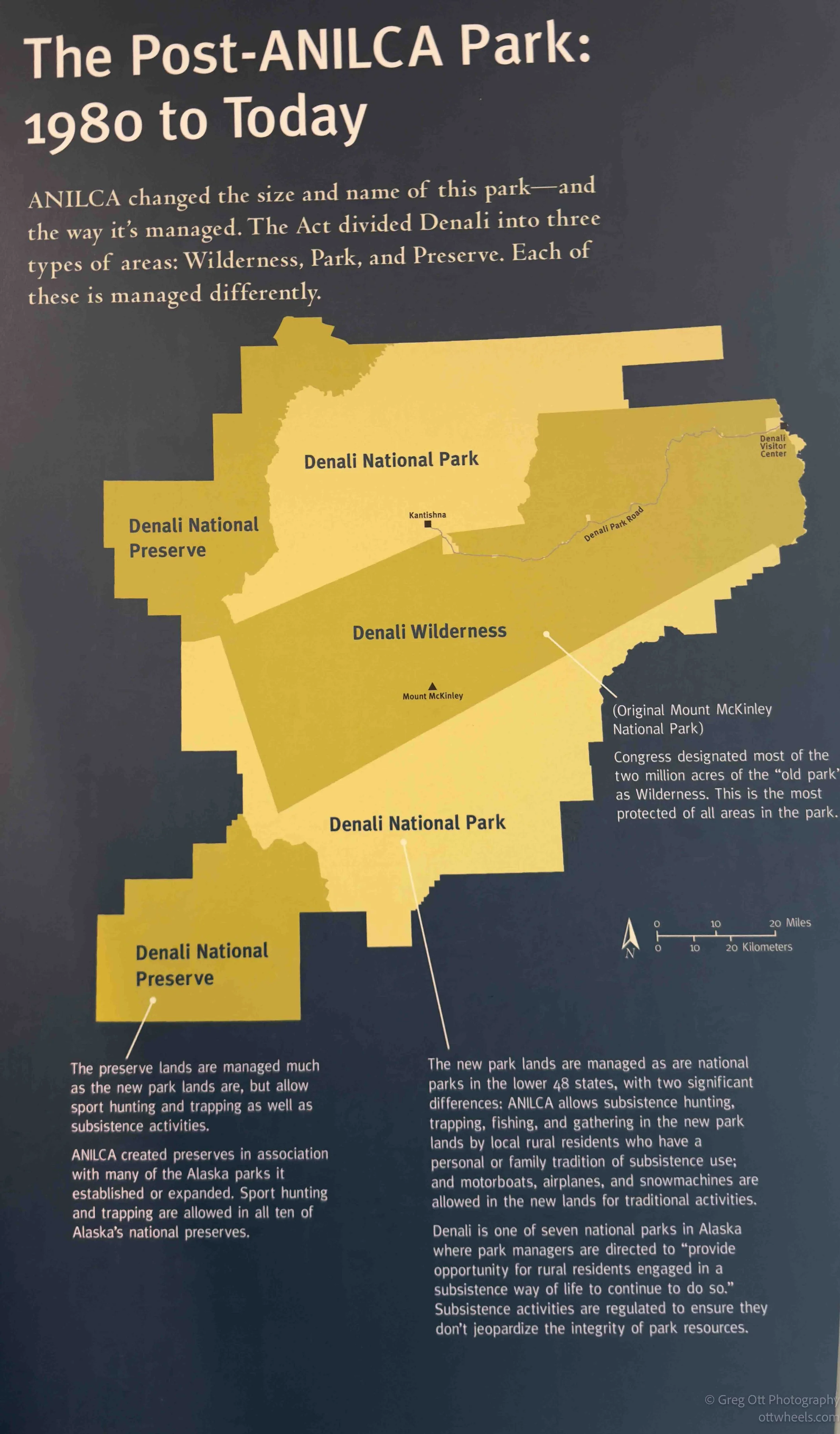
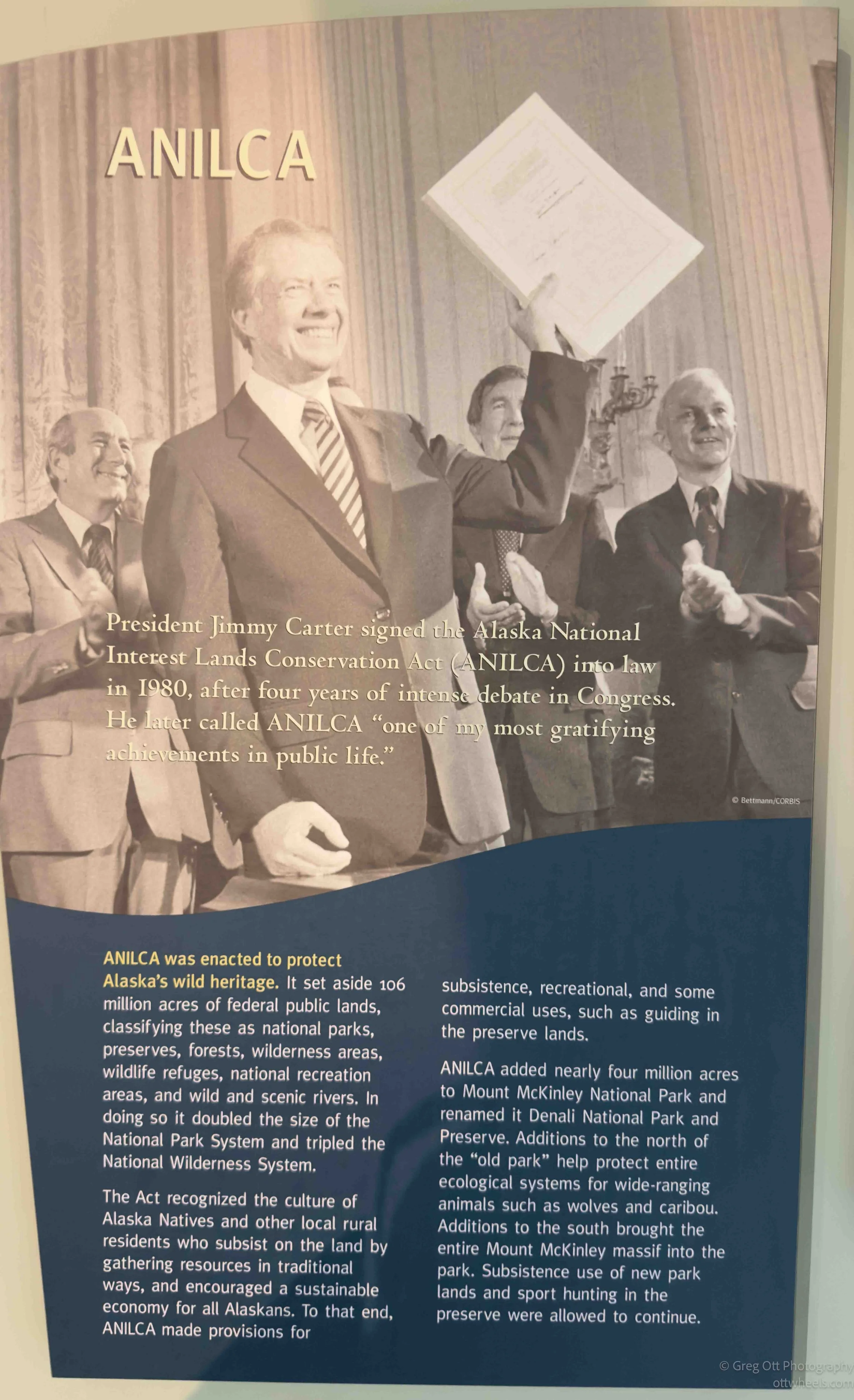
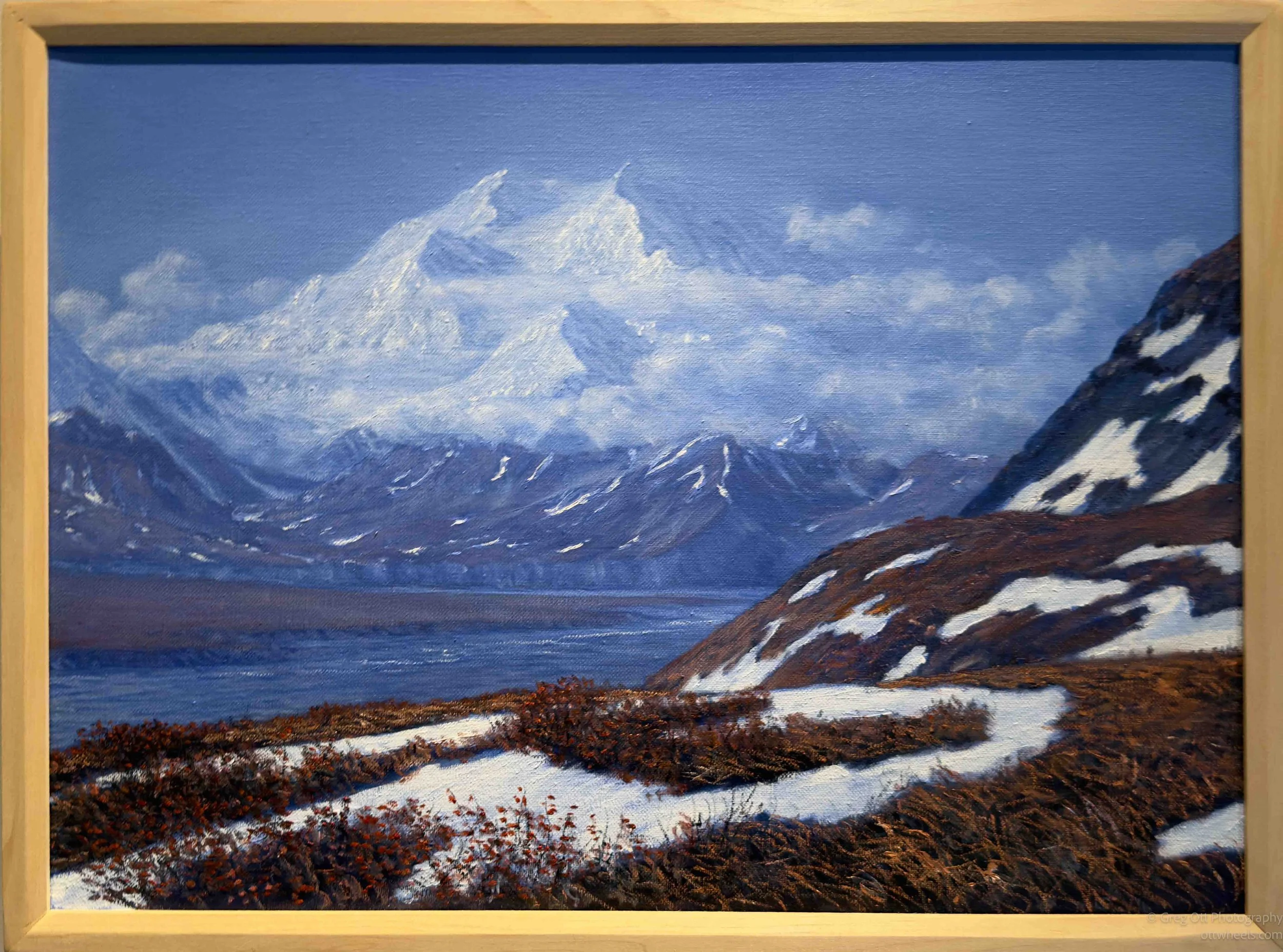
On my bus trip a few days earlier, I had also learned about Denali's Artist-in-Residence program, so I paid more attention to the artwork this time. The program began in 2002 and brings artists, writers and composers into the park for an extended period, allowing them to experience Denali and interpret it through their own work. One of the displays featured two small oil paintings by David Rosenthal, the 2015 Artist-in-Residence, who worked from drawings, memories and experiences he collected while in the park. That idea resonated with me. It isn't all that different from what I am trying to do with photography—experience something first, then somehow take that experience and turn it into an image. I also stopped in the gift shop and spent some time looking at photographs by Alaska photographer and poet Jimmy Tohill. He moved to Alaska in 1987 to work as a river guide and photographer at Denali and eventually built a life and photography business here. I went through several of the books as well, looking at old photographs and stories about Denali's early residents, climbers and the people who somehow found their way into this enormous landscape long before there was a paved highway leading to it.
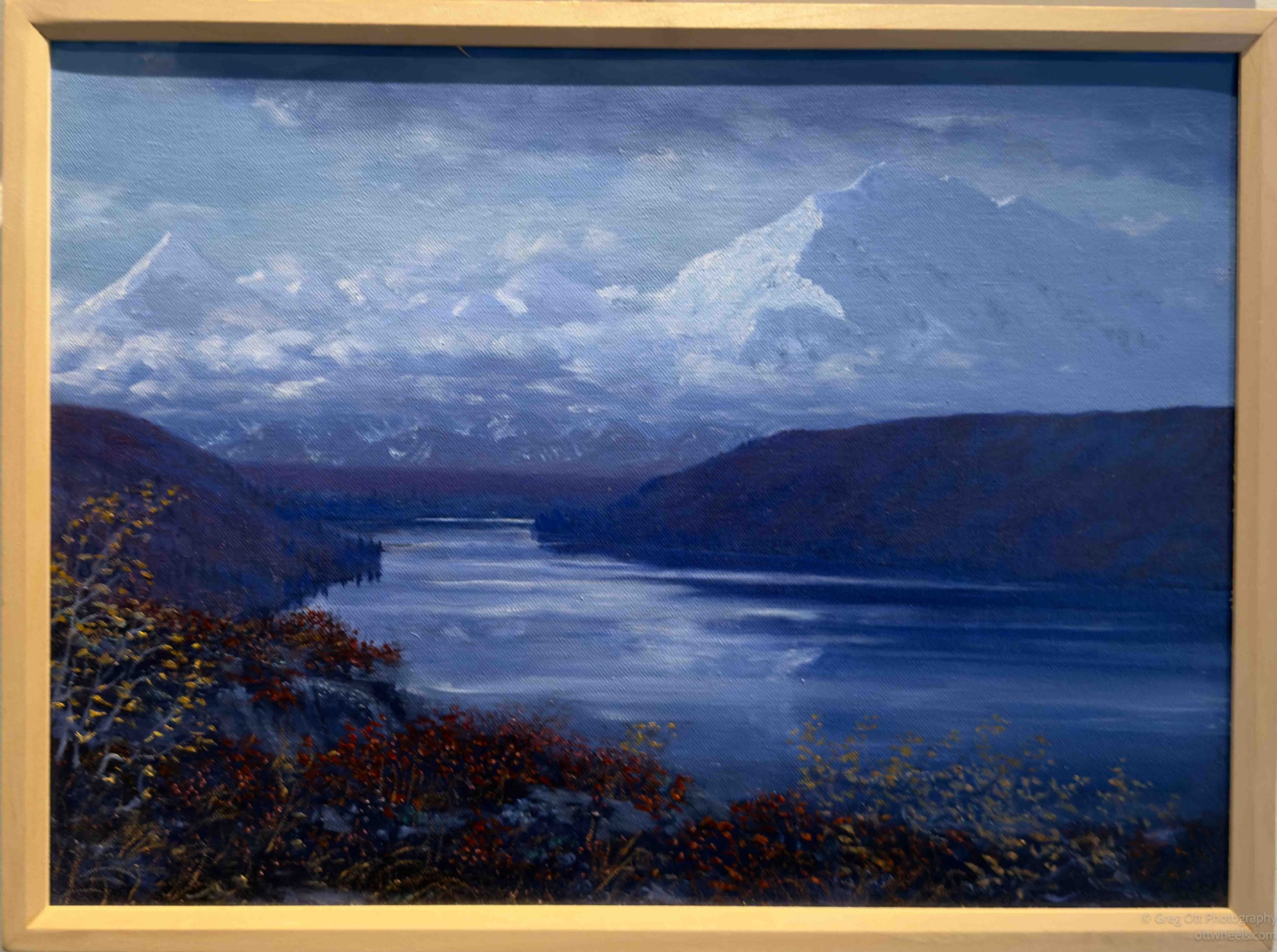
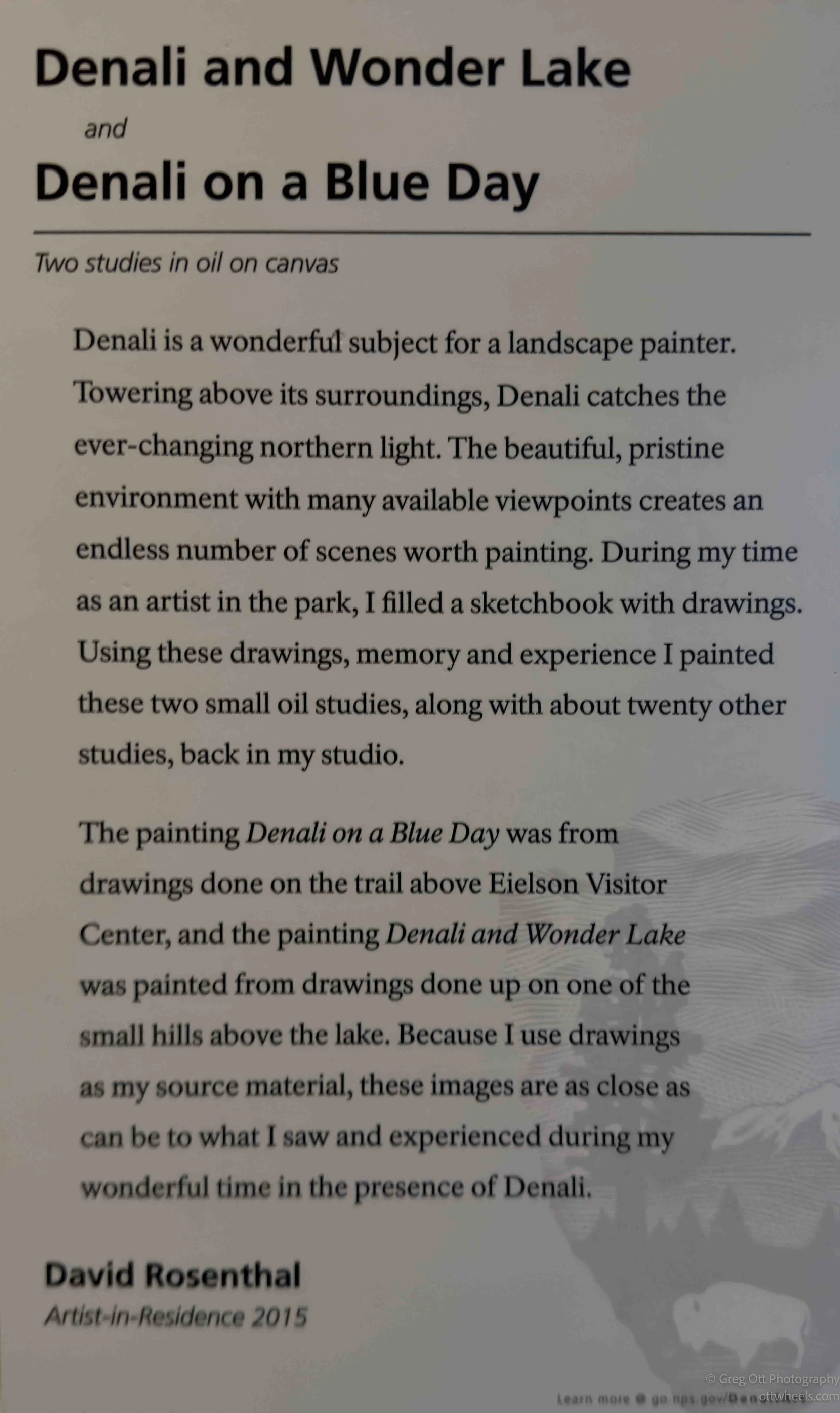
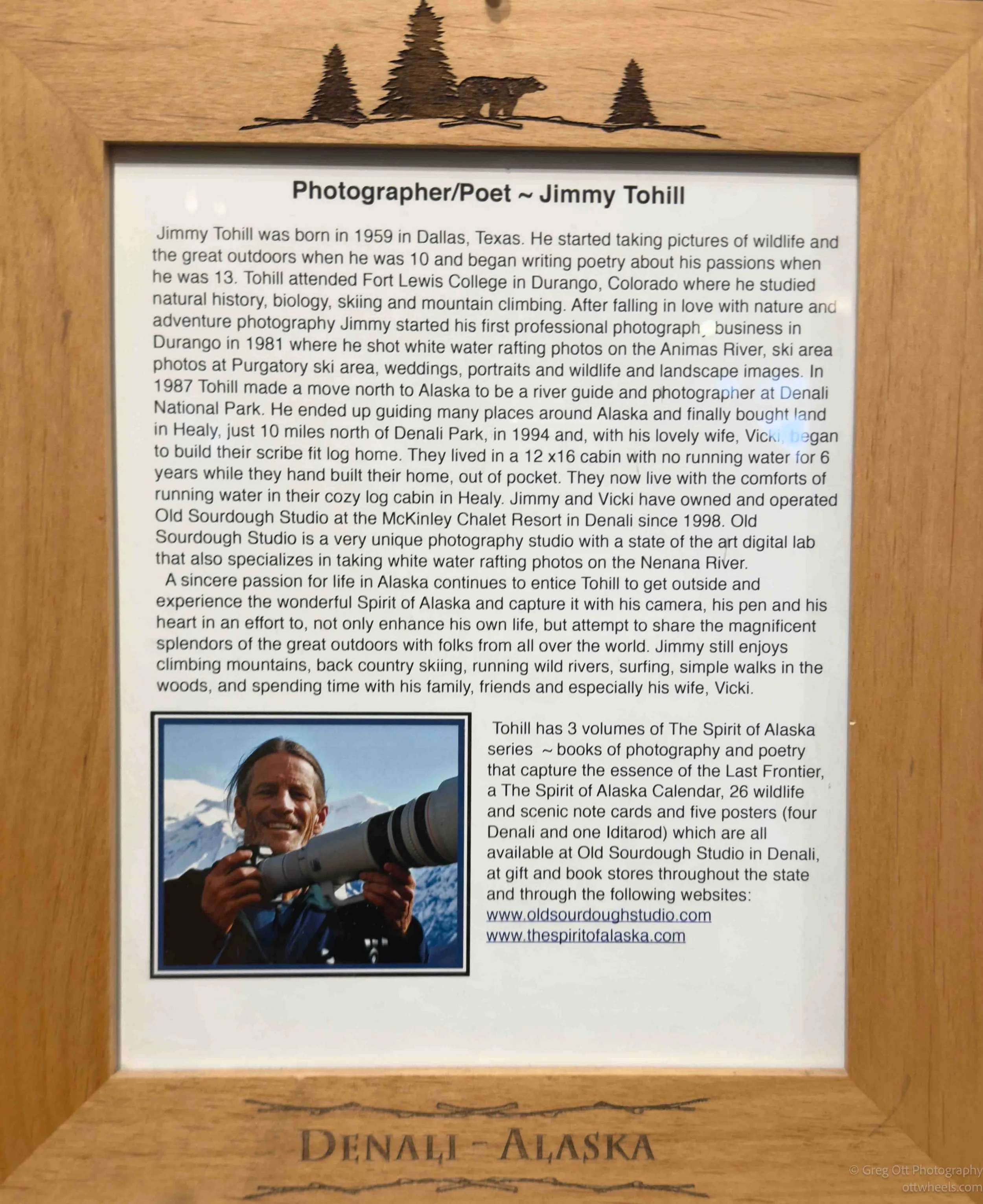
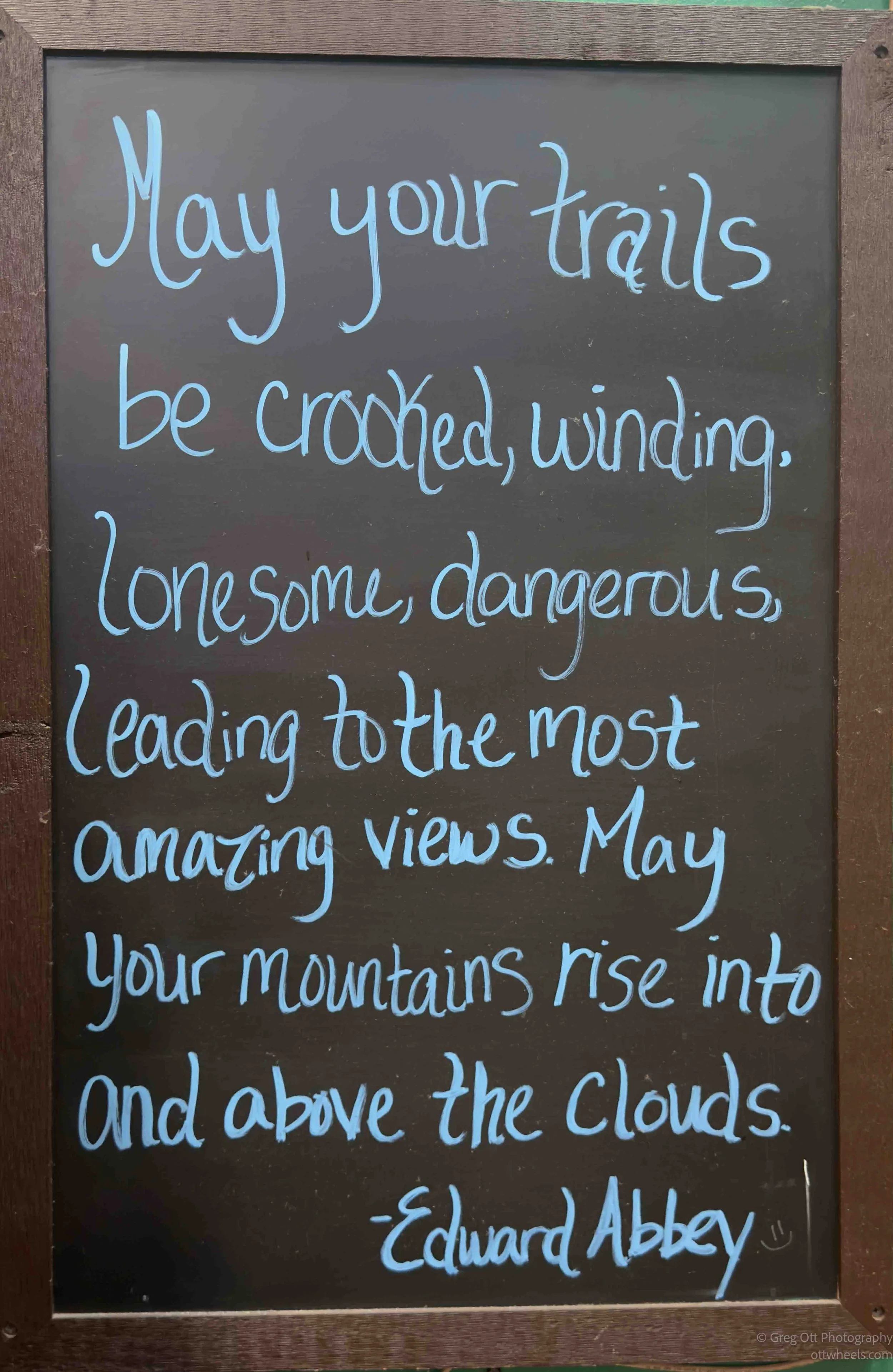
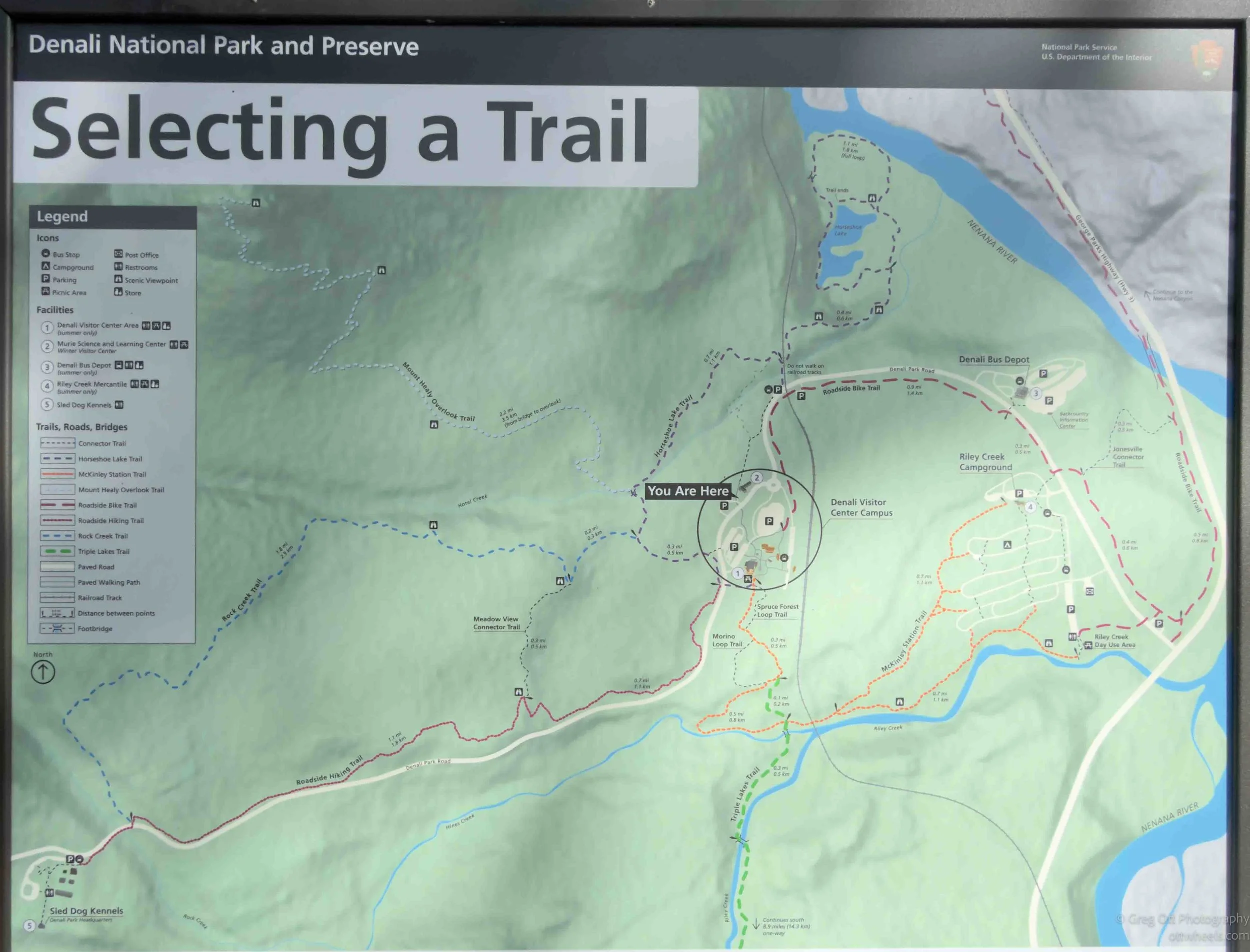
I watched one of the park movies again, got my National Parks passport book stamped and eventually wandered over to the Morino Grill for a cup of coffee. On the wall was a chalkboard with an Edward Abbey quote that caught my attention: “May your trails be crooked, winding, lonesome, dangerous, leading to the most amazing views. May your mountains rise into and above the clouds.” I liked that. It seemed particularly appropriate after some of the places I had already wandered into around Denali. Outside, I stopped at the large trail map and took a photo of it, already thinking that I wanted to squeeze in at least one more hike before leaving the park. I didn't have any particular trail in mind yet, but after several days here I was beginning to realize that some of my best experiences had started simply by looking at a map and wondering where something went.
From there I walked downhill to the Alaska Railroad depot and ended up hanging around for more than half an hour. A northbound train was being loaded for Fairbanks, and I watched passengers arrive, luggage being moved aboard and people talking about the trip ahead. Another train had come up from Anchorage, and drivers from the nearby hotels were waiting to collect arriving passengers. I started thinking about how much fun it would be to just get on the train, ride north to Fairbanks and somehow come back again, so naturally I began trying to figure out whether I could turn it into a round-trip excursion.
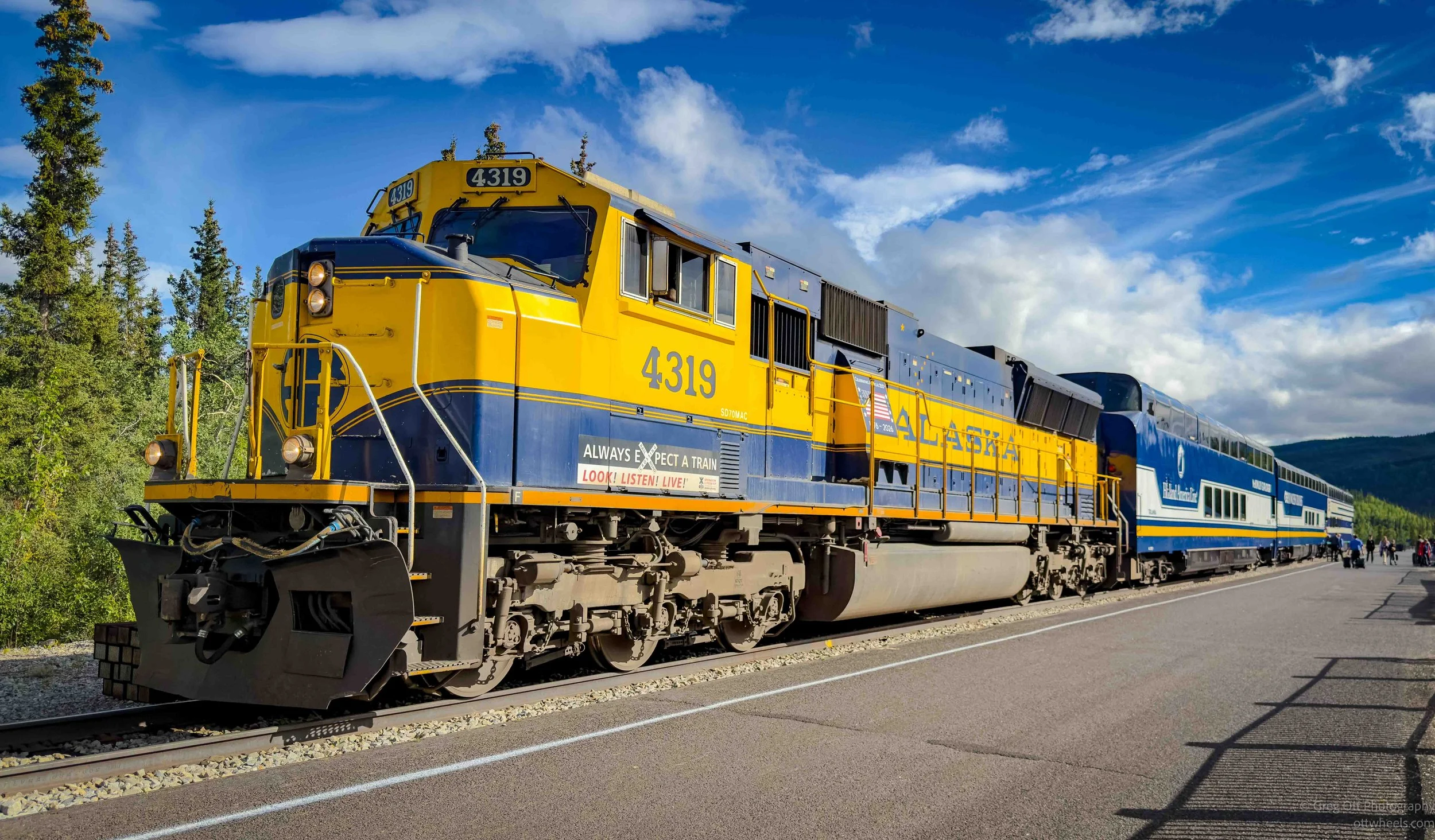
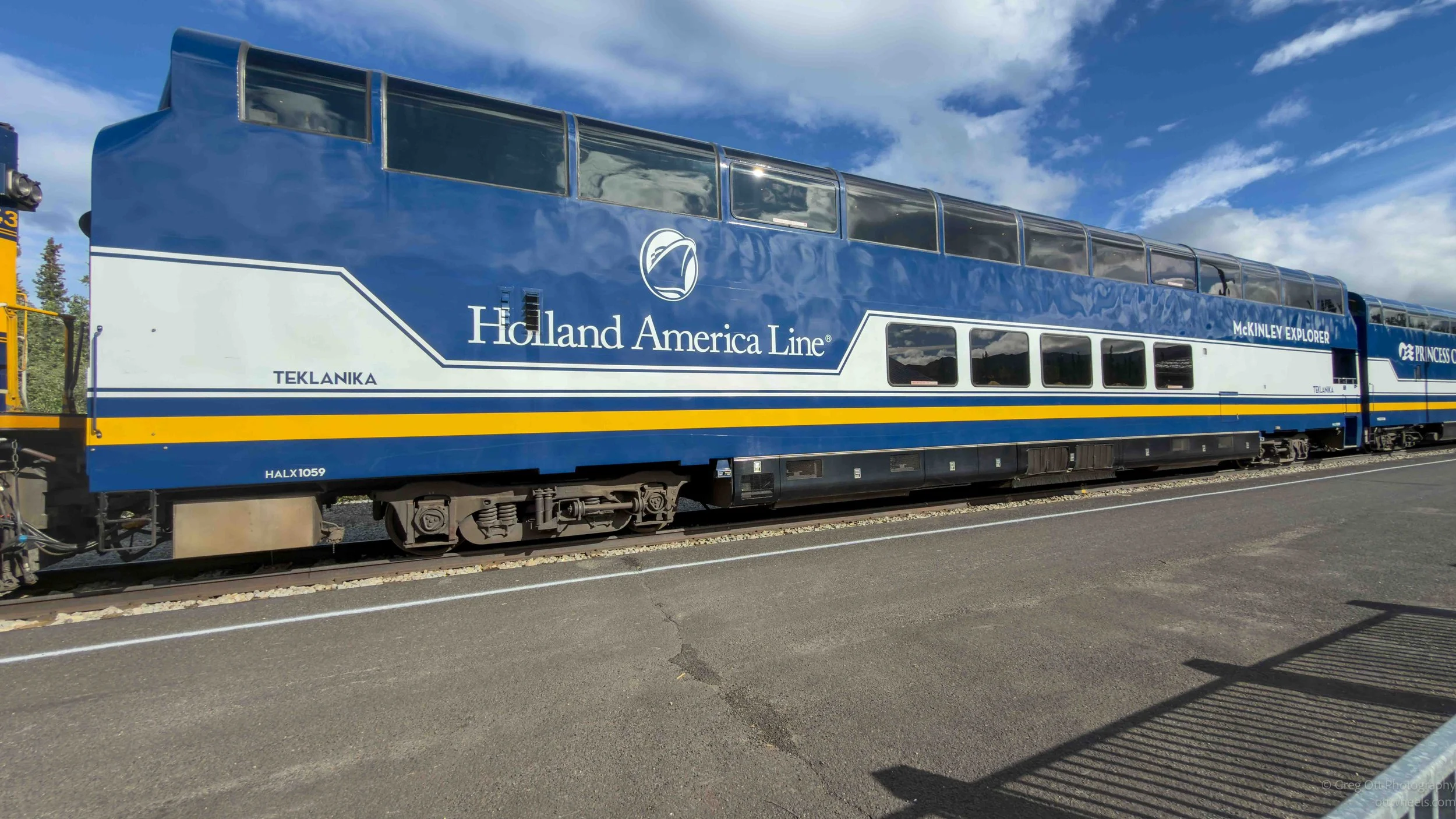
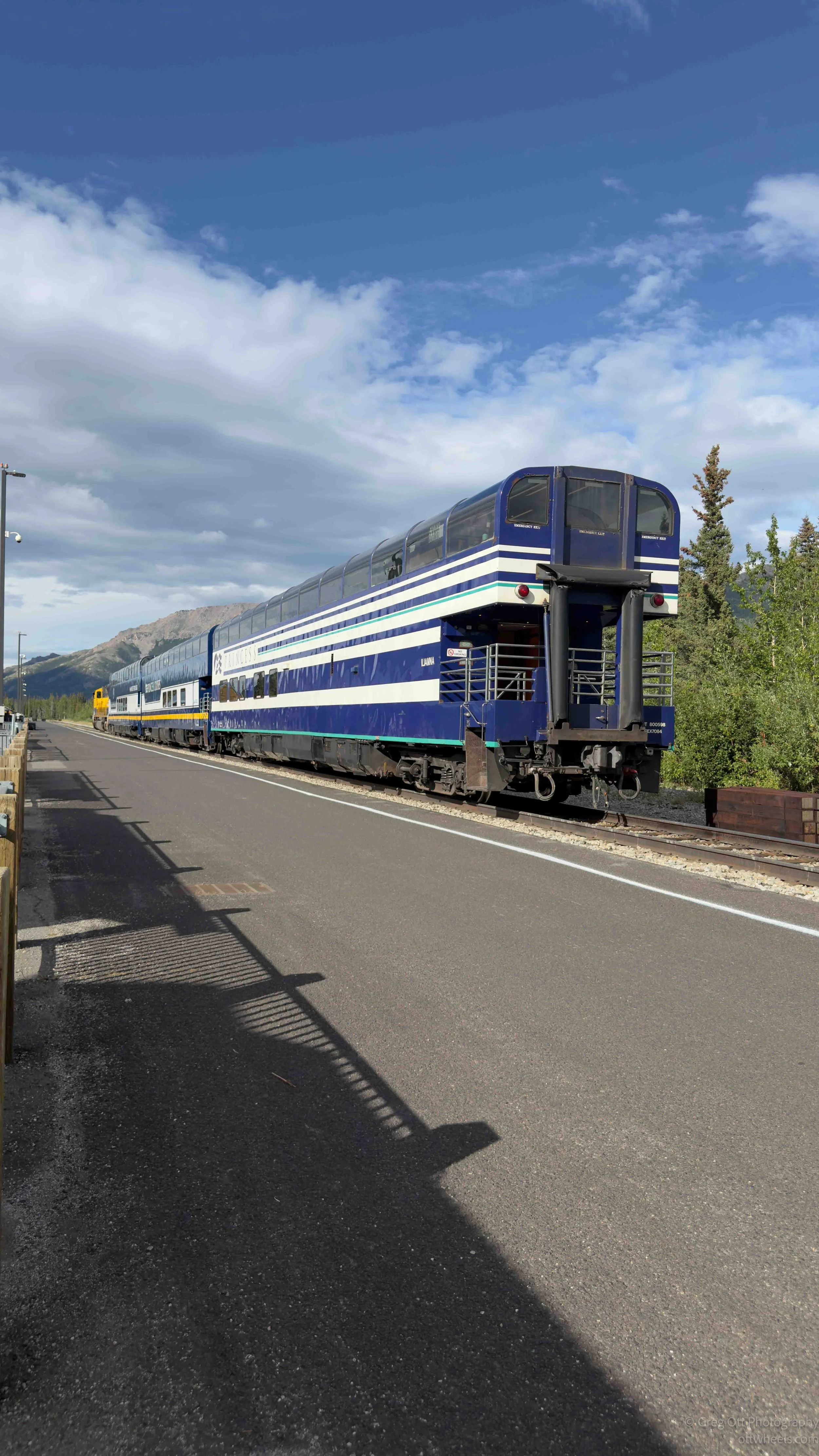
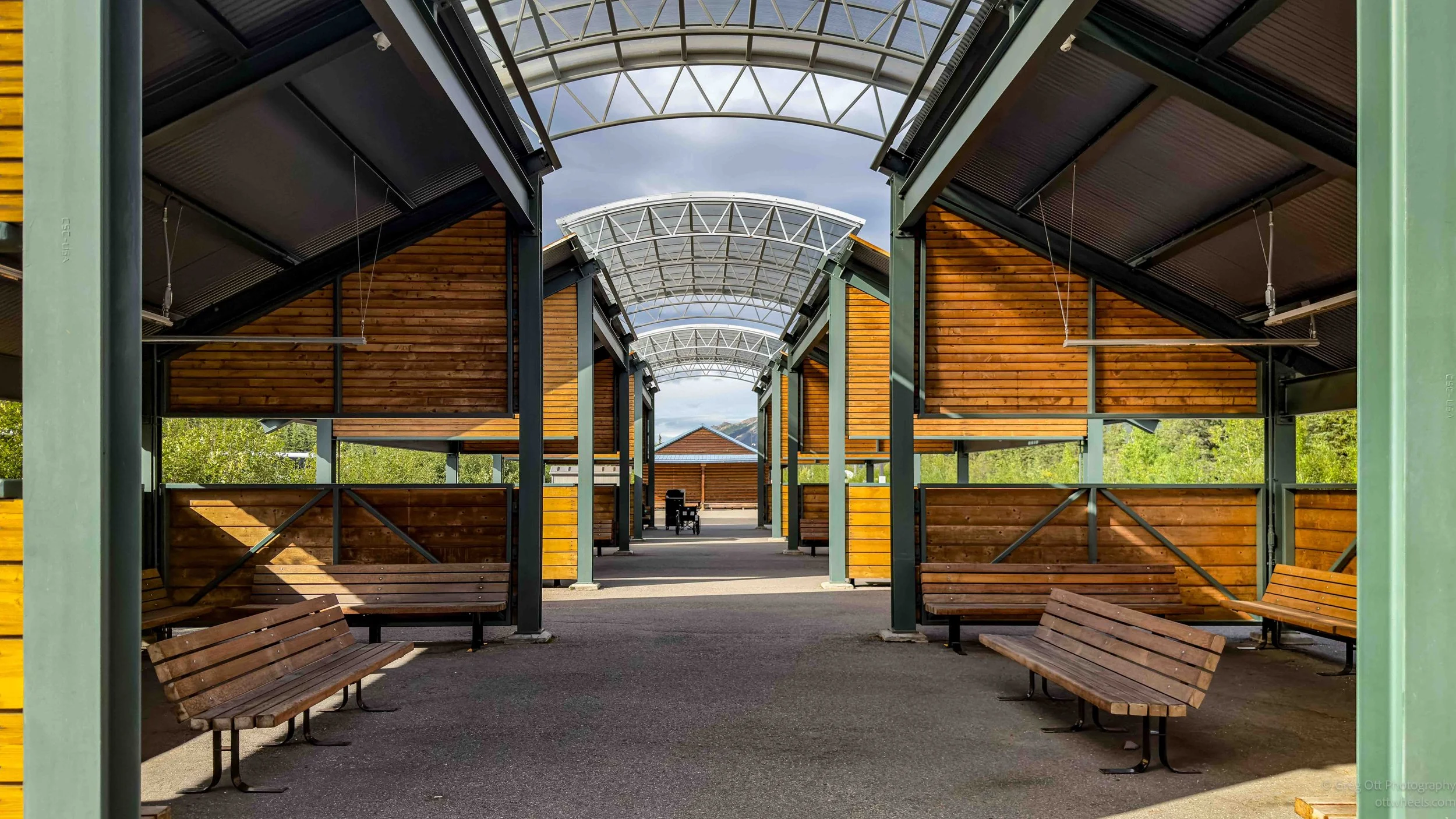
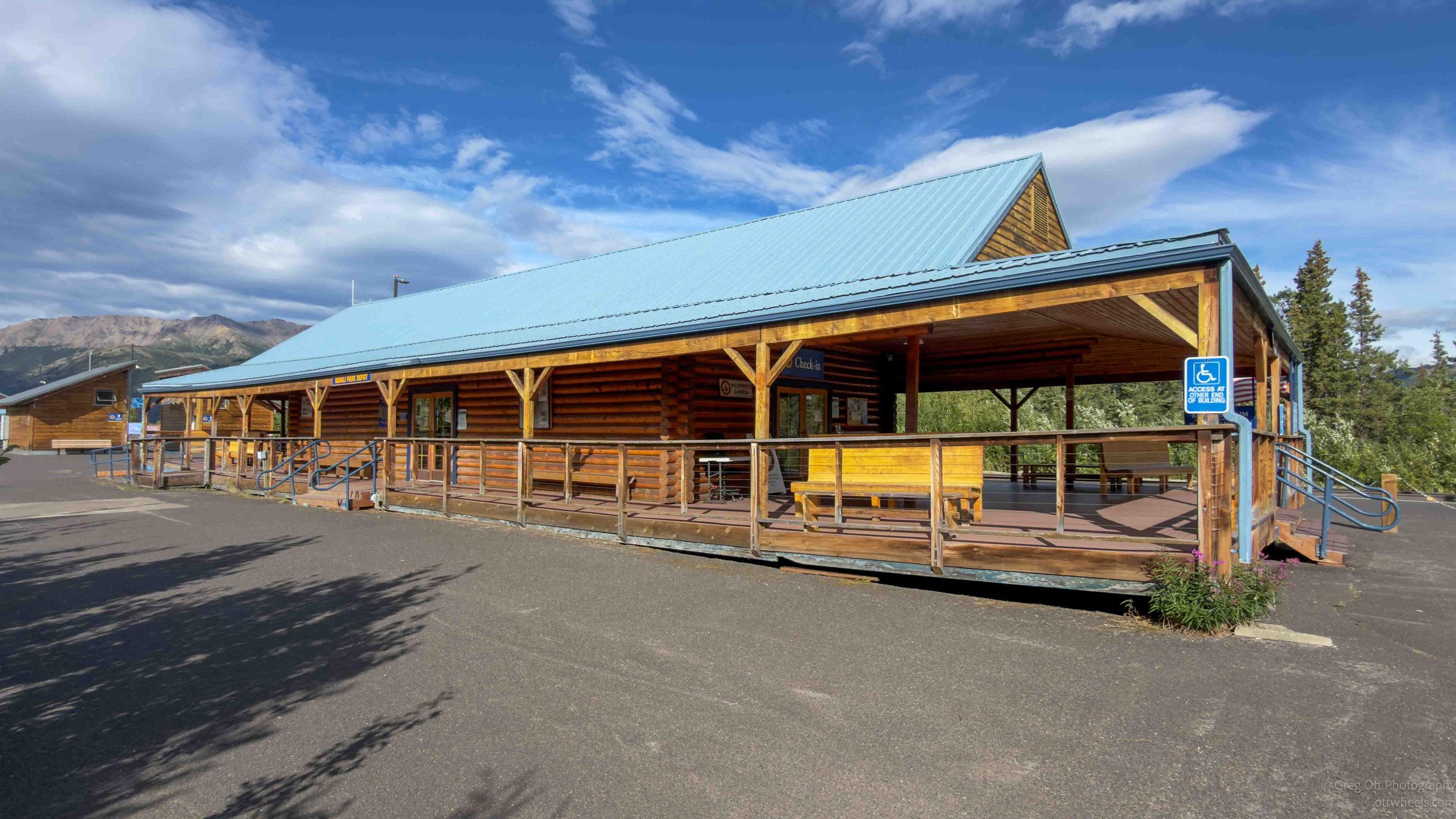
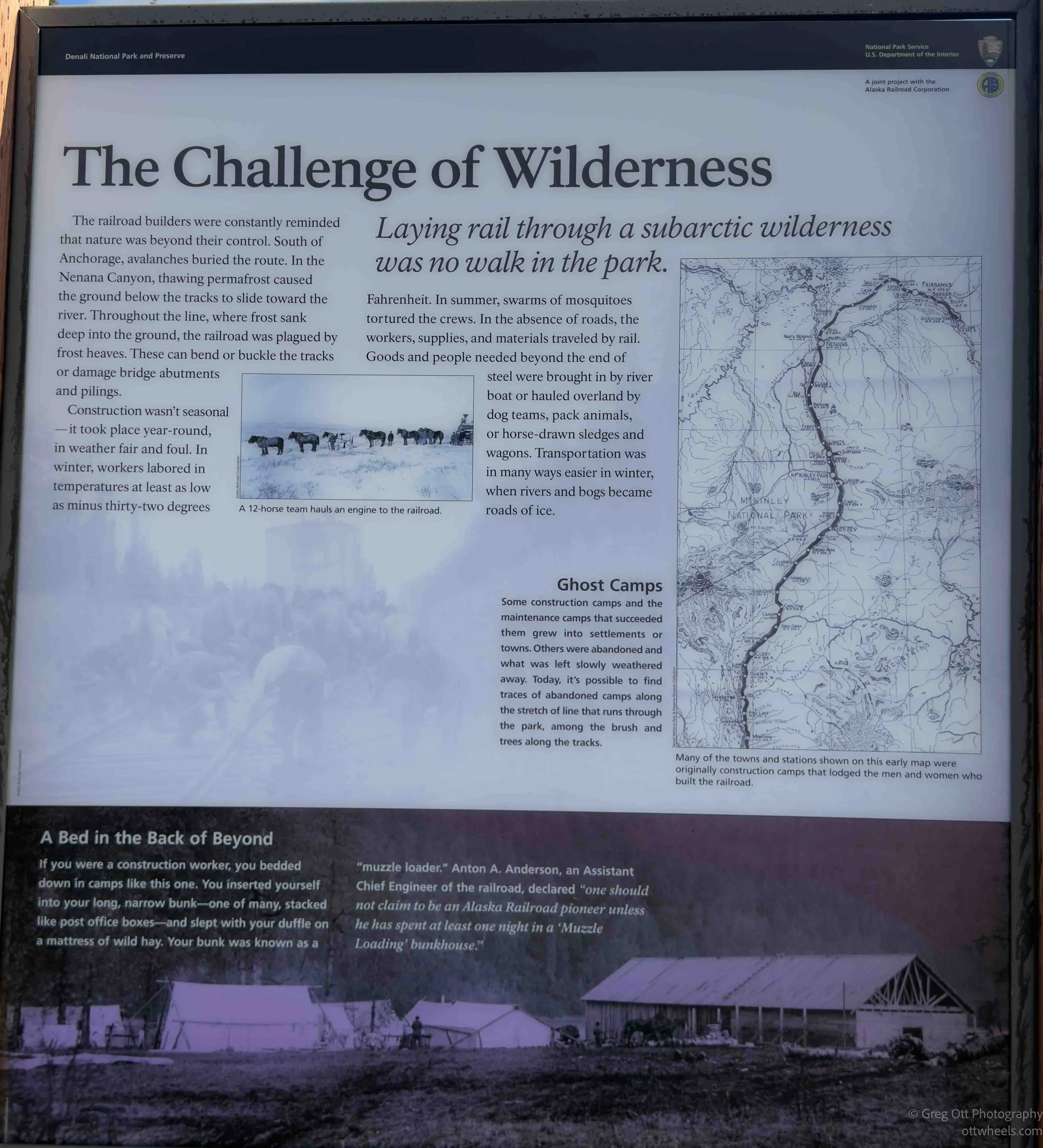
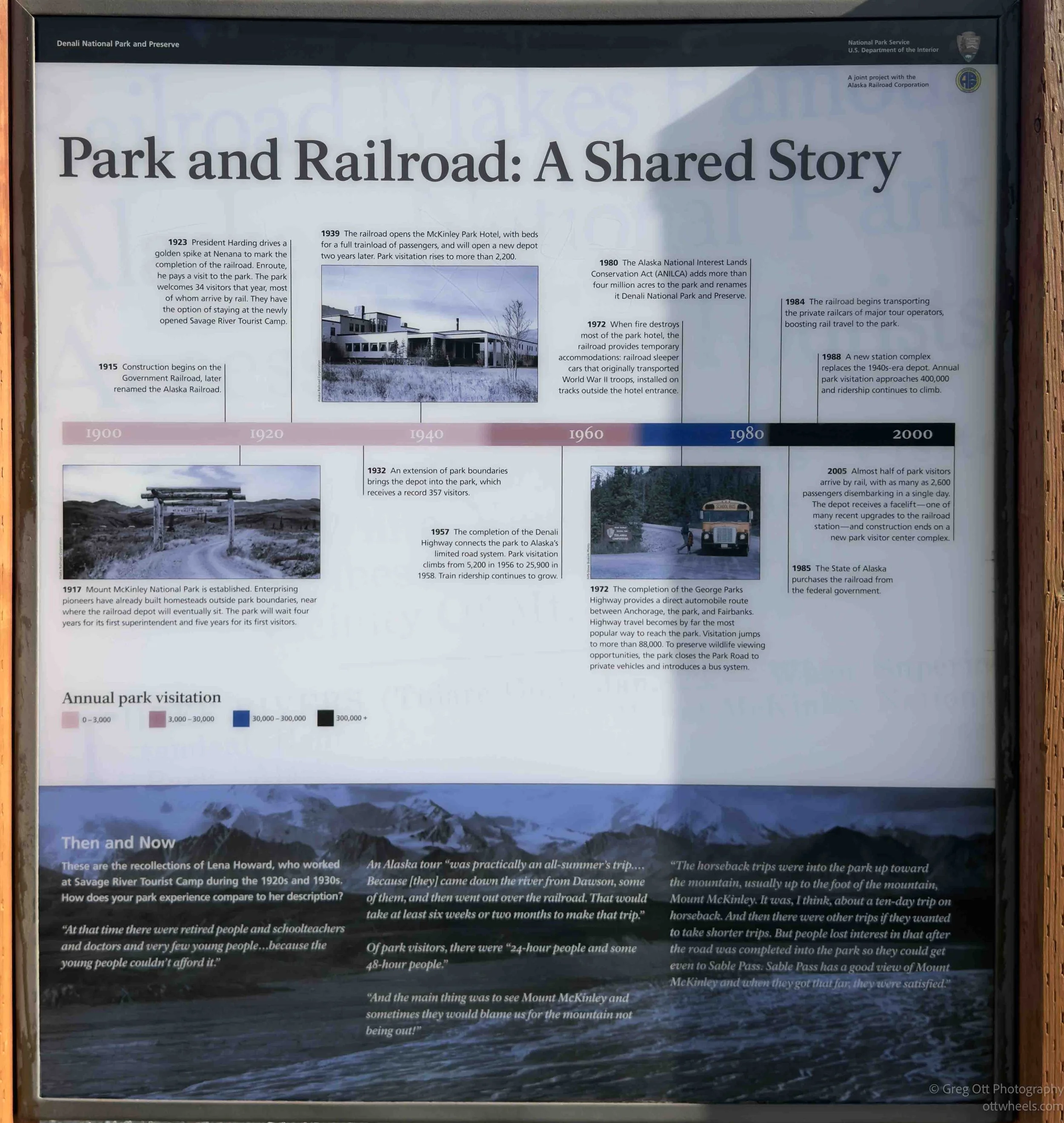
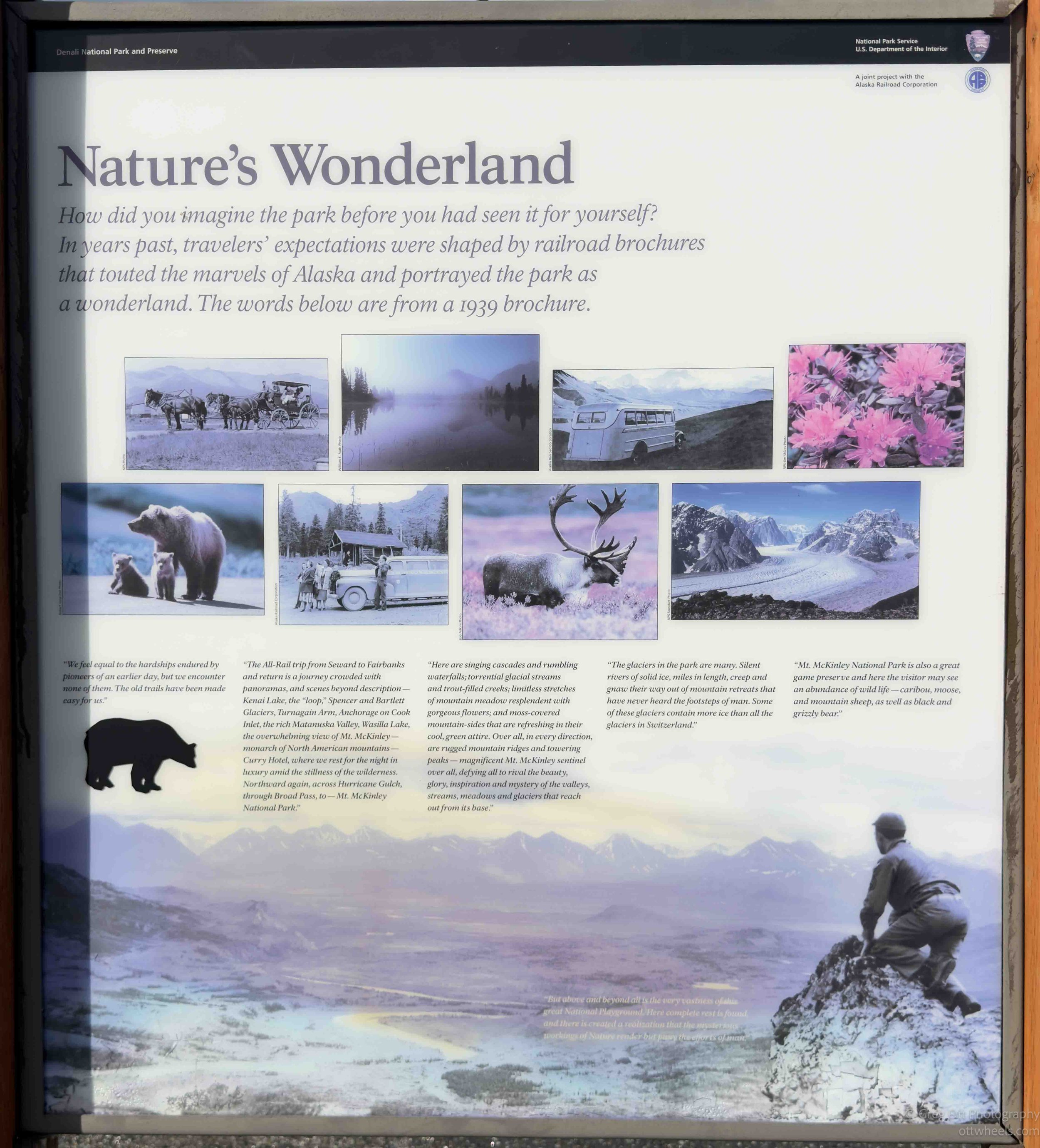
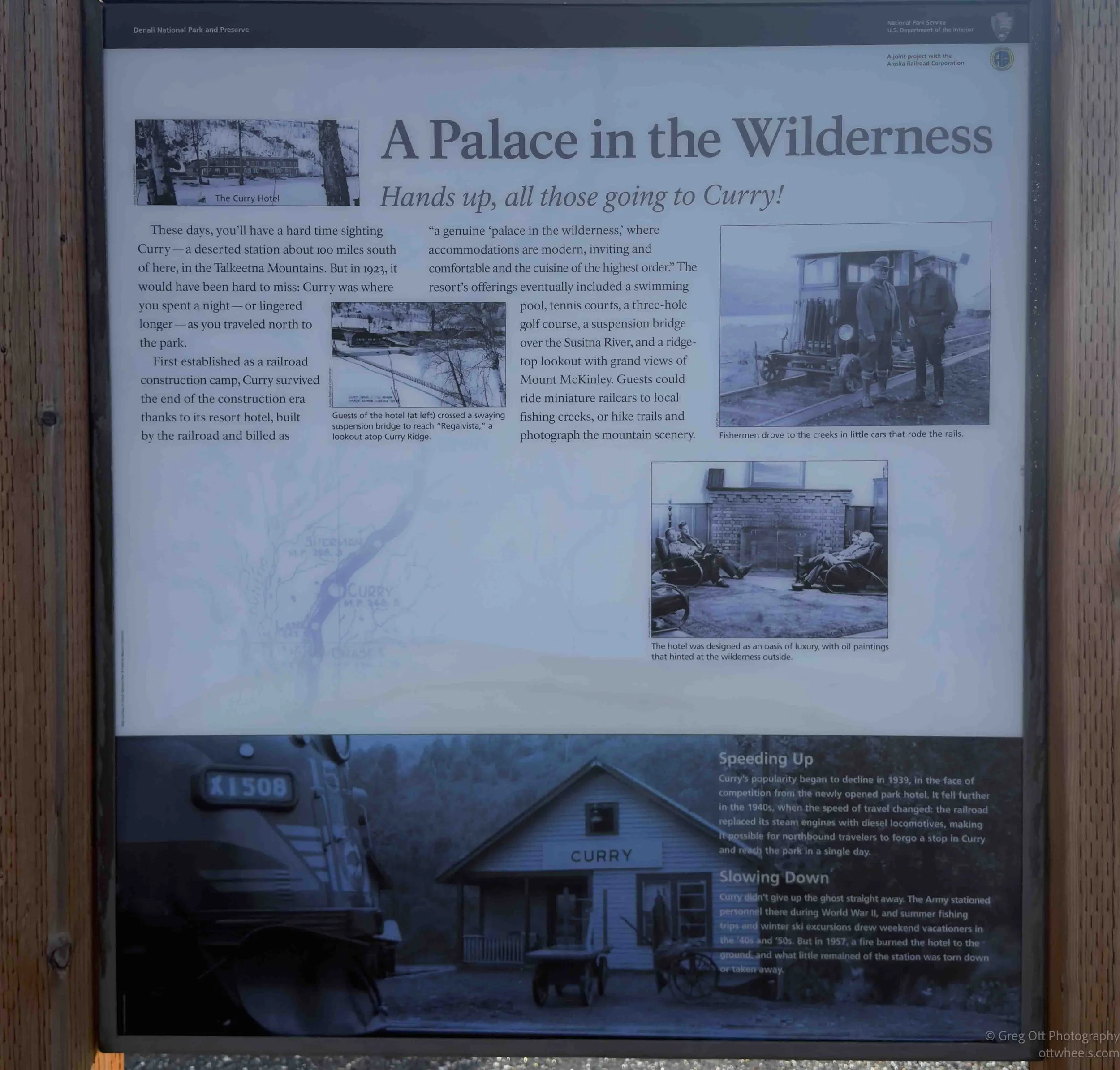
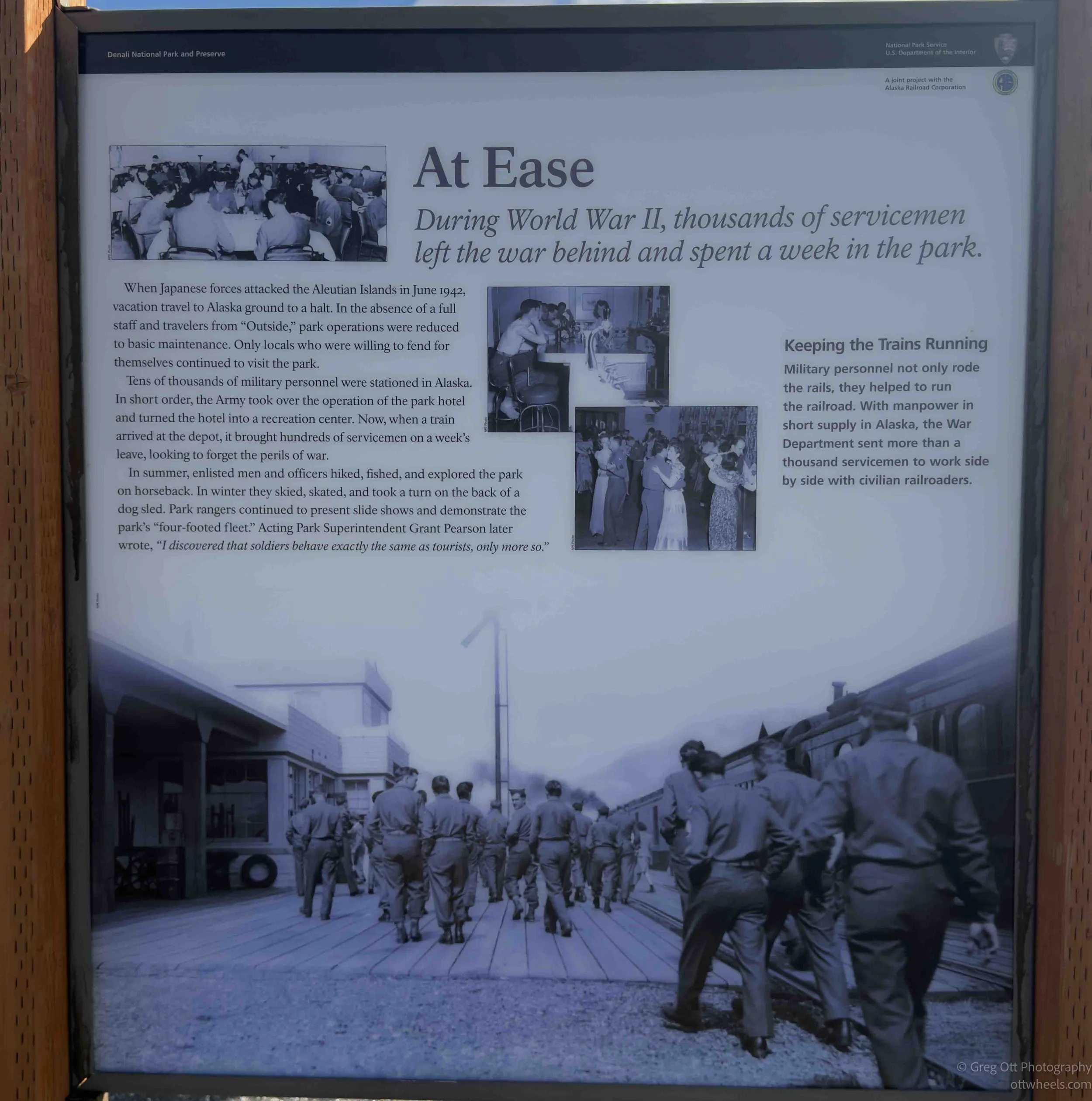
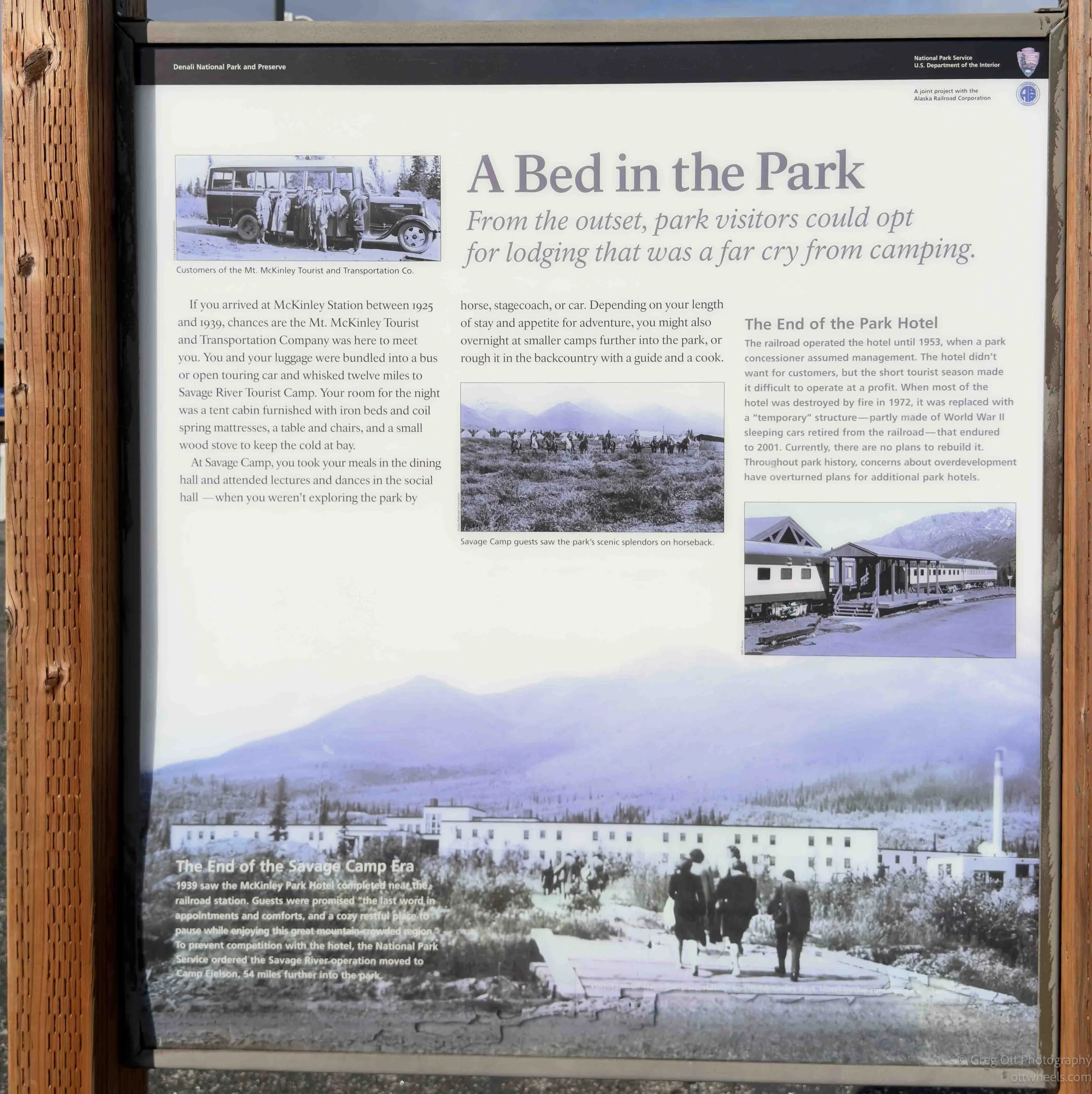
While I waited, I read the historical panels around the depot. Before the Denali Highway opened in 1957, the railroad was essentially the practical way into the park for most visitors. The original depot was built in 1922, another followed in 1926, and the present station dates to 1988. The displays told stories of early hotels, tiny railroad settlements, construction crews fighting permafrost and temperatures far below zero, and enormous bridges built across places such as Hurricane Gulch. During World War II, servicemen stationed in Alaska even rode the train here for short breaks from military life. The railroad and the park have been tied together almost from the beginning, and standing there watching that big blue-and-yellow train preparing to head north made all of that history feel considerably less distant.
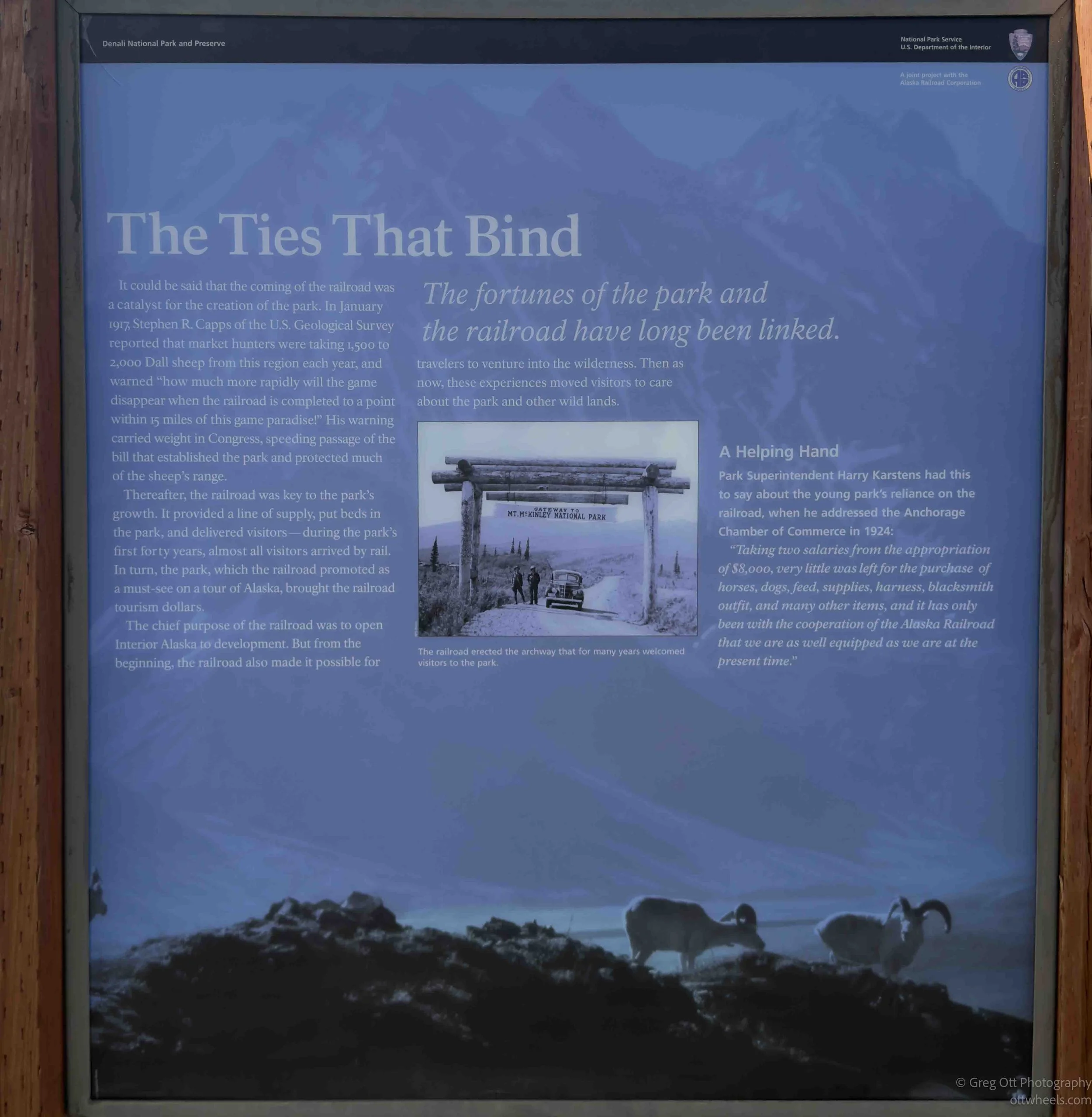
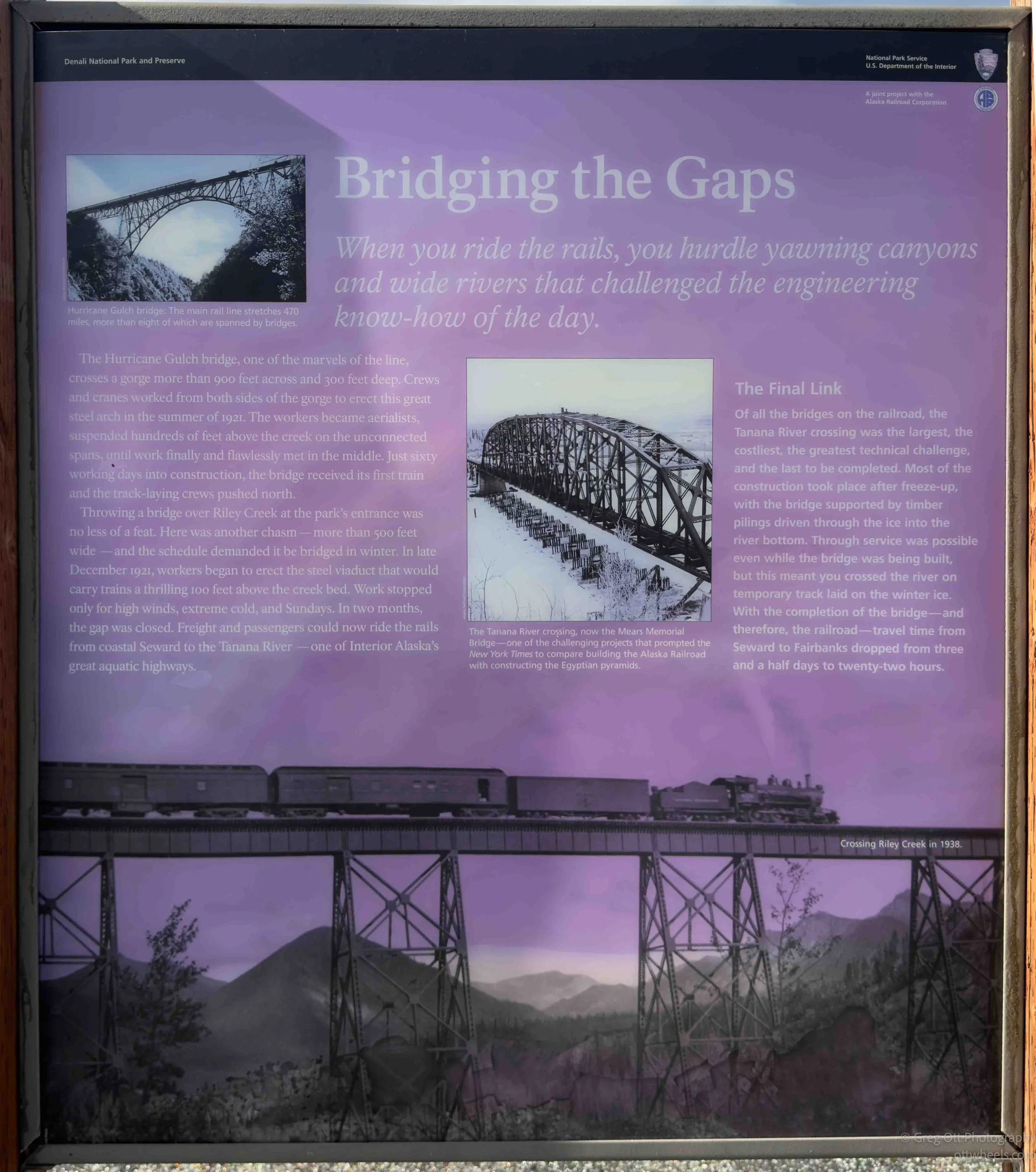
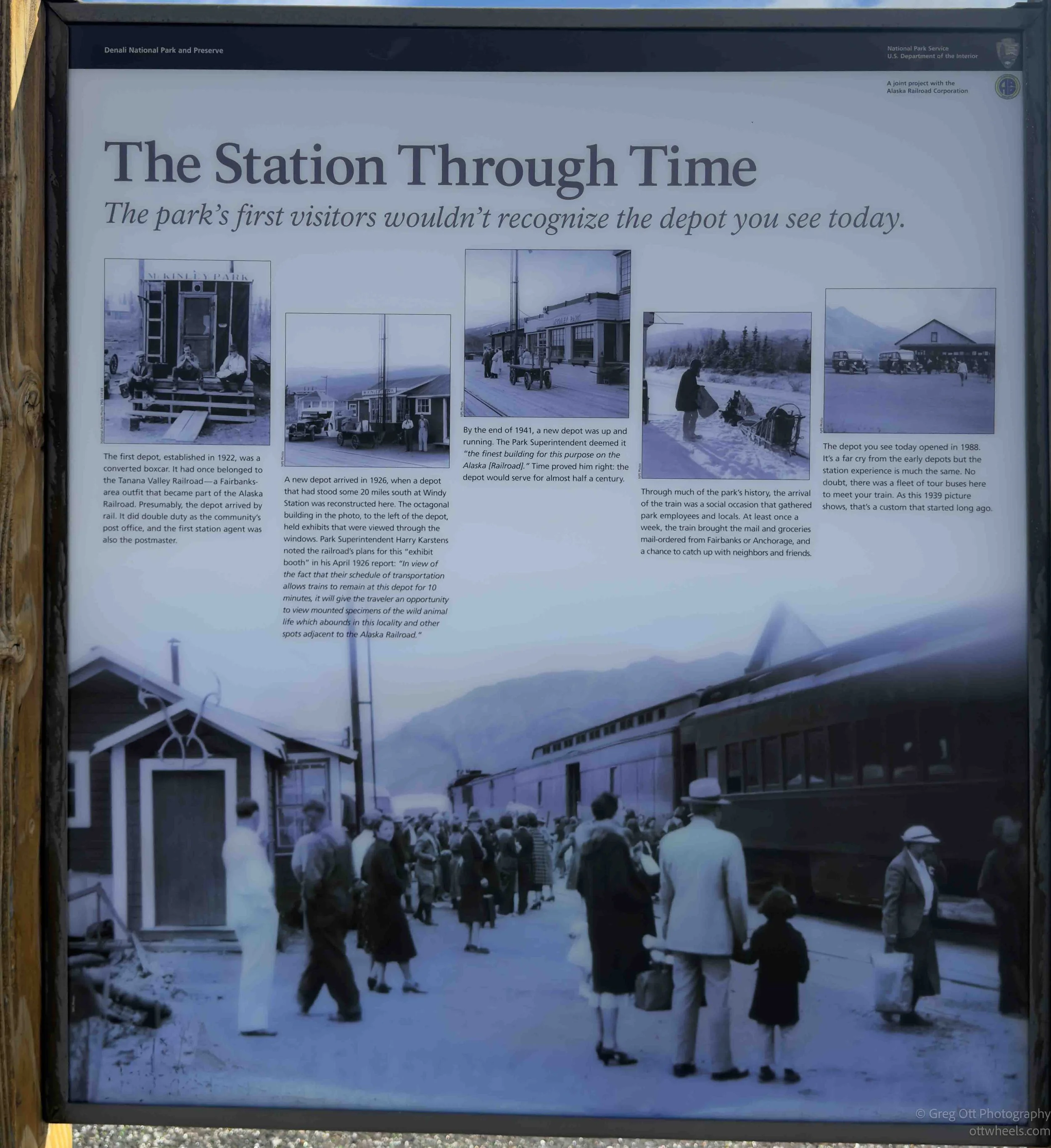
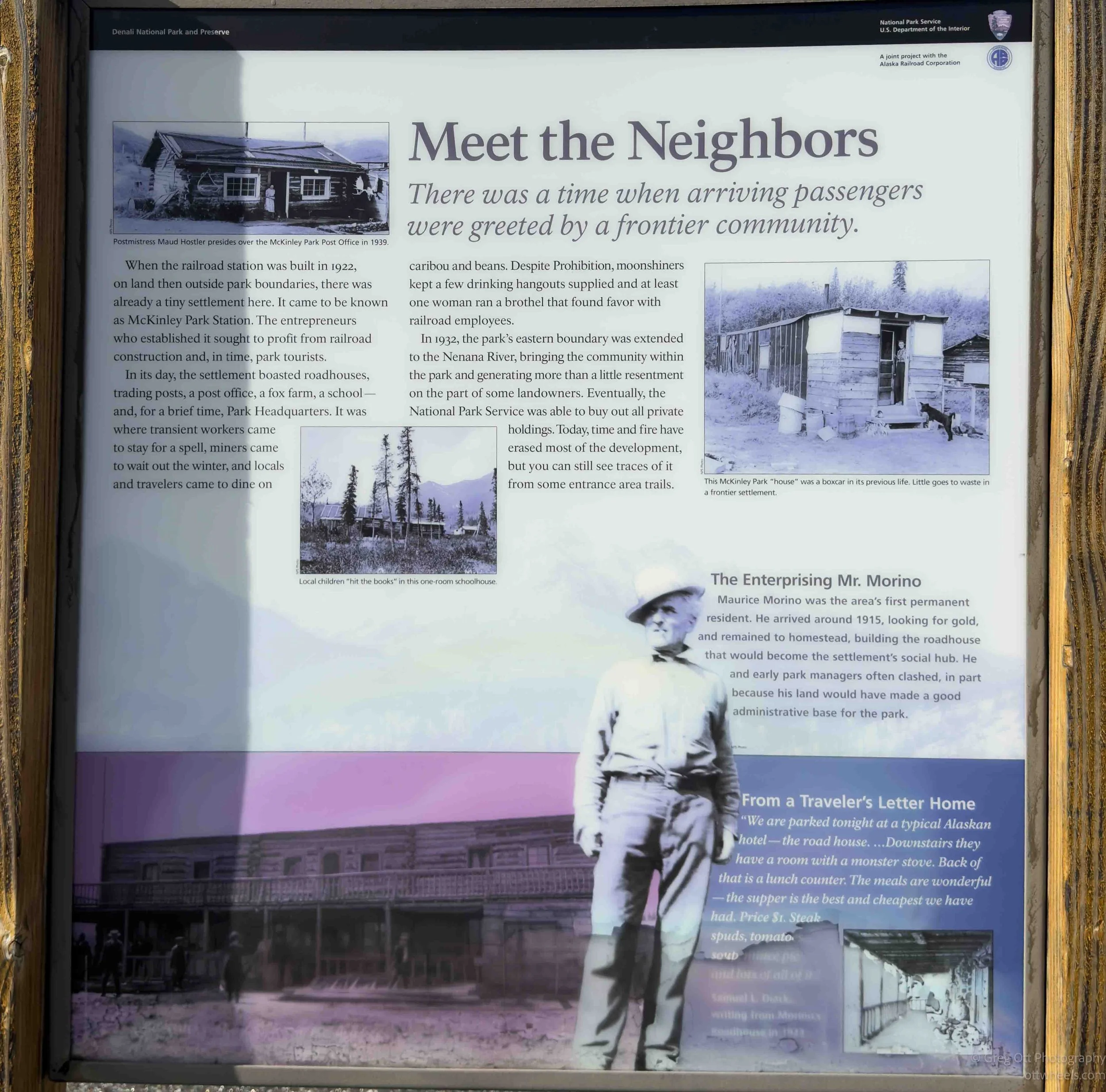
I eventually walked over to the Murie Science and Learning Center hoping to pick up another stamp for my passport book, but it was closed. I had been inside a few evenings earlier for the History of Fire and Ice presentation, so missing the stamp wasn't exactly a disaster. There was a place to sit outside, the sun was shining, and the temperature was almost perfect—a cool Alaska summer afternoon with enough warmth in the sun that I didn't want to go anywhere. I sat there for about thirty minutes doing absolutely nothing. After days of buses, hiking, wildlife, lectures and constantly trying to see one more thing, it felt surprisingly good to spend an afternoon wandering between exhibits, drinking coffee, watching a train leave and finally just sitting in the sunshine with nowhere I particularly needed to be.
After touring the complex, I drove toward the Savage River, going a little more than 14 miles before turning around just short of the 15-mile point where private vehicles have to stop. It was already after 6 p.m., but I wasn't very hungry and there was no particular reason to hurry back. The speed limit is 35 mph, but I found myself driving much slower, with the windows rolled down and the cool, clean air blowing through the van. It felt like a perfect summer evening.
The sky had cleared considerably as I climbed the long hill beyond the visitor center, and the evening light was moving across the mountains. There are plenty of pullouts along the road, and I used them often, both to stop for photographs and to let the people who apparently thought 35 meant 55 get past me. The mountains looked completely different as the light changed. Some slopes were brightly lit while the neighboring ridges disappeared into deep shadow, bringing out all of the folds, curves and layers in the landscape. From a distance the mountains can look like one continuous wall, but with the changing light I could suddenly see ridge after ridge tucked behind one another.
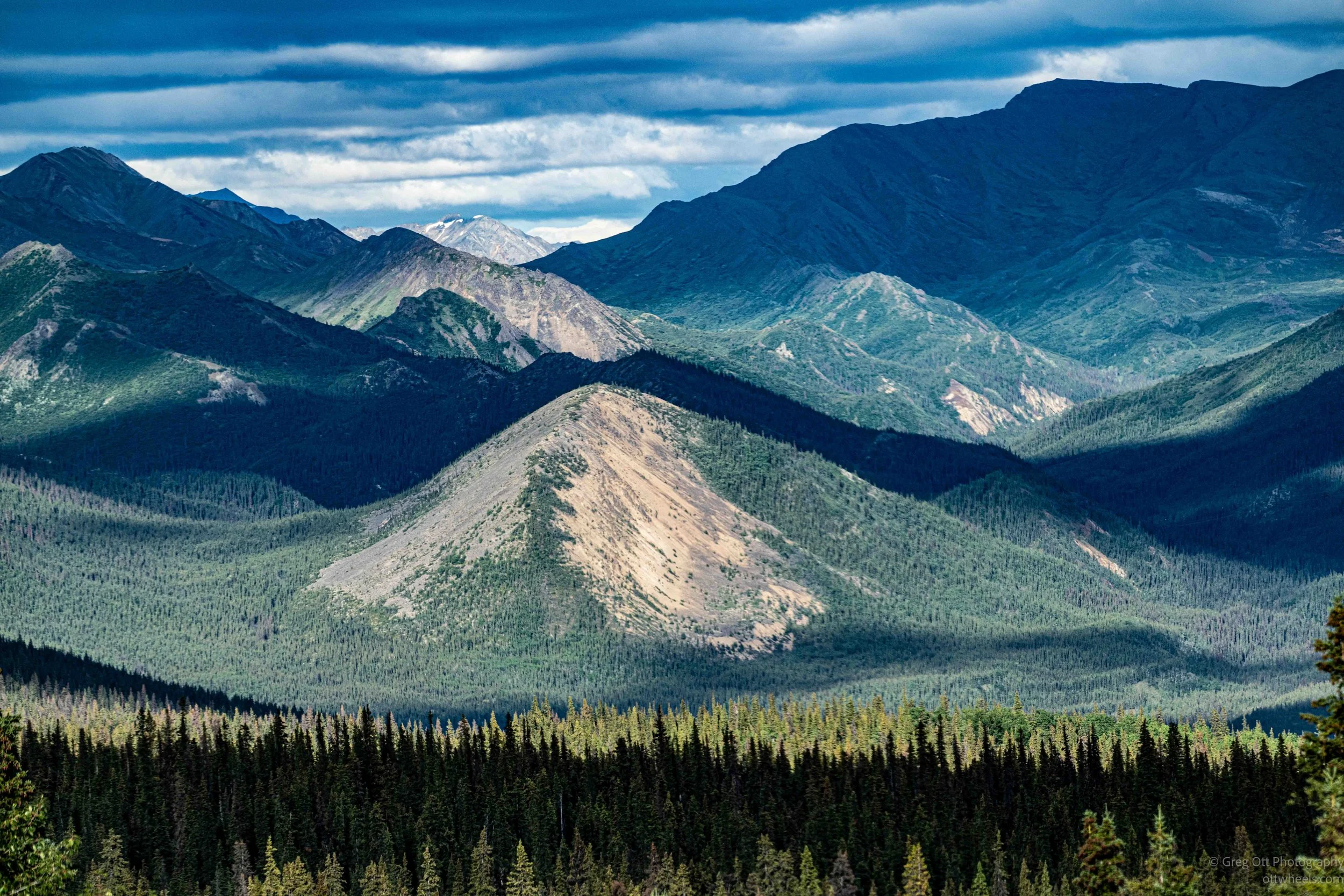
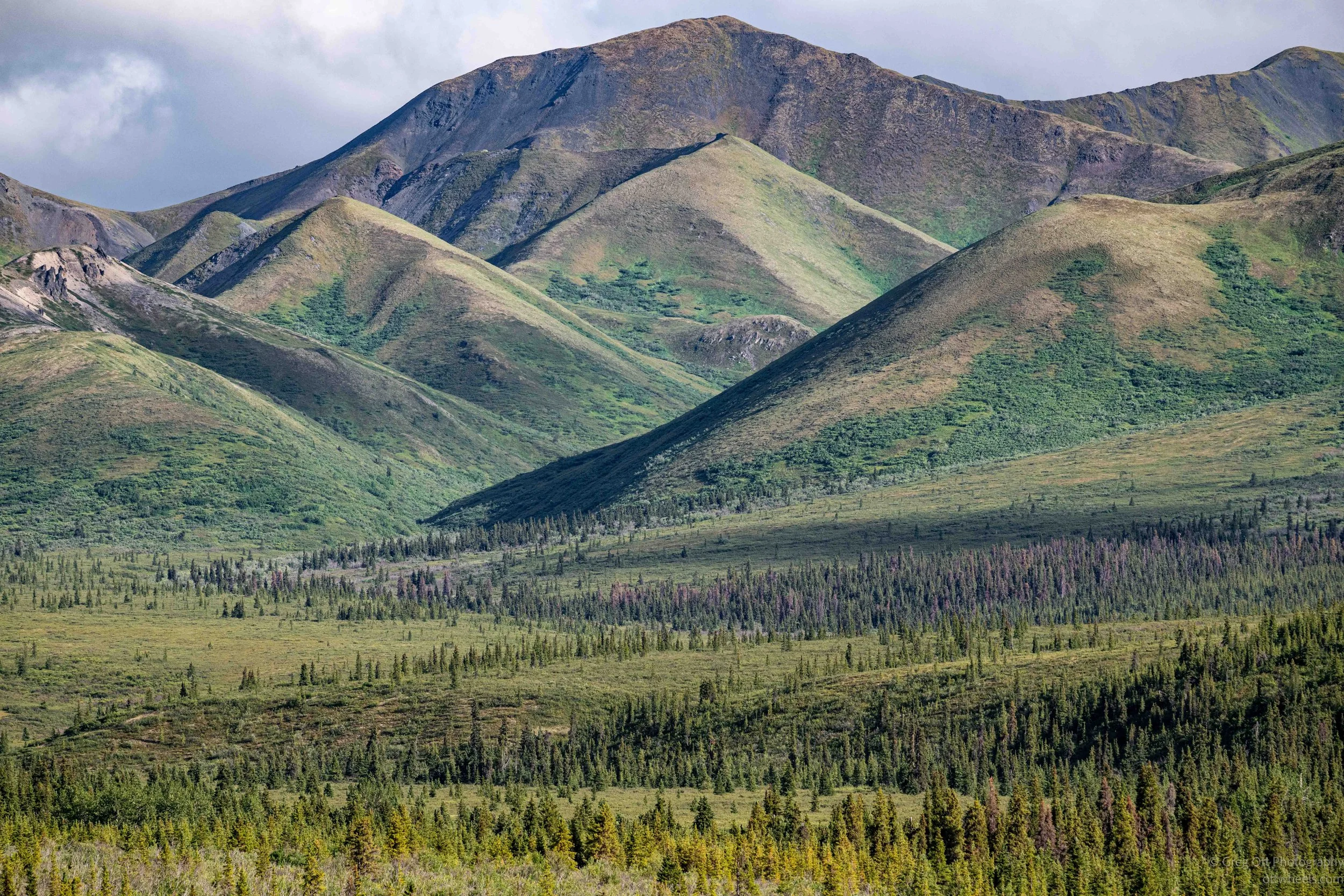
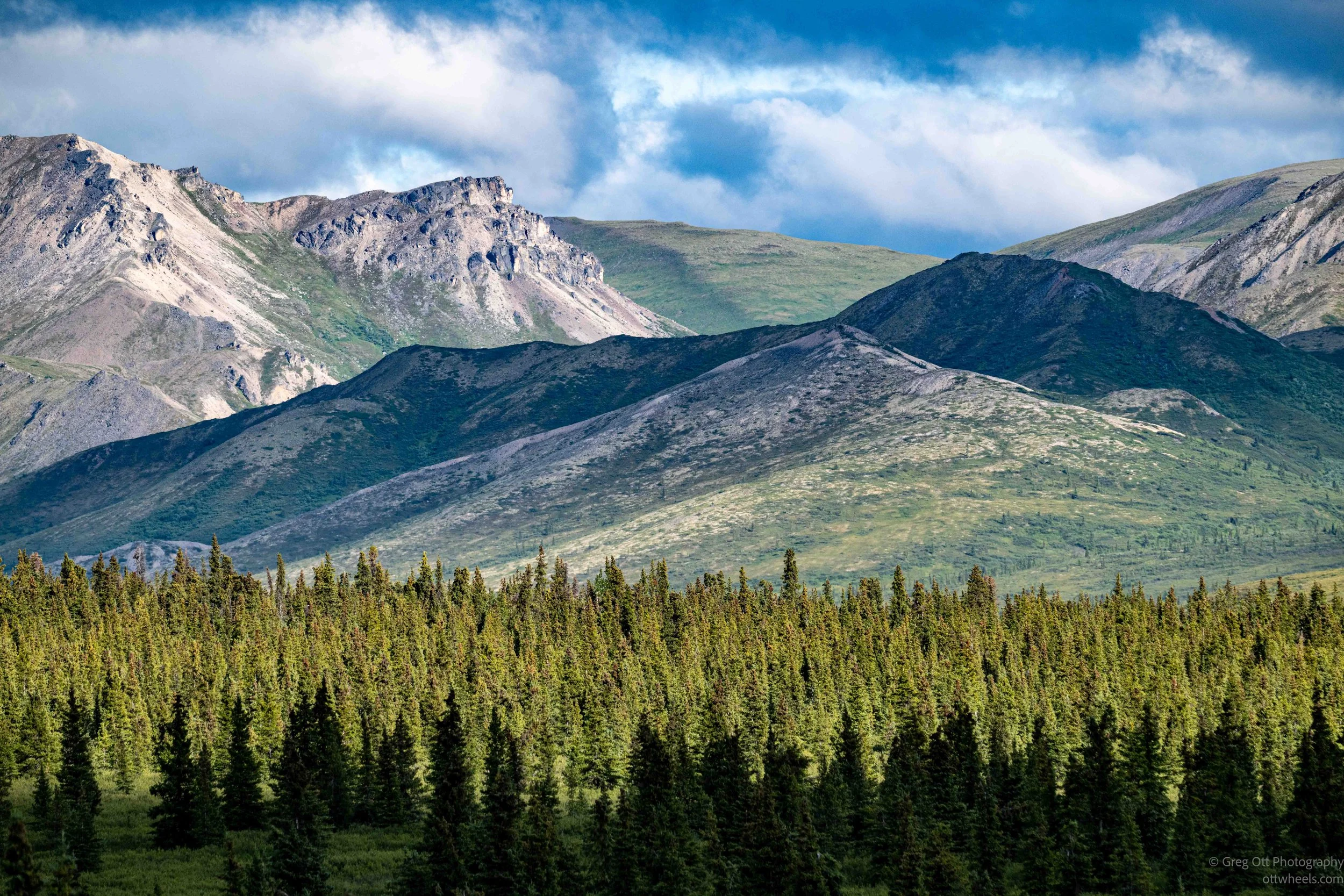
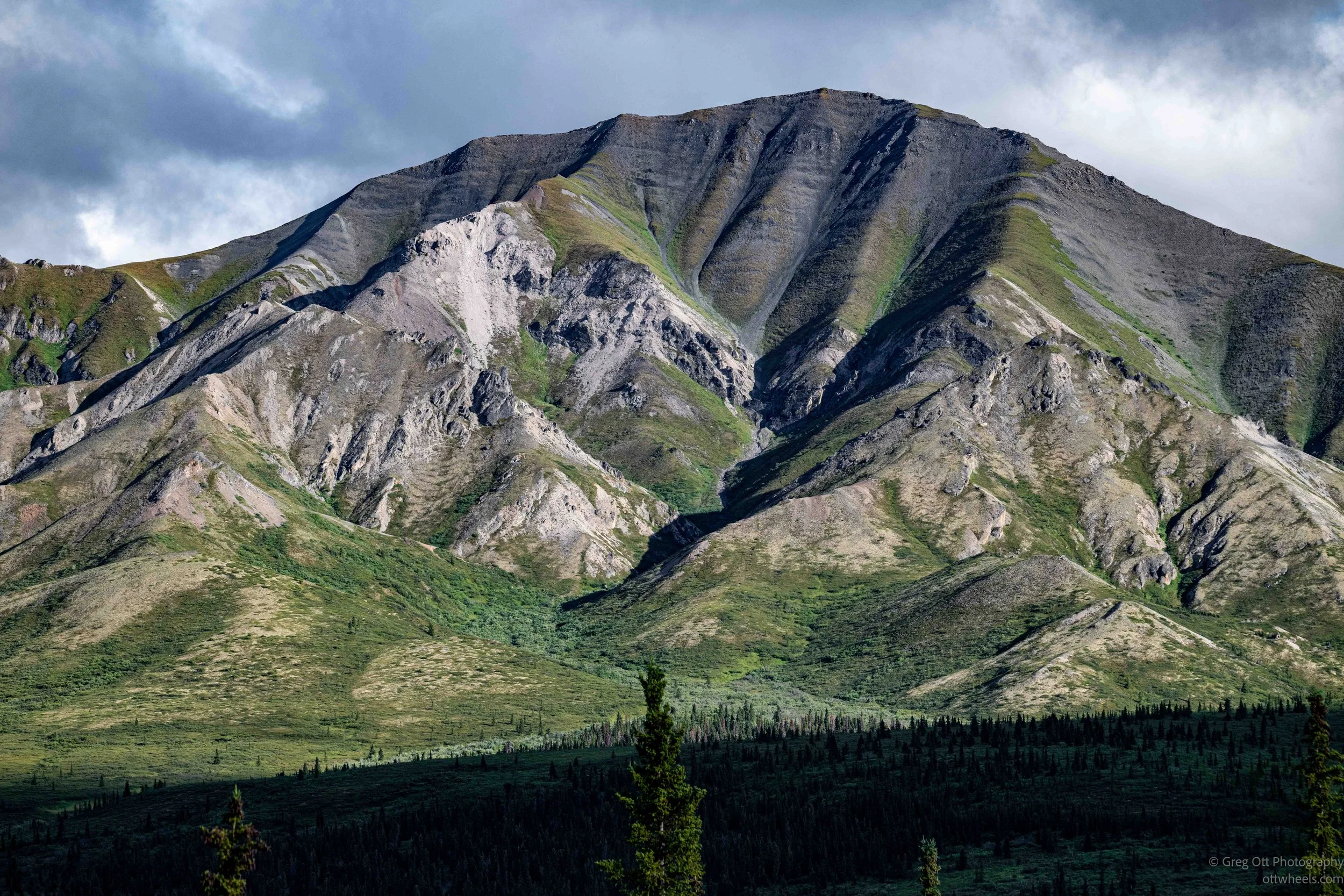
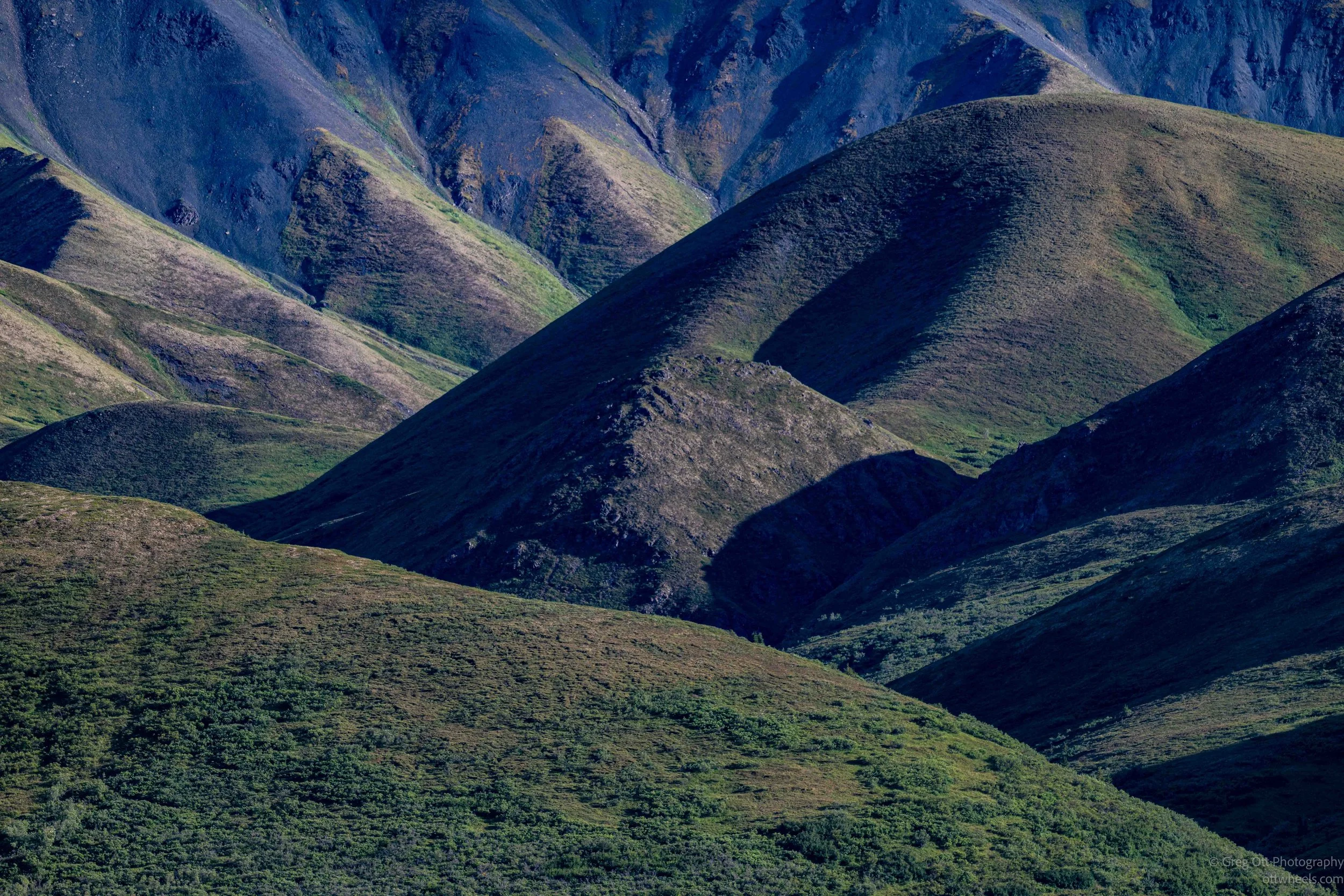
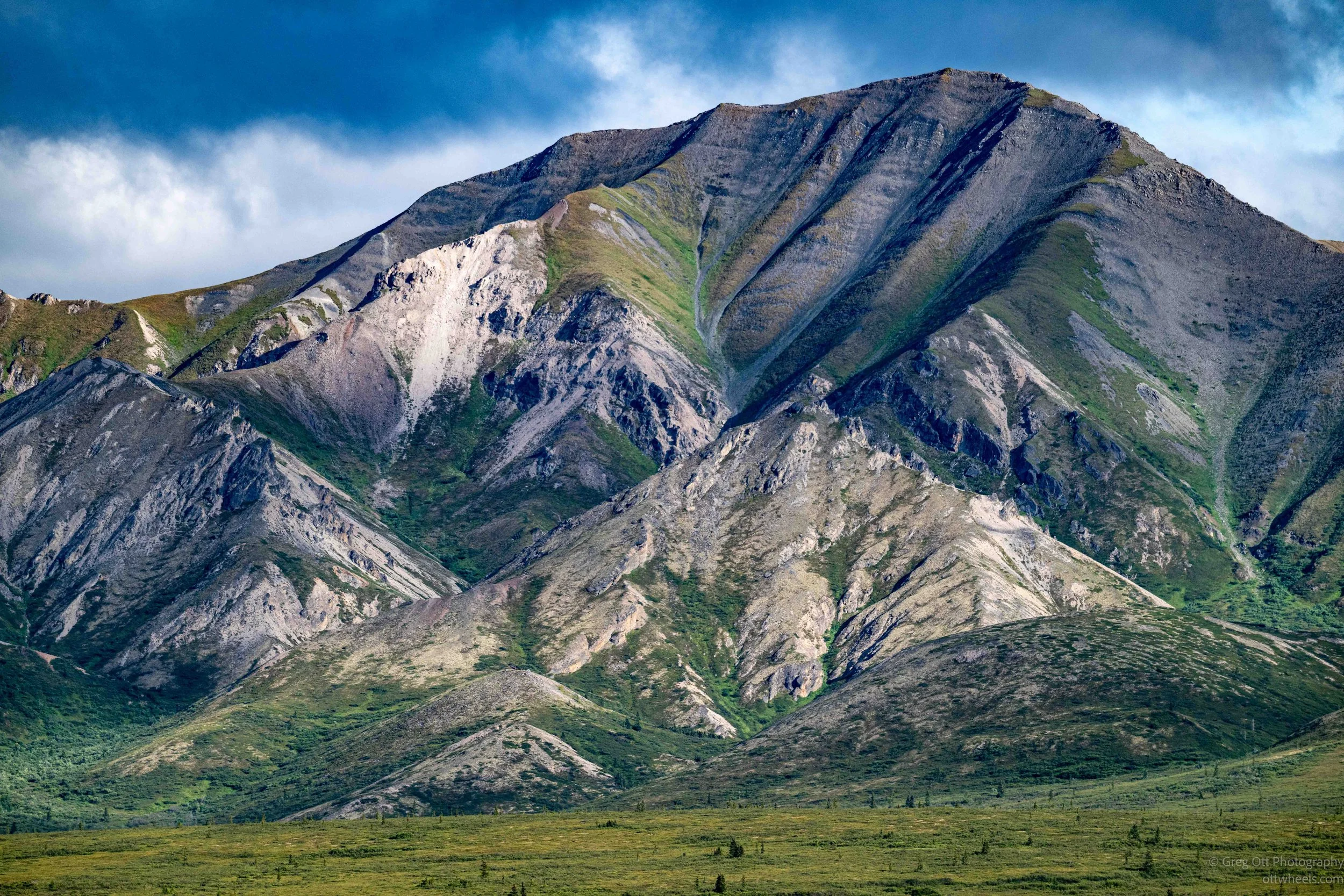
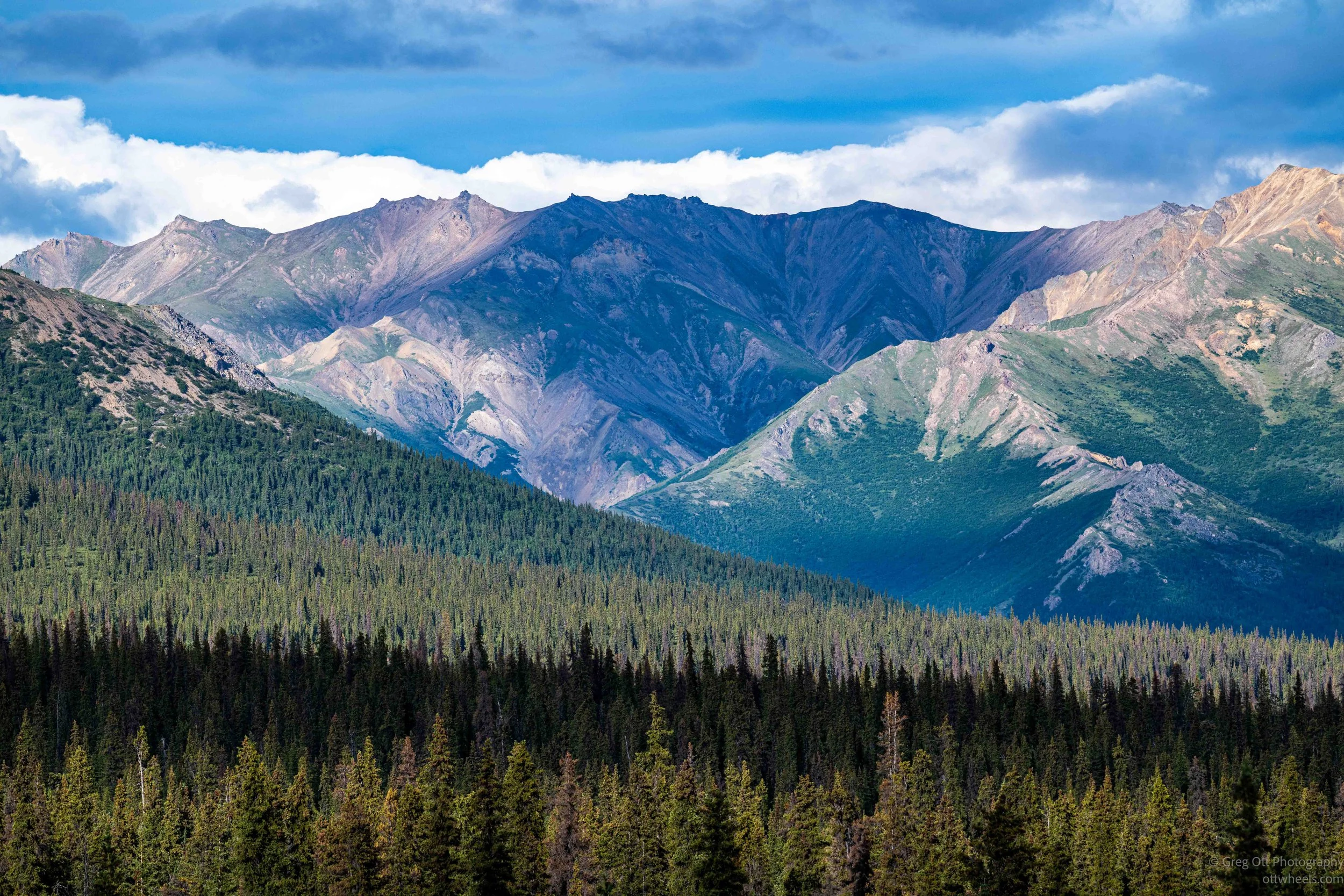
I stopped repeatedly, sometimes photographing the larger landscape and other times zooming in on small sections of the mountains. The closer views were probably the ones that interested me most. The rounded ridges overlapped one another in almost repeating patterns, with alternating bands of sunlight and shadow separating them. There was something almost abstract about it. Instead of photographing a mountain, I found myself photographing shapes, lines, texture and light.
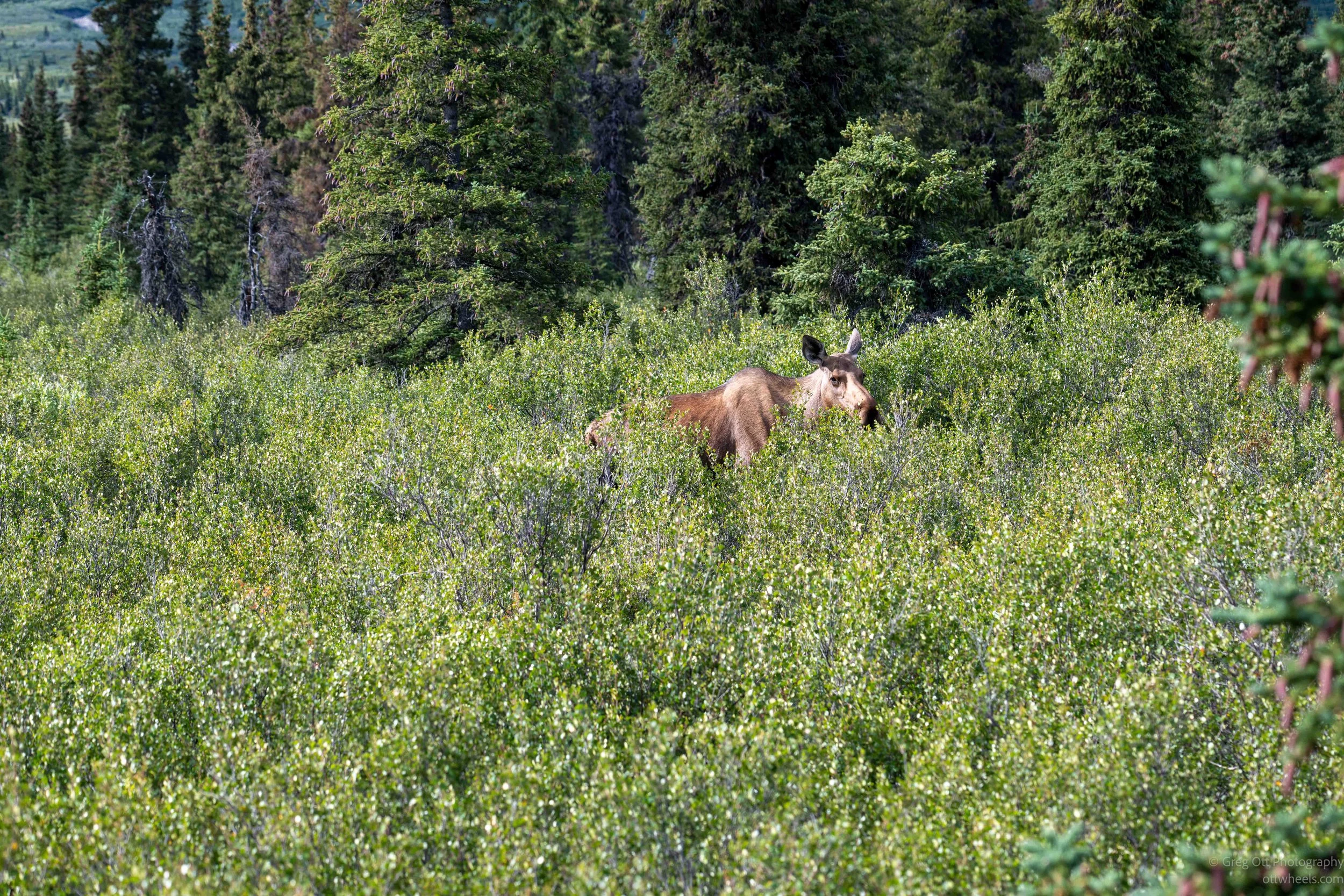
Four different times I came upon cars pulled over along the road, which in Denali usually means somebody has spotted an animal. Most of the time everyone was staring into the brush trying to figure out exactly what someone else had seen. At one stop, though, there was no question. A moose was moving slowly through the thick willow and brush beside the road. At times almost its entire body disappeared into the vegetation, then its head and those enormous ears would suddenly rise above it again. I pulled over, grabbed the camera and watched for a while as it worked its way through the brush.
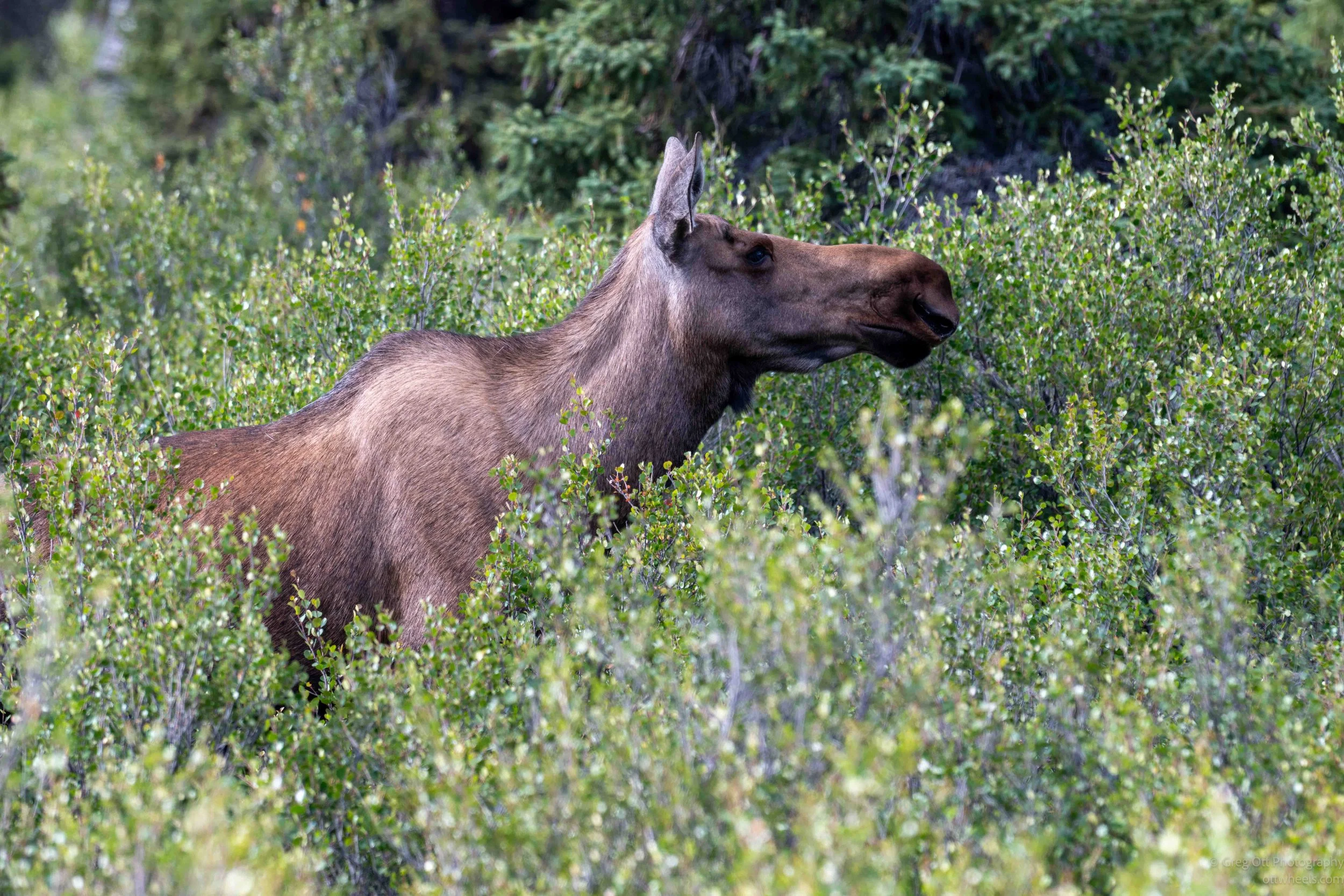
There was nothing particularly dramatic about the drive. I didn't hike anywhere, I wasn't trying to reach a destination, and I wasn't even really looking for wildlife. I just drove slowly for a couple of hours, stopping whenever something caught my attention. With the windows open, the evening light moving across the mountains, and nowhere I particularly needed to be, that was more than enough.
I made it back to the Mercantile sometime before 9 p.m. and stopped for a double scoop of ice cream ($5 for a single, $8 for a double). The portions are huge, so a double was probably a bit ambitious, but I hadn’t eaten much all day. I sat out on the porch, indulging in my ice cream and watching people come and go while the sun was still shining down the valley.
Eventually, I headed back to the van and made dinner. I spent the rest of the evening relaxing and doing some reading before finally falling asleep sometime after 11 p.m. It had been a simple day, but after a busy week, that was exactly what I needed.