Denali Sled Dogs and Bike Ride
It started off as a slow morning. I was planning a bike ride for late afternoon and began getting everything ready, only to discover that the batteries for just about every device I wanted to take were low and needed charging. I searched for bike rides in the area and eventually settled on riding the main park road. There were some trails I could have ridden, but bicycles moving through the woods can apparently trigger an aggressive response from bears. Having already seen a grizzly from about 100 yards away, I had pretty much had my fill of up-close bears.
I made a light breakfast and did some online work before heading over to the Visitor Center and the bus stop. This can be a little confusing because there is also a Bus Depot farther down the hill. When the rangers tell you that the bus to the sled dog demonstration leaves from the Visitor Center, they mean the bus stop directly at the Visitor Center. There are only about 15 parking spaces at the kennels, so they encourage everyone to take the free bus.
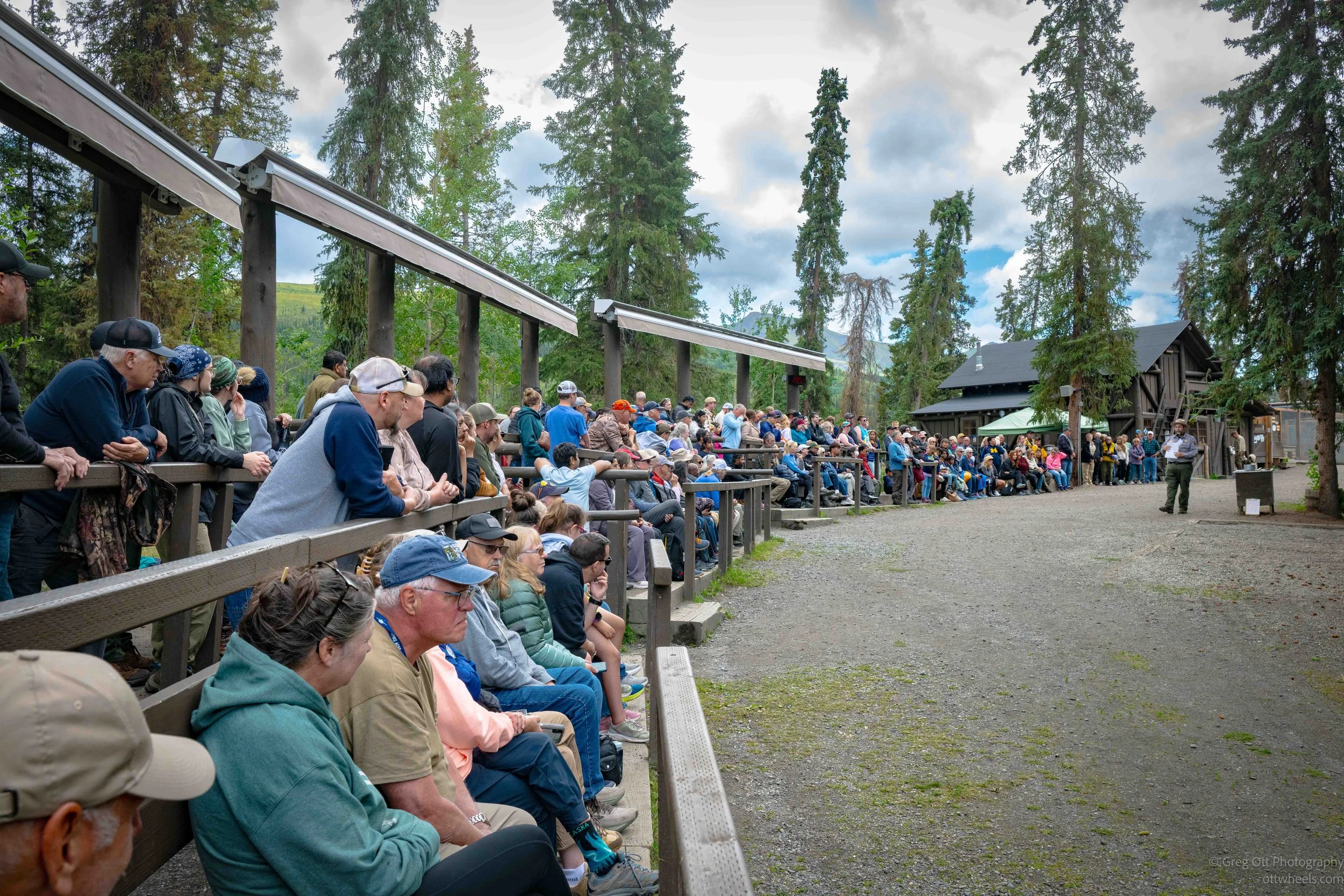
I had been told to arrive 30 minutes before the 2 p.m. demonstration. I arrived about 40 minutes early, and there were already close to 100 people standing in line. Four buses were parked nearby waiting to pick everyone up. At first I thought there was no way I was going to get onto one, and then I remembered that each bus holds roughly 45 people. A ranger had warned me that the demonstrations are very popular and that sometimes there aren't enough seats for everyone.
The buses started loading around 1:30, and I ended up with the first seat on the third bus. We drove a little more than three miles up the park road to the kennels near Park Headquarters. Before we left, a ranger climbed aboard and gave us an overview of what we were about to see, how to behave around the dogs, and how long the program would last. Children 12 and under were supposed to hold their parents' hands, and everyone was instructed not to run around, shout or make loud noises.
That pretty much lasted for about ten minutes. To be fair, the ranger hadn't precisely defined the acceptable decibel level for "loud noises." One boy kept running from dog to dog yelling, "Mom, over here! Look at this one!" A woman in her 30s was determined to get a selfie with one of the dogs and kept whistling and talking to it, trying to get it to look at her.
Most of the dogs seemed completely unimpressed with all of us. They were stretched out around their houses and appeared to have little interest in performing for several hundred tourists. The only dogs showing much energy were the ones being prepared for the demonstration. As I would soon learn, lying around conserving energy when there isn't any work to do seems to be something they are particularly good at.
More Than a Demonstration
I had already watched the film about Denali's sled dogs at the Visitor Center twice, so I knew some of their history before arriving. It was pretty clear that the dogs at the kennel aren't there primarily as a tourist attraction. They are working sled dogs and, in a very real sense, part of the ranger staff. Denali is the only national park in the country with a working sled dog kennel, and dogs have been used here for more than a century.
The connection between sled dogs and this landscape actually predates the creation of the park. During the winter of 1907–1908, naturalist Charles Sheldon came to the area to study Dall sheep and hired Harry Karstens, an experienced musher and outdoorsman, to help him travel through the country by dog team. Sheldon later became one of the strongest advocates for protecting the area, which became Mount McKinley National Park in 1917. Karstens became the park's first superintendent, and in 1922 he purchased seven sled dogs for the park. That was the beginning of the kennel operation that continues today.
In those early years, dogs weren't an interesting historical tradition. They were transportation. Rangers used dog teams to travel hundreds of miles through the park during winter, patrolling boundaries, looking for poachers, checking cabins and protecting wildlife. There were no roads reaching into most of the country, and there certainly wasn't a fleet of snowmobiles waiting at Park Headquarters. If you needed to get somewhere in the middle of an Alaska winter, a dog team was often the best way to do it.
The historic kennel building is still there and dates to 1929. It is the oldest building in Denali still being used for its original purpose. Inside is a small collection of photographs, equipment and historical information about the dogs, the rangers who worked with them and the role dog teams played in protecting the park. I spent some time walking through it before the demonstration.
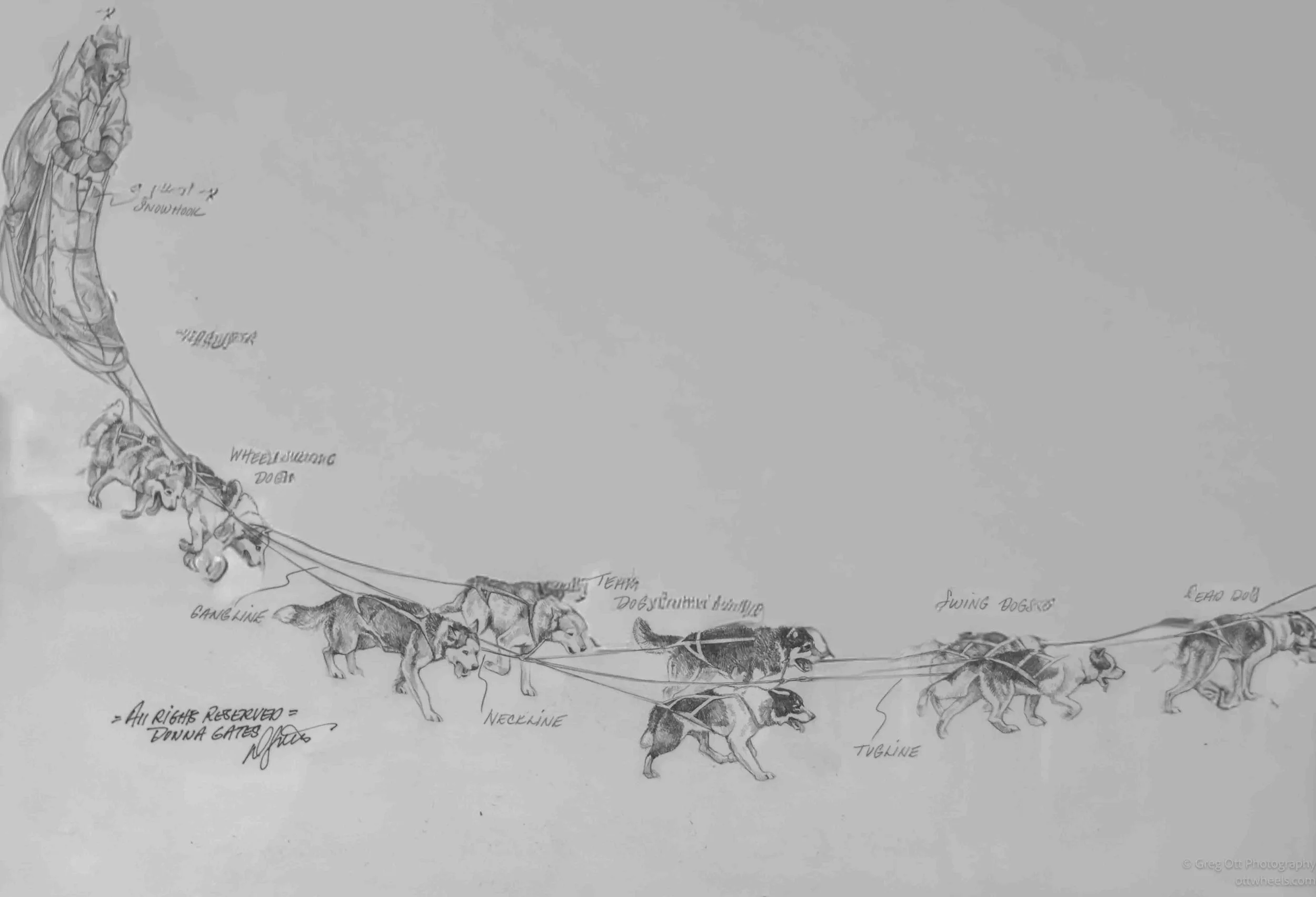
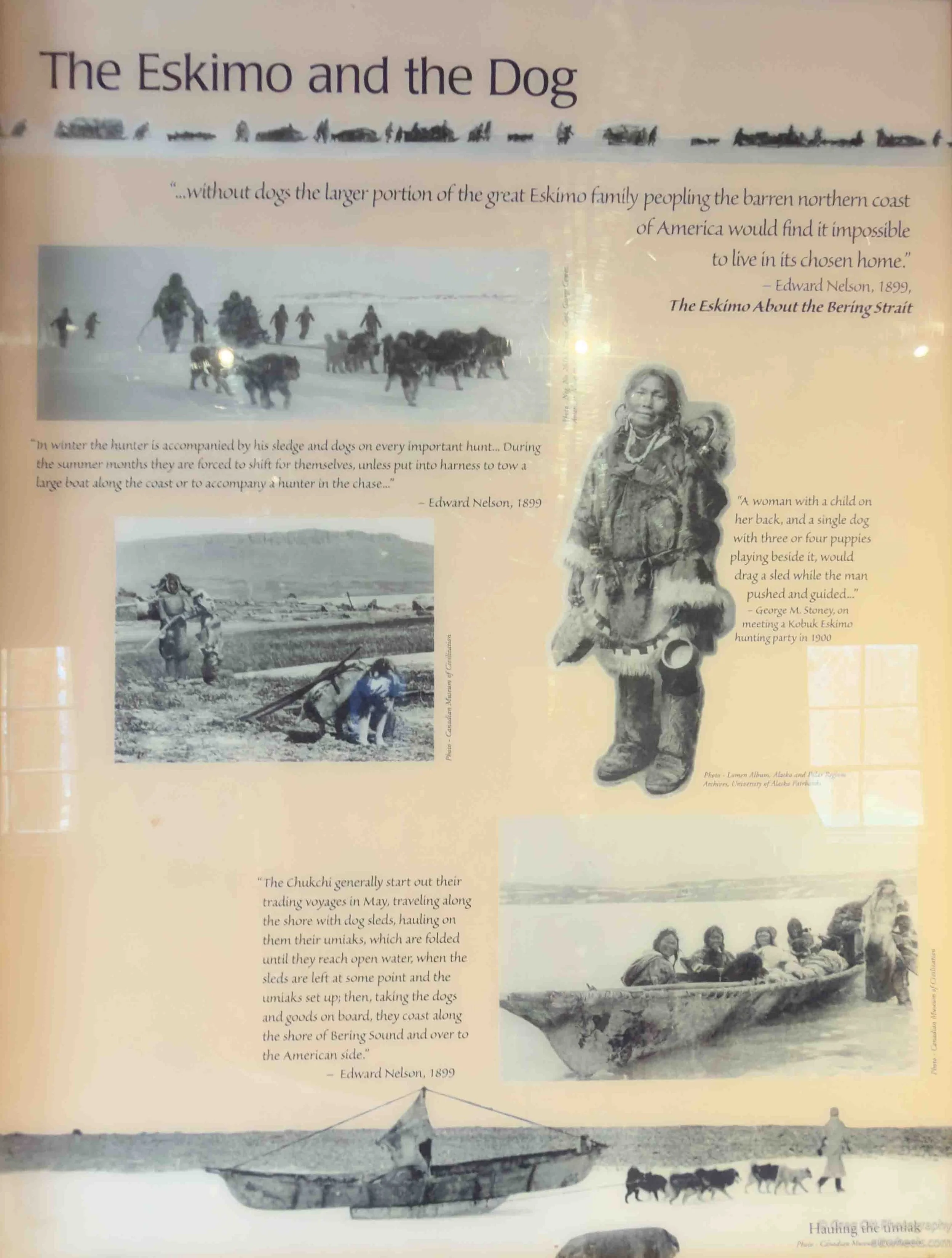
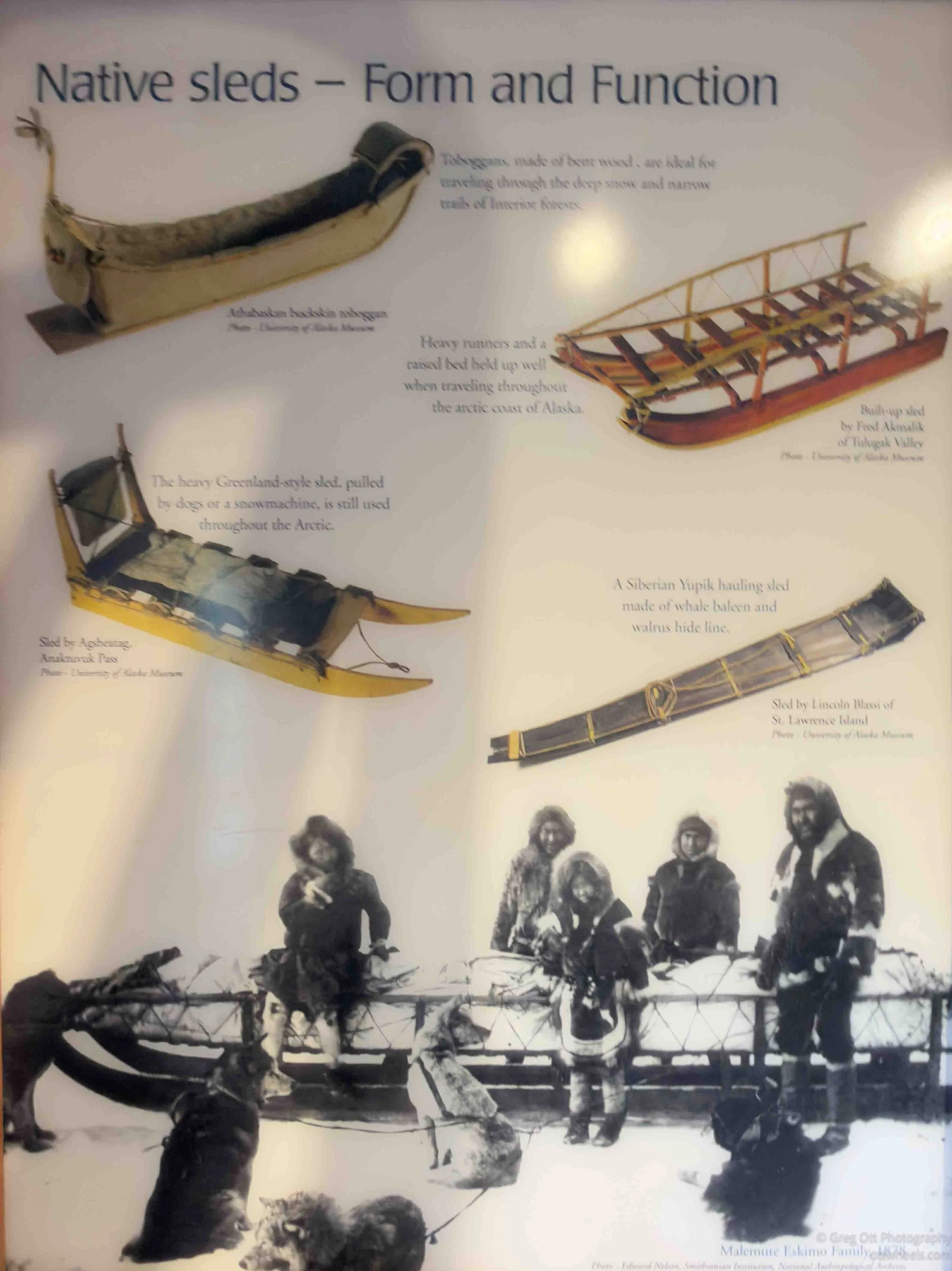
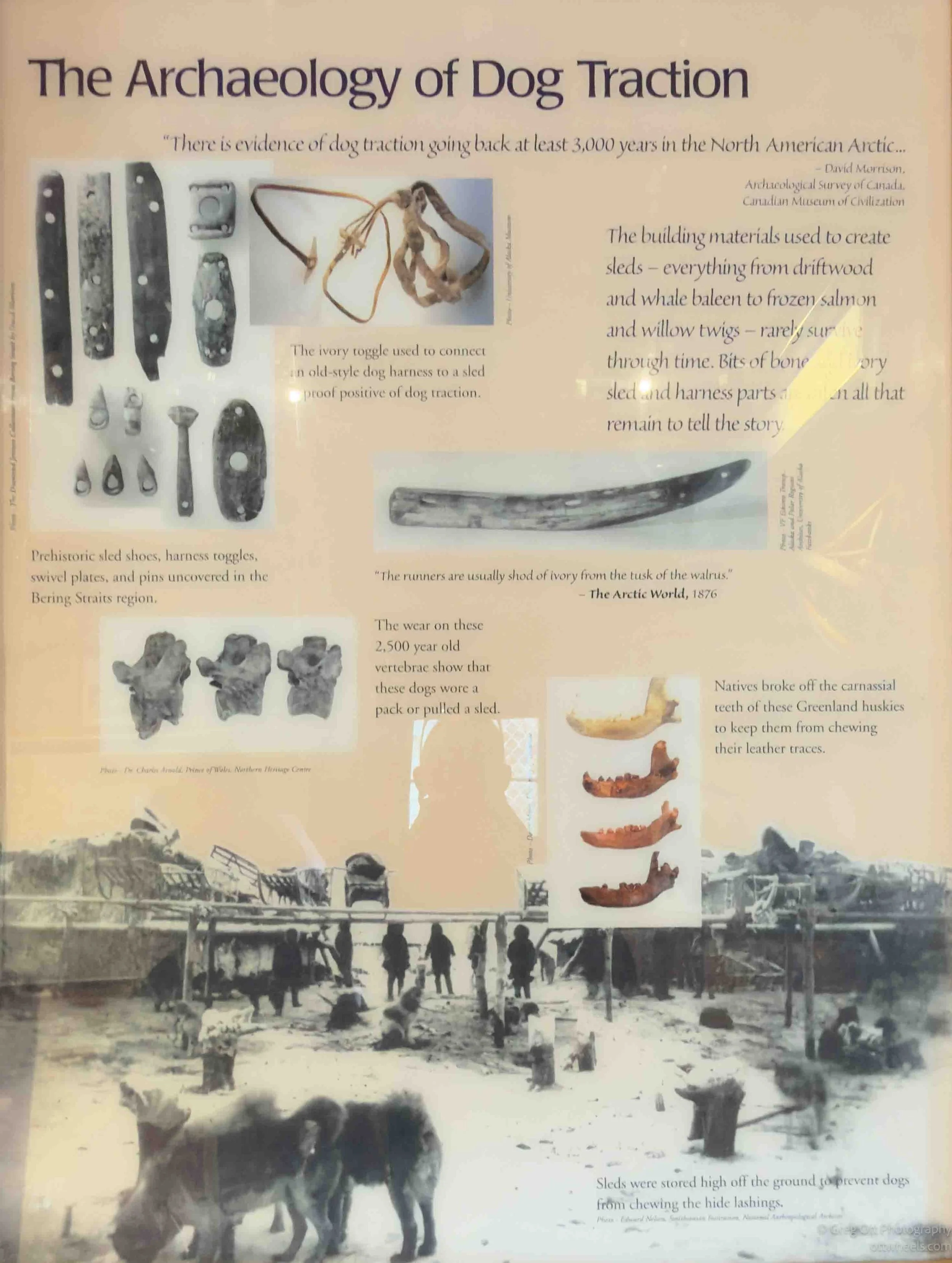
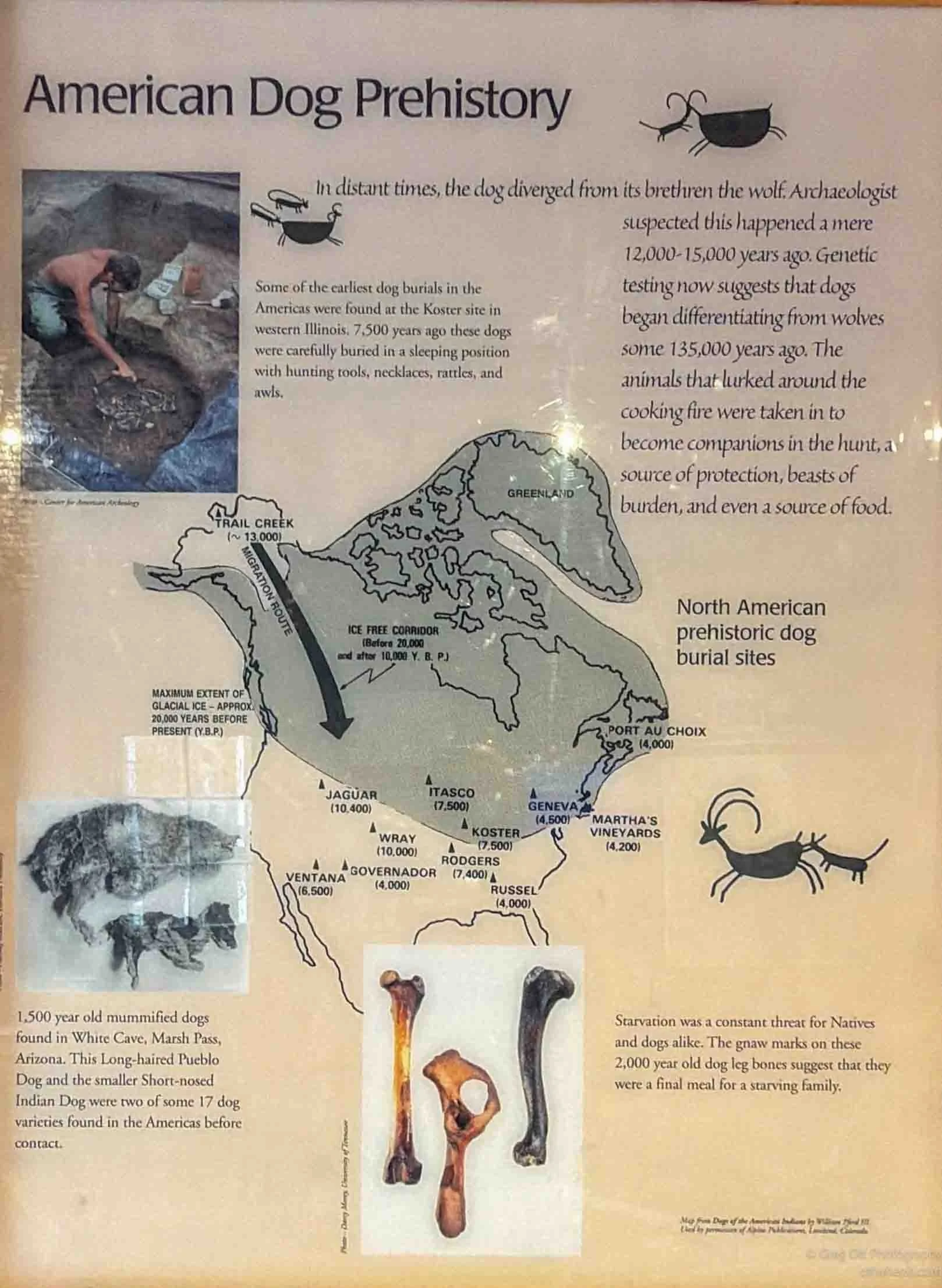
The dogs still have real jobs today. During winter, teams travel thousands of miles through Denali with park rangers, hauling supplies and equipment, helping scientists reach remote research sites, checking historic cabins and maintaining a ranger presence in areas that can be extraordinarily difficult to reach. They also break trails through deep snow that can later be used by skiers, snowshoers and other dog teams.
That is where the dogs become part of the larger idea of preserving and protecting Denali. More than two million acres of the park are federally designated wilderness, where the Wilderness Act places significant restrictions on motorized equipment and mechanical transportation. The Alaska National Interest Lands Conservation Act of 1980 dramatically expanded Denali and created some Alaska-specific exceptions for traditional activities and access, so the legal picture is more complicated than simply saying motors are prohibited everywhere. Still, the basic philosophy is clear: designated wilderness is supposed to remain wilderness.
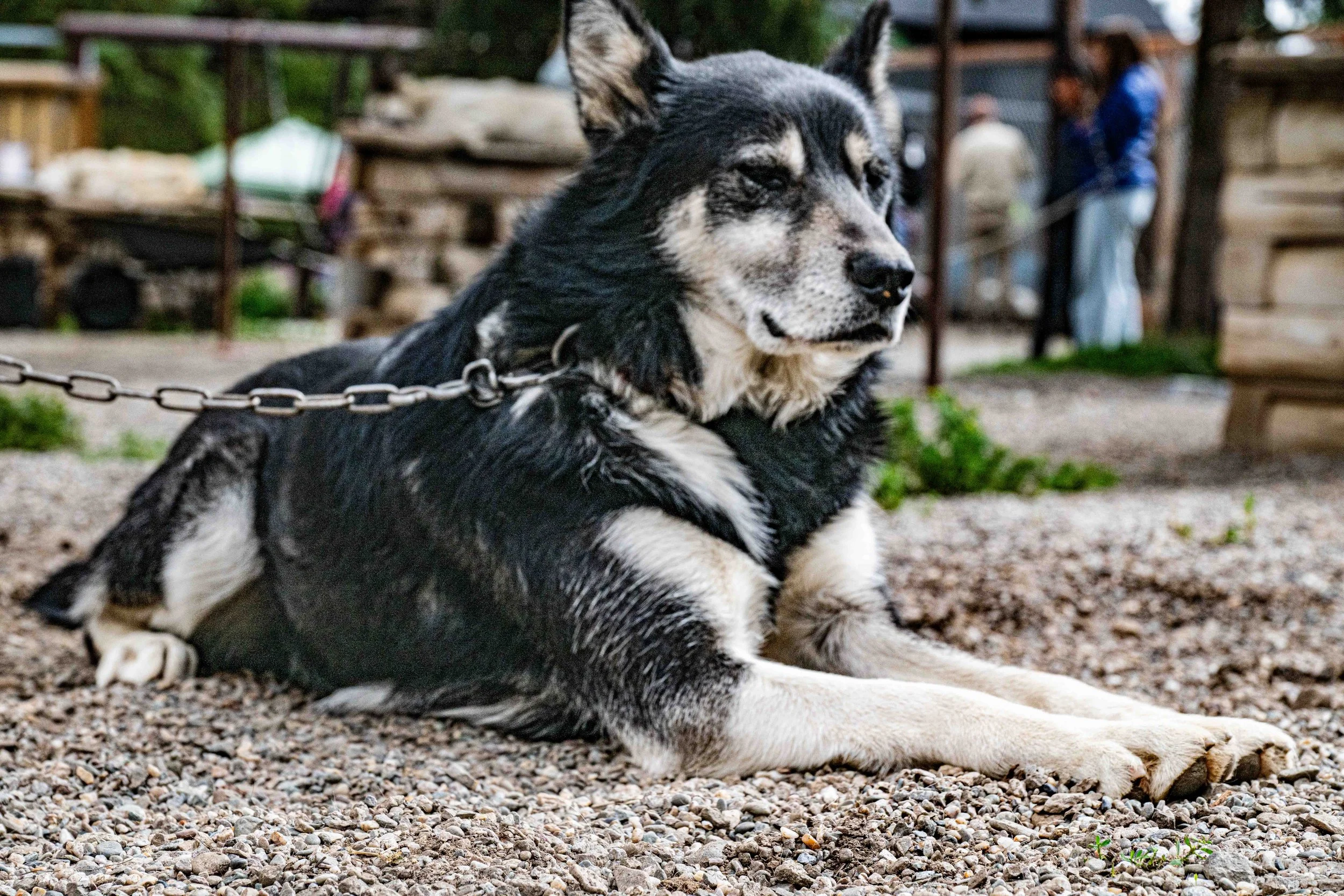
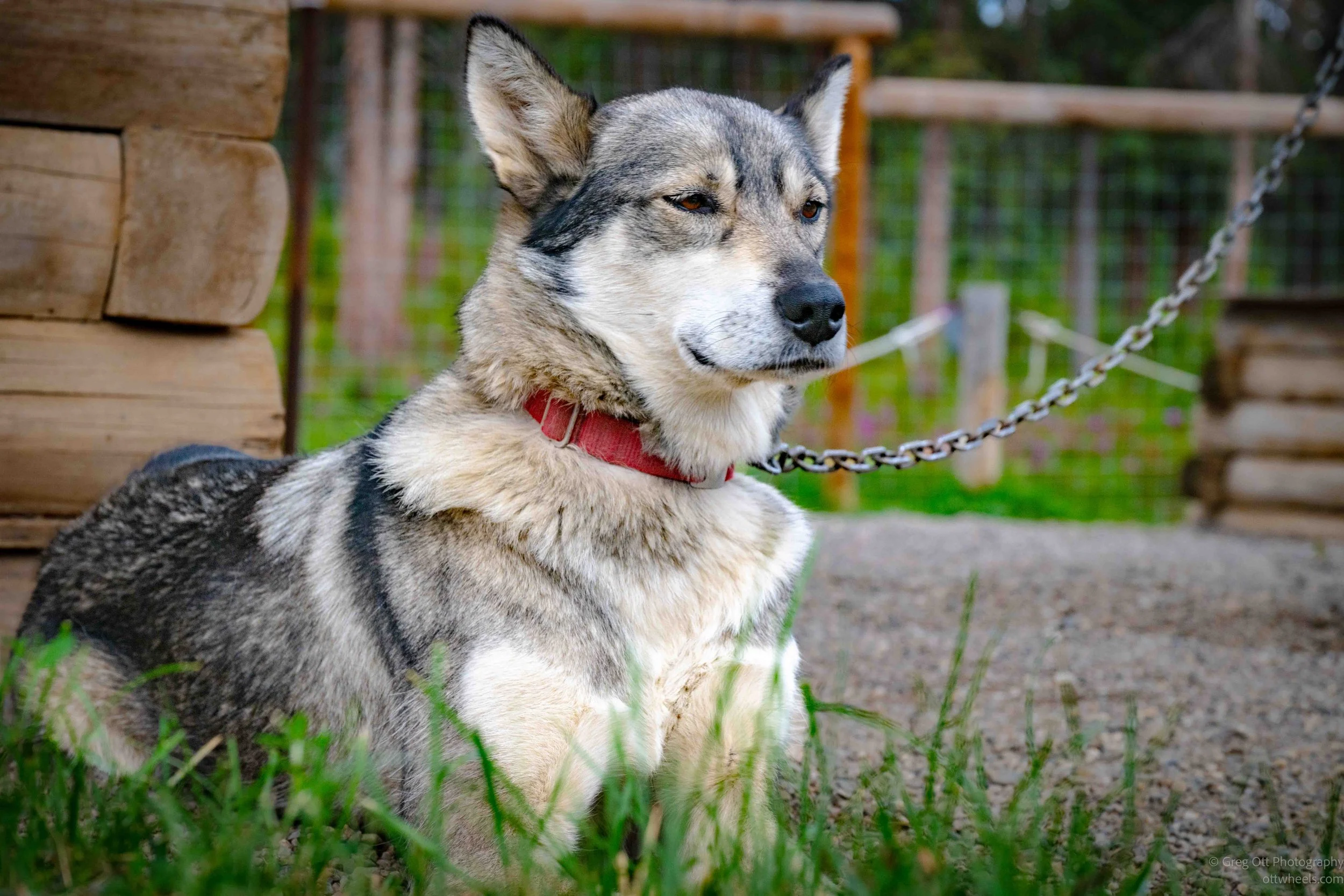
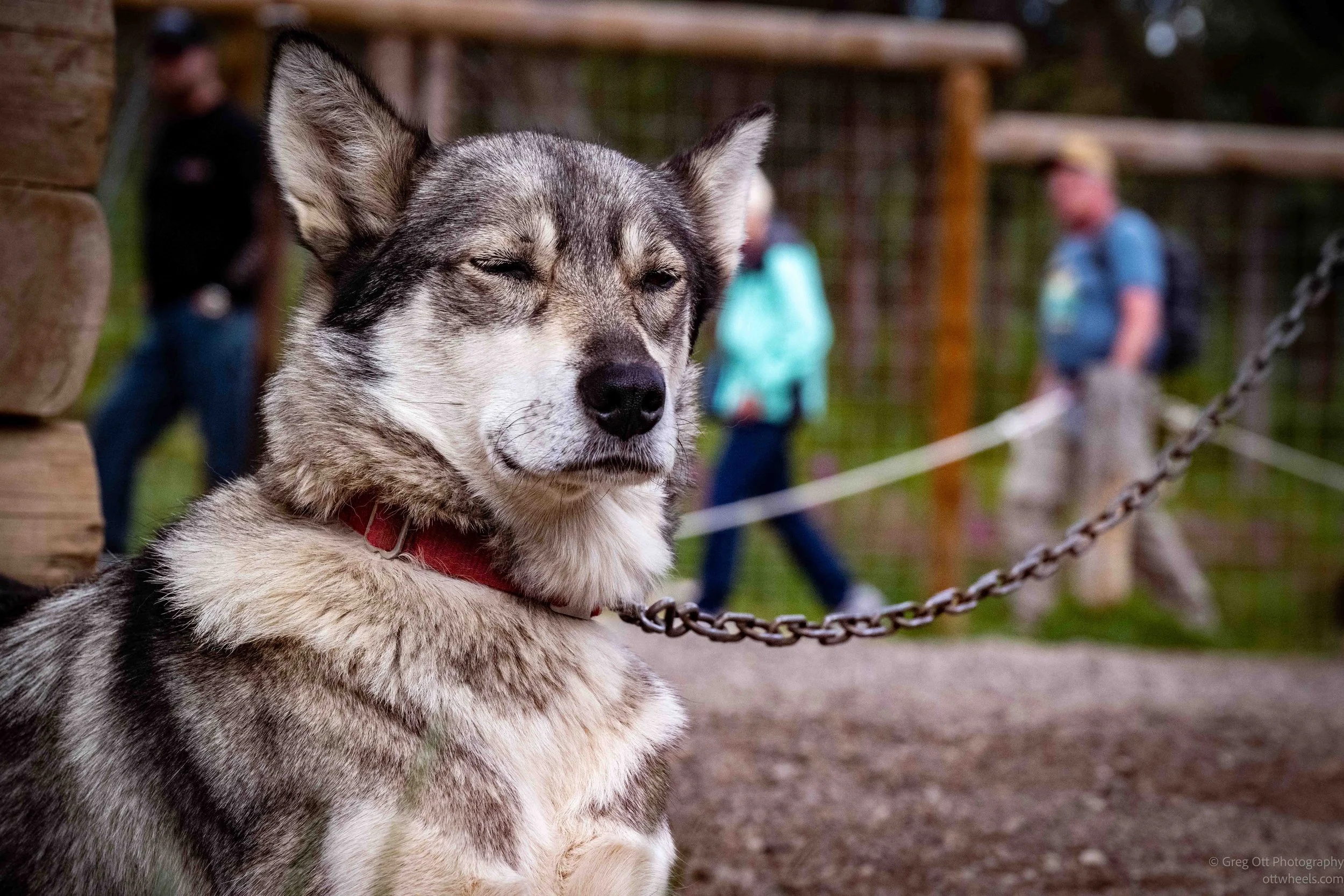
A dog team fits remarkably well into that philosophy. Dogs don't require gasoline, they don't fill a valley with the sound of an engine, and they can travel across snow without building roads or leaving much evidence that they were ever there. They can also travel through conditions that aren't necessarily friendly to machines. At 30 or 40 below zero, getting a snowmobile started can become its own project. Feed a team of healthy sled dogs breakfast, put on the harnesses, and they are ready to go.
There are other advantages that aren't immediately obvious. Dogs can negotiate narrow trails and difficult terrain, and they can cross areas of river overflow that can cause problems for machines. If one dog becomes tired or injured, it can ride in the sled while the rest of the team continues. Most importantly, the ranger isn't depending entirely on a piece of machinery hundreds of miles from the nearest road.
These aren't the smaller racing dogs most people associate with events such as the Iditarod. Denali's dogs are Alaskan huskies bred more toward the traditional freight-dog type, with an emphasis on strength, endurance, temperament and the ability to work in extremely cold conditions. During the demonstration, the ranger explained that they normally calculate a working load of around 50 pounds per dog. The dogs are capable of pulling substantially more than that, but the objective isn't to see how much weight you can possibly attach to them. They have to remain healthy and capable of working throughout a long winter season. There are crazy amounts of weight documented that these animals can pull on wheels or sleds.
The rangers who work with them are responsible for far more than hooking dogs to a sled. They feed and care for them, exercise them, train them, learn their individual personalities and abilities, and eventually spend long periods traveling with them through the winter wilderness. Some dogs are better suited to leading, some provide power farther back in the team, and each animal has its own personality. Building a good team means understanding the dogs as individuals as well as understanding how they work together.
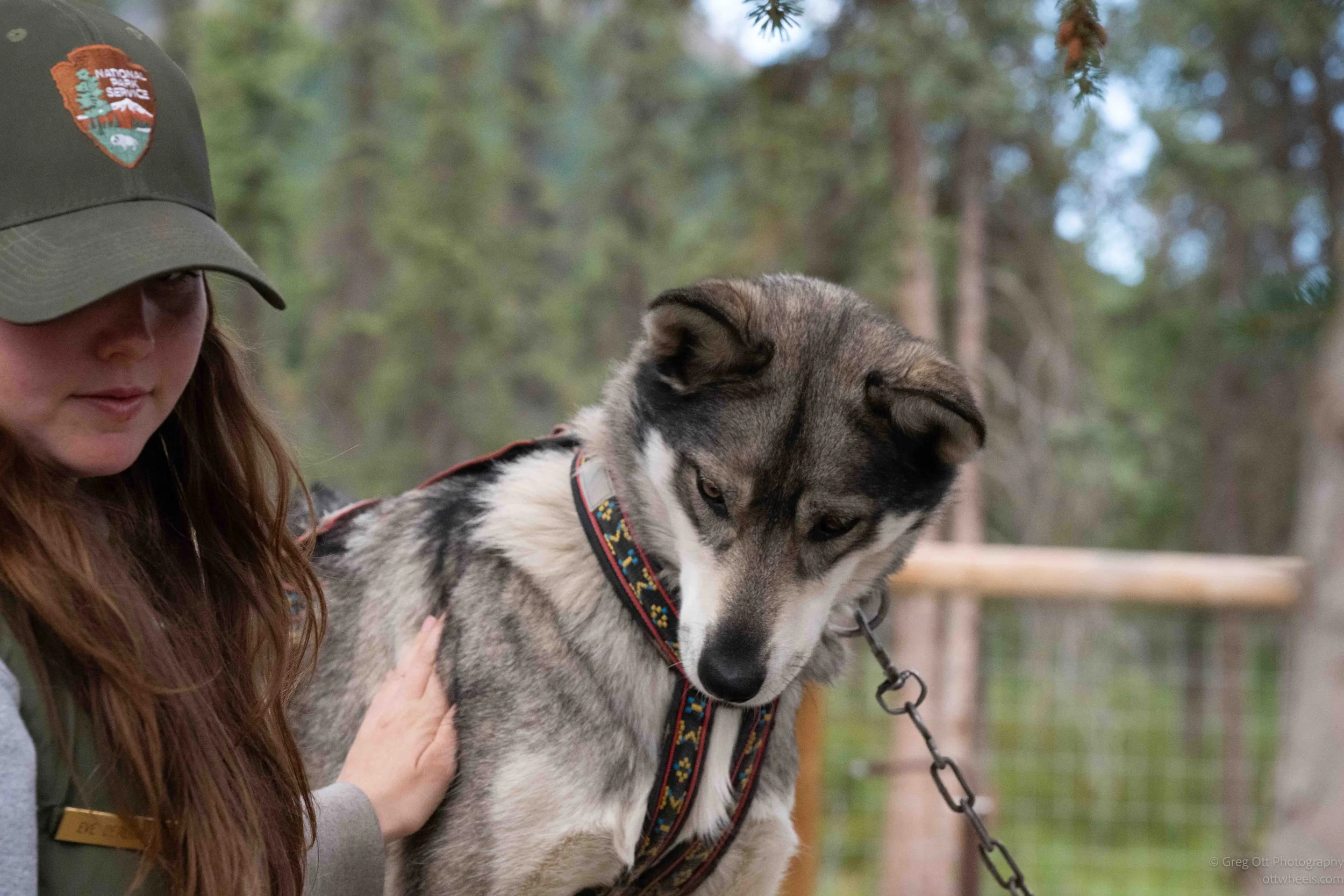
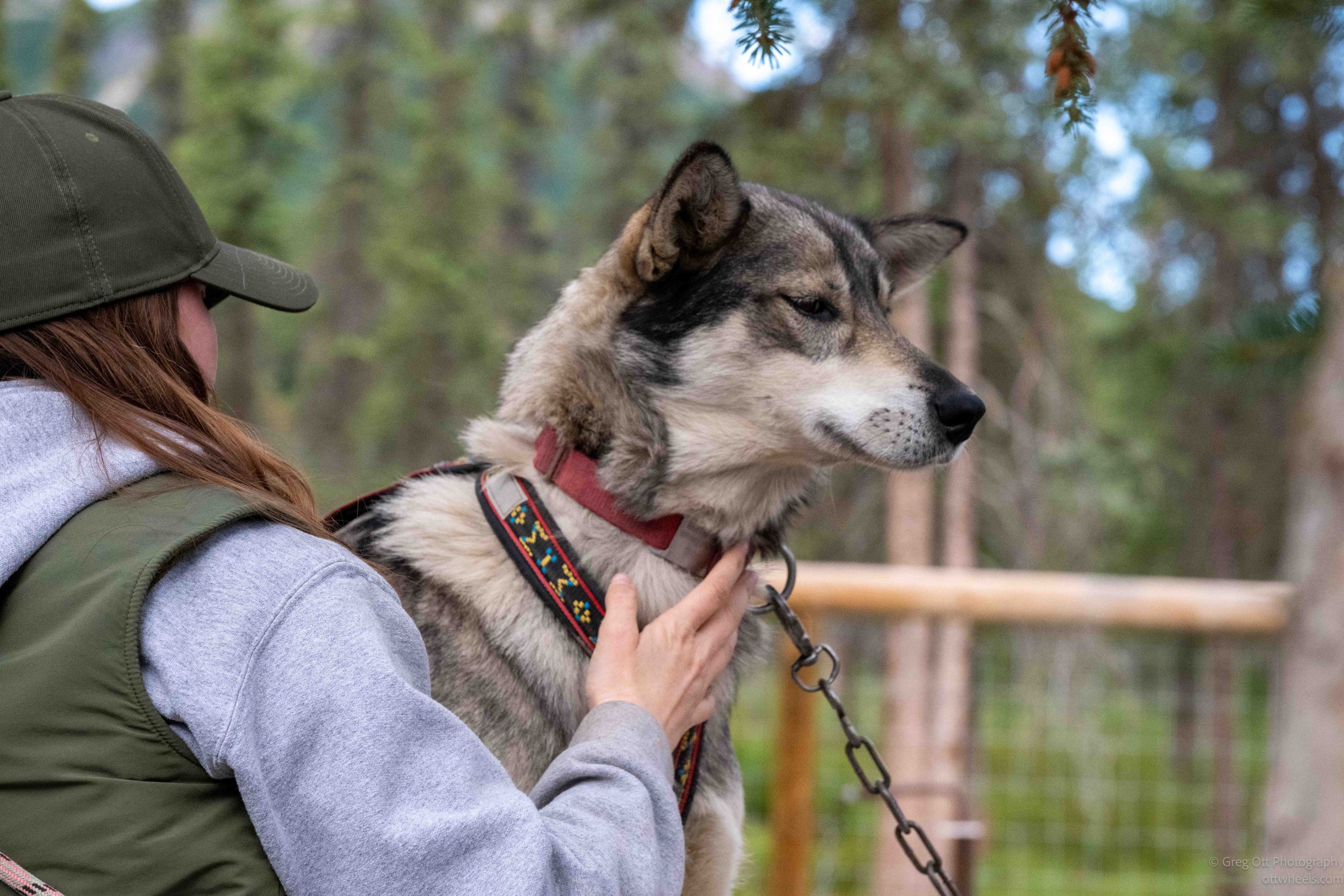
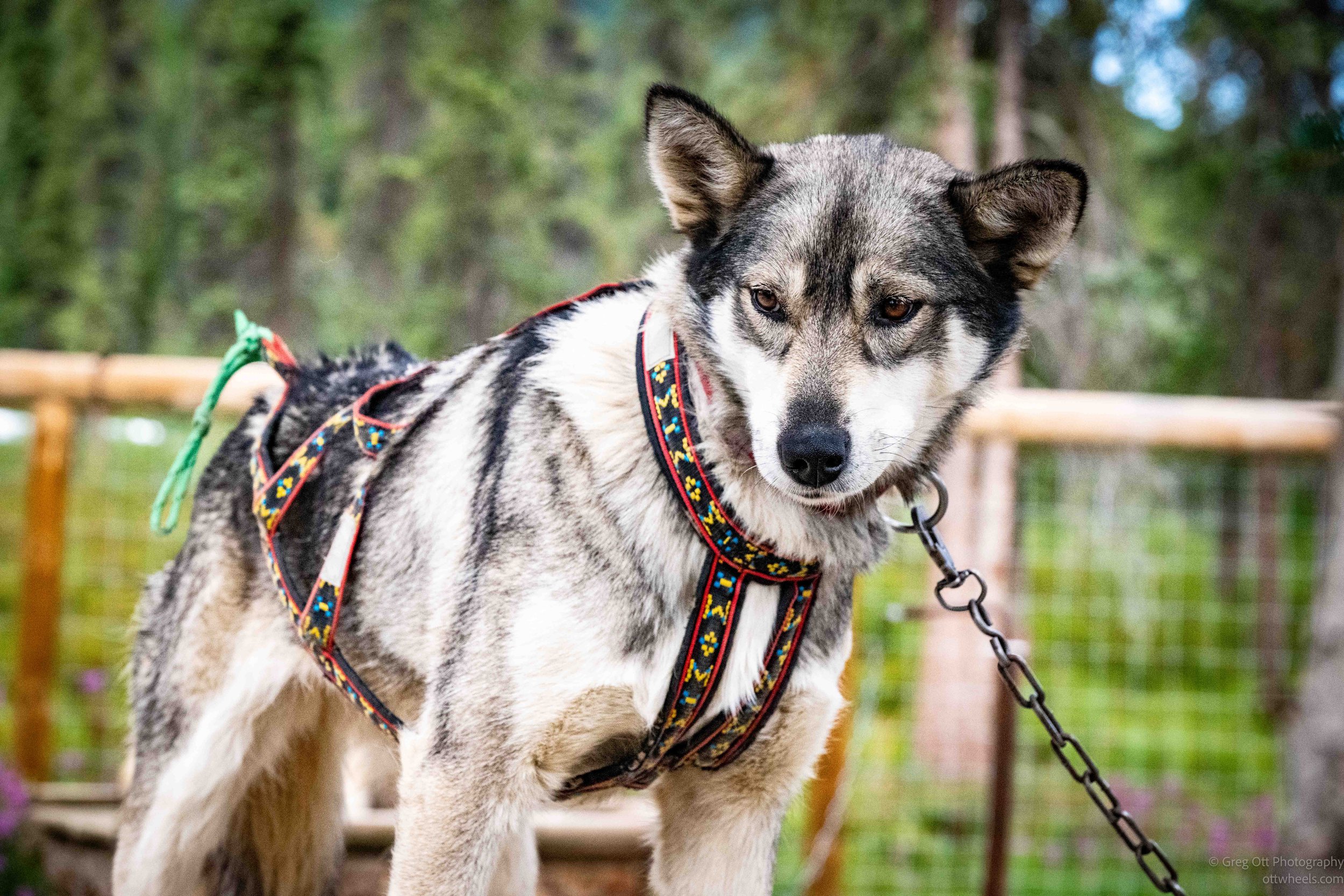
During the summer, when there isn't enough snow for sledding, the dogs still need exercise. Rangers, kennel staff and a team of 100 volunteers walk and run them many times a day, including trips up the mountain and along nearby trails. It keeps the dogs conditioned, but it also maintains the relationship between the dogs and the people who will work with them once winter returns.
I found that relationship particularly interesting. When a ranger and a dog team head into the backcountry in winter, sometimes for days at a time, they are depending on one another. The ranger takes care of the dogs, but the dogs are also taking care of the ranger by providing transportation through a place where being stranded can become serious very quickly. Calling them "canine rangers," as the Park Service sometimes does, doesn't seem like much of an exaggeration.
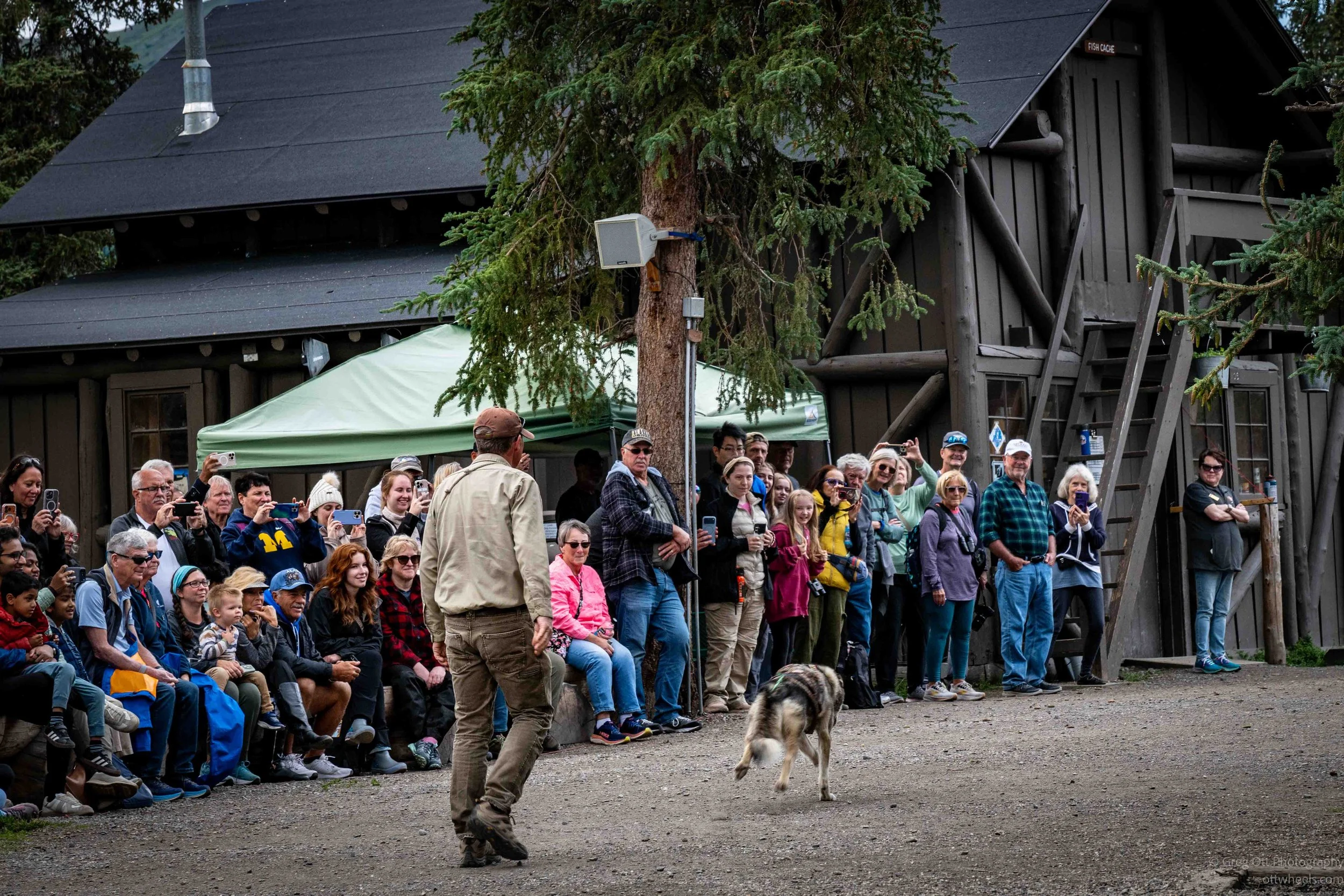
Around 2 p.m., the actual demonstration began. Much of the introductory information repeated what I had already seen in the Visitor Center film and read inside the historic kennel building, but seeing the dogs harnessed was completely different from reading about them. The animals that had spent the previous half hour lying around and ignoring several hundred people suddenly came alive as soon as they realized they were going to run.
Four dogs were hooked to a wheeled demonstration sled. I had positioned myself at the end of the stands because I had seen a brochure showing the team coming around the path and figured that would give me the best angle for photographs. Once the team was released, they took off down the path with a ranger aboard controlling their speed.
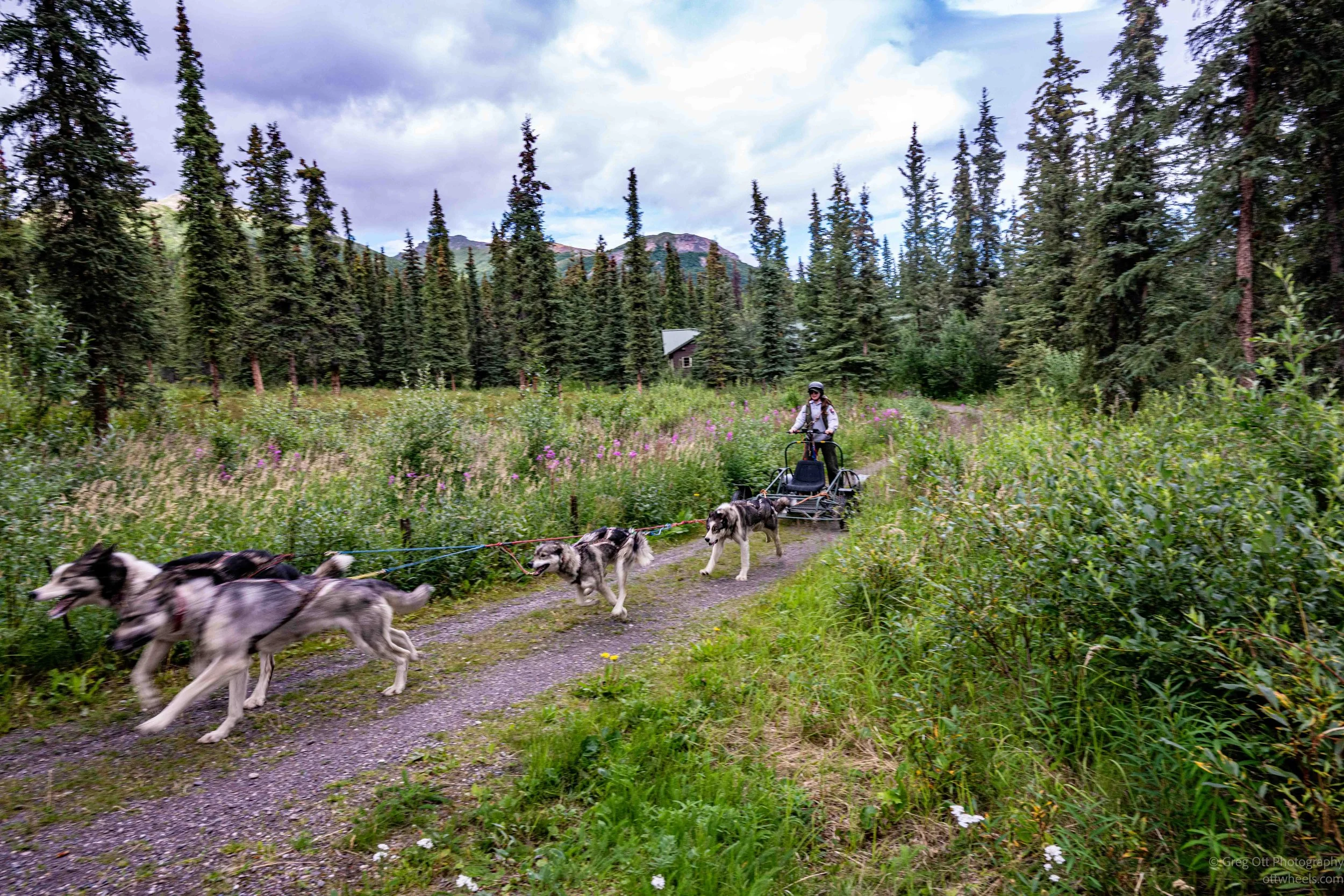
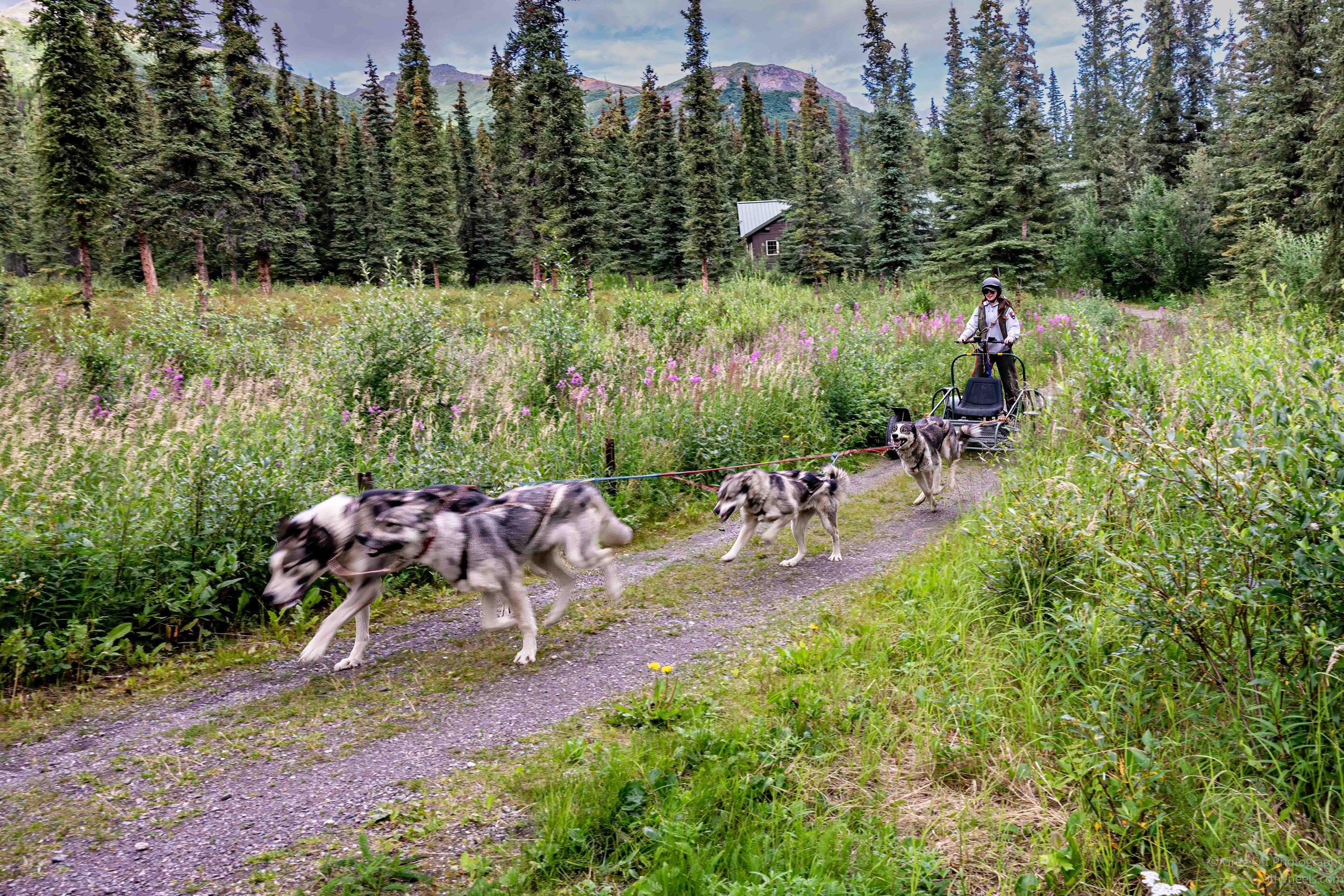
The transformation in the dogs was almost comical. A few minutes earlier, most of them couldn't have cared less whether we existed. Now they were pulling against the harnesses and running as though this was exactly what they had been waiting to do all afternoon. Watching them made it much easier to understand why these dogs have continued working here for more than 100 years.
At the end of the demonstration and talk about the dogs, they were released to run back to their kennels, where another ranger was waiting for them. Judging by how quickly they took off, I can only assume there was a treat involved.
There is something wonderfully appropriate about that. We have snowmobiles, helicopters, GPS navigation and all kinds of modern equipment that Harry Karstens could never have imagined when he became Denali's first superintendent. Yet in some of the wildest parts of the park, one of the best ways to move people and equipment during winter is still a ranger standing behind a team of dogs.
The demonstration eventually ended, and the buses took us back to the Visitor Center. I stopped for a salad and coffee before heading back to the campground to relax for a while. I still had the other part of my day ahead of me, and it was going to require considerably more effort on my part than sitting behind four sled dogs.
Bike Ride
Around 5:30 p.m., I headed out on the bike. Rangers recommend carrying bear spray and having it readily accessible in case a bear charges. Having bear spray buried somewhere in a backpack isn't particularly helpful when a grizzly is running toward you, so I wanted mine attached somewhere I could reach it immediately.
I had already searched around the village for a bear-spray holder that would mount to the handlebars but hadn't found one. My makeshift solution was to Velcro my existing holder to the handlebars. It actually worked pretty well, although it restricted where I could put my hands while pedaling uphill. I decided that was a reasonable tradeoff for not having to search through my belongings while a bear was charging me.
I started riding and almost immediately noticed something different. On several of my recent bike rides, my breathing hadn't felt right. I could ride, but when I pushed myself I always felt as though I couldn't quite get enough air. Today, for whatever reason, I felt good. For the first time in a while, I began wondering whether I was finally getting to the other side of COVID in the spring.
The Denali Park Road provided a pretty good test. From the campground, it was essentially a ten-mile uphill ride, and while it wasn't uniformly steep, there wasn't much relief either. At several points my bike computer showed grades approaching 15 percent. There was also a roughly mile-long section where the grade seemed to stay at 10 percent or higher.
At one point I stopped to photograph the mountains and, admittedly, catch my breath. A local woman stopped and asked if I was okay. I gave her a thumbs-up and thanked her for checking on me. "It's a steep one," she said, and I shook my head in agreement. There really wasn't much else to add.
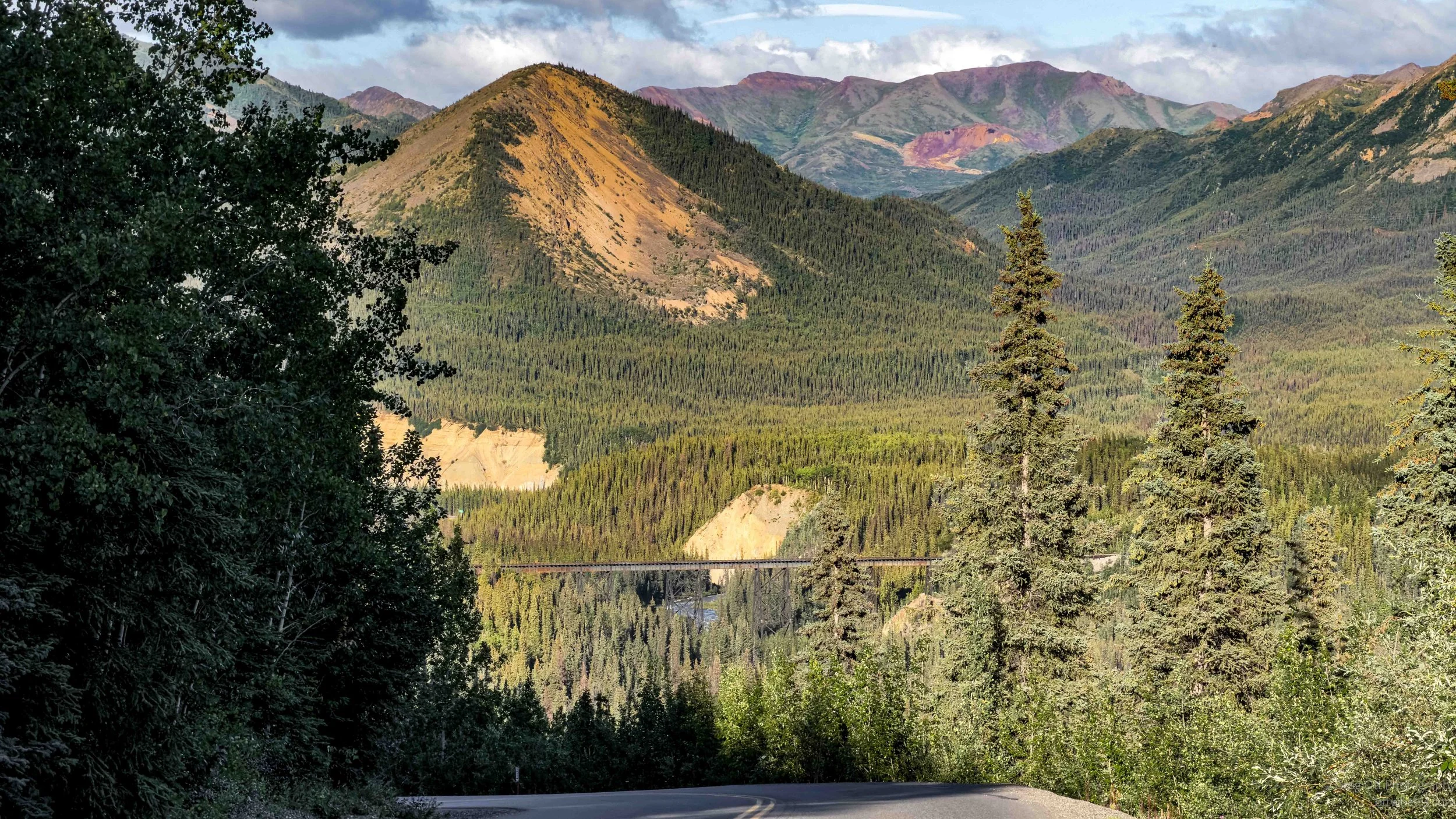
My bike computer flashed "Animal Nearby" twice while I was climbing (I have no idea how it knows that.). At points I was crawling uphill at around 6 mph, which isn't exactly an ideal escape speed if the animal nearby happens to be a grizzly. Strangely, though, I continued to feel really good. The climbing was hard, but my breathing wasn't limiting me the way it had on several recent rides.
Near the nine-mile mark, a woman in a Mercedes sedan pulled into a turnout ahead of me. As I approached, I saw her get out with binoculars and walk into the brush. Then she completely disappeared. The bushes and small trees were taller than she was, and I slowed down trying to figure out what she had seen that was interesting enough to make her walk into dense vegetation in Denali with binoculars. I never figured it out.
I continued climbing until the road finally crested almost exactly at the ten-mile mark. From there it was another four-plus miles to the Savage River area and the ranger checkpoint at Mile 15. The road becomes gravel shortly beyond that point, but I wasn't interested in adding another nine miles to my round trip just so I could say I had ridden there. Ten miles of climbing seemed sufficient, so I turned around.
Needless to say, the trip back was considerably faster. Cars had been passing me continuously during the climb, but on the return trip I think only four cars passed me. Most of the ride was downhill, and I was easily hitting 30 mph in places. The bike computer warned me several times as I approached tighter curves, and at one point it again flashed "Animal Nearby."
I was moving at about 30 mph when I remembered something one of the rangers had told us: grizzly bears can run up to about 35 mph. I had always known bears were fast, but thinking about that while traveling 30 mph on a bicycle gave the number an entirely different meaning. If a grizzly had decided to chase me, going downhill on a bicycle wasn't necessarily going to solve the problem.
Fortunately, I never saw the animal responsible for the warning. I continued down the mountain and eventually rolled back into the campground feeling surprisingly good. More importantly, my breathing had held up through ten miles of climbing, including some genuinely steep sections. For the first time in a while, I felt like maybe I was finally getting past the lingering breathing issues.
Back at the van, I packed everything up and drove over to the Mercantile for a shower. Afterward, I stopped for two scoops of ice cream. Yes, two scoops again, but after twenty miles on the bike with ten of those miles going uphill, I decided I had earned them.
I was very relaxed afterward and didn't feel like doing much of anything. It had started as one of those slow days without much of a plan, but somehow I had ended up learning why Denali still sends rangers into the wilderness behind teams of dogs and then spending the evening slowly grinding my way ten miles up the park road.
There was an interesting connection between the two that I didn't really think about until the end of the day. The dogs aren't the fastest or most technologically advanced way to travel through Denali, and my bicycle certainly wasn't the fastest way to get ten miles up the park road. Both force you to move through the landscape at a pace where you actually experience it.
I'm beginning to think that is one of the things Denali does particularly well. It is an enormous place, and there is always the temptation to see how far you can go and how much you can fit into a day. Yet some of my best experiences here have happened while moving slowly, whether that meant hiking through a river, riding a bicycle uphill at 6 mph or watching a team of dogs doing work that has been part of this place for more than a century. There are faster ways to get somewhere, but sometimes getting somewhere isn't really the point.