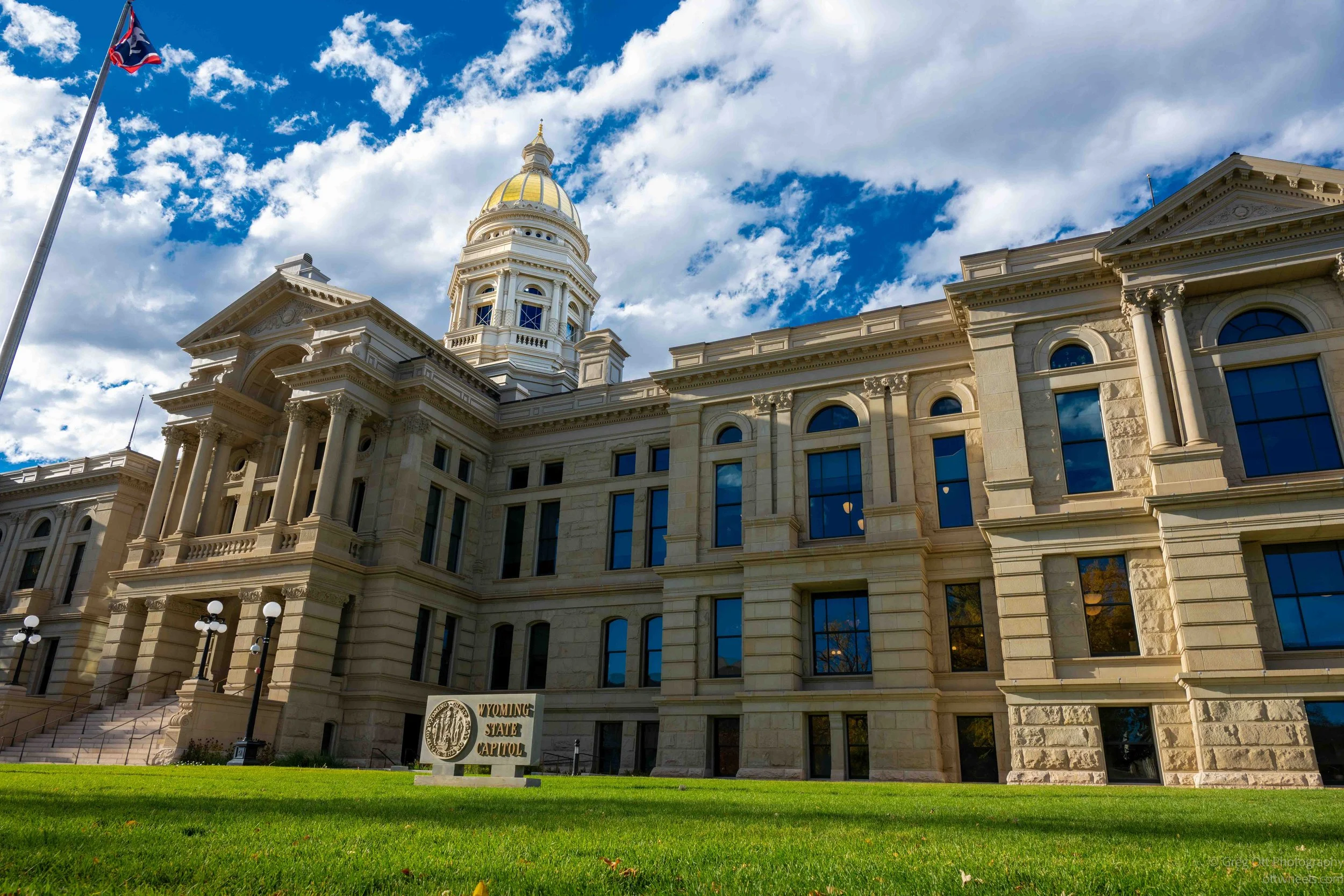
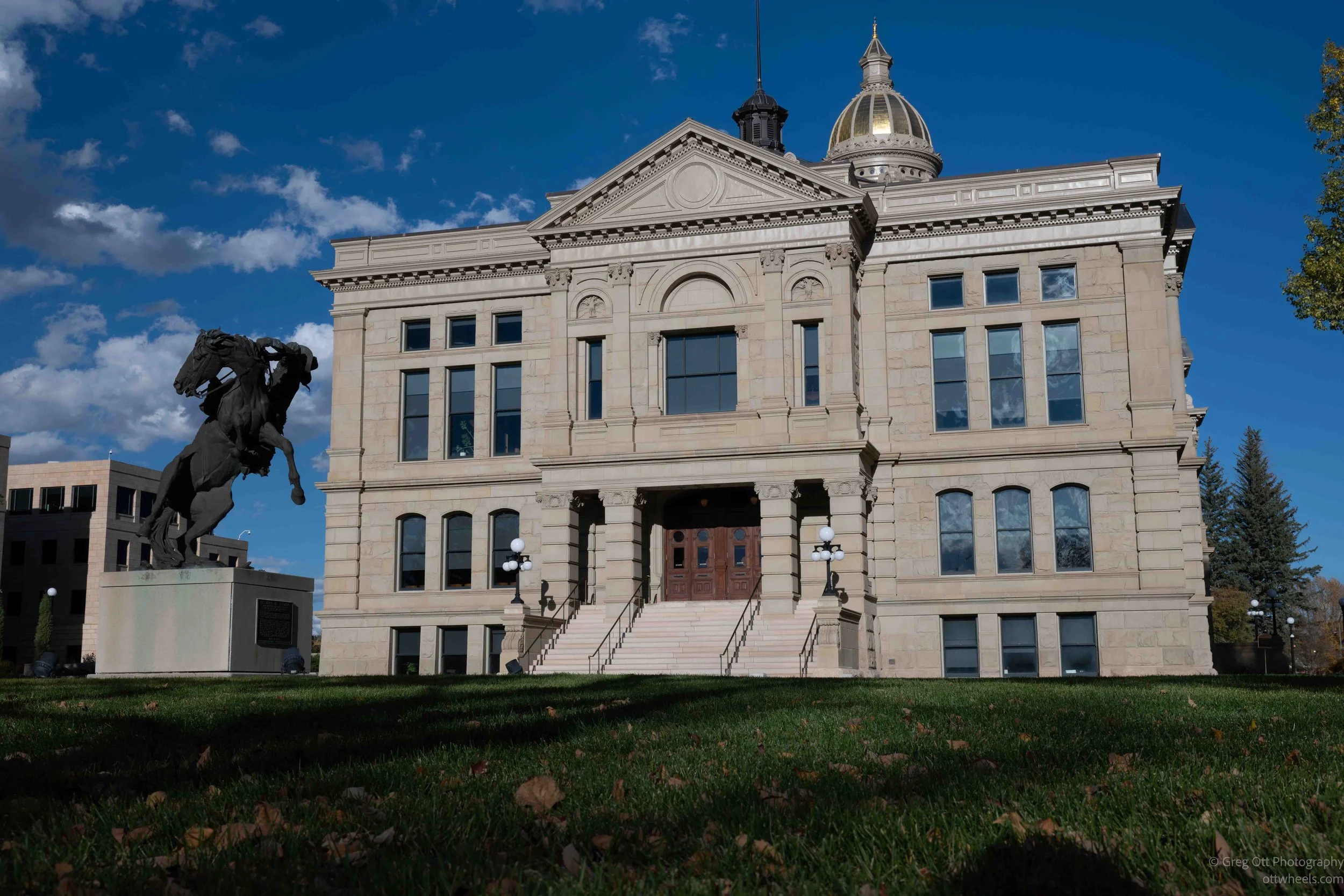
I woke up at Vedauwoo Campground in Medicine Bow National Forest and drove into Cheyenne to visit the Wyoming State Capitol. I expected to spend a couple of hours exploring the building, but between the architecture, historical photographs, and conversations with people working there, I ended up spending most of the day. My visit began with a conversation at the front desk, followed by another with a state police guard near the rotunda. Both were happy to answer questions and share information about the Capitol.
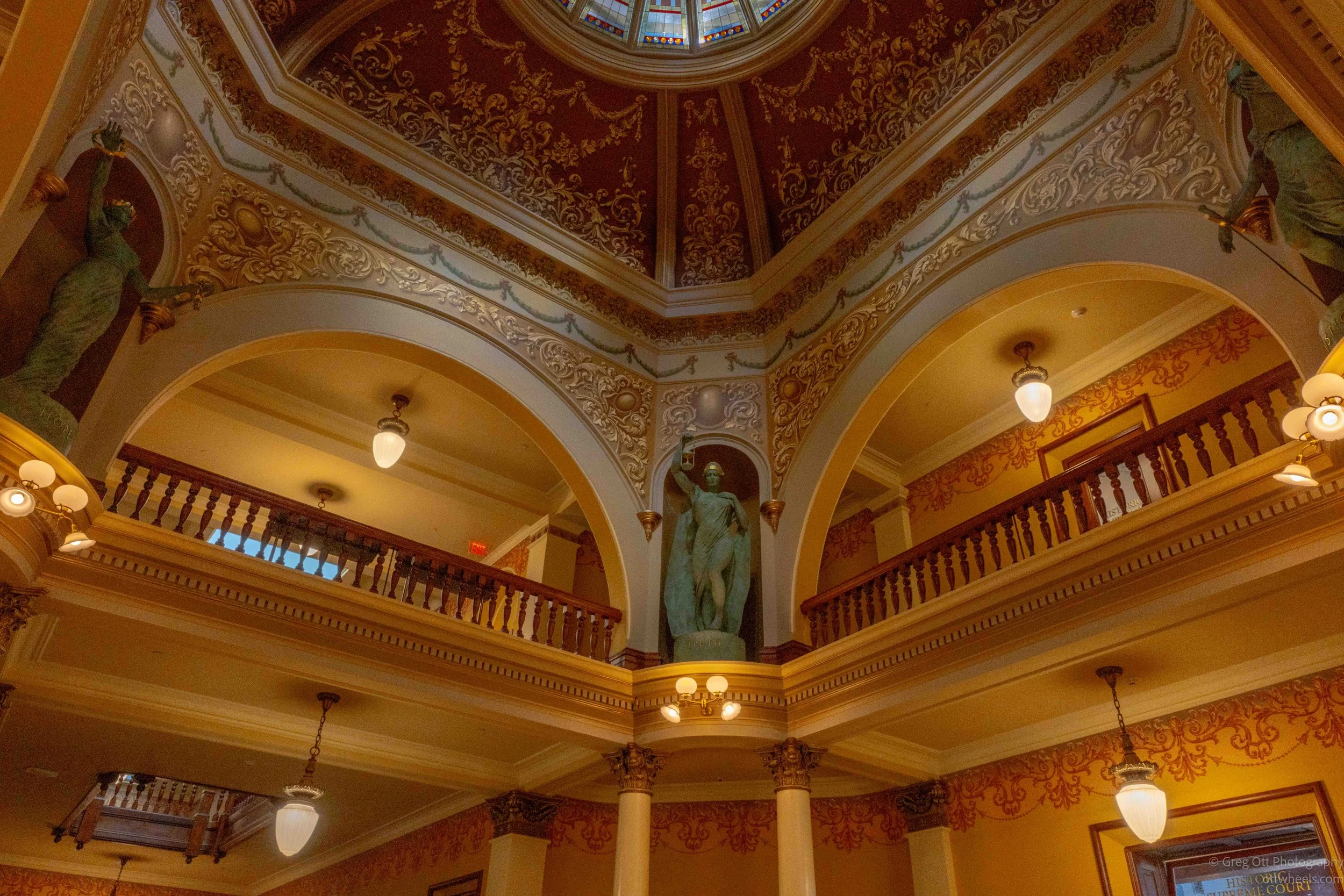
The Capitol opened in 1888, two years before Wyoming became a state. A major restoration completed in 2019 returned much of the interior to its original appearance, including the decorative plasterwork, lighting, and stained glass. The central rotunda was particularly attractive, with its elaborate arches, wooden staircases, and black-and-white tiled floors. I spent quite a bit of time wandering through the building, admiring the architecture and taking photographs.
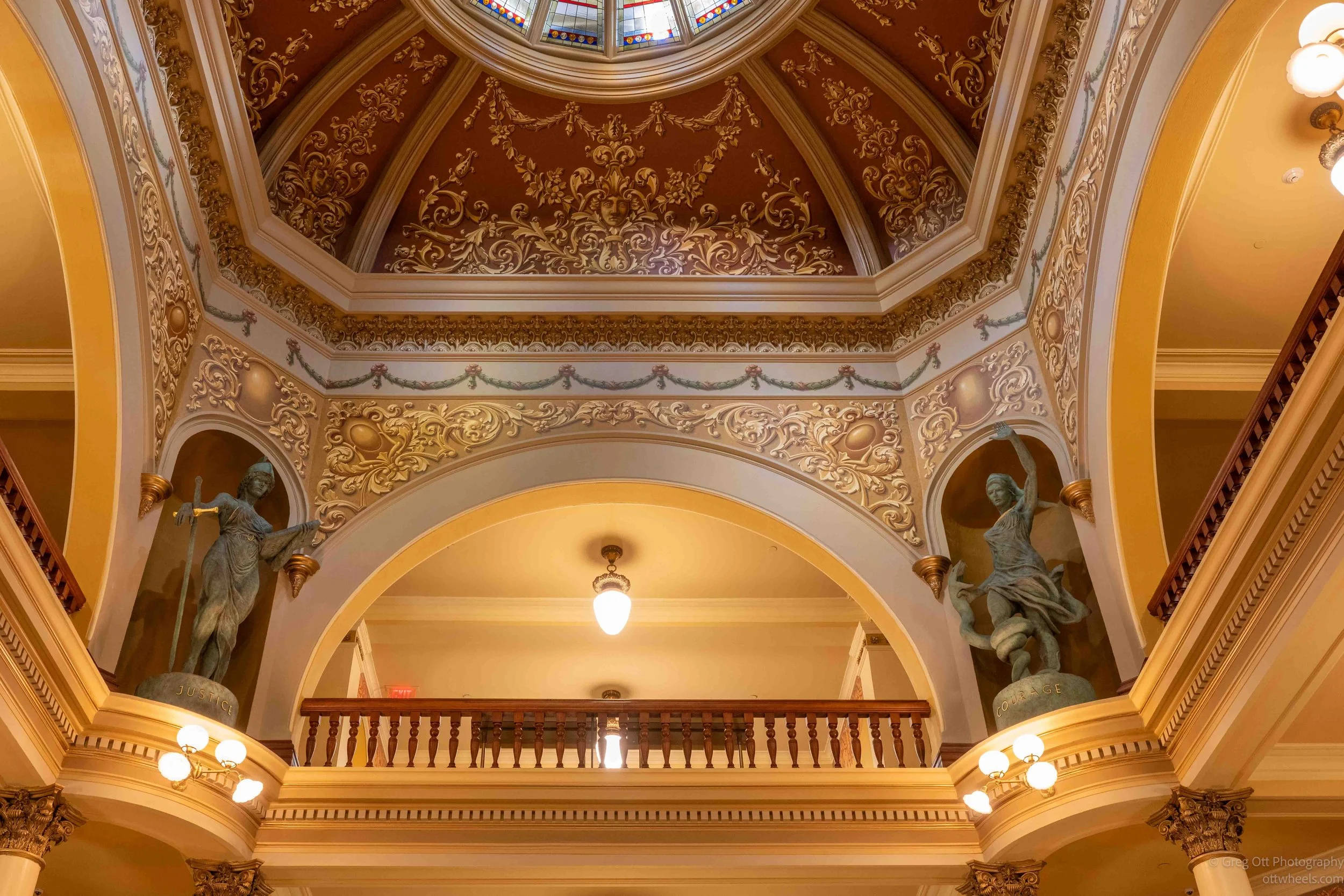
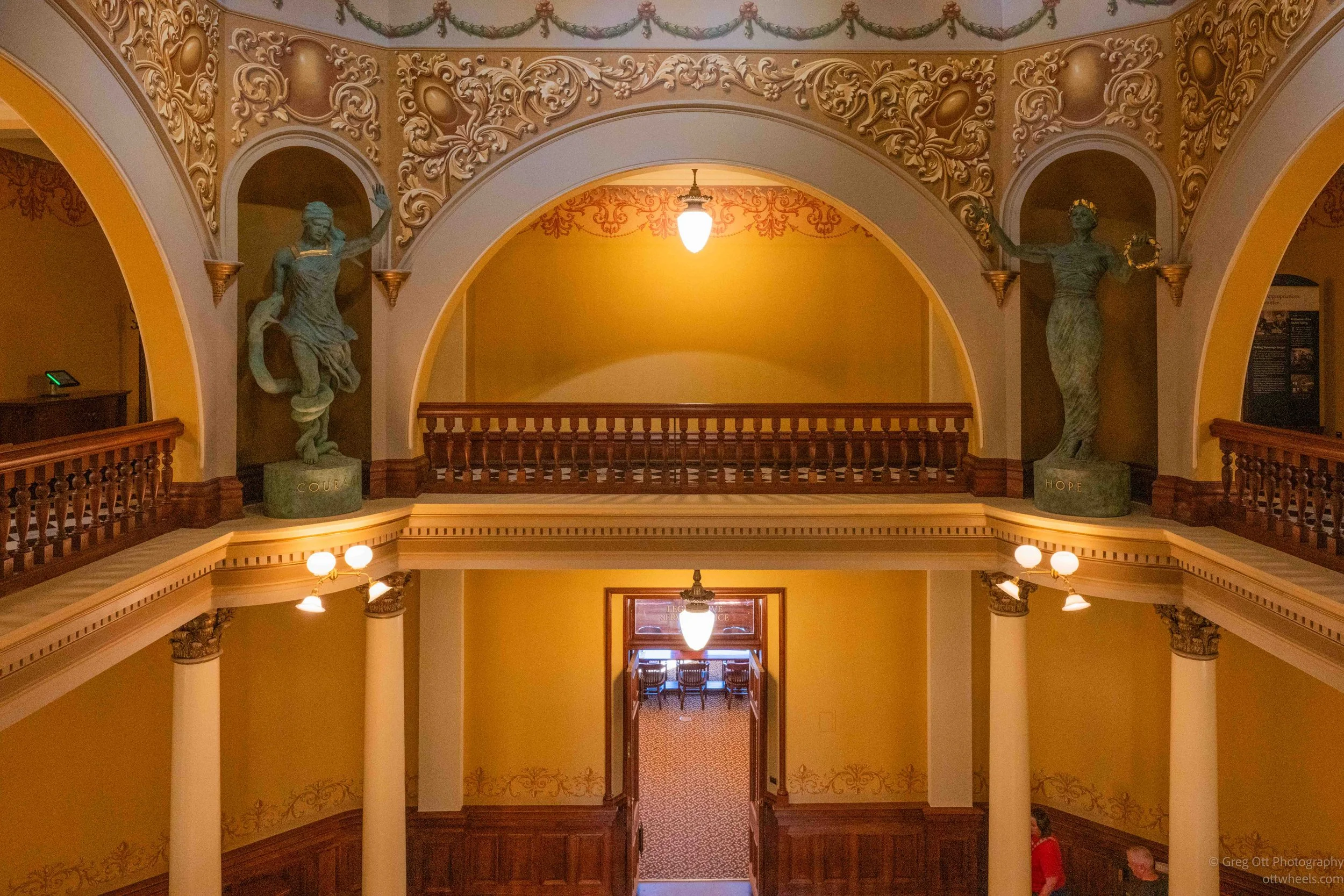
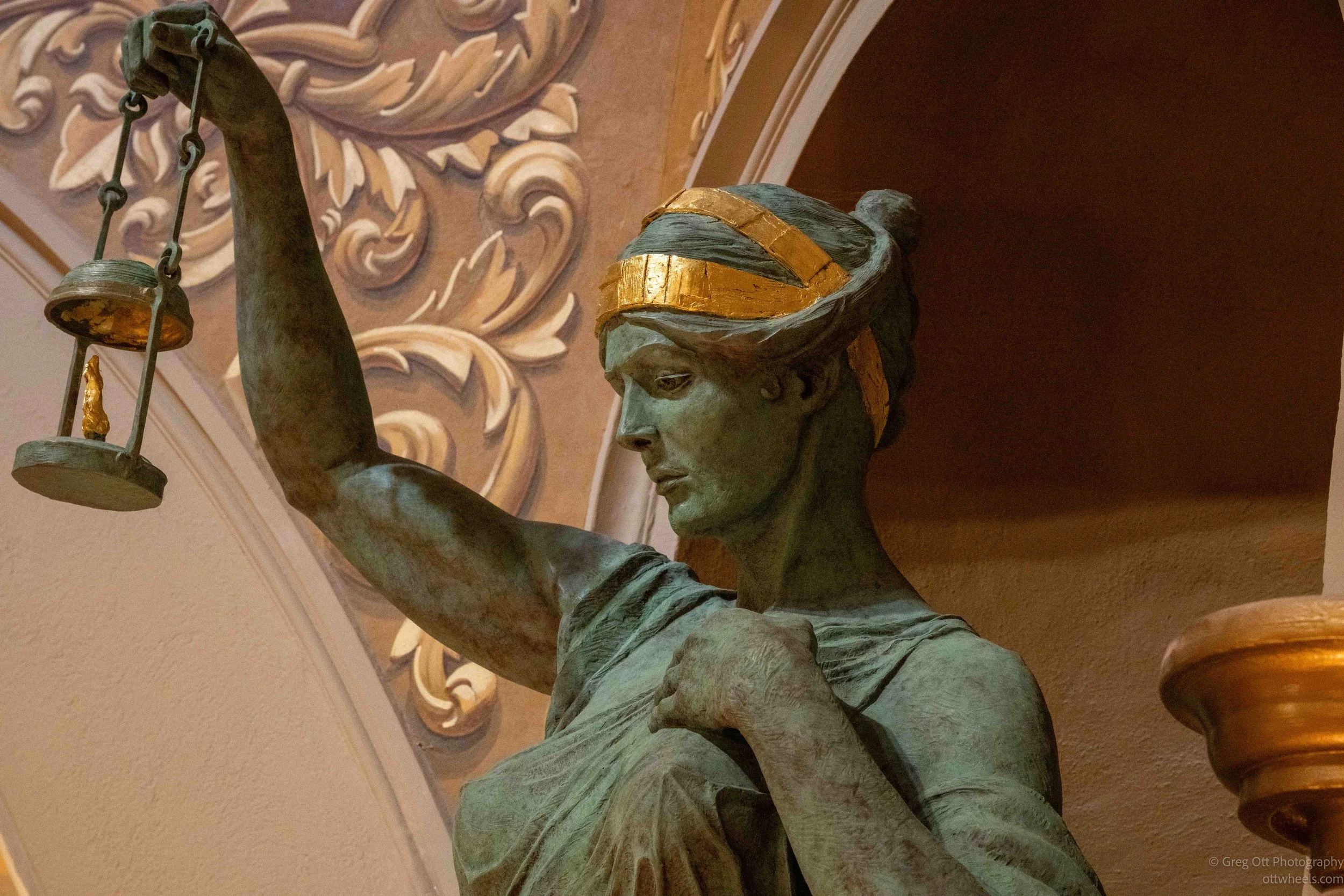
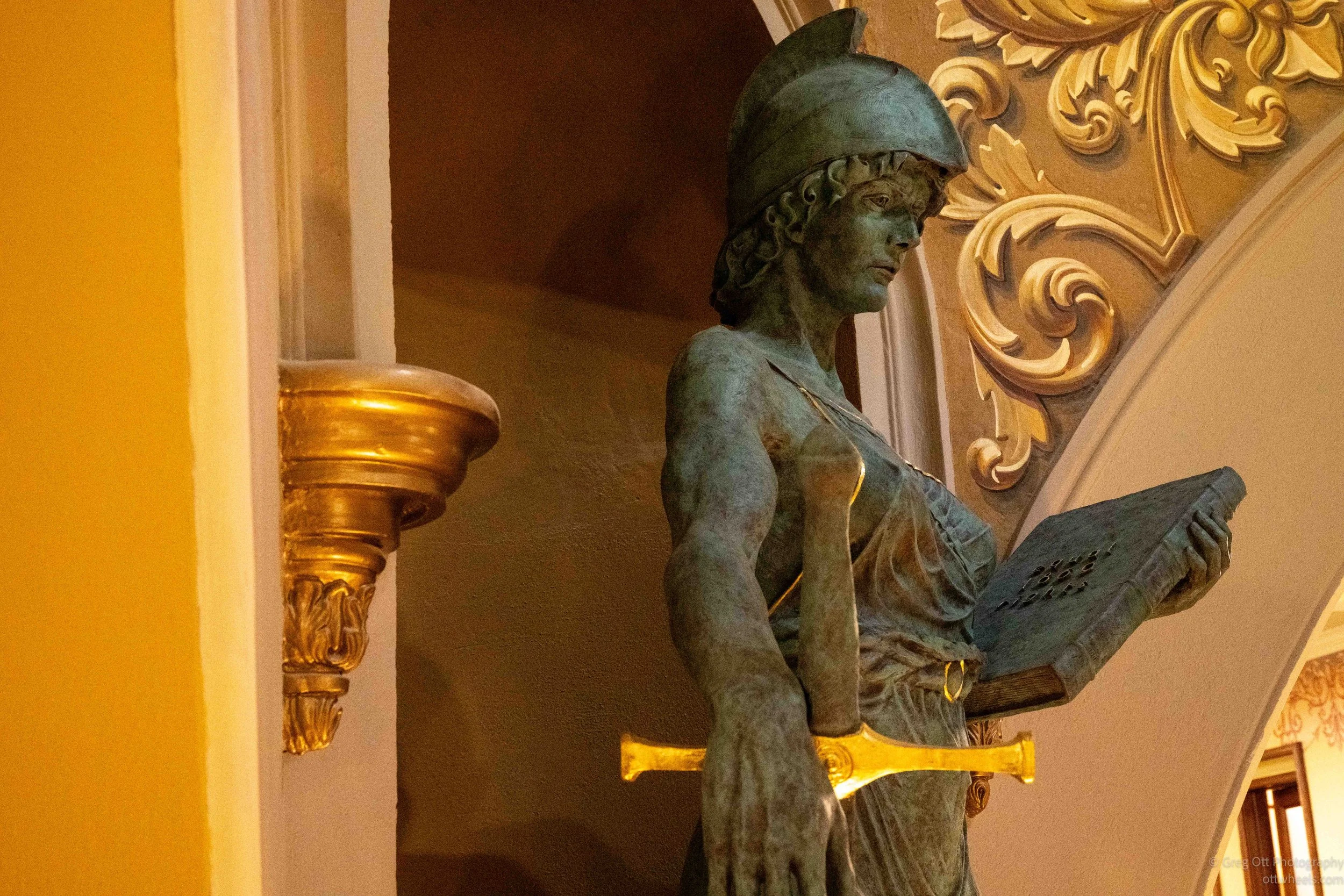
Four bronze sculptures occupy niches overlooking the rotunda. Known as the Four Sisters, they represent Truth, Justice, Courage, and Hope. Interestingly, the niches remained empty for 131 years before the sculptures were installed during the restoration in 2019. The figures were created by sculptor Delissalde, who designed them to complement the building's original architecture.
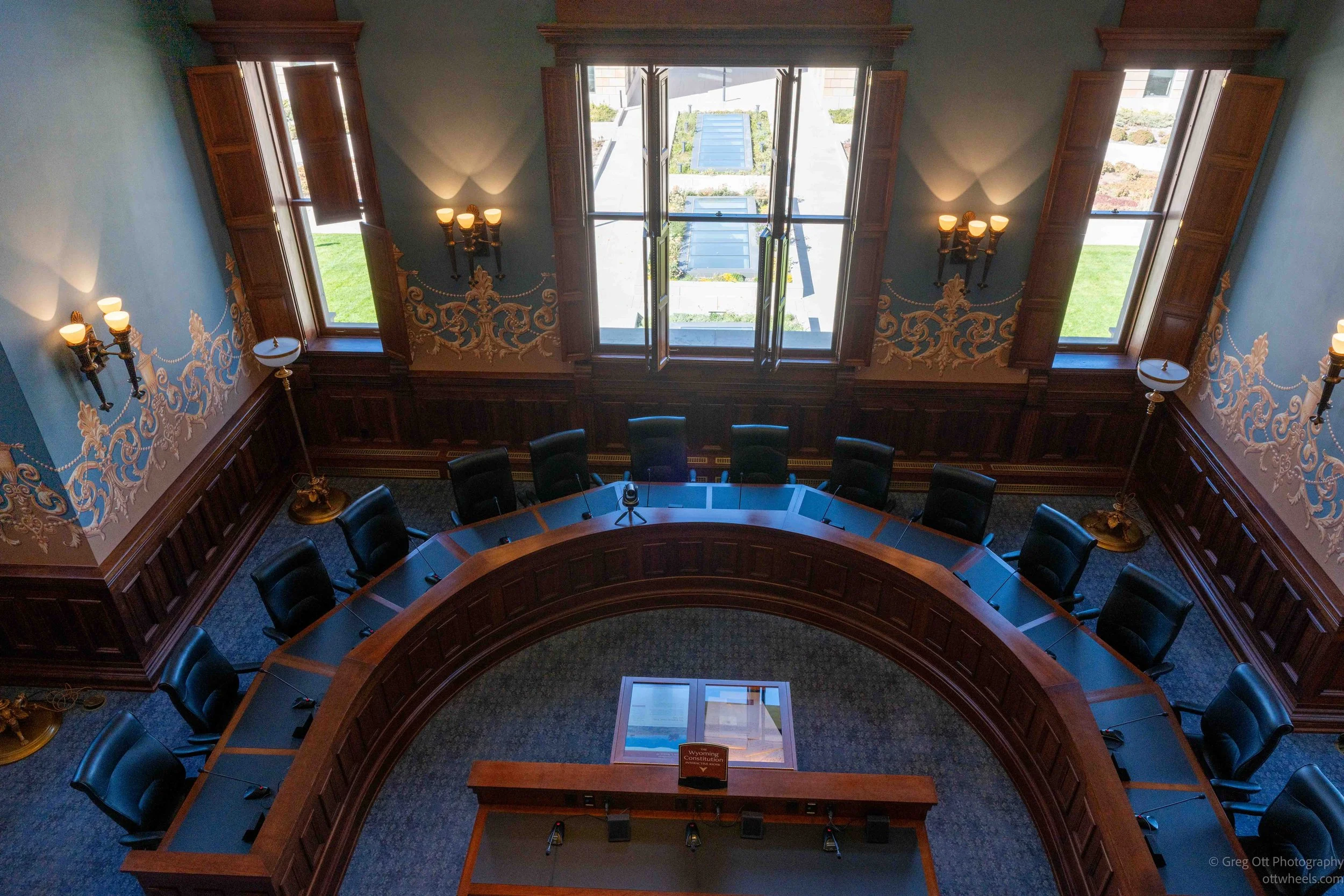
I also visited the historic Supreme Court chamber, which originally served as the territorial House of Representatives before Wyoming became a state in 1890. The Supreme Court occupied the room until 1937, when it moved into a separate building. It's an attractive room, with large windows, blue walls, and dark woodwork arranged around a semicircular bench. I particularly liked the room's proportions and relatively simple design.
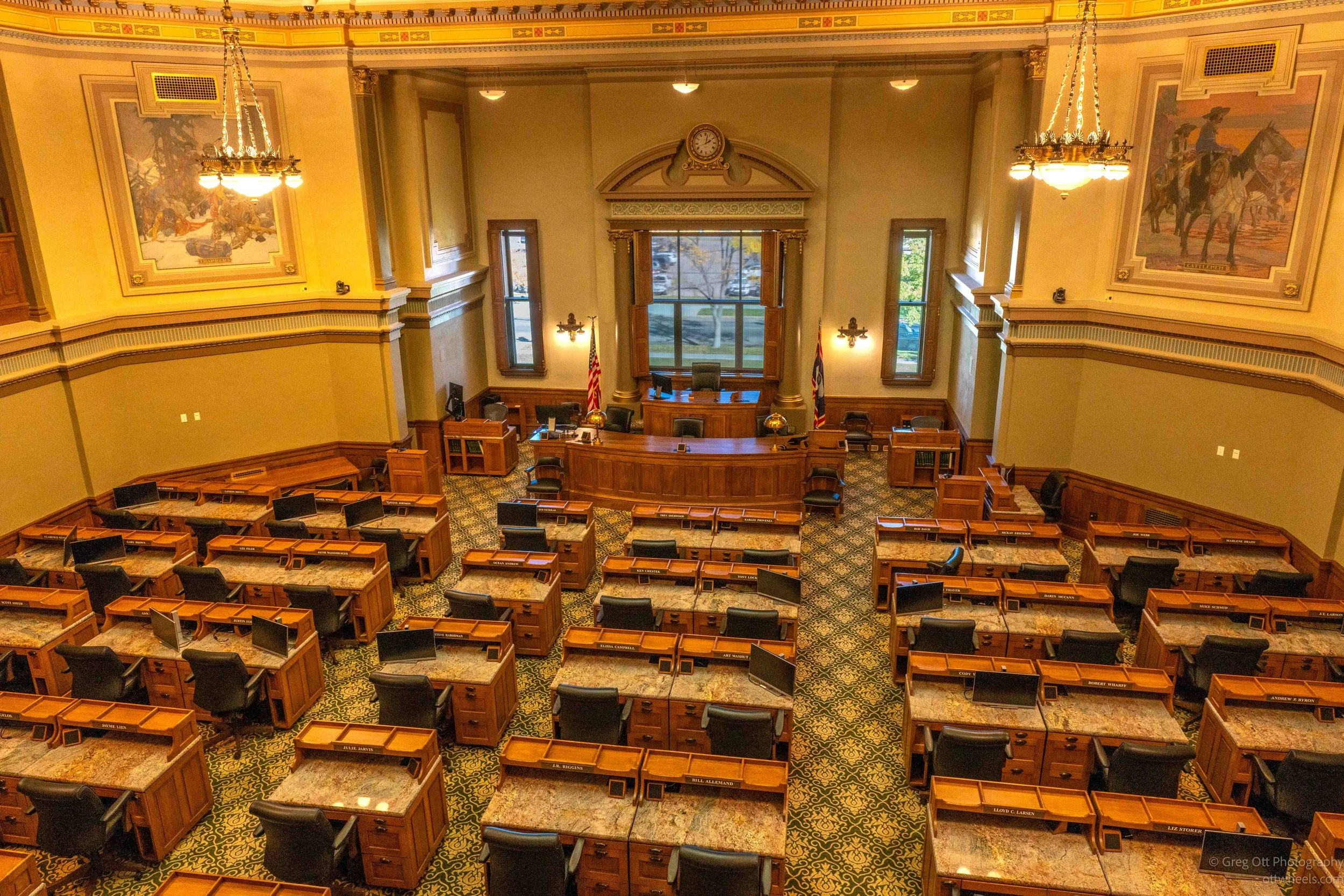
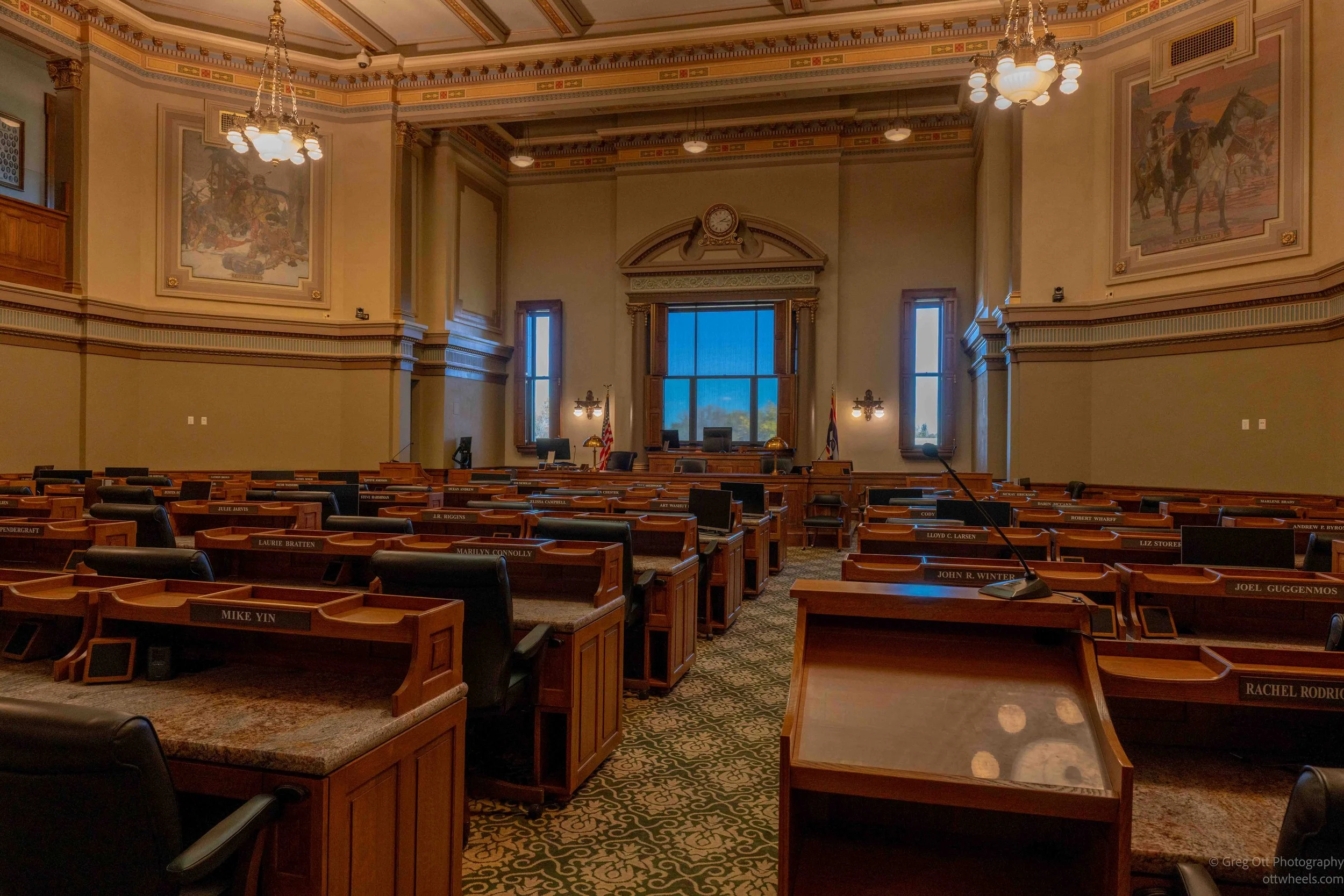
The House of Representatives chamber was my favorite room in the Capitol. The light woodwork gave it a warmth that I liked immediately, and the large windows helped make the room feel open and inviting. I spent some time sitting in the third-floor gallery, reading and enjoying the surroundings. While I was there, Mike, the custodian for the third floor, stopped to ask where I was from. We got talking and eventually found our way into politics. He seemed to fall somewhere in the middle of the political spectrum, much as I do, and we had an enjoyable conversation.
Throughout the Capitol, the walls were lined with old photographs of Wyoming's senators and representatives, dating back to the early years of statehood. I've always enjoyed studying old photographs. The clothing, hairstyles, facial expressions, and improvements in photographic quality all offer a glimpse into the past. As I worked my way along the walls, I noticed something rather strange. In one of the black-and-white photographs, a man was wearing a bright red tie. A little farther along, I found another one. Among the thousands of faces on display, these were the only two red ties I noticed.
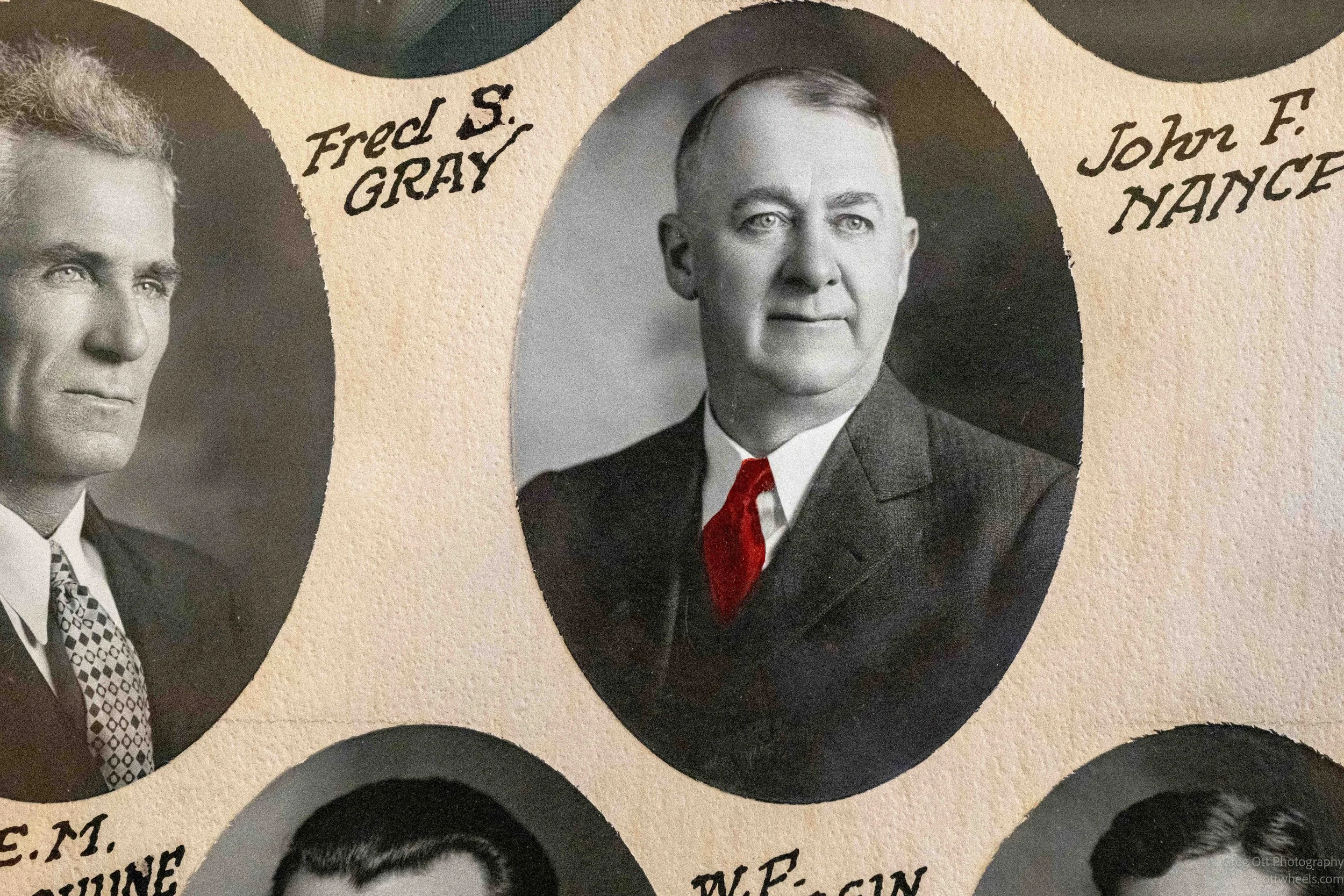
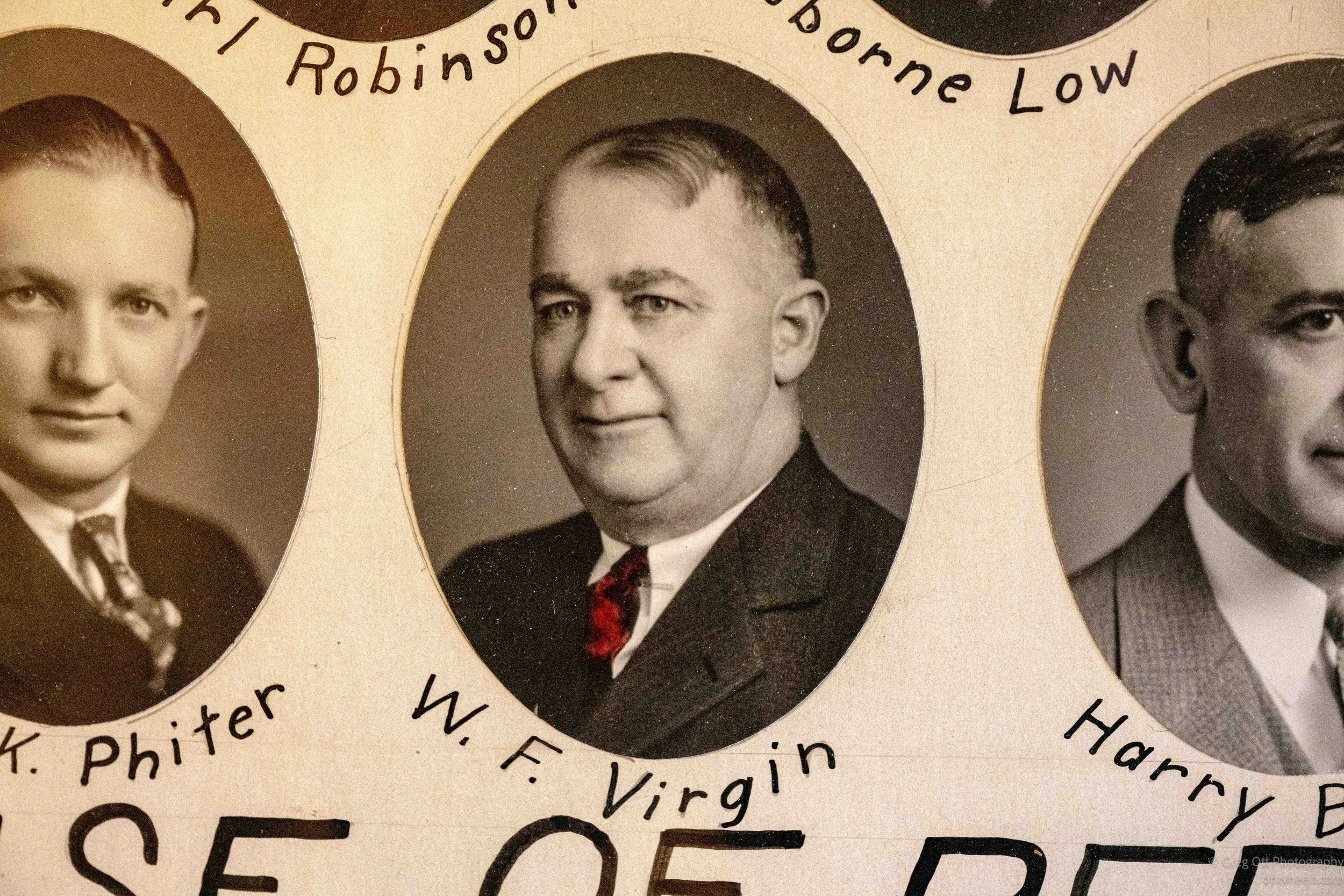
Curiosity got the better of me, so I returned to the front desk and asked about them. The woman working there remembered reading something in her notes and began looking through them. Sure enough, there was a reference to the two photographs, but no explanation of why the ties had been colored. I later did some research online and found that the Capitol's exhibit planning documents specifically mention W. P. Virgin's red tie in the 1935 House composite. Unfortunately, they didn't explain it either. Nearly a century later, someone is still wondering why that tie is red.
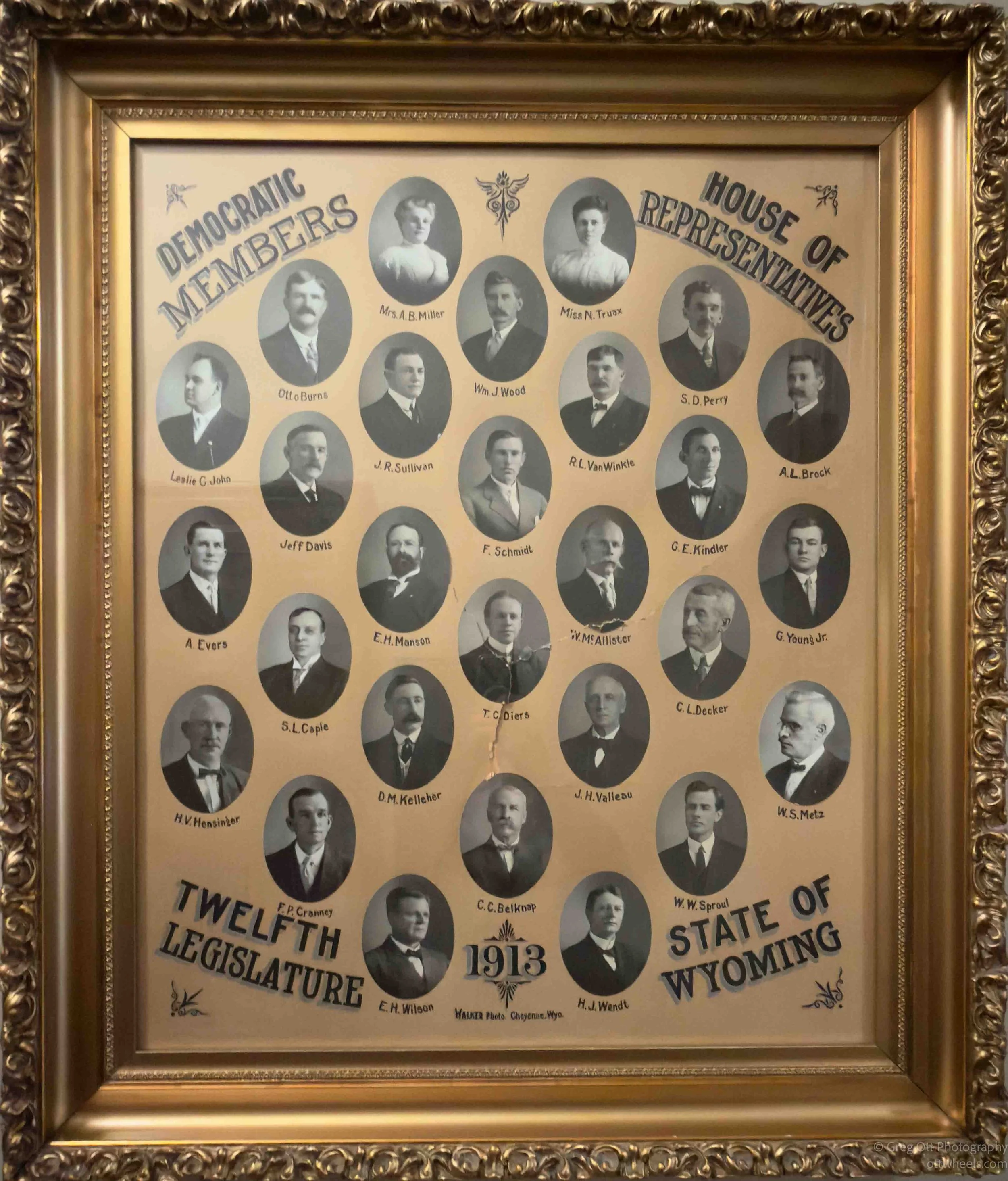
Another interesting story involved a political dispute in 1913 that turned into a fistfight on the floor of the House of Representatives. The disagreement concerned three contested elections, control of the House, and the selection of a U.S. senator. At the time, U.S. senators were still chosen by state legislatures rather than by popular vote. On January 20, House Speaker Martin Pratt and Speaker Pro Tempore William Wood argued over who had the authority to preside. When Wood refused to surrender the speaker's chair, Pratt physically pulled him from the platform. The confrontation escalated into a brawl that reportedly lasted about 45 minutes.
Apparently, the bitterness continued long after the fighting stopped. Instead of appearing together in the customary legislative composite, the Democrats and Republicans had separate photographs taken that year. I went looking for them and eventually found both hanging on the Capitol walls. After seeing so many photographs of entire legislatures together, I found it rather amusing that these politicians couldn't even agree to appear in the same photograph. More than a century later, I wonder how much has really changed.
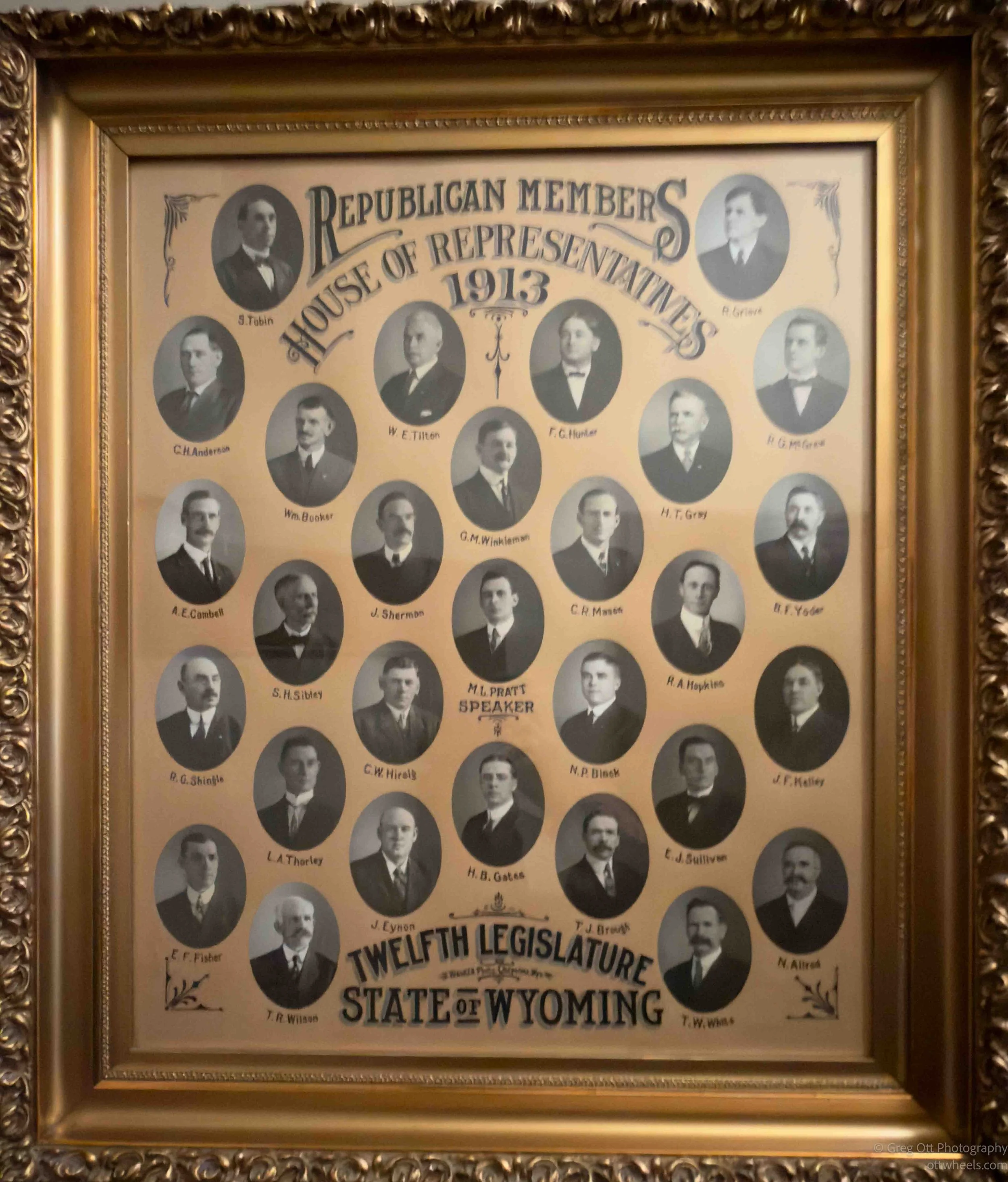
Wyoming Historical Society's account of the 1913 brawl
I also visited the Senate chamber, which had a considerably darker appearance than the House. Although both chambers were attractive, I preferred the lighter woodwork and openness of the House. One of the things I appreciated about visiting the Capitol was how accessible everything was. I could wander through the historic chambers, sit in the galleries, examine photographs, and take pictures without anyone making me feel as though I didn't belong. I skipped the governor's office because an event was underway, although I was told it was normally open to visitors.
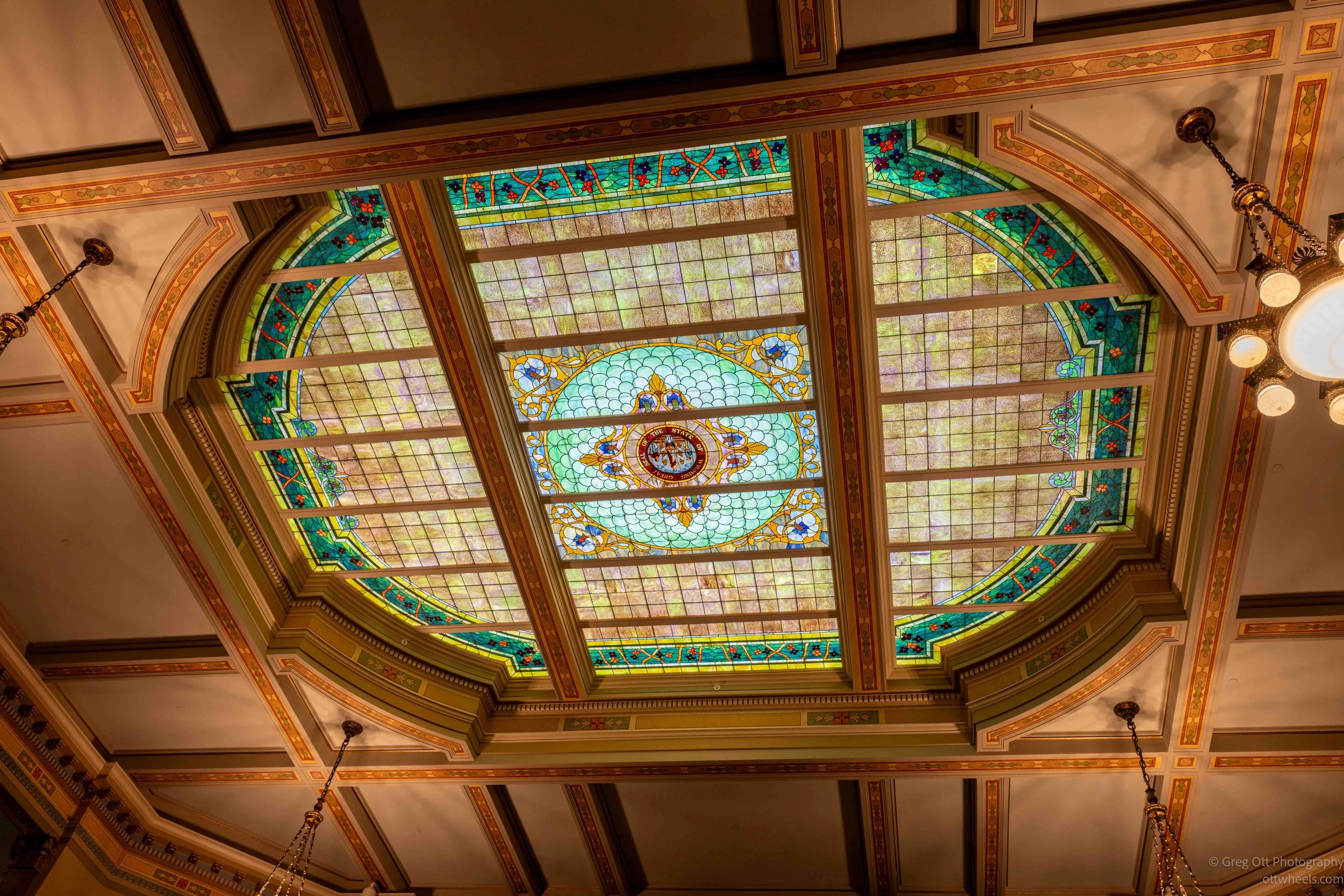
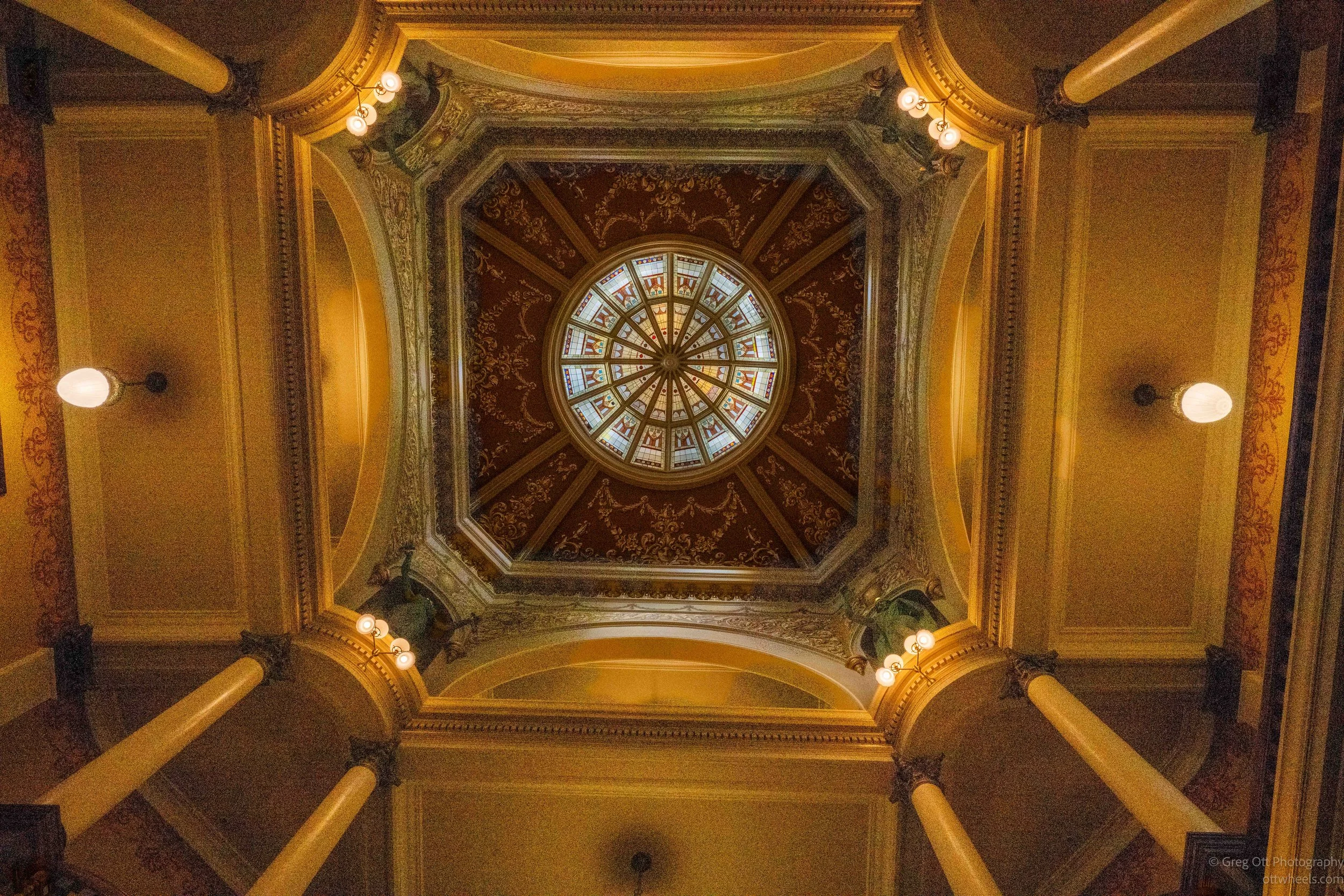
One of the architectural features I particularly enjoyed was the stained glass. The restoration returned many of the original skylights to their former appearance, allowing natural light into areas that had been darkened for decades. The decorative ceiling in the rotunda was especially impressive when viewed from directly below.
Before leaving, I stopped at the visitors' office again and ended up having a long conversation with Sandy, the woman working at the desk. She noticed my camera, and we soon discovered a shared interest in photography. Sandy was a retired schoolteacher who had worked on school yearbooks and taken class photographs. We talked about cameras and some of the old film developing processes that have largely disappeared in the digital age.
Sandy also told me about visitors who arrive carrying books for collecting state capitol stamps. Some apparently walk in, get their stamp, and leave without looking around. We both found that rather astonishing. I can understand collecting stamps from all fifty state capitols, but why travel all that distance without taking the time to explore the building? Sandy had a reference book filled with information about the Capitol's history, construction, and restoration. I suggested that it would make an interesting booklet for visitors. Additional QR codes would be useful as well, especially for people like me who enjoy discovering the stories behind some of the smaller details.
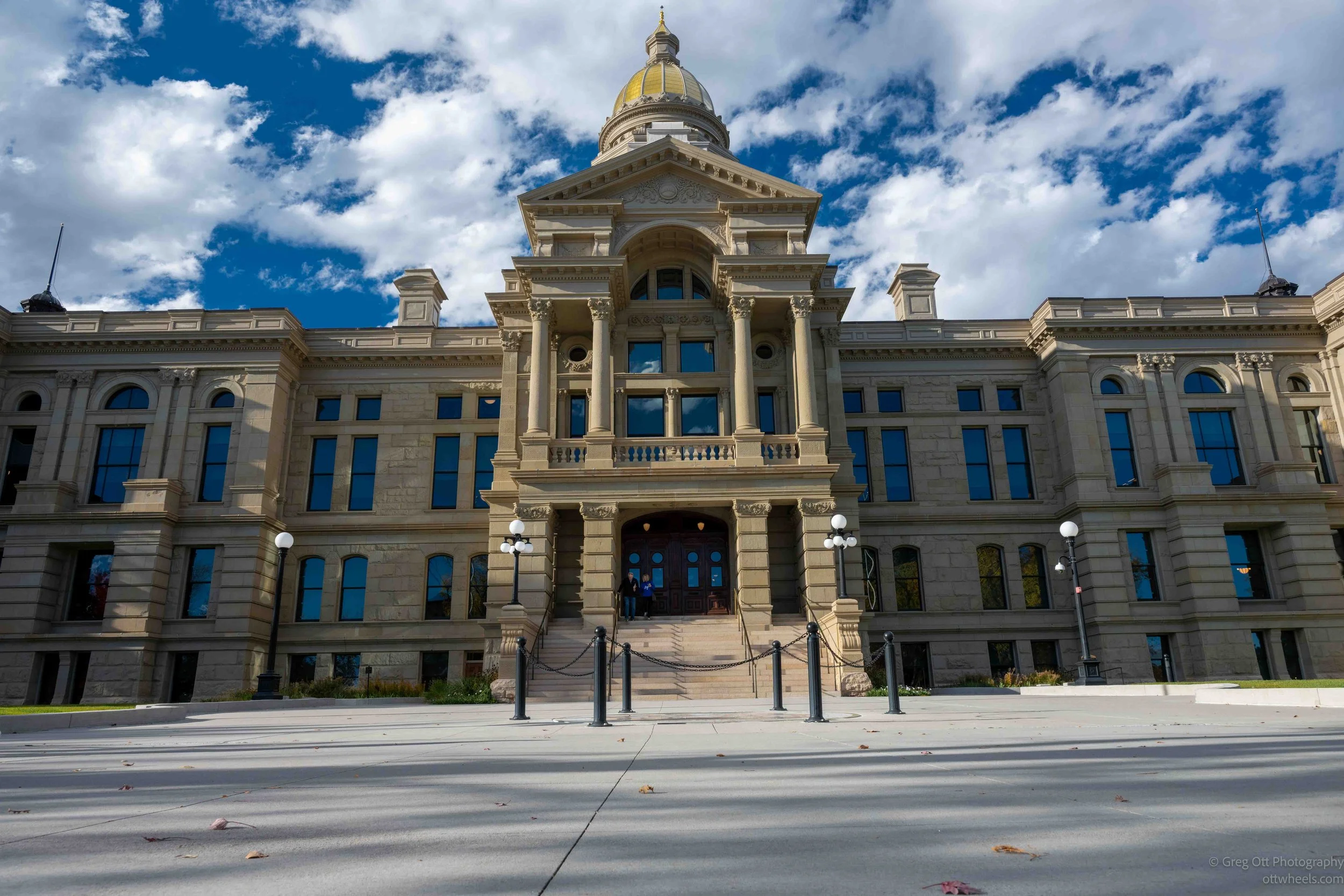
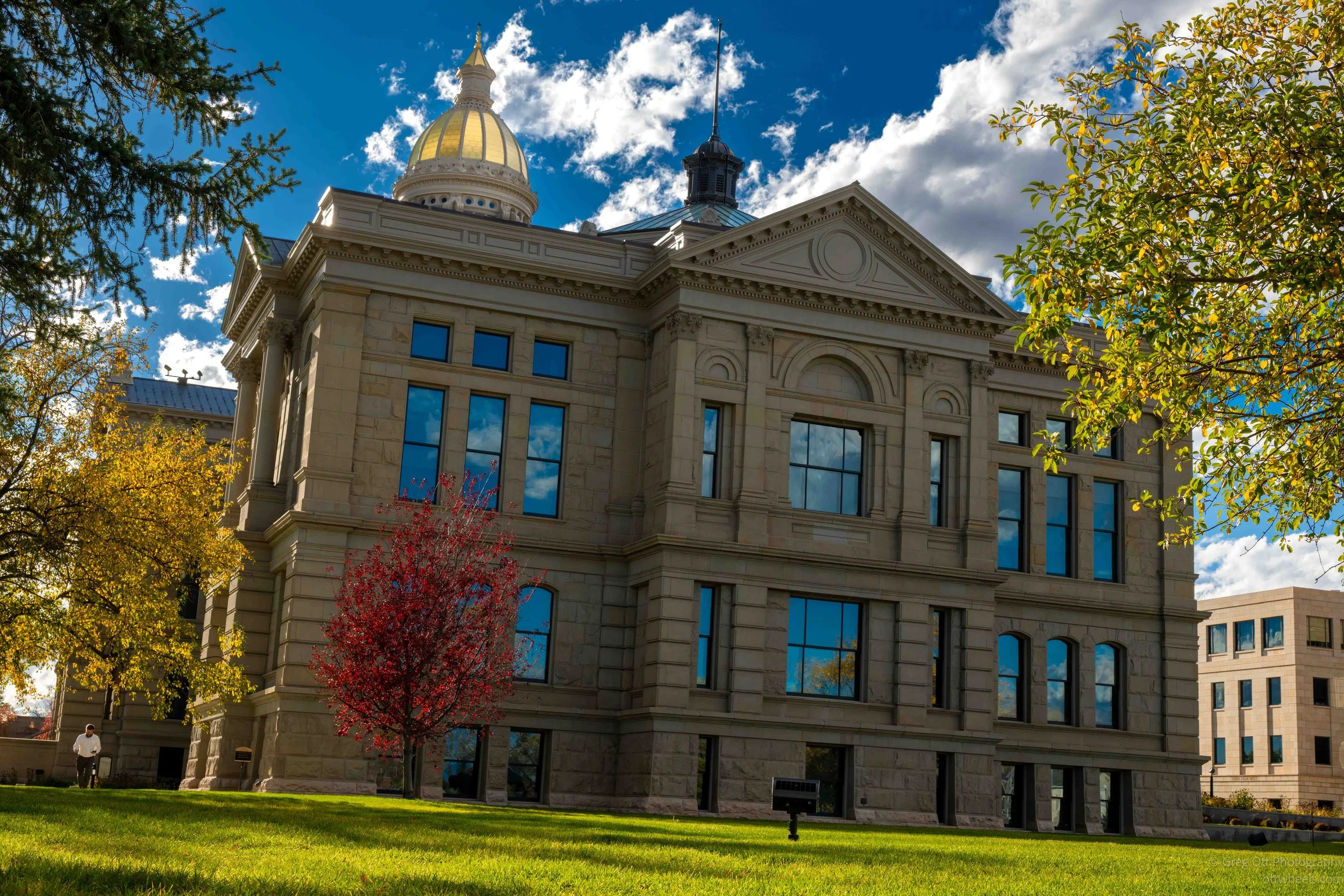
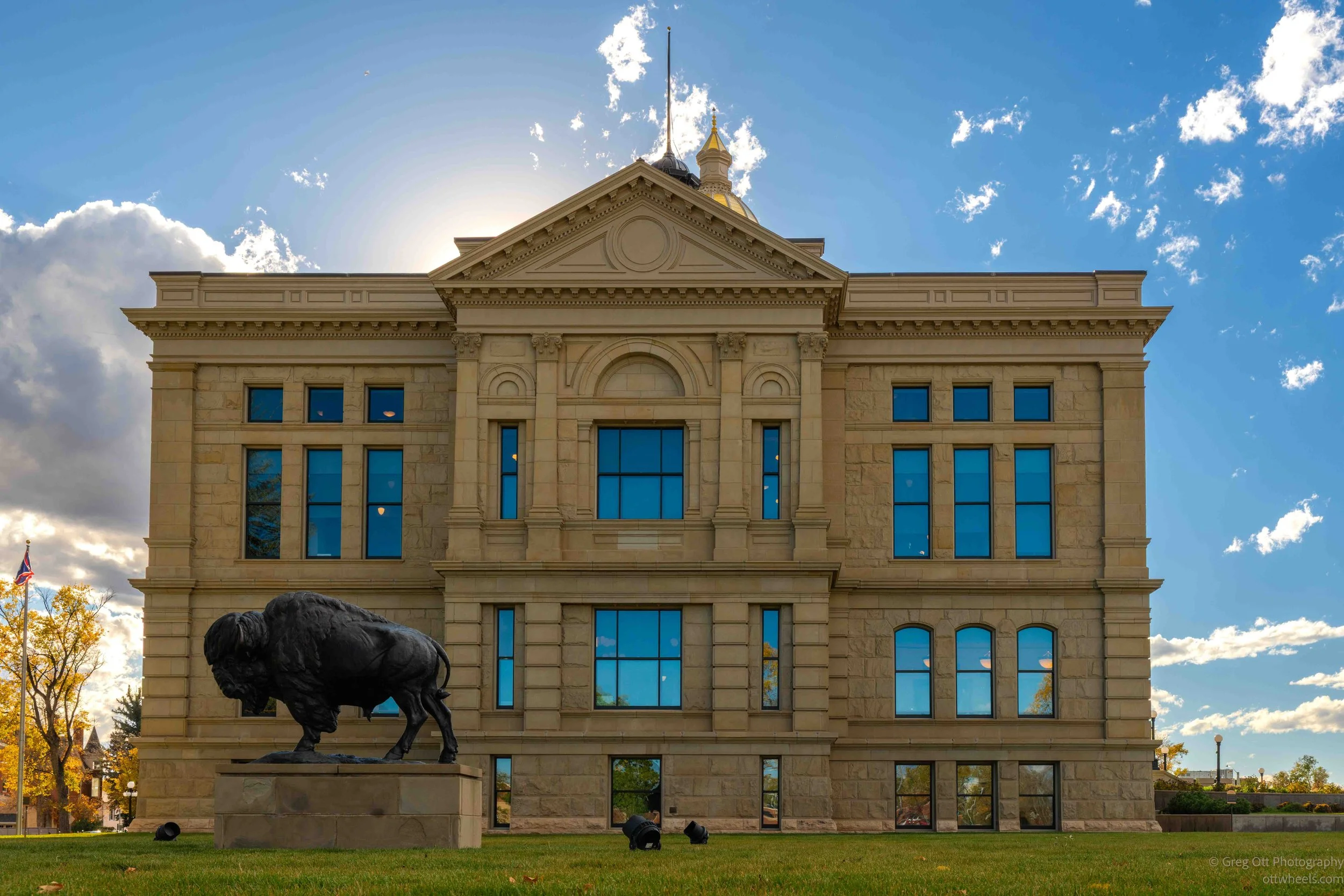
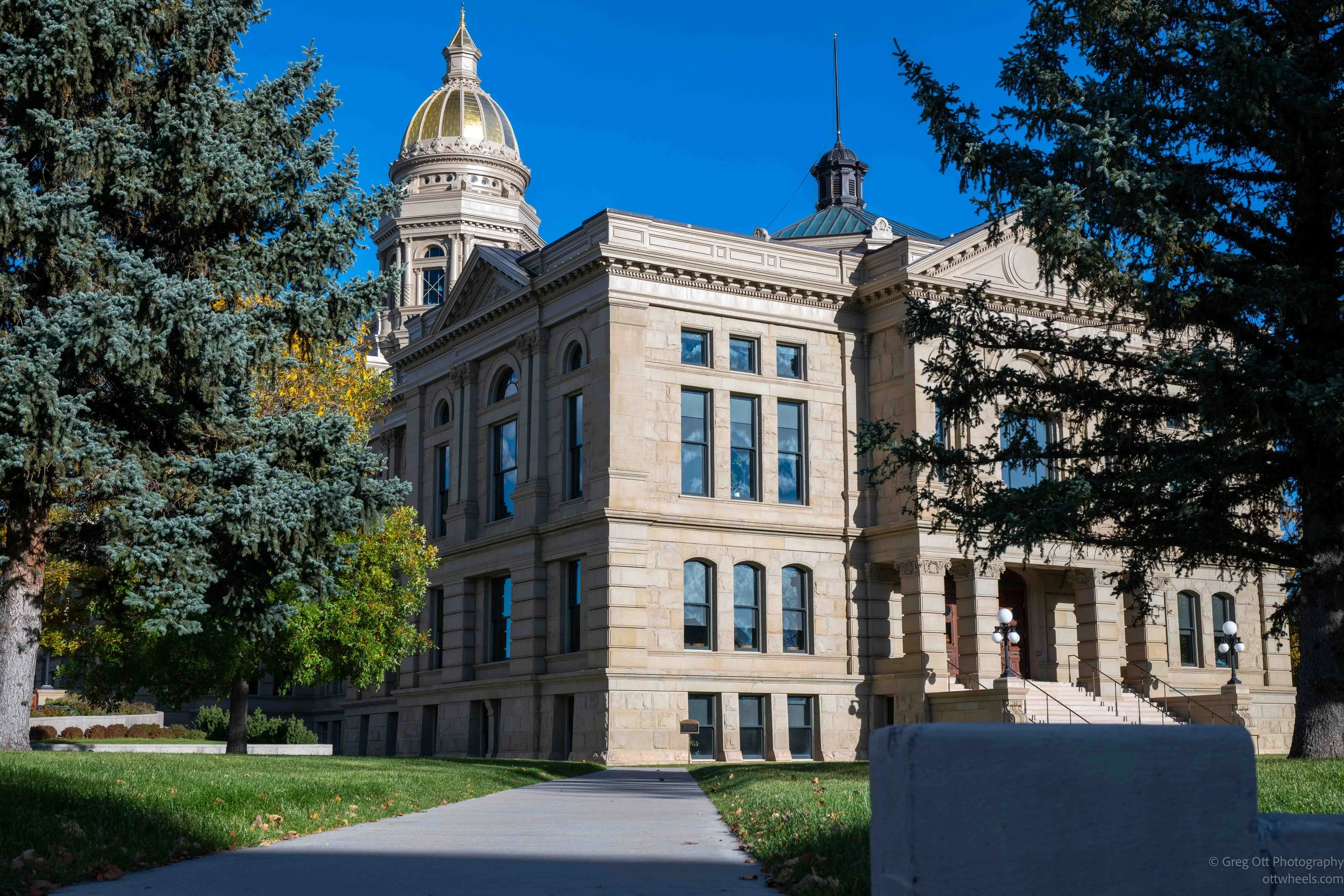
After saying goodbye, I walked around the outside of the Capitol, taking photographs of the building from several angles. The gold dome looked particularly attractive against the blue sky, and the autumn colors added a little variety to the photographs. Sandy had suggested visiting the historic Cheyenne railroad depot, so that became my next stop.
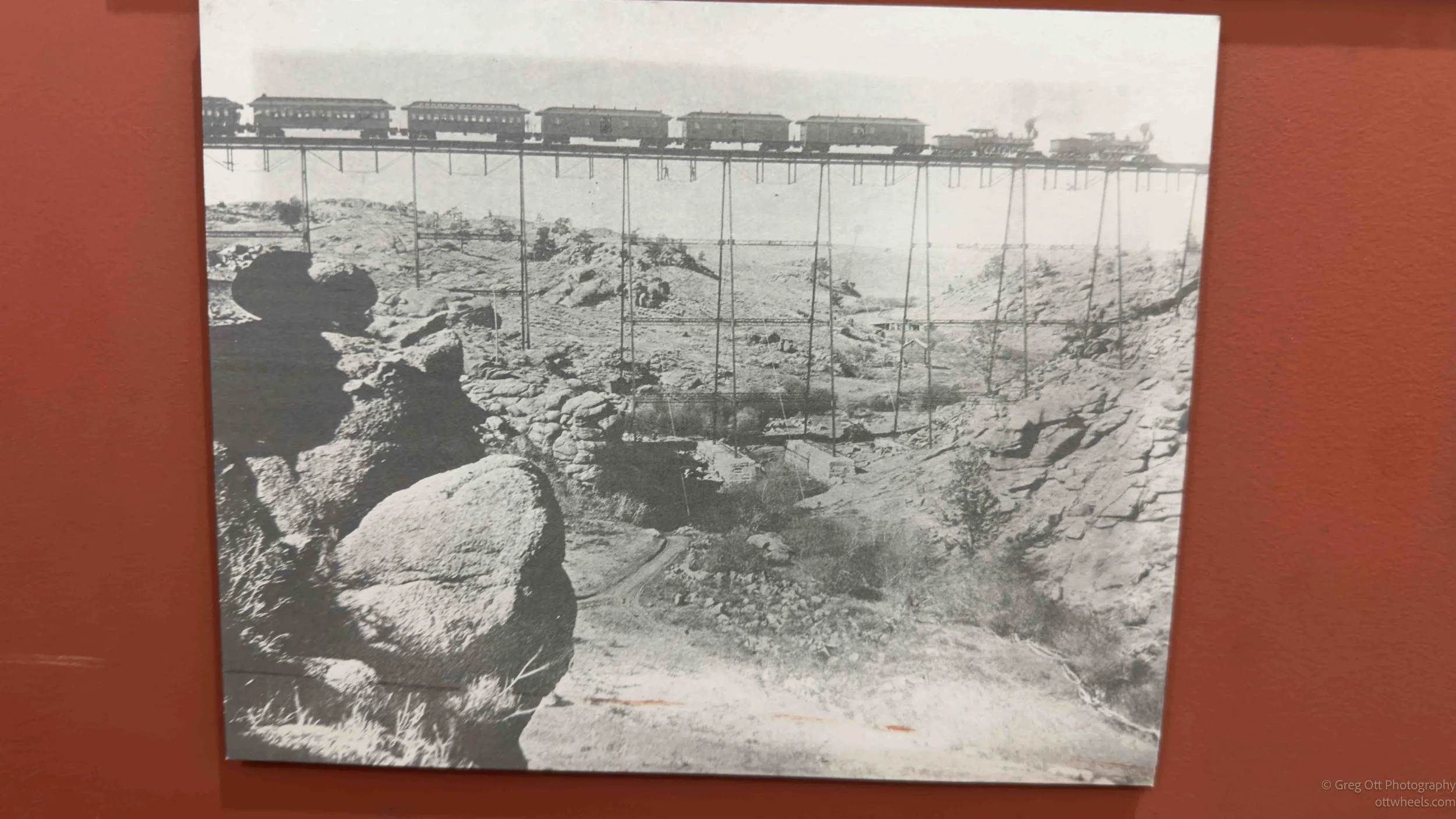
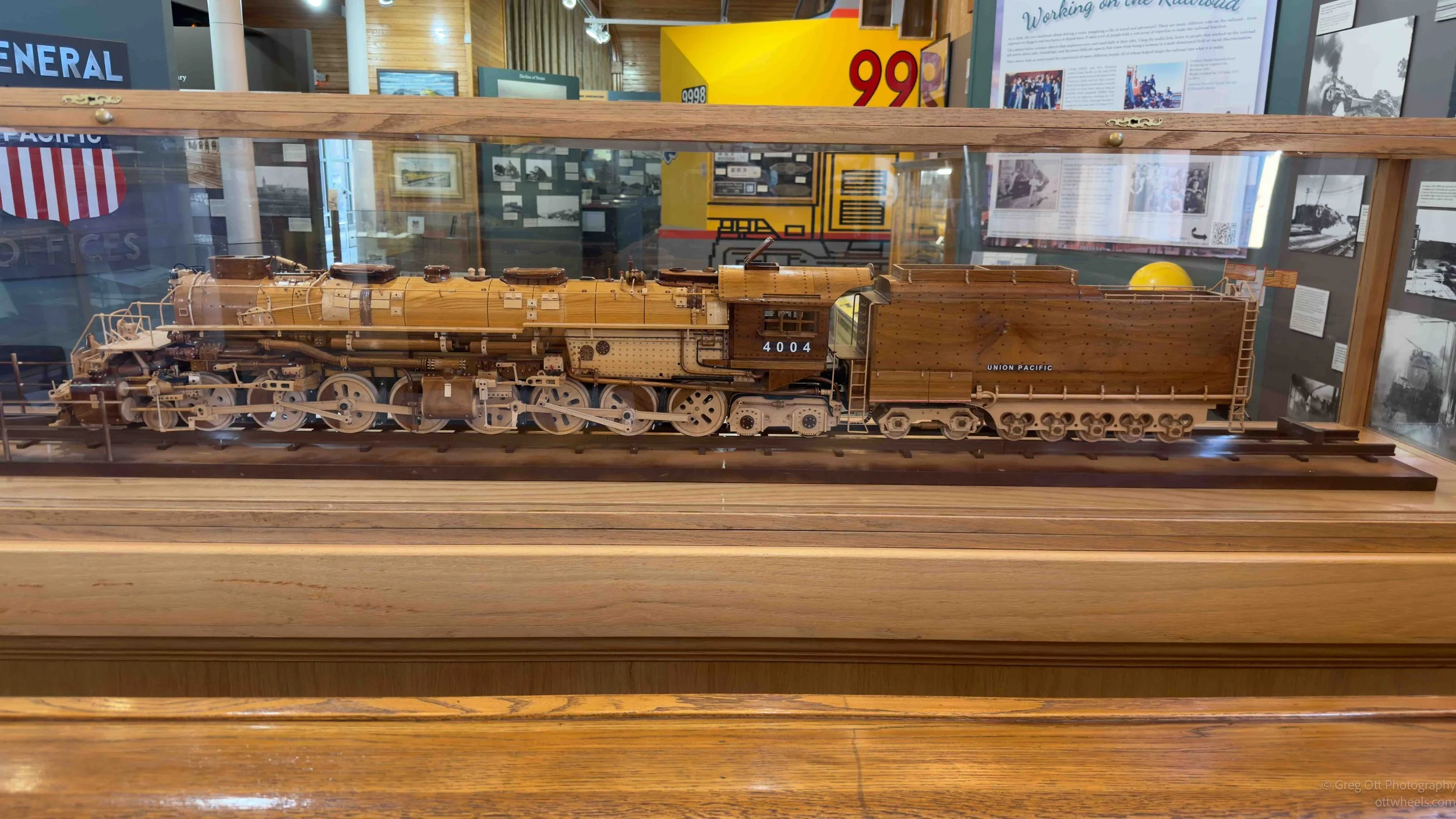
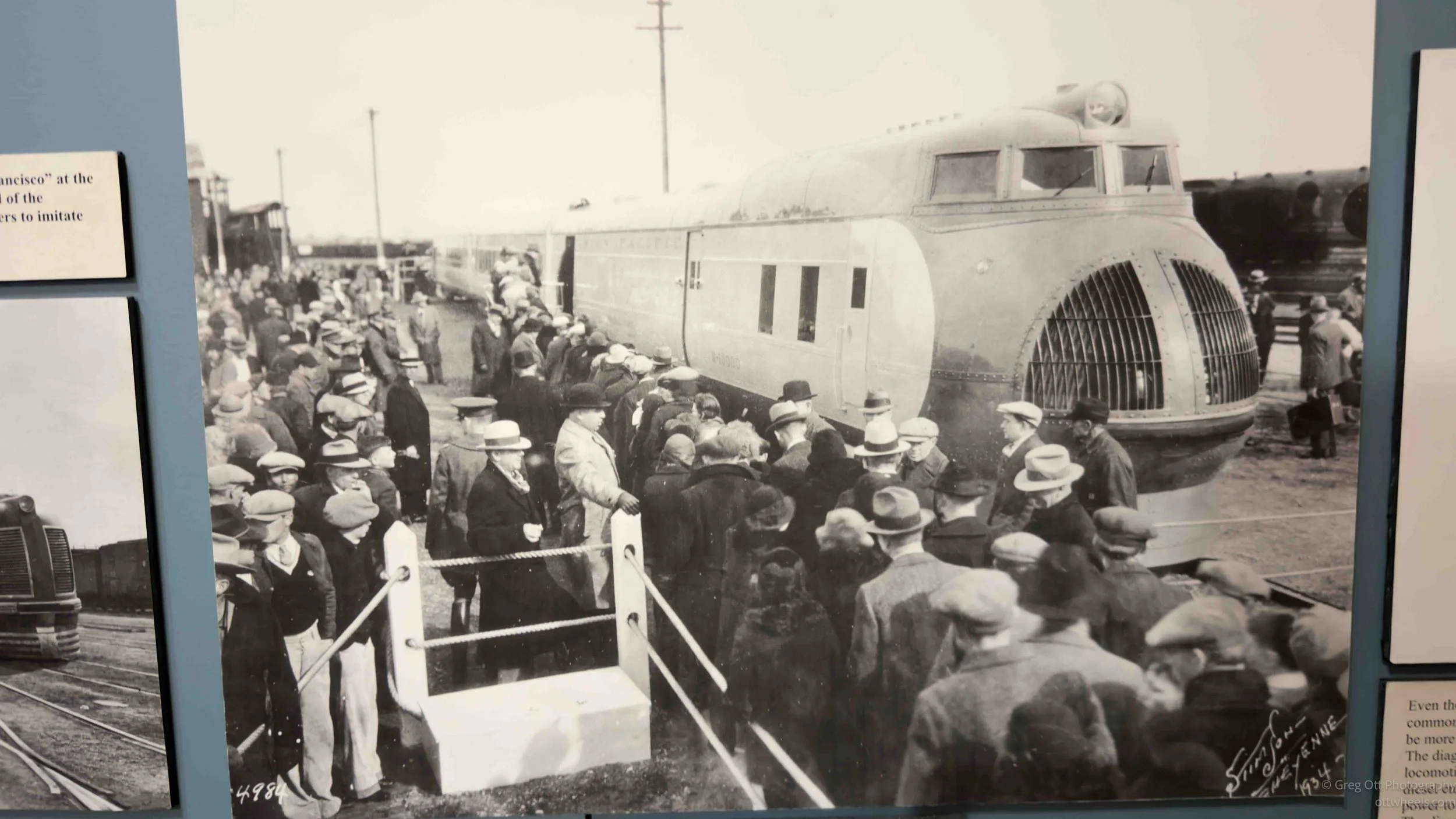
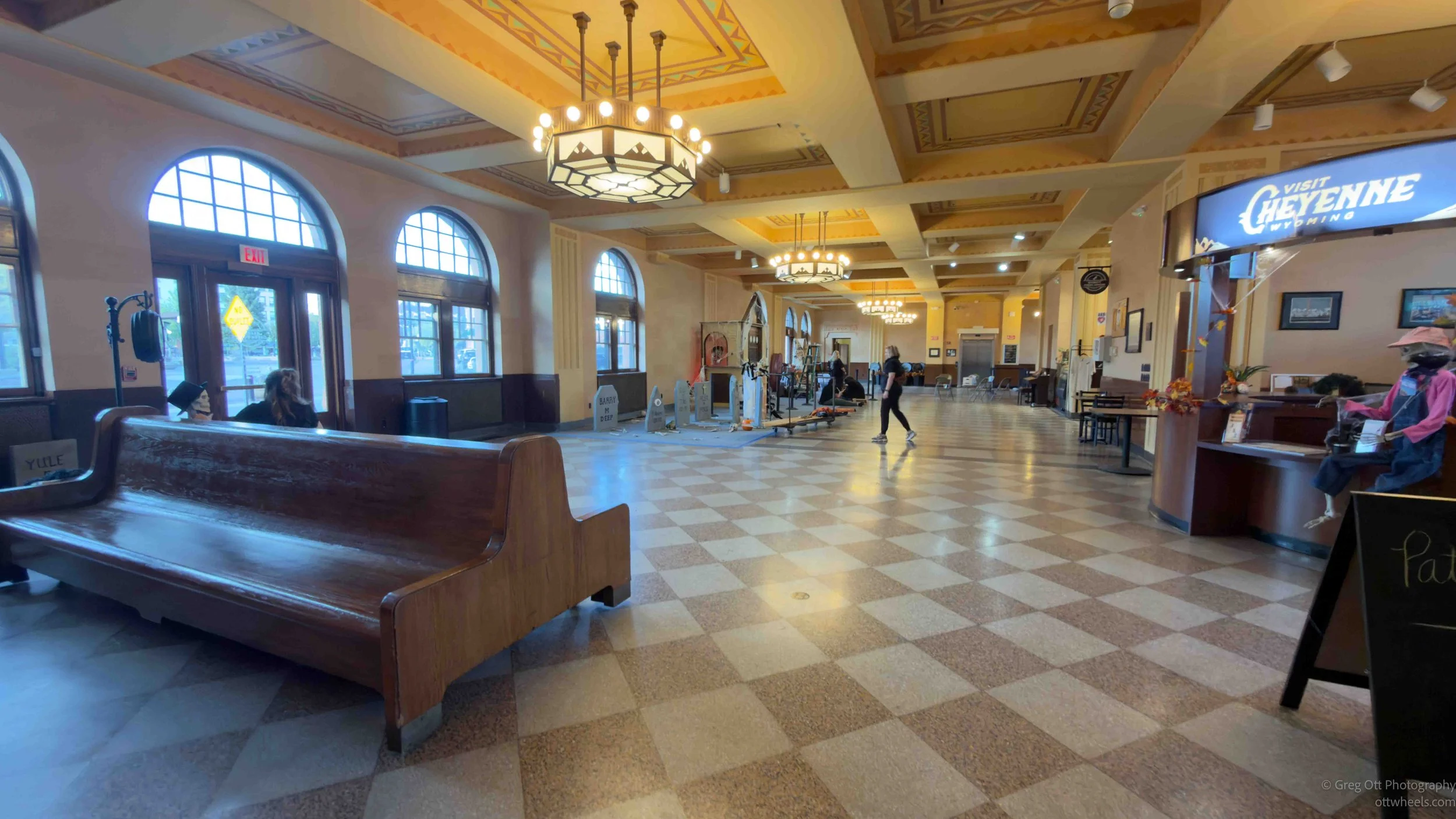
I arrived at the Cheyenne Depot Museum around 3:30, leaving only half an hour before closing. When I explained that I had just arrived, the man at the entrance kindly waived the $10 admission fee. I appreciated the gesture and spent the remaining time looking through some of the railroad exhibits. There were historical photographs, railroad equipment, and displays describing the construction of the transcontinental railroad and Cheyenne's importance as a railroad town.
One exhibit that caught my attention concerned the construction of the original Dale Creek Bridge, a remarkable wooden railroad trestle built in the 1860s. Another featured the Union Pacific's enormous Big Boy steam locomotives, in wood. There was considerably more to see, but I was running out of time. I could easily have spent another couple of hours there.
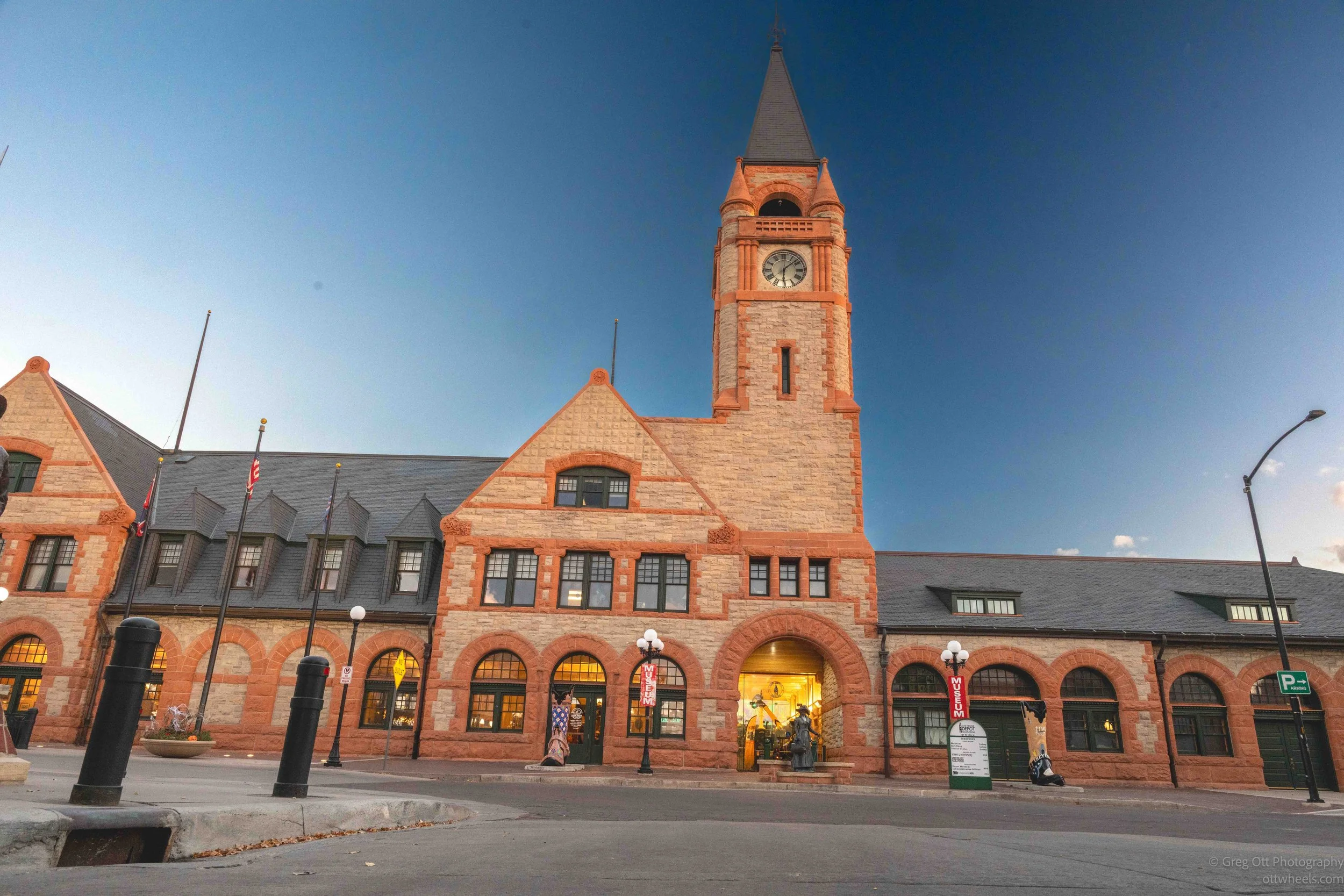
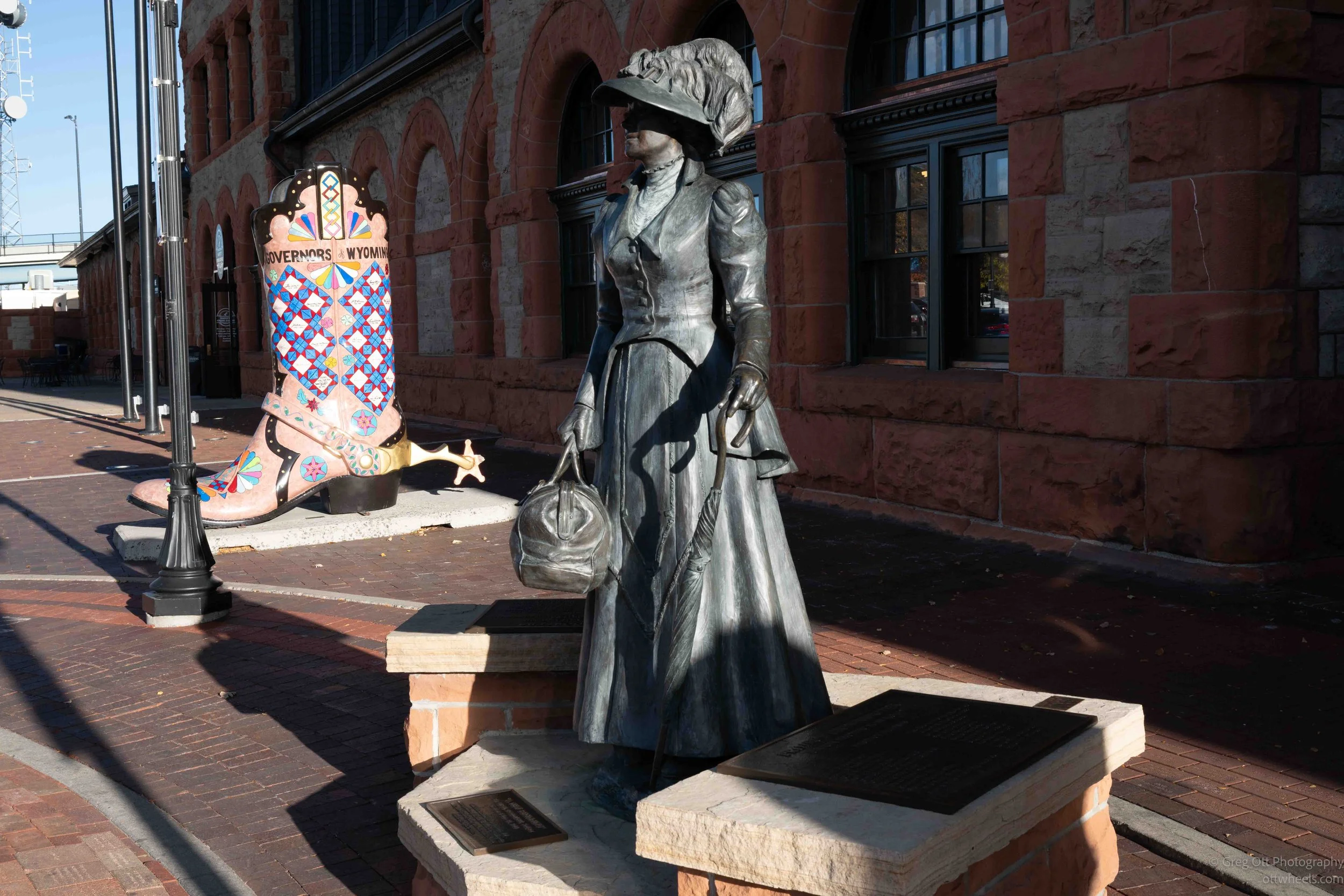
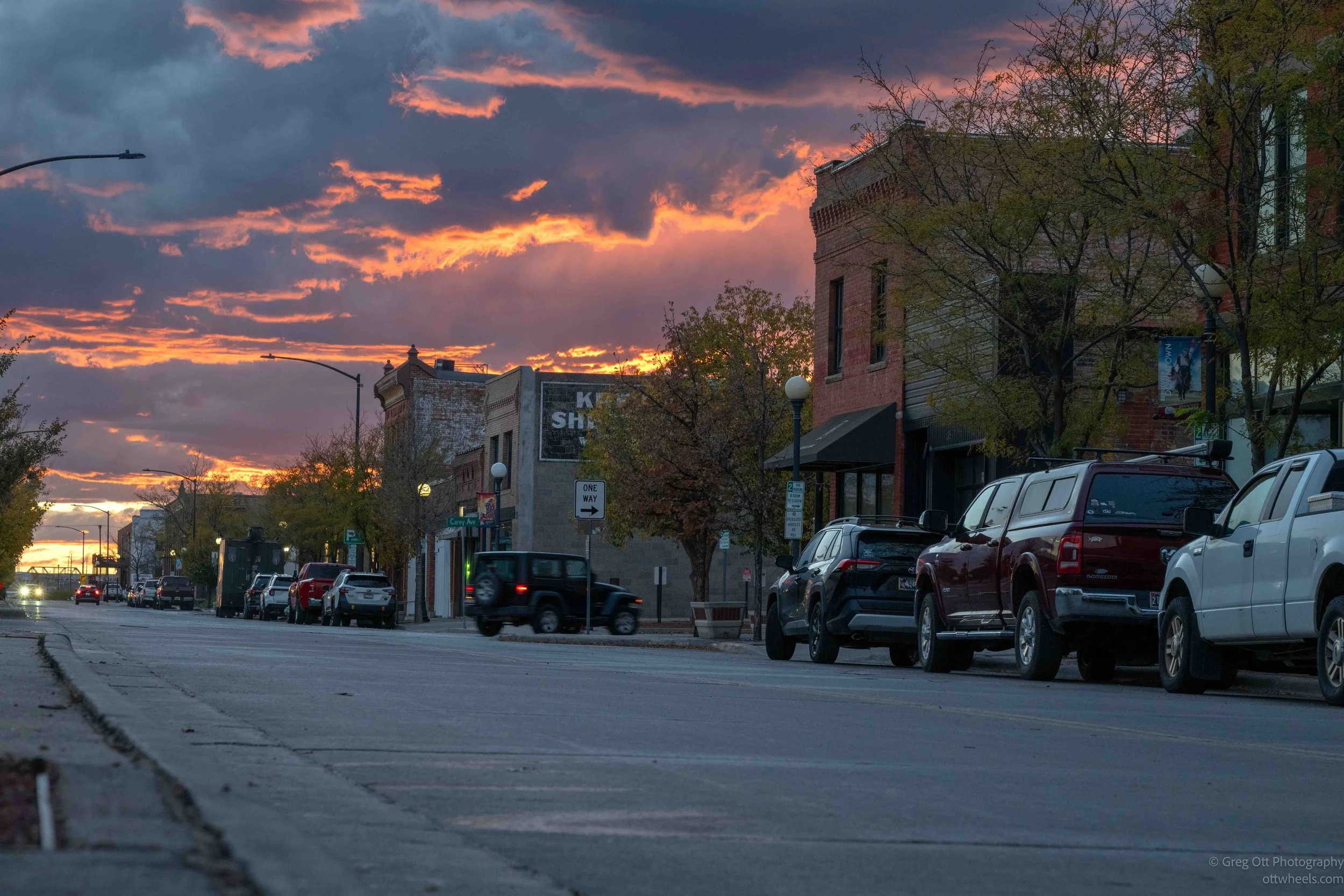
With the sun getting lower, I wandered around the depot and nearby downtown streets, looking for interesting photographs. The depot itself is an impressive building, with its clock tower, red sandstone trim, and large arched windows. I also noticed several sculptures outside, including railroad workers and a large, brightly colored cowboy boot.
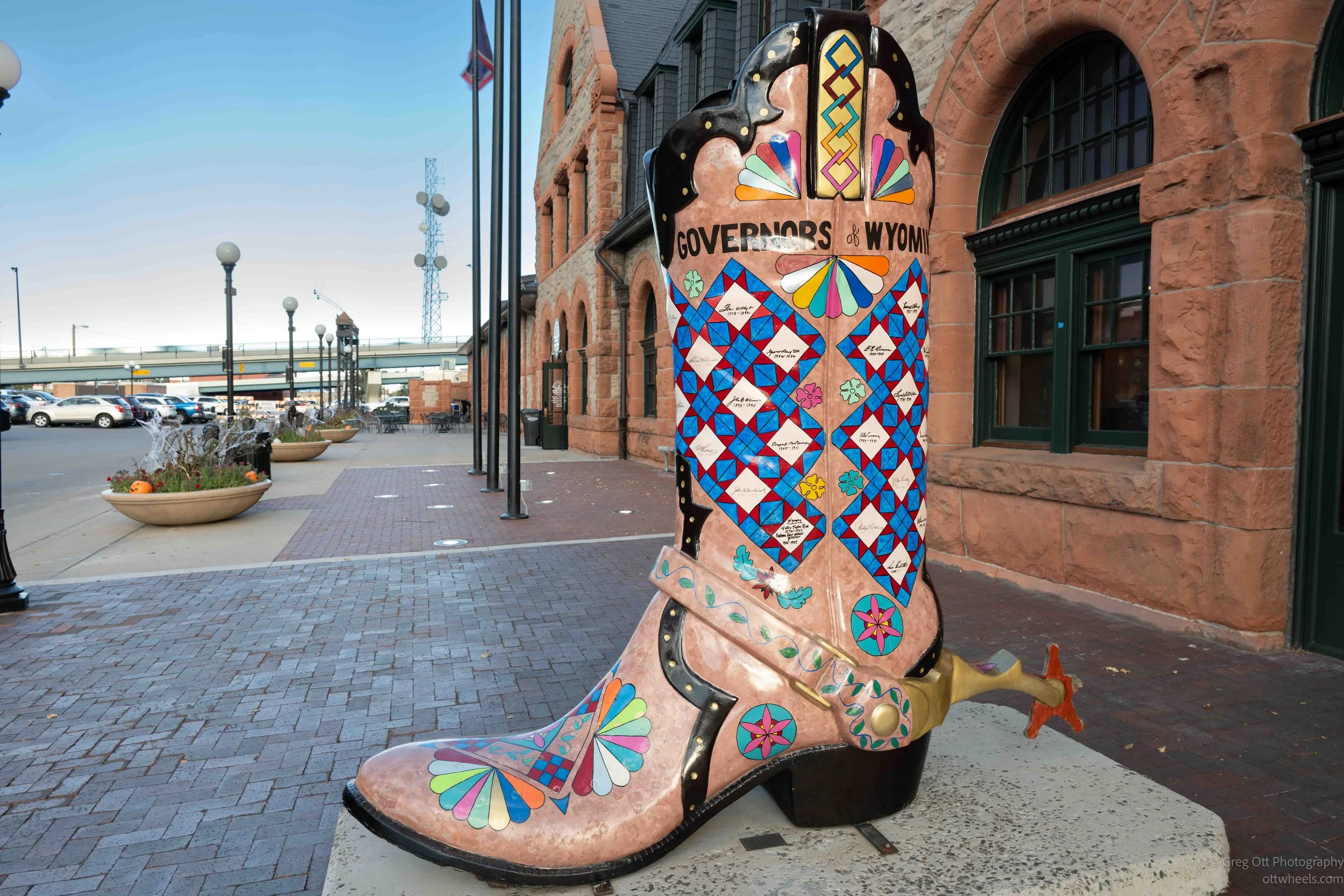
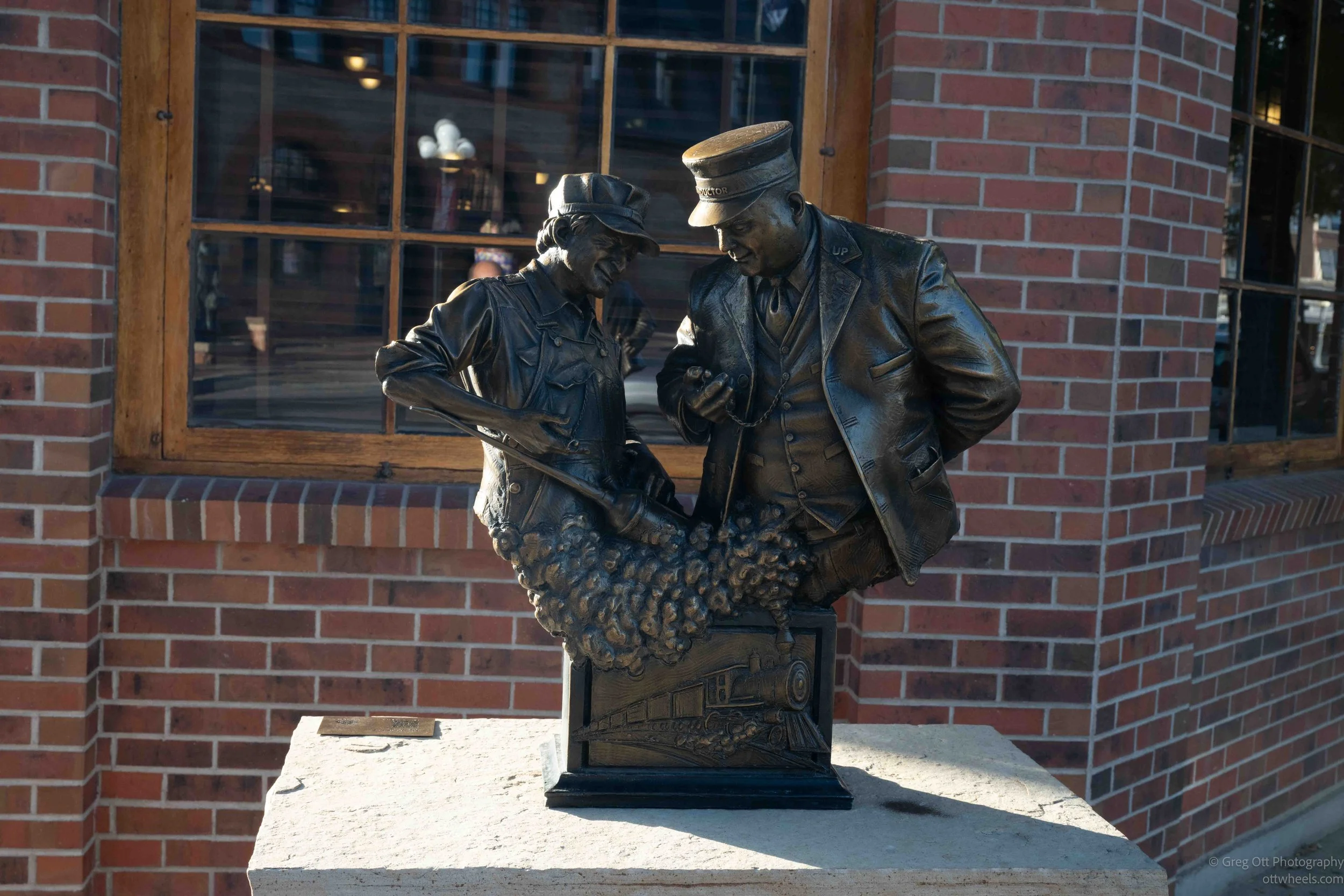
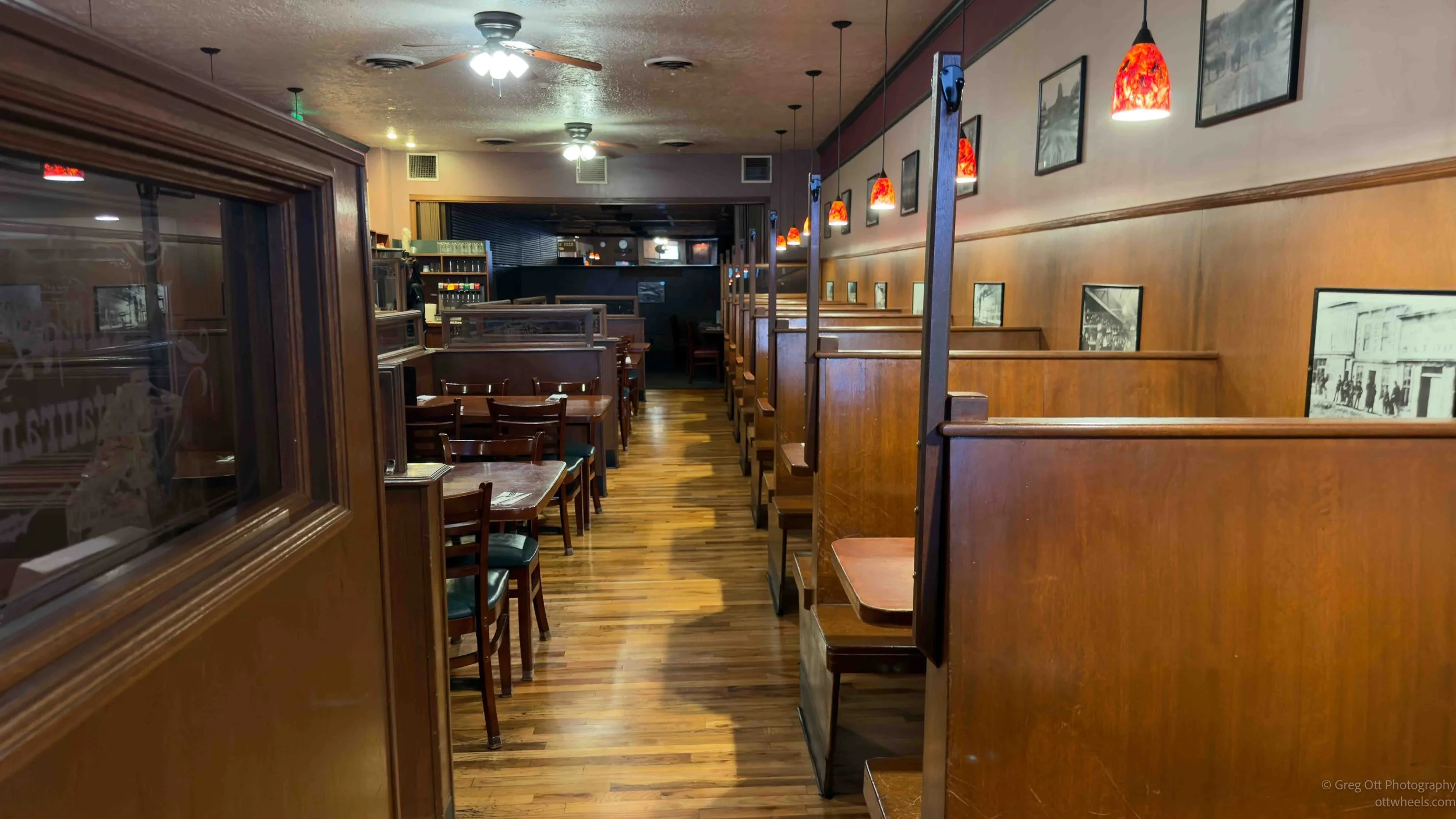
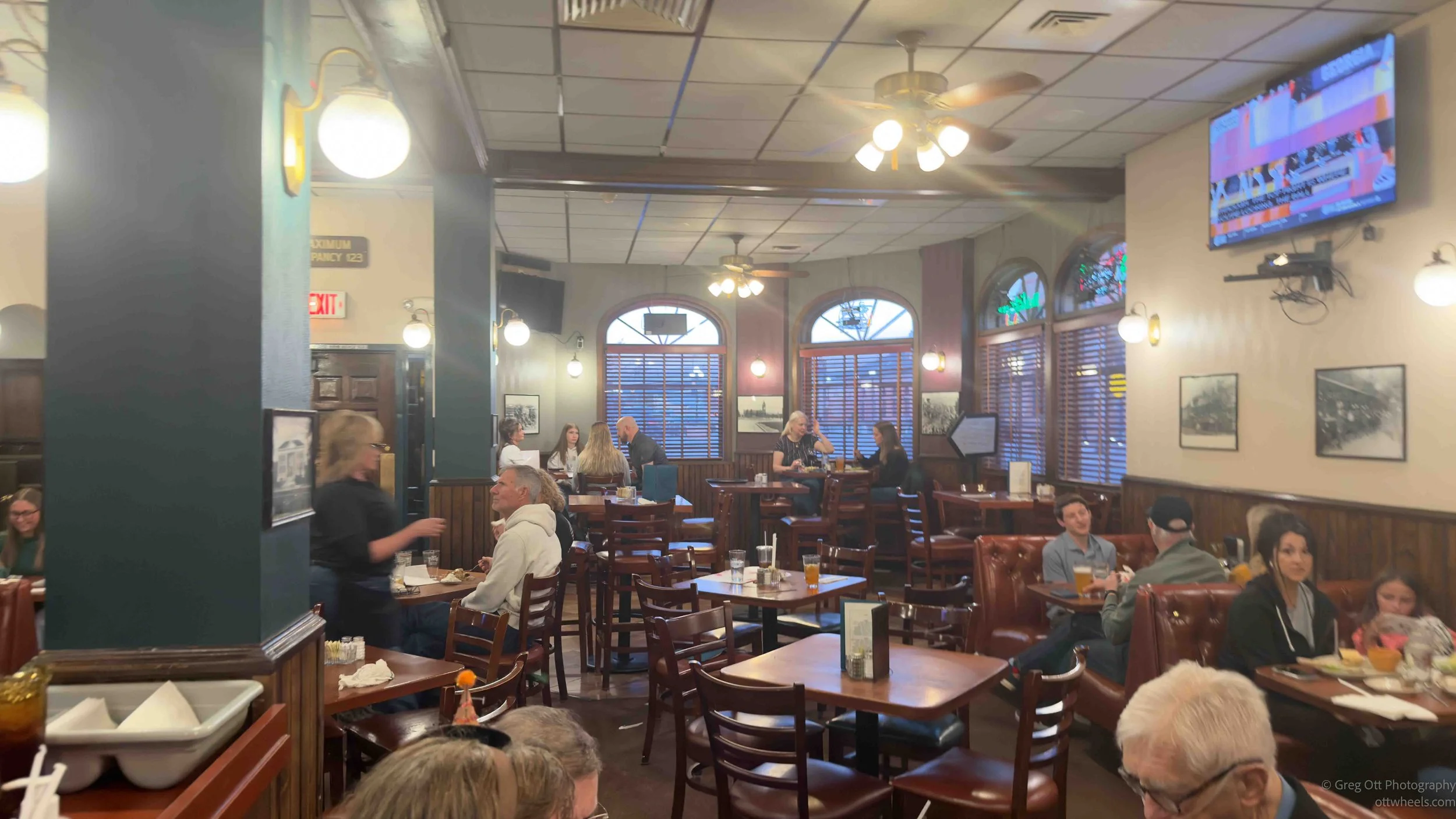
I eventually stopped at the Albany for dinner. The restaurant had an old-fashioned interior, with wooden booths, historical photographs, and a comfortable atmosphere. It seemed an appropriate place to end a day spent exploring Cheyenne's history.
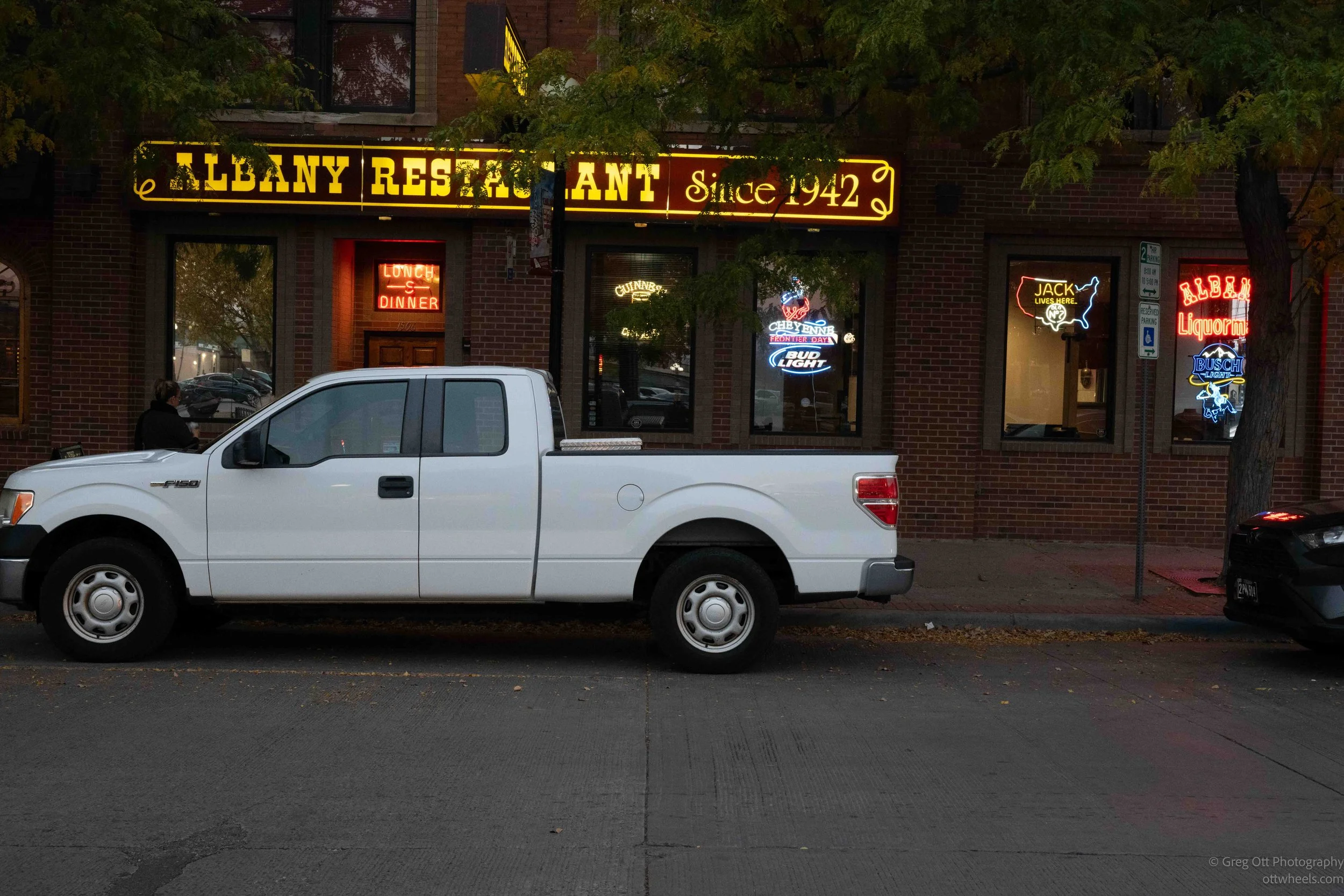
After dinner, I drove back to Vedauwoo, about 35 minutes west of Cheyenne, where only three other campers were spending the night. It had been a much more interesting day than I anticipated. I enjoyed the architecture and history of the Capitol, but the conversations with Mike and Sandy, the political brawl of 1913, and those two mysterious red ties were what I would remember most.
I woke at Vedauwoo Campground in Medicine Bow National Forest and drove into Cheyenne to visit the Wyoming State Capitol. I expected to spend some time looking around the building. Between the rooms, the photographs, and the people I met, it turned into most of a day.
My visit began with a conversation at the front desk and another with a state police guard near the rotunda. Both had useful information about the building. That became a theme throughout my visit: there was plenty to see, but talking with people added another layer.
The House of Representatives chamber was my favorite space. The light wood gave it a warmth I liked immediately. It felt open and inviting, and I found it relaxing enough to sit reading in the third-floor gallery.
While I was there, Mike, the custodian for the third floor, asked where I was from. We started talking, eventually finding our way into politics. He seemed to be somewhere in the middle, as I am, and we had an easy conversation.
Later, I spent time studying the old photographs of Wyoming’s senators and representatives lining the Capitol walls. Wyoming became a state in 1890, and the portraits stretched back through its history. I enjoy looking closely at these group photographs—the changing clothes and hairstyles, the expressions, and the gradual improvement in photographic quality. Each frame offers a small glimpse of its time.
Then I noticed something unexpected: a man wearing a bright red tie in an otherwise black-and-white photograph.
It looked completely out of place. A little farther along, I found another. Among the thousands of portraits on display, those were the only two I noticed.
The ties appeared to have been hand tinted before the photographs were framed. But why those two?
When I asked at the front desk, the docent remembered seeing something in her notes and looked it up. The notes mentioned two photographs with red ties, but offered no explanation. It was almost like finding a scavenger hunt clue without the answer.
I searched online afterward. Capitol exhibit planning documents specifically identify W. P. Virgin’s red tie in the 1935 House composite as one of the building’s curiosities. Even there, I found no explanation for the coloring. Someone apparently wanted that tie to stand out. Nearly a century later, it still does. Wyoming Capitol exhibit plans
The Senate chamber had a much darker feel than the House. I preferred the lighter wood and openness of the House, though both were worth taking time to explore.
Another story sent me back to the photographs: a political fight in 1913 that became physical. Although I associated the story with my stop at the Senate, the brawl actually happened in the House of Representatives.
The argument involved three disputed elections, control of the House, and the selection of a U.S. senator—a job that still belonged to state legislatures at the time. On January 20, House Speaker Martin Pratt and Speaker Pro Tempore William Wood clashed over who had authority to preside. Pratt tried to reclaim the speaker’s chair; Wood refused to surrender it. Pratt pulled him from the platform, and the confrontation spread into a noisy melee lasting roughly 45 minutes.
The bitterness outlasted the fight. That year, the Democratic and Republican representatives appeared in separate framed composites rather than together. I went looking for those photographs. After so many frames containing the whole group, the separation made the story tangible: they could finish the session, but apparently they could not share a picture. Wyoming Historical Society’s account of the 1913 brawl
I also visited the historic Supreme Court room. In the Capitol’s early years, the building accommodated the executive offices, Legislature, and judiciary. The Supreme Court remained here until 1937, when it moved into a separate building. Wyoming Legislative Service Office history
The old courtroom had an openness I liked, with large windows and a simple elegance. It wasn’t as large as some rooms I’ve visited, but its proportions made it feel comfortable. The room had originally served as the territorial House chamber before becoming the Supreme Court’s home after statehood. Wyoming Capitol restoration brochure
One of the nicest things about visiting this Capitol was how much I could explore. I could walk into the rooms, linger, and look closely. I skipped the governor’s office because an event was underway, although I was told it wasn’t off limits. I appreciated that sense of welcome.
Back in the visitors’ office, I asked again about the red ties and ended up talking with Sandy, the woman at the desk. She noticed my camera. A retired schoolteacher, she had worked on school yearbooks and taken class photographs, so we soon found ourselves talking about photography and the old developing processes.
She also had stories about the people who visit the Capitol. Some arrive with a book for collecting Capitol stamps, get their stamp, and leave. Sandy and I were both amazed by that. I understood wanting to collect the stamps, but after spending so much time wandering the building, I couldn’t imagine leaving without looking around.
Sandy had a book filled with information about the Capitol: history, construction details, and stories that would be easy to miss on a casual walk through. I told her it would make an interesting booklet for visitors. More QR codes could help, too. There were already some, but I would have enjoyed being able to follow more of those small discoveries into longer stories.
After walking around the outside of the building, I followed Sandy’s suggestion to visit the old railroad depot.
I arrived at 3:30, with only half an hour before closing. The man at the entrance let me in without charging the $10 admission because there was so little time left. I appreciated that, though I soon wished I had another day to spend at the depot and wander through the old part of Cheyenne.
If wishes were…
Then it was back to Vedauwoo, about a 35-minute drive. Only three other campers were there.
I had gone into Cheyenne to see a building. What stayed with me were the conversations, the divided photographs, and two small red ties that still knew how to catch someone’s attention.