I slept well and didn't get up until late in the morning. The temperature had dropped into the high 20s overnight, but the van was comfortable. I made breakfast and spent a few hours catching up on the blog. After lunch, I headed over to the Nautilus Rock area to explore more of Vedauwoo. I had enjoyed hiking around Turtle Rock the previous afternoon and wanted to spend some time climbing among the boulders and photographing the unusual formations.
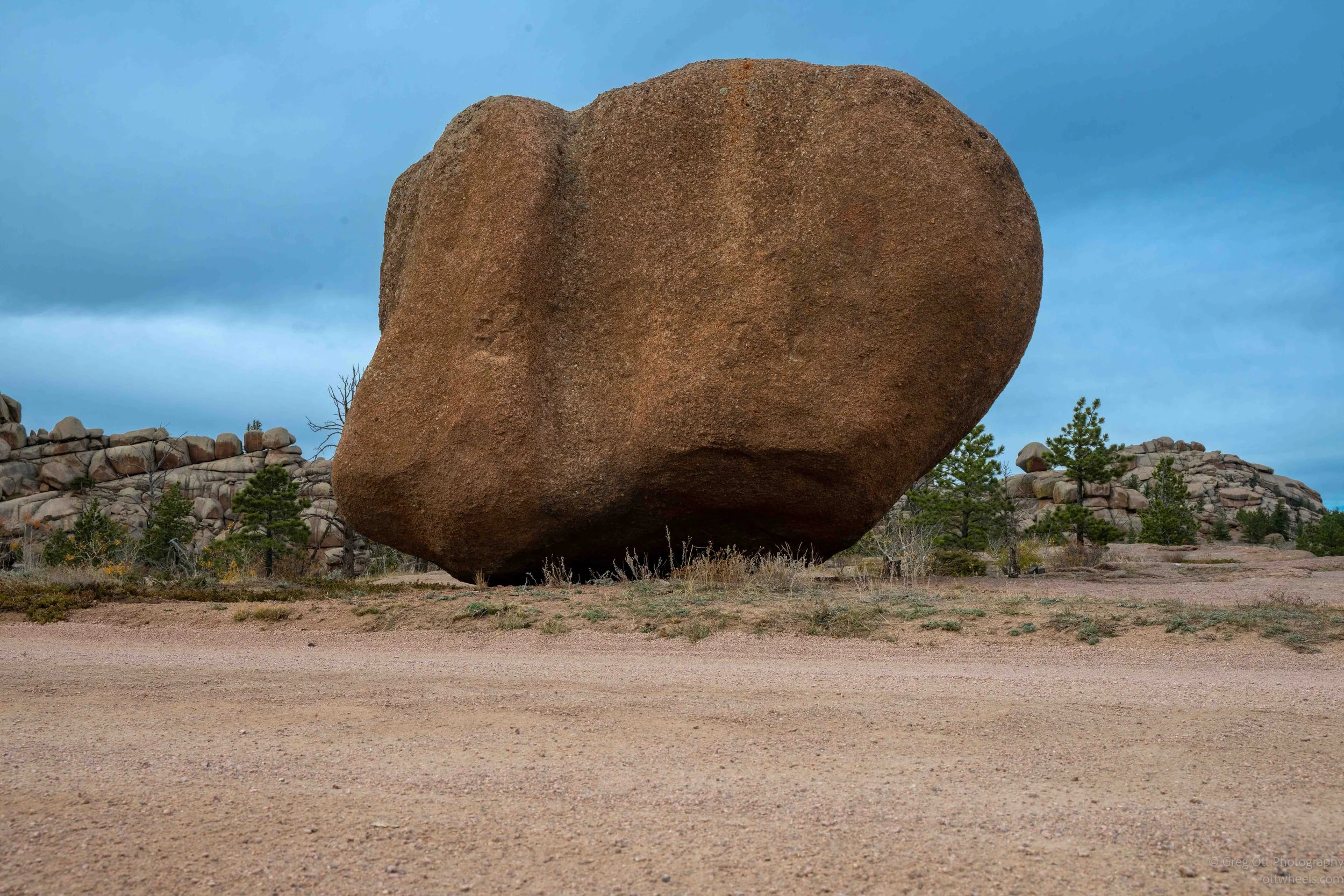
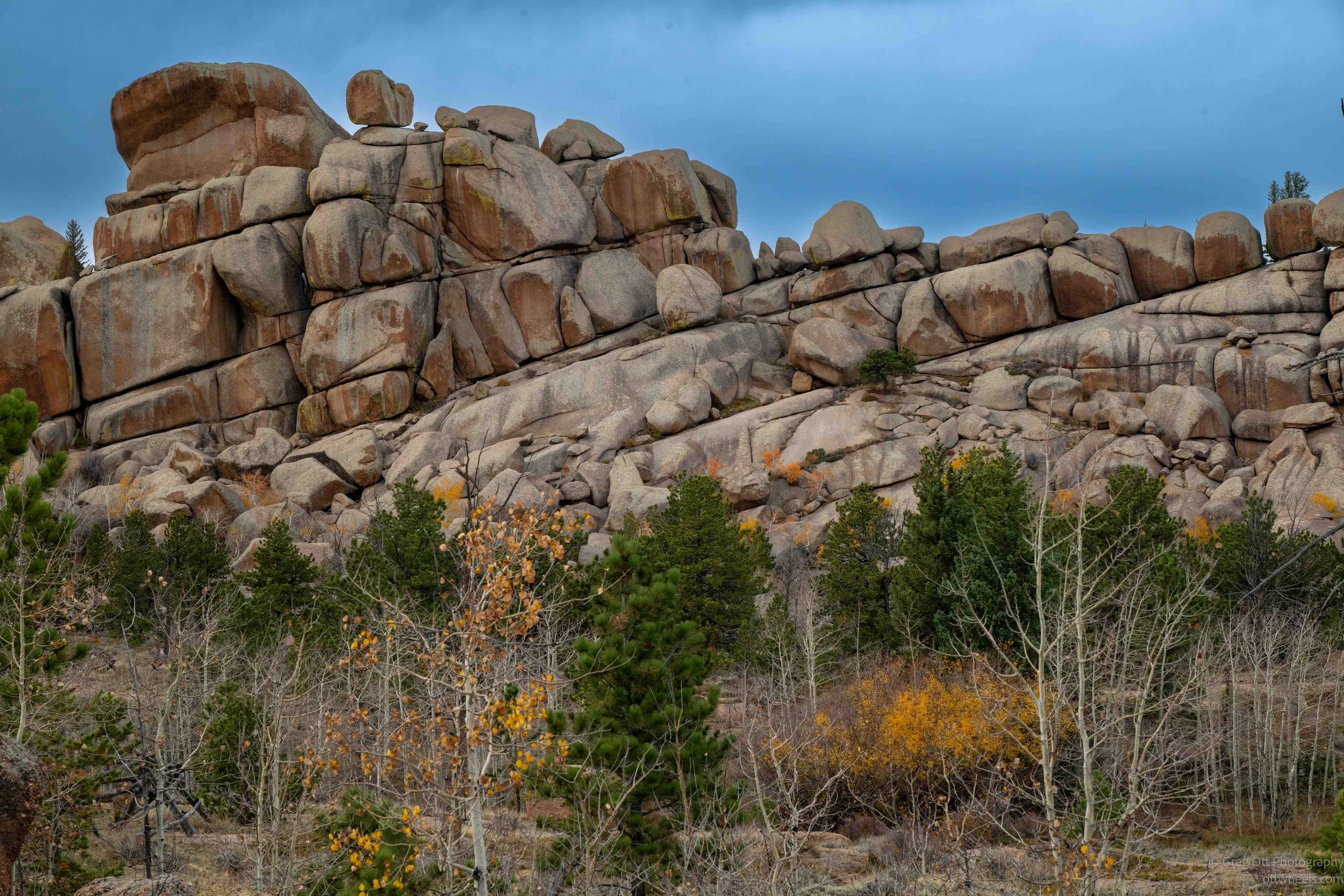
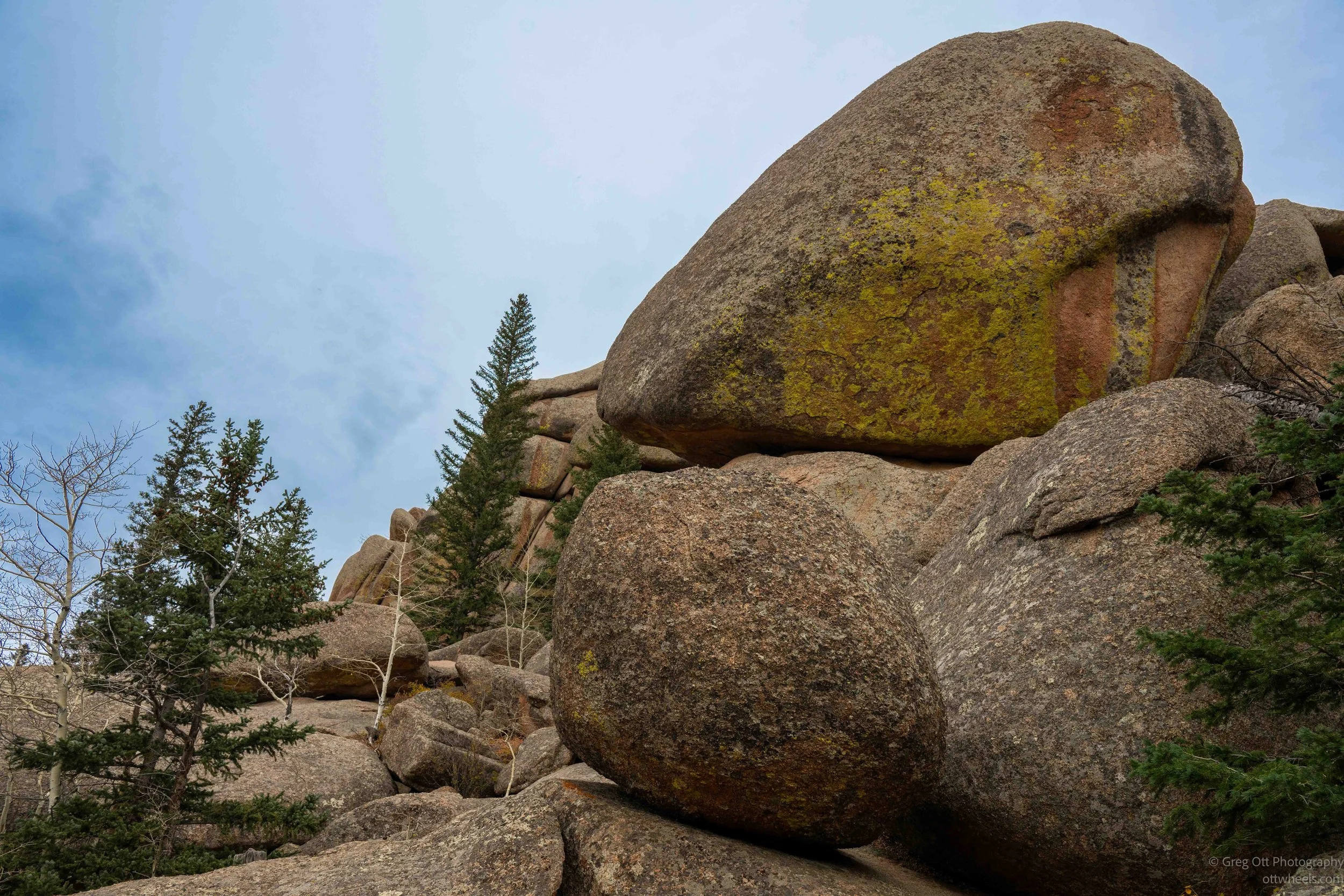
The first thing that caught my attention was an enormous boulder resting on a surprisingly small section of its underside. It looked as though it could tip over at any moment, although it had probably been sitting there for thousands of years. Beyond it were huge granite formations that looked almost like walls built from enormous stone blocks. Some had remarkably straight edges, while others were rounded and stacked at odd angles. There were narrow openings between the rocks and small trees growing wherever enough soil had collected.
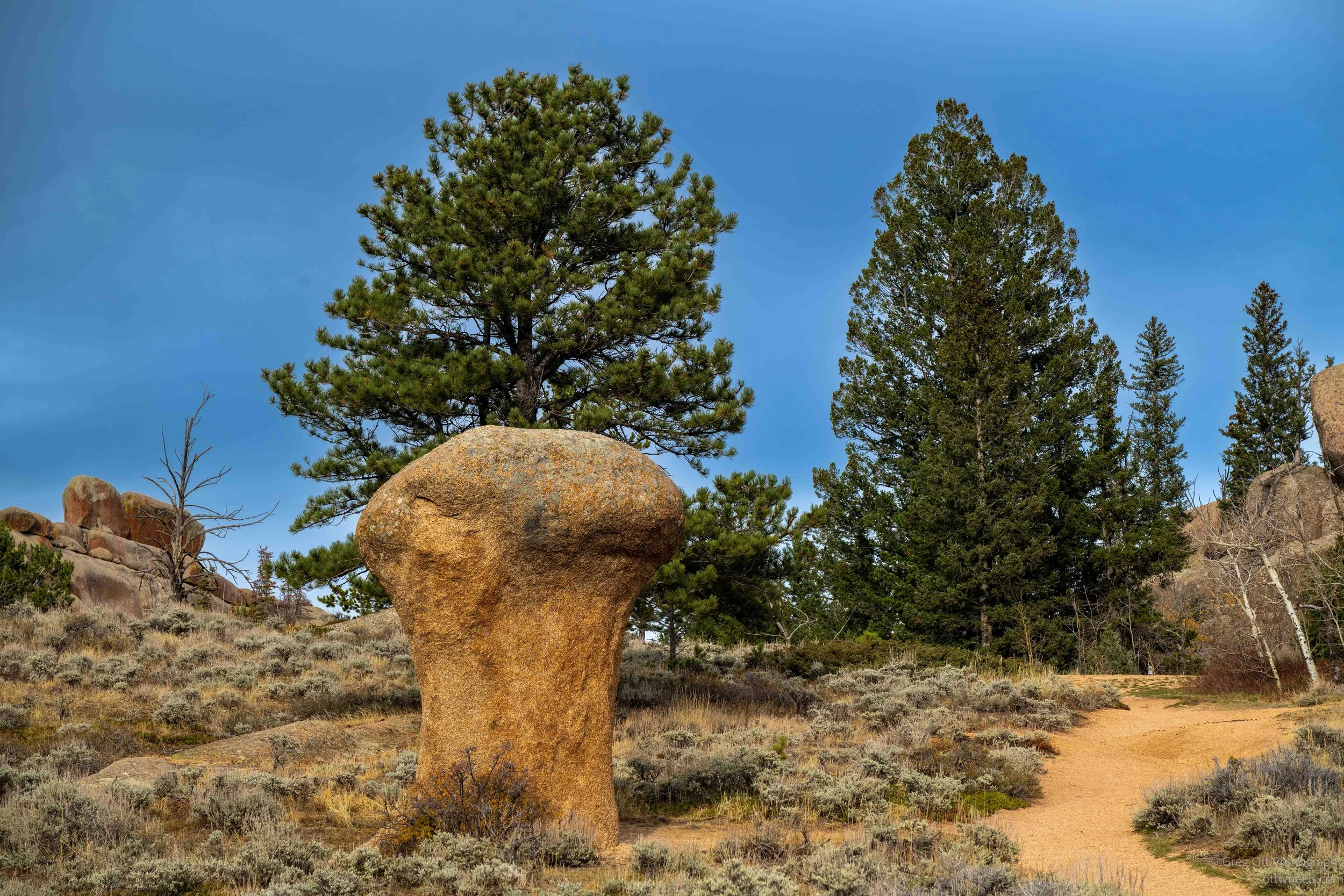
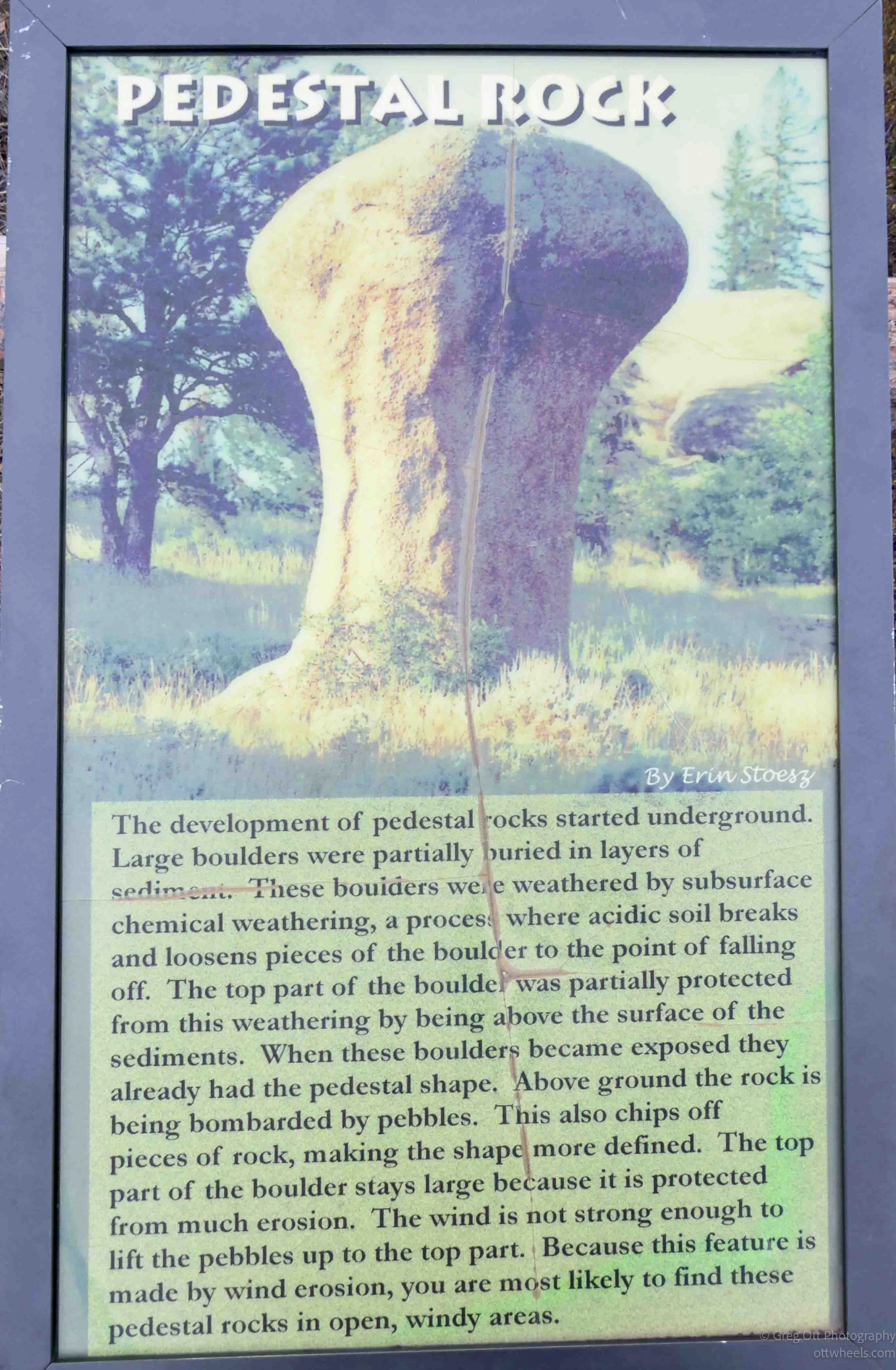
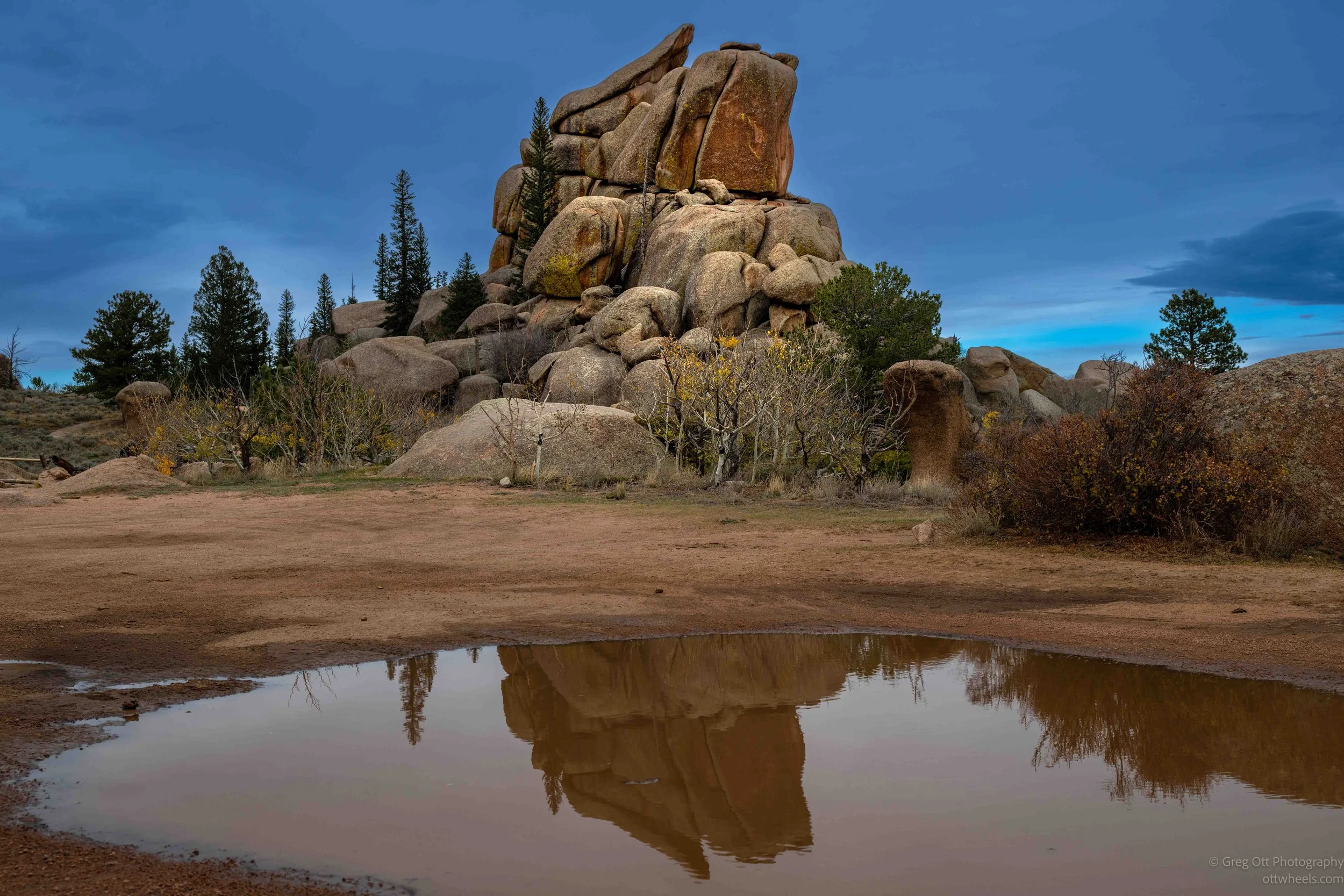
One particularly interesting formation was a pedestal rock, shaped almost like a mushroom with a broad top and narrow base. These formations develop over long periods as weathering and erosion remove material from the lower portions of the rock. It was one of the more unusual examples I had seen, and I spent some time photographing it from different angles.
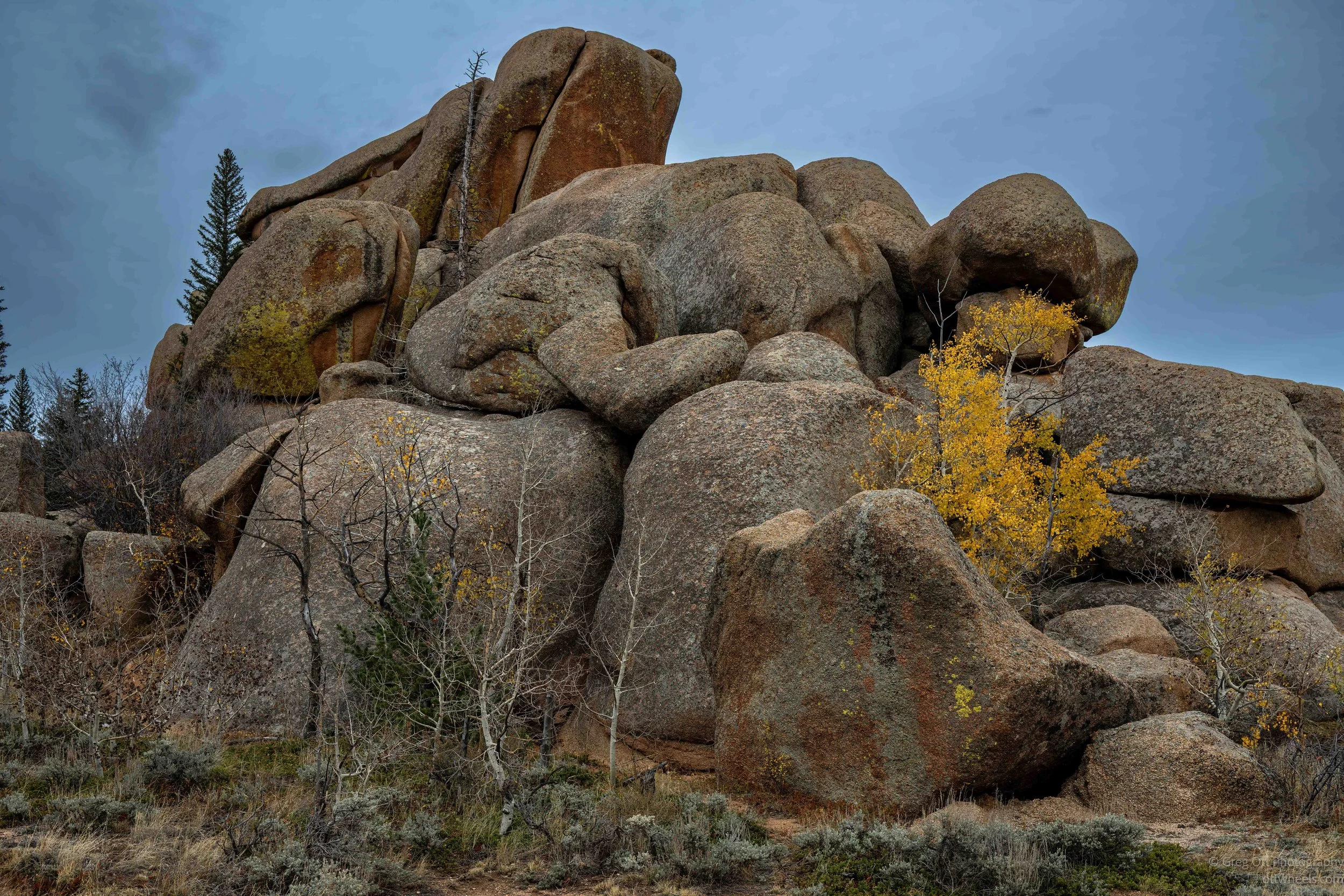
I spent the next couple of hours wandering among the boulders and climbing over anything that looked reasonably accessible. There wasn't much of a route to follow. I would climb up onto one formation, look around, spot something interesting farther away, and work my way toward it. Some of the rocks were enormous, with deep cracks and narrow passages between them. Others were balanced on top of one another in ways that seemed almost impossible. The granite provided good traction, although I was careful about where I stepped, particularly when climbing back down.
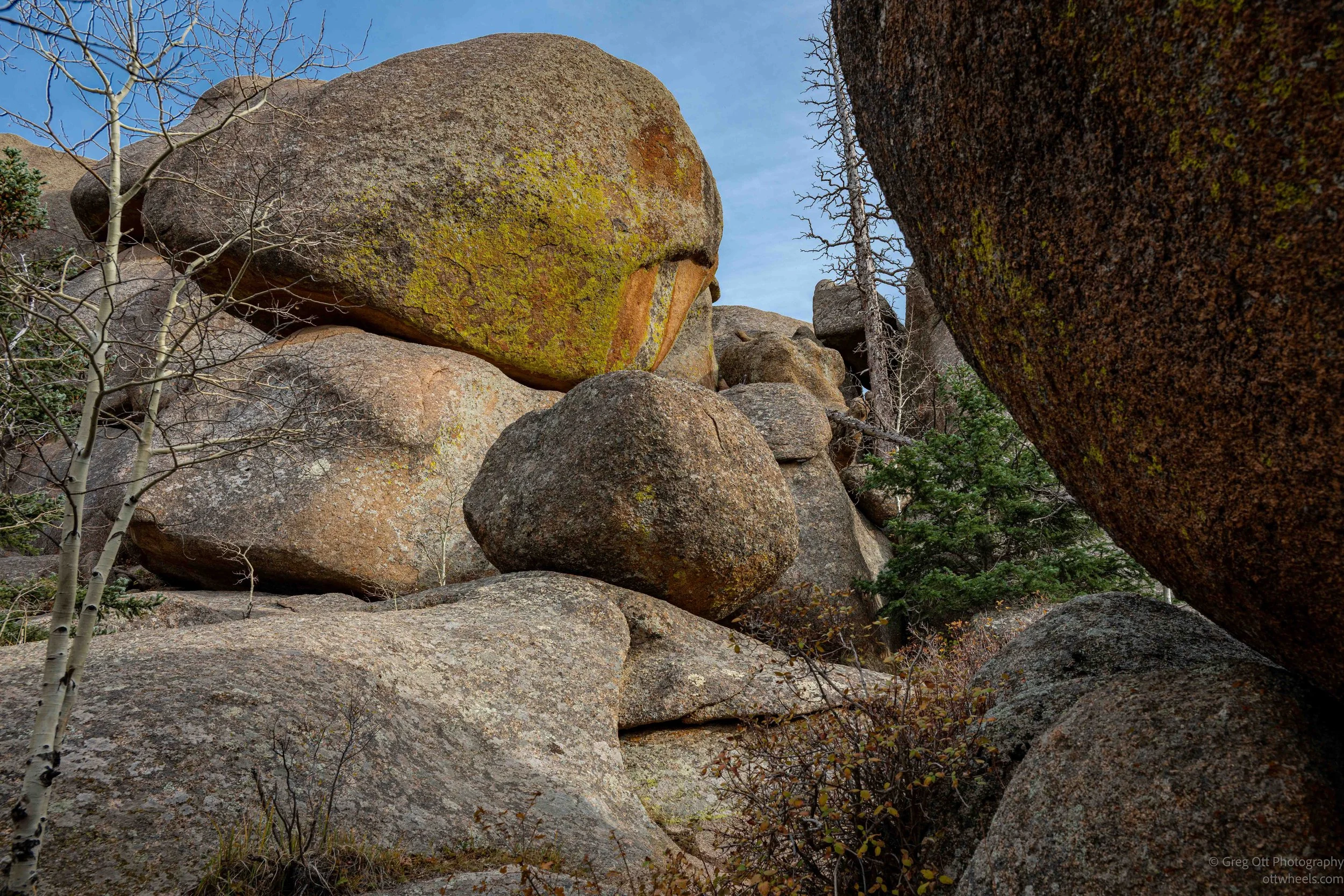
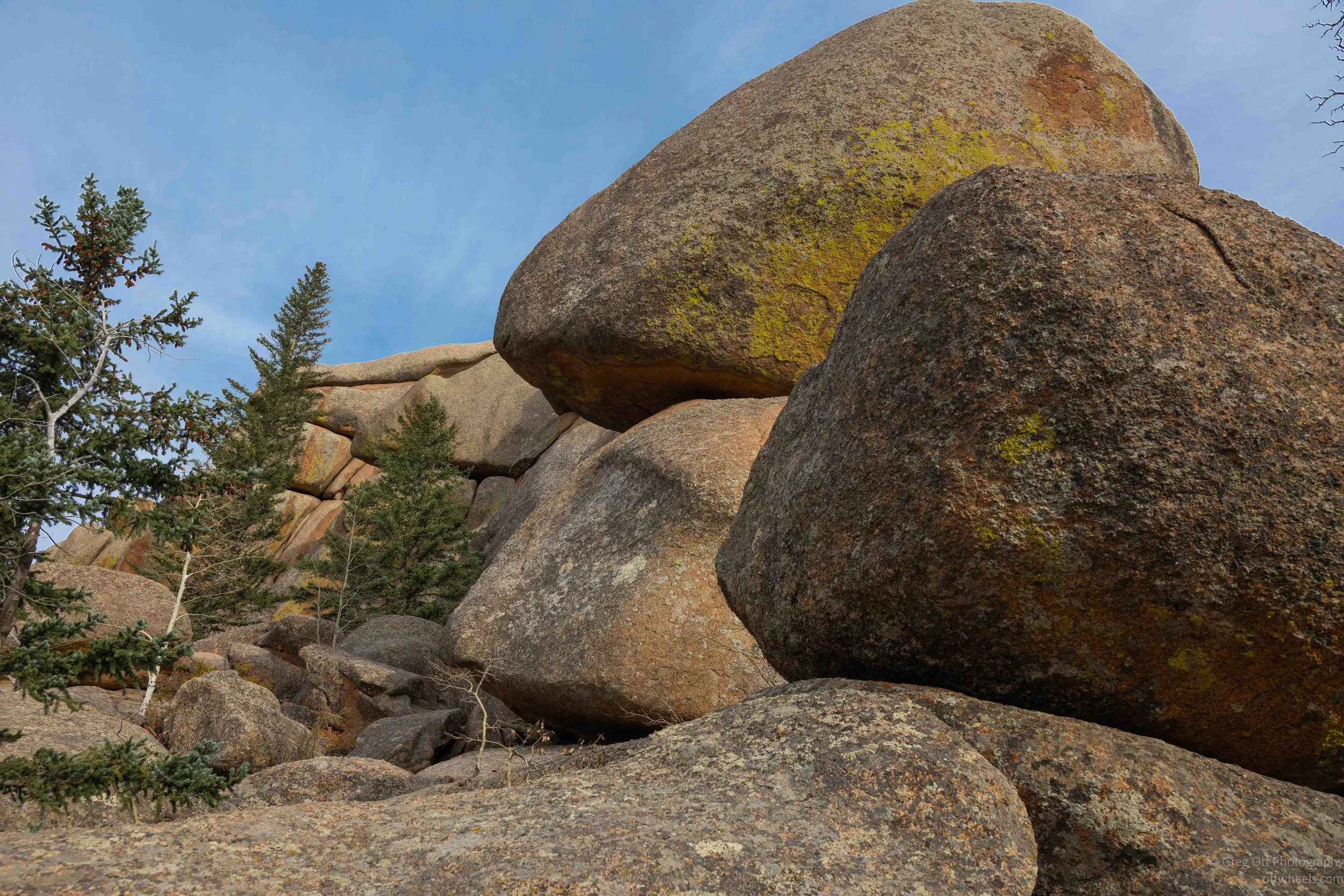
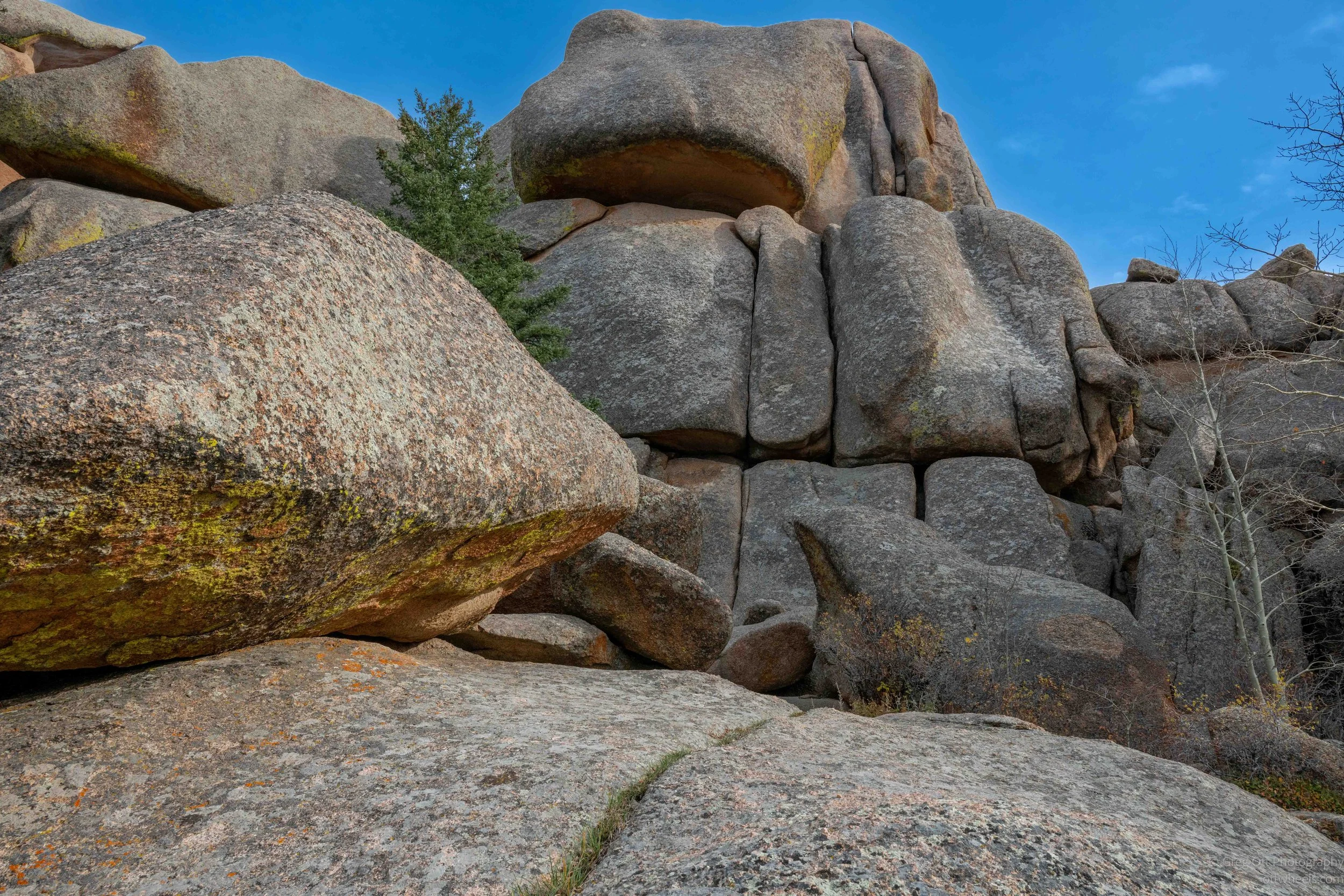
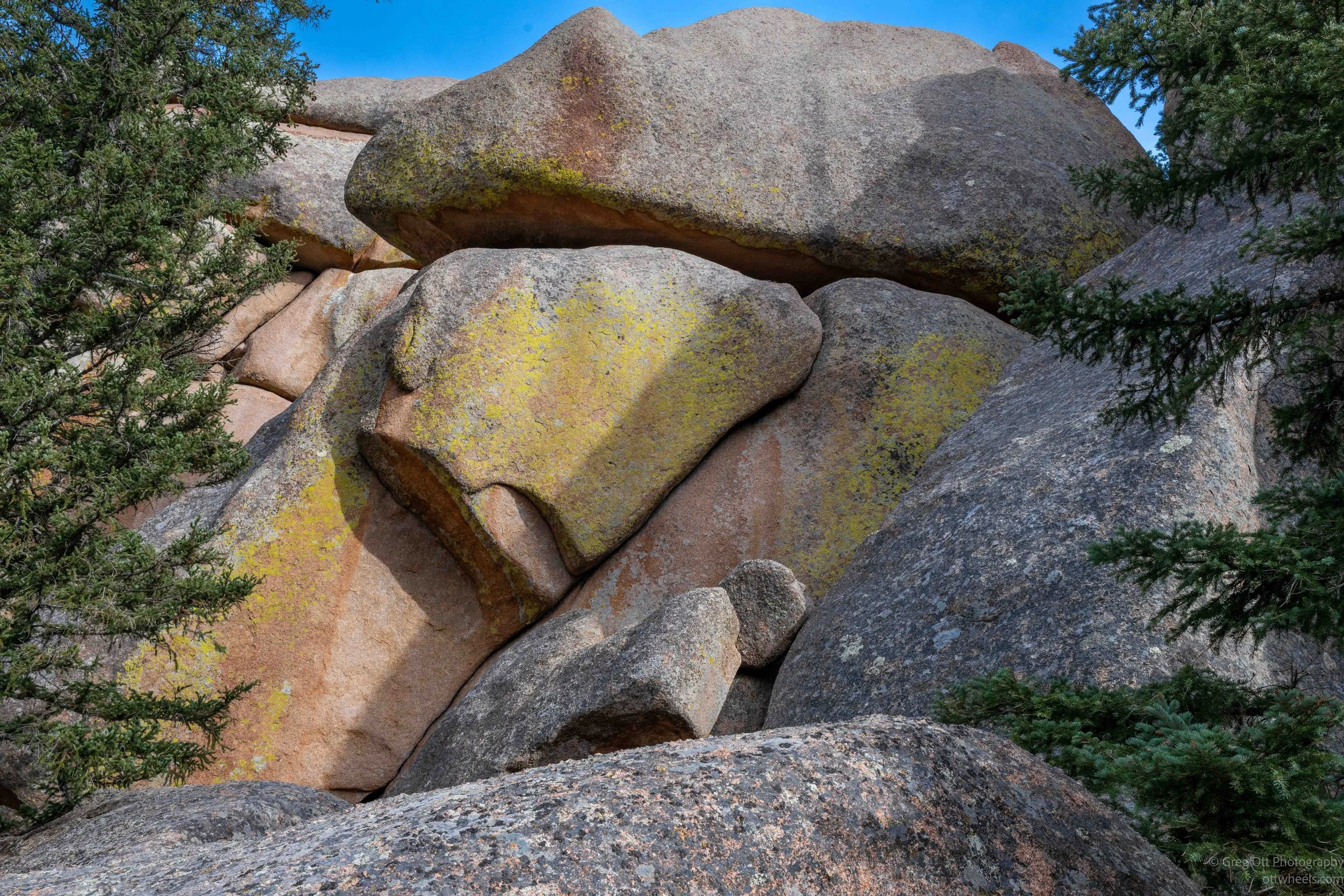
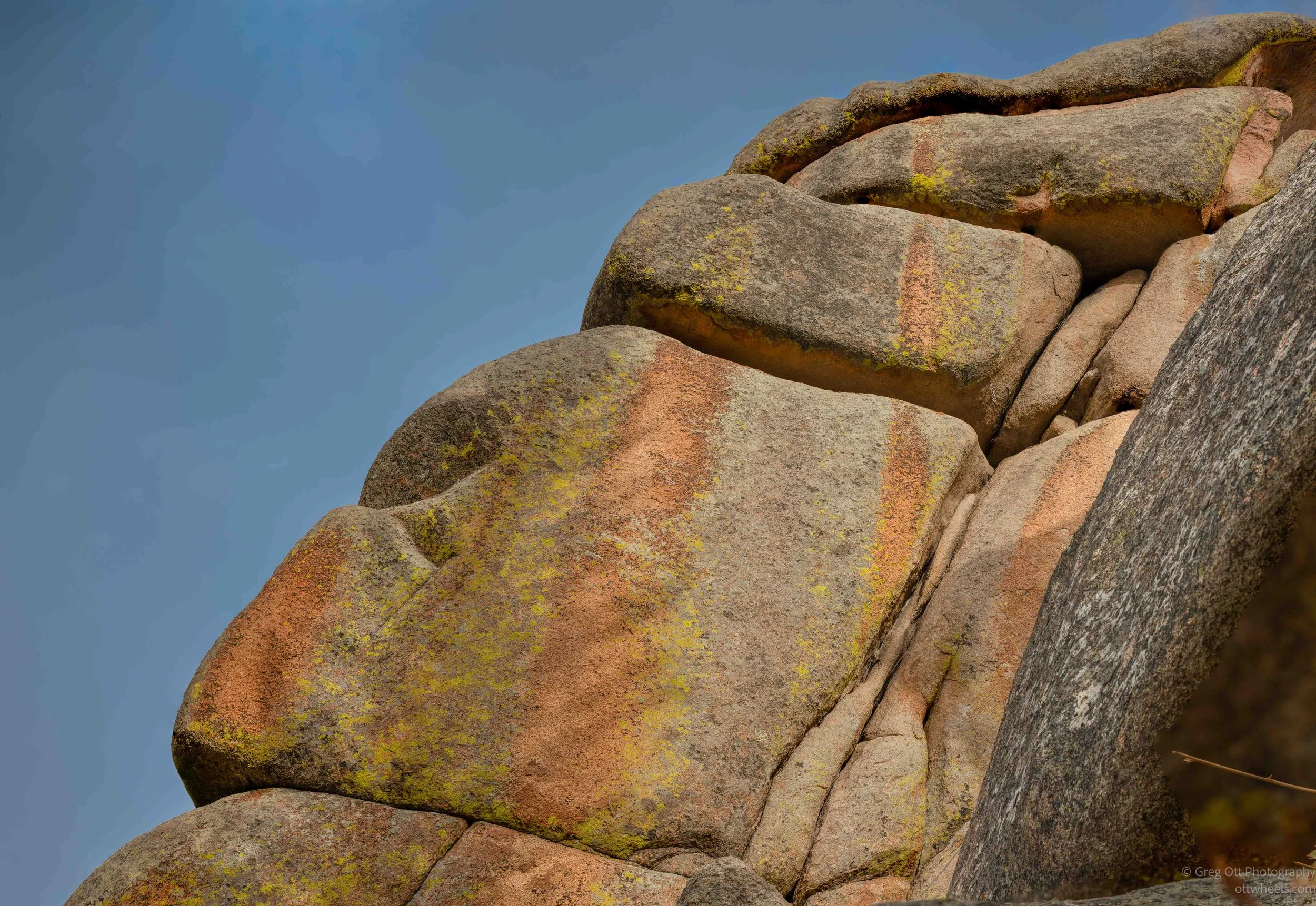
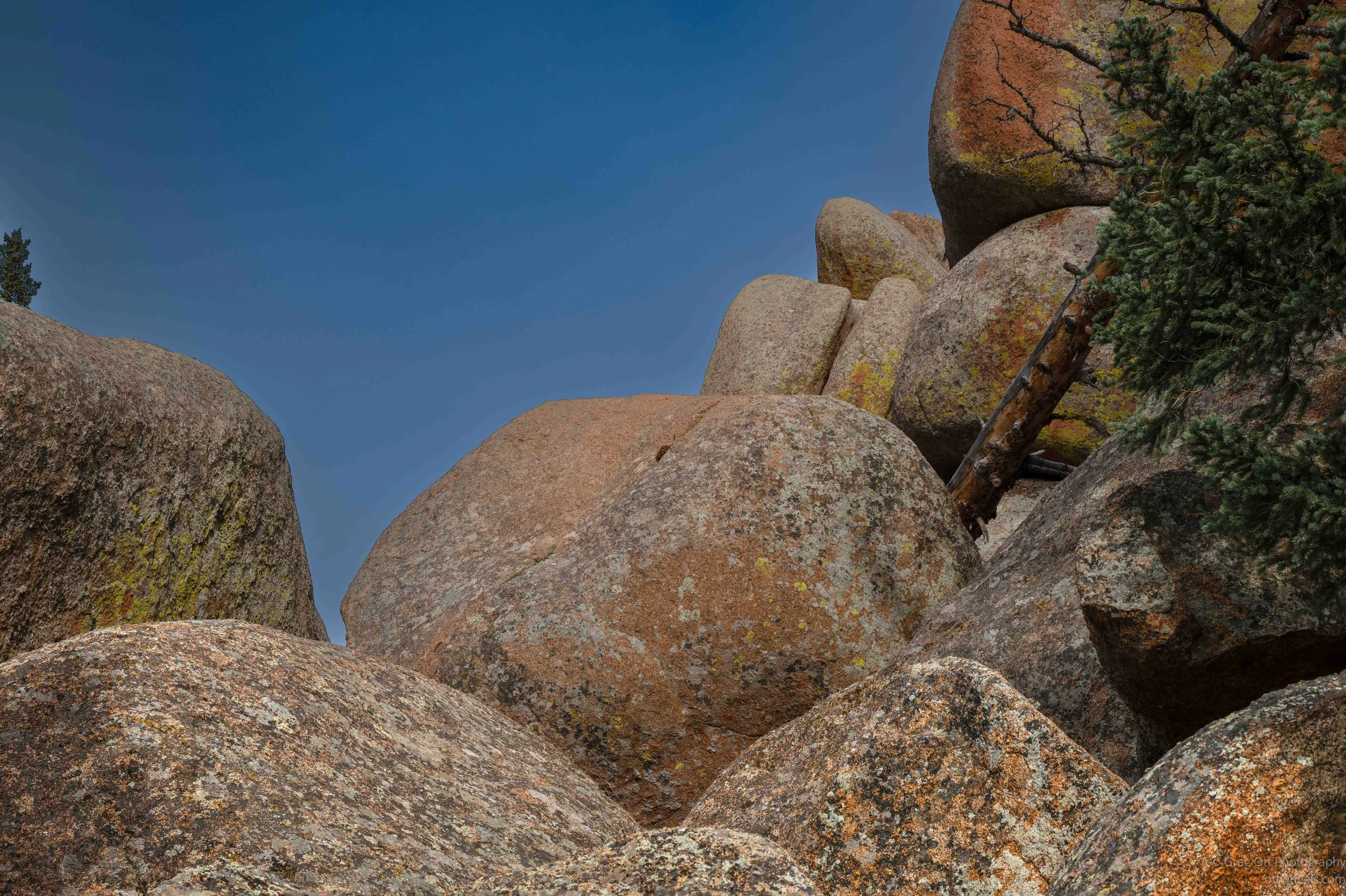
The rocks became more interesting the closer I got. Many were covered with yellow and orange lichen, which added color to the otherwise brown and gray granite. Some of the formations reminded me, like yesterday, of Henry Moore sculptures, with their rounded shapes, openings, and enormous masses leaning against one another. I found myself photographing the same rocks from several different positions, sometimes trying to capture the entire formation and other times concentrating on the shapes, textures, and spaces between them. It was easy to lose track of time.
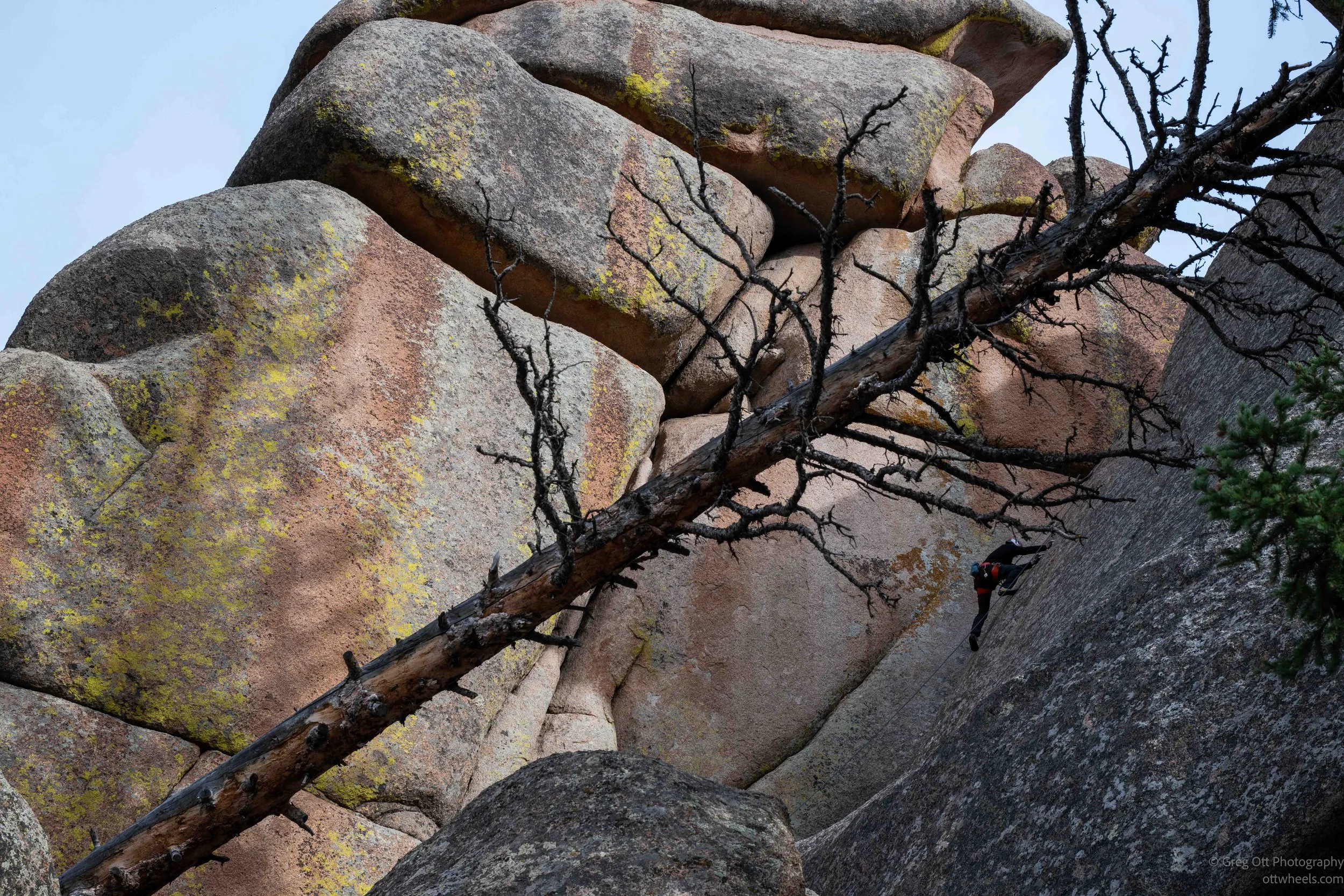
While climbing around one particularly large group of rocks, I noticed two climbers working on a steep granite face. I climbed over several large boulders to reach them and struck up a conversation with the man handling the rope. His name was Mark Jenkins, and he was belaying a PhD student from Italy. We talked for 15 to 20 minutes while his companion was climbing. Vedauwoo is known for its crack climbing, and looking at the enormous vertical fractures in the granite, I could see why climbers find the area so appealing.
Mark mentioned that he was a writer and had traveled extensively, but I didn't realize until later just how accomplished he was. He's an explorer, author, climber, and journalist who has traveled to some of the most remote parts of the world. His expeditions and reporting have taken him through Afghanistan, Africa, Asia, and many other places, and his work has appeared in National Geographic, Smithsonian, and other publications. He's also written several books about his travels and adventures.
What really caught my attention afterward was discovering that he had written a Smithsonian article about Wrangell-St. Elias National Park, including McCarthy, the historic Kennecott copper mines, and the Kennicott Glacier. I had visited those same places earlier in the summer. His article described exploring the glacier and the surrounding wilderness, including the changes taking place as the ice retreats. I enjoyed reading his account, particularly because I could relate so much of it to my own experience.
Mark lives in Laramie and was simply out enjoying an afternoon of climbing with his companion. After we finished talking, they packed up their equipment and headed to another climbing area. It's one of the things I enjoy most about traveling. I meet people in the most unexpected places, and sometimes I don't realize how interesting their stories are until afterward.
I continued exploring and taking photographs before heading back to the campground around 5 p.m. I had spent about three hours climbing among the rocks, and there was still plenty I hadn't seen. The formations seemed to change with every turn, and I could easily have spent another afternoon photographing them.
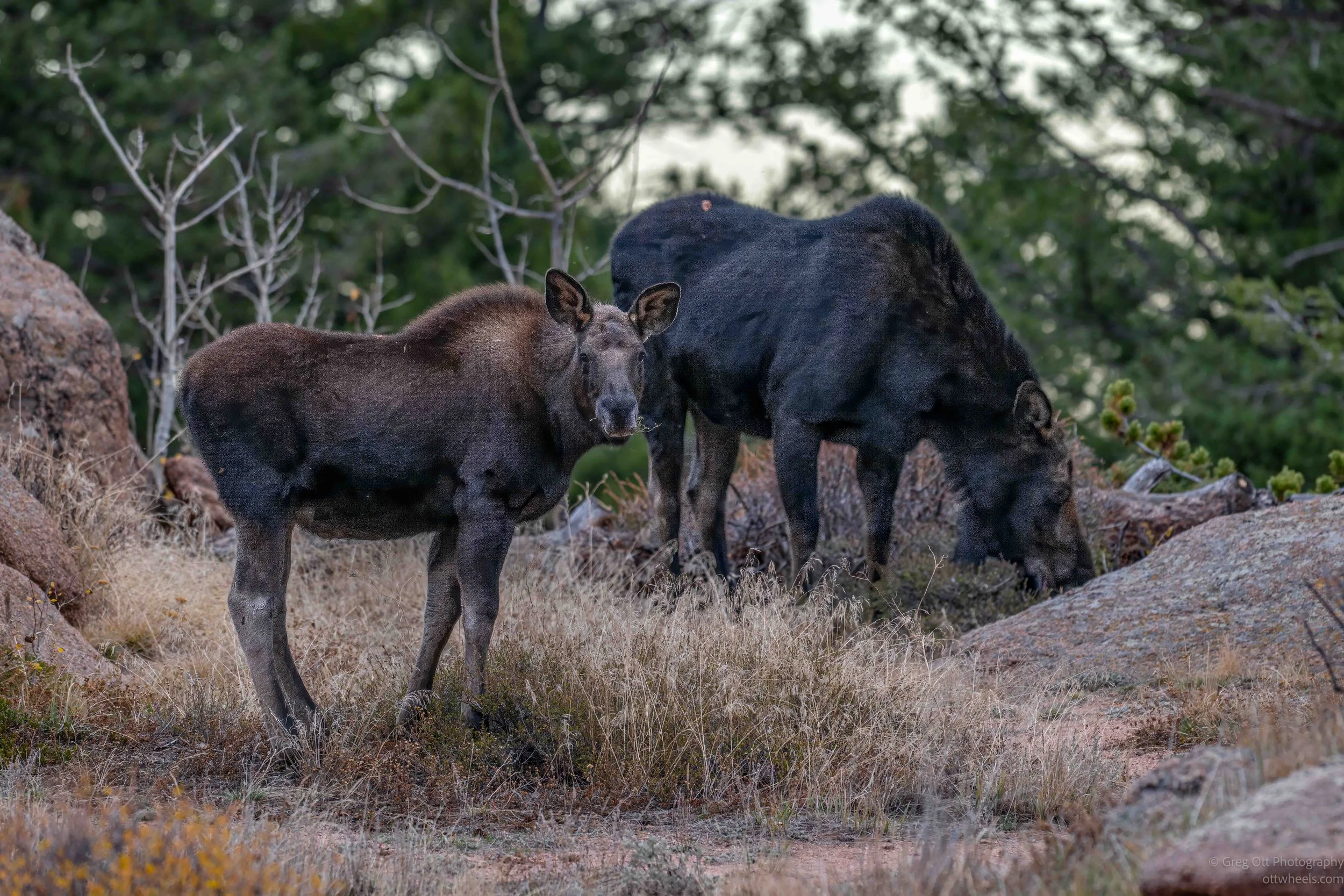
When I returned to the campground, I spotted a cow moose and her calf in the woods near my campsite. The calf was quite large, and I guessed it was probably about a year old. They were feeding among the trees, moving slowly through the brush and occasionally stopping to look around. I watched and photographed them from a safe distance for about thirty minutes. The calf seemed particularly curious, looking in my direction several times while its mother continued feeding.
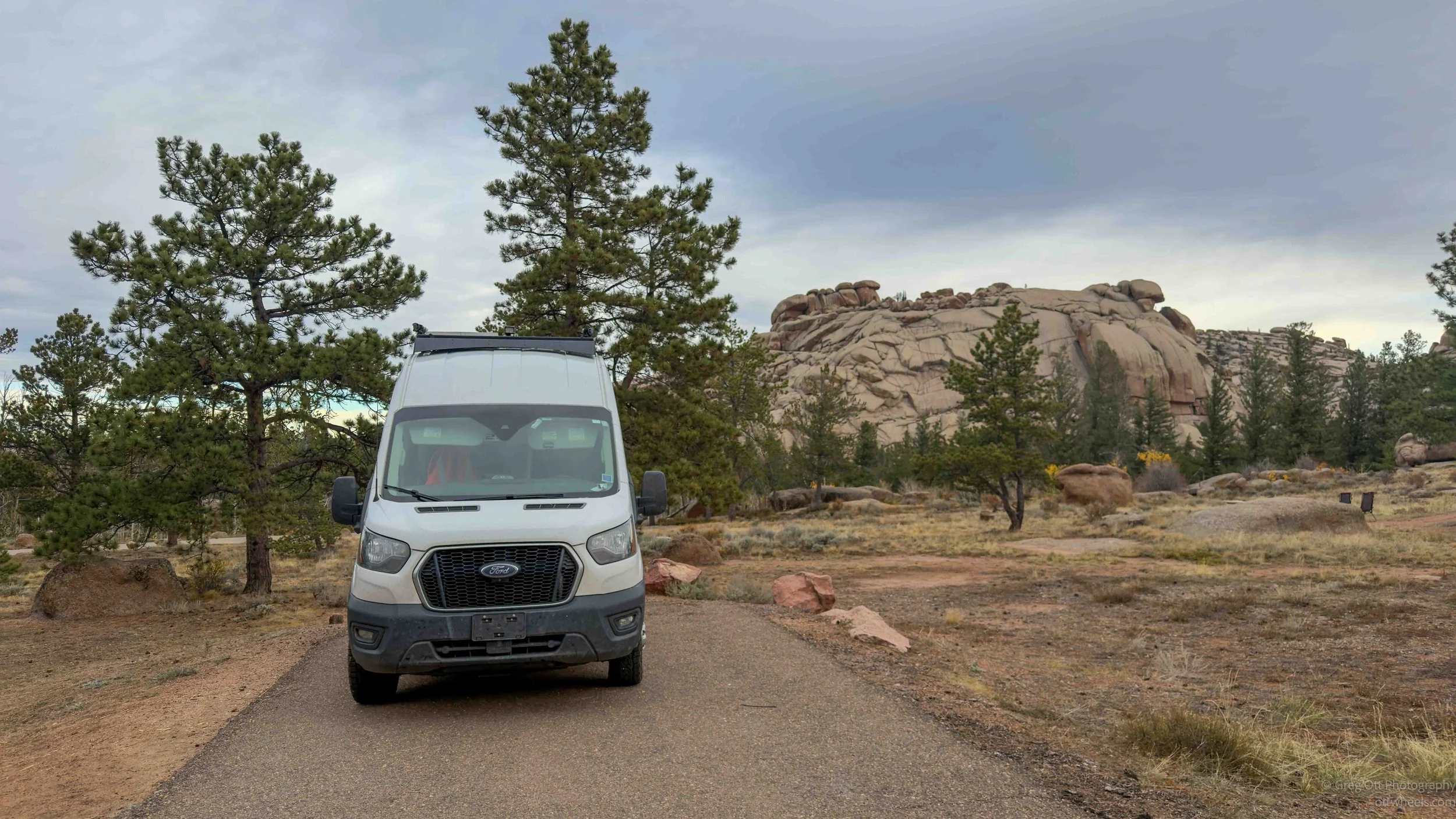
Back in the van, I downloaded the day's photographs and spent several hours working on them in Lightroom Classic. The bright, overcast sky had been difficult to expose properly, and in several images it was badly blown out. Bringing the sky back under control while keeping enough detail in the darker rocks turned into quite a project. When I masked the sky separately, I was getting halos along the edges of the granite, particularly where the rocks met the brighter sky. After experimenting with Lightroom's masking controls, I discovered a way to refine the mask edges by shifting them slightly inward. That eliminated most of the halos and gave me a much more natural result.
I ended up spending considerably more time editing than I had planned, but I learned something useful that I'll be able to apply to other photographs. Between climbing around the granite formations, meeting Mark Jenkins, watching the moose, and working through a new Lightroom technique, it had been another interesting day at Vedauwoo.