East Allen Lake, Wyoming
It was amazingly quiet at East Allen Lake, about a mile south of Medicine Bow, Wyoming. I had stepped outside the previous night hoping to photograph the stars, but the sky was covered with clouds. It would have been an ideal location for night sky photography, with almost no light pollution and very little civilization for miles around. The silence was remarkable, the kind you rarely experience anymore. I enjoyed the solitude so much that I decided to stay another night, spending the day reading, relaxing, and catching up on processing photographs.
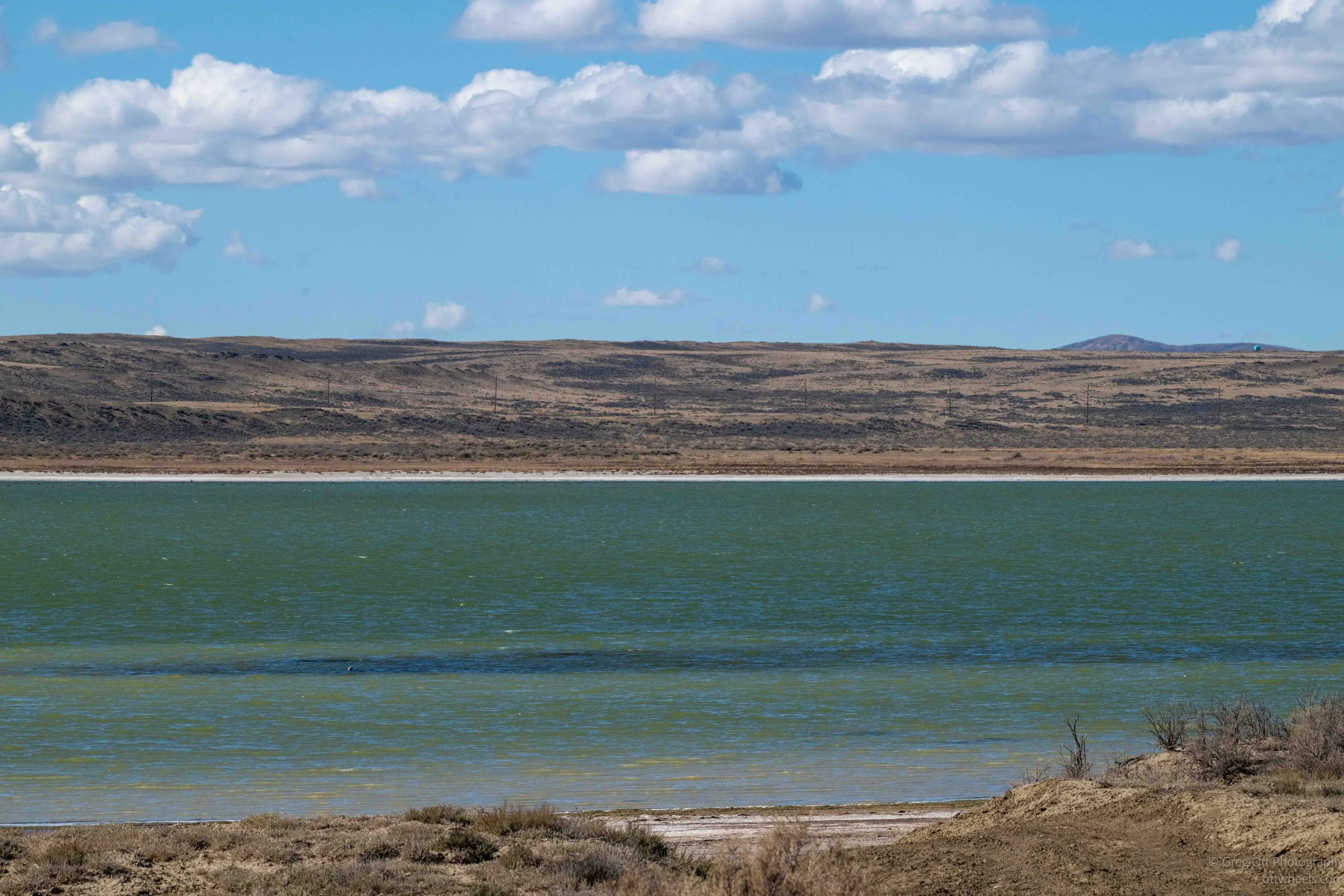
Late that evening, around 11 p.m., someone came through on an ATV and continued along the shoreline. Other than that brief interruption, I had the place entirely to myself. I was curious about the lake and opened Google Maps to get a better look at the surrounding area. To my surprise, the satellite image showed my van parked almost in the middle of the lake! The water level had dropped considerably since the imagery was taken. What appeared on the map as open water was now dry ground, and I had unknowingly driven quite a distance out onto the exposed lakebed. Fortunately, the ground was firm enough to support the van.
The following morning, October 21, I took another look around before leaving. There was quite a bit of trash scattered about, so I spent some time picking up what I could. It always amazes me that people will travel to such beautiful, remote places and then leave their garbage behind. With that done, I drove back along the dirt road toward Medicine Bow, stopping to photograph the lake and the surrounding landscape one last time.
Medicine Bow
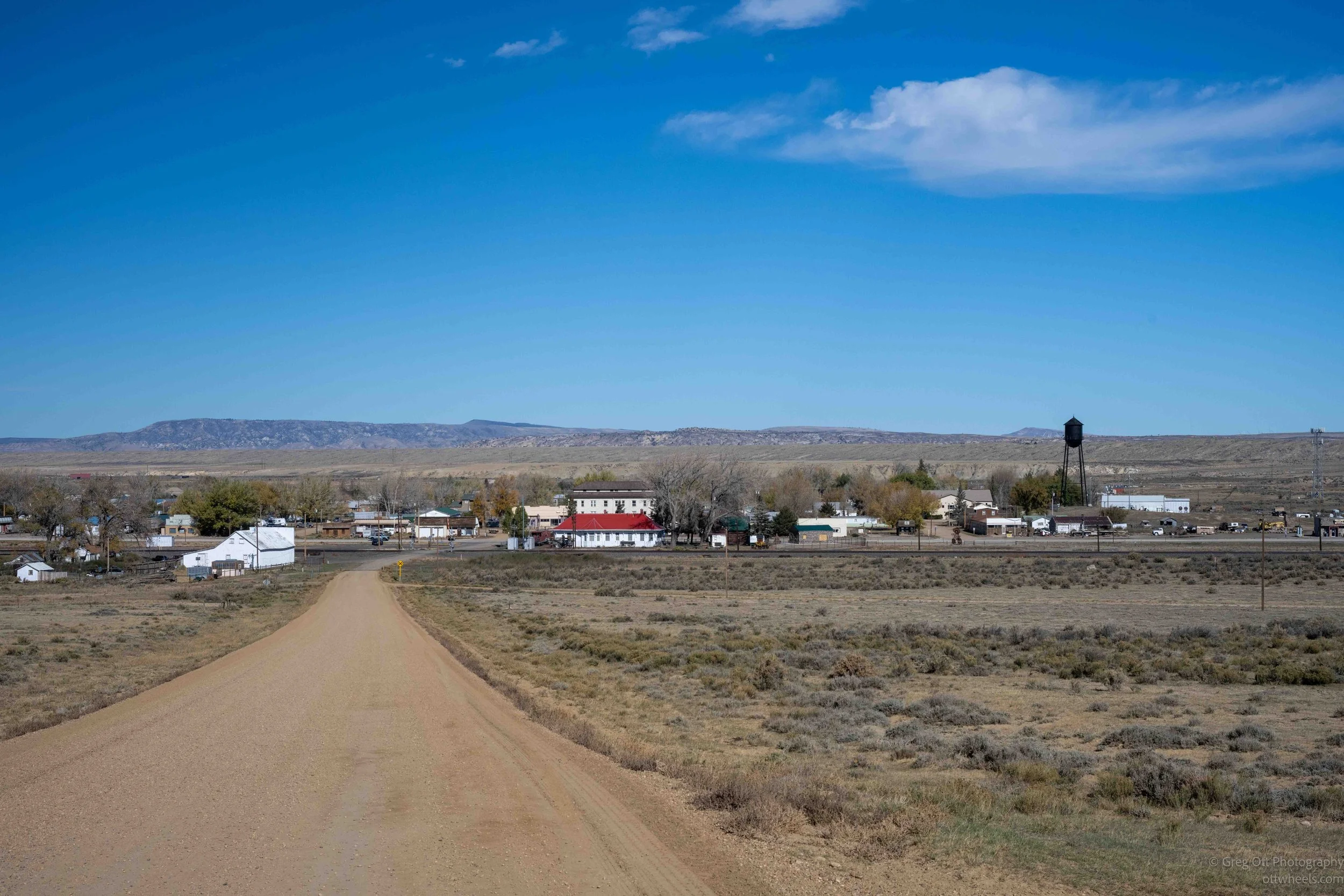
Medicine Bow is one of those tiny Wyoming towns that seems to belong to another era. Approaching from the south, the town appears almost lost in the enormous landscape, a small collection of buildings surrounded by miles of open prairie. The most prominent landmarks are a tall water tower and the historic Virginian Hotel, which dominates the otherwise modest downtown.
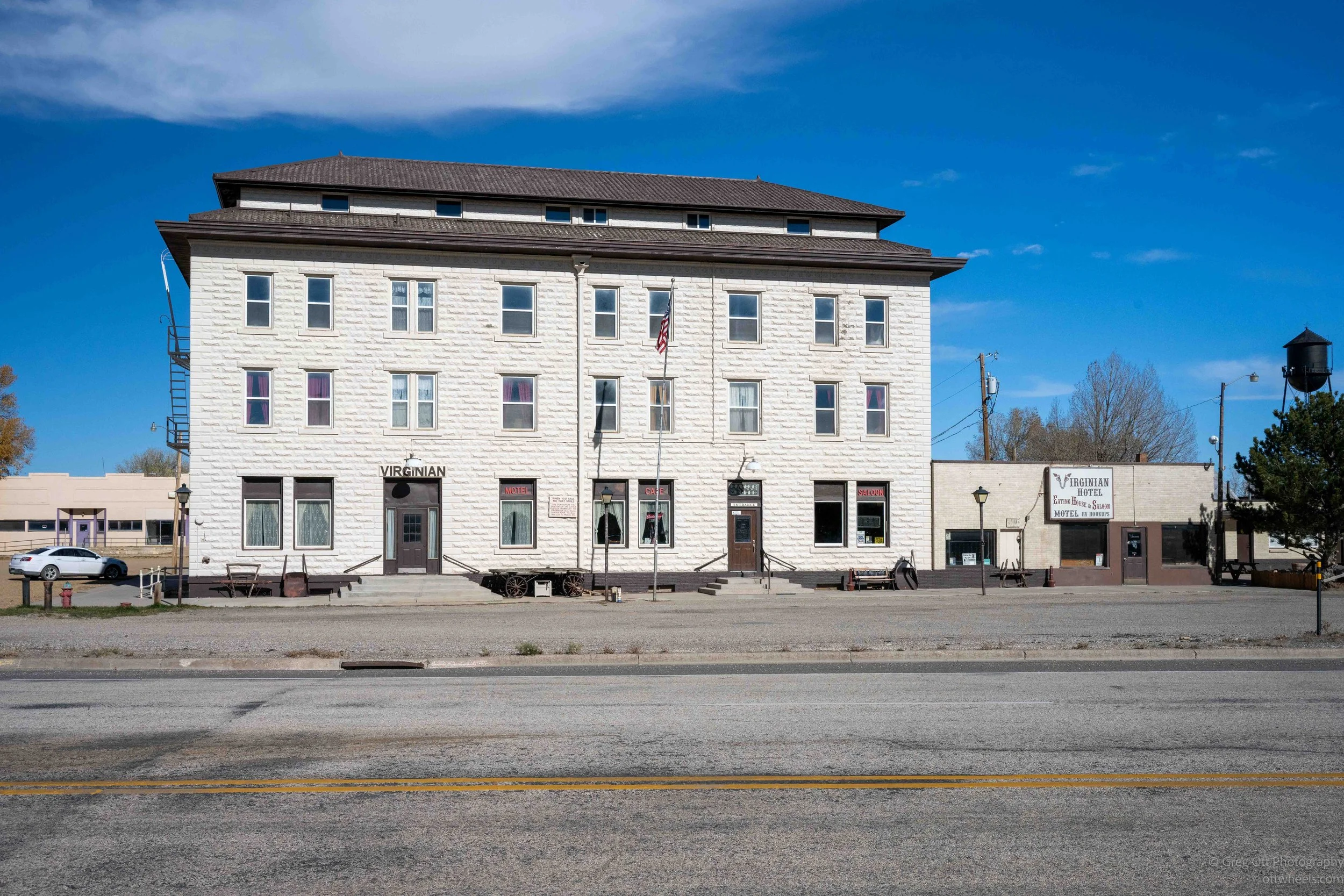
I spent a little time wandering around with my camera. The Virginian Hotel was easily the most interesting building, a substantial three-story structure that looks almost out of place in a town this small. Built in the early 1900s, it dates back to the days when the railroad, cattle ranching, and the American West were closely connected. Its name comes from Owen Wister's famous western novel The Virginian, which helped establish the image of the cowboy in American literature.
A few other buildings caught my attention, including a weathered wooden storefront housing KBHC, a local radio station, and a metal cowboy sculpture beside the railroad tracks. The sculpture was particularly fitting for a town with such strong ties to Wyoming's ranching history. Nearby, JB's Stop & Shop looked like the sort of place that has been serving travelers and local residents for decades. None of these buildings was particularly remarkable on its own, but together they gave the town a character that would be difficult to reproduce.
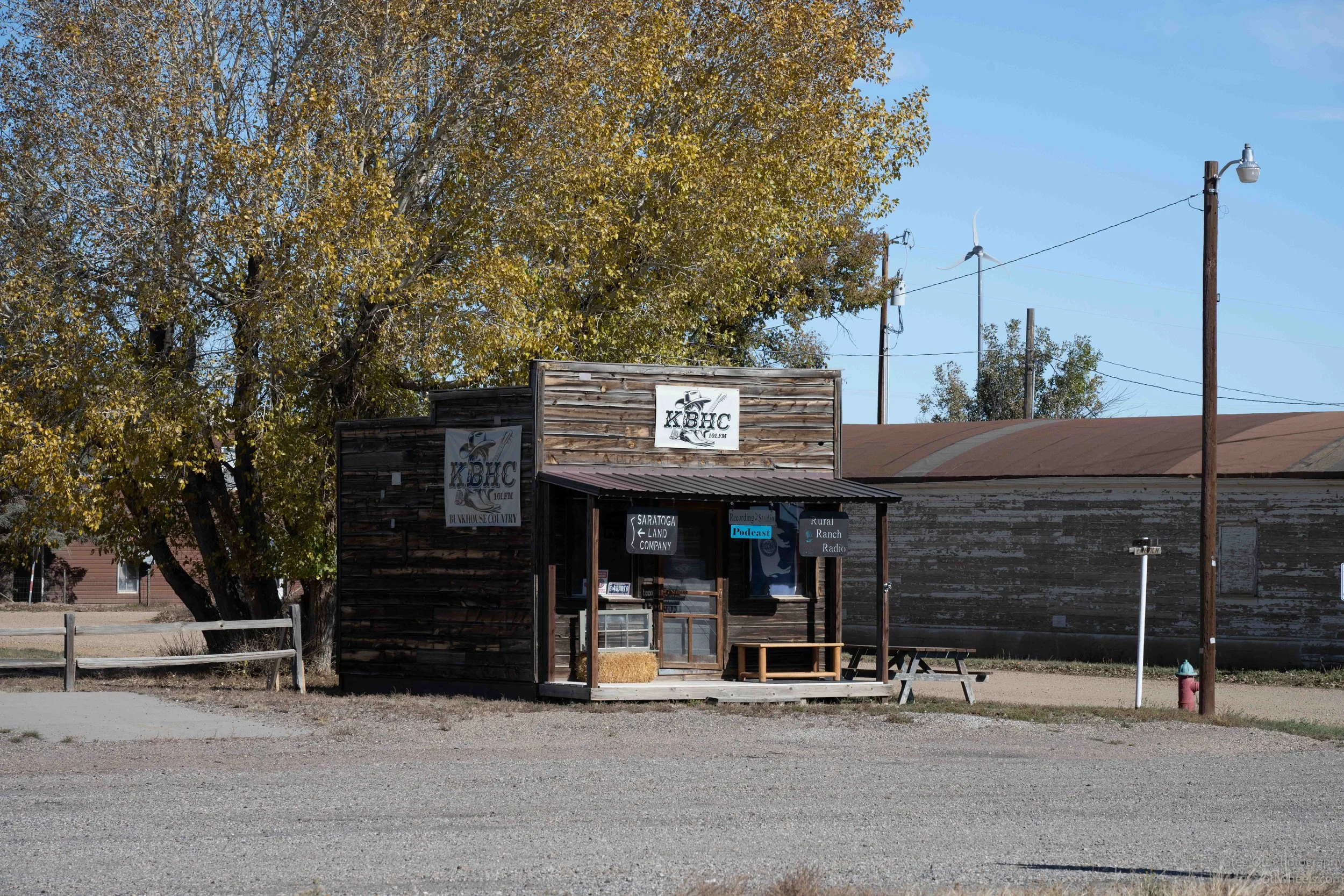
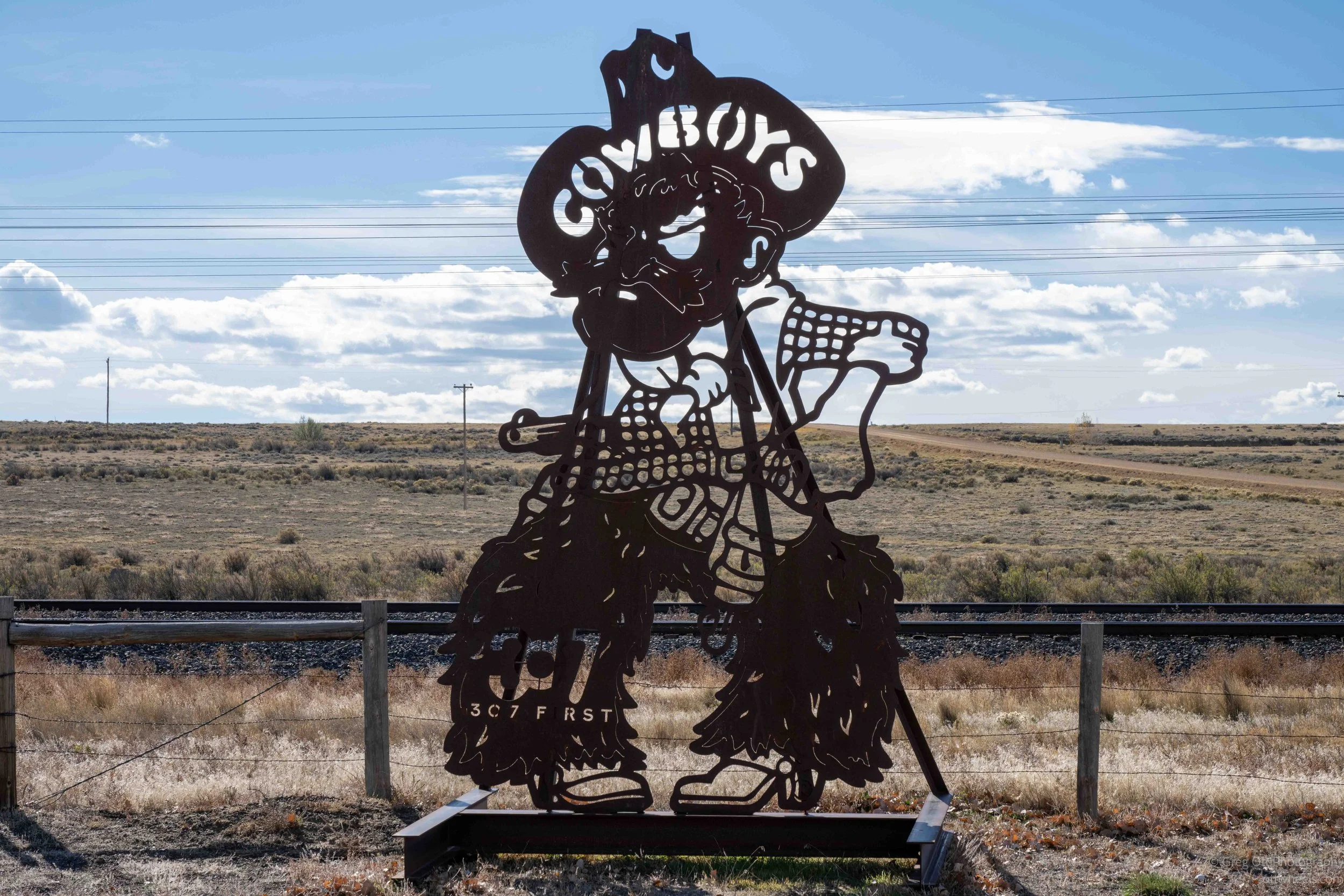
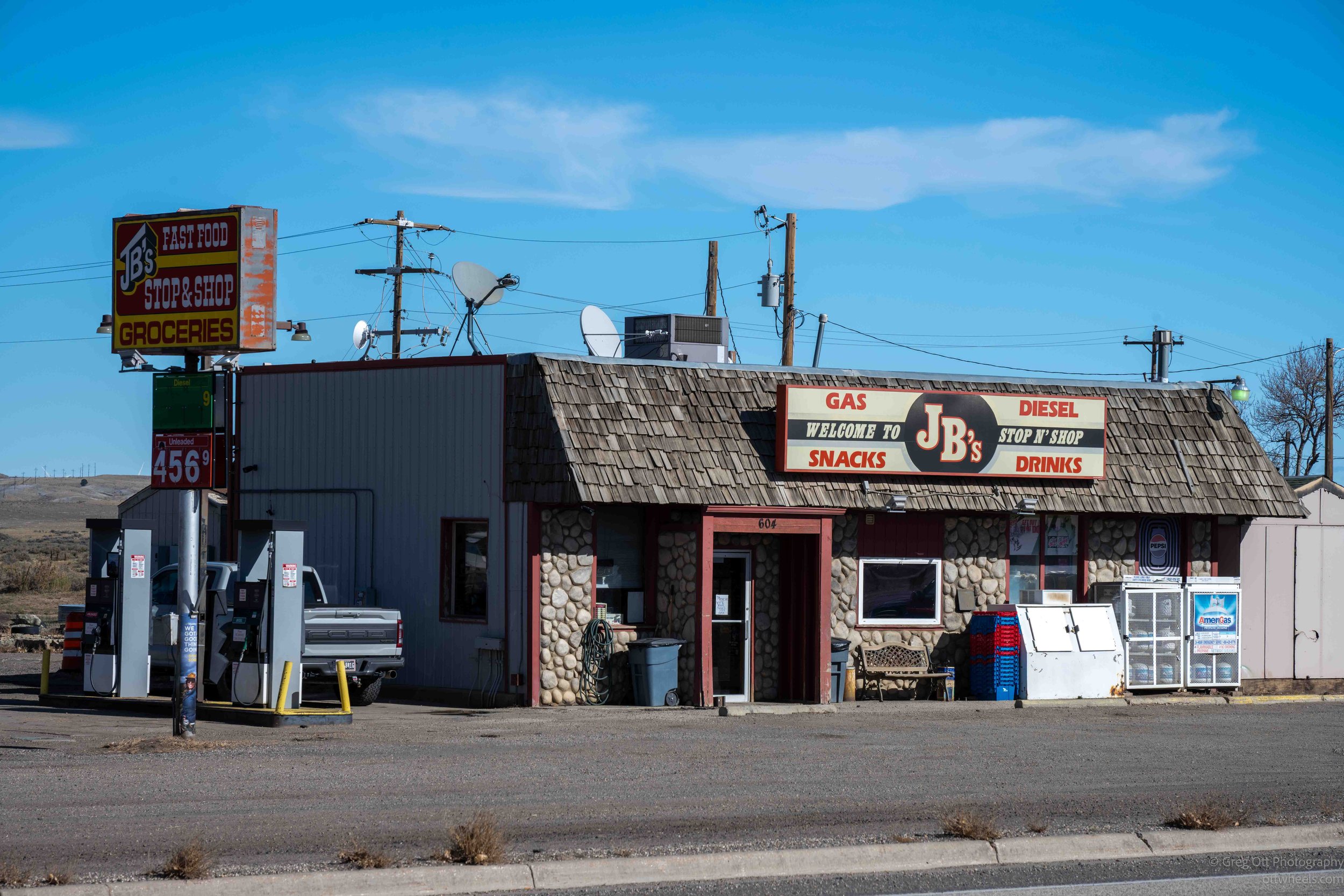
I had considered visiting the local history museum, but unfortunately it was closed. That was disappointing because I would have enjoyed learning more about the town's railroad and ranching history. Still, I was glad I'd taken the time to stop. Medicine Bow is the sort of place I might easily have driven through without a second thought, yet it offered a few interesting glimpses of an earlier Wyoming.
On to Laramie
From Medicine Bow, it was about a 90-minute drive to Laramie. After two quiet nights beside the lake, I was ready to take care of a few practical things. My first stop was Walmart, where I stocked up on supplies and picked out some Halloween gifts for my granddaughter. I wanted to get everything mailed while there was still plenty of time for the package to arrive before Halloween.
I spent some time putting everything together, packaging the gifts, and getting them ready to ship. Then I headed to the post office and sent the package on its way. These little errands are part of life on the road, although they often take longer than expected when you're doing everything out of a van.
By then, I was hungry and stopped at Qdoba Mexican Eats for something to eat. It reminded me quite a bit of Chipotle, although I didn't think the food was quite as good. One thing in Qdoba's favor was that they didn't charge extra for guacamole, which I appreciated. Unfortunately, the restaurant itself wasn't particularly inviting. The air conditioning was blasting, the music was far too loud, and I found myself wanting to finish eating and get out of there. After two days of almost complete silence at East Allen Lake, the contrast was rather striking.
Vedauwoo Recreation Area
After finishing my errands in Laramie, I drove east to Vedauwoo Recreation Area, part of the Medicine Bow National Forest. Vedauwoo is known for its enormous granite formations, some rising like towers while others appear to be precariously balanced on top of one another. It's a popular destination for rock climbers, but there are also several hiking trails that wind through the formations and surrounding forest.
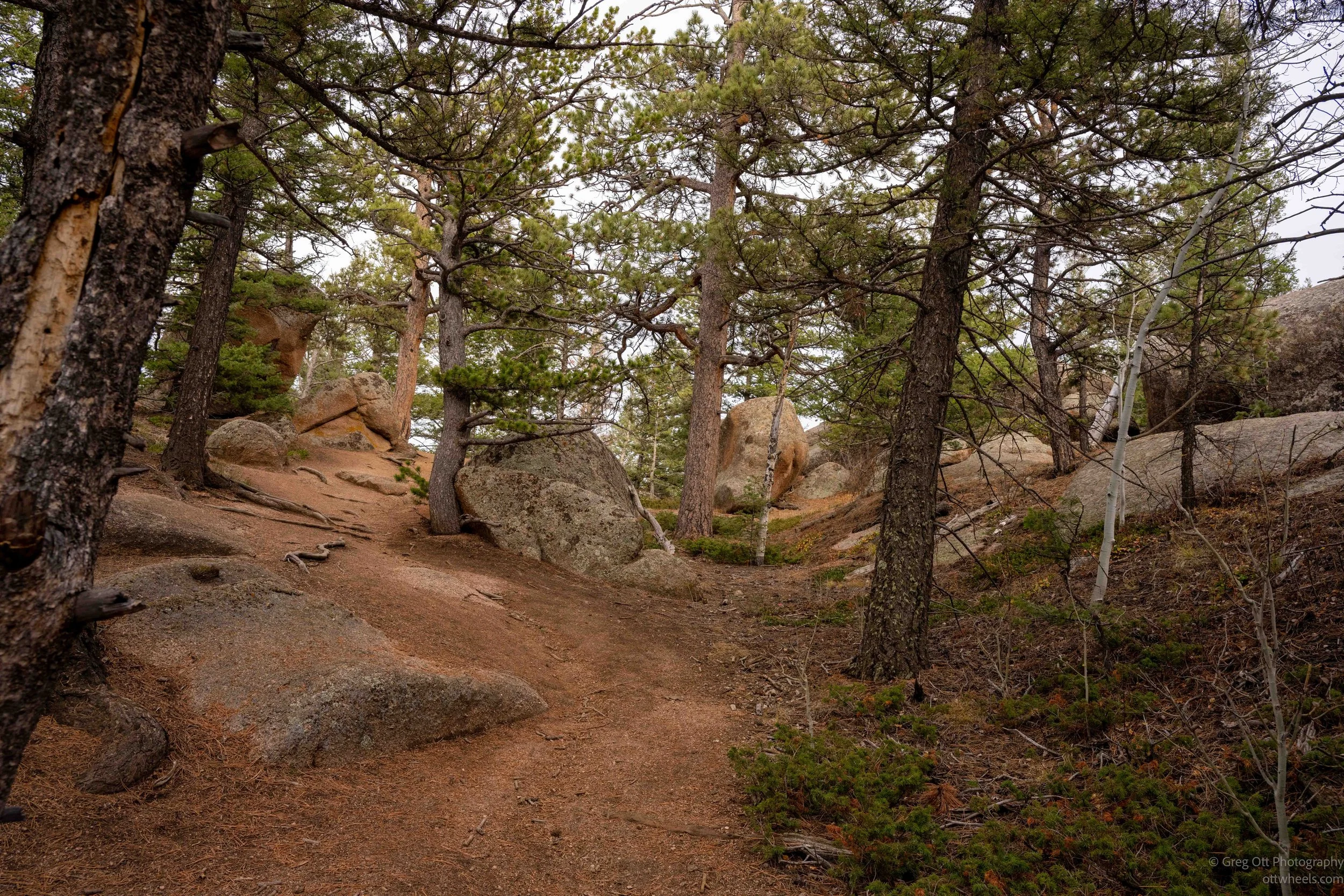
I arrived around 4 p.m., parked the van, and headed out on the Turtle Rock Loop Trail. The trail circles one of the area's massive granite formations, passing through a surprisingly varied landscape of pine forests, aspen groves, small streams, and enormous boulders. Almost immediately, I found myself stopping to photograph the rocks. Some were rounded and smooth, while others had sharp fractures or appeared to have been stacked together like enormous building blocks.
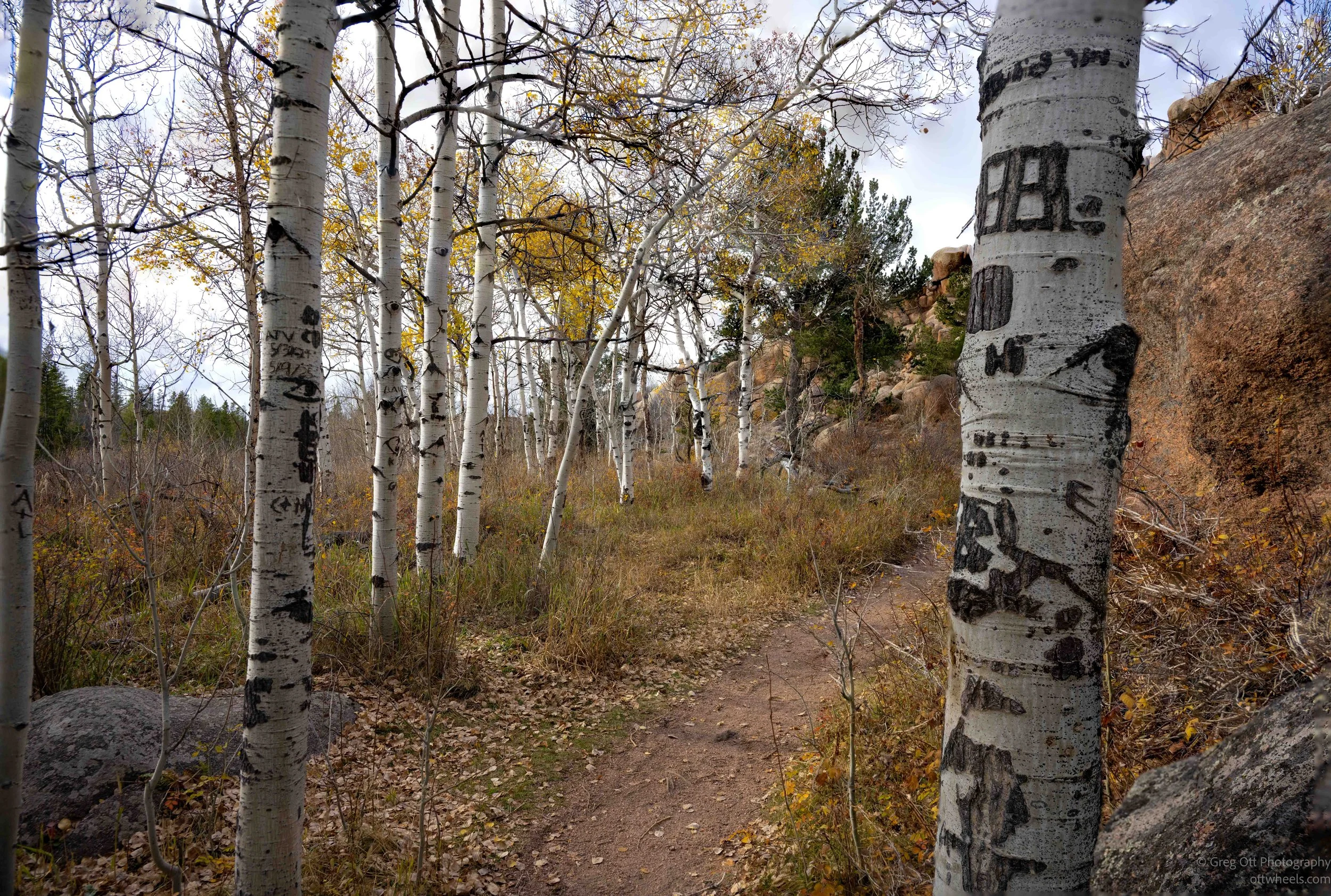
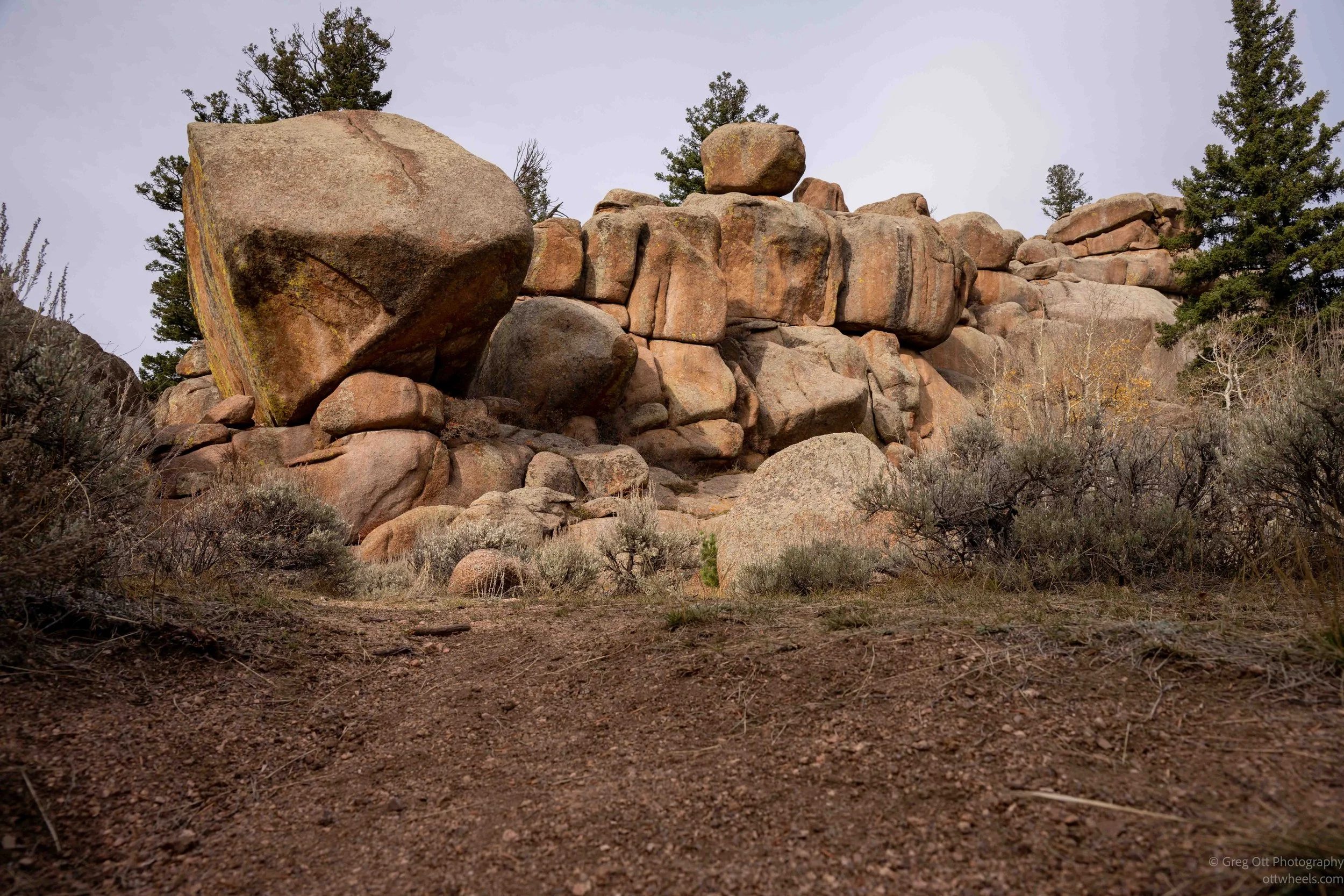
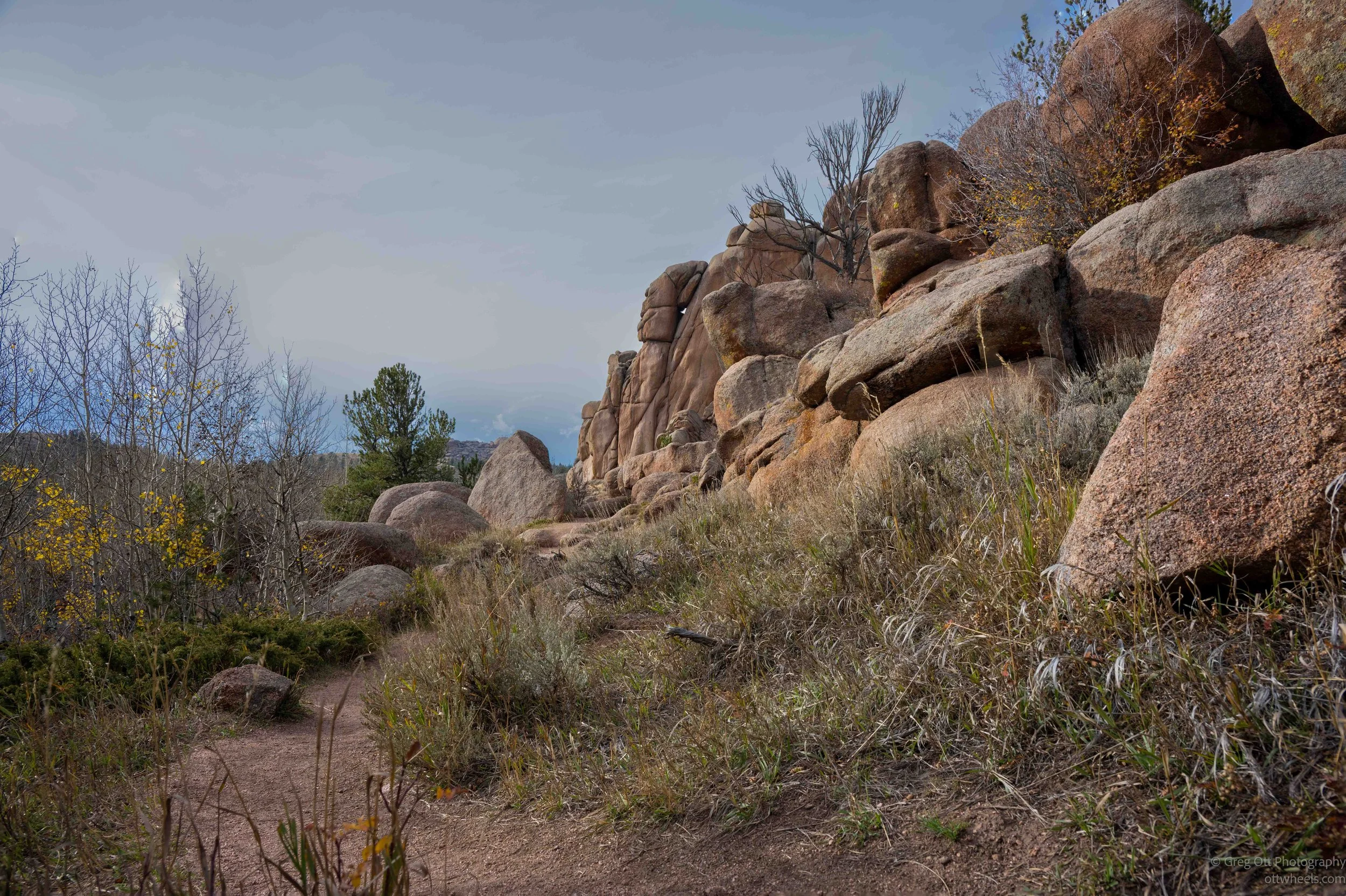
The rock formations were fascinating. In places, they reminded me of the work of British sculptor Henry Moore, whose abstract sculptures often have smooth, rounded forms and openings that invite you to walk around them and examine them from different angles. Many of the formations at Vedauwoo had a similar quality, as though someone had deliberately arranged these enormous pieces of granite into an outdoor sculpture garden. Of course, nature had been working on them for millions of years, gradually exposing and weathering the granite into the shapes I was seeing.
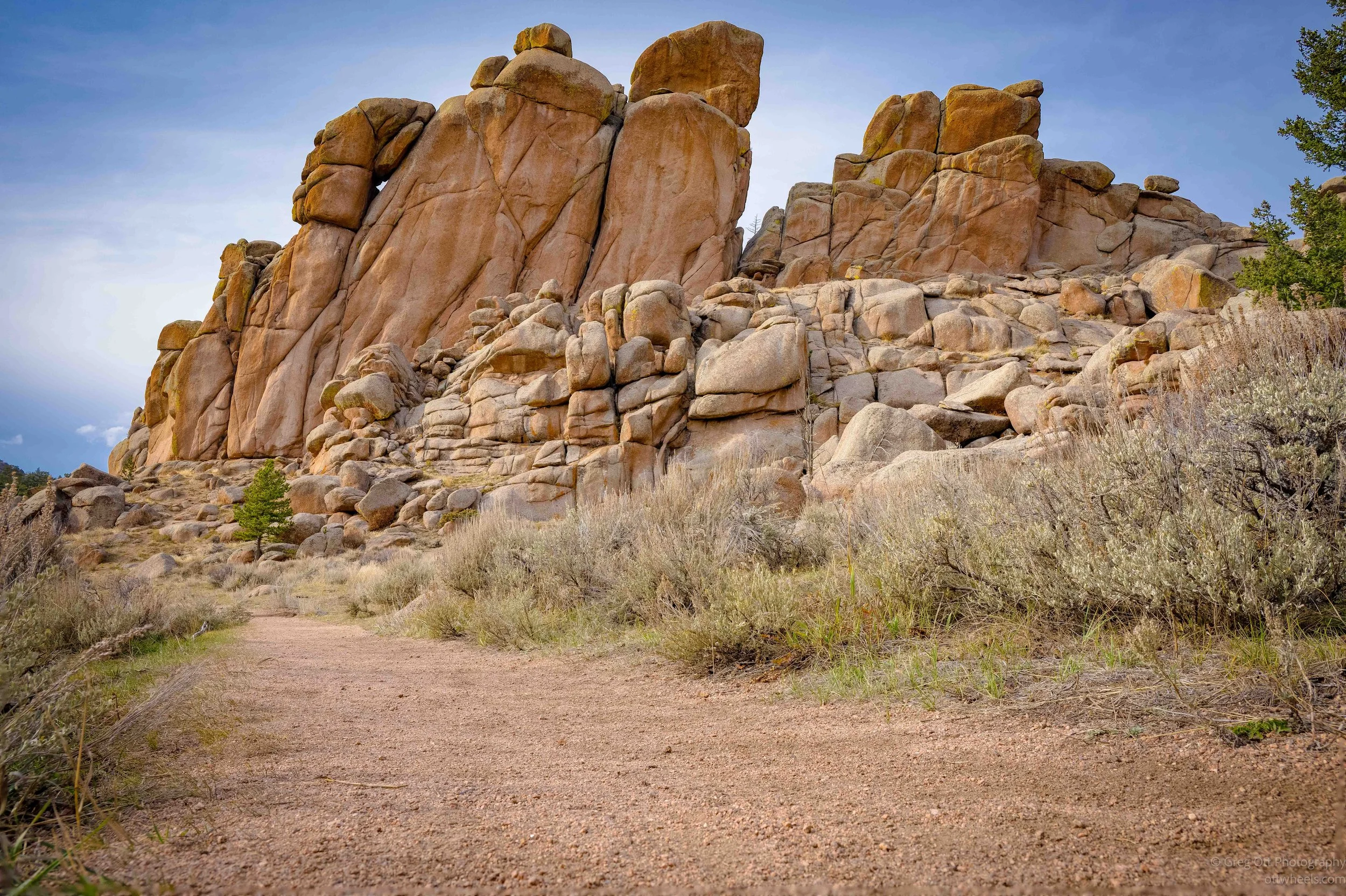
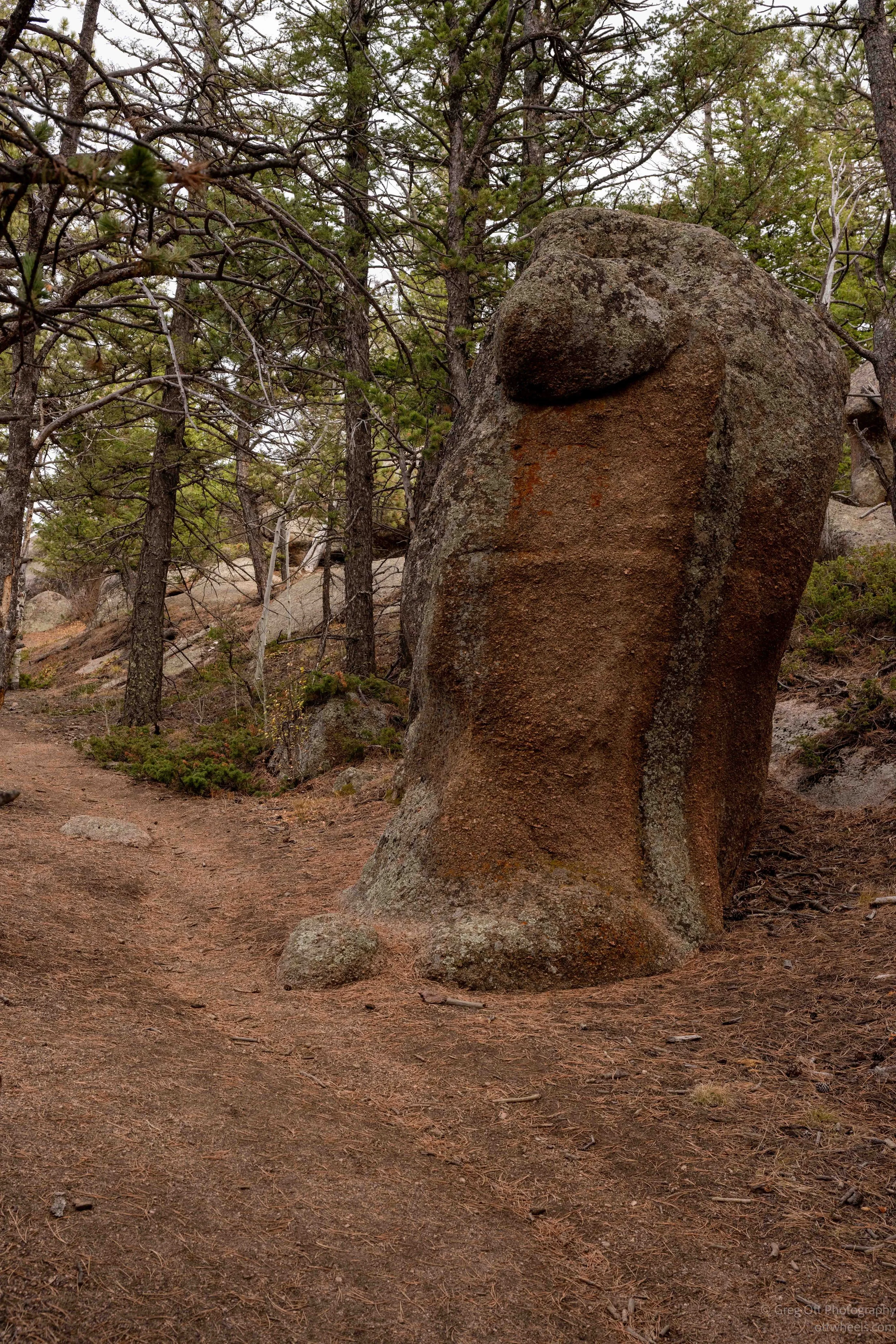
One of the things I particularly enjoyed about the hike was how frequently the surroundings changed. At times, I was walking through open areas with enormous rock walls rising beside the trail. A short distance later, I would be back among the trees, following a narrow path through pine needles, fallen branches, and patches of autumn color. The aspens were particularly attractive, their pale trunks contrasting with the darker pines and reddish granite. By late October, many of their leaves had already fallen, although a few patches of yellow and orange remained.
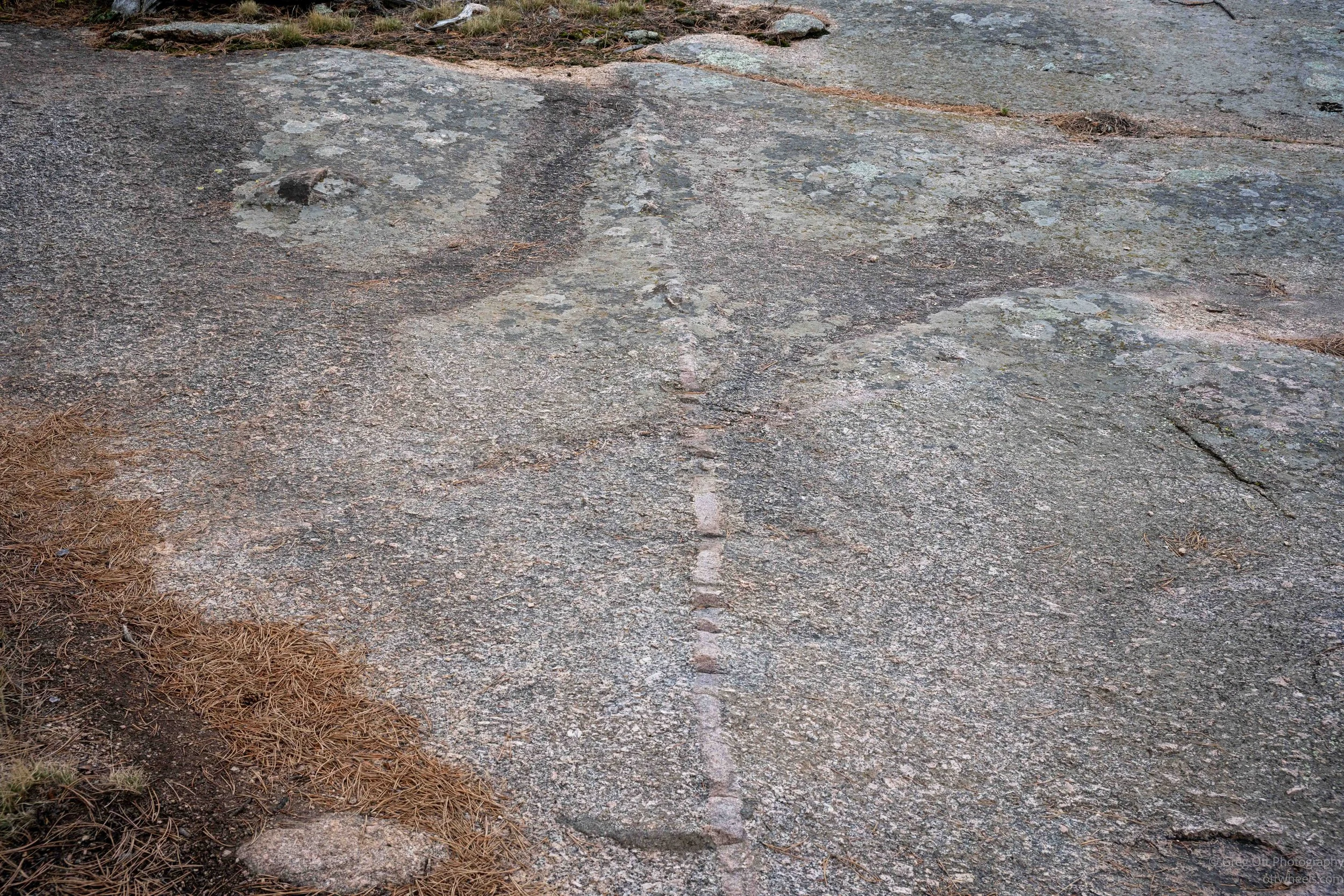
The granite itself was worth examining more closely. In some places, long fractures ran across otherwise smooth rock surfaces, dividing them into remarkably regular sections. Elsewhere, the rock had weathered into rounded shapes with narrow gaps and passages between them. There were countless opportunities for photographs, although it was sometimes difficult to convey the enormous scale of these formations without having a person standing beside them.
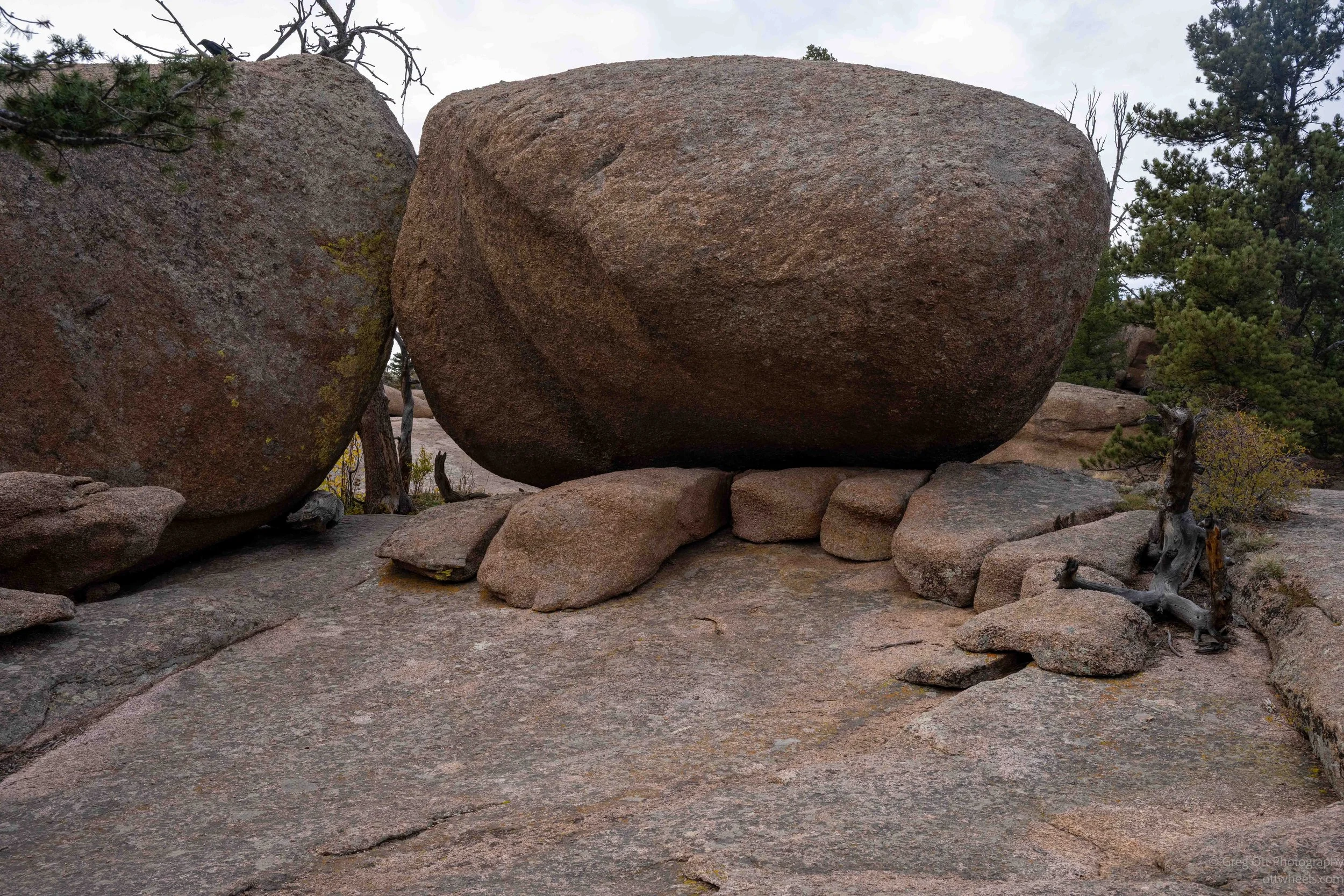
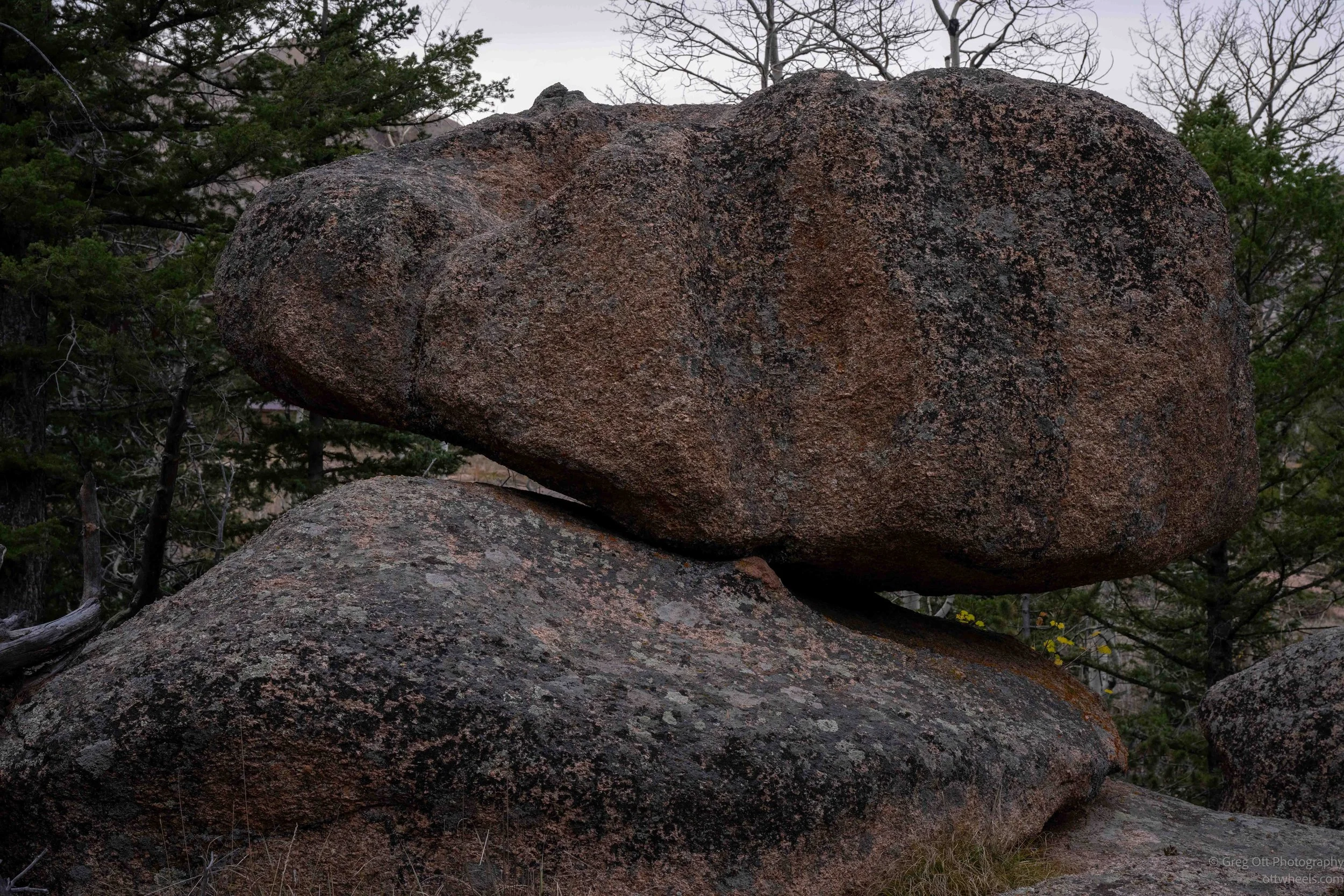
Some of the most remarkable formations were the balanced rocks. Huge boulders rested on smaller ones, sometimes with what appeared to be only a tiny area of contact between them. It's difficult to look at something like that without wondering how it has managed to remain in place for so long. I found myself walking around several of them, studying the shapes and the points where the rocks touched. They looked almost deliberately positioned, yet they were simply the result of geological processes and millions of years of erosion.
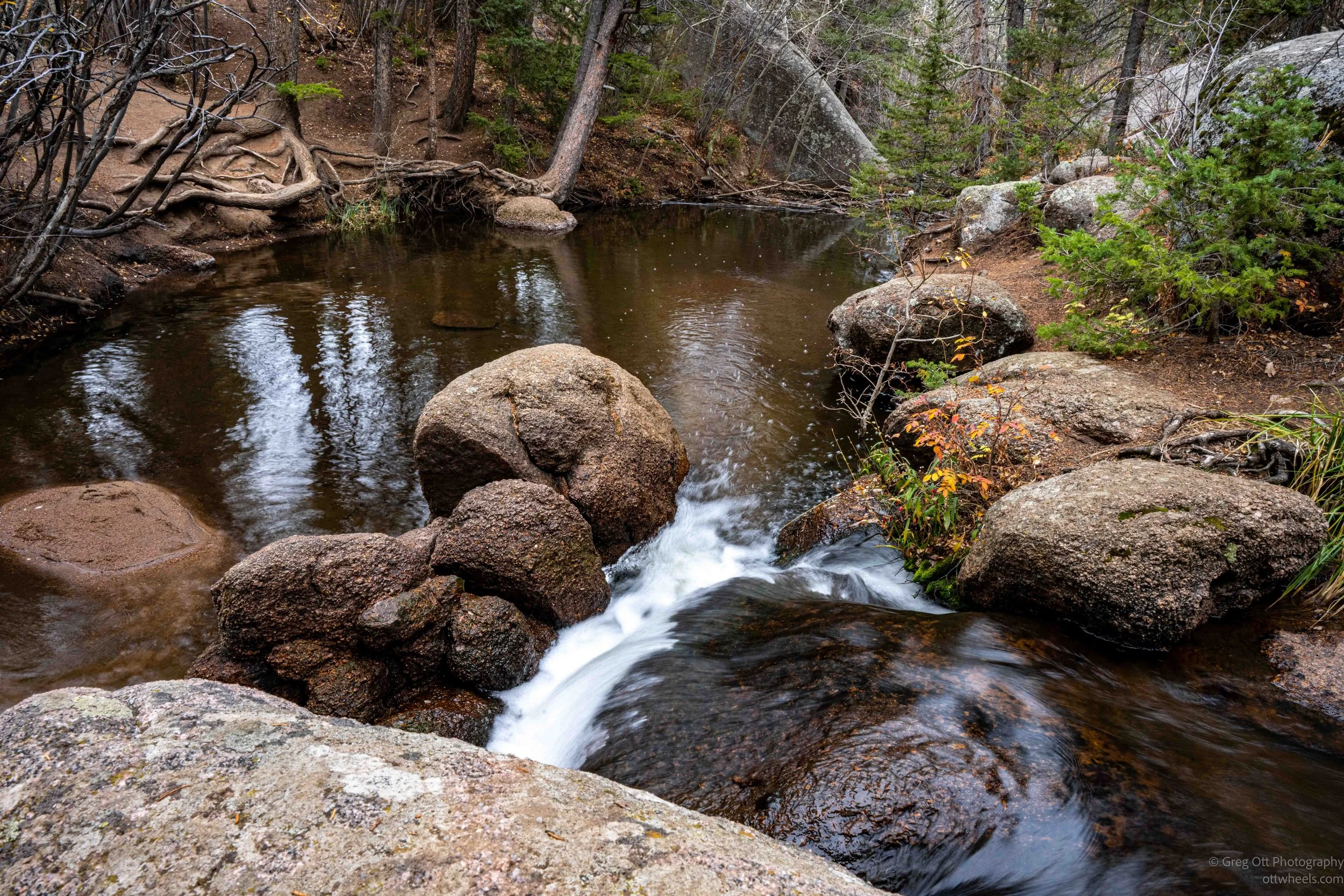
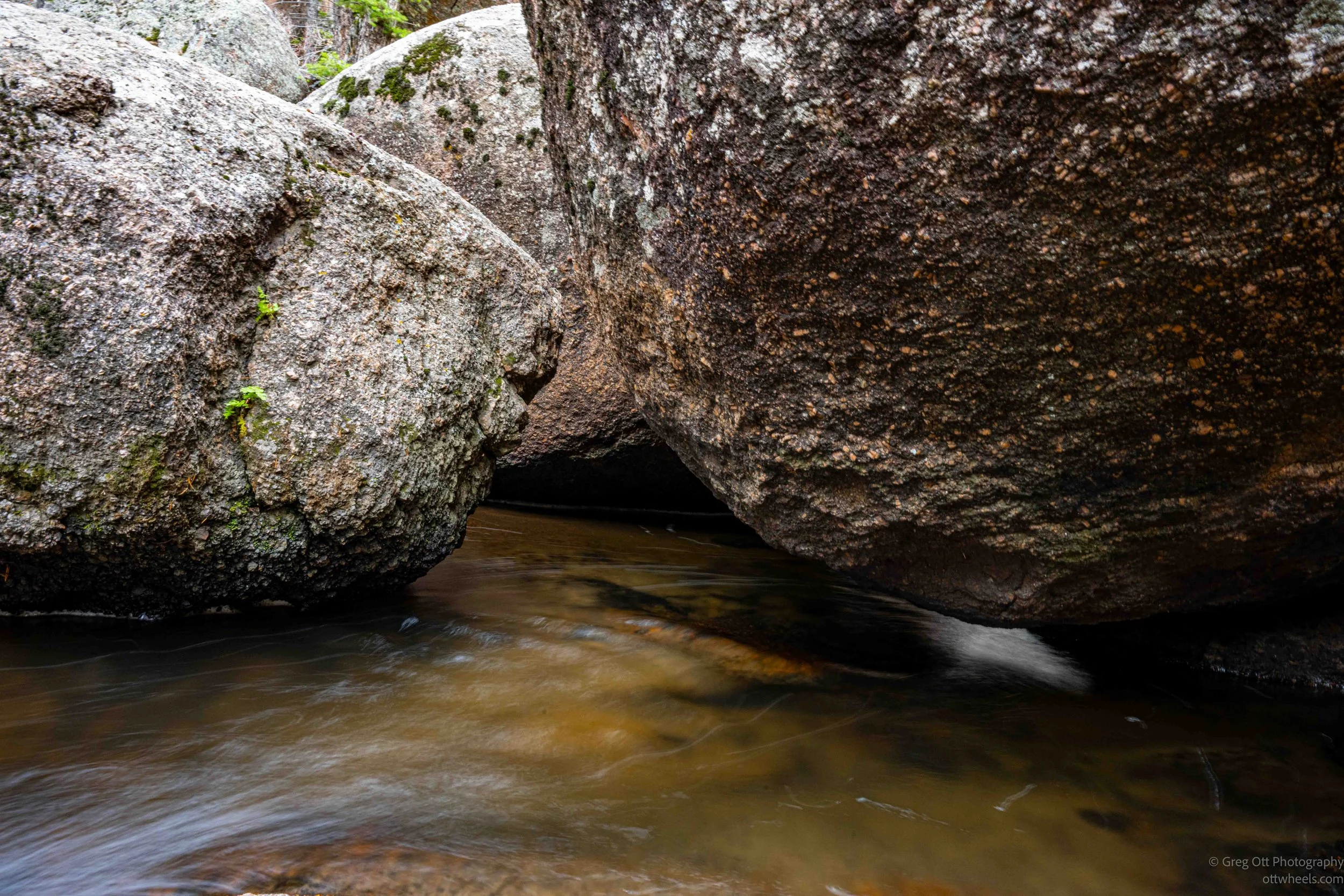
The trail also passed through several wetter areas, where small streams flowed between the granite boulders. One particularly interesting section had water cascading over smooth rock into a small pool. Nearby, water disappeared beneath enormous boulders before emerging again farther downstream. These were relatively small features compared with the towering formations, but they offered interesting photographic opportunities, particularly where the flowing water contrasted with the rough texture of the granite.
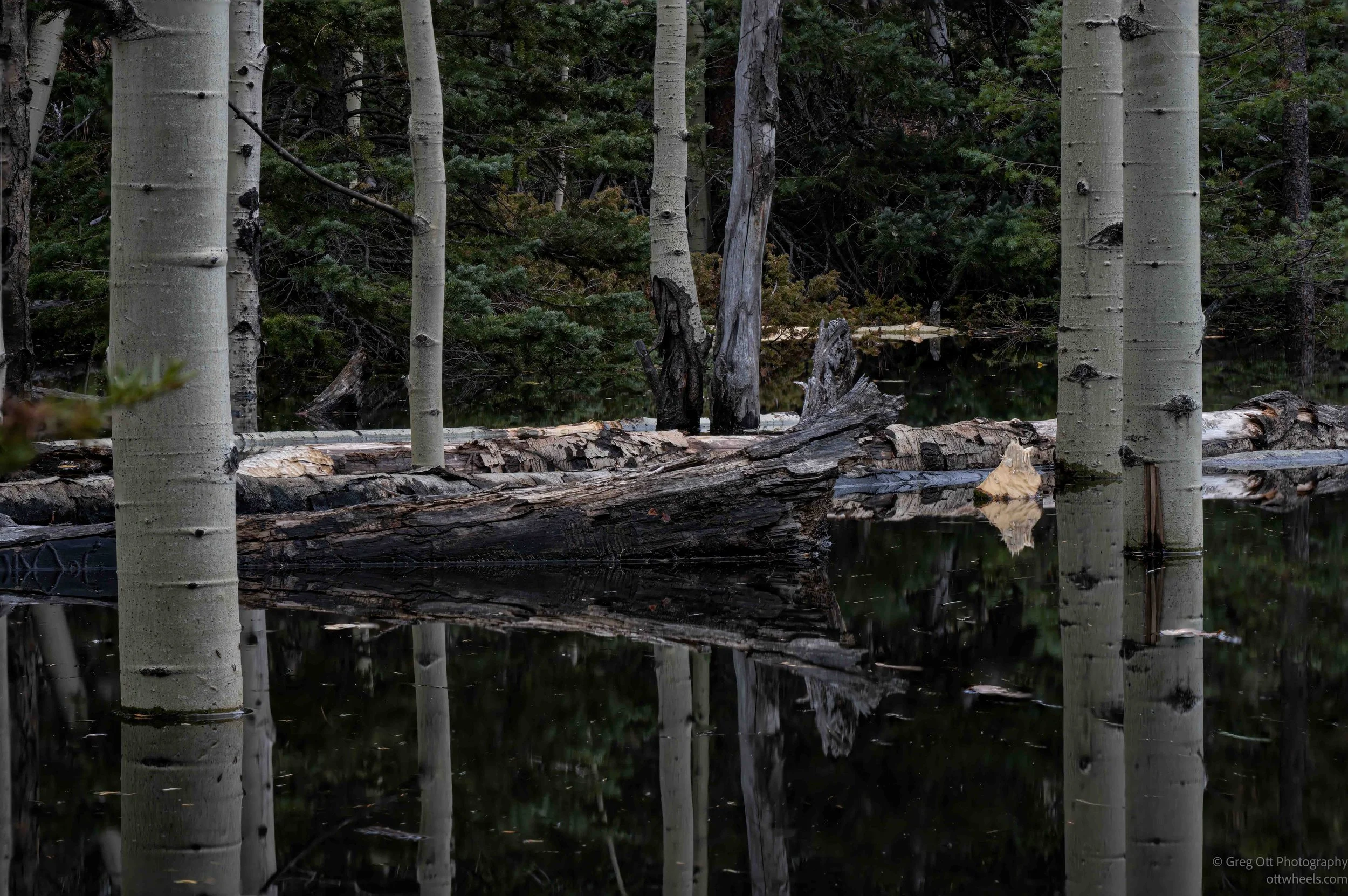
Farther along, I encountered small ponds surrounded by aspens and pines. Fallen trees lay across the water, and in places, beaver dams had helped create pools among the rocks. I particularly liked the reflections of the pale aspen trunks and fallen logs in the dark water. It was a completely different environment from the open granite formations I had been photographing only a short distance earlier.
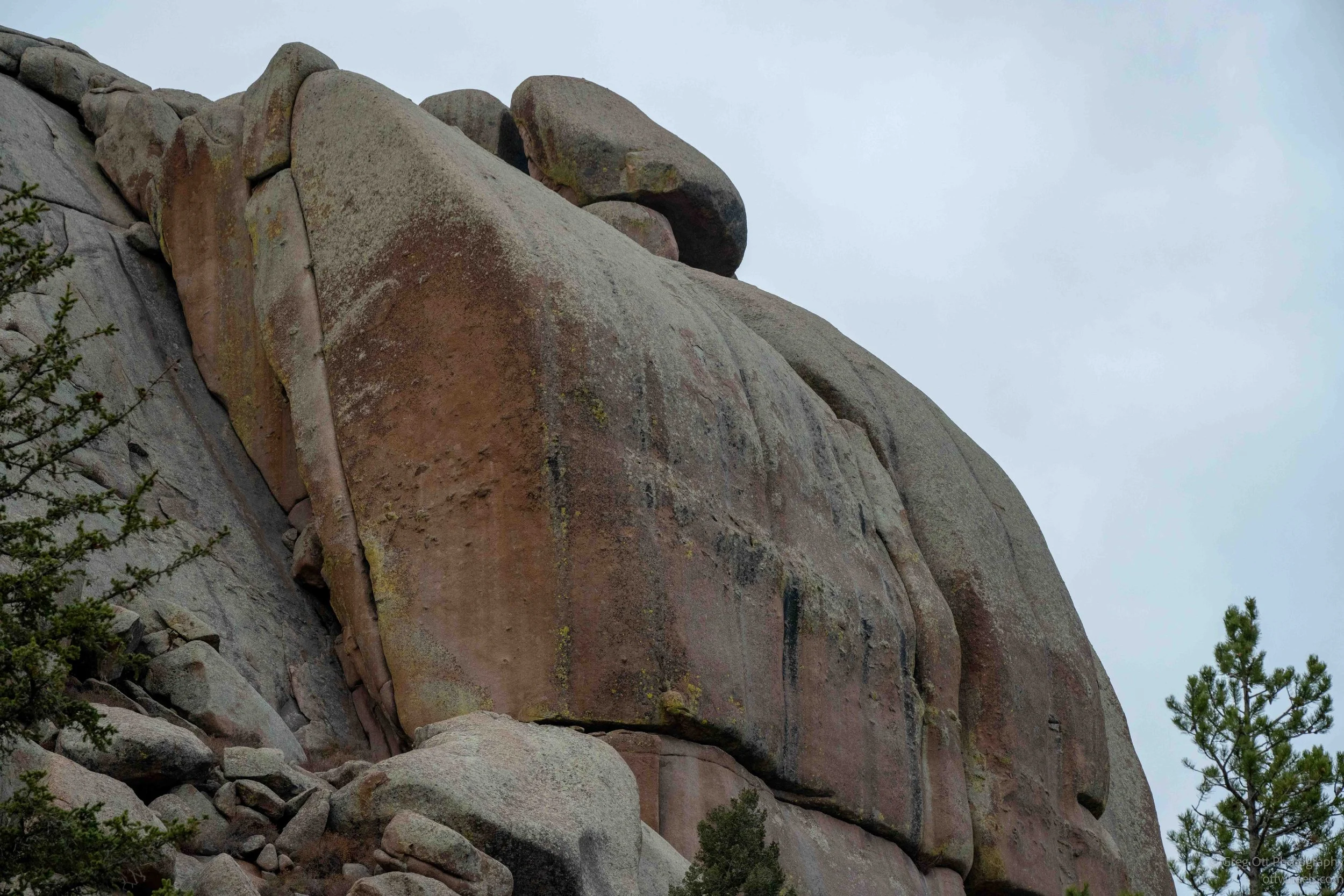
As I continued around Turtle Rock, the formations seemed to become even more unusual. There were gigantic rounded boulders sitting on top of other rocks, some looking as though a gentle push might send them rolling downhill. One massive boulder rested almost horizontally on another, creating an enormous overhang. Nearby, the granite rose in a series of smooth vertical walls, with rounded blocks perched along the upper edges. I spent quite a bit of time looking for interesting compositions, although the increasingly overcast sky wasn't providing particularly attractive light.
By the time I returned to the van, daylight was beginning to fade. I had spent much more time hiking and photographing than I originally intended, but Vedauwoo was an interesting place to explore. What made the hike so enjoyable wasn't simply the enormous rocks. It was the combination of the formations, the forests, the streams, and the constantly changing scenery. There always seemed to be something different around the next corner.
Rather than drive somewhere else in the dark, I decided to spend the night at the Vedauwoo campground. With my lifetime Senior Pass, the campsite cost just $10. It was the final week of the camping season, and only a handful of other campers were scattered around the remaining open area. After the busy afternoon in Laramie and several hours of hiking, I was ready to settle in for the evening.
I made a quick dinner and relaxed in the van. It had been a full day of driving, shopping, mailing Halloween gifts, and hiking, but I was glad I'd made the stop at Vedauwoo. I had originally planned on a short afternoon walk and ended up discovering one of the more interesting landscapes I'd encountered in Wyoming.