I was up at 6:30 a.m. in the parking lot at the Catholic Church in Homer, across from Fat Olives. It was a quiet spot to spend the night, and I slept well with the rain as a constant background sound. I drove out to the free parking on the Homer Spit early, wanting to make sure I had a spot before catching the water taxi.
After making breakfast in the van, I packed for the five-plus-mile hike. I walked over to the gelato shop just as someone was unlocking the door. "Oh, great," I said. "Just in time." The woman moving furniture outside smiled. "Sorry, we don't open until 9:00."
She suggested I try Coal Town Coffee & Tea instead, explaining they used the same roaster and beans. She was right. The coffee was excellent, and the two women working there were warm and welcoming. They'd already been open several hours, and it was a relaxing way to start what looked to be a beautiful day.
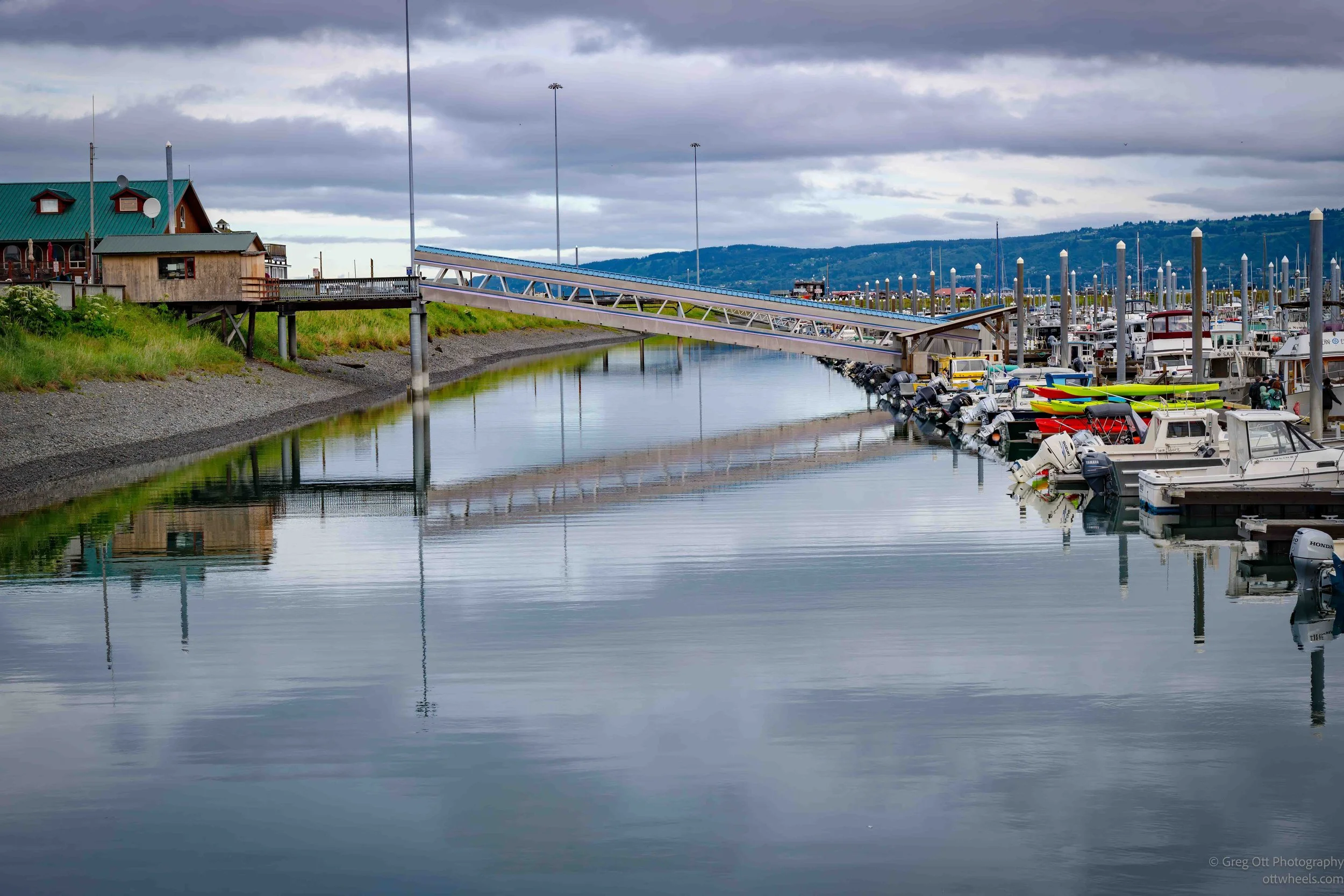
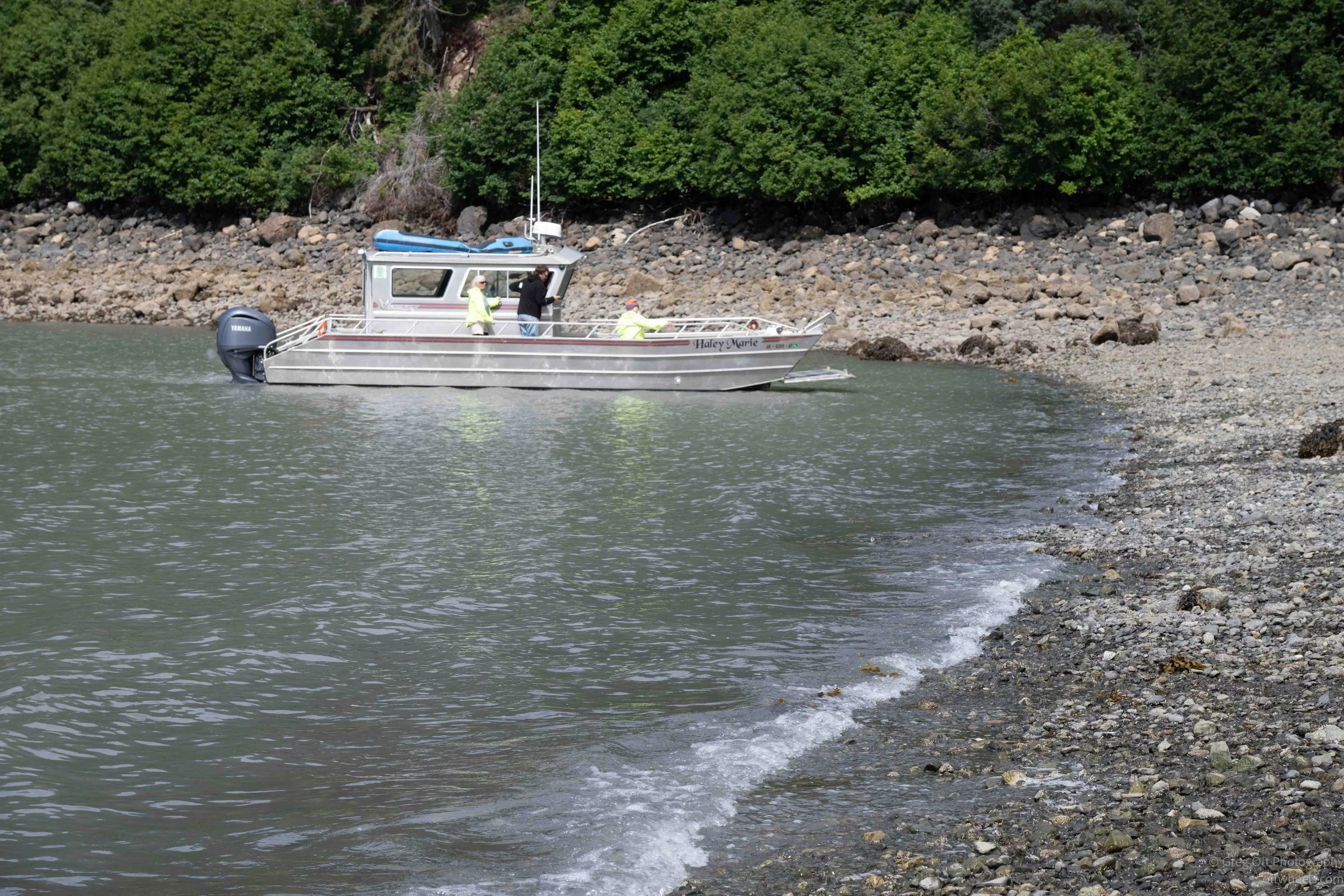
The instructions for the water taxi (Kachemak Bay Adventures)were simple: meet at the bottom of Ramp 2 fifteen minutes before departure. I arrived on time and found myself standing there alone. After waiting about ten minutes, I called the company and learned the boat was returning from an earlier drop-off. A few minutes later it rounded the corner, and before long the rest of our group arrived.
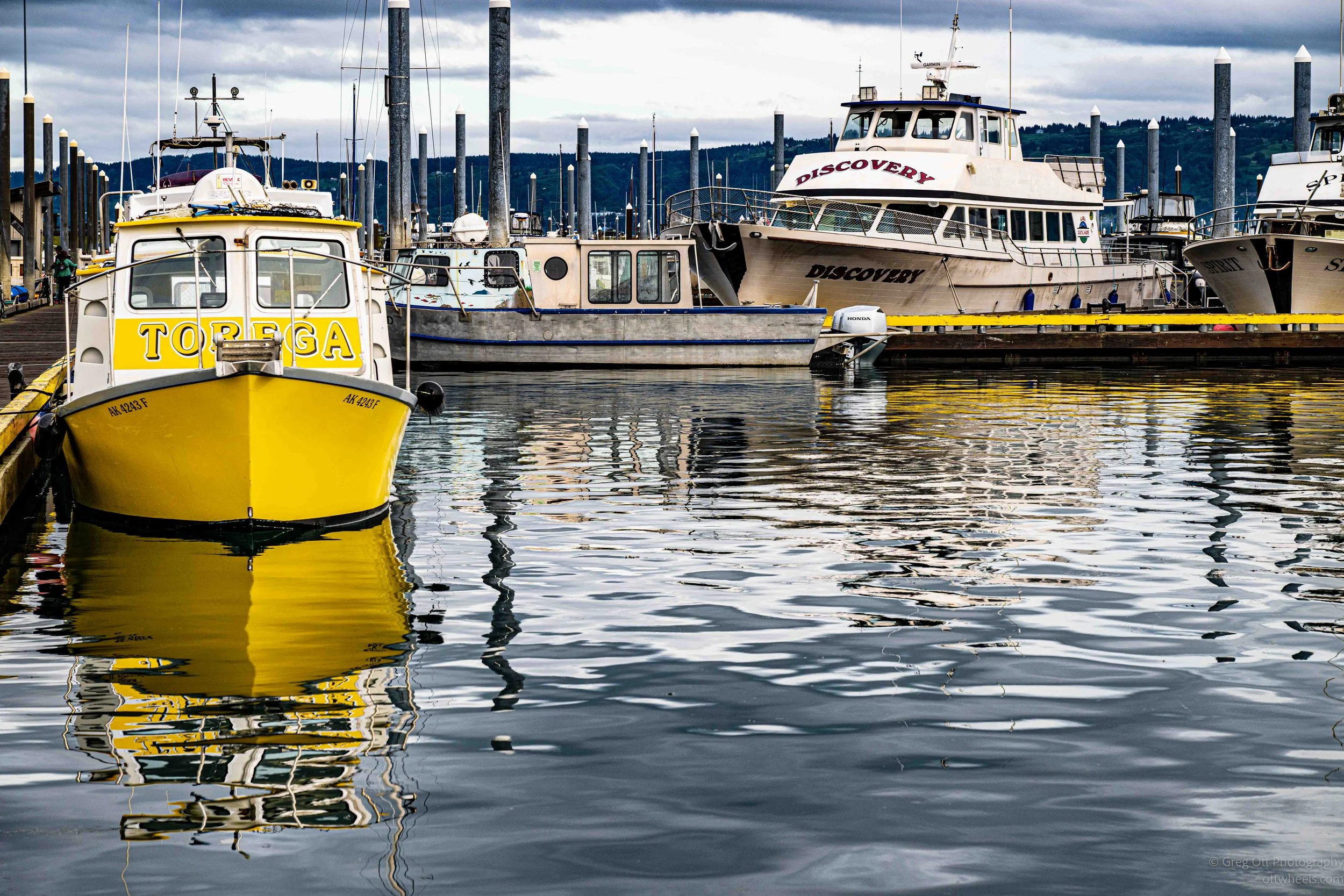
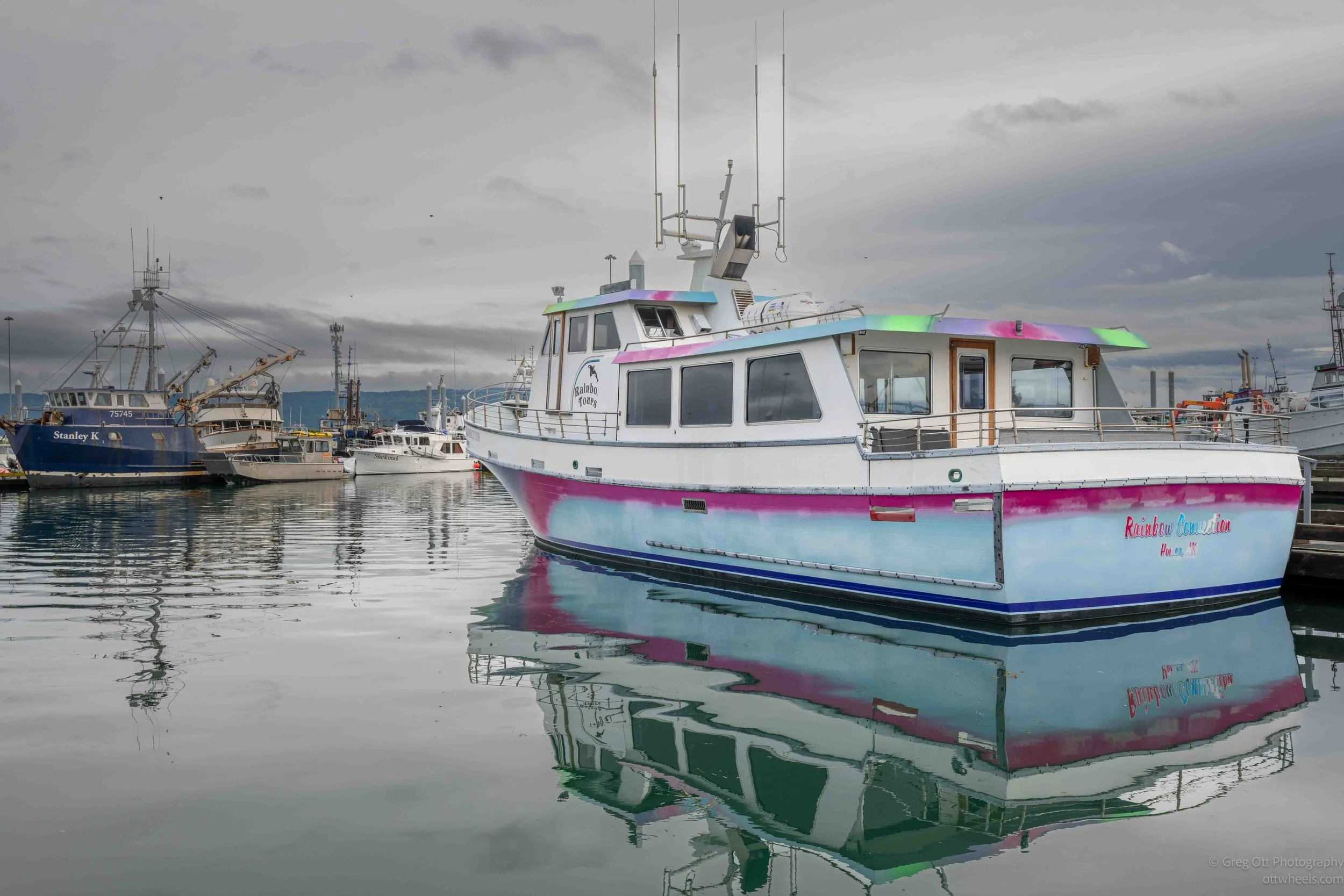
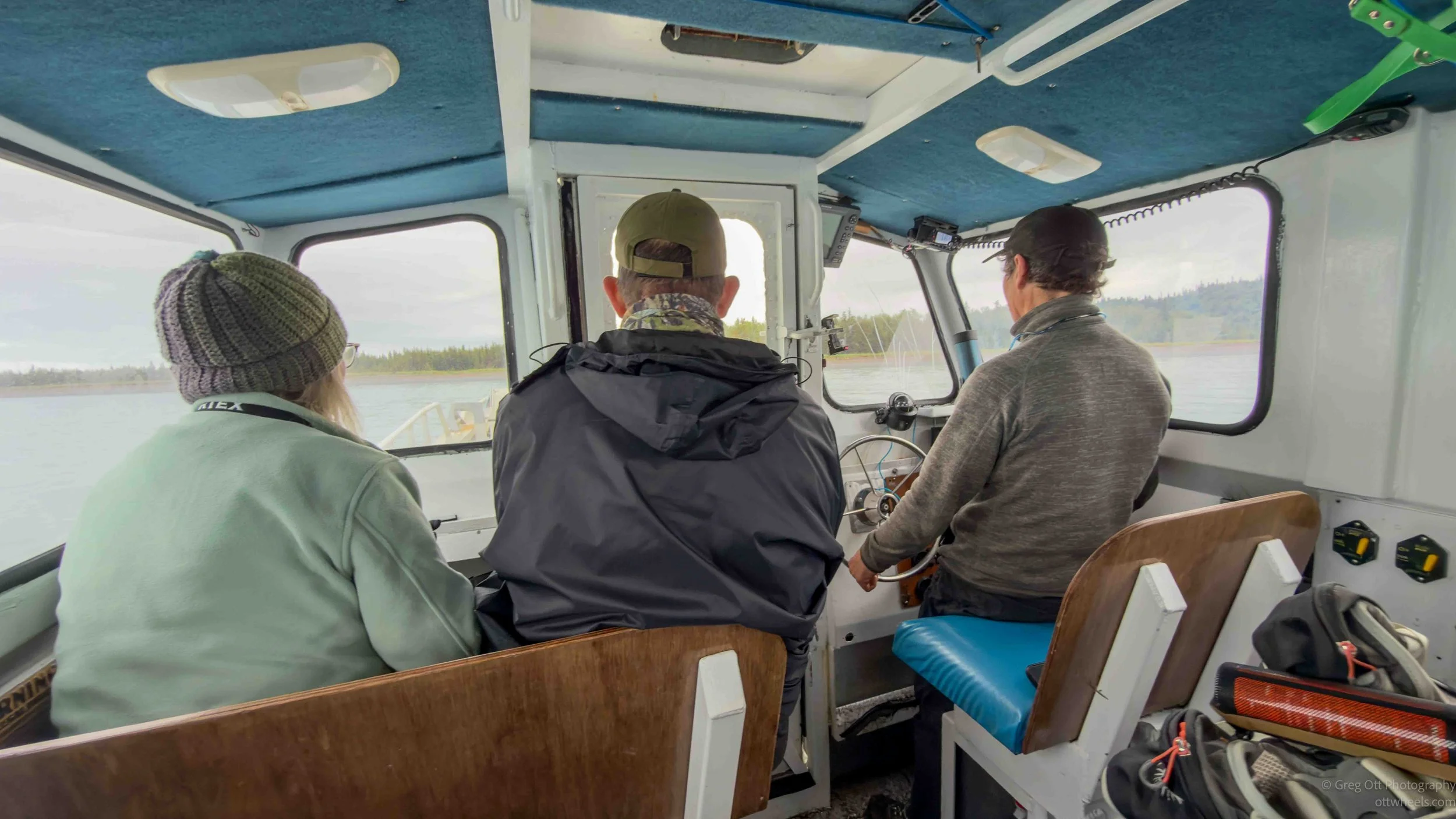
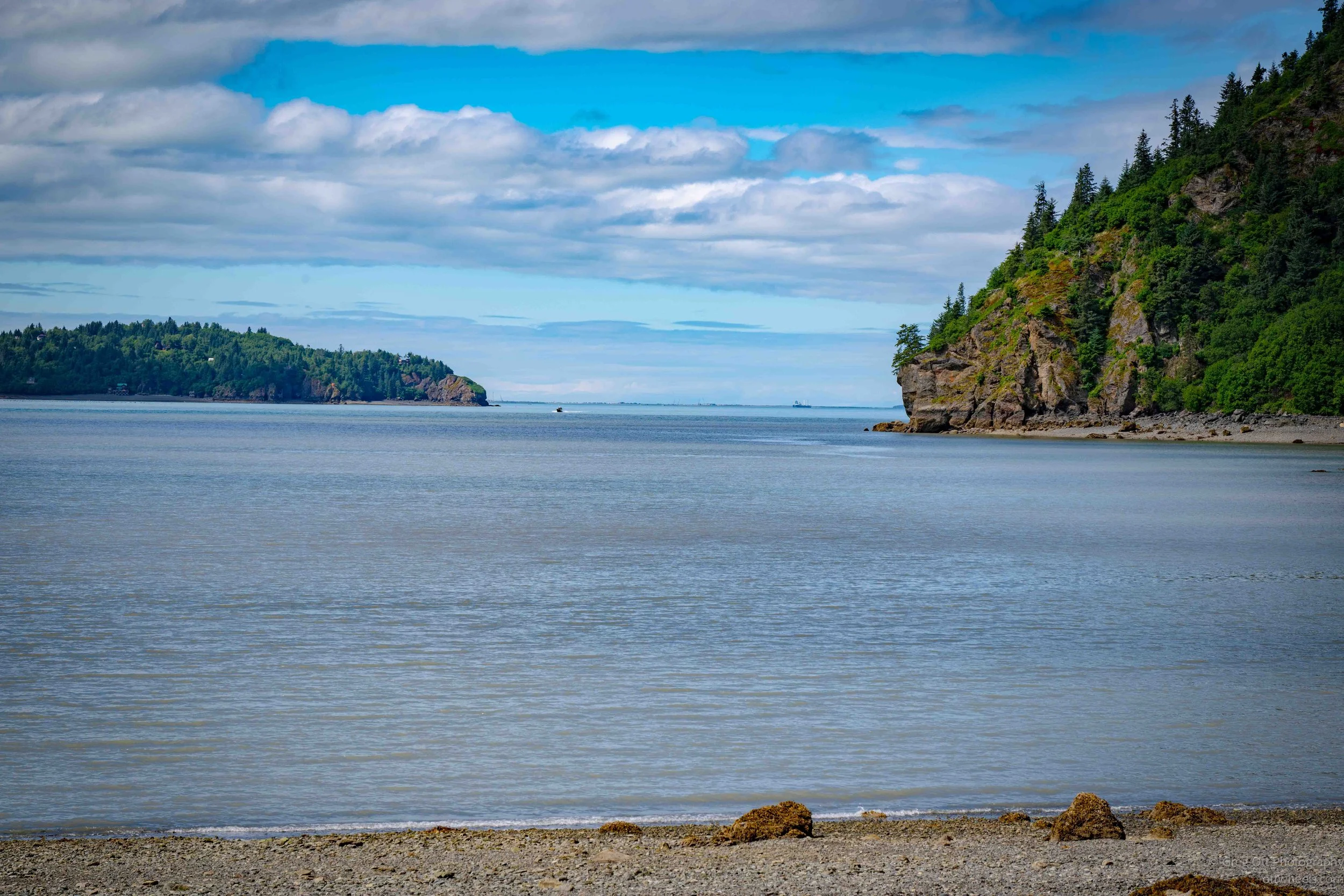
The water taxi ride across Kachemak Bay takes about twenty minutes. After a quick safety briefing and a rundown of where the life jackets were, we idled out through the no-wake zone before the captain opened the throttle for the crossing. He was more talkative than many of the captains I'd met in Alaska, asking where everyone was from and sharing stories of his own. Like Wyatt, who I'd met the day before, he skied too, so that gave us another topic as we crossed the bay.
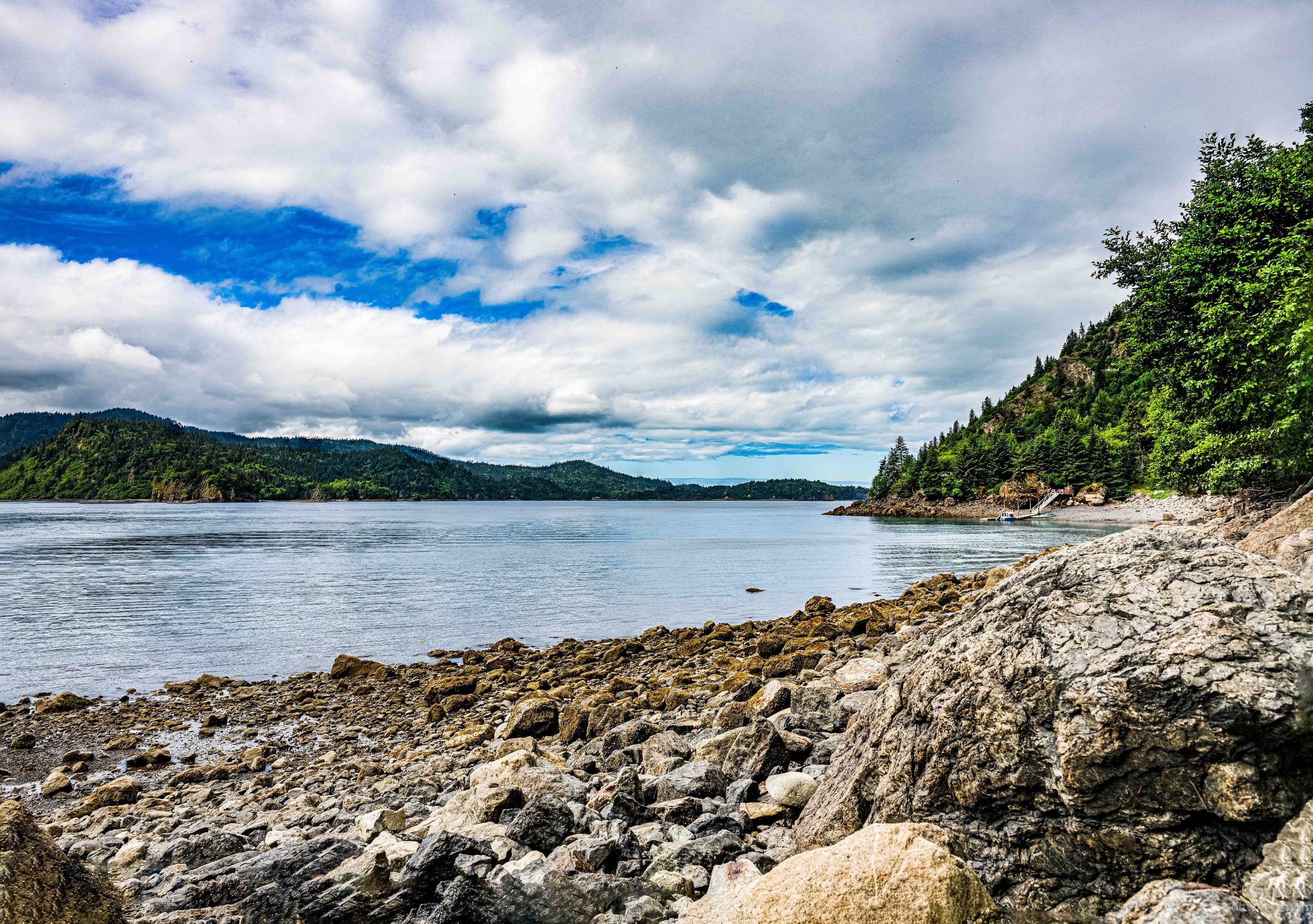
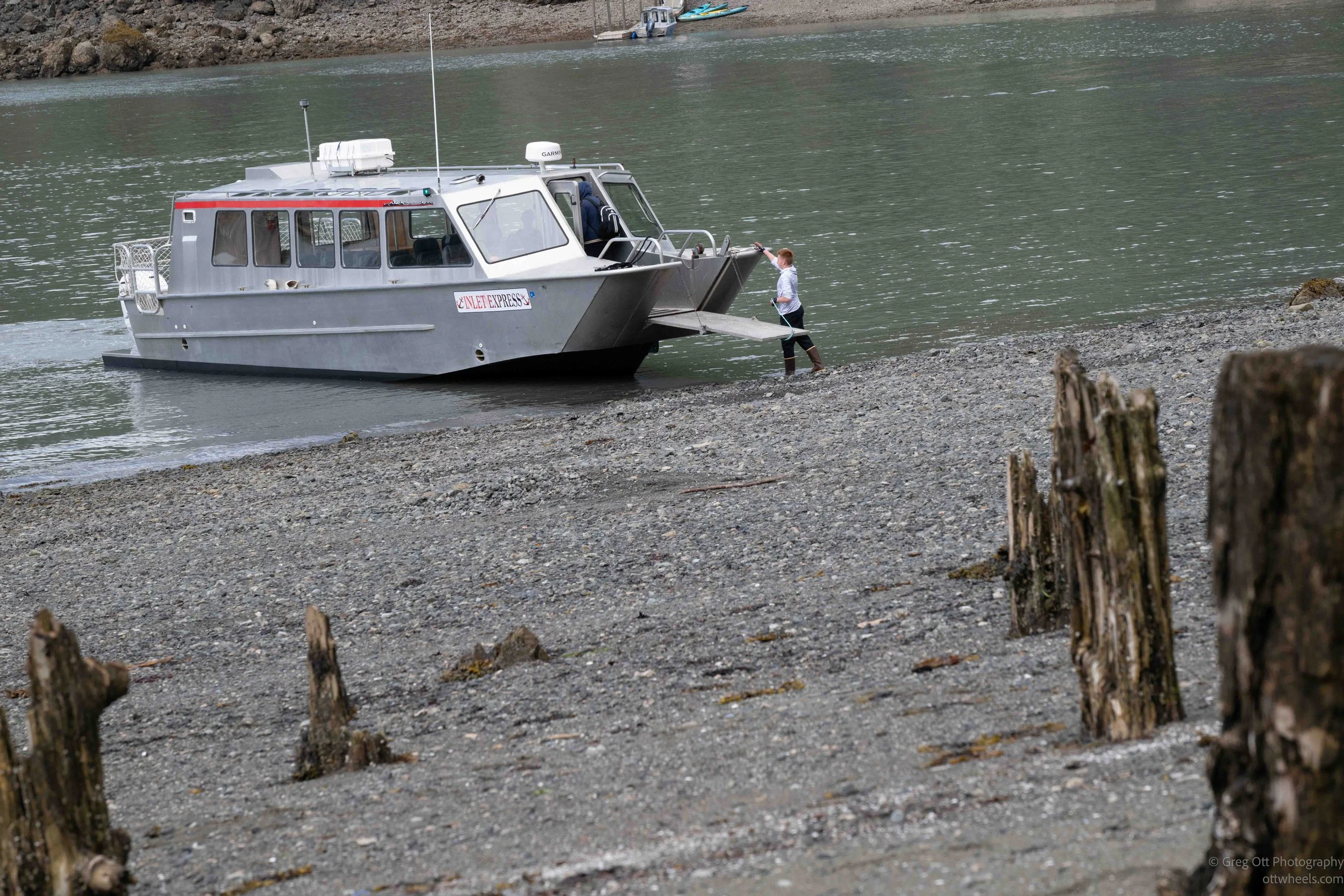
As we approached the opposite shore, the captain lowered the bow ramp directly onto the rocky beach so we could step ashore. This was Kachemak Bay State Park. At first glance it hardly looked like a trailhead. I looked up and down the shoreline before noticing a single post standing in front of a narrow, worn path disappearing into the grass. That was the start of the Glacier Spit Trail.
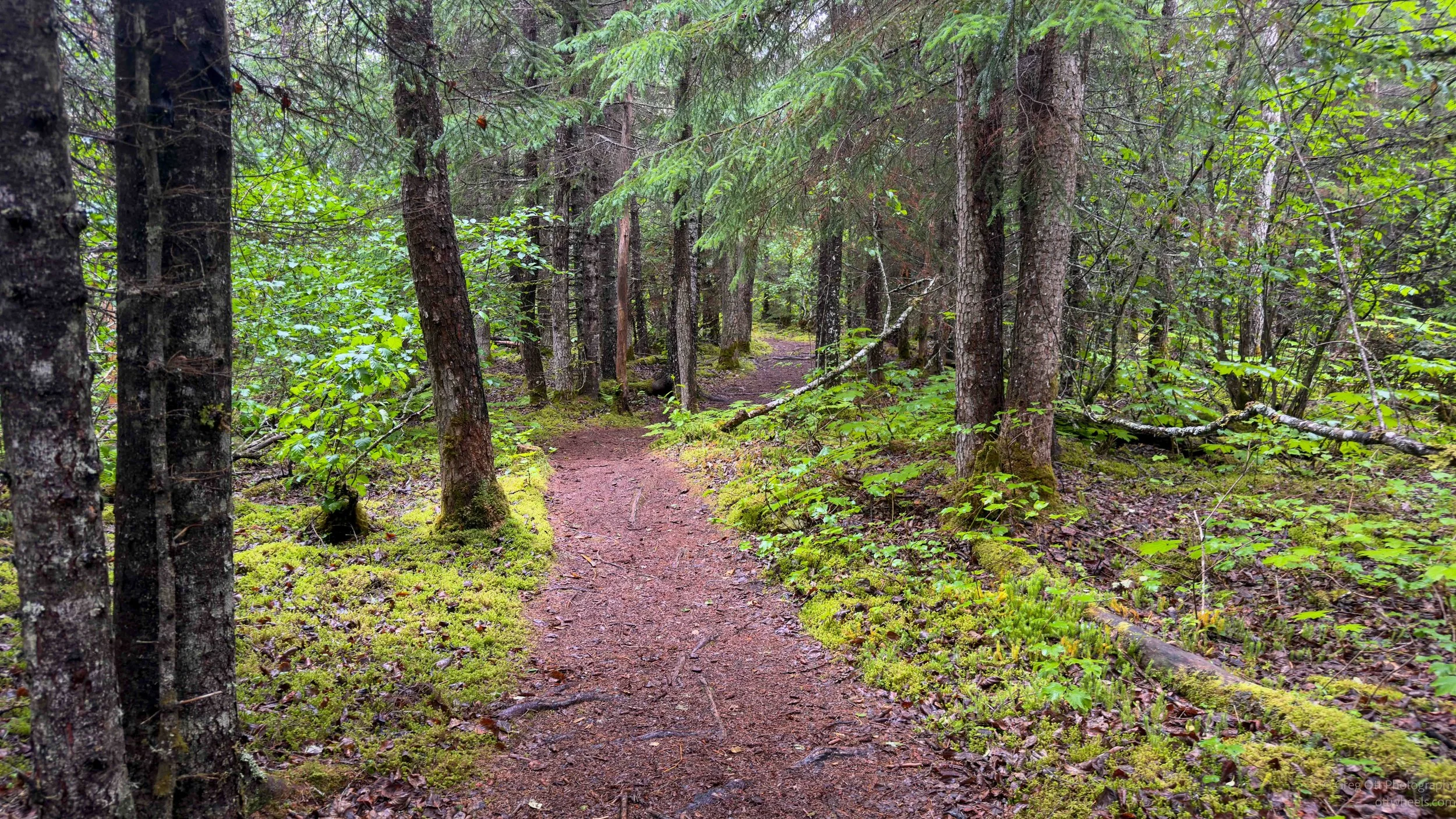
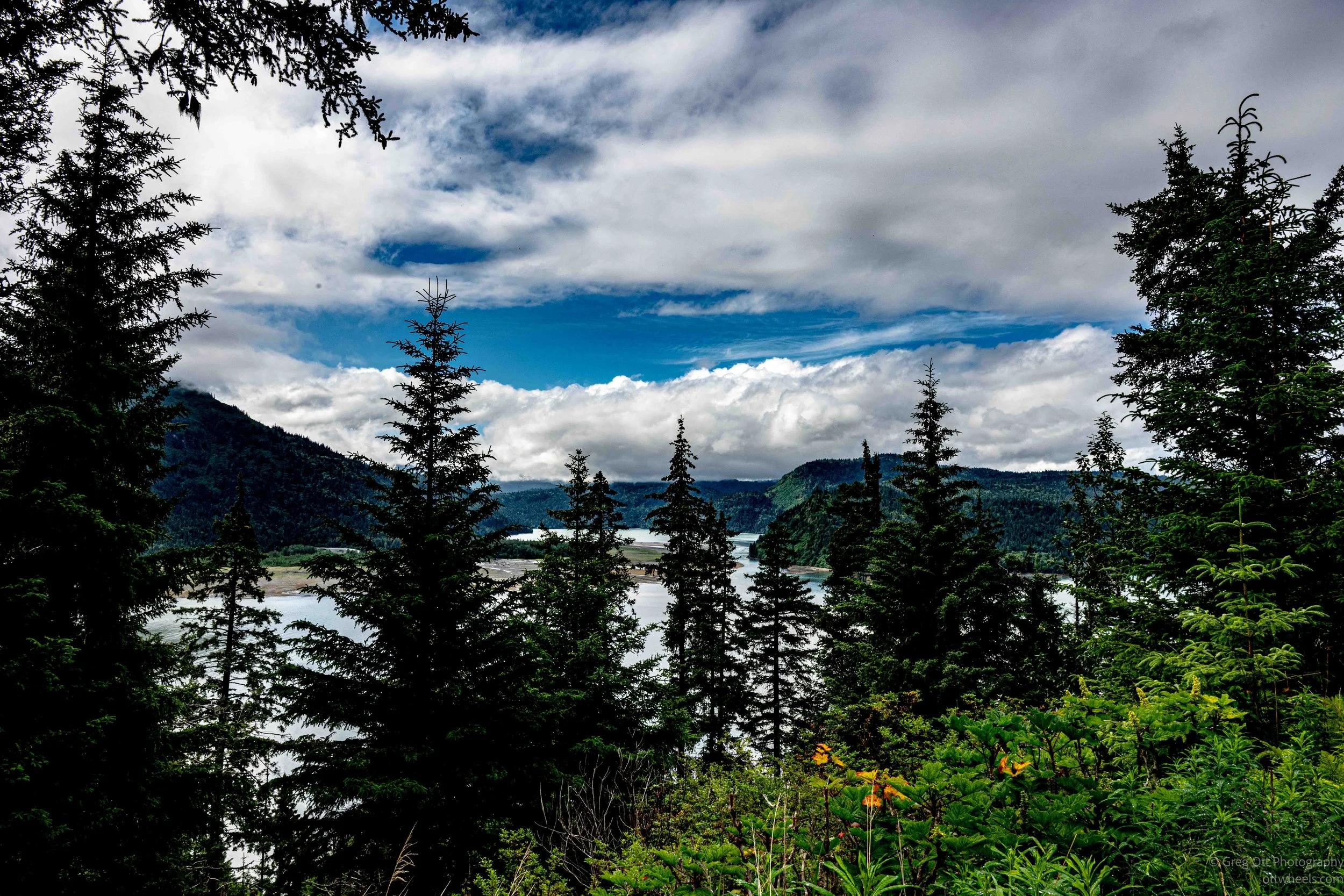
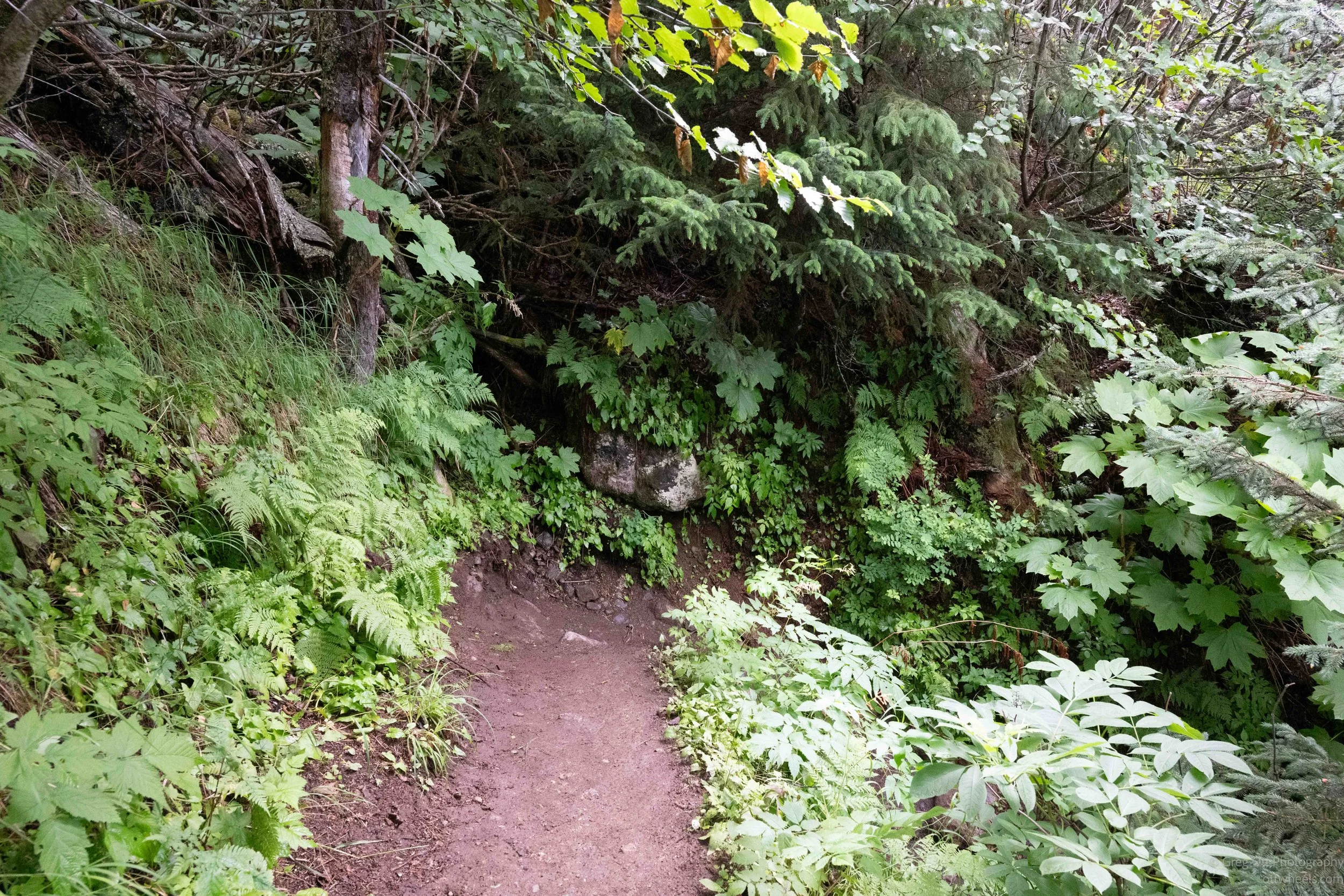
The trail stayed relatively level for almost the entire hike to the glacier. The first section was wonderfully soft underfoot, covered with years of decaying spruce needles, bark, moss, and leaves. After several days of rain, I expected long muddy stretches, but I was surprised by how well the trail had drained.
Not long after leaving the beach, I fell into step with a couple from Washington State who'd been on the same water taxi. They were easy to talk with, hiked at about my pace, and made good company. The husband mentioned he'd had two knee surgeries, something I never would have guessed watching him move along the trail. His wife seemed to notice everything around us.
That attention paid off more than once. At one point he quietly motioned toward the woods, where a mother black bear was moving through the trees with two cubs close behind. He managed a quick photograph before they disappeared into the brush. We watched only briefly before moving on — no reason to overstay our welcome.
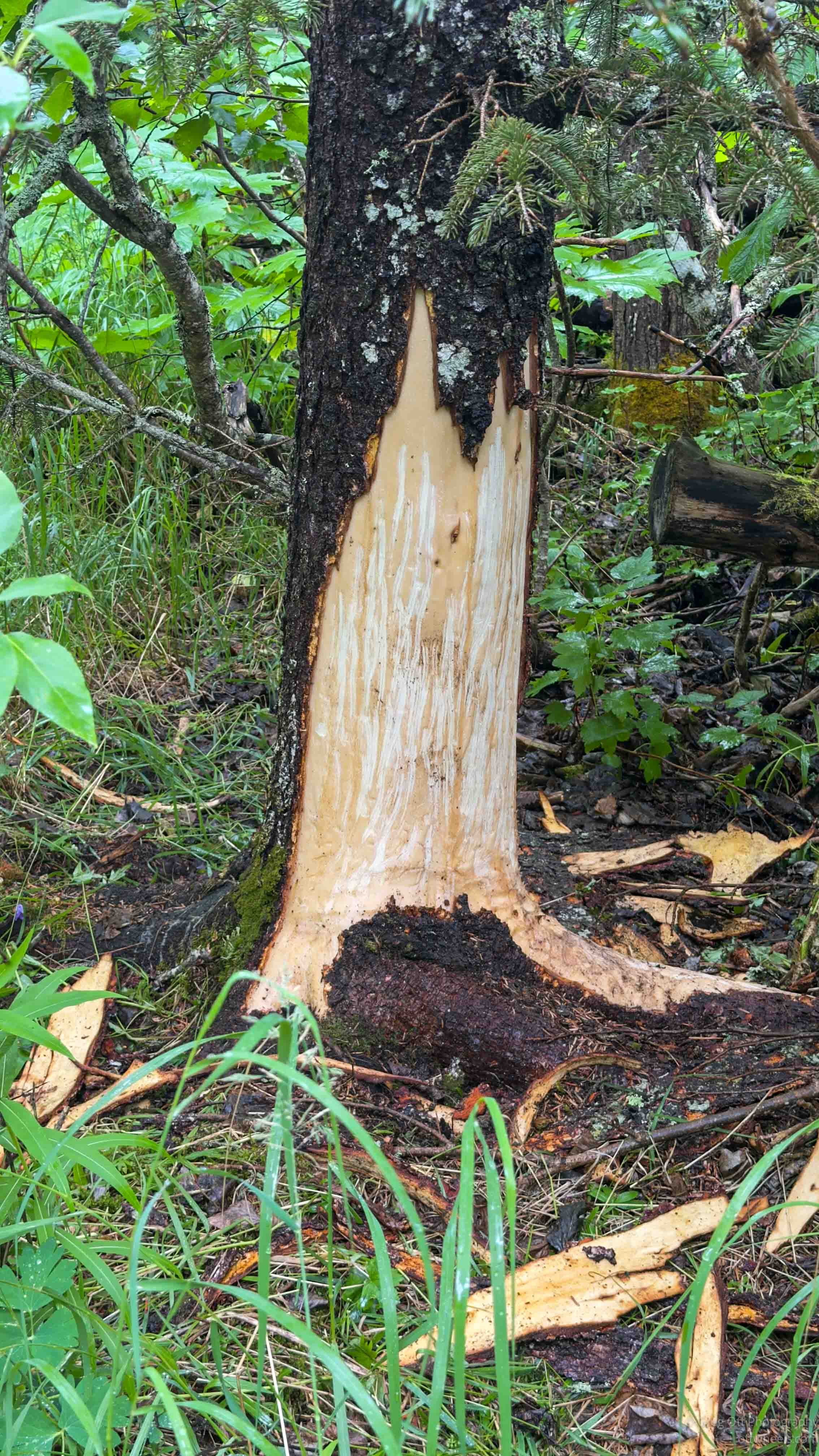
As we kept hiking, they pointed out signs I probably would have walked right past. Fresh bear tracks crossed the trail in several places, and others disappeared into the surrounding vegetation. We also stopped beside a tree covered with deep scratches. I assumed they were bear claw marks, but he explained they were actually made by a porcupine. I never would have guessed that on my own.d
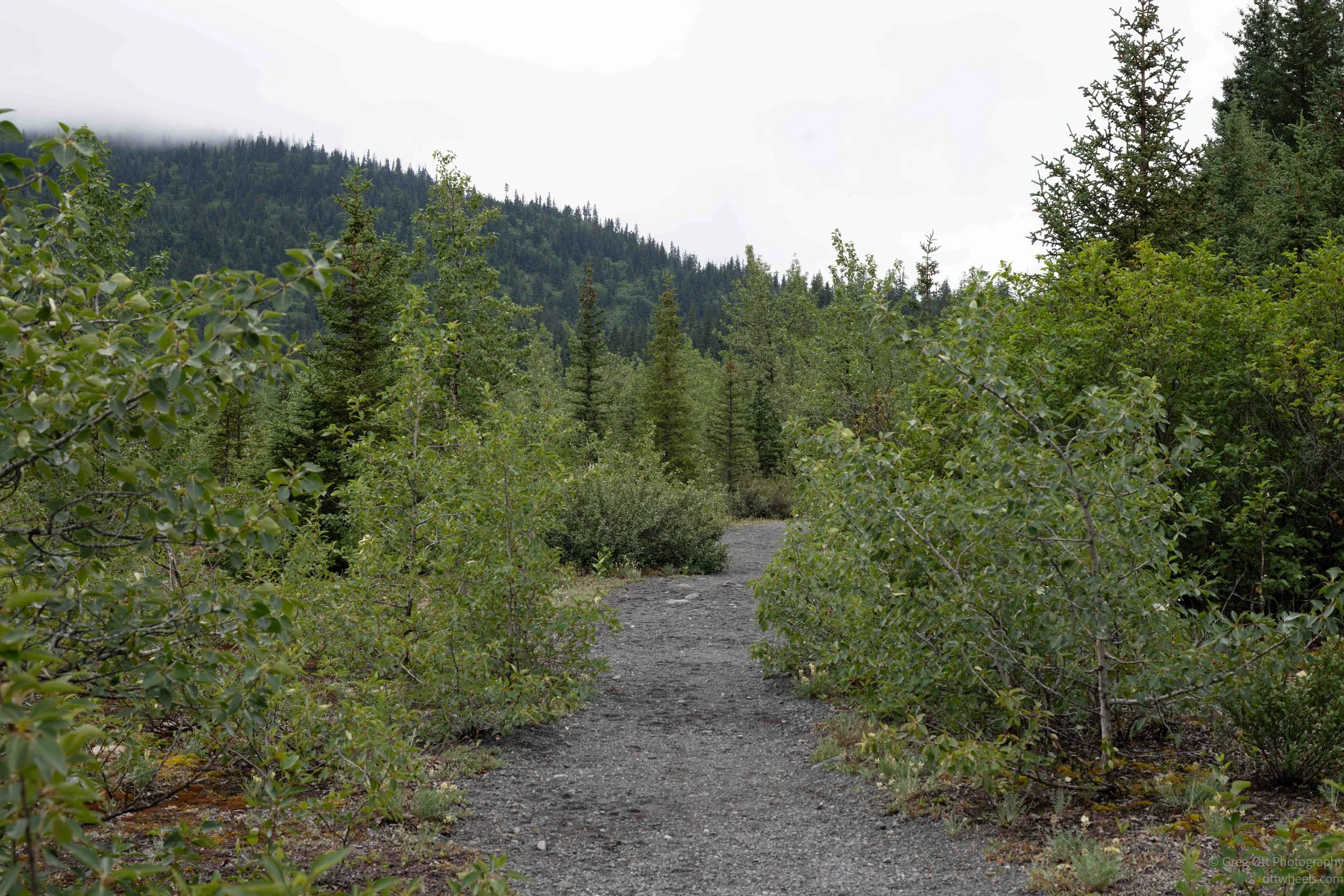
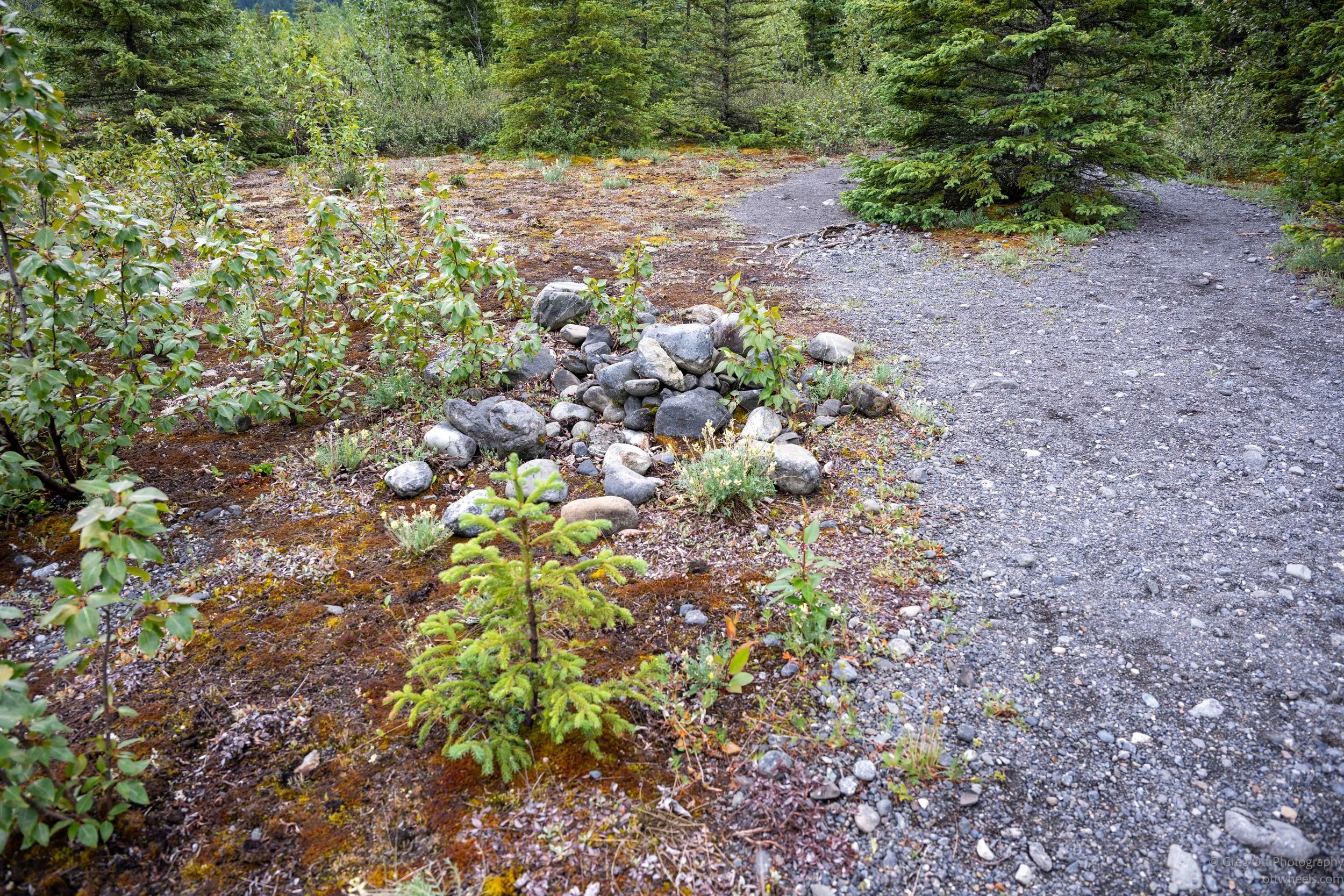
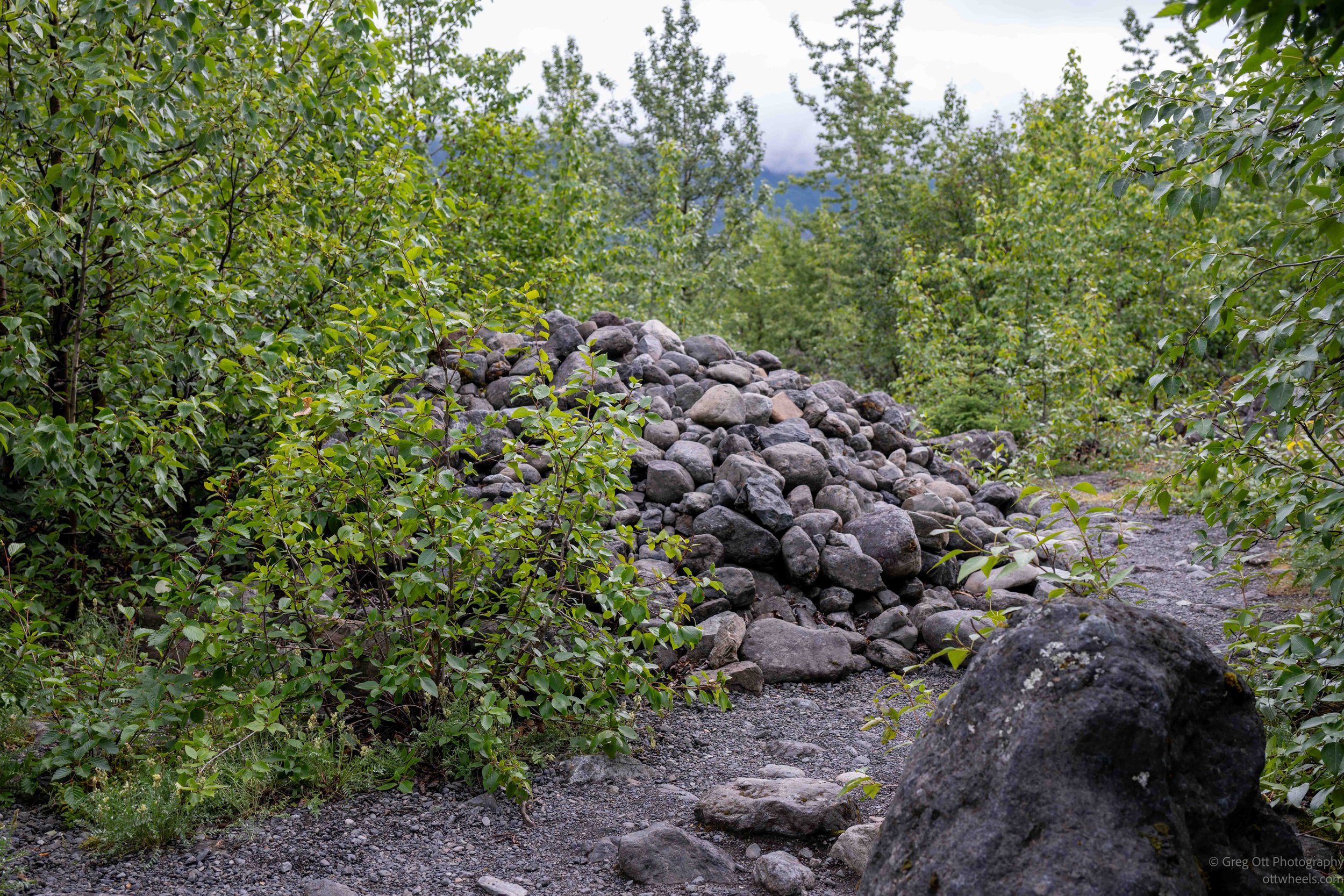
Eventually the forest thinned, the trail turned rockier, and I started noticing stone piles everywhere. I've seen an occasional stack of rocks marking a trail, or rocks rearranged to make steps or walls, or placed in rows to mark a trail and keep people off fragile areas. This was different — at first they were small piles of 20 rocks, and eventually, as we approached the lake, there was a massive pile of hundreds of rocks. I wondered why they went to the effort of carrying the rocks to a spot instead of just tossing them off the trail.
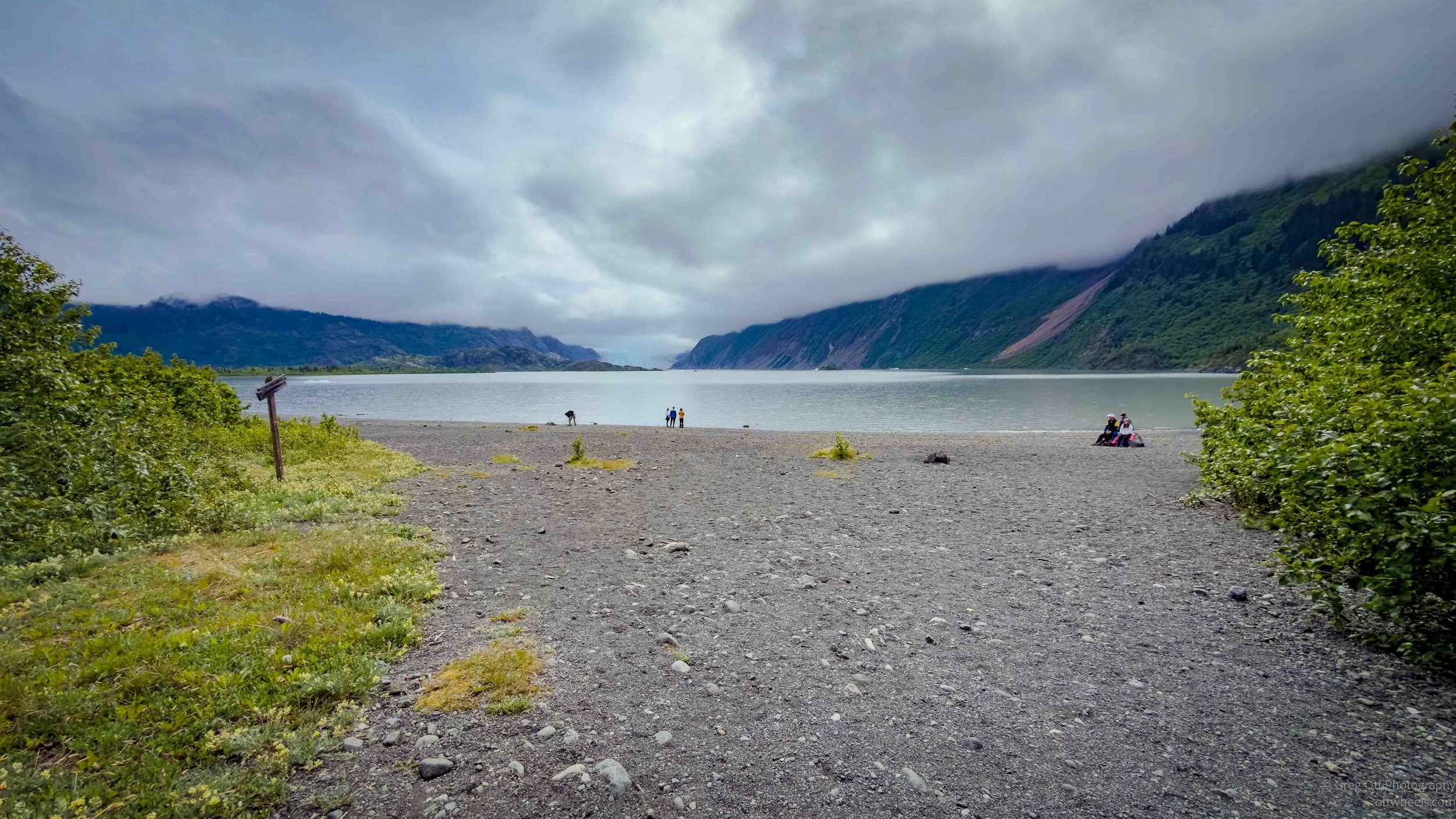
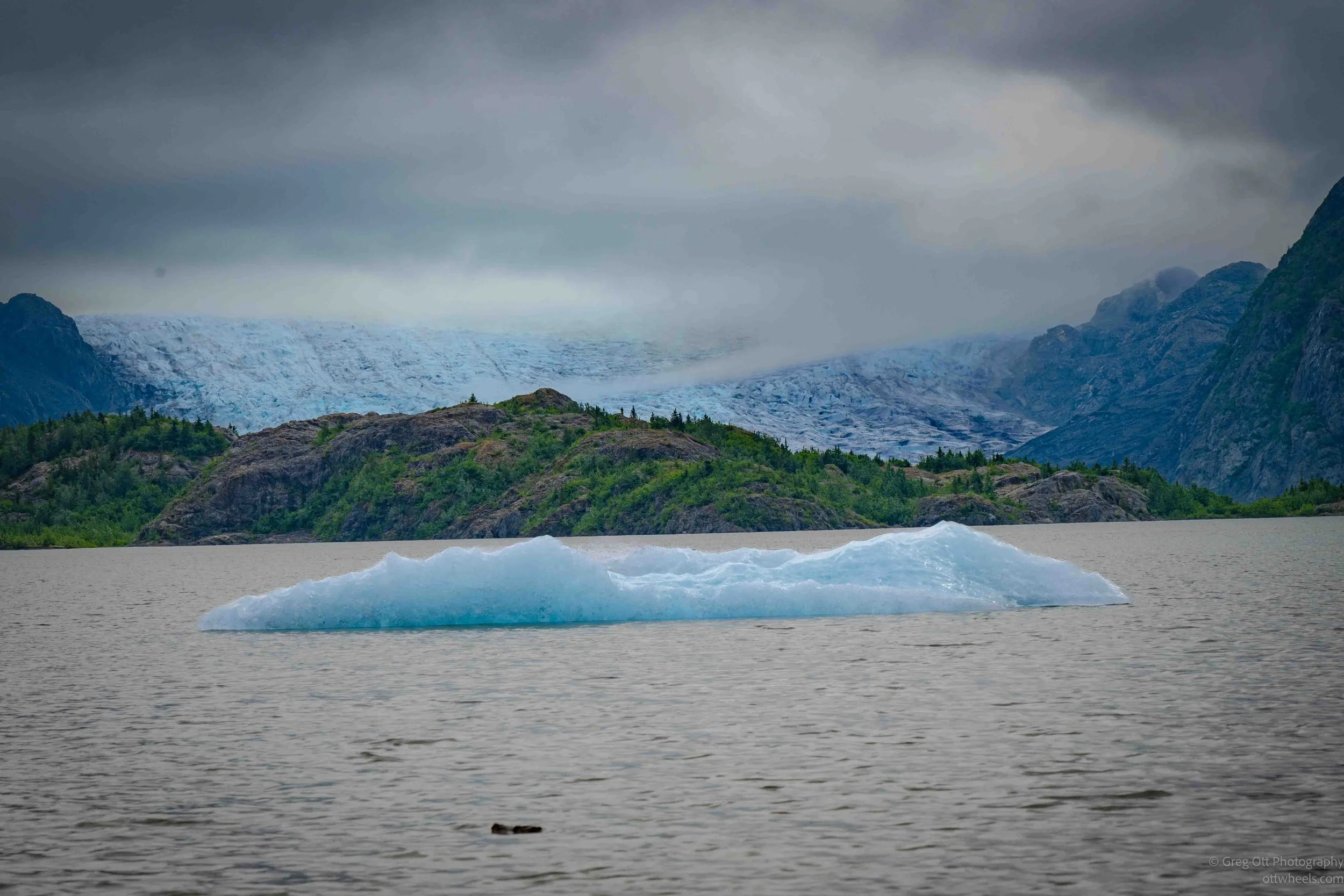
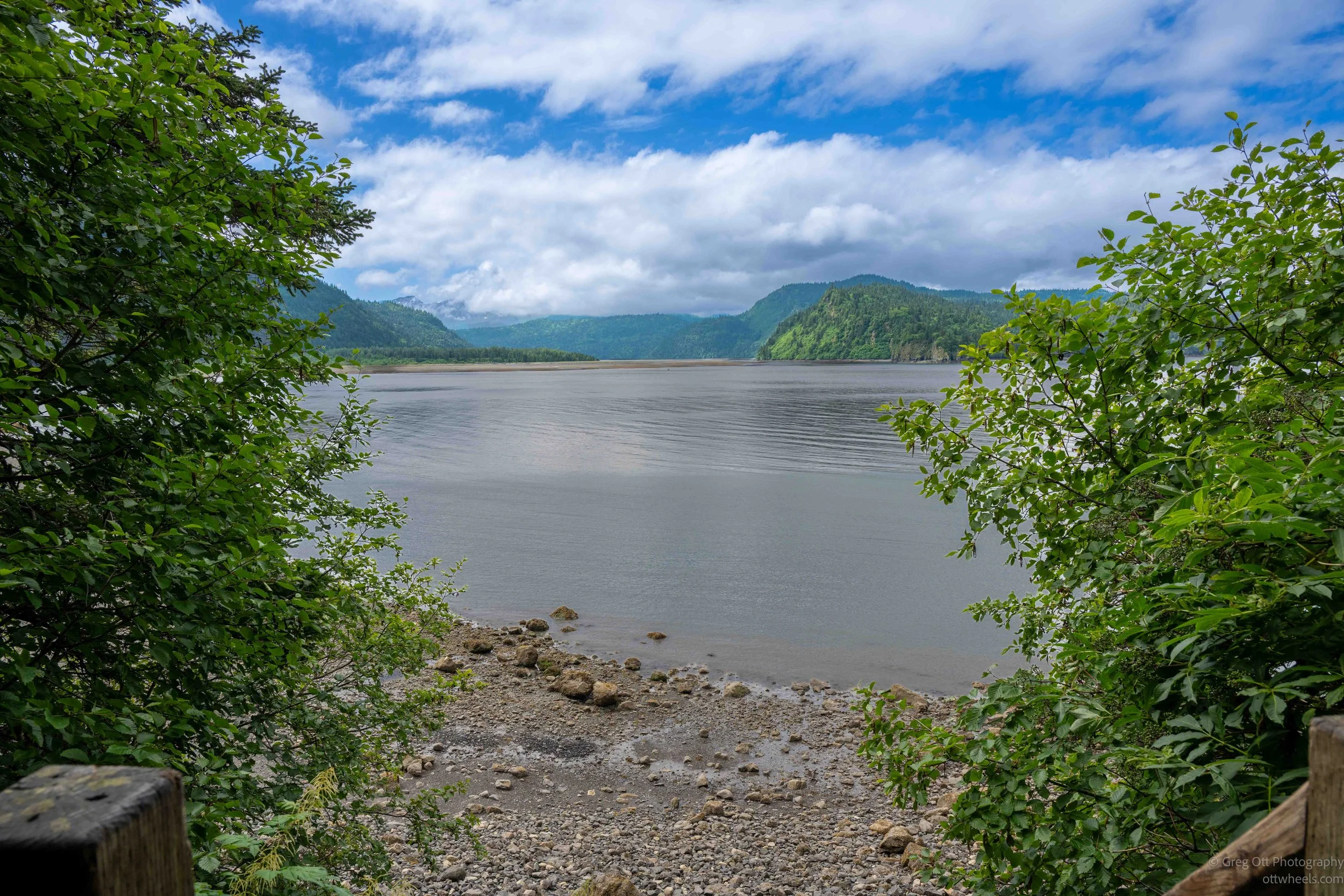
With every turn the mountains seemed to pull farther apart, until Grewingk Glacier finally came into view. It flowed down between steep peaks into Grewingk Lake, where chunks of blue ice floated quietly near the shoreline. It was the kind of view that makes you stop and just look. After time in a dense forest, the openness of the lake and the glacier beyond felt grand.
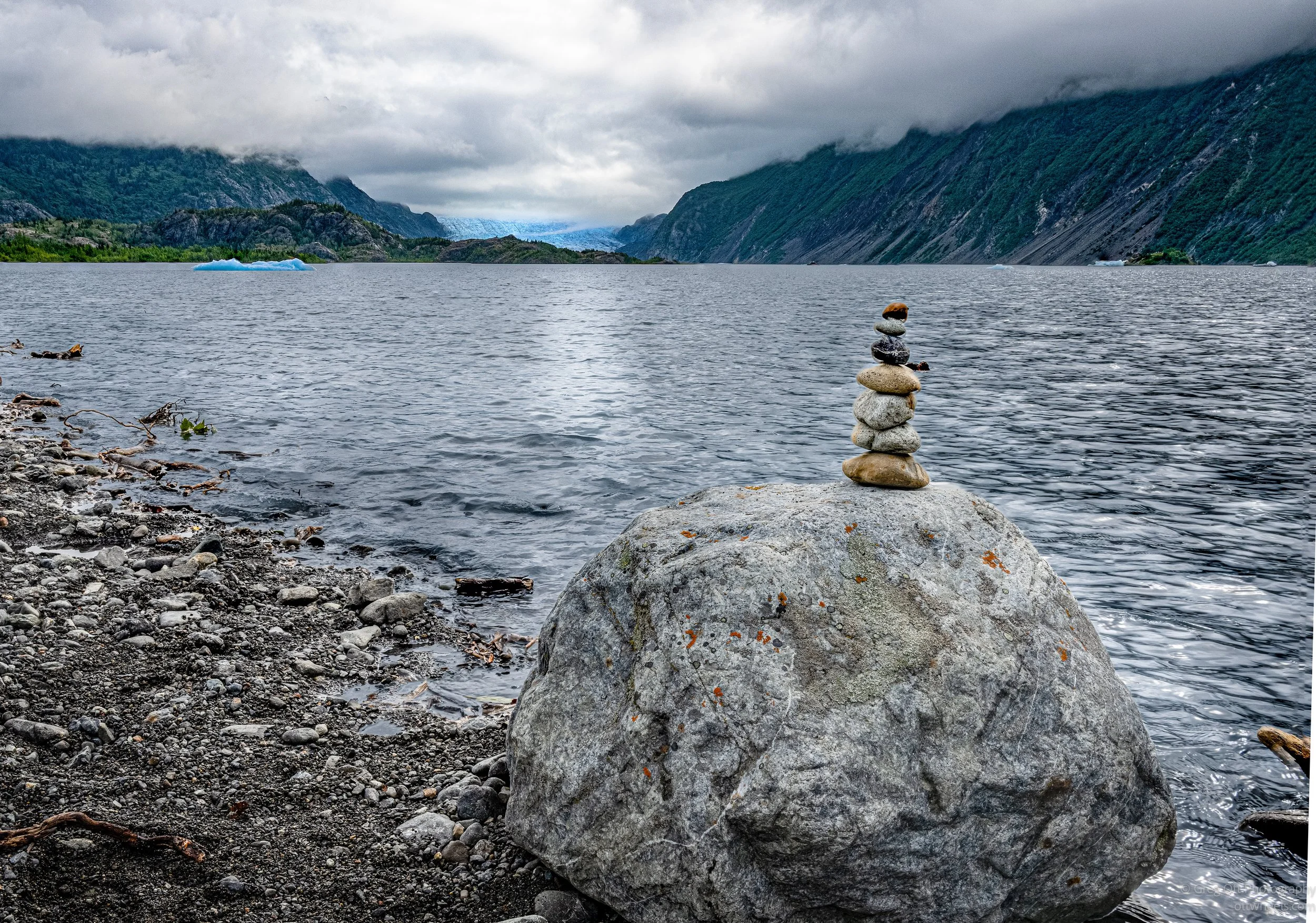
I started looking for photographs a little different from the standard scenic view, and wandered toward a large piece of blue ice that had drifted close to shore. Nearby, a Chinese family had built one of the rock cairns, and it made an interesting foreground with the lake, floating ice, and glacier behind it.
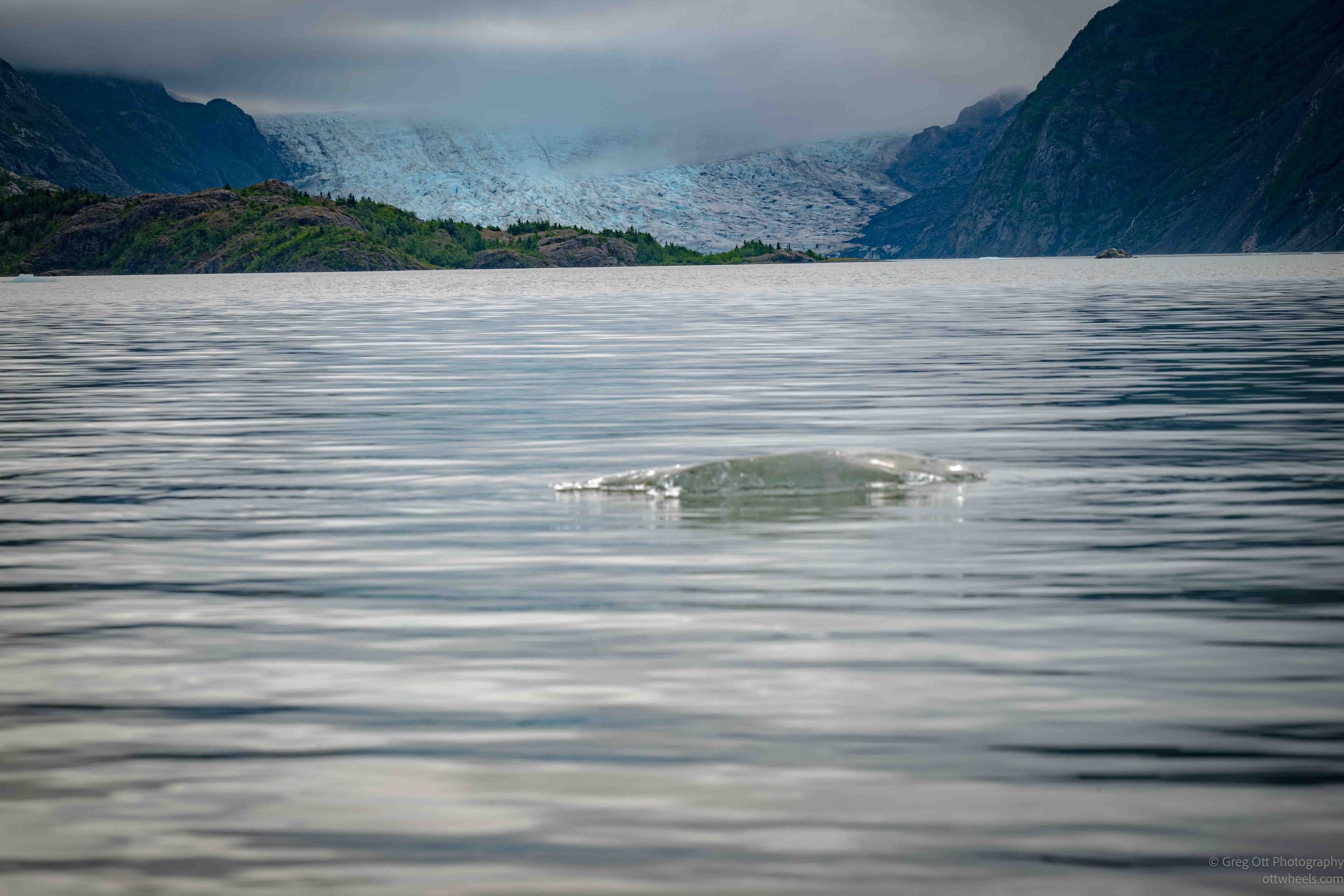
As I was photographing the scene, the husband walked over and asked what I was doing. I explained I was shooting a series of images for focus stacking. "How do you do that without a tripod?" he asked.
I showed him how I tried to hold the composition as steady as possible while shifting the focus point through the scene. Sometimes the software aligns everything perfectly afterward, and sometimes it doesn't — it depends on how steady I can hold the camera. He smiled, thanked me, and said he'd give it a try himself before leaving.
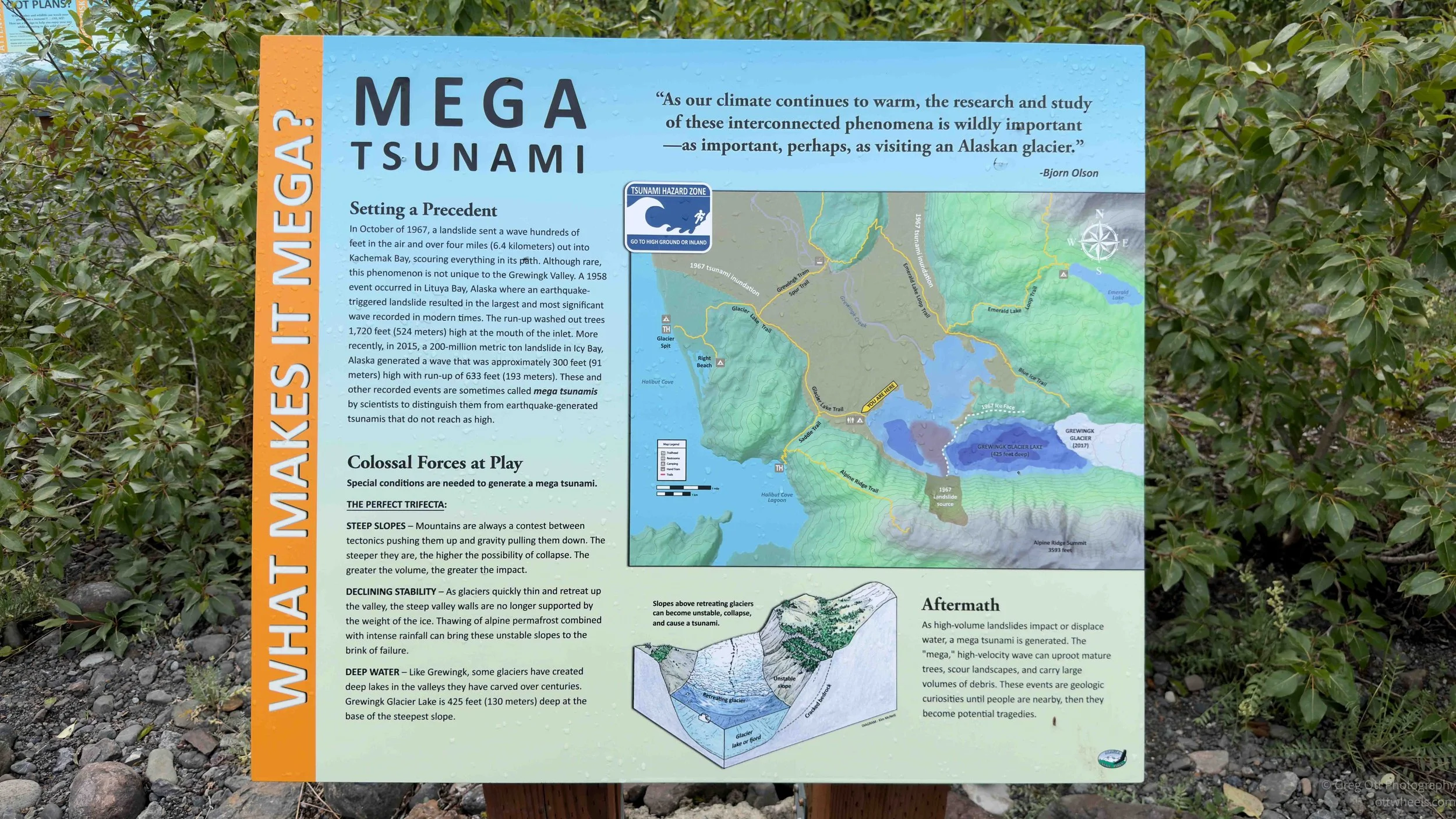
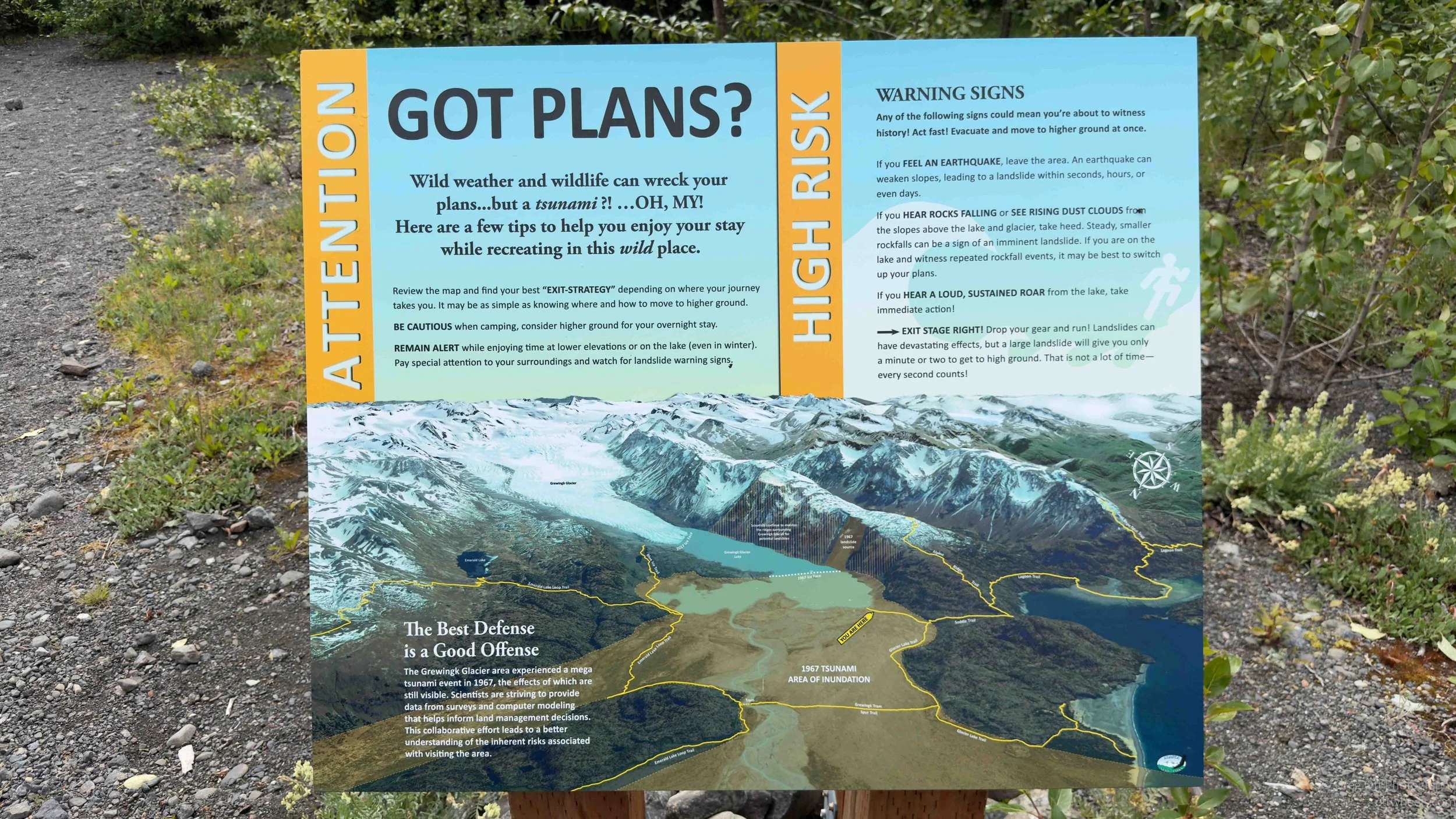
I spent a while walking the shoreline looking for different compositions before finally turning back toward the trail. Just before leaving the lake, I stopped at a pair of interpretive signs describing something I'd never heard of — a mega tsunami.
Like most people, I'd always associated tsunamis with undersea earthquakes. These signs described something entirely different: mega tsunamis are caused by enormous landslides crashing into deep lakes or narrow bays, creating waves that can be hundreds of feet high. Grewingk Valley (tsunami) has many of the conditions for one — steep surrounding mountains, retreating glaciers, thawing alpine permafrost, and a lake more than 425 feet deep near the base of the slopes.
What really caught my attention were the warning signs. A sustained roar, a rising dust cloud, falling rocks, or even an earthquake could mean a landslide was underway. If that happened, the instructions were simple: don't stop to investigate — drop everything and run for higher ground.
Standing there, looking across such a peaceful valley, surrounded by wildflowers and a glacier slowly retreating into the mountains, it was hard to imagine that same landscape unleashing that kind of power. Throughout my travels in Alaska I've been reminded again and again that the mountains, glaciers, volcanoes, and coastlines aren't relics of the past — they're still shaping the state today.
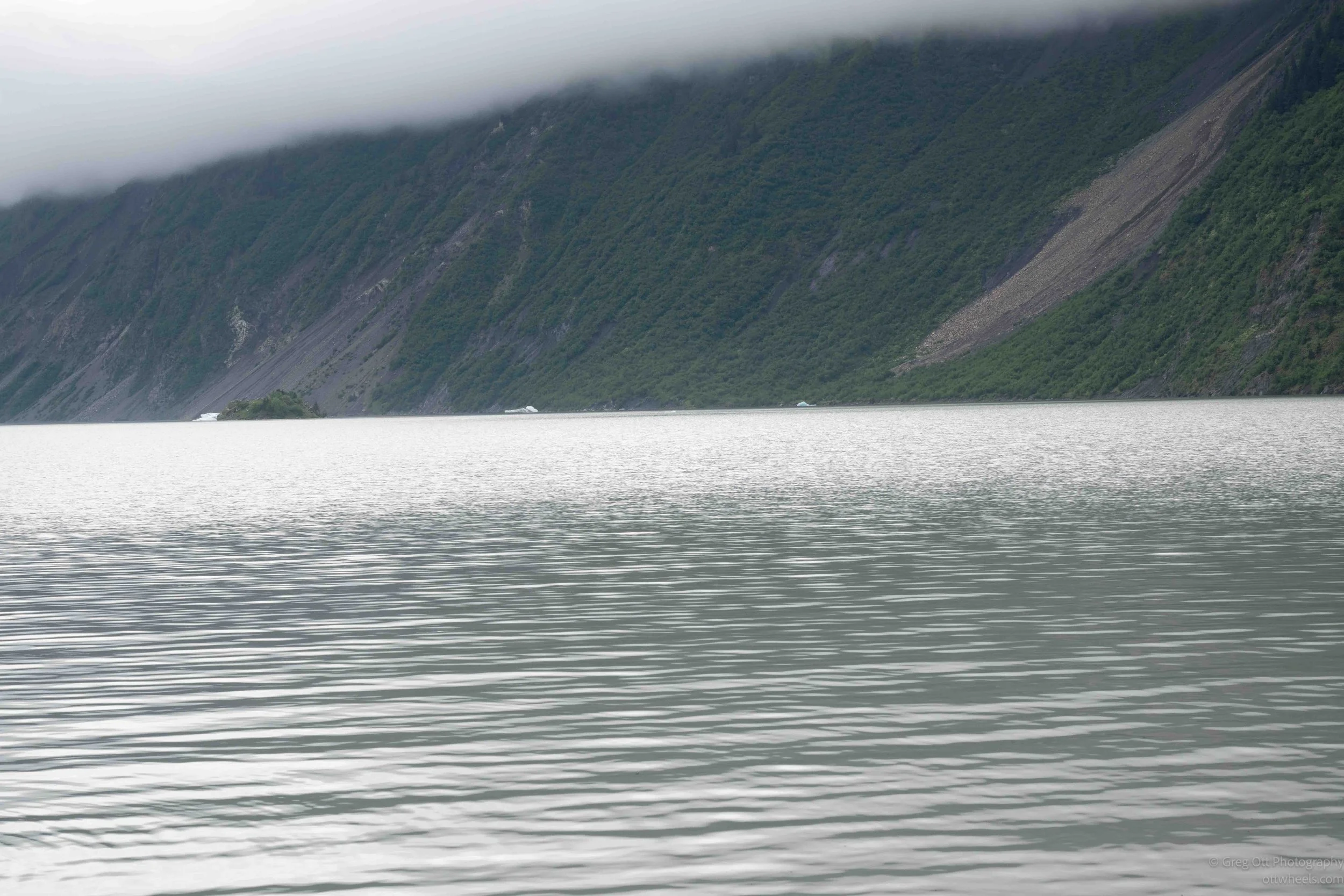
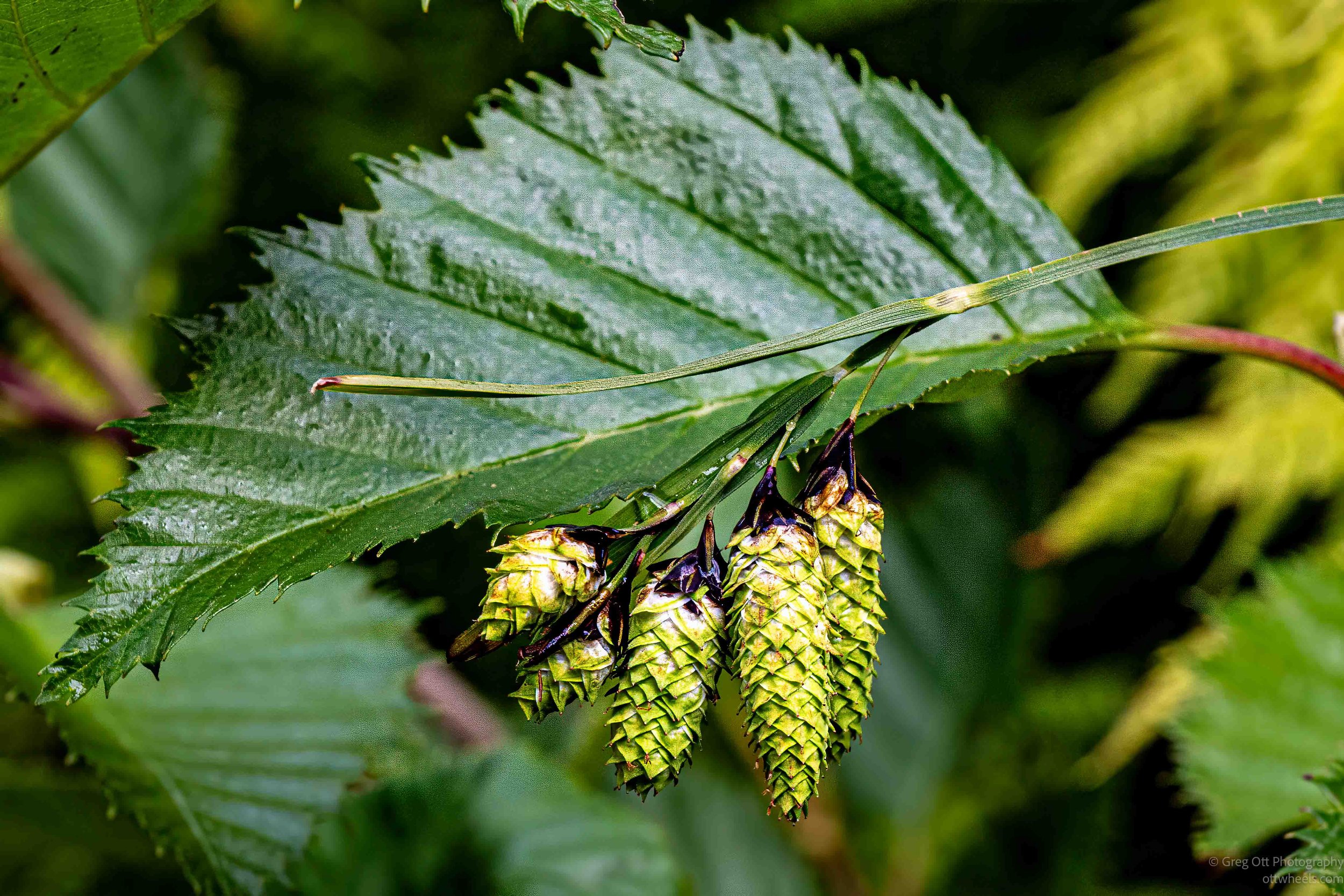
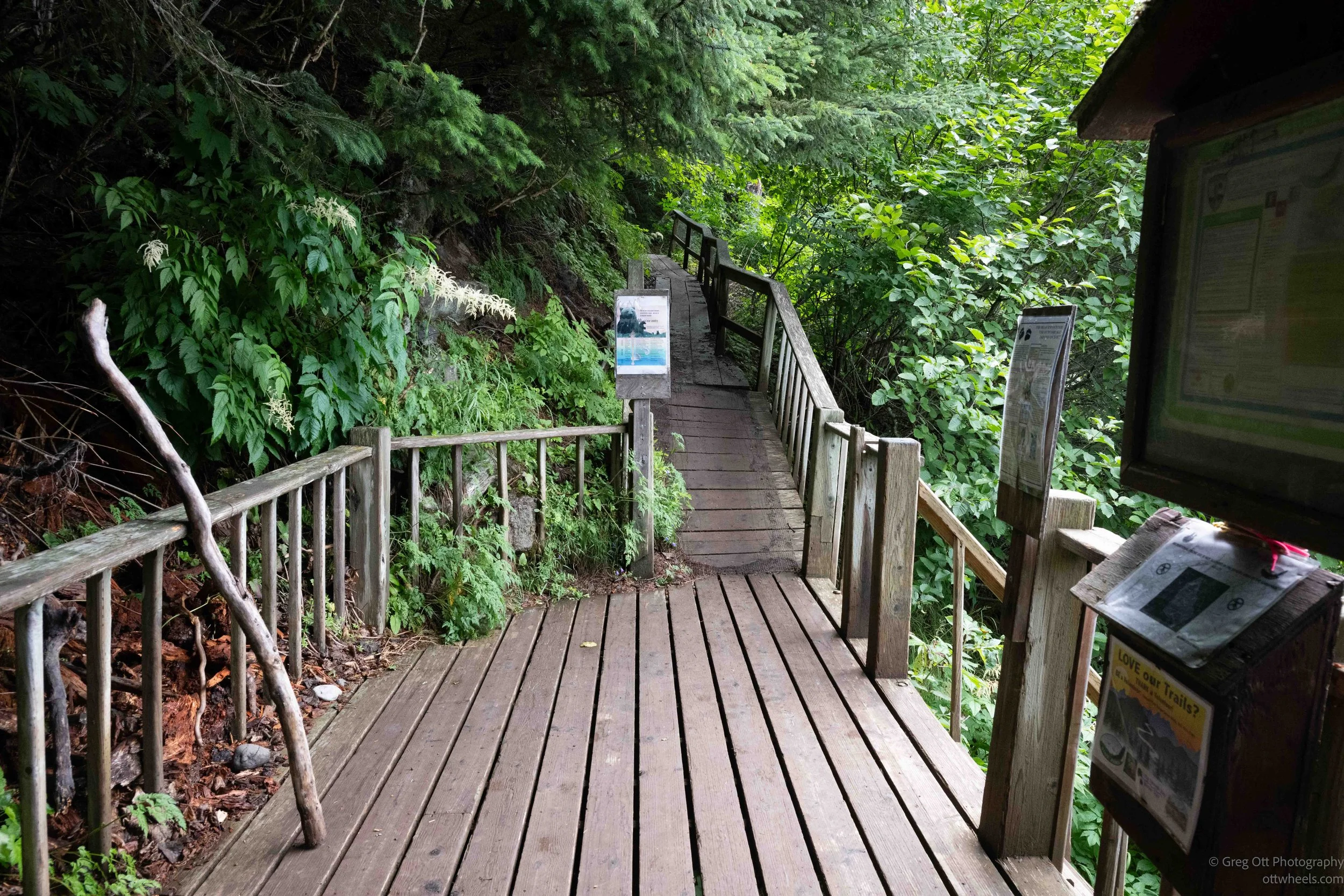
From the lake, I headed toward the Saddle Trail, which connects with the Glacier Lake Trail and leads to the beach where the water taxi picks up hikers. The trail climbed about 200 feet before dropping steeply through a series of switchbacks. It wasn't a long climb, but after the mostly level hike to the glacier, it got my attention. I stopped to look at vegetation, mushrooms, flowers, and odd tree formations.
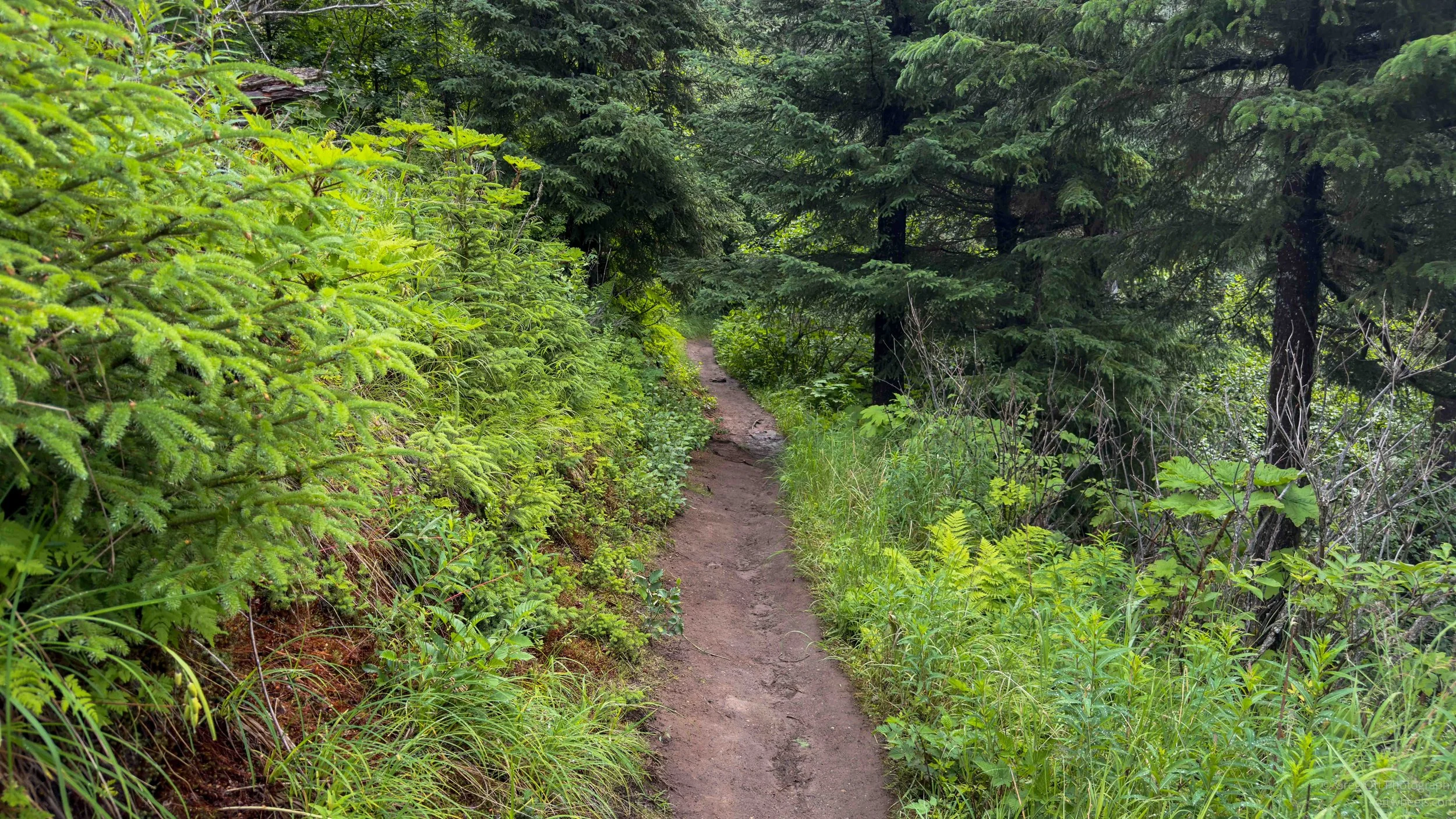
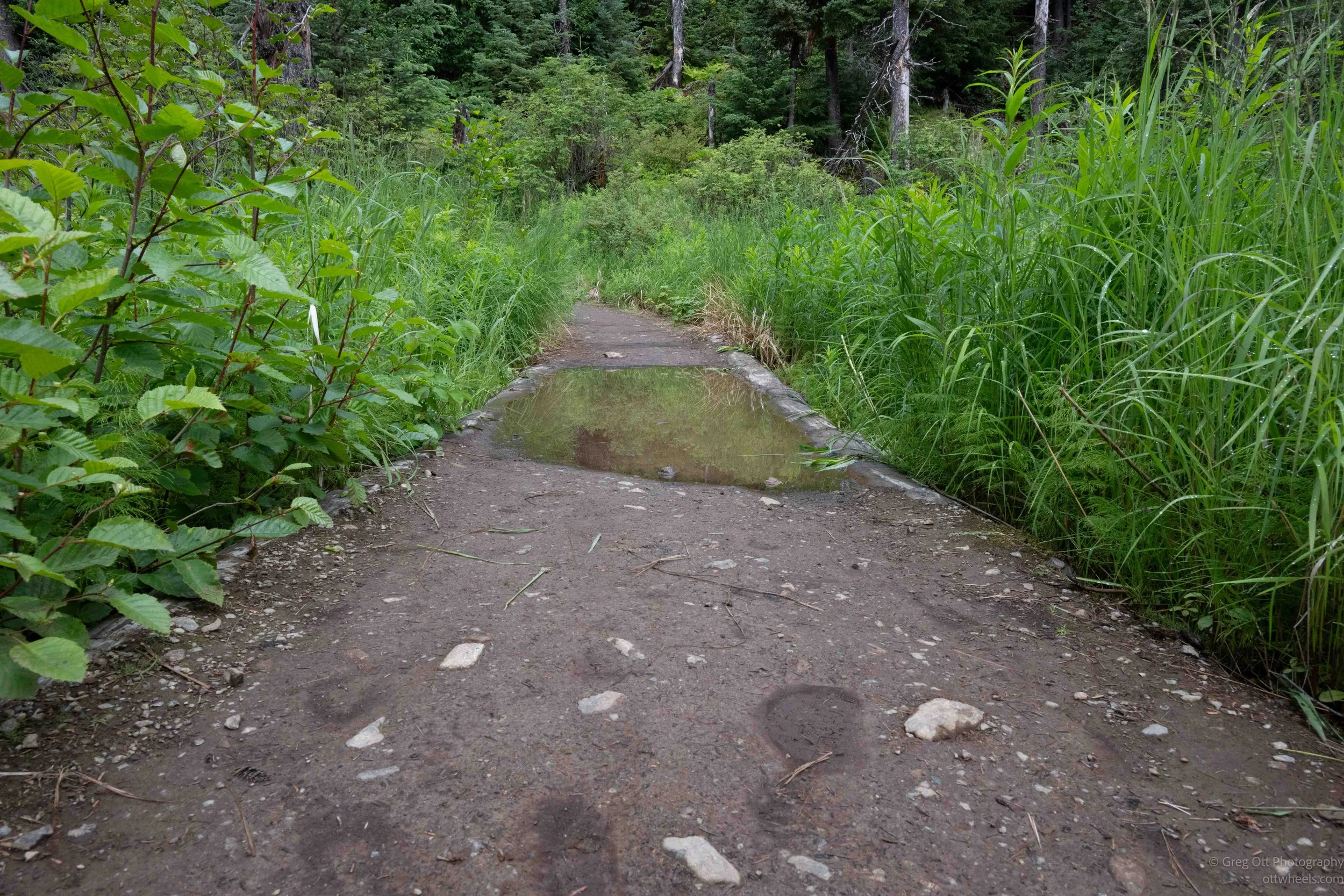
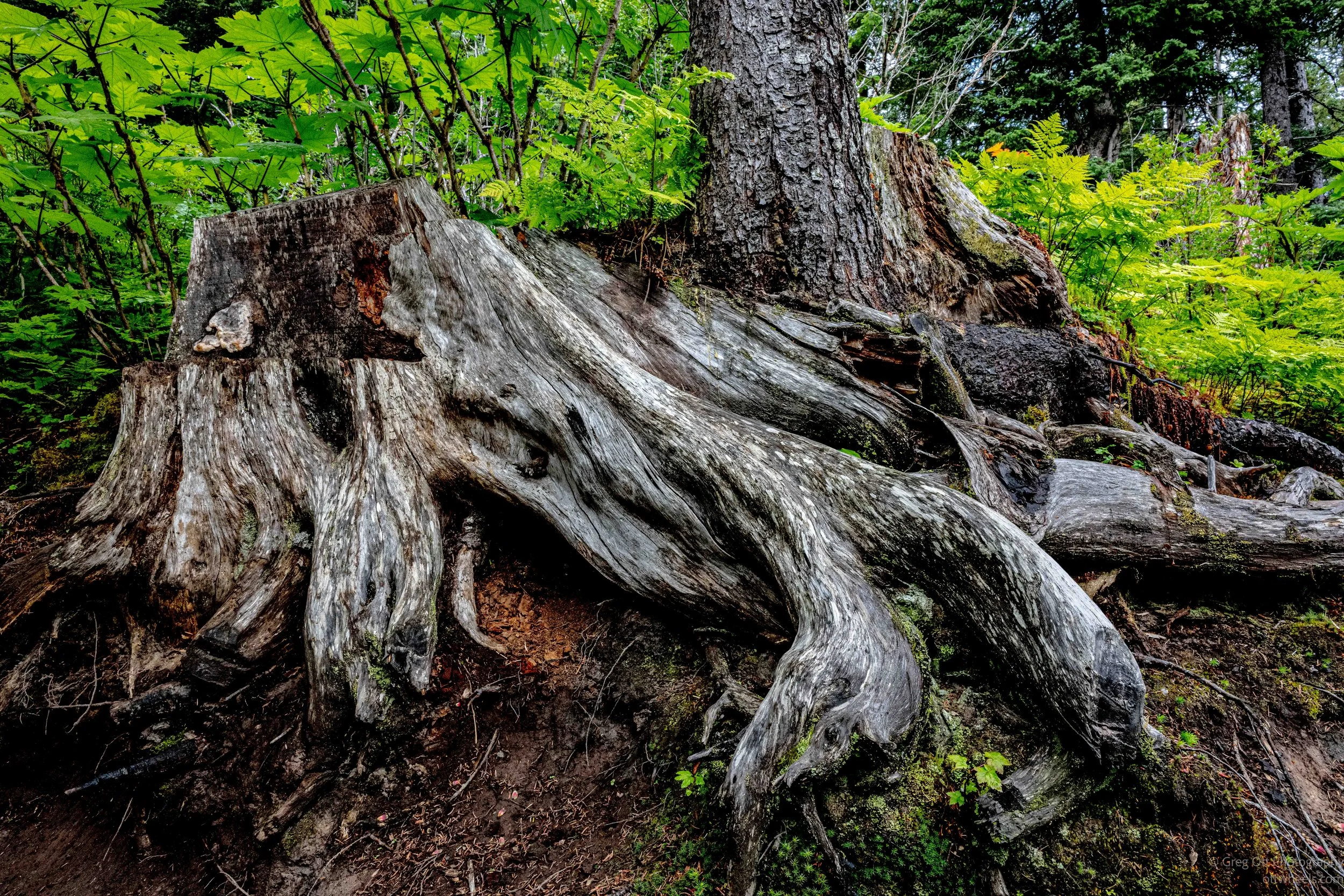
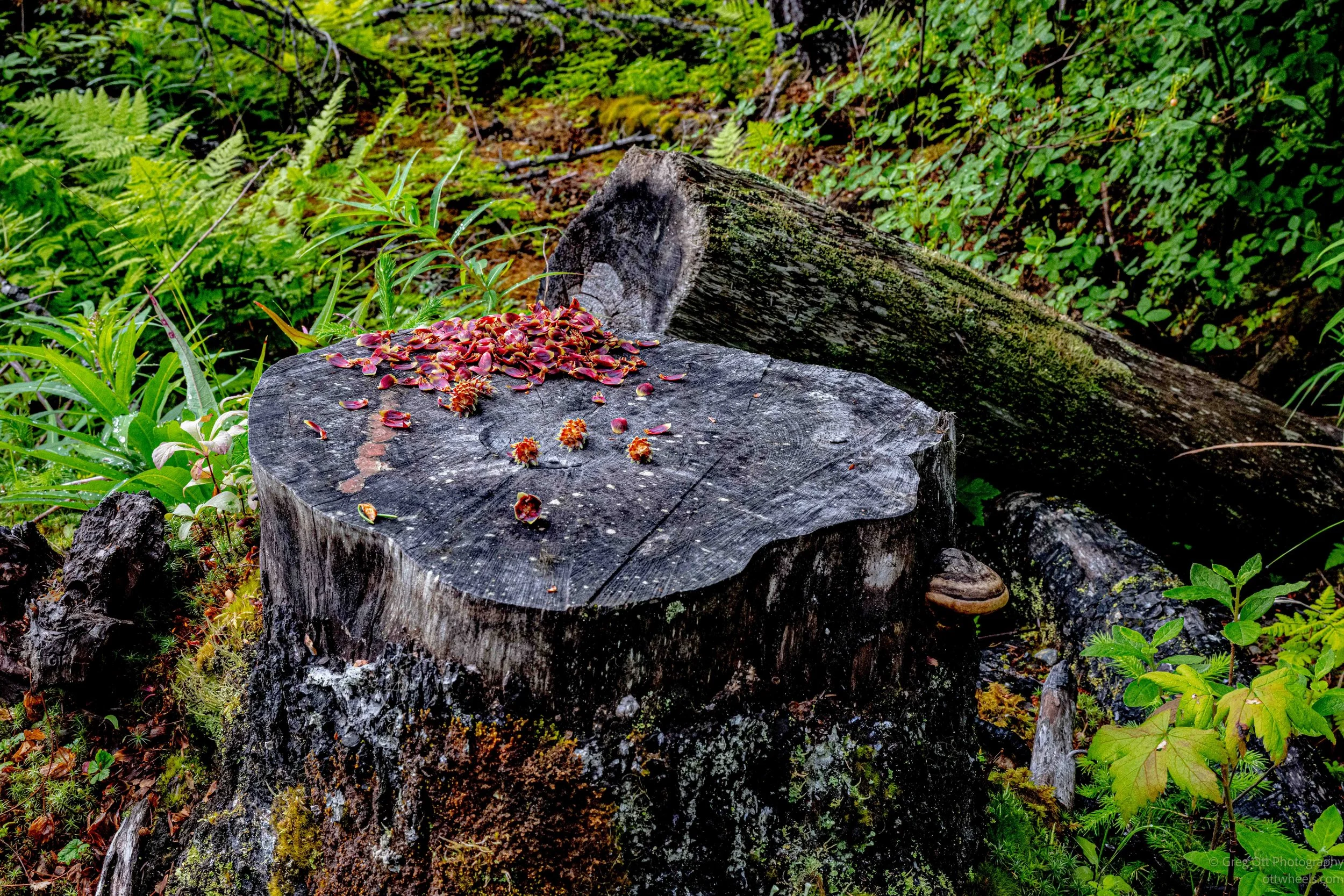
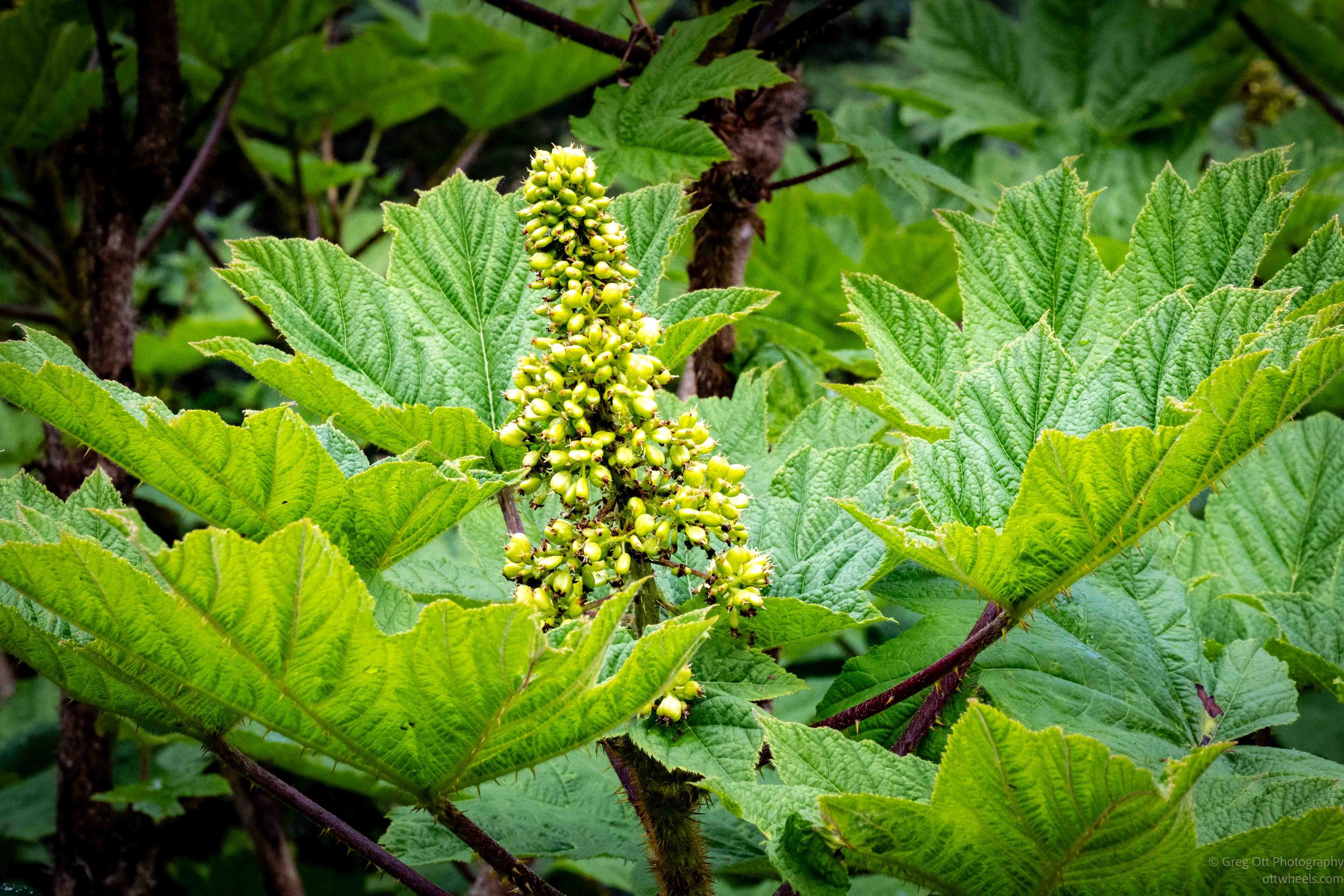
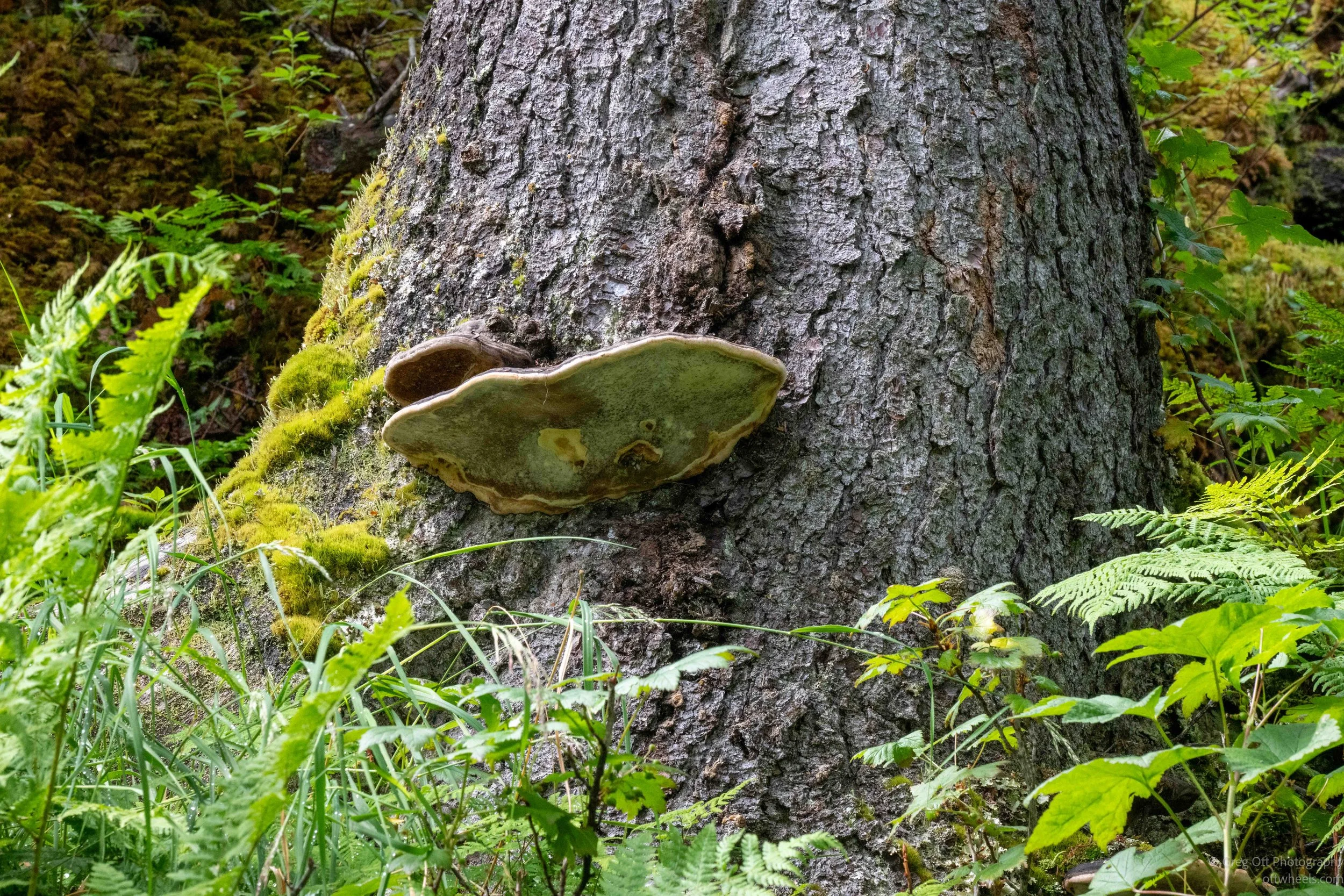
The view as I descended towards the beach was stunning and steep. I reached the Saddle Trail trailhead in about forty minutes and was surprised I still hadn't seen the couple from Washington. For a moment I wondered if I'd taken a wrong turn, but a quick check of my Garmin confirmed I was exactly where I was supposed to be. With about forty-five minutes before the scheduled pickup, I ate lunch, then wandered down the beach with my camera.
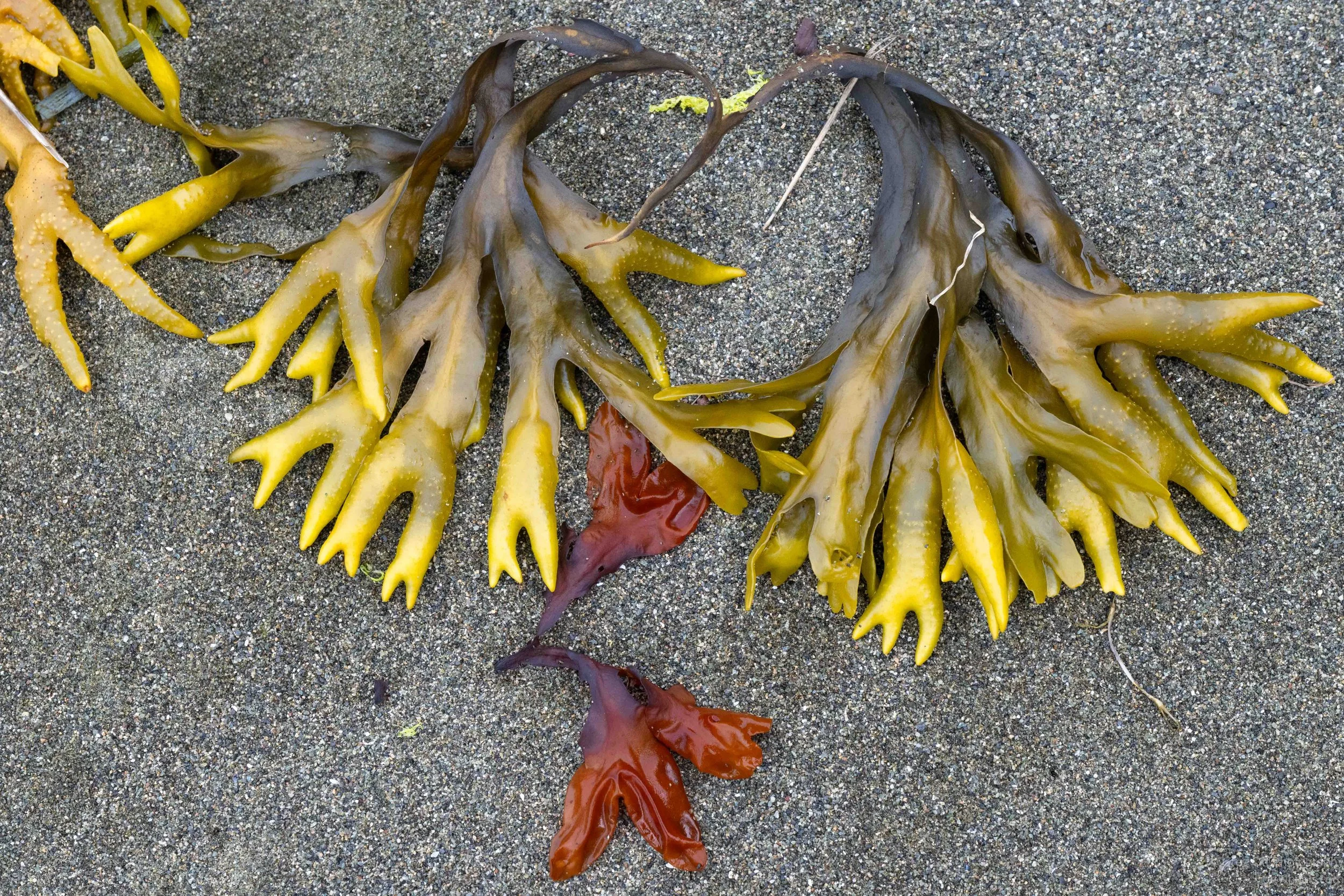
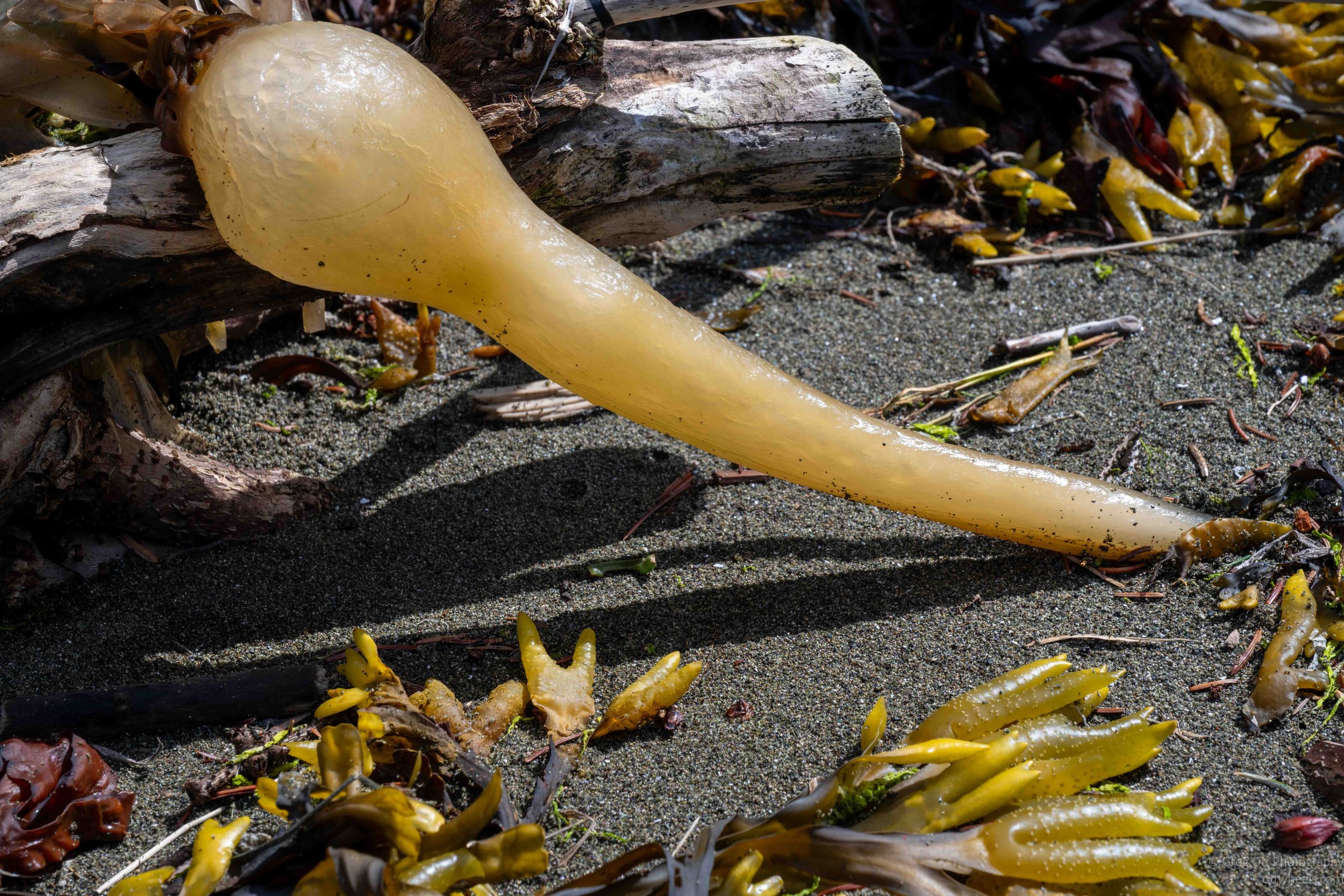
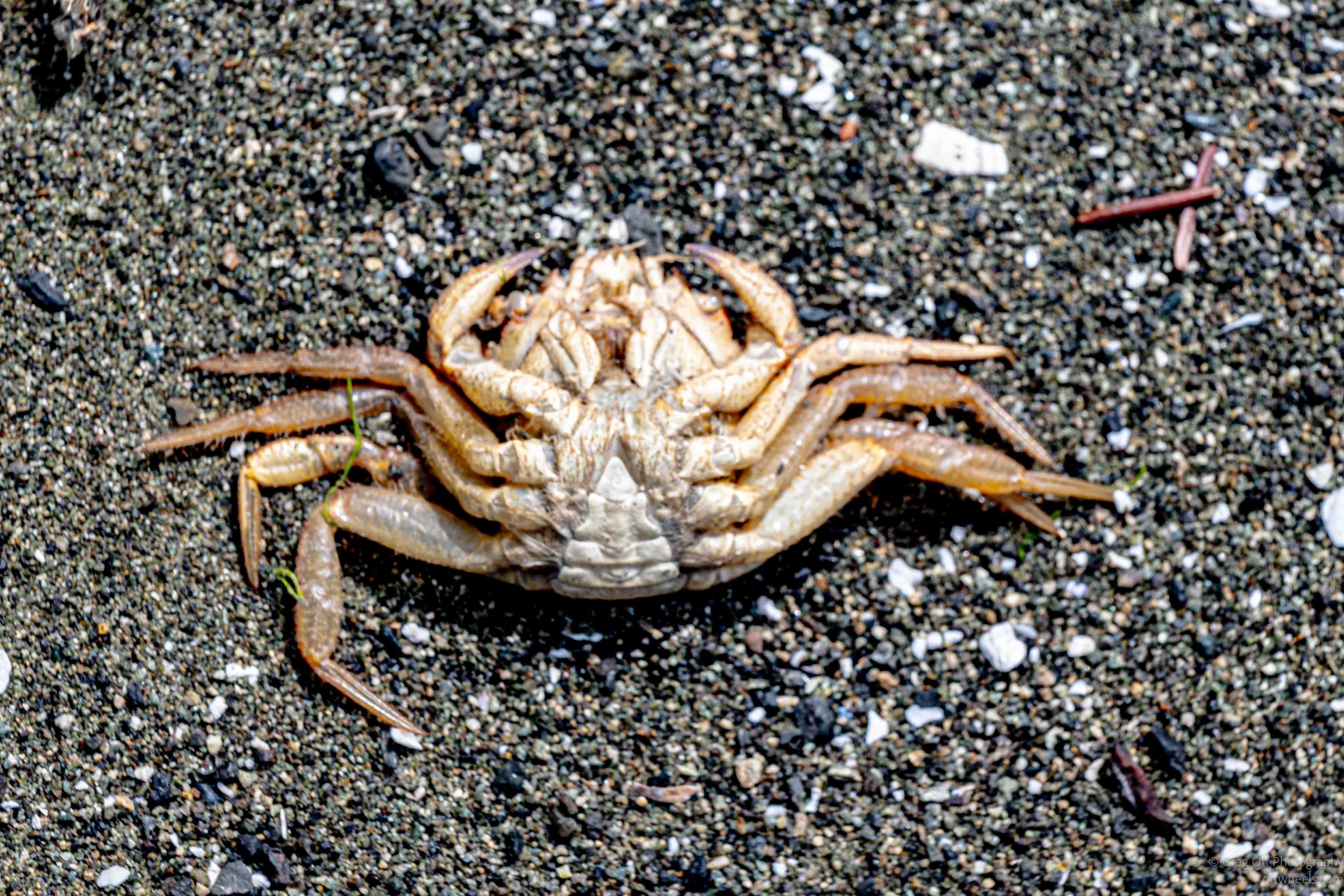
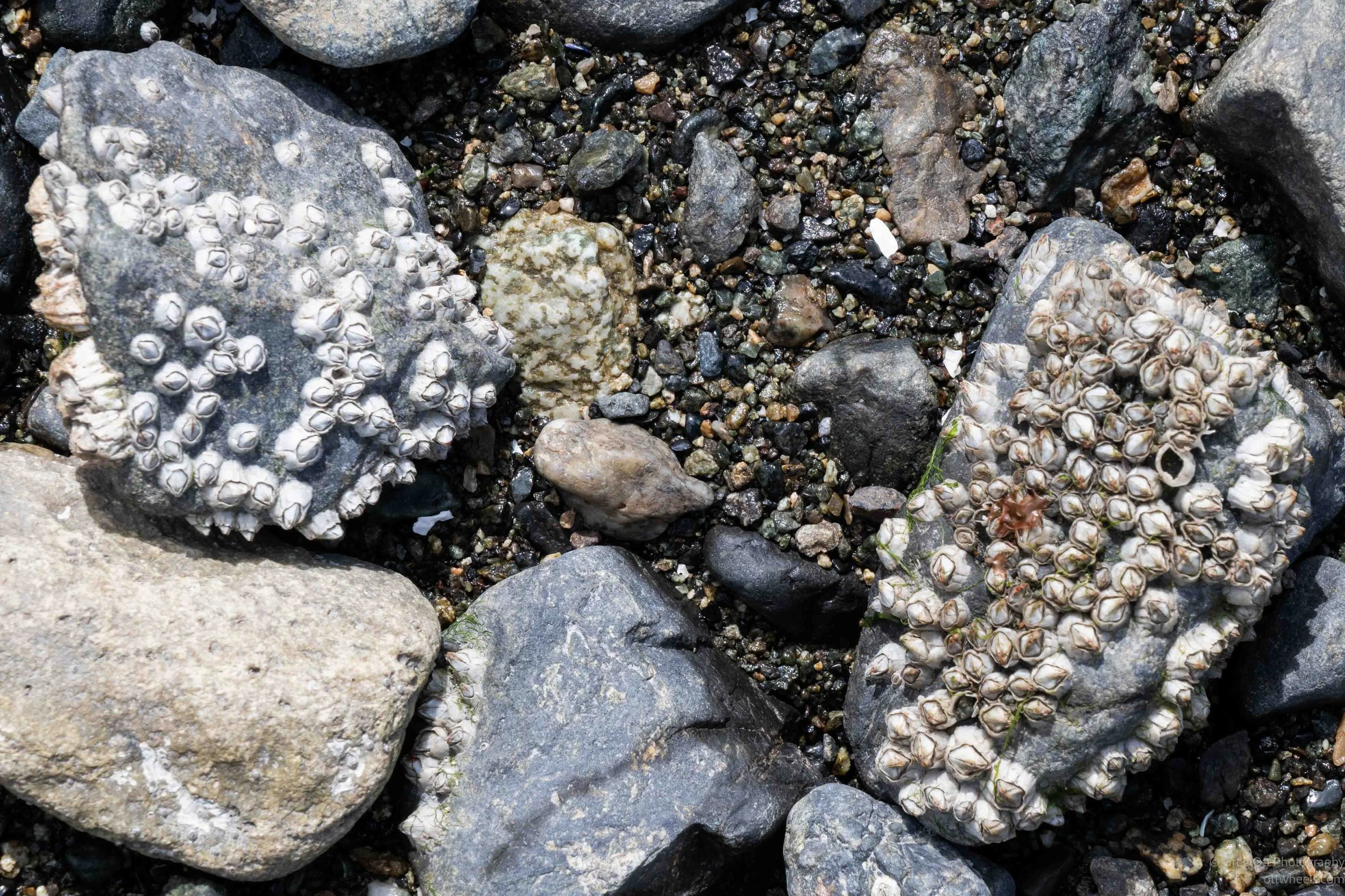
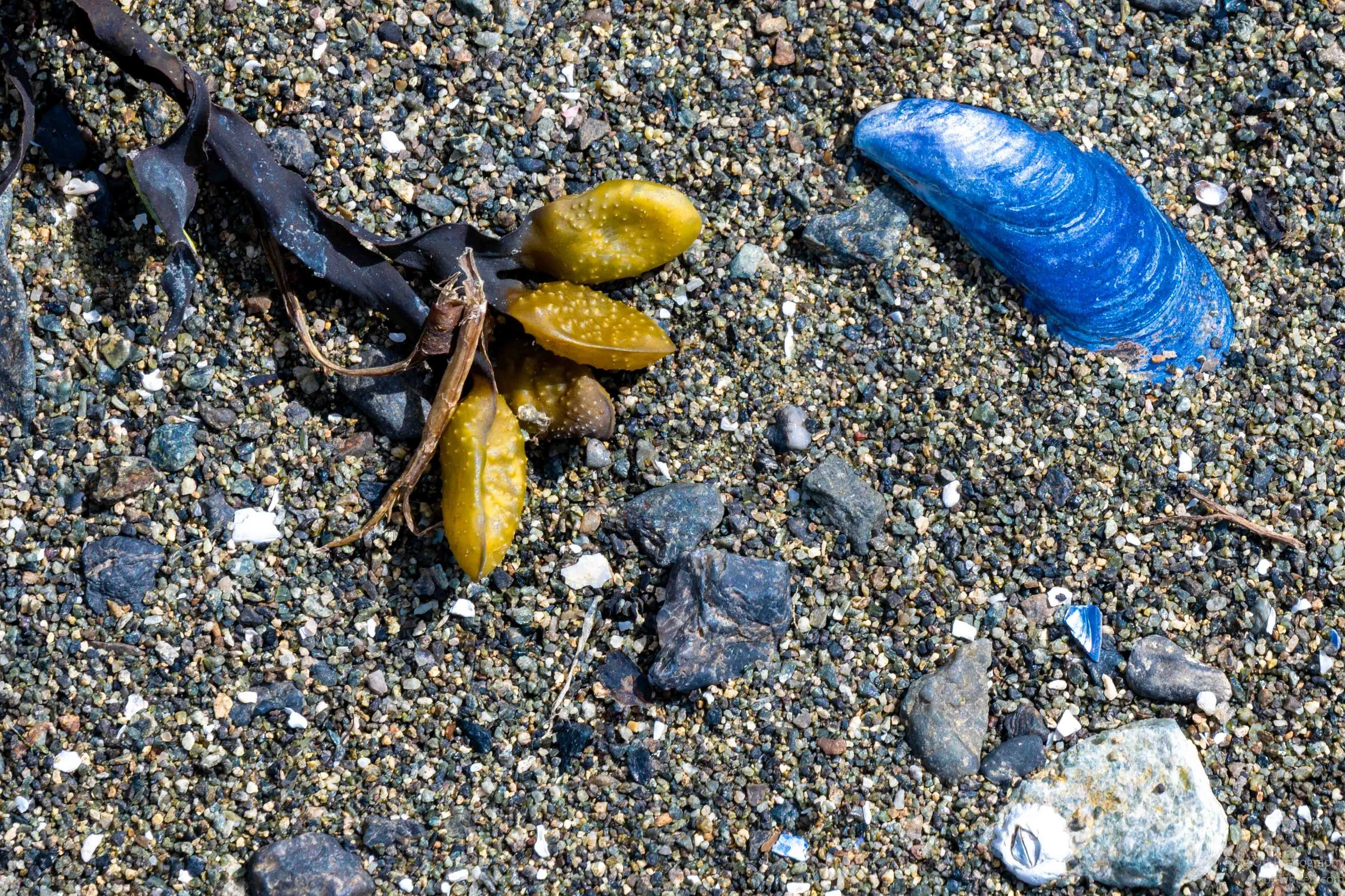
The seaweed caught my attention first — long ribbons, air-filled bladders, and tangled textures that looked almost exotic, spread across the beach and rocks by the receding tide. There were also dead crabs, barnacle-covered rocks, and blue iridescent shells that caught your attention in the sunlight. I spent a while photographing the patterns before another feature of the beach pulled my attention away.
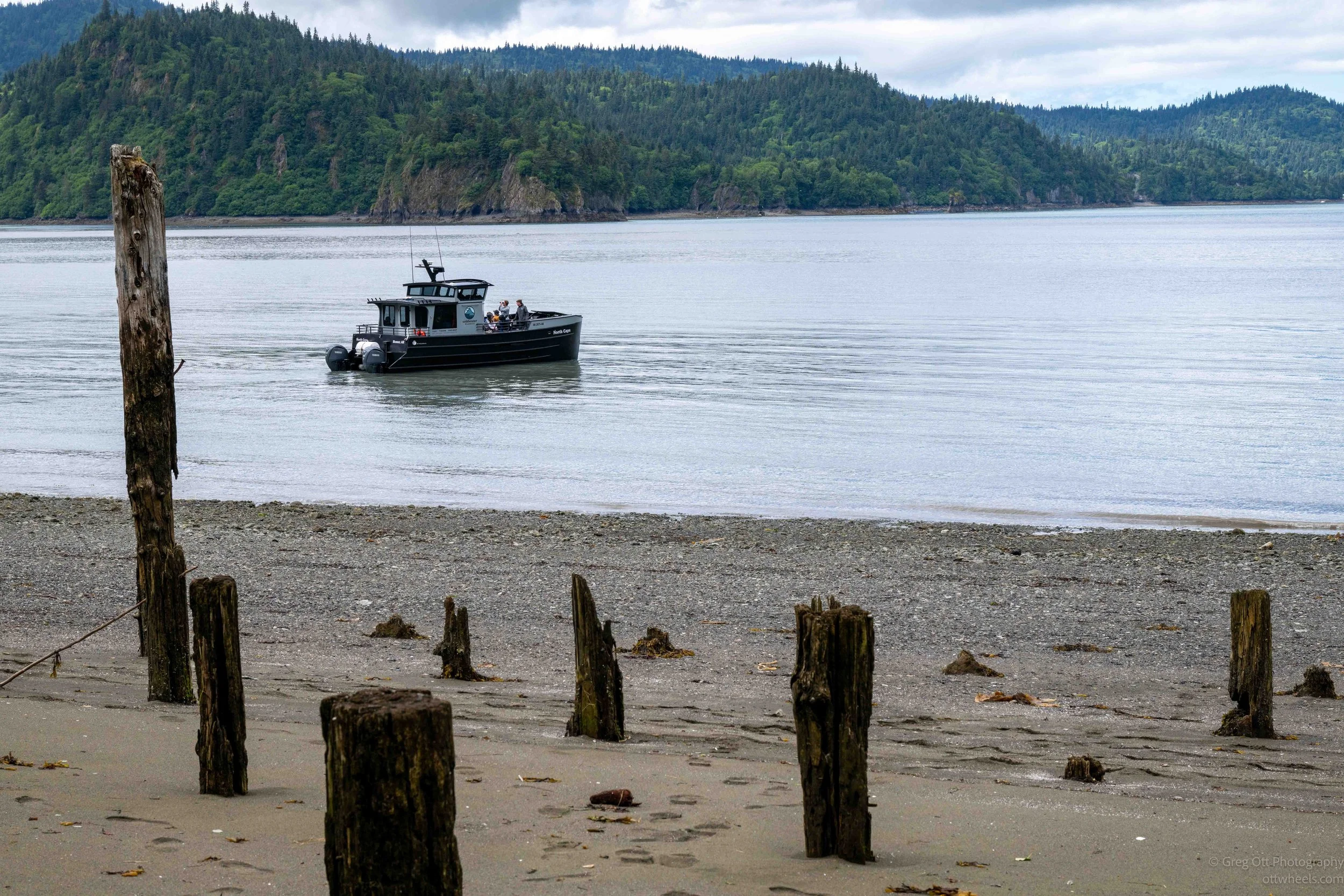
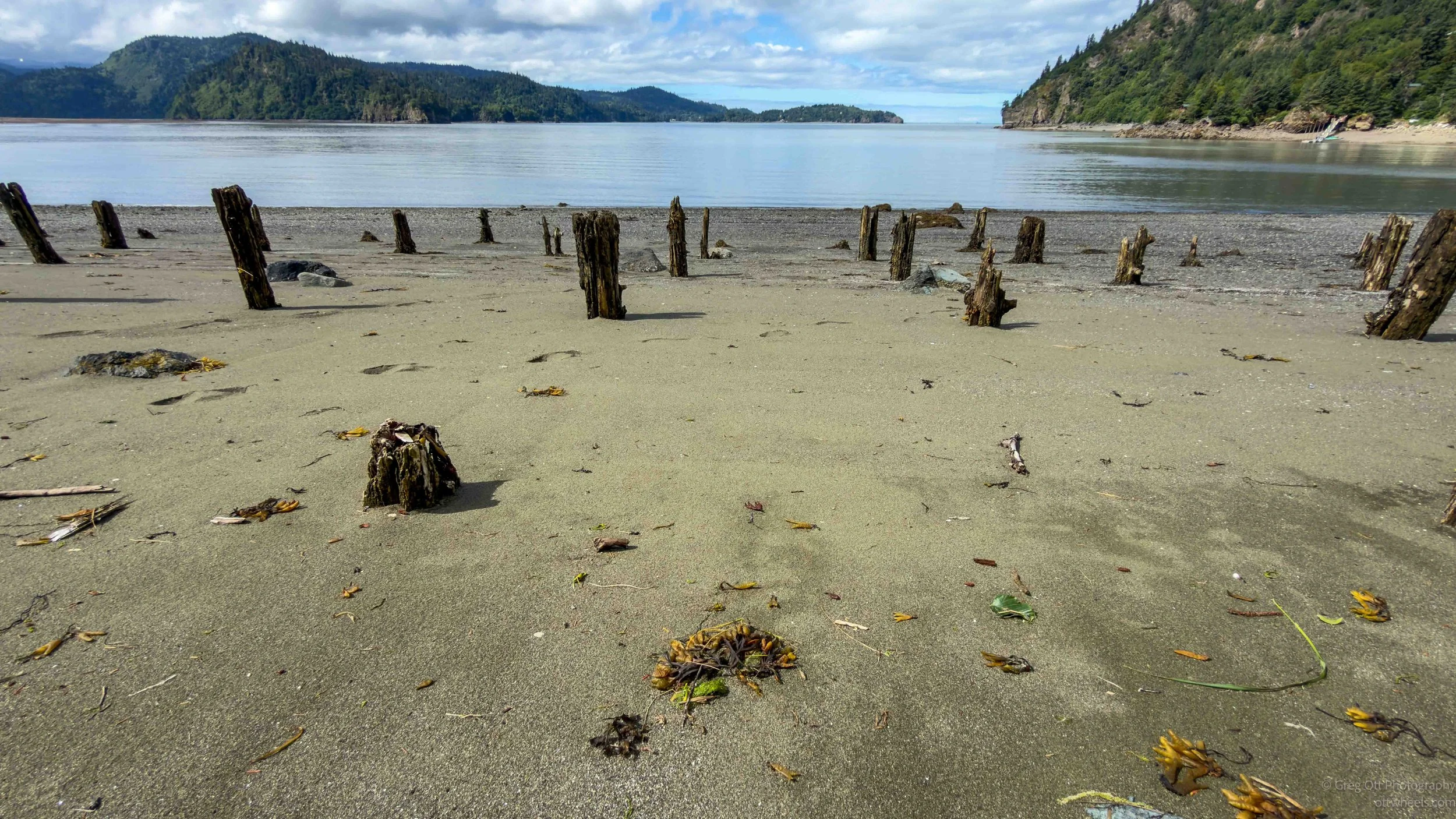
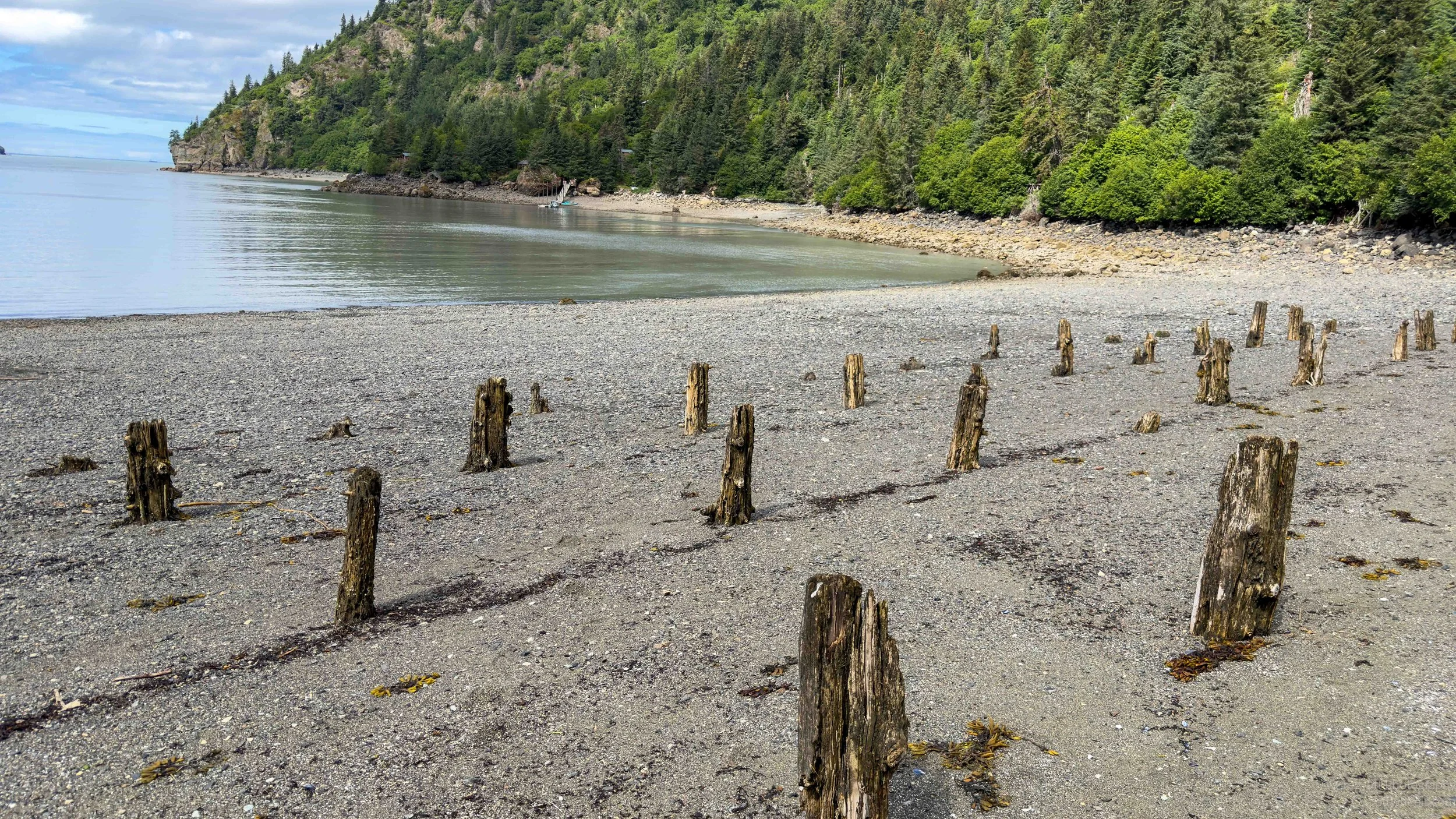
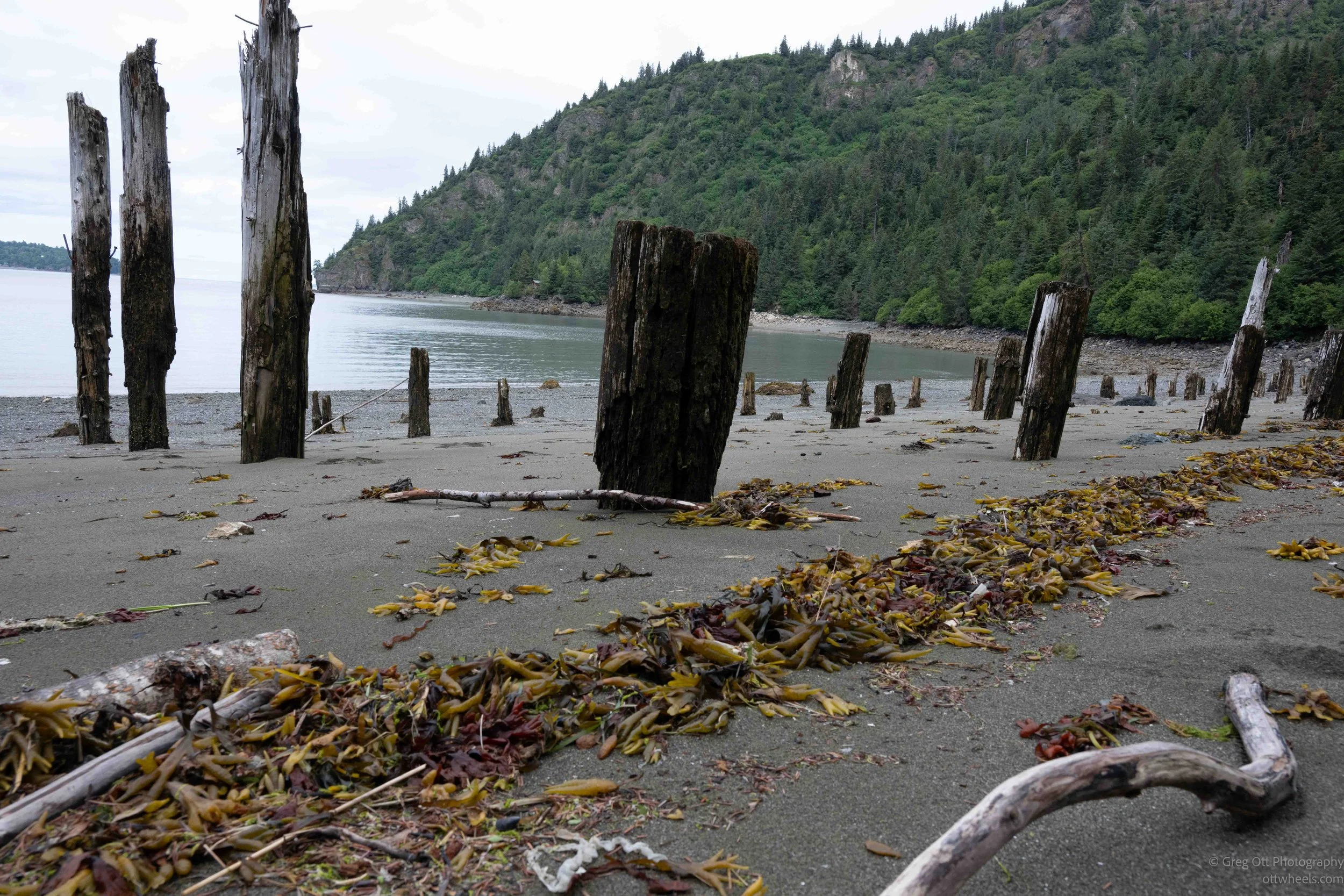
Neatly placed along the shoreline were dozens of old wooden pilings — close to fifty of them, weathered by decades of wind and salt water, many leaning at odd angles or half buried in the sand. I'd already asked several people about them, both on the water taxi and around Homer, but no one knew what they were. Plenty of guesses, none of them convincing.
Later that evening I searched online and found an article, Protecting a Key Piece of Kachemak Bay State Park, that finally answered the question. The pilings are the remains of an old herring saltery that operated here in the early 1900s. During the height of Alaska's herring industry, boats from California and the Pacific Northwest came to Kachemak Bay, where the fish were salted and packed before being shipped out. Looking at the weathered pilings with Grewingk Glacier in the background, it was hard to picture this quiet beach as a busy industrial site.
I also learned the shoreline stayed privately owned for more than a century. The Conservation Fund bought the property in 2022, and it officially became part of Kachemak Bay State Park at the end of 2023. Thousands of people hike through here every year now, on land that's only recently become protected.
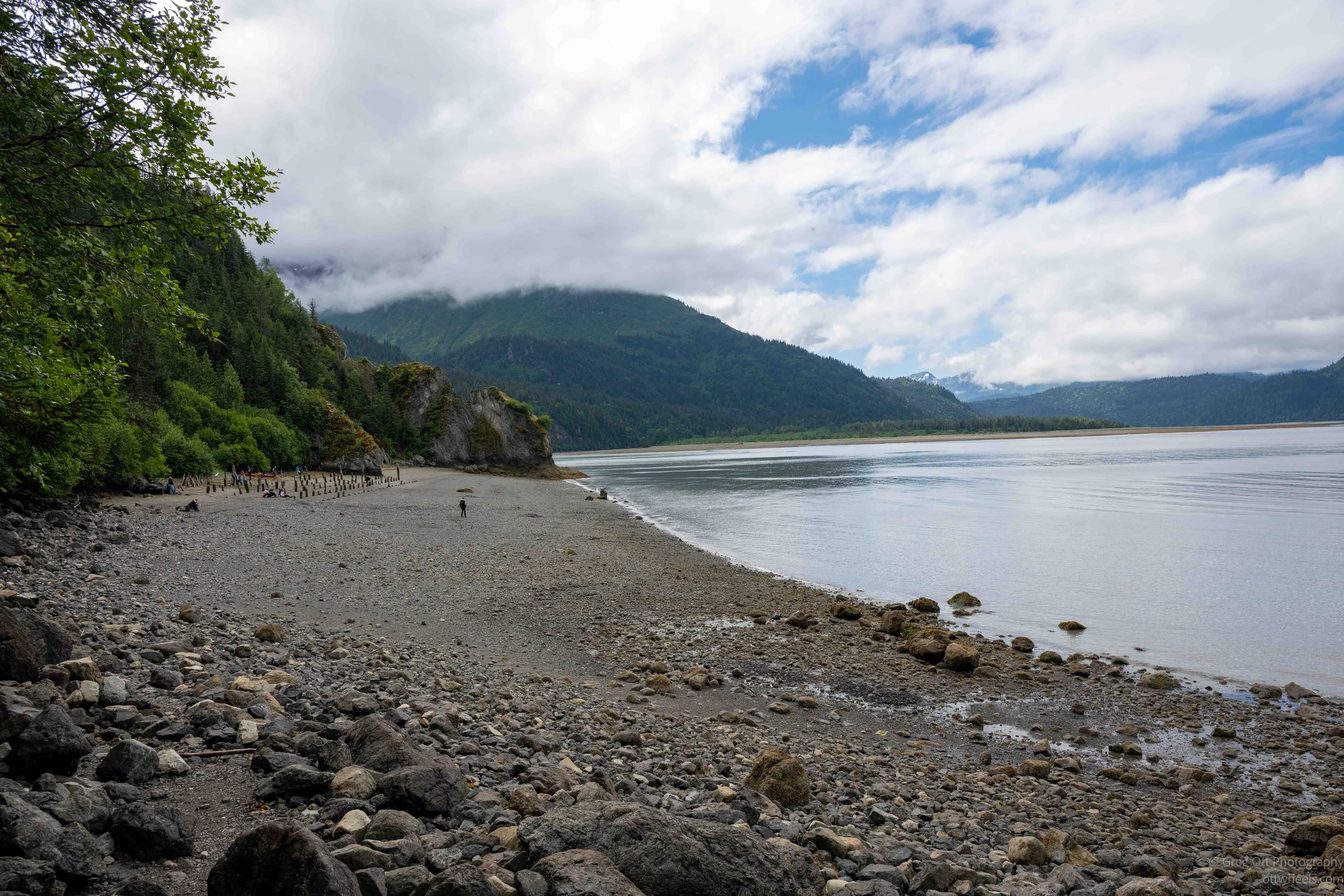
With time to spare before the boat arrived, I found a comfortable rock overlooking the bay, closed my eyes, and spent a few quiet minutes meditating. Before long I heard voices coming down the switchbacks as more hikers made their way to the beach.
The water taxi arrived a little behind schedule, but I wasn't in any hurry. Back on the Homer Spit I ran into the couple from Washington again — they'd just spent more time at the glacier than I had. We walked up the ramp together, wished each other a good rest of the trip, and went our separate ways.
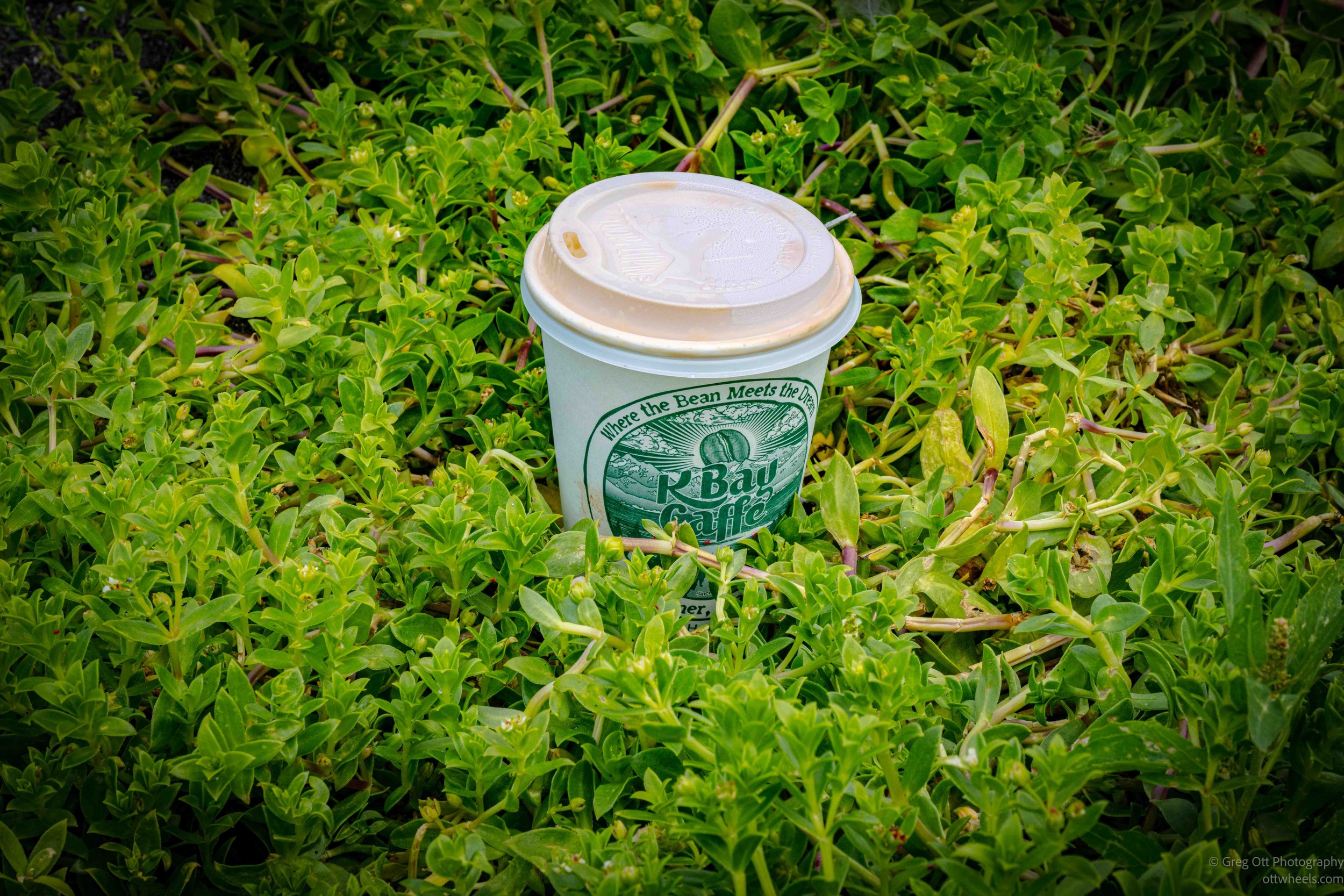
I rewarded myself with gelato and a latte before heading back to the van. While I waited for my coffee, I noticed a woman pouring two fresh espresso shots over her gelato. "Is that an Alaska thing?" I asked. A couple nearby laughed. "No," one of them said. "We first saw it in Italy."
That one question turned into another good travel conversation. The husband serves in the Canadian Air Force, his wife is in the U.S. Air Force. Before long we were talking about Canada, Prince Edward Island, Newfoundland, oysters, coffee, and everywhere else we'd each been. These chance encounters have become one of the pleasures of traveling alone — strangers folding into the day before everyone heads off in different directions.
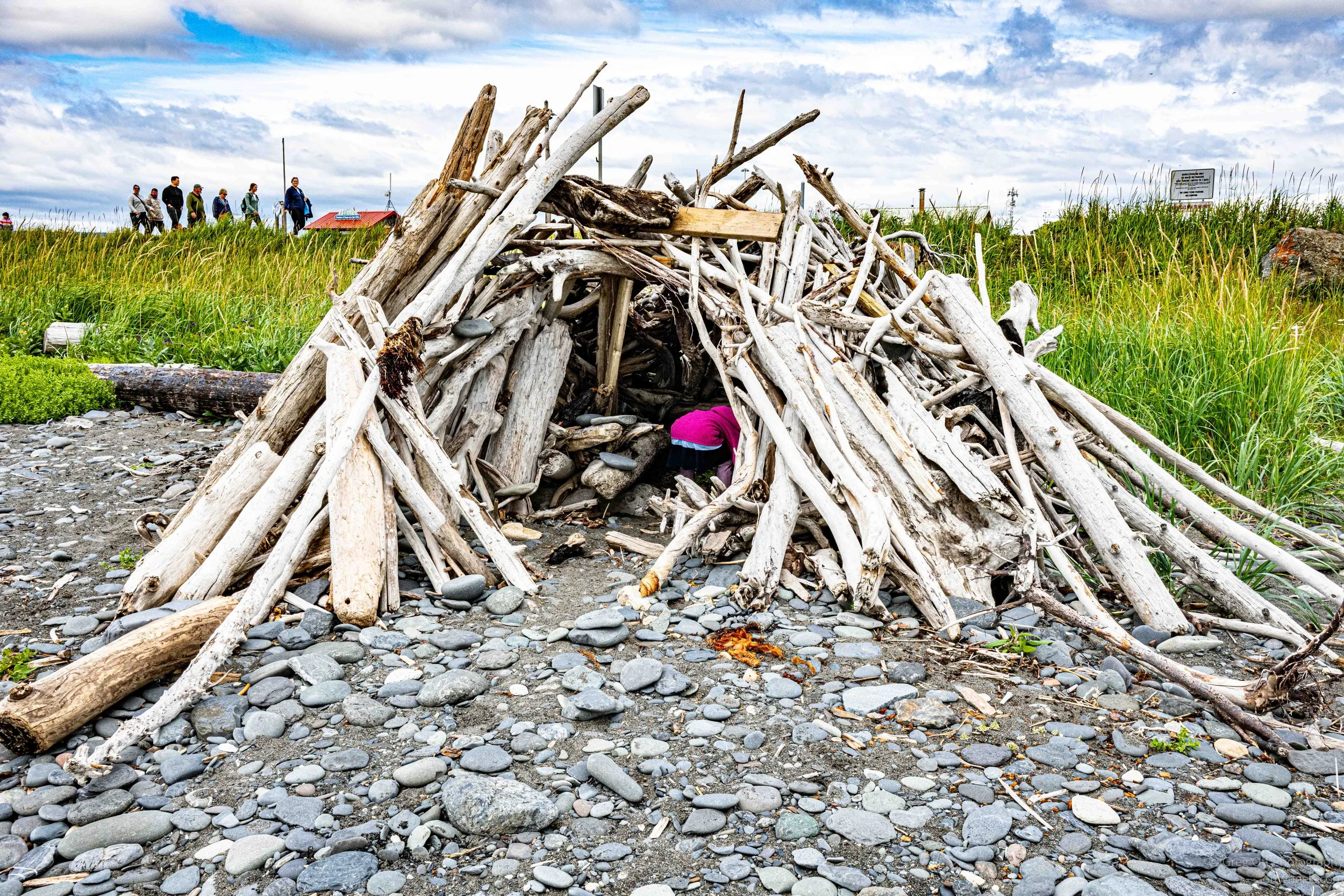
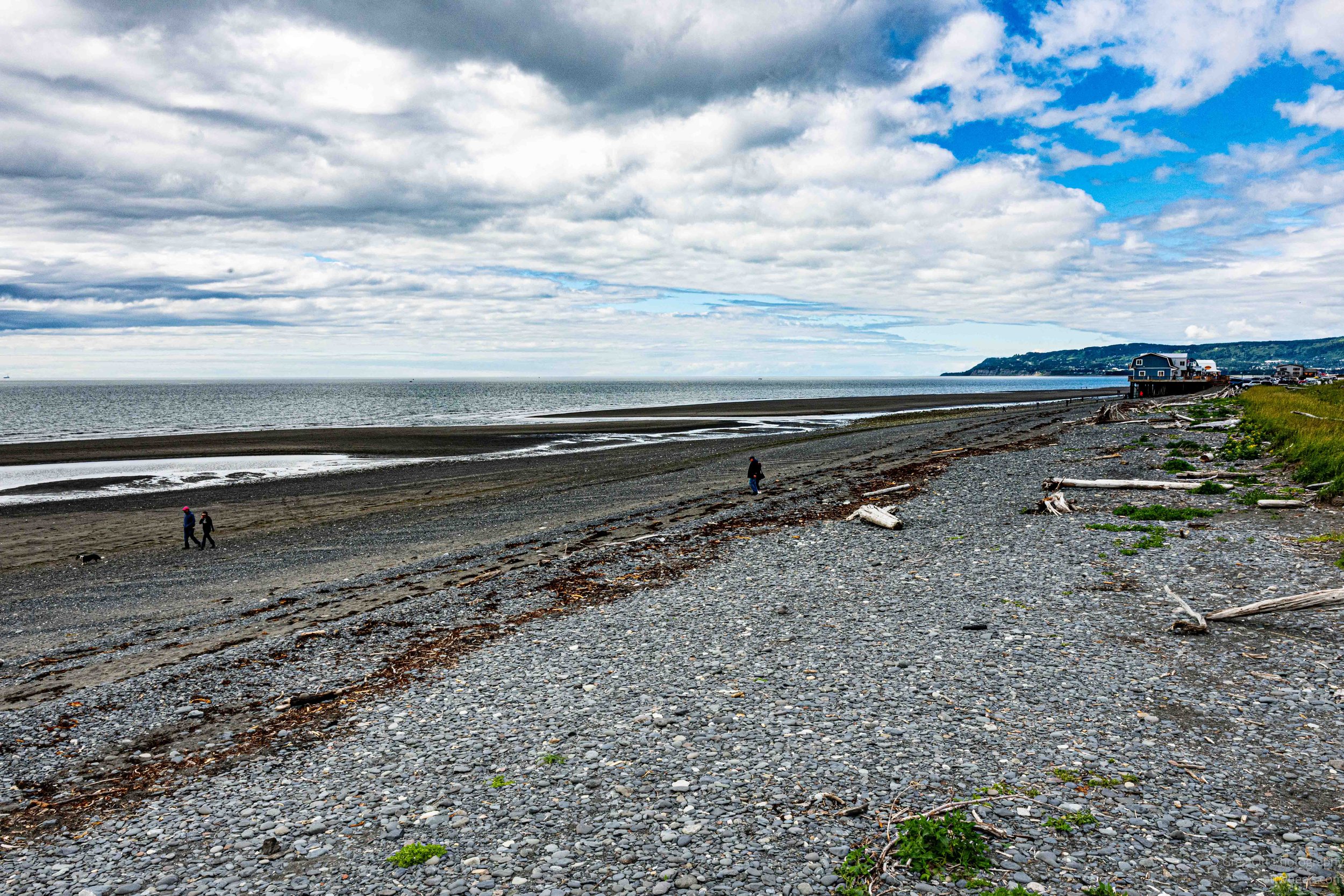
Instead of walking back to the van along the road, I followed the rocky shoreline. Pushing through a patch of tall grass, I came across a cluster of bright yellow flowers growing among the driftwood and gravel. They reminded me of a Van Gogh painting, and I stopped to see what I could do with them.
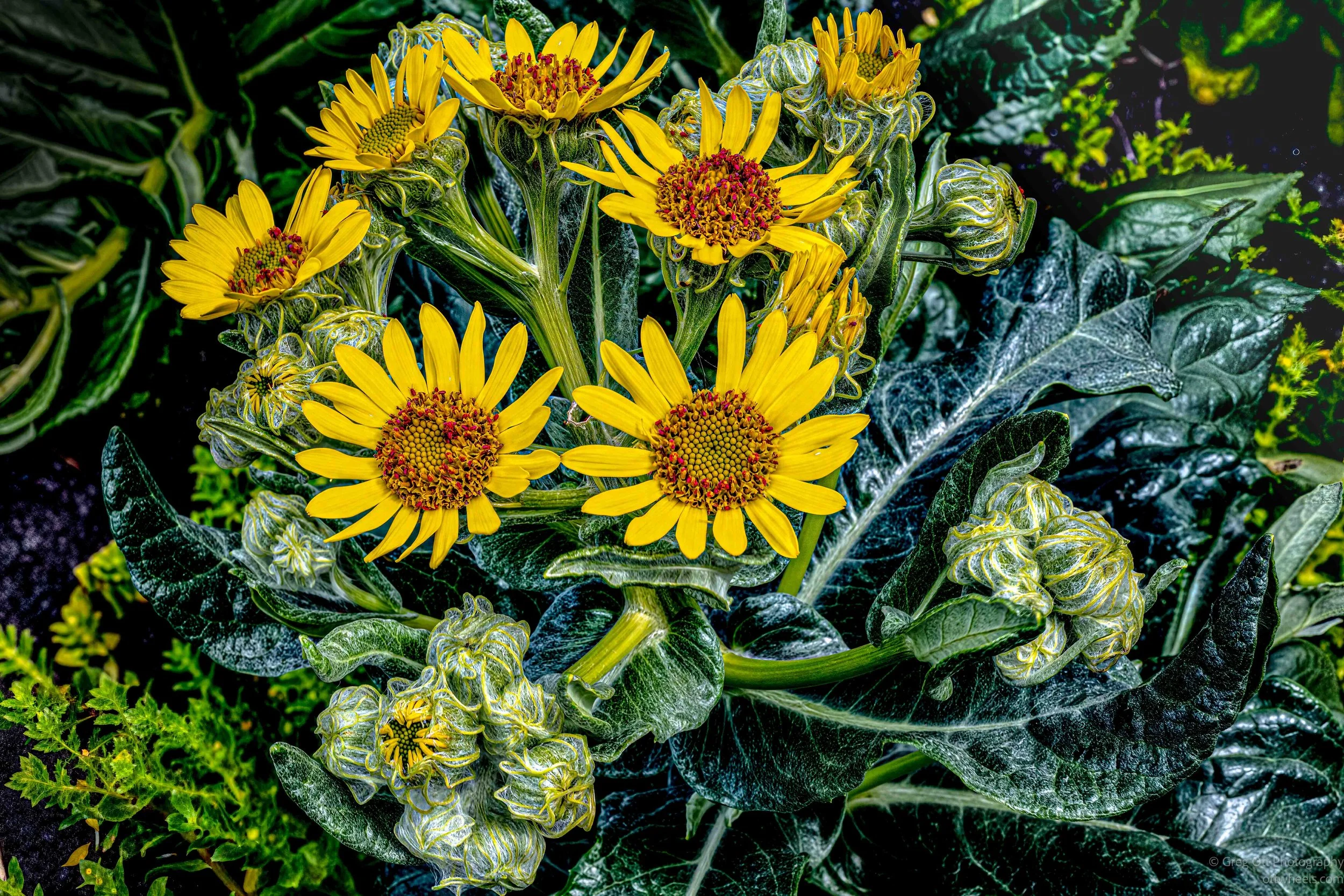
Just as I started photographing them, an older couple walked by. "Honey," the woman said, "look at those flowers. Wouldn't something like that look nice outside the kitchen?" They moved on while I stayed behind, working my way around the cluster for different angles. This was one of those subjects that grabs you immediately — I knew there was a photograph in it, I just had to find it.
That evening I looked them up: Seabeach Groundsel, also known as Seaside Ragwort (Senecio pseudoarnica). They're common along Alaska's beaches, but growing wild among the driftwood with Kachemak Bay behind them, they became one of my favorite subjects of the day. One of the finished images has the painterly feel that caught my eye in the first place — Van Gogh's bold color and texture.
Back at the van I debated cooking but decided to be lazy and eat out. Fat Olives had been excellent the night before, so I tried something different — a small Thai place (Vida Thai Food), red curry with tofu, and an hour sorting through photos from the hike. I hadn't had nearly enough water during the day, so I went through five large glasses while working through the images. The staff couldn't have been friendlier and didn't seem to mind that I lingered over dinner while editing.
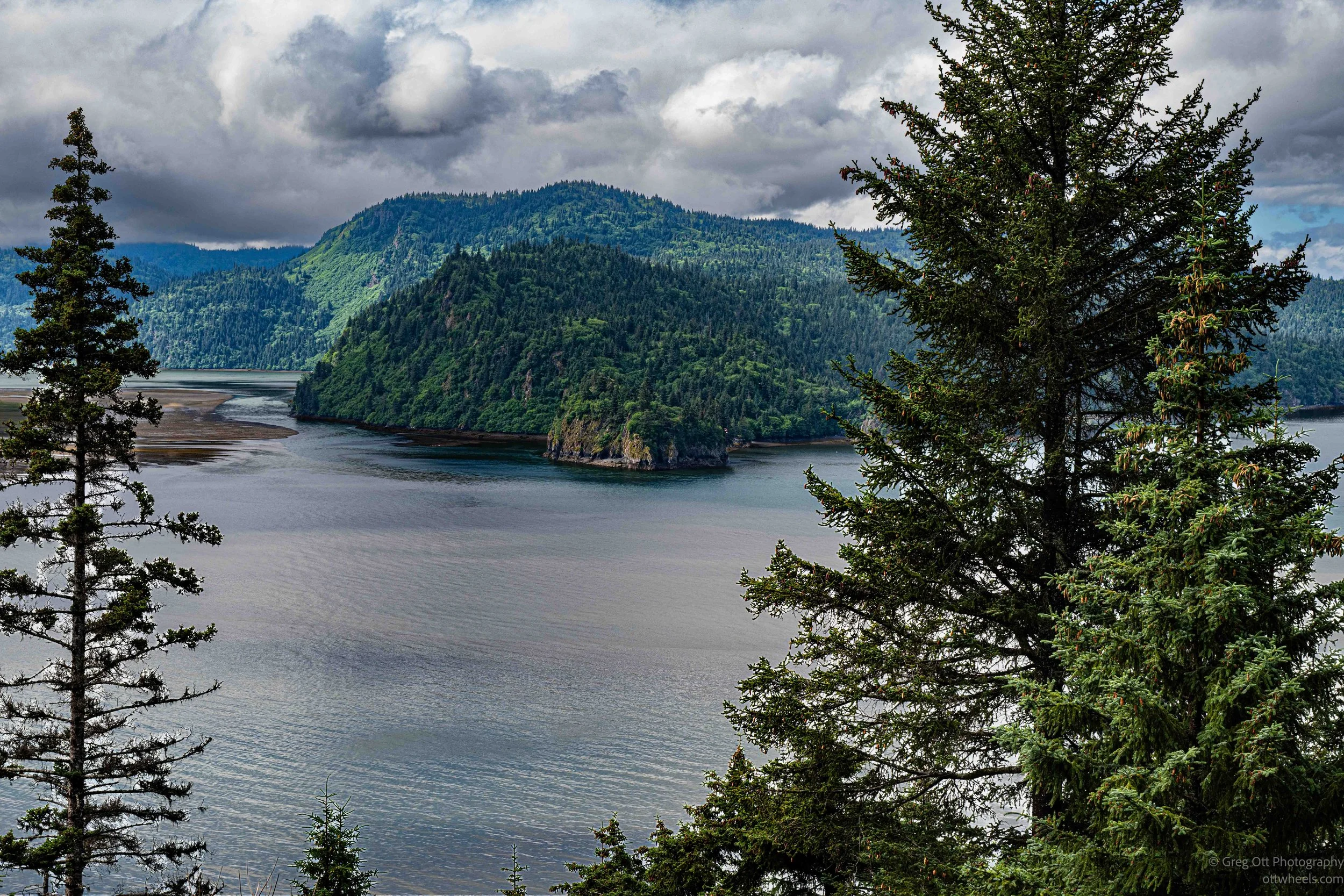
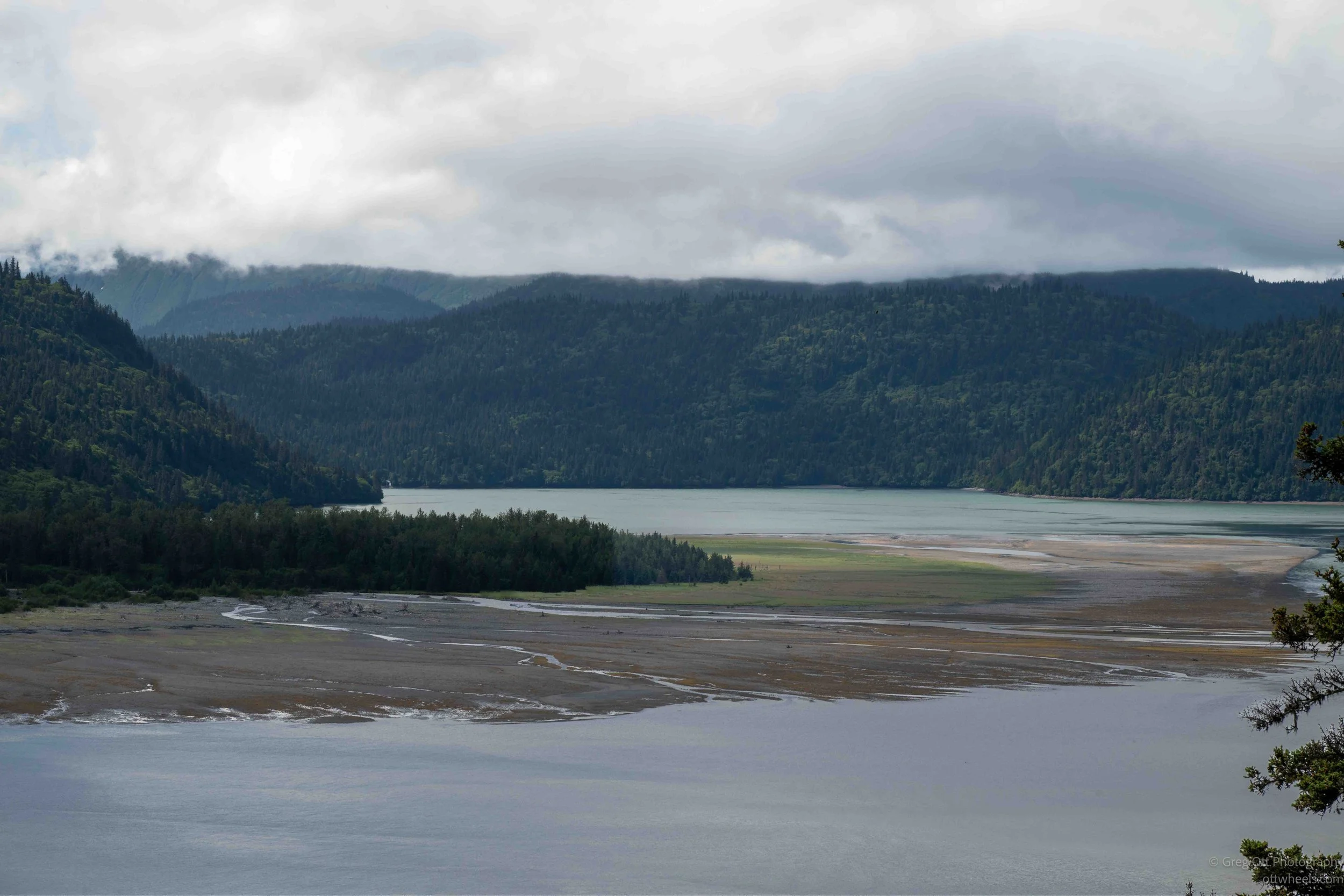
By the time I left it was nearly 6:30 p.m., and I started driving north toward Ninilchik, where I planned to visit the old Russian church the next day. Climbing out of Homer, I pulled into the overlook above Kachemak Bay. The lot was full, and it wasn't hard to see why — the late afternoon light had broken through the clouds, lighting up the bay and the mountains beyond. Nearly everyone there had stopped for the same reason.
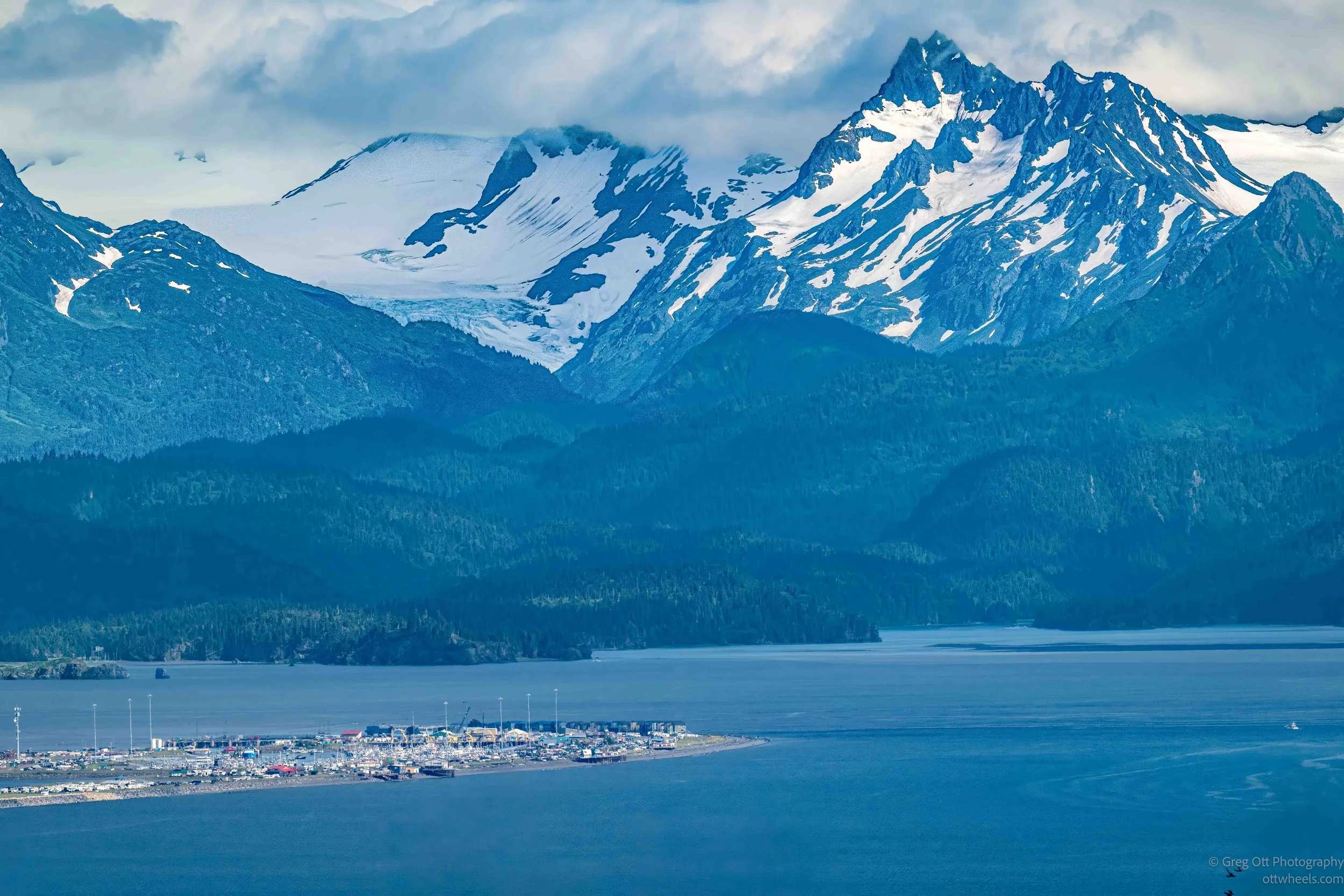
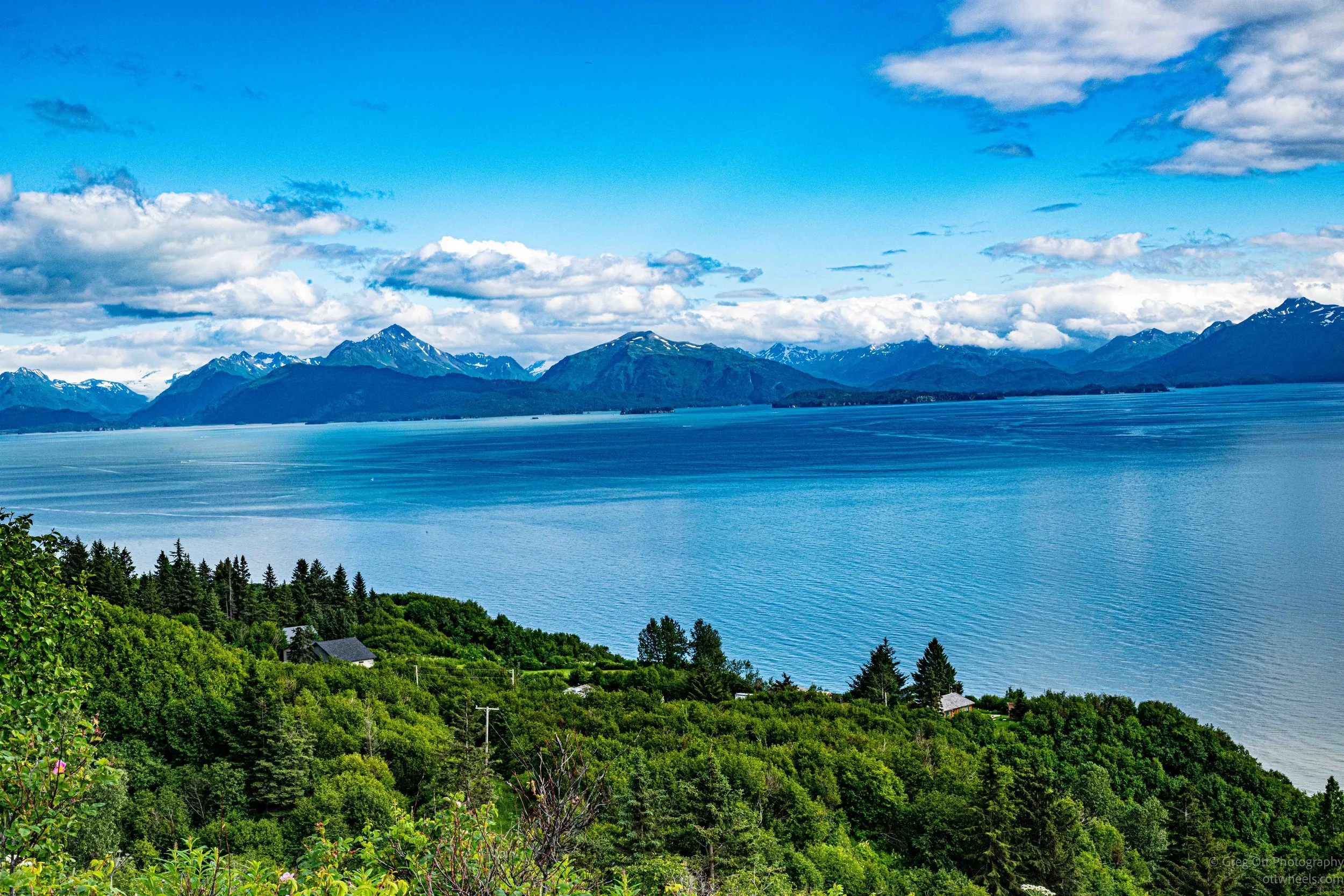
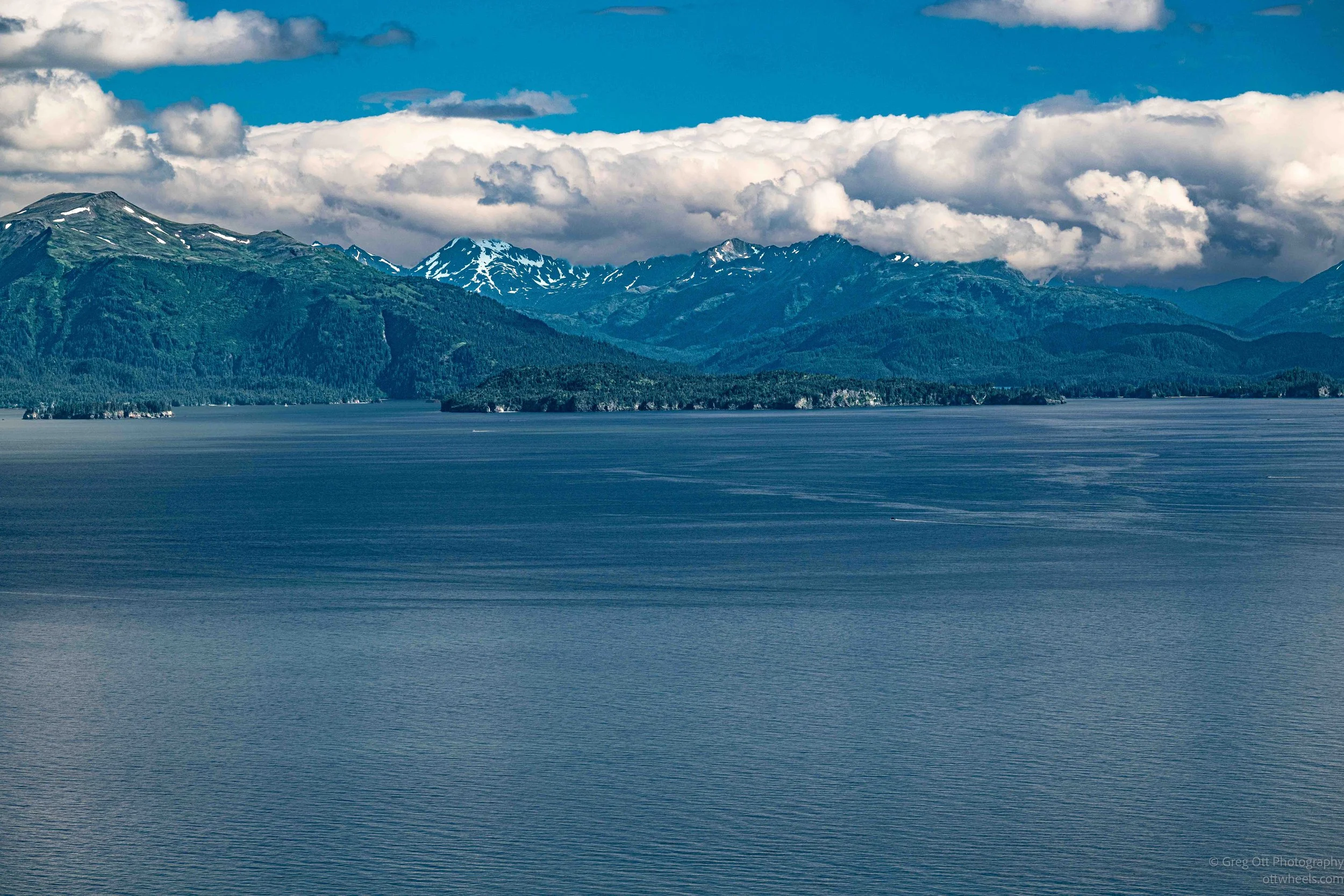
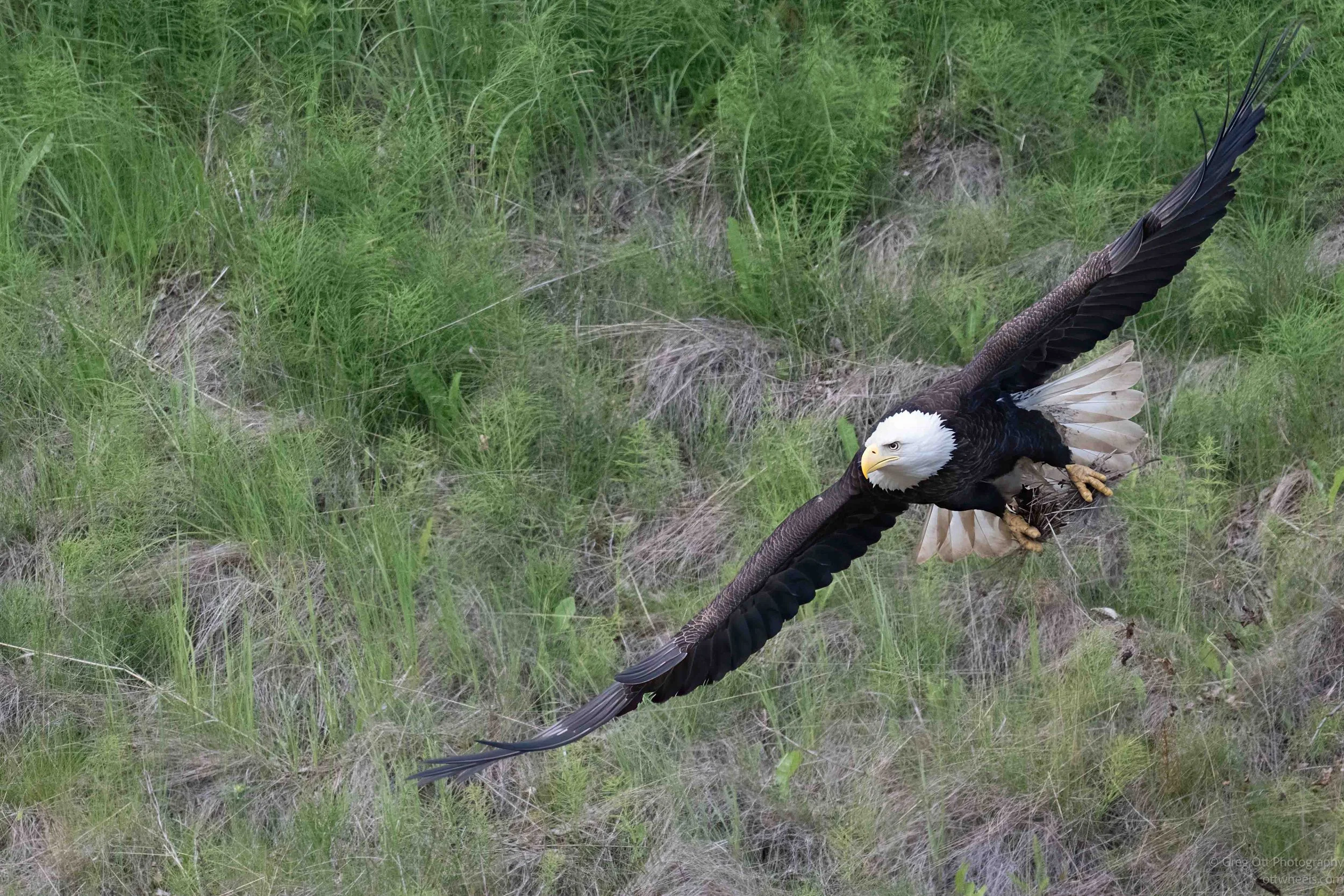
I grabbed both cameras and a couple of lenses to photograph the changing light. I'd been there about half an hour when a bald eagle flew directly in front of me and landed on the hillside across the road. At first I thought there might be a nest nearby, but instead it started collecting dry grass — grab a clump, hop a few feet, gather another, rearrange it all carefully in its beak.
I quietly switched to the 180-600mm lens and waited. Just as I raised the camera, the eagle launched into the air, passing close enough that it nearly filled the frame — one of my favorite wildlife photographs from the trip. It was completely unexpected, and after a day like this, a fitting way to end it.
About thirty minutes later I pulled into a turnout near Happy Valley for the night. Looking back over the day, I realized how much of it had been spent simply paying attention: the couple from Washington, a bear and her cubs, porcupine scratches and mega-tsunami warnings, an old herring saltery, a patch of wildflowers, an eagle gathering nesting grass just as I was ready to leave. No single moment defined the day — it was the accumulation of all of them. Those are the days I've come to enjoy in Alaska.