
Ninilchik, AK
I woke up at a pull-out about 20 minutes south of Ninilchik. It had rained all night, and it was still raining when I opened my eyes. I lay there for a while hoping it would let up. It didn't.
My itinerary had a note to walk through Old Ninilchik Village. I envisioned one of those little historic fishing villages with boardwalks, old log homes, and weathered buildings overlooking the water — the kind you see on postcards.
The village dates to around 1846, when a group of retired Russian-American Company employees settled near the mouth of the Ninilchik River. They weren't starting from nothing — a Dena'ina village already stood there, and the Russians moved in alongside it rather than displacing it. Most of the men had Alaska Native or Alutiiq wives by then, and the families who put down roots first — names like Kvasnikov and Oskolkoff keep showing up in the record — built something that was neither fully Russian nor fully Native, but its own thing. After the U.S. bought Alaska in 1867, Ninilchik stayed isolated enough, long enough, that the language stuck around too. Their dialect of Russian survived here in near-total isolation for about a century, cut off from anything spoken back in Russia, which is the kind of detail that sounds made up until you read three different sources confirming it.
Various map apps and a couple of online posts (Library Of Congress) pointed me toward some old structures sitting over a cliff by the water. I drove around for a bit trying to find a way down to them, gave up, and pointed the van toward the church instead.
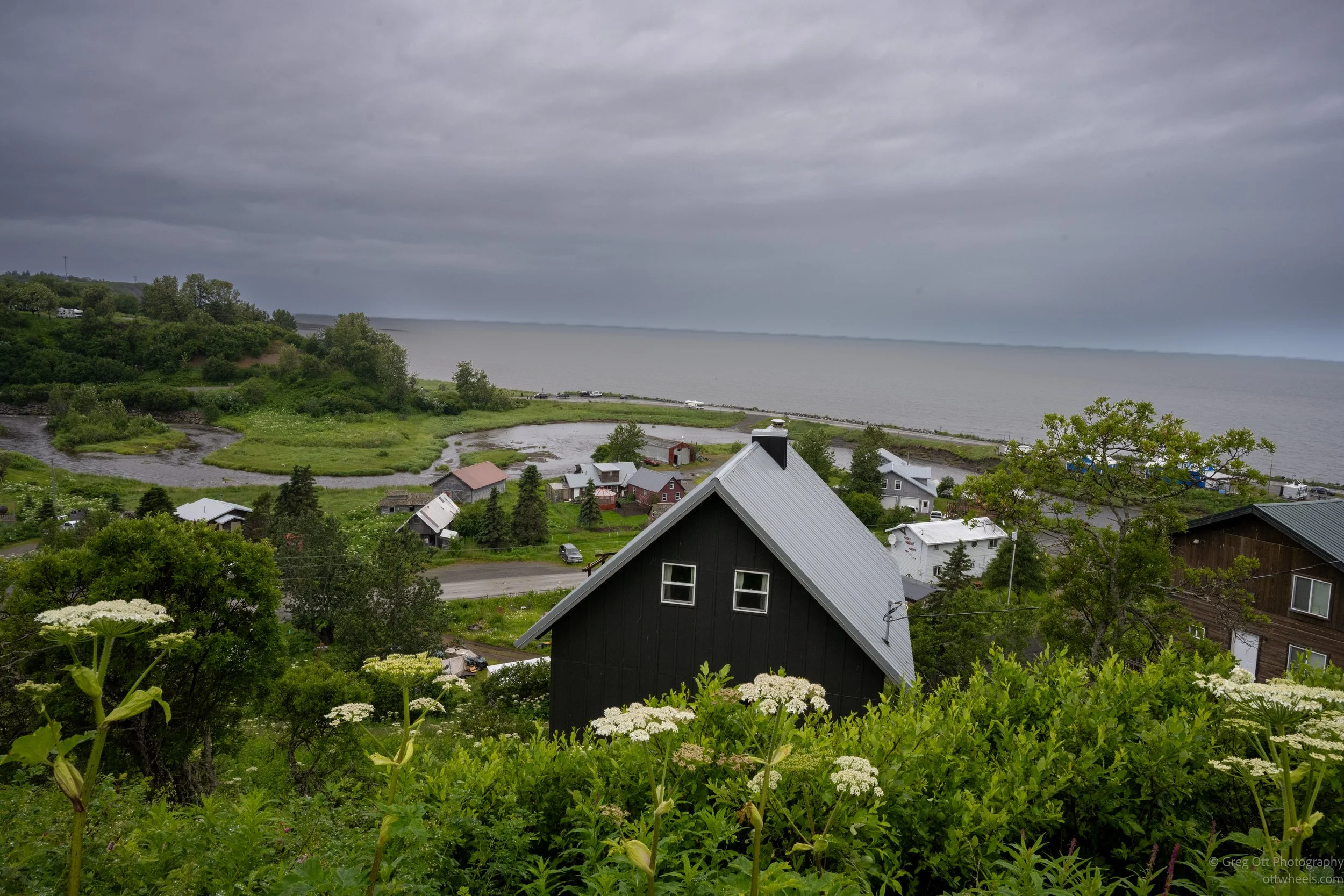
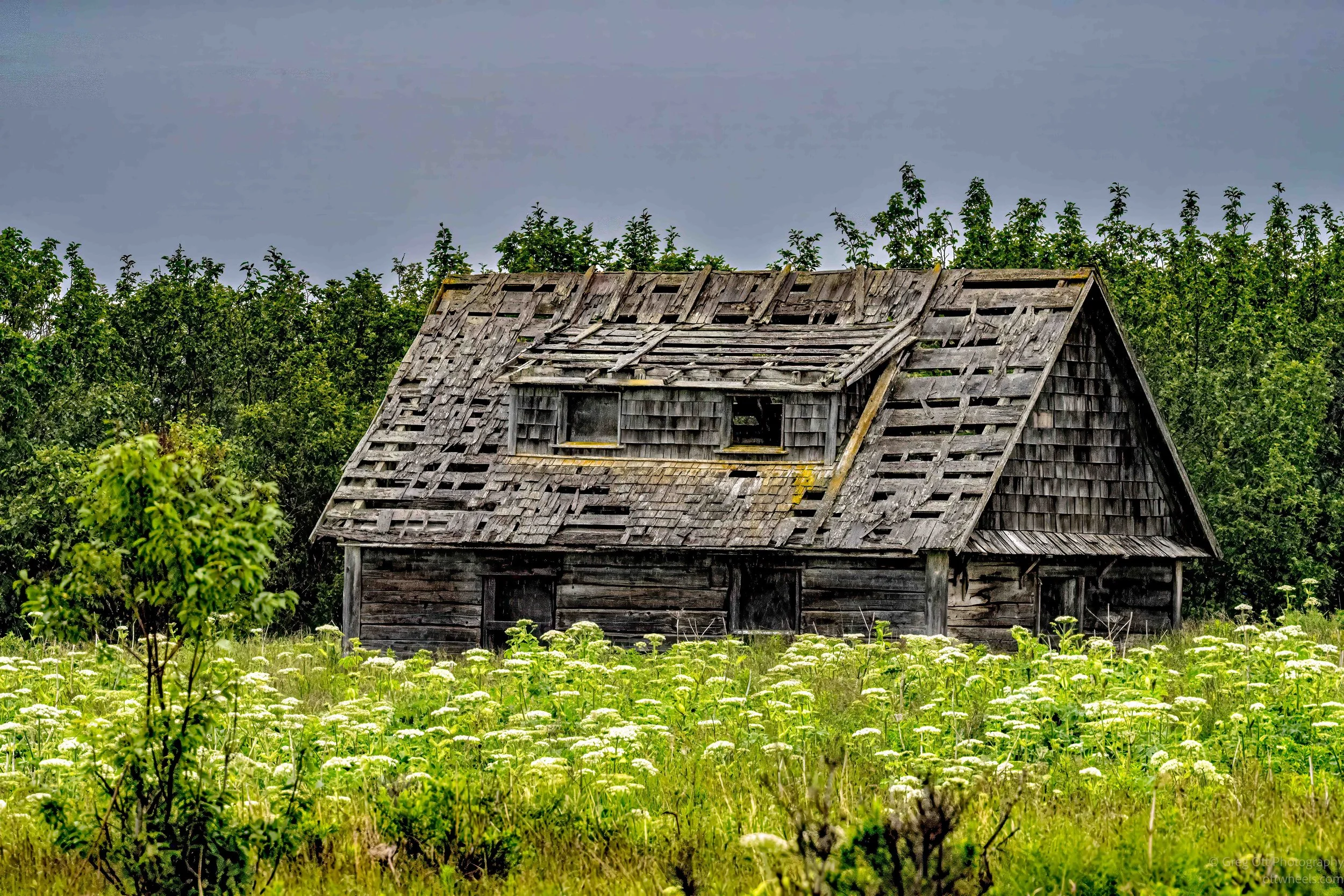
The Holy Transfiguration of Our Lord Church sits on a bluff above where the old village is supposed to be. From near the church I walked out to the edge of the bluff and looked down, expecting the historic settlement the guidebooks kept describing. I could make out a few buildings down near the beach and the river mouth, but nothing that looked like a village, historic or otherwise. I never did find it only because it wasn’t what I expected. (see photo below - that’s it).
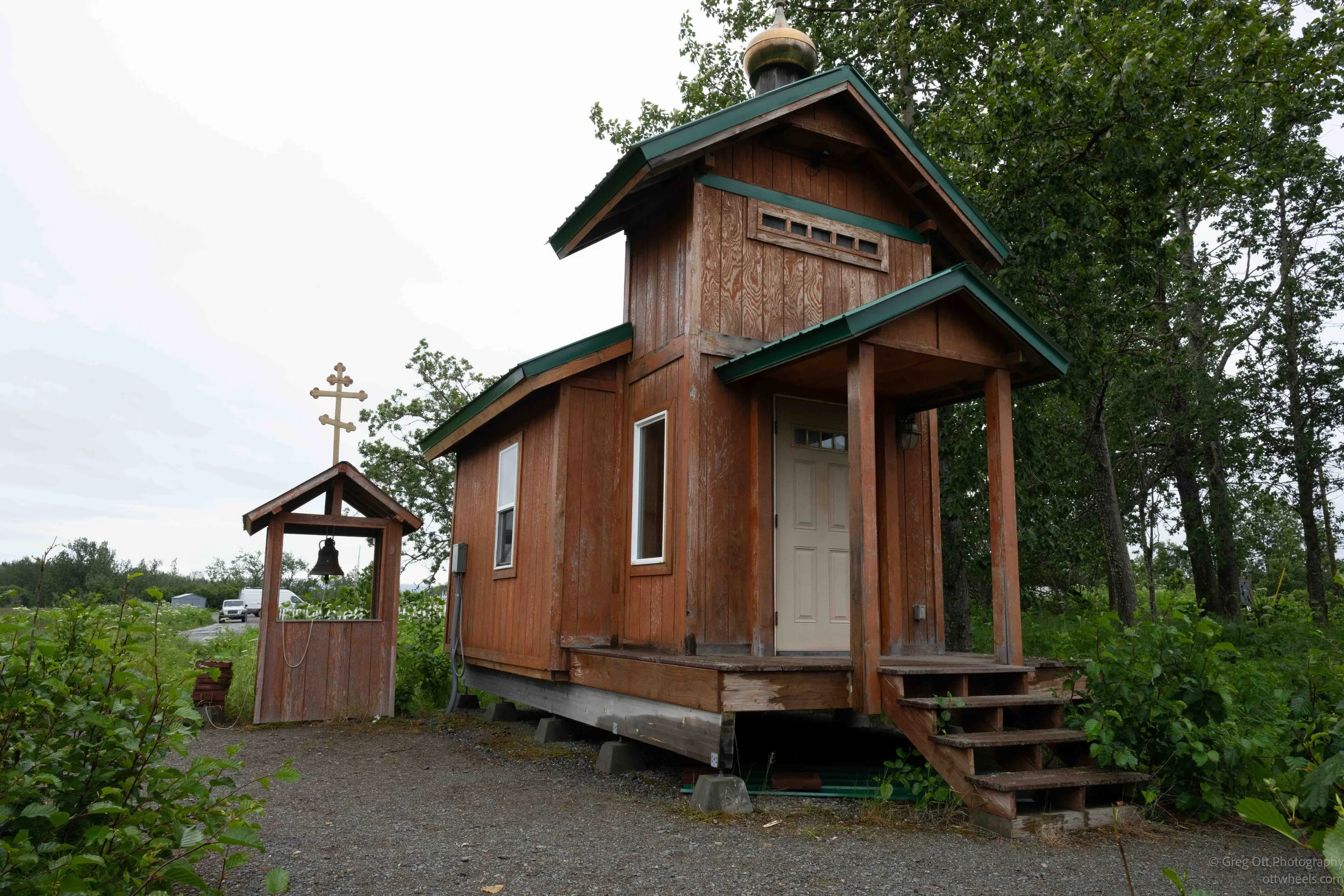
The church itself has been up on that bluff, in one form or another, since the settlement was established. Russian-American settlers built the first small chapel not long after they arrived. The building standing there now went up in 1900 and 1901 — log construction, laid out in the shape of a cross, five onion domes stacked on an octagonal cupola. A man named Alexi Andreev Oskolkoff came up from Sitka to oversee the construction, which means the same family name that helped found the village sixty years earlier was still running the show when they rebuilt its church. It's been on the National Register of Historic Places since 1978 and still belongs to an active parish under the Orthodox Church in America.
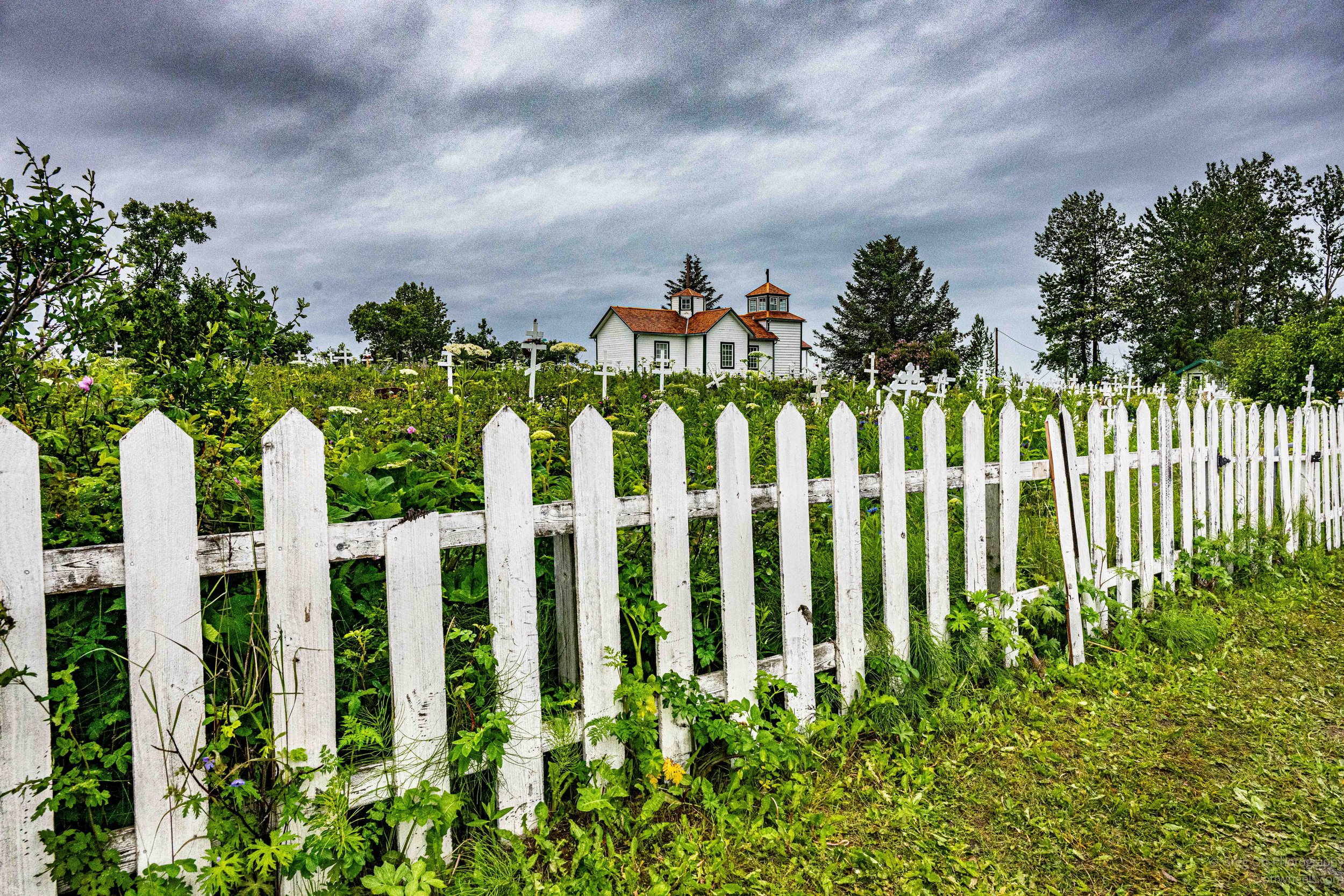
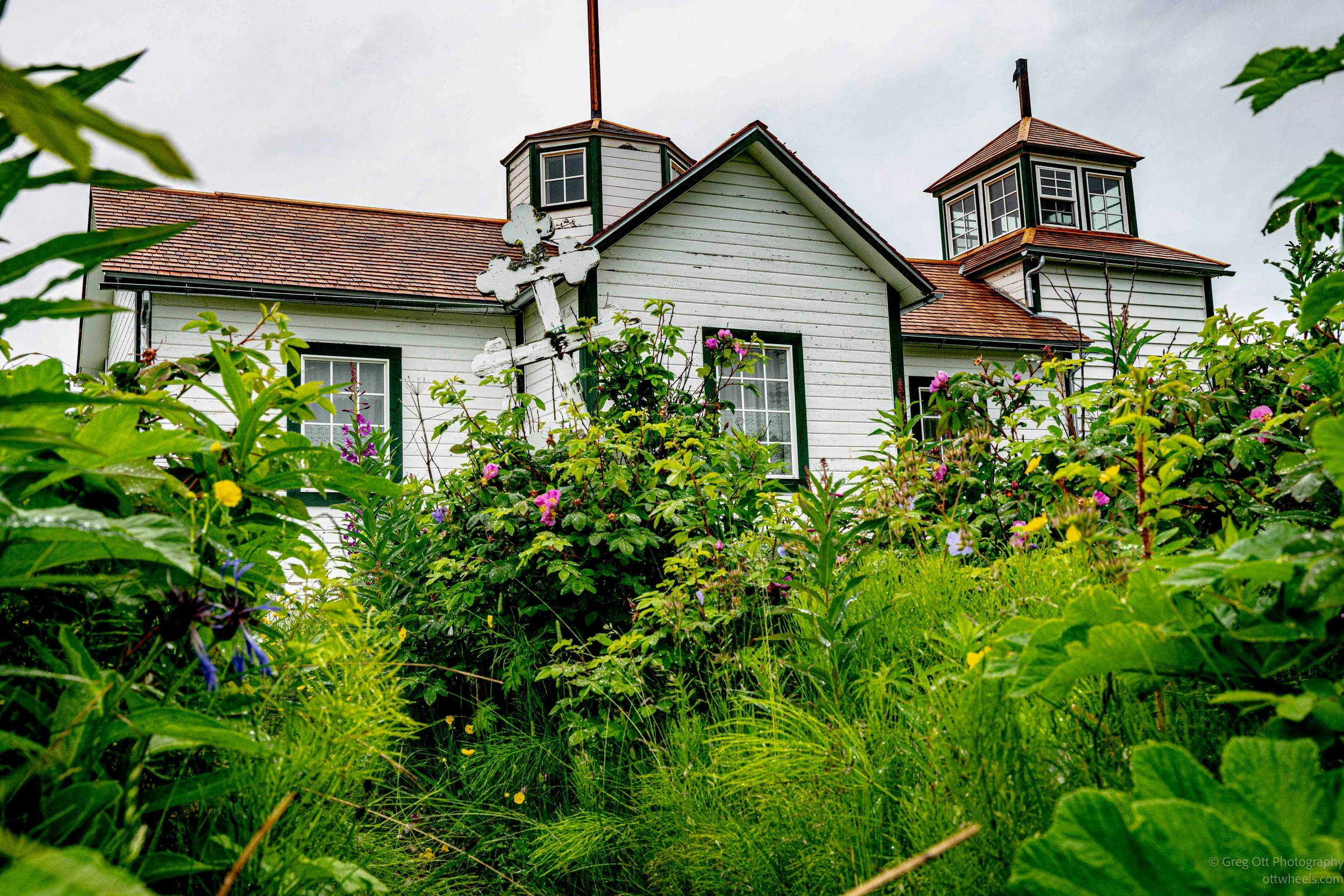
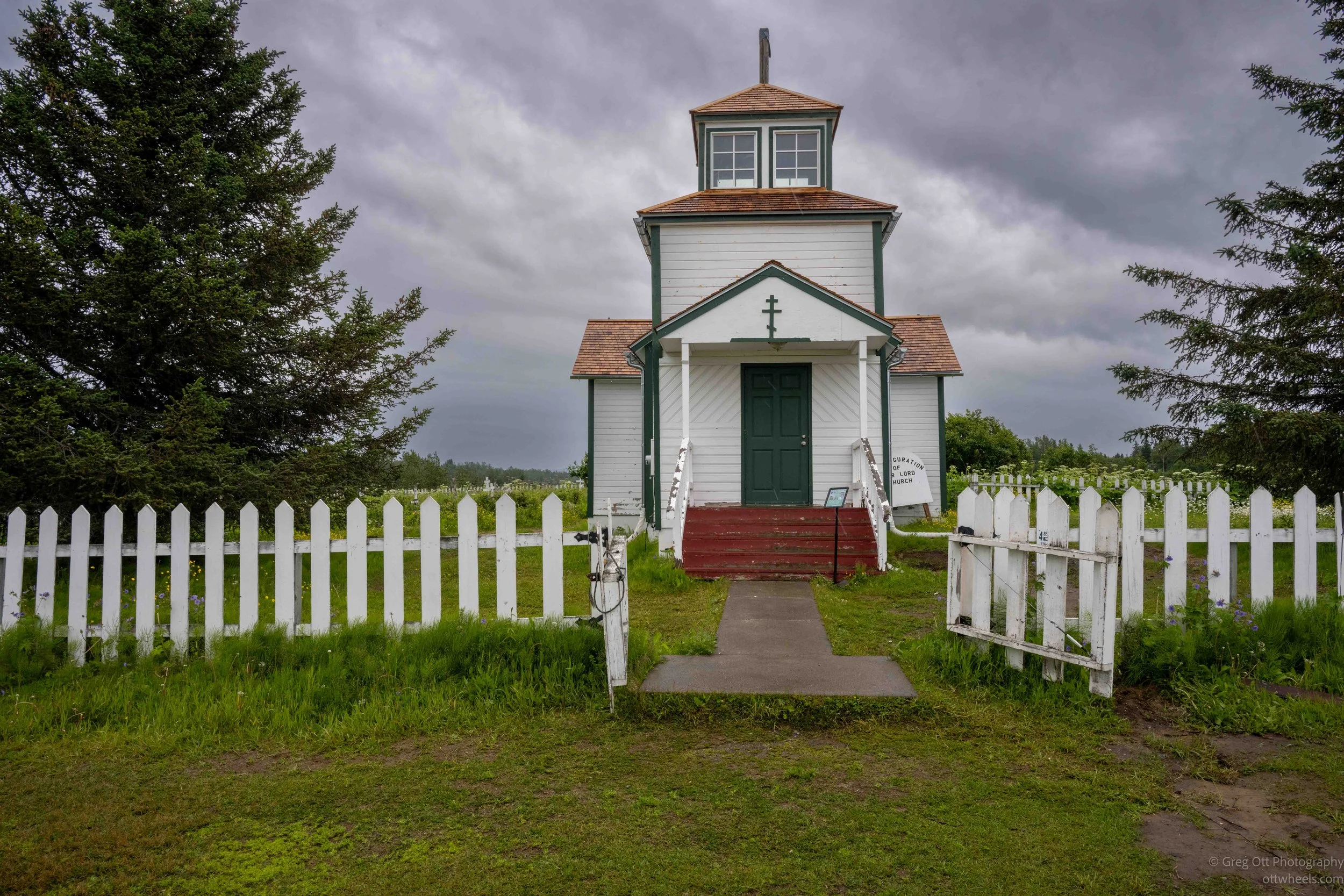
I ended up spending three hours there. Not because the church itself took that long, but because of the graveyard next to it, and because the rain kept interrupting me.
The cemetery isn’t maintained the way American cemeteries usually are. It is maintained once a year. Nobody mows it. It's just left to grow, and by late July it had gone wild — tall grass, wildflowers pushing up between the plots, everything a little overtaken. The graves belong to generations of Ninilchik families, descendants of the original Russian settlers, the Alaska Native families they married into, and everyone who came after and helped shape the place over the last 180 years. Most plots are boxed off by small wooden fences, some still painted white, others bare and gone gray from the weather, marking off each family's ground like a little yard. In places the grass had grown so high the fences nearly disappeared underneath it, and it got hard to tell where one family's plot ended and the next one started.
A lot of the crosses marking the graves were the traditional three-bar Russian Orthodox style, weathered and leaning after decades of Alaska winters: a short top bar for the sign that read "King of the Jews," a long middle bar where the arms would have been nailed, and a slanted bottom bar representing the footrest, tilted to point up toward heaven on one side and down on the other — a nod to the two thieves crucified alongside Christ, one who repented and one who didn't.
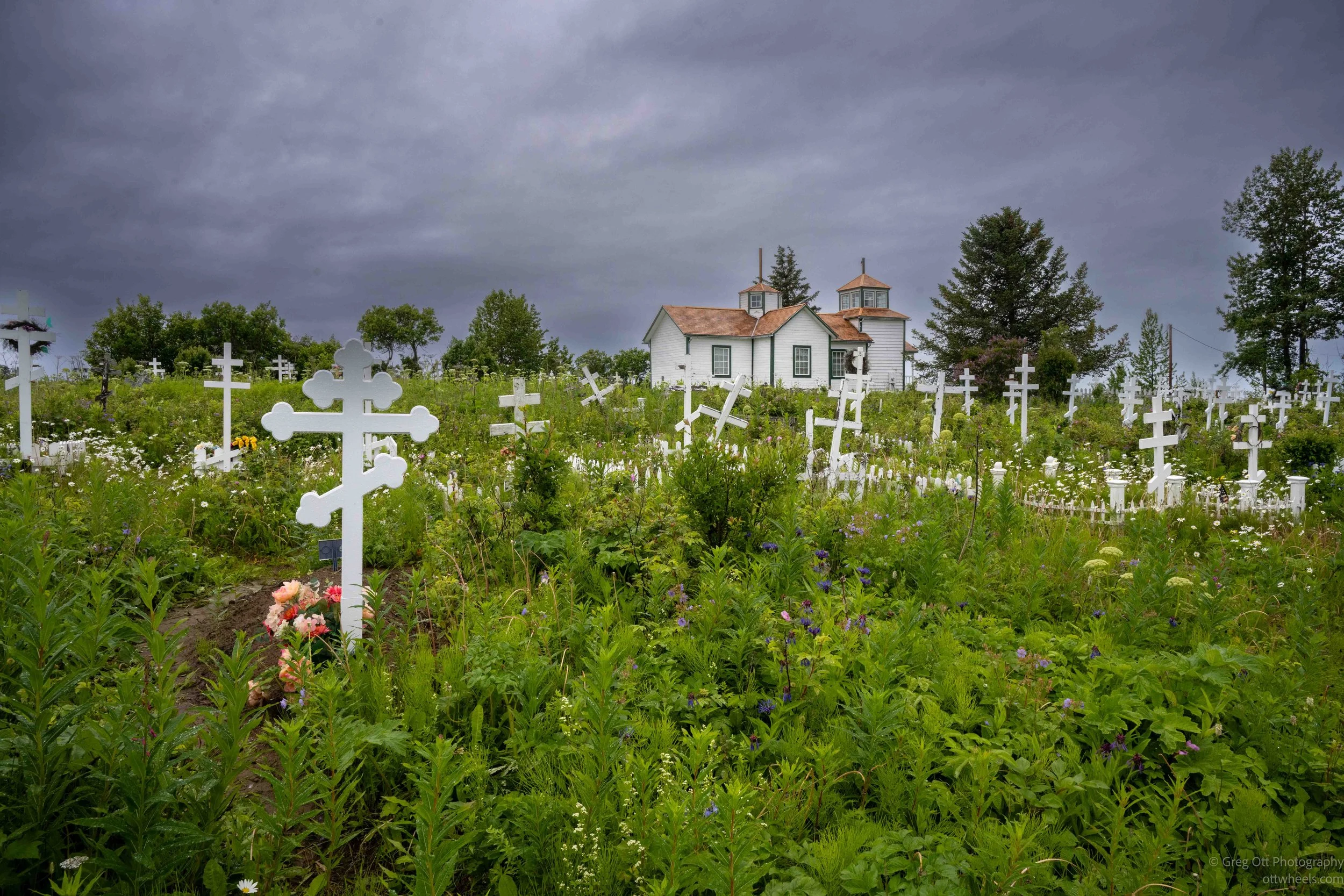
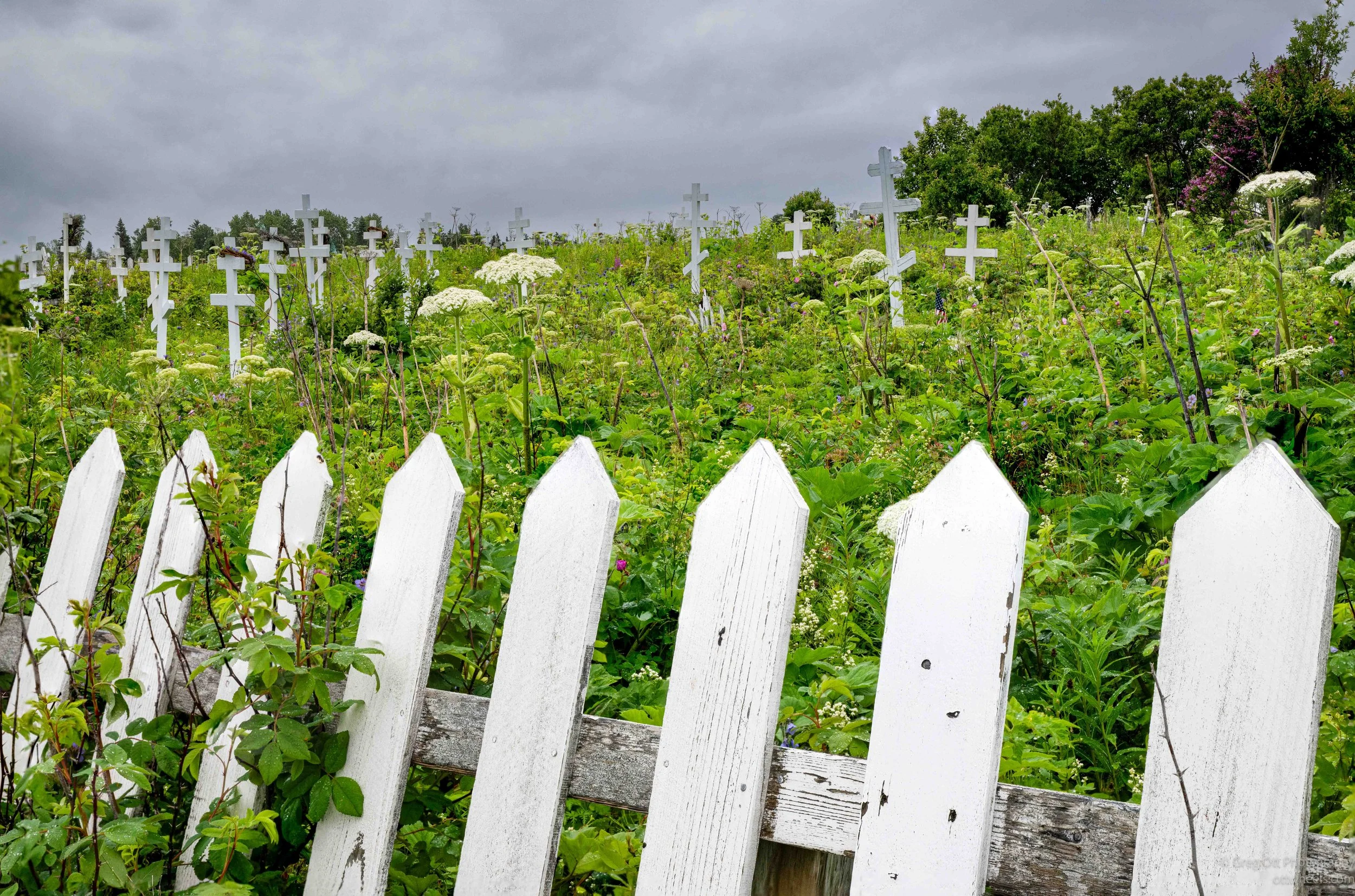
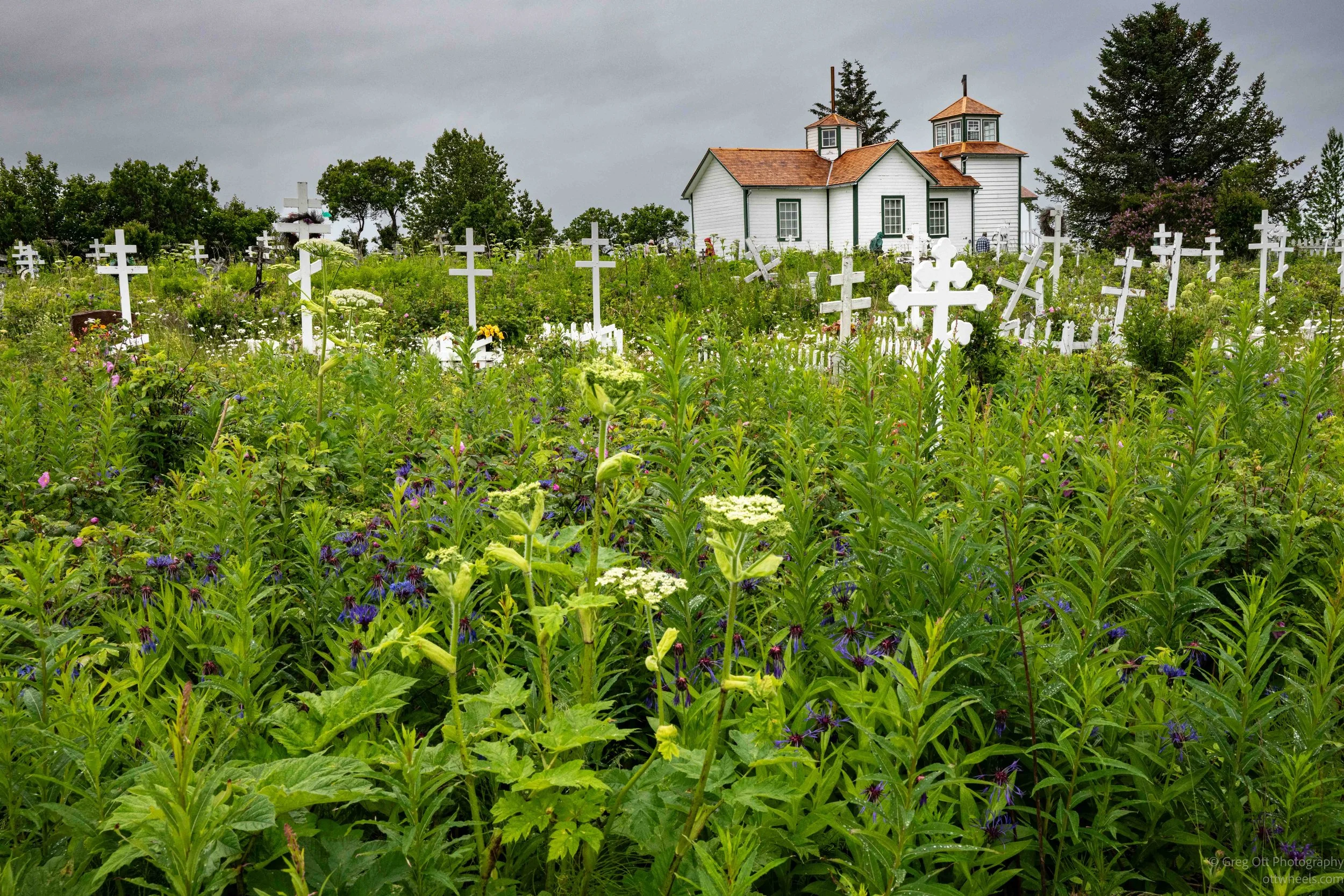
I walked the rows with my camera, trying to get through the whole graveyard before the weather turned again. It didn't take long. The clouds opened up and I retreated to the van to wait it out, which became a pattern for the morning: shoot for fifteen minutes, get rained out, sit in the van, try again.
What kept pulling me back out was the flowers. Lupines, fireweed, yarrow, buttercups, wild roses, and a dozen smaller blooms I couldn't name were scattered through the grass and growing up around the fences and the crosses, and every single one of them was beaded with water from the rain. I spent most of my three hours just crouched over different blossoms, photographing the droplets sitting on the petals, using the weathered fences and leaning crosses as a backdrop. By the time I was done I was soaked through from walking in wet grass that came up past my knees, but I got the shots.
There's something about an old cemetery that's allowed to just grow instead of being kept manicured. It doesn't feel neglected, exactly. It feels like it's being left alone on purpose.
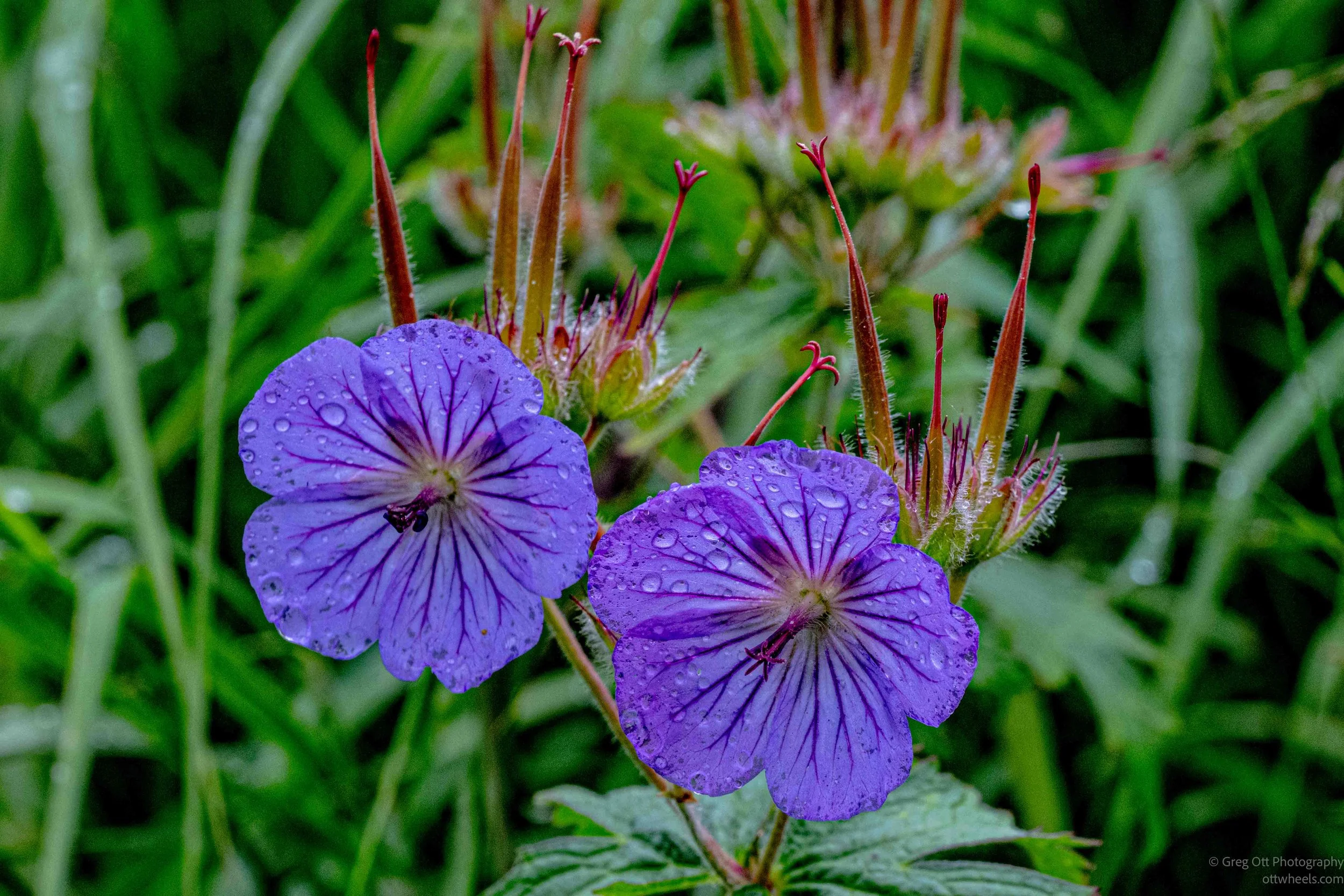
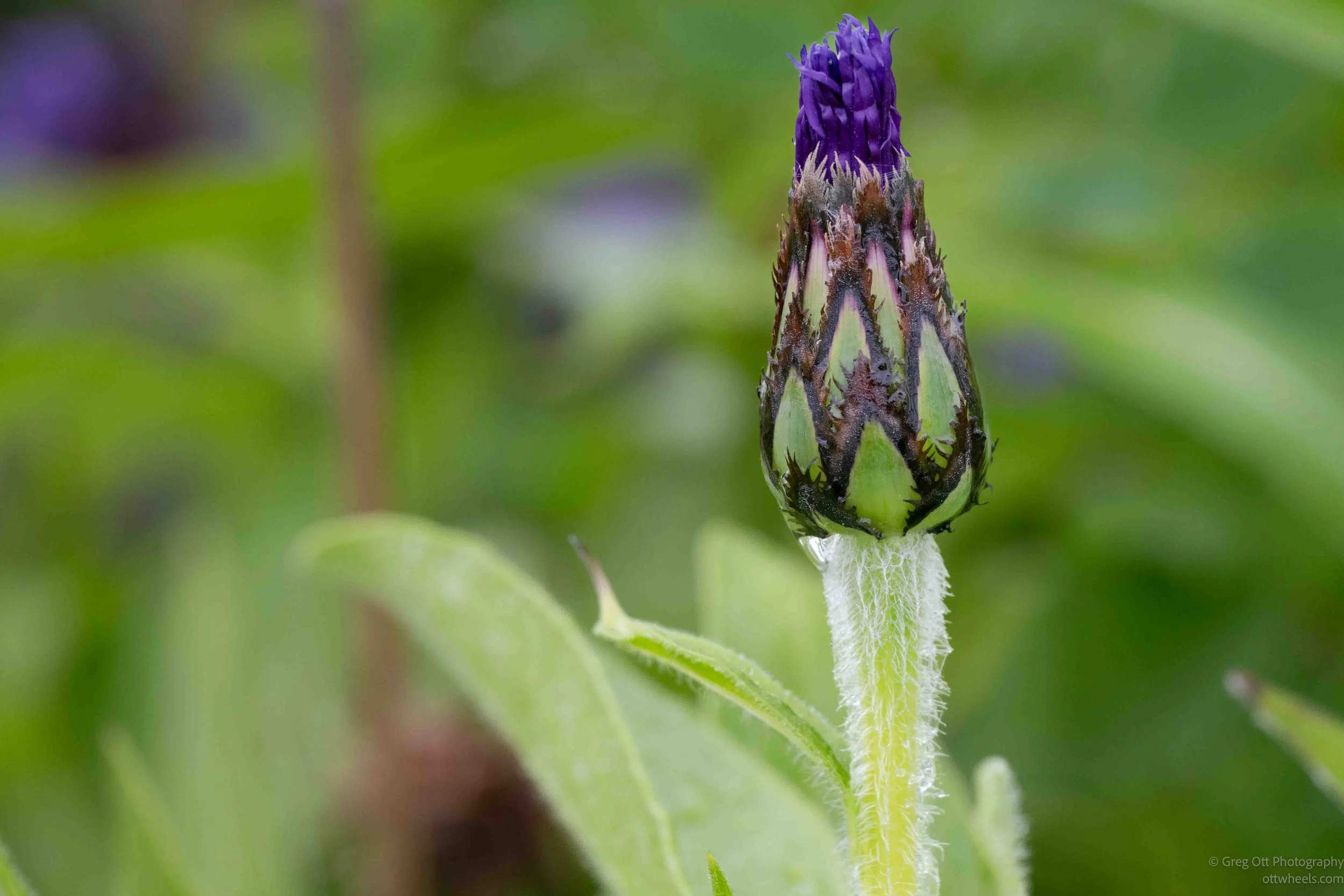
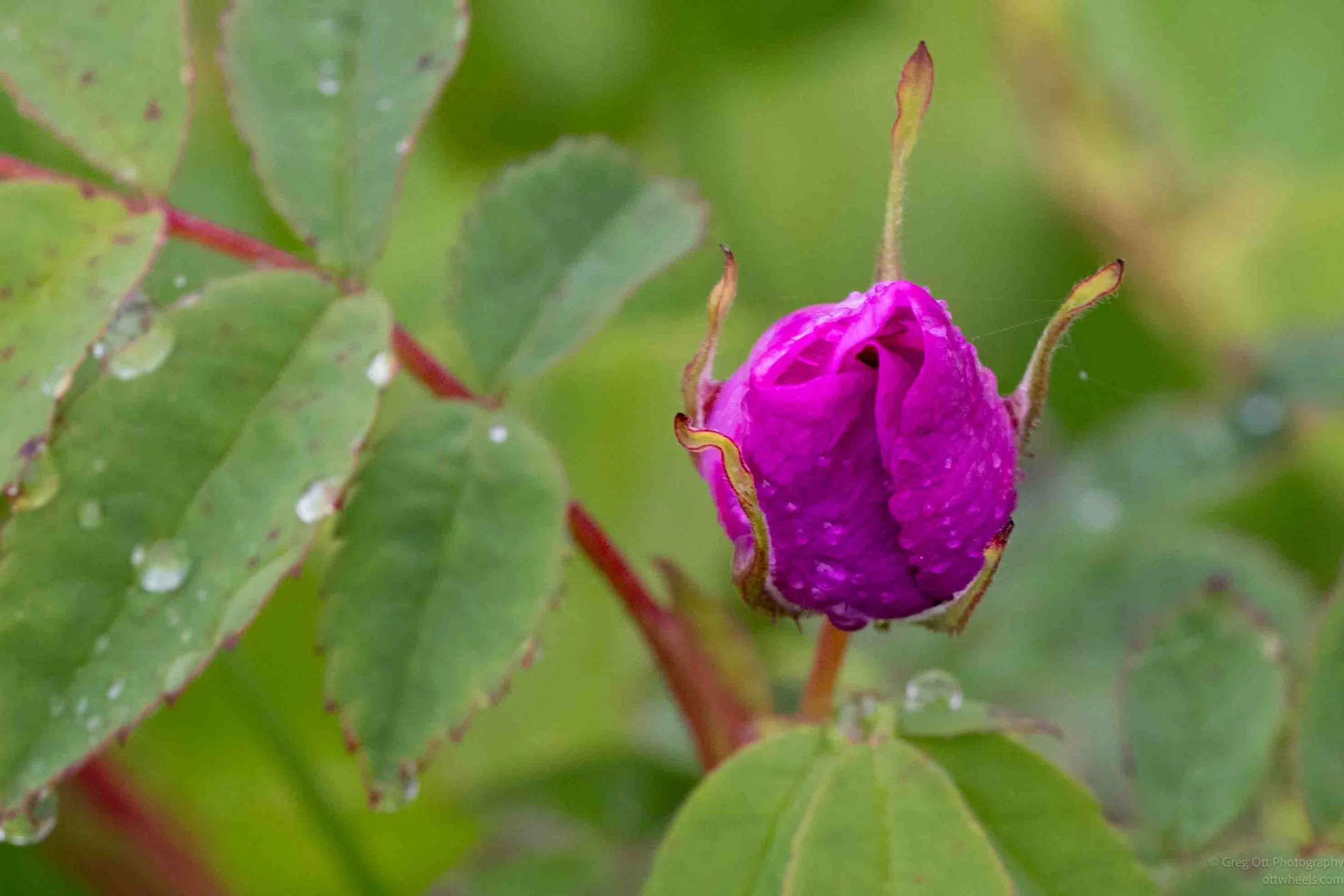
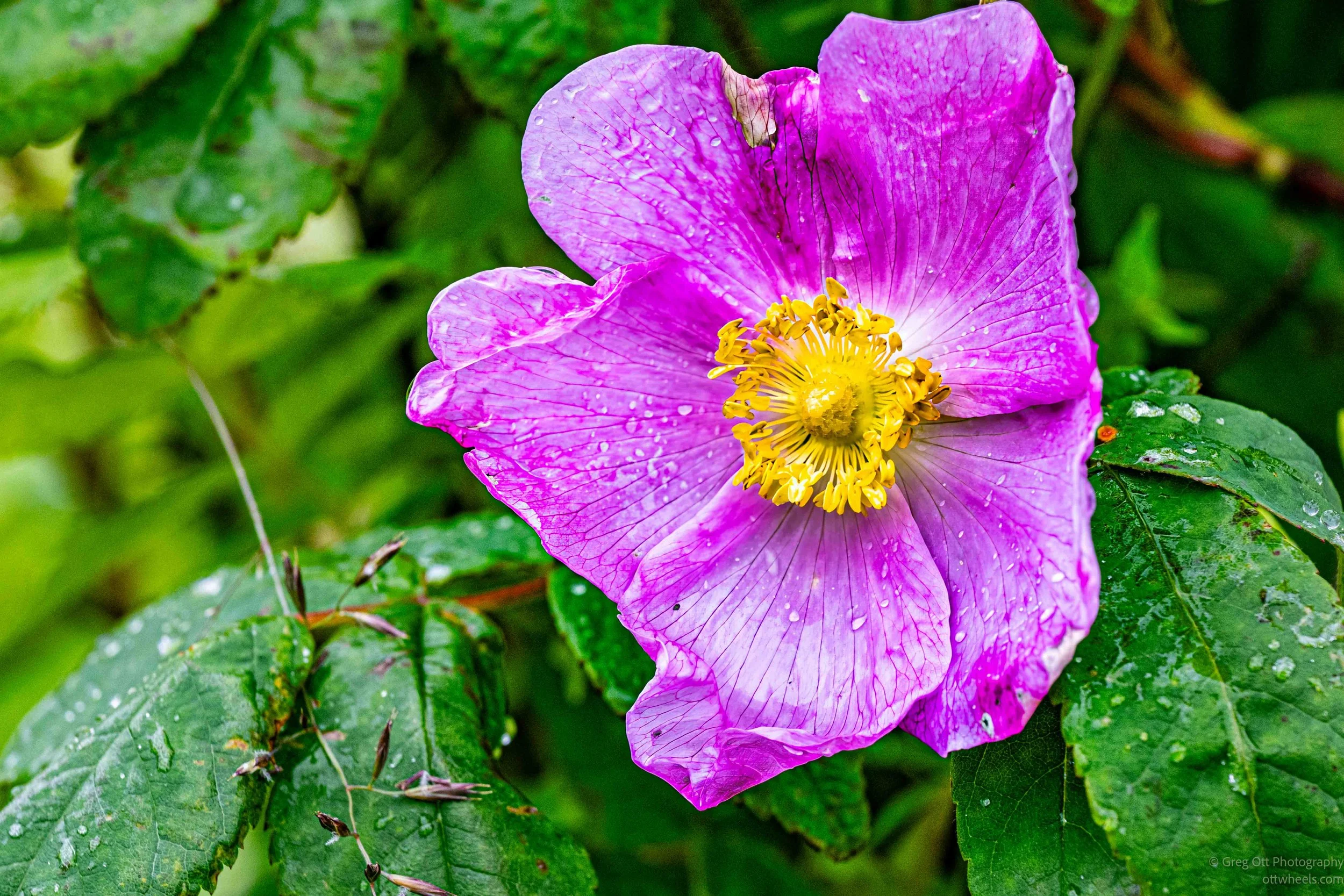
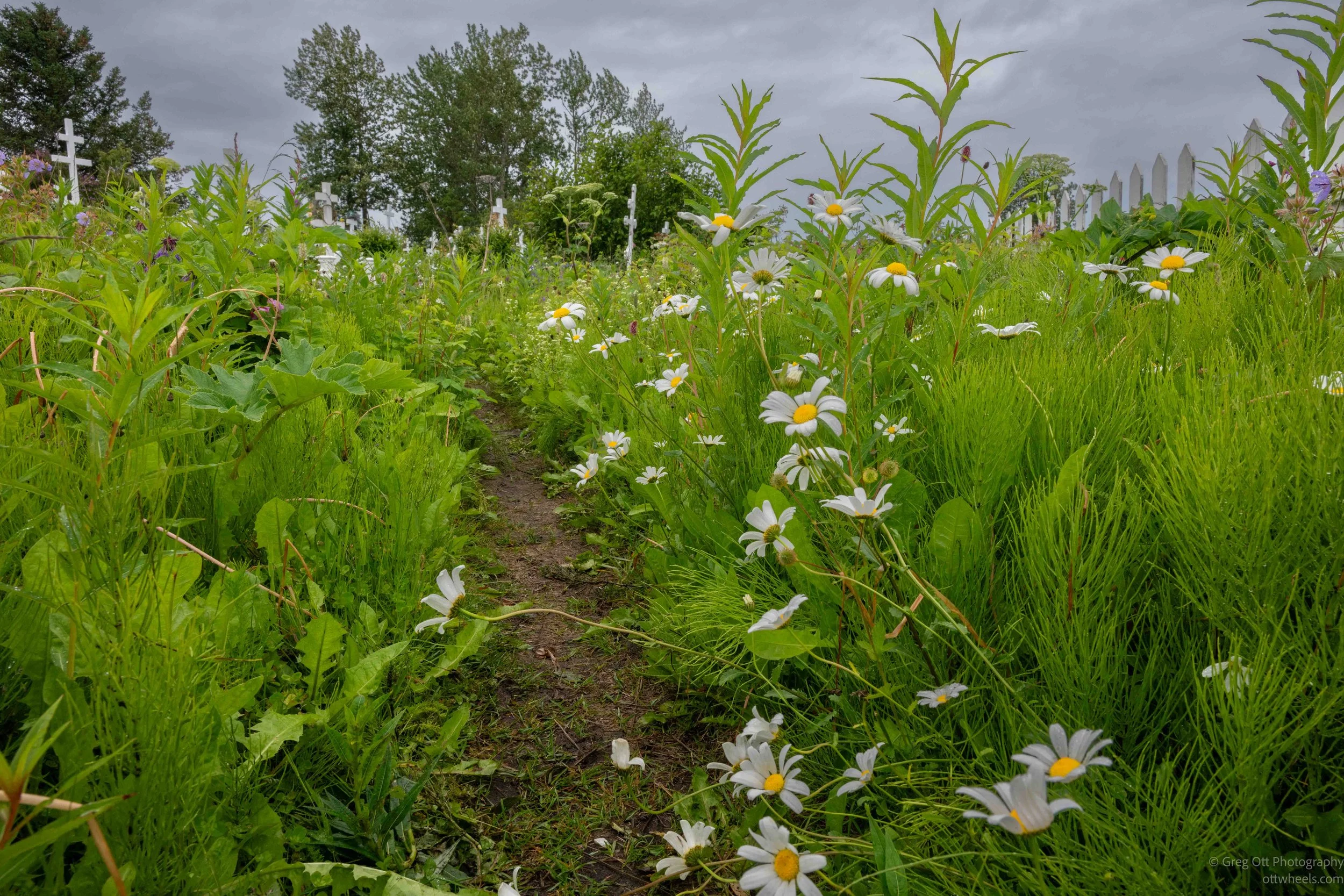
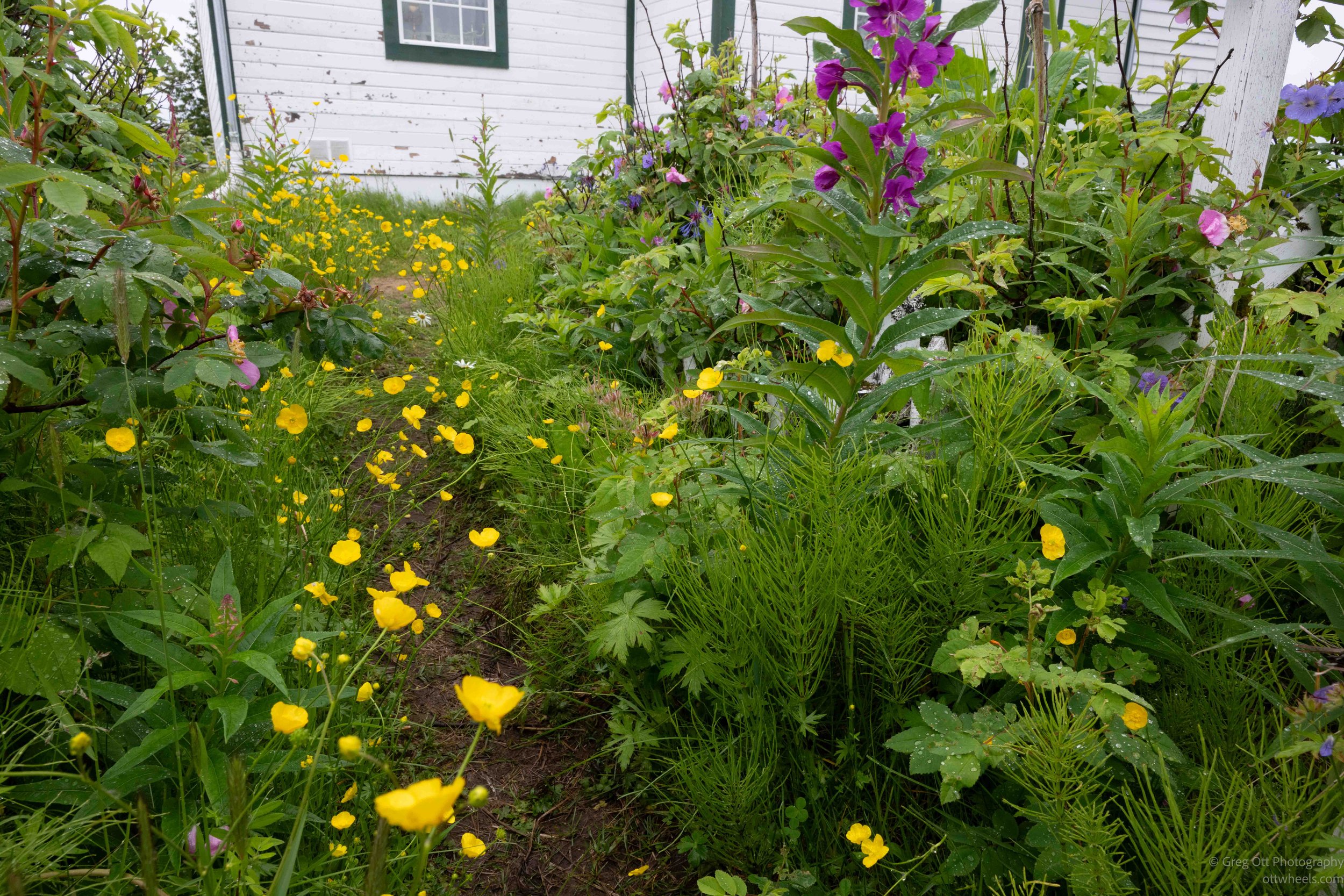
I kept coming back to that while I was crouched down photographing flowers growing up out of the same ground the graves were dug into. A mowed cemetery keeps death looking tidy and separate, like the dead are being managed rather than returned. Nobody's managing this one. The grass gets to be grass. The flowers get to be flowers. And somewhere underneath all of it, generations of Ninilchik families — the Kvasnikovs, the Oskolkoffs, and everyone who came after them — are still doing something, feeding the ground that's feeding what I was photographing.
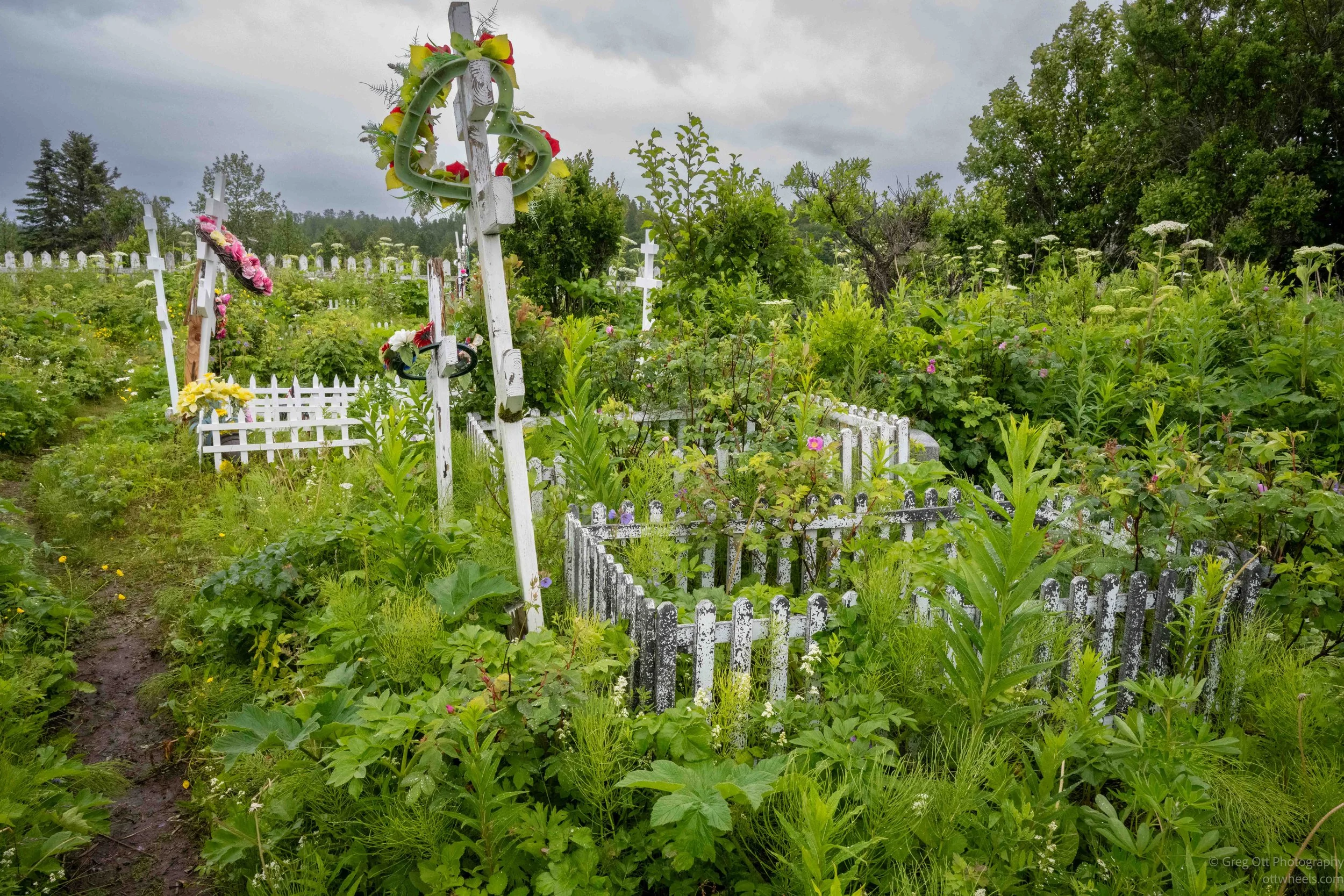
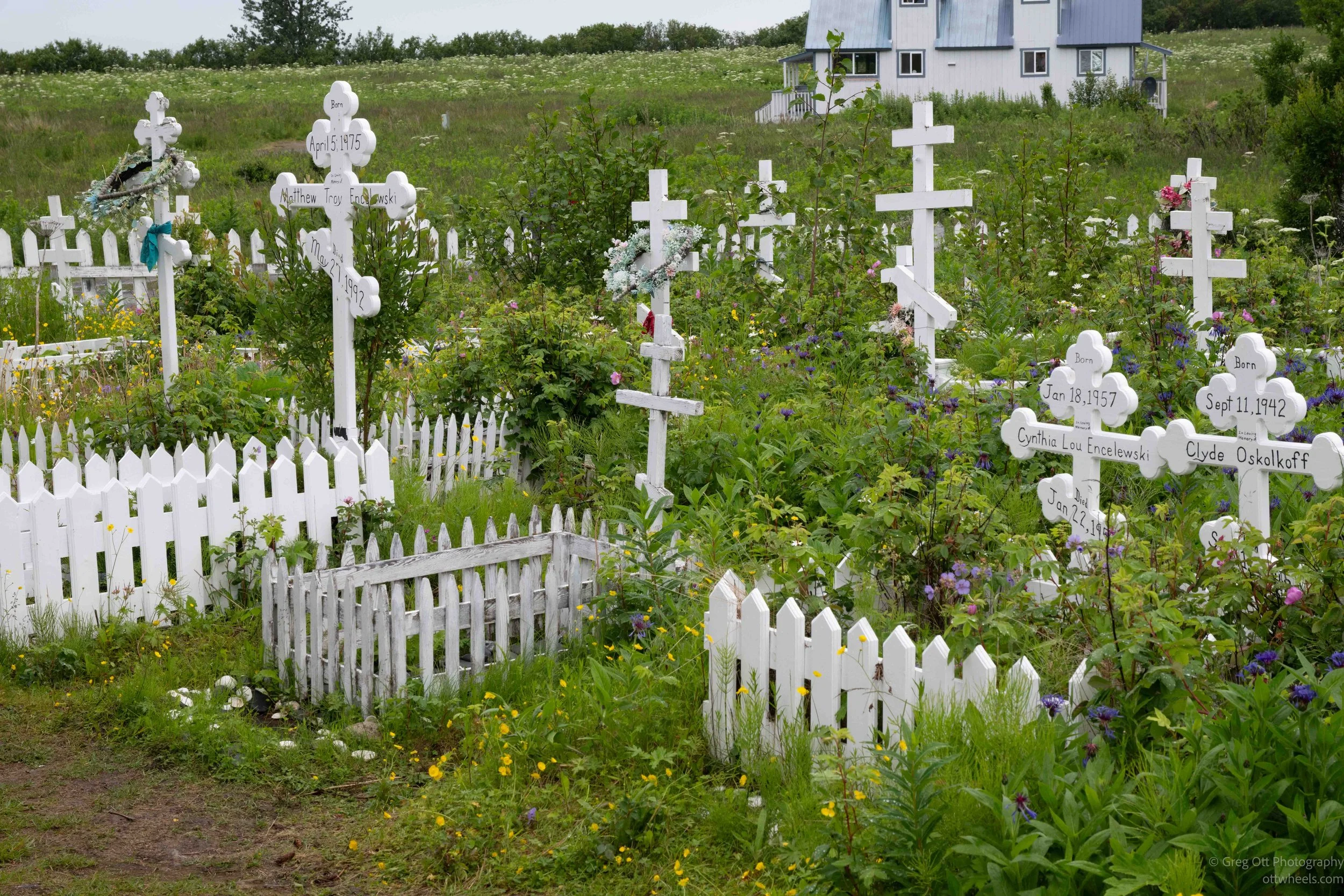
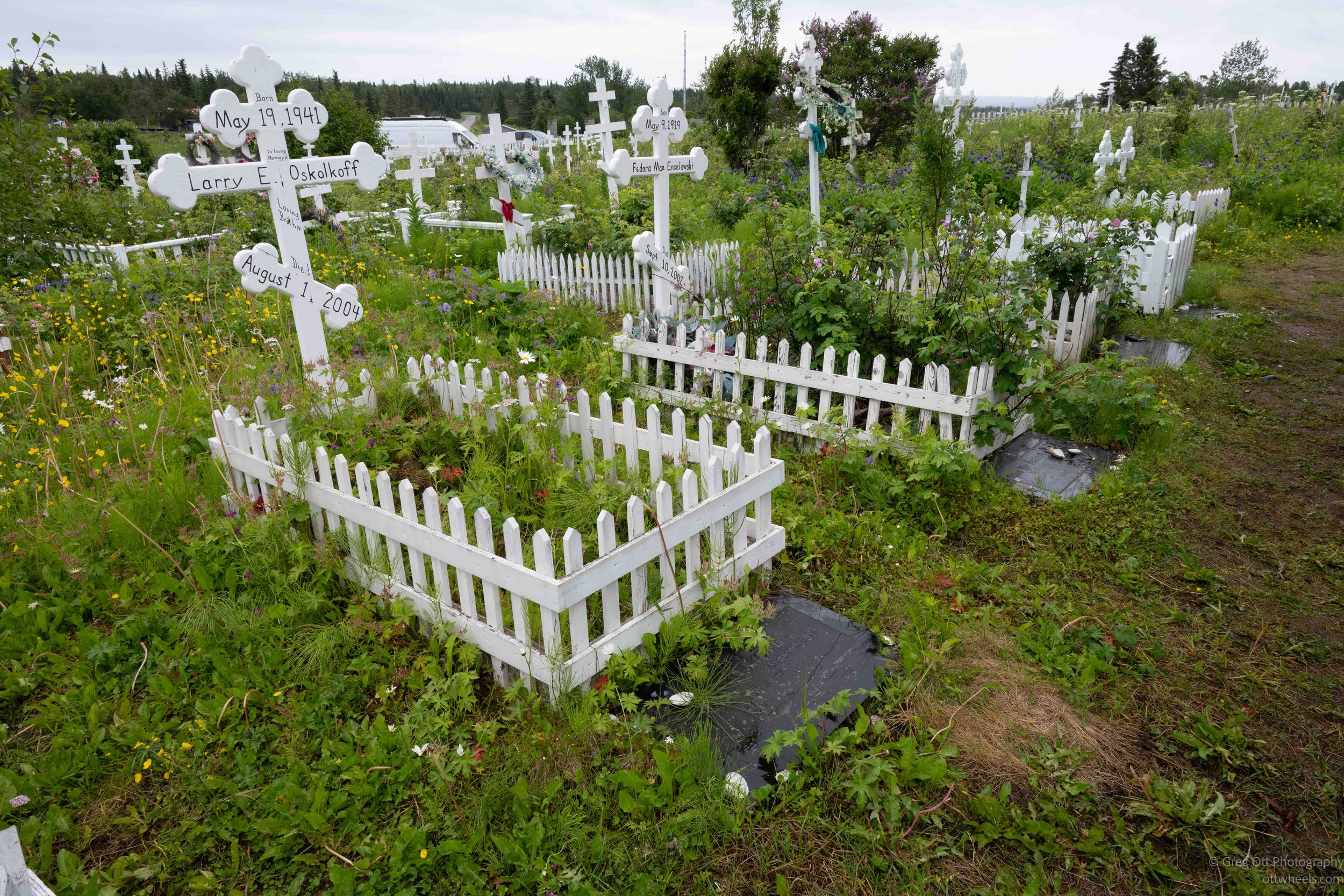
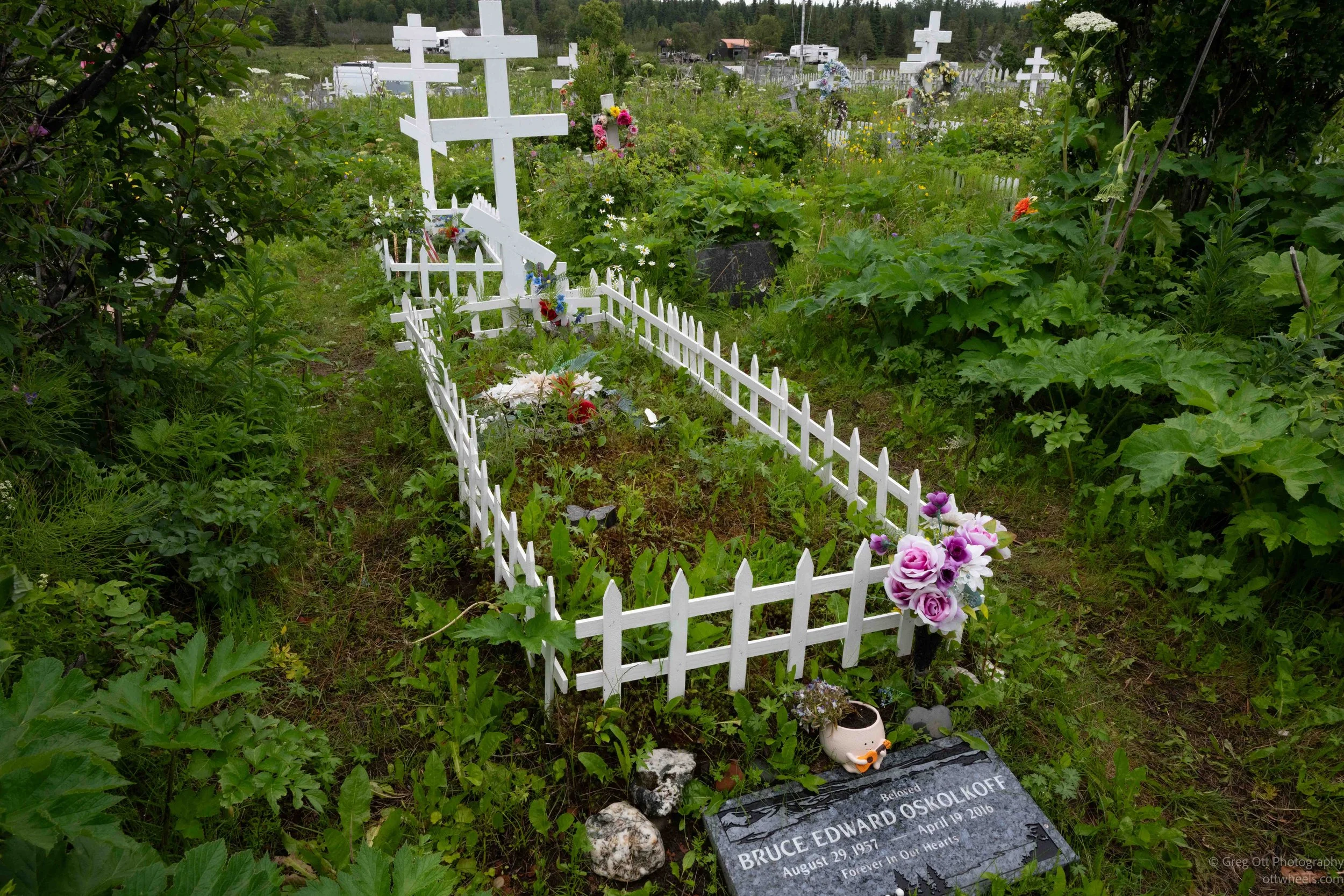
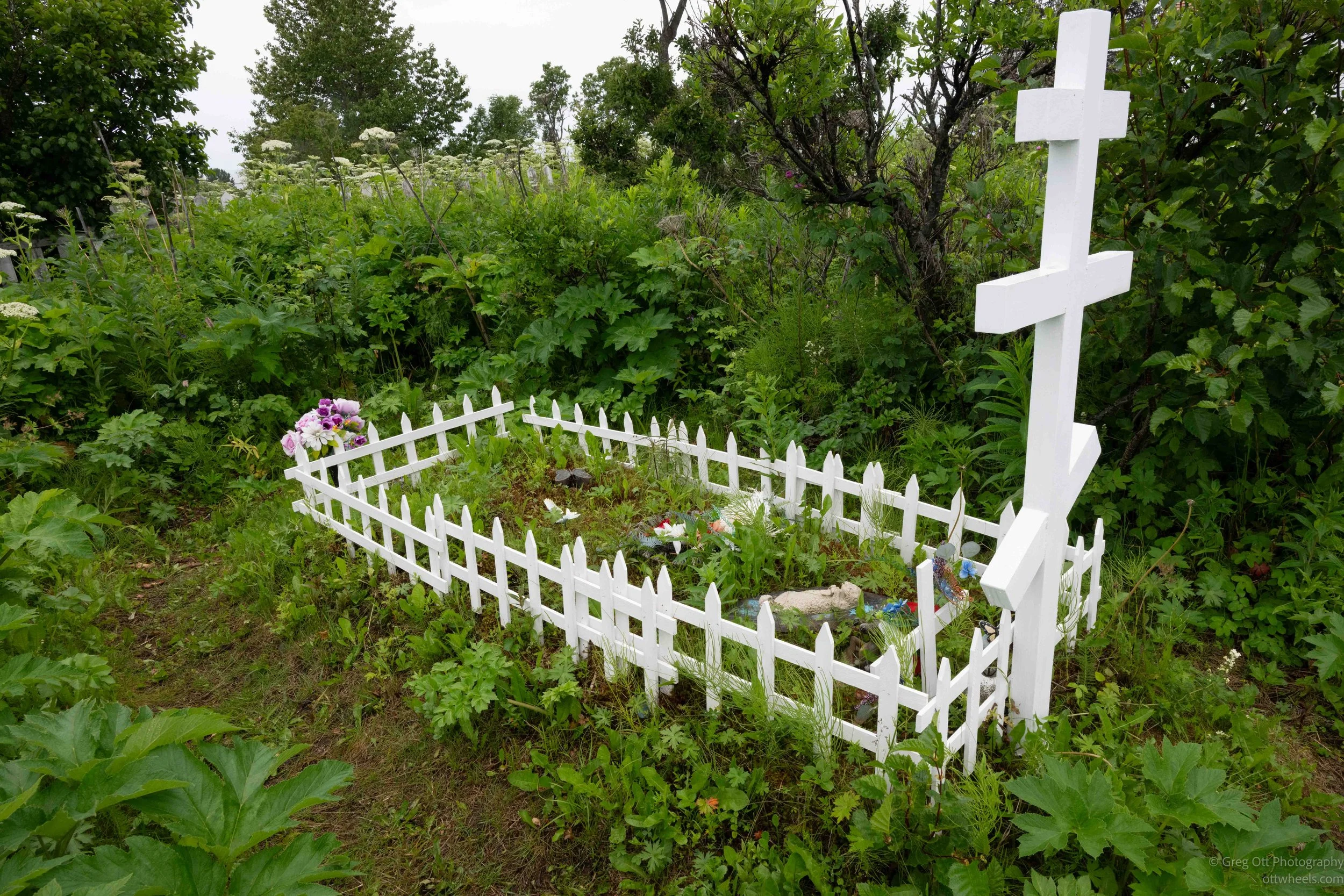
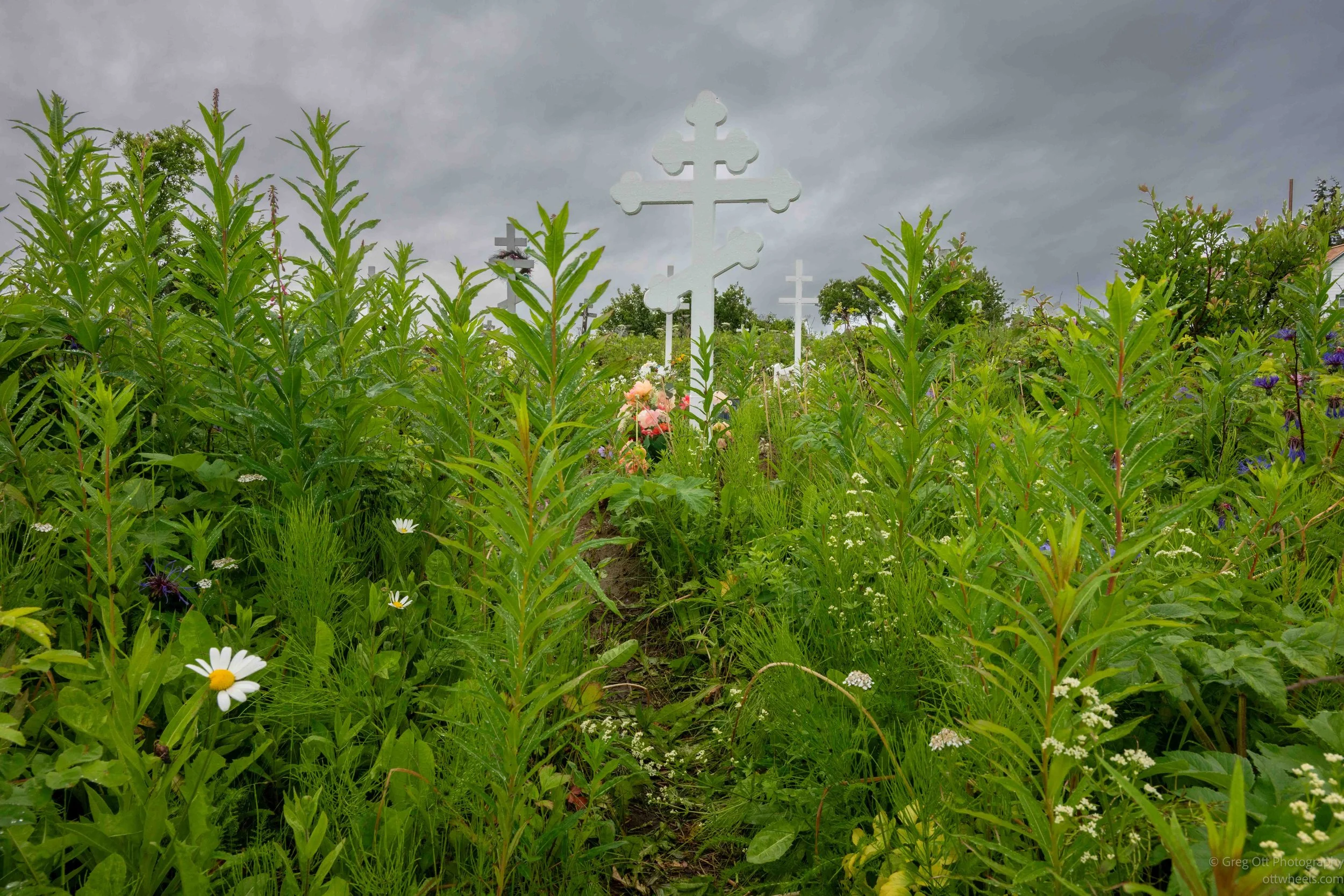
That's the part that stuck with me. The people under those wooden fences aren't gone in the way a headstone makes you think of gone. They broke down into the soil, and the soil grew wildflowers, and I spent three hours on my knees in wet grass pointing a camera at the proof of it. Every petal beaded with rainwater was standing on top of somebody who used to have a name and a family and a pew in that log church up the hill. The body goes into the ground and becomes grass, becomes flower, becomes the thing that stops you in a cemetery and makes you take a picture instead of just walking past. Nothing about that felt morbid to me. It felt like one of the most honest cemeteries I'd ever walked through in years, because it wasn't hiding anything. Death was paying for the flowers, plainly, right out in the open, and the rain that kept chasing me back to the van all morning was the same rain that was going to keep them growing long after I drove off.
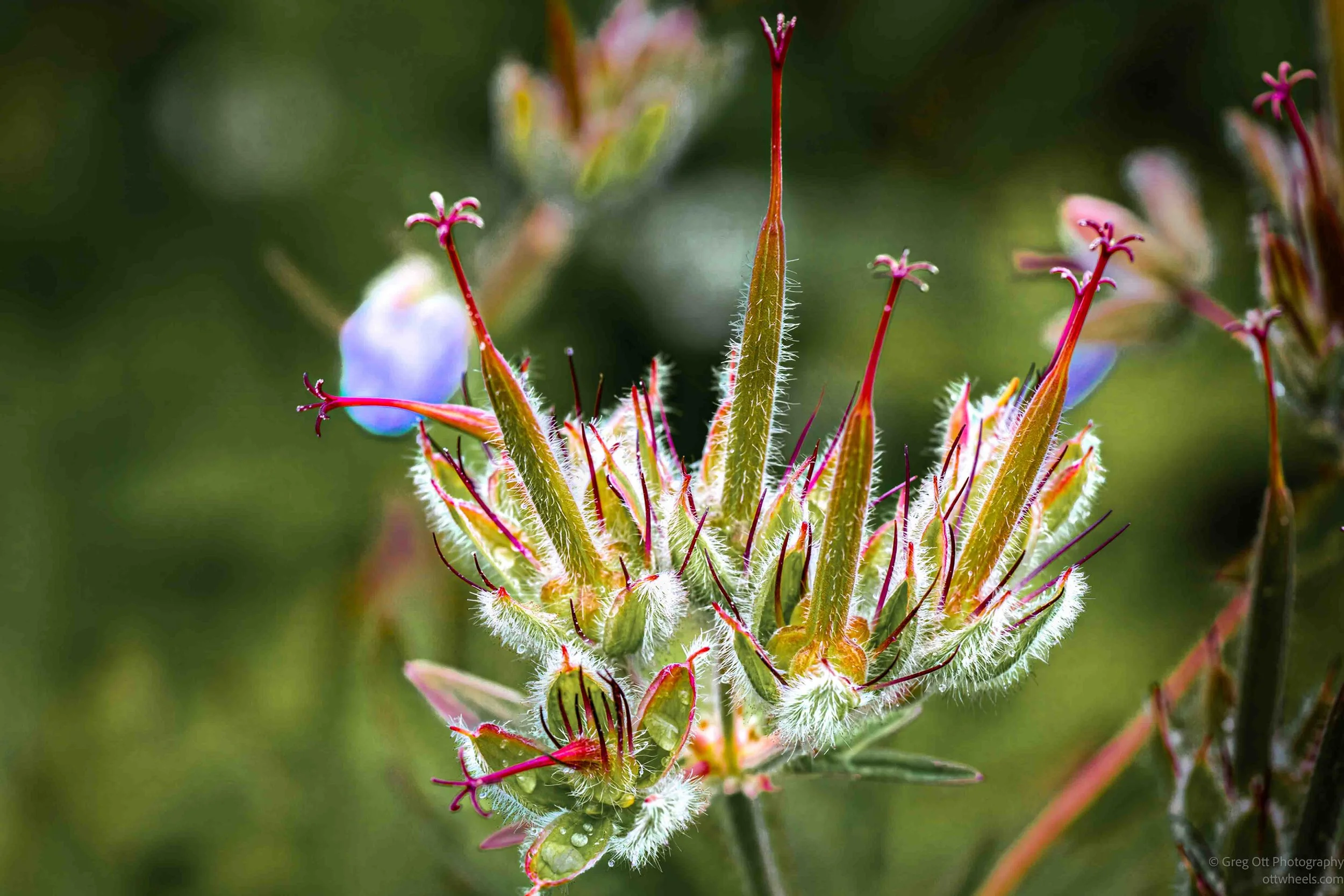
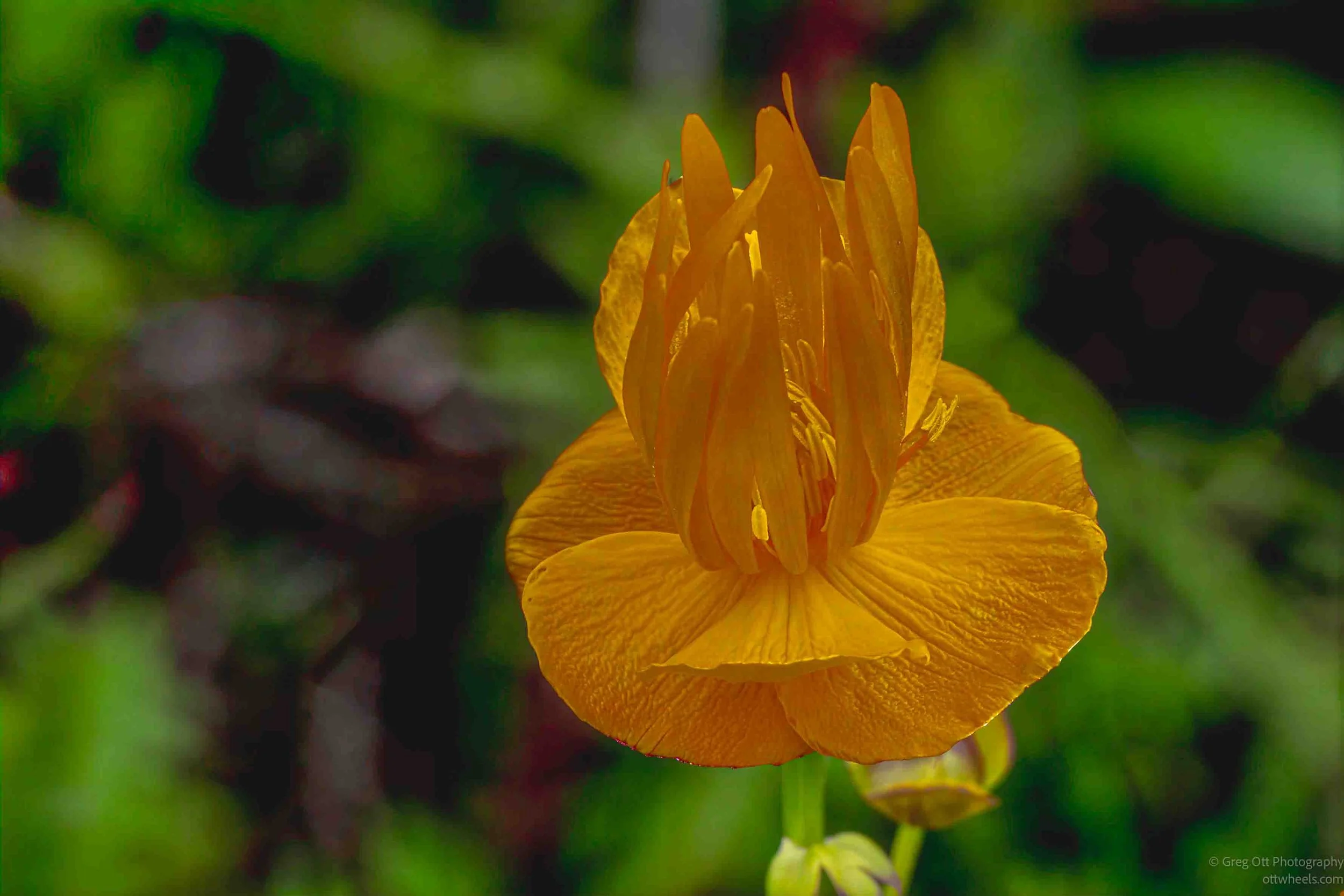
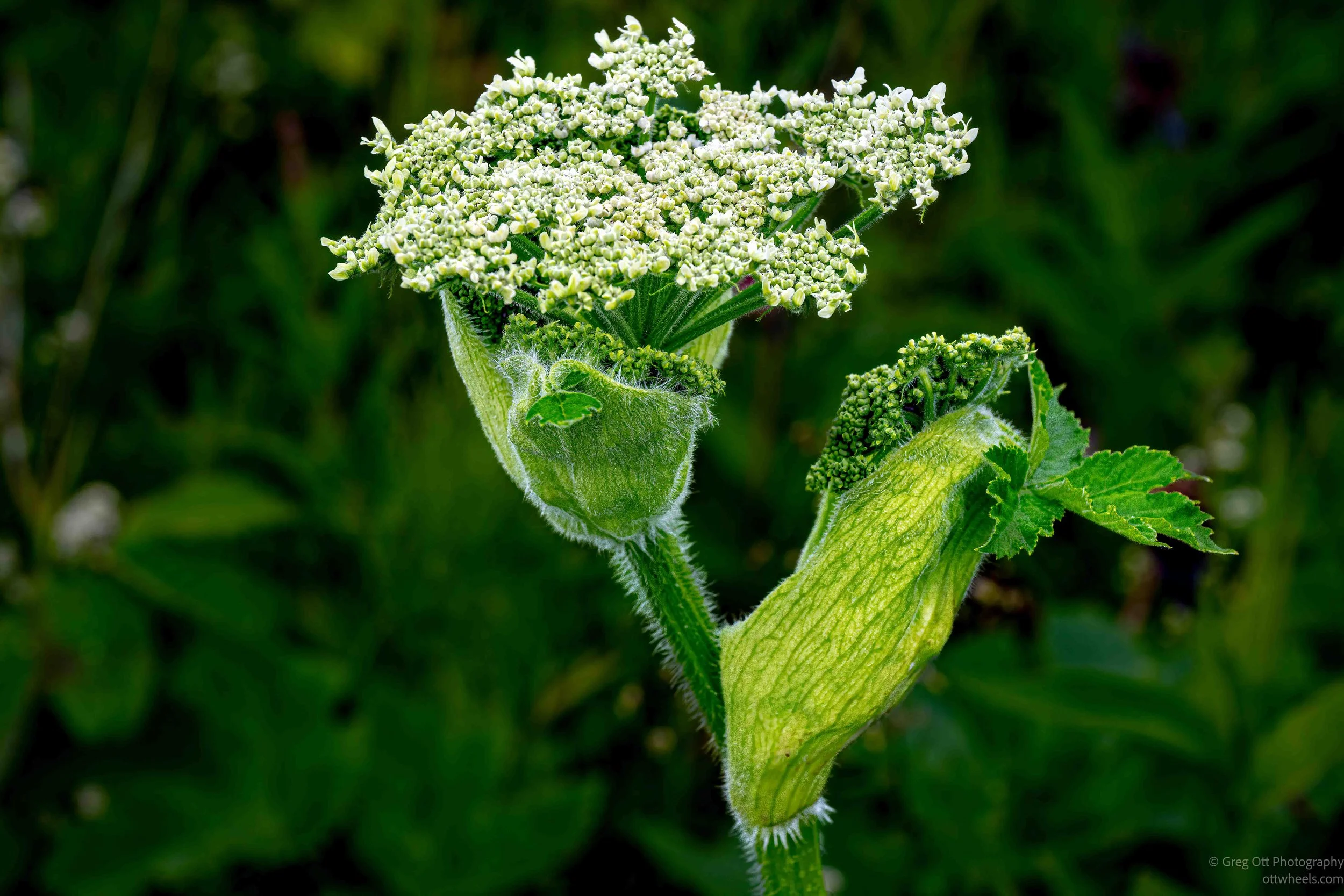
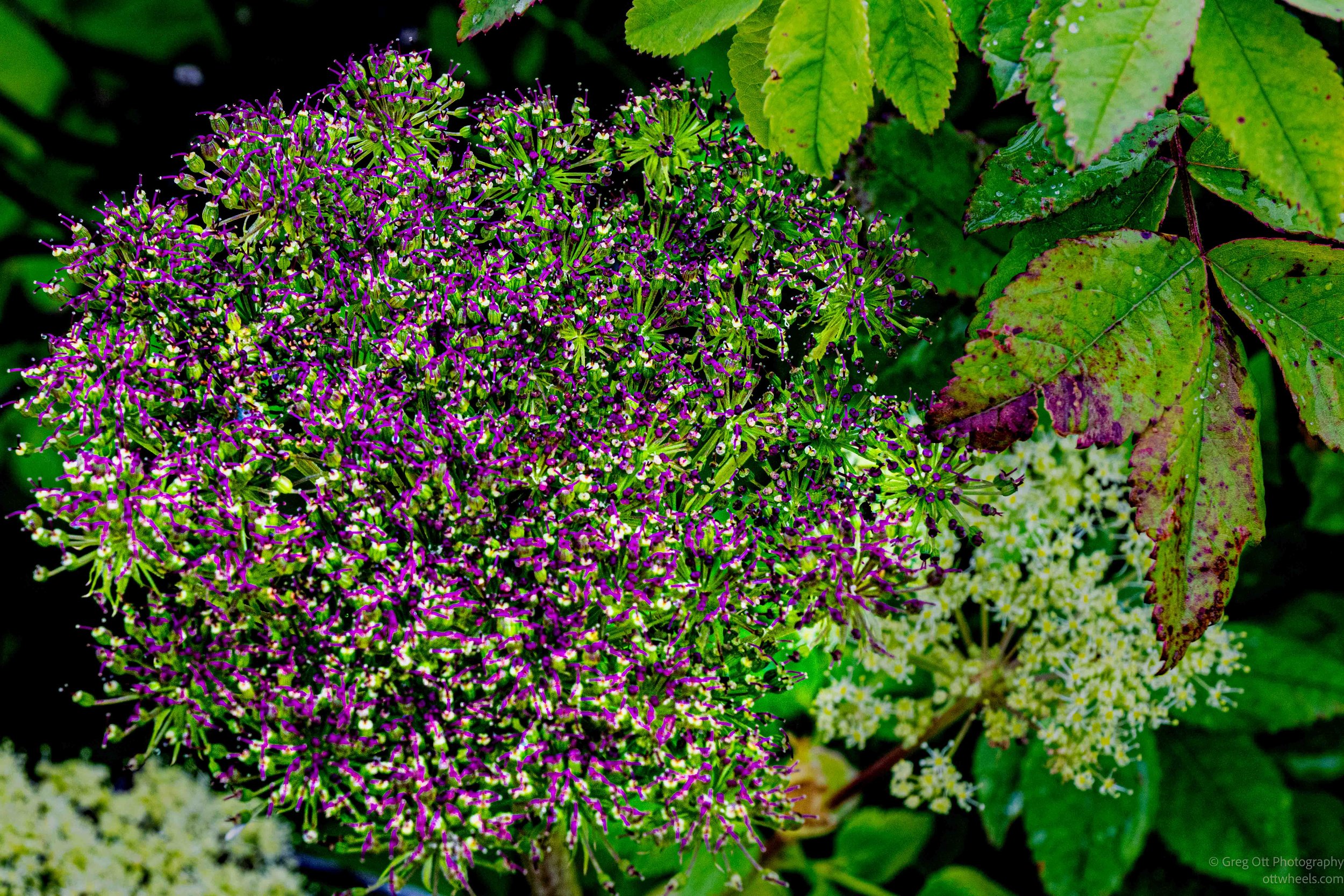
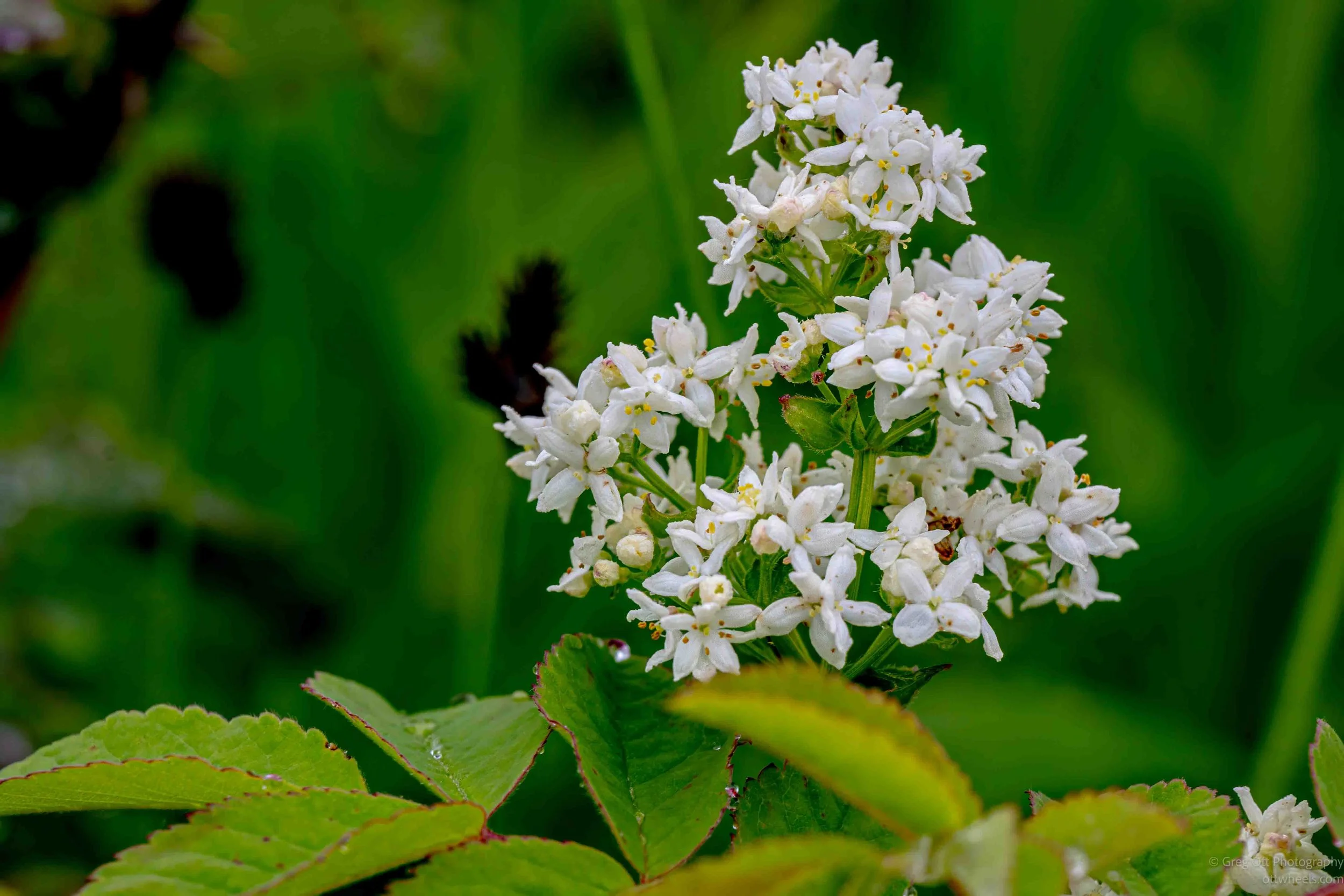
That's the cycle an unmowed graveyard lets you see. Cut the grass every week and you're left with a lawn full of names. Leave it alone and you get to watch the whole exchange happen: body to soil, soil to root, root to bloom, bloom back to seed. Ninilchik just happens to leave the fence open on that process instead of closing it off with a mower.
After I finally left, I made one more attempt at Old Ninilchik Village, following the roads down along the river and the beach. I passed a handful of older houses and weathered outbuildings, but nothing that matched the village I'd pictured that morning. I gave up on it for good and pointed the van north.
Ninilchik today is a much different place than the small Russian settlement it once was. Homes, gas stations, restaurants, and gift shops now line the highway, serving the steady stream of visitors exploring the Kenai Peninsula. I stopped to fill up the gas tank.
By early evening I pointed the van north once again, driving through wind and steady rain until I found a quiet pullout about a mile off the highway. The rain continued into the evening, drumming softly on the roof as I settled in for the night, giving me time to reflect on a day that had been shaped as much by history and quiet observation as by the weather itself.