Homer, AK
Yesterday's rain continued through the night and showed no sign of letting up today, so I decided to visit a museum and stay dry.
Pratt Museum, Homer, AK
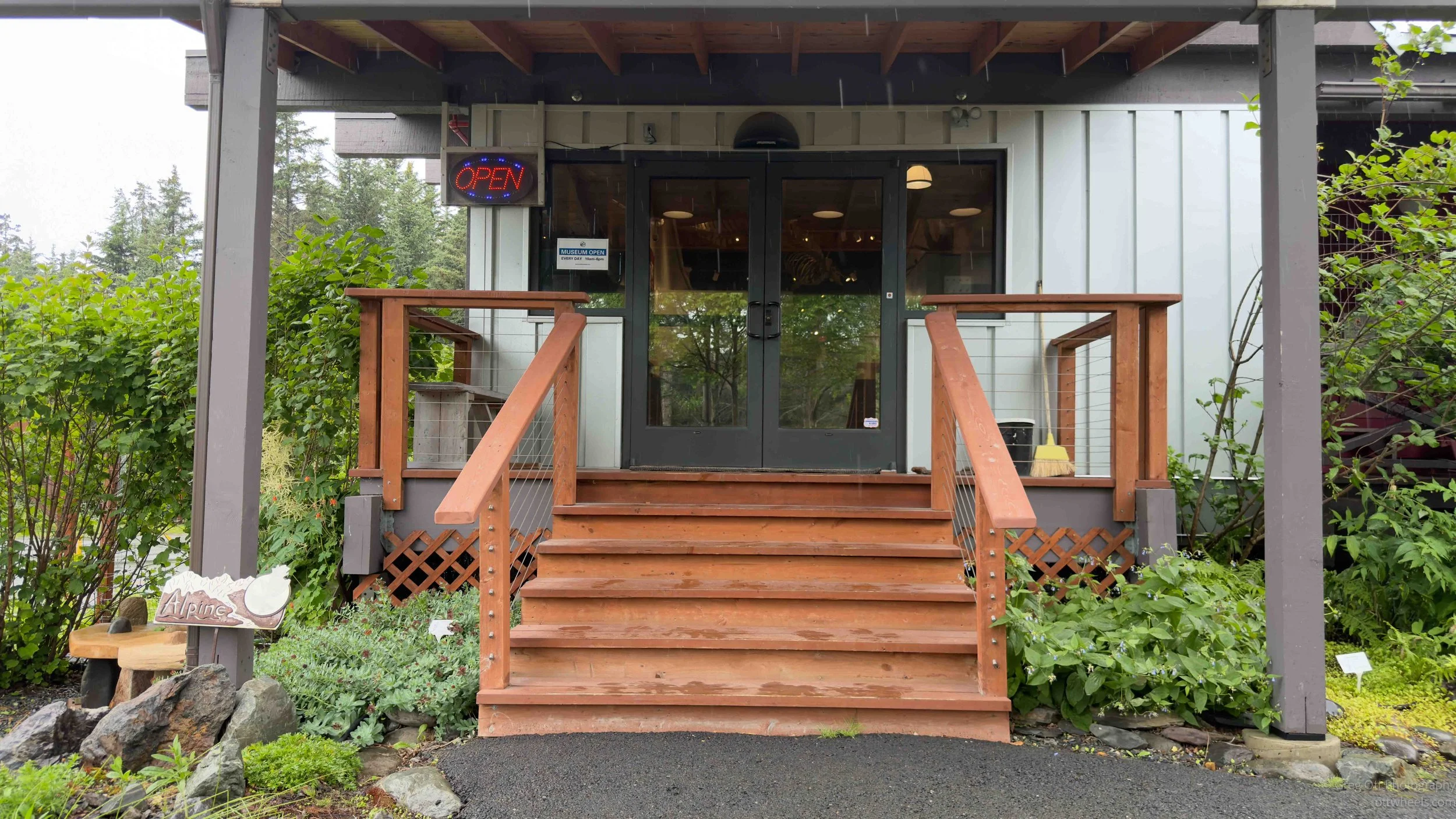
Before going inside, I stood outside for a few minutes just taking it all in. The air was incredibly fragrant — a mix of pine, wildflowers, fresh herbs, and the earthy scent of the forest returning to the soil, everything cool and damp after hours of steady rain. It reminded me of walking through California's redwood forests, where the air always feels cool, moist, and full of the scent of living trees and forest floor.
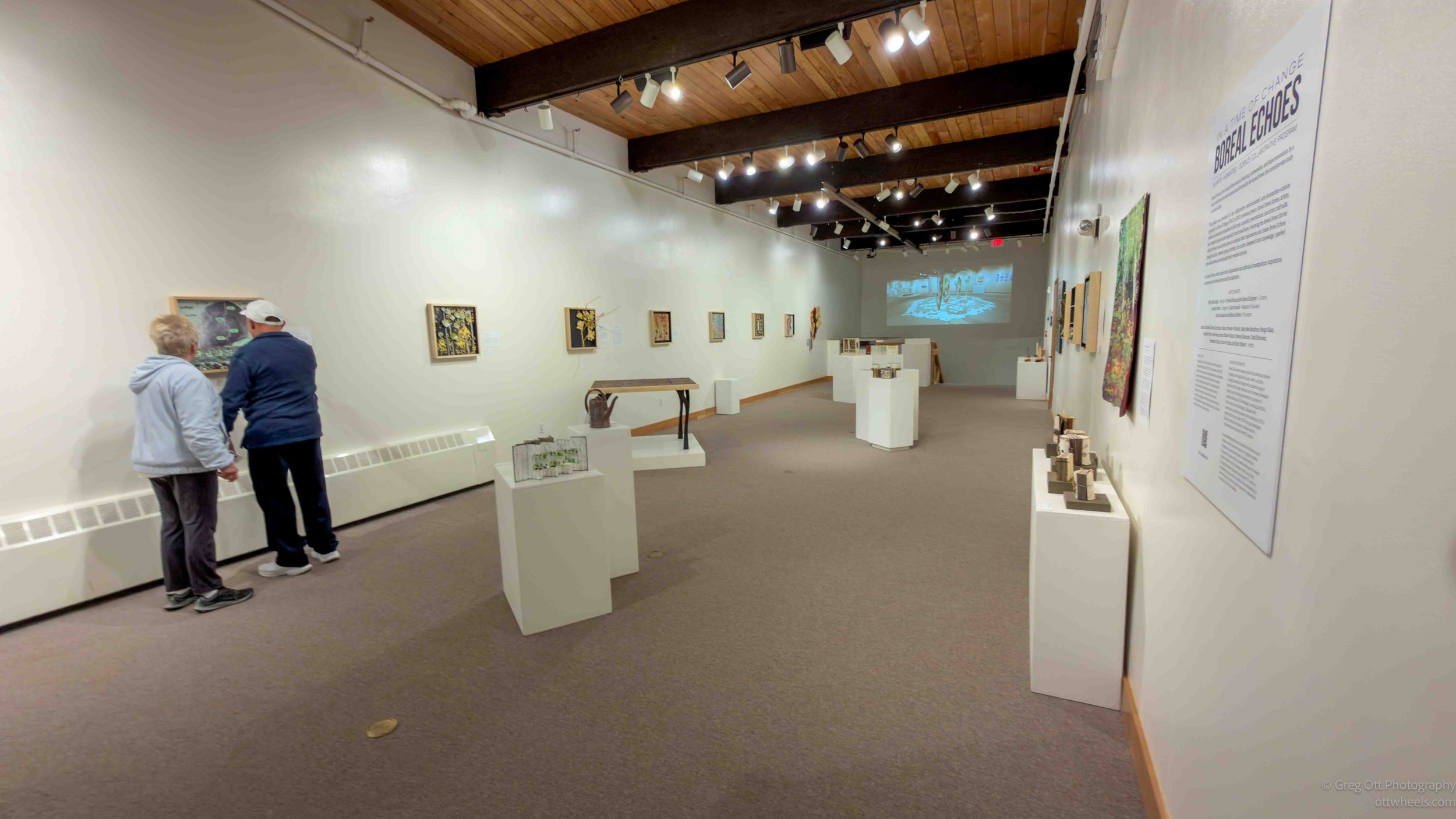
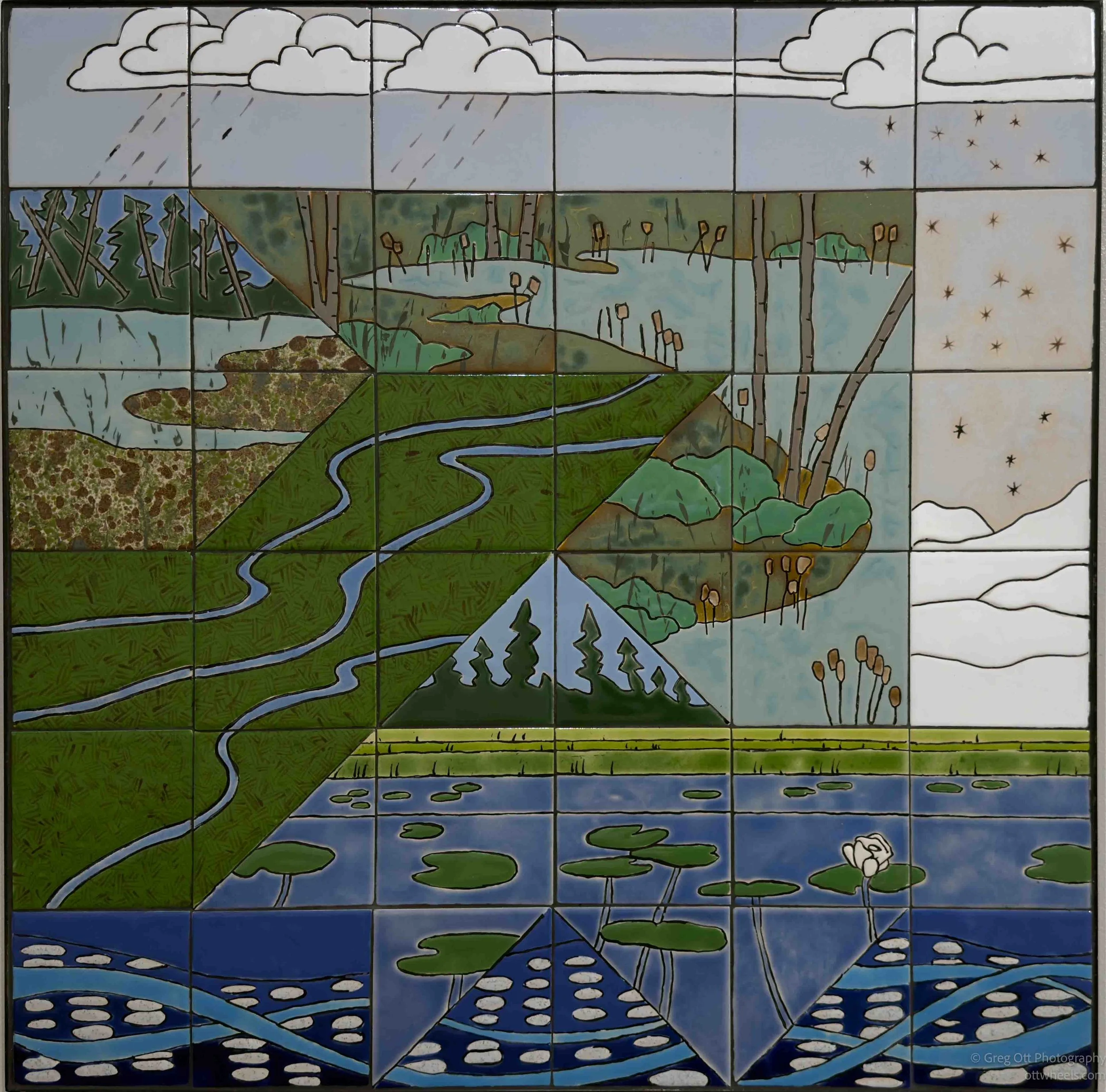
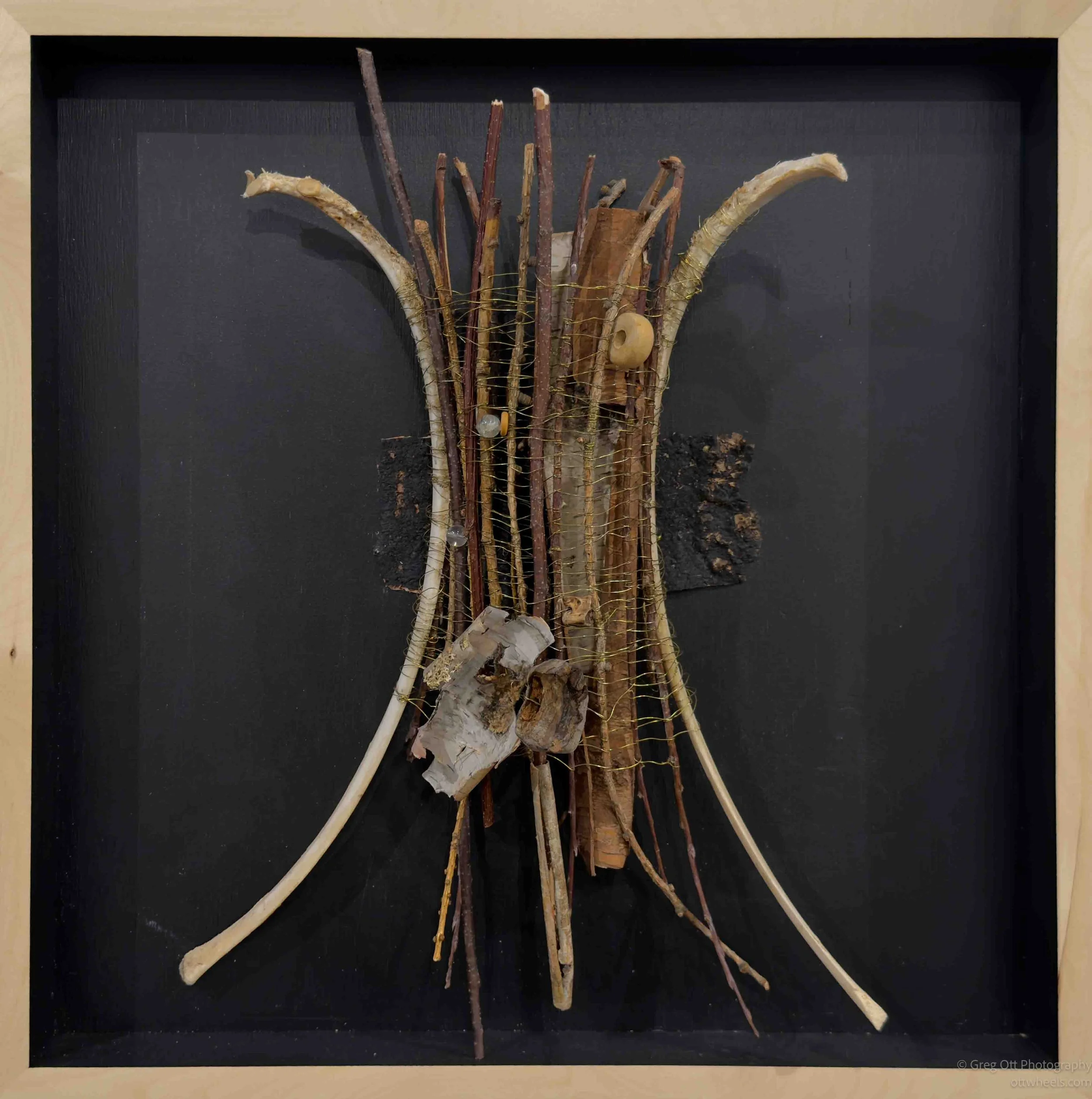
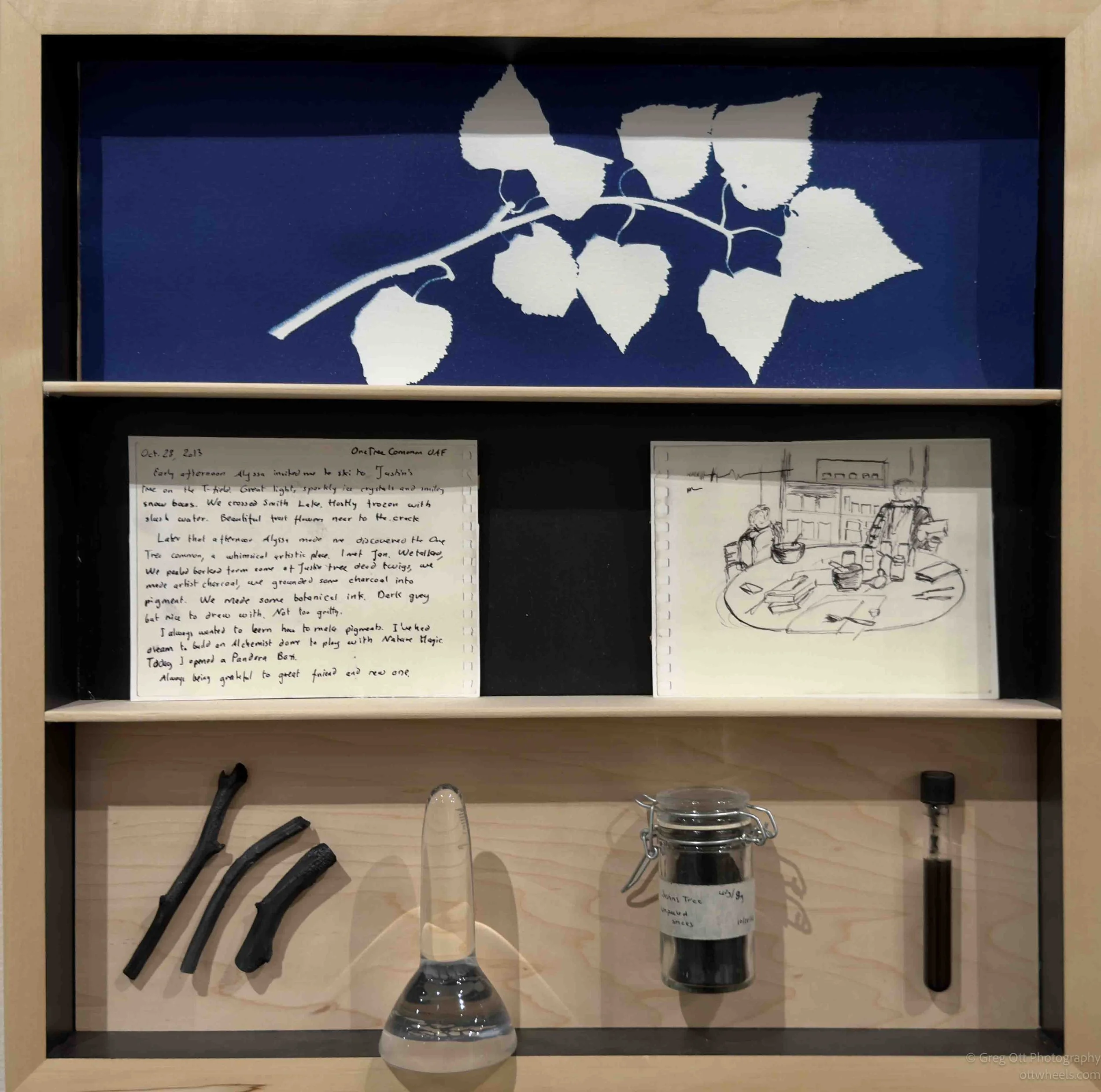
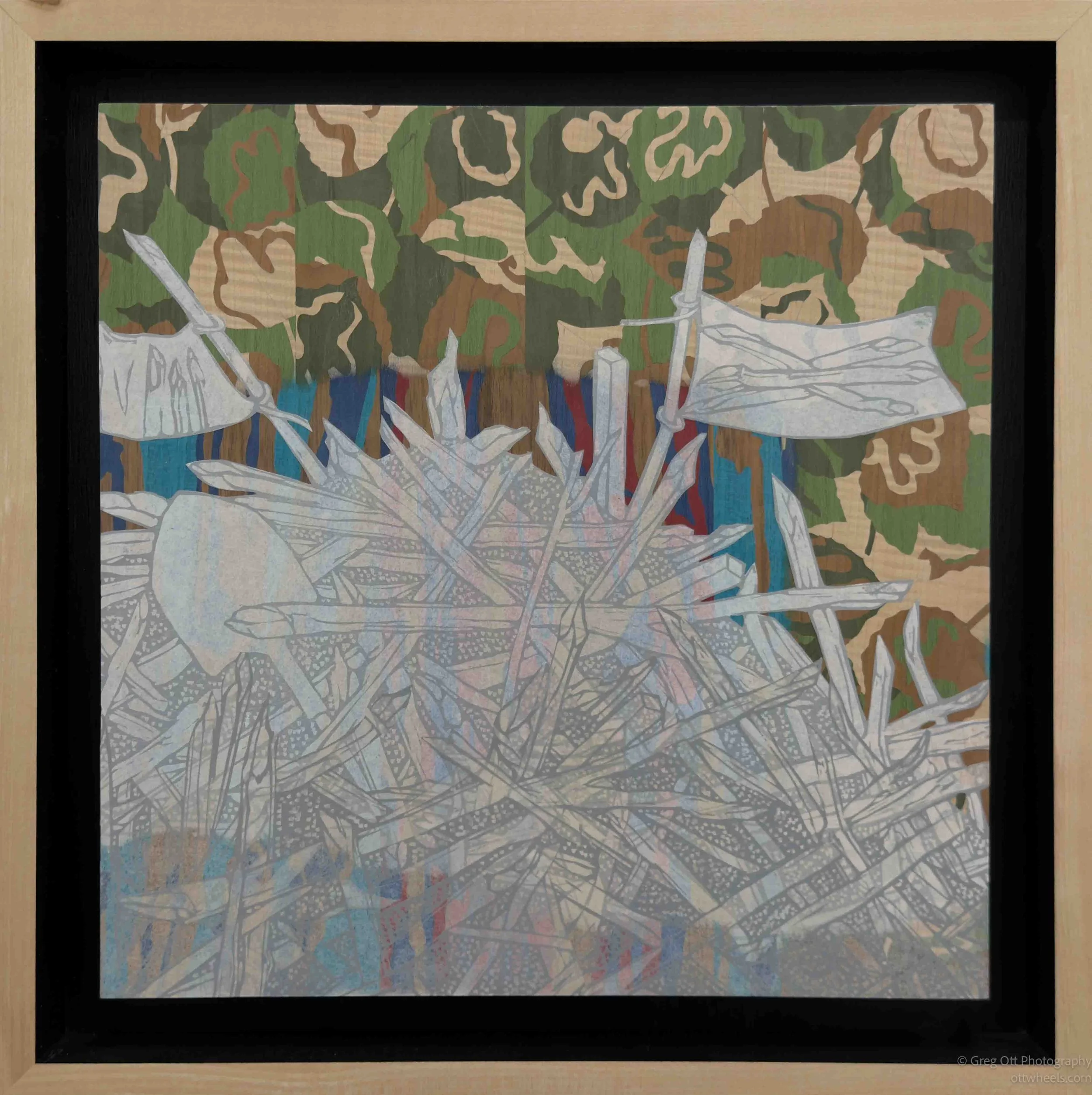
The first exhibit I wandered into was Boreal Echoes, an arts, humanities, and science collaboration centered on Alaska's boreal forest. At first glance it looked like a traditional art exhibit, but the descriptions revealed something more: the artists had spent years working alongside researchers studying the boreal ecosystem, then translated what they learned into paintings, sculptures, ceramics, prints, and mixed media. Rather than depicting pretty landscapes, the work explored the hidden relationships that make a forest function — underground fungal networks that let trees exchange nutrients, wetlands that regulate water and carbon storage, and salmon that carry marine nutrients upstream until they become part of the trees themselves. Other pieces examined insects, fungi, disease, and fire not as disasters, but as natural forces that continually reshape and renew the forest.
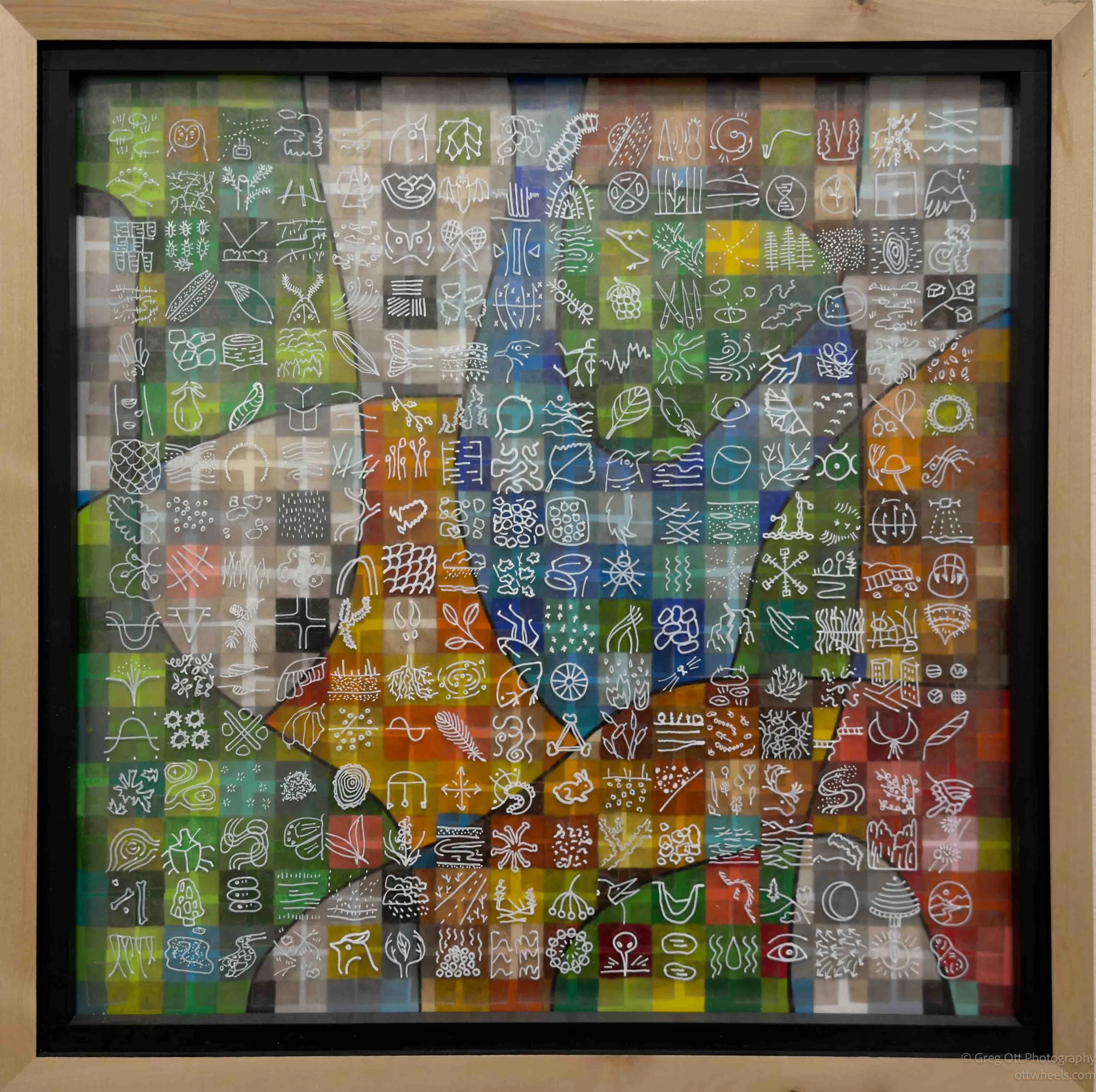
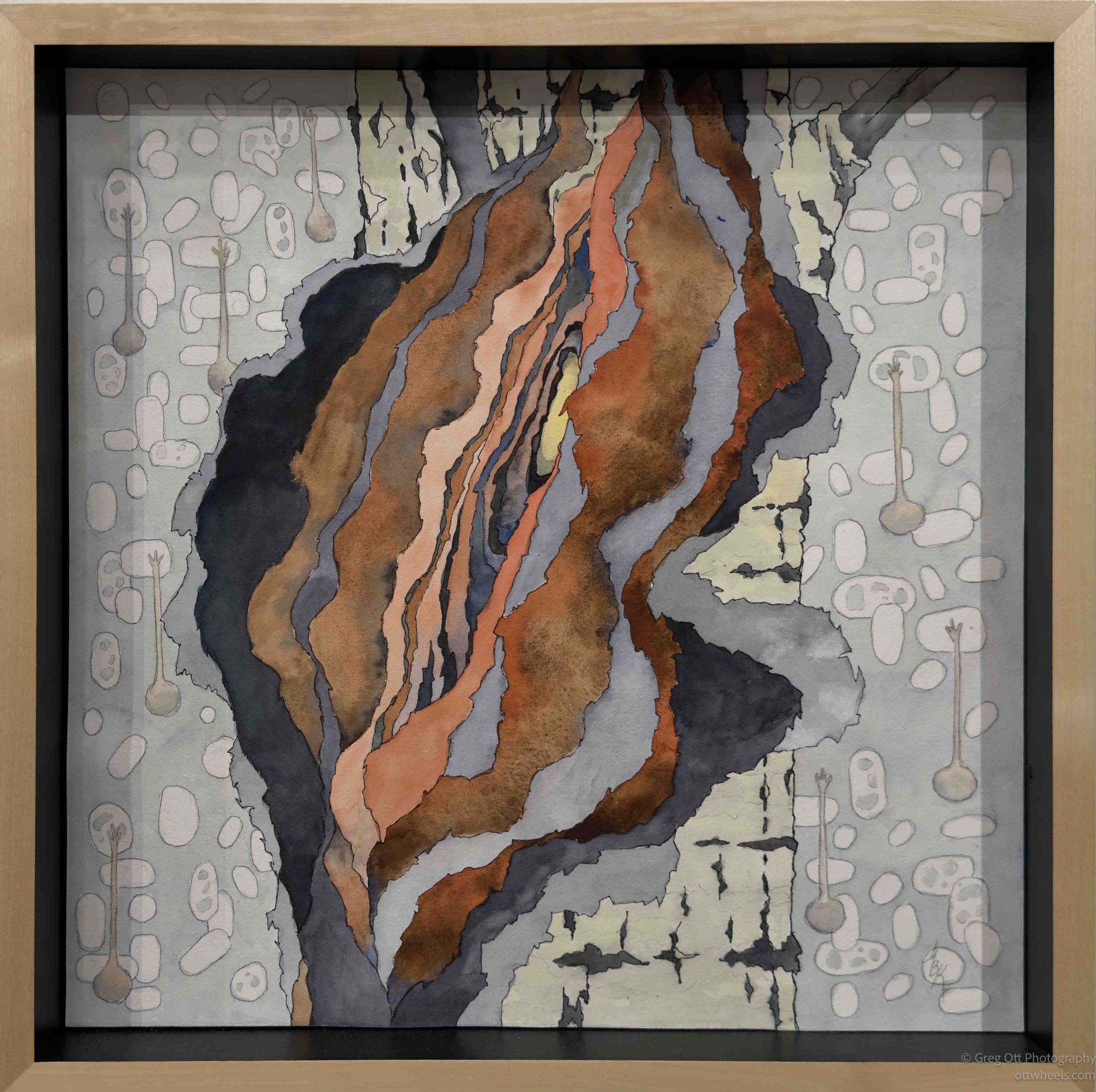
Some of my favorite pieces were the ones that made me stop and think. "Castle" by Sara Tabbert wasn't really about beavers — it was about their remarkable ability to reshape entire landscapes, and the complicated role they play in a changing climate. "Birch Tribute" by Alyssa Enriquez told the story of a single birch planted by elementary school students years earlier, which grew into a living research project and eventually inspired artwork made from its own charcoal and ink. "Aspen Target Canker" by Mary Bee Kaufman found unexpected beauty in a fungal infection, using the tree's annual healing growth to illustrate both resilience and vulnerability. "Boreal Lexicon" by Jennifer Moss abandoned recognizable imagery altogether, using abstract symbols to represent the constant conversation between trees, fungi, plants, wildlife, weather, and climate.
What I appreciated most was that the exhibit never felt preachy — it invited curiosity rather than telling visitors what to think. By the time I left, I wasn't thinking about paintings or sculptures anymore. I was thinking about how much of nature runs on relationships we rarely notice, and how much there still is to learn about the world beneath our feet.
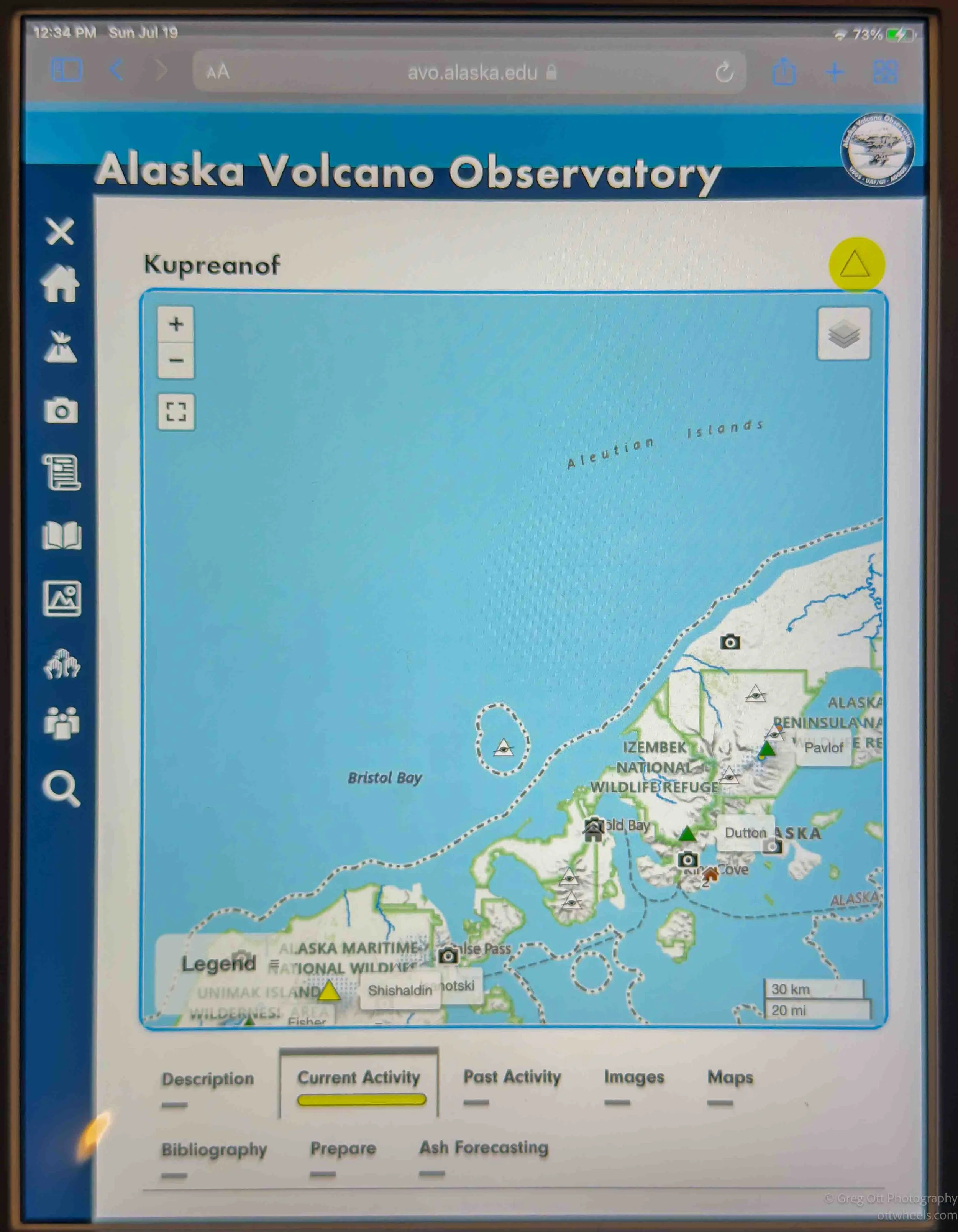
Another section was devoted to the science of monitoring Alaska's constantly shifting landscape — volcanoes, earthquakes, ocean currents, glaciers, weather. I examined samples of volcanic ash, the fine, glass-like particles that can blanket a landscape after an eruption, and explored an interactive display connected to the Alaska Volcano Observatory's real-time monitoring. Other exhibits explained how earthquakes are recorded, how ocean currents are tracked with drifting buoys and underwater drogues that act like upside-down parachutes, and how remote mountain weather stations continuously measure rainfall, snowpack, and glacial movement. It was impressive to see how much of Alaska is being watched around the clock.
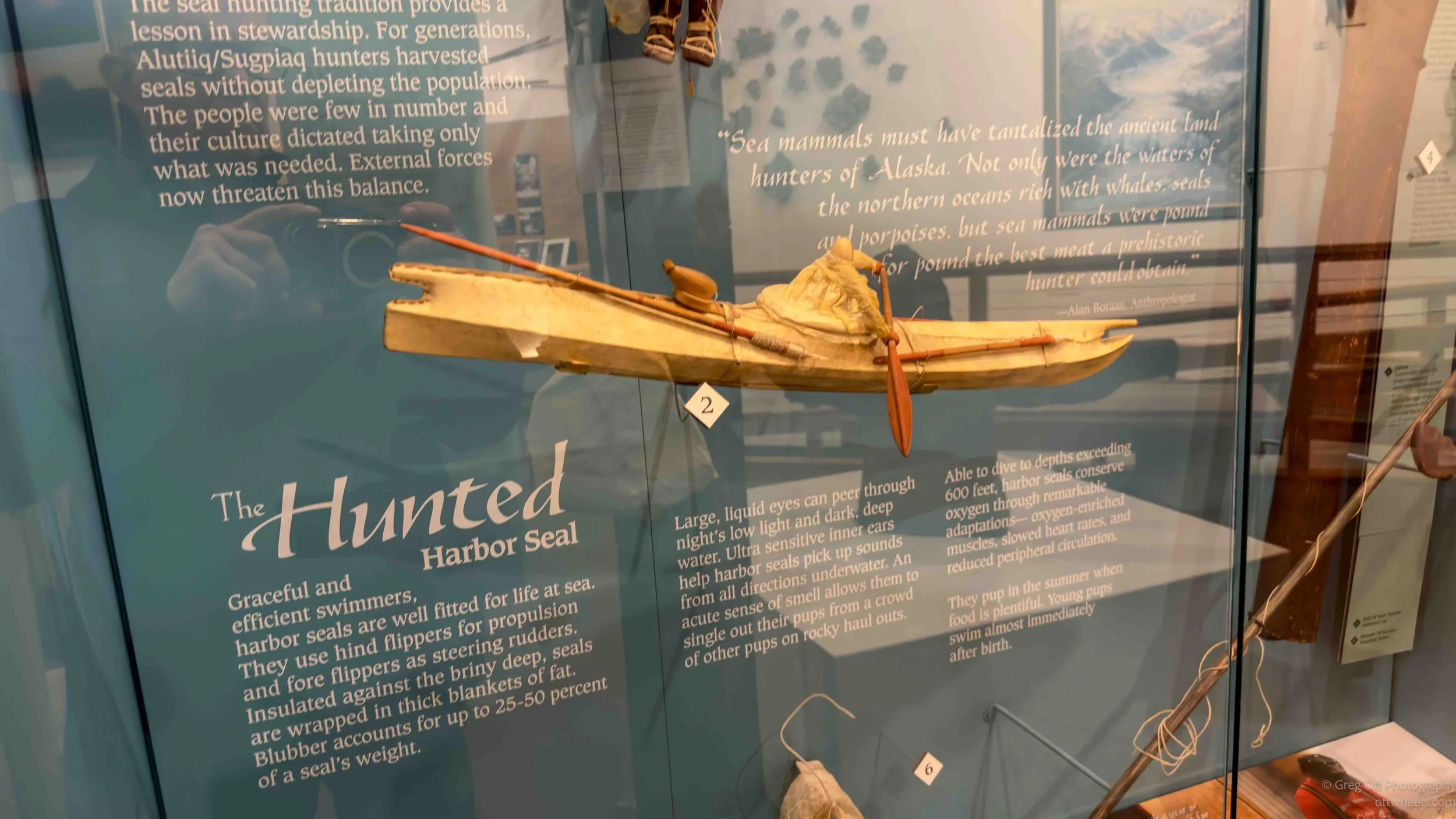
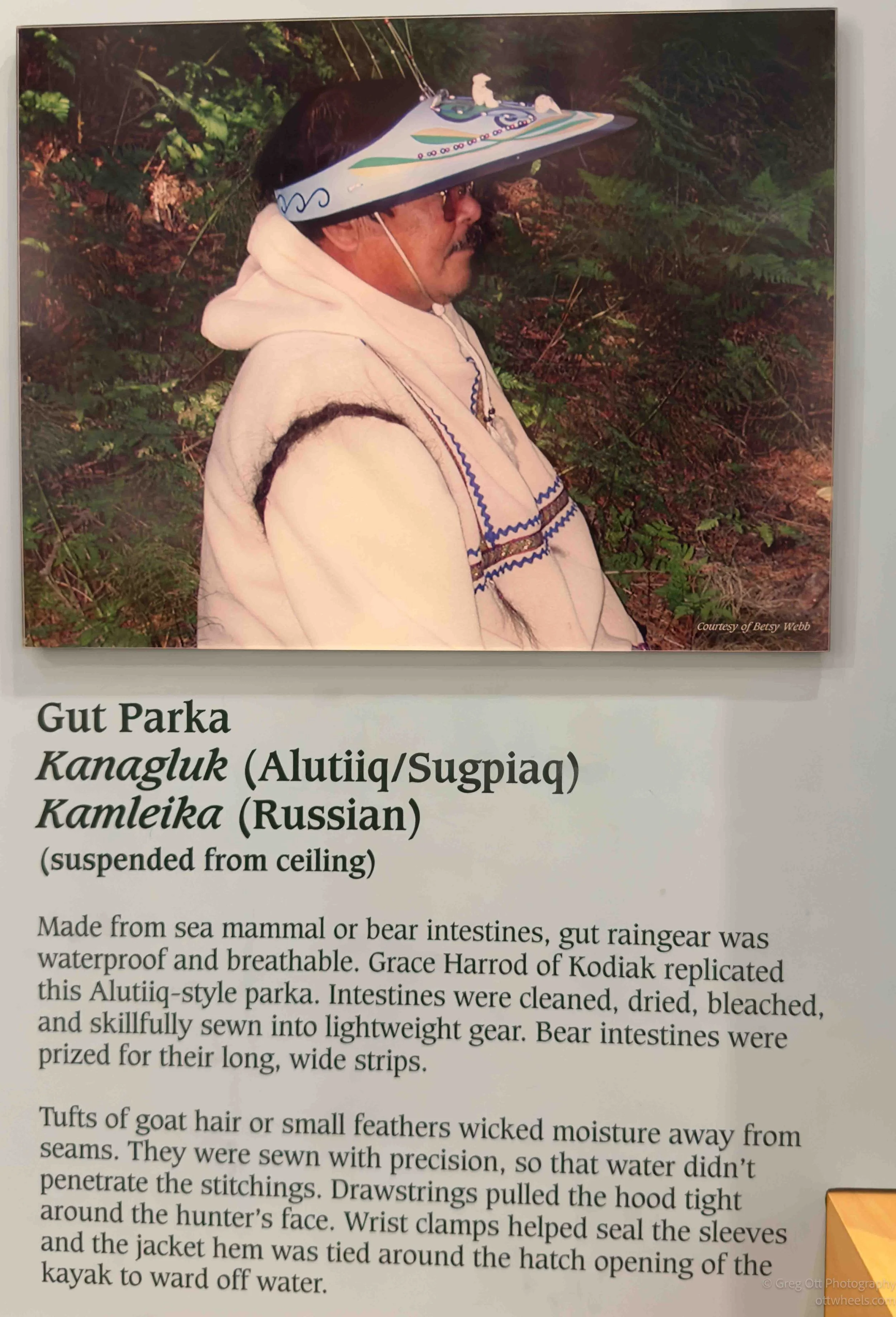
Ever since visiting the Alaska State Museum in Juneau, I've been fascinated by the ingenious kayaks and hunting equipment used by Alaska's Indigenous peoples. The Pratt Museum had several beautifully crafted scale models, along with explanations of how they were used to hunt seals and even whales in the open ocean. Seeing the craftsmanship up close gave me a new appreciation for the skill and courage it took to survive along Alaska's coastline.
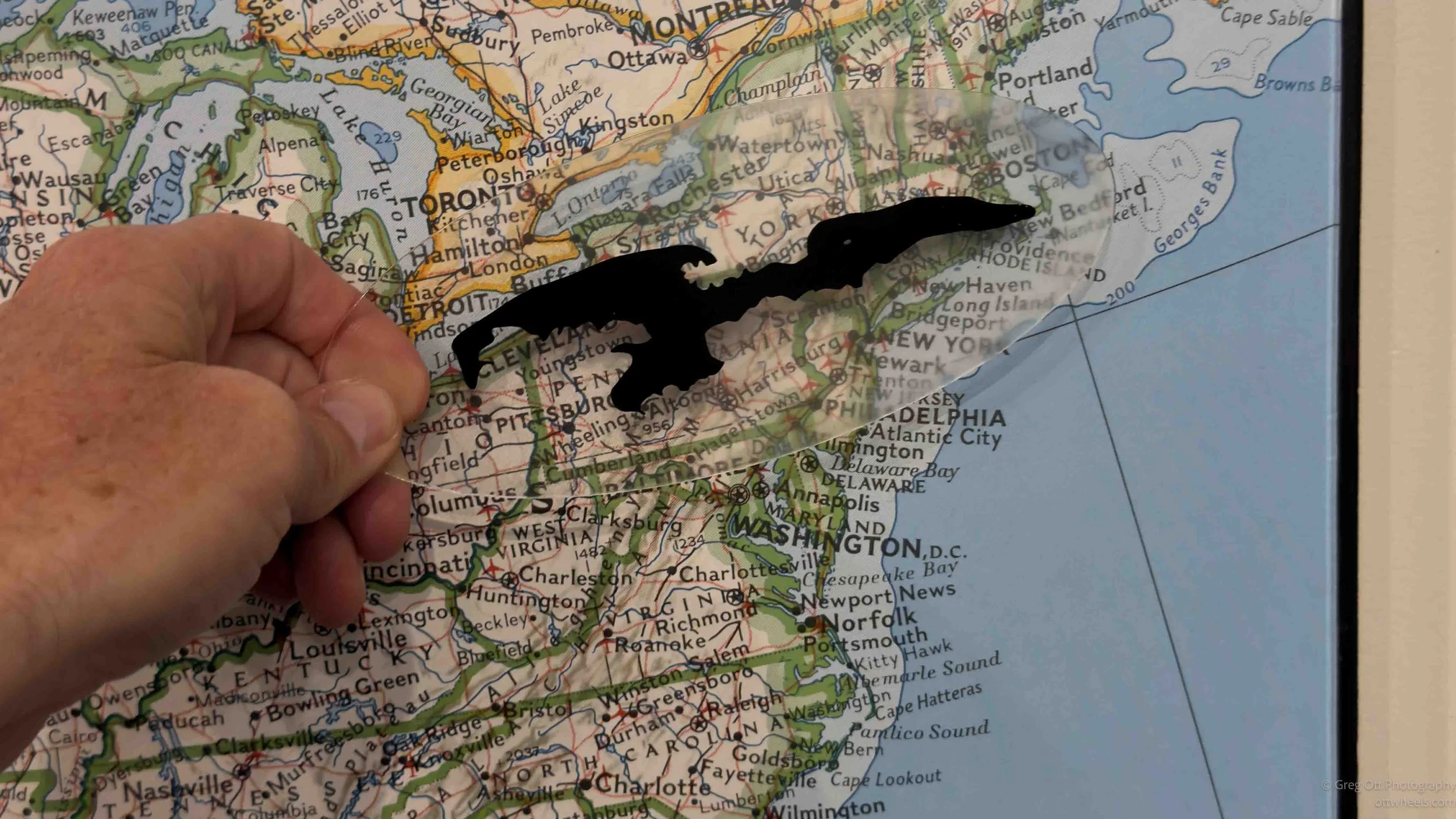
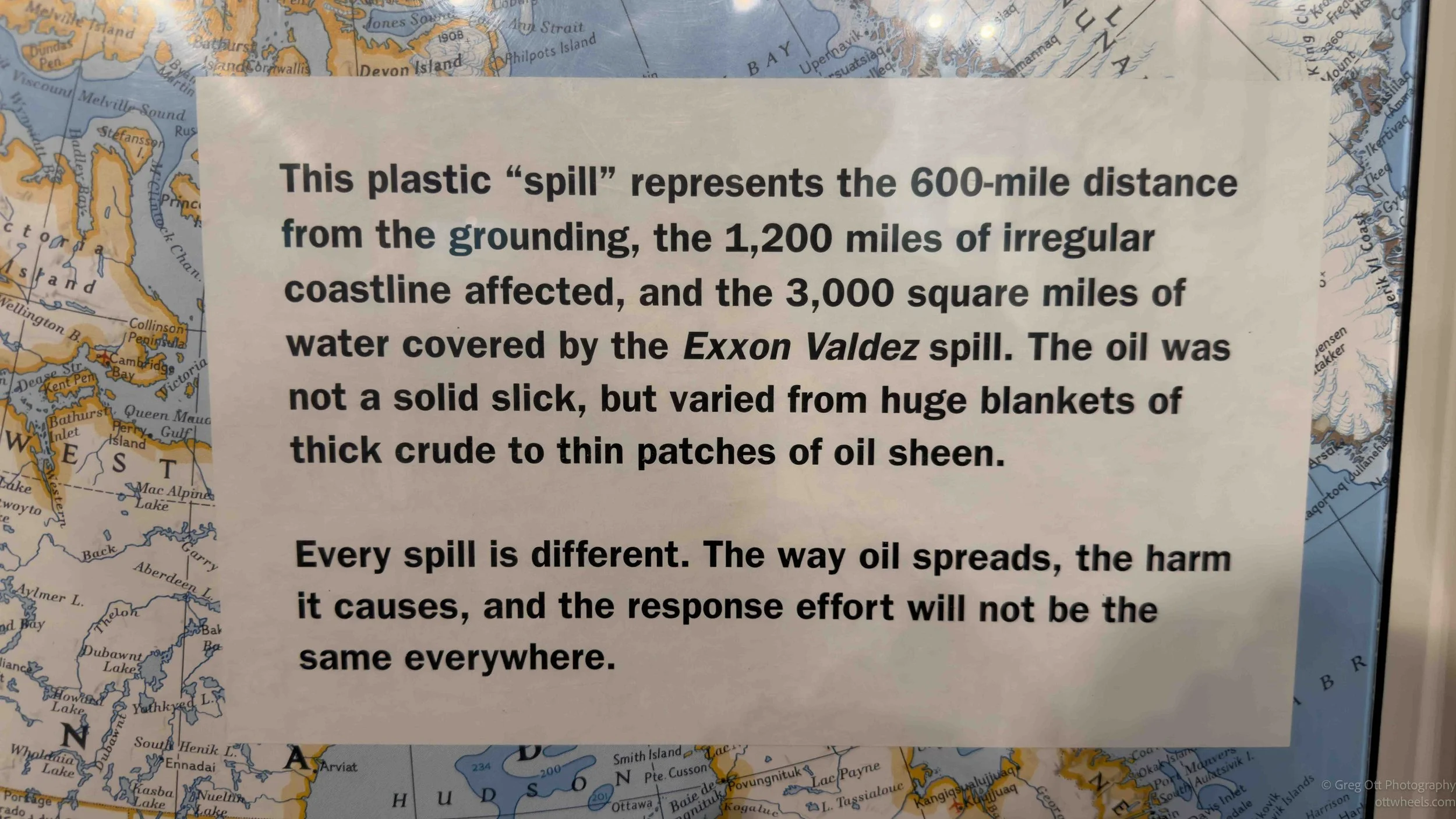
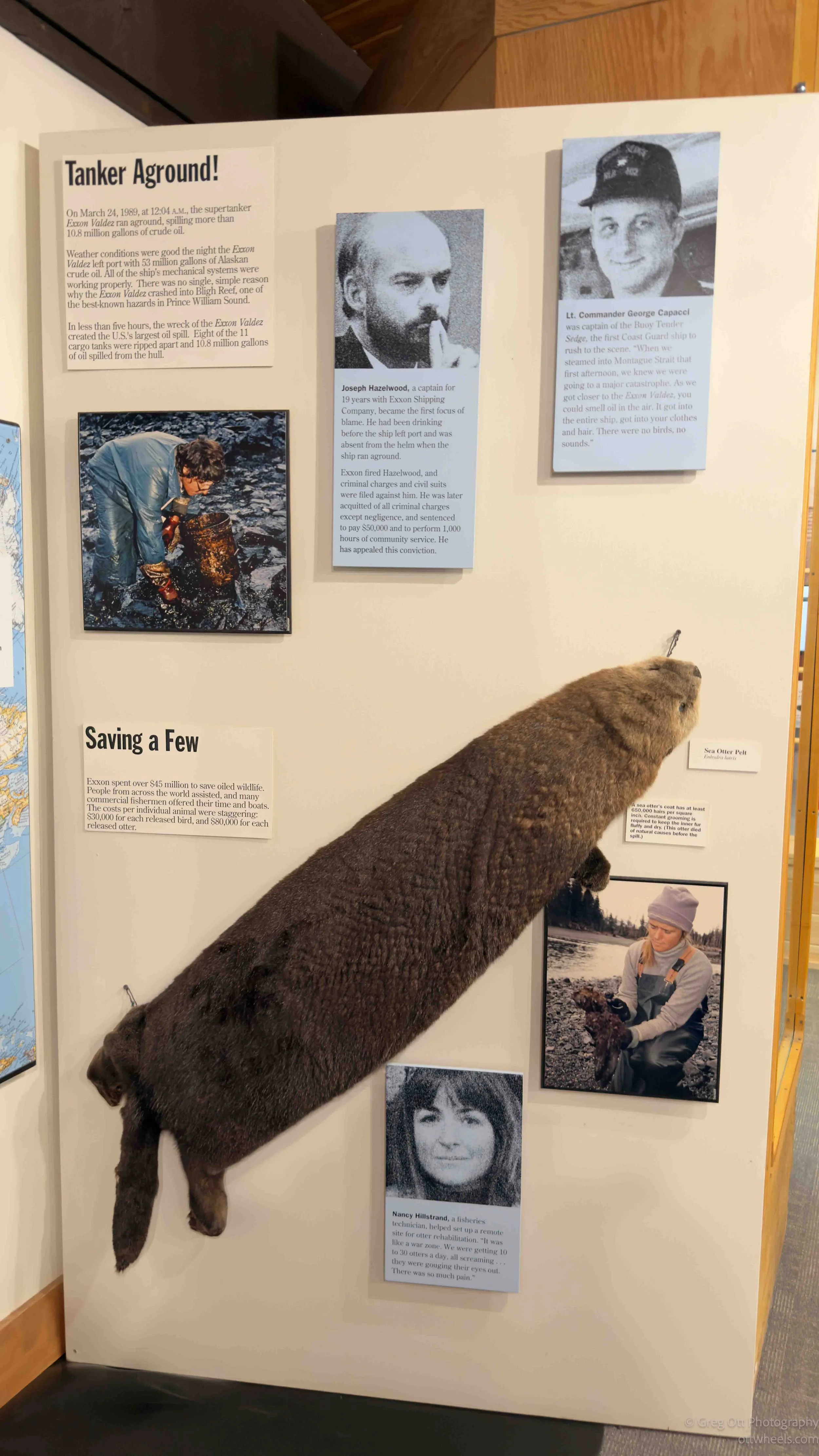
One exhibit stopped me entirely: the Exxon Valdez oil spill. A large black silhouette showed the true scale of the spill, letting visitors compare it to places they know — holding it against the part of the Lower 48 where I grew up made the disaster feel far more real than any number of square miles could. The museum's companion guide chronicled the accident, the cleanup, the environmental consequences, and the sweeping changes to tanker design, shipping regulations, and emergency response that followed, while noting that oil spills remain an ongoing challenge worldwide. It was one of the most informative exhibits I've seen on the subject.
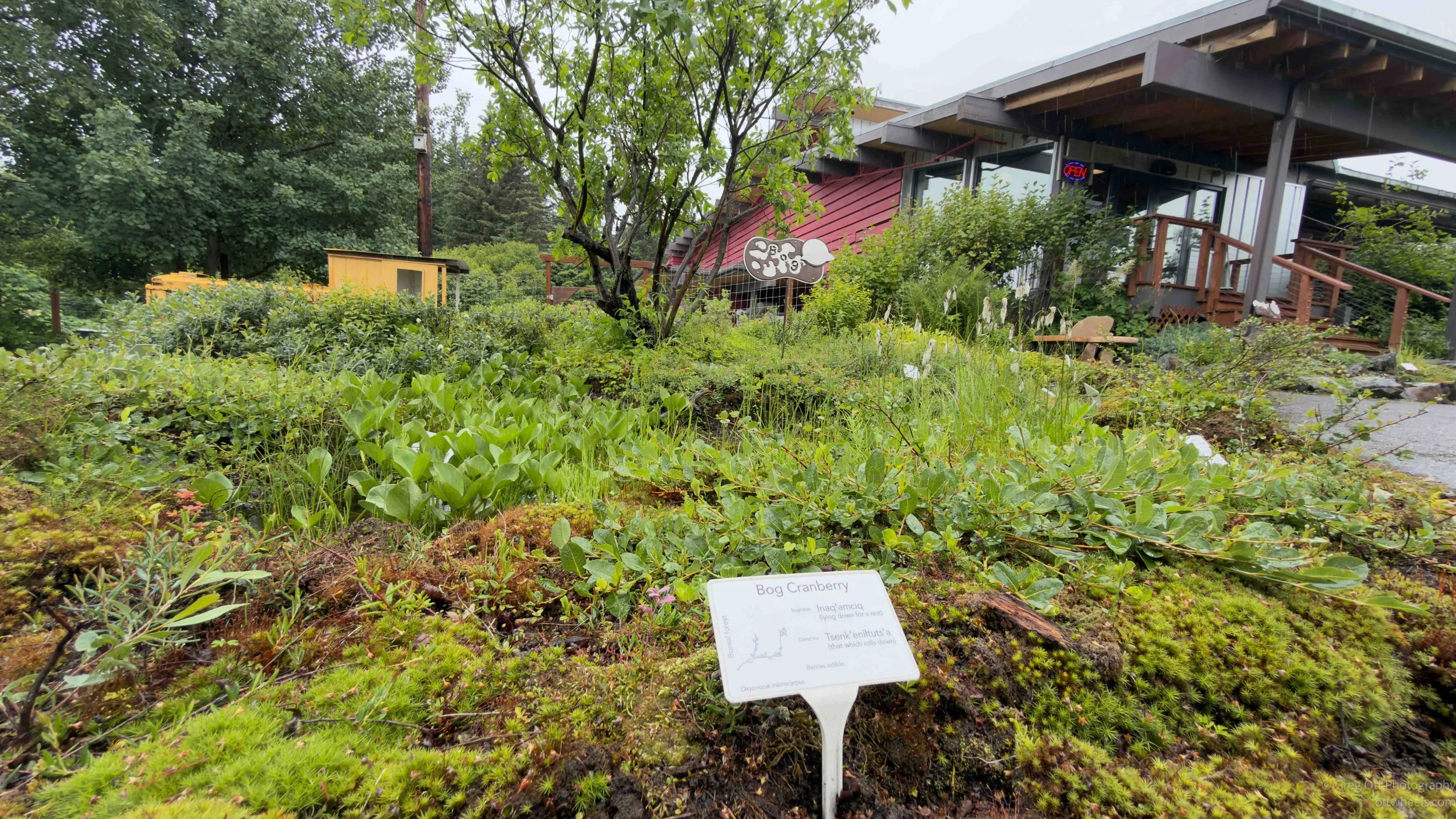
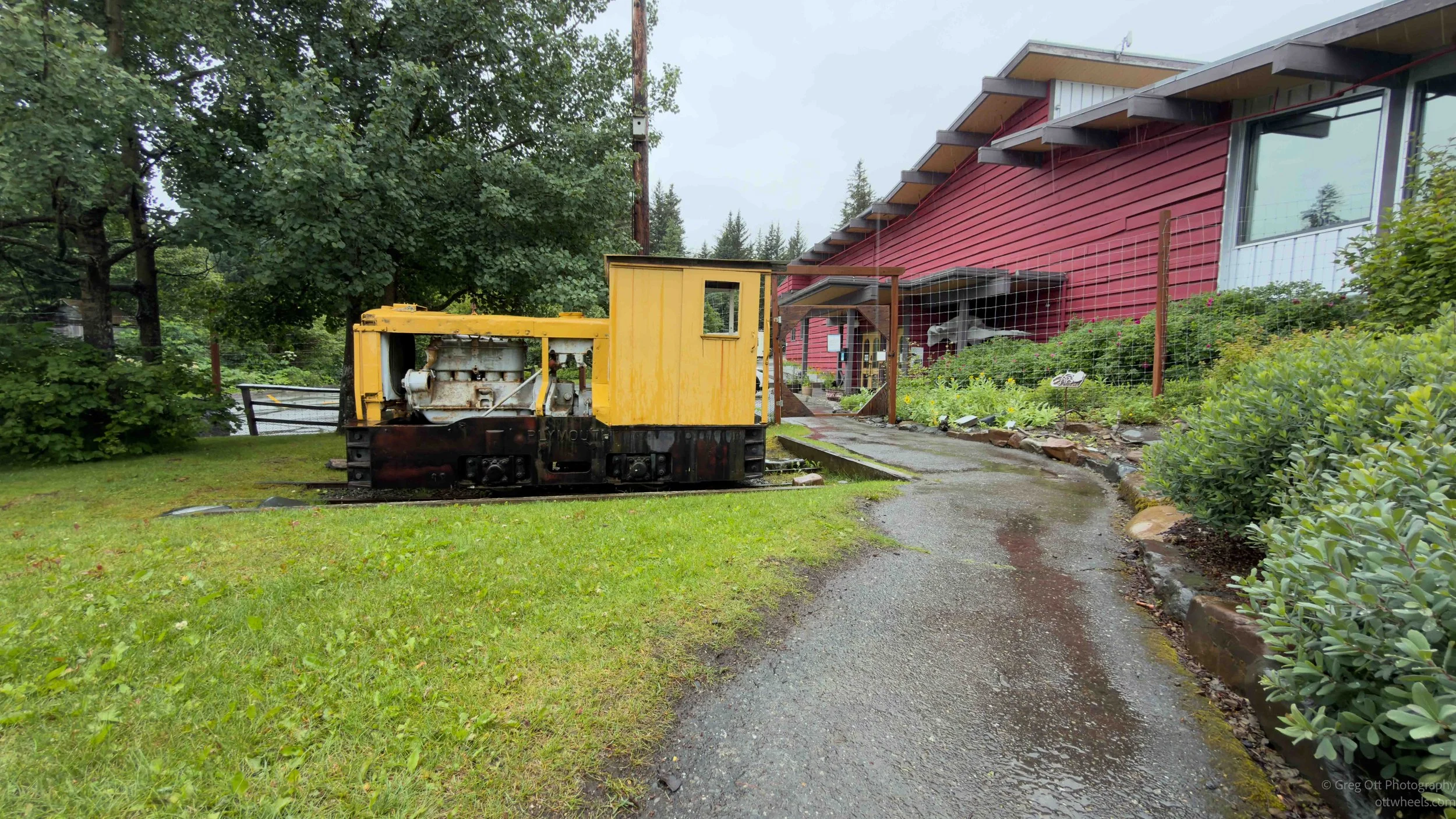
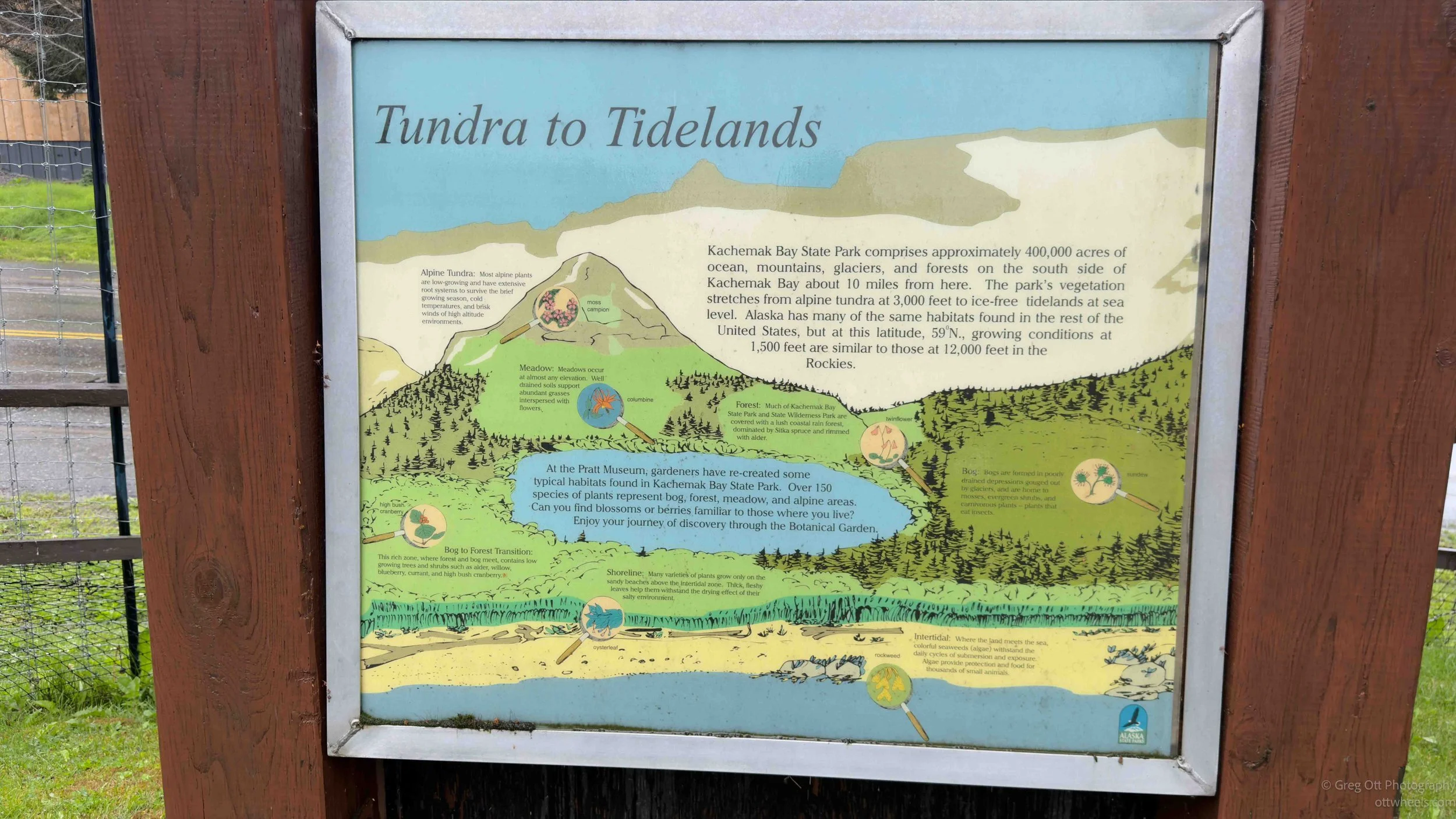
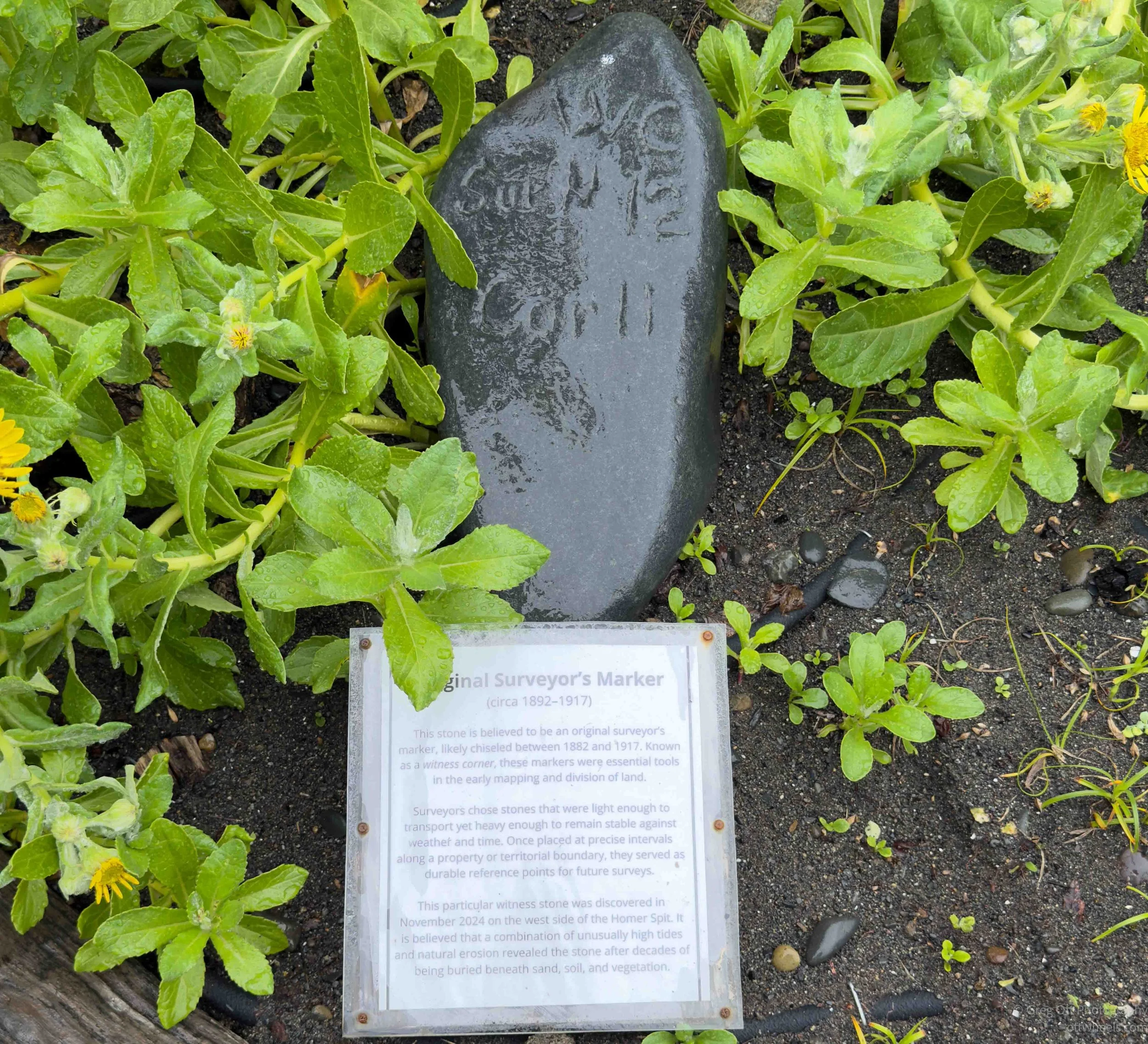
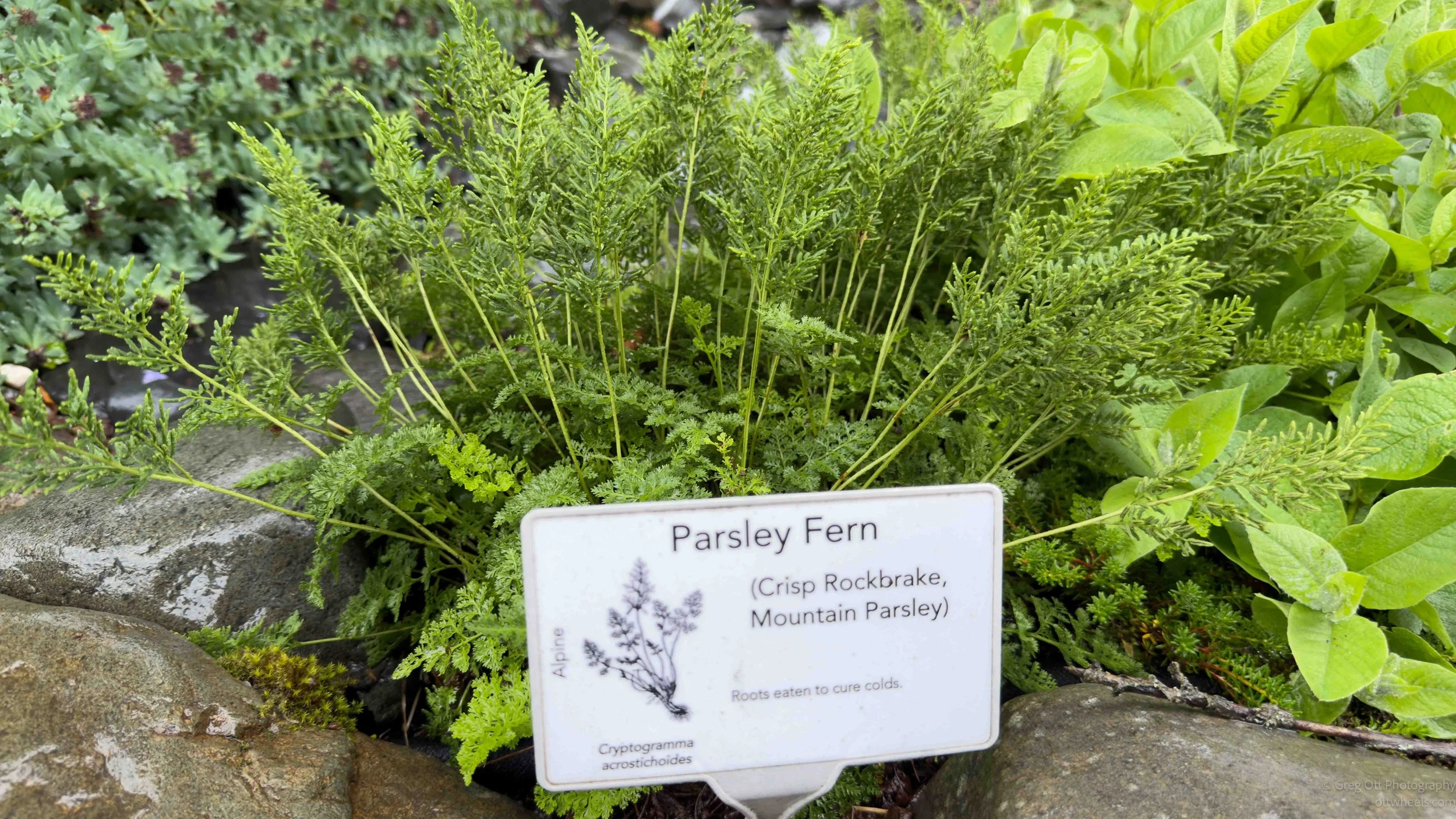
Afterward, I wandered the outdoor Tundra to Tidelands native plant garden, finally able to put names to species I'd been seeing on recent hikes. Near the end of the path I came across something I'd never seen before: an original surveyor's marker from the late 1800s or early 1900s. Known as a "witness corner," these stones were placed near property or territorial boundaries as durable reference points for future surveys. This one was found on the west side of the Homer Spit in 2024, after decades buried under sand, soil, and vegetation, likely exposed by unusually high tides and erosion. A small artifact, but a fascinating reminder of the early efforts to map Alaska's vast landscape.
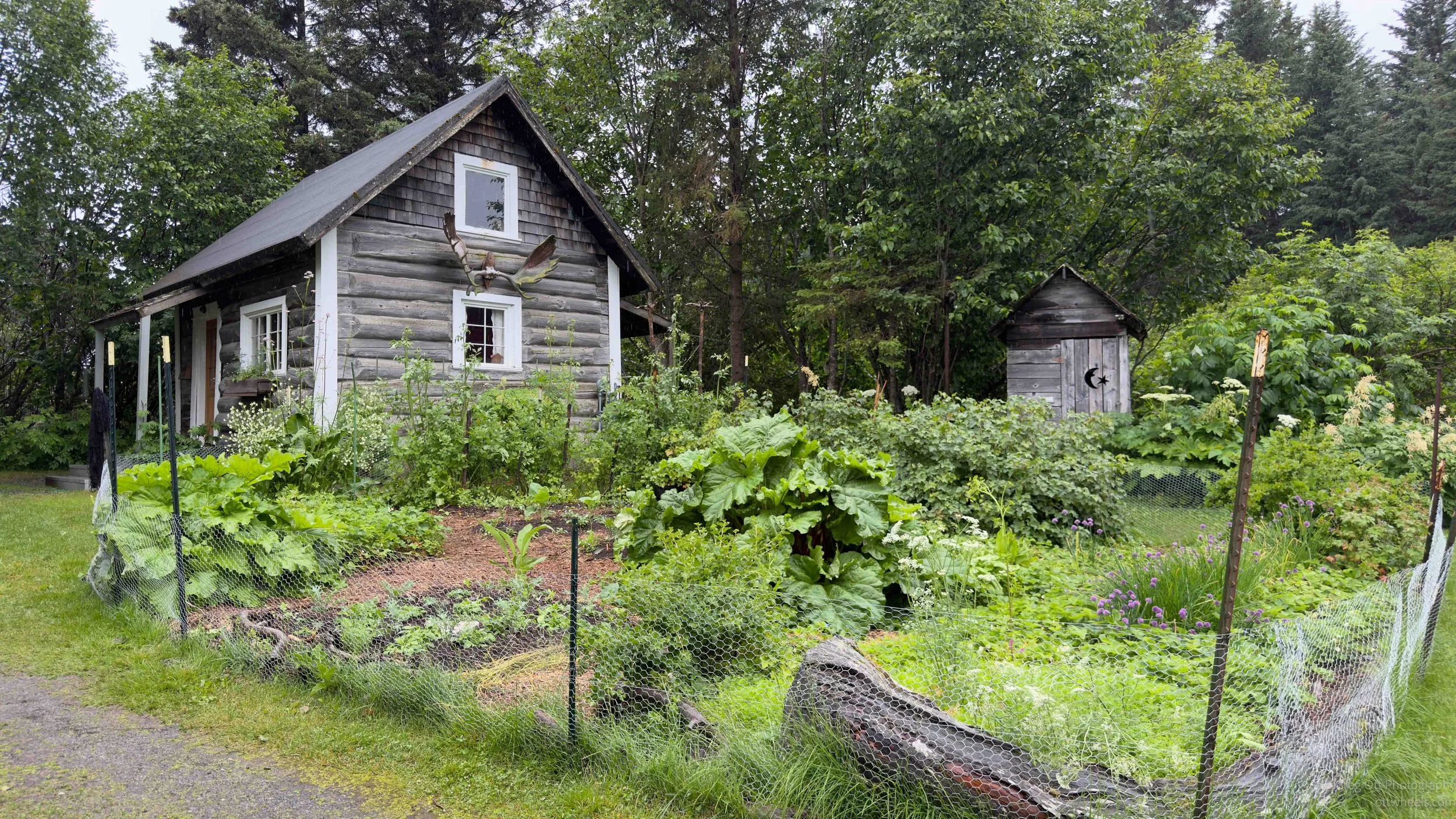
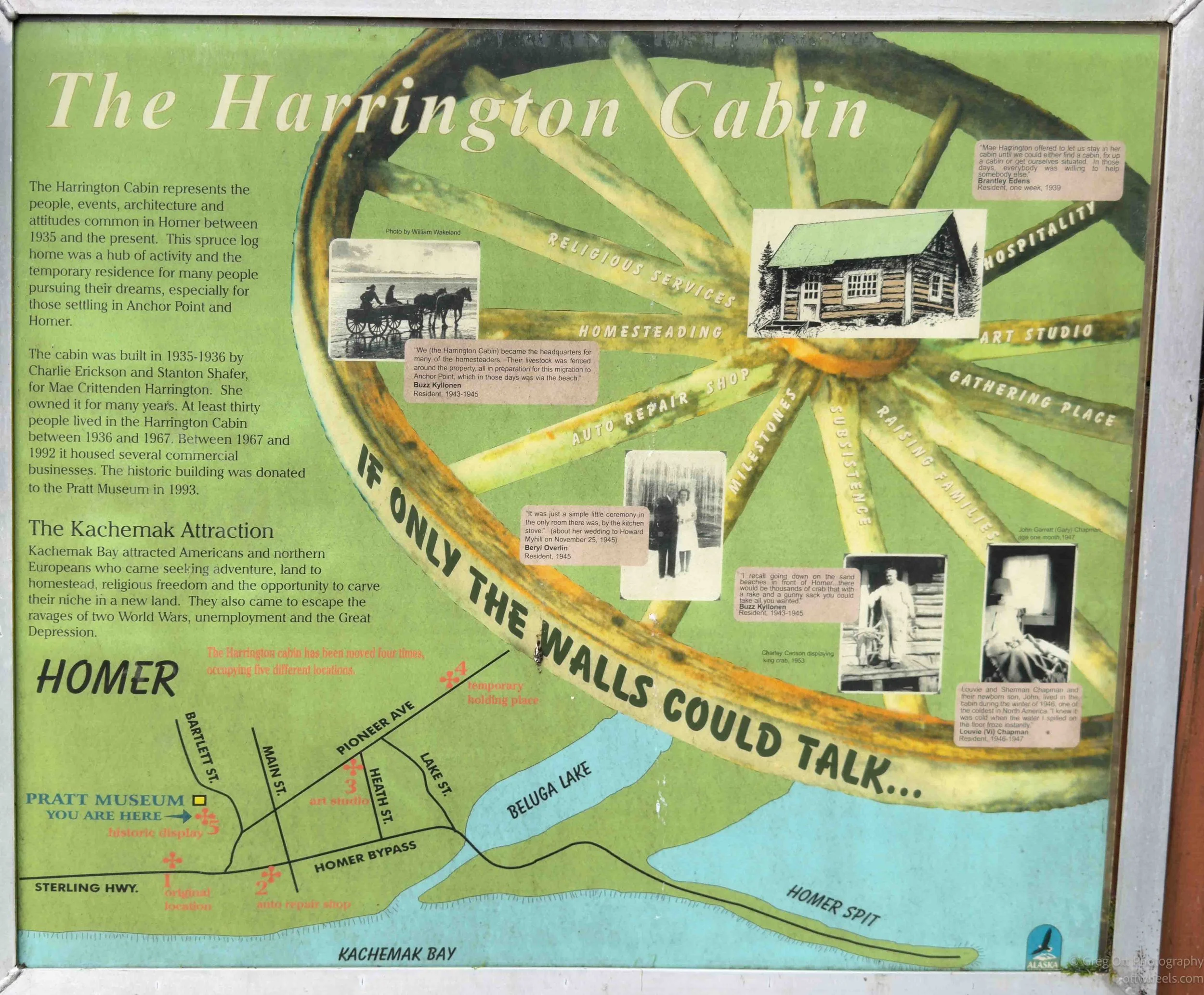
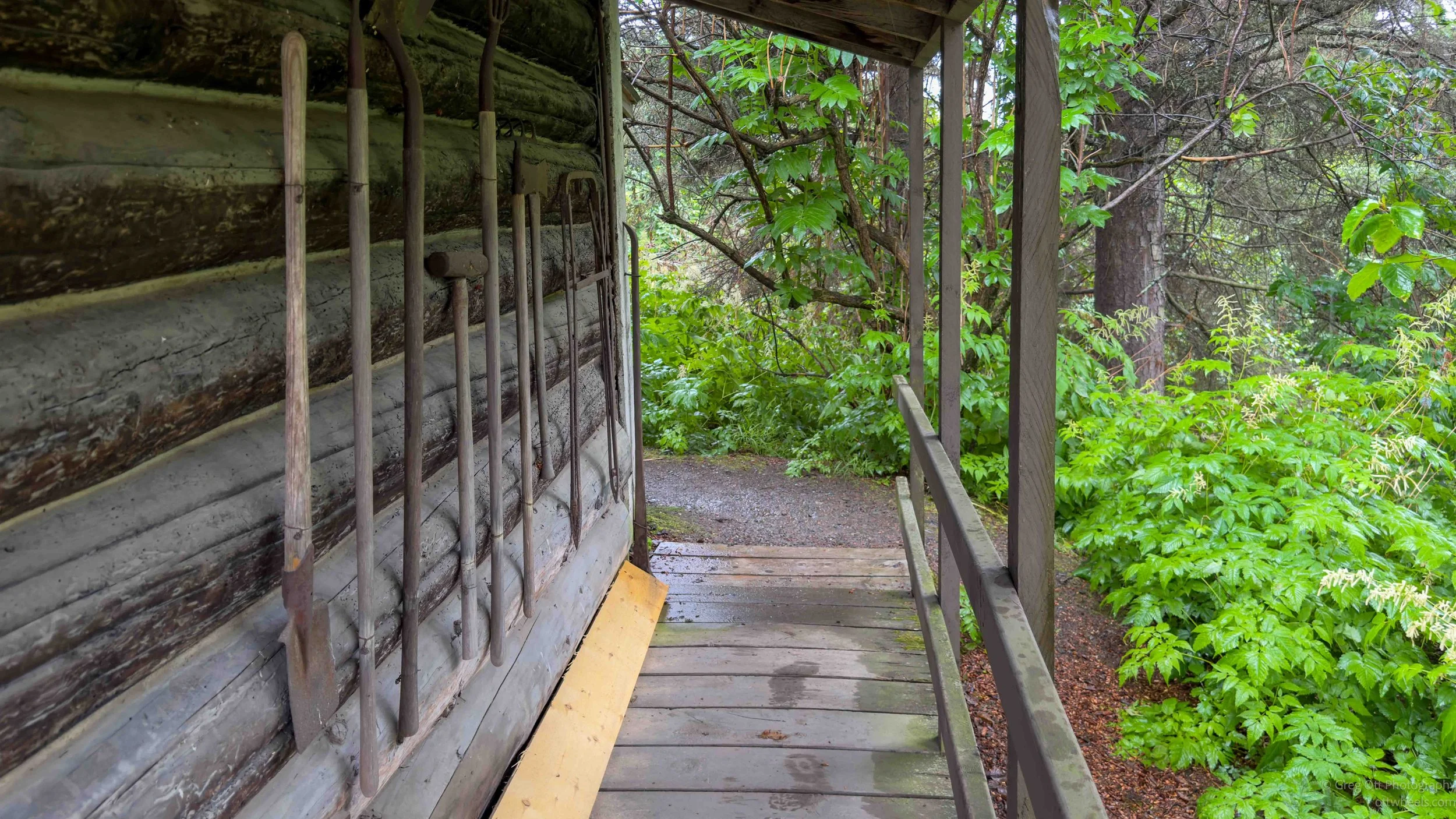
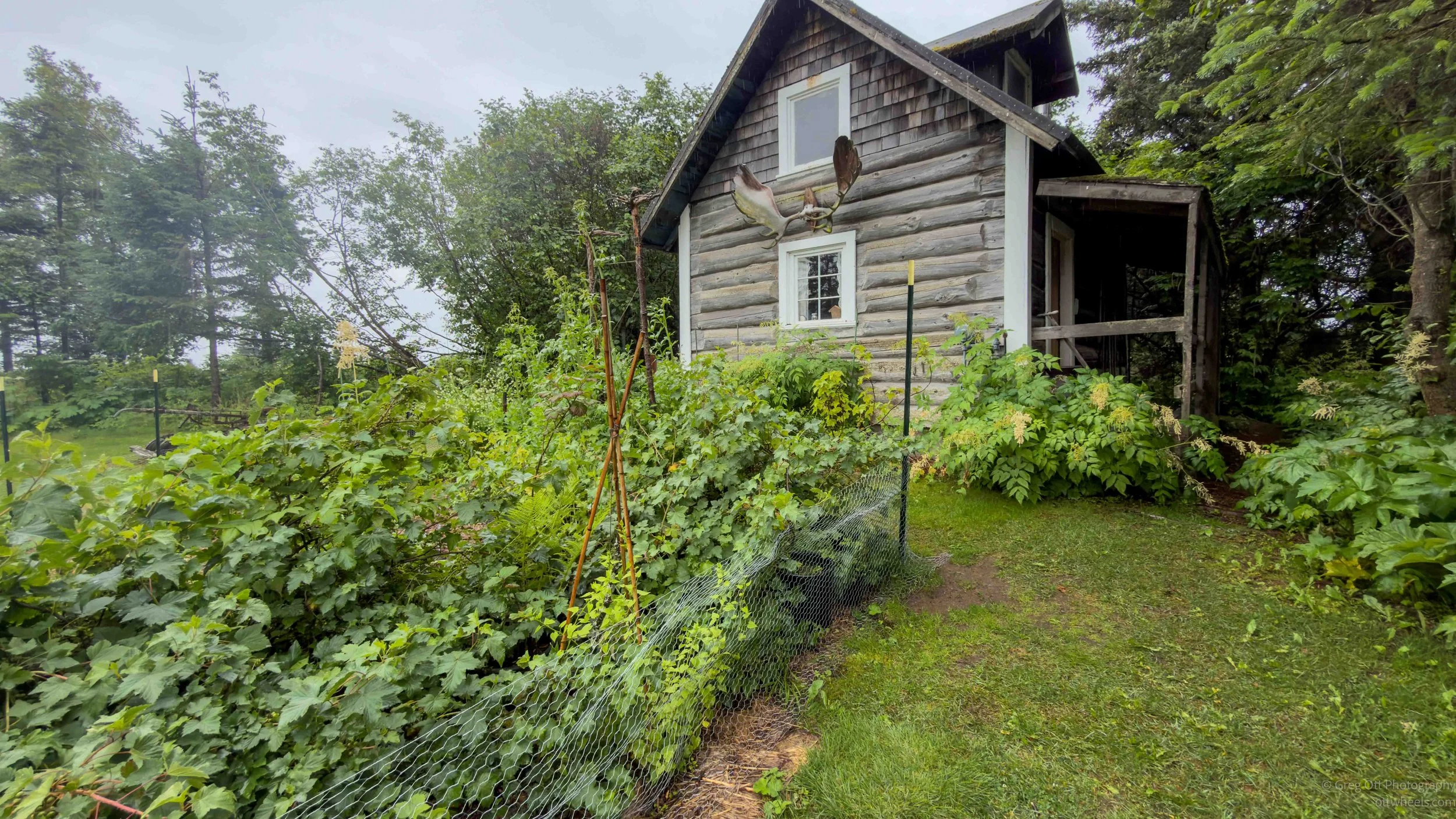
The last stop was the Harrington Cabin, one of Homer's original homesteads. Built in 1935–36 for Mae Crittenden Harrington, the small log cabin became far more than a family home over the years — serving at various points as temporary housing, an auto repair shop, an art studio, a gathering place, and a center for community and religious activities. One line from the exhibit stuck with me: "If only the walls could talk..." Around an old wagon wheel were photographs and memories from former residents, telling the story of people who came to Kachemak Bay in search of land, opportunity, and a new life. Looking through the cabin's windows, it wasn't hard to imagine what life must have been like nearly a century ago — a reminder that before Homer became known for fishing, art, and tourism, it was carved out by pioneers on the edge of the wilderness.
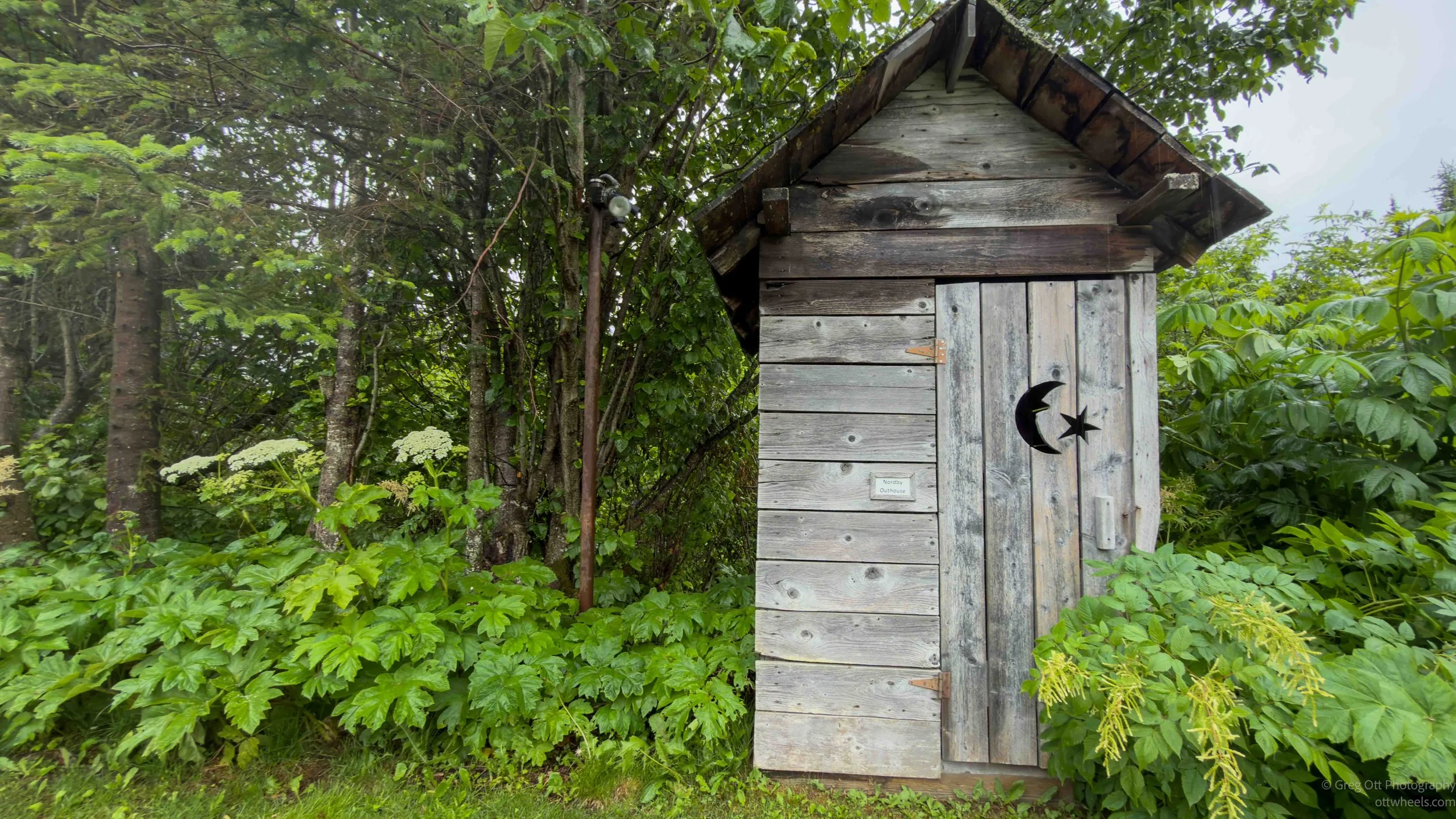
Fat Olives
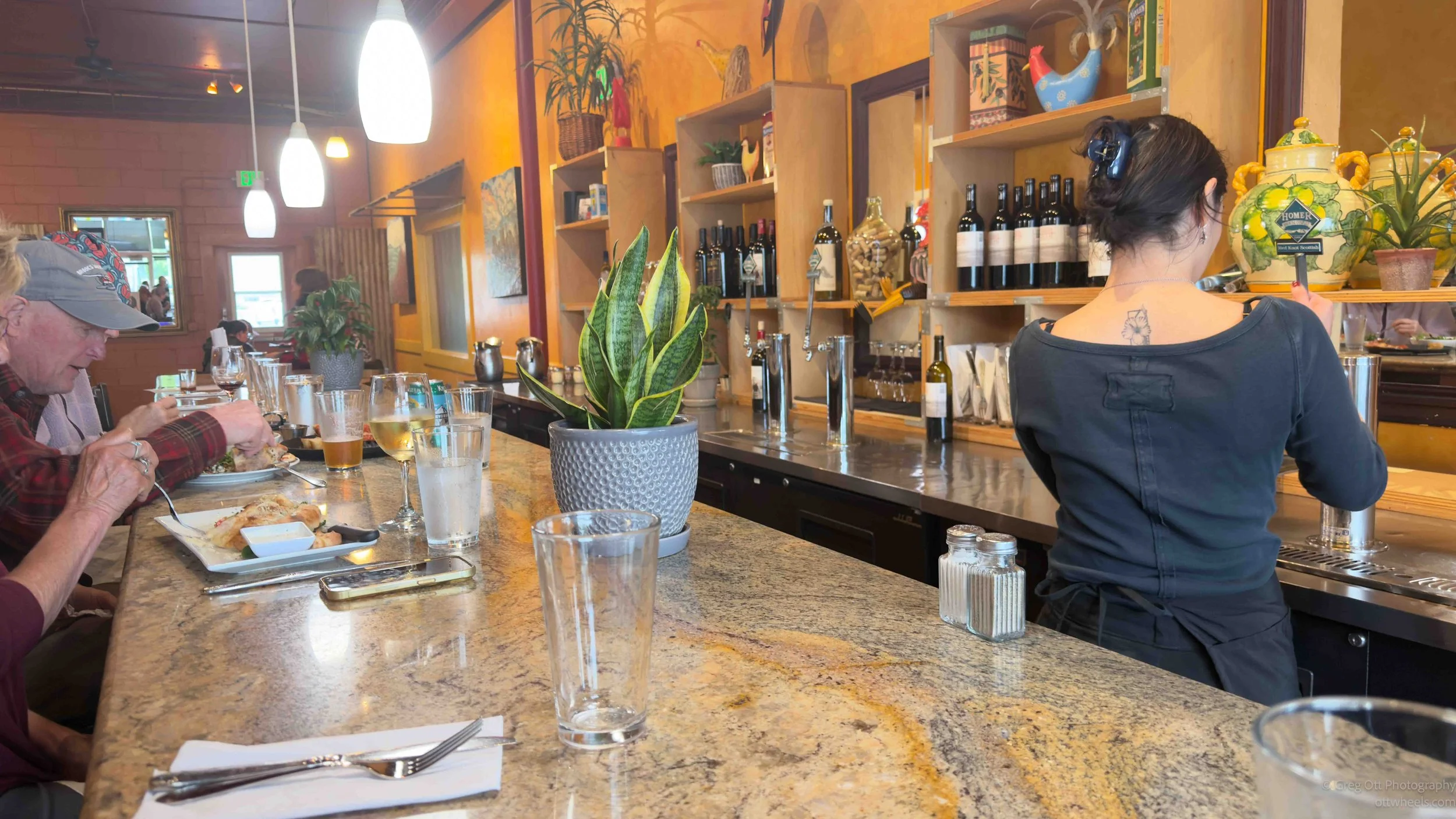
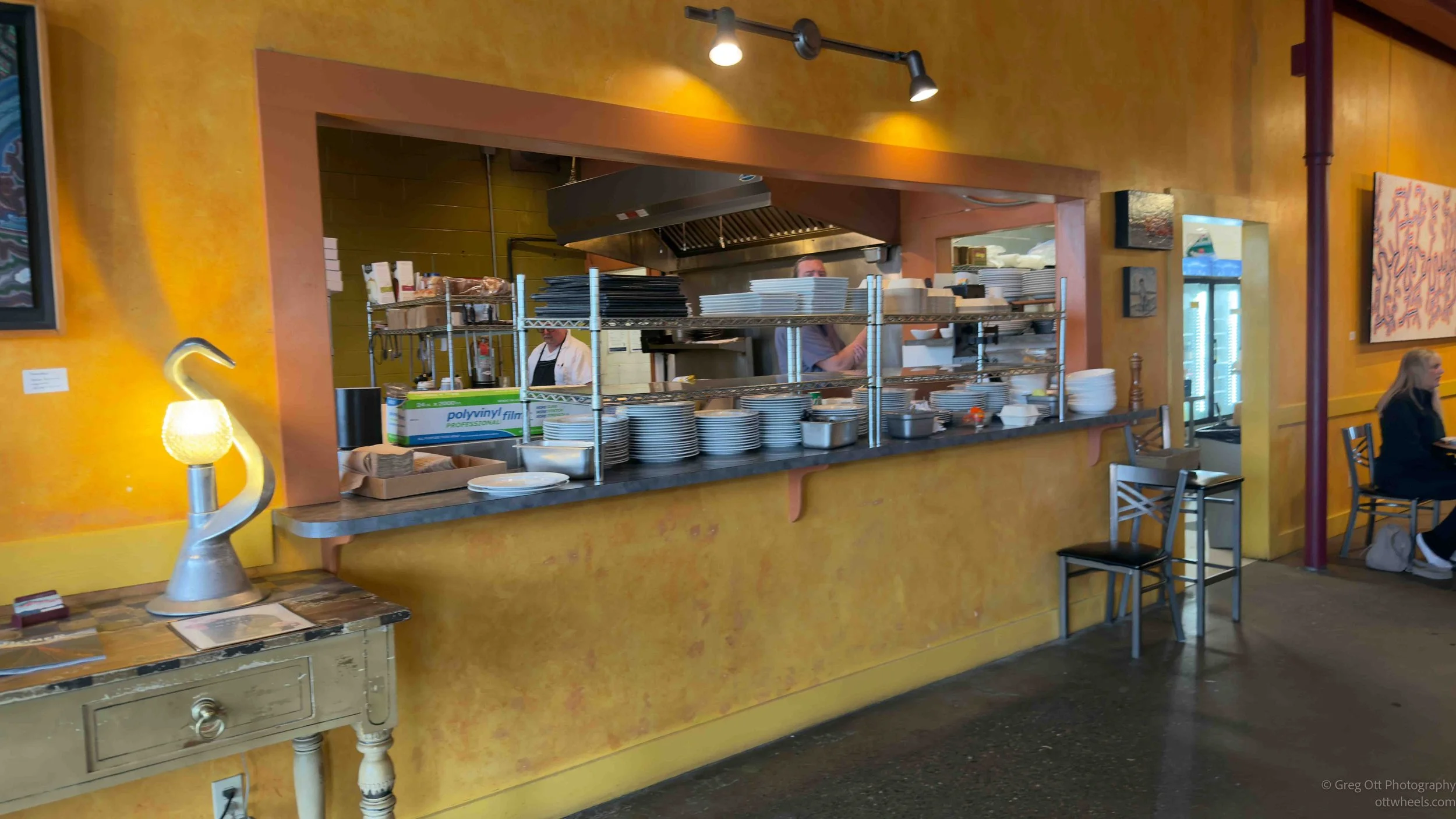
By mid-afternoon I was ready for a real meal. Fat Olives was one of the few restaurants open on a rainy Sunday that wasn't built around burgers and beer — not that I have anything against either, it just wasn't what I was craving after several days of cold, damp weather. I wanted somewhere warm to sit and escape the rain for a while.
The parking lot was nearly full, and I didn't want to wedge the van somewhere I'd struggle to back out of later, so I parked across the street at a Catholic church and walked over.
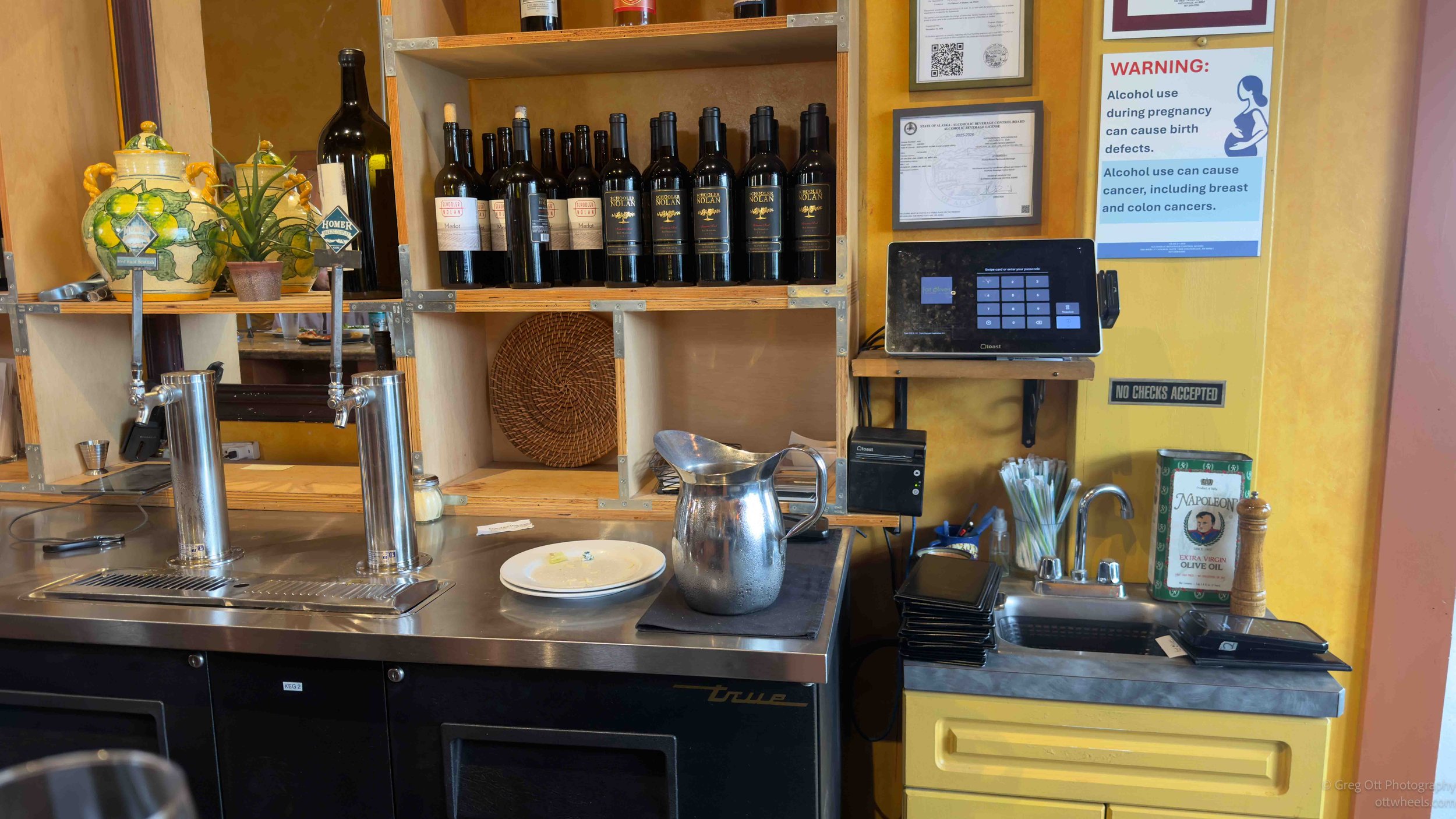
Fat Olives turned out to be exactly what I needed. I settled onto a stool at the bar, opened my laptop, and started transferring photos from the museum while sipping a glass of the house Merlot, which, I learned, came from the restaurant's own Washington label, Schooler Nolan. Curious, I looked into it while waiting for my food: the Nolan family, who own Fat Olives, had also run a restaurant in Richland, Washington, in the heart of the state's wine country, for about fifteen years. During that time they got deeply involved in winemaking and eventually launched their own label using grapes from the Red Mountain and Horse Heaven Hills regions. The Richland restaurant closed in 2024, but the Schooler Nolan wines are still poured here in Homer — an unexpected thread connecting Alaska to Washington wine country.
I started with a bowl of tomato basil soup, rich with Parmesan and served with a thick slice of bread brushed with just enough olive oil to disappear fast. Next came Nonna's Salad — mixed greens, spicy pecans, sliced apples, blue cheese crumbles, and a thick, tangy vinaigrette. Everything was fresh and exactly what I'd been looking for.
As I worked through lunch, I kept reading back through my museum notes — how fungi communicate through underground mycorrhizal networks, how spawning salmon carry marine nutrients into inland forests, how every part of the boreal ecosystem depends on the others. The museum had woven art, science, and nature into a single story, and I'd been completely absorbed in it. Lunch quietly turned into an afternoon of learning.
I finished with a slice of flourless chocolate torte, briefly considered an espresso to go with it, and decided against it — though chocolate is heart-healthy, or so I told myself. I left relaxed, well fed, and ready to keep exploring Homer, rain or no rain.
Homer Spit
It was pouring as I drove the six miles to Homer Spit, a 4.5-mile-long strip of gravel and sand that extends from town into Kachemak Bay — one of Alaska's most recognizable landforms, often called the "end of the road" since the Sterling Highway literally ends there.
It was late afternoon by the time I arrived, and the parking lots were full. A bridge separates Homer from the Spit, and there was water on both sides as I crossed. Small campgrounds lined the way, trailers packed together like sardines, each with its own water, sewage, and electric hookups, no awnings out after days of steady rain.
I drove to the end and turned back — I needed to book a water taxi to Kachemak Bay State Park for tomorrow's hike to Grewingk Glacier. I parked by the building without paying and went in, where a woman walked me through the hike, rattling off details quickly before laughing and telling me not to worry — a confirmation email would cover it all. She also warned me about parking: "It's difficult to figure out here." I was driving a 22-foot camper van, and most lots were posted for vehicles under 20 feet. I eventually found a free gravel lot about half a mile away with the same restrictions, but since other vans my size were already parked there, including one from a local tour company, I did the same.
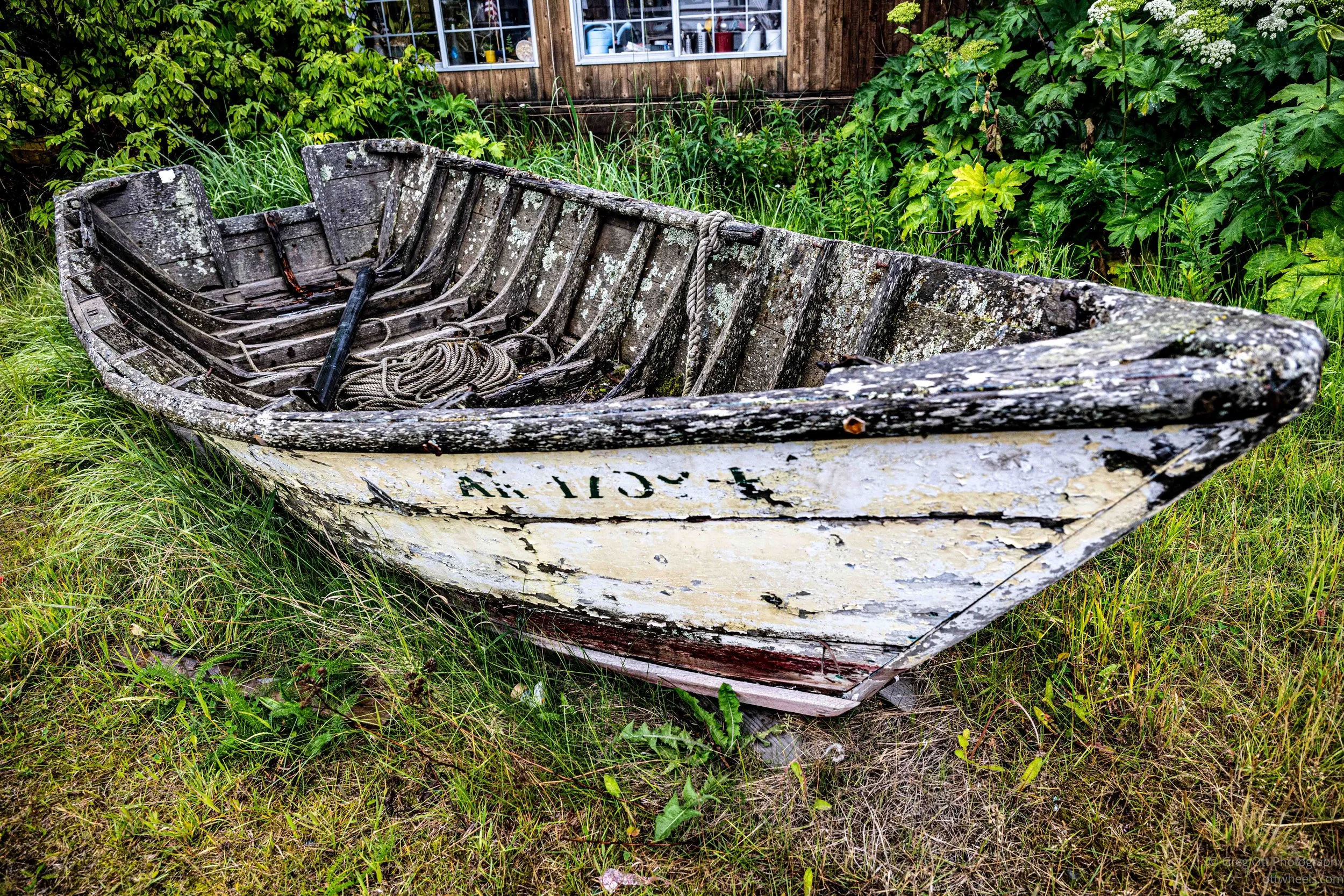
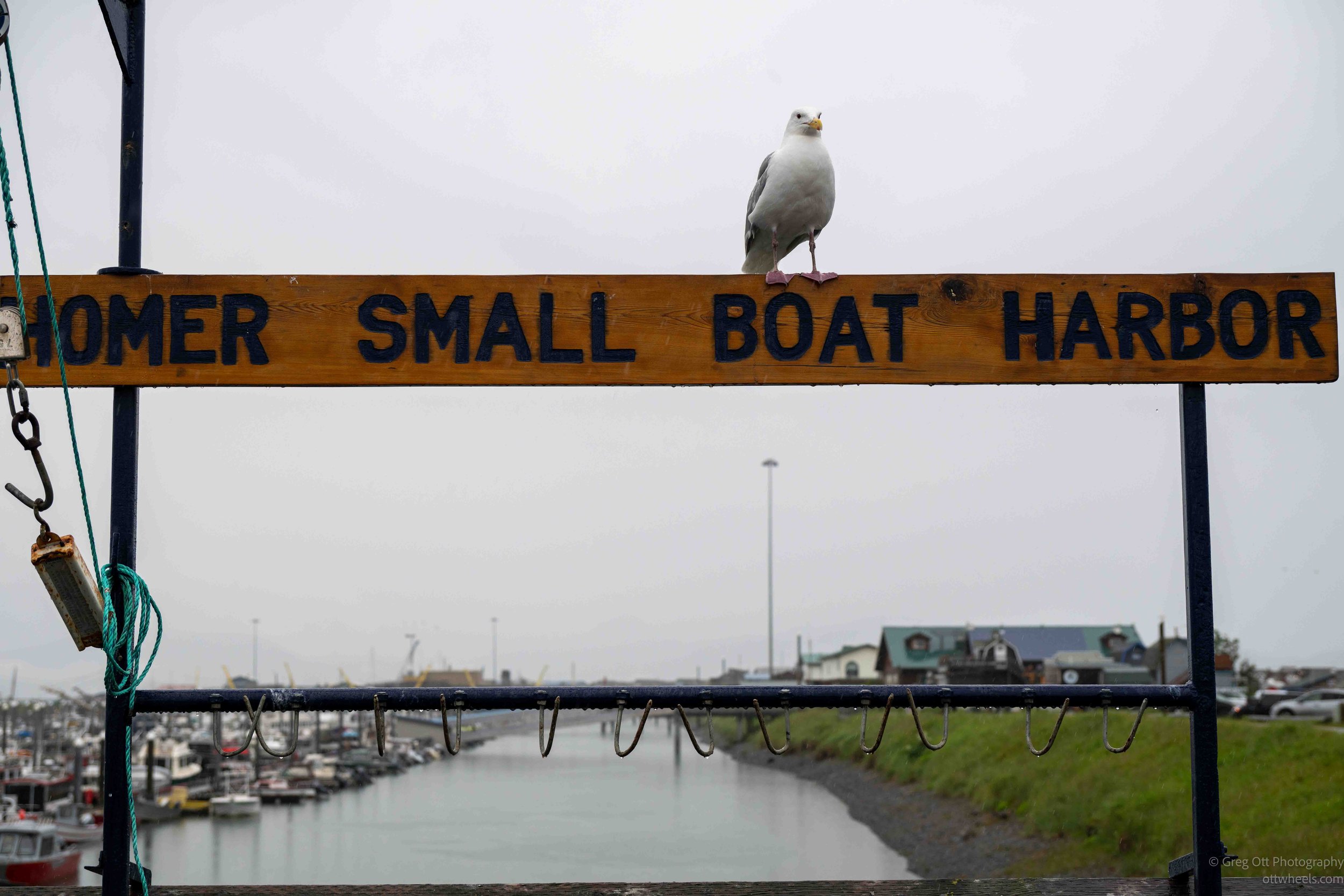
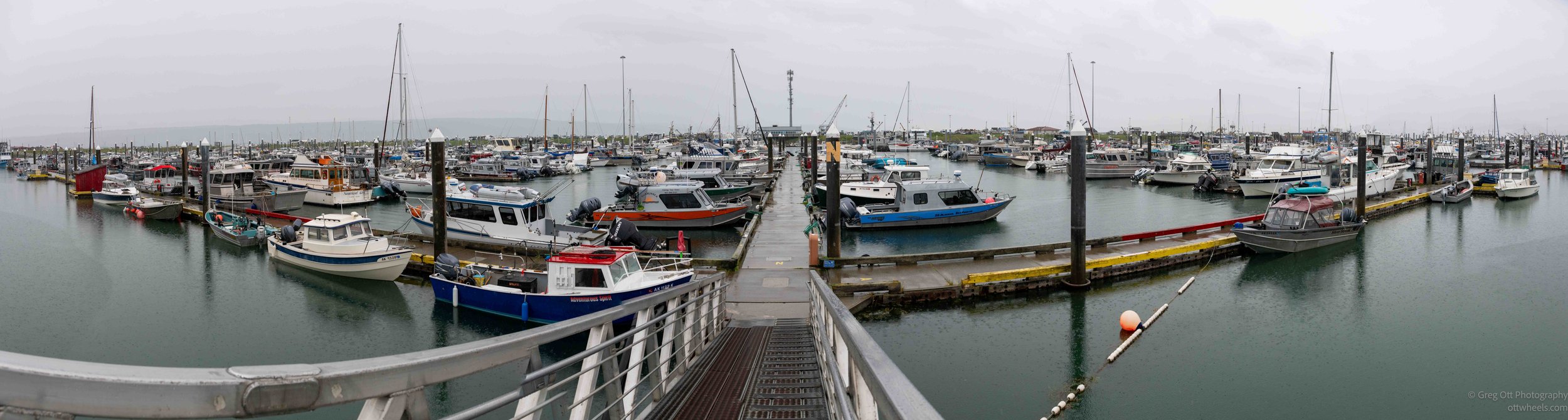
I grabbed my camera with the 24-120mm lens, an umbrella to keep it dry, and wandered through the marina. Rather than looking for photos, I found myself just watching people work — charter boats returning from the day, deckhands hosing down decks and cleaning fish, crews prepping for tomorrow's trips.
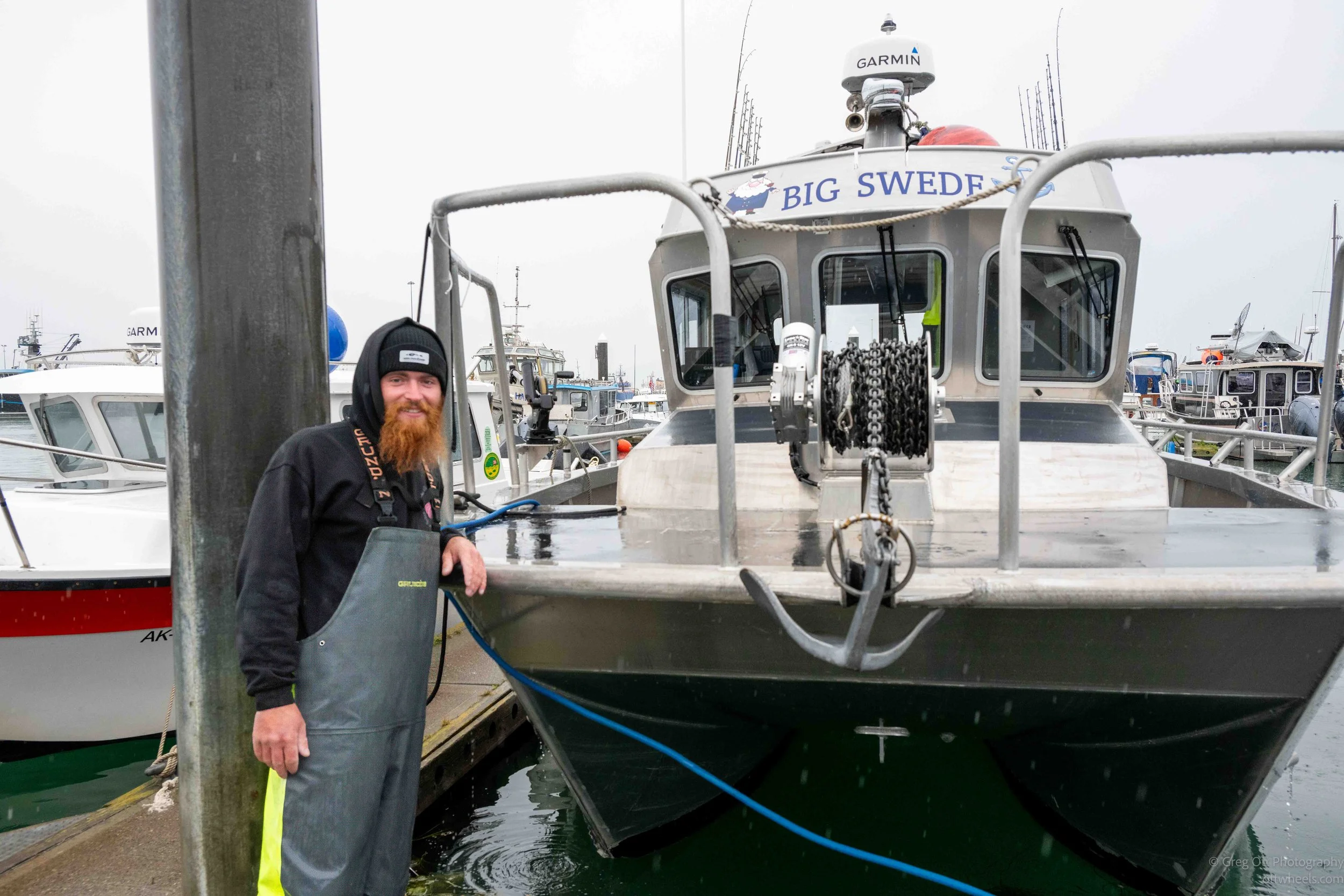
I struck up a conversation with Wyatt, captain of one of the fishing charters, who was cleaning up with his lone crew member. We talked for nearly twenty minutes. Wyatt had been guiding trips for nine years and said captains come and go often — many people aren't qualified, don't enjoy the hours, or don't have the personality for a job spent guiding guests from all over the world. When I asked what he did in the winter — by now I'd learned plenty of Alaskans have completely separate summer and winter careers — he smiled: "I'm a ski instructor in Idaho." He described the small, nonprofit ski areas where he teaches, places that reinvest revenue into lifts, trails, and staff rather than chasing destination-resort profits. I told him about Mad River Glen in Vermont, a skier-owned cooperative with a similar philosophy, and we swapped recommendations for a while. Before leaving, I asked to take his photo beside the boat — Wyatt was the kind of person you enjoy talking to instantly, exactly the personality you'd want in a fishing guide or a ski instructor.
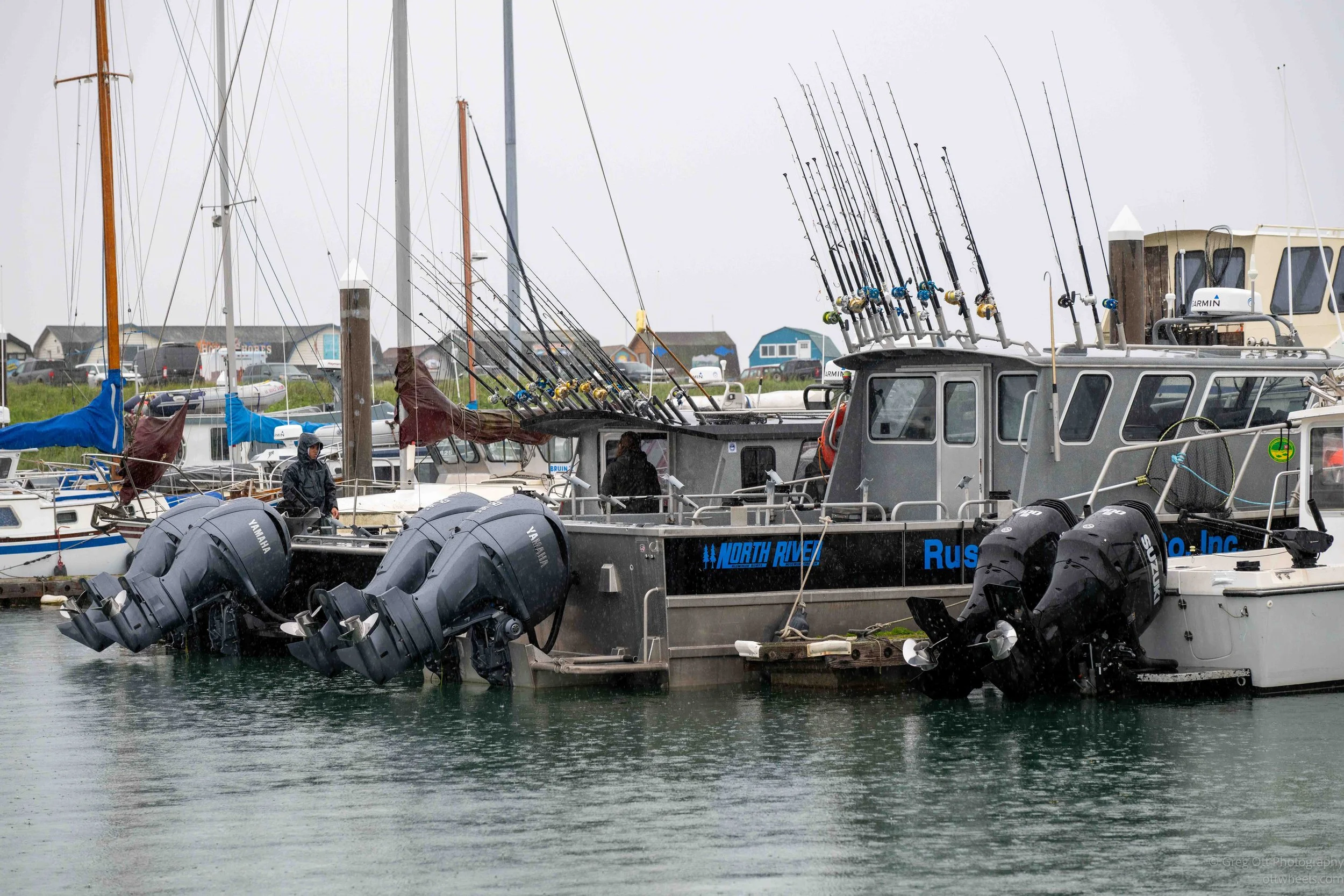
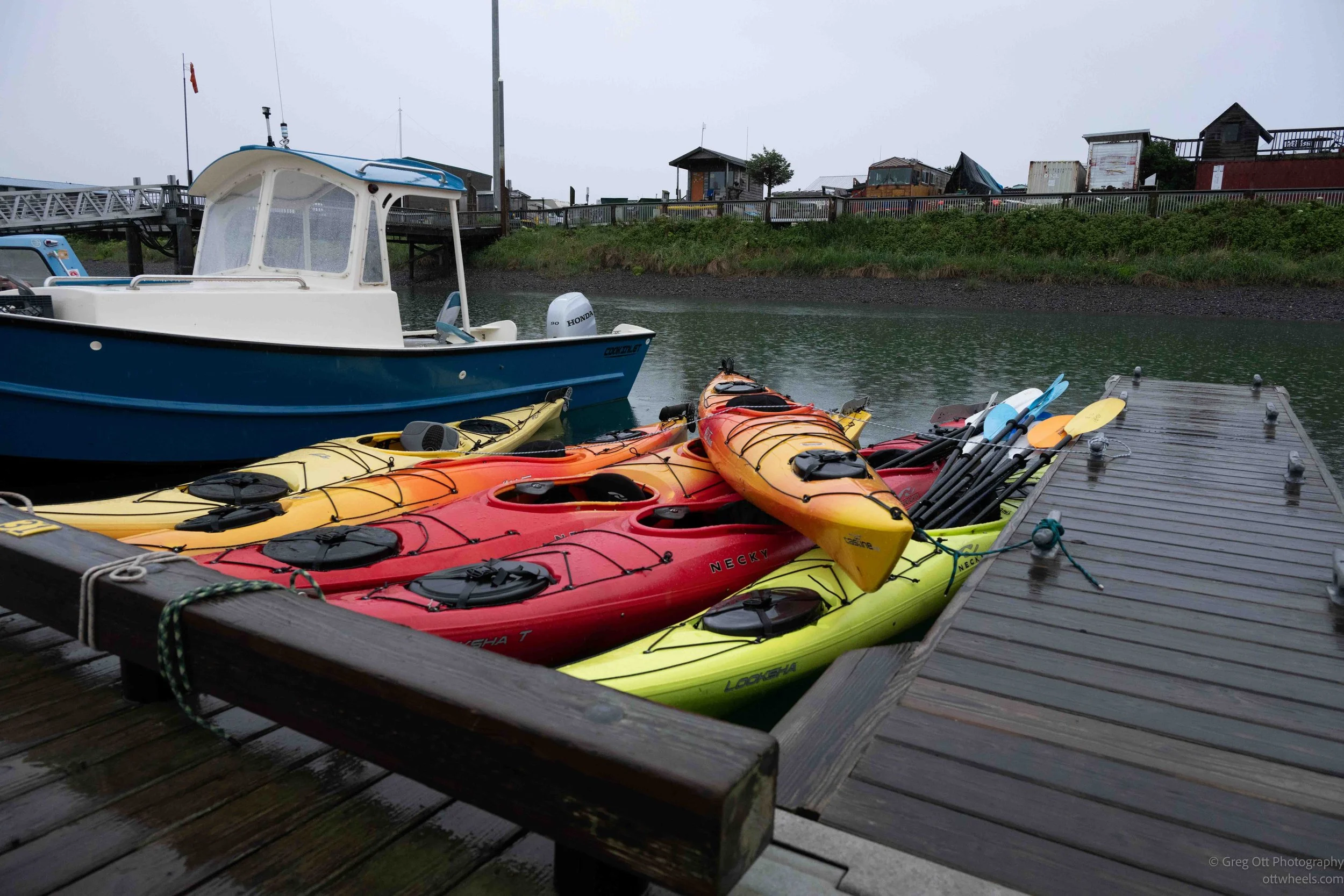
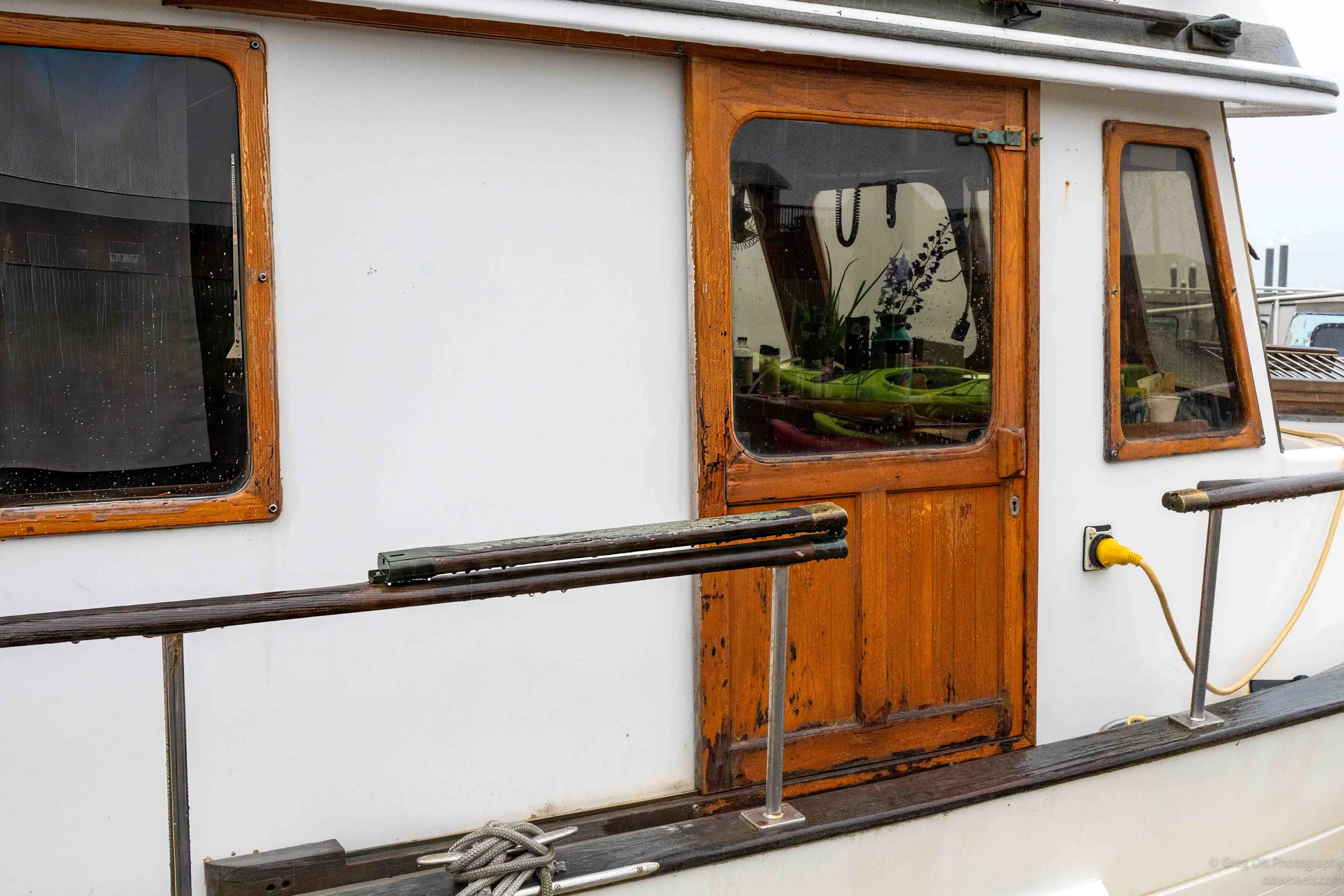
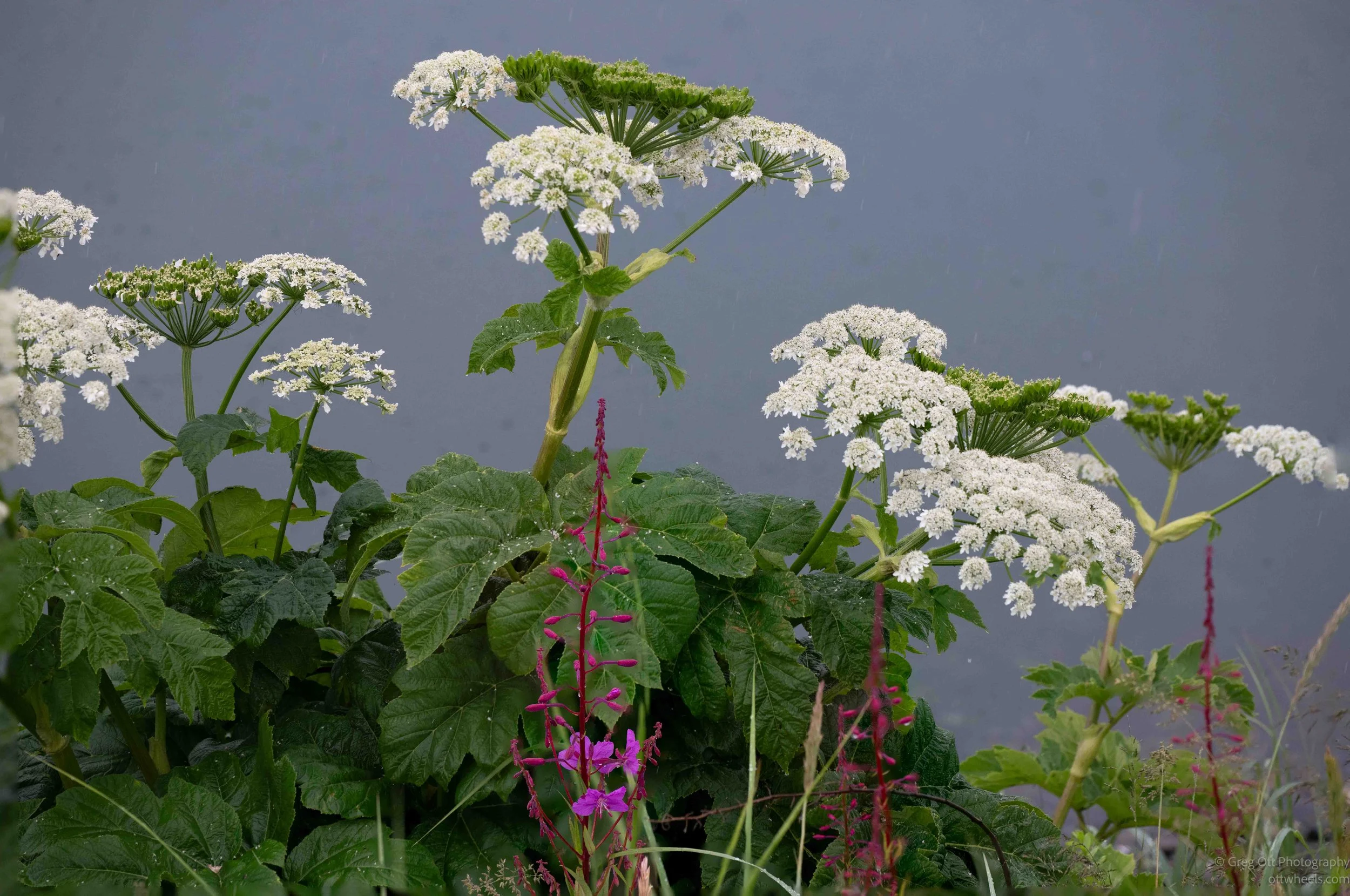
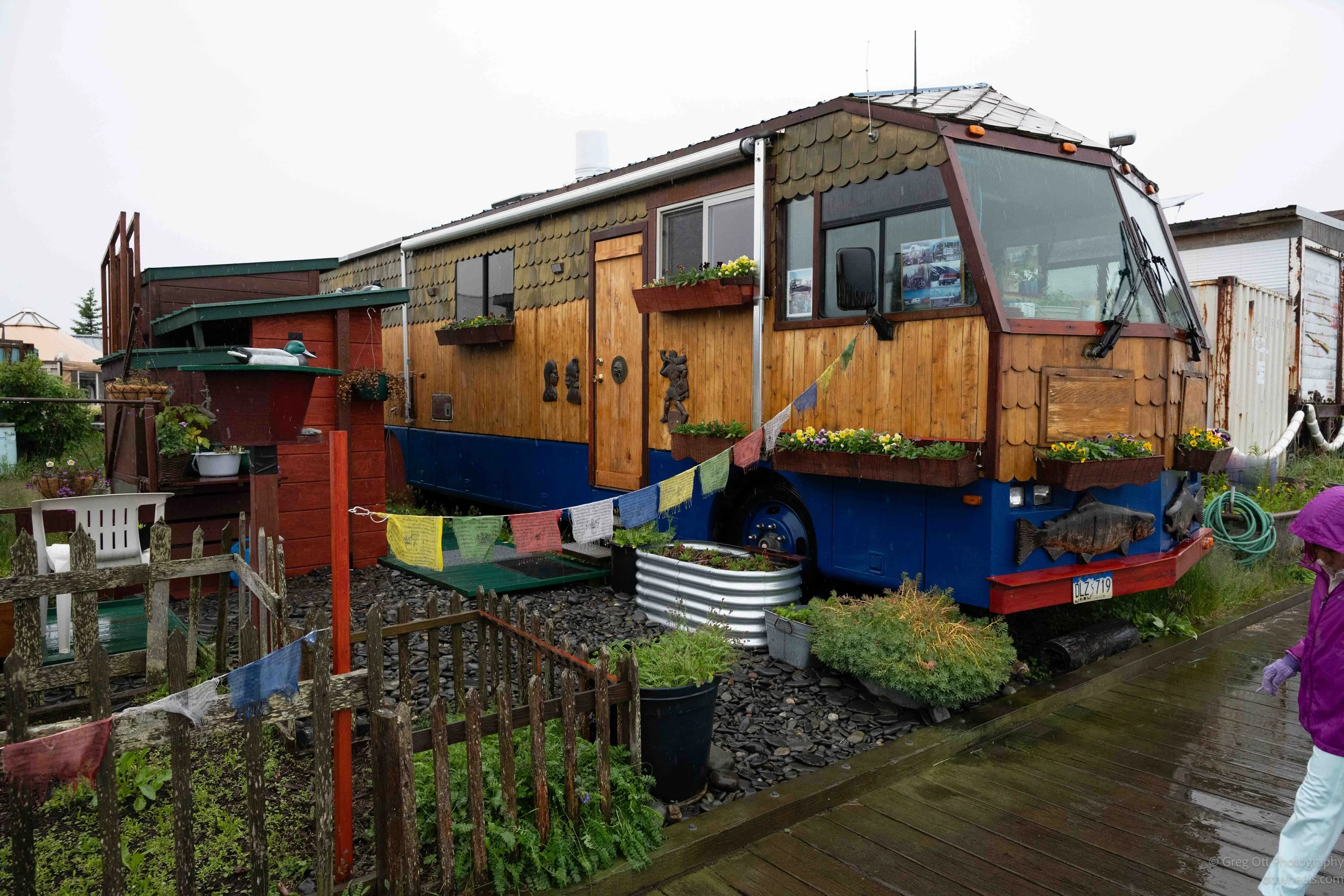
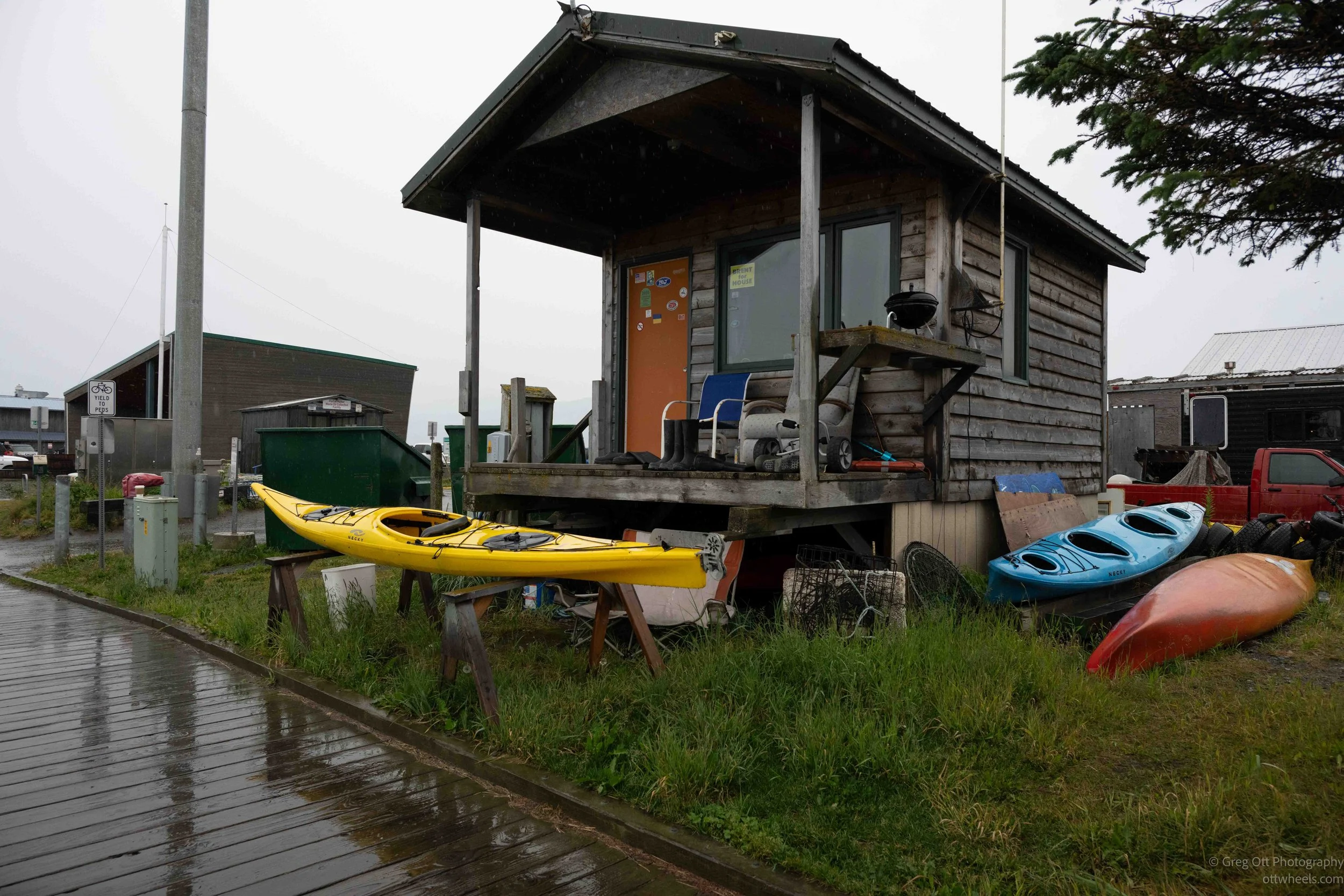
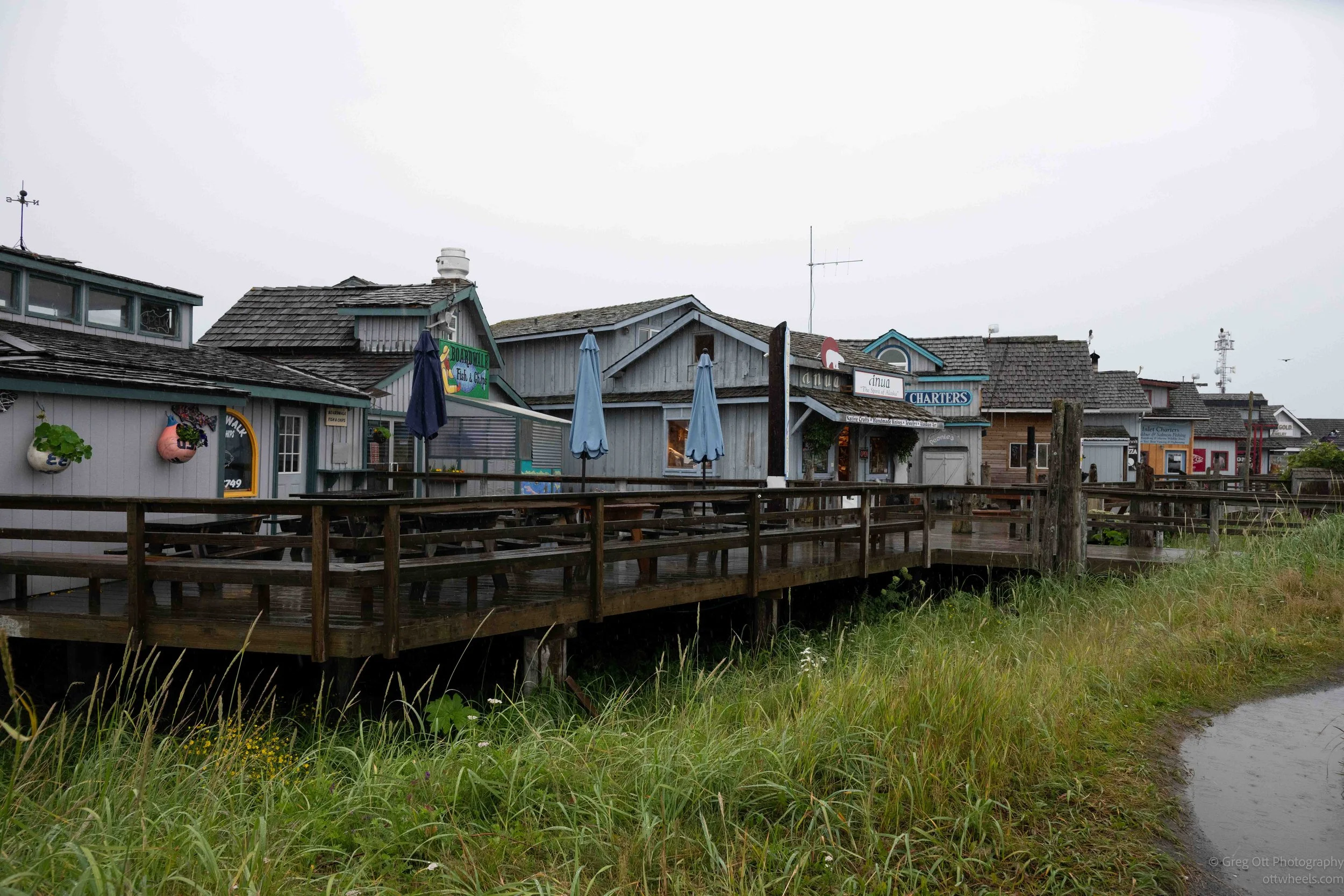
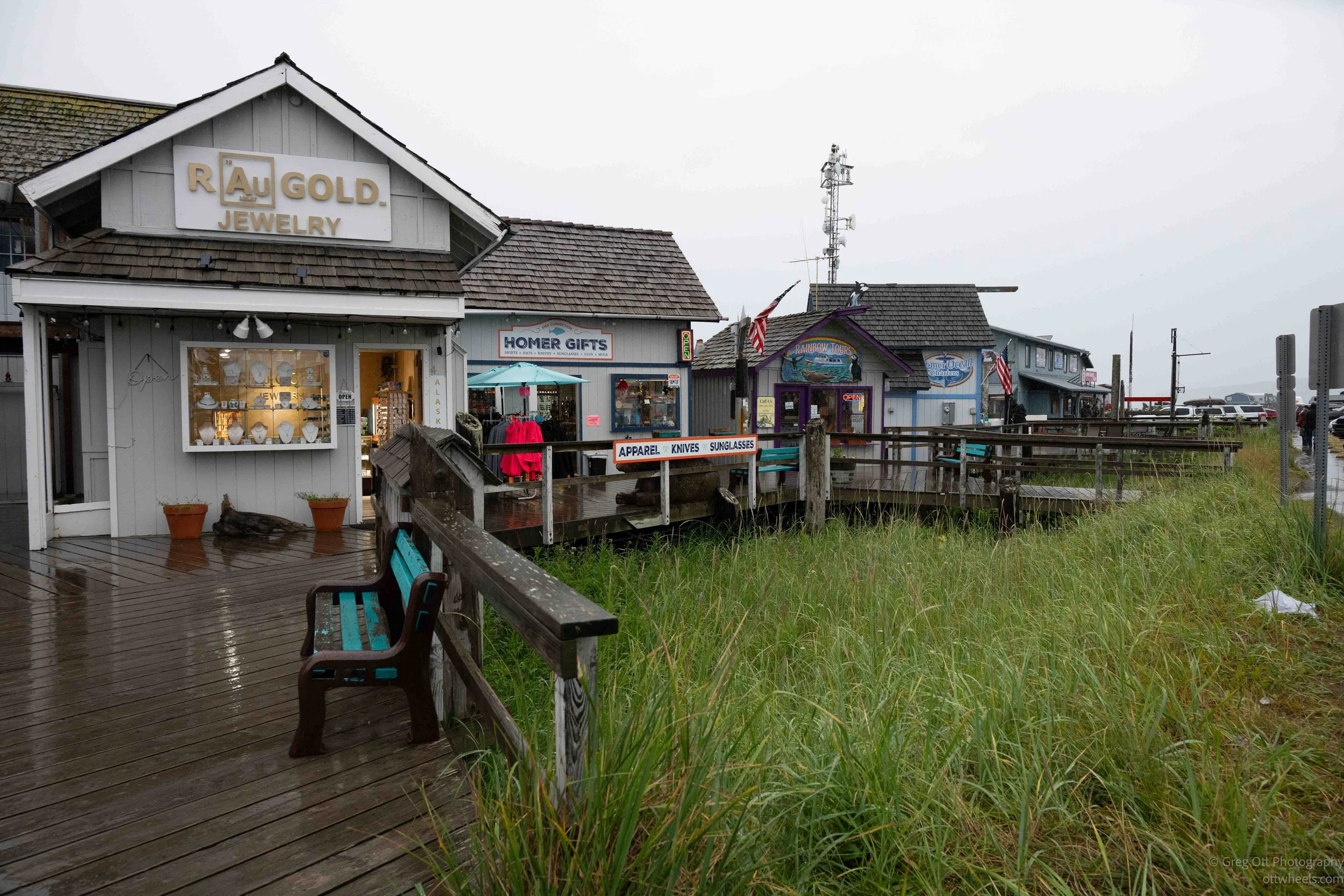
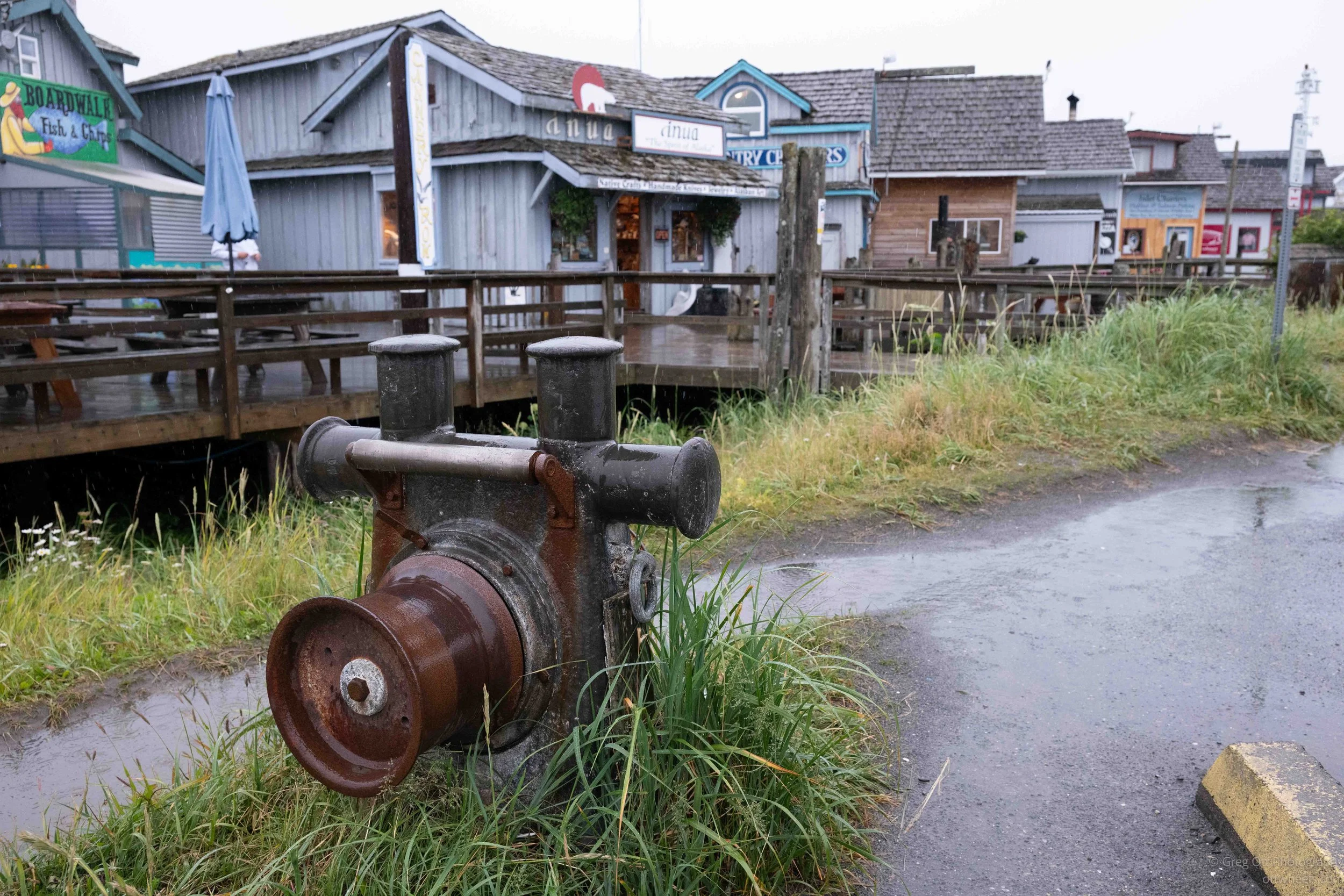
I kept wandering the floating docks, stopping often just to watch. The rain eased into a light mist, and a breeze carried the unexpected scent of flowers across a working harbor — Alaska has a way of surprising you when you least expect it. Eventually I climbed back up Ramp 2 and noticed several very small homes right beside the harbor as I headed to the shops along the Spit.
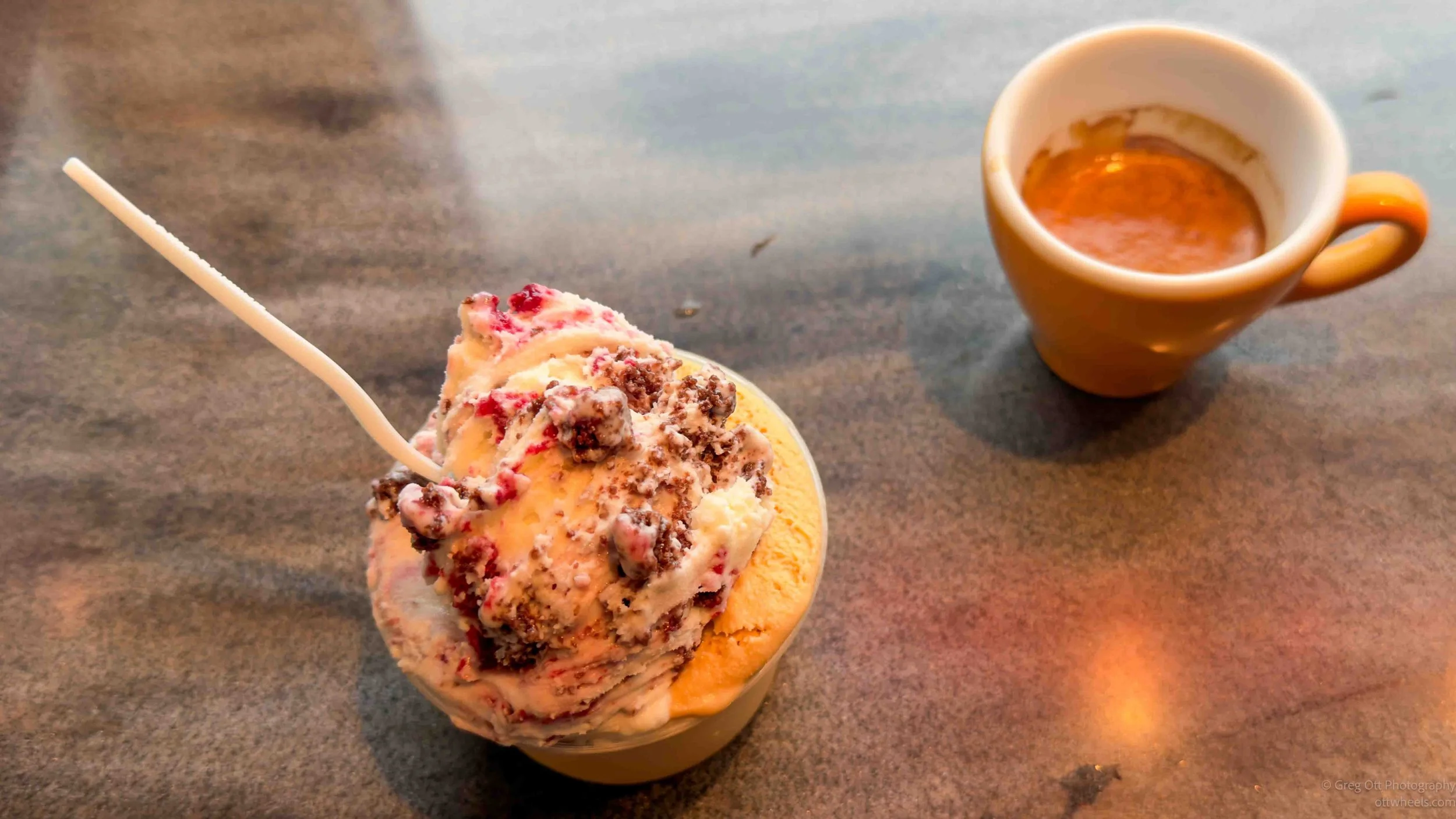
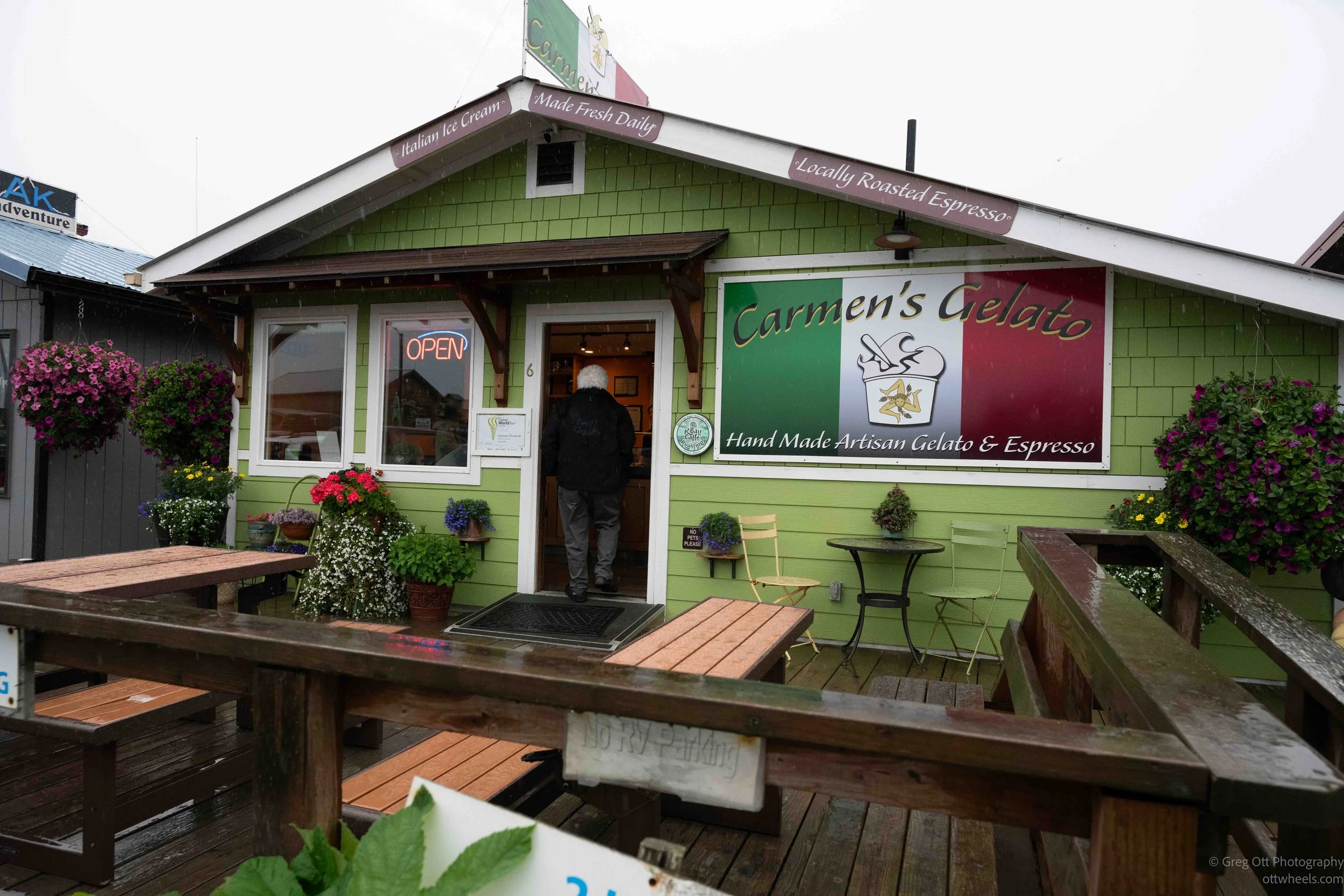
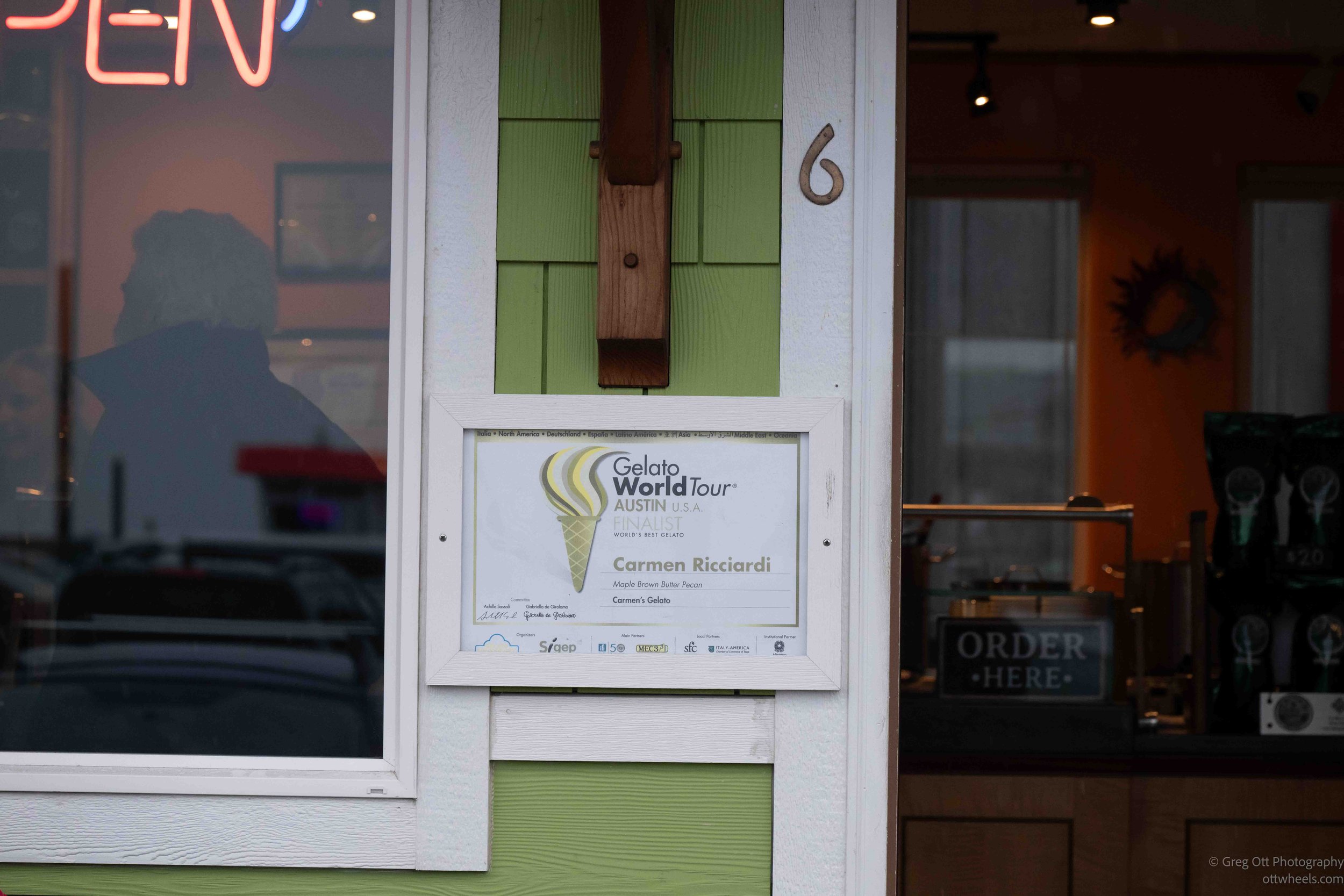
By seven o'clock I was standing outside Carmen's Gelato. Gelato and espresso sounded like the perfect way to end a cool, damp afternoon, and the aroma from the espresso machine sealed the decision. I ordered a single espresso and two flavors of gelato, and mentioned to the woman behind the counter how many gelato shops I'd come across around Alaska. "Alaskans like their ice cream," she said, smiling. I laughed, knowing the difference between ice cream and gelato, and judging by places like Carmen's, Alaskans seem to know it too. Carmen's, I later learned, was founded by Italian immigrant Carmen Ricciardi, who trained in Italy before bringing traditional gelato-making to Homer, using local Alaskan ingredients whenever possible. One signature flavor, Maple Brown Butter Pecan with Homer Spit Sea Salt, was recognized on the Gelato World Tour as one of North America's standout creations, and the shop has earned statewide and national recognition as one of Alaska's premier artisan gelato makers.
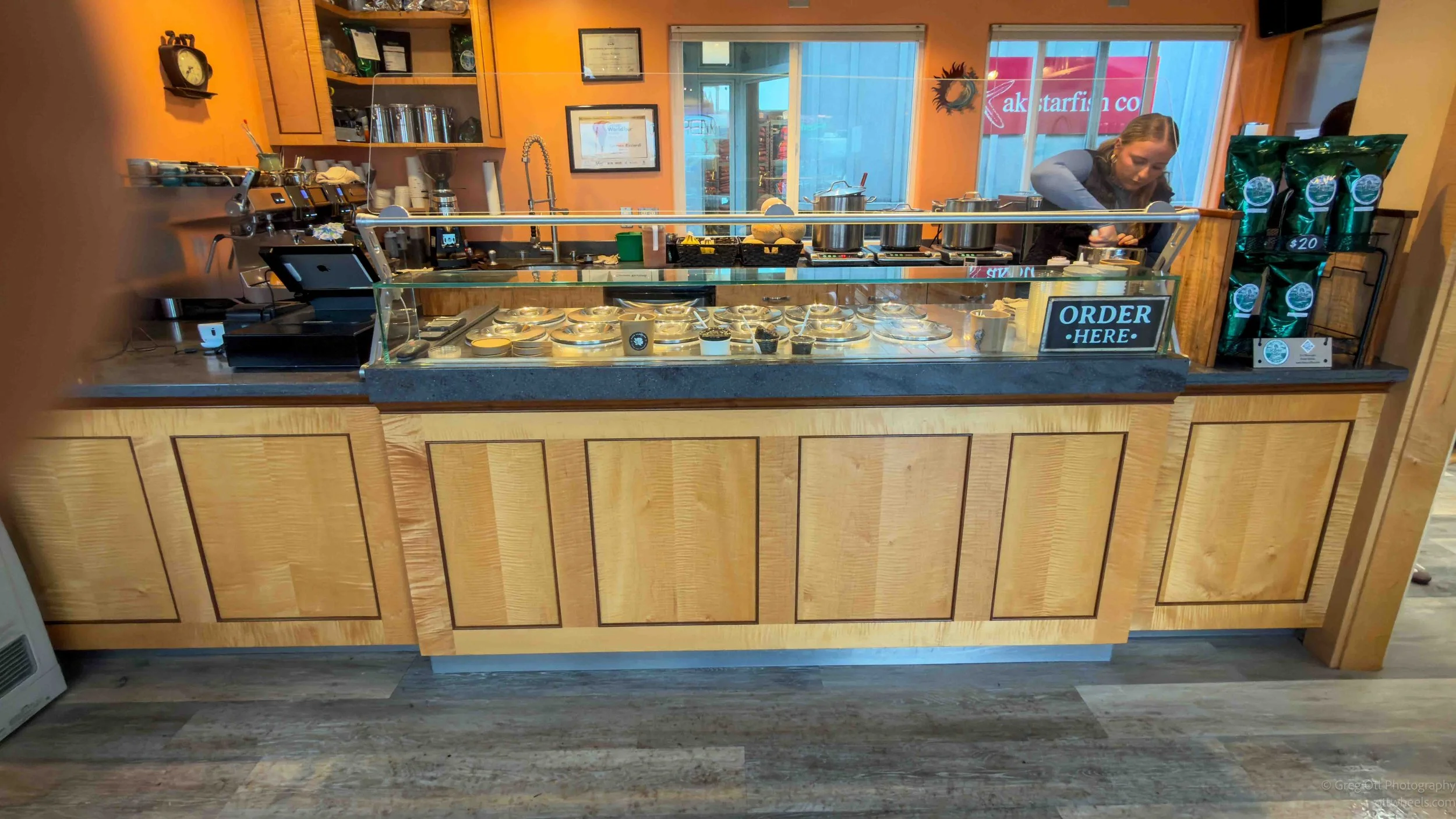
Standing by the window finishing my espresso, I watched another shower move across Kachemak Bay, boats rocking gently as people hurried between the docks and the fish-cleaning tables to beat the rain.
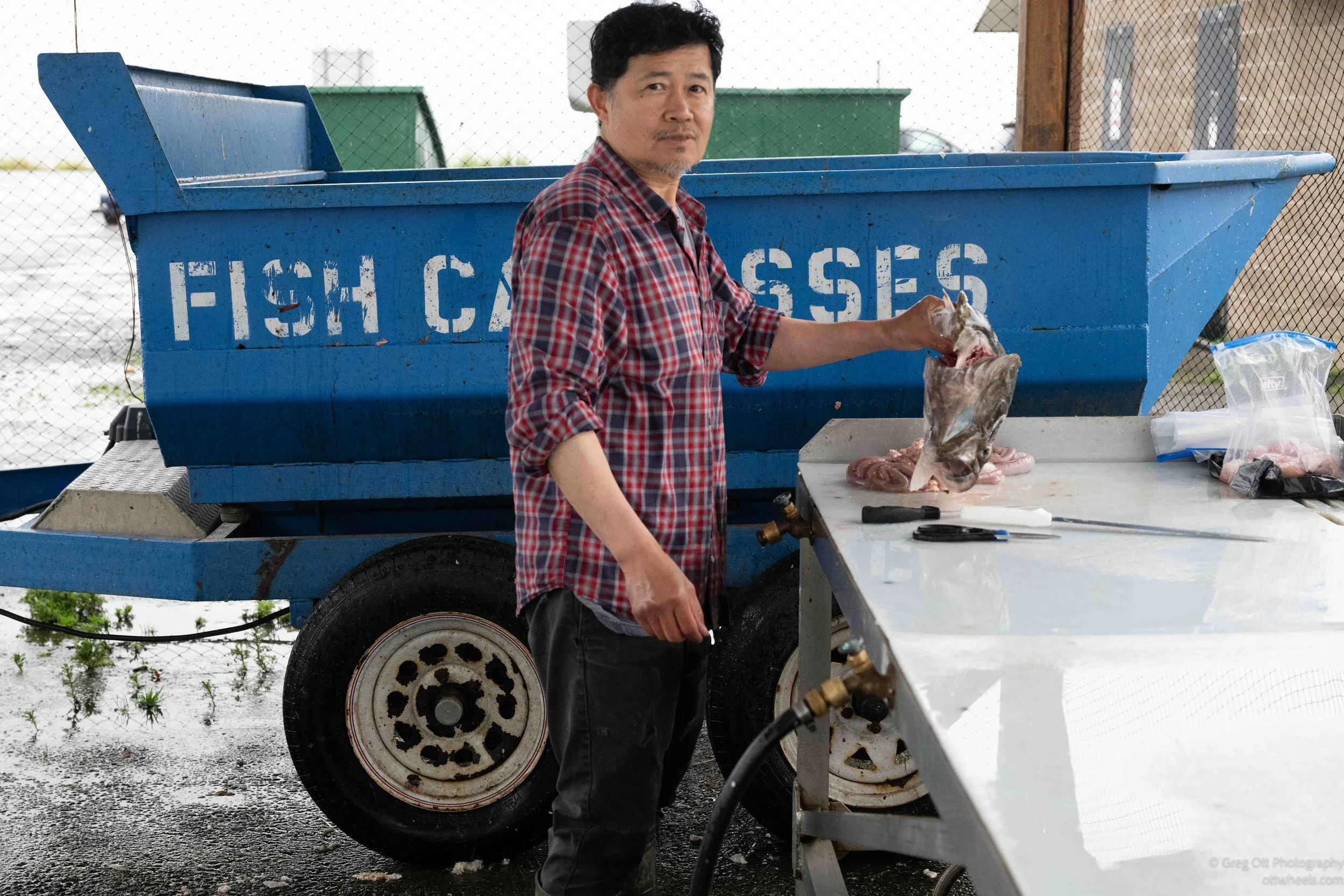
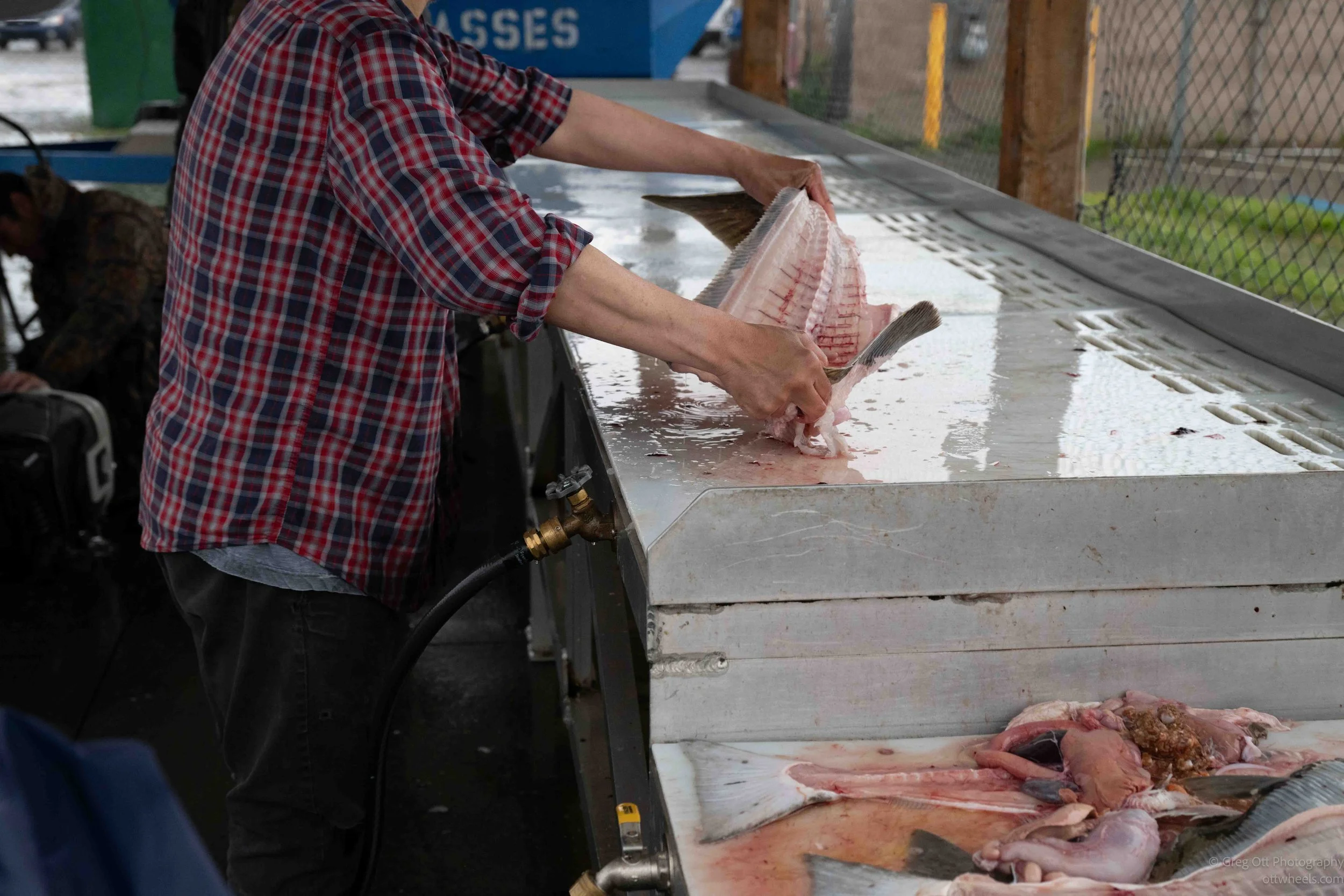
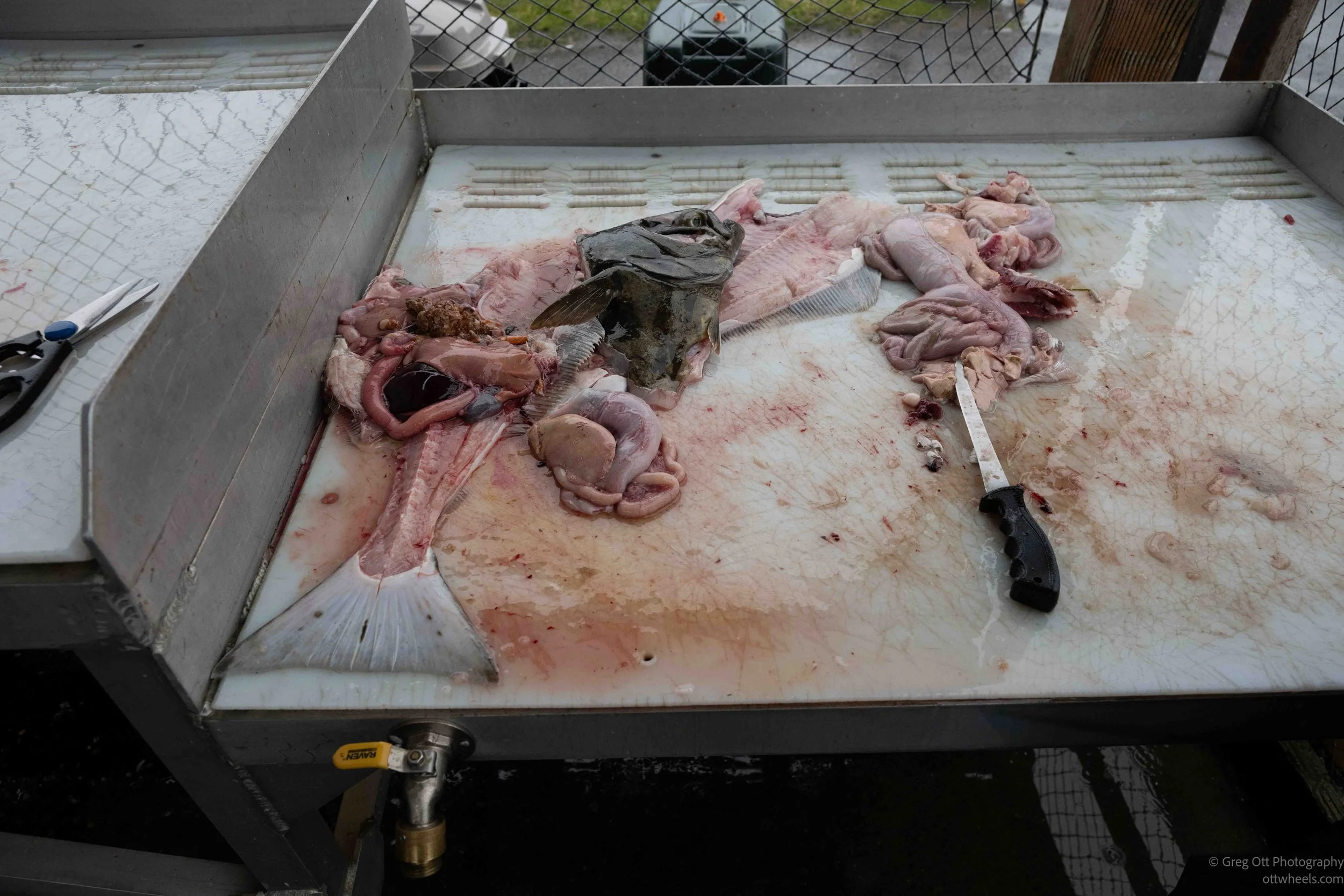
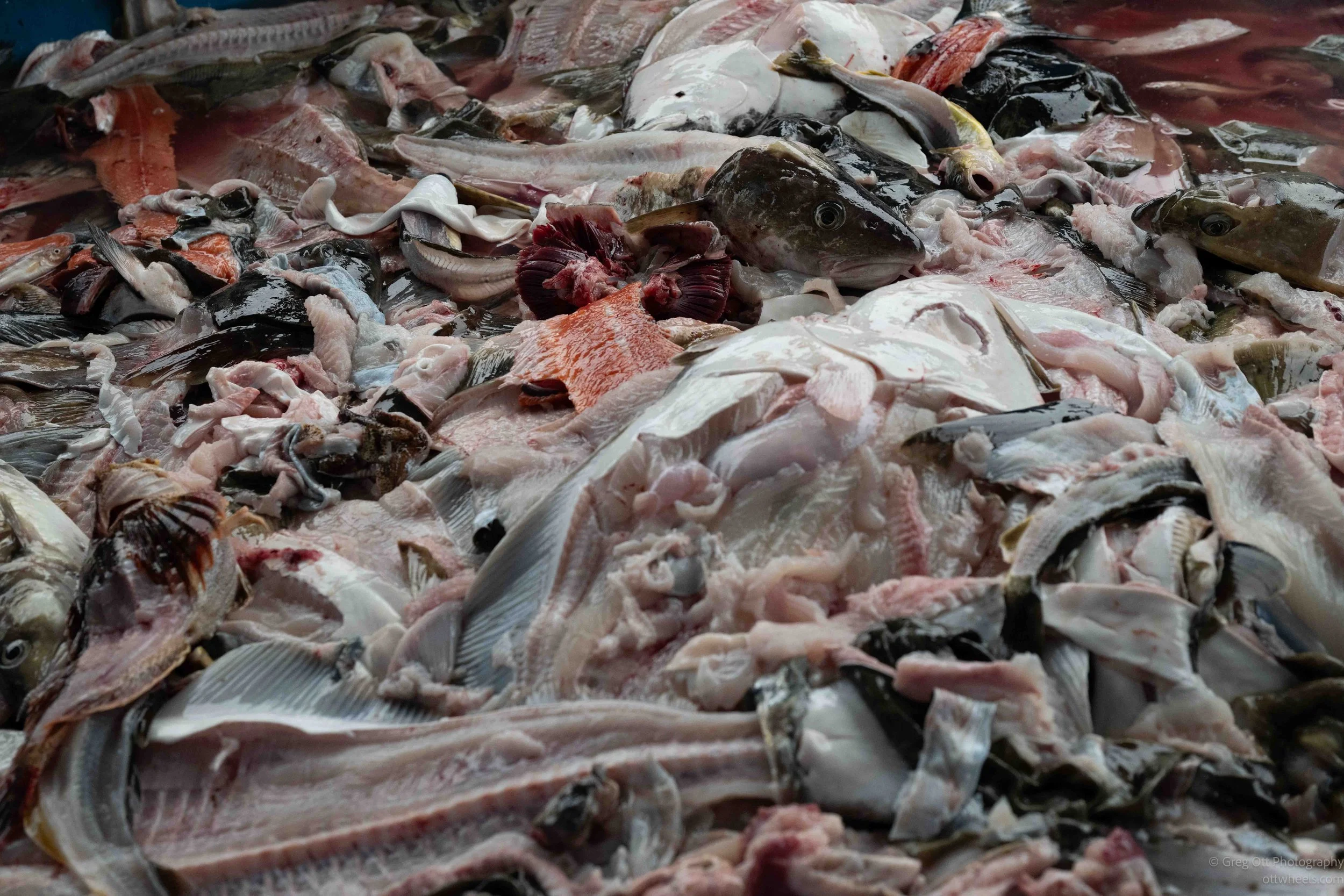
On the walk back to the van, I stopped to watch people cleaning their catch and ended up talking with a husband and wife from the San Francisco area who make regular trips to Alaska to fish and visit family in Anchorage. Several of their relatives had immigrated from Thailand nearly sixty years earlier and made the U.S. their home. Before I left, they offered me fresh fish for dinner — my van's fridge and freezer were already packed, or I would have happily accepted. The husband assured me it would be easy to prepare with rice and vegetables. It was another small act of generosity from strangers, the kind I've run into again and again on this trip.
It was a quiet end to the day, and another reminder that the best moments of travel aren't always the big ones. They're the unexpected conversations, a good meal, a stranger's small kindness — moments that end up just as memorable as the glaciers, mountains, and wildlife.
With better weather forecast for the morning, I drove back to the church parking lot, settled in for the night, and looked forward to an early start for the hike to Grewingk Glacier.